The Complete Guide to Quantitative Real-Time PCR (qPCR): From Basic Principles to Advanced Applications
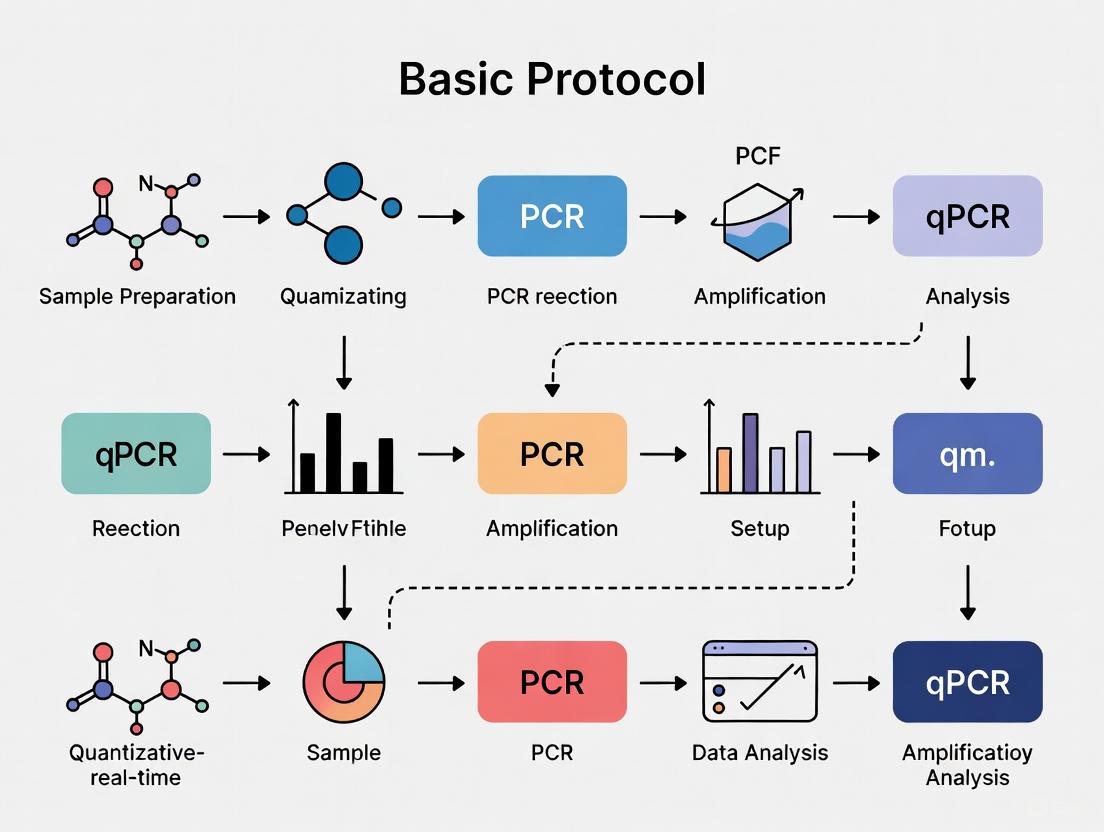
This comprehensive guide provides researchers, scientists, and drug development professionals with an in-depth understanding of quantitative real-time PCR (qPCR).
The Complete Guide to Quantitative Real-Time PCR (qPCR): From Basic Principles to Advanced Applications
Abstract
This comprehensive guide provides researchers, scientists, and drug development professionals with an in-depth understanding of quantitative real-time PCR (qPCR). Covering everything from foundational principles and core methodologies to advanced troubleshooting and experimental validation, this article serves as a complete resource for designing, executing, and interpreting qPCR experiments. Readers will learn about different detection chemistries, reverse transcription approaches, assay design considerations, optimization strategies, and compliance with MIQE guidelines for publication-quality results. The content integrates the latest applications and best practices to ensure accurate, reproducible data in gene expression analysis, pathogen detection, and clinical research.
Understanding qPCR Fundamentals: Principles, Terminology, and How It Works
What is qPCR? Defining Quantitative Real-Time PCR and Its Evolution from Traditional PCR
Quantitative real-time PCR, universally abbreviated as qPCR, is a powerful molecular biology technique that allows for the simultaneous amplification and quantification of specific DNA sequences in real time [1]. Unlike conventional PCR, which provides only qualitative or end-point analysis, qPCR monitors the accumulation of amplified DNA during the early exponential phases of the reaction, when reagent availability is not limiting [2] [3]. This core principle enables precise quantification of the initial amount of the target nucleic acid.
When applied to RNA analysis through an initial reverse transcription step, the technique is more specifically referred to as RT-qPCR, which is the preferred acronym for quantitative reverse transcription PCR according to the MIQE (Minimum Information for Publication of Quantitative Real-Time PCR Experiments) guidelines [2]. This distinction is crucial, as "RT-PCR" commonly denotes reverse transcription polymerase chain reaction and should not be confused with real-time PCR [2].
The fundamental advantage of qPCR over traditional PCR lies in its unique capacity to combine amplification with detection in a single, closed-tube system [4]. This integration eliminates the need for post-amplification processing, such as gel electrophoresis, thereby reducing hands-on time and the risk of contamination [1]. More importantly, it transforms PCR from a qualitative tool into a highly precise quantitative one, providing researchers with data that has exceptional sensitivity, specificity, and a broad dynamic range [5] [3].
The Evolution from Traditional PCR to qPCR
The invention of the polymerase chain reaction (PCR) in 1983 by Kary Mullis solved a fundamental challenge in genetics: how to generate a substantial quantity of a specific DNA sequence from a limited initial sample [1]. This groundbreaking work, which earned Mullis the Nobel Prize in Chemistry in 1993, allowed scientists to exponentially increase DNA amounts, generating millions of copies in just hours [1]. However, traditional PCR had a significant limitation—it could only provide qualitative assessment of the target sequence's presence or absence through end-point analysis using gel electrophoresis [1]. This method was time-consuming and did not allow for real-time data collection or reliable quantification [1].
Recognizing the need for more immediate and quantitative results, scientists began developing real-time PCR techniques in the early 1990s [1]. One of the initial approaches involved using fluorescent dyes that could intercalate with double-stranded DNA during amplification, allowing researchers to measure DNA production in real time [2]. SYBR Green emerged as one of the first widely adopted intercalating dyes, binding to double-stranded DNA and emitting fluorescence when exposed to specific light wavelengths [2] [1].
The true breakthrough in qPCR came with the advent of probe-based detection systems, notably the TaqMan probe, introduced in 1996 [1]. This system utilized a specific oligonucleotide probe with a fluorescent reporter at one end and a quencher at the opposite end [1]. During PCR amplification, the Taq polymerase enzyme degrades the probe, separating the reporter from the quencher and resulting in a measurable increase in fluorescence [1]. This method's inherent specificity—requiring the probe to hybridize precisely to its target sequence—dramatically reduced non-specific amplification and enabled detection of low-abundance targets [1].
The subsequent development of alternative probe designs, including Molecular Beacons and Scorpions, further enhanced qPCR versatility [1] [6]. By the early 2000s, qPCR had gained widespread acceptance in laboratories worldwide, with applications expanding beyond basic research to include clinical diagnostics, environmental monitoring, and food safety testing [1].
Fundamental Principles and Detection Chemistries
The Core Principle: Quantification Cycle (Cq)
At the heart of qPCR quantification lies the quantification cycle (Cq), previously known as the threshold cycle (Ct) [2] [5]. The Cq value represents the PCR cycle number at which the fluorescence signal from amplified DNA first exceeds a predefined threshold above background fluorescence [5] [7]. This threshold is typically set within the exponential phase of amplification, where the reaction is most efficient and reproducible [7].
The Cq value is inversely proportional to the initial amount of the target nucleic acid in the sample [2] [5]. A low Cq value (early amplification signal) indicates a high starting copy number, while a high Cq value (late amplification signal) indicates a low starting copy number [7]. Mathematically, a difference of 3.3 Cq values between samples corresponds to an approximately 10-fold difference in the starting concentration, assuming 100% amplification efficiency [2].
Detection Methods
qPCR detection chemistries fall into two primary categories: non-specific DNA-binding dyes and sequence-specific fluorescent probes.
Table 1: Comparison of Major qPCR Detection Methods
| Detection Method | Principle | Advantages | Disadvantages |
|---|---|---|---|
| DNA Intercalating Dyes (e.g., SYBR Green) | Fluorescent dye binds nonspecifically to double-stranded DNA [2] [3] | Cost-effective; flexible; easy to use; no probe design needed [2] [3] | Less specific; can bind to non-specific products and primer dimers [2] [3] |
| Hydrolysis Probes (e.g., TaqMan) | Probe with reporter/quencher is cleaved by DNA polymerase's 5' nuclease activity [2] [1] | High specificity; compatible with multiplexing; reduced background [1] [8] | Requires custom probe design; more expensive [3] [8] |
| Molecular Beacons | Hairpin-shaped probes with reporter and quencher; fluorescence upon target hybridization [6] | Excellent specificity; can discriminate single-base mismatches; suitable for multiplexing [6] | Complex probe design; potential for non-specific opening [3] [6] |
| Scorpion Probes | Intramolecular primer-probe combination [6] | Efficient unimolecular detection; faster reaction kinetics [6] | Complex design and synthesis [6] |
Essential qPCR Protocol and Workflow
Experimental Design and Controls
Robust qPCR experimental design requires careful planning and implementation of appropriate controls to ensure reliable and interpretable results [3] [8].
- No Template Control (NTC): Contains all reaction components except the template DNA/cDNA. Any amplification in the NTC indicates contamination [3] [8].
- No Reverse Transcription Control (No-RT): Essential for RT-qPCR experiments; contains RNA template without reverse transcriptase. Amplification indicates genomic DNA contamination [8].
- Positive Control: Contains a known quantity of the target sequence. Absence of amplification suggests reaction failure [3].
- Negative Control: Sample known to lack the target sequence. Should show no amplification [3].
- Reference Genes: For relative quantification, multiple validated reference genes (e.g., GAPDH, β-actin, ribosomal RNAs) with stable expression across experimental conditions are essential for normalization [2] [8].
Sample Preparation and Quality Assessment
The success of qPCR is critically dependent on sample quality [7]. Nucleic acid integrity and purity are paramount, as contaminants can inhibit polymerase activity and affect fluorescence detection [7].
- Nucleic Acid Purity: For DNA, the A260/A280 ratio should be 1.8-2.0, indicating minimal protein contamination [7]. For RNA, the A260/A280 ratio should be approximately 2.0 [7].
- Inhibition Testing: Perform a dilution series of the sample to check for PCR inhibitors, which manifest as changes in Cq values that deviate from the expected dilution factor [8].
- DNase Treatment: For RT-qPCR, treat RNA samples with DNase to remove contaminating genomic DNA [8].
Primer and Probe Design
Proper primer and probe design is arguably the most critical factor in developing a successful qPCR assay [3] [8].
Table 2: qPCR Primer and Probe Design Guidelines
| Parameter | Optimal Specification | Rationale |
|---|---|---|
| Primer Length | 18-30 bases [8] | Balances specificity with appropriate melting temperature |
| Primer Tm | 60-65°C; forward and reverse primers should be within ±2°C [3] [8] | Ensures efficient simultaneous annealing of both primers |
| GC Content | 35-65% (ideally ~50%) [8] | Prevents overly stable or unstable hybrids; avoids G quadruplexes |
| Amplicon Length | 70-200 bp [8] | Shorter products amplify more efficiently; differentiation from primer dimers |
| Probe Tm | 5-10°C higher than primers [8] | Ensures probe hybridization before primer extension |
| Probe Length | ≤30 bases for standard dual-labeled probes [8] | Maintains effective quenching efficiency |
| Probe Placement | Avoid G at 5' end [8] | Prevents quenching of common fluorophores like FAM |
Reaction Setup and Thermal Cycling
A standard qPCR reaction mixture includes:
- Master Mix: Contains thermostable DNA polymerase, dNTPs, MgCl₂ (typically 3-6 mM final concentration), and reaction buffer [7]
- Fluorescent Detection System: Either DNA-binding dye or sequence-specific probe [2]
- Primers: Typically 100-500 nM each [8]
- Template: Optimal amount should be determined empirically; generally 1-100 ng cDNA or equivalent [7]
- Nuclease-Free Water: To volume [7]
Thermal cycling conditions generally follow this profile:
- Initial Denaturation: 95°C for 2-10 minutes (activates hot-start polymerases) [3]
- Amplification Cycle (repeated 35-45 times):
- Melting Curve Analysis (for SYBR Green assays): 65-95°C with continuous fluorescence monitoring [7]
Data Analysis and Quantification Methods
Quantification Approaches
qPCR data can be analyzed using either absolute or relative quantification methods, each with distinct applications and requirements.
Absolute Quantification: Determines the exact copy number or concentration of the target nucleic acid in the sample [6]. This method requires a standard curve generated from serial dilutions of a known concentration of the target sequence [6]. The standard curve plots Cq values against the logarithm of the initial template concentration, enabling the calculation of the target quantity in unknown samples by comparing their Cq values to the curve [6].
Relative Quantification: Determines the change in target quantity relative to a reference sample (e.g., untreated control) [4] [6]. This approach does not require a standard curve and is commonly used for gene expression studies [6]. The most widely used method is the comparative Cq (ΔΔCq) method, which calculates the relative expression ratio (R) as R = 2^-ΔΔCq [3].
The ΔΔCq Calculation Method
The comparative Cq method involves several key steps [3]:
- Normalization to Reference Gene: ΔCq = Cq(target gene) - Cq(reference gene)
- Calibration to Control Sample: ΔΔCq = ΔCq(test sample) - ΔCq(calibrator sample)
- Calculation of Relative Expression: Relative Quantity (RQ) = 2^(-ΔΔCq)
This method assumes that the amplification efficiencies of the target and reference genes are approximately equal and close to 100% [3].
Essential Reagents and Materials
Table 3: Key Research Reagent Solutions for qPCR
| Reagent/Material | Function | Key Considerations |
|---|---|---|
| Thermostable DNA Polymerase | Enzymatic amplification of DNA | Hot-start enzymes prevent non-specific amplification; 5' nuclease activity required for probe-based assays [7] |
| dNTPs | Building blocks for DNA synthesis | Standard mixes contain dATP, dCTP, dGTP, dTTP; dUTP can substitute for dTTP to enable UNG contamination control [7] |
| MgCl₂ | Cofactor for polymerase activity | Optimal concentration typically 3-6 mM; affects reaction specificity and efficiency [7] |
| Primers | Sequence-specific amplification | Must be designed according to stringent criteria; HPLC-purified for better performance [8] |
| Fluorescent Probes/Dyes | Detection of amplified products | Choice depends on application: SYBR Green for cost-effectiveness; TaqMan for specificity [2] [1] |
| Reverse Transcriptase | cDNA synthesis for RT-qPCR | High thermal stability beneficial for GC-rich templates with secondary structure [7] |
| Nuclease-Free Water | Reaction solvent | Essential to prevent RNase and DNase contamination [7] |
| Internal Reference Dyes | Normalization of signal | ROX or similar passive dyes correct for well-to-well variations [7] |
Applications in Research and Diagnostics
qPCR has become indispensable across numerous fields due to its precision, sensitivity, and versatility:
- Gene Expression Analysis: RT-qPCR is the gold standard for quantifying mRNA transcript levels, enabling researchers to study gene regulation under various experimental conditions [2] [3].
- Pathogen Detection and Viral Load Monitoring: qPCR provides sensitive detection and quantification of viral and bacterial pathogens, crucial for diagnosing infections and monitoring treatment response, particularly in HIV, hepatitis, and other infectious diseases [5] [1].
- Genetic Variation Analysis: Single nucleotide polymorphism (SNP) genotyping, mutation detection, and copy number variation (CNV) analysis are routinely performed using qPCR assays [1] [3].
- MicroRNA Analysis: Specialized qPCR protocols enable detection and quantification of small non-coding RNAs, important biomarkers in cancer and other diseases [4].
- Food Safety and Environmental Monitoring: qPCR enables rapid detection of foodborne pathogens and monitoring of microbial contamination in water and other environmental samples [1].
Quality Assurance and MIQE Guidelines
The MIQE (Minimum Information for Publication of Quantitative Real-Time PCR Experiments) guidelines, first published in 2009 and updated as MIQE 2.0 in 2025, provide a comprehensive framework for ensuring qPCR experimental quality, transparency, and reproducibility [9]. These guidelines establish minimum reporting standards that are essential for proper evaluation of qPCR data [9].
Key aspects of MIQE compliance include:
- Detailed documentation of sample acquisition, storage, and nucleic acid extraction methods [9]
- Thorough validation of primer and probe sequences [8] [9]
- Determination and reporting of amplification efficiency through standard curves [9]
- Use of appropriate normalization strategies with validated reference genes [2] [9]
- Clear description of data analysis methods and statistical treatments [9]
Adherence to MIQE guidelines is particularly crucial in diagnostic applications, where inaccurate quantification can directly impact patient management and treatment decisions [5] [9]. The recent MIQE 2.0 update addresses emerging applications and reinforces the need for methodological rigor throughout the entire qPCR workflow [9].
Quantitative real-time PCR represents a significant evolution from traditional PCR, transforming nucleic acid amplification from a qualitative tool into a precise quantitative technique. Its capacity to simultaneously amplify and quantify DNA in real time, combined with exceptional sensitivity and specificity, has made it indispensable in research laboratories and clinical diagnostics worldwide. As the technique continues to evolve with advancements in automation, multiplexing, and integration with other technologies like next-generation sequencing, qPCR remains a cornerstone of molecular biology. Proper implementation following established protocols and quality guidelines, particularly the MIQE recommendations, ensures the generation of robust, reproducible, and biologically meaningful data that advances both basic research and clinical applications.
Quantitative real-time PCR (qPCR) remains a cornerstone technology in molecular biology and drug development, providing critical capabilities for gene expression analysis, pathogen detection, and biomarker quantification. This application note details the core advantages of qPCR technology—sensitivity, dynamic range, and quantitative capabilities—within the context of basic protocol research. Designed for researchers, scientists, and drug development professionals, this document provides structured data comparisons, detailed experimental methodologies, and visual workflows to support robust experimental design and implementation. The continued evolution of qPCR ensures its place as an indispensable tool for research requiring precise nucleic acid quantification, even as newer technologies like digital PCR emerge for specialized applications [10].
Core Analytical Performance of qPCR
The utility of qPCR in research and bioanalysis is underpinned by three fundamental performance characteristics.
Sensitivity and Detection Limits
qPCR demonstrates robust sensitivity, suitable for detecting moderate-to-high abundance targets in a variety of sample types. Its reliability is optimal for targets with a quantification cycle (Cq) below 35. While digital PCR (dPCR) offers enhanced sensitivity for very low-abundance targets (down to 0.5 copies/μL), qPCR remains the preferred method for the vast majority of routine applications where target expression is not extremely low [11]. In practice, sensitivity challenges in qPCR can often be overcome by optimizing reaction volumes and master mix formulations to allow for larger input template volumes [12].
Dynamic Range
A key strength of qPCR is its impressively broad dynamic range, typically spanning 6 to 8 orders of magnitude for nucleic acid quantification [12]. This allows for the accurate measurement of target concentrations across vastly different levels within a single run, making it exceptionally versatile for various research scenarios, from high-abundance gene expression to lower-level pathogen detection.
Quantitative Capabilities
qPCR provides relative quantification of nucleic acid targets. This requires parallel amplification of known standards or reference genes to calculate the relative amount of target in experimental samples using the ΔΔCq method [11]. This approach is sufficient and indeed the "gold standard" for many applications, such as relative gene expression where differences are greater than twofold [13].
Table 1: Comparative Performance of qPCR and dPCR
| Performance Characteristic | qPCR | Digital PCR (dPCR) |
|---|---|---|
| Quantification Method | Relative (requires standard curve) [11] [13] | Absolute (no standard curve) [11] [13] |
| Detection Sensitivity | Best for moderate-to-high abundance targets (Cq < 35) [11] | Superior for low-abundance targets (down to ~0.5 copies/μL) [11] |
| Dynamic Range | Broad (6-8 orders of magnitude) [12] | Limited (approx. 4 orders of magnitude) [12] |
| Precision | Good for mid/high expression levels and >twofold changes [11] | Higher precision; can detect less than twofold differences [11] |
| Multiplexing | Requires validation for matched assay efficiency [11] | Simplified multiplexing without efficiency optimization [11] |
| Susceptibility to Inhibitors | Susceptible; may require optimization [11] [12] | More resilient due to endpoint analysis and partitioning [11] [12] |
Detailed Experimental Protocol for Gene Expression Analysis
This protocol outlines a standard workflow for relative gene expression analysis using qPCR, incorporating best practices to ensure reliability and reproducibility.
Sample Preparation and Reverse Transcription
- Sample Lysis and RNA Extraction: Using the QIAamp DNA Mini Kit or equivalent, extract total RNA from subgingival plaque samples, cell cultures, or tissues. For bioanalysis of oligonucleotide drugs, samples may include plasma, serum, or other biological matrices [14] [15]. Ensure RNase-free conditions.
- RNA Quantification and Quality Control: Measure RNA concentration and purity using a spectrophotometer (e.g., NanoDrop). Acceptable 260/280 ratios are typically between 1.8 and 2.1. Verify RNA integrity via agarose gel electrophoresis or similar methods.
- Reverse Transcription (cDNA Synthesis): Convert 1 μg of total RNA into complementary DNA (cDNA) using a reverse transcription kit (e.g., High-Capacity cDNA Reverse Transcription Kit). Use a mixture of random hexamers and oligo-dT primers for comprehensive cDNA representation. The reaction conditions are: 25°C for 10 minutes (primer annealing), 37°C for 120 minutes (reverse transcription), and 85°C for 5 minutes (enzyme inactivation).
qPCR Reaction Setup and Thermocycling
- Reaction Mixture: Prepare a 20 μL reaction volume containing:
- 10 μL of 2x qPCR Master Mix (e.g., TaqMan Fast Advanced Master Mix or SYBR Green Master Mix)
- 1 μL of 20x Gene Expression Assay (primers and probe)
- 4 μL of nuclease-free water
- 5 μL of cDNA template (or DNA for genotyping studies)
- Thermocycling Conditions: Load the plate into a real-time PCR instrument (e.g., CFX Opus Real-Time PCR System) and run using the following universal cycling parameters [14] [10]:
- Initial Denaturation: 95°C for 2 minutes (or 20 seconds for fast-cycling protocols)
- Amplification (40 cycles):
- Denature: 95°C for 5 seconds
- Anneal/Extend: 60°C for 30 seconds (acquire fluorescence signal at this step)
- Data Collection: The instrument's software collects the fluorescence signal at the end of each annealing/extension step, generating amplification curves for each well.
Data Analysis and Normalization
- Cq Determination: The software automatically sets a fluorescence threshold and calculates the quantification cycle (Cq) for each reaction.
- Normalization with Reference Genes: Normalize the Cq values of the target genes using the geometric mean of Cq values from at least two validated reference genes (e.g., ACTB and PGK1) [11]. This generates ΔCq values.
- Relative Quantification (ΔΔCq Method): Calculate the ΔΔCq by comparing the ΔCq of the experimental group to the ΔΔCq of the calibrator group (e.g., control samples). The fold-change in gene expression is calculated as 2^(-ΔΔCq) [11].
Diagram 1: qPCR Gene Expression Workflow
Essential Research Reagent Solutions
Successful qPCR experiments depend on a suite of reliable reagents and consumables.
Table 2: Key Reagents for qPCR Experiments
| Reagent/Material | Function | Example Products & Notes |
|---|---|---|
| Nucleic Acid Extraction Kit | Isolates high-quality DNA/RNA from complex biological samples. | QIAamp DNA Mini Kit [14]. Critical for removing PCR inhibitors. |
| Reverse Transcription Kit | Converts RNA into complementary DNA (cDNA) for gene expression studies. | Includes reverse transcriptase, buffers, and primers (random hexamers/oligo-dT). |
| qPCR Master Mix | Contains DNA polymerase, dNTPs, buffers, and salts necessary for amplification. | TaqMan Fast Advanced Master Mix, SYBR Green Master Mix. Can include fluorescent probes/dyes [11]. |
| Sequence-Specific Assays | Primers and probes that define the target to be amplified and detected. | Hydrolysis probes (TaqMan) or DNA-binding dyes (SYBR Green). PrimePCR Assays are pre-optimized [11]. |
| Nuclease-Free Water | Serves as a solvent and ensures reaction mixture is free of contaminating nucleases. | Essential for maintaining reaction integrity and preventing nucleic acid degradation. |
| Microplates and Seals | Reaction vessels compatible with the real-time PCR instrument. | 96-well or 384-well clear plates with optical seals to prevent evaporation and cross-contamination. |
| Reference Gene Assays | Used for data normalization in relative quantification to control for technical variability. | Assays for stable, constitutively expressed genes like ACTB, GAPDH, or PGK1 [11]. |
Advanced Applications in Drug Development
qPCR technology plays a pivotal role in modern therapeutic development, particularly for novel drug modalities.
Oligonucleotide Drug Bioanalysis: qPCR is increasingly applied to support the pharmacokinetic (PK) and pharmacodynamic (PD) evaluation of oligonucleotide drugs (e.g., ASOs, siRNAs). Its advantages over traditional mass spectrometry include superior sensitivity (pg/mL to fg/mL), faster method development, and higher throughput, making it suitable for clinical research stages [15]. Techniques like the stem-loop reverse transcription method are used to extend the short oligonucleotide sequence for effective PCR amplification [15].
Cell and Gene Therapy Support: In gene therapy development, qPCR is used for biodistribution studies to track viral vectors (e.g., AAV) in tissues and for monitoring vector-derived RNA expression in patients [16]. It is also indispensable in validating CRISPR-mediated gene edits and ensuring the accurate integration of transgenes.
Biomarker Discovery and Validation: qPCR enables the quantification of genetic biomarkers linked to drug efficacy, toxicity, and disease progression. This includes measuring cytokine and chemokine genomic expression levels as clinical markers and identifying genomic biomarkers of nephrotoxicity [17] [16]. The high precision of qPCR allows for robust biomarker validation in regulated environments.
Diagram 2: qPCR Applications & Advantages
qPCR remains a powerful, versatile, and reliable technology for nucleic acid quantification. Its key advantages—notably a broad dynamic range of 6-8 orders of magnitude, sensitivity suitable for most research applications, and well-established quantitative capabilities—secure its position as a fundamental tool in research and drug development. By adhering to detailed protocols, utilizing the appropriate reagent solutions, and understanding both its strengths and limitations relative to emerging technologies like dPCR, researchers can continue to leverage qPCR to generate high-quality, reproducible data across a diverse spectrum of applications.
Quantitative real-time PCR (qPCR) is a fundamental technique in molecular biology, enabling the precise quantification of nucleic acid sequences. Its accuracy hinges on the real-time monitoring of PCR product accumulation, which is tracked using fluorescence. Understanding the core terminology—specifically the quantification cycle (Cq), the threshold, the amplification plot, and the exponential phase—is critical for both the execution of the basic protocol and the correct interpretation of data in drug development and research contexts [18] [19]. These concepts are interlinked and form the basis for determining the initial amount of a target sequence in a sample. The MIQE (Minimum Information for Publication of Quantitative Real-Time PCR Experiments) guidelines have standardized the term "Cq" (Quantification Cycle), which is also historically known as Ct (Threshold Cycle), Cp (Crossing Point), or TOP (Take-Off Point) [20] [21].
The following diagram illustrates the logical relationship between the key components of a qPCR amplification plot and how they are used to generate the final Cq value.
Defining the Core Terminology
The Amplification Plot and Its Phases
The amplification plot is a graphical representation of the fluorescence signal (ΔRn or Rn) versus the PCR cycle number, providing a visual summary of the amplification process [22] [23] [24]. This S-shaped curve is central to qPCR analysis and is typically divided into four distinct phases:
- Baseline Phase: The initial cycles of the PCR where the fluorescent signal is indistinguishable from background noise. The baseline is a flat line and is used to establish the background fluorescence level for the experiment [22] [24]. The baseline is usually automatically set by the software for the initial cycles (e.g., 3-15 cycles) and is subtracted from the subsequent signal [23] [24].
- Exponential Phase: The stage during which the amplification of the target DNA occurs with optimal and consistent efficiency, typically between 90% and 110% [19] [24]. In this phase, all reaction components are in excess, and the amount of PCR product theoretically doubles every cycle [22] [19]. The data in this phase are the most reliable for quantification because the reaction efficiency is at its highest and most consistent [19]. The exponential phase appears as a sharply rising curve on a linear scale and as a straight line with a positive slope on a log scale [22].
- Linear Phase: The stage where the amplification efficiency decreases due to factors such as reagent depletion (e.g., dNTPs, primers), enzyme inactivation, or accumulation of inhibitory products. The accumulation of product slows down and deviates from exponential growth [24].
- Plateau Phase: The final stage where the reaction ceases and no more products are made, leading to a flattening of the amplification curve. The point at which a reaction plateaus and the final level can vary significantly between samples due to different reaction kinetics [19] [24].
Threshold and Cq Value
The threshold is a fluorescence value set within the exponential phase of the amplification plot, above the baseline but within the exponential phase of the amplification plot [22] [21] [24]. It represents the level of detection at which a reaction reaches a fluorescent intensity above background levels and is critical for determining the Cq value [19] [21]. The threshold can be set manually by the user or automatically by the qPCR instrument software, often at a level 10 times the standard deviation of the baseline fluorescence [24].
The Cq (Quantification Cycle) value is the PCR cycle number at which the fluorescence signal of the amplification curve intersects the threshold line [20] [22] [21]. This value indicates how many cycles it took for the target amplification to become detectable above the background. The Cq value is inversely proportional to the starting quantity of the target nucleic acid in the sample; a lower Cq value indicates a higher initial amount of the target, while a higher Cq value indicates a lower initial amount [20] [21].
Table 1: Interpretation of Cq Values in qPCR Experiments
| Cq Value Range | Interpretation | Approximate Target Quantity |
|---|---|---|
| Less than 29 [21] | Strong signal | High amount of target nucleic acid [20] [21] |
| 30 - 37 [20] | Moderate signal | Moderate amount of target nucleic acid [20] |
| Above 38 [21] | Weak signal | Low amount of target nucleic acid [20] [21] |
| Above 35 [25] | Statistically insignificant | Theoretical initial copy number less than 1 [25] |
Experimental Protocol for qPCR Setup and Data Analysis
The following diagram outlines the key steps in a standard two-step RT-qPCR protocol, from sample preparation to data analysis.
Step-by-Step Procedure
Step 1: Reaction Setup and Plate Preparation
- Choose Chemistry: Select an appropriate detection chemistry. 5' nuclease assays (TaqMan probes) use a sequence-specific probe labeled with a fluorescent dye and quencher, offering high specificity and enabling multiplexing. Intercalating dye assays (SYBR Green) bind to any double-stranded DNA, are more cost-effective, but require melt curve analysis to confirm product specificity [18] [19].
- Prepare Master Mix: Thaw all reagents (master mix, primers, probe, template) on ice and mix gently. Prepare a master mix for all reactions plus ~10% extra to account for pipetting error. A typical probe-based reaction might contain: 1X master mix, forward and reverse primers (e.g., 200-900 nM each), probe (e.g., 50-200 nM), template (cDNA), and nuclease-free water [18].
- Load Plate: Aliquot the master mix into the reaction plate or tubes. Add the template cDNA to the designated wells. Include essential controls:
- Seal and Centrifuge: Seal the plate with an optical adhesive film and centrifuge briefly to eliminate bubbles and ensure all contents are at the bottom of the well.
Step 2: Instrument Programming and Run
- Program Thermal Cycler: Set up the cycling protocol in the real-time PCR instrument. A standard two-step protocol for a TaqMan assay is:
- Initial Denaturation: 95°C for 2-10 minutes (activates the hot-start polymerase).
- Amplification (40-45 cycles):
- Denaturation: 95°C for 15 seconds.
- Annealing/Extension: 60°C for 1 minute (fluorescence data acquisition at the end of this step).
- Set Threshold: The threshold can be set automatically by the instrument software or manually. For manual setting, position the threshold within the exponential phase of the amplification curves, above the baseline but where the curves show a clear, steady increase [22] [24]. Visually assess the log-scale view of the amplification plot to identify the exponential phase as parallel lines with a positive slope [22].
- Initiate Run.
Step 3: Post-Run Data Analysis
- Cq Value Extraction: The instrument software will automatically calculate and report a Cq value for each well where the amplification curve crossed the set threshold [23].
- Assess Quality Control Metrics:
- Amplification Efficiency: Calculate using a standard curve with serial dilutions. The slope of the standard curve should be around -3.32 for 100% efficiency, with an acceptable range of 90-110% (slope between -3.1 and -3.6) [24].
- Reproducibility: Check the Cq values of technical replicates. The variation should be minimal, typically with a standard deviation of less than 0.5 Cq [24].
- Melt Curve Analysis (for SYBR Green assays): Perform to ensure a single, specific peak at the expected melting temperature, indicating a single amplification product [18] [24].
Research Reagent Solutions
A successful qPCR experiment relies on high-quality reagents. The table below lists essential materials and their functions.
Table 2: Essential Reagents for qPCR Experiments
| Reagent / Material | Function / Description | Key Considerations |
|---|---|---|
| Master Mix [20] [18] | A pre-mixed solution containing buffer, dNTPs, MgCl₂, and hot-start DNA polymerase. | High-quality mixes ensure optimal pH, salt concentration, and reaction efficiency, leading to accurate Cq values [20]. |
| Primers [18] | Oligonucleotides that define the target sequence to be amplified. | Specificity is critical; for cDNA, design to span an exon-exon junction to avoid gDNA amplification [18]. |
| Probes (TaqMan) [22] [18] | Sequence-specific, fluorescently-labeled oligonucleotides that report amplification. | Allows for multiplexing. The quencher suppresses reporter fluorescence until the probe is cleaved [22]. |
| Intercalating Dye (SYBR Green) [18] | A dye that fluoresces upon binding to double-stranded DNA. | Cost-effective; requires melt curve analysis to verify amplicon specificity and absence of primer-dimers [18] [24]. |
| Nuclease-Free Water | The solvent for the reaction, free of contaminants. | Prevents degradation of reagents and template. |
| Reference Gene Assay [18] [19] | Primer/probe set for a constitutively expressed gene (e.g., GAPDH, actin). | Used for normalization in relative quantification to correct for variations in sample amount and quality [18] [19]. |
Troubleshooting and Quality Control
Common Issues Affecting Cq Values
Several technical factors can adversely affect Cq values and lead to inaccurate quantification. Key issues and their solutions are summarized below.
Table 3: Troubleshooting Common qPCR Problems
| Problem | Potential Causes | Recommended Solutions |
|---|---|---|
| High Cq Values [21] [25] | Low template concentration, PCR inhibition, poor reverse transcriptase efficiency, low PCR efficiency. | Increase template input; check RNA integrity and cDNA synthesis protocol; optimize primer design and annealing temperature [21] [25]. |
| Low Cq Values in NTC [25] | Contamination, primer-dimer formation. | Replace all reagents; use UDGase anti-contamination protocols; redesign primers to avoid self-complementarity [25]. |
| Poor Replicate Reproducibility | Pipetting errors, incomplete mixing of reagents, bubbles in wells. | Prepare a master mix; centrifuge the plate before run; ensure accurate pipetting technique. |
| Abnormal Amplification Efficiency [24] | Poor primer/probe design, suboptimal reagent concentrations, inhibitors in the sample. | Redesign assay; create a standard curve to check efficiency; purify template to remove inhibitors [24]. |
Validation of Results
To ensure the biological relevance of Cq value differences, normalization is essential. The ΔΔCq method is a common approach for relative quantification [22] [21]. This method involves:
- Normalization to a Reference Gene: Calculate ΔCq = Cq (target gene) - Cq (reference gene) for each sample. This corrects for differences in sample amount and quality [19].
- Calibration to a Control Sample: Calculate ΔΔCq = ΔCq (test sample) - ΔCq (calibrator sample, e.g., untreated control).
- Calculate Fold Change: The relative quantity (RQ) is calculated as RQ = 2^(-ΔΔCq) [22].
A critical assumption of this method is that the amplification efficiencies of the target and reference genes are approximately equal and close to 100% [26] [21]. Always validate the efficiency of your assays prior to using this calculation.
Quantitative PCR (qPCR), also known as real-time PCR, is a powerful molecular biology technique that combines PCR amplification with fluorescent detection to quantify nucleic acids in real-time. Unlike conventional PCR that measures product accumulation at the end-point, qPCR monitors the amplification process during each cycle, enabling precise quantification of the initial DNA or RNA template [4] [27]. This core principle transforms PCR from a qualitative to a truly quantitative method, with applications spanning gene expression analysis, pathogen detection, genotyping, and biomarker discovery [28].
The fluorescent detection system is the cornerstone of qPCR technology, allowing researchers to track DNA amplification as it occurs. During the exponential phase of amplification, fluorescent signals increase in direct proportion to the amount of PCR product generated [29]. The cycle at which the fluorescence crosses a predetermined threshold (Quantification Cycle or Cq) is used to determine the starting quantity of the target nucleic acid, with lower Cq values indicating higher initial template concentrations [27]. This closed-tube approach eliminates the need for post-PCR gel electrophoresis, significantly reducing contamination risks while increasing throughput and reproducibility [27].
Fluorescent Reporters and Detection Chemistries
qPCR detection relies on two primary classes of fluorescent reporters: DNA-binding dyes and sequence-specific probes. Each chemistry offers distinct advantages and limitations, making them suitable for different applications and experimental requirements.
DNA-Binding Dye Chemistry
SYBR Green I is the most widely used DNA-binding dye, exhibiting minimal fluorescence when free in solution but up to 1000-fold fluorescence enhancement upon binding to double-stranded DNA [30]. As PCR amplification progresses, more dye molecules intercalate with the newly synthesized dsDNA, generating increasing fluorescent signal proportional to the total amplicon concentration [27] [30].
The major advantage of dye-based chemistry lies in its simplicity and cost-effectiveness, requiring only sequence-specific primers without the need for specialized probes [30]. However, a significant limitation is its non-specific nature—SYBR Green detects all double-stranded DNA, including non-specific products and primer-dimers [30]. This necessitates careful validation through melt curve analysis to confirm amplification specificity. Following amplification, a melt curve is generated by gradually increasing temperature while monitoring fluorescence. A single, sharp peak in the derivative melt curve indicates specific amplification, whereas multiple peaks suggest non-specific products or primer-dimer formation [29] [30].
Probe-Based Chemistries
Hydrolysis Probes (TaqMan Chemistry) represent the most common probe-based approach, utilizing sequence-specific oligonucleotide probes labeled with a 5' fluorescent reporter dye and a 3' quencher molecule [8]. When the probe is intact, fluorescence is quenched through Förster Resonance Energy Transfer (FRET). During the annealing/extension phase, the probe hybridizes to its complementary target sequence between the PCR primers. The 5' to 3' exonuclease activity of the DNA polymerase then cleaves the probe, separating the reporter from the quencher and generating a fluorescent signal that accumulates with each cycle [8] [27].
This mechanism provides exceptional specificity since fluorescence generation requires both successful hybridization and enzymatic cleavage, effectively eliminating signal from non-specific amplification [8]. Additional probe formats include Molecular Beacons which form stem-loop structures that separate upon target hybridization, and Scorpion Probes which incorporate the primer and probe into a single molecule [27].
Reporter Dyes and Quenchers
Fluorescent reporter selection is critical for assay performance and depends on instrument compatibility and application requirements [31]. FAM (6-carboxyfluorescein) is the most versatile reporter, compatible with all commercial qPCR instruments and ideal for detecting low-abundance targets due to its high signal intensity [31]. For multiplex qPCR, dyes with distinct emission spectra and minimal overlap must be selected, such as FAM, HEX, Cy3, ROX, and Cy5 [31] [32].
Quencher selection significantly impacts signal-to-noise ratios. Dark quenchers (e.g., Iowa Black FQ, Iowa Black RQ, Black Hole Quenchers) absorb reporter fluorescence without emitting light, reducing background and enabling multiplexing with multiple fluorophores [31]. Double-quenched probes incorporate both a 3' quencher and an internal quencher (e.g., ZEN or TAO quenchers), further reducing background fluorescence and improving Cq values, which is particularly beneficial for multiplex reactions [31] [32].
Table 1: Common Fluorescent Reporters and Their Properties
| Dye Name | Excitation (nm) | Emission (nm) | Compatibility | Recommended Quencher |
|---|---|---|---|---|
| 6-FAM | 495 | 520 | Universal | ZEN/Iowa Black FQ |
| HEX | 538 | 555 | Broad | ZEN/Iowa Black FQ |
| Cy3 | 550 | 564 | Broad | Iowa Black RQ |
| ROX | 575 | 608 | Broad | Iowa Black RQ |
| Texas Red | 598 | 617 | Broad | Iowa Black RQ |
| Cy5 | 648 | 668 | Broad | TAO/Iowa Black RQ |
qPCR Instrumentation and Optical Systems
Modern qPCR instruments integrate precise thermal cycling with sophisticated optical detection systems to monitor fluorescence in real-time. These systems vary in capacity, throughput, and configuration to support diverse research needs from basic benchtop units to high-throughput automated platforms [27] [28].
The core components of a qPCR instrument include a thermal cycler with precise temperature control for denaturation, annealing, and extension steps, and an optical detection system comprising a light source to excite fluorophores and detectors to capture emission signals [27]. Instrument manufacturers employ different excitation methods, including halogen lamps, LEDs, or lasers, coupled with filtered photomultiplier tubes (PMTs) or CCD cameras for detection [27].
Instrument selection depends on several factors: throughput requirements (number of samples per run), multiplexing capability (number of detection channels), sensitivity (detection of low-abundance targets), and dynamic range (range of detectable template concentrations) [27]. Many systems incorporate passive reference dyes (such as ROX) to normalize for well-to-well variations in reaction volume or fluorescence fluctuations, improving quantification accuracy [30].
Leading vendors in the qPCR instrumentation space include Thermo Fisher Scientific, Bio-Rad Laboratories, Qiagen, Roche, and Agilent Technologies, each offering platforms with distinct specifications and specialized functionalities [28].
Table 2: qPCR Instrument Types and Characteristics
| Instrument Type | Sample Capacity | Typical Applications | Key Features |
|---|---|---|---|
| Standard Benchtop | 96-well | Routine gene expression, genotyping | User-friendly software, standard cycling protocols |
| Fast-Cycling Systems | 96-384-well | High-throughput screening, diagnostics | Reduced cycle times, rapid temperature ramping |
| High-Throughput Systems | 384-1536-well | Large-scale studies, drug screening | Automation compatibility, advanced liquid handling |
| Portable Systems | < 48-well | Field testing, point-of-care | Compact design, battery operation |
Reaction Setup and Experimental Design
Proper experimental design and reaction setup are fundamental to generating reliable, reproducible qPCR data. This involves careful planning of assay components, controls, and validation steps to minimize technical variability and ensure accurate results.
Essential Reaction Components
A standard qPCR reaction includes several core components: DNA template (genomic DNA, cDNA, or plasmid DNA), sequence-specific primers, DNA polymerase with optimal processivity and fidelity, dNTPs for nucleotide incorporation, magnesium ions as cofactors for polymerase activity, and buffer to maintain optimal pH and salt conditions [30].
Most modern laboratories utilize commercially available master mixes that pre-formulate optimized concentrations of polymerase, dNTPs, magnesium, and reaction buffers, significantly improving reproducibility and convenience [30]. For dye-based qPCR, master mixes include DNA-intercalating dyes like SYBR Green, while probe-based assays require separate addition of sequence-specific probes [30]. Many master mixes also incorporate passive reference dyes (e.g., ROX) for signal normalization across wells [30].
Primer and Probe Design Guidelines
Primer design critically impacts assay specificity and efficiency. Optimal primers are 18-30 bases in length with Tm values of 60-65°C and GC content between 35-65% [8]. Primers should be checked for secondary structures, self-dimers, and cross-dimers using tools like IDT's OligoAnalyzer [8]. To prevent amplification of contaminating genomic DNA when working with RNA targets, primers should span exon-exon junctions or flank large introns (>500 bp) [8].
Probe design for hydrolysis assays requires additional considerations: probes should have a Tm 5-10°C higher than primers to ensure prior hybridization, typically be 30 bases or shorter for efficient quenching, and avoid guanine (G) at the 5' end which can quench reporter fluorescence [8]. For multiplex qPCR, select reporter dyes with minimal spectral overlap and verify instrument compatibility for all chosen fluorophores [31] [32].
Amplicon characteristics also influence assay performance. Ideal amplicon length ranges from 70-200 base pairs for optimal amplification efficiency, with shorter products preferred for probe-based assays [8].
Essential Controls and Replicates
Robust qPCR experiments incorporate multiple controls to ensure data validity: No-Template Controls (NTC) containing water instead of nucleic acid template identify reagent contamination; No-Reverse-Transcriptase Controls (-RT) for RNA applications detect genomic DNA contamination; and positive controls with known template quantity verify assay performance [8] [33].
Technical replicates (at least three per sample) account for pipetting variability and instrument noise, while biological replicates capture natural variation within sample groups [8]. For gene expression studies, reference genes with stable expression across experimental conditions (e.g., GAPDH, ACTB, HPRT1) must be validated for accurate normalization [33].
The following workflow diagram illustrates the complete qPCR experimental process from design to analysis:
Detailed qPCR Protocol
This section provides a comprehensive, step-by-step protocol for performing probe-based qPCR, incorporating best practices for assay setup, optimization, and troubleshooting.
Pre-Experiment Planning
Begin by defining experimental objectives and determining appropriate sample size and replication strategy. Select and validate reference genes for normalization in gene expression studies, confirming their stability across experimental conditions [33]. Design and validate primers and probes following the guidelines in Section 4.2, checking specificity using BLAST and determining amplification efficiency through standard curves (90-110% efficiency ideal) [8] [33].
Establish dedicated workspace areas to prevent contamination: physically separate reagent preparation, sample handling, and post-PCR analysis areas [33]. Use aerosol-resistant pipette tips and maintain rigorous cleaning protocols with RNase/DNase decontamination solutions [33].
Reaction Setup Protocol
Thaw and prepare reagents on ice, briefly vortexing and centrifuging master mixes before use.
Prepare qPCR master mix in a clean, template-free area according to the following typical reaction composition:
Table 3: Standard qPCR Reaction Components
| Component | Final Concentration | Volume per 20µL Reaction |
|---|---|---|
| 2X qPCR Master Mix | 1X | 10 µL |
| Forward Primer (10 µM) | 0.25 µM | 0.5 µL |
| Reverse Primer (10 µM) | 0.25 µM | 0.5 µL |
| Probe (10 µM) | 0.125 µM | 0.25 µL |
| Nuclease-Free Water | - | 3.75 µL |
| Template cDNA/DNA | Variable (1-100 ng) | 5 µL |
| Total Volume | - | 20 µL |
Aliquot master mix into appropriate reaction vessels (tubes or plates), then add template DNA to respective wells.
Include essential controls: No-Template Control (NTC with water), No-Reverse-Transcriptase Control (for RNA templates), and positive control if available.
Seal the reaction plate thoroughly with optical film, ensuring no bubbles obstruct wells, and centrifuge briefly (1000 × g for 1 minute) to collect contents at tube bottoms.
Thermal Cycling Parameters
Program the qPCR instrument with appropriate cycling conditions based on your master mix and assay requirements:
Table 4: Standard qPCR Cycling Conditions
| Step | Temperature | Time | Cycles | Purpose |
|---|---|---|---|---|
| Initial Denaturation | 95°C | 2-10 minutes | 1 | Polymerase activation, complete denaturation |
| Denaturation | 95°C | 10-15 seconds | 40 | Template melting |
| Annealing/Extension | 60°C | 30-60 seconds | 40 | Primer/probe hybridization, extension |
| Hold | 4°C | ∞ | 1 | Short-term storage |
For two-step cycling (often used with probe-based chemistries), combine annealing and extension at 60°C [27]. For SYBR Green assays, add a melt curve stage post-amplification: gradually increase temperature from 60°C to 95°C while continuously monitoring fluorescence to assess amplification specificity [30].
Data Analysis and Interpretation
Analyze amplification plots to determine Cq (Quantification Cycle) values for each reaction. For absolute quantification, generate a standard curve using serial dilutions of known template concentrations, ensuring the slope corresponds to 90-110% amplification efficiency [4] [30]. For relative quantification, use the ΔΔCq method to compare target gene expression between experimental groups after normalization to reference genes [4].
Exclude reactions with abnormal amplification curves or Cq values in no-template controls, which may indicate contamination or non-specific amplification. Visually inspect amplification curves for ideal sigmoidal shape with clear exponential and plateau phases.
The Scientist's Toolkit: Essential Research Reagents
Table 5: Essential Reagents for qPCR Experiments
| Reagent Category | Specific Examples | Function | Selection Considerations |
|---|---|---|---|
| Polymerase Master Mix | TaqMan Fast Advanced Master Mix, SYBR Green Master Mix | Provides DNA polymerase, dNTPs, buffers, salts | Optimization for fast/sstandard cycling, dye/probe compatibility |
| Reverse Transcriptase | SuperScript VILO, LunaScript | Converts RNA to cDNA for gene expression | Suitability for one-step/two-step protocols, reaction efficiency |
| Fluorescent Reporters | FAM, HEX, Cy3, ROX, Cy5 | Signal generation for target detection | Instrument compatibility, spectral overlap for multiplexing |
| Quenchers | Iowa Black FQ/RQ, ZEN, TAO, BHQ | Suppress reporter fluorescence until detection | Quenching efficiency, dark vs. fluorescent properties |
| Primers & Probes | Target-specific oligonucleotides | Bind and detect specific nucleic acid sequences | Specificity, Tm, secondary structure, amplification efficiency |
| Reference Dyes | ROX | Normalize for well-to-well variation | Instrument requirement, concentration optimization |
| Nuclease-Free Water | Molecular biology grade water | Solvent for reactions | Purity, absence of RNase/DNase contamination |
| Positive Controls | Synthetic templates, reference cDNA | Verify assay performance | Known concentration, stability, relevance to targets |
Mastering the core components of qPCR—fluorescent reporters, instrumentation, and reaction setup—is essential for generating robust, reproducible data in molecular biology research. The choice between dye-based and probe-based detection chemistries involves trade-offs between specificity, cost, and experimental complexity, while proper instrument selection ensures compatibility with experimental throughput and multiplexing requirements. By adhering to established guidelines for primer and probe design, incorporating appropriate controls, and following optimized thermal cycling protocols, researchers can leverage the full potential of qPCR technology across diverse applications from basic research to clinical diagnostics. As qPCR continues to evolve, ongoing advancements in fluorescent chemistries, instrumentation, and standardization protocols will further enhance its precision, sensitivity, and utility in life science research.
Gene Expression Analysis
Gene expression analysis using reverse transcription quantitative PCR (RT-qPCR) is a fundamental technique for quantifying changes in mRNA transcript levels, enabling researchers to understand gene regulation in response to experimental conditions, diseases, or developmental stages [19].
Protocol: Relative Quantification Using the ΔΔCq Method
This protocol outlines the steps for determining relative fold changes in gene expression using the widely adopted ΔΔCq method [34] [19].
Step 1: RNA Isolation and cDNA Synthesis Extract high-quality total RNA from your samples (e.g., cells, tissues). Use a reverse transcriptase enzyme to synthesize complementary DNA (cDNA). This can be performed as a one-step or two-step RT-qPCR procedure. The two-step method, which involves synthesizing cDNA first and then performing qPCR, offers flexibility to store cDNA and analyze multiple targets from a single reaction [19].
Step 2: qPCR Reaction Setup Prepare qPCR reactions containing your cDNA template, sequence-specific primers, and a fluorescent detection system (e.g., SYBR Green or TaqMan probes). A master mix containing DNA polymerase, dNTPs, and buffer should be used to minimize pipetting errors and ensure consistency. Each reaction is typically performed in triplicate to ensure statistical reliability.
Step 3: Thermal Cycling and Data Collection Run the plate in a real-time PCR instrument. A typical cycling program includes:
- Initial denaturation: 95°C for 2 minutes
- 40 cycles of:
- Denaturation: 95°C for 15 seconds
- Annealing/Extension: 60°C for 1 minute The instrument software records the fluorescence intensity at the end of each cycle.
Step 4: Data Analysis with the ΔΔCq Method
- Cq Determination: The software calculates the quantification cycle (Cq) for each reaction, which is the cycle number at which the fluorescence crosses a threshold set within the exponential amplification phase [19].
- Normalization to Reference Gene(s) (ΔCq): Calculate the ΔCq for each sample: ΔCq = Cq (target gene) - Cq (reference gene). Reference genes (e.g., GAPDH, ACTB) must be stably expressed across all experimental groups [34] [19].
- Normalization to Control Group (ΔΔCq): Calculate the ΔΔCq for each experimental sample: ΔΔCq = ΔCq (test sample) - ΔCq (control sample).
- Fold Change Calculation: Calculate the relative fold change in gene expression using the formula: Fold Change = 2^(-ΔΔCq) [34].
The following workflow diagram illustrates the complete process from sample preparation to data analysis:
Performance Data for Gene Expression Analysis
Table 1: Key performance metrics for a robust gene expression assay, as demonstrated in optimized protocols. [35] [36]
| Parameter | Optimal Performance Range | Description |
|---|---|---|
| Amplification Efficiency (E) | 90% - 110% | The efficiency of the PCR reaction. Calculated from the standard curve slope. |
| Correlation Coefficient (R²) | ≥ 0.999 | The linearity of the standard curve. |
| Within-group Variation | 0.12% - 0.88% | Also known as repeatability; the variation between technical replicates. |
| Between-group Variation | 0.67% - 1.62% | Also known as reproducibility; the variation between different runs or operators. |
Pathogen Detection
qPCR provides a rapid, sensitive, and specific method for detecting and quantifying pathogenic microorganisms in clinical, environmental, and food safety samples. TaqMan probe-based assays are often preferred for their high specificity [36].
Protocol: TaqMan qPCR for Detection of DiarrheagenicE. coli(DEC)
This protocol is adapted from a study that developed a single-plex TaqMan qPCR for detecting five types of DEC [36].
Step 1: Primer and Probe Design Identify unique virulence genes specific to the target pathogen(s). For DEC, these include invE, stx1, stx2, and escV [36]. Retrieve gene sequences from databases like NCBI. Design primers and TaqMan probes (e.g., with 5' 6-FAM reporter and 3' BHQ1 quencher) to bind conserved regions, using software like Oligo or Primer-BLAST.
Step 2: DNA Extraction Extract genomic DNA from the sample matrix (e.g., bacterial culture, clinical feces, contaminated food). Use a commercial DNA extraction kit. Quantify DNA purity and concentration using a UV spectrophotometer.
Step 3: Reaction Setup and Optimization Prepare a 20 µL reaction mix containing:
- 10 µL of 2X TaqMan Master Mix
- Forward and Reverse Primers (200-400 nM final concentration each)
- TaqMan Probe (100-200 nM final concentration)
- 1-5 µL of template DNA
- Nuclease-free water to 20 µL Optimize primer and probe concentrations and annealing temperature (e.g., 54-61°C) using a matrix approach.
Step 4: Thermal Cycling Use the following cycling conditions:
- UDG incubation (optional): 50°C for 2 minutes
- Initial denaturation: 95°C for 2 minutes
- 40 cycles of:
- Denaturation: 95°C for 15 seconds
- Annealing/Extension: 60°C for 1 minute
Step 5: Data Analysis A sample is considered positive if its amplification curve crosses the threshold within the defined cycle number. For absolute quantification, generate a standard curve using a plasmid of known concentration.
Research Reagent Solutions for Pathogen Detection
Table 2: Essential reagents and materials for setting up a TaqMan qPCR assay for pathogen detection. [37] [36]
| Reagent/Material | Function | Example |
|---|---|---|
| TaqMan Master Mix | Provides optimized buffer, dNTPs, hot-start DNA polymerase, and MgCl₂ for probe-based qPCR. | Platinum qPCR SuperMix [37] |
| Sequence-Specific Primers | Amplify the target DNA region. | Custom designed oligos [36] |
| TaqMan Probe | Dual-labeled fluorescent probe that hybridizes to the target amplicon, providing high specificity. | 6-FAM/BHQ1 labeled probe [36] |
| DNA Extraction Kit | For purifying high-quality, inhibitor-free genomic DNA from complex samples. | Commercial kits (e.g., from Omega Bio-Tek) [36] |
| ROX Reference Dye | Normalizes for non-PCR-related fluorescence fluctuations in some real-time PCR instruments. | Included in some master mixes [37] |
Genotyping
qPCR is extensively used for SNP genotyping, enabling the discrimination of alleles in a high-throughput manner. This is particularly valuable in transgenic animal model validation and genetic association studies [37] [38].
Protocol: SNP Genotyping using Allelic-Discrimination qPCR
This protocol uses allele-specific TaqMan probes to distinguish between two SNP variants in a single reaction [37].
Step 1: Assay Design Select a pre-validated assay or design two allele-specific TaqMan probes, each labeled with a different fluorescent dye (e.g., FAM and VIC). Design one common pair of PCR primers that flank the SNP site.
Step 2: DNA Preparation Extract genomic DNA from the sample (e.g., mouse tail, human blood, buccal swab). For mouse genotyping, the "HotSHOT" method can be used: incubate a toe clip in a basic lysis solution (25 mM NaOH, 0.2 mM EDTA) at 95°C for 30 minutes, then neutralize with an acidic Tris buffer (40 mM Tris-HCl, pH 5.0) [39].
Step 3: qPCR Reaction Setup Prepare a 20 µL reaction containing [37]:
- 10 µL of 2X Platinum qPCR SuperMix for SNP Genotyping
- Forward Primer (200 nM final)
- Reverse Primer (200 nM final)
- Probe for SNP allele 1 (100 nM final)
- Probe for SNP allele 2 (100 nM final)
- 1 µL of genomic DNA (10 ng to 1 µg)
- 0.4 µL of ROX Reference Dye (if required by instrument)
- Water to 20 µL
Step 4: Thermal Cycling Run the following program on a real-time PCR instrument [37]:
- UDG incubation: 50°C for 2 minutes
- Polymerase activation: 95°C for 2 minutes
- 40 cycles of:
- Denaturation: 95°C for 15 seconds
- Annealing/Extension: 60°C for 1 minute
Step 5: End-Point Analysis After amplification, perform an allelic discrimination analysis. The instrument software will create a scatter plot of the final fluorescence levels (FAM vs. VIC), clustering samples into three distinct groups: homozygous for allele 1, homozygous for allele 2, and heterozygous.
The workflow below outlines the key steps for qPCR-based genotyping:
Copy Number Variation (CNV) Analysis
CNVs are alterations in the genome where a segment of DNA is present at a copy number that is different from the reference genome. qPCR can be used for relative CNV quantification, though digital PCR (dPCR) is now recognized as more accurate for high copy numbers [34] [40].
Protocol: Relative CNV Analysis by qPCR
This protocol uses the ΔΔCq method to estimate the relative copy number of a target DNA sequence.
Step 1: Assay Design Design primers and a probe for the target genomic region of interest (e.g., a specific exon). Design a reference assay for a stable, diploid single-copy reference gene.
Step 2: DNA Extraction and Quality Control Extract high-quality genomic DNA. Ensure the DNA is intact and free of contaminants, as degradation can affect quantification accuracy.
Step 3: qPCR Amplification Set up separate qPCR reactions for the target and reference assays for each sample. Use a TaqMan-based chemistry for highest specificity. Run all samples and assays in triplicate.
Step 4: Data Analysis The data analysis is identical to the ΔΔCq method used for gene expression:
- Calculate ΔCq = Cq (target locus) - Cq (reference locus).
- Calculate ΔΔCq = ΔCq (test sample) - ΔCq (calibrator sample). The calibrator is a sample with a known copy number (often 2 for a diploid genome).
- The relative copy number is calculated as: Copy Number = 2 * 2^(-ΔΔCq). The factor of 2 accounts for the diploid calibrator.
Comparative Performance of CNV Enumeration Methods
Table 3: Comparison of qPCR and digital PCR (ddPCR) for CNV analysis, using Pulsed Field Gel Electrophoresis (PFGE) as a gold standard. [40]
| Method | Principle | Concordance with PFGE | Key Advantages | Key Limitations |
|---|---|---|---|---|
| qPCR | Relative quantification based on Cq fold ratios. | 60% (moderate correlation, r=0.57) [40]. Underestimates copy number at high CNVs. | High-throughput, low cost, uses standard lab equipment. | Precision decreases at high copy numbers; results are relative, not absolute. |
| Digital PCR (ddPCR) | Absolute quantification by partitioning and counting. | 95% (strong correlation, r=0.90) [40]. | High accuracy and precision; absolute quantification without a standard curve; robust at high copy numbers. | Requires specialized instrumentation; higher per-reaction cost. |
qPCR Protocol Design: Step-by-Step Methods, Chemistry Selection, and Experimental Setup
Within quantitative real-time PCR (qPCR) basic protocol research, the selection of an appropriate detection chemistry is a fundamental decision that directly dictates the specificity, sensitivity, and cost-effectiveness of experiments. This application note provides a detailed comparison of the two predominant chemistries—SYBR Green and TaqMan Hydrolysis Probes—to guide researchers and drug development professionals in making an informed choice. We present structured quantitative data, detailed experimental methodologies, and clear workflow visualizations to support robust assay design and implementation.
SYBR Green dye is an intercalating dye that fluoresces brightly upon binding to the minor groove of any double-stranded DNA (dsDNA) [41] [42]. In contrast, TaqMan Hydrolysis Probes are sequence-specific, dual-labeled oligonucleotides (a fluorophore at the 5' end and a quencher at the 3' end) that rely on the 5'→3' nuclease activity of DNA polymerase for signal generation [41] [43] [44]. During the extension phase of PCR, the polymerase cleaves the probe, separating the fluorophore from the quencher and resulting in a measurable increase in fluorescence that is proportional to the amount of amplified target [41] [45].
The core differences in their mechanisms lead to distinct performance characteristics, summarized in the table below.
Table 1: Comparative Analysis of SYBR Green and TaqMan Probe Chemistries
| Feature | SYBR Green Chemistry | TaqMan Hydrolysis Probes |
|---|---|---|
| Detection Mechanism | Binds nonspecifically to all dsDNA [41] [42] | Sequence-specific probe hybridization and cleavage [41] [43] |
| Specificity | Lower*; highly dependent on primer design and reaction optimization [41] [46] | Higher; requires binding of both primers and a specific probe [41] [46] [45] |
| Sensitivity (Low Copy Detection) | Variable* [41] | High; reliably detects 1-10 copies [41] |
| Reproducibility | Medium* [41] | High [41] |
| Multiplexing Capability | No [41] [45] | Yes; multiple targets can be detected in one reaction using different reporter dyes [41] [44] [45] |
| Primary Cost Consideration | Lower cost (inexpensive dye) [46] [45] | Higher cost (requires synthesis of a specific probe for each target) [46] [43] |
| Experimental Workflow | Requires post-amplification melt curve analysis to verify specificity [41] [42] | No need for melt curve analysis; specificity is inherent to the probe [41] |
| Ease of Assay Design | Requires careful primer design and extensive optimization [41] | Simplified; predesigned assays are available, and probe design is straightforward [41] [44] |
| Key Applications | Gene expression (with optimization), mycoplasma testing, NGS library quantification, melt curve analysis [41] | Gene expression analysis, miRNA analysis, pathogen detection/quantification, SNP genotyping, copy number variation [41] |
*Depends heavily on template quality and the optimization of primer design [41].
Experimental Protocols
Protocol A: Gene Expression Analysis Using SYBR Green Chemistry
Principle: SYBR Green dye is incorporated into the PCR reaction mix. As the target DNA is amplified, the dye binds to the newly formed double-stranded amplicons, resulting in a fluorescent signal measured at the end of each elongation cycle [41] [42]. A final melt curve analysis is essential to confirm the amplification of a single, specific product.
Procedure:
- Reaction Setup:
- Prepare a master mix containing: SYBR Green Master Mix, forward and reverse primers (e.g., 200-500 nM each), nuclease-free water, and template cDNA [46].
- Aliquot the reaction into the qPCR plate.
- Real-Time PCR Run:
- Use the following standard cycling conditions on an appropriate qPCR instrument (e.g., a QuantStudio series system [47]):
- Melt Curve Analysis:
- Immediately after amplification, run a melt curve analysis to verify amplicon specificity:
- 95°C for 15 seconds.
- 60°C for 1 minute.
- Ramp to 95°C continuously while measuring fluorescence. A uniform, single-peak derivative melt curve indicates a single, specific PCR product. Multiple peaks suggest non-specific amplification or primer-dimer formation, necessitating primer redesign or reaction re-optimization [42].
- Immediately after amplification, run a melt curve analysis to verify amplicon specificity:
- Data Analysis:
- Analyze the quantification cycle (Cq) values using the comparative ΔΔCq method, normalizing to appropriate housekeeping genes [46].
Protocol B: Target-Specific Detection Using TaqMan Hydrolysis Probes
Principle: A sequence-specific TaqMan probe, labeled with a reporter dye and a quencher, is included in the reaction. During amplification, the probe hybridizes to its target sequence and is cleaved by the 5' nuclease activity of the DNA polymerase, leading to the separation of the reporter from the quencher and a subsequent increase in fluorescence [41] [43] [45].
Procedure:
- Reaction Setup:
- Prepare a master mix containing: TaqMan Master Mix, forward and reverse primers, the TaqMan probe (e.g., MGB, QSY, or TAMRA probes from suppliers like Thermo Fisher Scientific [44]), nuclease-free water, and template cDNA/DNA.
- Real-Time PCR Run:
- Use cycling conditions similar to the SYBR Green protocol:
- Note: Melt curve analysis is not required for TaqMan-based assays, as specificity is conferred by the probe.
- Data Analysis:
Workflow and Signaling Pathways
The following diagrams illustrate the fundamental workflows and signaling mechanisms for both detection chemistries.
Diagram 1: SYBR Green vs. TaqMan qPCR Workflows
Diagram 2: TaqMan Probe Signaling Mechanism
The Scientist's Toolkit: Essential Reagent Solutions
Successful implementation of qPCR requires high-quality reagents and materials. The table below lists key solutions from prominent vendors in the qPCR reagents space.
Table 2: Key Research Reagent Solutions for qPCR
| Product Category | Example Vendors | Key Features & Applications |
|---|---|---|
| SYBR Green Master Mixes | Thermo Fisher Scientific, Bio-Rad, Qiagen, Promega | Optimized mixes containing the SYBR Green dye, polymerase, and dNTPs for sensitive detection with dsDNA-binding dye chemistry [41] [48]. |
| TaqMan Probes & Assays | Thermo Fisher Scientific, Roche, IDT (PrimeTime) | Predesigned or custom assays featuring dual-labeled hydrolysis probes (e.g., MGB probes) for highly specific target detection and multiplexing [41] [44] [45]. |
| Custom qPCR Primers | Thermo Fisher Scientific, IDT, Sigma-Aldrich | Desalted or HPLC-purified primers for use with either SYBR Green or TaqMan chemistries, ensuring accurate target amplification [44]. |
| Reverse Transcriptase Kits | Qiagen, Thermo Fisher, Takara Bio | Kits for converting RNA to cDNA, a critical first step in gene expression studies (RT-qPCR). Quality here is vital to avoid bias [46] [42]. |
| qPCR Instruments | Thermo Fisher (QuantStudio), Bio-Rad, Roche | Systems with varying throughput, multiplexing capabilities, and detection filters compatible with FAM/SYBR Green, VIC/HEX, ROX, Cy5, and other dyes [47]. |
The choice between SYBR Green and TaqMan Hydrolysis Probes is application-dependent. SYBR Green offers a cost-effective and flexible solution for assays where primer specificity can be rigorously validated and amplicon identity confirmed via melt curve analysis. TaqMan Probes provide superior specificity and are indispensable for multiplex assays, applications requiring maximum discrimination (e.g., SNP genotyping), and workflows where optimization time must be minimized. By aligning the strengths of each chemistry with experimental goals, researchers can ensure the generation of precise, reproducible, and reliable qPCR data.
Within the framework of quantitative real-time PCR (qPCR) basic protocol research, the conversion of RNA to complementary DNA (cDNA) is a fundamental first step. The accuracy and efficiency of this reverse transcription (RT) process are paramount, as they directly impact the reliability of all subsequent quantitative analyses [49]. This application note provides a detailed guide to two critical methodological choices: the selection of appropriate reverse transcription primers and the decision between one-step and two-step RT-qPCR protocols. The guidelines and protocols herein are designed to assist researchers, scientists, and drug development professionals in optimizing their experimental workflows for robust and reproducible gene expression data.
Reverse Transcription Primer Selection
The initiation of cDNA synthesis requires a primer to bind the RNA template. The choice of primer determines which RNA species are reverse transcribed and can influence cDNA yield, length, and representation [50] [51]. The three primary primer types are oligo(dT) primers, random primers, and gene-specific primers, each with distinct advantages and ideal use cases.
Table 1: Comparison of Reverse Transcription Primers
| Primer Type | Description | Advantages | Disadvantages | Ideal Applications |
|---|---|---|---|---|
| Oligo(dT) Primer | A stretch of 12-18 deoxythymidine nucleotides that anneals to the poly(A) tail of eukaryotic mRNA [51] [49]. | - Selective for polyadenylated mRNA.- Excellent for full-length cDNA synthesis from high-quality RNA [51]. | - Not suitable for non-poly(A) RNA (e.g., prokaryotic RNA, some non-coding RNAs).- Prone to 3' bias in cDNA synthesis.- Inefficient with degraded RNA (e.g., FFPE samples) [50] [51]. | - cDNA library construction.- Cloning of 3' ends.- Gene expression analysis with high-quality RNA [51]. |
| Random Primer | Short oligonucleotides (typically hexamers) with random sequences that anneal to RNA at multiple sites [51] [49]. | - Can prime all RNA species, including rRNA, tRNA, and non-poly(A) RNA.- Effective for degraded RNA or RNA with secondary structures.- Provides more uniform coverage along the transcript [50] [51]. | - May generate short cDNA fragments, unsuitable for long transcript amplification.- Can lead to overestimation of mRNA copy number in some RT-PCR applications [51]. | - Prokaryotic gene expression.- Viral RNA detection.- Analysis of degraded RNA samples [50]. |
| Gene-Specific Primer | A sequence-specific primer designed to anneal to a particular mRNA of interest [50] [49]. | - Maximizes sensitivity and specificity for a single target.- Ideal for one-step RT-qPCR where the same primer drives both reverse transcription and amplification [52] [53]. | - Only reverse transcribes the targeted mRNA.- Not suitable for profiling multiple genes from a single RT reaction [53]. | - One-step RT-qPCR.- Detection of low-abundance transcripts [52] [49]. |
Experimental Consideration: Using Primer Mixtures
Experimental evidence supports the use of a mixture of oligo(dT) and random primers to combine the benefits of both. A study comparing GoScript Reverse Transcription Mixes found that a 50/50 mixture of oligo(dT) and random primers performed comparably to random primers alone for detecting transcripts of high (GAPDH), medium (SDHA), and low (UBC) abundance, while oligo(dT) primers alone showed higher Cq values for SDHA and UBC [50]. This mixed-primer approach can offer a robust solution for general purpose reverse transcription of total RNA when comprehensive coverage is desired.
One-Step vs. Two-Step RT-qPCR
After selecting a priming strategy, researchers must choose between one-step and two-step RT-qPCR. This decision hinges on balancing workflow efficiency with experimental flexibility.
Table 2: Comparison of One-Step and Two-Step RT-qPCR Methods
| Parameter | One-Step RT-qPCR | Two-Step RT-qPCR |
|---|---|---|
| Workflow & Protocol | Reverse transcription and qPCR are combined in a single tube and buffer [52] [53]. | Reverse transcription and qPCR are performed in separate, sequential reactions in different tubes with optimized buffers [52] [53]. |
| Primer Usage | Only gene-specific primers are used for both the RT and PCR steps [52] [53]. | Flexible; can use oligo(dT), random, gene-specific primers, or a mixture for the RT step. The PCR step uses gene-specific primers [52] [53] [54]. |
| Key Advantages | - Simplified, fast setup with less hands-on time.- Reduced risk of contamination due to closed-tube reaction.- Amenable to high-throughput applications [52] [53] [55]. | - cDNA product can be stored and used for multiple qPCR assays.- Optimal sensitivity and efficiency from separately optimized reactions.- Ideal for analyzing many targets from a single RNA sample [52] [53] [55]. |
| Key Limitations | - Inability to optimize RT and PCR steps independently.- The same RNA sample must be used to repeat or test new targets.- Potentially less sensitive than a optimized two-step reaction [52] [53] [55]. | - More time-consuming with greater hands-on time.- Increased risk of contamination and variability due to extra open-tube steps and pipetting [52] [53]. |
| Ideal Use Cases | - High-throughput screening of a few targets across many samples.- Diagnostic applications and rapid pathogen detection [53] [55]. | - Gene expression profiling where multiple targets are analyzed from few samples.- When a stable cDNA archive is required for future experiments [53] [55]. |
Workflow Visualization
Detailed Experimental Protocols
Protocol A: One-Step RT-qPCR
This protocol is ideal for high-throughput amplification of a limited number of targets [55].
- Reaction Setup: Prepare a master mix on ice containing:
- One-Step RT-qPCR Reaction Mix (includes reverse transcriptase and DNA polymerase)
- Gene-specific forward and reverse primers (final concentration typically 0.2 - 0.5 µM each)
- RNA template (10 pg - 1 µg total RNA, depending on target abundance) [53]
- Nuclease-free water to the final volume.
- Thermal Cycling: Load the reaction mix into a real-time PCR instrument and run the following program:
- Data Analysis: Determine Ct values and analyze using the comparative ΔΔCt method for relative quantification or a standard curve for absolute quantification [3].
Protocol B: Two-Step RT-qPCR
This protocol provides maximum flexibility for analyzing multiple targets from a single RNA sample [55].
Step 1: First-Strand cDNA Synthesis
- RNA Denaturation: Combine 1 pg - 1 µg of total RNA and primers (e.g., 25 µM random hexamers or 50 µM oligo(dT), or a mixture) in nuclease-free water. Heat the mixture to 65-70°C for 5-10 minutes to denature secondary structures, then immediately place on ice [51] [49].
- Reaction Assembly: Add the following components to the denatured RNA/primer mix:
- Incubation: Perform the reverse transcription reaction in a thermal cycler:
- Primer Annealing & Extension: 25°C for 10 minutes (for random hexamers) followed by 37-55°C for 30-60 minutes, depending on the enzyme [51] [49].
- Enzyme Inactivation: 70-85°C for 5-15 minutes to terminate the reaction [49]. The synthesized cDNA can be stored at -20°C or used directly in the next step.
Step 2: Quantitative PCR
- Reaction Setup: Prepare a qPCR master mix containing:
- Thermal Cycling: Load the reactions and run a standard qPCR program:
- Data Analysis: Analyze the amplification curves to determine Ct values. Normalize target gene expression to reference gene(s) using the ΔΔCt method for relative quantification [3] [49].
Primer Binding Mechanisms
The Scientist's Toolkit: Essential Research Reagent Solutions
Table 3: Key Reagents for RT-qPCR
| Reagent / Kit | Function | Key Considerations |
|---|---|---|
| One-Step RT-qPCR Kit (e.g., Luna Universal One-Step) [53] | Provides all components (RTase, DNA polymerase, buffer, dNTPs) for combined reverse transcription and qPCR in a single tube. | Ideal for high-throughput, single-target assays. Choose between SYBR Green or probe-based formulations based on detection needs [53]. |
| cDNA Synthesis Kit (e.g., LunaScript RT SuperMix) [53] | Provides optimized components (Reverse Transcriptase, primers, buffer, dNTPs) for the first step of two-step RT-qPCR. | Select kits with engineered RTases (e.g., SuperScript IV) for higher yield, thermal stability, and better performance with difficult RNAs [51]. |
| qPCR Master Mix (e.g., Luna Universal qPCR Master Mix) [53] | Contains thermostable DNA polymerase, dNTPs, Mg²⁺, and optimized buffer for the amplification step in two-step RT-qPCR. | Available with SYBR Green dye or formulated for use with hydrolysis probes. Ensures robust and efficient amplification [53] [54]. |
| Reverse Transcriptase Enzymes (MMLV, AMV, engineered variants) [51] | Catalyzes the synthesis of cDNA from an RNA template. | Engineered MMLV RTs (e.g., with reduced RNase H activity) allow higher reaction temperatures (up to 55°C), improving yield and specificity with complex RNAs [51]. |
| DNase I / Double-Strand-Specific DNase (e.g., ezDNase) [51] | Removes contaminating genomic DNA from RNA preparations to prevent false-positive signals. | Double-strand-specific DNases offer a shorter workflow and simpler inactivation without risking RNA degradation, compared to traditional DNase I [51]. |
| RNase Inhibitor | Protects the integrity of the RNA template during the reverse transcription reaction by inhibiting RNases [49]. | Critical for maintaining RNA quality, especially when working with sensitive or low-abundance samples. |
Quantitative PCR (qPCR) is a foundational technique in molecular biology, providing unparalleled sensitivity and specificity for nucleic acid detection and quantification. The cornerstone of any successful qPCR experiment lies in the strategic design of the assay itself. Researchers face a fundamental decision at the outset of assay development: whether to utilize predesigned, commercially available assays or invest in custom-designed assays tailored to their specific research needs. This choice carries significant implications for experimental specificity, reliability, and downstream applications, particularly in drug development and clinical research contexts.
The design decision extends beyond mere convenience, as improperly designed assays can generate unreliable data with severe downstream consequences. In clinical trials, for instance, data generated from poorly validated assays can translate to massive costs if trials need to be repeated based on erroneous results [56]. This application note examines the strategic considerations, experimental protocols, and specificity requirements for both predesigned and custom qPCR assays within the broader context of qPCR basic protocol research, providing researchers with evidence-based guidance for optimal assay selection and implementation.
Comparative Analysis: Predesigned vs. Custom qPCR Assays
Strategic Advantages and Limitations
Table 1: Comparative Analysis of Predesigned vs. Custom qPCR Assays
| Parameter | Predesigned Assays | Custom-Designed Assays |
|---|---|---|
| Development Time | Minimal; readily available | Longer; requires design and validation |
| Cost Considerations | Lower initial cost | Higher initial investment |
| Specificity Assurance | Variable; limited validation information | High; thorough empirical validation |
| Target Flexibility | Limited to common, established targets | Unlimited; can target novel sequences |
| Optimization Level | Generic conditions; may require adaptation | Optimized for specific experimental conditions |
| Ideal Application Context | High-throughput screening of well-characterized targets | Novel targets, proprietary sequences, clinical trials |
| Validation Data | Often limited or proprietary | Comprehensive and transparent |
Decision Framework for Assay Selection
The choice between predesigned and custom assays should be guided by research objectives, target characteristics, and intended applications:
Predesigned assays offer practical advantages for high-throughput screening of well-characterized targets where standardized conditions are acceptable. They are particularly suitable for preliminary investigations or when studying common pathways with established genetic markers [57].
Custom-designed assays become essential when working with proprietary strains without existing assays, targets lacking sequencing data in public databases, or when developing assays for clinical trial support requiring rigorous validation [56]. They provide the exact specificity required for distinguishing between closely related sequences, such as microbial strains or splice variants [58].
Foundational Principles of qPCR Assay Design
Core Design Parameters for Primers and Probes
Successful qPCR assays, whether predesigned or custom, share common design principles that ensure optimal performance:
Primer Design Guidelines: Aim for primers between 18-30 bases in length with a melting temperature (Tm) of 60-64°C (ideal: 62°C). The Tm difference between forward and reverse primers should not exceed 2°C [59]. GC content should be maintained between 35-65% (ideal: 50%), avoiding runs of identical nucleotides [59].
Probe Design Considerations: For hydrolysis probes (e.g., TaqMan), design probes with a Tm 5-10°C higher than the primers [59]. Probes should be 20-30 bases for single-quenched formats, while double-quenched probes (using internal quenchers like ZEN or TAO) allow for longer probes with lower background fluorescence [59].
Amplicon Characteristics: Optimal amplicon length typically falls between 70-150 base pairs for efficient amplification, though longer products up to 500 bp can be generated with modified cycling conditions [59].
Specificity Considerations and Validation
Assuring specificity is paramount in qPCR assay design, with different strategies required based on target uniqueness:
For distinguishing vector-derived from endogenous sequences: Design primers spanning non-natural junctions (e.g., promoter-transgene junctions or exon-exon junctions) to ensure specific detection of the target without cross-reacting with endogenous sequences [58].
For unique target sequences: When targeting sequences with no homologs, focus on avoiding secondary structures and primer-dimer formations that compromise efficiency [57].
Specificity validation: Always perform in silico specificity checks using tools like NCBI BLAST, followed by empirical validation using genomic DNA or total RNA from naïve host tissues to confirm absence of non-specific amplification [58] [60].
Experimental Protocols for Assay Design and Validation
Custom Assay Design Workflow
Protocol 1: Comprehensive Custom qPCR Assay Development
Step 1: Target Identification and Sequence Analysis
Step 2: In Silico Primer and Probe Design
- Utilize specialized design software (e.g., PrimerQuest, Primer3, Geneious) with customized PCR parameters [60]
- Design at least three candidate primer-probe sets to increase chances of identifying optimal performers [60]
- Screen designs for secondary structures, self-dimers, and cross-dimers using analysis tools (e.g., OligoAnalyzer), ensuring ΔG values for any structures are weaker than -9.0 kcal/mol [59]
Step 3: Initial Wet-Lab Testing
- Test candidate designs using appropriate positive and negative controls
- Perform temperature gradient experiments to establish optimal annealing temperatures [57]
- Evaluate amplification efficiency and early signs of non-specific amplification
Step 4: Specificity and Sensitivity Validation
- Test assays against genomic DNA from relevant host species to rule off-target amplification [58]
- Determine limits of detection (LOD) and quantification (LOQ) using serial dilutions of target template
- For gene therapy applications, verify ability to distinguish between vector-derived and endogenous sequences [60]
Step 5: Comprehensive Performance Assessment
- Generate standard curves with at least 5 dilution points across the expected dynamic range [61]
- Assess precision through repeatability and reproducibility experiments
- Validate performance in actual sample matrices to identify potential inhibition
Implementation Protocol for Predesigned Assays
Protocol 2: Validation and Implementation of Predesigned qPCR Assays
Step 1: Assay Selection and Reconstitution
- Select assays with the most appropriate annotation for your target
- Reconstitute and dilute primers/probes according to manufacturer specifications
Step 2: Reaction Optimization
- Perform primer concentration titration (typically 50-900 nM) to identify optimal concentrations that provide greatest specificity and sensitivity [61]
- Determine ideal annealing temperature through temperature gradient experiments
Step 3: Performance Verification
- Verify amplification efficiency using standard curve method (ideal: 90-110%)
- Confirm specificity using melt curve analysis for SYBR Green assays or through no-template controls
- Test assay in your specific sample matrices to identify potential matrix effects
Step 4: Validation in Experimental Context
- Run assays with relevant positive and negative control samples
- Verify that Cq values for expected negatives fall beyond the assay's limit of detection
- Confirm linearity across expected concentration range for your applications
Advanced Specificity Scenarios in Cell and Gene Therapy
For specialized applications in cell and gene therapy development, additional specificity considerations are essential:
Biodistribution assays: Design to specifically detect vector genomes or transgenes in target and non-target tissues, distinguishing them from endogenous sequences [60].
Transgene expression assays: Target the junction between the transgene and vector-specific elements (e.g., promoters) to specifically detect vector-derived transcripts rather than endogenous transcripts [60].
Cellular kinetics assays: Design to persist and quantify engineered cells in patient samples, requiring exquisite specificity to avoid false positives from similar endogenous sequences [60].
The Scientist's Toolkit: Essential Research Reagent Solutions
Table 2: Key Research Reagent Solutions for qPCR Assay Development
| Reagent Category | Specific Examples | Function and Application Notes |
|---|---|---|
| Polymerase Enzymes | Hot-start Taq DNA polymerases | Reduces non-specific amplification during reaction setup; essential for sensitive applications |
| Master Mixes | Lyo-ready, ambient-temperature stable formulations | Enable development of stable assays for field use or point-of-care applications [62] |
| dNTP Formulations | dUTP-containing mixes | Allow for carryover contamination prevention through UNG treatment [62] |
| Fluorescent Probes | Double-quenched probes (ZEN, TAO) | Provide lower background and higher signal-to-noise ratios compared to single-quenched probes [59] |
| Reference Dyes | ROX, fluorescein | Normalize for pipetting variations and well-to-well differences; dye selection depends on instrument requirements [63] |
| Nucleic Acid Isolation | QuickExtract, paramagnetic bead-based technologies | Provide rapid, high-quality nucleic acid purification tailored to specific sample types [61] |
Workflow Visualization: qPCR Assay Development Pathway
The following diagram illustrates the comprehensive workflow for developing and validating qPCR assays, integrating both predesigned and custom approaches:
The strategic selection between predesigned and custom qPCR assays represents a critical decision point in experimental design with far-reaching implications for data quality and reliability. While predesigned assays offer convenience for standardized applications, custom assays provide the specificity and validation rigor required for novel targets and regulated environments.
The field continues to evolve with emerging trends including the complementary use of sequencing and qPCR technologies, where sequencing identifies targets of interest and qPCR provides precise quantification during clinical phases [56]. Additionally, the growing importance of standardized validation following MIQE guidelines and clinical research assay principles ensures data reproducibility and reliability, particularly for regulatory submissions [64] [60].
By applying the systematic approaches outlined in this application note—from strategic assay selection through comprehensive validation—researchers can ensure their qPCR assays deliver the specificity, sensitivity, and reliability required for robust scientific discovery and drug development.
Research Reagent Solutions
The following table lists essential reagents and their functions for setting up a quantitative real-time PCR (qPCR) experiment.
| Item | Function/Description |
|---|---|
| Universal qPCR Master Mix | An optimized 2X reaction mix containing Hot Start Taq DNA Polymerase, dNTPs, MgCl₂, SYBR Green I or other dyes, and a passive reference dye (e.g., ROX). It is designed for sensitive and precise real-time PCR detection [65]. |
| Primers | Short, sequence-specific oligonucleotides that define the start and end of the DNA segment to be amplified. They must be carefully designed and their concentrations optimized [8]. |
| Dual-Labeled Probes | Oligonucleotides labeled with a 5' fluorophore and a 3' quencher. They provide sequence-specific detection during qPCR. The probe's Tm should be 5–10°C higher than that of the primers [8]. |
| Nuclease-Free Water | DNase- and RNase-free water used to make up the reaction volume, preventing the degradation of sensitive reaction components [66]. |
| No Template Control (NTC) | A critical control reaction containing all components except the template DNA/cDNA. It is used to detect contamination or the formation of primer-dimers [8]. |
| No RT Control | For gene expression studies, this control is set up from an RNA sample that did not undergo reverse transcription. It helps identify signals arising from genomic DNA contamination [8]. |
| Reference Gene Assays | Assays for endogenous control genes (e.g., GAPDH, ACTB) used to normalize target gene expression levels and account for variations in sample input and quality [67]. |
Primer and Probe Concentration Optimization
Optimal concentrations of primers and probes are fundamental to the specificity and sensitivity of a qPCR assay. The following tables provide standard procedures and recommended concentrations.
Standard Optimization Procedure
This procedure outlines a systematic approach to determining the optimal concentrations for primers and probes in a probe-based qPCR assay [68].
| Step | Action | Description |
|---|---|---|
| 1 | Primer Optimization | Test a range of final primer concentrations (e.g., 50–1000 nM) while keeping the probe concentration constant at a standard level (e.g., 250 nM). |
| 2 | Probe Optimization | Once optimal primer concentrations are found, vary the final probe concentration (e.g., 50–250 nM) while keeping the primer concentrations at their optimum. |
| 3 | Data Analysis | Select the concentration combination that yields the lowest Cq value and highest fluorescence (ΔRn), indicating maximal reaction efficiency. |
Recommended Concentrations for Probe-based qPCR
For many applications, satisfactory results can be achieved using standard concentrations without extensive optimization, especially when the target is abundant [68].
| Component | Final Concentration in Reaction |
|---|---|
| Forward Primer | 500 nM |
| Reverse Primer | 500 nM |
| Dual-Labeled Probe | 250 nM |
Calculating Oligonucleotide Concentration
To prepare working stock solutions from lyophilized primers or probes, use the following formula [69]:
Volume of Solvent (µL) = (Mass of Oligo in pmol / Desired Concentration in µM)
- Example: To reconstitute 120,000 pmol of primer to a 60 µM stock solution:
- Volume = 120,000 pmol / 60 µM = 2,000 µL (or 2 mL) [69].
Selection and Validation of Endogenous Controls
Endogenous controls, or reference genes, are essential for normalizing gene expression data in qPCR. The following table outlines the process for selecting and validating them [67].
| Step | Action | Description & Rationale |
|---|---|---|
| 1 | Identify Candidates | Select 3–5 candidate genes that are reported to be stably expressed in your sample type (e.g., GAPDH, ACTB, B2M, ribosomal RNA genes). Commercially available pre-validated panels can be a good starting point [67]. |
| 2 | Experimental Testing | Run qPCR assays for all candidate genes on a representative set of your experimental samples (e.g., different treatments, time points). Use consistent methods for RNA purification, cDNA synthesis, and qPCR setup [67]. |
| 3 | Analyze Stability | Calculate the mean Ct and standard deviation (SD) for each candidate gene across all test conditions. The most suitable gene exhibits a low SD (ideally < 0.5 Ct) and consistent expression [67]. |
| 4 | Select Final Control(s) | Choose the gene with the most stable expression. If no single gene is optimal, use the geometric mean of multiple validated reference genes for a more robust normalization factor [67]. |
Experimental Workflow and Protocol
qPCR Experimental Workflow
The following diagram illustrates the logical workflow for a gene expression qPCR experiment, from preparation to data analysis.
Detailed Protocol: Probe-Based qPCR Setup
This protocol describes the steps for setting up a routine probe-based qPCR reaction for gene expression analysis [68] [8].
Reagent Setup and Workflow
The diagram below details the reaction assembly process, highlighting the components of the master mix.
Reaction Component Table for a 50 µL Reaction
The following table lists the components and volumes for assembling a single 50 µL probe-based qPCR reaction [68].
| Component | Final Concentration | Volume per 50 µL Reaction |
|---|---|---|
| 2X qPCR Master Mix | 1X | 25 µL |
| Forward Primer (e.g., 10 µM stock) | 500 nM | 2.5 µL |
| Reverse Primer (e.g., 10 µM stock) | 500 nM | 2.5 µL |
| Probe (e.g., 10 µM stock) | 250 nM | 1.25 µL |
| Template cDNA | Variable | ≤ 1/10 of total volume (e.g., 5 µL) |
| Nuclease-Free Water | - | To 50 µL |
- Note: A master mix containing all common components (master mix, primers, probe, water) should be prepared for the total number of reactions (plus ~10% extra to account for pipetting error) before being aliquoted into reaction wells. The template is then added individually to each well [68] [8].
Thermal Cycling Parameters
Typical cycling conditions for a probe-based qPCR assay generating amplicons between 100–600 bp are as follows [68]:
| Step | Temperature | Time | Cycles | Purpose |
|---|---|---|---|---|
| Initial Denaturation | 94°C | 2 min* | 1 | Activates polymerase, denatures template. |
| Amplification | 94°C | 15–30 sec | 40–50 | Denaturation. |
| 60°C | 30–60 sec | 40–50 | Annealing/Extension & Fluorescence detection. |
*Note: A longer initial denaturation is generally not recommended [68].
Quantitative real-time PCR (qPCR) is a powerful molecular biology technique that combines the amplification of target DNA sequences with the simultaneous quantification of the amplified products. Unlike traditional PCR, which provides end-point detection, qPCR enables researchers to monitor the amplification process in real-time as the reaction progresses through each cycle [4] [3]. This process occurs within a specialized instrument known as a thermal cycler, which precisely controls temperature cycles to facilitate DNA denaturation, primer annealing, and extension while incorporating optical systems to detect fluorescent signals [70] [71].
Thermal cyclers have evolved significantly since their inception in the 1980s. Modern instruments feature advanced Peltier blocks for rapid temperature changes, heated lids to prevent evaporation, and gradient functionality for protocol optimization [70]. For qPCR applications, these instruments are integrated with fluorometers to detect fluorescence signals during amplification, enabling precise quantification of nucleic acids [4] [71]. This combination of precise thermal control and real-time detection makes qPCR an invaluable tool for gene expression analysis, pathogen detection, genotyping, and various diagnostic applications [3] [71].
Thermal Cycler Programming Parameters
Programming a thermal cycler for qPCR requires careful configuration of temperature steps, timing, and cycling parameters to ensure specific and efficient amplification of the target sequence.
Core Temperature Stages
A standard qPCR protocol consists of several key stages with distinct temperature requirements:
Table 1: Core qPCR Temperature Stages and Parameters
| Stage | Temperature Range | Duration | Purpose |
|---|---|---|---|
| Initial Denaturation | 95°C | 10-15 minutes | Activates DNA polymerase; fully denatures complex DNA templates [72] |
| Denaturation | 94-98°C | 15-30 seconds | Separates double-stranded DNA into single strands [3] |
| Annealing | 50-70°C | 20-60 seconds | Allows primers to bind to complementary target sequences [3] |
| Extension | 68-72°C | 15-60 seconds | DNA polymerase synthesizes new DNA strands [3] |
The annealing temperature is particularly critical and often requires optimization, as it significantly impacts primer specificity and reaction efficiency [70]. Many modern thermal cyclers feature gradient block technology that enables testing a range of annealing temperatures simultaneously for optimization [70].
Cycling Parameters and Reaction Efficiency
The number of amplification cycles typically ranges from 35 to 40 cycles [3] [72]. During the exponential phase of amplification, the amount of PCR product theoretically doubles with each cycle, assuming 100% reaction efficiency [19]. Maintaining optimal cycling parameters is essential for generating reliable quantification cycle (Cq) values, which form the basis for quantitative analysis [19].
Recent advancements in thermal cycler technology include faster ramp rates (up to 6°C per second in some systems) that significantly reduce overall run times, enabling completion of qPCR protocols in under 40 minutes [70]. These improvements, combined with engineered DNA polymerases and optimized reaction chemistries, enhance throughput without compromising data quality [70].
Data Collection Settings in qPCR
Proper configuration of data acquisition settings is essential for generating reliable, quantitative results in qPCR experiments.
Fluorescence Detection and Threshold Setting
qPCR instruments monitor fluorescence during each cycle, typically acquiring data at the annealing/extension phase [72]. Two primary detection chemistries are commonly employed:
- DNA intercalating dyes (e.g., SYBR Green): These dyes bind nonspecifically to double-stranded DNA and emit fluorescence upon binding [3]. While cost-effective and versatile, they lack specificity for particular target sequences [3].
- Hydrolysis probes (e.g., TaqMan): These target-specific oligonucleotides contain a fluorescent reporter dye at the 5' end and a quencher at the 3' end [3] [8]. During amplification, the 5' exonuclease activity of DNA polymerase cleaves the probe, separating reporter from quencher and generating fluorescence [8].
The threshold is set above the baseline fluorescence but within the exponential phase of amplification, typically at a point where fluorescence signals significantly exceed background levels [19]. The Cq (quantification cycle) value represents the PCR cycle at which the sample's fluorescence intersects this threshold [19].
Data Quality Assessment
The MIQE (Minimum Information for Publication of Quantitative Real-Time PCR Experiments) guidelines emphasize the importance of reporting key assay performance characteristics to ensure data reliability [73] [74]. Essential quality metrics include:
Table 2: Essential qPCR Data Quality Metrics
| Metric | Target Value | Significance |
|---|---|---|
| Amplification Efficiency | 90-110% | Indicates how efficiently the target is amplified each cycle; calculated from standard curve slope [74] |
| Linearity (R²) | ≥0.98 | Measures how well Cq values correlate with template concentration [74] |
| Dynamic Range | 3-6 log decades | Range of template concentrations over which quantification is accurate [74] |
| Precision | Replicate Cq SD ≤0.3 cycles | Consistency between technical replicates [72] [74] |
Advanced analysis methods, such as the "dots in boxes" approach, simultaneously evaluate efficiency and the difference between no-template control Cq and the lowest sample Cq (ΔCq) to provide comprehensive quality assessment [74].
Detailed Experimental Protocol
Sample Preparation and Reverse Transcription
When working with RNA templates, a reverse transcription step is required to generate complementary DNA (cDNA) before qPCR analysis:
- RNA Extraction: Use commercial kits (e.g., RNeasy Mini Kit) to isolate high-quality RNA. Include β-mercaptoethanol in lysis buffer for cell lysis. Purify RNA through spin columns, wash with appropriate buffers, and elute in RNase-free water (30-50 μL) [72].
- Quality Assessment: Measure RNA concentration and purity using spectrophotometry. The A260/280 ratio should be approximately 2.0 for pure RNA [72].
- Reverse Transcription: Use 500 ng to 1 μg of total RNA in a reverse transcription reaction with random hexamers or gene-specific primers. Incubate according to kit specifications (e.g., QuantiTect Reverse Transcription Kit) [72].
qPCR Reaction Setup
For probe-based qPCR (e.g., TaqMan assays):
- Master Mix Preparation: Combine the following components on ice:
- 10 μL of 2× TaqMan Gene Expression Master Mix
- 1 μL of 20× TaqMan Gene Expression Assay (primers and probe)
- Nuclease-free water to adjust volume [72]
- Template Addition: Add cDNA template to achieve a final reaction volume of 20 μL. The cDNA volume should not exceed 1/10 of the total reaction volume [8].
- Include Essential Controls:
- Replication: Perform at least three technical replicates for each sample to account for pipetting variability [8].
Thermal Cycler Programming and Data Acquisition
Program the thermal cycler with the following standard protocol for TaqMan assays:
- Initial Denaturation: 95°C for 10 minutes [72]
- Amplification Cycles (40 cycles):
- Denaturation: 95°C for 15 seconds
- Annealing/Extension: 60°C for 60 seconds (acquire fluorescence data at this step) [72]
For SYBR Green chemistry, add a melt curve analysis step after amplification: gradually increase temperature from 60°C to 95°C while continuously monitoring fluorescence to confirm amplification specificity [3].
Experimental Workflow and Data Analysis
The following workflow diagram illustrates the complete qPCR experimental process from sample preparation to data analysis:
Data Analysis Methods
qPCR data analysis typically employs one of two quantification approaches:
Relative Quantification (Comparative Cq Method) This method analyzes changes in gene expression relative to a reference sample (e.g., untreated control) and requires normalization to one or more reference genes (e.g., GAPDH) with stable expression [19] [72]. The calculation follows these steps:
- ΔCt = Ct(target) - Ct(reference gene)
- ΔΔCt = ΔCt(sample) - mean ΔCt(calibrator)
- Fold-change = 2^(-ΔΔCt) [72]
Absolute Quantification This approach determines the exact copy number or concentration of the target sequence by comparing Cq values to a standard curve of known concentrations [4] [19].
Essential Research Reagent Solutions
Successful qPCR experiments require high-quality reagents and materials throughout the workflow:
Table 3: Essential Research Reagent Solutions for qPCR
| Reagent/Material | Function | Examples |
|---|---|---|
| Nucleic Acid Extraction Kits | Isolation of high-quality RNA/DNA from samples | RNeasy Mini Kit (Qiagen) [72] |
| Reverse Transcription Kits | Conversion of RNA to cDNA for gene expression studies | QuantiTect Reverse Transcription Kit (Qiagen) [72] |
| qPCR Master Mixes | Provides optimized buffer, enzymes, dNTPs for amplification | TaqMan Gene Expression Master Mix [72], Luna qPCR kits [74] |
| Assay Chemistry | Target detection through fluorescence | TaqMan Probe Assays [72], SYBR Green dye [3] |
| Reference Gene Assays | Normalization of gene expression data | TaqMan Endogenous Controls (e.g., GAPDH) [19] [72] |
| Quality Control Reagents | Verification of assay performance and specificity | DNase treatment reagents, positive control templates [8] |
Troubleshooting and Quality Assurance
Common Issues and Solutions
- High Ct variability: Check pipetting accuracy and RNA integrity [72].
- Signal in NTC/no-RT controls: Indicates contamination; include DNase treatment step and ensure proper laboratory practices [72].
- Low amplification efficiency: Verify assay design, reagent quality, and avoid excessive freeze-thaw cycles [72] [8].
- Non-specific amplification: Optimize annealing temperature, redesign primers, or switch to probe-based chemistry [8].
Adherence to MIQE Guidelines
Following MIQE (Minimum Information for Publication of Quantitative Real-Time PCR Experiments) guidelines ensures experimental rigor and reproducibility [73] [75]. Recent MIQE 2.0 updates emphasize:
- Comprehensive reporting of experimental details
- Efficiency-corrected data analysis
- Clear documentation of detection limits and dynamic range [75]
- Export of raw data to enable independent re-evaluation [75]
Proper implementation of thermal cycler programming and data collection settings, combined with adherence to established quality control measures, ensures generation of reliable, publication-quality qPCR data that advances research in drug development and molecular biology.
Quantitative Polymerase Chain Reaction (qPCR) is a cornerstone technique in molecular biology, enabling the precise quantification of nucleic acid molecules. By monitoring the amplification of DNA in real-time, researchers can determine the initial amount of a specific target sequence in a sample [76]. The fundamental quantitative measurement in qPCR is the quantification cycle (Cq), which represents the PCR cycle number at which the fluorescent signal of a sample crosses a predefined threshold, indicating successful target amplification [3] [77]. A lower Cq value indicates a higher starting concentration of the target nucleic acid [76].
When designing a qPCR experiment, researchers must choose between two principal quantification approaches: absolute quantification and relative quantification [78]. This choice fundamentally shapes the experimental design, data analysis, and interpretation of results. Absolute quantification determines the exact copy number or concentration of a target sequence, while relative quantification measures changes in target quantity relative to a reference sample or control condition [78]. The comparative Cq (ΔΔCq) method has emerged as a widely adopted approach for relative quantification due to its practical efficiency and reliability when properly validated [19] [78].
Absolute Quantification
Concept and Applications
Absolute quantification provides a direct measurement of the exact copy number or concentration of a target nucleic acid sequence in a sample [78]. This method requires comparison to standards of known concentration to generate a standard curve, against which unknown samples are extrapolated [78]. The standard curve is created by serially diluting a standard of known concentration and plotting the Cq values against the logarithm of the initial concentration [3].
This approach is particularly valuable in applications where precise quantification is critical, including viral load testing in clinical diagnostics, determination of copy number variations in genetic research, and quantification of genetically modified organisms in food safety testing [78] [76]. Absolute quantification provides concrete, numeric data that can be directly compared across different experiments and laboratories when standardized materials are used.
Experimental Protocol for Absolute Quantification Using Standard Curve Method
Step 1: Preparation of Standards
- Obtain a standard material containing the target sequence (e.g., plasmid DNA, in vitro transcribed RNA, genomic DNA, or synthetic oligonucleotides) [78].
- Precisely determine the concentration of the stock standard using spectrophotometry (A260 measurement) and convert to copy number/μL using the molecular weight [78].
- Prepare a serial dilution series (typically 5-10-fold dilutions) covering the expected concentration range of unknown samples. A minimum of five dilution points is recommended, ideally in triplicate [79].
Step 2: Sample Preparation and PCR Setup
- Extract nucleic acids from experimental samples using appropriate methods.
- Prepare qPCR reaction mix according to manufacturer's instructions, including DNA polymerase, dNTPs, primers, probes (if using probe-based detection), and buffer components [3] [80].
- Load standards, unknowns, and appropriate controls (no-template control, positive control) onto the qPCR plate.
Step 3: qPCR Run and Data Collection
- Run the qPCR using optimized cycling conditions appropriate for the detection chemistry [77].
- Collect Cq values for all reactions.
- Generate a standard curve by plotting the Cq values of the standards against the logarithm of their known concentrations [78].
Step 4: Data Analysis
- Use the standard curve equation (y = mx + b) to calculate the concentration of unknown samples from their Cq values [78].
- Apply efficiency correction if the amplification efficiency deviates from 100% [81].
Table 1: Critical Guidelines for Absolute Quantification
| Consideration | Requirement | Rationale |
|---|---|---|
| Standard Purity | Single, pure species free of contaminants | Contaminants like RNA in plasmid preps inflate A260 measurements and copy number calculations [78] |
| Pipetting Accuracy | High precision across serial dilutions | Dilution errors compound exponentially and distort the standard curve [78] |
| Standard Stability | Aliquoting and proper storage at -80°C | Prevents degradation, especially critical for RNA standards [78] |
| Dynamic Range | 6-8 orders of magnitude | Ensures detection of both high and low abundance targets [79] |
Relative Quantification
Concept and Applications
Relative quantification determines changes in target abundance between experimental samples relative to a designated reference sample, often called a calibrator [78]. Instead of providing absolute copy numbers, this method expresses results as fold-changes relative to the calibrator, which is typically an untreated control, time zero sample, or healthy reference [78]. The calibrator becomes the 1× sample, and all other quantities are expressed as an n-fold difference relative to the calibrator [78].
This approach is particularly suited for gene expression studies where researchers investigate how a treatment, disease state, or developmental stage influences the expression of target genes [19] [78]. Relative quantification does not require standards of known concentration, making it more accessible for many laboratory settings [78]. The method relies on normalization to one or more reference genes (often called housekeeping genes) that demonstrate stable expression across the experimental conditions [19] [3].
Methods for Relative Quantification
Two primary calculation methods are used for relative quantification:
Standard Curve Method: Relative standard curves are prepared for both the target and reference genes. For each experimental sample, the amount of target and reference is determined, then the target amount is divided by the reference amount to obtain a normalized target value [78].
Comparative Cq (ΔΔCq) Method: This approach directly compares Cq values between target and reference genes without constructing standard curves, using the formula 2^(-ΔΔCq) to calculate fold-changes [78]. This method requires validation that the amplification efficiencies of the target and reference genes are approximately equal [78].
The ΔΔCq Method
Theoretical Foundation
The ΔΔCq method is a streamlined approach for relative quantification that eliminates the need for standard curves, thereby increasing throughput and reducing potential errors associated with creating serial dilutions [78]. This method relies on the mathematical relationship between the Cq value and the initial template concentration, expressed as: Target Quantity = Efficiency^(-Cq)
When amplification efficiencies of the target and reference genes are approximately equal and close to 100%, this relationship simplifies to the well-known formula: Fold Change = 2^(-ΔΔCq)
The method involves a series of normalization steps that account for technical variations (e.g., pipetting inaccuracies, sample quality) and biological variations (e.g., differences in cellular input) [3].
Step-by-Step Calculation Protocol
Step 1: Calculate ΔCq for Each Sample For each experimental sample, calculate the ΔCq value by subtracting the Cq value of the reference gene from the Cq value of the target gene: ΔCq(sample) = Cq(target) - Cq(reference)
Step 2: Calculate ΔCq for the Calibrator Sample The calibrator is typically the control group or baseline condition to which all other samples will be compared: ΔCq(calibrator) = Cq(target, calibrator) - Cq(reference, calibrator)
Step 3: Calculate ΔΔCq for Each Sample Subtract the ΔCq of the calibrator from the ΔCq of each test sample: ΔΔCq = ΔCq(sample) - ΔCq(calibrator)
Step 4: Calculate Fold Change Calculate the fold change in gene expression using the formula: Fold Change = 2^(-ΔΔCq)
Table 2: Interpretation of ΔΔCq Values
| ΔΔCq Value | Fold Change | Interpretation |
|---|---|---|
| -3 | 8 | Large increase in target gene expression |
| -1 | 2 | Moderate increase in target gene expression |
| 0 | 1 | No change in expression |
| 1 | 0.5 | Two-fold decrease in target gene expression |
| 3 | 0.125 | Eight-fold decrease in target gene expression |
Experimental Workflow for ΔΔCq Method
Validation Requirements
For the ΔΔCq method to yield accurate results, a validation experiment must demonstrate that the amplification efficiencies of the target and reference genes are approximately equal (typically between 90-110%) and differ by no more than 5% [78]. This is typically done by running a dilution series for both target and reference genes and comparing the slopes of their standard curves [78].
Additionally, the reference genes must be rigorously validated for stable expression across all experimental conditions [19] [3]. The MIQE guidelines recommend using multiple reference genes for more reliable normalization [34].
Comparative Analysis: Absolute vs. Relative Quantification
Table 3: Comparison of Absolute and Relative Quantification Methods
| Parameter | Absolute Quantification | Relative Quantification |
|---|---|---|
| Output | Exact copy number or concentration | Fold-change relative to calibrator |
| Standard Curve | Required (with known standards) | Optional (relative standards for efficiency check) |
| Normalization | Optional (can use endogenous controls) | Required (endogenous reference genes) |
| Throughput | Lower (wells used for standards) | Higher (no standard curve required) |
| Applications | Viral load, copy number variation, GMO quantification | Gene expression studies, treatment effects, time courses |
| Data Reporting | Copies/μL, copies/cell | Fold-change, n-fold difference |
| Critical Validation | Standard accuracy, dilution precision | Amplification efficiency equivalence, reference gene stability |
| Advantages | Provides concrete, transferable numbers | Eliminates dilution errors, higher throughput, uses fewer resources |
| Limitations | Susceptible to dilution errors, requires pure standards | Requires robust reference genes, assumes equal efficiencies |
The Scientist's Toolkit: Essential Reagents and Materials
Table 4: Essential Research Reagent Solutions for qPCR
| Reagent/Material | Function | Key Considerations |
|---|---|---|
| DNA Polymerase | Enzymatic amplification of target sequences | Thermostable; 5'→3' exonuclease activity for probe hydrolysis [77] [80] |
| Fluorescent Reporters | Signal generation for quantification | DNA-binding dyes (SYBR Green) or sequence-specific probes (TaqMan) [3] [80] |
| Primers | Target sequence specificity | 15-30 bp; Tm ~60-65°C; 40-60% GC content; avoid secondary structures [3] |
| Probes | Sequence-specific detection (when used) | Hydrolysis (TaqMan), molecular beacons, or hybridization probes [3] [80] |
| Reference Gene Assays | Normalization control for relative quantification | Validated for stable expression across experimental conditions [19] [3] |
| Nuclease-Free Water | Reaction preparation | Ensures no enzymatic degradation of reaction components |
| qPCR Plates/Tubes | Reaction vessels | Optically clear for fluorescence detection; low binding for sample retention |
Method Selection and Troubleshooting
Choosing the Appropriate Quantification Method
The choice between absolute and relative quantification depends primarily on the research question and application needs. Absolute quantification is necessary when precise copy numbers are required for clinical decision-making, regulatory compliance, or when establishing baseline levels of a target [78]. Relative quantification is preferred for most gene expression studies where the focus is on identifying changes in response to experimental manipulations rather than determining absolute quantities [78].
Critical Validation Steps
For Absolute Quantification:
- Verify standard purity and concentration through multiple methods
- Confirm linearity of standard curve (R² ≥ 0.980) [79]
- Ensure amplification efficiency between 90-110%
For Relative Quantification (ΔΔCq Method):
- Demonstrate equivalent amplification efficiencies for target and reference genes (difference <5%)
- Validate reference gene stability under experimental conditions
- Include appropriate controls (no-template, positive, reverse transcription)
Troubleshooting Common Issues
High Variation Between Replicates:
- Check pipetting accuracy and reagent mixing
- Verify RNA quality and integrity
- Ensure consistent reverse transcription efficiency
Abnormal Amplification Efficiency:
- Optimize primer concentrations and annealing temperatures
- Check for PCR inhibitors in sample preparations
- Verify primer specificity and absence of primer-dimers
Inconsistent Reference Gene Expression:
- Validate multiple reference genes for each experimental condition
- Use geometric mean of multiple reference genes for normalization [34]
- Consider using external RNA controls for technical normalization
The selection between absolute and relative quantification methods represents a fundamental decision point in qPCR experimental design. Absolute quantification provides concrete, transferable data in the form of exact copy numbers, making it indispensable for clinical diagnostics and applications requiring precise quantification. In contrast, relative quantification, particularly the ΔΔCq method, offers a more efficient approach for gene expression studies where fold-change differences between experimental conditions are the primary focus.
The ΔΔCq method has revolutionized relative gene expression analysis by eliminating the need for standard curves, thereby increasing throughput and reducing potential errors associated with creating serial dilutions. However, this efficiency comes with the requirement for rigorous validation of both amplification efficiency equivalence and reference gene stability. By following the detailed protocols and validation steps outlined in this document, researchers can ensure the production of publication-quality, reproducible data that accurately reflects the biological phenomena under investigation.
As qPCR technology continues to evolve, these quantification methods remain foundational to molecular biology research, clinical diagnostics, and drug development, providing robust frameworks for nucleic acid quantification across diverse applications.
qPCR Optimization and Troubleshooting: Solving Common Problems for Robust Results
The foundation of a robust and reliable quantitative real-time PCR (qPCR) assay lies in the meticulous design of its primers and probes. These oligonucleotides are not merely reagents; they are the fundamental components that determine the assay's specificity, efficiency, and sensitivity [59]. In the context of drug development and basic research, the accuracy of qPCR data directly influences critical decisions, from validating therapeutic targets to assessing biomarker expression. Optimal design ensures that the amplification process accurately reflects the true quantity of the nucleic acid target, thereby guaranteeing the integrity of the experimental results [82] [83]. This document outlines a detailed, evidence-based protocol for designing and optimizing primers and hydrolysis probes, focusing on the three critical parameters of melting temperature (Tm), GC content, and specificity checks, to support the development of high-quality qPCR assays.
Core Principles of Primer and Probe Design
Key Parameters for Primer Design
The performance of a qPCR assay is heavily influenced by the physicochemical properties of the primers. Adherence to the following guidelines is crucial for developing a successful assay [59] [84] [85].
- Length: Primers should typically be 18–30 nucleotides long [59] [85]. Primers in the range of 18–24 bases are often ideal for amplification efficiency, while longer primers (up to 30 bases) may be used to achieve a suitable Tm [84].
- Melting Temperature (Tm): The optimal Tm for primers is between 60°C and 65°C [59] [84]. The Tm values of the forward and reverse primers should not differ by more than 2–3°C to ensure both bind to the target simultaneously and with similar efficiency [59] [86].
- GC Content: The GC content of primers should be between 40% and 60%, with an ideal target of 50% [59] [84] [85]. This provides sufficient sequence complexity and binding strength without promoting non-specific interactions.
- GC Clamp: The 3' end of the primer should end in a G or C residue, a feature known as a "GC clamp," as these bases form stronger hydrogen bonds and enhance the stability of primer binding [84] [85]. However, the last five bases at the 3' end should not contain more than two G or C residues to prevent non-specific binding [87].
- Secondary Structures: Primers must be free of significant secondary structures. This includes:
- Sequence Repeats: Avoid runs of four or more identical nucleotides (e.g., GGGG) or dinucleotide repeats (e.g., ATATAT), as these can misprime or form secondary structures [85] [86].
Key Parameters for Hydrolysis Probe Design
Hydrolysis probes (e.g., TaqMan) provide an additional layer of specificity by hybridizing to the target sequence between the two primer binding sites. Their design requires separate considerations [59] [87] [86].
- Length and Placement: Probes are typically 15–30 nucleotides long [84] [86]. They should be designed in close proximity to either the forward or reverse primer binding site but must not overlap with the primer sequence itself [59] [86].
- Melting Temperature (Tm): The probe must have a Tm that is 5–10°C higher than the Tm of the primers [59] [87] [86]. This ensures the probe is fully bound to the target before the primers anneal and extension begins, guaranteeing accurate fluorescence measurement.
- GC Content: Similar to primers, aim for a GC content of 40–60% [86]. A content of 35–65% is also acceptable [59].
- Fluorophore Quenching: Avoid a G base at the 5' end of the probe, as it can quench the fluorescence of the reporter dye attached to that end, even after cleavage [59] [87] [86].
- Quencher Type: Double-quenched probes that include an internal quencher (e.g., ZEN or TAO) are recommended over single-quenched probes because they provide consistently lower background fluorescence and higher signal-to-noise ratios, especially for longer probes [59].
Amplicon Considerations
The region to be amplified, the amplicon, must also be carefully selected.
- Length: For optimal PCR efficiency, the amplicon length should be between 70–150 base pairs [59] [83] [88]. Amplicons up to 400 bp can be used but may require optimization of extension times [86].
- Location: When working with RNA or to avoid amplification of contaminating genomic DNA, design the assay to span an exon-exon junction [59] [88]. This ensures that the amplicon is only produced from spliced mRNA and not from genomic DNA, which contains introns.
Table 1: Optimal Design Parameters for qPCR Primers and Probes
| Parameter | Primers | Hydrolysis Probes |
|---|---|---|
| Length | 18–30 nucleotides [59] [85] | 15–30 nucleotides [84] [86] |
| Melting Temperature (Tm) | 60–65°C [59] [84] | 5–10°C higher than primers [59] [86] |
| Tm Difference (Fwd vs. Rev) | ≤ 2–3°C [59] [86] | — |
| GC Content | 40–60% [59] [84] [85] | 40–60% [86] |
| GC Clamp | 3' end should be G or C [84] [85] | Avoid G at 5' end [59] [86] |
| Secondary Structures | Avoid dimers (ΔG > -9.0 kcal/mol) and hairpins [59] [84] | Avoid self-complementarity [59] |
Experimental Protocol for Design and Validation
The following workflow provides a step-by-step methodology for designing, validating, and optimizing qPCR primers and probes.
Step-by-Step Workflow
Diagram 1: qPCR Primer and Probe Design Workflow
Step 1: Obtain Target Sequence
Retrieve the nucleotide sequence of your gene of interest from a curated database. The NCBI Reference Sequence (RefSeq) database (e.g., accessions starting with NM_ for mRNA) is the preferred source [88]. Ensure you select the correct isoform if the gene has multiple splice variants.
Step 2: Primer Design Using Primer-BLAST
Utilize the NCBI Primer-BLAST tool, which integrates primer design with specificity validation [83] [88].
- Navigate to the Primer-BLAST tool via the NCBI website.
- Enter the RefSeq accession number or paste the sequence.
- Set the primer parameters as follows:
- Run the tool and select from the returned primer pairs, prioritizing those that meet the criteria outlined in Section 2.1.
Step 3: In-depth Oligonucleotide Analysis
Analyze the selected primer sequences using specialized oligonucleotide analysis tools.
- Use tools like the IDT OligoAnalyzer or similar software to [59]:
- Verify the precise Tm under your specific reaction conditions (buffer, cation concentration).
- Check for self-complementarity and cross-dimerization between the forward and reverse primers. Ensure the ΔG values for any dimers are more positive than -9.0 kcal/mol [59].
- Check for hairpin formation.
Step 4: Hydrolysis Probe Design
Design a hydrolysis probe that binds to the target sequence between the forward and reverse primers.
- Use the same analysis tools to ensure the probe's Tm is 5–10°C higher than the primer Tms [59] [86].
- Adhere to the guidelines in Section 2.2, particularly avoiding a G at the 5' end.
Step 5: Specificity Check
Perform an in silico specificity check to ensure the primers and probe are unique to the intended target. This can be done directly through the BLAST function integrated into tools like the IDT OligoAnalyzer or via the standalone NCBI BLAST suite [59].
Empirical Validation and Optimization
After in silico design, empirical validation is mandatory before using an assay for research.
Table 2: Key Experiments for qPCR Assay Validation
| Experiment | Protocol Description | Expected Outcome |
|---|---|---|
| Specificity Verification | Melt Curve Analysis (for SYBR Green): Run a qPCR reaction followed by a melt curve analysis (e.g., 65°C to 95°C, with continuous fluorescence measurement). Gel Electrophoresis: Run the qPCR product on a 1.5–2% agarose gel. | A single, sharp peak in the melt curve [83]. A single band of the expected size on the gel [83]. |
| PCR Efficiency Determination | Standard Curve: Prepare a minimum of 5 serial dilutions (e.g., 1:5 or 1:10) of the template (cDNA/gDNA). Amplify all dilutions in the same qPCR run. Plot the Cq values against the logarithm of the template concentration. Efficiency Calculation: Efficiency (E) = [10^(-1/slope)] - 1. | A slope between -3.1 and -3.6, corresponding to a PCR efficiency between 90% and 110% [86]. Linear dynamic range (R²) ≥ 0.99 [86]. |
| Annealing Temperature Optimization | Temperature Gradient: Use a thermal cycler with a gradient function to test a range of annealing temperatures (e.g., 55°C to 65°C) using a single sample. | The lowest Cq value with the highest fluorescence (ΔRn) and no non-specific amplification indicates the optimal annealing temperature [87]. This temperature is typically no more than 5°C below the Tm of the primers [59]. |
Optimization Using Design of Experiments (DOE)
For complex assays or when multiple factors (e.g., primer concentration, Mg2+ concentration, annealing temperature) require optimization, a statistical Design of Experiments (DOE) approach is highly recommended. DOE can systematically evaluate the interaction of multiple factors with fewer experiments than the traditional "one-factor-at-a-time" approach, saving time and resources [82]. For instance, DOE has been successfully used to optimize mediator probe PCR by evaluating factors like primer-probe distance and dimer stability, leading to a 10% increase in PCR efficiency [82].
The Scientist's Toolkit
Table 3: Essential Research Reagent Solutions for qPCR
| Tool/Reagent | Function/Benefit | Example Sources |
|---|---|---|
| Primer Design Tools | In silico design and analysis of oligonucleotides based on sequence and reaction parameters. | Primer-BLAST (NCBI) [88], PrimerQuest (IDT) [59], Primer3 [87] |
| Oligo Analysis Tools | Analyze Tm, hairpins, self-dimers, and heterodimers of designed oligonucleotides. | IDT OligoAnalyzer Tool [59], NEB Tm Calculator [86] |
| qPCR Master Mixes | Optimized buffered solutions containing DNA polymerase, dNTPs, Mg2+, and stabilizers for robust and sensitive qPCR. | Luna Universal qPCR Master Mix (NEB) [86], biotechrabbit Capital qPCR Mix [87] |
| Double-Quenched Probes | Hydrolysis probes with an internal quencher that provide lower background and higher signal-to-noise ratios. | IDT (with ZEN/TAO quenchers) [59] |
| Digital PCR (ddPCR) | A third-generation PCR method used for absolute quantification and for logically determining cut-off Cq values for qPCR assays by evaluating primer-probe efficacy [89]. | QX200 Droplet Digital PCR (Bio-Rad) [89] |
The rigorous optimization of primer and probe design is a critical, non-negotiable step in developing a qPCR assay that generates publication-quality, reliable data. By systematically applying the principles and protocols outlined in this document—focusing on Tm compatibility, appropriate GC content, and thorough in silico and empirical specificity checks—researchers can ensure their assays are efficient, specific, and sensitive. This disciplined approach is fundamental to achieving accurate quantification in gene expression studies, pathogen detection, and any other application where qPCR is the tool of choice, thereby underpinning the validity of scientific findings and supporting informed decision-making in drug development.
Within the framework of quantitative real-time PCR (qPCR) basic protocol research, the precision of thermal cycling conditions is a cornerstone for achieving reliable, reproducible, and quantitatively accurate results. The optimization of annealing temperature and cycle number is particularly critical, as these parameters directly govern the specificity, efficiency, and dynamic range of the amplification reaction. Inaccurate settings can lead to nonspecific amplification, primer-dimer formation, reduced sensitivity, and ultimately, erroneous quantification that compromises data integrity in research and drug development. This application note provides detailed methodologies and structured data to guide researchers in the systematic optimization of these key thermal cycling parameters.
Key Cycling Parameters and Their Optimization
The thermal cycling process in qPCR consists of repeated cycles of three fundamental steps: denaturation, annealing, and extension. The careful optimization of each step is vital for a successful assay [90].
Denaturation
- Initial Denaturation: This single step at the beginning of the protocol ensures complete separation of double-stranded DNA template and activation of hot-start polymerases. For mammalian genomic DNA, a temperature of 94–98°C for 1–3 minutes is common. Templates with high GC content (>65%) may require longer incubation or higher temperatures (e.g., 98°C) for complete denaturation [90] [91].
- Cyclic Denaturation: In subsequent cycles, denaturation is typically shorter, ranging from 10 seconds to 2 minutes at 94–98°C. The use of high-temperature resistant polymerases allows for very short denaturation times (5–10 seconds), which helps preserve enzyme activity throughout the run [90] [91].
Annealing
The annealing step is where the primers bind to their complementary sequences. Its temperature is the most crucial factor determining reaction specificity.
- Temperature Determination: The annealing temperature (
T_a) is primarily determined by the primer melting temperature (T_m), which is the temperature at which 50% of the primer-DNA duplexes are dissociated [90]. - Optimization Strategy: A common starting point is to set the
T_a3–5°C below the calculatedT_mof the primers. From there, a temperature gradient across a range (e.g., 55–65°C) is used to empirically determine the optimal temperature that yields the highest fluorescence signal with no nonspecific amplification [90] [92]. - Universal Annealing: Some specialized reaction buffers allow for a universal annealing temperature (e.g., 60°C), simplifying the workflow when using multiple primer sets with different
T_mvalues [90].
Extension
- Temperature and Time: The extension temperature is set to the optimal working temperature of the DNA polymerase, typically 68–72°C [90] [91]. The extension time depends on the polymerase's synthesis rate and the amplicon length. A common guideline is 1 minute per kilobase for conventional enzymes, though "fast" enzymes may require only 15–30 seconds per kilobase [90] [91].
- Two-Step PCR: If the primer
T_mis within 3°C of the extension temperature, the annealing and extension steps can be combined into a single step, shortening the run time [90] [91].
Quantitative Optimization Data
The following tables summarize key quantitative data for optimizing annealing temperature and cycle number.
Table 1: Optimization Guidelines for Annealing Temperature
| Factor | Consideration | Recommended Starting Range/Value |
|---|---|---|
Melting Temperature (T_m) |
Calculate for both primers. | Use the lowest T_m of the primer pair [90]. |
Initial T_a Test |
Set relative to primer T_m. |
T_m - (3–5°C) [90]. |
| Optimization Gradient | Test for specificity and efficiency. | T_m ± 5°C, in 2–3°C increments [90] [92]. |
Effect of Low T_a |
Increases nonspecific binding and primer-dimer formation. | Increase T_a in 2–3°C increments to eliminate [90]. |
Effect of High T_a |
Reduces efficiency and yield due to insufficient primer binding. | Decrease T_a in 2–3°C increments to improve signal [90]. |
| Additives (e.g., DMSO) | Lower the effective T_m of the duplex. |
Lower T_a by 5–6°C for 10% DMSO [90]. |
Table 2: Optimization Guidelines for Cycle Number and Other Key Parameters
| Parameter | Role in qPCR | Recommended Range & Optimization |
|---|---|---|
| Cycle Number | Determines the amplification yield; too many cycles leads to plateau and nonspecific products. | 25–40 cycles [90] [3]. Use the minimum number of cycles that gives a robust Cq for your target. |
| Template Quantity | Impacts Cq value and reaction efficiency. | 10–100 ng genomic DNA; 1–10 ng cDNA (RNA equivalent) [91]. |
| Primer Concentration | Affects reaction efficiency and specificity. | 50–500 nM each primer (often 200–400 nM for SYBR Green, 500 nM for probe-based) [92] [8]. |
| Final Extension | Ensures complete synthesis of all amplicons. | 5–15 minutes at 72°C [90]. |
Experimental Protocols for Optimization
Protocol 1: Annealing Temperature Optimization Using a Gradient Thermal Cycler
This protocol is essential for establishing specific amplification for any new primer set.
- Primer and
T_mCalculation: Design primers following best practices [8] [3]. Calculate theT_mof both forward and reverse primers using the nearest-neighbor method, which is considered the most accurate, and is often implemented in online design tools [90]. - Reaction Setup:
- Thermal Cycler Programming:
- Data Analysis:
- Identify the annealing temperature that produces the lowest Cq value (indicating highest efficiency) and a single, sharp peak in the melt curve (indicating a single, specific amplification product) [92]. This temperature is the optimal
T_afor that primer pair.
- Identify the annealing temperature that produces the lowest Cq value (indicating highest efficiency) and a single, sharp peak in the melt curve (indicating a single, specific amplification product) [92]. This temperature is the optimal
The workflow for this optimization process is summarized in the following diagram:
Protocol 2: Primer Concentration and Cycle Number Determination
This protocol is crucial for achieving maximum sensitivity while maintaining specificity, especially for low-abundance targets or multiplex assays.
- Reaction Setup for Primer Optimization:
- Prepare a matrix of reactions where the forward and reverse primer concentrations are varied independently. Test a range of concentrations, for example, 50 nM, 200 nM, 400 nM, and 600 nM for each primer [92].
- Use a fixed, optimal annealing temperature and a standard cycle number (e.g., 40).
- Thermal Cycling: Run the qPCR protocol with a standard thermal profile.
- Data Analysis for Primers:
- Select the primer concentration combination that yields the lowest Cq value with the highest endpoint fluorescence (indicating good yield) and produces a negative no-template control (NTC) [92].
- Cycle Number Determination:
- Using the optimized primer concentration and annealing temperature, run a qPCR with a higher cycle number (e.g., 45 cycles).
- Analyze the amplification plot. The ideal number of cycles is one that is within the exponential phase of amplification for the target of interest. Avoid exceeding 45 cycles, as this leads to plateau effects and accumulation of nonspecific products, which compromises quantification accuracy [90].
The Scientist's Toolkit: Essential Research Reagent Solutions
Table 3: Key Reagents for qPCR Optimization
| Reagent / Solution | Function in Optimization |
|---|---|
| Hot-Start DNA Polymerase | Prevents non-specific amplification and primer-dimer formation during reaction setup by requiring initial heat activation, thereby improving yield and specificity [90] [91]. |
| Master Mix | A pre-mixed solution containing buffer, dNTPs, and polymerase. Provides reaction-to-reaction consistency, saves preparation time, and often includes additives for robust performance [30]. |
| Buffer with Additives | Chemical additives like DMSO, betaine, or glycerol can help denature tough secondary structures, making the amplification of GC-rich templates more efficient [90] [91]. |
| Magnesium Chloride (MgCl₂) | A critical cofactor for DNA polymerase. Its concentration can be optimized (typically 1-5 mM) to enhance specificity and yield, as excess Mg²⁺ can reduce fidelity [91]. |
| Passive Reference Dye (e.g., ROX) | An internal fluorescent dye that does not participate in the PCR. It is used to normalize for non-PCR-related fluctuations in fluorescence between wells, improving well-to-well reproducibility [30]. |
The systematic optimization of annealing temperature and cycle number is not a mere recommendation but a fundamental requirement for generating publication-quality qPCR data. By following the detailed protocols and leveraging the quantitative guidelines provided herein, researchers and drug development professionals can establish highly specific, efficient, and robust qPCR assays. This rigorous approach to protocol validation ensures that the resulting data are a true and accurate measure of the biological question under investigation, forming a solid foundation for scientific discovery and diagnostic application.
Within quantitative real-time PCR (qPCR) basic protocol research, achieving optimal amplification efficiency is foundational to data integrity. PCR efficiency refers to the percentage of template amplified per cycle during the exponential phase of the reaction, directly impacting the accuracy of calculated expression levels [93]. Ideal reactions demonstrate 90–105% efficiency (slope of -3.58 to -3.10), correlating to a doubling of amplicon each cycle. Deviations from this range introduce significant quantitative errors; for instance, an efficiency of 90% instead of 100% at a threshold cycle of 25 can lead to a 261% error in calculated expression levels, yielding a value 3.6-fold lower than the actual quantity [93]. This application note provides a systematic protocol for diagnosing and correcting poor qPCR efficiency through standardized curve and amplification plot analysis, which is essential for researchers and drug development professionals relying on precise molecular quantification.
Theoretical Foundations of qPCR Efficiency
The amplification efficiency (E) of a qPCR reaction is calculated from the slope of a standard curve generated from a serial dilution of template [93]. The fundamental formula is:
[ E = 10^{(–1/S)} – 1 ]
Where ( S ) represents the slope of the standard curve plotting Cycle Threshold (Ct) against the logarithm of the template concentration [93] [94]. This relationship means that a slope of -3.32 corresponds to 100% efficiency, indicating perfect doubling of the target amplicon each cycle.
Acceptable Efficiency Ranges and Impact on Quantification
For reliable relative quantification, especially when using the ΔΔCt method, the amplification efficiencies of the target and reference genes must be approximately equal [93]. The comparative ΔΔCt method relies on direct comparison of CT values and requires no standard curve in subsequent experiments, but only if amplification efficiencies are comparable [93]. If the PCR efficiency differs between target and reference genes, the simplified ( 2^{-\Delta\Delta Ct} ) calculation becomes inaccurate, and efficiency-corrected models must be employed instead [93] [95].
Table 1: Interpretation of Standard Curve Slope and Efficiency Values
| Slope (S) | Efficiency (E) | Interpretation | Recommended Action |
|---|---|---|---|
| -3.10 | 110% | Slightly too high, potential inhibitor effects or non-optimal conditions | Optimize primer concentration, check for contaminants |
| -3.32 | 100% | Ideal amplification | None required |
| -3.58 | 90% | Lower efficiency, may affect sensitive quantification | Check primer design, reaction conditions |
| < -3.58 | < 90% | Poor efficiency, unacceptable for publicatable data | Redesign primers, troubleshoot template quality |
Diagnostic Analysis of Standard Curves and Amplification Plots
Visual Assessment of Amplification Plots
The shape and trajectory of amplification curves provide immediate diagnostic clues about reaction efficiency and quality. Well-optimized reactions should display smooth, sigmoidal curves with parallel logarithmic phases across dilutions [95]. The baseline phase represents background fluorescence, the exponential phase where quantitative analysis occurs, and the plateau phase where reaction components become limited [87] [95].
Abnormal curve morphologies indicate specific problems:
- Flat curves with no exponential phase suggest complete amplification failure due to inefficient reverse transcription, primer binding issues, or template degradation [96].
- Curves with late Ct values (>35 cycles) indicate low template concentration or poor sensitivity [96].
- Non-parallel logarithmic phases across samples indicate differential amplification efficiencies between targets, invalidating direct comparative quantification [93] [95].
- Multiple amplification peaks in melt curves indicate non-specific amplification or primer-dimer formation [96].
Standard Curve Diagnostic Parameters
The correlation coefficient (R²) of the standard curve quantifies the linearity of the Ct vs. log concentration relationship, with R² ≥ 0.99 representing a strong linear fit [35]. However, a high R² value alone does not guarantee optimal efficiency, as systematic errors can affect all dilutions equally while maintaining linearity.
Figure 1: Workflow for systematic analysis of qPCR efficiency. This diagnostic pathway ensures consistent evaluation of standard curves and amplification plots.
Comprehensive Troubleshooting Protocol
Stepwise Optimization of Reaction Components
Primer and Probe Design Optimization
Effective troubleshooting begins with verifying the specificity and binding characteristics of primers and probes:
- Primer Length and Characteristics: Design primers between 28–30 base pairs to reduce primer-dimer formation and ensure specificity. The optimal GC content should be 40–60%, with no more than three consecutive G/C nucleotides, particularly at the 3' end, which should contain no more than two G or C bases in the last five nucleotides [87].
- Melting Temperature (Tm): Aim for primer Tm between 58–65°C, with forward and reverse primers differing by no more than 4°C in Tm. For probe-based systems, the probe Tm should be approximately 10°C higher than the primer Tm to ensure it binds before the primers [87].
- Specificity Verification: Use BLAST analysis against the genome of interest to check for off-target binding, especially when working with gene families containing highly homologous sequences [35]. For plant genomes with homologous genes, design primers based on single-nucleotide polymorphisms (SNPs) to ensure specificity [35].
Thermal Cycler Parameter Optimization
Optimize the thermocycler protocol systematically, changing only one parameter at a time:
- Initial Denaturation: For most templates, 95°C for 30 seconds is sufficient. For complex or lengthy templates, increase duration up to 15 seconds. Note that hot-start polymerases may require extended activation (10–15 minutes) as specified by the manufacturer [87].
- Denaturation Cycle: Use 95°C for 5–15 seconds for most templates under 300 bp. Longer fragments may require extended denaturation times [87].
- Annealing/Eextension: For two-step PCR, combine annealing and extension at 60°C for 1 minute as a starting point. Optimize temperature in 0.1°C increments. For separate steps, set annealing temperature approximately equal to primer Tm but 10°C lower than probe Tm, with extension time calculated approximately as 1000 bp/minute at 72°C [87].
Table 2: Troubleshooting Guide for Poor qPCR Efficiency
| Symptom | Potential Causes | Solution | Verification Method |
|---|---|---|---|
| Low efficiency (<90%), high slope | Primer-dimers, non-specific amplification, PCR inhibitors | Redesign primers, purify template, use hot-start polymerase, optimize Mg²⁺ concentration | Melt curve analysis, agarose gel electrophoresis |
| High efficiency (>110%), shallow slope | Template contamination, poor standard curve dilution technique, inhibitor effects in low concentrations | Prepare fresh dilutions, use dedicated workspace, include negative controls | Check no-template control for amplification |
| Variable efficiency across plates | Instrument calibration drift, reagent lot variations, pipette inaccuracy | Use inter-plate calibrators, maintain consistent reagents, service and calibrate pipettes | Include reference sample on each plate |
| Low signal intensity | Low template quality, inefficient reverse transcription, probe degradation | Check RNA integrity, test different RT kits, prepare fresh probes | Bioanalyzer assessment, standard curve with reference RNA |
| Non-parallel amplification curves | Different amplification efficiencies between targets | Design new primers with similar characteristics, use efficiency-corrected quantification models | Standard curves for both target and reference genes |
Template Quality and Reaction Assembly
Sample Preparation and Quality Control
- Nucleic Acid Integrity: Always check RNA/DNA quality using instruments like bioanalyzers (e.g., Implen N80) or gel electrophoresis systems to ensure integrity before proceeding with qPCR [87]. The 28S:18S ribosomal RNA ratio should be ≥1.8 for high-quality RNA.
- Reverse Transcription Consistency: Use the same amount of high-quality RNA (50–100 ng) across all samples in reverse transcription reactions to ensure comparable cDNA synthesis [87]. Avoid measuring cDNA concentration directly by UV absorbance without purification, as dNTPs from the RT reaction will interfere with accurate quantification [96].
- Inhibition Testing: Include a spiked internal positive control in reactions to detect PCR inhibitors that may cause efficiency loss, particularly when working with complex biological samples.
Research Reagent Solutions
Table 3: Essential Materials for qPCR Efficiency Optimization
| Reagent/Equipment | Function | Optimization Guidance |
|---|---|---|
| High-quality qPCR master mix (e.g., biotechrabbit Capital qPCR Mix) | Provides optimized buffer components, polymerase, dNTPs | Follow manufacturer protocol initially; subsequently change one parameter at a time [87] |
| White well plates with ultra-clear seals | Reduce light distortion between wells, improve signal detection | Consistent use improves fluorescence detection and reduces background noise [87] |
| Sequence-specific primers and probes | Target amplification and detection | Follow design guidelines (Section 4.1.1); verify specificity with BLAST [87] [35] |
| RNA/DNA isolation kits (e.g., innuPREP) | High-quality nucleic acid extraction | Critical for eliminating contaminants that inhibit amplification [87] |
| Bioanalyzer systems (e.g., Implen N80) | Sample quality and integrity verification | Never skip quality check; ensures comparable template across samples [87] |
| Gradient thermal cycler (e.g., qTOWERiris) | Annealing temperature optimization | Enables testing multiple temperatures simultaneously in one run [87] |
Data Analysis and Normalization Strategies
Efficiency-Corrected Quantification Models
When the target and reference genes demonstrate different amplification efficiencies, standard ΔΔCt calculations become invalid. In such cases, employ the efficiency-adjusted Pfaffl model [95]:
[ \text{Ratio} = \frac{(E{\text{target}})^{\Delta Ct{\text{target}}}}{(E{\text{ref}})^{\Delta Ct{\text{ref}}}} ]
Where ( E ) represents the amplification efficiency (1.0 = 100% efficiency) derived from standard curves for each gene, and ( \Delta Ct ) represents the difference in threshold cycles between experimental and control samples [95].
Baseline and Threshold Optimization
Proper setting of baseline and threshold parameters is essential for accurate Ct determination:
- Baseline Correction: Set the baseline using early cycles (typically cycles 5–15) where amplification remains at background levels. Avoid the first 1-5 cycles due to reaction stabilization artifacts. Incorrect baseline settings can significantly alter apparent Ct values; one example showed a difference of 2.68 cycles between incorrect and correct baseline settings [95].
- Threshold Placement: Set the threshold at a level sufficiently above background fluorescence but within the parallel logarithmic phases of all amplification curves. The optimal position is where all standard curve dilutions display parallel exponential phases when viewed on a log-linear plot [95]. Modern instrument software typically provides reliable automatic settings, but manual verification is recommended.
Figure 2: Optimization workflow for qPCR efficiency. This pathway guides researchers from initial setup to appropriate quantification methods based on validated efficiency.
Systematic analysis and optimization of qPCR efficiency through standard curve and amplification plot evaluation is not merely a technical exercise but a fundamental requirement for generating publication-quality data. The protocols outlined herein provide a comprehensive framework for diagnosing efficiency problems, implementing corrective measures, and selecting appropriate quantification methods. By adhering to these guidelines and maintaining rigorous optimization standards, researchers can achieve the optimal efficiency target of 100% ± 5% with R² ≥ 0.99 [35], ensuring that their qPCR data accurately reflects biological reality rather than technical artifacts. This approach is particularly crucial in drug development contexts where quantitative accuracy directly impacts research conclusions and potential therapeutic decisions.
Contamination control is a critical component of quantitative real-time PCR (qPCR) that ensures the reliability and reproducibility of generated data. The pervasive challenge of amplicon carryover contamination, if unaddressed, can lead to false-positive results and compromised experimental conclusions [97]. Within a robust qPCR framework, two principal strategies form the first line of defense: enzymatic decontamination using Uracil-N-Glycosylase (UNG) or Uracil-DNA Glycosylase (UDG), and rigorous procedural controls including No-Template Controls (NTCs) [98]. This application note details the integrated implementation of these techniques, providing researchers and drug development professionals with validated protocols to safeguard assay integrity. The guidance is structured within the broader context of established qPCR best practices, including the MIQE 2.0 guidelines, which emphasize methodological rigor to produce trustworthy data [9].
The Mechanism of UNG/UDG in Contamination Prevention
UNG/UDG enzymes serve as a proactive biochemical barrier against contamination from previous PCR amplifications. These enzymes, which are evolutionary well-preserved DNA repair proteins, function by catalyzing the hydrolysis of the N-glycosylic bond between the deoxyribose sugar and uracil bases in DNA [97]. For qPCR practical purposes, UNG and UDG perform the same function, with UNG (Uracil-N-Glycosylase) belonging to Family I of the broader UDG superfamily [97].
The core principle of the method involves incorporating dUTP in place of dTTP during PCR amplification. All subsequent amplicons generated thereby contain uracil residues, distinguishing them from native, thymine-containing DNA templates. In subsequent reactions, a pre-PCR incubation with UNG/UDG enzymatically degrades any uracil-containing contaminating DNA from earlier runs. The enzyme creates abasic sites in these amplicons, which are then cleaved under the alkaline conditions of the PCR buffer, preventing their amplification [97] [99]. The native DNA template, which contains thymine rather than uracil, remains intact and is amplified normally.
The following diagram illustrates this protective mechanism and its integration into the qPCR workflow:
Figure 1: UNG/UDG Mechanism and Workflow Integration. The process shows how amplicons from previous PCRs (generated with dUTP) are degraded by UNG treatment before a new qPCR, preventing carryover contamination.
Implementing UNG/UDG in qPCR Protocols
Reagent and Instrument Configuration
The successful application of UNG/UDG requires specific reagent configurations and a modified thermal cycler protocol. The fundamental requirement is the substitution of dTTP with dUTP in the dNTP mix of the PCR master mix [99]. The UNG enzyme is then added directly to the master mix.
A standard protocol involves a brief incubation step at 50°C for 2 minutes immediately before the initial PCR denaturation step [97]. During this activation step, UNG is active and degrades any contaminating dUTP-containing DNA. The enzyme is subsequently inactivated during the high-temperature denaturation step (typically 95°C) of the PCR cycling process, ensuring it does not degrade the newly synthesized dUTP-containing amplicons produced in the current reaction [97]. It is critical to use an annealing temperature of at least 55°C to prevent residual UNG activity from degrading new products, even after the initial denaturation [97].
Table 1: UNG/UDG Incubation Conditions by Enzyme Type
| Enzyme Type | Incubation Temperature | Incubation Time | Inactivation Method | Key Considerations |
|---|---|---|---|---|
| Standard E. coli UNG | 50°C [97] | 2 minutes [97] | Heat inactivation at 95°C during PCR initial denaturation [97] | Not fully heat-deactivated; not suitable for 1-step RT-PCR or genotyping with delayed endpoint reads [97] |
| Heat-Labile UNG (e.g., from Atlantic cod) | 50°C | 2 minutes | Inactivated during 50-55°C reverse transcription step [97] | Recommended for 1-step RT-PCR protocols to prevent degradation of dU-containing cDNA [97] |
Limitations and Considerations for UNG/UDG Use
While UNG/UDG is highly effective, its use is not universally applicable. Understanding these limitations is vital for robust experimental design.
- One-Step RT-PCR: Standard E. coli UNG is not recommended for one-step RT-PCR. The reverse transcription step to create cDNA would incorporate dU-nucleotides, which would then be degraded by the active UNG in the reaction [97]. The remedy is to convert RNA to cDNA in separate reactions (two-step RT-PCR) or to use a master mix containing a heat-labile UNG, which is inactivated during the reverse transcription step [97].
- Post-PCR Analysis: If planning to perform an end-point read at a later date for genotyping, or any other post-PCR analysis that requires intact amplicons, it is advisable not to use UNG, as the enzyme can degrade PCR products over time [97].
- Specific Template Types: UNG is not suitable for amplifying dU-containing templates in nested-PCR protocols, as the enzyme will degrade the product from the first round of amplification [97]. Furthermore, UNG should not be used with bisulfite-converted DNA, as bisulfite treatment converts unmethylated cytosine bases into uracil residues, which UNG will excise [97].
- Primer Design: For optimal degradation of primer-dimers, primers should contain dA-nucleotides near their 3' ends [97].
The Role and Interpretation of No-Template Controls (NTCs)
Definition and Purpose
The No-Template Control (NTC) is a critical quality control reagent that contains all components of the PCR master mix, including primers, probes, enzymes, and water, but deliberately omits the template nucleic acid [98] [100]. The primary function of the NTC is to detect two types of contamination: 1) contamination of reagents with the target DNA or RNA, and 2) the formation of primer-dimers or amplification of non-specific products, which is particularly relevant for SYBR Green-based assays [98]. The inclusion of NTCs in every qPCR run is a cornerstone of the MIQE guidelines, providing evidence of assay specificity [9] [100].
Troubleshooting NTC Amplification
Amplification in the NTC wells invalidates the results of the run and must be investigated. The pattern of amplification can help diagnose the source of the problem.
Table 2: Troubleshooting Amplification in No-Template Controls
| Pattern of NTC Amplification | Likely Cause | Corrective Actions |
|---|---|---|
| Random amplification across NTC replicates with varying Cq values [98] | Random contamination during reaction setup (e.g., aerosol contamination from samples) [98] | - Use clean working practices and filter tips.- Use separate areas for PCR mix prep, template addition, and PCR amplification.- Incorporate UNG to degrade carryover amplicons [98]. |
| Consistent amplification across all NTC replicates with similar Cq values [98] | Reagent contamination (one or more reagents are contaminated with template) [98] | - Prepare fresh aliquots of all reagents, especially water and primers/probes.- Use UNG to target dUTP-containing contaminants.- Maintain strict physical separation of pre- and post-PCR areas [98]. |
| Low-level amplification (Cq > 35-40) observed only in the melt curve as a low-temperature peak [98] | Primer-dimer formation (specific to SYBR Green chemistry) [98] | - Optimize primer concentrations using a matrix approach [98].- Redesign primers to minimize 3' complementarity.- Ensure adequate fluorescence detection threshold setting. |
Integrated Experimental Workflow for Contamination Control
The following protocol provides a step-by-step guide for implementing a robust contamination control strategy that combines UNG/UDG and NTCs.
Figure 2: Integrated Contamination Control Workflow. The recommended procedure combines physical laboratory management, specific reagent setup, and a modified qPCR protocol to minimize contamination risks.
Protocol: Integrated UNG and NTC Procedure
Materials:
- Master mix containing hot-start DNA polymerase
- dNTP mix including dUTP (e.g., substitute dTTP entirely with dUTP)
- UNG enzyme (standard E. coli or heat-labile)
- Sequence-specific primers and probe (if using probe-based chemistry)
- Nuclease-free water
- Template DNA
- Appropriate real-time PCR instrument and consumables
Method:
- Laboratory Setup: Perform reagent preparation in a dedicated, clean pre-PCR area. Use separate workstations for master mix preparation, template addition, and post-PCR analysis. Use aerosol-resistant filter pipette tips throughout [98].
- Master Mix Preparation: Thaw all reagents on ice and prepare the master mix in the pre-PCR area. For a 20 µL reaction, combine:
- Aliquot and Add Controls:
- Aliquot the appropriate volume of master mix into each PCR tube or well.
- For NTCs: Leave at least one reaction without adding any template. This serves as the No-Template Control.
- To the remaining reactions, add the template DNA.
- qPCR Run: Seal the plate and load into the real-time PCR instrument. Program the thermal cycler as follows:
- UNG Activation: 50°C for 2 minutes [97]
- Initial Denaturation: 95°C for 2-10 minutes (depending on polymerase activation requirements)
- Amplification Cycles (40-45 cycles):
- Denature: 95°C for 5-15 seconds
- Anneal/Extend: 60°C for 30-60 seconds (acquire fluorescence at this step)
- Data Analysis:
- First, inspect the NTCs. A valid run requires that the NTCs show no amplification (Cq undetermined) or, in the case of SYBR Green, only late amplification (Cq > 35-40) confirmed by melt curve analysis to be primer-dimer [98] [100].
- If the NTC is negative, proceed with the analysis of the experimental samples.
- If the NTC shows specific amplification, the run is invalidated. Refer to Table 2 for troubleshooting and repeat the experiment.
The Scientist's Toolkit: Essential Reagents for Contamination Control
Table 3: Key Research Reagent Solutions
| Reagent / Material | Function / Application | Key Considerations |
|---|---|---|
| dUTP Nucleotide Mix | Replaces dTTP in PCR, enabling incorporation of uracil into amplicons, making them susceptible to UNG degradation [97] [99] | Must completely replace dTTP in the reaction. Compatible with Taq polymerase and does not affect most post-PCR analyses [97]. |
| UNG/UDG Enzyme | Enzymatically degrades uracil-containing DNA from previous amplifications to prevent carryover contamination [97] | Choose between standard E. coli UNG or heat-labile UNG for one-step RT-PCR [97]. |
| Aerosol-Resistant Filter Pipette Tips | Physical barrier to prevent cross-contamination between samples during liquid handling [98] | Essential for all steps, particularly when adding template to reactions. |
| Nuclease-Free Water | Solvent for preparing reagents and master mixes; must be free of contaminating nucleic acids [98] | Contamination of water is a common source of false positives in NTCs. Use high-quality, certified nuclease-free water. |
| qPCR Master Mix with UNG | Integrated solution containing buffer, dUTP, hot-start polymerase, and UNG for simplified workflow [97] | Simplifies reagent preparation and ensures component compatibility. Follow manufacturer's protocol for optimal performance. |
Vigilant contamination control is non-negotiable for generating publication-quality qPCR data. The strategic integration of UNG/UDG enzymatic prevention with the diagnostic power of No-Template Controls creates a robust defense system against amplicon carryover and reagent contamination. Adherence to the detailed protocols and troubleshooting guides provided here, framed within the rigorous standards of MIQE 2.0, will empower researchers to produce reliable, reproducible results, thereby upholding the integrity of their scientific findings in basic research and drug development.
Quantitative real-time PCR (qPCR) using SYBR Green I dye is a fundamental technique in molecular biology and drug development for quantifying gene expression. Unlike probe-based methods, SYBR Green is a cost-effective, intercalating dye that binds non-specifically to all double-stranded DNA (dsDNA) generated during amplification [42]. While this makes the dye versatile, a significant drawback is its ability to fluoresce in the presence of any dsDNA, including non-specific PCR products and primer-dimers [42] [101]. This non-specific signaling can compromise data accuracy, leading to incorrect biological interpretations.
Therefore, confirming that the detected fluorescence originates solely from the intended amplicon is critical. Melt curve analysis is an essential, post-amplification quality control step that addresses this need. Following the amplification cycles, this technique gradually increases the temperature to denature the dsDNA while continuously monitoring fluorescence. The resulting data is used to determine the melting temperature (Tm) of the PCR products, which is a unique property of the amplicon based on its length, GC content, and nucleotide sequence [42] [101]. This application note details the principles and protocols for implementing melt curve analysis to verify amplicon specificity and ensure the reliability of SYBR Green qPCR data.
Principles of Melt Curve Analysis
The Melting Temperature (Tm)
As the temperature in the reaction tube increases, the hydrogen bonds between the two strands of the amplicon break, causing the DNA to denature and transition from a double-stranded to a single-stranded state. When this occurs, the SYBR Green dye dissociates from the DNA backbone, resulting in a rapid decrease in fluorescence [101]. The melting temperature (Tm) is defined as the temperature at which half of the dsDNA has become single-stranded. This point is identified from the melt curve plot as the peak of the first derivative (-dF/dT) of fluorescence (F) over temperature (T) [42].
A pure, specific PCR product typically produces a single, sharp peak on the derivative melt curve plot. However, the presence of multiple amplicons, such as non-specific products or primer-dimers, will result in additional peaks, each with a distinct Tm [42]. It is important to note that a single peak does not conclusively prove a single product, as multiple amplicons with identical or very similar Tm values may co-migrate. Conversely, a single amplicon can sometimes produce multiple melt events if it contains regions with differing stability (e.g., A/T-rich regions denaturing at lower temperatures than G/C-rich regions) [101].
Workflow and Logic of Analysis
The following diagram illustrates the standard post-amplification workflow and the decision-making process for interpreting melt curve analysis results.
Research Reagent Solutions
The successful implementation of a SYBR Green qPCR assay with melt curve analysis depends on several key reagents. The table below outlines essential materials and their functions.
Table 1: Key Research Reagents for SYBR Green qPCR with Melt Curve Analysis
| Reagent/Material | Function/Role in the Assay | Considerations for Use |
|---|---|---|
| SYBR Green I Dye | Fluorescent dye that intercalates into dsDNA; enables real-time detection of accumulated PCR product [42]. | Binding is non-specific; mandates melt curve analysis for verifying target specificity. |
| Hot Start DNA Polymerase | Enzyme for DNA strand elongation; "hot start" versions reduce non-specific amplification and primer-dimer formation at low temperatures [102]. | Critical for improving assay specificity and sensitivity during reaction setup. |
| Primers | Oligonucleotides designed to flank and define the target amplicon. | Design is critical for success; must be optimized for sequence, length, and concentration to ensure high efficiency and minimize off-target binding [102] [103]. |
| dNTPs | Nucleotides (dATP, dCTP, dGTP, dTTP) that are the building blocks for new DNA strands [102]. | Some master mixes use dUTP instead of dTTP to allow for enzymatic contamination control with UNG [102]. |
| MgCl₂ | Cofactor essential for DNA polymerase activity [102]. | Concentration often requires optimization (typically 3-6 mM final concentration) as it can impact reaction efficiency and specificity [102]. |
| Buffer/Reaction Mix | Provides optimal pH and salt conditions for polymerase activity and stability. | Commercial "ReadyMix" solutions are available, which provide consistency and reduce pipetting steps [102]. |
| Template DNA/cDNA | The target nucleic acid to be quantified. | Quality and purity are paramount; contaminants can inhibit the reaction and skew results [102] [42]. |
Experimental Protocol & Data Interpretation
Step-by-Step Melt Curve Protocol
This protocol assumes that qPCR amplification cycles have been completed. The exact commands will vary by instrument manufacturer.
- Setup: Following amplification, set the melt curve data acquisition on your real-time PCR instrument.
- Denaturation: Hold the reaction at 95°C for 15 seconds to fully denature all dsDNA.
- Annealing: Cool the reaction to 60°C for 1 minute to allow for partial re-annealing of DNA strands.
- Melting (Data Acquisition): Gradually increase the temperature from 60°C to 95°C while continuously monitoring the fluorescence. The recommended increment is 0.5°C per step, with a hold of 5-10 seconds at each temperature step for signal acquisition [101].
- Analysis: Use the instrument's software to plot the negative first derivative of the fluorescence over temperature (-dF/dT vs. T). This will transform the gradual fluorescence decay into identifiable peaks, each corresponding to a distinct PCR product in the reaction [42].
Interpreting Melt Curve Data
Interpretation revolves around analyzing the number, shape, and position of the peaks on the derivative melt curve plot.
Table 2: Interpretation of Common Melt Curve Results and Troubleshooting Guide
| Melt Curve Profile | Interpretation | Recommended Action |
|---|---|---|
| Single, sharp peak [42] | Indicates a single, dominant PCR product. This is the ideal outcome, suggesting specific amplification. | Proceed with quantitative analysis (Cq value). For new assays, confirm specificity by gel electrophoresis or using prediction software. |
| Multiple distinct peaks [42] | Suggests the presence of multiple amplicons (e.g., specific product + primer-dimers, or non-specific products). | Optimize primer concentration; increase annealing temperature; check primer design for self-complementarity; run a non-template control (NTC) to identify primer-dimer peaks. |
| Broad or "shallow" peak | Suggests a heterogeneous mixture of DNA fragments or a single amplicon with complex melting behavior due to domain structure. | Check amplicon sequence for regions of vastly different GC content; consider gel electrophoresis to check product size and purity. |
| Peak with a "shoulder" | Indicates a closely related but distinct secondary product, such as a non-specific band with a similar but not identical Tm. | Redesign primers for better specificity; optimize MgCl₂ concentration; perform gradient PCR to find a more specific annealing temperature. |
| Peak in NTC | Confirms the formation of primer-dimers or contamination. | The Tm of this peak is often lower than the specific product. Decrease primer concentration; improve primer design; ensure proper lab practices to avoid contamination. |
Advanced Applications and Method Validation
Allelic Discrimination (SNP Genotyping)
Melt curve analysis can be ingeniously applied for Single-Nucleotide Polymorphism (SNP) genotyping, as demonstrated in a study on the HER2 Ile655Val polymorphism relevant to breast cancer [103]. The assay uses two forward primers: one specific for the wild-type allele and another for the mutant allele, each with a different 5' GC-tail to deliberately create a significant Tm difference. The single reverse primer is common to both.
With this design, the three possible genotypes produce distinct melt curve profiles:
- Wild-Type (AA): One melt peak at ~82.5°C.
- Heterozygous (AG): Two distinct melt peaks at ~82.5°C and ~85°C.
- Mutant (GG): One melt peak at ~85°C [103].
This Tm-shift method provides a simple, rapid, and low-cost alternative to other genotyping techniques like TaqMan assays or PCR-RFLP.
Multiplex Target Detection
SYBR Green-based melt curve analysis can also be adapted for a form of multiplexing by leveraging amplicons with sufficiently different Tm values. A study on SARS-CoV-2 detection successfully developed a one-step multiplex RT-PCR assay that simultaneously targeted the viral N gene (Tm ~82.3°C), E gene (Tm ~79.4°C), and the human β-actin gene as an internal control (Tm ~85.8°C) [104]. The distinct, reproducible Tm values for each target allowed for their clear discrimination in a single reaction tube, as visualized in the diagram below, which streamlined the diagnostic process.
Validation Using Prediction Software and Gel Electrophoresis
For any new SYBR Green assay, it is crucial to validate the melt curve results. Agarose gel electrophoresis remains a standard method for confirming that a single PCR product of the expected size has been amplified [42]. If a single band is observed on the gel but the melt curve shows multiple peaks, this may indicate complex melting behavior of a single, pure amplicon rather than multiple products [101].
Software tools like UMelt can predict the melting profile of a given amplicon sequence based on its thermodynamic properties [101]. Comparing the experimental melt curve to the computationally predicted profile provides a powerful validation step. The goal is not necessarily to match the predicted Tm exactly, but to confirm that the shape and number of melting transitions align with expectations [101].
Within the framework of quantitative real-time PCR (qPCR) research, the success of any experiment is fundamentally dependent on the quality of the starting material. The accuracy of gene expression quantification can be significantly compromised by using degraded or impure RNA, leading to unreliable and non-reproducible results [105]. The integrity and purity of RNA samples are therefore critical pre-analytical factors that must be rigorously assessed. RNA is inherently labile and susceptible to degradation by ubiquitous RNases, making careful handling and precise quality assessment indispensable steps prior to any downstream application, including reverse transcription and qPCR [106] [107]. This document outlines established and reliable methods for evaluating RNA integrity and purity, providing detailed protocols to ensure that RNA samples meet the necessary quality standards for robust qPCR data.
Key Quality Parameters and Their Significance
The quality of an RNA sample is evaluated based on several key parameters, each providing distinct information about the sample's condition and suitability for qPCR.
Purity: Purity assessment determines the presence of contaminants that can inhibit enzymatic reactions like reverse transcription and PCR. These contaminants include proteins, residual guanidine salts from isolation, organic compounds like phenol, and genomic DNA [106] [105] [108]. Purity is typically assessed using ultraviolet (UV) absorbance spectroscopy, with the A260/A280 and A260/A230 ratios serving as key indicators.
Integrity: Integrity refers to the degree of RNA degradation. Intact RNA is essential for accurately representing the full-length transcript population. Degradation can skew expression results, particularly for longer transcripts [106] [105]. Common methods for assessing integrity include agarose gel electrophoresis and microfluidic capillary electrophoresis systems like the Agilent 2100 Bioanalyzer, which provides a quantitative RNA Integrity Number (RIN) [106] [107].
The table below summarizes the ideal values for key RNA quality metrics and the potential implications of deviations.
Table 1: Key Parameters for RNA Quality Assessment
| Parameter | Method of Assessment | Ideal Value | Significance of Deviation from Ideal |
|---|---|---|---|
| Concentration | UV Spectrophotometry (e.g., NanoDrop) | N/A | Low yield may be insufficient for downstream steps [106]. |
| Fluorescent Dye-Based (e.g., Qubit, RiboGreen) | N/A | Provides RNA-specific concentration, more accurate for dilute samples [105] [108]. | |
| Purity (A260/A280) | UV Spectrophotometry | 1.8 - 2.2 [105] [108] | Values <1.8 suggest protein contamination; values >2.2 may indicate residual RNAlysis reagents [105]. |
| Purity (A260/A230) | UV Spectrophotometry | >2.0 [105] [108] | Values <2.0 suggest contamination with salts, carbohydrates, or guanidine [105]. |
| Integrity (28S:18S Ratio) | Denaturing Agarose Gel Electrophoresis | ~2:1 (for eukaryotic RNA) [106] [105] | A lowered ratio indicates RNA degradation; smearing confirms it [106]. |
| Integrity (RIN) | Microfluidic Capillary Electrophoresis (e.g., Bioanalyzer) | 8 - 10 (Ideal) [107] | Scores <6 indicate significant degradation, making samples unsuitable for sensitive applications like RNA-Seq [107]. |
Detailed Experimental Protocols
Protocol 1: Assessment of RNA Purity and Concentration by UV Spectrophotometry
UV spectroscopy is a rapid, initial assessment of RNA concentration and purity, requiring only 1-2 µL of sample.
3.1.1 Materials and Reagents
- RNA sample
- Nuclease-free water or the elution buffer used to suspend the RNA (e.g., TE buffer, pH 8.0) [106]
- Microvolume UV-Vis Spectrophotometer (e.g., NanoDrop, Thermo Scientific)
- RNase-free micropipette tips
3.1.2 Procedure
- Initialize the Instrument: Power on the spectrophotometer and initialize the software. Select the "RNA" measurement application.
- Blank the Instrument: Deposit 1-2 µL of nuclease-free water or the matching elution buffer onto the measurement pedestal. Close the arm and perform a blank measurement to establish a baseline.
- Measure the Sample: Clean the pedestal thoroughly. Deposit 1-2 µL of the RNA sample onto the pedestal. Close the arm and initiate the measurement.
- Record Data: Document the sample concentration (in ng/µL), the A260/A280 ratio, and the A260/A230 ratio. The software typically calculates these automatically.
- Clean-up: Wipe the pedestal clean with a laboratory wipe after each sample to prevent carryover.
3.1.3 Data Interpretation and Troubleshooting
- Low A260/A280 Ratio: Indicates protein contamination. Consider repeating the RNA purification with additional proteinase K treatment or more thorough organic extraction [106].
- Low A260/A230 Ratio: Suggests contamination with chaotropic salts (e.g., guanidine) or carbohydrates. An additional wash step with 70% ethanol during RNA purification may be necessary [105].
- Inaccurate Concentration: Ensure the sample absorbance is within the instrument's linear range (typically A260 = 0.1 - 1.0). For dilute samples, use a fluorescence-based method for more accurate quantification [106] [108].
Protocol 2: Assessment of RNA Integrity by Denaturing Agarose Gel Electrophoresis
This protocol provides a visual assessment of RNA integrity by separating RNA molecules based on size, allowing clear visualization of the ribosomal RNA bands.
3.2.1 Materials and Reagents
- RNA sample (100-500 ng)
- Denaturing Agarose Gel Electrophoresis System (e.g., formaldehyde/MOPS or glyoxal/DMSO) [106]
- 10X MOPS Running Buffer
- Formaldehyde (37%)
- Deionized Formamide
- Ethidium Bromide solution or a safer alternative (e.g., SYBR Gold) [106] [105]
- RNA Loading Dye
- RNA Molecular Weight Ladder
- Gel Documentation System
3.2.2 Procedure
- Prepare the Gel: Prepare a 1.2% agarose solution in 1X MOPS buffer. Cool the solution to approximately 60°C, then add formaldehyde to a final concentration of 2.2% (v/v) in a fume hood. Pour the gel and allow it to solidify.
- Prepare RNA Samples: For each RNA sample, mix:
- 1 µL of 10X MOPS Buffer
- 5 µL of Formamide
- 2.5 µL of Formaldehyde (37%)
- 100-500 ng of RNA
- Nuclease-free water to a final volume of 10 µL. Incubate at 65°C for 5-10 minutes to denature the RNA, then place on ice.
- Add Loading Dye: Add 2 µL of RNA loading dye to each denatured sample.
- Run the Gel: Load the samples and the RNA ladder onto the gel. Run the gel at 5-6 V/cm in 1X MOPS running buffer until the dye front has migrated an appropriate distance (e.g., 2/3 the length of the gel).
- Stain and Visualize: Soak the gel in a dilute solution of ethidium bromide (e.g., 0.5 µg/mL) or SYBR Gold for 15-30 minutes. Destain briefly in nuclease-free water if needed. Visualize the gel under UV light and capture an image.
3.2.3 Data Interpretation and Troubleshooting
- Intact RNA: Two sharp, clear bands should be visible corresponding to the 18S and 28S ribosomal RNAs. The 28S band should be approximately twice as intense as the 18S band [106] [105].
- Partially Degraded RNA: A decrease in the 28S:18S intensity ratio, smearing below the ribosomal bands, and a loss of band sharpness.
- Completely Degraded RNA: The absence of discrete ribosomal bands, replaced by a low molecular weight smear [106].
- No Bands: If no RNA is detected, verify the RNA concentration and ensure the gel was prepared and run under denaturing conditions.
Protocol 3: Quantitative Assessment of RNA Integrity Using the Agilent 2100 Bioanalyzer
This protocol uses microfluidic capillary electrophoresis to provide an objective, quantitative measure of RNA integrity, the RNA Integrity Number (RIN).
3.3.1 Materials and Reagents
- Agilent 2100 Bioanalyzer instrument
- RNA 6000 Nano LabChip kit (includes chips, prim
qPCR Validation and Compliance: Ensuring Reproducibility and Meeting Publication Standards
The Minimum Information for Publication of Quantitative Real-Time PCR Experiments (MIQE) guidelines represent a foundational framework established to address the challenges of reproducibility and reliability in quantitative PCR (qPCR) and reverse transcription qPCR (RT-qPCR) studies. Originally published in 2009, these guidelines provide a standardized set of reporting requirements that encompass all aspects of real-time PCR experiments, from sample preparation to data analysis [109]. This application note delineates the core principles of the MIQE guidelines, outlines detailed experimental protocols compliant with these standards, and provides a comprehensive toolkit for researchers in drug development and molecular biology to ensure the integrity and publishability of their qPCR data. By promoting experimental transparency and consistency between laboratories, MIQE compliance helps maintain the integrity of the scientific literature and enables more reliable interpretation of qPCR results [109] [110].
The Reproducibility Challenge in qPCR
Quantitative real-time PCR has become an indispensable technology in molecular biology, with applications spanning gene expression analysis, RNAi validation, pathogen detection, and disease research [111]. However, the technique's sensitivity also makes it vulnerable to numerous pitfalls, including contamination, insufficient amplification, low sensitivity, and uncertain statistical analysis [110]. Prior to the establishment of the MIQE guidelines, a concerning lack of consensus existed on how to optimally perform and interpret qPCR experiments, exacerbated by insufficient experimental detail in many publications [109]. This deficit impeded the critical evaluation of results and prevented other investigators from repeating experiments, ultimately compromising the integrity of scientific findings.
MIQE as a Solution
The MIQE guidelines were developed by an international research team to address these critical challenges [109] [110]. Pronounced "Mykee," these guidelines provide researchers with a standardized framework for documenting all essential aspects of their qPCR experiments. The primary objective is to ensure that publications contain sufficient information to allow reviewers and readers to evaluate the validity of the protocols used and enable independent replication of the experiments [109]. By adhering to these guidelines, researchers can promote experimental transparency, ensure consistency between laboratories, and maintain the integrity of the scientific literature [110].
Core Principles of the MIQE Guidelines
Fundamental Requirements
At its core, the MIQE guidelines establish minimum information requirements for publishing qPCR experiments. This includes comprehensive documentation of experimental design, sample quality assessment, nucleic acid extraction protocols, reverse transcription procedures, qPCR target information, oligonucleotide sequences, validation data, and data analysis methods [109] [73]. All essential information must be submitted with the manuscript, either in abbreviated form or as an online supplement [109] [110]. This level of detail is crucial for assessing the technical quality of the data and ensuring the scientific rigor of the conclusions drawn.
Experimental Design Considerations
The MIQE guidelines emphasize several critical design elements that directly impact experimental reproducibility:
- Sample Quality Assessment: Documentation of RNA quality and quantity is essential, as compromised samples can significantly skew results.
- Appropriate Controls: The guidelines mandate inclusion of necessary controls, such as no-reverse transcription controls to detect genomic DNA contamination [111] [110].
- Assay Validation: Proper validation of primer specificity and amplification efficiency is required for accurate quantification.
- Complete Oligonucleotide Disclosure: Primer and probe sequences must be fully disclosed, although for predesigned commercial assays, publication of the assay identifier along with amplicon context sequence is typically sufficient [73].
Experimental Design and Workflow
The following diagram illustrates the comprehensive quality control framework mandated by the MIQE guidelines throughout the RT-qPCR workflow:
Critical Experimental Parameters in RT-qPCR
One-Step vs. Two-Step RT-qPCR
When designing RT-qPCR experiments, researchers must choose between one-step and two-step approaches, each with distinct advantages and limitations as detailed in the table below:
Table 1: Comparison of One-Step and Two-Step RT-qPCR Approaches
| Parameter | One-Step RT-qPCR | Two-Step RT-qPCR |
|---|---|---|
| Workflow | Reverse transcription and PCR in single tube | Separate reverse transcription and PCR steps |
| Advantages | Less experimental variation; Fewer pipetting steps reduces contamination risk; Suitable for high-throughput screening; Fast and highly reproducible [111] | Stable cDNA pool can be stored for long periods; Target and reference genes can be amplified from same cDNA pool; Optimized reaction conditions for each step; Flexible priming options [111] |
| Disadvantages | Impossible to optimize reactions separately; Less sensitive due to compromised reaction conditions; Detection of fewer targets per sample [111] | Greater risk of DNA contamination due to more handling steps; More time-consuming; Requires more optimization [111] |
| Ideal Applications | High-throughput applications, clinical diagnostics, rapid pathogen detection | Gene expression studies requiring multiple assays from same samples, archival sample analysis |
Reverse Transcription Considerations
The reverse transcription step is critical in RT-qPCR experiments, and several factors must be carefully considered:
- Template Selection: While mRNA may provide slightly more sensitivity, total RNA is often preferred because it requires fewer purification steps, ensures more quantitative recovery of template, and enables better normalization to starting cell numbers [111].
- Priming Strategies: Four different approaches can be employed for priming cDNA reactions, each with specific advantages:
- Oligo(dT) Primers: Generate full-length cDNA from poly(A)-tailed mRNA; ideal when minimal starting material is available [111].
- Random Primers: Anneal to all RNA species; suitable for transcripts with significant secondary structure [111].
- Sequence-Specific Primers: Produce specific cDNA pools with increased sensitivity for target genes [111].
- Mixed Priming: Combining random and oligo(dT) primers can improve reverse transcription efficiency and qPCR sensitivity [111].
- Enzyme Selection: Reverse transcriptases with high thermal stability are ideal as they enable cDNA synthesis at higher temperatures, facilitating transcription of RNA with extensive secondary structure while producing higher cDNA yields [111].
MIQE-Compliant RT-qPCR Protocol
Sample Preparation and Quality Control
- Sample Collection and Storage: Collect samples under controlled conditions appropriate for the biological material. Immediately freeze in liquid nitrogen and store at -80°C until RNA extraction. Document all processing times and storage conditions.
- RNA Extraction: Perform RNA extraction using validated methods appropriate for your sample type. Include appropriate homogenization steps for complex tissues. Use RNase-free reagents and consumables throughout.
- RNA Quality Assessment: Quantify RNA using spectrophotometric or fluorometric methods. Document RNA concentration, A260/A280 ratio (ideal range: 1.8-2.1), and A260/A230 ratio (should be >2.0). Assess RNA integrity using agarose gel electrophoresis (clear 28S and 18S ribosomal RNA bands) or RNA Integrity Number (RIN >7.0 recommended).
- Genomic DNA Elimination: Treat RNA samples with DNase I following manufacturer's protocols. Include a no-reverse transcription control (-RT) to confirm absence of genomic DNA contamination [111] [110].
Reverse Transcription Protocol
Table 2: Reverse Transcription Reaction Setup
| Component | Volume | Final Concentration |
|---|---|---|
| RNA Template | 1-1000 ng | Variable |
| Primers (Oligo(dT)/Random Mix) | 1 µL | 2.5 µM each |
| dNTP Mix | 1 µL | 10 mM each |
| Nuclease-free Water | To 12 µL | - |
| 5X Reaction Buffer | 4 µL | 1X |
| Reverse Transcriptase | 1 µL | Variable |
| RNase Inhibitor | 1 µL | 10 U |
| Total Volume | 20 µL | - |
- Thermal Cycling Conditions:
- Primer Annealing: 25°C for 5 minutes
- cDNA Synthesis: 42-50°C for 30-60 minutes
- Enzyme Inactivation: 85°C for 5 minutes
- Hold: 4°C
Quantitative PCR Setup
- Primer Design: Design primers to span exon-exon junctions where possible, with one amplification primer potentially spanning the actual exon-intron boundary to reduce false positives from genomic DNA contamination [111]. If primers cannot be designed across junctions, treat samples with DNase I.
- Reaction Setup:
- Prepare master mix containing all components except template to minimize variation
- Include no-template controls (NTC) to detect reagent contamination
- Maintain consistent pipetting techniques and use low-binding tips
- Thermal Cycling Parameters:
- Initial Denaturation: 95°C for 2-5 minutes
- Amplification (40 cycles): 95°C for 10-15 seconds (denaturation), 60°C for 20-60 seconds (annealing/extension)
- Melt Curve Analysis: 65°C to 95°C, increment 0.5°C
Quality Control and Data Analysis
Essential Controls
- No-Reverse Transcription Control (-RT): Contains all reaction components except reverse transcriptase. This control tests for contaminating DNA, and no amplification should be observed [111] [110].
- No-Template Control (NTC): Contains all components except nucleic acid template. Tests for reagent contamination.
- Positive Control: Known template that validates assay performance.
- Reference Genes: Multiple stable reference genes should be included for normalization, selected based on stability under experimental conditions.
Assay Validation
- Amplification Efficiency: Determine using standard curves with serial dilutions of template. Efficiency should be between 90-110% (slope of -3.1 to -3.6).
- Specificity Assessment: Verify single amplification products using melt curve analysis or gel electrophoresis.
- Sensitivity Determination: Establish limit of detection (LOD) and limit of quantification (LOQ) using dilution series.
- Dynamic Range: Confirm linear range of quantification across expected target concentrations.
Data Analysis and Reporting
- Normalization Strategy: Use multiple reference genes with proven stability. Document normalization factor calculation.
- Quantification Methods: Clearly specify whether using comparative Cq (ΔΔCq), standard curve, or other quantification method.
- Statistical Analysis: Include appropriate biological and technical replicates. Document statistical tests used and justification for their selection.
- MIQE Checklist Completion: Complete all relevant sections of the MIQE checklist for publication, ensuring all essential information is provided [109].
The Scientist's Toolkit: Research Reagent Solutions
Table 3: Essential Reagents and Materials for MIQE-Compliant RT-qPCR
| Item | Function | MIQE Compliance Considerations |
|---|---|---|
| RNA Stabilization Reagents | Preserve RNA integrity during sample collection and storage | Document brand, catalog number, and processing conditions |
| Nucleic Acid Extraction Kits | Isolate high-quality RNA/DNA with minimal contaminants | Specify method, including any DNase treatment steps |
| Reverse Transcriptase Enzymes | Synthesize cDNA from RNA templates | Report enzyme type, supplier, and reaction conditions |
| qPCR Master Mixes | Provide optimized buffer, enzymes, and dNTPs for amplification | Document complete composition including polymerase identity |
| Sequence-Specific Primers/Probes | Target amplification and detection | Disclose full sequences or provide assay IDs with context sequences [73] |
| Nuclease-Free Water | Solvent for reaction preparation without enzymatic degradation | Use certified nuclease-free water for all reactions |
| Quantification Standards | Generate standard curves for efficiency calculations | Report source and preparation method of standards |
Adherence to MIQE guidelines is no longer optional for rigorous qPCR experimental design and publication. These guidelines provide an essential framework that ensures experimental reproducibility, data reliability, and methodological transparency. By implementing the protocols and considerations outlined in this application note, researchers can significantly enhance the quality and publishability of their qPCR data while contributing to the overall integrity of the scientific literature. As the field continues to evolve, commitment to these standards will remain paramount for generating meaningful, reliable results that advance scientific knowledge and drug development efforts.
Within the framework of quantitative real-time PCR (qPCR) basic protocol research, assay validation is a critical step that ensures the reliability, accuracy, and reproducibility of generated data. This process confirms that a developed qPCR assay performs according to its intended purpose and meets predefined specifications [60]. For researchers, scientists, and drug development professionals, a properly validated assay is non-negotiable for making confident decisions in biomedical research, diagnostics, and therapeutic development [9].
This application note details the experimental protocols and acceptance criteria for determining three fundamental validation parameters: amplification efficiency, which reflects the rate of product doubling per cycle; sensitivity, defining the lowest detectable amount of target; and dynamic range, the concentration interval over which reliable quantification occurs. Adherence to these protocols and the broader MIQE (Minimum Information for Publication of Quantitative Real-Time PCR Experiments) guidelines is essential for generating trustworthy data that can withstand regulatory scrutiny [9] [60].
Key Performance Parameters in qPCR Assay Validation
The table below summarizes the core parameters, their definitions, and the standard acceptance criteria used to validate a qPCR assay.
Table 1: Key Performance Parameters for qPCR Assay Validation
| Parameter | Definition | Experimental Approach | Acceptance Criteria |
|---|---|---|---|
| Amplification Efficiency | The rate at which PCR product doubles during the exponential phase of amplification [3]. | A standard curve of at least 5 serial dilutions (e.g., 1:10) [112]. | 90–110% [113] [114], corresponding to a slope of -3.58 to -3.10 [3]. |
| Dynamic Range | The range of template concentrations over which the assay provides accurate and precise quantification [115]. | Analysis of the same serial dilution series used for the standard curve. | A linear range, typically spanning 5–6 orders of magnitude (e.g., from 10^1 to 10^7 copies/µL) with an R² value of >0.990 [114] [112]. |
| Sensitivity | The lowest quantity of the target that can be reliably detected and quantified. | Replicate analysis (e.g., n≥3) of low-concentration samples. | Limit of Detection (LOD): The lowest concentration where detection is consistent (e.g., 95% hit rate) [60]. Limit of Quantification (LOQ): The lowest concentration measurable with defined precision (e.g., CV < 20–35%) and accuracy (e.g., 80–120%) [113] [60]. |
Experimental Protocols
Protocol for Determining Amplification Efficiency and Dynamic Range
This protocol outlines the creation and analysis of a standard curve to determine the amplification efficiency and dynamic range of a qPCR assay.
Materials:
- Standard Material: A quantified nucleic acid standard, such as a plasmid containing the target sequence [114], a synthetic oligonucleotide (gBlock) [112], or purified PCR product.
- qPCR Master Mix: Including buffer, DNA polymerase, dNTPs, and appropriate detection chemistry (e.g., SYBR Green or TaqMan probe) [113] [8].
- Primers and Probe: A validated primer/probe set specific to the target.
- Real-Time PCR Instrument.
Procedure:
- Prepare Standard Dilutions: Create a series of at least five 10-fold serial dilutions of the standard material, covering the expected concentration range in the samples [112] [60].
- Run qPCR Reaction: Amplify each dilution in triplicate (or more) alongside appropriate negative controls (No Template Control, NTC) [3] [8].
- Data Analysis:
- The instrument software will generate a standard curve by plotting the Quantification Cycle (Cq) value against the logarithm of the known input concentration for each standard.
- The slope of the regression line is used to calculate the amplification efficiency (E) using the formula: Efficiency (%) = [10^(-1/slope) - 1] × 100 [3].
- Assess the linearity of the standard curve using the coefficient of determination (R²).
Interpretation: An efficiency of 90–110% (slope of -3.58 to -3.10) and an R² > 0.990 indicate that the assay is highly efficient and linear across the tested dynamic range [113] [114].
Protocol for Determining Sensitivity (LOD and LOQ)
This protocol establishes the lowest amount of target that can be reliably detected and quantified by the assay.
Materials:
- Low Concentration Standard: A sample with a template concentration near the expected detection limit.
- qPCR Master Mix, Primers/Probe, and Instrument (as in Protocol 3.1).
Procedure:
- Sample Preparation: Prepare a dilution of the standard at a concentration predicted to be near the LOD/LOQ.
- Replicate Amplification: Amplify a minimum of 3-6 replicates of this low-concentration sample over at least three independent runs to capture inter-assay variation [60].
- Data Analysis:
- Limit of Detection (LOD): Determine the lowest concentration where the target is detected in at least 95% of replicates [60].
- Limit of Quantification (LOQ): Determine the lowest concentration where the target is not only detected but also quantified with acceptable precision (e.g., Coefficient of Variation (CV) < 20–35%) and accuracy (e.g., 80–120% recovery of the expected concentration) [113] [60].
Interpretation: The LOD and LOQ define the practical lower bounds of the assay. A validated LOQ ensures that quantitative results reported for low-abundance targets are precise and accurate.
The Scientist's Toolkit: Research Reagent Solutions
The table below lists essential reagents and materials required for the development and validation of qPCR assays.
Table 2: Essential Reagents for qPCR Assay Validation
| Reagent/Material | Function | Examples & Considerations |
|---|---|---|
| Nucleic Acid Standard | Serves as a calibrator for generating the standard curve and determining efficiency, dynamic range, and sensitivity. | Plasmids, gBlocks, Purified PCR amplicons [114] [112]. Must be accurately quantified (e.g., via spectrophotometry). |
| qPCR Master Mix | Provides the core components for the amplification reaction, including DNA polymerase, dNTPs, and buffer. | TaqMan Gene Expression Master Mix, PerfeCTa qPCR ToughMix [72] [112]. Choose SYBR Green or probe-based mixes based on application needs [4] [115]. |
| Primers & Probe | Confer specificity to the target sequence. The probe enables precise quantification in hydrolysis probe-based assays. | TaqMan MGB Probes [114]. Design primers with Tm ~60–65°C and GC content of 40–60%. The probe Tm should be 5–10°C higher than the primers [8]. |
| Controls | Essential for monitoring contamination and ensuring data integrity. | No Template Control (NTC): Checks for contamination [3] [8]. Positive Control: Verifies assay function. |
| qPCR Instrument | Performs thermal cycling and measures fluorescence in real-time. | QuantStudio series, Roche LightCycler 480 [72] [112]. Ensure instrument has appropriate optical channels for your dyes. |
In quantitative real-time PCR (qPCR), endogenous controls, often referred to as reference genes or housekeeping genes, are genes with stable and consistent expression across various experimental conditions, cell types, and treatments [67]. These genes are typically involved in fundamental cellular processes essential for cell survival, such as metabolism, structural maintenance, and basic cell cycle regulation [67]. The primary function of endogenous controls is to serve as an internal reference point for normalizing the expression levels of target genes of interest. This normalization is a critical step in compensating for potential variations introduced during experimental procedures, including differences in sample quantity, RNA quality, and the efficiency of both reverse transcription and PCR amplification [67]. By accounting for these technical variances, properly validated reference genes ensure that observed changes in gene expression accurately reflect true biological differences rather than experimental artifacts.
The selection of appropriate endogenous controls is not a trivial task. The assumption that commonly used housekeeping genes, such as GAPDH or ACTB, are universally stable is a common misconception that can compromise experimental results [67] [116]. Evidence shows that the expression of these classic controls can vary significantly depending on tissue type, experimental treatment, and disease state [67] [117]. A systematic review of gene expression studies revealed that a vast majority of published works do not adequately validate reference gene stability, with an average of only 1.2 reference genes used per study, contrary to expert recommendations [116]. This practice poses a significant risk to data integrity. The MIQE (Minimum Information for Publication of Quantitative Real-Time PCR Experiments) guidelines, a cornerstone for ensuring the reliability and reproducibility of qPCR data, explicitly recommend the validation of reference gene stability for each specific experimental condition and the use of multiple reference genes for accurate normalization [9]. Adherence to these guidelines is paramount for generating robust and trustworthy gene expression data.
The Critical Importance of Reference Gene Validation
Consequences of Using Improper Endogenous Controls
Relying on endogenous controls without prior validation for the specific experimental system can lead to severe misinterpretation of qPCR data. An inappropriate reference gene, whose expression fluctuates under the experimental conditions, can introduce significant bias, causing both false-positive and false-negative results [116]. For instance, if a reference gene is downregulated in a treatment group, the normalized expression of the target gene will be artificially inflated, potentially leading to an erroneous conclusion of upregulation. Conversely, an upregulated reference gene can mask the true upregulation of a target gene [116]. The degree of inaccuracy introduced can be substantial; for example, a difference of just 2 Ct values in the reference gene between sample groups translates to an erroneous four-fold change in the calculated expression of the target gene [67]. This level of inaccuracy is unacceptable in most research contexts, particularly in fields like drug development, where quantitative precision is critical for decision-making.
The validation of reference genes is especially crucial in clinical and pathological research. A 2024 study on acute leukemia patients demonstrated that commonly used reference genes like GAPDH and HPRT1 exhibited high variability and low stability across patient samples, rendering them unsuitable for normalization [117]. In contrast, the study identified ACTB, ABL, TBP, and RPLP0 as a more stable set of endogenous controls for this specific condition [117]. Similarly, research on Peste des petits ruminants virus (PPRV) infection in goats and sheep found that the most stable reference genes differed between the two species and across various tissues, highlighting the context-dependent nature of gene expression stability [118]. These examples underscore that a "one-size-fits-all" approach does not exist for reference gene selection, and empirical validation is a non-negotiable step in experimental design.
The MIQE Guidelines and Current Practices
The MIQE guidelines were established to standardize qPCR experiments and ensure the publication of reliable data [9]. Despite their wide citation, practical compliance remains problematic. A common practice is the uncritical use of a single, unvalidated reference gene, often GAPDH or ACTB, based on historical precedent rather than experimental evidence [116]. This practice persists even though studies that perform systematic validation of reference gene panels are significantly less likely to select GAPDH or ACTB as optimal controls [116]. The recent publication of the updated MIQE 2.0 guidelines reinforces the necessity of methodological rigor, including proper normalization strategies, to combat the "persistent—and troubling—complacency surrounding qPCR" [9]. For researchers in drug development, where results can inform clinical trials and therapeutic strategies, adhering to these guidelines is not merely a matter of publication compliance but one of scientific and ethical responsibility.
Strategies for Selecting Candidate Reference Genes
Criteria for an Ideal Endogenous Control
An ideal endogenous control gene exhibits a set of key characteristics that ensure its reliability for data normalization. Stable expression is the paramount criterion; the gene must be expressed at a constant level across all samples, tissues, and experimental conditions under investigation [67] [116]. The expression level should be unaffected by the experimental treatment, pathological state, or developmental stage. Furthermore, the gene should demonstrate low variability in its Ct values, with a standard deviation of replicate measurements typically not exceeding 0.5 [67]. A second crucial criterion is that the gene should be expressed at a level comparable to the target genes of interest [67]. A significant disparity in expression levels (e.g., a very high-abundance reference gene used to normalize a low-abundance target gene) can lead to poor quantification and increased variability in the results. Finally, the gene must be robustly amplified with high PCR efficiency, similar to that of the target genes, to ensure accurate quantification using the ΔΔCt method [8].
Commonly Used Reference Genes and Their Limitations
Table 1: Common Candidate Reference Genes and Their Potential Limitations.
| Gene Symbol | Gene Name | Function | Reported Limitations |
|---|---|---|---|
| GAPDH | Glyceraldehyde-3-phosphate dehydrogenase | Glycolysis | Expression varies considerably across tissue types and under various experimental conditions [67] [116]. |
| ACTB | Beta-actin | Cytoskeletal structural protein | Expression is often variable and regulated by different factors; not a stable control in many studies [67] [117] [116]. |
| 18S rRNA | 18S Ribosomal RNA | Ribosomal component | Very high abundance, which can lead to co-amplification of genomic DNA and inefficient reverse transcription [67] [116]. |
| HPRT1 | Hypoxanthine phosphoribosyltransferase 1 | Purine synthesis | Showed low stability and high variability in a study on acute leukemia [117]. |
| B2M | Beta-2-microglobulin | Major histocompatibility complex (MHC) class I | Stability can be context-dependent; was stable in goat PPRV infection but not in sheep [118]. |
| TBP | TATA-box binding protein | Transcription initiation | Often identified as a stable gene in validation studies (e.g., in leukemia) [117]. |
| RPLP0 | Ribosomal Protein Lateral Stalk Subunit P0 | Ribosomal protein | Demonstrated stable expression in acute leukemia samples [117]. |
| HMBS | Hydroxymethylbilane synthase | Heme biosynthesis | Identified as the most stable gene across multiple tissues in goats and sheep infected with PPRV [118]. |
A panel of candidate genes should be selected for validation. This panel can be assembled from genes commonly used in the literature for the specific organism or field, from pre-designed commercial panels (e.g., TaqMan Endogenous Control Plates), or from RNA-Seq data that indicates genes with low expression variance [67] [118]. The key is to test multiple candidates, as the optimal gene(s) cannot be presumed.
Experimental Protocol for Reference Gene Validation
Sample Preparation and RNA Handling
The validation process begins with meticulous sample preparation. It is essential to use biological replicates (at least three per condition) to account for natural biological variation [119]. Samples should be handled consistently and stabilized immediately after collection (e.g., freezing in liquid nitrogen) to preserve RNA integrity [119]. High-quality RNA is a prerequisite for reliable qPCR results. RNA quality and quantity should be assessed using spectrophotometry (A260/A280 ratio >1.8 and A260/A230 >2.0) and an instrument such as an Agilent Bioanalyzer (RNA Integrity Number, RIN >7, ideally >9) [119]. To prevent false positives from genomic DNA contamination, a DNase I digestion step is highly recommended [119] [111]. The reverse transcription (RT) reaction should be performed with a robust reverse transcriptase, and the use of a mixture of oligo(dT) and random primers can help ensure full-length cDNA synthesis and mitigate the effects of RNA secondary structure [111]. A critical control at this stage is the "no reverse transcriptase" control (-RT control), which contains all reaction components except the reverse transcriptase. Amplification in this control indicates genomic DNA contamination [111].
qPCR Assay Design and Execution
Primer and probe design for the candidate reference genes must adhere to stringent criteria. For primer design, the following parameters are recommended: a melting temperature (Tm) of 60 ± 1°C, a length of 18-30 bases, and a GC content between 40% and 60% [8] [119]. To avoid amplifying genomic DNA, primers should be designed to span an exon-exon junction, with one primer ideally placed across the exon-intron boundary [8] [111]. The probe, if using a hydrolysis probe assay, should have a Tm 5-10°C higher than the primers and be limited to around 30 nucleotides to ensure efficient quenching and cleavage [8]. The amplicon length should be relatively short, ideally between 70-200 bp, to maximize amplification efficiency [8] [119]. Each candidate gene should be run in technical triplicates for each biological sample to account for pipetting errors and ensure measurement precision [67] [8]. PCR efficiency for each assay should be determined, ideally from the amplification plot itself using specialized software, and should fall within an acceptable range (e.g., 90-110%) [118] [119].
Data Analysis and Stability Evaluation
The raw data from the qPCR run are the Ct (cycle threshold) values for each candidate gene across all samples. The first step is to assess the raw variability of each gene by calculating the standard deviation (SD) and range of its Ct values [67]. A well-suited candidate will exhibit low variability across all tested conditions. Following this initial assessment, the expression stability of the candidate genes should be evaluated using dedicated algorithms. The most commonly used tools are:
- geNorm: This algorithm calculates a stability measure (M) for each gene, with lower M-values indicating greater stability. It also determines the optimal number of reference genes by calculating the pairwise variation (V) between sequential normalization factors [117] [118] [119].
- NormFinder: This tool estimates intra- and inter-group variation and provides a stability value, also considering group sample sets [117] [118].
- BestKeeper: This Excel-based tool uses pairwise correlations to determine the most stable genes [118] [119]. For a comprehensive ranking, tools like RefFinder can be used, which integrate the results from geNorm, NormFinder, BestKeeper, and the comparative ΔCt method [117] [118]. The final selection should be based on the consensus of these analyses.
The following workflow diagram summarizes the key steps in the validation of endogenous controls:
A Scientist's Toolkit for Reference Gene Validation
Table 2: Essential Research Reagent Solutions for Reference Gene Validation.
| Reagent / Tool | Function / Description | Examples / Considerations |
|---|---|---|
| RNA Extraction Kit | Isolates high-integrity total RNA from samples. | Choose kits with DNase treatment included. Assess quality with Bioanalyzer [119]. |
| Reverse Transcriptase | Synthesizes cDNA from RNA template. | Use enzymes with high thermal stability and minimal RNase H activity for long transcripts [111]. |
| qPCR Master Mix | Provides optimized buffer, enzymes, and dNTPs for qPCR. | Select for high efficiency and specificity (e.g., SYBR Green or TaqMan probe-based) [8] [119]. |
| Pre-Designed Assays | Validated primer-probe sets for candidate genes. | TaqMan Gene Expression Assays and Endogenous Control Panels [67]. |
| Stability Analysis Software | Algorithms to rank candidate genes by expression stability. | geNorm, NormFinder, BestKeeper, RefFinder [117] [118] [119]. |
The validation of endogenous controls is a fundamental, non-negotiable component of rigorous qPCR experimental design. There is no universal reference gene, and the selection process must be empirically driven for each specific experimental system. The process involves selecting a panel of candidate genes, executing a carefully controlled qPCR experiment on representative samples, and analyzing the data with appropriate statistical tools to identify the most stably expressed genes. As the MIQE 2.0 guidelines emphatically state, the credibility of molecular data depends on methodological rigor [9]. For researchers and drug development professionals, investing time and resources in proper reference gene validation is not a procedural obstacle but a critical safeguard that ensures the accuracy, reproducibility, and ultimate validity of their gene expression findings.
The credibility of quantitative real-time PCR (qPCR) research hinges on rigorous data analysis and transparent reporting. Adherence to community-established standards ensures that results are not only scientifically sound but also reproducible and reliable. This document outlines the essential protocols for qPCR data analysis and the critical information required for publication and peer review, framed within the context of a broader thesis on qPCR basic protocol research.
Core Mathematical Frameworks for Data Analysis
The transformation of raw quantification cycle (Cq) values into biologically meaningful data relies on established mathematical models. The choice of model depends on the amplification efficiencies of the target and reference genes.
The Livak (2–ΔΔCq) Method
This method is widely used due to its simplicity and is applicable when both the target and reference genes amplify with an efficiency close to 100% [120]. The formula for calculating fold change (FC) is: FC = 2–[ (Cqtarget – Cqref)Treatment – (Cqtarget – Cqref)Control ]
The Pfaffl Method
This method provides a more flexible and accurate approach by incorporating the actual amplification efficiencies (E) of the target and reference genes, making it suitable when amplification efficiencies are not ideal or differ from each other [120]. The formula is: FC = [Etarget^(–ΔCqTreatment)] / [Etarget^(–ΔCqControl)]
Table 1: Key Formulas for Relative Quantification in qPCR
| Method | Formula | Key Assumptions | When to Use |
|---|---|---|---|
| Livak (2–ΔΔCq) | FC = 2–(ΔΔCq) | Amplification efficiencies of target and reference genes are approximately equal and close to 100% [120]. | Standard assays with validated, highly efficient primers. |
| Pfaffl | FC = (Etarget)^(–ΔCqTreatment) / (Etarget)^(–ΔCqControl) | Accounts for different amplification efficiencies of target and reference genes [120]. | When primer efficiencies are known and are not 100%, or when they differ from each other. |
| Efficiency-weighted ΔCq | wΔCq = log₂(Etarget)^(Cqtarget) – log₂(Eref)^(Cqref) | A generalized approach that uses log-transformed, efficiency-weighted Cq values for statistical testing [120]. | Recommended for robust statistical analysis, as wΔCq values can be normally distributed. |
Essential Protocols for Data Analysis Workflow
Protocol: Relative Quantification using the ΔΔCq Method
This protocol details the steps to calculate fold change in gene expression between treatment and control groups using the Livak method.
Materials:
- Raw Cq data from qPCR instrument.
- Spreadsheet software or specialized qPCR analysis tool (e.g., Click-qPCR [34]).
Procedure:
- Data Preprocessing: Assemble the Cq data with columns for Sample, Group, Gene, and Cq value [34].
- Calculate ΔCq: For each sample, subtract the Cq value of the reference gene(s) from the Cq value of the target gene: ΔCq = Cqtarget – Cqref.
- Calculate ΔΔCq: For each target gene, subtract the average ΔCq of the control group from the ΔCq of the treatment group: ΔΔCq = ΔCqTreatment – mean(ΔCqControl).
- Calculate Fold Change: Compute the fold change in gene expression: FC = 2^(–ΔΔCq).
Protocol: Normalization Strategy Selection and Validation
Accurate normalization is critical to minimize technical variation. The choice of normalization strategy should be justified and validated for the specific experimental context.
Materials:
- Cq values for candidate reference genes and target genes from all experimental conditions.
- Stability evaluation software (e.g., GeNorm, NormFinder).
Procedure:
- Reference Gene Selection: Do not assume stability of classic "housekeeping" genes. Select candidate reference genes based on literature or RNA-seq data from your specific tissue and condition [121].
- Stability Assessment: Analyze the Cq values of candidate reference genes across all samples using algorithms like GeNorm or NormFinder to rank them by expression stability [121].
- Strategy Decision:
- For small gene sets: Use the geometric mean of the top 2-3 most stable reference genes for normalization [121].
- For large gene sets (>55 genes): Consider using the Global Mean (GM) of expression of all profiled genes as a robust normalization method, as it may outperform multiple reference genes [121].
- Report: Clearly state the reference genes or normalization method used and provide evidence of their stability in your experimental system.
Protocol: Statistical Analysis for Multi-Group Comparisons
For experiments with more than two experimental groups, analysis of variance (ANOVA) followed by post-hoc tests is required.
Materials:
- Normalized expression values (e.g., ΔCq or 2^(–ΔCq) values).
- Statistical software (e.g., R, or web applications like Click-qPCR [34]).
Procedure:
- Data Preparation: Use efficiency-weighted ΔCq (wΔCq) values for analysis, as they often follow a normal distribution, satisfying a key assumption of parametric tests [120].
- Perform ANOVA: Conduct a one-way ANOVA on the wΔCq values to determine if there are any statistically significant differences between the means of the groups.
- Post-hoc Testing: If the ANOVA is significant, perform a post-hoc test (e.g., Dunnett's test) to compare each treatment group against a control group [34].
- Visualization and Reporting: Present results as relative expression (2^(–wΔCq)) or fold change (2^(–wΔΔCq)) with measures of variance (e.g., standard deviation) and clearly denote significant p-values on graphs.
The following workflow diagram illustrates the logical sequence of qPCR data analysis from raw data to publication-ready results.
The Scientist's Toolkit: Reagent Solutions
Table 2: Essential Research Reagent Solutions for qPCR
| Item | Function / Description |
|---|---|
| SYBR Green Dyes | Fluorescent dsDNA-binding dyes used for detection in non-specific qPCR assays. Provide a simple and cost-effective option [122]. |
| TaqMan Hydrolysis Probes | Sequence-specific oligonucleotide probes that increase assay specificity. Used in conjunction with DNA polymerases possessing 5'→3' exonuclease activity [4] [122]. |
| TaqMan Assays | Predesigned, ready-to-use assay kits based on TaqMan probe chemistry. Provide best-in-class specificity and sensitivity, and are supplied with an Assay ID for easy referencing [4] [73]. |
| UDG/UNG Enzyme | An enzyme incorporated into many master mixes to prevent carryover contamination by degrading PCR products from previous reactions [4]. |
| Reverse Transcriptase | Enzyme for synthesizing complementary DNA (cDNA) from RNA templates. Essential for gene expression analysis via RT-qPCR [4]. |
| Hot-Start DNA Polymerase | A modified enzyme activated only at high temperatures, preventing non-specific amplification and primer-dimer formation during reaction setup [122]. |
Compliance with MIQE Guidelines for Publication
To ensure transparency and reproducibility, the Minimum Information for Publication of Quantitative Real-Time PCR Experiments (MIQE) guidelines must be followed. The table below summarizes critical information that must be included in any publication.
Table 3: Essential MIQE Checklist for Publication and Peer Review
| Category | Essential Information to Report |
|---|---|
| Sample & Assay | - Details of sample origin, storage, and nucleic acid quantification [73]. - For TaqMan Assays, the unique Assay ID must be provided [73]. - If required, the amplicon context sequence or probe context sequence must be disclosed [73]. |
| qPCR Oligonucleotides | - Primers and probe sequences (if not using a predesigned assay with an ID) [73]. - Final concentrations of primers and probes used in the assay [4]. |
| qPCR Protocol | - Details of the equipment used and the complete thermal cycling conditions [73] [122]. |
| Data Analysis | - Normalization Strategy: Justification and evidence for the stability of the chosen reference gene(s) or method (e.g., Global Mean) [121]. - Method of Quantification: Specification of the method used (e.g., 2–ΔΔCq, Pfaffl) and the associated PCR efficiency values [120]. - Statistical Methods: Clear description of the tests used, including replication information (biological and technical) and post-hoc tests [34] [120]. - Cq Threshold Setting: Description of how the fluorescence threshold was determined for Cq calculation [122]. |
Quantitative real-time PCR (qPCR) remains a cornerstone technology in molecular biology, clinical diagnostics, and drug development. The performance of qPCR analyses, however, is significantly influenced by the selection of appropriate detection chemistries and assay formats tailored to specific applications. This application note provides a systematic comparison of major qPCR detection methodologies and emerging technologies, supported by experimental data and detailed protocols to guide researchers in selecting optimal approaches for their specific research contexts. We evaluate the comparative performance of traditional RT-qPCR, digital PCR (dPCR), and branched DNA (bDNA) assays across diverse applications including mRNA therapeutic quantification, respiratory virus detection, and food pathogen screening.
Comparative Performance Data
The quantitative performance characteristics of different PCR technologies and detection chemistries vary significantly across applications. The following tables summarize key comparative data from recent studies.
Table 1: Comparison of PCR Technologies for Viral and mRNA Quantification
| Technology | Application | Quantification Method | Key Performance Characteristics | Reference |
|---|---|---|---|---|
| RT-qPCR | mRNA-LNP in serum | Standard curve-dependent | Higher throughput, lower cost, negative bias vs bDNA | [123] |
| Branched DNA (bDNA) | mRNA-LNP in serum | Direct hybridization | Higher mRNA concentrations vs RT-qPCR, no reverse transcription | [123] |
| Digital PCR (dPCR) | Respiratory viruses | Absolute quantification without standard curves | Superior accuracy for high viral loads, greater consistency and precision | [124] |
| RT-qPCR | Respiratory viruses | Standard curve-dependent | Variable precision with inhibitors, reduced reliability in co-infections | [124] |
Table 2: Performance of qPCR Detection Chemistries in Food Safety Testing
| Chemistry | Application | LOD95 (CFU/25g) | Sensitivity | Specificity | Accuracy |
|---|---|---|---|---|---|
| Hydrolysis Probes | STEC detection in salads | 6.9 | 100% | 100% | 100% |
| Intercalating Dyes (SYBR Green) | STEC detection in salads | 8.6 | 100% | 100% | 100% |
Experimental Protocols
Protocol 1: Comparison of bDNA and RT-qPCR for mRNA Quantification in Serum
This protocol outlines the methodology for comparing branched DNA and RT-qPCR technologies for quantifying mRNA from mRNA-LNP drug products in human serum, adapted from Luongo et al. (2025) [123].
Materials and Reagents
- Human serum samples
- bDNA assay reagents (commercial kit)
- RT-qPCR reagents (commercial kit)
- RNA purification kit
- NP-40 detergent
- Microplates and sealing films
- Real-time PCR instrument capable of fluorescence detection
Procedure
Sample Preparation:
- Aliquot 77 human serum samples into three equal portions for bDNA, purification RT-qPCR, and NP-40 treatment RT-qPCR.
- For purification RT-qPCR: Extract RNA using standardized purification methods.
- For NP-40 treatment: Add NP-40 detergent to final concentration of 1% and incubate at room temperature for 10 minutes.
bDNA Assay:
- Prepare bDNA reagents according to manufacturer's instructions.
- Add 50 µL of each serum sample to the bDNA assay plate.
- Incubate plate at 55°C for 18 hours with gentle shaking.
- Wash plates and add detection reagents.
- Measure luminescence using a plate reader.
RT-qPCR Assay:
- For purified RNA samples: Perform reverse transcription followed by qPCR amplification.
- For NP-40 treated samples: Directly use treated samples in one-step RT-qPCR reactions.
- Use the following cycling conditions for both methods:
- Reverse transcription: 50°C for 15 minutes
- Initial denaturation: 95°C for 2 minutes
- 40 cycles of: 95°C for 10 seconds, 60°C for 30 seconds
Data Analysis:
- Calculate mRNA concentrations using standard curves for RT-qPCR methods.
- For bDNA, calculate concentrations directly from luminescence signals using calibration curves.
- Perform statistical analysis including precision, accuracy, total error, linear regression, and Bland-Altman analysis.
Protocol 2: Digital PCR vs Real-Time RT-PCR for Respiratory Virus Detection
This protocol describes the comparative analysis of dPCR and RT-qPCR for detecting and quantifying respiratory viruses, based on the methodology by PMC (2025) [124].
Materials and Reagents
- Nasopharyngeal swab samples
- KingFisher Flex system with MagMax Viral/Pathogen kit
- QIAcuity dPCR system (QIAGEN) or equivalent
- Seegene Allplex Respiratory Panel assays
- CFX96 thermocycler or equivalent real-time PCR system
Procedure
Sample Collection and Stratification:
- Collect 123 respiratory samples including nasopharyngeal swabs and bronchoalveolar lavage.
- Stratify samples based on Ct values: high (≤25), medium (25.1-30), and low (>30) viral load categories.
Nucleic Acid Extraction:
- Extract RNA using KingFisher Flex system with MagMax Viral/Pathogen kit according to manufacturer's instructions.
- Elute RNA in 50-100 µL of elution buffer.
Real-Time RT-PCR Analysis:
- Perform multiplex Real-Time RT-PCR using Allplex Respiratory Panel kits.
- Use the following cycling conditions:
- Reverse transcription: 50°C for 20 minutes
- Initial denaturation: 95°C for 15 minutes
- 45 cycles of: 95°C for 10 seconds, 60°C for 15 seconds, 72°C for 15 seconds
Digital PCR Analysis:
- Prepare dPCR reactions using QIAcuity system according to manufacturer's instructions.
- Use optimized primer-probe mixes for Influenza A, Influenza B, RSV, and SARS-CoV-2 in a five-target multiplex format.
- Load samples into nanowell plates partitioning into approximately 26,000 wells.
- Perform endpoint PCR with optimized cycling conditions.
- Analyze fluorescent signals using QIAcuity Suite software to calculate absolute copy numbers.
Statistical Analysis:
- Perform descriptive analysis of RNA concentration values from both methods.
- Identify outliers using boxplot visualization (values outside IQR × 1.5).
- Use Kruskal-Wallis test for comparing performance across viral load categories.
Detection Chemistries and Signaling Pathways
qPCR Detection Mechanisms
The two primary detection chemistries for qPCR employ distinct mechanisms for amplicon detection:
Hydrolysis Probes (TaqMan Chemistry): These probes employ oligonucleotides labeled with a fluorescent reporter dye at the 5' end and a quencher molecule at the 3' end [125]. When intact, the proximity of the quencher suppresses reporter fluorescence through fluorescence resonance energy transfer (FRET). During PCR amplification, the 5' to 3' exonuclease activity of DNA polymerase cleaves the probe hybridized to the target sequence, separating the reporter from the quencher and generating a fluorescent signal proportional to amplicon accumulation [125].
Intercalating Dyes (SYBR Green Chemistry): These dyes exhibit minimal fluorescence in solution but emit strong fluorescence when bound to double-stranded DNA [125]. As PCR amplicons accumulate, more dye molecules intercalate into the DNA duplex, resulting in increased fluorescence with each amplification cycle. While simpler and more cost-effective than probe-based methods, intercalating dyes lack sequence specificity and can generate false positive signals from non-specific amplification products [126].
Comparative Analysis Workflow
The selection of appropriate detection methodology requires systematic evaluation based on application requirements:
The Scientist's Toolkit: Research Reagent Solutions
Table 3: Essential Reagents and Kits for qPCR Applications
| Product Category | Specific Examples | Key Applications | Performance Notes |
|---|---|---|---|
| qPCR Kits | Allplex Respiratory Panels, MagMax Viral/Pathogen | Pathogen detection, gene expression | Pre-assembled kits offer convenience and reproducibility [124] |
| Reverse Transcriptases | Moloney Murine Leukemia Virus (M-MLV), Avian Myeloblastosis Virus (AMV) | cDNA synthesis for two-step RT-qPCR | High sensitivity and efficiency for RNA quantification |
| DNA Polymerases | Hot-start Taq polymerases | All qPCR applications | Minimize non-specific amplification, increase accuracy [127] |
| Detection Chemistries | SYBR Green, TaqMan probes, Molecular Beacons | Target detection and quantification | Probe-based methods offer higher specificity [125] |
| RNA Extraction Kits | Qiagen Viral RNA Kit, KingFisher Flex with MagMax | Sample preparation for RNA viruses | Efficient recovery of intact RNA is critical for sensitivity [124] [128] |
| Digital PCR Systems | QIAcuity (QIAGEN), droplet digital PCR (ddPCR) | Absolute quantification, rare variant detection | Partitioning provides resistance to inhibitors [124] |
Discussion and Application Guidance
Technology Selection Considerations
The comparative data presented reveals that methodology selection depends heavily on application requirements. For clinical development of mRNA therapeutics, RT-qPCR shows acceptable concordance with bDNA technology despite a consistent negative bias, supporting its feasibility for pharmacokinetic studies [123]. The choice between RNA purification and simplified detergent-based treatment involves trade-offs between workflow efficiency and quantitative accuracy.
Digital PCR demonstrates particular advantages for respiratory virus detection, especially for medium to high viral loads where it shows superior accuracy and consistency compared to Real-Time RT-PCR [124]. The absolute quantification capability of dPCR without standard curves eliminates a major source of variability, though higher costs and reduced automation currently limit routine implementation.
For food safety testing, both hydrolysis probes and intercalating dyes delivered excellent performance for STEC detection in ready-to-eat salads, with minor differences in detection limits [126]. This suggests that for standardized applications with well-characterized targets, both chemistries can provide reliable results.
Emerging Trends and Future Directions
The qPCR enzymes and kits market continues to evolve, driven by increasing adoption across diverse applications [127]. Key trends include development of multiplexed assays enabling simultaneous detection of multiple targets, integration of artificial intelligence for data analysis, and emergence of more robust enzymes less sensitive to inhibitors present in complex sample matrices. The market is projected to grow at a CAGR of 8% from 2025 to 2033, reaching approximately $2.5 billion [127].
Digital PCR is increasingly utilized in applications requiring high sensitivity and precision, such as detecting rare mutations, quantifying gene copy number variations, and analyzing complex samples [124] [127]. As the technology becomes more accessible and cost-effective, its adoption in clinical diagnostics is expected to expand significantly.
This comparative analysis demonstrates that optimal assay selection requires careful consideration of application-specific requirements including sensitivity needs, sample type, throughput constraints, and cost considerations. While RT-qPCR remains the workhorse for most routine applications, dPCR offers advantages for absolute quantification and challenging sample matrices. Similarly, both hydrolysis probes and intercalating dyes have distinct strengths that make them suitable for different experimental contexts. The protocols and performance data provided herein offer researchers a framework for selecting and implementing the most appropriate qPCR methodologies for their specific applications.
Conclusion
Mastering quantitative real-time PCR requires a solid understanding of its fundamental principles, careful methodological execution, rigorous optimization, and thorough validation. By adhering to established protocols, troubleshooting common issues, and following MIQE guidelines for reporting, researchers can generate reliable, reproducible data that advances scientific knowledge. The future of qPCR lies in its continued integration with emerging technologies, refinement of multiplexing capabilities, and expanded applications in clinical diagnostics, personalized medicine, and environmental monitoring. As the gold standard for nucleic acid quantification, qPCR remains an indispensable tool that, when implemented correctly, provides unparalleled sensitivity and precision for research and drug development.
References
- 1. The History of qPCR: A Revolution in Molecular Biology [https://krakensense.com/blog/the-history-of-qpcr-a-revolution-in-molecular-biology]
- 2. Real-time polymerase chain reaction [https://en.wikipedia.org/wiki/Real-time_polymerase_chain_reaction]
- 3. Insights into qPCR: Protocol, Detection Methods, and Analysis [https://www.the-scientist.com/insights-into-qpcr-protocol-detection-methods-and-analysis-71478]
- 4. Real-Time PCR (qPCR) Basics [https://www.thermofisher.com/us/en/home/life-science/pcr/real-time-pcr/real-time-pcr-learning-center/real-time-pcr-basics.html]
- 5. Clinical Applications of Quantitative Real-Time PCR in Virology [https://pmc.ncbi.nlm.nih.gov/articles/PMC7148891/]
- 6. Principles of Real-time Quantitative PCR [https://www.cd-genomics.com/diseasepanel/resource/principles-real-time-quantitative-pcr.html]
- 7. Universal SYBR Green qPCR Protocol [https://www.sigmaaldrich.com/US/en/technical-documents/protocol/genomics/qpcr/sybr-green-qpcr?srsltid=AfmBOoooxEH0jl9DXQJUUhkpcdSho34oe1baI9HZRQVvWje-_VIoxg7E]
- 8. qPCR Steps: Creating a Successful Experiment | IDT [https://www.idtdna.com/page/support-and-education/decoded-plus/successful-qpcr/]
- 9. MIQE 2.0 and the Urgent Need to Rethink qPCR Standards [https://pmc.ncbi.nlm.nih.gov/articles/PMC12154065/]
- 10. Innovations in qPCR Technology: What Researchers Need ... [https://www.thermofisher.com/blog/behindthebench/innovations-in-qpcr-technology/]
- 11. qPCR vs. ddPCR: Which Is Best for You? [https://www.bioradiations.com/qpcr-vs-ddpcr-assays-select-the-best-gene-expression-analysis-method-for-your-application1125/]
- 12. When to Choose Quantitative PCR vs Digital PCR [https://kcasbio.com/blogs/quantitative-pcr-vs-digital-pcr-choosing-the-right-platform-for-bioanalysis/]
- 13. Digital PCR or Quantitative Real-Time PCR: Which Method ... [https://bitesizebio.com/19734/digital-pcr-or-quantitative-real-time-pcr-which-method-is-best-for-your-quantitative-pcr-application/]
- 14. Digital PCR outperforms quantitative real-time PCR for the ... [https://pmc.ncbi.nlm.nih.gov/articles/PMC12288185/]
- 15. Application of qPCR Technology in the Bioanalysis ... [https://labtesting.wuxiapptec.com/2024/06/06/application-of-qpcr-technology-in-the-bioanalysis-of-oligonucleotide-drugs/]
- 16. Applications of PCR in Drug Development [https://kcasbio.com/blogs/pcr-applications-drug-development/]
- 17. Quantitative real time polymerase chain reaction in drug ... [https://pmc.ncbi.nlm.nih.gov/articles/PMC7163540/]
- 18. qPCR Terms Explained: Methods, Controls and Types | IDT [https://www.idtdna.com/page/support-and-education/decoded-plus/qpcr-terminology-what-does-it-mean/]
- 19. Introduction to Quantitative PCR (qPCR) Gene Expression ... [https://www.thermofisher.com/us/en/home/life-science/pcr/real-time-pcr/real-time-pcr-learning-center/gene-expression-analysis-real-time-pcr-information/introduction-gene-expression.html]
- 20. Understanding Cq values in PCR [https://sg.idtdna.com/page/support-and-education/decoded-plus/understanding-cq-values-in-pcr/]
- 21. What is a Ct Value and does it differ from qPCR Cq Values? [https://bitesizebio.com/24581/what-is-a-ct-value/]
- 22. Understanding Ct Values in Real-Time PCR [https://www.thermofisher.com/blog/behindthebench/understanding-ct-values/]
- 23. Amplification plot [https://apps.thermofisher.com/apps/help/MAN0010505/GUID-86C5E0B4-8D65-47E4-8969-73DFE6BA2C4A.html]
- 24. Understanding Fluorescent Quantitative PCR (qPCR) Curves [https://www.cd-genomics.com/resource-understanding-fluorescent-quantitative-pcr-curves.html]
- 25. The Reasonable Range of Ct Values in qPCR Experiments [https://www.yeasenbio.com/blogs/molecular-biology/the-reasonable-range-of-ct-values-in-qpcr-experiments]
- 26. Use and Misuse of Cq in qPCR Data Analysis and Reporting [https://pmc.ncbi.nlm.nih.gov/articles/PMC8229287/]
- 27. Quantitative PCR Basics [https://www.sigmaaldrich.com/US/en/technical-documents/technical-article/genomics/qpcr/quantitative-pcr?srsltid=AfmBOool8F5Xn34UA4C8sBz5OpfuAzP2OCk75jlwF3e3qI8e-eCJlvxb]
- 28. QPCR Instrument in the Real World: 5 Uses You'll Actually ... [https://www.linkedin.com/pulse/qpcr-instrument-real-world-5-uses-youll-actually-see-2025-oyd4c/]
- 29. Are You Performing qPCR Experiments the Right Way? [https://www.thermofisher.com/blog/behindthebench/do-you-perform-your-qpcr-experiments-the-right-way/]
- 30. A Practical Overview of qPCR [https://www.aatbio.com/resources/assaywise/2022-11-1/a-practical-overview-of-qpcr]
- 31. qPCR Probes: Selecting reporter dyes and quenchers | IDT [https://www.idtdna.com/page/support-and-education/decoded-plus/qpcr-probes-selecting-the-best-reporter-dye-and-quencher/]
- 32. Selecting dyes for multiplex qPCR | IDT [https://www.idtdna.com/page/support-and-education/decoded-plus/recommended-dye-combinations-for-multiplex-qpcr/]
- 33. A Detailed Guide to Quantitative RT-PCR (qRT-PCR) Protocols [https://www.clyte.tech/post/a-detailed-guide-to-quantitative-rt-pcr-qrt-pcr-protocols?srsltid=AfmBOoruHrEsu7if1lmoCUoUBChLrDSEhL9xUGtQR90-WT1pjPizkYjS]
- 34. A Simple Tool for Interactive qPCR Data Analysis [https://pmc.ncbi.nlm.nih.gov/articles/PMC12645216/]
- 35. An optimized protocol for stepwise optimization of real-time ... [https://www.nature.com/articles/s41438-021-00616-w]
- 36. A TaqMan qPCR for precise detection and quantification of ... [https://www.nature.com/articles/s41598-025-96960-1]
- 37. qPCR Protocol for SNP Genotyping [https://www.thermofisher.com/us/en/home/references/protocols/nucleic-acid-amplification-and-expression-profiling/pcr-protocol/qpcr-for-snp-genotyping.html]
- 38. How to Choose What JAX Genotyping Protocols To Use [https://www.jax.org/jax-mice-and-services/customer-support/technical-support/genotyping/selecting-a-protocol/how-to-choose-what-jax-genotyping-protocols-to-use]
- 39. Universal Mouse Genotyping Protocol [https://mousegeneticscore.wustl.edu/items/universal-mouse-genotyping-protocol/]
- 40. Digital droplet PCR is an accurate and precise method to ... [https://www.nature.com/articles/s41598-025-20944-4]
- 41. TaqMan vs. SYBR Chemistry for Real-Time PCR [https://www.thermofisher.com/us/en/home/life-science/pcr/real-time-pcr/real-time-pcr-learning-center/real-time-pcr-basics/taqman-vs-sybr-chemistry-real-time-pcr.html]
- 42. Trust your SYBR Green qPCR Data [https://www.thermofisher.com/blog/behindthebench/trust-your-sybr-green-qpcr-data/]
- 43. Overview: Types of PCR Probes [https://www.goldbio.com/blogs/articles/overview-types-pcr-probes?srsltid=AfmBOoqwjREKxPoUTqdG-eX83GxiEA-emJaKcG_a7hKcMEdgRGW9Kk7P]
- 44. TaqMan Probes and qPCR Primers [https://www.thermofisher.com/us/en/home/life-science/oligonucleotides-primers-probes-genes/applied-biosystems-custom-primers-probes.html]
- 45. SYBR ® Green dye and PrimeTime™ qPCR Probe Assays [https://www.idtdna.com/pages/technology/qpcr-and-pcr/sybr-green-dye-assay-or-primetime-probe-assays]
- 46. Comparison of SYBR Green and TaqMan methods in ... [https://pmc.ncbi.nlm.nih.gov/articles/PMC3988599/]
- 47. qPCR-instrument-comparison-chart | PDF [https://www.scribd.com/document/940488343/qPCR-instrument-comparison-chart]
- 48. Top QPCR Reagents Companies & How to Compare Them ... [https://www.linkedin.com/pulse/top-qpcr-reagents-companies-how-compare-xfbre]
- 49. Brief guide to RT-qPCR - PMC [https://pmc.ncbi.nlm.nih.gov/articles/PMC11612376/]
- 50. Primer Selection Guide for Use with GoScript™ Reverse ... [https://www.promega.com/resources/pubhub/primer-selection-guide-for-use-with-goscript-reverse-transcription-mixes/]
- 51. Reverse Transcription Reaction Setup [https://www.thermofisher.com/us/en/home/life-science/cloning/cloning-learning-center/invitrogen-school-of-molecular-biology/rt-education/reverse-transcription-setup.html]
- 52. One-Step vs Two-Step RT-PCR [https://www.thermofisher.com/us/en/home/brands/thermo-scientific/molecular-biology/molecular-biology-learning-center/molecular-biology-resource-library/spotlight-articles/onestep-vs-twostep-rtpcr.html]
- 53. Choice Of One Step RT-qPCR Or Two Step RT-qPCR [https://www.neb.com/en-us/applications/dna-amplification-pcr-and-qpcr/choice-of-one-step-rt-qpcr-or-two-step-rt-qpcr?srsltid=AfmBOor5-LzsG0vTesAZGNnPB2Ubw2YrGEfNRAW7I0KpQ9ZBxy4ihpgL]
- 54. Quantitative PCR Basics [https://www.sigmaaldrich.com/US/en/technical-documents/technical-article/genomics/qpcr/quantitative-pcr?srsltid=AfmBOorUnjWuhHJ0vytlSxkStrQlOxv8b0OSQptJXpv9hfxr0cOXUyu1]
- 55. One-step vs. two-step RT-qPCR—tips for choosing the right ... [https://www.takarabio.com/about/bioview-blog/tips-and-troubleshooting/one-step-vs-two-step-rt-qpcr?srsltid=AfmBOoqgIDSsivCGbk8EzSIPHmvNZyYxQ4kYdmxp7D2jONqoXry37qhZ]
- 56. How tailored qPCR assays can unlock microbiome and ... [https://www.drugdiscoverytrends.com/designing-a-qpcr-assay-the-right-way/]
- 57. qPCR primer design revisited - PMC - PubMed Central - NIH [https://pmc.ncbi.nlm.nih.gov/articles/PMC5702850/]
- 58. qPCR Primer Design Guide [https://tataa.com/tataa-blog/qpcr-primer-design/]
- 59. Rules and Tips for PCR & qPCR Primer Design | IDT [https://www.idtdna.com/page/support-and-education/decoded-plus/how-to-design-primers-and-probes-for-pcr-and-qpcr/]
- 60. Recommendations for Method Development and ... [https://link.springer.com/article/10.1208/s12248-023-00880-9]
- 61. How to build qPCR assays like a pro [https://www.news-medical.net/whitepaper/20240617/How-to-build-qPCR-assays-like-a-pro.aspx]
- 62. The Growing Demand for Personalized Diagnostics [https://www.meridianbioscience.com/lifescience-blog/the-growing-demand-for-personalized-diagnostics-navigating-the-benefits-and-limits-of-qpcr-vs-ngs/]
- 63. Universal SYBR Green qPCR Protocol [https://www.sigmaaldrich.com/US/en/technical-documents/protocol/genomics/qpcr/sybr-green-qpcr?srsltid=AfmBOoq7xo7eQko76kCgLsvvcknqof4DQXduTGLuMFdfSUQrxIRPF6gm]
- 64. Consensus guidelines for the validation of qRT-PCR ... [https://pmc.ncbi.nlm.nih.gov/articles/PMC8792405/]
- 65. Luna® Universal qPCR Master Mix [https://www.neb.com/en-us/products/m3003-luna-universal-qpcr-master-mix?srsltid=AfmBOooMvHvVzXJQ-uM7aOzojzCjHacrDMghq72gQ2-M2bP9XVH4auUg]
- 66. qPCR Master Mix Kit [https://www.stemcell.com/products/qpcr-master-mix-kit.html]
- 67. How to Select Endogenous Controls for Real-Time PCR [https://www.thermofisher.com/us/en/home/life-science/pcr/real-time-pcr/real-time-pcr-learning-center/gene-expression-analysis-real-time-pcr-information/choosing-endogenous-control-gene-expression-analysis-real-time-pcr.html]
- 68. Probe QPCR for Gene-Level Expression [https://www.sigmaaldrich.com/US/en/technical-documents/technical-article/genomics/qpcr/probe-based-quantitative-pcr-to-measure-gene-level-expression?srsltid=AfmBOoooy9fbHkaHudmB8o3lTw6D753ix-FAyLJl7D9y5WTpK4lNKweI]
- 69. Calculating Primer and Probe Concentrations [https://www.thermofisher.com/us/en/home/life-science/pcr/real-time-pcr/real-time-pcr-learning-center/real-time-pcr-basics/calculating-primer-probe-concentrations.html]
- 70. PCR Thermal Cyclers Education [https://www.thermofisher.com/us/en/home/life-science/cloning/cloning-learning-center/invitrogen-school-of-molecular-biology/pcr-education/pcr-thermal-cyclers.html]
- 71. PCR & qPCR Thermal Cycler [https://www.analytik-jena.com/products/life-science/pcr-qpcr-thermal-cycler/]
- 72. Quantitative Real-Time PCR (qRT-PCR): 3K-SNCA cells [https://www.protocols.io/view/protocol-quantitative-real-time-pcr-qrt-pcr-3k-snc-hcieb2ubf.html]
- 73. MIQE Guidelines | Thermo Fisher Scientific - US [https://www.thermofisher.com/us/en/home/life-science/pcr/real-time-pcr/real-time-pcr-assays/why-choose-taqman-assays/publish-real-time-pcr-results.html]
- 74. High-Throughput Data Analysis for qPCR [https://www.neb.com/en-us/tools-and-resources/feature-articles/development-of-a-high-throughput-data-analysis-method-for-quantitative-real-time-pcr?srsltid=AfmBOopEPm5CdpTiJMVBdmoEshJOgWVaHW-iWXHky6-EN9HksRHl9Ogh]
- 75. MIQE 2.0: Revision of the Minimum Information for ... [https://pubmed.ncbi.nlm.nih.gov/40272429/]
- 76. How Does qPCR Work? (Technology Basics) [https://biosistemika.com/blog/qpcr-technology-basics/]
- 77. Quantitative PCR Basics [https://www.sigmaaldrich.com/US/en/technical-documents/technical-article/genomics/qpcr/quantitative-pcr?srsltid=AfmBOopOML10OOkrrAxrwLwbDVHAOl22xlro0-OPmkEdPKBcCuNVvDU9]
- 78. Absolute vs. Relative Quantification for qPCR [https://www.thermofisher.com/us/en/home/life-science/pcr/real-time-pcr/real-time-pcr-learning-center/real-time-pcr-basics/absolute-vs-relative-quantification-real-time-pcr.html]
- 79. Quantitative PCR validation for research scientists: Part 1 of 2 [https://virologyresearchservices.com/2023/01/13/quantitative-pcr-validation-part-1-of-2/]
- 80. qPCR and RT-qPCR [https://www.promega.com/resources/guides/nucleic-acid-analysis/qpcr-and-rt-qpcr-amplification/]
- 81. Polymerase Chain Reaction (PCR) - StatPearls - NCBI - NIH [https://www.ncbi.nlm.nih.gov/books/NBK589663/]
- 82. Real-time PCR probe optimization using design of ... [https://pmc.ncbi.nlm.nih.gov/articles/PMC4827641/]
- 83. Real-Time Quantitative PCR: Primer Design, Reference ... [https://pmc.ncbi.nlm.nih.gov/articles/PMC10384377/]
- 84. Primer design guide - 5 tips for best PCR results [https://the-dna-universe.com/2022/09/05/primer-design-guide-the-top-5-factors-to-consider-for-optimum-performance/]
- 85. PCR Primer Design Tips - Behind the Bench [https://www.thermofisher.com/blog/behindthebench/pcr-primer-design-tips/]
- 86. Optimization Tips for Luna® qPCR [https://www.neb.com/en-us/tools-and-resources/usage-guidelines/optimization-tips-for-luna-qpcr?srsltid=AfmBOooJOPmoXnSetHDXH-6bjeZD02gd82AqgnvI4SASLAWiO4oaiSJn]
- 87. How to optimize qPCR in 9 steps? [https://westburg.eu/knowledge/pcr_qpcr/hate_optimizing_qpcr]
- 88. qPCR Primer Design: A Handy Step-by-Step Guide [https://bitesizebio.com/10041/designing-qpcr-primers/]
- 89. Optimization of TaqMan-based quantitative PCR diagnosis ... [https://pmc.ncbi.nlm.nih.gov/articles/PMC12165414/]
- 90. PCR Cycling Parameters—Six Key Considerations for ... [https://www.thermofisher.com/us/en/home/life-science/cloning/cloning-learning-center/invitrogen-school-of-molecular-biology/pcr-education/pcr-reagents-enzymes/pcr-cycling-considerations.html]
- 91. Optimizing your PCR [https://www.takarabio.com/learning-centers/pcr/faq/optimization?srsltid=AfmBOop2ZwvqSpxPiuKWVzEwzMTZvb54Sx-HIvaBt_2oUUZ48U0so9aP]
- 92. PCR Assay Optimization and Validation [https://www.sigmaaldrich.com/US/en/technical-documents/technical-article/genomics/pcr/assay-optimization-and-validation?srsltid=AfmBOorNVl5U81V7C7YMuiRkMCmW17C64r25b1rx5RqJJA0CdmvPg0CF]
- 93. PCR efficiency | Determining amplification efficiencies [https://www.qiagen.com/us/knowledge-and-support/knowledge-hub/bench-guide/pcr/pcr-quantification/determining-amplification-efficiencies]
- 94. QPCR Standard Curve Slope to Efficiency Calculator [https://www.agilent.com/store/biocalculators/calcSlopeEfficiency.jsp?srsltid=AfmBOopQ8RjIQmR5ttkXs1fFX9othRpC98JR4i9hz_418ZVG91VvGmZo]
- 95. PCR/qPCR Data Analysis [https://www.sigmaaldrich.com/US/en/technical-documents/technical-article/genomics/qpcr/data-analysis?srsltid=AfmBOooZ5oM3vs_m84Hx0_kKHGlQxbHyQQR7pGquFaWM46rjQZ5PdI_n]
- 96. Real-Time PCR Basics Support—Troubleshooting [https://www.thermofisher.com/us/en/home/technical-resources/technical-reference-library/real-time-digital-PCR-applications-support-center/real-time-pcr-basics-support/real-time-pcr-basics-support-troubleshooting.html]
- 97. What is UNG/UDG? [https://www.thermofisher.com/us/en/home/life-science/pcr/real-time-pcr/real-time-pcr-learning-center/real-time-pcr-basics/what-is-ung-udg.html]
- 98. Amplification of the No Template Control (NTC) [https://www.thermofisher.com/us/en/home/life-science/pcr/real-time-pcr/real-time-pcr-learning-center/real-time-pcr-basics/real-time-pcr-troubleshooting-tool/gene-expression-quantitation-troubleshooting/amplification-no-template-control.html]
- 99. Eliminate PCR Amplicon (but not real-time PCR?) Carry- ... [https://bitesizebio.com/4813/eliminate-pcr-amplicon-but-not-rtpcr-carry-over-with-ung/]
- 100. High-Throughput Data Analysis for qPCR [https://www.neb.com/en-us/tools-and-resources/feature-articles/development-of-a-high-throughput-data-analysis-method-for-quantitative-real-time-pcr?srsltid=AfmBOooOaSlgBiCvmdVf079DkD3W-Rw9oUFp-55K3SE48EPm26XLA-lc]
- 101. How to Optimize qPCR Analysis Using a Melt Curve [https://www.mrdnalab.com/how-to-optimize-qpcr-analysis-using-a-melt-curve.html]
- 102. Universal SYBR Green qPCR Protocol [https://www.sigmaaldrich.com/US/en/technical-documents/protocol/genomics/qpcr/sybr-green-qpcr?srsltid=AfmBOopre4ttHIV4xUp2jY0XxhGRFIAIh_5lKYi2vxFKhRUq0utvCZ4d]
- 103. Design and characterization of a SYBR Green I-based ... [https://pmc.ncbi.nlm.nih.gov/articles/PMC7801533/]
- 104. Development and validation of cost-effective one-step ... [https://www.nature.com/articles/s41598-022-10413-7]
- 105. Methods of RNA Quality Assessment [https://www.promega.com/resources/pubhub/methods-of-rna-quality-assessment/]
- 106. Analysis of RNA Yield, Integrity, and Purity [https://www.biopharminternational.com/view/validating-rna-quantity-and-quality-analysis-rna-yield-integrity-and-purity]
- 107. What is the RNA Integrity Number (RIN)? [https://www.cd-genomics.com/longseq/resource-rna-integrity-number.html]
- 108. Guidelines for RNA Quantitation [https://www.neb.com/en-us/tools-and-resources/usage-guidelines/guidelines-for-rna-quantitation?srsltid=AfmBOooYBUxPmigsov-a2OabiUyUbiXCds9K430kx40mNDD-H3bO-esQ]
- 109. The MIQE guidelines: minimum information for publication ... [https://pubmed.ncbi.nlm.nih.gov/19246619/]
- 110. MIQE: Real-Time PCR Experiment Standards [https://www.sigmaaldrich.com/US/en/technical-documents/technical-article/genomics/qpcr/minimum-information-for-publication-of-quantitative-real-time-pcr-experiments?srsltid=AfmBOorXJ6R05npCt-nn_-boDtyiENzuixI3LM2WSVnIJgzqWH6mJuNd]
- 111. Basic Principles of RT-qPCR [https://www.thermofisher.com/us/en/home/brands/thermo-scientific/molecular-biology/molecular-biology-learning-center/molecular-biology-resource-library/spotlight-articles/basic-principles-rt-qpcr.html]
- 112. Real-time PCR assay design and validation for Prevotella ... [https://www.nature.com/articles/s41598-025-21406-7]
- 113. A high-sensitivity qPCR method for detecting residual Vero ... [https://pubmed.ncbi.nlm.nih.gov/40644911/]
- 114. Development and analytical validation of a quantitative ... [https://www.sciencedirect.com/science/article/abs/pii/S016609342500148X]
- 115. Quantitative PCR Basics [https://www.sigmaaldrich.com/US/en/technical-documents/technical-article/genomics/qpcr/quantitative-pcr?srsltid=AfmBOoprCNBmFeGbCJod9L4oLN8nGC5hPi-g5WMCIzTMiZtxMJgC-9va]
- 116. A Systematic Review of Endogenous Controls in Gene ... [https://journals.plos.org/plosone/article?id=10.1371/journal.pone.0141853]
- 117. Validation of Endogenous Control Genes by Real-Time ... [https://pmc.ncbi.nlm.nih.gov/articles/PMC10887733/]
- 118. Selection and validation of suitable reference genes for ... [https://www.nature.com/articles/s41598-018-34236-7]
- 119. Eleven Golden Rules of Quantitative RT-PCR - PMC [https://pmc.ncbi.nlm.nih.gov/articles/PMC2518243/]
- 120. rtpcr: a package for statistical analysis and graphical ... [https://pmc.ncbi.nlm.nih.gov/articles/PMC12530193/]
- 121. Evaluation of normalisation strategies for qPCR data ... [https://www.nature.com/articles/s41598-025-06657-8]
- 122. Quantitative PCR Basics [https://www.sigmaaldrich.com/US/en/technical-documents/technical-article/genomics/qpcr/quantitative-pcr?srsltid=AfmBOor2MDWiGq4S2266Z4YlCJZKU9tbH5M0HyW-Q_yBZcoLo5kRb3Tw]
- 123. Comparison of Branched DNA to RT-qPCR Technology for ... [https://pubmed.ncbi.nlm.nih.gov/40903636/]
- 124. Comparative Performance of Digital PCR and Real-Time RT ... [https://pmc.ncbi.nlm.nih.gov/articles/PMC12474457/]
- 125. Basics Quantitative PCR [https://www.sigmaaldrich.com/NO/en/technical-documents/technical-article/genomics/qpcr/quantitative-pcr]
- 126. Comparative performance of two different detection ... [https://www.sciencedirect.com/science/article/pii/S0023643824000380]
- 127. qPCR Enzymes and Kit 2025 Trends and Forecasts 2033 [https://www.archivemarketresearch.com/reports/qpcr-enzymes-and-kit-309200]
- 128. Comparative performance of SARS-CoV-2 real-time PCR ... [https://journals.plos.org/plosone/article?id=10.1371/journal.pone.0246637]