The Complete 2025 Guide to PCR Primer Design: From Basic Principles to Advanced Applications
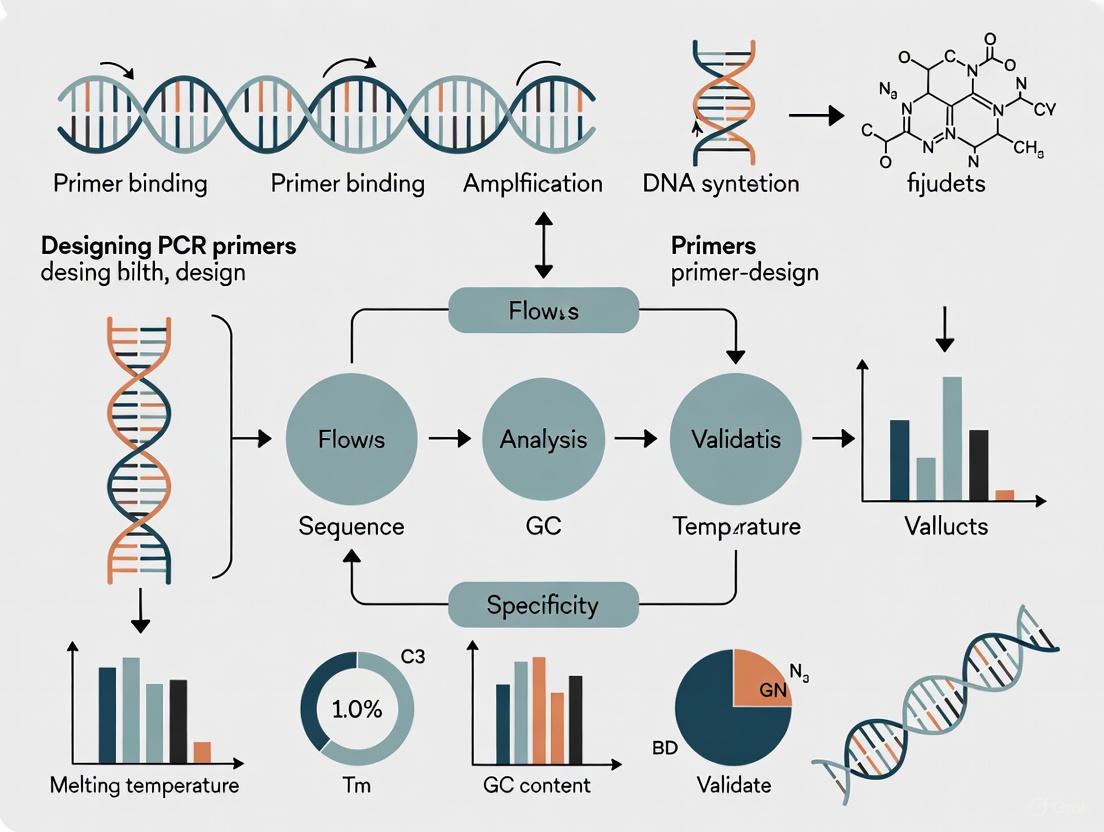
This guide provides a comprehensive roadmap for researchers and drug development professionals to master PCR primer design.
The Complete 2025 Guide to PCR Primer Design: From Basic Principles to Advanced Applications
Abstract
This guide provides a comprehensive roadmap for researchers and drug development professionals to master PCR primer design. It begins with foundational principles explaining the role and specifications of primers, then progresses to a step-by-step methodological workflow for designing and ordering primers. The guide dedicates significant attention to troubleshooting common amplification issues and optimizing reactions for challenging templates like GC-rich sequences. Finally, it explores modern validation techniques and comparative analyses of methods like ddPCR and sequencing, ensuring readers can verify their results with confidence and apply these skills across diverse biomedical research contexts.
PCR Primer Fundamentals: Understanding the Core Principles for Effective Design
What Are Primers and Why Is Their Design So Critical?
In the realm of molecular biology, few techniques are as fundamental as the Polymerase Chain Reaction (PCR). At the heart of every successful PCR experiment are primers—short, single-stranded DNA fragments that define the target for amplification [1]. Their meticulous design is not merely a preliminary step but a critical determinant of the experiment's success, influencing everything from specificity and efficiency to the ultimate validity of the results. This guide provides an in-depth examination of PCR primers and the pivotal role of their design, framing it within an essential workflow for beginner researchers.
What Are PCR Primers?
Primers are synthetic oligonucleotides, typically 18 to 30 nucleotides in length, that are designed to be complementary to the sequences flanking the specific DNA region of interest [1] [2] [3]. A standard PCR requires two primers: a forward primer and a reverse primer. These primers bind to opposite strands of the DNA template, "bookending" the sequence to be copied [4].
Their fundamental role is to provide a starting point for DNA synthesis. The DNA polymerase enzyme can only add new nucleotides to an existing strand of DNA or RNA. By annealing to the target site, primers supply the necessary free 3'-end hydroxyl group that the polymerase extends, thereby synthesizing a new DNA strand complementary to the template [3]. The region between the two primers is known as the amplicon, and the spacing of the primers directly dictates its size [4].
The Critical Importance of Primer Design
The design of primers is arguably the most crucial variable in a PCR setup. Careful design ensures the efficiency and specificity of the amplification reaction, resulting in a high yield of the desired amplicon and nothing else [5]. Poorly designed primers can lead to a range of problems that compromise experimental outcomes:
- Lack of Specificity (Off-target Binding): Primers that are too short or have low complexity may bind to multiple, non-specific locations in the genome. This results in the amplification of incorrect DNA sequences, generating spurious bands on a gel and confounding data analysis [6].
- Formation of Primer-Dimers: Primers with complementary sequences, especially at their 3' ends, can anneal to each other instead of the template DNA. These "primer-dimers" are amplified in preference to the target, consuming reagents and drastically reducing PCR yield [2].
- Inefficient Amplification: Primers with complex secondary structures (like hairpins) or an inappropriate melting temperature (Tm) will not bind to the template efficiently. This leads to low or failed amplification of the target region [3].
The following diagram illustrates the logical workflow for designing effective primers, integrating both in silico and experimental validation steps.
Core Principles of Effective Primer Design
Adhering to a set of established biochemical and computational guidelines is paramount for designing effective primers. The table below summarizes the key parameters and their optimal values.
Table 1: Key Parameters for PCR Primer Design
| Parameter | Optimal Value | Rationale and Explanation |
|---|---|---|
| Primer Length | 18–30 nucleotides [2] [3] | Shorter primers bind more efficiently, but longer primers provide greater specificity. A range of 18-24 bases is also commonly used [3]. |
| Melting Temperature (Tm) | 55–65°C; primers in a pair should be within 5°C of each other [2] | Tm is the temperature at which half the primer-DNA duplexes dissociate. Similar Tm ensures both primers bind to the template simultaneously during the PCR annealing step. |
| GC Content | 40–60% [2] [3] | A balanced GC content ensures stable primer-template binding without being too difficult to denature. G and C bases form stronger hydrogen bonds than A and T. |
| GC Clamp | The 3' end should end with one or two G or C bases [2] | The stronger bonding of G and C bases at the 3' end helps to stabilize the primer-template complex at the critical point where DNA polymerase begins synthesis. |
| Specific Sequence Features | Avoid long runs of a single base (>4) or dinucleotide repeats (e.g., ATATAT); avoid intra- and inter-primer homology [2] | Repetitive sequences or self-complementary regions can cause primers to form secondary structures (hairpins) or bind to each other (primer-dimers), hindering target binding. |
Additional Critical Considerations
- Specificity Checking: After an initial design, it is essential to verify that the primers are unique to the intended target sequence. Tools like Primer-BLAST compare potential primers against genomic databases to ensure they will not amplify unintended "off-target" regions [7] [6]. This step is crucial for confirming the primers will generate a single, specific product.
- Handling Complex Templates: When working with eukaryotic genomic DNA or cDNA, additional strategies are needed. To distinguish amplification from genomic DNA and mRNA (cDNA), primers can be designed to span an exon-exon junction or to be separated by a large intron on the genomic DNA [7]. This ensures that any product amplified from genomic DNA will be much larger or will not amplify at all.
A Protocol for Primer Design and Evaluation
This detailed methodology outlines the steps for designing and validating primers, suitable for a beginner's research project.
In Silico Design and Analysis
- Define the Target: Obtain the complete DNA sequence of your gene or region of interest from a curated database like RefSeq [4].
- Select Primer Binding Sites: Identify unique sequences of 18-24 bases flanking your target. Adhere to the parameters in Table 1.
- Utilize Computational Tools:
- Primer3: This is a widely used, open-source tool that automates the primer design process based on user-defined constraints [8]. Input your target sequence and parameters, and it will output a list of candidate primer pairs [6].
- Primer-BLAST: For a more integrated approach, use Primer-BLAST from the NCBI [7]. It combines the design capabilities of Primer3 with a BLAST search, automatically checking the specificity of candidate primers against a selected database (e.g., Refseq mRNA) before returning the results. This ensures the primers are specific to your intended organism.
Experimental Validation
- PCR Amplification: Even the best in silico design requires wet-lab testing. Set up a standard PCR reaction using your designed primer pair and the template DNA.
- Analysis by Gel Electrophoresis: Run the PCR product on an agarose gel. A successful reaction will show a single, sharp band at the expected amplicon size [4]. The presence of multiple bands indicates off-target binding, and a smear or a band at a very low molecular weight suggests primer-dimer formation.
- Sequencing: For absolute confirmation, the PCR product can be purified and sequenced to verify that the correct DNA fragment was amplified.
The Scientist's Toolkit: Essential Research Reagents
Table 2: Essential Materials for PCR and Primer Analysis
| Item | Function |
|---|---|
| Oligonucleotide Primers | Commercially synthesized, desalted primers are typically sufficient for standard PCR. For cloning or mutagenesis, higher purification grades (e.g., HPLC) are recommended [2]. |
| DNA Polymerase | The enzyme that catalyzes the synthesis of new DNA strands by adding nucleotides to the 3' end of the primers. Thermostable polymerases (e.g., Taq) are used for standard PCR. |
| Template DNA | The DNA sample containing the target sequence to be amplified. This can be genomic DNA, cDNA, or a plasmid. |
| Deoxynucleotide Triphosphates (dNTPs) | The building blocks (A, dTTP, dCTP, dGTP) used by the DNA polymerase to synthesize new DNA strands. |
| PCR Buffer | Provides the optimal chemical environment (pH, salts like MgCl₂) for the DNA polymerase to function efficiently and stably. Mg²⁺ is a critical cofactor. |
| Agarose Gel Electrophoresis System | Standard method to separate, visualize, and size PCR products based on their molecular weight, allowing for assessment of amplification success and specificity. |
Advanced Tools for Large-Scale Primer Design
For projects requiring the design of hundreds or thousands of primers, such as in targeted amplicon sequencing (TAS), manual design becomes impractical. Automated, high-throughput pipelines have been developed to address this need.
Tools like CREPE (CREate Primers and Evaluate) fuse the functionality of Primer3 with in-silico PCR (ISPCR) simulation [6]. This integrated pipeline automates the design of primer pairs for a large number of target sites and then evaluates their specificity by screening for potential off-target amplifications within a reference genome. The output provides a ranked list of primers along with metrics on their likelihood of off-target binding, enabling researchers to select the most robust primers for large-scale experiments [6].
This guide details the three fundamental parameters—primer length, melting temperature (Tm), and GC content—that are foundational for designing effective Polymerase Chain Reaction (PCR) primers, a critical skill for researchers in drug development and biomedical science.
Primer Length: The Foundation of Specificity
Primer length is a primary determinant of specificity and efficiency in DNA amplification. It directly influences how uniquely a primer binds to its intended target sequence.
Optimal Length and Its Rationale
For standard PCR and qPCR applications, primers should be 18 to 30 nucleotides long [2] [9] [10]. A more focused range of 18 to 24 bases is often recommended for optimal results [11].
The table below summarizes the recommended primer lengths and the consequences of deviating from these guidelines:
| Recommended Length | Consequences of Short Primers | Consequences of Long Primers |
|---|---|---|
| 18-30 bases for standard PCR [2] [9] | Non-specific binding: Higher probability of annealing to multiple, unintended sites on the DNA template [11]. | Slower hybridization rate: Reduced efficiency in annealing to the target sequence [11]. |
| 18-24 bases for ideal specificity [11] [12] | Reduced specificity: May bind to sequences with partial homology, leading to incorrect products [10]. | Lower amplicon yield: Inefficient annealing can result in less of the desired PCR product [11]. |
Melting Temperature (Tm): The Thermodynamic Core
The melting temperature (Tm) is the temperature at which half of the primer-DNA duplexes dissociate into single strands. It is a critical parameter for determining the experimental annealing temperature (Ta).
Defining and Calculating Tm
- Definition: Tm is the temperature where 50% of the primer is bound to its target and 50% is dissociated [11].
- Calculation: Tm can be estimated using a simple formula: Tm = 4(G + C) + 2(A + T) [11] [13]. However, more sophisticated nearest-neighbor methods are used by online tools and are considered more accurate, as they account for salt and primer concentration in the reaction buffer [9] [14].
Tm Guidelines and Annealing Temperature
The optimal Tm for primers generally falls between 55°C and 65°C [12] [15], though some applications can extend to 75°C [2]. The most critical rule is that the forward and reverse primer Tms should not differ by more than 1-5°C [2] [9] [16].
The annealing temperature (Ta) is derived from the Tm. A good starting point for Ta is 3-5°C below the calculated Tm of your primers [11] [13]. If the Ta is too low, non-specific products may form; if it is too high, primer binding will be inefficient, reducing yield [9].
GC Content: Ensuring Primer Stability
GC content refers to the percentage of Guanine (G) and Cytosine (C) bases in the primer sequence. Since G-C base pairs form three hydrogen bonds (as opposed to two in A-T pairs), the GC content directly affects the primer's stability and binding strength [11].
Optimal GC Content and the GC Clamp
- Optimal Range: Aim for a GC content between 40% and 60% [2] [11] [12].
- GC Clamp: It is crucial to have a G or C base at the 3' end of the primer. This "GC clamp" strengthens the binding at the most critical site for polymerase extension [2] [15]. However, avoid stretches of more than 3-4 G or C bases in a row, especially at the 3' end, as this can promote non-specific binding [2] [11] [13].
Consequences of Improper GC Content
| High GC Content (>60%) | Low GC Content (<40%) |
|---|---|
| Non-specific binding: May bind to off-target sequences with high affinity [10]. | Weak binding: Primer may not bind stably to the template, leading to low or no yield [11]. |
| Secondary structures: Increased risk of forming stable hairpins [10]. | Low Tm: May result in a Tm that is too low for efficient PCR [2]. |
Successful PCR primer design and execution rely on both in-silico tools and laboratory reagents.
Online Design and Analysis Tools
| Tool Name | Function | Key Feature |
|---|---|---|
| NCBI Primer-BLAST [7] | Primer Design & Specificity Check | Ensures primers are unique to the intended target sequence in a database. |
| IDT OligoAnalyzer Tool [9] | Oligo Analysis | Analyzes Tm, hairpins, dimers, and provides BLAST analysis. |
| Thermo Fisher Tm Calculator [14] | Tm Calculation | Calculates Tm and annealing temperature for specific polymerases. |
| Primer3 [16] | Automated Primer Design | Integrated into various platforms (e.g., Geneious) for finding optimal primer pairs. |
Essential Laboratory Reagents
| Reagent | Function | Consideration |
|---|---|---|
| DNA Polymerase | Enzyme that synthesizes new DNA strands. | Choose based on fidelity (accuracy) and specificity (e.g., hot-start to reduce primer-dimers) [10] [13]. |
| dNTPs | Nucleotides (dATP, dCTP, dGTP, dTTP) for DNA synthesis. | Quality and concentration are critical for efficient amplification. |
| Buffer Components | Provides optimal ionic conditions (e.g., Mg2+, K+) for polymerase activity. | Mg2+ concentration significantly impacts primer Tm and reaction efficiency [9]. |
| High-Purity Primers | Synthesized oligonucleotides. | Minimum purification (e.g., cartridge purification) is recommended for cloning; HPLC for complex applications [2] [10]. |
Experimental Protocol: From In-Silico to In-Vitro
This workflow outlines the key steps for designing and testing a new pair of PCR primers.
Step 1: Design Primers Using Software Tools
Input your target DNA sequence into a tool like Primer-BLAST or Primer3. Set the parameters to generate primers with a length of 18-30 bases, Tm of 55-65°C, and GC content of 40-60% [7] [16].
Step 2: Analyze and Validate Primer Pairs
- Check for Secondary Structures: Use a tool like OligoAnalyzer to ensure primers have minimal self-dimers, cross-dimers, or hairpins (ΔG > -9.0 kcal/mol) [9].
- Verify Specificity: Use the BLAST function to confirm your primers are unique to your target gene or organism [9] [13].
Step 3: Empirically Determine Optimal Annealing Temperature
- Perform a Temperature Gradient PCR: Set up a single reaction and run it with an annealing temperature gradient, typically from 5-10°C below to at or above the calculated Tm [14].
- Analyze Results: Run the PCR products on an agarose gel. The optimal Ta is the highest temperature that produces a strong, specific band.
The Importance of Melting Temperature (Tm) and How to Calculate It
In the realm of molecular biology, the Polymerase Chain Reaction (PCR) serves as a fundamental technique for amplifying specific DNA sequences, with applications spanning from basic research to clinical diagnostics and drug development. At the core of every successful PCR experiment lies the precise design of oligonucleotide primers, and understanding the melting temperature (Tm) is arguably the most critical parameter in this process. Melting temperature is defined as the temperature at which 50% of the DNA duplex (double-stranded DNA) dissociates into single strands [11] [17]. In practical terms for PCR, it represents the temperature at which a primer is in equilibrium between being bound and unbound to its complementary target sequence.
The Tm of a primer directly dictates the annealing temperature (Ta) used in the PCR thermal cycling protocol. Selecting an appropriate annealing temperature is paramount for reaction specificity and efficiency. If the Ta is too low, primers may bind to non-target sequences, leading to spurious amplification products. Conversely, if the Ta is too high, primer binding may be inefficient or not occur at all, resulting in low yield or complete PCR failure [9] [18]. Therefore, accurately calculating and applying the Tm is not merely a theoretical exercise but an essential step in designing robust and reliable PCR assays, especially for researchers and scientists embarking on molecular biology techniques.
The Critical Role of Tm in Primer Design and PCR Success
The importance of Tm extends beyond merely setting the thermal cycler; it is intrinsically linked to the very biochemistry of primer-template interactions.
Specificity and Efficiency
The primary goal of PCR is to amplify a single, specific target sequence from a complex mixture of DNA. The Tm is a direct measure of the stability of the primer-template duplex. A primer with an accurately calculated Tm allows for the selection of an annealing temperature that promotes highly specific binding. At this optimal temperature, the primer binds perfectly to its intended target but will not tolerate mismatches, thereby minimizing off-target binding and the amplification of non-specific products [9]. This specificity is crucial in quantitative PCR (qPCR), where the accuracy of quantification depends on the exclusive amplification of the target gene.
Primer-Pair Compatibility
A successful PCR requires two primers—a forward and a reverse—to work in unison. For both primers to bind to their respective targets simultaneously and with equal efficiency during each annealing step, their Tm values must be compatible. Experts recommend that the Tm values for a primer pair should not differ by more than 2-5°C [9] [2] [18]. A significant difference in Tm can lead to a situation where one primer binds efficiently while the other does not, resulting in asymmetric amplification and a drastic reduction in yield.
Relationship with Primer Characteristics
The Tm of a primer is not an arbitrary value; it is a function of the primer's physical and chemical properties:
- Length: Longer primers have higher Tm values because more hydrogen bonds hold the duplex together. For optimal specificity and binding efficiency, PCR primers are typically designed to be 18-30 nucleotides in length [9] [19] [11].
- GC Content: The GC content of a primer significantly impacts its Tm. Guanine (G) and cytosine (C) base pairs form three hydrogen bonds, whereas adenine (A) and thymine (T) pairs form only two. Consequently, primers with a higher proportion of G and C bases are more thermally stable and have a higher Tm. The ideal GC content for a primer is between 40-60%, which provides a balance between stability and specificity [2] [19] [11].
- GC Clamp: It is considered good practice to have a G or C base at the 3' end of the primer, a feature known as a "GC clamp." This strengthens the binding of the most critical part of the primer—the site where the DNA polymerase begins synthesis—preventing "breathing" (fraying) of the ends and increasing priming efficiency [2] [18].
The following diagram illustrates the core workflow of PCR primer design, highlighting the central role of Tm and its relationship with other key primer properties.
Methods for Calculating Melting Temperature
Several formulas and online tools are available for calculating Tm, each with varying levels of accuracy and complexity. The choice of method often depends on the required precision and the nature of the primer sequence.
The Basic Method
The most straightforward method for calculating Tm is the Basic Method, often referred to as the Wallace Rule or modified Marmur-Doty formula [20] [17]. It is a simple calculation based solely on the number of each nucleotide in the sequence.
Formula: Tm = 4(G + C) + 2(A + T) - 7 [11] [17]
In this formula, A, T, G, and C represent the number of respective nucleotides in the primer. The -7 at the end is an empirical correction factor for the solution conditions. While this method is easy and quick for mental calculations, it is less accurate because it does not account for the sequence context (i.e., the order of the bases) or the precise salt concentration of the PCR buffer. It is best suited for short oligonucleotides (e.g., 14 bases or fewer) or for obtaining a rough estimate [17].
Example Calculation:
For a primer with the sequence 5'-ACGTCCGGACTT-3':
- Nucleotide count: A=2, C=4, G=3, T=3
- Tm = 4(3+4) + 2(2+3) - 7 = 4(7) + 2(5) - 7 = 28 + 10 - 7 = 31.0°C [17]
The Nearest-Neighbor Method
The Nearest-Neighbor Method is a more sophisticated and significantly more accurate approach that is considered the gold standard for Tm calculation [14] [17]. This method is based on thermodynamic principles and considers not just the base composition, but the specific sequence of the primer.
This method works by summing the enthalpy (ΔH°) and entropy (ΔS°) changes for each "nearest-neighbor" doublet (pairs of adjacent bases) in the sequence, plus factors for helix initiation and symmetry. These thermodynamic values have been empirically determined for all possible combinations of base doublets [17].
Formula: The full nearest-neighbor formula is complex, but a simplified version is: Tm = [ΔH° / (ΔS° + R * ln(C))] - 273.15 + 16.6 * log([Na+]) Where:
- ΔH° = Total enthalpy change (kcal/mol)
- ΔS° = Total entropy change (cal/mol·K)
- R = Gas constant (1.987 cal/mol·K)
- C = Total molar concentration of the primer (often 0.2-0.5 µM for PCR)
- [Na+] = Molar concentration of sodium ions [17]
This calculation is cumbersome to perform manually but is the algorithm used by most modern online primer design tools due to its superior accuracy, as it effectively predicts the stability of the primer-template duplex.
Comparison of Tm Calculation Methods
The table below summarizes the key characteristics of the two primary calculation methods.
Table 1: Comparison of Tm Calculation Methods for Oligonucleotides
| Feature | Basic Method | Nearest-Neighbor Method |
|---|---|---|
| Formula | Tm = 4(G+C) + 2(A+T) - 7 [11] [17] |
Tm = [ΔH° / (ΔS° + R * ln(C))] - 273.15 + 16.6 * log([Na+]) [17] |
| Key Inputs | Nucleotide count (A, T, G, C) | Primer sequence, salt concentration, primer concentration [14] [17] |
| Accuracy | Lower; approximate | Higher; more precise [17] |
| Best For | Short primers (<14 bases), quick estimates | All PCR primer design, especially for critical applications [17] |
| Considerations | Does not account for sequence order or buffer conditions. | Requires specialized software or online tools. |
A Practical Guide to Tm Calculation and Application
Using Online Tm Calculators
For laboratory practice, researchers rarely calculate Tm manually using the nearest-neighbor method. Instead, they rely on sophisticated and freely available online Tm calculators. These tools incorporate the nearest-neighbor thermodynamics and allow for input of specific reaction conditions.
Recommended Tools:
- Thermo Fisher Tm Calculator: Specifically calculates Tm and recommends annealing temperatures for various Thermo Scientific DNA polymerases [14].
- IDT OligoAnalyzer Tool: A versatile tool for analyzing Tm, hairpins, dimers, and mismatches. It allows you to input your specific buffer conditions [9].
- NCBI Primer-BLAST: The premier tool for designing primers and checking their specificity via BLAST analysis. It uses the nearest-neighbor method with SantaLucia 1998 parameters [7].
Protocol: How to Use an Online Tm Calculator
- Obtain Primer Sequence: Have the 5' to 3' sequence of your primer ready.
- Access the Tool: Navigate to one of the online tools listed above.
- Input Sequence: Paste your primer sequence into the designated field.
- Set Reaction Conditions (if available):
- Calculate: Run the calculation to obtain the Tm and other useful data like molecular weight and GC content.
Determining Annealing Temperature from Tm
Once the Tm of your primers is known, the annealing temperature (Ta) for the PCR must be set. A general starting point is to set the Ta 5°C below the calculated Tm of the primer with the lower Tm value [9] [19]. However, for polymerases with engineered buffers, a universal annealing temperature of 60°C is often successful, simplifying multiplexing and setup [21].
Optimization Protocol: Temperature Gradient PCR Even with an accurate Tm, empirical optimization is often necessary for the highest specificity and yield.
- Set Up a Single PCR Reaction: Use your template and primer pair.
- Program the Thermal Cycler: Set the annealing step to a temperature gradient (e.g., from 50°C to 68°C).
- Run the PCR: Amplify the target across the different temperatures in a single run.
- Analyze Results: Use agarose gel electrophoresis to visualize the PCR products. The optimal Ta is the highest temperature that produces the strongest, single band of the correct size [14] [18].
The Scientist's Toolkit: Essential Reagents for PCR
A successful PCR experiment relies on a suite of carefully selected reagents. The following table details the core components and their functions, with a focus on how they interact with primer Tm.
Table 2: Essential Reagents for a Standard PCR Experiment
| Reagent | Typical Concentration | Function & Importance in Relation to Tm |
|---|---|---|
| DNA Polymerase | 0.5-2.5 units/50 µL | Enzyme that synthesizes new DNA strands. Different polymerases (e.g., Taq, Phusion, Platinum) have different optimal buffer compositions, which affect the calculated Tm [14] [18]. |
| PCR Buffer | 1X concentration | Provides the optimal chemical environment. Contains Mg²⁺ (a critical cofactor for the enzyme and primer binding) and K⁺, which directly stabilizes the primer-template duplex and thus significantly impacts the actual Tm in the reaction [9] [18]. |
| Primers (Forward & Reverse) | 0.2-0.5 µM each | Short, single-stranded DNA sequences that define the start and end of the amplification target. Their Tm dictates the annealing temperature [19] [18]. |
| dNTPs (dATP, dCTP, dGTP, dTTP) | 200 µM each | The building blocks for DNA synthesis. Imbalanced concentrations can lead to incorporation errors and reduced yield. |
| Template DNA | 1-1000 ng (genomic) | The DNA containing the target sequence to be amplified. Quality and quantity can affect PCR efficiency. |
| Nuclease-Free Water | Q.S. to volume | Used to bring the reaction to its final volume. Must be free of nucleases to prevent degradation of primers and template. |
Advanced Considerations and Troubleshooting
Tm in Quantitative PCR (qPCR) Probe Design
In qPCR assays that use hydrolysis probes (e.g., TaqMan), the Tm of the probe is equally important. The probe must bind specifically to the amplicon after the primers. Therefore, the Tm of the probe should be 5-10°C higher than the Tm of the PCR primers. This ensures the probe is fully bound to the target before the primers anneal, allowing for accurate quantification during the annealing/extension step [9].
Troubleshooting Common Tm-Related PCR Issues
- No PCR Product: The annealing temperature may be too high. Lower the Ta in 2-3°C increments or use a temperature gradient to re-optimize. Verify primer Tm calculations and check for secondary structures [18].
- Non-Specific Bands or Smearing: The annealing temperature is likely too low. Increase the Ta incrementally. Ensure primers have similar Tm values and screen them for self-complementarity or primer-dimer formation using tools like the OligoAnalyzer [9] [19] [18].
- Low Yield: Can result from a suboptimal Ta or primers with low Tm values. Check that the GC content is within the 40-60% range and that the 3' end is not AT-rich. Re-calculate Tm using the nearest-neighbor method with correct buffer conditions [9] [11].
The relationships between Tm miscalculations and their experimental consequences are summarized in the following troubleshooting diagram.
A thorough understanding of melting temperature is non-negotiable for effective PCR primer design. Tm is not a static number but a dynamic property influenced by primer length, sequence, GC content, and the precise ionic conditions of the reaction buffer. While the basic 4(G+C)+2(A+T)-7 formula offers a quick estimate, leveraging online tools that use the nearest-neighbor thermodynamic method provides the accuracy required for demanding applications in research and drug development. By accurately calculating Tm, using it to determine an optimal annealing temperature, and understanding its role in the broader context of PCR biochemistry, scientists can design specific and efficient assays, thereby ensuring the reliability and success of their genetic analyses.
In the polymerase chain reaction (PCR), primers serve as the fundamental anchors that initiate the amplification of specific DNA sequences. Among the various design parameters, primer length stands as a primary determinant of assay success, directly influencing both specificity and amplification efficiency. The established optimal range of 18-30 bases represents a carefully balanced compromise between these two critical objectives [2] [11] [22]. Shorter primers within this range anneal more efficiently and require fewer PCR cycles for amplicon generation, thus enhancing efficiency [11]. Conversely, longer primers increase specificity, which is crucial in complex sample types like genomic DNA, by reducing the probability of hybridizing to multiple, off-target sites [23]. This technical guide, framed within a broader primer design thesis for beginners, will explore the experimental evidence and practical considerations behind this key parameter, providing researchers and drug development professionals with a foundational understanding for designing robust PCR assays.
Core Principles of Primer Design
The Interplay of Key Primer Parameters
While length is crucial, it does not function in isolation. A well-designed primer must balance multiple interdependent characteristics to ensure optimal performance. The following table summarizes these vital parameters and their recommended values:
Table 1: Essential Parameters for PCR Primer Design
| Parameter | Recommended Value | Rationale & Impact |
|---|---|---|
| Length | 18–30 nucleotides [2] [22] [9] | Balances specificity (longer) with hybridization rate and efficiency (shorter) [23] [11]. |
| GC Content | 40%–60% [2] [11] | Ensures stable binding (GC bases form 3 H-bonds) while avoiding mispriming from overly strong binding [11]. |
| Melting Temperature (Tm) | 60–75°C; Forward and Reverse primers within 5°C [2] [9] | Ensures both primers bind to the target simultaneously and efficiently. Critical for determining the annealing temperature [9]. |
| 3' End Stability (GC Clamp) | G or C residue at the 3' end; Avoid >3 G/C consecutively [2] [11] | Promotes specific initiation by polymerase but prevents non-specific binding from excessive stability [2]. |
| Secondary Structures | Avoid runs of 4+ identical bases, dinucleotide repeats, self-complementarity, and inter-primer homology [2] [23] | Prevents primer-dimer artifacts, hairpins, and self-dimers that compete with target binding and reduce yield [2] [9]. |
The Thermodynamic Rationale Behind the 18-30 Base Range
The consensus length range of 18-30 nucleotides is not arbitrary but is grounded in the thermodynamics of DNA hybridization and the requirements of the PCR process.
Specificity and Hybridization Kinetics: The specificity of a primer is a direct function of its length [11]. In a complex genome, a sequence 16 bases long has a high probability of appearing multiple times by random chance. A primer of 18-24 nucleotides is statistically long enough to be unique, ensuring it anneals to only the intended target site [11]. However, this relationship has a point of diminishing returns. Primers longer than 30 bases exhibit slower hybridization rates, which can lead to inadequate binding during the short annealing phase of a PCR cycle, ultimately resulting in reduced amplicon yield [11].
Efficiency and Annealing Dynamics: From an efficiency standpoint, shorter primers are favorable. They anneal to their target sequence more effectively and require fewer PCR cycles for amplicon generation compared to longer primers [11]. This efficient binding is crucial for the high amplification efficiency required in quantitative PCR (qPCR), where the goal is to approach 100% efficiency, meaning the amplicon doubles every cycle [24]. Therefore, the 18-30 base range allows for primers that are both sufficiently specific and efficiently binding.
Experimental Validation and Optimization
Protocol for Determining Optimal Annealing Temperature
The primer's melting temperature (Tm)—the temperature at which 50% of the DNA duplex is dissociated—is a theoretical value calculated from its length, GC content, and sequence [11]. However, the Annealing Temperature (Ta) used in the protocol must be determined experimentally for optimal results, as it is dependent on the specific primers, master mix, and thermal cycler used [25].
- Design Primers: Design primers according to the guidelines in Table 1.
- Prepare Reaction Mix: Set up a standard PCR reaction with your template and primer pair.
- Run a Gradient PCR: Using a thermal cycler with a temperature gradient function, run the PCR with an annealing temperature gradient spanning from 5°C below to 5°C above the calculated Tm of your primers.
- Analyze Results: Post-amplification, analyze the PCR products using gel electrophoresis. The optimal Ta is the highest temperature that produces a single, robust band of the correct amplicon size. A robust assay will work over a range of temperatures, while a narrow optimal range indicates a less reliable assay [25].
Assessing PCR Amplification Efficiency
For qPCR experiments, accurately determining the amplification efficiency (E) is critical for reliable quantification. Efficiency is best determined using a standard curve based on a serial dilution of a known template quantity [26] [24].
- Prepare Standard Curve: Create a dilution series (e.g., 5-fold or 10-fold) of your target DNA or cDNA. Use a minimum of 5 data points and include at least 3-4 qPCR technical replicates at each concentration to ensure precision [26].
- Run qPCR: Amplify the entire dilution series using your optimized primers and conditions.
- Calculate Efficiency: Plot the Quantification Cycle (Cq) values against the logarithm of the initial template concentration. The slope of the resulting standard curve is used to calculate efficiency with the formula: E = 10(–1/slope) – 1 [24].
- Interpret Results: An ideal reaction with 100% efficiency has a slope of -3.32. In practice, an efficiency between 90% and 105% is generally acceptable [26]. A low efficiency may indicate poor primer design or suboptimal reaction conditions.
A Workflow for Robust Primer Design
A systematic approach to primer design, from in silico planning to wet-lab validation, is key to developing a successful PCR assay. The following diagram illustrates this iterative workflow, integrating the principles of length, specificity, and efficiency.
Diagram 1: Primer design and validation workflow.
The Scientist's Toolkit: Essential Research Reagents
The following table details key reagents and tools required for the experimental validation of primer performance.
Table 2: Essential Reagents and Tools for PCR Assay Development
| Item | Function/Description | Key Consideration |
|---|---|---|
| DNA Polymerase | Enzyme that synthesizes new DNA strands from the primers. | Choice depends on application (e.g., standard vs. high-fidelity PCR) [23]. |
| dNTPs | Deoxynucleoside triphosphates (dATP, dCTP, dGTP, dTTP); the building blocks for DNA synthesis. | Quality and concentration are critical for efficient amplification and fidelity. |
| Buffer Components | Provides optimal ionic conditions (e.g., K+, Mg2+) and pH for polymerase activity. | Mg2+ concentration significantly impacts primer annealing and must be optimized [9]. |
| Template Nucleic Acid | The target DNA or RNA to be amplified. | Quality, quantity, and purity (free of inhibitors) are paramount. For RNA, include a reverse transcription step. |
| Thermal Cycler | Instrument that automates the temperature cycling for PCR. | Instruments can vary in performance, affecting the precision of efficiency estimates [26]. |
| OligoAnalyzer Tool | Free online tool (e.g., from IDT) for analyzing Tm, hairpins, and dimer formation [9]. | Uses nearest-neighbor thermodynamics for accurate predictions. Essential for in silico checks. |
| NCBI Primer-BLAST | Free tool for designing primers and checking their specificity against public databases [7]. | Ensures primers are unique to the intended target, preventing off-target amplification. |
The guideline of 18-30 bases for primer length is a cornerstone of effective PCR design, representing a critical balance between the statistical need for specificity and the thermodynamic requirements for efficient amplification. While this parameter is fundamental, it must be integrated with other design principles—such as appropriate GC content, Tm, and stringent checks for secondary structures—to form a cohesive design strategy. By adhering to a systematic workflow that combines rigorous in silico analysis with empirical validation through temperature gradients and standard curves, researchers can develop robust, reliable, and highly sensitive PCR assays. This foundational knowledge empowers scientists to not only execute successful experiments but also to troubleshoot effectively, accelerating progress in research and drug development.
Achieving the Ideal GC Content (40-60%) and the GC Clamp
In the polymerase chain reaction (PCR), the careful design of oligonucleotide primers is a fundamental step for successful DNA amplification. Two of the most critical principles for ensuring primer specificity and efficiency are maintaining an ideal GC content and incorporating a GC clamp. This guide details the rationale and practical methodologies for optimizing these parameters, providing a foundational skill for researchers in molecular biology and drug development.
The Critical Role of GC Content in Primer Design
GC content, the percentage of guanine (G) and cytosine (C) bases within a primer, directly influences the stability of the primer-template duplex. This is because G and C bases form three hydrogen bonds, creating a stronger and more stable bond than the two hydrogen bonds formed by adenine (A) and thymine (T) base pairs [27].
Optimal GC Content Range
The universally accepted optimal range for primer GC content is 40–60% [28] [2] [29]. Primers designed within this range exhibit balanced binding stability, which is crucial for specific and efficient amplification. The following table summarizes the consequences of deviating from this ideal range:
Table 1: Effects of GC Content on PCR Performance
| GC Content | Consequence | Impact on PCR |
|---|---|---|
| Too Low (<40%) | Primer-template binding is too weak due to predominance of weaker A-T bonds. | Low yield or failed reaction due to inefficient primer annealing. |
| Within Ideal Range (40-60%) | Balanced binding strength and specificity. | High yield of the specific target amplicon. |
| Too High (>60%) | Primer-template binding is excessively strong; increased risk of non-specific, secondary binding. | Non-specific amplification and mispriming [28]. |
The GC Clamp: Enhancing Specificity at the 3' End
A GC clamp refers to the presence of one or two G or C bases within the last five nucleotides at the 3' end of a primer [28] [27]. This feature is strategically important because the DNA polymerase initiates synthesis from the 3' end of the primer.
Mechanism of the GC Clamp
The stronger hydrogen bonding of a G/C-rich clamp at the 3' terminus promotes specific binding and helps to "lock" the primer in place on the template DNA [27] [2]. This significantly improves the fidelity of the amplification by ensuring that elongation only begins when the primer is correctly and stably annealed.
Design Rules for the GC Clamp
Adhering to the following guidelines is crucial for an effective GC clamp:
- Presence: Include at least one G or C base in the last 5 bases at the 3' end [28] [27].
- Ideal Configuration: The presence of 2 G or C bases in this region is often recommended for optimal stability [28] [30].
- Avoid Excess: More than 3 G or C bases in the last 5 bases should be avoided, as this can lead to overly high local melting temperature (Tm) and increase the potential for primer-dimer formation or non-specific binding [28] [30] [29].
Diagram: Conceptual diagram of a PCR primer highlighting key design features.
Practical Design and Optimization Workflow
A Step-by-Step Primer Design Protocol
- Identify Target Sequence: Select a unique 18-22 base pair sequence for both the forward and reverse primer that flanks your region of interest [28] [31].
- Calculate GC Content: Determine the GC content for each primer. If outside the 40-60% range, redesign by shifting the primer sequence slightly.
- Check for GC Clamp: Verify that the last 5 bases of the 3' end contain 1-2 G or C bases. Avoid stretches of 4 or more of the same nucleotide [28] [2].
- Calculate Melting Temperature (Tm): Use a reliable algorithm (e.g., the nearest neighbor method) to calculate the Tm for both primers. The two primers should have Tms within 5°C of each other [28] [2] [32].
- Check for Secondary Structures: Use software tools to analyze primers for self-dimers, hairpins, and cross-dimers, which can drastically reduce PCR efficiency [28] [29].
- Verify Specificity: Use the NCBI Primer-BLAST tool to ensure your primers are specific to the intended target and do not amplify other regions in the genome [7].
Experimental Validation and Troubleshooting
Even well-designed primers may require experimental optimization. The annealing temperature (Ta) is the most critical parameter to adjust.
- Initial Annealing Temperature: A common starting point is to set the Ta at 3–5°C below the calculated Tm of the primers [33] [31].
- Gradient PCR: Use a thermal cycler with a gradient function to test a range of annealing temperatures (e.g., from 50°C to 65°C) in a single run. The optimal temperature will produce the strongest specific band with the least non-specific product [28] [33].
- Touchdown PCR: This technique starts with an annealing temperature higher than the expected Tm and gradually decreases it in subsequent cycles. This ensures that the first, most specific amplifications enrich the target before lower, more permissive temperatures are used, thereby improving specificity [33].
- Universal Annealing Buffers: Some commercial DNA polymerases are supplied with specialized buffers that allow for a universal annealing temperature (e.g., 60°C) for most primer pairs, simplifying optimization and enabling the co-cycling of different PCR assays [21].
Diagram: A workflow for designing and experimentally optimizing PCR primers.
Essential Reagents and Tools for PCR Primer Design and Validation
A successful PCR experiment relies on both robust in-silico design and high-quality laboratory reagents.
Table 2: Research Reagent Solutions and Key Tools for PCR
| Item | Function / Description | Example / Note |
|---|---|---|
| DNA Polymerase | Enzyme that synthesizes new DNA strands. | Hot-start polymerases (e.g., Platinum series, OneTaq Hot Start) reduce non-specific amplification [21] [32]. |
| Universal Annealing Buffer | Specialized buffer that allows a single annealing temperature (e.g., 60°C) for diverse primers. | Simplifies protocol setup and enables co-cycling of different assays [21]. |
| High-Purity dNTPs | The building blocks (A, dT, G, C) for DNA synthesis. | Typical concentration is 200 µM of each dNTP [32]. |
| Magnesium Chloride (MgCl₂) | Cofactor essential for DNA polymerase activity. | Optimal concentration is typically 1.5-2.0 mM and may require fine-tuning [33] [32]. |
| Template DNA | The sample DNA containing the target sequence to be amplified. | Use high-quality, purified DNA; recommended amounts are 1pg–10 ng (plasmid) or 1ng–1µg (genomic) [32]. |
| In-Silico Design Tool | Software for designing primers according to established guidelines. | Tools like Primer Premier or online platforms automate length, Tm, and GC parameter checks [29]. |
| Specificity Check Tool | Tool to verify primer uniqueness against genomic databases. | NCBI's Primer-BLAST is the gold standard for ensuring target-specific primers [7]. |
| Oligo Analyzer Tool | Tool for checking secondary structures like hairpins and self-dimers. | IDT's OligoAnalyzer tool can calculate Tm and visualize potential secondary structures [33]. |
Mastering the principles of GC content and the GC clamp is non-negotiable for reliable PCR primer design. Adherence to the 40-60% GC content range ensures stable primer binding, while the strategic placement of a GC clamp at the 3' end dramatically enhances priming specificity. By integrating these foundational rules with modern in-silico tools and a systematic experimental optimization workflow, researchers can consistently achieve high-specificity amplification, forming a robust foundation for advanced genetic analysis and diagnostic assay development.
In the polymerase chain reaction (PCR), primers are the single most critical component governing the assay's specificity and sensitivity [25]. Even with a perfect sequencer or optimal reaction conditions, a poorly designed primer can lead to experimental failure, resulting in low yield, nonspecific amplification, or unreadable sequences [34]. This guide focuses on three pervasive challenges in primer design: secondary structures, primer dimers, and sequence repeats. Understanding and avoiding these pitfalls is essential for researchers, scientists, and drug development professionals seeking to generate reliable, reproducible molecular data. The principles outlined here form part of a broader, foundational thesis on PCR primer design for beginner researchers, emphasizing practical solutions and experimental validation.
Primer Dimer Formation
What Are Primer Dimers?
Primer dimers are artifacts formed when primers anneal to themselves or to each other instead of to the target DNA template. There are two primary types:
- Self-dimers: Occur when two copies of the same primer anneal to each other [34].
- Cross-dimers (Hetero-dimers): Form between the forward and reverse primers in a pair [34] [11].
These structures are typically caused by complementary sequences, especially at the 3' ends of the primers. Complementarity of just a few nucleotides is sufficient for primers to bind together, particularly at low annealing temperatures [35].
Consequences for PCR and qPCR
Primer dimers have significant detrimental effects on amplification reactions:
- Resource Depletion: They consume primers, DNA polymerases, and dNTPs, reducing resources available for target amplification [35].
- Reduced Efficiency: By occupying polymerases, they prevent efficient amplification of the target sequence, leading to reduced yield and potential false negatives in diagnostic assays [35].
- False Positives: In qPCR using intercalating dyes like SYBR Green, primer dimers are detected as amplification products, leading to false positive signals, particularly in no-template controls (NTCs) [35].
The impact on quantification cycles (Ct values) is particularly problematic in quantitative applications. As shown in Figure 4, primers with a high tendency for dimer formation can significantly increase Ct values compared to primers with low dimer-forming tendency, even under identical reaction conditions [35].
Prevention and Optimization Strategies
Preventing primer dimers begins with careful in silico design followed by experimental validation:
- 3' End Complementarity: Avoid complementarity at the 3' ends of primer pairs, especially in the final 3-4 bases [34] [18].
- Thermodynamic Screening: Use tools like OligoAnalyzer to screen designs. The ΔG value for potential dimers should be weaker (more positive) than approximately -9 kcal/mol [34] [9].
- Hot-Start Polymerases: Use "hot start" polymerases that remain inactive until heated to 95°C, preventing polymerization during reaction setup when primer dimer formation is most likely [35].
- Primer Concentration Optimization: Optimize primer concentrations, as high concentrations enhance primer-primer interactions [35].
Table 1: Key Parameters for Avoiding Primer Dimers
| Parameter | Recommended Value | Rationale |
|---|---|---|
| ΔG for Dimers | > -9 kcal/mol | Weaker binding energy reduces dimer stability [9] |
| 3' End Complementarity | Avoid, especially last 3-4 bases | Prevents polymerase extension from dimerized ends [34] |
| Annealing Temperature | Sufficiently high (optimize experimentally) | Reduces transient primer-primer interactions [35] |
| Primer Concentration | Optimized for each assay | High concentrations promote intermolecular interactions [35] |
Secondary Structures
Hairpins and Their Impact
Hairpins (or stem-loop structures) form due to intramolecular folding when regions within a single primer are complementary to each other [34] [11]. These secondary structures prevent the primer from binding to its target template by sequestering the primer sequence in a stable conformation. Hairpins are particularly problematic when they involve the 3' end of the primer, as this can prevent the polymerase from initiating DNA synthesis [11].
The stability of hairpin structures is governed by their Gibbs free energy (ΔG), with more negative values indicating more stable structures. Strong intramolecular folding, especially when the ΔG of the hairpin is competitive with primer-template binding, significantly reduces amplification efficiency [34].
Prevention and Analysis
- In Silico Prediction: Use structure prediction tools such as OligoAnalyzer or UNAFold to identify potential hairpins before ordering primers [34] [9].
- Sequence Modification: Avoid palindromic sequences and long runs of identical bases that increase folding propensity [34].
- Thermodynamic Threshold: Discard primers with strong hairpins, particularly those with ΔG values more negative than -9 kcal/mol [9].
Table 2: Characterization of Common Secondary Structures
| Structure Type | Description | Key Formation Mechanism | Primary Impact |
|---|---|---|---|
| Hairpin Loops | Intramolecular folding creating a stem-loop structure [11] | Complementarity within a single primer (≥3 bp) [11] | Prevents primer binding to template [34] |
| Self-Dimers | Two identical primers annealing to each other [34] | Inter-primer complementarity | Reduces functional primer concentration [34] |
| Cross-Dimers | Forward and reverse primers annealing together [34] | Complementarity between different primers | Creates amplification artifacts [34] |
Sequence Repeats and Their Problems
Types of Problematic Repeats
Certain sequence patterns in primers can cause specific issues during amplification:
- Single Base Runs: Long stretches of the same nucleotide (e.g., "AAAAA" or "CCCCC") [34] [2] [18].
- Dinucleotide Repeats: Repeated two-base patterns (e.g., "ATATATAT") [34] [2] [18].
These repetitive sequences can cause "slipping" or "breathing" where the primer misaligns along the template DNA, leading to non-specific amplification or hairpin formation [18]. Additionally, runs of G residues (e.g., "GGGGG") are particularly problematic as they can form stable non-Watson-Crick structures called G-quadruplexes [9].
Design Guidelines for Stable Primers
- Maximum Run Length: Avoid runs of 4 or more identical bases [2] [9].
- GC Distribution: Ensure uniform distribution of G and C bases rather than clustering at one end [34].
- GC Clamp Considerations: While having a G or C at the 3' end promotes stable binding (a "GC clamp"), avoid placing more than 3 G/C bases in the final five nucleotides to prevent non-specific priming [34] [11].
Integrated Workflow for Identification and Troubleshooting
The following workflow provides a systematic approach to identifying and addressing these common primer design pitfalls:
Primer Pitfall Identification Workflow
Experimental Validation Protocols
In Silico Analysis Methods
Before moving to wet lab validation, comprehensive computational analysis is crucial:
- Specificity Checking: Use NCBI Primer-BLAST to confirm primer uniqueness and minimize off-target binding [34] [18]. This tool integrates Primer3's design engine with BLAST-based specificity checking against genomic databases.
- Thermodynamic Analysis: Utilize tools like IDT's OligoAnalyzer to calculate ΔG values for potential secondary structures. Input exact reaction conditions (Mg²⁺, K⁺, dNTP concentrations) for accurate predictions [9].
- Secondary Structure Prediction: The UNAFold tool can simulate oligonucleotide folding under specific thermal conditions [9].
Wet Lab Optimization Techniques
- Gradient PCR: Conduct PCR with an annealing temperature gradient (typically ±5-10°C from calculated Tm) to determine the optimal temperature that provides specific amplification with minimal artifacts [36].
- No-Template Controls (NTCs): Always include NTCs containing all reaction components except template DNA to detect primer-dimer formation and reagent contamination [35] [37].
- Melting Curve Analysis: For qPCR using SYBR Green, perform dissociation curve analysis after amplification. A single sharp peak indicates specific amplification, while multiple peaks suggest primer dimers or non-specific products [37].
Table 3: Essential Research Reagent Solutions
| Reagent/Category | Function/Purpose | Specific Examples |
|---|---|---|
| Hot-Start DNA Polymerases | Prevents enzymatic activity during reaction setup, reducing primer-dimer formation [35] | Various commercial hot-start Taq polymerases |
| Magnesium Salts (Mg²⁺) | Cofactor for DNA polymerase; concentration affects specificity and yield [18] | MgCl₂, typically 1.5-4.0 mM final concentration [18] |
| PCR Enhancers/Additives | Improve amplification of difficult templates by reducing secondary structure [18] | DMSO (1-10%), Formamide (1.25-10%), Betaine (0.5-2.5 M) [18] |
| Fluorescent Detection Systems | Enable real-time monitoring of amplification in qPCR [38] | SYBR Green, TaqMan probes (single or double-quenched) [9] [38] |
| Nuclease-Free Water | Solvent for reaction mixtures without degrading nucleic acids | Various commercial nuclease-free water preparations |
Mastering the art of primer design requires diligent attention to the pitfalls of secondary structures, primer dimers, and sequence repeats. By integrating rigorous in silico analysis with systematic experimental validation, researchers can develop robust, reliable PCR assays. The protocols and guidelines presented here provide a foundation for avoiding these common issues, ultimately leading to more accurate and reproducible results in molecular genetics research and drug development. As with any scientific technique, careful optimization and validation remain essential—what works theoretically must always be confirmed practically in the laboratory setting.
A Step-by-Step Primer Design Workflow: From Sequence to Synthesis
Leveraging Free Bioinformatics Tools for Primer Design
Polymersse Chain Reaction (PCR) is a foundational technique in modern molecular biology, enabling the amplification of specific DNA sequences from minimal template material. At the heart of every successful PCR experiment lies a pair of well-designed primers—short single-stranded DNA molecules that initiate DNA synthesis. Careful primer design is critical for experimental success, as it directly impacts amplification specificity, reaction efficiency, and assay reliability. Properly designed primers increase sensitivity and specificity while decreasing effort spent on experimental optimization. Free bioinformatics tools have emerged as indispensable resources for automating the complex calculations required in PCR primer design, making sophisticated design capabilities accessible to researchers at all levels.
This guide provides an in-depth technical overview of freely available primer design tools, categorized by their specialized applications. It is structured within a broader thesis on PCR primer design for beginner researchers, offering both fundamental principles and advanced methodologies relevant to scientists and drug development professionals. We will explore tool selection criteria, detailed operational protocols, and practical implementation strategies to empower researchers in leveraging these computational resources effectively.
Core Principles of Primer Design
Before utilizing bioinformatics tools, understanding the fundamental biochemical parameters that govern primer functionality is essential. These principles form the basis for algorithm configurations across all primer design software.
Biochemical Parameters
- Primer Length: Optimal primers are typically 18-25 nucleotides long. Excessively short primers lack specificity, while overly long primers promote secondary structure formation and increase costs without improving performance [39].
- Melting Temperature (Tm): Tm represents the temperature at which 50% of the primer-DNA duplex dissociates. Forward and reverse primers should have closely matched Tm values, ideally within 2-3°C of each other, with an absolute range generally between 55°C and 65°C for standard PCR [39]. This ensures both primers bind their targets simultaneously during the annealing step.
- GC Content: The proportion of guanine and cytosine bases should ideally fall between 40-60%. This range provides sufficient duplex stability without promoting non-specific binding. GC-rich regions (exceeding 60%) form stronger triple-hydrogen bonds, potentially increasing melting temperature and causing inefficient amplification [39].
- 3' End Design: The 3' terminus is particularly critical as DNA polymerase initiates synthesis at this position. Avoid placing more than two consecutive G or C nucleotides at the 3' end, as this "GC clamp" effect can create overly strong binding and increase non-specific amplification [39].
- Specificity Considerations: Primers must demonstrate unique complementarity to the target sequence to avoid amplifying non-target regions. This is particularly crucial when working with genomic DNA, where homologous sequences or gene family members might co-exist [7].
Secondary Structure Considerations
- Hairpins: Self-complementary sequences within primers can cause them to fold back on themselves, forming stem-loop structures that interfere with template binding.
- Self-Dimers and Cross-Dimers: Primers can adhere to themselves (self-dimers) or to their partner primer (cross-dimers), reducing primer availability for the intended reaction.
- Sequence Repeats: Avoid primers with poly-base runs (more than 3 consecutive identical bases) or low complexity regions, as these can cause polymerase slippage during extension [40].
Table 1: Optimal Ranges for Key Primer Design Parameters
| Parameter | Optimal Range | Significance |
|---|---|---|
| Length | 18-25 nucleotides | Balances specificity with binding energy |
| GC Content | 40-60% | Ensures appropriate duplex stability |
| Tm | 55-65°C | Compatible with standard PCR protocols |
| ΔTm (Fwd-Rev) | ≤2-3°C | Enables simultaneous primer binding |
| 3' End GC | ≤2 consecutive bases | Prevents non-specific initiation |
Classification of Primer Design Tools
Bioinformatics tools for primer design have evolved to address diverse PCR applications, each with specialized algorithmic considerations. The classification below organizes available software by experimental context, enabling researchers to select tools aligned with their specific needs.
General PCR Primer Design
For standard PCR applications, several robust tools provide comprehensive design capabilities:
- Primer3/Primer3Plus: As one of the most widely used primer design engines, Primer3 offers a balance of user-friendliness and customizable parameters. The web-based Primer3Plus interface provides enhanced accessibility for routine cloning and amplification tasks. It supports basic parameter configuration including product size ranges, Tm constraints, and exclusion of repeat regions [41].
- NCBI Primer-BLAST: This tool represents a powerful integration of the established Primer3 algorithm with NCBI's BLAST (Basic Local Alignment Search Tool) engine. Its distinctive advantage lies in performing automated specificity verification against NCBI databases to minimize off-target amplification. Researchers can specify organismal databases to refine specificity checking, dramatically reducing false amplification risks [7]. The tool also supports sophisticated features like exon-exon junction spanning for cDNA amplification and separation of primers by introns to distinguish genomic and cDNA amplification.
- IDT PrimerQuest Tool: Offering both predesigned assays (for human, mouse, and rat transcriptomes) and custom design capabilities, PrimerQuest employs sophisticated thermodynamic calculations with approximately 45 customizable parameters. The tool incorporates multiple checks to reduce primer-dimer formation and restricts poly-base runs to 3 consecutive repeats or less to prevent polymerase slippage [40].
Specialized Application Tools
Specific experimental contexts require tailored design approaches:
- Quantitative PCR (qPCR) Tools: IDT's PrimerQuest Tool provides dedicated options for qPCR designs, including both primer-only configurations (for intercalating dye chemistry) and primer-plus-probe configurations (for hydrolysis probe assays). The algorithm incorporates critical constraints such as prohibiting G bases at the 5' end of probes (which can quench fluorescent dyes) and ensuring appropriate Tm differences between primers and probes [40].
- Cloning Method Tools:
- NEBuilder Assembly Tool: Designs primers for Gibson Assembly and NEBuilder HiFi DNA Assembly, incorporating overlapping homology arms required for these methods [42].
- Golden Gate Assembly Tools: NEB and other providers offer specialized tools for designing primers with appropriate overhangs for Golden Gate assembly reactions [41].
- SNP and Mutation Detection: Tools like PrimerQuest allow parameter customization to position primers appropriately relative to variant sites, with options to place the variant of interest in optimal amplicon positions for detection [40].
- Degenerate Primer Design: HYDEN (HighlY DEgeNerate primers) addresses the challenge of designing primers when exact template sequences are unknown, such as when amplifying homologous genes from related species or detecting related pathogens. This command-line tool generates primer sets that cover multiple sequence variants [43].
Table 2: Specialized Primer Design Tools and Applications
| Tool Name | Primary Application | Key Features | Access Method |
|---|---|---|---|
| IDT PrimerQuest | qPCR, SNP detection | ~45 customizable parameters, batch analysis | Web interface |
| NEBuilder Assembly | DNA assembly methods | Overlap design for Gibson/NEBuilder | Web interface |
| NEB LAMP Designer | Isothermal amplification | Designs complex primer sets for LAMP | Web interface |
| HYDEN | Degenerate primer design | Covers multiple sequence variants | Command-line |
Detailed Tool Operation Protocols
NCBI Primer-BLAST Protocol
NCBI Primer-BLAST represents one of the most comprehensive tools for designing specific primers, particularly for genomic applications. The following protocol outlines a standard workflow:
Step 1: Template Input
- Access the tool at https://www.ncbi.nlm.nih.gov/tools/primer-blast/
- Input your template sequence using one of three methods:
- Paste sequence in FASTA format
- Enter an accession number (e.g., RefSeq NM_ identifiers for mRNA)
- Upload a file containing the sequence
- For mRNA templates, specify whether primers must span exon-exon junctions to ensure amplification from cDNA rather than genomic DNA [7]
Step 2: Parameter Configuration
- Set basic primer parameters:
- Product size ranges: Typically 80-200 bp for qPCR, 200-1000 bp for standard PCR
- Tm min/opt/max: Set optimal to 60°C with min=57°C and max=63°C for balance
- Primer size: Min=18, Opt=20, Max=25 nucleotides
- Under "Specificity Check" parameters, select the appropriate database:
- RefSeq mRNA: For transcript-specific designs
- RefSeq representative genomes: For organism-specific genomic designs
- core_nt: Broader database with faster search than complete nt
- Critical step: Enter the organism name to limit specificity checking to relevant species, dramatically improving search speed and relevance [7]
Step 3: Advanced Parameters (Optional)
- Adjust salt concentrations if using non-standard buffer conditions
- Modify maximum poly-X length (default=3)
- Enable "Primer must span an exon-exon junction" for cDNA discrimination
- Set "Inclusion of targets" to exclude splice variants if transcript-specific amplification is required
Step 4: Results Interpretation
- Analyze the graphical output showing primer binding locations
- Review primer pairs sorted by efficiency with detailed parameters
- Verify specificity through in silico PCR results showing only intended targets
- Select primers with appropriate characteristics for your application
The following diagram illustrates the Primer-BLAST workflow:
Primer-BLAST Workflow
IDT PrimerQuest Protocol
The PrimerQuest Tool provides exceptional customization for demanding applications:
Step 1: Sequence Submission
- Navigate to the PrimerQuest Tool on the IDT website
- Submit sequences via:
- Manual FASTA entry
- GenBank Accession ID
- Batch Excel file (up to 50 sequences)
- For batch analyses, ensure each sequence exceeds 80 bases
Step 2: Design Selection
- Choose from four design options:
- PCR (standard two-primer design)
- qPCR primers + probe (for hydrolysis assays)
- qPCR primers only (for intercalating dyes)
- Custom (fully parameterized design)
Step 3: Parameter Customization
- Access "Show Custom Design Parameters" for full control
- Set critical reaction conditions:
- Divalent salt (Mg²⁺) concentration (typically 1.5-3.0 mM)
- Monovalent salt (Na⁺) concentration (typically 50 mM)
- Primer concentration (typically 0.2-0.5 µM)
- Define primer constraints:
- Tm range (Optimum=60°C, Min=57°C, Max=63°C)
- GC content (Min=40%, Opt=50%, Max=60%)
- Length range (Min=18, Opt=22, Max=27)
- Specify amplicon position constraints if targeting specific regions
Step 4: Assay Selection and Validation
- Review the top 5 designs presented in graphical format
- Download results as Excel file for comprehensive comparison
- Perform independent validation using NCBI BLAST against relevant databases
- Select assays based on optimal characteristics and add to cart for ordering [40]
Experimental Validation Workflow
Computational primer design requires wet-lab validation to confirm performance. The following workflow ensures comprehensive primer testing:
Primer Validation Workflow
Phase 1: In Silico Design and Analysis
- Design primers using appropriate tools as described in previous sections
- Perform cross-reactivity checks using NCBI BLAST if not automatically included
- Verify secondary structures using tools like IDT OligoAnalyzer
- Check for unintended complementarity between forward and reverse primers
Phase 2: Initial Experimental Testing
- Synthesize top candidate primer pairs (2-3 alternatives recommended)
- Perform annealing temperature gradient PCR (range: Tm±5°C)
- Analyze amplification efficiency and specificity via agarose gel electrophoresis
- Optimize Mg²⁺ concentration if non-specific amplification occurs
Phase 3: Quantitative Validation (for qPCR)
- Generate standard curves with serial template dilutions (5-6 points)
- Calculate amplification efficiency: E = [10^(-1/slope)] - 1
- Acceptable efficiency range: 90-110% (slope: -3.6 to -3.1)
- Verify single amplification product through melt curve analysis
Phase 4: Application-Specific Validation
- For cloning: Verify insert size and sequence fidelity
- For SNP detection: Confirm specificity for intended allele
- For expression analysis: Validate linear dynamic range
The Scientist's Toolkit: Essential Research Reagents
Successful primer design and validation requires supporting laboratory reagents and resources. The following table details essential components for PCR experiments:
Table 3: Essential Research Reagents for PCR Experiments
| Reagent/Resource | Function | Application Notes |
|---|---|---|
| DNA Polymerase | Catalyzes DNA synthesis | Select based on fidelity (proofreading vs. non-proofreading) and processivity |
| dNTPs | Nucleotide substrates for DNA synthesis | Use balanced solutions at appropriate concentration (typically 200µM each) |
| Buffer Components | Optimal reaction conditions | Mg²⁺ concentration particularly critical (typically 1.5-2.5mM) |
| Template DNA | Target sequence for amplification | Quality and quantity significantly impact amplification efficiency |
| Positive Control | Verified template-primer system | Essential for troubleshooting experimental failures |
| Agarose Gels | Amplicon size verification | Standard method for initial specificity confirmation |
| Cloning Vector | PCR product insertion | Required for cloning applications; selection markers vary |
| Sequence Database | Specificity verification | NCBI, Ensembl, or organism-specific databases |
Advanced Applications and Considerations
Multiplex PCR Design
Multiplex PCR, which amplifies multiple targets in a single reaction, presents unique design challenges:
- Primer Compatibility: All primers in the reaction must function efficiently at a single annealing temperature without forming cross-dimers
- Product Differentiation: Amplicons must be clearly distinguishable by size (gel electrophoresis) or probe signature (qPCR)
- Tool Support: Some advanced tools like BatchPrimer3 offer multiplexing capabilities, though manual optimization is often required
High-Throughput Primer Design
For genomics-scale projects requiring hundreds or thousands of primer pairs:
- BatchPrimer3: Supports high-throughput design with results provided in tab-delimited format for easy integration with laboratory information management systems [43]
- Command-Line Tools: Programs like primer3-core (the engine behind Primer3) can be integrated into automated bioinformatics pipelines
- Custom Scripting: Biopython modules provide primer design capabilities that can be incorporated into custom analysis workflows [44]
Troubleshooting Common Issues
Even with sophisticated design tools, amplification problems may occur:
- No Product: Verify template quality, check for polymorphisms in binding sites, reduce annealing temperature, increase Mg²⁺ concentration
- Non-specific Bands: Increase annealing temperature, reduce primer concentration, use touchdown PCR, optimize Mg²⁺ concentration
- Poor Efficiency: Check for secondary structures in template, verify primer specificity, optimize reaction components
Free bioinformatics tools for primer design have democratized access to sophisticated PCR experimental planning, enabling researchers to approach primer design with confidence regardless of computational background. The tool landscape offers solutions ranging from simple web interfaces for standard applications to highly parameterized systems for specialized needs. By understanding core design principles, selecting appropriate tools for specific applications, and implementing comprehensive validation protocols, researchers can significantly increase PCR success rates while reducing optimization time and reagent costs. As PCR continues to evolve with new applications in research and diagnostics, these bioinformatics resources will remain essential components of the molecular biologist's toolkit.
The melting temperature (Tm) of a primer is a critical parameter in polymerase chain reaction (PCR) design, fundamentally determining the success and specificity of the amplification. By definition, Tm represents the temperature at which 50% of the DNA duplex dissociates into single strands [45]. In practical PCR applications, accurate Tm calculation directly influences the annealing temperature, which must be precisely optimized to ensure that primers bind specifically to their target sequences without non-specific binding [46] [45]. This specificity is paramount for researchers, scientists, and drug development professionals who require reliable amplification for downstream applications such as cloning, sequencing, and diagnostic assay development.
Understanding Tm transcends mere formula calculation; it requires comprehension of the biochemical equilibrium between primer-template binding and dissociation. The Tm value dictates the stringency of the PCR annealing step—too low a temperature promotes non-specific primer binding, while too high a temperature reduces yield due to insufficient primer-template hybridization [47] [46]. Within the broader context of a beginner's guide to PCR primer design, mastering Tm calculation represents the bridge between theoretical sequence design and practical experimental success, enabling researchers to transform nucleotide sequences into reliable, reproducible amplification tools.
Tm calculators employ distinct algorithmic approaches that vary in complexity and accuracy. The choice of method significantly impacts the reliability of the calculated Tm and consequently, the PCR annealing temperature. These methods range from simple empirical rules to sophisticated thermodynamic models that account for nearest-neighbor interactions and environmental parameters.
Table 1: Comparison of Tm Calculation Methods
| Method | Formula/Approach | Complexity | Accuracy | Common Applications |
|---|---|---|---|---|
| Basic Rule of Thumb | Tm = 4(G+C) + 2(A+T) | Low | Low | Quick estimation, manual verification |
| Salt-Adjusted Method | Tm = 81.5 + 16.6(log[Na+]) + 0.41(%GC) - 675/primer_length | Medium | Medium | Standard PCR with conventional polymerases |
| Nearest Neighbor Method | ΔG° = Σ ΔG°n(n) - ΔG°initiation; Tm calculated from ΔH° and ΔS° | High | High | High-fidelity PCR, complex templates |
The Basic Rule of Thumb provides a rapid approximation but ignores critical reaction conditions like salt concentration, making it unreliable for precise experimental design [45]. The Salt-Adjusted Method incorporates monovalent cation concentration, offering improved accuracy for standard PCR applications [45]. Most advanced calculators, including those from Thermo Fisher Scientific and New England Biolabs, implement the Nearest Neighbor Method, which calculates Tm based on the thermodynamic stability of every adjacent dinucleotide pair in the oligonucleotide [14] [46] [45]. This method considers the sequence-specific thermodynamic properties, providing the most accurate Tm prediction, especially for complex templates or when using proofreading DNA polymerases like Q5 or Phusion [46].
Critical Input Parameters for Accurate Tm Calculation
Primer and Template Sequence Parameters
The nucleotide sequence of your primer fundamentally determines its inherent thermodynamic properties. When inputting sequences into Tm calculators, several sequence-specific factors must be considered:
- Primer Sequence (5' to 3'): The core input requiring accurate entry without errors. Even single nucleotide changes can alter Tm by 1-2°C. For primers containing desired mismatches (e.g., for creating mutations or restriction sites), calculate Tm only for the correctly matched sequence region [14].
- GC Content: Primers should generally contain 40-60% GC content [3] [46] [16]. GC bases form three hydrogen bonds compared to AT's two, significantly increasing duplex stability. GC-rich primers have higher Tm values and may require special optimization.
- Primer Length: Optimal primers are typically 18-27 nucleotides long [46] [16]. Longer primers generally have higher Tm values, with each additional nucleotide increasing Tm by approximately 1-2°C within this range.
- Sequence Complexity: Avoid poly-N regions (runs of >4 identical bases) and repetitive sequences that promote non-specific binding [16]. Secondary structures like hairpins within the primer itself can interfere with template binding and affect apparent Tm.
Biochemical Reaction Conditions
The molecular environment significantly influences DNA duplex stability, making accurate parameter input essential for reliable Tm calculation:
- Oligo Concentration: Typical working concentrations range from 50-500 nM, with 200-250 nM being standard for many applications [46] [48]. Higher concentrations stabilize the primer-template duplex, slightly increasing the observed Tm.
- Monovalent Cation Concentration: Sodium (Na+) and potassium (K+) ions neutralize the negative phosphate backbone repulsion, enhancing duplex stability. Standard concentrations range from 50 mM in specialized buffers to 100 mM in conventional PCR mixes [45] [48].
- Divalent Cation Concentration: Magnesium (Mg2+) has a pronounced effect on Tm, with typical concentrations of 1.5-2.0 mM for most PCR reactions [46]. Mg2+ binds more strongly to DNA than monovalent cations, significantly stabilizing the duplex. Calculators like the OligoAnalyzer allow specific Mg2+ input [49].
- dNTP Concentration: Standard dNTP concentrations are 200 µM of each dNTP [46]. dNTPs chelate Mg2+, effectively reducing the available cation concentration for primer-template stabilization.
Additives and Modifiers
PCR additives can profoundly affect Tm by altering DNA duplex stability or reaction stringency:
- DMSO: Commonly used at 2-10% to reduce secondary structure in GC-rich templates. Each 10% DMSO lowers Tm by approximately 5.5-6.0°C [45]. Advanced calculators include DMSO concentration fields for precise adjustment.
- Formamide: Denaturant that reduces Tm by approximately 0.6-0.7°C per 1% concentration [48].
- Betaine: Used for GC-rich templates, betaine (1-1.5 M) equalizes the thermal stability of AT and GC base pairs without dramatically altering overall Tm.
Table 2: Critical Input Parameters for Tm Calculators
| Parameter | Typical Range | Effect on Tm | Calculator Implementation |
|---|---|---|---|
| Primer Concentration | 50-500 nM | Higher concentration increases Tm | Standard field in all calculators |
| Na+ Concentration | 50-100 mM | Higher concentration increases Tm | Available in advanced calculators |
| Mg2+ Concentration | 1.5-2.0 mM | Higher concentration increases Tm | Separate input field in specialized tools |
| dNTP Concentration | 200 µM each | Higher concentration decreases Tm via Mg2+ chelation | Included in comprehensive calculators |
| DMSO Concentration | 0-10% | Higher concentration decreases Tm | Option in sophisticated calculators |
| Formamide Concentration | 0-5% | Higher concentration decreases Tm | Available in specialized tools |
Step-by-Step Protocol for Using Tm Calculators
Calculator Selection and Workflow
Different Tm calculators offer varying levels of sophistication and are optimized for specific DNA polymerases. Following a systematic approach ensures accurate results:
Select the Appropriate Calculator: Choose a calculator that matches your experimental setup. Thermo Fisher's calculator provides polymerase-specific recommendations for Platinum SuperFi, Phusion, and Phire DNA polymerases [14]. NEB's calculator is optimized for their enzymes, including Q5 and Phusion [47] [46]. IDT's OligoAnalyzer offers comprehensive analysis including secondary structure prediction [49].
Input Primer Sequences: Enter your forward and reverse primer sequences in the 5' to 3' direction. For primers with 5' extensions (e.g., restriction sites or tags), include the entire sequence but be aware that non-complementary extensions affect Tm calculations [3] [16].
Specify DNA Polymerase: Select your specific DNA polymerase, as this influences the recommended annealing temperature. Some polymerases, like Platinum II Taq, have buffers formulated for universal annealing at 60°C, potentially eliminating the need for Tm calculation [14].
Adjust Biochemical Parameters: Modify default concentrations to match your specific reaction conditions. Pay particular attention to salt concentrations, which significantly impact results [45] [48].
Interpret Results: The calculator will provide Tm values for each primer and often a recommended annealing temperature. For proofreading enzymes like Q5 and Phusion, set the annealing temperature 0-3°C higher than the lowest primer Tm [46]. For other polymerases, start with an annealing temperature 3-5°C below the lowest Tm [45].
Experimental Validation and Optimization
Calculated Tm values provide a starting point, but empirical validation is essential for optimal PCR performance:
Perform Gradient PCR: Set up a temperature gradient spanning approximately 10°C, centered around the calculated annealing temperature. Modern thermal cyclers with "better-than-gradient" technology provide precise temperature control across different wells [45].
Analyze Results: Separate PCR products by agarose gel electrophoresis. The optimal annealing temperature produces a strong, specific band of the expected size without non-specific products.
Troubleshoot Based on Results: If no product is observed, lower the annealing temperature in 2-3°C increments. If non-specific bands appear, increase the annealing temperature by 2-3°C or use a hot-start DNA polymerase [45].
Consider Two-Step PCR: If the annealing temperature is within 3°C of the extension temperature, combine annealing and extension into a single step to shorten protocol time [45].
Advanced Considerations and Troubleshooting
Specialized Applications
Certain experimental scenarios require modifications to standard Tm calculation approaches:
- GC-Rich Templates: For templates with GC content >65%, consider adding 3-6 base "clamps" at the 5' end, using betaine additives, or increasing denaturation time [3] [45]. Tm calculations may need adjustment due to the exceptional stability of GC-rich duplexes.
- Restriction Site Incorporation: When adding restriction sites to primer 5' ends, include 4-6 extra bases 5' to the site to ensure efficient enzyme cleavage [3] [46]. Calculate Tm based only on the template-complementary region for annealing temperature determination.
- Degenerate Primers: For primers containing mixed bases (degeneracy), calculate Tm based on the least stable sequence variant. Keep degeneracy <100 to maintain effective primer concentration, and avoid degenerate bases at the 3' end where specificity is critical [16].
- qPCR Probes: When designing hydrolysis probes for qPCR, ensure the Tm is 5-10°C higher than the primer Tm to ensure probe binding before primer extension.
Common Calculation Errors and Solutions
Table 3: Troubleshooting Tm Calculation Problems
| Problem | Potential Cause | Solution |
|---|---|---|
| No PCR product | Annealing temperature too high | Lower Ta by 2-3°C increments |
| Non-specific bands | Annealing temperature too low | Increase Ta by 2-3°C increments |
| Inconsistent results | Incorrect salt concentration in calculation | Verify and adjust monovalent/divalent cation values |
| Poor GC-rich amplification | Secondary structure not accounted for | Add DMSO/betaine; increase denaturation temperature |
| Primer-dimer formation | Complementary 3' ends | Check heterodimer potential in calculator; redesign if necessary |
Essential Research Reagent Solutions
Successful PCR optimization requires not only accurate Tm calculation but also appropriate selection of reagents and tools. The following toolkit represents essential resources for researchers implementing Tm-based primer design:
Table 4: Research Reagent Solutions for PCR and Tm Calculation
| Reagent/Tool | Function | Example Products |
|---|---|---|
| High-Fidelity DNA Polymerases | Provide accurate amplification with proofreading capability | Q5 (NEB), Phusion (Thermo Fisher), Platinum SuperFi (Thermo Fisher) [14] [46] |
| Universal Annealing Buffers | Enable consistent annealing temperature across different primers | Platinum II Taq buffer (60°C universal annealing) [14] |
| Tm Calculator Tools | Calculate precise Tm values and recommend annealing temperatures | Thermo Fisher Tm Calculator, NEB Tm Calculator, IDT OligoAnalyzer [14] [47] [49] |
| Gradient Thermal Cyclers | Empirically determine optimal annealing temperature | Applied Biosystems Veriti, Bio-Rad C1000 Touch (with "better-than-gradient" technology) [45] |
| PCR Additives | Modify Tm and disrupt secondary structures | DMSO, betaine, formamide [45] [48] |
Accurate Tm calculation represents a foundational skill in molecular biology that directly impacts PCR success rates. By understanding the principles behind different calculation methods, properly configuring input parameters, and empirically validating computational predictions, researchers can significantly improve their experimental outcomes. The sophisticated Tm calculators available today, when used correctly, transform primer design from an art into a precise engineering discipline. As PCR technologies continue to evolve with specialized polymerases and optimized buffers, the principles of accurate Tm determination remain essential knowledge for all researchers engaged in nucleic acid amplification, from basic research to advanced diagnostic development. Mastery of these concepts within the broader primer design framework empowers scientists to approach PCR optimization systematically, reducing failed experiments and accelerating research progress.
The precision of Polymerase Chain Reaction (PCR) hinges on a delicate biochemical balance, meticulously governed by the presence and concentration of specific ions. For researchers in drug development and scientific research, understanding this ionic landscape is not optional—it is fundamental to experimental reproducibility and success. Within the context of primer design and PCR optimization, monovalent sodium ions (Na⁺) and divalent magnesium ions (Mg²⁺) play the most critical roles. These cations move beyond being mere buffer components to become active directors of DNA polymerase activity, primer-template binding stability, and reaction specificity [50] [51]. Their concentrations directly influence the melting temperature (Tm) of primers, the fidelity of amplification, and the overall yield, forming an invisible framework upon which the entire PCR process is built [50]. This guide provides an in-depth examination of how to account for Na⁺ and Mg²⁺, transforming this aspect of protocol design from a mystery into a manageable and optimized parameter.
Theoretical Foundations: How Ions Modulate PCR Biochemistry
The Dual Role of Mg²⁺: Cofactor and Stabilizer
Magnesium ions are the workhorse cofactors of PCR, fulfilling two non-negotiable functions. Primarily, Mg²⁺ is an essential cofactor for DNA polymerase activity [52] [53]. The ion binds at the enzyme's active site, where it facilitates the nucleophilic attack by the 3'-hydroxyl group of the primer on the alpha-phosphate of the incoming deoxynucleoside triphosphate (dNTP), enabling the formation of the phosphodiester bond that extends the DNA chain [52]. Without Mg²⁺, the polymerase enzyme is essentially inactive.
Secondly, Mg²⁺ stabilizes the DNA duplex and facilitates primer annealing. The ion's positive charge effectively shields the negative charges on the phosphate backbone of DNA, reducing the electrostatic repulsion between the primer and the template strand [52]. This stabilization lowers the energy required for hybridization, thereby influencing the primer's observed melting temperature (Tm) and ensuring efficient binding [50].
The Role of Na⁺: Ionic Strength and Tm Modulation
Sodium ions, while not a direct enzymatic cofactor, play a crucial supporting role by modulating the ionic strength of the reaction environment. At high concentrations, Na⁺ (and other monovalent cations like K⁺) shield the negative charges on the DNA backbone, similar to but less effectively than Mg²⁺ [50]. This shielding reduces inter-strand repulsion, thereby stabilizing the DNA duplex and increasing the melting temperature. The effect of Na⁺ on Tm is logarithmic; doubling the concentration from 50 mM to 100 mM might increase Tm by 3-5°C, but a further doubling from 100 mM to 200 mM will have a smaller effect [50]. Understanding this relationship is vital for accurate Tm prediction when using different buffer systems.
The Critical Interplay: Mg²⁺, dNTPs, and Chelation
A frequently overlooked but critical interaction is the competitive binding of Mg²⁺ by dNTPs. dNTPs are anionic and readily chelate Mg²⁺ to form Mg-dNTP complexes, which are the actual substrates for the DNA polymerase [53]. Consequently, the "free" concentration of Mg²⁺—which is available for the polymerase cofactor function and for stabilizing nucleic acids—is the total Mg²⁺ concentration minus the concentration chelated by dNTPs. A typical 0.2 mM dNTP mix will chelate approximately 0.4 mM Mg²⁺. This is why PCR protocols often recommend a Mg²⁺ concentration that is higher than the dNTP concentration, and why adjustments to dNTP levels may necessitate re-optimization of Mg²⁺ [53].
Quantitative Guide to Ion Concentrations and Effects
Effective experimental design requires a firm grasp of the quantitative effects of ions on PCR. The following tables summarize the core quantitative data essential for protocol planning.
Table 1: Standard Concentration Ranges and Tm Impact of Key Ions
| Ion / Parameter | Typical PCR Range | Standard PCR Condition | Impact on Tm | Mechanism of Action |
|---|---|---|---|---|
| Na⁺ Concentration | 50 - 200 mM [50] | ~50 mM [50] | Increases Tm logarithmically with concentration [50] | Shields phosphate backbone charge, reducing strand repulsion [50] |
| Mg²⁺ Concentration | 1.0 - 5.0 mM [52] | 1.5 - 2.5 mM [50] | Strong stabilizer; +5 to +8°C for 0→2 mM [50] | Polymerase cofactor; also shields backbone charge [52] [53] |
| Mg²⁺ (Free) | >0.5 mM (recommended) | N/A | Critical for enzyme activity | Total [Mg²⁺] minus concentration chelated by dNTPs [53] |
Table 2: Effect of Common Additives on PCR Melting Temperature
| Additive | Typical Use Range | Effect on Tm | Primary Purpose |
|---|---|---|---|
| DMSO | 0 - 10% [50] | Lowers Tm by ~0.5-0.7°C per 1% [50] | Reduces secondary structure, improves specificity for GC-rich templates [50] |
| Betaine | 0.5 - 1.5 M | Lowers Tm | Denatures GC-rich templates, improves amplification efficiency |
| Formamide | 1 - 5% | Lowers Tm | Disrupts hydrogen bonding, increases stringency |
Experimental Protocol: Optimization and Troubleshooting
Optimizing Mg²⁺ Concentration: A Step-by-Step Guide
Given its central role, Mg²⁺ concentration must be empirically optimized for each new primer pair and template system to maximize specificity and yield.
- Prepare a Master Mix: Create a master mix containing all standard PCR components—buffer (with its baseline Mg²⁺), template DNA, primers, dNTPs, and polymerase—but omit Mg²⁺.
- Set Up a Titration Series: Aliquot the master mix into multiple tubes. Add MgCl₂ solution to each tube to create a series of final concentrations, typically from 1.0 mM to 5.0 mM in 0.5 mM increments [52].
- Run the PCR: Perform amplification using a standardized thermal cycling protocol, with an annealing temperature estimated to be about 5°C below the calculated Tm of your primers [54] [55].
- Analyze the Results: Analyze the PCR products using agarose gel electrophoresis. Identify the Mg²⁺ concentration that produces the strongest specific band with the least or no non-specific amplification or primer-dimer [51].
Accounting for Ions in Primer Tm Calculation
Accurate Tm prediction is the cornerstone of successful primer design and annealing temperature selection. The most accurate method uses nearest-neighbor thermodynamics with salt corrections, not the simpler %GC-based formulas [50].
- For reactions with Na⁺ only, the basic Tm calculation formula is: Tm = (ΔH° / (ΔS° + R × ln(Ct/4))) - 273.15 + 16.6 × log₁₀[Na⁺] where ΔH° and ΔS° are the sums of nearest-neighbor enthalpy and entropy changes, R is the gas constant, and Ct is the oligo concentration [50].
- For standard PCR with Mg²⁺, the Owczarzy (2008) correction factor must be applied, as Mg²⁺ stabilizes the duplex more effectively than Na⁺ [50]. This model accounts for the competitive binding between Mg²⁺, dNTPs, and DNA.
The diagram below illustrates the complete workflow for designing primers and optimizing a PCR protocol with a focus on ionic conditions.
Troubleshooting Common Ionic Problems
- Problem: No PCR product or weak yield.
- Ionic Cause: Mg²⁺ concentration is too low, leading to insufficient DNA polymerase activity and poor primer annealing [52].
- Solution: Increase Mg²⁺ concentration in 0.5 mM steps. Verify that the free Mg²⁺ concentration is adequate relative to dNTP concentration.
- Problem: Non-specific amplification (multiple bands on gel).
- Problem: PCR failure in the presence of inhibitors.
Table 3: Research Reagent Solutions for Ion-Optimized PCR
| Reagent / Tool | Function / Description | Example Use Case |
|---|---|---|
| MgCl₂ Stock Solution | A stable, nuclease-free source of Mg²⁺ for titration and optimization. | Used to create the Mg²⁺ titration series during protocol optimization [52]. |
| PCR Buffer (with Mg) | A ready-to-use buffer typically supplied with the DNA polymerase, containing salts, buffer, and a pre-optimized Mg²⁺ concentration. | Provides a starting point for standard PCRs; may require supplementation with additional MgCl₂ [53]. |
| PCR Buffer (Mg-free) | A buffer system without Mg²⁺, giving the researcher full control over the final Mg²⁺ concentration. | Essential for rigorous optimization of Mg²⁺ for novel or difficult targets [53]. |
| Online Tm Calculator | A bioinformatics tool that uses nearest-neighbor models and allows input of Na⁺ and Mg²⁺ concentrations for accurate Tm prediction [50]. | Used during primer design to calculate a precise Tm for annealing temperature selection. |
| DMSO / Additives | Additives that alter duplex stability and reduce secondary structures, effectively modifying the reaction's "ionic environment" [50]. | Added to the PCR mix to improve amplification of templates with high GC content or complex secondary structure [51]. |
The deliberate incorporation of Na⁺ and Mg²⁺ parameters into the PCR design workflow is a hallmark of a meticulous researcher. Moving beyond standardized "one-size-fits-all" buffers to a nuanced understanding of ionic effects empowers scientists to tackle increasingly challenging experimental questions, from amplifying GC-rich regions in drug targets to detecting low-copy-number genetic variants. By leveraging the quantitative guidelines, experimental protocols, and troubleshooting strategies outlined in this guide, researchers can transform ion optimization from a black box into a precise and predictable process, thereby enhancing the robustness, specificity, and success of their molecular assays.
Validating Primer Specificity with BLAST and Similar Tools
In polymerase chain reaction (PCR) experiments, the accuracy of results is fundamentally dependent on the specificity of the primers used. Non-specific amplification occurs when primers bind to unintended genomic locations, leading to false positives, reduced amplification efficiency, and compromised data integrity [57]. This technical guide explores the critical process of validating primer specificity, with a focus on leveraging tools such as BLAST (Basic Local Alignment Search Tool) to ensure primers bind exclusively to their intended targets. For researchers embarking on primer design, understanding these validation techniques is essential for generating reliable, reproducible experimental outcomes in applications ranging from basic gene expression analysis to complex diagnostic assay development.
Foundational Concepts of Primer Design
Before delving into validation techniques, researchers must grasp the fundamental principles of effective primer design. These parameters ensure not only the efficiency of the PCR reaction but also provide a foundation for achieving specificity.
Core Primer Design Parameters
- Length: Primers should generally be 18-30 nucleotides long. Shorter primers bind more efficiently but require careful design to maintain specificity [2] [3].
- GC Content: Aim for a GC content between 40% and 60%. This balance helps ensure stable binding without promoting non-specific interactions [2] [3].
- GC Clamp: Include a G or C base at the 3' end of the primer. This so-called "GC clamp" strengthens binding due to the stronger hydrogen bonding of G and C bases, enhancing the initiation of DNA synthesis [2].
- Melting Temperature (Tm): The melting temperatures of forward and reverse primers should be within 5°C of each other, typically falling between 65°C and 75°C for many applications [2] [3].
- Secondary Structures: Avoid regions of secondary structure and strive for a balanced distribution of GC-rich and AT-rich domains to prevent internal folding or primer-dimer formation [2].
Sequences to Avoid
To minimize synthesis problems and non-specific binding, avoid the following in your primer sequences [2]:
- Long repeats of a single base (e.g., ACCCC or AAAA)
- Dinucleotide repeats (e.g., ATATATAT)
- Intra-primer homology (more than 3 bases within the primer that are complementary)
- Inter-primer homology (complementary sequences between forward and reverse primers)
Table 1: Essential Primer Design Parameters and Their Optimal Ranges
| Parameter | Optimal Range | Rationale |
|---|---|---|
| Length | 18-30 bases | Balances binding efficiency and specificity [2] [3] |
| GC Content | 40-60% | Provides optimal primer stability [2] [3] |
| Melting Temperature (Tm) | 65-75°C; pairs within 5°C | Ensures simultaneous primer annealing [2] [3] |
| 3' End Stability | G or C base (GC Clamp) | Promotes specific initiation of polymerization [2] |
Several bioinformatics tools are available to help researchers verify that their designed primers will amplify only the intended target sequence.
NCBI Primer-BLAST
NCBI Primer-BLAST is a powerful, integrated tool that combines primer design with specificity checking. It performs an in silico PCR simulation against a selected sequence database to predict amplification products [7] [58]. Its key advantage is the ability to check for specificity not only of primer pairs but also for forward-forward and reverse-reverse pairs, which helps identify primer-dimer potential [7]. Users can input a template sequence for automatic primer design or input pre-designed primer sequences for specificity validation.
Standard Nucleotide BLAST (blastn)
The standard blastn program compares nucleotide queries against nucleotide databases [59] [60]. While not specifically designed for primers, it can be adapted for specificity checking with parameter adjustments to increase sensitivity for short sequences [57] [61]. This tool is particularly useful for checking individual primers against entire genomes or databases to identify all potential binding sites.
OligoAnalyzer Tool
The OligoAnalyzer tool from IDT provides a suite of analysis functions, including Tm calculation, GC content analysis, and secondary structure prediction [49]. It features a hetero-dimer function to check for potential primer-dimer formation between forward and reverse primers and includes a direct NCBI BLAST integration to search for sequence matches [49].
Multiple Primer Analyzer
Thermo Fisher's Multiple Primer Analyzer allows simultaneous analysis of multiple primer sequences [62]. It calculates key properties like Tm, GC content, and molecular weight, and provides primer-dimer estimation for comparing different primer combinations [62].
Table 2: Comparison of Primer Specificity Validation Tools
| Tool | Primary Function | Key Specificity Features | Best Used For |
|---|---|---|---|
| NCBI Primer-BLAST [7] [58] | Integrated design & validation | In silico PCR simulation; checks for off-target amplicons | Comprehensive validation of primer pairs |
| Standard BLAST (blastn) [59] [57] | Sequence similarity search | Adjustable parameters for short sequences; genome-wide binding site check | Checking individual primers against specific genomes |
| OligoAnalyzer [49] | Oligo property analysis | Hetero-dimer check; secondary structure prediction; BLAST integration | Quick checks for primer-dimers and secondary structures |
| Multiple Primer Analyzer [62] | Multi-primer analysis | Primer-dimer estimation across multiple primers | Comparing several primer candidates simultaneously |
Experimental Protocol for Validating Primers with BLAST
This section provides detailed methodologies for using BLAST-based tools to validate primer specificity.
Protocol 1: Specificity Check with NCBI Primer-BLAST
- Access the Tool: Navigate to the NCBI Primer-BLAST submission form [58].
- Input Template or Primers:
- To design new specific primers: Enter your target template as an accession number or FASTA sequence in the "PCR Template" section [58].
- To check pre-designed primers: Enter your forward and reverse primer sequences in the "Primer Parameters" section. Use the actual primer sequences (5'→3') only, without any extra characters [7].
- Set Specificity Parameters: In the "Primer Pair Specificity Checking Parameters" section:
- Submit and Analyze: Click "Get Primers." The results will show suggested primer pairs (if designing new ones) and their predicted amplification products. Examine the output to ensure amplification occurs only from your intended target [7] [58].
Protocol 2: Specificity Check with Adjusted blastn Parameters
For checking primer specificity using standard nucleotide BLAST, specific parameter adjustments are crucial to detect the short, partial matches that can cause mis-priming [57].
- Access BLAST: Go to the NCBI BLAST page and select "nucleotide BLAST" (blastn) [60].
- Enter Query Sequence: Paste your primer sequence(s) into the query box. Multiple primers can be checked simultaneously by concatenating them with a few "NNN" nucleotides between them to also check for paired binding sites [57].
- Adjust Critical Parameters:
- Program Selection: Do not use Megablast. Instead, select "Somewhat similar sequences (blastn)" or use the command-line option
-task blastn-shortto decrease the word size to 7, increasing sensitivity for short sequences [57]. - Disable Filtering: Check the "Low complexity regions" dropdown in "Algorithm parameters" and select "No filtering" or use
-dust no -soft_masking falseto ensure repetitive regions are not masked [57] [61].
- Program Selection: Do not use Megablast. Instead, select "Somewhat similar sequences (blastn)" or use the command-line option
- Optimize Scoring: For command-line users, adjust scoring to penalize mismatches more strictly:
-reward 1 -penalty -3 -gapopen 5 -gapextend 2[57]. - Select Database and Organism: Choose a relevant nucleotide database and specify your target organism to limit the search and improve result significance [57].
- Run BLAST and interpret results as described in Section 5.
Diagram 1: Primer Specificity Validation Workflow
Interpretation of Validation Results
Proper interpretation of BLAST results is critical for accurately assessing primer specificity.
Key BLAST Metrics for Specificity Assessment
- E-value: This indicates the number of alignments expected by chance. For primer validation, look for E-values close to zero in non-target alignments, which suggest significant, problematic matches [59] [60].
- Percentage Identity: The percentage of nucleotides that are identical between the primer and the database sequence over the aligned region. High percentage identity in off-target matches indicates potential for mis-priming [59].
- Query Coverage: For primer checking, this refers to how much of your primer length aligns with the database sequence. High query coverage with high identity against non-target sequences is a red flag [60].
- Strand Information: Indicates the orientation of the match (+/+, +/-, -/+, -/-). This helps determine if paired primers could produce an amplicon from the same genomic location [59].
Assessing Primer-BLAST Output
In Primer-BLAST, successful specificity validation shows your primer pair amplifying only your intended target sequence [7]. The presence of other predicted amplification products indicates non-specific binding. For mRNA-specific amplification, ensure that primers span exon-exon junctions to avoid amplifying genomic DNA [7].
Identifying Problematic Results
- Multiple Genomic Hits: If a single primer matches multiple locations in the genome, this indicates potential for mis-priming and reduced PCR efficiency [57].
- Incorrect Product Size: When checking concatenated primers or primer pairs, the distance between the binding sites should correspond to your expected amplicon size (typically under 1000 bp for standard PCR) [57] [3].
- Repetitive Region Binding: Primers that hit low-complexity or repetitive sequences will bind to multiple genomic locations, leading to non-specific amplification [57] [61].
The Scientist's Toolkit: Research Reagent Solutions
Table 3: Essential Tools and Reagents for Primer Design and Validation
| Tool/Reagent | Function | Example Use Case |
|---|---|---|
| NCBI Primer-BLAST [7] [58] | In silico specificity validation | Predicting all potential amplification products from a primer pair |
| Nucleotide BLAST [59] [60] | Sequence similarity search | Finding all genomic binding sites for an individual primer |
| OligoAnalyzer Tool [49] | Primer secondary structure analysis | Checking for hairpins and primer-dimer formation before ordering |
| Multiple Primer Analyzer [62] | Multi-primer comparison | Selecting the best primer pair from several candidates |
| Reference Sequence Database [7] | High-quality genomic database | Ensuring primers are designed against curated, non-redundant sequences |
Advanced Considerations and Troubleshooting
Specialized PCR Applications
- Genomic DNA Amplification: When amplifying from genomic DNA, avoid primers that target repetitive sequences and ensure the distance between primer pairs is appropriate for your polymerase [57].
- cDNA Amplification: For mRNA/cDNA analysis (RT-PCR), design primers to span exon-exon junctions to prevent amplification from contaminating genomic DNA [7] [57].
- Cloning Primers: When adding restriction sites for cloning, include a 3-6 base pair "clamp" upstream of the restriction site to ensure efficient enzyme cutting [2] [3].
Troubleshooting Common Issues
- No Specific Primers Found: If Primer-BLAST cannot find specific primers, try lowering the specificity stringency by reducing the required number of mismatches to unintended targets or expanding the search database [7].
- High Number of BLAST Hits: If your primers return too many matches in standard BLAST, verify you've specified the correct organism and consider increasing the word size or E-value threshold [61].
- Primer-Dimer Formation: Use tools like OligoAnalyzer to detect potential self-dimers and hetero-dimers, and avoid primers with complementary 3' ends [2] [49].
Validating primer specificity using BLAST and related tools is a critical step in ensuring the accuracy and reliability of PCR experiments. By following the systematic approaches outlined in this guide—understanding primer design fundamentals, utilizing appropriate validation tools with correct parameters, and accurately interpreting results—researchers can significantly reduce false positives and improve experimental outcomes. As a cornerstone of molecular biology, rigorous primer validation supports the integrity of scientific research across diverse applications from basic research to drug development.
This guide details the critical primer design considerations for three advanced molecular biology applications: cloning, mutagenesis, and quantitative PCR (qPCR). While core principles of primer design—such as appropriate length (18-30 bases), GC content (40-60%), and melting temperature (Tm of 50-75°C)—apply across techniques, specialized applications demand unique adaptations and stringent parameters to ensure experimental success [2] [3]. This document provides an in-depth technical guide for researchers and drug development professionals, framing these specialized guidelines within a broader thesis on PCR primer design for beginner researchers.
Core Principles of Primer Design
The following table summarizes the fundamental parameters that form the foundation of all well-designed primers, regardless of the final application.
Table 1: Fundamental Guidelines for General PCR Primer Design
| Parameter | Optimal Range/Guideline | Rationale |
|---|---|---|
| Primer Length | 18 - 30 nucleotides [2] [3] | Balances specificity (shorter) and binding efficiency (longer). |
| GC Content | 40% - 60% [2] [3] | Ensures stable priming; too low reduces stability, too high promotes non-specific binding. |
| GC Clamp | 1-2 G or C bases at the 3' end [2] [15] | Strengthens the binding of the critical 3' end due to stronger hydrogen bonding. |
| Melting Temp (Tm) | 50°C - 65°C (or 65°C - 75°C for high-stringency); primer pairs within 5°C [2] [3] [15] | Ensures both primers in a pair bind to the template with similar efficiency. |
| Secondary Structures | Avoid runs of >4 identical bases, dinucleotide repeats, intra-primer homology, and inter-primer complementarity [2] | Prevents formation of primer-dimers, hairpins, and self-dimers that hinder target binding. |
Primer Design for Cloning
Cloning requires primers to not only amplify the target gene but also to facilitate its insertion into a vector. This often involves adding specific sequences, such as restriction enzyme sites or overhangs, to the 5' end of the primer.
Key Design Considerations
- Restriction Enzyme Sites: When adding a restriction site for traditional cloning, the site must be included at the 5' end of the primer. For the enzyme to cut efficiently, a 3-6 base pair "clamp" must be added 5' to the restriction site [3]. This provides the necessary space for the enzyme to bind properly to the DNA backbone [2].
- Homologous Recombination (e.g., Gibson Assembly): For seamless cloning methods, primers are designed with 5' overhangs that are homologous to the ends of the linearized vector. The sequence of the gene-specific portion remains unchanged.
- Directional Cloning: Using two different restriction enzymes (one on the forward primer, one on the reverse) ensures the insert is ligated into the vector in the correct orientation.
Table 2: Specialized Primer Design Parameters for Cloning and Mutagenesis
| Application | Key Primer Feature | Purpose & Technical Notes |
|---|---|---|
| Traditional Cloning | 5' restriction site with a 3-6 bp clamp [3] | Enables efficient enzymatic cleavage. The clamp is part of the primer, not the template. |
| Site-Directed Mutagenesis | Mismatched bases placed in the middle of the primer [2] | Central placement ensures the mutation is incorporated during primer extension. The primer should have a high Tm and be phosphorylated if required by the kit. |
| Golden Gate Assembly | 5' Type IIS restriction site (e.g., BsaI, BsmBI) [63] | Creates unique, user-defined 4 bp overhangs for seamless, scarless, and directional assembly of multiple fragments. Internal enzyme sites must be absent. |
The workflow for designing primers for a basic restriction enzyme-based cloning experiment can be visualized as follows:
Primer Design for Mutagenesis
Site-directed mutagenesis (SDM) uses custom oligonucleotide primers to introduce precise changes—such as substitutions, insertions, or deletions—into a DNA sequence [64]. The design of the mutagenic primer is the most critical factor for success.
Methodologies and Experimental Protocols
The most common modern methods for SDM are based on inverse PCR using a pair of primers that are back-to-back (facing outwards from the mutation site) [64]. This design allows for exponential amplification of the entire plasmid, generating a circular, mutated product.
Primer Design Protocol: The following steps outline the design process for a typical substitution mutation using a commercial kit (e.g., Q5 SDM Kit):
- Sequence Analysis: Identify the exact base pair(s) to be changed in the plasmid DNA.
- Forward Mutagenic Primer Design:
- The primer is typically 25-45 nucleotides long.
- The desired mutation (mismatch) is placed in the middle of the primer sequence [2].
- The sequence on both sides of the mutation must be perfectly complementary to the template.
- The primer should have a high Tm (often >78°C as calculated by the NEB Tm calculator).
- Reverse Primer Design: The reverse primer is designed to be the reverse complement of the forward primer, effectively creating back-to-back primers that anneal to the same circular plasmid.
- Phosphorylation: Primers must be phosphorylated at their 5' ends to enable ligation after PCR. This can be done during synthesis or enzymatically.
Saturation Mutagenesis: For advanced applications like generating libraries of variants at a specific residue, techniques such as Programmed Allelic Series with Common Procedures (PALS-C) are used [65]. This involves designing degenerate primers that contain a mixture of nucleotides at the codon of interest, thereby encoding all possible amino acid substitutions.
Primer and Probe Design for qPCR
Quantitative PCR (qPCR) requires not only specific primers but also, for probe-based assays, a fluorescently-labeled probe to enable real-time detection of amplification. Specificity is paramount, as nonspecific amplification can lead to inaccurate quantification [66].
Advanced Design Parameters
- Amplicon Length: For optimal efficiency, keep the amplicon short, typically between 75-200 base pairs [67]. Shorter amplicons amplify with higher efficiency, which is critical for accurate quantification.
- Specificity Checking: Always use tools like NCBI Primer-BLAST to ensure primers are specific to the target transcript or gene [7]. This is crucial for distinguishing between homologous genes or different splice variants.
- Exon-Junction Spanning: When amplifying cDNA from mRNA, design at least one primer (or the probe) to span an exon-exon junction [7]. This prevents amplification from any contaminating genomic DNA, as the intron-containing genomic template would not have the exact junction sequence.
- Probe Design (for Probe-Based Assays): The probe should have a higher Tm than the primers (by 5-10°C) to ensure it binds before the primers extend. It should not have a G at its 5' end, as this can quench the fluorophore. Avoid runs of identical nucleotides, and ensure the probe does not form secondary structures or bind to the primers.
Table 3: Essential Design Criteria for qPCR Primers and Probes
| Component | Key Design Criteria | Purpose |
|---|---|---|
| qPCR Primers | Amplicon size: 75-200 bp [67]; High specificity (verified by BLAST); Tm between 58-60°C; Span exon junctions to avoid gDNA amplification [7]. | Ensures efficient and specific amplification of the target from the correct nucleic acid source. |
| qPCR Probe | Tm 5-10°C higher than primers; No 5' Guanine; Located between forward and reverse primers (can be on either strand). | Provides sequence-specific detection and minimizes background fluorescence via FRET (Förster Resonance Energy Transfer). |
| Dye-Based qPCR | Primers must be highly specific with no primer-dimer potential; No probe is used; SYBR Green dye binds double-stranded DNA. | A cost-effective alternative; requires rigorous primer optimization and a melt curve analysis to confirm specificity. |
The logic flow for developing a specific and effective qPCR assay, particularly one that can distinguish between genomic DNA and cDNA, is outlined below:
Successful implementation of these specialized PCR applications relies on a suite of trusted reagents, enzymes, and in silico tools.
Table 4: Research Reagent Solutions for Specialized PCR Applications
| Tool / Reagent | Function / Application | Example Products / Notes |
|---|---|---|
| Hot-Start DNA Polymerase | Inhibits polymerase activity at room temperature, dramatically reducing nonspecific amplification and primer-dimer formation in cloning and multiplex PCR [68]. | Platinum series (Thermo Fisher), Q5 Hot-Start (NEB). |
| High-Fidelity Polymerase | Provides superior accuracy with proofreading activity, essential for error-free amplification in cloning and mutagenesis. | Q5 High-Fidelity (NEB), Phusion (Thermo Fisher). |
| Site-Directed Mutagenesis Kit | Streamlined system containing optimized enzymes and buffers for efficient introduction of point mutations. | Q5 Site-Directed Mutagenesis Kit (NEB #E0554) [64]. |
| In Silico Primer Design Tools | Automates primer design according to customizable parameters and checks for specificity against genomic databases. | NCBI Primer-BLAST [7], IDT PrimerQuest [67]. |
| Assembly Master Mix | Pre-mixed enzymes for advanced cloning techniques that allow seamless assembly of multiple DNA fragments. | NEBuilder HiFi DNA Assembly Master Mix (for multi-fragment assembly) [64] [65]. |
Polymersse Chain Reaction (PCR) product purification is a critical step in molecular biology workflows, ensuring that amplified DNA is free from impurities such as unincorporated primers, dNTPs, salts, and enzymes that can significantly interfere with downstream applications including cloning, sequencing, and quantitative PCR (qPCR) [69]. The choice of purification method directly impacts DNA yield, purity, reproducibility, and overall laboratory productivity. Within the broader context of designing PCR primers for beginner research, understanding purification and storage practices is equally as important as primer design itself, as these post-amplification steps are essential for obtaining reliable experimental results. This guide provides an in-depth technical overview of available purification technologies, detailed storage protocols, and experimental data to inform best practices for researchers and drug development professionals.
PCR Purification Methodologies
Core Purification Technologies
Two primary technologies dominate PCR product purification: magnetic beads and spin columns. Both methods are designed to selectively bind DNA while removing contaminants, but they operate on different principles and are suited to different laboratory workflows.
Magnetic Beads utilize functionalized magnetic particles that reversibly bind DNA under specific buffer conditions, typically involving polyethylene glycol (PEG) and high salt concentrations. Once bound, the beads are immobilized using a magnetic rack or plate, allowing contaminants to be washed away while the DNA-bead complex is retained. The purified DNA is then eluted in a low-salt buffer or nuclease-free water [69]. This method eliminates the need for centrifugation, making it particularly suitable for automation on robotic liquid-handling systems. It offers high recovery rates and excellent scalability for 96- or 384-well plate formats, processing dozens to hundreds of samples per day efficiently [69] [70].
Spin Columns contain a silica-based membrane that selectively binds DNA in the presence of chaotropic salts (e.g., guanidine hydrochloride) during centrifugation. Impurities pass through the membrane, and the bound DNA is washed with an ethanol-based buffer before elution in a low-salt buffer or water [69]. This method offers simplicity and reliability, requiring only a standard microcentrifuge. It is particularly practical for low to medium-throughput laboratories that prioritize convenience and cost-efficiency over automation [69]. Studies have demonstrated that silica membrane column-based methods, such as the MinElute kit, can significantly increase allele detection and peak heights in forensic DNA profiles from low-input samples, sometimes by as much as 5.8-fold on average [71].
Comparative Analysis of Purification Methods
The choice between magnetic beads and spin columns depends on several factors, including throughput, automation requirements, equipment availability, and cost considerations. The following table provides a structured comparison to guide method selection:
Table 1: Comparative Analysis of PCR Purification Methods
| Criteria | Magnetic Beads | Spin Columns |
|---|---|---|
| Throughput & Automation | High; ideal for 96-well and 384-well plates, fully automatable [69] | Low to medium; manual processing, not suitable for automation [69] |
| Typical DNA Recovery | Excellent, often higher for small fragments and low-concentration samples [69] | Very good, optimized for single samples [69] |
| Hands-on Time | Minimal for high sample numbers; no centrifugation required [69] | Manual; requires multiple centrifugation steps [69] |
| Equipment Needed | Magnetic rack or automated magnetic particle processor [69] | Microcentrifuge [69] |
| Cost-Effectiveness | Higher initial investment, cost-effective for high-throughput labs [69] | Lower initial cost, economical for low-volume workflows [69] |
| Best Applications | Automated, high-throughput environments requiring scalability and reproducibility (e.g., core facilities, biotech companies) [69] | Small-scale research, cost-efficient labs, and individual sample processing [69] |
Workflow Visualization
The following diagram illustrates the key decision points and steps involved in selecting and executing a PCR purification workflow, integrating both major methodologies:
Diagram 1: PCR purification workflow selection and process.
Best Practices for Oligonucleotide and Reagent Storage
Storage Conditions for Oligonucleotides
Proper storage of primers and probes is crucial for maintaining their stability and functionality over time, ensuring the reliability and reproducibility of PCR experiments. The following table summarizes key storage parameters based on longitudinal stability studies:
Table 2: Oligonucleotide Storage Conditions and Stability
| Storage Factor | Recommended Practice | Impact on Stability & Duration |
|---|---|---|
| Temperature | Store at –20°C (frozen) for long-term storage [72]. | Stable for at least 24 months at –20°C; stability decreases as temperature increases [72]. |
| Storage Medium | Resuspend and store in TE buffer (pH 7.5-8.0) [72] [73]. | TE buffer (Tris + EDTA) provides the most stable environment, especially at higher temperatures. Tris maintains pH, and EDTA chelates metal ions to inhibit nucleases [72]. |
| Freeze-Thaw Cycles | Aliquot oligos to minimize freeze-thaw cycles of stock solutions [72] [73]. | Up to 30 freeze-thaw cycles have no significant functional impact, but aliquoting prevents potential nuclease contamination [72]. |
| Light Exposure | Store in the dark (e.g., in foil-wrapped tubes or dark containers) [72] [73]. | Protects fluorophore-modified oligos from degradation; recommended for long-term storage of all oligos [72]. |
| Short-term/Shipping | Ship dry; stable at room temperature for short periods [72]. | Dry oligos remain functional for up to 25 weeks even at 37°C, making them stable for shipping [72]. |
For modified DNA oligos (e.g., fluorescently labeled probes), the same storage guidelines as unmodified DNA oligos generally apply. However, extra care should be taken to store them in the dark to preserve fluorophore stability [72]. RNA oligos are inherently less stable and more susceptible to RNase degradation. For short-term storage, IDTE (1X TE Solution) is suggested. For long-term storage (months or years), RNA should be stored as an ethanol precipitate at –80°C [72].
Stability of qPCR Reagents
Recent studies have systematically evaluated the stability of various qPCR reagents, which is vital for streamlining workflows and reducing reagent waste.
- Prepared qPCR Plates: Plates containing pre-made PCR mix, primer-probe, and DNA template can be stored at 4°C for at least three days before thermocycling without significant loss of fidelity or changes in DNA copy number estimation, irrespective of the qPCR assay used [74].
- Primer-Probe Mixes: Aliquoted primer-probe mixes remain stable for at least five months when stored at –20°C, even when subjected to monthly freeze-thaw cycles. No significant difference in performance was observed between mixes that were repeatedly thawed and those that were not [74].
- Synthetic DNA Templates (e.g., gBlocks): Synthetic DNA stocks used for standard curves maintain consistency and sensitivity for at least three months when stored at –20°C, with appropriate stabilizers like tRNA [74].
Experimental Protocols for Purification and Storage Validation
Protocol: Post-PCR Purification Using Silica Spin Columns
This detailed protocol is adapted from the optimized method for the MinElute PCR Purification Kit, which has been shown to enhance DNA profile quality from low-input samples [71].
- Sample Preparation: Transfer the completed PCR reaction mixture (e.g., 25 µL) to a clean 1.5 mL microcentrifuge tube.
- Binding Condition Setup: Add a recommended volume of binding buffer (e.g., 5 volumes of PB buffer for MinElute) to the PCR sample and mix thoroughly. The optimal binding conditions often involve a specific pH and salt concentration provided by the proprietary buffer.
- DNA Binding: Apply the mixture to the spin column seated in a collection tube. Centrifuge at full speed (e.g., ≥13,000 × g) for 1 minute. Discard the flow-through and place the column back in the same collection tube.
- Washing: Add an appropriate wash buffer (e.g., 750 µL of PE buffer for MinElute) to the column. Centrifuge for 1 minute. Discard the flow-through and centrifuge the empty column for an additional 1 minute to remove residual ethanol.
- Elution: Transfer the column to a clean 1.5 mL microcentrifuge tube. Apply a small volume of elution buffer (e.g., 10-15 µL of EB buffer or nuclease-free water) directly to the center of the silica membrane. For optimal recovery of low-concentration DNA, reducing the elution volume as far as possible increases the final DNA concentration [71]. Allow the column to stand for 1-5 minutes to maximize DNA elution.
- Final Recovery: Centrifuge the column at full speed for 1 minute. The liquid in the collection tube contains the purified PCR product, which is now ready for downstream applications.
Protocol: Evaluating Primer-Probe Mix Stability
This protocol outlines a method to empirically test the stability of primer-probe mixes under different storage conditions, based on experimental designs used in stability studies [74].
- Aliquot Preparation: Upon receipt or preparation of a new primer-probe mix, prepare multiple single-use or small-use aliquots. Label them with a unique lot number and date.
- Experimental Design: Designate aliquots for different testing schedules (e.g., Month 0, 1, 3, 5) and storage conditions (e.g., constant -20°C vs. monthly freeze-thaw cycles). Store all aliquots at –20°C in a manual defrost freezer, protected from light.
- Periodic Testing: At each designated time point, thaw the corresponding aliquot(s). Use the mix to prepare a master mix for a qPCR reaction according to your standard protocol. Include a standardized positive control (e.g., a synthetic DNA template at a known concentration such as 20 copies/reaction) and non-template controls (NTCs) [74].
- Data Analysis: Run the qPCR plate and record the Cq values and amplification efficiency for the positive control. Compare these values to those obtained at Month 0 (the baseline). A change of less than 1.5 in Cq value is often considered insignificant, indicating stable performance [72] [74].
- Documentation: Maintain a record of the Cq values for each lot over time. This allows for continuous monitoring of reagent performance and helps identify degradation before it impacts critical experiments.
The Scientist's Toolkit: Essential Research Reagent Solutions
Table 3: Key Reagents and Materials for PCR Workflows
| Item | Function & Application |
|---|---|
| TE Buffer (IDTE, pH 7.5-8.0) | Optimal resuspension and storage medium for DNA oligos. Tris maintains pH, and EDTA chelates Mg²⁺ to inhibit nuclease activity [72] [73]. |
| PCR Clean-Up Kits (Magnetic Beads) | For high-throughput or automated purification of PCR products. Enable scalable DNA recovery without centrifugation [69]. |
| PCR Clean-Up Kits (Spin Columns) | For low-to-medium throughput manual purification of PCR products. Utilize silica membranes to bind DNA for washing and elution [69] [71]. |
| Nuclease-Free Water | A common, though less stable, alternative to TE buffer for resuspending oligos. Suitable for short-term use if TE is not available [72]. |
| gBlocks Gene Fragments | Synthetic double-stranded DNA used as standards for qPCR calibration, assay development, and positive controls [74]. |
| TaqMan Probes | Hydrolysis probes for real-time qPCR assays that provide high specificity through a primer-plus-probe design [75]. |
| Hot-Start DNA Polymerase | Reduces non-specific amplification and primer-dimer formation by requiring thermal activation, crucial for complex assays like bisulfite PCR [75]. |
| DNA Clean & Concentrator Kits | Used for rapid desalting and concentration of DNA samples prior to downstream applications, maximizing DNA concentration and removing contaminants [75]. |
Selecting the appropriate PCR purification method and implementing rigorous storage protocols are non-negotiable components of a robust molecular biology workflow. The decision between magnetic beads and spin columns should be driven by the scale of operations, available infrastructure, and requirements for automation. Concurrently, the stability and functional longevity of valuable oligonucleotides and qPCR reagents are fundamentally dependent on consistent storage at –20°C in a buffered solution, protection from light, and judicious aliquoting to minimize repeated freeze-thaw cycles. By integrating these purification and storage best practices with well-designed primers, researchers and drug development professionals can ensure data integrity, enhance reproducibility, and optimize resource utilization across their PCR-based experiments.
Troubleshooting PCR Failure: A Systematic Guide to Optimization
Within the broader context of a guide to designing PCR primers for beginner researchers, understanding how to diagnose common amplification failures is a fundamental skill. The polymerase chain reaction (PCR) is a powerful technique, but its success is profoundly influenced by the quality of primer design and reaction optimization [76]. For scientists in research and drug development, the appearance of results—whether a clear single band, multiple bands, no product, or a smeared gel—provides the first clues for troubleshooting. These outcomes are frequently direct consequences of primer-template interactions and reaction stringency [77]. This guide delves into the primary causes of these common scenarios and provides structured, actionable protocols to resolve them, ensuring that your PCR results are reliable and reproducible for critical downstream applications.
Decoding Your Results: A Visual Troubleshooting Guide
The electrophoretic gel image below outlines a systematic approach for diagnosing the three most common PCR problems. The decision pathway guides you from the initial observation towards the most likely causes and recommended solutions.
Systematic Troubleshooting of Common PCR Scenarios
When PCR results are suboptimal, a systematic approach to troubleshooting is required. The tables below summarize the primary causes and solutions for the three common scenarios, synthesizing recommendations from leading technical resources [76] [77] [78].
Scenario 1: No Amplification Product
This is one of the most frequent issues encountered, particularly by those new to PCR. The fundamental problem is a failure of the amplification reaction to initiate or proceed to a detectable level.
Table 1: Troubleshooting "No Product" Results
| Possible Cause | Detailed Recommendations & Experimental Protocols |
|---|---|
| Suboptimal Reaction Conditions | Mg²⁺ Optimization: Perform a titration of Mg²⁺ concentration in 0.2–1 mM increments. Thoroughly mix the Mg²⁺ solution and buffer before adding to the reaction [78].Annealing Temperature (Ta): Recalculate primer Tm values using a calculator that accounts for your specific buffer composition [9]. Test an annealing temperature gradient, starting at 5°C below the lower Tm of the primer pair [78].Cycle Number: Increase the number of PCR cycles to 35-40 if the template copy number is very low (<10 copies) [77]. |
| Poor Template Quality & Quantity | Quality Check: Analyze DNA integrity by gel electrophoresis. A sharp, high-molecular-weight band indicates good integrity; a smear suggests degradation. Measure the A260/A280 ratio; a value of ~1.8 indicates pure DNA [77] [78].Inhibition: Re-purify the template via alcohol precipitation or using a commercial PCR cleanup kit (e.g., Monarch Spin PCR & DNA Cleanup Kit) to remove inhibitors like phenol, EDTA, or heparin [77] [78].Quantity: For genomic DNA, use 1 ng–1 µg per 50 µL reaction. For low-complexity templates (plasmid, lambda), use 1 pg–10 ng [78]. |
| Primer-Related Issues | Design Flaws: Verify primers are complementary to the correct strand and lack internal secondary structure or 3'-end complementarity that causes primer-dimer [77] [79]. Use software (e.g., OligoAnalyzer Tool, Primer-BLAST) to check for specificity [9].Concentration: Optimize primer concentration, typically between 0.1–1 µM. Too little primer will result in low yield; too much can promote mispriming [77] [79].Quality: Ensure primers are fully resuspended, stored properly in aliquots to avoid freeze-thaw cycles, and are not old or degraded [80] [77]. |
Scenario 2: Multiple Bands or Non-Specific Products
The appearance of multiple bands indicates that primers are binding to and amplifying unintended regions of the template DNA. This lack of specificity reduces the yield of the desired product and complicates analysis.
Table 2: Troubleshooting "Multiple Bands" Results
| Possible Cause | Detailed Recommendations & Experimental Protocols |
|---|---|
| Low Stringency PCR | Annealing Temperature: Increase the annealing temperature stepwise in 1–2°C increments. The optimal Ta is typically 3–5°C below the calculated Tm of the primers [77]. Use a gradient thermal cycler for empirical determination.Touchdown PCR: Implement a touchdown protocol where the initial annealing temperature is set 5-10°C above the expected Tm and is gradually decreased over subsequent cycles. This enriches for the specific target early in the reaction [79].Cycling Times: Shorten the annealing time to minimize opportunities for primers to bind to non-target sequences [77]. |
| Excess Reaction Components | Mg²⁺ Concentration: High Mg²⁺ concentrations can reduce fidelity and promote non-specific binding. Titrate down Mg²⁺ in 0.2–1 mM increments [80] [78].Primer Concentration: Reduce primer concentration from 1 µM to 0.1-0.5 µM. High primer concentrations increase the risk of off-target binding and primer-dimer formation [77] [79].Enzyme Concentration: Use the minimum amount of polymerase recommended for the reaction volume. Excess enzyme can amplify spurious products [77]. |
| Primer Design & Template | Specificity: Verify primers are unique to the target sequence using BLAST analysis. Avoid primers with complementary sequences at their 3' ends [80] [9].Hot-Start Polymerase: Use a hot-start polymerase. These enzymes remain inactive until a high-temperature activation step, preventing primer-dimer formation and non-specific extension during reaction setup [76] [77].Template Quantity: Reduce the amount of input template. Too much template, especially genomic DNA, increases the chance of primers binding to non-specific sites [81]. |
Scenario 3: Smeared Bands
A smear on the gel, often appearing as a continuous ladder of DNA, indicates a population of amplified fragments of varying sizes. This can be caused by several factors, from excessive product to contaminated reagents.
Table 3: Troubleshooting "Smeared Bands" Results
| Possible Cause | Detailed Recommendations & Experimental Protocols |
|---|---|
| Too Much Template or Cycles | Template Titration: A common cause of smearing is too much template DNA. Perform a dilution series of your template (e.g., 1:10, 1:100) to find the optimal concentration [81].Cycle Reduction: High cycle numbers (>35) can lead to the accumulation of non-specific products and artifacts. Reduce the number of cycles to the minimum required for visible amplification (often 25-30) [80] [81]. |
| Poor Reaction Conditions | Extension Time: Excessively long extension times can allow the polymerase to generate spurious secondary products. Ensure extension time is appropriate for the amplicon length (typically 1 minute/kb for most polymerases) [76].Annealing Temperature: As with multiple bands, a low annealing temperature can cause smearing. Increase the temperature incrementally [76] [81].Degraded Template: Use high-quality, intact template DNA. Degraded DNA, which appears as a smear on a gel before PCR, will result in a smeared PCR product [77]. |
| Contamination | Reagent Contamination: Use fresh aliquots of PCR reagents, especially dNTPs and buffers. Over time, reagents can accumulate nucleic acid contaminants or suffer from nuclease degradation [81].Amplicon Contamination: Separate pre- and post-PCR workspaces physically and use dedicated equipment and pipettes. Using uracil-DNA glycosylase (UDG) can help prevent carryover contamination from previous PCRs [80].Primer Contamination: In genotyping, smearing can be caused by accumulated "amplifiable DNA contaminants" specific to the primers. A definitive solution is to switch to a new set of primers with different sequences [76]. |
The Scientist's Toolkit: Essential Reagents for PCR Troubleshooting
Beyond standard PCR components, specific reagents are critical for optimizing reactions and resolving the issues described above.
Table 4: Key Research Reagent Solutions for PCR Optimization
| Reagent | Function & Application in Troubleshooting |
|---|---|
| Hot-Start DNA Polymerase | Remains inactive at room temperature, preventing non-specific priming and primer-dimer formation during reaction setup. Essential for improving specificity and yield in standard and complex PCRs [76] [77]. |
| Mg²⁺ Solution (MgCl₂/MgSO₄) | Cofactor for DNA polymerase. Its concentration dramatically affects primer annealing, enzyme fidelity, and product specificity. Optimization via titration is a primary troubleshooting step [76] [78]. |
| PCR Additives (BSA, DMSO, Betaine) | BSA (Bovine Serum Albumin): Binds to inhibitors commonly found in genomic DNA preparations (e.g., phenols, humic acids), neutralizing their effects [76] [80].DMSO & Betaine: Help denature GC-rich templates and destabilize secondary structures by interfering with base pairing. Crucial for amplifying difficult, GC-rich targets [80] [77]. |
| dNTP Mix | The building blocks of DNA synthesis. Use a balanced, high-quality mix to prevent misincorporation and truncated products. Unbalanced dNTP concentrations increase error rates [78]. |
| GC Enhancer | A proprietary solution (e.g., from Invitrogen) that enhances the amplification of GC-rich and other problematic sequences without the need for independent optimization of multiple additives [80] [77]. |
Proactive Primer Design: The First Line of Defense
The most effective way to avoid PCR problems is to design primers correctly from the outset. The following guidelines, consolidated from industry leaders, form the foundation of a robust PCR assay [9] [2] [79].
- Length: Aim for 18-30 nucleotides. This provides a good balance of specificity and binding efficiency.
- Melting Temperature (Tm): Design primers with a Tm between 60°C and 75°C, and ensure the forward and reverse primer Tms are within 2-5°C of each other. The annealing temperature (Ta) is typically set 3-5°C below the lowest Tm.
- GC Content: Maintain a GC content of 40-60%, with an ideal of 50%. This ensures sufficient sequence complexity without promoting stable secondary structures.
- GC Clamp: Include a G or C base at the 3' end of the primer (or better, a combination of both). This creates a stable "clamp" due to the stronger hydrogen bonding of GC pairs, which is critical for efficient initiation of polymerization.
- Specificity and Secondary Structures:
- Avoid complementarity between primers, especially at the 3' ends, to prevent primer-dimer formation.
- Avoid long runs of a single nucleotide (e.g., AAAA) and dinucleotide repeats.
- Check for and avoid intra-primer homology (hairpins) and complementarity to non-target sites in the template using software tools.
- Validation: Always run an in silico PCR check using tools like NCBI BLAST or Primer-BLAST to confirm primer specificity for the intended target genome.
Diagnosing and resolving PCR issues like no product, multiple bands, or smears is a systematic process that integrates careful observation with methodical experimentation. As outlined in this guide, success hinges on understanding the intimate relationship between primer design, reaction components, and thermal cycling conditions. By adhering to fundamental primer design principles, proactively utilizing optimization reagents like hot-start polymerases and Mg²⁺ titrations, and applying the specific corrective strategies presented here, researchers can significantly increase their PCR reliability. Mastering this troubleshooting workflow not only saves valuable time and resources but also ensures the generation of high-quality, interpretable data that is essential for rigorous scientific research and drug development.
Optimizing the Annealing Temperature Using Gradient PCR
The annealing step is a critical phase in the polymerase chain reaction (PCR) process, where primers bind to the flanking sequences of the target DNA template. The specificity and efficiency of this binding directly determine the success of the amplification, influencing both the yield and the purity of the desired product. The fundamental parameter governing this step is the annealing temperature (Ta), which must be precisely optimized to match the melting temperature (Tm) of the primer-template duplex. When the Ta is too low, it can lead to non-specific binding and primer-dimer formation. Conversely, a Ta that is too high can significantly reduce reaction efficiency by preventing sufficient primer binding. For beginner researchers, mastering the optimization of the annealing temperature is therefore an essential skill in molecular biology. This guide details the use of gradient PCR as a systematic empirical method to determine the optimal annealing temperature for any primer set.
The Principles of Primer Annealing
Melting Temperature (Tm) vs. Annealing Temperature (Ta)
The melting temperature (Tm) of a primer is theoretically defined as the temperature at which 50% of the DNA duplex is in a single-stranded state. It is a calculated value that depends on the primer's length, sequence, and GC content, as well as the salt concentration of the reaction buffer. In practice, the optimal annealing temperature (Ta) for a PCR is not identical to the Tm. The recommended practice is to set the Ta no more than 5°C below the Tm of the primers. Using a Ta too far below the Tm tolerates partial mismatches and leads to non-specific amplification, while a Ta higher than the Tm prevents efficient binding and reduces yield.
For robust amplification, the forward and reverse primers in a pair should have Tms within 5°C of each other to ensure both primers bind simultaneously and efficiently under a single annealing temperature. The ideal Tm for PCR primers generally falls within the range of 55°C to 70°C, with an optimal target of 62°C [9].
Challenges in Annealing Temperature Selection
Selecting the right annealing temperature is often challenging because the Tm is a theoretical value. Variations in factors such as salt concentration (particularly Mg²⁺), pH, and template complexity can alter the actual hybridization behavior of the primers in the reaction tube. Consequently, a primer pair with a calculated Tm of 60°C might perform best in an actual PCR at 58°C or 62°C. This discrepancy makes empirical optimization a necessity for new primer sets or when reaction conditions are altered. Furthermore, when the Tms of a primer pair differ significantly, the primer with the higher Tm may bind to unintended targets, while the one with the lower Tm may not bind effectively at all, drastically reducing PCR specificity and yield [21].
Gradient PCR as an Optimization Tool
The Concept of Gradient PCR
Gradient PCR is a powerful technique that allows for the simultaneous testing of a range of annealing temperatures in a single thermocycler run. Modern thermocyclers equipped with a gradient function can create a precise temperature profile across the block, enabling multiple reactions—each containing the same PCR mixture—to be amplified at different, predefined annealing temperatures. This capability makes gradient PCR an indispensable tool for rapidly and efficiently identifying the optimal Ta, eliminating the guesswork and the need for multiple sequential experiments.
Experimental Protocol for Gradient PCR Optimization
The following is a detailed methodology for using gradient PCR to optimize annealing temperature.
Materials Needed:
- Template DNA
- Forward and reverse primers
- PCR master mix (including buffer, dNTPs, and DNA polymerase)
- Nuclease-free water
- Gradient thermocycler
- PCR tubes or plates
Procedure:
- Prepare the Master Mix: Create a single, homogeneous PCR master mix containing all reaction components: buffer, dNTPs, DNA polymerase, template DNA, and the pair of primers to be tested. Aliquot this master mix equally into the PCR tubes placed in the thermocycler block.
- Configure the Gradient: In the thermocycler programming software, set the annealing step of the PCR cycle to use a gradient. Define the temperature range to be tested. A range spanning 5°C below to 5°C above the calculated average Tm of the primer pair is a standard and effective starting point. For example, if the average Tm is 60°C, a gradient from 55°C to 65°C would be appropriate.
- Execute the PCR Run: Start the PCR program. A typical cycling profile includes:
- Initial Denaturation: 95°C for 2-5 minutes.
- Amplification Cycles (25-35 cycles):
- Denaturation: 95°C for 15-30 seconds.
- Annealing: Gradient temperature for 15-30 seconds.
- Extension: 72°C for 1 minute per kb of amplicon length.
- Final Extension: 72°C for 5-10 minutes.
- Hold: 4°C indefinitely.
- Analyze the Results: After the run is complete, analyze the PCR products using agarose gel electrophoresis. The optimal annealing temperature is identified as the highest temperature within the gradient that produces a strong, specific amplicon band of the expected size and minimal to no non-specific products or primer-dimers [21].
The workflow for this optimization process is outlined in the diagram below.
Advanced Strategies and Reagent Solutions
Universal Annealing and Specialized Polymerases
To circumvent the need for extensive Ta optimization, certain advanced reagent solutions have been developed. For instance, some specialized DNA polymerases (e.g., Invitrogen Platinum DNA polymerases) are supplied with reaction buffers containing an isostabilizing component. This component increases the stability of primer-template duplexes during annealing, allowing for a universal annealing temperature of 60°C to be successfully used with a wide range of primer sets, even those with differing Tms. This innovation is particularly beneficial for high-throughput workflows or when co-amplifying multiple targets with a single protocol [21].
Research Reagent Solutions
The following table summarizes key reagents and their functions in PCR annealing optimization.
| Reagent/Material | Function in Optimization | Key Considerations |
|---|---|---|
| Gradient Thermocycler | Enables simultaneous testing of multiple annealing temperatures in a single run. | Essential for efficient, high-throughput optimization. |
| DNA Polymerase with Universal Buffer | Specialized buffer allows a fixed annealing temperature (e.g., 60°C) for diverse primers. | Simplifies protocols and saves time; ideal for multiplexing [21]. |
| High-Fidelity DNA Polymerase | Provides superior accuracy for cloning and sequencing applications. | Often requires optimization specific to the enzyme's properties. |
| dNTPs | Building blocks for DNA synthesis. | Concentration must be consistent as it affects Tm calculation. |
| MgCl₂ | Cofactor for DNA polymerase; critical for primer annealing and duplex stability. | Concentration significantly impacts reaction specificity and yield; often requires separate optimization. |
Data Interpretation and Troubleshooting
Interpreting Gradient PCR Results
After performing gradient PCR and gel electrophoresis, the results must be correctly interpreted to select the optimal Ta. The table below categorizes common outcomes and their implications.
| Observation on Agarose Gel | Interpretation | Recommended Action |
|---|---|---|
| A single, sharp band of the expected size across a wide temperature range. | Robust and specific amplification. The primer pair is specific and tolerant of minor Ta variations. | Select the highest temperature that gives a strong band. |
| A specific band only at the higher end of the temperature gradient. | High specificity, potential for low yield. The reaction is stringent. | Use the highest temperature that produces a visible band. |
| Specific bands at lower temperatures, with smearing or multiple bands at higher temperatures. | Non-specific amplification at low Ta; good specificity at high Ta. | Re-run a finer gradient around the higher temperatures where specificity was observed. |
| No product across the entire temperature range. | Amplification has failed. Ta may be too high, or issues with primers, template, or reagents. | Verify primer design (Tm calculation), template quality, and reagent integrity. Lower the gradient range. |
| A specific band that disappears as temperature increases. | Typical and expected. Indicates the upper limit of effective annealing. | Select a Ta a few degrees below the point where the signal vanishes. |
A Systematic Workflow for Refinement
For cases where the initial gradient does not yield a clear optimum or any product, a systematic troubleshooting approach is required. The following diagram illustrates a logical pathway for diagnosing and resolving common issues based on the initial gel result.
Optimizing the annealing temperature via gradient PCR is a fundamental and critical procedure in molecular biology. By bridging the gap between theoretical primer design and practical experimental conditions, it ensures the specificity, efficiency, and success of PCR amplification. For the beginner researcher, mastering this technique, alongside a solid understanding of the principles of primer Tm and the strategic use of specialized reagents, provides a strong foundation for reliable and reproducible PCR experiments. This guide offers a comprehensive framework—from basic principles and step-by-step protocols to advanced interpretation and troubleshooting—enabling scientists to systematically conquer one of the most common challenges in PCR setup.
In polymerase chain reaction (PCR) experiments, GC-rich DNA sequences—typically defined as those with a guanine-cytosine content exceeding 60%—present one of the most persistent technical challenges in molecular biology [82] [83]. These sequences exhibit strong hydrogen bonding between G and C bases (three hydrogen bonds versus two in A-T pairs) and a pronounced tendency to form stable secondary structures, including hairpins, loops, and tetraplexes [83]. These properties hinder complete DNA denaturation, impede primer annealing, and disrupt DNA polymerase progression, ultimately leading to PCR failure, low yield, or non-specific amplification [82] [84] [68].
The significance of overcoming these challenges extends far beyond technical optimization. Approximately 3% of human DNA sequences are GC-rich, yet these regions are disproportionately represented in critical regulatory domains, including promoters, enhancers, and control elements [82]. Most housekeeping genes, tumor suppressor genes, and approximately 40% of tissue-specific genes contain GC-rich sequences in their promoter regions, making effective amplification essential for advancing our understanding of gene regulation and disease mechanisms [82]. This guide provides a comprehensive framework for addressing these challenges through integrated strategies encompassing primer design, reagent selection, and protocol optimization.
Primer Design Strategies for GC-Rich Templates
Strategic primer design represents the first and most crucial line of defense against the challenges posed by GC-rich templates. Conventional primer design parameters often fail with these sequences, necessitating specialized approaches focused on overcoming structural stability and secondary structure formation.
Core Primer Design Principles
The following parameters should be prioritized when designing primers for GC-rich targets:
Melting Temperature (Tm): Aim for primers with a higher Tm between 60-75°C, with forward and reverse primers having a Tm within 1-2°C of each other to ensure simultaneous annealing [82] [2] [84]. The optimal annealing temperature (Ta) should be approximately 5°C below the primer Tm [9] [84].
Primer Length: Design primers between 18-30 nucleotides to provide sufficient binding energy without compromising annealing efficiency [9] [2] [84]. Longer primers within this range can enhance specificity for complex genomic templates [84].
GC Content and Distribution: Maintain primer GC content between 40-60% [9] [2] [84]. Ensure GC residues are evenly distributed throughout the primer sequence, avoiding stretches of four or more consecutive G or C bases, particularly at the 3' end [9] [84].
GC Clamp: Incorporate 1-2 G or C bases at the 3' end of the primer to strengthen binding through enhanced hydrogen bonding at the critical initiation point for polymerase extension [2] [11]. However, avoid exceeding three G/C bases at the 3' end to prevent non-specific binding [11].
Avoiding Secondary Structures
GC-rich sequences in both templates and primers readily form secondary structures that devastate PCR efficiency. Implement the following safeguards:
Complementarity Screening: Rigorously screen primers for self-dimers, cross-dimers, and hairpin structures using tools like OligoAnalyzer [9] [84]. The ΔG value for any predicted secondary structure should be weaker (more positive) than -9.0 kcal/mol [9].
Template Structure Analysis: Identify and avoid template regions with predicted strong secondary structures when possible. If unavoidable, consider strategic placement of primers to minimize the inclusion of extensive structured regions within the amplicon.
Specificity Verification: Perform BLAST analysis against relevant genome databases to ensure primers are unique to the intended target sequence, reducing the risk of off-target amplification and false positives [9] [85].
Table 1: Optimal Primer Design Parameters for GC-Rich Templates
| Parameter | Standard Recommendation | GC-Rich Adaptation | Rationale |
|---|---|---|---|
| Tm | 55-65°C | 60-75°C | Higher Tm facilitates annealing at higher temperatures where secondary structures are less stable [82] [2] |
| ΔTm | <5°C | <1-2°C | Tighter Tm matching ensures balanced annealing of both primers [82] |
| GC Content | 40-60% | 40-60% | Prevents overly stable primers while maintaining sufficient binding affinity [9] [84] |
| 3' End | Avoid poly-G/C | Max 3 G/C bases | Prevents non-specific initiation while providing strong binding [2] [11] |
| Length | 18-25 bases | 20-30 bases | Enhanced specificity for complex templates while maintaining efficient annealing [9] [84] |
Experimental Optimization Strategies
Beyond meticulous primer design, successful amplification of GC-rich templates typically requires optimization of reaction components and cycling conditions. A multipronged approach addressing both biochemical and thermodynamic challenges yields the most reliable results.
PCR Additives and Enhancers
Organic additives significantly improve GC-rich amplification by reducing secondary structure stability and lowering the melting temperature of DNA duplexes.
Table 2: Effective Additives for GC-Rich PCR
| Additive | Common Concentration | Mechanism of Action | Considerations |
|---|---|---|---|
| Betaine | 1-1.5 M | Equalizes Tm of AT and GC base pairs; disrupts base stacking | Often used as first-choice enhancer; particularly effective in combination with DMSO [83] |
| DMSO | 5-10% | Disrupts hydrogen bonding; reduces DNA thermal stability | Lower primer Tm by 5-6°C per 10% DMSO; concentration-dependent effectiveness [83] [68] |
| Formamide | 1-5% | Denaturing agent that destabilizes secondary structures | Can inhibit polymerase at higher concentrations; requires optimization [82] |
| 7-deaza-dGTP | Substitute for dGTP | Reduces hydrogen bonding capacity of guanine residues | Partial (25-50%) substitution often sufficient; may require specialized polymerases [82] |
| GC Enhancer Solutions | Manufacturer specified | Proprietary formulations targeting multiple challenges | Specifically designed for GC-rich targets; optimal with compatible polymerases [68] |
Experimental protocol for additive optimization:
- Prepare a master PCR mix containing all standard components (template, primers, dNTPs, Mg²⁺, buffer).
- Aliquot the master mix into separate tubes for each additive condition.
- Add individual additives at their starting concentrations (e.g., 1 M betaine, 5% DMSO).
- Include a condition with a combination of additives (e.g., 1 M betaine + 5% DMSO).
- Perform PCR amplification using a thermal cycler with a gradient annealing temperature function.
- Analyze results by agarose gel electrophoresis to identify conditions yielding specific amplification with minimal background.
DNA Polymerase Selection
The choice of DNA polymerase profoundly impacts success with GC-rich templates. Standard Taq polymerase often fails with these challenging sequences, necessitating specialized enzymes.
Highly Processive Enzymes: Select polymerases with high processivity (nucleotides incorporated per binding event) that can maintain strong template binding through structured regions [68]. Polymerases such as Platinum SuperFi II and Phusion High-Fidelity demonstrate superior performance with GC-rich templates [83] [68].
Proofreading Capabilities: Enzymes with 3'→5' exonuclease activity (proofreading) can more effectively navigate through secondary structures, though they may require optimization of extension times and temperatures [83].
Blended Systems: Some commercial systems combine multiple enzyme activities specifically formulated for challenging amplifications, offering enhanced performance with GC-rich templates.
Hot-Start Activation: Utilize hot-start polymerases to prevent non-specific amplification and primer-dimer formation during reaction setup, particularly important when using higher primer concentrations sometimes required for GC-rich targets [84] [68].
Thermal Cycling Modifications
Strategic adjustments to thermal cycling parameters can significantly improve GC-rich amplification by providing conditions that destabilize secondary structures.
Higher Denaturation Temperature: Increase denaturation temperature to 98°C instead of the standard 95°C to more effectively separate GC-rich duplexes [68]. Ensure your polymerase can withstand these higher temperatures without significant activity loss.
Extended Denaturation Time: Implement longer denaturation steps (30-60 seconds versus 15-30 seconds) during initial cycles to ensure complete template separation before amplification begins [83].
Temperature Stepping Protocols: Employ touchdown PCR where the annealing temperature starts 5-10°C above the calculated Tm and decreases by 1°C per cycle until reaching the optimal annealing temperature [84] [68]. This approach preferentially enriches specific amplicons during early cycles when higher specificity priming occurs.
Coupled Denaturation-Annealing: For extremely challenging templates, implement a slowdown PCR approach with gradual temperature transitions between denaturation and annealing steps (e.g., 0.5°C/sec rather than 1°C/sec) to allow more time for primer binding before secondary structures reform.
Integrated Workflow and Troubleshooting
Successful amplification of GC-rich templates typically requires an iterative optimization process that integrates multiple strategies. The following workflow provides a systematic approach to troubleshooting challenging amplifications.
Diagram 1: GC-rich PCR troubleshooting workflow.
Research Reagent Solutions
The following essential reagents form the foundation for successful GC-rich PCR applications:
Table 3: Essential Reagents for GC-Rich PCR
| Reagent Category | Specific Examples | Function | Application Notes |
|---|---|---|---|
| Specialized Polymerases | Platinum SuperFi II, Phusion High-Fidelity, KOD Hot-Start | High processivity and thermal stability navigates secondary structures | Select based on template length and fidelity requirements [83] [68] |
| PCR Enhancers | Betaine, DMSO, commercial GC-rich enhancers | Destabilize secondary structures; reduce DNA thermal stability | Titrate concentration for optimal results; avoid excessive concentrations [83] [68] |
| Hot-Start Systems | Antibody-mediated, aptamer-based, chemical modification | Prevent non-specific amplification during reaction setup | Essential for maintaining specificity with optimized protocols [68] |
| Modified Nucleotides | 7-deaza-dGTP | Reduce hydrogen bonding in GC pairs | Partial substitution (25-50%) often sufficient; may alter downstream applications [82] |
| Optimized Buffer Systems | Commercial GC buffers with tailored Mg²⁺ and pH | Provide optimal ionic environment for challenging amplifications | Often specifically formulated for companion polymerases [83] |
Advanced Approaches for Intractable Templates
When standard optimization strategies fail, consider these advanced techniques:
Nested PCR: Design two primer sets where the "inner" primers amplify a region within the product generated by "outer" primers. This approach significantly enhances specificity and yield for challenging targets, though it requires two sequential amplification reactions [68].
Template Pre-treatment: Denature GC-rich templates with sodium hydroxide (NaOH) before PCR setup to disrupt persistent secondary structures that resist standard thermal denaturation [83].
Primer Redesign with SNP Targeting: For templates with homologous sequences, design primers targeting single-nucleotide polymorphisms (SNPs) to enhance specificity. This approach requires comprehensive sequence alignment of all homologous genes to identify unique priming sites [85].
Digital PCR Platforms: For quantification of GC-rich targets, consider digital PCR (dPCR) systems, which demonstrate superior precision and sensitivity for challenging amplifications, particularly at low template concentrations [86].
Amplification of GC-rich DNA templates remains challenging yet achievable through a systematic approach integrating specialized primer design, strategic reagent selection, and optimized protocols. The fundamental principle underlying all successful strategies involves disrupting the stable secondary structures that impede conventional PCR while maintaining sufficient specificity to ensure accurate amplification. By implementing the comprehensive framework presented in this guide—from basic primer modifications to advanced troubleshooting workflows—researchers can overcome the historical limitations associated with GC-rich sequences. This capability unlocks access to biologically critical regulatory regions and expands the experimental scope of molecular research, drug discovery, and diagnostic development. As PCR technologies continue to evolve, the strategies outlined here provide both immediate solutions and a foundation for adapting to emerging methodologies for challenging amplifications.
Polymerase chain reaction (PCR) is a foundational technique in molecular biology, but amplifying complex or long DNA segments can be challenging. PCR enhancers are additives included in reactions to improve amplification efficiency, specificity, and yield, particularly for difficult templates such as those with high GC content or complex secondary structures [87]. These chemical compounds enhance PCR performance through specific mechanisms of action, enabling researchers to overcome common amplification barriers [88]. The strategic use of these additives is especially valuable for long-range PCR, GC-rich targets, and amplification from suboptimal sample sources [68].
For researchers designing PCR primers, understanding enhancers is crucial because primer performance is intimately connected to reaction conditions. Even well-designed primers may fail if the PCR environment does not facilitate efficient annealing and extension. This guide provides a comprehensive technical overview of major PCR enhancers, their mechanisms, and practical applications to complement effective primer design.
Mechanisms of Action of Common PCR Additives
Additives That Lower DNA Secondary Structure
Dimethyl sulfoxide (DMSO) enhances PCR primarily by reducing the secondary structure stability of DNA. It interacts with water molecules surrounding the DNA strand, reducing hydrogen bonding and thereby lowering the melting temperature (Tm) of the DNA [88]. This effect facilitates DNA denaturation at lower temperatures and promotes primer binding. However, DMSO also reduces Taq polymerase activity, requiring a balance between template accessibility and enzyme function [88]. The typical effective concentration ranges from 2% to 10%, with optimization necessary for specific applications [88] [89].
Betaine (also known as trimethylglycine) is an osmoprotective agent that improves amplification efficiency by reducing the formation of DNA secondary structures [87] [88]. It interacts with negatively charged groups on the DNA strand, reducing electrostatic repulsion between DNA strands [88]. This action eliminates the dependence on base pair composition during DNA denaturation, making betaine particularly effective for amplifying GC-rich DNA sequences [88]. Betaine is typically used at concentrations ranging from 1.0 to 1.7 M, with betaine monohydrate preferred over betaine hydrochloride to avoid pH disruption [88].
Formamide is an organic solvent that reduces DNA double helix stability by binding to major and minor grooves in DNA, disrupting hydrogen bonds and hydrophobic interactions between DNA strands [88]. This action lowers the Tm and promotes specific primer binding to template DNA, reducing non-specific amplification [88]. Standard concentrations range from 1.25% to 10% in PCR reactions [89].
Additives That Increase Specificity
Tetramethylammonium chloride (TMAC) functions by increasing hybridization specificity. It forms a charge shield around negatively charged DNA groups, reducing electrostatic repulsion between strands and stabilizing primer-template binding [88]. This allows PCR reactions to maintain specific binding even at higher annealing temperatures, reducing non-specific amplification [88]. TMAC is particularly valuable when using degenerate primers, with recommended concentrations of 15-100 mM [88].
Bovine serum albumin (BSA) enhances PCR by binding and removing inhibitors and impurities such as phenolic compounds from the reaction system, thereby protecting polymerase activity and stability [88]. It also reduces reactant adhesion to tube walls, increasing PCR efficiency and yield [88]. BSA is typically used at concentrations of approximately 0.8 mg/mL (400 ng/μL) [88] [89].
Non-ionic detergents including Triton X-100, Tween 20, and NP-40 stabilize DNA polymerases and prevent secondary structure formation in DNA templates [89]. They interact with water and lipid molecules on DNA strands, disrupting hydrophobic interactions and hydrogen bonding between DNA strands [88]. These detergents are generally used at concentrations of 0.1-1% [88] [89].
Additives That Stabilize Enzymes and Provide Cofactors
Magnesium ions (Mg²⁺) are essential cofactors for DNA polymerases, maintaining enzyme activity and stability [88]. They facilitate dNTP binding to DNA strands and participate in the formation of phosphodiester bonds during DNA synthesis [88]. Magnesium concentration significantly impacts reaction specificity, with optimal concentrations typically between 1.0-4.0 mM [88] [89]. Excessive magnesium can increase non-specific amplification, while insufficient amounts may lead to incomplete reactions [88].
Trehalose is a disaccharide that enhances PCR efficiency by lowering the DNA melting temperature and stabilizing enzymes during the reaction [90]. It improves yield particularly in isothermal amplification reactions like EXPAR, though high concentrations (>0.2 M) may slow amplification rates due to reduced diffusion or excessive Tm reduction [90].
Quantitative Comparison of PCR Additives
Table 1: Summary of Common PCR Additives and Their Optimal Conditions
| Additive | Mechanism of Action | Optimal Concentration | Primary Applications |
|---|---|---|---|
| DMSO | Reduces DNA secondary structure; lowers Tm | 2-10% [88] [89] | GC-rich templates; long-range PCR [68] |
| Betaine | Reduces electrostatic repulsion between DNA strands; eliminates base composition dependence | 1.0-1.7 M [88] | GC-rich sequences; difficult templates [87] [83] |
| Formamide | Disrupts hydrogen bonds in DNA; reduces Tm | 1.25-10% [89] | GC-rich templates; improves specificity [88] |
| TMAC | Increases hybridization specificity; forms charge shield | 15-100 mM [88] | Degenerate primers; specific annealing [88] |
| BSA | Binds inhibitors; stabilizes polymerase | 0.8 mg/mL [88] | Inhibitor-rich samples; direct PCR [89] |
| Mg²⁺ | DNA polymerase cofactor; facilitates dNTP binding | 1.0-4.0 mM [88] | All PCR types; concentration critical [88] |
| Trehalose | Lowers DNA Tm; stabilizes enzymes | ~0.1-0.2 M [90] | Isothermal amplification; enzyme stabilization [90] |
| Non-ionic detergents | Disrupts hydrophobic interactions in DNA | 0.1-1% [88] | Polymerase stabilization; secondary structure prevention [89] |
Table 2: Additive Selection Guide for Common PCR Challenges
| PCR Challenge | Recommended Additives | Additional Considerations |
|---|---|---|
| GC-rich templates (>60% GC) | DMSO (2-10%) [68], Betaine (1-1.7M) [83], Formamide (1.25-5%) [89] | Use highly processive DNA polymerases; increase denaturation temperature to 98°C [68] |
| Long-range PCR (>5 kb) | Betaine, DMSO, specialty enzyme blends [87] | Combine with specialized polymerase mixtures [87] |
| Inhibitor-rich samples | BSA (0.8 mg/mL) [88], Non-ionic detergents (0.1-1%) [89] | Useful for direct PCR from blood, tissue, or fecal samples [89] |
| Low specificity | TMAC (15-100 mM) [88], BSA [90] | Optimize annealing temperature; consider hot-start polymerase [68] |
| High-fidelity applications | Additives generally not required | Use proofreading polymerases with 3'-5' exonuclease activity [89] |
Experimental Protocols for Using PCR Enhancers
Standard Protocol for Additive Optimization
When introducing a new additive to your PCR protocol, systematic optimization is essential:
Prepare a master mix containing all standard PCR components: 1X reaction buffer, 200 μM dNTPs, 1.5-2.5 mM MgCl₂, 0.1-1 μM forward and reverse primers, 0.5-2.5 U DNA polymerase, and template DNA (typically 10⁴-10⁶ copies) [89].
Create additive stock solutions at the appropriate concentrations:
- DMSO: 100% stock
- Betaine: 5M stock
- Formamide: 100% stock
- TMAC: 1M stock
- BSA: 10-20 mg/mL stock
Set up a titration series for the additive, typically across 4-6 reactions spanning the recommended concentration range. Include a negative control without the additive.
Adjust water volume in the master mix to accommodate the additive volume while maintaining constant final reaction volume.
Run PCR using standard or optimized cycling conditions, adjusting annealing temperature if necessary due to Tm-altering effects of some additives.
Analyze results by gel electrophoresis to assess yield, specificity, and product size. Quantitative PCR users should evaluate Cq values and amplification efficiency.
Case Study: Optimizing GC-Rich PCR
A recent study on amplifying GC-rich nicotinic acetylcholine receptor subunits (65% GC content) demonstrates an effective optimization strategy [83]:
Initial amplification attempts with standard PCR protocols failed to produce specific products for both Ixodes ricinus (Ir-nAChRb1) and Apis mellifera (Ame-nAChRa1) subunits [83].
Systematic optimization included testing various DNA polymerases (Phusion High-Fidelity, Platinum SuperFi), organic additives (DMSO, betaine), increased enzyme concentration, and adjusted annealing temperatures [83].
Successful amplification was achieved using a tailored protocol incorporating:
- 5% DMSO and 1M betaine as combined additives
- Increased DNA polymerase concentration (1.5-2X standard)
- Adjusted annealing temperatures (optimized via gradient PCR)
- Specialized high-GC buffers when available [83]
This multi-pronged approach involving multiple organic molecules, DNA polymerases, PCR conditions, and primer adjustments was necessary to overcome the challenges of amplifying GC-rich sequences [83].
Protocol for Additive Combinations
For particularly challenging templates, combining additives may be necessary:
Start with single additives to establish baseline performance.
Combine additives with complementary mechanisms, such as:
Reduce concentrations when combining additives to avoid cumulative inhibitory effects.
Include appropriate controls to verify that improvements result from additive combinations rather than individual components.
The Scientist's Toolkit: Essential Research Reagent Solutions
Table 3: Essential Research Reagents for PCR Enhancement
| Reagent | Function | Example Applications |
|---|---|---|
| DMSO (Dimethyl sulfoxide) | Reduces DNA secondary structure; lowers melting temperature | GC-rich templates; long amplicons [88] [68] |
| Betaine | Reduces formation of DNA secondary structures; equalizes Tm | GC-rich sequences; difficult templates [87] [83] |
| High-processivity DNA polymerases | Extends DNA synthesis without dissociation | Long-range PCR; GC-rich targets [68] |
| Hot-start DNA polymerases | Prevents non-specific amplification during reaction setup | Multiplex PCR; high-specificity applications [68] |
| TMAC (Tetramethylammonium chloride) | Increases hybridization specificity | Reactions with degenerate primers [88] |
| BSA (Bovine serum albumin) | Binds inhibitors; stabilizes enzymes | Direct PCR from complex samples [88] [89] |
| MgCl₂ solution | Essential cofactor for DNA polymerases | All PCR applications; concentration requires optimization [88] |
| 7-deaza-dGTP | Reduces secondary structure in GC-rich regions | Alternative to betaine/DMSO for problematic templates [87] |
Workflow for PCR Enhancement Strategy
The following diagram illustrates a systematic approach to selecting and optimizing PCR enhancers based on specific amplification challenges:
Systematic Approach to PCR Enhancement
PCR enhancers represent powerful tools for overcoming common amplification challenges. Understanding their distinct mechanisms of action enables researchers to select appropriate additives based on specific experimental needs. DMSO and betaine excel at resolving secondary structures in GC-rich templates, while TMAC and BSA improve specificity and combat inhibition, respectively [87] [88].
For optimal results, researchers should systematically optimize additive concentrations and consider combinatorial approaches for particularly challenging templates [83]. These enhancement strategies complement good primer design practices—including proper length (18-24 bases), GC content (40-60%), and melting temperature compatibility—to ensure successful amplification [3] [55].
As PCR applications continue to expand into more complex genomic regions and difficult sample types, the strategic implementation of PCR enhancers will remain an essential component of molecular biology research and diagnostic assay development.
In the polymerase chain reaction (PCR), the precise adjustment of reaction components is a critical determinant of experimental success. Among these components, Mg²⁺ concentration and primer amounts stand out as two of the most influential factors that researchers must optimize to achieve specific and efficient DNA amplification [91] [53]. Magnesium ions (Mg²⁺) function as an essential cofactor for DNA polymerase activity, directly facilitating the catalytic incorporation of nucleotides into the growing DNA strand [52]. Simultaneously, primers serve as the sequence-specific anchors that define the start and end points of amplification, with their concentration directly impacting both the yield and specificity of the reaction [53]. For researchers developing robust PCR assays, understanding the interplay between these components and mastering their optimization is not merely beneficial—it is fundamental to obtaining reliable, reproducible results. This guide provides an in-depth examination of the roles, optimal ranges, and adjustment protocols for these crucial reaction parameters, framed within the broader context of designing effective PCR experiments.
The Role of Mg²⁺ in PCR
Molecular Mechanisms
Magnesium chloride (MgCl₂) is an indispensable component of the PCR master mix, serving two primary biochemical functions that are vital for amplification. First, the Mg²⁺ ion acts as a cofactor for DNA polymerase enzymes like Taq polymerase [52]. Without this cofactor, the enzyme exhibits dramatically reduced activity. At the molecular level, the Mg²⁺ ion binds to a dNTP at its alpha phosphate group, facilitating the removal of the beta and gamma phosphates and enabling the resulting dNMP to form a phosphodiester bond with the 3' hydroxyl group of the adjacent nucleotide [52]. Second, Mg²⁺ plays a crucial role in facilitating primer binding to the template DNA by influencing the primer's melting temperature (Tm) [52]. It achieves this by binding to the negatively charged phosphate ions in the DNA backbone, thereby reducing the electrostatic repulsion between the two DNA strands and allowing for more stable hybridization of the primer to its complementary sequence [52].
Effects of Concentration Variation
The concentration of Mg²⁺ in the reaction mixture requires careful optimization, as both excessive and insufficient amounts can lead to amplification failure or undesired outcomes.
- Too Little Mg²⁺ (Typically < 1.5 mM): In this scenario, primers fail to base pair effectively with the DNA template, resulting in weak amplification or complete PCR failure [52] [92]. The insufficient cofactor availability leads to reduced DNA polymerase activity, as the enzyme cannot efficiently catalyze the polymerization reaction [91].
- Too Much Mg²⁺ (Typically > 2.5-4 mM): Excessive Mg²⁺ concentrations promote non-specific binding of primers to partially complementary sequences on the template DNA, resulting in the appearance of extra, undesired bands on an agarose gel [91] [52] [92]. Furthermore, high Mg²⁺ concentrations may increase the risk of primer-dimer formation, a byproduct that consumes reaction components and reduces the yield of the desired product [92].
Table 1: Effects of Mg²⁺ Concentration on PCR Outcomes
| Mg²⁺ Status | Approximate Concentration | Primary Effect | Observed Result |
|---|---|---|---|
| Too Low | < 1.5 mM | Reduced polymerase activity & poor primer binding | Weak or no amplification |
| Optimal | 1.5 - 2.0 mM | Efficient polymerization & specific primer binding | Specific, high-yield amplification |
| Too High | > 2.5 - 4 mM | Non-specific primer binding & increased error rate | Spurious bands, primer-dimers |
The Role of Primers in PCR
Primer Design Fundamentals
Before optimizing primer concentration, the primers themselves must be well-designed. Effective primers are the foundation of a specific and efficient PCR assay. The following properties are widely recommended for standard PCR primers [2] [3]:
- Length: 18-30 nucleotides [91] [2] [53].
- GC Content: 40-60%, which promotes stable binding [91] [2] [3].
- Melting Temperature (Tm): 55-70°C, with forward and reverse primers within 5°C of each other [53] [3].
- 3' End: Should end with a G or C base (a "GC clamp") to enhance binding stability due to stronger hydrogen bonding, but should not contain runs of more than three G or C bases [2] [53].
- Specificity: Should be devoid of significant secondary structure (e.g., hairpins), self-complementarity, or complementarity to the other primer in the pair (which can lead to primer-dimer formation) [2] [53].
Effects of Primer Concentration Variation
The concentration of primers in the final PCR reaction is a critical variable that balances yield against specificity.
- Too Little Primer (< 0.1 µM): Low primer concentrations can result in low or no amplification of the desired target because the probability of primer-template encounters is insufficient to drive the reaction to completion [53].
- Too Much Primer (> 0.5 µM): Higher concentrations may increase secondary (non-specific) priming, where primers bind to incorrect, partially homologous sites on the template DNA, resulting in spurious amplification products and multiple bands on a gel [91] [53] [33]. Excessive primer concentrations also create favorable conditions for primer-dimer formation [33].
Table 2: Effects of Primer Concentration on PCR Outcomes
| Primer Status | Typical Concentration | Primary Effect | Observed Result |
|---|---|---|---|
| Too Low | < 0.1 µM | Limited primer-template encounters | Low or no product yield |
| Optimal | 0.1 - 0.5 µM | Specific binding and efficient extension | Specific, high-yield amplification |
| Too High | > 0.5 µM | Increased chance of mispriming | Non-specific products and primer-dimers |
Experimental Optimization Protocols
Optimizing Mg²⁺ Concentration
Most commercial PCR buffers come with a pre-supplied MgCl₂ solution at a standard concentration, often 1.5 mM. However, optimization is frequently required for new assays or challenging templates. The following is a standard protocol for optimizing Mg²⁺ concentration [91] [33]:
- Prepare a Master Mix: Create a master mix containing all reaction components except the MgCl₂ and the DNA polymerase. Distribute equal aliquots of this mix into a series of PCR tubes.
- Create a Magnesium Gradient: Add MgCl₂ to the individual tubes to create a final concentration gradient. A typical optimization range is 1.0 mM to 4.0 mM in increments of 0.5 mM [91] [33].
- Add Enzyme and Amplify: Add the DNA polymerase to each tube last, then transfer the reactions to a thermocycler and run the standard PCR program.
- Analyze Results: Resolve the PCR products using agarose gel electrophoresis. The optimal Mg²⁺ concentration is the one that produces the strongest band of the correct size with the absence of non-specific bands or primer-dimers.
Optimizing Primer Concentration
To systematically determine the ideal primer concentration for your assay, follow this protocol [53] [33]:
- Prepare a Master Mix: Create a master mix containing all standard components (buffer, Mg²⁺, dNTPs, template, polymerase).
- Vary Primer Amounts: Add primers to individual reaction tubes to achieve a range of final concentrations. A recommended starting range is 0.05 µM to 1.0 µM [91]. Testing concentrations like 0.05, 0.1, 0.3, 0.5, and 1.0 µM is often effective.
- Amplify and Analyze: Run the PCR and analyze the products by gel electrophoresis. The optimal concentration is the lowest one that yields a strong, specific product without visible non-specific amplification or primer-dimers [33].
The Scientist's Toolkit: Research Reagent Solutions
The following table details key reagents and their critical functions in setting up and optimizing a PCR reaction.
Table 3: Essential Reagents for PCR Setup and Optimization
| Reagent | Function | Typical Working Concentration |
|---|---|---|
| Taq DNA Polymerase | Enzyme that synthesizes new DNA strands by incorporating dNTPs. | 0.5 - 2.0 units per 50 µL reaction [91] [53] |
| Primers | Short, single-stranded DNA sequences that define the start and end of the target region to be amplified. | 0.1 - 0.5 µM each [91] [53] |
| dNTP Mix | The building blocks (dATP, dCTP, dGTP, dTTP) used by the polymerase to synthesize new DNA. | 50 - 200 µM of each dNTP [91] [33] |
| MgCl₂ | Essential cofactor for DNA polymerase activity; stabilizes primer-template binding. | 1.5 - 2.0 mM (optimize from 1.0-4.0 mM) [91] [52] |
| PCR Buffer | Provides the optimal pH and salt conditions (e.g., Tris-HCl, KCl) for enzyme activity and fidelity. | 1X concentration |
Workflow for PCR Optimization
The diagram below outlines a logical workflow for systematically troubleshooting and optimizing Mg²⁺ and primer concentrations in PCR.
Advanced Considerations and Interplay of Components
The Mg²⁺ and dNTP Relationship
A critical and often overlooked aspect of optimization is the chelating relationship between Mg²⁺ and dNTPs. dNTPs bind Mg²⁺ ions in the reaction, meaning the "free" concentration of Mg²⁺ available to the polymerase is the total Mg²⁺ minus that bound by dNTPs and other chelating agents [91] [53]. Consequently, if a protocol calls for an increase in dNTP concentration, it may be necessary to proportionally increase the Mg²⁺ concentration to maintain an adequate level of free cofactor. Conversely, using lower dNTP concentrations (e.g., 50 µM) to enhance fidelity should be accompanied by a proportional reduction in Mg²⁺ [53].
Primer Concentration and Specificity Techniques
When optimizing primer concentrations fails to eliminate non-specific amplification, more advanced techniques can be employed. Touchdown PCR is a highly effective strategy for increasing specificity, particularly when the optimal annealing temperature is unknown [33]. In this method, the initial PCR cycles use an annealing temperature several degrees above the calculated Tm of the primers to ensure only perfect matches occur. The annealing temperature is then gradually lowered by 1-2°C every few cycles until it reaches a "touchdown" temperature. This approach ensures that the specific target is preferentially amplified early on and out-competes non-specific products in later cycles [33].
Mastering the adjustment of Mg²⁺ concentration and primer amounts is a cornerstone of successful PCR assay development. As detailed in this guide, Mg²⁺ is far more than a simple buffer component; it is an enzymatic cofactor and a modulator of nucleic acid interactions. Similarly, primers must be used at a concentration that balances the need for ample yield against the risk of non-specific amplification. By understanding their individual roles, employing systematic titration protocols, and appreciating their biochemical interplay with other reaction components, researchers can transform a failing or inconsistent PCR into a robust, reliable, and specific assay. This knowledge empowers scientists to confidently tackle challenging applications, from amplifying GC-rich templates to developing sensitive diagnostic tests.
In polymerase chain reaction (PCR) experiments, the quality of the nucleic acid template (DNA or RNA) is a fundamental determinant of success. Template degradation or the presence of inhibitory substances can lead to complete amplification failure, reduced sensitivity, or inaccurate quantitative results [66] [93]. For researchers designing their first PCR primers, understanding how to assess and ensure template quality is as critical as the primer design itself. This guide provides an in-depth technical framework for identifying and mitigating issues related to template degradation and inhibitors, ensuring that well-designed primers function as intended.
Assessing Template Integrity and Purity
A holistic quality control strategy employs multiple complementary methods to evaluate the template's physical integrity and chemical purity.
Spectrophotometric Analysis
Ultraviolet (UV) spectrophotometry provides a rapid initial assessment of nucleic acid concentration and purity by measuring absorbance at specific wavelengths [93]. Table 1 summarizes the key metrics and their interpretations.
Table 1: Spectrophotometric Metrics for Nucleic Acid Quality Assessment
| Metric | Wavelength | Ideal Value | Interpretation of Deviations |
|---|---|---|---|
| A260/A280 Ratio | 260 nm / 280 nm | ~1.8 (DNA), ~2.0 (RNA) | Ratio < 1.8 suggests protein contamination. |
| A260/A230 Ratio | 260 nm / 230 nm | > 2.0 | Ratio < 2.0 suggests contamination by chaotropic salts, phenol, or carbohydrates. |
| Concentration | 260 nm | N/A | Calculated using the Beer-Lambert law and the extinction coefficient for DNA or RNA. |
Fluorometric Quantification
Fluorometric methods using DNA-binding dyes are highly specific for double-stranded DNA and are less susceptible to interference from contaminants that affect UV absorbance. This makes fluorometry the preferred method for obtaining accurate concentration measurements for sensitive applications like quantitative PCR (qPCR) [93].
Gel Electrophoresis
Visualizing the template via gel electrophoresis is the most reliable method for directly assessing degradation. Intact genomic DNA appears as a single, high-molecular-weight band, while degraded DNA manifests as a smear of lower molecular weight fragments. For RNA, gel electrophoresis can distinguish intact ribosomal RNA bands from a smeared appearance indicative of degradation [93].
The following workflow diagram outlines the decision process for template quality control:
Identifying and Managing PCR Inhibitors
PCR inhibitors are substances that co-purify with the nucleic acid template and disrupt the amplification reaction by interfering with the DNA polymerase or other critical components [66].
Inhibitors originate from the sample source, the collection devices, or the extraction reagents themselves. Table 2 catalogs common PCR inhibitors, their sources, and proposed mechanisms of action.
Table 2: Common PCR Inhibitors and Their Characteristics
| Inhibitor Category | Specific Examples | Common Sources | Proposed Mechanism of Action |
|---|---|---|---|
| Blood Components | Hemoglobin, Heparin, IgG | Blood, tissues | Hemoglobin binds to single-stranded DNA; Heparin inhibits polymerase. |
| Laboratory Reagents | Phenol, Proteinase K, EDTA, SDS, Ethanol | Nucleic acid extraction kits | Phenol/EDTA/SDS denature enzymes; Proteinase K degrades polymerase. |
| Environmental Substances | Humic Acids, Polyphenols, Melanin | Soil, plants, forensic samples | Bind to nucleic acids or polymerase, preventing primer annealing/extension. |
| Cellular Components | Polysaccharides, Lipids, Urea | Feces, sputum, bacterial cultures | Disrupt enzyme activity or interfere with DNA denaturation. |
Internal Controls for Detecting Inhibition
The most robust method for detecting the presence of inhibitors in a sample is the use of an Internal Control (IC). An IC is a known, non-target DNA sequence spiked into the PCR reaction mix. If the IC fails to amplify, it indicates that the reaction is inhibited, casting doubt on a negative result for the target and preventing a false negative interpretation [94].
The logical relationship between internal controls and result interpretation is shown below:
Experimental Protocols for Quality Control
Protocol: Verification of Template Quality via Gel Electrophoresis
This protocol assesses the structural integrity of genomic DNA [93].
- Prepare Gel: Cast a 0.8% - 1.0% agarose gel by dissolving agarose in 1X TAE or TBE buffer. Add a nucleic acid stain (e.g., ethidium bromide, BlueView, or SYBR Safe) and allow it to solidify.
- Prepare Samples: Mix 1-5 µL of the DNA template with 6X DNA loading dye.
- Load and Run: Load the sample mixture alongside an appropriate DNA molecular weight ladder. Run the gel at 5-10 V/cm until the dye front has migrated sufficiently.
- Visualize: Image the gel under UV or blue light transillumination.
- Interpretation: A single, tight, high-molecular-weight band indicates intact DNA. A smeared appearance indicates degradation.
Protocol: Testing for PCR Inhibition via Sample Spiking
This protocol confirms the presence of inhibitors when amplification failure is suspected [94].
- Prepare Test Reactions:
- Reaction A (Control): A standard PCR mix containing a clean, known template and its specific primers.
- Reaction B (Test): An identical PCR mix, but replace half of the water volume with the candidate template sample suspected of containing inhibitors.
- Amplify: Run both reactions in a thermal cycler using the same cycling protocol.
- Analyze: Analyze the products by gel electrophoresis or, for qPCR, compare the quantification cycle (Cq) values.
- Interpretation:
- If both reactions amplify equally, the sample is not inhibitory.
- If Reaction B shows significantly reduced or absent amplification compared to Reaction A, the sample contains PCR inhibitors.
The Scientist's Toolkit: Research Reagent Solutions
Table 3: Essential reagents for template quality control and inhibition management.
| Reagent / Material | Function / Application |
|---|---|
| Internal Controls (ICs) | Synthetic DNA/RNA sequences (e.g., from bacteriophage MS2) co-amplified with the sample to detect the presence of PCR inhibitors and validate reaction efficacy [94]. |
| DNA-Binding Fluorescent Dyes | Dyes like PicoGreen that bind specifically to double-stranded DNA, enabling accurate fluorometric quantification that is less prone to chemical interference than UV spectrophotometry [93]. |
| Nucleic Acid Purification Kits | Silica-membrane columns or magnetic beads designed to efficiently bind nucleic acids, allowing for efficient washing steps to remove common inhibitors like salts, proteins, and other contaminants. |
| PCR Additives / Enhancers | Reagents such as bovine serum albumin (BSA), betaine, or formamide that can be added to the PCR master mix to neutralize the effects of certain inhibitors, improving amplification efficiency in challenging samples. |
| Positive Control Template | A known, high-quality template containing the target sequence, used to verify that the PCR reagents and thermal cycling conditions are functioning correctly. |
Validating Your Primers: From Basic Checks to Advanced Quantitative Methods
Following polymerase chain reaction (PCR) amplification, initial validation of the product is a critical step to confirm the success of the reaction before proceeding to downstream applications such as cloning, sequencing, or functional analysis. This validation typically employs two cornerstone techniques: gel electrophoresis and Sanger sequencing. Gel electrophoresis provides a rapid, cost-effective assessment of the amplicon's presence, size, and purity, acting as a first-pass quality check. Sanger sequencing, renowned for its high accuracy, delivers the ultimate confirmation by verifying the exact nucleotide sequence of the amplified DNA fragment. Together, these methods form an essential workflow for researchers, ensuring that the DNA template used in subsequent experiments is correct and reliable. This guide details the protocols, data interpretation, and integration of these validation techniques within the context of PCR primer design and execution.
Gel Electrophoresis Analysis of PCR Products
Fundamental Principles and Experimental Considerations
Gel electrophoresis separates DNA fragments based on their size and charge as they migrate through a porous matrix under an electric field. The choice of matrix—agarose or polyacrylamide—is primarily determined by the size range of the DNA fragments to be resolved.
Agarose gels are typically used for separating larger DNA fragments, from hundreds to thousands of base pairs. The properties of the agarose itself significantly influence the quality of separation. Electroendosmosis (EEO) is a key property; agarose with a lower EEO value is preferable for resolving large DNA fragments (>10 kb) as it minimizes the counter-flow of buffer ions that can impede separation [95]. Low-melting point (LMP) agarose is particularly useful for applications requiring subsequent DNA recovery, such as gel extraction for cloning [95].
Polyacrylamide gels offer higher resolution for smaller DNA fragments (typically <500 bp) and are characterized by two key parameters [95]:
- %T (Total monomer concentration): Determines the average pore size of the gel. Higher %T gels (e.g., 12%) have smaller pores and are better for resolving very small fragments.
- %C (Crosslinker percentage): Affects the rigidity of the gel matrix. Common ratios for nucleic acid electrophoresis are 19:1 (5% C) or 29:1 (3.3% C) [95].
Other critical factors include gel thickness and well size. Thicker gels can cause band diffusion, while smaller wells can produce sharper bands but have lower sample capacity [95]. Furthermore, the conformation of the DNA molecule affects its migration rate. For the same DNA sequence, supercoiled plasmids migrate the fastest due to their compactness, followed by linearized DNA, and finally nicked circular (open circular) DNA [95]. The DNA sequence itself can also influence mobility; AT-rich regions or curved DNA sequences can migrate anomalously, especially in polyacrylamide gels [95].
Step-by-Step Protocol
Materials Required:
- Agarose (standard or low-melting point) or acrylamide/bis-acrylamide solutions
- Electrophoresis buffer (e.g., 1x TBE or TAE)
- DNA loading dye
- DNA molecular weight ladder (e.g., 100 bp ladder)
- Nucleic acid stain (e.g., ethidium bromide, SYBR Safe)
- Electrophoresis tank and power supply
- Gel imaging system
Method:
- Gel Preparation: Prepare an agarose gel by dissolving the agarose powder in electrophoresis buffer to the desired percentage (e.g., 1-2% for fragments in the 500-2000 bp range). Heat until completely dissolved, allow to cool slightly, add a nucleic acid stain if not performing post-staining, and pour into a gel tray with a comb inserted.
- Sample Loading: Mix 5-10 µL of the PCR product with 1-2 µL of 6x DNA loading dye. Load this mixture into the wells of the solidified gel. Include a well for the DNA ladder.
- Electrophoresis Run: Submerge the gel in the electrophoresis tank filled with buffer. Run the gel at a constant voltage (e.g., 3-10 V/cm of gel length) until the dye front has migrated an adequate distance [96].
- Visualization: Image the gel under UV or blue light transillumination.
Data Interpretation and Troubleshooting
A successful PCR amplification should yield a single, sharp band of the expected size when compared to the DNA ladder. The presence of multiple bands indicates non-specific amplification, while a smear often suggests primer-dimer formation or DNA degradation.
Table: Troubleshooting Common Gel Electrophoresis Results
| Observation | Potential Cause | Solution |
|---|---|---|
| No bands | PCR amplification failed | Check primer design, template quality, and PCR reaction conditions |
| Multiple bands | Non-specific primer binding | Optimize annealing temperature; check primer specificity |
| Smear | DNA degradation; primer-dimmers | Use high-quality template; optimize primer design and PCR cycle number |
| Band size incorrect | Wrong product amplified; large insertion/deletion | Verify primer binding sites and template sequence; re-design primers |
Advanced analysis of gel images, particularly for complex patterns or quasi-continuous fragment distributions from library preparations, can be performed using software tools like the Gel Lanes Fit plug-in for ImageJ. This tool fits Gaussian functions to the intensity profiles of gel lanes, allowing for quantitative estimation of DNA fragment size distributions [96].
Sanger Sequencing Verification
Sanger sequencing, based on the chain-termination method, remains the gold standard for validating DNA sequences due to its high accuracy (≥99.9%) and read lengths of 500-1000 bases [97] [98]. The process begins with a cycle sequencing reaction, which involves [99]:
- Denaturation: The double-stranded DNA template (e.g., purified PCR product) is separated into single strands.
- Annealing: A sequencing primer, specific to the target, binds to the template.
- Extension: A DNA polymerase extends the primer. The reaction includes fluorescently labeled dideoxynucleotides (ddNTPs) that, when incorporated, terminate strand elongation. This produces a nested set of DNA fragments, each ending with a fluorescent base-specific tag.
The resulting fragments are separated by capillary electrophoresis, which has largely replaced slab gel methods due to its automation and higher throughput [97]. A detector reads the fluorescence as fragments pass through the capillary, generating an electrophoretogram (chromatogram) where each peak corresponds to a specific base at a given position [98].
Primer Design and Sample Preparation for Sequencing
The quality of Sanger sequencing results is profoundly dependent on proper experimental design and sample preparation.
Sequencing Primer Design: The guidelines are similar to PCR primer design but with an emphasis on specificity and clean sequence context [99].
- Length: 18-25 bases.
- Melting Temperature (Tm): Ideally 50-65°C, calculated using tools that account for reaction conditions (e.g., salt concentrations) [9] [16].
- Specificity: Ensure the primer is unique to its binding site to avoid ambiguous signals.
- 3' End Stability: Avoid secondary structures and repetitive sequences at the 3' end.
Template Quality and Quantity: High-quality template is essential [99].
- PCR Products: Must be purified to remove residual primers, dNTPs, and enzymes. Common methods include enzymatic cleanup (e.g., ExoSAP-IT) or column-based kits. The recommended purity (OD260/280) is ~1.8, with a concentration of 10-50 ng/µL.
- Plasmid DNA: Purified by alkali lysis or kit-based methods, with similar purity requirements.
Interpreting Sequencing Results and Quality Metrics
Sanger sequencing data is presented as both a base sequence and a corresponding chromatogram (peak trace) [98]. Interpreting the chromatogram is key to assessing data quality.
Quality Assessment:
- Phred Quality Score (Q-score): A critical metric for base-call accuracy. A Q20 score indicates a 1% error probability (99% accuracy), while Q30 indicates a 0.1% error probability (99.9% accuracy). High-quality data should have the majority of bases above Q20 [98].
- Chromatogram Inspection: A high-quality trace has evenly spaced, tall, and sharp peaks of a single color with low background noise. The signal intensity should be relatively uniform across the read.
Identifying Common Issues:
- Double Peaks (Overlapping Peaks): Two different colored peaks at the same position. This can indicate a heterozygous mutation in the sample, template contamination, or non-specific priming [98].
- Sequence Deterioration at the Ends: Signal intensity and quality often decrease after 500-700 bases. This is normal, and reliable data is typically obtained from the central portion of the read.
- Noisy Baseline (Background Peaks): Can be caused by impurities in the template DNA or suboptimal sequencing reaction conditions [98].
Table: Key Parameters for High-Quality Sanger Sequencing
| Parameter | Ideal Value/Range | Importance |
|---|---|---|
| Phred Quality Score (Q) | >Q30 for most bases | Indicates high base-calling accuracy |
| Read Length | 500-1000 bases | Determines how much sequence information is obtained per reaction |
| Template Concentration | 10-100 ng/µL (depending on template type) | Too little: weak signal; Too much: poor reaction |
| Template Purity (OD260/280) | 1.8-2.0 | Ensures minimal contaminants (e.g., salts, proteins) that inhibit the reaction |
| Primer Tm | 50-65°C | Ensures specific annealing during the sequencing reaction |
Sequence Analysis and Validation
After obtaining the sequencing data, the final step is to compare it to the known reference sequence to confirm the amplified product's identity. This is done using sequence alignment software (e.g., BLAST, BioEdit, Sequencher) [98]. The process involves:
- Trimming: Removing low-quality sequence from the ends of the read.
- Alignment: Comparing the sequenced data to the expected reference sequence.
- Variant Identification: The software highlights discrepancies such as substitutions (point mutations), insertions, or deletions. Each potential variant should be manually verified by inspecting the corresponding region in the chromatogram for clear, unambiguous peaks.
The Integrated Validation Workflow
The initial validation of a PCR product is most robust when gel electrophoresis and Sanger sequencing are used in tandem. The gel provides a quick, physical confirmation of a product of the correct size, while sequencing delivers definitive proof of its identity. This integrated approach is crucial in applications like gene editing verification (e.g., checking CRISPR-Cas9 outcomes) and clone verification, where sequence fidelity is paramount [97] [98].
The Scientist's Toolkit: Essential Research Reagents
Table: Essential Reagents for PCR Product Validation
| Reagent / Material | Function | Key Considerations |
|---|---|---|
| Agarose | Matrix for gel electrophoresis; separates DNA by size. | Choose EEO level and melting point (e.g., LMP) based on application [95]. |
| DNA Molecular Weight Ladder | Size standard for estimating amplicon length on a gel. | Essential for confirming the PCR product is the expected size. |
| Nucleic Acid Stain | Visualizes DNA in gels (e.g., ethidium bromide, SYBR Safe). | Sensitivity and safety profile vary; choose accordingly. |
| Gel Purification Kit | Extracts and purifies DNA fragments from agarose gels. | Critical for cleaning up PCR products before sequencing [99]. |
| Cycle Sequencing Kit | Contains enzymes, buffers, and dyes for Sanger sequencing. | Optimized for the chain-termination reaction. |
| Sequencing Primers | Binds template to initiate the sequencing reaction. | Must be specific and designed for high Tm (50-65°C) [99]. |
| Capillary Sequencer | Instrument that separates fluorescently labeled fragments and reads the sequence. | The core platform for automated Sanger sequencing [97]. |
| Sequence Analysis Software | Tools for viewing chromatograms, base calling, and alignment (e.g., FinchTV, BLAST). | Necessary for quality assessment and final sequence confirmation [98]. |
Digital PCR (dPCR) and its droplet-based counterpart, Droplet Digital PCR (ddPCR), represent transformative advancements in nucleic acid quantification technology. These methods provide absolute quantification of target DNA molecules without the need for standard curves, offering unparalleled precision for applications in rare allele detection, copy number variation analysis, and viral load quantification. This technical guide explores the fundamental principles, experimental workflows, and design parameters that underpin dPCR/ddPCR technology, with particular emphasis on primer and probe design considerations that ensure optimal assay performance for research and drug development applications.
Core Principles of Digital PCR
Digital PCR (dPCR) is a refined approach to nucleic acid quantification that enables absolute measurement of target DNA concentration without requiring external standards [100]. The fundamental principle involves partitioning a PCR reaction into thousands to millions of discrete nanoliter-scale reactions, effectively creating a virtual "PCR array" where each compartment contains either zero, one, or a few target molecules [100]. Following end-point PCR amplification, each partition is analyzed for fluorescence, with positive signals indicating the presence of at least one target molecule in the initial partition. The absolute quantity of the target nucleic acid in the original sample is then calculated using Poisson distribution statistics to account for partitions containing more than one molecule [100].
Droplet Digital PCR (ddPCR) represents a specific implementation of dPCR technology that utilizes water-in-oil emulsion droplets to achieve partition generation [100]. This platform creates nanoliter-sized reaction droplets that function as independent PCR reactors, typically generating 20,000 or more partitions per sample [100]. The statistical power of dPCR quantification increases with the number of partitions analyzed, making ddPCR particularly suitable for detecting rare events and making precise quantitative measurements.
Comparative Analysis: dPCR/ddPCR vs. qPCR
While dPCR/ddPCR and quantitative PCR (qPCR) share similar reaction chemistries, their quantification methods and applications differ significantly [100]. The table below summarizes the key technical distinctions between these platforms.
Table 1: Comparison of dPCR/ddPCR and qPCR Technologies
| Parameter | dPCR/ddPCR | Traditional qPCR |
|---|---|---|
| Quantification Method | Absolute quantification by counting positive partitions | Relative quantification requiring standard curve |
| Precision & Sensitivity | Higher precision for low-abundance targets and small fold-changes | Lower precision for rare targets and small expression differences |
| Dynamic Range | Linear across the entire range due to binary readout | Limited by standard curve and efficiency calculations |
| Tolerance to Inhibitors | More tolerant to PCR inhibitors due to endpoint detection | Highly sensitive to inhibitors affecting amplification efficiency |
| Data Output | Direct count of target molecules (copies/μL) | Cycle threshold (Ct) values converted to relative quantity |
| Multiplexing Capability | Enhanced multiplexing without competition between targets [100] | Limited by spectral overlap and reagent competition |
| Throughput | Lower throughput, more complex workflow | Higher throughput, streamlined workflow |
| Primary Applications | Rare allele detection, copy number variation, viral load, NGS validation [100] | Gene expression analysis, genotyping, pathogen detection |
Primer and Probe Design Guidelines
Proper primer and probe design is critical for successful dPCR/ddPCR experiments. The fundamental design rules share similarities with qPCR but require particular attention to specificity and efficiency due to the partitioned nature of the reactions [101].
Table 2: Design Parameters for dPCR/ddPCR Primers and Probes
| Component | Parameter | Optimal Range | Critical Considerations |
|---|---|---|---|
| Primers | Length | 18-25 base pairs [101] | Specificity usually increases with length |
| GC Content | 40-60% [9] [101] | Near 50% ideal for complexity and uniqueness [9] | |
| Melting Temperature (Tm) | 55-65°C [101] | Forward and reverse primers should differ by ≤2°C [9] | |
| 3' End Sequence | G or C bases (GC clamp) [2] [101] | Maximizes binding efficiency; avoid >2 G/C in last 5 bases [102] | |
| Secondary Structures | Avoid hairpins, self-dimers, cross-dimers [9] | ΔG > -9.0 kcal/mol for dimers and hairpins [9] | |
| Probes | Length | 15-30 base pairs [101] | Shorter probes (15 bp) optimal for specificity [101] |
| Melting Temperature (Tm) | 5-10°C higher than primers [9] [101] | Ensures probe hybridizes before primers | |
| GC Content | 20-80% [101] | Avoid G at 5' end (quenches fluorophore) [9] | |
| Modified Bases | LNA, PNA, MGB [101] | Increase Tm while maintaining short probe length | |
| Amplicon | Length | 70-150 bp [9] | Shorter amplicons amplify more efficiently |
| Location | Span exon-exon junctions [9] | Prevents genomic DNA amplification |
For dPCR/ddPCR assays, additional considerations include the use of double-quenched probes with internal ZEN or TAO quenchers to reduce background fluorescence, especially important for the sensitive detection required in partitioned reactions [9]. When designing primers for use with intercalating dyes like SYBR Green or EvaGreen, extra vigilance is needed to avoid primer-dimer formation, as these cannot be distinguished from specific amplification without melt curve analysis [100].
dPCR/ddPCR Workflow and Experimental Design
The dPCR/ddPCR experimental process follows a standardized workflow that can be divided into three critical phases: sample preparation, partitioning and amplification, and data analysis.
Figure 1: Digital PCR Workflow
Sample Preparation Protocol
- Nucleic Acid Isolation: Purify genomic DNA or RNA from biological samples using standard extraction methods. For gene expression applications, isolate mRNA and convert to cDNA using reverse transcriptase [100].
- Reaction Assembly: Prepare master mix containing:
- 1X PCR buffer
- 3-5 mM MgCl₂ (concentration may vary by polymerase)
- 0.8 mM dNTPs
- 200-500 nM forward and reverse primers
- 100-250 nM hydrolysis probe (if using probe-based detection)
- 0.5-1.25 U DNA polymerase per μL reaction
- Template DNA (optimize concentration for partition occupancy)
- Template Quality Assessment: Verify nucleic acid quality and quantity using spectrophotometry (A260/A280 ratio >1.8 for DNA, >2.0 for RNA) to minimize inhibitors that could affect amplification efficiency [103].
Partitioning and Amplification
- Partition Generation: Load reaction mixture into appropriate dPCR/ddPCR instrument for partition creation. For ddPCR systems, this generates typically 20,000 nanoliter-sized droplets in a water-oil emulsion [100].
- Thermal Cycling: Perform PCR amplification with standard cycling conditions:
- Initial Denaturation: 95°C for 2-10 minutes
- 40-45 cycles of:
- Denaturation: 95°C for 15-30 seconds
- Annealing: 55-60°C for 30-60 seconds (optimize based on primer Tm)
- Extension: 72°C for 30-60 seconds (adjust based on amplicon length)
- Endpoint Detection: Following amplification, analyze each partition for fluorescence signal using instrument-specific detection systems.
Data Analysis and Poisson Correction
The absolute quantification in dPCR/ddPCR relies on binary detection (positive vs. negative partitions) and statistical correction for multiple target molecules per partition:
Calculate Raw Concentration: [ \text{Raw Concentration} = \frac{-\ln(1 - \frac{p}{n}) \times n}{v} ] Where (p) = number of positive partitions, (n) = total partitions, and (v) = partition volume.
Apply Poisson Distribution: The corrected copy number concentration accounts for partitions that may contain more than one target molecule [100].
Multiplex Data Analysis: For multiplex assays, analyze each fluorescence channel independently, then calculate ratios between targets based on absolute counts in each channel [100].
The Scientist's Toolkit: Essential Reagents and Materials
Table 3: Key Research Reagent Solutions for dPCR/ddPCR
| Reagent/Material | Function | Selection Considerations |
|---|---|---|
| Hydrolysis Probes (TaqMan-style) | Sequence-specific detection with 5' fluorophore and 3' quencher | Double-quenched probes (ZEN/TAO) recommended for lower background [9] |
| Intercalating Dyes (SYBR Green, EvaGreen) | Non-specific detection of double-stranded DNA | Cost-effective; requires melt curve analysis and stringent primer design [100] |
| dPCR/ddPCR Master Mix | Optimized buffer system with polymerase | Formulated for partition stability and efficient amplification in nanoliter volumes |
| Primer Sets | Target-specific amplification | HPLC-purified; designed with parameters in Table 2; test efficiency (90-110%) [104] |
| Partitioning Oil/Reagents | Create stable emulsion (ddPCR) or chamber isolation | Platform-specific formulations for consistent partition generation |
| Digital PCR Plates/Chips | Hardware for partition creation | Instrument-specific consumables (microwell plates, droplet generation cartridges) |
| Nuclease-Free Water | Reaction preparation | Ultra-pure to prevent enzymatic degradation and contamination |
| Quantification Standards | Assay validation | Synthetic oligonucleotides or certified reference materials for quality control |
Advanced Applications and Technical Considerations
Multiplex dPCR/ddPCR Applications
Digital PCR platforms offer enhanced multiplexing capabilities compared to qPCR. Since targets are physically separated into partitions, primer-probe sets for different targets do not compete for reagents as they do in conventional multiplex PCR [100]. This enables precise ratio-based quantification, which is particularly valuable for:
- Copy number variation (CNV) analysis
- Rare mutation detection in liquid biopsies
- Gene editing efficiency assessment (HDR vs. NHEJ) [100]
- Simultaneous quantification of multiple pathogens
Troubleshooting and Optimization Strategies
Figure 2: dPCR Troubleshooting Guide
Efficiency Validation for dPCR/ddPCR Assays
While dPCR provides absolute quantification without standard curves, primer efficiency remains critical for robust assay performance. Validate primer efficiency using traditional qPCR methods before implementing dPCR assays [105]. The optimal efficiency range is 90-110%, calculated from a standard curve of serial template dilutions using the equation: [ E = -1 + 10^{(-1/\text{slope})} ] Efficiencies exceeding 100% may indicate polymerase inhibition in concentrated samples, often caused by contaminants such as heparin, hemoglobin, ethanol, or phenol carried over from extraction procedures [103].
Digital PCR and Droplet Digital PCR represent significant advancements in nucleic acid quantification technology, offering absolute quantification with high precision and sensitivity. The successful implementation of these technologies depends heavily on proper experimental design, particularly in the areas of primer and probe selection, reaction optimization, and data interpretation. By adhering to the design rules and protocols outlined in this guide, researchers can leverage dPCR/ddPCR for demanding applications including rare variant detection, precise copy number determination, and validation of next-generation sequencing results. As these technologies continue to evolve, they are poised to play an increasingly important role in molecular diagnostics, biomarker development, and precision medicine applications.
The advent of CRISPR-based genome editing has revolutionized biological research and therapeutic development. A critical component of any CRISPR experiment is the accurate assessment of on-target editing efficiency, which directly influences the interpretation of results and the success of downstream applications [106]. For researchers beginning with PCR primer design, understanding how to validate the outcomes of their genome editing experiments is a fundamental skill. This technical guide provides an in-depth comparative analysis of four widely used methods for assessing CRISPR editing efficiency: the T7 Endonuclease I (T7EI) assay, Tracking of Indels by Decomposition (TIDE), Inference of CRISPR Edits (ICE), and droplet digital PCR (ddPCR). Each method offers distinct advantages and limitations in terms of cost, throughput, quantitative accuracy, and informational depth [106] [107]. By framing this analysis within the context of a beginner's guide to PCR primer design, we aim to equip researchers with the knowledge to select the most appropriate validation method for their specific experimental needs and technical capabilities.
The selection of an appropriate efficiency readout method depends on multiple factors, including the required level of quantification, informational detail about editing outcomes, available budget, and technical expertise [107]. The following table provides a consolidated comparison of the key characteristics of T7EI, TIDE, ICE, and ddPCR methods.
Table 1: Comparative Overview of CRISPR Efficiency Readout Methods
| Method | Principle | Quantitative Capability | Information Depth | Throughput | Relative Cost | Key Limitations |
|---|---|---|---|---|---|---|
| T7EI Assay | Mismatch cleavage of heteroduplex DNA by T7 endonuclease I [106] | Semi-quantitative [106] [107] | Low (only total indel frequency) [107] | Medium | Low | Underestimates efficiency with single dominant indels; no sequence information [108] [107] |
| TIDE | Decomposition of Sanger sequencing chromatograms [106] [108] | Quantitative [106] | Medium (indel frequency and distribution) [107] | High | Low to Medium | Limited capability for complex indels and knock-in analysis [108] |
| ICE | Decomposition of Sanger sequencing chromatograms with NGS comparison [106] [107] | Quantitative (high correlation with NGS, R² = 0.96) [107] | High (indel frequency, distribution, and unexpected outcomes) [107] | High | Low to Medium | Accuracy decreases with highly complex indel mixtures [108] |
| ddPCR | Endpoint quantification using partitioned reactions and fluorescent probes [106] [109] | Highly precise and quantitative [106] [109] | Customizable (dependent on probe design) [109] | Medium | Medium to High | Requires specific probe design; limited multiplexing capability [106] |
Workflow and Experimental Protocols
General Workflow for CRISPR Efficiency Analysis
The following diagram illustrates the general experimental workflow common to most CRISPR efficiency analysis methods, from initial editing to final quantification.
Figure 1: General workflow for CRISPR editing efficiency analysis
Detailed Experimental Protocols
T7 Endonuclease I (T7EI) Assay Protocol
The T7EI assay begins with PCR amplification of the target region from both edited and unedited (wild-type) control samples. Critical primer design considerations include ensuring the amplicon size is between 200-500 bp for optimal resolution and placing primers at least 50-100 bp away from the predicted cut site to allow for clear visualization of cleavage products [106].
- PCR Amplification: Amplify the target region using high-fidelity PCR master mix. A typical 25 μL reaction contains: 1 μL of genomic DNA (10-100 ng), 1 μL of each primer (10 μM), 10.5 μL of RNase-free water, and 12.5 μL of 2X master mix. Use the following thermocycling conditions: initial denaturation at 98°C for 30 s; 30 cycles of denaturation at 98°C for 10 s, annealing at 60°C for 30 s, and extension at 72°C for 30 s; final extension at 72°C for 2 min [106].
- Heteroduplex Formation: Purify PCR products using a commercial clean-up kit. Denature and reanneal the DNA to form heteroduplexes by heating to 95°C for 5 min, then cooling gradually to 25°C at a rate of 2°C per second [106].
- T7EI Digestion: Digest heteroduplex DNA with T7 endonuclease I. Prepare a 10 μL reaction containing: 8 μL of purified PCR product, 1 μL of NEBuffer 2, and 1 μL of T7 Endonuclease I. Incubate at 37°C for 30 minutes [106].
- Visualization and Analysis: Separate digestion products on a 1-2% agarose gel containing ethidium bromide or GelRed. Identify cleaved bands and calculate editing efficiency using densitometric analysis with the formula: % gene modification = 100 × (1 - (1 - (b + c)/(a + b + c))^{1/2}), where a is the integrated intensity of the undigested PCR product, and b and c are the integrated intensities of the cleavage products [106].
TIDE and ICE Analysis Protocol
TIDE and ICE both utilize Sanger sequencing data but employ different algorithms for decomposition and analysis [108].
- PCR Amplification and Sequencing: Amplify the target region as described in section 3.2.1. Purify PCR products and submit for Sanger sequencing using one of the PCR primers. Ensure high-quality sequencing chromatograms by using purified PCR products and verifying sequence quality [106] [108].
- Data Analysis with TIDE:
- Upload wild-type (control) and edited sample sequencing files (.ab1 format) to the TIDE web tool (http://shinyapps.datacurators.nl/tide/).
- Set the CRISPR cut site (typically 3 bp upstream of the PAM sequence) and define the analysis window (typically 100-200 bp around the cut site).
- Adjust the indel size range parameter according to experimental expectations (default is often sufficient for simple indels).
- The tool decomposes the sequence traces and provides indel frequency, distribution, and a statistical goodness-of-fit (R²) value [106].
- Data Analysis with ICE:
- Upload wild-type and edited Sanger sequencing files to the ICE web tool (Synthego).
- Input the target sequence and guide RNA sequence.
- The algorithm performs decomposition and provides an ICE score (indel frequency), detailed indel spectrum, and a knockout score focusing on frameshift mutations [107].
- ICE can detect unexpected editing outcomes like large deletions without manual parameter adjustments [107].
ddPCR Protocol for CRISPR Efficiency
The CLEAR-time ddPCR method provides absolute quantification of editing outcomes and can detect various types of aberrations [109].
- Assay Design: Design two assays for comprehensive evaluation:
- Edge Assay: A single pair of primers flanking the target site with two probes - a FAM-labeled "cleavage" probe placed directly over the cut site and a HEX-labeled "distal" probe placed approximately 25 bp away. This quantifies wild-type sequences, indels, and total non-indel aberrations [109].
- Flanking Assay: Two amplicons flanking the cleavage site (5' and 3'), each with a probe nested within the primer pairs. This quantifies double-strand breaks, large deletions, and other structural variations [109].
- Reaction Setup and Partitioning: Prepare the ddPCR reaction mix according to manufacturer instructions. Include reference assays on non-targeted chromosomes for normalization. Generate droplets using a droplet generator [109].
- Amplification and Reading: Perform PCR amplification in a thermal cycler with the following modified conditions: 95°C for 10 min; 40 cycles of 94°C for 30 s and 60°C for 60 s; 98°C for 10 min. Read the plate in a droplet reader to quantify fluorescent signals in each partition [109].
- Data Analysis: Analyze data using the manufacturer's software. Calculate the percentage of edited alleles based on the ratio of FAM-negative (or dual-negative) droplets to total droplets. Use the flanking assay to quantify large deletions and unresolved DSBs by assessing loss of linkage between 5' and 3' probes [109].
The Scientist's Toolkit: Essential Research Reagents
Table 2: Essential Reagents and Materials for CRISPR Efficiency Analysis
| Reagent/Material | Function | Specific Examples |
|---|---|---|
| High-Fidelity PCR Master Mix | Amplifies target region with minimal errors | Q5 Hot Start High-Fidelity 2X Master Mix [106] |
| T7 Endonuclease I | Cleaves mismatched heteroduplex DNA | M0302 (New England Biolabs) [106] |
| Digital PCR System | Partitions reactions for absolute quantification | Droplet generator and reader systems [109] |
| Fluorescent Probes | Target-specific detection in ddPCR | FAM-labeled cleavage probe, HEX-labeled distal probe [109] |
| Gel Electrophoresis System | Separates and visualizes DNA fragments | Agarose gel equipment, ethidium bromide or GelRed stain [106] |
| PCR Purification Kit | Cleans up amplification products before downstream steps | Gel and PCR Clean-Up Kit (Macherey-Nagel) [106] |
| Sanger Sequencing Services | Generates sequence chromatograms for TIDE/ICE | Commercial sequencing providers (e.g., Macrogen) [106] |
Performance Analysis and Method Selection
Quantitative Performance Across Methods
When evaluating the quantitative performance of each method, researchers must consider accuracy, sensitivity, and dynamic range. The table below summarizes key performance characteristics based on comparative studies.
Table 3: Quantitative Performance Characteristics of Efficiency Readout Methods
| Method | Accuracy Range | Detection Limit | Indel Size Range | Correlation with NGS |
|---|---|---|---|---|
| T7EI Assay | Semi-quantitative, tends to underestimate [108] | Moderate (~5% indel frequency) [107] | Limited by gel resolution | Low to moderate [107] |
| TIDE | Good for simple indels [108] | ~1-5% [108] | Typically ±20 bp [108] | Moderate [108] |
| ICE | High for diverse edits (R²=0.96 vs NGS) [107] | ~1-5% [108] | Broad range, including large indels [107] | High [107] |
| ddPCR | Very high (absolute quantification) [106] [109] | <0.1% [109] | Probe-dependent | High for specific targets [109] |
Practical Considerations for Method Selection
Choosing the appropriate method requires balancing multiple practical considerations:
Budget and Infrastructure: T7EI represents the most cost-effective option for laboratories with basic molecular biology equipment, while ddPCR requires specialized instrumentation [107]. TIDE and ICE offer intermediate solutions that leverage accessible Sanger sequencing services [106] [108].
Information Requirements: For simple validation of editing presence, T7EI suffices. For detailed characterization of editing outcomes, ICE or TIDE provide indel spectra. For absolute quantification of specific edits or detection of complex structural variations, ddPCR is superior [106] [109].
Sample Throughput: TIDE and ICE support higher throughput analysis with batch processing capabilities, making them suitable for screening multiple guide RNAs or experimental conditions [107]. The T7EI assay is more labor-intensive for large sample numbers, while ddPCR offers medium throughput with minimal hands-on time after setup [106] [109].
Experimental Goals: The choice of method should align with the specific experimental objectives. For therapeutic development where precise quantification of editing outcomes is critical, ddPCR or ICE provides the required rigor. For basic research and preliminary screening, TIDE or T7EI may offer sufficient information at lower cost [106] [109].
The selection of an appropriate efficiency readout method is a critical decision point in CRISPR experimental design that significantly impacts data interpretation and experimental conclusions. For researchers beginning with PCR primer design, understanding the capabilities and limitations of each method ensures appropriate validation of editing outcomes. While T7EI offers a cost-effective entry point, TIDE and ICE provide more quantitative data with sequence-level resolution through accessible Sanger sequencing. For applications demanding absolute quantification and detection of complex structural variations, ddPCR represents the gold standard despite requiring specialized equipment [106] [109]. As CRISPR applications continue to evolve toward therapeutic implementations, the rigorous validation made possible by these efficiency readout methods will remain fundamental to advancing both basic research and clinical applications.
Choosing the Right Validation Method for Your Application
For researchers designing Polymerase Chain Reaction (PCR) primers, successful experimental outcomes hinge on robust validation. Validation ensures that your primers will amplify the intended target DNA sequence with high specificity and efficiency, while minimizing off-target effects [6]. For beginners in research and drug development, understanding and selecting the appropriate validation method is a critical step that bridges in-silico design and wet-bench experimentation. This guide provides an in-depth examination of the core validation methodologies, from computational checks to experimental protocols, empowering you to confirm that your primers are fit for purpose.
Core Principles of Primer Design
Before delving into validation, a primer must first be well-designed according to established biochemical principles. Adherence to these rules reduces the likelihood of validation failures.
The following table summarizes the key design parameters and their optimal ranges [2].
Table 1: Fundamental PCR Primer Design Guidelines
| Parameter | Optimal Range/Guideline | Rationale |
|---|---|---|
| Primer Length | 18–30 bases | Balances specificity with efficient binding. |
| GC Content | 40–60% | Provides stable binding; neither too weak (AT-rich) nor too strong (GC-rich). |
| GC Clamp | G or C at the 3'-end | Strengthens the binding at the most critical end for extension. |
| Melting Temperature (Tm) | 65–75°C; within 5°C for paired primers | Ensures both primers anneal at a similar temperature. |
| Self-Complementarity | Avoid runs of 4+ identical bases or dinucleotide repeats | Prevents primer-dimer formation and self-hairpins. |
| Inter-Primer Complementarity | Avoid complementary sequences, especially at 3' ends | Prevents primer-dimer artifacts. |
Computational Validation Methods
Computational validation is the first and most cost-effective line of defense, allowing you to screen dozens of primer pairs before synthesizing any oligonucleotides.
Specificity Checking with In-Silico PCR
A primary goal of validation is to ensure primers bind uniquely to your target. Tools like In-Silico PCR (ISPCR) simulate a PCR reaction against a reference genome to predict all potential amplification products [6]. The CREPE pipeline, for instance, integrates ISPCR using the BLAT algorithm with specific parameters to identify off-target binding: -minPerfect=1 (minimum size of perfect match at 3’ end), -minGood=15 (minimum size where there must be two matches for each mismatch), and -maxSize=800 (maximum product size) [6].
Advanced analysis scripts can further categorize off-targets. The CREPE evaluation script calculates a normalized percent match between off-target and on-target amplicons, flagging any with 80-100% similarity as high-quality, concerning off-targets (HQ-Off) [6].
Comprehensive Tools and Pipelines
For beginners, leveraging integrated pipelines simplifies the computational workflow.
- Primer-BLAST: The NCBI's Primer-BLAST is a highly accessible tool that combines primer design with a BLAST search to check for specificity, providing a powerful GUI for single primer pairs [6] [110].
- CREPE Pipeline: For large-scale projects, such as designing primers for targeted amplicon sequencing, automated pipelines like CREPE are optimal. CREPE parallelizes the work of Primer3 and ISPCR, followed by a custom evaluation script that outputs a summary of the lead primer pair for each target, measures of off-target binding, and other decision-making aids [6]. Experimental validation of CREPE showed successful amplification for over 90% of primers it deemed acceptable [6].
Experimental Validation Protocols
Computational predictions must be confirmed experimentally. The following protocols are standard for validating primer performance.
Standard Endpoint PCR and Gel Electrophoresis
This is the most common initial experimental validation.
Detailed Protocol:
- PCR Setup: Prepare a 25-50 µL reaction mixture containing:
- 1X PCR buffer
- Forward and Reverse Primers (0.1–1.0 µM each)
- dNTPs (200 µM each)
- Template DNA (10–100 ng for genomic DNA)
- DNA Polymerase (0.5–2.5 units)
- Thermal Cycling: Run a standard cycling program:
- Initial Denaturation: 95°C for 2–5 minutes.
- Amplification (25–35 cycles):
- Denature: 95°C for 20–30 seconds.
- Anneal: 5°C below the primer Tm for 20–30 seconds.
- Extend: 72°C for 1 minute per kb of amplicon.
- Final Extension: 72°C for 5–10 minutes.
- Analysis: Separate the PCR products by agarose gel electrophoresis (1–2% gel). A single, sharp band of the expected size indicates specific amplification. Smears or multiple bands suggest non-specific binding or primer-dimer formation.
Quantitative Analysis and Specificity Verification
For applications like qPCR or Next-Generation Sequencing (NGS), more rigorous validation is required.
- Sanger Sequencing: The gold standard for confirming the identity of the amplified product. The band from the agarose gel is purified and sequenced using one of the PCR primers. The resulting sequence is aligned to the expected target.
- Quantitative PCR (qPCR) Efficiency Calculation: For qPCR applications, primer efficiency is critical. This involves creating a standard curve with a serial dilution of the template (e.g., 10-fold dilutions). The efficiency (E) is calculated from the slope of the curve using the formula: E = [10^(-1/slope)] - 1. Ideal primers have an efficiency between 90–110% (corresponding to a slope of -3.1 to -3.6) [111].
- Tiling PCR for Complex Targets: For challenging targets like highly variable viral genomes, a tiling PCR approach can be used. One verified method for HIV-1 sequencing involves designing multiple, overlapping primer pairs to amplify the genome in six segments of ~1 kb across two multiplex PCR reactions. This method successfully generated sequences from 100% of samples in a validation panel and identified more drug resistance mutations than standard methods [112].
Table 2: Experimental Validation Methods and Interpretation
| Method | Protocol Summary | Key Outcome Measures | Interpretation of Success |
|---|---|---|---|
| Endpoint PCR & Gel | Amplify via thermal cycling; analyze on agarose gel. | Presence/Absence, size, and sharpness of band(s). | A single band of the expected size. No smearing or extra bands. |
| Sanger Sequencing | Purify PCR product and sequence. | Nucleotide sequence of the amplicon. | 100% identity with the expected target sequence. |
| qPCR Efficiency | Amplify a serial dilution of template; plot Ct vs. log (conc.). | Slope of standard curve; Calculated Efficiency (E). | Slope = -3.1 to -3.6; E = 90–110%. |
| Tiling PCR (NGS) | Multiplex amplify long, overlapping fragments. | Coverage and completeness of the assembled sequence. | >90% of target region covered (e.g., at >500x depth) [112]. |
The Scientist's Toolkit: Research Reagent Solutions
Successful primer validation relies on a suite of essential reagents and tools.
Table 3: Essential Reagents and Tools for Primer Validation
| Item | Function/Application | Example Use Case |
|---|---|---|
| DNA Polymerase | Enzyme that synthesizes new DNA strands during PCR. | Standard Taq polymerase for routine endpoint PCR; hot-start versions for improved specificity. |
| Thermal Cycler | Instrument that automates PCR temperature cycles. | Performing amplification for validation and actual experiments. |
| Agarose | Polysaccharide used to create gels for separating DNA by size. | Verifying PCR product size and purity via gel electrophoresis. |
| SuperScript VILO IV | Reverse Transcriptase mix for cDNA synthesis. | Validating primers for RT-qPCR by converting RNA to cDNA [112]. |
| SuperFi II Green Mastermix | A high-fidelity PCR mix designed for complex targets. | Used in tiling PCR for long-range amplification with high accuracy [112]. |
| MagNA Pure 96 Instrument | Automated nucleic acid extraction system. | Isolating high-quality template DNA/RNA from samples for validation [112]. |
| Primer3 & ISPCR | Core bioinformatic tools for design and in-silico validation. | Integrated into pipelines like CREPE for large-scale primer design and off-target assessment [6]. |
Choosing the right validation method is not a one-size-fits-all process; it is dictated by your application. For basic cloning, computational validation with Primer-BLAST and confirmation by endpoint PCR and Sanger sequencing may suffice. For diagnostic qPCR or targeted NGS, rigorous efficiency testing and sophisticated in-silico pipelines like CREPE become essential. By systematically applying the principles and protocols outlined in this guide—starting with stringent in-silico checks and moving through tiered experimental stages—researchers and drug developers can build confidence in their primer pairs, ensuring the reliability and reproducibility of their molecular assays.
This case study investigates the direct correlation between specific primer design parameters and the success rate of a gene editing efficiency assay. For researchers employing CRISPR-based technologies, accurately measuring editing efficiency is paramount, and Polymerase Chain Reaction (PCR) is a foundational tool for this purpose. We demonstrate that adherence to empirically derived primer design guidelines—covering length, melting temperature, GC content, and specificity—directly enhances the reliability and sensitivity of the quantification method, thereby providing a more accurate assessment of editing outcomes. The findings are framed within a broader primer design thesis to serve as a practical guide for beginners and professionals in therapeutic development.
In the realm of gene editing and drug development, quantifying the success of an edit is as crucial as the editing event itself. Real-time quantitative PCR (qPCR) is a widely used method to assess editing efficiency, often by detecting the presence of a modified sequence relative to a reference gene. The fidelity of this entire analytical chain is fundamentally dependent on the initial design of the oligonucleotide primers used in the PCR amplification. Poorly designed primers can lead to false negatives, inaccurate quantification, and ultimately, flawed conclusions about a therapeutic candidate's efficacy.
This case study bridges the gap between abstract primer design principles and practical experimental success. We systematically evaluate how varying key primer parameters influences the amplification efficiency and specificity of an assay designed to detect a model gene edit. By correlating primer characteristics with quantitative output metrics like Ct values and amplification efficiency, we provide a validated framework for researchers, especially those new to the field, to design robust primers that ensure their editing efficiency data is both accurate and reliable.
Primer Design Fundamentals
The thermodynamic and sequence-specific properties of primers dictate their performance. The following parameters are critical for designing effective primers.
Core Design Parameters
- Length: Primers should typically be 18–30 nucleotides long [2]. Shorter primers within this range (e.g., 18-24 bases) anneal more efficiently, while very short primers risk non-specific binding, and overly long primers (>30-mer) exhibit slower hybridization rates [3] [11].
- Melting Temperature (Tm): The Tm is the temperature at which 50% of the DNA duplex dissociates. Primer pairs should have Tm values within 5°C of each other, ideally in the range of 55°C to 65°C for standard PCR [3] [15]. A higher Tm (e.g., 65°C-75°C) may be used for high-specificity applications [2].
- GC Content: The proportion of Guanine and Cytosine bases should be 40–60% [3] [11] [2]. This ensures sufficient binding strength without promoting non-specific annealing.
- GC Clamp: The 3' end of the primer should end with one or two G or C bases. G and C form stronger hydrogen bonds (three versus two for A-T), which helps to anchor the primer correctly to the template and promote binding [2]. However, avoid more than three G or C bases in a row at the 3' end to prevent non-specific binding [11].
Specificity and Structural Considerations
- Specificity Checking: Primers must be unique to the target sequence. Tools like NCBI Primer-BLAST should be used to check specificity against the entire database, ensuring the primer pair will amplify only the intended target [7].
- Secondary Structures: Primers must be checked for self-dimers (a primer binding to itself), cross-dimers (forward and reverse primers binding to each other), and hairpin loops [3] [2]. These structures can severely reduce the availability of primers for target amplification.
- Repetitive Sequences: Avoid runs of four or more identical bases (e.g., AAAA) or dinucleotide repeats (e.g., ATATAT), as they can misprime and cause synthesis errors [2].
Table 1: Optimal Values for Key Primer Design Parameters
| Parameter | Optimal Range/Guideline | Rationale | Citation |
|---|---|---|---|
| Length | 18–30 nucleotides (18–24 is common) | Balances specificity with efficient annealing. | [2] |
| Melting Temp (Tm) | 55–65°C; pairs within 5°C | Ensures both primers bind simultaneously. | [3] [15] |
| GC Content | 40–60% | Provides optimal binding strength. | [11] [2] |
| GC Clamp | 1–2 G/C bases at the 3' end | Stabilizes binding at the elongation point. | [2] |
| Specificity | Checked via BLAST against refseq | Guarantees amplification is target-specific. | [7] |
Experimental Methodology
To establish a correlation between primer design and editing efficiency quantification, we designed primers with varying properties to amplify the edited region of a target gene and a stable reference gene.
In Silico Primer Design and Selection
- Target Sequence Identification: The genomic sequence flanking the model edit (e.g., a 100-200 bp region) was retrieved. A common reference gene (e.g., GAPDH) was selected.
- Candidate Primer Generation: Using PrimerScore2, candidate primers were generated by "walking" along the target region with a 1-base step, varying lengths from 18 to 25 bases [113].
- Primer Scoring and Selection: A piecewise logistic model was used to score each candidate primer based on its Tm, GC content, self-complementarity, and other features [113]. Three primer pairs for the edited target and three for the reference gene were selected, intentionally including pairs with suboptimal scores (e.g., low Tm or high self-complementarity) for comparison.
Table 2: Research Reagent Solutions and Their Functions
| Reagent / Tool | Function in the Experiment |
|---|---|
| GoTaq Green Hot Master Mix | Ready-to-use mix containing Taq DNA polymerase, dNTPs, MgCl₂, and buffer for standardized PCR. |
| SYBR Green I Dye | Fluorescent dsDNA-binding dye for detecting PCR products in real-time qPCR. |
| PrimerScore2 Software | High-throughput primer design tool that scores primers to select the highest-performing pairs. |
| NCBI Primer-BLAST | Validates primer specificity by checking for unintended amplification products in sequence databases. |
| ROX Reference Dye | Passive internal reference dye used in some qPCR instruments to normalize for well-to-well variation. |
In Vitro PCR Amplification and Quantification
- Sample Preparation: Genomic DNA was extracted from edited and control cell populations. DNA concentration and purity (A260/A280 ratio of 1.8-2.0) were confirmed [114].
- qPCR Reaction Setup: Reactions were performed in triplicate for each primer pair. A typical 20 µL reaction contained:
- 1x SYBR Green Master Mix
- 0.5 µM each of forward and reverse primer
- 100 ng of template DNA
- Thermocycling Protocol: The following protocol was run on a real-time PCR instrument:
- Initial Denaturation: 95°C for 2 minutes
- Amplification (40 cycles):
- Denaturation: 95°C for 30 seconds
- Annealing: 56°C for 30 seconds
- Extension: 72°C for 30 seconds
- Melting Curve Analysis: 65°C to 95°C, increment 0.5°C
The following workflow diagram outlines the experimental process from design to analysis.
Data Analysis and Correlation
The quantitative data from the qPCR runs were analyzed to determine PCR efficiency and specificity, which were then directly compared against the in-silico primer scores.
Calculating PCR Efficiency
PCR efficiency (E) is crucial for accurate quantification. It was calculated using a standard curve method with a serial dilution of a known DNA template [115].
- Prepare serial dilutions (e.g., 1:10, 1:100, 1:1000) of the DNA sample.
- Run qPCR for each dilution in triplicate and record the Ct values.
- Plot the average Ct value against the logarithm of the dilution factor.
- Calculate the slope of the trendline and determine efficiency using the formula:
Relative Quantification of Editing Efficiency
The relative quantification of the edited gene (target) compared to the reference gene (control) was determined using the Livak method (2−ΔΔCt) [115]. This method assumes the PCR efficiencies of the target and reference genes are approximately equal and close to 100%.
- ΔCt (treatment) = Ct(target, treatment) - Ct(reference, treatment)
- ΔCt (control) = Ct(target, control) - Ct(reference, control)
- ΔΔCt = ΔCt(treatment) - ΔCt(control)
- Fold Change = 2–ΔΔCt
Correlation of Primer Design with Experimental Data
The following table summarizes the correlation between primer design features and experimental outcomes observed in our case study.
Table 3: Correlation of Primer Design with Experimental Outcomes
| Primer Design Feature | Impact on qPCR Results | Observed Outcome with Suboptimal Design |
|---|---|---|
| Tm Mismatch >5°C | Asynchronous binding of primer pair. | Higher Ct variability, reduced amplification efficiency, inaccurate ΔΔCt. |
| Low Tm (<50°C) | Non-specific binding and primer-dimer. | Multiple peaks in melt curve, false-positive signal, poor efficiency. |
| High Self-Complementarity | Primer-dimer and hairpin formation. | Reduced product yield, lower overall fluorescence, failed amplification. |
| Non-specific Binding | Amplification of non-target sequences. | Incorrect sizing on gel, overestimation of editing efficiency. |
Advanced Considerations: Machine Learning in Primer Design
Emerging computational approaches are enhancing primer design. Recent studies have utilized Recurrent Neural Networks (RNNs) to predict PCR success directly from primer and template sequences [116]. In this model, the complex relationships between primers and templates (including dimer formation, hairpins, and partial complementarity) are converted into pseudo-sentences for the neural network to process. This system has demonstrated the ability to predict PCR amplification success with high accuracy, providing a powerful tool for pre-experimental validation and moving beyond traditional thermodynamic parameters [116]. Tools like PrimerScore2 that employ sophisticated scoring models represent the practical application of these principles, offering high-throughput design for various PCR applications while minimizing design failure [113].
This case study establishes a direct and critical link between disciplined primer design and the accurate quantification of gene editing efficiency. We have demonstrated that primers adhering to established guidelines for length, Tm, GC content, and specificity consistently yield reliable, efficient, and specific amplification. This reliability is the foundation for precise ΔΔCt calculations and, consequently, trustworthy assessments of editing outcomes. For researchers in drug development and basic science, incorporating rigorous in-silico design and validation tools like Primer-BLAST and PrimerScore2 into their workflow is not optional but essential. By doing so, scientists can ensure that their data truly reflects biological reality, thereby de-risking the development of future therapies and accelerating the pace of genomic discovery.
In the realm of clinical diagnostics and therapeutics, the polymerase chain reaction (PCR) has established itself as a cornerstone technology for detecting genetic markers, pathogens, and mutations. The efficacy of this powerful tool, however, is fundamentally dependent on a critical upstream process: robust primer design. Primer design transcends mere academic exercise, representing a pivotal determinant of success in diagnostic applications where accuracy, sensitivity, and specificity are non-negotiable. Failures in primer design can lead to false negatives, misdiagnoses, and ultimately, compromised patient care [117] [118].
The evolution of PCR from a basic molecular biology technique to an indispensable clinical tool has been paralleled by increasing sophistication in primer design methodologies. Early primer design focused primarily on basic parameters such as length and GC content. Today, the field is moving toward computational and algorithm-driven approaches that account for complex thermodynamic properties, extensive multiplexing capabilities, and interactions across the entire tree of life [117]. This whitepaper explores the fundamental principles of PCR primer design, examines advanced computational methodologies, details experimental validation protocols, and forecasts future directions that will further solidify the role of robust primer design in precision medicine and molecular diagnostics.
Foundational Principles of PCR Primer Design
The design of effective PCR primers is governed by a set of well-established biochemical and thermodynamic principles. Adherence to these guidelines ensures optimal annealing, minimizes off-target amplification, and maximizes the yield of the desired product. The following parameters are critical for designing primers suitable for sensitive clinical diagnostics.
Primer Length: Primer length directly influences specificity and binding efficiency. Excessively short primers can yield nonspecific amplification products, while overly long primers may hybridize too slowly. The consensus recommendation across major resource providers is an optimal length of 18–30 bases [2] [3] [9]. This range provides a balance between specificity and efficient binding.
Melting Temperature (Tm): The melting temperature, defined as the temperature at which half of the DNA duplex dissociates into single strands, is a crucial parameter. For a successful PCR, the forward and reverse primers should have Tms within a narrow range of each other, ideally within 2–5°C [2] [9]. This ensures both primers anneal to the template simultaneously during the cycling process. The optimal Tm for primers generally falls between 58–65°C [119] [9].
GC Content: The proportion of Guanine and Cytosine bases in the primer sequence affects its stability due to the three hydrogen bonds in G-C base pairs versus two in A-T pairs. The ideal GC content for a primer is between 40–60% [2] [3]. Furthermore, it is advantageous to have a G or C base at the 3'-end of the primer, a feature known as a "GC clamp," which strengthens the binding at the critical end where polymerase initiates extension [2] [15].
Sequence Composition: Primer sequences must be carefully examined to avoid structures that hinder amplification.
- Secondary Structures: Avoid sequences that permit intra-primer homology (complementarity within the same primer), which can lead to hairpin loops [2].
- Primer-Dimer Formation: Inter-primer homology (complementarity between the forward and reverse primers) can cause the primers to anneal to each other instead of the template DNA, forming primer-dimers and depleting the reaction reagents [2] [119].
- Repetitive Sequences: Avoid runs of four or more identical bases (e.g., AAAA) or dinucleotide repeats (e.g., ATATAT), as these can complicate synthesis and promote mispriming [2] [15].
Table 1: Summary of Fundamental Primer Design Parameters
| Parameter | Ideal Value/Range | Rationale | Clinical Impact of Deviation |
|---|---|---|---|
| Length | 18–30 nucleotides [2] [3] | Balances specificity with efficient binding. | Short primers: false positives from non-specific binding; Long primers: reduced amplification efficiency. |
| Melting Temp (Tm) | 58–65°C; Primers within 5°C of each other [2] [119] [9] | Ensures simultaneous primer binding for efficient amplification. | Tm mismatch: biased amplification, reduced yield, false negatives. |
| GC Content | 40–60% [2] [3] | Provides optimal duplex stability. | Low GC: weak binding; High GC: non-specific binding. |
| 3' End (GC Clamp) | End with a G or C base [2] [15] | Stabilizes the priming end for polymerase initiation. | A/T-rich 3' end: inefficient initiation of extension, leading to failed amplification. |
| Secondary Structures | Avoid hairpins, self-dimers, cross-dimers [2] | Prevents primers from self-annealing or annealing to each other. | Primer-dimers and hairpins: consume reagents, outcompete target amplification, causing false negatives. |
Advanced Considerations for Clinical and Specialized Applications
As PCR applications have expanded, so too have the design requirements. Clinical and research applications such as quantitative PCR (qPCR), multiplex PCR, and cloning impose additional layers of complexity on primer design.
Probe-Based qPCR Assays
In qPCR, the design of the hydrolysis probe (e.g., TaqMan) is as critical as the primer design. Key guidelines include:
- Location and Tm: The probe should be in close proximity to a primer but must not overlap with the primer-binding site. The probe should have a Tm that is 5–10°C higher than the primers to ensure it hybridizes before the primers and remains bound during amplification, providing accurate fluorescence quantification [9].
- Sequence: The probe should avoid a Guanine base at the 5' end, as this can quench the reporter fluorophore [9].
- Specificity: As with primers, probe sequences must be unique to the intended target to avoid off-target signal generation.
Multiplex PCR
Multiplex PCR, which involves the simultaneous amplification of multiple targets in a single tube, is invaluable in diagnostic panels for detecting numerous pathogens or genetic variants in one assay. The primary challenge is the quadratic increase in potential primer-dimer interactions with the number of primers [120]. For an N-plex assay with 2N primers, the number of potential pair-wise interactions is (2N choose 2). A 96-plex assay (192 primers) has over 18,000 potential primer-dimer pairs. Naively designed multiplex primer sets can result in over 90% of sequenced products being primer-dimers, drastically reducing assay sensitivity [120]. This necessitates sophisticated computational tools to select primer combinations that minimize mutual interactions.
Cloning and Sequencing Primers
For cloning applications, primers often require additional 5' extensions that are homologous to the vector (for seamless cloning) or contain restriction enzyme sites.
- Restriction Site Cloning: When adding a restriction site to a primer, it is standard practice to include 3–6 additional nucleotides (a "clamp") 5' to the restriction site to ensure the restriction enzyme can bind and cleave efficiently [2] [3].
- Seamless Cloning: Methods like Gibson Assembly and In-Fusion Cloning require 5' homologous overhangs. For In-Fusion Cloning, these overhangs should be 15 bases for single-insert cloning and 20 bases for multiple-insert cloning [119]. The Tm calculation for the annealing step in PCR must be based only on the gene-specific 3' portion of the primer for the first cycle [119].
Computational and Algorithmic Advances in Primer Design
The limitations of manual primer design for complex applications have spurred the development of advanced computational tools that leverage algorithms to optimize for specificity, efficiency, and multiplexing capability.
The SADDLE Algorithm for Highly Multiplexed PCR
A significant innovation in the field is the Simulated Annealing Design using Dimer Likelihood Estimation (SADDLE) algorithm. SADDLE addresses the computationally intractable problem of designing large multiplex primer sets by using a stochastic optimization approach [120]. The algorithm workflow is illustrated below:
SADDLE Algorithm Workflow
The process involves several key steps:
- Primer Candidate Generation: For each target, multiple candidate primers are generated with lengths adjusted to achieve an optimal standard free energy (ΔG°) of approximately -11.5 kcal/mol for a balance of efficiency and specificity [120].
- Loss Function Calculation: A "Badness" function, proportional to the estimated amount of primer-dimer formed between any two primers, is calculated for every possible pair in the set. The total Loss, L(S), for a primer set S is the sum of the Badness for all primer pairs [120].
- Stochastic Optimization via Simulated Annealing: The algorithm iteratively tests new primer sets by randomly swapping primers from the candidate pool. A new set (T) is accepted if it has a lower Loss, or it may be accepted with a certain probability even if it has a higher Loss. This latter feature helps the algorithm escape local minima in the fitness landscape to find a globally optimal solution [120].
The power of this approach is demonstrated by its ability to reduce the primer-dimer fraction in a 96-plex PCR set from 90.7% in a naive design to just 4.9% in the SADDLE-optimized set [120].
Degenerate Primer Design for Biodiversity Screening
Another frontier is the design of primers that can amplify target genes across diverse species, a requirement for microbiome studies, pathogen discovery, and environmental genomics. DeGenPrime is a tool designed for this purpose. It utilizes multiple sequence alignments (MSA) and incorporates degenerate bases (IUPAC codes that represent multiple nucleotides at a single position) to create a single primer set that can bind to conserved regions across a wide phylogenetic range [117]. The software applies filters for degeneracy, repeated k-mers, and GC content, and uses a penalty scoring system to avoid primers with strong secondary structures or internal repeats. In one benchmark, DeGenPrime successfully identified quality primers for the alternative iron nitrogenase (anfD) gene where other tools failed, demonstrating its utility in "unlocking the biosphere" for scientific discovery [117].
Statistical Optimization of Probe-Based Assays
For quantitative assays, Design of Experiments (DOE) provides a robust statistical framework for optimizing multiple interacting factors simultaneously. A study on mediator probe PCR (MP PCR) used a DOE approach to optimize three key input factors: the distance between the primer and probe cleavage site, and the dimer stability of the probe with both the target and a universal reporter [121]. This method revealed that the dimer stability with the universal reporter was the most influential factor and achieved an up to 10% increase in PCR efficiency, pushing the detection limit to as low as 3–14 target copies per reaction [121]. This systematic approach reduces the number of experiments required for optimization, saving time and resources in assay development.
Experimental Validation and Optimization Protocols
A meticulously designed primer pair is only a theoretical construct until its performance is empirically validated. The following section outlines standard protocols for this critical phase.
In Silico Analysis and Specificity Checks
Before any wet-lab experiment, comprehensive computational checks are mandatory.
- Specificity Verification: Use tools like NCBI BLAST to ensure the primer sequences are unique to the intended target genome and will not amplify non-target sequences [119] [9].
- Secondary Structure Analysis: Utilize oligonucleotide analysis tools (e.g., IDT's OligoAnalyzer Tool) to calculate the thermodynamic properties (ΔG) of potential hairpins and self-dimers. Any structure with a ΔG more negative than -9.0 kcal/mol should be considered a potential risk for assay failure [9].
- Multiplexing Software: For multiplex assays, rely on dedicated software that implements algorithms like SADDLE to pre-emptively minimize primer-dimer formation on a systemic level [120].
Empirical PCR Optimization and Troubleshooting
Even with perfect in silico design, experimental conditions often require fine-tuning. The annealing temperature (Ta) is the most common variable requiring optimization.
Table 2: Key Reagents for Robust PCR Assay Development
| Reagent / Material | Function / Rationale | Recommendation for Clinical Diagnostics |
|---|---|---|
| High-Fidelity DNA Polymerase | Catalyzes DNA synthesis; high-fidelity versions have proofreading to reduce errors. | Essential for accurate sequencing and cloning. Avoid error-prone polymerases like Taq for these applications [119]. |
| PCR-Grade Water | Solvent for reactions; must be nuclease-free. | Prevents degradation of primers, templates, and enzymes [119]. |
| High-Quality DNA Template | The target nucleic acid to be amplified. | Use pure, uncontaminated template. For RNA, treat with DNase I to remove gDNA contamination [119] [9]. |
| dNTPs | Nucleotide building blocks for the new DNA strands. | Use fresh, high-quality dNTPs to prevent reaction failure [119]. |
| Primer Purification | Removes short, erroneous oligonucleotides from synthesis. | For cloning and qPCR, cartridge purification (e.g., desalting) is a minimum. For long primers (>45 nt), PAGE purification is recommended [2] [119]. |
- Gradient PCR: The first validation experiment should be a gradient PCR, which tests a range of annealing temperatures (e.g., from 50°C to 70°C) in a single run. The optimal Ta is typically 3–5°C below the calculated Tm of the primers [9]. The correct temperature will yield the highest amount of the specific product with the least non-specific amplification.
- Analytical Gel Electrophoresis: The products of the PCR reaction are separated by size on an agarose gel. A successful reaction will show a single, sharp band at the expected amplicon size. The presence of multiple bands indicates non-specific priming, while a smear suggests primer-dimer formation or degraded components.
- qPCR Standard Curve Analysis: For quantitative assays, a dilution series of the template is run to calculate key performance characteristics. This includes:
- Amplification Efficiency (E): Ideally 90–110% (or 100%, corresponding to a doubling of product each cycle), calculated from the slope of the standard curve.
- Correlation Coefficient (R²): Should be >0.99, indicating a tight linear relationship between the log of the starting quantity and the quantification cycle (Cq).
- Limit of Detection (LOD): The lowest template concentration that can be reliably detected [121].
The trajectory of PCR in clinical diagnostics is unmistakably toward higher levels of multiplexing, greater sensitivity, and full automation. The role of robust primer design is, therefore, more critical than ever. The future will be shaped by the continued integration of sophisticated computational biology, machine learning, and high-throughput experimental validation.
Future developments will likely include the widespread adoption of AI-driven design platforms that can predict primer performance in silico with even greater accuracy, learning from vast datasets of successful and failed assays. The demand for massively multiplexed panels for comprehensive cancer genotyping, infectious disease screening, and pharmacogenetic testing will drive the refinement of algorithms like SADDLE to handle thousands of primers in a single tube. Furthermore, as point-of-care diagnostics evolve, primer design will need to adapt to the unique constraints of isothermal amplification methods and microfluidic devices.
In conclusion, robust primer design is not merely a technical prelude but a foundational pillar of reliable molecular diagnostics. By adhering to established thermodynamic principles and leveraging cutting-edge computational tools, researchers and clinicians can ensure that their PCR assays achieve the precision and reliability required to guide therapeutic decisions and advance the frontier of personalized medicine. The ongoing innovations in primer design methodologies will continue to unlock the full potential of PCR, solidifying its role as an indispensable tool in the clinical and therapeutic arsenal.
Conclusion
Mastering PCR primer design is a fundamental skill that bridges basic research and clinical application. A methodical approach—starting with a solid grasp of core parameters, following a rigorous design workflow, systematically troubleshooting failures, and employing rigorous validation—is essential for success. As molecular techniques continue to evolve, with growing reliance on methods like digital PCR and large-scale oligo pools for drug development and diagnostics, the principles of precise and thoughtful primer design will only increase in importance. By adhering to these guidelines, researchers can ensure the reliability of their data, accelerate their projects, and contribute to robust, reproducible scientific discoveries with meaningful clinical impact.
References
- 1. Primer [https://www.genome.gov/genetics-glossary/Primer]
- 2. PCR Primer Design Tips - Behind the Bench [https://www.thermofisher.com/blog/behindthebench/pcr-primer-design-tips/]
- 3. Protocol - How to Design Primers [https://www.addgene.org/protocols/primer-design/]
- 4. What are PCR primers? [https://www.minipcr.com/what-are-pcr-primers/]
- 5. The Significance of PCR Primer Design in Genetic ... [https://pubmed.ncbi.nlm.nih.gov/34773611/]
- 6. A Computational Tool for Large-Scale Primer Design and ... [https://pmc.ncbi.nlm.nih.gov/articles/PMC12469620/]
- 7. Primer designing tool - NCBI - NIH [https://www.ncbi.nlm.nih.gov/tools/primer-blast/]
- 8. Primer3 [https://primer3.org/]
- 9. Rules and Tips for PCR & qPCR Primer Design | IDT [https://www.idtdna.com/page/support-and-education/decoded-plus/how-to-design-primers-and-probes-for-pcr-and-qpcr/]
- 10. Proven tips for PCR primer design [https://www.neb.com/en-us/nebinspired-blog/proven-tips-for-pcr-primer-design?srsltid=AfmBOoponyuPcjqWIVWcqXYZHxldfSPmWjqmA6IESOfp5RGUX7vtoLhm]
- 11. Primer design guide - 5 tips for best PCR results [https://the-dna-universe.com/2022/09/05/primer-design-guide-the-top-5-factors-to-consider-for-optimum-performance/]
- 12. Tips for Designing PCR Primers [https://blog.edvotek.com/2025/08/14/tips-for-designing-pcr-primers/]
- 13. How to Design Primers for PCR Experiments [https://www.zymoresearch.com/blogs/blog/how-to-design-primers-for-pcr-experiments?srsltid=AfmBOor6_yrwcYzasvH8_76atPQ4BmQZbnc8tlAVaNaR4axb_SdP4EEW]
- 14. Tm Calculator for Primers [https://www.thermofisher.com/us/en/home/brands/thermo-scientific/molecular-biology/molecular-biology-learning-center/molecular-biology-resource-library/thermo-scientific-web-tools/tm-calculator.html]
- 15. Primer selection guidelines | Yale Research [https://research.yale.edu/primer-selection-guidelines]
- 16. How to Design PCR Primers in Geneious Prime [https://www.geneious.com/tutorials/primer-design]
- 17. Oligonucleotide Melting Temperature [https://www.sigmaaldrich.com/US/en/technical-documents/protocol/genomics/pcr/oligos-melting-temp?srsltid=AfmBOoo0kg62dw20KkNFp6n98cvSFmmqFsAAE1-CqxFP4s1fsjfg0aqH]
- 18. Polymerase Chain Reaction: Basic Protocol Plus ... [https://pmc.ncbi.nlm.nih.gov/articles/PMC4846334/]
- 19. Proven tips for PCR primer design [https://www.neb.com/en-us/nebinspired-blog/proven-tips-for-pcr-primer-design?srsltid=AfmBOopkYrHt1QKEuAH8r1usCTxqFPP-W5_SpbGsOp4qxphJs-4lnOzb]
- 20. Tm Calculator - Melting Temperature Tool [https://punnettsquare.org/tm-calculator/]
- 21. How to Simplify PCR Optimization Steps for Primer Annealing [https://www.thermofisher.com/us/en/home/brands/thermo-scientific/molecular-biology/molecular-biology-learning-center/molecular-biology-resource-library/spotlight-articles/pcr-annealing-optimization-universal-annealing.html]
- 22. What is the optimal length of a primer? | IDT [https://www.idtdna.com/pages/support/faqs/what-is-the-optimal-length-of-a-primer-]
- 23. Proven tips for PCR primer design [https://www.neb.com/en-us/nebinspired-blog/proven-tips-for-pcr-primer-design?srsltid=AfmBOoq3Q-TH9mFPBwRtCeLezxI45mILTGEW-lBRMsJH2yxIZJ-Cl2QN]
- 24. PCR efficiency | Determining amplification efficiencies [https://www.qiagen.com/us/knowledge-and-support/knowledge-hub/bench-guide/pcr/pcr-quantification/determining-amplification-efficiencies]
- 25. qPCR primer design revisited - PMC - PubMed Central - NIH [https://pmc.ncbi.nlm.nih.gov/articles/PMC5702850/]
- 26. How good is a PCR efficiency estimate: Recommendations ... [https://pmc.ncbi.nlm.nih.gov/articles/PMC4822216/]
- 27. What Is A GC Clamp In PCR Primers? [https://toptipbio.com/gc-clamp-pcr/]
- 28. Guide to Primer Design for PCR [https://www.benchling.com/primer-design-for-pcr]
- 29. Design Guide for Primer :: Learn Designing PCR for Primers PCR [https://premierbiosoft.com/tech_notes/PCR_Primer_Design.html]
- 30. When designing primers how important is the GC clamp? [https://biology.stackexchange.com/questions/10843/when-designing-primers-how-important-is-the-gc-clamp]
- 31. How to Design Primers for PCR Experiments [https://www.zymoresearch.com/blogs/blog/how-to-design-primers-for-pcr-experiments?srsltid=AfmBOorEJoavgO9he6qWTqa20lKm9wHxUdqAlWmeSkjjAzWdPHVw45Nr]
- 32. Guidelines for PCR Optimization with Taq DNA Polymerase [https://www.neb.com/en-us/tools-and-resources/usage-guidelines/guidelines-for-pcr-optimization-with-taq-dna-polymerase?srsltid=AfmBOopiHykXlfyL3de8dCz-Dmhz6kECJp-AUOg4BIl-wVNz3rRz3h_0]
- 33. Faster PCR Optimization [https://bitesizebio.com/31937/optimizing-your-pcr-faster/]
- 34. How to Design for DNA Sequencing - CD Genomics Primers [https://www.cd-genomics.com/resource-how-to-design-primers-for-dna-sequencing.html]
- 35. The Pain of Primer Dimer [https://kilobaser.com/post/the-pain-of-primer-dimer]
- 36. How to design for molecular cloning? primers [https://synapse.patsnap.com/article/how-to-design-primers-for-molecular-cloning]
- 37. Top Ten Most Common Real-Time qRT- PCR Pitfalls [https://www.thermofisher.com/ru/ru/home/references/ambion-tech-support/rtpcr-analysis/general-articles/ten-most-common-real-time-qrt-pcr-pitfalls.html]
- 38. Mastering Quantitative PCR in Molecular Genetics [https://www.numberanalytics.com/blog/ultimate-guide-quantitative-pcr-molecular-genetics]
- 39. Primer Design Tool | VectorBuilder [https://en.vectorbuilder.com/tool/primer-design.html]
- 40. Primer design tools for PCR & qPCR | IDT [https://www.idtdna.com/page/support-and-education/decoded-plus/design-efficient-pcr-and-qpcr-primers-and-probes-using-online-tools/]
- 41. Free Online Molecular Biology Tools [https://blog.addgene.org/free-online-molecular-biology-tools]
- 42. NEB® Primer Design Tools [https://www.neb.com/en-us/neb-primer-design-tools/neb-primer-design-tools?srsltid=AfmBOordcep6ORtT_sVd9ElXgen1EkBLlWIrZztJlMncMYn0KhUcmPHa]
- 43. Four Free and Easy-To-Use Online Primer Design Tools [https://bitesizebio.com/42836/four-free-and-easy-to-use-online-primer-design-tools/]
- 44. Top 10 Free Bioinformatics Tools You Must Know [https://bversity.io/blog/top-10-free-bioinformatics-tools-you-must-know]
- 45. PCR Cycling Parameters—Six Key Considerations for ... [https://www.thermofisher.com/us/en/home/life-science/cloning/cloning-learning-center/invitrogen-school-of-molecular-biology/pcr-education/pcr-reagents-enzymes/pcr-cycling-considerations.html]
- 46. Guidelines for PCR Optimization with Thermophilic DNA ... [https://www.neb.com/en-us/tools-and-resources/usage-guidelines/guidelines-for-pcr-optimization-with-thermophilic-dna-polymerases?srsltid=AfmBOor8bVR02r17m5nN3Xy9Wa2Rz5yR7SR-kkGvVWE3mdWdVnJBd0xC]
- 47. NEB Tm Calculator [https://tmcalculator.neb.com/]
- 48. Getting Started — Primer3-py 2.2.0 documentation [https://libnano.github.io/primer3-py/quickstart.html]
- 49. Primer Analysis Tool and Tm Calculator [https://eu.idtdna.com/pages/tools/oligoanalyzer]
- 50. Oligonucleotide Design Guide: Tm Calculator & Free Tools [https://oligopool.com/resources/user-guide]
- 51. PCR conditions | Primer annealing specificity | PCR buffers [https://www.qiagen.com/us/knowledge-and-support/knowledge-hub/bench-guide/pcr/introduction/pcr-conditions]
- 52. What Is the Role of MgCl2 in PCR Amplification Reactions? [https://www.excedr.com/resources/what-is-the-role-of-mgcl2-in-pcr]
- 53. PCR Setup—Six Critical Components to Consider [https://www.thermofisher.com/us/en/home/life-science/cloning/cloning-learning-center/invitrogen-school-of-molecular-biology/pcr-education/pcr-reagents-enzymes/pcr-component-considerations.html]
- 54. PCR primer design [https://www.qiagen.com/us/knowledge-and-support/knowledge-hub/bench-guide/pcr/introduction/pcr-primer-design]
- 55. How to design PCR primers [https://www.minipcr.com/how-to-design-pcr-primers/]
- 56. Impact of metal ions on PCR inhibition and RT- ... [https://pmc.ncbi.nlm.nih.gov/articles/PMC7782418/]
- 57. Check PCR primer specificity using BLAST but without ... [https://sequenceserver.com/blog/check-primer-specificity-with-blast/]
- 58. Design PCR primers and check them for specificity - NCBI - NIH [https://www.ncbi.nlm.nih.gov/guide/howto/design-pcr-primers]
- 59. Interpreting BLASTN nucleotide BLAST results [https://sequenceserver.com/blog/interpretation-of-blastn-results/]
- 60. A Guide to BLAST [https://chanzuckerberg.zendesk.com/hc/en-us/articles/360050963352-A-Guide-to-BLAST]
- 61. Frequently Asked Questions — BLASTHelp documentation - NIH [https://blast.ncbi.nlm.nih.gov/doc/blast-help/FAQ.html]
- 62. Multiple Primer Analyzer | Thermo Fisher Scientific - US [https://www.thermofisher.com/us/en/home/brands/thermo-scientific/molecular-biology/molecular-biology-learning-center/molecular-biology-resource-library/thermo-scientific-web-tools/multiple-primer-analyzer.html]
- 63. Advanced Approaches: PCR, Traditional Cloning, and ... [https://blog.edvotek.com/2025/08/06/advanced-approaches-pcr-traditional-cloning-and-golden-gate-assembly-compared/]
- 64. Site Directed Mutagenesis [https://www.neb.com/en-us/applications/cloning-and-synthetic-biology/site-directed-mutagenesis?srsltid=AfmBOoqvdGMYWOs7rd2-JLHur7dFE-2t3YGUGQ2I-HghXO-srYZaqYJZ]
- 65. Protocol to implement saturation mutagenesis-reinforced ... [https://pmc.ncbi.nlm.nih.gov/articles/PMC12221425/]
- 66. Polymerase Chain Reaction (PCR) - StatPearls - NCBI - NIH [https://www.ncbi.nlm.nih.gov/books/NBK589663/]
- 67. PrimerQuest PCR & qPCR Primer Design Tool | IDT [https://www.idtdna.com/pages/tools/primerquest]
- 68. PCR Methods - Top Ten Strategies [https://www.thermofisher.com/us/en/home/life-science/cloning/cloning-learning-center/invitrogen-school-of-molecular-biology/pcr-education/pcr-reagents-enzymes/pcr-methods.html]
- 69. PCR Purification: Magnetic Beads vs Spin Columns [https://biotech-spain.com/en/articles/pcr-purification-magnetic-beads-vs-spin-columns-which-is-best-for-your-lab-/]
- 70. Automated High-Throughput Purification of PCR Products ... [https://www.sciencedirect.com/science/article/pii/S1535553504002321]
- 71. Evaluation of post-PCR purification methods and ... [https://www.sciencedirect.com/science/article/abs/pii/S0379073824001245]
- 72. How to store oligonucleotides for greatest stability | IDT [https://www.idtdna.com/page/support-and-education/decoded-plus/storing-oligos-7-things-you-should-know/]
- 73. Best Practices for Ordering and Handling qPCR Probes [https://www.npdn.org/newsletter/2022/11/best_practices_ordering_and_handling_qpcr_probes]
- 74. Effects of storage conditions on the stability of qPCR reagents [https://pmc.ncbi.nlm.nih.gov/articles/PMC11264737/]
- 75. How to Design Primers for PCR Experiments [https://www.zymoresearch.com/blogs/blog/how-to-design-primers-for-pcr-experiments?srsltid=AfmBOorCH1qn-_GAYDyv4Cn3Ao8t9yv9O7ygzhipgPGoLEognec-BA8T]
- 76. PCR Troubleshooting: Common Problems and Solutions [https://www.mybiosource.com/learn/pcr-troubleshooting-common-problems-and-solutions/]
- 77. PCR Troubleshooting Guide | Thermo Fisher Scientific - US [https://www.thermofisher.com/us/en/home/life-science/cloning/cloning-learning-center/invitrogen-school-of-molecular-biology/pcr-education/pcr-reagents-enzymes/pcr-troubleshooting.html]
- 78. PCR Troubleshooting Guide [https://www.neb.com/en-us/tools-and-resources/troubleshooting-guides/pcr-troubleshooting-guide?srsltid=AfmBOoqzCgjgG7F7VBFXkRCl3c90tEDHXVaLP84boTGgD7nqZZV3r17d]
- 79. Proven tips for PCR primer design [https://www.neb.com/en-us/nebinspired-blog/proven-tips-for-pcr-primer-design?srsltid=AfmBOorODPJcQuu4Bdd1g9iVJTQcQGjkS5e2Fz8N5V2lDpkV5S_3eCJf]
- 80. End-point PCR and PCR Primers Support - Troubleshooting [https://www.thermofisher.com/us/en/home/technical-resources/technical-reference-library/pcr-cdna-synthesis-support-center/end-point-pcr-primers-support/end-point-pcr-primers-support-troubleshooting.html]
- 81. Weak PCR Band Results or Smearing - What To Do [https://www.goldbio.com/blogs/articles/troubleshooting-pcr-part-three-solutions-for-weak-bands-and-smearing?srsltid=AfmBOopKaZPWU0tHR6WfgI9QxVhWUyByWfdQRWKXmh-X1DVUEgyyx2tn]
- 82. A primer design strategy for PCR amplification of GC-rich ... [https://www.sciencedirect.com/science/article/abs/pii/S0009912011000634]
- 83. Optimizing PCR amplification of GC-rich nicotinic ... [https://pmc.ncbi.nlm.nih.gov/articles/PMC12145843/]
- 84. Proven tips for PCR primer design [https://www.neb.com/en-us/nebinspired-blog/proven-tips-for-pcr-primer-design?srsltid=AfmBOook36VDPwuvsPmeqdbc9_1zQpi7CQpVszxVb33loywvoiPoCphh]
- 85. An optimized protocol for stepwise optimization of real-time ... [https://www.nature.com/articles/s41438-021-00616-w]
- 86. Digital PCR outperforms quantitative real-time PCR for the ... [https://pmc.ncbi.nlm.nih.gov/articles/PMC12288185/]
- 87. Types, mechanisms, and applications in long-range PCR [https://www.sciencedirect.com/science/article/abs/pii/S0300908422000499]
- 88. Enhancement of DNA amplification efficiency by using ... [https://www.bocsci.com/blog/enhancement-of-dna-amplification-efficiency-by-using-pcr-additives/?srsltid=AfmBOoqRlEdMqxjW9542rPB2nyy4sbP9YMt_WVyEniY8fcUW7F4df4Pu]
- 89. Optimizing PCR: Proven Tips and Troubleshooting Tricks [https://www.the-scientist.com/optimizing-pcr-proven-tips-and-troubleshooting-tricks-71660]
- 90. Comprehensive evaluation of molecular enhancers of the ... [https://www.nature.com/articles/srep37837]
- 91. Guidelines for PCR Optimization with Taq DNA Polymerase [https://www.neb.com/en-us/tools-and-resources/usage-guidelines/guidelines-for-pcr-optimization-with-taq-dna-polymerase?srsltid=AfmBOoovjPZEgRDEwkcBMj8xmz8qFwsEy51G3-TVRVUuB_TcWp2cHLmX]
- 92. How does magnesium concentration affect PCR? [https://www.aatbio.com/resources/faq-frequently-asked-questions/how-does-magnesium-concentration-affect-pcr]
- 93. Polymerase Chain Reaction [https://www.sigmaaldrich.com/US/en/technical-documents/technical-article/genomics/pcr/polymerase-chain-reaction?srsltid=AfmBOopiG5MOB6Ie0Z2lPnkW0rwKYAp26UgUu-iW9aGOvDA0jD0111M7]
- 94. IST PCR Quality Control: Full Technical Guide with ... - ISCA [https://www.iscaconsortium.org/ist-pcr-quality-control-full-technical-guide-with-best-practices-and-protocols/]
- 95. Five Considerations for the Nucleic Acid Gel ... [https://www.thermofisher.com/us/en/home/life-science/cloning/cloning-learning-center/invitrogen-school-of-molecular-biology/na-electrophoresis-education/na-electrophoresis-considerations.html]
- 96. a gel electrophoresis analysis tool and applications [https://pmc.ncbi.nlm.nih.gov/articles/PMC6895257/]
- 97. The Future of Sanger Sequencing: Technical Development ... [https://www.cd-genomics.com/blog/sanger-sequencing-technology-innovation/]
- 98. Interpretation of Sanger Sequencing Results [https://www.cd-genomics.com/resource-sanger-sequencing-data-interpretion.html]
- 99. Sanger Sequencing: Experimental Design and Sample ... [https://www.cd-genomics.com/blog/sanger-sequencing-sample-prepation-experimental-design/]
- 100. Digital PCR | IDT [https://eu.idtdna.com/pages/technology/qpcr-and-pcr/digital-pcr]
- 101. Digital PCR Primer and Probe Design Rules - Gene Pi [https://www.gene-pi.com/item/primers-and-probes-2/]
- 102. PCR Primer Design Guidelines [http://www.premierbiosoft.com/tech_notes/PCR_Primer_Design.html]
- 103. Understanding qPCR Efficiency and Why It Exceeds 100% [https://biosistemika.com/blog/qpcr-efficiency-over-100/]
- 104. Primer Efficiency qPCR [https://barricklab.org/twiki/bin/view/Lab/PrimerEfficiencyqPCR]
- 105. Important Considerations for Determining qPCR Efficiency [https://bitesizebio.com/3177/determining-qpcr-efficiency/]
- 106. Comparative Analysis of Methods for Assessing On-Target ... [https://pmc.ncbi.nlm.nih.gov/articles/PMC11932317/]
- 107. How to Pick the Best CRISPR Data Analysis Method for ... [https://www.synthego.com/guide/how-to-use-crispr/analysis-methods/]
- 108. Systematic Comparison of Computational Tools for Sanger ... [https://pmc.ncbi.nlm.nih.gov/articles/PMC10854981/]
- 109. Unveiling the cut-and-repair cycle of designer nucleases in ... [https://www.nature.com/articles/s41467-025-65182-4]
- 110. Crafting qPCR Primers: NCBI Primer BLAST for Beginners [https://www.protocols.io/view/strong-crafting-qpcr-primers-ncbi-primer-blast-fo-ewov1dpbyvr2/v1]
- 111. Applications of PCR in Drug Development [https://kcasbio.com/blogs/pcr-applications-drug-development/]
- 112. Development and verification of a novel tiling PCR method ... [https://www.nature.com/articles/s41598-025-03190-6]
- 113. High-throughput primer design by scoring in piecewise ... [https://pmc.ncbi.nlm.nih.gov/articles/PMC9729204/]
- 114. Universal SYBR Green qPCR Protocol [https://www.sigmaaldrich.com/US/en/technical-documents/protocol/genomics/qpcr/sybr-green-qpcr?srsltid=AfmBOopXbrgSqWw2G0eppYFbyNeE8FmtyuFE-xyZYxgnWfFMT-GArmCk]
- 115. How To Interpret RT-qPCR Results [https://www.goldbio.com/blogs/articles/how-to-interpret-rt-qpcr-results?srsltid=AfmBOoouTsCBAPyt0ShpmGvvgl8foZTsF_Gm-rW0x5Gp3rhiPL8l3W3B]
- 116. Prediction of PCR amplification from primer and template ... [https://www.nature.com/articles/s41598-021-86357-1]
- 117. DeGenPrime provides robust primer design and ... [https://pubmed.ncbi.nlm.nih.gov/38590916/]
- 118. Integrating biotechnology into diagnostic labs: Innovations ... [https://www.sciencedirect.com/science/article/pii/S2590262825000565]
- 119. Primer design tips for seamless PCR cloning [https://www.takarabio.com/learning-centers/cloning/primer-design-and-other-tools/seamless-cloning-primer-design?srsltid=AfmBOorJklt2i3WBwq-FiztByyPJQwJYyToso4VSJIQbaABDJ-6wDFhK]
- 120. Designing highly multiplex PCR primer sets with Simulated ... [https://www.nature.com/articles/s41467-022-29500-4]
- 121. Real-time PCR probe optimization using design of ... [https://pmc.ncbi.nlm.nih.gov/articles/PMC4827641/]