The Body's Secret Messages: Decoding the Whispers of Disease
How biomarkers, imaging, and lipids are revolutionizing disease detection and treatment
Biomarkers
Molecular fingerprints of health and disease
Imaging
Visualizing biological processes in real time
Lipids
More than just fat - crucial cellular signals
Imagine if your body could send you an early warning text message long before you ever felt sick. Not a cryptic one like "U up?," but a clear, molecular signal floating in your bloodstream or visible in a brain scan. This isn't science fiction; it's the cutting edge of medical research, where scientists are learning to read the body's secret language to predict, diagnose, and treat diseases like never before.
Welcome to the world of basic science, where researchers are the ultimate detectives, hunting for clues—or biomarkers—and using powerful imaging techniques to uncover the hidden stories told by our body's fundamental building blocks, like lipids. This is the exciting frontier explored in Poster Session I.
The Trinity of Discovery: Biomarkers, Imaging, and Lipids
To understand the buzz in the room, let's break down the three key players in this scientific drama.
Biomarkers
The Canaries in the Coal Mine
A biomarker (biological marker) is any measurable substance in our body that indicates a normal process, a disease, or a response to treatment. Think of it as a molecular fingerprint. It can be a protein, a strand of genetic code, or, as we'll see, a specific fat molecule. Finding a reliable biomarker is like finding a smoke alarm for a specific disease—it can alert us to danger long before the fire is visible .
Imaging
The Body's Inner Telescope
Modern imaging goes far beyond a simple X-ray. Techniques like advanced MRI and PET scans allow scientists to peer inside living tissues, watching biological processes in real time. They can now see the buildup of toxic proteins in the brain linked to Alzheimer's or track inflammation in the arteries of a beating heart. Imaging turns invisible processes into visible pictures .
Lipids
More Than Just Fat
Lipids are a diverse group of molecules often simplified as "fats." But they are so much more! They form the walls of every cell in your body, store energy, and act as crucial signaling molecules. When the delicate balance of lipids is disrupted—a state called lipid dysregulation—it can be a powerful biomarker for diseases ranging from heart disease to cancer and neurodegenerative disorders .
A Closer Look: The Alzheimer's Lipid Detective
Let's dive into a specific, hypothetical but crucial experiment that could be featured in this poster session. It perfectly illustrates how these three elements connect.
The Big Question
Can a specific set of lipid molecules in the blood serve as an early warning sign for Alzheimer's disease?
The Experimental Blueprint
The research team designed a multi-step study to find the answer:
1. Participant Recruitment
They enrolled three groups of volunteers:
- Group A (Control): Healthy older adults with no memory issues.
- Group B (MCI): Individuals with Mild Cognitive Impairment.
- Group C (AD): Individuals diagnosed with Alzheimer's disease.
2. Sample Collection & Imaging
All participants underwent two procedures:
- Blood Draw: A small blood sample was taken and processed to get pure blood plasma.
- Brain PET Scan: A specialized scan was used to measure the amount of amyloid-beta plaque—a hallmark of Alzheimer's—in their brains.
3. Lipidomics Analysis
This is the high-tech core of the experiment. Using a sophisticated machine called a mass spectrometer, the team analyzed the plasma samples to identify and measure the levels of hundreds of different lipid molecules.
4. Data Crunching
Using statistical models, they searched for correlations between specific lipid levels in the blood and the amyloid plaque levels seen in the brain scans.
The Revelations: What the Data Showed
The results were striking. The team discovered a specific cluster of lipids, called phosphatidylcholines, that were consistently lower in individuals with high brain amyloid.
Table 1: Key Lipid Levels in Participant Blood Plasma
| Participant Group | Avg. Phosphatidylcholine Level (nmol/mL) | Avg. Brain Amyloid (Standard Uptake Value) |
|---|---|---|
| Control (A) | 185.5 | 1.12 |
| MCI (B) | 152.1 | 1.65 |
| Alzheimer's (C) | 124.8 | 2.24 |
Table 2: Diagnostic Power of the Lipid Signature
| Diagnostic Method | Accuracy | Cost | Invasiveness |
|---|---|---|---|
| PET Scan | 95% | High | Low |
| Spinal Tap | 90% | Medium | High |
| Blood Lipid Test | 88% | Low | Low |
Table 3: Specific Lipids Identified as Biomarkers
| Lipid Molecule | Change in AD vs. Control | Presumed Biological Role |
|---|---|---|
| PC(36:4) | -40% ↓ | Cell Membrane Integrity |
| PC(38:6) | -52% ↓ | Anti-inflammatory Signal |
| SM(d18:1/24:1) | +25% ↑ | Linked to Cell Stress |
Scientific Importance
This experiment demonstrates that a simple blood test could potentially identify people at risk for Alzheimer's years before severe symptoms appear. This opens the door to early intervention and provides a cheap, easy way to monitor the effectiveness of new drugs in clinical trials .
The Scientist's Toolkit: Essential Research Reagents
What does it take to run such an intricate experiment? Here's a peek into the essential toolkit.

Mass Spectrometer
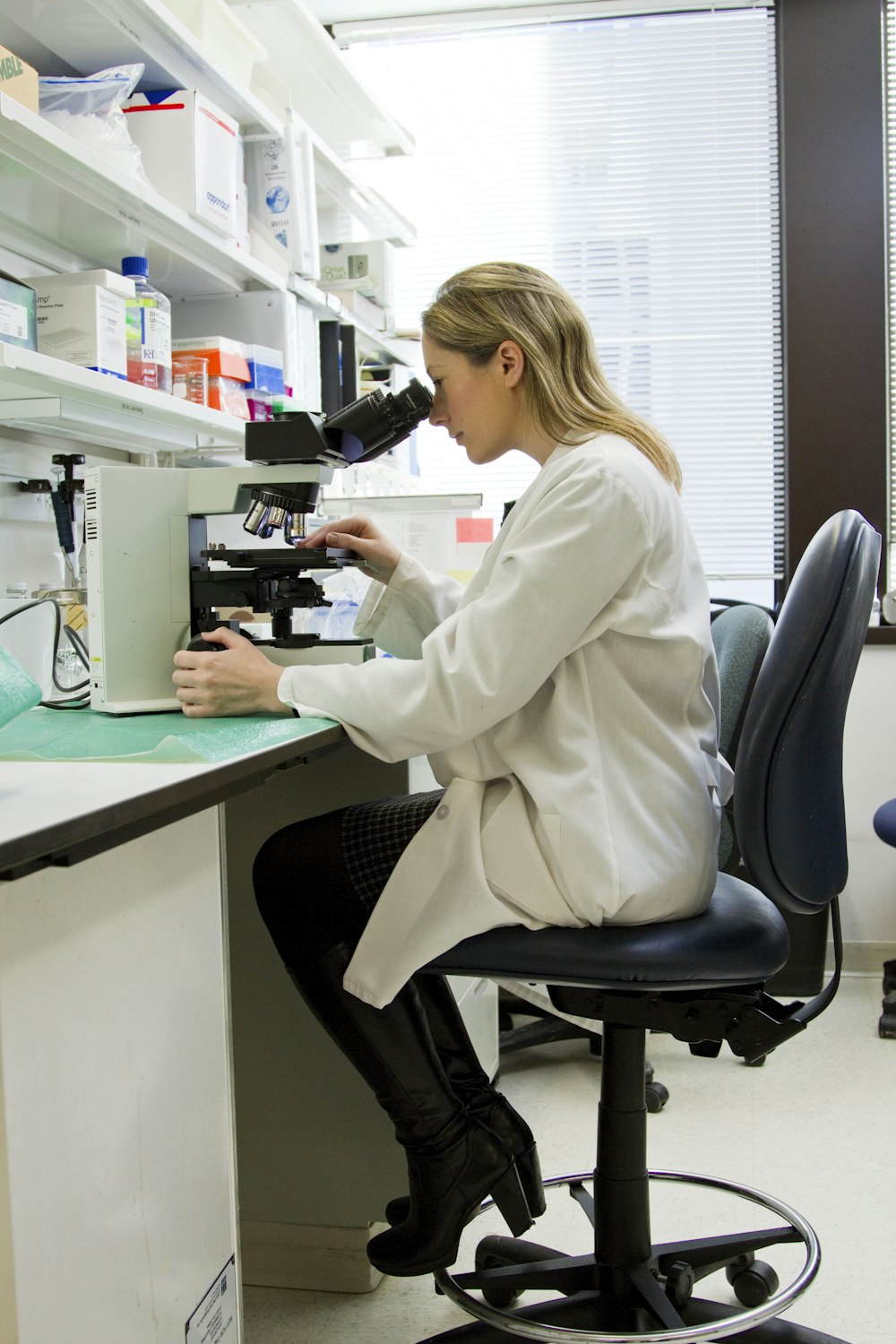
The star of the show. This machine acts as an ultra-sensitive scale that can identify molecules by their mass, allowing researchers to pinpoint and measure thousands of different lipids in a tiny blood sample.
Specific Antibodies
These are like targeted molecular magnets. In the PET scan, they are designed to bind exclusively to amyloid plaques, making them light up on the scan.
Chromatography Columns
Before analysis, the complex blood plasma must be separated. These columns act as a molecular obstacle course, sorting different lipids so the mass spectrometer can read them clearly.
Stable Isotope Labels
Used as internal standards. Scientists add a known amount of a "heavy" version of a lipid to the sample. By comparing natural lipids to these heavy ones, they can get perfectly precise measurements.
Cell Culture Models
To test their findings, scientists might grow human brain cells in a dish and manipulate lipid levels to see if it directly affects amyloid production, proving a causal link .
Additional Tools
Other essential tools include bioinformatics software for data analysis, specialized reagents for sample preparation, and high-performance computing resources for modeling complex biological systems.
The Future is in the Signals
The work showcased in this poster session is more than just academic; it's the foundation of a medical revolution.
Predictive Medicine
By detecting biomarkers years before symptoms appear, we can shift from reactive to proactive healthcare.
Personalized Treatment
Understanding individual biomarker profiles allows for tailored therapies based on a person's unique biology.
Preemptive Interventions
Early detection enables interventions that can delay or prevent disease onset entirely.
Data-Driven Insights
Advanced analytics of biomarker data will reveal new patterns and connections in human health.
By learning to interpret the subtle whispers of biomarkers, the vivid stories told by advanced imaging, and the complex language of lipids, we are moving toward a future of predictive, personalized, and preemptive medicine. The next time you see a researcher standing by a poster, know that they are holding a piece of the map that will one day guide us to healthier, longer lives.