Solving PCR Smearing: A Scientist's Guide to Primer Artifacts and Gel Resolution
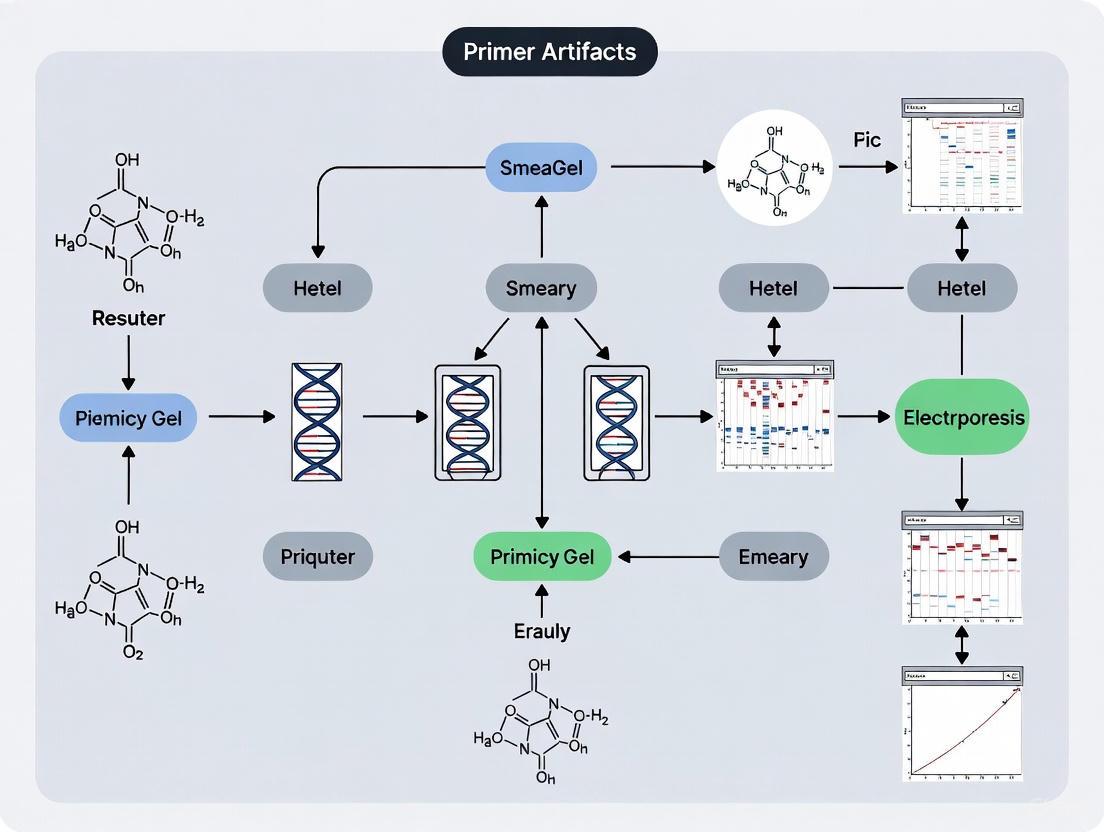
This article provides a comprehensive guide for researchers and drug development professionals troubleshooting smeary PCR results.
Solving PCR Smearing: A Scientist's Guide to Primer Artifacts and Gel Resolution
Abstract
This article provides a comprehensive guide for researchers and drug development professionals troubleshooting smeary PCR results. It covers the foundational science behind primer-induced artifacts, outlines a systematic methodological approach for optimization, presents advanced troubleshooting protocols, and discusses validation techniques to confirm resolution. By integrating theoretical knowledge with practical application, this resource enables scientists to accurately diagnose the root causes of smearing—from primer-dimers and mispriming to target heterogeneity—and implement effective solutions to obtain clean, reliable amplification products for downstream analysis and clinical applications.
Understanding PCR Smearing: From Primer Artifacts to Complex Templates
FAQ on Smeared Bands and Primer Artifacts
Q1: What do smeared bands caused by primer artifacts look like on a gel? Smeared bands appear as diffuse, fuzzy streaks or a continuous "smear" of DNA across the gel lanes, rather than as sharp, distinct bands [1]. This indicates a heterogeneous mixture of DNA fragments of various sizes, often resulting from nonspecific amplification due to primer artifacts.
Q2: How can I tell if my smearing is due to primer issues? If your negative control (no template DNA) shows a clean result with no smearing, but your sample lanes are smeared, the issue is likely related to your PCR conditions or primer design, not contamination [2]. Common primer-related causes include suboptimal annealing temperature, degraded primers, or primers binding to multiple, non-target sites on the template DNA [3] [4].
Q3: My primers are smearing. What are the first steps I should take? The most immediate and effective steps are:
- Increase the annealing temperature in increments of 2°C to improve specificity [2] [4].
- Check your primer concentration and ensure it is not too high, typically between 0.1–0.5 µM [3].
- Reduce the number of PCR cycles to minimize the accumulation of non-specific products, especially in later cycles [3] [2].
Q4: When should I consider redesigning my primers? You should redesign your primers if troubleshooting steps like adjusting temperatures and concentrations fail. Specifically, redesign is crucial if in silico analysis (e.g., BLAST) reveals that the 3' ends of your primers are complementary to non-target sites, or if the primers have the capacity to form primer-dimers by having complementary sequences at their 3' ends [2] [4].
Troubleshooting Guide: From Smear to Specificity
The table below outlines systematic steps to resolve smearing, with a focus on primer-related parameters.
Troubleshooting Steps for Primer-Induced Smearing
| Troubleshooting Step | Action | Rationale & Experimental Protocol |
|---|---|---|
| Optimize Annealing | Increase temperature in 2–5°C increments; use a touchdown PCR protocol [2] [4]. | Higher temperature favors only the most specific primer-template binding. Protocol: Perform a gradient PCR with annealing temperatures from 5°C below to 5°C above the calculated primer Tm. |
| Check Primer Quality | Check for primer degradation on a denaturing polyacrylamide gel; order new primers if needed [3]. | Degraded primers generate shorter, nonspecific fragments that cause smearing. |
| Adjust Primer Concentration | Titrate primer concentration from 0.1–0.5 µM (in 0.1 µM steps) [3]. | Excess primers promote binding to non-target sites and formation of primer-dimers. |
| Review Primer Design | Use software to design new primers with optimal Tm and check for 3'-end complementarity [3] [4]. | Primers with low Tm or complementary 3' ends readily cause nonspecific binding and primer-dimer artifacts. |
| Employ a Hot-Start Polymerase | Use a hot-start enzyme [2] [4]. | Inhibits polymerase activity at room temperature, preventing nonspecific priming during reaction setup. |
Experimental Workflow for Troubleshooting Smeared Bands
The following diagram maps the logical pathway for diagnosing and resolving smearing caused by primer artifacts.
Research Reagent Solutions
The table below lists key reagents and their specific functions in preventing and resolving smeared bands.
Essential Reagents for Troubleshooting Primer-Related Smearing
| Reagent | Function in Troubleshooting | Key Consideration |
|---|---|---|
| Hot-Start DNA Polymerase | Reduces nonspecific amplification and primer-dimer formation by remaining inactive until the first high-temperature denaturation step [2]. | Essential for reactions set up at room temperature. |
| MgCl₂ Solution | Cofactor for DNA polymerase; its concentration directly affects primer binding specificity and fidelity [3] [4]. | Optimize concentration from 1.5–5.0 mM (in 0.5 mM steps) [3]. |
| Nuclease-Free Water | Serves as a diluent for primers and reaction mix without introducing nucleases that could degrade primers [1]. | Always use for resuspending primers and preparing master mixes. |
| dNTP Mix | Building blocks for DNA synthesis; unbalanced concentrations can promote misincorporation and smearing [2]. | Use a balanced, high-quality dNTP mix at a recommended concentration (e.g., 200 µM each). |
| Gel Stain (e.g., GelRed) | Visualizes nucleic acids; some stains are safer and offer better sensitivity than ethidium bromide [5]. | Ensure even distribution in the gel for accurate visualization. |
What is a primer dimer? A primer dimer is a small, unintended DNA fragment that can form during a polymerase chain reaction (PCR). It is an artifact that occurs when PCR primers anneal to each other instead of to the intended target sequence in the template DNA. These artifacts are typically observed as a fuzzy smear or a band below 100 base pairs (bp) on an agarose gel [6].
Why are primer dimers a problem? Primer dimers compete with the desired amplification product for PCR reagents, such as nucleotides and DNA polymerase. This competition can reduce the yield and sensitivity of your target amplification. In quantitative PCR (qPCR), they can also lead to false positive signals by generating fluorescence, undermining the accuracy of your results [6].
Mechanisms of Primer Dimer Formation
Understanding how primer dimers form is the first step in preventing them. The following diagram illustrates the two primary mechanisms.
Mechanism 1: Direct Primer-Primer Dimerization
This is the most commonly understood mechanism. It occurs when two primers hybridize to each other via complementary sequences at their 3'-ends. DNA polymerase can then bind to this structure and extend both primers, producing a short, double-stranded DNA fragment that is roughly the combined length of the two primers [7] [6]. This can happen in three ways:
- Self-dimerization: A single primer has regions that are self-complementary.
- Cross-dimerization: The forward and reverse primers have complementary regions to each other.
Mechanism 2: Genomic DNA-Mediated Artifact
An alternative and often overlooked mechanism involves background genomic DNA. In this scenario, the primers do not directly bind to each other. Instead, one or both primers bind non-specifically to sites on the genomic DNA that are close to each other. Despite potential mismatches, the binding is strong enough for DNA polymerase to initiate synthesis, creating a primer-dimer product that may contain a few extra nucleotides of unknown origin in its center [7]. This mechanism is supported by several observations:
- Primer dimers often form at high threshold cycle numbers (Ct > 35) [7].
- Their formation increases markedly when heterologous genomic DNA is added to the reaction [7].
- Sequencing of primer dimers often reveals these extra, "mysterious" nucleotides [7].
Quantitative Data on Dimer Stability
Experimental studies using capillary electrophoresis have provided quantitative insights into the stability of primer dimers. The following table summarizes key findings on the relationship between base-pairing and dimer formation [8].
Table 1: Experimental Conditions for Primer Dimer Stability Analysis
| Parameter | Description |
|---|---|
| Method | Free-Solution Conjugate Electrophoresis (FSCE) with a peptoid drag-tag |
| Primer Length | 30 nucleotides |
| Analysis Temperatures | 18°C, 25°C, 40°, |
| Key Findings | - Dimerization was inversely correlated with temperature for partially bonded pairs.- Stable dimerization required more than 15 consecutive base pairs to form.- Non-consecutive base pairs did not create stable dimers, even when 20 out of 30 possible base pairs were bonded. |
Troubleshooting Guide: Resolving Primer Dimer Issues
This section provides a step-by-step FAQ to help you identify and eliminate primer dimers from your PCR experiments.
FAQ 1: How can I prevent primer dimers through primer design?
Answer: Careful primer design is the most effective way to prevent dimers.
- Check 3'-Complementarity: Use primer design software (e.g., Primer3, Primique) to screen candidate primers for complementarity at their 3'-ends. Redesign primers if the thermodynamic stability of the hybrid is above a set threshold [7] [9].
- Terminal Nucleotides: Design primers to have the last two nucleotides at the 3'-end as AA or TT. This reduces the likelihood of forming a stable hybridized 3'-end with another primer [7].
- Enforce Specificity: For experiments involving highly similar sequences (e.g., gene families), use tools like Primique that are specifically designed to find primer pairs that will only amplify the intended target sequence and none of the others in a set [9].
- Self-Complementarity Check: Ensure primers do not contain regions that are self-complementary. A common heuristic is to disallow more than 6 consecutive Watson-Crick matches or a total of 10 matches in any binding configuration of the primer to itself [9].
FAQ 2: What wet-lab strategies can I use to minimize primer dimer formation?
Answer: If primer dimers persist after in silico design, optimize your reaction conditions.
- Use a Hot-Start DNA Polymerase: This is highly recommended. Hot-start polymerases remain inactive until a high-temperature denaturation step, preventing enzymatic activity during reaction setup when primers are most likely to anneal to each other at low temperatures [6].
- Increase Annealing Temperature: A higher annealing temperature reduces non-specific interactions, including primer-dimer formation. Increase the temperature in increments of 2°C to find the optimal stringency [10] [6].
- Lower Primer Concentration: Reducing the concentration of primers decreases the probability that they will encounter and bind to each other instead of the template. Aim for a lower primer-to-template ratio [6].
- Increase Denaturation Times: Longer denaturation times can help ensure primers are fully dissociated and available to bind to the template DNA [6].
- Reduce PCR Cycle Number: Since primer dimers often form in later PCR cycles (e.g., >35 cycles), minimizing the number of cycles can reduce their amplification [7] [10].
FAQ 3: My gel shows a smeary band at ~100 bp. Is this a primer dimer?
Answer: Yes, a smeary or fuzzy band below 100 bp is a classic signature of primer dimer on an agarose gel [6]. To confirm:
- Run a No-Template Control (NTC): This is a critical control. Set up a reaction identical to your test sample but omit the template DNA. If the same smeary band appears in the NTC lane, it confirms the band is a primer-dimer artifact and not a specific product, which requires template DNA to form [6].
- Run the Gel Longer: To clearly distinguish your target amplicon from primer dimers, run the agarose gel for a longer time. This ensures the small primer-dimer fragments migrate well past the larger, desired PCR product [6].
Answer: PCR failure can be due to many factors beyond primer dimers. A systematic approach is key. The workflow below outlines a logical troubleshooting process.
Research Reagent Solutions
The following table lists key reagents and tools that are essential for diagnosing and preventing primer-dimer problems.
Table 2: Essential Reagents and Tools for Primer Dimer Troubleshooting
| Reagent / Tool | Function / Purpose | Specific Example / Note |
|---|---|---|
| Hot-Start DNA Polymerase | Prevents enzymatic activity during reaction setup, dramatically reducing primer-dimer formation. | Various commercial formulations are available. |
| Specialized Polymerase Buffers | Optimized buffer systems can enhance specificity and reduce mispriming. | Formulations for high-GC content templates may also help with complex secondary structures. |
| Primer Design Software | Identifies primers with low self- and cross-complementarity to avoid dimer-prone sequences. | Primer3, Primique (for specific primer design in gene families) [9]. |
| BLAST Alignment Tool | Checks if the 3' ends of your primers are complementary to non-target sites. | A critical final check for primer specificity [10]. |
| Nucleic Acid Purification Kits | Removes PCR inhibitors (e.g., salts, phenol, polysaccharides) that can cause inefficient amplification and artifacts. | Kits using column- or bead-based cleanup. |
| Fluorometric Quantification Kits | Accurately measures template concentration, which is vital for optimizing primer-to-template ratios. | Preferable to UV absorbance (NanoDrop) for quantifying usable DNA (e.g., Qubit assays). |
Frequently Asked Questions (FAQs)
What are the visible signs of template DNA degradation in a gel?
Degraded template DNA often appears as a continuous smear of DNA, starting from the well down to the bottom of the gel lane, rather than as a tight, discrete band. This happens because nucleases have randomly cut the DNA into a heterogeneous mixture of fragments of various sizes [1].
Can poor template quality affect my experiment even if the gel looks fine?
Yes. Standard agarose gel electrophoresis has limited resolution. Issues like DNA nicking or low-level shear damage may not be detectable on a gel but can still cause problems in downstream applications like in vitro transcription (IVT), leading to truncated products or reduced yields [11]. Higher-resolution techniques like capillary electrophoresis (CE) or HPLC may be needed to detect these issues.
How does template concentration directly cause smearing?
Overloading a well with too much DNA is a common cause of smearing and distorted bands [12] [1]. An overloaded DNA fragment migrates slower and can appear larger than it truly is. The general recommendation is to load 0.1–0.2 μg of DNA per millimeter of the gel well's width [1].
Besides degradation and overloading, what other template-related factors can cause smearing?
- High Salt Concentration: If the template is in a high-salt buffer, it can interfere with sample mobility and cause smearing [1].
- Protein Contamination: Proteins present in the sample can also interfere with how the DNA moves through the gel [1].
- Incorrect DNA Form: Using a double-stranded DNA template on a denaturing gel (or vice-versa) can lead to poor separation and smearing [1].
Troubleshooting Guide: Template-Induced Smearing
Problem: Smearing or fuzzy bands in all lanes, including the DNA ladder.
This often indicates a general issue with the gel itself or the running conditions, but template overloading is a key suspect.
- Recommended Actions:
- Reduce the amount of DNA loaded per well. Ensure you are within the 0.1–0.2 μg/mm guideline [1].
- Check the gel concentration. Use the appropriate agarose percentage for your DNA fragment size. A higher percentage gel provides better resolution for smaller fragments [12] [13].
- Run the gel at a lower voltage. High voltage (>150V) can generate excessive heat, leading to band distortion and smearing. Try running between 110-130V for a longer duration [5].
- Prepare fresh running buffer. Old or incorrectly diluted buffer can have insufficient ionic strength, leading to poor resolution [5].
Problem: A pronounced smear trailing down from the well.
This is a classic sign of template DNA degradation or significant contamination.
- Recommended Actions:
- Always wear gloves and use nuclease-free reagents and labware to prevent nuclease contamination [1].
- Re-purify the template DNA. Use a purification method that effectively removes proteins and other contaminants [1].
- Check the integrity of your DNA template on a fresh gel before using it in your experiment. A clean, intact template should appear as a tight band (for plasmid DNA) or a single fragment without a background smear [11].
Problem: The gel shows a DNA smear or multiple unexpected bands only for the sample, but the ladder is clean.
This points to issues specific to the sample, which can include PCR artifacts, non-specific amplification, or the presence of problematic sequences in the template.
- Recommended Actions:
- For GC-rich templates: GC-rich regions can form stable secondary structures that cause the polymerase to stall. Use a polymerase and buffer system specifically designed for GC-rich templates. Additives like DMSO, glycerol, or betaine included in commercial GC enhancers can help reduce secondary structures [14].
- Optimize Mg²⁺ concentration: Too much MgCl₂ can lead to non-specific binding. Try a gradient of MgCl₂ from 1.0 to 4.0 mM in 0.5 mM increments to find the optimal concentration [15].
- Increase annealing temperature: A higher annealing temperature can increase primer specificity and prevent non-specific binding, which can manifest as a smear [14].
Quantitative Data for Troubleshooting
Recommended DNA Quantities for Gel Electrophoresis
| Stain Type | Minimum Amount of DNA per Band | Consequence of Overloading |
|---|---|---|
| Ethidium Bromide (EtBr) / SYBR Safe [12] | ~20 ng | Bands run slower, appear larger, and can smear [12] |
| SYBR Gold [12] | ~1 ng | Bands run slower, appear larger, and can smear [12] |
| General Guideline (per mm well width) [1] | 0.1 - 0.2 μg | Smearing, warped, or U-shaped bands [1] |
Troubleshooting Table: Template-Related Causes of Smearing
| Observed Problem | Possible Template-Related Cause | Solution |
|---|---|---|
| Fuzzy, diffused bands in all lanes | Sample overloading [12] [1] | Load less DNA; follow recommended guidelines. |
| Pronounced smear from the well | DNA degradation or nicking [1] [11] | Use fresh, high-quality template; follow good lab practices to avoid nucleases. |
| Smear or multiple bands only in sample lanes | Non-specific amplification (e.g., from low annealing temp) [14] or problematic template sequences (GC-rich) [14] | Optimize PCR conditions (annealing temperature, Mg²⁺); use high-fidelity or specialized polymerases; include additives. |
| Poor band resolution/smearing | Template in high-salt buffer or contaminated with protein [1] | Dilute, purify, or precipitate the sample to remove excess salt/protein. |
Experimental Protocols for Diagnosis and Prevention
Protocol 1: Checking Template DNA Integrity via Agarose Gel Electrophoresis
This protocol is a critical first step to rule out degradation as a source of smearing.
- Prepare a 0.8% - 1% Agarose Gel: Mix 0.8 g - 1.0 g of agarose with 100 mL of 1x TAE or TBE buffer. Microwave until completely dissolved, let cool to about 50°C, add nucleic acid stain if desired, and pour into a casting tray with a comb [16].
- Load and Run: Mix your DNA template with a loading dye. Load the mixture into the well alongside an appropriate DNA ladder. Run the gel at 80-150 V until the dye front has migrated 75-80% down the gel [16].
- Visualize and Interpret: A high-quality, intact plasmid DNA sample should show a dominant band in the supercoiled form. A significant amount of smearing or a faint, dispersed signal indicates degradation, and the template should not be used for sensitive applications [11].
Protocol 2: Clean-up and Precipitation of Contaminated or High-Salt DNA Samples
If your template is in a high-salt buffer or is contaminated, this clean-up step can help.
- Precipitate: To your DNA sample, add 1/10th volume of 3M sodium acetate (pH 5.2) and 2-2.5 volumes of cold 100% ethanol. Mix and incubate at -20°C for 30 minutes.
- Pellet: Centrifuge at >12,000 x g for 15 minutes at 4°C. Carefully decant the supernatant.
- Wash: Wash the pellet with 1 mL of cold 70% ethanol to remove residual salt. Centrifuge again for 5 minutes and carefully pour off the ethanol.
- Resuspend: Air-dry the pellet for 5-10 minutes and then resuspend it in nuclease-free water or a low-EDTA TE buffer [1].
The Scientist's Toolkit: Research Reagent Solutions
| Reagent / Material | Function in Preventing Smearing |
|---|---|
| High-Fidelity or GC-Rich Polymerases (e.g., Q5, OneTaq) [14] | Specialized enzymes are better at amplifying difficult templates (like GC-rich regions) without stalling, which reduces incomplete products and smearing. |
| PCR Additives (DMSO, Betaine, GC Enhancers) [14] | These reduce secondary structure formation in the template DNA, allowing the polymerase to process through smoothly and produce clean, specific products. |
| Nuclease-Free Water and Labware | Prevents the introduction of nucleases that can degrade the DNA template, which is a primary cause of smearing [1]. |
| DNA Ladder | A quality ladder with sharp, distinct bands is essential for diagnosing whether smearing is due to sample issues or general gel/run problems [12] [17]. |
| Chromatography-Purified DNA Ladder [12] | High-purity ladders provide clean, sharp reference bands, making it easier to assess the quality of your sample lanes. |
Systematic Troubleshooting Workflow
The following diagram outlines a logical, step-by-step process to diagnose and fix template-related smearing based on the observations from your gel.
Core Mechanism: The Link Between Sequence Diversity and Smearing
When you amplify a complex template, such as the 16S rRNA gene from a microbial community, the resulting smearing is often not due to PCR errors but to the inherent sequence diversity of the target itself.
- Structural Heterogeneity: Research on PCR-amplified bacterial 16S rRNA genes has shown that band smearing in standard agarose gels can be directly proportional to the sequence heterogeneity within the amplified variable regions. The smear comprises amplicons of the correct size that form imperfectly paired double-stranded DNA (dsDNA) structures due to sequence variations. These structures migrate at different speeds through the gel, creating a smear. When the same sample is run on a denaturing alkaline gel, which melts these structures, the smear condenses into a single, sharp band, confirming the amplicons are all the correct size [18].
- Conformational Artifacts: In techniques like Denaturing Gradient Gel Electrophoresis (DGGE), a single DNA sequence can produce multiple bands. This occurs because a single amplicon can adopt multiple distinct structural conformations that migrate differently, even though their sequences are identical. This phenomenon leads to an overestimation of species richness and presents as a smear or multiple bands in a gel [19].
The diagram below illustrates how sequence diversity in a sample leads to the structural heterogeneity that causes smearing.
Diagnostic Guide: Is Your Smearing Inherent or an Artifact?
Before concluding that smearing is inherent to your complex template, you must rule out common experimental errors. The following table will help you diagnose the source of the problem.
| Observation | Probable Cause | Diagnostic Experiment |
|---|---|---|
| A faint, primer-sized band appears in a polymerase-free control well. | Non-extensible primer dimers. These are stable primer-primer interactions that do not elongate and amplify. They are less inhibitory than extensible dimers [20]. | Run a control reaction without polymerase and analyze on a gel. Stains with low sensitivity for single-stranded DNA (e.g., ethidium bromide) may not show these, while sensitive stains (e.g., GelRed) will [20]. |
| Multiple bands from a single, pure template in DGGE. | Conformational artifacts. Multiple stable structures from a single DNA sequence [19]. | Excise and sequence the multiple bands. If the sequences are identical, the cause is conformational [19]. |
| Smearing across all lanes, including the DNA ladder. | General experimental error. This indicates a system-wide issue not specific to your sample. | Refer to the General Gel Electrophoresis Troubleshooting table in the next section. |
| Smearing only in lanes with complex template amplicons (e.g., 16S rRNA), sharp bands in positive control lanes. | Inherent structural heterogeneity due to template sequence diversity [18]. | Run the smeared sample on a denaturing gel (e.g., with urea or alkaline conditions). If the smear resolves into a sharp band, the cause is structural heterogeneity [18]. |
General Gel Electrophoresis Troubleshooting
Many common mistakes can also lead to smearing and poor band resolution, independent of your template's complexity [1].
| Issue | Common Technical Mistakes | Best Practice Solutions |
|---|---|---|
| Sample Preparation | - Sample degraded by nucleases.- Overloading DNA (>0.2 μg/mm well width).- High salt concentration in sample buffer.- High protein content in sample. | - Use nuclease-free reagents and wear gloves. Re-isolate DNA if degraded [1] [21].- Serial dilute template to optimal concentration [1] [3].- Purify or precipitate DNA to remove salts [1].- Purify sample or use loading dye with SDS [1]. |
| PCR Regimen | - Too many cycles.- Excessive template.- Suboptimal Mg²⁺ or primer concentration.- Primer-dimer formation. | - Reduce cycle number (stay within 20-35 cycles) [21].- Reduce template amount [21] [3].- Titrate Mg²⁺ (e.g., 1.5-5.0 mM) and primers (0.1-0.5 μM) [3].- Use primer design tools (e.g., PrimerROC) to predict and avoid extensible dimers [20]. |
| Gel Electrophoresis | - Gel over-run or very long run time.- Very low or high voltage.- Gel too thick (>5 mm).- Use of incorrect gel type. | - Monitor run time and dye migration [1].- Apply voltage as recommended for nucleic acid size [1].- Cast gels 3-4 mm thick [1].- Use denaturing gels for single-stranded nucleic acids (e.g., RNA) [1]. |
Research Reagent Solutions
The following reagents and tools are essential for diagnosing and overcoming smearing from complex templates.
| Reagent or Tool | Function in Troubleshooting |
|---|---|
| Denaturing Gels (Alkaline gels or gels with urea/formamide) | The definitive tool for diagnosing structural heterogeneity. Melts secondary structures to confirm if smearing is due to sequence diversity [18]. |
| Bioanalyzer/TapeStation | Provides an electropherogram to quantitatively assess fragment size distribution, adapter-dimer contamination, and sample quality before sequencing [22]. |
| High-Fidelity DNA Polymerase | Reduces PCR errors that could contribute to minor heterogeneity, helping to isolate the variable template as the primary cause. |
| Primer-Dimer Prediction Software (e.g., PrimerROC) | Accurately predicts primer-primer interactions that form extensible dimers, allowing for primer re-design before synthesis. Tools like PrimerROC can achieve >92% prediction accuracy [20]. |
| Specialized DNA Stains | Some stains have higher affinity for single-stranded DNA or faster penetration into thick gels, which can affect the visualization of artifacts and true bands [1]. |
FAQ: Addressing Common Researcher Questions
Q1: My 16S rRNA amplification from an environmental sample is always smeared. Does this mean my PCR is failing? Not necessarily. For a complex template, some degree of smearing is inherent and even expected. The smear itself carries important information on the richness and diversity of the target DNA [18]. The critical step is to run a denaturing gel. If the smear resolves into a sharp band, your PCR was successful, and the smear reflects the natural sequence variation in your sample.
Q2: How can I minimize smearing for my 16S rRNA amplicons before sequencing?
- Primer Design: Choose primer pairs that target a single, shorter variable region if possible. Different variable regions (V1-V2, V3-V4, V4, etc.) can produce significantly different microbial profiles, and some may perform better for your specific sample type [23].
- Optimize Cleanup: Use bead-based cleanup kits with optimized bead-to-sample ratios to effectively remove primer dimers and other small artifacts that contribute to background smearing [22].
- Verify Quantification: Use fluorometric quantification (e.g., Qubit) instead of just spectrophotometry (NanoDrop) to avoid overestimating DNA concentration, which can lead to overloading and smearing [22].
Q3: What is the difference between "extensible" and "non-extensible" primer dimers?
- Extensible Dimers: Have stable complements at the 3' ends, allowing DNA polymerase to bind and elongate, leading to exponential amplification of the dimer artifact. These are highly inhibitory to your target PCR and must be avoided through careful primer design [20].
- Non-extensible Dimers: Form stable primer-primer structures but cannot be elongated by polymerase. They are less detrimental to PCR efficiency and often appear as faint, low molecular weight bands in polymerase-free controls [20].
FAQs: Understanding the Core Challenges
Q1: How do DNA template secondary structures specifically affect PCR amplification?
Secondary structures, such as hairpins, in the DNA template can significantly suppress PCR amplification. When a hairpin forms near or within a primer-binding site, it competitively inhibits the primer from binding to its target sequence. Research has shown that the suppression effect becomes more pronounced with increasing stem length and decreasing loop size of the hairpin. Hairpins formed inside the amplicon have a particularly drastic effect; with very long stems (e.g., 20-bp), targeted amplification may not occur at all [24]. For precise and reliable qPCR, it is recommended to analyze at least 60-bp sequences around primer-binding sites to ensure stable secondary structures are absent [24].
Q2: Why is GC content a critical factor in primer design and how does it influence experiments?
GC content is vital because guanine (G) and cytosine (C) bases form stronger hydrogen bonds than adenine (A) and thymine (T) bases. This directly impacts the stability of the primer-template duplex.
- High GC Content ( >65%): Makes the DNA template harder to denature (separate into single strands) and more prone to forming stable, intramolecular secondary structures. This can lead to poor amplification efficiency, low yield, or complete PCR failure [25] [26].
- Low GC Content ( <35%): Can result in primers that bind too weakly to the template, reducing amplification efficiency and specificity [27]. A GC content between 40% and 60% is generally recommended, with an ideal around 50% [28] [27]. Furthermore, a 'GC Clamp'—where the 3' end of the primer terminates with one or more G or C bases—helps promote specific binding due to the stronger bonding [28].
Q3: What are the common gel artifacts resulting from poor primer design and how are they identified?
Poor primer design often manifests on gels as smeared bands, multiple non-specific bands, or a complete absence of the desired product band.
- Smeared Bands: Can indicate non-specific amplification, often due to primers binding to multiple sites. This can be caused by an annealing temperature that is too low, excessive primer concentration, or primers with complementary regions that form primer-dimers [29] [26].
- Multiple Bands: Result from mispriming, where primers anneal to non-target sequences. This is frequently caused by low annealing temperatures, high magnesium concentration, or poor primer specificity [29] [26].
- No Product: Can be caused by primers forming stable secondary structures (e.g., hairpins) that prevent binding, a Tm that is too high for the reaction conditions, or primers that are not complementary to the template [29] [25].
Q4: What is a "GC Clamp" and why is it used?
A GC clamp is a design technique where the 3' end of a primer is intentionally made to be Guanine (G) or Cytosine (C) rich, typically with 1-2 of these bases. Because G and C form three hydrogen bonds (as opposed to two for A and T), this "clamps" the primer more securely to the template DNA. This enhances the stability of the primer-template complex and increases the specificity of initiation by the DNA polymerase, which is crucial for successful amplification [28]. However, avoid runs of 4 or more consecutive G residues, as this can promote non-specific binding [27].
Troubleshooting Guide: From Gel Problems to Solutions
The table below links common gel results to their potential causes in primer design and binding, and offers proven solutions.
| Gel Result & Observation | Primary Cause Related to Primers/Template | Recommended Troubleshooting Solution |
|---|---|---|
| No Amplification Product | Primer Tm too high; stable secondary structures in primer or template; poor primer specificity; insufficient primer concentration [29] [25]. | Verify primer sequence complementarity to template. Use software to check for secondary structures. Optimize primer concentration (0.05-1 µM). Test a higher fidelity polymerase [29] [26]. |
| Multiple Bands or Non-specific Products | Low annealing temperature; mispriming due to non-specific sequences; high Mg2+ concentration; primer-dimer formation [29] [26]. | Increase annealing temperature in 1-2°C increments. Use a hot-start polymerase. Verify primer specificity with BLAST. Lower Mg2+ concentration in 0.2-1 mM increments [29] [26] [4]. |
| Smeared Bands | Primer-dimer formation; excess primers, enzyme, or Mg2+; too many PCR cycles; primer secondary structures [29] [4]. | Reduce primer concentration. Use a hot-start polymerase. Shorten annealing/extension times. Screen primers for self-dimers and hairpins (ΔG > -9 kcal/mol) [29] [27]. |
| Weak Product Band | Primer Tm too low; inefficient binding due to template secondary structures; low primer quality or concentration [29] [25] [26]. | Increase annealing temperature. Add co-solvents like DMSO or GC enhancers. Use fresh, high-quality primers. Increase the number of cycles [25] [26] [4]. |
| PCR Failure with GC-rich Templates | Template forms stable secondary structures that prevent primer access and polymerase progression [25] [26]. | Use a polymerase designed for GC-rich templates. Add PCR enhancers like DMSO (5-10%), betaine (1-1.5 M), or GC enhancer solutions. Increase denaturation temperature/time [26] [4]. |
Experimental Protocols for Diagnosis and Optimization
Protocol 1: Systematic Primer and Template Evaluation
Objective: To diagnose whether a PCR failure is due to primer-related issues (secondary structures, specificity) or template quality.
Materials:
- Template DNA (test and a known positive control)
- Forward and Reverse Primers
- PCR Master Mix (with a standard polymerase like Taq)
- Thermocycler
- Agarose gel electrophoresis equipment
Methodology:
- Check Template Integrity: Run your template DNA on an agarose gel to confirm it is intact and not degraded [26].
- Positive Control Reaction: Set up a PCR using your primers with a known, well-amplified template (e.g., a control plasmid provided in many kits). If this works, the problem likely lies with your specific template. If it fails, the primers are suspect [25].
- Test Primer Specificity: Use an in silico tool like NCBI BLAST to ensure your primers are unique to your target sequence and do not align to other regions (e.g., pseudogenes) in the genome [25] [27].
- Analyze Primer Secondary Structures: Use online tools (e.g., OligoAnalyzer, UNAFold) to check for hairpins and self-dimers. The ΔG for any secondary structure should be weaker (more positive) than –9.0 kcal/mol [27].
Protocol 2: Optimization of Annealing Temperature and Additives
Objective: To empirically determine the optimal annealing temperature (Ta) and to overcome challenges posed by template secondary structures and high GC content.
Materials:
- All materials from Protocol 1.
- PCR additives: DMSO, Betaine, or commercial GC Enhancer.
- Thermocycler with gradient functionality.
Methodology:
- Annealing Temperature Gradient:
- Calculate the Tm of your primers using software based on your specific reaction conditions [27].
- Set up identical PCR reactions and use the gradient function on your thermocycler to test a range of annealing temperatures, typically from 3–5°C below to 3–5°C above the calculated Tm [26].
- Analyze the results by gel electrophoresis. The temperature that yields the strongest, most specific band is the optimal Ta.
- Testing Additives for Difficult Templates:
- If you are amplifying a GC-rich template (>65%) or one with known secondary structures, prepare separate reaction tubes with different additives [26] [4]:
- Tube A: No additive (control).
- Tube B: 3-5% DMSO.
- Tube C: 1 M Betaine.
- Tube D: Manufacturer-recommended volume of a commercial GC Enhancer.
- Run the PCR using the optimal Ta determined in the previous step.
- Analyze by gel electrophoresis. The additive that produces the cleanest, most robust amplification with the least background should be selected for future experiments.
- If you are amplifying a GC-rich template (>65%) or one with known secondary structures, prepare separate reaction tubes with different additives [26] [4]:
Research Reagent Solutions
The following table lists key reagents and tools essential for troubleshooting primer binding and fidelity issues.
| Reagent / Tool | Function in Troubleshooting |
|---|---|
| Hot-Start DNA Polymerase | Reduces non-specific amplification and primer-dimer formation by inhibiting polymerase activity until the first high-temperature denaturation step [29] [26]. |
| High-Fidelity DNA Polymerase | Provides higher accuracy for cloning and sequencing by possessing proofreading (3'→5' exonuclease) activity, reducing misincorporation of nucleotides [29] [26]. |
| PCR Additives (DMSO, Betaine, GC Enhancer) | Destabilize DNA secondary structures by interfering with hydrogen bonding, thereby facilitating primer binding to GC-rich or structured templates [26] [4]. |
| Magnesium Salt (MgCl₂ or MgSO₄) | Cofactor for DNA polymerase; its concentration is critical and must be optimized (often in 0.2-1 mM increments) as it directly affects primer annealing, specificity, and enzyme fidelity [29] [26]. |
| Primer Design & Analysis Tools | Software like IDT's OligoAnalyzer or PrimerQuest are used to calculate accurate Tm, check for secondary structures (hairpins, dimers), and verify primer specificity via BLAST analysis [27]. |
Workflow Diagram
The diagram below outlines a logical troubleshooting workflow for resolving smeary gel results stemming from primer-related artifacts.
Systematic Optimization of PCR Conditions to Eliminate Smearing
FAQs on Template Dilution and Smear Troubleshooting
1. Why do I get smeary bands on my agarose gel after PCR?
Smeary or non-specific bands on an electrophoresis gel are a common issue often linked to template concentration and reaction conditions [30]. The primary causes related to template are:
- Excessive template amount: Using too much template DNA in the reaction can lead to non-specific amplification and smearing [30].
- Suboptimal PCR conditions: High template concentration can exacerbate other issues like non-specific primer binding or insufficiently stringent reaction conditions [30].
- Gel overloading: Even with a successful PCR, loading too much DNA product onto the gel can cause smearing [17].
2. How does template concentration specifically cause primer artifacts and smearing?
When the template concentration is too high, several problems can occur [30]:
- Non-specific priming: Primers are more likely to bind to non-target sequences on the abundant template, generating a mixture of incorrect products that appear as a smear or multiple bands on a gel [30].
- Increased primer-dimer formation: High concentrations of both template and primers can facilitate the formation of primer-dimers, which are short, artifactual products that appear as a diffuse smear near the bottom of the gel [31].
- PCR inhibition: Impurities co-purified with the template (e.g., polysaccharides, heparin, phenol) can become concentrated enough to inhibit the polymerase, leading to incomplete amplification and smearing [30].
3. What is the "sweet spot" for template concentration in PCR?
The optimal concentration depends on the template source and the polymerase used. The table below provides general guidelines.
| Template Type | Recommended Quantity for 50 µl Reaction | Notes |
|---|---|---|
| Plasmid DNA | 0.1–1 pg | For high-copy number plasmids; lower amounts reduce non-specific amplification [30]. |
| Genomic DNA | 10–100 ng | Excess genomic DNA (>100 ng) can introduce inhibitors and increase non-specific binding [30]. |
| cDNA | 1–10 ng | Equivalent to total RNA; requires optimization via serial dilution for accurate qPCR [31]. |
4. How can I systematically find the optimal template dilution?
The most reliable method is to perform a serial dilution of your template and test a range of concentrations in your PCR assay [32]. A 10-fold serial dilution is a practical starting point to identify the appropriate concentration range, which can then be refined with a 2-fold serial dilution for greater precision [32].
Serial Dilution Calculations and Setup
The following table outlines the parameters for setting up a 10-fold serial dilution, which is ideal for initially estimating concentration, and a 2-fold serial dilution for finer optimization [32].
| Parameter | 10-Fold Serial Dilution | 2-Fold Serial Dilution |
|---|---|---|
| Purpose | Rapidly reduce a high concentration to a manageable level; estimate concentration range [32]. | Precisely determine the minimum inhibitory concentration (MIC) or optimal concentration [32]. |
| Dilution Factor | 10 | 2 |
| Typical Diluent Volume | 9 parts diluent | 1 part diluent |
| Typical Sample/Transfer Volume | 1 part sample | 1 part sample from previous dilution |
| Final Dilution Factor after n steps | 10n | 2n |
Protocol: Performing a Serial Dilution [32]
- Determine the diluent: Choose an appropriate diluent, such as nuclease-free water or TE buffer.
- Fill target containers: Dispense the calculated volume of diluent into your dilution tubes. For a 10-fold dilution, you would add 900 µl of diluent to several tubes.
- Perform the first dilution: Add 100 µl of your original, well-mixed template sample to the first tube of diluent (900 µl). This is a 1:10 dilution.
- Perform the second dilution: Mix the first dilution thoroughly. Transfer 100 µl from the first dilution to the next tube containing 900 µl of diluent. This is a 1:100 dilution.
- Repeat: Continue this process of mixing and transferring to subsequent diluent tubes until the desired concentration range is achieved.
- Use diluted templates: Test each dilution in your PCR reaction to identify the concentration that yields a strong, specific band without smearing.
Optimizing Experimental Protocols
Detailed Protocol: Using Serial Dilution to Troubleshoot Smear
Objective: To identify the optimal template concentration that eliminates smearing and yields a specific, single PCR product.
Materials:
- Template DNA (e.g., plasmid, genomic DNA, cDNA)
- Nuclease-free water (diluent)
- PCR master mix (polymerase, buffer, dNTPs, MgCl₂)
- Forward and reverse primers
- Thermal cycler
- Gel electrophoresis equipment and reagents [17]
Method:
- Prepare a 10-fold serial dilution series of your template as described in the protocol above, creating at least 4-5 dilutions [32].
- Set up PCR reactions using the same master mix and primer concentrations, but with each containing a different dilution of your template.
- Include controls: Always run a negative control (no template) to check for contamination [30].
- Perform PCR amplification using your standard cycling conditions.
- Analyze the results by running the PCR products on an agarose gel [17].
- Interpret the gel: Identify the dilution that produces a crisp, single band of the expected size. Higher concentrations may show smearing or multiple bands, while very low concentrations may show no band at all.
Workflow: Diagnostic and Optimization Path for Smeary Gels
The following diagram illustrates a logical workflow for diagnosing and fixing smeary gel results, with a focus on template dilution.
The Scientist's Toolkit: Research Reagent Solutions
This table details key reagents and materials essential for optimizing template dilution and preventing primer artifacts.
| Item | Function / Rationale |
|---|---|
| Nuclease-free Water | Serves as a pure diluent for preparing template serial dilutions without degrading nucleic acids [32]. |
| Low-Binding Tubes & Tips | Minimizes adsorption of nucleic acids to plastic surfaces, preventing loss of precious template during dilution steps [33]. |
| High-Fidelity DNA Polymerase | Enzymes with proofreading activity reduce misincorporation errors, which can be more prevalent in suboptimal reactions and contribute to background [30]. |
| Optimized Primer Concentrations | Using the correct primer concentration (typically 100-300 nM) is crucial. High concentrations promote primer-dimer formation; low concentrations reduce yield [31]. |
| dNTP Mix | Unbalanced or excessive dNTP concentrations can promote base misincorporation and errors. A balanced concentration of ~200 µM each is often optimal [30]. |
| MgCl₂ Solution | Mg2+ is a cofactor for polymerase. Its concentration (1-5 mM) must be optimized, as high levels can decrease fidelity and promote non-specific binding [30]. |
| Agarose Gel Electrophoresis System | The primary tool for visualizing PCR results, assessing specificity, and estimating DNA fragment size and concentration [17]. |
| DNA Ladder | A molecular weight standard run alongside samples on a gel to confirm the size of the amplified product and assess gel run quality [17]. |
Core Concepts: Why Annealing Temperature Matters
What is the role of annealing temperature in PCR specificity?
The annealing temperature is a critical parameter in the polymerase chain reaction (PCR) that determines the specificity of primer binding to the target DNA template. A well-optimized temperature ensures that primers bind specifically to their intended complementary sequences, leading to the amplification of a single, desired product. If the annealing temperature is too low, primers may bind to non-target sequences with partial complementarity, resulting in the amplification of unintended products. Conversely, if the temperature is too high, primer binding may be inefficient, leading to low or no yield of the desired amplicon [34].
How does suboptimal annealing temperature lead to smeary gels?
Smeary or nonspecific bands on an agarose gel are a direct consequence of non-specific amplification, for which suboptimal annealing temperature is a primary cause [35]. When the annealing temperature is too low, it facilitates:
- Mis-priming: Primers bind to off-target sites on the DNA template that have similar, but not identical, sequences [36].
- Amplification of Artifacts: These non-specific products compete with the target amplicon for PCR reagents. As the reaction progresses, a mixture of DNA fragments of various sizes is generated, which appears as a smear or multiple unexpected bands on a gel [35] [36].
Systematic Troubleshooting Guide
The following flowchart outlines a logical pathway to diagnose and resolve non-specific amplification, such as smeary gel results.
Optimization Protocol: A Step-by-Step Guide
Step 1: Establish a Baseline with Gradient PCR
The most effective method for optimizing annealing temperature is to perform a gradient PCR [37].
- Reaction Setup: Prepare a master mix containing all standard PCR components—DNA template, primers, dNTPs, MgCl₂, buffer, and DNA polymerase. Distribute equal volumes into multiple PCR tubes.
- Gradient Programming: Use a thermal cycler with a gradient function. Set the annealing temperature to span a range, for example, from 50°C to 70°C in 2°C increments [34].
- Analysis: Run the PCR and analyze the products on an agarose gel. The optimal annealing temperature is the highest temperature that produces a strong, specific band of the expected size [35].
Step 2: Fine-Tune Other Reaction Parameters
If a temperature gradient does not resolve the issue, systematically adjust the following parameters. Use the table below as a guide.
Table 1: Key PCR Parameters for Troubleshooting Specificity
| Parameter | Recommended Range | Effect on Specificity | Adjustment for Increased Specificity |
|---|---|---|---|
| Primer Concentration | 0.05 - 0.5 µM each primer [37] | High concentrations promote mis-priming and primer-dimer formation [35]. | Lower the concentration within the recommended range. |
| Magnesium (Mg²⁺) Concentration | 1.5 - 2.0 mM (for Taq polymerase) [37] | Mg²⁺ is a cofactor for the polymerase. Excess Mg²⁺ reduces fidelity and increases non-specific binding [35]. | Titrate Mg²⁺ concentration in 0.1-0.5 mM steps; try lowering it first. |
| Cycle Number | Typically 25-40 cycles [35] | Excessive cycles can amplify low-level non-specific products and smears [36]. | Reduce the number of cycles (e.g., by 3-5 cycles). |
| Extension Time | 1 min/kb for products >1kb; 45-60 sec for products <1kb [37] | Excessively long times can promote non-specific amplification [35]. | Ensure the time is sufficient for the target, but not excessively long. |
| Polymerase Type | Standard or Hot-Start | Hot-Start polymerases remain inactive until the high-temperature denaturation step, preventing primer dimer formation and mis-priming during reaction setup [35] [37]. | Switch to a Hot-Start polymerase. |
Step 3: Advanced Techniques
For persistent problems, consider these advanced strategies:
- Touchdown PCR: This method uses an initial annealing temperature higher than the primer's calculated Tm. The temperature is then gradually decreased in subsequent cycles over a series of cycles. This ensures that the most specific primer-template hybrids (which form at higher temperatures) are amplified preferentially early on, and these products then dominate the reaction [35].
- Two-Step PCR: Combine the annealing and extension steps into a single temperature (e.g., 68°C). This is only suitable for primers with high Tms and can streamline the protocol while reducing opportunities for non-specific binding at lower temperatures [35].
Research Reagent Solutions
Selecting the right reagents is fundamental to successful PCR. The table below lists key solutions for enhancing specificity.
Table 2: Essential Reagents for Specific Amplification
| Reagent | Function | Key Considerations for Specificity |
|---|---|---|
| Hot-Start DNA Polymerase | A modified enzyme inactive at room temperature. | Prevents non-specific amplification and primer-dimer formation during reaction setup [35] [37]. |
| High-Fidelity DNA Polymerase | An enzyme with proofreading activity (3'→5' exonuclease). | Reduces misincorporation errors, which is crucial for cloning and sequencing applications [37]. |
| Universal Annealing Buffer | A specialized buffer with isostabilizing components. | Enables the use of a universal annealing temperature (e.g., 60°C) for primers with different Tms, simplifying multiplexing and optimization [34]. |
| dNTP Mix | The building blocks (dATP, dCTP, dGTP, dTTP) for DNA synthesis. | Higher concentrations (e.g., 200 µM each) can increase yield but may reduce fidelity. Lower concentrations (50-100 µM) can enhance fidelity [37]. |
| MgCl₂ Solution | A source of magnesium ions, a essential cofactor for polymerase activity. | Concentration must be optimized, as it is a key determinant of primer specificity and enzyme fidelity [35] [37]. |
Frequently Asked Questions (FAQs)
My negative control is clean, but my sample has a smear. What should I do? A clean negative control rules out contamination. The issue is almost certainly due to suboptimal PCR conditions. Follow the troubleshooting guide above, starting with a gradient PCR to optimize the annealing temperature [35] [36].
I see a bright band at the very bottom of my gel. What is it? This is likely a primer dimer, a very short, non-specific amplicon formed by the two primers hybridizing to each other. To resolve this, use a Hot-Start polymerase, lower the primer concentration, or increase the annealing temperature [36].
My primers have different melting temperatures (Tms). How do I choose an annealing temperature? Design primers to have Tms within 5°C of each other. If this is not possible, set the initial annealing temperature 5°C below the Tm of the primer with the lowest Tm. If non-specific amplification occurs, test higher temperatures. Alternatively, consider using a DNA polymerase system with a universal annealing buffer, which is designed to work at a fixed temperature (e.g., 60°C) even with primers of differing Tms [34] [37].
What is the relationship between primer Tm and optimal annealing temperature? The calculated Tm provides a starting point. The optimal annealing temperature is typically 5°C below the calculated Tm of the primers. However, due to differences in buffer composition and other factors, this must be determined empirically via gradient PCR [37].
Frequently Asked Questions (FAQs)
What are the primary symptoms of PCR over-amplification?
The most common symptoms include the appearance of a smeared background on the agarose gel, non-specific bands of unexpected sizes, and primer-dimers (short, diffuse bands typically between 20-60 bp) [36]. In advanced cases, such as in NGS library preparation, overcycling can produce distinct secondary peaks or a high molecular weight smear on Bioanalyzer traces, indicating the formation of "bubble products" or chimeric sequences [38].
How does increasing the cycle number lead to these artifacts?
As PCR progresses beyond the optimal number of cycles, several key reagents become depleted. Primer exhaustion forces the DNA polymerase to use already-amplified PCR products as primers for new synthesis, creating longer, chimeric artifacts [38]. Simultaneously, depletion of dNTPs increases the likelihood of base misincorporation [39]. Furthermore, the accumulation of pyrophosphate molecules and a shift in reaction pH destabilize the reaction environment, reducing enzyme efficiency and fidelity [39] [40]. These factors collectively promote the synthesis of non-target DNA sequences and smeary gel results.
What is the recommended number of PCR cycles to avoid over-amplification?
For most conventional PCR applications, 25 to 35 cycles is the standard recommended range [41]. If the template DNA is of very low abundance (fewer than 10 copies), the cycle number may be increased to up to 40 cycles [41] [39]. It is generally advised to avoid more than 45 cycles, as this almost invariably leads to the accumulation of nonspecific products and a characteristic plateau in product yield [41].
Table 1: Quantitative Guidelines for PCR Cycle Numbers
| Template Type / Application | Recommended Cycle Number | Key Considerations |
|---|---|---|
| Standard PCR | 25–35 cycles | Standard range for efficient amplification [41]. |
| Low Abundance Template | Up to 40 cycles | For templates with <10 copies; requires careful optimization [41] [39]. |
| PCR for Cloning / NGS | As low as possible | Prefers low cycles for unbiased amplification and accurate replication [41] [38]. |
| Maximum Recommended | Do not exceed 45 cycles | Nonspecific bands and by-products accumulate drastically beyond this point [41]. |
Troubleshooting Guide: Resolving Smeary Gels and Artifacts
Step 1: Optimize Cyclic Parameters
The first and most direct step is to adjust the thermocycler protocol.
- Reduce Cycle Number: If you observe smearing or nonspecific bands, systematically reduce the total number of PCR cycles by 3-5 cycles at a time [39].
- Evaluate Final Extension: Ensure a final extension step (generally 5–15 minutes at 72°C) is included to allow for complete synthesis of all amplicons, which can improve yield and reduce smearing caused by incomplete products [41].
Step 2: Enhance Reaction Specificity
If adjusting the cycle number alone is insufficient, refine the reaction conditions to favor specific amplification of your target.
- Increase Annealing Temperature: Raise the annealing temperature in increments of 2–3°C. This increases stringency, helping to ensure primers bind only to their perfect complementary sequences [41] [39] [42].
- Use a Hot-Start DNA Polymerase: Hot-start enzymes remain inactive until the first high-temperature denaturation step, preventing non-specific priming and primer-dimer formation that can occur while the reaction mixture is being prepared [39] [42].
- Optimize Primer and Template Concentration: Excess primer can lead to nonspecific amplification and primer-dimers [42]. Similarly, too much template DNA can increase the chance of non-specific priming and smearing [39] [36]. Refer to the enzyme manufacturer's guidelines for optimal concentrations.
Table 2: Troubleshooting Nonspecific Amplification and Smears
| Problem | Primary Solution | Additional Solutions |
|---|---|---|
| Nonspecific Bands | Increase annealing temperature in 2°C increments [39] [42]. | Use a hot-start polymerase; Reduce number of cycles; Use touchdown PCR [39] [42]. |
| Smear on Gel | Reduce the amount of template DNA [39] [36]. | Increase annealing temperature; Redesign primers; Use nested PCR [39] [36]. |
| Primer-Dimers | Reduce primer concentration [42]. | Set up reactions on ice; Use a hot-start polymerase mastermix [39] [36]. |
| No Amplification | Increase number of cycles (up to 40) [39]. | Lower annealing temperature; Increase extension time; Check for PCR inhibitors [39]. |
Step 3: Employ Advanced Techniques
For persistent problems, more specialized methods can be highly effective.
- Perform Touchdown PCR: This technique starts with an annealing temperature higher than the calculated Tm and gradually decreases it in subsequent cycles. This ensures that the most specific primer-template hybrids are amplified first, giving them a competitive advantage that is maintained throughout the reaction [39] [42].
- Switch to a Two-Step PCR Protocol: Combine the annealing and extension steps into a single temperature. This is applicable if your primer annealing temperature is within 3°C of the polymerase's optimal extension temperature. This shortens the cycling time and can reduce opportunities for non-specific annealing [41] [39].
- Re-amplify with Nested Primers: If the initial PCR product is smeared but contains your target, you can use a small aliquot of the first reaction (diluted 1:100 to 1:10,000) as a template for a second PCR with primers that bind internally to the first set. This dramatically increases specificity [39].
Experimental Protocols for Validation
Protocol 1: Annealing Temperature Gradient Optimization
Objective: To empirically determine the optimal annealing temperature for a primer set to maximize specificity and yield.
Methodology:
- Design a PCR reaction with all components identical across tubes.
- In your thermal cycler, set a gradient across the block, for example, from 55°C to 72°C.
- Run the PCR for 30 cycles.
- Analyze the products on an agarose gel. The well with the brightest specific band and the absence of nonspecific bands indicates the optimal annealing temperature [41] [39].
Protocol 2: Cycle Number Determination via qPCR
Objective: To determine the minimal number of cycles required for sufficient amplification in sensitive applications like RNA-Seq, thereby preventing overcycling artifacts.
Methodology:
- Use a small aliquot of your purified cDNA or library template for a qPCR assay with your target-specific primers.
- Determine the Cq (quantification cycle) value, which is the cycle number at which the fluorescence crosses a defined threshold.
- For the end-point PCR, use a cycle number that is 2-3 cycles less than the Cq value obtained from the qPCR assay. This ensures ample product while avoiding the plateau phase and its associated artifacts [38].
Workflow and Pathway Diagrams
Troubleshooting Workflow for Smeary Gels
Consequences of PCR Over-Amplification
The Scientist's Toolkit: Key Research Reagent Solutions
Table 3: Essential Reagents for Preventing Amplification Artifacts
| Reagent / Material | Function in Preventing Over-Amplification & Artifacts |
|---|---|
| Hot-Start DNA Polymerase | Remains inactive at room temperature, preventing non-specific primer binding and extension during reaction setup. Crucial for enhancing specificity and reducing primer-dimers [39] [42]. |
| High-Fidelity DNA Polymerase | Possesses proofreading activity (3'→5' exonuclease) to correct misincorporated nucleotides during amplification, essential for applications requiring high accuracy like cloning and NGS [39]. |
| GC-Rich Enhancer / Additives | Additives like betaine, DMSO, or glycerol can help denature complex templates (e.g., high GC-content DNA), improving specificity and yield, which can allow for fewer amplification cycles [41]. |
| Universal PCR Buffer | Specially formulated buffer that enables primer-template annealing at a universal temperature (e.g., 60°C), circumventing extensive optimization of annealing temperatures for different primer sets [41]. |
| qPCR Master Mix with Tracking Dye | Allows for real-time monitoring of amplification to determine the Cq value, which is used to calculate the optimal cycle number for end-point PCR and avoid the plateau phase [38]. |
Within the context of primer artifacts research, smeary or nonspecific gel results are a frequent hurdle that can compromise data integrity. Often, the root cause lies not in the primer design itself, but in the quality and handling of the reagents used in the polymerase chain reaction (PCR). Contamination and degraded reagents are significant contributors to these artifacts. This guide outlines systematic protocols to safeguard reagent quality through proper aliquotting and contamination control, ensuring the reliability of your experimental results.
In PCR, contamination occurs when unwanted nucleic acids are introduced into your reaction. These interlopers compete for reagents and can be amplified instead of your target sequence, leading to smeary gels, multiple bands, or false positives [43] [36]. The most common and problematic source is carryover contamination, which involves PCR products (amplicons) from previous reactions [44] [45]. A single opened tube can release millions of aerosolized amplicons into the lab environment, readily contaminating reagents, equipment, and subsequent reactions [43] [45]. Other sources include cloned DNA, cross-contamination between samples, and exogenous DNA from the lab environment or improperly handled reagents [44].
Establishing a Contamination-Control Workflow
A proactive, structured approach is the most effective defense against contamination. The cornerstone of this strategy is the physical separation of pre- and post-amplification activities.
Physical Separation and Unidirectional Workflow
The laboratory space should be divided into dedicated, physically separated areas [43] [44] [46]. This separation is crucial for preventing amplicons from the post-PCR area from entering the pre-PCR area.
- Pre-PCR Area: This dedicated space is for preparing reaction mixtures and handling pure samples and reagents. No amplified DNA or post-PCR materials should ever enter this area [44] [46].
- Post-PCR Area: This area is for performing the PCR amplification, analyzing PCR products (e.g., gel electrophoresis), and purifying amplified DNA [44].
Maintain a unidirectional workflow; personnel should not move from the post-PCR area to the pre-PCR area without changing lab coats and gloves [43]. Consider the following diagram which illustrates the strict one-way flow and segregation of materials necessary to prevent carryover contamination:
Practical Laboratory Practices
- Dedicated Equipment and PPE: Each area must have its own set of pipettes, centrifuges, vortexers, lab coats, gloves, and consumables [43] [44] [46]. Pipettes should be equipped with aerosol-resistant filters [43].
- Rigorous Decontamination: Regularly clean work surfaces and equipment with a 10% bleach (sodium hypochlorite) solution, followed by ethanol or water to remove the bleach residue [43] [44] [45]. Allow the bleach to act for 10-15 minutes for maximum effect [43]. UV irradiation can also be used to damage contaminating DNA on exposed surfaces and equipment [45].
- Proper Storage: Store samples and reagents separately in the pre-PCR area, and store all PCR products exclusively in the post-PCR area [43].
The Critical Role of Reagent Quality and Aliquotting
Repeated freezing and thawing of stock reagents, or frequent opening of reagent tubes, introduces two major risks: degradation of reagent components and contamination with aerosols. Creating single-use aliquots is the most effective countermeasure.
Guide to Reagent Aliquotting
- Purpose: Aliquotting prevents repeated freeze-thaw cycles, which can degrade enzymes and other labile components, and minimizes the risk of introducing contamination into the main stock solution [43].
- Method: Upon receiving a new reagent, immediately prepare small, single-use aliquots suitable for one experiment [43] [46]. Use sterile, nuclease-free tubes.
- Storage: Store all aliquots in designated pre-PCR freezers, separate from DNA samples and post-PCR materials [44] [46].
The table below summarizes key solutions for maintaining reagent integrity.
Table: Essential Research Reagent Solutions for Contamination Control
| Item | Primary Function | Justification |
|---|---|---|
| UNG (Uracil-N-Glycosylase) | Enzymatic prevention of carryover contamination | Degrades uracil-containing prior amplicons before PCR begins; standard in many master mixes [43] [45]. |
| dUTP | Substrate for UNG-based systems | Incorporated into new amplicons during PCR, making them susceptible to degradation in future UNG-treated reactions [45]. |
| Aerosol-Resistant Pipette Tips | Physical barrier against contamination | Prevent aerosols and liquids from entering the pipette shaft, a common contamination vector [43] [46]. |
| Bleach (Sodium Hypochlorite) | Chemical decontamination of surfaces | Causes oxidative damage to nucleic acids, rendering them unamplifiable [43] [45]. |
| High-Fidelity DNA Polymerase | Reduction of misincorporation and errors | Higher fidelity than standard Taq polymerase, reducing non-specific amplification that can lead to smears [44]. |
Enzymatic Control of Carryover Contamination
For the highest level of security against contamination from previous PCRs, the Uracil-N-Glycosylase (UNG) system is highly effective. The following diagram and protocol detail its mechanism.
UNG Protocol:
- Reaction Setup: Use a master mix that contains UNG enzyme and substitute dTTP with dUTP in the nucleotide mix [43] [45].
- Contaminant Destruction: Incubate the complete reaction mix (with your template DNA added) at room temperature for about 10 minutes before starting thermocycling. During this step, UNG will seek out and destroy the sugar-phosphate backbone of any contaminating DNA that contains uracil (from previous reactions) [43] [45].
- Enzyme Inactivation and Amplification: The initial denaturation step at 95°C in the thermal cycler permanently inactivates the UNG enzyme. This prevents it from degrading the new, uracil-containing amplicons that will be synthesized in the current PCR [43] [45].
Troubleshooting FAQs
Q1: My no-template control (NTC) shows amplification. What does this mean and what should I do? A: Amplification in your NTC indicates contamination. If all NTCs show amplification at a similar Ct value, the contamination is likely in a shared reagent. If it's random across NTCs with varying Ct values, the cause is likely aerosolized DNA in the environment [43].
- Action: Replace all reagents, starting with the water. Decontaminate workspaces and equipment with bleach and UV light. Ensure you are preparing fresh aliquots from uncontaminated stocks [43] [44].
Q2: I see primer-dimer bands or smears on my gel. Is this contamination, and how can I fix it? A: Primer-dimers and smears are forms of non-specific amplification, often exacerbated by reagent quality and reaction conditions, rather than external DNA contamination [36].
- Action:
- Reagent Quality: Ensure primers are not degraded and are aliquoted to avoid repeated freeze-thaw cycles.
- Optimize Conditions: Increase the annealing temperature in 2°C increments, reduce the number of PCR cycles, and/or use a hot-start polymerase [44] [36].
- Reduce Template: Too much template DNA can cause smearing; try reducing the amount by 2–5 fold [44].
Q3: How can I tell if my RNA samples have degraded due to poor handling? A: RNA integrity can be assessed using the RNA Integrity Number (RIN). A RIN ≥ 8 is generally considered high-quality, while lower values indicate degradation [47] [48]. Degradation can occur during repeated freeze-thaw cycles of tissue samples or RNA stocks.
- Action: Always aliquot RNA samples and tissues upon collection or extraction. For frozen tissues originally stored without preservatives, adding RNALater during thawing on ice can help rescue RNA quality [47].
Non-specific amplification is a common challenge in polymerase chain reaction (PCR) that can compromise experimental results, particularly in sensitive applications like genetic testing, clinical diagnostics, and drug development. This phenomenon occurs when DNA polymerase initiates amplification at non-target sites, leading to unwanted products such as primer dimers and mis-primed amplifications that appear as smears or multiple bands on electrophoretic gels [49] [36].
Hot-Start PCR represents a fundamental solution to this problem by employing specialized DNA polymerases that remain inactive at room temperature. These enzymes require heating to melting temperatures (typically >90°C) before becoming activated, thereby preventing enzymatic activity during reaction setup when nonspecific priming events are most likely to occur [50]. The implementation of Hot-Start technology has become indispensable for researchers seeking to improve amplification specificity, sensitivity, and reproducibility in molecular biology applications [51] [52].
Mechanisms of Hot-Start Polymerase Activation
Hot-Start DNA polymerases utilize various biochemical strategies to maintain inactivity during PCR setup while allowing full activity during amplification cycles. The primary mechanisms include:
Antibody-Mediated Inhibition
Monoclonal antibodies bind reversibly to the polymerase's active site, blocking enzymatic activity until the initial high-temperature denaturation step (typically 94-95°C for 2-15 minutes) dissociates the antibody-polymerase complex [51] [52].
Chemical Modification
Chemical groups (e.g., acyl groups) are covalently attached to the polymerase, rendering it inactive until thermal cleavage removes these modifications during the initial denaturation step [51] [52].
Ligand-Based Inhibition
Affinity ligands or aptamers bind specifically to the polymerase, creating a physical barrier to DNA template binding until elevated temperatures disrupt these interactions [52].
The following diagram illustrates the operational mechanism of Hot-Start polymerases in preventing non-specific amplification:
Troubleshooting Guide: Addressing Non-Specific Amplification
FAQ: How does Hot-Start PCR specifically prevent nonspecific amplification?
Hot-Start PCR prevents nonspecific amplification by inhibiting DNA polymerase activity during reaction setup at room temperature. Although thermostable DNA polymerases have optimal activity at higher temperatures, they retain some activity at lower temperatures where nonspecific primer binding (mis-priming and primer-dimer formation) can occur [50]. By maintaining the enzyme in an inactive state until the first high-temperature denaturation step, Hot-Start polymerases ensure that no extension can occur from these incorrectly annealed primers. Once activated, the temperature never drops low enough during subsequent annealing steps for significant nonspecific priming to occur, resulting in amplification exclusively of the intended target [50].
FAQ: What are the common causes of smeared PCR products despite using Hot-Start polymerase?
Even with Hot-Start polymerases, smeared PCR products can occur due to several factors:
- Excessive template DNA: Too much starting template can lead to nonspecific amplification [3]
- Suboptimal magnesium concentration: Incorrect Mg²⁺ levels can reduce specificity [4] [3]
- Poor primer design: Primers with complementary sequences at 3' ends promote primer-dimer formation [4]
- Low annealing temperatures: Insufficiently stringent conditions allow nonspecific primer binding [4] [53]
- PCR contaminants: Carryover contamination from previous amplifications can cause smearing [53] [3]
- Excessive cycle numbers: Too many amplification cycles can lead to smearing artifacts [4] [3]
FAQ: How can I optimize my PCR protocol when switching to a Hot-Start polymerase?
When implementing Hot-Start polymerase in your experiments, consider these optimization strategies:
- Extend initial denaturation: Ensure adequate activation time (2-15 minutes, depending on the specific Hot-Start polymerase) at 94-95°C [50]
- Optimize annealing temperature: Increase temperature in 2-5°C increments to enhance specificity [4]
- Adjust magnesium concentration: Titrate Mg²⁺ concentrations from 1.5-5.0 mM in 0.5 mM steps [3]
- Modify primer concentration: Test concentrations from 0.1-0.5 μM of each primer [3]
- Limit cycle numbers: Reduce amplification cycles (3-5 cycles at a time) to minimize background [53]
- Use touchdown PCR: Start with higher annealing temperatures and decrease gradually [53]
Table 1: Troubleshooting Common Non-Specific Amplification Problems
| Problem | Possible Causes | Recommended Solutions |
|---|---|---|
| Primer dimers | Primer complementarity at 3' ends, excessive primer concentration, low annealing temperature | Redesign primers, reduce primer concentration (0.1-0.5 μM), increase annealing temperature, use Hot-Start polymerase [4] [36] [3] |
| Multiple bands | Non-specific priming, low annealing temperature, excessive Mg²⁺, too much template | Increase annealing temperature, optimize Mg²⁺ concentration (1.5-5.0 mM), reduce template amount, use nested PCR [4] [53] |
| Smearing | Too much enzyme/template, low annealing temperature, excessive cycles, bad primers | Reduce enzyme/template concentration, increase annealing temperature, reduce cycle number, redesign primers [4] [3] |
| No amplification | Inhibitors present, incorrect annealing temperature, insufficient activation | Purify template, optimize annealing temperature, ensure adequate Hot-Start activation time [4] [53] |
Table 2: Optimization of PCR Components with Hot-Start Polymerases
| Component | Optimal Range | Adjustment Strategy |
|---|---|---|
| Hot-Start Polymerase | 2.5 units per 100 μL reaction [3] | Use manufacturer's recommended concentration; excessive enzyme increases nonspecific products |
| Magnesium (Mg²⁺) | 1.5-5.0 mM [3] | Titrate in 0.5 mM increments; lower concentrations often improve specificity |
| Primers | 0.1-0.5 μM each [3] | Avoid 3 consecutive G or C at 3' end; ensure Tm compatibility; reduce concentration to minimize dimer formation |
| Template DNA | 10⁴-10⁶ molecules [4] | Serially dilute stock solution; excessive template promotes mis-priming |
| Annealing Temperature | Tm ± 5°C [4] | Increase temperature incrementally (2-5°C) or use touchdown approach |
| Cycle Number | 20-40 cycles [4] | Reduce by 3-5 cycle increments; 35 cycles typically sufficient |
Advanced Experimental Protocols
Protocol: Systematic Optimization of Hot-Start PCR Conditions
For researchers experiencing persistent nonspecific amplification, this comprehensive protocol provides a methodological framework for optimization:
Materials Required:
- Hot-Start DNA polymerase (antibody-modified, chemical-modified, or ligand-modified)
- Optimized PCR buffer system
- Magnesium chloride solution (25 mM)
- dNTP mix (10 mM each)
- Target-specific primers
- Template DNA
- Nuclease-free water
- Thermal cycler
Methodology:
- Initial Hot-Start Activation: Begin with extended activation (10-15 minutes at 95°C) to ensure complete polymerase activation [4]
Magnesium Titration: Prepare a series of reactions with final Mg²⁺ concentrations ranging from 1.5-5.0 mM in 0.5 mM increments [3]
Annealing Temperature Gradient: Implement a thermal gradient spanning 5-10°C below to 5°C above the calculated primer Tm [4] [53]
Template Dilution Series: Test template concentrations across a 100-fold dilution range to identify optimal concentration [3]
Cycle Number Optimization: Compare results with 25, 30, 35, and 40 amplification cycles [4]
Additive Screening: For problematic templates (e.g., GC-rich targets), include additives such as DMSO (2-10%), betaine (1-1.5 M), or commercial PCR enhancers [4]
Analysis: Evaluate amplification specificity by agarose gel electrophoresis. Optimal conditions will yield a single discrete band of expected size with minimal primer-dimer formation.
Protocol: Evaluation of Hot-Start Polymerase Efficacy in Suppressing Primer Artifacts
This protocol specifically addresses the thesis context of fixing smeary gel results from primer artifacts research:
Experimental Design:
- Parallel Reactions: Set up identical PCR reactions with standard DNA polymerase versus Hot-Start DNA polymerase
Controlled Pause: Hold reactions at room temperature for 30 minutes prior to thermal cycling to simulate extended setup times
Time-Course Analysis: Collect aliquots at cycles 25, 30, 35, and 40 to monitor artifact formation kinetics
Gel Electrophoresis: Analyze products on 2-3% agarose gels for high resolution of small primer artifacts
Expected Outcomes: Hot-Start polymerase reactions should demonstrate:
- Delayed appearance of primer-dimers
- Reduced overall background smearing
- Improved target band intensity
- Higher reaction efficiency, particularly for low-copy number targets [49]
Research Reagent Solutions
Table 3: Essential Research Reagents for Hot-Start PCR Optimization
| Reagent | Function | Application Notes |
|---|---|---|
| Hot-Start DNA Polymerase | Catalyzes DNA synthesis only at elevated temperatures | Choose from antibody-modified, chemical-modified, or ligand-modified types based on application requirements [51] [52] |
| MgCl₂ Solution | Cofactor for polymerase activity; concentration critically affects specificity | Titrate between 1.5-5.0 mM final concentration; excess Mg²⁺ reduces specificity [4] [3] |
| PCR Optimizers/Additives | Enhance specificity and efficiency of amplification | DMSO (2-10%) for GC-rich templates; betaine (1-1.5 M) for problematic sequences; BSA (160-600 μg/mL) to counteract inhibitors [4] |
| dNTP Mix | Building blocks for DNA synthesis | Maintain balanced concentration (200 μM each); unbalanced dNTPs increase misincorporation [53] |
| Nuclease-Free Water | Solvent for reaction preparation | Essential for preventing RNase and DNase contamination that degrades primers and templates |
| Template DNA Preparation Kits | Purify nucleic acid templates free of inhibitors | Critical for removing contaminants; especially important for complex samples (blood, soil, plants) [53] |
Hot-Start polymerases represent a significant advancement in PCR technology, offering researchers a powerful tool to suppress non-specific amplification and primer artifacts that lead to smeary gel results. Through various inhibition mechanisms—including antibody mediation, chemical modification, and ligand interaction—these specialized enzymes prevent enzymatic activity during reaction setup while maintaining full functionality during amplification cycles [51] [52] [50].
Successful implementation of Hot-Start PCR requires systematic optimization of reaction components and thermal cycling parameters. By carefully adjusting magnesium concentration, annealing temperature, primer design, and template quantity, researchers can achieve the high specificity required for demanding applications including genetic testing, clinical diagnostics, and drug development [4] [53] [3]. The protocols and troubleshooting guides presented here provide a comprehensive framework for resolving nonspecific amplification issues, particularly in the context of primer artifact research that forms the basis of the broader thesis work.
As PCR technologies continue to evolve, further innovations in Hot-Start polymerase formulations—including improved fidelity, enhanced thermal stability, and specialized formulations for challenging templates—will continue to expand the applications and reliability of this fundamental molecular biology technique [51] [52].
Advanced Primer Design and Reaction Optimization for Pristine Gels
In the context of troubleshooting smeary or multiple banding on agarose gels, a common root cause is suboptimal primer design leading to self-complementarity and secondary structure formation. These artifacts result in non-specific amplification, primer-dimer formation, and reduced target yield, critically compromising data integrity in drug development and research applications. This guide provides focused principles and methodologies for primer redesign to resolve these issues.
FAQ: Primer Design and Gel Artifacts
Q: What are the primary primer-related causes of smeary gels in PCR? A: Smeary gels typically result from non-specific amplification due to low annealing temperatures, primer-dimer formation from self-complementary sequences, or the presence of heteroduplex molecules. These issues arise from primers with high self- or cross-complementarity, inappropriate melting temperatures, or GC-rich regions prone to forming stable secondary structures [54] [55].
Q: How does self-complementarity at the 3' end specifically cause artifacts? A: When primers have complementary sequences at their 3' ends, they can anneal to each other instead of the template DNA. DNA polymerase then extends these primers, producing short, unintended "primer-dimer" artifacts. Because the concentration of primers is much higher than the target DNA, this process efficiently competes with specific amplification, consuming reagents and cluttering the gel with low molecular weight products [56] [57].
Q: What is the critical threshold for complementarity between primers? A: Primers should contain fewer than 4 complementary bases, especially at the 3' end. This is particularly crucial in multiplex PCR reactions, where multiple primer pairs are present, increasing the chance of cross-reactivity [57].
Q: Can reducing PCR cycles help? A: Yes. Protocols with high cycle numbers (e.g., 35 cycles) show a marked increase in artifacts like chimeras and polymerase errors compared to those with fewer cycles (e.g., 15-18 cycles). Limiting cycle number reduces the accumulation of these byproducts [58].
Troubleshooting Guide: From Smear to Clear Band
| Observation | Possible Primer-Related Cause | Redesign & Optimization Strategy |
|---|---|---|
| Smear of DNA | Low annealing temperature leading to non-specific binding [55] | Recalculate Tm; increase annealing temperature; use gradient PCR [28] [55] |
| Primer-dimer bands | High self- or cross-complementarity, especially at 3' ends [56] [54] | Redesign primers to avoid ≥4 complementary bases at 3' ends; check with dimer prediction tools [59] [57] |
| Multiple bands | Mispriming due to low specificity or secondary structures [55] | BLAST primer sequence for specificity; avoid repetitive regions; use hot-start polymerase [60] [55] [59] |
| No product | Hairpins or strong secondary structures blocking extension [59] | Screen for and eliminate primers with strong intramolecular folding (hairpins) [28] [59] |
| Faint target band | Primer-dimer formation consuming reaction reagents [54] | Optimize primer concentration (0.05-1 µM); ensure a balanced GC content (40-60%) [60] [28] |
Core Principles for Effective Primer Redesign
Establishing Foundational Primer Parameters
Adhering to the following quantitative guidelines during redesign forms the basis for specific amplification.
Table: Optimal Primer Design Parameters
| Parameter | Optimal Range | Critical Considerations |
|---|---|---|
| Length | 18 - 30 nucleotides [56] [60] [28] | Shorter primers (18-24 bp) anneal more efficiently; longer primers (>30 bp) can be slower to hybridize [56]. |
| Melting Temperature (Tm) | 50°C - 75°C; pairs within 5°C [60] [28] | Annealing temperature (Ta) is typically set 2-5°C below the Tm of the primers [56] [59]. |
| GC Content | 40% - 60% [56] [60] [28] | Maintain a balanced distribution; avoid clusters of G/C bases [28] [59]. |
| GC Clamp | 1-2 G/C bases in last 5 at 3' end [56] [28] | Promotes specific binding but more than 3 can cause non-specific annealing [56] [59]. |
Systematically Avoiding Secondary Structures
Secondary structures compete with template binding and must be minimized.
- Hairpins: Caused by intramolecular complementarity, where a primer folds back on itself. Avoid regions with three or more nucleotides that are complementary to another part of the same primer [56] [28].
- Self-Dimers: Occur when two copies of the same primer anneal to each other via intermolecular interactions [56] [57].
- Cross-Dimers: Form when the forward and reverse primers anneal to each other due to complementary sequences [56] [57]. To check for cross-dimers, compare the sense primer (5' to 3') with the antisense primer in the 3' to 5' direction [57].
Advanced Redesign and Specificity Enhancements
- Avoid Sequence Repeats: Do not include runs of four or more of the same base (e.g., AAAA) or dinucleotide repeats (e.g., ATATAT), as they can promote mispriming or slippage [28] [59].
- 3'-End Stability: The 3' end of the primer is critical for initiation. Ensure it ends in a G or C (GC clamp) for stable binding, but avoid more than three G/C residues to prevent non-specific initiation [56] [28].
- In Silico Validation: Always use tools like NCBI Primer-BLAST to check for specificity against the relevant genome database, ensuring the primer binds only to the intended target [61] [59].
Experimental Protocols for Validation
Protocol 1: In Silico Primer Analysis and Specificity Check
This bioinformatic workflow validates primers before synthesis.
Methodology:
- Input Sequence: Obtain the target DNA sequence in FASTA format.
- Tool Selection: Use NCBI Primer-BLAST, which integrates the design engine of Primer3 with a specificity check via BLAST.
- Set Parameters: Constrain the search to product sizes of 200-500 bp, primer Tm between 58-62°C, and a maximum Tm difference of ≤2°C. Select the correct organism for the background genome [59].
- Analyze Output: Select candidate primer pairs with no significant off-target hits. Use companion tools like OligoAnalyzer to check for hairpin formation and self-dimerization, preferring weak ΔG values (e.g., > -9 kcal/mol) for any potential dimers [59].
Protocol 2: Wet-Lab Optimization for Problematic Primers
If smear persists after redesign, this protocol helps identify the issue.
Methodology:
- Annealing Temperature Gradient: Set up a PCR reaction with an annealing temperature gradient, ranging from 2-5°C below to 2-5°C above the calculated Tm [55].
- Reconditioning PCR: To reduce heteroduplex molecules and primer artifacts, perform a limited number of PCR cycles (e.g., 15), then dilute the product and run 3-4 additional cycles in a fresh reaction mixture. This has been shown to significantly reduce artifacts [58].
- Additives for Complex Templates: For GC-rich templates that promote stable secondary structures, include additives like DMSO (3-10%) in the reaction mix to aid denaturation [59].
- Analyze Results: Resolve the PCR products on a high-percentage agarose gel (e.g., 3-4%). A clear, single band at the expected size in the optimal temperature range confirms successful redesign.
Visual Guide: Primer Redesign Workflow
Research Reagent Solutions
Table: Essential Reagents for Primer Artifact Troubleshooting
| Reagent | Function in Troubleshooting |
|---|---|
| Hot-Start DNA Polymerase | Prevents non-specific amplification and primer-dimer formation by remaining inactive until the initial denaturation step [54] [55]. |
| High-Fidelity Polymerase (e.g., Q5) | Reduces sequence errors caused by polymerase misincorporation, which can be a source of artifact diversity [55]. |
| DMSO or Betaine | Additives that help denature GC-rich templates and secondary structures, improving specificity and yield [59]. |
| Gradient Thermocycler | Essential for empirically determining the optimal annealing temperature (Ta) for a redesigned primer pair [55]. |
| Oligo Synthesis & Purification | HPLC or cartridge purification of primers removes truncated synthesis products that can contribute to non-specific amplification and smearing [60] [28]. |
This technical support center provides targeted troubleshooting guides and FAQs for researchers encountering smeary gel results, specifically within the context of primer artifacts research. The content is designed to help you diagnose and resolve issues related to magnesium concentration titration to achieve optimal balance between PCR yield and specificity.
Troubleshooting FAQs
1. Why do I get smeary gels or multiple bands in my PCR, even with well-designed primers? Smeary gels or multiple bands are often a direct result of low reaction specificity, frequently caused by suboptimal magnesium (Mg²⁺) concentration. Magnesium is a crucial cofactor for DNA polymerase, and its concentration directly affects enzyme activity and fidelity. If the concentration is too low, primer annealing and extension are inefficient, leading to low yield. If the concentration is too high, the enzyme's fidelity decreases, promoting non-specific priming and the formation of primer-dimers, which appear as smears or multiple bands on a gel [62].
2. How does magnesium concentration specifically lead to primer artifacts? Elevated magnesium concentrations can reduce the stringency of primer annealing. This allows primers to bind to partially homologous, off-target sequences on the DNA template. Furthermore, it can stabilize the hybridization of two primers to each other at their 3' ends, which the polymerase then extends to form primer-dimer artifacts. These artifacts are short, spurious products that contribute significantly to the smeary background in gel electrophoresis [62].
3. What are the key primer design principles to prevent artifacts, independent of magnesium? Proper primer design is the first line of defense. Adhere to the following guidelines [62]:
- Melting Temperature (Tm): Primer pairs should have Tms within 5°C of each other. The calculated Tm should be between 50–72°C.
- Primer Length: Typically 20–30 nucleotides to ensure specificity.
- GC Content: Aim for 40–60%. Avoid repeats of Gs or Cs, especially at the 3' end.
- Secondary Structures: Avoid complementarity between the two primers (to prevent dimers) and within a single primer (to prevent hairpins).
4. My primers are well-designed, but I still see a smear. What should I do? When primer design is not the variable, you must empirically titrate the magnesium concentration. Start with a gradient PCR using a range of Mg²⁺ concentrations (e.g., 0.5 mM to 5.0 mM in 0.5 mM increments) while keeping all other parameters constant. Analyze the results by gel electrophoresis to identify the concentration that gives a single, sharp band of the correct size with the least background smear.
Experimental Protocol: Magnesium Titration for Specificity
This protocol provides a detailed methodology to systematically optimize magnesium chloride (MgCl₂) concentration for a specific primer-template system.
Objective: To determine the optimal MgCl₂ concentration that maximizes target yield while minimizing non-specific amplification and primer artifacts.
Materials:
- PCR-grade water
- 10X PCR Buffer (without MgCl₂)
- 25 mM MgCl₂ solution
- dNTP Mix (10 mM each)
- Forward and Reverse Primers (10 µM each)
- DNA Polymerase (e.g., Taq, high-fidelity)
- DNA Template
- Thermal Cycler
- Gel Electrophoresis System
Procedure:
- Prepare a master mix for n+1 reactions, where n is the number of Mg²⁺ conditions to be tested. The master mix should contain water, buffer (without MgCl₂), dNTPs, primers, template, and polymerase. Exclude MgCl₂ at this stage.
- Aliquot equal volumes of the master mix into 8 PCR tubes.
- Add MgCl₂ from a stock solution to each tube to create the final concentration series outlined in the table below.
- Run the PCR using the cycling conditions optimized for your primer Tm and amplicon length.
- Analyze 5-10 µL from each reaction using agarose gel electrophoresis. Include a DNA ladder for size determination.
Quantitative Data for Magnesium Titration
The following table summarizes the expected outcomes across a range of standard Mg²⁺ concentrations. Use this as a guide to interpret your results.
| MgCl₂ Concentration (mM) | Expected Yield | Expected Specificity | Common Gel Result | Recommended Action |
|---|---|---|---|---|
| 0.5 - 1.0 | Very Low | High | Faint or no band | Increase Mg²⁺ concentration |
| 1.5 - 2.0 | Good | High | Single, sharp band | Optimal range |
| 2.5 - 3.5 | High | Medium | Sharp band with slight smear | May be acceptable; fine-tune |
| 4.0 - 5.0 | High | Low | Multiple bands, heavy smear, primer-dimers | Decrease Mg²⁺ concentration |
Workflow for Troubleshooting Smeary Gels
The following diagram outlines a logical, step-by-step workflow to diagnose and fix smeary gel results by focusing on primer design and magnesium optimization.
Research Reagent Solutions
The following table details key reagents and materials essential for successful PCR optimization, with a focus on mitigating primer artifacts.
| Item | Function / Rationale |
|---|---|
| MgCl₂ Solution | Essential cofactor for DNA polymerase activity. The target of titration to balance yield and specificity [62]. |
| PCR Buffer (without MgCl₂) | Provides the ionic environment and pH stability. Using a Mg-free buffer is mandatory for a controlled titration experiment. |
| High-Purity Primers | Primers should be desalted or HPLC-purified to avoid synthetic byproducts that can inhibit PCR or cause spurious bands [62]. |
| dNTP Mix | The building blocks for DNA synthesis. Note that dNTPs can chelate Mg²⁺, so their concentration must be kept consistent. |
| Thermostable DNA Polymerase | The enzyme that catalyzes DNA synthesis. Different polymerases may have varying Mg²⁺ optima and fidelity. |
Touchdown PCR and Nested PCR Protocols for Problematic Templates
In the context of primer artifacts research, smeary or non-specific bands on an agarose gel are a common challenge that compromises data integrity. These artifacts often result from primers binding to non-target sequences or to each other, leading to primer-dimer formation and inefficient amplification of the desired product [6]. This guide details two powerful techniques—Touchdown PCR and Nested PCR—to overcome these issues, enhance amplification specificity, and produce clean, interpretable results for your research.
Touchdown PCR
Touchdown PCR is a technique that systematically reduces the annealing temperature during the initial cycles of amplification to enhance specificity [63] [64]. It begins with an annealing temperature higher than the calculated melting temperature (Tm) of the primers, which favors the amplification of only the most perfectly matched primer-template pairs. The temperature is gradually lowered in subsequent cycles until it reaches the optimal annealing temperature, thus "touching down." This method selectively enriches the desired amplicon early in the process, which then outcompetes any non-specific products during the later cycles [64].
The following diagram illustrates the logical workflow and phase transition in a Touchdown PCR protocol:
Detailed Experimental Protocol
The table below outlines a standard Touchdown PCR protocol based on a primer Tm of 57°C. Adjust the temperatures according to your specific primer Tm [64].
Table 1: Touchdown PCR Cycling Protocol
| Step | Temperature (°C) | Time | Number of Cycles | Stage & Purpose |
|---|---|---|---|---|
| Initial Denaturation | 95 | 3 minutes | 1 | Initial complete denaturation of template. |
| Denaturation | 95 | 30 seconds | 10 cycles | Stage 1: Touchdown Phase |
| Annealing | 67 (≈ Tm +10°C) | 45 seconds | Annealing temperature decreases by 1°C per cycle. | |
| Extension | 72 | 45 seconds | Polymerization of new DNA strands. | |
| Denaturation | 95 | 30 seconds | 15-20 cycles | Stage 2: Standard Amplification |
| Annealing | 57 (Optimal Tm) | 45 seconds | Annealing at the optimal, calculated temperature. | |
| Extension | 72 | 45 seconds | Polymerization of new DNA strands. | |
| Final Extension | 72 | 5-15 minutes | 1 | Ensure all amplicons are fully extended. |
Troubleshooting and FAQs
Q: What are the key advantages of using Touchdown PCR? A: Its primary advantage is increased specificity and sensitivity [64]. It is particularly useful when the precise optimal annealing temperature is unknown, as it compensates for inaccuracies in Tm calculation caused by buffer components or primer concentration [64].
Q: I am still getting nonspecific products with Touchdown PCR. What can I do? A: Consider these expert tips for optimization [64]:
- Combine with Hot-Start PCR: Use a hot-start DNA polymerase to prevent activity at room temperature during reaction setup, further reducing primer-dimer formation [63] [64].
- Use Additives: For difficult templates (e.g., GC-rich sequences), additives like DMSO can help improve specificity [64] [65].
- Limit Cycle Numbers: Keep the total number of PCR cycles (including the touchdown phase) below 35 to prevent the accumulation of non-specific products [64].
- Extra Denaturation: For complex templates, an extra denaturation step at 96–97°C can be beneficial [64].
Nested PCR
Nested PCR enhances specificity and yield by using two successive rounds of amplification with two sets of primers [63]. The first round uses an outer primer pair to amplify a large region that contains the target sequence. The product of this first reaction is then used as the template for a second round of PCR with a nested primer set (inner primers) that bind within the first amplicon. This two-step process ensures that even if nonspecific products are generated in the first round, it is highly unlikely that the same nonspecific region would be amplified by the second, internal primer set [63].
The workflow for Nested PCR is depicted below:
Detailed Experimental Protocol
Table 2: Nested PCR Protocol Steps
| Step | Procedure | Key Considerations |
|---|---|---|
| Round 1: Primary Amplification | Set up a standard PCR reaction using the outer primer pair. | Use 1–1000 ng of initial DNA template [15]. The number of cycles should be kept relatively low (e.g., 15–20) to minimize the generation of nonspecific artifacts from the outer primers. |
| Round 2: Nested Amplification | Dilute the product from the first PCR (e.g., 1:100 to 1:1000) [66]. Use 1–5 µl of this dilution as the template for a new PCR reaction with the nested (inner) primer set. | The nested primers should be specific to the intended target and generate a shorter, distinct amplicon. Using a hot-start DNA polymerase in this round is highly recommended to maximize specificity [63]. |
Troubleshooting and FAQs
Q: When should I choose Nested PCR over other methods? A: Nested PCR is particularly advantageous when working with a very limited amount of starting template [63], or when the target is of exceptionally low abundance and maximum specificity is required. It is also a powerful rescue strategy when initial PCR attempts result in smears or multiple bands [67] [66].
Q: What is the main drawback of the Nested PCR protocol? A: The primary disadvantage is the risk of contamination. Because the reaction tube must be opened to add the nested primers or a diluted sample of the first PCR product, there is a high potential for aerosol contamination of the laboratory with the first-round PCR amplicons, which can lead to false positives in future experiments [66]. Strict physical separation of pre- and post-PCR work areas is essential [66].
The Scientist's Toolkit: Research Reagent Solutions
Table 3: Essential Reagents for PCR Troubleshooting
| Reagent / Material | Function in Protocol | Application & Benefit |
|---|---|---|
| Hot-Start DNA Polymerase | Enzyme is inactive until a high-temperature activation step, preventing nonspecific amplification and primer-dimer formation during reaction setup [63] [6]. | Essential for both Touchdown and Nested PCR. Critical for multiplex PCR and for improving yield and specificity in standard PCR [63] [26]. |
| PCR Additives (e.g., DMSO) | Acts as a co-solvent that disrupts base pairing, helping to denature complex secondary structures and lower the melting temperature of DNA [63] [65]. | Particularly useful for amplifying GC-rich templates (>65% GC) in combination with specialized polymerases [63] [65]. |
| Magnesium Chloride (MgCl₂) | A necessary cofactor for DNA polymerase activity. The concentration directly affects enzyme activity, fidelity, and primer annealing [15] [65]. | Concentration requires optimization (typically 1.5–4.0 mM). Excess Mg²⁺ can reduce fidelity and increase nonspecific binding, while insufficient Mg²⁺ can result in low or no yield [26] [65]. |
| dNTP Mix | Provides the essential building blocks (dATP, dCTP, dGTP, dTTP) for DNA synthesis by the polymerase [15]. | Use balanced, equimolar concentrations (typically 200 µM of each dNTP). Unbalanced concentrations can increase the error rate of the polymerase [26]. |
| Nested Primer Sets | Two pairs of primers designed for a specific target; the inner pair binds within the amplicon generated by the outer pair [63]. | The core of Nested PCR. The second set of primers provides a second level of specificity verification, ensuring only the intended target is amplified [63]. |
Choosing between Touchdown and Nested PCR depends on the nature of your problem and experimental constraints.
- Use Touchdown PCR as a first-line, in-tube optimization strategy to quickly improve specificity without modifying your core protocol. It is efficient with reagents and time, and it significantly reduces the risk of contamination as the tube remains closed.
- Use Nested PCR when dealing with extremely challenging samples, such as those with very low target abundance or when Touchdown PCR fails to produce a specific product. Be prepared to implement rigorous contamination control measures in your workflow.
For the most stubborn primer artifacts and smeary gels, these techniques can also be combined—using Touchdown PCR conditions for both the first and second rounds of a Nested PCR protocol—to achieve the highest level of amplification specificity.
Polymerase Chain Reaction (PCR) is a foundational technique in molecular biology, yet amplification of challenging templates such as GC-rich regions, long amplicons, or complex secondary structures often leads to failed experiments or uninterpretable results like smeary gels. These issues frequently stem from primer-dimer formation, non-specific amplification, or inefficient strand separation, which are common obstacles in primer artifacts research. PCR additives and enhancers provide a powerful approach to overcome these limitations by modifying the physical chemistry of the amplification reaction. This guide focuses on three particularly effective additives—DMSO, BSA, and betaine—detailing their mechanisms, optimal usage, and integration into troubleshooting workflows for researchers and drug development professionals seeking to improve amplification efficiency and specificity.
Understanding Common PCR Challenges and Artifacts
What causes smeary bands in PCR gels?
Smeary bands or a high background smear on agarose gels typically indicate non-specific amplification or the presence of primer-dimers. This often results from primers annealing to non-target sequences, which can be caused by low annealing temperatures, excessive primer or magnesium concentrations, or primers with self-complementary regions [26] [68]. In the context of challenging templates, such as GC-rich regions, the formation of stable secondary structures can cause polymerase pausing or premature termination, contributing to the smeary appearance [69].
Why are GC-rich regions particularly difficult to amplify?
GC-rich sequences (generally >60% GC content) present two primary challenges. First, they exhibit greater thermal stability due to three hydrogen bonds between G-C base pairs compared to two in A-T pairs, requiring higher denaturation temperatures. Second, and more significantly, GC-rich regions form stable secondary structures through base stacking interactions, leading to hairpin loops and other complex structures that are difficult for polymerases to navigate [69]. These structures do not melt well at standard PCR denaturation temperatures and can impede polymerase progression, resulting in truncated products that manifest as smears on gels.
How do primer-dimers form and affect results?
Primer-dimers are short, unintended amplification products that form when primers anneal to each other instead of the target template. This occurs through two main mechanisms: self-dimerization (a single primer contains complementary regions) or cross-dimerization (two different primers have complementary sequences) [6]. Once formed, these structures provide binding sites for DNA polymerase, which extends them, consuming reaction components that would otherwise amplify the target sequence. This competition reduces PCR efficiency and yield, and in quantitative PCR, can lead to false-positive signals [68]. Primer-dimers typically appear as fuzzy bands around 50-100 bp on ethidium bromide-stained gels [6].
Key Additives and Their Mechanisms of Action
Dimethyl Sulfoxide (DMSO)
Mechanism: DMSO primarily functions by reducing the secondary structure stability of DNA templates. It achieves this by interacting with water molecules surrounding the DNA strand, thereby disrupting hydrogen bonding networks and effectively lowering the melting temperature (Tm) of DNA [70]. This action facilitates strand separation at lower temperatures, which is particularly beneficial for GC-rich templates that form stable secondary structures. However, it's important to note that DMSO also reduces Taq polymerase activity, necessitating careful concentration optimization [70].
Optimal Concentration: 2-10% (v/v) [70]
Primary Applications:
- Amplification of GC-rich templates (>60% GC)
- Disruption of DNA secondary structures
- Reduction of DNA thermal stability requirements
Betaine
Mechanism: Betaine (also known as trimethylglycine) is an isostabilizing agent that reduces the differential in melting temperature between AT-rich and GC-rich regions. It interacts with negatively charged groups on the DNA strand, reducing electrostatic repulsion and thereby minimizing the formation of secondary structures [71]. Betaine eliminates the dependence on base pair composition during DNA denaturation, making it especially effective for GC-rich sequences. For optimal results, use betaine or betaine monohydrate rather than betaine hydrochloride, as the latter may affect reaction pH [70].
Optimal Concentration: 1-1.7 M [70]
Primary Applications:
- Normalization of DNA melting behavior
- Amplification of extremely GC-rich regions
- Reduction of non-specific amplification
Bovine Serum Albumin (BSA)
Mechanism: BSA serves as a stabilizer in PCR reactions by binding and neutralizing common inhibitors such as phenolic compounds, ionic detergents, and other impurities that may be present in template preparations [70]. It reduces the adhesion of reactants to tube walls, increases polymerase stability, and protects enzyme activity, particularly when amplifying targets from difficult sample sources like blood, plant tissues, or soil. The abundance of amino acid residues and hydrophobic groups in BSA enables interactions with various inhibitory compounds.
Optimal Concentration: ~0.8 mg/ml [70]
Primary Applications:
- Neutralization of PCR inhibitors in complex samples
- Stabilization of polymerase activity
- Improvement of amplification efficiency from difficult templates
Table 1: Summary of Key PCR Additives and Their Properties
| Additive | Mechanism of Action | Optimal Concentration | Primary Applications | Considerations |
|---|---|---|---|---|
| DMSO | Reduces DNA secondary structure by disrupting hydrogen bonding; lowers Tm | 2-10% (v/v) [70] | GC-rich templates; sequences with stable secondary structures | Reduces Taq polymerase activity; requires concentration optimization |
| Betaine | Equalizes Tm differences between AT and GC regions; reduces secondary structure formation | 1-1.7 M [70] | Extremely GC-rich regions; normalization of melting behavior | Use betaine monohydrate rather than hydrochloride to avoid pH effects |
| BSA | Binds and neutralizes PCR inhibitors; stabilizes polymerase | ~0.8 mg/ml [70] | Complex templates (blood, plants, soil); inhibitor-rich samples | Particularly valuable for difficult template sources |
Experimental Protocols and Optimization Strategies
Standardized Protocol for Additive Testing
When optimizing PCR with additives, follow this systematic approach:
Establish a baseline: Begin with a standard PCR protocol without additives using your target template and primers.
Prepare additive stocks:
- DMSO: Prepare a 100% stock solution (molecular biology grade)
- Betaine: Prepare a 5M stock solution in nuclease-free water
- BSA: Prepare a 10mg/ml stock solution in nuclease-free water
Set up titration series:
- For DMSO: Test at 2%, 5%, and 10% concentrations
- For betaine: Test at 0.5M, 1.0M, and 1.5M concentrations
- For BSA: Test at 0.1, 0.5, and 0.8 mg/ml concentrations
Include appropriate controls:
- No-additive control
- No-template control (to detect primer-dimer formation)
- Positive control (known amplifiable template)
Adjust thermal cycling parameters:
- For GC-rich templates: Consider increasing initial denaturation temperature to 95-98°C for the first 2-3 cycles only [69]
- Extension time: May need extension based on amplicon length (approximately 1 minute per kb)
Analyze results:
- Evaluate specificity by gel electrophoresis clarity
- Assess yield through band intensity
- Identify the lowest effective additive concentration that provides optimal results
Combinatorial Approach for Challenging Templates
For exceptionally difficult amplifications, consider using additives in combination:
DMSO + Betaine: This combination can be highly effective for extremely GC-rich templates. Start with lower concentrations of each (e.g., 2% DMSO + 0.5M betaine) and titrate upward.
BSA + Additives: When working with inhibitor-containing samples, BSA can be combined with DMSO or betaine to address both inhibition and secondary structure issues.
Commercial enhanced buffers: Many manufacturers offer specialized buffers specifically formulated for challenging amplifications, which often include proprietary combinations of enhancers [69].
Troubleshooting Pathway for Smeary Gel Results
Complementary Troubleshooting Approaches
Primer Design and Optimization
Effective primer design is crucial for preventing amplification artifacts:
- Check complementarity: Ensure primers lack self-complementarity or cross-complementarity, particularly at the 3' ends, where even 3 complementary nucleotides can promote primer-dimer formation [68].
- Optimize annealing temperature: Use gradient PCR to determine the optimal annealing temperature, typically 3-5°C below the primer Tm [26]. Increasing annealing temperature improves stringency and reduces non-specific amplification.
- Validate primer quality: Use HPLC-purified primers to minimize truncated sequences that can contribute to non-specific amplification [68].
Additional Reaction Modifications
Beyond additives, several reaction component adjustments can improve results:
- Hot-start polymerase: Utilize hot-start polymerases that remain inactive until a high-temperature activation step, preventing primer-dimer formation during reaction setup [26] [72].
- Magnesium optimization: Titrate magnesium concentrations (typically 1.0-4.0 mM in 0.5-1 mM increments) as excessive magnesium can promote non-specific amplification [26] [69].
- Cycle management: Limit cycle numbers to 30-35 cycles to prevent accumulation of non-specific products in later cycles [26] [68].
Table 2: Troubleshooting Guide for Common PCR Artifacts
| Problem | Possible Causes | Solution Strategies | Additive Application |
|---|---|---|---|
| Smeary bands/ High background | Low annealing temperature; Excessive Mg2+; Primer-dimers | Increase annealing temperature; Optimize Mg2+ concentration; Use hot-start polymerase | Betaine (1-1.7 M) to reduce secondary structures; BSA (0.8 mg/ml) if inhibitors present |
| No amplification | Template secondary structures; Inhibitors; Insufficient denaturation | Increase denaturation temperature; Add enhancers; Check template quality | DMSO (2-10%) to help denature GC-rich templates; BSA to neutralize inhibitors |
| Primer-dimer formation | Complementary primers; Low annealing temperature; High primer concentration | Redesign primers; Increase annealing temperature; Lower primer concentration | Use hot-start polymerase instead of standard additives specifically for primer-dimer issues |
| Weak band intensity | Partial enzyme inhibition; Suboptimal conditions; Limited processivity | Titrate additives; Increase polymerase amount; Extend extension time | BSA (0.8 mg/ml) to stabilize polymerase; Betaine (1-1.7 M) to improve efficiency |
Frequently Asked Questions (FAQs)
Q1: Can I use multiple additives in a single PCR reaction? A: Yes, combinatorial use of additives is possible and often beneficial for challenging templates. For example, using both DMSO (2-5%) and betaine (0.5-1M) can address different aspects of GC-rich amplification. However, systematically test combinations at various concentrations as additive interactions can sometimes be inhibitory rather than enhancing.
Q2: How do I know which additive to try first? A: Let the template characteristics guide your selection. For GC-rich templates (>60% GC), begin with betaine or DMSO. For samples known to contain inhibitors (plant tissues, blood, soil), start with BSA. If the primary issue is primer-dimer formation visible in no-template controls, focus on reaction condition optimization and hot-start polymerase rather than additives.
Q3: Do these additives work with all DNA polymerases? A: Most additives are compatible with common DNA polymerases, but concentration optimization is essential. DMSO is known to reduce Taq polymerase activity, so higher enzyme concentrations may be necessary. Always consult manufacturer recommendations, as some specialized polymerase formulations may include proprietary enhancers.
Q4: Can additives affect downstream applications? A: At recommended concentrations, these additives generally do not interfere with common downstream applications such as restriction digestion, cloning, or sequencing. However, for particularly sensitive applications, you may consider purifying the PCR product (e.g., via column purification or ethanol precipitation) before proceeding.
Q5: Why do I still get primer-dimers even when using additives? A: Additives primarily address template-related issues rather than primer-dimer formation. For persistent primer-dimers, focus on primer redesign (eliminating 3' complementarity), reducing primer concentration (typically 0.1-1 μM), increasing annealing temperature, using hot-start polymerase, and preparing reactions on ice [26] [6] [68].
Research Reagent Solutions
Table 3: Essential Research Reagents for Challenging Amplicons
| Reagent Category | Specific Examples | Function/Purpose | Usage Notes |
|---|---|---|---|
| Polymerase Systems | Hot-start DNA polymerases; High-fidelity blends; GC-rich specialized polymerases | Provides specific activity profiles; Reduces non-specific amplification; Enhances difficult template amplification | Hot-start versions critical for primer-dimer reduction; Proofreading blends benefit long amplicons |
| Chemical Additives | DMSO; Betaine; BSA; Formamide; TMAC | Modifies DNA melting behavior; Neutralizes inhibitors; Increases specificity | Requires concentration optimization; Combinatorial approaches often effective |
| Specialized Buffers | GC-rich buffers; Commercial enhancer solutions | Optimized chemical environment for specific challenges; Often include proprietary enhancers | Compatible with manufacturer's polymerase systems; May require protocol adjustments |
| Template Preparation | PCR inhibitor removal kits; DNA integrity assessment tools | Ensures template quality and accessibility; Removes endogenous inhibitors | Crucial for complex samples (blood, soil, plants); Quality assessment prevents interpretation errors |
FAQs and Troubleshooting Guides
FAQ 1: How does buffer freshness specifically impact my gel electrophoresis results?
Using fresh electrophoresis buffer is critical for obtaining sharp, high-resolution bands. Overused or improperly prepared buffers can lead to several issues [73]:
- Poor Band Resolution: Old buffers experience a change in pH, which can distort the migration patterns of your DNA, RNA, or proteins, resulting in smeared or fuzzy bands.
- Distorted Migration: The ionic strength of the buffer degrades with use and exposure to air, leading to inconsistent and uneven sample movement through the gel.
- Overheating: Degraded buffers have higher electrical resistance, which can cause the gel to overheat during the run, potentially melting agarose gels or causing band smearing due to heat-induced diffusion.
For best practices, TAE (Tris-Acetate-EDTA) and TBE (Tris-Borate-EDTA) are common for nucleic acids, while specific SDS-PAGE buffers are used for proteins [73]. Buffer can typically be reused 1-2 times, but for optimal and reproducible results, it is recommended to prepare fresh buffer before each use [74].
FAQ 2: Why are my protein bands smeared after SDS-PAGE, and how can staining methods help diagnose this?
Smeared protein bands can arise from several sources related to sample integrity and gel running conditions. The choice of staining method can help you diagnose the problem based on the smearing's appearance and sensitivity [75]:
- Sample Degradation: If proteins are degraded by proteases, a smear will appear across a wide range of molecular weights. A high-sensitivity stain like silver stain will make this smear more obvious compared to Coomassie.
- Overloading: Loading too much protein can overwhelm the gel's capacity, leading to smearing. Staining with a method that has a broad linear dynamic range (like fluorescent stains) can help you determine the optimal load by showing a concentration-dependent response.
- Incomplete Denaturation: If proteins are not fully denatured, they may not separate purely by size. A stain that is compatible with western blotting, like certain fluorescent dyes, can allow for further analysis after the gel run.
FAQ 3: I get smeared PCR products on my agarose gel. Could this be related to primer artifacts, and how can I fix it?
Yes, smeared PCR products are a common symptom of primer-related issues. Within the context of primer artifacts research, smearing often indicates non-specific binding where primers anneal to incorrect, off-target sites on the DNA template [4] [3]. To resolve this:
- Optimize Annealing Temperature: Increase the annealing temperature in 2–5°C increments to enhance specificity. You can also try a "touchdown" PCR, starting with a higher annealing temperature and decreasing it in subsequent cycles [4].
- Check Primer Design: Ensure primers do not have complementary sequences at their 3' ends, which can cause primer-dimer artifacts and smearing. Design new primers if necessary [4] [3].
- Adjust Reaction Components: Lower the concentration of magnesium (Mg2+), enzyme, or primers, as high concentrations can promote mis-priming [4] [3].
- Verify Template Quality: Use a clean, high-quality template and avoid carry-over inhibitors [4].
Staining Methods Comparison
Selecting the appropriate staining method is crucial for visualizing your results and compatible with your downstream applications. The table below summarizes key characteristics of common protein gel stains [75].
| Stain Type | Sensitivity (per band) | Typical Protocol Time | Key Advantages | Compatibility with Downstream Applications |
|---|---|---|---|---|
| Coomassie Staining | 5 - 25 ng | 10 - 135 min | Simple protocol, single reagent, reversible staining | Mass spectrometry, protein sequencing, western blotting (non-fixative methods) |
| Silver Staining | 0.25 - 0.5 ng | 30 - 120 min | Highest sensitivity of colorimetric methods | Certain formulations are MS-compatible; some may crosslink proteins |
| Fluorescent Dye Staining | 0.25 - 0.5 ng | ~60 min | Broad linear dynamic range, fast and easy procedures | Mass spectrometry, western blotting |
| Zinc Staining | 0.25 - 0.5 ng | ~15 min | Very fast, no chemical modification of proteins | Mass spectrometry, western blotting |
A recent comparative study of two-dimensional gel electrophoresis for host cell protein characterization further highlighted that SYPRO Ruby fluorescent stain was more sensitive and reliable than silver stain, with more consistent staining across proteins of different isoelectric points [76].
Experimental Protocol: Diagnosing Smeared Bands from Primer Artifacts
This protocol outlines a systematic approach to troubleshoot smeared agarose gel results suspected to originate from PCR primer artifacts.
1. Prepare a Standard 1% Agarose Gel [77]
- Combine 0.5 g of electrophoresis-grade agarose with 50 mL of 1X TAE buffer in a 250 mL Erlenmeyer flask.
- Heat in a microwave until boiling and the solution is clear. Use protective gear and swirl gently to mix.
- Allow the solution to cool briefly, then add the appropriate DNA stain (e.g., 5 µL of 10,000X SYBR Safe).
- Pour the gel into a caster with a comb and let it solidify for approximately 30 minutes.
2. Set Up Electrophoresis Conditions [73] [77]
- Place the solidified gel in an electrophoresis tank filled with fresh 1X TAE buffer, just covering the gel.
- Mix your PCR samples with 6X DNA loading dye to a final concentration of 1X.
- Carefully load the samples and an appropriate DNA ladder into the wells.
- Run the gel at 80-120V for about 30 minutes, or until the dye front has migrated sufficiently. Monitor the gel to prevent overheating.
3. Optimize the PCR Reaction [4] [3]
- Perform a Temperature Gradient: Set up identical PCR reactions using a thermal cycler with an annealing temperature gradient, from 5°C below to 5°C above the primer's calculated Tm.
- Titrate Magnesium Chloride: Set up reactions with a final Mg2+ concentration ranging from 1.5 mM to 4.0 mM (in 0.5 mM steps).
- Titrate Template: Perform PCRs with a serial dilution of the DNA template (e.g., 1:10, 1:100, 1:1000) to rule out overloading.
4. Analyze and Image the Gel [77]
- After the run, visualize the gel using a UV or blue light transilluminator with appropriate PPE.
- Document the results with a gel imaging system. Compare the bands from different annealing temperatures and Mg2+ concentrations to identify conditions that yield a single, sharp, specific band.
The logical workflow for this troubleshooting experiment is summarized in the following diagram:
The Scientist's Toolkit: Research Reagent Solutions
Essential materials for successful gel electrophoresis and PCR troubleshooting.
| Reagent/Material | Function | Key Consideration |
|---|---|---|
| TAE or TBE Buffer | Conducts current and maintains pH for nucleic acid separation [73]. | Use freshly prepared; TBE is better for higher voltages and smaller fragments [73]. |
| Agarose | Forms porous gel matrix for separating DNA fragments by size [77]. | Concentration determines resolution (e.g., 1% for 1-10 kb fragments) [73]. |
| SYBR Safe DNA Gel Stain | Fluorescent dye for visualizing DNA; safer alternative to ethidium bromide [77]. | Can be added directly to the gel or used for post-staining [73] [77]. |
| 6X DNA Loading Dye | Contains dye to track migration and glycerol to make sample sink in well [77]. | Ensures sample stays in well and allows monitoring of run progress [73] [77]. |
| Hot-Start DNA Polymerase | Enzyme for PCR; reduces non-specific amplification and primer-dimer formation [4]. | Activated by high temperature, improving specificity and yield [4]. |
| Magnesium Chloride (MgCl₂) | Cofactor for DNA polymerase; concentration critically affects specificity [4] [3]. | Requires optimization (typically 1.5-5.0 mM); high levels cause smearing [4] [3]. |
| BSA (Bovine Serum Albumin) | Additive that binds inhibitors often present in template preparations [4]. | Use at ~160–600 μg/mL to overcome inhibition from contaminants [4]. |
Validation Techniques and Comparative Analysis of Resolution Methods
In primer artifacts research, the clarity of your gel results is paramount. Smeary or unexpected bands can compromise data integrity, often pointing to issues of contamination or suboptimal reaction conditions. Proper use of control reactions is not just a good practice—it is a critical diagnostic tool. This guide details how to systematically employ No-Template Controls (NTCs) and Positive Controls to identify and troubleshoot contamination in your PCR experiments, providing a clear path to interpreting complex and smeary gel results.
FAQs and Troubleshooting Guides
What does amplification in my No-Template Control (NTC) indicate?
Amplification in your NTC is a clear sign of contamination. The pattern of amplification can help pinpoint the specific type of contamination, which dictates the appropriate solution [78].
The table below outlines the common causes and solutions:
| Observation | Likely Cause | Recommended Solutions |
|---|---|---|
| Random NTC amplification at varying Cq values | Random contamination from template DNA during plate setup [78] | - Use clean working practices (e.g., wear gloves, use dedicated pipettes) [78].- Use separate work areas for pre- and post-PCR steps [78].- Incorporate Uracil-N-Glycosylase (UNG) or UDG to prevent PCR product carryover [78]. |
| Consistent amplification across NTC replicates | Systemic reagent contamination. One or more reagents (water, master mix, primers) are contaminated with template DNA [78] [79]. | - Discard contaminated reagent batches. Use fresh, aliquoted reagents [78].- Decontaminate workspaces and equipment. |
| NTC amplification with SYBR Green chemistry and a low melting temperature peak | Primer-dimer formation [78]. | - Optimize primer concentrations [78].- Redesign primers to avoid 3'-end complementarity [4].- Use a hot-start polymerase [4]. |
My positive control failed. What does this mean, and what should I do?
A failed positive control, indicated by no amplification, means your entire PCR reaction has failed. This result invalidates the experiment, as you cannot determine if negative sample results are genuine or due to the PCR failure [79]. The problem lies not with your samples, but with the PCR components or conditions.
Troubleshooting Steps:
- Check the control DNA: Verify the quality and concentration of the DNA used for your positive control. Ensure it has not degraded [79].
- Check reagent integrity: Ensure all PCR reagents, especially the polymerase, are viable and have been stored correctly. Prepare fresh master mixes.
- Review thermal cycler conditions: Confirm that the programmed protocol on your thermal cycler (denaturation, annealing, extension temperatures and times) is correct for your primers and template [4].
How do I use controls to troubleshoot smeary bands in my gels?
Smeary bands in gels can stem from various issues, including contamination, but also from PCR conditions or sample quality. Controls are essential for narrowing down the cause [1] [4].
Diagnostic Workflow:
- Scenario 1: Your NTC is clear, but sample lanes are smeary.
- Scenario 2: Your NTC shows a smear similar to your samples.
How do I create a reliable positive control?
A reliable positive control should be abundant, stable, and easy to distinguish from your experimental samples.
Recommended Sources:
- Purified Genomic DNA: Extract DNA from a source known to contain your target sequence. Purified DNA is stable for long-term storage [79].
- Cloned Plasmid DNA: A plasmid containing the target insert is an excellent, stable control.
- Previous PCR Product (with caution): A highly diluted (e.g., 10,000x) successful PCR product can be used. However, this is less stable and poses a higher contamination risk [79].
Selection Tip: Choose a control source you would not expect to find in your experimental samples. This makes it easier to identify if your positive control has contaminated other reactions [79].
Interpreting Control Results: A Diagnostic Table
The combined results from your NTC and Positive Control provide powerful diagnostic information for your entire experiment. The table below serves as a primary troubleshooting guide.
| PCR Sample Results | No-Template Control (NTC) | Positive Control | Interpretation & Next Steps |
|---|---|---|---|
| Amplicons Observed | Negative (No band) | Positive (Band) | Ideal Outcome: PCR worked, no significant contamination. Results are reliable [79]. |
| Amplicons Observed | Positive (Band) | Positive (Band) | Systemic Contamination: PCR worked but is contaminated. Distinguishing true samples from contamination is difficult. Decontaminate workspace and replace reagents [79]. |
| No Amplicons Observed | Negative (No band) | Positive (Band) | Sample-Specific Failure: The PCR process itself works, but the sample reactions failed. Troubleshoot DNA extraction from samples or check sample integrity [79]. |
| No Amplicons Observed | Negative (No band) | Negative (No band) | Total PCR Failure: The PCR reaction itself has failed. Troubleshoot PCR reagents, concentrations, and thermal cycler conditions [79]. |
| No Amplicons Observed | Positive (Band) | Positive (Band) | Contamination & Sample Failure: PCR works but is contaminated, and your sample reactions have still failed. Decontaminate and then troubleshoot DNA extraction [79]. |
Experimental Protocols
Protocol 1: Setting Up PCR Controls
This protocol describes the standard procedure for incorporating NTCs and Positive Controls into every PCR run.
Materials:
- PCR-grade water
- Master mix (polymerase, dNTPs, buffer)
- Forward and reverse primers
- Template DNA from experimental samples
- Verified positive control DNA
- PCR tubes/stripes or plates
Procedure:
- Prepare Master Mix: Calculate and combine enough master mix (including water, buffer, dNTPs, polymerase, and primers) for all your experimental samples plus at least one NTC and one Positive Control. Mix thoroughly.
- Aliquot Master Mix: Dispense the required volume of master mix into each PCR tube/well.
- Add Templates:
- Experimental Samples: Add the required volume of template DNA from your prepared samples.
- Positive Control: Add the same volume of your verified positive control DNA to its respective tube.
- No-Template Control (NTC): Add PCR-grade water (the same volume used for template) to its respective tube.
- Run PCR: Place the tubes/plate in the thermal cycler and start the optimized PCR protocol.
- Analyze Results: Execute gel electrophoresis and use the diagnostic table above to interpret the results.
Protocol 2: Troubleshooting Primer-Dimer Artifacts in SYBR Green Assays
Primer-dimer is a common artifact that can cause smeary backgrounds and false positives in NTCs, especially in SYBR Green-based assays [78].
Materials:
- SYBR Green I dye
- Standard agarose gel electrophoresis equipment
- Thermal cycler
Procedure:
- Run a Melting Curve Analysis: After the final PCR cycle, run a dissociation (melting) curve protocol on your real-time PCR instrument.
- Interpret the Curve: Analyze the resulting melt curve. A single sharp peak indicates a specific product. The presence of an additional peak at a lower temperature than the main product typically indicates primer-dimer [78].
- Confirm by Gel Electrophoresis:
- Implement Solutions:
- Optimize Primer Concentrations: Test a matrix of forward and reverse primer concentrations (e.g., from 50-400 nM each) to find a combination that minimizes dimer formation and maximizes target signal [78].
- Increase Annealing Temperature: Raise the annealing temperature in 2-5°C increments to promote more specific primer binding [4].
- Re-design Primers: If optimization fails, re-design primers to avoid 3'-end complementarity, which is a primary driver of primer-dimer formation [4].
The Scientist's Toolkit: Research Reagent Solutions
| Reagent / Material | Function in Control Reactions |
|---|---|
| PCR-Grade Water | The key component for the No-Template Control (NTC); must be nuclease-free and sterile to avoid false positives [79]. |
| Control DNA | A verified, stable source of DNA known to contain the target sequence, used to create a reliable Positive Control [79]. |
| Hot-Start Polymerase | A modified polymerase that is inactive at room temperature, reducing non-specific amplification and primer-dimer formation during reaction setup [4]. |
| UNG/UDG Enzyme | An enzyme incorporated into master mixes to prevent carryover contamination from previous PCR products by degrading uracil-containing DNA [78]. |
| SYBR Green I Dye | A fluorescent nucleic acid gel stain used in real-time PCR and for visualizing DNA fragments on gels, allowing for melt curve analysis to detect primer-dimer [78]. |
Troubleshooting Workflow Diagram
The following diagram outlines the logical process for diagnosing contamination and PCR failure using your control reactions, directly addressing the issue of smeary gel results.
FAQs: Addressing Common Experimental Challenges
What are the most common causes of smeary bands in denaturing gel electrophoresis? Smeary bands can result from several factors related to sample preparation and gel running conditions. Key causes include: sample degradation by nucleases (especially critical for RNA), overloading of the sample well (generally, do not exceed 0.1–0.2 μg of DNA or RNA per millimeter of well width), running the gel at a very high or very low voltage, and using an incorrect gel type (e.g., a non-denaturing gel for single-stranded nucleic acids) [1]. For proteins, smearing can indicate degradation by proteases or incomplete denaturation [80].
How can I distinguish primer-dimer artifacts from my target band? Primer dimers are short, unintended amplification products. They are typically characterized by their short length (often below 100 bp) and a fuzzy, smeary appearance rather than a sharp, well-defined band [6]. To confirm their presence, always run a no-template control (NTC); if the same smeary band appears in the NTC lane, it is almost certainly a primer dimer and not your target amplicon [6].
Why are my bands faint or absent? Faint or absent bands are often due to low sample quantity, degradation of the nucleic acids, or issues with detection. Ensure you are loading a sufficient amount of sample and using reagents certified nuclease-free [1]. Also, check the sensitivity of your staining method; for single-stranded nucleic acids or thick gels, you may need a longer staining duration or a stain with higher affinity [1]. First, verify your electrophoresis setup by checking that the power supply is connected correctly and turned on [80].
My bands are poorly separated. How can I improve resolution? Poor resolution occurs when bands are too close together. This is most often caused by using a gel percentage that is not optimal for your target fragment size [1] [81]. Smaller fragments require higher percentage gels for better separation. Other causes include overloading the sample well or running the gel for an insufficient time [1] [80].
What causes distorted or "smiling" bands? Distorted bands that curve upward (smiling) or downward are primarily caused by uneven heat distribution across the gel during the run. This "Joule heating" is often more pronounced in the center of the gel. This can be mitigated by running the gel at a lower voltage, using a power supply with a constant current mode, or ensuring the buffer level is even across the gel tank [80].
Troubleshooting Guide: A Systematic Approach to Smears
Use the following flowchart to diagnose the root cause of smeary results in your denaturing gel electrophoresis, particularly in the context of PCR and primer artifact research.
Detailed Corrective Actions for Each Problem
Problem: Primer Artifacts Primer dimers form when primers anneal to each other instead of the target DNA. To minimize this [6]:
- Redesign Primers: Use software to design primers with minimal self-complementarity, especially at the 3' ends.
- Optimize PCR Conditions: Increase the annealing temperature to promote specific binding. Use a hot-start DNA polymerase to prevent activity during reaction setup.
- Adjust Reaction Components: Lower the primer concentration to reduce the chance of primer-primer interactions.
Problem: Sample Degradation Nucleic acids degraded by nucleases appear as a continuous smear down the lane [1].
- Use Nuclease-Free Reagents: Always use molecular biology-grade reagents and DNase/RNase-free labware.
- Practice Aseptic Technique: Wear gloves, use filter tips, and have dedicated RNA/DNA work areas.
- Store Samples Properly: Keep samples on ice and store them at recommended temperatures.
Problem: Sample Overloading Loading too much sample (>0.2 μg DNA/mm well width) can cause trailing smears and distorted, U-shaped bands [1].
- Quantify Your Sample: Accurately measure nucleic acid concentration before loading.
- Load Less: Follow recommended loading amounts for your gel well size and stain sensitivity.
Problem: Suboptimal Electrophoresis
- Choose the Correct Gel Type: For single-stranded nucleic acids like RNA, always use a denaturing gel system (e.g., with formaldehyde or urea) to prevent secondary structure formation [1]. For DGGE, the denaturing gradient is critical for separating sequence variants [82].
- Optimize Gel Percentage: Use an appropriate gel concentration for your fragment size. The table below provides guidance for agarose gels [81].
- Control Voltage: Very high voltage causes overheating and band distortion, while very low voltage leads to diffusion. Apply 1-5V/cm between electrodes for optimal resolution [81].
Essential Data for Experimental Optimization
Agarose Gel Concentration Guidelines
Select the right agarose percentage to resolve your nucleic acid fragments effectively [81].
| Agarose Concentration (%) | Optimal DNA Size Resolution (base pairs) |
|---|---|
| 0.5 | 1,000 – 25,000 |
| 0.75 | 800 – 12,000 |
| 1.0 | 500 – 10,000 |
| 1.2 | 400 – 7,500 |
| 1.5 | 200 – 3,000 |
| 2.0 | 50 – 1,500 |
Voltage and Run Time Recommendations
Optimal electrophoresis conditions prevent heat-related artifacts and ensure proper separation [1] [80] [81].
| Application Goal | Recommended Voltage | Run Time Guidance |
|---|---|---|
| Standard Analytical Run | 1-5 V/cm of gel | Until loading dye has migrated ~80% of the gel length |
| High-Resolution Separation | Lower voltage (e.g., 5-8 V/cm) | Longer duration for better separation of similar sizes |
| Quick Check | Higher voltage (e.g., 10+ V/cm) | Shorter duration; monitor for overheating |
The Scientist's Toolkit: Key Reagents & Materials
The following table lists essential materials for successful denaturing gel electrophoresis, particularly when troubleshooting primer artifacts.
| Item | Function & Importance in Troubleshooting |
|---|---|
| Hot-Start DNA Polymerase | Reduces primer-dimer formation by remaining inactive until the PCR reaction reaches high temperatures [6]. |
| Nuclease-Free Water | Prevents degradation of nucleic acid samples during preparation [1]. |
| Denaturing Loading Dye | Contains denaturants (e.g., formamide) for single-stranded nucleic acids; prevents formation of secondary structures that cause smearing [1]. |
| Fluorescent Nucleic Acid Stain | For detection; some stains have higher sensitivity for single-stranded molecules or faster penetration into high-percentage gels [1]. |
| Ready-to-Use DNA Ladder | Includes a loading dye; ensures accurate size determination and helps diagnose gel running issues. Do not heat before loading [81]. |
| Urea / Formamide | Common denaturants used in the gel matrix or sample buffer to keep nucleic acids single-stranded, crucial for techniques like DGGE [82]. |
In metabarcoding studies, the selection of primer sets is a critical foundational step that directly influences the accuracy and reliability of biodiversity assessments. Observation bias, particularly stemming from polymerase chain reaction (PCR) amplification, is a well-documented challenge where the observed proportions of sequence reads do not reflect the actual species proportions in the original DNA extract [83]. This bias can lead to the overestimation of some taxa and the complete underestimation of others, distorting the perceived community composition. These primer-related artifacts can manifest in initial experiments as smeary gels or non-specific amplification, indicating a need for systematic primer evaluation. This guide provides researchers with a structured framework to troubleshoot, evaluate, and select primer sets for more quantitative and reproducible metabarcoding results.
Core Concepts: Primer Performance and Bias
The fundamental goal of evaluating primer efficiency is to understand and mitigate observation bias. In a multispecies context, different templates amplify at different rates due to species-specific factors, and they compete for limited reagents. The expected number of amplicons for a single species (A) can be modeled as a function of the starting template copy number (c), the amplification efficiency (a), and the number of PCR cycles (NPCR) [83]:
A = c(1 + a)^N<sub>PCR</sub>
In metabarcoding, this relationship must be evaluated as ratios, comparing the performance of each species to a reference within the community. The amplification efficiency (αi) for each species wraps up all species-specific bias occurring during PCR and sequencing [83]. The primary sources of this bias include:
- Primer-Template Mismatches: This is a major driver of bias. The number and position of mismatches are critical, with those within 5 base pairs of the primer's 3' end being particularly detrimental to efficiency [84].
- Amplicon Properties: The fragment length and GC content can also influence amplification success. Shorter fragments and those with extreme GC content may amplify preferentially or poorly, respectively [85].
- Template Concentration: The ratio of target template DNA to total genomic DNA must be considered, as this can be a source of bias distinct from PCR amplification bias itself [83].
Quantitative Comparison of Primer Sets
The performance of primer sets can be quantitatively assessed based on their in silico amplification efficiency and taxonomic coverage across a defined group of organisms. The following table summarizes key performance metrics from a study evaluating four COI primer sets for marine metazoan biodiversity [84].
Table 1: Performance Metrics of COI Primer Sets for Marine Metazoan Metabarcoding [84]
| Primer Set Name | Forward Primer (F) | Reverse Primer (R) | Amplification Efficiency (% of species) | Taxonomic Groups with High Performance (>80% Efficiency) | Taxonomic Groups with Lower Performance |
|---|---|---|---|---|---|
| mlCOIintF-XT / jgHCO2198 | mlCOIintF-XT | jgHCO2198 | 81.6% - 99.4% | Arthropoda, Annelida, Mollusca, Echinodermata, Nematoda | Acanthocephala, Brachiopoda, Cnidaria, Ctenophora, Platyhelminthes, Porifera |
| Primer Set 1 | Not specified | Not specified | Lower than mlCOIintF-XT/jgHCO2198 | - | - |
| Primer Set 2 | Not specified | Not specified | Lower than mlCOIintF-XT/jgHCO2198 | - | - |
| Primer Set 4 | Not specified | Not specified | Lower than mlCOIintF-XT/jgHCO2198 | - | - |
The data demonstrates that the primer set mlCOIintF-XT/jgHCO2198 shows superior performance for most marine metazoans, with a significantly higher percentage of sequences showing complete primer matches [84]. This translates to broader taxonomic coverage and less bias.
Beyond in silico analysis, mock communities with known DNA concentrations are the gold standard for empirically measuring and correcting for amplification bias. The following table outlines the process of using mock communities to derive correction factors.
Table 2: Using Mock Communities to Quantify and Correct Amplification Bias [83]
| Step | Action | Purpose | Outcome |
|---|---|---|---|
| 1 | Prepare a mock community by pooling DNA from known taxa in defined concentrations/ratios. | Creates a ground-truth standard for evaluating primer performance. | Known template proportions for each species. |
| 2 | Perform metabarcoding on the mock community using your primer set(s) of interest. | Generates sequence data from the community under realistic conditions. | Observed read proportions for each species. |
| 3 | Calculate a correction factor (αi) for each species by comparing observed read proportions to expected template proportions. | Quantifies the species-specific bias introduced by the primer set and PCR. | A set of taxon-specific efficiency coefficients. |
| 4 | Apply these correction factors to sequence data from environmental samples. | Calibrates the raw read counts to better reflect true template proportions. | More accurate, semi-quantitative data for community analysis. |
Troubleshooting Guide and FAQs
This section addresses common primer-related issues encountered during metabarcoding experiments, connecting them directly to the problem of smeary gels and failed libraries.
FAQ 1: My initial PCR gel shows smears or non-specific bands. Is this a primer issue, and how can I fix it?
Yes, smears or non-specific bands are often caused by primer-related problems [86].
- Likely Causes:
- Low Annealing Stringency: The annealing temperature may be too low, allowing primers to bind to non-target sites.
- Primer-Dimer Formation: Primers may be binding to themselves or each other.
- Excessive Template: Too much input DNA can lead to non-specific amplification [86].
- First Fixes:
FAQ 2: I get a clean PCR band, but my Sanger sequencing trace is messy with double peaks. What does this mean?
Double peaks in a Sanger trace from a single specimen can indicate a mixed template [86].
- Likely Causes:
- Co-amplification of Nuclear Mitochondrial DNA Segments (NUMTs): These are non-functional copies of mitochondrial DNA in the nucleus that can masquerade as mitochondrial COI [86].
- Poor PCR Cleanup: Residual primers or dNTPs in the sample can cause noisy sequences [86].
- True Heterozygosity: (Less common for mitochondrial markers).
- First Fixes:
FAQ 3: How do primer-template mismatches quantitatively impact my results?
Mismatches between the primer and template sequence are a primary driver of PCR bias [84]. Their impact is not binary but depends on two key factors:
- Number of Mismatches: As the number of mismatches increases, amplification efficiency drops. Studies suggest that more than three mismatches in a single primer, or three in one primer and two in the other, can completely inhibit the PCR reaction [84].
- Position of Mismatches: A mismatch's effect is strongly influenced by its position. Mismatches within 5-10 base pairs of the 3' end of the primer have a disproportionately large negative effect on amplification efficiency because this region is critical for polymerase initiation [84].
FAQ 4: Can I reduce amplification bias by simply running fewer PCR cycles?
The relationship between cycle number and bias is complex. While it is theoretically sound to reduce cycles to minimize bias, empirical results show that this alone is not a silver bullet [85]. One study found that reducing PCR cycles did not have a strong effect on amplification bias and, surprisingly, made the relationship between taxon abundance and read count less predictable [85]. A more effective strategy is combining an appropriate cycle number with other mitigations, such as using high-quality, degenerate primers.
Experimental Protocols for Primer Evaluation
Protocol:In SilicoEvaluation of Primer Specificity and Coverage
Objective: To computationally assess the taxonomic coverage and potential mismatches of a primer set against a reference database.
- Step 1 - Database Acquisition: Download complete mitochondrial genomes (or sequences for your target locus) for your taxa of interest from a curated database like NCBI RefSeq. Filter for marine species using a database like the World Register of Marine Species (WoRMS) if applicable [84].
- Step 2 - Target Sequence Extraction: Extract the full-length sequences of your target barcode region (e.g., COI) from the downloaded genomes.
- Step 3 - In Silico PCR: Use a tool like ecoPCR or Primer-BLAST to perform an in silico PCR analysis. Input your primer sequences and set parameters (e.g., allowed mismatches, amplicon size range).
- Step 4 - Analysis: Calculate the percentage of sequences that can be amplified for each major taxonomic group. Analyze the position and frequency of primer-template mismatches in the resulting sequences [84].
Protocol: Empirical Validation Using Mock Communities
Objective: To measure the amplification bias of a primer set empirically and derive correction factors.
- Step 1 - Mock Community Preparation: Extract DNA from a set of well-identified specimens. Prefer quantitative PCR (qPCR) to normalize samples based on target template copy number, as this isolates PCR amplification bias from variation in the ratio of template to total genomic DNA [83]. Alternatively, use fluorometry (e.g., Qubit) to normalize by total genomic DNA. Pool the normalized extracts to create a mock community with known proportions.
- Step 2 - Library Preparation and Sequencing: Amplify the mock community using the primer set(s) under evaluation. Follow best practices for metabarcoding library prep (e.g., two-step PCR with unique dual indexes to minimize index hopping) [86]. Sequence the libraries on an appropriate NGS platform.
- Step 3 - Bioinformatic Processing: Process the raw sequencing data through a standard metabarcoding pipeline: demultiplexing, quality filtering, denoising (e.g., DADA2, UNOISE), and taxonomic assignment against a curated reference database.
- Step 4 - Bias Calculation: For each species in the mock community, calculate a correction factor (α) as the ratio of the expected DNA proportion (from qPCR) to the observed read proportion [83]. These factors can later be applied to environmental samples analyzed with the same primer set and protocol.
The Scientist's Toolkit: Research Reagent Solutions
Table 3: Essential Reagents and Resources for Primer Evaluation and Troubleshooting
| Reagent / Resource | Function | Example / Note |
|---|---|---|
| Mock Community | Ground-truth standard for quantifying amplification bias and validating protocols. | Can be commercially sourced or created in-house from characterized specimens. |
| Degenerate Primers | Primers with mixed bases at variable positions to broaden taxonomic coverage and reduce mismatch bias. | The mlCOIintF-XT/jgHCO2198 set is an example for marine metazoans [84]. |
| High-Fidelity Polymerase | Enzyme with proofreading activity to reduce errors during PCR amplification. | Important for generating high-quality sequence data. |
| UNG/dUTP System | Chemical carryover control to prevent contamination from previous PCR products. | Incorporates dUTP in PCR products; pre-treatment with Uracil-DNA Glycosylase (UNG) degrades contaminating amplicons [86]. |
| Bovine Serum Albumin (BSA) | PCR additive that can bind inhibitors often co-extracted with DNA (e.g., polyphenols, humic acids). | Can rescue amplification from inhibited samples [86]. |
| Size Selection Beads | Magnetic beads used to purify and size-select amplicon libraries, removing primer dimers and other non-target products. | Critical for cleaning up libraries before sequencing to improve data quality [86]. |
| PhiX Control | A well-characterized, diverse library spiked into NGS runs to improve base calling on low-diversity amplicon libraries. | Typically spiked at 5-20% for amplicon sequencing on Illumina platforms [86]. |
Workflow and Conceptual Diagrams
Sources of Bias in Metabarcoding
Troubleshooting Primer Artifacts
In primer artifacts research, obtaining a smeared, non-discrete band on an agarose gel instead of a single, sharp product is a common frustration. This smearing can manifest as a ladder-like pattern, a long smear, or a general haze and often indicates non-specific amplification or the presence of primer-dimers that compete with your target DNA during Polymerase Chain Reaction (PCR) [36]. Such results are not just an aesthetic issue; smears can obscure your target band, outcompete specific amplicons, and render products unsuitable for downstream applications like sequencing or cloning [36]. This guide provides targeted troubleshooting and salvage protocols to recover specific products from these compromised results.
Frequently Asked Questions (FAQs)
Q1: My PCR gel shows a smear instead of a crisp band. What is the immediate cause? A smear indicates the amplification of DNA fragments of many different sizes instead of a single target. The most common causes are non-specific primer binding or the formation of primer-dimers [36]. This can happen if the PCR conditions are not stringent enough, allowing primers to bind to non-target sites on the DNA template. Other contributors include too much template DNA, too many PCR cycles, or degraded DNA template [87] [88].
Q2: Can I simply cut my target band out of a smeared gel for purification? Yes, this is often a viable salvage strategy. Even within a smear, your desired product is usually present. By carefully excising the region of the gel corresponding to the expected size of your product (using a DNA ladder as a guide), you can extract the DNA and use it as a template for a subsequent, cleaner re-amplification PCR [87]. Ensuring you minimize exposure to UV light during gel excision is critical to prevent DNA damage [89].
Q3: What should I do if my gel shows primer-dimer bands at the bottom? Primer-dimers are short, amplifiable artifacts formed by two primers hybridizing to each other [36]. While often harmless, they can reduce PCR efficiency. To mitigate them:
- Reduce primer concentration [36] [26].
- Use a hot-start DNA polymerase to prevent activity at low temperatures during reaction setup [87] [26].
- Ensure you are setting up reactions on ice and optimize annealing temperatures [36].
Q4: After gel extraction, my DNA yield is low. How can I improve it? Low yield after gel extraction can be addressed by:
- Completely dissolving the gel slice. For gels >2% agarose, extend the incubation time [89].
- Ensuring the solution has cooled to room temperature before binding to the column matrix [89].
- Using pre-warmed elution buffer (50°C) and incubating the column with the buffer for a full minute before centrifugation to increase the recovery of DNA, especially longer fragments [89].
Troubleshooting Guide: From Smear to Specific Product
The path to a clean product involves both optimizing the PCR to prevent smearing and salvaging existing products. The table below outlines common issues and their solutions.
Table 1: Troubleshooting PCR Smears and Non-Specific Amplification
| Problem | Possible Cause | Recommended Solution |
|---|---|---|
| General Smearing | Too much template DNA [87] [88] | Reduce template amount by 2–5 fold [87]. |
| Too many PCR cycles [87] | Reduce number of cycles (keep within 20-35) [87] [88]. | |
| Low annealing temperature [87] [26] | Increase annealing temperature in 2°C increments [87]. | |
| Long annealing/extension times [87] [88] | Shorten annealing time; ensure extension time is appropriate for product length [87]. | |
| Primer-Dimers | High primer concentration [26] | Optimize primer concentration (typically 0.1–1 μM) [26]. |
| Non-optimal primers [87] | Check primer specificity and re-design if necessary using BLAST [87]. | |
| Enzyme activity at low temp [26] | Use a hot-start DNA polymerase [87] [26]. | |
| No Band or Weak Band in Smear | Low template concentration/quality [88] | Increase template amount; check DNA integrity [26] [88]. |
| PCR inhibitors present [87] | Dilute template, re-purify it, or use a polymerase tolerant to impurities [87]. | |
| Low primer concentration [88] | Increase concentration of primers [87] [88]. |
Experimental Protocols for Salvage
Protocol 1: Gel Extraction of DNA from a Smeared Band
This protocol is adapted from best practices for successful DNA gel extraction [89].
- Excise the Gel Slice: Using a clean, sharp blade, cut the gel slice containing your smeared region of interest. Work quickly and minimize UV light exposure to prevent DNA damage. Trim away excess gel to maximize yield [89].
- Dissolve the Gel Slice: Place the gel slice in a microcentrifuge tube and add an appropriate volume of binding buffer (e.g., from a gel extraction kit). Incubate at 50°C for 5–10 minutes, vortexing occasionally, until the gel is completely dissolved. For higher percentage gels (>2%), extend the incubation time [89].
- Bind DNA to Column: Let the dissolved gel solution cool to room temperature. Transfer the mixture to a silica spin column and centrifuge at 16,000 × g for 1 minute to bind the DNA. Discard the flow-through [89].
- Wash the Column: Add wash buffer (usually an ethanol-based solution) to the column and centrifuge. Repeat this wash step a second time to ensure removal of all salts and contaminants. After the final wash, spin the column for an additional minute to remove residual ethanol [89].
- Elute the DNA: Transfer the column to a clean collection tube. Apply 5–20 µl of pre-warmed (50°C) elution buffer directly to the center of the column membrane. Incubate at room temperature for 1 minute, then centrifuge to elute the purified DNA [89].
Protocol 2: Re-amplification of Extracted DNA
- Set Up Re-amplification PCR: Use the eluted DNA from Protocol 1 as the template in a new PCR reaction. A good starting point is to use 1-5 µl of eluate in a 50 µl standard PCR.
- Increase Specificity: To prevent a recurrence of smearing, implement more stringent PCR conditions in this re-amplification [87]:
- Increase the annealing temperature by 2-5°C.
- Use touchdown PCR: Start with an annealing temperature 5-10°C above the expected Tm and decrease it by 1°C every cycle for the first 10 cycles, then continue at the lower temperature for the remaining cycles.
- Reduce the number of cycles (e.g., 25-30 cycles instead of 35-40).
- Analyze Results: Run the PCR product on a new agarose gel. A clean, discrete band should now be visible.
Workflow Visualization
The following diagram illustrates the logical decision-making process for salvaging a specific product from a smeared PCR result.
The Scientist's Toolkit: Essential Reagents for Success
Table 2: Key Research Reagents for Troubleshooting Smeared Gels
| Reagent / Material | Function / Purpose in Troubleshooting |
|---|---|
| Hot-Start DNA Polymerase | Prevents enzymatic activity before the initial denaturation step, reducing primer-dimer formation and non-specific amplification at low temperatures [87] [26]. |
| Silica Gel Extraction Kit | Purifies DNA from agarose gel slices by binding DNA to a silica membrane in the presence of chaotropic salts, allowing contaminants to be washed away [89]. |
| DNA Ladder | A mix of DNA fragments of known sizes essential for accurately identifying and excising the correct region of a smear that contains your target product [16] [12]. |
| PCR Additives (e.g., DMSO, GC Enhancer) | Can help improve specificity and yield when amplifying difficult templates, such as those with high GC content or secondary structures [26]. |
| Nested Primers | A second set of primers that bind internally to the first PCR product. Used in re-amplification to drastically improve specificity [87]. |
| Agarose Gel Electrophoresis System | The foundational tool for visualizing PCR products, allowing for the assessment of results and the excision of bands for extraction [16]. |
FAQs: Troubleshooting Smeary Gel Results
What are the primary causes of smeary bands in my gel, and how do I diagnose them?
Smeary bands can originate from issues during PCR or the gel electrophoresis process itself. To diagnose the source, first run a negative control (a reaction with no DNA template) alongside your samples [90]. If the smear is present only in your sample lanes, the issue likely lies with the PCR components or conditions. If the smear is also present in the negative control, your reagents may be contaminated with DNA or nucleases [90].
My PCR product looks clean, but I get a smear after gel electrophoresis. What should I check?
If your PCR product is clean but smears during electrophoresis, the problem is likely with your gel procedure. Key areas to check include [1] [5]:
- Voltage: Running the gel at an excessively high voltage can generate enough heat to denature DNA and cause smearing. Use a lower voltage (e.g., 110-130V) for a longer time.
- Gel Over-run: Running the gel for too long can cause smaller fragments to diffuse and create a smear.
- Sample Overloading: Loading too much DNA (generally more than 0.1–0.2 μg of DNA per millimeter of well width) can overwhelm the gel matrix and cause smearing and distorted bands [1] [80].
- Sample Integrity: The presence of excess salts, proteins, or other contaminants in your sample can interfere with clean migration.
How can poor primer design lead to smeary results, and how is it fixed?
Poorly designed primers are a common source of non-specific amplification, which appears as a smear or multiple unexpected bands on a gel [36]. This occurs when primers bind to non-target sites on the DNA template. Solutions include [90]:
- Redesign Primers: Use tools like Primer-BLAST or commercial software to ensure primer specificity and avoid off-target binding [91].
- Optimize PCR Conditions: Increase the annealing temperature in increments of 2°C to promote specific binding.
- Use Touchdown PCR: This technique starts with a high annealing temperature and gradually lowers it, favoring the amplification of the specific target.
- Check Primer Concentration: Excessive primer concentration can promote the formation of primer-dimers and non-specific products.
What can I do if my sample appears "stuck" in the well?
DNA stuck in the well is often due to issues with the sample itself or the gel wells [36]:
- Malformed Wells: If wells are torn or have a thin bottom during gel casting, sample can leak through.
- Sample Contamination: Carryover of proteins, salts, or genomic DNA from the extraction process can crosslink with your PCR product, preventing it from entering the gel [36].
- Overloading: Too much DNA can clog the well.
- Artefactual Complexes: Extremely large DNA complexes from non-specific priming can fail to enter the gel.
To resolve this, check your gel for properly formed wells, dilute your DNA extract 10- to 100-fold before PCR to reduce contaminants, and ensure you are not overloading the well [36].
Troubleshooting Guide: From Smear to Clear Band
The following table provides a systematic approach to diagnosing and resolving smeary gel results.
Table 1: Troubleshooting Smeary Bands
| Observed Problem | Potential Causes | Recommended Solutions | Downstream Application Impact |
|---|---|---|---|
| Smear across all lanes, including negative control | Contaminated reagents (e.g., water, buffer, polymerase) [90]. | Replace all reagents; decontaminate pipettes and workstations with 10% bleach or UV irradiation; use separate pre- and post-PCR areas [90]. | High risk of false positives; unsuitable for sequencing or cloning. |
| Smear only in sample lanes | Non-specific amplification [90] [36]. | - Increase annealing temperature (2°C increments) [90].- Use a hot-start polymerase [90].- Reduce number of PCR cycles [90].- Redesign primers [90]. | Reduced yield of target product; sequencing results will be uninterpretable. |
| Primer dimers (band at 20-60 bp) | Primers annealing to themselves [36]. | - Reduce primer concentration.- Set up reactions on ice.- Use a hot-start polymerase. | Competes with target amplification, reducing yield; can interfere with sequencing. |
| Sample stuck in well | - Malformed wells [1].- Carryover of proteins/salts [36].- Overloading [5]. | - Recapture gel with a clean comb [1].- Dilute DNA template 10-100x pre-PCR [36].- Reduce loading amount. | Complete failure to analyze or purify product. |
| Smearing of a known clean PCR product | - Gel-related issues [1] [5].- High voltage [5] [80].- Sample degradation [1]. | - Ensure complete agarose melting.- Run gel at lower voltage (110-130V) [5].- Use fresh, nuclease-free reagents. | Does not affect product quality if gel-purified successfully. |
Experimental Protocols for Resolution
Protocol 1: Optimizing PCR Specificity
This protocol is designed to rescue an experiment showing non-specific amplification.
- Prepare Reaction Tubes: Set up a series of 4-5 PCR tubes with your standard reaction mixture.
- Annealing Temperature Gradient: Using your thermal cycler's gradient function, set a range of annealing temperatures. A good starting point is from 55°C to 65°C [90].
- Run PCR: Execute the PCR protocol with the adjusted annealing temperatures.
- Analyze Results: Run the products on an agarose gel. The lane with the strongest target band and the least background smear indicates the optimal annealing temperature.
- Further Optimization (if needed): If smear persists, consider using Touchdown PCR. Start with an annealing temperature 10°C above your estimated primer Tm, and decrease by 1°C every cycle for the next 10 cycles, then continue at the final temperature for the remaining cycles [90].
Protocol 2: Gel Purification for Downstream Applications
Once you have a clear, specific band, use this protocol to isolate it from the gel.
- Cast and Run Gel: Pour a standard agarose gel (0.7-2% depending on fragment size) and run your PCR product alongside an appropriate DNA ladder [16].
- Visualize with Minimal UV Exposure: Visualize the gel on a UV transilluminator. Quickly excise the band of interest with a clean, sharp scalpel. Minimize UV exposure to avoid damaging the DNA [90].
- Purify DNA: Use a commercial gel extraction kit. The general steps involve:
- Dissolving the gel slice in a binding buffer.
- Binding the DNA to a silica membrane column.
- Washing away impurities and salts.
- Eluting the pure DNA in nuclease-free water or buffer.
- Quantify and Validate: Measure the DNA concentration using a fluorometric method (e.g., Qubit) for accuracy [92]. Validate purity and size by running a small aliquot on a new agarose gel.
Research Reagent Solutions
Table 2: Essential Reagents for Troubleshooting Primer Artifacts
| Reagent / Tool Category | Specific Examples | Function & Application |
|---|---|---|
| Specialized Polymerases | - PrimeSTAR HS DNA Polymerase [90]- Terra PCR Direct Polymerase [90]- High-Fidelity Enzymes (e.g., Q5) [90] | - Hot-start enzymes reduce non-specific amplification at room temperature [90].- Tolerant to PCR inhibitors in crude samples [90].- High-fidelity enzymes reduce errors during amplification for sequencing [90]. |
| PCR Additives | - DMSO- GC-Rich Buffers | - Improves amplification of GC-rich templates that can cause smearing [90].- Provides optimized salt conditions for difficult templates. |
| Nucleic Acid Stains | - GelRed/GelGreen [5]- SYBR Safe | - Safer alternatives to ethidium bromide (EtBr) for visualizing DNA bands [5].- Compatible with different light sources for imaging. |
| Computational Design Tools | - Primer-BLAST [91]- CREPE (CREate Primers and Evaluate) [91]- PrimeSpecPCR [93] | - Automates primer design and checks for off-target binding in silico to prevent non-specific amplification [91] [93].- Essential for large-scale primer design projects. |
| Gel Purification Kits | - NucleoSpin Gel and PCR Clean-up kit [90] | - Removes primers, enzymes, salts, and agarose to yield pure DNA for sequencing, cloning, and other downstream applications [90]. |
Workflow Visualization
The following diagram outlines a systematic decision-making process for diagnosing and fixing smeary gel results.
Conclusion
Resolving PCR smearing requires a multifaceted approach that begins with understanding its diverse causes—from simple primer artifacts and suboptimal conditions to the inherent challenges of amplifying heterogeneous templates. A systematic troubleshooting protocol that methodically addresses template concentration, thermal cycling parameters, and primer design is crucial for success. Furthermore, employing proper validation techniques, such as denaturing gels and control reactions, ensures that smear elimination does not come at the cost of losing vital genetic information, particularly in complex samples like microbial communities. For biomedical and clinical research, mastering these techniques is fundamental to generating reliable, reproducible data for diagnostic assays, biomarker discovery, and therapeutic development. Future directions will likely involve the integration of bioinformatic tools for smarter primer design and the adoption of novel isothermal amplification methods that may circumvent some traditional PCR artifacts altogether.
References
- 1. Nucleic Acid Gel Electrophoresis Troubleshooting [https://www.thermofisher.com/us/en/home/life-science/cloning/cloning-learning-center/invitrogen-school-of-molecular-biology/na-electrophoresis-education/na-electrophoresis-troubleshooting.html]
- 2. Troubleshooting your PCR [https://www.takarabio.com/learning-centers/pcr/faq/troubleshooting?srsltid=AfmBOop80lvi5ILsHmKGGfuDeWhB_el-QLXeRjXa9jInl34Fy3G0gDwX]
- 3. Why do I get smeared PCR products? [https://www.qiagen.com/us/resources/faq/87]
- 4. End-point PCR and PCR Primers Support - Troubleshooting [https://www.thermofisher.com/us/en/home/technical-resources/technical-reference-library/pcr-cdna-synthesis-support-center/end-point-pcr-primers-support/end-point-pcr-primers-support-troubleshooting.html]
- 5. Troubleshooting Nucleic Acid Gel Electrophoresis—Solved in ... [https://www.yeasenbio.com/blogs/molecular-biology/troubleshooting-nucleic-acid-gel-electrophoresis-solved-in-one-go]
- 6. Troubleshooting primer dimer in PCR [https://www.minipcr.com/primer-dimer-pcr/]
- 7. Primer Dimer Artifacts Are Due to Dimerization myth [https://www.dnasoftware.com/resources/news/primer-dimer-artifacts-are-due-to-dimerization-myth/]
- 8. Quantitative Experimental Determination of Primer-Dimer ... [https://pmc.ncbi.nlm.nih.gov/articles/PMC3416024/]
- 9. Primique: automatic design of specific PCR primers for each ... [https://pmc.ncbi.nlm.nih.gov/articles/PMC2045118/]
- 10. Troubleshooting your PCR [https://www.takarabio.com/learning-centers/pcr/faq/troubleshooting?srsltid=AfmBOoq7G4CJ0AJ0wqdRqA4Akd7J7bt-uwvXxVxA00WgYgTQvCnRJZ1F]
- 11. What Do We (Really) Know About DNA Quality For In Vitro ... [https://www.advancingrna.com/doc/what-do-we-really-know-about-dna-quality-for-in-vitro-transcription-0001]
- 12. Eight Tips to Improve Gel Electrophoresis Results [https://www.thermofisher.com/us/en/home/brands/thermo-scientific/molecular-biology/molecular-biology-learning-center/molecular-biology-resource-library/spotlight-articles/8-DNA-ladder-tips.html]
- 13. Optimization of Electrophoresis Gel Concentration [https://www.aatbio.com/resources/application-notes/optimization-of-electrophoresis-gel-concentration]
- 14. Four tips for PCR amplification of GC-rich sequences [https://www.neb.com/en-us/nebinspired-blog/four-tips-for-pcr-amplification-of-gc-rich-sequences?srsltid=AfmBOopHz8aw-AvAUlIEf0WAcA8paKSCbRrIkhTb4IGWHiYewVqsrFRm]
- 15. Polymerase Chain Reaction: Basic Protocol Plus ... [https://pmc.ncbi.nlm.nih.gov/articles/PMC4846334/]
- 16. Protocols Agarose Gel Electrophoresis [https://www.addgene.org/protocols/gel-electrophoresis/]
- 17. Interpreting Electrophoresis Gels [https://bento.bio/resources/bento-lab-advice/interpreting-electrophoresis-gels-with-bento-lab/]
- 18. Band smearing of PCR amplified bacterial 16S rRNA genes [https://pubmed.ncbi.nlm.nih.gov/23954706/]
- 19. Analysis of artifacts suggests DGGE should not be used for ... [https://www.sciencedirect.com/science/article/abs/pii/S016770121300002X]
- 20. PrimerROC: accurate condition-independent dimer ... [https://www.nature.com/articles/s41598-018-36612-9]
- 21. Weak PCR Band Results or Smearing - What To Do [https://www.goldbio.com/blogs/articles/troubleshooting-pcr-part-three-solutions-for-weak-bands-and-smearing?srsltid=AfmBOoqyVKpXSOyY-DHpEsvqDQs63RctnFSLtzvjqoB4CUM7yP9R-Jjc]
- 22. How to Troubleshoot Sequencing Preparation Errors (NGS ... [https://www.cd-genomics.com/resource-sequencing-preparation-troubleshooting.html]
- 23. Primer, Pipelines, Parameters: Issues in 16S rRNA Gene ... [https://pmc.ncbi.nlm.nih.gov/articles/PMC8544895/]
- 24. Effects of secondary structures of DNA templates on the ... [https://pubmed.ncbi.nlm.nih.gov/30101656/]
- 25. Our Tips to Help You Survive a Difficult PCR [https://bitesizebio.com/37205/how-to-survive-a-difficult-pcr/]
- 26. PCR Troubleshooting Guide | Thermo Fisher Scientific - US [https://www.thermofisher.com/us/en/home/life-science/cloning/cloning-learning-center/invitrogen-school-of-molecular-biology/pcr-education/pcr-reagents-enzymes/pcr-troubleshooting.html]
- 27. Rules and Tips for PCR & qPCR Primer Design | IDT [https://www.idtdna.com/page/support-and-education/decoded-plus/how-to-design-primers-and-probes-for-pcr-and-qpcr/]
- 28. PCR Primer Design Tips - Behind the Bench [https://www.thermofisher.com/blog/behindthebench/pcr-primer-design-tips/]
- 29. PCR Troubleshooting Guide [https://www.neb.com/en-us/tools-and-resources/troubleshooting-guides/pcr-troubleshooting-guide?srsltid=AfmBOopajvhRKfN2e9d7049shoY29aquhKDpyOfkNAa3vWjn6FDkmaKv]
- 30. Troubleshooting your PCR [https://www.takarabio.com/learning-centers/pcr/faq/troubleshooting?srsltid=AfmBOoq9W3rWDxu8wDf-UlleVKEWPdrVDnGWaqVIeYuznynXv3baWBJE]
- 31. Troubleshooting fine‐tuning procedures for qPCR system ... [https://pmc.ncbi.nlm.nih.gov/articles/PMC6647679/]
- 32. How to do serial dilutions (including calculations) | INTEGRA [https://www.integra-biosciences.com/united-states/en/blog/article/how-do-serial-dilutions-including-calculations]
- 33. Direct elicitation of template concentration from quantification ... [https://pmc.ncbi.nlm.nih.gov/articles/PMC4176345/]
- 34. How to Simplify PCR Optimization Steps for Primer Annealing [https://www.thermofisher.com/us/en/home/brands/thermo-scientific/molecular-biology/molecular-biology-learning-center/molecular-biology-resource-library/spotlight-articles/pcr-annealing-optimization-universal-annealing.html]
- 35. Troubleshooting your PCR [https://www.takarabio.com/learning-centers/pcr/faq/troubleshooting?srsltid=AfmBOop2CRJLt8Yz3f_5rwznx28qNZTsKGRLUGbKHeTe-Ec6zxNHUO8w]
- 36. Troubleshooting Non-Specific Amplification [https://bento.bio/resources/bento-lab-advice/troubleshooting-non-specific-amplification-with-bento-lab/]
- 37. Optimization of Annealing Temperature and other PCR ... [https://www.genaxxon.com/shop/en/blog/optimization-of-annealing-temperature-and-other-pcr-parameters]
- 38. PCR Cycle Number in RNA-Seq [https://www.lexogen.com/blog/amplification-of-rna-seq-libraries-the-correct-pcr-cycle-number/]
- 39. Troubleshooting your PCR [https://www.takarabio.com/learning-centers/pcr/faq/troubleshooting?srsltid=AfmBOoqcauegJwyNxGclyh4c4dwkXZylkpAbT1pVJFB5k4JyLMyksX60]
- 40. Polymerase Chain Reaction (PCR) - StatPearls - NCBI - NIH [https://www.ncbi.nlm.nih.gov/books/NBK589663/]
- 41. PCR Cycling Parameters—Six Key Considerations for ... [https://www.thermofisher.com/us/en/home/life-science/cloning/cloning-learning-center/invitrogen-school-of-molecular-biology/pcr-education/pcr-reagents-enzymes/pcr-cycling-considerations.html]
- 42. Artifact Band [https://www.jax.org/jax-mice-and-services/customer-support/technical-support/genotyping/troubleshooting/artifact-band]
- 43. Avoiding Contamination | Thermo Fisher Scientific - ES [https://www.thermofisher.com/us/en/home/life-science/pcr/real-time-pcr/real-time-pcr-learning-center/real-time-pcr-basics/good-laboratory-practice-avoid-contamination-qpcr-experiments.html]
- 44. Troubleshooting your PCR [https://www.takarabio.com/learning-centers/pcr/faq/troubleshooting?srsltid=AfmBOorImXvA1frwCy5JD0DJjcGGp93h6JONZGYpwitPzAhfp9EbyH8E]
- 45. Preventing PCR Amplification Carryover Contamination in ... [https://www.annclinlabsci.org/content/34/4/389.long]
- 46. Seven tips for avoiding DNA contamination in your PCR [https://www.takarabio.com/about/bioview-blog/tips-and-troubleshooting/avoid-dna-contamination-in-pcr?srsltid=AfmBOopCcEFVEGfapG7thVIUxbo1q_aApUaXAWKW8oKGTUyhWKZ_ngQu]
- 47. Optimizing RNA quality in cryopreserved tissues without ... [https://pmc.ncbi.nlm.nih.gov/articles/PMC12584263/]
- 48. Properties governing dry-state stability of RNA in ... [https://www.nature.com/articles/s43246-025-00850-y]
- 49. Hot Start PCR with heat-activatable primers [https://pmc.ncbi.nlm.nih.gov/articles/PMC2582603/]
- 50. How does HotStart PCR help minimize nonspecific ... [https://www.qiagen.com/us/resources/faq/2676]
- 51. Hot Start DNA Polymerase Market's Role in Emerging Tech [https://www.datainsightsmarket.com/reports/hot-start-dna-polymerase-561324]
- 52. Hot Start DNA Polymerase 2025 to Grow at XX CAGR with ... [https://www.archivemarketresearch.com/reports/hot-start-dna-polymerase-144922]
- 53. Troubleshooting your PCR [https://www.takarabio.com/learning-centers/pcr/faq/troubleshooting?srsltid=AfmBOopjbPbOZWlFyTgkCeu2ndxq5z-zjn2lAcpHQ1sO6JUZ5DQBvQa6]
- 54. PCR Optimization: Strategies To Minimize Primer Dimer [https://genemod.net/blog/pcr-optimization]
- 55. PCR Troubleshooting Guide [https://www.neb.com/en-us/tools-and-resources/troubleshooting-guides/pcr-troubleshooting-guide?srsltid=AfmBOopn5YcmBPgAIJqpNRAtKZbtBuK3d0VAXHbZtuKt7v6y3MJoOz9c]
- 56. Primer design guide - 5 tips for best PCR results [https://the-dna-universe.com/2022/09/05/primer-design-guide-the-top-5-factors-to-consider-for-optimum-performance/]
- 57. DNA Amplification | No Complementarily to other primers [https://nij.ojp.gov/nij-hosted-online-training-courses/dna-amplification/overview/primer-design/no-complementarily-other-primers]
- 58. PCR-Induced Sequence Artifacts and Bias [https://pmc.ncbi.nlm.nih.gov/articles/PMC1317340/]
- 59. How to Design Primers for DNA Sequencing | Practical Lab ... [https://www.cd-genomics.com/resource-how-to-design-primers-for-dna-sequencing.html]
- 60. Proven tips for PCR primer design [https://www.neb.com/en-us/nebinspired-blog/proven-tips-for-pcr-primer-design?srsltid=AfmBOopQ3JgTg5gI-EwM2c4-Ly20ewi9roD86QXKQowQlG3buSf2OkSl]
- 61. Optimization of primer sets and detection protocols for ... [https://pmc.ncbi.nlm.nih.gov/articles/PMC7295692/]
- 62. Proven tips for PCR primer design [https://www.neb.com/en-us/nebinspired-blog/proven-tips-for-pcr-primer-design?srsltid=AfmBOop-S58XIsHSBiuX9490Ws8usuHxOfMDWm4b9G_Ef0G4xWVbOXhg]
- 63. PCR Methods - Top Ten Strategies [https://www.thermofisher.com/us/en/home/life-science/cloning/cloning-learning-center/invitrogen-school-of-molecular-biology/pcr-education/pcr-reagents-enzymes/pcr-methods.html]
- 64. Touchdown PCR: Easy Intro Plus 5 Expert Tips [https://bitesizebio.com/2203/touchdown-pcr-a-primer-and-some-tips/]
- 65. Optimizing your PCR [https://www.takarabio.com/learning-centers/pcr/faq/optimization?srsltid=AfmBOop9uvzw_kLd4F3s6Tl46Kh1IGPE4D3VTgsv1jgipBdn9fPKpOef]
- 66. Troubleshooting your PCR [https://www.takarabio.com/learning-centers/pcr/faq/troubleshooting?srsltid=AfmBOop8U6Ex2Anvr89_bAcwDUQLIeRCjYCX7CCVRUYz_2mbIIBZSn1o]
- 67. If PCR generates a smear after running the products on a ... [https://help.takarabio.com/36168/kb/article/110038/if-pcr-generates-a-smear-after-running-the-products-on-a-gel-what-can-be-done-to-improve-the-results]
- 68. PCR Troubleshooting 103: How to Address Primer-Dimers [https://geneticeducation.co.in/pcr-troubleshooting-103-how-to-address-primer-dimers/]
- 69. 5 easy tips to address problems amplifying GC-rich regions [https://bitesizebio.com/24002/problems-amplifying-gc-rich-regions-problem-solved/]
- 70. Enhancement of DNA amplification efficiency by using ... [https://www.bocsci.com/blog/enhancement-of-dna-amplification-efficiency-by-using-pcr-additives/?srsltid=AfmBOoq06WLo2hC-S9135G2CocJQg6uusOy69Uy5DDYF2Ny5lQn2kaP4]
- 71. DMSO and Betaine Greatly Improve Amplification of GC- ... [https://pmc.ncbi.nlm.nih.gov/articles/PMC2883997/]
- 72. PCR Amplification | An Introduction to PCR Methods [https://worldwide.promega.com/resources/guides/nucleic-acid-analysis/pcr-amplification/]
- 73. Mastering Gel Electrophoresis: 10 Tips and Tricks for ... [https://americanlaboratorytrading.com/mastering-gel-electrophoresis-10-tips-and-tricks-for-successful-results/?srsltid=AfmBOophZNkScRo82wBG_F-qhcIA0jWrReWqHFdfJv4pSStzqQpfzAHq]
- 74. Optimizing Gel Electrophoresis: Best Practices for Sample ... [https://www.gelepchina.com/news/optimizing-gel-electrophoresis-best-practices-for-sample-volume-voltage-and-timing/]
- 75. Protein Gel Staining Methods [https://www.thermofisher.com/us/en/home/life-science/protein-biology/protein-biology-learning-center/protein-biology-resource-library/pierce-protein-methods/protein-gel-stains.html]
- 76. Methods comparison of two-dimensional gel ... [https://pubmed.ncbi.nlm.nih.gov/38494896/]
- 77. Agarose gel electrophoresis - QB3 Berkeley [https://qb3.berkeley.edu/education/lab-fundamentals-bootcamp/manual/cloning/gel-electrophoresis/]
- 78. Amplification of the No Template Control (NTC) [https://www.thermofisher.com/tr/en/home/life-science/pcr/real-time-pcr/real-time-pcr-learning-center/real-time-pcr-basics/real-time-pcr-troubleshooting-tool/gene-expression-quantitation-troubleshooting/amplification-no-template-control.html]
- 79. Controls in PCR and PCR assays [https://bento.bio/resources/bento-lab-advice/controls-in-pcr-and-pcr-assays-with-bento-lab/]
- 80. Troubleshooting Common Electrophoresis Problems and ... [https://www.labx.com/resources/troubleshooting-common-electrophoresis-problems-and-artifacts/5539]
- 81. Troubleshooting DNA Ladders [https://www.goldbio.com/blogs/articles/troubleshooting-dna-ladders?srsltid=AfmBOoqkU3nI8qLylNxrGT9ZoEh76fAMdFgXwqR2y_wKZbuPJ4Ew9pvV]
- 82. Denaturing Gradient Gel Electrophoresis (DGGE) as a ... [https://journals.plos.org/plosone/article?id=10.1371/journal.pone.0037353]
- 83. Observation Bias in Metabarcoding - PMC - PubMed Central [https://pmc.ncbi.nlm.nih.gov/articles/PMC12415808/]
- 84. Assessing the efficiency of COI primers in eDNA ... [https://www.sciencedirect.com/science/article/abs/pii/S0141113625005070]
- 85. Estimating and mitigating amplification bias in qualitative ... [https://www.nature.com/articles/s41598-017-17333-x]
- 86. DNA Barcoding Troubleshooting: Fix PCR, Low Reads & ... [https://www.cd-genomics.com/pop-genomics/resources/dna-barcoding-troubleshooting.html]
- 87. Troubleshooting your PCR [https://www.takarabio.com/learning-centers/pcr/faq/troubleshooting?srsltid=AfmBOoqUKLcs3qs91RofloClKZQYiRu9OkaAzKc-SBr7-w3x-XcVIgqR]
- 88. Weak PCR Band Results or Smearing - What To Do [https://www.goldbio.com/blogs/articles/troubleshooting-pcr-part-three-solutions-for-weak-bands-and-smearing?srsltid=AfmBOooZsjLFLWgKGK7Aww08w3YtLVZ9LREODkZ3F6DTXhKRU0xYKtrk]
- 89. Essential Tips for Successful DNA Gel Extraction [https://www.neb.com/en-us/nebinspired-blog/essential-tips-for-successful-dna-gel-extraction?srsltid=AfmBOoraoRlVwAYbRBbk0BkD7yYg7Q6rYn3Va3usWMSFqgco98CwK48V]
- 90. Troubleshooting your PCR [https://www.takarabio.com/learning-centers/pcr/faq/troubleshooting?srsltid=AfmBOorr19ppRbfuBRPb4PS7RN6UxxH3DlkDWg2S6ej7J8Fnw-UCs2Vc]
- 91. A Computational Tool for Large-Scale Primer Design and ... [https://pmc.ncbi.nlm.nih.gov/articles/PMC12469620/]
- 92. Troubleshooting & result interpretation [https://eurofinsgenomics.eu/en/custom-dna-sequencing/eurofins-services/whole-plasmid-sequencing/wps-data-interpretation/]
- 93. PrimeSpecPCR: Python toolkit for species-specific DNA ... [https://www.sciencedirect.com/science/article/pii/S235271102500216X]