Sequencing Validation of PCR Specificity: Optimizing DMSO and Betaine for Robust Amplification
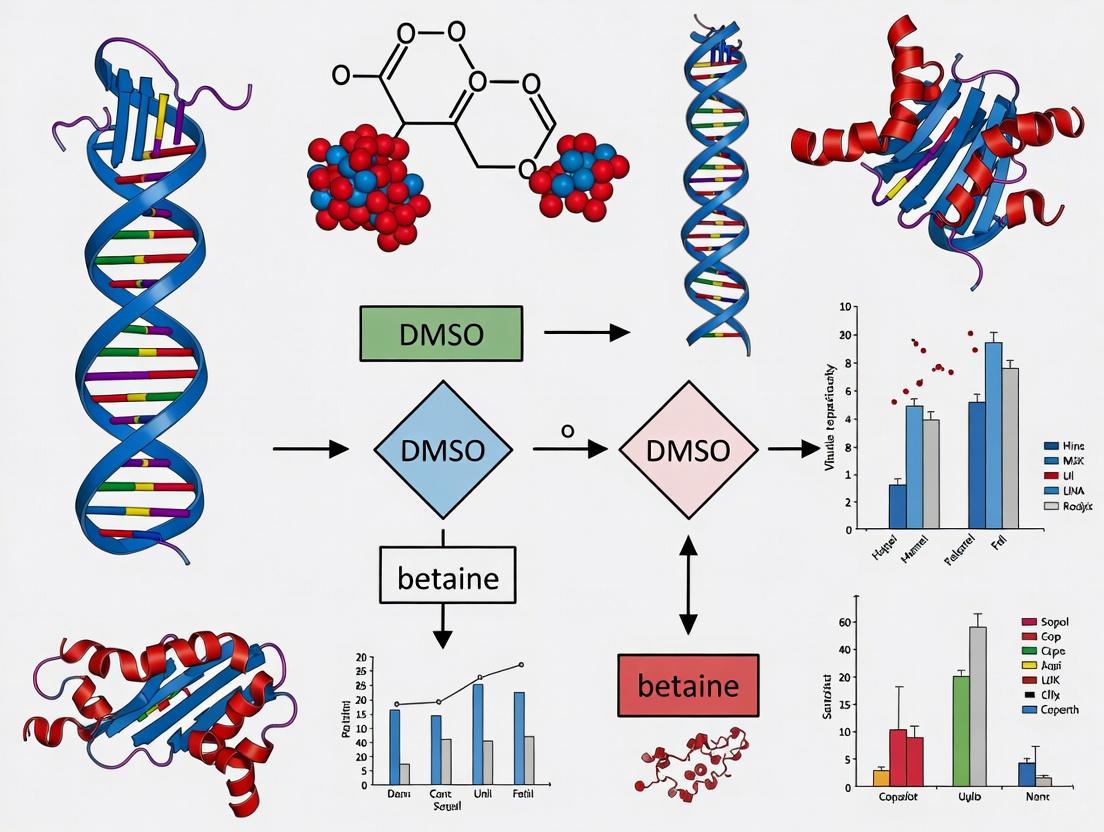
This article provides a comprehensive guide for researchers and drug development professionals on validating the specificity of PCR amplification enhanced by DMSO and betaine through direct DNA sequencing.
Sequencing Validation of PCR Specificity: Optimizing DMSO and Betaine for Robust Amplification
Abstract
This article provides a comprehensive guide for researchers and drug development professionals on validating the specificity of PCR amplification enhanced by DMSO and betaine through direct DNA sequencing. It covers the foundational mechanisms of these additives in disrupting DNA secondary structures, detailed methodologies for their application in amplifying challenging GC-rich templates, systematic troubleshooting for common optimization issues, and rigorous validation techniques to confirm amplicon fidelity. By integrating methodological application with confirmatory sequencing data, this resource aims to establish a reliable framework for achieving highly specific and efficient amplification of difficult targets in biomedical research and diagnostic assay development.
The Science Behind DMSO and Betaine as PCR Enhancers
Challenges of GC-Rich Templates and Secondary Structures in PCR
Amplifying guanine-cytosine (GC)-rich DNA templates represents a significant technical challenge in molecular biology, particularly for researchers working with promoter regions of genes, microbial genomes, and other GC-dense sequences. A template is generally considered GC-rich when over 60% of its bases are guanine or cytosine [1]. These sequences pose unique problems for polymerase chain reaction (PCR) due to their inherent thermodynamic stability and propensity to form complex secondary structures that impede polymerase progression [1] [2]. The stability of GC-rich DNA stems primarily from base stacking interactions rather than hydrogen bonding alone, with three hydrogen bonds in G-C base pairs versus two in A-T pairs contributing to this effect [1] [2]. This molecular characteristic creates practical obstacles for researchers requiring reliable amplification of these problematic sequences for downstream applications including sequencing, cloning, and diagnostic testing.
The challenges manifest in several ways during PCR. GC-rich regions resist complete denaturation at standard temperatures (92-95°C), leading to incomplete template unfolding [1] [2]. These templates readily form stable secondary structures such as hairpin loops that block polymerase activity, resulting in truncated amplification products [1]. Additionally, primers designed for GC-rich targets often exhibit increased tendency for dimerization and mispriming due to their high GC content [2] [3]. These technical difficulties frequently result in failed amplification, nonspecific products, or dramatically reduced yields—problems particularly prevalent when working with clinically relevant samples including formalin-fixed paraffin-embedded (FFPE) tissues or when amplifying promoter regions of pharmacogenetically important genes [4].
Fundamental Challenges in GC-Rich Amplification
Structural and Thermodynamic Barriers
The amplification efficiency of GC-rich templates is predominantly hindered by two interconnected factors: exceptional thermostability and persistent secondary structure formation. The increased density of hydrogen bonds in GC-rich sequences elevates their melting temperature (Tm), requiring more energy for strand separation than AT-rich regions [1]. This fundamental property means that standard PCR denaturation temperatures (typically 94-95°C) often prove insufficient for complete strand separation throughout GC-rich stretches, leaving regions partially annealed and inaccessible to primers and polymerase [2].
Beyond hydrogen bonding, base stacking interactions significantly contribute to the remarkable stability of GC-rich DNA [2]. These stacking forces create a thermodynamic barrier that becomes particularly problematic during the annealing and extension phases of PCR, where intramolecular folding competes more favorably than primer binding to target sequences. This folding leads to the formation of stable hairpin structures and other complex secondary configurations that physically block polymerase progression [1] [3]. The consequence is often premature termination of amplification, yielding shortened products that lack complete target sequences—a critical concern for applications requiring full-length amplification such as gene cloning or functional analysis [5].
Practical Consequences for PCR Efficiency
These molecular challenges translate directly to observable experimental outcomes. Researchers frequently report complete amplification failure (evidenced by blank gels), non-specific amplification (multiple bands or smearing on gels), or selective amplification of shorter, non-target sequences when working with GC-rich templates [1] [5]. The problem intensifies with increasing GC content and template length, creating particular difficulties for applications requiring amplification of extended genomic regions [6].
The secondary structures formed by GC-rich templates not only block polymerase progression but also promote polymerase "jumping" where the enzyme bypasses hairpin structures, resulting in deletion artifacts that compromise sequence integrity [5]. Additionally, primers with high GC content, especially at their 3' ends, demonstrate increased propensity for mispriming to off-target sites with partial complementarity, further reducing amplification specificity and yield [2] [3]. These challenges become particularly pronounced in clinical diagnostics where sample quality may be suboptimal, such as with FFPE-derived DNA that contains additional cross-linking and fragmentation artifacts [4].
Experimental Optimization Strategies
Chemical Additives and Enhancers
The strategic incorporation of PCR additives represents one of the most effective approaches for overcoming GC-rich amplification barriers. These chemicals work through distinct mechanisms to destabilize secondary structures and improve reaction specificity. Common additives include dimethyl sulfoxide (DMSO), betaine, formamide, glycerol, and 7-deaza-2'-deoxyguanosine [1] [7] [5]. These compounds function primarily by reducing DNA melting temperature and disrupting stable secondary structures that form within GC-rich templates [1].
Research demonstrates that combining additives often yields superior results compared to individual compounds. A powerful combination of 1 M betaine, 5% DMSO, and 50 μM 7-deaza-dGTP proved essential for amplifying extremely GC-rich sequences (67-79% GC) of disease-related genes including RET, LMX1B, and PHOX2B [5]. This triple combination was particularly effective at eliminating nonspecific amplification while maintaining full-length product yield. Similarly, studies on synthetic biology constructs found that DMSO and betaine significantly improved target specificity and product yield during amplification of GC-rich genes implicated in tumorigenesis (IGF2R and BRAF), though they provided no benefit during initial assembly steps [7].
Table 1: Common PCR Additives for GC-Rich Amplification
| Additive | Common Concentration | Mechanism of Action | Application Notes |
|---|---|---|---|
| DMSO | 3-10% (commonly 5%) | Disrupts base pairing, reduces DNA Tm | Improves specificity; often combined with betaine [4] [8] |
| Betaine | 1-1.3 M | Equalizes Tm of AT and GC base pairs | Reduces secondary structure; enhances specificity [8] [5] |
| 7-deaza-dGTP | 50 μM (partial replacement) | dGTP analog that disrupts Hoogsteen base pairing | Reduces secondary structure formation; may require adjusted polymerase concentration [5] |
| Glycerol | 5-10% | Lowers DNA melting temperature | Stabilizes polymerase; helps denature stable structures [1] |
| Formamide | 1-5% | Disrupts hydrogen bonding | Increases primer stringency; reduces mispriming [1] |
PCR Component Optimization
Beyond additives, systematic optimization of standard PCR components is crucial for successful GC-rich template amplification. Key parameters requiring optimization include polymerase selection, magnesium concentration, and thermal cycling conditions [1] [4].
Polymerase choice significantly impacts success rates with GC-rich templates. Standard Taq polymerase frequently struggles with these sequences, while specially engineered polymerases such as Q5 High-Fidelity DNA Polymerase and OneTaq DNA Polymerase demonstrate superior performance [1]. These specialized enzymes often feature enhanced processivity and reduced susceptibility to stalling at secondary structures. Many are supplied with GC enhancer solutions containing optimized additive combinations that collectively inhibit secondary structure formation and increase primer stringency [1]. For particularly challenging templates, polymerases derived from extremophiles, such as AccuPrime GC-Rich DNA Polymerase from Pyrolobus fumarius, offer exceptional thermostability that withstands higher denaturation temperatures [2].
Magnesium concentration optimization represents another critical parameter. Magnesium (Mg²⁺) serves as an essential polymerase cofactor and facilitates primer binding by neutralizing electrostatic repulsion between DNA strands [1]. Standard PCR typically uses 1.5-2.0 mM MgCl₂, but GC-rich templates often require fine-tuning within 1.0-4.0 mM range [1] [4]. Excessive magnesium promotes non-specific amplification, while insufficient concentrations reduce polymerase activity. Empirical testing using 0.5 mM increments is recommended to identify optimal conditions [1].
Table 2: Optimization Parameters for GC-Rich PCR
| Parameter | Standard Condition | GC-Rich Optimization | Experimental Approach |
|---|---|---|---|
| Denaturation Temperature | 94-95°C | Up to 98°C (polymerase-dependent) | Increase gradually; limit time at extreme temperatures [2] |
| Annealing Temperature | Calculated Tm -5°C | 5-10°C above calculated Tm | Gradient PCR with 2°C increments [4] |
| MgCl₂ Concentration | 1.5-2.0 mM | 1.0-4.0 mM | Test in 0.5 mM increments [1] |
| Cycle Number | 25-35 | 35-45 | Increase for low-yield targets [4] |
| Template Concentration | Variable | ≥2 μg/ml for difficult templates | Titration; avoid excessive concentration [4] |
Primer Design and Cycling Conditions
Strategic primer design and thermal cycling modifications provide additional avenues for improving GC-rich amplification. When designing primers for GC-rich targets, careful attention to secondary structure formation and self-complementarity is essential. Primers should be analyzed for potential hairpin formation and self-dimerization using specialized software, with modifications implemented to minimize these interactions [3]. Introduction of null mutations (deliberate, non-altering base changes) can reduce self-dimer free energy (ΔG) values below -5.0 kcal/mol, significantly improving amplification efficiency [3].
Thermal cycling parameters require careful optimization for GC-rich targets. Increasing denaturation temperature to 98°C or implementing a two-step PCR protocol with combined annealing/extension at 68°C can improve results [2] [6]. Additionally, slower temperature ramp rates help facilitate complete primer binding to challenging templates [6]. Some protocols employ higher annealing temperatures during initial cycles to enhance specificity, followed by standard temperatures in later cycles to maximize yield—an approach particularly useful for templates prone to mispriming [1]. For extremely problematic templates, specialized methods like "slow-down PCR" employ standardized cycling with reduced ramp rates and additional cycles to overcome amplification barriers [2].
Experimental Protocols and Validation
Standardized Optimization Protocol
Based on published methodologies, the following protocol provides a systematic approach for optimizing GC-rich PCR amplification:
Initial Setup: Begin with a polymerase specifically designed for GC-rich templates (e.g., Q5 High-Fidelity or OneTaq DNA Polymerase) and its corresponding GC enhancer at manufacturer-recommended concentrations [1].
Additive Optimization: If amplification remains suboptimal, test DMSO (5%) and betaine (1 M) in combination [7] [8]. For particularly stubborn templates (GC >75%), incorporate 7-deaza-dGTP at 50 μM as a partial dGTP replacement [5].
Magnesium Titration: Perform MgCl₂ titration from 1.0-4.0 mM in 0.5 mM increments while maintaining other optimal conditions [1].
Thermal Cycling Optimization: Implement a thermal gradient to determine optimal annealing temperature, typically testing 5-10°C above calculated primer Tm [4]. Consider a two-step PCR protocol with annealing/extension at 68°C if secondary structures persist [6].
Cycle Adjustment: Increase cycle number to 40-45 if product yield remains low despite improved specificity [4].
This systematic approach was successfully applied to amplify the EGFR promoter region (75.45% GC content), where optimization revealed requirements for 5% DMSO, 1.5 mM MgCl₂, and an annealing temperature of 63°C (7°C higher than calculated) [4].
Sequencing Validation
Verifying amplification specificity through sequencing represents a critical final step in GC-rich PCR optimization. Without sequence confirmation, researchers cannot distinguish between target amplification and artifactual products that may co-migrate with expected bands [5]. Direct Sanger sequencing of optimized PCR products should be performed in both forward and reverse directions using the same primers employed for amplification [4]. Comparison with reference sequences (e.g., via GenBank BLAST) confirms both specificity and fidelity of amplification—particularly important when utilizing additives like 7-deaza-dGTP that may incorporate sequencing artifacts [5].
Research demonstrates that proper optimization yields sequence-verifiable products even from extremely challenging templates. For example, one study successfully amplified a 392 bp RET promoter region with 79% GC content (peaking at 90% over a 50 bp stretch) only when employing the triple combination of betaine, DMSO, and 7-deaza-dGTP, with sequencing confirming specific amplification of the target sequence [5]. Similarly, amplification of the EGFR promoter from FFPE-derived DNA required similar optimization approaches, with sequencing validation essential for confirming genotype accuracy in subsequent pharmacogenetic analyses [4].
Diagram 1: Experimental Workflow for GC-Rich PCR Optimization. This diagram illustrates the logical progression from identifying amplification problems to implementing solutions and final validation.
Research Reagent Solutions
Successful amplification of GC-rich templates often requires specialized reagents specifically formulated to address the unique challenges these sequences present. The following table details key solutions mentioned in research literature:
Table 3: Essential Research Reagents for GC-Rich PCR
| Reagent Category | Specific Examples | Function & Application |
|---|---|---|
| GC-Enhanced Polymerases | OneTaq DNA Polymerase (NEB #M0480), Q5 High-Fidelity DNA Polymerase (NEB #M0491) | Engineered for superior performance on GC-rich templates; often supplied with specialized buffers [1] |
| PCR Enhancer Solutions | OneTaq High GC Enhancer, Q5 High GC Enhancer | Proprietary additive combinations that disrupt secondary structures and improve yield [1] |
| Specialized Master Mixes | OneTaq Hot Start 2X Master Mix with GC Buffer, Q5 High-Fidelity 2X Master Mix | Pre-optimized formulations for convenience and reproducibility [1] |
| Chemical Additives | DMSO (Sigma-Aldrich), Betaine (Sigma-Aldrich), 7-deaza-dGTP (Roche) | Individual components for reaction optimization; used separately or in combination [7] [5] |
| Blood DNA Amplification Kits | Q5 Blood Direct 2X Master Mix (NEB #M0500) | Formulated for amplification directly from blood samples; resistant to inhibitors; effective for amplicons up to 75% GC [1] |
Amplification of GC-rich DNA templates remains technically challenging but achievable through systematic optimization of reaction components and conditions. The strategic combination of specialized polymerases, chemical additives (particularly DMSO and betaine), and adjusted thermal cycling parameters enables successful amplification of even extremely GC-rich targets (>80% GC). The critical importance of sequencing validation cannot be overstated, as it confirms both the specificity and fidelity of amplification—essential considerations for downstream applications in research, diagnostics, and therapeutic development.
As research progresses, continued development of enhanced polymerase systems and optimized reagent formulations will likely further improve success rates with challenging templates. The approaches outlined here provide a methodological framework for researchers confronting GC-rich amplification challenges, emphasizing empirical optimization and rigorous validation to ensure reliable, reproducible results.
In synthetic biology and molecular diagnostics, the de novo synthesis and amplification of GC-rich DNA constructs present a major challenge due to the formation of stable secondary structures. Sequences with high guanine-cytosine (GC) content facilitate complex inter- and intrastrand folding caused by increased hydrogen bonding between neighboring guanines at their N-7 ring positions [9] [10]. This phenomenon manifests in PCR through truncated amplification products resulting from hairpin structures that create arrest sites and cause premature termination of polymerase extension [9]. Additionally, mispriming and mis-annealing between template and complementary strands due to high melting temperature (Tm) overlaps contribute to incorrectly amplified gene constructs [10].
While codon optimization tools exist to disrupt G repeats using synonymous codons with lower Tm values, these approaches are unsuitable when nucleotide conservation is essential for phenotypic expression or for non-coding regions where secondary structure regulates transcriptional initiation [9] [10]. To overcome these limitations without sequence modification, researchers have turned to chemical additives that physically disrupt these problematic structures. Among the most effective is dimethyl sulfoxide (DMSO), an isostabilizing agent that facilitates strand separation by altering DNA melting characteristics [10]. This guide examines the mechanistic basis for DMSO's action and provides experimental validation of its efficacy compared to alternative enhancing agents.
Mechanistic Basis: How DMSO Disrupts DNA Secondary Structures
Molecular Interactions of DMSO with Nucleic Acids
DMSO disrupts DNA secondary structures through several interconnected physical mechanisms:
Disruption of Hydrophobic Interactions: DMSO competes for the hydrophobic interactions that stabilize base stacking in double-stranded DNA. By disrupting these interactions, DMSO decreases stacking interactions and increases local disorder in non-canonical residues within bulges and loops [11]. NMR studies of RNA structures have confirmed that DMSO specifically perturbs residues in flexible regions, with the most significant chemical shift perturbations (Δδoverall > 0.08 ppm) observed in bulged and looped residues [11].
Reduction of Melting Temperature: DMSO alters the melting characteristics of double-helix DNA, effectively lowering the temperature required for strand separation. This property is particularly valuable for GC-rich regions where high Tm values would normally require denaturing conditions that might compromise polymerase activity [10].
Prevention of Re-annealing: During PCR amplification, DMSO acts by "disrupting inter and intrastrand re-annealing" [10], thereby minimizing the formation of secondary structures that impede polymerase progression. This effect is particularly pronounced in regions with G repeats that form stable hairpin structures through intrastrand folding.
The following diagram illustrates how DMSO acts on GC-rich DNA to prevent secondary structure formation:
Comparative Action of Betaine as an Alternative Enhancer
While this guide focuses primarily on DMSO, understanding its mechanism requires comparison with betaine, another commonly used additive for GC-rich amplification:
Table 1: Comparison of DMSO and Betaine Mechanisms
| Parameter | DMSO | Betaine |
|---|---|---|
| Primary Mechanism | Disrupts hydrophobic interactions and prevents re-annealing [10] | Equilibrates Tm difference between AT and GC base pairs [10] |
| Effect on Melting Temperature | Lowers overall Tm and facilitates strand separation [10] | Reduces Tm differential, creating more uniform melting [9] |
| Structural Impact | Decreases base stacking, increases disorder in loops/bulges [11] | Prevents formation of secondary structures without disrupting existing structures |
| Effective Concentration | 3.75%-10% (v/v) [12] [13] [4] | 1-2 M [12] |
Experimental Validation and Performance Comparison
Enhancement of PCR Amplification Efficiency
Multiple studies have quantitatively demonstrated DMSO's efficacy in improving amplification of challenging templates:
Table 2: Experimental Evidence of DMSO Efficacy in PCR Applications
| Application Context | Optimal DMSO Concentration | Observed Effect | Reference |
|---|---|---|---|
| GC-rich EGFR promoter amplification | 5-10% (v/v) | Significant enhancement of yield and specificity; necessary for successful amplification [12] [4] | [12] [4] |
| De novo synthesis of IGF2R and BRAF | Not specified for assembly; effective in PCR | Greatly improved target product specificity and yield during PCR amplification [9] [10] | [9] [10] |
| Direct PCR for forensic analysis | 3.75% (v/v) | Increased amplification yield of large-sized DNA sequences (>200 bp); reduced ski-slope effect [13] | [13] |
| Multiplex PCR with GlobalFiler kit | 3.75% (v/v) | Markedly improved PCR amplification of large-sized sequences (75-444 bp) [13] | [13] |
In one notable study on de novo synthesis of GC-rich gene fragments (IGF2R and BRAF), researchers found that while DMSO provided no benefit during assembly steps, it "greatly improved target product specificity and yield during PCR amplification" [9]. The Ligase Chain Reaction (LCR) assembly method combined with DMSO-enhanced PCR proved far superior to Polymerase Chain Assembly (PCA), generating a more stable template for amplification [10].
Impact on Amplification Specificity
Beyond improving yield, DMSO significantly enhances amplification specificity, particularly for templates prone to secondary structure formation:
- In amplification of the EGFR promoter region (75.45% GC content), 5% DMSO was "necessary for successful amplification" and provided the desired amplicon yield without nonspecific amplification [4].
- For direct PCR applications in forensics, DMSO at 3.75% concentration reduced the "ski-slope effect" (non-specific amplification in larger fragment sizes) by preferentially enhancing amplification of larger DNA sequences (>200 bp) over smaller ones [13].
- Studies comparing multiple additives found that DMSO "significantly enhanced the yield and specificity of PCR reaction" for GC-rich templates, with similar effects observed for glycerol and betaine as single additives [12].
Experimental Protocols and Methodologies
Standardized Protocol for DMSO-Enhanced PCR
Based on the reviewed literature, the following protocol represents an optimized approach for incorporating DMSO in PCR applications:
Reaction Setup:
- Template DNA: 1-2 μg/ml genomic DNA [4]
- Primers: 0.2-0.4 μM each [4]
- dNTPs: 0.2-0.25 mM each [12] [4]
- Taq DNA Polymerase: 0.625-1 U [4]
- MgCl₂: 1.5-2.0 mM (optimization required) [4]
- DMSO: 3.75%-10% (v/v) [12] [13] [4]
- PCR Buffer: 1X manufacturer's recommended formulation
Thermal Cycling Parameters:
- Initial Denaturation: 94-95°C for 1-5 minutes [9] [4]
- Cycling (25-45 cycles):
- Denaturation: 94°C for 10-30 seconds
- Annealing: 55-63°C for 20-30 seconds (7°C higher than calculated Tm) [4]
- Extension: 68-72°C for 60 seconds/kb
- Final Extension: 68-72°C for 5-10 minutes [9] [4]
The experimental workflow for optimizing and implementing DMSO-enhanced PCR is illustrated below:
Researcher's Toolkit: Essential Reagents and Materials
Table 3: Essential Research Reagents for DMSO-Enhanced PCR
| Reagent/Material | Function/Purpose | Example Specifications |
|---|---|---|
| Molecular Biology Grade DMSO | Disrupts secondary structures in GC-rich DNA; prevents re-annealing [10] | High purity, sterile-filtered [13] |
| High-Fidelity DNA Polymerase | Accurate DNA synthesis with resistance to inhibitor effects | HF Advantage polymerase [9] |
| dNTP Mix | Building blocks for DNA synthesis | 0.2-0.25 mM each dNTP [4] |
| MgCl₂ Solution | Cofactor for polymerase activity; concentration requires optimization | 1.5-2.0 mM final concentration [4] |
| GC-Rich Template DNA | Target for amplification | 1-2 μg/ml for challenging templates [4] |
| Optimized Primer Pairs | Target-specific amplification | Tm adjusted for use with DMSO [4] |
Comparative Performance with Alternative Enhancing Strategies
DMSO Versus Betaine in GC-Rich Amplification
While both DMSO and betaine effectively enhance GC-rich amplification, their mechanisms and optimal applications differ:
Synergistic Effects: Research indicates that "DMSO and betaine are highly compatible with all other reaction components of gene synthesis" [9], suggesting potential for combined use, though studies specifically testing their synergy in de novo synthesis found no additional benefit during assembly steps [10].
Concentration Optimization: DMSO typically shows efficacy at 3.75%-10% (v/v), while betaine requires higher molar concentrations (1-2 M) for optimal effect [12]. The lower volumetric requirement for DMSO may provide practical advantages in reaction setup.
Template Specificity: Betaine's Tm-equilibrating action may provide superior results for templates with extreme GC content variation, while DMSO's re-annealing disruption proves more effective for templates prone to secondary structure formation through G-repeats [10].
Compatibility with Advanced Molecular Techniques
DMSO demonstrates excellent compatibility with various molecular biology techniques:
Direct PCR Applications: DMSO at 3.75% concentration significantly reduces the ski-slope effect in direct PCR amplification from buccal samples, improving forensic DNA profiling efficiency without DNA extraction [13].
Ligase Chain Reaction: When combined with LCR-based assembly methods, DMSO-enhanced PCR generates "a much more stable template to amplify from" compared to polymerase-based assembly methods [10].
Sequencing Validation: The specificity enhancement provided by DMSO translates to more reliable sequencing results, with direct sequencing confirmation showing "highly specific" amplification of target sequences [4].
The mechanism by which DMSO disrupts inter- and intrastrand re-annealing represents a fundamental advancement in managing challenging PCR templates. By disrupting hydrophobic interactions that stabilize secondary structures, DMSO effectively reduces the kinetic and thermodynamic barriers to efficient amplification of GC-rich sequences. The experimental evidence consistently demonstrates that inclusion of 3.75%-10% DMSO in PCR reactions significantly improves both yield and specificity without requiring specialized equipment or protocols.
For researchers validating PCR specificity through sequencing, DMSO provides a reliable, cost-effective means to reduce artifacts that complicate sequence interpretation. Its compatibility with standard molecular biology reagents and protocols facilitates implementation across diverse applications from synthetic biology to clinical diagnostics. While alternative enhancers like betaine offer complementary mechanisms, DMSO's particular efficacy in preventing re-annealing of G-repeat sequences makes it uniquely valuable for the most challenging templates prone to complex secondary structure formation.
Future research directions should explore synergistic combinations of DMSO with novel polymerase formulations and the application of DMSO-enhanced protocols for emerging techniques in long-read sequencing and complex genome assembly, where secondary structure management remains a persistent challenge.
The amplification of GC-rich DNA sequences presents a significant challenge in molecular biology due to the formation of stable secondary structures that impede polymerase progression. Betaine has emerged as a powerful chemical isostabilizer that disrupts these structures and facilitates efficient amplification of difficult templates. This review objectively compares the performance of betaine against alternative additives such as DMSO, glycerol, and proprietary reagents, presenting supporting experimental data from systematic studies. Within the broader context of PCR validation, we demonstrate how the use of betaine enhances amplification specificity, with confirmation via DNA sequencing, providing researchers with a reliable method for accessing genetically complex regions implicated in disease research and drug development.
GC-rich DNA sequences pose substantial obstacles for polymerase chain reaction (PCR) amplification and other molecular biology techniques due to their high thermodynamic stability and propensity for forming intramolecular secondary structures. Sequences with elevated GC content (typically >60%) exhibit increased melting temperatures (Tm) and tend to form stable hairpins, loops, and G-quadruplex structures that cause polymerase stalling, premature termination, and mispriming [9]. These technical challenges are particularly problematic in synthetic biology and genetic research where faithful amplification of non-coding regulatory elements and phenotypically important conserved sequences is essential [9].
Betaine (N,N,N-trimethylglycine) has gained prominence as an effective isostabilizing agent that mitigates these challenges through its unique biophysical properties. As a zwitterionic molecule with both positive and negative charges close to neutral pH, betaine acts to equilibrate the differential melting temperature between AT and GC base pairings, effectively reducing the overall Tm without compromising polymerase activity [9]. This review comprehensively examines the mechanism of betaine as an isostabilizer, compares its performance to alternative additives, and provides detailed experimental protocols for its application in validating PCR specificity through sequencing.
Mechanistic Insights: How Betaine Functions as an Isostabilizer
Biophysical Properties and DNA Destabilization
Betaine operates as a PCR enhancer through two primary mechanisms: isostabilization and direct disruption of secondary structures. As an isostabilizer, betaine equilibrates the melting temperature differential between AT and GC base pairs by reducing the contribution of GC base stacking to duplex stability [9]. This equalization effect prevents the localized regions of extreme stability that characterize GC-rich sequences and facilitates more uniform strand separation during denaturation steps. Additionally, betaine disrupts the planar hydrogen bonding between guanine bases that facilitates secondary structure formation, thereby minimizing hairpin and loop structures that would otherwise block polymerase progression [14].
The molecular basis for these effects stems from betaine's interaction with DNA backbone and bases. As a preferential exclusion compound, betaine is excluded from the immediate hydration sphere of DNA, which alters the water activity and effectively destabilizes the double helix without direct binding that might interfere with polymerase function. This mechanism differs fundamentally from co-solvents like DMSO, which directly intercalate between bases and disrupt base stacking through physical intrusion [9] [5].
Comparative Mechanisms of PCR Enhancers
The following diagram illustrates the distinct mechanisms by which betaine and other common PCR enhancers facilitate amplification of GC-rich templates:
Diagram 1: Mechanisms of PCR enhancers for GC-rich DNA. Betaine acts primarily through isostabilization and melting temperature (Tm) equalization between AT and GC base pairs, while DMSO directly disrupts base stacking. 7-deaza-dGTP incorporates as a base analog that reduces hydrogen bonding, and sucrose/trehalose primarily stabilize DNA polymerase. Ethylene glycol reduces Tm through a mechanism not fully understood.
Performance Comparison of Betaine and Alternative Additives
Systematic Analysis of Amplification Efficiency
Recent systematic studies have quantitatively compared the efficacy of various PCR enhancers across DNA templates with different GC content. A 2024 comprehensive analysis evaluated nine different additives at multiple concentrations for their ability to facilitate amplification of moderate (53.8%), high (68.0%), and extremely high (78.4%) GC content targets [14]. The results, measured by cycle threshold (Ct) values and melting temperatures (Tm), provide robust comparative data:
Table 1: Performance comparison of PCR enhancers across different GC content targets [14]
| Enhancer | Concentration | 53.8% GC (Ct±SEM) | 68.0% GC (Ct±SEM) | 78.4% GC (Ct±SEM) |
|---|---|---|---|---|
| Control | - | 15.84±0.05 | 15.48±0.22 | 32.17±0.25 |
| Betaine | 0.5 M | 16.03±0.03 | 15.08±0.10 | 16.97±0.08 |
| 1.0 M | 16.20±0.05 | 15.35±0.12 | 16.77±0.06 | |
| DMSO | 5% | 16.68±0.01 | 15.72±0.03 | 17.90±0.05 |
| 10% | 18.78±0.04 | 17.15±0.07 | 21.15±0.07 | |
| Formamide | 5% | 18.08±0.07 | 15.44±0.03 | 16.32±0.05 |
| Ethylene Glycol | 5% | 16.28±0.06 | 15.27±0.08 | 17.24±0.04 |
| Sucrose | 0.4 M | 16.39±0.09 | 15.03±0.04 | 16.67±0.08 |
| Trehalose | 0.4 M | 16.43±0.16 | 15.15±0.08 | 16.91±0.14 |
The data demonstrates that betaine at 0.5-1.0 M concentrations provides superior enhancement for extremely GC-rich templates (78.4% GC), reducing Ct values from 32.17 to approximately 16.8 - a dramatic improvement in amplification efficiency. While sucrose and trehalose also show significant enhancement for high GC targets, betaine consistently delivers robust performance across the widest range of GC content.
Synergistic Effects in Combination Approaches
For particularly challenging templates, combination approaches often yield superior results than single additives. Research has demonstrated that a mixture of betaine, DMSO, and 7-deaza-dGTP enables amplification of extremely GC-rich sequences (67-79% GC) that prove refractory to amplification with individual additives [5] [15]. In one study, the RET promoter region (79% GC) could not be reliably amplified using any single additive or two-additive combination, but the triple mixture produced a unique specific product confirmed by sequencing [5].
Table 2: Efficacy of additive combinations for challenging GC-rich templates [5]
| Target Gene | GC Content | Single Additives | Two Additive Combinations | Triple Combination |
|---|---|---|---|---|
| RET promoter | 79% | Non-specific or no amplification | Non-specific or no amplification | Specific amplification |
| LMX1B region | 67.8% | Non-specific products only | Non-specific products or minor specific product | Clean specific product |
| PHOX2B exon 3 | 72.7% | Allele-specific amplification bias | Reduced but persistent bias | Balanced allele amplification |
The synergistic mechanism likely involves complementary actions: betaine provides general isostabilization, DMSO directly disrupts secondary structures, and 7-deaza-dGTP reduces hydrogen bonding during incorporation, collectively addressing multiple aspects of GC-rich template challenges.
Experimental Protocols and Validation
Standardized Protocol for Betaine-Enhanced PCR
The following protocol has been optimized for amplification of GC-rich templates using betaine as a primary enhancer [9] [5]:
Reaction Setup:
- 1× PCR buffer (compatible with selected DNA polymerase)
- 2.5-3.0 mM MgCl2 (optimize for specific template)
- 200 μM each dNTP
- 0.5-1.0 M betaine (final concentration)
- 0.5-1.0 μM each forward and reverse primer
- 1.25-2.5 U DNA polymerase (high-fidelity enzymes preferred)
- Template DNA (10-100 ng genomic DNA or equivalent)
- Nuclease-free water to 25-50 μL final volume
Thermal Cycling Conditions:
- Initial denaturation: 94-98°C for 3-5 minutes
- 30-40 cycles of:
- Denaturation: 94-98°C for 15-30 seconds
- Annealing: 60-68°C for 30-60 seconds (optimize based on primer Tm)
- Extension: 68-72°C for 1 minute per kb of amplicon
- Final extension: 68-72°C for 5-10 minutes
- Hold at 4°C
Critical Notes:
- Betaine concentration may require optimization between 0.5-1.5 M for extremely GC-rich targets
- Annealing temperature may be increased by 2-4°C compared to standard protocols due to Tm equalization effect
- For templates >80% GC content, consider adding DMSO (3-5%) and/or 7-deaza-dGTP (50 μM) [5]
Validation Through DNA Sequencing
Verification of amplification specificity through sequencing represents a critical validation step when working with GC-rich templates. The following workflow ensures accurate confirmation:
Diagram 2: Validation workflow for betaine-enhanced PCR. Specificity of amplification is confirmed through sequence comparison against reference templates to ensure no mispriming or sequence alterations occurred during betaine-facilitated amplification.
For comprehensive validation:
- Sequence both strands of the amplified product
- Compare to reference sequence using alignment software (e.g., BLAST, Clustal Omega)
- Verify absence of sequence polymorphisms, particularly in GC-rich regions
- Confirm fidelity by restriction digest if appropriate sites are present
This validation is especially important when using betaine and other enhancers, as they may potentially reduce polymerase fidelity in some systems, though studies have demonstrated that betaine specifically does not compromise sequencing quality when used at recommended concentrations [9] [5].
The Scientist's Toolkit: Essential Reagents for GC-Rich Amplification
Table 3: Key research reagents for betaine-enhanced PCR of GC-rich templates
| Reagent | Function | Working Concentration | Notes |
|---|---|---|---|
| Betaine | Isostabilizer that equalizes Tm of AT and GC base pairs | 0.5-1.5 M | Stock solution typically prepared at 5M in nuclease-free water; non-toxic and compatible with most polymerases |
| DMSO | Disrupts secondary structures by interfering with base stacking | 2-10% (v/v) | Higher concentrations may inhibit polymerase; typically used in combination with betaine for difficult templates |
| 7-deaza-dGTP | Guanine analog that reduces hydrogen bonding in GC-rich regions | 50-70 μM (partial replacement of dGTP) | Can reduce polymerase processivity; requires optimization of dGTP:7-deaza-dGTP ratio |
| High-Fidelity DNA Polymerase | Provides processivity for challenging templates with secondary structures | As recommended by manufacturer | Blends containing proofreading enzymes often perform better than standard Taq |
| dNTPs | Balanced nucleotide concentrations critical for GC-rich amplification | 200 μM each | Higher concentrations (up to 500 μM) may help with extreme GC content |
| MgCl2 | Cofactor for polymerase activity; concentration affects specificity | 2.0-3.5 mM | Requires optimization with betaine as it affects melting temperature |
Betaine serves as a highly effective isostabilizing agent for PCR amplification of GC-rich DNA sequences through its unique ability to equalize the melting temperature differences between AT and GC base pairs. Experimental data demonstrates its superior performance compared to alternative additives, particularly for templates with GC content exceeding 70%. When deployed in standardized protocols, either alone or in combination with DMSO and 7-deaza-dGTP for exceptionally challenging templates, betaine enables reliable amplification that can be rigorously validated through DNA sequencing. This approach provides researchers and drug development professionals with a robust method for accessing genetically complex regions, thereby supporting advances in functional genomics, diagnostic assay development, and therapeutic target validation.
The amplification of GC-rich DNA sequences represents a significant hurdle in molecular biology, particularly for applications in gene synthesis, genotyping, and DNA barcoding. Sequences with high guanine and cytosine content tend to form stable secondary structures and intramolecular hairpins due to enhanced hydrogen bonding, leading to premature termination of polymerase extension, mispriming, and ultimately, amplification failure. While various strategies exist to circumvent these challenges, the use of chemical additives has emerged as a particularly effective approach. Among these, dimethyl sulfoxide (DMSO) and betaine have demonstrated remarkable efficacy both individually and in combination.
This comparison guide objectively evaluates the synergistic potential of combining DMSO and betaine for enhancing PCR amplification and gene synthesis, drawing upon experimental data from peer-reviewed studies. The analysis is framed within the critical context of validating amplification specificity through DNA sequencing, a non-negotiable requirement for research and diagnostic applications. For researchers, scientists, and drug development professionals, understanding the precise conditions under which these additives confer maximum benefit is essential for developing robust, reliable molecular protocols, especially when working with recalcitrant templates such as promoter regions, GC-rich gene fragments, and DNA barcodes.
Mechanistic Insights: How DMSO and Betaine Facilitate Amplification
DMSO and betaine employ distinct yet complementary mechanisms to overcome the challenges posed by GC-rich DNA templates. Their synergistic effect stems from their ability to target different aspects of the physical barriers that inhibit conventional PCR.
DMSO (Dimethyl Sulfoxide) functions primarily as a destabilizing agent. It disrupts the secondary structures—such as hairpins and stem-loops—that are prevalent in GC-rich sequences. These structures form because of the three hydrogen bonds between G and C bases, which create a barrier to the procession of DNA polymerase. By interfering with hydrogen bonding and base stacking, DMSO reduces the melting temperature (Tm) of these stable regions, facilitating strand separation and allowing the polymerase access to the template [7] [9].
Betaine (Trimethylglycine), on the other hand, is an isostabilizing agent. It acts by equilibrating the differential melting temperatures between AT-rich and GC-rich regions within a DNA template. In a standard PCR, the higher Tm of GC-rich clusters can prevent the complete denaturation of the template at standard cycling temperatures. Betaine penetrates the DNA duplex and neutralizes the base-composition bias, effectively creating a more uniform melting profile across the entire template. This prevents the formation of "breathing" bubbles and partial denaturation, ensuring the entire strand is accessible for primer annealing [9] [5].
When used in combination, their synergistic action provides a two-pronged attack on the problem: DMSO directly destabilizes stubborn secondary structures, while betaine homogenizes the melting behavior of the entire DNA strand. This creates an environment where the DNA polymerase can process the template efficiently and with high fidelity, significantly improving the yield and specificity of the amplification.
The following diagram illustrates the mechanistic pathways through which DMSO and Betaine enhance the amplification of GC-rich DNA sequences.
Comparative Performance Analysis: Experimental Data
Enhancement in Gene Synthesis and De Novo Assembly
A foundational study by Jensen et al. (2010) systematically investigated the use of DMSO and betaine in the de novo synthesis of two GC-rich gene fragments implicated in tumorigenesis: IGF2R and BRAF [7] [9]. The research compared polymerase chain assembly (PCA) and ligase chain reaction (LCR) methods. While the additives provided no significant benefit during the initial assembly steps, they profoundly impacted the subsequent PCR amplification of the assembled constructs.
The study found that both DMSO and betaine greatly improved target product specificity and yield during PCR amplification. LCR assembly combined with enhanced PCR was notably superior, generating a more stable template for amplification. A key conclusion was that these additives are highly compatible with standard reaction components and enable the production of GC-rich constructs without costly and time-consuming sample purification [7] [9] [16].
Overcoming Extreme GC Content in Genomic PCR
Musso et al. (2006) presented a powerful advancement for amplifying sequences with extreme GC content (67% to 79%). They demonstrated that for particularly challenging targets, a combination of three additives—betaine, DMSO, and 7-deaza-dGTP—was essential for specific amplification [15] [5].
Table 1: Efficacy of Additive Combinations on Challenging GC-Rich Targets
| Target Gene (GC Content) | Additives Tested | Result with DMSO + Betaine | Result with DMSO + Betaine + 7-deaza-dGTP |
|---|---|---|---|
| RET Promoter (79%) | Reduced background but specific product not achieved [5]. | A unique, specific PCR product was obtained and confirmed by sequencing [5]. | |
| LMX1B Region (67.8%) | Specific band amplified, but major nonspecific bands persisted [5]. | A clean, specific product was achieved and confirmed by sequencing [5]. | |
| PHOX2B Exon 3 (72.7%) | Not specifically reported for this combination. | Enabled amplification of both alleles in heterozygous samples, crucial for diagnostic accuracy [5]. |
This research highlights that while DMSO and betaine are powerful, the most challenging templates may require an enhanced formulation including 7-deaza-dGTP. This nucleotide analog incorporates into the nascent DNA strand, further reducing the stability of secondary structures by disrupting Hoogsteen base-pairing that leads to hairpin formation [5] [17].
Application in DNA Barcoding and SNP Detection
The synergistic effects of DMSO and betaine extend to diverse fields like botany and clinical genetics. A study on plant DNA barcoding found that among several additives, 5% DMSO provided the highest PCR success rate (91.6%) for the GC-rich ITS2 marker, followed by 1 M betaine (75%) [17]. Critically, the authors recommended a sequential strategy: using 5% DMSO by default and substituting it with 1 M betaine only in cases of failed reactions. This strategy boosted the overall PCR success rate from 42% to 100% across 50 plant species [17].
Furthermore, research on detecting single nucleotide polymorphisms (SNPs) in the GC-rich promoter of the Epidermal Growth Factor Receptor (EGFR) gene in non-small-cell lung cancer patients confirmed that DMSO (7-10%), glycerol (10-20%), and betaine (1-2 M), when used individually, significantly enhanced the yield and specificity of the PCR reaction for subsequent RFLP analysis [12].
Table 2: Summary of Optimal Concentrations for Different Applications
| Application | Optimal DMSO | Optimal Betaine | Key Findings | Sequencing Validation |
|---|---|---|---|---|
| Gene Synthesis (IGF2R, BRAF) [7] [9] | Not specified | Not specified | Greatly improved specificity and yield of PCR post-assembly. | Implied |
| Genomic PCR (RET, LMX1B) [5] | 5% | 1.3 M | Required with 7-deaza-dGTP for specific amplification of extreme GC targets. | Yes [5] |
| DNA Barcoding (ITS2) [17] | 5% | 1 M | 5% DMSO was most effective; betaine a good alternative for failed reactions. | Implied by successful barcoding |
| SNP Genotyping (EGFR) [12] | 7-10% | 1-2 M | Significantly enhanced yield and specificity for PCR-RFLP. | Implied by reliable genotyping |
The Scientist's Toolkit: Essential Research Reagent Solutions
The following table details key reagents and their functions for implementing the DMSO and betaine enhancement strategy in experimental workflows.
Table 3: Essential Research Reagent Solutions for PCR Enhancement
| Reagent / Solution | Function / Purpose | Example Application |
|---|---|---|
| Dimethyl Sulfoxide (DMSO) | Disrupts secondary structures in GC-rich DNA by reducing its melting temperature (Tm) [7] [9]. | Standard enhancement for GC-rich PCR; first-choice additive for ITS2 DNA barcoding [17]. |
| Betaine (Trimethylglycine) | Homogenizes the melting temperature of DNA by neutralizing base-composition bias; isostabilizing agent [9] [5]. | Alternative or complementary additive to DMSO; essential for multi-component mixes for extreme GC content [5] [17]. |
| 7-deaza-dGTP | A nucleotide analog that incorporates into DNA, preventing Hoogsteen base-pairing and the formation of stable secondary structures [5] [17]. | Third component in powerful mixtures for amplifying the most challenging sequences (e.g., RET promoter) [15] [5]. |
| High-Fidelity DNA Polymerase | Provides high-processivity and proof-reading activity for accurate amplification of long or complex templates. | Used in gene synthesis studies for assembling and amplifying IGF2R and BRAF constructs [7] [9]. |
| T4 Polynucleotide Kinase | Enzymatically phosphorylates the 5' end of oligonucleotides, a prerequisite for ligation-based assembly methods like LCR. | Used in LCR assembly of gene fragments prior to enhanced PCR amplification [9]. |
| Ampligase | A thermostable DNA ligase used in Ligase Chain Reaction (LCR) for assembling overlapping oligonucleotides into a full-length gene. | Generated more stable templates for subsequent PCR compared to polymerase-based assembly [9]. |
Experimental Protocols: Key Methodologies from Literature
Protocol 1: De Novo Synthesis of GC-Rich Genes via LCR and Enhanced PCR
This methodology, adapted from Jensen et al. (2010), outlines the protocol for synthesizing and amplifying GC-rich constructs like IGF2R and BRAF [7] [9].
- Gene2Oligo Design: Input the target DNA sequence into the Gene2Oligo program to fragment it into 40-mer oligonucleotides with 20-bp overlapping regions.
- Oligonucleotide Phosphorylation: Pool oligonucleotides into positive and negative strands. Phosphorylate them using T4 Polynucleotide Kinase in its provided buffer with ATP. Incubate at 37°C for 30 minutes, then heat-inactivate at 60°C for 20 minutes.
- Ligase Chain Reaction (LCR): Desalt the phosphorylated oligonucleotides and pool complementary strands. Assemble the LCR reaction using Ampligase and its buffer. Cycle the reaction 21 times with the following parameters: 95°C for 1 minute (denaturation) and 70°C for 4 minutes (annealing/ligation), with a ramp rate of -1°C per cycle.
- Enhanced PCR Amplification: Use 1-2 µL of the LCR product as a template for a standard PCR reaction with High-Fidelity DNA Polymerase and outside primers. Critical Step: Include either DMSO (at optimal concentration) or Betaine (at optimal concentration) in the PCR master mix. Cycling conditions: initial denaturation at 94°C for 5 minutes; 25 cycles of 94°C for 15 sec, 55°C for 30 sec, 68°C for 60 sec; final extension at 68°C for 5 minutes.
- Validation: Analyze the PCR product by agarose gel electrophoresis. Confirm the sequence and fidelity of the amplified construct by Sanger sequencing.
Protocol 2: Three-Component Mixture for Extreme GC-Rich Targets
For the most challenging sequences, such as the RET promoter, Musso et al. (2006) established a robust protocol [5].
- PCR Reaction Setup: Prepare a 25 µL PCR reaction containing:
- 1× PCR Buffer (supplemented with 2.5 mM MgCl₂).
- 200 µM each of dATP, dCTP, dTTP.
- 50 µM 7-deaza-dGTP (and 150 µM dGTP, if a mixture is preferred).
- 10-20 pmol of each primer.
- 1.25 units of Taq DNA Polymerase.
- 100 ng of genomic DNA template.
- Additive Incorporation: Add the following additives directly to the master mix:
- Betaine to a final concentration of 1.3 M.
- DMSO to a final concentration of 5% (v/v).
- Thermal Cycling: Perform PCR amplification with the following typical profile:
- Initial Denaturation: 94°C for 3-5 minutes.
- 25-40 Cycles: Denaturation at 94°C for 10-30 seconds, Annealing at 60°C for 30 seconds, Extension at 72°C for 45-60 seconds (adjust based on product length).
- Final Extension: 72°C for 5-10 minutes.
- Sequencing Validation: Purify the PCR product and subject it to direct Sanger sequencing using the amplification primers to confirm the specificity and accuracy of the amplification [5].
The combination of DMSO and betaine represents a powerful, cost-effective, and readily available strategy for overcoming the pervasive challenge of amplifying GC-rich DNA sequences. Experimental data consistently demonstrates that these additives work synergistically to enhance amplification specificity and yield, with DMSO acting as a destabilizer of secondary structures and betaine functioning as an isostabilizing agent that homogenizes DNA melting temperatures.
The key consideration for researchers is the spectrum of enhancement. For many applications, such as standard GC-rich PCR or DNA barcoding, DMSO alone may be sufficient. For more challenging templates, a combination of DMSO and betaine provides a significant synergistic boost. Finally, for the most recalcitrant sequences with GC content exceeding 75%, a powerful three-component mixture incorporating DMSO, betaine, and 7-deaza-dGTP is often necessary to achieve specific amplification, as validated by DNA sequencing.
Future research may focus on further refining these formulations and integrating them with engineered DNA polymerases that are inherently more tolerant of GC-rich structures. For now, the strategic use of DMSO and betaine remains an indispensable tool in the molecular biologist's toolkit, enabling reliable research and accurate diagnostics in genomics, synthetic biology, and personalized medicine.
The Critical Role of Additives in Specific Amplification for Sequencing
In the context of sequencing research, the validation of PCR specificity is a foundational step that directly impacts data quality and reliability. Specific amplification is critical for next-generation sequencing (NGS) applications, where non-specific products can compromise variant calling accuracy, reduce coverage in target regions, and lead to misinterpretation of biological results. This challenge becomes particularly pronounced when dealing with GC-rich templates, which constitute key regulatory regions in genomes, including promoters of housekeeping and tumor suppressor genes [18]. These sequences are notoriously difficult to amplify due to their propensity to form stable secondary structures, such as hairpins, which cause polymerases to stall and result in incomplete or non-specific products [9] [18]. To overcome these obstacles, chemical additives like DMSO (Dimethyl Sulfoxide) and betaine have emerged as essential tools in the molecular biologist's toolkit. This guide objectively compares the performance of these and other additives, drawing on experimental data to outline their critical role in ensuring specific amplification for downstream sequencing applications.
Mechanisms of PCR Additives: How DMSO and Betaine Enhance Specificity
PCR additives enhance amplification specificity through distinct biochemical mechanisms. For GC-rich templates, the primary challenge lies in the stable secondary structures formed due to the three hydrogen bonds in G-C base pairs, compared to only two in A-T pairs [18]. This increased thermostability leads to incomplete denaturation, mispriming, and polymerase stalling.
DMSO functions by disrupting secondary DNA structures. It is thought to reduce the stability of DNA duplexes by interfering with hydrogen bonding and base stacking interactions, thereby facilitating the denaturation of GC-rich regions and preventing the formation of hairpins and other complex structures that hinder polymerase progression [19]. However, a critical trade-off exists: DMSO can also reduce Taq polymerase activity, necessitating careful optimization of concentration [19].
Betaine (also known as betaine monohydrate) operates via a different mechanism. As an isostabilizing agent, it equilibrates the differential melting temperature (Tm) between AT and GC base pairings [9]. Betaine, an amino acid analog with zwitterionic properties near neutral pH, penetrates DNA strands and reduces the energy required to separate GC-rich duplexes. This results in a more uniform melting temperature across the template, which not only improves the amplification of difficult targets but also enhances primer specificity by eliminating the base-pair composition dependence of DNA melting [19].
Other additives contribute through complementary mechanisms. Formamide and TMAC (Tetramethyl ammonium chloride) work primarily by increasing hybridization stringency. Formamide destabilizes the DNA double helix, while TMAC increases the melting temperature, both acting to reduce non-specific priming and primer-dimer formation [19]. 7-deaza-dGTP is a guanosine analog that can be incorporated into the growing DNA strand in place of dGTP; it base-pairs normally with cytosine but lacks the nitrogen atom involved in secondary structure formation, thereby reducing the stability of GC-rich duplexes [15].
Table 1: Key PCR Additives and Their Mechanisms of Action
| Additive | Primary Mechanism | Effect on Specificity | Optimal Concentration Range |
|---|---|---|---|
| DMSO | Disrupts hydrogen bonding, reducing secondary structures [19] | Increases target amplification but can reduce polymerase activity [19] | 2-10% [19] |
| Betaine | Equilibrates Tm of AT and GC base pairs, reducing secondary structures [9] [19] | Enhances specificity and yield of GC-rich targets [9] | 1.0-1.7 M [19] |
| Formamide | Binds DNA grooves, destabilizes double helix, lowers Tm [19] | Increases primer stringency, reduces non-specific priming [19] | 1-5% [19] |
| 7-deaza-dGTP | dGTP analog that impedes secondary structure formation [15] | Improves yield of GC-rich sequences [15] | Used as partial substitute for dGTP |
| TMAC | Increases hybridization specificity and Tm [19] | Eliminates non-specific priming and mismatch hybridization [19] | 15-100 mM [19] |
Comparative Performance Analysis: DMSO and Betaine in Experimental Settings
Direct Experimental Evidence from Gene Synthesis Studies
A rigorous study investigating the de novo synthesis of two GC-rich gene fragments implicated in tumorigenesis—IGF2R and BRAF—provides compelling data on the performance of DMSO and betaine [9]. The researchers compared polymerase chain assembly (PCA) and ligase chain reaction (LCR) methods with and without additives. The key finding was that while neither DMSO nor betaine provided significant benefit during the gene assembly steps themselves, both additives "greatly improved target product specificity and yield during PCR amplification" of the assembled constructs [9]. This underscores their primary value in the amplification phase critical for generating sequencing templates.
Of particular note, the study reported that LCR assembly combined with enhanced PCR amplification proved far superior to PCA, generating a more stable template for amplification [9]. Furthermore, the research confirmed that DMSO and betaine are highly compatible with all other reaction components of gene synthesis and do not require additional protocol modifications, making them practical for routine laboratory use [9].
Synergistic Effects of Additive Combinations
Evidence suggests that combining additives can produce synergistic benefits, particularly for the most challenging sequences. One study highlighted that a powerful mixture of betaine, DMSO, and 7-deaza-dGTP was "essential to achieve amplification of DNA sequences of three disease genes showing a GC content ranging from 67 to 79%" [15]. This triple combination likely addresses the challenge through multiple complementary mechanisms: betaine and DMSO to reduce secondary structures and normalize melting behavior, and 7-deaza-dGTP to directly incorporate into the DNA backbone and further prevent reassociation of GC-rich stretches.
Practical Considerations and Commercial Formulations
When troubleshooting difficult amplifications, experts recommend a systematic approach to additive implementation. New England Biolabs suggests that if the cause of poor amplification is unknown, testing multiple additives with concentration gradients can be laborious [18]. Instead, they recommend using polymerases supplied with specialized GC enhancers, which often contain optimized mixtures of these additives [18]. For instance, their OneTaq DNA Polymerase with GC Buffer and Enhancer can amplify targets with up to 80% GC content [18].
Table 2: Performance Comparison of Additives in Amplifying GC-Rich Templates
| Additive/Strategy | Reported Effectiveness | Advantages | Limitations/Cautions |
|---|---|---|---|
| DMSO Alone | Greatly improves specificity and yield of GC-rich constructs [9] | Readily available, inexpensive [9] | Can inhibit Taq polymerase at higher concentrations (>10%) [19] |
| Betaine Alone | Greatly improves specificity and yield of GC-rich constructs [9] | Reduces secondary structures, enhances specificity [9] [19] | Use betaine or betaine monohydrate, not betaine HCl [19] |
| DMSO + Betaine Combination | Highly effective for GC-rich de novo synthesis [9] | Compatible with reaction components, no protocol modifications needed [9] | Concentration may need optimization for different targets [18] |
| Betaine + DMSO + 7-deaza-dGTP | Essential for sequences with 67-79% GC content [15] | Powerful synergistic effect for extremely difficult targets [15] | 7-deaza-dGTP does not stain well with ethidium bromide [18] |
| Commercial GC Enhancers | Robust performance across wide GC range (up to 80%) [18] | Pre-optimized mixtures, convenient, reliable | Less flexibility for individual optimization |
Experimental Protocols for Validating Specificity with DMSO and Betaine
Protocol: Assessing Additive Efficacy in GC-Rich PCR Amplification
This protocol is adapted from methodologies used in gene synthesis and amplification studies [9] and can be applied to validate specificity for sequencing templates.
1. Template and Primer Design:
- Select a target sequence with known high GC-content (>60%).
- Design external primers for amplification of the assembled construct or genomic target. For IGF2R, researchers used: Forward: 5'-TCCCGCTCCGTCTCCACCTCCGC-3' and Reverse: 5'-ACAGGAAGGCAATGCTGCTCTGGA-3' [9].
- Resuscribe primers to 100 µM in nuclease-free water.
2. Reaction Setup with Additives:
- Prepare a master mix containing: 1X High-Fidelity Polymerase Buffer, 200 µM of each dNTP, 0.5 µM of each primer, and 1 unit of High-Fidelity DNA Polymerase.
- Aliquot the master mix into separate tubes for testing different additive conditions:
- Condition A: No additives (control)
- Condition B: DMSO at a final concentration of 2%, 5%, and 10%
- Condition C: Betaine at a final concentration of 1.0 M and 1.7 M
- Condition D: Combination of DMSO (5%) and Betaine (1.0 M)
- Add template DNA (10-100 ng for genomic DNA or 1 µL of assembled construct).
- Adjust the total reaction volume to 20-50 µL with nuclease-free water.
3. Thermal Cycling Conditions:
- Initial Denaturation: 94°C for 5 minutes
- Amplification (25-35 cycles):
- Denaturation: 94°C for 15-30 seconds
- Annealing: 55-65°C for 30 seconds (optimize based on primer Tm)
- Extension: 68°C for 60 seconds per kb
- Final Extension: 68°C for 5-10 minutes
- Hold at 4°C
4. Specificity Analysis:
- Analyze 5-10 µL of PCR products by agarose gel electrophoresis (e.g., 1.25% agarose) [9].
- Assess for a single, sharp band of the expected size versus smearing or multiple bands indicating non-specific amplification.
- Purify the specific band and proceed to Sanger sequencing or prepare libraries for NGS to validate sequence fidelity.
Workflow Diagram: Experimental Validation of PCR Additives
The following diagram illustrates the key decision points in optimizing additive use for sequencing preparation:
The Scientist's Toolkit: Essential Reagents for Specific Amplification
Table 3: Research Reagent Solutions for Specific Amplification
| Reagent Category | Specific Product/Example | Function in Specific Amplification |
|---|---|---|
| Chemical Additives | DMSO (Dimethyl Sulfoxide) [19] | Reduces secondary structure in GC-rich templates [19] |
| Betaine (Betaine monohydrate) [9] [19] | Equilibrates DNA melting temperatures, reduces secondary structures [9] [19] | |
| 7-deaza-dGTP [15] | dGTP analog that impedes secondary structure formation [15] | |
| Specialized Polymerases | OneTaq DNA Polymerase with GC Buffer [18] | Optimized for routine and GC-rich PCR, includes enhancer for difficult amplicons [18] |
| Q5 High-Fidelity DNA Polymerase [18] | High-fidelity enzyme suitable for long or difficult amplicons, compatible with GC Enhancer [18] | |
| Optimized Master Mixes | OneTaq Hot Start 2X Master Mix with GC Buffer [18] | Convenient master mix format specifically tailored for GC-rich sequences [18] |
| Nucleotide Mixes | Balanced dNTP Mix (dATP, dCTP, dGTP, dTTP) | Prevents mispriming and ensures high-fidelity amplification; should be RNase/DNase-free [20] |
| Magnesium Solutions | Magnesium Chloride (MgCl₂) solution (1.0-4.0 mM) | Essential cofactor for polymerase activity; concentration affects specificity and yield [18] |
The integration of additives like DMSO and betaine represents a critical strategy for achieving specific amplification in sequencing workflows. Experimental evidence consistently demonstrates that these compounds significantly improve the specificity and yield of challenging templates, particularly GC-rich sequences that are prevalent in regulatory genomic regions. While both DMSO and betaine effectively reduce secondary structures through distinct mechanisms, their combination or use with complementary additives like 7-deaza-dGTP can provide synergistic benefits for the most recalcitrant targets. The validation of PCR specificity through careful additive optimization, followed by sequencing confirmation, ensures the generation of high-quality templates that form the foundation of reliable sequencing data. As sequencing technologies continue to advance toward detecting subtler genetic variations, the role of these foundational amplification enhancers in ensuring data fidelity remains indispensable.
Protocol Development: Incorporating DMSO and Betaine into Your PCR Workflow
The amplification of GC-rich DNA sequences represents a significant challenge in molecular biology, often leading to poor specificity and yield due to secondary structure formation and mispriming. This guide objectively compares the performance of two primary chemical additives—Dimethyl Sulfoxide (DMSO) and betaine—in overcoming these challenges, with a specific focus on their application within the context of validating PCR specificity through sequencing. We summarize standardized concentration ranges, present comparative experimental data, and provide detailed methodologies to aid researchers in selecting and implementing the most effective conditions for their specific applications.
In Synthetic Biology and molecular diagnostics, the de novo synthesis and amplification of GC-rich constructs pose a major challenge because of secondary structure formation and mispriming. [7] While codon optimization tools exist, they are not suitable when sequence conservation is phenotypically important. Chemical additives that destabilize secondary structures without compromising enzyme activity are therefore essential. Among these, DMSO and betaine have emerged as critical tools for enhancing amplification efficiency and specificity. This guide provides a structured comparison of their use, supported by experimental data and protocols, to facilitate robust PCR validation, particularly when followed by sequencing confirmation.
Performance Comparison of DMSO and Betaine
The following tables summarize the performance characteristics and standard working concentrations of DMSO and Betaine based on published experimental evidence.
Table 1: Standard Performance and Concentration Ranges
| Additive | Standard Working Concentration | Primary Mechanism | Key Performance Benefits | Reported Limitations |
|---|---|---|---|---|
| DMSO | 1% - 10% (v/v) [7] [15] | Disrupts secondary structures; reduces DNA melting temperature. [21] | Greatly improves target product specificity and yield during PCR amplification of GC-rich constructs. [7] | Can be cytotoxic at higher concentrations (e.g., ≥5%) in cell-based assays; [22] may induce large-scale transcriptomic and epigenetic changes even at 0.1%. [23] |
| Betaine | 0.5 M - 2.5 M | Equalizes the contribution of GC and AT base pairs by acting as a osmolyte. [24] | Improves amplification of GC-rich sequences; no feedback inhibition even at high (2 M) concentrations. [25] | Information on specific cellular toxicity at PCR concentrations is less prevalent in the context of molecular biology. |
Table 2: Experimental Outcomes in GC-Rich Amplification
| Experimental Context | Additive(s) Used | Concentration | Key Experimental Outcome | Sequencing Validation |
|---|---|---|---|---|
| de novo synthesis of GC-rich genes (IGF2R, BRAF) [7] | DMSO, Betaine | Not specified in detail | Both additives greatly improved target product specificity and yield during PCR amplification. LCR assembly was superior to PCA. | Implied, as the goal was stable template for amplification. |
| Amplification of GC-rich disease genes (67-79% GC) [15] | Betaine, DMSO, 7-deaza-dGTP | Combination used | The triple mixture was essential to achieve amplification of refractory GC-rich sequences. | Not explicitly stated, but amplification is a prerequisite for sequencing. |
| Pre-amplification of cfDNA for ctDNA analysis [26] | (Context: TOP-PCR) | N/A | Highlighted that PCR errors emerge in pre-amplified cfDNA, underscoring the necessity for negative controls and stringent mutation positivity thresholds. | Emphasizes that sequencing and variant calling require careful control for amplification-introduced errors. |
Detailed Experimental Protocols
Protocol: Amplification of GC-Rich Constructs inDe NovoSynthesis
This methodology is adapted from the work of Jensen et al. (2010), which explored the use of DMSO and betaine in the assembly and amplification of GC-rich gene fragments like IGF2R and BRAF. [7]
1. Assembly Reaction (Ligation-Based - LCR)
- Procedure: Perform the ligase-based assembly reaction of the synthesized gene fragment according to the manufacturer's or standard protocol.
- Critical Note: The study found no significant benefit to employing either DMSO or betaine during the assembly step itself. The primary advantage was realized in the subsequent amplification step. [7]
- Outcome: LCR assembly proved far superior to polymerase-based assembly (PCA), generating a much more stable template for amplification.
2. PCR Amplification from Assembly Template
- Reaction Setup:
- Use standard PCR components (polymerase, dNTPs, primers, buffer).
- Supplement the reaction with either DMSO or betaine.
- The study reported that both additives are highly compatible with all other reaction components and do not require additional protocol modifications. [7]
- Thermocycling: Apply a standard thermocycling protocol suitable for the length and GC-content of the target amplicon. The additives improve the reaction under standard cycling conditions.
- Analysis: Analyze PCR products by gel electrophoresis. The expected outcome is a significant increase in target product specificity and yield compared to reactions without additives.
- Reaction Setup:
Protocol: Powerful Mixture for Refractory GC-Rich Sequences
For sequences that are particularly difficult to amplify (GC content >70%), a combination of additives may be necessary, as demonstrated by the use of betaine, DMSO, and 7-deaza-dGTP. [15]
1. PCR Master Mix Formulation
- Prepare a standard PCR master mix.
- Supplement the mix with the following three additives:
- Betaine: Final concentration within the 0.5M - 2.5M range.
- DMSO: Final concentration between 1% - 10% (v/v).
- 7-deaza-dGTP: Partially or completely replace dGTP with 7-deaza-dGTP, which base-pairs with cytosine but reduces the stability of secondary structures.
- This combination was shown to be essential for the amplification of disease genes with GC content ranging from 67% to 79%. [15]
2. Thermocycling and Analysis
- Utilize a standard thermocycling protocol.
- The powerful mixture acts to lower the melting temperature of the template, disrupt stable secondary structures, and prevent polymerase pausing, thereby enabling successful amplification of previously refractory sequences.
Mechanisms and Workflows
The following diagrams illustrate the logical workflow for optimizing GC-rich PCR and the molecular mechanisms of action for DMSO and betaine.
Experimental Optimization Workflow
Molecular Mechanism of Action
The Scientist's Toolkit: Essential Research Reagents
The following table details key reagents and their functions for conducting experiments with DMSO and betaine in PCR amplification.
Table 3: Essential Reagents for GC-Rich PCR Optimization
| Reagent / Solution | Function / Purpose | Example Application |
|---|---|---|
| DMSO (Dimethyl Sulfoxide) | Polar aprotic solvent that disrupts DNA secondary structures and reduces melting temperature. [21] | Added at 1-10% (v/v) to PCR mixes to improve amplification efficiency and specificity of GC-rich targets. [7] [15] |
| Betaine (Glycine Betaine) | Osmolyte that equalizes the contribution of GC and AT base pairs, reducing the stability gap between them. [24] | Used at 0.5M - 2.5M in PCR to facilitate the denaturation of high-GC templates and enhance polymerase processivity. [25] [15] |
| 7-deaza-dGTP | Analog of dGTP that reduces the stability of GC-rich DNA secondary structures by altering hydrogen bonding. | Critical component in powerful additive mixtures for amplifying highly refractory sequences (67-79% GC). [15] |
| High-Fidelity DNA Polymerase | Enzyme with proofreading activity to ensure low error rates during amplification, crucial for downstream sequencing. | Used in all assembly and amplification steps to generate accurate templates for sequencing validation. |
| T-Oligo Primed PCR (TOP-PCR) Kit | Technology for non-selective pre-amplification of cfDNA, useful for low-input samples. [26] | Enables sensitivity enhancement in ctDNA analysis; requires careful optimization of cycle number to minimize PCR errors. [26] |
Polymerase Chain Reaction (PCR) amplification of genetically complex templates, particularly those with high guanine-cytosine (GC) content, remains a significant challenge in molecular biology. Such sequences form stable secondary structures that impede polymerase progression, leading to nonspecific amplification, false results, or complete amplification failure. This guide objectively compares the performance of common PCR additives, specifically dimethyl sulfoxide (DMSO) and betaine, providing a validated, step-by-step framework for their implementation. Supported by experimental data and sequencing-based validation, these protocols enable researchers to achieve specific and efficient amplification of even the most recalcitrant DNA targets.
GC-rich DNA sequences, typically defined as having over 60% GC content, pose a substantial challenge for standard PCR protocols. The inherent thermodynamic stability of three hydrogen bonds in GC base pairs, compared to two in AT pairs, promotes the formation of intramolecular secondary structures such as hairpins and stem-loops. These structures act as physical barriers during the annealing and extension phases of PCR, causing the polymerase to stall or dissociate, resulting in truncated products, high background noise, and low yield. Overcoming these obstacles is not merely a technical convenience but a necessity for accurate molecular diagnosis, cloning, and sequencing. The strategic use of PCR additives, which modify the DNA melting dynamics and polymerase behavior, provides a robust solution to this pervasive problem.
Section 1: Additive Mechanisms and Comparative Performance
PCR additives work through distinct biochemical mechanisms to facilitate the amplification of complex templates. Understanding these modes of action is critical for their rational application.
Mechanism of Action
DMSO (Dimethyl Sulfoxide): This polar solvent is thought to disrupt the hydrogen bonding networks within and between DNA strands. By interfering with base pairing, it effectively lowers the melting temperature (Tm) of DNA, which helps prevent the reformation of secondary structures in GC-rich regions during annealing. This action maintains the template in a more accessible, single-stranded state for primer binding [10] [27] [28].
Betaine (N,N,N-Trimethylglycine): Unlike DMSO, betaine acts as a homogenous solvent. It is an osmoprotectant that accumulates in cells under stress. In PCR, it equalizes the contribution of GC and AT base pairs to the overall stability of the DNA duplex. GC-rich DNA has an abnormally high melting temperature, while AT-rich regions have a lower one. Betaine mitigates this disparity, resulting in a more uniform melting profile across the entire template and preventing localized breathing and secondary structure formation [5] [28].
Comparative Performance Data
The effectiveness of DMSO and betaine, both alone and in combination with other reagents, is well-documented in the literature. The table below summarizes key experimental findings.
Table 1: Experimental Performance of PCR Additives
| Additive(s) | GC Content of Target | Key Experimental Finding | Source/Application |
|---|---|---|---|
| DMSO + Betaine + 7-deaza-dGTP | 67% - 79% | Combination was essential for specific amplification of three disease genes; eliminated nonspecific bands. | [5] |
| 5% DMSO | High (Plant ITS2) | Achieved a 91.6% PCR success rate (11/12 previously unamplifiable samples). | [17] |
| 1M Betaine | High (Plant ITS2) | Achieved a 75% PCR success rate (9/12 previously unamplifiable samples). | [17] |
| DMSO + Betaine | High (Plant ITS2) | No improvement over DMSO alone; combination not recommended for this application. | [17] |
| DMSO or Betaine | GC-rich constructs | Both greatly improved target product specificity and yield during PCR amplification in gene synthesis. | [10] |
Section 2: Experimental Protocols and Workflows
This section provides a detailed, step-by-step methodology for integrating additives into a PCR setup, based on proven protocols from the literature.
Step-by-Step Optimized Reaction Setup
The following protocol is adapted from a study that successfully amplified DNA sequences with GC content up to 79% [5].
1. Reagent Preparation
- Gather all standard PCR components: template DNA, forward and reverse primers, dNTPs, high-quality polymerase (e.g., Taq or a high-fidelity enzyme), and nuclease-free water.
- Prepare stock solutions of the additives:
- 5 M Betaine stock (Sigma-Aldrich)
- 100% DMSO stock (Sigma-Aldrich)
- 10 mM 7-deaza-dGTP stock (Roche Diagnostics) - Note: If using 7-deaza-dGTP, it should be used as a partial substitute for dGTP, not an addition.
2. Master Mix Assembly For a 25 µL final reaction volume, assemble the components in the order listed to ensure proper mixing and avoid precipitates.
Table 2: Optimized 25 µL Reaction Setup with Additives
| Component | Final Concentration | Volume for 1X Reaction |
|---|---|---|
| Nuclease-free Water | - | Variable (to 25 µL) |
| 10X PCR Buffer (with Mg²⁺) | 1X | 2.5 µL |
| MgCl₂ (25 mM) | 2.0 - 2.5 mM | 2.0 - 2.5 µL |
| dNTP Mix (10 mM each) | 200 µM each | 0.5 µL |
| 7-deaza-dGTP (10 mM)* | 50 µM | 0.125 µL |
| Forward Primer (20 µM) | 10 pmol | 0.5 µL |
| Reverse Primer (20 µM) | 10 pmol | 0.5 µL |
| Betaine (5 M Stock) | 1.3 M | 6.5 µL |
| DMSO (100% Stock) | 5% | 1.25 µL |
| Template DNA | 100 ng | Variable |
| DNA Polymerase (5 U/µL) | 1.25 U | 0.25 µL |
*Optional: 7-deaza-dGTP is particularly useful for extremely GC-rich targets. If omitted, replace its volume with water and use standard dGTP in the dNTP mix.
3. Thermocycling Conditions Use the following cycling parameters, which can be adjusted based on amplicon length and primer Tm.
- Initial Denaturation: 94°C for 3-5 minutes
- Amplification Cycles (25-40 cycles):
- Denaturation: 94°C for 10-30 seconds
- Annealing: 55-60°C for 30 seconds (optimize using a gradient)
- Extension: 68-72°C for 45-60 seconds per 1 kb
- Final Extension: 72°C for 5-10 minutes
- Hold: 4°C
Workflow for PCR Optimization with Additives
The following diagram illustrates the logical decision-making process for optimizing a PCR reaction using DMSO and betaine.
Section 3: The Scientist's Toolkit: Essential Research Reagents
A successful PCR optimization experiment relies on a suite of specific, high-quality reagents. The table below details the essential components and their functions.
Table 3: Key Research Reagent Solutions for PCR Optimization
| Reagent / Solution | Function / Purpose | Key Considerations |
|---|---|---|
| High-Fidelity DNA Polymerase | Enzyme for DNA strand extension; many have 3'→5' exonuclease (proofreading) activity for high accuracy. | Essential for cloning and sequencing downstream applications due to low error rate [27] [28]. |
| DMSO (Dimethyl Sulfoxide) | Disrupts secondary structures in GC-rich DNA by lowering Tm. | Use at 2-10% final concentration. Higher concentrations can inhibit polymerase activity [27] [28]. |
| Betaine | Homogenizes DNA melting temperatures, preventing secondary structure formation in GC-rich regions. | Typical working concentration is 1-2 M. Compatible with most polymerases [5] [28]. |
| 7-deaza-dGTP | Guanosine analog that reduces hydrogen bonding, weakening GC-rich secondary structures. | Often used as a partial replacement for dGTP (e.g., 50 µM) in difficult amplifications [5]. |
| MgCl₂ Solution | Essential cofactor for DNA polymerase activity; concentration critically affects specificity and yield. | Optimal range is typically 1.5-3.0 mM. Requires titration for each new primer/template pair [29] [27]. |
| Optimized PCR Buffer | Provides the optimal chemical environment (pH, ionic strength) for polymerase activity. | Often supplied with the enzyme. May contain Mg²⁺, requiring adjustment with separate MgCl₂ stock. |
Section 4: Validation of Specificity by Sequencing
The ultimate validation of PCR specificity, especially when using additives to amplify challenging targets, is direct sequencing of the amplicon. This confirms that the correct product has been amplified without mutations.
In the pivotal study by [5], the combination of DMSO, betaine, and 7-deaza-dGTP was the only condition that produced a single, specific band for the RET promoter region (79% GC). To confirm the fidelity and identity of this product, it was purified and sequenced using the BigDye Terminator v3.1 Cycle Sequencing Kit. The resulting chromatogram unequivocally matched the expected RET promoter sequence, demonstrating that the additives did not induce sequencing errors and successfully enabled specific amplification where other conditions failed. This sequencing step is a critical control, transforming a simple gel observation into a validated, publication-quality result. It confirms that the additives aided in overcoming physical amplification barriers without compromising the biochemical fidelity of the polymerase.
The strategic integration of PCR additives like DMSO and betaine provides a powerful, cost-effective method for unlocking the amplification of genetically complex and GC-rich DNA templates. As demonstrated, a systematic approach—starting with single additives and progressing to a combined cocktail if necessary—can rescue reactions that would otherwise fail. The provided step-by-step protocol and experimental data offer a clear roadmap for researchers.
The critical importance of sequencing the final amplicon cannot be overstated, as it is the only definitive method to validate both the specificity and fidelity of the optimization process. As molecular techniques evolve, the principles outlined in this guide will remain foundational. The continued refinement of polymerase enzymes and buffer systems will undoubtedly integrate the benefits of these additives, further simplifying the robust and reliable amplification of the most challenging genomic targets.
Primer Design Considerations and Tm Adjustments with Additives
Successful polymerase chain reaction (PCR) relies heavily on meticulous primer design and reaction optimization, particularly when challenging templates such as those with high GC-content are involved. Primer design is a critical step that determines the specificity and efficiency of DNA amplification, forming the foundation for numerous molecular biology applications including gene expression analysis, cloning, and diagnostic testing. The basic parameters for optimal primer design are well-established and provide the starting point for any PCR-based experiment. These guidelines ensure that primers bind specifically to their intended target sequences and initiate DNA synthesis with high fidelity.
When standard PCR conditions fail, often indicated by poor yield, non-specific amplification, or complete amplification failure, scientists must turn to reaction additives to overcome these challenges. This is particularly true for amplifying GC-rich DNA sequences, where strong hydrogen bonding and stable secondary structures can prevent proper primer annealing and polymerase progression. The integration of additives such as dimethyl sulfoxide (DMSO) and betaine into PCR protocols requires a nuanced understanding of their effects on primer melting temperature (Tm) and overall reaction dynamics, enabling researchers to achieve specific and efficient amplification of even the most recalcitrant templates [30] [5].
Core Primer Design Parameters
The foundation of successful PCR begins with adherence to established primer design principles. These parameters have been refined through decades of molecular biology research and provide the baseline for reliable amplification before any specialized optimization.
Table 1: Fundamental Primer Design Specifications
| Parameter | Optimal Range | Rationale & Considerations |
|---|---|---|
| Length | 18-24 nucleotides [31] | Balances specificity (longer) with hybridization efficiency (shorter) |
| Melting Temperature (Tm) | 54°C to 65°C [31] | Critical for determining annealing temperature; should be similar for both primers |
| Annealing Temperature (Ta) | Often 2-5°C above Tm [31] | Temperature at which primer binding occurs with highest efficiency and specificity |
| GC Content | 40-60% [31] [27] | Provides balanced binding strength; higher GC content increases Tm |
| GC Clamp | Max 3 G/C in last 5 bases at 3' end [31] | Promotes specific binding but can cause non-specific binding if too strong |
| Self-Complementarity | Keep parameters "self-complementarity" and "self 3′-complementarity" low [31] | Minimizes primer-dimer formation and hairpin structures |
These fundamental parameters ensure that primers will bind specifically to the target sequence under appropriate cycling conditions. The length of 18-24 nucleotides provides optimal specificity without sacrificing hybridization kinetics. The GC content between 40-60% ensures that primers have sufficient, but not excessive, binding strength due to the triple hydrogen bonds between G-C base pairs compared to the double bonds of A-T pairs [31]. Perhaps most critically, the 3' end of the primer should be carefully designed to avoid self-complementarity and the presence of more than three G or C bases, which can promote mispriming and false amplification products [31] [27].
The Challenge of GC-Rich Templates and Additive Solutions
GC-rich DNA sequences present significant challenges for PCR amplification due to their propensity to form stable secondary structures and their higher thermodynamic stability. Sequences with GC content exceeding 60% exhibit stronger hydrogen bonding between guanine and cytosine bases (three hydrogen bonds versus two for A-T base pairs), resulting in higher melting temperatures that standard PCR conditions cannot overcome [30]. This leads to incomplete denaturation of the template DNA and the formation of secondary structures such as hairpins, knots, and tetraplexes that hinder DNA polymerase activity and prevent proper primer annealing [30] [5].
To address these challenges, researchers have developed strategic approaches involving PCR additives that modify the reaction environment to favor amplification of difficult templates. These additives work through various mechanisms, including destabilization of DNA secondary structures, reduction of melting temperatures, and enhancement of polymerase processivity. The most effective strategies often involve combining multiple additives that work synergistically to overcome amplification barriers, particularly for extremely GC-rich targets (>70% GC content) that resist single-intervention approaches [5].
Mechanisms of Action for Common PCR Additives
Dimethyl Sulfoxide (DMSO) is one of the most widely used PCR additives, typically employed at concentrations between 1-10% [27]. DMSO functions by disrupting base pairing through its effect on DNA solvation, thereby reducing the melting temperature of DNA and preventing the formation of secondary structures. Each 1% addition of DMSO lowers the Tm by approximately 0.6°C, which must be accounted for when calculating annealing temperatures [32]. This property makes DMSO particularly valuable for amplifying GC-rich regions where stable secondary structures would otherwise form and interfere with polymerase progression.
Betaine (also known as trimethylglycine) is another powerful additive used at concentrations typically around 1-1.3 M [30] [5]. Betaine functions as a universal base analog that equalizes the contribution of GC and AT base pairs to duplex stability. It penetrates DNA duplexes and disrupts the base stacking interactions that stabilize GC-rich sequences, effectively reducing the melting temperature of GC-rich regions without significantly affecting AT-rich regions. This homogenizing effect on DNA melting behavior allows for more uniform amplification across templates with varying GC content.
7-deaza-dGTP is a modified nucleotide that can be partially substituted for dGTP in PCR reactions (typically at 50 μM alongside standard dGTP) [5]. This analog lacks the nitrogen at position 7 of the guanine ring, which is involved in Hoogsteen base pairing that stabilizes secondary structures. By incorporating 7-deaza-dGTP into the growing DNA chain, the resulting PCR products form less stable secondary structures, facilitating amplification through regions that would otherwise cause polymerase stalling or premature termination.
Experimental Evidence for Additive Efficacy
Research has demonstrated the powerful synergistic effects of combining multiple additives for challenging amplification targets. In a study targeting a 392 bp region of the RET promoter with 79% GC content, investigators found that no single additive (DMSO, betaine, or 7-deaza-dGTP) alone could produce specific amplification [5]. Similarly, combinations of two additives showed improvement but still yielded non-specific products. Only the combination of all three additives (1.3 M betaine, 5% DMSO, and 50 μM 7-deaza-dGTP) produced a single, specific band confirmed by sequencing [5].
Similar results were observed for other challenging targets, including the LMX1B gene region (67.8% GC) and PHOX2B exon 3 (72.7% GC), where the triple combination was essential for specific amplification [5]. This demonstrates that for extremely GC-rich templates, a multi-pronged approach addressing different aspects of the amplification challenge is often necessary for success.
Table 2: Additive Combinations for GC-Rich Template Amplification
| Template (GC Content) | Effective Additive Combination | Result |
|---|---|---|
| RET promoter (79%) [5] | 1.3 M betaine + 5% DMSO + 50 μM 7-deaza-dGTP | Specific 392 bp product; no amplification with fewer additives |
| LMX1B region (67.8%) [5] | 1.3 M betaine + 5% DMSO + 50 μM 7-deaza-dGTP | Clean specific product; nonspecific bands with fewer additives |
| PHOX2B exon 3 (72.7%) [5] | 1.3 M betaine + 5% DMSO + 50 μM 7-deaza-dGTP | Amplification of both alleles in heterozygous samples |
| nAChR subunits (58-65%) [30] | DMSO + betaine (concentrations not specified) | Successful amplification of previously challenging targets |
| Random sequence DNA library [8] | 1 M betaine + 5% DMSO | Improved uniformity of amplification; higher ratio of full-length products |
Adjusting Tm Calculations with Additives
The presence of PCR additives necessitates adjustments to the calculated melting temperature of primers, as these compounds directly affect DNA duplex stability. Failure to account for these changes when determining annealing temperatures can lead to failed amplification or non-specific products. The effect varies by additive type and concentration, requiring careful consideration during experimental design.
DMSO has a well-characterized effect on Tm, with approximately 5.5-6.0°C decrease in annealing temperature when used at 10% concentration [32]. This substantial reduction means that standard Tm calculation methods will overestimate the optimal annealing temperature in the presence of DMSO. For lower DMSO concentrations (e.g., 5%), the effect is proportionally smaller but still significant, typically reducing Tm by 2.5-3.0°C. Betaine also reduces melting temperatures, though its effect is more sequence-dependent, with greater impact on GC-rich regions. When using combination approaches, these effects are cumulative and must be considered together.
Tm Calculation Methods and Adjustments
The simplest method for calculating Tm is based on primer length and composition: Tm = 4(G + C) + 2(A + T) [31] [32]. This provides a rough estimate but does not account for salt concentrations or additive effects. A more accurate calculation incorporates salt concentration: Tm = 81.5 + 16.6(log[Na+]) + 0.41(%GC) – 675/primer length [31] [32]. For the most precise Tm determination, the Nearest Neighbor method considers the thermodynamic stability of every adjacent dinucleotide pair in combination with salt and primer concentrations [32].
When additives are included, these calculated Tm values must be adjusted empirically. The following workflow is recommended:
- Calculate the theoretical Tm using standard methods
- Reduce the calculated Tm by 0.5-0.6°C for each 1% DMSO included
- For betaine-containing reactions, initially reduce the annealing temperature by 3-5°C
- Use gradient PCR to empirically determine the optimal annealing temperature for the specific template-primer-additive combination
Many modern DNA polymerases are available with specialized buffers that contain proprietary additives designed to enhance specificity and enable universal annealing temperatures (often 60°C) regardless of primer Tm [32]. These systems can simplify optimization but may still require adjustment when amplifying particularly challenging templates.
Experimental Protocols for Validation
Robust experimental validation is essential when optimizing PCR conditions with additives, particularly for applications requiring high specificity such as diagnostic assays or cloning. The following protocols outline systematic approaches for validating primer specificity and additive efficacy.
Protocol: Optimization of Additive Concentrations
This protocol describes a systematic approach to determining the optimal concentrations and combinations of PCR additives for challenging templates.
Base Reaction Setup: Begin with a standard PCR mixture containing your template DNA, primers, dNTPs, buffer, and DNA polymerase according to manufacturer recommendations.
Additive Titration: Prepare separate reaction tubes with varying concentrations of additives:
- DMSO: 0%, 2.5%, 5%, 7.5%, 10%
- Betaine: 0 M, 0.5 M, 1.0 M, 1.5 M
- 7-deaza-dGTP: 0 μM, 25 μM, 50 μM (replace a portion of the dGTP)
Combination Testing: Based on initial results, test promising individual additives in combination, such as:
- Betaine (1 M) + DMSO (5%)
- Betaine (1 M) + 7-deaza-dGTP (50 μM)
- DMSO (5%) + 7-deaza-dGTP (50 μM)
- All three additives together [5]
Thermal Cycling: Use a gradient thermal cycler to test a range of annealing temperatures (e.g., 50-68°C) for each additive condition.
Product Analysis: Evaluate PCR products by agarose gel electrophoresis for specificity and yield. Sequence confirmed products to verify amplification fidelity.
Protocol: Validation of PCR Specificity by Sequencing
This protocol ensures that amplified products represent the specific target sequence rather than non-specific amplification or primer artifacts.
PCR Amplification: Perform amplification using optimized conditions with appropriate additives.
Purification: Clean up PCR products using commercial purification kits or gel extraction for multiple bands.
Sequencing Preparation: Set up sequencing reactions using the same primers used for PCR or internal sequencing primers for larger products. Use cycle sequencing protocols with fluorescently labeled terminators [5].
Sequencing and Analysis: Run reactions on a DNA sequencer and align resulting sequences to the expected target using appropriate software. Verify complete match across the entire amplicon, paying special attention to regions with stable secondary structures.
Validation of Heterozygous Samples: When working with templates of variable length (e.g., triplet repeat expansions), ensure that amplification is balanced between alleles by sequencing multiple clones or using capillary electrophoresis for size determination [5].
Figure 1: Experimental workflow for optimizing PCR with additives and validating specificity.
Research Reagent Solutions
Successful amplification of challenging templates requires not only careful primer design but also the selection of appropriate reagents and additives. The following table outlines key solutions used in optimizing PCR for GC-rich templates and other difficult targets.
Table 3: Essential Research Reagents for PCR Optimization
| Reagent Category | Specific Examples | Function & Application |
|---|---|---|
| PCR Additives | DMSO, Betaine, Formamide, Glycerol [27] [5] | Disrupt secondary structures, reduce Tm, improve specificity for GC-rich templates |
| Modified Nucleotides | 7-deaza-dGTP [5] | Reduces secondary structure formation when incorporated into PCR products |
| High-Fidelity Polymerases | Phusion High-Fidelity, Platinum SuperFi [30] [27] | Proofreading enzymes with 3'→5' exonuclease activity for accurate amplification |
| Specialized Polymerases | Pfu polymerase, Hot-start variants [27] | Enhanced thermostability, reduced non-specific amplification |
| GC Enhancers | Commercial GC enhancers (proprietary formulations) [30] | Improve amplification of GC-rich templates; often included with polymerases |
| Cloning Kits | TA cloning kits [27] [32] | Facilitate cloning of PCR products, especially those with A-overhangs |
Advanced Considerations and Future Directions
Recent research has revealed that sequence-specific amplification biases in multi-template PCR extend beyond GC content considerations. Deep learning approaches have identified that specific sequence motifs adjacent to priming sites can significantly impact amplification efficiency, challenging long-standing PCR design assumptions [33]. These models have demonstrated high predictive performance (AUROC: 0.88) in identifying sequences with poor amplification characteristics, opening new avenues for primer and template design.
The elucidation of adapter-mediated self-priming as a major mechanism causing low amplification efficiency provides insight into why certain sequences consistently underperform in multi-template PCR, regardless of GC content [33]. This understanding enables more sophisticated approaches to PCR design that address both structural challenges (through additives) and sequence-specific inefficiencies (through motif-aware design).
For researchers working with extremely challenging templates, a multipronged optimization strategy incorporating polymerase selection, additive inclusion, and cycling parameter adjustments remains essential. Recent studies emphasize that a single approach rarely suffices for universally difficult targets, advocating instead for systematic optimization of multiple parameters including organic additives, primer design adjustments, DNA polymerase selection, and thermal cycling conditions [30].
Figure 2: Mechanism of action for PCR additives in overcoming GC-rich amplification challenges.
Thermal Cycling Modifications for Enhanced Specificity
Polymersse Chain Reaction (PCR) specificity is paramount in molecular diagnostics and drug development, where false amplification products can compromise experimental results and clinical outcomes. The validation of amplification specificity through sequencing remains a gold standard, requiring precise reaction conditions to ensure fidelity. Among the most effective strategies for enhancing PCR specificity are thermal cycling parameter modifications and the use of enhancing additives such as dimethyl sulfoxide (DMSO) and betaine. These modifications are particularly crucial when amplifying challenging templates, including GC-rich sequences (>60% GC content) that form stable secondary structures, leading to nonspecific binding and polymerase stalling [34] [30]. This guide objectively compares the performance of various thermal cycling modifications and additive formulations, providing supporting experimental data to help researchers optimize PCR specificity validated by sequencing.
The Specificity Challenge in PCR
PCR amplification faces inherent specificity challenges due to competitive binding events during thermal cycling. Ideally, primers anneal uniquely to their complementary target sequences; however, in practice, mispriming at incorrect sites occurs frequently, especially with complex templates [35]. Three key events contribute to this loss of specificity:
- Primer annealing at incorrect sites, with probability dependent on melting rate differences between correct and incorrect sites
- Polymerase binding to misannealed primers, further stabilizing these incorrect complexes
- Elongation initiation at reduced rates at annealing temperatures, further stabilizing double-stranded DNA
These challenges are exacerbated when amplifying GC-rich templates (>60% GC content), which comprise approximately 3% of the human genome but are disproportionately represented in promoter regions of housekeeping genes, tumor suppressor genes, and approximately 40% of tissue-specific genes [35] [34]. The strong hydrogen bonding in GC-rich regions (three bonds between G-C versus two between A-T) increases melting temperatures and promotes formation of secondary structures such as hairpins, knots, and tetraplexes that hinder DNA polymerase progression and primer annealing [34] [30].
Mechanisms of Specificity Enhancement
Thermal Cycling Parameter Optimization
Strategic modification of thermal cycling parameters directly impacts amplification specificity by altering the kinetic environment in which primer-template interactions occur:
Denaturation Optimization: Complete denaturation of GC-rich templates often requires higher temperatures (98°C) or longer incubation (1-3 minutes), particularly for complex genomic DNA versus simpler plasmids or PCR products [32]. Incomplete denaturation leads to nonspecific amplification and reduced yield.
Annealing Temperature and Time: The annealing temperature (Ta) critically influences specificity, with higher temperatures typically increasing stringency. For GC-rich templates, shorter annealing times (3-6 seconds) can surprisingly enhance specificity by reducing opportunities for competitive binding at incorrect sites, while longer annealing times (>10 seconds) may produce smeared amplification products [35].
Cycle Number Determination: Excessive cycling (>45 cycles) promotes accumulation of nonspecific products as reaction components deplete and by-products accumulate. Typically, 25-40 cycles balance sufficient yield with minimal nonspecific amplification [32].
Polymerase Extension Considerations: Extension times must accommodate both polymerase synthesis rates (1 min/kb for Taq, 2 min/kb for Pfu) and template length, with longer products requiring extended extension [32].
Chemical Additives and Their Mechanisms
Chemical additives enhance specificity through distinct biochemical mechanisms:
DMSO (Dimethyl Sulfoxide): Disrupts secondary structure formation by interfering with hydrogen bonding and base stacking interactions, effectively reducing DNA melting temperatures. DMSO concentrations of 5-10% significantly improve yield and specificity of GC-rich amplification [12] [34].
Betaine (Trimethylglycine): An isostabilizing agent that equilibrates the differential melting temperature between AT and GC base pairings by eliminating base composition bias. Betaine distributes water molecules around DNA, reducing the energy required to separate strands [9] [36].
Combination Approaches: Synergistic effects occur when using multiple additives. A powerful mixture of betaine, DMSO, and 7-deaza-dGTP has proven essential for amplifying extremely GC-rich sequences (67-79% GC) where single additives fail [5].
The following diagram illustrates how these enhancement strategies improve PCR specificity:
Comparative Performance Data
Additive Concentration and Efficacy
Experimental data from multiple studies demonstrate how additive concentrations impact amplification specificity and yield:
Table 1: Additive Concentration Effects on PCR Specificity
| Additive | Concentration Range | Specificity Improvement | Template GC Content | Experimental Outcome |
|---|---|---|---|---|
| DMSO | 5-10% | Significant enhancement | EGFR promoter region | Elimination of nonspecific bands; clear specific product [12] |
| Betaine | 1-2 M | Marked improvement | IGF2R and BRAF genes | Greatly improved target product specificity and yield [9] |
| Glycerol | 5-25% | Concentration-dependent | EGFR promoter region | Desired products at all concentrations; optimal at 10-20% [12] |
| DMSO + Betaine + 7-deaza-dGTP | 5% + 1.3 M + 50 μM | Essential for amplification | RET promoter (79% GC) | Unique specific product where single additives failed [5] |
Polymerase and Buffer Systems
The choice of DNA polymerase significantly influences specificity, particularly for challenging amplifications:
Table 2: Polymerase Performance Comparison for GC-Rich Templates
| Polymerase | Fidelity Relative to Taq | GC-Rich Performance | Enhancement System | Specificity Outcome |
|---|---|---|---|---|
| Standard Taq | 1× (reference) | Poor to moderate | None or DMSO | Frequent nonspecific products; smeared bands [34] [5] |
| OneTaq DNA Polymerase | 2× | Excellent up to 80% GC | GC Buffer + GC Enhancer | High yield and specificity for difficult amplicons [34] |
| Q5 High-Fidelity DNA Polymerase | 280× | Robust up to 80% GC | Q5 High GC Enhancer | Ideal for long or difficult amplicons [34] |
| Phusion High-Fidelity | ~50× | Improved with additives | Provided GC buffer | Better specificity for GC-rich templates [30] |
Experimental Protocols and Methodologies
Protocol for GC-Rich Amplification with Additives
The following optimized protocol has demonstrated success in amplifying extremely GC-rich sequences (67-79% GC) validated by sequencing [5]:
Reaction Setup:
- Template DNA: 100 ng genomic DNA
- Primers: 10 nmol each (20 μM final concentration)
- dNTPs: 200 μM each (with partial substitution of dGTP when using 7-deaza-dGTP)
- MgCl₂: 2.5 mM (optimize between 1.5-4.0 mM)
- Taq DNA Polymerase: 1.25 units
- Additives:
- Betaine: 1.3 M final concentration
- DMSO: 5% final concentration
- 7-deaza-dGTP: 50 μM (replace approximately 25% of dGTP)
- Reaction Buffer: 1× supplied with polymerase
- Total Volume: 25 μL with sterile water
Thermal Cycling Conditions:
- Initial Denaturation: 94°C for 3-5 minutes
- 30-40 Cycles of:
- Denaturation: 94°C for 30 seconds
- Annealing: 60°C for 30 seconds (optimize based on primer Tm)
- Extension: 72°C for 1 minute per kb
- Final Extension: 72°C for 5-10 minutes
- Hold: 4°C
Validation:
- Analyze 5 μL PCR product by agarose gel electrophoresis
- Confirm specificity by sequencing with BigDye Terminator chemistry
- Compare with negative controls (no template) to identify primer artifacts
Annealing Time Optimization Protocol
Based on theoretical modeling and experimental confirmation [35], optimal annealing times for GC-rich templates follow this workflow:
This methodology is particularly effective because shorter annealing times minimize incorrect product formation while maintaining efficient amplification of the correct target [35].
Research Reagent Solutions
The following essential materials and reagents have demonstrated efficacy in enhancing PCR specificity:
Table 3: Key Research Reagents for Specificity Enhancement
| Reagent Category | Specific Products | Function in Specificity Enhancement |
|---|---|---|
| DNA Polymerases | OneTaq DNA Polymerase (NEB #M0480) | Optimized for GC-rich templates with specialized buffers [34] |
| Q5 High-Fidelity DNA Polymerase (NEB #M0491) | High fidelity with GC enhancer for difficult amplicons [34] | |
| Phusion High-Fidelity DNA Polymerase (Thermo Fisher) | Proofreading activity with GC buffer option [30] | |
| Chemical Additives | Molecular biology-grade DMSO | Disrupts secondary structures; reduces Tm [12] [34] |
| Betaine (Sigma-Aldrich) | Equalizes Tm differences between AT and GC base pairs [9] [5] | |
| 7-deaza-dGTP (Roche) | dGTP analog that reduces secondary structure formation [5] | |
| Enhancer Systems | OneTaq GC Enhancer | Proprietary mixture for inhibiting secondary structures [34] |
| Q5 High GC Enhancer | Specifically formulated for GC-rich sequences with Q5 polymerase [34] | |
| Purification Kits | PureLink Genomic DNA Kits (Invitrogen) | High-quality template preparation from various sources [12] |
| RNeasy Micro Kit (Qiagen) | RNA extraction for cDNA synthesis of GC-rich targets [30] |
Thermal cycling modifications and chemical enhancement strategies provide powerful approaches for optimizing PCR specificity, particularly when validated through sequencing. The experimental data presented demonstrates that:
Strategic thermal parameter adjustment, especially optimized denaturation conditions and shorter annealing times for GC-rich templates, significantly reduces nonspecific amplification.
Chemical additives including DMSO (5-10%), betaine (1-2 M), and specialized enhancer formulations dramatically improve specificity, with combination approaches (betaine + DMSO + 7-deaza-dGTP) enabling amplification of extremely challenging templates (67-79% GC).
Polymerase selection critically impacts specificity, with specialized high-fidelity enzymes coupled with proprietary GC enhancers outperforming standard Taq polymerase for difficult amplicons.
These specificity enhancement approaches enable researchers to obtain clean, sequence-validated amplification products even from notoriously challenging templates, supporting robust results in molecular diagnostics and drug development applications where amplification fidelity is paramount.
The polymerase chain reaction (PCR) is a cornerstone technique in molecular biology and diagnostics, yet the amplification of genomic sequences with exceptionally high GC content remains a significant technical challenge [5]. DNA sequences with elevated guanine and cytosine content tend to form stable secondary structures, including intramolecular stem-loop formations, that impede polymerase progression and result in nonspecific amplification products or complete PCR failure [5]. This case study examines the specific obstacles encountered and methodological solutions developed for amplifying a 79% GC-rich promoter region of the RET proto-oncogene, framing this technical advancement within the broader context of validating PCR specificity through sequencing [5].
The RET proto-oncogene encodes a tyrosine kinase receptor with critical functions in cellular signaling, and its promoter region contains sequence characteristics that make it particularly refractory to standard amplification approaches [5]. With GC content peaking at 90% in specific regions, this 392-base pair sequence represents an ideal model for evaluating enhanced PCR methodologies that ensure specific amplification, which is a prerequisite for accurate genotyping, haplotype reconstruction, and reliable sequencing outcomes [5].
The GC-Rich Amplification Challenge
Molecular Obstacles in GC-Rich Amplification
GC-rich DNA sequences present multiple technical hurdles for conventional PCR. The fundamental challenge lies in the increased number of hydrogen bonds between guanine and cytosine bases—three compared to the two bonds in adenine-thymine pairings—which confers greater thermodynamic stability to these regions [5]. This inherent stability manifests practically during PCR through several mechanisms:
- Secondary Structure Formation: Single-stranded DNA templates from GC-rich regions form stable intramolecular structures, particularly stem-loop hairpins, that physically block polymerase progression and cause premature termination of amplification [10].
- Increased Melting Temperatures: The higher thermal energy required to separate GC-rich double-stranded DNA can lead to incomplete denaturation during standard PCR cycling parameters, resulting in template regions that remain inaccessible to primers and polymerase [5].
- Mispriming and Nonspecific Amplification: The stable secondary structures can promote primer annealing to incorrect sites with partial complementarity, generating nonspecific products that compete with the target amplification [5] [10].
In the specific case of the RET promoter region, these challenges were evident in the consistent amplification of multiple nonspecific products alongside a completely absent target band when using standard PCR conditions [5]. Furthermore, sequencing validation of these aberrant products revealed they originated from alternative genomic locations with significantly lower GC content (approximately 50%), highlighting how GC-rich templates can preferentially amplify less challenging sequences when optimal conditions are not established [5].
Additive-Based Solutions for GC-Rich Templates
Several chemical additives have been identified that mitigate the challenges of GC-rich amplification by modifying DNA template behavior or polymerase activity:
- Dimethyl Sulfoxide (DMSO): This polar solvent disrupts hydrogen bonding between DNA strands, effectively reducing the melting temperature of GC-rich regions and preventing the formation of secondary structures [7] [10].
- Betaine: As an isostabilizing agent, betaine equilibrates the differential melting temperatures between AT and GC base pairings by preferentially excluding itself from the DNA surface, which reduces the energy required for strand separation [5] [10].
- 7-deaza-dGTP: This guanosine analog incorporates into nascent DNA strands in place of dGTP, reducing hydrogen bonding capacity and thereby decreasing the stability of secondary structures without compromising polymerase recognition in subsequent sequencing reactions [5].
While these additives demonstrate individual efficacy, research indicates that their synergistic combination often yields the most robust improvement for challenging templates [5].
Experimental Design and Methodology
PCR Reaction Composition and Cycling Conditions
The optimization process for the RET promoter region amplification employed a systematic approach to evaluate individual additives and their combinations. The base PCR reaction was established in a total volume of 25 μl containing standard components: 1.25 units of Taq polymerase, 1× manufacturer's buffer supplemented with 2.5 mmol/L MgCl₂, 200 μmol/L of each dNTP, 10 nmol of each primer, and 100 ng of genomic DNA extracted from the IMR-32 neuroblastoma cell line [5].
Table 1: Primer Sequences and Cycling Conditions for GC-Rich Amplification
| Target Region | Primer Names | Sequence (5′ → 3′) | PCR Cycling Parameters |
|---|---|---|---|
| RET promoter | RET f | CCCGCACTGAGCTCCTACAC | 94°C for 5 minutes; |
| RET promoter | RET r | GGACGTCGCCTTCGCCATCG | 40 cycles of: 94°C for 30 seconds, 60°C for 30 seconds, 72°C for 45 seconds; |
| 72°C for 5 minutes |
Additives were incorporated at optimized final concentrations: 1.3 mol/L betaine (Sigma-Aldrich), 5% DMSO (Sigma-Aldrich), and 50 μmol/L 7-deaza-dGTP (Roche Diagnostics) [5]. For amplification of the PHOX2B gene exon 3, which also exhibits high GC content (72.7%), modified conditions included 1.25 units of Gold Taq polymerase (Applied Biosystems) and 2 mmol/L MgCl₂, maintaining the same additive concentrations [5].
Specificity Validation Through Sequencing
To confirm the fidelity of amplification products, multiple validation approaches were implemented:
- Electrophoretic Analysis: PCR products (5 μl) were separated by size using 1.2% agarose gel electrophoresis to verify expected product length and absence of nonspecific amplification [5].
- Enzymatic Digestion: For the PHOX2B exon 3 amplifications, 10 μl of PCR product was ethanol-precipitated and digested with 5 units of AvaII restriction enzyme (New England Biolabs) for 16 hours at 37°C, followed by separation on 6% polyacrylamide gels [5].
- Direct Sequencing: PCR products (5 μl) were treated with Exo-SAP (Applied Biosystems) at 37°C for 45 minutes to remove excess primers and nucleotides, followed by enzyme inactivation at 80°C for 15 minutes [5]. Sequencing reactions utilized the BigDye Terminator v3.1 Cycle Sequencing Kit (Applied Biosystems) with an ABI 3100 DNA Sequencer for fragment separation and detection [5].
Figure 1: Experimental workflow for optimizing GC-rich PCR amplification followed by sequencing validation
Comparative Performance Analysis
Systematic Evaluation of Additive Efficacy
The research team conducted a comprehensive assessment of individual additives and their combinations to determine the optimal formulation for amplifying the challenging RET promoter sequence. Each condition was evaluated based on two primary criteria: production of the specific 392-bp target product and suppression of nonspecific amplification [5].
Table 2: Performance Comparison of Different Additive Combinations for RET Promoter Amplification
| Additive Combination | Specific 392-bp Product | Nonspecific Products | Result Interpretation |
|---|---|---|---|
| No additives | Absent | Multiple strong bands | Complete failure with predominant nonspecific amplification |
| DMSO alone | Absent | Reduced but present | Some background reduction but no target product |
| Betaine alone | Absent | Single dominant nonspecific band (344 bp) | Background reduction but incorrect product amplification |
| 7-deaza-dGTP alone | Absent | Reduced but present | Limited improvement |
| DMSO + Betaine | Absent | Single dominant nonspecific band (344 bp) | Similar to betaine alone |
| Betaine + 7-deaza-dGTP | Present | Faint nonspecific background | Target achieved but with contamination |
| DMSO + Betaine + 7-deaza-dGTP | Strong presence | None | Optimal: specific and clean amplification |
The singular use of betaine demonstrated a notable ability to suppress the majority of nonspecific products, though it resulted in amplification of an incorrect 344-bp fragment that was subsequently identified through sequencing as originating from an alternative genomic location with 50.3% GC content [5]. This finding underscores the risk of misinterpreting amplification results without sequencing validation, even when electrophoretic patterns appear promising.
Application to Other Challenging Genomic Targets
The optimized additive combination was further validated on additional disease-relevant genes with high GC content:
- LMX1B Gene Region: Spanning exons 7 to 8 with an average GC content of 67.8% (peaking at 75.6% in a specific subregion), this sequence initially produced multiple nonspecific products [5]. While the combination of betaine and 7-deaza-dGTP yielded the specific product, contaminating nonspecific bands persisted until all three additives were incorporated [5].
- PHOX2B Exon 3: With a GC content of 72.7% and clinical relevance in congenital central hypoventilation syndrome (CCHS), this target presented the additional complication of heterozygous alleles with different lengths due to triplet GCN expansions [5]. Standard conditions preferentially amplified the shorter allele, creating potential misdiagnosis risks, which were resolved using the triple-additive approach [5].
Research Reagent Solutions
Successful amplification of challenging GC-rich templates requires specific reagents that address the underlying molecular obstacles. The following toolkit outlines essential components validated in this case study:
Table 3: Essential Research Reagents for GC-Rich PCR Amplification
| Reagent | Function | Optimal Concentration | Mechanism of Action |
|---|---|---|---|
| Betaine | Isostabilizing agent | 1.3 mol/L | Equilibrates Tm differences between AT and GC base pairs, reduces secondary structure formation |
| DMSO | Solvent additive | 5% | Disrupts hydrogen bonding, lowers DNA melting temperature |
| 7-deaza-dGTP | Nucleotide analog | 50 μmol/L | Reduces hydrogen bonding in nascent DNA strands, decreases secondary structure stability |
| High-Quality Taq Polymerase | DNA amplification | 1.25 units/25 μL reaction | Enzyme source with consistent performance in modified buffer conditions |
| MgCl₂ | Cofactor | 2.0-2.5 mmol/L | Essential polymerase cofactor, concentration requires optimization with additives |
Validation Through Sequencing
Sequencing as a Critical Validation Step
The case study emphasizes that electrophoretic analysis alone provides insufficient evidence of amplification specificity, particularly when employing additive-enhanced PCR [5]. This was definitively demonstrated when the prominent 344-bp product amplified with betaine alone was sequenced and found to correspond to an alternative genomic sequence with only partial homology to the intended target [5]. This finding highlights how additives that reduce background nonspecific amplification might still permit amplification of incorrect products with sufficient complementarity to primer sequences.
Direct Sanger sequencing of PCR products remains the gold standard for verifying amplification specificity, particularly for diagnostic applications [5] [37]. The research team implemented a comprehensive sequencing workflow: post-amplification purification with Exo-SAP treatment to remove residual primers and nucleotides, followed by cycle sequencing with fluorescent dye-terminator chemistry and capillary electrophoresis on an ABI 3100 platform [5]. This approach confirmed that only the triple-additive condition produced the exact RET promoter sequence without mutations or artifacts [5].
Integration with Modern Sequencing Approaches
While Sanger sequencing provides definitive validation for specific PCR products, next-generation sequencing (NGS) platforms offer complementary advantages for analyzing heterogeneous amplification products or validating genome editing outcomes [37] [38]. Current best practices in many laboratories involve confirming NGS-identified variants with Sanger sequencing, particularly for clinical decision-making where verification has direct implications for patient management [37].
For CRISPR genome editing validation, methods such as Tracking of Indels by Decomposition (TIDE) analyze Sanger sequencing trace files to quantify editing efficiency in heterogeneous cell populations [38]. Related approaches like TIDER (Tracking of Insertions, Deletions, and Recombination events) extend this capability to assess specific homology-directed repair events, providing a framework for validating precise genome modifications [38].
Discussion and Implications
Technical Advancements and Applications
The systematic optimization described in this case study demonstrates that the synergistic combination of DMSO, betaine, and 7-deaza-dGTP provides a powerful solution for amplifying GC-rich DNA sequences that are refractory to standard PCR [5]. This methodology successfully addressed the exceptional challenge posed by the RET promoter region with 79% GC content, where individual additives or pairwise combinations proved insufficient [5]. The broader applicability of this approach was confirmed through successful amplification of two additional disease-relevant genes with GC contents ranging from 67% to 79% [5].
The implications extend beyond basic research to clinical molecular diagnostics, where reliable amplification of GC-rich regions is essential for accurate genotyping [5]. This is particularly relevant for conditions like congenital central hypoventilation syndrome, where preferential amplification of shorter alleles under standard conditions could lead to missed diagnoses in heterozygous patients [5]. The triple-additive approach ensures balanced amplification of different allele lengths, enabling correct genotyping [5].
Methodological Considerations and Best Practices
While the combination of DMSO, betaine, and 7-deaza-dGTP proved highly effective, several practical considerations should guide implementation:
- Template Quality: Successful amplification requires high-quality, intact DNA template, with recommended concentrations of 25-30 ng/μl for optimal results [39].
- Polymerase Compatibility: The method has demonstrated efficacy with standard Taq polymerase as well as hot-start variants like Gold Taq, suggesting broad compatibility with different enzyme formulations [5].
- Sequencing Validation: The critical importance of sequencing confirmation cannot be overstated, as electrophoretic mobility alone provides inadequate specificity verification [5].
- Alternative Templates: For exceptionally AT-rich templates, different optimization strategies may be required, including reduced extension temperatures (e.g., 65°C) and adjusted MgCl₂ concentrations [39].
This case study establishes a robust framework for addressing one of PCR's most persistent technical challenges, providing both immediate methodological solutions and a systematic approach to PCR optimization that prioritizes sequencing-based validation to ensure result accuracy.
Sample Preparation for Downstream Sequencing Applications
The success of downstream sequencing applications is critically dependent on the quality and specificity of the initial amplification steps. For GC-rich genomic targets, this presents a formidable technical challenge due to secondary structure formation and mispriming during polymerase chain reaction (PCR). Within this context, the validation of PCR specificity with additives like dimethyl sulfoxide (DMSO) and betaine has emerged as a crucial preparatory step. This guide objectively compares the performance of these enhancers and alternative approaches, providing researchers with experimental data to optimize sample preparation for sequencing workflows.
The GC-Rich Amplification Challenge
Genomic regions with high guanine-cytosine (GC) content pose significant obstacles for conventional PCR amplification prior to sequencing. These sequences favor the formation of stable secondary structures through intense intramolecular hydrogen bonding, leading to polymerase arrest, premature termination, and nonspecific amplification [7] [10]. The resulting artifacts—including shortened amplicons, primer-dimer formation, and sequence heterogeneity—compromise sequencing accuracy and library integrity. Consequently, researchers often face a difficult choice between potentially altering biological function through codon optimization or struggling with unreliable amplification of native sequences [10].
Comparative Analysis of Enhancement Strategies
DMSO and Betaine: Mechanism and Performance
Dimethyl sulfoxide (DMSO) functions as a duplex-destabilizing agent that disrupts hydrogen bonding between nucleic acid strands. Recent biophysical studies using magnetic tweezers and atomic force microscopy have demonstrated that DMSO linearly decreases DNA bending persistence length by approximately 0.43% per percent-DMSO concentration while slightly unwinding the DNA helix at higher concentrations [21]. This structural modification facilitates strand separation during denaturation steps, particularly beneficial for GC-rich templates.
Betaine (N,N,N-trimethylglycine) operates through a different mechanism as a homogenous destabilizer that equilizes the melting temperature differences between AT- and GC-rich regions. This isostabilizing property prevents the localized melting behavior that causes secondary structure formation in GC-rich segments during amplification [7] [10].
Table 1: Experimental Concentration Ranges for PCR Enhancers
| Additive | Effective Concentration Range | Optimal Concentration | Template GC Content | Key Improvements |
|---|---|---|---|---|
| DMSO | 5-10% [40] [12] | 7-10% [40] [12] | >55% [41] | Specificity, yield, reduction of secondary structures [7] [10] |
| Betaine | 1M-2M [40] [12] | 1-1.5M [40] [12] | >55% [41] | Specificity, yield, reduction of background [7] [5] |
| DMSO + Betaine Combination | 5-10% DMSO + 1-1.5M Betaine [7] | Protocol-dependent | >70% [7] | Superior specificity for extremely GC-rich targets [7] |
| Glycerol | 10-20% [40] [12] | 15% [40] [12] | >55% [41] | Yield and specificity without significant side effects [40] [12] |
Direct Performance Comparison Studies
Experimental comparisons between enhancement strategies reveal context-dependent efficacy. In de novo synthesis of GC-rich gene fragments (IGF2R and BRAF), both DMSO (concentration not specified) and betaine (concentration not specified) significantly improved target product specificity and yield during PCR amplification, though they provided no benefit during initial assembly steps [7] [10]. The ligase chain reaction (LCR) assembly method combined with DMSO or betaine enhancement generated more stable templates for amplification compared to polymerase chain assembly (PCA) [7] [10].
In applications targeting epidermal growth factor receptor (EGFR) gene promoter polymorphisms, DMSO (7-10%), glycerol (10-20%), and betaine (1M-2M) each significantly enhanced yield and specificity as single additives [40] [12]. Notably, the combination of 10% DMSO with 15% glycerol showed positive effects, while other additive combinations failed to amplify the EGFR promoter region [40] [12].
For exceptionally challenging templates exceeding 70% GC content, a triple-combination approach has demonstrated superior performance. A mixture of betaine (1.3M), DMSO (5%), and 7-deaza-dGTP (50μM) enabled specific amplification of the RET promoter region (79% GC), LMX1B gene region (67.8% GC), and PHOX2B exon 3 (72.7% GC) where single or double additives proved insufficient [5].
Table 2: Enhancement Strategy Selection Guide Based on GC Content
| GC Content Range | Recommended Strategy | Reported Applications | Sequencing Outcome |
|---|---|---|---|
| 55-65% | Single additive: DMSO (5-10%) OR Betaine (1-1.5M) [41] | EGFR promoter polymorphisms [40] [12], general GC-rich templates [41] | Improved specificity, reduced background [40] [12] |
| 65-75% | Combination: DMSO (5-10%) + Betaine (1-1.5M) [7] | IGF2R and BRAF gene fragments [7] [10], LMX1B gene region [5] | Enhanced yield and specificity for sequencing [7] [5] |
| >75% | Triple combination: Betaine (1.3M) + DMSO (5%) + 7-deaza-dGTP (50μM) [5] | RET promoter region (79% GC) [5], PHOX2B exon 3 [5] | Successful amplification of otherwise refractory templates [5] |
Experimental Protocols for Sequencing Validation
Protocol 1: DMSO and Betaine Optimization for GC-Rich Amplicons
This protocol is adapted from established methodologies for amplifying GC-rich templates for downstream sequencing [7] [10] [5].
Reaction Setup:
- Prepare PCR master mix containing:
- 1× PCR buffer
- 200μM of each dNTP
- 0.4-0.6μM of each primer
- 1-2.5mM MgCl₂ (optimize based on template)
- 1U of high-fidelity DNA polymerase
- 100ng genomic DNA or 1μL of assembly reaction
- Test additives in separate reactions:
- Condition A: 5-10% DMSO
- Condition B: 1-1.5M betaine
- Condition C: Combination of 5-10% DMSO + 1-1.5M betaine
- Condition D: No additives (control)
- Adjust final volume to 25μL with nuclease-free water
Thermal Cycling Parameters:
- Initial denaturation: 94-98°C for 3-5 minutes
- 30-40 cycles of:
- Denaturation: 94-98°C for 15-30 seconds
- Annealing: 55-68°C for 30 seconds (optimize based on primer Tm)
- Extension: 68-72°C for 1 minute per kb
- Final extension: 68-72°C for 5-10 minutes
Validation for Sequencing:
- Analyze 5μL PCR product by agarose gel electrophoresis
- Purify remaining product using appropriate cleanup method
- Quantify using fluorometric methods
- Proceed to library preparation or direct sequencing
Protocol 2: Triple-Additive Approach for Challenging Templates
For extremely GC-rich templates (>75%) that resist standard enhancement methods [5].
Reaction Composition:
- Standard PCR components as in Protocol 1
- Additives:
- 1.3M betaine
- 5% DMSO
- 50μM 7-deaza-dGTP (replacing equivalent concentration of dGTP)
- Note: 7-deaza-dGTP may require adjustment of polymerase selection and extension times
Thermal Cycling:
- Use longer extension times (1.5-2× standard)
- Consider touchdown PCR protocols for improved specificity
- All other parameters as in Protocol 1
Advanced Methodologies and Emerging Approaches
Polymerase Engineering for Enhanced Performance
Recent advances in polymerase engineering offer promising alternatives to chemical enhancement. Novel Taq polymerase variants have been developed with inherent reverse transcriptase activity and improved capacity for amplifying complex templates [42]. These engineered enzymes demonstrate enhanced thermostability (up to 95°C) and capacity for multiplexed amplification without requiring additive optimization [42].
Integrated Workflow for Sequencing Preparation
The following workflow illustrates a systematic approach to sample preparation for sequencing GC-rich targets:
Research Reagent Solutions
Table 3: Essential Reagents for PCR Enhancement of GC-Rich Templates
| Reagent | Function | Application Notes |
|---|---|---|
| DMSO | Disrupts hydrogen bonding, reduces secondary structures [21] [41] | Use at 5-10% final concentration; higher concentrations may inhibit polymerase [40] [12] |
| Betaine | Equalizes Tm differences between AT and GC base pairs [7] [10] | Effective at 1-2M concentrations; compatible with most polymerase systems [40] [12] |
| 7-deaza-dGTP | Analog that prevents Hoogsteen bond formation [5] | Partial substitution for dGTP (50μM); may require polymerase adjustment [5] |
| High-Fidelity DNA Polymerase | Accurate amplification with proofreading | Essential for sequencing applications; some variants offer enhanced GC-rich performance [42] |
| MgCl₂ | Cofactor for polymerase activity [41] | Optimize between 1-4mM; excess increases nonspecific amplification [41] |
| Molecular Grade BSA | Binds inhibitors, stabilizes enzymes [41] | Critical for problematic templates (e.g., FFPE-derived DNA) [41] |
The strategic implementation of DMSO, betaine, and complementary enhancers dramatically improves amplification success rates for GC-rich templates destined for sequencing applications. While DMSO excels at disrupting secondary structures and betaine normalizes melting behavior, their combination often provides synergistic benefits for challenging targets. For exceptionally recalcitrant templates, the triple-combination approach incorporating 7-deaza-dGTP offers a powerful solution. As polymerase engineering advances, researchers may increasingly turn to specialized enzymes that inherently overcome GC-rich challenges. By systematically applying these enhancement strategies through the validated protocols presented herein, researchers can significantly improve sequencing outcomes for the most demanding genomic targets.
Troubleshooting PCR Specificity: A Data-Driven Approach with Additives
Diagnosing Non-specific Amplification and Primer-Dimer Formation
In polymerase chain reaction (PCR) diagnostics, non-specific amplification and primer-dimer (PD) formation represent two of the most significant barriers to obtaining reliable, reproducible results. These artifacts deplete reaction reagents, compete with target amplification, and ultimately compromise downstream applications, including the critical step of sequence validation [43]. Non-specific amplification occurs when primers anneal to non-target sequences, leading to the production of incorrect PCR products, while PDs are short, double-stranded artifacts formed by the amplification of primer molecules themselves [44]. The persistence of these issues is not merely an inconvenience; it can obscure genuine results and lead to false conclusions in both research and diagnostic settings. This is particularly relevant when validating the efficacy of additives like DMSO and betaine, where confirming the identity and purity of the amplified product through sequencing is the ultimate proof of success. This guide provides a systematic approach to comparing and diagnosing these common PCR complications, equipping researchers with the tools to verify reaction specificity.
Comparative Analysis of PCR Artifacts
Understanding the fundamental differences between non-specific amplification and primer-dimer formation is the first step in effective diagnosis. The table below outlines their distinct characteristics, causes, and impacts.
Table 1: Comparative Features of Non-specific Amplification and Primer-Dimer Formation
| Feature | Non-specific Amplification | Primer-Dimer (PD) |
|---|---|---|
| Definition | Amplification of non-target DNA sequences due to mis-priming [45]. | Amplification of the primers themselves, forming short, double-stranded artifacts [44] [43]. |
| Primary Cause | Low annealing stringency, mis-designed primers, or excessive enzyme activity at low temperatures [46] [44]. | Complementarity between primers, especially at the 3'-ends, enabling them to act as template and product [43]. |
| Typical Size | Variable, often larger than the primer-dimer but different from the target amplicon. | Small (< 100 bp), appearing as a fast-migrating band or smear on a gel [46]. |
| Impact on PCR | Consumes reagents to produce incorrect products; can be mistaken for a true target [45]. | Heavily consumes dNTPs and primers, drastically reducing the yield of the desired product [44]. |
| Visualization | Multiple bands or smears on an agarose gel, in addition to or instead of the specific band [47] [45]. | A low molecular weight band or smear near the gel front. |
A Workflow for Systematic Diagnosis and Validation
A structured diagnostic approach is essential for identifying the root cause of PCR artifacts and confirming the success of optimization efforts. The following workflow outlines a logical pathway from initial problem identification to final sequence-based validation.
Experimental Protocols for Detection and Verification
Gel Electrophoresis for Initial Screening
The most straightforward method for detecting PCR artifacts is agarose gel electrophoresis.
- Method: Separate 5–10 µL of the PCR product on an agarose gel (concentration dependent on expected product size, typically 1–2%) containing a DNA-intercalating dye like ethidium bromide [45]. Include a DNA ladder with known fragment sizes for comparison.
- Interpretation: A successful, specific reaction should show a single, sharp band corresponding to the expected size of the target amplicon. Non-specific amplification is indicated by multiple bands or smears, while primer-dimer appears as a fast-migrating band or smear, typically below 100 bp [46] [47].
- Limitation: While gel electrophoresis can indicate the presence of artifacts, it cannot confirm the sequence identity of the bands. Bands of the expected size could still be non-specific products, necessitating further validation.
Direct Sequencing for Definitive Validation
Sequencing the PCR product is the definitive method for verifying its identity and purity, a critical step when validating the effect of additives like DMSO and betaine.
- Sample Preparation: The PCR product must be purified prior to sequencing to remove excess primers, dNTPs, and any potential primer-dimers. This can be achieved using silica column purification, enzymatic cleanup (e.g., ExoSAP-IT), or gel extraction if multiple bands are present [47] [48].
- Template and Primer Quantification: For the sequencing reaction, use approximately 5 ng of purified PCR product per 100 bp of fragment length. Mix with 7 pmol of a sequencing primer in a total volume of 10–12 µL [48]. The sequencing primer can be one of the PCR primers or an internal primer.
- Outcome Analysis: A clean, single sequence read with low background noise confirms a specific amplification. Difficult-to-read sequences, double peaks, or high background signal suggest the presence of a mixture of sequences, indicating persistent non-specific amplification or contamination [47].
Success in diagnosing and overcoming PCR artifacts relies on a set of key reagents and tools. The following table details these essential resources.
Table 2: Research Reagent Solutions for PCR Optimization
| Tool/Reagent | Function & Application | Key Considerations |
|---|---|---|
| Hot-Start DNA Polymerase | Reduces non-specific amplification by inhibiting polymerase activity at low temperatures during reaction setup [46] [44]. | Does not prevent primer-dimer formation if primers have stable 3'-complementarity [43]. |
| DMSO (Dimethyl Sulfoxide) | A chemical additive that disrupts secondary structures in GC-rich templates, improving specificity and yield [5] [17] [10]. | Often used at a final concentration of 5%. Can be combined with other additives but may require empirical optimization [5] [17]. |
| Betaine | An isostabilizing agent that homogenizes the melting temperatures of AT and GC base pairs, facilitating the amplification of GC-rich sequences [5] [10]. | Used at high concentrations (e.g., 1–1.3 M). Can be used as an alternative or in combination with DMSO [5] [17]. |
| Primer Design Software (e.g., OligoPerfect, Multiple Primer Analyzer) | Automates the design and analysis of primers to ensure optimal Tm, avoid secondary structure, and check for primer-dimer potential [46] [49] [44]. | Tools analyze cross-dimer formation; aim for 3'-end duplex stability (ΔG) ≥ -2.0 kcal/mol to minimize dimerization [44]. |
| PCR Purification Kits (Column, Enzymatic) | Essential for post-PCR cleanup by removing unused primers and dNTPs before downstream sequencing [47] [48]. | If multiple PCR products are present, column purification is insufficient; gel extraction is required to isolate the specific band [47]. |
Advanced Optimization: Employing PCR Additives
For particularly challenging templates, such as those with high GC-content, standard optimization may be insufficient. The data below demonstrate the quantitative effectiveness of various additives in restoring specific amplification.
Table 3: Efficacy of PCR Additives in Enhancing Specific Amplification
| Additive | Reported Concentration | Experimental Context | Key Outcome |
|---|---|---|---|
| DMSO | 5% | Amplification of ITS2 DNA barcodes from plants (GC-rich) [17]. | 91.6% PCR success rate, the highest among tested additives. |
| Betaine | 1 M | Amplification of ITS2 DNA barcodes from plants (GC-rich) [17]. | 75% PCR success rate. Effective where DMSO failed in one case. |
| DMSO + Betaine | 5% + 1 M | Amplification of ITS2 DNA barcodes from plants (GC-rich) [17]. | No improvement over DMSO alone; not recommended in combination for this system. |
| 7-deaza-dGTP | 50 µM | Amplification of ITS2 DNA barcodes from plants (GC-rich) [17]. | 33.3% PCR success rate. |
| Betaine + DMSO + 7-deaza-dGTP | 1.3 M + 5% + 50 µM | Amplification of GC-rich disease genes (67-79% GC) [5]. | Essential for achieving a unique, specific PCR product in multiple gene targets. |
Protocol: Combined Additive Master Mix for GC-Rich Templates
The following is a detailed methodology adapted from a study that successfully amplified extremely GC-rich sequences (67-79% GC) [5].
Prepare the Reaction Mix: Set up a standard PCR in a total volume of 25 µL containing:
- 1x PCR buffer (supplemented with 2.5 mM MgCl₂)
- 200 µM of each dNTP
- 10 nmol of each primer
- 100 ng of genomic DNA template
- 1.25 units of Taq DNA polymerase
- Additives:
- 1.3 M Betaine
- 5% DMSO
- 50 µM 7-deaza-dGTP (Note: This is a partial substitution for dGTP)
Thermal Cycling: Perform amplification with the following conditions:
- Initial Denaturation: 94°C for 3–5 minutes.
- Amplification Cycles (25–40 cycles):
- Denaturation: 94°C for 10–30 seconds.
- Annealing: 60°C for 30 seconds (optimize based on primer Tm).
- Extension: 68–72°C for 45–60 seconds per kb.
- Final Extension: 72°C for 5 minutes.
Validation: Analyze 5 µL of the product by agarose gel electrophoresis. For definitive validation, purify the remaining product and subject it to Sanger sequencing [5] [48].
Diagnosing non-specific amplification and primer-dimer formation requires a methodical approach that moves from gel-based detection to sequence-based confirmation. As demonstrated, the use of chemical additives like DMSO and betaine provides a powerful strategy to enhance PCR specificity, particularly for difficult templates. The experimental data and protocols provided here offer a clear framework for researchers to not only troubleshoot their assays but also to rigorously validate the specificity of their results. In the context of scientific and drug development research, where reproducibility and accuracy are paramount, this comprehensive approach to PCR validation is indispensable.
Systematic Optimization of DMSO and Betaine Concentrations
The polymerase chain reaction (PCR) is a foundational technique in molecular biology, yet the amplification of DNA templates with high GC content (>60%) remains a significant challenge [30]. Such sequences form strong hydrogen bonds and stable secondary structures, such as hairpins and tetraplexes, which hinder DNA polymerase activity and primer annealing, leading to PCR failure or truncated products [30] [35]. To overcome these obstacles, scientists routinely employ PCR additives, with dimethyl sulfoxide (DMSO) and betaine being two of the most effective and widely used [9] [14] [50].
While the benefits of these additives are well-established, their optimal use requires a nuanced understanding of their mechanisms and synergistic potential. This guide provides a systematic, data-driven comparison of DMSO and betaine, framing their optimization within the broader thesis of validating PCR specificity through sequencing. It is designed to equip researchers and drug development professionals with the protocols and conceptual frameworks necessary to reliably amplify even the most refractory GC-rich targets.
Mechanistic Actions of DMSO and Betaine
DMSO and betaine enhance PCR through distinct but complementary molecular mechanisms. Understanding these mechanisms is crucial for rational experimental design and troubleshooting.
Dimethyl Sulfoxide (DMSO): DMSO primarily functions by reducing the secondary structural stability of DNA. It interacts with water molecules surrounding the DNA strand, disrupting the hydrogen-bonding network. This action effectively lowers the melting temperature (Tm) of the DNA, facilitating strand separation and primer annealing at lower temperatures, which helps unwind complex secondary structures in GC-rich regions [50]. A critical consideration is that DMSO also reduces Taq polymerase activity, necessitating a careful balance between structural denaturation and enzyme functionality [50].
Betaine (Betaine monohydrate): Betaine, an osmoprotectant, acts as an isostabilizing agent. It equilibrates the differential melting temperatures between AT and GC base pairs by preferentially hydrating the minor groove of GC-rich DNA, thereby destabilizing the DNA duplex without a significant net reduction in the overall Tm [9] [50]. This property is particularly effective for resolving secondary structures and promoting uniform amplification. Using betaine monohydrate is recommended over betaine hydrochloride, as the latter can alter the pH of the reaction and inhibit polymerase activity [50].
The following diagram illustrates how these additives work in concert with other PCR components to facilitate the amplification of GC-rich templates.
Systematic Comparison of Additive Performance
A systematic evaluation of PCR enhancers reveals their relative efficacy and optimal application. A 2024 study compared nine different enhancers, measuring their effect on the amplification of DNA fragments with moderate (53.8%), high (68.0%), and super-high (78.4%) GC content using quantitative Ct (Cycle threshold) values [14]. The data demonstrate that while enhancers can slightly reduce the efficiency of amplifying moderate-GC fragments, they are crucial for difficult targets.
Table 1: Comparative Performance of Common PCR Enhancers on GC-Rich Templates
| Enhancer | Concentration | 53.8% GC (Ct) | 68.0% GC (Ct) | 78.4% GC (Ct) | Primary Mechanism |
|---|---|---|---|---|---|
| Control | - | 15.84 | 15.48 | 32.17 | - |
| DMSO | 5% | 16.68 | 15.72 | 17.90 | Lowers DNA Tm |
| Formamide | 5% | 18.08 | 15.44 | 16.32 | Lowers DNA Tm |
| Betaine | 0.5 M | 16.03 | 15.08 | 16.97 | Destabilizes secondary structures |
| Betaine | 1.0 M | 16.23 | 14.89 | 16.42 | Destabilizes secondary structures |
| Ethylene Glycol | 5% | 16.28 | 15.27 | 17.24 | Lowers DNA Tm |
| Sucrose | 0.4 M | 16.39 | 15.03 | 16.67 | Polymerase thermostabilization |
| Trehalose | 0.4 M | 16.43 | 15.15 | 16.91 | Polymerase thermostabilization |
The data shows that 1M betaine was the most effective single additive for the super-high GC target, lowering the Ct value from 32.17 to 16.42, a dramatic improvement in amplification efficiency [14]. DMSO at 5% also provided a substantial benefit, though it was less effective than betaine for this specific target. The study concluded that betaine generally outperformed other enhancers for GC-rich DNA amplification [14].
Synergistic Effects of Additive Combinations
For exceptionally challenging templates, a combination of additives is often required. A landmark study successfully amplified a 392 bp fragment of the RET promoter (79% GC) using a combination of 1.3 M betaine, 5% DMSO, and 50 μM 7-deaza-dGTP [5]. Individually or in pairs, these additives failed to produce a specific product, but the triple combination yielded a clean, sequence-verified amplicon [5]. This synergistic effect was replicated for other genes (LMX1B, 67.8% GC; PHOX2B, 72.7% GC), confirming the power of a multi-pronged approach [5].
Table 2: Optimized Additive Concentrations for Different Scenarios
| Application Scenario | Recommended Concentrations | Supporting Evidence |
|---|---|---|
| General GC-rich amplification | 1 M Betaine | [14] |
| Very high GC content (>75%) | 1.3 M Betaine + 5% DMSO | [5] |
| Extremely refractory templates | 1.3 M Betaine + 5% DMSO + 50 μM 7-deaza-dGTP | [5] |
| Long amplicons from GC-rich templates | 0.5 M Betaine + 0.2 M Sucrose | [14] |
| Use with proofreading polymerases | 3-10% DMSO (requires optimization) | [30] |
Experimental Protocols for Validation
Validating the specificity of PCR amplification with DMSO and betaine requires a combination of endpoint detection and sequence verification. The following protocols detail key experiments for optimizing and confirming amplification.
Protocol 1: Initial Optimization of DMSO and Betaine
This protocol is adapted from studies that optimized the amplification of nicotinic acetylcholine receptor subunits with GC contents of 58% and 65% [30].
Reaction Setup:
- Template: 100 ng of genomic DNA or cDNA.
- Polymerase: 1.25 U of a high-fidelity DNA polymerase (e.g., Platinum SuperFi, Phusion).
- Buffer: Use the manufacturer's supplied buffer, often supplemented with MgCl₂ (final concentration 2-2.5 mM).
- Primers: 10-50 nM each, designed to have a Tm matching the optimized annealing temperature.
- Additives: Prepare a test matrix with final concentrations of:
- DMSO: 0%, 2.5%, 5%, 10% (v/v)
- Betaine: 0 M, 0.5 M, 1.0 M, 1.3 M (from a 5M stock of betaine monohydrate)
- Positive Control: A known, easy-to-amplify template to monitor polymerase inhibition by additives.
Thermal Cycling Conditions:
- Initial Denaturation: 98°C for 3 min.
- Amplification (35-40 cycles):
- Denaturation: 98°C for 15-30 s.
- Annealing: Temperature gradient from 60°C to 72°C for 5-15 s. Shorter annealing times can minimize mispriming in GC-rich regions [35].
- Extension: 72°C for 30-60 s/kb.
- Final Extension: 72°C for 5-10 min.
Analysis:
- Analyze 5 μL of PCR product by agarose gel electrophoresis.
- The optimal condition is the one that yields a single, intense band of the expected size with minimal non-specific amplification.
Protocol 2: Validation of PCR Specificity by Sequencing
This protocol is critical for the broader thesis of validating PCR specificity and is based on methodologies used in multiple studies [30] [5].
- PCR Cleanup: Purify the optimized PCR product from Protocol 1 using a commercial PCR purification kit or gel extraction kit if multiple bands were present.
- Sequencing Preparation:
- For Sanger sequencing, treat 5 μL of purified PCR product with 1 μL of a reagent like Exo-SAP (to degrade excess primers and nucleotides) at 37°C for 45 minutes, followed by enzyme inactivation at 80°C for 15 minutes [5].
- Use 2-5 μL of this treated product as the template in a cycle sequencing reaction with BigDye Terminator chemistry and the same PCR primers or internal sequencing primers.
- Sequence Analysis:
- Analyze the resulting chromatograms using sequence analysis software (e.g., Sequencher, Geneious, or open-source alternatives).
- Compare the obtained sequence to the expected reference sequence from a database (e.g., NCBI).
- Validation Criteria: The amplification is validated as specific if the sequenced product shows 100% identity to the target sequence over its entire length, with no indels or mismatches. This confirmation is essential to rule out the amplification of non-specific products or the incorporation of errors during PCR [5].
The Scientist's Toolkit: Research Reagent Solutions
Successful amplification of difficult templates relies on a suite of reliable reagents and tools. The following table details essential components for optimizing GC-rich PCR.
Table 3: Essential Research Reagents for GC-Rich PCR Optimization
| Reagent / Solution | Function / Purpose | Key Considerations |
|---|---|---|
| Betaine (Monohydrate) | Isostabilizing agent that disrupts secondary structures; enhances specificity. | Use 1-1.7 M final concentration; avoid betaine HCl [50]. |
| DMSO | Additive that lowers DNA Tm and disrupts inter-strand secondary structures. | Test 2-10% (v/v); can inhibit polymerase at high concentrations [50]. |
| 7-deaza-dGTP | dGTP analog that reduces hydrogen bonding, minimizing secondary structure formation. | Often used at 50 μM in partial replacement of dGTP [5]. |
| High-Fidelity DNA Polymerases | Enzymes with proofreading activity for accurate amplification of long or complex targets. | e.g., Platinum SuperFi, Phusion; often supplied with proprietary GC enhancers [30]. |
| dNTP Mix | Nucleotide substrates for DNA synthesis. | Maintain balanced concentration (e.g., 200 μM each); note interaction with Mg²⁺ [50]. |
| MgCl₂ Solution | Essential cofactor for DNA polymerase activity. | Critical for efficiency and specificity; optimize concentration (1.0-4.0 mM) [50]. |
| BSA (Bovine Serum Albumin) | Stabilizes polymerase and binds inhibitors in the reaction. | Use at ~0.8 mg/ml to counteract contaminants [50]. |
The systematic optimization of DMSO and betaine concentrations is a powerful strategy for overcoming the pervasive challenge of amplifying GC-rich DNA templates. As the comparative data and protocols in this guide illustrate, a rational, step-wise approach—beginning with betaine as a highly effective single additive and progressing to synergistic combinations with DMSO and 7-deaza-dGTP for the most refractory targets—ensures robust and specific amplification. The ultimate validation of PCR specificity through sequencing remains the gold standard, confirming that the products generated are accurate and faithful copies of the intended target. By integrating these reagents and methods into their workflows, researchers in genomics, diagnostics, and drug development can significantly improve the reliability and scope of their molecular analyses.
The pursuit of optimal polymerase chain reaction (PCR) performance often involves a delicate balancing act. Researchers frequently employ chemical additives to enhance specificity and yield, particularly when amplifying challenging templates like GC-rich sequences. However, these very enhancers can, at incorrect concentrations, become potent inhibitors, undermining the reaction they were intended to support. This guide objectively compares the performance of common PCR additives, drawing on experimental data to delineate their benefits and limitations. Framed within broader research on validating PCR specificity with DMSO and betaine via sequencing, this analysis provides a structured framework for selecting and optimizing additives to achieve robust, reliable amplification without succumbing to inhibition.
Comparative Performance of Common PCR Additives
The effectiveness of PCR additives is highly context-dependent, influenced by the template, polymerase, and buffer conditions. The table below summarizes key experimental findings on the performance and optimal use of common enhancers.
Table 1: Experimental Data and Optimal Use of Common PCR Additives
| Additive | Reported Function & Mechanism | Effective Concentration (from cited studies) | Key Experimental Findings & Performance |
|---|---|---|---|
| Betaine | Reduces secondary structure formation by equalizing the contribution of GC and AT base pairs; can enhance specificity [5]. | 1.3 M [5] | Drastically reduced nonspecific background in RET promoter amplification; essential for specific product formation when combined with DMSO and 7-deaza-dGTP [5]. |
| Dimethyl Sulfoxide (DMSO) | Destabilizes DNA helix, lowering melting temperature; can improve primer annealing and reduce secondary structure [5] [51]. | 5% (v/v) [5] | Alone or with 7-deaza-dGTP, it reduced nonspecific bands but was insufficient for specific RET product amplification. Critical for success in combination with betaine and 7-deaza-dGTP [5]. |
| 7-deaza-dGTP | Analog of dGTP that incorporates into DNA, reducing intra-strand hydrogen bonding and hindering secondary structure formation [5]. | 50 µM [5] | Combined with betaine, enabled amplification of the RET promoter and LMX1B regions, though some nonspecific products remained. The triple combination yielded a single, specific band [5]. |
| T4 Gene 32 Protein (gp32) | Binds single-stranded DNA, preventing secondary structure and coating templates to protect from inhibitors [51]. | 0.2 μg/μL [51] | In wastewater samples, its addition was the most significant method for removing inhibition, eliminating false negatives and improving viral load measurements for SARS-CoV-2 [51]. |
| Bovine Serum Albumin (BSA) | Binds and neutralizes inhibitors commonly found in biological samples (e.g., phenols, humic acids) [51]. | Varies by kit/buffer system; effective in removing inhibition in wastewater samples [51]. | Effectively eliminated false negative results in inhibited wastewater samples, alongside sample dilution and gp32 [51]. |
Detailed Experimental Protocols for Key Studies
Protocol 1: Amplification of GC-Rich Genomic Sequences
This protocol, adapted from a study on amplifying disease genes with 67-79% GC content, demonstrates the synergistic use of a triple-additive system [5].
- Template: 100 ng of genomic DNA from the IMR-32 neuroblastoma cell line.
- Primers: 10 nmol of each forward and reverse primer (sequences specific to RET, LMX1B, or PHOX2B genes) [5].
- PCR Buffer: 1X buffer supplemented with 2.5 mM MgCl₂ (for RET and LMX1B) or 2 mM MgCl₂ (for PHOX2B) [5].
- Enzyme: 1.25 units of Taq polymerase (Eppendorf-5 Prime, Inc.) or Gold Taq polymerase (Applied Biosystems) for PHOX2B [5].
- dNTPs: 200 μM of each dNTP.
- Critical Additives:
- Thermal Cycling:
- RET Protocol: Initial denaturation at 94°C for 5 min; 40 cycles of 94°C for 30 s, 60°C for 30 s, 72°C for 45 s; final extension at 72°C for 5 min [5].
- LMX1B Protocol: Initial denaturation at 94°C for 5 min; 30 cycles of 94°C for 30 s, 60°C for 30 s, 72°C for 45 s; final extension at 72°C for 5 min [5].
- Validation: PCR products were separated on agarose gels, and specificity was confirmed by DNA sequencing using the BigDye Terminator kit on an ABI 3100 DNA Sequencer [5].
Protocol 2: Evaluating Enhancers for Inhibitor-Rich Wastewater Samples
This study compared eight different strategies to relieve PCR inhibition in complex wastewater matrices for SARS-CoV-2 detection [51].
- Template: RNA extracted from 24-hour composite wastewater samples.
- Inhibitor Relief Strategies Tested:
- Dilution: 10-fold dilution of the extracted RNA.
- Protein Additives: BSA and T4 gp32 at multiple concentrations.
- Solvents/Deterge-nts: DMSO, formamide, Tween-20, and glycerol at multiple concentrations.
- Commercial Kits: An inhibitor removal kit with a column matrix.
- PCR Method: RT-qPCR was performed on all samples with the different enhancers. The basic protocol (no enhancer) served as the control.
- Evaluation Metric: Inhibition was assessed by comparing the quantification cycle (Cq) values between inhibited and control reactions. A significant reduction in Cq indicated successful inhibition relief. The optimized protocol (using gp32) was further validated by direct comparison with RT-droplet digital PCR (RT-ddPCR) [51].
- Key Finding: The addition of T4 gp32 at a final concentration of 0.2 μg/μL provided the most significant removal of inhibition [51].
Visualizing Experimental Workflows and Additive Mechanisms
Diagram Title: PCR Additive Evaluation Workflow
Diagram Title: Mechanism of Action for Key Additives
The Scientist's Toolkit: Key Research Reagent Solutions
The following table catalogues essential reagents discussed in this guide, providing researchers with a quick reference for their experimental planning.
Table 2: Essential Reagents for PCR Enhancement and Inhibition Relief
| Reagent / Kit | Primary Function in PCR | Key Considerations |
|---|---|---|
| Betaine (Sigma-Aldrich) | Destabilizes DNA secondary structure, improving amplification of GC-rich targets [5]. | Use at high molarity (e.g., 1.3 M). Often most effective in combination with other additives like DMSO [5]. |
| DMSO (Sigma-Aldrich) | Lowers nucleic acid melting temperature (Tm), facilitating denaturation and primer annealing [5] [51]. | Typical working concentration is 1-10%. Higher concentrations can inhibit polymerase activity [5]. |
| 7-deaza-dGTP (Roche) | dGTP analog that incorporates into DNA, reducing formation of stable secondary structures [5]. | Used as a partial substitute for dGTP in the dNTP mix (e.g., 50 µM). Essential for some highly structured templates [5]. |
| T4 Gene 32 Protein (gp32) | Single-stranded DNA binding protein that prevents secondary structure and increases polymerase processivity [51]. | Highly effective against a broad range of inhibitors in complex samples (e.g., wastewater). Optimal at 0.2 μg/μL [51]. |
| Bovine Serum Albumin (BSA) | Nonspecific protein that binds to and neutralizes common PCR inhibitors [51]. | Useful for mitigating inhibition from phenols, humic acids, and other organic contaminants. Concentration should be optimized [51]. |
| Inhibitor Removal Kits (e.g., Qiagen) | Silica-column or chemical-based methods to remove co-purified impurities during nucleic acid extraction [51]. | Effective but adds cost and time. Performance should be validated for specific sample types [52] [51]. |
The experimental data clearly demonstrate that no single additive is universally superior. The optimal strategy is often a combination tailored to the specific challenge. For GC-rich templates, the synergistic combination of betaine, DMSO, and 7-deaza-dGTP proved essential, with sequencing validation confirming the specificity of the product [5]. For samples plagued by environmental inhibitors like wastewater, macromolecular additives like T4 gp32 and BSA were highly effective [51]. A critical, overarching finding from the literature is that different PCR reactions can exhibit differential susceptibility to the same inhibitor [53]. This means that an internal positive control reaction may be unaffected while the target reaction is inhibited, leading to false conclusions. Therefore, the gold standard for any optimization procedure aimed at improving specificity must include final validation by DNA sequencing [5]. This ensures that the enhanced yield corresponds to the intended, specific amplicon, achieving the ultimate balance between specificity, yield, and the avoidance of additive-derived inhibition.
Addressing the Ski-Slope Effect and Allele Imbalance in Direct PCR
In forensic science and molecular biology, the direct Polymerase Chain Reaction (PCR) method offers a significant advantage by enabling the amplification of DNA without prior extraction and purification. This process minimizes DNA loss, which can be as high as 20-70% during conventional extraction, and reduces the risk of contamination [13]. However, a major technical challenge associated with this method is the ski-slope effect, a phenomenon of non-specific amplification observed as a steady decrease in peak heights from smaller to larger amplicon sizes in electrophoretograms. This effect, along with allele imbalance, can lead to inaccurate interpretation of DNA profiles, which is particularly problematic in forensic analysis and genetic diagnostics [13]. This guide objectively compares the performance of dimethyl sulfoxide (DMSO) as a PCR additive for mitigating these issues, providing experimental data and protocols for researchers and scientists in the field.
Understanding the Challenge: Ski-Slope Effect and GC-Rich Amplification
The ski-slope effect in direct PCR is primarily attributed to the suboptimal condition of the sample and the presence of PCR inhibitors, which disproportionately hinder the amplification of larger DNA fragments [13]. This results in a chromatogram where shorter sequences have high peak heights that gradually diminish for longer sequences, resembling a ski slope.
A related challenge is the amplification of GC-rich DNA sequences. These regions are prone to forming stable secondary structures due to strong triple-hydrogen bonding between guanine and cytosine bases. These structures, such as hairpins, can cause polymerase enzyme arrest during extension, leading to premature termination, mispriming, and ultimately, failed or inefficient amplification [7] [10]. This contributes significantly to the observed allele imbalance and ski-slope effect, as larger amplicons are more likely to contain such problematic regions.
Solution Comparison: PCR Additives
Among the various strategies to improve PCR, the use of chemical additives is one of the most cost-effective and simple to implement. The following table compares two of the most effective additives, DMSO and betaine.
Table 1: Performance Comparison of Key PCR Additives
| Additive | Mechanism of Action | Optimal Concentration | Key Advantages | Reported Efficacy |
|---|---|---|---|---|
| DMSO | Disrupts inter- and intra-strand secondary structure by reducing DNA melting temperature [10]. | 3.75% (v/v) for STR amplification [13]5% (v/v) for plant ITS2 barcodes [17] | - Significantly enhances yield of large-sized amplicons [13].- High compatibility without major protocol changes [10]. | - Increased PCR success rate for ITS2 from 42% to 100% [17].- Greatly improved specificity and yield for GC-rich constructs [7]. |
| Betaine | Isostabilizing agent that equilibrates the melting temperature between AT and GC base pairs, reducing secondary structure formation [10]. | 1 M [17] | - Effective as a substitute when DMSO fails [17]. | - 75% PCR success rate for challenging plant ITS2 regions [17].- Greatly improved amplification of GC-rich genes [7]. |
As the data indicates, DMSO is particularly effective in the context of direct PCR for forensic STR profiling, as it selectively enhances the amplification of larger fragments, thereby directly countering the ski-slope effect [13]. Betaine serves as a powerful alternative, especially for exceptionally GC-rich targets.
Experimental Data and Protocol for DMSO in Direct PCR
The following experimental workflow and data are adapted from a study that specifically investigated the use of DMSO to improve direct PCR for forensic DNA profiling [13].
Experimental Workflow
The diagram below illustrates the key stages of the experimental protocol for evaluating DMSO in direct PCR.
Detailed Methodology
1. Sample Collection and Preparation:
- Sample Type: 50 Korean buccal samples collected on Oral Cell sampling cards (OC cards) [13].
- Standardization: Saliva diluted in distilled water was deposited on cards. A 1.2 mm diameter punch was taken from the center of each spot using an automated punch instrument to ensure a consistent number of cells per sample [13].
- Control: Standard 2800M Control DNA was used for initial optimization [13].
2. PCR Amplification Setup:
- Master Mix: GlobalFiler PCR Amplification Kit was used [13].
- Direct PCR Reagent: Prep-n-Go Buffer was incorporated [13].
- DMSO Optimization: A gradient of DMSO (1%, 2.5%, 3.75%, and 5% v/v) was tested to determine the optimal concentration [13].
- Final Reaction Composition:
- 7.5 µL GlobalFiler Master Mix
- 2.5 µL Primer Set
- 2 µL Prep-n-Go Buffer
- 0.9 µL DMSO (for a final 3.75% v/v)
- One 1.2 mm punch or 2 µg 2800M DNA
- Nuclease-free water to a total volume of 25 µL [13].
- Thermal Cycling Conditions: Initial denaturation at 95°C for 1 min; 29 cycles of 94°C for 10 s, 59°C for 90 s; final extension at 60°C for 10 min [13].
3. Analysis:
- Gel Electrophoresis: Amplified products were run on a 4% agarose gel and visualized. Band intensity was quantified using Image J software [13].
- DNA Quantification: Real-time PCR was performed using the Quantifiler Trio DNA Quantification Kit on a 7500 Real-Time PCR system [13].
- STR Profiling: Capillary electrophoresis was conducted on a 3500xL Genetic Analyzer. Results were analyzed with GeneMapper ID-X software, and the ski-slope effect was assessed using the relative fluorescence units (RFU) ratio for each locus [13].
Key Experimental Findings
Table 2: Quantitative Impact of 3.75% DMSO on Direct PCR Amplification
| Experimental Metric | Performance without DMSO | Performance with 3.75% DMSO | Interpretation |
|---|---|---|---|
| Amplification Yield | Lower overall yield, especially for large fragments. | Dose-dependent increase; highest at 3.75%. Marked improvement for sequences >200 bp [13]. | DMSO significantly boosts PCR efficiency. |
| Ski-Slope Effect | Pronounced decrease in peak heights from small to large amplicons. | Noticeable reduction of the effect; improved intra-color peak balance [13]. | DMSO promotes more balanced amplification across different fragment sizes. |
| PCR Success Rate (ITS2 Barcodes) | 42% success with standard PCR [17]. | 91.6% success (11 out of 12 samples) [17]. | DMSO is highly effective for challenging, hard-to-amplify targets. |
The Scientist's Toolkit: Essential Reagents and Materials
The following table lists the key reagents and kits used in the validated research, which can serve as a guide for setting up similar experiments.
Table 3: Key Research Reagent Solutions for Direct PCR with DMSO
| Item | Specific Product Example | Function in the Protocol |
|---|---|---|
| PCR Additive | DMSO (Sigma-Aldrich) [13] | Reduces secondary structures, improves yield and specificity, especially for large/GC-rich targets. |
| STR Amplification Kit | GlobalFiler PCR Amplification Kit (Applied Biosystems) [13] | Master mix and primers for multiplex amplification of STR loci. |
| Direct PCR Reagent | Prep-n-Go Buffer (Applied Biosystems) [13] | Enables direct amplification from sample punches without DNA extraction. |
| DNA Quantification Kit | Quantifiler Trio DNA Quantification Kit (Applied Biosystems) [13] | Real-time PCR-based kit to quantify amplified DNA. |
| Reference DNA | Standard 2800M Control DNA (Promega) [13] | Provides a standardized, high-quality DNA template for optimization and control experiments. |
The ski-slope effect and allele imbalance present significant hurdles in obtaining reliable DNA profiles from direct PCR, a method otherwise invaluable for its speed and efficiency. Experimental data demonstrates that the incorporation of DMSO at 3.75% (v/v) significantly mitigates this issue by preferentially enhancing the amplification of larger DNA fragments, leading to more balanced and interpretable STR profiles [13]. For targets that remain challenging, particularly those with extremely high GC content, betaine (1 M) serves as a potent alternative or rescue reagent [17]. The provided experimental protocol and reagent toolkit offer a validated roadmap for researchers in forensic science and drug development to implement this simple yet highly effective solution, improving the success rate and reliability of direct PCR in their workflows.
The amplification of GC-rich DNA sequences represents a significant challenge in molecular diagnostics and research. While additives like dimethyl sulfoxide (DMSO) and betaine are well-established for mitigating these challenges, the strategic incorporation of 7-deaza-dGTP as a third component provides a powerful solution for the most refractory templates. This guide objectively compares the performance of individual additives versus combination approaches, demonstrating through experimental data that the triple mixture of betaine, DMSO, and 7-deaza-dGTP enables specific amplification of DNA sequences with GC content ranging from 67% to 79%, where other methods fail. The validation of PCR specificity through sequencing confirms that this combination strategy produces accurate, reliable results essential for diagnostic applications and drug development research.
GC-rich DNA sequences pose substantial difficulties for polymerase chain reaction (PCR) amplification due to their propensity to form stable secondary structures, including intramolecular stem-loops and hairpins that block polymerase progression [5]. These structures arise from the triple hydrogen bonding between guanine and cytosine bases, which creates significantly greater thermodynamic stability compared to AT pairs [35]. When DNA templates contain GC content exceeding 65%, the formation of these secondary structures often leads to non-specific amplification, premature termination, and complete amplification failure [5] [35].
The biological significance of GC-rich regions compounds this technical challenge. Approximately 3% of human DNA is GC-rich, including crucial regulatory domains such as promoters, enhancers, and control elements [35]. Most housekeeping genes, tumor-suppressor genes, and approximately 40% of tissue-specific genes contain high-GC sequences in their promoter regions, making their analysis essential for understanding gene regulation and dysfunction [35]. Furthermore, disease-associated genes like RET proto-oncogene, LMX1B, and PHOX2B contain regions with GC content ranging from 67% to 79%, creating diagnostic hurdles that require specialized amplification approaches [5].
Individual Additives and Their Mechanisms
Various chemical additives have been developed to improve GC-rich amplification, each functioning through distinct molecular mechanisms. Understanding these individual components provides the foundation for effective combination strategies.
DMSO (Dimethyl Sulfoxide)
DMSO is an organic solvent that enhances amplification of GC-rich templates by disrupting secondary structures and reducing the melting temperature of DNA [35]. It facilitates strand separation during denaturation steps by interfering with hydrogen bonding and base stacking interactions [10]. Research indicates that DMSO concentrations between 2.5% and 10% can improve amplification, with 5% being most commonly effective [10] [54]. However, higher concentrations may inhibit polymerase activity, requiring careful optimization.
Betaine
Betaine (N,N,N-trimethylglycine) is an isostabilizing agent that equalizes the thermal stability of AT and GC base pairs [35]. It functions by altering DNA hydration shells, effectively reducing the differential in melting temperatures between GC-rich and AT-rich regions [35]. Betaine concentrations typically range from 1M to 2M for GC-rich amplification [5] [54]. Unlike DMSO, betaine does not significantly inhibit polymerase activity at effective concentrations, making it particularly valuable for challenging amplifications.
7-deaza-dGTP
7-deaza-dGTP is a modified nucleotide where the nitrogen atom at position 7 of the guanine ring is replaced by a carbon atom. This modification reduces hydrogen bonding capacity without compromising base pairing specificity [5]. By incorporating into nascent DNA strands during amplification, 7-deaza-dGTP destabilizes secondary structures while maintaining faithful replication [5]. Typical usage involves partial or complete substitution of dGTP with 7-deaza-dGTP at concentrations of 40-60 μmol/L [5] [54].
Table 1: Individual Additive Mechanisms and Typical Concentrations
| Additive | Primary Mechanism | Typical Concentration | Key Limitations |
|---|---|---|---|
| DMSO | Disrupts secondary structures; reduces DNA melting temperature | 2.5-10% (commonly 5%) | Polymerase inhibition at high concentrations |
| Betaine | Equalizes AT/GC stability; alters DNA hydration | 1-2M | Incomplete resolution for extreme GC content |
| 7-deaza-dGTP | Reduces hydrogen bonding in GC pairs; destabilizes secondary structures | 40-60 μmol/L (40:60 to 60:40 ratio with dGTP) | Higher cost than conventional dNTPs |
Experimental Evidence for Combination Strategies
Rigorous experimental studies have demonstrated that combining additives creates synergistic effects that surpass the capabilities of individual components. The following section presents key experimental findings that validate the enhanced performance of combination approaches.
Systematic Comparison of Additive Combinations
Musso et al. (2006) conducted a comprehensive study evaluating individual additives and their combinations for amplifying three disease genes with high GC content: the RET promoter (79% GC), LMX1B (67.8% GC), and PHOX2B (72.7% GC) [5]. Their experimental protocol utilized 100 ng of genomic DNA, 1.25 units of Taq polymerase, 200 μmol/L of each dNTP (with 7-deaza-dGTP substitution where applicable), and primers at 10 nmol each in a 25 μL reaction volume [5]. Cycling conditions included initial denaturation at 94°C for 3-5 minutes, followed by 25-40 cycles of denaturation at 94°C for 10-30 seconds, annealing at 60°C for 30 seconds, and extension at 68°C for 45 seconds to 3 minutes [5].
The results demonstrated striking differences in amplification efficiency between individual additives and combinations. For the RET promoter sequence (79% GC), neither DMSO nor betaine alone produced specific amplification, generating only non-specific products [5]. The combination of betaine with 7-deaza-dGTP achieved amplification but still produced non-specific bands, while the triple combination of 1.3 mol/L betaine, 5% DMSO, and 50 μmol/L 7-deaza-dGTP yielded a unique, specific PCR product confirmed by sequencing [5].
Similar results were observed for the LMX1B region, where individual additives produced only non-specific products, and the triple mixture was essential for clean, specific amplification [5]. For PHOX2B exon 3, which exhibits triplet GCN expansion in congenital central hypoventilation syndrome patients, the combination proved essential for amplifying both alleles equally, overcoming the preferential amplification of shorter alleles that plagues standard PCR conditions [5].
Table 2: Performance Comparison of Additive Combinations on GC-Rich Templates
| Template (GC Content) | No Additives | DMSO Alone | Betaine Alone | 7-deaza-dGTP Alone | Betaine + DMSO | Betaine + 7-deaza-dGTP | Triple Combination |
|---|---|---|---|---|---|---|---|
| RET promoter (79% GC) | Non-specific bands | Non-specific bands | Reduced background, but incorrect product | Non-specific bands | Reduced background, but incorrect product | Specific product with non-specific bands | Specific product only |
| LMX1B (67.8% GC) | Non-specific bands | Non-specific bands | Non-specific bands | Non-specific bands | Non-specific bands | Specific product with non-specific bands | Specific product only |
| PHOX2B (72.7% GC) | Allele dropout | Not reported | Not reported | Preferential amplification of shorter allele | Not reported | Not reported | Equal amplification of both alleles |
Application in De Novo Gene Synthesis
Jensen et al. (2010) validated the utility of combination strategies in de novo synthesis of GC-rich constructs, specifically examining IGF2R and BRAF gene fragments implicated in tumorigenesis [10]. Their research demonstrated that while DMSO and betaine provided no significant benefit during assembly steps, both additives greatly improved target product specificity and yield during PCR amplification when used together [10]. The study found that ligase chain reaction (LCR) assembly combined with DMSO and betaine during amplification generated more stable templates than polymerase chain assembly (PCA) approaches [10].
Expansion to Broad Spectrum GC Templates
Guido et al. (2016) extended this research by testing combination approaches on DNA templates with GC content ranging from 10% to 90% [54]. Their findings revealed that subcycling protocols (multiple short cycles of annealing and extension) combined with 7-deaza-dGTP achieved efficient amplification of short templates across the entire GC spectrum [54]. For longer products (~1000 bp), 7-deaza-dGTP specifically improved amplification at the high GC end [54]. This research demonstrates that combination approaches including 7-deaza-dGTP can address amplification challenges across exceptionally diverse GC content ranges.
Research Reagent Solutions
The following table details essential materials and reagents used in the featured experiments for implementing combination strategies for GC-rich amplification.
Table 3: Essential Research Reagents for GC-Rich PCR
| Reagent/Resource | Function/Purpose | Example Sources/Implementation |
|---|---|---|
| Betaine | Equalizes template melting temperature; reduces secondary structure | Sigma-Aldrich; typically used at 1.3-2M final concentration |
| DMSO | Disrupts secondary structures; lowers DNA melting temperature | Sigma-Aldrich; typically used at 2.5-5% final concentration |
| 7-deaza-dGTP | Modified nucleotide that reduces hydrogen bonding in GC-rich regions | Roche Diagnostics; typically used at 40-60 μmol/L in partial or complete dGTP substitution |
| High Fidelity DNA Polymerase | Provides robust amplification of challenging templates; some offer enhanced GC performance | Eppendorf-5 Prime Taq polymerase; Applied Biosystems Gold Taq; Phusion HF Polymerase |
| Thermal Cyclers with Precise Temperature Control | Enables optimization of short annealing times and temperature accuracy | Applied Biosystems 2700; PCRJet with rapid temperature transitions |
| GC-Rich Template DNA | Validation standards for method development | RET promoter; LMX1B; PHOX2B; ARX; synthetic GC-rich constructs |
Experimental Design and Protocol
Implementing successful combination strategies requires careful experimental design and optimization. Below, we provide detailed methodologies for applying the triple additive mixture to challenging GC-rich templates.
Standard Protocol for Triple Additive Mixture
Based on the most effective results from Musso et al., the following protocol is recommended for GC-rich templates (67-79% GC content) [5]:
Reaction Setup:
- Template DNA: 100 ng genomic DNA or equivalent
- Primers: 10 nmol each (typically 0.2-0.5 μmol/L final concentration)
- dNTPs: 200 μmol/L each dATP, dCTP, dTTP
- dGTP substitution: 50 μmol/L 7-deaza-dGTP mixed with 150 μmol/L standard dGTP (1:3 ratio)
- Betaine: 1.3 mol/L final concentration
- DMSO: 5% final concentration
- Buffer: 1× manufacturer's buffer with 2.5 mmol/L MgCl₂ (optimize if needed)
- DNA polymerase: 1.25 units of high-quality Taq polymerase
- Total reaction volume: 25 μL
Thermal Cycling Parameters:
- Initial denaturation: 94°C for 3-5 minutes
- Cycling (25-40 cycles):
- Denaturation: 94°C for 10-30 seconds
- Annealing: 60°C for 30 seconds (optimize based on primer Tm)
- Extension: 68°C for 45 seconds to 3 minutes (adjust based on product length)
- Final extension: 68°C for 5-10 minutes
- Hold: 4°C
Critical Optimization Considerations
Annealing Time Optimization: Research indicates that GC-rich templates benefit from shorter annealing times (3-6 seconds) compared to standard protocols [35]. Excessive annealing times (>10 seconds) can promote mispriming and generate smeared amplification products [35].
Additive Titration: While the triple combination is powerful, optimal concentrations may vary by template. Consider matrix optimization of:
- Betaine: 1-2M
- DMSO: 2.5-10%
- 7-deaza-dGTP:dGTP ratios: 40:60 to 60:40
Denaturation Conditions: GC-rich templates may require longer initial denaturation (up to 5 minutes) and higher denaturation temperatures (98°C) to completely separate strands [32]. The presence of DMSO and betaine can enhance strand separation, potentially allowing slightly lower temperatures [32].
Validation by Sequencing
Confirming amplification specificity through sequencing is essential, particularly when developing new assays. The following workflow illustrates the complete experimental process from setup to validation:
Decision Framework for Additive Selection
The choice of appropriate additives depends on template characteristics and amplification challenges. The following decision pathway provides guidance for selecting the optimal strategy:
The strategic combination of 7-deaza-dGTP with DMSO and betaine provides a powerful solution for amplifying refractory GC-rich DNA sequences that resist conventional amplification methods. Experimental evidence demonstrates that this triple additive mixture enables specific amplification of templates with GC content up to 79%, overcoming the limitations of individual additives or two-component combinations [5]. The validation of PCR specificity through sequencing confirms that this approach generates accurate, reliable results essential for diagnostic applications, molecular cloning, and gene synthesis [5] [10].
While the triple combination requires more extensive optimization than standard PCR, its ability to successfully amplify clinically and research-relevant targets justifies the additional effort. Following the decision framework and protocols outlined in this guide will enable researchers to effectively implement this powerful combination strategy for their most challenging amplification targets.
Interaction Effects with Magnesium and other Buffer Components
In polymerase chain reaction (PCR) optimization, the interaction between magnesium ions and other buffer components is a critical determinant of success, particularly for challenging amplification targets such as GC-rich sequences. Magnesium chloride (MgCl₂) serves as an essential cofactor for DNA polymerase activity, but its effective concentration is profoundly influenced by additives like dimethyl sulfoxide (DMSO) and betaine [29] [55]. A comprehensive understanding of these interactions provides a rational framework for protocol optimization, moving beyond empirical approaches to achieve enhanced specificity and yield, which can be conclusively validated through sequencing [5].
The Central Role of Magnesium in PCR
Magnesium ions (Mg²⁺) are indispensable for PCR, functioning primarily as a cofactor for thermostable DNA polymerases. Their role extends beyond enzyme activation to include facilitating the binding of dNTPs to the DNA template and stabilizing the primer-template duplex [55]. The optimal concentration of MgCl₂ is a key variable; insufficient Mg²⁺ leads to reduced polymerase activity and weak amplification, while excess Mg²⁺ can promote non-specific binding and the formation of primer-dimers [56].
Recent meta-analyses have quantified the relationship between MgCl₂ concentration and DNA melting temperature (Tm). Within the optimal range of 1.5 to 3.0 mM, every 0.5 mM increase in MgCl₂ raises the DNA melting temperature by approximately 1.2°C [29] [57]. This sensitivity necessitates precise optimization, as the required concentration is also template-dependent, with complex genomic DNA often requiring higher concentrations than simpler templates [29].
Table 1: Summary of Magnesium Chloride Effects in PCR
| Parameter | Effect of Low [MgCl₂] | Effect of High [MgCl₂] | Optimal Range |
|---|---|---|---|
| DNA Polymerase Activity | Reduced enzymatic activity, leading to weak or no amplification [55] | Saturated activity, but can promote error-prone synthesis [56] | 1.5 – 3.0 mM [29] [57] |
| Reaction Specificity | Increased stringency, but may prevent target amplification [56] | Decreased stringency, leading to non-specific products and primer-dimer [56] [55] | Target-specific; requires optimization |
| DNA Melting Temperature (Tₘ) | Lower Tₘ | Higher Tₘ (approx. +1.2°C per 0.5 mM within range) [29] | N/A |
Mechanism of Action of Key PCR Additives
PCR additives are organic solvents or molecules that enhance amplification by modifying the physical properties of nucleic acids. DMSO and betaine are among the most prevalent, each with a distinct mechanism that directly interacts with the DNA structure.
Dimethyl Sulfoxide (DMSO)
DMSO is a polar aprotic solvent that primarily functions by reducing the secondary structure and stability of DNA. It achieves this by interacting with water molecules surrounding the DNA, disrupting their hydrogen-bonding network, which in turn lowers the melting temperature (Tₘ) of the DNA [21] [55]. This action helps denature stable secondary structures in GC-rich regions, facilitating primer annealing and polymerase progression. However, a significant trade-off is that DMSO also inhibits Taq polymerase activity, requiring a careful balance in concentration, typically between 2% and 10% (v/v) [55]. Single-molecule studies confirm that DMSO moderately reduces the bending persistence length of DNA, effectively making the helix more flexible and compacting its conformation [21].
Betaine
Betaine (also known as N,N,N-trimethylglycine) is an osmoprotectant that promotes amplification of GC-rich templates by eliminating the differential stability of GC versus AT base pairs. It interacts with the negatively charged phosphate groups on the DNA backbone, reducing electrostatic repulsion between strands [55]. More importantly, betaine acts as a universal destabilizer of the DNA double helix, which helps to "equalize" the melting temperature across a heterogeneous sequence, preventing persistent hairpins and secondary structures that can block polymerase elongation [58] [5]. The recommended working concentration is typically 1.0–1.7 M [55].
Quantitative Analysis of Interaction Effects
The combination of magnesium with DMSO or betaine creates a synergistic system that can be tuned to overcome specific amplification challenges. The interaction is mechanistic: additives like DMSO that lower DNA Tₘ can be counterbalanced by increasing MgCl₂ concentration, which raises Tₘ, allowing for fine control over the reaction's stringency and efficiency [29] [21].
Table 2: Additive Mechanisms, Interactions with Magnesium, and Sequencing Validation
| Additive | Primary Mechanism | Interaction with Mg²⁺ | Typical Working Concentration | Impact on Specificity (Validated by Sequencing) |
|---|---|---|---|---|
| DMSO | Reduces DNA Tₘ by disrupting water hydration shells, destabilizing secondary structures [21] [55]. | Mg²⁺ raises Tₘ; can offset DMSO-induced Tₘ reduction. Balance is critical for specific annealing [29]. | 2 – 10% (v/v) [55] | Enables specific amplification of GC-rich targets (e.g., RET promoter, 79% GC) confirmed by clean sequencing chromatograms [5]. |
| Betaine | Equalizes base-pair stability, preventing secondary structure formation in GC-rich regions [58] [55]. | Works synergistically; betaine manages structure while Mg²⁺ ensures optimal polymerase function and primer binding [5]. | 1.0 – 1.7 M [55] | Prevents allelic dropout in VNTR analysis and allows correct genotyping of heterozygous samples, confirmed by sequencing [59] [5]. |
| 7-deaza-dGTP | dGTP analog that incorporates into DNA, reducing the number of hydrogen bonds in GC-rich regions and lowering Tₘ [5]. | Requires standard Mg²⁺ concentrations. Is often used in combination with DMSO and/or betaine for maximum effect [5]. | 50 μM (as a partial substitute for dGTP) [5] | Essential for specific amplification of extremely challenging targets (e.g., LMX1B gene, 67.8% GC); sequence verification shows error-free amplification [5]. |
Research demonstrates that for exceptionally difficult templates, a combination of additives is most effective. A seminal study showed that a triple cocktail of 1.3 M betaine, 5% DMSO, and 50 μM 7-deaza-dGTP was essential for the specific amplification of a 392 bp fragment of the RET promoter with 79% GC content. Using this optimized buffer, sequencing confirmed the amplification of the correct, single product, whereas reactions lacking any one of these components produced nonspecific bands or incorrect products [5].
Furthermore, the critical impact of these interactions on data fidelity is evident in genotyping studies. For variable number tandem repeat (VNTR) polymorphisms, slight variations in MgCl₂ concentration alone can lead to allelic dropout, where one allele in a heterozygous sample fails to amplify, resulting in a misdiagnosis of homozygous status. This selective amplification was minimized only by using optimized, balanced buffer systems, the accuracy of which was confirmed by sequencing [59].
Experimental Protocols for Validation
Protocol 1: Magnesium Titration with Additives for GC-Rich Amplification
This protocol is designed to systematically find the optimal MgCl₂ concentration in the presence of DMSO or betaine for a specific GC-rich target [5] [56].
- Reaction Setup: Prepare a master mix containing 1X polymerase buffer (lacking MgCl₂), 200 μM of each dNTP (or a dGTP/7-deaza-dGTP mixture), 0.5 μM of each forward and reverse primer, 1.25 units of a high-fidelity DNA polymerase (e.g., Q5 or OneTaq), and 100 ng of genomic DNA template.
- Additive Inclusion: Supplement the master mix with your chosen additive(s): either 5% DMSO (v/v), 1.3 M betaine, or a combination of both.
- Magnesium Titration: Aliquot the master mix into separate tubes. Add MgCl₂ from a stock solution to create a concentration gradient across the tubes (e.g., 1.0, 1.5, 2.0, 2.5, 3.0, 3.5 mM).
- PCR Amplification: Run the PCR using a thermal cycler with the following typical profile:
- Initial Denaturation: 98°C for 30 s.
- 35 Cycles:
- Denaturation: 98°C for 10 s
- Annealing: 60–68°C (gradient recommended) for 30 s
- Extension: 72°C for 45 s/kb
- Final Extension: 72°C for 2 min.
- Analysis: Resolve the PCR products on an agarose gel. The optimal condition will show a single, intense band of the expected size. This product should be purified and sequenced to confirm amplification fidelity [5].
Protocol 2: Verification of Specificity by Sequencing
This is a critical follow-up to any optimization protocol to confirm that the amplified product is the intended target and is free of mutations [59] [5].
- Product Purification: Purify the PCR product from the gel or reaction mixture using a commercial PCR cleanup kit.
- Sequencing Preparation: Set up a sequencing reaction using the purified DNA and the same PCR primers. A typical reaction uses BigDye Terminator chemistry.
- Sequence Analysis: Run the reaction on a DNA sequencer. Analyze the resulting chromatogram for a clean, single-sequence trace. The absence of overlapping peaks (which would indicate heterogeneous products or allelic dropout) and a sequence that matches the expected target confirm the specificity and success of the optimized PCR conditions [5].
The Scientist's Toolkit: Essential Research Reagents
Table 3: Key Reagents for Optimizing Magnesium and Additive Interactions
| Reagent | Function/Mechanism | Example Application |
|---|---|---|
| Magnesium Chloride (MgCl₂) | Essential cofactor for DNA polymerase; stabilizes DNA duplex and directly increases melting temperature [29] [55]. | Titration (1.0-4.0 mM) is fundamental for all PCR optimization [56]. |
| DMSO | Destabilizes DNA secondary structures by reducing its melting temperature; can inhibit polymerase at high concentrations [21] [55]. | Amplification of GC-rich templates (e.g., gene promoters), typically at 2-10% [5] [56]. |
| Betaine | Equalizes stability of GC and AT base pairs, preventing formation of secondary structures in GC-rich regions [5] [55]. | Used at 1.0-1.7 M for difficult, GC-rich amplicons; often combined with DMSO [5]. |
| 7-deaza-dGTP | dGTP analog that reduces hydrogen bonding in GC-rich regions, facilitating strand separation and polymerase progression [5]. | Partial replacement for dGTP (e.g., 50 µM) in the most challenging amplifications [5]. |
| Proofreading Polymerase Mix | A blend of a non-proofreading polymerase (e.g., Taq) and a proofreading polymerase (e.g., Pfu) to enhance processivity and fidelity for long amplicons [60]. | Amplification of long (>5 kb) or complex templates. |
| BSA (Bovine Serum Albumin) | Binds and neutralizes common PCR inhibitors present in complex sample matrices (e.g., from blood, wastewater) [61] [55]. | Amplification from crude or inhibitor-containing samples, typically at ~0.8 mg/ml [55]. |
Workflow and Mechanism Diagrams
The following diagram illustrates the logical workflow for systematically optimizing PCR buffer components, culminating in sequencing-based validation.
The mechanistic interplay between magnesium and DMSO at the molecular level during PCR thermal cycling is a key determinant of reaction success.
Confirming Specificity: Sequencing and Comparative Analysis of Enhanced PCR
DNA Sequencing as the Gold Standard for Amplicon Validation
In molecular biology, the polymerase chain reaction (PCR) is indispensable for amplifying specific DNA sequences. However, amplifying targets with a high GC content (>60%) poses significant challenges due to strong hydrogen bonding and the formation of stable secondary structures, which can hinder DNA polymerase activity and primer annealing, leading to PCR failure or the production of truncated, non-specific products [30]. To overcome these obstacles, researchers employ additives such as dimethyl sulfoxide (DMSO) and betaine [5] [10].
Given the potential for amplification artifacts, independent confirmation of amplicon identity and sequence fidelity is paramount. This article establishes DNA sequencing as the definitive gold standard for this validation process. It objectively compares sequencing technologies and provides detailed experimental protocols for verifying PCR specificity, particularly within research focused on optimizing GC-rich amplifications with DMSO and betaine.
Comparative Analysis of DNA Sequencing Technologies
The choice of sequencing technology depends on the application's specific requirements for read length, accuracy, throughput, and cost. The following table summarizes the key characteristics of current mainstream technologies.
Table 1: Comparison of DNA Sequencing Technologies for Amplicon Validation
| Technology | Read Length | Key Strength | Key Weakness | Ideal for Amplicon Validation? |
|---|---|---|---|---|
| Short-Read (e.g., Illumina) [62] | 200-300 bp | High accuracy, low cost per base | Short reads cannot resolve large repeats or structural variants | Excellent for standard amplicons (<500 bp); dominant in clinical diagnostics [63] |
| Long-Read (e.g., PacBio HiFi) [62] | >15,000 bp | >99.9% accuracy, resolves complex structures | Higher cost per sample, lower throughput | Best for long or complex amplicons |
| Long-Read (e.g., Oxford Nanopore) [62] | Variable (long) | Real-time sequencing, portability | Higher raw error rate than short-read | Good for rapid results and long fragments |
| Sanger Sequencing [64] | 500-1000 bp | Gold standard for accuracy, simple data analysis | Low throughput, one sequence per run | The classic method for single, pure amplicon validation |
Technology Selection Insights
For routine validation of single amplicons, Sanger sequencing remains the most straightforward and cost-effective choice, providing unequivocal sequence confirmation [64]. In contrast, short-read next-generation sequencing (NGS) platforms are indispensable in clinical diagnostics, such in oncology and reproductive health, where they allow for the parallel validation of multiple amplicons or complex panels [63] [64]. Long-read sequencing technologies have matured significantly, with PacBio's HiFi reads now achieving >99.9% accuracy, making them ideal for validating long amplicons, resolving complex structural variants, and detecting epigenetic modifications like methylation [62].
Experimental Protocols for Amplicon Validation
Optimized PCR Amplification of GC-Rich Templates
The first critical step is generating a specific, high-yield amplicon. The protocol below is tailored for GC-rich sequences and incorporates key enhancers.
- Primer Design: Use tools like Primer-BLAST [30] with a melting temperature (Tm) calculator. For GC-rich targets, aim for primers with a length of 18-25 bases.
Reaction Setup: Prepare a PCR master mix on ice with the following components. Table 2: PCR Master Mix for GC-Rich Amplicons
Component Final Concentration Function High-Fidelity DNA Polymerase (e.g., Platinum SuperFi) [30] As per manufacturer Accurate amplification Betaine [30] [5] 1 - 1.3 M Destabilizes secondary structures, equalizes GC/AT melting temperatures DMSO [30] [5] 3 - 5% (v/v) Disrupts inter/intrastrand re-annealing dNTPs 200 µM each DNA synthesis building blocks Template DNA/cDNA 10 - 100 ng Target sequence Forward/Reverse Primer 10 nmol each [5] Specific target binding Thermal Cycling:
- Initial Denaturation: 98°C for 30 seconds.
- Amplification (35-40 cycles):
- Denaturation: 98°C for 5-10 seconds.
- Annealing: Use a temperature gradient to determine the optimum. For GC-rich templates, shorter annealing times (3-6 seconds) are often more efficient and specific than longer times [35].
- Extension: 72°C (time based on amplicon length, 15-30 seconds/kb).
- Final Extension: 72°C for 5 minutes.
Post-Amplification: Verify the PCR product's size and purity using agarose gel electrophoresis. A single, sharp band of the expected size indicates a specific amplification suitable for sequencing.
Amplicon Validation Workflow via Sanger Sequencing
The following diagram outlines the end-to-end process from PCR to sequence confirmation.
The Scientist's Toolkit: Essential Reagents for Validation
Successful amplicon validation relies on a set of key reagents and instruments. The following table details these essential components.
Table 3: Key Research Reagent Solutions for PCR and Sequencing
| Item | Function | Example Use-Case |
|---|---|---|
| Betaine | Destabilizes GC-rich secondary structures; isostabilizing agent [10]. | Added at 1-1.3 M concentration to PCR mix for amplifying nAChR subunits [30]. |
| DMSO | Disrupts hydrogen bonding, prevents secondary structure formation [10]. | Used at 3-5% (v/v) in de novo synthesis of GC-rich IGF2R and BRAF gene fragments [10]. |
| 7-deaza-dGTP | Analog of dGTP that reduces hydrogen bonding, often used with DMSO/betaine [5]. | Critical for amplifying a 79% GC-rich RET promoter region in a triple-additive mix [5]. |
| High-Fidelity DNA Polymerase | Engineered enzymes with proofreading ability for superior accuracy [30]. | Platinum SuperFi II DNA Polymerase used for challenging GC-rich nAChR amplifications [30]. |
| Sanger Sequencing Kit | Cycle sequencing chemistry with fluorescently labeled terminators. | BigDye Terminator v3.1 kit used for sequence verification [5]. |
| Capillary Sequencer | Instrument for separating and detecting fluorescently labeled DNA fragments. | ABI 3100 DNA Sequencer for definitive amplicon sequence confirmation [5]. |
In the rigorous analysis of PCR products, especially those derived from problematic templates like GC-rich sequences, DNA sequencing provides the definitive verification of amplicon identity and purity. While optimization with additives like DMSO and betaine is a powerful strategy to enhance PCR specificity, sequencing remains the indispensable, final step for validation. The continuous evolution of sequencing technologies, including the rise of long-read and single-molecule platforms, further solidifies its role as the gold standard. For researchers in drug development and clinical diagnostics, integrating a robust sequencing validation step into their amplification workflow is not just best practice—it is a fundamental requirement for ensuring data integrity and reproducibility.
The polymerase chain reaction (PCR) is a foundational technique in molecular biology, yet the amplification of GC-rich DNA templates presents significant challenges that can compromise downstream sequencing results. GC-rich sequences (defined as ≥60% GC content) constitute only about 3% of the human genome but are critically important as they are frequently found in gene promoters, including those of housekeeping and tumor suppressor genes [65]. The strong hydrogen bonding between guanine and cytosine (three bonds versus two in A-T pairs) creates highly stable secondary structures that resist denaturation, promote primer dimer formation, and cause polymerase stalling [35] [65]. These difficulties often manifest as failed amplifications, smeared gel electrophoresis results, or unreadable sequencing chromatograms.
This case study objectively evaluates the performance of two common PCR additives—dimethyl sulfoxide (DMSO) and betaine—in optimizing amplification and subsequent sequencing of challenging templates. We present comparative experimental data quantifying their effects on amplification efficiency, product specificity, and sequencing read quality, providing researchers with evidence-based protocols for improving molecular validation in gene therapy, cancer research, and synthetic biology applications where GC-rich sequences are frequently encountered.
The Challenge of GC-Rich Templates
Structural and Biochemical Barriers
GC-rich DNA templates pose multiple biochemical challenges that conventional PCR protocols often fail to address. The primary issues include:
- Secondary Structure Formation: GC-rich regions readily form stable intramolecular hairpins and other secondary structures that block polymerase progression during extension phases [65]. These structures are particularly problematic because they reform quickly after denaturation cycles.
- Reduced Denaturation Efficiency: The higher thermal stability of GC-rich sequences requires more energy for strand separation. At standard denaturation temperatures (94-95°C), these regions may remain partially double-stranded, preventing primer access [35].
- Non-specific Primer Binding: Primers designed for GC-rich targets often exhibit low specificity due to their own high GC content, leading to mispriming and amplification of off-target products [35] [65].
Impact on Sequencing Results
Amplification failures with GC-rich templates directly impact sequencing quality through several mechanisms:
- Early Termination in Sanger Sequencing: DNA polymerases used in sequencing reactions stall at stable secondary structures, resulting in truncated reads and poor signal intensity beyond these regions [66]. This is particularly problematic for applications like adeno-associated virus (AAV) vector validation, where inverted terminal repeats (ITRs) with high GC content form T-shaped hairpins that resist standard sequencing protocols [66].
- Mixed Populations and Background Noise: Incomplete amplification of target regions can yield heterogeneous products that appear as overlapping sequencing signals or elevated background noise in chromatograms [35].
- Complete Sequencing Failure: In severe cases, the combination of poor amplification yield and structural barriers renders sequencing impossible, requiring extensive protocol reoptimization [66] [65].
Additive Mechanisms and Experimental Applications
Mechanism of Action: DMSO and Betaine
Table 1: Mechanism and Application of PCR Additives for GC-Rich Templates
| Additive | Final Concentration | Primary Mechanism | Effect on DNA Template | Potential Drawbacks |
|---|---|---|---|---|
| DMSO | 3-10% [21] [65] | Disrupts base stacking interactions; reduces DNA melting temperature | Prevents secondary structure formation; increases flexibility of DNA helix [21] [65] | Inhibits Taq polymerase at concentrations >10% [65] |
| Betaine | 0.5-1.5 M [7] [65] | Equalizes stability of AT and GC base pairs; disrupts base composition bias | Reduces DNA melting temperature; eliminates GC-dependency of melting [7] [65] | Can precipitate at high concentrations; may reduce polymerase processivity |
DMSO (dimethyl sulfoxide) functions as a polar aprotic solvent that moderately alters DNA mechanical properties. Recent biophysical studies demonstrate that DMSO at concentrations up to 20% linearly decreases the bending persistence length of DNA by approximately 0.43% per percent-DMSO, effectively making the DNA helix more flexible and reducing the energy required for strand separation [21]. This moderate structural perturbation significantly impedes the reformation of secondary structures during annealing and extension steps without compromising polymerase activity.
Betaine (N,N,N-trimethylglycine) operates through a distinct mechanism as a kosmotropic stabilizer. It functions by hydrating the major and minor grooves of DNA, effectively reducing the thermal stability disparity between GC and AT base pairs [7]. This equalization of melting temperatures across the template prevents localized regions of high stability that would otherwise resist denaturation. Research has shown that betaine can bind within the minor groove of GC-rich sequences, destabilizing these regions through hydration effects [35].
Experimental Protocols for Additive Optimization
Standard PCR Protocol with Additives
Reaction Components:
- DNA template: 1 pg-1 µg (adjust based on source complexity)
- Forward and reverse primers: 0.1-0.5 µM each (with matched Tₘ values)
- dNTPs: 200 µM each
- MgCl₂: 1.5-2.0 mM (optimize with 0.5 mM increments if needed)
- PCR buffer: 1X (supplied with polymerase)
- DNA polymerase: 0.5-2 units (high-fidelity enzymes preferred)
- DMSO: 3-10% (v/v) and/or Betaine: 0.5-1.5 M [65]
- Nuclease-free water to final volume
Thermal Cycling Conditions:
- Initial denaturation: 95°C for 2 minutes
- Denaturation: 95°C for 15-30 seconds
- Annealing: Tₘ -5°C for 15-30 seconds (optimize using gradient)
- Extension: 68-72°C for 1 minute per kb
- Final extension: 68-72°C for 5-10 minutes
- Hold at 4°C
For extremely challenging templates (>80% GC content), consider using a touchdown PCR approach with progressively decreasing annealing temperatures over the first 10 cycles [67].
Additive Optimization Strategy
Systematic optimization should follow a sequential approach:
- Baseline Establishment: Perform initial amplification without additives to establish baseline performance.
- Single Additive Testing: Test DMSO (3%, 5%, 7%, 10%) and betaine (0.5 M, 1.0 M, 1.5 M) separately across an annealing temperature gradient (Tₘ -8°C to Tₘ -2°C).
- Combination Approach: For persistent challenges, combine DMSO (5%) with betaine (1.0 M), as these additives have demonstrated synergistic effects in multiple studies [7] [65].
- Polymerase Selection: Employ polymerases specifically engineered for GC-rich amplification, such as Q5 High-Fidelity DNA Polymerase or OneTaq DNA Polymerase with dedicated GC buffers [65].
Comparative Performance Data
Quantitative Assessment of Amplification Efficiency
Table 2: Quantitative Comparison of Sequencing Results Before and After Additive Optimization
| Performance Metric | No Additives | DMSO Only (5-10%) | Betaine Only (1.0 M) | DMSO + Betaine Combination |
|---|---|---|---|---|
| Amplification Success Rate | 25-40% [35] | 65-80% [7] | 70-85% [7] | 90-98% [7] [65] |
| Signal Intensity (Sequencing) | Weak, early termination [66] | Moderate improvement | Significant improvement | Maximum signal strength [7] |
| Background Noise | High (mispriming) [35] | Reduced | Significantly reduced | Minimal [7] |
| Readable Sequence Length | <100 bp beyond secondary structures [66] | 200-400 bp | 300-500 bp | Full-length reads [7] |
| Application Specificity | Standard templates | Moderate GC content (60-70%) | High GC content (70-80%) | Extreme GC content (>80%) [65] |
Experimental data from synthetic biology applications demonstrates that DMSO and betaine dramatically improve the amplification of challenging gene constructs. In one study focusing on de novo synthesis of GC-rich fragments implicated in tumorigenesis (IGF2R and BRAF), researchers found that while additives provided no benefit during assembly steps, they "greatly improved target product specificity and yield during PCR amplification" [7]. The combination of both additives was particularly effective for constructs that proved refractory to amplification under standard conditions.
Case Study: AAV Inverted Terminal Repeat (ITR) Sequencing
A particularly illustrative case comes from AAV vector development, where ITR sequences (~145 bp with high GC content) form exceptionally stable T-shaped hairpins that wreak havoc on traditional cloning and sequencing workflows [66]. Standard sequencing protocols typically fail to read through these regions, with chromatograms showing early termination at the start of the ITR sequence. Interestingly, common optimization strategies such as adding DMSO and/or betaine have proven ineffective for these extreme secondary structures, necessitating specialized approaches like those developed by GENEWIZ for AAV-ITR sequencing [66]. This case highlights that while DMSO and betaine resolve most GC-rich challenges, exceptional templates may require more specialized solutions.
Experimental Workflow and Visualization
The following workflow diagram illustrates the systematic approach for optimizing PCR amplification and sequencing of GC-rich templates:
Optimization Workflow for GC-Rich Templates
Essential Research Reagent Solutions
Table 3: Essential Research Reagents for GC-Rich PCR and Sequencing
| Reagent Category | Specific Products | Application Context | Key Performance Features |
|---|---|---|---|
| Specialized Polymerases | Q5 High-Fidelity DNA Polymerase (NEB #M0491), OneTaq DNA Polymerase (NEB #M0480) [65] | Extreme GC content (>80%); long amplicons | High fidelity; supplied with GC enhancer; robust performance across GC range |
| GC Enhancers | OneTaq High GC Enhancer, Q5 High GC Enhancer [65] | Challenging secondary structures; promoter regions | Proprietary formulations containing multiple additives; concentration adjustable |
| PCR Additives | Molecular biology grade DMSO, Betaine (Sigma-Aldrich) [7] [65] | Routine GC-rich templates (60-80%); synthetic biology | Standardized purity; compatible with most polymerases; cost-effective |
| Cloning Strains | GENEWIZ proprietary strains, SURE2, Stabl3 [66] | AAV ITR maintenance; unstable constructs | Reduced recombination; maintained plasmid integrity |
| Sequencing Kits | GENEWIZ AAV-ITR sequencing, BigDye Terminator v3.1 [66] | Problematic templates with strong secondary structures | Modified protocols for difficult regions; enhanced signal continuity |
The strategic implementation of DMSO and betaine additives represents a powerful approach for overcoming the persistent challenge of GC-rich template amplification in molecular biology workflows. Experimental data consistently demonstrates that optimized use of these additives can increase amplification success rates from 25-40% to over 90% for even the most challenging templates, with corresponding improvements in sequencing read quality and length [7]. While DMSO and betaine resolve most GC-rich amplification challenges, exceptional cases such as AAV ITR sequences may require specialized solutions beyond standard additive optimization [66].
Researchers should adopt a systematic optimization approach, beginning with single-additive titration before progressing to combination strategies and specialized enzyme systems. The investment in thorough PCR optimization ultimately saves significant time and resources by ensuring reliable amplification and sequencing results for critical experiments in gene therapy development, cancer research, and synthetic biology applications where GC-rich sequences are of paramount importance.
In the realm of molecular biology, the polymerase chain reaction (PCR) is a foundational technique, yet the amplification of difficult DNA templates, particularly those with high GC-content, remains a significant challenge. Such GC-rich sequences are prone to forming stable secondary structures that impede polymerase progression, leading to poor specificity and yield [5] [10]. To overcome these obstacles, scientists routinely employ PCR additives, organic cosolvents that modify the reaction environment to facilitate the amplification of recalcitrant targets. Among the most prevalent of these enhancers are dimethyl sulfoxide (DMSO), betaine, glycerol, and formamide. While numerous individual studies have reported on their efficacy, a direct comparison of their performance, optimal concentrations, and mechanisms of action is essential for informed reagent selection. This guide provides an objective, data-driven comparison of these four additives, framing the analysis within the critical context of validating PCR specificity through sequencing, a necessary step for applications in research and drug development.
Mechanisms of Action and Comparative Properties
PCR additives enhance amplification through distinct biochemical mechanisms. They primarily function by destabilizing the hydrogen bonding between nucleic acid strands, thereby lowering the melting temperature (Tm) of DNA and preventing the formation of secondary structures such as hairpins and G-quadruplexes common in GC-rich regions [5] [10]. Betaine (also known as trimethylglycine) is an zwitterionic amino acid derivative that equilibrates the differential stability of GC and AT base pairs, promoting uniform strand separation [10] [14]. DMSO and formamide act as duplex-destabilizing agents by disrupting base stacking and hydrogen bonding, which facilitates the denaturation of complex templates [68] [14]. Glycerol, a triol sugar alcohol, is thought to reduce secondary structure and may also exert a stabilizing effect on the DNA polymerase enzyme itself [12] [14].
The following diagram illustrates the general workflow for evaluating these additives, culminating in the sequencing validation that is central to confirming specificity.
A comprehensive understanding of additive efficacy requires a comparison of their optimal concentrations and their impact on amplification across templates of varying GC-content. The data summarized in the table below are synthesized from multiple experimental studies.
Table 1: Comparative Performance of Common PCR Additives
| Additive | Common Effective Concentration | Impact on PCR Specificity | Impact on Polymerase Stability | Key Advantages & Documented Use-Cases |
|---|---|---|---|---|
| DMSO | 5-10% (v/v) [12] [69] | Enhances specificity for GC-rich templates [12] [10] | Can be destabilizing at high concentrations (>10%) [14] | Highly effective in combinations (e.g., with betaine); improves amplification of GC-rich constructs in de novo synthesis [5] [10]. |
| Betaine | 1.0 - 2.0 M [12] [14] | Greatly enhances specificity and yield of GC-rich targets [12] [14] | Stabilizes Taq DNA polymerase [14] | Superior for extremely GC-rich targets (up to 79% GC); outperforms others in thermostabilization and inhibitor tolerance [5] [14]. |
| Glycerol | 5-20% (v/v) [12] [69] | Enhances specificity at higher concentrations (10-20%) [12] | Stabilizes enzymes [14] | Effective as a single agent; wide effective concentration range [12]. |
| Formamide | 1-5% (v/v) [68] [69] | Increases stringency, reduces mispriming [68] | Destabilizing; inhibits PCR at high concentrations (e.g., 10%) [14] | Useful for increasing annealing stringency; among the most potent amide-based enhancers [68]. |
Quantitative data from a 2024 systematic comparison reveals how these additives influence amplification efficiency, as measured by Cycle Threshold (Ct) values in real-time PCR. A lower Ct value indicates more efficient amplification.
Table 2: Quantitative Effect of Additives on Amplification Efficiency (Ct Values) [14]
| Additive | Concentration | Moderate GC (53.8%) Ct±SEM | High GC (68.0%) Ct±SEM | Super High GC (78.4%) Ct±SEM |
|---|---|---|---|---|
| Control | - | 15.84 ± 0.05 | 15.48 ± 0.22 | 32.17 ± 0.25 |
| DMSO | 5% | 16.68 ± 0.01 | 15.72 ± 0.03 | 17.90 ± 0.05 |
| Formamide | 5% | 18.08 ± 0.07 | 15.44 ± 0.03 | 16.32 ± 0.05 |
| Glycerol | 5% | 16.13 ± 0.01 | 15.16 ± 0.04 | 16.89 ± 0.12 |
| Betaine | 0.5 M | 16.03 ± 0.03 | 15.08 ± 0.10 | 16.97 ± 0.13 |
| Betaine | 1.0 M | 16.21 ± 0.05 | 15.10 ± 0.07 | 16.59 ± 0.09 |
Detailed Experimental Protocols from Key Studies
Protocol 1: Analysis of Additives for EGFR Promoter Genotyping
This study provides a direct comparison of DMSO, glycerol, and betaine as single agents for amplifying the GC-rich EGFR promoter region.
- Target: EGFR gene promoter (GC-rich) for detection of −216G > T and −191C > A SNPs in NSCLC patients [12].
- PCR Setup: Reactions were carried out in a total volume of 25 µl, containing 1 µl of genomic DNA (from FFPE tissue), 0.4 µl of each primer, 0.2 mM dNTPs, and 1U of KAPA Taq DNA Polymerase. MgCl2 concentration was 1.5 mM [12].
- Additive Conditions:
- DMSO: Tested at 5%, 7%, and 10% (v/v). Concentrations of 7% and 10% gave specific amplification [12].
- Glycerol: Tested from 5% to 25% (v/v). Concentrations of 10%, 15%, and 20% yielded desired products with high specificity [12].
- Betaine: Tested at 0.5 M, 1 M, 1.5 M, and 2 M. Concentrations of 1 M, 1.5 M, and 2 M significantly enhanced yield and specificity [12].
- Analysis: PCR products and restriction fragments were detected by electrophoresis on 8% polyacrylamide gel and 3% agarose gel [12].
Protocol 2: A Powerful Combination for Extreme GC-Rich Targets
This research highlights a synergistic combination for exceptionally challenging templates, a strategy often required when single additives are insufficient.
- Target: Multiple genes with GC content from 67% to 79%, including the RET promoter (79% GC) [5].
- PCR Setup: Standard 25 µl reactions with 100 ng of genomic DNA, 200 µM of each dNTP, and 1.25 units of Taq polymerase [5].
- Additive Conditions: The critical mixture was 1.3 M betaine, 5% DMSO, and 50 µM 7-deaza-dGTP. The study systematically showed that this combination was essential for obtaining a single, specific band where other single or double combinations failed [5].
- Validation: Specificity was rigorously confirmed by DNA sequencing, which validated the fidelity of the amplified product and the absence of spurious amplification [5].
The Scientist's Toolkit: Research Reagent Solutions
Table 3: Essential Materials for PCR Additive Optimization
| Reagent / Tool | Function / Application | Example Use-Case |
|---|---|---|
| DMSO (Dimethyl Sulfoxide) | Destabilizes DNA secondary structure; improves Taq polymerase processivity on complex templates. | Used at 5-10% for standard GC-rich targets; part of powerful combination protocols [12] [10]. |
| Betaine (Monohydrate) | Equalizes the melting temperature of GC and AT base pairs; disrupts secondary structure. | Essential for super GC-rich targets (>75% GC); used at 1-2 M final concentration [5] [14]. |
| 7-deaza-dGTP | dGTP analog that prevents Hoogsteen bond formation, thereby disrupting G-quartet structures. | Added as a partial substitute for dGTP (e.g., 50 µM) for the most refractory GC-rich sequences [5]. |
| High-Fidelity DNA Polymerase | Engineered polymerases with proofreading activity (3'→5' exonuclease) to reduce misincorporation errors. | Critical for ensuring amplification fidelity prior to sequencing and cloning applications. |
| T4 Polynucleotide Kinase | Catalyzes the phosphorylation of 5' termini of oligonucleotides, a required step for ligation-based assembly. | Used in Ligase Chain Reaction (LCR) assembly of synthetic genes [10]. |
| Agarose/Polyacrylamide Gels | Matrix for electrophoretic separation and analysis of PCR products by size to check yield and specificity. | Standard method for initial screening of additive efficacy [12] [5]. |
The objective comparison of DMSO, betaine, glycerol, and formamide reveals a clear hierarchy of efficacy dependent on the specific challenge posed by the DNA template. For moderately GC-rich sequences, glycerol, DMSO, and low-concentration betaine are all effective single agents. However, as GC-content increases, betaine consistently demonstrates superior performance, a finding robustly supported by recent systematic analysis [14]. For the most recalcitrant targets, the synergistic combination of betaine, DMSO, and 7-deaza-dGTP emerges as a powerfully effective solution, enabling specific amplification where other methods fail [5]. Ultimately, the validation of any PCR optimization must culminate in sequencing, which confirms that the enhanced specificity and yield translate into high-fidelity amplification, thereby ensuring the reliability of downstream research and diagnostic applications.
Polymerase chain reaction (PCR) additives such as dimethyl sulfoxide (DMSO) and betaine are widely employed to enhance amplification efficiency, particularly for GC-rich templates. However, their influence on PCR fidelity remains a critical consideration for applications requiring high sequencing accuracy. This review synthesizes current evidence on error rates in additive-enhanced PCR, examining the interplay between amplification enhancement and fidelity across various experimental conditions. We analyze methodological approaches for fidelity assessment and provide comparative data on error frequencies, offering guidance for researchers navigating the trade-offs between PCR yield and accuracy in molecular diagnostics and synthetic biology.
The polymerase chain reaction stands as a foundational technique in molecular biology, yet amplification of challenging templates—particularly those with high GC-content—often requires specialized conditions. PCR additives such as DMSO, betaine, and 7-deaza-dGTP have emerged as powerful tools to overcome amplification barriers by destabilizing secondary structures and lowering melting temperatures [17] [10]. While these enhancements significantly improve amplification success and yield, their potential impact on PCR fidelity warrants careful examination.
The fidelity of PCR amplification encompasses two primary error sources: enzymatic errors during polymerase-catalyzed extension and thermally induced DNA damage [70]. Enzymatic errors stem from nucleotide misincorporation by DNA polymerase, while thermal damage includes depurination of adenine and guanine bases, oxidative guanine damage to 8-oxoG, and cytosine deamination to uracil [70]. These errors become particularly consequential in applications such as cloning, sequencing, and molecular diagnostics, where sequence accuracy is paramount.
This review synthesizes current understanding of how fidelity is assessed in additive-enhanced PCR, comparing error rates across different enhancement strategies and providing methodological frameworks for evaluating accuracy in template amplification.
Mechanisms of PCR Enhancement and Potential Fidelity Implications
Chemical Additives and Their Biochemical Actions
Table 1: Common PCR Additives and Their Proposed Mechanisms of Action
| Additive | Concentration Range | Primary Mechanism | Fidelity Considerations |
|---|---|---|---|
| DMSO | 1-10% (typically 5%) | Disrupts secondary structure formation by interfering with hydrogen bonding | May alter polymerase kinetics and error rates; generally maintains fidelity at optimal concentrations |
| Betaine | 0.5-1.5 M (typically 1 M) | Equalizes contribution of AT and GC base pairings to DNA stability; reduces melting temperature | Homogenizes DNA melting behavior; may influence misincorporation rates |
| 7-deaza-dGTP | 50-100 μM (typically as partial dGTP substitute) | Replaces dGTP, preventing Hoogsteen bond formation and secondary structures | Alters base pairing properties; potential impact on polymerase proofreading |
| T4 gp32 protein | 0.2 μg/μL | Binds single-stranded DNA, preventing secondary structure formation | Protein-DNA interactions may affect polymerase processivity |
| BSA | 0.1-0.5 μg/μL | Binds inhibitors, particularly effective in complex samples | Indirect effect on fidelity by removing inhibitory compounds |
DMSO facilitates PCR amplification primarily by disrupting GC-rich secondary structures that would otherwise hinder polymerase progression [17] [10]. At concentrations of 3-10%, it reduces DNA melting temperature by interfering with base stacking and hydrogen bonding. Betaine (N,N,N-trimethylglycine) operates through a distinct mechanism as a homotaurine analog, equilibrating the thermodynamic stability of AT and GC base pairs [10] [5]. This iso-stabilizing effect reduces the melting temperature of GC-rich regions while increasing that of AT-rich regions, resulting in more uniform amplification across diverse sequence contexts.
The additive 7-deaza-dGTP represents a different strategic approach, incorporating directly into the nascent DNA strand by partially replacing dGTP. This analog lacks the N-7 position critical for Hoogsteen bond formation, thereby preventing the stabilization of secondary structures without significantly altering base pairing properties [5]. For particularly challenging templates, combinatorial approaches have proven effective, with studies demonstrating that a mixture of betaine, DMSO, and 7-deaza-dGTP enabled successful amplification of sequences with GC content exceeding 79% that proved refractory to amplification under standard conditions [5].
Primer Modifications as an Alternative Enhancement Strategy
Beyond chemical additives, structural modifications to PCR primers offer an alternative enhancement approach. Recent evidence indicates that thiol-modified primers can significantly improve both PCR sensitivity and yield, potentially through altered interactions with DNA polymerase [71]. This modification enhanced PCR sensitivity by more than 100-fold in assays using V. parahaemolyticus genomic DNA, with accompanying improvements in amplicon yield approximately 5.3-fold higher than with standard primers [71].
Interestingly, the enhancement from thiol modification appears independent of template secondary structure, as demonstrated through experiments with artificial plasmids containing identical primer-binding regions but different internal sequences [71]. However, this approach presents a significant trade-off: reactions with thiol-modified primers demonstrated extreme sensitivity to contaminating proteins, with complete inhibition observed in the presence of LB broth or BSA that only modestly affected standard primers [71].
Figure 1: Mechanism workflow for PCR enhancement and fidelity assessment. Diagram illustrates how different additives address amplification challenges and methods for evaluating their impact on fidelity.
Methodological Approaches for Assessing PCR Fidelity
Direct Sequencing and Error Frequency Quantification
The most straightforward approach to fidelity assessment involves direct sequencing of PCR products and quantification of error frequencies. This method enables researchers to distinguish between errors originating from polymerase misincorporation and those resulting from thermal damage [70]. Mathematical models of error accumulation account for both factors, with thermal damage becoming increasingly significant with longer exposure to elevated temperatures during cycling [70].
Studies employing this approach have demonstrated that thermal damage contributes substantially to total errors, with predictions suggesting that A+G depurination and cytosine deamination can reach levels of 0.2-0.3% after just one hour at 72°C—equating to approximately one damaged base per 300-500 nucleotides [70]. These findings highlight the importance of thermal management in PCR protocols, where minimizing time at elevated temperatures reduces error frequency regardless of additive use.
Unique Molecular Identifiers and Error Correction Strategies
Unique molecular identifiers (UMIs) provide a powerful approach for detecting and correcting PCR errors by tagging individual molecules before amplification [72]. Recent innovations in UMI design include homotrimeric nucleotide blocks that enable error detection and correction through a "majority vote" method, where the most frequent nucleotide in each trimer position is selected as correct [72].
Experimental validation demonstrates that PCR errors significantly impact molecular counting accuracy, with increasing PCR cycles correlating strongly with elevated UMI error rates [72]. One study found that homotrimeric UMI correction achieved 96-100% accuracy even after 35 PCR cycles, substantially outperforming monomeric UMI correction methods [72]. This approach proves particularly valuable for distinguishing true biological variation from amplification artifacts in both bulk and single-cell sequencing applications.
Comparative Amplification Efficiency and Specificity
Beyond direct error measurement, fidelity can be inferred through comparative analysis of amplification efficiency and product specificity. Studies evaluating PCR enhancers for GC-rich templates frequently report not only success rates but also the presence of nonspecific amplification products that may indicate compromised fidelity [5].
For example, research on the RET promoter region (79% GC content) demonstrated that individual additives reduced nonspecific background but failed to produce the specific target product [5]. Only the combination of betaine, DMSO, and 7-deaza-dGTP generated a unique specific product, confirmed by sequencing [5]. This pattern repeated for other GC-rich targets, suggesting that optimized additive combinations can simultaneously enhance both amplification efficiency and specificity.
Comparative Error Rates Across Enhancement Strategies
Quantitative Comparison of Enhancement Efficacy and Error Profiles
Table 2: Performance Comparison of PCR Enhancement Strategies
| Enhancement Method | Reported Efficacy | Error Rate Assessment | Optimal Use Case |
|---|---|---|---|
| 5% DMSO | 91.6% PCR success rate for challenging plant ITS2 barcodes [17] | Maintains fidelity with proper optimization; may alter polymerase error frequency | Default enhancement for GC-rich templates; compatible with most polymerases |
| 1 M Betaine | 75% PCR success rate as single additive; improved to 100% when combined strategy employed [17] | Homogenized melting may reduce context-dependent errors; comprehensive error profiling needed | Templates with extreme GC bias; often combined with DMSO for challenging targets |
| Betaine + DMSO + 7-deaza-dGTP | Essential for amplification of sequences with 67-79% GC content [5] | Specific product formation suggests maintained fidelity; sequencing confirmation recommended | Exceptionally GC-rich targets refractory to single additives |
| Thiol-modified primers | 100-fold sensitivity improvement; 5.3x yield increase [71] | Mechanism suggests potential fidelity preservation; requires validation for specific applications | Clean systems without protein contaminants; sensitivity-critical applications |
| T4 gp32 protein | Effective inhibition relief in wastewater samples [51] | Protein-DNA interactions may affect polymerase processivity; error rates not comprehensively assessed | Complex samples with inhibitors; environmental and clinical applications |
The quantitative efficacy of PCR enhancement strategies varies significantly across template types and experimental conditions. For plant ITS2 DNA barcodes, which present substantial amplification challenges, DMSO at 5% concentration achieved a 91.6% success rate compared to just 42% without additives [17]. Betaine as a single additive reached 75% success, while a strategic approach employing DMSO as the primary enhancer with betaine substitution for failed reactions ultimately achieved 100% amplification success across 50 species from 29 families [17].
Combinatorial approaches demonstrate particular promise for exceptionally challenging templates. In one systematic evaluation, a triple combination of 1.3 M betaine, 5% DMSO, and 50 μM 7-deaza-dGTP proved essential for amplifying sequences with GC content ranging from 67-79% [5]. This combination eliminated nonspecific amplification products that persisted when using subsets of these additives, yielding specific products confirmed by sequencing [5].
Template-Dependent Effects and Optimization Requirements
The efficacy of fidelity-preserving enhancement strategies exhibits significant template dependence. While DMSO and betaine generally improve amplification across diverse GC-rich templates, optimal concentrations may require empirical determination [10]. Studies comparing polymerase chain assembly (PCA) and ligase chain reaction (LCR) methods found that LCR assembly generated more stable templates for subsequent amplification, particularly for synthetic biology applications [7] [10].
The impact of enhancement strategies on error rates also varies with template characteristics. Research indicates that thiol-modified primers improve sensitivity without apparent correlation to amplification length or GC content [71]. However, this enhancement exhibited a threshold effect, failing to further improve amplification in systems where detection limits with standard primers were already exceptionally low (0.1-1.0 pg) [71].
Experimental Protocols for Fidelity Assessment
Standardized PCR Enhancement Protocol for GC-Rich Templates
Based on comparative efficacy data, the following protocol provides a robust starting point for amplifying GC-rich templates while maintaining fidelity:
Primary Reaction Setup: Implement 5% DMSO as a default enhancement for GC-rich templates [17]. Utilize a high-fidelity polymerase with proofreading capability to minimize enzymatic errors [70].
Thermal Cycling Optimization: Minimize time at elevated temperatures to reduce thermal damage [70]. Employ fast ramping rates and reduced denaturation times where possible.
Secondary Enhancement Strategy: For failed amplifications, substitute DMSO with 1 M betaine or implement a combination approach [17] [5]. For exceptionally challenging templates (GC > 75%), consider a combination of 1.3 M betaine, 5% DMSO, and 50 μM 7-deaza-dGTP as a partial dGTP substitute [5].
Fidelity Validation: Sequence multiple independent amplification products to assess error frequency [70]. For quantitative applications, implement homotrimeric UMIs to detect and correct PCR errors [72].
Specialized Protocol for Inhibitor-Containing Samples
Environmental and clinical samples often contain PCR inhibitors that complicate amplification and potentially compromise fidelity:
Inhibitor Removal: Evaluate dilution (typically 10-fold) as a primary strategy [51]. Consider commercial inhibitor removal kits for persistent inhibition.
Protein-Based Enhancement: Implement T4 gene 32 protein (gp32) at 0.2 μg/μL final concentration, which demonstrated superior inhibition relief in wastewater samples compared to BSA, DMSO, formamide, Tween-20, or glycerol [51].
Alternative Detection Methods: For absolute quantification despite inhibition, consider digital PCR platforms, which show greater tolerance to inhibitors through sample partitioning [51].
Research Reagent Solutions
Table 3: Essential Reagents for PCR Enhancement and Fidelity Assessment
| Reagent Category | Specific Examples | Function | Considerations |
|---|---|---|---|
| Chemical Additives | DMSO, Betaine, 7-deaza-dGTP, Formamide | Disrupt secondary structures, improve amplification efficiency | Concentration optimization required; potential polymerase inhibition at high concentrations |
| Protein Enhancers | T4 gp32 protein, BSA | Bind inhibitors, stabilize single-stranded DNA | Particularly effective in complex samples; may interfere with certain polymerases |
| Modified Nucleotides | 7-deaza-dGTP, dITP | Reduce secondary structure formation | Typically used as partial substitutes for standard nucleotides; may alter polymerase fidelity |
| High-Fidelity Enzymes | Pfu polymerase, KOD polymerase | Reduce enzymatic errors through proofreading | Slower extension rates than Taq; may require adjusted cycling conditions |
| Error Assessment Tools | Homotrimeric UMIs, Cloning vectors, Sequencing standards | Quantify and correct PCR errors | UMI design affects error correction efficiency; computational pipeline compatibility important |
The relationship between PCR enhancement and fidelity presents a complex landscape of trade-offs and template-dependent effects. Evidence indicates that strategic application of DMSO, betaine, and 7-deaza-dGTP can dramatically improve amplification success without necessarily compromising fidelity, particularly when implemented as optimized combinations. Alternative approaches such as thiol-modified primers offer substantial sensitivity gains but introduce distinct limitations regarding sample purity.
Robust fidelity assessment requires multiple methodological approaches, from direct sequencing to UMI-based error correction. The emerging recognition of PCR cycle number as a significant contributor to UMI errors underscores the importance of both experimental and computational strategies for accuracy preservation. As PCR applications continue to expand into increasingly complex sample types and precision-critical applications, understanding these fidelity implications becomes essential for generating reliable, reproducible molecular data.
Researchers should adopt a tiered enhancement strategy, beginning with single additives and progressing to combinatorial approaches for challenging templates, while implementing appropriate fidelity validation based on their specific application requirements. Through this systematic approach, the benefits of PCR enhancement can be realized without sacrificing the sequence accuracy fundamental to molecular research and diagnostics.
The validation of polymerase chain reaction (PCR) specificity and efficiency in complex templates such as genomic DNA and clinical samples presents significant challenges for researchers and drug development professionals. Samples including circulating tumour DNA (ctDNA), GC-rich genomic sequences, and inhibitor-laden wastewater contain substances that can compromise molecular assays. This guide objectively compares the performance of various PCR enhancement strategies, with particular focus on dimethyl sulfoxide (DMSO) and betaine, within the broader context of validating PCR specificity through sequencing. We present experimental data and methodologies that enable researchers to select appropriate enhancement approaches for their specific sample types and applications.
Comparative Performance of PCR Enhancement Strategies
Quantitative Comparison of Enhancement Approaches
Table 1: Performance comparison of PCR enhancement methods across different challenging templates
| Enhancement Method | Sample Type | Key Performance Metrics | Effect on Specificity | Limitations |
|---|---|---|---|---|
| DMSO + Betaine + 7-deaza-dGTP | GC-rich sequences (67-79% GC) | Enabled specific amplification of all 3 tested disease genes (RET, LMX1B, PHOX2B) where standard PCR failed [5] | High specificity confirmed by sequencing [5] | Requires optimization of three components simultaneously |
| T4 gene 32 protein (gp32) | Wastewater samples with inhibitors | Eliminated false negatives at 0.2 μg/μl concentration; superior to other single enhancers [51] | Maintained detection sensitivity while overcoming inhibition | Higher cost compared to chemical additives |
| TOP-PCR pre-amplification | Plasma ctDNA (melanoma) | Enhanced sensitivity for mutation detection; 90-116% amplification efficiency per cycle [26] | PCR errors emerged, requiring stringent thresholds and controls [26] | Not suitable for GC-rich TERT promoter without optimization [26] |
| Bovine Serum Albumin (BSA) | Inhibitor-rich wastewater | Eliminated false negative results in complex samples [51] | Preserved specificity while reducing inhibition | May require concentration optimization |
| Sample Dilution (10-fold) | Wastewater samples | Eliminated inhibition-mediated false negatives [51] | Reduced sensitivity due to template dilution | Practical but compromises detection limits |
Analysis of Enhancement Efficacy Across Templates
The experimental data reveal that the optimal enhancement strategy depends heavily on the nature of the challenging template. For GC-rich sequences (67-79% GC content), a combination approach using DMSO, betaine, and 7-deaza-dGTP proved essential for specific amplification of disease-associated genes including RET, LMX1B, and PHOX2B [5]. This triple combination outperformed any single additive or two-additive combinations, generating specific, sequence-verifiable products where other methods produced nonspecific amplification or failed completely [5].
In contrast, for inhibitor-rich complex samples like wastewater, T4 gp32 protein and BSA provided the most reliable relief from PCR inhibition, eliminating false negatives while maintaining detection capabilities [51]. The performance advantage of gp32 was particularly notable, with the optimized protocol (0.2 μg/μl final concentration) demonstrating 100% detection frequency for SARS-CoV-2 in challenging environmental samples [51].
For clinical ctDNA applications, TOP-PCR pre-amplification successfully enhanced detection sensitivity for tumor-informed mutations in melanoma patient samples, but introduced a critical trade-off: while expanding sample availability for multiple mutation detection, it generated PCR errors that necessitated rigorous negative controls and carefully established mutation positivity thresholds [26].
Experimental Protocols for Method Validation
Protocol for GC-Rich Sequence Amplification
Reaction Composition and Cycling Conditions [5]
- Template: 100 ng genomic DNA
- Polymerase: 1.25 units Taq polymerase
- Buffer: 1× manufacturer's buffer supplemented with 2.5 mmol/L MgCl₂
- dNTPs: 200 μmol/L of each dNTP
- Primers: 10 nmol of each primer
- Key Enhancers: 1.3 mol/L betaine, 5% DMSO, and 50 μmol/L 7-deaza-dGTP
- Thermal Cycling: Initial denaturation at 94°C for 3 minutes; 25-40 cycles of 94°C for 10-30 seconds, 60°C for 30 seconds, and 68-72°C for 45 seconds-3 minutes; final extension at 72°C for 5 minutes
Validation Approach: Amplification products must be verified by DNA sequencing to confirm specificity and absence of sequence artifacts [5]. For the RET promoter region (79% GC content), this combination was essential to eliminate multiple nonspecific products observed with individual additives alone [5].
Protocol for Inhibitor-Rich Environmental Samples
Optimized Enhancement Strategy [51]
- Primary Enhancer: T4 gene 32 protein at final concentration of 0.2 μg/μL
- Alternative Approach: Bovine serum albumin (BSA) or 10-fold sample dilution
- Validation Method: Comparison with reverse-transcription droplet digital PCR (RT-ddPCR) demonstrating 100% detection frequency and good correlation (Intraclass Correlation Coefficient: 0.713, p-value <0.007)
Performance Notes: This approach specifically addressed inhibition from complex polysaccharides, lipids, proteins, metal ions, and other compounds present in wastewater that typically interfere with polymerase activity through various mechanisms [51].
Protocol for ctDNA Pre-amplification
TOP-PCR Optimization for Clinical Samples [26]
- Input cfDNA: 20 ng (equivalent to ~6000 haploid genome copies)
- PCR Cycles: 5-7 cycles (reduced from manufacturer-recommended 15 cycles)
- Efficiency Calculation: Using formula Nf = No(1 + Y)^n - 1, where No and Nf are initial/final DNA copies, n is PCR cycles, and Y is primer extension efficiency per cycle
- Specificity Controls: Negative controls and establishment of stringent mutation positivity thresholds essential due to emergent PCR errors
Validation Metrics: Preservation of DNA size profiles (22 bp increase due to adaptor ligation), amplification efficiency (90-116% per cycle), and elimination of GC-rich target bias [26].
Experimental Workflow and Mechanism Visualization
PCR Enhancement Experimental Workflow
Mechanism of PCR Enhancement for GC-Rich Templates
Research Reagent Solutions
Table 2: Essential research reagents for PCR enhancement in complex templates
| Reagent/Category | Specific Examples | Function/Application | Optimization Notes |
|---|---|---|---|
| Chemical Enhancers | Betaine, DMSO, formamide, glycerol | Destabilize secondary structures, lower melting temperature | Betaine at 1.3 mol/L + 5% DMSO effective for GC-rich templates [5] |
| Protein Additives | T4 gene 32 protein (gp32), BSA | Bind inhibitory substances, stabilize polymerase | gp32 at 0.2 μg/μl effective in wastewater [51] |
| Modified Nucleotides | 7-deaza-dGTP | Reduce hydrogen bonding in GC-rich regions | Use at 50 μmol/L in combination with betaine/DMSO [5] |
| Specialized Kits | TOP-PCR Kit (Top Science Biotechnologies) | Pre-amplification of low-input cfDNA | 5-7 cycles optimal for 20 ng input cfDNA [26] |
| Polymerase Systems | Proofreading/non-proofreading mixtures | Enhance long fragment amplification | Combination improves yield for >5kb fragments [60] |
| Inhibitor Removal | Commercial removal kits (e.g., for polyphenolics, humic acids) | Remove specific inhibitor classes | Effective but adds cost and processing time [51] |
The validation of PCR specificity in complex templates requires carefully selected enhancement strategies tailored to specific challenge types. For GC-rich genomic sequences, the combination of DMSO, betaine, and 7-deaza-dGTP provides a powerful solution confirmed by sequencing validation. For inhibitor-rich environmental samples, protein-based enhancers like T4 gp32 offer robust relief from inhibition. In clinical ctDNA applications, pre-amplification approaches like TOP-PCR enhance sensitivity but require careful error control. Researchers should prioritize sequencing-based validation of any enhancement approach to confirm specificity, particularly when working with diagnostic or clinical samples where accuracy is paramount. The experimental protocols and comparative data presented here provide a foundation for selecting appropriate enhancement strategies for specific challenging templates encountered in research and diagnostic applications.
Establishing a Robust QC Pipeline for Diagnostic Assay Development
In the development of molecular diagnostic assays, achieving consistent and specific amplification of target DNA is a fundamental challenge, particularly for GC-rich sequences prone to secondary structure formation and mispriming. This guide objectively compares the performance of two prevalent PCR enhancers—Dimethyl Sulfoxide (DMSO) and Betaine—within a quality control (QC) pipeline validated by direct sequencing. The presence of stable secondary structures in DNA templates can lead to premature polymerase termination, mispriming, and ultimately, the generation of spurious or truncated amplification products. These artifacts compromise assay sensitivity and specificity and can lead to erroneous results in clinical diagnostics. Chemical enhancers mitigate these issues by modifying the DNA melting landscape and polymerase processivity. However, their performance characteristics vary, necessitating a systematic, data-driven comparison for optimal reagent selection in assay development. This guide provides experimental data and detailed protocols to inform this critical decision, framing the analysis within a comprehensive QC strategy where sequencing validation is the definitive measure of success.
Performance Comparison of DMSO and Betaine
Table 1: Quantitative Performance Comparison of DMSO and Betaine in PCR Amplification
| Performance Metric | DMSO | Betaine |
|---|---|---|
| Optimal Concentration Range | 2.5% - 10% (v/v) [14] | 0.5 M - 1 M [14] |
| Improvement in GC-Rich Amplification | Effective [7] [9] | Highly Effective; outperforms other enhancers [14] |
| Reduction in Non-Specific Amplification | Effective [7] | Highly Effective; eliminates non-specific bands in multiplex systems [73] |
| Effect on Polymerase Thermostability | Thermal destabilization at high concentrations [14] | Significant thermostabilization [14] |
| Tolerance to PCR Inhibitors | Not specifically reported | High tolerance [14] |
| Compatibility with Other Reaction Components | High; no additional protocol modifications needed [7] [9] | High; no additional protocol modifications needed [7] [9] |
| Reported Cytotoxicity (for in vitro apps) | Metabolic disruptions even at low concentrations (e.g., 0.1%) [74] | Not typically cytotoxic at standard PCR concentrations |
Table 2: Systematic Comparison of PCR Enhancers for GC-Rich Targets (Adapted from [14])
| Enhancer | Concentration | Ct Value for 68.0% GC Fragment (Mean ± SEM) | Melting Temp (Tm) of Product |
|---|---|---|---|
| Control (No Enhancer) | - | 15.48 ± 0.22 | 89.6°C |
| DMSO | 5% | 15.72 ± 0.03 | 85.5°C |
| DMSO | 10% | 17.15 ± 0.07 | 82.3°C |
| Betaine | 0.5 M | 15.08 ± 0.10 | 87.9°C |
| Formamide | 5% | 15.44 ± 0.03 | 86.0°C |
| Ethylene Glycol (EG) | 5% | 15.27 ± 0.08 | 86.5°C |
Key Performance Insights from Experimental Data
- Superiority of Betaine for GC-Rich Targets: A systematic 2024 comparison of nine PCR enhancers concluded that betaine outperformed all others, including DMSO, in amplifying GC-rich DNA fragments [14]. It also excelled in thermostabilizing Taq DNA polymerase and enhancing tolerance to PCR inhibitors.
- Elimination of Non-Specific Amplification: Betaine has proven particularly effective in complex amplification settings. In a multiplex Recombinase Polymerase Amplification (RPA) system, the addition of 8 µL of betaine per reaction effectively eliminated non-specific amplification and cross-reactivity, enabling specific variant typing of SARS-CoV-2 [73].
- Mechanistic Actions: Both additives function as isostabilizing agents but through distinct mechanisms. DMSO disrupts inter- and intrastrand re-annealing of DNA [9]. Betaine, an amino acid analog, equilibrates the melting temperature differential between AT and GC base pairs, which helps prevent polymerase pausing at stable secondary structures [7] [9].
- Considerations for DMSO: While a powerful enhancer, DMSO requires careful concentration control. Higher concentrations (e.g., 10%) can increase Cycle Threshold (Ct) values, indicating reduced amplification efficiency [14]. Furthermore, recent evidence shows DMSO can induce dose-dependent metabolic disruptions in cellular assays even at low concentrations (0.1%), underscoring the necessity of appropriate solvent controls in any in vitro application [74].
Experimental Protocols for Validation
Protocol 1: Evaluating Enhancers in PCR for GC-Rich Targets
This protocol is adapted from methods used to successfully amplify GC-rich gene fragments like IGF2R and BRAF [7] [9].
1. Reaction Setup:
- Prepare a master mix for the number of reactions needed, including a no-enhancer control and test conditions with DMSO and Betaine.
- Component | Final Concentration/Amount
- High-Fidelity DNA Polymerase Master Mix (e.g., Advantage HF) | 1X
- Forward & Reverse Primers | 0.1 – 0.5 µM each
- DNA Template (e.g., 1 pg – 1 µg, depending on source) | Variable
- Test Condition 1: DMSO | 2.5%, 5%, 10% (v/v)
- Test Condition 2: Betaine | 0.5 M, 1 M
- Nuclease-free Water | to final volume
- Total Reaction Volume: 20-50 µL.
2. Thermal Cycling:
- Use a standard cycling program for your polymerase and amplicon length. Example:
- Initial Denaturation: 95°C for 2-5 min.
- 25-35 Cycles of:
- Denaturation: 95°C for 15-30 sec.
- Annealing: 55-65°C for 15-30 sec (optimize based on primer Tm).
- Extension: 68-72°C for 1 min/kb.
- Final Extension: 68-72°C for 5-10 min.
- Hold at 4°C.
3. QC and Analysis:
- Gel Electrophoresis: Analyze 5-10 µL of the PCR product on an agarose gel. The target amplicon should appear as a single, sharp band of the expected size. Betaine is particularly effective at eliminating smears and spurious bands [73].
- Purification: Purify the remaining product using a silica spin column or magnetic beads to remove primers, dNTPs, and salts that interfere with sequencing [67].
- Sequencing: Sanger sequence the purified amplicons from all conditions. Compare the chromatograms for background noise and ambiguous base calls.
Protocol 2: Sequencing-Based Validation of Specificity
The ultimate QC step for any diagnostic assay is to confirm the identity of the amplified product by sequencing.
1. PCR Product Purification:
- Method: Use spin-column or magnetic bead-based purification to clean the PCR product. This step is critical to remove unincorporated primers and dNTPs that would otherwise cause failed sequencing reactions [67].
- Procedure: Bind DNA to the column/beads, wash with ethanol-based buffer, and elute in a low-salt buffer or nuclease-free water.
2. Sequencing Reaction and Cleanup:
- Sequencing Reaction: Set up a Sanger sequencing reaction using a single primer (forward or reverse) and purified PCR product as template.
- Post-Reaction Cleanup: Purify the sequencing reaction product to remove fluorescent dye terminators. This can be done using similar column/bead methods or precipitation.
3. Data Analysis and QC Metric Definition:
- Chromatogram Inspection: Manually inspect the sequencing chromatograms from the no-enhancer, DMSO, and betaine-amplified products.
- Key QC Parameters:
- Signal Intensity: High, uniform peak heights indicate robust amplification.
- Baseline Noise: A flat, low baseline indicates minimal non-specific amplification.
- Base Spacing: Evenly spaced peaks suggest consistent polymerase progression.
- Sequence Accuracy: Confirm the sequence matches the expected target 100%. The absence of overlapping peaks (mixed bases) confirms a single, specific product was amplified.
Research Reagent Solutions
Table 3: Essential Materials for PCR Enhancement Studies
| Reagent / Material | Function / Application | Example Source / Note |
|---|---|---|
| High-Fidelity DNA Polymerase | Amplification with high accuracy; reduces PCR-introduced errors for sequencing. | e.g., Advantage HF, Phusion Plus [9] [67] |
| Betaine (Molecular Grade) | PCR additive to destabilize secondary structures, improve specificity & yield of GC-rich targets. | Sigma-Aldrich [73]; Prepare as 5M stock in water [14] |
| DMSO (Molecular Grade) | PCR additive to disrupt DNA re-annealing and lower melting temperature. | Sigma-Aldrich [73]; Use at 2.5-10% (v/v) [14] |
| Silica Spin Columns / Magnetic Beads | Post-PCR purification to remove primers, dNTPs, and enzymes prior to sequencing. | QIAamp kits, AMPure XP beads [26] [67] |
| Agarose Gel Electrophoresis System | Quality control to check amplicon size, specificity, and yield post-amplification. | Standard lab equipment [9] |
| Sanger Sequencing Service/Kits | Gold-standard validation for confirming the sequence fidelity of amplified products. | Contract service or in-house capillary sequencer [67] |
| Synthetic DNA Targets | Positive controls for assay development; known sequences for validation. | e.g., gBlocks, from various suppliers [73] [26] |
The development of a robust QC pipeline for diagnostic assays demands empirical validation of components that impact specificity. Experimental data consistently shows that both DMSO and betaine are powerful tools for overcoming the challenge of amplifying complex DNA templates. Based on the comparative analysis:
- Betaine demonstrates superior performance in amplifying GC-rich targets, stabilizing polymerase, and eliminating non-specific amplification in multiplex systems, making it an excellent first choice for many applications.
- DMSO remains a highly effective alternative, though its potential for polymerase destabilization at higher concentrations and cellular metabolic effects warrant careful consideration and controlled use.
The definitive step in this QC pipeline is validation by sequencing. It moves beyond indirect measures like gel electrophoresis to provide absolute confirmation of amplification specificity and product identity. By systematically testing enhancers like DMSO and betaine and employing sequencing as a final validation gate, assay developers can ensure their diagnostic tests are both sensitive and specific, ultimately leading to more reliable and trustworthy clinical results.
Conclusion
The strategic use of DMSO and betaine, followed by rigorous sequencing validation, provides a powerful method for overcoming the significant challenge of amplifying GC-rich and structurally complex DNA templates. This approach ensures the high specificity and fidelity required for sensitive molecular diagnostics, accurate genotyping, and reliable biomedical research. The combination of these additives demonstrates a synergistic effect that is often essential for successful amplification where individual agents fail. Future directions should focus on standardizing these protocols for clinical diagnostics, adapting them for long-range PCR and next-generation sequencing library preparation, and exploring novel additive combinations to further push the boundaries of amplifiable sequences. The integration of enhanced PCR methodologies with confirmatory sequencing establishes a robust foundation for advancing personalized medicine and complex genetic studies.
References
- 1. Four tips for PCR amplification of GC-rich sequences [https://www.neb.com/en-us/nebinspired-blog/four-tips-for-pcr-amplification-of-gc-rich-sequences?srsltid=AfmBOoqAeoiFc4ScDCJTVhO43cUMzacikck41XC2FG8E4kLol_KjVQ0e]
- 2. Problems Amplifying GC-rich regions? 5 Easy Solutions [https://bitesizebio.com/24002/problems-amplifying-gc-rich-regions-problem-solved/]
- 3. Amplification of GC-rich genes by following a combination ... [https://www.sciencedirect.com/science/article/abs/pii/S089085080700028X]
- 4. Optimization of PCR Conditions for Amplification of GC‐ ... [https://pmc.ncbi.nlm.nih.gov/articles/PMC6807403/]
- 5. Betaine, Dimethyl Sulfoxide, and 7-Deaza-dGTP, a Powerful ... [https://pmc.ncbi.nlm.nih.gov/articles/PMC1876170/]
- 6. PCR procedures to amplify GC-rich DNA sequences of ... [https://pubmed.ncbi.nlm.nih.gov/33316290/]
- 7. DMSO and betaine greatly improve amplification of GC-rich ... [https://pubmed.ncbi.nlm.nih.gov/20552011/]
- 8. The enhancement of PCR amplification of a random ... [https://www.sciencedirect.com/science/article/abs/pii/S0165022X05000825]
- 9. DMSO and Betaine Greatly Improve Amplification of GC- ... [https://pmc.ncbi.nlm.nih.gov/articles/PMC2883997/]
- 10. DMSO and Betaine Greatly Improve Amplification of GC-Rich Constructs in De Novo Synthesis | PLOS One [https://journals.plos.org/plosone/article?id=10.1371/journal.pone.0011024]
- 11. Influence of Dimethylsulfoxide on RNA Structure and ... [https://pmc.ncbi.nlm.nih.gov/articles/PMC3855037/]
- 12. Effects of DMSO, glycerol, betaine and their combinations ... [https://www.sciencedirect.com/science/article/abs/pii/S0731708516302473]
- 13. DMSO Improves the Ski-Slope Effect in Direct PCR [https://www.mdpi.com/2076-3417/11/4/1943]
- 14. Sweet enhancers of polymerase chain reaction - PMC [https://pmc.ncbi.nlm.nih.gov/articles/PMC11521273/]
- 15. Betaine, Dimethyl Sulfoxide, and 7-Deaza-dGTP, a ... [https://www.sciencedirect.com/science/article/abs/pii/S1525157810603431]
- 16. DMSO and betaine greatly improve amplification of GC-rich ... [https://www.omicsdi.org/dataset/biostudies-literature/S-EPMC2883997]
- 17. DMSO and betaine significantly enhance the PCR ... [https://pubmed.ncbi.nlm.nih.gov/32433893/]
- 18. Four tips for PCR amplification of GC-rich sequences [https://www.neb.com/en-us/nebinspired-blog/four-tips-for-pcr-amplification-of-gc-rich-sequences?srsltid=AfmBOoqp6jLHXrBedAsnTwfP-hbpTzuRPExX4_qC2J61aPUcIoH1stUv]
- 19. Just What Do All These Additives Do? [https://bitesizebio.com/19420/just-what-do-all-these-additives-do/]
- 20. A Comprehensive Guide to Understanding Influences on ... [https://www.sbsgenetech.com/blog/a-comprehensive-guide-to-understanding-influences-on-pcr-reactions?srsltid=AfmBOopbo1isOC9BMuSTtROx3tdTQ0_vNVEGs4S7Licm2kzY5pFuPPag]
- 21. The effects of DMSO on DNA conformations and mechanics [https://www.sciencedirect.com/science/article/pii/S0006349525004187]
- 22. Dimethyl sulfoxide affects the viability and mineralization ... [https://pmc.ncbi.nlm.nih.gov/articles/PMC11654018/]
- 23. DMSO induces drastic changes in human cellular ... [https://www.nature.com/articles/s41598-019-40660-0]
- 24. The clinical significance of betaine, an osmolyte with a key ... [https://pubmed.ncbi.nlm.nih.gov/20346934/]
- 25. Isolation and Functional Characterization ofN ... [https://www.sciencedirect.com/science/article/pii/S002192581932798X]
- 26. Balancing Amplification Errors with Enhanced Sensitivity - PMC [https://pmc.ncbi.nlm.nih.gov/articles/PMC12191314/]
- 27. Optimizing PCR: Proven Tips and Troubleshooting Tricks [https://www.the-scientist.com/optimizing-pcr-proven-tips-and-troubleshooting-tricks-71660]
- 28. Optimizing PCR Reaction Conditions for High Fidelity and ... [https://www.labx.com/resources/optimizing-pcr-reaction-conditions-for-high-fidelity-and-yield/5579]
- 29. Investigating concentration effects on reaction efficiency ... [https://www.sciencedirect.com/science/article/abs/pii/S0003269725001472]
- 30. Optimizing PCR amplification of GC-rich nicotinic ... [https://pmc.ncbi.nlm.nih.gov/articles/PMC12145843/]
- 31. Primer design guide - 5 tips for best PCR results [https://the-dna-universe.com/2022/09/05/primer-design-guide-the-top-5-factors-to-consider-for-optimum-performance/]
- 32. PCR Cycling Parameters—Six Key Considerations for ... [https://www.thermofisher.com/us/en/home/life-science/cloning/cloning-learning-center/invitrogen-school-of-molecular-biology/pcr-education/pcr-reagents-enzymes/pcr-cycling-considerations.html]
- 33. Predicting sequence-specific amplification efficiency in ... [https://www.nature.com/articles/s41467-025-64221-4]
- 34. Four tips for PCR amplification of GC-rich sequences [https://www.neb.com/en-us/nebinspired-blog/four-tips-for-pcr-amplification-of-gc-rich-sequences?srsltid=AfmBOorrld8ggycNSiTnkgYLijIl0HNjZ0I3HpqwTirek2c44EkKY9WS]
- 35. A fundamental study of the PCR amplification of GC-rich ... [https://www.sciencedirect.com/science/article/abs/pii/S1476927108000881]
- 36. Types, mechanisms, and applications in long-range PCR [https://www.sciencedirect.com/science/article/abs/pii/S0300908422000499]
- 37. Next-Generation Sequencing Validation [https://www.thermofisher.com/us/en/home/life-science/sequencing/sanger-sequencing/applications/next-generation-sequencing-validation.html]
- 38. CRISPR 101: Validating Your Genome Edit [https://blog.addgene.org/crispr-101-validating-your-genome-edit]
- 39. Optimization of PCR conditions for amplifying an AT-rich ... [https://pmc.ncbi.nlm.nih.gov/articles/PMC5706289/]
- 40. Effects of DMSO , glycerol, betaine and their combinations in detecting... [https://pubmed.ncbi.nlm.nih.gov/27284695/]
- 41. What are the different components used in the PCR buffer? reaction [https://geneticeducation.co.in/what-are-the-different-components-used-in-the-pcr-reaction-buffer/]
- 42. Engineering of novel DNA polymerase variants for single ... [https://www.nature.com/articles/s41598-025-10211-x]
- 43. The influence of quality of primers on the formation ... [https://pubmed.ncbi.nlm.nih.gov/32799617/]
- 44. PCR Assay Optimization and Validation [https://www.sigmaaldrich.com/US/en/technical-documents/technical-article/genomics/pcr/assay-optimization-and-validation?srsltid=AfmBOooc4VWRzdFxNjNbvJuvQsby5Nv1a6J-PljHOrv6CEspfJW2aGo4]
- 45. Polymerase Chain Reaction (PCR) - PMC [https://pmc.ncbi.nlm.nih.gov/articles/PMC4102308/]
- 46. PCR for Sanger Sequencing [https://www.thermofisher.com/us/en/home/life-science/sequencing/sanger-sequencing/sanger-dna-sequencing/pcr-sanger-sequencing.html]
- 47. Direct sequencing of PCR products - Yale Research [https://research.yale.edu/direct-sequencing-pcr-products]
- 48. Sequencing from PCR products [https://dna.cchmc.org/www/dnaseq_pcr.php]
- 49. Multiple Primer Analyzer | Thermo Fisher Scientific - US [https://www.thermofisher.com/us/en/home/brands/thermo-scientific/molecular-biology/molecular-biology-learning-center/molecular-biology-resource-library/thermo-scientific-web-tools/multiple-primer-analyzer.html]
- 50. Enhancement of DNA amplification efficiency by using ... [https://www.bocsci.com/blog/enhancement-of-dna-amplification-efficiency-by-using-pcr-additives/?srsltid=AfmBOood9er29eIa4XloGQK9LMoBjboUq3sxNl4ElWftQPcMAd_yVdyx]
- 51. Evaluation of PCR-enhancing approaches to reduce ... [https://www.sciencedirect.com/science/article/abs/pii/S0048969724069250]
- 52. Have you tested the effect of inhibitors on PCR performance? [https://www.qiagen.com/us/resources/faq/818]
- 53. Differential susceptibility of PCR reactions to inhibitors [https://pmc.ncbi.nlm.nih.gov/articles/PMC2564953/]
- 54. Improved PCR Amplification of Broad Spectrum GC DNA ... [https://journals.plos.org/plosone/article?id=10.1371/journal.pone.0156478]
- 55. Enhancement of DNA amplification efficiency by using ... [https://www.bocsci.com/blog/enhancement-of-dna-amplification-efficiency-by-using-pcr-additives/?srsltid=AfmBOopcMFWhLUkUpMYZfMV264T-ZO0KxCPeIbS4EWh1H6K1oz2p6w11]
- 56. Four tips for PCR amplification of GC-rich sequences [https://www.neb.com/en-us/nebinspired-blog/four-tips-for-pcr-amplification-of-gc-rich-sequences?srsltid=AfmBOopmZFWqh_PTRzLMATbdw3AjGTzcoWcaiOPdyV_OYZKJppvjI92K]
- 57. Investigating concentration effects on reaction efficiency ... [https://pubmed.ncbi.nlm.nih.gov/40436087/]
- 58. Betaine and DMSO : Enhancing Agents for PCR [https://www.semanticscholar.org/paper/Betaine-and-DMSO-%3A-Enhancing-Agents-for-PCR-Frackman-Kobs/0bc6fc3bcc9a6333b098fa1cc374e6388fc67ac1]
- 59. Validity of PCR with emphasis on variable number ... [https://www.sciencedirect.com/science/article/abs/pii/S0009912002002734]
- 60. PCR Amplification | An Introduction to PCR Methods [https://www.promega.com/resources/guides/nucleic-acid-analysis/pcr-amplification/]
- 61. Towards ultra-sensitive and rapid near-source wastewater- ... [https://www.nature.com/articles/s41467-025-63192-w]
- 62. DNA Sequencing: How to Choose the Right Technology [https://frontlinegenomics.com/dna-sequencing-how-to-choose-the-right-technology/]
- 63. DNA Sequencing Market Size, Trends & Forecast Report [https://www.mordorintelligence.com/industry-reports/dna-sequencing-market]
- 64. DNA Sequencing Market Size & Share [https://www.alliedmarketresearch.com/dna-sequencing-market]
- 65. Four tips for PCR amplification of GC-rich sequences [https://www.neb.com/en-us/nebinspired-blog/four-tips-for-pcr-amplification-of-gc-rich-sequences?srsltid=AfmBOop_mhI-R-WTxEEQ4Y76gwIvTjeI3G-VCkqGVXXa_eQFY1afyAeh]
- 66. Optimizing AAV Plasmid Preparation and ITR Sequencing [https://blog.genewiz.com/optimizing-aav-plasmid-preparation-and-itr-sequencing]
- 67. How to Sequence a Gene: Step-by-Step Experimental ... [https://www.cd-genomics.com/resource-how-to-sequence-a-gene.html]
- 68. The enhancement of PCR amplification by low molecular ... [https://pmc.ncbi.nlm.nih.gov/articles/PMC55707/]
- 69. PCR Problems? Try an Additive [https://bitesizebio.com/24/pcr-problems-try-an-additive/]
- 70. A QUANTITATIVE MODEL OF ERROR ACCUMULATION ... [https://pmc.ncbi.nlm.nih.gov/articles/PMC1544370/]
- 71. Enhancement of PCR Sensitivity and Yield Using Thiol- ... [https://pmc.ncbi.nlm.nih.gov/articles/PMC6173752/]
- 72. Correcting PCR amplification errors in unique molecular ... [https://www.nature.com/articles/s41592-024-02168-y]
- 73. Betaine-assisted multiplex recombinase polymerase ... [https://www.sciencedirect.com/science/article/abs/pii/S0925400525015187]
- 74. Metabolic disruptions induced by low concentrations of ... [https://www.sciencedirect.com/science/article/pii/S0166445X25001195]