SDS-PAGE: A Complete Guide to Protein Separation, Analysis, and Troubleshooting
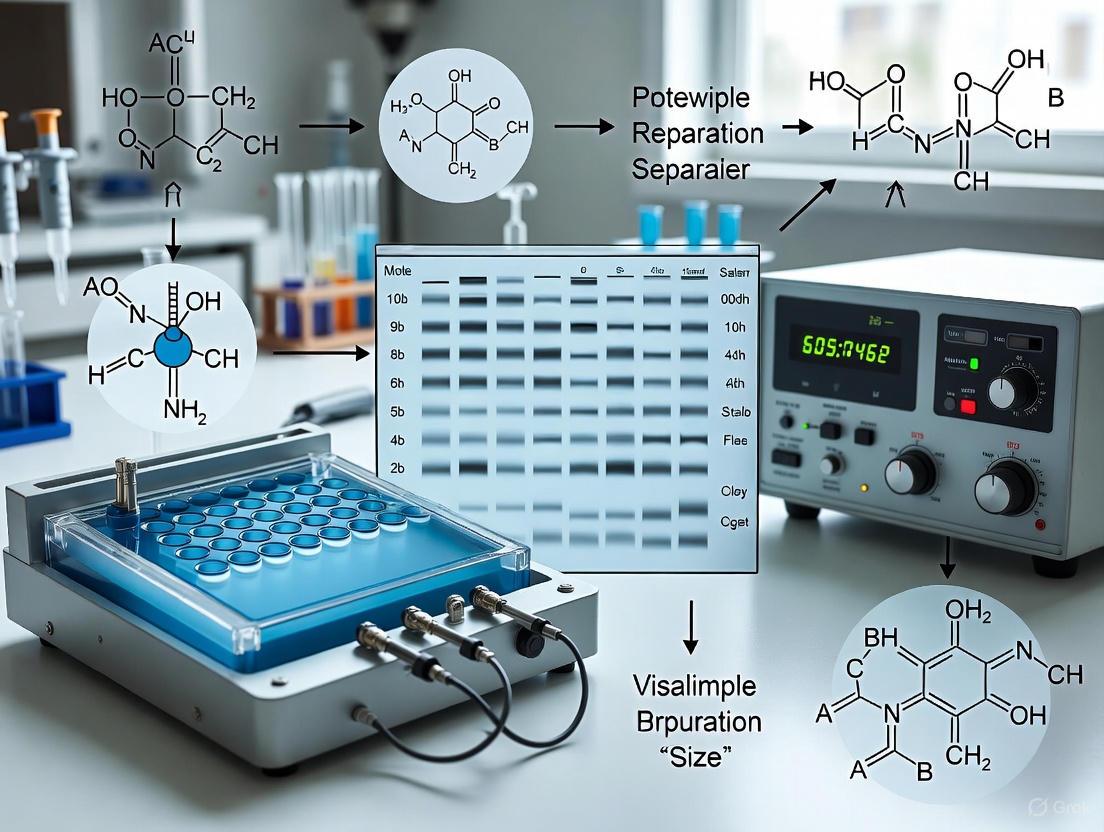
This comprehensive guide details the fundamental principles, optimized protocols, and advanced applications of SDS-PAGE for researchers and drug development professionals.
SDS-PAGE: A Complete Guide to Protein Separation, Analysis, and Troubleshooting
Abstract
This comprehensive guide details the fundamental principles, optimized protocols, and advanced applications of SDS-PAGE for researchers and drug development professionals. It covers the core mechanism of protein separation by molecular weight, from sample preparation and gel electrophoresis to data analysis. The article provides actionable troubleshooting strategies for common issues and explores comparative analyses with modern techniques like CE-SDS, offering a complete resource for protein characterization in biomedical research and biopharmaceutical development.
SDS-PAGE Fundamentals: Unlocking the Principles of Protein Separation
Sodium Dodecyl Sulfate-Polyacrylamide Gel Electrophoresis (SDS-PAGE) stands as a cornerstone technique in biochemical research for separating proteins based on their molecular weight. The method's revolutionary power lies in its ability to negate the inherent variations in protein charge and three-dimensional structure, ensuring that separation occurs almost exclusively by polypeptide chain length [1] [2]. This transformation of complex protein molecules into linear, uniformly charged chains is accomplished through the strategic use of sodium dodecyl sulfate (SDS), a potent anionic detergent. The resulting uniform charge-to-mass ratio across all denatured proteins is the fundamental principle that enables accurate molecular weight estimation and high-resolution separation of complex protein mixtures, making SDS-PAGE indispensable in fields ranging from basic proteomics to pharmaceutical development [3] [4].
Within the broader context of protein analysis, SDS-PAGE provides a robust, inexpensive, and relatively accurate method for analyzing protein mixtures [1]. For drug development professionals and researchers, it serves as a critical tool for verifying protein expression, assessing sample purity, determining subunit composition, and preparing samples for downstream applications like Western blotting or mass spectrometry [4] [5]. The technique's reliability stems from the well-characterized biochemical interactions between SDS and proteins, which this whitepaper will explore in detail.
The Molecular Mechanism of SDS-Protein Interaction
Protein Denaturation and SDS Binding
The process of imparting a uniform charge begins with the profound denaturing capability of SDS. SDS is an amphipathic molecule, possessing a polar sulfate head group and a non-polar hydrocarbon tail [2]. This structure allows it to act as a surfactant, interacting with both polar and non-polar regions of proteins. When proteins are treated with SDS, particularly at concentrations exceeding 1 mM, the detergent molecules disrupt the hydrogen bonds and hydrophobic interactions that maintain the protein's secondary and tertiary structures [2] [4]. This unfolding effect is dramatically enhanced by heating the samples to 95°C for several minutes, a standard step in sample preparation that ensures complete denaturation [6].
Following denaturation, SDS binds to the unfolded protein backbone via hydrophobic interactions between its hydrocarbon tail and hydrophobic amino acid side chains [2]. Research has quantitatively demonstrated that this binding occurs at an almost constant ratio of approximately 1.4 grams of SDS per 1 gram of protein [2] [4]. This equates to roughly one SDS molecule for every two amino acid residues in the polypeptide chain [2]. The binding is so extensive and consistent that it effectively masks the protein's intrinsic charge, whether positive or negative. The sheer number of negatively charged sulfate groups introduced by this massive SDS coating overwhelms any charges originally present on the protein, conferring a strong net negative charge that is directly proportional to the protein's size [1] [4].
The Role of Reducing Agents
For many proteins, complete linearization requires the breakdown of disulfide bonds, which are covalent linkages that can maintain structural integrity even in the presence of detergents. This is achieved through the inclusion of reducing agents in the sample buffer. Common agents like β-mercaptoethanol (β-ME), dithiothreitol (DTT), or dithioerythritol (DTE) cleave these disulfide bridges, ensuring that multi-subunit proteins dissociate into their individual polypeptide chains and that single-chain proteins achieve full unfolding [2] [4]. This step is crucial for accurate molecular weight determination, as it ensures that proteins migrate as individual linear polypeptides rather than complex multi-chain structures.
Table 1: Key Reagents in SDS-PAGE Sample Preparation and Their Functions
| Reagent | Primary Function | Mechanism of Action |
|---|---|---|
| Sodium Dodecyl Sulfate (SDS) | Denatures proteins and imparts uniform negative charge | Binds hydrophobic regions of unfolded polypeptide backbone; 1.4g SDS/g protein ratio [2] [4] |
| β-Mercaptoethanol (β-ME) | Reduces disulfide bonds | Cleaves S-S bonds, disrupting tertiary/quaternary structure [4] |
| Dithiothreitol (DTT) | Reduces disulfide bonds | Thiol-based reducing agent; often used as alternative to β-ME [2] |
| Tris(2-carboxyethyl)phosphine | Reduces disulfide bonds | Phosphine-based reducing agent; effective at lower concentrations [2] |
Quantitative Foundation of the Uniform Charge-to-Mass Ratio
The theoretical underpinning of SDS-PAGE is that the consistent 1.4:1 SDS-to-protein binding ratio creates a uniform charge density across all proteins. Since the amount of bound SDS is proportional to the protein's length (i.e., its molecular weight), the total negative charge acquired is also proportional to the molecular weight. Consequently, the charge-to-mass ratio becomes a constant for all SDS-saturated proteins. When an electric field is applied, the electrophoretic mobility—the rate at which a protein migrates through the gel—is determined solely by the frictional resistance imposed by the polyacrylamide gel matrix. Smaller proteins experience less resistance and migrate faster, while larger ones are more hindered and migrate more slowly [1] [2].
This relationship is formalized by comparing the migration distance of an unknown protein to a ladder of proteins with known molecular weights (MW standards) [6] [4]. A plot of the logarithm of the molecular weight versus the relative migration distance (Rf) typically yields a linear curve, allowing for the estimation of the unknown protein's size [6]. The entire process, from sample preparation to separation, is summarized in the following workflow diagram:
Critical Factors Influencing Charge Uniformity and Separation
While the principle of uniform charge-to-mass ratio is robust, several experimental factors are critical to its success. Deviations from expected migration can occur if these factors are not properly controlled.
- Gel Composition: The polyacrylamide gel concentration determines the pore size, which in turn defines the separation range. Higher percentage gels (e.g., 12-15%) with smaller pores are ideal for resolving lower molecular weight proteins, while lower percentage gels (e.g., 6-8%) with larger pores are better for high molecular weight proteins [1] [6]. Gradient gels, which range from low to high acrylamide concentration, provide a broad separation range [2].
- Buffer System: The discontinuous (or Laemmli) buffer system uses a stacking gel (pH ~6.8) and a separating gel (pH ~8.8). The pH difference creates an ionic interface that stacks proteins into sharp bands before they enter the separating gel, vastly improving resolution [2] [4].
- Sample Preparation Integrity: Incomplete denaturation (e.g., insufficient heating) or reduction can lead to aberrant migration. Proteins with strong post-translational modifications, such as heavy glycosylation, may also not bind SDS in the standard ratio, leading to inaccurate molecular weight estimates [6].
Table 2: Quantitative Guidelines for SDS-PAGE Experimental Setup
| Parameter | Typical Conditions / Range | Impact on Separation |
|---|---|---|
| SDS in Sample Buffer | 1-2% (w/v) | Ensures complete denaturation and saturation binding [2] |
| Heating Condition | 95°C for 3-5 minutes | Disrupts hydrogen bonds for complete unfolding [1] [6] |
| Acrylamide Gradient | 4-20% | Broad-range separation (e.g., 10-200 kDa) [6] |
| Standard Gel Concentration | 6-15% | Tunable for target protein size [1] |
| Applied Voltage | 100-200 V | Faster run time at higher voltage (30-90 mins) [2] [6] |
Advanced Applications and Methodological Variations
The standard SDS-PAGE protocol is a workhorse, but understanding its limitations has led to valuable methodological innovations. A significant advancement is Native SDS-PAGE (NSDS-PAGE), a modified protocol designed to retain certain functional properties of proteins, such as enzymatic activity or bound metal ions, while still achieving high-resolution separation. This is accomplished by omitting the heating step and reducing the SDS concentration in the running buffer (e.g., to 0.0375%) [7]. In one study, this modification increased the retention of bound Zn²⁺ in proteomic samples from 26% to 98% and allowed seven out of nine model enzymes to retain their activity after electrophoresis, a feat impossible with standard denaturing conditions [7].
For specific analytical needs, alternative buffer systems are employed. The Tris-Tricine system is preferred for the separation of very low molecular weight proteins and peptides (0.5 - 50 kDa), as it provides better resolution in this range compared to the traditional Tris-glycine system [2]. Furthermore, the distinction between reducing and non-reducing SDS-PAGE is critical. Non-reducing conditions (omitting β-ME or DTT) allow researchers to investigate the presence of disulfide-cross-linked subunits within a protein complex, providing insights into quaternary structure [3].
The Scientist's Toolkit: Essential Research Reagent Solutions
The reliability of SDS-PAGE depends on the consistent quality and performance of its core reagents. The following table details the essential materials required for a successful experiment.
Table 3: Essential Research Reagents and Materials for SDS-PAGE
| Category | Specific Item | Critical Function in the Protocol |
|---|---|---|
| Denaturing Agent | Sodium Dodecyl Sulfate (SDS) | Unfolds proteins and confers uniform negative charge; masks intrinsic charge [2] [4] |
| Reducing Agents | Dithiothreitol (DTT), β-Mercaptoethanol | Cleaves disulfide bonds to ensure complete linearization of polypeptides [2] |
| Gel Matrix Components | Acrylamide, Bis-acrylamide (crosslinker) | Forms porous polyacrylamide gel matrix that acts as a molecular sieve [2] [4] |
| Polymerization Initiators | Ammonium Persulfate (APS), TEMED | Catalyzes the free-radical polymerization of acrylamide into a gel [2] |
| Buffers | Tris-HCl, Glycine, MOPS | Maintains pH; discontinuous system stacks and separates proteins [2] [4] |
| Tracking Dye | Bromophenol Blue | Visualizes the migration progress of the buffer front during electrophoresis [2] |
| Molecular Weight Standards | Pre-stained/Unstained Protein Ladder | Provides reference for estimating molecular weight of unknown proteins [6] [4] |
The core principle of SDS-PAGE—the imposition of a uniform charge-to-mass ratio on proteins by SDS—is a masterpiece of biochemical simplification. By effectively negating the confounding influences of native charge and three-dimensional structure, it reduces the complex problem of protein separation to a single, measurable variable: molecular weight. The precise, quantitative binding of SDS to denatured polypeptides is the foundational event that enables this, making SDS-PAGE a powerful, reproducible, and indispensable technique. As evidenced by its vast applications in food science, clinical diagnostics, and drug development [3] [5], and as refined by modern variations like NSDS-PAGE [7], this decades-old method continues to be a vital tool for researchers and scientists dedicated to deciphering the protein world.
In the realm of protein biochemistry, the polyacrylamide gel matrix serves as a fundamental tool for separating complex protein mixtures by molecular weight. This separation occurs through a technique known as Sodium Dodecyl Sulfate-Polyacrylamide Gel Electrophoresis (SDS-PAGE), which has become an indispensable method in research laboratories worldwide [8]. The core principle relies on the gel functioning as a molecular sieve, creating a porous network through which proteins migrate under an electric field, with smaller proteins moving more rapidly than larger ones [1]. This electrophoretic mobility enables researchers to separate proteins solely based on polypeptide chain length when combined with SDS treatment, which negates the influence of native protein structure and charge [1] [8].
The significance of SDS-PAGE extends across multiple scientific disciplines, including biochemistry, molecular biology, genetics, and biotechnology [9]. For researchers and drug development professionals, this technique provides a reliable means to analyze protein samples, assess purity, evaluate expression levels, and determine approximate molecular weights [10]. The polyacrylamide gel matrix itself possesses several electrophoretically desirable properties: it is synthetic, thermostable, transparent, strong, and chemically relatively inert [9]. Most importantly, it can be prepared with a wide range of average pore sizes, allowing researchers to tailor the separation conditions to their specific protein size range of interest [9] [10].
Structural Principles of Polyacrylamide Gels
Chemical Composition and Polymerization
The polyacrylamide gel is formed through a chemical polymerization process that creates a three-dimensional mesh-like network with precise pore sizes. This network consists of acrylamide monomers cross-linked by N,N'-methylenebisacrylamide (bis-acrylamide) [8] [10]. The polymerization reaction is initiated by ammonium persulfate (APS), which generates free radicals, while N,N,N',N'-tetramethylenediamine (TEMED) catalyzes the reaction by promoting the production of these free radicals [8] [10]. The resulting gel structure is hydrophilic, thermostable, transparent, and relatively chemically inert, ensuring no breakages or melting during the electrophoresis procedure [11].
The pore size of the resulting gel is critically determined by two factors: the total concentration of acrylamide (%T) and the concentration of the cross-linker bis-acrylamide (%C) [9]. The total acrylamide concentration reciprocally determines the pore size, with higher percentages creating smaller pores [9]. The influence of bis-acrylamide concentration follows a parabolic relationship with the smallest pores achieved at approximately 5% cross-linker concentration [9]. Typically, the ratio of bis-acrylamide to acrylamide is about 1:35, though this can be varied for special purposes [9].
Table 1: Standard Polyacrylamide Gel Formulations for Protein Separation
| Acrylamide Percentage | Optimal Protein Separation Range | Gel Pore Size | Primary Application |
|---|---|---|---|
| 6-8% | 50-150 kDa | Large | High molecular weight proteins |
| 10% | 20-100 kDa | Medium | Standard protein separation |
| 12% | 10-70 kDa | Medium-small | Common molecular weight range |
| 15% | 5-50 kDa | Small | Low molecular weight proteins |
Discontinuous Gel Systems: Stacking and Resolving Gels
Most SDS-PAGE procedures employ a discontinuous buffer system that utilizes two distinct gel layers with different properties: the stacking gel and the resolving gel [12] [11]. The stacking gel typically has a lower acrylamide concentration (approximately 4-5%), a lower pH (around 6.8), and different ionic content [8] [12]. Its primary function is to concentrate all protein samples into a sharp band before they enter the resolving gel, ensuring they begin the separation process simultaneously in a tight zone [12].
The resolving gel (or separating gel) contains a higher acrylamide concentration (typically 8-15%) and has a higher pH (approximately 8.8) [8] [12]. This portion of the gel is where the actual size-based separation of proteins occurs, with the appropriate acrylamide concentration selected based on the target protein's molecular weight [1]. The higher percentage of acrylamide creates a smaller mesh size suitable for separating small proteins, while lower percentages are better for resolving larger proteins [1] [10].
SDS-PAGE Discontinuous Gel System
Molecular Sieving Mechanism in Protein Separation
Principles of Size-Based Separation
The polyacrylamide gel matrix operates as a molecular sieve by creating a porous network that differentially impedes the movement of proteins based on their size [10]. When an electric current is applied, the negatively charged SDS-protein complexes migrate toward the positive electrode (anode) [12]. The pore size of the gel matrix determines the rate at which different proteins can move through it [12]. Smaller proteins navigate through the pores more easily and thus migrate faster, while larger proteins encounter greater resistance and migrate more slowly [1] [11].
This relationship between protein size and migration distance creates a predictable pattern where protein mobility is inversely proportional to the logarithm of their molecular weight [9]. By comparing the distance traveled by unknown proteins to that of standard molecular weight markers run in parallel lanes, researchers can estimate the molecular weight of proteins in their samples [9] [11]. The relationship between acrylamide concentration and optimal protein separation range follows general guidelines, though these may need adjustment for specific protein types.
Table 2: Protein Migration Characteristics in Polyacrylamide Gels
| Protein Size | Migration Rate | Gel Resistance | Final Position | Recommended Gel % |
|---|---|---|---|---|
| Small proteins (<30 kDa) | Fast | Low | Far from origin | 12-15% |
| Medium proteins (30-100 kDa) | Moderate | Moderate | Middle of gel | 10-12% |
| Large proteins (>100 kDa) | Slow | High | Close to origin | 6-10% |
The Role of SDS in Protein Linearization and Charge Uniformity
Sodium Dodecyl Sulfate (SDS) plays a crucial role in ensuring that protein separation occurs primarily based on molecular weight rather than native charge or structure [8] [12]. SDS is an anionic detergent with a strong protein-denaturing effect that binds to the protein backbone at a constant molar ratio (approximately 1.4 g SDS per 1 g of polypeptide) [8] [10]. This binding results in the formation of SDS-polypeptide complexes that have essentially identical charge densities, as the negative charges provided by SDS overwhelm the intrinsic charges of the polypeptide chains [10].
In addition to providing uniform charge, SDS facilitates the unfolding of proteins into linear chains by disrupting hydrogen bonds and hydrophobic interactions [8]. For complete denaturation, protein samples are typically heated to 70-100°C in the presence of SDS and reducing agents such as dithiothreitol (DTT) or β-mercaptoethanol (BME), which break disulfide bonds that stabilize tertiary and quaternary structures [8] [9]. This comprehensive denaturation and linearization ensures that proteins migrate according to polypeptide chain length rather than their native conformation [1] [8].
Experimental Methodology for SDS-PAGE
Gel Preparation and Casting
The process of preparing polyacrylamide gels involves several critical steps that must be carefully executed to ensure reproducible results. First, glass plates, combs, and spacers are thoroughly cleaned, typically with ethanol, and assembled into a gel casting mold [1]. The resolving gel solution is prepared by mixing appropriate amounts of acrylamide/bis-acrylamide, buffer (typically Tris-HCl at pH 8.8), SDS, and water, followed by the addition of polymerization initiators APS and TEMED [1] [10]. This solution is promptly poured between the glass plates and overlaid with water-saturated butanol or isopropanol to prevent oxygen inhibition of polymerization and to create a flat gel surface [1] [10].
After polymerization (typically 20-30 minutes), the overlaid alcohol is removed, and the stacking gel solution (with lower acrylamide concentration and Tris-HCl at pH 6.8) is poured on top of the polymerized resolving gel [1] [8]. A comb is immediately inserted to create sample wells and allowed to polymerize for another 20-30 minutes [1]. Once polymerized, the gel assembly is mounted in the electrophoresis apparatus, filled with running buffer, and samples are loaded into the wells [1].
Sample Preparation and Electrophoresis Conditions
Protein samples are prepared by mixing with sample loading buffer (also known as Laemmli buffer), which typically contains Tris-HCl, SDS, glycerol, bromophenol blue tracking dye, and a reducing agent such as β-mercaptoethanol or DTT [1] [12]. This mixture is heated at 95-100°C for 3-5 minutes to ensure complete denaturation [1] [8]. The heating step destroys hydrogen bonds that contribute to secondary structure, while reducing agents break disulfide linkages [8]. The glycerol adds density to the sample, helping it sink to the bottom of the loading wells, while the tracking dye allows visual monitoring of electrophoresis progress [12].
Electrophoresis is initiated by applying a constant voltage (typically 100-200 V, depending on gel size) [1] [7]. The run is continued until the dye front reaches the bottom of the gel, which usually takes 30-60 minutes for mini-gels [1]. Throughout the run, the discontinuous buffer system functions to concentrate proteins in the stacking gel before they enter the resolving gel, with the key mechanism involving the changing charge state of glycine ions in the running buffer as they encounter different pH environments [12].
Technical Considerations and Optimization Strategies
Gel Percentage Selection for Target Proteins
Choosing the appropriate acrylamide concentration is crucial for optimal protein separation. The selection should be based on the molecular weight range of the target proteins, with lower percentage gels better for resolving high molecular weight proteins and higher percentages more suitable for smaller proteins [10]. For mixtures containing proteins with a broad molecular weight range, gradient gels (e.g., 4-20% acrylamide) can be employed, which have a low percentage of polyacrylamide at the top and a high percentage at the bottom, enabling a broader range of protein sizes to be separated effectively [1] [10].
Table 3: Optimization Strategies for SDS-PAGE Separation
| Separation Challenge | Optimal Solution | Alternative Approach | Key Parameters to Adjust |
|---|---|---|---|
| Broad molecular weight range | Gradient gel (4-20%) | Two different gel percentages | Acrylamide concentration gradient |
| Poor resolution of small proteins (<15 kDa) | High percentage gel (15-20%) | Tricine buffer system | Increased acrylamide %, alternative buffer |
| Large proteins (>150 kDa) not entering gel | Low percentage gel (6-8%) | Agarose-polyacrylamide composite | Decreased acrylamide %, extended run time |
| Band smiling (curved bands) | Reduced voltage, cooling | Fresh running buffer | Voltage, buffer composition, temperature control |
| Smeared bands | Fresh reducing agents, proper heating | Protease inhibitors | Sample preparation, heating time, additives |
Troubleshooting Common Electrophoresis Issues
Several technical issues can arise during SDS-PAGE that affect separation quality. Smiling bands (curved bands) often indicate that the buffer was made incorrectly or the gel is running at too high a voltage, causing uneven heating [11]. Smeared bands typically result from insufficient reduction and denaturation of proteins or overly high salt concentrations in the sample [11]. Unexpected bands may indicate protein degradation, which can be addressed by adding protease inhibitors to the sample buffer [11].
Proper sample preparation is critical, with recommendations including adding fresh reducing agent to sample loading buffer, boiling samples for at least 5 minutes at 100°C, and keeping salt concentrations below 500 mM where possible [11]. Additionally, the running buffer pH must be above the proteins' isoelectric points to maintain their net negative charge, ensuring they travel toward the anode [11].
Research Reagent Solutions for SDS-PAGE
Successful SDS-PAGE requires specific reagents, each performing critical functions in the separation process. The following table outlines essential materials and their roles in polyacrylamide gel electrophoresis.
Table 4: Essential Research Reagents for SDS-PAGE Experiments
| Reagent Category | Specific Examples | Function | Technical Considerations |
|---|---|---|---|
| Denaturing Detergent | Sodium Dodecyl Sulfate (SDS) | Unfolds proteins, imparts uniform negative charge | Constant binding ratio of 1.4g SDS:1g protein |
| Reducing Agents | β-mercaptoethanol (BME), Dithiothreitol (DTT) | Breaks disulfide bonds | Fresh preparation required for optimal activity |
| Gel Matrix Components | Acrylamide, Bis-acrylamide | Forms porous polyacrylamide network | Neurotoxic in monomeric form; handle with care |
| Polymerization Initiators | Ammonium Persulfate (APS), TEMED | Catalyzes acrylamide polymerization | TEMED stabilizes free radical formation |
| Buffering Systems | Tris-glycine, Tris-HCl, MOPS | Maintains pH during electrophoresis | Discontinuous system with different pH in stacking vs. resolving gels |
| Tracking Dye | Bromophenol Blue | Visualizes migration progress | Migrates at approximately 5 kDa front |
| Molecular Weight Markers | Prestained standards, Unstained protein ladders | Size calibration for unknown proteins | Includes proteins of known molecular weights |
Advanced Applications and Methodological Variations
Native SDS-PAGE for Functional Protein Analysis
A significant advancement in electrophoresis methodology is the development of Native SDS-PAGE (NSDS-PAGE), which modifies standard conditions to preserve certain functional properties of proteins while maintaining high resolution separation [7]. This technique involves removing SDS and EDTA from the sample buffer, omitting the heating step, and reducing SDS concentration in the running buffer (e.g., to 0.0375%) [7]. These modifications allow for the retention of Zn²⁺ bound in proteomic samples increasing from 26% to 98% compared to standard denaturing conditions, and enable many enzymes to retain their activity after electrophoresis [7].
This approach addresses a key limitation of traditional SDS-PAGE, which deliberately denatures proteins, destroying functional properties including enzymatic activity and non-covalently bound metal ions [7]. NSDS-PAGE offers a valuable compromise between the high resolution of denaturing SDS-PAGE and the functional preservation of native PAGE, particularly useful for metalloprotein analysis and studies requiring post-electrophoresis activity assessment [7].
Two-Dimensional Electrophoresis and Western Blotting
For comprehensive analysis of complex protein mixtures, two-dimensional PAGE (2D-PAGE) combines isoelectric focusing (IEF) in the first dimension with SDS-PAGE in the second dimension [10]. This technique provides the highest resolution currently available for protein analysis, capable of resolving thousands of proteins on a single gel, making it particularly valuable for proteomic research [10].
SDS-PAGE also serves as the foundational separation step for western blotting (immunoblotting), where proteins separated by size are transferred to a membrane support for specific detection using antibodies [13] [11]. The accurate separation of proteins by molecular weight in SDS-PAGE is crucial for subsequent immunodetection, as it allows for specific identification of target proteins based on their expected molecular weights [13]. This combination of techniques has become a cornerstone in protein research, enabling not just separation but also specific identification and characterization of proteins in complex mixtures.
SDS-PAGE Workflow in Western Blotting
Sodium dodecyl sulfate–polyacrylamide gel electrophoresis (SDS-PAGE) stands as a cornerstone technique for protein analysis, offering researchers the precision needed to separate molecules by molecular weight [14]. First introduced by Ulrich Laemmli in 1970, the discontinuous SDS-PAGE system represented a revolutionary advance over previous electrophoretic methods, creating a paradigm that has dominated protein separation technology for decades [2] [15]. This technique's unparalleled ability to handle complex protein mixtures has driven widespread adoption across pharmaceutical development, academic research, and clinical diagnostics, maintaining its relevance through continuous technological evolution [14].
The fundamental breakthrough of Laemmli's system lay in its ingenious combination of SDS detergent with a discontinuous buffer and gel system, enabling high-resolution separation that effectively negated the influence of protein shape and native charge [16] [15]. This method initially denatures proteins using SDS, which confers a uniform negative charge, allowing separation to occur primarily based on molecular size as proteins migrate through a polyacrylamide gel matrix under an electric field [15]. As life science research becomes increasingly proteomics-focused, the relevance of SDS-PAGE continues to grow, serving as a foundational tool for applications ranging from biomarker discovery to quality control in biomanufacturing [14].
Historical Development and Key Innovations
The development of SDS-PAGE represents a convergence of several critical innovations in electrophoretic methodology. Before Laemmli's seminal contribution, researchers like Baruch Davis and Leonard Ornstein had laid crucial groundwork in polyacrylamide gel electrophoresis and introduced the concept of discontinuous gel electrophoresis [15]. However, these early systems lacked the resolving power for complex protein mixtures and remained inconsistent in their separation capabilities.
Laemmli's 1970 publication, which would become one of the most cited scientific papers of all time with over 259,000 citations, integrated SDS into a discontinuous buffer system with a stacking gel and separating gel [2]. This combination created a revolutionary method that concentrated protein samples into extremely narrow bands before separation, dramatically improving resolution compared to previous continuous systems [16]. The Laemmli system specifically employed a stacking gel at pH 6.8 and a separating gel at pH 8.8, utilizing the unique properties of glycine buffers in a discontinuous configuration to achieve unprecedented protein separation [17].
Table: Historical Evolution of SDS-PAGE Technology
| Time Period | Key Innovation | Principal Contributors | Impact on Protein Separation |
|---|---|---|---|
| 1950s | Starch gel electrophoresis | Smithies | Initial method for protein separation using gel matrices |
| 1960s | Polyacrylamide gel electrophoresis | Davis, Ornstein | Improved resolution with customizable pore sizes |
| 1970 | Discontinuous SDS-PAGE | Laemmli | High-resolution separation by molecular weight only |
| 1980s-1990s | Gradient gels, mini-gel systems | Multiple groups | Expanded separation range, reduced reagent use |
| 2000s-present | Pre-cast gels, digital analysis, automation | Commercial developers | Improved reproducibility, throughput, and data analysis |
The original Laemmli method has undergone numerous refinements over subsequent decades while maintaining its core principles. The introduction of the TRIS-Tricine buffer system by Schägger and von Jagow improved the separation of smaller proteins and peptides in the range of 0.5 to 50 kDa [2]. More recently, precast gel systems using Bis-tris methane with a pH between 6.4 and 7.2 have extended shelf life and reduced cysteine modifications by operating at a more neutral pH [2]. These innovations have preserved the essential functionality of SDS-PAGE while addressing specific limitations for specialized applications.
Fundamental Principles of SDS-PAGE
The Role of SDS in Protein Denaturation and Charge Uniformity
The core principle enabling molecular weight-based separation in SDS-PAGE is the complete denaturation of proteins and masking of their intrinsic charges. Sodium dodecyl sulfate (SDS), an anionic detergent, accomplishes this through several simultaneous mechanisms. SDS binds to proteins at a consistent ratio of approximately 1.4 grams of SDS per 1 gram of protein, corresponding to one SDS molecule per two amino acids [2] [4]. This extensive binding coats the protein with negative charges, effectively overwhelming any inherent charge differences between proteins [16].
The denaturation process occurs through multiple mechanisms. SDS disrupts hydrophobic interactions within the protein core while also interfering with hydrogen bonding that stabilizes secondary structures [15]. At concentrations above 1 mM, most proteins undergo complete denaturation, losing their tertiary and secondary structures to become linearized polypeptides [2]. The resulting SDS-protein complexes form rod-like structures with relatively uniform charge-to-mass ratios, ensuring that electrophoretic mobility depends primarily on molecular size rather than charge or conformation [16].
Molecular Sieving in the Polyacrylamide Gel Matrix
The polyacrylamide gel serves as a molecular sieve that differentially retards protein migration based on size. The gel forms through free radical polymerization of acrylamide monomers cross-linked by N,N'-methylenebisacrylamide, creating a three-dimensional network with controllable pore sizes [2] [4]. The pore size determines the effective separation range and is controlled by adjusting the total acrylamide concentration, with higher percentages creating smaller pores better suited for separating lower molecular weight proteins [16].
Table: Recommended Acrylamide Concentrations for Different Protein Size Ranges
| Acrylamide Concentration (%) | Effective Separation Range (kDa) | Primary Applications |
|---|---|---|
| 6-8 | 50-500 | Very large proteins and protein complexes |
| 10 | 20-300 | Standard mixture separation |
| 12 | 10-200 | Small to medium proteins |
| 15 | 3-100 | Very small proteins and peptides |
| 4-20 (gradient) | 5-300 | Broad-range separation without precast gels |
The Discontinuous Buffer System Mechanism
The discontinuous nature of the Laemmli system creates a highly effective protein concentration step that precedes separation. This system employs different buffer compositions in the stacking gel, separating gel, and electrode chambers [16] [17]. The key to this concentration effect lies in the controlled manipulation of glycine's charge state across different pH environments [17].
In the stacking gel at pH 6.8, glycine exists primarily as zwitterions with minimal net charge, resulting in low electrophoretic mobility. Chloride ions from Tris-HCl migrate rapidly toward the anode, while glycine zwitterions trail behind. This creates a narrow, high-voltage gradient between the leading chloride and trailing glycine fronts [16]. Proteins, with intermediate mobility at this pH, become compressed into extremely thin zones within this gradient [17]. As this procession enters the separating gel at pH 8.8, glycine gains negative charges and accelerates, leaving the proteins behind in sharp bands at the interface where molecular sieving separation begins [16].
Detailed Experimental Methodology
Gel Preparation and Formulation
Polyacrylamide gel formation relies on a precise chemical process initiated by ammonium persulfate (APS) and catalyzed by N,N,N',N'-tetramethylethylenediamine (TEMED) [2] [4]. These reagents generate free radicals that drive the polymerization of acrylamide and bisacrylamide into a cross-linked matrix [17]. The standard protocol involves a two-layer system:
Separating Gel Preparation: The separating gel solution is prepared first with higher acrylamide concentration (typically 8-15%) in Tris-HCl buffer at pH 8.8 [2]. After adding APS and TEMED, the solution is poured between glass plates and overlaid with a thin layer of water-miscible alcohol (butanol or isopropanol) to exclude oxygen and create a flat interface [2].
Stacking Gel Preparation: Once the separating gel has polymerized, the stacking gel solution with lower acrylamide concentration (typically 4%) in Tris-HCl buffer at pH 6.8 is poured on top [2]. A sample comb is immediately inserted to create wells for loading protein samples. Proper polymerization requires approximately 15-60 minutes depending on temperature and catalyst concentrations [2].
Table: Standard Gel Compositions for SDS-PAGE
| Component | Stacking Gel | Separating Gel | Function |
|---|---|---|---|
| Acrylamide | 4% | 8-15% | Forms porous gel matrix for sieving |
| Bis-acrylamide | Varies cross-linking | Varies cross-linking | Creates cross-links between polymer chains |
| Tris-HCl | pH 6.8 | pH 8.8 | Maintains appropriate pH for separation |
| SDS | 0.1% | 0.1% | Maintains protein denaturation |
| APS | Catalyst | Catalyst | Initiates polymerization reaction |
| TEMED | Co-catalyst | Co-catalyst | Accelerates polymerization |
Sample Preparation Protocol
Proper sample preparation is critical for successful SDS-PAGE separation. The standard protocol involves:
Denaturation Buffer: Proteins are mixed with sample buffer containing Tris-HCl (pH 6.8), SDS, glycerol, bromophenol blue, and often a reducing agent [2] [17]. The SDS concentration in the buffer must significantly exceed that required to saturate all proteins (typically 1-2% SDS) [2].
Denaturation and Reduction: Samples are heated to 95°C for 5 minutes or 70°C for 10 minutes to complete denaturation [2]. For reducing conditions, thiol reagents such as β-mercaptoethanol (β-ME, 5% v/v), dithiothreitol (DTT, 10-100 mM), or dithioerythritol (DTE, 10 mM) are included to break disulfide bonds [2] [3]. Non-reducing SDS-PAGE omits these agents to preserve disulfide-linked structures [3].
Molecular Weight Markers: Pre-stained or unstained protein standards with known molecular weights are loaded alongside samples to enable molecular weight estimation and tracking of electrophoresis progress [2].
Electrophoresis Conditions and Execution
The electrophoresis process requires careful control of voltage and timing:
Buffer System: The running buffer typically contains Tris base, glycine, and SDS at pH 8.3 [2] [17]. The SDS concentration in running buffers is typically 0.1% in standard protocols but can be reduced to 0.0375% in modified systems [7].
Electrophoresis Parameters: Gels are run at constant voltage, typically 100-150V for mini-gel systems, for 40-60 minutes or until the dye front reaches the gel bottom [15]. Higher voltages (up to 200V) can reduce run times but may decrease resolution [7]. The process generates hydrogen gas at the cathode and oxygen gas at the anode through electrolysis of water, visible as bubbling [17].
Monitoring Progress: Bromophenol blue dye migrates slightly ahead of the smallest proteins, providing a visual indicator of separation progress [2]. Running the gel too long can result in loss of low molecular weight proteins from the gel bottom, while insufficient running time leads to poor separation [15].
The Scientist's Toolkit: Essential Reagents and Materials
Table: Key Research Reagent Solutions for SDS-PAGE
| Reagent/Material | Composition/Type | Function in SDS-PAGE |
|---|---|---|
| SDS (Sodium Dodecyl Sulfate) | Anionic detergent, typically 10-20% stock solution | Denatures proteins and confers uniform negative charge |
| Reducing Agents (DTT, β-mercaptoethanol) | DTT (100mM-1M) or β-ME (5-10% v/v) | Breaks disulfide bonds for complete unfolding |
| Acrylamide/Bis-acrylamide | 29:1 or 37.5:1 ratio of acrylamide to bis | Forms cross-linked gel matrix for molecular sieving |
| Ammonium Persulfate (APS) | 10% solution in water | Free radical initiator for gel polymerization |
| TEMED | N,N,N',N'-Tetramethylethylenediamine | Catalyzes gel polymerization reaction |
| Tris Buffers | Tris-HCl at pH 6.8 (stacking) and 8.8 (separating) | Maintains pH for proper charge states and separation |
| Glycine | Amino acid in running buffer | Functions as trailing ion in stacking phase |
| Molecular Weight Markers | Pre-stained or unstained protein standards | Provides molecular size references for estimation |
| Coomassie Blue/Silver Stain | Colloidal or standard solutions | Visualizes separated protein bands after electrophoresis |
Advanced Technical Modifications and Methodological Variations
Gradient Gels and Specialized Buffer Systems
For challenging separation applications, several advanced SDS-PAGE modifications have been developed:
Gradient Gels: Continuous or discontinuous gradients of acrylamide (e.g., 4-20%) create progressively smaller pores, simultaneously improving resolution across a broad molecular weight range [2] [15]. These are particularly valuable for complex samples containing proteins of vastly different sizes [4].
Tricine-SDS-PAGE: For low molecular weight proteins and peptides (<30 kDa), the Schägger and von Jagow tricine buffer system provides superior resolution compared to traditional glycine-based systems by modifying the trailing ion properties [2] [3].
Alternative Buffer Systems: Bis-tris based systems at nearly neutral pH (6.4-7.2) offer enhanced stability and reduced protein modifications compared to traditional Laemmli buffers [2]. These systems also minimize cysteine adduct formation with unpolymerized acrylamide [2].
Native SDS-PAGE for Functional Analysis
A significant modification called Native SDS-PAGE (NSDS-PAGE) addresses the limitation of complete protein denaturation [7]. By eliminating SDS and EDTA from sample buffers, omitting the heating step, and reducing SDS concentration in running buffers to 0.0375%, this method preserves enzymatic activity and metal cofactors in many proteins while maintaining high resolution separation [7]. In experimental trials, zinc retention in proteomic samples increased from 26% to 98% compared to standard SDS-PAGE, with seven of nine model enzymes retaining activity after separation [7].
Applications in Modern Research and Drug Development
Protein Characterization and Quality Control
SDS-PAGE serves as an indispensable tool for multiple aspects of protein analysis:
Molecular Weight Determination: By comparing protein migration distances to standard curves generated with known molecular weight markers, researchers can estimate protein size with approximately ±10% accuracy [2] [4]. This provides crucial initial characterization for novel or engineered proteins [4].
Purity Assessment and Homogeneity Evaluation: A single sharp band indicates a pure protein sample, while multiple or smeared bands suggest impurities, degradation, or heterogeneous modifications [4]. This application is particularly valuable for monitoring protein purification protocols and ensuring batch-to-batch consistency in biopharmaceutical production [14] [18].
Subunit Composition Analysis: Comparing patterns under reducing versus non-reducing conditions reveals disulfide-linked structures and the molecular weights of individual subunits in multi-protein complexes [3] [4]. This has proven valuable for characterizing antibody structures (heavy and light chains) and complex enzyme systems [3].
Specialized Applications Across Industries
The versatility of SDS-PAGE has led to adoption across diverse fields:
Food Science and Quality Control: SDS-PAGE enables protein profiling across various food categories including cereals, pulses, dairy products, meats, seafood, and plant-based alternatives [3]. Applications include allergen detection, adulteration identification, monitoring protein changes during processing, and functional property assessment [3].
Biopharmaceutical Development: In drug development pipelines, SDS-PAGE systems play crucial roles in therapeutic protein production and quality control processes [14] [18]. The technique's ability to detect degradation products, verify purity, and ensure batch-to-batch consistency makes it indispensable for regulatory compliance [14].
Diagnostic Applications: Clinical laboratories implement automated SDS-PAGE workflows to support diagnostic applications in cancer research, neurological disorders, and metabolic diseases where protein expression patterns provide crucial diagnostic insights [18]. The technique also serves important roles in toxicology analysis and biomarker verification [18].
Technological Innovations and Future Perspectives
Modern Instrumentation and Workflow Integration
The SDS-PAGE landscape has undergone significant technological transformation:
Pre-cast Gel Systems: Commercially available pre-cast gels offer superior consistency and convenience compared to hand-cast gels, with specialized formulations for different applications [14] [18]. These systems have dramatically improved inter-laboratory reproducibility while reducing preparation time [18].
Automated and High-Throughput Systems: Automated sample loading systems and multiplexed SDS-PAGE formats enable simultaneous analysis of multiple samples, dramatically increasing laboratory productivity [18]. These systems are particularly valuable for contract research organizations and pharmaceutical quality control laboratories [14].
Digital Imaging and Analysis Platforms: Advanced imaging systems with high-resolution cameras coupled with sophisticated software enable automated band detection, quantification, and molecular weight determination [18]. The integration of artificial intelligence and machine learning algorithms further enhances data extraction from electrophoretic separations [18].
Integration with Complementary Analytical Techniques
SDS-PAGE increasingly functions as a component within integrated analytical workflows:
Western Blotting: SDS-PAGE separation typically precedes protein transfer to membranes for specific antigen detection with antibodies, combining separation power with detection specificity [15] [4].
Mass Spectrometry Compatibility: As a sample preparation step for mass spectrometry, SDS-PAGE enables protein fractionation and cleanup [4]. Advanced staining methods compatible with mass spectrometry (such as certain Coomassie formulations) facilitate this application [15].
Two-Dimensional Electrophoresis: SDS-PAGE serves as the second dimension separation in 2D-GE, following isoelectric focusing to resolve complex protein mixtures with high resolution [15]. This powerful combination enables the visualization of thousands of proteins in a single analysis [15].
Troubleshooting and Method Optimization
Common Technical Issues and Solutions
Even with established protocols, researchers may encounter several common issues:
Band Distortion: "Smiling" or "frowning" bands often result from uneven heating during electrophoresis, which can be addressed by reducing voltage or implementing active cooling systems [15]. Uneven sample loading or buffer composition issues may also contribute to this problem [15].
Poor Resolution: Incomplete separation may stem from insufficient run time, incorrect acrylamide concentration, or improper buffer preparation [15]. Extending run time, adjusting acrylamide percentage for the target protein size, and ensuring fresh, properly prepared buffers typically improve resolution [15].
Gel Polymerization Issues: Inconsistent polymerization leads to varied pore sizes and irregular migration [15]. Ensuring fresh ammonium persulfate solutions, proper TEMED concentrations, and degassing solutions can improve polymerization consistency [15].
Optimization Strategies for Challenging Samples
Low Abundance Proteins: Silver staining and fluorescent detection methods offer enhanced sensitivity for detecting low nanogram quantities compared to standard Coomassie staining [15] [19]. However, silver staining may present challenges for subsequent mass spectrometry analysis [15].
Membrane Proteins: Highly hydrophobic proteins may require specialized solubilization protocols with increased SDS concentrations or alternative detergents to prevent aggregation and ensure complete denaturation [17].
Glycoproteins and Modified Proteins: Proteins with extensive post-translational modifications (particularly glycosylation) may exhibit anomalous migration due to altered SDS binding [17]. Gradient gels often provide better resolution for such samples, and enzymatic deglycosylation can generate more accurate molecular weight estimates [17].
From its inception in Laemmli's discontinuous system to its current status as a automated, high-precision technology, SDS-PAGE has maintained its position as an indispensable tool in protein science. The core principles established in 1970 have proven remarkably durable, while continuous technological innovations have expanded applications across research, clinical, and industrial settings. The ongoing integration with complementary techniques like mass spectrometry and the development of specialized variations like Native SDS-PAGE ensure that this methodology will continue to evolve alongside proteomic research needs.
As protein characterization remains fundamental to understanding biological mechanisms and developing biopharmaceuticals, SDS-PAGE maintains its relevance through adaptability to modern research requirements. The convergence of automation, artificial intelligence, and traditional electrophoretic separation promises to unlock new possibilities for protein analysis, positioning SDS-PAGE as a critical enabler of future scientific breakthroughs and therapeutic developments [18]. Its enduring legacy exemplifies how robust methodological foundations can continue to generate scientific value through decades of technological transformation.
Sodium Dodecyl Sulfate-Polyacrylamide Gel Electrophoresis (SDS-PAGE) stands as a cornerstone technique in biochemistry and molecular biology for analyzing protein mixtures. This denaturing gel electrophoresis method provides researchers with critical data on protein size, sample purity, and relative abundance, forming an essential step in various research and diagnostic workflows [15]. The technique's development in the 1970s, notably refined by Ulrich Laemmli, introduced a discontinuous buffer system that significantly improved protein separation resolution, making SDS-PAGE an indispensable tool for protein characterization [15]. Within the broader context of protein analysis research, SDS-PAGE serves as a fundamental separation technique that enables subsequent detailed analyses, including western blotting and mass spectrometry, thereby providing a foundation for advancements in proteomics and drug development [4].
Principles of SDS-PAGE
The fundamental principle of SDS-PAGE relies on achieving protein separation based primarily on molecular weight rather than native charge or structural properties. This is accomplished through two key components: sodium dodecyl sulfate (SDS) and the polyacrylamide gel matrix [20].
SDS, an anionic detergent, plays a critical role by binding to proteins at a relatively constant ratio of approximately 1.4g SDS per 1g of protein [4]. This binding accomplishes two essential functions: first, it disrupts non-covalent bonds (hydrogen, hydrophobic, and ionic interactions), effectively denaturing proteins into linear polypeptide chains; second, it confers a uniform negative charge along the protein backbone, masking the protein's intrinsic charge [15] [20]. The result is that all proteins migrate toward the positive electrode when an electric field is applied, with their movement determined solely by molecular size.
The polyacrylamide gel creates a molecular sieve through its cross-linked matrix structure, formed via polymerization of acrylamide and the crosslinker N,N'-methylenebisacrylamide (Bis), typically catalyzed by ammonium persulfate (APS) and tetramethylethylenediamine (TEMED) [4]. Within this matrix, smaller proteins navigate the pores more readily and migrate faster, while larger proteins encounter greater resistance and migrate more slowly [15]. The gel system typically employs a discontinuous buffer configuration with stacking (pH ~6.8) and separating (pH ~8.8) gel layers, which serves to concentrate protein samples into sharp bands before separation, thereby enhancing resolution [4] [20].
Determining Molecular Weight
Methodology and Protocol
Molecular weight determination via SDS-PAGE represents one of the technique's most fundamental applications. The process involves comparing the migration distance of an unknown protein to a standard curve generated using proteins of known molecular weight [4] [21].
The experimental workflow begins with comprehensive sample preparation. Protein samples are mixed with SDS-PAGE sample buffer containing SDS and a reducing agent such as dithiothreitol (DTT) or β-mercaptoethanol, then heated (typically 95°C for 5 minutes) to ensure complete denaturation and linearization [20]. Reducing agents play a critical role in breaking disulfide bonds that might maintain secondary structure, ensuring accurate molecular weight estimation [20]. Simultaneously, a protein ladder or molecular weight marker comprising pre-characterized proteins spanning a known size range is prepared alongside experimental samples.
Following sample preparation, electrophoresis is conducted by loading samples into wells of the polyacrylamide gel and applying a constant current (typically 30-40 mA for mini-gels) or voltage (100-150 V) until the dye front approaches the gel bottom [15] [20]. Post-electrophoresis, proteins are visualized using staining techniques such as Coomassie Brilliant Blue, silver staining, or fluorescent dyes, with subsequent destaining to remove background dye and enhance band visibility [15] [20].
Data Analysis and Interpretation
Molecular weight determination relies on establishing a standard curve by plotting the logarithm of the known molecular weights of marker proteins against their migration distances [21]. The migration distance of unknown proteins is then interpolated against this standard curve to estimate their apparent molecular weights.
Table 1: Recommended Gel Compositions for Optimal Molecular Weight Separation
| Gel Percentage (%) | Optimal Separation Range (kDa) | Typical Applications |
|---|---|---|
| 8% | 25 - 200 kDa | Large proteins |
| 10% | 15 - 100 kDa | Standard separation |
| 12% | 10 - 70 kDa | Small to medium proteins |
| 15% | 5 - 45 kDa | Small proteins/peptides |
| 5-20% Gradient | 5 - 200 kDa | Complex mixtures |
It is important to note that certain proteins may exhibit anomalous migration and deviate from expected molecular weights due to factors such as extensive post-translational modifications (e.g., glycosylation, phosphorylation), unusual amino acid composition, or incomplete denaturation [21]. Nevertheless, when appropriately calibrated and controlled, SDS-PAGE provides molecular weight estimates with sufficient accuracy for most research applications, typically within 5-10% of actual values [21].
Figure 1: Molecular Weight Determination Workflow in SDS-PAGE
Assessing Protein Purity and Homogeneity
Analytical Approach
SDS-PAGE provides a powerful qualitative method for evaluating protein sample purity and homogeneity, essential for applications ranging from recombinant protein production to enzyme characterization and therapeutic antibody development [4]. The assessment relies on visual analysis of the banding pattern following gel electrophoresis and staining.
A pure protein preparation typically manifests as a single, sharp band at the expected molecular weight, indicating the absence of contaminating proteins or degradation products [4]. Conversely, the presence of multiple bands or smearing suggests impurities, protein degradation, or the existence of multiple subunits or isoforms [20]. The high resolution of SDS-PAGE enables detection of contaminants even at low concentrations, particularly when using sensitive staining methods like silver staining, which can detect nanogram quantities of protein [15] [20].
Troubleshooting Common Purity Issues
Several banding pattern anomalies provide diagnostic information about sample quality:
- Multiple distinct bands: Typically indicate contaminating proteins or protein fragments. This may necessitate additional purification steps such as chromatography or precipitation.
- Horizontal smearing: Often results from protein degradation due to protease activity, improper sample handling, or overloading. Adding protease inhibitors during preparation and maintaining appropriate temperatures can mitigate this issue.
- Vertical smearing: Suggests incomplete denaturation, insufficient SDS binding, or improper gel polymerization. Ensuring adequate boiling time in sample buffer and fresh gel reagents addresses these problems.
- Non-specific background: May indicate insufficient washing during staining/destaining or precipitation of staining reagents.
The purity level can be semi-quantitatively estimated by comparing the intensity of the target band relative to contaminating bands using densitometry analysis [15]. For example, pharmaceutical-grade monoclonal antibodies typically require purity exceeding 95%, which can be readily confirmed by SDS-PAGE analysis as demonstrated in product specifications from various suppliers [22] [23].
Quantifying Relative Protein Abundance
Methodological Framework
While primarily considered a qualitative technique, SDS-PAGE can be adapted for semi-quantitative analysis of relative protein abundance through densitometry [15]. This application enables researchers to compare protein expression levels across different samples, monitor changes in expression under varying experimental conditions, and assess the efficiency of protein purification protocols [4].
The quantification process begins with optimal sample separation followed by staining with dyes that exhibit a relatively linear relationship between protein amount and stain intensity across a defined concentration range. Coomassie Brilliant Blue typically provides linear detection in the range of 10-100 ng of protein, while silver staining offers greater sensitivity (0.1-1 ng) but with a more limited linear dynamic range [15] [20]. Fluorescent stains increasingly provide an excellent balance of sensitivity and broad linear dynamic range, making them particularly suitable for quantification applications [15].
Densitometry Analysis Protocol
Following electrophoresis and staining, the gel is imaged using a documentation system with appropriate illumination (white light for colorimetric stains, specific wavelengths for fluorescent stains). Digital images are then analyzed using specialized software to perform several key functions:
- Band detection: Automatic or manual identification of protein bands of interest
- Background subtraction: Correction for uneven background staining
- Integrated density measurement: Calculation of the volume intensity for each band
- Standard curve generation: For absolute quantification, using a dilution series of a known standard protein
- Normalization: To internal controls or total protein content for relative quantification
Table 2: Protein Staining Methods for Abundance Quantification
| Staining Method | Detection Sensitivity | Linear Dynamic Range | Compatibility with Downstream Analysis |
|---|---|---|---|
| Coomassie Brilliant Blue | ~10-100 ng | ~10-fold | Excellent (compatible with MS) |
| Silver Staining | ~0.1-1 ng | Limited (~5-fold) | Limited (requires special protocols for MS) |
| Fluorescent Stains | ~1-10 ng | Broad (>1000-fold) | Good (may require specific protocols) |
| Zinc Reverse Staining | ~1-10 ng | Moderate | Excellent (compatible with MS) |
For accurate relative quantification, several experimental controls are essential. These include loading equal total protein amounts across samples (verified by methods like Bradford assay), including appropriate internal controls or housekeeping proteins, and ensuring that sample loading falls within the linear range of both the separation and detection methods [4]. When these conditions are met, SDS-PAGE densitometry can reliably detect differences in protein abundance of 1.5-fold or greater between samples.
Advanced Applications and Integration
Subunit Composition Analysis
SDS-PAGE provides valuable insights into protein subunit composition, particularly when comparing samples under reducing versus non-reducing conditions [15] [4]. Under non-reducing conditions (without DTT or β-mercaptoethanol), disulfide bonds remain intact, preserving protein complexes and higher-order structures. When the same sample is run under reducing conditions, these bonds are broken, revealing individual subunit molecular weights [20].
This approach proves particularly useful for characterizing antibodies and other multi-subunit proteins. For example, under non-reducing conditions, an intact IgG antibody migrates at approximately 150 kDa, while under reducing conditions, it separates into heavy (~50 kDa) and light (~25 kDa) chains [22] [23]. This application extends to studying protein-protein interactions and disulfide-dependent complex formation in various biological systems.
Post-Translational Modification Analysis
Although SDS-PAGE does not directly identify specific post-translational modifications (PTMs), it can detect their presence through alterations in protein migration mobility [15] [4]. Common PTMs such as phosphorylation, glycosylation, and ubiquitination typically increase the apparent molecular weight of proteins, resulting in band shifts compared to the unmodified form [20]. Glycosylation, in particular, often produces characteristic smeared bands due to heterogenous glycosylation patterns [4].
When combined with enzymatic treatments (e.g., glycosidases to remove carbohydrate moieties or phosphatases to remove phosphate groups), SDS-PAGE can provide initial evidence for specific PTMs before undertaking more sophisticated analyses like mass spectrometry. This makes it a valuable screening tool in proteomic studies investigating signaling pathways and protein regulation.
Two-Dimensional Electrophoresis
For complex protein mixtures, SDS-PAGE serves as the second dimension in two-dimensional gel electrophoresis (2-DE), following isoelectric focusing (IEF) in the first dimension [15]. This powerful combination separates proteins based on two independent parameters: isoelectric point (pI) in the first dimension and molecular weight in the second [15]. The result is a high-resolution map where individual proteins appear as distinct spots rather than bands, dramatically increasing separation capacity compared to either technique alone [15].
Two-dimensional electrophoresis enables simultaneous visualization of thousands of proteins, making it particularly valuable for proteomic studies comparing protein expression across different conditions, such as healthy versus diseased tissues [15] [21]. While increasingly supplemented or replaced by liquid chromatography-mass spectrometry (LC-MS/MS) approaches for comprehensive proteomics, 2-DE remains a powerful method for analyzing post-translational modifications and protein isoforms [15].
The Scientist's Toolkit: Essential Research Reagents
Successful execution of SDS-PAGE experiments requires specific reagents and materials, each serving distinct functions in the separation and detection process.
Table 3: Essential Research Reagents for SDS-PAGE
| Reagent/Material | Function | Key Considerations |
|---|---|---|
| Sodium Dodecyl Sulfate (SDS) | Denatures proteins and confers uniform negative charge | Critical for masking intrinsic protein charge; typically used at 1-2% concentration |
| Reducing Agents (DTT, β-mercaptoethanol) | Breaks disulfide bonds for complete linearization | Essential for accurate MW determination of multi-subunit proteins |
| Acrylamide/Bis-acrylamide | Forms the cross-linked gel matrix | Concentration determines pore size and separation range |
| Ammonium Persulfate (APS) and TEMED | Catalyzes acrylamide polymerization | Fresh preparation ensures consistent gel polymerization |
| Protein Molecular Weight Markers | Reference standards for size determination | Pre-stained markers allow tracking during electrophoresis |
| Coomassie Brilliant Blue, Silver Stains, or Fluorescent Dyes | Visualizes separated proteins | Choice depends on sensitivity requirements and downstream applications |
| Tris-Glycine-SDS Running Buffer | Maintains pH and conductivity during electrophoresis | Standard buffer system for Laemmli discontinuous gels |
SDS-PAGE remains an indispensable analytical technique in modern biochemistry and molecular biology, providing critical information about protein molecular weight, purity, and relative abundance. Its enduring value lies in its robust methodology, relatively simple implementation, and adaptability to various research applications from basic protein characterization to clinical diagnostics [4]. When properly executed and interpreted, SDS-PAGE generates reliable, reproducible data that forms the foundation for subsequent advanced analyses including western blotting, protein identification by mass spectrometry, and functional studies [15] [21].
As protein science continues to evolve, SDS-PAGE maintains its relevance through integration with emerging technologies and adaptations to specialized research needs. Its principles continue to inform new separation methodologies while the technique itself remains a standard component of the biochemical toolkit. For researchers investigating protein mixtures, SDS-PAGE provides an accessible yet powerful approach to addressing fundamental questions about protein size, composition, and expression, establishing it as an enduring cornerstone of protein analysis research.
Mastering the SDS-PAGE Workflow: From Sample Prep to Staining
Within the foundational technique of SDS-PAGE (sodium dodecyl sulfate-polyacrylamide gel electrophoresis), successful analysis of protein mixtures and accurate molecular weight determination hinge almost entirely on preparatory steps performed before the sample is ever loaded into a gel. Proper sample preparation transforms complex, three-dimensional protein structures into uniform, linear polypeptides, enabling separation based primarily on molecular weight [15]. This guide details the critical trilogy of lysis, denaturation, and reduction, providing researchers and drug development professionals with the explicit methodologies and rationale needed to ensure reproducible, high-quality results for their research.
Phase 1: Cell Lysis and Protein Extraction
The objective of the lysis phase is to efficiently disrupt cells or tissues and solubilize proteins while preserving the native composition of the proteome and preventing degradation.
Lysis Buffer Composition and Selection
The choice of lysis buffer is dictated by the subcellular location of the target protein and the required stringency for downstream applications. Buffers range from mild, non-denaturing detergents that preserve protein-protein interactions to harsh, ionic formulations that fully solubilize membrane-bound complexes [24].
Table 1: Common Lysis Buffer Formulations and Their Applications
| Target Protein Location | Recommended Buffer | Key Components | Application Notes |
|---|---|---|---|
| Whole Cell (Mild Lysis) | M-PER/T-PER Reagent | Non-ionic detergent in 25mM bicine buffer (pH 7.6) [24] | Retains protein-protein interactions; suitable for functional studies [24]. |
| Whole Cell (Stringent Lysis) | RIPA Buffer | 25 mM Tris-HCl, 150 mM NaCl, 1% NP-40, 1% sodium deoxycholate, 0.1% SDS [24] | Effective for membrane-bound, nuclear, and mitochondrial proteins [24]. |
| Cytoplasmic | NP-40 Lysis Buffer | 50 mM Tris, 250 mM NaCl, 5 mM EDTA, 1% NP-40 [24] | Ideal for extracting soluble cytoplasmic proteins. |
Essential Protocol: Preparation of Lysate from Cell Culture
The following protocol, adapted from Thermo Fisher Scientific, outlines the standard procedure for obtaining a protein lysate from adherent or suspension cell cultures [24].
- Prepare Lysis Buffer: Add protease and phosphatase inhibitor cocktails immediately before use. For example, add 10 µL of a 100X inhibitor cocktail per 1 mL of lysis buffer to prevent co-extracted proteases and phosphatases from degrading or modifying your target proteins [24].
- Harvest Cells:
- For Adherent Cells: Place culture dish on ice, aspirate medium, and wash cells with ice-cold PBS. Aspirate PBS and add ice-cold lysis buffer (e.g., ~200-400 µL for a 6-well plate). Gently shake on ice for 5 minutes [24].
- For Suspension Cells: Pellet cells by centrifugation (e.g., 2,500 x g for 10 minutes). Discard supernatant, wash pellet with ice-cold PBS, and re-pellet. Add ice-cold lysis buffer (e.g., ~1 mL per 100 mg wet cell pellet) and resuspend by pipetting [24].
- Clarify the Lysate: Transfer the lysate to a microcentrifuge tube and centrifuge at ~14,000 x g for 15 minutes at 4°C to pellet insoluble cell debris. Carefully transfer the supernatant (containing the solubilized proteins) to a new tube and discard the pellet [24].
Phase 2: Denaturation and Reduction for SDS-PAGE
This phase is the heart of SDS-PAGE sample preparation, designed to dismantle protein structures into linear polypeptides for accurate size-based separation.
The Role of Key Reagents
The sample buffer is a precisely formulated cocktail where each component serves a critical function [25] [15].
- SDS (Sodium Dodecyl Sulfate): This anionic detergent is the primary denaturant. It binds to hydrophobic regions of proteins at a ratio of ~1.4 g SDS per 1.0 g of protein, unfolding secondary and tertiary structures and imparting a uniform negative charge. This masks the protein's intrinsic charge, ensuring migration in the electric field is proportional to molecular weight [26] [15].
- Reducing Agents (DTT or β-mercaptoethanol): These compounds break covalent disulfide bonds (-S-S-) that hold protein subunits together. By reducing these bonds to sulfhydryl groups (-SH), the quaternary structure is dismantled, ensuring each polypeptide chain can be separated independently [26] [25].
- Heat: Heating samples to 70–95°C provides the thermal energy required to accelerate the denaturation and reduction processes, particularly for robust protein structures and complexes [26] [24] [15].
Experimental Protocol: Sample Denaturation
The following table provides a standard formulation for preparing samples for denaturing SDS-PAGE.
Table 2: Sample Buffer Composition for Denaturing SDS-PAGE
| Reagent | Final Concentration | Function |
|---|---|---|
| Protein Sample | 0.1–2 µg/µL (recommended) | The target analyte. Concentration should be determined by an assay like BCA [24]. |
| SDS/LDS Sample Buffer (4X) | 1X | Provides SDS for denaturation and charge, plus buffer and glycerol [24]. |
| Reducing Agent (e.g., DTT, 10X) | 1X (e.g., 50-100 mM DTT) | Breaks disulfide bonds to dismantle quaternary structure [24] [25]. |
| Glycerol | 5-10% | Increases density of the sample, allowing it to settle at the bottom of the gel well during loading [25]. |
| Tracking Dye (e.g., Bromophenol Blue) | ~0.05 mg/mL | Visualizes the migration front during electrophoresis [25]. |
Procedure:
- Mix: Combine protein sample with the appropriate volumes of SDS/LDS sample buffer and reducing agent in a microcentrifuge tube [24]. A common final volume is 10-30 µL.
- Heat: Heat the mixture at 70–95°C for 5–10 minutes. Heating at 70°C is often recommended to prevent excessive protein aggregation that can occur at 100°C [24] [15].
- Centrifuge: Briefly centrifuge the heated samples (e.g., 3 minutes) to pellet any insoluble debris [26].
- Load: The samples are now ready to be loaded onto the polyacrylamide gel.
The Scientist's Toolkit: Essential Research Reagents
Table 3: Key Reagents for Protein Sample Preparation
| Reagent / Material | Function / Application |
|---|---|
| RIPA Lysis Buffer | A stringent, versatile buffer for total protein extraction, especially effective for membrane-bound proteins [24]. |
| Protease Inhibitor Cocktail | Added fresh to lysis buffer to prevent protein degradation by endogenous proteases during and after extraction [24]. |
| SDS/LDS Sample Buffer (4X) | Ready-to-use solution containing SDS, buffer, glycerol, and tracking dye for denaturing samples [24]. |
| Dithiothreitol (DTT) | A strong reducing agent with less odor than β-mercaptoethanol; used to reduce disulfide bonds [25]. |
| BCA Protein Assay | A colorimetric assay for determining protein concentration; compatible with samples containing up to 5% detergents [24]. |
Workflow and Biochemical Pathway Visualization
The entire sample preparation process, from cell culture to a gel-ready sample, can be visualized in the following workflow.
Sample Preparation Workflow for SDS-PAGE
The core biochemical process of reduction, a critical step in denaturation, is shown below.
Biochemistry of Protein Reduction
The precision of your final SDS-PAGE analysis is fundamentally established during the initial stages of lysis, denaturation, and reduction. A meticulous approach to selecting the appropriate lysis buffer, inhibiting degrading enzymes, completely unfolding proteins with SDS and heat, and dismantling complexes with a reducing agent is non-negotiable for achieving accurate molecular weight determination and clear resolution of protein mixtures. By adhering to these detailed protocols and understanding the biochemical principles outlined in this guide, researchers can ensure their SDS-PAGE work provides a reliable foundation for critical downstream applications in drug development and proteomic research.
Sodium Dodecyl Sulfate-Polyacrylamide Gel Electrophoresis (SDS-PAGE) remains a cornerstone technique in biochemical research for separating protein mixtures and estimating molecular weights. The efficacy of this method hinges on the strategic use of a two-layer gel system—comprising stacking and resolving components—each with distinct physicochemical properties. This technical guide delves into the mechanistic principles behind the discontinuous buffer system, provides evidence-based protocols for gel formulation, and establishes a framework for selecting optimal acrylamide concentrations based on protein size. Designed for researchers and drug development professionals, this whitepater serves as a comprehensive resource for optimizing SDS-PAGE to achieve superior resolution and reproducibility in protein analysis.
The Discontinuous Gel System: Core Principles
The power of SDS-PAGE lies in its discontinuous buffer system, which utilizes two distinct gel layers with different pH levels and polyacrylamide concentrations to first concentrate protein samples into sharp bands before separating them by size [27] [2]. This process is critical for transforming a diffuse protein sample loaded into a millimeter-deep well into a fine line, thereby achieving high-resolution separation.
The fundamental mechanism driving this system is the manipulation of ion mobility to create a narrow voltage gradient that herds proteins into a tight zone. When an electric current is applied, highly mobile chloride ions (Cl⁻) from the Tris-HCl in the gel form a leading ion front [27]. The glycine from the running buffer (pH 8.3), which is predominantly in a negatively charged glycinate form, enters the stacking gel (pH 6.8) and shifts to a predominantly neutral zwitterion state [27]. These zwitterions become the trailing ions due to their lower mobility in the electric field. The proteins, whose electrophoretic mobility is intermediate to the leading and trailing ions, are compressed between these two fronts. This phenomenon, known as isotachophoresis, results in the concentration of proteins into a sharp stack [28].
When this stacked protein band reaches the interface of the resolving gel (pH 8.8), the environment changes dramatically. The higher pH causes the glycine zwitterions to shed their positive charges and become fast-moving glycinate anions [27]. These ions now rush ahead of the proteins, depositing them as a sharp, concentrated band at the top of the resolving gel. The proteins, now freed from the stacking gradient, begin the process of separation by size as they migrate through the sieving matrix of the resolving gel [27] [2].
Logical Workflow of SDS-PAGE
The following diagram illustrates the core mechanism of the discontinuous buffer system in SDS-PAGE:
Stacking Gel vs. Resolving Gel: A Comparative Analysis
The two gel layers have complementary yet distinct roles, optimized by differences in their composition, pH, and structure. The table below summarizes the key differentiating factors.
Table 1: Comparative properties of stacking and resolving gels in SDS-PAGE
| Property | Stacking Gel | Resolving Gel |
|---|---|---|
| Primary Function | Concentrates protein samples into a sharp band before entry into the resolving gel [27] [29] | Separates proteins based on their molecular weight [27] [29] |
| Typical Acrylamide Percentage | Low (4-5%) [29] [30] | Variable (5-20%), selected based on target protein size [30] |
| Pore Size | Large [27] | Small, determined by acrylamide percentage [27] |
| pH | 6.8 [27] [29] | 8.8 [27] [29] |
| Key Ionic Mechanism | Glycine exists as a slow-moving zwitterion [27] | Glycine becomes a fast-moving anion, ending the stacking effect [27] |
The stacking gel is characterized by a low percentage of acrylamide (typically 4-5%) and a lower pH (6.8) [29] [30]. The large pore size allows for relatively free movement of proteins, while the low pH is critical for modulating the charge state of glycine to create the trailing ion front necessary for stacking [27].
The resolving gel, in contrast, has a higher pH (8.8) and a variable percentage of acrylamide that dictates its pore size and sieving properties [27] [29] [30]. The higher pH triggers the key shift in glycine's behavior, while the cross-linked polyacrylamide matrix acts as a molecular sieve, retarding the movement of larger proteins more than smaller ones, thus enabling separation by molecular size [10].
Selecting the Optimal Resolving Gel Percentage
The concentration of acrylamide in the resolving gel is the single most important factor determining the resolution of proteins by size. The essential principle is that lower percentage gels (e.g., 8-10%) with larger pores are optimal for separating high molecular weight proteins, while higher percentage gels (e.g., 12-15%) with smaller pores provide better resolution for low molecular weight proteins [10] [30].
To separate a single protein or a group of proteins of similar size, a gel with a single, optimized acrylamide concentration is sufficient. The following table provides a practical guideline for selecting the appropriate gel percentage based on the molecular weight of the target protein(s).
Table 2: Guide for selecting acrylamide percentage based on protein size for optimal resolution [30]
| Target Protein Size (kDa) | Recommended Gel Percentage (%) |
|---|---|
| > 200 | 5 |
| 25 - 200 | 7.5 |
| 15 - 100 | 10 |
| 10 - 70 | 12 |
| 12 - 45 | 15 |
| 4 - 40 | 20 |
For complex mixtures containing proteins with a wide range of molecular weights, gradient gels are the tool of choice. These gels are cast with a continuous increase in acrylamide concentration (e.g., from 4% to 20%)) from top to bottom [10] [2]. This creates a pore structure that decreases in size along the migration path. As proteins move through the gradient, each protein reaches a point where the pore size becomes restrictive to its further movement, effectively sharpening the bands and allowing a much broader size range of proteins to be resolved on a single gel [10]. Gradient gels also eliminate the need for a separate stacking gel, as the gradient itself performs a stacking function [10].
Gel Selection Decision Workflow
The process for choosing the correct gel configuration is summarized below:
Experimental Protocol: Casting a Discontinuous SDS-PAGE Gel
What follows is a detailed methodology for preparing a standard SDS-PAGE gel with a stacking and resolving layer, adaptable to various gel percentages.
Research Reagent Solutions
Table 3: Essential reagents for SDS-PAGE gel casting and their functions
| Reagent | Function |
|---|---|
| Acrylamide/Bis-acrylamide | Monomer and cross-linker that polymerize to form the porous gel matrix [10]. |
| Tris-HCl Buffer | Provides the buffering capacity at specific pH levels (pH 8.8 for resolving gel, pH 6.8 for stacking gel) [27]. |
| Sodium Dodecyl Sulfate (SDS) | Anionic detergent that denatures proteins and confers a uniform negative charge [27] [10]. |
| Ammonium Persulfate (APS) | Radical initiator that catalyzes the polymerization reaction [10]. |
| TEMED (N,N,N',N'-Tetramethylethylenediamine) | Catalyst that accelerates the polymerization reaction by stabilizing free radicals from APS [10]. |
| Sample Buffer (Laemmli Buffer) | Contains SDS, reducing agents (e.g., β-mercaptoethanol), glycerol, and tracking dye to prepare proteins for electrophoresis [27]. |
| Running Buffer (Tris-Glycine) | Conducts current and provides the glycine ions essential for the discontinuous buffer system [27]. |
Step-by-Step Gel Casting Procedure
Safety Note: Acrylamide monomer is a potent neurotoxin. Wear appropriate personal protective equipment, including gloves, throughout this procedure [30].
Part A: Preparing the Resolving Gel
- Assemble the Gel Cassette: Clean the glass plates thoroughly with water and ethanol, then assemble them with spacers in a casting stand [30].
- Mix the Resolving Gel Solution: For a 10 mL gel, combine the reagents in the order listed in the table below for a 12% resolving gel. Adjust the volumes of water and acrylamide/bis solution according to Table 4 for other percentages [30].
- Catalyze and Pour: Add TEMED last, swirl to mix gently, and immediately pipette the solution into the gel cassette.
- Overlay and Polymerize: Carefully overlay the gel solution with water-saturated butanol or isopropanol to exclude oxygen and ensure a flat meniscus. Allow the gel to polymerize completely (typically 15-60 minutes) [2] [30].
- Clean the Gel Top: After polymerization, pour off the overlay liquid and rinse the top of the gel with deionized water. Remove any residual liquid with a filter paper wick [30].
Table 4: Resolving gel recipes for different acrylamide percentages for a 10 mL gel [30]
| Reagent | 12% Gel | 15% Gel | 10% Gel |
|---|---|---|---|
| dH₂O | 3.28 mL | 2.34 mL | 3.98 mL |
| 1.5M Tris-HCl, pH 8.8 | 2.5 mL | 2.5 mL | 2.5 mL |
| 10% SDS | 100 µL | 100 µL | 100 µL |
| 30% Acrylamide/Bis (29.2:0.8) | 4.0 mL | 5.0 mL | 3.3 mL |
| 10% Ammonium Persulfate (APS) | 50 µL | 50 µL | 50 µL |
| TEMED | 5 µL | 5 µL | 5 µL |
Part B: Preparing and Casting the Stacking Gel
- Mix the Stacking Gel Solution: Prepare the stacking gel solution as outlined in Table 3. The recipe is constant regardless of the resolving gel percentage [30].
- Catalyze and Pour: Add APS and TEMED to the stacking gel solution, mix gently, and pipette it directly onto the polymerized resolving gel.
- Insert the Comb: Immediately carefully insert a clean sample comb without introducing air bubbles. Allow the stacking gel to polymerize for 20-30 minutes [30].
- Store or Run: Once polymerized, the gel can be used immediately or stored wrapped in moist paper towel and plastic film at 4°C for short-term use.
Table 5: Constant-composition stacking gel recipe for a 5 mL gel [30]
| Reagent | Volume |
|---|---|
| dH₂O | 3.05 mL |
| 0.5M Tris-HCl, pH 6.8 | 1.25 mL |
| 10% SDS | 50 µL |
| 30% Acrylamide/Bis (29.2:0.8) | 650 µL |
| 10% Ammonium Persulfate (APS) | 25 µL |
| TEMED | 10 µL |
Mastering the selection and preparation of stacking and resolving gels is fundamental to harnessing the full potential of SDS-PAGE. The discontinuous gel system, through its clever use of pH and ionic discontinuities, ensures that proteins enter the resolving matrix as sharply defined bands, which is a prerequisite for high-resolution separation. The strategic selection of acrylamide concentration, whether a single percentage for a narrow size range or a gradient for complex mixtures, directly dictates the success of molecular weight determination and protein purity assessment. By adhering to the detailed principles and protocols outlined in this guide, researchers can consistently generate reliable, publication-quality data, thereby advancing discovery in proteomics, biotechnology, and drug development.
Sodium dodecyl sulfate-polyacrylamide gel electrophoresis (SDS-PAGE) is a foundational technique in biochemical research for separating complex protein mixtures based on their molecular weights. This method leverages the powerful denaturing capability of SDS to linearize proteins and impart a uniform negative charge, allowing separation to proceed solely through molecular sieving in a polyacrylamide gel matrix under an electric field. The reproducibility and resolution of SDS-PAGE make it indispensable for critical applications in protein purification analysis, molecular weight estimation, and quality assessment in both academic and industrial drug development settings. This guide provides a detailed, step-by-step protocol with a specific focus on the critical parameters of buffer systems, electrical settings, and run time optimization to ensure reliable and high-quality results.
Principles of SDS-PAGE
The core principle of SDS-PAGE is the separation of polypeptides based almost entirely on their molecular mass. This is achieved through a two-step process: sample denaturation and electrophoretic separation [31].
First, the protein sample is treated with the anionic detergent Sodium Dodecyl Sulfate (SDS) and a reducing agent like β-mercaptoethanol (BME) or dithiothreitol (DTT). SDS binds to the hydrophobic regions of proteins at a relatively constant ratio of about 1.4 g SDS per 1 g of protein, disrupting most of the secondary and tertiary structures and conferring a uniform negative charge to all polypeptides [32] [33]. This process neutralizes the proteins' intrinsic charge, ensuring that the charge-to-mass ratio is nearly identical for all proteins [32] [31]. Meanwhile, the reducing agent breaks disulfide bonds, ensuring complete unfolding into linear polypeptide chains [31].
Second, the denatured proteins are loaded onto a discontinuous polyacrylamide gel. When an electric field is applied, the negatively charged protein-SDS complexes migrate toward the positive anode. The polyacrylamide gel acts as a molecular sieve; smaller proteins navigate the porous network more easily and migrate faster, while larger proteins are impeded and migrate more slowly [33] [11]. The relationship between the migration distance and the logarithm of the molecular weight is inversely proportional, allowing for size estimation when compared with protein standards of known molecular weights [32].
Materials and Reagents
Research Reagent Solutions
The following table details the essential reagents and materials required for a successful SDS-PAGE experiment.
Table 1: Key Reagents and Materials for SDS-PAGE
| Item | Function/Description |
|---|---|
| Acrylamide/Bis-acrylamide | Forms the polyacrylamide gel matrix that acts as a molecular sieve. The concentration determines pore size [31] [33]. |
| SDS (Sodium Dodecyl Sulfate) | Anionic detergent that denatures proteins and confers a uniform negative charge [31] [33]. |
| Tris-HCl Buffer | Provides the appropriate pH for gel polymerization and electrophoresis [34]. |
| Ammonium Persulfate (APS) | Catalyst that initiates the free radical-driven polymerization of acrylamide [31] [34]. |
| TEMED | Stabilizer that accelerates the polymerization reaction of acrylamide by catalyzing the formation of free radicals from APS [31] [34]. |
| Glycine | Component of the running buffer; serves as a trailing ion in the discontinuous buffer system [33]. |
| Sample Loading Buffer | Contains SDS, reducing agent (BME or DTT), glycerol, and a tracking dye. Denatures proteins and allows sample to sink into wells [32] [33]. |
| Coomassie Stain Solution | Anionic dye that binds to proteins, enabling visualization of separated bands after electrophoresis [34]. |
| Protein Molecular Weight Marker | A mixture of proteins of known sizes run alongside samples to estimate molecular weights of unknown proteins [32] [33]. |
Instrumentation
- Vertical Electrophoresis Unit: Consists of glass plates, spacers, a casting stand, and a buffer tank [34].
- Power Supply: A unit capable of delivering constant current, voltage, or power, typically up to 200-300V [35] [36].
- Heating Block or Water Bath: For denaturing samples at 95°C [32] [34].
- Microcentrifuge: For pelleting debris from heated samples [32] [34].
- Gel Imaging System: For documenting and analyzing the stained gel [34].
Protocol
Gel Preparation and Casting
Polyacrylamide gels are composed of two distinct layers: a stacking gel and a resolving (or separating) gel, each with different functions and properties [31] [33].
Part A: Preparing the Resolving Gel
- Assemble the glass plates and spacers in the gel casting apparatus securely [34].
- Mix the components for the resolving gel. A typical formulation for a 12% resolving gel includes water, 30% acrylamide/bis-acrylamide mix, Tris-HCl (pH 8.8), 10% SDS, 10% ammonium persulfate (APS), and TEMED. The high percentage of acrylamide creates a dense meshwork with small pores for size-based separation [31] [34].
- Pour the resolving gel mixture into the gap between the glass plates, leaving space for the stacking gel (about 2 cm below the top of the shorter plate) [34].
- Layer immediately with a few milliliters of water-saturated butanol or isopropanol. This step is critical to exclude oxygen, which inhibits polymerization, and to create a flat, even top surface [31] [34].
- Allow the gel to polymerize completely for about 30 minutes at room temperature. Polymerization is indicated by a distinct schlieren line visible under the alcohol layer [34].
Part B: Preparing and Casting the Stacking Gel
- Pour off the alcohol layer from the top of the polymerized resolving gel. Rinse the gel surface with deionized water and remove any residual liquid with absorbent paper [34].
- Mix the stacking gel solution, which has a lower acrylamide concentration (typically 4-5%) and a different pH (pH 6.8). It contains water, acrylamide/bis-acrylamide, Tris-HCl (pH 6.8), 10% SDS, 10% APS, and TEMED [31] [34].
- Pour the stacking gel solution directly onto the top of the resolving gel.
- Insert a clean comb into the stacking gel, ensuring no air bubbles are trapped under the teeth.
- Allow the stacking gel to polymerize for at least 30 minutes at room temperature. Once set, the gel can be used immediately or stored wrapped in moist paper towel and plastic film at 4°C for a few days [34].
Table 2: Guideline for Resolving Gel Concentration Based on Protein Size
| Acrylamide Percentage | Effective Separation Range (kDa) |
|---|---|
| 8% | 100 - 500 kDa [32] |
| 10% | 70 kDa and larger [11] |
| 12% | 40 - 100 kDa [11] |
| 15% | 10 - 50 kDa [11] |
Sample Preparation
- Dilute Protein Sample: Place a measured volume of your protein solution (e.g., 25 µL) into a microcentrifuge tube [32].
- Add Loading Buffer: Mix the sample with an equal volume of 2X Laemmli sample buffer. The buffer typically contains Tris-HCl, SDS, glycerol, a reducing agent (BME or DTT), and a tracking dye (bromophenol blue) [32] [33]. For pre-prepared lysates already in a sample buffer, add BME to a final concentration of 0.55M (e.g., 1 µL BME per 25 µL lysate) [32].
- Denature Proteins: Cap the tubes tightly and heat the samples at 95°C for 5-10 minutes in a heating block or boiling water bath. This heat treatment disrupts hydrogen bonds, ensuring complete denaturation and linearization of the polypeptides [32] [34].
- Centrifuge: After heating, briefly centrifuge the samples at 12,000 × g for 30 seconds to pellet any insoluble debris [32] [34]. The supernatant is now ready for loading.
Electrophoresis Setup and Running
The workflow from gel casting to the completion of the electrophoretic run is summarized below.
SDS-PAGE Workflow from Gel Casting to Run Completion
Assemble the Electrophoresis Chamber: Once the stacking gel has polymerized, carefully remove the comb. Rinse the wells gently with running buffer to remove any unpolymerized acrylamide. Place the gel cassette into the electrophoresis chamber and lock it in place according to the manufacturer's instructions [32].
Prepare and Add Running Buffer: Prepare 1X running buffer (e.g., Tris-glycine-SDS buffer) by diluting the 10X stock with deionized water. Fill the inner chamber of the electrophoresis unit completely, and then add the remaining buffer to the outer chamber. Ensure that the buffer covers the top of the gel and the electrodes are submerged. A common recipe is to add 50 mL of 10X SDS-PAGE running buffer to 450 mL of dH₂O to make 500 mL of 1X buffer [32].
Load the Samples: Using a fine-tip pipette, load equal volumes (typically 5–35 µL) of the prepared protein samples and molecular weight markers into separate wells. Record the lane assignments. It is good practice to load a protein ladder in at least one lane [32].
Apply Electrical Settings and Run the Gel: Connect the lid to the chamber, ensuring the electrodes are correctly aligned (black/cathode on top, red/anode on the bottom). Connect the power supply and set the electrical parameters.
Table 3: Comparison of Electrical Settings for SDS-PAGE
| Setting | Principle | Pros | Cons | Recommended Application |
|---|---|---|---|---|
| Constant Voltage | Voltage is fixed; current and power decrease as resistance increases [35]. | Safer (less heat production); multiple chambers can be run from one power pack [35] [36]. | Longer run times; can result in diffuse bands [35]. | General use; beginners; when running multiple gels [35]. |
| Constant Current | Current is fixed; voltage increases to maintain it, leading to a constant migration rate [35]. | Predictable run time; sharper bands [35]. | High risk of overheating ("smiling" bands) if not cooled [35] [37]. | Experienced users; when time consistency is critical; with a cooling system [35] [36]. |
A common and effective two-step running strategy is:
- Initial Run (Stacking): Set the power supply to a constant voltage of 50-60 V. Run the gel for about 20-30 minutes, or until the samples have migrated through the stacking gel and condensed into thin bands [36].
- Main Run (Resolving): Increase the voltage to a constant 150-200 V. Continue the electrophoresis until the bromophenol blue dye front reaches the bottom of the gel (typically 45-90 minutes total run time, depending on gel size and concentration) [32] [34].
- Stop the Run: Once the dye front is about to migrate off the bottom of the gel, turn off the power supply. Disconnect the electrodes and carefully dismantle the apparatus. Remove the gel cassette and gently pry the glass plates apart. The gel is now ready for staining or further processing like Western blotting [32].
Gel Staining and Visualization
To visualize the separated protein bands:
- Staining: Place the gel in a container with sufficient Coomassie Brilliant Blue staining solution to cover it completely. Gently agitate on an oscillating table for 15 minutes to several hours [34].
- Destaining: Pour off the stain and add the destaining solution (e.g., 40% methanol, 10% acetic acid). Agitate, changing the destain solution several times, until the background is clear and the blue protein bands are sharply visible [34].
- Documentation: Image the gel using a white light transilluminator and a gel documentation system [34].
Troubleshooting
Even with a careful protocol, issues can arise. The table below lists common problems and their solutions.
Table 4: Common SDS-PAGE Issues and Troubleshooting Steps
| Problem | Possible Cause | Solution |
|---|---|---|
| Smeared Bands | Voltage too high; incomplete denaturation [37] [11]. | Run gel at lower voltage; ensure fresh reducing agent is used and sample is boiled properly [37]. |
| 'Smiling' Bands (curved bands) | Excessive heat generation during the run [37] [36]. | Run gel at lower voltage, in a cold room, or with an ice pack in the buffer [37] [36]. |
| Poor Resolution | Gel run time too short; improper buffer; uneven gel casting [37]. | Run gel until dye front reaches bottom; remake running buffer; ensure proper gel polymerization [37]. |
| Edge Effect (distorted outer lanes) | Empty wells at the periphery of the gel [37]. | Load all wells. If no sample is available, load a dummy sample or protein ladder in empty wells [37]. |
| Protein ran off the gel | Gel run for too long [37]. | Stop the run as soon as the dye front reaches the bottom of the gel [37]. |
| Sample diffuses out of wells | Long delay between loading and starting the run [37]. | Start electrophoresis immediately after loading the last sample [37]. |
Applications in Research
SDS-PAGE is a versatile workhorse in biochemical and biomedical research. Its primary applications include [34] [33]:
- Protein Purity and Composition Analysis: Assessing the homogeneity of a protein preparation or analyzing the subunit composition of protein complexes.
- Molecular Weight Estimation: Determining the apparent molecular weight of an unknown protein by comparing its mobility to a standard curve generated from protein markers.
- Western Blotting: Serving as the first separation step before proteins are transferred to a membrane for specific immunodetection.
- Protein Quantification: Enabling semi-quantitative analysis of protein abundance through band intensity measurement.
- Quality Control: Used in diagnostic contexts, such as analyzing urine proteins for medical diagnostics [34].
Mastering the SDS-PAGE protocol is fundamental for any researcher working with proteins. The key to obtaining publication-quality results lies in careful attention to critical steps: preparing the optimal gel percentage for the target protein size, thoroughly denaturing the samples, and selecting the appropriate electrical conditions (voltage, current) while managing heat production. By following this detailed, step-by-step guide and leveraging the provided troubleshooting tips, scientists and drug development professionals can reliably separate complex protein mixtures, thereby generating robust and interpretable data for their research objectives.
Within the framework of protein biochemistry research, SDS-PAGE stands as a foundational technique for separating complex protein mixtures and determining molecular weight. Following separation, the critical step of protein visualization determines the quality and quantity of data obtained. This technical guide details three core visualization methodologies: Coomassie staining, fluorescent dye staining, and post-electrophoresis transfer for Western blotting. Mastery of these techniques enables researchers to progress from simple protein detection to specific identification and quantification, forming the backbone of protein analysis in both academic and drug development settings.
Coomassie Staining: The Workhorse for Total Protein Visualization
Coomassie staining represents the most widely used method for direct, post-electrophoresis visualization of proteins in SDS-PAGE gels, prized for its simplicity, affordability, and robustness [38]. The technique employs Coomassie Brilliant Blue dyes, which exist in two primary forms: R-250, which yields a reddish-blue color, and G-250 (colloidal Coomassie), which provides a greener blue and is generally more sensitive, producing less background [39] [40] [38].
Principle and Detection Sensitivity
Coomassie dyes are disulfonated triphenylmethane compounds that bind non-covalently primarily to basic (arginine, lysine, histidine) and hydrophobic amino acid residues of proteins [40] [38]. Upon binding, the dye undergoes a color shift from a dull reddish-brown to an intense blue [38]. The sensitivity of Coomassie staining varies, but it can typically detect between 8–10 ng per band for some proteins, with a more common detection limit around 25–30 ng per band for most proteins [40] [38]. The linear dynamic range for quantification is somewhat limited compared to fluorescent methods [38].
Table 1: Coomassie Staining Characteristics
| Feature | Details |
|---|---|
| Common Dyes | Coomassie Brilliant Blue R-250, Coomassie Brilliant Blue G-250 (Colloidal) [38] |
| Binding Mechanism | Non-covalent binding to basic and hydrophobic amino acid residues [40] [38] |
| Typical Detection Limit | 8–10 ng (best case) to 25–30 ng per band [40] [38] |
| Key Advantages | Simple, inexpensive, reversible, compatible with mass spectrometry [38] |
| Main Limitations | Lower sensitivity than fluorescent or silver staining; bias towards proteins rich in basic/hydrophobic residues [38] |
Detailed Staining Protocol
The following protocol outlines the standard procedure for Coomassie staining following SDS-PAGE [40] [41]:
- Fixing: After electrophoresis, carefully remove the gel from its casing and immerse it in a fixing solution (e.g., 40% ethanol, 10% acetic acid) for 10 minutes to one hour. This critical step precipitates proteins within the gel matrix, preventing diffusion [40] [38].
- Washing: Replace the fixative with a wash solution (e.g., 50% methanol, 10% acetic acid) and agitate gently on an orbital shaker for a minimum of 2 hours or overnight. This ensures thorough protein fixation [40].
- Staining: Decant the wash solution and add enough Coomassie stain solution (typically 0.1% Coomassie blue, 20% methanol, 10% acetic acid) to fully cover the gel. Agitate for at least 3 hours or overnight until a uniform blue color develops [40] [41].
- Destaining: Remove the stain and destain the gel with a solution of 50% methanol and 10% acetic acid (or just water for G-250 colloidal stains) with constant agitation. Replace the destaining solution as needed until the background is clear and protein bands are sharply visible [40] [38]. Adding a Kimwipe to the destaining container can help absorb excess dye [41].
- Storage: For long-term preservation, equilibrate the gel in a storage solution (e.g., 5% acetic acid) for at least one hour before transferring to a sealed polyethylene bag [40].
Coomassie Staining and Destaining Process
Fluorescent Dye Staining: High Sensitivity and Quantification
Fluorescent staining has emerged as a powerful alternative to colorimetric methods, offering superior sensitivity and a broad dynamic range for reliable quantification [38]. This method uses dyes that emit light at specific wavelengths upon excitation, enabling highly sensitive detection with specialized imaging equipment [38].
Principle and Detection Sensitivity
Fluorescent dyes typically bind to proteins through non-covalent interactions, such as with primary amines or hydrophobic regions [39] [38]. When excited by light at a specific wavelength, the bound dye emits light at a longer wavelength (lower energy), which is captured by a fluorescence scanner or imager [42] [38]. Common dyes include SYPRO Ruby, SYPRO Orange, and Alexa Fluor dyes [42] [38]. Fluorescent stains can detect proteins in the sub-nanogram range (0.25–0.5 ng per band), significantly lower than Coomassie, and offer a broad linear dynamic range, making them excellent for quantitative analyses [38]. Notably, Coomassie Blue itself can function as a near-infrared fluorescent stain, with some formulations rivaling the sensitivity of SYPRO Ruby at a fraction of the cost [39].
Table 2: Fluorescent Staining Characteristics
| Feature | Details |
|---|---|
| Common Dyes | SYPRO Ruby, SYPRO Orange, Alexa Fluor dyes [42] [38] |
| Binding Mechanism | Non-covalent interactions (e.g., with primary amines, hydrophobic pockets) [39] [38] |
| Typical Detection Limit | 0.25–0.5 ng per band [38] |
| Key Advantages | High sensitivity, broad dynamic range, low background, multiplexing potential [42] [38] |
| Main Limitations | Requires specialized, often expensive, imaging equipment; dyes can be costly [39] [38] |
Detailed Staining Protocol
The protocol for fluorescent staining is often more straightforward than for Coomassie [38]:
- Post-Electrophoresis: Carefully remove the gel from its cassette.
- Staining: Incubate the gel in the fluorescent dye solution for approximately 60 minutes with gentle agitation, protecting it from light [38].
- Washing: Rinse the gel briefly with water or a specified destain solution to remove unbound dye and reduce background fluorescence [38].
- Imaging: Visualize the gel using a fluorescence scanner, UV transilluminator, or a digital imager with appropriate excitation and emission filters for the specific dye used [42] [38].
Western Blotting Transfer: From Separation to Immunodetection
Western blotting (or immunoblotting) transfers proteins from an SDS-PAGE gel to a solid membrane support, enabling subsequent probing with antibodies for specific detection [43]. This process is critical for identifying a specific protein within a complex mixture.
Principle of Protein Transfer
The transfer uses an electric field to drive negatively charged proteins (complexed with SDS) out of the gel and onto a membrane, where they bind tightly [43]. The two most common membrane types are nitrocellulose and PVDF. PVDF generally offers a higher protein-binding capacity and is preferred for low-abundance proteins, but requires pre-wetting in methanol [44] [45]. Nitrocellulose is often better for lower molecular weight proteins [45].
Detailed Transfer Protocol
The following protocol describes a standard wet transfer method, which is highly reliable, especially for proteins of diverse sizes [44] [45]:
- Gel Equilibration: After electrophoresis, equilibrate the gel in transfer buffer for 10 minutes. This removes excess SDS and salts that can interfere with transfer [45].
- Membrane Preparation: Cut the PVDF membrane to the gel's size and activate it by soaking in 100% methanol for 30 seconds to 2 minutes. Then, briefly rinse it in distilled water and soak it in transfer buffer. For nitrocellulose, skip the methanol step and go directly to transfer buffer [44] [45].
- Sandwich Assembly: Submerge all components in transfer buffer. On the cassette's black (cathode) side, assemble the stack in this order: sponge > filter paper > gel > membrane > filter paper > sponge. Roll out each layer with a tube or roller to remove all air bubbles, as they will block protein transfer [44] [45]. Ensure the membrane is on the side closest to the positive electrode (anode) [44].
- Electrotransfer: Place the cassette in the tank filled with cold transfer buffer. To maintain a low temperature during transfer, run the apparatus in a cold room or use a cooling unit. Apply a constant voltage (e.g., 100V) for 1 hour or as optimized for your protein [45]. For large proteins (>100 kDa), overnight transfer at lower voltage (e.g., 30V) at 4°C may be necessary [44].
- Post-Transfer Verification: After transfer, the membrane can be briefly stained with a reversible stain like Ponceau S to confirm successful and uniform protein transfer before proceeding to immunoblotting [45].
Western Blot Protein Transfer Process
Transfer Optimization for Different Protein Sizes
Efficient transfer depends on protein size. Key adjustments are summarized below [44]:
Table 3: Transfer Conditions for Different Protein Sizes
| Protein Size | Gel Percentage | Methanol in Buffer | SDS in Buffer | Recommended Method |
|---|---|---|---|---|
| Small Proteins (<30 kDa) | 10-20% | Keep at 20% | Omit | Wet transfer, 1 hour at 100V [44] [45] |
| Proteins 30-100 kDa | 8-12% | 20% standard | 0.1% or omit | Standard wet or semi-dry transfer [44] |
| Large Proteins (>100 kDa) | 6-8% | Reduce to 10% or less | Add 0.1% | Wet transfer overnight at 4°C [44] |
Comparative Analysis and Technical Considerations
Choosing the appropriate visualization method depends on experimental goals, required sensitivity, and available resources.
Table 4: Comparison of Protein Visualization Methods
| Method | Primary Application | Sensitivity (per band) | Quantitative Capability | Key Equipment Needs |
|---|---|---|---|---|
| Coomassie Staining | Total protein visualization; purity checks | ~25-30 ng (moderate) [40] [38] | Semi-quantitative [38] | Shaker, visible light gel box or scanner |
| Fluorescent Staining | High-sensitivity total protein; quantification | 0.25-0.5 ng (high) [38] | Excellent (broad dynamic range) [38] | Fluorescence scanner or imager |
| Western Blot Transfer | Specific protein detection via antibodies | Varies with detection (e.g., chemiluminescent can be very high) [42] | Semi-quantitative [42] [43] | Transfer apparatus, antibodies, imager |
The Scientist's Toolkit: Essential Research Reagents and Materials
Successful execution of these techniques requires specific reagents and materials. The following table details key components.
Table 5: Essential Reagents and Materials for Protein Visualization
| Item | Function/Purpose | Example/Notes |
|---|---|---|
| Coomassie Brilliant Blue | Triphenylmethane dye that binds proteins for visible detection [38] | R-250 and G-250 (colloidal) are common variants [40] [38] |
| Fluorescent Protein Stain | Binds proteins for detection via fluorescence emission [38] | SYPRO Ruby, Alexa Fluor dyes [42] [38] |
| PVDF or Nitrocellulose Membrane | Solid support that binds proteins after transfer for Western blotting [43] [45] | PVDF requires methanol activation; has high binding capacity [44] [45] |
| Transfer Buffer | Conducts current and facilitates protein movement from gel to membrane [45] | Typically contains Tris, glycine, methanol (e.g., 25 mM Tris, 192 mM glycine, 20% methanol) [45] |
| Ponceau S Stain | Reversible stain for rapid visualization of proteins on a membrane post-transfer [45] | Allows quick assessment of transfer efficiency before antibody probing [45] |
| Enhanced Chemiluminescence (ECL) Substrate | Chemiluminescent reagent for detecting HRP-conjugated antibodies in Western blotting [42] | Offers high sensitivity, enabling detection of low-abundance proteins [42] |
Troubleshooting SDS-PAGE: Solving Common Issues for Sharp, Reproducible Bands
Diagnosing and Fixing Smeared, Distorted, or 'Smiling' Bands
In SDS-PAGE (Sodium Dodecyl Sulfate-Polyacrylamide Gel Electrophoresis), the quality of protein separation is paramount for accurate analysis. Smeared, distorted, or 'smiling' bands represent common artifacts that can compromise data integrity, leading to misinterpretation of protein size, purity, and quantity. For researchers, scientists, and drug development professionals, these issues can hinder critical analyses, from assessing recombinant protein expression to validating therapeutic antibodies. This guide provides a systematic approach to diagnosing and resolving these prevalent electrophoretic problems, ensuring reliable protein separation for your research.
Problem 1: Smeared Bands
Band smearing appears as a continuous, diffuse streak of protein down the lane instead of sharp, discrete bands. This indicates a failure to resolve proteins into distinct populations by molecular weight.
Diagnosis and Solutions
The following workflow outlines a systematic approach to diagnose and resolve the causes of smeared bands in SDS-PAGE.
Voltage and Heat Management: Excessive voltage causes localized overheating, denaturing proteins and disrupting streamlined migration [46]. Adhere to 10-15 V/cm, using lower voltage for longer run times to minimize heat generation [46].
Protein Load and Integrity: Overloading wells exceeds the gel's separation capacity and staining reagent saturation [47]. Load an optimal 10 µg of protein per well [48]. Protein degradation from protease contamination or repeated freeze-thaw cycles also causes smearing. Use fresh protease inhibitors and avoid excessive freeze-thaw cycles [47].
Sample Composition and Denaturation: High salt concentrations distort the electric field. Desalt samples via dialysis, precipitation, or desalting columns [47]. Incomplete denaturation from outdated SDS or reducing agents prevents uniform charge and linearization. Use fresh sample buffer with adequate SDS, and consider adding 4-8 M urea for hydrophobic proteins prone to aggregation [47] [48].
Problem 2: Distorted Bands
Distorted bands exhibit unusual shapes, such as curved, wavy, or uneven fronts, often concentrated in the gel's periphery.
Diagnosis and Solutions
The primary cause of distorted bands, particularly at the gel edges, is the "edge effect." This occurs when empty peripheral wells alter the electric field's uniformity [46]. A diagnostic and resolution workflow is provided below.
Well Management: Always load unused wells with protein ladder or a control protein to ensure a uniform electric field [46]. Avoid overfilling wells beyond 3/4 capacity and rinse wells with running buffer before loading to remove air bubbles that cause sample spillage and distortion [48].
Gel Polymerization and Salt Effects: Inconsistent gel pore formation from improper polymerization causes distorted migration [47]. Filter reagents, degas acrylamide solutions, and ensure fresh ammonium persulfate (APS) and TEMED for complete polymerization. High salt concentrations in samples create localized current variations. Dialyze samples or use desalting columns to reduce salt content [47].
Problem 3: 'Smiling' Bands
'Smiling' bands curve upwards at the edges, forming a U-shape. This results from uneven heat distribution across the gel.
Diagnosis and Solutions
Joule heating generated during electrophoresis is greater in the gel center than edges, causing faster migration in central lanes [46] [49]. The following diagram outlines the causes and corrections.
Temperature Control: The most effective solution is to dissipate heat evenly. Run gels in a cold room or place ice packs in the electrophoresis apparatus [46]. If using a standard tank, ensure sufficient buffer volume to act as a heat sink.
Electrical Settings and Buffer: High voltage intensifies heating. Reduce voltage and increase run time [46] [49]. Constant current power supplies maintain more uniform heat generation than constant voltage modes [49]. Incorrect or depleted buffer ions alter system resistance and heating. Always use fresh running buffer at the correct concentration [46] [49].
Essential Research Reagent Solutions
The following table catalogues key reagents and their specific functions in preventing and resolving the band artifacts discussed.
| Reagent/Chemical | Primary Function in Troubleshooting | Application Notes |
|---|---|---|
| Glycerol | Increases sample density for sinking into wells [48]. | Add to loading buffer; prevents sample leakage. |
| DTT/BME (Reducing Agents) | Breaks disulfide bonds to prevent aggregation [47] [48]. | Use fresh in sample buffer; eliminates artifact bands. |
| Urea (4-8 M) | Solubilizes hydrophobic proteins [47] [48]. | Add to lysis buffer; reduces precipitation in wells. |
| APS & TEMED | Catalyzes acrylamide polymerization [47]. | Use fresh for complete gel polymerization. |
| High-Purity SDS | Denatures proteins and confers uniform charge [15]. | Critical for proper separation; prevents smearing. |
| Coomassie Stains | Visualizes proteins post-electrophoresis [50] [38]. | Detects 5-25 ng/band; compatible with MS. |
| Silver Stains | High-sensitivity protein detection [50] [38]. | Detects 0.25-0.5 ng/band; more steps required. |
Quantitative Troubleshooting Reference
This table summarizes optimal conditions and parameters to prevent common SDS-PAGE issues.
| Parameter | Optimal Condition | Artifact Prevented |
|---|---|---|
| Voltage | 10-15 V/cm, ~150V standard [46] | Smearing, Smiling |
| Run Time | Until dye front reaches bottom [46] | Over-running, Poor resolution |
| Protein Load | ~10 µg per well [48] | Smearing, Distortion |
| Gel Percentage | 8-10% (general), gradient (complex mixes) [47] [15] | Poor resolution, Smearing |
| Well Capacity | Max 3/4 full [48] | Sample leakage, Distortion |
| Acrylamide Crosslinker | Fresh APS/TEMED [47] | Irregular polymerization, Distortion |
| Sample Preparation | Fresh SDS & reducing agents [47] | Aggregation, Smearing |
Smeared, distorted, and 'smiling' bands in SDS-PAGE are not inevitable. They are diagnostically useful artifacts indicating specific issues in experimental execution. By applying this systematic troubleshooting guide—addressing voltage, sample integrity, buffer conditions, and gel handling—researchers can achieve high-resolution, reproducible protein separation. Mastery of these principles is fundamental to obtaining reliable data in protein research, therapeutic development, and biochemical analysis.
Optimizing Protein Load and Gel Concentration for Ideal Resolution
In the analysis of protein mixtures using SDS-PAGE, achieving optimal resolution is fundamental to accurate protein separation, identification, and molecular weight determination. This technique serves as a critical step in proteomic research, enabling researchers to characterize complex biological samples. The resolution obtained directly impacts downstream applications, including western blotting and mass spectrometry, making optimization essential for generating reliable, reproducible data. This technical guide provides a comprehensive framework for optimizing two critical parameters: protein load and gel concentration, specifically within the context of academic and industrial protein research.
Core Principles of SDS-PAGE Resolution
The Science of Protein Separation by SDS-PAGE
Sodium dodecyl sulfate-polyacrylamide gel electrophoresis (SDS-PAGE) separates proteins primarily by their molecular mass. The anionic detergent SDS denatures proteins by binding to the polypeptide backbone in a constant weight ratio (approximately 1.4 g SDS per 1 g of protein), conferring a uniform negative charge that neutralizes the protein's intrinsic charge [10] [51]. This SDS-protein complex migrates through a polyacrylamide gel matrix when an electric field is applied, with smaller proteins moving faster than larger ones due to the sieving effect of the gel [10]. The polyacrylamide gel pore size, determined by the concentration of acrylamide and bisacrylamide, is therefore the primary factor controlling separation efficiency [10] [52].
Key Factors Influencing Band Sharpness and Separation
Three interrelated factors determine final band resolution: gel composition, protein load, and electrophoresis conditions. The gel composition must be matched to the target protein size range. Overloading a gel with protein causes band broadening and smearing, while underloading results in bands that are too faint to detect [53]. The discontinuous buffer system, which utilizes a stacking gel (pH ~6.8) and a resolving gel (pH ~8.8), functions to concentrate protein samples into sharp bands before they enter the resolving gel, thereby dramatically improving resolution [51]. The ionic detergent glycine in the running buffer changes its charge state between these different pH environments, creating a voltage gradient that stacks proteins into a thin line [51].
Optimizing Gel Concentration for Target Protein Size
Gel Percentage and Protein Size Resolution
The optimal acrylamide percentage is selected based on the molecular weight of the target protein to ensure effective separation by the gel's sieving properties. Using a gel with a pore size too large for small proteins results in poor resolution and potential loss of proteins as they migrate off the gel. Conversely, a gel with pores that are too small will not allow larger proteins to migrate effectively, compressing the separation and making analysis difficult [54] [52]. The table below provides a detailed guideline for selecting gel concentration based on protein size.
Table 1: Optimizing Gel Percentage for Protein Molecular Weight Range
| Protein Molecular Weight Range (kDa) | Recommended Gel Percentage (%) |
|---|---|
| 100 - 600 | 4% |
| 50 - 500 | 7% |
| 30 - 300 | 10% |
| 10 - 200 | 12% |
| 3 - 100 | 15% |
| 25 - 200 | 8% |
| 15 - 100 | 10% |
| 10 - 70 | 12.5% |
| 12 - 45 | 15% |
| 4 - 40 | 20% |
Data synthesized from [54] and [52].
Advanced Gel Formulations: Gradient Gels
For samples containing proteins with a broad molecular weight range, gradient gels provide superior resolution across a wide spectrum. These gels are cast with an increasing acrylamide concentration (e.g., 4-20%), creating a pore size gradient that becomes progressively smaller [10]. Large proteins separate well in the low-percentage region where pores are larger, while small proteins are resolved in the high-percentage region with smaller pores. This not only broadens the effective separation range but also sharpens protein bands, as proteins slow down and focus as they encounter smaller pores [10].
Determining Optimal Protein Load
Factors Affecting Ideal Protein Load
The optimal amount of protein to load per well depends on the detection method, sample complexity, and gel thickness. Overloading leads to saturated, smeared bands that compromise resolution and accurate molecular weight determination, while underloading produces faint bands that are difficult to visualize and quantify [53]. The following table outlines recommended sample volumes based on gel thickness and comb configuration, providing a practical starting point for experimentation.
Table 2: Maximum Sample Volume per Well (µL) Based on Gel Thickness and Comb Type
| Number of Wells | 0.75-mm Thick Gel | 1.00-mm Thick Gel | 1.50-mm Thick Gel |
|---|---|---|---|
| 5 | 70 µL | 105 µL | 166 µL |
| 10 | 33 µL | 44 µL | 66 µL |
| 15 | 20 µL | 36 µL | 40 µL |
Source: [54]
Protein Quantification and Load Verification
Accurate protein quantification of samples prior to loading is critical. Using a standardized protein assay ensures equal loading across wells, which is essential for comparative analysis. For precise quantification of specific bands post-electrophoresis, densitometry analysis using software like ImageJ can be employed [53]. This method involves creating a calibration curve using known amounts of a standard protein, such as BSA, loaded on the same gel. The integrated density of unknown bands can then be compared to this curve to estimate protein quantity, thereby validating the loading amount [53].
Integrated Experimental Workflow
The following diagram illustrates the logical workflow for optimizing and executing an SDS-PAGE experiment to achieve ideal resolution.
The Scientist's Toolkit: Essential Reagents and Materials
Table 3: Key Research Reagent Solutions for SDS-PAGE
| Reagent/Material | Function & Importance in Optimization |
|---|---|
| Acrylamide/Bis-acrylamide (30-40% stock) | Forms the polyacrylamide gel matrix; the ratio and total percentage determine pore size for size-based separation [54] [10]. |
| SDS (Sodium Dodecyl Sulfate) | Ionic detergent that denatures proteins and confers a uniform negative charge, allowing separation by mass rather than charge [55] [10]. |
| Tris Buffers | Provides the pH environment for gel polymerization and electrophoresis; different pH levels in stacking (pH 6.8) and resolving (pH 8.8) gels enable the discontinuous buffer system [51]. |
| Ammonium Persulfate (APS) & TEMED | Catalyzes the polymerization reaction of acrylamide and bisacrylamide to form the polyacrylamide gel [54] [10]. |
| Protein Molecular Weight Ladder | Contains proteins of known molecular weights for estimating the size of sample proteins and monitoring electrophoresis progress [56] [57]. |
| Laemmli Sample Buffer | Contains SDS to denature proteins, glycerol to add density, a reducing agent (e.g., β-mercaptoethanol) to break disulfide bonds, and a tracking dye [51]. |
| Glycine | A key component of the running buffer; its charge state changes with pH, making the discontinuous buffer system and sample stacking possible [51]. |
Detailed Methodology for Gel Casting and Electrophoresis
SDS-PAGE Gel Casting Protocol
A reliable, hands-on protocol for casting custom polyacrylamide gels is essential for optimization. The following steps, adapted from a trusted laboratory resource, ensure consistent and reproducible results [54].
- Gel Preparation: Assemble glass plates in a casting stand. In separate containers, prepare the resolving and stacking gel solutions according to calculated recipes, but omit ammonium persulfate (APS) and TEMED initially.
- Resolving Gel Polymerization: Add APS and TEMED to the resolving gel solution, mix gently without introducing bubbles, and immediately pipette the mixture between the glass plates. Leave appropriate space for the stacking gel (approximately 2.5 cm).
- Overlaying: Carefully layer isopropanol or water-saturated butanol on top of the resolving gel to create a flat, even surface. Allow the gel to polymerize completely (30-45 minutes).
- Stacking Gel Polymerization: Pour off the overlay liquid and wick away any residue with lint-free tissue. Add APS and TEMED to the stacking gel solution, pour it onto the polymerized resolving gel, and immediately insert a clean comb without introducing bubbles.
- Final Polymerization and Storage: After the stacking gel has set (15-20 minutes), carefully remove the comb. Gels can be used immediately or wrapped in moist tissue paper and cling film, then stored at 4°C for several weeks.
Electrophoresis and Staining
- Sample Preparation: Mix protein samples with Laemmli buffer. Heat denature at 70-100°C for 5-10 minutes to fully linearize the proteins [10] [51]. Centrifuge briefly to collect condensation.
- Gel Running: Mount the gel cassette in the electrophoresis tank filled with running buffer. Load equal volumes of prepared samples and protein ladder into the wells. Run the gel at a constant voltage (e.g., 80-200 V) appropriate for the gel size until the dye front reaches the bottom of the gel [54].
- Protein Visualization: Once electrophoresis is complete, proteins can be visualized using stains like Coomassie Brilliant Blue or more sensitive fluorescent stains. For western blotting, proteins are subsequently transferred to a membrane for immunodetection [10].
Mastering the interplay between gel concentration and protein load is fundamental to obtaining publication-quality results from SDS-PAGE. By systematically applying the principles and protocols outlined in this guide—selecting the appropriate gel percentage based on protein size, carefully determining protein load, and utilizing the correct reagents and standards—researchers can achieve ideal resolution for their specific applications. This optimization is not a one-time effort but an iterative process that, when mastered, becomes an indispensable skill in the molecular biologist's toolkit, ensuring robust and reliable analysis of protein mixtures.
Ensuring Complete Denaturation and Preventing Protein Aggregation
In protein biochemistry research, the accurate analysis of protein mixtures using SDS-PAGE relies fundamentally on two critical prerequisites: complete protein denaturation and the effective prevention of protein aggregation. Incomplete denaturation can lead to erroneous molecular weight estimations, while aggregation artifacts can compromise interpretation and subsequent analyses. This technical guide provides researchers and drug development professionals with a comprehensive framework for optimizing these essential preparatory steps, ensuring reliable and reproducible protein separation within the broader context of protein characterization research.
The integrity of SDS-PAGE analysis rests upon the principle that proteins are uniformly denatured and linearized, allowing separation based primarily on molecular weight [58] [59]. Achieving this state requires a detailed understanding of detergent-protein interactions and the factors that promote aggregation. This document integrates current biochemical principles with practical methodologies to address these challenges systematically.
Theoretical Foundation: Protein-Detergent Interactions
Mechanisms of SDS-Mediated Denaturation
Sodium dodecyl sulfate (SDS) plays a dual role in protein denaturation for electrophoresis. As an anionic detergent, SDS possesses a long aliphatic chain tail group and a negatively charged sulfate head group [55]. Its denaturing action occurs through two primary mechanisms:
Micellar Binding: At concentrations well above the critical micelle concentration (CMC ≈ 0.1%), SDS molecules form micellar structures that disrupt nearly all non-covalent molecular interactions within proteins, including hydrogen bonds, hydrophobic interactions, and van der Waals forces [55]. This extensive binding destroys most secondary and tertiary structures, resulting in largely linear polypeptide chains.
Stoichiometric Binding: Below the CMC, SDS binds to proteins in a molecular, stoichiometric manner. This interaction can cause partial denaturation while potentially preserving some structural elements [55]. For complete denaturation required in SDS-PAGE, concentrations significantly above the CMC (typically 1-2%) are essential to ensure thorough unfolding.
The resulting SDS-protein complexes carry a strong negative charge that is approximately proportional to the polypeptide chain length, enabling separation primarily by molecular size rather than inherent charge [58] [59].
Molecular Sieving in Polyacrylamide Gels
The polyacrylamide gel matrix creates a molecular sieving effect that separates proteins based on their hydrodynamic size. The degree of sieving is controlled by the acrylamide concentration, with higher percentages creating denser networks that better resolve smaller proteins [59]. The discontinuous gel system, comprising stacking and resolving layers with different pH and acrylamide concentrations, further sharpens protein bands during electrophoresis initiation [59].
Figure 1: SDS-PAGE Denaturation Workflow and Critical Factors. This diagram illustrates the process from native protein to separated bands, highlighting key parameters that ensure complete denaturation.
Protein Aggregation: Mechanisms and Implications
Aggregation Pathways in Protein Samples
Protein aggregation involves the spontaneous association of proteins into larger, non-native structures through various mechanisms that can compromise SDS-PAGE analysis [60]. Understanding these pathways is essential for developing effective prevention strategies:
Native State Aggregation: Native protein monomers can self-assemble into oligomers via attractive electrostatic interactions or covalent bonds between surface residues [60]. This reversible association is concentration-dependent and may evolve into irreversible aggregates over time, particularly through disulfide linkage formation.
Non-Native Aggregation: Transient conformational changes to non-native states create aggregation-prone monomers with altered association properties [60]. Environmental stressors like heat or shear can initiate this conformational transition, leading to aggregation mechanisms distinct from native state association.
Chemically-Induced Aggregation: Chemical modifications such as methionine oxidation, deamidation, or proteolysis alter the covalent structure of proteins, creating "sticky patches" or changing electrostatic properties that promote aggregation [60]. These chemically modified species can nucleate aggregation of unmodified proteins.
Impact on Research and Therapeutic Applications
In research contexts, protein aggregates can cause smearing, high molecular weight artifacts, or anomalous migration in SDS-PAGE, leading to misinterpretation of results [60]. For therapeutic proteins, aggregation presents more severe consequences, as aggregates may induce deleterious immune responses, including anti-drug antibodies (ADA) that neutralize therapeutic activity or accelerate clearance [60].
Figure 2: Protein Aggregation Pathways and Triggers. This diagram illustrates multiple routes to protein aggregation and environmental factors that promote these processes.
Experimental Protocols for Optimal Denaturation
Standard Sample Preparation Protocol
The following protocol ensures complete protein denaturation for SDS-PAGE analysis, incorporating critical steps to prevent aggregation:
Sample Buffer Preparation: Prepare 2X or 5X concentrated sample buffer containing:
Reducing Agent Addition:
- Add β-mercaptoethanol (BME) to a final concentration of 0.55M (1μL stock BME per 25μL lysate) [58] or dithiothreitol (DTT) to 50-100mM
- Reducing agents break disulfide bonds that may maintain tertiary structure
Heat Denaturation:
Loading Considerations:
Specialized Protocols for Challenging Samples
Certain protein types require modified denaturation approaches:
- Membrane Proteins: Add urea (2-4M) to the sample buffer to enhance solubilization of hydrophobic domains
- Intrinsically Disordered Proteins: Limit heating time to 5 minutes maximum to prevent excessive aggregation
- Cysteine-Rich Proteins: Increase reducing agent concentration (up to 350mM BME) and include an alkylation step with iodoacetamide after reduction
- Low Solubility Samples: For dilute or salt-containing samples, trichloroacetic acid (TCA) precipitation can concentrate proteins and remove interfering substances before resuspension in SDS-PAGE sample buffer [59]
The Scientist's Toolkit: Essential Reagents and Materials
Table 1: Essential Research Reagents for Protein Denaturation and SDS-PAGE Analysis
| Reagent/Material | Function | Optimal Concentration/Type | Technical Notes |
|---|---|---|---|
| SDS (Sodium Dodecyl Sulfate) | Primary denaturant; imparts uniform negative charge | 1-2% in sample buffer; well above CMC | Use high-purity grade; critical for complete denaturation [55] |
| β-Mercaptoethanol (BME) or DTT | Reducing agent; breaks disulfide bonds | 0.55M BME or 50-100mM DTT | Fresh preparation recommended; DTT more stable [58] |
| Tris-HCl Buffer | Maintains pH during denaturation | 50-100mM, pH 6.8 (sample), pH 8.8 (resolving gel) | Critical for discontinuous gel system [59] |
| Acrylamide/Bis-acrylamide | Gel matrix for molecular sieving | 5-20% depending on target protein size | 30:1 or 37.5:1 ratio of acrylamide:bis-acrylamide standard [54] |
| Ammonium Persulfate (APS) & TEMED | Polymerization initiators for gels | 0.1% APS; 0.1% TEMED | Prepare APS fresh; TEMED concentration affects polymerization rate [59] |
| Coomassie Brilliant Blue | Protein stain for visualization | 0.05% in 40% ethanol, 10% acetic acid | Quantitative staining; compatible with downstream analysis [59] |
Troubleshooting and Optimization Strategies
Addressing Common Denaturation and Aggregation Issues
Table 2: Troubleshooting Guide for Denaturation and Aggregation Problems in SDS-PAGE
| Problem | Potential Causes | Solutions | Preventive Measures |
|---|---|---|---|
| Smearing or Streaking | Incomplete denaturation; protein aggregation; insufficient reducing agent | Increase SDS concentration (2-2.5%); extend heating time; add fresh reducing agent | Ensure proper sample buffer:protein ratio; aliquot reducing agents to prevent oxidation [58] |
| High Molecular Weight Aggregates | Non-covalent associations persistent; disulfide bond reformation | Increase SDS concentration; add urea (2-4M); alkylate with iodoacetamide after reduction | Process samples immediately after heating; avoid repeated freeze-thaw cycles [60] |
| Anomalous Migration | Incomplete unfolding; post-translational modifications; unusual amino acid composition | Verify SDS concentration; run controls with known standards; try different gel percentages | Be aware that highly charged or membrane proteins may migrate anomalously [58] |
| Poor Resolution | Incorrect gel percentage; improper buffer system; voltage too high | Match gel percentage to protein size range (see Table 3); verify buffer pH and composition; optimize voltage | Use discontinuous gel system; consider gradient gels for broad molecular weight ranges [59] |
| Low Signal Intensity | Insufficient protein loading; incomplete transfer (western); protein precipitation | Concentrate dilute samples by TCA precipitation; optimize loading amount; verify staining protocol | For dilute samples, implement precipitation protocol; use sensitive detection methods [59] |
Gel Selection and Electrophoresis Conditions
Table 3: Optimizing Acrylamide Concentration for Target Protein Sizes
| Acrylamide Concentration (%) | Linear Separation Range (kDa) | Applications |
|---|---|---|
| 5% | 57-212 [59] | Very high molecular weight proteins |
| 7.5% | 36-94 [59] | Standard mixture for broad range |
| 10% | 16-68 [59] or 15-100 [54] | Common analytical range |
| 12% | 12-45 [54] or 10-70 [59] | Intermediate molecular weights |
| 15% | 12-43 [59] | Lower molecular weight proteins |
| 20% | 4-40 [54] | Peptides and small proteins |
Electrophoresis Conditions:
- Standard running buffer: 25mM Tris, 192mM glycine, 0.1% SDS, pH ~8.3 [59]
- Run at constant voltage: 90V through stacking gel, 150V through resolving gel [58] [59]
- Running time: 45-90 minutes until dye front reaches bottom [58]
Advanced Applications and Future Directions
The strategic use of SDS concentration variations enables specialized applications beyond conventional SDS-PAGE. Low SDS concentrations (approximately 0.1%) demonstrate unique utility in fractionating aggregated proteins while potentially preserving antigenic epitopes and certain functional structures [55]. This approach has shown particular value in working with membrane proteins and intrinsically disordered proteins where complete denaturation is undesirable [55].
Emerging research continues to refine our understanding of SDS-protein interactions, particularly regarding stoichiometric versus micellar binding modes [55]. These advances support developing more sophisticated protein manipulation techniques, including:
- Differential Extraction Methods: Sequential extraction with increasing SDS concentrations to separate protein populations based on solubility and aggregation state
- Structural Preservation Approaches: Controlled denaturation conditions that maintain specific structural elements for functional analysis
- Aggregate Characterization: Methods to distinguish native oligomers from non-native aggregates in complex mixtures
For drug development professionals, controlling protein aggregation remains critical throughout biotherapeutic development, from initial characterization to formulation optimization [60]. Advanced analytical techniques, including size-exclusion chromatography, analytical ultracentrifugation, and dynamic light scattering, complement SDS-PAGE analysis in comprehensive aggregation profiling [60].
The Importance of Fresh Buffers and Proper Gel Polymerization
Sodium Dodecyl Sulfate-Polyacrylamide Gel Electrophoresis (SDS-PAGE) remains a cornerstone technique in biochemical research, providing a reliable method for separating proteins based on their molecular weight. The accuracy and reproducibility of this technique, however, hinge critically on two often-overlooked factors: the use of fresh electrophoresis buffers and the consistent achievement of proper gel polymerization. Within the context of protein mixture analysis and molecular weight determination research, compromised buffers or suboptimal gels can introduce significant artifacts that undermine experimental validity, particularly in critical applications like drug development where quantitative precision is paramount.
The fundamental principle of SDS-PAGE relies on SDS binding to proteins at an approximately constant ratio of 1.4 grams of SDS per 1 gram of protein, masking the proteins' intrinsic charges and conferring a uniform negative charge density [61] [2] [4]. This allows separation to occur primarily based on polypeptide chain length as molecules migrate through the sieving matrix of a polyacrylamide gel. The discontinuous buffer system, pioneered by Laemmli, utilizes differences in pH and gel porosity to stack proteins into sharp bands before they enter the separating gel, a process that depends entirely on the precise ionic composition and pH of fresh buffers [61] [2].
The Critical Role of Fresh Buffers
Electrophoresis buffers are not merely conductive media; they are active components that maintain the denatured state of proteins and control the electrophoretic mobility throughout the run. The Tris-glycine buffer system commonly used in SDS-PAGE contains glycine, a weak acid whose charge state varies with pH [61] [2]. In the stacking gel at pH 6.8, glycine exists primarily as a zwitterion with limited mobility, creating a steep voltage gradient that focuses proteins into thin bands. Upon reaching the separating gel at pH 8.8, glycine becomes fully deprotonated, gaining negative charge and overtaking the proteins to create a uniform electric field for separation [61]. This sophisticated mechanism fails with aged or contaminated buffers.
Consequences of Buffer Deterioration
Deterioration of electrophoresis buffers occurs through several mechanisms: oxidation of buffer components upon exposure to air, microbial growth in stored solutions, pH drift due to CO₂ absorption, and depletion of SDS through precipitation or micelle formation [62] [2]. The resulting ionic strength changes and pH shifts profoundly affect separation quality:
- Reduced Resolution: Altered pH compromises the stacking effect, leading to diffuse bands and poor separation between proteins of similar molecular weights [61].
- Altered Migration: The apparent molecular weight of proteins can shift significantly with buffer age, potentially leading to misidentification of protein samples [63].
- SDS Precipitation: Potassium contamination (e.g., from sample carryover) causes SDS to precipitate out of solution, resulting in incomplete protein denaturation and anomalous migration [61].
Practical Buffer Management
For optimal results, running buffer should be prepared fresh for each electrophoresis run [62]. If reuse is necessary, strict tracking and limitation are essential—buffer should not be reused more than 2-3 times and only for the same type of samples to prevent cross-contamination [62]. Storage conditions are equally important; buffers containing SDS should be kept at room temperature to prevent precipitation, while APS solutions for gel polymerization must be refrigerated and used within a month [61] [62].
Table 1: Buffer Components and Their Critical Functions in SDS-PAGE
| Component | Concentration | Primary Function | Deterioration Signs |
|---|---|---|---|
| Tris-HCl | 25 mM (running buffer) | Maintains pH in separating (pH 8.8) and stacking (pH 6.8) gels | pH drift >0.2 units |
| Glycine | 192 mM (running buffer) | Trailing ion in stacker, leading ion in separator | Altered migration times |
| SDS | 0.1% (running buffer) | Maintains protein denaturation and charge | Precipitation, loss of resolving power |
| APS | 0.1% (gel polymerization) | Free radical initiator for acrylamide polymerization | Extended polymerization time >30 minutes |
Ensuring Proper Gel Polymerization
The polyacrylamide gel matrix serves as the molecular sieve that separates proteins by size. Its pore size distribution, determined by the concentrations of acrylamide and bisacrylamide, must be consistent across experiments to ensure reproducible separation [63] [2] [4]. Incomplete or non-uniform polymerization creates heterogeneous pore structures that distort protein migration, compromising both resolution and molecular weight estimation accuracy.
Polymerization Chemistry and Optimization
Polyacrylamide gels form through a free radical-induced copolymerization of acrylamide monomers and N,N'-methylenebisacrylamide cross-linker [2] [4]. This reaction is catalyzed by ammonium persulfate (APS), which provides the free radicals, and tetramethylethylenediamine (TEMED), which accelerates the radical formation [2]. The polymerization process is inhibited by oxygen, which quenches the free radicals; this necessitates careful deaeration of solutions or overlayering with alcohols to exclude oxygen during gel casting [61].
Several factors critically affect polymerization quality:
- Catalyst Freshness: APS solutions decompose over time, losing effectiveness. Fresh APS should be prepared regularly and stored at 4°C for no more than one month, or aliquoted and frozen at -20°C for longer storage [61] [62].
- Temperature: Polymerization proceeds faster at room temperature than at 4°C, but excessive heat can cause bubble formation.
- Oxygen Exposure: Atmospheric oxygen inhibits polymerization. Overlayering the gel solution with water-saturated butanol or isopropanol creates an effective oxygen barrier [61] [62].
- Acrylamide Quality: Acrylamide solutions can hydrolyze to acrylic acid over time, especially at alkaline pH, altering gel properties and pore size.
Table 2: Troubleshooting Gel Polymerization Issues
| Problem | Potential Causes | Solutions | Impact on Separation |
|---|---|---|---|
| Slow polymerization (>30 min) | Old APS, degraded TEMED, cold temperatures | Use fresh catalysts, warm solutions to room temp | Variable pore sizes, poor resolution |
| Fast polymerization (<5 min) | Excessive catalysts, high temperature | Reduce APS/TEMED concentrations, work cooler | Overheating, uneven gel structure |
| Soft or sticky gels | Oxygen inhibition, incorrect acrylamide:bis ratio | Ensure proper overlayering, verify reagent concentrations | Tearing, distorted bands |
| Interface bubbles | Improper pouring technique | Tap plates to dislodge bubbles before polymerization | Aberrant migration paths |
Gel Storage Considerations
Pre-cast gels can be stored for up to two weeks at 4°C when properly hydrated and sealed to prevent drying [62]. For laboratory-poured gels, wrapping them in wet paper towels and placing them in sealed plastic bags maintains hydration [62]. However, even with ideal storage, the hydrolysis of polyacrylamide gradually occurs, changing the gel's sieving properties over time. For critical molecular weight determination experiments, freshly cast gels are always preferable.
SDS-PAGE Polymerization Chemistry: This diagram illustrates the chemical process of gel formation, showing how acrylamide and bisacrylamide monomers polymerize under the catalytic action of APS and TEMED, with oxygen acting as an inhibitor.
Integrated Experimental Protocol
Gel Preparation and Buffer Assembly
This protocol ensures proper gel polymerization and fresh buffer preparation for optimal SDS-PAGE results in protein separation and molecular weight determination.
Separating Gel Preparation:
- Combine acrylamide/bisacrylamide solution, Tris-HCl (pH 8.8), 10% SDS, and deionized water in the specified ratios for the desired gel percentage [64] [2].
- Add 10% ammonium persulfate (0.1% final concentration) and TEMED (0.1% final concentration), mixing gently to avoid introducing oxygen [2].
- Immediately pipette the solution between glass plates, leaving space for the stacking gel.
- Carefully overlay with saturated butanol or isopropanol to exclude oxygen and ensure a flat gel surface [61] [62].
- Allow complete polymerization (typically 20-30 minutes) before removing the overlay and rinsing with water.
Stacking Gel Preparation:
- Prepare the stacking gel mixture containing Tris-HCl (pH 6.8) and lower acrylamide concentration (4-5%) [2].
- Add APS and TEMED as above, then pipette onto the polymerized separating gel.
- Immediately insert a clean comb without introducing bubbles.
- Allow to polymerize completely (15-20 minutes) before carefully removing the comb.
Electrophoresis Buffer and Assembly:
- Prepare Tris-glycine-SDS running buffer fresh for each use: 25 mM Tris, 192 mM glycine, 0.1% SDS, pH ~8.3 [64] [2].
- Install the cast gel in the electrophoresis chamber and fill both inner and outer chambers with running buffer.
- Load prepared protein samples and molecular weight markers (15-40 µg total protein per mini-gel well) [63].
- Connect to power supply and run at constant voltage (100-150 V) until the dye front reaches the gel bottom [64].
Quality Assessment and Validation
Rigorous quality checks are essential for validating gel polymerization and buffer performance:
- Visual Inspection: Properly polymerized gels should be uniform and transparent without cloudiness or streaks [61].
- Migration Patterns: The dye front should be straight across the entire gel; curvature indicates polymerization issues or buffer problems [63].
- Molecular Weight Markers: Pre-stained or unstained standards should produce sharp bands at expected positions when visualized with Coomassie (sensitivity ~0.1 µg/band) or silver staining (sensitivity ~2 ng/band) [61] [63].
- Buffer Conductivity: Increased current or excessive heating during electrophoresis suggests buffer ion depletion or contamination.
SDS-PAGE Experimental Workflow: This diagram outlines the critical steps in the SDS-PAGE process, highlighting stages where fresh buffers and proper gel polymerization are essential for success.
Essential Research Reagent Solutions
The following reagents represent the core components required for successful SDS-PAGE analysis in protein research. Consistent quality and proper preparation of these materials are fundamental to obtaining reliable, reproducible results.
Table 3: Essential Research Reagents for SDS-PAGE
| Reagent | Function | Storage Conditions | Stability & Quality Control |
|---|---|---|---|
| Acrylamide/Bis Solution (29:1, 40%) | Forms the sieving matrix for protein separation | Dark glass bottles, 4°C | 6 months; check for hydrolysis (pH change) |
| Ammonium Persulfate (APS) | Free radical initiator for polymerization | Desiccated, -20°C (aliquots) or 4°C | 1 month at 4°C; extended at -20°C |
| TEMED | Catalyst for polymerization rate | Dark glass bottles, 4°C | 1 year; check for yellow discoloration |
| Tris Buffers (pH 6.8 & 8.8) | Maintain gel pH for discontinuous system | Room temperature | 6 months; monitor pH monthly |
| SDS (10% or 20%) | Denatures proteins and confers negative charge | Room temperature | 1 year; avoid KCl precipitation |
| Tris-Glycine-SDS Running Buffer | Conducting medium for electrophoresis | Prepare fresh or store at room temperature | Reuse ≤3 times with tracking [62] |
| β-Mercaptoethanol or DTT | Reduces disulfide bonds | 4°C, sealed container | 6 months; check for oxidation smell |
| Protein Molecular Weight Markers | Size calibration standards | -20°C (aliquoted) | Avoid repeated freeze-thaw cycles |
The integrity of SDS-PAGE results in protein mixture analysis and molecular weight determination research depends fundamentally on often-underappreciated technical details. Fresh buffers and properly polymerized gels are not merely best practices but essential requirements for generating reliable, publication-quality data. The discontinuous buffer system's sophisticated biochemistry functions optimally only with properly formulated and fresh solutions, while the gel's molecular sieving properties require consistent, complete polymerization. For researchers in drug development and protein science, where quantitative accuracy directly impacts scientific conclusions and potential therapeutic applications, meticulous attention to these foundational elements represents the difference between definitive results and ambiguous artifacts. As SDS-PAGE continues to evolve through integration with downstream analytical techniques, maintaining rigor in these basic components ensures the technique's enduring value in biochemical research.
Beyond Traditional SDS-PAGE: Validation, Comparability, and Advanced Techniques
Using Molecular Weight Markers for Accurate Size Estimation
Molecular weight markers, also known as protein ladders or standards, are indispensable tools in SDS-polyacrylamide gel electrophoresis (SDS-PAGE), providing the reference framework for estimating protein size, assessing purity, and ensuring experimental validity. This technical guide examines the fundamental principles, selection criteria, and application methodologies for these critical reagents, providing researchers with a comprehensive framework for implementing accurate molecular weight determination within protein analysis workflows. The content is contextualized within the broader thesis that SDS-PAGE serves as a foundational analytical technique for characterizing protein mixtures, with molecular weight markers representing the calibration standard that transforms electrophoretic separation into quantifiable size data.
SDS-PAGE separates proteins primarily based on their molecular mass through the combined action of sodium dodecyl sulfate (SDS), which denatures proteins and imparts a uniform negative charge, and a polyacrylamide gel matrix that acts as a molecular sieve [33] [15]. Under these denaturing conditions, the charge-to-mass ratio becomes nearly identical for most proteins, ensuring that separation occurs almost entirely according to polypeptide chain length rather than native charge or conformation [65]. Molecular weight markers leverage this principle by providing a calibrated set of proteins with known masses, enabling researchers to construct standard curves that relate migration distance to molecular size [33].
The accuracy of molecular weight estimation depends critically on both the appropriate selection of markers and proper experimental design. While SDS-PAGE provides excellent size-based separation, researchers must recognize that anomalous migration can occur with proteins exhibiting unusual characteristics, such as heavily glycosylated proteins, membrane proteins with hydrophobic domains, or proteins with extreme pI values [65] [33]. These limitations underscore the importance of understanding both the capabilities and constraints of molecular weight estimation using SDS-PAGE.
Principles of Molecular Weight Marker Function
Fundamental Mechanism of Size-Based Separation
The core principle underlying molecular weight marker function stems from the logarithmic relationship between protein migration distance and molecular mass during electrophoresis. As proteins move through the polyacrylamide matrix, smaller polypeptides navigate the porous network more efficiently than larger macromolecules, resulting in differential migration rates that correlate with size [33] [15]. This molecular sieving effect creates a predictable pattern where migration distance is inversely proportional to the logarithm of molecular weight [65].
The denaturing action of SDS is crucial to this process, as it binds to proteins at a relatively constant ratio of approximately 1.4 grams of SDS per gram of protein, linearizing the polypeptides and masking their inherent charge characteristics [33] [15]. The addition of reducing agents such as β-mercaptoethanol or dithiothreitol (DTT) further ensures complete denaturation by breaking disulfide bonds, facilitating the dissociation of protein complexes into their constituent subunits [59] [33]. This uniform treatment creates conditions where electrophoretic mobility depends primarily on molecular weight rather than secondary protein properties.
Standard Curve Generation and Molecular Weight Determination
Accurate size estimation requires constructing a standard curve using proteins of known molecular weights. This process involves measuring the migration distances of marker proteins, plotting these distances against the logarithm of their known molecular weights, and fitting a regression line to the resulting data points [66]. Unknown protein sizes can then be determined by comparing their migration distances to this standard curve.
The reliability of this method depends on several factors, including the linearity of the separation range, the number of reference points provided by the marker, and the congruence between the unknown protein's characteristics and those of the standards. While this approach generally provides good estimates for most globular proteins, researchers should recognize that post-translational modifications, unusual amino acid compositions, or atypical SDS binding can affect migration and potentially lead to inaccurate size determinations [65] [33].
Types of Molecular Weight Markers
Molecular weight markers are available in several formulations, each optimized for specific applications and detection methodologies. Understanding the distinctions between these variants is essential for appropriate reagent selection and experimental success.
Classification by Visualisation Method
Table 1: Classification of Molecular Weight Markers by Visualization Method
| Type | Key Characteristics | Primary Applications | Detection Sensitivity | Advantages |
|---|---|---|---|---|
| Prestained | Proteins conjugated with visible dyes; 3-4 colors common [67] [56] | Monitoring electrophoresis progress; estimating transfer efficiency in western blotting [56] | Moderate | Enable real-time monitoring; visual reference during blotting |
| Unstained | No dye conjugates; native proteins [56] | Precise molecular weight determination; mass spectrometry compatibility [56] | High with staining | Maximum accuracy for size determination; compatible with various stains |
| Fluorescent | Proteins tagged with fluorophores [56] | Fluorescent western blotting; specialized detection systems [56] | High | Broad dynamic range; multiplexing capabilities |
| Specialized | His-tagged, phosphorylated, or glycosylated standards [56] | Detection of specific post-translational modifications [56] | Variable | Provide reference for modified proteins |
Classification by Molecular Weight Range
Markers are also categorized according to their size distribution, with different formulations optimized for specific separation ranges. This specialization ensures appropriate reference points across the spectrum of protein sizes encountered in research.
Table 2: Molecular Weight Markers Categorized by Separation Range
| Range Category | Size Span | Representative Products | Band Composition | Ideal Gel Percentage |
|---|---|---|---|---|
| Broad Range | 5-250 kDa [56] | PageRuler Unstained Broad Range [56] | 11 proteins across range [56] | 8-16% gradient |
| High Molecular Weight | 30-460 kDa [56] | HiMark Prestained Standard [56] | 9 proteins emphasizing larger sizes [56] | 3-8% Tris-Acetate |
| Low Molecular Weight | 3.4-100 kDa [67] | PageRuler Unstained Low Range [67] | 8 proteins focusing on smaller sizes [67] | 10-20% gradient |
| Extended Range | 10-260 kDa [67] | Spectra Multicolor Broad Range [67] | 10 proteins with even distribution [67] | 4-20% gradient |
Selection Criteria for Appropriate Markers
Choosing the appropriate molecular weight marker requires careful consideration of several experimental parameters to ensure accurate results and efficient workflow.
Matching Marker to Application
The primary application dictates the most suitable marker type. For routine SDS-PAGE with Coomassie staining, unstained markers provide the highest accuracy for size determination, as the absence of dye conjugates ensures unaltered migration behavior [56]. When performing western blotting, prestained markers become invaluable for monitoring electrophoretic separation and transfer efficiency, while western blot-specific ladders with IgG-binding capabilities offer built positive controls for detection verification [56]. For specialized applications such as phosphoprotein or glycoprotein analysis, specialized markers containing modified proteins provide relevant reference points [56].
Aligning Marker Range with Protein of Interest
The molecular weight of the target protein should fall within the linear separation range of the marker, ideally bracketed by reference bands both above and below the protein's expected size [65]. For unknown proteins, broad-range markers (e.g., 10-250 kDa) offer a practical starting point, while subsequent experiments can employ more targeted ranges for improved accuracy [67] [56]. The optimal gel percentage should be selected concurrently, with lower acrylamide concentrations (e.g., 8%) better resolving larger proteins and higher percentages (e.g., 15%) optimal for smaller polypeptides [59].
Practical Considerations
Ready-to-use formulations pre-mixed with loading buffer streamline workflow and improve reproducibility by eliminating preparation variability [67] [68]. Batch-to-batch consistency ensures experimental reproducibility, while band intensity uniformity facilitates visualization and analysis. For quantitative applications, markers with defined staining characteristics or fluorescent properties enable more precise densitometric analysis [56].
Experimental Protocol for Accurate Size Estimation
Implementing a rigorous experimental protocol is essential for obtaining reliable molecular weight estimates. The following procedure outlines key steps from gel selection through data analysis.
Gel Selection and Preparation
The acrylamide concentration significantly impacts separation resolution and must be tailored to the target protein size. As general guidelines, 7.5% gels separate proteins in the 36-94 kDa range, 10% gels resolve 16-68 kDa proteins, and 15% gels are optimal for 12-43 kDa polypeptides [59]. For samples containing proteins of diverse sizes, gradient gels (e.g., 4-20%) provide superior resolution across a broad mass range [15]. The discontinuous buffer system, comprising stacking (pH ~6.8) and separating (pH ~8.8) gels, enhances band sharpness by concentrating proteins before entry into the resolving gel [33] [66].
Sample and Marker Preparation
Protein samples should be mixed with SDS-PAGE sample buffer containing SDS, a reducing agent (β-mercaptoethanol or DTT), glycerol, and a tracking dye (bromophenol blue) [33] [66]. Heat denaturation at 95°C for 5 minutes ensures complete unfolding and SDS binding [65] [59]. Molecular weight markers typically require only gentle thawing and mixing before loading, as they are provided in ready-to-use formulations containing SDS and tracking dye [68]. For unstained markers, manufacturers recommend loading 5-10 μL per lane for standard mini-gel formats when using Coomassie staining, with adjustments for alternative detection methods [68].
Electrophoresis Conditions
After loading samples and markers into adjacent wells, electrophoresis proceeds at constant voltage—typically 100-150 V for standard mini-gels—until the dye front approaches the gel bottom [65] [66]. The running buffer (typically Tris-glycine-SDS) must be prepared correctly and used in sufficient volume to maintain pH and conductivity throughout the run [59] [33]. Inadequate running time compromises resolution, particularly for larger proteins, while excessive electrophoresis can cause smaller polypeptides to migrate out of the gel [15].
Protein Detection and Analysis
Following electrophoresis, proteins require visualization through staining techniques matched to the marker type. Coomassie Brilliant Blue provides sufficient sensitivity (detecting ~1 μg of purified protein) and quantitative staining characteristics ideal for unstained markers [65] [59]. For higher sensitivity, silver staining detects 2-5 ng of protein per band but exhibits poorer quantitation and compatibility with subsequent analyses [59]. Fluorescent stains offer broad dynamic ranges and high sensitivity, making them suitable for both unstained and fluorescent markers [15].
The following workflow diagram illustrates the complete experimental process from marker selection to data analysis:
Diagram 1: Experimental workflow for molecular weight estimation
Data Analysis and Interpretation
Standard Curve Construction
The foundation of accurate molecular weight estimation lies in proper standard curve generation. Measure migration distances from the top of the separating gel to the center of each marker band [66]. Plot these distances against the logarithm of the known molecular weights, typically yielding a sigmoidal relationship that appears linear through the middle separation range [33] [66]. Linear regression applied to the linear portion of this curve creates the standard curve used for estimating unknown protein sizes.
The reliability of the standard curve depends on both the number and distribution of reference points. Markers with evenly spaced bands across their separation range produce more robust standard curves than those with clustered reference proteins. Additionally, verification that unknown proteins fall within the linear range of the standard curve, rather than the plateau regions at extreme sizes, ensures more accurate size determinations.
Molecular Weight Calculation
Once the standard curve is established, calculate the molecular weight of unknown proteins by measuring their migration distances, locating these distances on the standard curve, and determining the corresponding molecular weight from the regression equation [66]. Most contemporary gel imaging systems include software that automates this process, simultaneously improving accuracy and efficiency. However, researchers should visually verify automated band detection and curve fitting, particularly for faint bands or crowded regions.
Troubleshooting Common Issues
Several analytical artifacts can compromise molecular weight estimation accuracy. Non-linear standard curves may indicate inappropriate gel percentage for the size range or electrophoresis conditions that distort migration [15]. Unexpected size estimates can result from atypical SDS binding, post-translational modifications, or incomplete denaturation [65] [33]. Poor band resolution often stems to insufficient electrophoresis time, incorrect gel composition, or protein overloading [15]. Recognizing these potential pitfalls enables researchers to critically evaluate their results and implement appropriate corrective measures.
Research Reagent Solutions
Successful implementation of molecular weight estimation requires several key reagents, each fulfilling specific functions within the experimental workflow.
Table 3: Essential Research Reagents for Molecular Weight Estimation
| Reagent Category | Specific Examples | Function in Experiment | Key Considerations |
|---|---|---|---|
| Molecular Weight Markers | PageRuler Prestained Protein Ladder [67], Spectra Multicolor Broad Range [56], Unstained Protein Standards [56] | Provide molecular size references for calibration | Select based on application, detection method, and target protein size |
| Gel Components | 30% Acrylamide/Bis-acrylamide solution [59], Tris-Glycine Buffers [59], Ammonium Persulfate, TEMED [59] | Form polyacrylamide matrix for size-based separation | Acrylamide concentration determines separation range; neurotoxin hazard |
| Electrophoresis Buffers | 5X SDS-PAGE Running Buffer [65], Tris-Glycine-SDS Buffer [33] | Maintain pH and conductivity during separation | SDS concentration critical for protein denaturation and charge uniformity |
| Sample Preparation Reagents | 2X/5X SDS Sample Buffer [59], β-Mercaptoethanol or DTT [65], Protease Inhibitors | Denature and linearize protein samples; prevent degradation | Reducing agents essential for breaking disulfide bonds |
| Staining Reagents | Coomassie Brilliant Blue R-250 [59], Silver Staining Kits [59], SYPRO Ruby [33] | Visualize separated proteins after electrophoresis | Sensitivity and compatibility with downstream applications varies |
Molecular weight markers represent the cornerstone of accurate protein size estimation in SDS-PAGE, transforming electrophoretic separation into quantitative molecular data. Their proper selection and application underpin countless experiments in biochemistry, molecular biology, and drug development. As research questions grow increasingly sophisticated, ongoing innovations in marker technology—including fluorescent labeling, specialized modifications, and improved uniformity—continue to expand analytical capabilities. When implemented within a rigorous experimental framework that acknowledges both the power and limitations of the technique, molecular weight markers provide researchers with an indispensable tool for protein characterization within the broader context of protein mixture analysis.
The Role of Loading Controls and Housekeeping Proteins for Quantitation
Western blotting is a cornerstone technique in biochemistry and molecular biology, widely utilized to identify specific proteins in complex mixtures extracted from cells or tissues [69]. Since its initial development, the technique has evolved into a fundamental tool for quantifying changes in protein expression levels. However, the process of obtaining true quantitative data from Western blots is fraught with potential technical pitfalls and sources of variability that can compromise experimental results if not properly controlled [70]. Technical concerns such as variations in protein isolation procedures, transfer efficiency, and immunodetection can significantly impact the accuracy and reproducibility of quantification [69].
The practice of using loading controls addresses a fundamental challenge in quantitative Western blotting: distinguishing biologically relevant changes in protein expression from artifacts caused by technical inconsistencies in sample loading and processing [69]. Loading controls serve as internal standards by employing antibodies against proteins that are presumed to be consistently expressed across all samples, thereby enabling normalization for variations in total protein loading across different lanes [69]. This normalization is crucial for accurate quantitation, as it ensures that observed differences in target protein abundance genuinely reflect biological variation rather than procedural inconsistencies. Without proper loading controls, researchers risk drawing erroneous conclusions from their Western blot data, potentially leading to false positives or negatives in their experimental findings.
Fundamental Principles of Loading Controls and Housekeeping Proteins
Conceptual Framework and Definitions
Loading controls in Western blotting refer to the use of an internal standard to account for variations in the amount of total protein loaded across different sample lanes [69]. The underlying principle involves using a primary antibody directed against a protein that is presumed to be present at constant levels in all samples and whose expression remains unaffected by experimental conditions or biological variables [69]. This approach allows researchers to normalize the signal intensity of their target protein against that of the loading control, thereby compensating for any differences in total protein loading.
Housekeeping proteins are typically employed as loading controls due to their presumed constitutive expression and essential cellular functions [69] [71]. These proteins are gene products that are ubiquitously expressed and perform fundamental maintenance functions necessary for basic cellular survival, hence their designation as "housekeeping" proteins [71]. The theory behind their use posits that these proteins maintain minimal essential expression levels required for normal cellular function regardless of tissue type, physiological state, or experimental conditions [71]. This presumed stability makes them ideal candidates for normalizing protein expression data, as their constant expression theoretically ensures that any variations in their signal intensity reflect technical differences in loading rather than biological regulation.
The Critical Role in Quantitative Analysis
The implementation of loading controls serves multiple critical functions in quantitative Western blot analysis. Firstly, they enable ratiometric analysis, where the signal intensity of the target protein is divided by that of the loading control, providing a normalized value that accounts for loading variations [69]. This normalization is essential for accurate comparisons of protein abundance across different samples, treatment conditions, or disease states.
Secondly, loading controls guard against technical artifacts such as the "edge effect," a phenomenon commonly observed when using multi-lane gels where proteins in outer lanes transfer to the membrane differently than those in inner lanes, resulting in uneven staining patterns [69]. By normalizing to a loading control present in every lane, these technical inconsistencies can be identified and corrected during data analysis.
Furthermore, proper loading controls ensure that protein quantitation is performed within the linear range of detection, preventing saturation effects that can distort quantitative measurements [69]. When used correctly, loading controls provide a robust internal reference that enhances the reliability, reproducibility, and biological validity of Western blot quantification, transforming it from a semi-quantitative technique to a more rigorously quantitative analytical method [70].
Commonly Used Housekeeping Proteins and Their Applications
Traditional Housekeeping Proteins
The selection of appropriate housekeeping proteins is critical for obtaining accurate quantification in Western blot experiments. Among the most commonly employed loading controls are β-actin, β-tubulin, and glyceraldehyde 3-phosphate dehydrogenase (GAPDH), each with distinct characteristics and considerations for use.
β-Actin is a highly conserved cytoskeletal protein involved in cell motility, structure, and integrity. It has been consistently employed as a loading control due to its relatively constitutive expression in most model systems and its high abundance in many cell types [69]. β-actin displays high expression levels and exhibits stability under most experimental conditions, making it a popular choice for normalization [69].
β-Tubulin is another cytoskeletal protein that forms microtubules, essential components of the cytoskeleton involved in intracellular transport, cell division, and maintaining cell shape. Like β-actin, β-tubulin is highly conserved and abundantly expressed in many cell types, contributing to its utility as a loading control [69] [71].
Glyceraldehyde 3-phosphate dehydrogenase (GAPDH) is a key enzyme in the glycolytic pathway, catalyzing the conversion of glyceraldehyde-3-phosphate to 1,3-bisphosphoglycerate. Despite its metabolic function, GAPDH is frequently used as a loading control based on its presumed constitutive expression in various tissues and cell types [71].
Table 1: Traditional Housekeeping Proteins and Their Characteristics
| Protein | Molecular Weight | Primary Function | Advantages | Limitations |
|---|---|---|---|---|
| β-Actin | 42 kDa | Cytoskeletal structure | High abundance; stable in most conditions | Variable in some pathologies; susceptible to proteolysis |
| β-Tubulin | 55 kDa | Microtubule formation | Structural stability; conserved expression | Altered in neurological disorders; polymerization state affects quantification |
| GAPDH | 36 kDa | Glycolytic enzyme | Abundant expression; multiple cellular functions | Regulation by metabolic state; redox-sensitive modifications |
Limitations and Variability of Traditional Housekeeping Proteins
Despite their widespread use, traditional housekeeping proteins demonstrate significant limitations that can compromise their reliability as loading controls. A growing body of evidence indicates that the expression levels of β-actin, β-tubulin, and GAPDH can vary substantially under different biological conditions, challenging the presumption of their constitutive stability [69] [71].
Numerous studies have documented pathology-related changes in housekeeping protein expression. For instance, spinal cord injury induces more than a two-fold increase in β-actin expression, while β-tubulin shows no statistically significant change under the same conditions [71]. In Alzheimer's disease research, extremely low expression of both GAPDH and β-actin has been reported compared to controls [71]. Similarly, studies of schizophrenia reveal complex patterns of β-tubulin regulation, with decreased levels in the anterior cingulate cortex, increased expression in the dorsolateral prefrontal cortex, and no change in the hippocampus within the same disease context [71].
Experimental conditions also significantly impact housekeeping protein stability. Cell confluence has been shown to affect the levels of certain actin isoforms and GAPDH, while β-actin remains relatively stable across a range of cell densities [71]. Furthermore, the linear range of detection poses a significant challenge, with studies demonstrating that β-actin antibodies fail to detect linear changes in band intensity across varying protein loads, and GAPDH signals become undetectable below certain protein concentration thresholds [71].
Table 2: Documented Variability of Housekeeping Proteins Under Different Conditions
| Condition | β-Actin | GAPDH | β-Tubulin |
|---|---|---|---|
| Spinal Cord Injury | >2-fold increase [71] | Not specified | No significant change [71] |
| Alzheimer's Disease | Extremely low expression [71] | Extremely low expression [71] | Not specified |
| Schizophrenia | No difference in postmortem studies [71] | No difference in postmortem studies [71] | Region-specific alterations [71] |
| Renal Cancer | Most variation between cell lines [71] | Increased in tumor tissue [71] | Increased in tumor tissue [71] |
| Cell Confluence | Stable at 10-100% confluence [71] | Affected by cell density [71] | Not specified |
Methodological Considerations for Effective Loading Controls
Selection Criteria for Appropriate Loading Controls
Choosing an appropriate loading control requires careful consideration of multiple factors to ensure accurate normalization. The ideal loading control should demonstrate stable expression that is unaffected by experimental treatments, biological variables, or pathological conditions [69]. Researchers should select controls based on the specific tissue or cell type being studied, as expression patterns can vary significantly across different biological contexts [69].
Empirical testing is recommended to verify the uniformity of potential loading controls under specific experimental conditions [69]. This preliminary validation should demonstrate that the candidate protein shows consistent expression across all samples regardless of treatment groups, disease states, or other experimental variables. Furthermore, the selected loading control should be expressed at a level that falls within the linear range of detection, avoiding both saturation at high abundance and insufficient signal at low concentrations [69].
Molecular weight considerations are also crucial when selecting loading controls. The ideal control protein should have a molecular weight distinct from the target protein to ensure easy discrimination on the blot [69]. This separation prevents overlapping bands and facilitates accurate quantification of both target and control proteins without interference.
Practical Implementation and Best Practices
Successful implementation of loading controls requires adherence to several technical best practices. Antibody concentration and blot exposure time should be carefully titrated using representative samples before beginning formal experiments to ensure that the loading control signal falls within the linear range of detection [69]. This optimization prevents signal saturation, which can render loading control bands useless for reference purposes and obscure genuine sample-to-sample variation [69].
For novel experimental systems or conditions, utilizing a second loading control to substantiate results obtained with the primary control is advisable [69]. This approach provides additional validation and guards against the limitations of any single housekeeping protein. Additionally, researchers should consider the use of total protein normalization as an alternative or complementary approach, particularly when traditional housekeeping proteins demonstrate variability under specific experimental conditions [69] [71].
Proper sample preparation is equally critical for reliable loading control application. Protein extraction methods should preserve the integrity of both target and control proteins, while electrophoresis and transfer conditions should be optimized to ensure efficient and uniform migration and binding of proteins of varying sizes [70]. Consistent loading techniques, including accurate protein quantification before electrophoresis, further enhance the reliability of loading control normalization.
Advanced Strategies and Alternative Approaches
Total Protein Normalization and Innovative Methods
In response to the limitations of traditional housekeeping proteins, researchers have developed alternative normalization strategies that offer improved reliability and broader applicability. Total protein normalization (TPN) has emerged as a powerful approach that addresses many of the shortcomings associated with single-protein loading controls [69] [71]. This method involves staining the entire membrane with a total protein stain after transfer, then using the combined signal from all proteins as the normalization factor.
Total protein normalization offers several distinct advantages. It is not dependent on the stable expression of any single protein, making it less vulnerable to biological variability under different experimental conditions [69]. This approach also provides a more comprehensive representation of actual protein loading across samples and typically exhibits a wider dynamic range than single-protein controls [71]. Fluorescent-based total protein stains have proven particularly effective for this application, as they offer excellent linearity, sensitivity, and compatibility with subsequent immunodetection steps [71].
Another innovative approach involves the use of exogenous controls, where a known quantity of a standardized protein is spiked into each sample before processing. This method provides a precise internal reference that is entirely independent of biological variability, although it requires careful quantification and standardization. For specialized applications, particularly in clinical research with human tissue samples, the identification and validation of tissue-specific stable proteins through proteomic screening has shown promise as a targeted strategy for normalization [71].
Troubleshooting Common Issues
Even with carefully selected loading controls, researchers may encounter technical challenges that compromise quantitative accuracy. Signal saturation represents a frequent problem, particularly for abundantly expressed housekeeping proteins when using chemiluminescent detection methods [69] [71]. Oversaturated signals render loading controls useless for reference purposes and may hide genuine sample-to-sample variation in target protein quantity [69]. This issue can be addressed through antibody titration, reduced exposure times, or switching to detection methods with wider linear dynamic ranges.
Incomplete transfer or uneven binding across the membrane can create regional variations that affect both target and control proteins differently. Using controls that cover a wide range of molecular weights helps identify such technical artifacts, as inconsistent patterns across different molecular weight regions indicate transfer or binding issues rather than biological variation [69].
When unexpected results occur with loading controls, systematic troubleshooting should include verification of antibody specificity, confirmation of protein integrity, assessment of linear range for both target and control proteins, and validation of normalization approach suitability for the specific experimental context [70]. Maintaining detailed records of all optimization procedures and validation experiments further enhances the reliability and reproducibility of quantitative Western blot data.
Table 3: Research Reagent Solutions for Loading Control Applications
| Reagent Category | Specific Examples | Primary Function | Technical Considerations |
|---|---|---|---|
| Housekeeping Protein Antibodies | β-actin, β-tubulin, GAPDH antibodies [69] | Detect constitutive proteins for normalization | Require validation for specific tissues/conditions [71] |
| Total Protein Stains | Fluorescent membrane stains (SYPRO Ruby) [33] | Stain all transferred proteins for total normalization | Compatible with subsequent immunodetection [33] |
| Sample Preparation Buffers | SDS sample buffer with reducing agents (DTT, β-mercaptoethanol) [33] | Denature and linearize proteins with uniform charge | Critical for proper separation by molecular weight [33] |
| Electrophoresis Buffers | Tris-glycine, Tris-acetate buffers [72] | Maintain pH and conductivity during separation | Composition affects resolution and transfer efficiency [72] |
| Molecular Weight Standards | Prestained protein ladders [33] | Provide reference for size estimation and transfer confirmation | Essential for accurate molecular weight determination [33] |
The appropriate selection and implementation of loading controls remain fundamental to obtaining reliable quantitative data from Western blot experiments. While traditional housekeeping proteins like β-actin, β-tubulin, and GAPDH continue to serve as valuable tools for normalization, a growing body of evidence highlights their limitations under various biological and experimental conditions [69] [71]. Researchers must exercise critical judgment when selecting loading controls, validating their stability in specific experimental systems, and considering alternative approaches such as total protein normalization when traditional housekeeping proteins demonstrate variability.
The future of accurate protein quantitation will likely involve more sophisticated normalization strategies that combine multiple validation approaches tailored to specific research contexts. By adhering to rigorous methodological standards, employing appropriate controls, and maintaining awareness of the limitations inherent in each approach, researchers can ensure that their Western blot data provides genuine insights into biological regulation rather than technical artifacts. As proteomic technologies continue to advance, the development of more robust and universally applicable normalization methods will further enhance the reliability and reproducibility of protein quantification in biomedical research.
The analysis of protein mixtures and the accurate determination of protein size are fundamental techniques in biochemical research and biopharmaceutical development. For decades, sodium dodecyl sulfate-polyacrylamide gel electrophoresis (SDS-PAGE) has been the established benchmark method for these applications. However, technological advancements have introduced capillary electrophoresis-sodium dodecyl sulfate (CE-SDS) as a powerful alternative that addresses several limitations of traditional gel-based approaches. This whitepaper provides a comprehensive technical comparison between these two methodologies, evaluating their principles, performance characteristics, and applicability within modern protein research contexts, particularly for researchers and drug development professionals requiring robust analytical solutions.
The significance of this comparison extends beyond mere technical specifications to impact critical decision-making in biopharmaceutical development, where precise characterization of therapeutic proteins—including monoclonal antibodies and glycoproteins—is essential for ensuring product quality, stability, and efficacy. As the field continues to advance toward more automated and quantitative analyses, understanding the nuanced differences between these platforms becomes increasingly important for selecting the appropriate method based on specific research objectives, regulatory requirements, and practical considerations.
Fundamental Principles
SDS-PAGE: Traditional Gel Electrophoresis
SDS-PAGE separates proteins based primarily on their molecular weight through a combination of molecular sieving and charge manipulation. The method employs the anionic detergent sodium dodecyl sulfate (SDS), which denatures proteins by disrupting non-covalent bonds and binds to the polypeptide backbone at a relatively constant ratio of approximately 1.4 g SDS per 1 g of protein [33]. This SDS coating imparts a uniform negative charge density to all proteins, effectively masking their intrinsic charges and causing them to migrate toward the anode when subjected to an electric field [73] [33]. The polyacrylamide gel matrix serves as a molecular sieve, with smaller proteins experiencing less resistance and migrating faster than larger proteins [1] [33]. The gel typically consists of two distinct regions: a stacking gel with lower acrylamide concentration (4-5%) and pH (∼6.8) that concentrates protein samples into sharp bands before they enter the separating gel, which has a higher acrylamide concentration (typically 8-15%) and pH (∼8.8) where size-based separation occurs [59] [33].
CE-SDS: Capillary-Based Separation
CE-SDS maintains the fundamental separation principle of size-based migration through a sieving matrix but transitions this process from a slab gel to a capillary format. In CE-SDS, protein samples are introduced into a fused-silica capillary (typically 10-300 μm in diameter) filled with a replaceable sieving matrix [73] [74]. The inner wall of the capillary is often coated to minimize electroosmotic flow and protein adsorption. When high voltage is applied, SDS-protein complexes migrate through the capillary toward the anode, with separation occurring based on differential mobility through the polymer network [75] [74]. Detection occurs in real-time near the distal end of the capillary using UV absorbance (typically at 220 nm) or laser-induced fluorescence (LIF), generating an electropherogram where proteins are represented as peaks with specific migration times [73] [74]. This format eliminates the need for post-separation staining and destaining procedures required in SDS-PAGE.
Table 1: Core Principle Comparison
| Feature | SDS-PAGE | CE-SDS |
|---|---|---|
| Separation Matrix | Polyacrylamide gel (cross-linked) | Replaceable polymer matrix (e.g., dextran, linear polyacrylamide) [76] [75] |
| Detection Method | Staining (Coomassie, silver) or western blotting [59] | On-capillary UV absorbance or fluorescence [73] |
| Separation Format | Batch (multiple samples in parallel) | Sequential (single sample per capillary) [75] |
| Data Output | Band patterns on gel | Electropherogram with peak retention times [73] |
| Charge Manipulation | SDS coating for uniform charge | SDS coating for uniform charge [73] |
Diagram 1: Methodological workflows for SDS-PAGE and CE-SDS
Methodology and Protocols
SDS-PAGE Experimental Protocol
The SDS-PAGE procedure involves multiple hands-on steps that require careful execution to ensure reproducible results. The following protocol outlines the key stages:
Gel Preparation: The process begins with assembly of clean glass plates with spacers to form the gel mold. The separating gel solution is prepared by mixing 30% acrylamide/bis-acrylamide solution, Tris-Cl buffer (pH 8.8), SDS, and water. Polymerization is initiated by adding ammonium persulfate (APS) and tetramethylethylenediamine (TEMED), after which the solution is immediately poured into the gel assembly and overlaid with butanol or water to ensure a flat interface. After polymerization (∼20-30 minutes), the overlay is removed, and the stacking gel solution (lower acrylamide concentration, Tris-Cl pH 6.8) is poured on top. A comb is inserted to create sample wells and allowed to polymerize for ∼10 minutes [1] [59].
Sample Preparation: Protein samples are diluted with sample buffer containing SDS, a reducing agent (β-mercaptoethanol or DTT), glycerol, and tracking dye (bromophenol blue). A typical formulation includes 2% SDS and 50-100 mM reducing agent in Tris buffer. Samples are heated at 95°C for 3-5 minutes to ensure complete denaturation, then briefly centrifuged to collect condensation [1] [59] [33]. For problematic samples containing high salt or dilute proteins, trichloroacetic acid (TCA) precipitation may be required prior to analysis [59].
Electrophoresis: The polymerized gel is placed in an electrophoresis chamber filled with running buffer (typically Tris-glycine-SDS). Samples are loaded into wells alongside molecular weight markers. Electrophoresis is performed at constant voltage (150-200V) until the tracking dye reaches the bottom of the gel (typically 45-60 minutes for mini-gel systems) [1] [59].
Visualization: Following electrophoresis, proteins are visualized using staining techniques. Coomassie Brilliant Blue staining offers a balance of sensitivity and ease, detecting approximately 10-100 ng of protein per band after 30 minutes to 2 hours of staining followed by destaining. Silver staining provides higher sensitivity (2-5 ng protein per band) but is more complex and less quantitative [59].
CE-SDS Experimental Protocol
CE-SDS methodology streamlines several aspects of the separation process while introducing capillary-specific considerations:
Sample Preparation: Protein samples are diluted to 1-2 mg/mL with SDS sample buffer containing SDS and, for reduced analysis, a reducing agent. Samples are typically heated at 70°C for 3-10 minutes to facilitate denaturation. For non-reduced analysis, the heating step may be shortened or eliminated, and reducing agents are omitted [73].
Instrument Setup: A bare fused-silica capillary (typically 50 μm internal diameter × 30-50 cm length) is conditioned according to manufacturer specifications. The capillary and electrode assemblies are placed in source and destination vials filled with SDS gel buffer. Commercial systems such as the Beckman Coulter PA 800 Plus or Maurice CE system are commonly employed [73] [74].
Separation and Detection: Samples are injected into the capillary hydrodynamically (pressure) or electrokinetically (voltage). Separation occurs at high electric field strength (500-600 V/cm) for 25-35 minutes. Real-time detection via UV absorbance at 220 nm provides quantitative data without additional staining steps. Data acquisition software (e.g., Beckman Coulter 32 Karat) records migration times and peak areas, generating electropherograms for analysis [73].
Performance Comparison
Quantitative Analysis of Key Parameters
Direct comparative studies reveal significant differences in performance characteristics between SDS-PAGE and CE-SDS that impact their suitability for various applications.
Table 2: Performance Comparison Between SDS-PAGE and CE-SDS
| Parameter | SDS-PAGE | CE-SDS | Experimental Basis |
|---|---|---|---|
| Analysis Time | 2-4 hours (including staining) [75] | 25-35 minutes [73] | Direct comparison using IgG samples [73] |
| Sample Throughput | Parallel (multiple samples per gel) | Sequential (single sample per run) [75] | Methodology descriptions |
| Reproducibility | Moderate (CV: 10-15%) | High (CV: <5%) [73] | Consecutive analyses of degraded IgG [73] |
| Detection Sensitivity | Coomassie: 10-100 ng, Silver: 2-5 ng [59] | UV: ∼1-10 ng [73] | Manufacturer specifications & experimental data |
| Quantitation Capability | Semi-quantitative (band intensity) | Fully quantitative (peak area) [73] | Comparison of impurity quantitation [73] |
| Molecular Weight Accuracy | Good (trueness: 0.93-1.03) [77] | Comparable (trueness: 1.00-1.11) [77] | Comparative study with model proteins [77] |
| Resolution | Moderate | Superior, especially for small proteins [73] [75] | Comparison of degraded IgG fragments [73] |
| Automation Level | Manual | Fully automated [73] [75] | Process descriptions |
Glycoprotein Analysis
The analysis of glycoproteins reveals distinctive behaviors between the two methods that are particularly relevant for biotherapeutic characterization. A systematic comparison of eight mammalian glycoproteins, including therapeutic proteins such as erythropoietin (EPO) and IgG1, demonstrated that CE-SDS exhibits substantially reduced electrophoretic mobility for glycoproteins compared to SDS-PAGE [74]. Furthermore, the migration order reversed between reduced and nonreduced conditions in CE-SDS compared to SDS-PAGE, highlighting complex interactions between the gel matrix, proteins, and glycans that differ between the platforms [74]. These differences are independent of sialylation content and have important implications for accurate molecular weight determination and interpretation in glycoprotein characterization.
Methodological Innovations
Recent advancements in both methodologies have expanded their capabilities. For SDS-PAGE, the development of native SDS-PAGE (NSDS-PAGE) enables improved retention of metal ions and enzymatic activity by modifying standard conditions through removal of SDS and EDTA from sample buffers and reducing SDS concentration in running buffers [7]. This approach retained Zn²⁺ in proteomic samples at 98% compared to 26% with standard SDS-PAGE, with seven of nine model enzymes maintaining activity after separation [7].
For CE-SDS, the introduction of three-dimensional Ferguson plots has enhanced understanding of separation characteristics in borate cross-linked dextran gel matrices, enabling better molecular weight estimation and optimization of selectivity for specific protein types, including the separation of regular and de-N-glycosylated etanercept subunits [76].
Research Reagent Solutions
The successful implementation of either methodology requires specific reagents and materials optimized for each platform.
Table 3: Essential Research Reagents and Materials
| Category | Specific Reagents/Materials | Function | Application |
|---|---|---|---|
| Denaturation Reagents | Sodium dodecyl sulfate (SDS) | Protein denaturation & charge uniformity [33] | Both methods |
| Dithiothreitol (DTT) or β-mercaptoethanol | Reduction of disulfide bonds [33] | Both methods (primarily reduced analysis) | |
| Separation Matrix | Acrylamide/Bis-acrylamide | Form cross-linked polyacrylamide gel matrix [59] | SDS-PAGE |
| Dextran-based polymers or linear polyacrylamide | Replaceable sieving matrix [76] | CE-SDS | |
| Buffers | Tris-Glycine-SDS running buffer | Maintain pH & conductivity during separation [59] | SDS-PAGE |
| Tris-Borate-EDTA with SDS | Capillary separation buffer [76] | CE-SDS | |
| Detection Reagents | Coomassie Brilliant Blue R-250 | Protein staining for visualization [59] | SDS-PAGE |
| Silver nitrate | High-sensitivity protein staining [59] | SDS-PAGE | |
| Reference Standards | Pre-stained & unstained protein ladders | Molecular weight calibration [59] | SDS-PAGE |
| SDS-MW standards for CE | Migration time calibration [73] | CE-SDS |
Diagram 2: Method selection guide based on application requirements
The comparative analysis of SDS-PAGE and CE-SDS reveals a nuanced landscape where method selection depends heavily on specific research requirements, analytical priorities, and practical constraints. SDS-PAGE remains a valuable, accessible technique for routine protein analysis, method development, and educational applications, offering visualizability, parallel sample processing, and lower equipment costs. Its well-established protocol and flexibility continue to make it appropriate for many research laboratories.
CE-SDS emerges as a superior technology for applications demanding high precision, quantitative results, and regulatory compliance, particularly in biopharmaceutical development settings. Its advantages in automation, reproducibility, resolution, and specificity for detecting critical quality attributes such as nonglycosylated IgG variants position it as an essential tool for quality control and characterization of therapeutic proteins [73]. The significantly reduced analysis time and elimination of staining procedures further enhance its value in high-throughput environments.
For comprehensive protein characterization, particularly of complex biotherapeutics such as glycoproteins, these methods can provide complementary information. The observed differences in glycoprotein migration behavior between platforms [74] highlight the importance of understanding method-specific characteristics when interpreting analytical results. As the field continues to evolve, technological advancements in both methodologies will further enhance their capabilities, ensuring their continued relevance in protein research and biopharmaceutical development.
Forced degradation studies are an indispensable component in the development and regulatory approval of biopharmaceuticals, particularly for biosimilar monoclonal antibodies (mAbs). These studies involve the intentional exposure of a drug substance or product to severe stress conditions to deliberately accelerate degradation. The primary objective is to elucidate potential degradation pathways, identify arising impurities, and confirm that analytical methods are capable of detecting such changes [78] [79]. For biosimilars, this practice is crucial for conducting a head-to-head comparability assessment with an originator product, demonstrating that despite minor initial differences in attributes like glycan profiles or aggregate levels, the degradation behaviors and mechanisms under stress are highly similar [80] [81]. This article details the role of forced degradation within a broader thesis on protein analysis, with a specific focus on the application of SDSPAGE for determining protein size and purity in the critical context of biosimilarity assessment.
The Role of Forced Degradation in Biosimilar Development
Regulatory and Scientific Rationale
Forced degradation studies are a regulatory expectation for demonstrating biosimilarity, as outlined by the FDA and EMA [81]. They form an integral part of the stability section in any marketing application [79]. From a scientific perspective, these studies serve multiple key purposes which are summarized in the diagram below.
Scientifically, these studies help to identify potential points of fragility in the product, which can then be more thoroughly examined in formal stability studies [81]. From a biosimilarity perspective, even products with minor differences in initial quality attributes should demonstrate highly similar degradation pathways and kinetics when subjected to the same stresses, indicating that the primary amino acid sequence largely defines the protein's instability [80].
Critical Degradation Pathways for Monoclonal Antibodies
mAbs are complex molecules susceptible to a variety of degradation pathways, which can be broadly categorized into physical and chemical instabilities [79].
- Physical Degradation: This primarily involves aggregation, which can be either covalent (e.g., through disulfide scrambling) or non-covalent (e.g., hydrophobic interactions). Aggregates are a critical quality attribute (CQA) due to their potential impact on product safety, particularly immunogenicity [80] [78] [79].
- Chemical Degradation: This encompasses modifications to the protein's covalent structure. Key pathways include:
- Fragmentation: Hydrolysis of peptide bonds, particularly at labile Asp-Pro or Asp-Gly sequences [78].
- Deamidation: The conversion of asparagine (and to a lesser extent, glutamine) to aspartic acid or isoaspartic acid, leading to charge variants [82] [80].
- Oxidation: Primarily of methionine, tryptophan, cysteine, and histidine residues, often mediated by light, metal ions, or peroxides in excipients [78].
- Other Modifications: Includes isomerization, N-terminal pyroglutamic acid formation, and disulfide bond shuffling [82] [78].
Experimental Design and Workflow
Designing a Forced Degradation Study
A well-designed forced degradation study should cover the major degradation pathways relevant to the product and its intended storage and handling. While conditions must be tailored to the specific molecule, general principles and common stress conditions have been established [78] [83].
Table 1: Common Stress Conditions for Forced Degradation of mAbs
| Stress Factor | Typical Conditions | Primary Degradation Pathways Induced |
|---|---|---|
| Thermal Stress | 37–50°C for days/weeks; 40°C for accelerated conditions [82] [80] | Aggregation, fragmentation, deamidation [82] |
| Hydrolytic Stress (Acid) | 0.1–1.0 M HCl, room temperature or elevated, for several hours/days [83] | Fragmentation (especially at acid-labile bonds), deamidation [78] |
| Hydrolytic Stress (Base) | 0.1–1.0 M NaOH, room temperature or elevated, for several hours/days [83] | Deamidation, fragmentation, isomerization [78] |
| Oxidative Stress | 0.1–3% H₂O₂ at neutral pH, room temperature, up to 7 days [83] | Oxidation of Met, Trp, Cys, His residues [78] |
| Photolytic Stress | Minimum 1.2 million lux hours and 200-watt hours/m² [83] | Oxidation, aggregation, fragmentation via free radicals [78] |
The extent of degradation should be controlled, with a 5–20% degradation of the main product generally considered adequate for method validation and comparability exercises. Over-stressing can lead to secondary degradation products not relevant to real-world conditions, while under-stressing may not generate sufficient quantities of impurities for analysis [78] [83]. It is critical to analyze samples at multiple time points to understand the kinetics of degradation and to distinguish primary from secondary degradation products [83].
The Analytical Workflow and Role of SDS-PAGE
The analysis of forced degradation samples requires a suite of orthogonal analytical techniques to fully characterize the various degradation products. The workflow is multi-tiered, with SDS-PAGE serving as a fundamental, high-level tool for assessing size-based variants.
As shown in the workflow, SDS-PAGE is often one of the first techniques employed. Its value lies in providing a rapid, visual overview of changes in protein size heterogeneity, informing the direction of further, more detailed analysis.
SDS-PAGE as a Key Analytical Tool
Principles and Application in Forced Degradation
Sodium Dodecyl Sulfate-Polyacrylamide Gel Electrophoresis (SDS-PAGE) is a foundational technique for separating proteins based on their molecular weight [15] [34]. The anionic detergent SDS denatures the proteins, binds to them in a uniform ratio, and imparts a negative charge. This masks the protein's inherent charge, causing migration through the polyacrylamide gel matrix to be primarily dependent on molecular size [15] [84]. In the context of forced degradation, SDS-PAGE is used to:
- Monitor fragmentation: The appearance of lower molecular weight (LMW) bands indicates peptide bond hydrolysis [80].
- Detect aggregation: The presence of high molecular weight (HMW) species, often unable to enter the gel, suggests the formation of aggregates [80] [78].
- Assess changes in light and heavy chains: Under reducing conditions, which break disulfide bonds, a decrease in the intensity of light (L) and heavy (H) chain bands, or the appearance of additional bands, can indicate degradation specific to these subunits [82].
Detailed SDS-PAGE Protocol for Stressed mAb Samples
The following protocol is adapted for the analysis of stressed and control mAb samples [34] [84].
Materials:
- Protein sample (stressed and unstressed control)
- 30% Acrylamide/bis-acrylamide solution
- Tris buffers (1.5 M, pH 8.8 and 1.0 M, pH 6.8)
- 10% SDS
- 10% Ammonium persulfate (APS)
- TEMED
- SDS-PAGE loading buffer (with or without reducing agent, e.g., β-mercaptoethanol)
- Protein molecular weight marker
- Coomassie Brilliant Blue stain and destain solutions
- Electrophoresis cell and power supply
Method:
- Gel Preparation:
- Prepare a resolving gel (e.g., 8-12% acrylamide) by mixing acrylamide, Tris-HCl pH 8.8, SDS, water, APS, and TEMED. Pour the gel and overlay with water or isopropanol to ensure a flat surface. Allow to polymerize for 30 minutes.
- Prepare a stacking gel (typically 4-5% acrylamide) with Tris-HCl pH 6.8. After draining the overlay from the resolving gel, pour the stacking gel and insert a comb. Polymerize for at least 1 hour [34] [84].
Sample Preparation:
- Mix the protein sample (typically 10-20 µg) with an equal volume of 2X SDS-PAGE loading buffer.
- For non-reduced conditions, use a loading buffer without a reducing agent. For reduced conditions, include a reducing agent like β-mercaptoethanol or DTT.
- Heat the samples at 90-100°C for 5-10 minutes to denature the proteins [34] [84].
Electrophoresis:
Staining and Visualization:
- After electrophoresis, carefully remove the gel.
- Stain with Coomassie Brilliant Blue for 15-60 minutes with gentle agitation.
- Destain with a methanol-acetic acid solution until the background is clear and protein bands are visible [34].
- Image the gel using a documentation system.
Advanced and Complementary Techniques
While SDS-PAGE provides a excellent initial profile, orthogonal techniques are required for a comprehensive assessment.
- CE-SDS: Capillary Electrophoresis-SDS offers superior quantification, resolution, and automation compared to traditional slab gel SDS-PAGE. It is the preferred method for precise purity analysis and is included in the USP monograph <129> [82].
- SE-HPLC/UPLC: Size-Exclusion Chromatography is the gold standard for quantifying soluble aggregates and fragments in their native state, providing a direct orthogonal method to SDS-PAGE for HMW and LMW species [82] [80].
- Peptide Mapping with LC-MS/MS: This technique provides the ultimate level of detail by locating and identifying specific chemical modifications (e.g., deamidation, oxidation) within the protein sequence, as demonstrated in the anti-VEGF mAb study which identified deamidation in the PENNY peptide [82].
Case Study: Biosimilar vs. Originator mAb Under Thermal Stress
A 2025 study provides a compelling example of a head-to-head forced degradation comparability assessment between a biosimilar anti-VEGF mAb and its originator counterparts (sourced from the US and EU) [82].
Experimental Design: The products were incubated at 37°C and 50°C for up to 14 days. Samples were analyzed using validated non-reduced and reduced CE-SDS, SE-UPLC, and LC-MS/MS after 14 days [82].
Key Findings: The data from this study, summarized in the table below, demonstrate a high degree of similarity in the degradation profiles of the biosimilar and originator products.
Table 2: Quantitative Degradation Profile of Anti-VEGF mAbs Under Thermal Stress (14 Days)
| Analytical Method | Attribute Monitored | Stress Condition | Biosimilar Candidate | Originator (US) | Originator (EU) |
|---|---|---|---|---|---|
| nrCE-SDS | ↓ Intact IgG | 50°C | Significant decrease | Comparable decrease | Comparable decrease |
| ↑ LMW Fragments | 50°C | Time-dependent increase | Comparable increase | Comparable increase | |
| rCE-SDS | ↑ Total Impurities | 50°C | Rapid increase | Comparable increase | Comparable increase |
| ↓ Light/Heavy Chains | 50°C | Significant decrease | Comparable decrease | Comparable decrease | |
| SE-UPLC | ↑ Aggregation | 50°C | Enhanced aggregation | Comparable level | Comparable level |
| LC-MS/MS | Deamidation (PENNY peptide) | 14-day stress | Identified | Identified | Identified |
| N-term pyroglutamate (Heavy Chain) | 14-day stress | Identified | Identified | Identified |
Conclusion: The study concluded that the degradation profiles were highly comparable with no significant qualitative differences, underscoring the robustness of the biosimilarity claim even under strenuous forced degradation conditions. The primary sequence of the mAb was the main determinant of its instability, with minimal influence from initial minor quality attribute differences [82]. This aligns with the earlier findings for infliximab (Remicade and Remsima), where similar degradation kinetics were observed despite initial differences in aggregate levels and glycosylation [80].
The Scientist's Toolkit: Essential Reagents and Materials
Table 3: Key Research Reagent Solutions for Forced Degradation & SDS-PAGE Analysis
| Reagent / Material | Function / Purpose | Examples & Notes |
|---|---|---|
| SDS (Sodium Dodecyl Sulfate) | Denatures proteins and confers uniform negative charge for size-based separation in SDS-PAGE [15]. | Critical for sample preparation. |
| Acrylamide/Bis-acrylamide | Forms the cross-linked polyacrylamide gel matrix that acts as a molecular sieve [34]. | Concentration determines gel pore size (e.g., 8% for large, 12% for small proteins). |
| Reducing Agents (β-mercaptoethanol, DTT) | Breaks disulfide bonds for analysis under reduced conditions, separating light and heavy chains [82] [84]. | Essential for assessing subunit integrity. |
| Protein Molecular Weight Markers | Provides reference bands for estimating the molecular weight of sample proteins [56]. | Prestained (e.g., PageRuler Plus) for run monitoring; unstained (e.g., PageRuler Unstained) for accurate size determination after staining [56]. |
| Coomassie Brilliant Blue Stain | Anionic dye that binds proteins non-specifically, enabling visualization of separated bands on the gel [34]. | Common for general use; sensitivity is typically in the µg range. |
| Hydrogen Peroxide (H₂O₂) | Commonly used oxidizing agent to induce methionine and tryptophan oxidation in forced degradation studies [83]. | Typically used at 0.1%-3% concentration [83]. |
| Hydrochloric Acid (HCl) / Sodium Hydroxide (NaOH) | Used for acid and base hydrolytic stress studies to induce fragmentation and deamidation [83]. | Typically 0.1-1 M concentration; samples often require neutralization before analysis [83]. |
Forced degradation studies represent a critical, scientifically rigorous exercise in the biopharmaceutical development landscape. When framed within the context of biosimilarity assessment, they provide unparalleled insight into the intrinsic stability and comparability of a biosimilar candidate to its originator reference product. While sophisticated orthogonal techniques like CE-SDS and LC-MS/MS provide high-resolution quantitative and qualitative data, SDS-PAGE remains an indispensable, accessible, and visually intuitive technique within the protein scientist's arsenal. It offers a rapid initial assessment of size-based heterogeneities—aggregates and fragments—induced by stress, thereby forming a foundational pillar in the comprehensive analytical strategy required to demonstrate biosimilarity and ensure the development of safe and effective biologic medicines.
Conclusion
SDS-PAGE remains a cornerstone technique for protein analysis, providing robust, accessible, and critical data on protein size, purity, and integrity. Mastering its foundational principles, meticulous methodology, and troubleshooting is essential for any researcher. While traditional slab gel SDS-PAGE is invaluable, the evolution towards automated, quantitative techniques like CE-SDS highlights the future of protein analytics, particularly in regulated environments like biopharmaceutical development. The integration of SDS-PAGE with orthogonal methods ensures comprehensive characterization, driving forward discoveries in basic research and the development of next-generation biologics.
References
- 1. The principle and method of polyacrylamide gel ... [https://www.mblbio.com/bio/g/support/method/sds-page.html]
- 2. SDS-PAGE [https://en.wikipedia.org/wiki/SDS-PAGE]
- 3. Deciphering food proteins: The applications of SDS-PAGE ... [https://www.sciencedirect.com/science/article/abs/pii/S2212429225003025]
- 4. SDS-PAGE: A Cornerstone of Protein Analysis in Modern ... [https://www.metwarebio.com/sds-page-protein-analysis/]
- 5. What is SDS-PAGE? Uses, How It Works & Top Companies ... [https://www.linkedin.com/pulse/what-sds-page-uses-how-works-top-companies-2025-clearsedge-research-kztwf]
- 6. SDS-PAGE Protocol [https://www.rockland.com/resources/sds-page-protocol/?srsltid=AfmBOopHiYDAZqbVDsx7ljTVGY0HaMZqJyCH1GGF8zUf4YX-qbNlQ9RU]
- 7. Native SDS-PAGE: High Resolution Electrophoretic ... [https://pmc.ncbi.nlm.nih.gov/articles/PMC4517606/]
- 8. Protein Electrophoresis Using SDS-PAGE: A Detailed ... [https://www.goldbio.com/blogs/articles/protein-electrophoresis-sds-page-overview?srsltid=AfmBOop_BxHLZvUkbRlKqd6pHn7LdDqcALqH8OJ-3O4BVbHFkbB0HODX]
- 9. Polyacrylamide gel electrophoresis [https://en.wikipedia.org/wiki/Polyacrylamide_gel_electrophoresis]
- 10. Overview of Protein Electrophoresis [https://www.thermofisher.com/us/en/home/life-science/protein-biology/protein-biology-learning-center/protein-biology-resource-library/pierce-protein-methods/overview-electrophoresis.html]
- 11. Western blotting guide: Part 2, Protein separation by SDS- ... [https://www.jacksonimmuno.com/secondary-antibody-resource/technical-tips/western-blotting-guide-part-2/]
- 12. SDS-PAGE: The science behind all those bubbles [https://www.antibodiesinc.com/pages/sds-page-demystified?srsltid=AfmBOopyt5gZi5EJlx5UW1NBvr4lG5oxlQ6PfIzFHRT5NEzN29WOA8ha]
- 13. How to Master SDS-PAGE and Western Blot in 5 Easy Steps [https://www.neobiotechnologies.com/resources/sds-page-western-blot/?srsltid=AfmBOop0RL5ZRxJCTLlK-aUGtQDNtWdg16E2jr9CgffTYpRj9I-_DVrV]
- 14. SDS-PAGE Electrophoresis Market Size & Share 2025-2032 [https://www.360iresearch.com/library/intelligence/sds-page-electrophoresis]
- 15. - SDS guide: Sample preparation to analysis | Abcam PAGE [https://www.abcam.com/en-us/knowledge-center/western-blot/sds-page-guide]
- 16. How SDS-PAGE Works: 7 Key Points Every Scientist ... [https://bitesizebio.com/580/how-sds-page-works/]
- 17. SDS-PAGE: The science behind all those bubbles [https://www.antibodiesinc.com/pages/sds-page-demystified?srsltid=AfmBOork11twqOiWQE7Vdxx3zWeEzFiMN2UWd0ZnxaKdwGT_QyHttMIn]
- 18. Revolutionary Advances in SDS-PAGE Technology Drive [https://www.openpr.com/news/4047935/revolutionary-advances-in-sds-page-technology-drive]
- 19. - SDS | PPT PAGE [https://www.slideshare.net/slideshow/sdspage-53001108/53001108]
- 20. : Principle, Protocol & Key Applications Explained SDS PAGE [https://www.vedantu.com/biology/sds-page]
- 21. Determination of Protein Molecular Weights on SDS-PAGE [https://pubmed.ncbi.nlm.nih.gov/30426411/]
- 22. Human IgG1 Isotype Control (MA5-55092) [https://www.thermofisher.com/antibody/product/Human-IgG1-clone-REA293-Isotype-Control/MA5-55092]
- 23. Human IgG3 Kappa Isotype Control (mAb, carrier free) ... [https://www.acrobiosystems.com/P4476-Human-IgG3-Kappa-Isotype-Control-%28mAb-carrier-free%29-%28MALS-verified%29.html?srsltid=AfmBOorvA7dhdW7U3_v0a28a7o-KyVrslfYi76mN_FI0FvHwhZtxPqN3]
- 24. Western Blot Sample Preparation Protocol [https://www.thermofisher.com/br/en/home/life-science/protein-biology/protein-biology-learning-center/protein-gel-electrophoresis-information/western-blot-protocols/western-blot-sample-preparation.html]
- 25. Preparing protein samples for sds-page [https://www.ruf.rice.edu/~bioslabs/studies/sds-page/denature.html]
- 26. SDS-PAGE Protocol [https://www.rockland.com/resources/sds-page-protocol/?srsltid=AfmBOoqk5EyBE2AKdqccqPndqpbvbPKToQ3ohu_BG_7YuG58KSg3xko8]
- 27. SDS-PAGE: The science behind all those bubbles [https://www.antibodiesinc.com/pages/sds-page-demystified?srsltid=AfmBOoq_ggAzZVYSKRtK_m7bS15UbaJyyYFz3XNyu2fl0wYUztX6r8wx]
- 28. SDS-PAGE Analysis of proteins: Principles, methodology ... [https://deepscienceresearch.com/dsr/catalog/book/107/chapter/407]
- 29. What is the difference between stacking gel and resolving ... [https://www.aatbio.com/resources/faq-frequently-asked-questions/What-is-the-difference-between-stacking-gel-and-resolving-gel-in-SDS-PAGE]
- 30. How to choose an acrylamide gel concentration for western ... [https://hellobio.com/how-to-choose-an-acrylamide-gel-concentration-for-western-blot/]
- 31. Protein Electrophoresis Using SDS-PAGE: A Detailed ... [https://www.goldbio.com/blogs/articles/protein-electrophoresis-sds-page-overview?srsltid=AfmBOoqTsm8RZ67H2uAE_PlrXNlocRl-rgVFfKsb1m6xgNWPq6Cd5Q0l]
- 32. SDS-PAGE Protocol [https://www.rockland.com/resources/sds-page-protocol/?srsltid=AfmBOoqdMR04wF4VebKXoMSoNa2OM79wIAd2WLg2nFZxZt5J4p_ryDST]
- 33. Overview of SDS-PAGE [https://www.creative-proteomics.com/resource/overview-of-sds-page.htm]
- 34. SDS-PAGE Protocol [https://neutab.creative-biolabs.com/sds-page-analysis.htm]
- 35. Constant Current or Voltage in SDS-PAGE [https://bitesizebio.com/51744/constant-current-or-voltage-in-sds-page/]
- 36. How current, voltage, and power settings affect SDS-PAGE [https://www.biossusa.com/blogs/news/how-current-voltage-and-power-settings-affect-sds-page?srsltid=AfmBOorWZxLLF--jXnIVfreCvRmg8Uxl1VAPnJ8Bf3DLKXYSU31Qd8g9]
- 37. Troubleshooting SDS-PAGE Gel Running Issues [https://www.goldbio.com/blogs/articles/troubleshooting-sds-page-gel-running-issues?srsltid=AfmBOooMrMQbFgiKPS0TlWzoCZD5PvZLnAe67ZCpaXF_lAmMmx9lPIIS]
- 38. Protein Gel Staining: Coomassie, Silver, Fluorescent & More [https://www.creative-proteomics.com/resource/protein-gel-staining-methods.htm]
- 39. Coomassie Blue as a Near-infrared Fluorescent Stain [https://pmc.ncbi.nlm.nih.gov/articles/PMC3861728/]
- 40. Protocol for Coomassie | AAT Bioquest Staining [https://www.aatbio.com/resources/application-notes/protocol-for-coomassie-staining]
- 41. - SDS and PAGE – QB3 Berkeley Coomassie staining [https://qb3.berkeley.edu/education/lab-fundamentals-bootcamp/manual/proteins/protein-gels/]
- 42. guide: Part 8, Western blotting Visualization [https://www.jacksonimmuno.com/secondary-antibody-resource/immuno-techniques/western-blotting-guide-part-8/]
- 43. Western Blotting: Products, Protocols, & Applications [https://www.thermofisher.com/us/en/home/life-science/protein-biology/protein-biology-learning-center/protein-biology-resource-library/pierce-protein-methods/overview-western-blotting.html]
- 44. Protein transfer and visualization in western blot [https://www.abcam.com/en-us/technical-resources/guides/western-blot-guide/protein-transfer-and-visualization-in-western-blot]
- 45. General Western Blot Protocol Overview [https://www.novusbio.com/support/support-by-application/western-blot/protocol.html?srsltid=AfmBOopfTtzihy5XwNnDdQ_pqJmJ5j1TN1FtcHsp4MioQ4yXH3mJ7WbG]
- 46. Troubleshooting SDS-PAGE Gel Running Issues [https://www.goldbio.com/blogs/articles/troubleshooting-sds-page-gel-running-issues?srsltid=AfmBOorI-gji2434bigiZQSzQz67UqsdmQwgj0lnWpG3-8NWDL4kvmNj]
- 47. Troubleshooting Sodium Dodecyl Sulfate- Polyacrylamide ... [https://www.hycultbiotech.com/sds-page/troubleshooting/]
- 48. Troubleshooting SDS-PAGE Sample Preparation Issues [https://www.goldbio.com/blogs/articles/troubleshooting-sds-page-sample-preparation-issues?srsltid=AfmBOoptt3GHTbwDfDe1kJksRp1aHvVmtbX7SKvleMQepiF3xl90s3xo]
- 49. Troubleshooting Common Electrophoresis Problems and ... [https://www.labx.com/resources/troubleshooting-common-electrophoresis-problems-and-artifacts/5539]
- 50. Protein Gel Staining Methods [https://www.thermofisher.com/us/en/home/life-science/protein-biology/protein-biology-learning-center/protein-biology-resource-library/pierce-protein-methods/protein-gel-stains.html]
- 51. SDS-PAGE: The science behind all those bubbles [https://www.antibodiesinc.com/pages/sds-page-demystified?srsltid=AfmBOoqtWXeZYH5tGwrNPRXi6zDLdFVy5gIVXjMYraP0sNtomOjhggua]
- 52. SDS-PAGE Optimization for Western Blot [https://www.bosterbio.com/protocol-and-troubleshooting/western-blotting-optimization/sds-page?srsltid=AfmBOopO0UvUKR5zc0sfkC-v15ZOsYXrIt5TdFh4IPEBEJ2aZUBZSMNo]
- 53. Protein quantification in SDS‑PAGE gels by densitometry ... [https://www.protocols.io/view/protein-quantification-in-sds-page-gels-by-densito-g8aubzsex.html]
- 54. An Easy SDS-PAGE Gel Recipe & 10-Step Protocol [https://bitesizebio.com/59429/sds-page-gel-recipe/]
- 55. SDS protein interactions [https://www.sciencedirect.com/science/article/abs/pii/S0301462225001462]
- 56. Protein Standards & Ladders [https://www.thermofisher.com/us/en/home/life-science/protein-biology/protein-gel-electrophoresis/protein-standards-ladders.html]
- 57. How to Choose the Right Protein Ladders [https://www.fishersci.com/us/en/science-social-hub/buying-guides/how-choose-right-protein-ladders.html]
- 58. SDS-PAGE Protocol [https://www.rockland.com/resources/sds-page-protocol/?srsltid=AfmBOoonadUfBa6gPBuufycpbSWcY4XNwiNXE2cbCP1RVrYWc2vlC5Nw]
- 59. Protein analysis SDS PAGE [https://www.qiagen.com/us/knowledge-and-support/knowledge-hub/bench-guide/protein/protein-analysis/protein-analysis-sds-page]
- 60. Exploring Protein Aggregation in Biological Products [https://link.springer.com/article/10.1208/s12249-025-03189-2]
- 61. SDS-PAGE - Mullins Lab - [https://mullinslab.ucsf.edu/sds-page/]
- 62. SDS-PAGE Tips and Tricks to Save You Time [https://bitesizebio.com/28798/sds-page-tips-tricks-save-time/]
- 63. Electrophoresis in western blot [https://www.abcam.com/en-us/technical-resources/guides/western-blot-guide/electrophoresis]
- 64. SDS-PAGE Protocol [https://www.rockland.com/resources/sds-page-protocol/?srsltid=AfmBOoroD3JqYIyzTRWL_GJdyvTsJ4EtAFynA82AKd2f-TWWvAUSViHh]
- 65. SDS-PAGE Protocol [https://www.rockland.com/resources/sds-page-protocol/?srsltid=AfmBOop8PPCKdEjFnZyVdqDzIl_R_YlLk5uEHrxMfWtpgHm5MvUksP8z]
- 66. SDS-PAGE Experiment Protocol [https://microbiosci.creative-biogene.com/sds-page-experiment-protocol.html]
- 67. Protein Molecular Weight Markers [https://www.fishersci.com/us/en/browse/90164024/protein-molecular-weight-markers]
- 68. Protein Molecular Weight Marker (MB-201-0200) [https://www.rockland.com/categories/supporting-reagents/protein-molecular-weight-marker-MB-201-0200/?srsltid=AfmBOoow5MEdQRtGFSOAVAddeJwb3BeYrui_yB5wrHiWAaX4_nHnlGIn]
- 69. Loading Controls for Western Blotting [https://www.sigmaaldrich.com/US/en/technical-documents/technical-article/protein-biology/western-blotting/loading-controls-western-blotting?srsltid=AfmBOoq-D0nVSu_HJc_iuSs8NB3ZLfA5FVaR8yXldGUdzrHEZp3hNF-C]
- 70. A systematic approach to quantitative Western blot analysis [https://www.sciencedirect.com/science/article/pii/S000326971930750X]
- 71. re-visiting housekeeping proteins as internal reference ... [https://pmc.ncbi.nlm.nih.gov/articles/PMC3614345/]
- 72. SDS-PAGE Electrophoresis Buffer Insightful Analysis [https://www.archivemarketresearch.com/reports/sds-page-electrophoresis-buffer-639442]
- 73. Comparing SDS-PAGE and CE-SDS for Antibody Purity ... [https://www.bioprocessintl.com/qa-qc/comparing-sds-page-and-ce-sds-for-antibody-purity-analysis]
- 74. Comparison of glycoprotein separation reveals greater ... [https://www.sciencedirect.com/science/article/abs/pii/S0731708519319922]
- 75. Capillary Gel Electrophoresis: An Alternative to SDS-PAGE? [https://bitesizebio.com/24080/capillary-gel-electrophoresis-an-alternative-to-sds-page/]
- 76. Capillary sodium dodecyl sulfate gel electrophoresis of ... [https://www.sciencedirect.com/science/article/pii/S0003267021007844]
- 77. A comparative study of CE-SDS, SDS-PAGE, and Simple ... [https://pubmed.ncbi.nlm.nih.gov/33185281/]
- 78. Forced Degradation Studies for Biopharmaceuticals [https://www.biopharminternational.com/view/forced-degradation-studies-biopharmaceuticals-1]
- 79. Forced Degradation Studies: Regulatory Considerations ... [https://www.biopharminternational.com/view/forced-degradation-studies-regulatory-considerations-and-implementation]
- 80. Biosimilarity under stress: A forced degradation study of ... [https://pmc.ncbi.nlm.nih.gov/articles/PMC5627586/]
- 81. Forced Degradation Studies: Why, What & How [https://biopharmaspec.com/blog/reasons-to-perform-forced-degradation-studies/]
- 82. Assessing the Comparability of Degradation Profiles ... [https://pmc.ncbi.nlm.nih.gov/articles/PMC12472202/]
- 83. Scientific Considerations of Forced Degradation Studies in ... [https://www.pharmtech.com/view/fda-perspectives-scientific-considerations-forced-degradation-studies-anda-submissions]
- 84. Workflow of SDS-PAGE Based Protein Separation [https://www.mtoz-biolabs.com/workflow-of-sds-page-based-protein-separation.html]