Sanger Sequencing: Unraveling the Chain Termination Method for Modern DNA Analysis
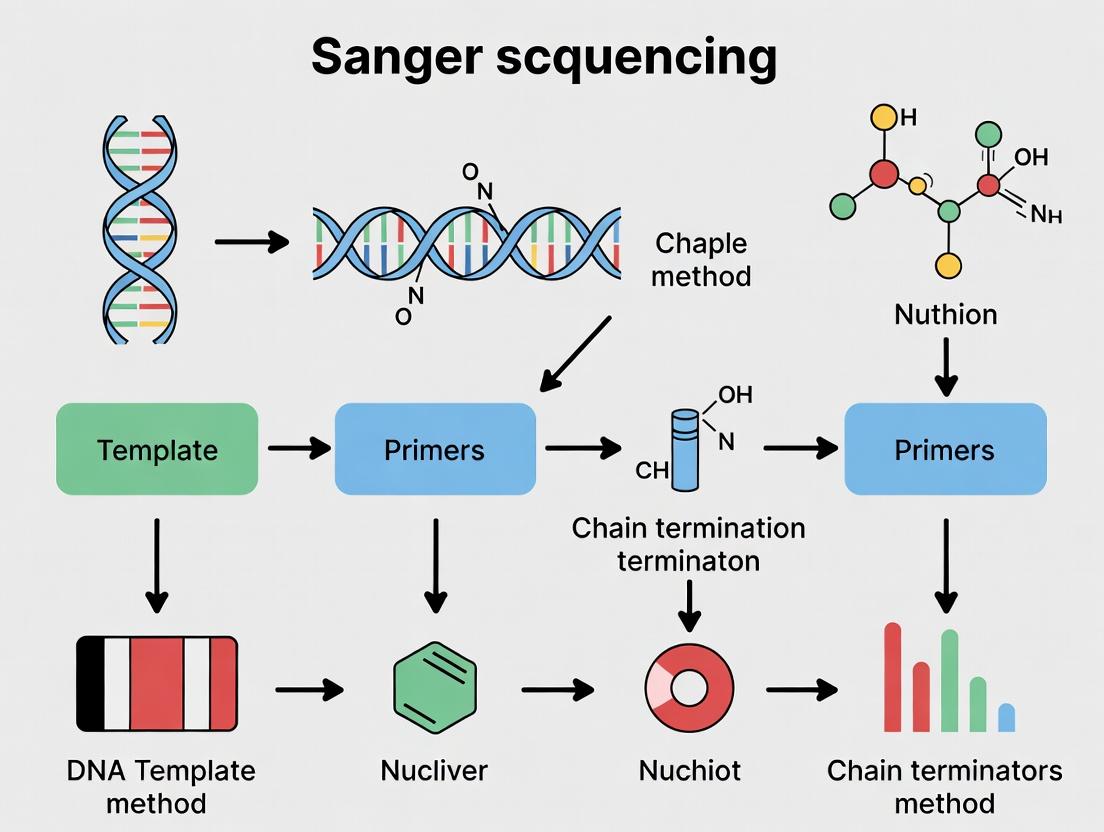
This comprehensive guide explores the foundational principles, step-by-step methodology, and contemporary applications of Sanger sequencing.
Sanger Sequencing: Unraveling the Chain Termination Method for Modern DNA Analysis
Abstract
This comprehensive guide explores the foundational principles, step-by-step methodology, and contemporary applications of Sanger sequencing. Designed for researchers and drug development professionals, it details the chain termination mechanism, workflow from template preparation to capillary electrophoresis, and best practices for troubleshooting common issues. The article also provides a comparative analysis with next-generation sequencing (NGS) platforms, clarifying its distinct role in validation, clinical diagnostics, and targeted sequencing. The content synthesizes practical insights for optimizing read quality and accuracy in modern biomedical research.
The Bedrock of Genomics: Understanding Sanger Sequencing and the Chain Termination Principle
The principle of chain termination sequencing, pioneered by Frederick Sanger in 1977, remains the foundational methodology upon which modern genomics was built. This whitepaper details the technical evolution of the Sanger method from its Nobel Prize-winning inception to its pivotal role in the completion of the Human Genome Project (HGP), framing this progression within the broader thesis of its enduring influence on molecular biology and drug discovery.
The Core Sanger (Chain Termination) Method: A Technical Guide
Original Experimental Protocol (Sanger et al., 1977)
Objective: To determine the nucleotide sequence of a single-stranded DNA template.
Detailed Methodology:
- Primer Annealing: A synthetic oligonucleotide primer (typically 17-24 nt) is annealed to a complementary region on the single-stranded DNA template (e.g., M13 phage DNA).
- Four Separate Reactions: The primer-template mixture is divided into four tubes, each containing:
- DNA polymerase I (Klenow fragment, lacking 5'→3' exonuclease activity).
- All four deoxynucleotide triphosphates (dNTPs: dATP, dCTP, dGTP, dTTP), with one (e.g., dATP) radioactively labeled (α-³²P or ³⁵S) for detection.
- A low concentration of one of four 2',3'-dideoxynucleotide triphosphates (ddNTPs). Each tube receives a different ddNTP (ddA, ddC, ddG, or ddT).
- Extension and Random Termination: Polymerase extends the primer. Incorporation of a ddNTP, which lacks the 3'-hydroxyl group, terminates DNA strand elongation permanently.
- Electrophoresis: Each reaction is loaded onto a high-resolution polyacrylamide gel (containing 6-8% acrylamide and 7M urea) for denaturing gel electrophoresis. Four lanes (A, C, G, T) are run simultaneously.
- Autoradiography: The gel is exposed to X-ray film. Bands appear where radioactive fragments terminated. Reading the banding pattern from smallest (bottom) to largest (top) yields the DNA sequence.
Logical Workflow Diagram:
Diagram Title: Sanger Dideoxy Sequencing Core Workflow
Critical Technological Enhancements for the HGP
The HGP necessitated automation and scalability. Key innovations included:
- Fluorescent Dyes: Replacement of radioactive labels with four fluorescent dyes (one for each ddNTP), each emitting at a different wavelength.
- Capillary Electrophoresis (CE): Replacement of slab gels with automated, multi-capillary arrays for higher throughput and longer read lengths.
- Cycle Sequencing: Adoption of thermostable DNA polymerases (e.g., Thermus aquaticus Taq) enabling repeated thermal cycling (denaturation, annealing, extension), amplifying the sequencing signal from limited template.
- Automated Base Calling: Software algorithms to interpret fluorescence traces from CE into nucleotide sequences.
Evolution of Sequencing Throughput & Cost (Comparative Data)
| Metric | Sanger (c. 1977) | Automated Sanger (c. 1990) | Sanger (HGP Peak, c. 2000) | Post-HGP NGS (c. 2023) |
|---|---|---|---|---|
| Read Length (bases) | ~200-300 | ~500-600 | 650-1000 | 100-300 (Illumina); 10,000+ (PacBio) |
| Throughput per Run | 1 sequence / gel day | 96 seq / 24h (1 machine) | ~384 seq / 24h (96-capillary) | ~20 billion seq / 24h (NovaSeq X) |
| Approx. Cost per Megabase | ~$5,000 (est.) | ~$1,000 | ~$100 | ~$0.01 |
| Key Platform | Manual Slab Gel | ABI 373 (Slab Gel) | ABI 3700 (Capillary) | Illumina, PacBio, ONT |
The Scientist's Toolkit: Essential Reagent Solutions
| Reagent / Material | Function in Chain Termination Sequencing |
|---|---|
| DNA Polymerase | Enzyme that catalyzes template-directed synthesis of DNA. Klenow fragment (original), Sequenase (modified T7), or thermostable enzymes (for cycle sequencing) are used for high processivity and uniform ddNTP incorporation. |
| Dideoxynucleotide Triphosphates (ddNTPs) | Chain-terminating nucleotides lacking the 3'-OH group. Their controlled ratio to dNTPs in the reaction determines the random termination and fragment length distribution. |
| Fluorescent Dye-Labeled Primers or ddNTPs | Fluorophores (e.g., FAM, JOE, TAMRA, ROX) attached to either the primer (dye-primer chemistry) or the ddNTPs themselves (dye-terminator chemistry). Enables multiplexed detection in a single capillary. |
| BigDye Terminators | Proprietary reagent kit (Applied Biosystems) employing dye-terminator chemistry with energy transfer (ET) dyes for strong, even signal and optimized polymerase for robust cycle sequencing. |
| Capillary Array with POP-7 Polymer | High-performance separation medium (polymer) within fine glass capillaries. Enables high-voltage, automated electrophoresis of sequencing fragments with single-base resolution. |
| Cycle Sequencing Reaction Mix | Optimized buffer containing template, primer, dNTPs, dye-terminators, and AmpliTaq FS polymerase. Subjected to thermal cycling to linearly amplify the sequencing signal. |
Technical Milestones: Nobel Prizes to the HGP Finish Line
Significant Methodological Advancements Timeline Diagram:
Diagram Title: Key Milestones from Sanger to HGP Completion
While Next-Generation Sequencing (NGS) has superseded Sanger for large-scale projects, the chain termination principle remains the gold standard for accuracy (≥99.99%) in validating NGS variants, sequencing single clones, and targeted diagnostics. Its development from a manual technique to an automated, industrial-scale process directly enabled the HGP, providing the essential reference genome that continues to underpin all contemporary genomics, personalized medicine, and target-based drug development.
This whitepaper explores the core chemical principle of dideoxynucleotide (ddNTP)-mediated chain termination, the foundational mechanism of the Sanger sequencing method. Framed within ongoing research into chain termination methodologies, the document provides a technical dissection of the structural biochemistry, kinetics, and experimental protocols that underpin this critical technology for genomics and drug development.
The Sanger method, or chain-termination sequencing, revolutionized molecular biology by enabling the determination of DNA nucleotide sequences. Its entire premise rests on the controlled termination of DNA synthesis during in vitro replication. This process is chemically engineered by the incorporation of dideoxynucleotides (ddNTPs), analogs of native deoxynucleotides (dNTPs). Understanding the precise structural and enzymatic mechanism of this termination is central to optimizing sequencing protocols and interpreting next-generation sequencing data, which itself often relies on similar biochemical principles.
Structural Biochemistry: ddNTPs vs. dNTPs
The termination capability of ddNTPs stems from a single, critical chemical modification.
Chemical Structure Comparison
- Deoxynucleotide (dNTP): Comprises a nitrogenous base (A, T, C, G), a deoxyribose sugar, and a triphosphate tail. The sugar has a 3'-hydroxyl (-OH) group.
- Dideoxynucleotide (ddNTP): Identical to a dNTP, but the deoxyribose sugar lacks both a 2'- and a 3'-hydroxyl group. The 3' carbon bears a hydrogen atom (-H).
This absence of the 3'-OH is the terminating feature. In natural DNA synthesis, the 3'-OH of the last nucleotide in the growing chain performs a nucleophilic attack on the α-phosphate of the incoming dNTP, forming a phosphodiester bond. A ddNTP, once incorporated, provides no 3'-OH, thus preventing the formation of a bond with the next nucleotide and irreversibly terminating chain elongation.
Table 1: Structural and Functional Comparison of dNTPs and ddNTPs
| Feature | Deoxynucleotide (dNTP) | Dideoxynucleotide (ddNTP) |
|---|---|---|
| 3' Carbon Group | Hydroxyl (-OH) | Hydrogen (-H) |
| Can Form Phosphodiester Bond | Yes | Yes (can be incorporated) |
| Can Accept Next Nucleotide | Yes (via 3'-OH) | No (lacks 3'-OH) |
| Result after Incorporation | Chain elongation continues | Chain termination |
| Role in Sanger Sequencing | Substrate for extension | Controlled termination agent |
Enzymatic Kinetics and Incorporation
DNA polymerase cannot distinguish between a dNTP and a ddNTP during the incorporation event. The enzyme binds both substrates and catalyzes the formation of a phosphodiester bond linking the ddNTP to the growing strand. Incorporation efficiency varies by polymerase and is influenced by ratios of ddNTP:dNTP. Modern sequencing optimizations often use engineered polymerases with altered affinities or modified ddNTP analogs to improve incorporation uniformity.
Table 2: Representative Incorporation Efficiency (kcat/Km) of a Common Polymerase
| Substrate | Relative Incorporation Efficiency | Notes |
|---|---|---|
| dATP | 1.0 (Reference) | Natural substrate |
| ddATP | ~0.01 - 0.1 | Highly variable; 100-1000x less efficient |
| Modified ddNTPs (e.g., dye-terminators) | ~0.001 - 0.01 | Further reduced due to bulky fluorophore |
Experimental Protocol: Classic Sanger Sequencing Workflow
This protocol details the standard method to demonstrate ddNTP termination.
A. Reagents:
- Template DNA: Single-stranded, purified (e.g., 1 µg of plasmid DNA).
- Primer: Oligonucleotide complementary to template (20-30 nt, 10 pmol).
- DNA Polymerase: Thermostable (e.g., Thermus aquaticus (Taq) Pol) for cycle sequencing.
- Buffer: 10X polymerase reaction buffer (MgCl2 included).
- Deoxynucleotide Mix (dNTPs): Typically 200 µM of each dATP, dCTP, dGTP, dTTP.
- Dideoxynucleotide Termination Mixes (Four Separate Tubes):
- A-tube: 200 µM dNTPs + 600 µM ddATP.
- C-tube: 200 µM dNTPs + 600 µM ddCTP.
- G-tube: 200 µM dNTPs + 600 µM ddGTP.
- T-tube: 200 µM dNTPs + 600 µM ddTTP.
- (Note: Optimal ddNTP:dNTP ratio must be determined empirically for each system)
- Nuclease-free Water.
B. Procedure:
- Setup: Label four PCR tubes (A, C, G, T). To each tube, add:
- 100-200 ng template DNA.
- 10 pmol primer.
- 2 µL of 10X reaction buffer.
- 0.5 µL of DNA polymerase (1 unit/µL).
- Nuclease-free water to a final volume of 18 µL.
- Add Termination Mixes: Add 2 µL of the corresponding ddNTP termination mix (A, C, G, or T) to each labeled tube. Final reaction volume: 20 µL.
- Thermal Cycling:
- Denaturation: 95°C for 2 min.
- Cycling (25-35 cycles):
- 95°C for 30 sec (denature).
- 55°C for 30 sec (anneal).
- 72°C for 1 min (extend). Termination events occur here.
- Final Extension: 72°C for 5 min.
- Hold: 4°C.
- Post-Processing: Add a formamide-based stop solution to each reaction. Denature at 95°C for 5 minutes, then immediately place on ice.
- Separation & Detection: Load samples onto a high-resolution denaturing polyacrylamide gel (or capillary array for automated systems). Electrophorese to separate DNA fragments by single-base size differences.
- Data Analysis: Detect fluorescently labeled fragments (from labeled primer or ddNTPs). The sequence is read from the smallest to largest fragment, corresponding to the ddNTP incorporated at each position.
Diagrams
Diagram 1: ddNTP vs dNTP Incorporation Decision Pathway
Diagram 2: Sanger Sequencing Step-by-Step Workflow
The Scientist's Toolkit: Key Research Reagent Solutions
Table 3: Essential Materials for ddNTP Termination Experiments
| Item | Function in Experiment | Key Considerations |
|---|---|---|
| DNA Polymerase | Enzyme that catalyzes template-directed DNA synthesis. | Choice affects fidelity, processivity, and ddNTP incorporation rate (e.g., Sequenase is engineered for low discrimination). |
| Ultrapure dNTP Mix | Provides the natural substrates for continuous DNA strand elongation. | Concentration balance is critical to maintain uniform band intensities and prevent misincorporation. |
| Dideoxynucleotide (ddNTP) Set | Chain-terminating agents. One for each base (ddATP, ddCTP, ddGTP, ddTTP). | Must be free of contaminating dNTPs. ddNTP:dNTP ratio is the key variable controlling average fragment length. |
| Fluorescent Dye-Terminators | ddNTPs covalently linked to fluorophores (different color for each base). | Enable multiplexed, single-tube reactions and automated detection. Bulky dye can affect polymerase kinetics. |
| Cycle Sequencing Kit | Optimized pre-mix containing polymerase, buffer, dNTPs, and dyed ddNTPs. | Standardizes reactions for robustness and reproducibility in high-throughput settings. |
| Capillary Electrophoresis (CE) System | Platform for high-resolution separation of termination fragments by size. | Provides single-base resolution essential for accurate sequence reading. Linked to a fluorescence detector. |
| Sequencing Buffer (with Mg2+) | Provides optimal ionic strength and pH for polymerase activity. Mg2+ is an essential cofactor. | Concentration of Mg2+ can influence primer annealing and enzyme fidelity. |
This technical guide details the implementation of the four-dye, single-lane fluorescent Sanger sequencing method, a pivotal advancement built upon the foundational Sanger sequencing principle of chain termination. The broader thesis posits that the evolution from radioactive, four-lane gel electrophoresis to this fluorescent, single-capillary method was the critical innovation that enabled the high-throughput, automation, and scalability necessary for the Human Genome Project and modern genomics. This document provides an in-depth analysis of the core four-reaction setup, its chemical basis, and contemporary protocols.
Core Chemical Principle: Dideoxynucleotide (ddNTP) Labeling
The chain termination method relies on the incorporation of 2',3'-dideoxynucleotides (ddNTPs) by DNA polymerase. Each ddNTP terminates the growing DNA strand because it lacks the 3'-hydroxyl group required for phosphodiester bond formation. In the classic four-reaction setup, each sequencing reaction is spiked with a single type of ddNTP (ddATP, ddTTP, ddCTP, or ddGTP). The critical innovation was the covalent linkage of a distinct fluorophore to each ddNTP type, allowing all four reactions to be combined and electrophoresed in a single lane or capillary.
Fluorescent Dye Chemistries and Spectral Properties
Early systems used dyes with distinct emission maxima. Modern "dye-terminator" chemistry often employs energy-transfer (ET) dyes, where a common donor fluorophore excites an acceptor dye via Förster resonance energy transfer (FRET). This allows for better spectral separation using a single excitation laser.
Table 1: Historical and Common Fluorescent Dye Sets for ddNTP Labeling
| ddNTP | Common Dye (Early) | Emission λ (nm) | Common ET Dye (Example) | Acceptor Emission λ (nm) | Detector Channel |
|---|---|---|---|---|---|
| ddATP | FAM (Blue) | 525 | dR6G (or similar) | 580 | Yellow/Green |
| ddTTP | JOE (Green) | 555 | dTAMRA | 620 | Red |
| ddCTP | TAMRA (Yellow) | 580 | dROX | 665 | Far Red |
| ddGTP | ROX (Red) | 605 | dR110 | 525 | Blue |
Note: Specific dyes and mappings vary by platform (e.g., Applied Biosystems vs. others). The "BigDye Terminator v3.1" cycle sequencing kit is a prevalent commercial example.
Detailed Experimental Protocol: Dye-Terminator Cycle Sequencing
Objective: To generate fluorescently labeled DNA fragments from a template for capillary electrophoresis analysis.
Materials: See "The Scientist's Toolkit" below.
Procedure:
- Reaction Setup: In a single tube (for single-lane detection), combine:
- Template DNA (50-500 ng plasmid, or 100-200 ng PCR product).
- Sequencing Primer (3.2 pmol, typically 10-20 bases).
- Dye-Terminator Ready Reaction Mix: Contains DNA polymerase (e.g., AmpliTaq FS), a blend of four labeled ddNTPs, dNTPs, buffer, and MgCl₂.
- Add nuclease-free water to a final volume of 10-20 µL.
- Thermal Cycling: Perform PCR in a thermal cycler:
- Initial Denaturation: 96°C for 1 min.
- Cycling (25-35 cycles):
- Denaturation: 96°C for 10 sec.
- Annealing: 50°C for 5 sec.
- Extension: 60°C for 4 min.
- Post-Sequencing Purification: Remove excess, unincorporated dye-terminators.
- Ethanol/EDTA Precipitation: Add EDTA to chelate Mg²⁺, then sodium acetate/ethanol mixture. Incubate, centrifuge, wash with 70% ethanol, and dry the pellet.
- Column-Based Purification: Use size-exclusion spin columns to separate terminated fragments from small-molecule dyes.
- Resuspension: Redissolve the purified DNA fragments in highly deionized formamide or a dedicated sequencing buffer.
- Capillary Electrophoresis: Denature samples at 95°C, then inject electrokinetically into a capillary array filled with polymer. Apply high voltage to separate fragments by size (1 base resolution). A laser excites the dyes as fragments pass a detector, and emission spectra are recorded.
Data Processing and Base Calling
The detector collects fluorescence intensity across four emission wavelengths over time. Software converts this raw data into a chromatogram by:
- Spectral Calibration: Applying a matrix to deconvolute the overlapping emission spectra of the four dyes.
- Mobility Correction: Normalizing for dye-specific effects on fragment electrophoretic mobility.
- Base Calling: Assigning the correct base (A, T, C, G) at each peak position with an associated quality (Phred) score.
Diagram 1: Four-Dye Sanger Sequencing Workflow (95 chars)
Diagram 2: From Fragments to Fluorescence Data (89 chars)
The Scientist's Toolkit
Table 2: Essential Research Reagent Solutions for Four-Dye Sanger Sequencing
| Reagent/Material | Function & Critical Notes |
|---|---|
| Dye-Terminator Cycle Sequencing Kit (e.g., BigDye) | Core reagent mix. Contains optimized ratios of spectrally distinct fluorescent ddNTPs, dNTPs, thermostable DNA polymerase, and reaction buffer for robust linear amplification. |
| Template DNA (Plasmid, PCR product) | The target to be sequenced. Must be pure (A260/A280 ~1.8-2.0), with minimal salt, ethanol, or protein contamination. |
| Sequencing Primer (Oligonucleotide) | Typically 18-24 bases, designed for high specificity and Tm (50-60°C). Resuspended in nuclease-free water or TE buffer. |
| Hi-Di Formamide or Deionized Formamide | Denaturing agent for sample resuspension post-purification. Ensures DNA is single-stranded prior to capillary injection. Must be of high purity to prevent gel polymer degradation. |
| Ethanol/Sodium Acetate Precipitation Mix or Spin Columns | For post-sequencing cleanup. Removes unincorporated dye terminators which cause high background noise. Precipitation is cost-effective; spin columns offer speed and consistency. |
| Capillary Electrophoresis Polymer & Buffer | Sieving polymer (e.g., POP-7) for size-based separation in the automated sequencer. Performance buffers maintain stable pH and conductivity. |
| Size Standard (LIZ or similar) | Internal fluorescent size marker co-injected with samples. Allows precise fragment size calibration across capillaries, crucial for accurate base calling. |
This technical guide details the four core biochemical components that enable the Sanger chain termination sequencing method. Within the broader thesis of advancing sequencing research, precise manipulation of these reagents remains fundamental to achieving high-fidelity, capillary electrophoretic separation of DNA fragments. This document provides an updated, protocol-centric resource for research and development scientists.
DNA Template
The DNA template is the single-stranded molecule to be sequenced. Its purity and concentration are critical for signal strength and read accuracy.
Quantitative Specifications:
| Parameter | Optimal Range | Impact of Deviation |
|---|---|---|
| Purity (A260/A280) | 1.8 - 2.0 | Ratios <1.8 indicate protein/phenol contamination; >2.0 indicates RNA contamination. |
| Concentration | 50 - 200 ng/µL for plasmid; 100 - 500 ng/µL for PCR product | Low concentration yields weak signal; high concentration causes sequence pile-ups. |
| Molecular Weight | 100 bp - 10 kbp (optimal: 500-1000 bp) | Very long templates can cause polymerase processivity issues. |
| Preparation Method | Alkaline lysis, Column purification, Magnetic bead-based cleanup | Method dictates residual salt, which inhibits polymerase. |
Protocol: Plasmid DNA Template Preparation (Alkaline Lysis Miniprep)
- Pellet 1-5 mL bacterial culture and resuspend in 250 µL of Resuspension Buffer (50 mM Tris-Cl pH 8.0, 10 mM EDTA, 100 µg/mL RNase A).
- Lyse cells with 250 µL of Lysis Buffer (200 mM NaOH, 1% SDS). Invert 4-6 times until solution clears.
- Neutralize with 350 µL of Neutralization Buffer (3.0 M potassium acetate, pH 5.5). Invert gently until white precipitate forms.
- Centrifuge at 13,000 x g for 10 minutes to pellet debris and chromosomal DNA.
- Transfer supernatant to a spin column with silica membrane. Centrifuge at 13,000 x g for 1 minute.
- Wash membrane with 700 µL of Wash Buffer (Ethanol added to proprietary salt solution). Centrifuge.
- Elute DNA with 30-50 µL of Elution Buffer (10 mM Tris-Cl, pH 8.5). Centrifuge. Quantify via spectrophotometry.
Primer
The primer is a short, single-stranded oligonucleotide (typically 17-24 bases) that anneals to a specific site on the template, providing a 3'-OH group for DNA polymerase to initiate synthesis.
Quantitative Specifications:
| Parameter | Optimal Range | Notes |
|---|---|---|
| Length | 17 - 24 nucleotides | Balances specificity and annealing kinetics. |
| Melting Temp (Tm) | 50 - 65°C | Calculated via the nearest-neighbor method. Critical for annealing step. |
| Concentration in Reaction | 0.1 - 0.5 µM | Must be in excess relative to template. |
| Purity | HPLC or PAGE purified | Reduces failed sequencing reactions from truncated primers. |
Protocol: Primer Design and Annealing Optimization
- Design: Select a sequence with ~50% GC content. Avoid secondary structures and 3'-end complementarity. Calculate Tm using the formula: Tm = 64.9°C + 41°C * ( (# of G or C) - 16.4 ) / (total # of bases).
- Resuspension: Centrifuge lyophilized primer tube briefly. Resuspend in sterile TE buffer (10 mM Tris, 0.1 mM EDTA, pH 8.0) to a 100 µM stock concentration.
- Annealing in Sequencing Reaction: The standard thermal cycler program includes a rapid thermal ramp to 96°C for 1 minute (template denaturation), followed by a rapid cool to 50°C for 20 seconds. This allows specific primer-template annealing.
DNA Polymerase
The enzyme catalyzes the template-directed addition of nucleotides to the growing DNA chain. Thermostable, modified polymerases with high processivity and reduced exonuclease activity are standard.
Quantitative Specifications:
| Polymerase Type | Processivity (nts/sec) | Fidelity (Error Rate) | Key Feature for Sequencing |
|---|---|---|---|
| Taq (wild-type) | ~60 | ~1 x 10⁻⁴ | Thermostable, but lacks strand-displacement. |
| Thermo Sequenase | High | Low | Engineered to efficiently incorporate ddNTPs. |
| BigDye Terminator v3.1 | High | Very High | Contains a proprietary thermostable mutant with optimal ddNTP kinetics. |
Protocol: Polymerase Dilution and Reaction Setup
- Commercial sequencing enzymes are typically supplied in concentrated storage buffer (often containing glycerol and stabilizing agents).
- Dilution: Dilute the stock enzyme immediately before use in the provided dilution buffer or sterile molecular grade water to the working concentration specified by the manufacturer (e.g., 1:8 dilution). Do not subject to multiple freeze-thaw cycles.
- Reaction Assembly: Add polymerase last to the master mix, after buffer, template, primer, and nucleotide components to prevent premature activity.
dNTP/ddNTP Mix
This mixture contains the four standard deoxynucleotide triphosphates (dATP, dCTP, dGTP, dTTP) and the four dideoxynucleotide triphosphates (ddATP, ddCTP, ddGTP, ddTTP), each labeled with a distinct fluorescent dye.
Quantitative Specifications:
| Nucleotide Type | Typical Concentration in Reaction | Function | Dye Color (Example) |
|---|---|---|---|
| dATP, dCTP, dGTP, dTTP | 20 - 80 µM each | Substrates for chain elongation. | N/A |
| ddATP | 0.5 - 2 µM | Terminates chain at 'A' positions. | Green (e.g., BigDye ddA) |
| ddCTP | 0.5 - 2 µM | Terminates chain at 'C' positions. | Blue (e.g., BigDye ddC) |
| ddGTP | 0.5 - 2 µM | Terminates chain at 'G' positions. | Yellow (e.g., BigDye ddG) |
| ddTTP | 0.5 - 2 µM | Terminates chain at 'T' positions. | Red (e.g., BigDye ddT) |
Protocol: Preparing and Using the Terminator Mix
- Commercial "Terminator Ready Reaction Mix" typically contains the optimized ratio of dNTPs:ddNTPs, polymerase, and buffer. This is the recommended standard.
- For manual mixing (research applications):
- Prepare a 10X dNTP stock (e.g., 200 µM of each dNTP).
- Prepare a 10X ddNTP stock (e.g., 10 µM of each fluorescently labeled ddNTP).
- Combine in the final reaction at a ratio (dNTP:ddNTP) optimized for the target read length (e.g., 8:1). A higher ddNTP ratio yields shorter fragments.
Core Sanger Sequencing Reaction Workflow
Diagram 1: Sanger Sequencing Thermal Cycling & Analysis Flow
Logical Relationship of Core Components
Diagram 2: Component Interaction in Chain Termination
The Scientist's Toolkit: Key Research Reagent Solutions
| Reagent / Kit | Vendor Examples (Illustrative) | Primary Function in Sanger Workflow |
|---|---|---|
| BigDye Terminator v3.1 Cycle Sequencing Kit | Thermo Fisher Scientific | All-in-one optimized mix of dye terminators, dNTPs, buffer, and thermostable polymerase. |
| ExoSAP-IT PCR Product Cleanup | Thermo Fisher Scientific | Enzymatic removal of excess primers and dNTPs from PCR products prior to sequencing. |
| EdgeSeq Purification Beads | Promega | Magnetic bead-based cleanup of sequencing reaction products prior to electrophoresis. |
| Hi-Di Formamide | Thermo Fisher Scientific | Denaturing agent for resuspending purified sequencing products before injection onto the capillary. |
| POP-7 Polymer | Thermo Fisher Scientific | A performance-optimized polymer matrix for capillary electrophoresis separation of DNA fragments. |
| MicroAmp Optical 96-Well Reaction Plate | Thermo Fisher Scientific | PCR-compatible plate with low evaporation for thermal cycling of sequencing reactions. |
| 3130xl Genetic Analyzer Capillary Array (36 cm) | Thermo Fisher Scientific | The capillary array for fragment separation in a specific genetic analyzer model. |
| TE Buffer (1X, pH 8.0) | Various (Sigma, Invitrogen) | For stable resuspension and dilution of DNA templates and primers. |
This whitepaper, framed within a broader thesis on the Sanger sequencing chain termination method, provides an in-depth technical guide to the transformation of biochemical termination events into the final visualized electropherogram. The Sanger method, a cornerstone of genomics, relies on the controlled termination of DNA synthesis by dideoxynucleotides (ddNTPs) to generate a nested set of fragments. This document details the precise experimental and analytical steps required to convert these chemical stopping events into the sequencing ladder read by researchers, scientists, and drug development professionals.
The Core Principle: Chain Termination
DNA polymerase extends a primer by incorporating deoxynucleotides (dNTPs) complementary to the template strand. The inclusion of a small proportion of dideoxynucleotides (ddNTPs), which lack a 3'-hydroxyl group, causes irreversible termination of the growing chain. Four separate reactions, each containing all four dNTPs and one of four ddNTPs (ddATP, ddTTP, ddCTP, ddGTP), yield populations of fragments of specific lengths, each ending at the complementary base.
Experimental Protocol: From Template to Fragments
A detailed methodology for a standard Sanger sequencing reaction is provided below.
Materials:
- DNA template (plasmid, PCR product, etc.)
- Sequencing primer (universal or gene-specific)
- DNA polymerase (thermostable, e.g., Taq variants)
- Deoxynucleotide triphosphate mix (dNTPs)
- Dideoxynucleotide triphosphate(s) (ddNTPs), typically one per reaction for capillary electrophoresis
- Reaction buffer (provided with enzyme)
- Thermocycler
Procedure:
- Reaction Setup: In a PCR tube, combine the following:
- 50-500 ng template DNA
- 3.2-10 pmol sequencing primer
- 4 µL of ready-mix sequencing reagent (contains polymerase, buffer, dNTPs, ddNTPs). For older methods, prepare separate A, T, C, G reactions with specific ddNTP/dNTP ratios.
- Thermal Cycling: Place the tube in a thermocycler and run the following profile:
- Initial Denaturation: 96°C for 1 minute.
- Cycling (25-35 cycles):
- Denaturation: 96°C for 10 seconds.
- Annealing: 50°C for 5 seconds.
- Extension: 60°C for 4 minutes.
- Post-Reaction Cleanup: Purify the extension products to remove unincorporated ddNTPs and salts. This is typically done via ethanol/sodium acetate precipitation or using commercial spin-column kits.
- Fragment Separation: The purified products are now ready for capillary electrophoresis (CE).
Capillary Electrophoresis and Detection
The nested fragments are separated by size via CE in a polymer-filled capillary. Detection is based on fluorescence.
Protocol for Capillary Electrophoresis:
- Sample Preparation: Resuspend the purified extension products in highly deionized formamide. For modern systems using 4-color fluorescence, all four termination reactions are combined into a single tube.
- Injection: The sample is injected into the capillary electrokinetically.
- Electrophoresis: A high voltage is applied. Negatively charged DNA fragments migrate towards the positive electrode. The polymer matrix acts as a molecular sieve, resolving fragments differing by a single nucleotide.
- Detection: As fragments pass a fixed-point laser detector, the fluorescent dye (attached to the ddNTP or primer) is excited. The emitted fluorescence wavelength and intensity are recorded.
Data Transformation: Signal to Sequence
The raw data from the detector is a multi-channel trace of fluorescence intensity over time. This data undergoes processing to generate the final electropherogram.
Key Processing Steps:
- Spectral Calibration: Corrects for spectral overlap between the four fluorescent dyes.
- Mobility Correction: Normalizes for minor mobility differences of fragments labeled with different dyes.
- Base Calling: Software algorithms (e.g., Phred) analyze the peak spacing, shape, and height to assign a base identity (A, T, C, G) to each signal peak, creating the sequence text file and the quality score (Q-score) for each base.
Quantitative Data & Performance Metrics
Key performance parameters for modern Sanger sequencing are summarized below.
Table 1: Key Performance Metrics for Sanger Sequencing
| Parameter | Typical Value/Description | Impact on Result |
|---|---|---|
| Read Length | 500-1000 bases | Determines amount of sequence obtained per reaction. |
| Accuracy | >99.99% (with Q30+ scores) | Critical for reliable variant detection and validation. |
| Success Rate | >95% for standard templates | Dependent on template quality and primer design. |
| Signal Resolution | Capable of distinguishing 1-base difference | Essential for accurate base calling. |
| Dye Set Crosstalk | <5% after spectral calibration | Reduces base-calling errors between channels. |
Table 2: Historical vs. Modern ddNTP Incorporation Ratios
| Method Era | Typical ddNTP : dNTP Ratio | Separation Method | Detection Method |
|---|---|---|---|
| Radioactive (Manual) | ~1:10 to 1:100 (per reaction) | Slab Gel Electrophoresis | Autoradiography |
| Early Fluorescence | ~1:50 to 1:200 (per reaction) | Slab Gel Electrophoresis | Laser Scanner |
| Modern CE (4-color) | Optimized in commercial ready-mix | Capillary Electrophoresis | 4-color Laser Detector |
The Scientist's Toolkit: Essential Reagents & Materials
Table 3: Key Research Reagent Solutions for Sanger Sequencing
| Item | Function & Importance |
|---|---|
| BigDye Terminator v3.1 | Industry-standard ready-mix reagent. Contains polymerase, buffer, dNTPs, and spectrally resolved fluorescent ddNTPs. |
| POP-7 Polymer | Performance Optimized Polymer for capillary electrophoresis. Provides high-resolution separation of DNA fragments. |
| Hi-Di Formamide | High-purity, deionized formamide for sample denaturation prior to CE. Prevents capillary clogging and ensures sharp peaks. |
| EDTA Precipitation Reagents | Sodium acetate/EDTA solution and ethanol for post-reaction cleanup. Removes unincorporated dyes and salts. |
| M13 Forward/Reverse Primers | Universal primers for sequencing inserts cloned into plasmid vectors with M13 sites. |
| ExoSAP-IT | Enzyme-based cleanup reagent for PCR products prior to sequencing. Degrades primers and dNTPs. |
Visualizing the Workflow: From Termination to Trace
Diagram Title: Sanger Sequencing End-to-End Workflow
Diagram Title: Electropherogram Data Processing Steps
Mastering the Workflow: A Step-by-Step Guide to Performing Sanger Sequencing Today
Within the framework of Sanger sequencing principle chain termination method research, the generation of a pure, high-fidelity, and concentrated double-stranded DNA (dsDNA) template is the foundational step. The quality of this initial product directly dictates the success of subsequent sequencing reactions, impacting read accuracy, length, and signal clarity. This technical guide details the critical first phase: the Polymerase Chain Reaction (PCR) amplification of a specific genomic target, followed by rigorous purification to remove enzymatic inhibitors, excess primers, dNTPs, and salts that interfere with the sequencing biochemistry.
PCR Amplification: Principles and Protocol
The objective is to exponentially amplify the target DNA region using sequence-specific primers, one of which may later serve as the sequencing primer.
2.1. Key Reagents and Optimization
- Polymerase Selection: Modern high-fidelity polymerases (e.g., Q5, Phusion) are preferred over standard Taq for their superior accuracy (~50-100x lower error rate), crucial for generating an unambiguous template.
- Primer Design: Primers should be 18-25 nucleotides with a Tm of 55-65°C. For sequencing, optimal primer positioning is 50-250 bp from the region of interest. Avoid secondary structures and primer-dimer formation.
- Template Quality: While robust, PCR works best with pure, high-molecular-weight DNA. Concentrations are critical (see Table 1).
2.2. Standardized Protocol
- Reaction Setup (50 µL):
- Nuclease-Free Water: to 50 µL
- 10X High-Fidelity PCR Buffer: 5 µL
- dNTP Mix (10 mM each): 1 µL
- Forward Primer (10 µM): 2.5 µL
- Reverse Primer (10 µM): 2.5 µL
- Template DNA: Variable (see Table 1)
- High-Fidelity DNA Polymerase (2 U/µL): 0.5 µL
- Thermal Cycling Conditions:
- Initial Denaturation: 98°C for 30 seconds.
- Amplification (35 cycles):
- Denature: 98°C for 10 seconds.
- Anneal: Tm + 3°C of primers for 20 seconds.
- Extend: 72°C for 20-30 seconds/kb.
- Final Extension: 72°C for 2 minutes.
- Hold: 4°C.
Table 1: Recommended Template DNA Input for PCR
| Template Type | Recommended Amount | Notes |
|---|---|---|
| Plasmid DNA | 1 pg – 10 ng | Highly efficient; avoid excess to prevent nonspecific amplification. |
| Genomic DNA (Human) | 10 – 100 ng | Complexity requires higher input; ensure high purity. |
| Bacterial Genomic DNA | 1 – 10 ng | Lower complexity than mammalian genomes. |
| Purified PCR Product | 0.1 – 1 ng | For re-amplification or nested PCR approaches. |
Post-Amplification Purification
Post-PCR cleanup is mandatory to prepare template for cycle sequencing. Two primary methods are employed:
3.1. Enzymatic Cleanup (ExoSAP-IT or Equivalent)
- Principle: A combination of Exonuclease I (degrades excess single-stranded primers) and Shrimp Alkaline Phosphatase (SAP) (dephosphorylates excess dNTPs).
- Protocol: Add 2 µL of enzyme mix directly to 5 µL of PCR product. Incubate at 37°C for 15 minutes, followed by enzyme inactivation at 80°C for 15 minutes. Ideal for high-yield, specific PCR products.
3.2. Solid-Phase Reversible Immobilization (SPRI) Bead-Based Cleanup
- Principle: Paramagnetic beads coated with a carboxylate matrix bind DNA in the presence of high concentrations of PEG and salt. Impurities are washed away, and pure DNA is eluted in low-ionic-strength buffer.
- Detailed Protocol:
- Transfer PCR reaction to a clean tube.
- Add a calculated volume of SPRI beads (typically a 0.8X-1.8X ratio of beads to sample volume to select for desired amplicon size).
- Mix thoroughly and incubate at room temperature for 5 minutes.
- Place tube on a magnetic stand until the supernatant clears.
- Carefully remove and discard supernatant.
- With tube on magnet, add 200 µL of freshly prepared 80% ethanol. Incubate 30 seconds, then remove ethanol. Repeat wash.
- Air-dry beads for 5-10 minutes. Do not over-dry.
- Remove from magnet, elute DNA in 20-30 µL of nuclease-free water or TE buffer. Mix, incubate 2 minutes, place on magnet, and transfer purified supernatant to a new tube.
Table 2: Purification Method Comparison
| Parameter | Enzymatic Cleanup | SPRI Bead Cleanup |
|---|---|---|
| Time | ~40 minutes | ~15 minutes |
| Recovery Efficiency | >95% | 80-95% |
| Size Selectivity | No | Yes (adjustable via bead:sample ratio) |
| Removes Primer-dimers | No | Yes (if size difference is sufficient) |
| Removes Salts/Inhibitors | Partial (dNTPs only) | Excellent |
| Cost per Rxn | Low | Moderate |
Quality Assessment and Quantification
Prior to sequencing, assess the purified product.
- Spectrophotometry (NanoDrop): Quick A260/A280 (~1.8) and A260/A230 (>2.0) ratios check for protein and salt contamination.
- Fluorometry (Qubit): Gold standard for dsDNA quantification due to dye specificity. Use to determine precise concentration (ng/µL).
- Capillary Electrophoresis (Fragment Analyzer, Bioanalyzer): Assesses amplicon size, purity, and detects primer-dimer contamination. Provides the most comprehensive pre-sequencing QC.
Table 3: Recommended QC Specifications for Sanger Template
| QC Metric | Target Specification | Rationale |
|---|---|---|
| Concentration | 5 – 20 ng/µL (for 100-500 bp amplicon) | Optimal input for cycle sequencing. |
| A260/A280 | 1.7 – 2.0 | Indicates pure nucleic acid. |
| A260/A230 | >2.0 | Indicates low salt/carbohydrate carryover. |
| Electropherogram Profile | Single, sharp peak at expected size. | Confirms specific amplification and effective purification. |
The Scientist's Toolkit: Key Reagents & Materials
Table 4: Essential Research Reagent Solutions
| Item | Function/Role in PCR & Purification |
|---|---|
| High-Fidelity DNA Polymerase Mix | Engineered enzyme with proofreading activity to amplify target with minimal errors. |
| dNTP Mix (10 mM each) | Building blocks (dATP, dCTP, dGTP, dTTP) for DNA synthesis during PCR. |
| Nuclease-Free Water | Solvent for all reactions; eliminates RNase/DNase contamination risk. |
| PCR Primers (Lyophilized, 100 µM stock) | Sequence-specific oligonucleotides that define the start and end of the amplicon. |
| SPRI Magnetic Beads | Paramagnetic particles for size-selective purification and concentration of dsDNA. |
| Ethanol (80%, nuclease-free) | Wash solution for bead-based cleanups; removes salts and other contaminants. |
| TE Buffer (pH 8.0) | Elution/storage buffer (10 mM Tris, 1 mM EDTA); stabilizes purified DNA. |
| DNA Gel Loading Dye & Ladder | For agarose gel verification of amplicon size and reaction success. |
| dsDNA HS Assay Kit (Fluorometric) | For accurate, specific quantification of purified template DNA concentration. |
Visualized Workflows
Title: PCR Amplification and Purification Process Flowchart
Title: PCR Thermal Cycling and Exponential Amplification
Within the framework of Sanger sequencing research, thermal cycling is the critical enzymatic process that amplifies template DNA while incorporating chain-terminating dideoxynucleotides (ddNTPs). This step generates the nested set of fragments essential for subsequent capillary electrophoresis and base calling. Optimization of this cycle is paramount for achieving high-quality, accurate sequence data, particularly in applications like pharmacogenomics and targeted drug development.
The Thermal Cycling Protocol: A Detailed Methodology
The sequencing reaction is a linear, non-exponential amplification. The following protocol is standard for BigDye Terminator v3.1 chemistry, the current industry benchmark.
Reaction Setup (per 20 µL reaction):
- Template DNA (plasmid/PCR product): 1–10 ng/100–500 bp
- Sequencing Primer (forward or reverse): 3.2 pmol (typically 1 µL of 3.2 µM stock)
- BigDye Terminator Ready Reaction Mix: 8.0 µL
- Sequencing Buffer (5X): 2.0–4.0 µL (as per manufacturer)
- Nuclease-free water: to 20 µL
Thermal Cycling Parameters: The cycle program is divided into three key phases.
Table 1: Standard Thermal Cycling Profile for Sanger Sequencing
| Cycle Step | Temperature (°C) | Time | Number of Cycles | Primary Function |
|---|---|---|---|---|
| Initial Denaturation | 96 | 1 minute | 1 | Complete denaturation of double-stranded DNA template. |
| Cycling Phase | 96 | 10 seconds | 25 | Denature the newly synthesized strand from the template. |
| 50 | 5 seconds | 25 | Primer annealing to the single-stranded template. | |
| 60 | 4 minutes | 25 | Controlled extension and termination by DNA polymerase. | |
| Final Hold | 4 | Hold | ∞ | Short-term storage of products. |
Critical Protocol Notes:
- Template Quality: Purified template (A260/A280 ~1.8-2.0) is essential. Residual salts, ethanol, or phenol can inhibit polymerase activity.
- Primer Design: Primers with a Tm of ~50°C are ideal. Avoid secondary structures and 3'-complementarity to prevent primer-dimer artifacts.
- Cycle Number: 25 cycles are standard. Increasing cycles (>35) can introduce excessive background noise; decreasing cycles (<20) may yield low signal.
- Reaction Cleanup: Post-cycling, unincorporated ddNTPs and salts must be removed via ethanol/sodium acetate precipitation or spin column purification prior to electrophoresis.
The Scientist's Toolkit: Key Research Reagent Solutions
Table 2: Essential Materials for Sanger Sequencing Thermal Cycling
| Item | Function & Rationale |
|---|---|
| Thermostable DNA Polymerase (e.g., AmpliTaq FS) | Engineered for high processivity and efficient incorporation of dye-labeled ddNTPs. Lacks 3'→5' exonuclease ("proofreading") activity to ensure termination events are not edited out. |
| Fluorescently Labeled ddNTPs | Each ddNTP (ddATP, ddCTP, ddGTP, ddTTP) is labeled with a distinct fluorophore (e.g., BIG Dye sets). Their incorporation terminates chain elongation, creating the fragment ladder. |
| Optimized Reaction Buffer | Provides optimal pH, ionic strength (especially Mg2+ concentration), and stabilizers for polymerase fidelity and dye stability during cycling. |
| High-Purity Template DNA | Minimizes inhibitors that reduce polymerase efficiency and cause uneven peak heights or early sequence truncation. |
| UV-Transparent Microplates/Tubes | Compatible with thermal cyclers and automated liquid handlers, ensuring efficient heat transfer and reaction consistency. |
Visualization of the Sequencing Reaction Workflow
Diagram 1: Sanger Sequencing Thermal Cycling Process
Diagram 2: Chain Termination by ddNTP Incorporation
Table 3: Optimized Reaction Component Volumes & Concentrations
| Component | Typical Volume per 20µL Reaction | Final Concentration/Range | Purpose & Impact of Deviation |
|---|---|---|---|
| BigDye Terminator Mix | 8.0 µL | 1X | Contains polymerase, dNTPs, ddNTPs, buffer. Less: weak signal. More: high background. |
| Sequencing Primer | 1.0 µL | 0.16 µM (3.2 pmol/rxn) | Optimal for signal-to-noise. Less: low signal. More: increased noise/primerdimer. |
| Template DNA | Variable (X µL) | 1–10 ng/100 bp | Critical for signal intensity. Too low: no signal. Too high: mixed signals/poor resolution. |
| 5X Sequencing Buffer | 2.0–4.0 µL | 1X | Optimizes [Mg2+] and pH. Incorrect: poor polymerase performance. |
| Nuclease-Free Water | to 20.0 µL | N/A | Maintains reaction volume and component concentration. |
Table 4: Troubleshooting Common Thermal Cycling Artifacts
| Observed Problem | Potential Cause in Step 2 | Recommended Protocol Adjustment |
|---|---|---|
| Low Overall Signal | Insufficient template/cycles; degraded reagents; incorrect annealing temp. | Increase template amount (within range); verify reagent integrity; check primer Tm. |
| High Background Noise | Too many cycles; excess primer/template; contaminated template. | Reduce to 25 cycles; optimize primer/template concentration; re-purify template. |
| Sequence Truncation Early | Secondary structure in template; polymerase inhibition. | Increase denaturation time; add DMSO (1-3%); ensure template purity. |
| Dye Blobs in Electropherogram | Incomplete removal of unincorporated dye terminators. | Optimize post-cycling cleanup (e.g., two-step ethanol precipitation). |
Within the broader thesis on the Sanger sequencing principle, the chain termination method produces a complex reaction mixture containing the target extension fragments, unincorporated dye-labeled ddNTPs, excess primers, enzymes, and salts. This post-reaction cleanup step is critical for downstream capillary electrophoresis (CE). Residual ddNTPs and salts can cause electrokinetic injection bias, generate artifact peaks, increase fluorescent noise, and destabilize the electroosmotic flow, severely compromising sequencing accuracy and read length. This guide details contemporary protocols for purifying sequencing extension products.
Core Cleanup Methodologies
Ethanol/EDTA Precipitation (Standard Protocol)
A traditional, cost-effective method that effectively precipitates DNA while leaving small molecules in solution.
Detailed Protocol:
- To the completed sequencing reaction (20 µL), add 2 µL of 125 mM EDTA (pH 8.0) to chelate Mg²⁺ and destabilize DNA-cofactor complexes.
- Add 2 µL of 3M sodium acetate (pH 5.2) to provide monovalent cations and lower the pH to optimize DNA precipitation.
- Add 60 µL of chilled absolute ethanol (95-100%). Mix thoroughly by vortexing.
- Incubate at room temperature for 15 minutes or at -20°C for 10 minutes. Room temperature incubation minimizes salt co-precipitation.
- Centrifuge at ≥ 14,000 × g for 20 minutes at 4°C to pellet DNA.
- Carefully aspirate the supernatant without disturbing the pellet.
- Wash the pellet with 200 µL of 70% ethanol (chilled) to remove residual salts. Centrifuge at ≥ 14,000 × g for 5 minutes.
- Aspirate the ethanol wash completely.
- Air-dry the pellet for 10-15 minutes or use a vacuum concentrator for 2-3 minutes to remove trace ethanol. Do not over-dry.
- Resuspend the pellet in 10-20 µL of Hi-Di Formamide or CE-grade water for injection.
Solid-Phase Reversible Immobilization (SPRI) Bead Cleanup
The current gold standard for high-throughput and automated workflows, utilizing paramagnetic carboxylate-coated beads.
Detailed Protocol:
- Vortex SPRI bead solution (e.g., AMPure, CleanSEQ) thoroughly to ensure homogeneity.
- Combine the 20 µL sequencing reaction with a calculated volume of bead suspension. A typical ratio of beads:sample of 1.8X is used for stringent cleanup of fragments >100 bp.
- Mix thoroughly by pipetting or vortexing and incubate at room temperature for 5 minutes. DNA binds to the bead surface in the presence of polyethylene glycol (PEG) and high salt.
- Place the tube on a magnetic separator for 2-5 minutes until the supernatant clears.
- Carefully aspirate and discard the supernatant while the tube is on the magnet.
- With the tube on the magnet, wash the bead-bound DNA twice with 200 µL of freshly prepared 80% ethanol. Incubate for 30 seconds per wash before aspiration.
- Air-dry the beads on the magnet for 5-7 minutes until the bead pellet appears matte (not glossy). Ethanol inhibits resuspension.
- Remove from the magnet and elute DNA in 20 µL of Hi-Di Formamide or low TE buffer by pipetting. Incubate for 2 minutes.
- Return to the magnet for 2 minutes and transfer the purified eluate to a new tube.
Size-Exclusion Chromatography (Spin Columns)
Utilizes gel filtration matrices (e.g., Sephadex G-50) to separate DNA fragments from smaller molecules based on hydrodynamic volume.
Detailed Protocol:
- Hydrate Sephadex resin in the provided buffer or TE for the recommended time (usually ≥3 hours).
- Load the hydrated resin into a spin column filter placed in a collection tube.
- Centrifuge the column at 750 × g for 2 minutes to remove storage buffer and compact the resin bed.
- Apply the 20 µL sequencing reaction directly to the center of the compacted resin bed.
- Centrifuge at 750 × g for 2 minutes. The DNA passes through quickly, while small molecules (ddNTPs, salts) are delayed by entering the pores of the resin.
- Collect the flow-through, which contains the purified DNA fragments, and discard the column.
Quantitative Comparison of Cleanup Methods
Table 1: Performance Metrics of Post-Reaction Cleanup Methods
| Parameter | Ethanol Precipitation | SPRI Beads (1.8X) | Size-Exclusion Spin Column |
|---|---|---|---|
| Typical Recovery Yield* | ~70-85% | >95% | ~80-90% |
| ddNTP Removal Efficiency | High (>99%) | Very High (>99.9%) | High (>99%) |
| Salt Removal | Moderate to High | Very High | High |
| Time to Completion | 45-60 min | 15-20 min | 10 min |
| Suitability for Automation | Low | Very High | Moderate |
| Approx. Cost per Sample | Very Low ($0.10) | Medium ($0.50-$1.00) | Low-Medium ($0.30-$0.70) |
| Primary Risk | Incomplete resuspension, salt carryover | Over-drying, ratio sensitivity | Column overload, breakthrough |
*Recovery for fragments >100 bp. Smaller fragment loss is higher in precipitation and SPRI methods.
Post-Cleanup Analysis and Injection
Purified samples are typically resuspended in a formamide-based injection solution containing a size standard (e.g., LIZ 600). Capillary electrophoresis conditions are optimized for denatured DNA. A critical post-cleanup quality check is capillary electrophoresis signal-to-noise ratio, with effective cleanup producing a baseline fluorescence (RFU) below 50-100 units in the early electrophoretic region.
Workflow and Pathway Diagram
Title: Sanger Sequencing Post-Reaction Cleanup Workflow
The Scientist's Toolkit
Table 2: Essential Reagents and Materials for Post-Reaction Cleanup
| Item | Primary Function | Critical Note |
|---|---|---|
| AMPure XP / CleanSEQ Beads | SPRI paramagnetic beads for high-yield, automatable fragment selection. | Bead:sample ratio (e.g., 1.8X) is critical for size cutoff. |
| Hi-Di Formamide | Denaturing agent for resuspension; stabilizes ssDNA for CE injection. | Must be of electrophoresis grade, often EDTA-buffered. |
| Sodium Acetate (3M, pH 5.2) | Provides cations for DNA precipitation and optimizes pH. | pH is crucial for efficient ethanol precipitation. |
| Molecular Grade Ethanol (100% & 70%) | Precipitating agent (100%) and wash buffer (70%) to remove salts. | Must be nuclease-free; 70% solution must be freshly prepared. |
| Sephadex G-50 Fine | Gel filtration matrix for rapid desalting via spin columns. | Requires proper hydration time before use. |
| EDTA (0.125M, pH 8.0) | Chelates Mg²⁺ to stop enzymatic activity and aid precipitation. | Prevents enzyme-mediated degradation post-reaction. |
| LIZ or ROX Size Standard | Internal lane standard for accurate fragment sizing during CE. | Mixed with sample in formamide for co-injection. |
| Magnetic Separator (Stand) | Holds tubes/plates for SPRI bead separation. | Essential for efficient bead pelleting and supernatant removal. |
Within the Sanger sequencing workflow, capillary electrophoresis (CE) is the critical separation step that follows the chain termination reaction. After DNA fragments are generated via dideoxynucleotide (ddNTP) termination, they must be resolved with single-base precision to determine the nucleotide sequence. Modern automated DNA sequencers have universally adopted multi-capillary array systems, replacing older slab-gel methods to provide high-throughput, automated, and quantitative detection.
Technical Principles of Separation
The fundamental principle is the electrophoretic separation of fluorescently labeled DNA fragments through a narrow-bore silica capillary (typically 50 µm inner diameter) filled with a viscous polymer matrix. Under a high electric field (50-100 V/cm), negatively charged DNA fragments migrate toward the positive anode. The linear polymer matrix (e.g., POP-6, POP-7) acts as a dynamic molecular sieve, retarding larger fragments more than smaller ones, resulting in size-based separation. The order of fragment detection at the capillary's detection window is from smallest to largest, directly translating to the DNA sequence.
Modern Sequencer Configuration
Contemporary high-throughput genetic analyzers (e.g., Applied Biosystems 3730xl, 3500 Series) utilize arrays of 8 to 96 capillaries run in parallel. Each capillary is an independent separation channel. Key subsystems include:
- Autopolymer Filling: Automated polymer delivery systems.
- Electrokinetic Injection: A brief voltage application introduces DNA samples from a 96- or 384-well plate into the capillary head.
- Precision Thermostatic Oven: Maintains capillary temperature (±0.1°C) for reproducible migration times.
- On-board Laser-Induced Fluorescence (LIF) Detection: A laser excites fluorescent ddNTP tags as fragments pass the detection window; emitted light is spectrally resolved by a CCD camera.
Quantitative Performance Data
Table 1: Standard Capillary Electrophoresis Performance Metrics in Sanger Sequencing
| Parameter | Typical Specification | Impact on Sequencing |
|---|---|---|
| Read Length | 600 - 1000 bases (standard), up to 1200+ bases (optimized) | Determines amount of sequence data per reaction. |
| Accuracy (Phred Q20) | ≥ 99% (up to ~700 bases) | Critical for reliable base calling, especially for heterozygous SNP detection. |
| Sample Throughput | 96 capillaries × 4-8 runs/day = 384-768 samples/day | Enables large-scale project feasibility. |
| Injection Parameters | 1-10 kV for 5-30 seconds | Optimizes signal strength and prevents overloading. |
| Run Time | 10 - 120 minutes (depends on polymer and desired read length) | Affects daily instrument capacity. |
| Inter-capillary Precision | < 0.5 bp (standard deviation in migration time) | Essential for robust base calling across all capillaries. |
Table 2: Comparison of Common Capillary Polymer Matrices
| Polymer Matrix (Example) | Viscosity | Typical Max Read Length | Key Characteristics | Best For |
|---|---|---|---|---|
| POP-6 | Low | ~650 bases | Fast run times, good for routine fragment analysis. | Rapid turnaround, QA/QC. |
| POP-7 | Higher | ~1000 bases | Enhanced resolution for longer reads. | High-accuracy sequencing, difficult templates. |
| Dynamic Viscosity Polymer | Variable | ~1200 bases | Adjusts viscosity during run; optimized for long reads. | Maximizing read length (e.g., haplotype resolution). |
Detailed Experimental Protocol: Capillary Electrophoresis Run
I. Pre-Run Setup
- Instrument Preparation: Ensure the genetic analyzer is powered, the autosampler contains sufficient deionized water and a designated waste container, and the polymer and cathode buffer reservoirs are filled.
- Polymer Degassing: If using a new polymer aliquot, centrifuge briefly and degas if recommended by the manufacturer to prevent bubble formation in the capillary array.
- Capillary Array Conditioning: For new arrays, perform a initial conditioning flush with the appropriate polymer. For routine use, perform a 2-minute pre-run flush with fresh polymer to ensure matrix uniformity.
- Sample Preparation: Mix 1 µL of the Sanger reaction product (post-ethanol precipitation/cleanup) with 8.5 µL of Hi-Di Formamide and 0.5 µL of a size standard (e.g., LIZ 600). Denature at 95°C for 5 minutes, then immediately place on ice for 2 minutes.
- Plate Loading: Transfer the denatured samples to a 96-well plate, seal with a septa, and load the plate into the instrument's autosampler.
II. Instrument Run Method
- Electrokinetic Injection: Apply 1-3 kV for 5-20 seconds to inject DNA fragments into the capillary. Voltage and time are optimized for signal strength.
- Separation: Apply a running voltage of 8-15 kV across a 36-80 cm capillary length. Maintain a constant oven temperature of 60°C to denature secondary structures.
- Data Collection: The LIF detector collects fluorescence data in real-time (4-color channels) as fragments pass the detection window. The instrument software (e.g., Data Collection Software) records the electrophoretogram.
III. Post-Run Processing
- Capillary Maintenance: Flush capillaries with water and storage buffer (if applicable) to prevent polymer crystallization and clogging.
- Data Analysis: The raw data file is processed by base-calling software (e.g., Sequencing Analysis Software) which performs mobility shift correction, multicomponent analysis (spectral deconvolution), and translates fluorescence peaks into a nucleotide sequence (AB1 file).
Visualization of the Capillary Electrophoresis Workflow
Workflow of Sanger CE Analysis
The Scientist's Toolkit: Key Reagent Solutions
Table 3: Essential Research Reagents for Capillary Electrophoresis in Sequencing
| Item | Function & Role in Experiment |
|---|---|
| Capillary Array | Fused silica capillaries (36-80 cm length). The physical channel for separation. Array format enables parallel high-throughput runs. |
| Performance Optimized Polymer (POP-6/7) | Proprietary linear polymer matrix (e.g., polydimethylacrylamide). Acts as the sieving medium to resolve DNA fragments differing by a single nucleotide. |
| Hi-Di Formamide | High-purity, deionized formamide. Denatures DNA into single strands prior to injection, preventing reannealing and secondary structure formation during electrophoresis. |
| Genetic Analyzer Buffer (10x) | EDTA-containing running buffer (e.g., Buffer with EDTA). Provides consistent ionic strength and pH for stable electroosmotic flow and conductivity. |
| Size Standards (e.g., LIZ 600) | Fluorescently-labeled DNA fragments of known sizes (in bases). Injected with every sample to calibrate migration time to fragment length, enabling precise base calling. |
| Capillary Conditioning Solutions | Solutions like 1M HCl, deionized water, and capillary storage buffer. Used to clean, regenerate, and store capillaries to maintain performance and longevity. |
This section addresses the critical, post-electrophoresis phase of the Sanger chain termination method. Within the broader thesis on the Sanger sequencing principle, the transition from analog electropherogram to digital DNA sequence represents the culmination of the experimental workflow. The accuracy of base calling, the quantitative assessment of that accuracy via Phred quality scores, and the final assembly of sequence fragments are the definitive steps that transform biochemical termination products into analyzable genetic data for researchers, scientists, and drug development professionals.
Base Calling: From Signal to Sequence
Base calling is the computational process of translating the four-channel fluorescence trace data (electropherogram) from a capillary electrophoresis run into a nucleotide sequence (A, C, G, T).
Experimental Protocol for Base Calling in Modern Sanger Sequencing:
- Raw Signal Acquisition: The sequencer's CCD camera records fluorescence intensity across four dye-specific wavelengths for each detection point over time as DNA fragments migrate.
- Signal Processing:
- Deconvolution: Separates overlapping emission spectra of the four fluorescent dyes.
- Cross-talk Correction: Applies a dye-specific matrix to correct for spectral overlap.
- Mobility Shift Correction: Aligns signals to account for differential migration of dyes attached to terminators.
- Peak Identification: Algorithms identify local maxima in each dye channel, corresponding to the arrival of a population of DNA fragments terminated at a specific base.
- Base Assignment: The dye channel with the dominant intensity at each peak position determines the called base (A, C, G, T).
Key Quantitative Metrics in Base Calling:
| Metric | Description | Typical Target/Value |
|---|---|---|
| Peak Spacing | Time/distance between consecutive peaks. | Consistent, >10 data points/peak. |
| Peak Resolution | Sharpness of peaks; measure of separation. | Resolution factor >0.5 between adjacent peaks. |
| Uncalled Rate | Percentage of positions where no base is assigned. | <2% for high-quality data. |
| Signal-to-Noise Ratio (SNR) | Ratio of peak intensity to baseline noise. | >10:1 for reliable calling. |
Title: Base Calling Computational Workflow
Quality Scoring: The Phred Algorithm
Phred quality scores (Q-scores) provide a probabilistic measure of base-calling accuracy, which is essential for downstream analysis and assembly.
Detailed Methodology of Phred Score Calculation:
- Trace Characterization: After base calling, the processed trace is re-analyzed. Key parameters are measured for each predicted peak position: peak spacing, resolution, uncalled/called peak ratio, and peak shape.
- Error Probability Prediction: A logistic regression model (trained on millions of traces) uses the trace parameters to predict the probability of error (p) for each base call. The model correlates specific trace aberrations (e.g., compressed peaks, high background) with known errors.
- Q-Score Transformation: The error probability is converted to a Phred-scale quality score: Q = -10 × log₁₀(p) Where p is the estimated probability that the base call is incorrect.
Interpretation of Phred Scores:
| Phred Quality Score (Q) | Probability of Incorrect Call | Base Call Accuracy |
|---|---|---|
| 10 | 1 in 10 | 90% |
| 20 | 1 in 100 | 99% |
| 30 | 1 in 1,000 | 99.9% |
| 40 | 1 in 10,000 | 99.99% |
Sequence Assembly
For larger targets, multiple overlapping sequence reads (contigs) are assembled into a single consensus sequence.
Experimental Protocol for Sequence Assembly (Contig Assembly):
- Vector/Adapter Trimming: Remove sequence corresponding to cloning vectors or universal primers.
- Quality Trimming: Trim low-quality bases from the 5' and 3' ends based on Q-scores (e.g., trim bases with Q < 20).
- Overlap Detection: Perform pairwise alignment of all reads to identify overlapping regions with significant sequence identity (e.g., >95% over >40 bp).
- Consensus Generation: For each position in the overlap, a consensus base is called. Higher-quality bases (higher Q-scores) are weighted more heavily.
- Conflict Resolution: Discrepancies are resolved by favoring the base with the highest aggregate quality score or by manual review.
Assembly Performance Metrics:
| Metric | Formula/Description | Goal |
|---|---|---|
| Coverage Depth | (Total bases of all reads) / (Length of target sequence). | 3x - 10x for Sanger. |
| Consensus Accuracy | Percentage of consensus bases matching a known reference. | >99.99% (Q≥40). |
| Contig Length | Length of the final, uninterrupted consensus sequence. | Maximize to target length. |
Title: Sequence Assembly and Consensus Building
The Scientist's Toolkit: Research Reagent Solutions
| Item | Function in Sanger Data Analysis |
|---|---|
| Sequencing Analysis Software (e.g., Sequencing Analysis v5.x, PeakScanner) | Primary software for base calling, trace visualization, and initial Q-score assignment from raw electrophoretic data. |
| Phred/Phrap/Consed Package | Foundational, industry-standard algorithms for high-quality base calling (Phred), sequence assembly (Phrap), and graphical editing (Consed). |
| CAP3 Assembler | Alternative assembly program for combining overlapping sequence reads into contigs. |
| Reference Sequence (FASTA format) | Known sequence used for alignment to assess accuracy and guide assembly of reads from both strands. |
| Trace File Standards (.ab1, .scf) | Binary file formats containing raw trace data, base calls, and quality scores for archival and inter-software exchange. |
| Polyphred Software | Specialized tool for comparing sequence traces to a reference to identify single-nucleotide polymorphisms (SNPs), crucial for genetic variation studies in drug targets. |
Sanger sequencing, based on the principle of dideoxy chain termination, remains a cornerstone technology in molecular biology and clinical diagnostics. Despite the advent of next-generation sequencing (NGS) for large-scale genomic interrogation, Sanger sequencing provides unparalleled accuracy for validating genetic variants, meeting stringent clinical laboratory standards, and confirming plasmid integrity. This whitepaper, framed within the ongoing research into optimizing the chain termination method, details the technical protocols and applications for three critical use cases: mutation confirmation, clinical testing under CLIA/CAP guidelines, and plasmid verification.
Mutation Confirmation
Mutation confirmation via Sanger sequencing is the gold standard for orthogonal validation of variants detected by NGS or other screening methods. Its high per-base accuracy (≥99.99%) is essential for verifying pathogenic mutations in research and pre-clinical settings.
Key Experimental Protocol: Post-NGS Variant Validation
- Primer Design: Design primers flanking the variant of interest using tools like Primer3. Ensure a product size of 300-500 bp, with the variant positioned >50 bp from either end.
- PCR Amplification: Amplify the target region from purified genomic DNA using a high-fidelity polymerase (e.g., Q5, Platinum SuperFi II). Use standard cycling conditions with an annealing temperature optimized for the primer pair.
- PCR Clean-up: Treat amplicons with Exonuclease I and Shrimp Alkaline Phosphatase (ExoSAP) to degrade excess primers and dNTPs.
- Cycle Sequencing: Perform the chain termination reaction using a BigDye Terminator v3.1 kit. Standard reaction: 1-3 ng/100 bp of PCR product, 1 µL BigDye, 2 µL 5X Sequencing Buffer, 1 µL primer (3.2 pmol/µL), in a 10 µL total volume. Cycle conditions: 96°C for 1 min, followed by 25 cycles of 96°C for 10s, 50°C for 5s, 60°C for 4 min.
- Purification: Remove unincorporated dye terminators using a method such as ethanol/EDTA precipitation or column purification.
- Capillary Electrophoresis: Run samples on a sequencer (e.g., Applied Biosystems 3500xl). Use POP-7 polymer and a 50 cm capillary array.
- Data Analysis: Analyze trace files using software such as Mutation Surveyor or Sequencing Analysis v7. Visually inspect chromatograms at the variant position for clear, single peaks.
Table 1: Performance Metrics for Sanger-Based Mutation Confirmation
| Metric | Typical Value | Notes |
|---|---|---|
| Accuracy (per base) | ≥99.99% | Gold standard for validation. |
| Read Length | 500-900 bp | Ideal for focused loci. |
| Variant Detection Limit | ~15-20% allele frequency | Heterozygous calls reliable above this threshold. |
| Throughput (Samples/Day) | 96 - 384 | Varies by instrument and automation. |
| Cost per Reaction | $5 - $15 | Lower cost than NGS for small numbers of targets. |
Diagram 1: Sanger workflow for mutation confirmation.
CLIA/CAP Clinical Testing
Clinical laboratories must adhere to rigorous standards set by the Clinical Laboratory Improvement Amendments (CLIA) and the College of American Pathologists (CAP). Sanger sequencing is a widely approved method for definitive diagnostic testing in monogenic disorders.
Detailed Protocol for Clinical Sanger Sequencing
- Sample & Control Setup: Include patient samples, positive controls (with known variant), negative controls (wild-type), and a no-template control (NTC) in every run.
- Nucleic Acid Extraction: Use CAP/CLIA-validated extraction kits with documented yield and purity (A260/A280 ratio of 1.8-2.0).
- Verified PCR & Sequencing: Use validated primer sets and thermal cycling conditions from the laboratory's Standard Operating Procedure (SOP). All primer lots must be quality-controlled.
- Bidirectional Sequencing: Sequence every target region in both forward and reverse directions to achieve 100% bidirectional coverage, ensuring consensus accuracy.
- Automated Purification & Injection: Employ automated liquid handlers for sequencing reaction purification and plate loading to minimize human error.
- Data Analysis & Review: Analysis software settings (base calling parameters, quality thresholds) must be locked. A certified laboratory director or designee must review all variant calls against reference sequences (e.g., GRCh38). All variant classifications must follow current ACMG/AMP guidelines.
- Documentation & Reporting: Maintain a complete chain of custody. The final report must clearly state the variant, its classification (Pathogenic, VUS, etc.), and the test's limitations.
Table 2: Key CLIA/CAP Requirements for Sanger Sequencing Assays
| Requirement Area | Specification | Purpose |
|---|---|---|
| Assay Validation | Full validation of accuracy, precision, reportable range, and reference range required prior to patient testing. | Establishes test performance characteristics. |
| Quality Control (QC) | Daily: positive & negative controls. Weekly: reagent lot QC. Annual: personnel competency. | Ensures ongoing test reliability. |
| Proficiency Testing (PT) | Participation in at least two external PT programs per year per analyte. | Independent assessment of laboratory accuracy. |
| Bidirectional Coverage | 100% of reported sequence must be covered by high-quality reads from both strands. | Eliminates sequencing artifact errors. |
| Personnel | Testing performed by certified technologists; results signed by board-certified laboratory director. | Ensures qualified oversight. |
Diagram 2: CLIA/CAP clinical Sanger testing workflow.
Plasmid Verification
Sanger sequencing is indispensable in molecular cloning to confirm the identity, orientation, and sequence fidelity of inserts in plasmid vectors, as well as to screen for unwanted mutations introduced during PCR or synthesis.
Key Protocol: Plasmid Sequencing for Clone Verification
- Template Preparation: Isolate plasmid DNA from bacterial cultures using a miniprep kit. For critical applications, perform an additional polyethylene glycol (PEG) precipitation to purify the DNA from salts and RNA. Assess concentration via fluorometry.
- Primer Selection: Use universal primers (M13F/R, T7/SP6) for initial screening. For full insert verification, design walking primers every 500-700 bp for complete double-stranded coverage.
- Sequencing Reaction: Use a low-DNA protocol such as BigDye Direct. Reaction mix: 50-100 ng plasmid DNA, 1 µL BigDye, 2 µL 5X Sequencing Buffer, 1 µL primer (3.2 pmol/µL). Thermal cycling: 96°C for 1 min, then 35 cycles of 96°C for 10s, 50°C for 5s, 60°C for 2.5 min.
- Post-Reaction Clean-up: Use magnetic bead-based purification (e.g., Agencourt CleanSEQ) for high efficiency.
- Data Assembly & Analysis: Assemble sequencing reads to the reference plasmid sequence using software (e.g., Geneious, Lasergene). Check for 100% identity, correct insert sequence, and absence of single-nucleotide variants or indels.
Table 3: Common Issues Detected by Plasmid Sequencing
| Issue | Sanger Detection Method | Recommended Action |
|---|---|---|
| Incorrect Insert | Assembly mismatch to expected sequence. | Re-pick colony or re-clone. |
| Point Mutation | Single-peak discrepancy in chromatogram. | If silent, may accept; if coding, re-clone. |
| Deletion/Insertion | Frame shift in sequence alignment post-assembly. | Re-clone. |
| Vector Backbone Error | Mismatch in regions outside the MCS. | Source new vector stock. |
Diagram 3: Plasmid verification by Sanger sequencing.
The Scientist's Toolkit: Key Reagent Solutions
Table 4: Essential Reagents and Materials for Core Sanger Applications
| Item | Function | Example Product(s) |
|---|---|---|
| High-Fidelity DNA Polymerase | Accurate PCR amplification of target loci from genomic or plasmid DNA. | Thermo Fisher Platinum SuperFi II, NEB Q5. |
| ExoSAP / Clean-up Enzymes | Degrades excess primers and dNTPs post-PCR to prevent interference in sequencing. | Thermo Fisher ExoSAP-IT. |
| Dideoxy Terminator Mix | The core reagent for chain termination sequencing. Contains dye-labeled ddNTPs and optimized polymerase. | Thermo Fisher BigDye Terminator v3.1, Beckman Coulter GenomeLab DTCS. |
| Sequencing Reaction Purification Kits | Removes unincorporated dye terminators and salts prior to capillary electrophoresis. | Agencourt CleanSEQ Beads, EDTA/Ethanol Precipitation. |
| Capillary Electrophoresis Polymer | Separation matrix for fragment analysis in the sequencer. | Applied Biosystems POP-7. |
| Positive Control DNA | Known sequence template for assay validation and daily QC in clinical testing. | Coriell Institute reference genomic DNA. |
| Validated Primer Sets | Oligonucleotides designed to specific targets, quality-controlled for clinical use. | Designed per CLIA lab SOP. |
| Plasmid Purification Kit | Reliable isolation of high-quality plasmid DNA for sequencing templates. | Qiagen QIAprep Spin Miniprep, Zymo PureYield. |
Within the broad thesis of Sanger sequencing—the foundational chain termination method—its enduring value lies not in competing with next-generation sequencing (NGS) for scale, but in exploiting its inherent physicochemical precision for focused applications. This technical guide details its two definitive niche strengths: achieving exceptionally high accuracy for low-throughput, critical targets and delivering gold-standard resolution for complex HLA typing. The method's direct interrogation of single DNA populations, absence of amplification biases inherent to NGS library prep, and generation of unambiguous, continuous sequence reads make it indispensable for validation, clinical diagnostics, and applications where base-by-base certainty is paramount.
Quantitative Superiority: Accuracy and Resolution Metrics
The following table summarizes the core performance metrics that define Sanger sequencing's niche advantages in comparison to typical short-read NGS platforms for targeted applications.
Table 1: Comparative Metrics for Targeted Sequencing Applications
| Metric | Sanger Sequencing | Short-Read NGS (MiSeq/Ion Torrent) | Implication for Niche Strength |
|---|---|---|---|
| Raw Read Accuracy | >99.99% (post-base-calling) | ~99.9% (per base) | Superior for final validation and low-error tolerance contexts. |
| Read Length | 500-1000 bp (routine), up to 1.2 kb | 75-600 bp | Enables spanning of complex genomic regions (e.g., HLA exons) in a single read. |
| Amplification Bias | Minimal (PCR product sequenced directly) | High (from library amplification & cluster generation) | True representation of heterozygote balance; critical for HLA typing and somatic variant detection. |
| Phasing Capability | Inherently phased over full read length | Requires specialized protocols or long-read tech | Direct determination of cis/trans allele linkage for HLA and disease haplotypes. |
| Optimal Sample Throughput | 1-96 samples per run | Hundreds to thousands | Economical and rapid for low-throughput targets. |
| Variant Detection Limit (Heterozygous) | ~15-20% allele fraction (standard) | ~1-5% (with sufficient depth) | Best for germline or high-fraction somatic variants; not for ultra-low frequency. |
| Cost per Target (low-plex) | Low (for <10 targets) | High (due to library prep & data analysis overhead) | Cost-effective for focused gene panels, single amplicon validation. |
Core Experimental Protocols
Protocol 1: High-Accuracy Verification of Critical Genetic Variants Objective: To confirm a putative single-nucleotide variant (SNV) identified via NGS or microarray with gold-standard accuracy.
- Primer Design: Design primers to generate a 300-700 bp amplicon flanking the variant. Verify specificity via in silico PCR.
- PCR Amplification: Perform endpoint PCR using a high-fidelity polymerase (e.g., Platinum SuperFi II) on 20-50 ng of genomic DNA. Include a no-template control.
- PCR Clean-up: Treat amplification products with Exonuclease I and Shrimp Alkaline Phosphatase (ExoSAP) to degrade excess primers and dNTPs.
- Sequencing Reaction: Use the BigDye Terminator v3.1 Cycle Sequencing Kit. In a 10 µL reaction, mix 1-10 ng of purified PCR product, 1 µL of BigDye, 1.75 µL of 5x Sequencing Buffer, and 3.2 pmol of a single sequencing primer. Cycle parameters: 96°C for 1 min, followed by 25 cycles of 96°C for 10s, 50°C for 5s, 60°C for 4 min.
- Post-Reaction Clean-up: Purify reactions using EDTA/ethanol precipitation or magnetic beads to remove unincorporated dye terminators.
- Capillary Electrophoresis: Resuspend sample in Hi-Di formamide, denature, and load on a sequencer (e.g., ABI 3500xl). Data collection uses the proprietary base-calling algorithm.
- Analysis: Align sequence trace files to a reference using software (e.g., Sequencher, Geneious). Variant calls are made by visual inspection of the electrophoretogram for dual peaks (heterozygote) at a specific position, assessing quality scores (typically QV ≥ 40).
Protocol 2: High-Resolution HLA Typing via Sequence-Based Typing (SBT) Objective: To determine the specific allele-level sequence of HLA genes for clinical histocompatibility testing.
- Locus-Specific Amplification: Amplify target loci (e.g., HLA-A, -B, -DRB1) using group-specific primers placed in conserved regions of exons 2 and 3 (class I) or exon 2 (class II), which encode the peptide-binding domains.
- Purification: Clean PCR products as in Protocol 1, step 3.
- Bidirectional Sequencing: Perform separate sequencing reactions (Protocol 1, steps 4-5) for both forward and reverse primers to ensure complete coverage and confirmatory overlap of the polymorphic exons.
- Electrophoresis & Data Collection: As in Protocol 1, step 6.
- Allele Assignment: Use specialized software (e.g., uTYPE, Assign SBT) to compare obtained sequences against the IPD-IMGT/HLA Database. Software resolves phase ambiguities by comparing forward/reverse reads and may require additional group-specific sequencing primers to resolve cis-trans ambiguities. Final assignment reports the specific 4-digit (or higher) allele.
Visualizing Workflows and Genetic Complexity
Sanger Sequencing Core Workflow
Sanger Phasing Resolves HLA Haplotypes
The Scientist's Toolkit: Key Research Reagent Solutions
Table 2: Essential Materials for High-Accuracy Sanger Sequencing
| Item | Function & Rationale |
|---|---|
| High-Fidelity DNA Polymerase (e.g., Platinum SuperFi II, Q5) | Minimizes PCR-induced errors during target amplification, preserving true sequence representation. |
| ExoSAP-IT or Equivalent | Enzymatic cleanup of PCR products; removes primers/dNTPs that interfere with sequencing reaction stoichiometry. |
| BigDye Terminator v3.1 Cycle Sequencing Kit | Core reagent. Contains dye-labeled ddNTPs, optimized polymerase, and buffer for the chain termination reaction. Version 3.1 offers balanced dye intensities and reduced background. |
| POP-7 Polymer (for Capillary Electrophoresis) | Standard separation matrix for ABI genetic analyzers; provides high resolution for fragments up to ~1.2 kb. |
| Hi-Di Formamide | Denatures sequencing reaction products and maintains them in a single-stranded state during electrokinetic injection. |
| Sequencing Analysis Software (e.g., Sequencher, Geneious, MEGA) | Aligns trace files to reference, calls bases, identifies variants, and allows visual inspection of chromatogram quality. |
| IPD-IMGT/HLA Database | Curated international repository of HLA allele sequences; essential reference for definitive allele assignment in HLA typing. |
| Group-Specific HLA Sequencing Primers | Primers designed to anneal to conserved regions flanking hypervariable exons of specific HLA gene groups; enable targeted amplification and sequencing. |
Solving Common Sanger Sequencing Problems: Tips for Pristine Read Quality and Accuracy
The Sanger chain termination method remains a cornerstone for validating constructs, confirming edits, and diagnosing genetic variations in research and drug development. A core thesis in advancing this technology focuses on maximizing signal fidelity through the optimization of template-primer-enzyme interactions. This guide addresses the critical, often limiting, factors of template quality and quantity—primary determinants of a clean electrophoretogram and robust base calling.
Primary Causes of Poor Signal: A Quantitative Analysis
Poor signal strength (low peak height) and quality (high background noise, dye blobs) in Sanger sequencing can be systematically traced to issues in template preparation and characterization. The table below summarizes the core quantitative parameters and their impact.
Table 1: Template Parameters and Their Impact on Sequencing Signal
| Parameter | Optimal Range | Sub-Optimal Effect | Manifestation in Chromatogram |
|---|---|---|---|
| Template Concentration (Plasmid DNA) | 1-10 ng/µL (100-500 bp amplicon: 1-3 ng/µL; 500-1000 bp: 5-10 ng/µL) | Too Low: Weak signal, early signal termination. Too High: High background, dye blobs, compressed peaks. | Low, noisy peaks; baseline "roll-off"; overlapping, non-resolved peaks. |
| Template Purity (A260/A280 Ratio) | 1.8 - 2.0 | <1.8: Protein/phenol contamination. >2.0: Potential RNA residue. | Overall signal suppression; increased fluorescent noise; reaction failure. |
| Template Purity (A260/A230 Ratio) | 2.0 - 2.2 | <2.0: Salt (e.g., guanidine HCL, EDTA), carbohydrate, or organic solvent carryover. | Severe signal attenuation; complete reaction inhibition; "dye blob" artifacts. |
| PCR Product Purity | Absence of primer-dimers, non-specific amplicons. | Co-amplification of non-target fragments. | Mixed sequences from position ~100 bp onward; noisy, unreadable trace. |
| Salt Concentration | < 0.5 mM EDTA; < 10 mM Cl⁻ or Na⁺ | High ionic strength inhibits polymerase activity. | Rapid signal decay within first 50-100 bases. |
Detailed Experimental Protocols for Diagnosis & Resolution
Protocol 3.1: Accurate Quantification and Qualification of Template DNA
Objective: To determine the precise concentration and assess contaminants in template DNA prior to sequencing. Materials: UV-Vis spectrophotometer (e.g., NanoDrop), fluorometric quantitation kit (e.g., Qubit dsDNA HS Assay), agarose gel electrophoresis system. Procedure:
- Spectrophotometric Analysis: Use 1-2 µL of template. Record A260/A280 and A260/A230 ratios. Calculate concentration via A260 (1 A260 unit = 50 µg/mL dsDNA).
- Fluorometric Analysis (Recommended for PCR products): Perform a 1:200 dilution of the Qubit working solution. Add 1-20 µL of sample to 200 µL of working solution. Vortex and incubate 2 minutes at RT. Read in Qubit fluorometer using the appropriate standard curve.
- Gel Electrophoresis Analysis: Run 100-200 ng of PCR product on a 1-2% agarose gel with an appropriate DNA ladder. Visualize under UV to confirm amplicon size and purity (single, sharp band).
Protocol 3.2: Purification of PCR Products for Sequencing
Objective: To remove excess primers, dNTPs, salts, and non-specific amplicons from PCR reactions. Methodology: Enzymatic Clean-up (ExoSAP-IT or equivalent)
- To 5 µL of completed PCR reaction, add 2 µL of ExoSAP-IT reagent (contains Exonuclease I and Shrimp Alkaline Phosphatase).
- Incubate at 37°C for 15 minutes to degrade excess primers and dNTPs.
- Incubate at 80°C for 15 minutes to inactivate the enzymes.
- Proceed to sequencing reaction using 1-2 µL of purified product, adjusting volume based on fluorometric concentration.
Protocol 3.3: Optimized BigDye Terminator v3.1 Cycle Sequencing Reaction
Objective: To set up a robust sequencing reaction accounting for template type and quality. Standard 10 µL Reaction Setup:
| Component | Volume | Final Amount/Conc. |
|---|---|---|
| Template DNA (e.g., 5 ng/µL plasmid) | Variable (1-2 µL) | See Table 1 |
| Sequencing Primer (3.2 µM) | 1 µL | 3.2 pmol |
| BigDye Terminator v3.1 Ready Reaction Mix | 2 µL | - |
| 5X Sequencing Buffer | 1.5 µL | 1X |
| Nuclease-free Water | to 10 µL | - |
Thermocycling Conditions:
- Initial Denaturation: 96°C for 1 minute.
- 25 Cycles: 96°C for 10 seconds, 50°C for 5 seconds, 60°C for 4 minutes.
- Hold: 4°C.
Visualizing the Troubleshooting Workflow
Troubleshooting Poor Sanger Signal Workflow
The Scientist's Toolkit: Key Research Reagent Solutions
Table 2: Essential Reagents for Template Preparation and Sequencing
| Reagent/Category | Example Product(s) | Primary Function in Context |
|---|---|---|
| High-Fidelity PCR Polymerase | Platinum SuperFi II, Q5 Hot Start | Generates high-yield, specific amplicons with low error rates, providing optimal template. |
| PCR Purification Kit | QIAquick PCR Purification Kit, AMPure XP Beads | Removes primers, dNTPs, salts, and enzyme from PCR reactions post-amplification. |
| Gel Extraction Kit | QIAquick Gel Extraction Kit | Isolates the specific target amplicon from agarose gels, removing primer-dimers and non-specific products. |
| Fluorometric DNA Quant Assay | Qubit dsDNA HS/BR Assay Kits | Provides highly accurate concentration measurements of dsDNA, unaffected by contaminants like RNA. |
| Cycle Sequencing Kit | BigDye Terminator v3.1 Cycle Sequencing Kit | Contains optimized blend of dye-labeled ddNTPs, dNTPs, Taq polymerase, and buffer for the extension-termination reaction. |
| Post-Sequencing Reaction Purification | BigDye XTerminator Purification Kit, Ethanol/EDTA/Sodium Acetate | Removes unincorporated dye terminators and salts that cause background noise in the capillary electrophoresis step. |
| Sequencing Primer | Custom, M13-forward/reverse, T7/SP6 | Provides the specific 3'-OH start site for the DNA polymerase in the sequencing reaction. |
This guide is presented within the broader thesis context: "Advancements and Limitations of the Sanger Chain Termination Method in Resolving Complex Genetic Heterogeneity." While the core principle of dideoxy chain termination remains unchanged, its application in detecting true biological variation (e.g., heterozygotes) is fundamentally challenged by artificial mixed signals generated during upstream sample preparation, primarily via PCR and cloning. Distinguishing between a true heterozygous site and an artifact is a critical, non-trivial step in data interpretation for genetics, oncology, and microbiology research.
The table below summarizes key quantitative and qualitative differences between true heterozygosity and common artifacts.
Table 1: Characteristics of True Heterozygosity vs. Common Artifacts
| Feature | True Heterozygote (Germline/Somatic) | PCR Error (Early Cycle) | PCR Bias (Allelic Dropout) | Cloning Artifact (Mixed Colony) |
|---|---|---|---|---|
| Primary Cause | Biological inheritance or somatic mutation. | DNA polymerase misincorporation. | Primer/Template mismatch, low input DNA. | Physical mixing of bacterial colonies or wells. |
| Signal Ratio (Mutant:Wild) | Typically ~50:50 (germline) or 5:50 to 50:50 (somatic). | Usually <15:85, often <5:95. | Can be 0:100 (complete dropout) or highly skewed. | Highly variable; can be 50:50 but often erratic. |
| Baseline Noise | Clean, sharp primary peaks; secondary peak clearly emerges from baseline. | Minor peak often rises from noisy baseline. | N/A for lost allele. | Clean peaks but from different templates. |
| Pattern Across Sequences | Consistent across multiple, independent PCRs. | Stochastic; not reproducible in independent amplifications. | Reproducible for the same primer set, may vary with alternate primers. | Isolated to a single clone; not present in bulk PCR product. |
| Location | Fixed genomic position. | Can occur at any base, often in context-prone regions. | Fixed position under a problematic primer. | Random, affecting entire sequence read. |
Experimental Protocols for Resolution
Protocol A: Verification of True Heterozygotes via Independent Amplification
Objective: To confirm a heterozygous call by eliminating PCR-specific artifacts.
- Re-amplification: Perform at least two additional, independent PCR reactions from the original template DNA using the same primer set and cycling conditions.
- Purification: Clean each amplicon separately using a spin-column or magnetic bead-based purification system.
- Sequencing: Sequence each independent amplicon in both forward and reverse directions.
- Analysis: A true heterozygote will show the same mixed base at the same position in all independent amplifications and reads. An early-cycle PCR error will not be reproducible.
Protocol B: Identifying PCR-Induced Allelic Dropout
Objective: To determine if a heterozygous site is missing due to preferential amplification.
- Alternative Primer Design: Design a new, non-overlapping primer pair that amplifies a region encompassing the putative variant. Ensure primers bind in conserved, high-complexity sequences.
- Amplification & Sequencing: Amplify the original template with the alternative primer set. Purify and sequence the product as in Protocol A.
- Analysis: If the heterozygous signal appears with the alternative primers but not the original, the initial result likely represents allelic dropout due to a primer-binding site polymorphism or secondary structure.
Protocol C: Cloning Artifact Mitigation through Colony Screening
Objective: To confirm a mixed sequence is present in the original sample and not a result of colony cross-contamination.
- Ligation & Transformation: Clone the purified bulk PCR product into a standard plasmid vector (e.g., pCR2.1, pJET) and transform into competent E. coli.
- Colony Selection: Pick a minimum of 8-12 individual colonies for culture and plasmid mini-preparation.
- Sequencing of Clones: Sequence each individual plasmid insert using a universal vector primer.
- Analysis: A true biological mixture (e.g., heterozygote, quasi-species) will yield multiple, distinct haplotype sequences among the clones. A PCR/cloning artifact will manifest as a single sequence in some clones and a different, unrelated sequence in others, with no consistent variant pattern.
Visualization of Strategies and Workflows
Decision Workflow for Mixed Sequence Analysis
Parallel Experimental Paths for Resolution
The Scientist's Toolkit: Key Research Reagent Solutions
Table 2: Essential Materials for Resolving Mixed Sequences
| Item | Function & Rationale |
|---|---|
| High-Fidelity DNA Polymerase (e.g., Q5, Phusion) | Minimizes PCR misincorporation errors due to 3’→5’ exonuclease proofreading activity, reducing one source of mixed signals. |
| PCR Clean-Up/Sample Purification Kit | Removes primers, dNTPs, and enzyme post-amplification to prevent contamination in sequencing reactions. Critical for clean baselines. |
| Alternative Primer Pairs | Designed to anneal outside the initial primer-binding regions. Essential for diagnosing allelic dropout and primer-specific bias. |
| TA/Blunt-End Cloning Kit & Competent Cells | Enables physical separation of DNA molecules for haplotype analysis, distinguishing true mixtures from artifacts. |
| Sanger Sequencing Primer (Vector-Specific) | For sequencing cloned inserts without redesigning insert-specific primers, streamlining colony screening. |
| Chromatogram Analysis Software (e.g., Geneious, Sequencher) | Provides tools for base-calling threshold adjustment, trace overlay comparison, and automated variant detection. |
The Sanger sequencing principle of chain termination by dideoxynucleotides (ddNTPs) remains a cornerstone for validating constructs, checking edits, and diagnosing genetic variants. A core thesis in advancing this method is understanding and overcoming enzymatic "hard stops"—abrupt termination events not due to ddNTP incorporation. The most pervasive causes are template secondary structures and GC-rich regions, which hinder polymerase processivity, leading to data drop-off, compressed peaks, and failed reads. This whitepaper provides an in-depth technical guide to diagnosing and solving these issues, ensuring robust sequencing results for critical research and development applications.
The Challenge: Mechanisms of Hard Stops
Secondary structures (hairpins, stem-loops) and high GC content (>65-70%) create physical barriers for DNA polymerases. These regions increase template rigidity, causing polymerase pausing, dissociation (non-processive termination), or misincorporation. Within the Sanger capillary electrophoresis context, this manifests as:
- Sudden loss of signal after a specific base.
- "Compressed" peaks where multiple fragments co-migrate.
- High baseline noise following the structured region.
- Complete reaction failure.
Table 1: Quantitative Impact of GC Content on Sequencing Performance
| GC Content Range | Expected Read Quality (Phred Score >20) | Common Artifacts | Success Rate (Typical Polymerase) |
|---|---|---|---|
| <60% | High, full-length | Minimal | >95% |
| 60-70% | Moderate, potential late degradation | Late-sequence noise, minor drop-offs | ~80% |
| 70-80% | Low, severe early termination | Severe compressions, hard stops | ~40% |
| >80% | Very Low | Near-complete failure, very short reads | <20% |
Experimental Protocols for Diagnosis & Resolution
Protocol 3.1: Diagnostic PCR & Sequencing Reaction Setup
Purpose: To confirm template secondary structure as the failure cause. Materials: Standard PCR reagents, suspected template, standard and specialized sequencing polymerases (e.g., Taq, Thermo Sequenase, Therminator III). Method:
- Amplify target region using a high-fidelity PCR mix.
- Purify amplicon via solid-phase reversible immobilization (SPRI) beads.
- Set up parallel sequencing reactions using:
- A: Standard polymerase (control).
- B: Polymerase with enhanced strand displacement (e.g., Therminator III).
- C: Standard polymerase + 1M Betaine.
- D: Standard polymerase + 5% DMSO.
- Perform cycle sequencing with an adjusted profile: Add a final 60°C hold for 60 minutes post-cycling to promote extension through structures.
- Purify reactions, separate by capillary electrophoresis, and compare chromatograms.
Protocol 3.2: Integrated Workflow for GC-Rich Templates
Purpose: A comprehensive, optimized workflow for sequencing through high-GC regions. Method:
- Template Preparation: Use PCR additives (e.g., 1M Betaine, 5% DMSO, 5% Formamide) during initial amplification to minimize GC-biased synthesis.
- Purification: Perform double SPRI bead clean-up (0.6X ratio followed by 0.8X ratio) to remove primers, salts, and short fragments rigorously.
- Sequencing Reaction Master Mix (Modified):
- 50-100 ng purified template
- 1X Sequencing Buffer
- 3.2 pmol primer
- 1M Betaine (final concentration)
- 5% DMSO (final concentration)
- 0.5-1.0 µl of specialized polymerase (e.g., Therminator III or Tth)
- BigDye Terminator v3.1 (or equivalent) premix, diluted 2-4X with sterile water to reduce unincorporated dye background.
- Thermal Cycling Profile:
- 96°C for 2 min (initial denaturation)
- 30 cycles of: 96°C for 20s, 50°C for 20s, 60°C for 4 min (slow, extended elongation).
- Final Hold: 60°C for 60 minutes (critical for complete extension).
- Post-Reaction Clean-up: Use ethanol/EDTA precipitation or column purification to remove unincorporated terminators.
The Scientist's Toolkit: Research Reagent Solutions
Table 2: Essential Reagents for Overcoming Sequencing Hard Stops
| Reagent/Chemical | Function & Mechanism | Example Product/Supplier |
|---|---|---|
| Betaine (PCR Reagent) | Isostabilizing agent; equalizes melting temperatures of GC and AT pairs, disrupts secondary structure. | Sigma-Aldrich B0300 |
| DMSO (Dimethyl Sulfoxide) | Destabilizes DNA secondary structure by reducing intramolecular base pairing. | Thermo Fisher Scientific BP231-100 |
| Formamide | Denaturant that lowers DNA melting temperature, preventing hairpin formation. | MilliporeSigma 47671 |
| Therminator III / Tth Polymerase | Specialized enzymes with high processivity and inherent strand-displacement activity. | New England Biolabs |
| 7-deaza-dGTP | Analog that replaces dGTP; weakens Hoogsteen base pairing in GC regions, reducing compression. | Roche Diagnostics |
| Diluted BigDye Terminator Mix | Reduces high fluorescent background from unincorporated dyes, improving signal-to-noise in difficult regions. | Thermo Fisher Scientific |
| SPRI Magnetic Beads | High-efficiency purification for removal of contaminants and size selection of template. | Beckman Coulter AMPure XP |
Visualization of Strategies and Workflows
Title: Diagnostic and Resolution Pathway for Sequencing Hard Stops
Title: Mechanism of Hard Stop and Multi-Pronged Solution Strategy
The chain termination method (Sanger sequencing) remains a cornerstone for validating constructs, checking edits, and diagnostic sequencing in modern molecular biology and drug development. Its accuracy is fundamentally dependent on the initial primer-template hybridization. An optimal primer ensures efficient initiation by DNA polymerase, high-fidelity extension with dye-terminator nucleotides, and a clean electrophoretic profile. This guide details the tripartite optimization of primer design—melting temperature (Tm) calculation, specificity assurance, and the critical mitigation of dye blob artifacts—framed within the rigorous requirements of thesis-level Sanger sequencing research.
Core Principles & Quantitative Parameters
Melting Temperature (Tm): Stability and Uniformity
Tm is the temperature at which 50% of the primer-template duplex dissociates. Consistency of Tm within a primer pair is crucial for PCR amplification prior to sequencing, while the primer-template Tm dictates the annealing temperature in the sequencing reaction itself.
Table 1: Common Tm Calculation Algorithms & Applications
| Algorithm | Formula (Simplified) | Best Use Case | Key Consideration |
|---|---|---|---|
| Wallace Rule (Basic) | Tm = 2(A+T) + 4(G+C) | Quick estimate, AT-rich primers. | Inaccurate for long (>20nt) or complex primers. |
| Basic Nearest Neighbor (NN) | Tm = ΔH° / (ΔS° + R ln(Ct)) - 273.15 + 16.6 log10([Na+]) | Standard for most in-silico designs. | Requires enthalpy (ΔH°) and entropy (ΔS°) values for dinucleotide pairs. |
| Salt-Adjusted NN | Incorporates monovalent and divalent cation corrections. | Reactions with Mg2+ or unusual salt conditions. | Essential for high-fidelity sequencing reactions. |
| Thermodynamic Tm (Oligo) | Uses full NN parameters (SantaLucia, 1998) and [primer] correction. | Gold standard for critical applications. | Most accurate; used by professional software (e.g., Primer3). |
Key Quantitative Data: For Sanger sequencing primers, the ideal length is 18-24 bases, targeting a Tm of 55-65°C. The primer pair Tm difference should be ≤ 2°C for pre-sequencing PCR. The sequencing reaction annealing temperature is typically Tm + 3°C.
Ensuring Specificity: Avoiding Mispriming
Specificity prevents off-target binding, which generates noisy, multi-template sequences. It is assessed via alignment algorithms and controlled experimentally.
Table 2: Specificity Check Parameters & Thresholds
| Parameter | Optimal Value / Method | Rationale |
|---|---|---|
| Self-Complementarity (3' end) | ≤ 3 contiguous bases. | Prevents primer-dimer and hairpin formation. |
| Global Similarity (BLASTn) | ≤ 70% identity over ≤ 14 contiguous bases to non-targets. | Minimizes chance of stable mispriming. |
| Single Nucleotide Polymorphism (SNP) Check | Ensure 3' terminal 5 bases match target perfectly. | The 3' end is critical for polymerase extension. |
| Secondary Structure (ΔG) | ΔG > -5 kcal/mol (at reaction temp). | Unstable secondary structures ensure primer availability. |
The Dye Blob Artifact: Causes and Prevention
"Dye blobs" are large, early-migrating fluorescent peaks that obscure data in the first 15-100 bases of the chromatogram. They are caused by unincorporated dye terminators or free dye molecules co-migrating with DNA fragments.
Table 3: Common Dye Blob Sources & Mitigation Strategies
| Source | Contributing Factor | Primer Design & Protocol Mitigation |
|---|---|---|
| Unincorporated BigDye Terminators | Inefficient extension/cleanup. | Use cleanup protocols (see Section 4). Optimize primer Tm for clean extension. |
| Free Dye | Dye hydrolysis during storage. | Use fresh dye terminator kits. Employ ethanol/EDTA/sodium acetate precipitation. |
| Primer-Dye Interaction | Primers with excess guanines (G) at 5' end. | Avoid G-runs at the 5' terminus. Design primers with a balanced sequence. |
| Low Molecular Weight Contaminants | Impurities in reaction. | Use high-quality, HPLC-purified primers. Implement size-exclusion columns. |
Experimental Protocols for Validation
Protocol: In Silico Primer Specificity Validation
- Sequence Retrieval: Obtain the target template sequence (FASTA format).
- Parameter Setting: Using software (e.g., Primer-BLAST, Primer3), set:
- Product Size: 300-800 bp (for PCR prior to sequencing).
- Tm: Optimum 60°C, min/max range of 55-65°C.
- GC%: 40-60%.
- Clamp: Avoid 3' G/C clamp if dye blobs are persistent issue.
- Database Selection: Run Primer-BLAST against the appropriate organism genome (e.g.,
refseq_rnafor human transcripts). - Analysis: Reject primers with significant hits (≥70% identity over ≥14 bp) to non-target genomic regions.
Protocol: Empirical Tm Determination via Thermal Gradient
- Reaction Setup: Prepare a standard PCR mix with SYBR Green I dye, template, and the designed primer.
- Gradient Run: Use a thermal cycler with a gradient function (e.g., 50°C to 70°C).
- Melting Curve Analysis: Post-amplification, run a melting curve from 65°C to 95°C, rising by 0.5°C/step.
- Data Interpretation: The trough of the negative first derivative (-dF/dT) plot indicates the empirical Tm. Compare to in-silico prediction.
Protocol: Cleanup for Dye Blob Reduction (Ethanol/EDTA Precipitation)
This is the most common post-sequencing reaction cleanup method.
- Post-Reaction: Transfer 10 µL of the completed BigDye terminator reaction to a fresh tube.
- Precipitation Mix: Add 10 µL of sterile water, 2 µL of 3M sodium acetate (pH 4.6), and 50 µL of 100% ethanol.
- Incubate: Vortex well. Incubate at room temperature for 15 minutes.
- Pellet: Centrifuge at 13,000 rpm for 20 minutes at 4°C.
- Wash: Carefully aspirate supernatant. Add 70 µL of 70% ethanol. Vortex briefly.
- Re-pellet: Centrifuge at 13,000 rpm for 5 minutes at 4°C.
- Dry & Resuspend: Aspirate supernatant completely. Air-dry pellet for 10 minutes. Resuspend in 10 µL of Hi-Di formamide for electrophoresis.
Visual Workflows & Logical Relationships
Diagram Title: Primer Design & Sequencing Workflow
Diagram Title: Dye Blob Cause and Prevention Map
The Scientist's Toolkit: Research Reagent Solutions
Table 4: Essential Reagents for Primer-Centric Sanger Sequencing
| Item | Function & Rationale | Example/Note |
|---|---|---|
| HPLC-Purified Primers | Removes truncated sequences that cause noisy backgrounds and mispriming. | Essential for sequencing-grade work. |
| BigDye Terminator v3.1 | Cycle sequencing kit containing dye-labeled ddNTPs. Opt for "v3.1" for better incorporation uniformity. | Standard for modern Sanger. |
| Hi-Di Formamide | Denaturing agent for sample resuspension; prevents renaturation before capillary injection. | Superior to water for sharp peaks. |
| Size-Exclusion Plates (e.g., Sephadex) | Alternative cleanup method; removes salts and unincorporated dyes via size filtration. | Fast, scalable for 96-well formats. |
| Ethanol (100%, 70%) / Sodium Acetate | Key components of ethanol precipitation cleanup. Effectively pellets DNA while removing dye. | Cost-effective, reliable method. |
| Thermostable Polymerase (for PCR) | High-fidelity enzyme (e.g., Pfu) for amplifying template prior to sequencing. | Reduces PCR-induced errors. |
| SYBR Green I Dye | For empirical Tm determination via melt curve analysis on real-time PCR machines. | Validates in-silico Tm predictions. |
Best Practices for Reaction Cleanup and Instrument Maintenance to Prevent Noise
Within the context of advancing research based on the Sanger sequencing chain termination method, achieving high-fidelity electropherogram data is paramount. Noise—manifested as elevated baselines, dye blobs, short read lengths, and spurious peaks—directly compromises base calling accuracy. This guide details best practices focused on pre-capillary reaction cleanup and instrument maintenance, which are critical for minimizing noise and ensuring data integrity in genetic analysis and drug development workflows.
I. Post-Reaction Cleanup: A Critical Pre-Injection Step
Residual contaminants from the sequencing reaction—excess primers, unincorporated dye terminators (ddNTPs), salts, and proteins—are primary sources of noise and artifacts. Effective cleanup is non-negotiable.
A. Quantitative Impact of Contaminants on Signal-to-Noise
The following table summarizes common contaminants and their observed effects on sequencing data:
| Contaminant | Primary Artifact/Noise Introduced | Typical Reduction Method |
|---|---|---|
| Unincorporated ddNTPs | Dye blobs (large fluorescent peaks) early in electrophoregram; elevated baseline. | Ethanol/EDTA precipitation, column purification. |
| Excess Primer | Primer dimer peaks, false sequence signals. | Size-exclusion column purification. |
| Inorganic Salts (Na+, Mg2+) | Current instability, capillary fouling, reduced resolution. | Ethanol precipitation, desalting columns. |
| Proteins & Enzymes | Increased capillary adhesion, elevated baseline noise, capillary blockage. | Proteinase K treatment, column purification. |
| Particulate Matter | Injection blockages, unstable current, complete run failure. | Centrifugation, filtration (0.45 µm). |
B. Detailed Cleanup Protocols
Protocol 1: Ethanol/EDTA Precipitation for Dye Terminator Removal This method is highly effective for removing unincorporated BigDye terminators.
- Post-extension reaction, add 2µL of 125 mM EDTA (pH 8.0) to the 20µL reaction. EDTA chelates Mg2+, stopping any residual enzyme activity.
- Add 2µL of 3M sodium acetate (pH 4.8-5.2) and 50µL of 100% molecular biology-grade ethanol. Mix thoroughly by vortexing.
- Incubate at room temperature for 15 minutes to precipitate DNA.
- Centrifuge at 16,000 × g for 20 minutes at 4°C. Carefully decant the supernatant (contains dyes and salts).
- Wash the pellet with 150µL of cold 70% ethanol. Centrifuge at 16,000 × g for 5 minutes and carefully aspirate the supernatant.
- Air-dry the pellet for 5-10 minutes. Resuspend in 10-20µL of Hi-Di formamide or appropriate injection buffer.
Protocol 2: Solid-Phase Reversible Immobilization (SPRI) Bead Cleanup This robust, automatable method removes primers, salts, and dyes.
- Vortex SPRI bead suspension to ensure homogeneity.
- Combine the 20µL sequencing reaction with a bead suspension at a defined ratio (typically 1.8:1 beads-to-sample ratio). Mix thoroughly by pipetting.
- Incubate at room temperature for 5 minutes. Place the tube on a magnetic stand until the solution clears.
- Carefully remove and discard the supernatant while the tube is on the magnet.
- With the tube on the magnet, wash the bead-bound DNA twice with 150µL of freshly prepared 80% ethanol. Incubate for 30 seconds per wash before removing.
- Air-dry the beads for 5 minutes. Remove from the magnet and elute DNA in 20µL of Hi-Di formamide.
II. Capillary Electrophoresis Instrument Maintenance
Regular, systematic maintenance of the sequencer is as crucial as sample purification. Instrument-derived noise arises from polymer degradation, capillary fouling, electrode corrosion, and optical misalignment.
A. Key Maintenance Components & Schedules
| Component | Function | Maintenance Task & Frequency | Consequence of Neglect |
|---|---|---|---|
| Capillary Array | Separation matrix for DNA fragments. | Regular polymer replacement (every 5-10 runs). Capillary wash with designated rinse buffers between runs. | Poor resolution, loss of signal, capillary breakdown. |
| Polymer & Buffer | Separation medium and conductive environment. | Prepare fresh buffer weekly. Filter polymer (0.45 µm) if not pre-filtered. Use high-purity water and reagents. | Electroosmotic flow instability, arcing, elevated baseline noise. |
| Electrodes (Anode/Cathode) | Provide driving current for electrophoresis. | Inspect and clean monthly with deionized water. Polish if pitted. | Fluctuating current, run aborts, inconsistent migration times. |
| Optical System (Laser, CCD) | Excitation and detection of fluorescently labeled fragments. | Perform regular calibration (laser power, CCD alignment). Keep detection window area free of dust. | Signal loss, increased cross-talk between dye channels, high background. |
| Inlet/Outlet Blocks | Interface for sample injection and buffer contact. | Clean weekly with water and sonicate to remove polymer/debris. Inspect seals. | Sample carryover, injection failures, voltage leaks. |
| Thermal Control | Maintains consistent capillary temperature. | Verify calibration quarterly. Ensure heating plate and sensors are clean. | Mobility shifts, poor base calling in later reads. |
B. Detailed Weekly Maintenance Protocol
- Post-Run Rinse: Execute an instrument-prescribed wash cycle with a high-quality separation polymer rinse buffer.
- Inlet/Outlet Block Cleaning: Remove the array. Soak the block ends in warm deionized water for 15 minutes, then gently sonicate. Dry with compressed air.
- Sample Tray & Septa Area: Decontaminate with 10% bleach followed by ethanol wipe-down to prevent PCR product contamination.
- Buffer Replacement: Replace both anode and cathode buffers with fresh, filtered, and degassed 1x running buffer.
- Performance Check: Run a standardized control sample (e.g., a known plasmid) and analyze metrics like raw signal intensity, resolution (>0.5 between 300-500 bases), and evenness of dye spectra.
The Scientist's Toolkit: Essential Reagent Solutions
| Item | Function & Importance |
|---|---|
| Hi-Di Formamide | Denaturing injection matrix; stabilizes single-stranded DNA, prevents reannealing. High purity minimizes fluorescent background. |
| BigDye Terminator v3.1 | Optimized dye-terminator mix for balanced incorporation and fluorescence; lower dye blobs vs. earlier versions. |
| EDTA (0.1M / 0.5M, pH 8.0) | Chelating agent; stops enzymatic reactions by removing Mg2+; crucial for ethanol precipitation cleanup. |
| Sodium Acetate (3.0M, pH 5.2) | Salt for DNA co-precipitation with ethanol. Optimal pH maximizes DNA recovery. |
| SPRI (Magnetic) Beads | Size-selective binding of DNA; efficient removal of salts, dyes, and primers; automatable. |
| POP-7 Polymer | Standard performance oligo polymer for 50 cm capillaries; provides consistent resolution and read length. |
| 10x Running Buffer (EDTA-based) | Provides consistent ionic strength and pH for stable electrophoresis; must be filtered and degassed. |
| Capillary Wash Solution (Rinse Buffer) | Formulated to dissolve and remove old polymer from capillaries, preventing cross-contamination and clogging. |
Diagram 1: Sanger workflow from reaction to data with key noise points.
Diagram 2: How polymer degradation creates system noise.
Sanger vs. NGS: Defining the Gold Standard's Role in Validation and Targeted Analysis
Within the broader thesis of Sanger sequencing principle chain termination method research, its enduring role as the orthogonal validation benchmark for Next-Generation Sequencing (NGS) variants is paramount. Despite the revolutionary throughput of NGS, its accuracy for individual base calls, particularly for low-frequency variants and in complex genomic regions, remains imperfect. This technical guide articulates why the Sanger method, based on differential chain termination via dideoxynucleotides (ddNTPs), continues to provide the irreplaceable accuracy benchmark against which NGS variant calls are measured, ensuring reliability in research and clinical diagnostics.
Quantitative Accuracy Benchmark: Sanger vs. NGS
The following tables summarize contemporary data comparing the accuracy profiles of Sanger sequencing and mainstream NGS platforms.
Table 1: Per-Base Error Rate Comparison
| Technology | Principle | Estimated Raw Per-Base Error Rate | Primary Error Mode | Key Strengths |
|---|---|---|---|---|
| Sanger Sequencing | Dideoxy Chain Termination | ~0.001% (1 in 100,000) | Low; primarily sample prep artifacts | Very long reads (>800bp), high consensus accuracy, low ambiguity |
| Illumina (NGS) | Reversible Dye-Terminators | ~0.1% - 0.5% (1 in 1,000) | Substitution errors, especially at ends of reads | Massive parallelism, extremely high throughput, low cost per base |
| PacBio HiFi | Circular Consensus Sequencing | ~0.01% (1 in 10,000) | Random errors corrected via consensus | Very long reads, excellent for structural variants |
| Oxford Nanopore | Strand Sequencing | ~2% - 10% (Raw) | Deletions in homopolymer regions | Ultra-long reads, direct detection of modifications |
Table 2: Validation Performance Metrics for NGS Variant Calls
| Variant Type & Context | NGS Sensitivity (before Sanger) | NGS PPV* (before Sanger) | Typical Sanger Validation Success Rate | Key Reason for Discrepancy |
|---|---|---|---|---|
| SNVs (High Allele Freq. >20%) | >99.9% | ~99.8% | >99.99% | NGS alignment artifacts in complex regions |
| SNVs (Low Allele Freq. 5-20%) | ~95-99% | ~80-95% | >99.9% | Stochastic sampling & background noise |
| Small Indels (<10bp) | ~85-95% | ~75-90% | >99% | Homopolymer/repeat-induced alignment errors |
| Complex Regions (e.g., Paralogs) | Variable & Reduced | Often <70% | >99% (if amplifiable) | Mapping errors due to high similarity |
| Heteroplasmic mtDNA Variants | Highly frequency-dependent | Variable | Definitive | NGS chimera & amplification bias |
*PPV: Positive Predictive Value (proportion of called variants that are real).
Core Methodologies: Sanger Validation Protocol for NGS Variants
Experimental Protocol: Orthogonal Sanger Validation of NGS-Detected Variants
Objective: To confirm or refute putative variants (SNVs, Indels) identified via NGS analysis using bidirectional Sanger sequencing.
I. Primer Design & PCR Amplification
- Design: Design PCR primers flanking the NGS variant. Ensure amplicon size is 300-600 bp, with the variant positioned centrally.
- Specificity: Verify primer specificity using in silico tools (e.g., BLAST, Primer-BLAST) to avoid co-amplification of pseudogenes or paralogs.
- PCR Reaction: Perform a standard, high-fidelity PCR.
- Template: 10-50 ng of the same genomic DNA used for NGS.
- Polymerase: Use a high-fidelity enzyme (e.g., TaqPlus Precision, Q5).
- Cycling Conditions: Standard cycling with an annealing temperature optimized for primer pair.
- Clean-up: Purify PCR product using exonuclease I and shrimp alkaline phosphatase (Exo-SAP) or column-based purification to remove residual primers and dNTPs.
II. Sanger Sequencing Reaction & Clean-up
- Sequencing Reaction: Set up the cycle sequencing reaction.
- Template: 1-10 ng of purified PCR product.
- Primer: Use one of the PCR primers or an internal sequencing primer (2-5 pmol per reaction).
- Chemistry: Use BigDye Terminator v3.1 or equivalent dye-terminator kit.
- Cycling: Standard cycle sequencing protocol (e.g., 25 cycles of 96°C for 10s, 50°C for 5s, 60°C for 4 min).
- Post-Reaction Clean-up: Remove unincorporated dye terminators via ethanol/sodium acetate precipitation, magnetic bead clean-up, or size-exclusion columns.
III. Capillary Electrophoresis & Analysis
- Run: Load samples on a capillary electrophoresis sequencer (e.g., ABI 3730xl).
- Base Calling & Visualization: Analyze chromatograms using software (e.g., Sequencing Analysis Software, FinchTV).
- Variant Assessment: Manually inspect chromatograms from both forward and reverse strands for the presence of the variant. Confirm by observing a clear, single peak (for homozygotes) or overlapping peaks at the same position in both directions (for heterozygotes). Assess background noise and sequence quality.
Critical Controls:
- Positive Control: Include a sample with a known variant.
- Negative (No-template) Control: For the PCR step.
- Bidirectional Sequencing: Essential for confirming all variants, especially indels.
Visualizing the Workflow and Principle
Title: NGS Variant Validation by Sanger Sequencing Workflow
Title: Sanger Dideoxy Chain Termination Principle
The Scientist's Toolkit: Essential Research Reagent Solutions
Table 3: Key Reagents for Sanger Validation of NGS Variants
| Reagent / Kit | Function in Protocol | Critical Specification / Note |
|---|---|---|
| High-Fidelity DNA Polymerase (e.g., Q5, Phusion) | PCR amplification of target locus from genomic DNA. | High fidelity reduces PCR-induced errors. Proofreading activity is essential. |
| Sequence-Specific Oligonucleotide Primers | To specifically amplify the region containing the NGS variant. | HPLC-purified. Must be designed for high specificity, especially in complex genomes. |
| BigDye Terminator v3.1 Cycle Sequencing Kit | The core chemistry for the sequencing reaction. Contains dye-labeled ddNTPs, dNTPs, buffer, and polymerase. | Version 3.1 offers balanced dye intensities and reduced background. Requires optimization for template amount. |
| Exonuclease I & Shrimp Alkaline Phosphatase (Exo-SAP) | Post-PCR clean-up to degrade excess primers and dNTPs that interfere with cycle sequencing. | Cost-effective and efficient for standard PCR clean-up. |
| Ethanol / EDTA / Sodium Acetate Precipitation Reagents | Post-cycle sequencing clean-up to remove unincorporated dye terminators. | Standard, low-cost method. Critical for clean capillary electrophoresis injection. |
| POP-7 Polymer (for Capillary Electrophoresis) | The separation matrix used in the sequencer's capillaries. | Provides high resolution for fragments up to ~1000 bp. Instrument-specific. |
| ABI 3730xl DNA Analyzer & Collection Software | Instrumentation and software for capillary electrophoresis and raw data collection. | Industry standard. Consistent run conditions are key for high-quality chromatograms. |
| Chromatogram Analysis Software (e.g., SeqScanner, FinchTV) | For visualization, base-calling, and manual inspection of sequence traces. | Enables critical manual review of peak patterns, quality, and background noise. |
This analysis is framed within a broader research thesis investigating the enduring principles and modern applications of the Sanger chain termination method. While high-throughput Next-Generation Sequencing (NGS) panels dominate genomic discovery, specific technical and economic niches persist where Sanger sequencing remains the superior choice. This guide provides a data-driven framework for this critical decision point in research and diagnostic workflows.
Quantitative Comparison: Sanger vs. NGS Panels
The following tables summarize key performance and cost metrics, compiled from current market and literature analysis (2023-2024).
Table 1: Core Performance Metrics
| Parameter | Sanger Sequencing | Targeted NGS Panels (Amplicon/Capture) |
|---|---|---|
| Read Length | 500-1000 bp | 75-300 bp (short-read); up to 25 kb (long-read) |
| Accuracy (Raw) | >99.99% (Phred Q40+) | ~99.9% (Phred Q30-35) |
| Throughput per Run | 1-96 samples, 1-96 amplicons | 10-1000+ samples, 10-500+ genes |
| Time to Result (from purified DNA) | 4-24 hours | 24 hours - 7 days |
| Optimal Input DNA | 1-10 ng per amplicon | 10-200 ng total (panel-dependent) |
| Variant Detection Limit | ~15-20% allele frequency | 1-5% allele frequency (for SNVs) |
| Homopolymer Region Accuracy | High | Problematic for short-read |
Table 2: Cost Structure Analysis (USD, Approximate)
| Cost Component | Sanger Sequencing | Targeted NGS Panels |
|---|---|---|
| Capital Equipment | $10,000 - $80,000 | $50,000 - $250,000+ |
| Cost per Sample (Low-plex) | $5 - $15 (for 1-5 amplicons) | $50 - $200 (includes library prep) |
| Cost per Megabase | ~$500 - $1000 | ~$1 - $10 |
| Break-even Point (vs. NGS) | More economical for < 10-20 targets | More economical for > 20-50 targets |
| Reagent/Labor Cost | Low per run, linear scaling | High fixed cost per run, better scaling |
Decision Framework: When to Choose Sanger Sequencing
Based on the comparative data, Sanger sequencing is the indicated choice when the following conditions are met:
- Low-Plex Targeted Analysis: Confirming or screening a limited number of specific genomic regions (<20 amplicons).
- High Accuracy Requirement: Validating critical findings from NGS or other screening methods (e.g., SNP confirmation, plasmid sequencing, CRISPR edit verification).
- Rapid Turnaround Needed: When results are required within a single working day.
- Budget-Constrained, Small-Scale Projects: Where the fixed costs of NGS library preparation and bioinformatics are prohibitive.
- Analyzing Difficult Sequences: Such as mononucleotide repeats, high-GC regions, or areas with known mapping ambiguities for short NGS reads.
Experimental Protocols
Protocol 4.1: Sanger Sequencing for Variant Confirmation (from NGS Data) Objective: To orthogonally validate single nucleotide variants (SNVs) or small indels identified via an NGS panel.
- Primer Design: Design primers flanking the variant of interest using tools like Primer3. Amplicon size: 300-700 bp. Verify specificity via in silico PCR.
- PCR Amplification: Perform standard PCR with 1-10 ng of original genomic DNA. Use a high-fidelity polymerase. Conditions: 95°C for 3 min; 35 cycles of 95°C for 30s, Tm-specific annealing for 30s, 72°C for 45s/kb; final extension 72°C for 5 min.
- PCR Clean-Up: Treat amplicons with Exonuclease I and Shrimp Alkaline Phosphatase (ExoSAP) to remove primers and dNTPs. Incubate at 37°C for 15 min, then 80°C for 15 min.
- Cycle Sequencing: Set up BigDye Terminator v3.1 reactions: 1-5 ng of cleaned PCR product, 3.2 pmol of primer (forward or reverse), 2 µL of 5x Sequencing Buffer, 0.5 µL of BigDye, in a 10 µL total volume. Thermocycler: 96°C for 1 min; 25 cycles of 96°C for 10s, 50°C for 5s, 60°C for 4 min.
- Post-Sequence Clean-Up: Purify reactions using EDTA/ethanol precipitation or spin columns to remove unincorporated dye terminators.
- Capillary Electrophoresis: Load cleaned product on an instrument (e.g., ABI 3500xl). Run using POP-7 polymer and standard conditions.
- Data Analysis: Analyze trace files using software (e.g., Sequencing Analysis Software, FinchTV) for base calling and variant identification by comparison to reference sequence.
Protocol 4.2: Small-Scale Mutation Screening via Sanger Objective: To screen a cohort of samples for known mutations in a single gene exon.
- Batch PCR: Amplify the target exon from all patient DNA samples (e.g., 96-well format) using a single primer pair. Include positive and negative controls.
- Purification & Sequencing: Clean PCR products as in Protocol 4.1. Perform cycle sequencing in both forward and reverse directions.
- Alignment & Calling: Align all sequences to a wild-type reference sequence using alignment software (e.g., Clustal Omega, Geneious). Manually inspect chromatograms at the locus of interest for heterozygote peaks (double peaks) or homozygous variant calls.
Visualizations
The Scientist's Toolkit: Research Reagent Solutions
Table 3: Essential Materials for Sanger Sequencing Workflows
| Item | Function | Example Product/Kit |
|---|---|---|
| High-Fidelity DNA Polymerase | Amplifies target region with minimal error introduction prior to sequencing. | Thermo Fisher Platinum SuperFi II, NEB Q5 Hot Start |
| ExoSAP Enzymes | Rapidly degrades excess primers and neutralizes dNTPs from PCR products, preparing them for cycle sequencing. | Applied Biosystems ExoSAP-IT Express |
| BigDye Terminator v3.1 | The core sequencing chemistry. Contains fluorescently labeled ddNTPs for chain termination and cycle sequencing. | Applied Biosystems BigDye Terminator v3.1 Cycle Sequencing Kit |
| Sequencing Buffer (5x) | Provides optimal pH and ionic conditions for the cycle sequencing reaction. | Supplied with BigDye kits |
| POP-7 Polymer | A performance-optimized polymer for capillary electrophoresis, providing high-resolution separation of sequencing fragments. | Applied Biosystems POP-7 |
| Ethanol & EDTA (for precipitation) | Used in a standard purification protocol to remove unincorporated dye terminators after cycle sequencing. | Laboratory-prepared solutions |
| Sequencing Analysis Software | For base calling, quality assessment (Phred score), and variant detection from chromatogram (.ab1) files. | Thermo Fisher Sequencing Analysis Software, Geneious Prime, FinchTV |
The chain termination method, pioneered by Sanger, established the paradigm of high-fidelity, single-read sequencing. Modern high-throughput sequencing (HTS) platforms have since diverged into diverse chemistries, each with intrinsic trade-offs. A core thesis in sequencing technology development posits that read length and accuracy, particularly in homopolymer regions, are inversely constrained by fundamental biochemical and detection limits. This guide examines these trade-offs across major platforms, framing them as evolutionary responses to the gold-standard accuracy—but limited scalability—of Sanger sequencing.
Comparative Quantitative Analysis of Sequencing Platforms
The following table summarizes the core performance metrics of contemporary sequencing technologies in direct relation to read length and homopolymer resolution.
Table 1: Platform-Specific Read Length and Homopolymer Performance
| Platform (Core Chemistry) | Typical Read Length Range | Homopolymer Error Profile (Primary Error Type) | Maximum Output per Run (Approx.) | Optimal Application Context |
|---|---|---|---|---|
| Sanger (Capillary Electrophoresis) | 500 - 1000 bp | Very low error rate (<0.1%); indel errors negligible | 0.004 - 0.1 Mb | Validation, low-throughput targeted sequencing |
| Illumina (Reversible Dye-Terminator) | 50 - 300 bp (paired-end) | Low substitution error rate (<0.1%); homopolymer slippage minimal | 10 Gb - 6 Tb | High-throughput genotyping, RNA-Seq, resequencing |
| PacBio (SMRT, HiFi) | 10 - 25 kb (continuous long read) / 15-20 kb (HiFi consensus) | Moderate raw read indel rate (~10-15%); consensus accuracy >99.9% (QV30) | 50 - 500 Gb | De novo assembly, full-length transcript sequencing |
| Oxford Nanopore (Nanopore Sensing) | 1 kb - >2 Mb (theoretical) | High raw read indel rate, especially in long homopolymers; consensus improves accuracy | 10 - 200 Gb | Ultra-long reads, structural variant detection, direct RNA sequencing |
| Ion Torrent (Semiconductor pH Detection) | 200 - 400 bp | Prone to homopolymer-length inaccuracies; errors increase with homopolymer length | 50 Mb - 15 Gb | Rapid targeted sequencing, small genome sequencing |
Experimental Protocols for Assessing Homopolymer Accuracy
Accurate benchmarking of homopolymer performance requires controlled experimental designs. The following protocol is widely used for cross-platform evaluation.
Protocol 1: Controlled Homopolymer Tract (CHT) Synthetic Benchmark Sequencing
Objective: To quantitatively determine the insertion, deletion, and substitution error rates of a sequencing platform across defined homopolymer lengths.
Materials:
- CHT Synthetic DNA Reference: A plasmid or linear construct containing a series of defined non-interrupted homopolymer tracts (e.g., A3, A5, A8, A12, T3, T5, etc.) embedded in a unique genomic background.
- Target Sequencing Platform(s): Library preparation kits and sequencers for the platforms being tested (e.g., Illumina MiSeq, PacBio Sequel II, Oxford Nanopore MinION).
- Reference Sequencer: Typically a Sanger sequencing platform, to establish the ground-truth sequence of the CHT construct.
- Alignment Software: Such as
minimap2orbwa-mem2. - Variant Calling & Analysis Pipeline:
DeepVariant,medaka, or platform-specific tools.
Methodology:
- Ground Truth Establishment: Sequence the CHT construct using the Sanger method from multiple directions to confirm the exact length and sequence of each homopolymer tract.
- Library Preparation & Sequencing: Prepare sequencing libraries from the same CHT DNA sample using the standard protocols for each platform under test. Ensure library preparation is performed in triplicate to control for preparation artifacts. Sequence to a high coverage depth (>100x).
- Data Processing: For each platform's data, perform base calling using the standard software (e.g.,
Guppyfor ONT,Instrument Softwarefor Illumina,ccsfor PacBio HiFi generation). - Alignment & Variant Calling: Align all reads to the established Sanger-derived reference sequence. Use a variant caller to identify all positions where the sequenced read differs from the reference. Categorize errors as substitutions, insertions, or deletions.
- Error Rate Calculation: For each homopolymer tract length and nucleotide type, calculate the error rate (E) as:
E = (Total Errors at Tract) / (Tract Length × Total Coverage at Tract). Plot error rate versus homopolymer length for each platform and error type.
Visualization of Sequencing Workflow and Error Analysis
Title: CHT Benchmark for Homopolymer Error Analysis Workflow
The Scientist's Toolkit: Research Reagent Solutions
Table 2: Essential Materials for Homopolymer Challenge Research
| Item | Function & Relevance |
|---|---|
| Synthetic DNA Constructs (e.g., from Twist Bioscience) | Provides known, complex sequences with embedded challenging regions (homopolymers, repeats) as a gold-standard benchmark for platform assessment. |
| PhiX Control Library (Illumina) | A well-characterized viral genome used for quality control, calibration of base calling, and monitoring of error rates during Illumina runs. |
| SMRTbell Template Prep Kit (PacBio) | Reagents for preparing hairpin-ligated circular templates essential for generating long, continuous reads and high-fidelity (HiFi) consensus circles. |
| Control DNA (e.g., Lambda DNA, ONT) | A standard DNA sample with a known sequence used to assess the performance of Oxford Nanopore flow cells and library preparation. |
| Polymerase Enzymes (Platform-Specific) | High-fidelity, processive polymerases are critical for accurate replication of homopolymer tracts in Sanger, PacBio, and library amplification steps. |
| dNTP/ddNTP or Nucleotide Analog Mixes | The balanced composition of natural and terminator nucleotides (or modified nucleotides for ONT) directly influences read length and incorporation accuracy. |
| Size-Selective Beads (e.g., SPRI/AMPure) | Magnetic beads used to purify and select DNA fragments by size, crucial for optimizing library fragment length distributions for different platforms. |
| Alignment & Variant Benchmarking Tools (e.g., GIAB Consortium Data) | Reference materials and software from the Genome in a Bottle Consortium provide benchmark variant calls for rigorous assessment of sequencing accuracy. |
Within the continuum of next-generation sequencing (NGS) research and clinical application, the Sanger sequencing chain termination method remains indispensable for confirmatory analysis. This whitepaper details its critical validation role in clinical genomics and pharmacogenetics, providing technical protocols, data frameworks, and methodological guidance for researchers and drug development professionals operating within a thesis context on Sanger sequencing principle applications.
The advent of high-throughput NGS has transformed genomic discovery, yet its error profiles, particularly in homopolymer regions and for low-frequency variants, necessitate orthogonal confirmation. Sanger sequencing, with its proven accuracy exceeding 99.99% and read lengths suitable for amplicon-based validation, provides the gold standard for verifying pathogenic variants and pharmacogenetic (PGx) alleles prior to clinical reporting or guiding therapeutic decisions.
Quantitative Performance Comparison: NGS vs. Sanger for Validation
Table 1: Technical Specifications for Confirmatory Testing Applications
| Parameter | Next-Generation Sequencing (NGS) | Sanger Sequencing (Confirmatory) |
|---|---|---|
| Accuracy | ~99.9% (platform/library-dependent) | >99.99% (per-base) |
| Read Length | 75-300 bp (short-read); >10 kb (long-read) | 500-1000 bp (ideal for amplicon validation) |
| Optimal Variant Allele Frequency (VAF) Detection | 2-5% (routine); <1% (ultra-deep) | ~15-20% (practical sensitivity limit) |
| Primary Clinical Role | Interrogation, discovery, multi-gene panels | Orthogonal validation of predefined variants |
| Turnaround Time (Hands-on) | High (library prep, bioinformatics) | Low (PCR, cleanup, sequencing) |
| Cost per Variant (if batched) | Low (when scaling) | Low-to-moderate (for single sites) |
Table 2: Key Clinical and PGx Contexts for Sanger Confirmation
| Application Context | Variant Type | Rationale for Sanger Confirmation |
|---|---|---|
| Heritable Cancer Risk (e.g., BRCA1/2) | Pathogenic SNVs/Indels | Required by many clinical guidelines (e.g., AMP/ACMG) before reporting. |
| Pharmacogenetic Star Alleles (e.g., CYP2C19*2, *17) | Defining SNVs, small indels | Confirms haplotype-defining variants impacting drug metabolism (e.g., clopidogrel). |
| Carrier Screening (CFTR) | Known pathogenic variants | Validates positive findings from NGS panels before reproductive counseling. |
| NGS Findings with Low Quality Scores | Any variant in low-coverage region | Resolves ambiguous calls. |
| Orthogonal Validation in Clinical Trials | Primary efficacy endpoints (PGx markers) | Meets regulatory standards for data veracity in drug development. |
Detailed Experimental Protocol for Confirmatory Sanger Sequencing
Protocol: Sanger-Based Confirmation of an NGS-Detected Variant
Objective: To orthogonally validate a single nucleotide variant (SNV) identified via NGS in a clinical or pharmacogenetic gene.
Principle: Targeted PCR amplification of the genomic region containing the variant, followed by cycle sequencing using the dideoxy (ddNTP) chain termination method and capillary electrophoresis.
Materials & Reagents: See "The Scientist's Toolkit" below.
Workflow:
- Primer Design: Design PCR primers to amplify a 300-700 bp product encompassing the variant. Ensure primers are at least 50 bp away from the variant site.
- PCR Amplification:
- Reaction Mix: 1X PCR buffer, 1.5-2.0 mM MgCl₂, 200 µM dNTPs, 0.2 µM each primer, 0.5-1.0 U DNA polymerase, 10-50 ng genomic DNA.
- Cycling: Initial denaturation: 95°C for 2 min; 35 cycles of: 95°C for 30s, Tm-5°C for 30s, 72°C for 1 min/kb; Final extension: 72°C for 5 min.
- PCR Product Purification: Treat with ExoSAP-IT or use a spin column to remove excess primers and dNTPs.
- Cycle Sequencing Reaction:
- Reaction Mix: 1-10 ng purified PCR product, 1X sequencing buffer, 0.25-0.5 µM sequencing primer (forward OR reverse), 0.5-1.0 µL BigDye Terminator v3.1 mix.
- Cycling: 25 cycles of: 96°C for 10s, 50°C for 5s, 60°C for 4 min.
- Sequence Cleanup: Remove unincorporated dye terminators using ethanol/sodium acetate precipitation or magnetic bead-based cleanup.
- Capillary Electrophoresis: Load sample onto sequencer (e.g., ABI 3500xl). Instrument software generates electrophoretograms (chromatograms).
- Data Analysis: Align sequence to reference using software (e.g., SeqScanner, Mutation Surveyor). Manually inspect chromatogram at variant position for a clear, single peak (homozygous) or overlapping double peak (heterozygous).
Title: Sanger Confirmatory Testing Workflow
The Scientist's Toolkit: Key Reagents & Materials
Table 3: Essential Reagent Solutions for Sanger Confirmatory Testing
| Item | Function & Critical Specification |
|---|---|
| BigDye Terminator v3.1 Cycle Sequencing Kit | Contains enzyme, buffer, and fluorescently labeled ddNTPs for the chain termination reaction. Optimized for robust signal and low background. |
| PCR Enzyme (Hot-Start Taq Polymerase) | High-fidelity polymerase for specific amplification of the target region from genomic DNA. |
| ExoSAP-IT Express PCR Product Cleanup Reagent | A combination of exonuclease I and shrimp alkaline phosphatase to degrade leftover primers and dNTPs from PCR. |
| POP-7 Polymer (for Capillary Electrophoresis) | The separation matrix used in modern genetic analyzers for high-resolution fragment separation. |
| Hi-Di Formamide | Used to denature cycle-sequencing products before capillary injection, ensuring single-stranded separation. |
| ABI 3500xl Genetic Analyzer Capillaries (50 cm) | The physical capillary array where electrophoresis and fluorescence detection occur. |
| Positive Control DNA (e.g., Coriell Institute samples) | Genomic DNA with known variants (e.g., CYP2D6*4) for assay validation and quality control. |
Logical Framework for Confirmatory Testing in a Clinical Pipeline
Title: Clinical Variant Confirmation Decision Logic
Advanced Application: Pharmacogenetic Haplotype (Star Allele) Determination
A key application is defining complex haplotypes like CYP2D6, which involves gene copy number variation (CNV) and phased SNVs. A tiered approach is used:
Workflow for CYP2D6*2 Allele Confirmation:
- NGS suggests presence of *2-defining SNV (c.2850C>T, rs16947).
- Confirm SNV via Sanger sequencing of Exon 6 amplicon.
- Perform separate long-range PCR assays to assess gene duplication/deletion.
- Integrate Sanger (SNV) and CNV data to assign final star allele (e.g., 2/2, 2/4, 1xN/2).
Title: PGx Star Allele Confirmation Strategy
Within the thesis framework of Sanger sequencing research, its enduring value lies not in competition with NGS, but in complementary synergy. As a definitive confirmatory tool, it underpins the accuracy and reliability of clinical genomics and pharmacogenetics, ensuring that diagnostic calls and therapeutic decisions are based on data of the highest possible veracity. Its role remains firmly embedded in both clinical laboratory standards and drug development validation protocols.
Within the broader thesis of Sanger sequencing chain termination principle research, this whitepaper posits that Sanger sequencing is not obsolete but has evolved into a critical orthogonal validation tool within modern, high-throughput genomic workflows. Its unparalleled accuracy for low-volume, high-confidence reads ensures its enduring role in research and clinical diagnostics.
The core thesis of modern Sanger sequencing research contends that its fundamental principle—dye-terminator capillary electrophoresis—provides an irreplaceable benchmark for accuracy. In an era dominated by Next-Generation Sequencing (NGS) and Third-Generation Sequencing platforms, Sanger's role has shifted from de novo discovery to critical verification, filling specific niches where read-length, cost-effectiveness, and absolute base-call confidence are paramount.
Quantitative Niche Analysis: Sanger vs. NGS
The integration of Sanger sequencing is justified by distinct performance metrics, as summarized in the table below.
Table 1: Comparative Metrics of Sequencing Platforms for Targeted Applications
| Metric | Sanger Sequencing | Illumina NGS (Short-Read) | PacBio (Long-Read HiFi) | Optimal Use Case for Sanger |
|---|---|---|---|---|
| Read Length | 500-1000 bp | 50-600 bp | 10-25 kb | Mid-range amplicon verification |
| Accuracy | >99.999% (QV50+) | >99.9% (QV30) | >99.9% (QV30+) | Gold-standard validation |
| Cost per Sample | Low (for 1-10 targets) | Very High (per sample) | Very High (per sample) | Small batch, targeted runs |
| Time to Result | 4-24 hours | 1-7 days | 1-7 days | Rapid turnaround for few samples |
| Data Complexity | Simple chromatograms | Complex BAM/VCF files | Complex BAM/VCF files | Low overhead, direct interpretation |
| Primary Role | Validation, finishing | Discovery, screening | Discovery, phasing | CRISPR edit check, variant confirmation, QC of synthetic genes |
Data synthesized from recent industry reports (2023-2024) and platform specifications.
Core Integrated Workflows: A Technical Guide
Sanger sequencing provides critical validation in three key workflows.
Validation of NGS-Detected Variants
NGS excels at variant discovery but can produce false positives in complex genomic regions (e.g., homopolymers, low-coverage areas). Sanger confirmation remains a clinical best practice.
Protocol: Orthogonal Sanger Verification of NGS Variants
- Primer Design: Design primers flanking the variant identified by NGS using tools like Primer3. Ensure amplicon size is 300-700 bp.
- PCR Amplification: Perform PCR on the original sample DNA using a high-fidelity polymerase (e.g., Hot Start Taq) to minimize amplification artifacts.
- PCR Clean-up: Treat PCR product with Exonuclease I and Shrimp Alkaline Phosphatase (ExoSAP) to degrade residual primers and nucleotides.
- Sanger Reaction: Set up cycle sequencing using BigDye Terminator v3.1 chemistry. Standard reaction: 1-3 ng/100 bp of template, 1 µL BigDye, 2 µL 5X Sequencing Buffer, 1 µL primer (3.2 pmol/µL), up to 10 µL with dH₂O.
- Purification: Remove unincorporated dye terminators via ethanol/EDTA precipitation or magnetic bead clean-up.
- Capillary Electrophoresis: Run on an instrument (e.g., ABI 3500xl). Data is collected as raw fluorescence traces.
- Analysis: Align chromatogram to reference sequence using software (e.g., SeqScanner, SnapGene). Manually inspect variant position for clear, single-peak confirmation.
CRISPR-Cas9 Edit Verification
Sanger is the most accessible method for initial characterization of editing outcomes in small-scale experiments.
Protocol: Sanger Sequencing for CRISPR-Cas9 Edit Analysis
- Post-Edit PCR: Amplify the targeted genomic region from transfected cell pool or single-cell clone genomic DNA.
- Purification & Sequencing: Clean and sequence the PCR product as in Section 3.1, steps 3-7.
- Data Deconvolution: For heterozygous edits or mixed populations, the chromatogram will show overlapping peaks after the cut site. Use specialized software tools (e.g., ICE Synthego, TIDE) to decompose the trace data and quantify the spectrum of indels generated.
Plasmid and Construct Sequencing
Sanger is the most cost-effective method for verifying cloned inserts, site-directed mutagenesis, and final construct integrity before large-scale experimentation.
Protocol: Plasmid Sequencing for QC
- Template Preparation: Use miniprep DNA (50-100 ng/µL) or colony PCR product.
- Sequencing Reaction: Use plasmid-specific primers (T7, SP6, or custom insert-flanking). For long inserts (>1kb), implement primer walking.
- Analysis: Assemble individual reads into a contiguous sequence. Compare to expected construct map.
The Scientist's Toolkit: Essential Reagents & Materials
Table 2: Key Research Reagent Solutions for Integrated Sanger Sequencing
| Reagent/Material | Function & Critical Note |
|---|---|
| BigDye Terminator v3.1 | Core chemistry. Contains dye-labeled ddNTPs, DNA polymerase, dNTPs, and buffer. Optimized for low background. |
| 5X Sequencing Buffer | Provides optimal pH and ionic conditions for the cycle sequencing reaction. |
| ExoSAP-IT / Exo I & SAP | Critical pre-sequencing clean-up. Removes spent primers and dNTPs from PCR products to prevent interference. |
| POP-7 Polymer | Standard matrix for capillary electrophoresis on ABI instruments. Provides high-resolution separation. |
| Hi-Di Formamide | Used to resuspend purified sequencing products prior to capillary run. Denatures DNA and maintains sample stability. |
| ABI 3500xl Genetic Analyzer Capillaries | 50 cm capillaries are standard for routine sequencing applications. |
| MicroAmp Optical 96-Well Reaction Plate | Plate designed for optimal thermal cycling and compatibility with sequencer plate deck. |
| High-Fidelity DNA Polymerase (e.g., Phusion, Q5) | Essential for generating error-free amplicons for sequencing from genomic or plasmid templates. |
| Primer3 Web Software | Standard tool for designing specific primers with appropriate Tm, devoid of secondary structure. |
Future Evolution: Automation and Microfluidics
The future of Sanger in integrated workflows lies in increased efficiency. Microfluidic capillary electrophoresis (Lab-on-a-Chip) systems and full end-to-end automation—from plate setup to data analysis—are reducing hands-on time and cost, further solidifying its role as a high-productivity validation node. Emerging cloud-based analysis platforms enable direct comparison of Sanger chromatograms against NGS-derived reference files, streamlining the validation pipeline.
The research thesis confirms that the Sanger sequencing method has not been replaced but strategically repositioned. Its evolution is marked by integration rather than displacement. As a pillar of data integrity, it provides the confident, unambiguous reads required to anchor the expansive, high-throughput discovery power of NGS, ensuring its enduring place in the genomic toolkit of researchers and clinicians.
Conclusion
Sanger sequencing, built on the elegant chain termination principle, remains an indispensable tool in the molecular biologist's arsenal. Its unparalleled accuracy and straightforward interpretability secure its role as the definitive method for validating critical genetic findings from NGS, especially in clinical diagnostics and drug development. While high-throughput technologies dominate discovery-phase genomics, Sanger's strength in targeted, low-to-medium throughput applications ensures its continued relevance. Future directions see it embedded in integrated workflows, providing the trusted, gold-standard verification for precision medicine initiatives, thus bridging foundational discovery with actionable clinical insights.