PCR Optimization with DMSO and Betaine: A Complete Guide for Amplifying Challenging Targets
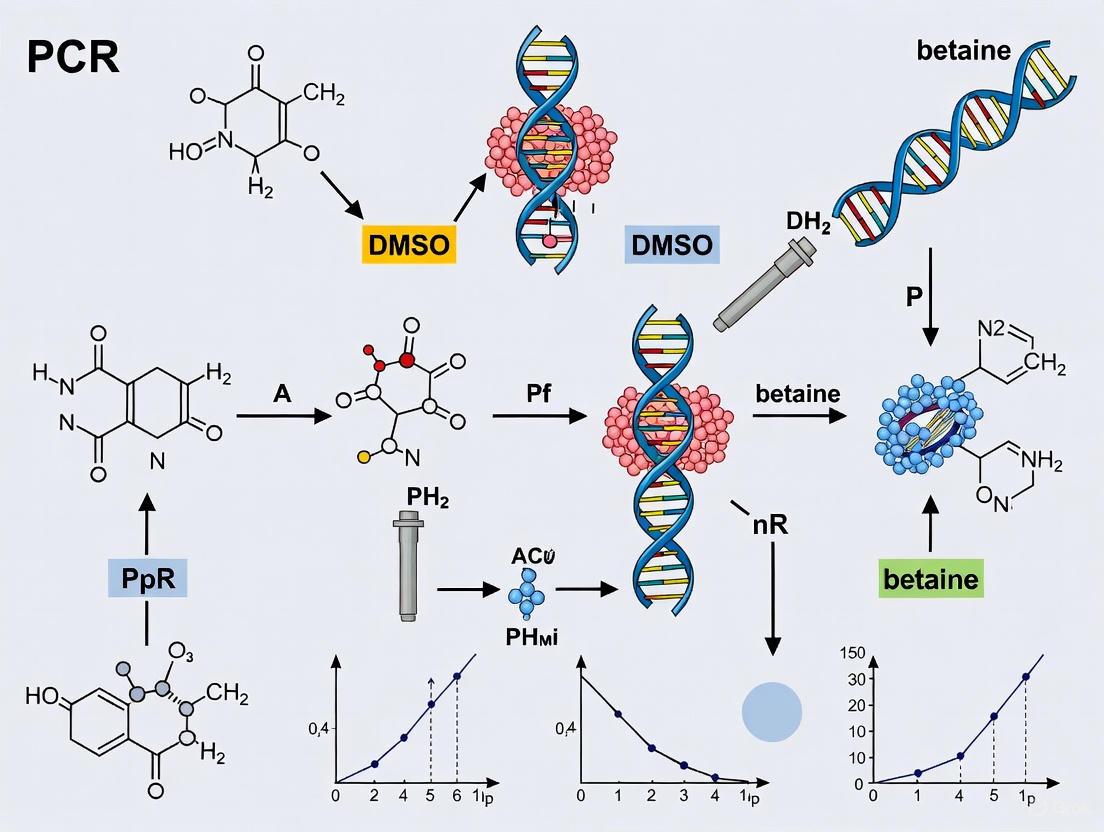
This article provides a comprehensive guide for researchers and drug development professionals on utilizing DMSO and betaine as powerful PCR additives.
PCR Optimization with DMSO and Betaine: A Complete Guide for Amplifying Challenging Targets
Abstract
This article provides a comprehensive guide for researchers and drug development professionals on utilizing DMSO and betaine as powerful PCR additives. It covers the foundational science of how these agents disrupt secondary structures and homogenize DNA melting temperatures, enabling successful amplification of GC-rich and complex templates. Detailed, step-by-step methodologies for incorporation into standard protocols are presented, alongside systematic troubleshooting for common amplification failures. The guide also delivers a critical comparative analysis of additive performance, supported by empirical data, to inform strategic reagent selection. By synthesizing theoretical knowledge with practical application, this resource aims to equip scientists with the tools to reliably amplify previously refractory sequences, thereby advancing molecular diagnostics and biomedical research.
Understanding the Science: How DMSO and Betaine Overcome PCR Barriers
FAQ: Understanding and Troubleshooting GC-Rich PCR
What defines a "GC-rich" sequence and why is it problematic for PCR?
A GC-rich template is a DNA sequence where 60% or more of the bases are guanine (G) or cytosine (C) [1] [2]. While only approximately 3% of the human genome is GC-rich, these regions are frequently found in gene promoters, particularly those of housekeeping and tumor suppressor genes [1].
The primary challenge stems from the three hydrogen bonds that form between G-C base pairs, compared to only two between A-T pairs [1] [2]. This makes GC bonds more thermostable, requiring more energy to break. This inherent stability leads to two major issues:
- Resisted Denaturation: The DNA double strand is harder to separate into single templates for primer annealing [1].
- Secondary Structure Formation: GC-rich single-stranded DNA is highly prone to forming stable, complex secondary structures, such as hairpin loops, which can block polymerase progression and result in truncated products [1] [2] [3].
What are the common symptoms of a failed GC-rich PCR?
When amplifying GC-rich regions, researchers typically encounter one of two outcomes on an agarose gel:
- A blank gel or very faint band, indicating no or poor amplification [1] [2].
- A DNA smear or multiple non-specific bands, suggesting mispriming and the generation of incorrect products [1] [4].
How do DMSO and Betaine help amplify GC-rich sequences?
Dimethyl Sulfoxide (DMSO) acts by reducing the secondary structural stability of DNA. It interacts with water molecules around the DNA strand, disrupting hydrogen bonding and thereby lowering the melting temperature (Tm) of the DNA. This facilitates easier denaturation of the template and separation of secondary structures at a given temperature [5]. However, DMSO can also reduce Taq polymerase activity, so concentration must be optimized [5].
Betaine (also known as trimethylglycine) is an osmoprotectant that is particularly effective for GC-rich PCR. It functions by eliminating the base composition dependence of DNA melting. Betaine equalizes the thermal stability of GC-rich and AT-rich regions, promoting more uniform and complete denaturation of the template. This dramatically reduces the formation of secondary structures that hinder polymerase progression [6] [5]. A 2024 systematic study found that betaine outperformed other enhancers in amplifying GC-rich DNA fragments [6].
The following diagram illustrates the mechanism of these additives:
Troubleshooting Guide: Optimizing Your GC-Rich PCR
Step 1: Optimize Reaction Components and Additives
The core of troubleshooting lies in systematically adjusting your reaction mixture. The table below summarizes key components to optimize.
Table 1: Optimization of PCR Reaction Components for GC-Rich Targets
| Component | Role in PCR | Default/Standard Concentration | GC-Rich Optimization Strategy | Key Considerations |
|---|---|---|---|---|
| Polymerase Choice | Enzyme that synthesizes new DNA strands. | Standard Taq polymerase. | Use polymerases specifically engineered for GC-rich or difficult templates (e.g., NEB Q5, OneTaq, ThermoFisher AccuPrime) [1] [2]. | Many specialized polymerases are supplied with a proprietary GC Enhancer. |
| Mg2+ Concentration | Essential cofactor for polymerase activity and primer binding [1]. | 1.5 - 2.0 mM [1]. | Test a gradient from 1.0 - 4.0 mM in 0.5 mM increments [1]. | Too much leads to non-specific bands; too little causes weak or no yield [1]. |
| DMSO | Additive that destabilizes secondary structures. | Not typically added. | Test 2% to 10% (v/v) [5]. Start with 5% [7]. | Reduces Taq polymerase activity at higher concentrations [5]. |
| Betaine | Additive that promotes uniform DNA melting. | Not typically added. | Use at a final concentration of 0.5 M to 2.5 M [7]. 1 M is a common starting point [6]. | Betaine monohydrate is preferred over hydrochloride to avoid pH shifts [5]. |
| 7-deaza-dGTP | dGTP analog that reduces hydrogen bonding. | Not typically added. | Can be used to partially or fully replace dGTP in the dNTP mix [1] [3]. | May not stain well with ethidium bromide; requires adjusted dNTP ratios [1]. |
Step 2: Refine Thermal Cycling Conditions
The standard "one-size-fits-all" cycling protocols are often insufficient for GC-rich targets. Fine-tuning the temperature and time parameters is crucial.
Table 2: Optimization of Thermal Cycling Conditions for GC-Rich Targets
| Cycling Step | Standard Approach | GC-Rich Optimization Strategy | Rationale |
|---|---|---|---|
| Initial Denaturation | 94-95°C for 2-5 minutes. | Ensure complete denaturation. May be extended for highly structured templates [8]. | Guarantees starting template is fully single-stranded. |
| Denaturation | 94-95°C for 15-30 seconds. | Increase temperature to 98°C or extend time slightly [2] [8]. | Provides more energy to separate the highly stable GC-rich duplexes. |
| Annealing | Temperature 3-5°C below primer Tm; time of 15-60 seconds. | 1. Use a temperature gradient to find the optimal Ta [1].2. Shorten annealing time to 3-10 seconds [4]. | 1. A higher Ta increases specificity.2. Shorter times minimize mispriming at incorrect, partially homologous sites [4]. |
| Extension | 68-72°C for 1 min/kb. | Standard time is often sufficient, but can be optimized. | Polymerases with high processivity can complete synthesis quickly even for long targets. |
| Cycle Number | 25-35 cycles. | May be increased to 40 cycles if input is low [8]. | Compensates for lower efficiency in early cycles. |
The following workflow provides a visual protocol for setting up a troubleshooting experiment to optimize these conditions systematically:
Step 3: Advanced and Alternative Strategies
If the standard optimization steps are unsuccessful, consider these advanced methods:
- Slow-Down PCR: This method involves adding 7-deaza-dGTP and using a specialized cycling protocol with slower temperature ramp rates and an increased number of cycles. The modified nucleotide reduces hydrogen bonding, while the slow ramps allow more time for the polymerase to resolve secondary structures [2].
- Primer Design Re-evaluation: Ensure primers are designed according to best practices for difficult templates: length of 15-30 bases, GC content between 40-60%, and avoiding runs of identical nucleotides or self-complementary sequences, especially at the 3' end [7].
- Novel Reagents - Disruptors: A recent innovative approach involves designing short oligonucleotides, called "disruptors," that are complementary to the template sequences within stable secondary structures. When added to the PCR, they bind and prevent the formation of these structures, significantly improving amplification efficiency where traditional additives like DMSO and betaine may fail [3].
The Scientist's Toolkit: Essential Reagents for GC-Rich PCR
Table 3: Key Research Reagent Solutions for GC-Rich PCR
| Reagent / Solution | Function / Purpose | Example Products |
|---|---|---|
| High-Performance Polymerases | Engineered for high processivity and ability to read through complex secondary structures. | Q5 High-Fidelity DNA Polymerase (NEB), OneTaq DNA Polymerase (NEB), AccuPrime GC-Rich DNA Polymerase (ThermoFisher) [1] [2]. |
| GC Enhancer Buffers | Proprietary buffer mixes that often contain a combination of additives like DMSO, betaine, or other stabilizers to maximize performance. | OneTaq GC Buffer, Q5 High GC Enhancer [1] [9]. |
| PCR Additives | Chemical agents used to destabilize secondary structures (DMSO, Betaine, Glycerol) or increase primer stringency (Formamide, TMAC) [1] [5]. | Molecular biology grade DMSO, Betaine monohydrate [5] [7]. |
| Modified Nucleotides | Nucleotide analogs that reduce hydrogen bonding, thereby lowering the thermal stability of the DNA duplex. | 7-deaza-2'-deoxyguanosine (7-deaza-dGTP) [1] [3]. |
| Hot-Start Polymerases | Enzymes that remain inactive until a high-temperature activation step, preventing non-specific amplification and primer-dimer formation during reaction setup. | Many modern specialized polymerases (e.g., Q5 Hot Start, OneTaq Hot Start) incorporate this technology [8]. |
Dimethyl sulfoxide (DMSO) is a polar aprotic solvent widely utilized in molecular biology to facilitate DNA denaturation and improve the amplification of challenging DNA sequences, particularly those with high GC content. Its ability to disrupt hydrogen bonding between nucleotide bases makes it an invaluable tool for PCR optimization and various nucleic acid applications. This technical support center article explores the mechanistic basis of DMSO-mediated DNA destabilization and provides practical guidance for researchers incorporating this additive into their experimental workflows. Understanding these principles is essential for proper application across various research contexts, including drug development and molecular diagnostics.
Frequently Asked Questions (FAQs)
Q1: What is the molecular mechanism by which DMSO destabilizes DNA structure?
DMSO primarily destabilizes DNA through two interconnected mechanisms: hydrogen bond disruption and alteration of DNA solvation. As a polar aprotic solvent, DMSO molecules compete with nucleotide bases for hydrogen bonding interactions, effectively weakening the complementary base pairing that stabilizes the double helix [10] [11]. This action reduces the energy required to separate DNA strands. Additionally, DMSO affects the solvation shell surrounding DNA molecules, decreasing the hydrophobic effect that drives base stacking and double-helix stability [10]. Research using atomic force microscopy (AFM) has demonstrated that even very low DMSO concentrations (as low as 0.1%) can induce local denaturation bubbles and significantly increase DNA flexibility by reducing the persistence length from approximately 50 nm to 12 nm in 3% DMSO solution [10].
Q2: How does DMSO improve PCR amplification of GC-rich templates?
GC-rich DNA sequences exhibit exceptional stability due to triple hydrogen bonding between guanine and cytosine bases, leading to high melting temperatures and pronounced secondary structure formation that impedes polymerase progression [12] [13]. DMSO improves amplification of these challenging templates by interfering with hydrogen bond formation, thereby effectively lowering the melting temperature (Tm) and reducing secondary structure stability [14] [15]. This results in more efficient strand separation during the denaturation step and improved primer annealing. Studies have demonstrated that DMSO concentrations between 2-10% significantly enhance amplification efficiency and specificity for GC-rich targets, though optimal concentrations must be determined empirically as excessive DMSO can inhibit polymerase activity [12] [15].
Q3: What are the key considerations when using DMSO with DNA polymerases?
While DMSO benefits PCR amplification of difficult templates, it can inhibit polymerase activity at elevated concentrations. Most DNA polymerases tolerate DMSO concentrations up to 3-5% without significant activity reduction, but higher concentrations (typically >10%) can substantially decrease amplification efficiency [16]. The degree of inhibition varies between polymerase enzymes, with some specialized high-fidelity polymerases exhibiting greater sensitivity. When implementing DMSO in a new protocol, researchers should empirically test a concentration series between 2-10% to identify the optimal balance between template destabilization and polymerase activity [15]. Additionally, DMSO concentration affects primer annealing temperatures, potentially necessitating adjustment of thermal cycling parameters.
Q4: Can DMSO be combined with other PCR additives for enhanced effects?
Yes, DMSO is frequently combined with other additives to achieve synergistic improvements in PCR amplification, particularly for challenging templates. The most common combination includes DMSO with betaine (also known as N,N,N-trimethylglycine), which acts as a isostabilizer that equalizes the contribution of GC and AT base pairs to DNA stability [12] [13]. This combination has proven highly effective for amplifying extremely GC-rich sequences (>80% GC content). For particularly recalcitrant templates, researchers have successfully employed ternary mixtures containing DMSO, betaine, and 7-deaza-dGTP, which incorporates into nascent DNA strands and further reduces stability by impairing Hoogsteen bond formation [12]. When combining additives, careful empirical optimization is essential as interactions between components may affect overall reaction efficiency.
Troubleshooting Guides
Common Issues and Solutions with DMSO in DNA Applications
Problem: Inadequate DNA Denaturation or Amplification
- Potential Cause: Suboptimal DMSO concentration
- Potential Cause: Inhibition of DNA polymerase activity
- Solution: Reduce DMSO concentration or switch to a polymerase known to be more tolerant of organic solvents. Verify polymerase activity with control reactions [16].
- Potential Cause: Inadequate optimization of thermal cycling parameters
- Solution: Adjust denaturation temperature and duration, and consider implementing a touchdown or multi-step annealing protocol to improve specificity [7].
Problem: Excessive Non-specific Amplification
- Potential Cause: Overly high DMSO concentration reducing reaction stringency
- Potential Cause: Inadequate magnesium concentration optimization
- Solution: Titrate Mg2+ concentration (typically 1.0-4.0 mM) as DMSO can affect free magnesium availability, which is crucial for polymerase activity and fidelity [15].
Problem: Reduced PCR Product Yield
- Potential Cause: Excessive DMSO inhibiting polymerase activity
- Solution: Reduce DMSO concentration to 3-5% range and consider using a master mix formulation to ensure reagent consistency [16].
- Potential Cause: Suboptimal primer design or concentration
- Solution: Verify primer specificity, avoid self-complementarity, and ensure appropriate melting temperatures (typically 52-65°C). Consider using primer design software and validate with control amplifications [7].
Quantitative Effects of DMSO on DNA Properties
Table 1: Experimentally Measured Effects of DMSO on DNA Conformation and Stability
| DMSO Concentration | DNA Persistence Length | Effect on Melting Temperature (Tm) | Observed Structural Changes |
|---|---|---|---|
| 0% | ~50 nm | Baseline | Standard B-form DNA conformation [10] |
| 0.1% | - | Slight decrease | Local denaturation bubbles observed via AFM [10] |
| 3% | ~12 nm | Moderate decrease | Significant flexibility increase; superhelix formation in plasmids [10] |
| 5-10% | - | Significant decrease | Enhanced strand separation; improved GC-rich template amplification [14] [12] |
| >10% | - | Pronounced decrease | Potential polymerase inhibition; requires optimization [16] |
Table 2: Optimized DMSO Concentrations for Specific Applications
| Application | Recommended DMSO Concentration | Typical Reaction Conditions | Expected Outcome |
|---|---|---|---|
| Standard PCR | 0-3% | Standard buffer, 1.5 mM Mg2+ | Moderate improvement in specificity and yield [7] |
| GC-rich PCR | 5-10% | Often combined with betaine (0.5-1.5 M) | Significant improvement in amplification efficiency [12] [13] |
| cDNA synthesis | 5% | Reverse transcription with oligo(dT) or random hexamers | Improved reverse transcription through secondary structures [13] |
| DNA denaturation studies | 10-20% | Low ionic strength buffers, room temperature | Controlled DNA denaturation for structural studies [10] |
Experimental Protocols
Protocol 1: Systematic Optimization of DMSO Concentration for GC-Rich PCR
This protocol provides a methodological framework for empirically determining the optimal DMSO concentration for amplifying GC-rich DNA sequences.
Materials Required:
- Template DNA (GC-rich target)
- Forward and reverse primers specific to target sequence
- Standard PCR reagents: DNA polymerase, corresponding buffer, dNTPs, MgCl2
- Molecular biology grade DMSO
- Sterile PCR tubes and pipette tips
- Thermal cycler
- Agarose gel electrophoresis equipment
Methodology:
- Prepare a master mixture containing all standard PCR components except DMSO and template DNA according to manufacturer's recommendations.
- Aliquot the master mixture into 8 separate PCR tubes.
- Add DMSO to each tube to create a concentration series: 0%, 2%, 4%, 5%, 6%, 8%, and 10% (v/v).
- Add template DNA to each tube and mix thoroughly by pipetting.
- Perform PCR amplification using the following cycling parameters:
- Initial denaturation: 95°C for 3 minutes
- 35 cycles of:
- Denaturation: 95°C for 30 seconds
- Annealing: Temperature gradient or calculated Tm for primers
- Extension: 72°C for 1 minute per kb
- Final extension: 72°C for 5 minutes
- Analyze PCR products by agarose gel electrophoresis to determine which DMSO concentration yields the strongest specific amplification with minimal non-specific products.
- For further refinement, perform a secondary optimization using a narrower DMSO concentration range based on initial results.
Expected Outcomes: Researchers should observe a concentration-dependent improvement in target amplification, with an optimal range typically between 3-8% DMSO for most GC-rich templates. Excessive DMSO (>10%) typically results in reduced yield due to polymerase inhibition [12] [16].
Protocol 2: Combined DMSO and Betaine Treatment for Challenging Templates
This protocol describes a robust method for amplifying extremely GC-rich sequences (>80% GC) using synergistic DMSO and betaine additives.
Materials Required:
- Template DNA with very high GC content
- Target-specific primers
- PCR reagents: DNA polymerase, buffer, dNTPs, MgCl2
- DMSO and betaine monohydrate
- Sterile PCR tubes and pipettes
- Thermal cycler
Methodology:
- Prepare a reaction mixture containing:
- 1X PCR buffer
- 200 μM dNTPs
- 1.5-2.5 mM MgCl₂
- 20-50 pmol each primer
- 1-100 ng template DNA
- 1.0 M betaine
- 5% DMSO (v/v)
- 0.5-2.5 units DNA polymerase
- Nuclease-free water to 50 μL final volume
- Conduct thermal cycling with an extended denaturation step:
- Initial denaturation: 98°C for 30 seconds
- 35-40 cycles of:
- Denaturation: 98°C for 10-15 seconds
- Annealing: 65-72°C for 30 seconds (optimize based on primer Tm)
- Extension: 72°C for 1-2 minutes per kb
- Final extension: 72°C for 5-10 minutes
- Analyze results by agarose gel electrophoresis and sequence verified products to ensure fidelity.
Technical Notes: This combination approach has proven particularly effective for amplifying promoter regions and other extreme GC-rich sequences that prove refractory to standard PCR conditions [12]. The protocol may be further enhanced by incorporating 7-deaza-dGTP (50 μM) for the most challenging templates [12].
Research Reagent Solutions
Table 3: Essential Reagents for DMSO-Mediated DNA Destabilization Studies
| Reagent | Function | Application Notes |
|---|---|---|
| DMSO (Molecular Biology Grade) | Disrupts hydrogen bonding, reduces DNA melting temperature | Use high-purity, sterile-filtered DMSO; aliquot to prevent repeated freeze-thaw cycles [10] [12] |
| Betaine (Betaine Monohydrate) | Equalizes base-pair stability, reduces secondary structure | Use 1.0-1.7 M final concentration; do not use betaine HCl [12] [15] |
| 7-deaza-dGTP | Analog that impairs Hoogsteen bond formation | Use at 50 μM concentration; typically combined with standard dNTPs [12] |
| High-Fidelity DNA Polymerase | Amplification with proofreading capability | Essential for cloning applications; some show varying DMSO tolerance [13] |
| MgCl₂/MgSO₄ Solution | Cofactor for DNA polymerase activity | Concentration requires optimization when additives are used; typically 1.5-4.0 mM [7] |
| BSA (Bovine Serum Albumin) | Stabilizes polymerase, neutralizes inhibitors | Use 0.1-0.8 mg/mL; particularly useful with potentially inhibitory samples [15] |
Mechanism and Workflow Diagrams
Figure 1: Molecular Mechanism of DMSO-Mediated DNA Destabilization. DMSO acts through hydrogen bond disruption and solvation shell alteration, leading to increased DNA flexibility, reduced melting temperature, and local denaturation, ultimately improving PCR efficiency.
Figure 2: Systematic Workflow for Troubleshooting PCR with DMSO Additives. This decision tree guides researchers through a stepwise approach to address amplification issues, beginning with DMSO optimization and progressing to combination strategies for challenging templates.
Betaine (also known as glycine betaine or N,N,N-trimethylglycine) is a zwitterionic molecule that functions as a powerful isostabilizing agent in molecular biology. Its unique property lies in its ability to eliminate the base pair composition dependence of DNA thermal melting transitions, making GC-rich and AT-rich regions of nearly equal stability during thermal denaturation [17]. This isostabilizing effect occurs at approximately 5.2 M concentration, where adenine-thymine (AT) and guanine-cytosine (GC) base pairs become equally stable [17]. Unlike traditional salts that achieve isostabilization through electrostatic effects, betaine exists as a zwitterion near neutral pH and exerts its effect without significantly altering the B-form conformation of double-stranded DNA or dramatically changing DNA's behavior as a polyelectrolyte [17]. This unique property has made betaine an invaluable tool in PCR optimization, particularly for amplifying GC-rich templates that pose significant challenges in molecular diagnostics and basic bioscience research.
Mechanism of Action: How Betaine Eliminates Base Pair Dependence
Thermodynamic Principles of Isostabilization
Betaine achieves isostabilization through a unique mechanism that differs fundamentally from traditional salts. The molecule preferentially destabilizes GC-rich DNA duplexes to a greater extent than AT-rich sequences by interacting more favorably with the surface area exposed during the denaturation of GC-rich structures [18]. Research quantifying the temperature dependence of glycine betaine interactions with RNA dodecamer duplexes of varying GC content (17-100%) revealed that betaine accumulation at the nucleic acid surface area exposed during unfolding is strongly temperature-dependent and displays characteristic entropy-enthalpy compensation [18].
The key thermodynamic parameter that quantifies this interaction is the m-value, which represents the interaction potential of betaine with the solvent accessible surface area exposed during nucleic acid denaturation. Negative m-values indicate favorable thermodynamic interactions of betaine with this exposed surface area, resulting in destabilization of the folded nucleic acid structure [18]. Betaine's m-values show strong temperature dependence, with the entropic contribution being more sensitive to temperature changes than the enthalpic contribution. Since GC-rich duplexes have higher transition temperatures than AT-rich duplexes, this temperature dependence explains why betaine destabilizes higher GC content duplexes to a greater extent at their melting temperatures [18].
Table 1: Thermodynamic Parameters of Betaine Interaction with Nucleic Acids of Varying GC Content
| GC Content | Transition Temperature (°C) | Δμ23,4/RT (m⁻¹) | m-value (kcal mol⁻¹ m⁻¹) |
|---|---|---|---|
| 17% | 27.3 | -0.315 ± 0.029 | -0.188 ± 0.017 |
| 25% | 34.8 | -0.398 ± 0.044 | -0.244 ± 0.027 |
| 33% | 45.5 | -0.598 ± 0.027 | -0.378 ± 0.017 |
| 50% | 52.0 | -0.811 ± 0.032 | -0.524 ± 0.020 |
| 67% | 59.6 | -0.948 ± 0.037 | -0.627 ± 0.024 |
| 100% | 80.9 | -1.44 ± 0.03 | -1.010 ± 0.023 |
Molecular Interactions with DNA Structure
At the molecular level, betaine improves PCR amplification efficiency by reducing the formation of DNA secondary structures. The molecule interacts with negatively charged groups on the DNA strand, reducing electrostatic repulsion between DNA strands and consequently decreasing the formation of stable secondary structures [19]. This effect makes DNA strands more accessible for primer binding and polymerase extension during PCR reactions. Additionally, betaine increases PCR specificity by eliminating the dependence on base pair composition when DNA is denatured, which is particularly beneficial for amplifying GC-rich DNA sequences [19].
Unlike denaturants like DMSO that work primarily by reducing DNA melting temperature through disruption of hydrogen bonding, betaine's zwitterionic nature allows it to interact with both polar and nonpolar regions of the DNA molecule without dramatically altering the overall electrostatic environment [17]. This property enables researchers to experimentally separate compositional and polyelectrolyte effects on DNA melting, providing a valuable tool for investigating DNA-protein interactions under isostabilizing conditions [17].
Technical Support Center: Troubleshooting Guides and FAQs
Frequently Asked Questions
Q1: At what concentration does betaine achieve optimal isostabilization? Betaine exerts its isostabilizing effect at approximately 5.2 M concentration, where AT and GC base pairs become equally stable [17]. For practical PCR applications, most protocols use concentrations between 0.5 M and 2.5 M, with 1.0 M being a common starting point for optimization [6] [7].
Q2: How does betaine compare to DMSO as a PCR enhancer? While both are used to amplify GC-rich templates, betaine outperforms DMSO in several key aspects. Betaine shows superior performance in amplification of GC-rich DNA fragments, provides better thermostabilization of Taq DNA polymerase, and offers enhanced tolerance to PCR inhibitors [6]. DMSO primarily works by reducing the secondary structural stability of DNA and lowering the melting temperature, but it also reduces Taq polymerase activity, requiring careful balance in concentration [19].
Q3: Can betaine be combined with other PCR enhancers? Yes, combination approaches often yield better results than single additives. Research has shown that 0.5 M betaine combined with 0.2 M sucrose, or 1 M betaine with 0.1 M sucrose, can effectively promote amplification of GC-rich regions while minimizing negative effects on normal fragments [6]. These combinations maintain the benefits of betaine while reducing potential inhibitory effects at high concentrations.
Q4: Why does betaine sometimes inhibit PCR amplification? At high concentrations, betaine can decrease PCR efficiency and may negatively influence the reaction [6]. This typically occurs when the concentration exceeds the optimal range for a specific template and polymerase combination. Additionally, betaine hydrochloride should be avoided as it may affect the pH of the PCR reaction and thus enzyme activity; instead, betaine or betaine monohydrate should be used [19].
Q5: Does betaine work with all DNA polymerases? Betaine is compatible with a wide range of DNA polymerases, including standard Taq polymerases and high-fidelity enzymes. However, optimal concentrations may vary depending on the specific polymerase and buffer system. Some studies have successfully used betaine with specialized polymerase blends like AccuPrime Taq HiFi to further improve amplification of difficult templates [20].
Troubleshooting Common Experimental Issues
Problem: Incomplete Amplification of GC-Rich Targets Symptoms: No bands or faint bands on agarose gels for GC-rich templates (>65% GC content) while moderate GC templates amplify efficiently.
- Solution 1: Optimize betaine concentration between 0.5-2.5 M using a gradient PCR approach [7]. Start with 1.0 M as a baseline.
- Solution 2: Combine 1 M betaine with 0.1-0.2 M sucrose for enhanced efficacy [6].
- Solution 3: Extend denaturation time to 60-80 seconds per cycle and ensure complete denaturation by verifying thermocycler calibration [20].
- Solution 4: Increase enzyme concentration 1.5-2× and supplement with additional dNTPs to overcome polymerase stalling [21].
Problem: Non-specific Amplification or Primer-Dimer Formation Symptoms: Multiple bands or smearing on agarose gels, particularly with complex templates.
- Solution 1: Combine betaine (0.5-1.0 M) with hot-start polymerase to prevent non-specific initiation during reaction setup [22].
- Solution 2: Increase annealing temperature by 2-5°C incrementally while maintaining betaine concentration.
- Solution 3: Optimize magnesium concentration (1.0-4.0 mM) as betaine may alter magnesium requirements [7].
- Solution 4: Redesign primers with stricter attention to secondary structures and 3'-end complementarity [7].
Problem: Inconsistent Results Between Different Thermocyclers Symptoms: Same reaction mixture yields different amplification efficiency on different instruments.
- Solution 1: Standardize denaturation time to 60-80 seconds regardless of thermocycler brand, as ramp rates significantly affect betaine efficacy [20].
- Solution 2: Use a initial prolonged denaturation step of 3-5 minutes instead of the standard 30 seconds [20].
- Solution 3: Calibrate block temperature and verify well-to-well uniformity, especially when using high betaine concentrations.
Problem: Reduced Amplification Efficiency of Moderate GC Templates Symptoms: Normal templates that previously amplified well show reduced yield after adding betaine.
- Solution 1: Titrate betaine concentration downward (0.1-0.5 M) as high concentrations may inhibit amplification of non-GC-rich templates [6].
- Solution 2: Use combination approaches with lower betaine concentrations (0.5 M) supplemented with sucrose (0.2 M) [6].
- Solution 3: Verify that betaine monohydrate is used instead of betaine hydrochloride, which can alter pH [19].
Table 2: Troubleshooting Guide for Betaine-Modified PCR
| Problem | Possible Causes | Solutions | Preventive Measures |
|---|---|---|---|
| No amplification of GC-rich targets | Overly stable secondary structures; insufficient denaturation | Increase betaine to 1-1.7 M; extend denaturation time to 60-80 s/cycle; use polymerase blends | Pre-test template secondary structure with prediction tools; use touchdown PCR protocols |
| Non-specific amplification | Reduced stringency; primer-dimer formation | Implement hot-start protocol; increase annealing temperature; optimize Mg²⁺ concentration | Check primer design for self-complementarity; use primer design software with betaine adjustment |
| Inconsistent results between runs | Thermocycler ramp rate variations; concentration inaccuracies | Standardize denaturation times; use master mixes; verify betaine stock concentration | Calibrate instruments regularly; create single-use aliquots of betaine stock solutions |
| Reduced yield in mixed templates | Differential effects on varying GC content | Use combination additives (betaine + sucrose); titrate concentration (0.1-0.5 M) | Segment amplification by GC content or use multiple parallel reactions with different conditions |
| Inhibition of polymerase | Betaine hydrochloride altering pH; excessive concentration | Use betaine monohydrate; reduce concentration; add BSA (10-100 μg/ml) | Always use betaine or betaine monohydrate, not hydrochloride derivatives; include positive controls |
Experimental Protocols and Methodologies
Standard Protocol for Betaine-Enhanced PCR
This protocol provides a foundation for amplifying GC-rich templates using betaine as an isostabilizing agent. The example is optimized for a 50 μl reaction volume targeting nicotinic acetylcholine receptor subunits with GC contents around 60-65% [21].
Reagents and Materials:
- Template DNA (10-100 ng genomic DNA or 1-10 ng plasmid)
- Forward and reverse primers (20 μM each in sterile TE buffer)
- 10× PCR buffer (supplied with polymerase)
- dNTP mix (10 mM each)
- Betaine solution (5 M stock, prepared from betaine monohydrate)
- Magnesium chloride (25 mM stock, if not in buffer)
- DNA polymerase (e.g., Taq, Q5, or specialized high-GC polymerase)
- Sterile molecular biology grade water
Reaction Setup:
- Prepare a master mix on ice with the following components per 50 μl reaction:
- 5.0 μl 10× PCR buffer
- 1.0 μl dNTP mix (10 mM each)
- 2.5-4.0 μl MgCl₂ (25 mM) - optimize concentration
- 10.0 μl 5 M betaine stock (1.0 M final)
- 1.0 μl forward primer (20 μM)
- 1.0 μl reverse primer (20 μM)
- 0.5-1.0 μl DNA polymerase (1.25-2.5 units)
- X μl template DNA
- Sterile water to 50 μl total volume
Mix gently by pipetting 20 times to ensure complete dispersal of betaine.
If using a hot-start polymerase, activate according to manufacturer's instructions.
Program thermocycler with the following parameters:
- Initial denaturation: 95°C for 3-5 minutes
- 30-35 cycles of:
- Denaturation: 95°C for 60-80 seconds
- Annealing: Temperature optimized for primers +3-5°C (due to betaine effect) for 30 seconds
- Extension: 72°C for 1 minute per kb
- Final extension: 72°C for 5-10 minutes
- Hold at 4°C
Analyze 5-10 μl of PCR product by agarose gel electrophoresis.
Critical Notes:
- Always use betaine or betaine monohydrate, not betaine hydrochloride [19].
- The increased denaturation time is crucial for GC-rich templates [20].
- Annealing temperature may need adjustment as betaine can affect primer binding efficiency.
- For templates >70% GC content, consider increasing betaine to 1.5-2.0 M final concentration.
Advanced Protocol for Extremely GC-Rich Targets
For extremely challenging templates such as the inverted terminal repeat (ITR) sequences of adeno-associated virus (AAV) with GC content >80% and stable secondary structures, a more aggressive approach is necessary [3].
Modified Reaction Composition:
- 1× high GC PCR buffer
- 1.5-2.0 M betaine final concentration
- 5% DMSO (note: combination with betaine requires careful optimization)
- 200 μM each dNTP
- 5% glycerol
- 2.5 mM MgCl₂ (optimize between 1.5-4.0 mM)
- 0.5 μM each primer
- 2.5 U/50 μl of specialized polymerase blend (e.g., Taq/Pfu mix)
- Template DNA (increase to 100-500 ng if complex background)
Enhanced Cycling Parameters:
- Initial denaturation: 98°C for 2 minutes
- 5 cycles of:
- 98°C for 60 seconds
- 70°C for 60 seconds (note: high annealing temperature)
- 72°C for 2 minutes
- 5 cycles of:
- 98°C for 60 seconds
- 65°C for 60 seconds
- 72°C for 2 minutes
- 25-30 cycles of:
- 98°C for 60 seconds
- 60°C for 60 seconds
- 72°C for 2 minutes
- Final extension: 72°C for 10 minutes
Alternative Approach for Intractable Templates: For templates that remain unamplifiable despite optimized betaine conditions, consider "disruptor" oligonucleotides - specially designed oligonucleotides complementary to template sequences that overlap stable secondary structures. These disruptors can be added to the PCR reaction at 0.1-0.5 μM final concentration to prevent formation of inhibitory secondary structures [3].
Protocol for Library Preparation for Next-Generation Sequencing
Betaine has proven particularly valuable in reducing amplification bias during Illumina library preparation, where GC-rich regions are typically underrepresented [20].
Modified Library Amplification Protocol:
- Prepare ligated library according to standard Illumina protocol
- Set up amplification reactions as follows:
- 1× Phusion HF buffer or alternative
- 200 μM each dNTP
- 0.5 μM each Illumina indexing primer
- 2 M betaine
- 1 U/50 μl Phusion or alternative polymerase
- 10-100 ng ligated library
- Use the following thermocycling conditions:
- Initial denaturation: 98°C for 3 minutes
- 10-12 cycles of:
- Denaturation: 98°C for 60 seconds
- Annealing: 65°C for 30 seconds
- Extension: 72°C for 60 seconds
- Final extension: 72°C for 10 minutes
- Purify amplified library using SPRI beads or equivalent
Key Improvement: This protocol significantly reduces the under-representation of GC-rich loci that plagues standard Illumina library preparations. The extended denaturation time combined with betaine ensures more uniform amplification across the entire GC spectrum [20].
Research Reagent Solutions
Table 3: Essential Reagents for Betaine-Based PCR Optimization
| Reagent | Function | Recommended Concentration | Notes |
|---|---|---|---|
| Betaine (N,N,N-trimethylglycine) | Primary isostabilizing agent; reduces base composition dependence | 0.5-2.5 M (optimal ~1.0 M) | Use betaine monohydrate, not hydrochloride form [19] |
| DMSO (Dimethyl sulfoxide) | Secondary structure destabilizer; lowers DNA melting temperature | 2-10% (v/v) | Reduces Taq polymerase activity; use judiciously [19] |
| 7-deaza-dGTP | dGTP analog that reduces hydrogen bonding in GC pairs | 150-200 μM (partial or complete dGTP replacement) | Helps amplify extremely GC-rich regions; requires optimization [3] |
| BSA (Bovine Serum Albumin) | Stabilizes polymerase; binds inhibitors | 10-100 μg/ml | Particularly useful with contaminated templates [7] |
| Magnesium Chloride | Cofactor for DNA polymerase; affects specificity | 1.0-4.0 mM (optimize for each template) | Requirement may shift with betaine concentration [7] |
| Specialized Polymerase Blends | Enhanced processivity through GC-rich regions | As manufacturer recommends | Mixtures of polymerases often outperform single enzymes |
| Sucrose/Trehalose | Compatible solutes that stabilize enzymes | 0.1-0.4 M | Can be combined with betaine for synergistic effect [6] |
| "Disruptor" Oligonucleotides | Competes with intramolecular secondary structures | 0.1-0.5 μM | Designed to overlap stable secondary structures [3] |
Advanced Applications and Future Directions
The isostabilizing properties of betaine extend beyond conventional PCR to numerous molecular biology applications where base composition equality is desirable. In next-generation sequencing library preparation, betaine significantly reduces GC bias, leading to more uniform genome coverage [20]. This is particularly important for clinical applications where comprehensive coverage of all genomic regions is critical, such as in cancer genomics where important regulatory genes often reside in GC-rich regions.
Betaine also facilitates DNA-protein interaction studies under isostabilizing conditions, which was not previously possible with traditional isostabilizing salts [17]. This application allows researchers to investigate protein-DNA binding without the confounding effects of base composition preferences, providing clearer insights into sequence-specific recognition patterns.
Emerging research continues to expand betaine's utility. Recent studies have optimized multipronged approaches involving various organic molecules, DNA polymerases, PCR conditions, and primer adjustments to overcome the challenges of amplifying GC-rich sequences [21]. The combination of betaine with novel techniques like "disruptor" oligonucleotides represents a promising frontier for dealing with the most challenging templates, including those with stable intramolecular secondary structures that have previously resisted amplification [3].
As molecular diagnostics continues to advance toward more complex multiplexed assays, such as the color cycle multiplex amplification (CCMA) approach that significantly increases detectable DNA targets in a single qPCR reaction [23], the role of isostabilizing agents like betaine becomes increasingly important. These advanced applications require consistent amplification efficiency across diverse sequences, a challenge that betaine is uniquely positioned to address through its base composition-equalizing properties.
In molecular biology, the amplification of difficult DNA templates, particularly those with high guanine-cytosine (GC) content, presents a significant technical challenge. These templates tend to form stable secondary structures that can impede polymerase progression and lead to reaction failure, nonspecific amplification, or poor yield [24] [12]. While individual additives like dimethyl sulfoxide (DMSO) and betaine have long been recognized for their ability to improve amplification efficiency, emerging evidence demonstrates that their combined use can produce synergistic effects that surpass what any single additive can achieve [25] [12]. This technical resource explores these synergistic combinations within the context of polymerase chain reaction (PCR) optimization, providing researchers with practical guidance, experimental protocols, and troubleshooting advice to enhance their amplification workflows.
The fundamental challenge with GC-rich sequences (typically >60% GC content) lies in their propensity for intramolecular secondary structure formation and mispriming due to high melting temperatures (Tm) [24] [26]. DMSO facilitates strand separation by disrupting inter- and intrastrand reannealing, while betaine, an amino acid analog, acts as an isostabilizing agent that equilibrates the differential Tm between AT and GC base pairings [24]. When used in combination, these additives address complementary aspects of the amplification challenge, often yielding remarkable improvements in specificity and product yield that enable successful amplification of previously refractory templates [12].
Quantitative Comparison of Additive Combinations
Performance of Individual Additives Versus Combinations
Table 1: Comparative Efficacy of Individual Additives and Combinations in GC-Rich Amplification
| Additive Combination | GC Content Amplified | Key Improvements Observed | Reported Concentrations |
|---|---|---|---|
| Betaine + DMSO + 7-deaza-dGTP | 67-79% [12] | Specific amplification achieved where individual additives failed [12] | 1.3 M betaine, 5% DMSO, 50 μM 7-deaza-dGTP [12] |
| Betaine + DMSO | Various GC-rich constructs [24] | Improved target product specificity and yield during PCR amplification [24] | Concentration-dependent optimization recommended |
| DMSO + Glycerol | EGFR promoter SNPs [25] | Clear, specific bands with minimal background [25] | 7% DMSO + 10% glycerol [25] |
| Betaine alone | GC-rich sequences [24] | Reduced nonspecific background but insufficient for specific amplification [12] | 1.3 M [12] |
| DMSO alone | GC-rich sequences [24] | Some reduction in nonspecific bands but limited specific product [12] | 3-10% [25] [27] |
Table 2: Additive Combinations for Specific Amplification Challenges
| Application Challenge | Recommended Combination | Optimal Concentration Ranges | Mechanism of Action |
|---|---|---|---|
| Extremely high GC content (>75%) | Betaine + DMSO + 7-deaza-dGTP [12] | 1-1.3 M betaine, 3-5% DMSO, 50 μM 7-deaza-dGTP [12] | Betaine equilibrates Tm, DMSO disrupts secondary structures, 7-deaza-dGTP reduces hairpin formation [12] |
| Standard GC-rich amplification | Betaine + DMSO [24] | 0.5-2 M betaine, 1-10% DMSO [24] [28] | Combined isostabilizing and secondary structure disruption [24] |
| Direct PCR with ski-slope effect | DMSO alone [27] | 3.75% DMSO [27] | Preferential enhancement of large-sized amplicon amplification [27] |
| SNP detection in GC-rich promoters | DMSO + Glycerol [25] | 7% DMSO + 10% glycerol [25] | Improved specificity for single nucleotide polymorphism discrimination [25] |
Experimental Protocols for Combination Additives
Protocol 1: Triple Additive Combination for Extreme GC-Rich Templates
This protocol is adapted from methods successfully used to amplify DNA sequences with GC content ranging from 67% to 79%, where standard amplification had previously failed [12].
Reaction Setup:
- Prepare a 25 μL reaction mixture containing:
- 1× manufacturer's PCR buffer
- 2-2.5 mM MgCl₂ (concentration may require optimization)
- 200 μM each dNTP (with partial substitution of 7-deaza-dGTP where applicable)
- 10-20 pmol of each primer
- 100 ng genomic DNA or equivalent template
- 1.3 M betaine (Sigma-Aldrich)
- 5% DMSO (Sigma-Aldrich)
- 50 μM 7-deaza-dGTP (Roche Diagnostics) - can be used to replace portion of dGTP
- 1.25 units of Taq DNA polymerase
Thermal Cycling Conditions:
- Initial denaturation: 94°C for 3-5 minutes
- 25-40 cycles of:
- Denaturation: 94°C for 10-30 seconds
- Annealing: 60°C for 30 seconds (optimize based on primer Tm)
- Extension: 72°C for 45-60 seconds per kb
- Final extension: 72°C for 5-10 minutes
- Hold at 4°C
Critical Notes:
- This combination was essential for specific amplification of the RET promoter region (79% GC), LMX1B gene region (67.8% GC), and PHOX2B exon 3 (72.7% GC) [12].
- Betaine alone dramatically reduced nonspecific background but was insufficient for specific amplification [12].
- The combination of all three additives produced unique specific PCR products where other combinations failed [12].
Protocol 2: Standard Betaine and DMSO Combination
For general GC-rich amplification challenges, this two-additive combination often provides significant improvement without the need for modified nucleotides [24] [25].
Reaction Setup:
- Prepare a 50 μL reaction mixture containing:
- 1× High Fidelity PCR buffer
- 1.5-2.5 mM MgCl₂
- 200 μM each dNTP
- 20-50 pmol of each primer
- Template DNA (104-107 molecules)
- 1-2 M betaine
- 3-5% DMSO
- 0.5-2.5 units DNA polymerase
Thermal Cycling Conditions:
- Initial denaturation: 94°C for 5 minutes
- 25-35 cycles of:
- Denaturation: 94°C for 15-30 seconds
- Annealing: 55-60°C for 30 seconds (optimize based on primer Tm)
- Extension: 68°C for 60 seconds per kb
- Final extension: 68°C for 5-10 minutes
- Hold at 4°C
Critical Notes:
- This combination greatly improved target product specificity and yield during PCR amplification of GC-rich IGF2R and BRAF gene fragments [24].
- Both additives are highly compatible with all other reaction components and do not require additional protocol modifications [24].
- For templates with exceptionally stable secondary structures, increasing denaturation time to 2-5 minutes may be beneficial [8].
Diagram 1: Additive Combination Selection Workflow. This flowchart guides the selection of appropriate additive combinations based on template characteristics and initial screening results.
Frequently Asked Questions (FAQs)
Q1: Why do DMSO and betaine work better together than individually for GC-rich amplification?
These additives operate through complementary mechanisms. DMSO facilitates strand separation by disrupting hydrogen bonding and preventing secondary structure formation [24]. Betaine acts as an isostabilizing agent that equilibrates the melting temperature difference between AT and GC base pairs, reducing the stability of GC-rich regions without affecting AT-rich regions [24] [12]. When combined, they simultaneously address both secondary structure stability and the fundamental Tm disparity that makes GC-rich templates challenging to amplify [12].
Q2: What is the optimal ratio for DMSO and betaine in a combined additive approach?
Optimal concentrations depend on the specific template and amplification system. Generally, effective ranges are 1-10% for DMSO and 0.5-2 M for betaine [24] [28] [25]. For extremely challenging templates (GC content >75%), a combination of 5% DMSO with 1.3 M betaine has proven effective [12]. We recommend performing a matrix optimization experiment with varying concentrations of both additives to determine the ideal combination for your specific application.
Q3: Are there any negative effects or limitations when using combined additives?
Yes, excessive concentrations can be detrimental. High DMSO concentrations (>10%) can inhibit polymerase activity, while high betaine concentrations may reduce amplification efficiency [28]. Additionally, when using the triple combination with 7-deaza-dGTP, subsequent enzymatic digests or cloning may be affected as some restriction enzymes have reduced activity on DNA containing 7-deaza-dGTP [12]. Always include appropriate controls and consider downstream applications when implementing additive combinations.
Q4: Can I combine more than two additives for particularly challenging templates?
Yes, research has demonstrated that a triple combination of betaine, DMSO, and 7-deaza-dGTP can enable amplification of templates where double combinations fail [12]. This approach was essential for amplifying the RET promoter region with 79% GC content, where neither individual additives nor double combinations produced specific amplification [12]. The 7-deaza-dGTP reduces hairpin formation by disrupting guanine base pairing, providing an additional mechanism to overcome secondary structures.
Q5: How do additive combinations affect polymerase performance and fidelity?
Most modern polymerases tolerate DMSO and betaine well, though excessive concentrations may reduce activity [26] [8]. The proofreading activity of high-fidelity enzymes is generally maintained with these additives. However, when using 7-deaza-dGTP in triple combinations, note that it may affect the error rate of some polymerases [12]. For applications requiring high fidelity, verify sequence accuracy when implementing new additive combinations.
The Scientist's Toolkit: Essential Research Reagents
Table 3: Key Reagents for Implementation of Additive Combinations
| Reagent | Function | Example Suppliers | Storage Conditions |
|---|---|---|---|
| Betaine (Molecular Biology Grade) | Isostabilizing agent that equilibrates Tm differences between GC and AT base pairs [24] [12] | Sigma-Aldrich, Millipore | Room temperature |
| DMSO (Molecular Biology Grade) | Disrupts secondary structure formation and reduces template melting temperature [24] [27] | Sigma-Aldrich, Thermo Fisher | Room temperature, protected from light |
| 7-deaza-dGTP | Analog of dGTP that reduces hydrogen bonding and prevents hairpin formation [12] | Roche Diagnostics, New England Biolabs | -20°C |
| GC-Rich Optimized Polymerase | Specialized enzymes with high processivity for challenging templates [26] [8] | Various manufacturers | -20°C |
| dNTP Set (Molecular Biology Grade) | Building blocks for DNA synthesis | Thermo Fisher, New England Biolabs | -20°C |
Diagram 2: Mechanism of Action for Combined Additives. This diagram illustrates how different additives address specific challenges in GC-rich template amplification.
The strategic combination of PCR additives represents a powerful approach to overcoming one of molecular biology's persistent challenges: the amplification of GC-rich templates. As demonstrated in multiple studies, synergistic combinations of DMSO, betaine, and occasionally 7-deaza-dGTP can enable specific amplification where individual additives fail [24] [25] [12]. These combinations work through complementary mechanisms that address both the secondary structures and fundamental thermodynamic properties that make GC-rich sequences difficult to amplify.
For researchers facing amplification challenges, we recommend beginning with individual additive screening followed by systematic combination testing. The protocols and guidelines provided here offer a foundation for optimization, though specific conditions may require adjustment based on template characteristics and experimental systems. As amplification technologies continue to evolve, particularly in the realm of isothermal methods, the principles of additive synergy will likely find expanded applications in molecular diagnostics and synthetic biology [28].
Practical Protocols: Integrating DMSO and Betaine into Your PCR Workflow
Frequently Asked Questions (FAQs)
Q1: What is the primary mechanism by which DMSO and Betaine enhance PCR amplification? A1: DMSO and betaine are PCR enhancers that address the challenge of amplifying complex templates, such as those with high GC-content or secondary structures. DMSO disrupts hydrogen bonding and interferes with DNA secondary structure formation. Betaine, a methylammonium derivative, acts as a stabilizing osmolyte that equalizes the contribution of GC and AT base pairs by neutralizing differences in melting temperatures (Tm), thus promoting uniform DNA denaturation and primer annealing.
Q2: Can DMSO and Betaine be used together in a single PCR reaction? A2: Yes, DMSO and betaine are frequently used in combination, often with synergistic effects. The combination is particularly powerful for amplifying extremely difficult templates. However, their combined use can sometimes increase the risk of non-specific amplification or inhibit the polymerase if concentrations are not carefully optimized. A standard starting point is 5% DMSO and 1 M betaine.
Q3: What are the potential drawbacks or risks of using these additives? A3:
- DMSO: At high concentrations (>10%), it can significantly inhibit Taq DNA polymerase activity, reduce fidelity, and lower the melting temperature of DNA excessively, leading to reaction failure.
- Betaine: At very high concentrations (>2.5 M), it can also become inhibitory to the polymerase and may precipitate out of solution if stored at low temperatures.
- General: Both additives can affect primer annealing and specificity. Optimization of primer annealing temperature is mandatory when introducing them.
Q4: How should I prepare and store stock solutions of DMSO and Betaine? A4:
- DMSO: Use molecular biology grade, sterile-filtered DMSO. Aliquot and store at room temperature in a tightly sealed container, protected from moisture and light. DMSO is hygroscopic and will absorb water from the atmosphere, which can alter its concentration.
- Betaine: Prepare a 5 M stock solution in nuclease-free water. Filter sterilize and store at -20°C. Avoid repeated freeze-thaw cycles. Betaine solutions can form crystals at low temperatures; warm and vortex thoroughly to redissolve before use.
Troubleshooting Guide
| Problem | Potential Cause | Recommended Solution |
|---|---|---|
| No PCR Product | Additive concentration is too high and inhibits polymerase. | Titrate the additive downward. Perform a gradient PCR with DMSO (2-8%) and/or betaine (0.5-2.0 M). Include a no-additive control. |
| Non-specific Bands/Smearing | Additive concentration is too low, failing to suppress secondary structures, or annealing temperature is too low. | Increase the concentration of DMSO/betaine. Optimize the annealing temperature (often a 2-5°C increase is needed). Use a hot-start polymerase. |
| Weak Band Yield | Suboptimal additive concentration or poor primer design. | Titrate additives. Re-design primers to avoid stable secondary structures and dimers. Increase the number of PCR cycles. |
| Inconsistent Results | Degraded reagents, improper stock solution storage, or pipetting errors with viscous DMSO. | Prepare fresh aliquots of additives and reaction master mix. Use reverse pipetting for DMSO. Ensure betaine stock is fully dissolved and homogeneous. |
Table 1: DMSO and Betaine Concentration Guidelines
| Additive | Recommended Range | Common Starting Point | Primary Effect | Risk of Inhibition |
|---|---|---|---|---|
| DMSO | 2% - 10% | 5% | Disrupts DNA secondary structures | High above 10% |
| Betaine | 0.5 M - 2.5 M | 1.0 M - 1.5 M | Equalizes DNA template Tm, reduces secondary structures | High above 2.5 M |
Table 2: Application-Based Additive Selection
| Template Challenge | Recommended Additive Strategy | Protocol Adjustment |
|---|---|---|
| Moderate GC-content (50-65%) | 2-5% DMSO or 0.5-1 M Betaine | Minimal annealing temperature adjustment. |
| High GC-content (>65%) | 5-10% DMSO and 1-2 M Betaine (combined) | Increase annealing temperature by 2-5°C. |
| Long Amplicons (>5 kb) | 3-5% DMSO | Use a polymerase mix optimized for long-range PCR. |
| Complex Secondary Structure | 1-2 M Betaine with 3-5% DMSO | Combine with a step-down or touchdown PCR protocol. |
Experimental Protocols
Protocol 1: Additive Titration for PCR Optimization
Objective: To empirically determine the optimal concentration of DMSO and/or betaine for a specific PCR assay.
Materials:
- PCR Master Mix (includes buffer, dNTPs, MgCl₂, polymerase)
- Forward and Reverse Primers
- Template DNA
- Molecular Biology Grade DMSO
- 5 M Betaine Stock Solution
- Nuclease-free Water
Method:
- Prepare a master mix containing all PCR components except the additives and template. Aliquot equally into 8 PCR tubes.
- Prepare the additive stocks as per Table 3 below.
- Add the corresponding additive mix to each tube, then add the template DNA. Mix gently and spin down.
- Run the PCR using the following typical cycling conditions:
- Initial Denaturation: 95°C for 3 min
- 35 Cycles: [95°C for 30 sec, Tm+2°C for 30 sec, 72°C for 1 min/kb]
- Final Extension: 72°C for 5 min
- Analyze the results by agarose gel electrophoresis.
Table 3: Additive Setup for Titration Experiment
| Tube | DMSO Final Conc. | Betaine Final Conc. | Volume of 100% DMSO (µL) | Volume of 5M Betaine (µL) | Volume of Nuclease-free H₂O (µL) | Total Additive Volume (for 50µL rxn) |
|---|---|---|---|---|---|---|
| 1 | 0% | 0 M | 0 | 0 | 5.0 | 5.0 |
| 2 | 2% | 0 M | 1.0 | 0 | 4.0 | 5.0 |
| 3 | 5% | 0 M | 2.5 | 0 | 2.5 | 5.0 |
| 4 | 10% | 0 M | 5.0 | 0 | 0.0 | 5.0 |
| 5 | 0% | 1.0 M | 0 | 10.0 | 0.0 | 10.0* |
| 6 | 0% | 2.0 M | 0 | 20.0 | 0.0 | 20.0* |
| 7 | 5% | 1.0 M | 2.5 | 10.0 | 0.0 | 12.5* |
| 8 | 5% | 2.0 M | 2.5 | 20.0 | 0.0 | 22.5* |
Note: For tubes 5-8, the total reaction volume will be >50µL unless the master mix volume is adjusted to compensate. It is critical to maintain final concentrations of all other components.
Pathway and Workflow Diagrams
Title: PCR Additive Selection Workflow
Title: DMSO and Betaine Mechanism of Action
The Scientist's Toolkit
Table 4: Essential Reagents for PCR Optimization with Additives
| Reagent | Function | Key Consideration |
|---|---|---|
| Hot-Start DNA Polymerase | Enzyme that becomes active only at high temperatures, reducing non-specific amplification during reaction setup. | Essential when using additives that can lower effective annealing temperatures. |
| Molecular Grade DMSO | High-purity, sterile DMSO for use in molecular biology. Prevents contamination and ensures consistent performance. | Hygroscopic; store tightly sealed. Use low-retention tips for pipetting. |
| Betaine Monohydrate | Chemical additive that destabilizes DNA secondary structures and homogenizes melting temperatures. | Prepare a 5M stock; may require warming to dissolve/re-dissolve crystals. |
| dNTP Mix | Building blocks (A, T, C, G) for DNA synthesis. | Consistent quality is critical; freeze-thaw cycles can degrade dNTPs. |
| MgCl₂ Solution | Cofactor for DNA polymerase activity. Concentration directly impacts enzyme fidelity and yield. | Often included in buffer; may require separate optimization when using additives. |
| Nuclease-Free Water | Water certified to be free of nucleases that could degrade DNA/RNA templates or primers. | The solvent for all stock solutions and reaction setup. |
Frequently Asked Questions
Q1: Why should I consider adding supplements like DMSO or betaine to my PCR master mix? These additives are particularly beneficial when amplifying challenging DNA templates, such as those that are GC-rich, have complex secondary structures, or are long. They work by altering the DNA melting behavior and increasing the stability of the DNA polymerase, which helps to improve the yield and specificity of your amplification [8] [7] [22].
Q2: What is the mechanism of action for DMSO and betaine?
- DMSO: Acts as a co-solvent that disrupts the base pairing in DNA. This helps to lower the melting temperature (Tm) of the DNA, making it easier to denature templates with strong secondary structures or high GC content [8] [22].
- Betaine: Also known as trimethylglycine, betaine functions by reducing the melting temperature separation within DNA strands. It equalizes the contribution of bases to DNA stability, which helps to prevent the pausing of DNA polymerase and supports the efficient amplification of GC-rich regions [22].
Q3: What are the recommended starting concentrations for these additives? It is crucial to use the lowest effective concentration. Begin with the following ranges and optimize from there [8] [7] [22]:
| Additive | Recommended Final Concentration |
|---|---|
| DMSO | 1% - 10% |
| Betaine | 0.5 M - 2.5 M |
Note: Excessive concentrations of additives can inhibit the DNA polymerase. You may need to increase the amount of polymerase in the reaction if using high concentrations of DMSO or other co-solvents [8].
Q4: I added DMSO to my reaction, but now I see no PCR product. What went wrong? A common issue is that the additive concentration was too high, which can inhibit the DNA polymerase. Re-run the reaction using a titration of the additive (e.g., testing 2%, 5%, and 8% DMSO) to find the optimal concentration. Ensure you are using a hot-start DNA polymerase to prevent non-specific amplification that can compete with your target product [8] [29] [22].
Q5: How do I incorporate these additives into my existing protocol? Prepare a master mix without the additive for all your test reactions. Then, aliquot this master mix and add different volumes of a concentrated stock solution of your additive (e.g., a 100% DMSO stock or a 5M betaine stock) to achieve the desired final concentration. This ensures consistency across your experiments. A detailed workflow is provided in the diagram and protocol below.
Modifying Your Master Mix: A Workflow
The following diagram outlines the logical process for testing and optimizing PCR additives.
Experimental Protocol for Additive Optimization
This protocol provides a detailed methodology for testing the effect of DMSO and betaine on your specific PCR.
1. Preparing Stock and Working Solutions
- DMSO Stock: Use molecular biology grade, 100% DMSO.
- Betaine Stock: Prepare a 5M aqueous solution in sterile, molecular-grade water. Filter sterilize and store at -20°C.
2. Setting Up the Reaction Series
- First, prepare a base master mix for a 50 μL reaction without any additives. Calculate for one extra reaction to account for pipetting error [7].
- 5.0 μL of 10X PCR Buffer
- 1.0 μL of 10 mM dNTP Mix
- 1.5 μL of 25 mM MgCl₂ (if not in buffer) [8] [22]
- 1.0 μL of Forward Primer (20 μM)
- 1.0 μL of Reverse Primer (20 μM)
- 0.5 μL of DNA Polymerase (e.g., Taq, 5 U/μL)
- X μL of Template DNA (e.g., 10 - 100 ng genomic)
- Y μL of Sterile Water to bring the final volume to 45 μL after additive is added.
- Mix the master mix gently by pipetting up and down. Aliquot 45 μL into each PCR tube.
- Add the additive to each tube as per the table below. Include a negative control (no additive) [7].
3. Additive Titration Table The table below shows how to prepare a titration series for a 50 μL final reaction volume.
| Tube | Additive | Stock Concentration | Volume to Add (to 45 μL master mix) | Final Concentration |
|---|---|---|---|---|
| 1 | Control | - | 5.0 μL H₂O | 0% |
| 2 | DMSO | 100% | 0.5 μL | 1% |
| 3 | DMSO | 100% | 1.0 μL | 2% |
| 4 | DMSO | 100% | 2.5 μL | 5% |
| 5 | DMSO | 100% | 5.0 μL | 10% |
| 6 | Betaine | 5 M | 5.0 μL | 0.5 M |
| 7 | Betaine | 5 M | 10.0 μL | 1.0 M |
| 8 | Betaine | 5 M | 15.0 μL | 1.5 M |
| 9 | Betaine | 5 M | 25.0 μL | 2.5 M |
Note: For betaine tubes 6-9, the volume of sterile water (Y μL) in the base master mix must be reduced accordingly to maintain a final 50 μL volume.
4. Thermal Cycling and Analysis
- Run your PCR using standard cycling conditions for your target, preferably with a gradient annealing temperature for simultaneous optimization [8] [7].
- After cycling, analyze 5-10 μL of each reaction on an agarose gel. Compare the yield and specificity of the PCR product in each lane to identify the optimal additive and its concentration [22].
The Scientist's Toolkit: Key Research Reagent Solutions
| Reagent / Material | Function in PCR with Additives |
|---|---|
| Hot-Start DNA Polymerase | A modified enzyme inactive at room temperature prevents non-specific amplification and primer-dimer formation, which is crucial when reaction stringency is altered by additives [29] [22]. |
| Molecular Biology Grade DMSO | A high-purity co-solvent that destabilizes DNA secondary structures by reducing its melting temperature, facilitating the amplification of GC-rich templates [8] [22]. |
| Betaine (Trimethylglycine) | An additive that equalizes the stability of DNA base pairs, reducing the dependence of Tm on GC content and aiding in the uniform amplification of difficult sequences [22]. |
| dNTP Mix | The building blocks (dATP, dCTP, dGTP, dTTP) for new DNA strands. Ensure they are at equimolar concentrations to prevent misincorporation by the polymerase [8] [7]. |
| Magnesium Chloride (MgCl₂) | A essential cofactor for DNA polymerase activity. Its concentration often needs re-optimization when additives are introduced, as they can affect enzyme processivity [8] [22]. |
| Nuclease-Free Water | The solvent for the reaction, guaranteed to be free of contaminants that could degrade DNA or inhibit the polymerase. |
The polymerase chain reaction (PCR) is a foundational technique in molecular biology, but its success is highly dependent on the characteristics of the DNA template used. Genomic DNA, cDNA (complementary DNA synthesized from RNA templates), and synthetic constructs each present unique challenges that demand specialized optimization strategies. Template quality, sequence complexity, and the presence of inhibitors can significantly impact amplification efficiency, specificity, and yield. Researchers often encounter issues such as no amplification, nonspecific products, smearing, or low yield when standard PCR protocols are applied without template-specific modifications.
The inclusion of enhancing agents like DMSO (dimethyl sulfoxide) and betaine can be crucial for overcoming many template-specific challenges, particularly with GC-rich sequences and complex secondary structures. This guide provides targeted troubleshooting advice and optimized protocols to address the distinct requirements of different template types, enabling researchers to achieve reliable and reproducible amplification results across various experimental contexts.
Essential Research Reagent Solutions
The following table catalogues key reagents commonly used in template-specific PCR optimization, along with their primary functions and applications:
Table 1: Key Research Reagents for Template-Specific PCR Optimization
| Reagent | Function | Template Applications |
|---|---|---|
| Hot-Start DNA Polymerase | Reduces nonspecific amplification by requiring heat activation [29] | Universal application; essential for all template types |
| Proofreading DNA Polymerases | Provides high-fidelity amplification with 3'→5' exonuclease activity [30] | Synthetic constructs, cloning, sequencing applications |
| DMSO | Disrupts secondary structures, lowers melting temperature [7] [31] | GC-rich templates, complex genomic regions |
| Betaine | Equalizes base stability, reduces DNA secondary structures [31] | GC-rich templates, high secondary structure |
| dNTPs | Building blocks for DNA synthesis | Universal application; concentration critical for fidelity |
| Mg²⁺ Salts | Essential cofactor for DNA polymerase activity [8] [7] | Universal application; concentration requires optimization |
| BSA | Stabilizes enzymes, binds inhibitors [7] | Crude samples, inhibitor-containing templates |
| GC Enhancer | Commercial formulations for GC-rich targets | Genomic DNA with high GC content |
Template-Specific Optimization Strategies
Genomic DNA Templates
Genomic DNA presents unique challenges including complexity, potential contamination, and variable quality. The following table outlines common issues and template-specific solutions:
Table 2: Troubleshooting PCR with Genomic DNA Templates
| Problem | Possible Causes | Solutions | Additive Recommendations |
|---|---|---|---|
| No Amplification | PCR inhibitors present, insufficient DNA quantity, degraded template [32] [33] | Dilute template (1:10-1:100), repurify DNA, increase template amount (up to 500 ng), use inhibitor-resistant polymerases [33] | BSA (10-100 μg/mL) to bind inhibitors [7] |
| Nonspecific Bands/Smearing | Excessive template, low annealing stringency, non-specific priming [8] [33] | Reduce template amount (2-5 fold), increase annealing temperature (2°C increments), use touchdown PCR, optimize Mg²⁺ concentration [8] [33] | DMSO (1-10%) to increase specificity [7] |
| GC-Rich Target Failure | Secondary structures, high melting temperature [8] [33] | Use polymerase formulated for GC-rich templates, increase denaturation temperature, use additives [33] | Betaine (0.5 M to 2.5 M), DMSO (3-10%) [7] [31] |
| Poor Fidelity | Polymerase error rate, excessive cycles, unbalanced dNTPs [8] | Use high-fidelity polymerases, reduce cycle number, ensure equimolar dNTPs [8] [30] | Optimize Mg²⁺ concentration to balance fidelity and yield [8] |
Figure 1: Genomic DNA PCR Troubleshooting Workflow
cDNA Templates
cDNA synthesis through reverse transcription of RNA templates introduces additional variables that affect downstream PCR amplification. Successful cDNA PCR requires attention to both reverse transcription efficiency and cDNA quality.
Table 3: Troubleshooting PCR with cDNA Templates
| Problem | Possible Causes | Solutions | Additive Recommendations |
|---|---|---|---|
| No Amplification | Poor reverse transcription, RNA degradation, cDNA synthesis inhibitors [32] [29] | Include RT-positive control, check RNA integrity (RIN > 8), use robust reverse transcriptase, add RNase inhibitor [32] [29] | DMSO (1-5%) to overcome secondary structures [7] |
| Variable Efficiency Between Targets | Primer accessibility, transcript abundance, secondary structures [32] | Optimize primer design, use random hexamers/Oligo(dT) mix, validate with housekeeping genes | Betaine (1-1.5 M) to equalize amplification [7] |
| High Background | Genomic DNA contamination, primer-dimer formation [32] [34] | DNase treat RNA, design primers spanning exon-exon junctions, use hot-start polymerase [34] [29] | BSA (10-50 μg/mL) to stabilize reaction [7] |
| Low Yield of Long Amplicons | Incomplete reverse transcription, RNA fragmentation [32] | Use reverse transcriptase with high processivity, optimize extension time, check RNA quality | DMSO (3-8%) for longer amplicons [7] |
Experimental Protocol: cDNA Amplification with Additives
- Reverse Transcription: Use 100-500 ng high-quality RNA (A260/A280 = 1.8-2.0, RIN > 8) with a robust reverse transcriptase following manufacturer protocols [29].
- PCR Setup:
- Prepare master mix containing: 1X PCR buffer, 200 μM dNTPs, 0.2-0.5 μM each primer, 1.5-2.5 mM Mg²⁺, 0.5-2.5 U DNA polymerase.
- Add DMSO (1-5% final concentration) and/or betaine (1-1.5 M final concentration) [7].
- Use 1-5 μL cDNA template (representing 10-50 ng original RNA) in 50 μL reaction.
- Thermal Cycling:
- Initial denaturation: 94°C for 2-4 minutes
- 35-40 cycles: Denature at 94°C for 30 sec, Anneal at primer-specific Tm for 30 sec, Extend at 68-72°C for 1 min/kb
- Final extension: 72°C for 5-10 minutes
Synthetic Constructs
Synthetic constructs including plasmids, cloned inserts, and engineered DNA sequences require special consideration for verification, sequencing, and modification purposes.
Table 4: Troubleshooting PCR with Synthetic Constructs
| Problem | Possible Causes | Solutions | Additive Recommendations |
|---|---|---|---|
| No Amplification | Primer mismatch, plasmid secondary structure, low template complexity [35] | Verify primer design against sequence, linearize plasmid template, increase template amount | DMSO (3-8%) for complex secondary structures [7] |
| Sequence Errors | Polymerase fidelity, overcycling, unbalanced dNTPs [8] [33] | Use high-fidelity polymerase, reduce cycles (25-30), ensure equimolar dNTPs | Betaine (0.5-2 M) to reduce misincorporation in GC-rich regions [7] |
| Primer-Dimer Formation | Primer complementarity, low annealing temperature, excess primers [8] | Redesign primers, increase annealing temperature, optimize primer concentration (0.1-1 μM) | BSA (10-100 μg/mL) to improve specificity [7] |
| Inefficient Cloning | Blunt/sticky end incompatibility, 3'-A overhang issues [35] | Use appropriate polymerase (Taq for A-tailing, proofreading for blunt ends), design primers with restriction sites | DMSO (1-5%) for restriction site incorporation [7] |
Figure 2: Synthetic Construct PCR Optimization Strategy
DMSO and Betaine Optimization Guide
DMSO and betaine are crucial enhancing agents that address specific template challenges. Their optimal use requires understanding their mechanisms and appropriate application contexts.
Table 5: DMSO and Betaine Optimization Guide
| Parameter | DMSO | Betaine |
|---|---|---|
| Mechanism of Action | Disrupts secondary structures, lowers Tm [7] [31] | Equalizes base stability, reduces secondary structure [31] |
| Recommended Concentration | 1-10% (typically 3-5%) [7] | 0.5 M to 2.5 M (typically 1-1.5 M) [7] |
| Primary Applications | GC-rich templates, long amplicons, complex secondary structures [7] | GC-rich templates, high secondary structure, difficult amplifications |
| Template-Specific Benefits | Improves denaturation efficiency, enhances specificity [7] | Reduces template breathing, improves polymerase processivity |
| Combination Use | Effective with betaine at moderate concentrations (DMSO 3-5% + Betaine 1-1.5 M) | Compatible with DMSO; may have synergistic effects |
| Potential Drawbacks | Inhibitory at high concentrations (>10%), may reduce polymerase activity [7] | May decrease specificity in some applications if overused |
Experimental Protocol: Additive Titration for Difficult Templates
- Prepare master mix without additives, divide into 5 aliquots
- Create additive concentrations:
- Tube 1: No additives (control)
- Tube 2: 3% DMSO
- Tube 3: 1 M betaine
- Tube 4: 3% DMSO + 1 M betaine
- Tube 5: 5% DMSO + 1.5 M betaine
- Use consistent template amount and cycling conditions
- Analyze results by gel electrophoresis and select optimal condition
Frequently Asked Questions (FAQs)
Q1: What should I do when no PCR products are obtained with genomic DNA templates? A: First, verify that all PCR components were included using a positive control. If the setup was correct, consider increasing cycle number (3-5 cycles at a time, up to 40 cycles), lowering annealing temperature in 2°C increments, increasing extension time, or increasing template amount. Check for PCR inhibitors by diluting template or repurifying DNA [33].
Q2: How can I prevent nonspecific amplification with cDNA templates? A: Use hot-start DNA polymerases to prevent nonspecific priming during reaction setup [29]. Increase annealing temperature stepwise (2°C increments) using a gradient cycler if available. Reduce primer concentration (optimize between 0.1-1 μM) and ensure primers are specific to the target. Implement touchdown PCR to enhance specificity [8] [33].
Q3: What optimization strategies work for GC-rich templates? A: For GC-rich targets (>65% GC content), use polymerases specifically formulated for GC-rich amplification. Add DMSO (3-10%) or betaine (1-2.5 M) to disrupt secondary structures. Increase denaturation temperature and time, and use a two-step PCR protocol. Commercial GC enhancer buffers can also be effective [8] [33].
Q4: How can I avoid contamination in PCR setup? A: Establish physically separate pre-PCR and post-PCR areas with dedicated equipment, lab coats, and reagents. Use pipettes with aerosol filters and never bring post-PCR items back to pre-PCR areas. Always include a negative control (no template) to detect contamination. UV-irradiate workstations and equipment regularly [34] [33].
Q5: What causes smearing in PCR gels and how can it be resolved? A: Smearing can result from contamination (if negative control shows smearing) or suboptimal PCR conditions (if negative control is clean). For conditional issues, reduce template amount, increase annealing temperature, reduce cycle number, or redesign primers. If contamination is present, replace reagents and decontaminate workstations and equipment [33].
Q6: When should I use high-fidelity DNA polymerases? A: Use high-fidelity polymerases for applications requiring accurate DNA synthesis, such as cloning, sequencing, and site-directed mutagenesis. These enzymes contain 3'→5' exonuclease (proofreading) activity that corrects misincorporated nucleotides. For maximum fidelity, also ensure balanced dNTP concentrations and avoid overcycling [8] [30].
Q7: How do I optimize primer concentrations for synthetic constructs? A: Optimize primer concentrations through titration, typically between 0.1-1 μM. For long PCR and PCR with degenerate primers, start with a minimum concentration of 0.5 μM. High primer concentrations can promote primer-dimer formation, while low concentrations may yield insufficient product [8].
Q8: What are common PCR inhibitors and how can I overcome them? A: Common inhibitors include phenol, EDTA, heparin, hemoglobin, polysaccharides, and detergents. Dilute template (100-fold dilution may help), repurify DNA using column-based kits, or use polymerases with higher tolerance to inhibitors. Adding BSA (10-100 μg/mL) can also help neutralize inhibitors [7] [33].
Technical Support & Troubleshooting Guides
Frequently Asked Questions (FAQs)
Q1: Why is the ITS2 region particularly challenging to amplify via PCR in plants? The ITS2 region often has high GC content, which promotes the formation of stable secondary structures (such as hairpins) during the annealing step of PCR. These structures hinder the polymerase's progress, leading to amplification failure or significantly reduced yield [36]. Inhibitors co-purified from complex plant tissues can exacerbate this problem.
Q2: How does 5% DMSO improve ITS2 amplification success? DMSO acts as a chemical additive that interferes with the hydrogen bonding between DNA bases. This action lowers the overall melting temperature (Tm) of the DNA template and, more importantly, helps to destabilize strong secondary structures. By "relaxing" these GC-rich regions, DMSO allows the polymerase to read through the template more efficiently, thereby enhancing the specificity and yield of the PCR [36] [37].
Q3: When should I use betaine instead of DMSO for my plant ITS2 PCR? If your PCR fails even with 5% DMSO, it is recommended to substitute it with 1 M betaine. Betaine functions by homogenizing the thermodynamic stability of DNA, equalizing the contribution of GC and AT base pairs to duplex stability. This can help in amplifying particularly recalcitrant templates. However, combining DMSO and betaine in the same reaction is not advised, as it did not show improved success in controlled studies [36].
Q4: What is a systematic approach to optimizing a stubborn plant PCR? A robust optimization strategy involves a stepwise approach:
- Start with Purified DNA: First, optimize annealing temperature and primer specificity using purified DNA to establish a baseline [38].
- Introduce Additives: If amplification fails with crude or challenging samples, introduce 5% DMSO [36].
- Adjust Reaction Components: If problems persist, optimize the concentration of MgCl₂ (e.g., testing between 1.5 mM and 3.0 mM) and the amount of DNA polymerase (e.g., increasing from 1 U to 2 U) [38] [39].
- Use Alternative Additives: Substitute DMSO with 1 M betaine if the previous step is unsuccessful [36].
Q5: My PCR produces a faint or no band. What are the first steps to fix this? The most common causes are PCR inhibitors or suboptimal cycling conditions.
- Dilute Template: Diluting the DNA template 1:5 to 1:10 can reduce the concentration of co-purified inhibitors [40].
- Add BSA: Including Bovine Serum Albumin (BSA) can bind to and neutralize many common inhibitors found in plant samples [40].
- Optimize Annealing: Perform a gradient PCR to determine the optimal annealing temperature for your primer-template combination [37].
Troubleshooting Guide for Common Scenarios
| Symptom | Likely Cause | Recommended Action |
|---|---|---|
| No amplification (no band on gel) | Potent PCR inhibitors (e.g., polyphenols, polysaccharides), severely suboptimal annealing temperature, or failed reagents. | Dilute DNA template (1:5-1:10); add BSA (0.1-1 μg/μL) or 5% DMSO; run a positive control; optimize annealing temperature via gradient PCR [38] [36] [40]. |
| Smearing or multiple non-specific bands | Low annealing stringency, excessive MgCl₂ concentration, or too much template DNA. | Increase annealing temperature; titrate MgCl₂ concentration downward; reduce DNA template input; use a Hot-Start polymerase [38] [37] [40]. |
| PCR success with purified DNA but failure with crude extract | Carry-over of PCR inhibitors from the plant tissue that were not removed during rapid extraction. | Incorporate a heating step (e.g., 95°C for 5 min) during crude extract preparation; dilute crude extract; use a polymerase blend designed for inhibitory samples [38]. |
| Failure with 5% DMSO | The specific template may not respond to DMSO or may require a different stabilizing agent. | Replace 5% DMSO with 1 M betaine in the reaction mixture [36]. |
Experimental Protocols & Data
Core Experimental Data
The following table summarizes quantitative data from a key study that systematically evaluated PCR enhancers for challenging plant ITS2 barcodes.
Table 1: Comparative Efficacy of PCR Additives for Plant ITS2 Amplification [36]
| Additive | Final Concentration | PCR Success Rate | Key Application Note |
|---|---|---|---|
| Control (No Additive) | - | 0% (0/12 samples) | Baseline for comparison. |
| DMSO | 5% | 91.6% (11/12 samples) | Recommended first-choice additive. |
| Betaine | 1 M | 75% (9/12 samples) | Effective alternative if DMSO fails. |
| 7-deaza-dGTP | 50 μM | 33.3% (4/12 samples) | Lesser efficacy for ITS2. |
| Formamide | 3% | 16.6% (2/12 samples) | Lowest efficacy in this study. |
| DMSO + Betaine | 5% + 1 M | No improvement | Not recommended in combination. |
Detailed Methodology: Optimization of ITS2 PCR with Additives
Protocol: ITS2 Amplification from Challenging Plant Samples
1. Reagent Setup: A standard 25 μL PCR reaction should be assembled with the following components [38] [36]:
- Polymerase & Buffer: 1X of a proprietary plant-tolerant PCR buffer (e.g., KAPA Plant PCR Buffer), 1 U of a robust DNA polymerase (e.g., KAPA3G Plant DNA Polymerase).
- Primers: 0.3 μM of each plant-specific ITS2 primer (e.g., ITS2F/ITSp4).
- Template DNA: 1-10 ng of purified genomic DNA or 1 μL of crude plant extract.
- Additives: Incorporate 5% DMSO (or 1 M betaine) into the master mix.
2. Thermal Cycling Conditions:
- Initial Denaturation: 95°C for 3 minutes.
- Amplification (35-45 cycles):
- Denaturation: 95°C for 15-30 seconds.
- Annealing: 55°C for 30 seconds. (Optimal temperature should be determined via gradient PCR.)
- Extension: 72°C for 20-45 seconds (adjust based on amplicon length).
- Final Extension: 72°C for 1 minute.
3. Optimization Workflow: The following diagram outlines the systematic decision-making process for achieving successful amplification.
The Scientist's Toolkit
Research Reagent Solutions
Table 2: Essential Reagents for Overcoming Plant PCR Challenges
| Reagent / Material | Function / Application | Key Consideration |
|---|---|---|
| KAPA3G Plant DNA Polymerase | A specialized enzyme blend tolerant to common plant-derived PCR inhibitors (polyphenols, polysaccharides) [38]. | Ideal for direct PCR from crude plant extracts, minimizing the need for pure DNA. |
| DMSO (Dimethyl Sulfoxide) | Additive that disrupts DNA secondary structures, crucial for amplifying high-GC regions like ITS2 [36] [37]. | Use at 2-10% (5% is typical). Higher concentrations may inhibit polymerase activity. |
| Betaine | Additive that equalizes DNA strand stability, aiding in the amplification of complex templates [36] [37]. | Effective at 1 M concentration. An alternative to DMSO, not a complement. |
| BSA (Bovine Serum Albumin) | Binds to and neutralizes a broad range of PCR inhibitors co-extracted from plant tissues [40]. | A simple and effective first step when troubleshooting faint or failed amplification. |
| MgCl₂ Solution | An essential cofactor for DNA polymerase activity; its concentration critically influences specificity and yield [38] [39]. | Requires titration (typically 1.5-4.0 mM) for optimal results, as the optimal concentration is template-dependent. |
| TCEP (Tris(2-carboxyethyl)phosphine) | A reducing agent that can help stabilize enzymes and improve amplification in some challenging samples [38]. | Can be tested at 1 mM during systematic optimization rounds for stubborn samples. |
| Plant-Specific ITS2 Primers | Primers designed to be universal across land plants and to minimize co-amplification of fungal DNA [41]. | Primer pairs like ITS2F/ITSp4 have demonstrated high recoverability across diverse plant groups. |
Why is a combination of additives necessary for extremely GC-rich targets?
Answer: For DNA sequences with GC content exceeding 70%, conventional PCR additives often prove insufficient. These regions form highly stable secondary structures, such as hairpins, which polymerases cannot unwind, leading to stalled reactions, nonspecific amplification, or complete failure [42] [12]. A single additive addresses only one aspect of the problem.
A powerful synergistic effect is achieved by combining additives that attack the problem from different angles [12] [43]:
- Betaine acts as a universal base analog, reducing the energy required to separate DNA strands and helping to equalize the stability of GC and AT base pairs [12].
- DMSO interferes with DNA base pairing, effectively lowering the melting temperature and helping to dissolve secondary structures that block polymerase progression [12].
- 7-deaza-dGTP is a guanosine analog that is incorporated into the newly synthesized DNA strand. It lacks a nitrogen atom that is critical for Hoogsteen base pairing, thereby disrupting the formation of stable G-quadruplexes and other secondary structures without compromising base pairing with cytosine [12].
Research has demonstrated that this specific triple combination is essential for the successful amplification of disease gene sequences with GC content ranging from 67% to 79%, where other methods failed [12].
What is the detailed experimental protocol for using this combination?
Answer: The following protocol is adapted from a published study that successfully amplified a 392 bp fragment with 79% GC content [12].
Reagents and Final Concentrations in a 25-50 μL Reaction: The table below summarizes the key reagents and their final concentrations for setting up the PCR.
| Reagent | Final Concentration | Notes & Function |
|---|---|---|
| PCR Buffer | 1X | As supplied with the polymerase; may require MgCl₂ supplementation. |
| MgCl₂ | 2.0 - 2.5 mM | Critical cofactor for polymerase activity; optimal concentration may need slight adjustment [12]. |
| dNTPs (dATP, dCTP, dTTP) | 200 μM each | Standard deoxynucleotides. |
| 7-deaza-dGTP | 50 μM | Partial replacement for dGTP; disrupts secondary structures [12]. |
| dGTP | 150 μM | Combined with 7-deaza-dGTP for a total "G" base concentration of 200 μM [12]. |
| Forward & Reverse Primers | 0.2 - 0.4 μM each | Designed with high Tm (>68°C) for high annealing temperatures [44]. |
| Betaine | 1.3 M | Final concentration; stock solution is typically 5M [12]. |
| DMSO | 3 - 5% (v/v) | Final concentration [12]. |
| DNA Polymerase | 1.25 units/50 μL | Use a robust, high-fidelity polymerase (e.g., Taq, Gold Taq) [12]. |
| Template DNA | 50 - 100 ng | High-quality, intact genomic DNA. |
Procedure:
- Prepare Master Mix: In a sterile, nuclease-free tube, combine all the reagents listed in the table above in the order listed. Gently mix by pipetting up and down. Avoid vortexing after adding the polymerase.
- Aliquot: Dispense the master mix into individual PCR tubes.
- Thermal Cycling: Run the following cycling program [12]:
- Initial Denaturation: 94°C for 3-5 minutes.
- Amplification Cycles (25-40 cycles):
- Denaturation: 94°C for 30 seconds.
- Annealing: 60-68°C for 30 seconds. Note: The annealing temperature must be optimized for your specific primer set. Start 5°C above the calculated Tm.
- Extension: 72°C for 45-60 seconds per kilobase of amplicon.
- Final Extension: 72°C for 5-10 minutes.
- Hold: 4°C.
What are the common troubleshooting issues when using this protocol?
Answer: Even with a powerful additive mix, optimization is often required. The table below outlines common problems and their solutions.
| Problem | Possible Cause | Solution |
|---|---|---|
| No Amplification | Inhibitors in template, insufficient Mg²⁺, enzyme inhibited by additives, denaturation temperature too low. | Purify template DNA. Titrate MgCl₂ in 0.5 mM increments (1.0 - 4.0 mM). Reduce DMSO concentration (try 3%). Increase initial denaturation temperature to 98°C [44]. |
| Smeared Bands or Multiple Non-Specific Products | Annealing temperature too low, excessive Mg²⁺, primer dimers. | Increase annealing temperature in a gradient (e.g., 60°C to 68°C). Reduce MgCl₂ concentration. Verify primer specificity and redesign if necessary [22]. |
| Faint Target Band | Too few cycles, insufficient betaine/DMSO, polymerase stalled. | Increase cycle number (e.g., to 35-40 cycles). Titrate betaine (1.0 - 1.5 M) and DMSO (3-5%). Use a polymerase known for high processivity with GC-rich templates [42]. |
| Preferential Amplification of Shorter Alleles | This is a known issue with heterozygote samples in GC-rich regions. | The triple-additive mixture helps, but ensure the protocol uses a "hot start" polymerase and the minimum number of cycles required for clear detection [12]. |
Are there alternative or newer additives to this classic combination?
Answer: Yes, while the betaine/DMSO/7-deaza-dGTP combination is a proven and powerful method, researchers have explored other options.
- Commercial GC Enhancers: Many manufacturers supply proprietary "GC Enhancer" solutions with their polymerases (e.g., from New England Biolabs, Takara Bio). These are often optimized mixtures that can simplify setup and are an excellent first alternative [42] [9].
- Alternative Additives: Some studies have identified other compounds that can be effective.
The workflow for troubleshooting a stubborn GC-rich PCR target can be visualized as follows:
How do these additives work on a molecular level?
Answer: The mechanism involves reducing the stability of the DNA's secondary structure and aiding the polymerase. The synergistic action can be understood as follows:
The Scientist's Toolkit: Research Reagent Solutions
| Reagent | Function in GC-Rich PCR |
|---|---|
| 7-deaza-dGTP | A guanosine analog that disrupts Hoogsteen base pairing, preventing the formation of complex secondary structures like G-quadruplexes [12]. |
| Betaine (5M stock) | A chemical chaperone that reduces the melting temperature of DNA and destabilizes secondary structures by acting as a universal base analog [12]. |
| DMSO | A polar solvent that interferes with hydrogen bonding between DNA bases, helping to denature stable GC-rich templates and dissolve secondary structures [42] [12]. |
| High-Fidelity DNA Polymerase (e.g., Q5) | Engineered enzymes with high processivity and proofreading ability, often better at navigating through complex templates than standard Taq [42]. |
| GC Enhancer (Commercial) | Proprietary buffer additives from manufacturers that often contain a mixture of components (e.g., betaine, DMSO, other salts) optimized for amplifying difficult templates [42] [9]. |
Solving Amplification Problems: A Systematic Troubleshooting Guide with DMSO and Betaine
Troubleshooting Guides
FAQ: Addressing Common PCR Complications
What are the primary visual signs of PCR failure due to secondary structures?
Secondary structures, such as hairpins and GC-rich regions, often manifest as complete amplification failure (no product) or as a smear of non-specific products on an agarose gel [8] [24] [7]. These structures hinder polymerase progression, leading to premature termination and truncated fragments. This is particularly prevalent when amplifying sequences with GC content exceeding 65% [37] [24].
How can I distinguish between non-specific amplification and primer-dimer formation?
- Non-specific amplification typically results in multiple bands of incorrect sizes or a high molecular weight smear on a gel. It is often caused by low annealing temperatures or mispriming [8] [46].
- Primer-dimers appear as a low molecular weight band or smear, typically between 50-100 bp, and are caused by primer-to-primer hybridization [47] [46]. Using hot-start polymerases and optimizing primer concentrations can prevent this [8] [48].
What is the recommended strategy for using DMSO and betaine to overcome amplification challenges?
For the highest PCR success rate, particularly with challenging templates like the ITS2 DNA barcode, it is recommended to include 5% DMSO by default [36]. If amplification fails with DMSO alone, substitute it with 1 M betaine [36]. Combining both additives in the same reaction is generally not advised, as it may not provide additional benefit and could be inhibitory [36].
Diagnostic Table: PCR Failure Symptoms and Solutions
The table below summarizes common PCR issues, their symptoms, and targeted solutions.
| Observation | Potential Cause | Recommended Solutions |
|---|---|---|
| No product [8] [48] | Secondary structures (GC-rich templates) [24] | - Use 5% DMSO or 1 M betaine [36] [37].- Switch to a high-processivity polymerase [8] [37].- Increase denaturation temperature/time [8]. |
| Multiple bands or smearing (Non-specific amplification) [46] | Low annealing temperature; mispriming [46] | - Increase annealing temperature in 1-2°C increments [8] [49].- Use a hot-start polymerase [8] [48].- Optimize Mg2+ concentration [37] [48]. |
| Primer-dimer formation [47] [46] | High primer concentration; low annealing stringency [46] | - Lower primer concentration (0.1-1 µM) [8] [49].- Ensure primers do not have complementary 3' ends [7].- Use hot-start polymerase [8]. |
| Faint or low yield of desired product | Poor primer design; inefficient amplification [8] | - Redesign primers with optimal Tm (55-65°C) and GC content (40-60%) [37] [7].- Increase number of cycles (up to 40) [8].- Check template quality and quantity [8]. |
Experimental Protocol: Optimizing PCR with DMSO and Betaine
Methodology for Enhanced Amplification of Difficult Templates
This protocol is adapted from published research on significantly enhancing ITS2 DNA barcode amplification [36] and GC-rich gene constructs [24].
Reaction Setup:
- Prepare a standard PCR master mix, including your chosen high-fidelity or standard polymerase, dNTPs, buffer, primers, and template DNA [7].
- For DMSO condition: Add DMSO to a final concentration of 5% (v/v) [36] [50].
- For Betaine condition: Add betaine (monohydrate) to a final concentration of 1 M [36] [37].
- It is not recommended to combine both additives in a single reaction initially [36].
Thermal Cycling:
- Use standard cycling conditions for your polymerase and template.
- If problems persist, consider increasing the denaturation temperature by 1-2°C to help melt stable secondary structures [8].
- A gradient PCR with a range of annealing temperatures is highly recommended to identify the optimal stringency [37] [49].
Analysis:
- Analyze PCR products by agarose gel electrophoresis.
- If amplification with 5% DMSO fails, repeat the reaction using 1 M betaine instead [36].
Diagnostic Pathways and Workflows
PCR Failure Diagnosis and Resolution Pathway
The following diagram outlines a systematic workflow for diagnosing common PCR failures, focusing on secondary structures and non-specific amplification, and guides you toward appropriate solutions.
Experimental Workflow for Additive Optimization
This diagram illustrates the specific experimental workflow for testing and implementing DMSO and betaine in your PCR protocol.
The Scientist's Toolkit: Research Reagent Solutions
Key Reagents for PCR Troubleshooting
This table details essential reagents used to resolve common PCR issues, particularly those related to secondary structures and non-specific binding.
| Reagent | Function / Mechanism of Action | Typical Working Concentration |
|---|---|---|
| DMSO (Dimethyl Sulfoxide) | Disrupts secondary DNA structures (e.g., hairpins) by reducing DNA melting temperature, facilitating polymerase progression through GC-rich regions [36] [37] [50]. | 5% - 10% (v/v) [36] [50] |
| Betaine (Monohydrate) | Homogenizes the thermodynamic stability of DNA by equilibrating the difference between GC and AT base pairing. This prevents polymerase pausing and increases specificity and yield for GC-rich and long-range PCR [36] [37] [24]. | 1 M - 2 M [36] [37] |
| Hot-Start DNA Polymerase | Polymerase is inactive at room temperature, preventing non-specific priming and primer-dimer formation during reaction setup. Activity is restored only at high temperatures, improving specificity and yield [8] [37] [48]. | As per manufacturer's instructions |
| Mg2+ (Magnesium Ions) | Essential cofactor for DNA polymerase activity. Concentration must be optimized, as too little reduces activity and too much promotes non-specific binding and increases error rate [37] [48] [49]. | 1.5 mM - 2.5 mM (Titrate as needed) [37] [46] |
| 7-deaza-dGTP | A dGTP analog that reduces hydrogen bonding in GC-rich regions, helping to unwind strong secondary structures that are resistant to other additives [36] [50]. | Used in a 1:3 ratio with dGTP [50] |
Within the broader research on PCR optimization with DMSO and betaine, a critical practical challenge is selecting the appropriate additive for a specific experimental goal. Polymerase Chain Reaction (PCR) is a foundational technique in molecular biology, but it often encounters difficulties with non-specific amplification, complex DNA templates, and most notably, GC-rich sequences [7] [12]. These challenges can lead to PCR failure, characterized by no product, multiple non-specific bands, or smearing on an agarose gel [16] [7].
To overcome these hurdles, scientists employ PCR additives—chemical agents that modify the reaction environment to improve efficiency, specificity, and yield. Among the most effective and widely used are Dimethyl Sulfoxide (DMSO) and Betaine [6] [12] [51]. This guide provides a structured, evidence-based approach to help researchers choose between DMSO, betaine, or their combination, thereby streamlining the PCR optimization process for diagnostics and drug development.
Understanding the Additives: Mechanisms of Action
Dimethyl Sulfoxide (DMSO)
Mechanism of Action: DMSO primarily functions by reducing the secondary structure and stability of DNA. It achieves this by interacting with water molecules surrounding the DNA, which disrupts hydrogen bonding and effectively lowers the melting temperature (Tm) of the DNA duplex [52]. This action facilitates the denaturation of template DNA and prevents the formation of stable secondary structures, such as hairpins, that can hinder polymerase progression [52] [51]. It is important to note that DMSO can also reduce Taq DNA polymerase activity, making concentration optimization critical [52].
Betaine (Trimethylglycine)
Mechanism of Action: Betaine, an osmoprotectant, acts as a isostabilizing agent. It equalizes the contribution of base-pair composition to DNA stability, effectively eliminating the vast difference in thermal stability between GC and AT base pairs [52] [51]. This property is particularly beneficial for amplifying GC-rich templates, as it promotes uniform strand separation and prevents the polymerase from stalling at regions of high GC content [12]. Unlike DMSO, betaine can also thermally stabilize DNA polymerases, enhancing their tolerance to higher temperatures and certain inhibitors [6].
Combination of DMSO and Betaine
In cases of extremely challenging templates, a combination of DMSO and betaine can be more effective than either additive alone. The two compounds work through complementary mechanisms—DMSO directly destabilizes DNA secondary structures, while betaine homogenizes the melting behavior of the entire DNA fragment. This synergistic effect has been successfully demonstrated in the amplification of DNA sequences with GC content exceeding 67%, where the combination was essential for obtaining a specific, high-yield PCR product [12] [51].
The Additive Selection Flowchart
Use the following decision diagram to navigate the selection process. The flowchart is based on common experimental scenarios and template characteristics documented in scientific literature.
Quantitative Additive Performance Data
The selection of an additive can be further refined by considering quantitative performance data from systematic studies. The table below summarizes the effects of different concentrations of DMSO, Betaine, and other enhancers on the amplification of DNA fragments with varying GC content, as measured by real-time PCR (Cycle Threshold, Ct). A lower Ct value indicates more efficient amplification [6].
Table 1: Effect of PCR Enhancers on Amplification Efficiency Across Different GC Content
| Enhancer | Concentration | 53.8% GC (Moderate) Ct ± SEM | 68.0% GC (High) Ct ± SEM | 78.4% GC (Super High) Ct ± SEM |
|---|---|---|---|---|
| Control | - | 15.84 ± 0.05 | 15.48 ± 0.22 | 32.17 ± 0.25 |
| DMSO | 5% | 16.68 ± 0.01 | 15.72 ± 0.03 | 17.90 ± 0.05 |
| Formamide | 5% | 18.08 ± 0.07 | 15.44 ± 0.03 | 16.32 ± 0.05 |
| Betaine | 0.5 M | 16.03 ± 0.03 | 15.08 ± 0.10 | 16.97 ± 0.13 |
| Sucrose | 0.4 M | 16.39 ± 0.09 | 15.03 ± 0.04 | 16.67 ± 0.08 |
| Trehalose | 0.4 M | 16.43 ± 0.16 | 15.15 ± 0.08 | 16.91 ± 0.14 |
Data Interpretation:
- For high-GC templates (68.0% GC), betaine, sucrose, and trehalose outperform the control and DMSO, yielding the lowest Ct values [6].
- For super high-GC templates (78.4% GC), all enhancers dramatically improve amplification compared to the control (Ct of ~32). Betaine, formamide, and sucrose show the strongest effects [6].
- For moderate-GC templates, most enhancers can slightly inhibit efficiency (higher Ct), highlighting that additives should be used primarily when tackling difficult templates [6].
Detailed Experimental Protocols
Protocol: Using DMSO to Improve HRM Mutation Scanning Sensitivity
This protocol is adapted from a clinical study focused on detecting low-level mutations in the TP53 gene [53].
1. Reagents and Equipment:
- DNA Polymerase: Phusion High-Fidelity DNA polymerase.
- Buffer: 1X Phusion HF buffer.
- Primers: 200 nM each of forward and reverse primer.
- dNTPs: 200 μM of each dNTP.
- Satellite Dye: 0.8X LCGreen Plus+.
- Template DNA: 10 ng genomic DNA.
- Additive: DMSO (PCR-grade).
- Equipment: Real-time PCR machine with High-Resolution Melting (HRM) capability (e.g., LightScanner system).
2. PCR Reaction Setup: Prepare a 25 μL PCR mixture containing all standard reagents listed above. Add DMSO to a final concentration of 5-10% (v/v). Include a control reaction without DMSO on the same plate [53].
3. Thermal Cycling Conditions:
- Initial Denaturation: 98°C for 2 min.
- Amplification (45 cycles):
- Denaturation: 98°C for 10 sec.
- Annealing: 58°C for 20 sec.
- Extension: 72°C for 10 sec.
- HRM Analysis: Immediately after amplification, run a melting curve from 65°C to 95°C with small temperature increments (e.g., 0.2°C) and a 2-4 second hold before each acquisition [53].
4. Expected Outcome: The presence of 5% DMSO can increase the detection sensitivity of PCR-HRM by 2–5 fold, typically allowing the detection of mutations with an abundance of about 1%, compared to 3-10% without DMSO [53].
Protocol: Using a Betaine and DMSO Combination for GC-Rich Templates
This protocol is designed for amplifying extremely GC-rich sequences (>70%), such as those found in gene promoters [12].
1. Reagents and Equipment:
- DNA Polymerase: Standard Taq polymerase.
- Buffer: 1X buffer supplied with the polymerase.
- MgCl₂: 2.0 - 2.5 mM.
- dNTPs: 200 μM of each standard dNTP.
- 7-deaza-dGTP: 50 μM (optional, for extreme cases).
- Primers: 20 pmol of each primer.
- Template: 100 ng of genomic DNA.
- Additives: Betaine, DMSO.
- Equipment: Standard thermal cycler.
2. PCR Reaction Setup: Prepare a 25 μL reaction mix with standard components. Add the following additives:
- Betaine to a final concentration of 1.0 - 1.3 M.
- DMSO to a final concentration of 5% (v/v).
- For the most refractory sequences, consider replacing 50 μM of the dGTP with 7-deaza-dGTP, which reduces secondary structure formation by preventing Hoogsteen base pairing [12].
3. Thermal Cycling Conditions: Conditions must be optimized for the specific target. A suggested starting profile:
- Initial Denaturation: 94°C for 5 min.
- Amplification (30-40 cycles):
- Denaturation: 94°C for 30-45 sec.
- Annealing: 60-68°C (test gradient) for 30-60 sec.
- Extension: 72°C for 1 min/kb.
- Final Extension: 72°C for 5-10 min.
4. Expected Outcome: This powerful combination has been shown to successfully amplify specific DNA sequences with GC content as high as 79%, which failed to amplify or produced only non-specific products in standard conditions [12].
The Scientist's Toolkit: Essential Research Reagents
Table 2: Key Reagents for PCR Optimization with DMSO and Betaine
| Reagent | Function / Mechanism | Common Working Concentration |
|---|---|---|
| DMSO (Dimethyl Sulfoxide) | Destabilizes DNA secondary structure; lowers DNA Tm [52]. | 2.5% - 10% (v/v) [53] [6] |
| Betaine (Trimethylglycine) | Equalizes Tm of GC and AT base pairs; isostabilizer [52]. | 0.5 M - 1.3 M [6] [12] |
| 7-deaza-dGTP | Analog of dGTP that reduces Hoogsteen bonding in GC-rich tracts [12]. | 50 μM (used in place of part of the dGTP) [12] |
| Formamide | Denaturant that disrupts DNA double helix; reduces non-specific priming [52]. | 1% - 5% (v/v) [6] [52] |
| TMAC (Tetramethylammonium chloride) | Increases hybridization specificity by neutralizing base composition bias [52]. | 15 - 100 mM [52] |
| BSA (Bovine Serum Albumin) | Binds and neutralizes inhibitors commonly found in DNA preparations (e.g., phenols) [16] [52]. | 10 - 100 μg/mL [7] |
| Mg²⁺ (Magnesium Ions) | Essential cofactor for DNA polymerase activity; concentration critically affects specificity and yield [16] [52]. | 1.0 - 4.0 mM (optimization required) [7] [52] |
Frequently Asked Questions (FAQs) and Troubleshooting
Q1: Can I use too much DMSO or betaine in my PCR? A: Yes. While beneficial at optimal concentrations, excessive amounts can be inhibitory. DMSO at 10% can partially inhibit Taq polymerase [16]. High concentrations of betaine can also decrease PCR efficiency and reduce polymerase extension rates [6]. Always perform a concentration gradient when optimizing a new assay.
Q2: I am using both DMSO and betaine, but my PCR still fails. What else can I try? A: If the combination of DMSO and betaine is insufficient, consider these steps:
- Check your Mg²⁺ concentration: Mg²⁺ is a critical cofactor. Titrate Mg²⁺ in the presence of your additives, as their presence can affect the optimal Mg²⁺ concentration [16] [52].
- Use a hot-start polymerase: This can prevent non-specific amplification and primer-dimer formation during reaction setup [16].
- Add 7-deaza-dGTP: For the most stubborn GC-rich templates, supplementing with 7-deaza-dGTP can be decisive [12].
- Optimize cycling parameters: Increase the denaturation temperature or use a two-temperature PCR protocol to ensure complete melting of the template [16].
Q3: My PCR product is smeared on the gel. Could this be related to the additives? A: Smearing is generally a sign of non-specific amplification or enzyme overload. While additives are meant to improve specificity, an incorrect concentration can contribute to the problem. To resolve smearing:
- Increase the annealing temperature in 2-5°C increments [16].
- Reduce the number of PCR cycles [16].
- Ensure the concentration of enzyme, primers, Mg²⁺, and dNTPs is not too high [16].
- Verify that your primers are well-designed and do not have complementary 3' ends [7].
Q4: Are there any stability concerns with DMSO? A: DMSO is hygroscopic (absorbs water from the atmosphere), which can lead to concentration changes over time if not stored properly. Aliquot the stock solution and store it in a tightly sealed container. Avoid repeated freeze-thaw cycles.
Troubleshooting Guides
Guide 1: Troubleshooting Non-Specific Amplification and Poor Yield
This guide addresses common PCR issues like smeared gels, multiple bands, or low product yield, which often stem from suboptimal thermal cycling and reaction composition.
Table 1: Troubleshooting Non-Specific Amplification and Poor Yield
| Problem & Symptoms | Possible Causes | Recommended Solutions & Optimizations |
|---|---|---|
| Non-specific amplification (multiple bands, smearing on gel) | • Annealing temperature (T<sub>a</sub>) too low [37] [54]• Excess Mg2+ concentration [37] [8]• Primer design issues (e.g., low T<sub>m</sub>, self-dimers) [7]• High number of cycles [8] |
• Increase T<sub>a</sub> in 1-2°C increments; optimal T<sub>a</sub> is typically 3-5°C below primer T<sub>m</sub> [54] [8].• Titrate Mg2+ downward (e.g., 0.5-2.0 mM steps) to increase stringency [37] [8].• Use hot-start DNA polymerase to prevent activity at room temperature [37] [8].• Verify primer design for specificity, T<sub>m</sub> |
| matching, and absence of secondary structures [7] [8]. | ||
| Low or no yield (faint or no bands) | • Annealing temperature (T<sub>a</sub>) too high [37]• Insufficient Mg2+ concentration [37] [8]• Inefficient denaturation of template [54] [8]• PCR inhibitors present in template [37] [8] |
• Decrease T<sub>a</sub> to improve primer binding efficiency; use gradient PCR [37] [8].• Titrate Mg2+ upward, as it is an essential polymerase cofactor [37] [8].• Increase denaturation temperature/time (e.g., 98°C or add time), especially for GC-rich templates [54] [8].• Dilute or re-purify template DNA to remove inhibitors [37] [8]. |
| Amplification of complex templates (GC-rich, secondary structures) | • Incomplete denaturation due to stable structures [54] [8]• Polymerase stalling during extension [8] | • Add co-solvents: 2-10% DMSO or 1-2.5 M Betaine to destabilize secondary structures [7] [37].• Increase denaturation temperature [54] [8].• Use polymerases with high processivity [8]. |
Guide 2: Optimizing Fidelity and Specificity with Additives
This guide focuses on fine-tuning reactions with DMSO and Betaine for challenging targets like GC-rich sequences, within the context of high-fidelity requirements for cloning and sequencing.
Table 2: Optimization Guide for DMSO and Betaine
| Additive | Mechanism of Action | Optimal Final Concentration | Compatible Template Types | Required Thermal Cycling Adjustments |
|---|---|---|---|---|
| DMSO (Dimethyl Sulfoxide) | Disrupts base pairing by reducing DNA T<sub>m</sub>; helps resolve secondary structures and reduces template rigidity [37]. |
2% - 10% [7] [37] | • GC-rich content (>65%) [37]• Templates with strong secondary structures [54] | • Consider lowering T<sub>a</sub> by 1-3°C, as DMSO lowers the effective T<sub>m</sub> of the primer-template duplex [37] [8].• Avoid concentrations >10%, which can inhibit polymerase activity [37]. |
| Betaine | Homogenizes the thermodynamic stability of DNA by equalizing the contribution of GC and AT base pairs; prevents polymerase pausing [37]. | 0.5 M - 2.5 M [7] [37] | • GC-rich templates [37]• Long amplicons [37]• Templates with heterogenous composition | • Often requires no adjustment to T<sub>a</sub> [37].• Can be used in combination with DMSO for synergistic effects on very difficult templates. |
Frequently Asked Questions (FAQs)
Q1: How do I determine the correct annealing temperature for my primer set, especially when using additives like DMSO?
The theoretical starting point is 3-5°C below the melting temperature (T<sub>m</sub>) of your primers [54]. However, this calculation should be based on primer sequences alone. When adding DMSO, which lowers the effective T<sub>m</sub> of the DNA, the most reliable method is to perform a gradient PCR [37]. Set your thermal cycler to test a range of annealing temperatures (e.g., from 50°C to 65°C) in a single run. The optimal T<sub>a</sub> is the highest temperature that yields a strong, specific product, as this maximizes stringency [37] [54].
Q2: Why would I choose Betaine over DMSO for my GC-rich PCR assay?
While both are effective for GC-rich templates, Betaine operates via a different mechanism. DMSO directly destabilizes DNA duplexes by reducing T<sub>m</sub>, whereas Betaine acts as a chemical chaperone that homogenizes the base-pairing stability across the entire template [37]. This can be particularly advantageous for long amplicons with regions of varying GC content. Betaine is also often preferred because it typically does not require adjustments to the standard annealing temperature, simplifying protocol optimization [37].
Q3: My positive control works, but my experimental sample fails. What are the first parameters I should check? This scenario strongly points to issues with the template or primers specific to your experimental reaction.
- Template Quality and Quantity: Assess the purity and concentration of your experimental DNA template. Common inhibitors like phenol, EDTA, or heparin can be carried over from extraction protocols [37] [8]. Re-purifying or diluting your template can often resolve this.
- Primer Specificity: Verify that your experimental primers are specific to the target sequence and do not form secondary structures like hairpins or primer-dimers [7] [8]. Using primer-BLAST tools can help check for off-target binding.
- Mg2+ Concentration: The optimal Mg2+ concentration can vary with different primer-template combinations. Perform a titration around the standard 1.5 mM concentration (e.g., 0.5 mM to 4.0 mM) to find the ideal level for your specific reaction [7] [37].
Q4: How does magnesium chloride (Mg2+) concentration affect PCR specificity and fidelity? Mg2+ is an essential cofactor for DNA polymerase activity, and its concentration is critical [37] [8].
- Specificity: Excess Mg2+ stabilizes DNA duplexes non-specifically, allowing primers to bind to incorrect, partially matched sequences, leading to multiple bands or smearing. Insufficient Mg2+ can cause low yield or reaction failure [37].
- Fidelity: High Mg2+ concentrations can reduce the enzyme's fidelity by decreasing its discrimination against misincorporated nucleotides, thereby increasing the error rate [37] [8]. For high-fidelity applications, fine-tuning the Mg2+ concentration is a necessary step.
Experimental Protocols & Workflows
Protocol 1: Systematic Optimization of Annealing Temperature and Mg²⁺ Concentration
Objective: To empirically determine the optimal annealing temperature (T<sub>a</sub>) and Mg2+ concentration for a new primer set or template.
Materials:
- DNA Template: High-quality, quantified DNA.
- Primers: Forward and reverse primers, resuspended and quantified.
- PCR Master Mix: Contains buffer, dNTPs, and DNA polymerase (e.g., Taq or a high-fidelity enzyme).
- MgCl2 or MgSO4 Solution: Typically 25 mM stock.
- PCR Additives: DMSO, Betaine, etc., if required.
- Thermal Cycler with Gradient Functionality.
Methodology:
- Prepare Master Mix: Create a master mix containing all standard reagents (water, buffer, dNTPs, polymerase, template, and primers) for all reactions, excluding Mg2+.
- Aliquot for Mg2+ Titration: Distribute the master mix into multiple tubes. Add Mg2+ stock to each tube to create a concentration series (e.g., 0.5, 1.0, 1.5, 2.0, 3.0, 4.0 mM).
- Set Up Gradient PCR: Program the thermal cycler with a gradient across the block for the annealing step. The range should span ~10°C around the calculated
T<sub>m</sub>of the primers (e.g., 50°C to 65°C). - Run PCR and Analyze: Execute the cycling program. Analyze the resulting products using agarose gel electrophoresis. The ideal condition is the combination of Mg2+ concentration and the highest
T<sub>a</sub>that produces a single, robust band of the expected size [37] [54] [8].
The following workflow diagrams the logical steps for this optimization process:
Protocol 2: Incorporating Additives for Challenging Templates
Objective: To establish a robust PCR protocol for amplifying templates with high GC content or strong secondary structures using DMSO and Betaine.
Materials:
- All standard PCR reagents.
- Molecular biology grade DMSO and/or Betaine.
Methodology:
- Establish a Baseline: Set up a control reaction without any additives, using standard
T<sub>a</sub>and Mg2+ conditions. - Titrate Additives: Set up parallel reactions containing:
- Adjust Thermal Cycling:
- Denaturation: Increase the temperature to 98°C and/or extend the denaturation time to ensure complete separation of the stubborn DNA strands [54] [8].
- Annealing: If using DMSO, consider testing a
T<sub>a</sub>gradient that is 1-3°C lower than your standard condition to compensate for the reducedT<sub>m</sub>[37] [8].
- Analysis: Run the reactions and analyze the products by gel electrophoresis. The optimal condition is the one that eliminates smearing and non-specific products, yielding a clean, single band.
The Scientist's Toolkit: Research Reagent Solutions
Table 3: Essential Reagents for PCR Optimization with Additives
| Item | Function & Role in Optimization | Key Considerations |
|---|---|---|
| High-Fidelity DNA Polymerase | Enzyme with 3'→5' proofreading exonuclease activity for high-accuracy amplification, essential for cloning and sequencing [37]. | Lower error rate (e.g., 10-100x lower than Taq). Requires specific buffer/Mg2+ conditions (often MgSO4) [37]. |
| Hot-Start DNA Polymerase | Engineered to be inactive at room temperature, preventing non-specific amplification and primer-dimer formation during reaction setup [37] [8]. | Crucial for improving specificity and yield. Requires an initial high-temperature activation step (e.g., 95°C for 2-10 min). |
| MgCl2 / MgSO4 Solution | Source of Mg2+ ions, an essential cofactor for polymerase activity. Concentration critically affects specificity, fidelity, and yield [7] [37]. | Optimal concentration is polymerase- and assay-specific. Must be titrated for each new primer set (typical range 0.5-5.0 mM) [7] [37] [8]. |
| Molecular Biology Grade DMSO | Additive that destabilizes DNA secondary structures by reducing melting temperature (T<sub>m</sub>). Facilitates amplification of GC-rich templates [37] [54]. |
Use at 2-10% (v/v). Higher concentrations can inhibit polymerase. May require lowering of annealing temperature [7] [37] [8]. |
| Betaine (PCR Reagent Grade) | Additive that equalizes the stability of GC and AT base pairs, preventing polymerase stalling on GC-rich templates and long amplicons [37]. | Use at 0.5-2.5 M. Often does not require T<sub>a</sub> adjustment. Can be used synergistically with DMSO [7] [37]. |
| Gradient Thermal Cycler | Instrument that allows different wells to run at slightly different temperatures simultaneously, enabling rapid optimization of annealing temperature [37] [54]. | Essential for efficient, empirical determination of optimal T<sub>a</sub>. Saves time and reagents compared to sequential testing. |
Troubleshooting Guides
Issue 1: No Amplification or Low Yield with GC-Rich Templates
Problem Description: The PCR reaction fails to produce the desired amplicon, or the yield is very low, particularly when the target DNA has a high GC content (over 65%). This often results from the formation of stable secondary structures that impede polymerase progression [55] [37].
Solution and Protocol:
- Add PCR Enhancers: Incorporate DMSO or betaine to destabilize secondary structures.
- DMSO: Final concentration of 2-10% [7] [56]. It interacts with water molecules, reducing DNA secondary structure stability and lowering the melting temperature (Tm) [56].
- Betaine: Final concentration of 0.5 M to 2.5 M (often 1-1.7 M is optimal) [7] [56]. It homogenizes the thermodynamic stability of DNA, making GC- and AT-rich regions more equivalent and facilitating the denaturation of difficult templates [55] [37].
- Optimize Cycling Conditions: Use a thermal cycling protocol with a higher denaturation temperature and a "hot-start" polymerase to prevent non-specific amplification at lower temperatures [57] [58].
- Verify Template Quality: Assess DNA template concentration and purity using spectrophotometry (A260/A280 ~1.8) or fluorometry. Degraded or impure template is a common cause of failure [22] [57].
Issue 2: Multiple or Non-Specific Bands
Problem Description: Gel electrophoresis reveals multiple bands or a smear instead of a single, clean product of the expected size. This indicates non-specific primer binding or amplification of off-target sequences [22] [58].
Solution and Protocol:
- Increase Annealing Stringency: Optimize the annealing temperature (Ta). A common cause of non-specific products is a Ta that is too low [37] [58]. Determine the primer Tm using a reliable calculator and set the Ta to 5°C below the lowest Tm of the primer pair, or use a temperature gradient to empirically determine the optimal Ta [7] [59].
- Use Hot-Start Polymerase: Employ a hot-start polymerase to inhibit enzyme activity until the first high-temperature denaturation step, preventing primer-dimer formation and mispriming during reaction setup [22] [37].
- Optimize Mg²⁺ Concentration: Titrate MgCl₂ concentration in 0.2-1.0 mM increments. Mg²⁺ is a critical cofactor, but excessive concentrations can reduce fidelity and promote non-specific amplification [37] [58]. A typical optimal range is 1.5-2.0 mM [7].
- Adjust Additive Use: While DMSO and betaine improve specificity for GC-rich targets, high concentrations can be inhibitory. If non-specificity persists, try reducing the concentration of DMSO, as it can sometimes reduce polymerase activity [56].
Issue 3: Sequence Errors in the Amplified Product
Problem Description: The amplified DNA product contains unintended mutations, which is a critical problem for cloning and sequencing applications. This is often due to the intrinsic error rate of the DNA polymerase [60] [58].
Solution and Protocol:
- Select a High-Fidelity Polymerase: Replace standard Taq polymerase with a high-fidelity enzyme possessing 3'→5' proofreading exonuclease activity (e.g., Pfu, Q5). These enzymes can reduce error rates by as much as 10-fold compared to non-proofreading polymerases [37] [58].
- Minimize PCR Cycles: Use the minimum number of cycles necessary to obtain sufficient product. Each additional cycle increases the cumulative probability of introducing errors [60] [58].
- Ensure Balanced dNTPs: Use fresh, high-quality dNTPs at balanced concentrations (typically 200 μM each). Degraded or unbalanced dNTP pools can increase misincorporation rates [57] [58].
- Maintain Optimal Mg²⁺: Suboptimal Mg²⁺ concentration can negatively affect polymerase fidelity. Follow the manufacturer's recommendations for the specific high-fidelity polymerase in use [37].
Frequently Asked Questions (FAQs)
Q1: How do DMSO and betaine work differently to improve PCR? While both aid in amplifying difficult templates, their mechanisms differ. DMSO primarily reduces the secondary structural stability of DNA by interacting with water molecules, which lowers the Tm and helps DNA strands separate more easily [56]. Betaine (also known as trimethylglycine) acts as an osmoprotectant that homogenizes the base-pairing stability across the DNA molecule, effectively eliminating the strong dependence of DNA melting on its GC content and preventing the formation of secondary structures [55] [56].
Q2: When should I consider using a high-fidelity polymerase? A high-fidelity polymerase is essential for applications where the exact DNA sequence is critical. This includes cloning to ensure correct gene inserts, sequencing to avoid errors that complicate analysis, and mutagenesis studies where only intended mutations are desired [37]. The proofreading activity of these enzymes corrects misincorporated nucleotides during amplification, drastically reducing the error rate [37] [58].
Q3: What is the most common cause of non-specific amplification, and how can it be fixed? The most common cause is an annealing temperature that is too low [37]. A low Ta reduces the stringency of primer binding, allowing primers to anneal to partially complementary sites on the template DNA. The most effective solution is to increase the annealing temperature incrementally. Using a thermal gradient on your cycler is the most efficient way to empirically determine the optimal temperature for specificity [37] [58].
Q4: Can PCR additives like DMSO and betaine affect polymerase fidelity? Yes, the reaction environment can influence fidelity. While DMSO and betaine primarily address secondary structures, high concentrations of DMSO can slightly inhibit polymerase activity, which might indirectly affect processivity and error rates [56]. More directly, the concentration of Mg²⁺ is a critical factor for fidelity [37]. Optimal Mg²⁺ concentration is necessary for high fidelity; deviations from the optimal range can increase error rates. Always balance the benefits of additives with the overall reaction conditions.
The following table summarizes key optimization parameters for balancing PCR performance, based on data from the cited literature.
Table 1: Optimization Parameters for PCR Performance
| Parameter | Optimal Range | Effect on Specificity | Effect on Yield | Effect on Fidelity | Key References |
|---|---|---|---|---|---|
| DMSO | 2 - 10% | Increases for GC-rich templates | Can increase or inhibit (dose-dependent) | Can slightly reduce polymerase activity | [7] [56] |
| Betaine | 0.5 - 2.5 M (often 1-1.7 M) | Increases for GC-rich templates | Increases for difficult templates | Minimal direct effect | [55] [7] [56] |
| Mg²⁺ Concentration | 1.5 - 2.0 mM (titrate 0.2-1.0 mM increments) | Critical; low=high, high=low | Critical; low=low, high=high (but non-specific) | Critical; optimal range is essential for high fidelity | [37] [7] [58] |
| Annealing Temperature (Ta) | Tm of primers -5°C (optimize via gradient) | The primary control; low Ta decreases specificity | High Ta can decrease yield | Indirect effect via specificity | [37] [7] [58] |
| Cycle Number | 25 - 35 (minimize) | Fewer cycles reduce spurious products | More cycles increase yield | Fewer cycles significantly reduce errors | [60] [58] |
| Polymerase Type | High-Fidelity (e.g., Q5, Phusion) | Generally high | Generally high | Up to 10x higher than standard Taq | [37] [58] |
Experimental Protocols
Protocol 1: Standard PCR Setup with Additives
This is a foundational protocol for a 50 μL reaction, adaptable for troubleshooting various issues [7].
- Reagent Setup: Thaw all reagents on ice and prepare a master mix to minimize pipetting error and ensure consistency.
- Reaction Assembly: Combine the following components in a 0.2 mL thin-walled PCR tube:
- Sterile distilled water: Q.S. to 50 μL
- 10X PCR Buffer (with Mg²⁺): 5 μL
- dNTPs (10 mM total, 2.5 mM each): 1 μL
- Forward Primer (20 μM): 1 μL
- Reverse Primer (20 μM): 1 μL
- DNA Template: 1-1000 ng (volume variable)
- DMSO (100%): 1-5 μL (2-10% final) and/or
- Betaine (5M stock): 5-25 μL (0.5-2.5 M final)
- DNA Polymerase: 0.5-2.5 units
- Thermal Cycling: Use the following standard program, adjusting the annealing temperature (Ta) as needed:
- Initial Denaturation: 95°C for 2 minutes
- 25-35 Cycles of:
- Denaturation: 95°C for 15-30 seconds
- Annealing: Ta °C for 15-30 seconds
- Extension: 68-72°C for 1 minute per kb
- Final Extension: 68-72°C for 5-10 minutes
- Hold at 4°C
Protocol 2: Optimization of Annealing Temperature and Mg²⁺ Concentration
This protocol should be used when establishing a new PCR assay or when troubleshooting specificity and yield issues [37] [58].
Annealing Temperature Gradient:
- Prepare a master mix as in Protocol 1, including your chosen additives.
- Aliquot the master mix into multiple tubes.
- On your thermal cycler, set an annealing temperature gradient that spans a range (e.g., 5°C below to 5°C above the calculated Tm of your primers).
- Run the PCR program and analyze the products by agarose gel electrophoresis to identify the Ta that gives the strongest specific band with the least background.
Mg²⁺ Titration:
- Prepare a master mix as in Protocol 1, but omit Mg²⁺ if your buffer does not contain it.
- Aliquot the master mix into multiple tubes.
- Add MgCl₂ to each tube to create a concentration series (e.g., 0.5, 1.0, 1.5, 2.0, 2.5, 3.0, 4.0 mM).
- Run the PCR program using the optimal Ta determined from the gradient test.
- Analyze the products by gel electrophoresis to identify the Mg²⁺ concentration that yields the best result.
Experimental Workflow and Decision Pathways
PCR Optimization Pathway
Research Reagent Solutions
Table 2: Essential Reagents for PCR Optimization
| Reagent | Function | Key Considerations |
|---|---|---|
| High-Fidelity DNA Polymerase | Catalyzes DNA synthesis with proofreading activity for low error rates. | Essential for cloning and sequencing. Choose enzymes with validated high fidelity (e.g., Q5, Phusion) [37] [58]. |
| Hot-Start Polymerase | Polymerase inactive at room temperature, preventing non-specific priming during reaction setup. | Dramatically improves specificity and yield by reducing primer-dimer and mispriming [22] [37]. |
| DMSO (Dimethyl Sulfoxide) | Additive that destabilizes DNA secondary structures, particularly in GC-rich regions. | Use at 2-10% final concentration. Higher concentrations can inhibit polymerase activity [7] [56]. |
| Betaine | Additive that equalizes the melting temperature of DNA, facilitating amplification of GC-rich templates. | Often used at 1.0-1.7 M final concentration. Compatible with most polymerases and other reaction components [55] [56]. |
| MgCl₂ Solution | Source of Mg²⁺ ions, an essential cofactor for DNA polymerase activity. | Concentration is critical and must be optimized. Affects specificity, yield, and fidelity [37] [58]. |
| Molecular-Grade BSA | Binds and neutralizes inhibitors that may be present in the template or reaction mix. | Improves reliability, especially with complex templates like genomic DNA [7] [56]. |
Frequently Asked Questions
What are the primary functions of DMSO and betaine in PCR? DMSO and betaine are additives used to improve the amplification of difficult DNA templates, particularly those with high GC content. They work by reducing the formation of stable secondary structures in the DNA that can block polymerase progression. DMSO achieves this by disrupting hydrogen bonding, while betaine acts as an isostabilizing agent that equilibrates the differential stability between AT and GC base pairs [24] [61] [62]. Both effectively lower the melting temperature (Tm) of DNA.
What is the most common consequence of using too much DMSO? Excess DMSO significantly inhibits the activity of DNA polymerases, including Taq polymerase [62]. This inhibition can lead to a dramatic reduction in PCR yield or complete amplification failure. It is crucial to find a balance where DMSO concentration is high enough to help with template denaturation but not so high that it inactivates the enzyme.
Can I use DMSO and betaine together? The search results do not explicitly recommend using DMSO and betaine in combination for standard PCR. They are often discussed as individual options for troubleshooting [61]. Using multiple additives simultaneously can complicate optimization and make it difficult to identify the source of a problem. It is generally better to optimize one additive at a time.
How do I know if my polymerase is incompatible with these additives? While many modern polymerases are tolerant, some may be inhibited. The most reliable approach is to consult the manufacturer's instructions for your specific polymerase. If you observe PCR failure only after adding an additive, incompatibility or incorrect concentration could be the cause. Using a polymerase specifically supplied with a proprietary GC enhancer (which may contain these or similar compounds) is often a more straightforward approach [61].
My PCR worked but I see multiple bands. Is this related to the additives? Not necessarily. While additives like betaine are known to improve specificity and reduce non-specific amplification [63] [62], the appearance of multiple bands is more commonly tied to other factors. These include an annealing temperature that is too low, excessive magnesium ion concentration, or problematic primer design [8] [61]. You should increase the annealing temperature or optimize the Mg²⁺ concentration before attributing the problem to additives.
Troubleshooting Guide
| Observed Problem | Possible Causes Related to Additives & Enzymes | Recommended Solutions |
|---|---|---|
| No PCR Product (Amplification Failure) | • DMSO concentration too high, inhibiting polymerase activity [62].• Betaine concentration is sub- or supra-optimal [62].• Polymerase is incompatible with the chosen additive or its concentration. | • Titrate DMSO in 2% increments within a 2-10% range [64] [62].• Optimize betaine concentration between 0.5 M and 2.5 M [7] [62].• Use a hot-start polymerase and verify additive compatibility with the manufacturer. |
| Non-specific Bands / Smearing | • Insufficient additive concentration to prevent secondary structures, leading to mis-priming.• Mg²⁺ concentration is too high, reducing specificity [61].• Annealing temperature is too low. | • Optimize DMSO or betaine concentration for your specific template [61].• Reduce Mg²⁺ concentration in 0.5 mM increments (e.g., 1.0-4.0 mM range) [61].• Increase the annealing temperature in 1-2°C increments [8] [61]. |
| Weak or Low Yield | • Sub-optimal concentration of DMSO or betaine [62].• Polymerase is stalling on complex templates despite additives.• Denaturation efficiency is low for GC-rich templates. | • Re-optimize additive concentration. For GC-rich templates (>60%), consider proprietary GC enhancer mixes [61].• Switch to a polymerase with higher processivity and affinity for difficult templates [8] [61].• Increase denaturation temperature or time [65] [8]. |
Experimental Optimization Data
Table 1: Standard Concentration Ranges for Common PCR Additives
| Additive | Common Working Concentration | Mechanism of Action | Key Consideration |
|---|---|---|---|
| DMSO | 2% - 10% (v/v) [64] [61] [62] | Disrupts hydrogen bonding, reduces DNA Tm, and helps denature secondary structures [24] [62]. | Higher concentrations (>10%) can strongly inhibit Taq polymerase [62]. |
| Betaine | 0.5 M - 2.5 M [64] [7] | Equilibrates Tm between AT and GC base pairs, destabilizing secondary structures [24]. | Use betaine or betaine monohydrate; hydrochloride salts can affect pH [62]. |
| Formamide | 1.25% - 10% (v/v) [64] [7] | Binds DNA grooves, disrupts hydrogen bonds, and reduces Tm. Increases primer stringency [64] [61]. | Can be used to increase specificity and reduce non-specific priming [61]. |
Detailed Optimization Protocol
This protocol provides a step-by-step methodology for empirically determining the optimal concentration of DMSO or betaine for a specific PCR reaction.
1. Prepare a Master Mix Create a master mix containing all the standard PCR components for your reaction (buffer, dNTPs, primers, template DNA, polymerase, and water), excluding the additive you are testing. Mix thoroughly [7].
2. Aliquot the Master Mix Dispense equal volumes of the master mix into a series of PCR tubes. The number of tubes depends on how many concentration points you wish to test.
3. Prepare Additive Stocks and Spike-In Prepare a stock solution of your additive (e.g., 100% DMSO or 5M Betaine). Add different volumes of the stock to each PCR tube to create a concentration gradient across the reactions. Include one tube with no additive as a negative control.
- Example for a 50 µL reaction: To achieve a final DMSO gradient of 0%, 2%, 4%, 6%, 8%, and 10%, you would add 0 µL, 1 µL, 2 µL, 3 µL, 4 µL, and 5 µL of 100% DMSO, respectively. Adjust the water volume in the master mix to account for these additions.
4. Run the PCR Place the tubes in a thermal cycler and start the PCR program. If possible, use a gradient function to simultaneously test a range of annealing temperatures.
5. Analyze the Results After amplification, analyze the PCR products using agarose gel electrophoresis. Identify the condition that provides the strongest, most specific band with the least background smearing.
Workflow for Troubleshooting Additive-Related PCR Failure
The following diagram outlines a logical decision process for diagnosing and resolving common PCR issues related to DMSO, betaine, and polymerase compatibility.
The Scientist's Toolkit: Research Reagent Solutions
Table 2: Essential Reagents for PCR Optimization with Additives
| Item | Function | Example & Notes |
|---|---|---|
| High-Processivity DNA Polymerase | Polymerases with high affinity for templates are better at amplifying through complex secondary structures, even in the presence of additives [8] [61]. | OneTaq Hot Start DNA Polymerase, Q5 High-Fidelity DNA Polymerase [61]. |
| Proprietary GC Enhancer | Pre-optimized mixtures of additives (which may include DMSO, betaine, or other compounds) designed specifically to amplify GC-rich targets without independent optimization [61]. | Often supplied with polymerases like OneTaq and Q5 [61]. |
| Molecular Biology Grade DMSO | A highly pure grade of DMSO free of contaminants that could interfere with or inhibit the PCR reaction. | Use sterile, PCR-grade reagents to avoid introducing nucleases or inhibitors. |
| Betaine (Anhydrous or Monohydrate) | The preferred chemical form of betaine for PCR, as it avoids potential pH shifts associated with betaine hydrochloride [62]. | Prepare a stock solution in sterile water at a high concentration (e.g., 5M) for easy dilution. |
| Gradient Thermal Cycler | A cycler capable of generating a precise temperature gradient across the block, allowing simultaneous testing of multiple annealing or denaturation temperatures in a single run [65]. | Critical for efficient optimization of annealing temperature when using additives that alter Tm [65] [61]. |
Evidence and Efficacy: Comparative Performance of DMSO vs. Betaine in Diverse Applications
A direct, quantitative comparison of Dimethyl sulfoxide (DMSO) and betaine reveals that DMSO provides a higher PCR success rate for amplifying challenging GC-rich DNA templates. Research on the GC-rich ITS2 DNA barcodes from plants, which fail to amplify under standard conditions, demonstrated that the addition of 5% DMSO achieved a 91.6% success rate, while 1 M betaine yielded a 75% success rate [66]. This establishes DMSO as the more effective additive for initial optimization attempts.
The table below summarizes the key quantitative findings from comparative studies.
Table 1: Quantitative Comparison of PCR Success with DMSO vs. Betaine
| Study Context | Target DNA | Optimal DMSO Concentration & Success Rate | Optimal Betaine Concentration & Success Rate | Key Finding |
|---|---|---|---|---|
| Plant DNA Barcoding [66] | ITS2 region (GC-rich) | 5% DMSO91.6% Success (11/12 samples) | 1 M Betaine75% Success (9/12 samples) | DMSO was superior; the one sample that failed with DMSO was rescued by betaine. |
| Human Genomic Amplicons [45] | 104 GC-rich (60-80%) 700-800 bp regions | Data not specified | 2.2 M Betaine72% Success (75/104 amplicons) | Highlights betaine's utility, though in a study suggesting alternatives may be more effective. |
Detailed Experimental Protocols from Cited Studies
This protocol directly generated the head-to-head quantitative data.
- Objective: To amplify the ITS2 region from diverse plant species where standard PCR had failed.
- Sample Preparation: Total genomic DNA was extracted from 12 plant species representing 12 different families.
- PCR Components:
- Template: Extracted plant genomic DNA.
- Primers: Specific for the ITS2 region.
- Additive Conditions Tested: A series of reactions were set up containing:
- No additive (control)
- 5% (v/v) DMSO
- 1 M Betaine
- 50 μM 7-deaza-dGTP
- 3% (v/v) Formamide
- PCR Cycling Conditions: Standard PCR cycling conditions were used, with annealing temperatures optimized for the primer set.
- Analysis: PCR success was determined by visualizing the amplified products on an agarose gel.
This study employed a multipronged optimization strategy.
- Objective: To amplify full-length nAChR subunits (Ir-nAChRb1, GC=65%; Ame-nAChRa1, GC=58%) from invertebrates.
- Sample Preparation: RNA was extracted from tick and bee tissues and reverse-transcribed into cDNA. In some cases, betaine (1 M) and DMSO (5%) were added during the cDNA synthesis step.
- PCR Components:
- Template: cDNA.
- Polymerases: Multiple high-fidelity DNA polymerases were tested (e.g., Phusion, Platinum SuperFi).
- Additives: DMSO and betaine were evaluated individually and in combination.
- Primers: Designed with careful attention to length and melting temperature.
- PCR Cycling Conditions: Annealing temperatures were systematically adjusted. A "tailored protocol" incorporating additives, increased enzyme concentration, and adjusted temperatures was finalized.
- Analysis: Amplification success and fidelity were assessed using agarose gel electrophoresis.
The Scientist's Toolkit: Essential Research Reagents
Table 2: Key Reagents for PCR Optimization of GC-Rich Targets
| Reagent / Tool | Function / Rationale |
|---|---|
| High-Fidelity DNA Polymerase | Engineered enzymes (e.g., PrimeSTAR GXL, Phusion) with proofreading activity are essential for accurately amplifying long and complex GC-rich templates [13] [67]. |
| DMSO (Dimethyl Sulfoxide) | A polar solvent that lowers the DNA melting temperature (Tm) and disrupts secondary structures by interfering with hydrogen bonding, facilitating polymerase progression [13] [68] [69]. |
| Betaine (Trimethylglycine) | An isostabilizer that homogenizes the thermal stability of GC and AT base pairs, preventing the formation of secondary structures and promoting even amplification [13] [37]. |
| 7-deaza-dGTP | A nucleotide analog that can be incorporated in place of dGTP; it reduces hydrogen bonding, thereby lowering the Tm and disrupting stable secondary structures [66]. |
| Formamide | A denaturant that weakens base pairing, increasing primer annealing specificity for GC-rich templates [26]. |
| GC Buffer | Proprietary buffers supplied with some polymerases that are specifically formulated to enhance amplification through GC-rich regions [67]. |
Frequently Asked Questions (FAQs)
Q1: Based on the data, should I always choose DMSO over betaine? While DMSO showed a higher success rate in a direct comparison [66], betaine remains a highly effective additive. The optimal choice can be template-dependent. A practical strategy is to include 5% DMSO by default in your initial PCR for a GC-rich target. If amplification fails, substitute it with or add 1 M betaine in a subsequent reaction [66]. Some particularly stubborn templates may even benefit from a combination of both, though this should be tested as it can sometimes be inhibitory [13] [45].
Q2: What is the recommended concentration for these additives?
- DMSO: A final concentration of 2.5% to 10% is commonly used, with 5% being a standard and effective starting point [26] [67] [66].
- Betaine: A final concentration of 1 M to 2 M is typical, with 1 M often sufficient [37] [66].
Q3: Can I combine DMSO and betaine in a single reaction? Yes, it is possible, and a multipronged approach is sometimes necessary [13]. However, the results can be unpredictable. Some studies report improved amplification with combinations, while others note that betaine can exhibit a PCR inhibitive effect when added to reactions containing other additives [45]. It is best to test individual additives first before combining them.
Q4: How do these additives work at a mechanistic level? The following workflow illustrates their different mechanisms of action:
Q5: Besides additives, what other factors are critical for amplifying GC-rich targets?
- DNA Polymerase: Use a high-fidelity, GC-tolerant polymerase [13] [67].
- Primer Design: Design primers with a higher Tm (>68°C) and keep annealing times short [67].
- Cycling Conditions: Use a higher denaturation temperature (e.g., 98°C) and consider touchdown or two-step PCR protocols [67] [69].
- Mg²⁺ Concentration: Optimize the Mg²⁺ concentration, as it is a critical cofactor for polymerase activity [37] [67].
Polymerase Chain Reaction (PCR) is a foundational technique in molecular biology, yet the efficient amplification of diverse template types—such as GC-rich genomic DNA, complex clinical samples, and templates for de novo synthesis—poses significant challenges. The presence of secondary structures, stable G-C bonds, and PCR inhibitors can drastically reduce amplification efficiency and specificity. The additives Dimethyl Sulfoxide (DMSO) and betaine have emerged as powerful tools to overcome these hurdles. DMSO functions by reducing the secondary structure stability of DNA, thereby lowering its melting temperature (Tm) and facilitating primer binding and polymerase elongation [70]. Betaine, an osmoprotectant, equilibrates the differential Tm between AT and GC base pairings, which helps to prevent the formation of secondary structures and promotes the specific amplification of GC-rich sequences [51]. This technical support article provides a detailed troubleshooting guide and FAQs, framed within the context of optimizing PCR with DMSO and betaine, to assist researchers in achieving high efficacy across a wide range of template types.
Frequently Asked Questions (FAQs)
Q1: How do DMSO and betaine improve PCR amplification? DMSO and betaine enhance PCR through distinct but complementary mechanisms. DMSO interacts with water molecules around the DNA strand, reducing hydrogen bonding and thereby lowering the melting temperature (Tm) of the DNA. This action helps denature stable secondary structures that can form in GC-rich regions, facilitating primer access and binding [70]. Betaine, on the other hand, is an isostabilizing agent that distributes the energy required to melt DNA more evenly across the sequence. It neutralizes the differential stability between G-C (three hydrogen bonds) and A-T (two hydrogen bonds) base pairs, promoting uniform strand separation and preventing the formation of secondary structures like hairpins. This is particularly beneficial for GC-rich templates and for de novo gene synthesis [51].
Q2: In which template types are these additives most critical? The use of DMSO and betaine is most critical in the following scenarios:
- GC-Rich Genomic DNA: Templates where over 60% of the bases are guanine or cytosine are prone to forming stable secondary structures. These regions are often found in gene promoters, including those of housekeeping and tumor suppressor genes [71].
- Clinical Samples: These often contain PCR inhibitors such as heparin, hemoglobin, or polysaccharides. Additives like betaine can enhance the tolerance of the polymerase to these inhibitors [6].
- De Novo Synthesis: The assembly of long DNA constructs from overlapping oligonucleotides is highly susceptible to mispriming and secondary structure formation in the oligos. Both DMSO and betaine greatly improve target product specificity and yield during the assembly and amplification steps [51].
Q3: What are the recommended starting concentrations for these additives? A good starting point for optimization is:
- DMSO: 2% to 10% (v/v) [70].
- Betaine: 0.5 M to 1.7 M [6] [70]. It is crucial to titrate these concentrations, as excessively high levels can inhibit Taq polymerase activity [70].
Q4: Can DMSO and betaine be used together? Yes, DMSO and betaine are highly compatible with all other reaction components of gene synthesis and can be used in combination without requiring major protocol modifications [51]. For particularly difficult templates, a combination of 0.5 M betaine and 0.2 M sucrose has also been shown to be effective [6].
Q5: How do I optimize Mg²⁺ concentration when using these additives? Magnesium ion (Mg²⁺) concentration is a critical cofactor for DNA polymerase. When adding DMSO or betaine, it is necessary to re-optimize the Mg²⁺ concentration. A recommended strategy is to perform a concentration gradient of MgCl₂, testing increments of 0.5 mM between 1.0 and 4.0 mM to find the optimal concentration for your specific reaction [70].
Troubleshooting Guides
Common PCR Problems and Solutions with Additives
| Problem | Potential Causes | Solutions Involving DMSO/Betaine |
|---|---|---|
| No or Low Yield (especially from GC-rich templates) | Polymerase stalling at secondary structures; incomplete denaturation. | - Add 2-10% DMSO to lower DNA Tm and disrupt secondary structures [70].- Add 0.5-1.7 M betaine to promote uniform DNA melting [70].- Use a polymerase supplied with a proprietary GC enhancer, which often contains these or similar additives [71]. |
| Non-Specific Bands/Smearing | Non-specific priming; primer-dimer formation. | - Increase annealing temperature. DMSO/betaine allow for higher specificity at a given temperature [71].- Use a hot-start polymerase to prevent activity during reaction setup [22].- Ensure Mg²⁺ concentration is not too high [60]. |
| PCR Failure from Clinical Samples | Presence of PCR inhibitors (e.g., from blood). | - Add Betaine, which has been shown to improve inhibitor tolerance [6].- Include BSA (0.8 mg/ml) to bind and neutralize inhibitors [70]. |
| Inefficient De Novo Assembly | Mis-annealing and secondary structure in oligonucleotides. | - Incorporate DMSO or betaine during the assembly (LCR or PCA) and/or the subsequent PCR amplification steps to improve specificity and yield [51]. |
Quantitative Performance of Additives Across Different GC-Content Templates
The following table summarizes quantitative data from a systematic study comparing the effect of various PCR enhancers on templates with different GC content, as measured by Cycle Threshold (Ct) in real-time PCR. A lower Ct indicates higher amplification efficiency [6].
| Additive | Concentration | 53.8% GC (Moderate) Ct±SEM | 68.0% GC (High) Ct±SEM | 78.4% GC (Super High) Ct±SEM |
|---|---|---|---|---|
| Control | - | 15.84 ± 0.05 | 15.48 ± 0.22 | 32.17 ± 0.25 |
| DMSO | 5% | 16.68 ± 0.01 | 15.72 ± 0.03 | 17.90 ± 0.05 |
| Formamide | 5% | 18.08 ± 0.07 | 15.44 ± 0.03 | 16.32 ± 0.05 |
| Betaine | 1 M | 16.03 ± 0.03 | 14.85 ± 0.05 | 16.50 ± 0.05 |
| Sucrose | 0.4 M | 16.39 ± 0.09 | 15.03 ± 0.04 | 16.67 ± 0.08 |
| Trehalose | 0.4 M | 16.43 ± 0.16 | 15.15 ± 0.08 | 16.91 ± 0.14 |
This data demonstrates that while additives may slightly reduce efficiency for moderate-GC templates (increased Ct), they provide a substantial benefit for high and super-high GC templates (dramatically lowered Ct). Betaine at 1 M showed the most consistent performance across all GC levels [6].
Experimental Protocols
Protocol 1: Optimizing Amplification of GC-Rich Genomic DNA
This protocol is adapted from standard practices for amplifying difficult GC-rich targets [71] [7].
Research Reagent Solutions:
- DNA Polymerase: A high-fidelity polymerase such as Q5 High-Fidelity DNA Polymerase, which is recommended for long or difficult amplicons [71].
- GC Enhancer: A commercial solution like the Q5 High GC Enhancer or a lab-prepared 5M betaine stock solution [71].
- dNTPs: A balanced mixture of dATP, dCTP, dGTP, and dTTP.
- MgCl₂: A 25 mM stock solution for optimization.
- DMSO: Molecular biology grade.
Step-by-Step Methodology:
- Prepare Master Mix: On ice, combine the following reagents for a 50 μL reaction:
- Sterile Water: Q.S. to 50 μL
- 10X PCR Buffer: 5 μL
- 10 mM dNTPs: 1 μL
- 25 mM MgCl₂: 2 μL (or as optimized)
- 20 μM Forward Primer: 1.25 μL
- 20 μM Reverse Primer: 1.25 μL
- Template DNA (1 pg–1 μg): variable
- DMSO: 2.5 μL (5% v/v) or 5M Betaine: 10 μL (1 M final)
- DNA Polymerase: 0.5–2.5 units
- Thermal Cycling: Use the following cycling conditions, optimizing the annealing temperature (Ta) as needed:
- Initial Denaturation: 98°C for 30 seconds.
- 35 Cycles:
- Denaturation: 98°C for 5–10 seconds.
- Annealing: Use a gradient from 5°C below to 5°C above the calculated primer Tm.
- Extension: 72°C (use 15–30 seconds per kb).
- Final Extension: 72°C for 2 minutes.
- Hold: 4°C.
- Analysis: Analyze the PCR products using agarose gel electrophoresis.
Optimization Workflow: The following diagram illustrates the logical workflow for troubleshooting and optimizing a PCR reaction for a GC-rich template.
Protocol 2: EnhancingDe NovoSynthesis with LCR and PCR
This protocol is adapted from methods demonstrating the improvement of de novo synthesis of GC-rich constructs using DMSO and betaine [51].
Research Reagent Solutions:
- Oligodeoxynucleotides (ODNs): Overlapping + and - strand 40-mer ODNs, 5'-phosphorylated for Ligation Chain Reaction (LCR).
- Enzymes: T4 Polynucleotide Kinase, Ampligase (Taq DNA ligase), and a high-fidelity DNA polymerase.
- Buffers: T4 DNA ligase buffer with ATP, Ampligase 10X Reaction Buffer, and PCR buffer.
- Additives: DMSO and/or betaine.
Step-by-Step Methodology:
- Oligo Phosphorylation:
- Pool + and - strand ODNs separately.
- Phosphorylate each pool in a reaction containing:
- ODNs (100 μM): 3 μL
- Water: 41 μL
- 10X T4 DNA Ligase Buffer: 5 μL
- T4 Polynucleotide Kinase (10 U): 1 μL
- Incubate at 37°C for 30 min, then heat-inactivate at 60°C for 20 min.
- Desalt and pool the phosphorylated + and - strands.
- Ligase Chain Reaction (LCR) Assembly:
- To 2 μL of phosphorylated ODNs, add:
- Water: 41 μL
- 10X Ampligase Buffer: 5 μL
- Ampligase (10 U): 2 μL
- Cycle for 21 cycles: 95°C for 1 min, 70°C for 4 min (ramping down -1°C per cycle).
- To 2 μL of phosphorylated ODNs, add:
- PCR Amplification of Assembled Product:
- Use 1-5 μL of the LCR product as a template in a standard PCR reaction.
- Crucially, include 5% DMSO or 1 M betaine in the PCR master mix to improve specificity and yield of the full-length GC-rich construct [51].
- Perform PCR with outside primers flanking the assembled sequence.
Mechanism of Action Diagram: The following diagram illustrates how DMSO and betaine function at the molecular level to facilitate the amplification of difficult templates.
Within the broader research on PCR optimization with DMSO and betaine, a critical finding is that these additives often achieve their maximum efficacy when used in synergistic combination with other key reagents. Specifically, for the amplification of notoriously difficult GC-rich templates, the combined use of betaine, DMSO, and 7-deaza-dGTP has proven to be a powerful strategy, with the magnesium ion (Mg²⁺) concentration playing a pivotal modulating role [12]. This guide details how these components work together to resolve common but challenging PCR failures.
The Underlying Problem: GC-rich DNA sequences are prone to forming stable secondary structures and have high melting temperatures, which can cause DNA polymerases to fall off the template, resulting in no product, non-specific amplification, or unreadable sequencing results [72] [12]. While individual additives can help, complex templates often require a multi-faceted approach.
Frequently Asked Questions (FAQs)
FAQ 1: What is the specific role of 7-deaza-dGTP in enhancing PCR? 7-deaza-dGTP is a nucleotide analog where the nitrogen atom at position 7 of the guanine base is replaced by a carbon atom. This modification weakens the base-pairing interactions in GC-rich regions without compromising base-pairing fidelity. This reduces the stability of secondary structures and lowers the overall melting temperature of the DNA, allowing the polymerase to traverse regions it would otherwise stall at [72]. It is particularly useful for improving PCR product yield from poor-quality templates and for obtaining clean sequences from GC-rich amplicons [72].
FAQ 2: Can I simply add 7-deaza-dGTP to my existing PCR protocol? It requires optimization. 7-deaza-dGTP is typically used in a partial or complete replacement of dGTP in the dNTP mix. However, its incorporation can affect the efficiency of the polymerase and may interact with other reaction components. For optimal results, it is recommended to titrate the ratio of 7-deaza-dGTP to dGTP (e.g., from a 1:1 to a full replacement) and re-optimize the Mg²⁺ concentration, as the altered base-pairing kinetics can change the reaction's magnesium requirement [72] [12].
FAQ 3: Why is a combination of enhancers necessary for some templates? Different additives combat GC-richness through distinct mechanisms. Using them in combination provides a multi-pronged attack:
- Betaine equalizes the contribution of GC and AT base pairs, effectively reducing the melting temperature and preventing secondary structure formation.
- DMSO disrupts hydrogen bonding and base stacking, further aiding in the denaturation of stable structures.
- 7-deaza-dGTP directly weakens the strength of GC base pairs. A single template may exhibit multiple challenges (e.g., very high GC content and strong secondary structures), which a single additive cannot fully overcome. Research has demonstrated that for some sequences, a unique, specific PCR product was obtained only when all three additives—betaine, DMSO, and 7-deaza-dGTP—were combined [12].
FAQ 4: How does Mg²⁺ concentration interact with these enhancers? Mg²⁺ is an essential cofactor for DNA polymerase activity. However, excess Mg²⁺ can reduce reaction specificity and fidelity [73]. Additives like DMSO and 7-deaza-dGTP alter the DNA's physical properties and the enzyme's environment, which can, in turn, affect the optimal concentration of free Mg²⁺. Therefore, when adding these enhancers, it is crucial to re-optimize the Mg²⁺ concentration, typically testing in 0.5 mM to 1.0 mM increments around a starting point of 1.5 mM [74] [7].
Troubleshooting Guide
| Observation | Possible Cause Related to Enhancers | Recommended Solution |
|---|---|---|
| No PCR Product | Over-stabilized DNA secondary structure; insufficient denaturation. | 1. Implement a combination of 1.3 M betaine, 5% DMSO, and 50 µM 7-deaza-dGTP [12].2. Increase denaturation temperature and/or time [8]. |
| Smeared or Multiple Bands | Reduced reaction specificity due to additive concentration or suboptimal Mg²⁺. | 1. Titrate down the concentration of DMSO and betaine.2. Re-optimize Mg²⁺ concentration in 0.2-1.0 mM increments [74] [22].3. Use a hot-start polymerase to prevent non-specific priming [8] [22]. |
| Faint Product Band | Weakened polymerase activity or inefficient priming due to enhancers. | 1. Ensure 7-deaza-dGTP is not fully replacing dGTP; try a 1:1 mixture.2. Slightly increase the amount of DNA polymerase, as additives can inhibit activity [8].3. Increase the number of PCR cycles (e.g., to 40 cycles) [8]. |
| Poor Sequencing Results from GC-rich Amplicons | Band compressions and migration anomalies due to persistent secondary structures. | Use PCR products generated with 7-deaza-dGTP (either fully or partially replacing dGTP) as the template for sequencing reactions [72]. |
Detailed Experimental Protocol for Combination Enhancer Use
This protocol is adapted from published research that successfully amplified DNA sequences with GC content ranging from 67% to 79% [12].
Materials & Reagent Setup
- Template DNA: 100 ng genomic DNA or equivalent.
- Primers: 10 nmol of each forward and reverse primer.
- PCR Buffers: Use the buffer supplied with your polymerase.
- Nucleotides: 200 µM of dATP, dCTP, dTTP; and a 7-deaza-dGTP/dGTP mix (see table below).
- Enhancers:
- Betaine (5 M stock solution)
- DMSO (100% stock)
- 7-deaza-dGTP (e.g., 50 mM stock solution)
- Magnesium Salt: MgCl₂ or MgSO₄ (25 mM stock).
- DNA Polymerase: 1.25 units of a robust Taq polymerase (e.g., Eppendorf Taq) or a hot-start polymerase (e.g., AmpliTaq Gold) for difficult templates.
Recommended Working Concentrations
| Reagent | Final Concentration in 25 µl PCR | Volume to Add (Example) | Primary Function |
|---|---|---|---|
| Betaine | 1.3 M | 6.5 µL of 5 M stock | Reduces Tm, disrupts secondary structures |
| DMSO | 5% (v/v) | 1.25 µL of 100% stock | Disrupts base pairing, prevents re-annealing |
| 7-deaza-dGTP | 50 µM (as part of dNTP mix) | 0.5 µL of 50 mM stock* | Weakens GC base-pairing, prevents stalling |
| Mg²⁺ | 2.0 - 2.5 mM | 2.0 µL of 25 mM stock | Essential polymerase cofactor |
*Note: This protocol uses 7-deaza-dGTP as a partial replacement for dGTP. A standard dNTP mix should still include 200 µM each of dATP, dCTP, and dTTP.
Step-by-Step Procedure
- Prepare Master Mix: On ice, combine the following components in a sterile microcentrifuge tube in the order listed to ensure proper mixing:
- Sterile Nuclease-Free Water (to a final vol of 25 µL)
- 1X PCR Buffer (supplied with polymerase)
- MgCl₂ (to a final concentration of 2.0 mM)
- dNTP/7-deaza-dGTP Mix (200 µM dATP, dCTP, dTTP; 50 µM 7-deaza-dGTP)
- Betaine (1.3 M final)
- DMSO (5% final)
- Forward and Reverse Primers (10 nmol each)
- Template DNA (100 ng)
- Initiate Hot-Start: Place the reaction tubes in a preheated thermal cycler at 94°C for 2-5 minutes.
- Add Polymerase: Briefly pause the cycler after the initial denaturation. Quickly add 1.25 units of DNA polymerase to each tube (this "hot start" minimizes non-specific amplification).
- Cycle Conditions: Resume cycling with the following profile:
- Denaturation: 94°C for 30 seconds
- Annealing: 60°C for 30 seconds (optimize based on primer Tm)
- Extension: 72°C for 45 seconds (∗∗∗∗1 minute per kb)
- Repeat for 35-40 cycles.
- Final Extension: 72°C for 5-10 minutes.
- Analysis: Analyze 5 µL of the PCR product by agarose gel electrophoresis.
Workflow and Decision Pathway
The following diagram outlines the logical workflow for troubleshooting a failed PCR of a GC-rich target using the synergistic enhancer approach.
Research Reagent Solutions
The following table lists key reagents essential for implementing this synergistic enhancer strategy.
| Reagent | Function in PCR Optimization | Key Consideration |
|---|---|---|
| Betaine | Homogenizes base-pairing stability; reduces melting temperature (Tm) of GC-rich DNA and disrupts secondary structures [12]. | Use a high-purity stock. Final concentration is critical; typically 1.3-1.5 M. |
| DMSO (Dimethyl Sulfoxide) | A polar solvent that disrupts hydrogen bonding, aiding in the denaturation of DNA secondary structures during thermal cycling [12]. | Can inhibit Taq polymerase at high concentrations (>10%). Standard range is 5-10%. |
| 7-deaza-dGTP | A guanine analog that weakens base-pairing interactions by reducing hydrogen bonding, facilitating polymerase progression through rigid DNA structures [72] [12]. | Can be used to partially or fully replace dGTP. Requires optimization of ratio and Mg²⁺. |
| MgCl₂ / MgSO₄ | Essential cofactor for DNA polymerase activity. Concentration directly affects enzyme processivity, fidelity, and primer annealing [73] [7]. | Optimal concentration is template- and enhancer-dependent. Must be re-optimized when new additives are introduced. |
| Hot-Start DNA Polymerase | Polymerase engineered to be inactive at room temperature, preventing non-specific priming and primer-dimer formation before thermal cycling begins [8] [22]. | Crucial for maintaining specificity when using combinations of enhancers that may lower overall reaction stringency. |
Troubleshooting Guides and FAQs
Frequently Asked Questions
Q1: My ITS2 PCR amplification has failed. Based on the published data, what should be my first optimization step? Your first step should be to incorporate 5% DMSO into your PCR reaction. A 2021 study demonstrated that this single adjustment can increase the PCR success rate for ITS2 barcodes from 42% to 91.6% [36]. If amplification still fails with DMSO, the recommended strategy is to substitute the DMSO with 1 M betaine, which successfully amplifies some of the remaining recalcitrant samples [36].
Q2: Why are GC-rich DNA sequences like the ITS2 region so difficult to amplify by standard PCR? GC-rich sequences form stable intra-strand secondary structures (e.g., hairpins and loops) due to the three hydrogen bonds between G and C bases [51]. These structures can cause the DNA polymerase to stall or dissociate during the extension step, leading to PCR failure or very low yield [51] [75].
Q3: Can I combine DMSO and betaine in a single reaction for a stronger effect? The research indicates that combining DMSO and betaine in the same reaction did not improve PCR success beyond using DMSO alone [36]. The most effective protocol is to use them sequentially: 5% DMSO as a default, followed by 1 M betaine for reactions that still fail [36].
Q4: Besides DMSO and betaine, what other additives can help with difficult PCRs? Other additives have been tested with varying success:
- 7-deaza-dGTP: This modified nucleotide can be incorporated instead of dGTP and helps reduce secondary structure stability. One study reported a 33.3% success rate with it for difficult ITS2 amplifications [36].
- Formamide: Shown to have a lower success rate (16.6%) for ITS2 amplification compared to DMSO and betaine [36].
- Sucrose and Trehalose: Recent research highlights these "sweet enhancers" for their ability to thermostabilize the DNA polymerase and assist with GC-rich amplification, sometimes in combination with betaine [6].
Q5: How do DMSO and betaine actually work to improve amplification? They function through different mechanisms to achieve a similar goal:
- DMSO: Interacts with water molecules around the DNA, reducing its melting temperature (Tm) by disrupting hydrogen bonding. This helps prevent the formation of stable secondary structures [75].
- Betaine: An isostabilizing agent that equilibrates the difference in melting temperature between AT and GC base pairs. It also disrupts the base-pair composition dependence of DNA melting, which helps to unwind secondary structures [51] [75].
Experimental Protocol: Enhancing ITS2 PCR Amplification
The following workflow and detailed protocol are based on the methodology that achieved a 100% success rate for ITS2 barcodes [36].
Step-by-Step Procedure:
Reaction Setup with DMSO
- Prepare your standard PCR master mix, including template DNA, primers, dNTPs, and a thermostable DNA polymerase with its corresponding buffer.
- Add Dimethyl Sulfoxide (DMSO) to a final concentration of 5% (v/v) [36].
- Run the PCR using your standard thermocycling program. An initial denaturation at 94-98°C for 2-5 minutes is recommended for GC-rich templates.
Evaluation and Second-Step Optimization
- Analyze the PCR product by agarose gel electrophoresis.
- If a clear band of the expected size is observed, the process is complete.
- If no product is formed, proceed to the next step.
Reaction Setup with Betaine
This sequential approach leverages the distinct mechanisms of both additives to maximize the chance of successful amplification across a wide range of plant species [36].
Comparative Performance Data of PCR Additives
The table below summarizes quantitative data from a study that tested various additives on 12 plant species from different families where ITS2 failed to amplify with standard PCR [36].
Table 1: Additive Performance in ITS2 PCR Amplification
| PCR Additive | Concentration | PCR Success Rate |
|---|---|---|
| DMSO | 5% | 91.6% (11/12 samples) |
| Betaine | 1 M | 75% (9/12 samples) |
| 7-deaza-dGTP | 50 µM | 33.3% (4/12 samples) |
| Formamide | 3% | 16.6% (2/12 samples) |
Further research provides a detailed comparison of how different concentrations of additives affect PCR efficiency, measured by Cycle Threshold (Ct) values across templates with varying GC content. Lower Ct values indicate more efficient amplification.
Table 2: Effect of Additive Concentration on PCR Efficiency (Ct Values) [6]
| Additive | Concentration | Moderate GC (53.8%) | High GC (68.0%) | Super High GC (78.4%) |
|---|---|---|---|---|
| Control (No Additive) | - | 15.84 | 15.48 | 32.17 |
| DMSO | 5% | 16.68 | 15.72 | 17.90 |
| Betaine | 0.5 M | 16.03 | 15.08 | 16.97 |
| Formamide | 5% | 18.08 | 15.44 | 16.32 |
| Ethylene Glycol (EG) | 5% | 16.28 | 15.27 | 17.24 |
The Scientist's Toolkit: Essential Research Reagents
Table 3: Key Reagents for PCR Optimization of GC-Rich Templates
| Reagent | Function/Mechanism | Key Consideration |
|---|---|---|
| DMSO (Dimethyl Sulfoxide) | Lowers DNA melting temperature (Tm), disrupting GC-rich secondary structures [75]. | Optimal concentration is critical; high concentrations inhibit Taq polymerase [75]. |
| Betaine (Monohydrate) | Isostabilizing agent; equalizes Tm of GC and AT pairs, preventing secondary structure formation [51] [75]. | Use betaine monohydrate, not hydrochloride, to avoid pH changes. Effective at 1 M [36] [75]. |
| 7-deaza-dGTP | A modified nucleotide that reduces hydrogen bonding, thereby weakening secondary structures [36]. | Can be used in combination with other additives for extremely difficult templates [76]. |
| High-Fidelity DNA Polymerase | Engineered enzymes with superior processivity and stability for amplifying long or complex templates [77]. | Offers higher thermostability and fidelity compared to standard Taq polymerase [77]. |
| Sucrose/Trehalose | "Sweet enhancers" that thermostabilize the DNA polymerase and can improve GC-rich amplification [6]. | Show minimal negative effect on normal PCR and can be used in combination with betaine [6]. |
Role in Digital PCR (dPCR) for Sensitive Detection
Frequently Asked Questions (FAQs)
Q1: What are the key advantages of using dPCR over qPCR for sensitive detection? dPCR offers superior sensitivity and precision for absolute quantification by partitioning a single PCR reaction into thousands of nanoscale reactions. This allows for the detection of rare targets and provides an absolute count of nucleic acid molecules without requiring a standard curve, making it significantly more sensitive and accurate for applications like liquid biopsy and rare mutation detection [78] [79].
Q2: My dPCR assay shows intermediate fluorescence ("rain"). How can I resolve this? Rain, which appears as partitions with fluorescence intensity between clearly positive and negative populations, complicates threshold setting and quantification. To minimize rain, you can:
- Optimize annealing temperature: Determine the highest annealing temperature that maintains optimal separation between populations [80].
- Improve template quality: Ensure DNA is free of inhibitors and consider fragmenting high molecular-weight DNA to improve target accessibility [80].
- Use PCR enhancers: For GC-rich targets, additives like DMSO or betaine can help improve amplification efficiency and reduce rain [80].
- Increase cycle number: A higher number of PCR cycles can help ensure all partitions reach the reaction plateau, sharpening the distinction between positive and negative populations [80].
Q3: How do I handle suspected contamination or false positives in dPCR? False positives can severely limit assay sensitivity. To prevent them:
- Maintain a clean workspace: Use dedicated pre- and post-PCR areas to prevent amplicon contamination [80].
- Assess template quality: DNA damage, such as cytosine deamination, can lead to base transversions during amplification. Use high-quality DNA templates to mitigate this [80].
- Include negative controls: Always run no-template controls (NTCs) to monitor for cross-contamination between wells or from reagents [80].
Troubleshooting Guides
Poor Separation Between Positive and Negative Populations
Inadequate fluorescence amplitude difference between populations prevents clear threshold setting.
| Possible Cause | Recommended Solution |
|---|---|
| Suboptimal probe/primer concentrations | Concentrations for dPCR are often higher than for qPCR; follow manufacturer recommendations [80]. |
| Low annealing temperature | Perform a temperature gradient experiment to find the highest annealing temperature that yields optimal separation [80]. |
| Probe degradation | Use fresh, double-quenched probes to reduce background fluorescence and improve signal-to-noise ratio. Avoid multiple freeze-thaw cycles [80]. |
| Suboptimal fluorescence acquisition | For systems that allow it, adjust exposure time or other acquisition parameters to enhance signal detection [80]. |
Low Precision and Accuracy in Copy Number Estimation
Results show high variability (poor precision) or deviation from expected values (poor accuracy).
| Possible Cause | Recommended Solution |
|---|---|
| Template DNA quality | Ensure DNA is free of inhibitors and has good purity (assessed by A260/230 and A260/280 ratios) [80] [81]. |
| Incorrect template concentration | The reaction must be in the "digital range"–sufficiently diluted so that some partitions contain template and others do not. An overloaded or underloaded reaction will violate Poisson statistics [82]. |
| Choice of restriction enzyme | When working with complex genomic DNA or tandem repeats, the choice of restriction enzyme can impact precision. Testing different enzymes (e.g., HaeIII vs. EcoRI) can significantly improve results [83]. |
| Platform-specific partitioning | Different dPCR technologies (droplet vs. nanoplate) may exhibit varying performance. One study found that using the HaeIII restriction enzyme instead of EcoRI greatly improved precision, especially for a droplet-based system [83]. |
Non-Specific Amplification or Unexpected Populations
The appearance of multiple positive populations indicates non-specific amplification.
| Possible Cause | Recommended Solution |
|---|---|
| Low annealing temperature | Increase the annealing temperature incrementally to promote specific primer binding [80]. |
| Non-specific primer binding | Re-design primers using in silico tools to ensure they are specific to the target and do not hybridize elsewhere in the genome [80]. |
| Complex template | For difficult templates (e.g., GC-rich regions), use PCR enhancers like betaine or DMSO to facilitate specific denaturation and primer annealing [6] [80]. |
| Assay not optimized | Employ touchdown PCR during assay development to increase specificity [80]. If a non-specific population is distinct, the analysis threshold can be set above it, though this is not ideal for sensitivity [80]. |
Optimizing dPCR with Additives: DMSO and Betaine
PCR enhancers like DMSO and betaine are particularly valuable in dPCR for amplifying difficult targets, such as GC-rich sequences, which can otherwise lead to assay failure, rain, or low yield.
Experimental Protocol: Testing Additives for GC-Rich Amplification
1. Objective: To determine the optimal type and concentration of PCR additive for efficient amplification of a GC-rich target in a dPCR assay.
2. Materials:
- Standard dPCR master mix (polymerase, dNTPs, buffer)
- Primers and probe for the GC-rich target
- Template DNA (GC-rich target)
- Additives to test: Betaine (5M stock), DMSO (100% stock), Sucrose (1M stock), Trehalose (1M stock)
- Nuclease-free water
- Appropriate dPCR plates or cartridges
3. Methodology:
- Prepare Reaction Mixes: Set up a master mix containing all standard components. Aliquot it into separate tubes for each additive condition.
- Spike Additives: Add the potential enhancers to the aliquoted master mix at the concentrations outlined in Table 1. Include a negative control with no additive.
- Load and Run: Pipette the reactions into the dPCR platform, partition according to the manufacturer's instructions, and run the cycling protocol.
- Analyze Results: After the run, analyze the data for the following key parameters:
- Amplitude: The difference in fluorescence between positive and negative populations.
- Rain: The number of partitions with intermediate fluorescence.
- Estimated Copy Number: The consistency and accuracy of quantification.
- Assay Success: Presence or absence of the expected target amplicon.
Quantitative Data on PCR Enhancer Performance
The table below summarizes experimental data from a systematic comparison of PCR enhancers, showing their impact on Cycle Threshold (Ct) values for targets with different GC content [6].
Table 1: Effect of PCR Enhancers on Amplification Efficiency
| Enhancer | Concentration | 53.8% GC (Moderate) | 68.0% GC (High) | 78.4% GC (Super High) |
|---|---|---|---|---|
| Control | - | 15.84 ± 0.05 | 15.48 ± 0.22 | 32.17 ± 0.25 |
| DMSO | 5% | 16.68 ± 0.01 | 15.72 ± 0.03 | 17.90 ± 0.05 |
| Betaine | 1.0 M | 16.39 ± 0.09 | 14.95 ± 0.05 | 16.67 ± 0.08 |
| Sucrose | 0.4 M | 16.39 ± 0.09 | 15.03 ± 0.04 | 16.67 ± 0.08 |
| Trehalose | 0.4 M | 16.43 ± 0.16 | 15.15 ± 0.08 | 16.91 ± 0.14 |
Data presented as Mean Ct ± Standard Error of the Mean (SEM). A lower Ct indicates more efficient amplification. Note the dramatic improvement betaine, sucrose, and trehalose provide for the 78.4% GC target [6].
4. Interpretation and Conclusion:
- Betaine is a highly effective enhancer for GC-rich targets, outperforming others in thermostabilizing polymerase and aiding inhibitor tolerance [6].
- Combination Approach: For long, GC-rich fragments, a combination of 1 M betaine with 0.1-0.2 M sucrose can be highly effective while minimizing the negative impact on the amplification of moderate-GC content regions [6].
- While DMSO is effective, it can inhibit PCR at high concentrations and destabilize the polymerase [6]. Its optimal concentration window is often narrower than that of betaine.
Workflow & Signaling Diagrams
dPCR Troubleshooting Workflow
The Scientist's Toolkit: Essential Research Reagents
Table 2: Key Reagents for dPCR Assay Development and Troubleshooting
| Item | Function in dPCR | Key Considerations |
|---|---|---|
| High-Fidelity DNA Polymerase | Catalyzes DNA synthesis; high-fidelity versions reduce errors for downstream sequencing/cloning [8]. | Hot-start enzymes are preferred to minimize non-specific amplification at room temperature [8] [81]. |
| Double-Quenched Probes | Fluorescently labeled oligonucleotides that bind specifically to the target, generating a detectable signal. | Provide lower background fluorescence and a higher signal-to-noise ratio than single-quenched probes [80]. |
| Betaine (PCR Additive) | A chemical chaperone that destabilizes DNA secondary structures, enabling efficient amplification of GC-rich targets [6]. | Often used at a final concentration of 0.5-1.6 M. Effective for GC-rich fragments and provides polymerase thermostability [6] [84]. |
| DMSO (PCR Additive) | A co-solvent that lowers the melting temperature (Tm) of DNA, helping to denature templates with stable secondary structures [6]. | Use at low concentrations (e.g., 2.5-5%). High concentrations (e.g., 10%) can inhibit polymerase activity [6]. |
| Restriction Enzymes | Enzymes that cut DNA at specific sequences. | Used to fragment long or complex genomic DNA (e.g., sheared cfDNA) to improve target accessibility and assay precision in dPCR [80] [83]. |
Conclusion
The strategic use of DMSO and betaine provides a robust, cost-effective solution for overcoming one of the most persistent challenges in molecular biology: the amplification of GC-rich and structurally complex DNA templates. As evidenced by comparative studies, while DMSO often delivers superior success rates for specific applications like DNA barcoding, betaine remains a powerful alternative, and their combination can be essential for the most demanding targets. The integration of these additives into standardized protocols enhances the reliability and reproducibility of PCR, which is paramount for advanced applications in clinical diagnostics, such as liquid biopsy via digital PCR, and in synthetic biology. Future directions will likely focus on refining predictive models for additive selection based on sequence thermodynamics and developing next-generation polymerases with intrinsic capabilities to navigate challenging templates, thereby further solidifying PCR's role as an indispensable tool in biomedical discovery and personalized medicine.
References
- 1. Four tips for PCR amplification of GC-rich sequences [https://www.neb.com/en-us/nebinspired-blog/four-tips-for-pcr-amplification-of-gc-rich-sequences?srsltid=AfmBOooTFozDkFfOx_T_UyW25z91ANwV0eChG0v-ixv9Ne15HeeFwN9I]
- 2. 5 easy tips to address problems amplifying GC-rich regions [https://bitesizebio.com/24002/problems-amplifying-gc-rich-regions-problem-solved/]
- 3. Disruptors, a new class of oligonucleotide reagents ... [https://www.sciencedirect.com/science/article/abs/pii/S0003269721000701]
- 4. A Fundamental Study of the PCR Amplification of GC-Rich ... [https://pmc.ncbi.nlm.nih.gov/articles/PMC2727727/]
- 5. Enhancement of DNA amplification efficiency by using ... [https://www.bocsci.com/blog/enhancement-of-dna-amplification-efficiency-by-using-pcr-additives/?srsltid=AfmBOophhcV-PRh-pXvlCGcpZuTKKPxn9IyWa2pdzX54y31Z_fYnLy-I]
- 6. Sweet enhancers of polymerase chain reaction - PMC [https://pmc.ncbi.nlm.nih.gov/articles/PMC11521273/]
- 7. Polymerase Chain Reaction: Basic Protocol Plus ... [https://pmc.ncbi.nlm.nih.gov/articles/PMC4846334/]
- 8. PCR Troubleshooting Guide | Thermo Fisher Scientific - US [https://www.thermofisher.com/us/en/home/life-science/cloning/cloning-learning-center/invitrogen-school-of-molecular-biology/pcr-education/pcr-reagents-enzymes/pcr-troubleshooting.html]
- 9. Having trouble when amplifying GC-rich sequences? [https://bionordika.no/science-hub/blog-articles/having-trouble-when-amplifying-gc-rich-sequences-here-are-four-tips-on-how-to-troubleshoot]
- 10. The incipient denaturation mechanism of DNA - PMC [https://pmc.ncbi.nlm.nih.gov/articles/PMC9383117/]
- 11. Low dose dimethyl sulfoxide driven gross molecular changes have the... [https://www.nature.com/articles/s41598-018-33234-z?error=cookies_not_supported]
- 12. Betaine, Dimethyl Sulfoxide, and 7-Deaza-dGTP, a Powerful ... [https://pmc.ncbi.nlm.nih.gov/articles/PMC1876170/]
- 13. Optimizing PCR amplification of GC-rich nicotinic ... [https://pmc.ncbi.nlm.nih.gov/articles/PMC12145843/]
- 14. DMSO enhanced one-pot HDA-CRISPR/Cas12a biosensor ... [https://www.sciencedirect.com/science/article/abs/pii/S0039914025001468]
- 15. Just What Do All These Additives Do? [https://bitesizebio.com/19420/just-what-do-all-these-additives-do/]
- 16. End-point PCR and PCR Primers Support - Troubleshooting [https://www.thermofisher.com/us/en/home/technical-resources/technical-reference-library/pcr-cdna-synthesis-support-center/end-point-pcr-primers-support/end-point-pcr-primers-support-troubleshooting.html]
- 17. Betaine can eliminate the base pair composition dependence ... [https://pubmed.ncbi.nlm.nih.gov/8418834/]
- 18. Quantifying the Temperature Dependence of Glycine Betaine ... [https://pmc.ncbi.nlm.nih.gov/articles/PMC3886373/]
- 19. Enhancement of DNA amplification efficiency by using ... [https://www.bocsci.com/blog/enhancement-of-dna-amplification-efficiency-by-using-pcr-additives/?srsltid=AfmBOopRajUv417u2Bl8CjaCZncPGlOQjfAo3FxgAA55hnbe8WrY8oAV]
- 20. Analyzing and minimizing PCR amplification bias in Illumina ... [https://genomebiology.biomedcentral.com/articles/10.1186/gb-2011-12-2-r18]
- 21. Optimizing PCR amplification of GC-rich nicotinic ... [https://pubmed.ncbi.nlm.nih.gov/40486497/]
- 22. PCR Troubleshooting: Common Problems and Solutions [https://www.mybiosource.com/learn/pcr-troubleshooting-common-problems-and-solutions/]
- 23. Advancing quantitative PCR with color cycle multiplex ... [https://pmc.ncbi.nlm.nih.gov/articles/PMC11417387/]
- 24. DMSO and Betaine Greatly Improve Amplification of GC- ... [https://pmc.ncbi.nlm.nih.gov/articles/PMC2883997/]
- 25. Effects of DMSO, glycerol, betaine and their combinations ... [https://www.sciencedirect.com/science/article/abs/pii/S0731708516302473]
- 26. Optimizing PCR: Proven Tips and Troubleshooting Tricks [https://www.the-scientist.com/optimizing-pcr-proven-tips-and-troubleshooting-tricks-71660]
- 27. DMSO Improves the Ski-Slope Effect in Direct PCR [https://www.mdpi.com/2076-3417/11/4/1943]
- 28. Comprehensive evaluation of molecular enhancers of the ... [https://www.nature.com/articles/srep37837]
- 29. PCR Amplification | An Introduction to PCR Methods [https://www.promega.com/resources/guides/nucleic-acid-analysis/pcr-amplification/]
- 30. PCR Protocol and Troubleshooting [https://www.labome.com/method/PCR-Protocol-and-Troubleshooting.html]
- 31. Betaine and DMSO - Enhancing Agents For PCR | PDF [https://www.scribd.com/document/92332538/Betaine-and-DMSO-Enhancing-Agents-for-PCR]
- 32. Troubleshooting Tips for cDNA Library Preparation in Next ... [https://www.stackwave.com/antibody-discovery-faqs/troubleshooting-tips-for-cdna-library-preparation-in-next-generation-sequencing]
- 33. Troubleshooting your PCR [https://www.takarabio.com/learning-centers/pcr/faq/troubleshooting?srsltid=AfmBOoqB4m-eQn7kiDVQ7B6u34VIKeR-BJMErsKklP8h-AJyo9EBdukS]
- 34. Seven tips for avoiding DNA contamination in your PCR [https://www.takarabio.com/about/bioview-blog/tips-and-troubleshooting/avoid-dna-contamination-in-pcr?srsltid=AfmBOoof6T48EZuhx1nhLZayMbKedFzRsOGzuLrPDugB5aByP629AlsJ]
- 35. DNA Preparation [https://www.neb.com/en-us/applications/cloning-and-synthetic-biology/dna-preparation?srsltid=AfmBOooFdMFfOpybN7Rjnrqnpc0-qtibmKg-8o1X3i29xVifJG2LJiDW]
- 36. and DMSO significantly enhance the betaine amplification of... PCR [https://pubmed.ncbi.nlm.nih.gov/32433893/]
- 37. Optimizing PCR Reaction Conditions for High Fidelity and ... [https://www.labx.com/resources/optimizing-pcr-reaction-conditions-for-high-fidelity-and-yield/5579]
- 38. Optimizing Crude Plant Samples for PCR [https://www.sigmaaldrich.com/US/en/technical-documents/technical-article/genomics/pcr/optimizing-crude-sample-plant-pcr?srsltid=AfmBOoqX9zu-J05esOQsHbeCTw2SdAY4K_AMzhneuV6cFkRqxqzQGyfq]
- 39. Investigating concentration effects on reaction efficiency ... [https://www.sciencedirect.com/science/article/abs/pii/S0003269725001472]
- 40. DNA Barcoding Troubleshooting: Fix PCR, Low Reads & ... [https://www.cd-genomics.com/pop-genomics/resources/dna-barcoding-troubleshooting.html]
- 41. Optimization of the second internal transcribed spacer ... [https://pmc.ncbi.nlm.nih.gov/articles/PMC7162488/]
- 42. Four tips for PCR amplification of GC-rich sequences [https://www.neb.com/en-us/nebinspired-blog/four-tips-for-pcr-amplification-of-gc-rich-sequences?srsltid=AfmBOooLH5BgPBy9IoGA-qpltgm51RN1jJJg6rh74FzlUt9QDGQmL90l]
- 43. Betaine, dimethyl sulfoxide, and 7-deaza-dGTP, a powerful ... [https://pubmed.ncbi.nlm.nih.gov/17065422/]
- 44. Optimizing your PCR [https://www.takarabio.com/learning-centers/pcr/faq/optimization?srsltid=AfmBOopGLH9GrkAvUmEwHPy1IJIWEeyvt5vkoIJfK2l_5FVqwgEuAJ6U]
- 45. Better Than Betaine: PCR Additives That Actually Work [https://bitesizebio.com/2592/better-than-betaine-pcr-additives-that-actually-work/]
- 46. PCR Troubleshooting 101: How to Address Non-Specific ... [https://geneticeducation.co.in/pcr-troubleshooting-101-how-to-address-non-specific-amplification/]
- 47. Amplification of nonspecific products in quantitative ... [https://pmc.ncbi.nlm.nih.gov/articles/PMC5727009/]
- 48. PCR Troubleshooting Guide [https://www.neb.com/en-us/tools-and-resources/troubleshooting-guides/pcr-troubleshooting-guide?srsltid=AfmBOoo5Uhe0PnFyBHmxRo25fl59F9MEdL0hOqFfnJyfugj9Sg0gftSr]
- 49. Faster PCR Optimization [https://bitesizebio.com/31937/optimizing-your-pcr-faster/]
- 50. PCR Problems? Try an Additive [https://bitesizebio.com/24/pcr-problems-try-an-additive/]
- 51. DMSO and Betaine Greatly Improve Amplification of GC-Rich ... [https://journals.plos.org/plosone/article?id=10.1371/journal.pone.0011024]
- 52. Enhancement of DNA amplification efficiency by using ... [https://www.bocsci.com/blog/enhancement-of-dna-amplification-efficiency-by-using-pcr-additives/?srsltid=AfmBOooSmiw0OVoOXIUsTqJ7KkAdaD_x7Q4UaBxxL1G3MbbWlVgB-qHG]
- 53. DMSO increases mutation-scanning detection sensitivity in ... [https://pmc.ncbi.nlm.nih.gov/articles/PMC5156568/]
- 54. Optimising PCR: How Thermal Cycling Conditions ... [https://www.psychreg.org/optimising-pcr-how-thermal-cycling-conditions-influence-pcr-protocol-efficiency/]
- 55. DMSO and betaine greatly improve amplification of GC-rich ... [https://pubmed.ncbi.nlm.nih.gov/20552011/]
- 56. Enhancement of DNA amplification efficiency by using ... [https://www.bocsci.com/blog/enhancement-of-dna-amplification-efficiency-by-using-pcr-additives/?srsltid=AfmBOooQwTf6W3P2RLR87ixCJ5zn7-weOyxxvKIrvFYz-vJf1nQtXQpY]
- 57. How to Sequence a Gene: Step-by-Step Experimental ... [https://www.cd-genomics.com/resource-how-to-sequence-a-gene.html]
- 58. PCR Troubleshooting Guide [https://www.neb.com/en-us/tools-and-resources/troubleshooting-guides/pcr-troubleshooting-guide?srsltid=AfmBOopRrR-9jxRNC5OfcR8HNSMESy1w1PdZRQB-V5aguRTSYsGwHrlO]
- 59. PCR Troubleshooting Guide [https://www.genscript.com/pcr-troubleshooting-guide.html]
- 60. PCR Basic Troubleshooting Guide [https://www.creative-biogene.com/blog/pcr-basic-troubleshooting-guide]
- 61. Four tips for PCR amplification of GC-rich sequences [https://www.neb.com/en-us/nebinspired-blog/four-tips-for-pcr-amplification-of-gc-rich-sequences?srsltid=AfmBOoqjpdv2CtbT7tX-JJn7P3Mw0FwHoYfw8cSbe4lX-lQFrYsnrvf8]
- 62. Enhancement of DNA amplification efficiency by using ... [https://www.bocsci.com/blog/enhancement-of-dna-amplification-efficiency-by-using-pcr-additives/?srsltid=AfmBOorwd-lfW8I1FH4f2zc23jOf0jQC_zrVR7gq0_da6BcI3xnNpT6v]
- 63. Betaine-assisted multiplex recombinase polymerase ... [https://www.sciencedirect.com/science/article/abs/pii/S0925400525015187]
- 64. PCR Pitfalls: The Devil is in the Details [https://bitesizebio.com/35976/pcr-pitfalls-details/]
- 65. PCR Cycling Parameters—Six Key Considerations for ... [https://www.thermofisher.com/us/en/home/life-science/cloning/cloning-learning-center/invitrogen-school-of-molecular-biology/pcr-education/pcr-reagents-enzymes/pcr-cycling-considerations.html]
- 66. DMSO and betaine significantly enhance the PCR ... [https://utoronto.scholaris.ca/items/c6991a7d-f709-4ef1-a49f-57fb8a2d360b]
- 67. Optimizing your PCR [https://www.takarabio.com/learning-centers/pcr/faq/optimization?srsltid=AfmBOoo5YY-tObC09CdlHa4PaaTMNH6KsYf0Es3Er9ztjqtBWAsO_M-3]
- 68. The effects of DMSO on DNA conformations and mechanics [https://www.sciencedirect.com/science/article/pii/S0006349525004187]
- 69. PCR procedures to amplify GC-rich DNA sequences of ... [https://www.sciencedirect.com/science/article/abs/pii/S016770122030837X]
- 70. Enhancement of DNA amplification efficiency by using ... [https://www.bocsci.com/blog/enhancement-of-dna-amplification-efficiency-by-using-pcr-additives/?srsltid=AfmBOopxGFu-y0E0iQ89nW37hoflRfHH6s1SLdyHVQqwwkC0mCnVjHnz]
- 71. Four tips for PCR amplification of GC-rich sequences [https://www.neb.com/en-us/nebinspired-blog/four-tips-for-pcr-amplification-of-gc-rich-sequences?srsltid=AfmBOooQxNTd_4E82wfwGIiO6dtqHJnb_IQYDH5qyc_xGIFKks9uuwuF]
- 72. 7-Deaza-2`-deoxyguanosine allows PCR and sequencing ... [https://pmc.ncbi.nlm.nih.gov/articles/PMC1187147/]
- 73. How can I optimize Mg2+ conditions for a specific amplicon ... [https://www.qiagen.com/resources/faq/3902]
- 74. PCR Troubleshooting Guide [https://www.neb.com/en-us/tools-and-resources/troubleshooting-guides/pcr-troubleshooting-guide?srsltid=AfmBOoowhjViDUKauWgXl7m30QgC0gMgVRI92oVy-nrcYQ9ZQaobQaIR]
- 75. Enhancement of DNA amplification efficiency by using ... [https://www.bocsci.com/blog/enhancement-of-dna-amplification-efficiency-by-using-pcr-additives/?srsltid=AfmBOoqVn5IsfNdpLzGAYwonn4M0B7fcXXsG5fr3BOE9m6aKAfgB3-mK]
- 76. Betaine, Dimethyl Sulfoxide, and 7-Deaza-dGTP, a ... [https://www.sciencedirect.com/science/article/abs/pii/S1525157810603431]
- 77. Mastering PCR: A Comprehensive Guide to Polymerase ... [https://www.labx.com/resources/mastering-pcr-a-comprehensive-guide-to-polymerase-chain-reaction-techniques-optimizatio/89]
- 78. Applications of Digital Polymerase Chain Reaction (dPCR) ... [https://pubmed.ncbi.nlm.nih.gov/38167753/]
- 79. Digital PCR | Thermo Fisher Scientific - US [https://www.thermofisher.com/us/en/home/life-science/pcr/digital-pcr.html]
- 80. Digital PCR Multiplex Assay Optimization [https://www.stillatechnologies.com/digital-pcr/primer-design/multiplex-assay-optimization/]
- 81. PCR Setup—Six Critical Components to Consider [https://www.thermofisher.com/us/en/home/life-science/cloning/cloning-learning-center/invitrogen-school-of-molecular-biology/pcr-education/pcr-reagents-enzymes/pcr-component-considerations.html]
- 82. Digital PCR Support—Troubleshooting [https://www.thermofisher.com/us/en/home/technical-resources/technical-reference-library/real-time-digital-PCR-applications-support-center/digital-pcr-support/digital-pcr-support-troubleshooting.html]
- 83. Comparing the precision of two digital PCR applications for ... [https://www.nature.com/articles/s41598-025-13143-8]
- 84. Optimizing multiplex and LA-PCR with betaine [https://www.sciencedirect.com/science/article/abs/pii/S0968000497010694]