PCR Additives: Mechanisms, Applications, and Optimization Strategies for Enhanced Amplification Efficiency
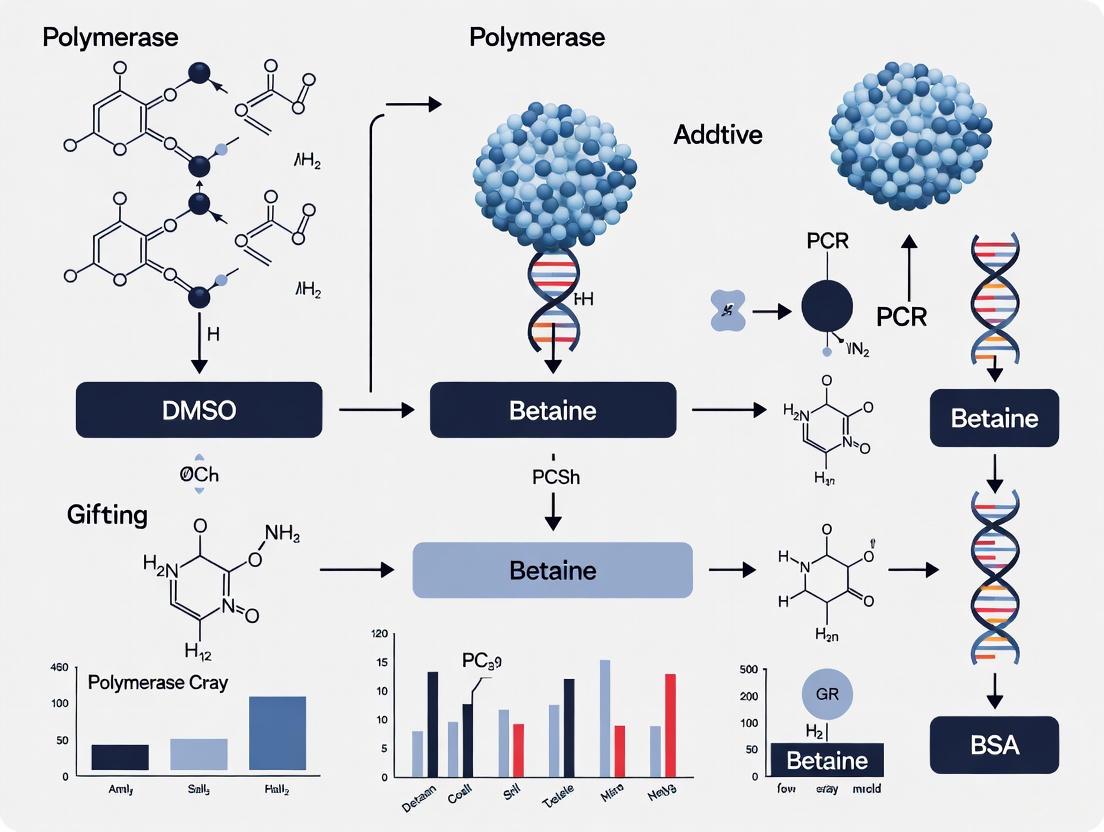
This article provides a comprehensive analysis of how PCR additives overcome key amplification challenges to enhance efficiency, specificity, and yield.
PCR Additives: Mechanisms, Applications, and Optimization Strategies for Enhanced Amplification Efficiency
Abstract
This article provides a comprehensive analysis of how PCR additives overcome key amplification challenges to enhance efficiency, specificity, and yield. Tailored for researchers and drug development professionals, it explores the fundamental mechanisms of common enhancers like DMSO and betaine, details methodological applications for GC-rich templates and long-range PCR, offers systematic troubleshooting guidance, and discusses validation frameworks for ensuring reproducible results in complex biomedical applications.
The Science Behind PCR Enhancers: Unlocking Difficult Amplifications
The Polymerase Chain Reaction (PCR) is a cornerstone technique in molecular biology, yet the amplification of complex DNA templates remains a significant challenge for researchers and drug development professionals. Difficulties often arise from three primary sources: GC-rich sequences, stable secondary structures, and PCR inhibitors present in sample matrices. These challenges can lead to PCR failure, characterized by no amplification, low yield, non-specific products, or smeared bands on gels [1].
Within the context of a broader thesis on how PCR additives enhance amplification efficiency, this technical guide explores the mechanistic basis of these common obstacles and outlines validated strategies to overcome them. The focus is on providing a structured framework for understanding how specific additives and protocol modifications interact with reaction components to rescue failed amplifications, particularly for targets that are recalcitrant to standard protocols.
The Core Challenges in PCR Amplification
GC-Rich Regions and Secondary Structures
A GC-rich template is defined as a DNA sequence where 60% or more of the bases are guanine (G) or cytosine (C) [2]. Although these regions constitute only about 3% of the human genome, they are frequently found in the promoters of critical genes, including housekeeping and tumor suppressor genes [2]. The primary challenge stems from the three hydrogen bonds between G-C base pairs, compared to only two between A-T pairs. This makes GC bonds more thermostable, requiring more energy to break during the denaturation step [2].
Furthermore, GC-rich sequences are highly "bendable" and readily form stable secondary structures such as hairpins, knots, and tetraplexes [3] [4]. These structures can block polymerase progression and prevent primers from annealing to the template, resulting in truncated products or complete amplification failure [2] [4]. The formation of these structures is a significant barrier to efficient amplification.
PCR Inhibitors
PCR inhibition can originate from a wide array of organic and inorganic compounds present in biological samples. These inhibitors operate through two main mechanisms:
- Direct inhibition: Causing polymerase degradation or obstructing the enzyme's active center.
- Indirect inhibition: Interacting with nucleic acid templates or chelating essential cofactors like magnesium ions (Mg²⁺) [1].
Common inhibitors include hemoglobin from blood, heparin, humic acids from soil, melanin from hair and skin, and ionic detergents [1] [5]. Their effects manifest as reduced yield, complete reaction failure, or altered amplification curves in quantitative PCR.
The following workflow diagram outlines a systematic approach to diagnosing and resolving these common PCR challenges.
Overcoming Challenges with PCR Additives and Reagents
Chemical additives are a powerful tool for enhancing PCR efficiency, particularly for difficult templates. They function through distinct biochemical mechanisms to destabilize secondary structures, increase primer specificity, or stabilize reaction components.
Mechanisms of Common PCR Additives
Additives can be categorized based on their primary mode of action:
- Destabilizers of Secondary Structures: Compounds like DMSO (Dimethyl Sulfoxide), glycerol, and betaine work by reducing the formation of stable secondary structures that inhibit polymerase progression. They achieve this by lowering the melting temperature (Tm) of DNA, thereby facilitating strand separation during denaturation [2] [6].
- Enhancers of Primer Stringency: Formamide and tetramethylammonium chloride increase the specificity of primer annealing, which reduces the amplification of off-target DNA and minimizes non-specific products [2].
- Polymerase Stabilizers: Bovine Serum Albumin (BSA) helps to neutralize the effects of PCR inhibitors by reducing their binding to the DNA polymerase, thereby preserving enzymatic activity [1].
- Nucleotide Analogs: 7-deaza-2′-deoxyguanosine is a dGTP analog that can be incorporated into the growing DNA strand. It improves the PCR yield of GC-rich regions by disrupting the formation of secondary structures, although it may not stain well with ethidium bromide [2].
Table 1: Common PCR Additives, Their Mechanisms, and Working Concentrations
| Additive | Primary Mechanism | Typical Working Concentration | Key Applications |
|---|---|---|---|
| DMSO | Disrupts hydrogen bonding, lowers DNA Tm [2] [7] | 5–10% (v/v) [7] [3] | GC-rich templates, secondary structures |
| Betaine | Equalizes stability of GC and AT base pairs [6] | 1–3 M [7] [3] | GC-rich templates, long amplicons |
| Formamide | Increases primer annealing stringency [2] | 5–20% (v/v) [7] | GC-rich templates, reduces mispriming |
| BSA | Binds inhibitors, stabilizes polymerase [1] | 0.1–1.0 μg/μL | Inhibitor-rich samples (e.g., blood, soil) |
| 7-deaza-dGTP | dGTP analog that disrupts secondary structures [2] | Used as partial dGTP substitute | Extreme GC-content (>80%) |
Specialized Polymerases and Buffers
The choice of DNA polymerase is critical. While Taq polymerase is common, many modern enzymes are specifically engineered for challenging amplifications. High-fidelity polymerases (e.g., Q5) offer superior performance for long or difficult amplicons [2]. Furthermore, specialized GC Buffers and proprietary GC Enhancers are often supplied with polymerases. These optimized formulations frequently contain a pre-mixed combination of additives like betaine and DMSO, providing a convenient and effective solution without the need for laborious individual optimization [2].
Experimental Protocols for GC-Rich Amplification
This section provides a detailed methodology for amplifying GC-rich sequences, based on optimized protocols from recent literature.
A Multi-Pronged Optimization Protocol
A 2025 study on amplifying GC-rich nicotinic acetylcholine receptor subunits from invertebrates successfully employed a combination strategy. The target genes had GC contents of 58% and 65% and lengths of 1.7–1.9 kb [8] [3].
Key Reagents and Materials:
- DNA Polymerases: Platinum SuperFi DNA Polymerase or Phusion High-Fidelity DNA Polymerase were used for their proofreading capability and performance on difficult templates [3].
- Additives: Betaine and DMSO were evaluated individually and in combination.
- Primers: Designed using Primer-BLAST, with careful attention to length and Tm [3].
Detailed Protocol:
- Reaction Setup: A standard 50 μL reaction was set up containing:
- 1X reaction buffer (supplied with the polymerase)
- Template cDNA (diluted 1:2)
- Forward and reverse primers (0.1–0.5 μM each)
- dNTPs (200 μM each)
- 1.5–2.0 U of high-fidelity DNA polymerase
- Additive Inclusion: The protocol tested the addition of:
- 1 M betaine
- 5% DMSO
- A combination of both 1 M betaine and 5% DMSO [3].
- Thermal Cycling: The following touchdown protocol was used:
- Initial Denaturation: 98°C for 2 minutes.
- 35 Cycles of:
- Denaturation: 98°C for 10 seconds.
- Annealing: Temperature started at 5°C above the calculated Tm and was decreased by 0.5°C per cycle for the first 10 cycles, then held at the final calculated Tm for the remaining 25 cycles. This touchdown approach enhances specificity [3].
- Extension: 72°C for 1 minute per kb.
- Final Extension: 72°C for 5 minutes.
Results: The study found that a combination of betaine and DMSO, together with a high-fidelity polymerase and optimized cycling, was essential for the successful amplification of these challenging GC-rich targets [3].
Two-Step PCR for Long GC-Rich Targets
For particularly long (>1 kb) and GC-rich targets, a 2-step PCR protocol can be superior. A study on Mycobacterium bovis genes (GC content up to 77.5%) demonstrated the effectiveness of this approach [4].
Protocol:
- Reaction Setup: Use a polymerase known for robust performance on long templates (e.g., PrimeSTAR GXL).
- Additives: Include a PCR enhancer cocktail, typically containing betaine and DMSO at optimized concentrations.
- Thermal Cycling:
- Combine the annealing and extension steps into a single incubation at a higher temperature (e.g., 68°C).
- Use a slower ramp rate (the speed at which the thermocycler changes temperature) to facilitate more efficient primer binding and polymerase activity on structured templates [4].
This method creates a favorable environment for amplifying long, structured targets by performing the enzymatic synthesis at consistently elevated temperatures.
The Scientist's Toolkit: Essential Research Reagents
The following table catalogs key reagents and their functions for troubleshooting and optimizing difficult PCRs, forming a core toolkit for researchers.
Table 2: Essential Reagent Solutions for PCR Troubleshooting
| Reagent / Tool | Function / Purpose | Example Use Case |
|---|---|---|
| High-Fidelity Polymerases (e.g., Q5, Platinum SuperFi) | High accuracy and efficiency on long or complex templates [2] [3] | Amplifying genes for cloning |
| GC Enhancer / Buffer | Proprietary mix of additives to destabilize secondary structures [2] | First-line solution for GC-rich targets |
| Hot-Start Polymerases | Polymerase is inactive at room temperature, preventing non-specific priming and primer-dimer formation [1] | Improving specificity in complex genomes |
| Betaine | Reduces DNA strand separation energy; equalizes base-pair stability [6] [3] | Essential component for high-GC and long-range PCR |
| DMSO | Disrupts hydrogen bonding, lowering DNA melting temperature [2] [7] | Breaking stable secondary structures |
| BSA (Bovine Serum Albumin) | Binds to and neutralizes common PCR inhibitors [1] | Amplifying from "dirty" samples (e.g., blood, soil) |
| Nanoparticles (e.g., Au, Graphene Oxide) | Enhance thermal conductivity and interact with PCR components to improve efficiency and specificity [5] | Enhancing speed and yield in nanoPCR assays |
| Tm Calculator (e.g., NEB Tm Calculator) | Determines precise primer annealing temperatures based on enzyme and buffer [2] | Critical for primer design and Ta optimization |
Advanced and Emerging Solutions
NanoPCR and Photothermal Conversion
The integration of nanomaterials (NPs) into PCR represents a cutting-edge advancement. Nanoparticles made of gold, carbon nanotubes, graphene oxide, and other materials can significantly enhance PCR efficiency, specificity, and speed [5]. Their mechanisms include:
- Excellent Thermal Conductivity: Improving heat transfer and potentially reducing reaction times.
- Surface Interactions: Acting similarly to single-stranded DNA-binding proteins (SSBs), they can prevent primer-template mismatching and improve specificity [5].
- Photothermal Conversion: Certain NPs (e.g., gold nanorods) can efficiently convert light energy into heat, enabling precise thermal control in miniaturized microfluidic PCR devices [5]. This innovation is particularly promising for point-of-care diagnostic applications.
Proprietary Enhancer Cocktails
Many commercial suppliers offer proprietary PCR enhancer cocktails. These are optimized mixtures of multiple additives (e.g., 1,2-propanediol and trehalose) designed to address multiple failure modes simultaneously, such as overcoming inhibitors and facilitating the amplification of structured DNA [6]. Their use can save considerable time and resources compared to individual additive optimization.
Amplifying challenging DNA templates requires a systematic understanding of the underlying obstacles—stable secondary structures, high thermodynamic stability of GC-rich DNA, and sample-derived inhibitors. A multipronged strategy is often necessary for success. This involves the selection of a specialized polymerase, the judicious use of chemical additives like betaine and DMSO, and the optimization of thermal cycling parameters. The growing toolkit, which now includes proprietary enhancer cocktails and nanoparticles, provides researchers and drug development scientists with powerful means to overcome these hurdles. By applying these structured protocols and understanding the mechanistic role of PCR enhancers, the efficient and reliable amplification of even the most recalcitrant targets becomes a achievable goal, thereby accelerating downstream research and diagnostic applications.
Within polymerase chain reaction (PCR) research, a fundamental challenge persists: the inherent thermodynamic properties of DNA and the functional limitations of DNA polymerases can severely impede amplification efficiency, particularly for complex targets. This technical guide examines the core mechanisms through which PCR additives intervene to overcome these barriers. By modifying DNA thermodynamics and modulating polymerase activity, these reagents are indispensable for enhancing amplification efficiency, a central theme in modern molecular biology research and drug development. The strategic use of PCR additives transforms reactions plagued by non-specific amplification, secondary structure formation, or complete failure into robust, reliable assays, thereby expanding the experimental possibilities for scientists working with challenging templates such as GC-rich sequences or long-range targets [9].
This whitepaper provides an in-depth analysis of how various additives function at a molecular level. We dissect their mechanisms into two primary categories: those that alter the physical properties of DNA to reduce secondary structures and those that directly influence enzyme kinetics and specificity. Furthermore, we provide a detailed, practical framework for the experimental optimization of these additives, equipping researchers with the methodologies necessary to systematically integrate them into their PCR workflows.
DNA Thermodynamic Modifiers
The stability of the DNA double helix is governed by hydrogen bonding, base stacking, and electrostatic interactions. While essential for genetic fidelity, this stability becomes a kinetic barrier in PCR, which requires cyclical strand separation. Certain DNA sequences, particularly those with high GC-content, form exceptionally stable secondary structures—such as hairpins and G-quadruplexes—that resist denaturation, preventing primer access and polymerase progression [10] [9]. A class of PCR additives known as DNA thermodynamic modifiers addresses this challenge by directly interfering with the forces that stabilize double-stranded DNA and these secondary structures.
Key Additives and Their Mechanisms
Dimethyl Sulfoxide (DMSO) is one of the most widely used thermodynamic modifiers. Its primary mechanism involves interacting with water molecules surrounding the DNA strand, effectively disrupting the hydrogen-bonding network. This interaction lowers the melting temperature (Tm) of the DNA, facilitating strand separation at lower temperatures than would otherwise be required [10] [11]. This action is particularly beneficial for denaturing stable GC-rich templates. However, a critical trade-off exists: DMSO also reduces Taq polymerase activity. Therefore, optimization is essential to balance improved template accessibility with maintained enzymatic function, typically within a concentration range of 2% to 10% [10] [11].
Betaine (also known as N,N,N-trimethylglycine) operates through a different mechanism known as the "osmolyte effect." As a zwitterion, betaine interacts with and shields the negatively charged phosphate groups on the DNA backbone. This action reduces electrostatic repulsion between DNA strands and, more importantly, eliminates the dependence of DNA melting on base-pair composition. This allows for more uniform denaturation of GC-rich regions that would otherwise remain double-stranded. For this reason, betaine is often the "mystery additive" in commercial PCR kits designed for challenging templates [10] [11]. It is crucial to use betaine or betaine monohydrate at a final concentration of 1.0-1.7 M, and not betaine hydrochloride, which can alter the reaction pH and inhibit the polymerase [10] [11].
Formamide is a powerful denaturant that penetrates the DNA double helix, binding in the major and minor grooves. This binding disrupts hydrogen bonds and hydrophobic interactions between base pairs, significantly lowering the Tm and promoting strand separation even at low temperatures [10] [12]. Its ability to promote specific primer-binding and reduce non-specific amplification makes it a valuable tool for enhancing specificity as well as efficiency. It is typically used at concentrations of 1% to 5% [10].
Table 1: Additives That Modify DNA Thermodynamics
| Additive | Primary Mechanism | Effect on DNA Melting Temperature (Tm) | Recommended Concentration | Primary Application |
|---|---|---|---|---|
| DMSO | Disrupts water hydration shells, reducing hydrogen bonding | Lowers Tm [10] | 2% - 10% [10] [11] | GC-rich templates, reduces secondary structures |
| Betaine | Shields charged phosphate groups; eliminates base composition bias | Promotes uniform denaturation; reduces formation of secondary structures [10] | 1.0 - 1.7 M [10] [11] | GC-rich templates, improves specificity |
| Formamide | Binds DNA grooves, disrupting H-bonds and hydrophobic forces | Lowers Tm [10] [12] | 1% - 5% [10] | Improves specificity and efficiency |
| Non-Ionic Detergents (e.g., Tween 20) | Disrupts hydrophobic interactions and hydrogen bonding | Lowers Tm [10] | 0.1% - 1% [10] | Reduces secondary structures; neutralizes SDS carryover |
The following diagram illustrates the molecular mechanisms by which key additives reduce DNA secondary structures:
Polymerase Activity Modulators
Beyond altering DNA template accessibility, the second major strategic approach involves modulating the activity and fidelity of the DNA polymerase enzyme itself. The performance of DNA polymerase is not intrinsic but is profoundly influenced by the reaction environment, including the presence of essential cofactors and inhibitors. Optimizing these parameters is critical for achieving a balance between high processivity, specificity, and accuracy, which are key determinants in applications from diagnostic assay development to gene cloning [10] [13].
Essential Cofactors and Inhibitors
Magnesium Ions (Mg²⁺) are an indispensable cofactor for all DNA polymerases. They play a dual role: first, they bind to the enzyme's active site to maintain catalytic activity; second, they facilitate the binding of dNTPs by coordinating the interaction between the 3'-OH group of the primer and the phosphate group of the incoming dNTP, enabling the formation of phosphodiester bonds [10] [11]. The concentration of free Mg²⁺ is perhaps the most critical parameter for PCR success. An excess can reduce fidelity and promote non-specific amplification, while a deficiency can lead to incomplete reactions and low yield. The free Mg²⁺ concentration is itself affected by the concentrations of dNTPs, primers, and EDTA, necessitating empirical optimization, typically within a range of 1.0 to 4.0 mM in 0.5-1.0 mM intervals [10] [11].
Hot-Start Polymerases represent a direct engineering solution to modulate polymerase activity temporally. These enzymes are artificially inhibited during reaction setup at room temperature, a phase where non-specific primer binding and primer-dimer formation are likely. This inhibition can be achieved via antibody binding, affibodies, aptamers, or covalent chemical modification [13] [14]. The inhibitor is only released during the initial high-temperature denaturation step (often >90°C), thereby activating the enzyme only after the reaction mixture is sufficiently hot to prevent mispriming. This mechanism significantly enhances amplification specificity and is considered essential for challenging applications like multiplex PCR [13] [14].
Bovine Serum Albumin (BSA) functions as a protective agent. It is a molecular "sink" for a wide range of PCR inhibitors, such as phenolic compounds often co-purified with DNA from plant or blood samples. By binding these contaminants, BSA shields the DNA polymerase from inactivation [10] [11]. Additionally, BSA can coat the reaction tube walls, reducing the loss of reactants through adsorption. It is typically used at a concentration of up to 0.8 mg/ml [10] [11].
Table 2: Additives That Modulate Polymerase Activity
| Additive/Enzyme | Primary Mechanism | Effect on Polymerase | Recommended Concentration | Primary Application |
|---|---|---|---|---|
| Magnesium Ions (Mg²⁺) | Cofactor for polymerase; facilitates dNTP binding | Essential for activity; concentration affects fidelity & specificity [10] | 1.0 - 4.0 mM (optimize in 0.5-1mM steps) [10] [11] | Universal requirement; critical for efficiency |
| Hot-Start Taq | Antibody or chemical inhibitor blocks active site until high temp | Prevents activity during setup; reduces primer-dimer formation [13] [14] | As per manufacturer (not a concentration) | All PCRs, especially multiplex & high-specificity assays |
| Bovine Serum Albumin (BSA) | Binds inhibitors (e.g., phenols); prevents tube adhesion | Protects polymerase from contaminants [10] [11] | Up to 0.8 mg/ml [10] [11] | "Dirty" samples (e.g., soil, blood, plant) |
| Tetramethylammonium Chloride (TMAC) | Charge shield; increases hybridization specificity | Increases effective Tm; stabilizes primer-template binding [10] [11] | 15 - 100 mM [10] [11] | PCR with degenerate primers |
The interaction between key additives and the DNA polymerase enzyme is summarized in the following workflow:
Experimental Optimization & Methodology
The theoretical mechanisms of PCR additives provide a foundation, but their successful application demands rigorous empirical optimization. The effect of an additive is highly dependent on the specific template-primer system, the type of DNA polymerase, and the buffer composition. Consequently, a systematic experimental approach is non-negotiable for developing robust PCR assays, particularly within a research thesis framework where reproducibility and understanding are paramount.
Systematic Additive Screening
A recommended initial strategy is to perform a multi-additive screen. This involves preparing a master mix containing all core components (polymerase, dNTPs, primers, template, and buffer) and then aliquoting it into separate tubes containing different additives at their mid-range concentrations. This screen should include DMSO (e.g., 5%), betaine (e.g., 1.3 M), formamide (e.g., 2.5%), and a control with no additive [10] [11] [12]. The reactions are then run using a standardized thermal cycling protocol. Analysis by agarose gel electrophoresis allows for the identification of which additive, if any, provides the greatest improvement in yield and specificity for the target amplicon.
Following the identification of a promising candidate, a concentration gradient experiment is essential. For example, if DMSO shows promise, a series of reactions with DMSO concentrations varying from 2% to 10% in 1-2% increments should be tested [10] [11]. This fine-tuning is critical, as the optimal concentration is system-specific. It is important to note that additives like DMSO can lower the effective Tm of the primer-template duplex, so it may be necessary to concurrently optimize the annealing temperature, for instance, by using a thermal cycler with a gradient function [14].
Detailed Protocol: Optimizing a PCR with Additives
The following protocol provides a detailed methodology for testing the effect of amide-based additives, as investigated in a foundational study [12].
1. Objective: To determine the effect of various low molecular weight amides (e.g., formamide, NMP, 2-pyrrolidone) on the amplification yield and specificity of a difficult DNA target (e.g., a GC-rich sequence).
2. Materials:
- Template: e.g., 0.06 ng/µL of target cDNA (e.g., N-WASP, 1518 bp, 49% GC) [12].
- Primers: 0.2 µM each, designed for the target.
- PCR Master Mix: 10 mM Tris-HCl (pH 8.8), 50 mM KCl, 1.5 mM MgCl₂, 0.01% (w/v) gelatin, 0.2 mM each dNTP, 0.04 U/µL Taq DNA polymerase [12].
- Additives: Stock solutions of formamide, 2-pyrrolidone, N-methylpyrrolidone (NMP), etc.
- Equipment: Thermal cycler (preferably with gradient functionality), agarose gel electrophoresis system.
3. Experimental Procedure:
- Step 1: Preparation. Prepare a master mix containing all components except the additives. Aliquot the master mix into thin-walled PCR tubes.
- Step 2: Additive Addition. Add a range of concentrations of each test additive to the individual aliquots. For instance, test formamide at 0.5%, 1.0%, 1.5%, 2.0%, 2.5%, 3.0%, 3.5%, 4.0%, 4.5%, and 5.0% (v/v). Include a negative control (no additive) and a positive control if available [12].
- Step 3: Hot-Start and Amplification. Use a hot-start protocol: an initial denaturation at 95°C for 5 min to also activate the enzyme, followed by 30 cycles of:
- Denaturation: 1 min at 92-95°C
- Annealing: Test a temperature gradient (e.g., 38–56°C) or use a fixed temperature identified from initial screens (e.g., 41°C) [12].
- Extension: 1-2 min at 72°C (time dependent on amplicon length).
- Step 4: Analysis. Analyze 20 µL of each PCR product by 0.8% agarose gel electrophoresis. Stain with ethidium bromide and visualize under UV light. Perform densitometric analysis on the target band and any non-specific bands to quantitatively determine both potency (maximum target band intensity) and specificity (ratio of target band intensity to total lane intensity) [12].
4. Data Interpretation: The optimal additive and concentration will be the condition that yields the highest product intensity with the minimal background smearing or non-specific bands. This condition should be selected for all subsequent experiments.
The Scientist's Toolkit
The following table catalogues essential research reagents and their specific functions, serving as a quick-reference guide for designing PCR optimization experiments.
Table 3: Research Reagent Solutions for PCR Optimization
| Reagent / Tool | Function / Mechanism | Key Consideration |
|---|---|---|
| Hot-Start DNA Polymerase | Inhibited at room temp; prevents non-specific priming and primer-dimer formation [13] [14]. | Chemically modified versions often provide more complete inhibition than antibody-based ones. |
| DMSO | Reduces DNA secondary structure by disrupting H-bonds; lowers Tm [10] [11]. | Titrate carefully (2-10%); can inhibit Taq polymerase at higher concentrations. |
| Betaine | Promotes uniform DNA denaturation; essential for GC-rich targets [10] [11]. | Use betaine monohydrate, not HCl salt, to avoid pH shifts. |
| MgCl₂ Solution | Essential cofactor for DNA polymerase activity [10]. | Concentration is critical; optimize from 1.0-4.0 mM. Vortex stock thoroughly before use to avoid gradients. |
| BSA | Binds and neutralizes common PCR inhibitors found in complex biological samples [10] [11]. | Use at ≤0.8 mg/ml. Essential for direct PCR from crude lysates. |
| Formamide | Powerful denaturant that binds DNA grooves, lowering Tm and increasing specificity [10] [12]. | Effective at low concentrations (1-5%). |
| Gradient Thermal Cycler | Allows empirical determination of optimal annealing/extension temperatures across multiple reactions simultaneously [14]. | Critical for optimizing reactions when using Tm-altering additives like DMSO. |
Within the realm of molecular biology, the polymerase chain reaction (PCR) is a foundational technique, yet the amplification of complex DNA templates such as those with high GC-content remains a significant challenge. PCR additives are crucial for overcoming these hurdles, enhancing amplification efficiency, specificity, and yield. This whitepaper provides an in-depth technical analysis of two of the most prominent PCR additives: dimethyl sulfoxide (DMSO) and betaine. Framed within the broader thesis that strategic use of PCR enhancers is vital for advancing amplification efficiency research, this document details the mechanisms, optimized protocols, and practical applications of these reagents, serving as a guide for researchers, scientists, and drug development professionals.
Mechanisms of Action
DMSO and betaine enhance PCR through distinct but sometimes complementary biochemical mechanisms. They primarily facilitate the amplification of difficult templates, such as GC-rich sequences, by modulating the physical properties of DNA and the reaction environment.
DMSO (Dimethyl Sulfoxide) functions primarily by reducing the secondary structure stability of DNA. It achieves this by interacting with water molecules surrounding the DNA strand, thereby disrupting the hydrogen bonding network that stabilizes double-stranded DNA [15]. This action lowers the melting temperature (Tm) of the DNA, facilitating strand separation at lower temperatures and preventing the formation of secondary structures like hairpins and G-quadruplexes that can impede polymerase progression [6] [15]. It is critical to note that DMSO also reduces Taq polymerase activity, necessitating a balance between its benefits and potential inhibition [15].
Betaine (a zwitterionic osmoprotectant) acts to equalize the melting temperature between AT- and GC-rich regions. Its mechanism involves interacting with and neutralizing the charged groups on the DNA backbone, which reduces the electrostatic repulsion between strands and destabilizes secondary structures [15]. Furthermore, as a consequence of its zwitterionic nature, betaine diminishes the differential stability between base pairs, effectively homogenizing the DNA melting profile and allowing for more uniform amplification across a sequence [6] [16]. This makes it exceptionally valuable for GC-rich templates.
The following diagram illustrates the workflow for employing these additives in PCR optimization and their primary mechanisms.
Quantitative Data and Optimization
The efficacy of DMSO and betaine is concentration-dependent, and their optimal use requires careful empirical optimization. The tables below summarize effective concentration ranges and their documented performance in various experimental contexts.
Table 1: Optimal Concentration Ranges and Effects of DMSO and Betaine
| Additive | Effective Concentration Range | Key Effects and Mechanisms | Reported Performance |
|---|---|---|---|
| DMSO | 2% - 10% [15]; 7% - 10% for specific SNPs [17] | Reduces DNA Tm and secondary structure formation; can inhibit polymerase at high concentrations [15]. | Significantly enhanced yield and specificity for GC-rich EGFR promoter amplification [17]. |
| Betaine | 1 M - 2 M [17]; 1 - 1.7 M commonly suggested [15] | Equalizes Tm of AT and GC base pairs; reduces DNA secondary structure [6] [15]. | Greatly improved product specificity and yield in de novo synthesis of GC-rich genes; enabled amplification where betaine-free reactions failed [16]. |
Table 2: Performance Comparison in Amplifying GC-Rich Targets
| Study Context | Additive(s) Tested | Key Outcome | Reference |
|---|---|---|---|
| GC-rich EGFR promoter SNPs | DMSO (7%, 10%), Glycerol (10-20%), Betaine (1 M, 1.5 M, 2 M) | All single additives significantly enhanced PCR yield and specificity. DMSO (10%) + Glycerol (15%) combination also effective. | [17] |
| De novo synthesis of GC-rich genes (IGF2R, BRAF) | DMSO, Betaine | Both additives greatly improved target product specificity and yield during PCR amplification post-assembly. Betaine and DMSO were highly compatible with all reaction components. | [16] |
| Amplification of 104 GC-rich human genomic amplicons | Betaine (2.2 M), Ethylene Glycol (1.075 M), 1,2-propanediol (0.816 M) | Betaine enabled amplification of 72% of targets. Ethylene glycol and 1,2-propanediol performed better (87% and 90% success, respectively), suggesting alternatives in some cases. | [18] |
| Isothermal Exponential Amplification Reaction (EXPAR) | Betaine, DMSO, Trehalose, TMAC, BSA, SSB | Betaine and DMSO showed limited positive effects. Trehalose increased efficiency, while TMAC, BSA, and SSB proteins increased specificity. | [19] |
Experimental Protocols and Applications
Detailed Methodology for GC-Rich Amplification
The following protocol, adapted from research on de novo gene synthesis, provides a robust starting point for amplifying GC-rich targets using DMSO and betaine [16].
1. Reagent Setup:
- Primers: Resuspend primers to 100 µM in nuclease-free water.
- PCR Master Mix:
- 1X High-Fidelity PCR Buffer
- 200 µM of each dNTP
- 0.4 µM each of forward and reverse primer
- 1 µL of template DNA (e.g., 100 ng genomic DNA or 1 µL from an assembly reaction)
- 1-2 U of High-Fidelity DNA Polymerase (e.g., Advantage HF Polymerase)
- Additives: Supplement the master mix with:
2. Thermal Cycling Conditions:
- Initial Denaturation: 94°C for 5 minutes.
- Amplification (25-35 cycles):
- Denaturation: 94°C for 15-30 seconds.
- Annealing: Temperature optimized based on primer Tm, typically 55-65°C for 30 seconds.
- Extension: 68°C for 60 seconds per kilobase of amplicon.
- Final Extension: 68°C for 5-10 minutes.
- Hold: 4°C.
3. Post-Amplification Analysis:
- Analyze 5-10 µL of the PCR product by agarose gel electrophoresis (e.g., 1.25% agarose) to verify amplicon size and specificity [16].
Application in Genotyping GC-Rich Promoter Regions
A refined protocol for genotyping GC-rich promoter sequences, such as the epidermal growth factor receptor (EGFR) gene, demonstrates the application of these additives in a diagnostic context [17].
1. Sample Preparation:
- Extract genomic DNA from source material (e.g., formalin-fixed paraffin-embedded (FFPE) tissue using a commercial kit).
2. PCR-RFLP Reaction Setup:
- Reaction Volume: 25 µL.
- Reaction Components:
- 1 µL genomic DNA.
- 0.4 µL of each primer.
- 0.2 mM dNTPs.
- 1 U of DNA polymerase (e.g., KAPA Taq).
- 1X corresponding reaction buffer.
- 1.5 mM MgCl2.
- Additive Optimization:
- Test DMSO at 7% and 10% (v/v).
- Test Betaine at 1 M, 1.5 M, and 2 M.
- Test Glycerol at 10%, 15%, and 20% (v/v) as a comparative additive.
3. Thermal Cycling:
- Use a standard three-step cycling protocol with an annealing temperature of 60°C for the EGFR promoter region [17].
4. Restriction Digestion & Analysis:
- Digest the PCR product with the appropriate restriction enzyme.
- Analyze the restriction fragments by polyacrylamide (8%) or agarose (3%) gel electrophoresis to identify polymorphisms.
The Scientist's Toolkit: Essential Research Reagents
The following table catalogues key reagents discussed in this whitepaper and their critical functions in PCR enhancement, providing a quick reference for experimental planning.
Table 3: Key Research Reagents for PCR Enhancement
| Reagent | Function/Mechanism in PCR | Key Application Context |
|---|---|---|
| DMSO (Dimethyl Sulfoxide) | Reduces DNA melting temperature (Tm) and disrupts secondary structures by interfering with hydrogen bonding. | Amplification of GC-rich templates; long-range PCR [6] [15]. |
| Betaine | Equalizes the Tm of AT and GC base pairs; reduces formation of secondary DNA structures. | GC-rich DNA amplification; de novo gene synthesis [6] [16]. |
| High-Fidelity DNA Polymerase | Provides high accuracy and processivity for amplifying long or complex templates. | Long-range PCR; gene synthesis where high fidelity is critical [16]. |
| Tetramethylammonium Chloride (TMAC) | Increases hybridization specificity by shielding electrostatic repulsion; can reduce non-specific amplification. | Experiments using degenerate primers; isothermal amplification (EXPAR) to improve specificity [19] [15]. |
| Bovine Serum Albumin (BSA) | Binds and neutralizes PCR inhibitors commonly found in complex biological samples (e.g., from FFPE tissue). | Amplification from inhibited samples (e.g., soil, blood, FFPE); stabilizes polymerase [19] [15]. |
| Trehalose | Lowers DNA Tm and thermostabilizes enzymes, potentially improving yield and efficiency. | Isothermal amplification (EXPAR); PCR under suboptimal conditions for enzymes [19]. |
| Tween 20 / NP-40 (Non-ionic Detergents) | Reduces secondary structure stability; can restore PCR amplification in the presence of certain inhibitors (e.g., hydrogel monomers) [20]. | Routine PCR to improve efficiency; counteracting inhibition in specialized systems [20] [15]. |
| Ethylene Glycol & 1,2-propanediol | Novel additives that decrease DNA Tm via a mechanism distinct from betaine, offering an alternative for problematic amplicons. | Rescue of amplification where betaine fails [18]. |
DMSO and betaine remain cornerstone additives in the molecular biologist's arsenal for overcoming the pervasive challenge of amplifying recalcitrant DNA templates. Their well-characterized mechanisms—destabilizing DNA secondary structures and homogenizing DNA melting behavior, respectively—provide a rational basis for their use. As PCR continues to be a critical tool in fundamental research, clinical diagnostics, and therapeutic development, the thoughtful application and continued optimization of these and other enhancers, as detailed in this whitepaper, are paramount to driving efficiency and reliability in nucleic acid amplification research.
Polymersse Chain Reaction (PCR) is a fundamental technique in molecular biology that amplifies specific DNA sequences. However, its efficiency can be severely compromised by various factors, including inhibitory substances present in biological samples and the intrinsic complexity of target templates. PCR inhibitors can originate from sample collection materials, biological samples themselves, or laboratory reagents, significantly reducing amplification efficiency and leading to false-negative results or reduced sensitivity [21].
Proprietary enhancer cocktails represent sophisticated formulations designed to overcome these limitations through multiple mechanisms. These specialized additive mixtures work by improving DNA polymerase stability, facilitating denaturation of complex secondary structures, neutralizing common inhibitors, and optimizing reaction conditions to maximize amplification efficiency and specificity. The development of these enhancers has become increasingly important for challenging applications in clinical diagnostics, forensic science, and research, where reliable amplification from suboptimal samples is essential [21].
Mechanisms of PCR Enhancement
Biochemical Principles of PCR Enhancement
PCR enhancers function through several well-established biochemical mechanisms that address specific challenges in nucleic acid amplification:
Enzyme Stabilization and Protection: Certain additives such as bovine serum albumin (BSA) and trehalose protect DNA polymerase enzymes from destabilizing factors. BSA functions by binding phenolic compounds that may remain from nucleic acid extraction procedures, thereby shielding the enzyme's active site and maintaining catalytic activity. The high lysine content in BSA facilitates this protective function through molecular interactions with inhibitory substances [21].
Destabilization of Secondary Structures: Compounds like betaine and dimethyl sulfoxide (DMSO) disrupt base-pairing interactions that lead to stable secondary structures in DNA templates, particularly in GC-rich regions. Betaine achieves this by reducing the melting temperature of GC-rich sequences through its action as a kosmotrope, effectively equalizing the thermodynamic stability of AT and GC base pairs and facilitating strand separation during denaturation steps [21].
Inhibitor Neutralization: Specific additives target common PCR inhibitors found in biological samples. Spermidine demonstrates significant neutralizing effects against bile salts, urea, and heme inhibitors through molecular binding mechanisms that sequester these compounds away from the polymerase. Similarly, ammonium sulfate provides substantial protection against urea inhibition through ionic interactions [21].
Thermal Stability Enhancement: Polyethylene glycol (PEG) and glycerol improve PCR yield by enhancing the thermal stability of DNA polymerases and protecting enzyme activity throughout thermal cycling. These compounds likely function through molecular crowding effects that stabilize the three-dimensional structure of the enzyme under elevated temperatures [21].
Advanced Enhancement Strategies
More sophisticated enhancement approaches involve:
Multi-Mechanism Cocktails: Modern proprietary formulations often combine multiple enhancers that work synergistically through different mechanisms. For example, a single commercial enhancer might contain betaine for GC-rich template amplification, BSA for general inhibitor protection, and specialized salts to optimize ionic conditions simultaneously.
Template-Specific Formulations: Specialized enhancers are increasingly designed for particular applications, such as amplifying difficult templates (high GC content, complex secondary structures) or coping with specific inhibitory environments (forensic samples, pathological specimens).
Common Enhancer Formulations and Their Properties
Table 1: Common PCR Enhancers and Their Applications
| Enhancer | Working Concentration | Primary Mechanism | Application Scope | Notes/Cautions |
|---|---|---|---|---|
| Betaine | 0.5-1.5 M | Disrupts GC-rich sequences | GC-rich templates, improves specificity | May reduce fidelity in some systems |
| DMSO | 1-10% | Lowers DNA melting temperature | Prevents secondary structure formation | Concentration-dependent inhibition possible |
| BSA | 0.1-0.8 μg/μL | Binds inhibitors, stabilizes enzymes | Samples with phenolic compounds, blood | High lysine content crucial for function |
| Spermidine | 0.5-2.5 mM | Neutralizes bile salts, urea, heme | Inhibitory clinical samples | Micromolar concentrations can enhance plant DNA amplification |
| Trehalose | 0.2-0.6 M | Thermal stabilizer, inhibitor protection | Viral detection in shrimp samples | Often combined with BSA and Tween-20 |
| PEG 600 | 5-15% | Molecular crowding, enzyme stabilization | General yield improvement | Concentration critical; affects multiple parameters |
| Glycerol | 5-15% | Protein stabilizer, affects melting temperature | Enzyme storage and reaction stability | High concentrations can inhibit polymerization |
| Ammonium Sulfate | 10-30 mM | Counteracts urea inhibition | Urine samples, botanical specimens | Optimizes primer-template specificity in traditional medicine authentication |
| Tween-20 | 0.1-1% | Surfactant, reduces surface adsorption | Complex sample types | Typically used in combination with other enhancers |
Table 2: Commercial Enhancer Cocktails and Their Formulations
| Commercial Product | Key Components | Reported Enhancement | Primary Applications | Special Features |
|---|---|---|---|---|
| PCR Enhancer (general) | Proprietary mixture | Reduces DNA secondary structure effects | High GC content, complex templates | Compatible with most DNA polymerases; may reduce fidelity |
| Q-Solution (Qiagen) | Proprietary formulation | Alters DNA melting characteristics | Difficult templates, secondary structures | Specifically optimized for Taq polymerase systems |
| GC-Rich Solution (Roche) | Glycerol, DMSO, other components | Facilitates denaturation of GC-rich templates | Amplification of high GC-content regions | Specifically designed for GC-rich amplification |
| Enhancer Cocktails (Thermo Fisher) | Betaine, DMSO, other proprietary components | Multiple mechanisms | Difficult amplicons, inhibitory samples | Often included in specialized amplification kits |
| MystiCq miRNA kits | Polyadenylation enzymes, optimized buffers | Enhances short RNA template detection | miRNA quantification | Uses poly(A) polymerase-based extension strategy |
Experimental Protocols for Enhancer Evaluation
Standardized Testing Protocol for Enhancer Efficacy
Objective: Systematically evaluate the effectiveness of PCR enhancer cocktails against specific inhibitors and for challenging templates.
Materials:
- Standard DNA polymerase (e.g., Taq polymerase)
- Control DNA template (optimally characterized)
- Target primers for standardized amplicon
- dNTP mixture (e.g., 10mM each)
- Reaction buffer (typically 10X concentration)
- Test enhancers at various concentrations
- Known inhibitors (heme, bile salts, urea, humic acid) for challenge studies
- Real-time PCR instrument or gel electrophoresis system for detection
Methodology:
- Baseline Reaction Setup: Establish a control reaction without enhancers containing:
- 1X reaction buffer
- 1.5-2.5 mM MgCl₂ (concentration depends on polymerase system)
- 0.2 mM of each dNTP
- 0.2-0.5 μM of each primer
- 0.5-1 unit DNA polymerase
- Template DNA (optimized concentration, typically 1-50 ng for genomic DNA)
- Nuclease-free water to final volume
Enhancer Incorporation: Prepare test reactions by adding enhancers at optimal concentrations:
- Single enhancers at varying concentrations
- Combination cocktails with complementary mechanisms
- Include positive (no inhibitor) and negative (no template) controls
Inhibitor Challenge: Introduce specific inhibitors at clinically relevant concentrations:
- Heme (hematin): 1-20 μM
- Bile salts: 0.0001-0.1%
- Urea: 1-100 mM
- Humic acid: 0.1-10 ng/μL
Amplification Parameters: Utilize standardized cycling conditions:
- Initial denaturation: 95°C for 2-10 minutes (dependent on polymerase)
- 35-40 cycles of:
- Denaturation: 95°C for 15-30 seconds
- Annealing: Temperature optimized for primer system for 20-30 seconds
- Extension: 72°C for 15-60 seconds per kb
- Final extension: 72°C for 5-10 minutes
Analysis Methods:
- Real-time PCR: Monitor amplification efficiency through cycle threshold (Cq) values and amplification curves
- Endpoint detection: Gel electrophoresis with quantification of band intensity
- Statistical analysis: Compare performance metrics across conditions
Specialized Protocol for miRNA Quantification Enhancement
Objective: Evaluate enhancer efficacy for challenging short RNA templates using polyadenylation-based systems.
Materials:
- Specific reverse transcriptase with terminal transferase activity
- Poly(A) polymerase for tailing applications
- Stem-loop or poly(T) adaptor primers
- miRNA-specific quantification system
- RNA samples with defined miRNA content
Methodology:
- Template Preparation: Extract and quantify RNA from target samples, ensuring minimal degradation.
- Tailing Reaction: Incubate RNA with poly(A) polymerase to add uniform poly(A) tails to miRNA molecules.
- Reverse Transcription: Utilize reverse transcriptase with oligo-dT adaptor primers to generate cDNA.
- Quantitative PCR: Implement real-time PCR with miRNA-specific forward primers and universal reverse primers complementary to the adaptor sequence.
- Enhancer Integration: Test specialized enhancers at optimal concentrations throughout the process to improve:
- Tailing efficiency
- Reverse transcription yield
- PCR amplification of short products
The Scientist's Toolkit: Essential Research Reagent Solutions
Table 3: Essential Reagents for PCR Enhancement Research
| Reagent Category | Specific Examples | Primary Function | Application Notes |
|---|---|---|---|
| DNA Polymerases | Taq polymerase, Pfu, recombinant thermostable enzymes | Catalyzes DNA strand elongation | Enzyme choice affects enhancer compatibility; proofreading enzymes may have different requirements |
| Specialized dNTPs | dUTP (with UDG), biotin-11-dUTP, aminoallyl-dNTPs | Substrates for DNA synthesis | Modified dNTPs require compatible polymerases; dUTP incorporation prevents amplicon contamination |
| Buffer Components | MgCl₂, MgSO₄, (NH₄)₂SO₄, KCl, Tris-HCl | Maintain optimal ionic environment | Mg²⁺ concentration critical (1-4 mM typical range); affects enzyme activity and fidelity |
| Stabilizing Agents | BSA, trehalose, glycerol, PEG | Protect enzyme activity, prevent adsorption | Particularly important for point-of-care applications and field-use diagnostics |
| Inhibitor Neutralizers | Spermidine, ammonium sulfate, Tween-20 | Counteract specific PCR inhibitors | Formulation depends on sample type (clinical, environmental, forensic) |
| Secondary Structure Disruptors | Betaine, DMSO, formamide | Reduce DNA melting temperature | Essential for GC-rich targets and templates with stable secondary structures |
| Commercial Enhancer Kits | Q-Solution, GC-Rich Enhancer, commercial cocktails | Proprietary optimized mixtures | Provide standardized performance; composition often undisclosed |
| Quantification Systems | SYBR Green, TaqMan probes, molecular beacons | Detect and quantify amplification | Choice affects reaction optimization; intercalating dyes versus specific probes |
Commercial Applications and Case Studies
Clinical Diagnostic Applications
Proprietary enhancer cocktails have revolutionized clinical molecular diagnostics by enabling reliable amplification from challenging clinical samples:
Blood-Based Diagnostics: Enhancement formulations containing spermidine and BSA effectively counteract heme and immunoglobulin inhibition, permitting accurate amplification from minimal blood samples. This has proven particularly valuable in neonatal screening and monitoring of immunocompromised patients where sample volumes are limited [21].
Urine Testing: Systems optimized with ammonium sulfate demonstrate significant resistance to urea inhibition, enabling development of non-invasive molecular diagnostics for urinary tract infections, sexually transmitted diseases, and oncological markers. The enhanced resistance to urea allows for direct amplification without extensive sample purification [21].
Forensic Applications: Proprietary enhancer combinations facilitate amplification from degraded samples and specimens containing environmental inhibitors such as humic acids, dyes, and soil components. This capability has substantially improved success rates in criminal investigations and identification processes where sample quality is often compromised [21].
Biotechnology and Pharmaceutical Development
In drug development and biomanufacturing, enhancer cocktails provide critical solutions for challenging applications:
High-Throughput Screening: Robust amplification systems enhanced with proprietary stabilizers and inhibitor neutralizers support automated screening platforms, reducing false negatives in target identification and validation phases.
Vaccine Development: Enhanced reverse transcription PCR systems with improved processivity enable more reliable detection and quantification of viral RNA in vaccine production and quality control, particularly for RNA viruses with complex secondary structures.
Pharmacogenomics: Reliable genotyping from diverse sample matrices is essential for clinical trial stratification and companion diagnostic development. Enhanced amplification systems ensure consistent performance across sample types and collection conditions.
Future Directions and Development Trends
The field of PCR enhancement continues to evolve with several emerging trends:
Sample-Specific Formulations: Increasing development of application-specific enhancers optimized for particular sample types (saliva, tissue, single-cell) and inhibition profiles.
Point-of-Care Optimization: Enhanced formulations focused on stability under field conditions and compatibility with lyophilized reagent formats for decentralized testing.
Integration with Emerging Technologies: Compatibility development with novel amplification methods including isothermal techniques and digital PCR platforms.
Standardization Initiatives: Growing emphasis on standardized evaluation protocols and quality control metrics for enhancer performance assessment across platforms and laboratories.
The continued refinement of proprietary enhancer cocktails represents a critical frontier in molecular diagnostics and biotechnology, enabling increasingly challenging applications while improving reliability, sensitivity, and specificity across diverse sample types and experimental conditions.
The Role of Additives in Long-Range PCR and Complex Template Amplification
Polymerase Chain Reaction (PCR) is a foundational technique in molecular biology, yet the amplification of complex DNA templates—such as those that are GC-rich, long, or possess secondary structures—remains a significant challenge. These templates can hinder polymerase progression and prevent efficient amplification, leading to failed experiments and unreliable data. The integration of specialized PCR additives into reaction protocols has become a critical strategy for overcoming these obstacles. This whitepaper examines the role of these additives in enhancing amplification efficiency, with a focus on their applications in long-range PCR and the analysis of complex templates. By understanding their mechanisms and optimal use, researchers can significantly improve the success of advanced genomic applications, from structural variant analysis to transgene characterization.
Understanding the Challenge: Complex Templates in PCR
Amplifying complex DNA templates is a common hurdle in molecular biology. The primary challenges arise from two key template characteristics:
- High GC Content: DNA sequences with a guanine-cytosine (GC) content exceeding 60% are considered GC-rich [22]. The three hydrogen bonds between G-C base pairs, compared to two in A-T pairs, confer greater thermostability. This results in higher melting temperatures and incomplete denaturation during standard PCR cycles. Furthermore, GC-rich regions are prone to forming stable intramolecular secondary structures, such as hairpins and G-quadruplexes, which can physically block polymerase progression and prevent primer annealing [22] [23].
- Long-Range Amplification: Amplifying long DNA fragments (typically >5 kb) presents distinct difficulties. The probability of polymerase stalling or dissociating increases with amplicon length. Moreover, long fragments are more likely to contain regions of high GC content or complex secondary structures, compounding the challenges. The increased likelihood of polymerase errors over extended distances also necessitates the use of high-fidelity enzymes with proofreading capabilities [24].
These template properties can lead to common PCR failure modes, including complete amplification failure, non-specific products (e.g., smearing on gels), or the generation of truncated amplicons. Overcoming these issues requires a multi-faceted optimization strategy, in which additives play a central role.
Classes and Mechanisms of PCR Additives
PCR additives are chemical agents that enhance amplification by modifying the physical environment of the reaction or by directly interacting with the nucleic acid template. They can be broadly categorized based on their primary mechanism of action.
Additives that Destabilize Secondary Structures
This class of additives works by reducing the stability of DNA secondary structures, thereby facilitating strand separation and polymerase access.
- Betaine (Trimethylglycine): Betaine, typically used at a final concentration of 0.8 M to 2.2 M, is one of the most common additives for GC-rich PCR [18] [25] [26]. It functions by homogenizing the base-pairing stability of DNA. Betaine destabilizes GC-rich regions while slightly stabilizing AT-rich regions, effectively equalizing the melting temperature (Tm) across the template and promoting more uniform denaturation [26]. This action helps resolve hairpins and other secondary structures that impede polymerization.
- Dimethyl Sulfoxide (DMSO): Used at concentrations of 2% to 10% (v/v), DMSO aids amplification by disrupting hydrogen bonding between DNA strands [25] [26]. This action lowers the overall Tm of the DNA, making it easier to denature stable secondary structures. It is particularly beneficial for templates with GC content above 65% [25].
- Ethylene Glycol and 1,2-Propanediol: Research has identified these diols as highly effective alternatives. In a comparative study, 1,2-propanediol (0.816 M) and ethylene glycol (1.075 M) enabled successful amplification of 90% and 87% of challenging GC-rich amplicons, respectively, outperforming betaine (72%) in many cases [18]. Their mechanism is thought to involve altering the DNA melting enthalpy and exhibiting different affinities for single-stranded versus double-stranded DNA compared to betaine [18].
Additives that Enhance Specificity and Enzyme Stability
These additives improve PCR outcomes by increasing the stringency of primer binding or by stabilizing the enzymatic components.
- Cofactor Optimization (Mg²⁺): Magnesium ions (Mg²⁺) are an essential cofactor for DNA polymerase activity. While not a traditional "additive," its concentration is critical and often requires optimization for difficult PCRs. The standard concentration range is 1.5 to 4.0 mM [25] [22]. Insufficient Mg²⁺ leads to reduced enzyme activity and low yield, while excess Mg²⁺ can promote non-specific binding and reduce fidelity [25]. Fine-tuning Mg²⁺ concentration in 0.5 mM increments is a recommended troubleshooting step [22].
- Protein Stabilizers:
- Bovine Serum Albumin (BSA): BSA functions as a "molecular sponge," neutralizing inhibitors that may co-purify with DNA templates, such as phenols, humic acids, or heparin [26]. By binding these contaminants, BSA protects the DNA polymerase from inactivation.
- Single-Strand Binding Proteins (SSB): Recombinant thermostable SSBs, like TthSSB, bind to single-stranded DNA templates, preventing the reformation of secondary structures and protecting transiently single-stranded DNA from nucleases [26]. This significantly improves the amplification of long and structured targets.
- Surface-Active Agents: Non-ionic detergents like Tween-20, Triton X-100, and NP-40 help stabilize the reaction mixture by reducing surface tension, improving component mixing, and inhibiting the aggregation of macromolecules, including the polymerase itself [26].
Table 1: Summary of Common PCR Additives and Their Applications
| Additive | Common Working Concentration | Primary Mechanism | Ideal for Template Types |
|---|---|---|---|
| Betaine | 0.8 M - 2.2 M [18] [25] | Equalizes DNA melting temp; destabilizes secondary structures | GC-rich, long-range [18] [26] |
| DMSO | 2% - 10% (v/v) [25] | Disrupts H-bonds; lowers DNA Tm | GC-rich (>65%) [25] |
| Ethylene Glycol | ~1.075 M [18] | Alters DNA melting enthalpy & ssDNA/dsDNA affinity | GC-rich (shown effective for 60-80% GC) [18] |
| 1,2-Propanediol | ~0.816 M [18] | Alters DNA melting enthalpy & ssDNA/dsDNA affinity | GC-rich (shown effective for 60-80% GC) [18] |
| DTT | Varies | Reductive agent; protects polymerase from oxidation | Inhibitor-heavy samples (e.g., blood) [26] |
| Formamide | Varies | Increases primer annealing stringency | Reduces non-specific amplification [26] |
| BSA | 0.1 - 0.5 μg/μL | Binds and neutralizes common inhibitors | Crude samples (e.g., blood, soil) [26] |
Quantitative Data and Experimental Evidence
The efficacy of PCR additives is strongly supported by empirical data. A systematic study directly compared betaine, ethylene glycol, and 1,2-propanediol using 104 human genomic amplicons with GC content between 60% and 80% and lengths of 700-800 bp [18]. The results, summarized below, demonstrate the superior performance of the diol additives.
Table 2: Comparative Performance of Additives on GC-Rich Amplicons (n=104) [18]
| Additive Condition | Final Concentration | Success Rate (%) | Number of Successful Amplicons |
|---|---|---|---|
| No Additive (Control) | - | 13% | 14 |
| Betaine | 2.2 M | 72% | 75 |
| 1,2-Propanediol | 0.816 M | 90% | 94 |
| Ethylene Glycol | 1.075 M | 87% | 91 |
Furthermore, the study reported an unexpected inhibitive effect of betaine in some reactions, where amplicons that worked with ethylene glycol or 1,2-propanediol failed when betaine was added back to the reaction [18]. This highlights that additive performance can be target-specific and underscores the importance of testing multiple options.
In other research, optimizing the amplification of GC-rich nicotinic acetylcholine receptor subunits from invertebrates involved a multipronged approach using DMSO and betaine alongside high-fidelity polymerases and adjusted annealing temperatures [23]. This further validates that a combination of strategies is often required for challenging templates.
For long-range PCR, kit comparisons are essential. One study evaluating PCR kits for amplification up to 22 kb found that the UltraRun LongRange PCR Kit achieved a 90% success rate, underscoring that the combination of a robust enzyme and a proprietary, additive-enhanced buffer is key to success [27].
Integrated Experimental Protocols
Success in amplifying complex templates relies on a systematic and optimized workflow. The following section outlines a generalized yet detailed protocol for long-range, GC-rich PCR.
Workflow for Long-Range/GC-Rich PCR
The following diagram illustrates the key stages of the optimization process, from initial setup to analysis.
Detailed Methodology
Step 1: Primer Design and Template Preparation
- Primer Design: Design primers 18-24 bases in length with a melting temperature (Tm) of ≥60°C [24]. Ensure the Tm of forward and reverse primers is within 1-2°C of each other. Aim for a GC content between 40-60% and avoid 3'-end complementarity to prevent dimer formation [25].
- Template DNA: Use high-quality, intact genomic DNA. For long-range PCR, a minimum of 100 ng of template is recommended, though the amount may need scaling for more complex genomes [24].
Step 2: Core Reaction Setup A typical 20-50 μL long-range PCR reaction should contain [27] [24]:
- 1X reaction buffer (supplied with the polymerase)
- Forward and reverse primers (0.2-0.5 μM each)
- dNTPs (200 μM of each)
- High-fidelity DNA polymerase (as per manufacturer's instructions)
- Template DNA (≥100 ng)
- Nuclease-free water to volume
Step 3: Incorporating Additives
- Prepare separate master mixes containing different classes of additives. A suggested starting point is:
- Note: Additives like DMSO and betaine can be included in the master mix before aliquoting.
Step 4: Thermal Cycling Conditions Use the following cycling parameters as a starting point, adjusting the extension time based on the polymerase's speed and the amplicon length (e.g., 1-2 minutes per kb) [24]:
| Step | Temperature | Time | Cycles |
|---|---|---|---|
| Initial Denaturation | 98°C | 30-60 seconds | 1 |
| Denaturation | 98°C | 10-15 seconds | 30-35 |
| Annealing | 60-68°C* | 15-20 seconds | 30-35 |
| Extension | 68°C | 1-2 minutes per kb | 30-35 |
| Final Extension | 72°C | 5-10 minutes | 1 |
*Determine optimal temperature using a gradient PCR cycler.
Step 5: Product Analysis
- Analyze PCR products using agarose gel electrophoresis. A successful reaction should show a single, sharp band of the expected size.
- For downstream applications like sequencing, purify the amplicon using a commercial kit. Long-range PCR products are compatible with both Sanger sequencing and long-read sequencing platforms like PacBio and Oxford Nanopore [27] [24].
The Scientist's Toolkit: Essential Reagents for Complex PCR
Table 3: Key Research Reagent Solutions for Complex Template Amplification
| Reagent Category | Example Products | Primary Function & Application |
|---|---|---|
| High-Fidelity Polymerases | Q5 (NEB), Phusion, PrimeSTAR GXL | High Fidelity & Long Amplicons: Possess 3'→5' proofreading exonuclease activity for low error rates; essential for amplifying long targets and for cloning [25] [24]. |
| Specialized Master Mixes | OneTaq GC Master Mix, Q5 High GC Enhancer | GC-Rich Targets: Pre-formulated mixes with optimized buffers and enhancers (often proprietary) that help denature secondary structures in high-GC templates [22]. |
| Organic Additives | DMSO, Betaine, Ethylene Glycol | Destabilize Secondary Structures: Used as supplemental additives to resolve hairpins and homogenize DNA melting temperatures, as detailed in Table 1 [18] [25] [26]. |
| Protein Stabilizers | BSA, Recombinant SSB | Inhibitor Neutralization & ssDNA Protection: BSA neutralizes common inhibitors in crude samples. SSB proteins bind ssDNA to prevent secondary structure formation, crucial for long amplicons [26]. |
The strategic use of PCR additives is indispensable for advancing genomic research involving complex DNA templates. As demonstrated, agents like betaine, DMSO, and the newer diols (ethylene glycol and 1,2-propanediol) directly address the thermodynamic and structural barriers posed by GC-rich and long-range targets. Their ability to homogenize DNA melting behavior and disrupt stable secondary structures enables successful amplification where standard protocols fail. When integrated into a systematic workflow that includes rigorous primer design, high-fidelity polymerase selection, and meticulous thermal cycling optimization, these additives form a powerful toolkit. This approach not only enhances amplification efficiency but also unlocks new possibilities in diagnostic assay development, structural variant analysis, and the characterization of complex genetic loci, thereby solidifying their role as a cornerstone of modern molecular biology.
Practical Applications: Implementing Additives in Your PCR Workflow
The polymerase chain reaction (PCR) is a cornerstone technique in molecular biology, yet the amplification of complex DNA templates, such as those with high GC-content or long amplicons, remains a significant challenge. This whitepaper examines the strategic application of three key additives—Dimethyl Sulfoxide (DMSO), betaine, and Bovine Serum Albumin (BSA)—to overcome these hurdles. Framed within broader research on PCR enhancement, we detail the mechanisms by which these additives operate and provide a validated, quantitative framework for their optimization. By integrating specific concentration ranges (DMSO at 2-10%, betaine at 1-2 M, and BSA at 400 ng/μL), this guide offers researchers in drug development and scientific research a definitive protocol to significantly improve amplification efficiency, yield, and specificity in demanding PCR applications.
Effective PCR amplification is pivotal for advancements in genomics, diagnostic medicine, and therapeutic drug development. However, the presence of GC-rich sequences (GC content >60%), long amplicons, and PCR inhibitors in sample preparations can severely compromise reaction efficiency [6] [3]. GC-rich templates form stable secondary structures—such as hairpins and tetraplexes—due to the three hydrogen bonds of G:C base pairs, which hinder complete DNA denaturation and primer annealing, leading to poor yield or complete amplification failure [3]. Furthermore, in applications like long-range PCR, the cumulative effect of these obstacles is magnified, necessitating robust experimental strategies to ensure success [6].
The use of PCR additives provides a potent solution to these challenges. Each additive functions through a distinct mechanistic pathway:
- DMSO modulates DNA melting behavior.
- Betaine acts as an isostabilizing agent.
- BSA safeguards polymerase activity.
When used in concert, they can synergistically overcome multiple barriers to amplification. This technical guide explores the underlying mechanisms of these additives and presents optimized, quantitative protocols to equip professionals with the tools for reliable DNA amplification.
Mechanisms of Action: How Additives Enhance PCR
Understanding the distinct mechanistic role of each additive is crucial for their rational application and troubleshooting.
Dimethyl Sulfoxide (DMSO)
DMSO enhances PCR primarily by reducing the secondary structure stability of DNA. It achieves this by interacting with water molecules surrounding the DNA strand, thereby disrupting the hydrogen-bonding network. This interaction lowers the melting temperature (Tm) of DNA, facilitating strand separation at lower temperatures and making GC-rich regions more accessible for primer binding and polymerase extension [28]. A critical consideration is that DMSO simultaneously reduces Taq polymerase activity; therefore, finding a concentration that balances improved template accessibility with maintained enzyme functionality is essential [28].
Betaine
Betaine (also known as trimethylglycine) is an isostabilizing agent that improves the amplification of GC-rich templates through two key mechanisms. First, it distributes itself preferentially to the minor groove of DNA, effectively equalizing the contribution of GC and AT base pairs to duplex stability. This action reduces the formation of secondary structures prevalent in GC-rich regions [6]. Second, by reducing the electrostatic repulsion between DNA strands, betaine further discourages the reformation of stable secondary structures during the annealing and extension steps [28]. This makes it particularly effective for amplifying GC-rich DNA sequences [29].
Bovine Serum Albumin (BSA)
BSA functions primarily as a stabilizing agent and inhibitor scavenger. Its mechanism is twofold. First, it binds to and neutralizes common PCR inhibitors present in complex sample preparations, such as phenolic compounds, thereby preventing them from interacting with and inhibiting the DNA polymerase [30]. Second, BSA can stabilize the polymerase enzyme itself, increasing its thermal stability and half-life, which is especially beneficial in longer amplification protocols [30]. Notably, BSA's enhancing effect is most pronounced when used as a co-additive with organic solvents like DMSO, where it significantly boosts yields beyond what is achievable with solvents alone [30].
Table 1: Summary of PCR Additive Mechanisms and Optimal Concentrations
| Additive | Primary Mechanism | Optimal Concentration Range | Key Effect |
|---|---|---|---|
| DMSO | Disrupts H-bonding, lowers DNA Tm [28] | 2% - 10% [28] | Facilitates denaturation of GC-rich DNA |
| Betaine | Equalizes GC/AT stability, reduces secondary structure [6] | 1 M - 2 M [6] | Promotes isostabilization for GC-rich targets |
| BSA | Binds inhibitors, stabilizes polymerase [30] | 400 ng/μL (0.4 μg/μL) [30] | Protects reaction integrity from contaminants |
The following workflow diagrams the logical relationship between the challenges in PCR and the mechanisms of the additives used to overcome them.
Diagram 1: Logical workflow from PCR challenges to additive-based solutions.
Optimizing Additive Concentrations: A Quantitative Guide
The efficacy of PCR additives is highly concentration-dependent. The following table provides a detailed breakdown of the optimization parameters for each additive, synthesizing data from key studies.
Table 2: Quantitative Guide to Additive Optimization and Synergistic Effects
| Additive | Recommended Concentration | Synergistic Combinations | Observed Experimental Outcome |
|---|---|---|---|
| DMSO | 5% is a common starting point; optimize from 2% to 10% [28] [30]. | With 1-1.7M Betaine: A powerful mix for GC-rich templates [6] [3]. | Greatly improved amplification of GC-rich constructs in de novo synthesis [29]. |
| >10%: Often leads to significant inhibition of Taq polymerase [28]. | With BSA (0.4 μg/μL): BSA co-enhances yields with DMSO, allowing lower DMSO use [30]. | Increased specificity and yield for GC-rich nicotinic receptor subunits [3]. | |
| Betaine | 1.0 M to 1.7 M is effective for most applications; can be tested up to 2 M [6] [28]. | With 5% DMSO: Betaine and DMSO work through complementary mechanisms [29] [3]. | Enhanced efficiency in long-range PCR and amplification of complex DNA fragments [6]. |
| Use betaine or betaine monohydrate; avoid hydrochloride salts that affect pH [28]. | With additional 2.5 mM MgCl₂: Can further improve yield in GC-rich PCR [31]. | Effective amplification of a 7.1 kb GC-rich DNA fragment when combined with DMSO and BSA [30]. | |
| BSA | 0.4 μg/μL (400 ng/μL) is an effective concentration [30]. | With DMSO or Betaine: BSA's co-enhancing effect is most notable with solvents [30]. | Significant yield increase for GC-rich targets (0.4-7.1 kb) when co-added with solvents [30]. |
| Concentrations of 1-10 μg/μL have been used, with effects plateauing at higher doses [30]. | N/A | Promotes higher yields in the first 15 PCR cycles; may require replenishment in long protocols [30]. |
Experimental Protocols and Validation
This section provides a detailed methodology for implementing the optimized additive concentrations in a challenging PCR scenario, such as amplifying a GC-rich target.
Recommended PCR Setup with Additives
The following protocol is adapted from methods validated in studies on GC-rich amplification [30] [3].
Reaction Mixture:
- Template DNA: 10-100 ng genomic DNA or cDNA.
- Primers: 0.2-0.5 μM each (consider longer primers for GC-rich targets).
- dNTPs: 200 μM each.
- MgCl₂: 1.5-4.0 mM (optimize; often increased to 4 mM for GC-rich targets) [31].
- DNA Polymerase: 1-2 units of a high-fidelity, proofreading enzyme (e.g., Platinum SuperFi, Phusion).
- PCR Buffer: As supplied by the polymerase manufacturer (usually 1X).
- PCR Additives:
- DMSO: 5% (v/v) final concentration.
- Betaine: 1.5 M final concentration (use a 5M stock).
- BSA: 0.4 μg/μL final concentration (use a nuclease-free, PCR-grade stock).
- Nuclease-free water to a final volume of 50 μL.
Thermal Cycling Conditions (Example):
- Initial Denaturation: 98°C for 2 minutes.
- Amplification (30-35 cycles):
- Denature: 98°C for 20 seconds.
- Anneal: Temperature gradient recommended for initial optimization (e.g., 60-72°C for 20 seconds).
- Extend: 72°C for 1 minute per kb of amplicon.
- Final Extension: 72°C for 5-10 minutes.
- Hold: 4°C.
Case Study: Amplification of GC-Rich nAChR Subunits
A 2025 study on amplifying nicotinic acetylcholine receptor subunits from Ixodes ricinus (Ir-nAChRb1, GC 65%) and Apis mellifera (Ame-nAChRa1, GC 58%) provides a robust validation of this approach [3].
Experimental Workflow:
- cDNA Synthesis: RNA was reverse-transcribed using a commercial kit. In some reactions, 1M betaine and 5% DMSO were incorporated during this step.
- PCR Optimization:
- Polymerases Tested: High-fidelity enzymes like Platinum SuperFi and Phusion.
- Additives Evaluated: DMSO and betaine were tested individually and in combination.
- Annealing Temperature: A temperature gradient was employed.
- Results: The tailored protocol incorporating organic additives (DMSO and betaine), increased enzyme concentration, and adjusted annealing temperatures successfully amplified the challenging GC-rich targets. The study concluded that a multipronged approach is critical for success [3].
The experimental process for optimizing and validating a PCR protocol using these additives is summarized in the diagram below.
Diagram 2: Experimental workflow for PCR optimization with additive titration.
The Scientist's Toolkit: Essential Research Reagents
Successful amplification of difficult targets relies on a core set of reliable reagents. The following table details essential components for creating a robust PCR toolkit.
Table 3: Essential Research Reagent Solutions for PCR Optimization
| Reagent / Solution | Function / Purpose | Application Note |
|---|---|---|
| DMSO (100%) | Disrupts DNA secondary structure; enhances amplification of GC-rich templates [28]. | Use PCR-grade. Optimize between 2-10% (v/v). High concentrations inhibit polymerase [28]. |
| Betaine (5 M Stock) | Isostabilizing agent; equalizes contribution of GC and AT base pairs, reducing secondary structures [6]. | Use betaine monohydrate. Final working concentration typically 1-2 M. Avoid betaine-HCl [28]. |
| PCR-Grade BSA (20 μg/μL) | Binds inhibitors and stabilizes polymerase; crucial for "dirty" samples and co-enhancement [30]. | Nuclease-free is critical. Final concentration of 0.4 μg/μL (400 ng/μL) is effective [30]. |
| MgCl₂ (50 mM Stock) | Essential cofactor for DNA polymerase activity; concentration critically affects specificity and yield [28]. | Optimize from 1.5-4.0 mM. Often increased (e.g., +2.5 mM) for GC-rich targets [31]. |
| High-Fidelity DNA Polymerase | Enzyme with proofreading (3'→5' exonuclease) activity for accurate amplification of long/complex templates [6]. | e.g., Platinum SuperFi, Phusion. Often supplied with specialized GC buffers. |
The strategic combination of DMSO, betaine, and BSA within the specified concentration ranges provides a powerful, synergistic approach to overcoming the most persistent challenges in PCR. DMSO (2-10%) facilitates DNA denaturation, betaine (1-2 M) suppresses secondary structure formation, and BSA (400 ng/μL) stabilizes the reaction and neutralizes inhibitors. As demonstrated in the validation studies, this multi-pronged strategy is indispensable for amplifying GC-rich genes, long fragments, and targets from complex samples. This systematic optimization framework, integral to ongoing research on PCR enhancement, empowers scientists in drug development and biomedical research to achieve robust, reproducible, and efficient DNA amplification, thereby accelerating downstream analytical and therapeutic applications.
The polymerase chain reaction (PCR) is a foundational technique in molecular biology, yet the amplification of deoxyribonucleic acid (DNA) sequences with high guanine-cytosine (GC) content (>60%) remains a significant challenge for researchers [3]. These GC-rich templates exhibit strong hydrogen bonding between base pairs and a pronounced tendency to form stable secondary structures such as hairpins, knots, and tetraplexes, which hinder DNA polymerase activity and primer annealing, ultimately leading to PCR failure or truncated products [3]. Overcoming these obstacles requires a systematic, multipronged optimization strategy rather than relying on standard PCR protocols.
This technical guide details the development of a robust PCR protocol framed within the broader thesis that specific biochemical additives significantly enhance amplification efficiency by modulating DNA structure and polymerase activity [32]. Using the amplification of nicotinic acetylcholine receptor (nAChR) subunits from Ixodes ricinus (Ir-nAChRb1) and Apis mellifera (Ame-nAChRa1) as a case study, we provide a comprehensive methodology applicable to other GC-rich targets [3]. The Ir-nAChRb1 and Ame-nAChRa1 subunits, with overall GC contents of 65% and 58% respectively and open reading frames exceeding 1700 base pairs, present a formidable amplification challenge that necessitates optimized conditions [3].
The GC-Rich Challenge and Additive Mechanisms
GC-rich DNA sequences possess a higher melting temperature (Tm) due to the three hydrogen bonds between G:C base pairs, compared to the two bonds between A:T pairs. This inherent stability promotes the formation of complex secondary structures during the PCR annealing and extension steps, physically blocking polymerase progression [3]. Furthermore, primers with high GC content are prone to mispriming, resulting in non-specific amplification or primer-dimer formation [3].
PCR additives act through several key mechanisms to counteract these challenges, as illustrated in the workflow below.
Key Additives and Their Biochemical Functions
Table 1: Common PCR Additives for GC-Rich Amplification
| Additive | Final Concentration | Primary Mechanism of Action | Key Considerations |
|---|---|---|---|
| Dimethyl sulfoxide (DMSO) | 2-10% [32] | Interacts with water molecules, reducing hydrogen bonding and lowering DNA Tm [32]. | Reduces Taq polymerase activity; requires concentration balance [32]. |
| Betaine | 1-1.7 M [32] | Reduces formation of secondary structures by interacting with negatively charged DNA groups; eliminates base pair composition dependence during denaturation [32]. | Use betaine or betaine monohydrate; hydrochloride salts may affect pH [32]. |
| Formamide | 1-5% [32] | Binds DNA grooves, disrupting hydrogen bonds and hydrophobic interactions, thereby lowering Tm and promoting specific primer binding [32]. | May competitively bind to dNTPs; requires concentration optimization [32]. |
| Magnesium Ions (Mg2+) | 1.5-4.0 mM [32] [33] | Essential cofactor for DNA polymerase activity; facilitates dNTP binding and phosphodiester bond formation; significantly influences reaction specificity [32]. | Every 0.5 mM increase can raise Tm by ~1.2°C; optimal range is template-dependent [33]. |
| Bovine Serum Albumin (BSA) | ~0.8 mg/mL [32] | Binds and removes inhibitors and impurities (e.g., phenolic compounds), protecting polymerase activity and stability [32]. | May influence PCR reaction; concentration should be optimized [32]. |
Case Study: Amplifying nAChR Subunits
Experimental Materials and Setup
Biological Material and Nucleic Acid Extraction
- Ticks (Ixodes ricinus): RNA was extracted from adult female ticks homogenized in TRIzol reagent using both manual (pestle) and automated (Precellys) methods. RNA was purified using the RNeasy Micro Kit (Qiagen) [3].
- Bees (Apis mellifera): Individual bee heads were homogenized in TRIzol, and RNA was extracted using the RNeasy Mini Kit (Qiagen), including a DNase treatment step [3].
Complementary DNA (cDNA) Synthesis
- For tick RNA, the AffinityScript qPCR cDNA Synthesis Kit was used with OligodT and Random hexamer primers. Betaine (1 M) and DMSO (5%) were optionally added during this step [3].
- For bee RNA, cDNA was synthesized using SuperScript III Reverse Transcriptase and a (dT)30 primer, incubating at 55°C for 1 hour [3].
Primer Design and PCR Components
Primer Design
- Primers for Ir-nAChRb1 and Ame-nAChRa1 were designed using Primer-BLAST and Primer3 software, respectively, targeting the full-length mRNA sequences from NCBI [3].
- Critical Consideration: Primer design for GC-rich targets requires careful attention to length and Tm to avoid stable secondary structures that reduce amplification efficiency [34].
DNA Polymerases
- The study employed high-fidelity polymerases with proofreading activity, including Phusion High-Fidelity and Platinum SuperFi DNA Polymerases. These enzymes are often supplied with specialized GC buffers or enhancers [3].
- The SuperScript IV One-Step RT-PCR System was also used for direct amplification from RNA templates [3].
Optimized Thermal Cycling Conditions
The optimized protocol incorporates a multi-parameter approach. The following workflow outlines the key stages of the optimized protocol, highlighting critical steps and potential additive inclusion points.
- Initial Denaturation: A higher denaturation temperature of 98°C can be critical for disrupting extremely stable GC-rich structures [34].
- Annealing Temperature: A temperature gradient (e.g., 55°C to 65°C) is used to determine the optimal temperature for specific primer binding, which can be influenced by additives like betaine [3].
- Cycle Number: Typically 25-35 cycles, balancing product yield with the potential for non-specific amplification.
Results and Discussion
Quantitative Optimization Data
The success of the protocol was contingent on the synergistic effect of combining optimized components. The data below summarizes the impact of key variables on amplification success.
Table 2: Effect of Additive Combinations on PCR Success
| Template | GC Content | Successful Additive Combination | Key Polymerase | Amplicon Size |
|---|---|---|---|---|
| Ir-nAChRb1 | 65% [3] | Betaine (1 M) + DMSO (5%) [3] | Platinum SuperFi [3] | 1743 bp [3] |
| Ame-nAChRa1 | 58% [3] | DMSO (5%) [3] | Phusion High-Fidelity [3] | 1884 bp [3] |
Table 3: Meta-Analysis of MgCl₂ Optimization Guidelines
| Template Characteristic | Recommended [MgCl₂] Range | Observed Effect |
|---|---|---|
| Standard Templates | 1.5 - 3.0 mM [33] | Foundational optimal range for efficient performance [33]. |
| Complex Templates (Genomic DNA) | Higher end of range [33] | Increased concentration counteracts template complexity. |
| GC-Rich Content | Requires fine-tuning within range | Every 0.5 mM increase raises Tm by ~1.2°C [33]. |
The Scientist's Toolkit: Essential Research Reagents
Table 4: Key Reagent Solutions for GC-Rich PCR
| Reagent Category | Specific Examples | Function in Protocol |
|---|---|---|
| High-Fidelity DNA Polymerases | Phusion High-Fidelity, Platinum SuperFi [3] | Provides robust amplification of long targets with proofreading activity; often includes proprietary enhancers. |
| PCR Additives | DMSO, Betaine, Formamide [32] [3] | Core modifiers of DNA structure and reaction stringency to overcome secondary structures. |
| Magnesium Salt Solution | Magnesium Chloride (MgCl₂) [32] [33] | Critical cofactor; concentration is a primary variable for optimizing specificity and yield. |
| Nucleic Acid Extraction Kits | RNeasy Micro/Mini Kit (Qiagen) [3] | Ensures high-quality, inhibitor-free template preparation. |
| Reverse Transcriptase | AffinityScript, SuperScript III/IV [3] | Generates high-quality cDNA from RNA; some are engineered for high temperature and robust performance. |
This protocol development case study demonstrates that efficient amplification of GC-rich templates like the nicotinic acetylcholine receptor subunits requires a comprehensive strategy beyond single-parameter adjustments. The central thesis—that PCR additives are crucial for enhancing amplification efficiency—is strongly supported by the successful application of DMSO, betaine, and optimized Mg2+ concentrations to overcome the formidable challenges posed by high GC content [32] [3]. The synergistic combination of specialized high-fidelity DNA polymerases, rationally selected biochemical additives, and tailored thermal cycling parameters creates a robust framework that can be adapted for other challenging PCR targets. This multi-pronged approach provides researchers in genetics, drug development, and molecular biology with an evidence-based methodology to unlock the study of genes previously considered intractable by standard PCR methods.
Enhancing Specificity in Multiplex PCR and Low-Template Amplification
Multiplex PCR and low-template DNA (LT-DNA) amplification are powerful techniques that push the boundaries of molecular diagnostics, forensic science, and genomic research. Multiplex PCR enables the simultaneous amplification of multiple targets in a single reaction, significantly improving throughput and efficiency for applications ranging from infectious disease diagnosis to phylogenetic analysis [35]. LT-DNA amplification focuses on generating reliable profiles from minute quantities of genetic material, often below 100 pg, which is crucial for forensic investigations and circulating tumor DNA analysis [36] [37]. However, these advanced applications intensify the fundamental challenge of maintaining amplification specificity—the precise and exclusive amplification of intended targets without artifacts such as primer-dimers, spurious alleles, or stochastic imbalances.
Within the context of broader research on how PCR additives enhance amplification efficiency, this technical guide explores evidence-based strategies to overcome specificity barriers. The presence of multiple primer pairs in multiplex PCR increases the probability of nonspecific interactions and preferential amplification of certain targets [35]. Similarly, LT-DNA analysis is plagued by stochastic effects that include allelic dropout, elevated stutter peaks, and increased heterozygote imbalance [36] [38]. By addressing these challenges through optimized reaction components, specialized methodologies, and tailored experimental designs, researchers can achieve more reliable and reproducible results across diverse applications.
Core Obstacles to Specificity
Multiplex PCR Pitfalls
The complexity of multiplex PCR introduces several specific obstacles that compromise assay specificity and efficiency. Preferential amplification represents a significant challenge, where certain templates amplify more efficiently than others due to sequence-specific properties, leading to skewed product ratios [35]. This phenomenon, termed "PCR selection," occurs due to interregion differences in GC content, differential accessibility of targets caused by secondary structures, or higher binding efficiency of GC-rich primers [35]. Even minimal differences in amplification efficiency become exponentially problematic due to the nature of PCR, with a template exhibiting just 5% lower efficiency than average becoming underrepresented by approximately half after only 12 cycles [39].
Primer-dimer formation and other nonspecific products present additional challenges in multiplex reactions. The presence of multiple primer pairs dramatically increases the probability of spurious amplification through inter-primer interactions [35]. These nonspecific products effectively compete for reaction components, subsequently impairing annealing and extension rates for desired targets. Furthermore, sequence-specific factors beyond GC content can dramatically impact amplification efficiency. Recent research utilizing one-dimensional convolutional neural networks (1D-CNNs) has identified that specific motifs adjacent to adapter priming sites, particularly those facilitating adapter-mediated self-priming, closely associate with poor amplification efficiency [39].
Low-Template DNA Amplification Artifacts
LT-DNA amplification, typically involving less than 100 pg of input DNA, introduces a distinct set of specificity challenges primarily driven by stochastic effects. Stochastic amplification occurs when template copies are so limited that random molecular interactions disproportionately impact results, leading to allelic dropout (failure to amplify one allele of a heterozygous pair) and heterozygote imbalance [36]. In forensic applications using short tandem repeat (STR) profiling, these effects manifest as higher stutter peaks (caused by replication slippage during amplification) and elevated baseline noise [38].
The increased sensitivity required for LT-DNA analysis also amplifies the risk of detecting contamination from exogenous DNA, which can generate spurious alleles that complicate interpretation [36]. When employing enhanced sensitivity measures such as increased cycle numbers, these artifacts become particularly pronounced. Without proper countermeasures, the risk of false positives increases significantly, while allelic dropout can lead to misinterpretation of heterozygous loci as homozygous [36]. These stochastic effects fundamentally challenge the exponential amplification paradigm of conventional PCR, necessitating specialized approaches to maintain specificity while achieving sufficient sensitivity for practical applications.
Strategic Optimization Approaches
Primer Design and Selection
Advanced primer design represents the first line of defense against specificity challenges in complex amplifications. Empirical primer selection that satisfies general parameters for length (18-30 bp), GC content (35-60%), and melting temperature (55-70°C with less than 5°C difference between pairs) provides a foundation for multiplex efficiency [35]. However, recent computational advances enable more sophisticated approaches. PMPrimer, a Python-based tool, automates the design of multiplex PCR primer pairs using Shannon's entropy method to identify conserved regions and a haplotype-based approach to tolerate gaps in diverse templates [40]. This tool outperforms alternatives in template coverage and taxon specificity when tested on challenging datasets including 16S rRNA genes of Archaea and hsp65 genes of Mycobacteriaceae [40].
For LT-DNA applications, innovative primer engineering strategies offer promising avenues for enhanced specificity. The abasic site semi-linear amplification (abSLA) approach incorporates primers containing abasic sites (apyrimidinic/apurinic sites) that prevent nascent strands from serving as templates in subsequent cycles [38]. This method significantly reduces the accumulation of amplification artifacts by eliminating primer-binding sites on PCR products, thereby minimizing error accumulation while maintaining high fidelity. Optimization has demonstrated that positioning abasic sites at the 8th to 10th nucleotide from the 3' end of primers most effectively facilitates this semi-linear amplification [38].
Table 1: Primer Design Specifications for Enhanced Specificity
| Parameter | Standard Multiplex PCR | Low-Template DNA PCR | Specialized Applications |
|---|---|---|---|
| Length | 18-30 bp | 18-30 bp | May require longer primers for unique binding |
| GC Content | 35-60% | 40-60% | Avoid extreme GC-rich regions |
| Melting Temperature | 55-70°C (<5°C difference between pairs) | 55-70°C (<5°C difference between pairs) | Balanced Tm critical for multiplexing |
| 3' End Sequence | Avoid >3 G/C bases; one C or G recommended for anchoring | Avoid >3 G/C bases; one C or G recommended for anchoring | Abasic sites at 8th-10th position for abSLA |
| Specificity Checks | Avoid secondary structures, primer-dimers, direct repeats | Avoid secondary structures, primer-dimers, direct repeats | Computational validation with tools like PMPrimer |
Reaction Component Optimization
Fine-tuning reaction components provides critical leverage for enhancing specificity in challenging amplifications. DNA polymerase selection significantly impacts results, with specialized enzymes outperforming standard Taq polymerase for complex applications. In a typical 50 µL reaction, 1-2 units of DNA polymerase suffice for standard amplification, but difficult templates may require adjusted amounts [41]. However, increased enzyme concentrations must be balanced against the risk of nonspecific products [41]. For LT-DNA analysis, DNA polymerases from different families exhibit varying abilities to bypass abasic sites, with A-family polymerases (Taq, Bst) demonstrating bypass capability while B-family polymerases (Pfu) are blocked by these sites [38].
Magnesium ion concentration serves as a crucial cofactor for DNA polymerase activity by facilitating dNTP incorporation and stabilizing the primer-template complex [41]. Optimization is essential since Mg²⁺ binds to dNTPs, effectively reducing their availability for incorporation. dNTP concentrations typically range from 0.01-0.2 mM for each dNTP, with higher concentrations potentially inhibiting PCR, especially with elevated Mg²⁺ levels [41]. For applications requiring reduced error rates, lower dNTP concentrations (0.01-0.05 mM) can improve fidelity when using non-proofreading DNA polymerases [41].
PCR additives play a valuable role in overcoming specificity challenges, particularly for GC-rich templates or those with complex secondary structures. Dimethyl sulfoxide, glycerol, bovine serum albumin, and betaine have demonstrated benefits in multiplex PCRs by preventing stalling of DNA polymerization through the destabilization of secondary structures [35]. These cosolvents may act as destabilizing agents that reduce the melting temperature of GC-rich sequences or as osmoprotectants that increase polymerase resistance to denaturation [35].
Table 2: Reaction Component Optimization for Enhanced Specificity
| Component | Standard Concentration | Optimization Range | Specificity Considerations |
|---|---|---|---|
| DNA Polymerase | 1-2 units/50 µL reaction | Increase for difficult templates | Higher concentrations may increase nonspecific products |
| Mg²⁺ | 1.5-2.5 mM | 1.0-4.0 mM | Optimize after dNTP adjustment; binds dNTPs |
| dNTPs | 0.2 mM each | 0.01-0.05 mM for higher fidelity | Lower concentrations improve fidelity with non-proofreading enzymes |
| Primers | 0.1-1 µM each | 0.3-1 µM for degenerate primers | Higher concentrations increase mispriming risk |
| Template DNA | 5-50 ng genomic DNA | 0.1-1 ng plasmid DNA | Higher amounts increase nonspecific amplification |
Methodological Innovations
Strategic methodological adaptations provide powerful approaches to overcome inherent specificity challenges. Hot start PCR effectively eliminates nonspecific reactions caused by primer annealing at low temperatures before thermocycling commencement, significantly reducing primer-dimer formation [35]. This technique has been streamlined through nonmechanical hot start methodologies that employ modified forms of Taq polymerase, making implementation more practical for routine laboratory use.
For LT-DNA analysis, replication strategies have proven essential for reliable interpretation. Amplifying samples in triplicate and applying a consensus approach where only repeating alleles are assigned to the final profile dramatically improves accuracy [36]. This method accounts for stochastic effects while filtering out sporadic artifacts, with studies demonstrating that only 0.3% of samples produced the same spurious allele twice across multiple amplifications [36].
Pre-amplification techniques offer promising approaches for enhancing sensitivity while managing errors. TOP-PCR (T-Oligo Primed PCR) utilizes a half-adapter ligation design and single-primer amplification strategy to non-selectively pre-amplify cell-free DNA [37]. However, this method requires careful optimization of cycle numbers (5-7 cycles recommended) to balance yield against the introduction of amplification errors [37]. Similarly, abSLA PCR with optimized primer design enables significantly improved allele recovery from trace DNA while minimizing artifact accumulation through its semi-linear amplification mechanism [38].
Experimental Protocols for Enhanced Specificity
High-Sensitivity Low-Template DNA Analysis
This protocol, adapted from forensic validation studies, enables reliable STR profiling from minimal DNA inputs while controlling for stochastic effects [36].
Sample Preparation and DNA Extraction:
- Work in dedicated pre-amplification spaces with appropriate personal protective equipment (double gloves, face masks, laboratory coats)
- Clean work surfaces and equipment with 10% bleach followed by water and 70% ethanol before and after each procedure
- Irradiate all consumables and water using UV crosslinking to eliminate contaminating DNA
- For touched evidence, collect samples using swabs pre-moistened with 0.01% sodium dodecyl sulfate (SDS)
- Extract DNA using incubation in 0.01% SDS and 0.72 mg/mL proteinase K at 56°C for 30 minutes with shaking, followed by 99°C for 10 minutes
- Purify and concentrate extracts using Microcon 100 devices pretreated with 1 ng of poly-A RNA, eluting in 20 µL of water
Quantitation:
- Quantitate DNA using a real-time PCR assay with sensitivity below 1 pg/µL
- Utilize an Alu-based system with SYBR Green I detection
- Include standards and calibrators with verified concentrations
Amplification and Electrophoresis:
- Amplify samples in triplicate using commercial STR kits with enhanced parameters
- Increase cycle number to 31 (from standard 28 cycles)
- Reduce reaction volume and extend annealing time
- Adjust capillary electrophoresis parameters: increase injection time and voltage
- Apply conservative stutter filters (raised thresholds) and stringent homozygous allele calling criteria
- Generate consensus profiles from replicate amplifications, including only repeating alleles
abSLA Pre-amplification for Enhanced Fidelity
This method utilizes abasic sites in primers to minimize artifact accumulation in LT-DNA analysis [38].
Primer Design and Synthesis:
- Design primers following standard guidelines using Primer Premier 5 software
- Validate specificity using NCBI BLAST
- Incorporate abasic sites at the 8th to 10th position from the 3' end of primers
- Synthesize primers using HPLC purification
abSLA Pre-amplification:
- Prepare reaction mix containing:
- 5 µL 2× Phusion Plus PCR Master Mix
- 1 µL primer mix (containing abasic primers and normal primers)
- 1 µL DNA template
- Perform thermal cycling:
- Initial denaturation: 98°C for 30 seconds
- 15 cycles of:
- 94°C for 10 seconds
- 60°C for 3 minutes
- 72°C for 25 seconds
- Final extension: 72°C for 10 minutes
STR Typing:
- Use pre-amplified products as template for commercial STR kits
- Maintain standard cycling conditions for secondary amplification
- Analyze products using capillary electrophoresis with increased injection parameters
- Apply heterozygote balance thresholds adjusted for LT-DNA characteristics
The Scientist's Toolkit: Essential Research Reagents
Table 3: Key Research Reagents for Enhanced Specificity
| Reagent/Category | Specific Function | Application Notes |
|---|---|---|
| Hot-Start DNA Polymerases | Prevents nonspecific amplification during reaction setup by requiring heat activation | Critical for multiplex PCR to reduce primer-dimer formation [35] |
| Proofreading Enzymes | Provides 3'→5' exonuclease activity to correct nucleotide misincorporation | Enhances fidelity for sequencing applications; varies in abasic site bypass ability [38] |
| PCR Additives (DMSO, Betaine, BSA) | Destabilizes secondary structures, reduces template melting temperature | Particularly beneficial for GC-rich targets in multiplex assays [35] |
| dNTP Mixtures | Building blocks for DNA synthesis; balanced concentrations prevent misincorporation | Lower concentrations (0.01-0.05 mM) can improve fidelity with non-proofreading enzymes [41] |
| Molecular Biology-Grade Water | Solvent for reactions; must be nuclease-free and sterile | Should be UV-irradiated for LT-DNA work to eliminate contaminating DNA [36] |
| Abasic Site-Containing Primers | Enables semi-linear amplification by blocking product templification | Position abasic sites 8th-10th from 3' end for optimal performance [38] |
| Magnetic Bead Cleanup Systems | Purifies and concentrates nucleic acids; removes inhibitors | AMPure XP beads used for post-amplification cleanup; critical for LT-DNA [37] |
| Digital PCR Master Mixes | Enables absolute quantification without standard curves | Provides enhanced sensitivity for rare allele detection in pre-amplified samples [37] |
Enhancing specificity in multiplex PCR and low-template DNA amplification requires a multifaceted approach addressing primer design, reaction components, and methodological frameworks. The strategic integration of computational primer design tools like PMPrimer, innovative amplification techniques such as abSLA PCR, and rigorous replication protocols establishes a foundation for reliable results in challenging amplification scenarios. As molecular diagnostics continues to push sensitivity boundaries in applications ranging from liquid biopsies to forensic analysis, these specificity-enhancing approaches will play an increasingly critical role in ensuring data accuracy and reproducibility.
The continued evolution of PCR additives and enzyme engineering promises further improvements in amplification efficiency and specificity. Future directions will likely include more sophisticated computational prediction of amplification efficiency, refined isothermal amplification techniques that reduce nonspecific products, and integrated systems that combine sample preparation with amplification in closed environments to minimize contamination. By systematically applying the principles and protocols outlined in this technical guide, researchers can overcome the fundamental challenges of complex amplifications while maintaining the rigorous standards required for scientific and diagnostic applications.
Combining Additives with Modified dNTPs and High-Fidelity Polymerases
The pursuit of amplifying complex genetic templates drives continuous innovation in polymerase chain reaction (PCR) technology. This whitepaper synthesizes current research to provide a technical guide on synergistically combining PCR additives, modified deoxynucleoside triphosphates (dNTPs), and advanced high-fidelity polymerases. We demonstrate that strategic integration of these components significantly enhances amplification efficiency, specificity, and yield for challenging applications such as GC-rich sequences, long-range amplification, and incorporation of specialized nucleotide analogues. Within the broader thesis of PCR optimization, this systematic approach enables researchers to overcome persistent thermodynamic and kinetic barriers, thereby expanding the frontiers of molecular biology research and diagnostic development.
The fundamental PCR process faces significant challenges when dealing with non-standard templates or experimental requirements. GC-rich sequences form stable secondary structures that impede polymerase progression, while the incorporation of modified nucleotides often alters enzyme kinetics and reaction efficiency. The interplay between reaction components creates a complex optimization landscape where additives, enzyme selection, and substrate modifications function as interconnected variables.
The broader thesis of PCR enhancement research posits that a holistic understanding of these component interactions yields greater benefits than isolated optimization efforts. This whitepaper explores the mechanistic basis for combining specialized biochemical tools to achieve robust amplification across diverse challenging scenarios. We examine how contemporary polymerase engineering, strategic additive formulation, and modified dNTP chemistry collectively address persistent amplification barriers, providing researchers with an integrated framework for protocol development.
Modified dNTPs: Expanding Functional Diversity
Modified dNTPs incorporate structural alterations to the standard nucleobases or sugar-phosphate backbone, enabling applications from functional nucleic acid selection to diagnostic assay development. Recent advances demonstrate successful enzymatic incorporation of diverse modified nucleotides, though with varying efficiency depending on polymerase compatibility and modification characteristics.
Cationic Modifications
Groundbreaking research has established protocols for synthesizing hypermodified DNA bearing four different cationic substituents (Figure 1). These modifications include protonated amino, methylamino, dimethylamino, and trimethylammonium groups attached to position 5 of pyrimidines or position 7 of 7-deazapurines through hex-1-ynyl or propargyl linkers [42]. The enzymatic incorporation of these cationic dNTPs exhibits distinct characteristics:
- Primer Extension Performance: KOD XL DNA polymerase successfully synthesizes DNA containing one, two, three, or all four modified nucleotides with different cationic modifications, achieving sequences up to 73 modified nucleotides [42].
- PCR Compatibility: Exponential amplification occurs with single cationic modifications, while combinations of multiple cationic nucleotides yield minimal or no PCR products [42].
- Biophysical Impact: Cationic modifications increase duplex stability through charge interactions, counteracting the destabilizing effects observed with anionic modifications [42].
Uracil Incorporation
The replacement of dTTP with dUTP enables important applications in contamination control and advanced DNA assembly techniques. Uracil-containing PCR products can be degraded by uracil-N-glycosylase (UNG) pretreatment to prevent carryover contamination, while USER (Uracil-Specific Excision Reagent) cloning utilizes uracil bases in primers to create single-stranded overhangs for DNA assembly [43]. Natural archaeal DNA polymerases typically stall at uracil residues due to a conserved binding pocket; however, engineered variants like PfuX7 and natural variants like Neq polymerase overcome this limitation [43].
Table 1: Comparison of Modified dNTP Applications
| Modification Type | Key Applications | Compatible Polymerases | Performance Considerations |
|---|---|---|---|
| Cationic Groups | DNAzyme selection, aptamer development, duplex stabilization | KOD XL (PEX) | Efficient in PEX, limited in PCR with multiple modifications |
| dUTP Replacement | USER cloning, contamination control | Neq2X7, PfuX7, other engineered variants | Requires polymerases without uracil binding pocket |
| Hypermodified DNA | Functional nucleic acids, nanomaterials | KOD XL | Up to 73 modified nucleotides in PEX |
PCR Additives: Mechanisms and Applications
PCR additives enhance amplification through diverse mechanisms, including destabilization of secondary structures, modulation of melting temperature, and direct interactions with polymerase enzymes. The efficacy of specific additives varies considerably with template characteristics and reaction parameters.
Additives for GC-Rich Templates
GC-rich sequences (>60% GC content) pose formidable challenges due to strong hydrogen bonding and secondary structure formation [3]. Successful amplification requires additives that reduce duplex stability without inhibiting polymerase activity:
- Betaine (N,N,N-trimethylglycine) equalizes the contribution of AT and GC base pairs to DNA stability, effectively reducing melting temperatures and dissolving secondary structures [3] [18].
- Dimethyl Sulfoxide (DMSO) interferes with hydrogen bonding and base stacking, facilitating strand separation at lower temperatures [3].
- Ethylene Glycol and 1,2-Propanediol demonstrate superior performance compared to betaine for certain templates, successfully amplifying 90% and 87% of challenging GC-rich amplicons, respectively, in comparative studies [18].
Notably, betaine can exhibit PCR-inhibitive effects in some contexts, and combinations of multiple additives sometimes yield inferior results compared to single-additive approaches [18].
Magnesium Ion Optimization
Magnesium chloride (MgCl₂) serves as an essential cofactor for DNA polymerase activity and significantly influences reaction thermodynamics. A comprehensive meta-analysis established quantitative relationships between MgCl₂ concentration and PCR performance [33]:
- Optimal Concentration Range: 1.5–3.0 mM for most applications [33]
- Melting Temperature Effect: Every 0.5 mM increase in MgCl₂ raises DNA melting temperature by approximately 1.2°C [33]
- Template-Specific Requirements: Genomic DNA templates typically require higher MgCl₂ concentrations than simpler templates [33]
Table 2: PCR Additives and Their Applications
| Additive | Optimal Concentration | Primary Mechanism | Most Suitable Applications |
|---|---|---|---|
| Betaine | 1.0-1.5 M | Reduces base composition bias in DNA melting | GC-rich templates (>60% GC) |
| DMSO | 3-10% | Disrupts hydrogen bonding, reduces Tm | Templates with secondary structure |
| Ethylene Glycol | 1.075 M | Lowers DNA melting temperature | GC-rich templates recalcitrant to betaine |
| 1,2-Propanediol | 0.816 M | Reduces DNA duplex stability | Alternative to betaine for specific templates |
| MgCl₂ | 1.5-3.0 mM | DNA polymerase cofactor, stabilizes DNA | Concentration template-dependent |
High-Fidelity DNA Polymerases: Engineered Solutions
High-fidelity DNA polymerases with proofreading activity (3′→5′ exonuclease) are indispensable for applications requiring minimal error rates. Protein engineering has dramatically enhanced polymerase performance through strategic mutations and fusion domains.
Polymerase Engineering Strategies
Contemporary polymerase enhancement employs several strategic approaches:
- Sso7d Fusion: The DNA-binding domain from Sulfolobus solfataricus confers enhanced processivity through non-specific DNA binding, dramatically improving amplification efficiency without altering catalytic properties [44] [43].
- Uracil Binding Pocket Modifications: Mutations that reduce affinity for uracil-containing templates enable amplification with dUTP and prevent stalling at naturally occurring uracil bases [43].
- Amino Acid Substitutions: Specific point mutations (e.g., P36H in Tst polymerase) fine-tune substrate affinity and fidelity [44].
Advanced Polymerase Systems
Recent characterizations reveal significant performance variations among engineered polymerases:
- TstP36H-Sso7d: This Thermococcus stetteri-derived chimera demonstrates superior PCR efficiency compared to PfuV93Q-Sso7d, requiring <10 seconds extension time for 2-kb fragments versus ≥30 seconds for the comparator [44]. The maximum rate of dNTP incorporation (kcat) is two orders of magnitude higher, supporting more rapid amplification [44].
- Neq2X7: The fusion of Nanoarchaeum equitans DNA polymerase with Sso7d creates an exceptionally processive enzyme that maintains amplification capability with dramatically reduced extension times (15 s/kb versus 60 s/kb for conventional polymerases) [43]. This polymerase naturally lacks uracil-binding capacity, making it ideal for dUTP incorporation applications [43].
Integrated Experimental Approaches
Successful integration of additives, modified dNTPs, and high-fidelity polymerases requires systematic optimization based on template characteristics and application requirements. The following experimental workflows and reagent toolkits provide practical guidance for implementation.
Workflow for Combining Modified dNTPs with Additives
The sequential optimization process for challenging PCR applications involves multiple interdependent steps, as illustrated in Figure 2.
Figure 2: PCR Optimization Workflow for Challenging Templates
Experimental Protocol: Hypermodified DNA Synthesis
The following detailed methodology enables synthesis of DNA containing cationic modifications, demonstrating the successful integration of modified dNTPs with specialized polymerase systems [42]:
Reaction Composition:
- Template: 31-mer TempPrb4basII (3 μM)
- Primer: 15-mer Prim248short-FAM (3 μM)
- Modified dNTPs: dANH₂TP (0.25 mM), dUNMeTP (2 mM), dGNMe₂TP (2 mM), dCNMe₃TP (2 mM)
- Polymerase: KOD XL DNA polymerase (0.6 U)
- Buffer: Manufacturer-supplied 10X reaction buffer
Thermal Cycling Conditions:
- Incubation: 72°C for 30 minutes
- Termination: PAGE stop solution addition
- Denaturation: 95°C for 5 minutes prior to analysis
Analysis: 20% polyacrylamide gel electrophoresis (PAGE) with fluorescence imaging
This protocol successfully generates DNA containing one, two, three, or all four cationic modified nucleotides, though with noted limitations in PCR amplification efficiency compared to primer extension [42].
The Scientist's Toolkit: Essential Research Reagents
Table 3: Key Research Reagent Solutions for Advanced PCR
| Reagent | Function | Example Applications |
|---|---|---|
| KOD XL DNA Polymerase | Incorporates modified dNTPs with high processivity | Hypermodified DNA synthesis, long-range PCR |
| Neq2X7 Polymerase | High processivity, natural uracil tolerance | dUTP incorporation, USER cloning, rapid amplification |
| TstP36H-Sso7d Polymerase | Exceptional extension rate and fidelity | High-fidelity applications, complex templates |
| Cationic dNTPs | Introduce positive charges to DNA | DNAzyme selection, duplex stabilization studies |
| Betaine | Reduces base composition bias in melting | GC-rich templates, secondary structure resolution |
| Ethylene Glycol | Alternative melting temperature reducer | Templates recalcitrant to betaine treatment |
The strategic combination of PCR additives, modified dNTPs, and high-fidelity polymerases represents a significant advancement in molecular biology methodology. This integrated approach enables researchers to overcome previously intractable amplification challenges, particularly with GC-rich templates, complex secondary structures, and specialized nucleotide requirements. The systematic optimization framework presented herein provides a practical pathway for enhancing amplification efficiency across diverse applications.
Future developments in polymerase engineering will likely yield enzymes with enhanced compatibility across broader ranges of modified nucleotides, while ongoing research on additive mechanisms will refine our understanding of their effects on reaction thermodynamics. The integration of nanoparticle technology, particularly photothermal conversion materials, shows promise for revolutionizing thermal cycling efficiency and specificity [5]. As molecular applications continue to diversify, the synergistic optimization of PCR components will remain essential for advancing both basic research and diagnostic development.
This technical guide details the critical role of Polymerase Chain Reaction (PCR) additives in enhancing amplification efficiency, specificity, and yield across key molecular biology applications. Optimized PCR is the foundation for success in cloning, next-generation sequencing (NGS), and diagnostic assays, and the strategic use of enhancers is central to achieving robust, reproducible results.
The core premise of using PCR additives is to counteract specific physicochemical challenges that hinder optimal amplification, such as high GC content, secondary structures, and the presence of inhibitors. By modulating the reaction environment, these compounds directly enhance the efficiency of the polymerase enzyme, which is mathematically central to accurate quantitative analysis.
In quantitative PCR (qPCR), amplification efficiency is a critical parameter. The classical quantification methods often assume an ideal efficiency of 100% (a value of 2.0, meaning the DNA doubles every cycle), but empirical determinations consistently show efficiencies ranging between 1.65 and 1.90 (65% and 90%) [45]. Since relative quantities in gene expression analysis are calculated using efficiency as the base in an exponential equation, even small deviations strongly influence the final results [45]. PCR additives are, therefore, not merely optional supplements but essential tools for ensuring data accuracy in efficiency-sensitive applications.
PCR Additives: Mechanisms and Quantitative Comparisons
PCR enhancers work through diverse mechanisms, including stabilizing DNA polymerases, neutralizing inhibitors, lowering DNA melting temperatures, and preventing secondary structures. The following table summarizes key classes of additives and their applications.
Table 1: Key PCR Additives and Their Applications
| Additive Class | Representative Examples | Primary Mechanism | Ideal Use Case |
|---|---|---|---|
| Heat-Stable Proteins | Bovine Serum Albumin (BSA) | Binds to and neutralizes PCR inhibitors present in biological samples [46]. | Buccal swabs, plant extracts, forensic samples [46]. |
| Low MW Amides | Formamide, Betaine, 2-Pyrrolidone [47] | Homogenizes base-pair stability, reduces melting temperature, and disrupts secondary structures [25] [47]. | Amplification of GC-rich templates (>65%) [25]. |
| Organic Solvents | Dimethyl Sulfoxide (DMSO) | Disrupts secondary structure by lowering DNA melting temperature [25]. | GC-rich templates and long amplicons [25]. |
| Specialized Polymers | Polyethylene Glycol (PEG) | Excludes volume, effectively increasing reagent concentration [47]. | Not widely used in standard PCR; more common in other molecular applications. |
| Nanomaterials | Silver Nanoflowers [48] | Enhances fluorescence signal via Localized Surface Plasmon Resonance (LSPR) in qPCR [48]. | Increasing detection sensitivity in qPCR-based diagnostics [48]. |
| Commercial Enhancer Systems | ThermaStop, ThermaGo [49] | Acts as a reversible inhibitor of Taq polymerase at low temperatures ("hot-start/cold-stop") to prevent primer-dimer and non-specific amplification [49]. | Multiplex PCR, diagnostic assays, and any application requiring high specificity [49]. |
The effectiveness of additives can be quantified. A structure-activity study of low molecular weight amides demonstrated that 2-Pyrrolidone could achieve 118% of the amplification potency of formamide for a specific 1518 bp target, with a specificity of 86% [47]. Similarly, novel approaches using silver flower-like nanomaterials have been shown to increase fluorescence signals in qPCR by 20%, reducing the Ct value for a COVID-19 target from 35 to 31 and significantly boosting the positive detection rate for low-concentration samples [48].
Application-Specific Protocols and Workflows
High-Fidelity PCR for Cloning Applications
For cloning, the priority is achieving high fidelity—minimizing polymerase errors to ensure the inserted DNA sequence is correct. This requires high-fidelity polymerases and optimized conditions to maximize yield without sacrificing accuracy.
- Core Principle: Use a high-fidelity DNA polymerase with 3'→5' proofreading exonuclease activity (e.g., Pfu, KOD). This can reduce error rates from ~1 x 10⁻⁴ (Taq) to as low as 1 x 10⁻⁶ [25].
- Key Additives:
- Sample Protocol for GC-Rich Cloning:
- Reaction Mix:
- 1X High-Fidelity PCR Buffer
- 0.2 mM each dNTP
- 0.4 µM each forward and reverse primer [50]
- 1 M Betaine
- 3% DMSO
- 1.5 mM MgCl₂ (titrate if necessary)
- 1.25 U High-Fidelity Polymerase
- 50 ng genomic DNA template
- Thermal Cycling:
- Initial Denaturation: 98°C for 2 min
- 30-35 Cycles:
- Denaturation: 98°C for 30 sec
- Annealing: (Tm of primers + 3°C) for 30 sec [25]
- Extension: 72°C for 1 min/kb
- Final Extension: 72°C for 10 min
- Reaction Mix:
Diagram: Workflow for PCR in Cloning Applications
PCR for Next-Generation Sequencing (NGS) Library Preparation
In NGS, the goal is to generate a representative, unbiased library of DNA fragments with adapters for sequencing. PCR is used to amplify these libraries, and specificity is paramount to avoid artifacts that consume sequencing capacity.
- Core Principle: Prevent non-specific amplification and primer-dimer formation, which generate off-target sequences and skew library diversity [51] [52].
- Key Additives:
- Hot-Start Polymerases: Standard for NGS. Activated only at high temperatures, preventing spurious amplification during reaction setup [25].
- ThermaStop/ThermaGo Systems: Provide advanced control by inhibiting polymerase activity below 50°C (ThermaStop) and during annealing/extension to prevent mispriming (ThermaGo), resulting in cleaner libraries [49].
- Sample Protocol for NGS Library Amplification:
- Reaction Mix:
- Thermal Cycling:
- Initial Activation: 95°C for 5 min
- 8-12 Cycles (minimal cycles to avoid over-amplification):
- Denaturation: 95°C for 30 sec
- Annealing: 60°C for 30 sec
- Extension: 72°C for 1 min
- Final Extension: 72°C for 5 min
Diagram: NGS Library Preparation and Amplification Workflow
High-Throughput Diagnostic PCR
Diagnostics demand extreme robustness and sensitivity, often from complex sample types like buccal swabs or blood, which contain PCR inhibitors.
- Core Principle: Overcome sporadic inhibition and maximize detection sensitivity for reliable results in a high-throughput setting [46] [48].
- Key Additives:
- BSA (0.1-1 µg/µL): Proven to counteract inhibitors in buccal swab samples, reducing PCR failure rates to 0.1% in a high-throughput environment processing over a million samples [46].
- Silver Nanoflowers: A novel nanomaterial that enhances the local fluorescence signal via LSPR, improving qPCR sensitivity and reducing detection time [48].
- Betaine & DMSO: Used to ensure efficient amplification of pathogen genomes that may have atypical GC content.
- Sample Protocol for Buccal Swab Genotyping:
- Reaction Mix:
- 1X HotStart PCR Buffer
- 0.2 mM each dNTP
- 0.3 µM each primer
- 3.0 mM MgCl₂
- 0.5 µg/µL BSA [46]
- 1.25 U HotStart Taq Polymerase
- 2 µL of purified buccal swab DNA extract
- Thermal Cycling:
- Initial Denaturation: 95°C for 10 min
- 35-40 Cycles:
- Denaturation: 95°C for 30 sec
- Annealing: 60°C for 30 sec
- Extension: 72°C for 1 min
- Final Extension: 72°C for 7 min
- Reaction Mix:
Diagram: Diagnostic qPCR with Signal Enhancement
The Scientist's Toolkit: Essential Research Reagents
Table 2: Key Reagents for PCR Optimization in Application-Specific Protocols
| Reagent / Kit | Primary Function | Application Note |
|---|---|---|
| High-Fidelity Polymerase (e.g., Pfu, KOD) | DNA synthesis with proofreading for low error rates. | Essential for cloning and sequencing to ensure sequence integrity [25]. |
| HotStart Taq Polymerase | Prevents activity until initial denaturation, reducing non-specific amplification. | Standard for NGS library prep and diagnostics to minimize background [25] [50]. |
| Bovine Serum Albumin (BSA) | Neutralizes PCR inhibitors from complex biological samples. | Critical for robust amplification from buccal swabs, plants, and blood [46]. |
| Betaine (1-2 M) | Homogenizes DNA melting temperatures. | Enables amplification of GC-rich regions and long fragments [25]. |
| DMSO (2-10%) | Disrupts DNA secondary structures. | Improves yield for GC-rich templates; use with caution as it can inhibit polymerase at high concentrations [25]. |
| Hieff Ultra-Rapid II HotStart PCR Master Mix | Optimized pre-mix for fast, high-yield PCR. | Ideal for rapid colony PCR and complex template amplification in cloning workflows [50]. |
| ThermaStop / ThermaGo System | Reversible polymerase inhibitors for enhanced specificity before/during cycling. | Superior for multiplex diagnostic assays and improving NGS library quality [49]. |
| Silver Flower-like Material | LSPR-active nanomaterial for fluorescence signal enhancement in qPCR. | Novel approach to lower Ct values and increase detection sensitivity in diagnostics [48]. |
The strategic implementation of PCR additives is a cornerstone of modern molecular biology, directly addressing the core challenge of amplification efficiency. By understanding the mechanisms of enhancers like BSA, betaine, DMSO, and novel nanomaterials, researchers can systematically overcome application-specific hurdles in cloning, NGS, and diagnostics. The protocols and data presented herein provide a framework for developing robust, reproducible, and highly sensitive PCR-based methods, underscoring the critical role of reaction optimization in successful research and diagnostic outcomes.
Systematic Troubleshooting: Solving Common PCR Problems with Additives
Within the broader thesis on how Polymerase Chain Reaction (PCR) additives enhance amplification efficiency, this guide addresses a fundamental diagnostic challenge: distinguishing between template-quality issues and suboptimal additive selection during reaction optimization. PCR is an indispensable tool in molecular biology, yet achieving optimal conditions remains a critical challenge for researchers and drug development professionals [33]. Amplification failure, particularly with complex templates, often leads investigators to a crossroads. The dilemma hinges on whether the root cause is the integrity and quality of the DNA template itself or an inadequately formulated reaction environment that fails to counteract sequence-specific amplification barriers. A clear diagnostic framework is essential for efficient troubleshooting. This guide provides an in-depth technical examination of template quality assessment and evidence-based additive selection, synthesizing current research to equip scientists with a systematic protocol for rapid and effective PCR optimization.
The Foundation: Systematically Assessing Template Quality
Before exploring the complex landscape of PCR additives, the initial diagnostic step must be a rigorous evaluation of the template DNA. The presence of inhibitors, strand breakage, or degradation can preclude amplification regardless of other optimization efforts.
Key Parameters of Template Quality
Integrity and Purity: Template DNA with poor integrity, characterized by shearing or nicking, is a primary cause of amplification failure or high background in gel electrophoresis [53]. Minimizing such damage during isolation is critical. Furthermore, low-purity templates may carry residual PCR inhibitors such as phenol, EDTA, heparin, or ionic detergents, which can chelate essential cofactors or directly inhibit polymerase activity [53] [54]. It is recommended to store DNA in molecular-grade water or TE buffer (pH 8.0) to prevent nuclease degradation [53].
Quantity and Complexity: The optimal amount of template DNA is contingent upon its complexity and the copy number of the target sequence [55]. Excessive DNA can increase non-specific amplification, while insufficient quantity may yield no product. General guidelines suggest:
Experimental Protocol for Template Quality Control
A two-pronged experimental approach is recommended to diagnose template-related issues definitively.
Protocol 1: Agarose Gel Electrophoresis for Integrity Assessment
- Procedure: Separate 100-200 ng of the template DNA on a 0.8% - 1.0% agarose gel. Include a well-characterized control DNA (e.g., intact genomic DNA) for comparison.
- Interpretation: Intact genomic DNA should appear as a tight, high-molecular-weight band. A smear indicates degradation. Plasmid DNA should show the expected supercoiled, linear, and nicked conformations.
Protocol 2: Spectrophotometric Analysis for Purity Assessment
- Procedure: Dilute the template DNA and measure absorbance at 230 nm, 260 nm, and 280 nm.
- Interpretation: The A260/A280 ratio should be ~1.8 for pure DNA. Significant deviation may indicate protein or phenol contamination. The A260/A230 ratio should be greater than 2.0; lower values suggest contamination by salts, EDTA, or carbohydrates [53].
If quality control fails, re-purify the template using silica-column-based kits, alcohol precipitation, or drop dialysis to remove inhibitors [54].
The Additive Toolkit: Mechanisms and Evidence-Based Selection
When template quality is confirmed, amplification failure often stems from the template's inherent sequence properties, such as high GC content or complex secondary structures. PCR additives are chemical agents that modulate the reaction environment to overcome these challenges. Their selection must be guided by a mechanistic understanding of their effects.
Quantitative Effects of Magnesium Ion Concentration
Magnesium chloride (MgCl₂) is a critical cofactor for DNA polymerases, and its concentration requires precise optimization. A recent meta-analysis of 61 studies provides robust, quantitative guidelines, as summarized in Table 1 [33].
Table 1: Quantitative Effects of MgCl₂ on PCR Parameters Based on Meta-Analysis
| Parameter | Optimal Range | Quantitative Effect | Impact on PCR |
|---|---|---|---|
| MgCl₂ Concentration | 1.5 – 3.0 mM | N/A | Efficiency and specificity [33] |
| DNA Melting Temperature (Tm) | N/A | Increases by ~1.2°C per 0.5 mM MgCl₂ | Enhances primer binding stability [33] |
| Template-Specific Needs | Genomic DNA: Higher end | Requires higher concentrations than simple templates | Compensates for template complexity [33] |
While 1.5–2.0 mM is often optimal for Taq DNA Polymerase, the presence of chelators (e.g., EDTA from purification) or high dNTP concentrations may necessitate adjustment [56] [57]. If Mg²⁺ concentration is too low, no PCR product will be observed; if it is too high, undesired non-specific products may appear [56]. Optimization should proceed by supplementing Mg²⁺ concentration in 0.5 mM increments up to 4 mM [56].
Organic Additives for Challenging Templates
For templates with high GC content (>60%), strong secondary structures, or significant length, organic additives are indispensable. These compounds work through distinct mechanisms, as detailed in Table 2.
Table 2: Organic Additives for Amplifying Challenging Templates
| Additive | Mechanism of Action | Recommended Concentration | Key Applications |
|---|---|---|---|
| DMSO | Disrupts base pairing by interacting with water molecules, reducing DNA Tm and preventing secondary structure formation [57]. | 2% - 10% [57]; 2.5% - 5% is common for GC-rich templates [55]. | GC-rich sequences; reduces non-specific priming [3] [55]. |
| Betaine | Equalizes the stability of AT and GC base pairs, homogenizing DNA melting behavior and disrupting secondary structures [3] [57]. | 0.5 M - 2.5 M; 1-1.7 M is a typical starting point [58] [57]. | Highly GC-rich templates; often used in combination with DMSO [3]. |
| Formamide | Binds to DNA grooves, disrupting hydrogen bonds and hydrophobic interactions, thereby reducing Tm and increasing specificity [57]. | 1.25% - 10%; commonly 1%-5% [58] [57]. | Reduces non-specific priming; improves efficiency [57]. |
| BSA | Binds and neutralizes common PCR inhibitors carried over from sample preparation (e.g., phenolic compounds) [57]. | 10-100 µg/ml; ~0.8 mg/ml [58] [57]. | Reactions with impure templates (e.g., from soil, blood, plant tissues) [53]. |
The amplification of nicotinic acetylcholine receptor subunits from invertebrates (GC content up to 65%) exemplifies a successful multipronged approach. A 2025 study demonstrated that a tailored protocol incorporating DMSO and betaine, increased enzyme concentration, and adjusted annealing temperatures was necessary for success [3]. This highlights that a single additive may be insufficient, and combinations are often required for highly challenging templates.
Integrated Diagnostic Workflow and Experimental Protocols
The following diagnostic workflow (Figure 1) synthesizes the principles of template quality assessment and additive selection into a logical, step-by-step guide for researchers.
Figure 1: A systematic diagnostic workflow for troubleshooting PCR amplification failure.
Core Experimental Protocol for Additive Optimization
The following protocol provides a detailed methodology for testing additives, a key experiment in the diagnostic pathway.
- Objective: To determine the optimal type and concentration of PCR additives for amplifying a specific target.
Materials:
- Research Reagent Solutions:
- Template DNA: High-quality, pre-qualified DNA.
- PCR Master Mix: Contains buffer, dNTPs, and a hot-start DNA polymerase (e.g., Platinum SuperFi II, Q5 High-Fidelity).
- Primers: Specific to the target, resuspended in nuclease-free water.
- Additive Stocks: DMSO (100%), Betaine (5M), Formamide (100%), MgCl₂ (25 mM).
- Nuclease-Free Water.
- Research Reagent Solutions:
Procedure:
- Prepare Additive Stocks: Ensure all additive stock solutions are thoroughly mixed.
- Master Mix Formulation: Create a master mix containing all standard PCR components (water, buffer, dNTPs, polymerase, primers, template), excluding additives. Scale volumes for the number of test conditions.
- Aliquot and Supplement: Dispense equal volumes of the master mix into individual PCR tubes. To each tube, add a different additive or combination:
- Tube 1: No additive (negative control for additive effects).
- Tube 2: DMSO (e.g., 2%, 5%, 10%).
- Tube 3: Betaine (e.g., 0.5 M, 1.0 M, 1.5 M).
- Tube 4: DMSO + Betaine (e.g., 2% + 1.0 M).
- Tube 5: Formamide (e.g., 2%, 5%).
- Tube 6: Supplemental MgCl₂ (e.g., 2.5 mM, 3.0 mM final concentration).
- Thermal Cycling: Run the PCR using a standardized cycling program. If possible, use a gradient thermocycler to test a range of annealing temperatures simultaneously.
- Product Analysis: Analyze PCR products by agarose gel electrophoresis. Assess reactions for yield (band intensity), specificity (single, sharp band), and correct product size.
The Scientist's Toolkit: Essential Research Reagents
The following table catalogs key reagents essential for diagnosing amplification failure and optimizing PCR conditions, as featured in the protocols and studies cited.
Table 3: Essential Research Reagent Solutions for PCR Troubleshooting
| Reagent / Solution | Function / Rationale |
|---|---|
| Hot-Start DNA Polymerase | Prevents non-specific amplification and primer-dimer formation by remaining inactive until the initial high-temperature denaturation step [53] [54]. |
| MgCl₂ Solution (25 mM) | A separate magnesium stock allows for fine-tuning of this critical polymerase cofactor, which dramatically affects efficiency and specificity [33] [56]. |
| DMSO (100%) | An essential additive for reducing DNA secondary structure in GC-rich templates by lowering the melting temperature [3] [57] [55]. |
| Betaine (5 M) | An osmoprotectant that homogenizes the melting behavior of DNA, crucial for amplifying targets with extreme GC content or strong secondary structures [3] [57]. |
| BSA (Bovine Serum Albumin) | Binds to and neutralizes common PCR inhibitors that may be present in template preparations from complex biological samples [58] [57]. |
| PCR Clean-Up Kit | For rapid re-purification of template DNA to remove salts, organics, or other contaminants that can inhibit amplification [54]. |
Diagnosing the root cause of PCR amplification failure requires a disciplined, sequential approach that rigorously distinguishes between template quality and the need for reaction additives. The evidence-based strategies outlined in this guide—commencing with stringent template qualification, followed by systematic optimization of Mg²⁺ concentration, and culminating in the targeted application of organic additives—provide a robust framework for success. The integrated diagnostic workflow empowers researchers to move beyond empirical troubleshooting towards a rational, efficient optimization process. As demonstrated by recent research on challenging targets like GC-rich genes, a multipronged strategy leveraging specialized polymerases, tailored thermal cycling profiles, and synergistic additive combinations is often the key to unlocking efficient and specific amplification, thereby advancing research and drug development projects that depend on reliable molecular analysis.
Addressing Non-Specific Bands and Primer-Dimer Formation
The polymerase chain reaction (PCR) stands as a cornerstone technique in molecular biology, yet a common challenge faced by researchers is the occurrence of non-specific amplification, primarily manifesting as non-specific bands and primer-dimer formation. These artifacts significantly hinder the efficiency, accuracy, and reliability of PCR experiments, potentially compromising downstream applications and data interpretation [59] [60]. Primer dimers are short, unintended DNA fragments that form when primers anneal to each other instead of binding to their intended target DNA template, leading to nonspecific amplification that can reduce the yield of the desired product and complicate subsequent analysis [59] [61]. Within the context of enhancing amplification efficiency, understanding and addressing these specificity issues becomes paramount for researchers seeking to generate robust, reproducible results in applications ranging from basic research to clinical diagnostics and drug development.
This technical guide provides an in-depth examination of the root causes of these PCR artifacts and presents evidence-based strategies to minimize their occurrence, with particular emphasis on the strategic implementation of PCR additives—chemical enhancers that modify the reaction environment to favor specific amplification. By framing these solutions within a systematic approach to reaction optimization, we aim to equip researchers with the practical knowledge necessary to advance their amplification efficiency research.
Understanding the Problem: Root Causes and Identification
Mechanisms of Non-Specific Amplification
Non-specific amplification occurs when PCR primers bind to non-target sequences or to each other, leading to the amplification of unintended products. This phenomenon primarily manifests in three forms: non-specific bands, primer dimers, and smears on electrophoretic gels [60]. Non-specific bands typically appear as discrete bands at unexpected sizes, while smears present as a continuous distribution of DNA fragments of varying lengths, indicating random amplification [60]. Primer dimers form through two primary mechanisms: self-dimerization, where a single primer contains regions complementary to itself, and cross-dimerization, when two primers have complementary regions that enable them to bind together [61]. These interactions create free 3' ends that DNA polymerase can extend, generating short DNA fragments typically between 20-100 bp in length [61].
The formation of these artifacts is influenced by several critical factors. Excessive primer concentration creates a high probability of primer-primer interactions, especially during the initial PCR cycles when template concentration is low [59]. Suboptimal annealing temperatures represent another major contributor—temperatures that are too low permit stable binding between primers and partially matched sequences, or between primers themselves [59] [61]. Additionally, primers with complementary regions, particularly at the 3' ends, significantly increase the likelihood of dimer formation [59] [61]. The presence of contaminants in the reaction mix, such as residual salts or impurities, can also promote non-specific amplification [59].
Visual Identification of Amplification Artifacts
Proper identification of non-specific amplification products is essential for effective troubleshooting. Electrophoresis remains the primary method for visualization, with distinctive patterns characteristic of each artifact type [60]:
- Primer dimers appear as a sharp band between 20-60 bp, often with a smeary appearance, frequently located near the gel front below the smallest ladder band [60] [61].
- Primer multimers create a ladder-like pattern with bands at regular intervals (e.g., 100 bp, 200 bp) resulting from multiple primers joining together [60].
- Non-specific bands present as discrete bands at unexpected molecular weights different from the predicted amplicon size [60].
- Smears appear as a continuous distribution of DNA fragments of varying lengths, indicating random, nonspecific amplification [60].
Table 1: Identification of Common PCR Artifacts on Agarose Gels
| Artifact Type | Appearance on Gel | Typical Size Range | Primary Causes |
|---|---|---|---|
| Primer dimer | Sharp, bright band near gel bottom | 20-60 bp | High primer concentration, complementary primer sequences, low annealing temperature |
| Primer multimer | Ladder-like pattern with regular intervals | 100 bp, 200 bp, etc. | Extension of primer dimers joining together |
| Non-specific bands | Discrete bands at unexpected positions | Variable | Low annealing temperature, mispriming, complex template |
| Smear | Continuous distribution of DNA | Variable | Fragmented template DNA, degraded primers, low annealing temperature |
A critical diagnostic tool is the no-template control (NTC), which contains all reaction components except the DNA template [61]. Amplification products in the NTC indicate primer-derived artifacts such as primer dimers, confirming these form independently of the template. This control is essential for distinguishing true amplification from artifact products [61].
Systematic Optimization Strategies
Primer Design and Reaction Composition
The foundation of specific PCR amplification begins with meticulous primer design. Optimal primers should be 18-30 nucleotides in length with a GC content of 40-60%, and exhibit minimal self-complementarity or cross-complementarity, particularly at the 3' ends where extension initiates [59] [62]. Computational tools such as NCBI Primer-BLAST can assist in selecting appropriate primer sequences and checking for potential interactions that promote dimerization [62]. The melting temperature (Tm) of primers should be calculated using the formula Tm = 2°C(A+T) + 4°C(G+C), with both forward and reverse primers designed to have similar Tm values, typically between 55°C and 65°C [62].
Reaction composition requires careful optimization to minimize artifacts while maintaining robust amplification of the target. Key considerations include:
- Primer concentration: Decreasing primer concentrations (typically within 0.1-0.5 μM range) reduces the probability of primer-primer interactions, especially when using high-quality primers with minimal inherent complementarity [61].
- Template quality and quantity: Using excessive template DNA can increase the chance of self-priming and smearing, while too little may reduce efficiency. Optimal template concentration is typically 1-100 ng of genomic DNA per reaction [63] [62]. High-purity template without contaminants is equally important [59].
- Magnesium concentration: As Mg²⁺ is a essential cofactor for DNA polymerase, proper concentration (usually 1.0-4.0 mM) is critical. Excessive magnesium can increase non-specific amplification, while insufficient amounts may lead to incomplete reactions [64].
- Hot-start polymerases: Utilizing hot-start DNA polymerases that remain inactive until a high-temperature activation step prevents enzymatic activity during reaction setup, dramatically reducing primer-dimer formation and non-specific amplification during the initial PCR cycles [59] [61].
Thermal Cycling Conditions
Thermal cycling parameters profoundly impact amplification specificity through their influence on primer-template interactions. Strategic optimization of these conditions can significantly reduce artifacts:
- Initial denaturation: A complete initial denaturation at 94-98°C for 3-5 minutes ensures template DNA is fully single-stranded before cycling begins [62].
- Denaturation during cycling: Standard denaturation at 94-98°C for 20-30 seconds per cycle maintains template separation [62].
- Annealing temperature optimization: The annealing temperature represents perhaps the most critical parameter for specificity. Using temperatures too low permits stable binding to non-target sequences, while excessively high temperatures may prevent amplification altogether. A temperature gradient function on thermal cyclers enables empirical determination of the optimal annealing temperature for each primer set [62]. As a starting point, calculate based on primer Tm and test ±5°C range.
- Extension time and temperature: Extension at 68-72°C should be appropriate for the amplicon length (typically 1 minute per kb). Excessive extension times can promote non-specific product accumulation [62].
- Cycle number: Limiting cycles to 25-35 reduces the amplification of late-forming artifacts. Non-specific amplification often occurs later in PCR cycles when reagents become depleted and competition effects diminish [60].
Figure 1: Systematic PCR Optimization Workflow
PCR Additives: Mechanisms and Applications
Additives for Reducing Secondary Structures
PCR additives represent powerful tools for enhancing amplification specificity and efficiency, particularly for challenging templates. These chemical enhancers operate through distinct mechanisms to suppress non-specific amplification and facilitate primer-template interactions.
GC-rich templates pose particular challenges due to their tendency to form stable secondary structures that impede polymerase progression. Several additives specifically address this issue:
- Dimethyl sulfoxide (DMSO): Typically used at 2-10% concentration, DMSO interacts with water molecules surrounding DNA, reducing hydrogen bonding and thereby lowering the melting temperature (Tm) of DNA. This effect facilitates strand separation of GC-rich templates but requires careful optimization as DMSO also reduces Taq polymerase activity at higher concentrations [64] [6].
- Betaine: Used at 1-1.7M concentration, betaine (also known as trimethylglycine) reduces the formation of DNA secondary structures by interacting with negatively charged groups on the DNA strand, reducing electrostatic repulsion between strands. This additive is particularly effective for amplifying GC-rich sequences as it eliminates the dependence on base pair composition during denaturation [64] [6].
- Non-ionic detergents: Compounds such as Triton X-100, Tween 20, and NP-40, typically used at 0.1-1% concentration, interact with water and lipid molecules on DNA strands, disrupting hydrophobic interactions and hydrogen bonding between DNA strands. This reduces the stability of secondary structures, though concentrations must be carefully controlled to avoid non-specific amplification [64].
Additives for Enhancing Specificity
Another class of additives functions primarily by increasing the stringency of primer-template interactions, thereby reducing non-specific priming:
- Formamide: This organic solvent, used at 1-5% concentration, reduces the stability of the DNA double helix by binding to grooves in DNA and disrupting hydrogen bonds and hydrophobic interactions. This allows DNA denaturation at lower temperatures and promotes specific binding of primers to template DNA [64].
- Tetramethylammonium chloride (TMAC): Used at 15-100 mM concentration, TMAC increases hybridization specificity by interacting with negatively charged DNA groups to form a charge shield, reducing electrostatic repulsion between strands. This enables more stable primer-template binding even at higher annealing temperatures, particularly beneficial when using degenerate primers [64].
- Bovine serum albumin (BSA): At approximately 0.8 mg/ml, BSA binds and removes inhibitors and impurities such as phenolic compounds from the reaction system, protecting polymerase activity and stability. It also reduces adhesion of reactants to tube walls, increasing PCR efficiency [64].
Table 2: PCR Additives for Managing Non-Specific Amplification
| Additive | Working Concentration | Primary Mechanism | Application Context |
|---|---|---|---|
| DMSO | 2-10% | Reduces DNA secondary structure, lowers Tm | GC-rich templates, reduces primer-dimer |
| Betaine | 1-1.7 M | Reduces DNA secondary structure, eliminates base composition dependence | GC-rich templates, complex secondary structures |
| Formamide | 1-5% | Reduces DNA double helix stability, promotes specific binding | Reduces non-specific priming, difficult templates |
| TMAC | 15-100 mM | Increases hybridization specificity through charge shielding | Degenerate primers, high specificity applications |
| BSA | 0.8 mg/ml | Binds inhibitors and impurities, protects polymerase | Inhibitor-prone samples, crude extracts |
| Non-ionic detergents | 0.1-1% | Disrupts hydrophobic interactions, reduces secondary structure | Prevents enzyme adsorption, complex templates |
Figure 2: Mechanisms of PCR Additives in Preventing Non-Specific Amplification
Experimental Protocols for Troubleshooting
Standardized Optimization Procedure
Implementing a systematic approach to troubleshooting PCR artifacts ensures efficient identification of optimal conditions. The following protocol provides a methodological framework:
Baseline Establishment:
Primer and Reaction Optimization:
Thermal Cycling Optimization:
Additive Implementation:
- Prepare master mixes containing different additive classes (see Table 2 for concentrations).
- Test additives systematically rather than in combination initially.
- For GC-rich templates (>60%), begin with betaine (1.0 M) or DMSO (5%) [64] [6].
- For non-specific bands, test formamide (1-3%) or TMAC (30-60 mM) [64].
Validation:
- Run optimized protocol with controls to verify specificity improvement.
- Confirm product identity through sequencing or restriction digestion if necessary.
Advanced Techniques for Challenging Applications
For particularly challenging amplifications, advanced strategies may be necessary:
- Touchdown PCR: Gradually decreasing the annealing temperature over cycles favors amplification of specific products in early cycles when higher stringency prevails, with non-specific products unable to compete effectively once temperature decreases [60].
- Nested PCR: Using two successive PCR reactions with primer sets that target internal sequences dramatically increases specificity, though it requires additional manipulation and contamination controls [63].
- Additive cocktails: Combining multiple additives with different mechanisms can address multiple challenges simultaneously. For instance, a combination of betaine (1M) and DMSO (3%) can effectively amplify extremely GC-rich templates that resist amplification with single additives [6]. However, combinatorial effects should be empirically determined as additives may interact in unpredictable ways.
- Engineered polymerases: Novel polymerase variants with enhanced capabilities, such as those with reverse transcriptase activity or improved processivity, can overcome specific amplification challenges [65]. These specialized enzymes may offer advantages for particular applications such as long-range PCR or multiplex assays.
The Scientist's Toolkit: Essential Research Reagents
Table 3: Key Research Reagent Solutions for PCR Optimization
| Reagent Category | Specific Examples | Function & Application |
|---|---|---|
| Hot-start DNA polymerases | Hot-start Taq, Hot-start high-fidelity blends | Prevents enzymatic activity during setup, reduces primer-dimer formation [59] [61] |
| PCR enhancer additives | DMSO, betaine, formamide, TMAC | Modify reaction environment to improve specificity and yield of challenging amplifications [64] [6] |
| Buffer optimization systems | Mg²⁺ gradient buffers, proprietary enhancer cocktails | Systematic optimization of cofactors and reaction conditions [64] [62] |
| Primer design tools | NCBI Primer-BLAST, OligoAnalyzer | In silico assessment of primer quality and potential dimer formation [62] |
| Specialized polymerases | Long-range mixes, high-fidelity variants, RT-active variants | Address specific challenges like long amplicons or difficult templates [6] [65] |
| Quantitative assessment tools | Intercalating dyes (SYBR Green), hydrolysis probes (TaqMan) | Real-time monitoring of amplification efficiency and specificity [63] [65] |
Within the broader context of enhancing PCR amplification efficiency research, addressing non-specific bands and primer-dimer formation represents a fundamental requirement for generating robust, reproducible data. Through systematic optimization of primer design, reaction components, thermal cycling parameters, and strategic implementation of PCR additives, researchers can significantly improve amplification specificity and yield. The methodological framework presented in this guide provides a structured approach to troubleshooting common PCR artifacts, while the comprehensive information on additive mechanisms enables informed selection of appropriate enhancers for specific challenges.
As PCR technologies continue to evolve, with novel polymerase variants and enhanced formulations expanding the boundaries of amplification capabilities [65], the principles of systematic optimization and evidence-based troubleshooting remain constant. By integrating these strategies into their experimental workflows, researchers and drug development professionals can advance their scientific objectives with greater confidence in their molecular analyses, ultimately accelerating discovery and innovation in the life sciences.
Optimizing Annealing Temperature and Mg2+ Concentration with Additives
Polymersase chain reaction (PCR) efficiency is paramount in molecular biology research and diagnostic applications. This technical guide provides a comprehensive framework for optimizing two critical parameters—annealing temperature (Ta) and magnesium ion (Mg2+) concentration—in conjunction with strategic PCR additives. Within the broader context of enhancing amplification efficiency, we present quantitative optimization data, detailed experimental protocols, and practical workflows tailored to challenging templates, particularly GC-rich sequences. This resource empowers researchers and drug development professionals to systematically overcome amplification barriers and achieve superior PCR results with high specificity and yield.
The polymerase chain reaction (PCR) is a foundational technique in molecular biology, yet achieving optimal amplification efficiency requires precise optimization of critical reaction components. The annealing temperature and magnesium chloride concentration represent two interdependent parameters that fundamentally influence reaction specificity and yield [66] [33]. These parameters gain further complexity when combined with specialized PCR additives designed to overcome amplification challenges, particularly with difficult templates such as GC-rich sequences [67] [18].
The strategic integration of these components forms the basis of a systematic approach to PCR optimization. Magnesium ions serve as essential cofactors for DNA polymerase activity by facilitating dNTP incorporation and stabilizing primer-template interactions [68] [41]. Meanwhile, annealing temperature dictates the stringency of primer binding to target sequences [69]. When complemented with additives that modify DNA melting behavior or reduce secondary structures, researchers can significantly enhance amplification efficiency across diverse template types [68] [67]. This guide establishes evidence-based protocols for balancing these parameters within the broader objective of advancing PCR reliability and performance in research and diagnostic applications.
Magnesium Ion Optimization
Biochemical Role and Mechanism
Magnesium ions (Mg2+) serve as indispensable cofactors for DNA polymerase activity through multiple biochemical mechanisms. Primarily, Mg2+ coordinates the interaction between the enzyme's active site and incoming dNTPs, enabling catalysis of phosphodiester bond formation between the 3′-hydroxyl group of the primer and the phosphate group of the dNTP [41]. Additionally, Mg2+ stabilizes the double-stranded DNA structure by neutralizing the negative charges on the phosphate backbone of DNA, thereby facilitating proper primer-template hybridization [33]. This dual functionality makes Mg2+ concentration a critical determinant of both enzyme kinetics and hybridization efficiency during PCR amplification.
Quantitative Concentration Effects
Mg2+ concentration exhibits a well-defined optimal range beyond which PCR efficiency declines significantly. A comprehensive meta-analysis of 61 peer-reviewed studies established that 1.5–3.0 mM represents the optimal MgCl2 range for efficient PCR performance with most template types [33]. Within this range, every 0.5 mM increase in MgCl2 concentration raises DNA melting temperature by approximately 1.2°C, demonstrating a direct logarithmic relationship between Mg2+ concentration and template stability [33].
Table 1: Effects of Magnesium Chloride Concentration on PCR Performance
| MgCl2 Concentration | PCR Efficiency | Specificity | Common Applications |
|---|---|---|---|
| <1.5 mM | Severely reduced or failed amplification due to insufficient polymerase activity and weak primer binding [70] | High but unproductive | Specialized low-stringency applications |
| 1.5–3.0 mM | Optimal with balanced yield and fidelity [33] | High with proper optimization | Standard templates, routine amplification |
| >3.0 mM | Maintained or enhanced but with increased error rates | Reduced due to non-specific primer binding and primer-dimer formation [70] | Challenging templates with higher GC content |
Insufficient Mg2+ concentrations (<1.5 mM) reduce polymerase activity and impair primer binding, leading to weak or absent amplification [70]. Conversely, excessive Mg2+ (>3.0 mM) promotes non-specific primer binding and primer-dimer formation, compromising reaction specificity [70]. Template complexity significantly influences optimal Mg2+ requirements, with genomic DNA templates typically requiring higher concentrations than simpler plasmid DNA templates [33].
Experimental Optimization Protocol
Materials Required:
- Standard PCR reagents: DNA polymerase with corresponding buffer, dNTPs, primers, template DNA
- MgCl2 stock solution (typically 25-50 mM)
- Thermal cycler
Methodology:
- Prepare a master PCR mixture containing all components except MgCl2
- Aliquot equal volumes into separate reaction tubes
- Add MgCl2 to achieve a concentration gradient spanning 1.0–4.0 mM in 0.5 mM increments
- Perform amplification using standardized cycling conditions
- Analyze results by agarose gel electrophoresis to identify the concentration yielding strongest target amplification with minimal nonspecific products
For GC-rich templates (≥60% GC content), begin optimization at 2.0 mM MgCl2 and test through 4.0 mM range [67]. Include both positive and negative controls in each optimization experiment. The optimal Mg2+ concentration represents the balance between maximal target yield and minimal nonspecific amplification.
Annealing Temperature Optimization
Theoretical Principles
Annealing temperature (Ta) determines the stringency of primer-template interactions during PCR, directly influencing both specificity and efficiency. The melting temperature (Tm) of a primer-template duplex defines the equilibrium point where 50% of the primers are annealed to their complementary sequences [69]. Ideally, Ta should be set approximately 5°C below the Tm of the primers to ensure specific binding while maintaining sufficient reaction efficiency [69]. When primers within a pair have significantly different Tms (>5°C difference), the primer with higher Tm may bind to unintended targets while the lower Tm primer demonstrates reduced binding efficiency, ultimately compromising amplification yield and specificity [66].
Calculation Methods
Several approaches exist for calculating optimal annealing temperature:
Basic Calculation:
Ta = Tm - 5°C
Advanced Formula:
Ta Opt = 0.3 × (Tm of primer) + 0.7 × (Tm of product) - 14.9
Where Tm of primer represents the melting temperature of the less stable primer-template pair, and Tm of product is the melting temperature of the PCR product [69].
For routine applications, commercial buffer systems with isostabilizing components enable a universal annealing temperature of 60°C, significantly simplifying optimization workflows [66]. These specialized formulations increase the stability of primer-template duplexes during annealing, allowing specific binding even when primer melting temperatures differ from the standardized annealing temperature [66].
Experimental Optimization Protocol
Gradient PCR Approach:
- Utilize a thermal cycler with gradient functionality
- Set annealing temperature gradient spanning at least 10°C range (e.g., 55–65°C)
- Maintain all other cycling parameters constant
- Analyze results by agarose gel electrophoresis to identify temperature yielding strongest specific amplification
Table 2: Troubleshooting Annealing Temperature Issues
| Observation | Potential Cause | Solution |
|---|---|---|
| No amplification | Ta too high | Decrease Ta by 2–3°C increments or use gradient optimization [1] |
| Multiple bands | Ta too low | Increase Ta by 2–3°C increments or use gradient optimization [1] |
| Smeared products | Ta too low or excessive cycling | Increase Ta and/or reduce cycle number [1] |
| Inconsistent results with multiple primer sets | Primers with divergent Tms | Implement universal annealing buffer systems [66] |
For GC-rich templates, initial optimization should test higher annealing temperatures, which can help denature stable secondary structures that impede amplification [67]. Alternatively, applying a "touchdown" approach with progressively decreasing annealing temperatures in early cycles can enhance specificity for challenging amplifications.
PCR Additives for Enhanced Efficiency
Additive Classes and Mechanisms
PCR additives enhance amplification through distinct biochemical mechanisms, primarily by reducing DNA secondary structures or increasing primer stringency. These compounds prove particularly valuable for challenging templates such as GC-rich sequences, which form stable secondary structures that impede polymerase progression [67].
Secondary Structure Reducers:
- Dimethyl sulfoxide (DMSO): Interacts with water molecules to reduce hydrogen bonding with DNA strands, thereby lowering melting temperature (Tm) and destabilizing secondary structures [68]. Effective concentration range: 2–10% [68].
- Betaine: An osmoprotectant that reduces electrostatic repulsion between DNA strands, effectively eliminating DNA secondary structure formation and base composition dependence during denaturation [68]. Recommended concentration: 1–1.7 M [68].
- Ethylene glycol and 1,2-propanediol: Novel additives demonstrating superior performance to betaine for GC-rich templates, though their mechanisms are not fully understood [18]. Effective at 1.075M and 0.816M, respectively [18].
Stringency Enhancers:
- Formamide: Disrupts hydrogen bonds and hydrophobic interactions between DNA strands, reducing Tm and promoting specific primer binding [68]. Typical concentration: 1–5% [68].
- Tetramethylammonium chloride (TMAC): Forms charge shields that reduce electrostatic repulsion between DNA strands, increasing hybridization specificity [68]. Recommended concentration: 15–100 mM [68].
Selection and Optimization Framework
The choice of PCR additive should be guided by the specific amplification challenge:
Table 3: PCR Additives and Their Applications
| Additive | Concentration Range | Primary Mechanism | Ideal Applications |
|---|---|---|---|
| DMSO | 2–10% | Lowers DNA Tm by reducing hydrogen bonding | GC-rich templates, general secondary structure reduction [68] |
| Betaine | 1–1.7 M | Reduces electrostatic repulsion between DNA strands | GC-rich templates (>60% GC), eliminates base composition dependence [68] |
| Formamide | 1–5% | Disrupts hydrogen bonds and hydrophobic interactions | Reduction of non-specific amplification [68] |
| TMAC | 15–100 mM | Increases hybridization specificity through charge shielding | Degenerate primer applications, specificity enhancement [68] |
| BSA | ~0.8 mg/ml | Binds and removes inhibitors from reaction system | Samples with potential contaminants or inhibitors [68] |
For unknown amplification issues, commercial enhancer solutions (e.g., OneTaq GC Enhancer, Q5 High GC Enhancer) provide pre-optimized mixtures of multiple additives, offering a practical alternative to individual additive testing [67].
Integrated Optimization Workflow
The relationship between Mg2+ concentration, annealing temperature, and additives is highly interdependent, requiring a systematic approach to optimization. The following workflow visualizes the decision process for optimizing these parameters:
Figure 1: PCR Optimization Decision Workflow. This diagram outlines the systematic approach to optimizing Mg2+ concentration, annealing temperature, and PCR additives for enhanced amplification efficiency.
Case Study: GC-Rich Template Optimization
GC-rich templates (≥60% GC content) present particular challenges due to their propensity for forming stable secondary structures and their higher melting temperatures [67]. An integrated optimization strategy for these templates includes:
Polymerase Selection: Choose polymerases specifically engineered for GC-rich amplification (e.g., OneTaq DNA Polymerase with GC Buffer or Q5 High-Fidelity DNA Polymerase with GC Enhancer) [67]
Initial Conditions:
- MgCl2: 2.5 mM starting concentration
- Annealing temperature: 65–70°C starting range
- Additives: Include 1M betaine or 5% DMSO initially
Sequential Optimization:
- First, optimize Mg2+ concentration (1.5–4.0 mM range)
- Second, refine annealing temperature using gradient PCR
- Third, test additive combinations if necessary
This approach acknowledges the interconnected nature of these parameters—for example, additives that lower DNA Tm may necessitate adjustment of annealing temperature, while Mg2+ concentration affects both enzyme activity and DNA duplex stability [68] [33].
The Scientist's Toolkit: Research Reagent Solutions
Table 4: Essential Reagents for PCR Optimization
| Reagent Category | Specific Examples | Function | Application Notes |
|---|---|---|---|
| Specialized Polymerases | Platinum SuperFi II DNA Polymerase [66], OneTaq DNA Polymerase with GC Buffer [67], Q5 High-Fidelity DNA Polymerase [67] | Engineered for specific template challenges | Select based on template difficulty and fidelity requirements |
| Commercial Enhancer Systems | OneTaq High GC Enhancer [67], Q5 High GC Enhancer [67] | Pre-optimized additive mixtures | Provide consistent alternative to individual additive optimization |
| Universal Annealing Buffers | Platinum DNA Polymerase buffers with isostabilizing components [66] | Enable standardized 60°C annealing temperature | Simplify multi-primer set applications and high-throughput workflows |
| Mg2+ Optimization Solutions | MgCl2 stock solutions (25-50 mM) [33] | Fine-tune polymerase activity and primer binding | Use concentration gradients for systematic optimization |
| Inhibition Resistance Reagents | Bovine Serum Albumin (BSA) [68], Q5 Blood Direct Master Mix [67] | Counteract PCR inhibitors in complex samples | Essential for blood, soil, or clinical samples with potential contaminants |
Optimizing annealing temperature and Mg2+ concentration with strategic additive implementation represents a powerful systematic approach to enhancing PCR efficiency. The quantitative relationships between these parameters—particularly the logarithmic association between Mg2+ concentration and DNA melting temperature—provide a theoretical foundation for evidence-based protocol development [33]. The advent of specialized polymerase systems with integrated enhancement buffers offers simplified paths to success, particularly for challenging templates like GC-rich sequences [66] [67]. As PCR continues to evolve as a fundamental tool in research and diagnostic applications, mastering these optimization principles remains essential for achieving robust, reproducible amplification across diverse experimental contexts.
The polymerase chain reaction (PCR) is a cornerstone technique in molecular biology, yet its application to environmental and clinical samples is often hampered by the presence of inhibitory substances. These complex matrices—ranging from wastewater to blood-derived samples—contain various compounds that can interfere with the PCR reaction, leading to false-negative results, reduced sensitivity, and inaccurate quantification. This technical guide explores the mechanisms of PCR inhibition and provides evidence-based strategies to overcome these challenges, with a particular focus on the strategic use of PCR additives to enhance amplification efficiency. The content is framed within broader research efforts to improve the reliability of molecular diagnostics and environmental monitoring through biochemical optimization of reaction conditions.
Understanding Inhibition in Complex Matrices
Inhibitors present in complex sample matrices interfere with PCR amplification through multiple mechanisms. These include direct inhibition of DNA polymerase activity, degradation or sequestration of nucleic acid templates, and disruption of essential reaction components. The specific challenges vary significantly between sample types:
- Wastewater samples contain complex polysaccharides, lipids, proteins, metal ions, RNases, humic substances, and industrial chemicals that can chelate essential metal ions or interact with nucleic acids [71].
- Clinical samples such as serum, plasma, urine, and saliva contain endogenous substances like hemoglobin, immunoglobulins, urea, and bile salts, along with potential exogenous additives like anticoagulants and preservatives [72].
- GC-rich templates present unique challenges due to strong hydrogen bonding and secondary structure formation that hinder DNA polymerase activity and primer annealing [3].
The variability of matrix effects between different samples of the same type poses a significant challenge. Studies have demonstrated that recovery of spiked proteins in urine samples can vary from 0.3% to 195% between different patient samples, highlighting the unpredictable nature of matrix interference [73].
PCR Additives and Enhancement Strategies
Chemical Additives for Destabilizing Secondary Structures
Table 1: Additives for Reducing DNA Secondary Structures
| Additive | Mechanism of Action | Optimal Concentration | Applications | Considerations |
|---|---|---|---|---|
| Dimethyl sulfoxide (DMSO) | Reduces DNA secondary structure stability by interacting with water molecules on DNA strands, lowering melting temperature (Tm) | 2-10% [74] | GC-rich templates, long amplicons | Reduces Taq polymerase activity; requires concentration optimization [74] |
| Betaine | Reduces formation of DNA secondary structures by interacting with negatively charged groups on DNA strands, eliminating base pair composition dependence during denaturation | 1-1.7M [74] | GC-rich DNA sequences [74] | Use betaine or betaine monohydrate instead of hydrochloride salt to avoid pH effects [74] |
| Ethylene glycol | Decreases DNA melting temperature through mechanism different from betaine | 1.075M [18] | GC-rich templates (87% success rate with 104 GC-rich amplicons) [18] | Superior to betaine for some challenging templates [18] |
| 1,2-propanediol | Functions similarly to ethylene glycol in reducing Tm | 0.816M [18] | GC-rich templates (90% success rate with 104 GC-rich amplicons) [18] | Outperformed betaine in comprehensive comparison [18] |
| Formamide | Reduces DNA double helix stability by binding to DNA grooves, disrupting hydrogen bonds and hydrophobic interactions | 1-5% [74] | Reducing non-specific priming [74] | Can compete with dNTPs; requires concentration optimization [74] |
Protein-Based Additives and Cofactors
Table 2: Additives for Providing Cofactors and Reducing Pollutants
| Additive | Mechanism of Action | Optimal Concentration | Applications | Considerations |
|---|---|---|---|---|
| Magnesium ions (Mg²⁺) | Essential cofactor for DNA polymerase; facilitates dNTP binding and phosphodiester bond formation | 1.0-4.0 mM [74] | All PCR applications | Concentration significantly affects specificity; interacts with dNTPs [74] |
| Bovine Serum Albumin (BSA) | Binds and removes inhibitors (phenolic compounds, impurities); reduces reactant adhesion to tube walls | ~0.8 mg/ml [74]; 0.5% in diluent [73] | Wastewater, soil, plant extracts; sample diluent for urine [74] [73] | May itself influence PCR reaction; requires optimization [74] |
| T4 gene 32 protein (gp32) | Binds to humic acids and other inhibitors; prevents their interference with DNA polymerase | 0.2 μg/μl [71] | Wastewater, complex environmental samples [71] | Most effective inhibitor removal in wastewater study [71] |
| Non-ionic detergents (Tween-20, Triton X-100) | Disrupts hydrophobic interactions and hydrogen bonding between DNA strands; reduces secondary structure stability | 0.1-1% [74] | General PCR enhancement | May cause non-specific amplification; requires careful concentration control [74] |
Additional Strategic Approaches
Beyond chemical additives, several methodological strategies can mitigate inhibition:
Sample Dilution: Simple dilution of samples or extracted nucleic acids reduces inhibitor concentration. A 10-fold dilution effectively mitigated inhibition in wastewater samples [71], while dilution of urine samples (1:10 to 1:20) improved recovery of spiked proteins in immunoassays [73]. However, this approach reduces sensitivity and may dilute target molecules below detection limits [71].
Alternative Polymerase Enzymes: Selection of inhibitor-tolerant DNA polymerases with specialized buffer formulations can enhance resistance to common inhibitors [71].
Modified PCR Protocols: Touchdown, slow-down, and hot-start PCR strategies can improve specificity and yield for challenging templates [3].
Sample Pre-treatment: Commercially available inhibitor removal kits, solid-phase extraction, and additional purification steps can effectively remove inhibitory compounds before amplification [71].
Experimental Protocols for Overcoming Inhibition
Protocol for Amplifying GC-Rich Targets
The following optimized protocol was developed for amplifying GC-rich nicotinic acetylcholine receptor subunits (GC content 58-65%) and can be adapted for other challenging templates [3]:
Reaction Composition:
- 1X reaction buffer (supplied with polymerase)
- 200 μM of each dNTP
- 0.5 μM forward and reverse primers
- 1-2.5 U/μL high-fidelity DNA polymerase (e.g., Phusion or Platinum SuperFi)
- 1 μg cDNA template
- PCR additives: 5% DMSO and 1M betaine (used individually or in combination)
- Nuclease-free water to final volume
Thermal Cycling Conditions:
- Initial denaturation: 98°C for 30 seconds
- 35 cycles of:
- Denaturation: 98°C for 10 seconds
- Annealing: Temperature optimized based on primer Tm (typically 60-72°C) for 30 seconds
- Extension: 72°C for 45 seconds per kb
- Final extension: 72°C for 10 minutes
- Hold: 4°C
Optimization Notes:
- Test different annealing temperatures to maximize specificity
- Evaluate additives individually and in combination
- Consider primer modifications (length, GC content) if amplification remains challenging
- Increase enzyme concentration for particularly difficult templates
Protocol for Inhibitor-Prone Wastewater Samples
This protocol was optimized for detecting SARS-CoV-2 RNA in wastewater and can be adapted for other targets in complex environmental matrices [71]:
Nucleic Acid Extraction:
- Concentrate wastewater samples using appropriate methods (e.g., polyethylene glycol precipitation, ultrafiltration)
- Extract nucleic acids using commercial kits with additional inhibitor removal steps
- Elute in nuclease-free water
RT-qPCR Reaction Setup:
- 1X RT-qPCR reaction mix
- Primer and probe sets at manufacturer-recommended concentrations
- Additives: 0.2 μg/μL T4 gp32 protein OR 0.5% BSA
- 5 μL template RNA (or 10-fold diluted extract)
- Nuclease-free water to 25 μL final volume
Thermal Cycling Conditions:
- Reverse transcription: 50°C for 15-30 minutes
- Initial denaturation: 95°C for 2 minutes
- 45 cycles of:
- Denaturation: 95°C for 15 seconds
- Annealing/Extension: 60°C for 30-60 seconds (with fluorescence acquisition)
Alternative Approach:
- For maximum inhibitor tolerance, use reverse-transcription droplet digital PCR (RT-ddPCR) which partitions reactions into thousands of individual reactions, diluting out inhibitors [71]
Evaluation of Inhibition and Recovery
To assess the presence of inhibitors and effectiveness of mitigation strategies:
Spike Recovery Assay:
- Spike known quantities of target nucleic acid into sample matrices
- Extract and amplify alongside standard curves
- Calculate recovery percentage: (Measured concentration/Expected concentration) × 100
- Recovery between 80-120% indicates minimal inhibition [73]
Standard Addition Method:
- Spike multiple known concentrations of analyte into aliquots of the sample
- Plot signal response against spiked concentrations
- The x-intercept represents the endogenous concentration
- This method accounts for matrix effects but requires more samples and processing time [73]
The Scientist's Toolkit: Research Reagent Solutions
Table 3: Essential Reagents for Overcoming PCR Inhibition
| Reagent Category | Specific Examples | Primary Function | Application Notes |
|---|---|---|---|
| Secondary Structure Destabilizers | DMSO, Betaine, Ethylene glycol, 1,2-propanediol | Reduce DNA secondary structures, lower melting temperature | Critical for GC-rich templates; requires concentration optimization [74] [18] |
| Protein Additives | BSA, T4 gp32 protein | Bind inhibitors, protect polymerase activity | Effective for complex matrices like wastewater [74] [71] |
| Detergents | Tween-20, Triton X-100, NP-40 | Reduce secondary structure stability, improve enzyme function | Use at low concentrations (0.1-1%) to avoid non-specific amplification [74] |
| Organic Solvents | Formamide | Destabilizes DNA helix, reduces non-specific priming | Can affect enzyme activity; optimize concentration (1-5%) [74] |
| Cofactors | Magnesium chloride | Essential DNA polymerase cofactor, facilitates dNTP binding | Concentration critical (1.0-4.0 mM); affects specificity [74] |
| Specialized Polymerases | Phusion High-Fidelity, Platinum SuperFi II | Enhanced resistance to inhibitors, better performance with GC-rich templates | Often include proprietary enhancers in reaction buffers [3] |
| Commercial Kits | Inhibitor removal kits, RNA extraction kits with inhibitor removal steps | Specifically designed to remove common inhibitors | Effective but adds cost and processing time [71] |
Overcoming inhibition in complex matrices requires a systematic approach combining strategic additive use, optimized protocols, and appropriate controls. The most effective strategy often involves combining multiple approaches—such as using both specialized polymerases and chemical additives—tailored to the specific sample matrix and target. As molecular diagnostics continue to expand into challenging sample types, further research is needed to develop more robust amplification technologies and to better understand the mechanisms of inhibition. The ongoing optimization of PCR additives represents a crucial area of research that enhances the applicability, reliability, and accuracy of molecular methods across diverse fields from clinical diagnostics to environmental monitoring.
Gradient PCR and Additive Titration for Protocol Optimization
Polymersse chain reaction (PCR) optimization remains a critical step in molecular biology, particularly for challenging templates such as GC-rich sequences, long amplicons, or low-copy targets. This technical guide explores the synergistic application of gradient PCR and systematic additive titration as a powerful strategy for enhancing amplification efficiency, specificity, and yield. Within the broader thesis that PCR additives significantly enhance amplification efficiency, we present detailed methodologies, quantitative data comparisons, and practical protocols tailored for researchers and drug development professionals seeking to optimize molecular assays for diagnostic and pharmacogenetic applications.
The polymerase chain reaction, while fundamental to molecular biology, is notoriously sensitive to reaction conditions. Successful amplification depends on the precise interplay of multiple components: template quality, primer characteristics, buffer composition, and thermal cycling parameters. Difficult templates—such as those with high GC-content, stable secondary structures, or complex sequence contexts—often require extensive optimization to achieve specific and efficient amplification [75] [76].
The melting temperature (Tm) of primers provides only a theoretical starting point for annealing temperature optimization. In practice, the actual optimal annealing temperature is influenced by multiple factors including reagent concentrations, pH, and salt conditions in the specific reaction buffer [77]. Furthermore, components like magnesium ions serve as essential cofactors for DNA polymerase, but their optimal concentration varies with each primer-template system and must be carefully titrated to avoid nonspecific amplification [41] [76].
This guide addresses these challenges through two complementary optimization approaches: gradient PCR for empirical determination of thermal parameters and systematic additive titration for modulating the biochemical environment to overcome template-specific amplification barriers.
Gradient PCR: A Multivariate Optimization Tool
Principles and Applications
Gradient PCR is an efficient experimental method that allows simultaneous testing of a range of annealing temperatures in a single thermocycler run. This technique eliminates the need for multiple individual reactions, saving significant time and reagents while providing a comprehensive view of how temperature affects amplification success [78].
The core principle involves creating a temperature gradient across different wells of the thermal cycler block, typically spanning 5°C below to 5°C above the calculated primer Tm. This enables researchers to rapidly identify the optimal annealing temperature that provides the highest yield and specificity for a given primer-template system [78]. The technique is particularly valuable for new primer sets, difficult templates, or when transferring protocols between different laboratory setups.
Practical Implementation
Successful implementation of gradient PCR requires careful experimental setup:
Temperature Range Selection: Set a gradient that adequately covers the theoretical Tm of your primers. For initial experiments, a wider range (e.g., 10°C span) may be appropriate, followed by finer gradients for precise optimization [78].
Instrument Validation: Ensure your thermal cycler provides even temperature distribution across wells. Inconsistent heating can lead to unreliable data. Modern instruments with precise temperature control and real-time monitoring capabilities are ideal for this application [78].
Reaction Consistency: Use a single master mix divided across all gradient wells to ensure that only the annealing temperature varies. This eliminates concentration variations as a confounding factor [78].
Analysis: After amplification, analyze products by gel electrophoresis. The optimal temperature is identified by the clearest, most intense specific band with minimal nonspecific products or primer-dimers [78].
A representative example of this approach comes from optimizing the epidermal growth factor receptor (EGFR) promoter sequence (GC content >75%), where gradient PCR revealed an optimal annealing temperature of 63°C—7°C higher than the calculated Tm of 56°C [75].
PCR Additives: Mechanisms and Efficacy Data
PCR additives enhance amplification through diverse biochemical mechanisms. The table below summarizes key additives, their concentrations, and primary functions based on empirical studies.
Table 1: PCR Additives and Their Optimization Parameters
| Additive | Common Concentrations | Primary Mechanism | Template Applications |
|---|---|---|---|
| DMSO | 2–10% (5% optimal for EGFR) [75] | Reduces DNA secondary structure stability; lowers template Tm [79] [76] | GC-rich templates [75] |
| Betaine | 1–1.7 M [79] | Reduces DNA secondary structure; equalizes base stability [79] | GC-rich templates; reduces sequence bias |
| Formamide | 1–5% [79] | Reduces DNA duplex stability; increases stringency [12] | Improves specificity |
| BSA | 0.1–1 μg/μL [80] | Binds inhibitors; stabilizes enzyme [79] | Inhibitor-rich samples (e.g., FFPE) |
| MgCl₂ | 1.0–4.0 mM (1.5–2.0 mM optimal for EGFR) [75] | Essential DNA polymerase cofactor; stabilizes DNA interactions [41] [76] | Universal (concentration critical) |
Additive Selection Guide
GC-Rich Templates: For challenging GC-rich targets like the EGFR promoter (88% GC content), DMSO at 5% concentration proved necessary for successful amplification [75]. Betaine (1-1.7 M) is equally effective for GC-rich sequences as it eliminates the dependence of DNA melting on base composition [79].
Inhibitor-Containing Samples: When working with problematic samples such as formalin-fixed paraffin-embedded (FFPE) tissues, BSA (0.8 μg/μL) helps neutralize inhibitors and protects polymerase activity [80] [79].
Specificity Enhancement: Formamide (1-5%) and related amides improve amplification specificity by reducing nonspecific priming, with certain derivatives like N-methylpyrrolidone (NMP) showing enhanced efficacy in systematic comparisons [12].
Integrated Experimental Protocols
Systematic Optimization Workflow
The following workflow diagram illustrates the integrated approach to PCR optimization combining gradient PCR with additive titration:
Figure 1: PCR Optimization Workflow - This diagram illustrates the systematic approach to optimizing PCR conditions through sequential parameter testing.
Case Study: EGFR Promoter Amplification
The optimization of EGFR promoter amplification from FFPE tissue demonstrates this integrated approach [75]:
Template Preparation:
- Genomic DNA extracted from formalin-fixed paraffin-embedded lung tumor tissue
- DNA concentration measured by fluorometry; minimum concentration of 2 μg/mL required for consistent amplification
Reaction Setup:
- 25 μL final reaction volume
- 0.2 μM each primer
- 0.25 mM each dNTP
- 0.625 U Taq DNA polymerase
- 1× PCR buffer
- Variable MgCl₂ (0.5-2.5 mM) and DMSO (1-5%) concentrations
Thermal Cycling Parameters:
- Initial denaturation: 94°C for 3 minutes
- 45 cycles of:
- Denaturation: 94°C for 30 seconds
- Gradient annealing: 61-69°C for 20 seconds
- Extension: 72°C for 60 seconds
- Final extension: 72°C for 7 minutes
Optimal Conditions Determined:
- Annealing Temperature: 63°C (determined by gradient PCR)
- DMSO Concentration: 5%
- MgCl₂ Concentration: 1.5 mM
- Minimum DNA Concentration: 2 μg/mL
Additive Screening Protocol
Based on systematic screening of additive formulations [12] [80]:
Master Mix Preparation:
- Prepare a master mix containing all standard PCR components
- Aliquot equal volumes into separate tubes
- Add test additives at varying concentrations:
- DMSO: 2%, 5%, 10%
- Betaine: 0.5 M, 1 M, 1.5 M
- Formamide or derivatives: 1%, 3%, 5%
- BSA: 0.1, 0.5, 1 μg/μL
- Include a negative control without additives
Analysis and Evaluation:
- Run PCR with optimized annealing temperature (from gradient experiment)
- Analyze products by agarose gel electrophoresis
- Identify concentrations yielding strongest specific band with minimal background
- For quantitative applications, calculate amplification efficiency using standard curves or kinetic methods [81]
The Scientist's Toolkit: Essential Research Reagents
Table 2: Essential Reagents for PCR Optimization
| Reagent Category | Specific Examples | Function in Optimization |
|---|---|---|
| DNA Polymerases | Taq polymerase, high-fidelity enzymes | Baseline amplification; specialized enzymes for long or complex templates [41] |
| Enhancer Additives | DMSO, betaine, formamide, 2-pyrrolidone | Overcome secondary structures; improve specificity [12] [79] [75] |
| Stabilizing Agents | BSA, Tween-20, glycerol | Protect enzyme activity; reduce surface adsorption [80] [79] [76] |
| Cation Solutions | MgCl₂ titration sets | Essential polymerase cofactor; concentration critical for specificity [41] [76] |
| Template Types | Genomic DNA, cDNA, plasmid DNA | Varying template requirements (e.g., 0.1-1 ng plasmid vs. 5-50 ng gDNA) [41] |
The integration of gradient PCR with systematic additive titration provides a powerful, efficient strategy for overcoming the most challenging PCR optimization problems. This approach moves beyond theoretical calculations to empirical optimization, acknowledging that successful amplification depends on the complex interplay of multiple reaction components.
Through case studies like the EGFR promoter amplification and systematic additive screening, we demonstrate that this integrated methodology consistently yields robust, specific amplification even for templates with extreme sequence characteristics. The provided protocols, quantitative data, and practical guidelines offer researchers a clear pathway to optimize their molecular assays, ultimately enhancing the reliability and reproducibility of PCR-based applications in research and diagnostic contexts.
As PCR continues to evolve as a fundamental tool in molecular biology, genomics, and diagnostic testing, these optimization strategies remain essential for pushing the boundaries of what can be successfully amplified and detected—from single-copy genetic elements to complex, structurally challenging templates of clinical significance.
Validation and Comparative Analysis: Ensuring Reproducible Results
This technical guide provides a comprehensive comparison of quantitative PCR (qPCR) and digital PCR (dPCR) technologies, with a specific focus on how chemical additives and enhancement strategies can optimize their performance. As molecular diagnostics evolves toward greater precision, understanding the complementary strengths and limitations of these platforms becomes crucial for applications ranging from pathogen detection to rare allele identification. We examine foundational principles, performance metrics under enhanced assay conditions, and provide detailed experimental protocols incorporating modern enhancement strategies. The data presented herein supports the broader thesis that strategic implementation of PCR additives significantly enhances amplification efficiency, sensitivity, and specificity across both platforms, enabling researchers to make informed decisions based on their specific application requirements.
The polymerase chain reaction (PCR) has revolutionized molecular biology since its inception, evolving from a basic amplification tool to sophisticated quantitative platforms. While conventional PCR provides endpoint detection, quantitative PCR (qPCR) and digital PCR (dPCR) represent advanced implementations enabling precise nucleic acid quantification. These technologies have become indispensable in research, clinical diagnostics, and drug development, particularly with the growing demand for precise molecular measurements [82].
qPCR, also known as real-time PCR, monitors amplification kinetics during early exponential phases, providing relative quantification against standard curves. Its widespread adoption stems from broad dynamic range, proven robustness, and cost-effectiveness for high-throughput applications. In contrast, dPCR employs a limiting dilution approach, partitioning samples into thousands of individual reactions for absolute quantification without requiring standard curves. This method offers superior precision for low-abundance targets and enhanced resistance to PCR inhibitors [83].
The performance of both platforms can be significantly optimized through chemical enhancement strategies. Reaction additives modify nucleic acid thermodynamics, polymerase activity, and reaction kinetics, addressing challenges such as inefficient amplification, secondary structure formation, and allele-specific biases. This whitepaper explores how these enhancements bridge performance gaps between qPCR and dPCR, enabling researchers to maximize data quality within practical operational constraints [84] [85].
Technology Fundamentals and Workflows
Quantitative PCR (qPCR) Principles
qPCR operates on the principle of monitoring fluorescence accumulation during each amplification cycle. The fundamental metric is the cycle threshold (Ct), which represents the cycle number at which fluorescence exceeds background levels. Ct values inversely correlate with initial template concentration, enabling quantification through comparison with standard curves of known concentrations. Two primary detection chemistries dominate: DNA-binding dyes (e.g., SYBR Green) and sequence-specific probes (e.g., TaqMan) [83].
The qPCR amplification process occurs in three characteristic phases:
- Exponential phase: Ideal for quantification as reaction efficiency is optimal
- Linear phase: Reaction kinetics slow due to reagent depletion
- Plateau phase: Amplification ceases, making endpoint quantification unreliable
This technology provides relative quantification, requiring calibration against reference standards or control genes for meaningful interpretation. The need for standard curves introduces potential variability, while the method's reliance on amplification efficiency can affect accuracy when inhibitors are present or when comparing targets with different amplification efficiencies [83].
Digital PCR (dPCR) Principles
dPCR fundamentally differs by partitioning a single PCR reaction into thousands to millions of individual reactions, effectively creating a binary readout (positive or negative) for each partition. Statistical analysis using Poisson distribution calculates absolute target concentration without reference to standard curves. This approach eliminates amplification efficiency as a variable for quantification, provided amplification occurs in positive partitions [83].
Platform implementation varies, with droplet-based systems (ddPCR) creating nanoliter-sized oil-emulsion droplets and chip-based systems using microfabricated nanowells for partition creation. The QIAcuity system (QIAGEN), for example, employs fixed nanowells on a microfluidic chip, facilitating high-throughput processing and integration with automated workflows [86].
Comparative Workflow Visualization
The fundamental differences between qPCR and dPCR workflows can be visualized as follows:
Performance Comparison Data
Quantitative Performance Metrics
Recent comparative studies provide empirical data on qPCR and dPCR performance characteristics. A 2025 study analyzing respiratory viruses during the 2023-2024 "tripledemic" demonstrated significant differences in accuracy across viral load ranges [86].
Table 1: Comparative Performance of dPCR and qPCR in Viral Detection
| Virus Target | Viral Load Category | Superior Performing Method | Key Advantage |
|---|---|---|---|
| Influenza A | High (Ct ≤25) | dPCR | Superior accuracy and precision |
| Influenza B | High (Ct ≤25) | dPCR | Superior accuracy and precision |
| SARS-CoV-2 | High (Ct ≤25) | dPCR | Superior accuracy and precision |
| RSV | Medium (Ct 25.1-30) | dPCR | Greater consistency |
| Various | Low (Ct >30) | Comparable | Both methods adequate for detection |
The study analyzed 123 respiratory samples stratified by cycle threshold values, revealing dPCR's superior accuracy for high viral loads of influenza A, influenza B, and SARS-CoV-2, along with better consistency for medium RSV loads. This enhanced performance is particularly valuable in co-infation scenarios where precise quantification of multiple targets informs clinical understanding of disease dynamics [86].
Comprehensive Technical Comparison
Table 2: Technical Specifications and Capability Assessment
| Parameter | qPCR | dPCR |
|---|---|---|
| Quantification Method | Relative (requires standard curve) | Absolute (Poisson statistics) |
| Detection Limit | Moderate (10-100 copies) | High (1-10 copies) |
| Precision | Moderate (dependent on standards) | High (independent of amplification efficiency) |
| Dynamic Range | 5-6 logs | 3-4 logs (wider with advanced systems) |
| Tolerance to Inhibitors | Moderate | High (due to partitioning) |
| Multiplexing Capability | Moderate to High | Moderate (limited by fluorescence channels) |
| Throughput | High | Moderate (increasing with automation) |
| Cost per Sample | Low to Moderate | Moderate to High |
| Operational Complexity | Moderate | Moderate to High |
| Optimal Application Scope | Routine screening, gene expression, high-throughput applications | Rare variant detection, absolute quantification, copy number variation, liquid biopsy |
dPCR demonstrates particular advantage in applications requiring absolute quantification, such as viral load determination, copy number variation analysis, and quality control of nucleic acid standards. Its partitioning nature provides inherent resistance to inhibitors, making it suitable for complex sample matrices like crude lysates, FFPE tissues, and other challenging clinical samples [83] [82].
Enhancement Strategies and Additives
Chemical Additives for PCR Optimization
Chemical enhancement strategies significantly improve amplification efficiency, specificity, and reliability in both qPCR and dPCR. These additives address specific challenges in nucleic acid amplification through distinct mechanisms of action.
Table 3: PCR Enhancement Additives and Their Applications
| Additive | Concentration Range | Mechanism of Action | Primary Application |
|---|---|---|---|
| DMSO | 2-10% | Reduces DNA secondary structure, lowers melting temperature | High GC content templates, difficult amplicons |
| Betaine | 0.5-1.5 M | Equalizes DNA base stacking stability, reduces secondary structure | GC-rich templates, prevents strand separation issues |
| Formamide | 1-5% | Destabilizes DNA duplexes, reduces melting temperature | Difficult templates with strong secondary structure |
| Glycine | 1-10% | Enhances sensitivity in CRISPR-based assays, improves reaction efficiency | Single-step CRISPR assays, detection sensitivity improvement |
| Single-Stranded Binding Proteins (SSB) | 0.1-0.5 μg/μL | Stabilizes single-stranded DNA, prevents secondary structure formation | Isothermal amplification, complex template structures |
These additives function through several key mechanisms: destabilizing DNA secondary structures, modifying DNA melting characteristics, stabilizing polymerases, and altering reaction kinetics. Glycine specifically demonstrated a 10-fold sensitivity improvement in CRISPR-based assays, highlighting the substantial impact of optimized additive formulations [87] [88].
Enhancement Mechanism Visualization
Chemical additives enhance PCR amplification through several key mechanisms:
Experimental Protocols for Enhanced Assays
Enhanced qPCR Protocol for Difficult Templates
This protocol incorporates additives to improve amplification of challenging templates such as GC-rich regions or sequences with pronounced secondary structure.
Reagents and Equipment:
- Template DNA (10-100 ng total)
- qPCR master mix (commercial)
- Forward and reverse primers (10 μM each)
- Probe (if using probe-based detection)
- Additive cocktail: DMSO (3%), Betaine (1 M)
- Nuclease-free water
- qPCR instrument with real-time detection capability
Procedure:
- Reaction Setup: Prepare master mix on ice containing:
- 10 μL 2× qPCR master mix
- 1.6 μL forward primer (10 μM)
- 1.6 μL reverse primer (10 μM)
- 1.0 μL probe (10 μM; if applicable)
- 1.0 μL additive cocktail (DMSO + Betaine)
- 2.8 μL nuclease-free water
- 2.0 μL template DNA (10-100 ng)
Total reaction volume: 20 μL
Thermal Cycling Conditions:
- Initial denaturation: 95°C for 3 minutes
- 40 cycles of:
- Denaturation: 95°C for 15 seconds
- Annealing/Extension: 60°C for 60 seconds (optimize based on primer Tm)
- Data acquisition during annealing/extension step
Data Analysis:
- Determine Ct values for each sample
- Generate standard curve using serial dilutions of known standards
- Calculate template concentration based on standard curve
Troubleshooting Notes:
- For extremely GC-rich templates (>70% GC), increase DMSO concentration to 5-7%
- If nonspecific amplification occurs, increase annealing temperature by 2-3°C or implement touchdown protocol
- Validate primer specificity by melt curve analysis if using SYBR Green chemistry [85]
Enhanced dPCR Protocol for Rare Variant Detection
This protocol optimizes dPCR for sensitive detection of rare variants, such as somatic mutations or pathogen sequences in host background.
Reagents and Equipment:
- Template DNA (1-100 ng total)
- dPCR master mix (commercial)
- Target-specific primers and probes (FAM-labeled)
- Reference primers and probes (HEX/VIC-labeled)
- Enhancement additive: 2% final concentration Betaine
- Nuclease-free water
- dPCR partitioning instrument and reader
Procedure:
- Reaction Assembly: Prepare master mix containing:
- 11 μL 2× dPCR master mix
- 1.1 μL target primer/probe mix (18 μM primer, 5 μM probe)
- 1.1 μL reference primer/probe mix (18 μM primer, 5 μM probe)
- 0.6 μL Betaine (prepared as 40% stock)
- 3.2 μL nuclease-free water
- 4.0 μL template DNA (1-100 ng)
Total reaction volume: 21 μL
Partitioning and Amplification:
- Load sample into dPCR partitioning device according to manufacturer instructions
- Generate partitions (20,000+ recommended for rare variant detection)
- Perform PCR amplification with following conditions:
- Initial denaturation: 95°C for 10 minutes
- 40 cycles of:
- Denaturation: 95°C for 30 seconds
- Annealing/Extension: 58-60°C for 60 seconds
- Final enzyme deactivation: 98°C for 10 minutes
Data Analysis:
- Read partitions using fluorescence detection system
- Apply thresholding to distinguish positive and negative partitions
- Calculate absolute copy numbers using Poisson statistics
- Determine mutant allele frequency as (mutant copies / total copies) × 100
Troubleshooting Notes:
- For very rare targets (<0.1%), increase partition count to improve detection confidence
- If partition quality is poor, optimize surfactant concentration in master mix
- Use no-template controls to establish background signal levels [86] [82]
The Scientist's Toolkit: Essential Research Reagents
Table 4: Key Reagent Solutions for Enhanced PCR Applications
| Reagent/Chemical | Function/Purpose | Example Applications | Optimization Tips |
|---|---|---|---|
| High-Synthesis Capacity DNA Polymerase | Increased processivity for difficult templates | Direct PCR, long amplicons, inhibitor-rich samples | Reduces extension time; improves yield from complex samples |
| Hot-Start Modification | Prevents non-specific amplification during setup | Multiplex PCR, high-specificity applications | Reduces primer-dimer formation; improves low-template amplification |
| Betaine (1-1.5 M) | Equalizes base-stacking stability | GC-rich targets, prevents secondary structures | Particularly effective for templates with >70% GC content |
| DMSO (2-10%) | Destabilizes DNA secondary structure | High GC content, difficult amplicons | Use conservatively as it can inhibit polymerase at high concentrations |
| Glycine (1-10%) | Enhances reaction sensitivity | CRISPR-integrated assays, low-abundance targets | Demonstrated 10-fold sensitivity improvement in CESSAT system |
| Single-Stranded Binding Protein (SSB) | Stabilizes single-stranded DNA | Isothermal amplification, prevents secondary structure | Improves efficiency in complex templates; reduces amplification bias |
| Commercial PCR Enhancer Cocktails | Proprietary additive mixtures | Standardizing challenging applications | Provide consistent results across different template types |
Application Case Studies
Respiratory Virus Detection During the 2023-2024 Tripledemic
A recent study comparing dPCR and RT-qPCR for detecting influenza A, influenza B, RSV, and SARS-CoV-2 demonstrated dPCR's superior accuracy for high viral loads. The research employed the QIAcuity dPCR system with nanowell partitioning technology, comparing results against standard RT-qPCR platforms. Sample preparation included nucleic acid extraction using the KingFisher Flex system with the MagMax Viral/Pathogen kit, ensuring comparable input material [86].
The study design incorporated 123 respiratory samples stratified by Ct value into high (Ct ≤25), medium (Ct 25.1-30), and low (Ct >30) viral load categories. Results demonstrated dPCR's superior accuracy for high viral loads of influenza A, influenza B, and SARS-CoV-2, along with better consistency for medium RSV loads. This enhanced performance is clinically significant for understanding co-infection dynamics and viral load correlations with disease severity [86].
Enhanced CRISPR-Cas Detection with Glycine Additive
The CESSAT (Chemical additive-Enhanced Single-Step Accurate CRISPR/Cas13 Testing) system incorporates 10% glycine to improve detection sensitivity by 10-fold, achieving a detection limit of 1 copy/μL. This enhancement enabled specific differentiation of SARS-CoV-2 variants of concern (VOCs) within 40 minutes using a compact smartphone-based detection device [87].
The system combined extraction-free viral lysis with lyophilized reagents and glycine enhancement to create a field-deployable platform. Clinical validation with 40 samples showed 100% concordance with standard qPCR methods, demonstrating the potential of additive-enhanced molecular diagnostics for point-of-care applications. This case study illustrates how chemical enhancement can bridge sensitivity gaps in emerging detection technologies [87].
Market Perspective and Future Directions
The dPCR market is experiencing significant growth, with an estimated value of $1.2 billion in 2024 and projected expansion to $2.5 billion by 2033, representing a compound annual growth rate (CAGR) of 8.9% [89]. The broader dPCR and qPCR market is estimated at $1395.1 million in 2025, with steady growth driven by increasing demand for precise nucleic acid quantification across diverse applications [90].
Key trends shaping future development include:
- Automation and integration to streamline workflows and reduce hands-on time
- Multiplexing advancements enabling simultaneous detection of multiple targets
- Miniaturization for point-of-care testing applications
- Artificial intelligence integration for improved data analysis and interpretation
- Novel chemistry development enhancing sensitivity and specificity [90] [82]
North America currently dominates the market due to strong industry presence, high healthcare expenditure, and early technology adoption. However, the Asia-Pacific region shows the most robust growth potential driven by healthcare infrastructure development and rising research investment [90].
qPCR and dPCR represent complementary technologies in the molecular diagnostics landscape, each with distinct advantages for specific applications. qPCR maintains its position as the workhorse for high-throughput screening and routine quantification, offering established protocols and cost-effectiveness. dPCR provides absolute quantification and superior sensitivity for challenging applications requiring precise measurement without reference standards.
Chemical enhancement strategies, particularly strategic implementation of reaction additives, significantly improve performance for both platforms. Addresses such as DMSO, betaine, and glycine overcome specific amplification challenges including secondary structure formation, GC-bias, and sensitivity limitations. As PCR technologies continue evolving, these enhancement approaches will play an increasingly important role in pushing detection boundaries and enabling new applications in research, clinical diagnostics, and therapeutic development.
Researchers should select technology platforms based on specific application requirements, considering factors such as required precision, sample type, target abundance, and operational constraints. The continued innovation in both qPCR and dPCR technologies, coupled with optimized enhancement strategies, ensures these methods will remain cornerstone techniques in molecular biology for the foreseeable future.
The authentication of food products is a critical challenge in ensuring food safety, regulatory compliance, and consumer trust. Economically motivated adulteration, particularly the undisclosed substitution of milk fat with lower-cost palm oil in dairy products like yogurt, represents a significant food fraud issue [91]. Detecting such adulteration requires highly sensitive and specific analytical methods capable of identifying trace amounts of palm-derived components in complex food matrices.
This case study explores the validation of a detection strategy for palm oil adulteration in yogurt using additive-enhanced quantitative Polymerase Chain Reaction (qPCR). The research is framed within a broader investigation into how PCR additives can overcome amplification challenges to enhance detection efficiency, sensitivity, and reliability in complex food authentication applications. We examine how strategic implementation of PCR enhancers can optimize the detection of the oil palm-specific MT3-B gene, even in challenging emulsified dairy systems where inhibitors may be present [91] [6].
Theoretical Foundations: PCR Additives and Enhancement Mechanisms
PCR additives, or enhancers, are chemical compounds incorporated into reaction mixtures to improve the amplification of difficult DNA templates. Each category of enhancer operates through distinct mechanisms to facilitate more efficient and reliable DNA amplification [6].
Classification and Mechanisms of PCR Enhancers
GC-Rich Sequence Facilitators: Additives like betaine and dimethyl sulfoxide (DMSO) reduce the dependence of DNA melting temperature on GC content by destabilizing DNA secondary structures and preventing inter-strand associations that hinder polymerase progression [6] [92]. Betaine achieves this by eliminating base composition dependencies, while DMSO prevents the formation of secondary structures in GC-rich templates [92].
Inhibitor Counteractants: Proteins such as bovine serum albumin (BSA) and non-ionic detergents like Tween 20 protect DNA polymerase from inactivation by binding to inhibitory substances that may be co-extracted with DNA from complex matrices. BSA specifically counters the effects of tannic acids, proteinase, and melanin, while Tween 20 mitigates the inhibitory effects of low levels of sodium dodecyl sulfate (SDS) [6] [92].
Thermal Stability Enhancers: Compounds like trehalose and glycerol stabilize DNA polymerase enzymes, preserving their activity at high temperatures throughout thermal cycling. These additives function by preventing enzyme denaturation and maintaining structural integrity under repetitive heating and cooling cycles [6].
Nanomaterial-Based Enhancers: Advanced materials such as silver flower-like nanostructures enhance fluorescence signals in qPCR detection through Localized Surface Plasmon Resonance (LSPR) effects. These materials significantly increase the excitation efficiency and emission intensity of nearby fluorescent molecules, resulting in stronger detectable signals [92].
Additive Selection for Food Authentication
In food authentication applications, the selection of appropriate PCR enhancers is particularly crucial due to the presence of PCR inhibitors such as fats, proteins, and polysaccharides in processed food matrices. The effectiveness of enhancer cocktails depends on their ability to mitigate these specific inhibitory effects while maintaining the integrity of the target DNA sequence [6]. For palm oil detection in yogurt, the emulsified fat and protein content creates an analytically challenging environment that requires optimized enhancement strategies [91].
Experimental Design and Methodologies
Sample Preparation and DNA Extraction
Yogurt fat samples were fortified with palm olein at concentrations ranging from 1% to 100% (w/w) to simulate adulteration. DNA extraction was performed using a modified CTAB protocol, which effectively isolates DNA from lipid-rich matrices. The extracted DNA was quantified and qualified using UV spectroscopy and gel electrophoresis to ensure suitability for downstream qPCR analysis [91].
qPCR Assay Design and Optimization
The qPCR assay targeted the chloroplast MT3-B gene of oil palm (Elaeis guineensis), selected for its species specificity and high copy number. The reaction mixture was optimized through the systematic incorporation of PCR enhancers:
- Primary Enhancer Cocktail: The core enhancement strategy utilized a combination of betaine (1-1.5M) to destabilize secondary structures and BSA (0.1-0.5 μg/μL) to counteract potential inhibitors from the yogurt matrix [6].
- Alternative Enhancers: For challenging samples, DMSO (3-5%) was evaluated for additional stabilization of GC-rich amplification, and glycerol (1-5%) was tested for polymerase stabilization [6].
- Advanced Enhancement: A novel approach utilizing silver flower-like materials was investigated for direct fluorescence signal enhancement. These materials were prepared using lyotropic liquid crystal soft templates combined with electrochemical deposition, then detached via ultrasonication and incorporated into qPCR reagents [92].
The 20-25 μL qPCR reaction mixture included:
- 1X PCR buffer
- 2-4 mM MgCl₂
- 0.2 mM of each dNTP
- 0.2-0.5 μM of forward and reverse primers
- 1-2 U of DNA polymerase
- Optimized concentrations of PCR enhancers
- 2-5 μL of template DNA
Thermal cycling conditions consisted of an initial denaturation at 95°C for 3-5 minutes, followed by 35-40 cycles of denaturation at 95°C for 15-30 seconds, primer-specific annealing at 55-60°C for 20-30 seconds, and extension at 72°C for 20-30 seconds, with fluorescence acquisition at the end of each extension phase [91].
Complementary GC-FID Analysis
For comparative validation, Gas Chromatography with Flame Ionization Detection (GC-FID) was employed to profile phytosterols in the unsaponifiable lipid fraction of the same yogurt samples. The GC-FID method targeted specific plant sterol biomarkers, including β-sitosterol and campesterol, which serve as chemical indicators of plant oil adulteration in dairy products [91].
Key Experimental Findings and Data Analysis
Performance Metrics of Additive-Enhanced qPCR
The implementation of PCR enhancers significantly improved the performance characteristics of the MT3-B gene qPCR assay for detecting palm oil adulteration.
Table 1: Performance Metrics of Additive-Enhanced qPCR for Palm Oil Detection
| Parameter | Standard qPCR | With Betaine/BSA Enhancement | With Silver Nanomaterial Enhancement |
|---|---|---|---|
| Detection Limit | 0.1 ng | 0.01 ng | Not reported |
| Quantification Limit | 0.2 ng | 0.02 ng | Not reported |
| Amplification Efficiency | 90-95% | 97.6% | Not reported |
| Linear Range (R²) | 0.985-0.995 | 0.999 | Not reported |
| Cycle Threshold (Ct) Value Improvement | Baseline | Ct reduction of 2-3 cycles | Ct reduction from 35 to 31 (11.4% improvement) |
| Inhibitor Resistance | Moderate | High | Not reported |
The qPCR assay demonstrated high specificity for the MT3-B target, with melting curve analysis showing a sharp peak at 83.4°C. The calibration curve exhibited strong linearity (R² = 0.999) with an amplification efficiency of 97.6%, indicating optimal reaction conditions achieved through enhancer optimization [91]. The incorporation of silver flower-like materials provided an alternative enhancement approach, reducing Ct values from 35 to 31 and increasing detection efficiency by approximately 20% for low-concentration targets [92].
Correlation Between Molecular and Chromatographic Detection
The study established a strong correlation between the molecular (qPCR) and chemical (GC-FID) detection methods, validating the dual-analytical approach for comprehensive adulteration assessment.
Table 2: Comparative Analysis of qPCR and GC-FID Detection Methods
| Adulteration Level | qPCR Ct Value | Total Phytosterol Content (% w/w) | β-Sitosterol (μg/g fat) |
|---|---|---|---|
| 0% (Pure Yogurt Fat) | Undetected | 0.08 | Not detected |
| 1% Palm Olein | 34.2 ± 0.5 | 0.09 | 2.1 ± 0.3 |
| 10% Palm Olein | 29.8 ± 0.4 | 0.35 | 25.4 ± 2.1 |
| 30% Palm Olein | 26.3 ± 0.3 | 0.72 | 58.7 ± 3.8 |
| 50% Palm Olein | 24.1 ± 0.3 | 1.40 | 112.5 ± 6.9 |
| 100% Palm Olein | 21.5 ± 0.2 | 2.85 | 245.3 ± 12.4 |
A strong correlation (r = 0.89) was observed between qPCR-detected DNA levels and GC-measured phytosterol concentrations, demonstrating the complementary nature of these techniques. The GC-FID analysis showed a dose-dependent increase in phytosterol content with increasing palm oil substitution, with pronounced rises at 50% and 100% substitution levels [91].
Application to Commercial Samples
The validated method was applied to 15 commercial yogurt samples, with all samples testing positive for both molecular and chemical markers of palm oil. Several products showed detectable levels of β-sitosterol and campesterol despite not declaring any vegetable oils or emulsifiers on the label, suggesting possible undeclared use of palm-derived additives [91].
Research Reagent Solutions
The experimental workflow for validating palm oil adulteration detection requires specific research reagents and materials, each serving distinct functions in the analytical process.
Table 3: Essential Research Reagents and Materials for Palm Oil Adulteration Detection
| Reagent/Material | Function | Application Note |
|---|---|---|
| CTAB Buffer | DNA extraction from lipid-rich matrices | Effective for breaking down yogurt fat emulsions and releasing palm DNA |
| MT3-B Gene Primers | Species-specific amplification | Targets oil palm (Elaeis guineensis) chloroplast DNA |
| Betaine (1-1.5M) | GC-rich sequence facilitator | Reduces melting temperature dependence on GC content |
| Bovine Serum Albumin (BSA) | Inhibitor counteractant | Binds to PCR inhibitors from yogurt matrix (fats, proteins) |
| Silver Flower-Like Material | Fluorescence signal enhancer | Enhances detection via Localized Surface Plasmon Resonance effects |
| SYBR Green I Dye | DNA intercalating fluorescent dye | Binds double-stranded DNA for quantification in real-time PCR |
| Phytosterol Standards | Chemical reference markers | β-sitosterol and campesterol for GC-FID calibration and quantification |
| Palm Olein Spikes | Positive control material | Used for creating calibration curves with known adulteration levels |
Technological Workflows and Signaling Pathways
The experimental approach for detecting palm oil adulteration integrates multiple analytical techniques and enhancement strategies into a cohesive workflow.
Experimental Workflow for Palm Oil Adulteration Detection
The mechanism of action for PCR enhancers varies based on their chemical nature and target effects within the amplification process.
PCR Enhancement Mechanisms and Outcomes
Discussion and Implications
The integration of PCR enhancers into the qPCR-based detection method for palm oil adulteration significantly improves the assay's performance characteristics. The observed 97.6% amplification efficiency and 0.01 ng detection limit with betaine/BSA enhancement represent substantial improvements over conventional qPCR, enabling more reliable detection of low-level adulteration [91]. The 20% increase in detection efficiency achieved with silver nanomaterials further demonstrates the potential of advanced enhancement strategies for challenging applications [92].
The strong correlation (r = 0.89) between qPCR and GC-FID results validates the dual-method approach, providing both species-specific identification through DNA detection and quantitative profiling through chemical marker analysis [91]. This comprehensive strategy is particularly valuable for regulatory enforcement and quality control in dairy products, where both the presence and quantity of undeclared plant oils are critical factors.
From a technical perspective, the successful application of this method to commercial yogurt samples demonstrates its practical utility for real-world food authentication. The detection of palm oil markers in products without corresponding label declarations highlights ongoing challenges with transparency in the food supply chain and underscores the need for robust detection methodologies [91].
This case study demonstrates that additive-enhanced qPCR provides a sensitive, specific, and reliable method for detecting palm oil adulteration in yogurt. The strategic implementation of PCR enhancers addresses key challenges in food matrix analysis, including inhibitor resistance, amplification efficiency, and detection sensitivity.
Future developments in this field will likely focus on multiplex detection systems capable of simultaneously identifying multiple adulterants, further miniaturization and automation of analytical platforms for high-throughput testing, and the exploration of novel enhancer compounds with improved performance characteristics. Additionally, the integration of DNA-based methods with complementary techniques like spectroscopy and chromatography will continue to strengthen food authentication capabilities.
The ongoing advancement of enhanced PCR methodologies represents a promising avenue for addressing food authenticity concerns, ultimately supporting food safety, regulatory compliance, and consumer protection in the global food supply chain.
Assessing Fidelity and Error Rates in Additive-Modified Reactions
Within the broader thesis of how Polymerase Chain Reaction (PCR) additives enhance amplification efficiency research, assessing reaction fidelity—the accuracy of DNA synthesis—is a paramount concern. While additives are leveraged to overcome challenges such as complex secondary structures, GC-rich regions, and PCR inhibitors, their influence on the intrinsic error rate of the DNA polymerase must be quantitatively evaluated [93] [21]. The pursuit of higher yield and specificity must be balanced against the potential cost to replication accuracy, especially in applications like clinical diagnostics, next-generation sequencing library preparation, and cloning, where sequence integrity is critical [94] [95]. This guide provides a technical framework for researchers and drug development professionals to systematically assess the fidelity and error rates in additive-modified PCR reactions, linking the mechanisms of action of common additives to their impact on replication accuracy.
The foundational mechanisms of DNA replication fidelity, even in the absence of additives, involve a multi-layered system. In Escherichia coli, this system comprises the base selection fidelity of the DNA polymerase (approximately 10⁻⁵ errors per base), exonucleolytic proofreading (contributing a 10⁻² fold increase in accuracy), and post-replicative DNA mismatch repair (providing a further 10³-fold increase in fidelity) [94]. Together, these layers can achieve overall error rates as low as 10⁻¹⁰ to 10⁻¹¹ per base pair [94]. PCR additives interact with this system primarily by altering the physical environment of the polymerase and the nucleic acid template, which can indirectly influence the first two fidelity layers.
Core Fidelity Mechanisms and Additive Interference
Biochemical Foundations of Replication Fidelity
The high accuracy of DNA replication is not inherent but is achieved through conserved, sequential biochemical pathways. Understanding this hierarchy is essential for diagnosing how additives might perturb fidelity.
- Nucleotide Selection and Incorporation: The primary fidelity barrier is the ability of the DNA polymerase to discriminate against incorrect nucleotides at the active site during the insertion step. This involves both geometric constraints and the free energy difference between correct and incorrect base pairing [94].
- Exonucleolytic Proofreading: Many high-fidelity DNA polymerases possess an associated 3'→5' exonuclease activity. This "editing" function allows the polymerase to detect and remove misincorporated nucleotides immediately after the insertion error occurs, before further extension [94] [96].
- DNA Mismatch Repair (MMR): This is a post-replicative system that scans newly synthesized DNA for base-base mismatches and small insertion/deletion loops that escaped proofreading. In E. coli, the MutHLS system distinguishes the newly synthesized strand based on its transient undermethylation and corrects the error [94].
PCR additives do not directly participate in these pathways but can modulate their efficiency. For instance, an additive that alters DNA melting behavior might affect the polymerase's ability to detect a mismatch, while an additive that stabilizes the polymerase could enhance proofreading efficiency.
Mechanistic Classification of Common PCR Additives
PCR additives enhance amplification through distinct modes of action, each presenting a potential pathway for fidelity modulation. The table below categorizes common additives and their primary and secondary fidelity impacts.
Table 1: Mechanisms of Common PCR Additives and Their Potential Impact on Fidelity
| Additive | Primary Mechanism | Typical Working Concentration | Potential Impact on Fidelity |
|---|---|---|---|
| Dimethyl Sulfoxide (DMSO) [93] | Reduces DNA secondary structure by lowering Tm; interacts with water molecules, reducing H-bonding. | 2% - 10% (v/v) | Can reduce Taq polymerase activity. May alter error rate by changing polymerase kinetics or mismatch extension probability. |
| Betaine [93] [21] | Destabilizes DNA secondary structures, particularly effective for GC-rich templates; reduces electrostatic repulsion. | 1 - 1.7 M | Can improve yield and specificity. Its effect on the intrinsic error rate is less characterized and may be polymerase-specific. |
| Formamide [93] | Reduces DNA Tm by disrupting H-bonds and hydrophobic interactions; increases stringency. | 1% - 5% (v/v) | By promoting specific primer binding, it may reduce errors from mispriming. Direct impact on base substitution rates is not well-documented. |
| Magnesium Ions (Mg²⁺) [93] | Essential cofactor for DNA polymerase activity; stabilizes DNA duplex and the active enzyme complex. | 1.0 - 4.0 mM | Concentration is critical. High [Mg²⁺] can increase non-specific amplification and error rate; low [Mg²⁺] can stall replication. |
| Bovine Serum Albumin (BSA) [93] [21] | Binds and neutralizes PCR inhibitors (e.g., phenolics); stabilizes enzymes. | ~0.8 mg/mL | Improves robustness and yield in impure samples. Its main fidelity role is indirect, by preventing failure due to inhibition. |
| Commercial Additives (e.g., ThermaStop) [95] | Acts as a reversible inhibitor of DNA polymerase at low temperatures ("hot-start/cold-stop"). | Manufacturer's protocol | Significantly reduces primer-dimer and non-specific products formed during reaction setup, thereby improving effective fidelity by reducing background. |
The following diagram illustrates the core fidelity pathways and the points where different classes of PCR additives are known to or hypothesized to exert their influence.
Diagram 1: Fidelity Pathways and Additive Interactions. The core fidelity pathway (yellow) shows the sequential biochemical checks. Additives (green) interact at specific points, with colored arrows indicating the nature of their potential effects on fidelity.
Quantitative Fidelity and Error Rate Analysis
A critical step in evaluating PCR additives is the quantitative measurement of their impact on the overall error rate. Different additives can have dramatically different effects, as summarized in the table below.
Table 2: Quantitative Fidelity and Error Rate Profiles of Additive-Modified Reactions
| Additive | Target Application | Reported Effect on Yield / Specificity | Impact on Perceived/Actual Error Rate | Key Considerations for Fidelity |
|---|---|---|---|---|
| DMSO [93] | Templates with high secondary structure (e.g., hairpins). | Can significantly improve yield of specific product. | Variable / Potentially Negative: Reduces Taq polymerase activity; may promote mismatch extension. | A balance must be struck between denaturing secondary structure and maintaining polymerase fidelity. Concentration optimization is critical. |
| Betaine [93] [21] | GC-rich templates (>70%). | Improves yield and specificity by equivalentizing Tm of AT- and GC-rich regions. | Largely Neutral / Positive: Enhances specificity, reducing non-specific products. Effect on intrinsic base substitution rate is minimal. | Use betaine or betaine monohydrate, not hydrochloride, to avoid pH shifts that could affect polymerase activity. |
| Commercial Enhancer Blends [21] [95] | Difficult templates (high GC, complex structure), multiplex PCR. | "Greatly reduces DNA secondary structure", "increases sensitivity and specificity". | Improves Perceived Fidelity: Suppresses background and non-specific amplification, leading to a "cleaner" reaction. | The guide notes that some enhancers "may lower the fidelity of PCR" and should be used with caution in high-fidelity applications. |
| Hot-Start Polymerases / Additives [96] [95] | All PCR types, especially multiplex and high-sensitivity. | Reduces non-specific amplification and primer-dimer formation. | Significantly Improves Perceived Fidelity: Prevents synthesis of erroneous products during reaction setup and cool-down. | Does not directly change the intrinsic error rate of the polymerase during active cycling but prevents pre- and post-amplification artifacts. |
| BSA [93] [21] | PCR with potential inhibitors (e.g., from crude lysates, blood, plants). | Protects polymerase, restores and can increase yield. | Indirectly Positive: Prevents reaction failure and allows for robust amplification, enabling accurate analysis. | Fidelity benefit is indirect; it prevents the stochastic errors that can occur in a failing, inefficient reaction. |
Experimental Protocols for Fidelity Assessment
LacI Forward Mutation Assay
The lacI forward mutation assay in E. coli is a powerful, classical method for quantifying mutation frequencies in a defined DNA sequence.
- Principle: A PCR-amplified lacI gene is cloned into a vector and transformed into an appropriate E. coli host. The functional LacI protein represses the lacZ gene. Mutations that inactivate the lacI gene lead to derepression, resulting in blue colonies on plates containing X-Gal. The mutation frequency is calculated as the ratio of blue (mutant) colonies to total colonies [94].
- Procedure:
- Amplification: Amplify the lacI gene target using the standard PCR protocol with and without the test additive. Use a high-fidelity polymerase to establish a baseline.
- Purification: Gel-purify the PCR products to isolate the full-length lacI amplicon.
- Cloning: Clone the purified amplicons into a suitable plasmid vector using restriction enzyme digestion and ligation or a seamless cloning method.
- Transformation: Transform the ligation products into a competent E. coli strain that is lacI⁻ (e.g., SCS-1).
- Plating and Selection: Plate transformed cells on LB agar plates containing X-Gal, IPTG, and the appropriate antibiotic for plasmid selection. Incubate overnight.
- Analysis: Count the total white colonies (functional LacI) and blue colonies (mutant LacI). Calculate the mutation frequency: Mutation Frequency = (Number of Blue Colonies) / (Total Number of Colonies).
- Data Interpretation: A statistically significant increase in the mutation frequency in the additive-containing reaction compared to the additive-free control indicates that the additive compromises replication fidelity. Sequence analysis of the mutant clones can reveal the spectrum of mutations (e.g., transitions, transversions, frameshifts) induced by the additive.
Restriction Site Loss-of-Function Assay
This assay provides a simpler, more rapid alternative for a comparative fidelity assessment.
- Principle: A DNA template containing a unique restriction enzyme site is amplified. Faithful replication will preserve the site, allowing the PCR product to be cleaved. Errors that disrupt the restriction site will render the product resistant to digestion.
- Procedure:
- Amplification: Amplify a target sequence containing a unique restriction site (e.g., a 6-cutter like EcoRI) with the test and control reactions.
- Purification: Purify the PCR products to remove enzymes and dNTPs.
- Digestion: Subject an aliquot of each purified product to digestion with the corresponding restriction enzyme under optimal conditions.
- Electrophoresis: Analyze the digested and undigested products by agarose gel electrophoresis.
- Quantification: Use gel analysis software to quantify the band intensities. The undigested product appears as a high-molecular-weight band, while the digested product appears as one or two smaller bands.
- Data Interpretation: Calculate the fraction of uncut product: Fraction Uncut = Intensity(Uncut Band) / [Intensity(Uncut Band) + Intensity(Cut Bands)]. A higher fraction of uncut product in the additive-modified reaction indicates a higher error rate that has disrupted the restriction site. This assay is best for a quick, comparative fidelity check between different additive conditions.
The workflow for a comprehensive fidelity assessment, from experimental setup to data analysis, is outlined below.
Diagram 2: Experimental Workflow for Fidelity Assessment. The process begins with selecting an appropriate assay method and proceeds through a controlled experimental pipeline to generate quantitative data on the additive's impact.
The Scientist's Toolkit: Essential Reagents and Materials
A successful fidelity assessment requires carefully selected reagents. The following table details the key components for the experiments described in this guide.
Table 3: Essential Research Reagent Solutions for Fidelity Assays
| Reagent / Material | Specifications & Recommended Types | Critical Function in Fidelity Assessment |
|---|---|---|
| DNA Polymerase | High-Fidelity Type: Use enzymes with documented high accuracy (e.g., those with 3'→5' proofreading exonuclease activity like Pfu, Q5). Standard Type: Taq for baseline comparison. | Establishes the baseline error rate. The choice of polymerase is the single most important factor determining the background mutation rate against which additives are tested. |
| PCR Additives (Test Articles) | Purity: Molecular biology grade. Formulation: Use consistent solvents (e.g., nuclease-free water, buffer). Prepare stock solutions and store as recommended. | The independent variable. Must be of high purity to ensure that observed effects are due to the additive itself and not contaminants. |
| Cloning & Transformation System | Vector: Plasmid with appropriate selectable marker and cloning site (e.g., pUC19). Host Strain: High-efficiency, mismatch-repair competent E. coli cells (e.g., SCS1). Kit: Commercial cloning kit for efficiency. | Essential for the lacI assay. Allows for the physical separation and propagation of individual PCR molecules for subsequent mutation screening. |
| Mutation Detection Substrate | X-Gal (5-bromo-4-chloro-3-indolyl-β-D-galactopyranoside): Prepare in DMF. IPTG (Isopropyl β-D-1-thiogalactopyranoside): Prepare in water. | The chromogenic substrate for the lacI assay. Forms a blue precipitate in cells where the lacI gene has been mutated and is non-functional. |
| Restriction Endonuclease | Specificity: Enzyme with a unique site within the target amplicon. Quality: High-quality enzyme to ensure complete digestion of control DNA. | The key reagent for the restriction site loss-of-function assay. It cleaves faithfully replicated amplicons, allowing quantification of error-containing, uncut products. |
| Nucleic Acid Analysis Tools | Gel Electrophoresis System: Agarose, TAE/TBE buffer, DNA stain, size standard. Sequencing Service: Sanger or NGS for mutation spectrum analysis. | Used for quality control of PCR products and for the direct analysis and quantification of results in the restriction assay and for sequencing the lacI mutant clones. |
Integrating fidelity assessment into the development and optimization of additive-modified PCR protocols is a critical step in ensuring data integrity, especially for sensitive downstream applications. The evidence indicates that while additives like betaine and commercial enhancer blends are largely benign or beneficial to perceived fidelity by enhancing specificity, others like DMSO require careful titration as they can trade yield for accuracy [93] [21] [95]. The experimental frameworks provided—from the high-resolution lacI assay to the rapid restriction assay—offer scalable solutions for researchers to make informed decisions.
The key to success lies in a systematic approach: first, optimize the additive concentration for yield and specificity using standard methods, and then, crucially, employ a fidelity assay to audit the error rate. This two-step validation ensures that the pursuit of amplification efficiency does not inadvertently compromise the genetic truth. For the broader thesis on PCR enhancement, this work underscores that fidelity is not a separate metric but an integral component of overall reaction quality, linking the chemical action of additives directly to the biochemical accuracy of the central dogma.
Statistical Validation Methods for Enhanced PCR Protocols
The integration of polymerase chain reaction (PCR) additives has revolutionized molecular diagnostics and research by significantly enhancing amplification efficiency, particularly for challenging templates. However, the enhanced performance introduced by these chemical modifiers demands rigorous statistical validation to ensure results are reliable, reproducible, and scientifically valid. This technical guide provides a comprehensive framework for establishing statistical validation methods specifically tailored for PCR protocols employing enhancement additives, framed within the broader thesis that systematic validation is the cornerstone of leveraging PCR additives for robust amplification efficiency research. Proper validation ensures that observed enhancements—whether in sensitivity, specificity, or yield—are genuine and measurable rather than artifacts of experimental variability.
PCR Additives and Their Mechanisms of Action
PCR enhancers constitute a diverse category of chemical compounds that improve various aspects of nucleic acid amplification by addressing specific biochemical challenges. Their mechanisms are varied and can be strategically selected based on the particular amplification obstacle encountered.
Table 1: Common PCR Enhancers and Their Functions
| Additive | Typical Working Concentration | Primary Mechanism of Action | Applicable Scenario |
|---|---|---|---|
| Betaine | 0.5 M - 2.5 M [97] | Disrupts base pairing, equalizes Tm, reduces secondary structure [21] | High GC-content templates |
| Dimethyl Sulfoxide (DMSO) | 1-10% [97] | Lowers DNA melting temperature, disrupts secondary structures [97] | Templates with strong secondary structures |
| BSA (Bovine Serum Albumin) | 10-100 µg/mL [97] | Binds inhibitors (e.g., phenolics), stabilizes polymerase [21] | Samples with PCR inhibitors (e.g., blood, plants) |
| Sweetener | 0.5 M - 2.5 M [97] | Same as Betaine [21] | High GC-content templates |
| Spermidine | Micromolar concentrations [21] | Promotes formation of PCR initiation complex [21] | Plant genomic DNA, counteracts bile salts, urea, hemin |
| Commercial Additives (e.g., ThermaStop) | As per manufacturer | Reversibly inhibits polymerase at low temperatures ("hot-start/cold-stop") [95] | Standard and multiplex PCR to reduce primer-dimer |
These enhancers function through several key mechanisms. Betaine and similar compounds act as destabilizing agents by homogenizing the melting temperatures (Tm) across DNA sequences, which is critical for amplifying regions with high GC content that would otherwise form stable secondary structures [21]. Stabilizing agents like BSA and PEG600 protect the DNA polymerase from inactivation by binding inhibitory substances present in complex biological samples or by enhancing the enzyme's thermal stability [21]. Protein-based additives such as BSA are particularly effective in neutralizing inhibitors commonly found in clinical samples like hemoglobin (from blood), urea (from urine), and bile salts (from feces) [21]. More advanced commercial formulations like ThermaStop and ThermaGo provide temporal control over polymerase activity; they function as reversible inhibitors that suppress non-specific priming at low temperatures (e.g., during reaction setup) while allowing full activity at optimal amplification temperatures, thereby significantly reducing primer-dimer formation and improving multiplex assay performance [95].
Statistical Framework for PCR Validation
The validation of enhanced PCR protocols requires a multi-faceted statistical approach that quantifies performance across several key parameters. Each parameter provides distinct insights into the reaction's behavior and its improvement through additives.
Key Validation Parameters and Calculations
Table 2: Core Statistical Parameters for PCR Validation
| Validation Parameter | Definition & Purpose | Calculation Method | Acceptance Criteria |
|---|---|---|---|
| Amplification Efficiency (E) | Measures the rate of product accumulation per cycle. Indicates reaction optimization. | From standard curve: E = 10^(-1/slope) - 1 [98] | 90-110% (E = 0.9 - 1.1); Slope = -3.1 to -3.6 |
| Dynamic Range | The range of template concentrations over which quantification is accurate and linear. | Linear regression of Cq vs. log(concentration) [98] | R² ≥ 0.990 (for qPCR) |
| Limit of Detection (LOD) | The lowest template concentration detectable with high confidence. | Probabilistic models or 95% hit-rate from dilution series [98] | Concentration with ≥95% detection rate |
| Precision (Repeatability & Reproducibility) | Measures random variation under identical (repeatability) or different (reproducibility) conditions. | Coefficient of Variation (%CV) of Cq values [98] | Intra-run CV < 1.5%; Inter-run CV < 2.5% |
| Specificity | Assurance that only the intended target is amplified. | Melting curve analysis or gel electrophoresis [98] | Single peak in melting curve or single band on gel |
Experimental Design for Validation
Robust validation requires carefully controlled experiments. For evaluating additives, a comparative design is most effective:
Control Groups: Always include a "no-additive" control reaction alongside reactions containing the candidate enhancer. For additive combinations, include individual additive controls to assess synergistic effects.
Template Dilution Series: Prepare a minimum of 5-point, 10-fold serial dilution of template DNA spanning the expected working range (e.g., from 10^6 to 10^1 copies/µL). This series is essential for calculating amplification efficiency, dynamic range, and LOD [98].
Replication Strategy: Implement both intra-assay replication (at least 3-5 technical replicates per concentration) to measure repeatability and inter-assay replication (3 separate runs) to measure reproducibility [98].
Inclusion of Appropriate Controls:
- No-Template Control (NTC): Critical for detecting contamination or measuring primer-dimer formation.
- Positive Control: A known well-amplifying template to ensure reaction components are functioning.
- Inhibition Control: When testing samples with potential inhibitors, use a spiked internal positive control.
Figure 1: Experimental Workflow for PCR Additive Validation
Experimental Protocols for Validation
Protocol 1: Additive Screening for Inhibitor Resistance
This protocol evaluates the effectiveness of various additives in overcoming PCR inhibition, a common challenge with clinical and environmental samples.
Materials & Reagents:
- Target DNA template (e.g., 10^4 copies/µL)
- PCR master mix (with DNA polymerase, dNTPs, MgCl₂)
- Candidate additives: BSA (10-100 µg/mL), Spermidine (micromolar), Tween-20 (variable %), Betaine (0.5-2.5 M) [21] [97]
- PCR inhibitor stocks: Hemin (from blood), Urea (from urine), Bile salts (from feces) [21]
- Standard PCR instrumentation
Methodology:
- Reaction Setup: Prepare a master mix containing all standard PCR components. Aliquot into separate tubes for each additive-inhibitor combination.
- Additive & Inhibitor Spiking: Add predetermined concentrations of candidate additives to respective tubes. Spike individual reactions with specific inhibitors at clinically relevant concentrations (e.g., 5 µM hemin, 20 mM urea).
- Thermal Cycling: Run the PCR using standardized cycling conditions appropriate for the target.
- Data Analysis: Compare Cq values and endpoint fluorescence (for qPCR) or band intensity (for conventional PCR) between additive-containing reactions and no-additive controls. Calculate the degree of recovery using the formula: Recovery (%) = (Cqcontrol - Cqadditive) / (Cqcontrol - Cqno_inhibitor) × 100.
Protocol 2: Statistical Validation of Enhanced Assay Performance
This protocol provides a step-by-step methodology for rigorously validating the improvement brought by a selected additive using quantitative parameters.
Materials & Reagents:
- Standardized template DNA for dilution series
- Optimized PCR master mix
- Selected PCR additive at optimized concentration
- qPCR instrument capable of generating standard curves and melting curves
Methodology:
- Standard Curve Preparation: Create a 5-point, 10-fold serial dilution of the template DNA, covering the expected dynamic range (e.g., 10^1 to 10^5 copies/µL) [98].
- Reaction Setup: Set up replicate reactions (n=3-5 per concentration) for both the additive-enhanced protocol and the standard no-additive protocol.
- qPCR Run: Perform amplification with a protocol that includes a melting curve analysis step post-amplification.
- Data Collection and Analysis:
- Amplification Efficiency: For each dilution series, plot mean Cq against log10(template concentration). Perform linear regression; the slope is used to calculate efficiency: Efficiency (E) = [10^(-1/slope)] - 1 [98].
- Precision: Calculate the coefficient of variation (%CV) for the Cq values of replicates at each concentration, both within a run (intra-assay) and between runs (inter-assay).
- Specificity: Analyze melting curves for single, sharp peaks indicating specific product formation. Compare with no-template controls.
- Sensitivity (LOD): Identify the lowest concentration where 19/20 replicates (95%) test positive.
The Scientist's Toolkit: Research Reagent Solutions
Table 3: Essential Reagents for PCR Enhancement and Validation
| Reagent / Kit | Primary Function | Application Note |
|---|---|---|
| Betaine | Destabilizes DNA secondary structures | Critical for high-GC targets; titrate between 0.5-2.5 M [21] [97] |
| BSA (Bovine Serum Albumin) | Binds to inhibitors, stabilizes enzyme | Effective against phenolic compounds, hematin; use 10-100 µg/mL [21] [97] |
| ThermaStop / ThermaGo | Hot-start/cold-stop polymerase inhibition | Reduces primer-dimer; improves multiplexing [95] |
| dNTP Mix | Building blocks for new DNA strands | Standard concentration is 200 µM each; unbalanced dNTPs can increase error rate [99] |
| MgCl₂ / MgSO₄ | Essential polymerase cofactor | Critical optimization parameter; titrate from 1-4 mM in 0.5 mM increments [99] |
| SYBR Green I Dye | Binds dsDNA for detection in qPCR | Enables melting curve analysis for specificity confirmation [98] |
| Standardized Template DNA | Creates dilution series for validation | Essential for generating standard curves to calculate efficiency [98] |
Data Analysis and Interpretation
Proper interpretation of validation data is crucial for making informed decisions about protocol implementation. The relationship between different statistical parameters provides a comprehensive picture of assay performance.
Figure 2: Relationship Between Additive Mechanism and Statistical Validation
When analyzing standard curve data, the ideal amplification efficiency of 100% (corresponding to a slope of -3.32) indicates a perfect doubling of product each cycle. Efficiencies between 90-110% (slope -3.1 to -3.6) are generally acceptable, but additives often push efficiency toward this ideal range [98]. For precision analysis, intra-assay %CV values should be consistently below 1.5%, while inter-assay %CV may be acceptable up to 2.5%. Significant improvements in these values with additives indicate enhanced reaction robustness.
When validating additive-enhanced protocols, specifically compare these statistical parameters against the no-additive control. A successful enhancement should show one or more of the following: (1) significantly improved efficiency (closer to 100%), (2) lower Cq values across the dilution series indicating enhanced sensitivity, (3) lower %CV values indicating better precision, (4) extended dynamic range, or (5) lower LOD. The additive's benefit is fully validated only when these statistical improvements are demonstrated while maintaining or improving specificity, as confirmed by melting curve analysis.
Statistical validation is not merely a supplementary step but a fundamental component of developing enhanced PCR protocols incorporating additives. The framework presented herein—encompassing appropriate experimental design, rigorous data collection, and comprehensive statistical analysis—provides researchers with a standardized approach to quantitatively demonstrate protocol improvements. As PCR continues to evolve with new additives and applications, maintaining this rigorous validation standard ensures that efficiency claims are substantiated by robust data, ultimately advancing the reliability and applicability of PCR across life sciences research, diagnostic development, and therapeutic discovery.
The polymerase chain reaction (PCR) stands as an indispensable technique in molecular biology, enabling the amplification of specific DNA sequences across diverse research and diagnostic applications. However, the successful transfer of PCR protocols across different thermal cyclers and laboratory setups presents a significant challenge, particularly when amplifying difficult templates such as GC-rich sequences. The optimization of PCR additives has emerged as a critical strategy for enhancing amplification efficiency, yet their performance exhibits substantial variation under different instrument-specific conditions. The effectiveness of these chemical enhancers is intimately tied to the precise thermal profiles, ramp rates, and heating uniformity characteristic of different PCR instruments. This technical guide examines the core principles of cross-platform compatibility, providing a systematic framework for researchers to develop robust, transferable PCR protocols that maintain efficiency across diverse instrumentation, with particular emphasis on the complex interplay between chemical enhancement strategies and the physical parameters of amplification devices.
Core Challenges in Cross-Platform PCR
Fundamental Compatibility Barriers
The transfer of PCR protocols between different thermal cycling platforms encounters several fundamental barriers that directly impact reaction efficiency and reproducibility. Thermal gradient variations represent a primary concern, as different instruments maintain varying levels of accuracy and uniformity across the block, leading to well-to-well temperature differences that can exceed 2°C in some systems. These discrepancies significantly impact steps requiring precise temperature control, particularly primer annealing and enzyme activation. Additionally, ramp rate differentials between instruments create substantial variation in time spent at suboptimal temperatures, affecting enzyme fidelity, primer binding specificity, and the stability of template secondary structures. The heating lid technology and pressure application systems vary considerably between platforms, influencing evaporation rates and reaction volume consistency, particularly in low-volume reactions. These physical variations interact complexly with reaction biochemistry, meaning that optimized conditions developed on one platform often require significant re-optimization when transferred to another instrument.
Amplification of GC-Rich Templates
GC-rich DNA sequences (with >60% GC content) present particular challenges for cross-platform amplification due to their strong hydrogen bonding and propensity for forming stable secondary structures. The stronger hydrogen bonding between guanine and cytosine bases results in elevated melting temperatures that may exceed standard denaturation conditions on some instruments. These sequences readily form complex secondary structures including hairpins, knots, and tetraplexes that hinder DNA polymerase progression and reduce amplification efficiency. The difficulties are compounded by inaccurate Tm calculations using standard formulas that fail to account for sequence-specific structural complexities. These challenges manifest differently across platforms due to variations in maximum temperature capabilities, heating rates, and time spent at critical temperature thresholds, necessitating strategic optimization approaches that address both the biochemical and instrumental variables.
PCR Additives and Their Mechanisms of Action
Organic Additives for GC-Rich Amplification
Table 1: Organic Additives for Challenging PCR Templates
| Additive | Recommended Concentration | Primary Mechanism | Cross-Platform Considerations |
|---|---|---|---|
| DMSO | 1-10% | Lowers DNA melting temperature; disrupts secondary structures | Concentration effects vary with denaturation temperature capabilities; higher concentrations may require adjusted denaturation times |
| Betaine | 0.5 M to 2.5 M | Equalizes GC and AT base pairing stability; disrupts secondary structures | Optimal concentration may shift with ramp rates; more critical for instruments with slower temperature transitions |
| Ethylene glycol | 1.075 M | Decreases DNA melting temperature; alternative to betaine | Performance consistent across platforms; minimal interaction with instrument parameters |
| 1,2-propanediol | 0.816 M | Reduces DNA melting temperature; effective for high GC content | Shows more consistent performance across different thermal cyclers compared to betaine |
| Formamide | 1.25-10% | Denaturant that lowers melting temperature; disrupts hydrogen bonding | Requires precise temperature control; effectiveness varies with instrument accuracy |
Organic additives represent a primary strategy for overcoming amplification challenges, particularly for GC-rich templates. These compounds function through distinct biochemical mechanisms that facilitate DNA denaturation and polymerase progression. Betaine (N,N,N-trimethylglycine) operates by equalizing the contribution of GC and AT base pairs to DNA stability, effectively reducing the melting temperature of GC-rich regions while simultaneously preventing the formation of secondary structures that impede polymerase activity. Research demonstrates that approximately 72% of GC-rich amplicons that fail with standard protocols can be rescued with betaine addition [3]. Dimethyl sulfoxide (DMSO) enhances amplification of GC-rich sequences by interfering with hydrogen bonding and base stacking, effectively lowering the overall melting temperature of the DNA template [3]. Recent investigations have identified ethylene glycol and 1,2-propanediol as potentially superior alternatives, with studies showing successful amplification of 90% and 87% of challenging GC-rich targets, respectively, compared to 72% with betaine alone [18]. These additives appear to function through different mechanisms than betaine, though their precise mode of action requires further elucidation.
Buffer Component Optimization
Table 2: Critical Buffer Components and Their Optimization
| Component | Standard Concentration | Optimized Range | Function | Instrument-Specific Considerations |
|---|---|---|---|---|
| MgCl₂ | 1.5 mM (varies by polymerase) | 1.5-3.0 mM (up to 5.0 mM for GC-rich templates) | DNA polymerase cofactor; stabilizes DNA template; influences melting temperature | Higher concentrations may compensate for suboptimal denaturation temperatures; requires titration for each platform |
| Potassium (K⁺) | 35-100 mM (varies by buffer system) | 50-70 mM for GC-rich templates | Influences DNA polymerase activity and processivity; affects primer annealing specificity | Less sensitive to instrument variations than magnesium; provides consistent effects across platforms |
| dNTPs | 200 μM (each dNTP) | 50-200 μM (each dNTP) | DNA synthesis substrates; concentration affects fidelity and processivity | Stable across platforms; minimal interaction with instrument parameters |
| BSA | 10-100 μg/mL | 50-100 μg/mL | Binds inhibitors; stabilizes enzymes; particularly valuable for direct PCR | Consistent performance across instruments; especially valuable for difficult samples |
The optimization of standard buffer components represents another critical dimension of cross-platform compatibility, with magnesium ion concentration playing a particularly crucial role. Magnesium chloride (MgCl₂) serves as an essential cofactor for DNA polymerase activity and significantly influences reaction specificity and efficiency. Meta-analysis of optimization studies has identified an optimal MgCl₂ concentration range between 1.5-3.0 mM for standard templates, with each 0.5 mM increase raising DNA melting temperature by approximately 1.2°C [33]. This relationship becomes particularly important for GC-rich templates, which often require elevated magnesium concentrations (up to 5.0 mM) to ensure complete amplification. The template characteristics significantly influence optimal MgCl₂ requirements, with complex genomic DNA templates typically requiring higher concentrations than simpler templates such as plasmids. The addition of bovine serum albumin (BSA) at 10-100 μg/mL enhances reaction robustness by binding inhibitors and stabilizing enzyme activity, particularly in direct PCR applications where sample purification is limited [58].
Instrument-Specific Parameters and Their Biochemical Interactions
Thermal Profile Considerations
The thermal profile characteristics of different PCR instruments directly influence the effectiveness of optimization strategies and must be carefully considered during protocol development. Ramp rate differentials between instruments create substantial variation in time spent at critical temperature thresholds, particularly during the transition between annealing and extension phases. Instruments with slower ramp rates may benefit from hot-start polymerase technologies to prevent nonspecific amplification during prolonged temperature transitions [14]. The maximum temperature capability varies between platforms, with some instruments limited to 96°C while others achieve 98°C or higher. This difference becomes critical when amplifying templates with extreme GC content, as higher denaturation temperatures may be necessary for complete strand separation. For such challenging applications, hyperthermostable DNA polymerases that maintain activity at elevated temperatures provide significant advantages. The heating block uniformity across the platform directly impacts well-to-well consistency, with greater thermal gradients requiring more conservative positioning of critical samples and potentially higher reagent concentrations to compensate for suboptimal conditions in outer wells.
Advanced Cycling Strategies
Advanced thermal cycling strategies offer powerful approaches for addressing cross-platform compatibility challenges, particularly when combined with appropriate additive formulations. Touchdown PCR employs an initially high annealing temperature that is gradually decreased in subsequent cycles, promoting specific amplification during early cycles while maintaining efficiency in later stages [14]. This approach reduces platform-specific annealing temperature variations by establishing a temperature gradient that accommodates instrumental inaccuracies. Hot-start PCR employs modified DNA polymerases that remain inactive until a high-temperature activation step, preventing nonspecific amplification and primer-dimer formation during reaction setup and initial heating phases [14]. This technology proves particularly valuable for instruments with slower heating rates or when setting up multiple reactions at ambient temperature. Two-step PCR protocols, which combine annealing and extension steps, can mitigate ramp rate variations between instruments while simultaneously shortening protocol duration. This approach works optimally with highly processive DNA polymerases capable of efficient primer binding and extension across a broader temperature range.
Experimental Optimization Framework
Systematic Additive Titration Protocol
A rigorous, systematic approach to additive optimization provides the foundation for robust cross-platform compatibility. The following protocol outlines a standardized methodology for establishing effective reagent concentrations across different instrument platforms:
Initial Template Characterization: Determine GC content and identify potential secondary structures using bioinformatics tools prior to experimental optimization. Templates exceeding 60% GC content typically require additive enhancement.
Additive Screening Matrix: Establish a primary screen evaluating individual additives and strategic combinations:
- DMSO: 3%, 5%, 7%
- Betaine: 1.0 M, 1.5 M, 2.0 M
- Ethylene glycol: 0.5 M, 1.075 M
- 1,2-propanediol: 0.5 M, 0.816 M
- Combination: DMSO 5% + Betaine 1.5 M
Magnesium Titration: Conduct a separate magnesium chloride titration across 1.0-4.0 mM in 0.5 mM increments, as magnesium concentration exhibits complex interactions with both DNA template and additive compounds.
Thermal Profile Adjustment: Implement a thermal gradient to establish optimal annealing temperatures for each additive condition, typically exploring 3-5°C above and below the calculated Tm.
Cross-Platform Validation: Validate optimized conditions across at least two different thermal cycler models to identify platform-sensitive parameters requiring additional adjustment.
This systematic approach identified in GC-rich amplification studies enables efficient identification of optimal conditions while revealing synergistic relationships between additives [3].
Instrument-Specific Workflow Customization
Diagram 1: Systematic workflow for developing cross-platform compatible PCR protocols, emphasizing parallel optimization across instrument platforms.
Research Reagent Solutions
Table 3: Essential Research Reagents for Cross-Platform PCR Optimization
| Reagent Category | Specific Products | Function in Cross-Platform Optimization | Application Notes |
|---|---|---|---|
| DNA Polymerases | Platinum SuperFi DNA Polymerase, Phusion High-Fidelity DNA Polymerase | High fidelity and processivity; maintained activity across varying thermal profiles | Proofreading enzymes enhance accuracy; high processivity improves GC-rich amplification |
| PCR Enhancers | GC Enhancer (Invitrogen), Q-Solution (Qiagen) | Commercial formulations designed for challenging templates | Provide standardized additive combinations; reduce optimization requirements |
| Buffer Systems | Commercial 10X buffers with MgCl₂, custom optimization buffers | Consistent reaction environment across platforms | May include proprietary enhancers; magnesium concentration often requires adjustment |
| Additive Reagents | Molecular biology grade DMSO, betaine, ethylene glycol | disrupt secondary structures; improve polymerization efficiency | Quality critical for reproducibility; concentration must be optimized for each template |
| Quantification Tools | Fluorescence-based nucleic acid stains, spectrophotometers | Accurate template quantification for consistent performance | Standardized input amounts essential for cross-platform reproducibility |
The development of cross-platform compatible PCR protocols requires systematic optimization strategies that address both the biochemical challenges of amplification and the physical variations between instrument platforms. Through strategic implementation of organic additives, careful buffer component titration, and instrument-specific parameter adjustment, researchers can establish robust protocols that maintain efficiency across diverse laboratory environments. The continuing refinement of DNA polymerase formulations and enhanced understanding of additive mechanisms will further advance this field, potentially leading to universal amplification systems that perform consistently regardless of instrumentation. For researchers and drug development professionals, mastery of these cross-platform considerations represents a critical competency, enabling method transferability, collaborative research, and diagnostic applications where reproducibility across sites is paramount.
Conclusion
PCR additives represent powerful tools for overcoming fundamental amplification barriers, enabling researchers to tackle increasingly complex genetic targets with enhanced precision. The strategic implementation of DMSO, betaine, and specialized enhancer cocktails can transform challenging amplifications into robust, reproducible assays. Future directions include developing matrix-specific formulations for clinical diagnostics, integrating enhancers with emerging isothermal amplification technologies, and creating standardized validation frameworks for regulated environments. As PCR continues to evolve toward point-of-care and high-throughput applications, optimized additive use will remain crucial for advancing biomedical research and drug development pipelines.
References
- 1. PCR Troubleshooting: Common Problems and Solutions [https://www.mybiosource.com/learn/pcr-troubleshooting-common-problems-and-solutions/]
- 2. Four tips for PCR amplification of GC-rich sequences [https://www.neb.com/en-us/nebinspired-blog/four-tips-for-pcr-amplification-of-gc-rich-sequences?srsltid=AfmBOopKwikq1uAjsatCWzeL4aeMySyhNB68kNtub1itMCqh5_kuSNEJ]
- 3. Optimizing PCR amplification of GC-rich nicotinic ... [https://pmc.ncbi.nlm.nih.gov/articles/PMC12145843/]
- 4. PCR procedures to amplify GC-rich DNA sequences of ... [https://www.sciencedirect.com/science/article/abs/pii/S016770122030837X]
- 5. Nanomaterials in PCR: exploring light-to-heat conversion ... [https://www.nature.com/articles/s41378-025-00898-3]
- 6. Types, mechanisms, and applications in long-range PCR [https://www.sciencedirect.com/science/article/abs/pii/S0300908422000499]
- 7. PCR Pitfalls: The Devil is in the Details [https://bitesizebio.com/35976/pcr-pitfalls-details/]
- 8. Optimizing PCR amplification of GC-rich nicotinic ... [https://pubmed.ncbi.nlm.nih.gov/40486497/]
- 9. Types, mechanisms, and applications in long-range PCR [https://pubmed.ncbi.nlm.nih.gov/35231536/]
- 10. Enhancement of DNA amplification efficiency by using ... [https://www.bocsci.com/blog/enhancement-of-dna-amplification-efficiency-by-using-pcr-additives/?srsltid=AfmBOoqRyENI3PwnysXkKGTq39DmViVv62z8lOizPIweYieThI3QmCkT]
- 11. Just What Do All These Additives Do? [https://bitesizebio.com/19420/just-what-do-all-these-additives-do/]
- 12. The enhancement of PCR amplification by low molecular ... [https://pmc.ncbi.nlm.nih.gov/articles/PMC55707/]
- 13. DNA polymerases used in PCR [https://www.qiagen.com/us/knowledge-and-support/knowledge-hub/bench-guide/pcr/introduction/enzymes-used-in-pcr]
- 14. PCR Methods - Top Ten Strategies [https://www.thermofisher.com/us/en/home/life-science/cloning/cloning-learning-center/invitrogen-school-of-molecular-biology/pcr-education/pcr-reagents-enzymes/pcr-methods.html]
- 15. Enhancement of DNA amplification efficiency by using ... [https://www.bocsci.com/blog/enhancement-of-dna-amplification-efficiency-by-using-pcr-additives/?srsltid=AfmBOopi6TnIx1k6iQ_LYFziWrCX_DoblTuRE9g0rlv-clYODOsTgJ28]
- 16. DMSO and Betaine Greatly Improve Amplification of GC- ... [https://pmc.ncbi.nlm.nih.gov/articles/PMC2883997/]
- 17. Effects of DMSO, glycerol, betaine and their combinations ... [https://www.sciencedirect.com/science/article/abs/pii/S0731708516302473]
- 18. Better Than Betaine: PCR Additives That Actually Work [https://bitesizebio.com/2592/better-than-betaine-pcr-additives-that-actually-work/]
- 19. Comprehensive evaluation of molecular enhancers of the ... [https://www.nature.com/articles/srep37837]
- 20. Inhibition of polymerase chain reaction by hydrogel ... [https://www.sciencedirect.com/science/article/abs/pii/S2352940725002409]
- 21. 荧光PCR增强剂及抗抑制作用 [https://www.medsci.cn/article/show_article.do?id=2c60e582809f]
- 22. Four tips for PCR amplification of GC-rich sequences [https://www.neb.com/en-us/nebinspired-blog/four-tips-for-pcr-amplification-of-gc-rich-sequences?srsltid=AfmBOopzyiJrq3zTqE5byH9bNU2QHvCrJda50reLshpEmXXob535iEKL]
- 23. Optimizing PCR amplification of GC-rich nicotinic ... [https://www.sciencedirect.com/science/article/pii/S2405580825001396]
- 24. Optimizing Long-Range Amplification with High-Fidelity PCR ... [https://www.iscaconsortium.org/optimizing-long-range-amplification-with-high-fidelity-pcr-kits-applications-in-structural-variant-and-transgene-analysis/]
- 25. Optimizing PCR Reaction Conditions for High Fidelity and ... [https://www.labx.com/resources/optimizing-pcr-reaction-conditions-for-high-fidelity-and-yield/5579]
- 26. PCR中的增强剂你了解吗?-企业动态 [https://www.biomart.cn/news/16/3228463.htm]
- 27. Long-range PCR and Nanopore sequencing for localisation ... [https://pmc.ncbi.nlm.nih.gov/articles/PMC12628991/]
- 28. Enhancement of DNA amplification efficiency by using ... [https://www.bocsci.com/blog/enhancement-of-dna-amplification-efficiency-by-using-pcr-additives/?srsltid=AfmBOooZNzzypsYIH0z-ya8YdcKRbGZFnwJxFPziiBP2mh27qfYAtZIn]
- 29. DMSO and betaine greatly improve amplification of GC-rich ... [https://pubmed.ncbi.nlm.nih.gov/20552011/]
- 30. Bovine serum albumin further enhances the effects of organic ... [https://pmc.ncbi.nlm.nih.gov/articles/PMC3466135/]
- 31. PCR with Betaine, DMSO, BSA, DTT - Molecular Biology [http://www.protocol-online.org/biology-forums/posts/36331.html]
- 32. Enhancement of DNA amplification efficiency by using ... [https://www.bocsci.com/blog/enhancement-of-dna-amplification-efficiency-by-using-pcr-additives/?srsltid=AfmBOortg0bX9jZoqDNxf8Iz4EFim9N-OQAWOfFbCuwD-aEv8qB7dvQI]
- 33. Investigating concentration effects on reaction efficiency ... [https://www.sciencedirect.com/science/article/abs/pii/S0003269725001472]
- 34. Optimizing PCR amplification of GC-rich nicotinic ... [https://www.semanticscholar.org/paper/Optimizing-PCR-amplification-of-GC-rich-nicotinic-Khan-Belgrano/4627d50ff9725d6f82a99b9736f82f1e29a1b2e4]
- 35. Multiplex PCR: Optimization and Application in Diagnostic ... [https://pmc.ncbi.nlm.nih.gov/articles/PMC88949/]
- 36. Validation of Testing and Interpretation Protocols for Low ... [https://pmc.ncbi.nlm.nih.gov/articles/PMC2702740/]
- 37. Balancing Amplification Errors with Enhanced Sensitivity [https://www.mdpi.com/2218-273X/15/6/883]
- 38. Improving STR typing for low template DNA by abasic-site- ... [https://www.nature.com/articles/s41598-025-19847-1]
- 39. Predicting sequence-specific amplification efficiency in ... [https://pmc.ncbi.nlm.nih.gov/articles/PMC12533003/]
- 40. A tool to automatically design multiplex PCR primer pairs ... [https://www.nature.com/articles/s41598-023-43825-0]
- 41. PCR Setup—Six Critical Components to Consider [https://www.thermofisher.com/us/en/home/life-science/cloning/cloning-learning-center/invitrogen-school-of-molecular-biology/pcr-education/pcr-reagents-enzymes/pcr-component-considerations.html]
- 42. enzymatic synthesis of hypermodified DNA bearing four ... [https://pmc.ncbi.nlm.nih.gov/articles/PMC11890062/]
- 43. Neq2X7: a multi-purpose and open-source fusion DNA ... [https://bmcbiotechnol.biomedcentral.com/articles/10.1186/s12896-024-00844-7]
- 44. Characterization and PCR Application of Family B DNA ... - PMC [https://pmc.ncbi.nlm.nih.gov/articles/PMC11676844/]
- 45. pcrEfficiency: a Web tool for PCR amplification efficiency prediction - PMC [https://pmc.ncbi.nlm.nih.gov/articles/PMC3234296/]
- 46. PCR optimization for buccal swab-derived samples [https://pubmed.ncbi.nlm.nih.gov/41272443/]
- 47. The enhancement of PCR amplification by low molecular weight amides - PMC [https://www.ncbi.nlm.nih.gov/pmc/articles/PMC55707/]
- 48. High-sensitivity qPCR detection method based on silver flower-like LSPR-active material | Scientific Reports [https://www.nature.com/articles/s41598-025-90369-6]
- 49. ThermaGenix PCR 添加剂可降低背景并提高产量 [https://www.sigmaaldrich.com/HK/zh/technical-documents/technical-article/genomics/pcr/thermagenix?srsltid=AfmBOor2eLxjATeCszA_RHmiK7eNN4o-Q3sGB5YiLZ02x_T4WSbsTEeq]
- 50. Free Guide: Top 5 PCR Optimization Tips - Yeasen [https://www.yeasenbio.com/blogs/molecular-biology/free-guide-top-5-pcr-optimization-tips]
- 51. Next-generation sequencing and its clinical application [https://pmc.ncbi.nlm.nih.gov/articles/PMC6528456/]
- 52. Next-Generation Sequencing Illumina Workflow–4 Key Steps [https://www.thermofisher.com/us/en/home/life-science/cloning/cloning-learning-center/invitrogen-school-of-molecular-biology/next-generation-sequencing/illumina-workflow.html]
- 53. PCR Troubleshooting Guide | Thermo Fisher Scientific - US [https://www.thermofisher.com/us/en/home/life-science/cloning/cloning-learning-center/invitrogen-school-of-molecular-biology/pcr-education/pcr-reagents-enzymes/pcr-troubleshooting.html]
- 54. PCR Troubleshooting Guide [https://www.neb.com/en-us/tools-and-resources/troubleshooting-guides/pcr-troubleshooting-guide?srsltid=AfmBOoqIbNfZwhVjAX6bpseKpK4TCB1yyEW0vzokqAssUlW3yC8a-D-R]
- 55. Optimizing your PCR [https://www.takarabio.com/learning-centers/pcr/faq/optimization?srsltid=AfmBOoqlILEctsch8G6qSMsaIFF6YTYHTNcUot4XuxL-9Wxi9IYC09Jg]
- 56. Guidelines for PCR Optimization with Taq DNA Polymerase [https://www.neb.com/en-us/tools-and-resources/usage-guidelines/guidelines-for-pcr-optimization-with-taq-dna-polymerase?srsltid=AfmBOorUiuY70IwtA-yPqEUpuSBzbZBmFo8Z6BTSAPonyVkq13bXd6K7]
- 57. Enhancement of DNA amplification efficiency by using ... [https://www.bocsci.com/blog/enhancement-of-dna-amplification-efficiency-by-using-pcr-additives/?srsltid=AfmBOorWEvq0tImEkRNBw41aifunUvQxPL4Sw3PGTYfQsZBxAhB22LS-]
- 58. Polymerase Chain Reaction: Basic Protocol Plus ... [https://pmc.ncbi.nlm.nih.gov/articles/PMC4846334/]
- 59. PCR Optimization: Strategies To Minimize Primer Dimer [https://genemod.net/blog/pcr-optimization]
- 60. Troubleshooting Non-Specific Amplification [https://bento.bio/resources/bento-lab-advice/troubleshooting-non-specific-amplification-with-bento-lab/]
- 61. Troubleshooting primer dimer in PCR [https://www.minipcr.com/primer-dimer-pcr/]
- 62. PCR Protocols & Primer Design Guide | Boster Bio [https://www.bosterbio.com/protocol-and-troubleshooting/pcr-protocol?srsltid=AfmBOooCpkn4Sbus9TXM8UXhRKHBkpXigu9fx2h1BZSUb_o1nmROtFuV]
- 63. Polymerase Chain Reaction (PCR) - StatPearls - NCBI - NIH [https://www.ncbi.nlm.nih.gov/books/NBK589663/]
- 64. Enhancement of DNA amplification efficiency by using ... [https://www.bocsci.com/blog/enhancement-of-dna-amplification-efficiency-by-using-pcr-additives/?srsltid=AfmBOoqxVJ2urPRO4ZGqfHnNMPdUsUDhR-y8jfpRJRwhgeeyAUO_4--h]
- 65. Engineering of novel DNA polymerase variants for single ... [https://www.nature.com/articles/s41598-025-10211-x]
- 66. How to Simplify PCR Optimization Steps for Primer Annealing [https://www.thermofisher.com/us/en/home/brands/thermo-scientific/molecular-biology/molecular-biology-learning-center/molecular-biology-resource-library/spotlight-articles/pcr-annealing-optimization-universal-annealing.html]
- 67. Four tips for PCR amplification of GC-rich sequences [https://www.neb.com/en-us/nebinspired-blog/four-tips-for-pcr-amplification-of-gc-rich-sequences?srsltid=AfmBOor6e7rY3foympmUTvYaggAOjAngB5Yok3ZChYYtmaGHWTCoGjQ7]
- 68. Enhancement of DNA amplification efficiency by using ... [https://www.bocsci.com/blog/enhancement-of-dna-amplification-efficiency-by-using-pcr-additives/?srsltid=AfmBOor_qjAJqo0r21Rt9fsLV-8vvc1e-QurqHIIdvt2K5THYUzpi7Ud]
- 69. How to Calculate Annealing Temperature for PCR | IDT [https://www.idtdna.com/pages/support/faqs/how-do-you-calculate-the-annealing-temperature-for-pcr-]
- 70. How does magnesium concentration affect PCR? [https://www.aatbio.com/resources/faq-frequently-asked-questions/how-does-magnesium-concentration-affect-pcr]
- 71. Evaluation of PCR-enhancing approaches to reduce ... [https://www.sciencedirect.com/science/article/abs/pii/S0048969724069250]
- 72. Evaluating and mitigating clinical samples matrix effects on ... [https://www.nature.com/articles/s41598-022-17583-4]
- 73. Overcoming the Effects of Matrix Interference in the ... [https://pmc.ncbi.nlm.nih.gov/articles/PMC3290108/]
- 74. Enhancement of DNA amplification efficiency by using ... [https://www.bocsci.com/blog/enhancement-of-dna-amplification-efficiency-by-using-pcr-additives/?srsltid=AfmBOooAmNEhMewbpcJh9w38_ol_3eCBE2mYonpLtfwLww9YYMW8tCDz]
- 75. Optimization of PCR Conditions for Amplification of GC‐ ... [https://pmc.ncbi.nlm.nih.gov/articles/PMC6807403/]
- 76. PCR conditions | Primer annealing specificity | PCR buffers [https://www.qiagen.com/us/knowledge-and-support/knowledge-hub/bench-guide/pcr/introduction/pcr-conditions]
- 77. Gradient PCR for Optimization [https://www.eppendorf.com/us-en/lab-academy/life-science/molecular-biology/gradient-pcr-for-optimization/]
- 78. 5 Essential Tips for Successful Gradient PCR [https://www.4esci.com/5-essential-tips-for-successful-gradient-pcr.html?srsltid=AfmBOor7apY4zFx_lXPvmcUP_DORYtYG5_oLE9gGpTovAy_u5VH3BS75]
- 79. Enhancement of DNA amplification efficiency by using ... [https://www.bocsci.com/blog/enhancement-of-dna-amplification-efficiency-by-using-pcr-additives/?srsltid=AfmBOoo8lAsmmYOXsXeADIapdi8glHeSX0KDAqu210MLcu3fApHMkp4U]
- 80. Screening of Additive Formulations Enables Off-Chip Drop ... [https://pmc.ncbi.nlm.nih.gov/articles/PMC10016143/]
- 81. a Web tool for PCR amplification efficiency prediction | BMC ... [https://bmcbioinformatics.biomedcentral.com/articles/10.1186/1471-2105-12-404]
- 82. Quantitative or digital PCR? A comparative analysis for ... [https://www.sciencedirect.com/science/article/abs/pii/S0165993624001584]
- 83. 实时荧光定量PCR、数字PCR 与传统PCR 对比 - 赛默飞 [https://www.thermofisher.cn/cn/zh/home/life-science/pcr/real-time-pcr/real-time-pcr-learning-center/real-time-pcr-basics/real-time-vs-digital-vs-traditional-pcr.html]
- 84. A review of reaction enhancement strategies for isothermal ... [https://www.sciencedirect.com/science/article/pii/S2666053921000096]
- 85. PCR方法—常用的10种策略 [https://www.thermofisher.cn/cn/zh/home/life-science/cloning/cloning-learning-center/invitrogen-school-of-molecular-biology/pcr-education/pcr-reagents-enzymes/pcr-methods.html/1000]
- 86. Comparative Performance of Digital PCR and Real-Time RT ... [https://pmc.ncbi.nlm.nih.gov/articles/PMC12474457/]
- 87. CESSAT: A chemical additive-enhanced single-step ... [https://pmc.ncbi.nlm.nih.gov/articles/PMC10027308/]
- 88. 通过pcr添加剂解决等位基因扩增不平衡的方法 [https://patents.google.com/patent/CN106978484A/zh]
- 89. Digital PCR-dPCR Market Trends Report 2025 [https://www.linkedin.com/pulse/digital-pcr-dpcr-market-trends-report-2025-higher-education-data-zflhc]
- 90. Digital PCR and Real-time PCR(qPCR) 2025-2033 Analysis [https://www.marketreportanalytics.com/reports/digital-pcr-and-real-time-pcrqpcr-314646]
- 91. Comparative analysis of molecular and chromatographic ... [https://www.nature.com/articles/s41598-025-15523-6]
- 92. High-sensitivity qPCR detection method based on silver ... [https://pmc.ncbi.nlm.nih.gov/articles/PMC11836446/]
- 93. Enhancement of DNA amplification efficiency by using ... [https://www.bocsci.com/blog/enhancement-of-dna-amplification-efficiency-by-using-pcr-additives/?srsltid=AfmBOoqEXcSgdBgTJNa2OJ_uhx1bK8p0SZJ3LfRIddUgUWOPORiTiz99]
- 94. DNA replication fidelity in Escherichia coli - PubMed Central [https://pmc.ncbi.nlm.nih.gov/articles/PMC3391330/]
- 95. ThermaGenix PCR 添加剂可降低背景并提高产量| 默克生命 ... [https://blog.csdn.net/weixin_49045687/article/details/146264351]
- 96. PCR Amplification | An Introduction to PCR Methods [https://www.promega.com/resources/guides/nucleic-acid-analysis/pcr-amplification/]
- 97. 聚合酶链反应:基本协议加上故障排除和优化策略 [https://www.jove.com/cn/t/3998/polymerase-chain-reaction-basic-protocol-plus-troubleshooting]
- 98. PCR 实验优化和验证 [https://www.sigmaaldrich.com/HK/zh/technical-documents/technical-article/genomics/pcr/assay-optimization-and-validation?srsltid=AfmBOor_9Km3MAOmbu3wNCa6y7qZLZM6_kGtS7eMMDjcl-wZ8X-1l8lv]
- 99. pcr实验组分详细-pcr反应体系 - 赛默飞 [https://www.thermofisher.cn/cn/zh/home/life-science/cloning/cloning-learning-center/invitrogen-school-of-molecular-biology/pcr-education/pcr-reagents-enzymes/pcr-component-considerations.html]