Overcoming Compensatory Mechanisms in NDR1 and NDR2 Knockdown: A Strategic Guide for Robust Functional Analysis and Therapeutic Targeting
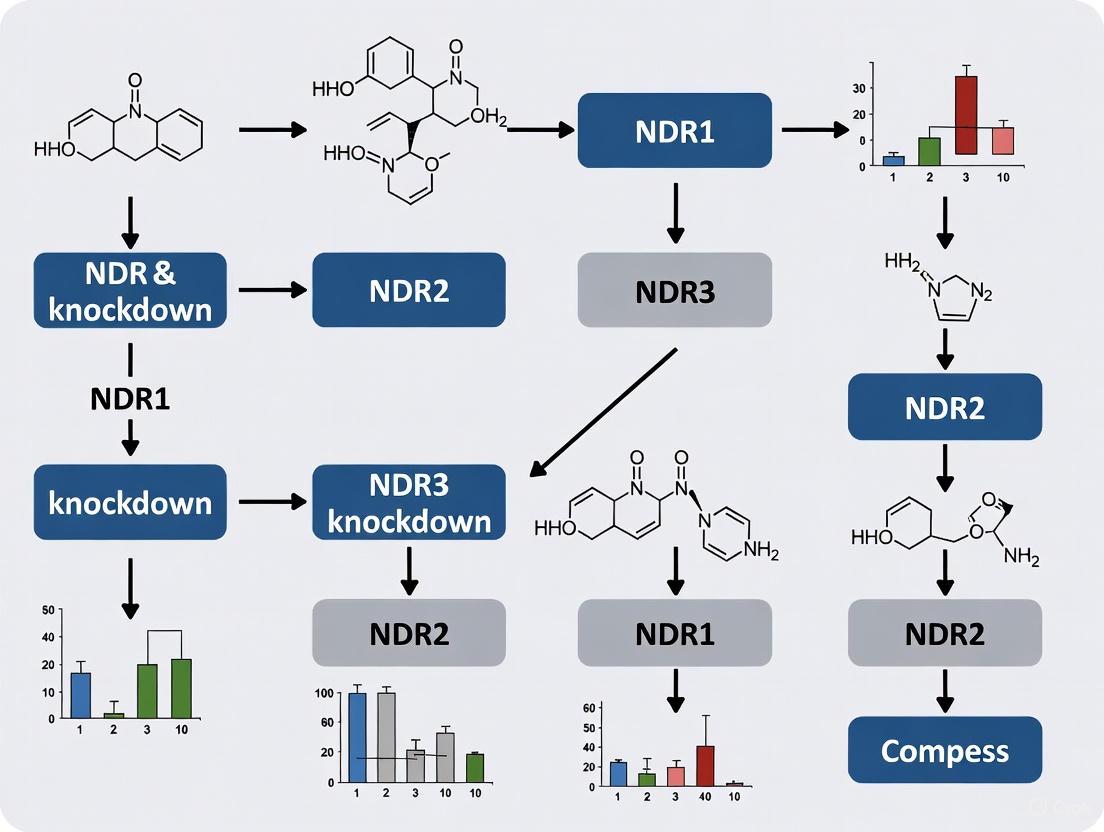
Targeting the highly conserved NDR1 and NDR2 kinases presents a significant challenge in cancer and immunology research due to their overlapping functions and compensatory upregulation.
Overcoming Compensatory Mechanisms in NDR1 and NDR2 Knockdown: A Strategic Guide for Robust Functional Analysis and Therapeutic Targeting
Abstract
Targeting the highly conserved NDR1 and NDR2 kinases presents a significant challenge in cancer and immunology research due to their overlapping functions and compensatory upregulation. This article provides a comprehensive framework for researchers and drug developers, addressing the foundational biology of NDR1/2, methodological strategies for effective dual knockdown, troubleshooting for overcoming compensation, and validation techniques for confirming phenotypic outcomes. By synthesizing recent findings on their roles in immune regulation, organelle function, and cancer progression, this guide aims to equip scientists with the tools to deconvolute the distinct and shared functions of these kinases and to design more effective therapeutic interventions that prevent escape mechanisms.
Decoding the NDR Kinase Family: Biology, Compensation, and Therapeutic Rationale
NDR1/NDR2 Troubleshooting Guide: Overcoming Compensatory Mechanisms
Frequently Asked Questions
Q: Why don't I observe a phenotype in my single NDR1 or NDR2 knockdown experiments, despite strong knockdown efficiency? A: This is a classic indication of compensatory mechanisms between NDR1 and NDR2. Due to their high sequence similarity (~87% identity, ~92% similarity) and overlapping functions, one kinase can often compensate for the loss of the other [1]. For instance, single knockdown of NDR1 or NDR2 in untransformed human cells did not trigger the p53/p21-dependent G1/S cell cycle arrest that was observed with MOB2 depletion [2].
Q: What is the gold-standard approach to study NDR kinase function in my experimental system? A: The most reliable method is dual genetic deletion or knockdown of both NDR1 and NDR2. Research shows that Ndr1/2 double knockout mouse embryos are lethal around E10.5 with severe developmental defects, whereas single knockouts are viable, demonstrating that many essential functions require at least one of these kinases [3] [4]. In neuronal cells, only dual knockout of Ndr1/2 leads to neurodegeneration and accumulation of autophagy markers [4].
Q: What molecular pathways should I investigate downstream of NDR1/2 to understand cell cycle phenotypes? A: Key downstream effectors include:
- p21/Cip1: NDR kinases directly phosphorylate p21 on Ser146, regulating its protein stability and thereby controlling G1/S progression [5].
- c-myc: NDR1/2 regulate G1/S progression through controlling c-myc protein levels [2] [3].
- YAP/TAZ: NDR1/2 can directly phosphorylate the transcriptional co-activators YAP and TAZ, similar to the canonical Hippo pathway kinases LATS1/2 [3].
Q: How can I confirm that my observed phenotypes are specifically due to NDR kinase loss? A: Implement comprehensive rescue experiments with wild-type NDR constructs. Use RNAi-resistant constructs to confirm phenotype reversal. For example, in U2OS cells, stable expression of wild-type NDR1 in an NDR1 knockdown background can rescue phenotypes [5].
Q: What are the best practices for monitoring NDR kinase activity in cells? A: Monitor phosphorylation at key regulatory sites:
- T-loop phosphorylation: Ser281/Ser282 (NDR1/NDR2) for auto-activation [6]
- Hydrophobic motif phosphorylation: Thr444/Thr442 (NDR1/NDR2) by upstream kinases MST1/2/3 [3] [5] Commercial phospho-specific antibodies are available for these sites [5].
Experimental Protocols for Effective NDR1/2 Knockdown
Protocol 1: Concurrent siRNA-Mediated Knockdown of NDR1 and NDR2
Purpose: To achieve simultaneous depletion of both NDR kinases and overcome compensatory effects.
Materials:
- Validated siRNA pools targeting both NDR1 (STK38) and NDR2 (STK38L)
- Appropriate lipid-based transfection reagent (e.g., Lipofectamine 2000 or RNAiMAX)
- Control siRNAs (non-targeting and single knockdown controls)
Procedure:
- Design siRNA sequences targeting unique regions of NDR1 and NDR2 mRNA
- Co-transfect cells with both NDR1 and NDR2 siRNAs
- Include control groups: Non-targeting siRNA, NDR1 siRNA only, NDR2 siRNA only
- Harvest cells at 48-72 hours post-transfection for analysis
- Validate knockdown efficiency by Western blot using specific antibodies [5]
Validation Methods:
- Western blot with NDR1/2 specific antibodies [5]
- qRT-PCR to confirm mRNA reduction
- Functional assays (cell cycle analysis, apoptosis assays)
Protocol 2: Generation of Dual Knockout Cell Lines Using CRISPR-Cas9
Purpose: To create stable NDR1/NDR2 double knockout cell lines for long-term studies.
Materials:
- CRISPR-Cas9 plasmids expressing gRNAs targeting NDR1 and NDR2
- Puromycin or other appropriate selection markers
- Antibodies for validation of knockout
Procedure:
- Design gRNAs targeting early exons of NDR1 and NDR2 genes
- Co-transfect or sequentially transfect CRISPR constructs
- Apply antibiotic selection for 7-14 days
- Isolate single-cell clones by limiting dilution
- Screen clones by Western blot and DNA sequencing
- Validate functional consequences through phenotypic assays [4]
Quantitative Data: Single vs. Dual Knockdown Outcomes
Table 1: Phenotypic Comparison of NDR Kinase Manipulation Across Experimental Systems
| Experimental System | Genetic Manipulation | Observed Phenotype | Reference |
|---|---|---|---|
| Untransformed human cells | MOB2 knockdown | G1/S cell cycle arrest, p53/p21 activation, DNA damage accumulation | [2] |
| Untransformed human cells | NDR1 or NDR2 single knockdown | No G1/S arrest | [2] |
| Mouse neurons | NDR1 or NDR2 single knockout | Viable, mild retinal defects | [1] |
| Mouse neurons | NDR1 and NDR2 dual knockout | Neurodegeneration, autophagy defects, impaired endocytosis | [4] |
| Mouse embryos | NDR1 and NDR2 double knockout | Embryonic lethality at E10, defective somitogenesis, cardiac looping defects | [3] |
| Intestinal epithelium | NDR1/2 regulation of YAP | Control of epithelial cell proliferation | [1] |
Table 2: Key Regulatory Phosphorylation Sites in NDR1/2 Kinases
| Kinase | T-loop Site | Hydrophobic Motif | Upstream Activator | Functional Consequence |
|---|---|---|---|---|
| NDR1 | Ser281 | Thr444 | MST1/2/3 | Full kinase activation [6] |
| NDR2 | Ser282 | Thr442 | MST1/2/3 | Full kinase activation [3] |
| NDR1 | - | - | MOB1 binding | Enhanced autophosphorylation [6] |
| NDR1 | Activation segment mutations | - | - | Dramatically enhanced in vitro kinase activity [6] |
Research Reagent Solutions
Table 3: Essential Reagents for NDR1/2 Research
| Reagent Type | Specific Examples | Function/Application | Validation Tips |
|---|---|---|---|
| Antibodies for Detection | Anti-NDR1/2 (recognizes both), phospho-specific T444-P [5] | Western blot, immunofluorescence | Validate in knockout cells as negative control |
| siRNA/shRNA | Validated pools targeting NDR1 (STK38) and NDR2 (STK38L) | Transient knockdown | Use multiple constructs to rule off-target effects |
| CRISPR-Cas9 | gRNAs targeting early exons of NDR1 and NDR2 | Generation of knockout lines | Sequence verify and perform functional assays |
| Activity Assays | Kinase assays with NDR substrates (p21, YAP) | Measure kinase activity | Use kinase-dead mutants as negative controls |
| Chemical Inhibitors | Okadaic acid (indirect, via PP2A inhibition) | Experimental activation of NDR [5] | Use at appropriate concentrations (nanomolar range) |
NDR Kinase Signaling and Compensation Mechanisms
NDR1/NDR2 Experimental Workflow for Effective Compromise
Key Technical Recommendations
- Always include dual knockdown controls alongside single knockdowns to detect compensatory effects
- Monitor both kinase expression and activity through phosphorylation status at key regulatory sites
- Employ multiple validation methods including rescue experiments with wild-type constructs
- Consider cell-type specific effects as NDR function can vary between transformed and primary cells
- Explore both canonical (Hippo/YAP) and non-canonical pathways (p21, autophagy, endocytosis) in phenotypic analysis
The consistent observation across multiple experimental systems is that comprehensive understanding of NDR kinase function requires addressing their compensatory relationship through dual genetic approaches rather than single manipulations.
FAQ: Core Functions and Compensatory Mechanisms
Q1: What are the primary distinct functions of NDR1 and NDR2? While NDR1 and NDR2 are highly similar serine/threonine kinases, they have distinct subcellular localizations and some non-overlapping functions. NDR1 is primarily nuclear, whereas NDR2 exhibits a punctate cytoplasmic distribution [7]. In the context of immune regulation, their roles can be opposing; for example, NDR1 acts as a positive regulator of IL-17 signaling, while NDR2 inhibits the same pathway [8].
Q2: Why is achieving a complete knockdown phenotype for NDR1/2 challenging, and what compensatory mechanisms exist? A major challenge in NDR1/2 research is functional redundancy. Knockdown of one kinase may be compensated by the other, as they share approximately 87% sequence identity and can form complexes with similar regulatory partners like MOB proteins [2] [7]. Furthermore, research suggests that MOB2, a regulator of NDR kinases, can itself function independently of NDR1/2 in processes like the DNA Damage Response (DDR), adding another layer of complexity [2]. Therefore, single knockdowns may not reveal the full phenotypic consequence, necessitating dual knockdown strategies.
Q3: What are the key cellular processes controlled by NDR1/2? NDR1/2 kinases are pleiotropic regulators involved in several critical cellular processes, summarized in the table below.
Table 1: Key Cellular Processes Regulated by NDR1/2 Kinases
| Cellular Process | Role of NDR1/2 | Key References |
|---|---|---|
| Centrosome Duplication | A centrosomal pool of NDR is required for proper centrosome duplication. Overexpression can lead to overduplication, while kinase-dead NDR or siRNA depletion impairs it. | [9] [10] |
| G1/S Cell Cycle Transition | Regulates the G1/S transition via an MST3-NDR-p21 axis. NDR kinases control the protein stability of the cyclin-dependent kinase inhibitor p21. | [5] |
| DNA Damage Response (DDR) | MOB2, a key binding partner, is required to prevent DNA damage accumulation and for efficient DDR signaling, though this may function independently of NDR1/2. | [2] |
| Innate Immunity & Inflammation | Roles are context-dependent. They can negatively regulate TLR9-mediated cytokine production but positively regulate RIG-I-mediated antiviral responses. They also have opposing roles in IL-17 signaling. | [11] [8] |
The Scientist's Toolkit: Essential Research Reagents
This table catalogs key reagents used in NDR1/2 research, as identified from the literature.
Table 2: Key Research Reagents for NDR1/2 Investigations
| Reagent / Tool | Function / Purpose in Experimentation | Key Findings Enabled |
|---|---|---|
| MOB2 Expression Plasmids | To study the interaction with and regulation of NDR1/2. MOB2 binding stimulates NDR catalytic activity but can also compete with the activator MOB1. | Identified as a specific interactor that activates NDR1/2 but may also form complexes associated with diminished NDR activity [2] [7]. |
| Kinase-Dead NDR (NDR-kd) | Acts as a dominant-negative mutant to disrupt endogenous NDR kinase function. | Expression of kinase-dead NDR negatively affected centrosome duplication, establishing a direct role for NDR in this process [9]. |
| Hyperactive NDR1-PIF | A constitutively active mutant used to study the consequences of chronic NDR pathway activation. | Overexpression of hyperactive NDR1 resulted in centrosome overduplication [2] [9]. |
| shRNA/siRNA against NDR1/2 | For targeted knockdown of individual or both kinases to study loss-of-function phenotypes. | Knockdown of NDR1 or NDR2 revealed their requirement for G1/S progression and centrosome duplication [5] [9]. |
| Phospho-Specific Antibodies (e.g., T444-P) | Detect the activated, phosphorylated form of NDR kinases. | Enabled the study of NDR kinase activation throughout the cell cycle, revealing selective activation in G1 phase by MST3 [5]. |
Experimental Protocols: Key Methodologies
Protocol 1: Investigating NDR1/2 in Centrosome Duplication Objective: To assess the role of NDR kinases in centrosome duplication and determine if their centrosomal pool is sufficient for this function. Workflow:
- Manipulation: Use at least two complementary approaches:
- Overexpression: Transfect cells with constructs for wild-type (WT) NDR, hyperactive NDR (e.g., NDR-PIF), and kinase-dead NDR (K118R).
- Knockdown: Transfert cells with siRNA or shRNA targeting NDR1, NDR2, or both.
- Centrosome Visualization: Fix and stain cells with antibodies against centrosomal markers (e.g., γ-tubulin, pericentrin) and DNA.
- Phenotypic Quantification: Score the percentage of cells with supernumerary centrosomes (>2) using fluorescence microscopy. A significant increase indicates overduplication, while a decrease indicates impaired duplication.
- Localization Studies: To test sufficiency, target NDR specifically to the centrosome using fusion proteins and assess if this alone induces overduplication [9]. Troubleshooting Tip: The centrosomal phenotype is linked to Cdk2 activity. Ensure Cdk2 function is intact when interpreting results, as NDR-driven centrosome duplication requires it [9].
Protocol 2: Elucidating the Role in G1/S Cell Cycle Transition Objective: To determine how NDR1/2 kinase activity controls the G1 to S phase transition. Workflow:
- Cell Synchronization: Synchronize cells at the G1/S boundary using a double thymidine block or similar method.
- Kinase Manipulation: Knock down NDR1/2 (individually and in combination) or their activator MST3 using siRNA in synchronized cells.
- Cell Cycle Analysis:
- BrdU Incorporation: Measure S-phase entry using BrdU/PI staining and flow cytometry.
- Propidium Iodide (PI) Staining: Analyze DNA content to determine the distribution of cells in G1, S, and G2/M phases.
- Downstream Signaling Analysis:
- Perform Western blotting to analyze key G1/S regulators: p21, cyclin D1, cyclin E, and phosphorylated Rb.
- Use phospho-specific antibodies to assess NDR activation (T444-P) and p21 phosphorylation (S146).
- Pulse-Chase Assay: Treat control and NDR-knockdown cells with cycloheximide (CHX) and monitor p21 protein degradation over time to assess stability [5]. Troubleshooting Tip: A G1 arrest upon NDR/MST3 knockdown confirms their role. Rescue experiments with siRNA-resistant NDR2 constructs are critical to confirm phenotype specificity [5].
Signaling Pathway & Experimental Diagrams
Diagram Title: NDR1/2 Signaling Network and Functional Overlap
Diagram Title: Troubleshooting NDR1/2 Knockdown Experiments
Technical Support Center
Troubleshooting Guide: NDR1/NDR2 Knockdown Experiments
Problem 1: Unexpected Cell Viability or Proliferation After NDR1 Knockdown
Issue: Your NDR1 knockdown does not produce the expected cell proliferation defect or G1/S cell cycle arrest.
Explanation: Compensatory upregulation of its paralog, NDR2, may be maintaining cellular function. Despite high structural similarity, NDR1 and NDR2 have distinct and specific functions [12]. When one kinase is suppressed, the other may functionally compensate to ensure critical processes like G1/S cell cycle progression continue.
Solution:
- Simultaneous Knockdown: Perform dual knockdown/knockout of both NDR1 and NDR2.
- Validate Compensation: Always measure NDR2 mRNA and protein levels in your NDR1 knockdown models. Conversely, check NDR1 levels in NDR2 knockdown models.
Problem 2: Inconsistent Phenotypes Across Cell Lines
Issue: The observed phenotype after NDR1 knockdown varies significantly between your primary and transformed cell lines.
Explanation: Compensatory mechanisms can be cell-type specific. The reliance on NDR1/NDR2 signaling and the efficiency of compensatory upregulation may depend on the cellular context and transformation status.
Solution:
- Benchmark Your Model: Use validated positive controls. For example, MOB2 knockdown is known to trigger a p53/p21-dependent G1/S arrest in untransformed human cells, unlike single NDR1/NDR2 knockdown [2].
- Profile Key Markers: Monitor the p53/p21 pathway and check for DNA damage accumulation using γH2AX staining, as this is a known downstream consequence of related disruptions [2].
Frequently Asked Questions (FAQs)
Q1: What is the core evidence for NDR2 compensatory upregulation in NDR1 knockout models? A1: Research indicates that while single knockdown of NDR1 or NDR2 may not trigger a cell cycle arrest, their combined knockdown does, suggesting functional redundancy and compensation [2]. Specific proteomic studies comparing NDR1 and NDR2 interactomes further highlight their distinct yet overlapping roles [12].
Q2: Beyond proliferation, what other key processes might be affected by NDR1/NDR2 compensation? A2: NDR1/NDR2 kinases are involved in diverse cellular processes. Compensation could significantly impact:
- DNA Damage Response (DDR): Both kinases are linked to DDR signaling [2] [5].
- Autophagy and Vesicular Trafficking: NDR2 specifically controls these processes [12].
- Cell Cycle Regulation: They control the G1/S transition by regulating p21 protein stability [5].
Q3: What is the role of the upstream regulator MOB2 in this context? A3: MOB2 is a specific binding partner for NDR1/2 kinases. Biochemically, MOB2 competes with MOB1 for NDR binding, and the MOB2/NDR complex is associated with diminished NDR kinase activity [2]. Studying MOB2 can provide indirect insights into NDR kinase status.
Table 1: Key Phenotypes from NDR Kinase and MOB2 Manipulations
| Genetic Manipulation | G1/S Cell Cycle Arrest | Proliferation Defect | p53/p21 Pathway Activation | DNA Damage Accumulation |
|---|---|---|---|---|
| NDR1 Knockdown | No [2] | No/Mild | No [2] | Not Reported |
| NDR2 Knockdown | No [2] | No/Mild | No [2] | Not Reported |
| NDR1/NDR2 Dual Knockdown | Yes (Inferred) | Yes (Inferred) | Not Reported | Not Reported |
| MOB2 Knockdown | Yes [2] | Yes [2] | Yes [2] | Yes [2] |
Table 2: Quantitative Data for NDR Kinase Regulation of p21
| Experimental Condition | Effect on p21 Protein | Proposed Mechanism | Key Evidence |
|---|---|---|---|
| NDR1/2 Kinase Activity | Controls p21 stability [5] | Direct phosphorylation of p21 at Ser146 [5] | Phospho-mimetic mutant (S146D) rescues stability in NDR-deficient cells [5] |
| NDR1/2 Knockdown | Decreased p21 levels [5] | Increased p21 turnover | Cycloheximide chase assays show reduced p21 half-life [5] |
Detailed Experimental Protocols
Protocol 1: Validating Compensatory Upregulation of NDR2
Purpose: To confirm that NDR2 protein levels increase following NDR1 knockdown. Methodology:
- Knockdown: Transfert cells with siRNA targeting NDR1. Include a non-targeting siRNA as a negative control.
- Harvest Samples: Collect cell lysates at 48, 72, and 96 hours post-transfection.
- Western Blotting:
- Primary Antibodies: Use anti-NDR1, anti-NDR2, and a loading control (e.g., Tubulin).
- Quantification: Perform densitometry analysis. Normalize NDR1 and NDR2 band intensities to the loading control. Compare the NDR2 level in the knockdown sample to the control.
Protocol 2: Functional Rescue with Constitutively Active NDR2
Purpose: To test if active NDR2 can rescue the phenotype of NDR1/NDR2 dual knockdown. Methodology:
- Co-transfection: Co-transfect cells with:
- siRNAs targeting both NDR1 and NDR2.
- A plasmid expressing a hyperactive NDR2 mutant (e.g., NDR2-PIF) [2].
- Proliferation Assay: 72 hours post-transfection, perform a cell viability assay (e.g., MTT or CellTiter-Glo).
- Cell Cycle Analysis: Stain cells with Propidium Iodide and analyze DNA content by flow cytometry to assess rescue of G1/S arrest.
Signaling Pathway and Experimental Workflow Diagrams
The Scientist's Toolkit: Research Reagent Solutions
Table 3: Essential Reagents for NDR Compensatory Mechanism Research
| Reagent / Tool | Function / Purpose | Example / Notes |
|---|---|---|
| Validated siRNAs/shRNAs | For specific knockdown of NDR1, NDR2, or both. | Essential to use non-overlapping sequences to avoid off-target effects and enable dual KD. |
| Constitutively Active NDR2 | To test functional rescue in dual knockdown models. | e.g., NDR2-PIF mutant [2] [5]. |
| Phospho-Specific Antibodies | Detecting activity and downstream signaling. | e.g., anti-p21-pS146 to monitor NDR kinase activity [5]. |
| Cycloheximide (CHX) | To measure protein half-life and stability. | Used in chase assays to determine p21 turnover rate [5]. |
| MOB2 Targeting Reagents | Positive control for G1/S arrest phenotype. | MOB2 knockdown triggers a p53/p21 arrest independently of NDR1/2 [2]. |
FAQs: Understanding NDR1/NDR2 Compensation
Q1: Why is dual knockdown/knockout of NDR1 and NDR2 necessary, even when studying one specific kinase? NDR1 and NDR2 share approximately 87% amino acid sequence identity and possess overlapping cellular functions [13] [14]. This high degree of similarity allows one kinase to compensate for the loss of the other, potentially masking phenotypic consequences in experimental settings. For instance, single knockout mice for either Ndr1 or Ndr2 are viable and fertile, whereas dual knockout results in embryonic lethality, providing direct genetic evidence of functional compensation essential for development [14].
Q2: What are the key biological processes most affected by NDR1/NDR2 compensation? Research indicates that compensation significantly impacts several critical processes, making them key areas for therapeutic intervention.
- Cell Cycle & Proliferation: NDR kinases regulate the G1/S cell cycle transition; dual loss is required to observe robust G1 arrest [5].
- Endocytosis & Autophagy: Neurons require both kinases to be deleted to observe severe defects in clathrin-mediated endocytosis and protein clearance via autophagy, leading to neurodegeneration [14].
- Oncogenic Pathways: In lung cancer models, the inactivation of both NDR1 and NDR2 is often necessary to effectively revert migration, invasion, and YAP activation driven by tumor-suppressor loss [15].
- Immune Regulation: NDR1 and NDR2 can both negatively regulate TLR9-mediated inflammatory cytokine production, suggesting overlapping roles in innate immunity [11] [16].
Q3: What are the primary consequences of failing to overcome NDR1/NDR2 compensation in preclinical research? The most common outcomes are false-negative results, an underestimation of a particular phenotype's strength, and a failure to recapitulate the efficacy of potential therapeutic strategies that target the NDR kinase family as a whole [12] [14].
Troubleshooting Guides
Problem: Inconsistent Phenotype After Single NDR1 or NDR2 Knockdown
Potential Cause and Solution:
- Cause: Functional compensation by the paralogous kinase (e.g., NDR2 upregulation following NDR1 knockdown) [14].
- Solution: Implement a dual knockdown strategy. Always verify the efficiency of knockdown and monitor the expression level of the compensatory paralog using qRT-PCR and Western blotting.
- qRT-PCR Protocol: Isolate total RNA using a commercial kit. Perform reverse transcription with 1 µg of RNA. Use SYBR Green for quantitative PCR with primers specific for NDR1 and NDR2. Normalize data to a housekeeping gene (e.g., S16) and analyze using the ΔΔCt method [15].
- Western Blot Protocol: Lyse cells in RIPA buffer with protease and phosphatase inhibitors. Resolve 20-30 µg of protein by SDS-PAGE, transfer to a PVDF membrane, and probe with anti-NDR1 and anti-NDR2 antibodies. Use an anti-actin or anti-calnexin antibody as a loading control [17] [15].
Problem: Off-Target Effects in Dual Knockdown Experiments
Potential Cause and Solution:
- Cause: High concentrations of siRNAs can lead to non-specific effects.
- Solution: Use validated siRNA pools or shRNAs with controlled lentiviral titers. Include a rescue experiment by expressing an siRNA-resistant wild-type cDNA of the target kinase to confirm phenotype specificity [5] [15].
- Rescue Construct Generation: Introduce silent mutations into the shRNA target site of the kinase cDNA using PCR mutagenesis. Clone the modified cDNA into an appropriate expression vector and co-transfect with the targeting shRNA [5].
Table 1: Documented Phenotypic Outcomes of Single vs. Dual NDR1/NDR2 Inhibition
| Experimental Model | Single Knockout/Knockdown | Dual Knockout/Knockdown | Biological Process | Citation |
|---|---|---|---|---|
| Mouse brain (in vivo) | Viable, normal brain development | Reduced survival, neurodegeneration | Neuronal homeostasis, autophagy | [14] |
| Human bronchial cells (HBEC) | Mild effect on invasion | Significant reversion of migration and invasion | Cancer cell invasion (EMT) | [15] |
| HeLa / U2OS cells | -- | G1 cell cycle arrest, reduced proliferation | G1/S cell cycle transition | [5] |
| BV-2 microglial cells | -- | Impaired phagocytosis, migration, and metabolic adaptation | Neuroinflammation, metabolism | [17] |
Table 2: Key Research Reagent Solutions for NDR1/2 Research
| Reagent / Tool | Function / Application | Example & Specification |
|---|---|---|
| siRNA/shRNAs | Gene knockdown | Validated pools targeting human NDR1 (e.g., NM007271) and *NDR2* (e.g., NM015000) [15] |
| CRISPR-Cas9 | Gene knockout | All-in-one plasmid with sgRNA targeting exon 7 of the Ndr2/Stk38l gene [17] |
| Antibodies | Detection via WB, IF, IHC | Anti-NDR1/2 (E-2) #sc-271703 (for N-terminus), Anti-NDR2 #STJ94368 (for C-terminus) [17] |
| Kinase Assays | In vitro activity measurement | Use of GST-NDR1 or GST-NDR2 (Carna Biosciences) for pull-down assays [15] |
| Animal Models | In vivo functional studies | Constitutive Ndr1 KO crossed with Ndr2-floxed mice and cell-type-specific Cre drivers (e.g., NEX-Cre) [14] |
Experimental Protocols
Protocol 1: Dual shRNA-Mediated Knockdown in Lung Cancer Cells
Application: Reverting invasion and cytokinesis defects in RASSF1A-inactivated lung cancer cells [15].
- Cell Lines: Use A549 or H1299 (RASSF1A-null) lung cancer cells.
- Viral Transduction: Infect cells with lentivirus carrying shRNA constructs.
- shNDR1:
5′-CCGGGTATTAGCCATAGACTCTATTCTCGAGAATAGAGTCTATGGCTAATACTTTTTG-3′ - shNDR2:
5′-CCGGGGCTTGCTTGGCGTAGATAACCTCGAGGTTATCTACGCCAAGCAAGCCTTTTTG-3′
- shNDR1:
- Selection: Use puromycin (1-2 µg/mL) for 48-72 hours to select for infected cells.
- Validation: Confirm knockdown efficiency by Western blotting 96-120 hours post-transduction.
- Functional Assay: Perform 3D Matrigel invasion assay 5 days post-knockdown. Seed 20,000 cells in Matrigel-coated transwells and count invading cells after 48 hours.
Protocol 2: Assessing Autophagy and Endocytosis Defects in Neurons
Application: Evaluating the consequences of dual NDR1/2 loss on neuronal protein homeostasis [14].
- Model System: Use primary neurons from dual Ndr1/2 knockout mice or control littermates.
- Endocytosis Assay: Incubate neurons with fluorescently labeled transferrin (e.g., Alexa Fluor 568-Tf, 25 µg/mL) for 10 minutes at 37°C. After acid wash to remove surface-bound Tf, fix cells and quantify internalized fluorescence by microscopy or flow cytometry.
- Autophagy Analysis: Lyse neurons and analyze protein extracts by Western blotting for key markers: accumulation of p62 and lipidated LC3-II indicates impaired autophagy.
- ATG9A Trafficking: Perform immunofluorescence staining for ATG9A. In knockout neurons, expect to see mislocalization of ATG9A at the neuronal periphery and increased surface levels.
Signaling Pathway & Experimental Workflow Diagrams
Diagram 1: NDR2-Driven Pathway in Lung Cancer upon RASSF1A Loss
Diagram 2: Experimental Workflow for NDR Kinase Studies
Strategic Approaches for Effective Dual-Knockdown and Combinatorial Targeting
In gene function studies, a major challenge is the potential for compensatory mechanisms to obscure experimental results. This is particularly relevant in research focusing on the Hippo kinase pathway proteins NDR1 and NDR2, which, despite their high similarity, have distinct functions and interactomes [12]. Phenotypic differences between gene knockdowns (achieved with siRNA/shRNA) and complete knockouts (achieved with CRISPR-Cas9) are not always due to RNAi off-target effects; they can result from genetic mutations triggering compensatory responses that are not activated during transient knockdowns [18]. This technical support center provides methodologies and troubleshooting guides for implementing a combined shRNA/CRISPR-Cas9 approach to differentiate true gene function from experimental artifacts in your NDR1/NDR2 research.
Frequently Asked Questions (FAQs) and Troubleshooting
Q1: Why would I use both shRNA and CRISPR-Cas9 to target the same gene?
A: Using both technologies in tandem allows you to distinguish between off-target effects (a common issue with RNAi) and genetic compensation (a phenomenon observed with permanent mutations).
- If both shRNA and CRISPR-Cas9 produce the same phenotype: This strengthens the evidence that the observed effect is due to the inhibition of your target gene (e.g., NDR1 or NDR2) and is not an artifact [18].
- If only shRNA produces a phenotype: This suggests the effect may be due to an off-target effect of the shRNA, as the genetic knockout did not replicate the result.
- If only CRISPR-Cas9 produces a phenotype: While rarer, this could indicate the presence of a compensatory mechanism that is only activated in response to the permanent DNA damage and is able to mask the phenotype in the knockout cells.
Q2: My shRNA against NDR2 shows a strong proliferative defect, but my CRISPR knockout does not. What is the most likely cause?
A: This specific scenario, as explored in glioma research with Sema4B, strongly indicates that the shRNA effect is the result of an off-target effect [18]. The recommended action is to design and test multiple additional shRNAs with different sequences. A consistent phenotype across several distinct shRNAs is necessary to confirm it is on-target.
Q3: How can I improve the specificity and efficiency of my CRISPR-Cas9 sgRNAs?
A: A key step is utilizing established bioinformatic tools for sgRNA design. Critical parameters to optimize are:
- On-Target Efficiency: Use algorithms like Rule Set 3, CRISPRscan, or Lindel to predict guides with high editing activity [19].
- Off-Target Risk: Minimize off-target effects by using tools that perform genome-wide homology analysis (like CFD scoring) to select guides with minimal sequence similarity to other genomic sites [19] [20].
- PAM Sequence: Ensure your target site is adjacent to the correct Protospacer Adjacent Motif (PAM) for your Cas nuclease (e.g., 5'-NGG-3' for SpCas9) [19] [21].
Q4: What are the key considerations for a rescue experiment to validate my findings?
A: A robust rescue experiment should re-express the target gene in the knockdown/knockout background.
- Species-Specific Rescue: When using shRNAs designed against a human gene, attempt a rescue by co-expressing an ortholog from another species (e.g., mouse cDNA) that is not targeted by the shRNA due to sequence differences [18].
- CRISPR-Resistant Transgene: For CRISPR knockout validation, express a cDNA version of the gene that has been engineered with silent mutations in the sgRNA target site, making it resistant to Cas9 cleavage while still coding for the functional protein.
- Functional Assay: The rescue should be confirmed by demonstrating that the phenotype (e.g., proliferation defect) is reversed in functional assays like BrdU incorporation [18].
Quantitative Data and Technology Comparison
The following table summarizes the core characteristics of each technology to help you select the appropriate tool for your experimental goals.
Table 1: Comparison of Key Genetic Inhibition Technologies
| Feature | siRNA | shRNA | CRISPR-Cas9 (Knockout) |
|---|---|---|---|
| Mechanism of Action | RNAi; degrades mRNA or inhibits translation [22] | RNAi; expressed precursor processed into siRNA-like molecules [22] | Creates double-strand DNA breaks, leading to frameshift mutations and gene knockout [23] |
| Target | Cytoplasmic mRNA | Cytoplasmic mRNA | Genomic DNA |
| Duration of Effect | Transient (several days) | Can be stable with viral integration | Permanent, heritable |
| Typical Efficiency | Variable; ~70-90% mRNA reduction possible [20] | Variable; ~70-90% mRNA reduction possible [18] | Variable; ~10-65% indel formation in unenriched populations [20] |
| Primary Concern | Off-target silencing [18] [20] | Off-target silencing [18] | Off-target editing, potential compensatory mechanisms [18] [20] |
| Best Use Case | Rapid, transient gene silencing; high-throughput screens | Long-term knockdown; in vivo studies | Complete, permanent gene inactivation; studying genetic compensation |
Essential Research Reagent Solutions
Table 2: Key Reagents for Co-inhibition Experiments
| Reagent / Tool | Function in Co-inhibition | Technical Notes |
|---|---|---|
| MISSION shRNA Library | Provides validated shRNA constructs for gene knockdown [18] | Use multiple distinct shRNA sequences per target to control for off-target effects. |
| CRISPR-Cas9 System (SpCas9) | The core nuclease for creating permanent gene knockouts [19] [21] | Can be delivered as plasmid, mRNA, or recombinant protein (RNP). |
| sgRNA Design Tools (e.g., CRISPick, CHOPCHOP) | Bioinformatics platforms to design highly specific and efficient guide RNAs [19] | Prioritize sgRNAs with high on-target and low off-target scores (e.g., CFD score). |
| Synthetic sgRNA | Chemically synthesized guide RNA for high purity and reduced immune stimulation [21] | Offers higher consistency and editing efficiency compared to in vitro transcribed (IVT) sgRNA. |
| Species-Specific cDNA Constructs | Critical for rescue experiments to validate target specificity [18] | Mouse cDNA can often be used to rescue human shRNA knockdowns. |
Experimental Workflow and Protocol Guidance
Combined shRNA and CRISPR-Cas9 Validation Workflow
The following diagram outlines the logical workflow for a co-inhibition experiment to conclusively determine gene function.
Detailed Protocol: Testing NDR2 in a Glioma Proliferation Model
This protocol is adapted from methodology used to investigate Sema4B in glioma biology [18].
Step 1: Target Validation and Tool Design
- Confirm Target Expression: Verify NDR2 mRNA and protein expression in your cell line (e.g., U87-MG) via qPCR and western blot.
- Design shRNAs: Select 3-4 distinct shRNA sequences targeting different regions of the NDR2 transcript from a validated library (e.g., MISSION shRNA). Include control vectors (empty and scrambled shRNA).
- Design CRISPR sgRNAs: Design 2-3 sgRNAs targeting early exons of the NDR2 gene using a tool like CRISPick [19]. Select guides with high on-target and low off-target scores.
Step 2: Viral Production and Cell Transduction
- Produce Lentivirus: Package the shRNA constructs into lentiviral particles.
- Titer Virus: Determine the viral titer to use a low multiplicity of infection (MOI ~1) to reduce non-specific effects.
- Infect Cells: Transduce your glioma cells with the shRNA-containing virus. Include control groups.
Step 3: CRISPR-Cas9 Transfection and Knockout Validation
- Transfert RNP Complexes: Electroporation of pre-assembled ribonucleoprotein (RNP) complexes of Cas9 protein and synthetic sgRNA is recommended for high efficiency and reduced off-target effects.
- Enrich Edited Cells: After 48-72 hours, use fluorescence-activated cell sorting (FCS) or antibiotic selection to enrich for transfected cells.
- Validate Knockout: After 5-7 days, extract genomic DNA and use T7 Endonuclease I assay or TIDE analysis to quantify indel efficiency. Confirm protein loss via western blot.
Step 4: Functional Phenotypic Assays
- Proliferation Assay: Use an XTT or MTS assay at 72-168 hours post-transduction/transfection to monitor cell proliferation/survival [18].
- BrdU Incorporation Assay: At 48 hours, perform a BrdU assay to directly measure DNA synthesis and proliferation rates [18].
- Cell Death Assay: Use a live/death assay (e.g., using fluorescent dyes) at 96-168 hours to quantify apoptosis.
- Clonogenic Assay: Plate cells at very low density and allow them to form colonies for 1-2 weeks to assess long-term survival and reproductive integrity [18].
Step 5: Data Analysis and Interpretation
- Correlate Knockdown/Knockout Efficiency: Plot the phenotypic results (e.g., % BrdU positive cells) against the measured level of NDR2 inhibition (mRNA or protein) for each shRNA and sgRNA.
- Cross-Compare Technologies: Use the decision tree in the workflow diagram above to interpret the combined data from shRNA and CRISPR experiments.
Mechanism of Action Diagrams
Core Mechanisms of siRNA/shRNA and CRISPR-Cas9
Understanding the fundamental mechanisms of each tool is key to troubleshooting. The diagram below illustrates these pathways.
A significant hurdle in cell signaling research, particularly with the NDR1/2 kinases, is the presence of robust compensatory mechanisms. Simple genetic knockdown of one kinase often leads to the compensatory upregulation or activation of its paralog, obscuring phenotypic readouts and complicating data interpretation [2]. This technical support document outlines a structured pharmacological approach to overcome these challenges. By integrating selective small molecule inhibitors with genetic tools, researchers can achieve more definitive and reliable conclusions about kinase function. The following guides and protocols are designed within the context of a broader thesis on dissecting NDR1/2 signaling, providing a roadmap for evaluating inhibitor efficacy and specificity in complex biological systems.
Troubleshooting Guides and FAQs
Frequently Asked Questions (FAQs)
Q1: Our knockdown of NDR1 does not yield a consistent cell cycle phenotype. What could be the reason? A: This is a classic sign of compensatory mechanisms. When NDR1 is knocked down, NDR2 (which shares ~87% sequence identity) may functionally compensate [2] [24]. We recommend a dual approach: (1) perform concurrent knockdown of both NDR1 and NDR2, and (2) validate your findings using a selective NDR1/2 pharmacological inhibitor to acutely inhibit kinase activity, as detailed in our experimental protocols.
Q2: How can we confirm that a phenotypic effect is specifically due to NDR1/2 inhibition and not an off-target effect? A: Specificity validation is a multi-step process. First, employ a rescue experiment by expressing a constitutively active NDR1/2 mutant (e.g., NDR1-PIF) in inhibitor-treated cells [2]. Second, use multiple, structurally distinct inhibitors targeting the same kinases to see if they produce congruent phenotypes. Finally, profile the inhibitor against a panel of related kinases (e.g., LATS1/2) to establish its selectivity window [25].
Q3: We suspect our inhibitor is affecting the DNA Damage Response (DDR). How do we investigate this? A: NDR1/2 and their binding partner MOB2 have documented roles in DDR signaling [2]. To investigate, monitor key DDR markers post-inhibition:
- Phosphorylation: Assess activation of ATM (p-ATM Ser1981) and CHK2 (p-CHK2 Thr68) via western blot.
- Foci Formation: Perform immunofluorescence for γH2AX and RAD50 to visualize DNA damage foci.
- Cell Cycle Checkpoints: Use flow cytometry to analyze cell cycle distribution, particularly G1/S arrest, which is a known consequence of DDR activation [2].
Q4: What is the functional relationship between MOB2 and NDR1/2, and how does it impact inhibitor design? A: MOB2 is a critical signal transducer that binds directly to NDR1/2, dramatically stimulating their catalytic activity [2] [24]. Biochemically, MOB2 competes with MOB1 for NDR binding, with MOB2/NDR complexes associated with diminished NDR activity [2]. This regulatory interplay means that effective pharmacological strategies must consider not only the kinase domain but also the MOB-NDR protein-protein interaction interface, which could be targeted by allosteric (Type III/IV) inhibitors [25].
Troubleshooting Common Experimental Issues
| Problem | Potential Cause | Recommended Solution |
|---|---|---|
| High cytotoxicity at low inhibitor concentrations | Off-target toxicity or inappropriate cellular model. | 1. Determine the IC50 in a non-transformed cell line for comparison.2. Test the inhibitor against a panel of unrelated kinases to assess promiscuity [25]. |
| Lack of effect on expected downstream substrate | Insufficient cellular penetration, rapid metabolism, or incorrect pathway assumptions. | 1. Use a cell-permeable, positive control stimulus (e.g., pervanadate for phosphorylation).2. Analyze cell lysates by mass spectrometry to verify inhibitor exposure.3. Re-evaluate the signaling pathway with recent literature; consider siRNA against the substrate as a control. |
| Inconsistent activity across cell lines | Differential expression of efflux pumps, metabolic enzymes, or compensatory pathways. | 1. Check protein expression levels of NDR1/2 and MOB2 in each line via western blot.2. Co-treat with a broad-spectrum efflux pump inhibitor (e.g., verapamil) to assess its influence [26]. |
| Irreproducible IC50 values | Instability of the inhibitor in DMSO stock or cell culture media. | 1. Make fresh, single-use aliquots of inhibitor stocks in anhydrous DMSO.2. Pre-treat media with inhibitor for a time course to assess stability before adding to cells. |
Experimental Protocols for Key Experiments
Protocol 1: Validating NDR1/2 Inhibitor Efficacy and Specificity
Objective: To confirm that a small molecule inhibitor effectively and specifically suppresses NDR1/2 kinase activity in a cellular context.
Materials:
- Selective NDR1/2 inhibitor (e.g., research-grade compound)
- Control vehicle (e.g., DMSO)
- Cell lines (e.g., HeLa, untransformed human fibroblasts [2])
- Antibodies: Anti-phospho-NDR1/2 (Thr444/Thr442), total NDR1/2, and β-Actin [24]
Methodology:
- Cell Treatment: Seed cells in 6-well plates. The next day, treat with a dose range of the inhibitor (e.g., 0.1 nM - 10 µM) or vehicle control for 4-24 hours.
- Cell Lysis: Lyse cells in RIPA buffer supplemented with protease and phosphatase inhibitors.
- Western Blot Analysis:
- Resolve 20-30 µg of total protein by SDS-PAGE and transfer to a PVDF membrane.
- Probe the membrane with anti-phospho-NDR1/2 antibody to measure autophosphorylation, a key indicator of kinase activation [24].
- Strip and re-probe with anti-total NDR1/2 and β-Actin antibodies to confirm equal loading.
- Data Interpretation: A effective inhibitor will show a dose-dependent decrease in phospho-NDR1/2 signal without altering total NDR1/2 levels. Calculate the IC50 from the dose-response curve.
Protocol 2: Assessing Phenotypic Consequences in Cell Cycle and DDR
Objective: To evaluate the functional impact of NDR1/2 inhibition on cell cycle progression and DNA damage response.
Materials:
- Inhibitor and vehicle control
- DNA damaging agent (e.g., Doxorubicin or Ionizing Radiation [2])
- Propidium Iodide (PI), RNase A
- Antibodies: Anti-p53, p21, γH2AX, RAD50 [2]
- Flow cytometer
Methodology:
- Treatment & Induction of Damage:
- Pre-treat cells with inhibitor or vehicle for 4 hours.
- Expose cells to a DNA damaging agent (e.g., 1 µM Doxorubicin for 2 hours) or leave untreated.
- Replace with fresh medium (with or without inhibitor) and incubate for 16-24 hours.
- Cell Cycle Analysis by Flow Cytometry:
- Harvest cells, fix in 70% ethanol, and stain with PI/RNase A solution.
- Analyze DNA content on a flow cytometer. A G1/S arrest, characteristic of NDR1/2 pathway disruption [2], will manifest as an accumulation of cells in the G1 phase.
- DDR Marker Analysis by Western Blot:
- Harvest parallel samples for western blotting as in Protocol 1.
- Probe for p53, p21, and γH2AX to quantify activation of the DNA damage checkpoint [2].
Research Reagent Solutions
Table: Essential Research Reagents for NDR1/2 and Associated Pathway Analysis
| Reagent | Function / Target | Key Application in Research |
|---|---|---|
| siRNA/shRNA (NDR1, NDR2) | Genetic knockdown of target kinase mRNA. | Used to establish long-term loss-of-function models and study compensatory effects between NDR1 and NDR2 [2]. |
| Selective NDR1/2 Inhibitors | Pharmacological blockade of kinase activity. | Provides acute, reversible inhibition to study direct kinase function and circumvent adaptive compensation seen in genetic models [2]. |
| Anti-phospho-NDR1/2 (Thr444/Thr442) | Detects activated, autophosphorylated NDR1/2. | Primary biomarker for assessing inhibitor efficacy and endogenous kinase activity in cellular assays [24]. |
| Anti-MOB2 Antibody | Detects the regulatory binding partner of NDR1/2. | Critical for co-immunoprecipitation (Co-IP) experiments to study MOB2-NDR complex formation and its modulation by inhibitors [2] [24]. |
| Anti-RAD50 Antibody | Detects a component of the MRN DNA damage sensor complex. | Used to investigate the link between NDR1/2 signaling and DNA damage repair, via Co-IP or immunofluorescence [2]. |
| Constitutively Active NDR1 (NDR1-PIF) | A hyperactive NDR1 mutant. | Serves as a critical tool for rescue experiments to confirm the specificity of phenotypic effects observed with inhibition [2]. |
Signaling Pathway and Experimental Workflow Diagrams
NDR Signaling and Inhibitor Mechanism
Experimental Workflow for Pharmacological Studies
Frequently Asked Questions (FAQs) & Troubleshooting
Q1: What are the primary compensatory mechanisms between NDR1 and NDR2 that complicate their individual knockdown?
A1: Despite high sequence similarity, NDR1 and NDR2 exhibit distinct physiological functions and interact with specific sets of partners. Knocking down one kinase often leads to the upregulation or functional compensation by the other, maintaining critical cellular processes. This functional redundancy is a key compensatory mechanism. Furthermore, each kinase has specific post-translational modifications and interacts with unique substrates, meaning that single knockdowns may not fully ablate the pathway's oncogenic functions. [12]
Q2: In an in vivo model, how do I determine if NDR inhibition is effectively synergizing with anti-PD-1 therapy?
A2: Effective synergy is confirmed by a significant enhancement of antitumor efficacy compared to either treatment alone. Monitor the following key parameters:
- Tumor Volume: Use caliper measurements to track regression. Synergy should show statistically superior tumor growth inhibition in the combination group.
- Immune Cell Profiling: Post-treatment, analyze tumor infiltrating lymphocytes (TILs) by flow cytometry. Successful combination therapy should significantly increase the density of functional CD8+ T cells and decrease the ratio of pro-tumor immune cells like Tregs and M2-like tumor-associated macrophages (TAMs). [27] [28]
- Immune Checkpoint Expression: Assess the tumor microenvironment for changes in the expression of other checkpoints like LAG-3 or TIM-3, as their upregulation can indicate adaptive resistance. [29] [28]
Q3: We observed severe colitis in our mouse model after combining NDR knockdown with CTLA-4 blockade. How should this immune-related adverse event (irAE) be managed in a preclinical setting?
A3: Gastrointestinal irAEs, particularly colitis, are common with CTLA-4 inhibitors. For grade 2 (4-6 bowel movements/day) or higher symptoms in your model:
- Hold Dosing: Temporarily suspend the checkpoint inhibitor administration.
- Initiate Corticosteroids: If symptoms are grade 2, start prednisone at 1-2 mg/kg/day. For severe (grade 3+) cases, hospitalize and administer methylprednisolone at 2-4 mg/kg/day.
- Add Immunosuppressants: If no improvement is seen within 48 hours on steroids, consider adding infliximab (anti-TNFα antibody) at 5 mg/kg. [30]
Q4: What could explain the lack of synergistic effect in our combination therapy experiment?
A4: Several factors can contribute to a lack of observed synergy:
- Insufficient NDR Knockdown: Confirm that your knockdown strategy effectively reduces both NDR1 and NDR2 levels and, crucially, their kinase activity. Compensatory upregulation of one upon knocking down the other can negate effects.
- Non-inflamed Tumor Microenvironment (TME): The combination may be ineffective in "immune-cold" tumors. Check baseline T cell infiltration. Strategies to increase immunogenicity, like radiation, may be needed first. [27] [28]
- Upregulation of Alternative Checkpoints: Analyze for induction of other inhibitory receptors (e.g., LAG-3, TIM-3) on T cells, which can mediate escape. Combining NDR inhibition with dual checkpoint blockade could be necessary. [29] [28]
Q5: Which human cancer cell lines are most appropriate for studying the NDR/ICB combination?
A5: Cell lines with defined genetic backgrounds and well-characterized immune profiles are ideal. Lung cancer models are strongly supported, as NDR2 has a pivotal role in lung cancer progression, regulating proliferation, migration, and invasion. Use:
- Human Bronchial Epithelial Cells (HBEC-3): For studying NDR function in a non-malignant context.
- Lung Adenocarcinoma Cells (H2030) and their brain-metastasis derived counterparts (H2030-BrM3): For investigating NDR's role in primary and metastatic disease. [12]
Table 1: Key Characteristics of NDR Kinase Isoforms
| Feature | NDR1 (STK38) | NDR2 (STK38L) |
|---|---|---|
| Primary Regulatory Mechanism | Activated by MOB1 binding; inhibited by MOB2 competition [2] | Activated by MOB1 binding; inhibited by MOB2 competition [2] |
| Core Cellular Functions | Mitosis, centriole duplication, control of c-myc and p21 levels [2] | Vesicle trafficking, autophagy, ciliogenesis, immune response [12] |
| Role in Cancer | Context-dependent | Often behaves as an oncogene; key role in lung cancer progression and metastasis [12] |
Table 2: Summary of Combination Therapy Strategies to Overcome ICI Resistance
| Combination Partner | Mechanism of Synergy | Example Agents | Key Considerations |
|---|---|---|---|
| Anti-angiogenics | Reverses immunosuppression via vessel normalization, enhancing T cell infiltration [27] | Bevacizumab (anti-VEGF), Axtinib (TKI) [31] [27] | IMbrave150 trial showed success in HCC; can improve TME [31] |
| Other ICIs (Dual Checkpoint Blockade) | Targets non-redundant, complementary immune inhibitory pathways [29] | Anti-CTLA-4 + Anti-PD-1/L1; Anti-LAG-3 + Anti-PD-1 [31] [29] | Increased efficacy but also higher incidence of irAEs [30] |
| Targeted Therapy | Modulates TME, promotes antigen presentation, targets oncogenic drivers [31] [28] | BRAF/MEK inhibitors, EGFR TKIs, PARP inhibitors [31] | Efficacy is highly variable and dependent on tumor genotype [31] |
| Chemotherapy | Induces immunogenic cell death, depletes immunosuppressive cells [29] | Gemcitabine, Cyclophosphamide, Paclitaxel [29] | Can help reshape a "cold" TME into an "inflamed" one [29] |
Experimental Protocols
Protocol 1: Validating Concurrent NDR1/NDR2 Knockdown and Assessing Compensatory Mechanisms
Objective: To achieve and confirm effective dual-knockdown of NDR1 and NDR2 in a human lung cancer cell line (e.g., H2030) and to monitor for potential compensatory upregulation.
Materials:
- Validated siRNA pools or CRISPR/Cas9 constructs targeting NDR1 and NDR2.
- Non-targeting siRNA (scramble control).
- Lipofectamine RNAiMAX or suitable transfection reagent.
- Human lung adenocarcinoma cell line H2030.
- RIPA Lysis Buffer, protease and phosphatase inhibitors.
- Antibodies: Anti-NDR1, Anti-NDR2, Anti-β-Actin (loading control).
Methodology:
- Cell Seeding and Transfection: Seed H2030 cells in 6-well plates. At 60-70% confluency, transfect with:
- Group 1: Non-targeting siRNA (Control)
- Group 2: NDR1-targeting siRNA
- Group 3: NDR2-targeting siRNA
- Group 4: Combined NDR1 and NDR2-targeting siRNA
- Incubation: Incubate cells for 48-72 hours post-transfection.
- Protein Extraction: Lyse cells in RIPA buffer containing inhibitors. Quantify protein concentration.
- Western Blot Analysis: Separate 20-30 µg of total protein by SDS-PAGE, transfer to a PVDF membrane, and probe with specific antibodies.
- First, probe for NDR1 and NDR2.
- After imaging, strip the membrane and re-probe for β-Actin for normalization.
- Data Interpretation:
- Confirm knockdown efficiency in individual and dual-knockdown groups.
- Critically, check if NDR2 protein levels increase in the NDR1-knockdown group, and vice versa, indicating compensatory regulation. [12]
Protocol 2: Assessing Synergy In Vitro Using Immune-Co-Culture Models
Objective: To evaluate the combined effect of NDR inhibition and PD-1/PD-L1 blockade on T cell-mediated killing of cancer cells.
Materials:
- Target cells: NDR-knockdown H2030 cells (from Protocol 1).
- Effector cells: Human peripheral blood mononuclear cells (PBMCs) from healthy donors.
- Anti-human PD-1/PD-L1 blocking antibody.
- CellTiter-Glo Luminescent Cell Viability Assay kit.
- IFN-γ ELISA kit.
Methodology:
- Prepare Target Cells: Seed NDR-knockdown or control H2030 cells in a 96-well plate.
- Co-culture Setup: Add PBMCs at various Effector:Target (E:T) ratios (e.g., 10:1, 5:1) to the target cells.
- Treatment: Add anti-PD-1/PD-L1 antibody or an isotype control to the respective wells.
- Incubation: Co-culture for 48-72 hours.
- Viability and Function Assessment:
- Synergy Analysis: Compare the percent cytotoxicity and IFN-γ levels across groups. Synergy is indicated when the combination of NDR-knockdown and anti-PD-1/PD-L1 results in significantly greater tumor cell killing and IFN-γ release than either treatment alone or their additive effect.
Signaling Pathway & Experimental Workflow Visualization
The Scientist's Toolkit: Research Reagent Solutions
Table 3: Essential Research Reagents for Investigating NDR and ICB Combination
| Reagent / Tool | Function / Application | Specific Examples / Notes |
|---|---|---|
| Validated siRNAs / shRNAs | Targeted knockdown of NDR1 and/or NDR2 gene expression. | Ensure specificity; use pooled siRNAs to minimize off-target effects. |
| CRISPR/Cas9 System | For generating stable NDR1/NDR2 knockout cell lines. | Allows for long-term functional studies. |
| Anti-NDR1 / Anti-NDR2 Antibodies | Detection and quantification of protein levels via Western Blot, Immunofluorescence. | Critical for confirming knockdown efficiency and studying localization. |
| Anti-PD-1 / Anti-PD-L1 Blocking Antibodies | In vitro and in vivo blockade of the PD-1/PD-L1 checkpoint. | Use species-specific clones for mouse models (e.g., anti-mouse PD-1). |
| Recombinant MOB Proteins | To study the regulatory interaction with NDR kinases in reconstitution assays. | MOB1 activates, while MOB2 inhibits NDR kinase activity. [2] |
| Lung Cancer Cell Lines | Model systems for studying NDR function in tumorigenesis and therapy response. | HBEC-3 (normal), H2030 (primary), H2030-BrM3 (metastatic). [12] |
| Flow Cytometry Antibody Panels | Profiling of tumor immune microenvironment (TME). | Include markers for CD8+ T cells, CD4+ T cells, Tregs, TAMs (CD206, F4/80). |
| Viability & Cytokine Assays | Quantifying tumor cell death and immune cell function. | CellTiter-Glo (viability), ELISA kits for IFN-γ, Granzyme B. |
A fundamental challenge in NDR kinase research is the high degree of functional compensation between NDR1 (STK38) and NDR2 (STK38L). These kinases share approximately 87% amino acid identity and often compensate for each other's functions, making single knockdowns insufficient for observing phenotypic consequences in many biological contexts [14] [4]. This guide provides troubleshooting methodologies to overcome these compensatory mechanisms and obtain reliable, interpretable results across different cell types.
FAQ: Addressing Common Experimental Challenges
Q1: Why does my single NDR1 or NDR2 knockdown fail to produce a phenotype?
This occurs due to compensatory upregulation or functional redundancy between these homologous kinases. Research demonstrates that individual Ndr1 or Ndr2 knockout mice are viable and exhibit normal brain development, while dual deletion causes severe neurodegeneration and reduced survival [14]. Always implement concurrent targeting strategies and verify knockdown efficiency at both genetic and protein levels.
Q2: How do I confirm successful dual knockdown given antibody limitations?
Many commercial antibodies show cross-reactivity due to high sequence similarity. Implement a multi-validation approach:
- Use multiple distinct siRNA/shRNA sequences per target
- Perform qRT-PCR for both NDR1 and NDR2 transcripts
- Validate protein reduction with antibodies targeting unique epitope regions
- Employ phospho-specific antibodies to assess functional activity loss
Q3: Are NDR1/2 expression patterns consistent across cell types?
No, significant variation exists. NDR1 primarily localizes to nuclei, while NDR2 is predominantly cytoplasmic [16]. Furthermore, microglial cells show differential expression—NDR2 protein increases under high-glucose conditions while NDR1 remains stable [17]. Always perform cell type-specific expression profiling before designing experiments.
Troubleshooting Guide: Overcoming Compensation Issues
Verification of Compensatory Mechanisms
| Observation | Potential Cause | Solution |
|---|---|---|
| No phenotype after single knockdown | Functional compensation by paralog | Implement dual knockdown strategy [14] |
| Weak phenotype despite efficient knockdown | Partial compensation | Combine genetic and pharmacological inhibition |
| Variable results across cell types | Cell-specific expression patterns | Pre-screen cell models for endogenous expression levels |
| Inconsistent antibody results | Antibody cross-reactivity | Use multiple validation methods (PCR, proteomics) |
Cell Type-Specific Expression Patterns
Table: Documented NDR1/2 Expression and Function Across Cell Types
| Cell Type | NDR1 Expression/Localization | NDR2 Expression/Localization | Key Compensatory Evidence |
|---|---|---|---|
| Neurons | Nuclear [16] | Cytoplasmic [16] | Dual knockout required for neurodegeneration phenotype; single knockouts viable [14] [4] |
| Microglia | Detected in human iPSC-derived microglia [17] | Increased under high-glucose stress; cell periphery localization [17] | Partial Ndr2 downregulation impairs phagocytosis and migration without NDR1 compensation [17] |
| Macrophages | Negative regulator of TLR9 signaling [16] | Similar function to NDR1 in cytokine regulation [16] | Both kinases regulate CpG-induced IL-6 secretion |
| Bronchial Epithelial Cells (HBEC) | Involved in RASSF1A pathway [15] | Directly phosphorylates GEF-H1 at Ser885 [15] | Dual knockdown required to revert migration and metastatic properties |
| Cancer Cell Lines | Regulates G1/S cell cycle transition [5] | Cooperates in cytokinesis and invasion [15] | Simultaneous inhibition needed for complete cell cycle arrest |
Experimental Protocols for Validating Dual Knockdown
Comprehensive Dual Knockdown Validation Workflow
Detailed Methodological Approaches
Protocol 1: Baseline Expression Profiling
Step 1: Transcript Quantification
- Design primers targeting unique regions of NDR1 and NDR2 mRNA sequences
- Perform qRT-PCR using SYBR Green chemistry with the following cycle conditions:
- 95°C for 10 min (initial denaturation)
- 40 cycles of 95°C for 15 sec and 60°C for 1 min
- Normalize to GAPDH/ACTB and calculate relative expression using ΔΔCt method
- Consider expression >0.5 relative to housekeeping as significant for functional contribution
Step 2: Protein Detection and Localization
- Use validated antibodies against unique epitopes: NDR1 (N-terminal), NDR2 (C-terminal) [17]
- Perform subcellular fractionation to confirm localization patterns
- Include phospho-specific antibodies to assess activation status
Protocol 2: Efficient Dual Knockdown
Genetic Approaches:
- siRNA combination: Pool 2-3 distinct siRNA sequences per target
- CRISPR-Cas9: Design gRNAs targeting exon 7 of Ndr2 gene as demonstrated in microglial studies [17]
- Use lentiviral delivery for stable knockdown in difficult-to-transfect cells
Validation Metrics:
- Target reduction >70% at transcript level
- Protein reduction correlating with transcript data
- Absence of compensatory upregulation of paralog
Protocol 3: Functional Compensation Assays
Metabolic Flexibility Assessment (Microglia):
- Measure mitochondrial respiration via Seahorse XF Analyzer
- Compare OCR (Oxygen Consumption Rate) under basal and stressed conditions
- Expect significant impairment in NDR2-deficient microglia under high glucose [17]
Endocytosis and Autophagy Monitoring (Neurons):
- Assess transferrin receptor accumulation via immunofluorescence
- Quantify LC3-positive autophagosomes and p62/SQSTM1 levels [14] [4]
- Monitor ATG9A trafficking defects characteristic of NDR1/2 loss
Cell Cycle Analysis (Epithelial Cells):
- Perform BrdU incorporation assays to measure S-phase entry
- Analyze cell cycle profiles via propidium iodide staining and flow cytometry
- Assess p21 stabilization and cyclin D1/CDK4 complex formation [5]
Research Reagent Solutions
Table: Essential Reagents for NDR Compensation Studies
| Reagent Category | Specific Examples | Function/Application | Validation Notes |
|---|---|---|---|
| Validated Antibodies | NDR1/2 antibody (E-2) #sc-271703 (targeting N-terminus) [17] | Immunocytochemistry, Western blot (human) | Works for human microglia; confirms cytoplasmic NDR2 localization |
| NDR2 antibody #STJ94368 (targeting C-terminus aa 380-460) [17] | Specific NDR2 detection in mouse cells | Positive staining in mouse primary and immortalized microglial cells | |
| Genetic Tools | siRNA: Predesigned sequences (Qiagen) [5] | Transient knockdown | Use multiple distinct sequences to rule off-target effects |
| shRNA: Commercially available and custom designs [15] | Stable knockdown | Enables long-term phenotypic studies | |
| CRISPR-Cas9: All-in-one plasmid with sgRNA against exon 7 of Ndr2 [17] | Partial gene disruption | Demonstrated effective in BV-2 microglial cells | |
| Cell Models | Primary neurons from conditional Ndr1/2 knockout mice [14] [4] | Neurodegeneration and autophagy studies | Dual deletion required for robust phenotype |
| Human bronchial epithelial cells (HBEC) [15] | EMT, invasion, and cytokinesis research | Model for RASSF1A-NDR2-GEF-H1 pathway | |
| BV-2 mouse microglial cells [17] | Neuroinflammation and metabolic studies | Responsive to high-glucose conditions | |
| Functional Assays | λ-Phosphatase assay [15] | Phosphorylation status determination | Critical for substrate validation |
| GTP-Rho pulldown assays [15] | RhoB activation status | Measures downstream pathway activity | |
| Metabolic flux analysis [17] | Mitochondrial function assessment | Detects microglial metabolic adaptation |
Advanced Technical Considerations
Pathway-Specific Experimental Design
Key Signaling Pathways to Monitor:
- RASSF1A-NDR2-GEF-H1-RhoB-YAP Axis: Critical in lung epithelial cells; monitor GEF-H1 phosphorylation at Ser885 and subsequent RhoB inactivation [15]
- TLR9-MEKK2-ERK Pathway: Particularly relevant in macrophages; NDR1 negatively regulates CpG-DNA induced cytokine production [16]
- ATG9A Trafficking and Autophagy: Essential in neuronal systems; impaired ATG9A trafficking underlies autophagy defects in NDR1/2 deficient neurons [14] [4]
- Cell Cycle Regulation (MST3-NDR-p21): Important for proliferating cells; NDR kinases control G1/S transition via p21 phosphorylation at Ser146 [5]
Quantification and Data Interpretation
Establish rigorous quantification standards:
- Automated image analysis for subcellular localization patterns
- Normalize phospho-protein signals to total protein and loading controls
- Include rescue experiments with wild-type and kinase-dead constructs
- Use multiple orthogonal methods to verify critical findings
By implementing these comprehensive troubleshooting approaches, researchers can effectively overcome the challenges posed by NDR1/2 compensatory mechanisms and obtain reliable, interpretable data across diverse cellular contexts.
Solving the Compensation Puzzle: Troubleshooting Failed Knockdowns and Incomplete Phenotypes
Technical Troubleshooting Guides
Common Experimental Challenges & Solutions
Q1: After successful NDR1 knockdown in my cell model, why do I not observe the expected phenotype, and how can I confirm if NDR2 compensation is occurring?
A: This is a classic symptom of NDR2 compensatory upregulation. To diagnose this:
- Perform parallel immunoblotting: Simultaneously probe for both NDR1 and NDR2 protein levels in your knockdown samples. Do not rely solely on NDR1 mRNA measurement.
- Expected signature: Successful NDR1 knockdown accompanied by increased NDR2 protein levels, particularly in tissues where NDR1 is normally highly expressed (e.g., thymus, spleen) [32].
- Check phosphorylation status: Assess phosphorylation at the hydrophobic motif (T444 in NDR1, T442 in NDR2), as this activating phosphorylation is also elevated on the compensating kinase [32] [5].
Q2: My double NDR1/NDR2 knockdown results in severe cell proliferation defects or death, making long-term functional studies impossible. What alternatives exist?
A: This is expected, as complete NDR1/NDR2 loss is embryonically lethal in mice [32]. Consider these approaches:
- Use inducible knockdown systems: Allow initial characterization of single knockdown before inducing the second knockdown.
- Employ chemical inhibition: Explore small molecule inhibitors targeting NDR kinases for acute, reversible inhibition.
- Utilize heterozygous models: Cells or models retaining one NDR allele are often viable and can reveal phenotypes masked by full compensation [32].
Q3: How can I distinguish between direct NDR2 transcriptional upregulation and post-transcriptional compensation mechanisms?
A: Implement a multi-level assessment protocol:
- mRNA vs. Protein Analysis: Compare NDR2 mRNA levels (via qRT-PCR) with protein levels (via western blot) in NDR1-deficient cells. Compensation is often post-transcriptional, showing protein increase without corresponding mRNA elevation [32].
- Pulse-Chase Experiment: Assess NDR2 protein stability using cycloheximide chase assays in control versus NDR1-deficient cells [5].
- Promoter Activity Reporter: Transfert an NDR2 promoter-luciferase construct to directly monitor transcriptional activity.
Validation & Specificity Controls
Q4: What are the essential controls to ensure my observed effects are specific to NDR compensation and not off-target effects?
A: Always include these critical controls:
- Rescue Experiments: Re-express NDR1 cDNA resistant to shRNA in knockdown cells to confirm phenotype reversal.
- Multiple Targeting Sequences: Use at least two distinct sh/siRNAs against each kinase to control for off-target effects.
- Kinase-Inactive Mutants: Express kinase-dead NDR1 (K118R) to confirm phenotypes require catalytic activity [5].
- Monitor Related Kinases: Check protein levels of LATS1/2 to ensure compensation is specific to the NDR subfamily.
Experimental Protocols & Methodologies
Standardized Protocol for Detecting NDR Compensation
Title: Comprehensive Molecular Profiling of NDR1/NDR2 Compensation
Purpose: To systematically identify and quantify molecular signatures of NDR2 upregulation in NDR1-deficient cellular models.
Workflow Overview:
Materials & Reagents:
- Cell Lines: Appropriate mammalian cell models (primary cells recommended for physiological relevance)
- Antibodies: Validated antibodies against NDR1, NDR2, phospho-T444/T442, and loading controls (β-actin/GAPDH)
- qPCR Primers: Primer sets for NDR1, NDR2, and housekeeping genes
- Knockdown Tools: Validated shRNA/siRNA constructs targeting NDR1 and non-targeting controls
Procedure:
- Establish Stable NDR1 Knockdown:
- Transduce cells with lentiviral shRNAs targeting NDR1 (use ≥2 distinct target sequences)
- Select with appropriate antibiotics for 7-10 days
- Confirm NDR1 knockdown at protein level (≥70% reduction recommended)
Parallel Molecular Profiling:
- Prepare cell lysates from control and NDR1-deficient cells
- Perform western blotting for NDR1, NDR2, and p-NDR1/p-NDR2
- Isolate RNA for qRT-PCR analysis of NDR1 and NDR2 mRNA
- Normalize all data to appropriate housekeeping controls
Functional Assessment:
- Analyze cell cycle profile via propidium iodide staining and flow cytometry
- Assess DNA damage response through γH2AX foci formation
- Measure proliferation rates via BrdU incorporation or MTT assays
Specificity Validation:
- Perform rescue with shRNA-resistant NDR1 cDNA
- Confirm phenotype reproducibility with independent targeting sequences
Expected Results: Successful NDR1 knockdown with concomitant increase in NDR2 protein levels and phosphorylation, potentially with minimal change in NDR2 mRNA.
NDR Compensation Signaling Pathway
Research Reagent Solutions
Essential Research Tools for NDR Compensation Studies
Table: Key Reagents for Investigating NDR1/NDR2 Compensatory Mechanisms
| Reagent Category | Specific Examples | Research Application | Key Considerations |
|---|---|---|---|
| Knockdown Tools | shNDR1 plasmids (multiple targets), siNDR1 pools, inducible shRNA systems | Establishing NDR1-deficient models | Always use ≥2 distinct target sequences; verify protein knockdown |
| Antibodies | Anti-NDR1 (validated), Anti-NDR2 (validated), Anti-pNDR1/2 (T444/442) | Detecting compensation signatures | Prioritize antibodies with demonstrated specificity in your model system |
| Expression Constructs | shRNA-resistant NDR1 cDNA, Kinase-dead NDR1 (K118R), Wild-type NDR2 | Rescue experiments and specificity controls | Include fluorescent tags for transduction efficiency monitoring |
| Cell Lines | NDR1/2 DKO MEFs, Tissue-specific NDR1 knockout models, Inducible knockout systems | Physiological compensation studies | Primary cells often show stronger compensatory responses |
| Chemical Inhibitors | NDR kinase inhibitors (research grade), MST kinase inhibitors | Acute inhibition studies | Use alongside genetic approaches for mechanistic insight |
Quantitative Data Interpretation
Molecular Signature Reference Table
Table: Expected Molecular Changes in NDR1-Deficient Models Indicating NDR2 Compensation
| Parameter | Control Cells | NDR1-Deficient Cells | Compensation Signature | Validation Method |
|---|---|---|---|---|
| NDR1 Protein | 100% (reference) | ≤30% retained | ≥70% reduction | Western blot |
| NDR2 Protein | 100% (reference) | 150-300% increase | Significant upregulation | Western blot |
| NDR2 mRNA | 100% (reference) | 80-120% of control | Minimal change | qRT-PCR |
| p-NDR2 (T442) | Baseline | 2-4 fold increase | Enhanced activation | Phosho-specific WB |
| Cell Cycle Profile | Normal distribution | G1/S accumulation | Functional consequence | Flow cytometry |
| DNA Damage | Baseline levels | Increased γH2AX foci | Phenotypic manifestation | Immunofluorescence |
Frequently Asked Questions (FAQs)
Q5: In which tissue types is NDR2 compensation for NDR1 loss most pronounced? A: Compensation is particularly robust in tissues where NDR1 is normally highly expressed, especially immune tissues (thymus, spleen, lymph nodes) and the colon [32]. Tissue context significantly influences compensation magnitude.
Q6: Does NDR2 fully compensate for all NDR1 functions in knockout models? A: No, compensation is partial and context-dependent. While NDR2 upregulation supports viability and basic developmental processes, specific NDR1 functions in DNA damage response, cell cycle control, and centrosome duplication may not be fully complemented [2] [32] [5].
Q7: What is the clinical relevance of understanding NDR1/NDR2 compensation? A: This knowledge is crucial for therapeutic targeting of the NDR kinase pathway in cancer and other diseases. Compensation mechanisms can explain treatment resistance and inform combination therapy strategies to prevent escape pathways.
Q8: Are there known regulators of this compensatory mechanism? A: While the precise mechanisms are still being elucidated, evidence suggests involvement of the upstream MST kinases and potentially the MOB family adaptor proteins that physically interact with and regulate NDR kinases [2] [5].
Q9: How long after NDR1 knockdown does NDR2 upregulation typically occur? A: Protein-level changes can be detected within 24-48 hours after effective NDR1 knockdown, with maximal compensation established within 3-5 days in most cell culture models.
FAQs and Troubleshooting Guides
Q1: My knockdown efficiency is low, but my cell viability is good. What could be the problem?
This is a common issue often related to suboptimal transfection or an ineffective siRNA sequence.
- Solution A: Verify siRNA Design and Quality: Ensure your siRNA follows established design guidelines: target a 21 nt sequence starting with an AA dinucleotide, and aim for 30–50% GC content. Using a BLAST analysis to confirm specificity is crucial to avoid off-target effects. Consider using pre-designed and validated siRNAs from commercial suppliers to guarantee performance [33].
- Solution B: Re-optimize Transfection Conditions: Transfection efficiency is highly cell-type dependent. Systematically test different reagent:DNA ratios and total DNA amounts. For instance, in HeLa cells, a FuGENE HD reagent at a 3:1 ratio provided high efficiency with low toxicity, while Lipofectamine 2000 was more toxic in the same cell line [34]. Always use a positive control siRNA (e.g., targeting a housekeeping gene like GAPDH) to distinguish between delivery problems and ineffective siRNA [35] [36].
Q2: I achieve good initial mRNA knockdown, but the protein level and phenotypic effect are inconsistent or short-lived. How can I sustain the effect?
This indicates a need to optimize dosing for the target protein's turnover and to account for potential compensatory mechanisms.
- Solution A: Employ Multiple Dosing or Tune Delivery Kinetics: A single siRNA dose often fails to maintain silencing due to protein and mRNA turnover. Research shows that applying a second, optimally timed dose can further reduce protein levels by 50% relative to a single dose. Using kinetic models to predict mRNA and protein dynamics can help schedule these doses for maximal sustained suppression [37].
- Solution B: Consider Alternative Delivery Vehicles for Long-Term Expression: For sustained knockdown, chemically synthesized siRNAs may be insufficient. Switching to viral vector-mediated delivery of short hairpin RNAs (shRNAs) can provide long-term gene silencing. For example, third-generation lentiviral vectors have been used to achieve a sustained 66% reduction of a disease-causing protein in patient-specific stem cells and their differentiated progeny, overcoming the transient nature of synthetic siRNAs [38].
Q3: I suspect my target gene's paralog is compensating for the knockdown. How can I address this in my experimental design?
This is a critical consideration, especially in the context of paralogs like NDR1 and NDR2.
- Solution A: Implement Simultaneous Dual-Gene Knockdown: When targeting genes with known redundant paralogs (e.g., NDR1 and NDR2), a single-gene knockdown may yield a weak phenotype due to compensation. The most direct approach is to co-transfect siRNAs targeting both genes simultaneously. It is vital to include controls for each individual knockdown to confirm the compensatory effect [39] [17].
- Solution B: Use a Sustained Knockdown System: Compensatory upregulation can occur over time. Using a system that provides persistent knockdown, such as lentiviral-delivered shRNAs, can help overcome this adaptive response by continuously suppressing the target gene, allowing the phenotypic consequence to manifest fully [38].
Quantitative Data for Experimental Optimization
Table 1: Transfection Reagent Performance Across Cell Lines
This table summarizes optimal transfection conditions and their outcomes for various cell lines, based on empirical data. "RLU Max" refers to the maximum relative luminescence units achieved, indicating transfection efficiency. "Ratio" is the optimal reagent:DNA ratio, and "vol." is the volume of DNA solution used [34].
| Cell Line | FuGENE 6 | FuGENE HD | ViaFect | Lipofectamine 2000 |
|---|---|---|---|---|
| HEK 293 | 60% (4:1; 10µl) | 20% | MAX (4:1; 10µl) | 30% |
| HeLa | 30% | MAX (3:1; 5µl) | 60% (4:1; 10µl) | 45% |
| NIH 3T3 | <10% | MAX (2.5:1; 5µl) | 95% (2:1; 5µl) | 60% (2:1; 5µl) |
| COS7 | MAX (3:1; 10µl) | 90% (3:1; 5µl) | 80% (4:1; 10µl) | 90% (4:1; 10µl) |
| RAW 264.7 | ++ | ++ | ++ | +++ |
Key: MAX = Highest efficiency for that cell line; % = Percent of max RLUs achieved by the best reagent; ++ to +++ = Qualitative performance score (>50-80% to >80% of max RLUs).
Table 2: Key Research Reagent Solutions
This table lists essential reagents and their functions for successful RNAi experiments, as cited in the provided literature.
| Reagent / Material | Function in Knockdown Experiments | Key Considerations |
|---|---|---|
| Silencer Select siRNAs [33] | Pre-designed, validated siRNAs for high-confidence gene silencing. | Reduces time and resources spent on siRNA design and validation. |
| siPORT NeoFX Transfection Agent [35] | Lipid-based reagent for efficient siRNA delivery into a wide range of cells. | Must be optimized for reagent:siRNA ratio and cell density to balance efficiency and toxicity. |
| Western-SuperStar Immunodetection System [35] | High-sensitivity chemiluminescent substrate for detecting protein knockdown by western blot. | Essential for correlating mRNA knockdown with reduction at the protein level. |
| Adeno-Associated Viral Vectors (AAVs) [40] | In vivo delivery of shRNAs or CRISPR components; non-integrating and low immunogenicity. | Limited cargo capacity (~4.7kb); requires small Cas variants or dual-vector systems. |
| Lentiviral Vectors (LVs) [38] [40] | In vivo/in vitro delivery for sustained, long-term shRNA expression. | Integrates into the host genome, raising safety concerns for therapeutic use. |
| Lipid Nanoparticles (LNPs) [40] | Non-viral delivery vehicle for in vivo siRNA delivery, protecting cargo from degradation. | Can be engineered for selective organ targeting (SORT). |
Detailed Experimental Protocols
Protocol 1: siRNA Transfection Using Lipid-Based Reagents This is a generalized protocol for transfecting adherent cells with siRNA, based on established methods [35] [34] [36].
- Day 0: Cell Seeding: Harvest cells in the logarithmic growth phase. Seed 0.5-1 x 10^6 cells in a T25 flask or an appropriate number of cells in a multi-well plate in normal growth medium containing serum. The cells should be 70-90% confluent at the time of transfection.
- Day 1: Transfection Complex Formation:
- Dilution A: Dilute the appropriate amount of siRNA (a starting point of 30-120 nM is recommended) in a sterile, serum-free medium (e.g., Opti-MEM) to a total volume of 250 µL.
- Dilution B: Gently vortex the transfection reagent. Dilute the optimal amount of reagent (e.g., 7.5 µL of siLenFect or siPORT NeoFX) in 242.5 µL of the same serum-free medium in a separate tube. Incubate for 5 minutes at room temperature.
- Combine: Add Dilution A (siRNA) to Dilution B (reagent). Mix gently by tapping the tube or pipetting up and down. Incubate the mixture for 15-45 minutes at room temperature to allow lipid-siRNA complexes to form.
- Transfection: While complexes form, replace the medium on the cells with 2.5 mL of fresh, serum-containing growth medium. After the incubation, add the 500 µL of transfection complex solution dropwise onto the cells. Gently swirl the plate/flask to ensure even distribution.
- Incubation and Analysis: Incubate the cells for 24-72 hours at 37°C in a CO2 incubator. The optimal time for assaying knockdown (mRNA or protein) depends on the turnover rate of your target and should be determined empirically [35].
Protocol 2: Achieving Sustained Knockdown Using Lentiviral shRNA This protocol outlines the process of creating stable, knockdown cell lines using lentiviral vectors, which is essential for long-term studies and overcoming compensatory mechanisms [38].
- Viral Production: Co-transfect HEK293T cells with the lentiviral shRNA vector (e.g., containing a miR30-styled shRNA and a reporter like eGFP) and necessary packaging plasmids using a standard calcium phosphate or lipofectamine method.
- Viral Harvest and Concentration: Collect the virus-containing supernatant 36-48 hours post-transfection. Concentrate the viral particles by ultracentrifugation to achieve a high-titer stock.
- Cell Transduction: Seed your target cells (e.g., iPSCs, primary cells). On the day of transduction, incubate the cells with the lentiviral supernatant in the presence of a transduction enhancer like polybrene. The Multiplicity of Infection (MOI) must be optimized to achieve good transduction without cytotoxicity.
- Selection and Clonal Expansion: 48-72 hours post-transduction, begin antibiotic selection (e.g., Puromycin) to eliminate non-transduced cells. Maintain selection pressure for at least one week. For the highest stringency, single-cell clones can be expanded and screened for reporter (eGFP) expression and knockdown efficiency.
- Validation: Validate knockdown in the stable polyclonal or clonal cell lines at both the mRNA (qRT-PCR) and protein (Western Blot) levels before proceeding with functional assays [38].
Signaling Pathways and Experimental Workflows
This workflow outlines the critical steps for a successful and interpretable gene knockdown experiment, emphasizing the iterative process required to overcome challenges like compensatory mechanisms.
This diagram illustrates the logical relationship in a compensatory mechanism, where knocking down one gene (like NDR1) leads to the upregulation of its paralog (NDR2) through specific molecular mechanisms, ultimately masking the expected experimental phenotype [39] [17].
FAQs: Overcoming Compensatory Mechanisms in NDR1/NDR2 Research
What are the primary compensatory challenges when targeting the NDR kinase pathway?
A major compensatory mechanism in NDR kinase research involves the competition between MOB1 and MOB2 proteins for binding to NDR1/2 kinases. The MOB1/NDR complex increases NDR kinase activity, while the MOB2/NDR complex is associated with diminished NDR activity. This creates a balancing act where knocking down one component can be offset by shifts in these competitive interactions. Furthermore, the high similarity between NDR1 and NDR2 means that knocking down one isoform may be compensated by the other, requiring simultaneous targeting of both kinases to observe clear phenotypic effects [2] [12].
How can we effectively rescue ciliogenesis defects in cellular models?
Successful rescue of ciliogenesis defects has been demonstrated through multiple targeting strategies. In AGBL5-/- models of retinitis pigmentosa, researchers achieved restoration of ciliogenesis by either (1) exogenous expression of wild-type AGBL5 or (2) genetic or siRNA-mediated knockdown of TTLL5, the glutamylase that opposes AGBL5 function. This rebalanced tubulin glutamylation and restored normal cilia formation [41]. Additionally, the microtubule-targeting agent MI-181 has shown efficacy in rescuing ciliation and cilia length defects in cells with compromised shortened cilia, even at low nanomolar concentrations [42].
What experimental considerations are crucial for reliable NDR1/NDR2 knockdown?
Robust NDR1/NDR2 knockdown requires careful experimental design. Use multiple, non-overlapping siRNAs (at least 2-3) per target to confirm on-target effects. For mRNA assessment, perform real-time PCR 48 hours post-transfection, ensuring Cq values are below 35 in a 40-cycle experiment. Transfect at appropriate concentrations (typically 5-100 nM) and always include positive control siRNAs (e.g., targeting GAPDH) to demonstrate transfection efficiency. For protein-level analysis, consider longer time courses (up to 120 hours) due to variable protein turnover rates [43].
Table: Quantitative Effects of MI-181 on Cilia Rescue Parameters
| Parameter | Control (DMSO) | MI-181 Treatment | Significance |
|---|---|---|---|
| Cilia length (starved cells) | 3.52 ± 0.43 μm | 6.09 ± 0.76 μm | p < 0.001 |
| Cilia length (non-starved cells) | 2.97 ± 0.43 μm | 4.75 ± 0.42 μm | p < 0.001 |
| Percent ciliated cells (non-starved) | 28.67 ± 3.21% | 38.33 ± 2.52% | p < 0.001 |
| Effective concentration range | - | 14.63-234 nM | Concentration-dependent |
How do we address cell type-specific variability in NDR pathway phenotypes?
Cell type specificity presents significant challenges, as NDR kinases perform context-dependent functions. In lung cancer models, NDR2 specifically controls processes like vesicular trafficking, autophagy, and ciliogenesis, with distinct interactors compared to NDR1 [12]. Similarly, primary cilia function differently in various skin cells—regulating keratinocyte proliferation and differentiation in the epidermis, while in dermal papillae and fibroblasts they're indispensable for hair growth via Sonic hedgehog signaling [44]. Always validate findings across multiple relevant cell types and consider cell-specific interaction partners when interpreting results.
Table: NDR Kinase Isoform-Specific Functions and Compensation Risks
| Kinase | Specific Physiological Functions | Compensation Risks | Validated Rescue Approaches |
|---|---|---|---|
| NDR1 | Cell cycle progression (G1/S), c-myc and p21 regulation, mitotic functions [2] | NDR2 may compensate in cell cycle regulation | Simultaneous knockdown of both isoforms required |
| NDR2 | Vesicle trafficking, autophagy, ciliogenesis, immune response regulation [12] | NDR1 may compensate in structural roles | Isoform-specific interactor targeting |
| NDR1/NDR2 | Hippo pathway integration, neuronal development, DNA damage response [2] | MOB1/MOB2 binding competition affects activity | Modulation of MOB protein ratios |
Troubleshooting Guides
Problem: Inconsistent ciliogenesis phenotypes after NDR1/NDR2 manipulation
Potential Causes and Solutions:
Cause 1: Unbalanced MOB1/MOB2 competition affecting NDR activity states.
- Solution: Monitor MOB1/MOB2 expression ratios alongside NDR knockdown. Consider moderate MOB2 overexpression to stabilize NDR in low-activity states, or MOB1 enhancement to boost NDR function [2].
Cause 2: Cell cycle-dependent effects masking ciliogenesis phenotypes.
Cause 3: Incomplete knockdown due to isoform compensation.
Problem: Off-target effects in NDR kinase signaling experiments
Potential Causes and Solutions:
Cause 1: Unintended disruption of related kinase pathways.
- Solution: Include broad pathway analysis to check for unintended Hippo pathway activation. Use phospho-specific antibodies for direct NDR substrate phosphorylation assessment rather than indirect phenotypic readouts [2].
Cause 2: Transfection toxicity confounding results.
- Solution: Run transfection reagent-only controls and titrate siRNA concentrations (5-100 nM). Use lipid-based transfection optimized for your cell type, and consider nucleofection for difficult-to-transfect primary cells [43].
Problem: Failed rescue attempts in ciliopathy models
Potential Causes and Solutions:
Cause 1: Improper tubulin glutamylation balance.
- Solution: In hyperglutamylation models (e.g., AGBL5 deficiency), target the opposing enzyme TTLL5 using siRNA (50 nM for 120 hours). Monitor rescue via immunostaining for glutamylated tubulin and cilia markers [41].
Cause 2: Microtubule stability issues affecting cilia assembly.
- Solution: Consider microtubule-targeting agents like MI-181 (10-100 nM for 24 hours), which has shown efficacy in restoring cilia length without inhibitory effects at higher concentrations [42].
The Scientist's Toolkit: Essential Research Reagents
Table: Key Reagents for NDR/Ciliogenesis Rescue Experiments
| Reagent/Category | Specific Examples | Function/Application | Experimental Notes |
|---|---|---|---|
| siRNA Platforms | Silencer Select, Stealth RNAi [43] | NDR1/NDR2 knockdown | Test multiple concentrations (5-100 nM); use ≥2 non-overlapping siRNAs per target |
| Positive Controls | GAPDH siRNA, Validated siRNA [43] | Transfection efficiency verification | Essential for troubleshooting; confirms delivery and functionality |
| Microtubule Agents | MI-181, nocodazole, colchicine, taxol [42] | Cilia length modulation | MI-181 shows concentration-dependent effects without inhibition at high concentrations |
| Rescue Reagents | TTLL5 siRNA, AGBL5 expression vectors [41] | Tubulin glutamylation balance | TTLL5 knockdown (50 nM, 120h) rescues hyperglutamylation defects |
| Detection Antibodies | Acetylated tubulin, glutamylated tubulin [42] [41] | Cilia visualization and glutamylation status | Key for immunofluorescence quantification of cilia parameters |
| Cell Lines | hTERT-RPE-1, ARPE19 [42] [41] | Ciliogenesis models | Retinal pigment epithelial cells for cilia studies; well-characterized models |
Problem: Ineffective immune function restoration in NDR-related models
Potential Causes and Solutions:
Cause 1: Overlooked NDR2-immune system interactions.
Cause 2: Insufficient consideration of cell-specific NDR functions.
- Solution: Account for tissue-specific NDR roles. In chronic lymphocytic leukemia, successful immune restoration has employed combination approaches targeting malignant B-cells while enhancing anti-tumor immune responses [45]. Adapt similar dual approaches for NDR-related immune defects.
In the context of NDR1/NDR2 kinase research, a primary challenge is achieving specific and effective targeting without triggering compensatory mechanisms or observing confounding off-target effects. A common experimental observation is that single knockdown of NDR1 or NDR2 often fails to produce the expected phenotypic outcome. Research indicates this is likely due to compensatory upregulation between these highly similar kinases; for instance, NDR2 levels increase in NDR1 knockout mice, potentially masking phenotypic consequences [46] [12]. This highlights the critical need for robust dual-targeting strategies that can simultaneously inhibit both kinases to elucidate their true biological functions and overcome these inherent compensatory pathways.
Troubleshooting Guides
Guide 1: Addressing Inefficient Dual-Kinase Knockdown
Problem: Incomplete knockdown of both NDR1 and NDR2 leads to persistent kinase activity and compensatory signaling, confounding experimental results.
Solutions:
- Simultaneous Delivery: Utilize a single vector expressing two distinct shRNAs or a single CRISPR vector with multiple gRNAs to ensure both kinases are targeted within the same cell population [47].
- Validate Protein Depletion: Always confirm knockdown efficacy at the protein level via Western blot using specific antibodies, as transcript levels may not fully correlate with functional protein reduction [46].
- Employ Chemical Genetics: As a complementary approach, use the "analog-sensitive" kinase technique. This involves engineering NDR1/2 to accept bulky ATP analogs, allowing for specific pharmacological inhibition that bypasses traditional knockdown issues [46].
Guide 2: Managing Off-Target Effects in Genetic Manipulations
Problem: CRISPR/Cas9 or RNAi constructs cause unintended genomic alterations or transcript silencing, leading to false positives or obscured phenotypes.
Solutions:
- Optimize gRNA Design: Utilize computational tools like Cas-OFFinder or DeepCRISPR to select gRNAs with minimal sequence homology to other genomic regions. Prioritize gRNAs with high on-target scores and low off-target potential [47].
- Use RNP Complexes: Deliver CRISPR/Cas9 as pre-formed Ribonucleoprotein (RNP) complexes. This method reduces the time the nuclease is active in cells, thereby decreasing the probability of off-target cleavage [47] [48].
- Implement Paired Nickases: Employ a Cas9 nickase mutant (D10A) that requires two adjacent gRNAs to create a double-strand break. This strategy dramatically increases specificity by demanding dual recognition at a single locus [47].
Guide 3: Controlling for Off-Target Kinase Inhibition
Problem: Small-molecule inhibitors intended for NDR1/NDR2 inadvertently inhibit other kinases, making phenotypic interpretation difficult.
Solutions:
- Leverage Combination Therapy: Apply the Multi-Compound–Multi-Target Scoring (MMS) method. By using two inhibitors with divergent off-target profiles but shared activity against NDR1/NDR2, you can dilute individual off-target effects and achieve more selective on-target inhibition [49].
- Conduct Rescue Experiments: Express inhibitor-resistant forms of NDR1/NDR2 (e.g., via point mutations in the ATP-binding pocket) in your experimental model. If the phenotype is rescued, it confirms the observed effect is due to on-target inhibition [46].
- Profile Selectivity Broadly: Use broad-spectrum kinase profiling panels (e.g., KiNativ) to empirically define the inhibitor's selectivity landscape before drawing biological conclusions [49].
Frequently Asked Questions (FAQs)
FAQ 1: Why is a dual-knockdown approach necessary for studying NDR1 and NDR2, even when my research focuses on only one of them?
NDR1 and NDR2 kinases are approximately 86% identical at the amino acid level and exhibit significant functional redundancy [46] [12]. Experimental evidence shows that knocking out NDR1 alone leads to a compensatory increase in NDR2 protein levels, which can mask phenotypic outcomes such as defects in dendrite morphogenesis or cell cycle regulation [46]. Therefore, simultaneously targeting both kinases is often essential to uncover their non-redundant and overlapping functions and to prevent misleading negative results.
FAQ 2: What are the best practices for validating the specificity of my NDR1/NDR2 knockdown or inhibition?
A multi-pronged validation strategy is recommended:
- Quantitative PCR: Measure mRNA levels for both NDR1 and NDR2 to confirm transcript reduction.
- Western Blotting: Use validated, isoform-specific antibodies to confirm protein knockdown. The antibody against NDR1 should not recognize overexpressed NDR2 and vice-versa [46].
- Phenotypic Rescue: Re-express a knockdown-resistant cDNA version of the target kinase(s) to reverse the observed phenotype, providing strong evidence for on-target effects.
- Global Profiling: For small molecules, use chemoproteomic approaches to identify all kinase targets that are engaged in a cellular context [49].
FAQ 3: Beyond genetic tools, what pharmacological strategies can I use to inhibit NDR1/NDR2, and how do I manage their selectivity?
While highly specific small-molecule inhibitors for NDR1/2 are not commonly reported, the chemical genetics (analog-sensitive kinase) system provides a powerful alternative for specific inhibition [46]. For conventional inhibitors, selectivity is a major challenge. The MMS framework is a promising strategy that involves using combinations of inhibitors at lower concentrations to achieve on-target efficacy while minimizing off-target activity through a "polypharmacology" effect [49]. Always correlate pharmacological inhibition data with genetic knockdown phenotypes to build a compelling case.
FAQ 4: My dual-knockdown of NDR1/NDR2 shows a strong cell proliferation defect. How can I determine if this is due to on-target effects or off-target DNA damage?
NDR1/2, and their binding partner MOB2, have been implicated in the DNA Damage Response (DDR) [2]. An off-target DNA damage response can trigger cell cycle arrest. To investigate this:
- Monitor DDR Markers: Perform Western blot analysis for phospho-ATM, phospho-CHK2, and p53/p21 upregulation in your knockdown cells [2].
- Comet Assay: Use a single-cell gel electrophoresis assay to directly quantify the level of endogenous DNA damage in the knockdown cells compared to controls.
- Concurrent p53 Knockdown: If the proliferation defect is caused by an activated p53/p21 checkpoint due to DNA damage, co-knockdown of p53 should rescue the cell cycle arrest [2].
Key Signaling Pathways and Compensatory Mechanisms
The following diagram illustrates the core signaling module of NDR1/2 and the key compensatory mechanism that necessitates dual-targeting approaches.
Diagram Title: NDR Kinase Signaling and Compensation Network
Experimental Protocols
Protocol 1: Validating Efficient Dual-Knockdown of NDR1/NDR2 in Mammalian Cells
This protocol is critical for confirming successful and specific protein depletion before phenotypic analysis [46].
Materials:
- Specific antibodies against NDR1 and NDR2 (validate for cross-reactivity).
- Control non-targeting shRNA/sgRNA.
- Validated shRNA or sgRNA constructs for NDR1 and NDR2.
- Cell lysis buffer (RIPA supplemented with protease and phosphatase inhibitors).
- Standard Western blot equipment.
Method:
- Transfection/Transduction: Co-transfect your target cells (e.g., HEK293, HeLa, or neuronal cells) with constructs targeting both NDR1 and NDR2. Include a non-targeting control.
- Harvest Cells: 72-96 hours post-transfection, harvest cells and lyse in RIPA buffer. Determine protein concentration.
- Western Blot:
- Load 20-30 µg of total protein per lane on an SDS-PAGE gel.
- Probe the membrane simultaneously with anti-NDR1 and anti-NDR2 antibodies.
- Use a loading control (e.g., GAPDH, β-Actin) to ensure equal loading.
- Analysis: Densitometric analysis of bands should show a significant reduction (>70%) in both NDR1 and NDR2 proteins in the dual-knockdown sample compared to the control, with no compensatory increase in either kinase.
Protocol 2: Applying the MMS Method for Selective Pharmacological Inhibition
This protocol outlines how to use the Multi-Compound–Multi-Target Scoring method to design a selective inhibitor combination for NDR1/NDR2 or other kinase pairs [49].
Materials:
- Published kinase inhibitor profiling dataset (e.g., Davis et al., 2011; Klaeger et al., 2017).
- Inhibitor compounds of interest.
- Software for data analysis (e.g., R, Python).
Method:
- Define Target Set: Identify the primary targets (e.g., NDR1 and NDR2) and a set of critical off-target kinases you wish to avoid.
- Data Extraction: From the profiling dataset, extract the equilibrium dissociation constants (Kd) or half-maximal inhibitory concentrations (IC50) for a library of inhibitors against your target and off-target kinases.
- Score Combinations: Use the MMS algorithm to calculate the selectivity score for all possible pairs (or triplets) of inhibitors. The algorithm identifies combinations where the inhibitors have:
- High combined activity against NDR1 and NDR2.
- Divergent and low activity against shared off-targets.
- Concentration Optimization: The MMS framework will also suggest optimal concentrations for each inhibitor in the combination to achieve a desired level of target engagement (e.g., 90% inhibition) while minimizing collective off-target inhibition.
- Experimental Validation: Test the top-ranked inhibitor combination in your cellular assay and validate its selectivity using a broad kinase activity assay (e.g., phospho-kinase array) or chemoproteomic methods.
Research Reagent Solutions
The table below summarizes key reagents and their applications in NDR1/NDR2 research and mitigating off-target effects.
| Reagent Type | Specific Example/Strategy | Function in Research | Key Consideration |
|---|---|---|---|
| Isoform-Specific Antibodies | Anti-NDR1 (mouse monoclonal); Anti-NDR2 (rabbit polyclonal) [46] | Validating specific protein knockdown in Western blot or immunofluorescence. | Must be rigorously validated to ensure no cross-reactivity between NDR1 and NDR2. |
| Chemical Genetics System | NDR1-"Analog-Sensitive" mutant (e.g., with a gatekeeper mutation) [46] | Allows for highly specific pharmacological inhibition of the engineered kinase using bulky ATP analogs, bypassing compensatory mechanisms. | Requires generation of mutant kinase and validation of its function. |
| Computational gRNA Design Tools | Cas-OFFinder, DeepCRISPR [47] | Predicts and scores potential off-target sites for a given gRNA sequence to aid in selecting the most specific guide. | An essential first step in any CRISPR experiment to minimize risk of off-target editing. |
| Ribonucleoprotein (RNP) Complexes | Pre-complexed recombinant Cas9 protein and sgRNA [47] [48] | Direct delivery of active Cas9-gRNA complex; reduces time for off-target activity and improves editing efficiency. | Superior to plasmid-based delivery for reducing off-target effects and can be coupled with modified Cas9 variants for enhanced specificity. |
| Kinase Inhibitor Profiling Data | Davis et al. (2011), Klaeger et al. (2017) [49] | Provides large-scale datasets of inhibitor Kd/IC50 values across the kinome, enabling informed inhibitor selection and MMS analysis. | Publicly available data is crucial for rational experimental design and avoiding compounds with known problematic off-target profiles. |
Validating Functional Outcomes: From In Vitro Assays to In Vivo Models
This technical support center is designed to assist researchers in validating key phenotypic outcomes—specifically cell proliferation, apoptosis, and ciliogenesis—in studies focused on NDR1 and NDR2 kinase knockdown. A significant challenge in this field is the potential for compensatory mechanisms between these highly similar kinases; for instance, knockdown of one may be offset by the activity of the other, masking the true phenotypic effect [2] [12]. The following guides and FAQs provide targeted troubleshooting strategies to overcome these and other common experimental hurdles, ensuring robust and interpretable results.
Frequently Asked Questions (FAQs) and Troubleshooting Guides
FAQ 1: After single KD of NDR1 or NDR2, I observe no significant change in cell proliferation. What could be wrong?
- Potential Issue: Functional redundancy and compensatory regulation between NDR1 and NDR2 kinases. The kinase that is not knocked down may upregulate its activity or expression to maintain cellular function [2] [12].
- Troubleshooting Steps:
- Validate Knockdown Efficiency: Confirm the KD at both the mRNA (e.g., qPCR) and protein (e.g., western blot) levels. Inefficient KD is a common culprit.
- Check for Compensatory Upregulation: Measure the expression and phosphorylation (activation) status of the non-targeted NDR kinase (e.g., NDR2 if you knocked down NDR1). An increase could indicate compensation.
- Implement Double Knockdown: Consider a double KD of both NDR1 and NDR2 to preclude compensation. Use appropriate controls to manage potential toxicity.
- Assess Downstream Pathways: Probe the activity of key downstream effectors. For example, examine the protein levels of c-Myc and p21, which are regulated by NDR1/2 and can influence G1/S cell cycle progression [2].
FAQ 2: My ciliogenesis assay shows high variability or inconsistent results after manipulating NDR2. How can I improve assay reliability?
- Potential Issue: Inconsistent cell cycle synchronization. Primary cilia assembly is tightly coupled to the cell cycle, occurring predominantly during quiescence (G0) or G1 phase [50] [51].
- Troubleshooting Steps:
- Standardize Quiescence Induction: Ensure a consistent and validated protocol for serum starvation (e.g., 48 hours in 0.5% FBS) to synchronize cells in G0/G1.
- Include Robust Controls: Always use a positive control (e.g., a known ciliogenesis inducer) and a negative control (e.g., cells kept in high serum). Monitor cell confluency, as high density can also promote ciliogenesis.
- Optimize Immunofluorescence: Confirm antibody specificity for a ciliary marker like acetylated α-tubulin (for the axoneme) or ARL13B (for the ciliary membrane). Include appropriate controls to rule out non-specific staining.
- Quantify Rigorously: Use high-content imaging and automated analysis where possible to quantify both the percentage of ciliated cells and cilia length across a large cell population, rather than relying on subjective manual counts [50].
FAQ 3: I am unable to confirm the expected hyperproliferation phenotype following ciliary protein disruption. What should I investigate?
- Potential Issue: The link between cilia and proliferation is complex and can be indirect. The observed phenotype may depend on the specific protein disrupted and the cellular context.
- Troubleshooting Steps:
- Verify Cilia Loss: First, conclusively demonstrate that your manipulation (e.g., KD of PGRMC2, GM3S, or PKD2) successfully reduces ciliation, as confirmed by the assays in FAQ 2 [50].
- Use Multiple Proliferation Assays: Do not rely on a single assay. Correlate results from a metabolic activity assay (e.g., MTT), a DNA synthesis assay (e.g., EdU incorporation), and direct cell counting.
- Analyze Cell Cycle Profiles: Perform flow cytometry to detect shifts in the cell cycle distribution. A hyperproliferative signal may manifest as a decrease in G1 population and an increase in S phase.
- Check Key Regulators: Examine the status of proliferation-related proteins. Disruption of ciliary proteins like PKD2 can affect pathways such as p21, Cyclin D1, or E2F1, which are also targets of cilia-associated miRNAs like miR-17 [50].
Summarized Data and Key Experimental Protocols
Table 1: Common Phenotypes and Controls for NDR and Cilia-Related Studies
| Target / Manipulation | Expected Impact on Proliferation | Expected Impact on Ciliogenesis | Key Controls and Validation Markers |
|---|---|---|---|
| NDR1/NDR2 Single KD | May be mild due to compensation [2] | Potential mild defect or no change | Validate KD of target; check expression of other NDR kinase; monitor p21, c-Myc [2] |
| NDR1/NDR2 Double KD | Significant defect; G1/S arrest [2] | Likely defect; requires validation | Check for viability/toxicity; analyze cell cycle via flow cytometry; quantify cilia [2] [12] |
| Ciliary Protein KD (e.g., PGRMC2, GM3S) | Increased proliferation [50] | Significant reduction in cilia % and length [50] | Confirm cilia loss via IF; use multiple proliferation assays; monitor cell cycle |
| miR-17 Overexpression | Increased proliferation [50] | Suppressed ciliogenesis [50] | Confirm overexpression; check targets (e.g., PKD2); quantify cilia |
Table 2: Troubleshooting Common Experimental Issues
| Problem | Possible Cause | Proposed Solution |
|---|---|---|
| No phenotype in single NDR KD | Compensation by paralog [2] | Perform double NDR1/2 KD; assess activity of non-targeted kinase. |
| High variability in cilia counts | Inconsistent cell cycle synchronization | Standardize serum starvation protocol and cell density; use automated imaging for quantification. |
| Unclear cell proliferation results | Assay limitation or off-target effects | Use orthogonal proliferation assays (EdU, MTT, cell counting); validate reagents and KD efficiency. |
| Accumulation of DNA damage in controls | Unexpected activation of DDR | Check for cellular stress (e.g., serum batch, contamination); ensure MOB2 levels are normal, as its loss can cause endogenous DNA damage [2]. |
Protocol 1: Assessing Ciliogenesis by Immunofluorescence and In Situ Hybridization
This protocol is adapted from methods used to study miR-17 and ciliary proteins [50].
- Cell Seeding and Starvation: Seed cells (e.g., LLC-PK1 or IMCD3) on glass coverslips. Once 60-70% confluent, replace growth medium with serum-free medium (e.g., 0.5% FBS) for 24-48 hours to induce ciliogenesis.
- Fixation and Permeabilization: Aspirate medium and fix cells with 4% paraformaldehyde/2% sucrose in PBS for 10 minutes at room temperature. Permeabilize with 0.1-0.5% Triton X-100 in PBS for 5-10 minutes.
- Immunostaining:
- Incubate with primary antibody against a ciliary marker (e.g., acetylated α-tubulin, 1:10,000 dilution) overnight at 4°C [50].
- Wash and incubate with fluorophore-conjugated secondary antibody (e.g., FITC-anti-mouse, 1:1000) for 1 hour at room temperature, protected from light.
- In Situ Hybridization (for miRNA localization, optional):
- Following immunostaining, use a miRCURY LNA miRNA ISH Kit.
- Denature a Texas Red-tagged LNA probe for your target miRNA (e.g., miR-17) at 80°C for 4 minutes and hybridize with cells according to the manufacturer's instructions [50].
- Mounting and Imaging: Mount coverslips with DAPI-containing mounting medium. Image using a high-resolution fluorescence or confocal microscope. Quantify the percentage of ciliated cells and cilia length from at least 100 cells per condition.
Protocol 2: Validating Cell Proliferation and Cell Cycle Status
- EdU Incorporation Assay:
- Treat cells with 10 µM EdU for 1-2 hours before harvesting.
- Fix cells and perform the "click" reaction to label incorporated EdU with a fluorescent dye according to the kit protocol.
- Analyze by flow cytometry or fluorescence microscopy to determine the percentage of cells in S-phase.
- Cell Cycle Analysis by Propidium Iodide (PI) Staining:
- Harvest cells, wash with PBS, and fix in 70% ethanol at -20°C for several hours or overnight.
- Wash cells and resuspend in PI/RNase Staining Buffer. Incubate for 15-30 minutes at room temperature, protected from light.
- Analyze DNA content by flow cytometry. Use software to deconvolute the histograms to determine the percentage of cells in G0/G1, S, and G2/M phases.
- Western Blot for Cell Cycle Regulators:
Signaling Pathways and Experimental Workflows
NDR Cilia Proliferation Pathway
Phenotypic Validation Workflow
The Scientist's Toolkit: Key Research Reagent Solutions
Table 3: Essential Reagents for Phenotypic Validation Experiments
| Reagent / Tool | Function / Target | Example Application | Considerations |
|---|---|---|---|
| LNA miRNA Probes (e.g., for miR-17) | High-affinity detection of microRNAs via ISH | Localizing miR-17 to primary cilia and cell body [50] | Probe design is critical; requires specific fixation and hybridization conditions. |
| Acetylated α-Tubulin Antibody | Labels the stable microtubules of the ciliary axoneme | Standard marker for visualizing and quantifying primary cilia by IF [50] | Confirm species reactivity; use high dilution (e.g., 1:10,000) for clean signal. |
| siRNA/shRNA for NDR1/2 | Selective knockdown of target kinases | Investigating functional roles and compensatory mechanisms [2] | Always use validated constructs and measure off-target effects on the paralog. |
| MOB2 Antibody | Detects the endogenous MOB2 signal transducer | Studying the MOB2-NDR and MOB2-RAD50 interactions in DDR [2] | Useful for co-immunoprecipitation and western blot to confirm protein complexes. |
| p21 (Waf1/Cip1) Antibody | Detects the key CDK inhibitor | Monitoring cell cycle arrest in response to NDR KD or DNA damage [50] [2] | Reliable marker for G1/S arrest; can be upregulated by p53-dependent and independent pathways. |
| EdU (5-Ethynyl-2´-deoxyuridine) | Thymidine analogue for labeling DNA synthesis | Click chemistry-based detection of proliferating (S-phase) cells [50] | Safer and easier alternative to radioactive thymidine or BrdU. |
This technical support center provides targeted guidance for researchers investigating the complex interplay between T-cell activation and the regulation of the immune checkpoint protein PD-L1. A particular focus is placed on the challenges encountered when studying compensatory mechanisms in the tumor microenvironment, especially in the context of NDR1 and NDR2 kinase knockdown research. These kinases have emerged as important regulators of cellular processes such as endomembrane trafficking and autophagy, and their loss can impair neuronal health and lead to protein homeostasis defects [4]. Furthermore, NDRG2, a stress-responsive gene, has been instrumentally shown to suppress PD-L1 expression in breast cancer cells via the NF-κB signaling pathway, thereby restoring T-cell proliferation [52]. This resource offers troubleshooting guides, detailed protocols, and reagent information to support robust and reproducible experimental outcomes in this critical area of immuno-oncology.
Troubleshooting Guides
Common ELISA Issues and Solutions
Problem: Weak or No Signal
| Possible Cause | Solution |
|---|---|
| Reagents not at room temperature | Allow all reagents to sit on the bench for 15–20 minutes before starting the assay [53]. |
| Incorrect storage of components | Double-check storage conditions on the kit label; most components require storage at 2–8°C [53]. |
| Expired reagents | Confirm the expiration dates on all reagents before use [53]. |
| Insufficient or incorrect washing | Follow the recommended washing procedure, ensuring the plate is drained completely after each wash [53]. |
| Plate read at incorrect wavelength | Ensure the plate reader is set to the wavelength specified in the kit protocol [53]. |
Problem: High Background or Excessive Signal
| Possible Cause | Solution |
|---|---|
| Insufficient washing | Ensure appropriate washing procedure is followed. Invert the plate onto absorbent tissue and tap forcefully to remove residual fluid [53]. |
| Contamination between wells | Always use a fresh plate sealer during incubations; do not reuse sealers [53]. |
| Longer incubation times than recommended | Adhere strictly to the recommended incubation times in the protocol [53]. |
| Substrate exposed to light | Store substrate in the dark and limit its exposure to light during the assay [53]. |
Problem: Poor Replicate Data or Inconsistent Results Assay-to-Assay
| Possible Cause | Solution |
|---|---|
| Inconsistent pipetting technique | Check pipetting technique and double-check all dilution calculations [53]. |
| Inconsistent incubation temperature | Ensure the incubation temperature is stable and as recommended; be aware of environmental fluctuations [53]. |
| Edge effects (evaporation, uneven temperature) | Seal the plate completely with a plate sealer during incubations and avoid stacking plates [53]. |
Common Immunofluorescence (IF) Issues and Solutions
Problem: High Background
| Possible Cause | Solution |
|---|---|
| Inadequate blocking | Prolong the blocking incubation time or consider using a different blocking solution (e.g., serum from the secondary antibody host) [54]. |
| Primary or secondary antibody concentration too high | Titrate antibodies to determine the optimal concentration; follow the manufacturer’s protocol [54]. |
| Cross-reactivity of secondary antibody | Use validated isotype controls to check for cross-reactivity [54]. |
| Sample autofluorescence | Check autofluorescence with an unstained control; use materials and mounting media with low autofluorescence [54]. |
Problem: Low Signal or Lack of Signal
| Possible Cause | Solution |
|---|---|
| Overfixation leading to epitope damage | Reduce fixation time or consider changing the fixative [54]. |
| Inadequate permeabilization | Optimize the permeabilization step for your specific target and cell type [54]. |
| Low antigen expression | Include a positive control (e.g., an overexpression model) to confirm the assay setup [54]. |
| Antibody concentration too low | Increase the antibody concentration or extend the incubation time/temperature [54]. |
Frequently Asked Questions (FAQs)
Q1: What is the molecular basis of PD-1/PD-L1 mediated T-cell suppression?
The binding of PD-L1 (on cancer or antigen-presenting cells) to PD-1 (on activated T cells) recruits the phosphatase SHP2 to the phosphorylated immunoreceptor tyrosine-based switch motif (ITSM) in the cytoplasmic tail of PD-1 [55]. The activated SHP2 then dephosphorylates key signaling molecules in the TCR cascade (such as CD3ζ and ZAP70) and the co-stimulatory receptor CD28. This attenuates T-cell signaling, leading to reduced cytokine production (e.g., IL-2), inhibited T-cell proliferation, and functional exhaustion, thereby facilitating tumor immune escape [55].
Q2: My NDR1/2 knockdown is successful, but my PD-L1 measurements are inconsistent across techniques. How can I validate my findings?
This is a common challenge. It is crucial to use multiple, orthogonal methods to validate PD-L1 expression. A study demonstrated a high correlation between a novel digital immunostaining technique, ELISA data, and mRNA counts (nCounter) across five cell lines with varying PD-L1 levels [56]. You can:
- Use a quantitative immunoassay (e.g., a specific Quantikine ELISA kit) to reliably measure soluble PD-L1 levels in conditioned media or cell lysates [57].
- Correlate protein levels with mRNA expression using a sensitive method like qRT-PCR or nCounter [56].
- If using IHC, consider that different antibodies (e.g., SP142, SP263, 28-8, E1L3N) can yield different results due to variations in titer and detection systems. Using a highly quantitative digital method can help harmonize these analyses [56].
Q3: In the context of NDR kinase research, what is a key compensatory mechanism I should be aware of when assessing PD-L1 expression?
A key mechanism involves the tumor suppressor NDRG2. Research has shown that NDRG2 overexpression in aggressive breast cancer cells (like MDA-MB-231 and 4T1) inhibits PD-L1 expression by suppressing the NF-κB signaling pathway [52]. Consequently, NDRG2 knockdown in these cells leads to upregulation of PD-L1 [52]. Therefore, in your NDR1/2 knockdown models, you should also monitor NDRG2 expression. Its downregulation could be a compensatory mechanism that increases PD-L1, potentially confounding your results. Analysis of TCGA data confirms a negative correlation between NDRG2 and PD-L1 in basal and triple-negative breast cancers [52].
Q4: How can I functionally confirm that changes in PD-L1 expression are biologically relevant for T-cell activity?
The gold standard functional assay is a T-cell proliferation/tumor co-culture assay [52].
- Generate tumor cells with your experimental condition (e.g., NDR1/2 knockdown, NDRG2 overexpression).
- Treat these cells with mitomycin-C or irradiate them to halt their cell division.
- Co-culture the treated tumor cells with activated T cells (e.g., from mouse splenocytes or human PBMCs) in the presence of a T-cell stimulus.
- Measure T-cell proliferation using a standard assay like CFSE dilution or [³H]-thymidine incorporation. As demonstrated in research, 4T1 tumor cells expressing high PD-L1 strongly suppress T-cell proliferation, but this suppression is significantly reversed when the tumor cells overexpress NDRG2 (and thus have lower PD-L1) [52].
Signaling Pathways and Experimental Workflows
PD-1/PD-L1 Signaling Pathway and Regulatory Network
PD-1/PD-L1 Pathway and Key Regulator
This diagram illustrates the core inhibitory mechanism of the PD-1/PD-L1 axis. The binding of PD-L1 to PD-1 recruits SHP2, which dephosphorylates and inactivates T-cell receptor (TCR) and CD28 signaling, leading to suppressed T-cell function [55]. Critically, it also integrates the role of the tumor suppressor NDRG2, which inhibits the NF-κB pathway, a key driver of PD-L1 transcription [52]. This highlights a potential compensatory mechanism where loss of NDRG2 can lead to upregulated PD-L1, a key consideration in NDR1/2 knockdown research.
Experimental Workflow for Validating PD-L1 Regulation
Validating PD-L1 Regulation Workflow
This workflow outlines a rigorous approach to confirm the functional impact of genetic manipulations like NDR1/2 knockdown on PD-L1 biology. The process begins with genetic modification, followed by validation of PD-L1 changes at the protein, mRNA, and cellular levels to ensure consistency [52] [56]. The key step is a functional T-cell/tumor co-culture assay to demonstrate that the observed PD-L1 changes have a biologically relevant impact on T-cell proliferation [52]. Finally, the investigation delves into the underlying molecular mechanisms, such as analyzing the NF-κB signaling pathway, a known target of NDRG2 and a key regulator of PD-L1 transcription [52] [58].
The Scientist's Toolkit: Research Reagent Solutions
The following table details key reagents and their applications in T-cell activation and PD-L1 regulation studies.
| Research Reagent | Function / Application | Example / Note |
|---|---|---|
| PD-L1 ELISA Kits | Quantifies soluble PD-L1 (sPD-L1) levels in cell culture supernatants, serum, or cell lysates. | Quantikine ELISA Kit; Useful for screening cell lines with varying PTEN/PI3K pathway status [57]. |
| Phospho-Specific Flow Cytometry Kits | Measures T-cell activation status via phosphorylation of intracellular signaling proteins (e.g., STAT5). | BD Phosflow T Cell Activation Kit; Can show differential IL-2 sensitivity in CD8+ vs. CD8- T cells [59]. |
| Anti-PD-L1 Neutralizing Antibodies | Blocks the PD-1/PD-L1 interaction in functional co-culture assays to restore T-cell activity. | Clone 10F.9G2 (mouse) [52]; Used to confirm the specific role of PD-L1 in suppressing T-cell proliferation. |
| Digital Immunostaining Reagents | Provides highly sensitive and quantitative measurement of protein expression (e.g., PD-L1) in situ. | Phosphor-Integrated Dot (PID) technology; Correlates well with ELISA and mRNA data [56]. |
| NDRG2 Assay Reagents | Investigates the role of the NDRG2 tumor suppressor in PD-L1 regulation via NF-κB. | siRNA for knockdown, expression vectors for overexpression; Critical for studying compensatory pathways in NDR research [52]. |
In molecular biology research, single gene knockdown involves reducing the expression of one target gene to study its function. In contrast, dual (or combinatorial) knockdown simultaneously reduces the expression of two genes to uncover functional redundancies, synthetic lethal interactions, or compensatory mechanisms within biological networks. Research on NDR1 and NDR2 kinases provides a compelling case study, demonstrating that dual knockdown often produces effects that are not merely additive but qualitatively different from single knockdowns, revealing critical insights into pathway regulation and compensatory mechanisms.
Why Dual Knockdown is Essential for NDR1/NDR2 Research
- Functional Compensation: Single knockout mice for either Ndr1 or Ndr2 are viable and exhibit normal brain development. However, dual knockout in neurons causes neurodegeneration, proving these highly similar kinases (87% amino acid identity) compensate for each other's function [14].
- Uncovering Essential Roles: The severe phenotype from dual knockdown reveals the non-redundant, essential role of the NDR kinase family in maintaining neuronal health, which is completely masked in single knockdown experiments [14].
- Identifying Novel Therapeutic Targets: In cancer research, dual knockdown approaches can identify synergistic lethal gene pairs where simultaneous inhibition dramatically impairs cancer cell growth, whereas single knockdowns have minimal effect. This provides avenues for multi-targeted therapies [60].
Experimental Protocols for Single vs. Dual Knockdown
Retrovirus-Mediated Stable Knockdown in Epithelial Cells
This protocol is adapted from a study demonstrating efficient suppression of multiple target genes and the generation of double knockdowns in Madin-Darby canine kidney (MDCK) cells [61].
Step 1: Vector Construction
- Use a retroviral vector such as pRVH1-puro or pRVH1-hygro, which co-expresses short hairpin RNAs (shRNAs) and a selectable marker.
- Design shRNA oligonucleotides targeting unique sequences of your gene of interest and clone them into the vector.
- For dual knockdown, use vectors with different selectable markers (e.g., puromycin and hygromycin resistance) or a vector engineered to express two different shRNAs.
Step 2: Virus Production
- Transfect the packaging cell line (e.g., Phoenix gag-pol) with the retroviral vector and a plasmid expressing the vesicular stomatitis virus G (VSV-G) protein using a transfection reagent like Lipofectamine 2000.
- 24 hours post-transfection, change to low-glucose DMEM and incubate at 32°C.
- Collect virus-containing supernatant 48 hours post-transfection, centrifuge to remove debris, and use immediately or freeze.
Step 3: Target Cell Transduction and Selection
- Seed target cells and mix with the viral supernatant in the presence of 4 µg/ml polybrene.
- Incubate at 32°C for 12 hours, then change to normal culture medium and return to 37°C.
- 36-48 hours post-infection, begin selection with the appropriate antibiotic (e.g., 4 µg/ml puromycin or 800 µg/ml hygromycin) for 48-60 hours.
- For dual knockdown, perform sequential infections: infect with the first virus, select, then infect with the second virus and select with the second antibiotic [61].
siRNA-Mediated Transient Knockdown
This method is suitable for rapid assessment of knockdown effects in human cell lines, as used in studies on SNF2L and SNF2LT [62] [63].
Step 1: siRNA Design
- Use pre-designed siRNAs targeting specific exons of your genes of interest. For example, to target SNF2L and its isoform SNF2LT specifically, design siRNAs against unique exons [62].
- A negative control siRNA (non-targeting) is essential.
Step 2: Cell Transfection
- Plate cells to reach 30-50% confluency at the time of transfection.
- For each gene target, transfert cells with 50 nM siRNA using a transfection reagent like Lipofectamine RNAiMAX or Lipofectamine 2000, following the manufacturer's protocol.
- For dual knockdown, transfert with a mixture of two different siRNAs (each at 50 nM).
Step 3: Assay and Validation
- Assay for knockdown efficiency 48-96 hours post-transfection using quantitative RT-PCR or immunoblotting.
- Perform functional assays relevant to your study (e.g., cell proliferation assays, analysis of DNA damage markers, Western blot for pathway components) [62].
Troubleshooting Guides & FAQs
Troubleshooting Common Knockdown Issues
| Problem | Possible Cause | Solution |
|---|---|---|
| Low Knockdown Efficiency | Inefficient transduction/transfection; poor shRNA/siRNA design; low expression. | - Optimize viral titer (MOI) or transfection reagent ratios [64].- Verify shRNA/siRNA sequence and design; select a different target region [64].- Sequence the shRNA construct to confirm no mutations are present [64]. |
| High Cell Toxicity/Death | Off-target effects; reagent toxicity; excessive viral/conjugate concentration. | - Use a pooled siRNA approach (e.g., siPOOLs) to minimize off-targets [65].- Scale back the amount of transfection reagent or viral particles used [64]. |
| Inconsistent Phenotypes | Poor knockdown reproducibility; biological redundancy not fully overcome. | - Use highly validated reagents and robust sample sizes [65].- Ensure dual knockdown is performed to account for paralogous compensation, as with NDR1/NDR2 [14]. |
| No Phenotype in Single KD | Strong compensatory mechanisms by related genes or pathways. | - Perform combinatorial knockdown based on hypothesized redundant pathways [65] [60].- Use a sensitized screen (e.g., knock down one gene and screen for KDs of others that cause a phenotype) [65]. |
Frequently Asked Questions
Q1: Why would a dual knockdown of two genes produce a less severe phenotype than a single knockdown of one of them? This paradoxical effect can occur and highlights complex genetic interactions. In a study on SNF2L and its isoform SNF2LT, single knockdown of either induced DNA damage, a DNA damage response, and apoptosis in cancer cells. However, dual knockdown of both, while still causing DNA damage, failed to trigger a damage response or apoptosis, instead allowing sustained cancer cell growth. This suggests the ratio of the two isoforms is critical for regulating the cell's response to stress [62] [63].
Q2: What are the technical challenges specific to performing dual knockdowns? Key challenges include:
- Increased Resources: The number of combinations grows exponentially, requiring more reagents and larger sample sizes for robust data [65].
- Toxicity Risk: Using high concentrations of multiple siRNAs can increase non-specific toxicity. Using lower working concentrations of high-purity reagents like siPOOLs can mitigate this [65].
- Complex Data Interpretation: The effects are often non-additive (synergistic or epistatic), requiring careful statistical analysis to interpret [65] [60].
Q3: How can I achieve simultaneous knockdown of two genes with high efficiency? Consider using a single vector system engineered to express multiple shRNAs. For example, specialized adenovirus [66] or lentivirus [60] vectors have been developed that contain two or more independent shRNA expression cassettes, ensuring that every transduced cell receives all knockdown constructs.
Data Presentation: Quantitative Findings
The following table summarizes key quantitative findings from relevant single vs. dual knockdown studies, illustrating the range of possible outcomes.
Table 1. Comparative Outcomes of Single vs. Dual Gene Knockdown
| Gene(s) Targeted | Single Knockdown Phenotype | Dual Knockdown Phenotype | Key Interpretation | Source |
|---|---|---|---|---|
| NDR1 | Viable mice; normal brain development. | Neurodegeneration in cortex & hippocampus; impaired survival; protein homeostasis defects. | NDR1 and NDR2 are functionally redundant; dual knockout is required to reveal essential function. | [14] |
| NDR2 | Viable mice; normal brain development. | Same as NDR1 single knockout. | Compensation is mutual; both kinases must be removed to impair the essential pathway. | [14] |
| SNF2L | DNA damage, DNA damage response, cell cycle arrest, apoptosis in cancer cells. | DNA damage present, but no DNA damage response or apoptosis; sustained cancer cell growth. | The ratio of SNF2L to SNF2LT regulates cell fate after DNA damage; dual knockdown disrupts this signaling. | [62] [63] |
| SNF2LT | DNA damage, DNA damage response, cell cycle arrest, apoptosis in cancer cells. | Same as SNF2L single knockdown. | The truncated isoform has a similar function to the full-length protein in this context. | [62] [63] |
| LZK & DLK | Knockdown of LZK alone: no effect on survival. | Synergistic effect: significantly promoted neuron survival under injury. | A synergistic interaction exists; LZK's protective role is only revealed when DLK is also knocked down. | [65] |
Signaling Pathways and Workflow Visualizations
Single vs. Dual NDR1/2 Knockdown in Neuronal Homeostasis
SNF2L/SNF2LT Knockdown Alters DNA Damage Response
The Scientist's Toolkit: Essential Research Reagents
Table 2. Key Reagents for Knockdown Experiments
| Reagent | Function & Application | Example & Notes |
|---|---|---|
| Retroviral Vectors (e.g., pRVH1-puro/hygro) | Stable integration of shRNA into host genome for long-term knockdown; ideal for difficult-to-transfect cells like MDCK cells [61]. | Co-express shRNA and antibiotic resistance; allows sequential dual knockdown with different selection markers. |
| Lentiviral Vectors with Dual Cassettes | Delivery of multiple shRNAs via a single virus particle; enables efficient and consistent dual knockdown without sequential infection [60]. | Engineered vectors contain two independent shRNA expression units; useful for high-throughput synergy screens. |
| siPOOLs | A complex pool of 30+ siRNAs targeting a single gene; minimizes off-target effects and increases knockdown robustness, crucial for reliable combinatorial studies [65]. | Allows use of lower concentrations, reducing toxicity in multi-gene knockdown experiments. |
| Antibiotics for Selection | Selection of successfully transduced cells expressing resistance markers (e.g., puromycin, hygromycin) [61]. | Critical for generating stable knockdown populations; concentration must be optimized for each cell line. |
| Polybrene | A cationic polymer that enhances viral transduction efficiency by neutralizing charge repulsions between viral particles and the cell membrane [61]. | Typically used at 4-8 µg/ml during viral infection. |
| Lipofectamine RNAiMAX | A proprietary lipid-based transfection reagent optimized for high-efficiency delivery of siRNA into a wide range of mammalian cells with low cytotoxicity. | Preferred for transient siRNA transfections; follow manufacturer's protocol for reverse or forward transfection. |
Frequently Asked Questions (FAQs)
Q1: What are the key compensatory challenges when targeting NDR1/NDR2 kinases in cancer models? A major compensatory mechanism is the functional redundancy between NDR1 and NDR2 kinases. Despite their high similarity, they have distinct, non-overlapping roles in processes like vesicle trafficking, autophagy, and immune response regulation [12]. Knocking down one kinase can lead to the upregulation or hyperactivation of the other, or of parallel pathways like the Hippo signaling cascade, which can compensate for the lost function and sustain tumor growth. Furthermore, MOB2, a regulator of NDR kinases, can compete with the activator MOB1 for NDR binding. Inhibiting NDR kinases may shift this balance, potentially leading to unintended suppression of NDR activity through increased MOB2 binding [2].
Q2: Which in vivo imaging modalities are best for longitudinally tracking tumor growth and immune cell recruitment? Long-term, high-contrast in vivo imaging is ideally performed in the near-infrared II (NIR-II) windows. Fluorescence imaging in the 1880–2080 nm spectral range is particularly effective because it experiences reduced photon scattering and leverages water absorption to suppress background signal, resulting in superior image clarity [67]. For deep-tissue imaging of immune cell infiltration, dynamic contrast-enhanced optical imaging is highly valuable as it can track the distribution of absorbing or fluorescent contrast agents in real time, providing functional information about the tumor immune microenvironment [68].
Q3: Our NDR1/2 knockdown is efficient in vitro but shows minimal effect on in vivo tumor growth. What could explain this discrepancy? This is a classic sign of microenvironment-driven compensation. The in vivo tumor immune microenvironment (TIME) is rich with survival signals absent in vitro. The knockdown may be countered by:
- Cytokine Signaling: Immunosuppressive cytokines in the TIME (e.g., from Tregs or M2 macrophages) can activate alternative pro-survival pathways in cancer cells [69] [70].
- Metabolic Adaptation: The hypoxic, acidic conditions of the TIME can promote a metabolic shift in tumor cells, making them less dependent on the NDR signaling axis for survival [69].
- Stromal Protection: Interactions with cancer-associated fibroblasts or other stromal components can provide direct pro-survival signals to the tumor cells, neutralizing the effect of NDR1/2 loss [69].
Q4: How can we profile the immune microenvironment in our NDR-knockdown tumor model? A multi-modal approach is recommended:
- Flow Cytometry: Quantify infiltrating immune cells (T cells, B cells, NK cells, TAMs, MDSCs) from dissociated tumors.
- Spatial Transcriptomics & Single-Cell RNAseq: These high-resolution techniques map the location and functional state of all cells within the TIME, revealing shifts in immune populations and their exhaustion markers (e.g., PD-1, TIGIT) upon NDR knockdown [70].
- Immunohistochemistry (IHC): Validate key findings on tumor sections to visualize the spatial distribution of specific immune cells (e.g., CD8+ T cells) and functional markers.
Troubleshooting Guides
Issue 1: Inconsistent Phenotype After NDR1/NDR2 Knockdown
| Problem Description | Potential Cause | Recommended Solution |
|---|---|---|
| Variable cell proliferation and death rates in vitro. | Incomplete or transient knockdown leading to functional redundancy between NDR1 and NDR2. | Use validated, dual-specificity shRNA/sgRNA constructs. Perform western blotting to confirm co-depletion of both kinases. |
| Successful knockdown in 2D culture, but no effect in 3D spheroid or in vivo models. | Activation of compensatory pro-survival signaling from the extracellular matrix or microenvironment. | Combine NDR knockdown with inhibitors of potential compensatory pathways (e.g., YAP/TAZ in the Hippo pathway). |
| Increased DNA damage and p21 expression, but cell cycle arrest is transient. | Activation of parallel DNA Damage Response (DDR) and cell cycle checkpoint pathways that bypass the NDR defect. | Monitor key DDR markers (γH2AX, p53) and consider combining with ATM/ATR inhibitors [2]. |
Issue 2: Artifacts and Challenges in In Vivo Imaging
| Problem Description | Potential Cause | Recommended Solution |
|---|---|---|
| High background autofluorescence obscures the signal. | Tissue components (e.g., collagen, elastin) fluoresce when excited with visible or UV light. | Switch to NIR-II imaging ( >900 nm) or use time-resolved luminescence imaging with probes like lanthanide-doped upconversion nanoparticles (UCNPs) to gate out short-lived autofluorescence [67] [71]. |
| Poor signal-to-background ratio in deep tissues. | Photon scattering and absorption by water and hemoglobin attenuate the signal. | Utilize imaging windows with lower scattering, such as the NIR-IIb (1500-1700 nm) or the proposed 1880-2080 nm window, where water absorption can improve contrast [67]. |
| Unable to distinguish tumor margin from surrounding tissue. | Lack of sufficient contrast between tumor and normal tissue at the chosen wavelength. | Employ targeted fluorescent probes (e.g., labeled antibodies, peptides) that specifically accumulate in the tumor. Use the 1880-2080 nm window for its inherently high contrast [67]. |
Experimental Protocols for Key Readouts
Protocol 1: Assessing DNA Damage and Cell Cycle Arrest In Vivo
Objective: To evaluate the functional consequences of NDR1/2 knockdown on genome stability and cell cycle progression in a xenograft model. Materials: NDR1/2 knockdown and control cancer cell lines, immunocompromised mice, phospho-histone H2AX (Ser139) antibody, p21 antibody, Ki67 antibody. Procedure:
- Tumor Implantation: Subcutaneously inject NDR1/2 knockdown and control cells into opposite flanks of mice.
- Tumor Harvest: Once tumors reach a predefined volume (e.g., 500 mm³), humanely euthanize the mice and harvest the tumors.
- Tissue Processing: Fix one part of each tumor in formalin and embed in paraffin (FFPE) for IHC. Snap-freeze another part in liquid nitrogen for protein and RNA analysis.
- Immunohistochemistry (IHC): Section FFPE blocks and perform IHC staining for γH2AX (DNA damage marker), p21 (cell cycle inhibitor), and Ki67 (proliferation marker).
- Quantification: Using digital pathology software, quantify the percentage of positive nuclei for each marker in multiple random fields per tumor section. Compare the knockdown group to the control group.
Protocol 2: High-Contrast In Vivo Fluorescence Imaging of Tumor Vasculature
Objective: To non-invasively monitor tumor vascularization and growth in the NIR-II window. Materials: Tumor-bearing mice, NIR-II fluorescent probe (e.g., PEGylated PbS/CdS Quantum Dots [67]), NIR-II imaging system with sensitivity up to 2080 nm. Procedure:
- Probe Administration: Inject the NIR-II fluorescent probe intravenously via the tail vein.
- Image Acquisition: Anesthetize the mouse and place it in the imaging system. Acquire fluorescence images at multiple time points (e.g., 1, 24, 48 hours post-injection) using the 1880-2080 nm emission filter set.
- Image Analysis: Use provided software to quantify tumor fluorescence intensity, calculate tumor volume, and delineate the tumor-associated vasculature based on the high-contrast signal.
Signaling Pathway and Experimental Workflow Diagrams
NDR Knockdown Compensatory Signaling
In Vivo Tumor Model Workflow
Research Reagent Solutions
| Reagent / Tool | Function / Application | Key Consideration |
|---|---|---|
| Validated NDR1/NDR2 sh/sgRNA | Ensures specific and efficient dual-knockdown to overcome redundancy. | Confirm knockout at protein level via Western Blot. |
| PEGylated PbS/CdS Quantum Dots | Bright, stable NIR-II fluorophore for in vivo imaging in the 1880-2080 nm window [67]. | Optimal for high-contrast imaging of deep tumors. |
| Lanthanide-doped UCNPs | Upconversion nanoparticles for time-resolved imaging; eliminate autofluorescence [71]. | Ideal for tracking slow processes like tumor remodeling. |
| Anti-human CD155 Antibody | Blocks TIGIT-CD155 interaction; reverses T-cell exhaustion in TIME [70]. | Critical for immunotherapies in cervical/other cancer models. |
| Phospho-specific Antibodies (γH2AX, p-NDR) | Detects activation of DNA damage response and NDR kinase activity [2]. | Essential for mechanistic studies of DDR and signaling. |
Conclusion
Successfully overcoming the compensatory mechanisms between NDR1 and NDR2 is not merely a technical hurdle but a fundamental requirement for elucidating their true biological functions and therapeutic potential. A multifaceted strategy that combines robust dual-targeting methodologies, rigorous validation across functional assays, and combinatorial approaches with existing therapies is essential. Future research must prioritize the development of highly specific dual-inhibitors and explore the therapeutic window of simultaneously targeting these kinases in 'cold' tumors and other pathological conditions where they drive disease progression through redundant pathways. By systematically addressing this compensation, researchers can unlock novel treatment paradigms that prevent adaptive resistance and improve patient outcomes.
References
- 1. Ndr kinases regulate retinal interneuron proliferation and ... [https://www.nature.com/articles/s41598-018-30492-9]
- 2. The Possible Crosstalk of MOB2 With NDR1/2 Kinases in Cell ... [https://pmc.ncbi.nlm.nih.gov/articles/PMC5321467/]
- 3. The Roles of NDR Protein Kinases in Hippo Signalling - PMC [https://pmc.ncbi.nlm.nih.gov/articles/PMC4880841/]
- 4. Loss of NDR1/2 kinases impairs endomembrane trafficking ... [https://www.life-science-alliance.org/content/6/2/e202201712]
- 5. Human NDR Kinases Control G1/S Cell Cycle Transition ... [https://pmc.ncbi.nlm.nih.gov/articles/PMC3135299/]
- 6. Structural Basis for Auto-Inhibition of the NDR1 Kinase ... [https://pmc.ncbi.nlm.nih.gov/articles/PMC6087429/]
- 7. Human Mob proteins regulate the NDR1 and NDR2 serine- ... [https://pubmed.ncbi.nlm.nih.gov/15067004/]
- 8. NDR1/2's Role in Infection [https://www.news-medical.net/life-sciences/NDR12e28099s-Role-in-Infection.aspx]
- 9. Centrosome-Associated NDR Kinase Regulates ... [https://www.sciencedirect.com/science/article/pii/S1097276507000433]
- 10. Mammalian NDR protein kinases: From regulation to a role ... [https://www.sciencedirect.com/science/article/abs/pii/S1570963907001793]
- 11. The Emerging Roles of NDR1/2 in Infection and Inflammation [https://pmc.ncbi.nlm.nih.gov/articles/PMC7105721/]
- 12. NDR2 kinase: A review of its physiological role and ... [https://www.sciencedirect.com/science/article/pii/S0141813025042084]
- 13. A review of nuclear Dbf2-related kinase 1 (NDR1) protein ... [https://www.sciencedirect.com/science/article/abs/pii/S0141813023060877]
- 14. Loss of NDR1/2 kinases impairs endomembrane trafficking ... [https://pmc.ncbi.nlm.nih.gov/articles/PMC9711861/]
- 15. NDR2 kinase contributes to cell invasion and cytokinesis ... [https://jeccr.biomedcentral.com/articles/10.1186/s13046-019-1145-8]
- 16. The Emerging Roles of NDR1/2 in Infection and Inflammation [https://www.frontiersin.org/journals/immunology/articles/10.3389/fimmu.2020.00534/full]
- 17. NDR2 Kinase Regulates Microglial Metabolic Adaptation and ... [https://pmc.ncbi.nlm.nih.gov/articles/PMC12609617/]
- 18. Combined shRNA over CRISPR/cas9 as a methodology to ... [https://pmc.ncbi.nlm.nih.gov/articles/PMC5758708/]
- 19. A Guide to Efficient CRISPR gRNA Design: Principles and ... [https://www.genscript.com/a-guide-to-efficient-crispr-grna-design-principles-and-design-tools.html]
- 20. Advances in CRISPR-Cas9 genome engineering: lessons ... [https://pmc.ncbi.nlm.nih.gov/articles/PMC4402539/]
- 21. The Complete Guide to Understanding CRISPR sgRNA [https://www.synthego.com/guide/how-to-use-crispr/sgrna/]
- 22. Perspectives of RNAi, CUADb and CRISPR/Cas as ... [https://pmc.ncbi.nlm.nih.gov/articles/PMC12296058/]
- 23. CRISPR/Cas9 gene editing: a novel strategy for fighting drug ... [https://biosignaling.biomedcentral.com/articles/10.1186/s12964-024-01713-8]
- 24. Human Mob Proteins Regulate the NDR1 and NDR2 ... [https://www.sciencedirect.com/science/article/pii/S0021925820665796]
- 25. Small molecule inhibitors targeting the cancers - PMC [https://pmc.ncbi.nlm.nih.gov/articles/PMC9560750/]
- 26. Small molecules in targeted cancer therapy [https://www.nature.com/articles/s41392-021-00572-w]
- 27. Synergistic effect of immune checkpoint blockade and anti ... [https://molecular-cancer.biomedcentral.com/articles/10.1186/s12943-019-0974-6]
- 28. Mechanisms, combination therapy, and biomarkers in ... [https://biosignaling.biomedcentral.com/articles/10.1186/s12964-024-01711-w]
- 29. Combinatorial Approach to Improve Cancer Immunotherapy [https://pmc.ncbi.nlm.nih.gov/articles/PMC6377965/]
- 30. Identifying and managing the adverse effects of immune ... [https://pmc.ncbi.nlm.nih.gov/articles/PMC5861268/]
- 31. Immune Checkpoint Inhibitors Combined with Targeted ... [https://pmc.ncbi.nlm.nih.gov/articles/PMC10216018/]
- 32. NDR Kinases Are Essential for Somitogenesis and Cardiac ... [https://journals.plos.org/plosone/article?id=10.1371/journal.pone.0136566]
- 33. siRNA Design Guidelines | Technical Bulletin #506 [https://www.thermofisher.com/us/en/home/references/ambion-tech-support/rnai-sirna/general-articles/-sirna-design-guidelines.html]
- 34. Choosing the Right Transfection Reagent for Optimal ... [https://www.promega.com/resources/pubhub/tpub-205-choosing-the-right-transfection-reagent-for-optimal-efficiency/]
- 35. RNAi Four-Step Workflow [https://www.thermofisher.com/us/en/home/references/ambion-tech-support/rnai-sirna/tech-notes/rnai-four-step-workflow.html]
- 36. RNA Interference to Knock Down Gene Expression - PMC [https://pmc.ncbi.nlm.nih.gov/articles/PMC6743327/]
- 37. Efficient tuning of siRNA dose response by combining ... [https://pmc.ncbi.nlm.nih.gov/articles/PMC5317101/]
- 38. Sustained Knockdown of a Disease-Causing Gene in ... [https://pmc.ncbi.nlm.nih.gov/articles/PMC3754465/]
- 39. Alternative splicing mediates the compensatory ... [https://pmc.ncbi.nlm.nih.gov/articles/PMC9943662/]
- 40. CRISPR Delivery Methods: Cargo, Vehicles, and Challenges [https://www.synthego.com/blog/delivery-crispr-cas9/]
- 41. Rescue of ciliogenesis and hyperglutamylation mutant ... [https://bmcmolcellbiol.biomedcentral.com/articles/10.1186/s12860-025-00551-x]
- 42. MI-181 Modulates Cilia Length and Restores Cilia Length in ... [https://pmc.ncbi.nlm.nih.gov/articles/PMC11334112/]
- 43. RNAi Synthetics Support—Troubleshooting [https://www.thermofisher.com/us/en/home/technical-resources/technical-reference-library/rnai-support-center/rnai-synthetics-support/rnai-synthetics-support-troubleshooting.html]
- 44. Primary Cilia in the Skin: Functions in Immunity and ... [https://pmc.ncbi.nlm.nih.gov/articles/PMC7905053/]
- 45. Restoration of the immune function as a complementary ... [https://pubmed.ncbi.nlm.nih.gov/34654437/]
- 46. Chemical genetic identification of NDR1/2 kinase substrates ... [https://pmc.ncbi.nlm.nih.gov/articles/PMC3333840/]
- 47. Latest Developed Strategies to Minimize the Off-Target ... [https://pmc.ncbi.nlm.nih.gov/articles/PMC7407193/]
- 48. Optimizing CRISPR/Cas9 precision: Mitigating off-target ... [https://www.sciencedirect.com/science/article/pii/S0753332224014021]
- 49. Death by a thousand cuts through kinase inhibitor ... [https://elifesciences.org/articles/86189]
- 50. Identifying the roles of miR-17 in ciliogenesis and cell cycle [https://pmc.ncbi.nlm.nih.gov/articles/PMC11390542/]
- 51. Ciliogenesis and the DNA damage response: a stressful ... [https://ciliajournal.biomedcentral.com/articles/10.1186/s13630-016-0040-6]
- 52. NDRG2 Expression in Breast Cancer Cells Downregulates ... [https://www.mdpi.com/2072-6694/13/23/6112]
- 53. ELISA Troubleshooting Guide [https://www.thermofisher.com/us/en/home/life-science/protein-biology/protein-biology-learning-center/protein-biology-resource-library/pierce-protein-methods/overview-elisa/elisa-troubleshooting-guide.html]
- 54. Troubleshooting - Immunofluorescence Assays [https://ibidi.com/content/366--troubleshooting]
- 55. Regulatory mechanisms of PD-1/PD-L1 in cancers - PMC [https://pmc.ncbi.nlm.nih.gov/articles/PMC11102195/]
- 56. Quantitative immunohistochemical assay with novel digital ... [https://pmc.ncbi.nlm.nih.gov/articles/PMC6388504/]
- 57. Soluble B7-H1/PD-L1 Levels in Multiple Cancer Subtypes [https://www.rndsystems.com/product-highlight/measurement-of-soluble-pd-l1-using-quantikine-elisa-kit]
- 58. Mechanisms controlling PD-L1 expression in cancer - PMC [https://pmc.ncbi.nlm.nih.gov/articles/PMC6981282/]
- 59. BD Phosflow™ T Cell Activation Kit [https://www.bdbiosciences.com/en-us/products/reagents/flow-cytometry-reagents/research-reagents/panels-multicolor-cocktails-ruo/t-cell-activation-kit.560750]
- 60. Screening for Synergistically Lethal Knockdown Combinations ... [https://cellecta.com/blogs/news/rnai-screen-cancer-synergistic-lethality]
- 61. Generation of single and double knockdowns in polarized ... [https://pmc.ncbi.nlm.nih.gov/articles/PMC387348/]
- 62. Singular v Dual inhibition of SNF2L and its isoform, SNF2LT ... [https://pmc.ncbi.nlm.nih.gov/articles/PMC3380581/]
- 63. Singular v Dual Inhibition of SNF2L and Its Isoform, ... [https://www.oncotarget.com/article/479/text/]
- 64. Vector-Based RNAi Support—Troubleshooting [https://www.thermofisher.com/us/en/home/technical-resources/technical-reference-library/rnai-support-center/vector-based-rnai-support/vector-based-rnai-support-troubleshooting.html]
- 65. Understanding Gene Networks with Combinatorial ... [https://www.sitoolsbiotech.com/blog/understanding-gene-networks-with-combinatorial-gene-knockdown]
- 66. An effective gene-knockdown using multiple shRNA ... [https://www.sciencedirect.com/science/article/abs/pii/S0168365911002240]
- 67. High-contrast in vivo fluorescence imaging exploiting ... [https://www.nature.com/articles/s41467-025-59630-4]
- 68. In vivo optical imaging and dynamic contrast methods for ... [https://pmc.ncbi.nlm.nih.gov/articles/PMC3263788/]
- 69. The tumor immune microenvironment: implications for cancer ... [https://pmc.ncbi.nlm.nih.gov/articles/PMC12497833/]
- 70. Targeting immune microenvironment in cervical cancer [https://translational-medicine.biomedcentral.com/articles/10.1186/s12967-025-06896-3]
- 71. In vivo high-contrast visualization of upconversion ... [https://www.sciencedirect.com/science/article/abs/pii/S1748013221001894]