Optimizing SH2 Domain Structural Models for Enhanced Virtual Screening in Drug Discovery
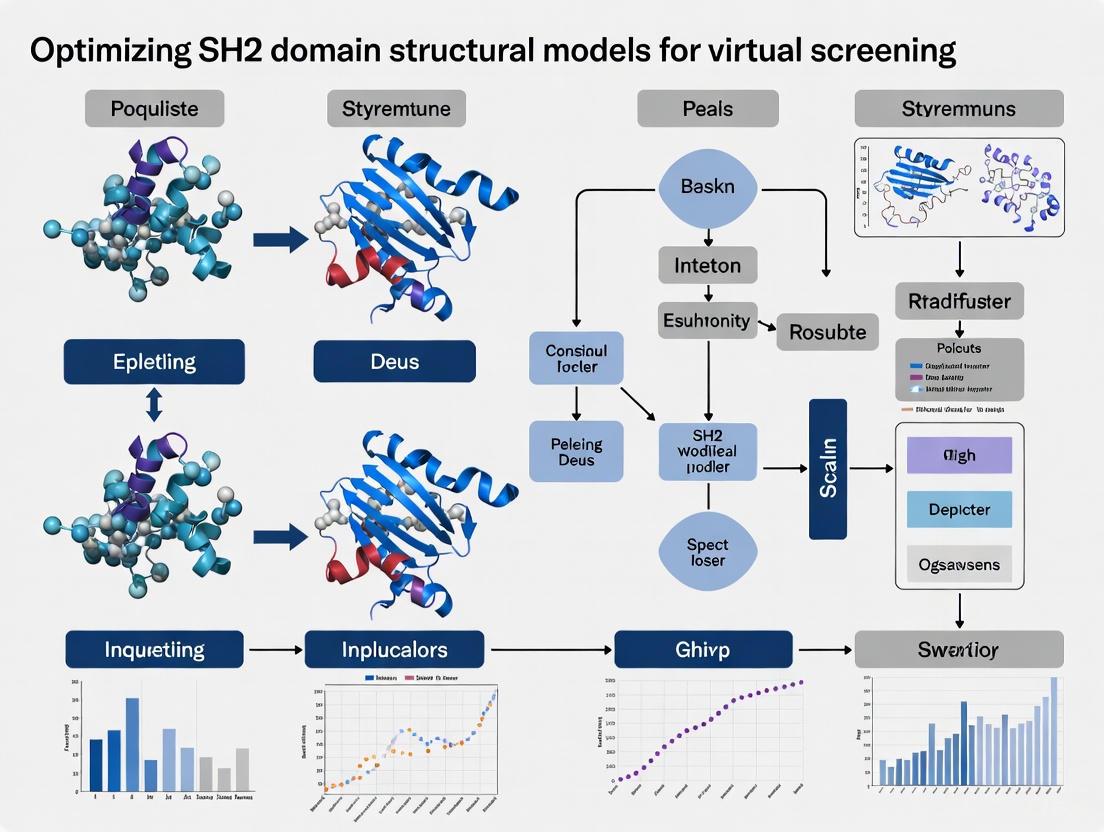
This article provides a comprehensive guide for researchers and drug development professionals on optimizing SH2 domain structural models to improve the success rate of virtual screening.
Optimizing SH2 Domain Structural Models for Enhanced Virtual Screening in Drug Discovery
Abstract
This article provides a comprehensive guide for researchers and drug development professionals on optimizing SH2 domain structural models to improve the success rate of virtual screening. It covers the foundational role of SH2 domains in cellular signaling and disease, explores advanced computational methodologies including molecular dynamics and AI-based structure prediction, addresses common challenges in accounting for domain flexibility and solvation effects, and outlines robust validation strategies using binding free energy calculations and experimental assays. By synthesizing recent methodological advances, this resource aims to bridge the gap between static structural data and the dynamic reality of SH2 domain-ligand interactions, facilitating the identification of novel therapeutic agents.
The Critical Role of SH2 Domains in Signaling and Disease: Structural Foundations for Drug Discovery
TROUBLESHOOTING GUIDE & FAQs
FAQ: What are the core structural components of an SH2 domain and how do they define binding pockets? SH2 domains are ~100-amino acid protein modules that adopt a conserved fold characterized by a central anti-parallel β-sheet flanked by two α-helices, commonly described as an αβββα motif [1] [2] [3]. This conserved architecture forms three key specificity pockets that engage phosphotyrosine (pY) residues and the surrounding amino acids:
- pY+0 Pocket: A highly conserved, deep, positively charged pocket that binds the phosphorylated tyrosine residue. A key invariant arginine residue (Arg βB5) forms hydrogen bonds with the phosphate group [4] [3].
- pY+1 Pocket: This pocket interacts with the amino acid immediately C-terminal to the phosphotyrosine. Its properties can influence the local conformation of the bound peptide [5].
- pY+X Pocket: A variable pocket that dictates the primary sequence specificity of different SH2 domains. It typically binds a hydrophobic residue at the P+3 or P+4 position, but its exact location and specificity are determined by the surrounding loops [3].
FAQ: Why does my virtual screening campaign fail to distinguish between different SH2 domains, despite targeting their specificity pockets? A common failure point is an overemphasis on the pY+0 and pY+X pockets while neglecting the critical role of surface loops. The EF and BG loops, which connect the secondary structure elements, act as gatekeepers for the pY+X pocket [6] [3]. They can physically block access to sub-pockets or alter their shape. In some SH2 domains, a bulky residue in the EF loop can plug the P+3 pocket, forcing the peptide to adopt a different binding mode and shifting specificity to the P+2 position, as seen in Grb2 [3]. Always verify the conformation and residue composition of these loops in your structural model.
FAQ: How can I validate the binding specificity of a compound identified as a potential SH2 domain inhibitor? Beyond standard binding affinity assays, you should perform competitive binding studies. A true pY-competitive inhibitor will be displaced by high-affinity phosphopeptides that bind the same SH2 domain [7] [8]. For example, in the STAT3 SH2 domain, a confirmed inhibitor was shown to compete with pTyr peptides for binding, demonstrating it acts as a pY bioisostere [8]. Furthermore, use isothermal titration calorimetry (ITC) to obtain thermodynamic parameters; unexpected entropy/enthalpy compensation can indicate non-specific binding or incorrect binding mode prediction [5].
FAQ: What are the best experimental methods to define the intrinsic specificity of an SH2 domain? Combinatorial peptide library screening is the gold standard for empirically determining SH2 domain specificity. The "one-bead-one-compound" (OBOC) method is particularly powerful [4]. In this protocol:
- Library Synthesis: A pY peptide library is synthesized on solid-phase beads using the split-and-pool method, ensuring each bead displays a unique peptide sequence.
- Screening: The library is screened against the purified SH2 domain of interest. Beads with tight-binding sequences are selected.
- Sequencing: Positive beads are individually sequenced using high-throughput techniques like partial Edman degradation and mass spectrometry (PED/MS) [4]. This method directly identifies the preferred amino acids at positions flanking the phosphotyrosine.
QUANTITATIVE BINDING SPECIFICITY DATA
Table 1: Experimentally Determined Specificity Motifs for Select SH2 Domains. Data sourced from high-throughput peptide library screens [3].
| SH2 Domain | Specificity Group | Recognized Motif | Key Specificity Residue |
|---|---|---|---|
| Src, Fyn, Lck | IA | pY--ψ | Hydrophobic (ψ) at P+3 |
| Grb2 | IC | pY--N--_ | Asparagine (N) at P+2 |
| BRDG1/STAP-1 | IIC | pY---_-ψ | Hydrophobic (ψ) at P+4 |
| STAT3 | III | pY---Q | Glutamine (Q) at P+3 |
Table 2: Thermodynamic Parameters for Grb2 SH2 Domain Binding to Peptides with Varying pY+1 Residues. Data obtained by Isothermal Titration Calorimetry (ITC) [5].
| Ligand (pY+1 Ring Size) | Kₐ (×10⁵ M⁻¹) | ΔG° (kcal•mol⁻¹) | ΔH° (kcal•mol⁻¹) | -TΔS° (kcal•mol⁻¹) |
|---|---|---|---|---|
| 3-membered | 1.6 ± 0.1 | -7.1 ± 0.1 | -3.3 ± 0.3 | -3.8 ± 0.1 |
| 4-membered | 4.3 ± 0.4 | -7.7 ± 0.1 | -5.4 ± 0.3 | -2.3 ± 0.2 |
| 5-membered | 16.1 ± 1.1 | -8.5 ± 0.1 | -6.3 ± 0.4 | -2.2 ± 0.2 |
| 6-membered | 69.6 ± 12.0 | -9.3 ± 0.1 | -8.5 ± 0.4 | -0.8 ± 0.4 |
| 7-membered | 37.0 ± 3.3 | -8.9 ± 0.1 | -6.8 ± 0.3 | -2.1 ± 0.2 |
THE SCIENTIST'S TOOLKIT: RESEARCH REAGENT SOLUTIONS
Table 3: Essential Reagents for SH2 Domain Specificity and Inhibition Studies
| Reagent / Method | Function in SH2 Research | Key Application |
|---|---|---|
| One-Bead-One-Compound (OBOC) pY Library | Defines intrinsic sequence specificity of an SH2 domain by screening millions of peptide sequences [4]. | Empirical determination of binding motifs. |
| Monobodies (Synthetic Binding Proteins) | High-affinity, highly selective protein-based inhibitors that can target specific SH2 domains, even within subfamilies [7]. | Potent and selective disruption of SH2-mediated interactions in cells. |
| Isothermal Titration Calorimetry (ITC) | Provides a full thermodynamic profile (Kₐ, ΔG, ΔH, ΔS) of SH2-phosphopeptide interactions [5]. | Mechanistic studies of binding, validating interactions with small molecules. |
| Virtual Screening with Consensus Docking | Identifies potential small-molecule inhibitors by computationally screening compound libraries against SH2 domain structures [1] [8] [9]. | Hit identification for difficult-to-target SH2 domains like STAT3 or PTK6. |
SH2 DOMAIN POCKET ARCHITECTURE
EXPERIMENTAL WORKFLOW: DETERMINING SH2 SPECIFICITY
FAQ: Addressing Common Research Challenges
FAQ 1: Why does my virtual screening against the STAT3 SH2 domain yield an unacceptably high false-positive rate?
This is a common challenge, often stemming from the shallow, solvent-exposed nature of the protein-protein interaction (PPI) interface typical of many SH2 domains. To improve results:
- Employ Iterative AI Workflows: Replace brute-force docking with AI-enhanced workflows like Deep Docking. This method uses a deep learning model trained on a subset of docked compounds to prioritize molecules from ultra-large libraries that are most likely to be true hits, significantly improving hit rates [10].
- Incorporate Specificity Pockets: Ensure your docking model accurately accounts for residues in the pY+3 pocket (e.g., V637, Y657, Q644, E638), which are critical for binding specificity. Mutations or incorrect conformational sampling in this hydrophobic pocket can drastically reduce prediction accuracy [11].
- Benchmark Your Docking Protocol: Before screening, perform a retrospective virtual screen with a known set of active and decoy molecules to calculate performance metrics like the Area Under the Curve (AUC) and Enrichment Factor (EF). This validates that your chosen protein structure and docking parameters are appropriate for the target [10].
FAQ 2: What are the primary strategies for targeting SH2 domains with small molecules?
The main strategies involve targeting two key areas, with a third emerging avenue:
- Direct, Competitive Inhibition: Develop molecules that directly compete with phosphotyrosine (pY) peptides for binding to the conserved pY pocket. A universally conserved arginine residue (ArgβB5) in this pocket is critical for binding the phosphate group and is a key anchor for inhibitors [12] [13].
- Allosteric Inhibition: Target regulatory sites outside the pY pocket to modulate SH2 domain function indirectly. For STAT3, the Coiled-Coil Domain (CCD) is a validated allosteric site. Effectors like small molecule K116 or polypeptide MS3-6 bind to the CCD and induce conformational changes that propagate to the SH2 domain, diminishing its phosphopeptide binding affinity [11].
- Targeting Lipid Interactions: Many SH2 domains (e.g., in SYK, ZAP70, LCK) possess cationic lipid-binding sites near the pY-pocket. Targeting these sites with nonlipidic small molecules is a promising strategy to disrupt membrane recruitment and activation, potentially offering high specificity [13].
FAQ 3: How can I improve the affinity and specificity of my SH2 domain inhibitors?
Beyond the pY-binding pocket, engage the specificity-determining regions.
- Engage the pY+1, pY+2, and pY+3 Pockets: The C-terminal residues of the phosphopeptide (positions +1, +2, +3 relative to pY) bind into a largely hydrophobic pocket on the SH2 domain. Designing inhibitors that make specific interactions with the EF loop and BG loop, which form this pocket, can dramatically enhance both affinity and selectivity [12] [13].
- Consider Non-Equilibrium Kinetics: High-affinity interactions are not always better. In vivo, signaling requires rapid on/off rates for quick cellular responses. Optimize for a balance of moderate affinity (Kd 0.1–10 µM) and favorable binding kinetics to achieve functional efficacy without compromising specificity [12].
FAQ 4: My SH2 domain target is involved in liquid-liquid phase separation (LLPS). How does this impact my experimental approach?
LLPS introduces a layer of complexity that can be leveraged for discovery.
- Recognize Multivalent Interactions: SH2 domain-mediated interactions are often multivalent, a key driver of LLPS and biomolecular condensate formation. For example, interactions among GRB2, Gads, and the LAT receptor contribute to LLPS that enhances T-cell receptor signaling [13].
- Adjust Screening Assays: If your target forms condensates, biochemical affinity measurements (e.g., Kd) from isolated systems may not fully capture its functional behavior in a phase-separated state. Consider developing or incorporating cellular assays that report on condensate formation or disruption [13].
Troubleshooting Guides for Critical Experiments
Guide 1: Troubleshooting Low Hit Rates in uHTVS
Problem: An ultra-high-throughput virtual screen (uHTVS) of a billion-compound library failed to yield validated hits in biochemical assays.
| Step | Checkpoint | Solution |
|---|---|---|
| 1. Pre-Screening | Underlying Docking Model | Retrospectively validate the docking pose and score prediction using known active compounds. The performance of AI pre-screens (e.g., Deep Docking) is highly dependent on the underlying docking model [10]. |
| 2. Library Curation | Chemical Library Choice | Use a synthetically accessible library like the Enamine REAL database. Filter for drug-like properties (e.g., Lipinski's Rule of Five) and pan-assay interference compounds (PAINS) [10] [14]. |
| 3. AI Workflow | Deep Docking Parameters | Ensure the initial training set for the deep learning model is sufficiently large and diverse. For a library of millions, docking 1-5% of compounds to train the model can be effective [10]. |
| 4. Post-Screening | Hit Validation | Confirm hits using orthogonal assays. A high hit rate (e.g., 42.9-50.0% as achieved in some STAT3/STAT5b screens) validates the workflow; a low rate suggests a problem upstream [10]. |
Guide 2: Troubleshooting SH2 Domain Binding Assays
Problem: A fluorescence polarization (FP) or surface plasmon resonance (SPR) assay shows weak or no binding between the purified SH2 domain and a known peptide ligand.
| Observation | Potential Cause | Corrective Action |
|---|---|---|
| No binding signal | Protein misfolding or instability | Check protein purity and stability. Ensure the conserved ArgβB5 in the pY-binding pocket is intact, as its mutation abrogates pY binding [12] [15]. |
| Weak affinity (Kd >10 µM) | Incorrect peptide sequence or low phosphorylation | Verify peptide purity and phosphorylation status (e.g., via mass spectrometry). The pY residue is absolutely essential [12]. |
| High non-specific binding | Issues with assay buffer conditions | Optimize buffer salt concentration and add a non-ionic detergent (e.g., 0.01% Tween-20) to reduce non-specific interactions. |
| Inconsistent data | Protein degradation or dephosphorylation | Include phosphatase and protease inhibitors in all buffers and use fresh protein aliquots for each experiment. |
Experimental Protocols for Key Methodologies
Protocol 1: Deep Docking for uHTVS of SH2 Domains
This protocol outlines an economic AI-based workflow for screening large compound libraries, adapted from successful screens against STAT3 and STAT5b [10].
1. Library Preparation:
- Obtain a synthetically accessible compound library (e.g., Enamine REAL, Mcule-in-stock).
- Apply pre-processing filters: Lipinski's Rule of Five, Veber criteria, and PAINS removal using a tool like KNIME with RDKit nodes [10].
2. Benchmark Docking:
- Select a representative protein structure for the SH2 domain (e.g., STAT3-SH2).
- Conduct a retrospective virtual screen with a data set of known actives and decoys from a database like DUD-E.
- Calculate the AUC and EF to confirm the docking setup can enrich known actives.
3. Deep Docking Execution:
- Iteration 1: Dock a randomly selected subset of the large library (e.g., 1-2% of compounds, or ~100,000 molecules) to generate initial training data.
- Iteration 2: Train a deep neural network (DNN) to predict docking scores based on the chemical structures from the first iteration.
- Iteration 3: Use the trained DNN to predict scores for all remaining compounds in the library. Select the top-ranked compounds (e.g., top 1%) for the next round of docking.
- Iteration 4-n: Retrain the DNN with new docking results and iterate until a predefined number of compounds (e.g., 100,000-200,000) have been physically docked.
- Output: The final list of top-ranked compounds from the last docking iteration constitutes the virtual hits for experimental testing.
Protocol 2: Validating Allosteric Regulation of STAT3 SH2 via CCD
This protocol uses mutagenesis and binding assays to study the allosteric link between the Coiled-Coil Domain (CCD) and the SH2 domain [16] [11].
1. Mutagenesis:
- Design a point mutation in the CCD, such as D170A, which is known to diminish SH2 domain function allosterically [16] [11].
- Generate the mutant STAT3 construct using a site-directed mutagenesis kit in a FLAG-tagged expression vector.
2. Transfection and Cell Lysis:
- Transfect COS-1 or HepG2 cells with plasmids encoding wild-type (WT) and D170A STAT3 using a transfection reagent like Lipofectamine or FuGENE 6.
- After 24-48 hours, lyse cells in RIPA buffer supplemented with phosphatase and protease inhibitors.
3. Binding Assay:
- Incubate cell lysates containing WT or mutant STAT3 with biotinylated phosphopeptides derived from a natural binding partner (e.g., gp130 receptor peptide pY2 or pY3).
- Use streptavidin-conjugated beads to pull down the peptide-protein complexes.
- Wash the beads extensively with lysis buffer to remove non-specific interactions.
4. Analysis:
- Elute the bound proteins and analyze them by SDS-PAGE and immunoblotting.
- Probe the blot with an anti-FLAG antibody to detect STAT3 pulled down by the phosphopeptide.
- Expected Outcome: The D170A mutant will show significantly reduced binding to the phosphopeptide compared to the WT STAT3, demonstrating the allosteric role of the CCD in regulating SH2 domain affinity [16].
Signaling Pathway and Experimental Workflow Diagrams
Diagram 1: SH2 Domain-Mediated JAK-STAT3 Signaling Pathway
Diagram Title: SH2 Domain Role in JAK-STAT3 Activation
Diagram 2: Deep Docking uHTVS Workflow
Diagram Title: AI-Powered Deep Docking Screening
Diagram 3: Allosteric Inhibition of STAT3 via CCD
Diagram Title: STAT3 Allosteric Inhibition Mechanism
The Scientist's Toolkit: Research Reagent Solutions
Table: Essential Reagents for SH2 Domain-Targeted Research
| Research Reagent | Function & Application | Key Considerations |
|---|---|---|
| SH2 Domain Focused Library (e.g., Life Chemicals) | A pre-selected collection of ~2,200 drug-like compounds with predicted affinity for SH2 domains. Used for initial hit identification in HTS [14]. | Designed using pharmacophore models based on X-ray structures of SH2-inhibitor complexes. PAINS and reactive compounds are filtered out. |
| Synthetically Accessible Libraries (e.g., Enamine REAL, Mcule-in-stock) | Ultra-large chemical libraries (millions to billions of compounds) for uHTVS. Crucial for exploring vast chemical space to find novel inhibitors [10]. | Compounds are "make-on-demand" and pre-filtered for drug-like properties (e.g., Lipinski's Rule of Five). |
| Phosphotyrosine-Containing Peptides | Essential tools for binding assays (FP, SPR, Pull-down) to validate SH2 domain function and probe binding specificity [16] [15]. | Must be high-purity and verify phosphorylation status. Residues at pY+1, pY+2, pY+3 determine binding specificity. |
| Anti-Phospho-STAT3 (Tyr705) Antibody | A critical reagent for Western Blot and immunofluorescence to detect activated, phosphorylated STAT3 in cellular assays [16]. | Confirms downstream functional effect of SH2 domain inhibition in cell-based models. |
| Allosteric CCD Effectors (e.g., K116) | Small-molecule inhibitors that bind the STAT3 Coiled-Coil Domain, providing an alternative to direct SH2 domain targeting [11]. | Useful for studying allosteric regulation and as a tool compound to validate this therapeutic strategy. |
FAQs: SH2 Domain Biology and Experimental Design
Q1: What are the primary functions of SH2 domains in cellular signaling? SH2 (Src Homology 2) domains are protein modules that specifically recognize and bind to sequences containing phosphorylated tyrosine (pY). They are fundamental "readers" in tyrosine phosphorylation signaling, a key post-translational modification regulating cell proliferation, differentiation, and immune responses. Their primary role is to induce proximity between proteins, such as bringing tyrosine kinases to their substrates or recruiting effector proteins to activated receptors [17] [13].
Q2: Besides peptide binding, what other molecular interactions are SH2 domains involved in? Emerging research shows that many SH2 domains participate in non-canonical interactions:
- Lipid Binding: Nearly 75% of SH2 domains can interact with membrane lipids, particularly phosphoinositides like PIP₂ and PIP₃. This interaction is crucial for membrane recruitment and can modulate the domain's activity or its interaction with other proteins [13].
- Liquid-Liquid Phase Separation (LLPS): Multivalent interactions mediated by SH2 domains can drive the formation of biomolecular condensates. For example, interactions between GRB2 (SH2/SH3 adapter) and the LAT receptor contribute to condensate formation that enhances T-cell receptor signaling [13].
Q3: What determines the specificity of different SH2 domains for their target peptides? While all SH2 domains share a conserved fold that binds pY, their specificity for residues C-terminal to the pY is largely governed by variable surface loops. These loops control access to key binding pockets (e.g., for P+2, P+3, or P+4 residues). By "plugging" or "opening" these pockets, the loops define which peptide sequences an SH2 domain can recognize [3].
Q4: Why is understanding non-canonical SH2 interactions important for drug discovery? Dysregulation of SH2-mediated interactions is linked to many diseases, including cancer. Targeting lipid-binding sites or disrupting pathogenic condensates offers alternative therapeutic strategies, especially when the canonical pY-binding pocket is considered "undruggable." Developing non-lipidic inhibitors for the lipid-binding site of Syk kinase is one promising example [13].
Troubleshooting Guides
Issue 1: Poor Specificity or Affinity in SH2-Peptide Binding Assays
Potential Causes and Solutions:
- Cause: Inadequate consideration of SH2 loop structure.
- Solution: Before experimental design, consult structural data if available. The EF and BG loops are critical for defining binding pocket accessibility. If your peptide ligand contains a P+4 hydrophobic residue, ensure the target SH2 domain (e.g., from BRDG1, BKS, or Cbl) has an open P+4 pocket and is not one where this pocket is blocked by a loop residue [3].
- Cause: Impact of non-peptide binding interactions.
- Solution: Consider the experimental context. If using liposomes or cellular membranes, remember that lipid interactions (e.g., with PIP₂) can compete with or modulate peptide binding. Include controls that account for potential membrane-mediated effects [13].
Issue 2: Unexpected Aggregation or Condensate Formation In Vitro
Potential Causes and Solutions:
- Cause: Multivalent interactions promoting LLPS.
- Solution: If your experiment involves proteins with multiple SH2 and SH3 domains (e.g., GRB2, NCK) and their binding partners, the observed aggregation may be functional LLPS. Characterize it by testing for reversibility, concentration-dependence, and sensitivity to 1,6-hexanediol. This may not be a problem but a key finding [13].
- Cause: Non-specific aggregation due to lipid composition.
Issue 3: Difficulty in Achieving Selective Inhibition of SH2 Domain Function
Potential Causes and Solutions:
- Cause: High conservation of the canonical pY-binding pocket.
- Cause: Compound interference from lipid membranes.
- Solution: When screening for inhibitors in cellular assays, consider that some compounds might localize to membranes and indirectly affect SH2 domain function by altering lipid availability, rather than by direct binding to the domain. Use counter-screens to distinguish direct binders from membrane-active compounds [13].
Quantitative Data Tables
Table 1: SH2 Domain-Containing Proteins with Lipid-Binding Activity
This table summarizes key proteins where SH2 domain-lipid interaction has a demonstrated functional role [13].
| Protein Name | Function of Lipid Association | Lipid Moiety |
|---|---|---|
| SYK | PIP₃-dependent membrane binding required for non-catalytic activation of STAT3/5. | PIP₃ |
| ZAP70 | Essential for facilitating and sustaining interactions with TCR-ζ chain. | PIP₃ |
| LCK | Modulates interaction with binding partners in the TCR signaling complex. | PIP₂, PIP₃ |
| ABL | Mediates membrane recruitment and modulates Abl kinase activity. | PIP₂ |
| VAV2 | Modulates interaction with membrane receptors like EphA2. | PIP₂, PIP₃ |
| C1-Ten/Tensin2 | Regulates Abl activity and IRS-1 phosphorylation in insulin signaling. | PIP₃ |
Table 2: Classification of Human SH2 Domain Specificity
This table categorizes SH2 domains based on their preferred peptide recognition motifs, highlighting the role of the βD5 residue and key binding pockets [3].
| Specificity Group | Example SH2 Domains | βD5 Residue | OPAL Motif | Key Specificity Residue |
|---|---|---|---|---|
| Group IA/IB | SRC, FYN, ABL1 | Y/F | pY[-][-]ψ / pYxxψ | P+3 (Hydrophobic) |
| Group IC | GRB2, GRB7, CSK | Y/F | pYxN | P+2 (Asparagine) |
| Group IIA/IIB | VAV, PI3K-p85α, SHP-2 | I/C/L/V/A/T | pYψxψ / pY[E/D/x]xψ | P+3 (Hydrophobic) |
| Group IIC | BRDG1, BKS, CBL | Y/T | pYxxxψ | P+4 (Hydrophobic) |
Experimental Protocols
Protocol 1: Assessing SH2 Domain Lipid Binding Using Liposome Co-sedimentation
Application: Determine if a purified SH2 domain binds directly to specific lipids (e.g., PIP₂ or PIP₃). Methodology:
- Liposome Preparation: Prepare liposomes of defined composition. Include a test group containing the lipid of interest (e.g., 5% PIP₃ in a PC background) and a control group without it.
- Incubation: Mix the purified SH2 domain protein with the liposomes in a suitable buffer.
- Ultracentrifugation: Sediment the liposomes via high-speed centrifugation. Protein bound to liposomes will co-sediment into the pellet.
- Analysis: Separate the supernatant (unbound protein) from the pellet (liposome-bound protein). Analyze both fractions by SDS-PAGE and Western blotting or quantitative staining to determine the fraction of protein bound [13].
Protocol 2: Characterizing SH2-Mediated Condensate Formation
Application: Investigate the role of an SH2 domain-containing protein in liquid-liquid phase separation. Methodology:
- Sample Preparation: Use purified proteins, including the SH2 protein and its binding partner(s) which should contain multiple pY sites or other complementary domains.
- Induction of Phase Separation: Mix the proteins in a physiologically relevant buffer. Phase separation is often concentration-dependent and may require crowding agents (e.g., PEG).
- Imaging and Analysis:
- Use differential interference contrast (DIC) or fluorescence microscopy (if proteins are labeled) to visualize droplet formation.
- Test for liquid-like properties by demonstrating fusion of droplets over time.
- Verify the role of SH2-pY interactions by adding a competitive inhibitor (e.g., a high-affinity pY peptide) which should dissolve the condensates.
- Confirm specificity by using mutant proteins that lack functional SH2 domains [13].
Signaling Pathway and Mechanism Diagrams
Research Reagent Solutions
Table 3: Essential Research Tools for SH2 Domain Studies
| Item | Function/Application | Example Use Case |
|---|---|---|
| Phosphopeptide Libraries | Profiling SH2 domain specificity using techniques like Oriented Peptide Array Library (OPAL). | Determine the consensus binding motif for a novel or poorly characterized SH2 domain [3]. |
| Defined Liposomes | Model membranes for studying lipid-protein interactions. | Investigate the binding of an SH2 domain to specific phosphoinositides like PIP₂ or PIP₃ [13]. |
| 1,6-Hexanediol | A chemical that disrupts weak hydrophobic interactions, commonly used to probe LLPS. | Test if observed subcellular puncta formed by an SH2-containing protein are liquid-like condensates [13]. |
| Rule-Based Modeling Software (e.g., BioNetGen, VCell) | Computational modeling to manage combinatorial complexity in signaling networks. | Build a predictive model of a signaling pathway where an SH2-containing protein (e.g., Grb2) interacts with multiple partners [20] [21]. |
FAQs: Core Concepts and Definitions
What is the FLVRES sequence, and what is its primary function?
The FLVRES sequence is a highly conserved amino acid motif found within the phosphotyrosine (pTyr)-binding pocket of the SH2 domain [22]. Its primary function is to facilitate specific recognition and binding to phosphorylated tyrosine residues. The central arginine residue (designated as βB5) within this motif is particularly critical, as it interacts directly with the phosphate group of the phosphotyrosine [22] [23]. This interaction contributes a significant portion of the binding free energy, and mutation of this arginine can cause up to a 1,000-fold reduction in binding affinity [22].
Are there variations in the FLVRES motif across different SH2 domains?
While the FLVR motif is exceptionally well-conserved, variations do exist. Research indicates that out of over 120 human SH2 domains, all but three contain the conserved FLVR arginine [22]. Furthermore, studies on the v-Src SH2 domain have shown that while the canonical arginine (R175) is essential, certain mutations (e.g., R175H or R175K) can reduce but not eliminate phosphotyrosine binding, and may still support biological function, such as cellular transformation [23].
How does the binding specificity of tandem SH2 domains differ from single domains?
Tandem SH2 domains, found in proteins like ZAP-70 and phospholipase C-γ1, achieve a dramatically higher level of specificity compared to single SH2 domains. They simultaneously engage bisphosphorylated tyrosine-based activation motifs (TAMs) on receptors [24]. This dual interaction results in affinities in the 0.5–3.0 nM range for the correct biological partner, with discrimination against alternative TAMs being 1,000 to over 10,000-fold greater than that typically observed (20–50-fold) for individual SH2 domains [24].
Troubleshooting Guide: Experimental Challenges and Solutions
Issue: Poor or Unexpected Binding Affinity
Potential Cause 1: Mutation or Dysfunction of the FLVR Arginine The conserved arginine in the FLVR motif is responsible for a large part of the binding energy.
- Solution: Verify the integrity of the FLVRES sequence in your SH2 domain construct.
- Experimental Protocol:
- Sequence Analysis: Confirm the protein sequence via DNA sequencing.
- Functional Assay: Perform a fluorescence polarization or surface plasmon resonance (SPR) binding assay using a known phosphotyrosine peptide. A significant drop in affinity suggests a problem with the binding pocket.
- Positive Control: Use a wild-type SH2 domain protein in parallel to benchmark performance.
Potential Cause 2: Incorrect Recognition of Specificity Determinants SH2 domain binding depends on the phosphotyrosine and residues C-terminal to it, particularly the amino acid at the +3 position.
- Solution: Ensure you are using the correct phosphopeptide ligand for your specific SH2 domain.
- Experimental Protocol:
- Ligand Verification: Consult literature for the established binding preference of your SH2 domain (e.g., using sources like the SMALI database).
- Peptide Design: Synthesize phosphopeptides with the correct +3 residue and other known specificity determinants.
- Competition Assay: Validate binding specificity by showing that an unphosphorylated peptide or a peptide with a scrambled sequence does not compete for binding.
Issue: Protein Instability or Insolubility
Potential Cause: Disruption of the SH2 Domain Fold Some mutations, particularly those introducing charged residues in the core of the domain, can destabilize the native structure.
- Solution: Engineer mutations that maintain structural stability.
- Experimental Protocol:
- Structural Modeling: Use available crystal structures (e.g., from the Protein Data Bank) to model your mutation and assess its potential impact on the hydrophobic core or key hydrogen bonds.
- Stability Assessment: Utilize circular dichroism (CD) spectroscopy to monitor the thermal denaturation of your SH2 domain. A lower melting temperature ((T_m)) indicates reduced stability.
- Alternative Mutagenesis: As evidenced by studies on v-Src, consider conservative mutations (e.g., R175K) that may preserve structure and partial function better than radical ones (e.g., R175E), which can lead to insolubility [23].
Table 1: Impact of FLVR Arginine Mutations on SH2 Domain Function
| SH2 Domain | Mutation | Observed Impact on pTyr Binding | Impact on Biological Function |
|---|---|---|---|
| v-Src | R175H | Reduced, but not eliminated | Compatible with wild-type transformation [23] |
| v-Src | R175K | Reduced, but not eliminated | Compatible with wild-type transformation [23] |
| v-Src | R175E | Disrupted SH2 structure; domain insoluble | Fusiform transformation; failed to transform Rat-2 cells [23] |
| Canonical SH2 Domains | R→A (βB5) | ~1,000-fold reduction in affinity | Not directly measured; predicted severe disruption [22] |
Table 2: Binding Affinity Comparison: Single vs. Tandem SH2 Domains
| SH2 Domain Configuration | Typical Affinity for Correct Ligand | Specificity (Fold over non-cognate ligand) |
|---|---|---|
| Single SH2 Domain | Variable (µM - nM range) | 20 - 50 fold [24] |
| Tandem SH2 Domains | 0.5 - 3.0 nM [24] | 1,000 - >10,000 fold [24] |
Experimental Protocols for Validation
Protocol 1: Isothermal Titration Calorimetry (ITC) for Binding Affinity Measurement
Purpose: To directly measure the thermodynamic parameters (K(_d), ΔH, ΔS, stoichiometry) of the interaction between an SH2 domain and a phosphopeptide.
Procedure:
- Sample Preparation: Dialyze both the purified SH2 domain protein and the phosphopeptide into the same buffer (e.g., 20 mM HEPES, 150 mM NaCl, pH 7.4).
- Instrument Setup: Load the SH2 domain into the sample cell and the phosphopeptide into the syringe. Set the reference cell with dialysate.
- Titration: Program the instrument to perform a series of injections of the peptide into the protein solution while maintaining a constant temperature.
- Data Analysis: Integrate the heat pulses from each injection and fit the data to a suitable binding model (e.g., one-set-of-sites) to extract the binding parameters.
Protocol 2: Molecular Docking for Virtual Screening
Purpose: To computationally identify and prioritize small molecules that may inhibit the SH2 domain-phosphopeptide interaction.
Procedure:
- Structure Preparation: Obtain a 3D structure of the target SH2 domain from the PDB. Remove water molecules and add hydrogens. Define the binding pocket, often centered on the FLVR arginine.
- Ligand Library Preparation: Prepare a library of small molecule compounds in a suitable format (e.g., SDF, MOL2). Generate plausible 3D conformations.
- Docking Run: Use docking software (e.g., AutoDock Vina, Glide) to predict the binding pose and score of each compound in the library against the SH2 domain.
- Post-Processing: Analyze the top-ranking compounds visually to check for sensible interactions with the FLVR arginine and other key residues in the binding pocket.
Research Reagent Solutions
Table 3: Essential Research Reagents for SH2 Domain Studies
| Reagent / Resource | Function / Application | Example & Notes |
|---|---|---|
| SH2 Domain Constructs | Recombinant protein for biophysical and binding assays. | Available from cDNA libraries; often cloned with tags (GST, His) for purification. |
| Phosphotyrosine Peptides | Ligands for binding and specificity assays. | Synthesized to match known SH2 domain consensus sequences; contain phosphotyrosine. |
| Anti-pTyr Antibodies | Detection of tyrosine-phosphorylated proteins in pull-down/cell-based assays. | e.g., 4G10; crucial for validating SH2 domain interactions in a cellular context. |
| Virtual Screening Libraries | Source of compounds for inhibitor discovery. | e.g., Enamine REAL, Mcule-in-stock; can be filtered for SH2 domain-targeted compounds [10]. |
Signaling Pathway and Experimental Workflow
Diagram 1: SH2 Domain Experimental Workflow
Diagram 2: High-Specificity Signaling via Tandem SH2 Domains
Advanced Computational Workflows: From Static Docking to Dynamic Screening Strategies
High-Throughput Virtual Screening (HTVS) Pipelines for SH2-Targeted Libraries
FAQs: High-Throughput Virtual Screening for SH2 Domains
Q1: What makes SH2 domains particularly challenging targets for virtual screening?
SH2 domains are challenging due to their role in mediating protein-protein interactions (PPIs). Their binding surfaces are typically large, shallow, and solvent-exposed, lacking the deep, well-defined pockets characteristic of traditional drug targets like enzymes. This makes identifying high-affinity small molecules difficult [10]. Furthermore, achieving selectivity is a major hurdle because the human proteome contains approximately 110 different SH2 domains, all of which share a highly conserved structural fold centered on an arginine residue (in the FLVR motif) that binds the phosphotyrosine (pY) moiety [13].
Q2: My virtual screen yielded a large number of hits with promising docking scores, but experimental validation failed. What could be the reason?
This is a common issue often stemming from limitations in the docking scoring functions. Docking scores are approximations and may not accurately reflect true binding affinities, especially for the flat PPI interfaces of SH2 domains. To improve the reliability of your hit list, consider these strategies:
- Implement Rescoring Protocols: Use more computationally intensive but accurate methods like Molecular Mechanics with Generalized Born Surface Area (MM-GBSA) to rescore top-ranked docking hits. This provides a better estimation of binding free energy [1] [25].
- Incorporate Flexibility: Standard docking often uses a rigid protein structure. Using molecular dynamics (MD) simulations to account for protein flexibility can help identify more physiologically relevant poses [1].
- Refine Your Initial Model: Ensure your starting SH2 domain structural model is of high quality. The performance of the entire screening pipeline is highly dependent on the underlying docking model's reliability [10].
Q3: What are the key structural features of an SH2 domain that I should focus on for screening and analysis?
The SH2 domain has a conserved "sandwich" structure (αA-βB-βC-βD-αB) with key specificity determinants. The binding pocket for phosphopeptides is divided into three main sub-pockets [1] [13]:
- pY+0 Pocket: Binds the phosphotyrosine (pY705 in STAT3) and contains a highly conserved arginine residue that forms a critical salt bridge with the phosphate group.
- pY+1 Pocket: Binds the residue immediately C-terminal to the phosphotyrosine (e.g., L706 in STAT3) and is a primary determinant of binding specificity.
- pY+X Pocket: A hydrophobic pocket that binds to more distal residues, providing additional specificity. Focusing on ligands that can effectively engage these sub-pockets, particularly the pY+0 and pY+1, will increase the chance of success.
Q4: Are AI-based methods like Deep Docking feasible for screening billion-compound libraries against SH2 domains?
Yes, AI-based ultrahigh-throughput virtual screening (uHTVS) has become a viable strategy. For example, the Deep Docking workflow can screen libraries of over 5 billion compounds by using a deep learning model to iteratively exclude molecules unlikely to be high-ranking, drastically reducing the number of compounds that require physics-based docking. This approach has successfully identified inhibitors for the STAT3 and STAT5b SH2 domains with exceptionally high hit rates (up to 50.0% for STAT3) [10]. However, its performance is contingent on the quality of the initial docking data used to train the AI model.
Troubleshooting Guides
Issue 1: Poor Enrichment in Retrospective Screening
Problem: During validation, your screening protocol fails to successfully enrich known active compounds from a set of decoys.
| Possible Cause | Diagnostic Steps | Solution |
|---|---|---|
| Suboptimal protein structure | Check the resolution of the crystal structure (e.g., prefer 6NJS at 2.70 Å over 6NUQ at 3.15 Å for STAT3). Ensure there are no critical mutations in the binding site [1]. | Select a high-resolution structure without mutations in the SH2 domain. Use a structure co-crystallized with a high-affinity ligand if available. |
| Incorrect binding site definition | Redock the native co-crystallized ligand and calculate the Root-Mean-Square Deviation (RMSD). An RMSD > 2.0 Å indicates poor reproducibility. | Carefully define the grid box centered on the known pharmacophore, ensuring it is large enough to allow ligand movement. The use of a receptor grid generation tool is recommended [1]. |
| Inadequate scoring function | Review the Area Under the Curve (AUC) and Enrichment Factors (EF) at 1% from your validation. Low values indicate poor scoring discrimination. | Switch to a more rigorous docking precision (e.g., from Standard Precision to Extra Precision) or implement a MM-GBSA rescoring step for the top hits [1] [25]. |
Issue 2: Computationally Identified Binders Show No Activity in Cellular Assays
Problem: Hits from your virtual screen confirm binding in vitro but are ineffective in cell-based models.
| Possible Cause | Diagnostic Steps | Solution |
|---|---|---|
| Poor cellular permeability | Analyze the physicochemical properties of the hit compounds (e.g., molecular weight, logP). Use tools like QikProp to predict ADME properties [1]. | Optimize the structure to reduce molecular weight and polar surface area. Consider prodrug strategies for phosphate-containing compounds. |
| Lack of target engagement in cells | Employ cellular techniques like Fluorescence Polarization (FP) or Microscale Thermophoresis (MST) to directly measure binding in a cellular lysate or live-cell context [26]. | Use cell-permeable versions of assays or switch to a phenotypic screening approach to first identify compounds with cellular activity. |
| Off-target effects or toxicity | Screen the hits against a panel of related SH2 domains to assess selectivity. Check for known toxicophores or pan-assay interference compounds (PAINS) [10]. | Perform counter-screening and early ADMET profiling. Structurally optimize hits to improve selectivity for the target SH2 domain. |
Experimental Protocols for Key Cited Experiments
Protocol 1: Deep Docking for uHTVS against SH2 Domains
This protocol summarizes the AI-powered workflow for screening ultra-large libraries, as applied to the STAT3 SH2 domain [10].
1. Library Preparation:
- Obtain a synthetically accessible compound library, such as the Enamine REAL library (5.51 billion compounds) or the smaller Mcule-in-stock library (5.59 million compounds).
- Apply initial filtering to remove compounds with undesirable properties, such as Pan-assay interference compounds (PAINS).
2. Benchmark Docking and AI Training:
- Randomly select a subset of the library (e.g., 1-2%) and perform brute-force docking against the prepared SH2 domain structure.
- Use the docking scores from this subset to train a deep neural network (Deep Docking model). The model learns to predict docking scores based on chemical structure.
3. Iterative Screening:
- The trained AI model predicts scores for the entire library and excludes the worst-scoring compounds.
- A new, smaller subset of the remaining, high-predicted-score compounds is selected for actual docking.
- The new docking results are used to retrain and refine the AI model.
- This process repeats iteratively until a manageable number of top-ranking compounds (e.g., 100,000) have been physically docked, effectively screening billions of compounds at a fraction of the computational cost.
4. Hit Selection and Validation:
- Select the top-ranked compounds from the final docking for in vitro experimental validation.
Protocol 2: Multi-Stage Virtual Screening of Natural Product Libraries
This detailed protocol is adapted from a study screening natural compounds against the STAT3 SH2 domain [1].
1. Protein and Ligand Preparation:
- Protein Preparation: Retrieve the SH2 domain crystal structure (e.g., PDB: 6NJS). Use a protein preparation wizard to add hydrogens, fill in missing side chains, and minimize the structure using a force field like OPLS3e.
- Ligand Library Preparation: Download a library of natural compounds (e.g., ~182,455 compounds from ZINC15). Prepare the ligands using a tool like LigPrep to generate 3D structures, correct chirality, and set appropriate ionization states at pH 7.4 ± 0.5.
2. Grid Generation and Docking:
- Receptor Grid Generation: Generate a grid box for docking centered on the co-crystallized ligand's location in the SH2 domain pY pocket. The grid should be large enough to accommodate ligand movement (e.g., 20 Å cube).
- Hierarchical Docking:
- Step 1 - HTVS: Dock the entire prepared library using a High-Throughput Virtual Screening mode.
- Step 2 - SP: Take the top-scoring compounds from HTVS (e.g., ~30% of the library) and dock them using Standard Precision mode.
- Step 3 - XP: Take the top-scoring compounds from SP (e.g., with a score cut-off of -6.5 kcal/mol) and dock them using Extra Precision mode for the most accurate pose prediction and scoring.
3. Post-Docking Analysis:
- MM-GBSA Calculation: Subject the top-ranked protein-ligand complexes from XP docking to MM-GBSA analysis to calculate the binding free energy (ΔG Binding). This uses the OPLS3e force field and a VSGB solvation model.
- ADME Prediction: Use a tool like QikProp to analyze the pharmacokinetic properties of the potential hit compounds.
4. Advanced Simulation (For Finalist Hits):
- Perform molecular dynamics (MD) simulations (e.g., 100 ns) on the top 2-3 complexes to evaluate stability and binding interactions over time.
- Complementary analyses like WaterMap can be used to gain insights into the role of water molecules in the binding site.
Visualized Workflows and Signaling Pathways
SH2 Domain-Mediated STAT3 Signaling and Dimerization
Hierarchical Virtual Screening Workflow
Research Reagent Solutions
The following table details key materials and resources used in advanced virtual screening campaigns against SH2 domains.
| Resource Name | Function / Application in SH2 Screening | Key Features / Notes |
|---|---|---|
| Enamine REAL Library [10] | Ultra-large library for uHTVS; contains billions of synthetically accessible compounds. | Ideal for AI-driven workflows like Deep Docking; ensures identified hits can be synthesized. |
| ZINC15 Database [1] | Public database of commercially available compounds, including natural products. | Contains a curated subset of natural products; useful for knowledge-based screening approaches. |
| OTAVAchemicals SH2 Targeted Library [10] | Focused library of drug-like compounds designed with pharmacophores for SH2 domains. | A knowledge-based approach to screening; smaller size allows for brute-force docking. |
| PDB Structures 6NJS & 6NUQ [1] | High-resolution crystal structures of the STAT3 SH2 domain, often used for docking. | 6NJS is preferred due to its higher resolution (2.70 Å) and lack of mutations in the SH2 domain. |
| Schrödinger Suite (Maestro) [1] | Integrated software for structure preparation (Protein Prep Wizard), docking (GLIDE), and simulation (Desmond). | Provides a complete workflow from preparation to MD simulation and free energy calculations (MM-GBSA). |
| Web-Accessible Servers (e.g., pepATTRACT) [27] | In silico tools for blind docking of peptide sequences to a target protein. | Useful for identifying peptide-based inhibitors that target the extensive PPI interface of SH2 domains. |
Harnessing Molecular Dynamics (MD) Simulations to Model Domain Flexibility and Create 'Induced-Active Site' Models
Frequently Asked Questions (FAQs)
Q1: My virtual screening results are poor when I use a single, rigid SH2 domain structure. My target is known to have significant flexibility. What strategies can I use? The poor results are likely because a rigid receptor cannot model the ligand-induced structural changes (induced fit) crucial for binding. You should employ strategies that account for this flexibility.
- Solution: Leverage multiple receptor structures if available. Using all available receptor/ligand co-crystals as templates for docking ("close" methods) has been shown to yield the most accurate pose predictions for flexible targets like HSP90. If multiple structures are not available, use a single holo-receptor structure and employ a "min-cross" method, where compounds are aligned to similar known ligands and minimized against the receptor [28].
- Protocol: The "Align-Close" Method
- Conformer Generation: Generate multiple conformers for each compound in your test set using a tool like Omega2 [28].
- Identify Closest Ligand: Using chemical similarity (e.g., with Babel FP3 fingerprint), identify the most similar compound among your known bound ligands [28].
- Structural Alignment: Align the generated conformers to the structure of the identified "closest" compound [28].
- Minimization: Minimize the aligned conformers into the receptor structure that was co-crystallized with the "closest" ligand using a docking tool like Smina [28].
- Scoring: Use the best predicted score (e.g., Vina score) to predict affinity [28].
Q2: How can I determine if my MD simulation has sampled enough conformational space to create a representative structural ensemble? Adequate sampling is critical for generating meaningful 'induced-active site' models. You can validate this using quantitative metrics.
- Solution: Perform Principal Component Analysis (PCA) on your combined MD trajectories. Project all trajectories onto the first two principal components and check if independent simulations (e.g., starting from different conformations) sample a broad and overlapping region of this essential subspace. Multiple short simulations from different starting points often sample a broader region than a single long simulation [29]. Additionally, use the Ensemble Optimization Method (EOM) to select a sub-ensemble from your MD pool and check if it reproduces experimental data, such as Small-Angle X-ray Scattering (SAXS) profiles [29].
- Protocol: PCA and Ensemble Validation
- Feature Extraction: From your MD trajectory frames, calculate a feature matrix, such as all Cα-Cα distances within the protein [30].
- Dimensionality Reduction: Perform PCA on this feature matrix to reduce the data to its most significant components (e.g., the first 3 principal components that explain 80% of variance) [30].
- Clustering Analysis: Use clustering methods (e.g., Gaussian Mixture Models) on the reduced data to identify the major conformational states sampled [30].
- Experimental Validation: Use EOM or a similar method to select a weighted ensemble of structures from your MD-derived pool that best fits an experimental SAXS profile. A good fit (low χ value) indicates your simulation has sampled biologically relevant states [29].
Q3: I am studying a multi-domain protein with an SH2 domain. How can I use MD simulations and experimental data to determine its dynamic structural ensemble? Combining MD with low-resolution experimental data is a powerful approach for studying flexible multi-domain proteins.
- Solution: Integrate MD simulations with SAXS data. Generate a large pool of conformations via MD simulations, then use an algorithm to select a minimal ensemble that best fits the experimental SAXS curve [29].
- Protocol: SAXS-Restrained Ensemble Generation
- MD Sampling: Run multiple MD simulations (e.g., several µs in total), starting from different conformations if available, to explore the domain orientations [29].
- Create a Structural Pool: Combine frames from all trajectories to create a diverse pool of possible conformations [29].
- Ensemble Selection: Use the Ensemble Optimization Method (EOM) to select a group of structures from the pool whose averaged theoretical SAXS profile minimizes the discrepancy (χ) with the experimental SAXS data [29].
- Analysis: Analyze the selected ensemble for properties like the distribution of radii of gyration (Rg) and dominant domain orientations [29].
Q4: How can I quantitatively predict the impact of a phosphopeptide sequence variation on SH2 domain binding affinity? Beyond qualitative motifs, you can build quantitative sequence-to-affinity models.
- Solution: Use high-throughput experimental binding data from peptide display libraries coupled with next-generation sequencing (NGS) to train a biophysical model. The ProBound method, for example, can perform free-energy regression on such data to learn an additive model that predicts the binding free energy (∆∆G) for any peptide sequence within the theoretical space [31].
- Protocol: Building a Sequence-to-Affinity Model
- Library Selection: Use bacterial display of a highly degenerate random phosphopeptide library [31].
- Affinity Selection: Perform multi-round affinity selection against the SH2 domain of interest [31].
- Sequencing: Subject the input and selected pools to NGS [31].
- Model Training: Use the ProBound framework to analyze the NGS data and train a model that predicts relative binding affinity (∆∆G) across the full sequence space [31].
Troubleshooting Guides
Problem 1: Inadequate Conformational Sampling in MD Simulations
| Symptom | Possible Cause | Solution |
|---|---|---|
| High RMSD in domain orientations that does not plateau [29]. | Simulation time is too short to overcome energy barriers. | Perform multiple independent simulations starting from different initial conformations (e.g., "open" and "closed" states) [29] [30]. |
| PCA shows that trajectories from different starting points occupy non-overlapping regions [29]. | Insufficient sampling of transitions between states. | Combine many shorter simulations from diverse starting points rather than relying on a single long trajectory [29]. |
| The simulated ensemble fails to fit experimental SAXS or NMR data [29]. | The simulation is trapped in a non-native conformational basin. | Use enhanced sampling techniques or explicitly bias the simulation using experimental restraints. |
Problem 2: Poor Pose Prediction in Virtual Screening of Flexible SH2 Domains
| Symptom | Possible Cause | Solution |
|---|---|---|
| Docked ligand poses have high Root-Mean-Square Deviation (RMSD) from crystallographic poses [28]. | Using a single, rigid receptor structure that cannot accommodate induced-fit changes [28]. | Use a "close" method: dock into the receptor structure that co-crystallized with the most chemically similar ligand you know of [28]. |
| Inability to rank-order compounds by binding affinity correctly [28]. | Scoring function cannot account for the energetic cost of receptor flexibility and conformational selection. | For affinity ranking, test a "cross" method: dock all compounds to a single, carefully selected holo-receptor structure. The optimal structure can be chosen based on its performance on a training set with known affinities [28]. |
| General poor performance in virtual screening benchmarks. | Use of a default docking protocol not optimized for flexible targets. | Employ a docking method that incorporates explicit receptor flexibility, such as RosettaVS, which allows for side-chain and limited backbone movement during docking [32]. |
The Scientist's Toolkit: Essential Research Reagents & Computational Tools
Table: Key Resources for Modeling SH2 Domain Flexibility
| Item | Function/Description | Application in Research |
|---|---|---|
| Smina [28] | A version of AutoDock Vina optimized for high-throughput scoring and minimization. | Fast minimization of aligned ligand conformers into a fixed receptor during virtual screening workflows [28]. |
| RosettaVS [32] | A physics-based virtual screening protocol within the Rosetta framework that allows for receptor flexibility. | Accurate pose prediction and affinity ranking for targets requiring induced-fit modeling [32]. |
| FoldX [33] | An empirical force field for quick in silico mutagenesis and energy calculations. | Predicting the change in binding free energy (∆∆G) upon mutation in SH2-phosphopeptide complexes [33]. |
| ProBound [31] | A statistical learning method for building quantitative sequence-to-affinity models from NGS data. | Predicting the binding free energy of any phosphopeptide sequence for a profiled SH2 domain [31]. |
| Ensemble Optimization Method (EOM) [29] | An algorithm for selecting a structural ensemble from a large pool that best fits a SAXS profile. | Determining representative conformational ensembles of flexible multi-domain proteins from MD trajectories and SAXS data [29]. |
| Random Phosphopeptide Library [31] | A genetically encoded library of random peptides for bacterial display, which can be enzymatically phosphorylated. | Experimentally profiling the binding specificity and affinity of SH2 domains on a large scale [31]. |
Workflow and Pathway Visualizations
Diagram 1: MD-Driven Induced-Active Site Modeling Workflow
Diagram 2: SH2 Domain Allostery and Activation Signaling
Integrating Free Energy Perturbation (FEP) and MM-GBSA for Accurate Binding Affinity Prediction
Quantitative Method Comparison
The table below summarizes the performance and resource requirements of FEP and MM-GBSA based on benchmarking studies.
| Method | Ranking Correlation (rₛ) | Computational Cost | Best Use Case |
|---|---|---|---|
| Free Energy Perturbation (FEP) | 0.854 (PLK1 study) [35] | Very High (~60 ns/perturbation in PLK1 study) [35] | Lead optimization for congeneric series; ultimate accuracy [35] [36] |
| MM-GBSA | 0.767 (PLK1 study) [35] | Lower (~1/8th the time of FEP in PLK1 study) [35] | Post-docking refinement; screening large virtual libraries [35] [1] |
| QM/MM-GBSA | Can improve upon standard MM-GBSA [35] | Moderate (higher than MM-GBSA) [35] | Systems where ligand electronic effects are critical [35] |
| Docking Scores | Variable (R² ≥ 0.5 in one of three KLK6 datasets) [36] | Very Low | Initial high-throughput virtual screening [35] [1] |
Frequently Asked Questions (FAQs)
Q1: When should I use FEP over MM-GBSA in my SH2 domain project? Use FEP during the lead optimization stage when you have a congeneric series of compounds and need the highest possible accuracy for predicting relative binding affinities. For earlier stages, such as post-docking refinement of a large virtual screen against the STAT3 SH2 domain, MM-GBSA provides a good balance of accuracy and speed [35] [1] [36].
Q2: My MM-GBSA results are inconsistent. What are the key parameters to optimize? The performance of MM-GBSA is highly sensitive to several factors. Key parameters to optimize include [35]:
- Sampling Method: Single long molecular dynamics (SLMD) may outperform multiple short trajectories (MSMD) for some systems [35].
- Implicit Solvent Model: The
igbparameter in AMBER (e.g.,igb5). - Ligand Treatment: Using QM-treated ligands (QM/MM-GBSA) can significantly improve ranking performance [35].
- Simulation Length: Ensure the simulation is long enough for convergence.
Q3: Can FEP and MM-GBSA be used to study the effect of mutations on binding affinity? Yes, both methods are excellent for this. A study on the guanine riboswitch successfully integrated FEP, MM-GBSA, and MD simulations to probe the effect of mutations on ligand binding, showing that both methods can achieve an excellent correlation in predicting the associated changes in binding free energy [37].
Q4: What are the minimum simulation times required for reliable MM-GBSA? While there is no universal rule, one study on PLK1 found that a protocol using "single long molecular dynamics" outperformed "multiple short molecular dynamics" for MM-GBSA [35]. The total simulation time required will depend on the specific system, and convergence should always be checked.
Troubleshooting Guides
Issue 1: Poor Correlation Between Predicted and Experimental Binding Affinities
Possible Causes and Solutions:
- Cause: Inadequate Sampling.
- Cause: Incorrect Protonation States or Tautomers.
- Solution: Carefully check the protonation states of key residues in the SH2 domain's binding pocket (e.g., Arg609, Glu594) and the ligand at the relevant pH (e.g., 7.4) using tools like the Protein Preparation Wizard in Maestro [1].
- Cause: Sub-Force Field for the Ligand.
Issue 2: FEP Calculations Fail or Produce High-Energy Errors
Possible Causes and Solutions:
- Cause: Overlapping Atomistic Topologies.
- Solution: Carefully design the transformation map (morphs) to avoid large, non-physical perturbations. Ensure a reasonable structural and electrostatic difference between the perturbed ligands.
- Cause: Inefficient Sampling at a Specific Lambda Window.
- Solution: Increase the simulation time for the problematic window or use enhanced sampling techniques like Hamiltonian Replica Exchange (HREX) or the REST2 (Replica Exchange with Solute Tempering) method [35].
Issue 3: MM-GBSA Values are Unphysically High or Low
Possible Causes and Solutions:
- Cause: Unstable Molecular Dynamics Trajectory.
- Solution: Re-examine the equilibration protocol. Ensure the system is properly minimized and gently heated before the production run. Check for stable temperature and pressure during the simulation [37].
- Cause: Poor Selection of the Internal Dielectric Constant.
- Solution: The internal dielectric constant (
intdiel) is a critical parameter. While a value of 1 is common, for protein interiors, a value between 2 and 4 is sometimes used. Systematically test different values to see which best correlates with experimental data.
- Solution: The internal dielectric constant (
Experimental Protocols
Protocol 1: MM-GBSA Workflow for SH2 Domain Inhibitors
This protocol is adapted from studies on the STAT3 SH2 domain and other kinase targets [35] [1].
System Preparation:
- Protein: Obtain the SH2 domain structure (e.g., PDB ID: 6NJS). Prepare it using a tool like the Protein Preparation Wizard (Schrödinger), which adds hydrogens, fills missing side chains, and minimizes the structure using a force field like OPLS3e [1].
- Ligand: Prepare the 3D structures of small molecules, generating possible states at pH 7.4 ± 0.5 using a tool like LigPrep (Schrödinger) [1].
Molecular Dynamics (MD) Simulation:
- Solvation: Solvate the protein-ligand complex in an orthorhombic water box (e.g., TIP3P model) with a buffer distance of at least 10 Å.
- Neutralization: Add counterions (e.g., Na⁺/Cl⁻) to neutralize the system.
- Equilibration: Minimize the energy, then heat the system to 300 K under constant volume (NVT), followed by equilibration at constant pressure (NPT).
- Production Run: Run an unrestrained MD simulation for a sufficient duration (e.g., 100 ns or more). Use a 2 fs time step and apply constraints to bonds involving hydrogen atoms. Use the PME method for long-range electrostatics [37].
MM-GBSA Calculation:
- Trajectory Snapshot Extraction: Extract snapshots from the stable portion of the MD trajectory at regular intervals (e.g., every 100 ps).
- Free Energy Calculation: Use a tool like the
MMPBSA.pyscript from AMBER or the Prime MM-GBSA module (Schrödinger) to calculate the binding free energy for each snapshot with the following equation [1]:ΔG_bind = G_complex - (G_receptor + G_ligand)WhereGis estimated asG = E_MM + G_sol - TS, withE_MMbeing the molecular mechanics gas-phase energy,G_solthe solvation free energy, andTSthe entropy term. - Averaging: Average the ΔG_bind values from all snapshots to obtain the final predicted binding free energy.
Protocol 2: FEP Setup and Execution for a Congeneric Series
This protocol is based on FEP applications in PLK1 and KLK6 inhibitor studies [35] [36].
Ligand Preparation and Perturbation Map:
- Design a perturbation map that connects all ligands in the congeneric series through a set of alchemical transformations. The map should be a cycle or hub-and-spoke model to maximize efficiency and allow for consistency checks.
Initial Structure Generation:
- For each ligand, generate a high-quality binding pose, typically through molecular docking followed by MD equilibration. Consistent binding modes are critical.
FEP Simulation Parameters:
- Lambda Windows: Use 12-16 lambda windows for each transformation to smoothly couple/decouple the ligands.
- Simulation Length: Run each lambda window for at least 5 ns, leading to a total of 60+ ns per perturbation [35].
- Enhanced Sampling: Employ an enhanced sampling method such as REST2 to improve sampling efficiency [35].
Analysis and Validation:
- Calculate the relative free energy change (ΔΔG) for each transformation.
- Check for hysteresis between forward and backward perturbations.
- Validate the predictions against a set of known experimental activities to ensure correlation.
Signaling Pathway and Workflow Visualizations
SH2 Domain STAT3 Activation Pathway
FEP/MM-GBSA Integration Workflow
Research Reagent Solutions
| Category | Item / Software | Function / Description | Example Use |
|---|---|---|---|
| Molecular Dynamics | AMBER (ff14SB, ff19SB), GROMACS, Desmond | Engine for running MD and FEP simulations to sample conformations. | Simulating the binding of a candidate drug to the STAT3 SH2 domain [1] [37] [36]. |
| Free Energy Calculations | FEP+ (Schrödinger), AMBER FEP, GROMACS | Calculates relative binding free energies (ΔΔG) with high accuracy. | Predicting the affinity of a new analog in a congeneric series of PLK1 inhibitors [35] [36]. |
| End-State Methods | MMPBSA.py (AMBER), Prime MM-GBSA (Schrödinger) | Calculates absolute binding free energies (ΔG) from MD snapshots. | Ranking a library of natural compounds docked against the STAT3 SH2 domain [1]. |
| Force Fields | OPLS3e, OPLS4, ff19SB, GAFF2 | Defines potential energy functions for proteins, nucleic acids, and ligands. | Parameterizing a novel small molecule inhibitor for simulation [1] [37]. |
| Solvent Models | TIP3P, SPC, GBSA (igb=5, igb=8), PBSA | Explicit water model or implicit solvent for solvation free energy calculation. | Solvating the SH2 domain system and calculating the polar solvation contribution in MM-GBSA [35] [37]. |
| Quantum Mechanics | Gaussian, QM/MM-GBSA | Provides accurate electronic structure calculations for ligands or specific residues. | Improving the treatment of metal ions or charged ligands in the binding pocket [35]. |
Leveraging AI-Based Structure Prediction with AlphaFold for Mutant and Unresolved Structures
Troubleshooting Guide: Core Issues and Solutions
This guide addresses common challenges researchers face when using AlphaFold for modeling SH2 domains and similar structures for virtual screening.
Problem 1: Low Confidence Predictions in Flexible Regions
Symptoms: Your model shows regions with low pLDDT scores (typically <70), appearing as unstructured loops or filaments. This is common in linkers, disordered regions, and loops [38] [39].
Solutions:
- Cross-reference with experimental data: Integrate sparse NMR data or SAXS profiles to constrain flexible regions [38] [40].
- Use confidence metrics strategically: Focus drug design efforts on high-confidence regions (pLDDT > 70) and avoid building hypotheses around low-confidence areas [39].
- Generate multiple models: Run predictions with different MSA depths or recycling counts to sample conformational variability [40].
Problem 2: Inaccurate Domain Placement in Multi-Domain Proteins
Symptoms: The relative orientation of protein domains appears incorrect compared to known biological complexes or creates steric clashes [39].
Solutions:
- Check Predicted Aligned Error (PAE): Always consult the PAE plot alongside pLDDT. High inter-domain PAE values (>5 Å) indicate low confidence in relative domain placement [38] [39].
- Model domains individually: For virtual screening against specific domains, consider isolating high-confidence domains and modeling them separately.
- Use template-based refinement: If experimental structures of homologous complexes exist, use them as templates in AlphaFold3 or for subsequent refinement [41] [40].
Problem 3: Modeling Mutations and Their Structural Impact
Symptoms: You need to understand how a point mutation affects SH2 domain structure, but direct mutation prediction is challenging.
Solutions:
- Leverage generic numbering systems: Use SH2 domain-specific resources like SH2db that employ generic numbering to compare equivalent positions across different SH2 domains [42].
- Structural superposition: Superimpose your mutant model on wild-type structures using conserved core elements (e.g., β-strands bB, bC, bD for SH2 domains) to highlight structural deviations [42].
- Context-aware analysis: Consider if the mutation occurs in conserved structural elements (e.g., FLVR binding pocket) versus variable regions [42].
Problem 4: Handling Large Proteins and Length Limitations
Symptoms: Your target protein exceeds 2,700 residues, and no full-length model is available in the AlphaFold database [39].
Solutions:
- Use overlapping fragments: Download and analyze overlapping fragments available for large proteins in the AlphaFold database [39].
- Domain-based modeling: Identify and model individual domains separately, then assemble using experimental constraints.
- Check alternative resources: Some servers and implementations may handle longer sequences than the public database.
Problem 5: Integrating AI Predictions with Experimental Data
Symptoms: Your AlphaFold model conflicts with experimental data, or you need to validate predictions for drug discovery applications.
Solutions:
- Derive distance restraints: Convert high-confidence regions of AlphaFold predictions into distance restraints for NMR structure determination [40].
- Use competitive docking: Implement pairwise competitive docking strategies that directly compare compound binding to rank drug candidates [43].
- Multi-method validation: Cross-validate predictions with complementary methods like cryo-EM, X-ray crystallography, or biochemical data [38].
Frequently Asked Questions (FAQs)
General AlphaFold Application
Q: What coverage can I expect for the human proteome, specifically for SH2 domains? A: The AlphaFold database covers 98.5% of the human proteome at the protein level, but only 58% of residues are modeled with high confidence (pLDDT > 70) [39]. SH2 domains, being well-structured, typically fall in the high-confidence category, but inter-domain linkers and flexible loops may have lower confidence.
Q: How reliable are AlphaFold models for virtual screening? A: High-confidence regions (pLDDT > 70) can be reliable for binding site identification, but always verify with these steps:
- Check for conservation of known functional residues
- Compare with any available experimental structures
- Assess pocket physicochemical properties for plausibility [39] [32]
Q: Can AlphaFold predict structures with bound ligands or post-translational modifications? A: AlphaFold3 can model some protein-ligand complexes and modifications, but performance varies. The model may generate apo structures even when trained on holo structures [38] [41]. For critical drug discovery applications, experimental validation or MD simulations are recommended.
Technical Implementation
Q: What are the computational requirements for running AlphaFold locally? A: Local installation requires significant resources: up to 3 TB disk space and modern NVIDIA GPUs with substantial memory. Cloud-based options like ColabFold or the AlphaFold Server reduce these barriers [38] [40].
Q: How do I choose between AlphaFold2 and AlphaFold3? A: Consider your specific needs:
Table: AlphaFold2 vs. AlphaFold3 Comparison
| Feature | AlphaFold2 | AlphaFold3 |
|---|---|---|
| Input Types | Proteins only | Proteins, DNA, RNA, ligands, ions |
| License | Apache 2.0 (commercial use allowed) | CC-BY-NC-SA 4.0 (non-commercial only) |
| Availability | Full open source | Restricted model parameters |
| Best For | Academic/commercial protein prediction | Academic non-commercial complexes |
Q: What do the confidence scores (pLDDT and PAE) actually mean? A:
- pLDDT (0-100): Per-residue confidence estimate. >90: very high, 70-90: confident, 50-70: low, <50: very low (often disordered) [38].
- PAE (Å): Estimates positional error between residues. Lower values indicate more confident relative placement [38].
SH2 Domain-Specific Questions
Q: How can I quickly compare structures across different SH2 domains? A: Use SH2db, which provides:
- Pre-aligned structural files ready for PyMOL
- Generic numbering system for equivalent positions
- Phylogenetic and sequence analysis tools [42]
Q: What are the most reliable structural elements in SH2 domains for superposition? A: The core β-strands (bB, bC, bD) provide the most reliable framework for structural comparison, as other segments are more flexible [42].
Q: How can I assess the functional impact of SH2 domain mutations using AlphaFold? A:
- Identify the mutation's position in the generic numbering system
- Check if it occurs in conserved binding or structural motifs
- Compare with known functional mutations in the SH2db
- Assess structural perturbations in the binding interface [42]
AlphaFold Confidence Score Interpretation
Table: Guide to Interpreting AlphaFold Confidence Metrics
| pLDDT Range | Confidence Level | Interpretation | Recommended Use in Drug Discovery |
|---|---|---|---|
| 90-100 | Very high | High accuracy backbone and side chains | Suitable for binding site identification and docking |
| 70-90 | Confident | Generally reliable backbone | Useful for binding pocket analysis |
| 50-70 | Low | Caution advised, potentially flexible | Use with experimental validation |
| 0-50 | Very low | Likely disordered | Avoid for structure-based design |
Experimental Protocol: Deriving Distance Restraints from AlphaFold for NMR Structure Determination
This protocol enables integration of AlphaFold predictions with experimental NMR data, particularly valuable for validating SH2 domain models [40].
Step-by-Step Methodology
Generate and Evaluate AlphaFold Predictions
- Input target sequence in FASTA format to AlphaFold2 or AlphaFold3
- Assess model quality using pLDDT and PAE metrics
- Select models with high confidence (pLDDT > 70) in regions of interest
Install Required Software and Plugins
- Install PyMOL (v3.0+) or ChimeraX (v1.9.1+)
- Download and install the 'atom_distances' plugin for your visualization software
- Ensure Python 3 compatibility
Visualize and Generate Distance Restraints
- Load high-confidence AlphaFold structure (.pdb or .cif format)
- Run the atom_distances plugin to identify reliable atom-atom distances
- Focus on Cα-Cα distances for backbone validation
- Generate distance restraint files compatible with NMR structure calculation software (CYANA/CNS/XPLOR)
Integrate with Experimental NMR Data
- Use AlphaFold-derived restraints to guide NOE assignment
- Combine with experimentally collected NOEs, chemical shifts, and torsion angles
- Calculate structural ensembles using hybrid experimental-computational restraints
Workflow Visualization
Table: Key Resources for AlphaFold-Based Structural Biology
| Resource | Type | Function | Access |
|---|---|---|---|
| AlphaFold Protein Structure Database | Database | Pre-computed structures for common proteins | https://alphafold.ebi.ac.uk/ |
| ColabFold | Cloud Tool | Simplified AlphaFold2 with adjustable parameters | https://colabfold.mmseqs.com |
| AlphaFold Server | Cloud Tool | AlphaFold3 for multi-molecule complexes | https://alphafoldserver.com |
| SH2db | Specialized Database | Curated SH2 domain structures and alignments | http://sh2db.ttk.hu |
| PyMOL with AF Plugins | Visualization | Molecular viewing with AlphaFold-specific tools | https://pymol.org/ |
| ChimeraX | Visualization | Alternative with AlphaFold integration | https://www.cgl.ucsf.edu/chimerax/ |
| RosettaVS | Docking Platform | Structure-based virtual screening | Open-source platform |
| NMRBox | Virtual Environment | Pre-configured AlphaFold2 installation | https://nmrbox.org |
Pharmacophore Modeling and Focused Library Design for SH2 Domains
Core Concepts and Frequently Asked Questions (FAQs)
FAQ 1: What is the primary functional role of an SH2 domain, and why is it a valuable drug target? SH2 (Src Homology 2) domains are protein modules approximately 100 amino acids long that specifically recognize and bind to tyrosine-phosphorylated peptide sequences on target proteins [44] [13]. They are critical mediators of intracellular protein-protein interactions, facilitating the assembly of signaling complexes in pathways that regulate cell growth, differentiation, migration, and apoptosis [44] [13]. Because aberrant SH2 domain activity is linked to cancers, autoimmune disorders, and inflammatory conditions, targeting them presents a strategic opportunity for therapeutic intervention to restore normal signaling dynamics [44] [13].
FAQ 2: What is the fundamental structural basis for phosphopeptide recognition by SH2 domains? All SH2 domains share a conserved fold: a central anti-parallel beta sheet flanked on either side by two alpha helices [45] [13]. This structure creates two key binding pockets [45]:
- Phosphotyrosine (pY) Binding Pocket: A deep pocket located within the βB strand that coordinates the phosphate group of the phosphotyrosine. This pocket contains a nearly invariant arginine residue (from the FLVR motif) that forms a salt bridge with the phosphate [13].
- Specificity Pocket: A pocket that interacts with amino acids C-terminal to the phosphotyrosine (typically at the pY+3 position). The sequence and structural variation in this region among different SH2 domains determine their binding specificity and selectivity for distinct physiological ligands [45] [46].
FAQ 3: What are the main advantages of using a pharmacophore model for SH2 domain inhibitor discovery? Pharmacophore modeling provides an efficient strategy to identify novel inhibitors, especially for challenging protein-protein interaction targets like SH2 domains. Key advantages include:
- Efficiency: It enables rapid virtual screening of large chemical databases to prioritize compounds with a high probability of binding, significantly reducing the initial candidate pool for expensive experimental assays [47].
- Identification of Novel Chemotypes: It can identify non-peptidic, drug-like small molecules that avoid the stability and bioavailability issues associated with peptide-based inhibitors [48] [47].
- Incorporation of Key Interactions: A well-validated model encodes the essential chemical features (e.g., hydrogen bond donors/acceptors, hydrophobic regions, charged groups) required for binding to the SH2 domain's active site [49] [47].
FAQ 4: My virtual screening campaign using an SH2 domain crystal structure yielded hits with weak binding affinity. What could be the reason? The high flexibility of the SH2 domain is a common culprit. Using a single, rigid crystal structure for screening may not account for protein dynamics, leading to the selection of compounds that do not bind well in solution. To improve outcomes:
- Incorporate Flexibility: Use molecular dynamics (MD) simulations to generate an "averaged" or ensemble of receptor structures that represent the protein's flexible nature, and use these for virtual screening [48].
- Ensemble Docking: Perform docking studies against multiple different crystal structures of the same SH2 domain, if available, to account for conformational variability [50].
Troubleshooting Guides
Troubleshooting Guide 1: Pharmacophore Model Generation and Validation
| Problem/Symptom | Potential Cause | Recommended Solution |
|---|---|---|
| Model retrieves too many false positives during virtual screening. | The pharmacophore hypothesis is not selective enough; it may lack sufficient features or have overly tolerant distance constraints. | Validate the model using a decoy set containing known active and inactive compounds. Calculate metrics like the Güner-Henry (GH) score and Enrichment Factor (EF). A GH score >0.6 is generally acceptable [49]. |
| Model fails to identify known active compounds. | The model features are too restrictive, or the training set of active compounds lacks diversity. | Re-evaluate the training set. Ensure it contains active compounds with diverse scaffolds. Adjust feature tolerances or consider generating a hypothesis based on a key, high-affinity ligand-protein complex [44] [49]. |
| Uncertainty in choosing between structure-based and ligand-based pharmacophore models. | The choice depends on available data: known active ligands or a protein-ligand complex structure. | Structure-based: Use when a high-resolution co-crystal structure of the SH2 domain with a ligand is available (e.g., PDB: 2WKM, 3GQL, 4AOI, 6CMR) [44] [49]. Ligand-based: Use when several known active compounds are available but a complex structure is not [47]. |
Troubleshooting Guide 2: Focused Library Design and Virtual Screening
| Problem/Symptom | Potential Cause | Recommended Solution |
|---|---|---|
| Compounds from the focused library show poor drug-likeness or ADMET properties. | The screening process prioritized binding affinity without applying drug-like filters. | Implement sequential filtering. After pharmacophore screening, filter hits using Lipinski's Rule of Five and predictive ADMET models for solubility, intestinal absorption, and blood-brain barrier penetration [49] [50]. |
| Selected compounds have high binding affinity in silico but fail to show activity in cellular assays. | The compounds may lack cell permeability or could be effluxed by transporters. The SH2 domain's intracellular context is not recapitulated in the model. | Perform in silico prediction of cell permeability early in the screening workflow. Consider the use of cell-based assays (e.g., reporter gene assays, Western blotting for pathway inhibition) for secondary validation in addition to biochemical assays [47]. |
| Library lacks diversity and is dominated by structurally similar compounds. | The pharmacophore query or clustering parameters are too narrow. | After the primary screen, cluster the hits based on chemical fingerprints and select representative compounds from each cluster to ensure structural and functional diversity in the final library [51]. |
Experimental Protocols & Workflows
Detailed Protocol 1: Structure-Based Pharmacophore Modeling for an SH2 Allosteric Inhibitor
This protocol is adapted from a study that discovered novel allosteric SHP2 inhibitors [49].
Key Materials:
- Protein Data Bank (PDB) Structure 6CMR: Crystal structure of SHP2 E76D mutant in complex with the allosteric inhibitor SHP099 [49].
- Software: Discovery Studio (DS) or equivalent molecular modeling software with "Receptor–Ligand Pharmacophore Generation" capability.
Methodology:
- Protein Preparation: Obtain the PDB structure 6CMR. Remove water molecules and the native ligand (SHP099). Add hydrogen atoms and assign correct protonation states using a tool like PROPKA at pH 7.0. Conduct a restrained energy minimization to relieve steric clashes.
- Pharmacophore Generation:
- Import the prepared protein-ligand complex into the pharmacophore generation module.
- Run the structure-based generation protocol. The algorithm will identify key interaction features between SHP099 and the SHP2 allosteric site.
- From the generated hypotheses (e.g., 10 models), select the top-ranked one based on the selectivity score. The model from the reference study featured: one Hydrogen Bond Donor (HBD), one Hydrogen Bond Acceptor (HBA), two Hydrophobic (HYP) features, and one Positive Ionizable (PI) feature [49].
- Model Validation:
- Compile a decoy dataset of 20 known active (IC50 ≤ 100 nM) and 250 inactive (IC50 ≥ 100 nM) compounds.
- Screen this dataset against the pharmacophore model using the "Ligand Pharmacophore Mapping" module.
- Calculate validation metrics. The model from the study mapped 95% of active compounds with a GH score of 0.81 and an EF of 10.68, indicating a high-quality model [49].
Detailed Protocol 2: Virtual Screening Workflow Incorporating SH2 Domain Flexibility
This protocol uses ensemble docking to address SH2 domain flexibility, as demonstrated for STAT3 and p56lck SH2 domains [48] [50].
Key Materials:
- Ensemble of SH2 Domain Structures: Multiple PDB structures for the target SH2 domain (e.g., for p56lck: 1CWD, 1LKK, 1BHH, 1LCJ, etc.) [50].
- Chemical Database: e.g., ZINC15, SPECS, or an in-house database [48] [50].
- Software: Molecular docking software (e.g., Schrödinger Suite) and MD simulation software (e.g., GROMACS, AMBER).
Methodology:
- Handle Protein Flexibility:
- Option A (Ensemble Docking): Prepare an ensemble of 5-7 different high-resolution crystal structures of the target SH2 domain. Align them and generate a docking grid for each [50].
- Option B (MD Simulation): Run a MD simulation (e.g., 100 ns) of the SH2 domain in complex with a known high-affinity ligand. Extract an "averaged" structure from the trajectory to use as the receptor model for screening [48].
- Virtual Screening Cascade:
- Step 1 - Pharmacophore Screening: Screen the entire database against a validated pharmacophore model to reduce its size [50].
- Step 2 - Hierarchical Docking:
- HTVS: Dock the filtered compounds using a High-Throughput Virtual Screening (HTVS) protocol. Retain the top 10% of hits.
- SP: Redock the retained hits using a Standard Precision (SP) protocol. Retain the top 10% again.
- XP: Finally, dock the top SP hits using an Extra Precision (XP) protocol against your ensemble of protein structures [50].
- Hit Analysis and Selection: Select final hit compounds based on docking scores, analysis of key protein-ligand interactions (e.g., with critical residues like R609 and S613 in STAT3), and favorable predicted drug-like and ADMET properties [48].
Data Presentation and Reagent Solutions
Quantitative Data from SH2 Domain Research
Table 1: Experimentally Determined Binding Affinities (Kd) of SH2 Domain-phosphopeptide Interactions [13] [46].
| SH2 Domain | Peptide Ligand Sequence | Dissociation Constant (Kd) |
|---|---|---|
| Src-family SH2 | pYEEI | 0.1 - 10 µM (typical range) |
| Various SH2 domains | Diverse physiological pY-peptides | ~0.1 - 10 µM |
Table 2: Key Validation Metrics for a Successful SHP2 Pharmacophore Model [49].
| Parameter | Calculated Value | Target Benchmark |
|---|---|---|
| % Yield of Actives [(Ha/Ht) x 100] | 79.16% | Higher is better |
| % Ratio of Actives [(Ha/A) x 100] | 95% | Higher is better |
| Goodness of Hit (GH) Score | 0.81 | > 0.6 (Excellent) |
| Enrichment Factor (EF) | 10.68 | Higher is better |
Research Reagent Solutions
Table 3: Essential Research Tools for SH2 Domain-Targeted Drug Discovery.
| Reagent / Resource | Description | Function in Research | Example Source / Citation |
|---|---|---|---|
| SH2 Domain Targeted Libraries | Pre-designed sets of drug-like compounds computationally selected for predicted SH2 domain binding. | Provides a high-quality starting point for high-throughput screening (HTS), accelerating hit identification. | Otava Chemicals (1,526 compounds) [51]; ChemDiv (12,000 compounds) [44] |
| SHP2 Allosteric Inhibitor (SHP099) | A well-characterized, selective allosteric inhibitor that stabilizes SHP2 in an auto-inhibited conformation. | Used as a reference compound and positive control in biochemical/cellular assays; template for structure-based design. | Available commercially; PDB: 6CMR [49] |
| STAT3 Inhibitor (S3I-201) | A known small-molecule inhibitor targeting the STAT3 SH2 domain. | Serves as a benchmark compound for validating new STAT3 inhibitors in both in vitro and cellulo assays. | Cited in literature [47] |
| Fluorescence Polarization (FP) Assay Kits | Assay technology to measure the displacement of a fluorescent phosphopeptide probe from an SH2 domain. | Used for medium-throughput screening of inhibitors and determining binding affinities (IC50 values). | Common commercial suppliers; used in research [47] |
Signaling Pathways and Experimental Workflows
Diagram: Workflow for SH2 Domain Inhibitor Discovery
Workflow for SH2 Domain Inhibitor Discovery
Diagram: SH2 Domain Phosphopeptide Binding Mechanism
SH2 Domain Phosphopeptide Binding Mechanism
Overcoming Key Challenges: Flexibility, Solvation, and Specificity in SH2 Model Optimization
Addressing Conformational Flexibility and Induced-Fit Binding with Ensemble Docking
What are conformational flexibility and induced-fit binding in the context of my SH2 domain research?
Proteins are not static; they are dynamic molecules that adopt different three-dimensional shapes, or conformations [52]. Conformational flexibility refers to the inherent ability of a protein, such as an SH2 domain, to shift between these different states. When a ligand binds to a protein and induces a specific conformational change that was not predominant in the unbound state, this process is described as induced-fit binding [52]. For SH2 domains, which recognize phosphotyrosine-containing sequences, this flexibility is often localized to critical loops that control access to binding pockets, thereby defining specificity [3]. Traditional docking to a single, static protein structure often fails to predict binding accurately because it cannot account for these dynamic changes. Ensemble docking addresses this by using a collection of multiple protein conformations, providing a more biologically relevant representation of the target for virtual screening [53] [54].
Frequently Asked Questions (FAQs)
Why does my ligand fail to dock successfully into the SH2 domain crystal structure I downloaded from the PDB?
This is a common issue and is often a direct consequence of protein flexibility. Your ligand may be attempting to bind to a conformation that is different from the one captured in the single Protein Data Bank (PDB) structure you are using. This is demonstrated by the failure of cross-docking experiments, where a ligand known to bind one protein conformation fails to dock correctly into a different conformation of the same protein [54]. The central challenge is that a single static structure may not represent the specific conformation your ligand requires for binding.
How does ensemble docking provide a better solution for my SH2 domain virtual screening?
Ensemble docking incorporates protein flexibility directly into the screening process. Instead of docking against one rigid structure, you dock your ligand library against an ensemble of protein conformations. This ensemble can be derived from various sources, such as multiple crystal structures, NMR models, or—most effectively—from Molecular Dynamics (MD) simulations [53] [54]. This approach allows ligands to "select" the protein conformation they bind best to, aligning with the conformational selection model and providing a more accurate prediction of binding poses and affinities for a flexible target like an SH2 domain [52].
What is the fundamental difference between the "Induced-Fit" and "Conformational Selection" models?
These are two primary models explaining molecular recognition:
- Induced-Fit Model: The ligand binds to the protein first, and the binding event itself induces a conformational change in the protein to form the optimal complex [52].
- Conformational Selection Model: The protein already exists in an equilibrium of multiple conformations in its unbound (apo) state. The ligand preferentially selects and stabilizes the pre-existing conformation to which it binds most strongly [52] [53].
In practice, many binding events involve a combination of both mechanisms. Ensemble docking primarily leverages the conformational selection model.
Troubleshooting Guides
Problem: Poor Cross-Docking Performance with SH2 Domain Structures
Symptoms:
- A ligand that docks well (low RMSD) to its native crystal structure produces poor poses (high RMSD) when docked to a different SH2 domain structure.
- Inconsistent and unpredictable virtual screening enrichment rates.
Diagnosis: This indicates that the active site architecture of your single static SH2 model is incompatible with the ligand's binding mode, likely due to differences in the conformation of key loops or side chains that define the phosphopeptide-binding pocket [3] [54].
Solution: Implement an Ensemble Docking Workflow.
- Generate a Conformational Ensemble: Use Molecular Dynamics (MD) simulation of the apo SH2 domain to sample a wide range of natural motions and loop rearrangements [54].
- Cluster the MD Trajectory: Analyze the simulation and group similar protein conformations using a metric like backbone Root-Mean-Square Deviation (RMSD). Select a representative structure from each major cluster to create a diverse yet manageable ensemble [53].
- Prepare the Ensemble: For each representative conformation, ensure the protein is prepared correctly (add hydrogens, assign bond orders, optimize side chains) and that the binding site is defined.
- Run Ensemble Docking: Dock your ligand library against each conformation in the ensemble. The final result is the best-scoring pose across the entire ensemble.
Table 1: Summary of Approaches to Handle Protein Flexibility in Docking
| Approach | Description | Advantages | Limitations |
|---|---|---|---|
| Single Structure Docking | Docking to one static protein conformation. | Fast, simple, low computational cost. | Often inaccurate for flexible proteins; prone to false negatives. |
| Multiple Crystal Structures | Docking to an ensemble of several experimental structures. | Uses experimentally determined states; no simulation required. | Limited by the number and diversity of available structures. |
| Ensemble Docking from MD | Docking to conformations sampled from Molecular Dynamics. | Biologically relevant; can discover cryptic pockets; models apo state dynamics. | Computationally intensive; requires expertise in running and analyzing MD. |
Problem: Handling Flexible Loops in the SH2 Domain Binding Site
Symptoms:
- Docking poses fail to recapitulate known hydrogen-bonding interactions, particularly with residues in the BG and EF loops that are critical for specificity [3].
- Inability to rationalize selectivity between different SH2 domains based on static structures.
Diagnosis: The specificity of SH2 domains is largely governed by their surface loops, which can physically block or open key binding pockets (e.g., for residues at P+2, P+3, or P+4 relative to the phosphotyrosine) [3]. A static structure may show a loop in a "closed" state, while your ligand requires an "open" state.
Solution:
- Identify Key Loops: Based on literature, identify the BG and EF loops in your SH2 domain that control access to the specificity pockets [3].
- Focus MD Analysis: During MD simulation analysis, pay specific attention to the dynamics and conformational sampling of these loops.
- Curate a Loop-Diverse Ensemble: When clustering and selecting structures for your ensemble, ensure it includes representative structures where these critical loops are in distinct positions (open, closed, intermediate). This ensures your docking screen can find ligands that bind to any of these states.
Problem: Inconsistent Scoring and Pose Ranking in Virtual Screening
Symptoms:
- The same ligand is ranked very differently when docked to slightly different conformations of the same SH2 domain.
- A visually good binding pose receives a poor docking score.
Diagnosis: Standard docking scoring functions are highly sensitive to the precise geometry of the binding site. Minor changes in side-chain rotamers or backbone atom positions can lead to large scoring differences, making rankings across a single conformation unreliable.
Solution:
- Consensus Scoring across Ensemble: After ensemble docking, for each ligand, compare its best score (or average score) across all protein conformations in the ensemble. This provides a more robust estimate of binding affinity that accounts for protein flexibility [54].
- Post-Docking Refinement with MM/GBSA: Use a more advanced, but computationally expensive, method like Molecular Mechanics/Generalized Born Surface Area (MM/GBSA) to calculate the binding free energy on the top-ranked poses from ensemble docking. This method can provide a more reliable ranking of your final hit compounds [1].
Experimental Protocols & Workflows
Detailed Methodology: Generating an MD-Based Ensemble for SH2 Domains
This protocol describes how to create a conformational ensemble for a target SH2 domain using Molecular Dynamics simulations.
1. System Setup:
- Initial Structure: Obtain a high-resolution crystal structure of the apo (ligand-free) SH2 domain from the PDB. If unavailable, a homology model can be used.
- Protein Preparation: Using a tool like Schrödinger's Protein Preparation Wizard or similar, add hydrogen atoms, assign correct protonation states at physiological pH (e.g., 7.4), and fill in any missing side chains or loops [1].
- Solvation and Ionization: Place the prepared protein in a simulation box (e.g., a cubic or rectangular box) with a buffer of explicit water molecules (e.g., TIP3P model). Add ions (e.g., Na⁺, Cl⁻) to neutralize the system's charge and mimic a physiological salt concentration (e.g., 0.15 M).
2. Molecular Dynamics Simulation:
- Energy Minimization: Perform energy minimization of the solvated system to remove any steric clashes.
- Equilibration: Run a short simulation (1-5 ns) in the NVT (constant Number of particles, Volume, and Temperature) and NPT (constant Number of particles, Pressure, and Temperature) ensembles to stabilize the temperature and pressure of the system.
- Production Run: Execute a long, unbiased MD simulation. For sampling loop motions in an SH2 domain, a simulation length of 100 ns to 1 µs is typically recommended. Save the atomic coordinates of the system at regular intervals (e.g., every 100 ps) to create a trajectory.
3. Trajectory Analysis and Ensemble Creation:
- Clustering: Analyze the production trajectory by clustering frames based on the backbone RMSD of the entire SH2 domain or, more specifically, on the residues lining the binding pocket. Use algorithms like k-means or hierarchical clustering.
- Selection: From the resulting clusters, select one representative structure (e.g., the structure closest to the cluster centroid) from each of the major clusters. This final set of structures is your conformational ensemble for docking.
The Scientist's Toolkit
Table 2: Essential Research Reagents and Computational Tools
| Item / Resource | Function / Application | Relevance to SH2 Domain Research |
|---|---|---|
| Protein Data Bank (PDB) | Repository of experimentally determined 3D structures of proteins and nucleic acids. | Source of initial SH2 domain crystal structures for system setup and comparative analysis [1] [52]. |
| Molecular Dynamics Software Software (e.g., GROMACS, AMBER, OpenMM in Flare) | Simulates the physical movements of atoms and molecules over time, allowing you to model protein flexibility. | Used to generate an ensemble of realistic SH2 domain conformations by sampling loop motions and side-chain rearrangements [54]. |
| Docking Software with Ensemble Capability (e.g., Flare, Schrödinger Suite, AutoDock) | Predicts the preferred orientation and binding affinity of a small molecule to a protein target. | The core tool for performing virtual screening against your ensemble of SH2 domain structures to account for flexibility [1] [54]. |
| MM/GBSA Module | A method to calculate the binding free energy of a protein-ligand complex, often used for post-docking refinement. | Provides a more accurate ranking of top hits from your SH2 domain virtual screen by calculating binding free energies [1]. |
| Phosphotyrosine-Containing Peptides | Biologically relevant ligands used in experimental assays (e.g., pull-downs, SPR) to validate SH2 domain binding. | Crucial for experimentally validating computational predictions and determining the specificity of identified inhibitors [3] [17]. |
Incorporating Solvation Effects and Explicit Water Networks via WaterMap Analysis
Frequently Asked Questions (FAQs)
Q1: What is the core principle behind WaterMap, and why is it critical for studying SH2 domains?
WaterMap is a molecular dynamics-based computational method that uses statistical mechanics to describe the thermodynamic properties (entropy, enthalpy, and free energy) of water molecules at the surface of proteins [55]. It identifies localized hydration sites in a protein's binding pocket and calculates whether these water molecules are more or less stable than in the bulk solvent.
For SH2 domains, which mediate critical phosphotyrosine-dependent protein-protein interactions in signaling, understanding these hydration sites is essential [1]. Displacing high-energy, unstable water molecules with your ligand can significantly improve binding affinity. Conversely, failing to account for a stable, low-energy water can lead to incorrect ligand pose predictions and poor structure-activity relationships.
Q2: My ligand has a good docking score, but its binding affinity is weak. Could water networks be the cause?
Yes, this is a common issue. A good docking score often only accounts for direct protein-ligand interactions. The binding affinity (ΔG) is also heavily influenced by the energetic cost of displacing water molecules from the binding site [56]. If your ligand does not displace one or more high-energy (unfavorable) water molecules, or worse, displaces a low-energy (favorable) water, the net energetic benefit will be poor. WaterMap analysis can pinpoint these thermodynamic hotspots, explaining the discrepancy between docking score and observed affinity [57].
Q3: How can WaterMap guide the optimization of a lead compound for an SH2 domain inhibitor?
WaterMap can directly inform your lead optimization strategy by identifying "displaceable" water molecules. If a hydration site has a high positive ΔΔG (unfavorable), designing a ligand functional group to occupy that site can yield a significant gain in binding energy [57]. The analysis provides a spatial and thermodynamic map, showing you where to add hydrophobic groups to displace unstable water or where to position hydrogen bond donors/acceptors to replace a stable water without losing favorable interactions [58].
Q4: What are the limitations of the WaterMap method that I should consider?
A key assumption in standard WaterMap is a relatively rigid protein binding site. The short, restrained MD simulations may not adequately capture the flexibility of the protein, which can alter water networks [56]. Therefore, applying WaterMap to highly flexible binding sites requires caution. Furthermore, the method is computationally intensive compared to simpler docking protocols. It is best used as a refinement tool on a focused set of compounds or for detailed analysis of specific protein-ligand complexes.
Troubleshooting Common Experimental Issues
Problem: Poor Correlation Between WaterMap Predictions and Experimental Binding Data
| Potential Cause | Diagnostic Steps | Solution |
|---|---|---|
| High protein flexibility | Analyze B-factors from the crystal structure; run longer MD simulations to check for conformational changes. | Consider using ensemble docking or performing WaterMap on multiple protein conformations. |
| Incomplete sampling | Check the convergence of the MD simulation (e.g., root-mean-square deviation of the protein). | Extend the simulation time or use enhanced sampling techniques. |
| Incorrect treatment of protonation states | Check the protonation states of key binding site residues (e.g., His, Asp, Glu) at the relevant pH. | Re-run the WaterMap calculation with corrected protonation states. |
Problem: Inability to Replace a High-Energy Hydration Site
| Potential Cause | Diagnostic Steps | Solution |
|---|---|---|
| Steric clashes | Visually inspect the proposed ligand modification in the context of the protein binding site. | Use a scaffold hop or explore different chemotypes to access the hydration site without clashes. |
| Loss of key interactions | Check if the new functional group disrupts existing favorable ligand-protein interactions. | Design a functional group that displaces the water while maintaining or forming new beneficial interactions. |
Problem: WaterMap Analysis Reveals No Obvious High-Energy Sites to Target
| Potential Cause | Diagnostic Steps | Solution |
|---|---|---|
| The binding site is highly hydrophilic | Analyze the chemical nature of the binding site residues. | Focus ligand design on forming strong, direct hydrogen bonds and electrostatic interactions rather than exploiting hydrophobic desolvation. |
| The site may not be druggable | Use tools like SiteMap to assess the druggability of the cavity. | Consider alternative binding sites or allosteric inhibition strategies. |
Essential Experimental Protocols
Protocol: Performing a Basic WaterMap Analysis for an SH2 Domain
This protocol outlines the key steps for conducting a WaterMap analysis, using the STAT3 SH2 domain as a contextual example [1].
System Setup:
- Protein Preparation: Obtain a high-resolution crystal structure of the target protein (e.g., PDB ID 6NJS for STAT3). Prepare the protein using a tool like the Protein Preparation Wizard (Schrödinger). This involves adding hydrogen atoms, filling missing side chains and loops, and optimizing the structure using a force field like OPLS3/4 [1].
- System Solvation: Place the prepared protein in an orthorhombic water box (e.g., TIP3P water model) with a buffer distance of at least 10 Å. Add ions to neutralize the system's charge.
Molecular Dynamics Simulation:
- Run a restrained MD simulation of the solvated protein system. A typical simulation might be 2-5 ns in length to sample the water configurations adequately.
- Maintain the protein's heavy atoms with positional restraints to keep the binding site geometry close to the crystal structure, allowing the water molecules to freely reorganize.
Hydration Site Analysis:
- The WaterMap tool clusters the water positions from the MD trajectory into "hydration sites."
- For each hydration site, it calculates the thermodynamic properties relative to bulk water:
- Entropy (TΔS)
- Enthalpy (ΔH)
- Total Free Energy (ΔG)
- The output is a set of hydration sites, each with a spatial location and thermodynamic profile.
Interpretation and Ligand Design:
- High-energy sites (ΔG > 0): These are unfavorable and are prime targets for displacement by a ligand. Designing a ligand group to occupy this site can yield a favorable gain in binding energy.
- Low-energy sites (ΔG < 0): These are stable water molecules that often form a key part of the protein's hydrogen-bonding network. It is often better to design a ligand that interacts with these waters rather than displacing them.
Protocol: Integrating WaterMap with MM-GBSA for Binding Affinity Estimation
Combining WaterMap with MM-GBSA can provide a more accurate estimate of binding affinity by explicitly accounting for solvation effects [1] [56].
- Perform molecular docking of your ligand into the prepared SH2 domain structure to generate a protein-ligand complex.
- Run a standard MM-GBSA calculation on the complex to obtain the binding free energy. This calculation includes terms from the gas-phase molecular mechanics and an implicit solvation model.
- Run a WaterMap calculation on the apo protein structure (without the ligand).
- Incorporate WaterMap Results: The standard protein desolvation term in MM-GBSA is replaced or corrected with the free energies from the WaterMap analysis. This is done by summing the free energies of the hydration sites that are displaced by the ligand [56].
- The final, corrected binding free energy is:
ΔG_bind(corrected) = ΔG_bind(MM-GBSA) + Σ ΔG(displaced waters)
Key Data and Reference Tables
Table 1: Categorization of Hydration Sites and Design Strategies
This table helps interpret WaterMap results and translate them into actionable ligand design strategies [57] [56].
| Hydration Site Type | Thermodynamic Signature | Structural Location | Ligand Design Strategy |
|---|---|---|---|
| Unstable/Displaceable | ΔΔG ≫ 0 (highly positive), ΔH ≫ 0 | Hydrophobic pockets, regions with poor H-bond partners | Add a hydrophobic or neutral group to displace the water for a large affinity gain. |
| Stable | ΔΔG ≪ 0 (highly negative), ΔH ≪ 0 | Forms multiple strong H-bonds with the protein | Design a ligand that makes similar H-bonds, or leave the water in place and design a group that interacts with it. |
| Replaceable | ΔΔG ≫ 0 or ≈0, but ΔH ≪ 0 | Can form good H-bonds, but is entropically penalized | Replace the water with a ligand functional group that can form the same favorable enthalpic interactions. |
Table 2: Essential Research Reagent Solutions for SH2 Domain WaterMap Studies
This table lists key computational tools and their roles in a typical workflow [1] [58].
| Reagent / Software Tool | Function in the Workflow | Key Parameters / Notes |
|---|---|---|
| Maestro Schrödinger Suite | Integrated platform for structure preparation, simulation, and analysis. | Provides a unified environment for the entire workflow. |
| Protein Preparation Wizard | Prepares the protein structure for simulation by adding H's, optimizing H-bonds, and minimizing. | Critical for ensuring a realistic starting structure. |
| Desmond Molecular Dynamics | Performs the MD simulation to sample water configurations in the binding site. | Simulation length and restraints are key parameters. |
| WaterMap | Analyzes MD trajectories to identify hydration sites and their thermodynamics. | Outputs locations, ΔG, ΔH, and -TΔS for each site. |
| Glide | Performs molecular docking of ligands into the protein binding site. | Used to generate poses for subsequent WaterMap/MM-GBSA analysis. |
| Prime MM-GBSA | Calculates the binding free energy of protein-ligand complexes. | Can be combined with WaterMap for improved accuracy. |
Visual Workflows and Diagrams
WaterMap Analysis Workflow
Hydration Site Thermodynamics
Strategies for Achieving Selectivity Among Highly Homologous SH2 Domains
Frequently Asked Questions (FAQs)
FAQ 1: What are the primary structural determinants I should focus on to achieve selectivity between highly homologous SH2 domains?
The key to selectivity lies in targeting the regions of the SH2 domain responsible for recognizing residues in the phosphopeptide flanking the central phosphotyrosine (pY). While the pY-binding pocket is highly conserved, the specificity-determining pockets that interact with amino acids at the +1, +2, +3, and +5 positions relative to the pY are far more variable. You should focus your design and screening efforts on these secondary pockets, particularly the ones at the +3 and +5 positions, which are major contributors to binding specificity. The structural diversity of the loops connecting secondary elements (especially the EF and BG loops) that form these pockets is critical for achieving selective inhibition [13].
FAQ 2: My virtual screening campaign against a STAT SH2 domain yielded many hits, but they also inhibit STAT5b. How can I improve selectivity?
This is a common challenge given the high sequence and structural homology within the STAT family. To improve selectivity, consider these strategies:
- Utilize Ensemble Docking: Do not rely on a single protein structure. Perform docking against an ensemble of crystal structures for both your primary target (STAT) and the anti-target (STAT5b). This accounts for inherent protein flexibility and can reveal conformational differences you can exploit [10] [50].
- Leverage Advanced Screening Workflows: Implement an AI-based ultrahigh-throughput virtual screening (uHTVS) workflow, such as Deep Docking. This method uses a deep learning model trained on a subset of docked compounds to prioritize molecules from billion-compound libraries that are likely to bind your target, making it feasible to search a much larger chemical space for selective hits [10].
- Target Non-Canonical Binding Sites: For STAT5b, consider targeting its N-terminal domain (NTD) instead of, or in addition to, the more conventional SH2 domain. This domain is functionally important and offers a distinct binding interface, which has been successfully targeted to discover first-in-class inhibitors [10].
FAQ 3: Are there experimental methods to quantitatively profile the binding specificity of my lead compound across many SH2 domains?
Yes, high-throughput interaction assays are ideal for this. A recommended method is Fluorescence Polarization (FP). You can use FP to empirically measure the binding affinity of your compound against a panel of purified SH2 domains (e.g., 93 human SH2 domains). The data generated can reveal unexpected off-target interactions and help you build a selectivity profile for your lead compound. This empirical data is often more accurate for predicting physiological interactions than algorithms trained on random peptide libraries [15].
FAQ 4: I've identified a potential lipid-binding site near the pY-pocket of my target SH2 domain. Could this be exploited for selectivity?
Absolutely. Emerging research indicates that nearly 75% of SH2 domains possess cationic lipid-binding sites adjacent to the pY-binding pocket, with affinities for phospholipids like PIP2 and PIP3. These sites are often flanked by aromatic or hydrophobic residues. Disease-causing mutations have been localized to these pockets, underscoring their functional importance. You can use this structural information to design non-lipidic small molecules that target these lipid-protein interaction (LPI) sites, a strategy that has proven successful in developing selective inhibitors for kinases like Syk [13].
Troubleshooting Guides
Problem: Low Hit Rate or Poor Enrichment in Virtual Screening Potential Cause 1: Inadequate consideration of protein flexibility and conformational diversity.
- Solution: Implement an Ensemble Docking protocol.
- Procedure:
- Collect multiple high-resolution crystal structures of your target SH2 domain from the Protein Data Bank (PDB). If experimental structures are limited, consider using carefully validated AlphaFold2 models [59].
- Prepare each structure by removing water molecules and co-crystallized ligands, adding hydrogens, and optimizing hydrogen bonds using a tool like Schrödinger's Protein Preparation Wizard [50].
- Generate a receptor grid for each prepared structure, centering the box on the centroid of key binding residues [50].
- Dock your compound library against each grid.
- Rank compounds based on their consensus or best score across the entire ensemble of structures.
- Procedure:
- Solution: Apply the Deep Docking (DD) AI-powered workflow.
- Procedure:
- Select a large synthetically accessible library (e.g., the Enamine REAL library).
- Dock a randomly selected subset (e.g., 1%) of the library against your prepared SH2 domain structure.
- Use the docking scores from this subset to train a deep neural network to predict the docking scores of the remaining compounds.
- Iteratively select and dock the top-predicted compounds, retraining the model with new data each time.
- The final output is a highly enriched list of virtual hits while docking only a fraction (e.g., 2%) of the entire library, significantly reducing computational cost [10].
- Procedure:
Problem: Lead Compound Lacks Selectivity Against Homologous Anti-Targets Potential Cause: The compound is primarily engaging the highly conserved pY-binding pocket.
- Solution: Conduct a Structure-Based Selectivity Analysis.
- Procedure:
- Obtain or generate high-quality structural models of your target and the anti-target SH2 domains.
- Use a comprehensive domain interface analysis tool like CoDIAC to map and compare the residue-residue contact patterns at the binding sites. CoDIAC can process both experimental PDB structures and AlphaFold predictions [59].
- Superimpose the structures and identify key differences in the specificity-determining pockets (e.g., differences in the EF loop or BG loop that create a smaller pocket in the anti-target).
- Use this structural insight to chemically modify your lead compound, introducing steric hindrance or new functional groups that are tolerated only by the larger pocket in your target SH2 domain.
- Procedure:
Experimental Protocols & Data
Protocol 1: Empirical SH2 Domain Specificity Profiling using Fluorescence Polarization
This protocol is adapted from the methodology used to build enhanced logistic regression classifiers for SH2 domain binding prediction [15].
- SH2 Domain Production: Clone, express, and purify the SH2 domains of interest (both your target and key anti-targets) as recombinant proteins.
- Fluorescent Tracer Design: Synthesize a phosphopeptide based on a known high-affinity sequence for your target SH2 domain. Label the peptide with a suitable fluorophore (e.g., FITC).
- FP Binding Assay:
- Prepare a dilution series of your test compound in an assay buffer.
- In a multi-well plate, mix a fixed, low concentration of the fluorescent tracer and each purified SH2 domain with the serially diluted compound.
- Incubate the plate to reach binding equilibrium.
- Measure the fluorescence polarization (in millipolarization units, mP) for each well.
- Data Analysis: Plot the mP values against the logarithm of the compound concentration. Fit the data to a sigmoidal dose-response curve to determine the IC₅₀ value for each SH2 domain. The selectivity index can be calculated as the ratio of IC₅₀ (anti-target) / IC₅₀ (target).
Protocol 2: Ligand-Based e-Pharmacophore Modeling and Virtual Screening
This protocol summarizes the strategy used to identify novel p56lck SH2 domain inhibitors [50].
- Input Ligand Preparation: Gather a set of known active compounds against your target. Align them based on their common structural features using a tool like the Ligand Alignment tool in Schrödinger.
- Pharmacophore Generation: Use the aligned ligands to generate an e-pharmacophore model (e.g., using the Phase module). The model will identify essential features like hydrogen bond donors/acceptors (D/A), aromatic rings (R), and hydrophobic regions (H).
- Database Screening: Screen a large database of purchasable compounds (e.g., ZINC15) against the generated pharmacophore model.
- Multi-Stage Docking: Subject the top-matching compounds to a rigorous ensemble docking workflow:
- High-Throughput Virtual Screening (HTVS): Rapidly dock all pharmacophore hits.
- Standard Precision (SP) Docking: Redock the top 10% of HTVS hits for more accurate scoring.
- Extra Precision (XP) Docking: Redock the top 10% of SP hits for a detailed assessment of binding interactions [50].
Data Presentation
Table 1: Key Structural Features for SH2 Domain Selectivity
| Feature | Description | Role in Selectivity | Example Targets |
|---|---|---|---|
| pY-Binding Pocket | Deep pocket with conserved arginine (from FLVR motif) for phosphate binding. | Essential for binding but confers low selectivity due to high conservation. | All SH2 domains [13] |
| Specificity Pockets (+1 to +5) | Pockets that accommodate peptide residues C-terminal to the pY. | Major determinants of selectivity. The +3 and +5 pockets are particularly important. | SRC vs. STAT SH2 domains [13] [60] |
| EF and BG Loops | Flexible loops that form the walls of the specificity pockets. | Sequence and conformational variability in these loops directly impact ligand specificity. | SRC-family kinases [13] |
| Lipid-Binding Site | Cationic region near pY-pocket that binds PIP2/PIP3. | Can be targeted by non-lipidic small molecules for a novel selectivity mechanism. | SYK, ZAP70, LCK [13] |
Table 2: Performance of Different Virtual Screening Strategies Against STAT SH2 Domains
| Screening Strategy | Compound Library Size | Hit Rate | Key Findings |
|---|---|---|---|
| Brute-Force Docking | ~100,000 compounds | Benchmark | Standard approach for smaller libraries; computationally expensive for larger ones [10]. |
| Deep Docking (AI-uHTVS) | 5.51 Billion | 50.0% (STAT3) | Exceptional hit rate by docking only ~2% of the library; feasible for ultra-large libraries [10]. |
| Economic Deep Docking | 5.59 Million | 42.9% (STAT5b) | Highly cost-effective workflow with high hit rate, ideal for "in-stock" smaller libraries [10]. |
| Knowledge-Based (Targeted Lib.) | 1,807 compounds | Not Specified | Uses pre-filtered compounds with predicted SH2 affinity; a good starting point [10]. |
The Scientist's Toolkit: Research Reagent Solutions
Table 3: Essential Research Reagents for SH2 Domain Studies
| Reagent / Resource | Function | Explanation |
|---|---|---|
| Enamine REAL Library | Ultra-large virtual compound library | Provides access to over 5 billion synthetically accessible compounds for uHTVS campaigns [10]. |
| ZINC15 Database | Public database of commercially available compounds | Curated library of "in-stock" molecules for virtual screening and purchasing [50]. |
| CoDIAC Pipeline | Python package for domain interface analysis | Comprehensively maps domain contacts from PDB and AlphaFold structures to analyze binding interfaces and PTMs [59]. |
| ProBound Software | Statistical learning method | Builds accurate sequence-to-affinity models from high-throughput peptide binding data (e.g., bacterial display) [61]. |
| Schrödinger Suite | Integrated drug discovery platform | Provides tools for protein preparation (Protein Prep), pharmacophore modeling (Phase), and molecular docking (Glide) [50]. |
Signaling Pathway and Workflow Visualizations
FAQs: Troubleshooting SH2 Domain Virtual Screening
FAQ 1: Why do my virtual screens consistently identify highly charged, peptidomimetic compounds with poor drug-like properties?
This is a common challenge due to the nature of the SH2 domain's phosphotyrosine (pY) binding pocket. This pocket is highly basic and positively charged to recognize the negatively charged phosphate group on the tyrosine residue [13]. Consequently, computational screens often favor molecules that mimic this charge characteristic.
- Solution: Refine your screening strategy.
- Ligand-Based Design: Start from known inhibitors and systematically remove or replace charged groups with bioisosteres (neutral functional groups that mimic the geometry or polarity of the original charged group).
- Pocket-Specific Docking: Perform focused docking on sub-pockets beyond the pY site. The SH2 domain binding groove has other specificity-determining pockets (e.g., pY+1, pY+2, pY+3) that are more hydrophobic and amenable to drug-like molecules [1].
- Pharmacophore Modeling: Define a pharmacophore model that de-emphasizes the charged pY interaction and focuses on the structural features required for binding to these secondary hydrophobic pockets.
FAQ 2: My computational model predicts high affinity, but the compound shows no activity in the lab. What are the key structural model issues to check?
Discrepancies between in silico and experimental results often stem from inadequacies in the protein structural model used for docking.
- Solution: Implement a rigorous model-quality checklist.
- Check Resolution and B-Factors: Prefer high-resolution structures (<2.5 Å). Examine B-factors (atomic displacement parameters); high B-factors in loops or binding site residues indicate flexibility and poor model reliability [62].
- Verify Protonation States: The key arginine residue in the FLVR motif that binds pY must be correctly protonated. Use protein preparation tools to assign proper protonation states at physiological pH.
- Account for Flexibility: SH2 domains can exhibit conformational flexibility in loops bordering the binding groove. If your crystal structure has a closed conformation, it might not accommodate your ligand. Consider using molecular dynamics (MD) simulations to generate an ensemble of conformations for docking [1].
- Validate with a Control: Re-dock a known native ligand or inhibitor (e.g., from a co-crystal structure) to ensure your computational setup can reproduce the correct binding pose. A root-mean-square deviation (RMSD) of <2.0 Å from the crystallographic pose is typically acceptable [1].
FAQ 3: How can I target SH2 domains that participate in liquid-liquid phase separation (LLPS) or have lipid-binding properties?
Emerging research shows that many SH2 domains have non-canonical functions, including binding to membrane lipids or facilitating LLPS, which can open new targeting avenues [13].
- Solution:
- Identify Non-Canonical Binding Sites: Analyze structural data and literature to locate lipid-binding sites, which are often distinct cationic regions flanked by hydrophobic residues near the pY-binding pocket [13].
- Target the Interface: For SH2 domains involved in LLPS (e.g., GRB2, NCK), the multivalent interactions driving condensation are the target. Design bivalent or multivalent inhibitors that disrupt these specific interaction networks rather than just the pY pocket.
- Functional Assays: Ensure your biological assays can detect modulation of these non-canonical functions (e.g., membrane recruitment assays or imaging of condensate formation).
Experimental Protocols for Key Methodologies
Protocol: MM/GBSA Binding Free Energy Calculation
The Molecular Mechanics/Generalized Born Surface Area (MM/GBA) method refines docking results by providing a more accurate estimate of binding free energy.
Methodology Cited: [1]
- System Preparation: Use the protein-ligand complex generated from molecular docking. Ensure the complex is solvated in an explicit water box and neutralized with ions.
- Energy Minimization: Perform a series of energy minimizations to remove steric clashes, first restraining the heavy atoms of the protein and ligand, then allowing the entire system to relax.
- Equilibration: Conduct a short MD simulation under constant number, volume, and temperature (NVT) and constant number, pressure, and temperature (NPT) ensembles to equilibrate the solvent and ions around the protein-ligand complex.
- Production Run: Run a longer, unrestrained MD simulation to sample the conformational space of the complex. A trajectory of 50-100 ns is often sufficient.
- Trajectory Analysis and MM/GBSA Calculation: Extract snapshots from the stable portion of the MD trajectory. For each snapshot, calculate the binding free energy (ΔGBinding) using the equation: ΔGBinding = GComplex - (GReceptor + GLigand) where G for each component is calculated as a sum of molecular mechanics energy, solvation energy (polar and non-polar contributions). The final ΔGBinding is the average over all analyzed snapshots [1].
Protocol: Building a Sequence-to-Affinity Model with ProBound
ProBound uses deep sequencing data from affinity selection experiments to build quantitative models that predict binding free energy.
- Library Generation & Selection: Create a bacterial surface display library of random peptides (e.g., 11-mer "X11" library). Phosphorylate the displayed peptides and perform multiple rounds of affinity selection using the purified SH2 domain of interest.
- Deep Sequencing: Sequence the input library and the selected libraries from each round using next-generation sequencing (NGS).
- ProBound Analysis:
- Input: Provide ProBound with the NGS count data from the input and selected libraries.
- Model Configuration: Configure ProBound to learn a free-energy matrix for an 11-amino-acid subsequence. The central position can be constrained to tyrosine to reflect the known pY requirement.
- Model Fitting: ProBound uses maximum likelihood estimation to learn the free-energy contribution of each amino acid at each position, while controlling for non-specific binding and binding at non-central offsets.
- Output: The model outputs a position-specific scoring matrix where the scores correspond to ΔΔG/RT parameters, allowing prediction of the relative binding affinity for any peptide sequence in the theoretical space [31] [61].
Table 1: Performance Metrics of Computational Methods for SH2 Domain Inhibitor Discovery
| Method | Typical Use Case | Key Output | Reported Performance/Accuracy | Considerations for Drug-like Molecules |
|---|---|---|---|---|
| Molecular Docking (SP/XP) [1] | Initial high-throughput virtual screening of large compound libraries. | Docking Score (kcal/mol), Pose. | SP/XP used to screen >180,000 compounds [1]. | Prone to false positives for charged compounds; use to filter out obvious non-binders. |
| MM/GBSA [1] | Post-docking refinement to rank binding affinity of top hits. | Binding Free Energy, ΔGBinding (kcal/mol). | Used to calculate ΔG for top docked hits; improves correlation with experimental affinity over docking score alone [1]. | More computationally intensive; better for prioritizing a small set of promising, diverse candidates. |
| ProBound [31] [61] | Profiling domain specificity & predicting impact of sequence variants. | Relative Binding Affinity (ΔΔG). | Models showed high consistency (r² = 0.81) across different library designs [61]. | Provides a biophysical model of the binding interface; useful for rational design of non-peptidic scaffolds. |
| Molecular Dynamics (MD) [1] | Assessing binding stability and conformational changes over time. | RMSD, RMSF, Hydrogen Bonds, Interaction Energy. | Simulations of 100 ns used to validate stability of protein-ligand complexes [1]. | Critical for evaluating the stability of novel binding modes and identifying key residual interactions. |
Table 2: Key Structural and Biophysical Properties of SH2 Domains for Drug Design
| Property | Structural Feature | Ligand Interaction | Implication for Inhibitor Design |
|---|---|---|---|
| pY Binding Pocket | Deep, basic pocket with conserved Arg from FLVR motif; binds pY705 [13] [1]. | Salt bridge with phosphate group; high-affinity anchor. | Major source of non-drug-like character; target for bioisostere replacement or fragment-growing strategies. |
| Specificity Sub-Pockets (pY+1, pY+2, etc.) | Hydrophobic grooves flanking the pY pocket; sequence varies between SH2 domains [1]. | Van der Waals forces, hydrophobic interactions. | Primary target for gaining selectivity and improving drug-likeness; can be targeted with aromatic/hydrophobic groups. |
| Lipid Binding Site | Cationic region near pY pocket, often flanked by hydrophobic residues [13]. | Electrostatic and hydrophobic interactions with PIP2/PIP3 lipids. | Offers an alternative targeting strategy; small molecules that mimic lipid headgroups can allosterically modulate SH2 function. |
| Conformational Flexibility | Variable length and conformation of loops (e.g., EF, BG loops) [13]. | Can induce fit upon ligand binding. | Use flexible docking or MD simulations; can be exploited to design inhibitors that lock the domain in an inactive state. |
Pathway and Workflow Visualizations
Virtual Screening Workflow for SH2 Inhibitors
SH2 Domain Structure and Targeting Strategy
The Scientist's Toolkit: Research Reagent Solutions
Table 3: Essential Research Reagents and Computational Tools for SH2 Domain Drug Discovery
| Item / Resource | Function / Application | Key Features & Considerations |
|---|---|---|
| Bacterial Peptide Display Library [31] [61] | Experimental profiling of SH2 domain binding specificity using randomized peptide libraries. | Generates deep sequencing data for training quantitative affinity models (e.g., with ProBound). Library designs include fixed pY (X5YX5) or fully random (X11). |
| ProBound Software [31] [61] | Computational inference of sequence-to-affinity models from multi-round selection and NGS data. | Builds biophysically interpretable models; predicts ΔΔG for any peptide sequence; robust to different library designs. |
| Schrödinger Suite (Maestro) [1] | Integrated software platform for structure-based drug design. | Includes modules for protein prep (Protein Prep Wizard), docking (Glide), MD (Desmond), and binding free energy calculations (Prime MM/GBSA). |
| RCSB Protein Data Bank (PDB) [62] | Primary repository for experimentally determined SH2 domain structures. | Critical for obtaining starting models. Always check: resolution, B-factors, and whether the structure is bound to a ligand. |
| OPLS3e/4 Force Field [1] | A force field used for molecular mechanics calculations, MD simulations, and MM/GBSA. | Provides accurate parameters for modeling protein-ligand interactions and conformational energies. |
| ZINC15 Database [1] | Publicly available database of commercially available compounds for virtual screening. | Contains "lead-like" and "fragment" subsets that can be filtered to exclude highly charged, peptidomimetic compounds. |
Frequently Asked Questions (FAQs)
Q1: What are the most common bottlenecks in virtual screening of SH2 domains, and how can I identify them?
Identifying bottlenecks is the first step in optimizing your virtual screening pipeline for SH2 domains. The table below outlines common bottlenecks and their diagnostic signatures.
Table 1: Common Bottlenecks in SH2 Domain Virtual Screening
| Stage | Common Bottleneck | Performance Signature | Quick Diagnostic Check |
|---|---|---|---|
| Structure Preparation | Poor protein structure optimization; missing residues or loops in the SH2 domain | High energy after minimization; unrealistic bond lengths/angles | Check protein health reports in tools like Schrödinger's Protein Prep Wizard [1] |
| Molecular Docking | Overly large grid box; insufficient sampling of conformational space | Low enrichment in validation; high root-mean-square deviation (RMSD) in re-docking | Perform a control re-docking of a known co-crystallized ligand; RMSD should be <2.0 Å [1] |
| Molecular Dynamics (MD) | Unstable simulation; poor ligand binding | High RMSD of the protein-ligand complex over simulation time | Monitor the RMSD of the protein backbone; it should plateau within the first few nanoseconds [1] |
| Free Energy Calculations | Inaccurate solvation model; insufficient sampling | Large standard errors in binding free energy (ΔG) estimates | Run calculations with multiple solvent models and compare results for consistency [1] |
Q2: My virtual screening hits perform poorly in validation assays. How can I improve the biological relevance of my SH2 domain model?
Poor experimental validation often stems from a model that lacks key biological features of the SH2 domain. Beyond a basic structure, consider these optimizations:
- Include Critical Residues: Ensure the model includes key residues for phosphotyrosine (pY) recognition. An invariant arginine (Arg) at the βB5 position in the FLVR motif is essential for binding the phosphate moiety via a salt bridge [63] [13].
- Model the Specificity Pockets: The SH2 domain binding pocket is divided into sub-pockets: pY+0 (binds pY), pY+1 (binds the residue C-terminal to pY, e.g., L706 in STAT3), and a hydrophobic side pocket. Your model must accurately represent these for selectivity [1] [63].
- Consider Solvent Effects: Use explicit solvent models (e.g., TIP3P) in MD simulations instead of implicit models for more realistic modeling of hydrogen bonding and hydrophobic interactions [1] [64].
- Account for Flexibility: If your SH2 domain has a long CD-loop (common in enzymatic proteins), use MD simulations to sample its conformational states before docking, as this loop can influence access to the binding pocket [13].
Q3: How can I balance the high accuracy of Molecular Dynamics (MD) with the need for high-throughput screening (HTS)?
A multi-stage filtering approach allows you to leverage both high-throughput and high-accuracy methods efficiently. The following workflow diagram illustrates this strategy.
Diagram: Multi-Stage Workflow for Balanced Screening
This tiered protocol ensures computational resources are allocated effectively:
- Initial Filtering: Screen a massive library (e.g., 182,455 natural compounds from ZINC15 [1]) using fast, less accurate methods like HTVS.
- Intermediate Refinement: Progressively shortlist compounds using more precise docking modes like SP and XP [1].
- Focused Analysis: Apply resource-intensive MD simulations and free energy calculations (e.g., MM/GBSA) only to a few hundred top-ranked compounds to identify the most promising hits [1].
Q4: What are the best practices for validating my computational SH2 domain model before starting a large-scale screen?
A robust validation protocol ensures your computational model is reliable and predictive.
Table 2: Pre-Screen Model Validation Checklist
| Validation Target | Method | Success Criteria |
|---|---|---|
| Protein Structure | Geometry checks (Ramachandran plot, rotamers) | >95% residues in favored regions; no outliers in binding site residues |
| Docking Protocol | Re-docking of a native co-crystallized ligand | Root-mean-square deviation (RMSD) of heavy atoms < 2.0 Å from the crystal pose [1] [65] |
| Docking Protocol | Decoy enrichment test (e.g., DUD-E set) | Robust ROC curve; EF(1%) > 10 [65] |
| Molecular Dynamics | Root-mean-square deviation (RMSD) of protein backbone | Plateau within acceptable range (e.g., 1-3 Å) indicating stability [1] |
| Molecular Dynamics | Root-mean-square fluctuation (RMSF) of binding site residues | Low fluctuation, indicating a stable binding pocket |
Q5: Are there any non-canonical interactions or functions of SH2 domains I should consider in my model?
Yes, recent research highlights functions beyond canonical phosphopeptide binding that can influence inhibitor design:
- Lipid Binding: Nearly 75% of SH2 domains can interact with membrane lipids like PIP2 or PIP3. These interactions can modulate the domain's activity and membrane localization. Some disease-causing mutations map to these lipid-binding pockets [63] [13].
- Liquid-Liquid Phase Separation (LLPS): SH2 domains can drive the formation of membrane-less intracellular condensates via multivalent interactions. For example, interactions among GRB2, Gads, and the LAT receptor enhance T-cell receptor signaling through LLPS [63] [13].
- Bacterial Superbinders: Legionella bacteria possess SH2 domains that are "superbinders," lacking the canonical specificity pocket and binding pTyr with very high affinity. Studying these can provide insights into alternative binding strategies [66].
Troubleshooting Guides
Problem: Low Enrichment in Virtual Screening
Symptoms: The screening fails to prioritize known active compounds over decoys; high false-positive rate.
Possible Causes and Solutions:
Cause: Inadequate Protein Preparation.
- Solution: Use a structured protein preparation workflow. As done in STAT3-SH2 screening, employ a tool like the Protein Preparation Wizard (Schrödinger) to add hydrogens, fill missing loops and side chains, and optimize hydrogen bonding. Finally, minimize the structure using a force field like OPLS3e to relieve steric clashes [1].
Cause: Poorly Defined Docking Grid.
- Solution: Center the grid box precisely on the centroid of a known native ligand or the key residues of the SH2 domain's pY pocket. For STAT3, the grid was centered at coordinates X:13.22, Y:56.39, Z:0.27 with a box size of 20 Å. Validate the grid by successfully re-docking the native ligand [1].
Cause: Incorrect Protonation States.
- Solution: Ensure critical residues in the active site have correct protonation states at physiological pH (7.4). Use tools like Epik to sample possible states during preparation [1].
Problem: Unstable Molecular Dynamics Simulations
Symptoms: The protein-ligand complex shows a continuously rising RMSD; the ligand unbinds quickly or moves to an unrealistic pose.
Possible Causes and Solutions:
Cause: System is Not Properly Equilibrated.
- Solution: Do not skip the equilibration steps. Follow a standard protocol: energy minimization first, then gradual heating to the target temperature (e.g., 310 K) under an NVT ensemble with restrained heavy atoms, followed by density equilibration under an NPT ensemble. Only then begin the production run without restraints [1] [65].
Cause: Force Field Incompatibility.
Cause: Simulation Time is Too Short.
- Solution: While 100 ns is common, some systems require longer simulations to observe stable binding. If resources are limited, run multiple shorter replicas (e.g., 3x 50 ns) to test for convergence and improve sampling statistics [1].
Problem: High Computational Cost of Free Energy Calculations
Symptoms: MM/GBSA or MM/PBSA calculations are too slow for even a modest number of compounds.
Possible Causes and Solutions:
Cause: Running Calculations on Entire MD Trajectories.
- Solution: Instead of using all frames, extract a representative subset. For example, use cluster analysis to identify dominant poses and calculate free energy only on the centroid of each major cluster. This can reduce computation time by over 80% with minimal accuracy loss.
Cause: Using an Overly Complex Solvation Model.
- Solution: For initial screening, use the faster MM/GBSA method. Reserve the more accurate but computationally expensive MM/PBSA for a final, shortlisted set of compounds. The VSGB solvation model offers a good balance between speed and accuracy [1].
The Scientist's Toolkit: Research Reagent Solutions
Table 3: Essential Computational Tools for SH2 Domain Research
| Reagent / Tool | Type | Primary Function in SH2 Research | Example in Use |
|---|---|---|---|
| Schrödinger Suite | Software Suite | Integrated platform for protein prep (Protein Prep Wizard), docking (GLIDE), MD (Desmond), and free energy calculations (Prime MM/GBSA) [1] | Screening 182,455 natural compounds against the STAT3 SH2 domain [1] |
| GLIDE (HTVS, SP, XP) | Docking Module | Hierarchical docking from fast screening (HTVS) to high-precision pose prediction (XP) [1] | Identifying ZINC255200449 and other hits as potential STAT3 inhibitors [1] |
| GROMACS | MD Simulation Software | Open-source package for performing molecular dynamics simulations to assess complex stability [65] | Simulating STAT3-ligand complexes to confirm binding stability [65] |
| ZINC15 Database | Compound Library | Public database of commercially available compounds for virtual screening [1] | Source of 182,455 natural compounds for STAT3 inhibitor discovery [1] |
| PDB ID: 6NJS | Protein Structure | Crystal structure of STAT3 with a small-molecule inhibitor bound to its SH2 domain; a common starting structure for docking [1] [65] | Used as the target structure for virtual screening campaigns due to its good resolution and lack of mutations in the SH2 domain [1] |
| QikProp | ADMET Prediction Tool | Predicts key pharmacokinetic and toxicity properties to filter compounds by drug-likeness [1] | Assessing potential hit compounds for favorable ADMET characteristics [1] |
Benchmarking and Validation: From In Silico Predictions to Experimental Confirmation
Frequently Asked Questions (FAQs)
FAQ 1: What is the primary purpose of calculating RMSD in molecular docking? RMSD, or Root Mean Square Deviation, is a fundamental metric used to quantify the distance between the atomic coordinates of a docking-predicted ligand pose and a known reference structure, such as a native ligand pose from a co-crystal structure. A low RMSD value (typically ≤ 2.0 Å) indicates that the docking algorithm has successfully reproduced the experimental binding mode, which is crucial for validating the docking protocol's accuracy before proceeding with virtual screening [67].
FAQ 2: Why does my docking result show a high RMSD even when the pose looks visually correct? This common issue often arises from improper handling of molecular symmetry. Standard RMSD calculations assume a direct, one-to-one atomic correspondence, which is chemically irrelevant for symmetric molecules and artificially inflates the RMSD value. For accurate results, use a symmetry-corrected RMSD tool like DockRMSD, which finds the optimal atomic mapping by treating the problem as a graph isomorphism search, ensuring a physically relevant comparison [67].
FAQ 3: How do co-crystal structures contribute to the validation of a docking study? Co-crystal structures provide the experimental "ground truth" of a ligand's binding mode within a protein's active site. They are used as the reference structure for RMSD calculations. Furthermore, analyzing the specific interactions (e.g., hydrogen bonds, hydrophobic contacts) in the co-crystal allows you to verify whether your top-ranked docking poses recapitulate these critical, biologically relevant interactions, moving beyond a simple RMSD number to a more meaningful validation [68] [69].
FAQ 4: What is a comprehensive workflow for validating my docking poses? A robust validation protocol involves multiple steps:
- Re-docking: Dock the native ligand back into its original protein structure and calculate the RMSD between the docked pose and the original co-crystal pose. A low RMSD confirms your docking parameters are well-configured [68].
- Pose Discrimination: Use your validated protocol to dock new compounds and rank their predicted binding poses.
- Comparison with Co-crystal: For any new ligand, compare its top-ranked pose to a relevant co-crystal structure, focusing on both RMSD and the conservation of key protein-ligand interactions.
- Advanced Validation: For greater confidence, subject top poses to Molecular Dynamics (MD) Simulations to assess the stability of the protein-ligand complex and the persistence of interactions over time [68].
Troubleshooting Guides
Issue 1: Inaccurate RMSD Values Due to Molecular Symmetry
Problem: The calculated RMSD for a ligand is high, but the predicted binding mode appears chemically correct when visualized, suggesting a problem with the atomic mapping.
Solution:
- Identify Symmetric Groups: Check your ligand for symmetric functional groups (e.g., benzene rings, symmetric carboxylic groups) or whole-molecule symmetry.
- Use a Symmetry-Corrected Tool: Employ an open-source tool like DockRMSD for RMSD calculation.
- Understand the Algorithm: DockRMSD converts the symmetry correction into a graph isomorphism problem. It reads the bonding network of the ligand and performs an exhaustive search to find the optimal atomic mapping that yields the minimal, chemically relevant RMSD, avoiding non-physical assignments [67].
Issue 2: Consistently High RMSD During Re-docking Validation
Problem: When re-docking the native ligand from a co-crystal structure, the RMSD values are consistently above the acceptable threshold (e.g., >2.0 Å).
Solution:
- Check Docking Parameters: Review and adjust the search algorithm parameters (e.g., in AutoDock, the Lamarckian Genetic Algorithm parameters such as population size and number of energy evaluations) to ensure a thorough exploration of the conformational space [68].
- Define the Grid Box Correctly: Ensure the docking grid is accurately centered on the active site and is large enough to accommodate the ligand's full range of motion.
- Validate the Protocol: Follow the established validation step of re-docking the N3-peptide inhibitor into the SARS-CoV-2 Main-Protease (Mpro) and superimposing the result onto the original co-crystallized complex, as described in foundational studies [68].
Issue 3: Docking Poses Have Good RMSD but Poor Chemical Interactions
Problem: The top-ranked docking poses exhibit low RMSD to the reference structure but fail to form key hydrogen bonds or other critical interactions observed in the co-crystal.
Solution:
- Look Beyond RMSD: RMSD is a geometric measure and does not directly account for interaction energy or specificity. A pose can be geometrically close but interaction-poor.
- Perform Interaction Analysis: Use visualization software (e.g., Discovery Studio, PyMOL) to conduct a detailed, residue-by-residue comparison of the interactions in your docked pose versus the co-crystal structure. Elucidate the 2D and 3D interaction diagrams to spot discrepancies [68].
- Consider Binding Energy: Evaluate the calculated binding energy of the pose. A pose with good RMSD but unfavorable binding energy may not be a true binder.
Experimental Protocols & Data
Detailed Methodology: Re-docking and RMSD Validation
This protocol is adapted from established validation procedures used in docking studies against viral proteases and SH2 domains [68] [69].
Prepare the Protein Structure:
- Obtain the co-crystal structure (e.g., from PDB ID: 6LU7 for Mpro or PDB: 1BMB for GRB2-SH2).
- Remove the native ligand and all water molecules.
- Add hydrogen atoms and assign partial charges using tools in your docking software (e.g., AutoDock Tools).
Prepare the Ligand Structure:
- Extract the native ligand from the co-crystal structure.
- Ensure proper protonation states for the ligand at physiological pH.
Perform Re-docking:
- Define the docking grid centered on the original ligand's coordinates.
- Use the same docking algorithm and parameters you intend to use for your virtual screening.
- Execute the docking run, generating multiple poses (e.g., 10-50).
Calculate and Analyze RMSD:
- For each generated pose, calculate the RMSD of the heavy atoms against the original co-crystalized ligand.
- Use a symmetry-corrected tool like DockRMSD if the ligand has any symmetric elements [67].
- A successful validation is achieved if the lowest-energy pose has an RMSD ≤ 2.0 Å.
Quantitative Data from Validation Studies
The following table summarizes RMSD and binding energy data from a referenced docking study, illustrating the relationship between these metrics [68].
Table 1: Example Docking Results and Validation Metrics for SARS-CoV-2 Mpro Inhibitors
| Phytocompound | Binding Energy (kcal/mol) | Inhibitory Constant (Ki) | RMSD (Validation) |
|---|---|---|---|
| Theaflavin-3-3'-digallate | -12.41 | 794.96 pM | ≤ 2.0 Å (Successful re-docking) |
| Rutin | -11.33 | 4.98 nM | ≤ 2.0 Å (Successful re-docking) |
| Hypericin | -11.17 | 6.54 nM | ≤ 2.0 Å (Successful re-docking) |
| N3 Peptide (Reference) | - | - | ≤ 2.0 Å (Validation standard) |
The Scientist's Toolkit: Research Reagent Solutions
Table 2: Essential Computational Tools and Materials for Docking Validation
| Item Name | Function in Validation | Example/Note |
|---|---|---|
| Co-crystal Structure | Serves as the experimental reference for RMSD calculation and interaction analysis. | Retrieved from PDB (e.g., 6LU7, 1BMB). The foundation of the validation. |
| DockRMSD | Open-source tool for calculating symmetry-corrected RMSD. | Crucial for accurate pose distance measurement for symmetric ligands [67]. |
| AutoDock/Vina | Widely used molecular docking programs. | Utilizes Lamarckian Genetic Algorithm for comprehensive conformational search [68]. |
| Molecular Dynamics Software | Assesses stability and fluctuations of docked complexes over time. | e.g., Desmond, AMBER. Provides advanced validation beyond static docking [68] [69]. |
| Visualization Software | Elucidates 2D and 3D protein-ligand interactions. | e.g., Discovery Studio, PyMOL. Used to compare docking poses with co-crystal interactions [68]. |
Workflow Visualization
Docking Pose Validation Workflow
This diagram outlines the critical steps for validating a molecular docking protocol, emphasizing the role of RMSD calculations and co-crystal structure comparison. The green nodes represent successful outcomes and progression, yellow nodes are core procedural steps, and red nodes indicate required corrective actions or decision points. The blue nodes show the subsequent steps in a virtual screening campaign once the method is validated.
FAQs: Core Methodologies and Applications
Q1: What are the fundamental differences between MM/GBSA and ProBound in predicting binding affinity?
A1: MM/GBSA (Molecular Mechanics/Generalized Born Surface Area) and ProBound are distinct in their approach. MM/GBSA is a physics-based, end-point method that calculates binding free energy from molecular dynamics (MD) simulations of the protein-ligand complex [70] [71]. It estimates energy terms including molecular mechanics interactions (van der Waals, electrostatic), and solvation energy (polar and non-polar contributions) [70]. In contrast, ProBound is a machine learning (ML) framework that learns a quantitative sequence-to-affinity model from high-throughput sequencing data generated by affinity selection experiments, such as SELEX or bacterial peptide display [72] [31]. It directly predicts binding affinity (e.g., KD or ΔΔG) for any ligand sequence within the theoretical space covered by the training library.
Q2: For a new SH2 domain target with no pre-existing structural data, which method is more suitable?
A2: ProBound is particularly powerful for targets lacking high-resolution structural data. Its requirement is high-throughput affinity selection data from a diverse peptide library, not a 3D protein structure [31]. Once trained on such data, ProBound can accurately predict affinities for any peptide sequence. MM/GBSA, however, is strictly dependent on a 3D structural model of the protein-ligand complex for running MD simulations and energy calculations [70] [73]. If no structure is available, MM/GBSA is not directly applicable.
Q3: What are the typical computational costs and throughputs for these methods?
A3: The throughput and cost differ significantly. MM/GBSA involves running MD simulations (often hundreds of nanoseconds to microseconds) for each protein-ligand complex, followed by energy calculations on hundreds to thousands of snapshots. This is computationally intensive and typically used for dozens to hundreds of compounds [71] [74]. ProBound's computational cost is front-loaded in the model training phase. Once trained, predicting affinity for a new sequence is nearly instantaneous, allowing for the screening of millions of virtual peptide sequences [72] [31].
Q4: How can I improve the correlation of my MM/GBSA results with experimental binding data?
A4: The performance of MM/GBSA is highly system-dependent and relies on parameter optimization [70]. Key parameters to benchmark include:
- GB Model: Test different Generalized Born implicit solvent models [70] [74].
- Internal Dielectric Constant (εin): This parameter can be adjusted to improve electrostatic treatment [70].
- Ligand Charge Parameters: The method for assigning partial atomic charges to the ligand (e.g., AM1-BCC, RESP-HF, CGenFF) can significantly impact results [70].
- Entropy Estimation: The entropy term (-TΔS) is often neglected due to its high computational cost and large error, but this can reduce accuracy for entropy-driven processes [70] [71].
Troubleshooting Guides
MM/GBSA Troubleshooting
| Problem | Possible Causes | Potential Solutions |
|---|---|---|
| Poor correlation with experimental affinities | Non-optimized parameters, inadequate sampling, or missing entropy term [70] [71]. | Benchmark key parameters (GB model, εin). Ensure MD simulation is long enough for convergence. Consider if the system is entropy-driven. |
| Unphysically favorable (overly negative) binding energies | The conformational entropy cost of binding is not included in the calculation [70] [71]. | Be cautious when comparing absolute energies. The method is often more reliable for ranking ligands within a congeneric series. |
| Inaccurate treatment of halogen bonds | Standard force fields may not properly handle these important interactions [70]. | Use force fields or parameters specifically designed to account for halogen bonds [70]. |
| High uncertainty in results | Using the three-average (3A) approach or insufficient MD sampling [71]. | Use the more stable one-average (1A) approach based on a single simulation of the complex. Extend the MD simulation time. |
ProBound Troubleshooting
| Problem | Possible Causes | Potential Solutions |
|---|---|---|
| Model fails to generalize to new sequences | Inadequate diversity in the training library or overfitting. | Ensure the initial random peptide library is large and diverse enough (e.g., 106-107 sequences) [31]. Use cross-validation. |
| Inability to model cooperativity in multi-domain complexes | Using a simple additive model that cannot account for inter-domain interactions [72]. | Use ProBound's extended framework that explicitly models cooperative binding between subunits, including their relative spacing and orientation [72]. |
| Poor quantification of low-affinity binders | Excessive selection rounds in the experiment, which exponentially deplete low-affinity sequences [31]. | Analyze data from multiple early selection rounds to retain information on weak binders. |
| Bias in predictions due to experimental noise | Non-specific binding or uneven sequencing coverage in the input library [31]. | ProBound's multi-layered likelihood framework is designed to be robust to such noise, but careful experimental design is still crucial. |
Quantitative Benchmarks and Data Presentation
Table 1: Comparative Benchmarking of Affinity Prediction Methods
| Method | Principle | Typical Application Scale | Reported Performance (Pearson R) | Key Requirements |
|---|---|---|---|---|
| MM/GBSA | Physics-based energy calculation [70] [71]. | 10 - 100s of ligands [74]. | Case-dependent; can show competitive performance with FEP [70]. | 3D protein structure, MD simulation software, high-performance computing. |
| ProBound | Machine learning on sequencing data [72] [31]. | 1,000,000s of sequences [72]. | Outperformed other major resources (e.g., DeepBind, JASPAR) in profiling TF binding [72]. | Affinity selection data (e.g., from SELEX or peptide display), NGS data. |
| Molecular Docking | Empirical scoring functions [71]. | 1,000,000s of compounds [10]. | Generally less accurate for affinity prediction; used for binding mode and hit identification [70] [10]. | 3D protein structure, docking software. |
| Parameter Category | Common Options | Impact on Results |
|---|---|---|
| Implicit Solvent Model | PBSA, GBSA (various models like OBC, OBC2) | The choice of GB model is critical and must be tested for the system [70]. |
| Ligand Charge Method | AM1-BCC, CGenFF, RESP-HF, RESP-DFT | Significantly affects electrostatic interaction energy [70]. |
| Internal Dielectric Constant (εin) | 1-4 (common values: 1, 2, 4) | Modifies the screening of electrostatic interactions within the protein [70]. |
| Non-Polar Solvation Term | SASA-based model | Different parameterizations can be tested [70]. |
| Trajectory Sampling | Single vs. multiple snapshots, simulation length | Using snapshots from MD is preferred over single minimized structures for better sampling [71]. |
Experimental Protocols
Protocol for Benchmarking MM/GBSA on an SH2 Domain
This protocol outlines steps to calculate the binding free energy of a phosphopeptide to an SH2 domain using MM/GBSA.
System Preparation:
- Obtain a 3D structure of the SH2 domain in complex with a phosphopeptide ligand. If unavailable, model the complex using molecular docking.
- Use software (e.g., Schrodinger Maestro, AMBER tleap) to add hydrogen atoms, assign force field parameters (e.g., AMBER, CHARMM), and solvate the complex in an explicit water box with counterions.
Molecular Dynamics Simulation:
- Energy-minimize the system to remove bad contacts.
- Gradually heat the system to the target temperature (e.g., 300 K) under constant volume.
- Equilibrate the system under constant pressure (e.g., 1 atm).
- Run a production MD simulation for a sufficient duration (e.g., 100 ns or more) to ensure the system is well-sampled. Save snapshots at regular intervals (e.g., every 100 ps).
MM/GBSA Calculation:
- Extract hundreds of snapshots from the stable part of the MD trajectory.
- Use a tool like
gmx_MMPBSAorMMPBSA.pyto perform the MM/GBSA calculation on each snapshot. - The binding free energy (ΔGbind) is calculated as [70]:
- The final ΔGbind is the average over all calculated snapshots.
Protocol for Building a ProBound Model for SH2 Domain Specificity
This protocol describes how to generate a sequence-to-affinity model for an SH2 domain using peptide display and ProBound.
Affinity Selection Experiment:
- Library Construction: Create a highly diverse bacterial display library of random peptides (e.g., 12-15 amino acids in length) encompassing the theoretical sequence space [31].
- Selection: Incubate the library with the immobilized SH2 domain. Wash away unbound peptides. Elute and collect the specifically bound peptides.
- Amplification and Sequencing: Amplify the eluted peptides and subject them to next-generation sequencing (NGS). This selection process is typically repeated for multiple rounds.
- Data Generation: Sequence not only the output (bound) libraries from each round but also the initial input library. This multi-round, multi-fraction data is crucial for ProBound.
ProBound Model Training:
- Input: The sequencing count data from the input and all output selection rounds.
- Framework: ProBound uses a multi-layered maximum-likelihood framework [72] [31]:
- Binding Layer: Predicts binding free energy (ΔΔG) from sequence using an additive model (e.g., a position-specific affinity matrix).
- Assay Layer: Models the biochemical selection process, predicting the frequency of each ligand in the output library based on its predicted affinity.
- Sequencing Layer: Models the stochastic sampling of the libraries during sequencing.
- Output: A model that predicts the relative binding free energy (ΔΔG) for any peptide sequence in the space covered by the library.
Method Workflow and Signaling Visualization
MMGBSA vs ProBound Workflows
SH2 Domain Signaling in Oncology
The Scientist's Toolkit: Research Reagent Solutions
| Category | Item / Reagent | Function / Application |
|---|---|---|
| Computational Software | AMBER, GROMACS, NAMD | MD simulation engines for generating conformational ensembles for MM/GBSA [70]. |
| gmx_MMPBSA, MMPBSA.py | Tools for performing MM/PB(GB)SA calculations on MD trajectories [70]. | |
| Flare (Cresset) | Commercial GUI-based software for running MM/GBSA calculations [74]. | |
| ProBound | The machine learning method for building sequence-to-affinity models from NGS data [72] [31]. | |
| Experimental Assays | Bacterial / Phage Peptide Display | Platform for creating highly diverse peptide libraries for affinity selection against SH2 domains [31]. |
| KD-seq | An assay that, when coupled with ProBound, determines absolute affinity (KD) values [72]. | |
| Data Resources | Protein Data Bank (PDB) | Source for 3D structural coordinates of SH2 domains and other protein-ligand complexes [73]. |
| Randomized Peptide Libraries | The starting material for specificity profiling; complexity of 106-107 sequences is recommended [31]. |
Correlating Docking Scores with Experimental IC50 Values and Cellular Efficacy
Frequently Asked Questions (FAQs)
FAQ 1: Why is there sometimes a poor correlation between my molecular docking scores and experimental IC₅₀ values?
Several factors can disrupt the correlation between computational predictions and experimental results:
- Static Protein Models: Conventional docking often uses a single, rigid protein structure, failing to account for natural protein flexibility and conformational changes induced by ligand binding (induced-fit) [75].
- Simplified Scoring Functions: Docking scores are often calculated using empirical or force field-based functions that may not accurately capture the complex thermodynamics of binding, particularly the role of water molecules and entropy [76] [75].
- Solvation and Desolvation Effects: Scoring functions may not fully model the energy cost of desolvating the ligand and the protein's binding pocket, which is a critical component of binding affinity.
- Cellular Permeability: A compound may show excellent binding affinity (low IC₅₀ in a biochemical assay) but have poor cellular uptake, leading to a disconnect between biochemical and cellular efficacy [77].
FAQ 2: What advanced computational methods can improve the correlation between in-silico and experimental data?
To achieve a more reliable prediction, you can integrate more sophisticated computational techniques:
- Molecular Dynamics (MD) Simulations: MD simulations model the dynamic behavior of the protein-ligand complex over time, providing insights into conformational stability, binding modes, and critical residue interactions that static docking misses [77] [78].
- MM/GBSA Calculations: This method (Molecular Mechanics/Generalized Born Surface Area) provides a more rigorous estimate of binding free energy by combining molecular mechanics calculations with continuum solvation models. It is often applied to snapshots from MD trajectories to average binding energy [77] [1] [78].
- Enhanced Sampling and Machine Learning: Techniques like meta-dynamics can map the free energy landscape of protein conformational changes [77]. Interpretable machine learning models (e.g., XGBoost with SHAP analysis) can analyze high-dimensional simulation data to identify key structural features governing binding and efficacy [77].
- Induced Fit Docking (IFD): This protocol accounts for protein flexibility by allowing side-chain and sometimes backbone movements to accommodate the ligand, leading to more accurate binding pose predictions [75].
FAQ 3: For SH2 domain targets specifically, what are the key structural considerations for virtual screening?
The SH2 domain has a conserved structure that requires specific attention:
- Phosphotyrosine (pTyr) Pocket: This highly conserved pocket features a critical arginine residue (e.g., βB5 in the FLVR motif) that forms a salt bridge with the phosphate group of the phosphorylated ligand [63]. Inhibitors often use pTyr-mimetics like catechol groups to target this site [8].
- Specificity-Determining Regions: The binding affinity and specificity are also governed by interactions with residues in the hydrophobic pockets that bind to amino acids C-terminal to the pTyr (e.g., pY+1, pY+3) [63]. Your screening should prioritize compounds that make optimal interactions in these sub-pockets.
- Allosteric Pockets: Some proteins, like SHP2, have allosteric binding sites away from the catalytic domain. Allosteric inhibitors stabilize an autoinhibited conformation, offering an alternative to active-site targeting [77].
FAQ 4: How can I troubleshoot a situation where my compounds show good IC₅₀ but poor cellular efficacy?
When facing this disconnect, investigate the following experimental parameters:
- Confirm Target Engagement: Use cellular assays that directly measure the inhibition of the intended pathway. For example, for STAT3 inhibitors, monitor the reduction in phosphorylated STAT3 (p-STAT3) levels via Western blot [1].
- Evaluate Cell Permeability: Employ predictive tools like LogP and polar surface area, and use experimental assays (e.g., Caco-2 model) to assess a compound's ability to cross the cell membrane [79].
- Check for Off-Target Effects: A compound might inhibit the intended SH2 domain in a purified system but interact with other proteins in the complex cellular environment, leading to toxicity or unexpected pathway activation.
- Assess Stability in Cell Culture: The compound may be unstable in the cell culture medium or be rapidly metabolized by the cells, reducing its effective concentration.
Troubleshooting Guides
Guide 1: Improving Docking Score and IC₅₀ Correlation
| # | Problem Observed | Potential Cause | Recommended Solution |
|---|---|---|---|
| 1 | Good docking score, poor IC₅₀ | Inaccurate binding pose prediction; rigid receptor model. | Use Induced Fit Docking [75]; validate with MD simulations [77]. |
| 2 | Good IC₅₀, poor cellular activity | Poor cell permeability; lack of target engagement. | Perform in-silico ADMET analysis (e.g., LogP) [79]; use cellular target engagement assay (e.g., p-STAT3 blot) [1]. |
| 3 | Inconsistent activity across similar compounds | Scoring function insensitive to subtle structural changes. | Switch to MM/GBSA for binding free energy ranking [1] [78]; use consensus scoring. |
| 4 | Inactive compounds predicted as active | Limitations of scoring function for SH2 domain chemistry. | Apply pharmacophore filters based on known SH2 inhibitors [14]; use machine learning models trained on SH2 bioactivity data [78]. |
Guide 2: Validating SH2 Domain Inhibitor Binding Mode
| # | Problem Observed | Potential Cause | Recommended Solution |
|---|---|---|---|
| 1 | Unclear interaction with pTyr pocket | Ligand lacks effective pTyr mimetic. | Incorporate known pTyr bioisosteres (e.g., catechol, malonyl) into design [8]. |
| 2 | Lack of interaction with specificity pockets | Ligand does not engage pY+1/pY+3 sub-pockets. | Analyze crystal structures of SH2-ligand complexes; use structure-based design to extend ligands into these pockets [63] [14]. |
| 3 | Binding pose is not stable | The predicted conformation is not energetically favorable. | Run a 100 ns MD simulation; check for stable RMSD and persistent key interactions (H-bonds, salt bridges) [77] [78]. |
Table 1: Comparison of Computational Methods for Binding Affinity Prediction.
| Method | Typical Simulation Time | Key Output | Strengths | Limitations |
|---|---|---|---|---|
| Standard Docking (e.g., Glide SP) [75] | ~10 seconds/compound | Docking Score (GlideScore), Pose | Very fast, good for initial virtual screening. | Limited account of flexibility; approximate scoring. |
| MM/GBSA [77] [1] | Minutes to hours per compound (post-processing) | Binding Free Energy (ΔG) | More rigorous than docking scores; includes solvation. | Still an approximation; dependent on input poses and force field. |
| Molecular Dynamics (MD) [77] | 100 ns = days-weeks | RMSD, RMSF, H-bonds, Conformational ensemble | Accounts for full flexibility and dynamics. | Computationally expensive. |
| Meta-Dynamics [77] | Significantly longer than MD | Free Energy Landscape | Maps conformational transitions and barriers. | Extremely high computational cost. |
Table 2: Example Docking and Binding Energy Data from Literature.
| Target | Compound / Scaffold | Docking Score (kcal/mol) | MM/GBSA ΔG (kcal/mol) | Experimental IC₅₀ / Activity | Citation Context |
|---|---|---|---|---|---|
| STAT3 SH2 | Catechol derivative | N/A | N/A | Inhibited Stat3 DNA-binding | Identified as pTyr mimetic [8]. |
| Src Kinase | Orlistat | N/A | -33.47 ± 3.89 | Potent lead (vs. control: -13.78 ± 5.81) | Identified via machine learning & MM/GBSA [78]. |
| SHP2 | 45 allosteric inhibitors | Calculated for each | Calculated via MM/GBSA | 18 weak / 27 strong inhibitors | Study used MD & MM/GBSA to correlate with activity [77]. |
Experimental Protocols
Protocol 1: Integrated Workflow for SH2 Domain Inhibitor Screening and Validation
This protocol outlines a comprehensive strategy, from initial virtual screening to experimental validation, for identifying SH2 domain inhibitors.
Protein Structure Preparation:
- Obtain the 3D structure of the target SH2 domain from the Protein Data Bank (PDB). Prefer structures with high resolution and co-crystallized ligands or phosphopeptides [1] [63].
- Use a tool like the Protein Preparation Wizard (Schrödinger) to add hydrogen atoms, assign bond orders, correct missing side chains, and minimize the structure using a force field like OPLS3e [1].
Virtual Screening:
- Ligand Library Preparation: Prepare a library of compounds (e.g., natural products, FDA-approved drugs, focused libraries) using a tool like LigPrep (Schrödinger). Generate 3D structures, possible tautomers, and protonation states at physiological pH (7.4 ± 0.5) [1] [78].
- Receptor Grid Generation: Define the binding site centered on the co-crystallized ligand or the known pTyr binding pocket [1].
- Docking Run: Perform high-throughput virtual screening (HTVS) followed by standard precision (SP) or extra precision (XP) docking with a tool like Glide to shortlist top-ranking compounds [1] [75].
Advanced Binding Affinity Assessment:
- Molecular Dynamics (MD) Simulation: Subject the top ~10-20 protein-ligand complexes to MD simulation (e.g., 100 ns using Desmond). Monitor stability via Root Mean Square Deviation (RMSD) and interactions via Root Mean Square Fluctuation (RMSF) and hydrogen bond analysis [77] [79] [78].
- MM/GBSA Calculation: Use snapshots from the stable trajectory phase (e.g., last 50 ns) to calculate the binding free energy using the MM/GBSA method. Rank compounds based on this more reliable energy estimate [77] [1] [78].
Experimental Validation:
- Biochemical Assay: Test the top-ranked compounds in a biochemical assay to determine IC₅₀ values. For a STAT3 SH2 inhibitor, this could be an assay that measures disruption of STAT3 dimerization or DNA-binding activity [1] [8].
- Cellular Target Engagement: Treat relevant cancer cell lines with the compounds and measure downstream effects via Western blotting (e.g., reduction in p-STAT3 levels) to confirm cellular efficacy [1].
Protocol 2: MM/GBSA Binding Free Energy Calculation
This is a detailed sub-protocol for step 3 in the workflow above.
- Input: Stable trajectories from MD simulations of the protein-ligand complex, the protein alone, and the ligand alone.
- Method: The Prime MM-GBSA module (Schrödinger) is typically used [1].
- Calculation: The binding free energy (ΔGBind) is calculated using the formula:
- ΔGBind = GComplex - (GProtein + GLigand)
- Where G for each component is calculated as: G = EMM + Gsolv - TS
- EMM is the molecular mechanics energy (internal + electrostatic + van der Waals).
- Gsolv is the solvation free energy (polar + nonpolar).
- The entropy term (-TS) is often omitted due to its high computational cost, yielding a "effective" binding energy.
- Output: The average ΔGBind and its standard deviation over the analyzed trajectory frames provide a quantitative measure of binding affinity [1] [78].
The Scientist's Toolkit: Research Reagent Solutions
Table 3: Essential Computational and Experimental Resources for SH2 Domain Research.
| Item | Function / Application | Example Tools / Sources |
|---|---|---|
| Protein Structures | Source of 3D structural data for SH2 domains. | Protein Data Bank (PDB) [1] [80] |
| Docking Software | Predicts binding pose and score of ligands. | Glide [1] [75], AutoDock [79], GOLD [76] |
| Simulation Software | Performs MD simulations for dynamics analysis. | Desmond [1] [79], GROMACS, AMBER |
| Free Energy Tools | Calculates MM/GBSA binding energies. | Prime MM-GBSA [1], AMBER, GROMACS |
| Focused Compound Libraries | Pre-selected compounds for screening SH2 domains. | SH2 Domain Focused Library (e.g., Life Chemicals) [14] |
| Pharmacophore Models | 3D query defining steric/electronic features for inhibition. | Custom-built from SH2-inhibitor crystal structures [14] |
This technical support center is designed for researchers and drug development professionals working on the discovery of STAT3 inhibitors, with a specific focus on optimizing Src Homology 2 (SH2) domain structural models for virtual screening. The content is framed within a broader thesis on advancing SH2 domain structural models for virtual screening research. Here, you will find detailed troubleshooting guides, frequently asked questions (FAQs), and validated experimental protocols to address common challenges in this specialized field. The methodologies and solutions provided are based on recent, successful applications in the field, drawing from cutting-edge research to ensure you have access to the most current and effective strategies.
Technical FAQs & Troubleshooting Guides
FAQ: Model Preparation and Virtual Screening
Q1: What strategies can improve the docking accuracy for the highly flexible STAT3 SH2 domain? Traditional rigid receptor models often yield false negatives or inaccurate affinity predictions for the STAT3 SH2 domain due to its inherent flexibility. An optimized strategy involves using an "induced-active site" receptor model derived from molecular dynamics (MD) simulations. One successful protocol conducted MD simulations of the SH2 domain in complex with a known peptidomimetic binder (CJ-887). An averaged structure from this MD trajectory was then used as the receptor model for structure-based virtual ligand screening (SB-VLS). This approach accounts for domain flexibility and was crucial for identifying two novel, potent, and uncharged STAT3 inhibitors that would have been missed with a static model [48].
Q2: How can I generate a diverse and target-focused virtual library for screening? Generative deep learning (GDL) is an innovative approach that leverages existing datasets of known STAT3 inhibitors to create novel chemical structures. One effective method uses a conditional recurrent neural network (cRNN). The model is first pre-trained on a large, drug-like compound library (e.g., from the ZINC database) and then fine-tuned on a curated set of known STAT3 inhibitors (e.g., from ChEMBL, with IC50 < 1000 nM). This process "teaches" the model the chemical features of STAT3 inhibitors, enabling it to generate a vast, target-focused virtual library of novel compounds for subsequent screening [81].
Q3: Which software tools are recommended for visualizing SH2 domain structures and inhibitor binding? For effective visualization and analysis, we recommend:
- PyMOL and Swiss-PDBViewer: Both are freely available and excellent for visualizing protein structures, performing structural alignments, and analyzing conformational changes. PyMOL offers greater depth for advanced investigations and capturing conformational changes [82].
- Mol*: A modern, web-based open-source toolkit for visualization and analysis of large-scale molecular data. It allows for the simultaneous visualization of hundreds of protein structures and can play molecular dynamics trajectories, making it ideal for analyzing docking poses and binding interactions [83].
Troubleshooting Common Experimental Issues
Issue 1: Low binding affinity of identified hits in biochemical assays.
- Potential Cause: The virtual screening process may prioritize compounds with good docking scores but poor drug-like properties or suboptimal interaction with key residues.
- Solution:
- During post-docking analysis, strictly prioritize compounds that form direct interactions with key residues in the phosphotyrosine (pY) binding pocket, such as Arg609 and Ser613 [48].
- Implement a multi-stage screening workflow. After initial docking, subject top hits to more rigorous molecular dynamics (MD) simulations to confirm binding stability and calculate more accurate binding free energies [81].
- Perform drug-like property filtering (e.g., Lipinski's Rule of Five) early in the screening process to eliminate compounds with poor bioavailability potential [81].
Issue 2: Identified inhibitor shows poor cellular activity despite high computed binding affinity.
- Potential Cause: The compound may fail to penetrate the cell membrane or may be effluxed by transporters. Alternatively, it could be unstable in the cellular environment.
- Solution:
- Check the selectivity of the compound. Use techniques like immunoblotting to confirm that it specifically inhibits STAT3 phosphorylation at Tyr705 without affecting other signaling pathways.
- Assess nuclear translocation. Even if phosphorylation is inhibited, residual STAT3 activity may exist. Use cellular immunofluorescence to verify that the inhibitor effectively blocks the nuclear translocation of STAT3 [81].
- Consider the chemical nature of the inhibitor. Uncharged, low-molecular-weight compounds generally have better cell membrane permeability than charged ones [48].
Issue 3: High cytotoxicity in normal cell lines.
- Potential Cause: Off-target effects due to lack of selectivity for the STAT3 SH2 domain over other structurally similar domains.
- Solution:
- Perform counter-screening against other SH2 domain-containing proteins (e.g., SRC, GRB2) to assess selectivity.
- Evaluate cytotoxicity in multiple normal cell lines (e.g., MRC-5, GES-1) and compare the IC50 values to those in cancer cell lines to establish a therapeutic window [81].
- Refer to the provided experimental protocol (Section 3.2) for specific steps on conducting apoptosis and cytotoxicity assays.
Detailed Experimental Protocols
Protocol 1: Optimized Virtual Screening Workflow for STAT3 SH2 Domain Inhibitors
This protocol details a successful integrated workflow combining generative deep learning, molecular docking, and dynamics [81] [48].
1. Data Curation and Library Generation:
- Source known STAT3 inhibitors: Collect known active molecules from databases like ChEMBL (e.g., using a filter of IC50 < 1000 nM). Standardize structures (remove salts, stereochemistry) using toolkits like RDKit.
- Pre-train generative model: Train a conditional RNN (cRNN) on a broad, drug-like chemical space (e.g., the ZINC database).
- Generate target-focused library: Fine-tune the pre-trained cRNN model on the curated STAT3 inhibitors. Use the fine-tuned model to generate a large virtual library (e.g., >30,000 molecules). Filter out duplicates and unstable structures.
2. Flexible Receptor Docking:
- Protein Preparation: Obtain the STAT3 SH2 domain structure (e.g., PDB ID: 6NUQ). Remove water and original ligands. Add hydrogens and assign charges using AutoDockTools.
- Generate Flexible Receptor Model: Perform MD simulations of the SH2 domain in complex with a high-affinity ligand. Create an averaged structure from the simulation trajectory to use as the docking receptor [48].
- Ligand Preparation and Grid Setup: Convert generated ligands to 3D, minimize energy, and assign charges. Define a grid box centered on the known binding site (e.g., coordinates x=13.711, y=54.024, z=-0.083 for 6NUQ) with sufficient size (e.g., 62x70x62 points) to encompass the binding pocket [81].
- Docking and Hit Prioritization: Perform molecular docking (e.g., using AutoDock 4.0). Prioritize hits based on docking score and, crucially, on the formation of key interactions with residues like Arg609 and Ser613 [48].
3. Post-Screening Validation via MD Simulations:
- System Setup: Solvate the top protein-ligand complexes in a water box and add ions to neutralize the system.
- Simulation and Analysis: Run MD simulations (e.g., for 100-200 ns). Analyze the root-mean-square deviation (RMSD), root-mean-square fluctuation (RMSF), and the stability of key ligand-residue interactions throughout the simulation to confirm binding mode and complex stability [81].
The following diagram visualizes the informatics-based discovery workflow that integrates these computational steps.
Protocol 2: Experimental Validation of STAT3 Inhibitor Efficacy
This protocol outlines the key in vitro experiments to validate the biological activity of hits identified through virtual screening [84] [81].
1. Cell Culture and Treatment:
- Use relevant STAT3-dependent cancer cell lines (e.g., triple-negative breast cancer (TNBC) cells like MDA-MB-231, or non-small cell lung cancer (NSCLC) lines like H441 and H1299). Include normal cell lines (e.g., MRC-5) for cytotoxicity assessment.
- Culture cells in recommended media (e.g., DMEM or RPMI-1640 with 10% FBS) at 37°C with 5% CO2.
- Treat cells with the candidate inhibitor at a range of concentrations (e.g., 0.5 µM to 20 µM) for 24-72 hours. Use DMSO as a vehicle control.
2. Assessment of Antitumor Activity:
- Proliferation Assay: Use assays like the CCK-8 or MTS to measure cell viability after 72 hours of treatment. Calculate IC50 values.
- Colony Formation Assay: Seed cells at low density, treat with the compound for 1-2 weeks, then fix, stain with crystal violet, and count colonies to assess long-term clonogenic survival.
- Apoptosis Assay: Use an Annexin V-FITC/PI apoptosis detection kit followed by flow cytometry to quantify apoptotic cells after 48 hours of treatment.
3. Verification of STAT3 Pathway Inhibition:
- Western Blotting: Lyse treated cells and analyze proteins by SDS-PAGE. Probe for p-STAT3 (Tyr705), total STAT3, and downstream targets (e.g., Bcl-2, c-Myc). Use β-actin as a loading control. A successful inhibitor like WR-S-462 shows dose-dependent suppression of p-STAT3 [84].
- Cellular Immunofluorescence: Seed cells on coverslips, treat with the inhibitor, then stimulate with IL-6. Fix, permeabilize, and stain for STAT3. Use a fluorescently-labeled secondary antibody and DAPI for nuclei. Visualize under a confocal microscope. A potent inhibitor will block STAT3 nuclear translocation [81].
4. Migration and Invasion Assays:
- Use Transwell chambers coated with (invasion) or without (migration) Matrigel. Serum-starve cells, seed in the upper chamber with serum-free medium containing the inhibitor, and place complete medium in the lower chamber. After 24-48 hours, fix, stain, and count cells that migrated/invaded through the membrane.
Quantitative Data from Case Studies
The following tables summarize key quantitative findings from recent successful applications of optimized models for identifying STAT3 inhibitors.
Table 1: Efficacy Profiles of Recently Identified STAT3 Inhibitors
| Compound ID | Binding Affinity (Kd) | Cellular Activity (IC50) | Key Assay Findings | Source/Reference |
|---|---|---|---|---|
| WR-S-462 | 58 nM | Low µM range (TNBC cells) | Dose-dependent inhibition of STAT3 phosphorylation; significant suppression of TNBC growth and metastasis in vivo. | [84] |
| HG110 | Superior binding affinity per MD simulations | Potent activity in H441 cells | Suppressed STAT3 phosphorylation (Tyr705) and nuclear translocation; induced caspase-3-dependent apoptosis. | [81] |
| HG106 | Superior binding affinity per MD simulations | Potent activity in H441 & H1299 cells | Inhibited colony formation; robustly induced apoptosis in NSCLC cell lines. | [81] |
| Uncharged Hits | High potency | Good activity | Identified via flexible SB-VLS; favorable drug-like properties due to neutral charge. | [48] |
Table 2: Key Technical Parameters for Computational Screening Protocols
| Protocol Step | Specific Tool/Parameter | Recommended Value/Software | Purpose/Rationale |
|---|---|---|---|
| Structure Preparation | PDB ID | 6NUQ | Source of human STAT3 SH2 domain structure. |
| Molecular Docking | Software, Grid Center | AutoDock 4.0, Center: (13.711, 54.024, -0.083) | Predicts binding pose and affinity. Grid center based on co-crystallized ligand. |
| Molecular Dynamics | Simulation Time | 100-200 ns | Verifies stability of protein-ligand complex and refines binding interactions. |
| Generative Model | Model Type | Conditional RNN (cRNN) | Generates novel, target-focused chemical structures from learned patterns. |
| Receptor Model | Strategy | "Induced-active site" from MD averaging | Accounts for SH2 domain flexibility, improving hit rate and accuracy. |
The Scientist's Toolkit: Essential Research Reagents & Solutions
Table 3: Key Research Reagent Solutions for STAT3 Inhibitor Development
| Reagent / Material | Function / Application | Example / Specification |
|---|---|---|
| STAT3-Dependent Cell Lines | In vitro models for validating inhibitor efficacy and specificity. | Triple-negative breast cancer (TNBC) lines (e.g., MDA-MB-231); NSCLC lines (e.g., H441, H1299). |
| Phospho-STAT3 (Tyr705) Antibody | Key reagent for detecting inhibition of STAT3 activation via Western Blot and Immunofluorescence. | Specific, high-affinity monoclonal antibody. |
| High-Content Imaging System | Automated, high-throughput imaging and analysis of cellular phenotypes (e.g., STAT3 nuclear translocation). | ImageXpress HCS.ai system with MetaXpress and IN Carta software [85]. |
| Molecular Visualization Software | Visualizing SH2 domain structure, docking poses, and analyzing ligand-protein interactions. | PyMOL, Swiss-PDBViewer, Mol* [82] [83]. |
| Generative Deep Learning Framework | Creating novel, target-focused virtual chemical libraries for screening. | Conditional RNN (cRNN) models trained on STAT3 inhibitor datasets [81]. |
Visualizing the STAT3 Signaling Pathway and Inhibitor Mechanism
A clear understanding of the STAT3 signaling pathway and the precise mechanism of SH2 domain-targeting inhibitors is fundamental to this research. The following diagram illustrates this process and the points of pharmacological intervention.
FAQ: How do I choose between data-driven and structure-based modeling for my SH2 domain project?
Answer: The choice between data-driven and structure-based modeling depends on your specific research goal, the available data, and the biological question you are addressing. Each approach has distinct strengths and is suited to different stages of the virtual screening pipeline.
- Use Data-Driven Affinity Models when your goal is to rapidly scan and predict interactions across a proteome or to understand the sequence determinants of binding. These models are excellent for predicting the impact of phosphosite mutations on SH2 domain binding affinity and for inferring signaling network connectivity [31] [61].
- Use Structure-Based Computational Methods when you need atomic-level detail on binding, such as for rational drug design. These methods are indispensable for identifying and optimizing small-molecule inhibitors that target the SH2 domain's binding pocket, as they can predict precise binding poses and calculate binding free energies [1].
The table below summarizes the core characteristics of each approach for a direct comparison.
| Feature | Data-Driven Affinity Models | Structure-Based Computational Methods |
|---|---|---|
| Primary Input | Peptide display & NGS data [31] [61] | 3D protein structures (e.g., from PDB) [1] |
| Typical Output | Predicted binding free energy (∆∆G) [31] | Docking scores, binding poses, MM-GBSA binding free energy [1] |
| Key Strength | High-throughput prediction across sequence space; models context and non-specific binding [61] | Atomic-level insight; can screen small molecules (not just peptides) [1] |
| Main Limitation | Requires large, high-quality experimental datasets [31] | Accuracy depends on force fields and scoring functions [1] |
| Best for Virtual Screening | Prioritizing peptide ligands and phosphosites [31] | Identifying and optimizing small-molecule inhibitors [1] |
FAQ: What are the critical steps in generating a high-quality data-driven affinity model for an SH2 domain?
Answer: Generating a robust model requires careful execution of a multi-step process, from library design through computational analysis. A common point of failure is an inadequate library or insufficient selection rounds, leading to poor model coverage.
Experimental Protocol: Building a Sequence-to-Affinity Model
Library Construction:
- Clone a highly diverse random peptide library (e.g., X11, where 11 consecutive residues are fully randomized) for bacterial surface display. The theoretical diversity should be large (e.g., >10^13), though practical diversity is often ~10^6-10^7 sequences [31] [61].
- Troubleshooting Tip: Enzymatically phosphorylate the displayed tyrosine residues to ensure the SH2 domain can bind. Account for the possibility of non-central phosphorylated tyrosines in your computational model [61].
Affinity Selection:
- Perform multiple rounds (e.g., 2-3) of affinity-based selection against the purified SH2 domain of interest.
- Troubleshooting Tip: Using multiple selection rounds exponentially depletes low-affinity binders and enriches high-affinity sequences. However, excessive rounds can remove information about weaker binders, so the number of rounds must be optimized [31].
Sequencing and Data Processing:
Computational Modeling with ProBound:
- Use the ProBound software to analyze the multi-round NGS data. The software uses maximum likelihood estimation to learn a position-specific free-energy matrix.
- Key Advantage: ProBound sums over all possible binding offsets to control for non-specific binding and sequence context, resulting in more robust ∆∆G parameters that are consistent across different library designs [31] [61].
FAQ: My structure-based virtual screening for an SH2 inhibitor yielded hits with poor binding affinity. How can I improve the results?
Answer: Poor affinity often stems from inadequate treatment of protein flexibility, solvent effects, or over-reliance on a single docking score. A multi-stage workflow that incorporates advanced sampling and binding free energy calculations significantly improves outcomes.
Experimental Protocol: Refined Structure-Based Virtual Screening
Protein Preparation:
- Retrieve a high-resolution crystal structure of the target SH2 domain from the PDB (e.g., STAT3 SH2 domain, PDB: 6NJS). Use a protein preparation wizard (e.g., in Maestro Schrödinger Suite) to add hydrogen atoms, fill missing side chains, and correct protonation states. Minimize the structure's energy using a force field like OPLS3e [1].
- Troubleshooting Tip: Pay close attention to the pY+0 and pY+1 sub-pockets, which bind the phosphotyrosine and a hydrophobic residue, respectively. Ensure these pockets are correctly defined in your grid [1].
Ligand Library Preparation:
- Prepare a database of compounds (e.g., from ZINC15). Use LigPrep to generate 3D structures with correct chiralities and ionization states at physiological pH (7.4 ± 0.5) [1].
Molecular Docking:
- Generate a receptor grid centered on the co-crystallized ligand's location. Perform hierarchical docking: start with High-Throughput Virtual Screening (HTVS), followed by Standard Precision (SP) docking on top hits, and finally Extra Precision (XP) docking for the most promising candidates [1].
- Troubleshooting Tip: Always validate your docking protocol by re-docking the native ligand and ensuring a low root-mean-square deviation (RMSD) between the docked and crystal poses.
Binding Free Energy Calculation:
- For the top-ranked compounds from XP docking, perform Prime MM-GBSA (Molecular Mechanics/Generalized Born Surface Area) analysis. This provides a more reliable estimate of the binding free energy (∆G Binding) than docking scores alone [1].
- Troubleshooting Tip: The binding free energy is calculated as: ∆G Binding = G Complex - (G Receptor + G Ligand). More negative values indicate stronger binding.
Validation with Molecular Dynamics (MD):
- Subject the best MM-GBSA hits to molecular dynamics simulations (e.g., 100 ns) using a tool like Desmond. Analyze the root-mean-square deviation (RMSD) and fluctuation (RMSF) to assess the stability of the protein-ligand complex over time [1].
The table below compares the computational techniques used to refine virtual screening hits.
| Technique | Purpose | Key Strength | Limitation |
|---|---|---|---|
| XP Docking | Extra Precision docking to score and rank ligand poses [1]. | More accurate scoring function; reduces false positives [1]. | Static protein structure; approximate scoring function [1]. |
| MM-GBSA | Calculate binding free energy from a single simulation snapshot [1]. | More reliable than docking scores; incorporates solvation effects [1]. | Does not fully account for protein flexibility and entropy [1]. |
| Molecular Dynamics (MD) | Simulate protein-ligand dynamics in a solvated system over time [1] [86]. | Models flexibility and stability; identifies key residual interactions [1] [86]. | Computationally expensive; requires significant resources [1]. |
The Scientist's Toolkit: Research Reagent Solutions
| Item | Function in SH2 Domain Research |
|---|---|
| Bacterial Peptide Display Library | Genetically-encoded system for presenting vast libraries of random peptides on the bacterial surface for affinity selection [31] [61]. |
| Purified SH2 Domain Protein | The target domain used for in vitro binding assays. Can be produced recombinantly and purified for selection experiments or biochemical studies [31] [13]. |
| Next-Generation Sequencing (NGS) | High-throughput technology to sequence millions of peptide DNA barcodes before and after selection, providing the quantitative data for modeling [31] [87]. |
| ProBound Software | A statistical learning method designed to build quantitative sequence-to-affinity models from multi-round selection and NGS data [31] [61]. |
| Schrödinger Maestro Suite | Integrated software for structure-based drug design, including modules for protein preparation (Protein Prep Wizard), molecular docking (Glide), and MD simulations (Desmond) [1]. |
| ZINC15 Database | A public repository of commercially available chemical compounds, frequently used for virtual screening of small-molecule inhibitors [1]. |
Conclusion
Optimizing SH2 domain structural models is no longer a supplementary step but a central requirement for successful virtual screening. The integration of dynamic simulations, advanced free energy calculations, and AI-driven structural insights has moved the field beyond rigid, static models, enabling a more accurate representation of the flexible nature of SH2 domain-ligand interactions. These refined models have directly led to the identification of novel, drug-like inhibitors with promising biological activity. Future efforts should focus on the large-scale application of these optimized workflows across the diverse human SH2 domain proteome, the development of open-source, validated model repositories, and the closer integration of computational predictions with high-throughput experimental profiling to accelerate the development of first-in-class therapeutics targeting these critical signaling domains.
References
- 1. Computational screening and molecular dynamics of natural ... [https://pmc.ncbi.nlm.nih.gov/articles/PMC12638358/]
- 2. SH2 Domains: Folding, Binding and Therapeutical ... [https://www.mdpi.com/1422-0067/23/24/15944]
- 3. Loops Govern SH2 Domain Specificity by Controlling Access ... [https://pmc.ncbi.nlm.nih.gov/articles/PMC6590088/]
- 4. Defining SH2 domain and PTP specificity by screening ... [https://pmc.ncbi.nlm.nih.gov/articles/PMC2041848/]
- 5. Protein-Ligand Interactions: Thermodynamic Effects ... [https://pmc.ncbi.nlm.nih.gov/articles/PMC3218293/]
- 6. Surface Loops in a Single SH2 Domain Are Capable of ... [https://www.sciencedirect.com/science/article/pii/S1535947620318776]
- 7. Selective Targeting of SH2 Domain–Phosphotyrosine ... [https://pmc.ncbi.nlm.nih.gov/articles/PMC5417323/]
- 8. Discovery of the catechol structural moiety as a Stat3 SH2 ... [https://www.sciencedirect.com/science/article/pii/S0960894X08009542]
- 9. In Silico Screening of Multi-Domain Targeted Inhibitors for ... [https://www.mdpi.com/1424-8247/17/1/60]
- 10. Ultrahigh-Throughput Virtual Screening Strategies against ... [https://pmc.ncbi.nlm.nih.gov/articles/PMC12308805/]
- 11. SH2 domain regulation by CCD in D170A variant [https://journals.plos.org/ploscompbiol/article?id=10.1371/journal.pcbi.1010794]
- 12. Specificity and regulation of phosphotyrosine signaling ... [https://pmc.ncbi.nlm.nih.gov/articles/PMC7337045/]
- 13. Update on Structure and Function of SH2 Domains [https://www.mdpi.com/1422-0067/26/18/9060]
- 14. SH2 Domain Focused Library [https://lifechemicals.com/screening-libraries/targeted-and-focused-screening-libraries/sh2-domain-focused-library]
- 15. Enhanced Prediction of Src Homology 2 (SH2) Domain ... [https://www.sciencedirect.com/science/article/pii/S1535947620343395]
- 16. The Coiled-Coil Domain of Stat3 Is Essential for Its SH2 ... [https://pmc.ncbi.nlm.nih.gov/articles/PMC86266/]
- 17. SH2 Domains: Folding, Binding and Therapeutical Approaches [https://pmc.ncbi.nlm.nih.gov/articles/PMC9783222/]
- 18. Roles of peptide-peptide charge interaction and lipid ... [https://pubmed.ncbi.nlm.nih.gov/12101022/]
- 19. Roles of peptide–peptide charge interaction and lipid ... [https://www.sciencedirect.com/science/article/pii/S0005273602004625]
- 20. Guidelines for visualizing and annotating rule-based models [https://pmc.ncbi.nlm.nih.gov/articles/PMC3168731/]
- 21. Visualizing mechanistic models by integrating site-specific ... [https://www.frontiersin.org/journals/molecular-biosciences/articles/10.3389/fmolb.2025.1681081/full]
- 22. SH2 Domain Binding: Diverse FLVRs of Partnership - PMC [https://pmc.ncbi.nlm.nih.gov/articles/PMC7530234/]
- 23. Reduced phosphotyrosine binding by the v-Src SH2 domain is ... [https://pubmed.ncbi.nlm.nih.gov/8632894/]
- 24. Tandem SH2 Domains Confer High Specificity in Tyrosine ... [https://www.sciencedirect.com/science/article/pii/S0021925818395310]
- 25. Virtual High-Throughput Ligand Screening - PMC [https://pmc.ncbi.nlm.nih.gov/articles/PMC4073479/]
- 26. Target-based drug discovery: Applications of fluorescence ... [https://www.sciencedirect.com/science/article/pii/S2405844023110723]
- 27. Virtual Screening of Peptide Libraries: The Search for ... [https://www.mdpi.com/1422-0067/25/3/1798]
- 28. Optimal strategies for virtual screening of induced-fit and ... [https://pmc.ncbi.nlm.nih.gov/articles/PMC5079819/]
- 29. Determining structural ensembles of flexible multi-domain ... [https://pmc.ncbi.nlm.nih.gov/articles/PMC4506289/]
- 30. Domain Mobility in the ORF2p Complex Revealed by ... [https://www.mdpi.com/1422-0067/26/1/73]
- 31. Accurate affinity models for SH2 domains from peptide binding ... [https://pmc.ncbi.nlm.nih.gov/articles/PMC12521615/]
- 32. An artificial intelligence accelerated virtual screening ... [https://www.nature.com/articles/s41467-024-52061-7]
- 33. Genome-Wide Prediction of SH2 Domain Targets Using ... [https://journals.plos.org/ploscompbiol/article?id=10.1371/journal.pcbi.1000052]
- 34. Molecular dynamics simulations on the free and ... [https://pubmed.ncbi.nlm.nih.gov/12542415/]
- 35. Assessing the performance of docking scoring function ... [https://pmc.ncbi.nlm.nih.gov/articles/PMC6072424/]
- 36. Assessing the performance of docking, FEP , and MM / GBSA methods... [https://link.springer.com/article/10.1007/s10822-023-00515-3]
- 37. Effect of mutations on binding of ligands to guanine riboswitch probed... [https://pmc.ncbi.nlm.nih.gov/articles/PMC6649850/]
- 38. The power and pitfalls of AlphaFold2 for structure ... [https://pmc.ncbi.nlm.nih.gov/articles/PMC11956457/]
- 39. The AlphaFold Database of Protein Structures: A Biologist's ... [https://pmc.ncbi.nlm.nih.gov/articles/PMC8783046/]
- 40. Protocol for deriving distance restraints from AlphaFold for use ... [https://pmc.ncbi.nlm.nih.gov/articles/PMC12329297/]
- 41. The Illustrated AlphaFold | Elana Simon [https://elanapearl.github.io/blog/2024/the-illustrated-alphafold/]
- 42. SH2db - Documentation [http://sh2db.ttk.hu/documentation]
- 43. AI-guided competitive docking for virtual screening and ... [https://sciety-labs.elifesciences.org/articles/by?article_doi=10.1101/2025.10.28.685112]
- 44. SH2 Library [https://www.chemdiv.com/catalog/focused-and-targeted-libraries/sh2-library/]
- 45. Interactive Protein Tutorial [https://www.ucl.ac.uk/~ucgbw3e/sh2.html]
- 46. SH2 Domains Recognize Contextual Peptide Sequence ... [https://pmc.ncbi.nlm.nih.gov/articles/PMC2984226/]
- 47. Discovery of a small-molecule inhibitor of STAT3 by ligand- ... [https://www.sciencedirect.com/science/article/abs/pii/S1046202314002576]
- 48. Novel STAT3 small-molecule inhibitors identified by structure ... [https://pubmed.ncbi.nlm.nih.gov/33932608/]
- 49. Discovery of Novel Allosteric SHP2 Inhibitor Using ... [https://pmc.ncbi.nlm.nih.gov/articles/PMC11280062/]
- 50. Identifying p56lck SH2 Domain Inhibitors Using Molecular ... [https://pmc.ncbi.nlm.nih.gov/articles/PMC11906178/]
- 51. SH2 Domain Targeted Library [https://www.otavachemicals.com/targets/sh2-domain-targeted-library]
- 52. Docking strategies for predicting protein-ligand interactions ... [https://pmc.ncbi.nlm.nih.gov/articles/PMC11583305/]
- 53. Ensemble Docking in Drug Discovery - PMC [https://pmc.ncbi.nlm.nih.gov/articles/PMC6129458/]
- 54. Using molecular dynamics to produce an ensemble of protein ... [https://cresset-group.com/about/news/molecular-dynamics-ensemble-docking/]
- 55. Applications of WaterMap to Drug Discovery [https://pubmed.ncbi.nlm.nih.gov/28413953/]
- 56. Characterizing hydration sites in protein-ligand complexes ... [https://www.sciencedirect.com/science/article/abs/pii/S0960894X18304748]
- 57. WaterMap and Molecular Dynamic Simulation-Guided ... [https://pmc.ncbi.nlm.nih.gov/articles/PMC8529594/]
- 58. WaterMap | Schrödinger [https://www.schrodinger.com/platform/products/watermap/]
- 59. CoDIAC: A comprehensive approach for interaction analysis ... [https://pmc.ncbi.nlm.nih.gov/articles/PMC11291013/]
- 60. Identification of SH2 domain-containing proteins and motifs ... [https://www.sciencedirect.com/science/article/abs/pii/S0010482523005309]
- 61. Accurate sequence-to-affinity models for SH2 domains from ... [https://pmc.ncbi.nlm.nih.gov/articles/PMC11703206/]
- 62. Ten rules for a structural bioinformatic analysis - PMC [https://pmc.ncbi.nlm.nih.gov/articles/PMC12578330/]
- 63. Update on Structure and Function of SH2 Domains [https://pmc.ncbi.nlm.nih.gov/articles/PMC12470777/]
- 64. 10.3 Computational methods for molecular modeling [https://fiveable.me/molecular-physics/unit-10/computational-methods-molecular-modeling/study-guide/vKezPvWLg6zo9gj3]
- 65. Discovery of potent STAT3 inhibitors using structure-based ... [https://www.frontiersin.org/journals/oncology/articles/10.3389/fonc.2023.1287797/full]
- 66. Identification and characterization of a large family of ... [https://www.nature.com/articles/s41467-018-06943-2]
- 67. DockRMSD: an open-source tool for atom mapping and ... [https://jcheminf.biomedcentral.com/articles/10.1186/s13321-019-0362-7]
- 68. Molecular docking, validation, dynamics simulations, and ... [https://pmc.ncbi.nlm.nih.gov/articles/PMC7573242/]
- 69. Structure and Dynamics of Drk-SH2 Domain and Its Site- ... [https://www.mdpi.com/1422-0067/25/12/6386]
- 70. MM/PB(GB)SA benchmarks on soluble proteins and ... [https://www.frontiersin.org/journals/pharmacology/articles/10.3389/fphar.2022.1018351/full]
- 71. The MM/PBSA and MM/GBSA methods to estimate ligand- ... [https://pmc.ncbi.nlm.nih.gov/articles/PMC4487606/]
- 72. Prediction of protein–ligand binding affinity from ... [https://www.nature.com/articles/s41587-022-01307-0]
- 73. In-silico molecular modelling, MM/GBSA binding free ... [https://www.frontiersin.org/journals/chemistry/articles/10.3389/fchem.2022.991369/full]
- 74. Flare MM/GBSA - Cresset Group [https://cresset-group.com/software/flare-mmgbsa/]
- 75. Docking and scoring - Schrödinger [https://www.schrodinger.com/life-science/learn/white-papers/docking-and-scoring/]
- 76. Molecular docking as a tool for the discovery ... [https://www.nature.com/articles/s41598-023-40160-2]
- 77. Study on SHP2 Conformational Transition and Structural ... [https://pmc.ncbi.nlm.nih.gov/articles/PMC11721961/]
- 78. Integrating machine learning and structure-based ... [https://www.nature.com/articles/s41598-024-83767-9]
- 79. Molecular Docking, Validation, Dynamics Simulations, and ... [https://pmc.ncbi.nlm.nih.gov/articles/PMC9516429/]
- 80. Molecular Docking and Simulation Analysis of ... [https://pmc.ncbi.nlm.nih.gov/articles/PMC12563906/]
- 81. Identification of STAT3 phosphorylation inhibitors using ... [https://pmc.ncbi.nlm.nih.gov/articles/PMC12245994/]
- 82. Software to Visualize Proteins and Perform Structural ... [https://pubmed.ncbi.nlm.nih.gov/34813180/]
- 83. Mol* [https://molstar.org/]
- 84. Structural optimization and characterization of highly potent ... [https://www.sciencedirect.com/science/article/abs/pii/S0223523425000972]
- 85. ImageXpress HCS.ai High-Content Screening System [https://www.moleculardevices.com/products/cellular-imaging-systems/high-content-imaging/imagexpress-hcs-ai]
- 86. Discriminating between competing models for the allosteric ... [https://www.sciencedirect.com/science/article/pii/S2001037021004633]
- 87. A Novel Method to Profile Transcripts Encoding SH2 ... [https://www.mdpi.com/2073-4409/13/22/1898]