Optimizing PCR with DMSO: A Complete Guide to Enhancing Amplification Yield and Specificity
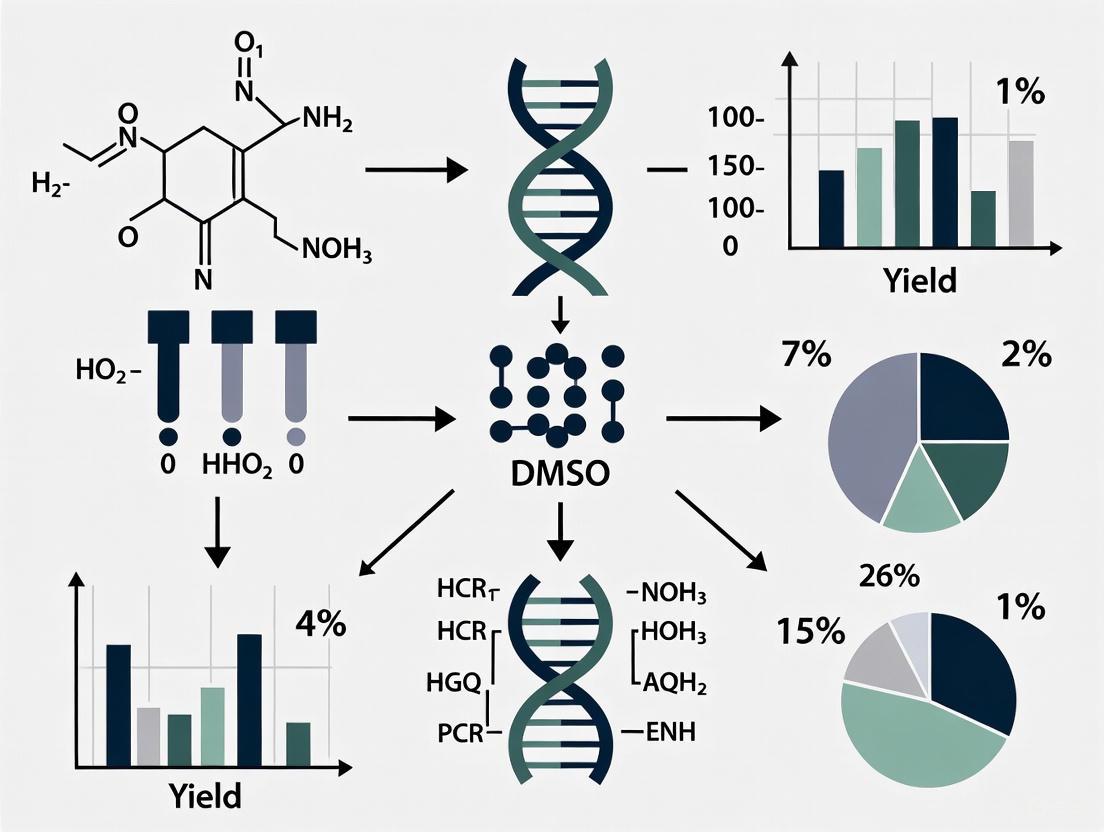
This article provides a comprehensive guide for researchers and drug development professionals on leveraging Dimethyl Sulfoxide (DMSO) to overcome common PCR challenges.
Optimizing PCR with DMSO: A Complete Guide to Enhancing Amplification Yield and Specificity
Abstract
This article provides a comprehensive guide for researchers and drug development professionals on leveraging Dimethyl Sulfoxide (DMSO) to overcome common PCR challenges. It covers the foundational science of how DMSO interacts with DNA to facilitate amplification of difficult templates, detailed methodological protocols for its incorporation into reaction mixes, systematic troubleshooting for optimization, and validation strategies to confirm reaction success. By synthesizing current best practices and recent findings, this resource enables scientists to reliably improve PCR yields, especially for GC-rich sequences and other problematic targets, thereby enhancing the efficiency and reliability of molecular assays in biomedical research.
Understanding DMSO: The Science Behind This Powerful PCR Additive
What is DMSO? Key Chemical Properties and Characteristics
Dimethyl sulfoxide (DMSO) is an organosulfur compound with the formula (CH₃)₂SO. Since its first synthesis in 1866 by Russian scientist Alexander Zaytsev, DMSO has become one of the most widely used solvents in commercial and research applications due to its exceptional ability to dissolve both polar and nonpolar compounds [1]. In scientific research, it serves as a powerful polar aprotic solvent, a cryoprotectant, and a vehicle for drug delivery. Its utility is particularly pronounced in molecular biology, where it is a critical reagent for optimizing polymerase chain reaction (PCR), especially for amplifying difficult templates such as GC-rich DNA sequences [2]. This application note details the fundamental properties of DMSO and provides structured protocols for its use in PCR to enhance yield and specificity, framed within the context of life science research and drug development.
Key Chemical Properties and Characteristics
DMSO's unique utility in laboratory science stems from its distinct physicochemical profile. The molecule possesses idealized Cs symmetry with a trigonal pyramidal molecular geometry, featuring a nonbonded electron pair on the sulfur atom [1]. Its key properties are summarized in the table below.
Table 1: Fundamental Physicochemical Properties of DMSO [1] [2]
| Property | Description / Value |
|---|---|
| Systematic IUPAC Name | (Methanesulfinyl)methane |
| Molecular Formula | (CH₃)₂SO / C₂H₆OS |
| Molar Mass | 78.13 g·mol⁻¹ |
| Appearance | Colourless liquid |
| Melting Point | 19 °C (66 °F; 292 K) |
| Boiling Point | 189 °C (372 °F; 462 K) |
| Density | 1.1004 g·cm⁻³ |
| Solubility | Miscible with water and a wide range of organic solvents. |
| Dielectric Constant | ~48.9 |
| Acidity (pKa) | 35 |
| Dipole Moment | 3.96 D |
Beyond the basic properties listed, DMSO exhibits several characteristic behaviors that define its laboratory use:
- Solvent Power: As a polar aprotic solvent, it dissolves polar and non-polar compounds, making it exceptionally versatile for chemical reactions and as a solubilizing agent for drugs and test compounds in in vitro assays [1].
- Reactivity: The sulfur center is nucleophilic toward soft electrophiles, while the oxygen is nucleophilic toward hard electrophiles. DMSO can also function as a mild oxidant in organic synthesis, as seen in Swern-type oxidations [1].
- Hygroscopicity: DMSO readily absorbs water from the atmosphere, which must be considered when using it for sensitive applications. For molecular biology, molecular biology or spectroscopic grades (such as DMSO-d6 for NMR) should be used to ensure purity and performance [1].
DMSO in PCR: Mechanism and Applications
The polymerase chain reaction (PCR) is a cornerstone of modern molecular biology, but it often requires optimization for difficult templates. DMSO is a vital PCR enhancer, primarily for amplifying GC-rich templates (typically >65% GC content) [3] [2]. These templates present two main challenges:
- Stable Secondary Structures: The triple hydrogen bonds between guanine (G) and cytosine (C) stabilize DNA strands, promoting the formation of complex secondary structures like hairpins that can block polymerase progression [4] [2].
- High Melting Temperature (Tₘ): The increased stability of GC-rich DNA demands a higher denaturation temperature, which can sometimes be detrimental to the reaction [2].
DMSO addresses these issues through a dual mechanism:
- It binds to the cytosine bases in DNA, making them more heat-labile. This interaction alters DNA topology, reducing its negative supercoiling and helping to relax secondary structures [2].
- By intercalating into the DNA structure, it reduces the strength of hydrogen bonding throughout the molecule, thereby lowering the overall melting temperature of the template and the primers [2].
Consequently, DMSO facilitates more efficient DNA denaturation and improves the specificity of primer annealing, leading to higher yields of the desired product and a reduction in non-specific amplification [4] [2].
Experimental Protocols: Optimizing PCR with DMSO
Protocol: Systematic Optimization of DMSO Concentration
This protocol is designed to empirically determine the optimal concentration of DMSO for amplifying a specific GC-rich target, based on methodologies from published optimization studies [4] [3].
1. Research Reagent Solutions Table 2: Essential Reagents for PCR Optimization with DMSO
| Reagent | Function | Notes |
|---|---|---|
| DNA Template | The target DNA for amplification. | Use high-quality, intact DNA. For FFPE tissues, use specialized extraction kits [4]. |
| Sequence-Specific Primers | Oligonucleotides that define the start and end of the amplified region. | Design primers with Tm > 68°C for GC-rich targets [3]. |
| PCR Polymerase | Enzyme that synthesizes new DNA strands. | Use high-fidelity polymerases robust to difficult templates (e.g., PrimeSTAR GXL, Advantage GC2) [3]. |
| dNTP Mix | Building blocks (A, T, C, G) for new DNA synthesis. | Use a balanced, high-quality solution to prevent errors. |
| MgCl₂ Solution | Essential cofactor for DNA polymerase activity. | Concentration often requires co-optimization with DMSO [4] [3]. |
| Molecular Grade DMSO | PCR additive to enhance specificity and yield. | Must be high-purity, sterile, and nuclease-free. |
| 10X Reaction Buffer | Provides optimal salt and pH conditions for the reaction. | Supplied with the polymerase. |
2. Procedure
- Prepare Master Mix: Create a master mix containing all standard PCR components (water, buffer, dNTPs, primers, polymerase) except the DNA template and DMSO.
- Aliquot and Add DMSO: Aliquot the master mix into five separate PCR tubes. Add molecular-grade DMSO to each tube to create a final concentration gradient (e.g., 0%, 3%, 5%, 7%, 10%). Adjust the water volume to maintain the same total reaction volume in all tubes.
- Add Template and Run PCR: Add an equal amount of DNA template to each tube. Load the tubes into a thermal cycler and run using the following exemplary cycling parameters, adjusting the annealing temperature (Ta) based on primer calculations and using a gradient if available [4] [3]:
- Initial Denaturation: 98°C for 2 min (for direct amplification) or 94°C for 1 min [3].
- Amplification (35-45 cycles):
- Denaturation: 98°C for 5-10 sec (or 94°C for 30 sec).
- Annealing: Gradient from 63°C to 69°C for 15-30 sec.
- Extension: 72°C for 1 min/kb.
- Final Extension: 72°C for 7 min.
- Hold: 4°C.
- Analyze Results: Resolve the PCR products by agarose gel electrophoresis. Identify the DMSO concentration and annealing temperature that produce a single, strong band of the expected size with minimal non-specific amplification.
Key Optimization Parameters
Successful amplification of GC-rich targets often requires fine-tuning beyond just DMSO concentration. The following parameters should be considered in a holistic optimization strategy [4] [3]:
- MgCl₂ Concentration: Magnesium is a critical cofactor for DNA polymerases. Test a range of concentrations (e.g., 1.0 mM to 2.5 mM), as the optimum for GC-rich targets often lies between 1.5 mM and 2.0 mM [4].
- Annealing Temperature: The optimal annealing temperature is often higher than calculated for GC-rich targets. One study on a GC-rich EGFR promoter region found the optimal Ta to be 7°C higher than the calculated value [4]. Using a gradient PCR is highly recommended.
- Template Quality and Quantity: Use high-quality, intact DNA. The required DNA concentration can be higher for difficult targets; one optimization found that at least 2 μg/mL was necessary for successful amplification [4].
- Cycling Modifications: Using a higher denaturation temperature (98°C) and shorter denaturation/annealing times can help maintain enzyme activity and improve specificity [3].
Table 3: Troubleshooting Guide for DMSO-Enhanced PCR
| Problem | Potential Cause | Suggested Remedy |
|---|---|---|
| No Amplification | DMSO concentration too low; annealing temperature too high. | Increase DMSO gradient to 7-10%; lower annealing temperature gradient. |
| Smear or Multiple Bands | DMSO concentration too high; non-specific priming. | Lower DMSO concentration; increase annealing temperature; optimize Mg²⁺ [2]. |
| Faint Target Band | Suboptimal DMSO or Mg²⁺; insufficient cycle number. | Fine-tune DMSO/Mg²⁺; increase cycles to 40-45. |
| PCR Failure | Enzyme inhibited; degraded template. | Ensure DMSO is molecular grade; check template quality and concentration [4]. |
Critical Considerations and Best Practices
While DMSO is a powerful tool, its use requires careful consideration to avoid experimental artifacts.
- Concentration is Critical: The typical effective concentration range is 3-10%, with 5% being a common starting point [3] [2]. Exceeding this range can be detrimental. High DMSO concentrations (>5%) can inhibit Taq polymerase, reduce fidelity, promote non-specific binding, and even induce mutagenesis by causing the polymerase to incorporate incorrect nucleotides [2]. Concentrations above 5% can also be lethal to cell lines and model organisms [5].
- Application-Specific Advice:
- Cell-Based Assays: Exercise caution, as DMSO can significantly affect cell morphology, physiology, and viability even at low concentrations (e.g., 1-4%) [5]. Always include a vehicle control with the same DMSO concentration.
- Downstream Sequencing: It is generally advised to avoid DMSO if the PCR product is intended for sequencing, as it can cause sequence artifacts [2].
- Alternative Reagents: Betaine is another common additive that can be used as an alternative or in conjunction with DMSO for particularly challenging templates [2].
DMSO is an inexpensive and highly effective chemical tool for overcoming the significant challenge of amplifying GC-rich DNA templates in PCR. Its ability to modify DNA topology and lower melting temperature directly addresses the primary obstacles of secondary structure formation and high duplex stability. By following the structured protocols outlined herein—systematically optimizing DMSO concentration, MgCl₂, and annealing temperature—researchers can consistently achieve high yields and superior specificity in their PCR experiments. A rigorous and methodical approach to incorporating DMSO into PCR workflows is a fundamental skill for researchers and scientists engaged in advanced molecular biology and drug development.
Polymerase chain reaction (PCR) amplification of DNA templates with high guanine-cytosine (GC) content (>60-65%) presents a significant challenge in molecular biology, particularly in research and drug development contexts where precision is critical [6] [7] [8]. These difficulties arise from fundamental molecular properties of GC-rich sequences that hinder standard amplification protocols. GC-rich regions are disproportionately found in functionally significant genomic areas, including promoter regions of housekeeping and tumor suppressor genes, making them crucial targets for scientific investigation [7]. Understanding the core structural problems enables researchers to select appropriate countermeasures, with dimethyl sulfoxide (DMSO) emerging as a particularly valuable additive in optimized reaction mixes.
The Fundamental Challenges of GC-Rich DNA
Enhanced Thermodynamic Stability
The primary challenge in amplifying GC-rich templates stems from the enhanced thermodynamic stability of the DNA duplex. Unlike adenosine-thymine (AT) base pairs connected by two hydrogen bonds, each guanine-cytosine (GC) base pair forms three hydrogen bonds [7] [2]. This increased hydrogen bonding creates a more stable double-stranded structure that requires more energy—and consequently higher temperatures—for denaturation [6] [2]. Under standard PCR conditions (typically 94-95°C denaturation), these regions may not fully denature, preventing primer access and resulting in failed or inefficient amplification [8].
Formation of Stable Secondary Structures
Beyond simple duplex stability, GC-rich sequences have a high propensity to form complex secondary structures that physically block polymerase progression. These include:
- Hairpins and stem-loops: Caused by inverted repeats that enable single-stranded DNA to fold back on itself [6] [7].
- G-quadruplexes: Four-stranded structures formed by guanine-rich regions [6].
- Intramolecular knots: Complex tangles that prevent polymerase movement [6].
These stable secondary structures are particularly problematic during the extension phase of PCR, where they can cause polymerase stalling, premature termination, and truncated amplification products [6] [7].
Additional Complications
Several concomitant challenges further complicate GC-rich amplifications:
- High melting temperatures (Tm) of primers: Primers designed for GC-rich regions typically have elevated Tm values, which can exceed optimal annealing temperatures and reduce amplification efficiency [9].
- Primer-dimer formation: The high GC content in primers increases the likelihood of self- and cross-dimer formation through complementary regions, particularly at their 3' ends [7] [9].
- Non-specific amplification: The strong binding affinity of GC-rich primers can lead to mispriming at off-target sites with partial complementarity, resulting in multiple amplification products [10].
The diagram below illustrates how these molecular challenges impede the PCR process at different stages.
Figure 1: Molecular Obstacles in GC-Rich PCR. GC-rich DNA sequences create multiple failure points in standard PCR through enhanced stability and structural complexity.
DMSO as a Mechanistic Solution
Mechanism of Action
Dimethyl sulfoxide (DMSO) functions through multiple complementary mechanisms to facilitate amplification of problematic GC-rich templates:
- Reduction of DNA melting temperature: DMSO interacts with water molecules surrounding the DNA strand, reducing hydrogen bonding between water and DNA, thereby lowering the overall melting temperature (Tm) and facilitating denaturation at standard PCR temperatures [11] [2] [12].
- Disruption of secondary structures: By binding to cytosine bases and altering DNA conformation, DMSO makes secondary structures like hairpins more heat-labile, allowing them to unravel more easily during denaturation steps [2].
- Prevention of reannealing: DMSO interferes with inter- and intrastrand reannealing of denatured DNA, providing primers greater access to their complementary binding sites [2] [9].
- Alteration of DNA mechanical properties: Recent single-molecule studies demonstrate that DMSO moderately decreases DNA bending persistence length and causes slight conformational compaction, further contributing to easier strand separation [11].
Optimal Usage Parameters
The effectiveness of DMSO depends critically on appropriate concentration and integration with other reaction components:
Table 1: DMSO Implementation Guidelines for GC-Rich PCR
| Parameter | Recommended Range | Effect of Low Concentration | Effect of High Concentration |
|---|---|---|---|
| Concentration | 3-10% (typically 5%) [2] [13] [14] | Incomplete disruption of secondary structures; poor yield [2] [12] | Non-specific amplification; reduced polymerase activity; potential mutagenesis [2] [12] |
| GC Content Application | 5-7% for >60% GC [2] | Suboptimal for high-GC templates | Increased error rates and false sequences |
| Annealing Temperature Adjustment | Reduce by ~0.5-0.6°C per % DMSO [2] | -- | -- |
| Polymerase Compatibility | Most standard and high-fidelity polymerases | -- | Significant inhibition of Taq polymerase activity [12] |
Comprehensive Experimental Protocol for GC-Rich Amplification
Reagent Preparation and Optimization
The following protocol provides a systematic approach for amplifying GC-rich targets, with DMSO as a central component, based on optimized methodologies from recent studies [6] [9]:
Table 2: PCR Reaction Setup with DMSO Optimization
| Component | Standard PCR | GC-Rich PCR with DMSO | Notes |
|---|---|---|---|
| Template DNA | 10-100 ng genomic DNA | 10-100 ng genomic DNA | For complex templates, use 30-100 ng human genomic DNA [8] [14] |
| Forward/Reverse Primer | 0.1-1 μM each | 0.1-1 μM each | Design primers with 40-60% GC content; Tm 52-58°C [10] [9] |
| dNTPs | 200 μM each | 200 μM each | Maintain equal concentrations of all four dNTPs [14] |
| PCR Buffer | 1X concentration | 1X concentration | Some systems offer specialized GC buffers [7] |
| MgCl₂ | 1.5-2.0 mM | 1.0-4.0 mM (optimize) | Titrate in 0.5 mM increments; critical cofactor [7] [8] |
| DNA Polymerase | Standard Taq | High-fidelity, GC-tolerant enzyme | PrimeSTAR GXL, Q5, OneTaq, or Platinum SuperFi recommended [6] [7] [9] |
| DMSO | 0% | 3-10% (typically 5%) | Add sterile, molecular grade; reduce Ta by 1-2°C [7] [2] |
| Supplemental Additives | None | Betaine (1-1.7 M) optional | Betaine can be used alone or combined with DMSO [6] [12] |
Thermal Cycling Conditions
Optimized thermal cycling parameters are essential for successful GC-rich amplifications:
- Initial Denaturation: 98°C for 2-5 minutes for complete denaturation of complex templates [8]
- Amplification Cycles (30-40 cycles):
- Denaturation: 98°C for 10-30 seconds (higher temperature improves GC-rich template denaturation) [8]
- Annealing: Temperature gradient recommended: 5°C below average Tm down to 50°C; adjust based on DMSO concentration [10] [7]
- Extension: 68-72°C for 15-60 seconds/kb (longer products require slower extension rates) [8]
- Final Extension: 72°C for 5-10 minutes to ensure complete extension of all products [14]
For extremely challenging templates (>75% GC content), consider a 2-step PCR protocol with combined annealing/extension at 68-72°C, particularly when using primers with Tm values close to the extension temperature [8] [9].
Troubleshooting and Quality Assessment
Common issues and resolution strategies for DMSO-enhanced GC-rich PCR:
- No Amplification: Increase DMSO concentration to 7-10%; extend initial denaturation; try alternative polymerase; add betaine (1 M final) [6] [13]
- Non-specific Bands: Increase annealing temperature by 2-3°C; reduce DMSO concentration to 3-5%; optimize Mg²⁺ concentration; employ touchdown PCR [10] [7]
- Smearing: Reduce template amount; decrease cycle number; increase extension temperature; add formamide (1-5%) for increased stringency [12] [13]
- Primer-Dimer Formation: Redesign primers with less GC at 3' ends; increase annealing temperature; use hot-start polymerase [10] [7]
For applications requiring high fidelity (cloning, sequencing), consider that elevated DMSO concentrations may potentially increase error rates; use minimal effective concentration and employ high-fidelity polymerases with proofreading activity [2].
Integrated Solutions and Research Reagents
Complementary Approaches
While DMSO serves as a cornerstone additive for GC-rich PCR, a multipronged approach yields the most reliable results:
- Polymerase Selection: Specialized polymerases such as PrimeSTAR GXL, Q5 High-Fidelity, and OneTaq Hot Start demonstrate superior performance on GC-rich templates, often supplemented with proprietary enhancer formulations [6] [7] [9].
- Combined Additive Strategies: Betaine (1-1.7 M) can be used synergistically with DMSO to further homogenize DNA melting behavior, particularly for extremely GC-rich targets (>80%) [6] [12].
- Alternative Denaturants: Formamide (1-5%) may enhance stringency and reduce non-specific amplification in complex multiplex reactions [12] [13].
- Modified Nucleotides: For exceptionally challenging templates, partial substitution of dGTP with 7-deaza-2'-deoxyguanosine can reduce secondary structure formation without compromising amplification efficiency [13].
Research Reagent Solutions
Table 3: Essential Reagents for GC-Rich PCR Optimization
| Reagent Category | Specific Examples | Function in GC-Rich PCR |
|---|---|---|
| Specialized Polymerases | PrimeSTAR GXL, Q5 High-Fidelity, Platinum SuperFi, OneTaq Hot Start [6] [7] [9] | Enhanced processivity through secondary structures; maintained activity in additive-rich buffers |
| PCR Additives | DMSO, Betaine, Formamide, 7-deaza-dGTP [6] [12] [13] | Disrupt secondary structures; reduce melting temperature; improve specificity |
| Enhancer Systems | GC Enhancer (NEB), GC Buffer (Takara) [7] [8] | Proprietary formulations optimizing multiple parameters simultaneously |
| Template Preparation Kits | DNeasy Blood & Tissue (Qiagen), DNAzol [6] [9] | High-purity DNA extraction minimizing PCR inhibitors |
| Optimization Tools | Gradient Thermal Cyclers, Mg²⁺ Titration Kits, Additive Screening Panels | Systematic optimization of multiple reaction parameters |
The following diagram illustrates the integrated strategy for addressing GC-rich PCR challenges:
Figure 2: Integrated Strategy for GC-Rich PCR Success. A multipronged approach addressing enzyme selection, chemical enhancement, cycling parameters, and primer design yields optimal amplification of challenging templates.
Successful PCR amplification of GC-rich templates requires a fundamental understanding of the molecular challenges posed by these sequences. The enhanced thermodynamic stability and propensity for secondary structure formation necessitate specialized approaches that directly counter these physical constraints. DMSO serves as a critical tool in this context, functioning through multiple mechanisms to reduce DNA melting temperature, disrupt secondary structures, and prevent template reannealing. When implemented within an optimized protocol—including appropriate polymerase selection, complementary additives, and adjusted thermal cycling parameters—DMSO enables reliable amplification of even the most challenging GC-rich targets. This comprehensive approach ensures that researchers can consistently access these biologically significant genomic regions for downstream applications in basic research and drug development.
Dimethyl sulfoxide (DMSO) is an organosulfur compound widely utilized in molecular biology to enhance polymerase chain reaction (PCR) efficiency, particularly for challenging templates such as GC-rich sequences. Its ability to lower the DNA melting temperature and disrupt hydrogen bonding is fundamental to its mechanism of action. Within the context of optimizing PCR reaction mixes, understanding this mechanism allows researchers to intelligently incorporate DMSO to improve amplification yield and specificity. This application note details the molecular mechanisms by which DMSO interacts with DNA and the surrounding solvent, provides validated experimental protocols for its use in PCR, and presents key data to guide researchers and drug development professionals in their experimental design.
Molecular Mechanisms of DMSO Action
Disruption of Water Hydrogen-Bond Networks
The primary mechanism by which DMSO facilitates DNA denaturation is through its profound effect on the hydrogen-bonding network of water.
- Spectroscopic Evidence: Fourier Transform Infrared (FTIR) spectroscopy studies of DMSO and water cosolvent systems reveal a distinct, broad spectral feature around 2455–2480 cm⁻¹ in the O–D stretch region. This feature is indicative of highly disordered water hydrogen-bond configurations, a state significantly different from the structured tetrahedral networks found in pure water or ice [15].
- Localized Effect: Molecular dynamics simulations demonstrate that this disruption is largely confined to the first hydration shell of DMSO molecules. This explains why relatively high concentrations of DMSO are often required to effectively prevent the formation of stable ice crystals and, by analogy, to destabilize the double-stranded DNA structure [15]. By disordering the surrounding water, DMSO reduces the stability of the native DNA duplex.
Direct Interaction with DNA Bases
Beyond its effect on the solvent, DMSO can directly interact with the DNA molecule itself, leading to structural alterations.
- Altered DNA Topology: Research using FTIR spectroscopy on epithelial colon cancer cells treated with low concentrations of DMSO (0.1–1.5%) showed a dose-dependent decrease in total nucleic acid content and indicated changes in DNA topology [16].
- Stabilization of Non-Canonical Forms: Further analysis, supported by molecular docking and binding free energy studies, suggested that DMSO can stabilize the left-handed Z-DNA conformation [16]. This demonstrates that DMSO is not inert and can directly influence nucleic acid secondary structure, potentially preventing the re-annealing of DNA strands or facilitating the separation of GC-rich regions during PCR.
Table 1: Summary of DMSO's Molecular Mechanisms in PCR
| Mechanism | Experimental Evidence | Impact on PCR |
|---|---|---|
| Disruption of water H-bond networks | FTIR shows new, broad spectral feature (2455-2480 cm⁻¹); MD simulations show localized disruption [15] | Lowers overall DNA melting temperature (Tm), facilitating strand separation |
| Direct interaction with DNA | FTIR and molecular docking suggest stabilization of Z-DNA conformation [16] | May prevent re-annealing of GC-rich sequences and reduce secondary structure |
| Reduction of DNA stability | Combined effect of disrupted solvent shell and direct interaction | Makes double-stranded DNA less stable, particularly beneficial for GC-rich templates |
Quantitative Effects of DMSO on PCR Amplification
The inclusion of DMSO in a PCR master mix has quantifiable effects on amplification efficiency and product distribution. Systematic studies provide guidance on optimal concentrations.
- Concentration Optimization: Research using the GlobalFiler PCR Amplification Kit demonstrated that the effect of DMSO is dose-dependent. A concentration of 3.75% (v/v) was found to be most effective, significantly boosting the amplification yield of larger DNA fragments (>200 bp) while slightly decreasing the yield of smaller fragments (<200 bp) [17]. This selective enhancement is crucial for mitigating the "ski-slope effect"—a common issue in multiplex PCR where the amplification efficiency decreases with increasing amplicon size.
- GC-Rich Amplification: DMSO is a critical additive for amplifying GC-rich templates. In a study focused on amplifying nicotinic acetylcholine receptor subunits with GC contents of 58% and 65%, a tailored protocol incorporating DMSO and betaine was essential for success [18]. DMSO helps by lowering the melting temperature of these stable sequences, which have strong hydrogen bonding between bases, thereby facilitating primer annealing and polymerase progression.
Table 2: Optimized DMSO Concentrations for Different PCR Applications
| Application | Recommended DMSO Concentration | Observed Effect |
|---|---|---|
| Standard Multiplex PCR | 3.75% (v/v) | Increased yield of large-sized amplicons (>200 bp); reduction of ski-slope effect [17] |
| GC-Rich Template Amplification | 1-10% (v/v), requires optimization | Improved amplification yield and specificity by lowering Tm and reducing secondary structures [18] |
| Direct PCR | 3.75% (v/v) | Enhanced efficiency of direct amplification from crude samples (e.g., buccal cells) [17] |
Experimental Protocols
Protocol: Incorporating DMSO into a Standard PCR Workflow
This protocol is adapted from forensic science applications where DMSO was used to improve direct PCR results [17].
Research Reagent Solutions
- PCR Master Mix: e.g., GlobalFiler PCR Amplification Kit (Applied Biosystems)
- DMSO: Molecular biology grade, ≥99.7% (e.g., Sigma-Aldrich)
- Template DNA: 2 µg of standard control DNA (e.g., 2800M Control DNA) or equivalent sample DNA.
- Nuclease-Free Water
Procedure
- Prepare Reaction Mix: Assemble the following components in a sterile PCR tube on ice:
- Nuclease-Free Water: to a final volume of 25 µL
- 10X PCR Buffer: as per master mix protocol
- Primer Set: 2.5 µL
- DMSO: 0.9 µL (to achieve a final concentration of 3.75% v/v in a 25 µL reaction)
- Master Mix (dNTPs, polymerase, Mg²⁺): 7.5 µL
- Template DNA: 2 µg
- Thermal Cycling: Perform amplification using the following cycling conditions:
- Initial Denaturation: 95 °C for 1 minute
- Amplification Cycles (29 cycles):
- Denaturation: 94 °C for 10 seconds
- Annealing/Extension: 59 °C for 90 seconds
- Final Extension: 60 °C for 10 minutes
- Hold: 4 °C ∞
- Post-Amplification Analysis:
- Analyze the PCR product by capillary electrophoresis (e.g., using an Applied Biosystems 3500xL Genetic Analyzer) or agarose gel electrophoresis.
- Use software such as GeneMapper ID-X to analyze the peak heights and assess the reduction in the ski-slope effect by comparing the RFU ratios of large versus small amplicons with and without DMSO.
Protocol: Optimization for GC-Rich Templates
This protocol is based on methods used to amplify high-GC-content nicotinic acetylcholine receptor subunits [18].
Research Reagent Solutions
- DNA Polymerases: Test a suite of enzymes, including standard Taq and specialized high-fidelity or GC-enhanced polymerases.
- Organic Additives: DMSO and Betaine (e.g., 5M stock solution).
- Primers: Designed for the GC-rich target; longer primers (≥25-mer) may improve annealing specificity.
- Template DNA: Containing the GC-rich target sequence.
Procedure
- Set Up Optimization Reactions: Prepare a series of 25 µL reactions containing:
- 1X PCR buffer (specific to the polymerase used)
- Forward and Reverse Primers (0.2-0.5 µM each)
- dNTPs (200 µM each)
- DNA Polymerase (as per manufacturer's instructions)
- Template DNA (10-100 ng)
- Additive Test:
- Tube A: No additive
- Tube B: DMSO (1%, 2%, 5%, 10% v/v)
- Tube C: Betaine (0.5 M, 1.0 M)
- Tube D: DMSO (5% v/v) + Betaine (1.0 M)
- Thermal Cycling with Gradient: Use a thermal cycler with a gradient function. A typical cycling program with a temperature gradient in the annealing step is:
- Initial Denaturation: 98 °C for 2 minutes
- Amplification Cycles (35 cycles):
- Denaturation: 98 °C for 20 seconds
- Annealing: Test a range from 5°C below to 5°C above the calculated Tm of the primers for 30 seconds.
- Extension: 72 °C for 1 minute per kb of product.
- Final Extension: 72 °C for 5 minutes
- Analysis:
- Run the products on an agarose gel.
- Identify the condition (DMSO concentration, annealing temperature) that yields the strongest, most specific band of the expected size with minimal non-specific amplification.
The following diagram illustrates the mechanistic pathway by which DMSO enhances PCR amplification, integrating its molecular actions with the experimental workflow.
Dimethyl sulfoxide (DMSO) is a widely utilized chemical additive in polymerase chain reaction (PCR) protocols, serving multiple critical functions that enhance amplification efficiency, particularly for challenging templates. As a polar aprotic solvent, DMSO exhibits unique properties that make it invaluable for optimizing molecular biology applications. In PCR, its primary roles involve preventing the reannealing of DNA template strands and increasing the specificity of primer binding, thereby facilitating the amplification of complex genetic targets that would otherwise prove refractory to standard amplification conditions. The utility of DMSO extends to various PCR applications, including long-range PCR, GC-rich template amplification, and clinical diagnostics, making it an essential component in the molecular biologist's toolkit.
The effectiveness of DMSO stems from its direct interaction with nucleic acids and its modification of DNA thermal stability. By altering the hydrogen bonding between complementary DNA strands, DMSO reduces the melting temperature (Tm) of DNA, which helps prevent secondary structure formation and template reannealing during critical stages of the amplification process [19] [20]. This property is particularly beneficial when working with GC-rich sequences that tend to form stable secondary structures, as these structures can impede polymerase progression and lead to amplification failure. Furthermore, DMSO enhances reaction specificity by promoting stricter primer-template binding conditions, thereby reducing non-specific amplification and improving overall product yield [21] [14].
Mechanistic Insights: How DMSO Modifies PCR Dynamics
Molecular Mechanisms Preventing Template Reannealing
DMSO exerts its effects on PCR through well-characterized biophysical mechanisms that directly influence DNA structure and stability. The compound primarily functions by disrupting hydrogen bonding networks between complementary DNA strands, thereby reducing the energy required for strand separation. This effect is mediated through DMSO's interaction with water molecules surrounding the DNA structure. As DMSO molecules incorporate into the aqueous environment, they compete for hydrogen bonding sites, effectively reducing the stability of DNA duplexes by diminishing water-DNA interactions that normally stabilize the double-helix structure [19]. This mechanism explains DMSO's efficacy in lowering the melting temperature (Tm) of DNA, which facilitates strand separation at lower temperatures and prevents premature reannealing during PCR cycling.
The impact of DMSO on DNA thermal stability is particularly valuable for disrupting secondary structures that commonly form in GC-rich regions. These stable hairpin loops and stem-loop structures present significant obstacles to polymerase progression, often resulting in truncated amplification products or complete amplification failure. By reducing the stability of these secondary structures, DMSO ensures that the DNA template remains accessible to both primers and polymerase throughout the extension phase of PCR [20]. Research has demonstrated that this effect is concentration-dependent, with optimal concentrations typically ranging between 2% and 10% (v/v) in standard reaction mixtures [19] [14]. At these concentrations, DMSO effectively suppresses secondary structure formation without significantly compromising polymerase activity, striking a balance between template accessibility and enzymatic function.
Enhancement of Primer Specificity and Binding
Beyond its effects on template structure, DMSO significantly improves PCR specificity through modification of hybridization stringency. The presence of DMSO in the reaction mixture increases the stringency of primer-template interactions by elevating the effective annealing temperature without requiring adjustments to the thermal cycler program. This phenomenon occurs because DMSO differentially affects the stability of matched versus mismatched primer-template duplexes, with a more pronounced destabilizing effect on imperfect matches [14]. Consequently, primers with exact complementarity to their target sequences experience less disruption than those with partial complementarity, resulting in enhanced discrimination against non-specific binding events.
The specificity enhancement provided by DMSO is particularly valuable when amplifying complex templates or when using suboptimal primer designs. In multiplex PCR applications, where multiple primer sets must function simultaneously without cross-reactivity, DMSO can dramatically improve reaction performance by suppressing primer-dimer formation and off-target amplification [20]. Similarly, when amplifying sequences from complex genomic backgrounds, DMSO helps prioritize target amplification over background DNA amplification. The mechanism underlying this specificity enhancement involves alterations in the dielectric constant of the reaction medium, which affects the electrostatic interactions between primers and templates, particularly in AT-rich regions where binding stability is naturally lower [19]. This results in more consistent priming across diverse sequence contexts and reduces the incidence of false products.
Optimal Implementation: Protocols and Formulations
Standard DMSO-Enhanced PCR Protocol
The following protocol provides a standardized approach for incorporating DMSO into PCR reactions to maximize its benefits while minimizing potential drawbacks. This method is suitable for most conventional PCR applications and can be adapted for specialized requirements:
Reaction Setup: Prepare a master mix containing all standard PCR components: 1X reaction buffer, 200μM of each dNTP, 1.5mM MgCl₂ (concentration may require optimization), 0.1-1μM of each primer, 0.5-2.5 units of DNA polymerase, and 10-100ng of template DNA [14].
DMSO Addition: Add DMSO to achieve a final concentration between 2% and 5% (v/v). For initial optimization, test a concentration gradient between 2.5% and 10% to determine the ideal concentration for your specific application [21].
Thermal Cycling Parameters:
- Initial Denaturation: 94-98°C for 1-5 minutes
- Amplification Cycles (25-35 cycles):
- Denaturation: 94-98°C for 10-60 seconds
- Annealing: 5°C below the primer Tm for 30 seconds (adjust based on DMSO concentration)
- Extension: 68-72°C for 1 minute per kilobase of product
- Final Extension: 68-72°C for 5-10 minutes
- Hold: 4°C indefinitely [14]
Product Analysis: Analyze PCR products using standard agarose gel electrophoresis or other appropriate detection methods.
For GC-rich templates (>65% GC content), consider increasing the DMSO concentration to 5-10% and extending the initial denaturation time to 3-5 minutes [21]. When amplifying long templates (>4kb), combine DMSO with specialized polymerases and potentially reduce the denaturation time to minimize template damage.
Optimization Strategies for Specific Applications
Different PCR applications require tailored approaches to DMSO implementation. The following optimization guidelines address common scenarios encountered in molecular biology research:
GC-Rich Templates: For sequences with GC content exceeding 65%, implement a combination of 5% DMSO and elevated denaturation temperatures (98°C instead of 94°C). This approach synergistically addresses secondary structure stability while maintaining polymerase activity. Additionally, use primers with higher Tm values (>68°C) and keep annealing times as short as possible to reduce opportunities for secondary structure reformation [21].
Long-Range PCR: When amplifying fragments longer than 4kb, employ DMSO at 2.5-5% concentration in conjunction with high-fidelity polymerases possessing proofreading activity. Reduce denaturation times to minimize depurination events while ensuring complete strand separation. Consider using touchdown PCR protocols, starting with higher annealing temperatures and reducing by 2°C every second cycle for several cycles to enhance specificity during the critical early amplification stages [21] [20].
Multiplex PCR: In reactions employing multiple primer sets, utilize DMSO at 3-5% to increase priming specificity and reduce primer-dimer formation. The enhanced stringency provided by DMSO is particularly valuable in these complex reactions where multiple amplification events must occur without interference. Complement DMSO with balanced primer concentrations and potentially incorporate additional enhancers such as betaine for particularly challenging multiplex applications [20].
Direct PCR Methods: For protocols bypassing DNA extraction, such as the GG-RT PCR method which uses heat-treated whole blood lysates, DMSO can help counteract inhibitors present in crude samples. Implement at 2.5-5% concentration to improve amplification efficiency from complex biological matrices without requiring complete DNA isolation [22].
Research Reagent Solutions
The successful implementation of DMSO-enhanced PCR requires careful selection of complementary reagents and materials. The following table outlines essential components for establishing robust DMSO-PCR protocols:
| Reagent/Material | Function in DMSO-Enhanced PCR | Implementation Notes |
|---|---|---|
| DMSO (Molecular Biology Grade) | Reduces DNA secondary structure; increases primer specificity | Use at 2-10% (v/v); higher concentrations may inhibit polymerase [19] [14] |
| High-Fidelity DNA Polymerase | Provides proofreading activity for accurate long-range amplification | Essential for fragments >4kb; often used with DMSO for GC-rich targets [21] [14] |
| MgCl₂ Solution | Cofactor for DNA polymerase; concentration affects fidelity | Optimize between 1.0-4.0 mM; DMSO may alter free Mg²⁺ availability [19] [14] |
| Betaine | Homogenizes base stability; enhances GC-rich amplification | Use at 1-1.7M; often combined with DMSO for synergistic effect [20] |
| dNTP Mix | Building blocks for DNA synthesis | Maintain equimolar concentrations (20-200μM each); DMSO does not affect stability [14] |
| BSA (Bovine Serum Albumin) | Binds inhibitors in complex samples; stabilizes polymerase | Use at ~0.8 mg/ml; particularly valuable with crude templates [19] |
Experimental Workflow for DMSO Implementation
The following diagram illustrates the systematic approach for implementing DMSO in PCR optimization:
Systematic DMSO Implementation Workflow
This workflow provides a logical progression for optimizing DMSO concentration in response to specific PCR challenges. Beginning with identification of the amplification obstacle, the protocol guides users through establishing appropriate DMSO concentrations, complementary adjustments to thermal cycling parameters, and evaluation of outcomes. The systematic approach ensures that researchers can efficiently determine optimal conditions for their specific applications while understanding the relationship between different optimization parameters.
Quantitative Effects of DMSO on PCR Performance
The impact of DMSO on PCR efficiency can be quantitatively assessed through various parameters, including cycle threshold (Ct) values, amplification yield, and reaction specificity. The following table summarizes experimental data comparing PCR performance with and without DMSO supplementation:
| PCR Application | DMSO Concentration | Effect on Ct Value | Impact on Yield | Specificity Improvement |
|---|---|---|---|---|
| GC-Rich Amplification | 5% | Decrease of 2-4 cycles | Increase of 3-5 fold | Elimination of non-specific bands |
| Long-Range PCR (>4kb) | 2.5-5% | Variable (depends on template) | 2-3 fold increase | Reduced smearing; clearer product |
| Multiplex PCR | 3-5% | Variable across targets | More balanced amplification | Reduced primer-dimer formation |
| Direct Blood PCR | 2.5-5% | Decrease of 1-3 cycles | 2-4 fold increase | Sharper melting peaks [22] |
| AT-Rich Templates | 1-3% | Minimal change | Slight decrease if >5% | Moderate improvement |
The quantitative benefits of DMSO are particularly evident when amplifying challenging templates. For GC-rich sequences, the reduction in Ct values reflects improved amplification efficiency during early cycles, resulting from better template accessibility and reduced secondary structure formation. The dramatic increase in product yield demonstrates how DMSO helps overcome previous amplification barriers, while the specificity improvements manifest as cleaner reaction products with reduced background [21] [14]. For long-range PCR applications, DMSO enhances the polymerase processivity by preventing template folding, thereby enabling more complete extension of lengthy fragments.
DMSO serves as a versatile and powerful adjunct to standard PCR protocols, addressing two fundamental challenges in DNA amplification: template reannealing and primer specificity. Through its action on DNA thermal stability and hybridization dynamics, DMSO enables successful amplification of templates that would otherwise prove refractory to standard conditions. The implementation guidelines presented herein provide researchers with a systematic framework for incorporating DMSO into their molecular biology workflows, with specific recommendations tailored to common amplification challenges. When used at appropriate concentrations and in conjunction with complementary optimization strategies, DMSO significantly enhances PCR performance across diverse applications, from routine genotyping to specialized long-range and GC-rich amplifications. As PCR continues to evolve as a fundamental tool in biological research and diagnostic applications, the strategic implementation of enhancers like DMSO will remain essential for pushing the boundaries of what is amplifiable.
While Dimethyl sulfoxide (DMSO) is widely recognized as a crucial additive for amplifying GC-rich templates in polymerase chain reaction (PCR) applications, its utility extends far beyond this single scenario. DMSO is an organic polar solvent with a molecular formula of (CH₃)₂SO and molecular weight of 78.1 g/mol, characterized by trigonal pyramidal symmetry and unique properties including a high dielectric constant (~48.9) and ability to dissolve in both polar and nonpolar solutions [2]. In molecular biology, DMSO serves as a powerful PCR enhancer that modifies DNA secondary structure stability and melting characteristics through mechanisms that are only recently being fully elucidated.
This application note explores the expanding landscape of DMSO applications in PCR, providing researchers, scientists, and drug development professionals with evidence-based protocols for leveraging DMSO in specialized PCR scenarios beyond GC-rich amplification. We frame this technical review within the broader thesis of optimizing DMSO addition to PCR reaction mixes to achieve superior yields, enhanced sensitivity, and improved specificity across challenging experimental contexts.
Mechanistic Insights: How DMSO Modifies PCR Dynamics
DMSO exerts its effects on PCR through multiple interconnected mechanisms that fundamentally alter DNA molecule behavior during thermal cycling. Understanding these mechanisms provides a foundation for rational experimental design when incorporating DMSO into PCR protocols.
Structural Effects on DNA Conformation
Recent single-molecule studies have quantified DMSO's effects on DNA mechanical properties and conformations. Magnetic tweezers force-extension measurements demonstrate that DMSO linearly decreases the bending persistence length of DNA by approximately 0.43% per percent-DMSO concentration up to 20% [11]. This moderate increase in flexibility facilitates various PCR steps. Additionally, atomic force microscopy (AFM) imaging reveals systematic compaction of DNA conformations, with mean-squared end-to-end distance decreasing by approximately 1.2% per percent-DMSO [11].
Table 1: Quantitative Effects of DMSO on DNA Physical Properties
| Property | Measurement Technique | Effect of DMSO | Concentration Range |
|---|---|---|---|
| Bending Persistence Length | Magnetic Tweezers | Decrease of (0.43 ± 0.02%) per %-DMSO | 0-20% DMSO |
| Mean-Squared End-to-End Distance | AFM Imaging | Decrease of 1.2% per %-DMSO | 0-20% DMSO |
| Helical Twist | Magnetic Tweezers Twist Measurements | Largely unchanged (slight unwinding at >20%) | 0-20% DMSO |
| Melting Torque | Magnetic Tweezers Twist Measurements | Reduction | 0-20% DMSO |
Thermal Destabilization of Nucleic Acids
DMSO interacts with water molecules surrounding DNA strands, reducing hydrogen bonding between water and DNA, thereby lowering the melting temperature (Tm) of DNA [2] [23]. This effect is particularly pronounced in regions of stable secondary structure. DMSO specifically binds with cytosine bases, rendering them more heat-labile and consequently reducing the overall melting temperature for primer annealing [2]. This thermal destabilization prevents reannealing of denatured DNA strands, providing greater access for primers to bind at their complementary locations [2].
The following diagram illustrates the multifaceted mechanism of DMSO action throughout the PCR thermal cycling process:
Figure 1: Multimodal mechanism of DMSO action throughout PCR thermal cycling. DMSO disrupts DNA secondary structures, lowers melting temperature, and prevents DNA reannealing, collectively leading to improved PCR specificity and yield.
Application Scenarios Beyond GC-Rich Amplification
Enhancing Mutation Scanning Sensitivity
DMSO significantly improves detection sensitivity in high-resolution melting (HRM) mutation scanning applications. Research demonstrates that DMSO increases HRM detection sensitivity approximately 2-5-fold, enabling reliable detection of mutations with abundances as low as 1% in conventional PCR-HRM [24]. When combined with full-COLD-PCR for mutation enrichment, DMSO facilitates detection of mutations at remarkably low abundances of 0.2-0.3% - representing an overall 20-fold improvement compared to conventional PCR-HRM without DMSO [24].
The enhanced sensitivity stems from DMSO's ability to differentially affect thermal stability of wild-type versus mutant DNA, thereby amplifying their melting profile differences during HRM analysis. This differential effect is particularly pronounced for specific mutation types and sequence contexts, making DMSO-enhanced HRM a powerful tool for identifying low-frequency mutations in heterogeneous samples such as tumors [24].
Table 2: DMSO-Enhanced Mutation Detection Sensitivity Across Methods
| Method | Mutation Abundance Detection Limit | Fold Improvement with DMSO | Application Context |
|---|---|---|---|
| Conventional PCR-HRM | ~3-10% | 2-5 fold improvement (to ~1%) | TP53 exon 8 mutations |
| Full-COLD-PCR-HRM | 0.2-0.3% | ~20-fold improvement overall | Cancer samples with known low-frequency mutations |
| Conventional PCR-HRM with DMSO | ~1% | Baseline with DMSO | Myelodysplastic syndrome samples |
Amplification of Complex Secondary Structures
DNA regions with propensity for forming stable secondary structures - including hairpins, cruciforms, and other non-B-form DNA architectures - present significant challenges for PCR amplification. DMSO effectively destabilizes these structures through its ability to reduce DNA bending persistence length and promote DNA compaction [11]. This structural modification prevents reannealing of denatured DNA, providing primers greater access to complementary binding sites [2].
The optimal DMSO concentration for resolving secondary structures typically ranges from 3-10%, with 5% representing a standard starting point for optimization [2]. This concentration range sufficiently destabilizes problematic structures while maintaining Taq DNA polymerase activity, though careful titration is essential as excessive DMSO concentrations can inhibit polymerase function [23].
Improved Amplification of Long Templates
Long PCR templates (>3kb) present inherent challenges due to increased probability of secondary structure formation and polymerase stalling. DMSO enhances amplification efficiency for long templates by reducing DNA rigidity and minimizing secondary structure formation between distal template regions. Single-molecule experiments confirm that DMSO induces moderate compaction of DNA conformations, which may facilitate polymerase processivity across extended templates [11].
When amplifying long templates, researchers should employ a combination of DMSO (typically 5-8%) with specialized polymerase systems designed for long-range PCR. The reduction in DNA melting temperature conferred by DMSO must be considered when calculating annealing temperatures, with approximately 2.5°C reduction in annealing temperature expected at 5% DMSO concentration [2].
Optimization of Multiplex PCR Assays
DMSO serves as a valuable tool for normalizing annealing temperatures in multiplex PCR reactions targeting multiple sequences with divergent Tm values. By systematically lowering and compressing the melting temperature range across different amplicons, DMSO enables simultaneous optimization of primer annealing for multiple target sequences [2].
For example, reactions with previously incompatible annealing temperatures of 63°C and 60°C can be successfully combined by adding 5% DMSO to the higher-temperature reaction, effectively fusing the optimal annealing conditions [2]. This application demonstrates particular utility in diagnostic panels and targeted sequencing approaches where multiple genomic regions must be co-amplified in a single reaction vessel.
Experimental Protocols and Methodologies
Core Protocol: Establishing DMSO-Enhanced PCR
This foundational protocol provides a standardized approach for implementing DMSO in PCR applications, with specific optimization points for different scenarios.
Research Reagent Solutions and Essential Materials
Table 3: Essential Reagents for DMSO-Enhanced PCR
| Reagent | Function | Optimization Notes |
|---|---|---|
| Molecular Grade DMSO | PCR additive | Reduces DNA secondary structure; lowers Tm [2] |
| Phusion High-Fidelity DNA Polymerase | DNA amplification | Maintains activity with ≤10% DMSO [24] |
| dNTPs (dATP, dCTP, dGTP, dTTP) | Nucleotide substrates | Standard 200-250μM each; DMSO may affect binding [23] |
| MgCl₂ | Cofactor | Essential polymerase cofactor; optimize 1.5-4.0mM with DMSO [4] [23] |
| LCGreen Plus+ dye | Intercalating dye | For HRM applications; compatible with DMSO [24] |
| Template DNA | Amplification target | ≥2μg/ml for FFPE samples; DMSO improves difficult templates [4] |
| Primer pairs | Sequence specificity | Design with DMSO-adjusted Tm calculations [2] |
Step-by-Step Procedure
Reaction Setup: Prepare master mix containing 1X PCR buffer, 200μM of each dNTP, 0.2-0.5μM of each primer, 1.5-2.0mM MgCl₂, 0.5-1.0U DNA polymerase, and template DNA (≥2μg/ml for suboptimal samples) [4].
DMSO Addition: Add molecular grade DMSO to achieve desired final concentration (typically 3-10%). For initial optimization, test a range of 4%, 5%, and 6% DMSO [2].
Thermal Cycling:
Post-Amplification Analysis:
The following workflow diagram illustrates the key decision points in implementing and optimizing DMSO-enhanced PCR:
Figure 2: DMSO implementation and optimization workflow for challenging PCR scenarios.
Specialized Protocol: DMSO-Enhanced HRM for Mutation Scanning
This specialized protocol builds upon the core procedure to maximize sensitivity for low-abundance mutation detection.
Reagent Modifications
- Use high-fidelity DNA polymerase (e.g., Phusion High-Fidelity DNA Polymerase)
- Include LCGreen Plus+ at 0.8X concentration in PCR mix [24]
- Prepare DMSO stock solutions at 5%, 7%, and 10% for sensitivity optimization
Procedure
PCR Setup: Perform conventional PCR or full-COLD-PCR with 45 total cycles using optimized conditions for the target sequence [24].
DMSO Addition for HRM: Transfer 10μL of PCR product to a 96-well plate suitable for HRM analysis. Add DMSO to achieve final concentrations of 5%, 7%, or 10% in separate reactions. Include a no-DMSO control for comparison.
HRM Analysis: Perform high-resolution melting on a LightScanner System or equivalent:
- Melting range: 65°C to 95°C
- Temperature increment: 0.2°C per step
- Hold time: 2-4 seconds before each acquisition [24]
Data Interpretation: Analyze melting curve differences between wild-type and potential mutant samples. DMSO typically enhances differentiation between variants, particularly for mutations with low abundance (1% or less) [24].
Optimization Strategies and Troubleshooting
Concentration Optimization
DMSO concentration requires careful optimization across different applications. While 3-10% represents the effective range, specific applications benefit from precise concentration tuning:
- Standard GC-rich templates: 5% DMSO [4]
- Extreme GC-content (>60%): 5.5-7% DMSO [2]
- Mutation scanning/HRM: 5-10% DMSO [24]
- Long templates (>3kb): 5-8% DMSO
Empirical optimization using a DMSO gradient (e.g., 4%, 5%, 6%) is recommended for each new application [2]. Note that 5% DMSO typically decreases annealing temperature by approximately 2.5°C, requiring adjustment of thermal cycling parameters [2].
Addressing Suboptimal Results
Table 4: Troubleshooting DMSO-Enhanced PCR
| Problem | Potential Cause | Solution |
|---|---|---|
| Non-specific amplification | Excessive DMSO concentration | Reduce DMSO concentration in 1% increments |
| No amplification | Insufficient DMSO effect | Increase DMSO concentration; optimize MgCl₂ |
| Multiple peaks in melt curve | DNA intermediate states | Use uMelt software prediction; confirm with gel electrophoresis [25] |
| Reduced yield | Polymerase inhibition by DMSO | Reduce DMSO concentration; use DMSO-tolerant polymerase |
| Mutagenesis | High DMSO concentration affecting fidelity | Limit DMSO to ≤5% for sequencing applications [2] |
DMSO represents a versatile and powerful tool that extends far beyond its traditional application in GC-rich PCR. Through its multifaceted effects on DNA conformation, melting behavior, and amplification specificity, DMSO enables successful PCR amplification across diverse challenging scenarios including mutation scanning with enhanced sensitivity, resolution of complex secondary structures, long template amplification, and multiplex assay optimization. The protocols and optimization strategies presented herein provide researchers with practical frameworks for implementing DMSO-enhanced PCR methods, contributing to the broader thesis of strategic additive implementation for superior molecular assay performance.
As PCR continues to evolve as a foundational technology in research and diagnostic applications, strategic application of DMSO and understanding of its mechanisms will remain essential for addressing increasingly challenging amplification targets and application requirements.
A Step-by-Step Protocol for Adding DMSO to Your PCR Reaction
In polymerase chain reaction (PCR) applications, the guanine-cytosine (GC) content and structural complexity of a DNA template are critical determinants of amplification success. GC-rich regions, defined as sequences where 60% or more of the bases are guanine or cytosine, present substantial challenges for conventional PCR protocols [26]. These templates form stable secondary structures—including hairpins and stem-loops—due to the three hydrogen bonds in G-C base pairs compared to only two in A-T pairs [2] [26]. Such structures resist complete denaturation, block polymerase progression, and promote non-specific primer binding, ultimately leading to amplification failure, reduced yield, or non-specific products [10] [4].
Dimethyl sulfoxide (DMSO) serves as a powerful chemical enhancer to overcome these challenges. As an organic solvent with unique properties, DMSO modifies DNA thermodynamics by interacting with cytosine bases, reducing their heat stability, and lowering the overall melting temperature (Tm) of DNA [2]. This action facilitates the denaturation of stable secondary structures and prevents the reannealing of DNA strands, thereby providing primers greater access to their complementary target sequences [2]. This application note provides a structured framework for assessing template characteristics and implementing DMSO to enhance PCR yield and specificity.
Assessment Criteria: When to Consider DMSO
The decision to incorporate DMSO into a PCR reaction should be based on specific template characteristics and amplification outcomes. The following criteria outline scenarios where DMSO supplementation is recommended.
- GC Content >60%: Templates with GC content exceeding 60% are prime candidates for DMSO. The challenges intensify with content above 65%, where secondary structure formation is highly probable [27] [26]. For extremely GC-rich templates (e.g., 75-88%), as encountered in promoters of genes like EGFR, DMSO becomes essential for successful amplification [4].
- Presence of Stable Secondary Structures: Complex templates prone to forming hairpins or other secondary structures benefit from DMSO, which helps unwind these configurations [2] [26].
- Amplification Failure with Standard Protocols: A blank gel, a DNA smear, or multiple non-specific bands after standard PCR are practical indicators that a template may be GC-rich or complex and would benefit from optimization with DMSO [26].
- Long-Range PCR: Amplification of long genomic targets (>4 kb) can be hindered by secondary structures. DMSO can enhance polymerase processivity across these difficult regions [14].
Table 1: Template Assessment and DMSO Application Guidelines
| Template Characteristic | Indicator for DMSO Use | Expected Benefit |
|---|---|---|
| GC Content | >60% [26] | Disruption of strong hydrogen bonding, facilitating DNA denaturation [2]. |
| Secondary Structure | Hairpin formation, "smearing" on gel [10] [26] | Prevention of template reannealing and primer dimer formation [2]. |
| Amplification Result | Low yield, multiple bands, or no product [4] [26] | Increased specificity and yield of the target amplicon [2] [17]. |
| Template Length | Long amplicons (>4 kb) [14] | Improved polymerase processivity through structured regions. |
The following workflow diagram summarizes the decision-making process for employing DMSO in PCR:
Established Protocols and Experimental Data
Case Study: Amplification of an Extremely GC-Rich EGFR Promoter
A study aiming to genotype the GC-rich promoter region of the EGFR gene (75.45% GC content) provides a robust protocol for DMSO optimization [4]. The following table summarizes the key parameters and their optimized values from this research.
Table 2: Optimized Protocol for GC-Rich EGFR Promoter Amplification [4]
| Parameter | Initial/Suboptimal Condition | Optimized Condition |
|---|---|---|
| DMSO Concentration | 1%, 3% | 5% (v/v) |
| Annealing Temperature (Tₐ) | Calculated: 56°C | 63°C (7°C higher than calculated) |
| MgCl₂ Concentration | Tested 0.5-2.5 mM | 1.5 mM |
| Template DNA Concentration | <1.86 μg/mL | ≥2 μg/mL |
| Cycling Conditions | Standard | 45 cycles; denaturation 94°C/30s, extension 72°C/60s |
Standardized DMSO Addition Protocol
For integrating DMSO into a new PCR assay, the following step-by-step methodology is recommended.
- Prepare Master Mix: Create a standard master mix containing buffer, dNTPs, primers, polymerase, and template DNA. Omit Mg²⁺ if it is supplied separately [10] [27].
- Add DMSO: Introduce DMSO to achieve a final concentration typically between 3% and 10% (v/v). Use molecular biology grade, high-purity DMSO [2].
- Adjust Final Volume: Complete the reaction with nuclease-free water. Gently mix the solution by pipetting, avoiding vortexing which may introduce shearing or bubbles.
- Thermocycling: Proceed with standard thermocycling conditions. Note that 5% DMSO can lower the effective annealing temperature by approximately 2.5°C, which may necessitate adjustment [2].
Optimization and Troubleshooting
Concentration Optimization
DMSO efficacy is concentration-dependent. A generalized optimization strategy should be employed.
- Recommended Range: A final concentration of 3-10% is typical, with 5% being a standard starting point [2] [27].
- Optimization Method: Set up a gradient of reactions with 4%, 5%, and 6% DMSO to identify the ideal concentration for a specific template [2].
- Concentration Warnings:
Synergy with Other PCR Components
DMSO does not act in isolation; its effect is influenced by other reaction components.
- Magnesium Ions (Mg²⁺): Mg²⁺ is an essential polymerase cofactor. DMSO can affect the availability of free Mg²⁺. Co-optimization of MgCl₂ concentration (typically 1.5-2.0 mM for GC-rich templates) is critical [10] [4].
- Polymerase Selection: High-fidelity polymerases (e.g., Pfu, Q5) are often preferred for amplifying complex templates due to their proofreading activity. Many polymerases optimized for GC-rich templates are compatible with DMSO, but compatibility should be verified [10] [26].
- Alternative Additives: Betaine (1-2 M) can be used as an alternative or in combination with DMSO to homogenize the stability of DNA and aid in amplifying long GC-rich regions [10] [18].
Research Reagent Solutions
The following table lists essential reagents for implementing this DMSO optimization protocol.
Table 3: Key Research Reagents for PCR with DMSO
| Reagent | Function/Description | Example Use Case |
|---|---|---|
| Molecular Grade DMSO | High-purity solvent; reduces DNA melting temperature and disrupts secondary structures. | Essential additive for all GC-rich (>60%) PCRs [2]. |
| High-Fidelity DNA Polymerase | Enzyme with 3'→5' exonuclease (proofreading) activity for high accuracy. | Cloning, sequencing of complex templates [10] [26]. |
| GC Enhancer Buffer | Commercial buffer containing a proprietary mix of additives (may include DMSO, betaine). | OneTaq GC Buffer, Q5 High GC Enhancer for simplified optimization [26]. |
| MgCl₂ Solution | Source of Mg²⁺ cofactor; concentration requires fine-tuning. | Titration from 1.0 mM to 4.0 mM in 0.5 mM increments to find optimal concentration [10] [26]. |
| dNTP Mix | Equimolar mix of nucleotides; building blocks for DNA synthesis. | Standard concentration of 200 μM of each dNTP recommended [14]. |
DMSO is an indispensable tool for amplifying GC-rich and structurally complex DNA templates. Its judicious application, guided by systematic assessment of template characteristics and careful optimization of concentration (3-10%), enables researchers to overcome the significant challenge of PCR amplification failure. By following the detailed protocols and troubleshooting guidelines outlined in this application note, scientists can reliably enhance the yield and specificity of their PCRs, thereby advancing downstream research and diagnostic applications.
Dimethyl sulfoxide (DMSO) is a pivotal chemical additive in polymerase chain reaction (PCR) protocols, serving to enhance amplification efficiency, particularly for challenging templates. As an organic solvent with unique properties, DMSO improves PCR outcomes by altering DNA thermodynamics and mitigating obstacles presented by complex secondary structures. Its primary application lies in facilitating the amplification of guanine-cytosine (GC)-rich DNA sequences, which typically form stable secondary structures that impede polymerase progression. The efficacy of DMSO is concentration-dependent, necessitating careful optimization to balance its beneficial effects against potential inhibition of DNA polymerase activity. Research demonstrates that DMSO achieves these effects through multiple mechanisms: reduction of DNA melting temperature, interference with secondary structure formation, and decreased DNA thermodynamic stability [2]. Understanding these mechanisms provides the foundation for rational protocol design and optimization, ensuring reliable amplification of difficult targets while maintaining reaction efficiency.
Mechanism of Action: How DMSO Enhances PCR
Biochemical Interactions
DMSO exerts its effects through specific biochemical interactions with DNA components and the amplification process. The compound directly interacts with the cytosine bases of DNA, inducing conformational changes that render these nucleotides more heat-labile [2]. This interaction effectively lowers the overall melting temperature (Tm) of the DNA template, facilitating denaturation at lower temperatures than would otherwise be required. Additionally, DMSO reduces the strength of hydrogen bonding in both major and minor grooves of the DNA helix, further destabilizing double-stranded DNA and easing strand separation during the denaturation step of PCR cycling [2]. This property is particularly valuable for GC-rich templates where triple hydrogen bonds between guanine and cytosine nucleotides create exceptionally stable duplex structures.
Suppression of Secondary Structures
GC-rich DNA sequences possess a strong propensity to form intramolecular secondary structures, including hairpins and stem-loop configurations, through complementary base pairing within single strands. These structures occur when regions of the same DNA molecule anneal to themselves, creating physical barriers that block polymerase progression and prevent complete amplification [4]. DMSO effectively suppresses the formation of these secondary structures by binding to single-stranded DNA and preventing the reannealing of complementary regions [2]. This action ensures that DNA templates remain accessible for primer binding throughout the amplification process, significantly improving yield and specificity for problematic targets.
Recommended DMSO Concentration Ranges
Standard Concentration Guidelines
Establishing appropriate DMSO concentration is critical for successful PCR optimization. The typical effective range falls between 3-10% (v/v) in standard reaction mixtures, with the exact concentration determined by template characteristics and specific reaction conditions [28]. For most applications involving GC-rich templates, a concentration of 5% DMSO provides substantial enhancement without significant polymerase inhibition [29] [4]. This concentration has demonstrated remarkable success in amplifying challenging targets, achieving a 91.6% PCR success rate for plant ITS2 DNA barcodes that previously failed amplification under standard conditions [29]. Systematic optimization within this range is recommended, adjusting concentration in 2% increments to identify the ideal level for specific template and primer combinations [28].
Concentration-Dependent Effects
DMSO exhibits concentration-dependent effects on PCR components that must be considered during optimization. The compound directly influences primer melting temperatures, with 10% DMSO decreasing annealing temperature by approximately 5.5-6.0°C [28]. This substantial reduction necessitates corresponding adjustment of thermal cycler parameters to maintain reaction specificity. At concentrations exceeding the optimal range, DMSO can promote non-specific amplification by excessively stabilizing single-stranded DNA and reducing melting temperature to a point where primer binding loses stringency [2]. This can manifest as multiple extraneous bands on electrophoretic gels or complete reaction failure. Conversely, insufficient DMSO concentration may provide no noticeable improvement in amplification efficiency, leaving secondary structures intact and resulting in poor yield or amplification failure [2].
Table 1: DMSO Concentration Guidelines for Various Template Types
| Template Characteristic | Recommended DMSO Range | Optimal Starting Point | Key Considerations |
|---|---|---|---|
| Standard Templates (45-52% GC) | 0-3% | 0% | Often unnecessary; standard buffer may suffice [2] |
| Moderate GC-rich Templates (60-70% GC) | 3-6% | 5% | Improves yield & specificity; adjust annealing temperature [2] |
| High GC-rich Templates (>70% GC) | 5-10% | 5-7% | Essential for amplification; requires optimization [2] [4] |
| Extreme GC-rich (≥80% GC) | 5-10% | 5% | Combined approach with other additives may be needed [4] |
Experimental Protocols for DMSO Optimization
Systematic DMSO Titration Protocol
Optimizing DMSO concentration requires systematic titration to identify the ideal level for specific experimental conditions. The following protocol provides a standardized approach for DMSO optimization:
Reaction Setup: Prepare a master mix containing all standard PCR components: 1X PCR buffer, 0.2 mM dNTPs, 0.1-1 μM of each primer, 0.5-2.5 U DNA polymerase, and template DNA (1-1000 ng based on complexity). Scale the mixture to accommodate multiple reactions [30].
DMSO Dilution Series: Aliquot the master mix into individual PCR tubes. Add DMSO to create a concentration gradient spanning 0%, 2%, 4%, 6%, 8%, and 10% (v/v). Maintain consistent final volume across all reactions by adjusting sterile water accordingly [28] [2].
Thermal Cycling Parameters: Program the thermal cycler with an initial denaturation at 94-98°C for 2-3 minutes, followed by 30-40 cycles of denaturation (94-98°C for 15-30 seconds), annealing (temperature gradient spanning 5°C above and below calculated Tm for 20-30 seconds), and extension (72°C for 1 minute/kb). Include a final extension at 72°C for 5-7 minutes [4] [31].
Product Analysis: Resolve amplification products by agarose gel electrophoresis. Identify the DMSO concentration yielding the strongest specific amplification with minimal non-specific products [4].
Annealing Temperature Adjustment: Based on optimal DMSO concentration, adjust annealing temperature accordingly. As a guideline, 5% DMSO decreases annealing temperature by approximately 2.5°C, while 10% DMSO decreases it by 5.5-6.0°C [28].
Case Study: EGFR Promoter Amplification
A research study optimizing PCR amplification of the epidermal growth factor receptor (EGFR) promoter region (GC content >75%) provides an exemplary model for DMSO optimization [4]. The investigators implemented a systematic approach:
Initial Setup: Reactions contained 0.2 μM of each primer, 0.25 mM dNTPs, 0.625 U Taq DNA polymerase, and 1X PCR buffer in 25 μL volume.
DMSO Testing: Separate reactions contained 1%, 3%, and 5% DMSO concentrations.
Thermal Cycling: Conditions included initial denaturation at 94°C for 3 minutes; 45 cycles of 94°C for 30 seconds, 63°C for 20 seconds, 72°C for 60 seconds; final extension at 72°C for 7 minutes.
Results: Only 5% DMSO produced the desired 197 bp amplicon with adequate yield and specificity. Lower concentrations failed to generate detectable product, confirming the necessity of adequate DMSO for challenging templates.
This case study highlights the critical importance of DMSO optimization for specific template types, particularly those with extreme GC content that form stable secondary structures.
Complementary Reagent Optimization
Magnesium Ion Concentration
Magnesium ion (Mg²⁺) concentration represents a crucial variable that interacts with DMSO optimization. As an essential cofactor for DNA polymerase activity, Mg²⁺ concentration directly influences enzyme processivity and fidelity [32]. The optimal Mg²⁺ concentration typically ranges from 1.5 to 2.5 mM, but requires re-optimization when introducing DMSO [4]. Excessive Mg²⁺ can reduce enzyme fidelity and increase nonspecific amplification, while insufficient Mg²⁺ compromises polymerase activity [31]. In the EGFR promoter optimization study, the ideal MgCl₂ concentration was determined to be 1.5 mM when using 5% DMSO [4]. A separate optimization experiment should be conducted with Mg²⁺ concentrations ranging from 0.5-5.0 mM in 0.5 mM increments to establish the ideal concentration for specific reaction conditions.
DNA Template Quality and Quantity
Template DNA characteristics significantly influence DMSO efficacy in PCR enhancement. For formalin-fixed paraffin-embedded (FFPE) tissue samples, which frequently contain damaged and cross-linked DNA, a minimum DNA concentration of 2 μg/mL may be necessary for successful amplification with DMSO [4]. The integrity of the DNA template is equally important, as fragmented or degraded DNA yields poor amplification regardless of DMSO optimization. For standard templates, input amounts should follow general guidelines: 30-100 ng of genomic DNA, 100 pg-1 ng of bacterial DNA, and 10 pg-1 ng of cDNA [31]. When amplifying from suboptimal templates such as FFPE samples, combining DMSO with other enhancing strategies may be necessary to achieve satisfactory results.
Table 2: Complementary Reaction Components for DMSO-Enhanced PCR
| Component | Standard Concentration | Optimization Range | Interaction with DMSO |
|---|---|---|---|
| Mg²⁺ | 1.5-2.0 mM | 0.5-5.0 mM | Critical re-optimization needed; affects polymerase activity [4] |
| dNTPs | 0.2 mM each | 0.01-0.3 mM | High dNTPs chelate Mg²⁺; balance with Mg²⁺ concentration [32] |
| Primers | 0.1-1 μM | 0.05-1 μM | High concentrations increase mispriming; DMSO reduces Tm [32] |
| DNA Template | 1-100 ng | Varies by source | Complex templates require more DNA; DMSO aids difficult templates [4] |
| DNA Polymerase | 0.5-2.5 U/50 μL | 0.5-5 U/50 μL | High fidelity enzymes may be more sensitive to DMSO [32] |
Alternative and Adjunctive Additives
Comparison with Other PCR Enhancers
While DMSO represents a highly effective PCR enhancer, several alternative additives may provide complementary benefits for particularly challenging amplifications. Betaine (also known as trimethylglycine) operates through a different mechanism by equalizing the contribution of GC and AT base pairs to DNA stability, effectively reducing the strand separation temperature of GC-rich regions while increasing it for AT-rich regions [29]. Formamide disrupts hydrogen bonding and can further lower melting temperatures, while 7-deaza-dGTP replaces dGTP in amplification, reducing hydrogen bonding capacity in GC-rich regions [29]. In comparative studies evaluating ITS2 DNA barcode amplification, 5% DMSO achieved a 91.6% success rate, outperforming 1 M betaine (75%), 50 μM 7-deaza-dGTP (33.3%), and 3% formamide (16.6%) [29]. Notably, combining DMSO and betaine in the same reaction did not improve success rates over DMSO alone, suggesting that these additives may not have synergistic effects [29].
Strategic Implementation of Additives
For optimal results with challenging templates, implement a systematic approach to additive selection:
Primary Optimization: Begin with DMSO titration (3-10%) as the primary enhancement strategy, as it provides the highest success rate for most GC-rich templates [29].
Alternative Additives: If DMSO alone proves insufficient, test betaine at 0.5-2.5 M as an alternative, particularly for templates with extreme GC content (>80%) [2] [29].
Combination Strategies: While DMSO and betaine typically don't show synergy, other combinations (e.g., DMSO with formamide or 7-deaza-dGTP) may be empirically tested for exceptionally difficult templates.
Polymerase Selection: Choose DNA polymerases specifically engineered for GC-rich amplification when available, as these may incorporate proprietary enhancers or demonstrate superior performance with structured templates [31].
The Scientist's Toolkit: Essential Research Reagents
Table 3: Key Reagent Solutions for DMSO-Optimized PCR
| Reagent | Function | Recommended Specifications |
|---|---|---|
| Molecular Grade DMSO | Primary PCR enhancer | High purity, sterile-filtered, stored in aliquots protected from light [2] |
| Betaine | Alternative enhancer for GC-rich templates | Molecular biology grade, typically used at 0.5-2.5 M concentration [29] |
| MgCl₂ Solution | DNA polymerase cofactor | Sterile, nuclease-free, prepared at 25 mM stock concentration [4] |
| dNTP Mix | DNA synthesis substrates | PCR-grade, neutral pH, equimolar mixture of dATP, dCTP, dGTP, dTTP [32] |
| High-Fidelity DNA Polymerase | DNA amplification | Engineered for GC-rich templates, provided with optimized buffer systems [31] |
| GC-Rich Template DNA | Amplification target | High purity (A260/A280 ≈1.8), minimal degradation, appropriate concentration [4] |
DMSO represents an indispensable tool for modern PCR applications, particularly when amplifying GC-rich templates that challenge conventional amplification conditions. The recommended concentration range of 3-10% provides substantial benefits through multiple mechanisms including reduction of DNA melting temperature, suppression of secondary structure formation, and prevention of template reannealing. The optimal concentration must be determined empirically for each template-primer system, with 5% serving as an effective starting point for most GC-rich targets. Successful implementation requires complementary optimization of magnesium concentration, annealing temperature, and DNA template quality. Through systematic optimization following the protocols outlined in this document, researchers can achieve robust amplification of even the most challenging DNA templates, advancing research across genetics, molecular biology, and drug development applications.
Dimethyl sulfoxide (DMSO) serves as a critical reagent in molecular biology for optimizing polymerase chain reaction (PCR) efficiency, particularly when amplifying challenging templates such as GC-rich sequences. This application note provides a detailed, evidence-based protocol for the precise pipetting and incorporation of DMSO into PCR master mixes. Within the context of a broader thesis on enhancing PCR yields, we demonstrate that the controlled addition of DMSO at concentrations of 1-10% (v/v) can significantly improve reaction outcomes by lowering the melting temperature (Tm) of DNA and disrupting secondary structures [10]. The following sections present a comprehensive workflow, from optimized reagent preparation to post-amplification analysis, supported by quantitative data tables and visual workflows designed for researchers, scientists, and drug development professionals.
The pursuit of robust and reliable PCR amplification is a cornerstone of modern molecular biology and drug development workflows. A significant challenge in this pursuit is the amplification of complex DNA templates, which include sequences with high GC content (>65%) that form stable secondary structures and impede polymerase progression [10]. To address this, the solvent DMSO has been systematically investigated and adopted as a potent PCR enhancer.
DMSO is a polar aprotic solvent that, at low concentrations, induces moderate changes in DNA mechanics. It is documented to lower the DNA melting temperature and reduce the bending persistence length of DNA, thereby facilitating the strand separation and primer annealing processes during thermal cycling [11] [10]. While high concentrations of DMSO are known to induce drastic changes in cellular processes and the epigenetic landscape in vitro [33], its judicious application in acellular PCR systems at recommended concentrations of 1-10% (v/v) is a validated strategy for overcoming amplification bottlenecks [30]. This document frames the practical integration of DMSO within a master mix protocol, emphasizing precise pipetting to ensure reproducibility and enhanced amplification yield for critical research applications.
Key Research Reagent Solutions
The successful implementation of this protocol relies on a set of core reagents, each fulfilling a specific function to ensure high-fidelity amplification.
Table 1: Essential Research Reagents and Their Functions
| Reagent | Function in the Protocol |
|---|---|
| DMSO (Dimethyl Sulfoxide) | A chemical additive that lowers the DNA melting temperature (Tm) and disrupts secondary structures in GC-rich templates, thereby improving reaction yield and specificity [10]. |
| High-Fidelity DNA Polymerase | An enzyme with 3'→5' exonuclease (proofreading) activity for accurate DNA synthesis. Essential for cloning, sequencing, and amplifying complex templates [10]. |
| 10X PCR Buffer | Provides the optimal ionic environment and pH for DNA polymerase activity, often supplied with MgCl₂ [30]. |
| dNTP Mix | The building blocks (dATP, dCTP, dGTP, dTTP) for new DNA strand synthesis, typically used at a final concentration of 200 μM each [32]. |
| Primers (Oligonucleotides) | Short, single-stranded DNA sequences designed to be complementary to the flanking regions of the target DNA, enabling specific amplification [32]. |
| MgCl₂ Solution | A source of magnesium ions (Mg²⁺), an essential cofactor for DNA polymerase activity. Its concentration requires careful optimization [10]. |
| Nuclease-Free Water | The solvent used to bring the reaction to its final volume, ensuring an environment free of nucleases that could degrade the reaction components. |
Quantitative Effects of DMSO on PCR and DNA Mechanics
The decision to incorporate DMSO should be informed by quantitative evidence of its effects. The data below summarize its impact on both DNA biophysics and PCR performance.
Table 2: Quantitative Effects of DMSO on DNA and PCR Efficiency
| Parameter | Observed Effect | Experimental Context & Citation |
|---|---|---|
| DNA Persistence Length | Decreases linearly by (0.43 ± 0.02%) per %-DMSO (up to 20%) [11]. | Magnetic tweezers force-extension measurements on double-stranded DNA [11]. |
| DNA Helical Twist | Largely unchanged up to 20% DMSO; higher concentrations cause slight unwinding [11]. | Magnetic tweezers twist measurements on DNA [11]. |
| Optimal Concentration | 2% to 10% (v/v) in the final PCR reaction [10] [30]. | Empirical optimization for amplifying GC-rich templates in PCR [10]. |
| Tm Reduction | Systematically lowers the melting temperature (Tm) of DNA [10]. | Principle applied to facilitate denaturation of stable DNA templates [10]. |
| Recommended Usage | For GC-rich templates (>65% GC content) [10]. | Standard recommendation for overcoming amplification challenges [10]. |
Detailed Protocol: Pipetting and Incorporating DMSO
This section provides a step-by-step methodology for preparing a PCR master mix that includes DMSO, with an emphasis on precision and contamination control.
Experimental Workflow
The following diagram illustrates the logical workflow for preparing the DMSO-supplemented master mix and individual PCR reactions.
Materials and Reagents Setup
- Primers: Resuspend primers to a stock concentration of 10-100 μM. The final working concentration in the PCR reaction is typically 0.1-1.0 μM [32].
- DMSO: Use molecular biology grade, sterile-filtered DMSO. Precaution: DMSO can enhance skin absorption of other chemicals; always wear appropriate personal protective equipment (PPE) including gloves and safety glasses [33].
- Master Mix Components: DNA polymerase, corresponding 10X reaction buffer, dNTP mix, MgCl₂ solution (if not in the buffer), and nuclease-free water.
- Equipment: Adjustable micropipettes with matched tips, sterile 1.5 mL microcentrifuge tubes, 0.2 mL thin-walled PCR tubes, and a thermal cycler.
Step-by-Step Pipetting Procedure for a 50 μL Reaction
This protocol is designed for setting up multiple reactions simultaneously via a master mix to minimize pipetting error and ensure consistency [30].
Preliminary Calculations: Before starting, calculate the volumes required for a single 50 μL reaction, then multiply by the number of reactions plus ~10% to account for pipetting loss. A reagent table is indispensable.
Table 3: Pipetting Scheme for a Single 50 μL Reaction
Reagent Final Concentration Volume per 50 μL Reaction Nuclease-Free Water - Q.S. to 50 μL 10X PCR Buffer 1X 5.0 μL dNTP Mix (10 mM total) 200 μM (each) 1.0 μL MgCl₂ (25 mM) * 1.5 - 4.0 mM Variable (e.g., 0 - 3.2 μL) Forward Primer (20 μM) 0.4 μM 1.0 μL Reverse Primer (20 μM) 0.4 μM 1.0 μL DMSO (100%) 2% - 10% 1.0 - 5.0 μL DNA Polymerase (5 U/μL) 0.5 - 2.5 U 0.5 μL Template DNA Variable (e.g., 10 - 100 ng) X μL Total Volume 50.0 μL Note: Mg²⁺ concentration is a critical variable. If your 10X buffer already contains Mg²⁺, assess if supplementation is necessary [10].
Prepare Master Mix (Without DMSO and Template): In a sterile 1.5 mL microcentrifuge tube on ice, combine the following components in the order listed for the total number of reactions. Mix thoroughly by pipetting up and down ~15 times or by gentle vortexing followed by a brief centrifugation.
- Nuclease-Free Water
- 10X PCR Buffer
- dNTP Mix
- MgCl₂ Solution (if required)
- Forward and Reverse Primers
Incorporate DMSO: Add the calculated volume of DMSO directly to the master mix. Mix the solution thoroughly and gently by pipetting up and down at least 20 times. Due to DMSO's viscosity, complete dispersal is critical for reaction homogeneity [30].
Add DNA Polymerase: Introduce the DNA polymerase to the master mix. Mix gently by pipetting. Avoid vigorous vortexing, as this may denature the enzyme.
Aliquot Master Mix: Dispense the appropriate volume of the completed master mix (now containing DMSO) into individual 0.2 mL PCR tubes.
Add Template DNA: Introduce the required mass and volume of template DNA to each respective tube. For the negative control, add an equivalent volume of nuclease-free water.
Initiate Amplification: Cap the tubes, ensure all liquid is collected at the bottom by a brief centrifugation, and immediately transfer the tubes to a pre-heated thermal cycler to begin the PCR run.
Mechanism of Action: How DMSO Enhances PCR
DMSO improves the amplification of difficult templates through several interconnected biophysical mechanisms. Its primary role is to lower the melting temperature (Tm) of double-stranded DNA by destabilizing hydrogen bonding between base pairs [10]. This is particularly beneficial for GC-rich regions, which have a higher inherent Tm due to three hydrogen bonds between G and C bases.
Furthermore, single-molecule studies have shown that DMSO moderately decreases the bending persistence length of DNA—meaning it makes the DNA molecule more flexible—and can lead to a compaction of its overall conformation [11]. These changes help prevent the formation of stable secondary structures and intramolecular hairpins that often cause DNA polymerases to stall or fall off the template. By homogenizing the thermodynamic stability across the DNA molecule, DMSO facilitates smoother polymerase progression, leading to higher yields and greater specificity of the target amplicon [10]. This mechanism is visually summarized below.
Troubleshooting and Optimization Considerations
Despite its benefits, the use of DMSO requires careful optimization to avoid detrimental effects on polymerase activity.
- DMSO Concentration Titration: While 2-10% is the effective range, the optimal concentration is often template-specific. It is strongly advised to perform a DMSO gradient (e.g., 0%, 2%, 5%, 7%, 10%) to identify the ideal concentration for your specific assay [10]. High concentrations of DMSO (>10%) can significantly inhibit Taq DNA polymerase.
- Interaction with Mg²⁺: DMSO can affect the effective concentration of Mg²⁺, an essential cofactor. If amplification fails or is suboptimal with DMSO, consider titrating the Mg²⁺ concentration (e.g., from 1.5 mM to 4.0 mM) in the presence of your chosen DMSO concentration [10].
- Primer Annealing Temperature (Ta): Since DMSO lowers the Tm of the DNA template, it can also affect primer annealing. If nonspecific amplification occurs after adding DMSO, consider increasing the annealing temperature in increments of 1-2°C to regain stringency [10].
- Accuracy and Precision: Given the viscous nature of DMSO, use positive displacement pipettes or ensure that air-displacement pipettes are meticulously calibrated and operated smoothly to achieve highly accurate and reproducible volume deliveries.
The polymerase chain reaction (PCR) is a foundational technique in molecular biology, yet the amplification of genomic regions with extremely high guanine-cytosine (GC) content remains a substantial technical challenge. Such GC-rich sequences promote the formation of stable secondary structures that impede DNA polymerase progression, often resulting in amplification failure or nonspecific products [4]. This case study addresses the specific challenge of amplifying a GC-rich promoter region of the epidermal growth factor receptor (EGFR) gene, which contains single nucleotide polymorphisms (SNP) of clinical significance for cancer treatment response [4] [34].
Within the broader thesis research on DMSO-enhanced PCR, this application note demonstrates how systematic optimization—particularly the strategic incorporation of dimethyl sulfoxide (DMSO)—enables successful amplification of this problematic template. The EGFR promoter region exhibits GC content exceeding 75% [4], providing an exemplary model for testing DMSO's efficacy in facilitating amplification of recalcitrant sequences through its DNA-destabilizing properties [11] [35].
Background and Significance
The EGFR Promoter as a Challenging PCR Target
The EGFR promoter region features an exceptionally high GC content of 75.45% across a 660-base pair sequence, with a CpG island region spanning 558 base pairs [4]. This density of GC base pairs fosters intricate secondary structures through strong triple hydrogen bonding between G and C nucleotides, creating formidable barriers to DNA denaturation and primer annealing during PCR cycling [4]. These structures manifest as intramolecular hairpins and other complex conformations that physically block polymerase access and progression.
Clinical Relevance of EGFR Promoter Polymorphisms
Two specific SNPs in the EGFR promoter—-216G>T and -191C>A—hold significant clinical interest due to their impact on promoter activity and potential as pharmacogenetic biomarkers [4]. The -216G>T polymorphism occurs at a Sp1 transcription factor recognition site, while -191C>A is positioned just 4 base pairs upstream of a transcriptional start site [4]. Research indicates that the -216T allele associates with significantly higher promoter activity and enhanced EGFR expression compared to the -216G allele [4]. Furthermore, clinical studies have linked these polymorphisms to improved progression-free survival in cancer patients treated with EGFR tyrosine kinase inhibitors like gefitinib and erlotinib [4] [34], underscoring the diagnostic importance of reliable genotyping methods.
Materials and Methods
Research Reagent Solutions
The following reagents were essential for successful optimization of GC-rich EGFR promoter amplification:
Table 1: Essential Research Reagents for GC-Rich PCR Amplification
| Reagent | Function/Role | Optimal Concentration |
|---|---|---|
| DMSO (Dimethyl sulfoxide) | Reduces DNA secondary structure stability by disrupting hydrogen bonding; lowers melting temperature (Tm) [35] | 5% [4] [34] |
| MgCl₂ | Essential cofactor for DNA polymerase activity; stabilizes primer-template binding [35] | 1.5-2.0 mM [4] [34] |
| Taq DNA Polymerase | Thermostable enzyme for DNA strand elongation | 0.625 U/25 μL reaction [4] |
| dNTPs | Building blocks for DNA synthesis | 0.25 mM each [4] |
| Primers | Sequence-specific amplification | 0.2 μM each [4] |
Template DNA Preparation
Genomic DNA was extracted from formalin-fixed paraffin-embedded (FFPE) lung tumor tissue specimens using the PureLink Genomic DNA Kits according to manufacturer's protocols [4]. DNA concentration was quantified using a Qubit Fluorometer, with samples yielding concentrations ranging from 0.25 to 28.20 μg/mL [4]. The compromised quality of FFPE-derived DNA—characterized by cross-linking and fragmentation—added further complexity to amplifying the already challenging GC-rich target.
Primer Design and Bioinformatic Analysis
Primers targeting the EGFR promoter region containing the -216G>T and -191C>A SNPs were designed as previously described [4]. Bioinformatic analysis determined that the optimal annealing temperature should be calculated using the formula: Ta = 0.3 × (Tm of primer) + 0.7 × (Tm of product) − 25 [4]. GC content and CpG island composition were analyzed using the EMBOSS CpGPlot/CpGReport/Isochore program with a sliding window of 100 nucleotides [4].
PCR Amplification Protocol
The optimized PCR reaction was conducted in a final volume of 25 μL with the following components and thermal cycling conditions:
Table 2: Optimized PCR Reaction Components and Conditions
| Component/Condition | Specification |
|---|---|
| Genomic DNA | 2 μg/mL minimum [4] |
| Primers (forward and reverse) | 0.2 μM each [4] |
| dNTPs | 0.25 mM each [4] |
| Taq DNA Polymerase | 0.625 U [4] |
| MgCl₂ | 1.5-2.0 mM [4] [34] |
| DMSO | 5% [4] [34] |
| Initial Denaturation | 94°C for 3 minutes [4] |
| Amplification Cycles | 45 cycles [4] |
| Denaturation | 94°C for 30 seconds [4] |
| Annealing | 63°C for 20 seconds [4] |
| Extension | 72°C for 60 seconds [4] |
| Final Extension | 72°C for 7 minutes [4] |
Analysis of Amplification Products
PCR products of 197 base pairs were separated by electrophoresis on 2% agarose gels stained with SYBR Safe DNA Gel Stain and visualized under blue light [4]. For genotyping, amplification products were digested with restriction enzymes BseRI (for -216G>T) or Cfr42I (for -191C>A) according to established protocols [4]. Specificity of amplification was confirmed through direct sequencing of PCR products using the ABI PRISM 3100 Genetic Analyzer [4].
Results and Discussion
Systematic Optimization of Critical Parameters
The successful amplification of the GC-rich EGFR promoter sequence required meticulous optimization of several interdependent reaction parameters. The systematic approach and resulting optimal conditions are summarized below:
DMSO Concentration Optimization
DMSO emerged as the most critical additive for successful amplification. Testing revealed that 5% DMSO was necessary to obtain the desired amplicon yield without nonspecific amplification [4]. Lower concentrations (1-3%) proved insufficient to overcome the stable secondary structures of the GC-rich template, while higher concentrations risked inhibiting Taq polymerase activity [35]. The mechanism of DMSO action involves interaction with water molecules on the DNA strand, reducing hydrogen bonding and thereby lowering the melting temperature (Tm) of DNA [35]. This destablizing effect facilitates strand separation and primer access at lower temperatures [11] [35].
Magnesium Ion Titration
MgCl₂ concentration significantly impacted amplification efficiency, with an optimal range of 1.5-2.0 mM determined through systematic testing [4] [34]. Magnesium ions serve as essential cofactors for DNA polymerase activity [35] [10], facilitating both enzyme function and primer-template binding. Concentrations below 1.5 mM resulted in reduced enzyme activity and poor yield, while excess Mg²⁺ promoted non-specific amplification and reduced fidelity [10].
Thermal Cycling Parameters
The annealing temperature required significant adjustment from the calculated value of 56°C to an optimized 63°C—7°C higher than predicted [4] [34]. This elevated temperature provided the stringency necessary for specific primer binding while compensating for the Tm-lowering effect of DMSO [28]. The relationship between DMSO concentration and annealing temperature is well-established, with 10% DMSO decreasing the optimal annealing temperature by approximately 5.5-6.0°C [28].
Template DNA Requirements
A minimum DNA concentration of 2 μg/mL was necessary for successful amplification [4] [34]. Samples with DNA concentrations below 1.86 μg/mL failed to amplify even under otherwise optimized conditions [4], highlighting the importance of adequate template quantity when amplifying difficult targets from suboptimal sources such as FFPE tissue.
Discussion
Mechanism of DMSO in Facilitating GC-Rich Amplification
DMSO enhances amplification of GC-rich templates through multiple biophysical mechanisms. Single-molecule studies demonstrate that DMSO moderately decreases the bending persistence length of DNA—by approximately 0.43% per percent DMSO—leading to a systematic compaction of DNA conformations [11]. This effect reduces the stability of secondary structures that would otherwise block polymerase progression. Additionally, DMSO reduces DNA melting temperature and decreases melting torque, facilitating strand separation at lower temperatures [11]. These properties collectively explain its utility in overcoming the challenges posed by the EGFR promoter's 75.45% GC content.
Integration of Optimization Parameters
The successful amplification strategy relied on the careful balance of multiple parameters rather than focusing on a single variable. The combination of 5% DMSO for secondary structure destabilization, optimized MgCl₂ for polymerase activity, elevated annealing temperature for specificity, and sufficient template DNA created synergistic conditions that enabled robust amplification. This integrated approach underscores the importance of systematic optimization when working with challenging templates.
Broader Implications for Molecular Assays
The optimization strategy presented here has implications beyond the specific EGFR promoter application. GC-rich sequences are common regulatory elements throughout the genome, and their amplification is frequently necessary for epigenetic studies, promoter analyses, and mutation detection. The systematic approach to DMSO integration—testing concentrations in 2% increments while adjusting complementary parameters like annealing temperature and Mg²⁺ concentration—provides a template for optimizing amplification of other difficult sequences [28].
This case study demonstrates that the extremely GC-rich EGFR promoter region, while presenting substantial amplification challenges, can be successfully amplified through systematic optimization of PCR conditions. The strategic incorporation of 5% DMSO was instrumental in destabilizing secondary structures, complemented by adjustments to MgCl₂ concentration (1.5-2.0 mM), annealing temperature (63°C), and template DNA concentration (≥2 μg/mL). These findings provide researchers with a validated protocol for genotyping clinically relevant EGFR promoter polymorphisms and establish a framework for DMSO-enhanced PCR that can be applied to other GC-rich targets in molecular diagnostics and research applications.
Methylation-sensitive dimethyl sulfoxide PCR (Ms-DMSO-PCR) represents a streamlined approach for analyzing DNA methylation status at specific gene promoter regions. This technique leverages a key discovery: methylated and unmethylated DNA templates exhibit differential sensitivity to the concentration of DMSO in PCR reactions [36]. Unlike conventional methylation analysis methods that require bisulfite conversion of DNA or digestion with methylation-sensitive restriction enzymes, Ms-DMSO-PCR eliminates these preprocessing steps, allowing direct amplification and assessment of methylation status through simple modulation of DMSO concentration [36].
The fundamental principle underlying this method recognizes that methylated DNA requires higher DMSO concentrations for efficient amplification compared to unmethylated DNA. This differential behavior enables researchers to distinguish hypermethylated or hypomethylated gene promoters from normally methylated sequences using the same primer pair and systematically varying DMSO concentrations from 0% to 8% (v/v) [36]. This technical advantage makes Ms-DMSO-PCR particularly valuable for clinical applications and basic research where simplicity, cost-effectiveness, and minimal sample processing are prioritized.
Principle and Mechanism of Ms-DMSO-PCR
Theoretical Foundation
The Ms-DMSO-PCR technique operates on the well-established physicochemical principle that DNA methylation alters the biophysical properties of DNA molecules, particularly their melting behavior and interaction with chemical modifiers. The addition of methyl groups to cytosine residues in CpG islands increases the thermal stability of DNA duplexes, as 5-methylcytosine enhances the hydrophobic interactions within the DNA helix [37]. This stabilization effect changes how DNA responds to PCR additives like DMSO, which itself influences DNA duplex stability by disrupting base pairing interactions [38] [14].
DMSO reduces the melting temperature (Tm) of DNA templates by interfering with hydrogen bonding and base stacking interactions. However, methylated DNA, with its enhanced intrinsic stability due to additional hydrophobic contributions from methyl groups, demonstrates greater resistance to this DMSO-mediated destabilization [36]. Consequently, methylated DNA templates maintain amplifiability at higher DMSO concentrations where unmethylated DNA fails to amplify efficiently. This differential amplification behavior forms the quantitative basis for methylation status assessment in Ms-DMSO-PCR.
Experimental Workflow
The following diagram illustrates the complete Ms-DMSO-PCR experimental workflow:
Comparative Analysis of Methylation Detection Technologies
Methodological Landscape
Table 1: Comparison of DNA Methylation Analysis Techniques
| Method | Principle | DNA Pre-treatment | Throughput | Quantitative Capability | Key Applications |
|---|---|---|---|---|---|
| Ms-DMSO-PCR | Differential DMSO sensitivity of methylated DNA | None | Medium | Semi-quantitative | Targeted methylation screening, clinical diagnostics |
| Bisulfite Sequencing | Bisulfite conversion followed by sequencing | Bisulfite | High | Yes | Genome-wide methylation profiling, biomarker discovery |
| Methylation-Specific PCR (MSP) | Primer-specific amplification after bisulfite conversion | Bisulfite | Medium | Semi-quantitative | Targeted validation, clinical assays |
| EpiDirect | INA technology differentiating methylated cytosines | None | Medium | Yes | Direct quantification, clinical prognostics [37] |
| Digital MSP | Partitioning and end-point detection after bisulfite conversion | Bisulfite | Medium | Absolute quantification | Liquid biopsy analysis, low-abundance detection [39] |
| MS-HRM | Melting curve analysis after bisulfite conversion | Bisulfite | Medium | Yes | High-throughput screening, mutation detection |
Advantages and Limitations of Ms-DMSO-PCR
Ms-DMSO-PCR offers several distinctive advantages that make it appropriate for specific research contexts. The method requires no chemical modification of DNA prior to analysis, preserving DNA integrity and eliminating biases associated with incomplete bisulfite conversion [36]. The technique utilizes standard laboratory equipment and reagents, making it accessible to researchers without specialized epigenetic analysis platforms. A complete Ms-DMSO-PCR analysis can be performed in a single day, significantly faster than bisulfite-based methods which require overnight conversion steps [36].
However, researchers must consider the technique's limitations. Ms-DMSO-PCR provides semi-quantitative data rather than absolute methylation percentages, making it more suitable for comparative analyses than precise quantification. The method analyzes the collective methylation status across targeted CpG sites rather than providing single-base resolution. As with all PCR-based methods, optimization is target-specific, requiring validation for each new genomic region of interest. Despite these limitations, Ms-DMSO-PCR remains a valuable tool for rapid methylation screening, especially in clinical settings where time and resource constraints are significant factors.
Research Reagent Solutions for Ms-DMSO-PCR
Table 2: Essential Reagents and Materials for Ms-DMSO-PCR
| Reagent/Material | Specification | Function in Protocol | Optimization Notes |
|---|---|---|---|
| Template DNA | 5-15 ng per reaction; high purity (A260/280 ≈ 1.8-2.0) | Amplification template | Integrity critical; avoid degraded samples [36] |
| DMSO | Molecular biology grade, ≥99.9% purity | Differentially destabilizes DNA duplexes based on methylation status | Titrate from 0% to 8% (v/v) in 1-2% increments [36] |
| DNA Polymerase | Standard Taq polymerase | Catalyzes DNA amplification | Hot-start variants reduce non-specific amplification [10] [14] |
| Primers | Target CpG-rich promoter regions; 18-24 bp; Tm 55-65°C | Sequence-specific amplification | Design to flank CpG islands; avoid boundary regions [40] |
| MgCl₂ | 1.5-2.0 mM final concentration | Essential polymerase cofactor | Concentration affects specificity; titrate if needed [38] [14] |
| dNTPs | 0.2 mM each dNTP final concentration | Nucleotide substrates for amplification | Balanced concentrations prevent misincorporation [14] |
| PCR Buffer | Provided with polymerase; typically 1X final concentration | Maintains optimal pH and salt conditions | May contain (NH₄)₂SO₄ or KCl [36] |
Detailed Ms-DMSO-PCR Protocol
Reaction Setup and Optimization
The following protocol is adapted from the original Ms-DMSO-PCR publication with contemporary optimization considerations [36]:
DNA Preparation: Extract high-quality genomic DNA using standardized methods (e.g., column-based purification). Assess DNA purity spectrophotometrically (A260/280 ratio ≈ 1.8-2.0) and quantify precisely. For initial optimization, use 5-15 ng of DNA template per 25 μL reaction [36].
DMSO Titration Series Preparation: Prepare a master mix containing all PCR components except DMSO and template DNA. Aliquot equal volumes into separate tubes and supplement with DMSO to create a concentration series from 0% to 8% (v/v), typically in 1-2% increments. Include a no-template control for each DMSO concentration to monitor contamination.
PCR Reaction Composition:
- 1X PCR buffer (with (NH₄)₂SO₄)
- 0.2 mM each dNTP
- 1.5-2.0 mM MgCl₂ (optimize for specific target)
- 50 pmol each forward and reverse primer
- 0.5 U Taq DNA polymerase
- 5-15 ng DNA template
- Variable DMSO (0-8% v/v)
- Nuclease-free water to 25 μL final volume [36]
Thermal Cycling Conditions:
- Initial denaturation: 95°C for 9 minutes
- 30 cycles of:
- Denaturation: 95°C for 30 seconds
- Annealing: Primer-specific temperature (58-70°C) for 30 seconds
- Extension: 72°C for 30-60 seconds (depending on amplicon size)
- Final extension: 72°C for 5 minutes
- Hold at 4°C [36]
Data Analysis and Interpretation
After amplification, analyze PCR products by agarose gel electrophoresis (2% agarose). Visualize DNA bands under UV transillumination and document band intensities.
Interpretation guidelines:
- Methylated DNA: Robust amplification at higher DMSO concentrations (typically ≥4-6%)
- Unmethylated DNA: Amplification only at lower DMSO concentrations (typically 0-2%)
- Partially methylated samples: Amplification across intermediate DMSO concentrations with diminishing intensity
- Validation: Include controls with known methylation status when available
For quantitative comparisons, measure band intensities using densitometry software and plot relative intensity against DMSO concentration. The resulting amplification profile provides a methylation "fingerprint" for each sample [36].
Applications in Cancer Research and Biomarker Development
Ms-DMSO-PCR has been successfully applied to analyze methylation patterns in cancer-associated genes, including DAPK, RASSF1A, TIMP3, and MGMT promoters [36]. These genes play critical roles in apoptosis, tumor suppression, and DNA repair mechanisms, with promoter hypermethylation frequently observed in various malignancies.
In the context of MGMT promoter analysis, methylation status has significant clinical implications for glioblastoma patients, predicting responsiveness to temozolomide chemotherapy [37]. The rapid assessment capability of Ms-DMSO-PCR makes it particularly valuable for such clinical applications where treatment decisions depend on methylation biomarkers. The technique's minimal DNA requirement also benefits analyses from limited samples, including formalin-fixed paraffin-embedded (FFPE) tissues and liquid biopsies [37] [41].
The integration of Ms-DMSO-PCR with emerging PCR technologies, particularly digital PCR platforms, could further enhance its sensitivity and quantitative capabilities for liquid biopsy applications [39]. This advancement would align with the growing emphasis on non-invasive cancer detection and monitoring through circulating tumor DNA analysis.
Technical Considerations and Troubleshooting
Optimization Strategies
Successful implementation of Ms-DMSO-PCR requires careful optimization of several parameters:
Primer Design: Target CpG-rich regions in gene promoters, with primers flanking rather than containing CpG sites to maintain amplification efficiency for both methylated and unmethylated templates. Optimal primer length is 18-24 nucleotides with melting temperatures between 55-65°C [40].
DMSO Concentration Range: While 0-8% DMSO works for many targets, some gene regions may require finer increments or adjusted ranges. Include sufficient data points to establish clear amplification curves.
Magnesium Concentration: The original protocol recommends 1.5-2.0 mM MgCl₂, but optimization between 1.0-3.0 mM may improve results for difficult targets [38] [14].
Annealing Temperature: Establish the optimal annealing temperature through gradient PCR before DMSO titration. Higher annealing temperatures (closer to primer Tm) generally improve specificity [10].
Troubleshooting Common Issues
Table 3: Troubleshooting Guide for Ms-DMSO-PCR
| Problem | Potential Causes | Solutions |
|---|---|---|
| No amplification at any DMSO concentration | Primer design issues, insufficient DNA quality, incorrect thermal cycling parameters | Verify primer specificity, check DNA integrity, optimize Mg²⁺ concentration |
| Uniform amplification across all DMSO concentrations | Non-specific priming, annealing temperature too low | Increase annealing temperature, redesign primers, try hot-start polymerase |
| High background amplification | Primer-dimer formation, excessive template amount | Optimize primer concentration, reduce template amount, increase annealing temperature |
| Inconsistent replicate results | Pipetting errors, DMSO concentration inaccuracy | Prepare master mixes, calibrate pipettes, ensure thorough mixing |
Ms-DMSO-PCR represents a technically accessible and efficient method for assessing DNA methylation status in targeted genomic regions. Its unique approach of leveraging differential DMSO sensitivity between methylated and unmethylated DNA eliminates the need for bisulfite conversion, making it particularly valuable for rapid screening applications and clinical diagnostics. While newer technologies like EpiDirect [37] and digital MSP [39] offer enhanced quantification and sensitivity, Ms-DMSO-PCR remains a viable option for research settings where simplicity, cost-effectiveness, and minimal sample processing are prioritized. As with all methylation analysis techniques, appropriate validation and optimization are essential for generating reliable, reproducible results that advance our understanding of epigenetic regulation in health and disease.
Troubleshooting DMSO-Enhanced PCR: From Optimization to Pitfall Avoidance
Dimethyl sulfoxide (DMSO) is a critical PCR enhancer for amplifying difficult templates, particularly those with high guanine-cytosine (GC) content. However, its effectiveness is concentration-dependent, with suboptimal levels leading to poor yields and excessive amounts causing non-specific amplification or reduced fidelity. This application note details a robust methodology using gradient PCR to rapidly and systematically identify the ideal DMSO concentration for specific PCR assays. We provide a standardized protocol to enhance amplification efficiency, specificity, and yield for researchers in molecular biology and drug development.
The polymerase chain reaction (PCR) is a cornerstone technique in molecular biology, yet the amplification of difficult templates, such as those with GC content exceeding 65%, remains a common challenge. These templates form stable secondary structures and have high melting temperatures, which can impede polymerase progression and lead to amplification failure [10] [42].
DMSO is a polar organic solvent routinely used as a PCR additive to mitigate these issues. Its primary mechanisms of action include:
- Reduction of DNA Melting Temperature (Tm): DMSO interacts with DNA bases, particularly cytosine, making them more heat-labile and thereby lowering the overall Tm required for strand separation and primer annealing [2]. It is estimated that 5% DMSO can decrease the annealing temperature by approximately 2.5°C [2], and 10% DMSO can lower it by 5.5–6.0°C [43].
- Disruption of Secondary Structures: It prevents the reannealing of DNA strands into stable hairpins and other GC-rich secondary structures, thereby keeping the template accessible for primer binding [10] [2].
- Alteration of DNA Topology: DMSO can reduce DNA supercoiling, which helps in relaxing the template structure and facilitates polymerase movement [2].
While typically used at 3–10% final concentration [10] [2], the optimal percentage must be determined empirically. A concentration that is too low may be ineffective, while one that is too high can inhibit polymerase activity, promote non-specific binding, and even introduce mutations by reducing replication fidelity [2]. Gradient PCR provides an efficient solution to this optimization problem, enabling the parallel assessment of multiple DMSO concentrations in a single run.
The Scientist's Toolkit: Essential Reagents and Equipment
The following table catalogues the key materials required for the optimization protocol.
Table 1: Essential Research Reagent Solutions and Materials
| Item | Function/Description |
|---|---|
| DMSO (Molecular Grade) | High-purity, sterile DMSO is essential to prevent contamination and ensure reproducible results. |
| Template DNA | The target DNA sequence to be amplified. GC-rich or complex templates benefit most from this optimization. |
| Primers (Forward & Reverse) | Oligonucleotides designed for the specific target. Must have appropriate length (18-30 bp) and matched Tm. |
| High-Fidelity or Taq DNA Polymerase | Enzyme for DNA synthesis. Hot-start polymerases are recommended to prevent non-specific amplification at room temperature [42]. |
| dNTP Mix | Deoxynucleotide triphosphates (dATP, dCTP, dGTP, dTTP) providing the building blocks for new DNA strands. |
| PCR Buffer (Mg²⁺-free) | Provides the optimal ionic environment (e.g., KCl, Tris-HCl) for polymerase activity. |
| MgCl₂ Solution | A critical cofactor for DNA polymerase. Its concentration often requires co-optimization with DMSO [10]. |
| Gradient Thermal Cycler | A thermal cycler capable of maintaining a precise temperature gradient across its block during the annealing step [44]. |
Mechanism of Action: How DMSO Enhances PCR
DMSO improves the amplification of GC-rich templates through two primary mechanisms, as illustrated below.
Diagram 1: Mechanism of DMSO in PCR Enhancement
Comprehensive Experimental Protocol
Step-by-Step Procedure for DMSO Optimization
This protocol is designed to identify the optimal DMSO concentration for a specific primer-template system using a gradient thermal cycler.
Step 1: Preliminary Calculations and Setup
- Calculate the melting temperature (Tm) of your primers using the formula:
Tm = 4(G + C) + 2(A + T)or more sophisticated software [43]. - Prepare a master mix without DMSO for all reactions to ensure consistency. A typical 50 µL reaction mixture includes [14]:
- 1X PCR Buffer
- 0.2 mM of each dNTP
- 0.1–1 µM of each forward and reverse primer
- 1.5–2.0 mM MgCl₂ (start with the standard concentration for your polymerase)
- 10–100 ng of template DNA
- 0.5–2.5 U of DNA polymerase
- Nuclease-free water to the final volume.
Step 2: Preparing the DMSO Gradient
- Aliquot an equal volume of the master mix into each PCR tube or well that will be used for the gradient.
- Prepare DMSO stock dilutions to create a concentration gradient spanning 3% to 10% (e.g., 3%, 4%, 5%, 6%, 7%, 8%, 9%, 10%) in the final reaction volume [10] [2].
- Add the corresponding DMSO volume to each reaction tube. For a 50 µL reaction, to achieve a 5% final concentration, add 2.5 µL of DMSO.
Table 2: Example DMSO Setup for a 50 µL Reaction
| Tube | Final DMSO Concentration | Volume of Master Mix (µL) | Volume of DMSO (µL) |
|---|---|---|---|
| 1 | 3% | 47.0 | 1.5 |
| 2 | 4% | 46.5 | 2.0 |
| 3 | 5% | 46.0 | 2.5 |
| 4 | 6% | 45.5 | 3.0 |
| 5 | 7% | 45.0 | 3.5 |
| 6 | 8% | 44.5 | 4.0 |
| 7 | 9% | 44.0 | 4.5 |
| 8 | 10% | 43.5 | 5.0 |
Step 3: Gradient PCR Cycling Conditions
- Program the thermal cycler with an initial denaturation at 94–98°C for 1–3 minutes [43].
- Set the cycling parameters (25–35 cycles):
- Denaturation: 94–98°C for 15–30 seconds. For very GC-rich targets, a higher denaturation temperature (e.g., 98°C) may be beneficial [42].
- Annealing: Use a single, fixed temperature that is 3–5°C below the calculated Tm of your primers for the entire block. Note: The goal here is to optimize DMSO concentration, not annealing temperature. The two factors can be optimized sequentially.
- Extension: 68–72°C for 1 minute per kilobase of the amplicon.
- Include a final extension at 72°C for 5–10 minutes.
Step 4: Product Analysis
- Separate the PCR products by gel electrophoresis (e.g., 1–2% agarose gel).
- Visualize the bands under UV light. The optimal DMSO concentration will produce a single, intense band of the expected size with minimal or no non-specific products or primer-dimers.
Workflow Visualization
The complete experimental workflow, from setup to analysis, is summarized below.
Diagram 2: DMSO Optimization Workflow
Expected Results and Interpretation
The following table guides the interpretation of the gel electrophoresis results from the gradient experiment.
Table 3: Interpretation of DMSO Optimization Results
| Observed Result | Interpretation | Recommended Action |
|---|---|---|
| A single, bright band of the correct size across a range of DMSO concentrations. | Successful optimization. The middle of this range is the most robust optimal concentration. | Proceed with the identified concentration for future experiments. |
| A single, bright band at only one specific DMSO concentration. | The DMSO percentage is critical for this assay. | Use this specific concentration. |
| No amplification or very faint band across all DMSO concentrations. | The DMSO range may be incorrect, or other factors (e.g., primer design, Mg²⁺ concentration) are the primary issue. | Verify primer design and template quality. Consider co-optimizing Mg²⁺ concentration (e.g., 1.5-2.5 mM) [4]. |
| Smearing or multiple non-specific bands at low DMSO percentages, clean band at higher percentages. | Low DMSO is insufficient to disrupt secondary structures, leading to non-specific priming. Higher DMSO restores specificity. | Adopt the higher DMSO concentration that gives a clean product. |
| Signal decreases or disappears at the highest DMSO concentrations (e.g., >8%). | High DMSO is inhibiting the polymerase. | Avoid the inhibitory concentrations and select the highest effective, non-inhibitory concentration. |
Discussion and Best Practices
Integrating DMSO with Other PCR Factors
- Synergy with Betaine: For exceptionally challenging GC-rich templates (e.g., >75% GC), combining DMSO (e.g., 5%) with 1–2 M betaine can have a synergistic effect. Betaine homogenizes the base-pairing stability across the template, further improving amplification [10].
- Co-optimization with Mg²⁺: Mg²⁺ is an essential cofactor for DNA polymerases, and its optimal concentration can shift with the addition of DMSO. If amplification remains suboptimal after DMSO optimization, a secondary matrix experiment testing DMSO concentration against Mg²⁺ concentration (typically 0.5–5.0 mM) is advised [10] [4].
- Adjusting Annealing Temperature: Remember that DMSO lowers the effective Tm of the primer-template duplex. After establishing the ideal DMSO percentage, fine-tuning the annealing temperature (using a temperature gradient) can further enhance specificity and yield [2] [43]. A good starting point is to reduce the original annealing temperature by 2–3°C for every 5% DMSO used [2].
Critical Considerations for Reproducibility
- Documentation: Meticulously record the final optimized concentration and the corresponding lot numbers of critical reagents like DMSO and polymerase.
- DMSO Quality: Use only molecular biology-grade DMSO. It is hygroscopic, so ensure it is stored properly to prevent water absorption, which can alter its concentration and effectiveness.
- Application-Specific Caveats: Exercise caution when using DMSO for PCR products intended for sequencing, as high concentrations (>10%) have been reported to potentially increase error rates and introduce mutations [2]. For cloning applications, the impact on fidelity should be considered.
Systematic optimization of DMSO concentration using gradient PCR is a powerful and efficient strategy to overcome the challenges of amplifying GC-rich and complex DNA templates. The protocol outlined herein enables researchers to quickly identify the conditions that maximize yield and specificity while minimizing non-specific amplification. By integrating this optimized parameter into their standard PCR setup, scientists and drug development professionals can significantly improve the robustness and reproducibility of their molecular assays, thereby accelerating downstream research and diagnostic applications.
In polymerase chain reaction (PCR) research, non-specific amplification remains a significant hurdle, often leading to reduced yields of the desired product and complicating downstream analysis. This challenge is particularly pronounced when amplifying difficult templates, such as those with high guanine-cytosine (GC) content. Dimethyl sulfoxide (DMSO) is a powerful chemical additive that can enhance PCR specificity and yield, but its effectiveness is critically dependent on precise calibration with two other key parameters: annealing temperature (T~a~) and magnesium ion (Mg^2+^) concentration [45] [4] [2]. This application note provides a detailed framework for systematically optimizing this tripartite system—DMSO, T~a~, and Mg^2+^—to suppress non-specific amplification and achieve robust, reliable results for research and drug development applications.
The Scientific Basis: Mechanisms of DMSO,T~a~, and Mg^2+^
The Role of DMSO as a PCR Enhancer
DMSO improves PCR amplification of difficult templates through two primary mechanisms:
- Reduction of DNA Secondary Structure: DMSO interferes with the formation of intramolecular secondary structures (e.g., hairpins and stable duplexes) in GC-rich DNA by binding to DNA bases and altering their conformation. This prevents the reannealing of the DNA template, thereby making the target sequence more accessible to primers [2].
- Lowering of Melting Temperature: The presence of DMSO decreases the effective melting temperature (
T~m~) of the DNA duplex and the primer-template hybrid. It is reported that every 1% (v/v) of DMSO can lower theT~m~ by approximately 0.5 to 0.6°C. Consequently, a reaction with 5% DMSO may require an annealing temperature that is about 2.5–3.0°C lower than a standard reaction [2] [28] [46]. ThisT~m~ suppression helps to facilitate primer binding to templates that would otherwise remain too stable [2].
The Interplay with Annealing Temperature and Mg2+ Concentration
The effects of DMSO are not isolated; they are intrinsically linked to the T~a~ and Mg^2+^ concentration:
- Annealing Temperature (
T~a~):T~a~ is a critical determinant of primer binding specificity. An excessively highT~a~ can lead to failure of primer annealing and thus no amplification, whereas aT~a~ that is too low promotes non-specific binding and spurious amplification [45] [47]. TheT~m~-lowering effect of DMSO must be accounted for when selecting an annealing temperature. Failure to do so can result in a de facto annealing temperature that is too high for productive primer binding, leading to a loss of the desired product [46]. - Magnesium Ion (Mg^2+^) Concentration: As an essential cofactor for thermostable DNA polymerases, Mg^2+^ is fundamental to PCR success. However, its concentration is a double-edged sword. Inadequate free Mg^2+^ leads to low polymerase activity and poor yield, while an excess can reduce enzyme fidelity and increase non-specific amplification by stabilizing non-specific primer-template interactions [45] [14]. The optimal Mg^2+^ concentration can be influenced by the presence of DMSO and other reaction components, including dNTPs (which chelate Mg^2+^) and the template DNA itself [45].
Table 1: Core Functions and Optimization Goals for Key PCR Components
| Component | Primary Function | Effect of Excess | Effect of Deficiency | Optimization Goal |
|---|---|---|---|---|
| DMSO | Disrupts DNA secondary structure; lowers T~m~ [2] |
Increases non-specific binding; can inhibit polymerase [2] [48] | Fails to open secondary structures; no benefit observed | Find concentration that maximizes specificity without inhibiting the reaction |
Annealing Temp (T~a~) |
Governs stringency of primer-template binding [45] | Precludes primer annealing; no amplification | Non-specific primer binding; multiple bands/smear | Find the highest temperature that permits specific product formation |
| Mg²⁺ | Essential cofactor for DNA polymerase activity [45] [14] | Increases non-specific amplification; reduces fidelity [45] | Low or no product yield due to inactive polymerase | Balance polymerase activity with reaction specificity |
Research Reagent Solutions
A successful optimization experiment requires high-quality reagents. The following table details essential materials and their functions.
Table 2: Essential Research Reagents for PCR Optimization
| Reagent / Material | Function / Role in Optimization | Example / Note |
|---|---|---|
| High-Fidelity DNA Polymerase | Provides robust amplification with high proofreading activity, crucial for downstream applications like cloning and sequencing [49] [14]. | PrimeSTAR GXL, Q5 High-Fidelity DNA Polymerase [45] [48] |
| DMSO (Molecular Grade) | Primary additive for denaturing GC-rich secondary structures and fine-tuning annealing stringency [4] [2]. | Use molecular grade to avoid contaminants; typical stock is 100%. |
| MgCl₂ Solution | Tunable source of Mg²⁺ ions, allowing for empirical determination of the optimal cofactor concentration [45] [30]. | Often supplied as 25 mM with polymerase kits for easy titration. |
| dNTP Mix | Building blocks for DNA synthesis; consistent concentration is vital as dNTPs chelate Mg²⁺ [30] [14]. | Use a balanced mixture (e.g., 10 mM each dNTP) to avoid incorporation errors. |
| Template DNA | The target for amplification; quality and quantity significantly impact optimization needs [45] [49]. | Use high-quality, purified DNA (e.g., A260/A280 ≈ 1.8). |
| Primers | Designed for specificity and with closely matched T~m~ to simplify T~a~ optimization [30] [47]. |
Optimal length 18-30 nt, GC content 40-60%, T~m~ within 5°C of each other. |
| Thermal Cycler with Gradient | Enables simultaneous testing of multiple annealing temperatures in a single experiment, drastically speeding up optimization [4]. | Essential for efficient T~a~ and T~m~ determination. |
Experimental Protocols
Systematic Optimization of DMSO andT~a~ Using Gradient PCR
This protocol is designed to empirically determine the optimal combination of DMSO concentration and annealing temperature.
Materials:
- Template DNA (e.g., 10-100 ng human genomic DNA)
- Forward and reverse primers (20 µM each)
- 10x PCR Buffer (without Mg^2+^)
- 25 mM MgCl~2~ solution
- 10 mM dNTP mix
- DNA Polymerase (e.g., Taq DNA Polymerase, 5 U/µL)
- 100% Molecular Grade DMSO
- Nuclease-free water
Method:
- Prepare a Master Mix without DMSO for 9 reactions (including overage). Calculate and combine in a 1.5 mL microcentrifuge tube:
- Nuclease-free water: 130.5 µL
- 10x PCR Buffer: 45 µL
- 25 mM MgCl~2~: 13.5 µL (Final concentration: 1.5 mM in 50 µL)
- 10 mM dNTPs: 9 µL
- Forward Primer (20 µM): 4.5 µL
- Reverse Primer (20 µM): 4.5 µL
- DNA Polymerase: 2.25 µL
- Total Master Mix volume: 209.25 µL
Aliquot the Master Mix into three 0.2 mL PCR tubes, 63.75 µL each.
Add DMSO to create three different working mixes:
- Tube A: Add 6.25 µL DMSO (Final: 5% in 70 µL)
- Tube B: Add 3.75 µL DMSO (Final: 3% in 70 µL)
- Tube C: Add 1.25 µL DMSO (Final: 1% in 70 µL)
- Mix each tube thoroughly by pipetting.
Add Template DNA and Distribute:
- To each of the three DMSO-working mixes (A, B, C), add 70 ng of template DNA and mix.
- From each DMSO-DNA mix, aliquot 23 µL into three separate PCR tubes. This will create a 3x3 matrix for a gradient experiment.
Perform Thermal Cycling using a gradient thermal cycler. Use the following cycling parameters, setting a gradient across the block for the annealing step (e.g., from 55°C to 70°C):
- Initial Denaturation: 95°C for 3 minutes
- 35 Cycles:
- Denaturation: 95°C for 30 seconds
- Annealing: Gradient from 55°C to 70°C for 30 seconds
- Extension: 72°C for 1 minute per kb
- Final Extension: 72°C for 5 minutes
- Hold at 4°C
Analyze Results by resolving the PCR products on an agarose gel. The optimal condition is identified as the combination of DMSO concentration and
T~a~ that produces a single, intense band of the expected size.
Fine-Tuning Mg2+ Concentration at the Optimal DMSO/T~a~
Once the best DMSO/T~a~ combination is identified, this protocol fine-tunes the Mg^2+^ concentration for maximum specificity and yield.
Method:
- Based on the previous experiment, prepare a Master Mix with the optimal DMSO concentration and a
T~a~ set 1-2°C higher than the bestT~a~ from the first experiment to increase stringency.
Set up a series of 50 µL reactions where the final concentration of Mg^2+^ is varied. A typical range is 0.5 mM to 3.0 mM in 0.5 mM increments.
- If using a 25 mM MgCl~2~ stock, the volumes to add per 50 µL reaction are: 1.0 µL (0.5 mM), 2.0 µL (1.0 mM), 3.0 µL (1.5 mM), 4.0 µL (2.0 mM), 5.0 µL (2.5 mM), 6.0 µL (3.0 mM).
- Keep the concentration of all other components constant.
Perform PCR using the optimized
T~a~ and cycling conditions.Analyze the products via agarose gel electrophoresis. The optimal Mg^2+^ concentration yields the strongest specific band with the least background.
Workflow and Decision Pathway
The following diagram illustrates the logical sequence and decision points for the integrated optimization strategy detailed in the protocols.
The tables below consolidate key quantitative information from the search results to guide experimental design.
Table 3: Optimization Ranges for Key PCR Parameters
| Parameter | Typical / Starting Range | Fine-Tuning Increments | Key Considerations |
|---|---|---|---|
| DMSO | 3–10% (v/v) [2] [28] | 2% increments [28] | >10% can significantly inhibit polymerase [2] [48]. |
Annealing Temperature (T~a~) |
Primer T~m~ -5°C to T~m~ [47] |
1–2°C increments [47] | Account for DMSO-induced T~m~ suppression (~0.6°C per 1% DMSO) [46]. |
| Mg²⁺ Concentration | 0.5 – 5.0 mM [45] [14] | 0.5 mM increments | dNTPs chelate Mg²⁺; ensure sufficient free Mg²⁺ for polymerase. |
Table 4: Troubleshooting Common Scenarios in Optimization
| Observed Result | Potential Cause | Suggested Remedial Action |
|---|---|---|
| No amplification | Effective T~a~ too high (especially with DMSO) [46] |
Lower the annealing temperature in 2°C steps. |
| Smear or multiple bands | Effective T~a~ too low; excessive Mg²⁺ [45] [47] |
Increase T~a~ by 1-2°C; titrate Mg²⁺ down. |
| Weak specific band | Suboptimal Mg²⁺; insufficient DMSO for GC-rich template [45] [4] | Titrate Mg²⁺ upward; test higher DMSO (up to 8%). |
| Primer-dimer formation | T~a~ too low; primer 3'-end complementarity [30] [47] |
Increase T~a~; redesign primers if problem persists. |
Non-specific amplification in PCR can be systematically addressed by calibrating the synergistic relationship between DMSO, annealing temperature, and Mg^2+^ concentration. The protocols and data provided herein offer a structured, empirical approach to identifying the optimal balance of these parameters. By adhering to this workflow, researchers can significantly improve the specificity and yield of their PCRs, thereby enhancing the reliability of data for critical applications in research and drug development.
Dimethyl sulfoxide (DMSO) is a polar aprotic solvent widely employed in polymerase chain reaction (PCR) to enhance amplification efficiency, particularly for challenging templates such as those with high GC-content or strong secondary structures [10] [1]. Its primary mechanism of action involves lowering the melting temperature (Tm) of DNA by interfering with hydrogen bonding, thereby facilitating the denaturation of complex templates and improving primer binding [1] [50]. However, the beneficial effects of DMSO are concentration-dependent, and deviation from the optimal range can lead to reaction failure or suboptimal yield. This application note provides a detailed guide for researchers and scientists on diagnosing and correcting DMSO-related issues in PCR, framed within a broader research context on optimizing PCR additives for improved yields in drug development and molecular biology.
Diagnostic Guide: Signs and Symptoms
Recognizing the visual and analytical outputs of your PCR reaction is the first step in troubleshooting DMSO concentration. The table below summarizes the key indicators of excessive, insufficient, and optimal DMSO levels.
Table 1: Diagnostic Signs of DMSO Imbalance in PCR
| DMSO Level | Observed Signs in Gel Electrophoresis | Capillary Electrophoresis Profile (STR Analysis) | Probable Underlying Cause |
|---|---|---|---|
| Too Much DMSO | Smearing, weak or absent bands, multiple non-specific products [10] | General signal attenuation, allele drop-outs, reduced overall peak heights [10] | Inhibition of DNA polymerase activity; decreased reaction fidelity and processivity [10] [50] |
| Too Little DMSO | No amplification or faint band of the desired product; predominant short, non-specific products [10] | "Ski-slope" effect (decreasing peak heights with increasing amplicon size) [17] | Incomplete denaturation of GC-rich templates and persistent secondary structures hindering polymerase progression [10] [51] |
| Optimal DMSO | A single, bright band of the correct amplicon size [10] | Balanced peak heights across all loci, high signal intensity [17] | Improved DNA template denaturation and primer accessibility without significant polymerase inhibition [1] |
Quantitative Optimization of DMSO Concentration
The optimal concentration of DMSO is template- and assay-dependent. The following table provides a consolidated view of effective concentration ranges and their specific applications as reported in the literature.
Table 2: Optimized DMSO Concentrations for Various PCR Applications
| Application / Template Type | Recommended DMSO Concentration | Key Effect and Consideration | Source Example |
|---|---|---|---|
| General PCR Additive | 3–10% (v/v) [28] | Assists in denaturing templates; a typical starting point is 3-5% [51]. | AAT Bio [28] |
| Reducing Ski-Slope Effect in Direct PCR | 3.75% (v/v) [17] | Preferentially enhances the amplification yield of larger-sized STR alleles, improving intra-color peak balance. | Appl. Sci. 2021 [17] |
| Amplification of GC-Rich Templates | 2.5–5% (v/v) [51] | Helps resolve strong secondary structures. Use with high-fidelity polymerases for best results. | Takara Bio [51] |
| Supercoiled Plasmids & High GC-DNA | Up to 10% (v/v) [1] | Effectively relaxes plasmids and decreases DNA thermostability. Note: 10% DMSO can lower annealing temperature by 5.5–6.0°C [28]. | Wikipedia [1] |
Optimization Workflow
A systematic approach is required to determine the ideal DMSO concentration for a specific reaction. The diagram below outlines a standard optimization workflow.
Experimental Protocols
Protocol 1: Determining the Optimal DMSO Concentration via Gradient PCR
This protocol is designed for the systematic empirical determination of the best DMSO concentration for a specific primer-template system [10] [51].
Research Reagent Solutions:
- DNA Template: 10-100 ng genomic DNA or equivalent.
- Primers: Forward and reverse primers, resuspended and diluted to working concentrations.
- PCR Master Mix: Contains buffer, dNTPs, and a thermostable DNA polymerase (e.g., PrimeSTAR Max, SpeedSTAR HS).
- DMSO Stock: High-purity, molecular biology grade DMSO.
- Agarose Gel Electrophoresis System: Including gel tank, power supply, and visualization system.
Methodology:
- Prepare DMSO Titration Series: Set up a series of PCR tubes with a final reaction volume of 25 µL. Each tube should contain a consistent amount of master mix, template, and primers. Add DMSO to achieve final concentrations of 0%, 2%, 3%, 4%, 5%, 6%, 8%, and 10% (v/v).
- Thermal Cycling: Place the tubes in a thermal cycler. Use a gradient function to simultaneously test a range of annealing temperatures (e.g., 55–65°C) alongside the DMSO gradient. A suggested cycling program is:
- Product Analysis: Resolve the PCR products on a 2% agarose gel stained with ethidium bromide or a comparable DNA stain. Visualize under UV light.
- Interpretation: Identify the DMSO concentration and annealing temperature that produces a single, intense band of the expected size with minimal background smearing.
Protocol 2: Alleviating the Ski-Slope Effect in Direct STR PCR
This protocol is adapted from a forensic science study that successfully used DMSO to correct for the preferential amplification of smaller fragments in direct PCR [17].
Research Reagent Solutions:
- Sample: A 1.2 mm punch from a buccal sample collected on an FTA card or similar substrate.
- Direct PCR Buffer: e.g., Prep-n-Go Buffer.
- Commercial STR Kit: e.g., GlobalFiler PCR Amplification Kit.
- DMSO: Molecular biology grade.
- Capillary Electrophoresis Instrument: e.g., Applied Biosystems 3500xL Genetic Analyzer.
Methodology:
- Reaction Setup: Prepare a 25 µL reaction mixture containing:
- 7.5 µL GlobalFiler Master Mix
- 2.5 µL GlobalFiler Primer Set
- 2.0 µL Prep-n-Go Buffer
- 0.9 µL DMSO (for a final concentration of 3.75% v/v)
- One 1.2 mm punch from the buccal sample
- Nuclease-free water to 25 µL
- Thermal Cycling: Amplify using the following conditions:
- 95°C for 1 min
- 29 cycles of: 94°C for 10 s, 59°C for 90 s
- 60°C for 10 min
- Capillary Electrophoresis: Denature the PCR products according to the STR kit's instructions and perform capillary electrophoresis.
- Data Analysis: Analyze the data using software such as GeneMapper ID-X. Calculate the RFU ratio between large and small amplicons to quantitatively assess the reduction in the ski-slope effect compared to a no-DMSO control.
The Scientist's Toolkit: Essential Research Reagents
The following table lists key reagents and their functions for experiments focused on DMSO optimization in PCR.
Table 3: Essential Research Reagents for DMSO Optimization Studies
| Reagent / Material | Function in the Context of DMSO Optimization |
|---|---|
| High-Purity DMSO | Serves as the primary additive to denature complex DNA secondary structures; purity is critical to avoid introducing inhibitors. |
| High-Fidelity DNA Polymerase | Enzyme with proofreading activity (e.g., Pfu, KOD) recommended for complex amplifications; note that DMSO can inhibit some polymerases less than others [10]. |
| Gradient Thermal Cycler | Essential equipment for simultaneously testing the interaction of DMSO concentration and annealing temperature [10]. |
| Commercial STR Amplification Kit | Provides a standardized, multiplexed system for quantitatively assessing the impact of DMSO on amplification balance across multiple fragment sizes [17]. |
| Capillary Electrophoresis System | Enables precise, quantitative analysis of PCR product yield and size distribution, crucial for diagnosing ski-slope effects [17]. |
Critical Considerations for Research
- Polymerase Compatibility: DMSO can inhibit the activity of Taq and other DNA polymerases. When using high DMSO concentrations (>5%), ensure your chosen polymerase is tolerant. Some high-fidelity enzymes are more susceptible to inhibition [10] [50].
- Synergy with Other Additives: For exceptionally difficult templates, DMSO can be used in combination with other enhancers like betaine (1-2 M) [10]. However, the concentrations of all additives must be re-optimized simultaneously.
- Cellular Toxicity in Broader Research: While this note focuses on in vitro PCR, researchers should be aware that DMSO is not biologically inert in cell-based assays. Studies show it can induce drastic changes in cellular processes and the epigenetic landscape at concentrations as low as 0.1% [33] [52]. This is a critical consideration when PCR products are used in downstream cellular applications.
Dimethyl sulfoxide (DMSO) is a polar aprotic solvent widely employed as a PCR enhancer, particularly for amplifying challenging templates such as GC-rich sequences [2]. Its primary functions include reducing the formation of secondary structures and lowering the melting temperature (Tm) of DNA, thereby facilitating primer annealing and improving amplification specificity and yield [2]. However, a growing body of evidence indicates that DMSO can also influence polymerase fidelity, potentially introducing unwanted mutations—a critical consideration for applications requiring high accuracy, such as cloning, functional mutagenesis, and diagnostic assays [2] [16].
The dual nature of DMSO presents a significant challenge for molecular biologists. While it is an indispensable tool for optimizing difficult PCRs, its potential to interfere with various cellular processes and introduce sequence errors necessitates a careful, evidence-based approach to its use [16]. This application note examines the mechanisms behind DMSO's effects on polymerase fidelity, provides quantitative data on its mutagenic potential, and outlines detailed protocols for its controlled use in research and development settings, particularly within drug development workflows where sequence integrity is paramount.
Mechanisms of Action and Mutagenic Potential
Molecular Mechanisms of DMSO in PCR
DMSO exerts its effects in PCR through several interconnected mechanisms. It interacts directly with DNA bases, preferentially binding to cytosine residues, which makes them more heat-labile and consequently lowers the overall melting temperature required for strand separation [2]. This property is particularly beneficial for GC-rich templates, where strong hydrogen bonding between guanine and cytosine bases (involving three hydrogen bonds compared to two for A-T pairs) stabilizes double-stranded DNA and promotes the formation of stable secondary structures [2] [4].
Furthermore, DMSO reduces DNA surface tension and weakens hydrogen bonding throughout the DNA molecule, which helps prevent the reannealing of denatured DNA strands and provides primers greater access to their complementary binding sites [2] [53]. Recent research has revealed that DMSO can also alter DNA topology, with studies demonstrating its ability to promote the formation of Z-DNA, a left-handed double helical structure that differs from the canonical B-form [16]. This structural alteration may have implications for gene expression and epigenetic regulation, potentially explaining some of the broader cellular effects observed with DMSO treatment [16].
Pathways to Mutagenesis
The potential mutagenic effects of DMSO emerge primarily from its impact on reaction stringency and direct biochemical interactions. The table below summarizes the primary mechanisms through which DMSO can introduce mutations during PCR:
Table 1: Mechanisms of DMSO-Mediated Mutagenesis in PCR
| Mechanism | Description | Consequence |
|---|---|---|
| Reduced Annealing Stringency | DMSO lowers effective Tm, facilitating primer binding at non-optimal temperatures [2]. | Increased mispriming and nonspecific amplification [2]. |
| Template Destabilization | Alters DNA secondary structure and topology, potentially creating error-prone replication contexts [16]. | Polymerase incorporation errors during extension [16]. |
| Direct Effect on Polymerase Fidelity | High DMSO concentrations may affect polymerase active site or alter dNTP incorporation kinetics [2]. | Increased misincorporation rates and reduced replication fidelity [2]. |
| Formation of Alternative DNA Structures | Stabilizes non-B DNA conformations like Z-DNA, which may be replicated inaccurately [16]. | Introduction of deletions, insertions, or base substitutions [16]. |
Experimental evidence confirms that DMSO can compromise amplification fidelity. One study specifically investigated DMSO's capacity to induce mutagenesis using restriction enzyme analysis and found that elevated DMSO concentrations directly correlated with increased error rates [2]. This effect is concentration-dependent, with lower concentrations (1-3%) generally showing minimal impact on fidelity, while higher concentrations (>5-10%) significantly increase mutation frequency [2] [16].
Diagram 1: DMSO's Dual Role in PCR. DMSO exhibits beneficial (green) and detrimental (red) effects through multiple molecular pathways, creating a balance that must be carefully managed for successful amplification.
Quantitative Analysis of DMSO Effects
Concentration-Dependent Effects on PCR Performance
The impact of DMSO on PCR efficiency, specificity, and fidelity follows a concentration-dependent relationship. At optimal concentrations, DMSO significantly improves amplification of difficult templates, while excessive concentrations introduce artifacts and mutations. The table below summarizes key experimental findings from published studies:
Table 2: Concentration-Dependent Effects of DMSO on PCR Performance
| DMSO Concentration | Effect on Yield | Effect on Specificity | Impact on Fidelity | Recommended Applications |
|---|---|---|---|---|
| 1-3% | Moderate improvement | Slight improvement | Minimal effect | Standard templates with mild GC-rich regions [4] |
| 3-5% | Significant improvement | Marked improvement | Minimal to moderate | GC-rich templates (60-70% GC) [4] |
| 5-7% | Optimal for difficult targets | Optimal for complex templates | Moderate risk | Highly GC-rich templates (>70% GC) [4] [2] |
| >7% | Declining yields | Reduced specificity | High mutagenic risk | Not recommended for most applications [2] |
| >10% | Severe inhibition | Nonspecific amplification | Very high mutagenic risk | Avoid in PCR [2] |
Research on the EGFR promoter region (GC content ~75-88%) demonstrated that 5% DMSO was essential for successful amplification, while lower concentrations (1-3%) failed to produce specific products [4]. This highlights the necessity of DMSO for challenging templates, but also underscores the importance of not exceeding optimal concentrations.
Impact on Polymerase Fidelity
The effect of DMSO on mutation rates varies significantly between different DNA polymerases. Proofreading enzymes with 3'→5' exonuclease activity generally maintain higher fidelity in the presence of DMSO compared to non-proofreading polymerases. A comparative analysis revealed that:
- Non-proofreading polymerases (e.g., Taq) exhibit up to a 3-fold increase in error rates at DMSO concentrations above 5% [53]
- Proofreading polymerases (e.g., Pfu, PfuUltra) maintain significantly higher fidelity across the recommended DMSO concentration range (3-7%) [54]
- Blend polymerases combining proofreading and non-proofreading enzymes show intermediate sensitivity to DMSO-induced mutagenesis [53]
Recent studies implementing the P3 site-directed mutagenesis method specifically recommend using high-fidelity polymerases like Pfu_Fly or PfuUltra when DMSO is necessary, as they offer superior resistance to DMSO-induced mutagenesis while maintaining high processivity [54].
Experimental Protocols for DMSO Optimization
Protocol 1: DMSO Titration for GC-Rich Templates
This protocol is adapted from optimization procedures for amplifying the EGFR promoter region (GC content >75%) and is suitable for any GC-rich template that proves difficult to amplify [4].
Table 3: Reagent Formulation for DMSO Titration Experiments
| Reagent | Final Concentration | Volume for 50μL Reaction | Notes |
|---|---|---|---|
| PCR Buffer | 1X | 5 μL of 10X | Use manufacturer-recommended buffer |
| dNTPs | 200 μM each | 1 μL of 10 mM mix | Higher quality dNTPs recommended |
| MgCl₂ | 1.5-2.0 mM | 0.8-1.2 μL of 25 mM | Optimize based on template |
| Forward Primer | 0.2-0.5 μM | 0.5-1.25 μL of 10 μM | High purity, HPLC purified |
| Reverse Primer | 0.2-0.5 μM | 0.5-1.25 μL of 10 μM | High purity, HPLC purified |
| Template DNA | 1-100 ng | Variable | Use high-quality preparation |
| DMSO | 0-10% | 0-5 μL | Vary across reactions |
| DNA Polymerase | 0.5-2.5 U | 0.25-0.5 μL | High-fidelity enzyme recommended |
| Nuclease-free Water | To final volume | Variable | Molecular biology grade |
Procedure:
- Prepare a master mix containing all components except DMSO and template DNA
- Aliquot equal volumes of the master mix into 5-8 PCR tubes
- Add varying amounts of DMSO to create a concentration gradient (0%, 1%, 3%, 5%, 7%, 10%)
- Add template DNA to each tube, mix gently, and centrifuge briefly
- Run PCR with the following cycling parameters:
- Initial denaturation: 95°C for 2-3 minutes
- 35-40 cycles of:
- Denaturation: 95°C for 30 seconds
- Annealing: Temperature gradient (e.g., 60-72°C) for 30 seconds
- Extension: 72°C for 1 minute per kb
- Final extension: 72°C for 5-10 minutes
- Analyze products by agarose gel electrophoresis and purify desired products for sequencing validation
Validation:
- Sequence at least 3-5 clones from reactions with >5% DMSO to check for mutations
- Compare band intensity and specificity across the DMSO gradient
- Select the lowest DMSO concentration that provides robust, specific amplification
Protocol 2: Site-Directed Mutagenesis with DMSO Optimization
This protocol adapts the P3 site-directed mutagenesis method, which utilizes primers with 3'-protruding ends to minimize primer-dimer formation and improve efficiency [54].
Reagent Preparation:
- Primers: 30-40 nucleotides with mutation in center, Tm >68°C
- Template: Methylated plasmid DNA from Dam+ E. coli strain
- Polymerase: High-fidelity enzyme (Pfu_Fly or PfuUltra recommended)
- DMSO: Molecular biology grade, high purity
Procedure:
- Set up mutagenesis reaction:
- Template DNA: 10-50 ng
- Forward primer (10 μM): 1.25 μL
- Reverse primer (10 μM): 1.25 μL
- dNTP mix (10 mM): 1 μL
- 10X PCR buffer: 5 μL
- DMSO: 1.5 μL (3% final concentration)
- Pfu_Fly DNA polymerase: 1 μL
- Nuclease-free water: to 50 μL final volume
Perform PCR amplification:
- Initial denaturation: 95°C for 2 minutes
- 18 cycles of:
- Denaturation: 95°C for 30 seconds
- Annealing: 55-65°C for 1 minute
- Extension: 68°C for 2 minutes per kb of plasmid size
- Final extension: 68°C for 10 minutes
Digest parental DNA:
- Add DpnI restriction enzyme (10 U) directly to PCR reaction
- Incubate at 37°C for 1-2 hours
- Transfer to fresh tube to avoid contamination with undigested template
Transform competent cells:
- Use 2-5 μL of DpnI-digested reaction for transformation
- Plate on selective media and incubate overnight
Screen colonies:
- Select 2-3 colonies for sequencing
- Verify desired mutation and check for random mutations in primer binding regions
Diagram 2: Site-Directed Mutagenesis Workflow with DMSO. This optimized protocol incorporates DMSO at a controlled concentration (3%) and includes critical validation steps to detect potential DMSO-induced mutations.
The Scientist's Toolkit: Research Reagent Solutions
Table 4: Essential Reagents for DMSO-Containing PCR Applications
| Reagent Category | Specific Products | Function & Importance | DMSO Compatibility Notes |
|---|---|---|---|
| High-Fidelity Polymerases | Pfu_Fly, PfuUltra, PrimeSTAR GXL | Superior fidelity with 3'→5' exonuclease activity; resistant to DMSO-induced mutagenesis [54] [55] | Maintain higher fidelity at DMSO concentrations up to 5% |
| DMSO Solvent | Molecular biology grade DMSO | Free from contaminants that may exacerbate mutagenic effects; consistent performance [2] | Use high-purity grade to avoid additional mutagenic contaminants |
| Template Preparation Kits | PureLink Genomic DNA Kit, QIAquick PCR Purification | High-quality template DNA minimizes need for high DMSO concentrations [4] | Clean templates reduce required DMSO concentration |
| dNTP Solutions | Ultrapure dNTP mixes | High-purity nucleotides reduce misincorporation, especially important with DMSO [32] | Balanced dNTP concentrations critical when using DMSO |
| Primer Synthesis | HPLC-purified oligonucleotides | Minimize truncated primers that increase mispriming in DMSO-containing reactions [54] | High-quality primers essential when using DMSO |
| Cloning Competent Cells | High-efficiency DH5α, XL10-Gold | Maximize transformation efficiency for mutagenesis products [54] | Dam+ strains required for DpnI digestion in mutagenesis |
DMSO remains an invaluable tool for amplifying challenging templates, particularly GC-rich sequences that would otherwise be inaccessible to PCR amplification. However, the evidence clearly demonstrates that its benefits come with a measurable risk of increased mutagenesis, especially at concentrations exceeding 5% [2] [16]. Based on current research, the following best practices are recommended:
- Employ a titration approach for each new template, using the lowest DMSO concentration that provides robust amplification [4]
- Select high-fidelity polymerases with proofreading activity when DMSO is necessary [54]
- Always sequence verify clones or products amplified with >3% DMSO, with particular attention to primer binding regions [2] [54]
- Consider alternative additives such as betaine for particularly sensitive applications where mutation risk must be minimized [53]
- Document DMSO concentrations meticulously in experimental records to enable troubleshooting of unexpected mutations
For drug development professionals and researchers requiring the highest sequence fidelity, a balanced approach that leverages DMSO's benefits while mitigating its risks through careful optimization and validation is essential for generating reliable, reproducible results.
Amplification of challenging DNA templates, particularly those with high GC-content, remains a significant obstacle in molecular biology and diagnostic applications. While additives like dimethyl sulfoxide (DMSO) and betaine have individually demonstrated efficacy in improving PCR amplification, their combination creates a powerful synergistic effect that surpasses individual performance. This application note systematically outlines the molecular mechanisms, optimized formulations, and detailed protocols for implementing DMSO and betaine combinations to overcome amplification challenges associated with difficult templates. Within the broader thesis context of enhancing PCR reaction mixes for improved yields, this guide provides researchers, scientists, and drug development professionals with practical methodologies validated across multiple gene targets and experimental conditions.
The polymerase chain reaction (PCR) represents a foundational technology in molecular biology, yet amplification of GC-rich sequences (typically >60% GC content) continues to present substantial challenges due to stable secondary structure formation and increased melting temperatures [56]. These structures impede DNA polymerase progression and promote nonspecific amplification, resulting in reduced yield or complete amplification failure. Single additives have provided partial solutions, but their limitations in addressing the multifaceted nature of difficult templates have driven investigation into combination approaches.
The synergistic combination of DMSO and betaine has emerged as a particularly effective strategy for resolving amplification barriers. DMSO functions primarily by reducing DNA melting temperature through disruption of hydrogen bonding and base stacking interactions, thereby facilitating denaturation of secondary structures [57]. Betaine (N,N,N-trimethylglycine) acts as an isostabilizing agent that homogenizes the thermodynamic stability of AT and GC base pairs, effectively reducing the differential melting temperatures across sequence variations [58]. When combined, these mechanisms operate complementarily to address both the structural and thermodynamic challenges presented by difficult templates.
Mechanism of Action: Synergistic Pathways
Individual Additive Mechanisms
DMSO (Dimethyl Sulfoxide) interacts with water molecules surrounding the DNA strand, reducing hydrogen bonding capacity and thereby lowering the melting temperature (Tm) of DNA [57]. This effect promotes thorough denaturation of template DNA at standard temperatures, helping to resolve strong secondary structures in GC-rich regions that might otherwise impede polymerase progression. However, DMSO also exhibits a concentration-dependent inhibition of Taq polymerase activity, necessitating careful optimization typically between 2-10% final concentration [10] [58].
Betaine functions as an osmoprotectant that accumulates in cells under stress conditions. In PCR, it interacts with negatively charged groups on the DNA strand, reducing electrostatic repulsion and eliminating the differential melting temperature dependence on base composition [57]. This equalization effect prevents the formation of stable secondary structures without significantly altering the overall Tm, allowing more uniform amplification across sequence variations. Betaine demonstrates particular efficacy in amplifying GC-rich DNA sequences at recommended concentrations of 0.5-2 M [10] [58].
Synergistic Enhancement Pathway
The combination of DMSO and betaine creates a complementary system that addresses multiple aspects of amplification difficulty simultaneously. The following diagram illustrates the coordinated mechanism:
Figure 1: Synergistic Mechanism of DMSO and Betaine Combination. This pathway illustrates how DMSO and betaine address complementary challenges in GC-rich template amplification, ultimately leading to specific product formation despite their opposing effects on polymerase activity.
The synergistic relationship emerges from the complementary nature of their mechanisms. While DMSO effectively disrupts secondary structures through Tm reduction, it simultaneously inhibits polymerase activity. Betaine counters this inhibition while providing its own template-normalizing benefits, creating a net positive effect on amplification efficiency and specificity [59] [60]. This combination has proven particularly effective for templates with GC content exceeding 70%, where individual additives often provide incomplete solutions [61].
Optimized Formulations and Quantitative Comparisons
Standardized Additive Concentrations
Extensive research has established optimal concentration ranges for DMSO and betaine combinations across various template types. The following table summarizes validated concentration ranges and their specific applications:
Table 1: Optimized Concentration Ranges for Additive Combinations
| Additive Combination | Final Concentration | Template Characteristics | Key Applications | Reported Efficacy |
|---|---|---|---|---|
| DMSO + Betaine | 5% DMSO + 1-1.3 M Betaine | GC-rich (67-79%) | RET promoter (79% GC), LMX1B (67.8% GC), PHOX2B (72.7% GC) | Essential for specific amplification [61] |
| DMSO + Betaine | 5% DMSO + 1 M Betaine | Random sequence DNA libraries | Aptamer selection, in vitro combinatorial selection | Improved full-length product ratio [60] |
| DMSO + Betaine + 7-deaza-dGTP | 5% DMSO + 1.3 M Betaine + 50 µM 7-deaza-dGTP | Extremely GC-rich (>75%) | Disease genes with expansion triplets | Required for heterozygous allele amplification [61] |
| Betaine + Sucrose | 0.5 M Betaine + 0.2 M Sucrose | GC-rich regions in long fragments | Long-range PCR of difficult templates | Effective with minimal negative effects [58] |
Performance Comparison Across Additive Formulations
Systematic evaluation of various enhancers reveals significant differences in their efficacy for different template types. The data below compares performance metrics across multiple additive formulations:
Table 2: Quantitative Comparison of PCR Enhancement by Additive Formulations
| Enhancer | Concentration | Moderate GC (53.8%) | High GC (68.0%) | Super High GC (78.4%) |
|---|---|---|---|---|
| Control (No Additive) | - | Ct 15.84 ± 0.05 | Ct 15.48 ± 0.22 | Ct 32.17 ± 0.25 |
| DMSO Alone | 5% | Ct 16.68 ± 0.01 | Ct 15.72 ± 0.03 | Ct 17.90 ± 0.05 |
| Betaine Alone | 0.5 M | Ct 16.03 ± 0.03 | Ct 15.08 ± 0.10 | Ct 16.97 ± 0.11 |
| DMSO + Betaine | 5% + 1 M | Ct ~16.5 | Ct ~15.2 | Ct ~17.0 |
| Trehalose | 0.4 M | Ct 16.43 ± 0.16 | Ct 15.15 ± 0.08 | Ct 16.91 ± 0.14 |
Data adapted from systematic comparison of PCR enhancers [58]. Ct values represent mean ± SEM from real-time PCR amplification.
The combination of DMSO and betaine demonstrates particular advantage for super high GC content templates, reducing Ct values by approximately 15 cycles compared to control reactions without additives [58]. This represents a dramatic improvement in amplification efficiency that often makes the difference between amplification failure and success.
Research Reagent Solutions
The following essential materials and reagents are required for implementing the synergistic DMSO-betaine enhancement approach:
Table 3: Essential Research Reagents for Protocol Implementation
| Reagent / Material | Specification | Function | Supplier Examples |
|---|---|---|---|
| Betaine | Molecular biology grade, ≥99% purity | Reduces secondary structure formation, equalizes melting temperatures | Sigma-Aldrich [61] |
| DMSO | Molecular biology grade, sterile-filtered | Disrupts hydrogen bonding, lowers DNA melting temperature | Sigma-Aldrich [61] |
| 7-deaza-dGTP | Laboratory grade | Reduces secondary structure stability in extremely GC-rich regions | Roche Diagnostics [61] |
| High-Fidelity DNA Polymerase | Proofreading activity recommended | Improved accuracy for long or complex amplicons | Various manufacturers |
| MgCl₂ | Molecular biology grade | Essential polymerase cofactor, concentration requires optimization | Various manufacturers |
| dNTPs | PCR grade, neutral pH | Balanced nucleotide solutions prevent misincorporation | Various manufacturers |
Detailed Experimental Protocols
Standard PCR Protocol with DMSO/Betaine Combination
This optimized protocol is adapted from multiple validated experimental approaches for GC-rich templates [61] [59]:
Reaction Setup:
- Prepare a master mix containing:
- 1× PCR buffer (supplemented with 2.5 mM MgCl₂)
- 200 µM of each dNTP
- 10-20 pmol of each primer
- 1.25 units of Taq DNA polymerase
- 1.3 M betaine (Sigma-Aldrich)
- 5% DMSO (Sigma-Aldrich)
- 50-100 ng template DNA
- Nuclease-free water to 25 µl final volume
Thermal Cycling Conditions:
- Initial denaturation: 94°C for 3-5 minutes
- 25-40 cycles of:
- Denaturation: 94°C for 10-30 seconds
- Annealing: 60-68°C for 30 seconds
- Extension: 68-72°C for 45-60 seconds per kb
- Final extension: 72°C for 5-10 minutes
- Hold at 4°C
Critical Notes:
- For extremely challenging templates (>75% GC content), include 50 µM 7-deaza-dGTP to replace an equivalent concentration of dGTP [61]
- Adjust MgCl₂ concentration upward (typically to 3-4 mM) when using betaine, as it can affect magnesium availability
- Implement a touchdown PCR protocol when amplifying templates with unknown optimal annealing temperatures
Three-Additive Cocktail for Extremely Challenging Templates
For the most refractory templates, such as those with GC content exceeding 75% or containing expansion triplets, a three-additive approach is recommended [61]:
Reformulated Reaction Composition:
- Standard PCR components as above
- 1.3 M betaine
- 5% DMSO
- 50 µM 7-deaza-dGTP (replacing equivalent dGTP concentration)
Modified Thermal Profile:
- Initial denaturation: 94°C for 5 minutes
- 35-40 cycles of:
- Denaturation: 94°C for 30 seconds
- Annealing/Extension: 68°C for 3 minutes
- Final extension: 72°C for 10 minutes
Validation: This specific formulation successfully amplified a 392 bp RET promoter region with 79% GC content, LMX1B region with 67.8% GC content, and PHOX2B exon 3 with 72.7% GC content, where other additive combinations failed [61].
Troubleshooting and Optimization Guide
Despite the robust nature of the DMSO-betaine combination, specific optimization may be required for particular templates. The following workflow provides a systematic approach to troubleshooting amplification challenges:
Figure 2: Systematic Troubleshooting Workflow for Challenging Templates. This decision pathway guides researchers through sequential optimization steps when initial amplification attempts fail.
Common Optimization Parameters:
- DMSO Concentration Titration: Test 2%, 5%, 7%, and 10% DMSO in combination with 1 M betaine [62]
- Betaine Concentration Adjustment: Evaluate 0.5 M, 1 M, 1.5 M, and 2 M betaine with fixed 5% DMSO [58]
- Magnesium Optimization: Increase MgCl₂ concentration to 3-4 mM to compensate for betaine interaction [10]
- Polymerase Selection: Implement high-fidelity or specialized GC-rich polymerases when standard Taq fails [56]
- Touchdown Implementation: Start with annealing temperature 5-10°C above calculated Tm, decreasing 0.5-1°C per cycle [10]
The strategic combination of DMSO and betaine represents a powerful approach for amplifying challenging templates that resist conventional PCR optimization. Through their complementary mechanisms of action—DMSO reducing DNA melting temperature and betaine equalizing base-pair stability—this synergistic mixture addresses the fundamental thermodynamic barriers posed by GC-rich sequences and complex secondary structures. The standardized protocols and formulations presented herein provide researchers with validated methodologies that have demonstrated success across diverse gene targets, including disease-associated loci with direct relevance to drug development. When implemented within a systematic optimization framework, the DMSO-betaine combination consistently enables specific, efficient amplification of templates previously considered refractory to PCR, thereby advancing molecular research and diagnostic applications.
Validating Your Results and Comparing DMSO to Alternative PCR Enhancers
The optimization of polymerase chain reaction (PCR) using dimethyl sulfoxide (DMSO) represents a crucial methodology for enhancing the amplification of challenging DNA templates, particularly those with high GC-content or complex secondary structures. Within the broader context of thesis research investigating how to add DMSO to PCR reaction mixes for improved yields, assessing the success of these optimization experiments requires rigorous analytical approaches. This protocol details the application of gel electrophoresis and yield analysis to quantitatively evaluate the efficacy of DMSO in improving PCR amplification. The methods described herein provide researchers, scientists, and drug development professionals with a standardized framework for validating DMSO-optimized reactions, ensuring that experimental results are both reliable and reproducible.
Experimental Design and Workflow
The following diagram illustrates the comprehensive workflow for optimizing PCR with DMSO and subsequently assessing the success of the reaction through gel electrophoresis and yield analysis.
The Scientist's Toolkit: Research Reagent Solutions
Successful execution of DMSO-optimized PCR and analysis requires specific reagents and materials. The following table details the essential components and their functions within the experimental workflow.
Table 1: Key Research Reagent Solutions and Materials
| Item | Function/Application | Recommended Details |
|---|---|---|
| DMSO (Dimethyl Sulfoxide) | PCR additive that reduces DNA melting temperature, disrupts secondary structures, and improves amplification efficiency of GC-rich templates. [63] [10] [4] | Use molecular biology grade. Typical working concentration: 2.5% to 5% (v/v). [63] [4] |
| High-Fidelity DNA Polymerase | Enzyme for DNA amplification; high-fidelity versions offer proofreading (3'-5' exonuclease activity) for lower error rates, crucial for downstream applications. [10] [14] | Select polymerases known for robust performance with complex templates (e.g., PrimeSTAR GXL, Phusion, Platinum SuperFi). [63] [6] |
| dNTPs | Building blocks (deoxynucleoside triphosphates) for DNA synthesis. [30] [14] | Use a balanced mixture of dATP, dCTP, dGTP, and dTTP. Final concentration typically 200 μM of each. [30] [14] |
| MgCl₂ | Essential cofactor for DNA polymerase activity. [63] [10] [14] | Concentration requires optimization; typical range is 1.5 mM to 2.5 mM. Affects enzyme activity, specificity, and fidelity. [63] [4] |
| Agarose | Matrix for gel electrophoresis to separate and visualize PCR products by size. [30] [36] | Standard agarose at 1-2% concentration is suitable for most PCR products. [30] |
| DNA Molecular Weight Marker | Size standard for estimating the length of amplified PCR products on agarose gels. [30] | Choose a ladder with fragments spanning the expected size of your amplicon. |
| Nucleic Acid Stain | For visualizing DNA bands under UV or blue light after electrophoresis. [4] | Use intercalating dyes like SYBR Safe or ethidium bromide. [4] |
Detailed Experimental Protocols
Protocol 1: DMSO-Optimized PCR Reaction Setup
This protocol describes the procedure for setting up a PCR reaction with DMSO optimization, based on established methodologies. [63] [30] [4]
Materials and Reagents
- DNA template (e.g., genomic DNA, cDNA)
- Forward and reverse primers
- High-fidelity DNA polymerase and corresponding buffer
- dNTP mix
- Molecular biology-grade DMSO
- Nuclease-free water
- PCR tubes or plates
- Thermal cycler
Procedure
- Prepare Master Mix: Thaw all reagents on ice and prepare a master mix in a sterile, nuclease-free tube to minimize pipetting errors and ensure reaction consistency. For a standard 50 µL reaction, combine the components in the order listed below. [30]
- Aliquot and Add DMSO: Distribute the master mix into individual PCR tubes. Then, add varying volumes of DMSO to create a concentration gradient (e.g., 0%, 2.5%, 5%, 7.5%). [4] Note: DMSO concentration should not exceed 10% (v/v) as it can inhibit Taq polymerase. [10]
- Add Template DNA: Introduce the DNA template to each reaction tube. Include a negative control (no template) to check for contamination.
- Thermal Cycling: Place tubes in a thermal cycler and run the appropriate program. The following table provides a generalized cycling protocol that may require modification based on the specific polymerase and amplicon.
Table 2: Standard Three-Step PCR Thermal Cycling Protocol
| Step | Temperature | Time | Cycles |
|---|---|---|---|
| Initial Denaturation | 94-98°C | 1-5 minutes | 1 |
| Denaturation | 94-98°C | 10-30 seconds | |
| Annealing | 45-72°C* | 15-60 seconds | 25-35 |
| Extension | 68-72°C | 15-60 sec/kb | |
| Final Extension | 68-72°C | 5-10 minutes | 1 |
| Hold | 4-10°C | ∞ | 1 |
*The optimal annealing temperature is primer-specific and must be determined empirically, often via a gradient PCR. For GC-rich targets, a higher annealing temperature (e.g., 63-70°C) is often beneficial. [63] [4]
Protocol 2: Gel Electrophoresis and Yield Analysis for DMSO-Optimized Reactions
This protocol details the steps for analyzing the success of DMSO-optimized PCR reactions through agarose gel electrophoresis and subsequent yield quantification. [30] [17] [4]
Materials and Reagents
- Agarose
- Electrophoresis buffer (e.g., 1X TAE or TBE)
- DNA molecular weight marker
- Nucleic acid stain (e.g., SYBR Safe)
- Gel loading dye
- Gel documentation system
Procedure
- Prepare Agarose Gel: Prepare a 1-2% agarose gel by dissolving agarose in electrophoresis buffer. Once cooled, add nucleic acid stain, pour the gel into a casting tray, and insert a comb. Allow it to solidify completely. [30]
- Load and Run Gel: Mix a portion of each PCR reaction (e.g., 5-10 µL) with loading dye. Load the mixtures into the wells of the gel alongside an appropriate DNA molecular weight marker. Run the gel at 5-10 V/cm until the dye front has migrated sufficiently.
- Visualize and Document: Image the gel using a gel documentation system under UV or blue light transmission.
Results and Data Interpretation
Quantitative Analysis of DMSO Enhancement
The success of DMSO optimization is evaluated by comparing the yield and specificity of amplification across different DMSO concentrations. The following table summarizes key quantitative metrics from published studies.
Table 3: Quantitative Data on DMSO Enhancement of PCR Amplification
| Template / Application | Optimal DMSO Concentration | Observed Effect of DMSO |
|---|---|---|
| GC-rich EGFR Promoter [4] | 5% | Necessary for successful amplification; no product formed without DMSO. |
| Multiplex STR Profiling [17] | 3.75% | Increased overall amplification yield by ~20%; preferentially enhanced large-sized amplicons (>200 bp) by ~30%, reducing the "ski-slope" effect. |
| GC-rich nAChR Subunits [6] | 5% (combined with betaine) | Enabled amplification of otherwise unamplifiable GC-rich targets. |
| Methylation-Specific PCR (Ms-DMSO-PCR) [36] | 0-8% (gradient) | Allowed discrimination between methylated and unmethylated DNA based on differential DMSO sensitivity. |
Troubleshooting DMSO-Optimized Reactions
- No Amplification: Verify template quality and concentration. Ensure the annealing temperature is appropriate. Consider testing a lower DMSO concentration, as high levels (>10%) can be inhibitory. [10]
- Non-specific Bands/Smearing: Increase the annealing temperature. Titrate down the MgCl₂ concentration. Reduce the number of PCR cycles. Optimize the DMSO concentration, as too little may not suppress secondary structures effectively. [63] [10]
- Reduced Yield with DMSO: High DMSO concentrations can reduce polymerase activity. Perform a DMSO gradient (e.g., 0-8%) to find the optimal concentration for your specific template. [4]
The integration of DMSO into PCR protocols provides a powerful, low-cost strategy for overcoming key challenges in DNA amplification, particularly with GC-rich templates. The data from gel electrophoresis and yield analysis unequivocally demonstrate that DMSO can significantly enhance both the specificity and the yield of difficult PCR reactions. [63] [17] [4]
The empirical data show that DMSO's efficacy is concentration-dependent, with an optimal range of 2.5% to 5% for most applications. [63] [4] The finding that DMSO preferentially improves the amplification of larger fragments is particularly valuable for multiplex PCR and long-range PCR, where it helps balance amplicon yield and mitigate the ski-slope effect. [17] For researchers incorporating DMSO optimization into a broader thesis project, these protocols provide a reliable foundation for generating high-quality, reproducible data, ultimately advancing research in drug development and molecular diagnostics.
In polymerase chain reaction (PCR) research, the addition of dimethyl sulfoxide (DMSO) to the reaction mix is a established strategy to overcome amplification challenges, particularly for GC-rich templates, and to improve overall yield [64] [65]. While DMSO enhances amplification efficiency by reducing DNA secondary structures and lowering the melting temperature (Tm) of DNA, it is crucial to verify that this gain in yield does not come at the cost of amplification fidelity and specificity [24] [17]. Non-specific amplification or polymerase-induced errors can lead to erroneous results in downstream applications such as cloning, sequencing, and diagnostic assays. This application note details protocols for sequencing PCR products to confirm that the use of DMSO maintains the integrity and accuracy of the amplified target.
The Critical Role of DMSO in PCR and the Need for Verification
DMSO is a widely used PCR additive that functions primarily by destabilizing the secondary structure of DNA. It interacts with water molecules surrounding the DNA strand, reducing hydrogen bonding and thereby lowering the Tm of the DNA [64]. This action facilitates primer binding and polymerase elongation, especially for templates that are difficult to amplify. Furthermore, DMSO has been shown to improve the sensitivity of mutation scanning techniques, such as high-resolution melting (HRM), allowing for the detection of mutations with abundances as low as 1% in conventional PCR-HRM [24].
However, the benefits of DMSO must be balanced against potential drawbacks. DMSO can reduce the activity of Taq polymerase, and at high concentrations, it can inhibit the PCR reaction altogether [64] [10]. More critically, the destabilizing effect that makes DMSO so useful could potentially promote mispriming or reduce polymerase fidelity, leading to the incorporation of errors during amplification. Therefore, verifying the specificity and fidelity of PCR products generated in the presence of DMSO is an essential step in validating any optimized protocol.
Sequencing Methodologies for Specificity Verification
Sequencing provides the definitive method for confirming the identity and accuracy of a PCR product. The choice of sequencing method depends on the experimental goal, the number of samples, and the need for quantitative data.
Sanger Sequencing
Sanger sequencing is the gold standard for confirming the sequence of a specific PCR amplicon. It is ideal for verifying that a single, clean product of the expected size has been amplified without sequence errors [66].
- Workflow: The target region is first amplified via PCR. The resulting product is then purified to remove excess primers, dNTPs, and salts. The purified amplicon is used as a template in a Sanger sequencing reaction, which produces a chromatogram (trace file) for base-by-base analysis [66].
- Data Output: Chromatograms are analyzed for base-calling accuracy and the presence of double peaks, which can indicate heterogeneous templates or the presence of contaminants.
- Considerations for DMSO-PCR Products: Sanger sequencing is highly appropriate for initial verification of DMSO-optimized PCRs because it provides the complete sequence of the amplicon. It can detect single nucleotide polymorphisms or errors, ensuring that DMSO did not compromise fidelity.
Next-Generation Sequencing (NGS)
For more complex analyses, such as detecting low-frequency variants or analyzing a heterogeneous pool of PCR products, NGS offers a powerful, high-throughput solution.
- Workflow: PCR products (amplicons) from multiple reactions or samples are prepared into a sequencing library. These libraries are then sequenced in parallel, generating millions of reads [66].
- Data Output: The output is raw data in FASTQ files. Bioinformatics tools are used to map these reads to a reference sequence, identify variants, and quantify their frequencies [66].
- Advantages in Verification: NGS is exceptionally valuable for assessing the error rate introduced during PCR amplification. By sequencing the entire population of amplicons, it can detect very rare mutations that would be missed by Sanger sequencing, providing a comprehensive view of PCR fidelity in the presence of DMSO [24] [66].
Comparison of Verification Methods
The table below summarizes the key characteristics of Sanger sequencing and NGS for verifying PCR products, alongside qPCR and dPCR which can provide supplementary quantitative data.
Table 1: Comparison of Assays for Verifying PCR Products
| Method | Quantitative | Sequence Discovery | Number of Targets per Reaction | Best Suited for Verification of |
|---|---|---|---|---|
| Sanger Sequencing | No | Yes | 1 | Single, specific amplicon sequence and fidelity [66] |
| Next-Generation Sequencing (NGS) | Yes | Yes | 1 to >10,000 | Complex amplicon pools, low-frequency variants, and comprehensive error profiling [66] |
| Quantitative PCR (qPCR) | Yes | No | 1 to 5 | Amplification efficiency and presence/absence of target [67] [66] |
| Digital PCR (dPCR) | Yes (Absolute) | No | 1 to 5 | Absolute quantification, rare allele detection (≥1%), and resistance to inhibitors [68] [66] |
Experimental Protocols
Protocol 1: PCR Amplification with DMSO Optimization
This protocol is designed to optimize a standard PCR using DMSO as an additive.
Research Reagent Solutions & Materials:
- DNA Template: 10–100 ng genomic DNA.
- Primers: Forward and reverse primers, resuspended in nuclease-free water.
- High-Fidelity DNA Polymerase: e.g., Phusion High-Fidelity DNA Polymerase or PrimeSTAR GXL DNA Polymerase [24] [65].
- PCR Buffer: As supplied with the polymerase.
- dNTP Mix: 200 µM of each dNTP.
- DMSO: Molecular biology grade [17].
- Nuclease-Free Water.
Procedure:
- Prepare a master mix on ice for multiple reactions to minimize pipetting error. For a single 25 µL reaction:
- Mix the reaction gently and centrifuge briefly.
- Run the PCR in a thermal cycler using the following cycling conditions, optimized for a high-fidelity polymerase:
- Initial Denaturation: 98°C for 2 min.
- Amplification (30–35 cycles):
- Denaturation: 98°C for 10 sec.
- Annealing: 55–72°C for 20 sec (optimize based on primer Tm).
- Extension: 72°C for 10–30 sec/kb.
- Final Extension: 72°C for 5 min.
- Hold: 4°C.
- Analyze 5 µL of the PCR product by agarose gel electrophoresis to confirm amplification specificity and yield.
Protocol 2: Verification of PCR Products via Sanger Sequencing
This protocol follows the successful amplification of a single, specific product.
Research Reagent Solutions & Materials:
- PCR Product: From Protocol 1.
- PCR Purification Kit: For cleaning amplification products.
- Sequencing Primers: The same primers used for PCR or internal primers.
- Nuclease-Free Water.
Procedure:
- Purify the PCR Product: Use a commercial PCR purification kit according to the manufacturer's instructions to remove primers, dNTPs, and salts. Elute the purified DNA in nuclease-free water.
- Quantify the Purified DNA: Measure the DNA concentration using a spectrophotometer or fluorometer.
- Set Up Sequencing Reaction: A typical reaction includes:
- 1–10 ng of purified PCR product per 100 bp of amplicon length.
- 3.2 pmol of sequencing primer.
- Sequencing mix (as per the service provider's instructions).
- Submit for Sequencing: Transfer the reaction to an appropriate tube or plate and submit to a sequencing facility.
- Analyze Sequences: Use sequence analysis software (e.g., BioEdit, Geneious) to align the resulting chromatogram to the expected reference sequence. Check for discrepancies, double peaks, or indels.
Table 2: Troubleshooting Common Issues in DMSO-PCR and Sequencing
| Problem | Potential Cause | Solution |
|---|---|---|
| No/Low Amplification | DMSO concentration too high, inhibiting polymerase [64] | Titrate DMSO (e.g., test 2%, 3.75%, 5%) [17] [65] |
| Non-specific Bands/Background | Annealing temperature too low; DMSO reducing Tm [10] | Increase annealing temperature by 2–5°C; use a thermal gradient. |
| Unreadable Sanger Chromatogram | Mixed templates from non-specific PCR or primer-dimer | Re-optimize PCR conditions (annealing temperature, [Mg2+]); gel-purify the specific band before sequencing. |
Workflow Diagram for Specificity Verification
The following diagram illustrates the complete experimental workflow from PCR optimization with DMSO to the final sequence verification.
The strategic addition of DMSO to PCR mixtures is a powerful method for enhancing amplification yield, particularly for problematic templates. However, this practice necessitates rigorous verification to ensure that the gains in efficiency are not accompanied by a loss of specificity or an increase in sequence errors. The application of sequencing technologies, from the straightforward Sanger method to the more comprehensive NGS, provides the necessary tools for this critical validation. By following the detailed protocols and workflows outlined in this document, researchers can confidently employ DMSO to improve their PCR outcomes while maintaining the highest standards of data integrity.
In the realm of molecular biology, particularly in polymerase chain reaction (PCR) and related techniques, achieving efficient and specific amplification of DNA templates is paramount. The presence of secondary structures, especially in guanine-cytosine (GC)-rich sequences, poses a significant challenge, often leading to amplification failure, reduced yield, and non-specific products. To overcome these hurdles, chemical enhancers such as Dimethyl Sulfoxide (DMSO) and betaine are routinely employed. This article provides a comparative analysis of DMSO and betaine, delineating their distinct mechanisms of action and optimal application scenarios. Framed within broader research on optimizing PCR additive protocols, this guide is tailored for researchers, scientists, and drug development professionals seeking to enhance the reliability and yield of their genetic analyses.
Mechanisms of Action
Understanding the distinct biochemical principles through which DMSO and betaine operate is crucial for their informed application.
Dimethyl Sulfoxide (DMSO)
DMSO is an organic solvent that enhances PCR amplification primarily by disrupting the secondary structures formed within GC-rich DNA sequences. GC-rich regions have a propensity to form stable, intramolecular hairpin structures due to the three hydrogen bonds between G and C bases, compared to the two bonds in AT pairs. These structures can cause polymerase enzyme arrest, leading to truncated amplification products and general assay failure. DMSO interferes with the hydrogen bonding network that stabilizes these secondary structures, effectively lowering the melting temperature (Tₘ) of the DNA and facilitating strand separation during the denaturation step of PCR [69] [59]. By preventing the re-annealing of these complex structures, DMSO promotes the accessibility of the template to primers and polymerase, thereby improving the specificity and yield of the amplification reaction [61].
Betaine
Betaine (N,N,N-trimethylglycine) is a zwitterionic molecule that functions as an isostabilizing agent. Its mechanism of action involves equalizing the contribution of base pairs to the overall stability of the DNA duplex. In aqueous solutions, GC base pairs, with their higher stacking energy, contribute disproportionately to duplex stability compared to AT pairs. Betaine, when incorporated into the PCR mix, is excluded from the DNA surface. This exclusion alters the hydration shell around the DNA duplex, effectively reducing the differential in thermal stability between GC-rich and AT-rich regions. This process, known as osmolyte protection, homogenizes the melting temperature across the entire DNA template [62] [70]. Consequently, betaine prevents the stagnation of DNA polymerization at GC-rich arrest sites and minimizes mispriming, enabling more uniform and efficient amplification of difficult templates [61] [71].
Diagram 1: Comparative mechanisms of DMSO and Betaine in PCR enhancement.
Comparative Analysis and Application Data
The choice between DMSO and betaine, or their combination, is dictated by the specific nature of the amplification challenge. The table below summarizes key experimental findings from the literature to guide this decision.
Table 1: Summary of Experimental Data on DMSO and Betaine Efficacy in PCR
| DNA Template / Application | GC Content / Challenge | Optimal Additive & Concentration | Key Outcome | Source |
|---|---|---|---|---|
| EGFR Promoter (NSCLC) | GC-rich region | DMSO: 7-10%Glycerol: 5-25%Betaine: 1-3 M | All three additives enabled amplification of the GC-rich promoter for SNP genotyping. DMSO at 7-10% provided specific amplification. | [62] |
| RET Promoter | 79% GC content | Betaine + DMSO + 7-deaza-dGTP(1.3 M Betaine, 5% DMSO) | The triple combination was essential to obtain a unique, specific PCR product, eliminating nonspecific amplification. | [61] |
| LMX1B Gene Region | 67.8% GC content | Betaine + DMSO + 7-deaza-dGTP(1.3 M Betaine, 5% DMSO) | Combination of all three additives yielded a clean, specific product confirmed by sequencing. | [61] |
| IGF2R & BRAF (De novo synthesis) | GC-rich constructs | DMSO or Betaine (during PCR amplification) | Both additives greatly improved target product specificity and yield during the amplification step following gene assembly. | [69] [59] [71] |
| Microarray Fabrication | Probe retention on slides | 15% DMSO / 1.5 M Betaine (printing buffer) | Significantly (p < 0.01) improved DNA retention and spot morphology compared to 50% DMSO or 3X SSC. | [72] |
| Direct PCR (Forensic STR) | Ski-slope effect | DMSO: 3.75% (v/v) | DMSO increased the amplification yield of large-sized DNA sequences (>200 bp), reducing the ski-slope effect in direct PCR from buccal samples. | [17] |
Synergistic Applications
Evidence suggests that for exceptionally challenging templates, a combination of DMSO and betaine can be more effective than either agent alone. This synergy was powerfully demonstrated in the amplification of the RET promoter (79% GC) and the LMX1B gene, where a mixture of 1.3 M betaine and 5% DMSO, supplemented with 7-deaza-dGTP, was indispensable for obtaining a specific, high-yield product free from nonspecific artifacts [61]. The combination leverages the distinct mechanisms of both additives: DMSO directly destabilizes secondary structures, while betaine homogenizes the melting behavior of the DNA duplex.
Recommended Protocols
The following protocols are compiled from the cited research and can serve as a starting point for optimizing specific laboratory applications.
Protocol 1: Amplification of GC-Rich Genomic Regions for SNP Genotyping
This protocol is adapted from studies on the EGFR gene promoter in non-small-cell lung cancer (NSCLC) patients [62].
1. Reagent Setup:
- Prepare a standard 25 µL PCR reaction containing:
- 1 µL genomic DNA (e.g., from FFPE tissue)
- 0.4 µL of each forward and reverse primer
- 0.2 mM dNTPs
- 1U of DNA polymerase (e.g., KAPA Taq)
- 1X corresponding reaction buffer
- Additive Conditions:
- Condition A (DMSO): Add DMSO to a final concentration of 7-10% (v/v).
- Condition B (Betaine): Add betaine to a final concentration of 1.0 M.
- Prepare a standard 25 µL PCR reaction containing:
2. Thermal Cycling:
- Use standard cycling conditions for your specific primers and amplicon size.
- An example profile:
- Initial Denaturation: 95°C for 5 min
- 35-40 Cycles of:
- Denaturation: 95°C for 30 s
- Annealing: 55-60°C for 30 s
- Extension: 72°C for 45-60 s
- Final Extension: 72°C for 5 min
3. Analysis:
- Analyze 5-10 µL of the PCR product by agarose gel electrophoresis for expected amplicon size and specificity.
Protocol 2: Enhanced Amplification of Highly Refractory GC-Rich Sequences
This protocol is recommended for sequences with GC content exceeding 75%, where standard additives fail, based on the work of [61].
1. Master Mix Preparation:
- Set up a 25 µL reaction containing:
- 100 ng of genomic DNA
- 200 µM of each dNTP
- 10-20 pmol of each primer
- 1.25 U of Taq DNA Polymerase
- 1X PCR buffer (supplemented with 2.5 mM MgCl₂)
- Critical Additives:
- Betaine: 1.3 M final concentration
- DMSO: 5% (v/v) final concentration
- 7-deaza-dGTP: 50 µM (can be used to partially replace dGTP)
- Set up a 25 µL reaction containing:
2. Thermal Cycling:
- Follow a standard cycling protocol with an annealing temperature optimized for your primers. The cited study used 40 cycles of 94°C for 30 s, 60°C for 30 s, and 72°C for 45 s.
3. Post-Amplification Analysis:
- Verify the PCR product by agarose gel electrophoresis.
- For definitive confirmation, purify the product and perform Sanger sequencing.
Diagram 2: A practical workflow for troubleshooting PCR amplification of difficult templates using DMSO and/or betaine.
The Scientist's Toolkit: Essential Reagent Solutions
Table 2: Key Research Reagents for PCR Enhancement with DMSO and Betaine
| Reagent | Function / Explanation | Example Use Case |
|---|---|---|
| Dimethyl Sulfoxide (DMSO) | Disrupts hydrogen bonding in DNA secondary structures, lowering Tₘ and improving template accessibility. | Standard amplification of moderately GC-rich templates (e.g., EGFR promoter) [62]. |
| Betaine (Monohydrate) | Equalizes the thermal stability of GC and AT base pairs, preventing polymerase stalling at GC-clamps. | Amplification of templates with non-uniform GC distribution and high melting temperatures [61] [70]. |
| 7-deaza-dGTP | An analog of dGTP that incorporates into DNA and reduces hydrogen bonding, minimizing secondary structure formation. | Used in combination with DMSO and betaine for the most challenging, ultra-GC-rich targets (e.g., RET promoter) [61]. |
| DMSO/Betaine Combo Buffer | A pre-mixed or custom buffer leveraging the synergistic effect of both additives for superior performance. | Microarray printing buffer for superior DNA retention [72]; amplification of highly refractory sequences [61]. |
| High-Fidelity DNA Polymerase | Engineered polymerases capable of traversing complex secondary structures and GC-rich regions with higher processivity. | De novo synthesis of GC-rich constructs (e.g., IGF2R, BRAF) where sequence accuracy is critical [59] [71]. |
DMSO and betaine are powerful, versatile tools for overcoming the pervasive challenge of amplifying GC-rich and structurally complex DNA templates. While DMSO acts as a destabilizing agent for secondary structures, betaine functions as an isostabilizing osmolyte. The decision to use one or the other, or a synergistic combination, depends on the specific characteristics of the template and the amplification problem. As demonstrated in the protocols and data herein, a systematic approach—beginning with single additives and escalating to combination therapies for refractory cases—can significantly improve PCR success rates. Integrating these enhancing agents into standard molecular biology protocols empowers researchers in genomics, diagnostics, and drug development to achieve more robust, reliable, and reproducible genetic analyses.
Polymerase Chain Reaction (PCR) is a cornerstone technique in molecular biology, yet achieving specific and efficient amplification often requires meticulous optimization. The presence of non-specific products, primer-dimers, or failure to amplify challenging templates are common hurdles. PCR additives are specialized reagents incorporated into the reaction mixture to overcome these challenges by modifying the physicochemical environment of the amplification process. These compounds can enhance specificity, improve yield, and facilitate the amplification of difficult templates, such as those with high GC content. Among the numerous available additives, Dimethyl Sulfoxide (DMSO), Formamide, and Tetramethylammonium Chloride (TMAC) are three of the most widely used and studied. This application note provides a detailed comparison of these additives, offering structured protocols and data to guide researchers in selecting the right reagent for their specific application.
Mechanisms of Action and Comparative Analysis
Understanding the distinct mechanisms by which PCR additives function is crucial for their appropriate application. The following diagram illustrates the primary mode of action for DMSO, Formamide, and TMAC in the PCR process.
Detailed Mechanisms
DMSO (Dimethyl Sulfoxide): This polar solvent interacts with the DNA bases, particularly cytosine, making them more heat-labile. This interaction lowers the melting temperature (Tm) of the DNA template, which helps in denaturing GC-rich regions that form stable secondary structures like hairpins [2]. Furthermore, DMSO binds to single-stranded DNA, preventing the reannealing of the denatured template and thereby giving primers better access to their complementary binding sites [2]. It is critical to note that DMSO also reduces Taq polymerase activity, necessitating a balance between its benefits and potential inhibition [73].
Formamide: As a denaturing agent, formamide penetrates the DNA double helix and disrupts hydrogen bonding between base pairs. By doing so, it effectively lowers the Tm of the template, similar to DMSO [73]. However, its primary enhancing effect is attributed to increasing the stringency of primer annealing. By weakening non-specific interactions, formamide promotes the specific binding of primers to their true complementary sites, thereby reducing non-specific amplification [74] [73].
TMAC (Tetramethylammonium Chloride): TMAC operates through a different mechanism. It interacts with the negatively charged phosphate backbone of DNA, forming a charge shield that reduces electrostatic repulsion between the primer and template [73]. This results in a more stable hybrid, allowing PCR to be performed at higher, more stringent annealing temperatures. TMAC is particularly noted for its ability to increase the specificity of hybridization, making it exceptionally useful in reactions where primer specificity is a concern, such as when using degenerate primers [73] [75].
Quantitative Comparison and Application Guide
The following table summarizes the optimal concentrations, primary applications, and key advantages of each additive, based on empirical data.
Table 1: Quantitative Comparison and Application Guide for PCR Additives
| Additive | Typical Working Concentration | Primary Application | Key Advantage | Consideration |
|---|---|---|---|---|
| DMSO | 3% - 10% (0.4 - 1.4 M) [74] [2] [14] | Amplification of GC-rich templates (>60% GC) [2] [14] | Disrupts secondary structures; lowers Tm [73] [2] | Reduces Taq polymerase activity; may induce mutations in sequencing [73] [2] |
| Formamide | 1.25% - 10% (0.3 - 2.0 M) [74] [14] | Improving specificity; GC-rich templates [74] [14] | Increases primer annealing specificity [73] | High concentrations can be inhibitory [74] |
| TMAC | 15 - 100 mM [73] [76] | Suppressing non-specific amplification; use with degenerate primers [73] [75] | Increases hybridization stringency [73] [76] | Narrow optimal concentration window [74] |
Performance data from a systematic study highlights the efficacy of these additives. In a model system with initial PCR specificity of 0.2 (where 1.0 is perfect specificity), 2 mM TMA oxalate (a related compound) achieved maximum specificity of 1.0 and increased efficiency by 2.2-fold. Under similar conditions, 1.4 M DMSO improved specificity to 0.6, while 1 M formamide increased it to 0.8 [74].
The Scientist's Toolkit: Essential Research Reagents
A successful PCR optimization experiment requires a set of core reagents. The following table details the essential components for setting up experiments to evaluate the effects of DMSO, formamide, and TMAC.
Table 2: Essential Reagents for PCR Additive Optimization
| Reagent | Function | Note |
|---|---|---|
| Thermostable DNA Polymerase | Enzymatically synthesizes new DNA strands. | Choice of standard Taq or high-fidelity enzyme depends on application [10] [14]. |
| 10X Reaction Buffer | Provides optimal pH and ionic conditions for the polymerase. | Often supplied with the enzyme; may contain MgCl₂ [77]. |
| MgCl₂ Solution | Source of Mg²⁺, an essential cofactor for polymerase activity. | Concentration requires precise optimization [10] [32]. |
| dNTP Mix | Building blocks (dATP, dCTP, dGTP, dTTP) for DNA synthesis. | Used at equimolar concentrations, typically 0.2 mM each [32] [14]. |
| Oligonucleotide Primers | Bind complementary sequences to define the region to be amplified. | Design is critical for specificity; typical concentration 0.1-1 μM [32] [14]. |
| Template DNA | The target DNA to be amplified. | Quality and quantity must be optimized [32]. |
| Molecular Grade DMSO | Additive to disrupt secondary structures in GC-rich DNA. | Use high-purity, sterile aliquots [2]. |
| Formamide | Additive to increase stringency and reduce non-specific binding. | Use molecular biology grade [73]. |
| TMAC | Additive to enhance hybridization specificity. | Prepare a stock solution at neutral pH [73]. |
Experimental Protocol: Optimizing PCR with Additives
This section provides a detailed protocol for testing and incorporating DMSO, formamide, or TMAC into a PCR setup. The workflow for the optimization process is outlined below.
Step-by-Step Procedure
Step 1: Prepare a Master Mix For a 50 μL reaction, combine the following components in a nuclease-free tube on ice. Calculate volumes for the number of reactions (n + 1) to account for pipetting error [77] [14].
- Nuclease-free water: to a final volume of 50 μL.
- 10X PCR Buffer: 5 μL (1X final concentration).
- MgCl₂ (25 mM): 3 μL (1.5 mM final concentration). Note: The optimal Mg²⁺ concentration may need re-optimization when adding enhancers [78].
- dNTP Mix (10 mM each): 1 μL (200 μM each final concentration).
- Forward Primer (20 μM): 1.25 μL (0.5 μM final concentration).
- Reverse Primer (20 μM): 1.25 μL (0.5 μM final concentration).
- DNA Polymerase (5 U/μL): 0.5 μL (2.5 U total).
- Mix the components thoroughly by pipetting gently up and down or by brief vortexing followed by a quick spin.
Step 2: Aliquot Master Mix and Add Additives
- Aliquot 45 μL of the master mix into each PCR tube or well.
- Additive Setup: Prepare separate stock solutions of DMSO, formamide, and TMAC. Add the appropriate volume to each reaction tube to achieve the desired final concentration gradient. Include a negative control with no additive.
- Example for a 5% DMSO test: Add 2.5 μL of 100% DMSO to one 45 μL aliquot.
- Example for a 40 mM TMAC test: Add 2 μL of a 1 M TMAC stock to one 45 μL aliquot.
- Mix the reactions gently.
Step 3: Add Template and Initiate PCR
- Add 5 μL of template DNA (e.g., 50 ng of genomic DNA) to each reaction. The final volume is now 50 μL.
- Place the tubes in a thermal cycler and start the amplification program. A standard 3-step cycling protocol is shown below. The annealing temperature (Ta) is a key parameter that may need optimization in tandem with additive use [10] [14].
Table 3: Standard 3-Step PCR Cycling Protocol
| Step | Temperature | Time | Cycles |
|---|---|---|---|
| Initial Denaturation | 94-98°C | 1-5 minutes | 1 |
| Denaturation | 94-98°C | 10-60 seconds | 25-35 |
| Annealing | 5°C below primer Tm* | 30 seconds | 25-35 |
| Extension | 70-80°C | 1 min/kb | 25-35 |
| Final Extension | 70-80°C | 5-10 minutes | 1 |
| Hold | 4-10°C | ∞ | 1 |
Note: The optimal annealing temperature is often determined empirically using a gradient thermal cycler [10].
Step 4: Analyze PCR Products
- Once cycling is complete, analyze 5-10 μL of each reaction using agarose gel electrophoresis.
- Visualize the DNA bands under UV light after staining with ethidium bromide or a safer alternative like SYBR Safe.
- Evaluate the results for:
- Specificity: The presence of a single, sharp band of the expected size.
- Yield: The intensity of the specific band relative to controls.
- Non-specific amplification: The presence of smearing or multiple bands.
Step 5: Refine Conditions If the results are not optimal, use the initial data to refine the concentrations of the additive, Mg²⁺, or the annealing temperature. Iterative optimization is often necessary to achieve the best results [78].
The strategic use of PCR additives like DMSO, formamide, and TMAC provides a powerful means to overcome common amplification challenges. DMSO is the tool of choice for resolving issues related to GC-rich templates and secondary structures. Formamide excels at enhancing the stringency of primer annealing to suppress non-specific products. TMAC is uniquely effective for applications requiring high hybridization specificity, such as when using degenerate primers. The optimal type and concentration of any additive are highly dependent on the specific primer-template system. By following the structured protocols and consulting the comparative data provided in this application note, researchers can make informed decisions to efficiently optimize their PCR assays, thereby saving time and resources in their molecular biology workflows.
Dimethyl sulfoxide (DMSO) is a pervasive solvent in biological research, widely utilized for its exceptional ability to dissolve both polar and non-polar compounds. In PCR applications, it is frequently added to reaction mixtures to improve amplification efficiency, particularly for GC-rich templates, by destabilizing secondary structures and weakening hydrogen bonds between base pairs [24] [10]. However, despite its utility, a growing body of evidence indicates that DMSO is not biologically inert and can interfere with a wide range of sensitive downstream applications. This application note details the critical limitations and caveats of DMSO use, providing researchers and drug development professionals with clear guidelines for when to avoid it to ensure data integrity and experimental reproducibility.
Unintended Biological Effects of DMSO
Effects on Cellular Processes and Signaling Networks
Even at concentrations traditionally considered safe, DMSO can induce significant alterations in cellular processes. A study exposing 3D cardiac and hepatic microtissues to a low concentration of 0.1% DMSO revealed extensive changes in the transcriptome, affecting thousands of genes [33]. Pathway analysis demonstrated that DMSO consistently impacts fundamental biological processes across different tissue types, including metabolism (e.g., citric acid cycle and respiratory electron transport, glucose metabolism) and vesicle-mediated transport [33].
Perhaps more concerning for drug discovery are the effects of DMSO on cellular signaling networks. Research on Non-Small Cell Lung Cancer (NSCLC) cell lines showed that even ultra-low doses (0.0008% - 0.004% v/v) can have broad and heterogeneous effects on signaling molecules. These concentrations, which are far below the commonly accepted threshold of 0.1%, were found to alter the expression and activation levels of kinases and their downstream substrates—proteins that are often the primary targets of investigational anti-cancer compounds [79]. The heterogeneity of this response across cell lines complicates the interpretation of in vitro drug screening results, as DMSO-induced changes can modulate a drug's ability to engage its target and affect downstream pathways [79].
Epigenetic and microRNA Alterations
DMSO exposure can lead to profound changes in the epigenetic landscape. In vitro studies on 3D microtissues have shown that 0.1% DMSO can cause large-scale deregulation of microRNAs and genome-wide alterations in DNA methylation patterns, with effects being particularly pronounced in a maturing cardiac model [33]. Such changes suggest that DMSO can disrupt fundamental mechanisms of gene regulation, raising serious concerns about its use in studies of cellular differentiation, embryonic development, and epigenetic therapeutics.
Interference with Specific Metabolic Pathways
DMSO is an organosulfur compound and can serve as an unaccounted source of sulfur within biological systems. Recent research has demonstrated that the addition of DMSO to cell culture medium, even at concentrations generally considered acceptable, can alter key parameters of sulfur metabolism [80]. It affects the expression and activity of sulfurtransferases like thiosulfate sulfurtransferase (TST) and cystathionine γ-lyase (CTH), and can change the levels of sulfane sulfur and glutathione [80]. These effects are not simple and cannot be corrected by merely subtracting control values, as complex synergisms are often observed. Consequently, DMSO should be avoided in studies focused on redox biochemistry, L-cysteine metabolism, and related pathways.
Interference with Downstream Analytical Techniques
Compromising Mutation Detection and Scanning
While DMSO can enhance the sensitivity of certain mutation scanning techniques like High-Resolution Melting (HRM) by destabilizing DNA duplexes and enlarging melting profile differences between wild-type and mutant DNA [24], its use requires careful consideration. The improved sensitivity, which can be 2–5 fold depending on mutation type and sequence context, is advantageous for detecting low-abundance mutations (as low as 1% with conventional PCR-HRM) [24]. However, the potential of DMSO to interact with DNA and alter its melting properties means that its concentration must be rigorously optimized and consistently maintained. Inconsistent DMSO use or concentration across samples can lead to irreproducible melting profiles, complicating analysis and potentially leading to false positives or negatives in diagnostic and clinical settings.
Antimicrobial Susceptibility Testing
DMSO's role as a radical scavenger can directly interfere with the mechanism of action of certain antimicrobials. It has been shown to protect Escherichia coli from rapid antimicrobial-mediated killing by reducing intracellular levels of reactive oxygen species (ROS), which are instrumental in the lethality of some antibiotic classes [81]. This protective effect can lead to artificially elevated minimum inhibitory concentration (MIC) values, potentially misclassifying resistant strains as susceptible and compromising the validity of antibacterial drug discovery efforts [81].
Protocols for Identifying and Mitigating DMSO-Related Artifacts
Protocol: Evaluating DMSO Effects on Signaling Networks in Cell-Based Assays
The following protocol, adapted from research on NSCLC cell lines, provides a methodology to systematically assess the impact of DMSO on in vitro models [79].
1. Experimental Design:
- Cell Lines: Select a panel of relevant cell lines for your research (e.g., 8 NSCLC lines were used in the foundational study).
- DMSO Concentrations: Prepare a range of ultra-low DMSO concentrations (e.g., 0.0008%, 0.002%, and 0.004% v/v) in culture medium. Include a solvent-free control.
- Time Course: Treat cells with each DMSO concentration and collect samples at multiple time points (e.g., 5 min, 1 h, 6 h, and 24 h).
2. Sample Processing and Analysis:
- Lysis: Lyse cells in appropriate lysis buffer supplemented with protease and phosphatase inhibitors.
- Protein Quantification: Determine protein concentration for each sample.
- Reverse Phase Protein Array (RPPA):
- Spot serial dilutions of each lysate onto nitrocellulose-coated slides.
- Probe slides with a wide array of validated antibodies targeting total and phosphorylated proteins (e.g., 187 analytes, with emphasis on kinases and downstream substrates).
- Detect signal and quantify using appropriate imaging and analysis software.
3. Data Analysis:
- Perform statistical analysis (e.g., Kruskal-Wallis test) to identify significant changes in protein expression/phosphorylation.
- Calculate fold-changes and weighted Pearson’s correlation coefficients to assess global changes in signaling network interconnectivity.
4. Interpretation:
- Identify cell lines and signaling pathways most susceptible to DMSO-induced alterations.
- Use this data to establish acceptable, non-interfering DMSO thresholds for specific cell models and assays.
Protocol: Enhancing HRM Mutation Scanning Sensitivity with DMSO
This protocol describes how to leverage DMSO to improve low-level mutation detection, while highlighting critical control requirements [24].
1. PCR Reaction Setup:
- Reaction Mix: Set up a standard PCR mix containing Phusion High-Fidelity DNA Polymerase, dNTPs, primers, and LCGreen Plus+ fluorescence dye.
- DMSO Addition: Add DMSO to the reaction mix to a final concentration of 5%, 7%, or 10%. Include a no-DMSO control for each sample.
- Template: Use genomic DNA (e.g., 10 ng per 25 µL reaction) from cell lines or clinical samples with known or suspected mutations.
2. Amplification and Melting:
- PCR Cycling: Perform amplification on a real-time PCR system. For maximum sensitivity with very low-abundance mutations (<1%), consider using full-COLD-PCR prior to HRM to enrich mutant alleles [24].
- HRM Analysis: Post-amplification, transfer the product to a 96-well plate. Ensure the final DMSO concentration is consistent (e.g., 5%, 7%, or 10%) by adding more DMSO if needed. Overlay with mineral oil.
- Perform high-resolution melting on a dedicated system (e.g., LightScanner) with a temperature ramp from 65°C to 95°C.
3. Data Analysis:
- Use the instrument's software to analyze melting curves and group samples based on their melting profiles.
- The expected outcome is a 2–5 fold increase in detection sensitivity, potentially identifying mutations with an abundance as low as 1% with conventional PCR-HRM, and 0.2–0.3% when combined with full-COLD-PCR [24].
4. Critical Caveat:
- The improvement is dependent on mutation type and sequence context. The DMSO concentration must be rigorously optimized and uniform across all samples to prevent artifacts.
Alternative Solvents and Replacing DMSO
When DMSO is found to be inappropriate, several alternative strategies exist.
Cyrene as a Green Alternative
Cyrene (dihydrolevoglucosenone) is a bio-available solvent derived from waste cellulose that has emerged as a potential green replacement for DMSO [81].
Table 1: Comparison of DMSO and Cyrene as Biological Solvents
| Parameter | DMSO | Cyrene |
|---|---|---|
| Chemical Nature | Polar aprotic solvent | Polar aprotic solvent |
| Source | Petroleum-based | Derived from waste cellulose |
| Boiling Point | 189 °C | 227 °C |
| Antimicrobial MIC | Generally higher (e.g., 8-16% for S. aureus) | Generally lower (e.g., 4-8% for S. aureus) |
| ROS Scavenging | Yes, can protect bacteria from ROS-mediated killing | No, does not interfere with ROS-mediated killing |
| Use in Antimicrobial Testing | Can artificially lower MICs for certain drugs | Does not offer protection, potentially more accurate MICs |
| Reported Cytotoxicity | Alters transcriptome, epigenome, and signaling even at low doses [33] [79] | Low mutagenicity and acute oral toxicity reported [81] |
While Cyrene shows promise, its solubilizing capacity for some compounds may differ from DMSO, and its optimal use may require concentration optimization to avoid bactericidal effects, typically below 5% v/v [82] [81].
Technical Solutions for DMSO Removal
For applications where DMSO is essential for the initial solubilization but must be absent in the final assay, effective removal is critical.
- Traditional Methods: Techniques like rotary evaporation and lyophilization (freeze-drying) are commonly used but have drawbacks, including the risk of thermal degradation, lengthy processing times, and high operational costs [83].
- Advanced Technique - Vacuum Vortex Concentration (VVC): Newer technologies like the Smart Evaporator use VVC to remove high-boiling-point solvents like DMSO efficiently. This method uses spiral airflow under vacuum to eliminate "bumping," enables simultaneous processing of multiple samples, and operates at lower temperatures, thereby preserving sample integrity [83].
The Scientist's Toolkit
Table 2: Essential Research Reagent Solutions for Managing DMSO Caveats
| Item | Function/Description | Application Context |
|---|---|---|
| Cyrene | A green, bio-based dipolar aprotic solvent used as an alternative to DMSO. | Antimicrobial susceptibility testing; cell-based assays where DMSO interference is a concern [82] [81]. |
| LCGreen Plus+ Dye | A saturating fluorescent DNA dye used for high-resolution melting analysis. | Mutation scanning via HRM, especially when using DMSO as a sensitizing agent [24]. |
| Phusion High-Fidelity DNA Polymerase | A high-fidelity, proofreading DNA polymerase used in PCR. | PCR amplification prior to HRM, often used with DMSO for GC-rich targets or enhanced mutation detection [24]. |
| Polymerosomes (PEG-PLGA) | Poly(ethylene glycol) methyl ether-block-poly(lactide-co-glycolide) nanoparticles. | Used as a vehicle for the partial loading of DMSO to mitigate its direct negative effects on cell membranes in culture studies [80]. |
| Smart Evaporator (VVC) | Instrument utilizing Vacuum Vortex Concentration for efficient solvent removal. | Rapid and safe removal of DMSO from valuable samples prior to downstream analytical applications [83]. |
Visual Guide: Decision Pathway for DMSO Use
The following diagram outlines the logical workflow for deciding when to use or avoid DMSO in experimental designs.
DMSO Use Decision Workflow
DMSO remains a powerful and often indispensable solvent in biological research, particularly for enhancing PCR yields and HRM sensitivity. However, the evidence is clear that it exerts a wide spectrum of biological effects at the transcriptional, epigenetic, proteomic, and metabolic levels, even at concentrations previously assumed to be safe. Its use in sensitive downstream applications—especially those involving cell signaling, antimicrobial mechanisms reliant on ROS, epigenetics, and specific metabolic pathways—requires extreme caution or outright avoidance. Researchers must rigorously weigh the benefits of DMSO's solubilizing and PCR-enhancing properties against its potential to confound experimental results. By adopting the strategies outlined herein, including the use of alternative solvents like Cyrene, implementing DMSO removal techniques, and following structured decision protocols, scientists can mitigate risks and ensure the generation of robust and reliable data.
Conclusion
The strategic incorporation of DMSO into PCR protocols is a powerful, cost-effective method for overcoming significant amplification barriers, particularly with GC-rich templates prone to forming stable secondary structures. By understanding its mechanism of action, adhering to optimized concentration ranges (typically 3-10%), and systematically validating results, researchers can dramatically improve PCR yield and specificity. Future directions involve refining DMSO's use in novel techniques like methylation detection and next-generation sequencing library preparation, while a continued awareness of its potential to introduce errors underscores the need for careful optimization and control. Mastering DMSO optimization empowers scientists to enhance the robustness and reproducibility of their molecular analyses, accelerating discoveries in basic research and therapeutic development.
References
- 1. Dimethyl sulfoxide [https://en.wikipedia.org/wiki/Dimethyl_sulfoxide]
- 2. Role of DMSO in PCR [https://geneticeducation.co.in/role-of-dmso-in-pcr/]
- 3. Optimizing your PCR [https://www.takarabio.com/learning-centers/pcr/faq/optimization?srsltid=AfmBOooSM73yBXaZhKmFqYP1rkSKxIEHXfyvrQrydMJP-51NWbpmzhP8]
- 4. Optimization of PCR Conditions for Amplification of GC‐ ... [https://pmc.ncbi.nlm.nih.gov/articles/PMC6807403/]
- 5. DMSO induces major morphological and physiological ... [https://journals.plos.org/plosone/article?id=10.1371/journal.pone.0330348]
- 6. Optimizing PCR amplification of GC-rich nicotinic ... [https://pmc.ncbi.nlm.nih.gov/articles/PMC12145843/]
- 7. Four tips for PCR amplification of GC-rich sequences [https://www.neb.com/en-us/nebinspired-blog/four-tips-for-pcr-amplification-of-gc-rich-sequences?srsltid=AfmBOoo8kI4zD5mrkKA1ECGz43zRXK_E-P5a4eYPcmrbjzgnkOLmRy2z]
- 8. Optimizing your PCR [https://www.takarabio.com/learning-centers/pcr/faq/optimization?srsltid=AfmBOorbhpuQZ9I4u3dOkzpqrGJsoRKQSPxe_Cabx3L0ZFnzcLUQJLXi]
- 9. PCR procedures to amplify GC-rich DNA sequences of ... [https://www.sciencedirect.com/science/article/abs/pii/S016770122030837X]
- 10. Optimizing PCR Reaction Conditions for High Fidelity and ... [https://www.labx.com/resources/optimizing-pcr-reaction-conditions-for-high-fidelity-and-yield/5579]
- 11. The effects of DMSO on DNA conformations and mechanics [https://www.sciencedirect.com/science/article/pii/S0006349525004187]
- 12. Enhancement of DNA amplification efficiency by using ... [https://www.bocsci.com/blog/enhancement-of-dna-amplification-efficiency-by-using-pcr-additives/?srsltid=AfmBOopO-93Ml_o_8w5MPA8KizPmRro7FU-kavw96fB4T_yLHUJT-18I]
- 13. PCR Problems? Try an Additive [https://bitesizebio.com/24/pcr-problems-try-an-additive/]
- 14. Optimizing PCR: Proven Tips and Troubleshooting Tricks [https://www.the-scientist.com/optimizing-pcr-proven-tips-and-troubleshooting-tricks-71660]
- 15. How cryoprotectants work: hydrogen-bonding in low- ... [https://pmc.ncbi.nlm.nih.gov/articles/PMC9430440/]
- 16. Low dose dimethyl sulfoxide driven gross molecular ... [https://www.nature.com/articles/s41598-018-33234-z]
- 17. DMSO Improves the Ski-Slope Effect in Direct PCR [https://www.mdpi.com/2076-3417/11/4/1943]
- 18. Optimizing PCR amplification of GC-rich nicotinic ... [https://www.sciencedirect.com/science/article/pii/S2405580825001396]
- 19. Enhancement of DNA amplification efficiency by using ... [https://www.bocsci.com/blog/enhancement-of-dna-amplification-efficiency-by-using-pcr-additives/?srsltid=AfmBOor7gI6jhQ1GGTwhm6J-qajvlG2VOVDJs9fJiUsGHZxgocNaLw2L]
- 20. Types, mechanisms, and applications in long-range PCR [https://www.sciencedirect.com/science/article/abs/pii/S0300908422000499]
- 21. Optimizing your PCR [https://www.takarabio.com/learning-centers/pcr/faq/optimization?srsltid=AfmBOoo8uco5PtOPzPaiYFvsQAU3C5jqZpKSuWWK_Mhic7Sx5pJUpE0Y]
- 22. A simple and cost-effective real-time PCR method using ... [https://www.nature.com/articles/s41598-024-78802-8]
- 23. Enhancement of DNA amplification efficiency by using ... [https://www.bocsci.com/blog/enhancement-of-dna-amplification-efficiency-by-using-pcr-additives/?srsltid=AfmBOorTapBuQ5od9gL-ISj1D9XoMJOA99tA5nAocETSKttqFC4WArbU]
- 24. DMSO increases mutation-scanning detection sensitivity in ... [https://pmc.ncbi.nlm.nih.gov/articles/PMC5156568/]
- 25. Explaining multiple peaks in qPCR melt curve analysis | IDT [https://www.idtdna.com/page/support-and-education/decoded-plus/interpreting-melt-curves-an-indicator-not-a-diagnosis/]
- 26. Four tips for PCR amplification of GC-rich sequences [https://www.neb.com/en-us/nebinspired-blog/four-tips-for-pcr-amplification-of-gc-rich-sequences?srsltid=AfmBOorih_Grkpf8iR7M1GaEoBgadPKqFmhUmcCaX_ULVONpu1FfFWcK]
- 27. Optimizing your PCR [https://www.takarabio.com/learning-centers/pcr/faq/optimization?srsltid=AfmBOoqmWYBz9Vh_PfxflPmSfa3AluImoeGz0Ns09hECzFKpLdjTxkKi]
- 28. How much DMSO do I add to PCR? | AAT Bioquest [https://www.aatbio.com/resources/faq-frequently-asked-questions/how-much-dmso-do-i-add-to-pcr]
- 29. DMSO and betaine significantly enhance the PCR amplification of ITS2 DNA barcodes from plants - PubMed [https://pubmed.ncbi.nlm.nih.gov/32433893/]
- 30. Polymerase Chain Reaction: Basic Protocol Plus ... [https://pmc.ncbi.nlm.nih.gov/articles/PMC4846334/]
- 31. Optimizing your PCR [https://www.takarabio.com/learning-centers/pcr/faq/optimization?srsltid=AfmBOor5D6wM57Y4S7QpNjkUCv5kLAyeEB6wnGsqUralP0N5ETCsaLwd]
- 32. PCR Setup—Six Critical Components to Consider [https://www.thermofisher.com/us/en/home/life-science/cloning/cloning-learning-center/invitrogen-school-of-molecular-biology/pcr-education/pcr-reagents-enzymes/pcr-component-considerations.html]
- 33. DMSO induces drastic changes in human cellular ... [https://www.nature.com/articles/s41598-019-40660-0]
- 34. Optimization of PCR conditions for amplification of GC-Rich ... [https://pubmed.ncbi.nlm.nih.gov/24218132/]
- 35. Enhancement of DNA amplification efficiency by using ... [https://www.bocsci.com/blog/enhancement-of-dna-amplification-efficiency-by-using-pcr-additives/?srsltid=AfmBOopqD5g4LY3jEYDEoCo1MaPnJ4zYjTCLG8VRRomQAQWC63UisKf4]
- 36. A New Dimethyl Sulfoxide-Based Method for Gene ... [https://pmc.ncbi.nlm.nih.gov/articles/PMC2049055/]
- 37. A qPCR technology for direct quantification of methylation ... [https://www.nature.com/articles/s41467-023-40873-y]
- 38. Optimizing your PCR [https://www.takarabio.com/learning-centers/pcr/faq/optimization?srsltid=AfmBOooVWLII4jLMjInKN3aifLvh0khhqJeqM4XSBXoQfWpYXhyQENtU]
- 39. Digital methylation-specific PCR: New applications for li... [https://www.degruyterbrill.com/document/doi/10.1515/bmc-2022-0041/html?lang=en&srsltid=AfmBOopnQjsjfa8KQBoOYZpfaE3jli9xhAe6PJJi5egq-w-EVCNcYRWE]
- 40. Methylation Specific PCR- A Complete Technical Guide [https://geneticeducation.co.in/methylation-specific-pcr/]
- 41. a roadmap for DNA methylation biomarkers in liquid biopsies [https://www.nature.com/articles/s41388-025-03624-5]
- 42. PCR Methods - Top Ten Strategies [https://www.thermofisher.com/us/en/home/life-science/cloning/cloning-learning-center/invitrogen-school-of-molecular-biology/pcr-education/pcr-reagents-enzymes/pcr-methods.html]
- 43. PCR Cycling Parameters—Six Key Considerations for ... [https://www.thermofisher.com/us/en/home/life-science/cloning/cloning-learning-center/invitrogen-school-of-molecular-biology/pcr-education/pcr-reagents-enzymes/pcr-cycling-considerations.html]
- 44. Thermal Cyclers: When and How to Use Them Gradient [https://www.labx.com/resources/gradient-thermal-cyclers-when-and-how-to-use-them/5580]
- 45. Optimizing your PCR [https://www.takarabio.com/learning-centers/pcr/faq/optimization?srsltid=AfmBOoqsM2WP0xDh7afWFOQo2ktroV-TZ6XND97ZbXhRbKxewpM5mpSU]
- 46. Loss of bands at higher Tm in presence of DMSO... - PCR ... [http://www.protocol-online.org/biology-forums-2/posts/18553.html]
- 47. Four Tips for Optimizing Your PCR Amplification [https://www.genscript.com/synthetic-biology-news/four-tips-for-optimizing-your-pcr-amplification.html]
- 48. View Source [https://wiki.rice.edu/confluence/plugins/viewsource/viewpagesrc.action?pageId=42533924]
- 49. How to Sequence a Gene: Step-by-Step Experimental ... [https://www.cd-genomics.com/resource-how-to-sequence-a-gene.html]
- 50. Enhancement of DNA amplification efficiency by using ... [https://www.bocsci.com/blog/enhancement-of-dna-amplification-efficiency-by-using-pcr-additives/?srsltid=AfmBOorQ5uO6xFOUTZFP2DaugoQg2MSGZ_jTqylzL7pZpQmRIMdb8i_n]
- 51. Optimizing your PCR [https://www.takarabio.com/learning-centers/pcr/faq/optimization?srsltid=AfmBOoq8deOFYk0fq7pZr0h9Np8fwa6QsTHJeLskhekv_jodyQcDEyAr]
- 52. Dimethyl Sulfoxide: A Bio-Friendly or Bio-Hazard Chemical ... [https://www.mdpi.com/1420-3049/27/14/4472]
- 53. Modified DNA polymerases for PCR troubleshooting - PMC [https://pmc.ncbi.nlm.nih.gov/articles/PMC5243913/]
- 54. P3 site-directed mutagenesis: An efficient method based on ... [https://pmc.ncbi.nlm.nih.gov/articles/PMC11910099/]
- 55. Optimizing your PCR [https://www.takarabio.com/learning-centers/pcr/faq/optimization?srsltid=AfmBOopZXq6Laadw7zHARMPACk2HI03kQ8C5qc_AbmGzkSs1CgPrzxUO]
- 56. Optimizing PCR amplification of GC-rich nicotinic ... [https://pubmed.ncbi.nlm.nih.gov/40486497/]
- 57. Enhancement of DNA amplification efficiency by using ... [https://www.bocsci.com/blog/enhancement-of-dna-amplification-efficiency-by-using-pcr-additives/?srsltid=AfmBOoqixlan6sSTCFxfcyGdt4EPZoZAGedE-26nKoeP7Hz43a81HoSJ]
- 58. Sweet enhancers of polymerase chain reaction - PMC [https://pmc.ncbi.nlm.nih.gov/articles/PMC11521273/]
- 59. DMSO and Betaine Greatly Improve Amplification of GC-Rich ... [https://journals.plos.org/plosone/article?id=10.1371/journal.pone.0011024]
- 60. The enhancement of PCR amplification of a random ... - PubMed [https://pubmed.ncbi.nlm.nih.gov/16009429/]
- 61. Betaine, Dimethyl Sulfoxide, and 7-Deaza-dGTP, a Powerful ... [https://pmc.ncbi.nlm.nih.gov/articles/PMC1876170/]
- 62. Effects of DMSO, glycerol, betaine and their combinations ... [https://www.sciencedirect.com/science/article/abs/pii/S0731708516302473]
- 63. Optimizing your PCR [https://www.takarabio.com/learning-centers/pcr/faq/optimization?srsltid=AfmBOoqvg7l29KcKXXGTyVj_Jp54133j6RV5dcrwbOVwb8u4YbrAjUhM]
- 64. Enhancement of DNA amplification efficiency by using ... [https://www.bocsci.com/blog/enhancement-of-dna-amplification-efficiency-by-using-pcr-additives/?srsltid=AfmBOooMaLE6ZQZbQNvWDY-GEANY0x7dDQ_j2pOdPSOLKoGzfYt38gaG]
- 65. Optimizing your PCR [https://www.takarabio.com/learning-centers/pcr/faq/optimization?srsltid=AfmBOoqn18nkZNB--jHoBT_GsmdPcJSCoXrc8HNvCgsEP4RstVUI23AD]
- 66. NGS, qPCR, or Sanger Sequencing: An Assay Selection ... [https://blog.genewiz.com/ngs-qpcr-or-sanger-sequencing-an-assay-selection-guide]
- 67. Polymerase Chain Reaction (PCR) - StatPearls - NCBI - NIH [https://www.ncbi.nlm.nih.gov/books/NBK589663/]
- 68. Comparison of two digital PCR platforms for quantification ... [https://pmc.ncbi.nlm.nih.gov/articles/PMC12622311/]
- 69. DMSO and betaine greatly improve amplification of GC-rich ... [https://pubmed.ncbi.nlm.nih.gov/20552011/]
- 70. Natural zwitterionic betaine enables cells to survive ... [https://www.nature.com/articles/srep37458]
- 71. DMSO and Betaine Greatly Improve Amplification of GC- ... [https://pmc.ncbi.nlm.nih.gov/articles/PMC2883997/]
- 72. Utilization of a labeled tracking oligonucleotide for ... [https://bmcgenomics.biomedcentral.com/articles/10.1186/1471-2164-5-12]
- 73. Enhancement of DNA amplification efficiency by using ... [https://www.bocsci.com/blog/enhancement-of-dna-amplification-efficiency-by-using-pcr-additives/?srsltid=AfmBOorMRT7RQI70tIdYNuiOzuEa1Botmida5FISlfWG9_H-aEPS60nV]
- 74. New specificity and yield enhancer of polymerase chain ... [https://pmc.ncbi.nlm.nih.gov/articles/PMC102717/]
- 75. Inhibition of Non-specific Amplification in Loop-Mediated ... [https://link.springer.com/article/10.1007/s13206-022-00070-3]
- 76. Comprehensive evaluation of molecular enhancers of the ... [https://www.nature.com/articles/srep37837]
- 77. Standard PCR Protocol [https://www.sigmaaldrich.com/US/en/technical-documents/protocol/genomics/pcr/standard-pcr?srsltid=AfmBOoopOqo1jL4eA5yDMU-HKuSSD1378kRQGMF8W8Su3GhkBgEPV3uq]
- 78. Optimizing PCR: One Scientist's Not So Fond Memories [https://www.promegaconnections.com/optimizing-pcr-one-scientists-not-so-fond-memories/]
- 79. Heterogeneous Off-Target Effects of Ultra-Low Dose Dimethyl ... [https://pmc.ncbi.nlm.nih.gov/articles/PMC8001778/]
- 80. Dimethyl Sulfoxide (DMSO) as a Potential Source of ... [https://pmc.ncbi.nlm.nih.gov/articles/PMC11117631/]
- 81. Cyrene™ is a green alternative to DMSO as a solvent ... [https://pmc.ncbi.nlm.nih.gov/articles/PMC7522793/]
- 82. Use of Cyrene™, as an alternative to dimethyl sulfoxide, as ... [https://pubmed.ncbi.nlm.nih.gov/39382703/]
- 83. Comprehensive Strategies for Effective DMSO Removal in ... [https://biochromato.com/effective-dmso-removal-in-research-laboratories/]