Optimizing PCR for GC-Rich Regions: A Comprehensive DMSO Protocol for Biomedical Research
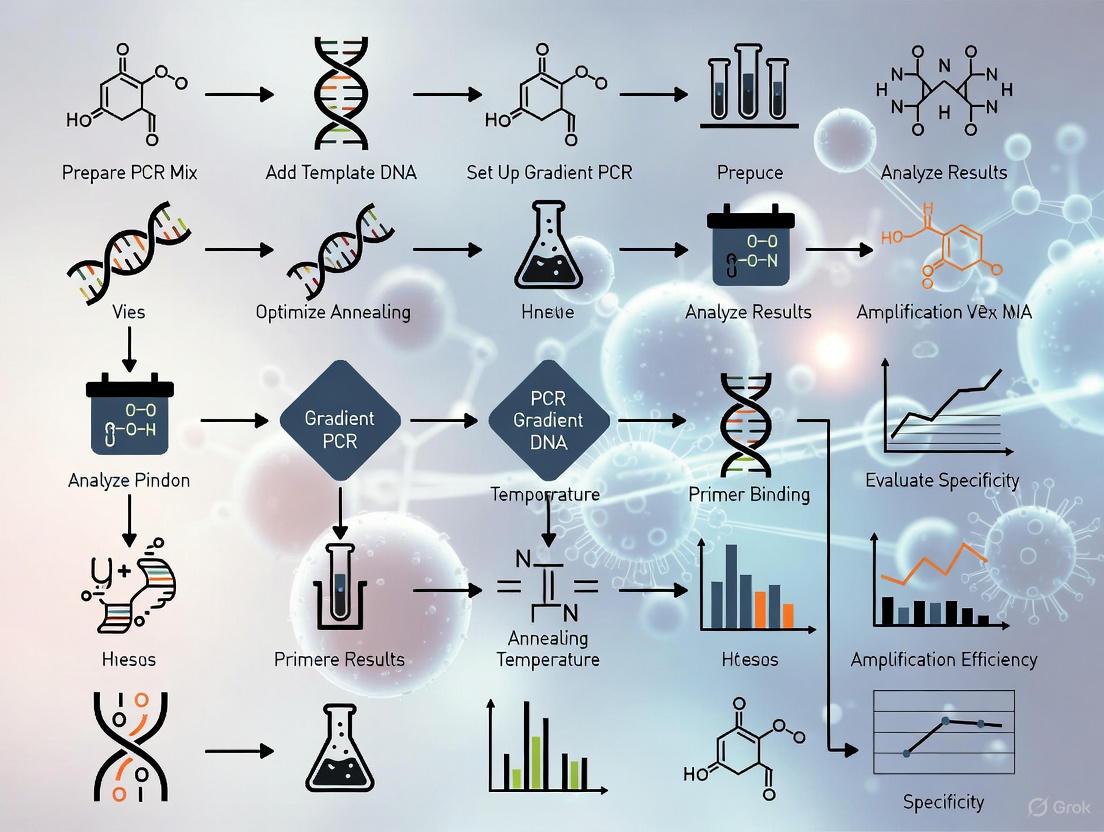
This article provides a complete guide for researchers and drug development professionals on optimizing Polymerase Chain Reaction (PCR) for challenging GC-rich DNA templates.
Optimizing PCR for GC-Rich Regions: A Comprehensive DMSO Protocol for Biomedical Research
Abstract
This article provides a complete guide for researchers and drug development professionals on optimizing Polymerase Chain Reaction (PCR) for challenging GC-rich DNA templates. GC-rich sequences, common in gene promoters and associated with diseases, often resist amplification due to stable secondary structures and high thermostability. We detail a proven methodology incorporating dimethyl sulfoxide (DMSO) as a key additive to overcome these hurdles. The content covers the foundational science behind the challenge, a step-by-step application protocol, advanced troubleshooting strategies, and validation techniques to ensure specificity and yield. This protocol is essential for reliable genotyping, cloning, and sequencing of critical GC-rich targets in clinical and research settings.
Understanding the GC-Rich Challenge: Why Standard PCR Fails and When to Use DMSO
In molecular biology, GC-rich templates are defined as DNA sequences where 60% or greater of the nucleotide bases are guanine (G) or cytosine (C) [1]. These regions present formidable challenges for polymerase chain reaction (PCR) amplification due to their distinctive biophysical properties. The biological significance of GC-rich sequences is underscored by their disproportionate presence in functional genomic elements, particularly gene promoters and regulatory regions [2] [3]. Although only approximately 3% of the human genome is classified as GC-rich, these regions are frequently found in the promoters of housekeeping genes and tumor suppressor genes, making them critical targets for genetic analysis in both basic research and clinical diagnostics [1].
The fundamental challenge in amplifying GC-rich sequences stems from the enhanced thermostability of G-C base pairs compared to A-T pairs. While A-T base pairs form two hydrogen bonds, G-C pairs form three, requiring more energy to separate during the PCR denaturation step [1]. This increased stability leads to higher melting temperatures and facilitates the formation of stable secondary structures such as hairpins, loops, and tetraplexes that can impede polymerase progression during amplification [4] [5]. These structures block polymerase activity, resulting in truncated amplification products, reduced yields, or complete PCR failure [1] [6]. Understanding the prevalence and characteristics of these regions is therefore essential for developing effective molecular assays.
Biological Significance of GC-Rich Regions
Prevalence in Gene Promoters and Regulatory Elements
GC-rich sequences are non-randomly distributed throughout the genome, with pronounced enrichment at transcription start sites (TSS). Research has demonstrated that most human protein-coding genes exhibit a sharp peak of GC-content immediately downstream of the TSS, with a symmetrical decrease extending both upstream into the promoter region and downstream into the gene body [2]. This characteristic profile forms a nearly normal distribution curve that is interrupted only at the TSS itself and at exon-intron boundaries, which display slightly depressed GC-content [2].
This GC-peak at the 5' end of genes is evolutionarily conserved, having been present in the last common ancestor of amniotes and likely that of vertebrates [2]. The distribution of GC-content across different genomic compartments reveals a consistent pattern: GC-content is highest in exons compared to introns, with the first exon typically having the highest GC-content, which decreases progressively in subsequent exons [2]. A similar decreasing gradient is observed in introns, with the first intron having higher GC-content than subsequent introns [2].
Functional Roles in Gene Expression and Regulation
The strategic positioning of GC-rich sequences at transcription start sites serves multiple critical functions in gene expression regulation. GC-content significantly influences multiple steps in the RNA metabolism pathway, from transcription initiation to mRNA nuclear export and translation efficiency [2]. In promoters, clusters of CpG dinucleotides form CpG islands that are associated with robust transcriptional activity, particularly in ubiquitously expressed housekeeping genes [2]. These CpG-rich promoters activate transcription by recruiting specific transcription factors that recognize GC-rich motifs [3].
Perhaps the most crucial function of 5' GC-content is its role in mRNA nuclear export. GC-rich regions at the 5' end of intron-poor mRNAs promote efficient nuclear export by recruiting protein factors such as SARNP, SR proteins, and RBM33, which in turn recruit nuclear transport receptors like NXF1/NXT1 that ferry mRNAs across the nuclear pore complex [2]. This GC-dependent export mechanism is particularly important for the nuclear export of certain long non-coding RNAs and retrogenes that lack introns [2] [6]. The functional significance of these regions is further highlighted by the observation that retrogenes with elevated 5' GC-content are more likely to be maintained in the genome, suggesting positive selection for this feature to ensure adequate expression [2].
Evolutionary Dynamics and Pathological Implications
The GC-content at transcriptional start sites is not static but undergoes continuous evolutionary change influenced by both adaptive and non-adaptive forces. Comparative genomic analyses reveal that the GC-peak at TSSs is currently undergoing mutational decay in apes and rodents, while it is increasing in canids [2]. This divergent evolutionary trajectory appears to be linked to differences in recombination mechanisms between these lineages. In species with PRDM9-directed recombination (including humans and rodents), recombination is directed away from TSSs, leading to GC-content decay at promoters [2]. In contrast, species lacking PRDM9 (such as canids) perform recombination at TSSs, leading to increasing GC-content through GC-biased gene conversion [2].
From a pathological perspective, GC-rich promoter regions are frequently disrupted in human diseases. Aberrant methylation of CpG islands in gene promoters plays a well-established role in transcriptional repression and is a hallmark of various cancers, particularly in tumor suppressor genes [7]. The FMR1 gene promoter, associated with fragile X syndrome, contains a GC-rich region that expands pathologically in the disorder [8]. Similarly, GC-rich promoters of genes like TERT (telomerase reverse transcriptase) frequently undergo mutation in multiple cancer types, with these mutations being detectable in circulating tumor DNA, highlighting their diagnostic and prognostic significance [9].
Table 1: Characteristics and Prevalence of GC-Rich Regions in the Human Genome
| Genomic Feature | GC-Content Pattern | Functional Significance | Pathological Associations |
|---|---|---|---|
| Gene Promoters | Sharp peak at transcription start site (TSS) | Transcriptional regulation; Transcription factor binding | Promoter hypermethylation in cancer; Repeat expansion disorders |
| CpG Islands | High density of CpG dinucleotides | Regulation of gene expression; Often unmethylated in active genes | Aberrant methylation in cancer and other diseases |
| Housekeeping Gene Promoters | Typically GC-rich | Constitutive expression across tissues | Relatively stable methylation patterns |
| Tumor Suppressor Gene Promoters | Frequently GC-rich | Controlled expression of growth regulatory genes | Hypermethylation and silencing in cancer |
| 5' Untranslated Regions (5' UTRs) | Often elevated GC-content | Regulation of translation efficiency | Mutations affecting RNA structure and translation |
Experimental Challenges in GC-Rich Template Amplification
Biochemical and Thermodynamic Barriers
The amplification of GC-rich templates presents multiple technical challenges that stem from their unique biochemical properties. The strong hydrogen bonding between G and C bases (three hydrogen bonds versus two in A-T pairs) creates regions of exceptional thermal stability that resist denaturation under standard PCR conditions [1] [4]. This inherent stability necessitates higher denaturation temperatures, which can potentially compromise polymerase activity and accelerate DNA depurination, particularly for longer templates [3].
A more insidious challenge arises from the propensity of GC-rich sequences to form stable intramolecular secondary structures. Single-stranded GC-rich regions readily fold back on themselves to form hairpins, stem-loops, and other complex secondary conformations that persist even at elevated temperatures [6]. These structures physically block polymerase progression during the extension phase of PCR, resulting in premature termination and the accumulation of truncated products [1] [6]. The problem is exacerbated by the fact that intramolecular secondary structures form more rapidly than intermolecular primer-template hybridization during the temperature transitions of PCR cycles, giving them a kinetic advantage that further impedes successful amplification [6].
Practical Consequences for Molecular Assays
The biochemical challenges of GC-rich amplification manifest in several characteristic experimental failures. Researchers commonly observe complete amplification failure (blank gels), non-specific amplification (DNA smears or multiple bands), or selective amplification of shorter products due to polymerase stalling at stable secondary structures [1] [4]. These issues are particularly pronounced in applications requiring high-fidelity amplification, such as cloning, sequencing, and diagnostic detection of mutations in GC-rich regions.
The inverted terminal repeat (ITR) sequences of adeno-associated virus (AAV) vectors represent an extreme example of these challenges. These regions form ultra-stable T-shaped hairpin structures with melting temperatures approaching 85.3°C, making them notoriously difficult to amplify by conventional PCR [6]. Standard additives like DMSO and betaine often prove completely ineffective for such challenging templates, requiring more specialized approaches [6]. Similarly, in targeted bisulfite sequencing studies, GC-rich promoter regions consistently show lower amplification efficiency compared to more balanced regions, complicating methylation analysis of clinically relevant genes [7] [9].
Optimized Reagents and Formulations for GC-Rich PCR
Successful amplification of GC-rich templates requires carefully formulated reagent systems designed to overcome the specific challenges these regions present. Specialized DNA polymerases with enhanced strand-displacing activity and greater tolerance for secondary structures are fundamental to these optimized systems [1] [3]. These enzymes are frequently supplied with GC enhancers or specialized buffers containing additives that destabilize secondary structures and reduce template melting temperatures [1] [10].
Commercial GC-rich PCR systems typically incorporate multiple optimized components. For example, the GC-RICH PCR System includes a special enzyme mix, reaction buffer containing detergents and DMSO, and a GC-RICH Resolution Solution that can be titrated from 0.5 to 2.5 M in 0.25 M increments for challenging templates [10]. Similarly, New England Biolabs offers polymerases such as OneTaq DNA Polymerase and Q5 High-Fidelity DNA Polymerase with companion GC Enhancers that significantly improve amplification of templates with up to 80% GC content [1]. These systems provide a foundation for reliable amplification that can be further optimized for specific challenging templates.
Table 2: Key Research Reagent Solutions for GC-Rich PCR
| Reagent Category | Specific Examples | Mechanism of Action | Application Notes |
|---|---|---|---|
| Specialized Polymerases | OneTaq DNA Polymerase (NEB), Q5 High-Fidelity DNA Polymerase (NEB), GC-RICH PCR System (Roche) | Enhanced processivity; Improved strand displacement; Tolerance to secondary structures | Often supplied with optimized buffers; Selection depends on fidelity requirements and template difficulty |
| GC Enhancers | OneTaq High GC Enhancer, Q5 High GC Enhancer | Proprietary mixtures that disrupt secondary structures; Increase primer stringency | Typically target-specific; Require concentration optimization (e.g., 10-20%) |
| Chemical Additives | DMSO (2-10%), Betaine (0.5-2 M), Glycerol (5-25%), Formamide | Lower DNA melting temperature; Destabilize secondary structures; Reduce electrostatic repulsion | High DMSO concentrations (>5%) may inhibit polymerase; Betaine acts as a universal base analog |
| Modified Nucleotides | 7-deaza-2'-deoxyguanosine (7-deaza-dGTP) | Reduces hydrogen bonding by substituting nitrogen at position 7 with carbon | Does not stain well with ethidium bromide; May require partial or complete dGTP substitution |
| Magnesium Salts | MgCl₂ (1.0-4.0 mM) | Essential polymerase cofactor; Stabilizes primer-template interaction | Concentration critical; Too little reduces activity; Too much decreases specificity |
Comprehensive PCR Optimization Protocol for GC-Rich Templates
Polymerase Selection and Reaction Setup
The foundation of successful GC-rich PCR begins with careful selection of an appropriate DNA polymerase. High-fidelity polymerases with strong proofreading activity and enhanced processivity are generally preferred for challenging GC-rich amplifications [5]. Specialized enzyme blends such as OneTaq DNA Polymerase (NEB #M0480) and Q5 High-Fidelity DNA Polymerase (NEB #M0491) have been specifically optimized for GC-rich templates and can be supplemented with proprietary GC Enhancers for particularly difficult targets [1]. For clinical applications involving blood samples, the Q5 Blood Direct 2X Master Mix (NEB #M0500) provides robust performance for amplicons up to 75% GC content while resisting inhibitors present in blood [1].
When setting up reactions, consider using individual polymerase components rather than pre-formulated master mixes when beginning optimization, as this provides greater flexibility to adjust individual components [1]. Reaction volumes should be prepared with all components except polymerase, followed by the addition of enzyme last. For templates with extreme GC-content (>80%), consider using specialized commercial systems like the GC-RICH PCR System (Roche), which includes a specialized enzyme mix, buffer with detergents and DMSO, and GC-RICH Resolution Solution that can be titrated from 0.5 to 2.5 M for optimal results [10].
Temperature Cycling Optimization
Temperature parameters represent the most critical adjustable variables for GC-rich PCR success. Implement an initial denaturation step of 98°C for 2-5 minutes to ensure complete separation of template strands before cycling begins [3]. For the denaturation step during cycling, use higher temperatures (98°C) with shorter durations (5-10 seconds) rather than standard 94-95°C denaturation to more effectively melt GC-rich structures while minimizing template damage and polymerase inactivation [3].
Annealing temperatures should be optimized using gradient PCR to identify the ideal balance between specificity and efficiency [1] [5]. For primers with high Tm (>68°C), consider implementing a two-step PCR protocol that combines annealing and extension at 68-72°C, which can improve yields for some GC-rich targets [3]. Extension times should follow standard recommendations (1 min/kb for conventional polymerases, 10-20 sec/kb for high-speed enzymes), though some difficult templates may benefit from slightly extended durations [3].
For particularly challenging templates, employ specialized cycling approaches such as touchdown PCR, which begins with annealing temperatures 5-10°C above the calculated Tm and gradually decreases in subsequent cycles to increase specificity in early cycles while maintaining efficiency in later cycles [5]. Alternatively, slowdown PCR protocols that gradually increase extension times can help polymerases navigate through particularly stable secondary structures [4].
Chemical Additives and Buffer Optimization
Strategic use of chemical additives is often essential for successful GC-rich amplification. DMSO (dimethyl sulfoxide) at concentrations of 2-10% (typically 2.5-5% optimal) helps destabilize secondary structures by reducing DNA melting temperatures [5] [10] [3]. Betaine (0.5-2 M) acts as a universal base analog that equalizes the contribution of GC and AT base pairs to duplex stability, while also stabilizing polymerase activity [4] [10]. For extremely challenging templates, combinations of additives (e.g., DMSO + betaine + glycerol) may be necessary, though each additional component requires careful optimization to avoid polymerase inhibition [4] [10].
Magnesium concentration optimization is particularly crucial for GC-rich templates. While standard PCR typically uses 1.5-2.0 mM MgCl₂, GC-rich amplification may require incremental adjustment between 1.0-4.0 mM in 0.5 mM steps [1] [3]. Excess magnesium can reduce specificity by stabilizing non-specific primer interactions, while insufficient magnesium compromises polymerase activity [1]. The optimal concentration must be determined empirically for each template-primer system.
For the most recalcitrant templates, 7-deaza-2'-deoxyguanosine (7-deaza-dGTP) can be used as a partial or complete substitute for dGTP [1]. This analog reduces hydrogen bonding capacity by replacing nitrogen with carbon at the 7-position, effectively lowering duplex stability without compromising base pairing specificity [1]. However, note that 7-deaza-dGTP does not stain well with ethidium bromide, requiring alternative detection methods [1].
Diagram 1: Systematic optimization workflow for challenging GC-rich templates.
Primer Design Strategies for GC-Rich Targets
Careful primer design is paramount for successful GC-rich amplifications. While standard primer design principles apply, several specific adjustments improve performance with GC-rich templates. Increase primer length to enhance binding specificity and stability in GC-rich environments [5]. Design primers with melting temperatures above 68°C to enable higher annealing temperatures that improve specificity [3]. However, avoid GC clamps (runs of G or C bases, particularly at the 3' end) that promote non-specific binding and primer-dimer formation [5].
For regions with exceptionally stable secondary structures, innovative approaches such as disruptor oligonucleotides can dramatically improve amplification efficiency [6]. These specially designed oligonucleotides contain three functional components: an anchor sequence for template binding, an effector region that disrupts secondary structures through strand displacement, and a 3' blocker to prevent polymerase extension [6]. Unlike conventional additives, disruptors actively unwind stable intramolecular structures, enabling amplification of even the most challenging templates like AAV inverted terminal repeats that resist conventional optimization approaches [6].
Template-Specific Considerations
Template quality and preparation significantly impact GC-rich PCR success. DNA integrity is particularly critical for long amplicons, as damage from isolation procedures or depurination at elevated temperatures results in truncated products and reduced yields [3]. DNA is most stable at pH 7-8, so avoid resuspending templates in unbuffered water [3]. For plasmid templates, linearization with restriction enzymes before amplification can improve efficiency by reducing topological constraints [10].
When working with bisulfite-treated DNA for methylation studies, additional considerations apply. Bisulfite treatment causes substantial DNA fragmentation, typically limiting amplicon size to 300-500 bp, though optimized commercial kits can sometimes achieve fragments up to 1,500 bp [7]. Long PCR and nested approaches are often necessary to amplify fragments approximately 1 kb in length from bisulfite-converted DNA [7]. The severe sequence simplification following bisulfite conversion (most cytosines become uracils) creates particularly challenging templates that benefit from specialized polymerases and buffer systems formulated specifically for bisulfite sequencing applications.
Applications in Molecular Diagnostics and Research
Targeted Methylation Analysis in Disease Research
GC-rich promoter regions are frequent targets in epigenetic studies due to the prevalence of CpG islands in regulatory elements. The development of targeted bisulfite sequencing approaches enables cost-effective methylation profiling of specific candidate genes without the expense of whole-genome bisulfite sequencing [7]. This methodology has been successfully applied to study promoter methylation in severe preterm delivery, detecting significant hypomethylation of MIR155HG and hypermethylation of ANKRD24 gene promoters that correlated with previously reported gene expression changes [7].
The workflow involves bisulfite treatment of genomic DNA followed by long-range PCR amplification of target promoters (approximately 1 kb fragments), barcoding of samples, and pooling for sequencing on platforms such as MinION [7]. This approach achieves high sequencing depths that ensure robust DNA methylation estimates while remaining scalable and cost-effective for population studies [7]. The method is particularly valuable for clinical diagnostics and precision medicine applications where specific candidate regions are of interest [7].
Circulating Tumor DNA Analysis
GC-rich regions present both challenges and opportunities in liquid biopsy applications. The TERT promoter, frequently mutated in multiple cancer types, is extremely GC-rich and shows lower amplification efficiency in pre-amplification methods like TOP-PCR compared to more balanced regions [9]. This technical challenge must be addressed when designing assays for detecting cancer-associated mutations in circulating tumor DNA (ctDNA), where sensitivity is critical for early detection and monitoring.
Optimized pre-amplification protocols (20 ng cfDNA input with 5-7 PCR cycles) can enhance ctDNA detection sensitivity and expand sample availability for detecting multiple tumor-informed mutations [9]. However, researchers must carefully control for PCR errors that emerge in pre-amplified cfDNA samples, implementing negative controls and establishing stringent mutation positivity thresholds to maintain specificity [9]. These technical considerations are essential for developing robust clinical assays targeting GC-rich regions in cancer diagnostics.
Gene Therapy Vector Quality Control
The quality control of gene therapy vectors represents a particularly demanding application of GC-rich PCR. Recombinant adeno-associated virus (rAAV) vectors contain inverted terminal repeat (ITR) sequences that form ultra-stable T-shaped hairpin structures with melting temperatures approaching 85.3°C [6]. These structures make ITRs extremely difficult to amplify by conventional PCR, complicating quality control assessments that are essential for verifying vector integrity and ensuring patient safety [6].
Traditional approaches using DMSO and betaine typically fail with these challenging templates [6]. The only previously reported success required complete substitution of dGTP with 7-deaza-dGTP to reduce hydrogen bonding strength [6]. However, newly developed approaches using disruptor oligonucleotides have demonstrated significant improvements in ITR amplification, providing a more straightforward and cost-effective method for verifying rAAV ITR integrity [6]. This advancement highlights how continued optimization of GC-rich PCR methodologies enables critical quality control applications in therapeutic development.
GC-rich templates represent both a technical challenge and a biological opportunity in molecular biology research and diagnostics. Their disproportionate representation in gene promoters and regulatory elements underscores their functional importance, while their unique biochemical properties demand specialized methodological approaches. Successful amplification requires a systematic optimization strategy addressing polymerase selection, temperature parameters, buffer composition, and primer design. The continued refinement of GC-rich PCR protocols enables increasingly sophisticated applications in epigenetic research, cancer diagnostics, and therapeutic development, making mastery of these techniques essential for modern molecular researchers. As the field advances, further innovations in reagent formulation and amplification methodologies will undoubtedly expand our capacity to interrogate these critical genomic regions with greater efficiency and reliability.
The polymerase chain reaction (PCR) stands as a cornerstone technique in molecular biology, yet its application to guanine-cytosine (GC)-rich DNA templates remains notoriously challenging. These difficulties arise not from technical shortcomings but from fundamental molecular principles governing DNA behavior. GC-rich templates, defined as sequences where 60% or more of the bases are guanine or cytosine, create formidable barriers to amplification due to their distinctive biophysical properties [11]. While only approximately 3% of the human genome consists of such GC-rich regions, they are critically important as they frequently occur in gene promoters, particularly those of housekeeping and tumor suppressor genes [11].
This application note examines the core molecular adversaries—hydrogen bonding, base stacking, and secondary structure formation—that impede successful amplification of GC-rich sequences. Furthermore, we present a validated, detailed protocol incorporating dimethyl sulfoxide (DMSO) optimization to overcome these barriers, providing researchers with a reliable framework for advancing their investigations in molecular biology and drug development.
The Fundamental Challenges: A Tripartite Problem
Hydrogen Bonding and Thermal Stability
The primary challenge with GC-rich templates stems from the nature of the hydrogen bonding between base pairs. A G-C base pair forms three hydrogen bonds, in contrast to an A-T pair which forms only two [11]. This additional hydrogen bond significantly increases the thermostability of the DNA duplex. Consequently, more energy—manifested as higher temperatures—is required to separate the two DNA strands during the denaturation step of PCR. If incomplete denaturation occurs, the polymerase cannot access the template, leading to amplification failure or dramatically reduced yield [11].
Base Stacking and Helix Stability
Beyond hydrogen bonding, the stacking interactions between adjacent aromatic rings of the DNA bases provide a major stabilizing force to the double helix [12]. Interestingly, contrary to popular belief, hydrogen bonds alone contribute less to overall DNA stability than these stacking interactions [12]. The stacking energy is particularly pronounced in GC-rich sequences, further elevating the melting temperature (Tm) and reinforcing the duplex against thermal denaturation [13]. This makes the DNA molecule more rigid and resistant to the strand separation essential for PCR initiation.
Secondary Structure Formation
The high stability of GC-rich tracts predisposes them to form stable secondary structures [11]. These regions are highly "bendable" and can fold back on themselves to form intricate intra-strand structures such as hairpins and stem-loops [11] [12]. During PCR, these structures can physically block the progression of the DNA polymerase, causing the enzyme to stall and resulting in truncated, incomplete amplification products [11]. The primers themselves are also susceptible to forming dimers or secondary structures, further reducing amplification efficiency and specificity.
The DMSO Solution: Mechanistic Action
Dimethyl sulfoxide (DMSO) is a polar aprotic solvent that effectively counters the challenges of GC-rich PCR through multiple mechanisms. Its incorporation into PCR reactions is a widely validated strategy for amplifying difficult templates [14] [15] [16].
- Reduction of DNA Melting Temperature: DMSO interacts with water molecules surrounding the DNA strand, disrupting the solvation shell and reducing the energy required for strand separation [16]. This effectively lowers the melting temperature (Tm) of the DNA, facilitating more complete denaturation at standard PCR temperatures [17] [16].
- Destabilization of Secondary Structures: By reducing the stability of hydrogen bonding and base stacking, DMSO directly interferes with the formation of stable hairpins and other secondary structures that hinder polymerase progression [11] [16]. This action helps maintain the template in a accessible, linear state.
- Alteration of DNA Conformational Dynamics: Single-molecule and atomic force microscopy (AFM) studies confirm that DMSO modifies DNA mechanical properties. It moderately decreases the DNA's bending persistence length and can create locally flexible regions, making rigid, GC-rich tracts more amenable to denaturation and enzyme processing [17] [18].
Table 1: Summary of DMSO's Effects on DNA and PCR
| Effect | Underlying Mechanism | Result in GC-Rich PCR |
|---|---|---|
| Lowers DNA Tm | Disrupts water solvation shell, reducing energy needed for strand separation [16]. | Improved template denaturation at standard temperatures. |
| Disrupts Secondary Structures | Interferes with hydrogen bonding and base stacking that stabilize hairpins [11]. | Reduced polymerase stalling; fewer truncated products. |
| Increases DNA Flexibility | Decreases bending persistence length; introduces local flexibility [17]. | Enhanced accessibility for primers and polymerase. |
Research Reagent Solutions
The following table catalogues essential reagents for overcoming the challenges of GC-rich PCR, with a focus on DMSO-containing enhancers.
Table 2: Key Reagents for GC-Rich PCR Optimization
| Reagent / Solution | Function / Mechanism | Example Products |
|---|---|---|
| DMSO (Dimethyl Sulfoxide) | Reduces DNA melting temperature and disrupts secondary structures [11] [16]. | Molecular biology grade DMSO |
| Specialized Polymerase Master Mixes | Polymerases optimized for high GC content; often include proprietary enhancers [11]. | OneTaq Hot Start 2X Master Mix with GC Buffer, Q5 High-Fidelity DNA Polymerase [11] |
| GC Enhancers | Proprietary additive mixes that inhibit secondary structure formation and increase primer stringency [11]. | OneTaq High GC Enhancer, Q5 High GC Enhancer [11] |
| Betaine | An osmoprotectant that reduces DNA secondary structure formation and eliminates base composition dependence of melting [15] [16]. | Betaine (anhydrous or monohydrate) |
| Magnesium Chloride (MgCl₂) | Essential cofactor for DNA polymerase activity; concentration critically affects specificity and yield [11] [19]. | Supplied with polymerase buffers |
Quantitative Data for Experimental Design
Empirical optimization is crucial. The data below, compiled from published studies, provides a starting point for parameter optimization.
Table 3: Quantitative Optimization Parameters for GC-Rich PCR with DMSO
| Parameter | Typical Range for Standard PCR | Optimized Range for GC-Rich PCR | Key Considerations |
|---|---|---|---|
| DMSO Concentration | 0% | 2.5% - 10% [14] [19]; 5% often optimal [14] | >10% can inhibit Taq polymerase [16]. |
| Initial Denaturation | 94-95°C for 1-3 min | 98°C for 2-5 min [19] | Essential for complete denaturation of complex templates. |
| Denaturation Cycle | 94-95°C for 30 sec | 98°C for 10-30 sec [19] | Higher temperature improves melting; shorter time preserves enzyme activity. |
| Annealing Temperature | Calculated Tm - 5°C | May be 7°C or more above calculated Tm [14] | Must be determined empirically via gradient PCR. |
| MgCl₂ Concentration | 1.5 - 2.0 mM | 1.5 - 4.0 mM (titrate in 0.5 mM steps) [11] | Excess Mg²⁺ reduces fidelity; too little reduces yield [11] [19]. |
| Template DNA | Varies by template | At least 2 μg/mL for difficult FFPE samples [14] | Higher quality and concentration may be required. |
Validated Experimental Protocol: Amplification of GC-Rich EGFR Promoter
This protocol is adapted from a study that successfully amplified a GC-rich region of the EGFR promoter (up to 88% GC content) from formalin-fixed paraffin-embedded (FFPE) tissue [14].
Materials and Reagents
- DNA Polymerase: Standard Taq DNA Polymerase (e.g., from Invitrogen) [14].
- Primers: Specific to the target sequence (e.g., for EGFR promoter: -216G>T and -191C>A SNPs) [14].
- Template DNA: Genomic DNA (e.g., extracted from FFPE tissue, minimum concentration of 2 μg/mL) [14].
- 10mM dNTP Mix
- 25mM MgCl₂ Solution
- Molecular Biology Grade DMSO
- Nuclease-Free Water
- 10X Standard PCR Buffer (without MgCl₂)
Optimized Workflow
The following diagram illustrates the optimized PCR workflow for GC-rich templates, incorporating key decision points and DMSO optimization.
Step-by-Step Procedure
Reaction Mixture Setup: Prepare a 25 μL total reaction volume containing:
Thermal Cycling: Perform PCR amplification using the following profile:
Product Analysis:
Troubleshooting and Additional Strategies
- Polymerase Selection: If optimization with standard Taq fails, switch to a polymerase specifically engineered for GC-rich templates, such as OneTaq or Q5 High-Fidelity DNA Polymerase, which are supplied with specialized GC buffers and enhancers [11].
- Betaine as an Alternative/Additive: Betaine (1-1.7 M) can be used alone or in combination with DMSO to further destabilize secondary structures [15] [16].
- Touchdown PCR: Implement a touchdown protocol, starting with an annealing temperature 5-10°C above the calculated Tm and decreasing by 1-2°C every cycle for the first 10-15 cycles. This increases specificity in the early stages of amplification [19].
- Primer Design: Design longer primers (≥25 nt) to increase binding specificity and avoid GC clamps at the 3'-end to minimize primer-dimer artifacts [5].
The successful amplification of GC-rich DNA templates requires a fundamental understanding of the molecular forces—hydrogen bonding, base stacking, and secondary structure formation—that conspire to cause PCR failure. The strategic incorporation of DMSO, as detailed in this application note, directly counters these forces by lowering the DNA melting temperature and destabilizing inhibitory secondary structures. The provided protocol, validated on a clinically relevant GC-rich target, offers researchers a robust and reproducible methodological framework. By applying these principles and optimization strategies, scientists can reliably overcome one of the most persistent technical challenges in molecular biology, thereby accelerating research in genomics, diagnostics, and drug development.
The Polymerase Chain Reaction (PCR) is a foundational technique in molecular biology, yet its efficacy can be compromised by several common artifacts. Incomplete amplification, primer dimer formation, and DNA smearing frequently hinder the amplification of specific target sequences, particularly with challenging templates such as guanine-cytosine (GC)-rich regions. These artifacts arise from complex biochemical interactions involving enzyme processivity, primer thermodynamics, and template secondary structures. The amplification of GC-rich sequences (typically defined as ≥60% GC content) presents specific challenges due to the formation of highly stable secondary structures and a higher melting temperature (Tm) required for denaturation, primarily due to base stacking interactions rather than hydrogen bonding alone [20]. This application note delineates a structured, evidence-based protocol for identifying, troubleshooting, and resolving these pervasive PCR artifacts, with a specific focus on optimizing reactions for GC-rich templates using strategic additives like dimethyl sulfoxide (DMSO).
Artifact Identification and Systematic Troubleshooting
A critical first step in troubleshooting is the accurate identification of artifacts, typically visualized via agarose gel electrophoresis. The table below summarizes the characteristic appearances and primary causes of each artifact.
Table 1: Identification and Primary Causes of Common PCR Artifacts
| Artifact | Visual Appearance on Gel | Primary Causes |
|---|---|---|
| Incomplete Amplification | Faint or absent target band [21] | - Inhibitors in template [21]- Low template quality/quantity [21]- Overly stringent cycling conditions [21]- Polymerase stalling on GC-rich secondary structures [22] [20] |
| Primer Dimer | Fuzzy, smeary band below 100 bp [23] | - Primer self-complementarity or 3'-end complementarity [23]- Low annealing temperature [23]- Excessive primer concentration [23]- Active polymerase during reaction setup [23] |
| DNA Smearing | A continuous ladder or smear of DNA instead of a sharp band [21] | - Non-specific priming [21]- Excessive cycle number (overcycling) [21]- Too much template DNA [21]- Contamination [21] |
The following decision tree outlines a systematic workflow for diagnosing and addressing these issues based on gel analysis and control reactions.
Detailed Experimental Protocols for Resolution
Protocol 1: Overcoming Incomplete Amplification of GC-Rich Regions
This protocol is optimized for targets with high GC-content (>60%), such as promoter regions of genes, which are prone to forming stable secondary structures that impede polymerase progression [14] [22].
Reagents and Equipment:
- DNA template (e.g., human genomic DNA, FFPE-derived DNA)
- High-fidelity or GC-rich specialized DNA polymerase (e.g., Q5 High-Fidelity, OneTaq GC-rich Polymerase) [22]
- Corresponding buffer and GC Enhancer (if applicable)
- 100% DMSO (molecular biology grade)
- MgCl₂ stock solution (e.g., 25 mM)
- Thermal cycler with gradient annealing functionality
Procedure:
- Reaction Setup: Prepare a master mix on ice. For a 25 µL reaction:
- 1X PCR buffer (supplied with polymerase)
- DMSO: Add at a final concentration of 3-10% (typically 5% is effective). Note: DMSO reduces DNA secondary structure stability and can enhance specificity [14].
- dNTPs: 0.2 mM each
- MgCl₂: 1.5 - 2.0 mM (optimization may be required) [14]
- Forward and Reverse Primers: 0.2 µM each (for complex templates, concentration can be increased) [21]
- DNA Polymerase: 0.5 - 1.25 U per reaction
- Template DNA: 10 - 100 ng genomic DNA (ensure concentration is ≥ 2 µg/mL for difficult templates like FFPE-derived DNA) [14]
- Nuclease-free water to 25 µL
Thermal Cycling: Use the following cycling conditions, adjusting the annealing temperature (Ta) based on a gradient.
- Initial Denaturation: 98°C for 30 sec (or per polymerase guidelines)
- Amplification Cycles (35-40 cycles):
- Denaturation: 98°C for 10-15 sec
- Annealing: Use a gradient from 5°C below to 5°C above the calculated Tm. For GC-rich targets, the optimal Ta may be 7°C higher than calculated [14].
- Extension: 72°C for 15-60 sec/kb (increase time for complex templates)
- Final Extension: 72°C for 2 min
- Hold: 4°C
Analysis: Resolve 5-10 µL of the PCR product on an agarose gel. Analyze for the presence and intensity of the specific amplicon.
Protocol 2: Eliminating Primer Dimers and Non-Specific Smearing
This protocol focuses on increasing reaction stringency to prevent off-target priming and primer self-annealing.
Reagents and Equipment:
- Hot-Start DNA Polymerase (e.g., SpeedSTAR HS, Terra PCR Direct) [21] [23]
- DNA template
- Primers (analyzed for self-complementarity)
Procedure:
- Primer Design Check: Use software to analyze primers for self-dimerization and cross-dimerization. Redesign if the 3' ends are complementary [21] [23].
- Reaction Setup: Prepare a master mix on ice. For a 25 µL reaction:
- 1X PCR buffer
- dNTPs: 0.2 mM each
- MgCl₂: 1.5 mM (start with standard concentration; avoid excess) [20]
- Forward and Reverse Primers: 0.1 - 0.5 µM (titrate to find the lowest concentration that gives robust yield) [23]
- Hot-Start DNA Polymerase: As per manufacturer's instructions
- Template DNA: Use the minimum amount required (e.g., 10-50 ng). Too much template can cause smearing [21].
- Nuclease-free water to 25 µL
- Thermal Cycling:
- Initial Denaturation/Hot-Start Activation: 94-95°C for 2-5 min.
- Amplification Cycles (30-35 cycles):
- Denaturation: 94-98°C for 10-30 sec.
- Annealing: Use a temperature 2-5°C higher than the current Ta, or perform a gradient test. Use a short annealing time (5-15 sec) for high specificity [21].
- Extension: 72°C for the appropriate time per kb.
- Final Extension: 72°C for 5 min.
- Analysis: Run the PCR products on a gel alongside a No-Template Control (NTC). Primer dimers will appear in the NTC, confirming their identity. Non-specific smearing that is absent in the NTC indicates a need for further cycling optimization [21] [23].
Optimization of PCR with DMSO for GC-Rich Regions
The optimization of additives like DMSO is critical for successful amplification of GC-rich templates. DMSO functions by interfering with the base pairing of DNA strands, thereby reducing the stability of secondary structures and lowering the overall Tm of the DNA, which facilitates denaturation [22]. The efficacy of DMSO and other parameters must be determined empirically.
Table 2: Optimization Matrix for GC-Rich PCR Amplification
| Parameter | Recommended Range | Protocol-Specific Notes | Observed Effect (from Literature) |
|---|---|---|---|
| DMSO | 3% - 10% (v/v) | Critical for >70% GC content; add to master mix. | 5% DMSO was necessary for specific amplification of an EGFR promoter region (88% GC) [14]. |
| MgCl₂ | 1.0 - 4.0 mM | Titrate in 0.5 mM increments. Excess Mg²⁺ causes non-specific bands. | Optimal concentration for a GC-rich EGFR promoter was found to be 1.5 mM [14]. |
| Annealing Temp (Ta) | Calculated Tm ± 10°C | Use a gradient cycler. Optimal Ta may be >7°C above calculated Tm. | For the EGFR promoter, the calculated Tm was 56°C, but the optimal Ta was 63°C [14]. |
| DNA Polymerase | Specialized GC-rich Enzyme | e.g., OneTaq with GC Buffer, Q5 with GC Enhancer, AccuPrime GC-Rich. | Polymerases like Q5 with GC Enhancer can robustly amplify up to 80% GC content [22]. |
| Template Amount | 10 - 200 ng per 50 µL reaction | Too little: no product. Too much: smearing/ non-specific bands. | For human genomic DNA in a 50 µL reaction, use ~100 ng with PrimeSTAR HS [21]. |
The interplay of these factors can be visualized in the following optimization workflow, which integrates the use of DMSO.
The Scientist's Toolkit: Essential Reagents for Troubleshooting
The following table catalogues key reagents and their specific functions in resolving the discussed PCR artifacts and optimizing for GC-rich targets.
Table 3: Essential Research Reagent Solutions for PCR Troubleshooting
| Reagent / Kit | Primary Function | Application Notes |
|---|---|---|
| Hot-Start DNA Polymerase | Prevents non-specific amplification and primer dimer formation by inhibiting polymerase activity until high temperatures are reached [21] [23]. | Essential for reactions prone to primer dimers. Critical for multiplex PCR. |
| GC-Rich Specific Polymerase & Buffer | Engineered to efficiently denature and amplify high GC-content DNA; often includes proprietary additives to disrupt secondary structures [22]. | Use as a first resort for known GC-rich targets (e.g., OneTaq with GC Buffer, Q5 with GC Enhancer). |
| DMSO (Dimethyl Sulfoxide) | Additive that disrupts DNA secondary structures by reducing hydrogen bonding, improving the amplification efficiency of GC-rich templates [14] [22]. | Typical working concentration is 3-10%. Higher concentrations can inhibit the polymerase. |
| NucleoSpin Gel and PCR Clean-up Kit | Purifies DNA to remove PCR inhibitors such as salts, proteins, or organic compounds that can cause incomplete amplification [21]. | Use to clean up template DNA or to isolate a specific band from a smeared PCR product for re-amplification. |
| Betaine / GC Enhancer | Additive that equalizes the contribution of GC and AT base pairs to DNA stability, promoting proper denaturation of GC-rich regions during PCR cycling [22]. | Often included in commercial GC-rich polymerase kits. Can be used as an alternative or in combination with DMSO. |
| dNTPs, Molecular Biology Grade | High-quality nucleotides are essential for high-fidelity amplification; impurities can lead to misincorporation and reduced yield. | Ensure a balanced concentration (typically 200 µM each); unbalanced dNTPs can increase error rate [21]. |
Successful PCR amplification, especially for demanding targets like GC-rich regions, requires a systematic approach to troubleshooting common artifacts. Incomplete amplification, primer dimers, and DNA smearing can be effectively mitigated through a combination of strategic reagent selection—such as hot-start and GC-rich specialized polymerases—and meticulous optimization of reaction parameters, including the judicious use of additives like DMSO. The protocols and frameworks provided herein offer a robust pathway for researchers to achieve specific and efficient amplification, thereby advancing research and development in genomics, diagnostics, and therapeutic drug development.
Within the framework of PCR optimization for GC-rich genomic targets, understanding the chemical basis of enhancing reagents is paramount for researchers and drug development professionals. Amplification of GC-rich templates—sequences where guanine and cytosine bases constitute over 60% of the content—presents a significant challenge in molecular biology. These regions are characterized by strong hydrogen bonding, with three bonds between each G-C base pair compared to only two in A-T pairs, leading to elevated melting temperatures (Tm) and stable secondary structures like hairpins that can impede DNA polymerase progression [15] [24]. This application note details the mechanistic role of Dimethyl Sulfoxide (DMSO), a polar aprotic solvent, in overcoming these barriers, thereby facilitating robust and reliable amplification of challenging GC-rich targets for downstream research and diagnostic applications.
The Biophysical Mechanism of DMSO Action on DNA
DMSO facilitates the amplification of GC-rich DNA through a multi-faceted mechanism that directly counteracts the physical properties that make these sequences problematic.
Reduction of DNA Melting Temperature
The primary and most well-documented effect of DMSO is its ability to lower the melting temperature (Tm) of double-stranded DNA. By disrupting the hydrogen bonding network and altering the solvation shell around the DNA molecule, DMSO reduces the thermal energy required to separate DNA strands [17] [24]. This is particularly crucial for GC-rich regions, as their inherently high Tm can exceed standard PCR denaturation temperatures, leading to incomplete strand separation and polymerase stalling.
Alteration of DNA Mechanical Properties
Recent single-molecule biophysical studies provide deeper insights into how DMSO modifies DNA structure and mechanics. The table below summarizes the quantitative effects of DMSO on DNA conformation, demonstrating a concentration-dependent relationship that enhances DNA flexibility and compaction.
Table 1: Quantitative Effects of DMSO on DNA Conformation and Mechanics
| Parameter | Effect of DMSO (per % concentration) | Experimental Method | Implication for PCR |
|---|---|---|---|
| Bending Persistence Length | Decreases by ( 0.43 \pm 0.02\% ) [17] [25] | Magnetic Tweezers | Increased DNA flexibility, facilitating strand separation and polymerase processivity. |
| Mean-Squared End-to-End Distance | Decreases by 1.2% [17] [25] | Atomic Force Microscopy (AFM) | Compaction of DNA conformations, potentially reducing secondary structure stability. |
| Helical Twist | Largely unchanged up to 20%; slight unwinding at higher concentrations [17] [25] | Magnetic Tweezers Twist Measurements | Preservation of B-form DNA geometry under standard PCR conditions. |
| Melting Torque | Reduction observed [17] [25] | Magnetic Tweezers | Lower energy requirement for strand separation, complementing Tm reduction. |
These mechanical changes can be rationalized by a model where DMSO introduces locally flexible regions or defects into the DNA helix. This increased flexibility, represented visually in the following diagram, makes it easier for DNA to denature and less prone to form the stable secondary structures that hinder PCR.
Disruption of Secondary Structures
The compaction of DNA and reduction in persistence length induced by DMSO directly contribute to the disruption of secondary structures. Hairpins and other intra-strand structures are less stable in the presence of DMSO because the solvent environment reduces the energy penalty for DNA bending and unpairing [17] [24]. This prevents polymerase enzymes from stalling at these complex structures, thereby enabling the synthesis of full-length amplicons.
Experimental Protocols for DMSO Optimization in GC-rich PCR
Incorporating DMSO into a PCR protocol requires systematic optimization, as its effects are concentration-dependent and can vary with different DNA templates and polymerase systems.
Determining the Optimal DMSO Concentration
The efficacy of DMSO is concentration-dependent. While low concentrations (≤10%) are generally beneficial, higher concentrations can inhibit polymerase activity [17] [26]. The following protocol outlines a standard optimization procedure.
Table 2: Standard DMSO Optimization Protocol for GC-rich PCR
| Step | Parameter | Recommended Range | Notes |
|---|---|---|---|
| 1. Initial Setup | DMSO Concentration | 0% to 10% (v/v) | Test in 1-2% increments. A final concentration of 2.5-5% is often optimal [26]. |
| Positive Control | GC-rich template of known difficulty | Validates the optimization process. | |
| 2. PCR Formulation | Master Mix | As per manufacturer | Note: Some specialized GC-rich master mixes may already contain optimizers. |
| DMSO Addition | Add before template | Ensure thorough mixing. | |
| 3. Thermocycling | Initial Denaturation | 98°C for 30-60 sec [26] | Higher temperature aids in denaturing GC-rich templates. |
| Denaturation | 98°C for 5-10 sec [26] | Short, high-temperature steps minimize template depurination. | |
| Annealing | Gradient from 65°C to 72°C | Combine with DMSO optimization; higher Ta may be needed for specificity [24]. | |
| Extension | 68-72°C, 15-30 sec/kb | Lower temperature (68°C) can be beneficial for long amplicons [26]. | |
| 4. Analysis | Agarose Gel | 1-2% gel | Look for a single, sharp band of the expected size. |
Complementary Additives and Polymerase Selection
DMSO is often used in conjunction with other additives as part of a comprehensive strategy. Furthermore, the choice of DNA polymerase is critical.
- Betaine: Another common additive, betaine (also known as trimethylglycine) equalizes the contribution of GC and AT base pairs to duplex stability, effectively preventing the formation of secondary structures without significantly altering the Tm [15] [24].
- Polymerase Choice: Standard Taq polymerase often struggles with GC-rich templates. High-fidelity polymerases such as Q5 High-Fidelity DNA Polymerase or specialized blends like OneTaq DNA Polymerase are recommended. These are often supplied with proprietary GC Enhancer solutions, which may contain a optimized mix of DMSO, betaine, and other components [24].
The Scientist's Toolkit: Essential Reagents for GC-rich PCR
Successful amplification of GC-rich targets relies on a combination of specialized enzymes, chemical additives, and optimized protocols. The following table catalogs key research reagent solutions.
Table 3: Essential Research Reagents for GC-rich PCR Optimization
| Reagent / Solution | Function / Mechanism | Example Products |
|---|---|---|
| DMSO (Dimethyl Sulfoxide) | Lowers DNA Tm, reduces secondary structure formation, increases DNA flexibility. | Standard molecular biology grade DMSO [24] [26]. |
| High-Fidelity DNA Polymerase | Enzymes with high processivity capable of elongating through complex, structured DNA templates. | Q5 High-Fidelity DNA Polymerase (NEB #M0491) [24]. |
| Specialized GC-Rich Master Mix | Pre-mixed optimized formulations containing buffers, salts, and additives tailored for high-GC targets. | OneTaq Hot Start 2X Master Mix with GC Buffer (NEB) [24]. |
| Betaine | Destabilizes secondary structures by acting as a non-discriminatory stabilizing osmolyte. | Often included in commercial GC Enhancer solutions [15] [24]. |
| GC Enhancer | Proprietary blends of additives (e.g., DMSO, betaine) designed to improve amplification yield and specificity. | OneTaq GC Enhancer, Q5 High GC Enhancer (NEB) [24]. |
| Magnesium Chloride (MgCl₂) | Essential polymerase cofactor; concentration optimization is critical for enzyme activity and primer specificity. | Supplied separately with many polymerase systems for optimization [24] [26]. |
Integrated Workflow for GC-rich PCR Optimization
The following diagram synthesizes the key decision points and procedural steps into a coherent workflow for developing a robust GC-rich PCR protocol, integrating the use of DMSO and other optimization strategies.
DMSO serves as a critical tool in the molecular biologist's arsenal for mitigating the challenges posed by GC-rich DNA templates in PCR. Its ability to lower the melting temperature, increase DNA flexibility, and disrupt secondary structures is underpinned by a well-characterized biophysical mechanism. When incorporated into a systematic optimization strategy that includes polymerase selection, complementary additives, and adjusted thermal profiles, DMSO significantly enhances the reliability and yield of amplifying these difficult targets. This application note provides researchers and drug development professionals with both the theoretical foundation and practical protocols necessary to effectively harness DMSO for advancing their research on GC-rich genomic regions.
The DMSO Optimization Protocol: A Step-by-Step Guide for Reliable Amplification
The amplification of guanine-cytosine (GC)-rich DNA sequences presents a significant challenge in molecular biology due to the formation of stable secondary structures that impede polymerase progression. GC-rich templates, typically defined as sequences with >60% GC content, exhibit stronger hydrogen bonding (three bonds per GC base pair versus two for AT pairs) and higher melting temperatures, often resulting in incomplete amplification, low yield, or complete PCR failure [15] [27]. Within the context of optimizing protocols for GC-rich region research, dimethyl sulfoxide (DMSO) serves as a critical chemical enhancer that facilitates amplification by reducing secondary structure formation and decreasing DNA melting temperature [5] [28].
DMSO improves PCR efficiency through multiple mechanisms. It disrupts the base pairing in GC-rich regions by interfering with hydrogen bond formation, thereby preventing the template from forming stable hairpins and loops that would otherwise cause polymerase stalling [27] [29]. This property is particularly valuable when amplifying challenging targets such as promoter regions of housekeeping and tumor suppressor genes, which are often highly GC-rich [27]. Understanding the optimal concentration and compatibility of DMSO with various PCR master mixes is therefore essential for researchers and drug development professionals working with these difficult templates.
Establishing Optimal DMSO Concentration
The effective concentration range for DMSO in PCR typically falls between 1-10%, with optimal results dependent on specific reaction conditions and template characteristics. The table below summarizes key experimental findings and recommendations from recent studies:
Table 1: Experimental DMSO Concentration Ranges and Optimal Points
| Concentration Range Tested | Reported Optimal Concentration | Experimental Context | Observed Effect |
|---|---|---|---|
| 1–5% (v/v) [28] | 3.75% (v/v) [28] | Multiplex STR amplification with GlobalFiler kit | Highest overall amplification yield; preferentially enhanced large-sized amplicons (>200 bp) |
| 5% (v/v) [29] | 5% (v/v) [29] | Amplification of FMR1 gene (≥80% GC) with betaine combination | Successful amplification of highly GC-rich trinucleotide repeat region |
| 2.5–5% (v/v) [30] | 2.5–5% (v/v) [30] | GC-rich template amplification with PrimeSTAR Max or CloneAmp HiFi Premix | Improved amplification of GC-rich templates |
| 1–10% (v/v) [31] | Varies by template | Conventional PCR optimization | General recommended starting range |
Higher DMSO concentrations (e.g., 5-10%) can be necessary for extremely GC-rich targets (>80% GC), such as the FMR1 gene associated with Fragile X syndrome, often in combination with other additives like betaine [29]. However, excessive DMSO can inhibit polymerase activity, reducing overall PCR efficiency [31]. A concentration gradient test is recommended to determine the ideal concentration for a specific amplicon.
DMSO Compatibility with PCR Master Mixes
The compatibility of DMSO with commercial PCR master mixes depends on the specific polymerase formulation and buffer composition. While many modern master mixes are pre-optimized for performance, adding DMSO can be beneficial for challenging GC-rich targets.
Pre-Optimized Master Mixes: Several manufacturers offer specialized master mixes designed for GC-rich templates that may already include DMSO or similar enhancers. For instance, the OneTaq Hot Start 2X Master Mix with GC Buffer and Q5 High-Fidelity DNA Polymerase with GC Enhancer are specifically formulated for such applications [27]. Adding further DMSO to these pre-optimized systems may be unnecessary or could potentially be detrimental.
Standard Master Mixes: For standard master mixes not specifically designed for GC-rich amplification, supplementing with DMSO at 2.5-5% final concentration often significantly improves results. Takara Bio reports that customers have observed improved amplification of GC-rich templates by adding 2.5-5% DMSO to reactions using their PrimeSTAR MAX DNA Polymerase or CloneAmp HiFi PCR Premix [30].
Considerations for Use: When adding DMSO to a master mix, it is crucial to:
- Maintain the final concentration within the 1-10% range, typically starting at 3-5%.
- Account for the DMSO volume in the total reaction composition to avoid diluting other critical components.
- Be aware that DMSO can reduce the apparent primer annealing temperature (Tm), which may require slight adjustments to thermal cycling conditions [27].
Table 2: DMSO Compatibility with Select Polymerases and Master Mixes
| Polymerase/Master Mix | Compatibility with DMSO | Recommended Final [DMSO] | Notes |
|---|---|---|---|
| OneTaq DNA Polymerase [27] | High (with standard buffer) | 1-10% (gradient recommended) | Also available with specialized GC Buffer |
| Q5 High-Fidelity DNA Polymerase [27] | High | 1-10% (gradiment recommended) | Proprietary GC Enhancer also available |
| PrimeSTAR MAX/CloneAmp HiFi [30] | High | 2.5–5% | Manufacturer-cited customer feedback |
| Standard Taq Polymerase [31] [29] | High | 5–10% | Often used with other additives (e.g., betaine) |
Integrated Experimental Protocols
Protocol: Optimizing DMSO Concentration via Gradient PCR
This protocol is adapted from methodology used to successfully amplify GC-rich nicotinic acetylcholine receptor subunits and FMR1 gene regions [15] [29].
Research Reagent Solutions
- Template DNA: GC-rich target (e.g., genomic DNA, cDNA)
- PCR Master Mix: Contains polymerase, dNTPs, MgCl₂, and reaction buffer
- DMSO Stock: Molecular biology grade, 100%
- Primers: Forward and reverse, designed for GC-rich target
- Sterile Water: Nuclease-free
Methodology
- Reaction Setup: Prepare a master mix containing all components except DMSO. Calculate for ( n+1 ) reactions, where ( n ) is the number of DMSO conditions.
- DMSO Aliquot: Dispense the master mix into individual PCR tubes. Add DMSO to achieve final concentrations of 0%, 1%, 2.5%, 3.75%, 5%, 7.5%, and 10% (v/v).
- Thermal Cycling: Run PCR using appropriate cycling conditions. Include an initial denaturation at 98°C for GC-rich templates [30]. Use a touchdown protocol if non-specific amplification is observed: start 5-10°C above calculated Tm and decrease by 1-2°C per cycle for 5-10 cycles, followed by 20-25 cycles at the final Tm [30].
- Analysis: Resolve PCR products by agarose gel electrophoresis. Identify the DMSO concentration yielding the strongest specific amplification with minimal background.
Protocol: Amplification of GC-Rich FMR1 Gene with DMSO and Betaine
This method demonstrates a combination approach using both DMSO and betaine for extremely GC-rich targets (>80% GC) [29].
Research Reagent Solutions
- Template DNA: 50 ng genomic DNA from buccal cells or blood
- Taq DNA Polymerase: Standard thermostable polymerase
- dNTP Mix: 200 µM of each dNTP
- Primers: Specific to FMR1 5' UTR CGG repeat region
- Betaine Solution: 5M stock
- DMSO: 100% molecular biology grade
- MgCl₂: 25 mM stock
Methodology
- Reaction Assembly: In a 25 µL total reaction volume, combine:
- 1X PCR Buffer
- 1.5 mM MgCl₂
- 200 µM dNTPs
- 0.1 µM each primer
- 1 M Betaine (from 5M stock)
- 5% DMSO (v/v)
- 1 U Taq DNA Polymerase
- 50 ng template DNA
- Thermal Cycling:
- Initial denaturation: 95°C for 10 min
- 25-30 cycles of:
- Denaturation: 95°C for 1.5 min
- Annealing: 65°C for 1 min
- Extension: 72°C for 2 min
- Final extension: 72°C for 10 min
- Analysis: Verify amplification by 2% agarose gel electrophoresis. A successful reaction should show a clear band of approximately 300 bp for a 30 CGG repeat expansion.
Diagram 1: Workflow for DMSO Optimization in GC-Rich PCR
The strategic use of DMSO at concentrations between 3-5% provides a robust method for enhancing PCR amplification of GC-rich templates. The optimized DMSO concentration effectively disrupts secondary structures without significantly inhibiting polymerase activity, making it particularly valuable for applications in genetic screening and drug development where GC-rich promoter regions are frequently targeted.
For researchers incorporating DMSO into their PCR protocols, a systematic approach is recommended. Begin with standard master mixes supplemented with 3-5% DMSO, implementing a temperature gradient to refine annealing conditions. For exceptionally challenging templates with GC content exceeding 80%, a combination of 5% DMSO with 1M betaine has proven highly effective [29]. This protocol, framed within a broader thesis on PCR optimization, provides a reliable foundation for amplifying refractory GC-rich sequences, enabling more consistent results in molecular diagnostics and research applications.
The amplification of GC-rich genomic regions presents a significant challenge in molecular biology due to the formation of stable secondary structures and elevated melting temperatures. This application note provides a detailed, optimized protocol for formulating a PCR master mix specifically designed to overcome these obstacles. Focusing on the critical balance between DNA polymerase, dNTPs, MgCl2, and the strategic incorporation of DMSO, we present a validated framework for robust and reliable amplification of difficult templates, complete with structured quantitative data and step-by-step methodologies for laboratory implementation.
Polymerase chain reaction (PCR) amplification of guanine-cytosine (GC)-rich templates (typically defined as sequences with >60% GC content) is notoriously challenging for molecular biologists [32] [14]. These regions, often found in promoter areas of housekeeping and tumor suppressor genes, possess strong hydrogen bonding (three bonds between G-C versus two between A-T) and a high propensity to form stable secondary structures like hairpins and loops [32] [20]. These structures can cause DNA polymerases to stall, resulting in failed amplification, nonspecific products, or truncated amplicons.
A master mix formulation that strategically balances all components is crucial for success. While master mixes offer convenience, their pre-mixed nature can limit optimization flexibility [32]. This note details a tailored formulation where Dimethyl Sulfoxide (DMSO) plays a pivotal role by reducing the DNA melting temperature, disrupting secondary structures, and thereby increasing reaction specificity and yield [33]. The protocol is framed within broader research on PCR optimization for GC-rich targets, such as those in the epidermal growth factor receptor (EGFR) promoter and nicotinic acetylcholine receptor subunits, which are critical in genomics and drug development [14] [4].
The Role of Individual Master Mix Components
A precise understanding of each component's function and its interaction with DMSO is fundamental to formulating an effective master mix for GC-rich PCR.
DNA Polymerase: The Engine of Amplification
The choice of DNA polymerase is paramount. Standard Taq DNA polymerase often fails with complex GC-rich structures. High-fidelity DNA polymerases with proofreading activity (3'→5' exonuclease) and engineered processivity are far superior for these challenging applications [34] [5]. Enzymes such as Phusion High-Fidelity or Q5 High-Fidelity DNA Polymerase are recommended due to their high resistance to stalling and availability with proprietary GC Enhancer buffers [34] [32]. While a typical 50 µL reaction uses 1–2 units of enzyme, difficult templates may require increased amounts (e.g., 2.5 units). However, excessive enzyme concentration can lead to nonspecific amplification [35].
dNTPs: The Building Blocks of Amplification
Deoxynucleoside triphosphates (dNTPs) must be provided in high-quality, equimolar ratios. The recommended final concentration for each dNTP is 0.2 mM in a standard 50 µL reaction [35]. It is critical to balance dNTP concentration with MgCl2, as Mg²⁺ binds to dNTPs, reducing the free Mg²⁺ available for the polymerase. Excessively high dNTP concentrations can chelate Mg²⁺ and inhibit the reaction, while concentrations below the enzyme's Km (typically 0.01–0.05 mM) can lead to premature termination [35].
MgCl2: An Essential Cofactor
Magnesium ion (Mg²⁺) is an indispensable cofactor for DNA polymerase activity, facilitating both primer-template binding and the catalytic formation of phosphodiester bonds [32] [35]. Standard PCRs often use 1.5 to 2.0 mM MgCl2, but GC-rich amplifications frequently require optimization. Excessive Mg²⁺ promotes non-specific binding, while insufficient amounts reduce polymerase efficiency [32] [20]. Empirical testing using a gradient from 1.0 mM to 4.0 mM in 0.5 mM increments is strongly advised to identify the optimal concentration for a specific template-primer system [32] [14].
DMSO: The GC-Rich Reaction Enhancer
DMSO is a key additive for mitigating the challenges of GC-rich DNA. It functions by:
- Reducing DNA Melting Temperature (Tm): DMSO interacts with DNA bases, making them more heat-labile and lowering the overall Tm required for strand separation. A 5% DMSO concentration can decrease the annealing temperature by approximately 2.5°C [33].
- Disrupting Secondary Structures: It prevents the reannealing of DNA strands into stable hairpins and other secondary structures, thereby providing the polymerase with unimpeded access to the template [33].
The effects of DMSO concentration are pivotal, and its usage requires careful optimization, as summarized in the table below.
Table 1: Effects of DMSO Concentration in GC-rich PCR
| DMSO Concentration | Observed Effect on PCR | Recommendation |
|---|---|---|
| 3-5% (Optimal Range) | Significantly improves specificity and yield of target amplicon by disrupting secondary structures. | Ideal for GC content >60%; a standard starting point is 5% [14] [33]. |
| >5% (High) | Can induce non-specific amplification, reduce polymerase activity, and potentially introduce mutations [36] [33]. | Use with caution; requires rigorous validation. Concentrations ≥10% are typically inhibitory [36]. |
| <3% (Low) | May provide insufficient disruption of secondary structures, resulting in poor or no amplification. | Increase concentration incrementally if amplification is weak [33]. |
Optimized Master Mix Formulation and Protocol
Based on the synergistic roles of the components, the following master mix formulation and cycling protocol are recommended.
Reagent Formulation and Workflow
The following diagram illustrates the logical workflow and component interactions for setting up an optimized GC-rich PCR.
Recommended Master Mix Composition for a 50 µL Reaction
Table 2: Optimized Master Mix Composition for GC-rich PCR
| Component | Final Concentration/Range | Volume for 50 µL Reaction | Notes |
|---|---|---|---|
| 10X Reaction Buffer | 1X | 5 µL | Use manufacturer's supplied buffer, preferably one designed for GC-rich templates. |
| dNTP Mix (10 mM each) | 0.2 mM each | 1 µL | Use a high-quality, equimolar mix to prevent misincorporation. |
| MgCl₂ (25 mM) | 1.5 - 2.5 mM | 3 - 5 µL | Requires optimization. Start with 2.0 mM (4 µL) [14]. |
| Forward Primer (20 µM) | 0.4 µM | 1 µL | Primers should have Tm within 55-70°C; avoid 3' GC-rich ends [35]. |
| Reverse Primer (20 µM) | 0.4 µM | 1 µL | As above. |
| DMSO (100%) | 5% | 2.5 µL | Requires optimization. Use molecular biology grade [14] [33]. |
| DNA Polymerase (e.g., 2 U/µL) | 1-2.5 U | 0.5 - 1.25 µL | Increase amount for very difficult templates [35]. |
| Template DNA | Varies | X µL | 1-1000 ng genomic DNA; 0.1-1 ng plasmid DNA [35]. |
| Nuclease-Free Water | - | To 50 µL | - |
Thermal Cycling Protocol
The thermal cycling parameters must be adjusted in concert with the master mix composition. The following protocol is a robust starting point, with critical steps highlighted.
- Initial Denaturation: 95°C for 2-5 minutes to fully denature complex genomic DNA.
- Amplification Cycles (30-45 cycles):
- Denaturation: 95°C for 20-30 seconds. For extremely stable templates, a higher temperature (e.g., 98°C) can be used, but this may reduce polymerase longevity [20].
- Annealing: The temperature is critical. Use a temperature 5-7°C higher than the calculated Tm of the primers or as determined by gradient PCR. For the EGFR promoter with 88% GC content, an optimal annealing temperature of 63°C was found, which was 7°C higher than the calculated Tm [14].
- Extension: 72°C for 60 seconds per kilobase of the target amplicon.
- Final Extension: 72°C for 5-10 minutes to ensure all amplicons are fully extended.
The Scientist's Toolkit: Research Reagent Solutions
The following table catalogues essential reagents and their specific functions for successfully amplifying GC-rich regions, based on cited experiments and commercial solutions.
Table 3: Essential Research Reagents for GC-rich PCR
| Reagent / Product | Function / Application | Example Use-Case |
|---|---|---|
| High-Fidelity DNA Polymerase (e.g., Phusion, Q5) | High-processivity enzyme with proofreading for accurate amplification of difficult templates. | Amplification of long or complex GC-rich targets like the Ir-nAChRb1 gene (65% GC) [34] [4]. |
| GC Enhancer / Buffer | Proprietary buffer mixtures containing additives that help denature secondary structures. | Supplied with polymerases like OneTaq or Q5 to amplify up to 80% GC content without standalone optimization [32]. |
| DMSO (Molecular Grade) | Additive to reduce Tm and prevent secondary structure formation. | Necessary for successful amplification of the GC-rich EGFR promoter; optimal at 5% v/v [14] [33]. |
| Betaine | Additive that equalizes the stability of AT and GC bonds, can be used in combination with DMSO. | Used in conjunction with DMSO to amplify nicotinic acetylcholine receptor subunits from invertebrates [4]. |
| MgCl₂ Solution | Essential cofactor for DNA polymerase; concentration requires precise optimization. | Titration between 1.5-2.0 mM was key to optimizing EGFR promoter amplification [14]. |
| dNTP Mix | Balanced nucleotides for accurate DNA strand synthesis. | Standard concentration of 0.2 mM of each dNTP is used as a foundation for optimization [35]. |
The reliable amplification of GC-rich sequences is achievable through a meticulously formulated master mix that emphasizes the synergistic balance between a high-performance DNA polymerase, optimal dNTP and MgCl2 concentrations, and the strategic inclusion of DMSO. The protocols and data summarized herein provide researchers and drug development professionals with a definitive framework for optimizing these challenging PCRs, thereby supporting advanced genetic analysis and the development of targeted therapies. Success ultimately depends on a systematic, empirical approach to tuning these parameters for each unique genomic target.
Amplifying guanine-cytosine (GC)-rich DNA sequences (typically >65% GC content) presents a significant challenge in molecular biology, particularly in drug development research where such regions are often found in promoter regions of key drug targets, such as the epidermal growth factor receptor (EGFR) [14]. The primary obstacle lies in the strong triple hydrogen bonding between G and C bases, which fosters the formation of stable intra-strand secondary structures (e.g., hairpins) and impedes complete denaturation of the DNA template [15] [14]. This leads to inefficient primer annealing, premature polymerase dissociation, and ultimately, PCR failure or low yield of the specific product. Success requires a systematic, multi-faceted optimization of the thermal cycler program and reaction chemistry, with a particular focus on denaturation and annealing temperatures [15].
Comprehensive Optimization Strategy
Overcoming the challenges of GC-rich PCR requires an integrated approach that combines specialized reagents, refined thermal cycling parameters, and strategic primer design. The following sections detail a proven, step-by-step strategy.
Critical Reaction Components and Additives
The foundation of a successful GC-rich PCR is the reaction mix. Standard formulations often fail, necessitating the use of specialized enzymes and additives.
Polymerase Selection: Standard Taq DNA polymerases are frequently insufficient. Instead, use high-fidelity polymerases with proofreading activity (e.g., Pfu, KOD) or enzymes specifically marketed for GC-rich or long-range amplification [37] [38]. These enzymes are more processive and can better navigate through complex secondary structures. Hot-start versions of these polymerases are highly recommended to prevent non-specific amplification and primer-dimer formation during reaction setup [39] [38].
Essential Additives: The use of additives is often the most critical factor for success. Their mechanisms and optimal use are summarized in the table below.
Table 1: Key Additives for Amplifying GC-Rich Templates
| Additive | Recommended Concentration | Mechanism of Action | Key Considerations |
|---|---|---|---|
| DMSO | 2.5% - 10% (Common: 5%) [37] [14] | Disrupts base pairing, reduces DNA melting temperature (Tm), and helps denature secondary structures [39] [5]. | Can inhibit some DNA polymerases at higher concentrations; requires adjustment of annealing temperature [40]. |
| Betaine | 1 M - 2 M [38] | Homogenizes the thermodynamic stability of DNA; equalizes the melting temperatures of GC-rich and AT-rich regions [15] [38]. | Often used in combination with DMSO for a synergistic effect [15]. |
| Formamide | 1.25% - 10% [39] | Similar to DMSO, it weakens hydrogen bonding, lowering the Tm and facilitating denaturation [5]. | Less commonly used than DMSO or betaine. |
| Other Additives | BSA (e.g., 400 ng/μL), non-ionic detergents (Tween 20, Triton X-100) [39] | Stabilizes polymerases and prevents interaction with secondary structures [39]. | Particularly useful for problematic templates or when inhibitors are present. |
Thermal Cycler Program Optimization
Adjusting the thermal cycler protocol is paramount. The standard three-step PCR must be modified with higher temperatures and, in some cases, simplified to a two-step process.
1. Denaturation Temperature and Time: For GC-rich templates, the standard denaturation temperature of 94–95°C is often inadequate. Increase the temperature to 98°C to ensure complete strand separation [37] [40]. The initial denaturation should be 1–3 minutes, while the denaturation step during cycling can be shortened to 10–30 seconds to minimize polymerase inactivation and template depurination, especially with highly thermostable enzymes [37] [40].
2. Annealing Temperature Optimization:
The annealing temperature (T_a) is a critical variable. Begin by calculating the primer melting temperature (T_m) using the nearest-neighbor method, as it provides the greatest accuracy [40]. Note that additives like DMSO lower the effective T_m of the primer-template complex; 10% DMSO can decrease the T_m by approximately 5.5–6.0°C [40]. Therefore, the calculated T_m is only a starting point.
The most efficient method for determining the optimal T_a is to use a gradient thermal cycler, which allows you to test a range of temperatures in a single experiment [41] [40]. A typical initial gradient span is 8–12°C centered on the calculated or estimated T_a [41]. For GC-rich templates, the optimal T_a is often 5–7°C higher than the calculated value for standard templates to increase stringency and prevent non-specific binding [14]. Analyze the results by gel electrophoresis; the optimal temperature yields the brightest, single band of the correct size [41].
3. Two-Step PCR Protocol:
If the primers have a high T_m (close to or above 68°C), consider switching to a two-step PCR protocol [37]. This method combines the annealing and extension steps into a single incubation at 68–72°C, which is often beneficial for GC-rich targets as it keeps the DNA single-stranded for a shorter period, reducing the opportunity for secondary structures to re-form [37].
4. Cycle Number and Extension: Due to amplification difficulties, more cycles may be required. Consider increasing the cycle number to 35–45 [14] [40]. The extension time should follow the standard rule of 1 minute per 1 kb for most enzymes, but ensure a final extension of 5–15 minutes to ensure all products are fully replicated [40].
Primer Design and Other Components
Primer Design: When designing primers for GC-rich regions, aim for a length of 20–30 nucleotides and a T_m above 68°C to permit the use of higher annealing temperatures [42] [37]. The GC content should be 40–60%, and the 3' end should be free of strong secondary structures or GC "clamps" that promote mis-priming [5] [38].
Magnesium Concentration (Mg^{2+}): Mg^{2+} is an essential cofactor for DNA polymerases. While a standard concentration is 1.5–2.0 mM, optimization is crucial [42] [14]. Titrate MgCl₂ in increments of 0.5 mM from 0.5 mM to 4 mM. Excessive Mg^{2+} can reduce fidelity and promote non-specific binding, while insufficient Mg^{2+} results in low yield [42] [38].
Template Concentration: For difficult templates like GC-rich regions, a higher DNA concentration may be necessary. A study on the GC-rich EGFR promoter found that a DNA concentration of at least 2 μg/mL was required for successful amplification [14].
Experimental Protocol: Optimizing PCR for a GC-Rich Target
This protocol provides a detailed methodology for amplifying a GC-rich DNA sequence, incorporating the strategies outlined above.
Materials and Reagents
Table 2: Research Reagent Solutions for GC-Rich PCR
| Item | Function / Key Feature | Example / Recommended Type |
|---|---|---|
| DNA Polymerase | Enzymatic amplification; use high-fidelity or GC-rich specialized enzymes. | PrimeSTAR GXL, KOD, Pfu, or specialized blends [37] [38]. |
| 10X PCR Buffer | Provides optimal pH and salt conditions for the polymerase. | Use the buffer supplied with the enzyme. |
| dNTP Mix | Building blocks for DNA synthesis. | 200 μM of each dNTP (standard), 50-100 μM (for higher fidelity) [42] [39]. |
| Primers | Sequence-specific amplification. | Designed for high T_m (>68°C) and 40-60% GC content [37] [38]. |
| Template DNA | The target sequence to be amplified. | High-quality, 30-100 ng human genomic DNA or equivalent [42] [39]. |
| DMSO | Additive to disrupt secondary structures. | Molecular biology grade; use at 5% final concentration [14]. |
| Betaine (Optional) | Additive to homogenize DNA stability. | 5 M stock, use at 1 M final concentration [15] [38]. |
| MgCl₂ Solution | Essential cofactor for DNA polymerase. | 25 mM stock for titration [42]. |
Step-by-Step Procedure
Step 1: Reaction Setup Prepare a master mix on ice for multiple reactions to minimize pipetting error and variability. A sample reaction formulation for a 25 μL total volume is below. Adjust volumes proportionally for different total volumes.
Table 3: Sample Master Mix Formulation
| Component | Final Concentration/Amount | Volume for 1x Reaction (μL) |
|---|---|---|
| Nuclease-free Water | - | To 25 μL |
| 10X PCR Buffer | 1X | 2.5 |
| dNTP Mix (10 mM) | 200 μM (each) | 0.5 |
| Primer Forward (20 μM) | 0.2 μM | 0.25 |
| Primer Reverse (20 μM) | 0.2 μM | 0.25 |
| MgCl₂ (25 mM) | 1.5 - 2.0 mM * | 1.5 - 2.0 |
| DMSO | 5% | 1.25 |
| Template DNA | 50-100 ng | Variable |
| DNA Polymerase | 1.25 U | 0.25 |
| Total Volume | 25 μL |
*Note: MgCl₂ concentration may require optimization. Start with 1.5 mM if the buffer already contains Mg²⁺, or follow the enzyme manufacturer's guidelines.
Step 2: Initial Optimization using Gradient PCR Program the thermal cycler with a gradient in the annealing step. The following program is a robust starting point. The critical parameters—initial denaturation, denaturation temperature, and extension time—should be set according to the polymerase's specifications and the amplicon length.
Diagram 1: GC-Rich PCR Optimization Workflow
Step 3: Analysis and Refinement
- Analyze the PCR products by agarose gel electrophoresis.
- Identify the well(s) in the gradient block that produced a single, bright band of the expected size. The temperature corresponding to this well is your optimal annealing temperature.
- If amplification failed or is non-specific, systematically troubleshoot:
- No product: Lower the annealing temperature in 2–3°C increments or increase the
MgCl₂concentration [40]. - Smear or multiple bands: Increase the annealing temperature in 2–3°C increments or decrease the
MgCl₂concentration [40]. Ensure you are using a hot-start polymerase. - Persistent failure: Re-design primers or try a different DNA polymerase specialized for GC-rich templates.
- No product: Lower the annealing temperature in 2–3°C increments or increase the
The reliable amplification of GC-rich DNA sequences is a common hurdle in molecular research, particularly in the identification and analysis of drug targets. A methodical approach that integrates specialized reagents like DMSO and betaine, a meticulously optimized thermal cycler protocol featuring higher denaturation (98°C) and empirically determined annealing temperatures, and well-designed primers provides a robust framework for success. By adhering to this detailed application note, researchers and drug development professionals can establish a reliable and reproducible PCR protocol for even the most challenging GC-rich targets.
Amplifying GC-rich DNA templates (typically defined as sequences with >60% guanine-cytosine content) presents a formidable challenge in molecular biology due to the formation of stable secondary structures and the high thermostability of G-C base pairs, which resist complete denaturation during standard PCR cycles [43] [44] [20]. These obstacles often manifest as poor amplification yield, non-specific products, or complete PCR failure. While individual additives like dimethyl sulfoxide (DMSO) have long been used to mitigate these issues, recent research demonstrates that strategic combinations of DMSO with other enhancing agents—such as betaine, glycerol, or bovine serum albumin (BSA)—can produce synergistic effects that significantly outperform any single additive [45] [46] [47]. This application note consolidates the most current and effective synergistic additive formulations into structured protocols, complete with quantitative data and experimental workflows, to provide researchers with reliable tools for optimizing PCR amplification of the most recalcitrant GC-rich targets.
Quantitative Comparison of Additive Efficacy
Systematic evaluation of PCR additives, both alone and in combination, reveals distinct performance advantages for specific mixtures across templates of varying GC content. The data below summarize key findings from controlled studies.
Table 1: Performance of Single Additives on GC-Rich Templates [48] [46]
| Additive | Optimal Concentration | Effect on GC-Rich PCR | Key Mechanism of Action |
|---|---|---|---|
| DMSO | 5-10% | Significantly improves yield and specificity of 68-78% GC targets [46]. | Disrupts secondary structure formation by reducing DNA melting temperature [43] [44]. |
| Betaine | 1-2 M | Greatly enhances yield; outperforms DMSO for some super-high GC (78.4%) targets [46]. | Isostabilizing agent that equilibrates Tm differences between GC and AT base pairs [43] [47]. |
| Glycerol | 10-15% | Improves yield and specificity of EGFR promoter amplification [48]. | Reduces secondary structures that inhibit polymerase progression [48] [44]. |
| BSA | 0.1-1 µg/µL | Enhances yield when used with organic solvents; effective in inhibitor-rich conditions [45]. | Binds to inhibitors present in the reaction; stabilizes polymerase [45]. |
Table 2: Documented Synergistic Combinations for Challenging Templates [45] [46] [47]
| Additive Combination | Optimal Concentration | Reported Application & Efficacy | Key Advantage |
|---|---|---|---|
| DMSO + Betaine | 5% + 1.5 M | Robust amplification of sequences with 67-79% GC content; essential for specific gene regions (RET, LMX1B, PHOX2B) [47]. | Betaine reduces background, while DMSO disrupts secondary structures, enabling specific product formation [47]. |
| DMSO + Betaine + 7-deaza-dGTP | 5% + 1.3 M + 50 µM | Enabled unique, specific amplification of a 79% GC-rich RET promoter region where dual additives failed [47]. | Triple combination resolves the most complex secondary structures and prevents polymerase stalling. |
| DMSO + Glycerol | 10% + 15% | Positive effects on amplifying the GC-rich EGFR gene promoter for SNP detection [48]. | Combined effect on lowering DNA melting temperature and inhibiting secondary structure formation. |
| DMSO + Formamide + BSA | Variable | Co-enhancing effect, producing significantly higher yields relative to solvents alone in multi-cycle applications [45]. | BSA's stabilizing effect complements the duplex-destabilizing action of organic solvents. |
| Betaine + Sucrose | 0.5 M + 0.2 M | Effective for GC-rich region-containing long fragments with minimal negative effect on normal PCR [46]. | Provides strong amplification enhancement while minimizing the inhibitory effects often seen with high concentrations of single additives. |
Detailed Experimental Protocols
Protocol 1: Combining DMSO and Betaine for GC-Rich Gene Synthesis
This protocol is adapted from a foundational study on the de novo synthesis of GC-rich gene fragments (IGF2R and BRAF) and is ideal for gene assembly and amplification where nucleotide conservation is essential [43] [49].
Research Reagent Solutions
- Polymerase: High Fidelity (HF) Advantage polymerase mix (e.g., from Clontech) [43].
- Oligodeoxynucleotides (ODNs): 40-mer ODNs with 20-bp overlaps, designed using tools like Gene2Oligo [43].
- Betaine Solution: 5M stock in sterile deionized water [46].
- DMSO: Molecular biology grade [43].
- dNTP Mix: Standard 200 µM of each dNTP [43].
- Primers: Gene-specific forward and reverse primers.
Methodology
- PCR Master Mix Preparation: Assemble the following components on ice for a 50 µL final reaction volume:
- 1x HF Polymerase Reaction Buffer
- 200 µM of each dNTP
- 10-20 pmol of each forward and reverse primer
- 1-2 µL of template (e.g., assembled ODN pool or genomic DNA)
- 1.5 M Betaine (from 5M stock)
- 5% DMSO (v/v)
- 1-1.5 units of HF Polymerase
- Nuclease-free water to 50 µL
Thermal Cycling Conditions: Perform amplification using the following profile:
- Initial Denaturation: 94°C for 5 minutes.
- Amplification Cycles (25-35 cycles):
- Denaturation: 94°C for 15-30 seconds.
- Annealing: 55-60°C for 30 seconds (optimize based on primer Tm).
- Extension: 68°C for 60 seconds (adjust based on product length, ~1 min/kb).
- Final Extension: 68°C for 5-10 minutes.
- Hold: 4°C ∞.
Analysis: Analyze 5-10 µL of the PCR product by agarose gel electrophoresis for expected product size and specificity [43].
Protocol 2: A Triple-Additive Mixture for Refractory Targets
For extremely challenging templates (GC >75%) that fail standard or dual-additive protocols, this combination has proven essential [47].
Research Reagent Solutions
- Polymerase: Standard Taq DNA Polymerase (e.g., from Eppendorf) [47].
- 7-deaza-dGTP Solution: 50 mM stock [47].
- Betaine Solution: 5M stock [47].
- DMSO: Molecular biology grade [47].
- dNTP Mix: Standard dATP, dCTP, dTTP, with dGTP partially replaced.
Methodology
- PCR Master Mix Preparation: For a 25 µL reaction:
Thermal Cycling Conditions: The use of a higher annealing temperature and longer extension is typical:
- Initial Denaturation: 94°C for 3-5 minutes.
- Amplification Cycles (25-40 cycles):
- Denaturation: 94°C for 30 seconds.
- Annealing: 60°C for 30 seconds.
- Extension: 68°C for 45 seconds to 3 minutes (product-dependent).
- Final Extension: 72°C for 5-10 minutes.
Post-Amplification Note: Be aware that PCR products containing 7-deaza-dGTP do not stain well with ethidium bromide and may require alternative visualization methods like SYBR Green or GelRed [44].
Protocol 3: Co-Enhancement with BSA and Organic Solvents
This protocol is particularly useful for PCRs containing potential inhibitors or for amplifying long (>1 kb) GC-rich targets [45].
Research Reagent Solutions
- BSA Solution: Molecular biology grade, acetylated BSA (e.g., 10 µg/µL stock) [45].
- Organic Solvents: DMSO and/or formamide, molecular biology grade [45].
- Polymerase: A high-processivity DNA polymerase is recommended for long targets.
Methodology
- PCR Master Mix Preparation:
- 1x Polymerase Reaction Buffer
- 200 µM of each dNTP
- Primers (concentration as optimized)
- Template DNA
- 0.1-1.0 µg/µL BSA (e.g., 1 µL of 10 µg/µL stock in a 50 µL reaction)
- 5% DMSO or 2.5-5% formamide
- 1-2 units of DNA Polymerase
Cycling with BSA Supplementation (Optional): For very long amplicons or highly inhibited samples, pause the thermocycler after every 10 cycles and supplement the reaction with an additional 0.1-0.2 µg/µL BSA. This has been shown to produce significantly higher yields [45].
Thermal Cycling: Use a standard cycling protocol appropriate for the primer Tm and product length. A "slow-down PCR" approach with slower ramp rates and additional cycles can be beneficial [20].
Workflow and Mechanism Visualization
The following diagram illustrates the decision-making workflow and synergistic mechanisms for applying these additive combinations to overcome specific PCR challenges.
The Scientist's Toolkit: Essential Reagents
Table 3: Key Research Reagent Solutions for Synergistic PCR Enhancement
| Reagent / Solution | Function / Rationale | Example Usage & Notes |
|---|---|---|
| Betaine (5M Stock) | Isostabilizer; reduces the differential in thermal stability between GC and AT base pairs, promoting uniform strand separation [43] [46]. | Use at 1-2 M final concentration. Compatible with most polymerases. A cornerstone for GC-rich PCR. |
| DMSO (Molecular Grade) | Duplex destabilizer; disrupts DNA secondary structures by interfering with hydrogen bonding and base stacking, lowering the overall Tm [43] [44]. | Use at 5-10% (v/v). Higher concentrations can inhibit polymerase. Essential for breaking stable hairpins. |
| Acetylated BSA (10 µg/µL) | Stabilizing agent; binds to phenolic compounds and other inhibitors commonly found in sample prep, protecting the polymerase [45]. | Use at 0.1-1 µg/µL. Particularly critical for direct PCR from blood or soil samples. |
| 7-deaza-dGTP (50 mM Stock) | dGTP Analog; incorporated into nascent DNA, it impedes the formation of stable secondary structures by altering base pairing properties [47] [50]. | Typically used in a 40:60 or 50:50 ratio with dGTP. Note: Affects ethidium bromide staining. |
| GC-Enhanced Polymerase Mix | Specialized enzyme systems; often include proprietary buffers and enhancers pre-optimized for difficult templates [44]. | Examples: NEB's Q5 or OneTaq with GC Enhancer. A good starting point before custom optimization. |
| High-Fidelity Buffer System | Reaction environment; provides optimal pH, salt, and Mg²⁺ conditions for accurate DNA synthesis, which can be further tailored with additives [43] [50]. | Mg²⁺ concentration is a critical variable; titrate from 1.0-4.0 mM for optimization [44]. |
The epidermal growth factor receptor (EGFR) is a critical biomarker in oncology, influencing tumor growth and response to targeted therapies in cancers such as non-small-cell lung cancer (NSCLC) [14] [51]. Genetic variations within its promoter region, including the single nucleotide polymorphisms (SNPs) -216G>T and -191C>A, are of significant research interest due to their potential impact on gene regulation and patient response to tyrosine kinase inhibitors [14] [51]. However, the promoter region of the EGFR gene features an extremely high guanine-cytosine (GC) content, approximately 75-88%, which presents a substantial challenge for polymerase chain reaction (PCR) amplification [14] [52]. This case study details a optimized protocol for reliably amplifying this difficult GC-rich target to enable robust genotyping.
The Challenge of GC-Rich PCR
GC-rich DNA sequences, typically defined as those with >60% GC content, are notoriously difficult to amplify using standard PCR methods [53]. The primary challenges stem from the inherent stability of GC base pairs, which are connected by three hydrogen bonds, compared to the two bonds in AT base pairs [53] [20]. This results in a higher melting temperature and promotes the formation of stable, complex secondary structures such as hairpins and stem-loops [14] [53] [4]. These structures can block the progression of the DNA polymerase during amplification, leading to ineffective amplification, poor yield, or complete PCR failure [14] [4]. Overcoming these obstacles requires a systematic optimization of reaction components and cycling conditions.
Optimized Materials and Reagents
The following reagents are critical for the successful amplification of the EGFR promoter region. Specific product recommendations are provided based on literature and commercial sources.
Table 1: Research Reagent Solutions for GC-Rich PCR
| Reagent Category | Specific Product/Composition | Function in GC-Rich PCR |
|---|---|---|
| DNA Polymerase | OneTaq DNA Polymerase (NEB #M0480) with GC Buffer [53] | Optimized for routine and GC-rich PCR; supplied with a specialized buffer and optional GC Enhancer. |
| High-Fidelity Polymerase | Q5 High-Fidelity DNA Polymerase (NEB #M0491) [53] | Ideal for long or difficult amplicons with high fidelity; includes a GC Enhancer. |
| PCR Additives | Dimethyl Sulfoxide (DMSO), 5-10% final concentration [14] [51] | Reduces secondary structure formation and lowers the template's melting temperature. |
| PCR Additives | Betaine, 1-2 M final concentration [51] | Acts as a destabilizing agent, helping to denature GC-rich templates. |
| PCR Additives | Glycerol, 10-15% final concentration [51] | Stabilizes the DNA polymerase and can help in denaturing secondary structures. |
| Magnesium Chloride | MgCl₂, 1.5 - 2.0 mM final concentration [14] [52] | Essential cofactor for DNA polymerase activity; concentration must be optimized for specificity. |
| Template DNA | Genomic DNA from FFPE tissue, ≥ 2 μg/mL [14] | Sufficient quantity and quality of template is critical for successful amplification from challenging samples. |
Optimized Protocol for EGFR Promoter Amplification
Primer Design and PCR Reaction Setup
- Primer Design: Primers targeting the EGFR promoter region containing the -216G>T and -191C>A SNPs should be designed with a calculated melting temperature (Tm) above 68°C [54]. The amplicon size in the referenced study was 197 bp [14].
- Reaction Mixture: Assemble the PCR reaction in a final volume of 25 μL as detailed below. It is crucial to use a polymerase supplied with a magnesium-free buffer to allow for optimization [54].
Table 2: Optimized PCR Reaction Setup for EGFR Promoter Amplification
| Component | Final Concentration/Amount | Notes |
|---|---|---|
| Genomic DNA | 1 μL (concentration ≥ 2 μg/mL) | Higher DNA quality and concentration are vital [14]. |
| Forward & Reverse Primers | 0.2 - 0.4 μM each | |
| dNTPs | 0.2 - 0.25 mM each | |
| Taq DNA Polymerase | 0.625 - 1.25 U | Enzyme amount can be adjusted for yield [14]. |
| PCR Buffer (without Mg²⁺) | 1X | |
| MgCl₂ | 1.5 - 2.0 mM | Must be optimized; 1.5 mM was found optimal in the case study [14]. |
| DMSO | 5% | Critical for success; reduces secondary structures [14]. |
Thermal Cycling Conditions
The thermal cycling profile is a critical component of the optimization. The following three-step protocol has been validated for the EGFR promoter [14].
Workflow of the optimized thermal cycling protocol for amplifying the GC-rich EGFR promoter.
The key optimized parameter here is the annealing temperature of 63°C, which was found to be 7°C higher than the calculated Tm of the primers [14]. This higher temperature enhances the specificity of primer binding, reducing non-specific amplification.
Analysis of PCR Products
- Detection: Analyze 5-10 μL of the PCR product by electrophoresis on a 2-3% agarose gel stained with a fluorescent DNA dye (e.g., SYBR Safe) [14]. A single, sharp band of the expected size (197 bp) should be visible under blue light.
- Downstream Application: The amplified product is suitable for subsequent genotyping analyses, such as restriction fragment length polymorphism (RFLP) or direct sequencing, to identify the -216G>T and -191C>A SNPs [14] [51].
Results and Discussion
Key Optimization Parameters and Outcomes
The systematic optimization process identified several factors as critical for success. The quantitative effects of these parameters are summarized below.
Table 3: Summary of Optimization Parameters and Results
| Parameter | Tested Range | Optimal Value | Impact of Deviation from Optimal |
|---|---|---|---|
| DMSO | 1% to 10% [14] [51] | 5% [14] | Lower concentrations (1-3%) resulted in non-specific bands or no product [14]. |
| Annealing Temperature | 61°C to 69°C (gradient) [14] | 63°C (7°C > calculated Tm) [14] | Lower temperatures caused mispriming; higher temperatures reduced yield. |
| MgCl₂ Concentration | 0.5 mM to 2.5 mM [14] | 1.5 mM [14] | Concentrations >2.0 mM increased non-specific binding [14] [53]. |
| DNA Template Concentration | 0.25 to 28.20 μg/mL [14] | ≥ 2 μg/mL [14] | Concentrations below 1.86 μg/mL failed to produce any amplification product [14]. |
The data confirm that a multi-pronged approach is essential for amplifying stubborn GC-rich targets like the EGFR promoter. No single change was sufficient to guarantee success; rather, the synergistic effect of a specialized buffer, the DMSO additive, an elevated annealing temperature, and optimized Mg²⁺ concentration was required [14] [4].
Alternative and Complementary Additives
While 5% DMSO was the key additive in this protocol, other reagents can also be effective, either alone or in combination. Glycerol (10-20%) and betaine (1-2 M) have been shown to significantly enhance the yield and specificity of PCR for the same EGFR promoter region when used as single additives [51]. Furthermore, the combination of 3% DMSO and 5% glycerol has been successfully used as a solvent for other PCR enhancers, demonstrating the utility of additive mixtures [55]. For exceptionally difficult targets, master mixes specifically formulated for GC-rich sequences, which often contain proprietary blends of enhancers, provide a convenient and reliable alternative [53].
This case study demonstrates a validated and detailed protocol for the amplification of the high GC-content EGFR promoter region. The critical success factors are the inclusion of 5% DMSO, the use of an annealing temperature 7°C above the primer's calculated Tm, a MgCl₂ concentration of 1.5 mM, and an adequate concentration of DNA template. This optimized method provides researchers with a robust tool to genotype functionally important SNPs in the EGFR promoter, facilitating pharmacogenetic studies that can inform personalized cancer treatment strategies. The principles of optimization outlined here—focusing on additives, cycling temperatures, and cation concentration—are widely applicable to the amplification of other GC-rich DNA sequences.
Advanced Troubleshooting: Solving Persistent Problems in GC-Rich PCR
In the context of polymerase chain reaction (PCR) optimization for GC-rich regions, interpreting electrophoresis results is a critical diagnostic skill. PCR amplification of templates with a high guanine-cytosine (GC) content (typically >60%) presents significant challenges due to the formation of stable secondary structures and a higher thermostability of GC base pairs, which possess three hydrogen bonds compared to the two in AT pairs [15] [56] [20]. These properties can lead to common amplification failures such as absent bands, smeared products, or multiple non-specific bands, hindering research in areas like promoter analysis of housekeeping and tumor suppressor genes, which are often located in GC-rich regions [56] [57]. This application note provides a structured framework for diagnosing these gel results and outlines detailed, optimized protocols to achieve specific and efficient amplification of difficult targets, with a special focus on incorporating DMSO and other additives.
Diagnostic Table for Common PCR Issues
The following table summarizes the primary symptoms, their likely causes, and corresponding solution strategies for PCR amplification of GC-rich regions.
Table 1: Diagnostic Guide for PCR Gel Results of GC-Rich Templates
| Gel Result | Primary Causes | Recommended Solution Strategies |
|---|---|---|
| No Bands | • Polymerase stalled by stable secondary structures [56]• Incomplete template denaturation [58] [40]• Annealing temperature too high [56]• Insufficient Mg2+ concentration [56] | • Use specialized polymerases for GC-rich templates [58] [56]• Increase denaturation temperature (up to 98°C) [58] [40]• Add DMSO (2.5-10%), Betaine (0.5-2.5 M), or formamide [15] [59] [14]• Optimize Mg2+ concentration (e.g., 1.5-4.0 mM) [56] [14] |
| Smears | • Non-specific priming and mispriming [58] [60]• Excess Mg2+ concentration [56]• Too many PCR cycles [60]• Low annealing temperature [60] | • Increase annealing temperature [56] [60]• Perform a Mg2+ titration (0.5 mM increments from 1.0-4.0 mM) [56]• Reduce number of cycles (typically 25-35 is sufficient) [60] [40]• Use touchdown PCR [58] |
| Non-Specific Bands (Multiple Bands) | • Annealing temperature too low [56] [40]• Primer-dimer formations and mispriming [59]• Excessive enzyme or primer concentration [60] | • Increase annealing temperature in 2-3°C increments [40]• Redesign primers to avoid secondary structures and ensure Tm within 5°C [59]• Reduce primer concentration (but not below 100 nM) [60] |
Troubleshooting and Optimization Protocols
Addressing Absence of PCR Bands
When no product is visible on the gel, the issue often lies with inefficient denaturation or polymerase blocking. The following optimized protocol is adapted from successful amplification of the GC-rich EGFR promoter region (up to 88% GC) [14].
Protocol 1: Overcoming No Amplification
Reagent Setup:
- Template DNA: Use a higher DNA concentration. For genomic DNA from formalin-fixed paraffin-embedded (FFPE) tissue, a concentration of at least 2 μg/mL was critical for success [14].
- Polymerase Selection: Choose a polymerase engineered for GC-rich templates, such as OneTaq GC-rich Polymerase or Q5 High-Fidelity DNA Polymerase [56].
- Additives: Include 5% DMSO in the master mix. DMSO helps reduce secondary structure formation by interfering with hydrogen bonding, effectively lowering the DNA's melting temperature [14]. Alternatively, 0.5 M to 2.5 M Betaine can be used [15] [59].
Thermal Cycler Program:
- Initial Denaturation: 98°C for 2-3 minutes [58] [40]. This higher temperature is crucial for fully melting the stable GC-rich template.
- Cycling (35-40 cycles):
- Denaturation: 98°C for 10-30 seconds [58] [40].
- Annealing: Test a temperature gradient. The optimal temperature may be 5-7°C higher than the calculated Tm for standard templates. A study on a GC-rich target found the optimal annealing at 63°C despite a calculated Tm of 56°C [14].
- Extension: 72°C for 1 min/kb for standard polymerases, or 5-20 sec/kb for high-speed enzymes [58].
- Final Extension: 72°C for 5-7 minutes to ensure all products are fully extended [14].
Resolving Smears and Non-Specific Products
Smearing or multiple bands indicate a lack of specificity, often due to mispriming at low annealing temperatures or suboptimal reaction components.
Protocol 2: Improving Amplification Specificity
Reagent Optimization:
- Mg2+ Titration: Prepare a series of reactions with MgCl2 concentrations varying from 1.0 mM to 4.0 mM in 0.5 mM increments to find the optimal concentration that maximizes yield without promoting non-specific binding [56].
- Additives for Specificity: Additives like formamide or tetramethyl ammonium chloride can increase primer annealing stringency, reducing off-target binding [56].
- Primer and Enzyme Concentration: Ensure primer concentration is not excessive and consider reducing the amount of enzyme per reaction [60].
Thermal Cycler Program with Touchdown PCR:
- Initial Denaturation: 95-98°C for 1-3 minutes.
- Touchdown Phase (10-15 cycles): Start with an annealing temperature 5-10°C above the calculated Tm, and decrease it by 0.5-1.0°C per cycle. This ensures that the first, most specific amplifications are favored [58].
- Standard Cycling Phase (20-25 cycles): Continue with an annealing temperature at the lower limit of the touchdown phase.
- Final Extension: 72°C for 5 minutes.
The following workflow diagram outlines the systematic troubleshooting process for diagnosing these common PCR issues.
Diagram 1: A systematic workflow for troubleshooting common PCR failures when amplifying GC-rich templates.
The Scientist's Toolkit: Research Reagent Solutions
Success in amplifying GC-rich regions often depends on selecting the appropriate reagents. The following table lists key solutions and their functions in optimizing these challenging PCRs.
Table 2: Essential Reagents for GC-Rich PCR Optimization
| Reagent / Solution | Function / Mechanism | Example Use Case |
|---|---|---|
| DMSO (Dimethyl Sulfoxide) | Disrupts base pairing by interfering with hydrogen bonds, reducing secondary structure formation and effectively lowering the Tm of DNA [5] [56]. | Added at 2.5-10% final concentration; 5% was critical for amplifying a 75% GC-rich EGFR promoter region [14]. |
| Betaine | Equalizes the stability of AT and GC base pairs, reducing the formation of secondary structures that block polymerase progression [15] [56]. | Used at 0.5 M to 2.5 M final concentration to aid in the amplification of nicotinic acetylcholine receptor subunits (>60% GC) [15]. |
| GC-Rich Polymerase Kits | Specialized enzyme blends (e.g., OneTaq with GC Buffer, Q5 with GC Enhancer) are formulated with additives and robust polymerases to handle difficult templates [58] [56]. | Ideal for routine amplification of GC-rich targets up to 80% GC content, often eliminating the need for individual reagent optimization [56]. |
| 7-deaza-dGTP | A dGTP analog that is incorporated into the growing DNA strand, disrupting the major groove and hindering the formation of stable secondary structures [56] [20]. | Used in "slow-down PCR" protocols; note that it is not well stained by ethidium bromide [56] [20]. |
| MgCl2 Solution | A crucial cofactor for DNA polymerase activity; its concentration directly affects enzyme processivity, fidelity, and primer annealing [59] [56]. | Requires titration (e.g., 1.0-4.0 mM) for optimization; a study found 1.5 mM to be optimal for a specific GC-rich target [56] [14]. |
Diagnosing and troubleshooting PCR for GC-rich regions requires a systematic approach that interprets gel results to guide targeted optimization. Key strategies include using specialized polymerases and additives like DMSO, meticulously optimizing annealing temperatures and Mg2+ concentrations, and employing techniques like touchdown PCR. By applying these detailed protocols and utilizing the recommended research reagents, scientists can overcome the challenges of amplifying GC-rich sequences, thereby advancing research in gene regulation, biomarker discovery, and drug development.
In the context of polymerase chain reaction (PCR) optimization for GC-rich regions, the divalent magnesium ion (Mg2+) serves as an essential cofactor for DNA polymerase activity. Its precise concentration critically influences reaction specificity, product yield, and success rates when amplifying challenging templates. GC-rich sequences (>60% GC content) present particular difficulties due to their formation of stable secondary structures that resist denaturation and impede polymerase progression. While additives like dimethyl sulfoxide (DMSO) can help denature these structures, optimal Mg2+ concentration remains paramount. This application note details a systematic, gradient-based methodology for empirically determining the optimal Mg2+ concentration to balance amplification specificity with yield in PCR protocols, especially those incorporating DMSO for GC-rich templates.
Theoretical Background: The Role of Mg2+ in PCR
Magnesium ions (Mg2+) are fundamental to the PCR process, serving multiple crucial biochemical functions. Primarily, Mg2+ acts as an essential cofactor for DNA polymerase enzyme activity [61]. It facilitates the formation of a functional complex between the enzyme and the DNA template, enabling catalytic efficiency.
The ion's role extends to stabilizing the binding of primers to their complementary template sequences. Mg2+ achieves this by neutralizing the negative charges on the phosphate backbones of DNA strands, thereby reducing electrostatic repulsion and facilitating the formation of stable primer-template hybrids [61]. From a kinetic perspective, Mg2+ directly participates in the chemical reaction of DNA synthesis; it binds to the phosphate groups of incoming dNTPs, enabling the removal of the beta and gamma phosphates and catalyzing the formation of the phosphodiester bond between the dNMP and the growing DNA chain [61].
The equilibrium between these functions is delicate. Insufficient Mg2+ leads to reduced polymerase activity, resulting in weak or non-existent amplification and potential smearing on gels due to incomplete synthesis [62]. Excessive Mg2+, however, stabilizes non-specific primer-template interactions, yielding spurious amplification products and reducing reaction fidelity [63] [38]. For standard PCR, the optimal MgCl2 concentration typically falls between 1.5 and 2.0 mM [63], but this must be adjusted based on template composition, buffer system, and the presence of additives.
The GC-Rich Challenge and DMSO
GC-rich templates exacerbate these optimization challenges. The strong triple hydrogen bonds of G-C base pairs confer high thermostability and melting temperatures (Tm), promoting DNA secondary structures like hairpins [61] [20]. DMSO is a common additive used to improve amplification of GC-rich regions by reducing DNA secondary structure and lowering the overall Tm of the DNA [5] [38]. When DMSO is incorporated into a PCR buffer, it can affect the effective concentration of Mg2+ and the enzyme's activity, making re-optimization of Mg2+ not just beneficial, but necessary for success.
Materials and Equipment
Research Reagent Solutions
The following table lists the essential materials required for the protocols described in this application note.
Table 1: Essential Research Reagents and Materials
| Item | Function/Description |
|---|---|
| Thermostable DNA Polymerase | Enzyme for DNA amplification. Choice (e.g., standard Taq, high-fidelity) depends on application needs [61]. |
| 10X Reaction Buffer (without MgCl₂) | Provides the core chemical environment (pH, salts) for the PCR. The absence of MgCl₂ allows for precise customization [62]. |
| MgCl₂ Solution (25 mM) | Stock solution for preparing the Mg2+ concentration gradient. |
| dNTP Mix | Nucleotide building blocks for DNA synthesis. |
| Template DNA | The target GC-rich DNA to be amplified. |
| Oligonucleotide Primers | Forward and reverse primers designed for the specific target. |
| DMSO (Dimethyl Sulfoxide) | Additive that disrupts DNA secondary structures, crucial for GC-rich amplification [5] [38]. |
| Nuclease-Free Water | Solvent to make up reaction volume, free of contaminants. |
| Agarose | For gel electrophoresis to analyze PCR products. |
Equipment
- Gradient Thermocycler: A thermal cycler capable of generating a temperature gradient across its block is essential for simultaneous testing of multiple annealing temperatures [64].
- Microcentrifuge
- Vortex Mixer
- Analytical Balances
- Pipettes and Sterile Tips
- Gel Electrophoresis System: Including a gel tray, casting stand, comb, and power supply.
- UV Transilluminator or Gel Documentation System
Experimental Protocol: Mg2+ Gradient Optimization
This protocol outlines a systematic procedure for optimizing MgCl2 concentration using a gradient approach in reactions containing DMSO for GC-rich templates.
Protocol Workflow
The following diagram illustrates the complete experimental workflow for Mg2+ optimization.
Step-by-Step Procedure
Step 1: Prepare MgCl2 Stock Solution Series
Prepare a dilution series of MgCl2 to create a range of final concentrations in the PCR reaction. A typical range is from 1.0 mM to 4.0 mM, in 0.5 mM increments [61] [63]. Calculate the required volumes of a 25 mM MgCl2 stock solution to achieve these final concentrations in a standard 50 µL reaction volume.
Step 2: Assemble PCR Reactions
Set up a series of PCR tubes, each corresponding to one Mg2+ concentration from the gradient. For a GC-rich template with DMSO, a master mix without MgCl2 is recommended. Assemble the master mix on ice according to the table below, then aliquot it into individual tubes before adding the specific MgCl2 volume.
Table 2: Master Mix Formulation for a Single 50 µL Reaction
| Component | Final Concentration | Volume for 1 Reaction |
|---|---|---|
| Nuclease-Free Water | - | Variable (to 50 µL) |
| 10X PCR Buffer (no MgCl₂) | 1X | 5.0 µL |
| dNTP Mix (10 mM each) | 200 µM | 1.0 µL |
| Forward Primer (10 µM) | 0.5 µM | 2.5 µL |
| Reverse Primer (10 µM) | 0.5 µM | 2.5 µL |
| Template DNA | Varies (e.g., 10-100 ng) | Varies |
| DMSO | 5% (v/v) | 2.5 µL |
| DNA Polymerase | 1.25 units | 0.25 µL (or as specified) |
| Total Master Mix Volume | ~43.75 µL |
After aliquoting the master mix, add the calculated volume of MgCl2 stock solution to each tube to achieve the desired final concentration gradient. Finally, add the nuclease-free water to bring the total volume to 50 µL per tube.
Step 3: Perform Gradient Thermal Cycling
Place the reaction tubes in the gradient thermocycler. Use a cycling program tailored for GC-rich templates. An example program is below. Note that the annealing temperature (Ta) can also be set as a gradient if the optimal Ta is unknown [64].
- Initial Denaturation: 95°C for 2 minutes [63].
- Amplification Cycles (30-35 cycles):
- Final Extension: 68°C (or 72°C) for 5 minutes.
- Hold: 4-10°C.
Step 4: Analyze Results
Analyze the PCR products using agarose gel electrophoresis (e.g., 1-2% agarose). Include a DNA molecular weight ladder. Visualize the bands under UV light and document the results.
Data Analysis and Interpretation
Expected Outcomes and Troubleshooting
The relationship between Mg2+ concentration and PCR results can be visualized as a balance, which is captured in the following diagram and subsequent table.
Table 3: Guide to Interpreting Mg²⁺ Gradient Results
| Gel Result | Interpretation | Recommended Action |
|---|---|---|
| No bands or very faint bands across all concentrations. | Mg2+ concentration is too low for sufficient polymerase activity, potentially exacerbated by DMSO [62]. | Test a higher range of Mg2+ concentrations (e.g., 2.0 - 5.0 mM). |
| A single, sharp band of expected size at one or more concentrations. | Optimal Mg2+ range identified. The concentration with the brightest, most specific band is ideal. | Select the concentration within the optimal range that gives the highest yield and specificity. |
| Multiple non-specific bands or a DNA smear, particularly at higher Mg2+ concentrations. | Mg2+ concentration is too high, stabilizing non-specific primer binding [63] [38]. | Test a lower range of Mg2+ concentrations (e.g., 1.0 - 2.5 mM). Consider also increasing the annealing temperature. |
| Smearing at lower Mg2+ concentrations. | Limiting Mg2+ causes reduced processivity of the polymerase, leading to incomplete synthesis [62]. | Ensure the Mg2+ concentration is within the optimal confirmed range. |
Quantitative Modeling and Variable Importance
Advanced predictive modeling confirms the critical role of Mg2+ and its interactions. A recent multivariate Taylor series expansion model for predicting optimal MgCl2 concentration achieved a high coefficient of determination (R² = 0.9942), underscoring the predictability of this parameter [65]. The analysis of variable importance from such models reveals which factors most significantly influence the optimal Mg2+ concentration.
Table 4: Relative Importance of Variables in a Predictive MgCl₂ Model [65]
| Variable | Relative Importance (%) |
|---|---|
| dNTP_Primers Interaction | 28.5% |
| GC Content | 22.1% |
| Amplicon Length (L) | 15.7% |
| Melting Temperature (Tm) | 12.3% |
| Primer Concentration | 8.9% |
| pH_Polymerase Interaction | 5.6% |
| Tm_GC Interaction | 3.2% |
| log(L) | 2.1% |
| dNTP Concentration | 1.1% |
| Polymerase Concentration | 0.5% |
The high importance of the dNTP-Primers interaction highlights that dNTPs chelate Mg2+, effectively reducing its free concentration available for the polymerase and primer annealing. This reinforces the need to optimize Mg2+ concentration in the context of a specific reaction formulation.
Fine-tuning Mg2+ concentration through a systematic gradient approach is a critical and non-negotiable step in developing robust PCR protocols, especially for challenging templates like GC-rich regions amplified with DMSO. While predictive models offer powerful insights [65], empirical validation remains the gold standard. The optimal Mg2+ concentration strikes a precise balance, ensuring maximum polymerase efficiency and primer specificity to generate high yields of the desired product without artifacts. Integrating this Mg2+ optimization protocol into the standard workflow for GC-rich PCR, alongside the use of specialized enzymes and additives like DMSO, will significantly enhance experimental success, reproducibility, and reliability in molecular biology research and diagnostic applications.
Polymersse chain reaction (PCR) amplification of guanine-cytosine (GC)-rich templates represents a significant technical challenge in molecular biology, particularly in genetic research and diagnostic applications. Templates with GC content exceeding 60% tend to form stable secondary structures due to the three hydrogen bonds between G-C base pairs, leading to inefficient denaturation, primer annealing failures, and premature polymerase stalling [29] [66]. These challenges are particularly relevant when working with promoter regions of genes, such as those for the fragile X mental retardation gene (FMR1) with >80% GC content or the epidermal growth factor receptor (EGFR) promoter with up to 88% GC content [29] [14]. The selection of appropriate DNA polymerase systems is therefore critical for successful amplification of these recalcitrant sequences, balancing fidelity requirements with the specialized capabilities needed to overcome structural barriers.
Polymerase Fidelity: Mechanisms and Metrics
DNA polymerase fidelity refers to the accuracy with which an enzyme incorporates nucleotides during DNA replication, a critical factor in applications requiring minimal introduction of errors such as cloning, sequencing, and diagnostic detection of low-frequency variants.
Fidelity Mechanisms
DNA polymerases achieve accuracy through two primary mechanisms: nucleotide selectivity and proofreading activity. Nucleotide selectivity represents the enzyme's inherent ability to choose correct nucleotides during synthesis, while proofreading capability (3'→5' exonuclease activity) allows for the removal of misincorporated nucleotides [67]. Standard Taq polymerase lacks proofreading activity and has relatively low intrinsic fidelity, serving as the baseline (1X) against which other polymerases are measured [67].
Quantitative Fidelity Assessment
The fidelity of various polymerases spans a considerable range, as demonstrated in comparative studies:
Table 1: DNA Polymerase Fidelity Comparison
| Polymerase | Relative Fidelity | Proofreading Activity | Primary Applications |
|---|---|---|---|
| Taq Polymerase | 1X (baseline) | No | Routine PCR, genotyping |
| OneTaq Polymerase | ~2X Taq | Yes | Routine/GC-rich PCR |
| Platinum SuperFi | >100X Taq | Yes | High-fidelity applications, NGS library prep |
| Phusion Polymerase | ~50X Taq | Yes | High-fidelity applications, cloning |
| Q5 Polymerase | >280X Taq | Yes | Long/difficult amplicons, GC-rich targets |
High-fidelity enzymes significantly reduce error rates in next-generation sequencing applications, with studies demonstrating that polymerases with >100X fidelity relative to Taq can achieve background error rates sufficiently low to detect variant alleles below 0.1% allele frequency [67]. However, the improvement in error correction through high-fidelity polymerases is often modest compared to the error reduction achieved through molecular barcoding techniques, suggesting that other polymerase characteristics may outweigh fidelity alone for specific applications [67].
GC-Rich Amplification Challenges and Polymerase Solutions
GC-rich templates pose multiple challenges that require specialized polymerase systems and reaction conditions for successful amplification.
Structural Challenges in GC-Rich Amplification
The primary challenges in amplifying GC-rich regions include:
- Strong hydrogen bonding: G-C base pairs form three hydrogen bonds compared to two in A-T pairs, requiring higher denaturation temperatures [66]
- Secondary structure formation: GC-rich sequences readily form stable hairpins, loops, and tetraplexes that hinder polymerase progression [4]
- Resistance to denaturation: Standard denaturation temperatures (94-95°C) may be insufficient for complete strand separation [68]
- High primer annealing temperatures: Primers for GC-rich targets typically have high Tm values, increasing the potential for mispriming [69]
Specialized Polymerase Systems for GC-Rich Templates
Several polymerase systems have been specifically engineered or formulated to address these challenges:
Table 2: GC-Optimized Polymerase Systems
| Polymerase System | GC Enhancement Features | Reported GC Performance | Additional Optimizations |
|---|---|---|---|
| OneTaq with GC Buffer | Proprietary GC buffer with enhancers | Up to 80% GC content | Standardized master mix format |
| Q5 with GC Enhancer | Formulated GC enhancer solution | Up to 80% GC content | High-fidelity (280X Taq) |
| PrimeSTAR GXL | Proprietary elongation factors | Challenging GC-rich templates | Long-range capability |
| Advantage GC2 | Optimized for high GC content | Extreme GC-rich targets | Specifically designed for difficult templates |
| EmeraldAmp GT | Compatible with PCR additives | GC and AT-rich templates | Works with DMSO, betaine |
These specialized systems often incorporate proprietary buffer formulations that include chemical additives such as betaine, DMSO, or other secondary structure-disrupting compounds that facilitate amplification without requiring researcher optimization of individual components [66] [68].
Experimental Protocol for GC-Rich Template Amplification
The following protocol provides a systematic approach for amplifying GC-rich templates using high-fidelity, GC-enhanced polymerase systems, incorporating optimal conditions established through empirical studies.
Reagent Preparation and Reaction Assembly
Materials Required:
- High-fidelity DNA polymerase with GC enhancer (e.g., Q5 High-Fidelity, OneTaq with GC Buffer)
- Template DNA (10-100 ng genomic DNA or equivalent)
- Target-specific primers (0.1-0.5 μM final concentration)
- Additional additives if required (e.g., DMSO, betaine)
- Nuclease-free water
Reaction Setup:
- Master Mix Assembly (25 μL total volume):
- Optional Additive Enhancement:
Thermal Cycling Conditions
Optimal thermal cycling parameters must be adjusted to address the unique challenges of GC-rich templates:
Standard GC-Rich PCR Protocol:
- Initial Denaturation: 98°C for 30 seconds (for high-fidelity polymerases) or 95°C for 2 minutes (for standard polymerases) [68]
- Amplification Cycles (30-35 cycles):
- Denaturation: 98°C for 5-10 seconds (or 95°C for 20-30 seconds)
- Annealing: Temperature gradient optimization recommended, typically 3-7°C above calculated Tm [14]
- Extension: 68°C for 20-30 seconds per kilobase
- Final Extension: 72°C for 2 minutes
- Hold: 4°C indefinitely
Alternative Two-Step Protocol for High-Tm Primers:
- Initial Denaturation: 98°C for 30 seconds
- Amplification Cycles (30-35 cycles):
- Denaturation: 98°C for 5-10 seconds
- Combined Annealing/Extension: 68-72°C for 20-30 seconds per kilobase
- Final Extension: 72°C for 2 minutes
The two-step protocol is particularly beneficial when primer Tm values approach or exceed 68°C, as it minimizes time spent at temperatures permissive for secondary structure formation [68].
Post-Amplification Analysis
- Electrophoretic Verification: Analyze 5-10 μL PCR product on 1-2% agarose gel stained with intercalating dye
- Product Quantification: Use fluorometric methods for accurate product yield determination
- Sequencing Verification: Confirm amplification specificity through Sanger sequencing, particularly for applications requiring high fidelity
Optimization Strategies for Challenging Templates
When initial amplification attempts fail, systematic optimization of reaction components and conditions is necessary.
Reaction Component Optimization
Table 3: Troubleshooting Guide for GC-Rich PCR
| Parameter | Standard Condition | Optimization Range | Effect |
|---|---|---|---|
| MgCl₂ Concentration | 1.5 mM | 1.0-4.0 mM (0.5 mM increments) | Critical cofactor; affects enzyme processivity and specificity |
| Annealing Temperature | Calculated Tm | Tm ± 7°C gradient | Higher temperatures increase specificity but may reduce yield |
| DMSO | 0% | 2.5-10% | Reduces secondary structure; >10% may inhibit polymerase |
| Betaine | 0M | 0.5-1.5M | Destabilizes GC pairs; enhances specificity |
| Denaturation Time | 10-30 seconds | 5-20 seconds | Longer times improve denaturation but accelerate enzyme inactivation |
| Polymerase Amount | Standard units | 0.5-2X recommended | Increased enzyme may overcome stalling |
Template-Specific Enhancements
For exceptionally challenging templates, consider these evidence-based enhancements:
- Combined additive approaches: Studies demonstrate that a combination of 1M betaine and 5% DMSO provides synergistic benefits for extreme GC-rich targets such as the FMR1 gene [29]
- Touchdown PCR: Begin with annealing temperatures 5-10°C above calculated Tm, decreasing 0.5-1°C per cycle for 10-15 cycles, then continue at the final temperature for remaining cycles [69]
- Template pre-denaturation: Initial extended denaturation at 98°C for 2-5 minutes may improve amplification efficiency for highly structured templates [68]
- Enhancer supplementation: Commercial GC enhancers can be supplemented at 5-20% of total reaction volume for particularly difficult amplicons [66]
Research Reagent Solutions
Table 4: Essential Reagents for GC-Rich PCR
| Reagent Category | Specific Examples | Function/Application |
|---|---|---|
| High-Fidelity Polymerases | Q5 High-Fidelity, Platinum SuperFi, Phusion | Applications requiring minimal errors |
| GC-Enhanced Systems | OneTaq with GC Buffer, Advantage GC2 | Specialized for high GC targets |
| PCR Additives | DMSO, Betaine, 7-deaza-dGTP | Disrupt secondary structures |
| Enhancement Buffers | Q5 GC Enhancer, OneTaq GC Enhancer | Proprietary additive mixtures |
| Template Preparation Kits | Column-based DNA extraction, Direct PCR kits | Ensure high-quality template |
Workflow Visualization
GC-Rich PCR Optimization Workflow
This workflow illustrates the systematic approach to polymerase selection and reaction optimization for challenging GC-rich templates, progressing from enzyme selection through validation of successful amplification.
The selection of appropriate polymerase systems is fundamental to successful amplification of GC-rich templates in molecular research. High-fidelity enzymes provide clear benefits for applications requiring minimal errors, while specialized GC-enhanced systems offer robust solutions for challenging templates. Through strategic combination of optimized polymerase selection, evidence-based additive incorporation, and systematic parameter adjustment, researchers can overcome the substantial technical barriers presented by GC-rich regions. The continued development of specialized polymerase systems with enhanced capabilities promises to further facilitate genetic analysis of these biologically significant genomic regions.
Within the context of a broader thesis on polymerase chain reaction (PCR) optimization, this application note addresses a critical and frequently encountered challenge: the amplification of guanine-cytosine (GC)-rich DNA sequences. These regions, defined by a GC content exceeding 60%, are notoriously difficult to amplify using standard PCR protocols due to their propensity to form stable secondary structures and their high thermodynamic stability [70] [71]. Such difficulties are particularly relevant in drug development and clinical research, as GC-rich regions are often concentrated in the regulatory domains of genes, including promoters, enhancers, and control elements, many of which are associated with housekeeping and tumor suppressor genes [70] [72]. Failed amplification can therefore directly hamper progress in genetic studies and diagnostic assay development.
This document provides a detailed re-evaluation of primer design strategies and wet-lab protocols, with a specific focus on overcoming the obstacles posed by high GC content and primer self-complementarity. By integrating robust primer design principles with optimized experimental parameters, including the use of dimethyl sulfoxide (DMSO), researchers can achieve specific and efficient amplification of these challenging targets.
Primer Design Fundamentals and Strategic Re-evaluation
The cornerstone of successful PCR, especially for difficult templates, is meticulous primer design. Adherence to the following parameters is crucial for maximizing specificity and yield.
Core Primer Design Parameters
The table below summarizes the key quantitative guidelines for standard primer design, which serve as a baseline before applying advanced strategies for GC-rich templates [73] [74].
Table 1: Standard Primer Design Guidelines for Optimal Performance
| Parameter | Recommended Range | Rationale |
|---|---|---|
| Length | 18 - 30 nucleotides | Balances specificity with efficient hybridization and annealing kinetics [73] [74]. |
| Melting Temperature (Tm) | 54°C - 65°C; ideally 60°C - 75°C for primers in GC-rich amplification | Ensures primers are stable and bind effectively. For GC-rich targets, a higher Tm is often necessary [73] [74] [72]. |
| Tm Difference (ΔTm) | ≤ 2 - 5°C for a primer pair | Ensures both primers anneal to the template simultaneously and with similar efficiency [73] [72]. |
| GC Content | 40% - 60% | Provides sufficient binding strength without promoting excessive secondary structure formation [73]. |
| GC Clamp | 1-3 G or C bases within the last 5 nucleotides at the 3' end | Strengthens the binding of the critical 3' end where polymerase extension begins, but more than 3 can lead to non-specific binding [73] [74]. |
Advanced Strategies for GC-Rich Targets
Conventional design rules may fail for GC-rich sequences, necessitating a strategic re-evaluation.
- Elevated Melting Temperature and Low ΔTm: One proven strategy is to design primers with a significantly higher Tm (e.g., >79°C) while maintaining a very low ΔTm between the pair (e.g., <1°C) [72]. This allows the use of a higher annealing temperature, which prevents the formation of secondary structures in both the template and the primers, thereby increasing amplification specificity and efficiency [72].
- Mitigating Self-Complementarity: Primer-dimer formation and hairpin loops are major causes of PCR failure. These are caused by self-complementarity within a single primer or complementarity between the forward and reverse primers [73].
- Self-Dimers and Cross-Dimers: Use primer analysis software to calculate "self-complementarity" and "self 3′-complementarity" scores; the lower these values, the better [73].
- Avoiding Repetitive Sequences: Design primers that do not contain runs of four or more of the same base (e.g., AAAA or CCCC) or dinucleotide repeats (e.g., ATATAT), as these can promote mispriming and non-specific amplification [74].
- Leveraging Bioinformatics Tools: Utilizing reliable primer design tools is non-negotiable for complex targets. Tools such as NCBI Primer-BLAST are indispensable as they allow for both the design of primers based on multiple parameters and the in-silico validation of their specificity against entire genome databases [75]. Other sophisticated software, such as Geneious Prime, provides automated workflows that calculate Tm, %GC, and check for hairpins and self-dimers using robust algorithms like Primer3 [76].
Experimental Optimization and Reagent Solutions
Even perfectly designed primers can fail without optimized reaction conditions. The following section outlines a systematic approach to wet-lab optimization.
Research Reagent Solutions
Selecting the appropriate enzymatic and chemical reagents is critical for success. The following table details key solutions for amplifying GC-rich templates.
Table 2: Essential Research Reagents for GC-Rich PCR
| Reagent / Material | Function & Rationale |
|---|---|
| Specialized DNA Polymerase | Polymerases like OneTaq Hot Start or Q5 High-Fidelity are often specifically optimized for GC-rich templates. They may be supplied with proprietary GC buffers and enhancers that help polymerase navigate through stable secondary structures [70]. |
| DMSO (Dimethyl Sulfoxide) | An additive that disrupts base pairing by reducing the melting temperature of DNA. This facilitates the denaturation of GC-rich double-stranded DNA and helps prevent secondary structure formation, making the template more accessible [14] [5]. |
| Betaine | Another common additive, betaine, equalizes the stability of AT and GC base pairs. It can enhance the specificity of amplification and is often a component of commercial GC enhancer solutions [70] [5]. |
| MgCl₂ | A critical cofactor for DNA polymerase activity. The optimal concentration is often higher or lower than the standard 1.5 mM for GC-rich templates and must be determined empirically, as it profoundly affects enzyme processivity and fidelity [70] [14]. |
Optimizing Thermal Cycler Conditions
Thermal cycling parameters must be adjusted in concert with reagent selection.
- Denaturation: Use a higher denaturation temperature (e.g., 98°C instead of 94-95°C) to ensure complete separation of the stable GC-rich duplex. The duration should be kept as short as possible to preserve polymerase activity [71].
- Annealing Temperature: The annealing temperature (Ta) is critical. While it is typically calculated based on primer Tm (Ta = Tm - 5°C), for GC-rich targets, the optimal Ta may be 5-7°C or more higher than the calculated value to improve specificity [14]. A gradient PCR experiment is highly recommended to empirically determine the ideal Ta for each primer set.
- Touchdown PCR: This technique is particularly valuable for difficult amplifications. It involves starting with an annealing temperature higher than the calculated Tm and gradually decreasing it over subsequent cycles. This ensures that the most specific primer binding occurs in the early cycles, enriching the target amplicon before non-specific products can form [5] [71].
A Protocol for Amplification of GC-Rich Regions
The following is a detailed protocol for amplifying a GC-rich target, such as the promoter region of the EGFR gene, based on optimized conditions from published research [14].
Objective: To amplify a ~200 bp GC-rich fragment from the EGFR promoter region (GC content ~75-88%) from human genomic DNA. Materials:
- DNA Template: Human genomic DNA (≥ 2 µg/mL) [14].
- Primers: Designed per strategies in Section 2, with Tm > 65°C.
- Polymerase: A specialized polymerase for GC-rich targets (e.g., OneTaq or Q5).
- 10x Reaction Buffer: Supplied with the polymerase.
- 25 mM MgCl₂: For optimization (if not included in the buffer).
- DMSO: Molecular biology grade.
- dNTPs: 10 mM mix.
Method:
- Prepare Reaction Mix (25 µL total volume):
- 10x PCR Buffer: 2.5 µL
- Primers (Forward & Reverse): 0.2 µM each (final concentration)
- dNTPs: 0.25 mM each (final concentration)
- MgCl₂: 1.5 - 2.0 mM (final concentration; requires titration) [14]
- DMSO: 5% (v/v) [14]
- DNA Polymerase: 0.625 - 1.25 U
- DNA Template: 50 - 100 ng (depending on source and complexity)
- Nuclease-free H₂O: to 25 µL
Thermal Cycling Conditions:
Analysis:
- Analyze 5-10 µL of the PCR product by agarose gel electrophoresis (e.g., 2% gel) to confirm the presence of a single amplicon of the expected size.
Integrated Workflow for GC-Rich PCR
The entire process, from in-silico design to wet-lab validation, is summarized in the following workflow diagram. This visual guide illustrates the logical sequence of steps and key decision points for a successful outcome.
Diagram 1: Integrated workflow for GC-rich PCR amplification
Amplifying GC-rich DNA sequences is a demanding but surmountable challenge in molecular biology. As detailed in this application note, success hinges on a dual approach: a strategic re-evaluation of primer design focusing on elevated Tm, minimal ΔTm, and avoidance of self-complementarity, coupled with rigorous wet-lab optimization of reagents and thermal cycling conditions. The use of specialized polymerases, additives like DMSO, and techniques such as gradient and touchdown PCR are not merely helpful but often essential. By systematically applying the principles and protocols outlined herein, researchers and drug development professionals can reliably overcome the hurdles posed by GC-rich templates, thereby advancing their research in genomics, diagnostics, and therapeutic development.
The polymerase chain reaction (PCR) technique has become an indispensable method in molecular research, yet the amplification of GC-rich DNA templates continues to present significant challenges for researchers [77]. GC-rich sequences, typically defined as regions where more than 60% of the bases are guanine or cytosine, exhibit greater thermodynamic stability due to the three hydrogen bonds in G-C base pairs compared to the two in A-T pairs [20] [78]. This increased stability results in higher melting temperatures and a propensity to form complex secondary structures such as hairpins and stem-loops, which can impede polymerase progression and lead to amplification failure or truncated products [77] [20]. These technical difficulties are particularly problematic given that many biologically important regions, including promoter regions of housekeeping genes, tumor suppressor genes, and approximately 40% of tissue-specific genes, contain high-GC sequences [79]. While DMSO and betaine have been commonly employed to address these challenges, this application note focuses on the specialized 'Slowdown PCR' protocol incorporating 7-deaza-dGTP as a powerful alternative for the most intractable templates.
Understanding the 7-deaza-dGTP Mechanism
Chemical Basis of Action
7-deaza-2'-deoxyguanosine (7-deaza-dGTP) is a dGTP analog that functions by replacing the nitrogen atom at the 7-position of the purine ring with a carbon atom [77] [20]. This structural modification is critical because it disrupts the formation of Hoogsteen base pairs and the minor groove hydrogen bonding that stabilizes secondary structures in GC-rich regions [20]. The substitution prevents the formation of stable non-Watson-Crick interactions that contribute to hairpin loops and other secondary structures without compromising the coding potential of the base, as 7-deaza-dGTP still pairs normally with cytosine during replication [77]. This property makes it particularly valuable for amplifying extremely GC-rich (>83%) DNA targets that resist conventional amplification methods, including those enhanced with DMSO or betaine alone [77].
Comparative Advantage Over Traditional Additives
While DMSO and betaine work primarily through isostabilizing effects—DMSO by disrupting intrastrand re-annealing and betaine by equilibrating the differential melting temperatures between AT and GC base pairings—7-deaza-dGTP operates through direct structural interference with secondary structure formation [43] [79]. This fundamental difference in mechanism explains why 7-deaza-dGTP can succeed where other additives fail, particularly for templates with GC content exceeding 80% [77]. Research has demonstrated that a combination of additives, including betaine, DMSO, and 7-deaza-dGTP, creates a powerful synergistic effect for amplifying long PCR products from GC-rich templates [79].
The Slowdown PCR Protocol
Core Components and Reagent Specifications
Table 1: Research Reagent Solutions for Slowdown PCR
| Reagent | Concentration/Final Amount | Function/Purpose |
|---|---|---|
| 7-deaza-dGTP | 150-200 µM (complete or partial replacement of dGTP) | Reduces secondary structure formation in GC-rich regions [77] |
| Standard dNTPs | 200 µM each (dATP, dCTP, dTTP, and dGTP if not fully replaced) | Standard nucleotide building blocks for DNA synthesis [77] |
| High-Fidelity DNA Polymerase | 1-2.5 U/reaction | Enzyme for DNA synthesis; specific polymerases perform better with GC-rich templates [78] [80] |
| Polymerase Buffer | 1X concentration | Provides optimal salt conditions and pH for polymerase activity [78] |
| Potential Co-Additives | DMSO (1-10%), Betaine (0.5-1.5 M) | Further reduces secondary structures and increases primer stringency [43] [79] |
| Magnesium Chloride (MgCl₂) | 1.5-4.0 mM (optimization required) | Essential cofactor for polymerase activity; concentration affects specificity [78] |
Standardized Cycling Parameters
The 'Slowdown PCR' protocol employs a carefully optimized thermal cycling profile that differs significantly from conventional PCR methods. The key parameters include:
- Initial Denaturation: 95°C for 2-5 minutes to ensure complete separation of DNA strands [77]
- Cycling Conditions: 48 cycles of:
- Denaturation: 95°C for 20-30 seconds
- Annealing: Temperature optimized for primer pair (typically 60-68°C) for 20-30 seconds
- Extension: 68°C for 1 minute per kilobase of amplicon
- Ramp Rates: Controlled temperature transition rates are critical:
- General ramp rate: 2.5°C per second
- Specific cooling rate to reach annealing temperature: 1.5°C per second [77]
- Final Extension: 68°C for 5-10 minutes to ensure complete extension of all products [77]
The entire protocol requires approximately 5 hours to complete for 48 cycles [77]. The extended cycle number compensates for potentially reduced amplification efficiency during early cycles, while the slowed ramp rates ensure proper primer annealing to challenging templates.
Workflow Visualization
Figure 1: The comprehensive Slowdown PCR workflow, highlighting critical steps and parameters.
Applications and Validation Studies
Documented Success Cases
The Slowdown PCR method has demonstrated remarkable efficacy across various challenging applications. In foundational research, Frey et al. successfully amplified extremely GC-rich (>83%) DNA targets that had proven resistant to conventional PCR methods [77]. Similarly, Colebatch et al. utilized 7-deaza-dGTP to optimize amplification of the GC-rich TERT promoter region for droplet digital PCR quantification of TERT promoter mutations, achieving the sensitivity and specificity required for reliable mutation detection [81]. In mycobacterial research, where genomic GC content exceeds 60%, Assal et al. developed specialized PCR procedures that successfully amplified a large 1794 bp gene with 77.5% GC content from Mycobacterium bovis, highlighting the protocol's utility with particularly long and challenging templates [80].
Comparison with Alternative Methods
Table 2: Performance Comparison of GC-Rich PCR Enhancement Strategies
| Method/Additive | Mechanism of Action | Optimal GC Range | Key Advantages | Limitations |
|---|---|---|---|---|
| 7-deaza-dGTP (Slowdown PCR) | Structural analog that inhibits secondary structure formation [77] | >80% GC [77] | Effective for most challenging templates; standardized protocol | Altered staining with ethidium bromide; additional cost [78] |
| DMSO | Disrupts secondary structure by reducing DNA melting temperature [43] | 60-75% GC [43] | Inexpensive; widely available | Concentration-dependent inhibition; affects polymerase stability [43] |
| Betaine | Equalizes Tm differences between AT and GC pairs [43] [79] | 60-75% GC [43] | Isostabilizing effect; compatible with various polymerases | Less effective alone for extreme GC content [79] |
| Commercial GC Enhancers | Proprietary mixes of multiple additives [78] | Up to 80% GC [78] | Optimized formulation; convenient | Proprietary composition; cost considerations |
| Specialized Polymerases | Enhanced processivity through engineered enzymes [78] | Up to 80% GC [78] | No additive optimization needed; high fidelity | Higher cost; may still require enhancers for extreme GC |
Implementation Guidelines and Troubleshooting
Protocol Optimization Strategies
Successful implementation of the Slowdown PCR protocol often requires target-specific optimization. For magnesium concentration, which serves as a critical cofactor for polymerase activity, researchers should test a gradient from 1.0 to 4.0 mM in 0.5 mM increments to identify the optimal concentration that balances specificity and yield [78]. When determining annealing temperature, computational tools should be used to calculate primer melting temperatures, followed by empirical verification using a temperature gradient PCR [78]. For the 7-deaza-dGTP concentration, both complete and partial replacement of dGTP (typically at a 1:1 to 3:1 ratio of 7-deaza-dGTP to dGTP) should be evaluated, as the optimal ratio can vary depending on the specific template [77]. Additionally, combining 7-deaza-dGTP with complementary additives such as betaine (0.5-1.5 M) or DMSO (1-5%) can create synergistic effects, particularly for templates that have proven resistant to single-additive approaches [79].
Troubleshooting Common Issues
Poor Amplification Efficiency: If amplification remains inefficient despite implementing the Slowdown PCR protocol, consider increasing the 7-deaza-dGTP concentration or employing a combination approach with betaine and DMSO [79]. Additionally, verify that the polymerase selected has demonstrated efficacy with GC-rich templates and consider switching to a specialized polymerase formulation if necessary [78] [80].
Non-specific Amplification: The appearance of multiple bands or smearing on gels may indicate that annealing times are too long. Research has demonstrated that for GC-rich templates, shorter annealing times (3-6 seconds) often yield better specificity than conventional longer times, as they minimize competitive binding at incorrect sites [79]. Increasing annealing temperature incrementally (2-5°C steps) can also improve stringency.
Low Yield in Later Applications: Since 7-deaza-dGTP incorporation can reduce staining with ethidium bromide, consider using alternative nucleic acid stains such as SYBR Green for visualization [78]. For cloning applications, note that some restriction enzymes may have reduced activity on DNA containing 7-deaza-dGTP, requiring verification of digestion efficiency.
The Slowdown PCR protocol incorporating 7-deaza-dGTP represents a powerful specialized approach for amplifying intractable GC-rich templates that resist conventional amplification methods. By combining the structural benefits of 7-deaza-dGTP with optimized cycling parameters that include slowed ramp rates and extended cycling, this method successfully addresses the fundamental challenges of secondary structure formation and high thermodynamic stability that characterize GC-rich regions. When integrated strategically alongside DMSO and betaine-based approaches within a comprehensive PCR optimization strategy, Slowdown PCR significantly expands the methodological toolbox available to researchers working with challenging templates across diverse applications including gene expression analysis, promoter studies, and amplification of genomic regions from high-GC organisms.
Ensuring Success: Validation, Comparison, and Application in Drug Development
Within the framework of advanced PCR optimization, particularly for GC-rich template research, confirming the specificity and fidelity of the amplification reaction is a critical step. The challenge of amplifying GC-rich sequences (>60% GC content) is well-documented; these regions form stable secondary structures due to the three hydrogen bonds in G-C base pairs, leading to polymerase stalling, inefficient primer annealing, and ultimately, PCR failure or the generation of truncated, non-specific products [4] [82]. While the use of additives like Dimethyl Sulfoxide (DMSO) is a key strategy in mitigating these issues by disrupting secondary structures and reducing melting temperatures, the success of such optimization efforts must be empirically verified [4].
This application note details a two-pronged approach for this essential verification: agarose gel electrophoresis for initial, rapid assessment of amplicon size and purity, followed by direct sequencing of the purified amplicons for definitive confirmation of the target sequence. This combined workflow is indispensable for researchers and drug development professionals validating protocols for challenging targets, such as nicotinic acetylcholine receptor subunits or promoter regions of genes, where sequence accuracy is paramount for downstream functional analyses [4].
The GC-Rich Amplification Challenge and Optimization Strategies
Amplifying GC-rich templates requires a multipronged optimization strategy to overcome the inherent thermodynamic stability and complex secondary structures, such as hairpins and tetraplexes, that hinder standard PCR [4] [82]. A primary optimization tactic involves the incorporation of PCR enhancers. The following table summarizes common additives and their mechanisms of action.
Table 1: Common Additives for GC-Rich PCR Optimization
| Additive | Recommended Concentration | Primary Mechanism of Action |
|---|---|---|
| DMSO | 5-10% | Disrupts secondary DNA structures, reducing template melting temperature [4] [82]. |
| Betaine | 1-1.3 M | Equalizes the contribution of GC and AT base pairs to DNA stability, homogenizing the melting behavior of the template [4]. |
| Formamide | 1-5% | Denaturant that increases primer stringency and helps destabilize secondary structures [82]. |
| Glycerol | 5-10% | Lowers DNA melting temperature and can stabilize polymerase enzymes [82]. |
Beyond additives, other critical parameters require optimization:
- Polymerase Selection: Proofreading polymerases specifically engineered for high GC content, such as Q5 High-Fidelity or OneTaq DNA Polymerase, are recommended. These are often supplied with specialized GC buffers or enhancers that contain proprietary mixtures of the aforementioned additives [82].
- Thermal Cycling Conditions: A higher denaturation temperature (e.g., 98°C) may be necessary. Touchdown or slow-down PCR protocols, which start with a high annealing temperature and gradually decrease it, can drastically improve specificity by ensuring that only the most specific primer-template hybrids form in the initial cycles [4].
- Mg²⁺ Concentration: As a critical cofactor for polymerase activity, optimizing MgCl₂ concentration (typically tested between 1.0 and 4.0 mM in 0.5 mM increments) can resolve issues of low yield or non-specific amplification [82].
Protocol 1: Agarose Gel Electrophoresis for Amplicon Analysis
Agarose gel electrophoresis is the foundational method for analyzing PCR success, providing information on amplicon presence, size, and purity [83] [84].
Reagent Setup
- Agarose: Standard molecular biology grade, such as UltraPure Agarose [84].
- Electrophoresis Buffer: 1x TAE (Tris-Acetate-EDTA) or 1x TBE (Tris-Borate-EDTA) [83].
- DNA Stain: Ethidium bromide (EtBr, 0.2-0.5 μg/mL final concentration in gel and buffer) or a safer alternative SYBR Safe [83]. Caution: EtBr is a known mutagen; wear appropriate personal protective equipment (PPE) including a lab coat and gloves [83].
- DNA Ladder: A molecular weight marker suitable for the expected amplicon size (e.g., TrackIt Kb Plus DNA Ladder) [84].
- Gel Loading Buffer: 6X concentration containing dyes (e.g., bromophenol blue) to visualize loading and glycerol to ensure the sample sinks in the well [83].
Step-by-Step Procedure
- Prepare the Gel: For a standard 1% gel, combine 1 g of agarose with 100 mL of 1x TAE buffer in a microwavable flask [83].
- Dissolve Agarose: Heat the mixture in a microwave using short bursts (30-45 seconds) with occasional swirling until the agarose is completely dissolved. Take care to avoid boil-overs [83].
- Cool and Add Stain: Allow the solution to cool to approximately 50°C (comfortable to touch). Add the nucleic acid stain (e.g., 5 μL of 10 mg/mL EtBr stock per 100 mL gel) and mix thoroughly [83] [84].
- Cast the Gel: Seal the edges of a gel casting tray with tape, insert a well comb, and pour the dissolved agarose. Allow the gel to solidify completely at room temperature for 20-30 minutes [83].
- Set Up Electrophoresis: Remove the tape and comb, place the gel in the electrophoresis chamber, and submerge it with 1x TAE buffer, covering the gel by ~2-3 mm [84].
- Load Samples: Mix PCR samples with loading buffer (e.g., 4 μL of buffer with 20 μL of sample). Load the DNA ladder in the first lane, followed by your samples in subsequent lanes. Ensure all empty wells are loaded with a blank sample (e.g., loading buffer with water) to prevent sample spreading [84].
- Run the Gel: Connect the electrodes (DNA migrates towards the positive anode - "Run to Red") and run at 80-150 V until the dye front has migrated 75-80% of the way down the gel [83] [84].
- Visualize: Using a UV transilluminator or blue light system, visualize the DNA bands. For subsequent purification, minimize UV exposure to prevent DNA damage [83].
Interpretation of Results
- Specific Amplification: A single, sharp band of the expected size indicates successful and specific amplification.
- Non-specific Amplification: Multiple bands or a smear suggests primer dimer formation, mis-priming, or incomplete amplification, necessitating further PCR optimization (e.g., adjusting annealing temperature or Mg²⁺ concentration) [82].
- No Product: A blank lane indicates PCR failure, which for GC-rich targets, points to the need for enhanced optimization, such as incorporating DMSO or betaine, or using a specialized polymerase [4].
Protocol 2: Direct Sequencing of Purified Amplicons
While gel electrophoresis confirms size, direct sequencing is required to unequivocally validate the identity and sequence of the amplicon.
Amplicon Purification
Post-electrophoresis, the correct band must be excised and purified from the agarose gel using a commercial gel extraction kit, following the manufacturer's instructions. Accurate fragment size determination against the ladder is critical for precise excision [83].
Quantification and Preparation for Sequencing
- Quantification: Precisely quantify the purified DNA using a fluorescence-based method like the Quant-iT PicoGreen dsDNA Assay Kit to ensure accurate and reproducible results [85].
- Pooling Replicates: If PCR was performed in triplicate to ensure robustness, pool the respective purified amplicons before quantification to create a representative sample for sequencing [85].
- Sequencing Primer: The same primers used for the PCR amplification are typically used for Sanger sequencing. For Illumina-based next-generation sequencing (NGS), specific sequencing primers with extended adaptor sequences are required [85].
The Scientist's Toolkit: Essential Research Reagents
Table 2: Key Research Reagent Solutions for GC-Rich Amplicon Analysis
| Item | Function/Application | Example Products |
|---|---|---|
| Specialized DNA Polymerase | High-fidelity amplification of GC-rich templates; often includes proprietary enhancers. | Q5 High-Fidelity DNA Polymerase, OneTaq DNA Polymerase with GC Buffer [82]. |
| PCR Additives | Disrupt secondary structures and improve yield and specificity of GC-rich PCR. | DMSO, Betaine [4] [82]. |
| Agarose | Matrix for gel electrophoresis to separate DNA fragments by size. | UltraPure Agarose, E-Gel EX Precast Gels [83] [84]. |
| Nucleic Acid Stain | Visualize DNA bands under UV or blue light. | Ethidium Bromide, SYBR Safe [83]. |
| Gel Extraction Kit | Purify the correct amplicon from the agarose gel for downstream sequencing. | MoBio UltraClean PCR Clean-Up Kit [85]. |
| DNA Quantification Kit | Accurately measure DNA concentration for sequencing. | Quant-iT PicoGreen dsDNA Assay Kit [85]. |
Experimental Workflow and Data Analysis
The entire process from optimized PCR to sequence confirmation follows a logical, quality-controlled pathway. The diagram below outlines the key steps and decision points.
Within the context of optimizing PCR protocols for GC-rich regions using DMSO, the accurate assessment of amplification success is a critical determinant for downstream application efficacy. GC-rich templates (typically defined as sequences with >60% GC content) present formidable challenges during amplification, including strong hydrogen bonding, secondary structure formation, and premature polymerase stalling [15] [86]. These obstacles often result in inefficient reactions, yielding low quantities of product or products compromised by nonspecific amplification. While the strategic inclusion of additives like DMSO can significantly improve amplification efficiency, determining the success of these optimization efforts requires rigorous quantification and quality control of the final amplicon [87].
This application note provides detailed methodologies for the quantitative and qualitative evaluation of PCR products derived from GC-rich amplification. It outlines protocols for measuring DNA concentration and purity, provides criteria for assessing product integrity, and establishes the foundational requirements for ensuring that purified amplicons are suitable for subsequent molecular applications such as cloning and sequencing.
Background: The GC-Rich Amplification Challenge
Fundamental Obstacles in GC-Rich PCR
Amplifying GC-rich DNA sequences is problematic due to several intertwined biochemical properties. The core issue stems from the triple hydrogen bonds between guanine (G) and cytosine (C) bases, which confer greater thermodynamic stability to GC-rich duplexes compared to AT-rich regions [86]. This elevated stability necessitates higher denaturation temperatures to achieve complete strand separation. Furthermore, these sequences are highly prone to forming intramolecular secondary structures, such as hairpins and loops, which can physically block the progression of the DNA polymerase during the extension phase of PCR [88] [89]. The cumulative effect is often truncated amplicons, reduced yield, or complete amplification failure.
The Role of DMSO in Reaction Optimization
Dimethyl sulfoxide (DMSO) is a pivotal co-solvent used to mitigate the challenges of GC-rich PCR. It functions by disrupting the base pairing of nucleic acids, thereby reducing the melting temperature (Tm) of the DNA template and preventing the formation of stable secondary structures [88] [5]. This action facilitates more complete denaturation at standard temperatures and allows the polymerase to traverse the entire template more efficiently. Empirical studies, including those focused on synthetic biology and de novo gene synthesis, have demonstrated that DMSO, often used in conjunction with betaine, greatly enhances both the specificity and yield of PCR amplification from problematic GC-rich templates [87].
Experimental Strategy for Yield and Purity Assessment
The following diagram illustrates the logical workflow from PCR amplification to final quality assessment, providing a roadmap for the subsequent detailed protocols.
Research Reagent Solutions
The table below catalogs the essential materials and reagents required for the post-amplification cleanup and assessment protocols described in this document.
Table 1: Essential Reagents for PCR Cleanup and Quality Assessment
| Item | Function/Description | Example Product/Criteria |
|---|---|---|
| PCR Cleanup Kit | Binds DNA to a silica matrix to remove enzymes, primers, nucleotides, and salts [90]. | Monarch Spin PCR & DNA Cleanup Kit (NEB #T1130) |
| Binding Buffer | Facilitates selective adsorption of DNA to the cleanup column matrix in the presence of chaotropic salts [91]. | Monarch Buffer BZ |
| Wash Buffer | Removes residual impurities and salts from the bound DNA without eluting it from the column [90]. | Monarch Buffer WZ (typically ethanol-based) |
| Elution Buffer | A low-salt aqueous solution (e.g., Tris-EDTA) used to release purified DNA from the column matrix [90]. | Monarch Buffer EY (10 mM Tris, 0.1 mM EDTA, pH 8.5) |
| Spectrophotometer | Instrument for measuring nucleic acid concentration and assessing sample purity via UV absorbance ratios [90]. | Nanodrop or equivalent |
| Agarose | Matrix for gel electrophoresis to separate DNA fragments by size and confirm amplicon identity and integrity. | Standard or high-resolution agarose |
| Electrophoresis System | Apparatus for running agarose gels, including a gel tray, comb, tank, and power supply. | Standard horizontal gel system |
| DNA Molecular Weight Marker | A ladder with DNA fragments of known sizes for estimating the size of the PCR amplicon on a gel. | Commercially available DNA ladders |
Detailed Protocols
Protocol 1: Post-Amplification DNA Cleanup
This protocol utilizes spin column technology to purify PCR amplicons from reaction components, a critical step prior to quantification and downstream use [90] [91].
- Step 1: Bind. Combine the PCR reaction with the appropriate volume of Binding Buffer (e.g., Monarch Buffer BZ). Mix thoroughly by pipetting. The recommended starting volume for the cleanup is 20–100 µL. If the PCR volume is less than 20 µL, adjust it with nuclease-free water or TE buffer. Do not exceed the column's binding capacity (e.g., 5 µg) [90].
- Step 2: Wash. Transfer the mixture to a spin column and centrifuge. Discard the flow-through. Add Wash Buffer (e.g., Monarch Buffer WZ) to the column and centrifuge again. Discard the flow-through. To ensure complete ethanol removal, perform an additional 1-minute centrifugation with the empty column [90].
- Step 3: Elute. Place the column in a clean collection tube. Apply the recommended Elution Buffer (e.g., 5–20 µL of Monarch Buffer EY) directly to the center of the column matrix. Allow it to incubate at room temperature for at least 1 minute to maximize DNA recovery. Centrifuge to elute the purified DNA. For larger fragments (>10 kb), pre-warming the elution buffer to 50°C and extending the incubation to 5 minutes can enhance yield [90].
Protocol 2: Spectrophotometric Quantification and Purity Analysis
This method provides a rapid assessment of DNA concentration and purity, indicating the presence of common contaminants [90].
- Step 1: Instrument Blank. Using the chosen spectrophotometer, blank the instrument with the same elution buffer used in Protocol 1.
- Step 2: Measure Absorbance. Apply 1-2 µL of the purified DNA sample to the measurement pedestal and obtain readings at 260 nm and 280 nm.
- Step 3: Calculate and Interpret. The instrument software typically calculates concentration and ratios automatically. Interpret the results using the following criteria:
- DNA Concentration: Calculated using the formula: Concentration (ng/µL) = A260 × 50 ng/µL × dilution factor.
- Purity Ratio A260/A280: A ratio of ~1.8 is generally accepted for pure DNA. Significant deviation may indicate contamination (e.g., protein <1.8, RNA >1.8) [90].
- Purity Ratio A260/A230: A ratio in the range of 2.0–2.3 indicates effective removal of salts and other residual contaminants from the cleanup process [90].
Table 2: Interpretation of Spectrophotometric DNA Purity Ratios
| Absorbance Ratio | Target Value | Significance of Deviation |
|---|---|---|
| A260/A280 | ~1.8 | Lower values suggest protein contamination. Higher values may indicate RNA contamination. |
| A260/A230 | 2.0 - 2.3 | Lower values suggest carryover of chaotropic salts, EDTA, or carbohydrates from the cleanup process. |
Protocol 3: Agarose Gel Electrophoresis for Integrity and Size Verification
This protocol confirms the size, identity, and structural integrity of the amplified product, complementing spectrophotometric data [92].
- Step 1: Prepare Gel. Prepare a standard agarose gel (concentration appropriate for the expected amplicon size) in a compatible buffer (e.g., TAE or TBE) with a safe DNA intercalating dye.
- Step 2: Load and Run. Mix a small aliquot of the purified DNA (e.g., 2-5 µL) with a DNA loading dye. Load this mixture alongside an appropriate DNA molecular weight marker into the gel wells. Run the gel at a constant voltage until bands are adequately separated.
- Step 3: Visualize and Analyze. Image the gel under UV light. A successful amplification of a GC-rich template with DMSO optimization should show a single, sharp band corresponding to the expected amplicon size. The absence of a band, a smear, or multiple bands indicates amplification failure, nonspecific priming, or degradation, respectively.
Data Interpretation and Troubleshooting
Successful amplification for downstream applications hinges on meeting specific quantitative and qualitative benchmarks. The following diagram outlines the decision-making process based on the collected data.
Troubleshooting Common Issues
- Low Yield or No Product: Revisit PCR optimization. Consider increasing DMSO concentration (typically 2.5-10%), testing other additives like betaine, using a polymerase specifically engineered for GC-rich templates, or increasing the initial denaturation temperature to 98°C [86] [89] [87].
- Multiple Bands or Smearing: This indicates nonspecific amplification. Potential remedies include increasing the annealing temperature, using a hot-start polymerase, employing a touchdown PCR protocol, or titrating the MgCl2 concentration in 0.5 mM increments [88] [86].
- Poor Purity Ratios (A260/A280 or A260/A230): This suggests inefficient cleanup. Ensure wash buffers contain the correct ethanol concentration, that the final spin after washing is performed, and that the column does not contact the flow-through. Re-cleanup of the sample may be necessary [90].
The strategic optimization of PCR for GC-rich regions using DMSO must be validated through rigorous quantitative and qualitative assessment. The integrated protocols for DNA cleanup, spectrophotometric analysis, and gel electrophoresis provide a comprehensive framework for researchers to confirm the success of their amplification. By adhering to these standardized methods for evaluating yield, purity, and integrity, scientists can ensure that their GC-rich amplicons are of sufficient quality to serve as reliable substrates in critical downstream applications, thereby enhancing the overall reliability and efficiency of their molecular research and diagnostic workflows.
Within the broader context of developing a robust protocol for PCR optimization for GC-rich regions, the selection of appropriate reaction enhancers is a critical step. GC-rich DNA sequences, characterized by a high proportion of guanine and cytosine bases, form strong hydrogen bonding and stable secondary structures that impede DNA polymerase progression, leading to PCR failure or low yield [15] [5]. To overcome these challenges, various additives are employed to modify DNA melting behavior, stabilize enzymes, or enhance specificity.
This application note provides a detailed comparative analysis of dimethyl sulfoxide (DMSO) against other common and commercial PCR enhancers, including betaine, formamide, and proprietary mixtures. We present quantitative data on their performance and provide detailed protocols for their use in optimizing the amplification of difficult GC-rich templates, serving as a practical guide for researchers and drug development professionals.
Mechanisms of Action of Common PCR Enhancers
Understanding the distinct mechanisms by which PCR additives function is essential for their rational deployment. The following table summarizes the primary modes of action and key considerations for the enhancers discussed in this note.
Table 1: Mechanisms of Action of Common PCR Enhancers
| Additive | Primary Mechanism of Action | Key Considerations |
|---|---|---|
| DMSO | Disrupts base pairing, reduces DNA melting temperature (Tm), and destabilizes secondary structures [93] [5]. | Can inhibit Taq polymerase activity at high concentrations (>10%); optimal range is typically 2-10% [93]. |
| Betaine | Equalizes the stability of AT and GC base pairs, distributes water molecules, and reduces DNA secondary structure formation [46] [94]. | Use betaine or betaine monohydrate, not betaine HCl; common working concentration is 0.5-1.7 M [93]. |
| Formamide | Binds to DNA grooves, destabilizes the DNA double helix, and lowers melting temperature [93] [95]. | Can be denaturing to enzymes; requires concentration optimization [46]. |
| TMAC | Increases hybridization specificity and melting temperature, thereby reducing non-specific primer binding [93]. | Particularly useful in reactions with degenerate primers; used at 15-100 mM [93]. |
| BSA | Binds to inhibitors present in the reaction (e.g., phenolic compounds, humic acids), preventing them from interfering with the polymerase [95]. | Effective at mitigating inhibition in "dirty" samples; use up to 0.8 mg/ml [93]. |
| Glycerol | Stabilizes DNA polymerases, protects them from thermal denaturation, and can improve enzyme processivity [46] [95]. | Often used at 5-10% (v/v); high concentrations can lower reaction stringency. |
| Commercial Enhancer Cocktails | Often comprise multiple additives (e.g., betaine, DMSO, non-ionic detergents) for a synergistic effect on specificity, yield, and inhibitor tolerance [94]. | Proprietary formulations; concentrations are pre-optimized by the manufacturer. |
The following decision diagram outlines a logical workflow for selecting an appropriate enhancer based on the specific PCR challenge.
Quantitative Performance Comparison
The efficacy of PCR enhancers is quantitatively measured by their impact on Cycle threshold (Ct) values and melting temperatures (Tm), which indicate amplification efficiency and product specificity. The following table compiles real-time PCR data demonstrating the effects of various enhancers on DNA fragments with different GC contents.
Table 2: Performance of Enhancers on DNA Targets with Varying GC Content [46]
| Enhancer | Concentration | 53.8% GC (Moderate)Ct ± SEM | 68.0% GC (High)Ct ± SEM | 78.4% GC (Super High)Ct ± SEM |
|---|---|---|---|---|
| Control (No Additive) | - | 15.84 ± 0.05 | 15.48 ± 0.22 | 32.17 ± 0.25 |
| DMSO | 5% | 16.68 ± 0.01 | 15.72 ± 0.03 | 17.90 ± 0.05 |
| 10% | 18.78 ± 0.04 | 17.15 ± 0.07 | 21.15 ± 0.07 | |
| Formamide | 5% | 18.08 ± 0.07 | 15.44 ± 0.03 | 16.32 ± 0.05 |
| Ethylene Glycol (EG) | 5% | 16.28 ± 0.06 | 15.27 ± 0.08 | 17.24 ± 0.04 |
| Glycerol | 5% | 16.13 ± 0.01 | 15.16 ± 0.04 | 16.89 ± 0.12 |
| Betaine | 0.5 M | 16.03 ± 0.03 | 15.08 ± 0.10 | 16.97 ± 0.21 |
| Sucrose | 0.4 M | 16.39 ± 0.09 | 15.03 ± 0.04 | 16.67 ± 0.08 |
| Trehalose | 0.4 M | 16.43 ± 0.16 | 15.15 ± 0.08 | 16.91 ± 0.14 |
The data reveals several key insights. For the super high GC-rich target (78.4%), the control PCR performed very poorly (Ct >32), whereas all enhancers significantly improved amplification, bringing Ct values down to ~16-17. Betaine, sucrose, and trehalose showed the best performance for this difficult target, with Ct values around 16.7. Furthermore, while most enhancers slightly reduced the efficiency of amplifying the moderate GC target (increased Ct), they were crucial for enabling the amplification of GC-rich sequences. This underscores that enhancers are not universal boosters but specialized tools for specific challenges [46].
Detailed Experimental Protocols
Protocol 1: Systematic Screening of Additives for GC-Rich PCR
This protocol is designed to empirically determine the optimal enhancer and its concentration for a specific GC-rich target [15] [5].
Research Reagent Solutions & Materials:
- Template DNA: Containing the GC-rich target (e.g., nicotinic acetylcholine receptor subunit genes [15]).
- Primers: Designed for the GC-rich region.
- DNA Polymerase: A high-fidelity or specialized polymerase for GC-rich templates [15].
- 10x Reaction Buffer: Supplied with the polymerase.
- dNTP Mix: 10 mM each.
- MgCl₂ Solution: 25-50 mM.
- PCR Enhancers: DMSO (100%), Betaine (5 M stock), Formamide (100%), Commercial enhancer cocktail.
- Nuclease-free Water.
Methodology:
- Prepare Master Mixes: Create a separate master mix for each enhancer to be tested. Each mix should contain 1x Reaction Buffer, 0.2 mM dNTPs, 0.5 µM of each primer, 1.5 mM MgCl₂ (titrate if needed), 1.0 U of DNA polymerase, and template DNA (e.g., 50-100 ng genomic DNA) per reaction.
- Aliquot and Add Enhancers: Aliquot the master mix into individual PCR tubes. Add the PCR enhancers to the following final concentrations:
- DMSO: 0% (control), 2.5%, 5%, 7.5%, 10% (v/v)
- Betaine: 0 M (control), 0.5 M, 1.0 M, 1.5 M
- Formamide: 0% (control), 1%, 2%, 3%, 5% (v/v)
- Commercial Cocktail: As per manufacturer's instructions.
- Perform PCR Amplification: Run the PCR using a thermocycler with optimized cycling conditions. A suggested gradient touchdown protocol is:
- Initial Denaturation: 95°C for 3-5 minutes.
- Amplification (30-35 cycles):
- Denaturation: 95°C for 30 seconds.
- Annealing: Start 5-10°C above the calculated Tm of the primers for the first 10 cycles (e.g., 68°C), then decrease by 1°C every cycle for the next 10 cycles until the final Tm is reached (Touchdown phase). For the remaining 10-15 cycles, use the final annealing temperature.
- Extension: 72°C for 1 minute per kb.
- Final Extension: 72°C for 5-10 minutes.
- Analyze Results: Analyze PCR products by agarose gel electrophoresis. The optimal condition will yield a strong, specific band of the expected size with minimal non-specific products.
Protocol 2: Using Additives to Mitigate PCR Inhibition in Complex Samples
This protocol is adapted for samples prone to inhibition, such as those derived from wastewater or plant tissues, and is based on strategies evaluated in environmental microbiology [95].
Research Reagent Solutions & Materials:
- Inhibited Sample DNA: e.g., Nucleic acids extracted from wastewater.
- Primers & Probe: For a specific target (e.g., SARS-CoV-2 RNA sequences for RT-qPCR [95]).
- RT-qPCR Master Mix: One-step or two-step kit.
- PCR Enhancers: Bovine Serum Albumin (BSA), T4 gene 32 protein (gp32), DMSO, Tween-20.
- Inhibitor Removal Kit: Commercial kit designed for environmental samples.
Methodology:
- Sample Pre-treatment (Optional): Treat one aliquot of the extracted nucleic acids with a commercial inhibitor removal kit according to the manufacturer's instructions.
- Prepare Reaction Mixes: For each enhancer condition, prepare a master mix containing the RT-qPCR master mix, primers, probe, and the enhancer at the desired concentration. Tested final concentrations include [95]:
- BSA: 0.1 - 0.4 µg/µL
- gp32: 0.1 - 0.2 µg/µL
- DMSO: 2 - 5% (v/v)
- Tween-20: 0.1 - 1% (v/v)
- Add Template: Add the inhibited sample DNA (untreated, or pre-treated) to the reaction mix. Include a control with a 10-fold dilution of the sample, as this is a common practice to mitigate inhibition.
- Run RT-qPCR: Perform the RT-qPCR run under standard cycling conditions for the target.
- Evaluate Performance: Compare the Cycle quantification (Cq) values, signal amplitude, and standard curve efficiency between the enhanced reactions and the non-enhanced control. A significant decrease in Cq and an improvement in amplification curve shape in an enhanced reaction indicates successful mitigation of inhibition [95]. The study by Zafeiriadou et al. identified gp32 (0.2 µg/µL) and BSA as particularly effective for wastewater samples [95].
Advanced Applications and Synergistic Effects
For exceptionally challenging targets, a single additive may be insufficient. A synergistic combination of enhancers can often yield superior results. A prominent example is the use of betaine and DMSO together, which has been shown to be a "powerful mixture for amplification of GC-rich DNA sequences" [94]. Betaine homogenizes the base-pair stability, while DMSO directly destabilizes secondary structures, resulting in a more pronounced effect on lowering the melting temperature of GC-rich DNA than either agent alone.
Furthermore, commercial PCR enhancer cocktails often leverage these synergistic effects. These proprietary mixtures can contain a optimized blend of reagents like betaine, DMSO, non-ionic detergents, and stabilizing sugars, providing a ready-made solution for difficult PCRs without the need for extensive in-house optimization [94]. For long-range PCR of complex templates, a multi-faceted approach combining specialized polymerases, optimized temperatures, and enhancer cocktails is frequently necessary to achieve success [94].
The field of oncology pharmacogenetics has increasingly recognized the significance of germline single nucleotide polymorphisms (SNPs) in gene promoter regions as potential biomarkers for predicting treatment response and survival outcomes. The epidermal growth factor receptor (EGFR) gene, a critical therapeutic target in non-small-cell lung cancer (NSCLC), contains such promoter SNPs, notably -216G>T (rs712829) and -191C>A (rs712830). These variants reside in a region with an extremely high GC-content of up to 88%, which presents a substantial technical challenge for polymerase chain reaction (PCR)-based genotyping methods [14]. This application note details an optimized protocol for reliably amplifying this refractory GC-rich sequence, thereby enabling accurate genotyping to support personalized therapy decisions.
Evidence suggests that these promoter polymorphisms may modify EGFR expression and influence clinical outcomes. The -216T allele has been associated with higher promoter activity and enhanced EGFR expression in vitro [14]. Clinically, carriers of the -216T allele have demonstrated improved progression-free survival when treated with EGFR tyrosine kinase inhibitors (TKIs) like gefitinib and erlotinib [14]. Consequently, robust genotyping of these SNPs is a valuable component of a comprehensive pharmacogenetic strategy.
The Challenge of GC-Rich Amplification
GC-rich DNA sequences are notoriously difficult to amplify using standard PCR protocols. The primary reasons for this difficulty include:
- Formation of Stable Secondary Structures: GC base pairs are stabilized by three hydrogen bonds, compared to the two bonds in AT base pairs. This leads to the formation of complex secondary structures such as hairpins and intramolecular loops that are resistant to denaturation at standard temperatures [96] [29].
- Polymerase Stalling: DNA polymerases frequently stall at these stable structures, resulting in incomplete or truncated amplification products and significantly reduced yield [14] [96].
- Reduced Primer Specificity: The high thermodynamic stability can promote non-specific primer binding (mispriming) at incorrect sites, leading to smeared gels or multiple non-specific bands [97].
These challenges are exemplified by the EGFR promoter region, which contains a CpG island spanning 558 bp with an observed-to-expected CpG ratio of 0.97 [14]. Overcoming these technical hurdles requires systematic optimization of both reaction components and cycling conditions.
Optimized Protocol for EGFR Promoter Genotyping
Sample Preparation and DNA Extraction
- Source: Formalin-fixed paraffin-embedded (FFPE) lung tumor tissue or buccal mucosal cells can serve as DNA sources [14] [29].
- Extraction: Use commercial kits (e.g., PureLink Genomic DNA Kits) or rapid protocols for buccal cells involving lysis with Triton X-100 and proteinase K, followed by salt precipitation [14] [29].
- DNA Concentration: Maintain a final DNA concentration of at least 2 μg/mL in the PCR reaction. Concentrations below 1.86 μg/mL may yield no amplification [14].
Primer Design and Sequence
- Primer Sequences for EGFR -216G>T and -191C>A: The primers described by Liu et al. (method modified from [14]) yield a 197-bp amplicon.
- Melting Temperature (Tm) Calculation: Calculate the primer Tm using the formula: Tm = 4 × (G + C) + 2 × (A + T) [14].
- Annealing Temperature (Ta) Calculation: Determine the optimal Ta using the formula: Ta = 0.3 × (Tm of primer) + 0.7 × (Tm of product) − 25 [14]. For the EGFR promoter, the optimal annealing temperature (63°C) was found to be 7°C higher than the calculated Tm of 56°C [14].
PCR Reaction Setup
The following table summarizes the optimized reaction components and their concentration ranges:
Table 1: Optimized PCR Reaction Components for GC-Rich EGFR Promoter Amplification
| Component | Final Concentration/Range | Notes and Function |
|---|---|---|
| Genomic DNA | 2-28 μg/mL (min. 2 μg/mL) | Template quantity is critical [14]. |
| Forward/Reverse Primer | 0.2 - 0.4 μM each | Specific primers for EGFR promoter [14]. |
| dNTPs | 0.2 - 0.25 mM each | Standard dNTP mixture [14]. |
| Taq DNA Polymerase | 0.625 - 1 U | Standard enzyme; specialty polymerases are also suitable (see Section 3.5) [14]. |
| MgCl₂ | 1.5 - 2.0 mM | Critical cofactor; optimum must be determined [14]. |
| PCR Buffer | 1X | As supplied with the polymerase. |
| DMSO | 5 - 10% | Essential additive; reduces secondary structure [14] [51]. |
| Alternative Additives | Betaine (1 - 2 M), Glycerol (10-20%) | Can be used alone or in combination with DMSO [29] [51]. |
Thermal Cycling Conditions
The optimized thermal cycling profile is detailed below. The use of a gradient thermocycler is highly recommended for initial optimization of the annealing temperature.
Table 2: Optimized Thermal Cycling Conditions [14] [97]
| Step | Temperature | Time | Cycles | Purpose and Notes |
|---|---|---|---|---|
| Initial Denaturation | 94°C | 3 min | 1 | Complete denaturation of complex genomic DNA. |
| Denaturation | 94°C | 30 sec | ||
| Annealing | 63°C | 20 sec | 45 | Critical step. Optimal Ta was 7°C > calculated Tm. Shorter times (e.g., 20 sec) reduce mispriming [97]. |
| Extension | 72°C | 60 sec | ||
| Final Extension | 72°C | 7 min | 1 | Ensure full extension of all products. |
Post-PCR Analysis and Genotyping
- Product Detection: Analyze PCR products by electrophoresis on a 2-3% agarose gel. A specific 197-bp band should be visible [14].
- Genotyping: Perform Restriction Fragment Length Polymorphism (RFLP) analysis on the purified PCR product using appropriate restriction enzymes (e.g., BseRI for -216G>T and Cfr42I for -191C>A) according to the established method [14].
- Specificity Confirmation: Validate the PCR amplification's specificity by direct Sanger sequencing of the products [14].
The Scientist's Toolkit: Essential Reagents and Kits
The following table lists key reagents and kits that have been successfully employed for amplifying GC-rich targets like the EGFR promoter.
Table 3: Research Reagent Solutions for GC-Rich PCR
| Reagent/Kits | Function/Application | Specific Example (Supplier) |
|---|---|---|
| Specialized Polymerases | Polymerases optimized for GC-rich or difficult templates. | OneTaq DNA Polymerase with GC Buffer (NEB); Q5 High-Fidelity DNA Polymerase with GC Enhancer (NEB); PrimeSTAR GXL DNA Polymerase (Takara) [96] [98]. |
| PCR Additives | Chemicals that help denature secondary structures and increase specificity. | DMSO (5-10%), Betaine (1-2 M), Glycerol (10-20%) [14] [29] [51]. |
| Commercial Master Mixes | Pre-mixed, optimized solutions for convenience and performance. | OneTaq Hot Start 2X Master Mix with GC Buffer (NEB); Q5 High-Fidelity 2X Master Mix (NEB) [96]. |
| DNA Extraction Kits | High-quality DNA extraction from challenging sources like FFPE tissue. | PureLink Genomic DNA Kits (Invitrogen) [14]. |
Experimental Workflow and Pathway Logic
The following diagram illustrates the complete experimental workflow from sample to genotype, highlighting critical optimization points for successfully amplifying the GC-rich EGFR promoter region.
Troubleshooting and Optimization Guidance
Despite a standardized protocol, further optimization may be required. The table below outlines common issues and recommended solutions.
Table 4: Troubleshooting Common PCR Amplification Problems
| Problem | Potential Causes | Suggested Solutions |
|---|---|---|
| No Amplification | - DNA quality/quantity- Ta too high- Inadequate denaturation | - Verify DNA concentration (≥2 μg/mL).- Perform gradient PCR, test Ta 5-7°C above calculated Tm.- Increase denaturation temp/time (e.g., 98°C for 10 sec) [98]. |
| Smear or Multiple Bands | - Non-specific binding- Ta too low- Excessive MgCl₂ | - Increase annealing temperature.- Shorten annealing time (e.g., to 20 sec) [97].- Titrate MgCl₂ in 0.5 mM increments (1.0 - 4.0 mM) [96]. |
| Weak Band | - Polymerase inhibition- Low template quality- Additive concentration suboptimal | - Use a polymerase resistant to inhibitors (e.g., from blood samples) [96].- Re-extract DNA, ensure integrity.- Titrate DMSO (5-10%) or betaine (1-2 M) [51]. |
The reliable genotyping of pharmacogenetically relevant SNPs in GC-rich regions, such as the EGFR promoter, demands a meticulously optimized PCR protocol. The key success factors identified in this application note are the mandatory inclusion of DMSO (5-10%), optimization of MgCl₂ concentration (1.5-2.0 mM), and the use of an annealing temperature (∼63°C) significantly higher than the calculated primer Tm. By adhering to this detailed protocol, researchers and clinical laboratory professionals can overcome the technical barriers posed by GC-rich sequences, thereby generating robust genotyping data. This data is crucial for advancing personalized medicine in oncology, enabling the correlation of genetic variants like EGFR -216G>T with responses to targeted therapies such as EGFR tyrosine kinase inhibitors.
The polymerase chain reaction (PCR) is a cornerstone technique in molecular biology and diagnostics, yet its effectiveness is highly dependent on the quality and source of the template DNA [14]. Protocol robustness—the consistent performance of a PCR protocol across varied DNA sources—is paramount for reliable results in research and clinical settings. This is particularly critical when amplifying guanine-cytosine (GC)-rich regions, which are prevalent in promoter regions of genes, including housekeeping and tumor suppressor genes [99] [100]. These sequences, defined by a GC content exceeding 60%, form stable secondary structures that resist denaturation, hinder primer annealing, and cause polymerase stalling, leading to inefficient or failed amplification [14] [15] [100].
Dimethyl sulfoxide (DMSO) is a widely used PCR additive that enhances the amplification of GC-rich templates by reducing the formation of these secondary structures [14] [29]. However, the optimal concentration of DMSO and other PCR parameters must be carefully balanced against the specific challenges posed by different DNA sources. This application note details optimized protocols for robust PCR amplification of GC-rich targets from two common and challenging DNA sources: Formalin-Fixed Paraffin-Embedded (FFPE) tissue and blood samples.
The success of PCR, especially for difficult targets, is intrinsically linked to the pre-analytical history of the sample. The following table summarizes the key challenges and quality control metrics for two common DNA sources.
Table 1: Challenges and Quality Assessment for Different DNA Sources
| DNA Source | Primary Challenges for PCR | Recommended QC Metrics |
|---|---|---|
| FFPE Tissue | - Nucleic acid cross-linking and fragmentation due to formalin fixation [101] [102].- Deamination of cytosine to uracil, leading to C>T artifacts in sequencing [102].- Variable DNA quality and yield based on fixation and extraction protocols [103]. | - Spectrophotometry (A260/A280): Ideal range 1.8-2.0 [103].- Fluorometry (Qubit): More accurate quantification of double-stranded DNA [103].- DNA Integrity Number (DIN): Assesses fragmentation [101]. |
| Blood Samples | - Presence of PCR inhibitors such as heme and immunoglobulin G [100].- Lower quantity of target DNA if not purified.- Requirement for a polymerase resistant to inhibitors for direct PCR. | - Spectrophotometry (A260/A280): To check for protein/phenol contamination.- Purity Checks: Ensure absence of common inhibitors. |
Optimized DNA Extraction Protocols
The first critical step towards robust PCR is obtaining high-quality nucleic acids. The extraction method significantly impacts downstream results.
DNA Extraction from FFPE Tissue
Efficient deparaffinization and lysis are crucial for successful DNA extraction from FFPE samples. The following protocol is adapted from a study comparing commercial kits [102] [103].
Deparaffinization:
- Cut tissue from the FFPE block with a scalpel and transfer to a 2.0 ml tube.
- Add 2.0 ml of xylene and incubate for 45 minutes at 37°C with constant shaking at 400 rpm.
- Centrifuge for 10 minutes at 13,200 × g and discard the supernatant.
- Repeat steps 2-3 until the paraffin is completely removed (may require 1-3 treatments, including an overnight incubation for stubborn samples) [102].
- Add 1,200 μl of 70% ethanol, vortex for 5 minutes, and centrifuge for 10 minutes at 13,200 × g. Discard the supernatant. Repeat this wash twice.
- Air-dry the pellet for 15 minutes at 37°C to remove residual ethanol.
Lysis and Extraction:
- Grind the deparaffinized tissue using a TissueLyser with liquid nitrogen.
- Resuspend the tissue powder and proceed with DNA extraction using a specialized FFPE kit.
- Recommended Kits: Based on comparative studies, the Maxwell 16 FFPE Plus LEV DNA Purification Kit (Promega) and the Cobas DNA Sample Preparation Kit (Roche) provide superior DNA yield and quality compared to other common kits like the QIAamp DNA FFPE Tissue Kit [103]. The EZ1 DNA Tissue Kit (QIAGEN) has also demonstrated high success rates in PCR [102].
Direct PCR from Blood Samples
For blood samples, direct PCR protocols that bypass DNA purification can save time and reduce contamination. This approach requires a specialized polymerase mix resistant to inhibitors present in blood.
- Protocol:
- Use a blood direct master mix, such as the Q5 Blood Direct 2X Master Mix (NEB), which is formulated for amplification directly from dried blood spots or up to 30% volume of whole human blood [100].
- Add the blood sample directly to the master mix and primers.
- Proceed with the thermal cycling protocol optimized for GC-rich templates (see Section 4.2).
PCR Optimization for GC-Rich Regions
Achieving specific and efficient amplification of GC-rich targets requires a multi-pronged optimization strategy. The following workflow outlines the key decision points and optimization steps for developing a robust protocol.
Reagent Optimization
The choice of polymerase and reaction additives is the most critical factor for amplifying GC-rich sequences.
Table 2: Key Reagents for Optimizing GC-Rich PCR
| Reagent | Function/Role | Optimization Guidelines |
|---|---|---|
| DNA Polymerase | Catalyzes DNA synthesis. Specialized polymerases are engineered to handle secondary structures. | Select a polymerase optimized for GC-rich and difficult templates, such as Q5 High-Fidelity or OneTaq DNA Polymerase [100]. |
| GC Enhancer/Additives | - DMSO: Disrupts secondary DNA structures [99] [100].- Betaine: Equalizes the melting temperature of DNA, stabilizing denatured DNA [29].- Commercial GC Enhancers (e.g., from NEB): Proprietary mixtures that often combine multiple beneficial agents. | - Use DMSO at 2.5-5% [99] [29].- Use Betaine at a final concentration of 1 M [29].- A combination of 1M Betaine and 5% DMSO is highly effective [29]. |
| MgCl₂ | Essential cofactor for DNA polymerase activity. Affects enzyme fidelity and primer annealing stringency [99] [100]. | The optimal concentration is often between 1.5 mM and 2.0 mM [14]. Test a gradient from 1.0 mM to 4.0 mM in 0.5 mM increments if initial results are poor [100]. |
| Template DNA | Provides the target sequence for amplification. | For FFPE DNA, a concentration of at least 2 μg/ml may be necessary for successful amplification of difficult targets [14]. |
Thermal Cycling Conditions
Adjusting the thermal profile is necessary to overcome the high thermodynamic stability of GC-rich DNA.
- Initial Denaturation: Perform at 98°C for 2-5 minutes to fully denature complex templates [99].
- Cycling Conditions (35-45 cycles):
- Final Extension: 72°C for 5-7 minutes to ensure all amplicons are fully extended.
Experimental Validation and Data
The following data, compiled from published studies, demonstrates the impact of systematic optimization on PCR performance.
Table 3: Quantitative Impact of PCR Optimization Parameters on Success
| Optimization Parameter | Suboptimal Condition | Optimized Condition | Effect on Amplification |
|---|---|---|---|
| DMSO Concentration [14] | 1% or 3% | 5% | Desired amplicon yield achieved without nonspecific amplification. |
| Annealing Temperature [14] | Calculated Tm (56°C) | Tm +7°C (63°C) | Successful and specific amplification of a high-GC EGFR promoter region. |
| MgCl₂ Concentration [14] | 0.5 - 2.5 mM (range) | 1.5 mM | Identified as the optimum concentration for a specific GC-rich target. |
| Additive Combination [29] | Single additives (DMSO, formamide, glycerol) | 1M Betaine + 5% DMSO | Enabled reproducible amplification of the extremely GC-rich FMR1 gene. |
| DNA Extraction Kit (FFPE) [103] | QIAamp DNA FFPE Kit | Maxwell 16 FFPE Kit | Significantly higher DNA yield and quality, improving downstream PCR success. |
The Scientist's Toolkit
A selection of key reagents and kits is crucial for establishing robust protocols in the laboratory.
Table 4: Essential Research Reagent Solutions
| Product Name | Supplier | Function/Application |
|---|---|---|
| Q5 High-Fidelity DNA Polymerase | New England Biolabs | High-fidelity amplification of long or GC-rich targets; can be supplemented with Q5 GC Enhancer [100]. |
| OneTaq DNA Polymerase with GC Buffer | New England Biolabs | Ideal for routine and GC-rich PCR; GC Buffer and Enhancer allow amplification of up to 80% GC content [100]. |
| PrimeSTAR GXL DNA Polymerase | Takara Bio | Designed for long-range and GC-rich PCR, and is also tolerant of high template concentrations [99]. |
| Maxwell 16 FFPE Plus LEV DNA Purification Kit | Promega | Automated extraction of high-quality DNA from FFPE tissues, providing superior yield and purity [103]. |
| Q5 Blood Direct 2X Master Mix | New England Biolabs | Enables direct PCR from blood samples without DNA purification, resistant to common inhibitors [100]. |
| DMSO (Molecular Biology Grade) | Various | PCR additive that disrupts secondary structures in GC-rich DNA, improving amplification efficiency [14] [99] [29]. |
| Betaine (Molecular Biology Grade) | Various | PCR additive that stabilizes denatured DNA and equalizes base-pair stability, facilitating amplification of GC-rich targets [29]. |
Robust PCR amplification across diverse DNA sources is achievable through a structured optimization strategy that addresses the unique challenges of each sample type. For FFPE-derived DNA, success hinges on high-quality extraction and protocols that overcome fragmentation and cross-linking. For blood samples, selecting inhibitor-resistant polymerases for direct PCR can streamline workflows. Universal to all GC-rich amplification is the synergistic use of specialized polymerases, DMSO (2.5-5%) and betaine (1M) additives, optimized MgCl₂ concentrations (1.5-2.0 mM), and precise thermal cycling conditions with higher denaturation and annealing temperatures. By systematically applying these principles, researchers can develop highly robust protocols essential for reliable genetic analysis in drug development and clinical diagnostics.
Conclusion
The strategic optimization of PCR with DMSO is a powerful and accessible method for conquering the formidable challenge of amplifying GC-rich regions. By understanding the underlying biophysics, meticulously applying a tailored protocol, and employing rigorous validation, researchers can reliably access critical genetic information locked within these sequences. This capability is paramount in advancing biomedical research, particularly in the era of personalized medicine, where GC-rich promoter polymorphisms in genes like EGFR serve as vital biomarkers for drug response and patient outcomes. Future directions will likely involve the development of even more robust enzyme-additive combinations and the integration of these optimized protocols into high-throughput clinical diagnostic workflows.
References
- 1. Four tips for PCR amplification of GC-rich sequences [https://www.neb.com/en-us/nebinspired-blog/four-tips-for-pcr-amplification-of-gc-rich-sequences?srsltid=AfmBOoqw90T32HflPd0F6ZVPqLD5gnK8K7kTOfI5IJOqptXVi_IA62Dh]
- 2. The GC-content at the 5′ ends of human protein-coding ... [https://genomebiology.biomedcentral.com/articles/10.1186/s13059-024-03364-x]
- 3. Optimizing your PCR [https://www.takarabio.com/learning-centers/pcr/faq/optimization?srsltid=AfmBOoppDDr4wsDfUR8N6c-EDhKn4idpnJdxquzQWxZchVM6zF0zkMZg]
- 4. Optimizing PCR amplification of GC-rich nicotinic ... [https://pmc.ncbi.nlm.nih.gov/articles/PMC12145843/]
- 5. How to optimize PCR conditions for GC-rich regions? [https://synapse.patsnap.com/article/how-to-optimize-pcr-conditions-for-gc-rich-regions]
- 6. Disruptors, a new class of oligonucleotide reagents ... [https://www.sciencedirect.com/science/article/abs/pii/S0003269721000701]
- 7. Cost-effective promoter methylation analysis via target long ... [https://pmc.ncbi.nlm.nih.gov/articles/PMC12309061/]
- 8. Method of amplification of GC-rich DNA templates [https://patents.google.com/patent/US8409805B2/en]
- 9. Balancing Amplification Errors with Enhanced Sensitivity - PMC [https://pmc.ncbi.nlm.nih.gov/articles/PMC12191314/]
- 10. GC-RICH PCR System Troubleshooting [https://www.sigmaaldrich.com/US/en/technical-documents/technical-article/genomics/pcr/gc-rich-pcr-system?srsltid=AfmBOoohuX8qIdwwo6iQQ8aAm3EwrAkQQBFnE3hsLD1WG55G2KHIXd-E]
- 11. Four tips for PCR amplification of GC-rich sequences [https://www.neb.com/en-us/nebinspired-blog/four-tips-for-pcr-amplification-of-gc-rich-sequences?srsltid=AfmBOoqDIn36eV_TJ6ULJjNDrONJGkGMnmsMTqX1d4-C5V4vm64Zd2RG]
- 12. Nucleic acid secondary structure [https://en.wikipedia.org/wiki/Nucleic_acid_secondary_structure]
- 13. Hydrogen bonding, base stacking, and steric effects in dna ... [https://pubmed.ncbi.nlm.nih.gov/11340050/]
- 14. Optimization of PCR Conditions for Amplification of GC‐ ... [https://pmc.ncbi.nlm.nih.gov/articles/PMC6807403/]
- 15. Optimizing PCR amplification of GC-rich nicotinic ... [https://www.sciencedirect.com/science/article/pii/S2405580825001396]
- 16. Enhancement of DNA amplification efficiency by using ... [https://www.bocsci.com/blog/enhancement-of-dna-amplification-efficiency-by-using-pcr-additives/?srsltid=AfmBOopXhIe_hVMVWZUgaQ3XIe3kf2GM79Io0JV78ihPHHTEh8naUiI9]
- 17. The effects of DMSO on DNA conformations and mechanics [https://www.sciencedirect.com/science/article/pii/S0006349525004187]
- 18. The Effect of Dimethyl Sulfoxide on Supercoiled DNA ... [https://pmc.ncbi.nlm.nih.gov/articles/PMC4670693/]
- 19. Optimizing your PCR [https://www.takarabio.com/learning-centers/pcr/faq/optimization?srsltid=AfmBOoqZb0iQGNi8kDu3jclsPHwlT3Kalujtk2nxvcRoLsbo03SZx20l]
- 20. 5 easy tips to address problems amplifying GC-rich regions [https://bitesizebio.com/24002/problems-amplifying-gc-rich-regions-problem-solved/]
- 21. Troubleshooting your PCR [https://www.takarabio.com/learning-centers/pcr/faq/troubleshooting?srsltid=AfmBOopC4eVyD7xx7d1r18iZB5badwBms5UY5JwDDS_k4CIG7YgOxBD6]
- 22. Four tips for PCR amplification of GC-rich sequences [https://www.neb.com/en-us/nebinspired-blog/four-tips-for-pcr-amplification-of-gc-rich-sequences?srsltid=AfmBOoq7OmtosY0Jn5WTcM9yr5A6IWhsViefX2u86ZBcfyktJZa1ZCHG]
- 23. Troubleshooting primer dimer in PCR [https://www.minipcr.com/primer-dimer-pcr/]
- 24. Four tips for PCR amplification of GC-rich sequences [https://www.neb.com/en-us/nebinspired-blog/four-tips-for-pcr-amplification-of-gc-rich-sequences?srsltid=AfmBOoq4YpDvekeQ-SPbFKg2qM7MHBvbew9D1oXRxK4TalTiMIIHCrvh]
- 25. The effects of DMSO on DNA conformations and mechanics [https://pubmed.ncbi.nlm.nih.gov/40605268/]
- 26. Optimizing your PCR [https://www.takarabio.com/learning-centers/pcr/faq/optimization?srsltid=AfmBOop4PmnRssVlHegcgoIPvagFPNmcmb17gJhARIDlSPoMpvcXTRLg]
- 27. Four tips for PCR amplification of GC-rich sequences [https://www.neb.com/en-us/nebinspired-blog/four-tips-for-pcr-amplification-of-gc-rich-sequences?srsltid=AfmBOoqHl2bKDlqaWN1VCQnWmhPskBPB8zFaqEo0XrMK2lkPKHXslkc-]
- 28. DMSO Improves the Ski-Slope Effect in Direct PCR [https://www.mdpi.com/2076-3417/11/4/1943]
- 29. Polymerase chain reaction optimization for amplification of ... [https://pmc.ncbi.nlm.nih.gov/articles/PMC3722634/]
- 30. Optimizing your PCR [https://www.takarabio.com/learning-centers/pcr/faq/optimization?srsltid=AfmBOor1vnoDPgcD6BSORbhLjSTTf0G5wOM63K-5q7_Or36o9riPdPZ4]
- 31. Polymerase Chain Reaction: Basic Protocol Plus ... [https://www.jove.com/t/3998/polymerase-chain-reaction-basic-protocol-plus-troubleshooting]
- 32. Four tips for PCR amplification of GC-rich sequences [https://www.neb.com/en-us/nebinspired-blog/four-tips-for-pcr-amplification-of-gc-rich-sequences?srsltid=AfmBOor2cSTORNHhDzYxUtcz1EY3HCDMbLhE9ylX_JawdGy1P8mOQepN]
- 33. Role of DMSO in PCR [https://geneticeducation.co.in/role-of-dmso-in-pcr/]
- 34. PCR Master Mix with GC Buffer [https://www.neb.com/en-us/products/m0532-phusion-high-fidelity-pcr-master-mix-with-gc-buffer?srsltid=AfmBOooBoevBL3KLt9ADsyTwOi5wbS8_BqCItURxZIZyQoPRtwJQOodA]
- 35. PCR Setup—Six Critical Components to Consider [https://www.thermofisher.com/us/en/home/life-science/cloning/cloning-learning-center/invitrogen-school-of-molecular-biology/pcr-education/pcr-reagents-enzymes/pcr-component-considerations.html]
- 36. GC-RICH PCR System Troubleshooting [https://www.sigmaaldrich.com/US/en/technical-documents/technical-article/genomics/pcr/gc-rich-pcr-system?srsltid=AfmBOop2kaKk84RudydMt2uffwOnx3AAEApz-_LY4wTa6HcsVfa9wQ1U]
- 37. Optimizing your PCR [https://www.takarabio.com/learning-centers/pcr/faq/optimization?srsltid=AfmBOooKGkfcC0NUpyOajbRuXbj0KWpyWhHPzKsdkPrd6rpDHN3Ga5oy]
- 38. Optimizing PCR Reaction Conditions for High Fidelity and ... [https://www.labx.com/resources/optimizing-pcr-reaction-conditions-for-high-fidelity-and-yield/5579]
- 39. Optimizing PCR: Proven Tips and Troubleshooting Tricks [https://www.the-scientist.com/optimizing-pcr-proven-tips-and-troubleshooting-tricks-71660]
- 40. PCR Cycling Parameters—Six Key Considerations for ... [https://www.thermofisher.com/us/en/home/life-science/cloning/cloning-learning-center/invitrogen-school-of-molecular-biology/pcr-education/pcr-reagents-enzymes/pcr-cycling-considerations.html]
- 41. Gradient Thermal Cyclers: When and How to Use Them [https://www.labx.com/resources/gradient-thermal-cyclers-when-and-how-to-use-them/5580]
- 42. Guidelines for PCR Optimization with Taq DNA Polymerase [https://www.neb.com/en-us/tools-and-resources/usage-guidelines/guidelines-for-pcr-optimization-with-taq-dna-polymerase?srsltid=AfmBOope7xIjbA8OqQihChN22Nb3gVozy7yqJhG8_c_uWQuZcP6s5EQb]
- 43. DMSO and Betaine Greatly Improve Amplification of GC- ... [https://pmc.ncbi.nlm.nih.gov/articles/PMC2883997/]
- 44. Four tips for PCR amplification of GC-rich sequences [https://www.neb.com/en-us/nebinspired-blog/four-tips-for-pcr-amplification-of-gc-rich-sequences?srsltid=AfmBOoqZYl7A7x7yKK4LjWuyQtBHfJZaxCXHGuVsb8M5EKODLe5-Q0Mt]
- 45. Bovine serum albumin further enhances the effects of ... [https://pubmed.ncbi.nlm.nih.gov/22624992/]
- 46. Sweet enhancers of polymerase chain reaction - PMC [https://pmc.ncbi.nlm.nih.gov/articles/PMC11521273/]
- 47. Betaine, Dimethyl Sulfoxide, and 7-Deaza-dGTP, a Powerful ... [https://pmc.ncbi.nlm.nih.gov/articles/PMC1876170/]
- 48. Effects of DMSO, Glycerol, Betaine and Their Combinations ... [https://pubmed.ncbi.nlm.nih.gov/27284695/]
- 49. DMSO and Betaine Greatly Improve Amplification of GC-Rich ... [https://journals.plos.org/plosone/article?id=10.1371/journal.pone.0011024]
- 50. Improved PCR Amplification of Broad Spectrum GC DNA ... [https://journals.plos.org/plosone/article?id=10.1371/journal.pone.0156478]
- 51. Effects of DMSO, glycerol, betaine and their combinations ... [https://www.sciencedirect.com/science/article/abs/pii/S0731708516302473]
- 52. Optimization of PCR conditions for amplification of GC-Rich ... [https://pubmed.ncbi.nlm.nih.gov/24218132/]
- 53. Four tips for PCR amplification of GC-rich sequences [https://www.neb.com/en-us/nebinspired-blog/four-tips-for-pcr-amplification-of-gc-rich-sequences?srsltid=AfmBOooB6erbr7Fpr_CjAUuVoW6kXs8UIpAYLWX33JKGXfvaA3BjByRi]
- 54. Optimizing your PCR [https://www.takarabio.com/learning-centers/pcr/faq/optimization?srsltid=AfmBOorEgxD8u5DL1ZU8xTjGoihCViOiru06JaJmP7scKfF0xdh7izMm]
- 55. Enhancement Effects and Mechanism Studies of Two ... [https://www.mdpi.com/1420-3049/28/11/4515]
- 56. Four tips for PCR amplification of GC-rich sequences [https://www.neb.com/en-us/nebinspired-blog/four-tips-for-pcr-amplification-of-gc-rich-sequences?srsltid=AfmBOopmcN8H1rlQh0QTs8Mvudw2F88624EY8Rb323FQKKa7s3gJlFPS]
- 57. Reducing GC & PCR Bias in Whole-Genome Sequencing [https://www.revvity.com/blog/understanding-impact-gc-and-pcr-biases-whole-genome-sequencing]
- 58. Optimizing your PCR [https://www.takarabio.com/learning-centers/pcr/faq/optimization?srsltid=AfmBOorpkJ0TfTwKNf0rlfAcs0eCLRJ_u3XrUvZ-KGMdmj5slzzoj_qD]
- 59. Polymerase Chain Reaction: Basic Protocol Plus ... [https://pmc.ncbi.nlm.nih.gov/articles/PMC4846334/]
- 60. My results contain a high background of non-specific ... [https://pcrbio.com/resources/faqs/pcrbio-hs-taq-dna-polymerase-mixes/my-results-contain-a-high-background-of-non-specific-amplicons-or-smears-what-trouble-shooting-suggestions-do-you-have-4/]
- 61. Four tips for PCR amplification of GC-rich sequences [https://www.neb.com/en-us/nebinspired-blog/four-tips-for-pcr-amplification-of-gc-rich-sequences?srsltid=AfmBOooDF6Kvj0lUf7r7NyTj-zyMvGLVt1OxAf3yXxZEWzwKoRd2MXSo]
- 62. Smearing in PCR Amplification | NTA NET LIFE SCIENCE [https://www.letstalkacademy.com/smearing-in-pcr-amplification-due-to-low-mg-ions-concentration/]
- 63. Guidelines for PCR Optimization with Taq DNA Polymerase [https://www.neb.com/en-us/tools-and-resources/usage-guidelines/guidelines-for-pcr-optimization-with-taq-dna-polymerase?srsltid=AfmBOor5FrLT2pZMiTR8cJ6-W1niwbTlHuajmry9OL2UXSEYIUsiQwGu]
- 64. 5 Essential Tips for Successful Gradient PCR [https://www.4esci.com/5-essential-tips-for-successful-gradient-pcr.html?srsltid=AfmBOorVRLr9fSGUk_IwAyD62gLw_ztVKEVyqG6sj7w8WM7tS9CI8ljH]
- 65. Mathematical Modeling and Thermodynamic Integration for ... [https://pmc.ncbi.nlm.nih.gov/articles/PMC12620865/]
- 66. Four tips for PCR amplification of GC-rich sequences [https://www.neb.com/en-us/nebinspired-blog/four-tips-for-pcr-amplification-of-gc-rich-sequences?srsltid=AfmBOop5hureeQSGTEGP_xDrv1dWLwg6ZVthgRzIkkWkH37UTXE7587i]
- 67. Impact of Polymerase Fidelity on Background Error Rates ... [https://www.nature.com/articles/s41598-019-39762-6]
- 68. Optimizing your PCR [https://www.takarabio.com/learning-centers/pcr/faq/optimization]
- 69. Polymerase Chain Reaction (PCR) Amplification of GC-Rich Templates - PubMed [https://pubmed.ncbi.nlm.nih.gov/30710022/]
- 70. Four tips for PCR amplification of GC-rich sequences [https://www.neb.com/en-us/nebinspired-blog/four-tips-for-pcr-amplification-of-gc-rich-sequences?srsltid=AfmBOoqAoWrrVOXLLAljIiJN4FxCHsnRJzYFx5F7-Z7mgEW59l9lFkG-]
- 71. Optimizing your PCR [https://www.takarabio.com/learning-centers/pcr/faq/optimization?srsltid=AfmBOoqObVVgefEUHATjnbBDU9_T9upmzAOUzy6N1_UYkEqChFW_yojY]
- 72. A primer design strategy for PCR amplification of GC-rich ... [https://www.sciencedirect.com/science/article/abs/pii/S0009912011000634]
- 73. Primer design guide - 5 tips for best PCR results [https://the-dna-universe.com/2022/09/05/primer-design-guide-the-top-5-factors-to-consider-for-optimum-performance/]
- 74. PCR Primer Design Tips - Behind the Bench [https://www.thermofisher.com/blog/behindthebench/pcr-primer-design-tips/]
- 75. Primer designing tool - NCBI - NIH [https://www.ncbi.nlm.nih.gov/tools/primer-blast/]
- 76. How to Design PCR Primers in Geneious Prime [https://www.geneious.com/tutorials/primer-design]
- 77. PCR-amplification of GC-rich regions: 'slowdown PCR' [https://pubmed.ncbi.nlm.nih.gov/18714299/]
- 78. Four tips for PCR amplification of GC-rich sequences [https://www.neb.com/en-us/nebinspired-blog/four-tips-for-pcr-amplification-of-gc-rich-sequences?srsltid=AfmBOorq7C2wAZKgpQyFVYf4RMH6RtAkKlD1Wtab05eAO4TUnl2ip4G1]
- 79. A fundamental study of the PCR amplification of GC-rich ... [https://www.sciencedirect.com/science/article/abs/pii/S1476927108000881]
- 80. PCR procedures to amplify GC-rich DNA sequences of ... [https://pubmed.ncbi.nlm.nih.gov/33316290/]
- 81. Optimizing Amplification of the GC-Rich TERT Promoter ... [https://pubmed.ncbi.nlm.nih.gov/29382647/]
- 82. Four tips for PCR amplification of GC-rich sequences [https://www.neb.com/en-us/nebinspired-blog/four-tips-for-pcr-amplification-of-gc-rich-sequences?srsltid=AfmBOorzoIHtgZen7EIVJwxPit2dKywGQrgIIco1FDP2q4N5OKQ1qt-6]
- 83. Addgene: Protocol - How to Run an Agarose Gel [https://www.addgene.org/protocols/gel-electrophoresis/]
- 84. of PCR... | Thermo Fisher Scientific - IN Agarose Gel Electrophoresis [https://www.thermofisher.com/in/en/home/life-science/dna-rna-purification-analysis/nucleic-acid-gel-electrophoresis/dna-electrophoresis/agarose-gel-electrophoreis/agarose-gel-electrophoresis-protocols-e-gel-ex-agarose-gel-and-ultrapure-agarose.html]
- 85. ITS Illumina Amplicon Protocol [https://earthmicrobiome.ucsd.edu/protocols-and-standards/its/]
- 86. Four tips for PCR amplification of GC-rich sequences [https://www.neb.com/en-us/nebinspired-blog/four-tips-for-pcr-amplification-of-gc-rich-sequences?srsltid=AfmBOorlKK2rrrNBe6TZDRw28hLkQq9aqR0eGGlODc7w786JhNIRf9B5]
- 87. DMSO and betaine greatly improve amplification of GC-rich ... [https://pubmed.ncbi.nlm.nih.gov/20552011/]
- 88. PCR Methods - Top Ten Strategies [https://www.thermofisher.com/us/en/home/life-science/cloning/cloning-learning-center/invitrogen-school-of-molecular-biology/pcr-education/pcr-reagents-enzymes/pcr-methods.html]
- 89. Optimizing your PCR [https://www.takarabio.com/learning-centers/pcr/faq/optimization?srsltid=AfmBOorL4ZXD5EdJkMdPhJhoe8rYyL24-MZV4tb3JyN6RoqVThAueALy]
- 90. Essential Tips for PCR & DNA Cleanup: Maximize Your ... [https://www.neb.com/en-us/nebinspired-blog/essential-tips-for-pcr-and-dna-cleanup-maximize-your-dna-purity-and-yield?srsltid=AfmBOopXUoP6EA8fbQNMdL12ZNZdVaBMVj_kFR96mpbdjqL6aYA7LHhR]
- 91. PCR & Reaction Cleanup [https://www.neb.com/en-us/applications/dna-amplification-pcr-and-qpcr/pcr-and-reaction-cleanup?srsltid=AfmBOorR9N-J4ESo2X5JXqehjKmlXXuThepB0wTQte_hcKrGZLZFISMM]
- 92. Polymerase Chain Reaction (PCR) - StatPearls - NCBI - NIH [https://www.ncbi.nlm.nih.gov/books/NBK589663/]
- 93. Just What Do All These Additives Do? [https://bitesizebio.com/19420/just-what-do-all-these-additives-do/]
- 94. Types, mechanisms, and applications in long-range PCR [https://www.sciencedirect.com/science/article/abs/pii/S0300908422000499]
- 95. Evaluation of PCR-enhancing approaches to reduce ... [https://www.sciencedirect.com/science/article/abs/pii/S0048969724069250]
- 96. Four tips for PCR amplification of GC-rich sequences [https://www.neb.com/en-us/nebinspired-blog/four-tips-for-pcr-amplification-of-gc-rich-sequences?srsltid=AfmBOorB99kp8t_hhdjdGH1vRvtj2tIC4Ov-UKQaSwmat8njwO7dgHLJ]
- 97. A Fundamental Study of the PCR Amplification of GC-Rich ... [https://pmc.ncbi.nlm.nih.gov/articles/PMC2727727/]
- 98. Optimizing your PCR [https://www.takarabio.com/learning-centers/pcr/faq/optimization?srsltid=AfmBOopqkfndp9BmkEy6Xda9IIhee_PR2XZYzLGNqIbnvt92WkfH8FCE]
- 99. Optimizing your PCR [https://www.takarabio.com/learning-centers/pcr/faq/optimization?srsltid=AfmBOop8l4vuWQLWMwtZx1Mdx4pKHrry9IGkOMPhylxUZjh1t5YlSgQZ]
- 100. Four tips for PCR amplification of GC-rich sequences [https://www.neb.com/en-us/nebinspired-blog/four-tips-for-pcr-amplification-of-gc-rich-sequences?srsltid=AfmBOopm2qYGAVXAuips2ORVCxCm5RVxLq3piT33eYdg4-ZZNU-kcyK_]
- 101. Standardization of the preanalytical phase of DNA ... [https://www.sciencedirect.com/science/article/pii/S1871678419300469]
- 102. Comparison of Five Commercial Nucleic Acid Extraction ... [https://pmc.ncbi.nlm.nih.gov/articles/PMC5063018/]
- 103. DNA extraction from FFPE tissue samples – a comparison ... [https://pmc.ncbi.nlm.nih.gov/articles/PMC6500389/]