Native-PAGE: A Comprehensive Guide to Analyzing Proteins in Their Natural State
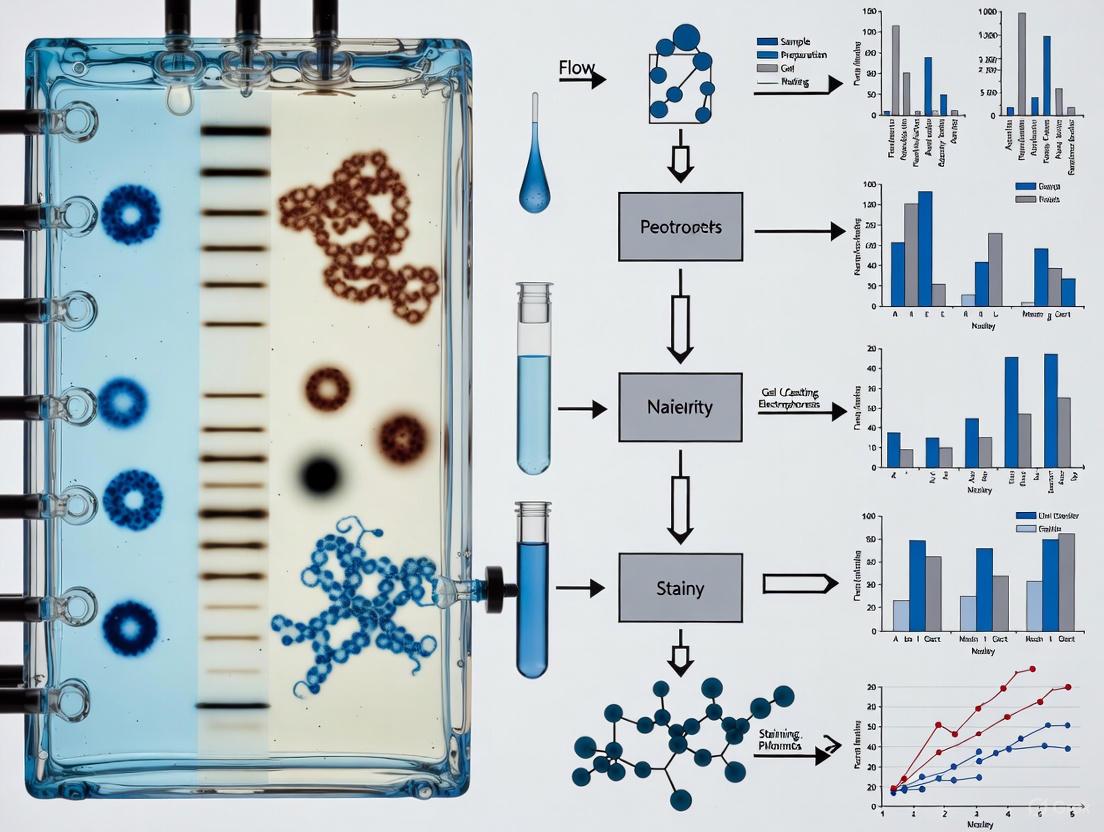
This article provides a comprehensive overview of Native Polyacrylamide Gel Electrophoresis (Native-PAGE), a pivotal technique for analyzing proteins and protein complexes in their biologically active, non-denatured states.
Native-PAGE: A Comprehensive Guide to Analyzing Proteins in Their Natural State
Abstract
This article provides a comprehensive overview of Native Polyacrylamide Gel Electrophoresis (Native-PAGE), a pivotal technique for analyzing proteins and protein complexes in their biologically active, non-denatured states. Aimed at researchers, scientists, and drug development professionals, the content spans from foundational principles and practical methodologies to advanced troubleshooting and validation strategies. It explores the critical role of Native-PAGE in functional proteomics, covering the analysis of oligomeric states, protein-protein interactions, and enzymatic activity. The article also highlights the synergy between Native-PAGE and cutting-edge techniques like native mass spectrometry, positioning it as an indispensable tool for advancing integrative structural biology, disease modeling, and therapeutic development.
Understanding Native-PAGE: Principles and Advantages for Functional Protein Analysis
Native Polyacrylamide Gel Electrophoresis (Native-PAGE) is a fundamental technique in protein science used to separate proteins in their native, folded state. Unlike denaturing methods such as SDS-PAGE, Native-PAGE preserves protein complexes, multi-subunit structures, and biological activity, enabling researchers to analyze proteins as they exist in their natural cellular environment [1]. This technique, pioneered by Ornstein and Davis, separates proteins based on the combined effects of their intrinsic charge, molecular size, and three-dimensional conformation [1] [2]. For researchers and drug development professionals, maintaining native protein structure is crucial for studying functional interactions, enzymatic activity, protein-protein interactions, and complex assembly—all essential aspects of structural biology and therapeutic development.
The core principle of Native-PAGE hinges on the fact that under non-denaturing conditions, a protein's migration through a polyacrylamide gel matrix depends on its net negative charge (driving force), molecular size and shape (frictional forces), and the pore size of the gel (sieving effect) [1]. This multi-parameter separation provides a powerful tool for analyzing protein samples in their natural state, making it indispensable for native state research where preserving biological function is paramount.
Core Principles of Separation
The separation mechanism in Native-PAGE operates through a sophisticated interplay of three fundamental protein properties: net charge, size, and conformation. Understanding how these factors collectively influence electrophoretic mobility is key to effectively applying this technique.
The Tripartite Separation Mechanism
Influence of Net Charge: In the absence of denaturing agents like SDS, proteins retain their inherent charge determined by their amino acid composition and post-translational modifications. When an electric field is applied, the net negative charge of the protein at the buffer system's pH creates the electromotive force propelling the protein toward the positive electrode (anode) [1]. Proteins with higher net negative charge experience greater electrophoretic pull and migrate faster through the gel matrix, all other factors being equal.
Influence of Size and Shape: While charge provides the driving force, protein migration is resisted by frictional drag determined by the protein's effective hydrodynamic volume. Larger proteins experience greater resistance than smaller ones. Critically, a protein's three-dimensional shape significantly affects this frictional drag—compact globular proteins migrate faster than elongated fibrous proteins of identical molecular weight [1]. This shape-dependent migration is a distinctive feature separating Native-PAGE from purely size-based techniques like SDS-PAGE.
Gel Matrix as a Molecular Sieve: The polyacrylamide gel creates a porous network through which proteins must travel. The gel pore size, determined by the acrylamide concentration, selectively retards proteins based on their hydrodynamic radius [2]. Higher percentage gels with smaller pores provide better resolution for lower molecular weight proteins, while lower percentage gels with larger pores are more suitable for high molecular weight complexes.
The following diagram illustrates how these three factors collectively determine a protein's final position in a Native-PAGE gel:
Comparative Analysis: Native-PAGE vs. SDS-PAGE
Understanding the distinctive features of Native-PAGE becomes clearer when contrasted with its denaturing counterpart, SDS-PAGE. The following table summarizes the key operational and outcome differences between these two fundamental electrophoretic techniques:
| Criteria | Native-PAGE | SDS-PAGE |
|---|---|---|
| Separation Basis | Size, charge, and shape [1] | Molecular weight only [1] |
| Gel Conditions | Non-denaturing [1] | Denaturing [1] |
| SDS Presence | Absent [1] | Present [1] |
| Reducing Agents | Not used [1] | DTT or BME used [1] |
| Sample Preparation | Not heated [1] | Heated [1] |
| Protein State | Native, folded conformation [1] | Denatured, linearized [1] |
| Protein Function | Retained [1] | Lost [1] |
| Protein Recovery | Possible post-separation [1] | Not possible [1] |
| Temperature | Typically run at 4°C [1] | Typically run at room temperature [1] |
| Primary Applications | Study structure, composition, and function; protein purification [1] | Determine molecular weight; check protein expression [1] |
Table 1: Key differences between Native-PAGE and SDS-PAGE separation techniques [1].
Detailed Experimental Protocol
This section provides a comprehensive, step-by-step protocol for performing Native-PAGE, optimized for preserving protein structure and function throughout the process.
Materials and Reagent Solutions
The success of Native-PAGE depends on using appropriate, high-quality reagents that maintain non-denaturing conditions.
| Reagent/Category | Specific Examples & Concentrations | Function/Purpose |
|---|---|---|
| Gel Matrix Components | Acrylamide/Bis-acrylamide (e.g., 29:1, 37.5:1 ratios) | Forms the porous polyacrylamide network for molecular sieving [2]. |
| Ammonium Persulfate (APS) | Free radical initiator for gel polymerization [2]. | |
| TEMED (Tetramethylethylenediamine) | Catalyst that accelerates acrylamide polymerization [2]. | |
| Buffer Systems | Tris-HCl (pH ~8.8 for separating gel) | Maintains pH during electrophoresis; no SDS [1] [2]. |
| Tris-Glycine (or Tris-Borate) as running buffer | Provides conducting ions and maintains stable pH during run [2]. | |
| Sample Preparation | Non-denaturing sample buffer (e.g., with glycerol, tracking dye) | Provides density for well loading; contains no SDS or reducing agents [1]. |
| Native Protein Ladder/Marker | Mixture of colored native proteins with known molecular weights and charges. | |
| Visualization | Coomassie Brilliant Blue, Silver Stain | General protein stains for detection post-electrophoresis [2]. |
| Activity stains (zymography) | Detects specific enzymatic activity in situ (e.g., for native enzymes). |
Table 2: Essential research reagents and materials for Native-PAGE experiments.
Step-by-Step Methodological Workflow
The following detailed workflow ensures reproducible results while maintaining proteins in their native state:
Gel Preparation (Non-Denaturing)
- Separating Gel: Prepare the separating gel solution by mixing appropriate volumes of acrylamide/bis-acrylamide stock (concentration chosen based on target protein size), non-denaturing Tris-HCl buffer (e.g., 1.5 M Tris-HCl, pH 8.8), and deionized water. Avoid SDS and heating. Add catalysts TEMED and APS last, mix thoroughly, and pipette into the gel cassette. Carefully layer a thin level of water-saturated butanol or isopropanol on top to create a flat interface and exclude oxygen. Allow complete polymerization (typically 20-30 minutes) [2].
- Stacking Gel: Once the separating gel has polymerized, pour off the butanol layer and rinse with water. Prepare the stacking gel solution with a lower acrylamide concentration (e.g., 4-5%) and a different pH Tris buffer (e.g., 0.5 M Tris-HCl, pH 6.8). Add APS and TEMED, pour over the separating gel, and immediately insert a clean comb. Allow to polymerize fully (15-20 minutes) [2].
Sample Preparation (Critical Step)
- Buffer Compatibility: Dialyze or dilute protein samples into a non-denaturing, low-ionic-strength buffer compatible with the electrophoresis buffer (e.g., same Tris-Glycine system) to prevent precipitation and band distortion during the run.
- Mixing: Gently mix the prepared protein sample with an equal volume of 2X native sample buffer (containing glycerol, tracking dye like Bromophenol Blue, and no SDS/reducing agents). Do not boil the sample. Keep samples on ice until loading [1].
Electrophoresis Setup and Execution
- Assembly: Place the polymerized gel into the electrophoresis chamber. Fill the inner (upper) and outer (lower) chambers with the chosen non-denaturing running buffer (e.g., Tris-Glycine). Ensure no leaks and that wells are fully submerged.
- Loading: Carefully remove the comb. Using a microsyringe, load equal volumes (10-20 µL) of prepared protein samples and native molecular weight markers into individual wells.
- Running Conditions: Connect the power supply, ensuring correct polarity (proteins migrate toward the anode/+). Run the gel at constant voltage or current. Crucially, perform the run in a cold room (4°C) or using a cooling apparatus to maintain low temperature and prevent protein denaturation from Joule heating [1]. Continue electrophoresis until the tracking dye front reaches the bottom of the gel.
Post-Electrophoresis Processing
- Protein Visualization: After the run, carefully disassemble the cassette and remove the gel. Stain the gel using a standard Coomassie Brilliant Blue protocol or a more sensitive silver stain to visualize protein bands [2]. For functional analysis, alternative detection methods like activity staining (zymography) or Western blotting (with mild transfer conditions) can be employed.
- Protein Recovery (Elution): If functional protein recovery is required, corresponding unstained gel bands can be excised, and native protein can be passively eliated or electroeluted into an appropriate buffer for downstream applications [1].
The complete experimental workflow, from gel casting to analysis, is visualized below:
Advanced Techniques and Applications in Native State Research
Building upon standard Native-PAGE, several advanced variants have been developed to address specific research questions in protein science and drug development.
Blue Native PAGE (BN-PAGE) and Clear Native PAGE (CN-PAGE)
Blue Native PAGE (BN-PAGE): This powerful variant utilizes Coomassie Brilliant Blue G-250, which binds non-covalently to proteins, imparting a uniform negative charge. This allows separation based primarily on size while maintaining proteins in their native state. BN-PAGE is particularly invaluable for resolving native membrane protein complexes and determining the oligomeric states and molecular masses of intricate multi-subunit assemblies [1].
Clear Native PAGE (CN-PAGE): In this technique, proteins are separated based on their intrinsic charge and size in a gradient gel without using Coomassie dye. CN-PAGE is suitable for analyzing labile protein complexes that might be disrupted by the dye binding in BN-PAGE, providing a milder alternative for studying delicate supra-molecular structures [1].
Key Research Applications in Drug Development and Structural Biology
Native-PAGE serves as a critical tool for addressing fundamental and applied research questions:
- Protein Complex and Oligomeric State Analysis: Determining the subunit composition, stoichiometry, and quaternary structure of protein complexes is essential for understanding biological function and for the development of biologics [1]. Shifts in band mobility can indicate assembly or disassembly.
- Protein-Protein Interaction Studies: Native-PAGE can monitor the formation of hetero-protein complexes, as the formation of a larger complex results in a distinct, slower-migrating band compared to the individual components. This is useful for studying receptor-ligand interactions or mapping interaction domains.
- Enzymatic Activity and Functional Characterization: Since biological activity is preserved, specific in-gel activity stains (zymography) can be used to detect enzymes like proteases, nucleases, or dehydrogenases directly after electrophoresis. This allows for the correlation of specific bands with function [1].
- Therapeutic Protein and Antibody Characterization: Native-PAGE is used in the quality control of biopharmaceuticals like monoclonal antibodies and recombinant proteins to assess aggregation, fragmentation, and overall charge heterogeneity under non-denaturing conditions, which can impact efficacy and stability.
- Protein Purification Monitoring: As a rapid analytical method, Native-PAGE is routinely used to assess the purity and native integrity of proteins during various stages of purification, ensuring that the final product is both pure and functionally competent [1].
Native-PAGE remains an indispensable technique in the molecular biologist's toolkit, offering a unique capability to analyze proteins in their functional, folded state. Its core principle of multi-parameter separation—based on intrinsic charge, size, and conformation—provides information that is complementary and often critical beyond what can be learned from denaturing methods. For researchers focused on native state research, particularly in structural biology, complex analysis, and drug development, mastering Native-PAGE and its advanced variants like BN-PAGE is fundamental. The protocols and principles outlined herein provide a foundation for the rigorous application of this technique, enabling the study of protein function, interaction, and architecture in a native context, thereby driving discovery and innovation in protein science.
In the study of proteins, maintaining the intricate architecture and functional state of these biomolecules is paramount for understanding their true physiological roles. While denaturing gel electrophoresis techniques like SDS-PAGE provide information on subunit molecular weight, they dismantle the very structures researchers seek to understand. Native polyacrylamide gel electrophoresis (Native PAGE) emerges as a critical analytical tool that enables the separation of protein mixtures under non-denaturing conditions, thereby preserving their native conformation, physiological protein-protein interactions, and biological activity [3]. This capability makes Native PAGE indispensable for researchers and drug development professionals requiring accurate analysis of protein complexes, oligomeric states, and functional characteristics in areas ranging from mitochondrial research to therapeutic antibody development.
Principles of Native PAGE Technology
Fundamental Separation Mechanism
Unlike denaturing electrophoresis methods that rely solely on molecular mass, Native PAGE separates proteins based on a combination of their intrinsic charge, size, and three-dimensional shape [4]. In this technique, proteins migrate through a polyacrylamide matrix under an applied electric field, with their movement governed by their net negative charge in alkaline running buffers and the frictional forces imposed by the gel matrix [4]. The higher the negative charge density (more charges per molecule mass), the faster a protein migrates, while larger proteins and complexes experience greater frictional resistance [4]. This dual mechanism allows for the separation of proteins in their native state, maintaining their quaternary structure and enzymatic activity [4].
Key Variants and Their Applications
Several variants of Native PAGE have been developed to address specific research needs, with Blue Native PAGE (BN-PAGE) and Clear Native PAGE (CN-PAGE) being the most prominent [3] [5].
Blue Native PAGE (BN-PAGE) utilizes the anionic dye Coomassie Blue G-250, which binds nonspecifically to hydrophobic regions on protein surfaces [6] [4]. This binding induces a charge shift that ensures all proteins, including those with basic isoelectric points (pI) and membrane proteins, migrate toward the anode [5] [4]. The dye also helps prevent aggregation of membrane proteins and those with significant surface-exposed hydrophobic areas by converting these sites to negatively charged sites [4]. BN-PAGE represents the most robust variant and is particularly valuable for analyzing membrane protein complexes and determining native protein masses and oligomeric states [6] [5].
Clear Native PAGE (CN-PAGE) is performed without Coomassie dye, with proteins migrating according to their intrinsic charge-to-mass ratio [3] [5]. This method is considered to show the "true" mobility of enzymes and protein complexes but has limitations for basic proteins, which may be lost due to cathodal migration [5]. A modified version, high-resolution clear native electrophoresis (hrCNE), uses mixed anionic micelles in the cathode buffer to facilitate separation of membrane proteins while maintaining the absence of dye [5].
Table: Comparison of Native PAGE Variants
| Method | Charge Modifier | Separation Basis | Advantages | Limitations |
|---|---|---|---|---|
| BN-PAGE | Coomassie Blue G-250 | Size, shape, and charge after dye binding | Resolves basic proteins and membrane complexes; prevents aggregation | Dye may interfere with some downstream applications |
| CN-PAGE | None | Intrinsic charge-to-mass ratio and size | Shows "true" protein mobility; suitable for fluorescently labeled proteins | Limited to acidic proteins; basic proteins may be lost |
| hrCNE | Mixed anionic micelles | Size and charge with minimal perturbation | Good for in-gel activity assays and fluorescent proteins | Less robust than BN-PAGE for some membrane proteins |
Practical Implementation: System Selection and Setup
Choosing the Appropriate Gel Chemistry
Selecting the correct gel system is crucial for successful native electrophoresis experiments. Commercial systems offer different operating parameters optimized for various protein types and research goals [4].
Table: Native PAGE Gel Chemistry Systems
| Gel System | Operating pH Range | Optimal Protein Size Range | Best Use Cases |
|---|---|---|---|
| Tris-Glycine | 8.3-9.5 | 20-500 kDa | Maintaining native net charge; studying smaller proteins |
| Tris-Acetate | 7.2-8.5 | >150 kDa | Larger molecular weight proteins; maintaining native charge |
| Bis-Tris (with G-250) | ~7.5 | 10 kDa - 10 MDa | Membrane proteins; hydrophobic proteins; molecular weight estimation |
The Tris-Glycine system operates at a higher pH (8.3-9.5), making it suitable for proteins that maintain stability under alkaline conditions [4]. The Tris-Acetate system provides better resolution for larger proteins (>150 kDa) at a slightly lower pH range (7.2-8.5) [4]. For the most challenging applications involving membrane proteins or when seeking to separate proteins by molecular weight regardless of isoelectric point, the NativePAGE Bis-Tris system with Coomassie G-250 dye offers optimal performance at near-neutral pH [4].
Essential Reagents and Materials
Successful Native PAGE requires specific reagents and materials tailored to preserve native protein structures:
- Acrylamide/Bis-acrylamide Solutions: Form the porous gel matrix; different concentrations (typically 4-16% gradient or 6-15% single percentage) provide optimal separation ranges for various protein sizes [7] [4].
- Polymerization Initiators: Ammonium persulfate (APS) and TEMED catalyze the free-radical polymerization of acrylamide [3].
- Native Sample Buffer: Non-denaturing buffer containing glycerol for density and tracking dye (e.g., bromophenol blue) without SDS or reducing agents [7].
- Running Buffers: Tris-glycine (pH ~8.3) for traditional systems; Bis-Tris with Coomassie G-250 additive for BN-PAGE systems [7] [4].
- Detergents: Mild non-ionic detergents like digitonin, dodecylmaltoside (DDM), or Triton X-100 for solubilizing membrane proteins while preserving complexes [5] [8].
Table: Research Reagent Solutions for Native PAGE
| Reagent Category | Specific Examples | Function in Native PAGE |
|---|---|---|
| Gel Matrix Components | Acrylamide/Bis-acrylamide (30%/0.8%) | Forms porous separation matrix with controlled pore sizes |
| Polymerization Catalysts | APS, TEMED | Initiates and catalyzes acrylamide polymerization |
| Buffer Systems | Tris-glycine, Bis-Tris, Imidazole/HCl | Maintains pH stability during electrophoresis |
| Charge Modifiers | Coomassie Blue G-250 | Imparts negative charge to proteins for consistent migration |
| Solubilization Agents | Digitonin, Dodecylmaltoside, Triton X-100 | Solubilizes membrane proteins while preserving complexes |
| Stabilizing Additives | Glycerol, 6-Aminocaproic acid, EDTA | Enhances sample density and inhibits proteolysis |
Advanced Applications and Protocols
Analysis of Membrane Protein Complexes
Blue Native PAGE has revolutionized the study of membrane protein complexes, particularly in mitochondrial and photosynthetic systems. The technique enables one-step isolation of protein complexes from biological membranes and total cell homogenates while maintaining enzymatic activity [6]. For mitochondrial complexes, solubilization of heart tissue (bovine, chicken, rat, or mouse) with appropriate detergents provides ideal high molecular weight markers for mass calibration [5]. The protocol involves:
- Homogenization: Carefully mince and homogenize heart tissue (e.g., 1 g tissue in 9 ml homogenization buffer) using a motor-driven Potter-Elvehjem homogenizer [5].
- Solubilization: Suspend pelleted homogenate in low salt buffer and solubilize with dodecylmaltoside (10%), Triton X-100 (10%), or digitonin (20%) [5].
- Sample Preparation: Add Coomassie dye to achieve a 1:8 Coomassie dye/detergent ratio for BN-PAGE [5].
- Electrophoresis: Perform using 3.5-12% or 3.5-16% linear acrylamide gradient gels [5].
This approach has been instrumental in identifying respiratory chain supercomplexes and determining the oligomeric states of ATP synthase, advancing our understanding of oxidative phosphorylation [6].
Multi-Dimensional Separation Techniques
For comprehensive analysis of complex protein assemblies, two-dimensional (2D) native electrophoresis provides superior resolution. The protocol for separation of thylakoid membrane complexes exemplifies this powerful approach [8]:
- First Dimension: Separate digitonin-solubilized protein supercomplexes using BN-PAGE [8].
- Gel Lane Excison: Carefully excise the lane containing separated complexes.
- Second Dimension Solubilization: Treat the gel lane with stronger detergent (β-D-maltoside) to dissociate supercomplexes into subcomplexes [8].
- Second Dimension Electrophoresis: Perform orthogonal BN-PAGE to separate the subcomplexes [8].
This 2D BN/BN-PAGE approach reveals the hierarchical composition of labile protein supercomplexes and their subunit arrangements, providing insights into the modular organization of photosynthetic machinery [8]. For even more detailed analysis, a three-dimensional approach incorporating isoelectric focusing or Tricine-SDS-PAGE can further separate individual subunits [6].
Activity Staining and Functional Assays
A significant advantage of Native PAGE is the retention of enzymatic activity post-separation, enabling direct functional analysis within the gel matrix. After electrophoresis, gels can be incubated with specific substrates to detect active enzymes [3]. For example, hydrogen peroxide and diaminobenzidine can detect peroxidases, while esterase activity can be visualized with α-naphthyl acetate and Fast Blue RR salt [3]. This approach allows researchers to directly correlate protein bands with biological function, confirming the preservation of native structure throughout the separation process.
Emerging Innovations: Native SDS-PAGE
Recent methodological advances have led to the development of Native SDS-PAGE (NSDS-PAGE), which bridges the gap between high-resolution separation and native state preservation. This technique modifies standard SDS-PAGE conditions by eliminating SDS and EDTA from the sample buffer, omitting the heating step, and reducing SDS concentration in the running buffer from 0.1% to 0.0375% [9]. Remarkably, these modifications result in retention of 98% of bound Zn²⁺ in proteomic samples compared to only 26% with standard SDS-PAGE [9]. Furthermore, seven of nine model enzymes, including four Zn²⁺ proteins, retained activity after NSDS-PAGE separation [9]. This innovation provides researchers with a valuable tool for high-resolution separation of metalloproteins and other metal-binding proteins while maintaining their functional state.
Native PAGE technologies provide an indispensable platform for analyzing proteins in their natural state, offering critical advantages for understanding protein complex organization, oligomeric states, and structure-function relationships. From fundamental research on mitochondrial respiratory chains and photosynthetic complexes to drug development requiring accurate characterization of therapeutic proteins, these methods enable researchers to preserve the intricate structural and functional attributes that define protein activity in physiological contexts. As innovations like NSDS-PAGE and improved solubilization strategies continue to emerge, the capabilities for native protein analysis will further expand, driving discoveries in both basic science and applied biotechnology.
Electrophoresis is a foundational laboratory technique in which charged protein molecules are transported through a solvent by an electrical field, serving as a simple, rapid, and sensitive analytical tool for separating proteins and nucleic acids [10]. The mobility of a molecule through an electric field depends on factors including field strength, net charge, molecular size and shape, ionic strength, and the properties of the matrix through which the molecule migrates [10]. This application note details three core electrophoretic methods—Native-PAGE, Denaturing SDS-PAGE, and Isoelectric Focusing—framed within the context of a broader thesis on utilizing native electrophoresis for analyzing proteins in their natural state. These techniques provide complementary information for researchers and drug development professionals seeking to understand protein structure, function, and interaction.
Fundamental Principles and Comparative Analysis
Sodium Dodecyl Sulfate-Polyacrylamide Gel Electrophoresis (SDS-PAGE)
SDS-PAGE separates proteins primarily by molecular mass under denaturing conditions [10]. The ionic detergent sodium dodecyl sulfate (SDS) denatures proteins by wrapping around the polypeptide backbone, and when combined with heating and reducing agents like dithiothreitol (DTT), it cleaves disulfide bonds to fully dissociate proteins into their subunits [10] [11]. Under these conditions, most polypeptides bind SDS in a constant weight ratio (approximately 1.4 g SDS per 1 g of polypeptide), rendering the intrinsic charges of the polypeptide insignificant compared to the negative charges provided by the bound detergent [10]. The resulting SDS-polypeptide complexes have essentially identical negative charge and similar shapes, allowing them to migrate through the gel strictly according to polypeptide size with minimal effect from compositional differences [10] [11]. The simplicity, speed, and minimal protein requirements of this method have made SDS-PAGE the most widely used technique for molecular mass determination [10].
Native Polyacrylamide Gel Electrophoresis (Native-PAGE)
Native-PAGE separates protein mixtures under non-denaturing conditions, preserving their natural conformation, charge, and biological activity [3]. In this method, proteins are separated according to their intrinsic net charge, size, and three-dimensional shape [10] [3]. Electrophoretic migration occurs because most proteins carry a net negative charge in alkaline running buffers, with migration rate proportional to their charge density [10]. The frictional force of the gel matrix simultaneously creates a sieving effect that regulates protein movement according to size and shape [10] [12]. Because no denaturants are used, subunit interactions within multimeric proteins are generally retained, allowing researchers to gain information about quaternary structure and enzymatic activity [10] [3]. This preservation of native properties makes Native-PAGE particularly valuable for studying protein complexes, oligomeric states, and functional forms [3].
Isoelectric Focusing (IEF)
Isoelectric Focusing separates proteins based on their isoelectric point (pI), the specific pH at which a protein carries no net electrical charge [11]. This technique utilizes a gel containing a stabilized pH gradient through which an electric current passes [11]. When a protein is placed in this gradient, it initially moves toward the electrode with opposite charge [10]. As it migrates, the surrounding pH changes, altering the protein's charge until it reaches the pH position where its net charge becomes zero—its isoelectric point [11]. At this position, the protein stops migrating and focuses into a sharp band [11]. Immobilized pH gradients (IPGs) are typically used for IEF because they provide fixed pH gradients that remain stable even at high voltages for extended periods [11]. IEF commonly serves as the first dimension in two-dimensional electrophoresis, where proteins are first separated by pI and then by mass using SDS-PAGE in the second dimension [10].
Technical Comparison of Methodologies
Table 1: Comparative analysis of key electrophoretic techniques
| Parameter | SDS-PAGE | Native-PAGE | Isoelectric Focusing (IEF) |
|---|---|---|---|
| Separation Basis | Molecular mass | Size, charge, and shape | Isoelectric point (pI) |
| Gel Condition | Denaturing | Non-denaturing | Denaturing or native |
| Sample Preparation | Heating with SDS and reducing agents | No heating, no denaturants | Solubilized in appropriate buffer |
| Protein Charge | Uniformly negative by SDS binding | Native charge (positive or negative) | Becomes neutral at pI |
| Protein State | Denatured and linearized | Native, folded conformation | Depends on conditions |
| Functional Retention | Function destroyed | Function retained | May be retained in native IEF |
| Typical Applications | Molecular weight determination, purity assessment | Protein complexes, enzymatic activity, oligomeric states | pI determination, 1st dimension in 2D-PAGE |
| Buffer System | Discontinuous with SDS | Discontinuous without SDS | pH gradient with ampholytes |
Experimental Protocols and Methodologies
SDS-PAGE Protocol
Gel Preparation: Traditional discontinuous SDS-PAGE gels consist of a stacking gel and a resolving gel. A representative recipe for a 10% Tris-glycine mini gel for SDS-PAGE includes 7.5 mL 40% acrylamide solution, 3.9 mL 1% bisacrylamide solution, 7.5 mL 1.5 M Tris-HCl (pH 8.7), water to 30 mL total volume, 0.3 mL 10% APS, 0.3 mL 10% SDS, and 0.03 mL TEMED [10]. The ratio of bisacrylamide to acrylamide and total concentration of both components determines the pore size and rigidity of the final gel matrix, which affects the range of protein sizes that can be resolved [10].
Sample Preparation: Protein samples (5-25 μg) are mixed with loading buffer containing SDS and reducing agent (e.g., DTT or β-mercaptoethanol), then heated at 70-100°C for 10 minutes to denature proteins [10] [9]. The denatured samples are loaded into wells at the top of the gel alongside molecular weight markers.
Electrophoresis Conditions: Prepared gel cassettes are mounted vertically into an apparatus with top and bottom edges in contact with buffer chambers containing cathode and anode, respectively [10]. Electrophoresis is typically performed at room temperature for 20-45 minutes using a constant voltage (e.g., 200V) in running buffer containing SDS until the dye front reaches the gel bottom [10] [9].
Native-PAGE Protocol
Gel Preparation: Native gels are prepared similarly to SDS-PAGE gels but without SDS or other denaturants. The acrylamide percentage is selected based on the target protein size—lower percentages (5-7%) for high molecular weight complexes and higher percentages (10-15%) for smaller proteins [3]. Gradient gels (e.g., 4-20%) can be cast for separating complex mixtures with broad molecular weight ranges [3].
Sample Preparation: Protein samples are prepared in non-denaturing buffer that preserves physiological pH and ionic strength, with no SDS, urea, or reducing agents [3]. Samples are clarified by centrifugation to remove particulate matter, and protein concentration is adjusted to approximately 0.1-2 μg/μL depending on the detection method [3]. A non-denaturing loading dye containing tracking dye (like bromophenol blue) and glycerol is added to provide density [3].
Electrophoresis Conditions: The gel is run at a constant voltage or current (typically 50-150V depending on gel size) with temperature control (often at 4°C) to prevent overheating and denaturation [3] [1]. The run is stopped when satisfactory separation is achieved, typically when the tracking dye reaches the gel bottom [3].
Specialized Native-PAGE Variants
Blue Native-PAGE (BN-PAGE): This technique uses Coomassie Blue G-250 dye, which binds to protein surfaces and creates a charge shift, enabling the separation of large protein complexes (100 kDa to 10 MDa) in their native conformation [13]. BN-PAGE is particularly useful for characterizing respiratory supercomplexes, assessing stoichiometric amounts of native complexes, and identifying protein-protein interactions [13]. Mild detergents such as digitonin or dodecylmaltoside are typically used to maintain complexes [13].
Clear Native-PAGE (CN-PAGE): This method is performed without Coomassie dye, with proteins migrating according to their intrinsic charge-to-mass ratio [14]. CN-PAGE offers advantages when Coomassie dye interferes with downstream techniques like catalytic activity determination [14]. It is milder than BN-PAGE and can retain labile supramolecular assemblies of membrane protein complexes that dissociate under BN-PAGE conditions [14].
High-Resolution Clear Native PAGE (hrCN-PAGE): A modified CN approach using optimized buffers and gradient gels to achieve better separation of membrane complexes, often with increased ampholyte content for more distinct bands [3].
Native SDS-PAGE (NSDS-PAGE): A hybrid approach that reduces SDS concentration in running buffer from 0.1% to 0.0375% and eliminates EDTA and heating steps [9]. This method retains Zn²⁺ bound in proteomic samples (increasing from 26% to 98% compared to standard SDS-PAGE) and preserves enzymatic activity in most model enzymes while maintaining high resolution [9].
Isoelectric Focusing Protocol
Sample Preparation: Protein samples are solubilized in appropriate rehydration/sample buffer compatible with IEF [11]. For optimal results, samples should be clarified to remove particulate matter that might disrupt the pH gradient.
IEF Procedure: IPG strips loaded with protein are rehydrated in rehydration/sample buffer, either actively (with application of low voltage) or passively [11]. Active rehydration is particularly beneficial for loading larger proteins [11]. IEF is then performed at high voltages for extended periods until proteins have migrated to their isoelectric points. After electrophoresis, focused strips can be frozen for storage or immediately used for second-dimension analysis [11].
Research Reagent Solutions and Essential Materials
Table 2: Essential reagents and materials for electrophoretic separations
| Reagent/Material | Function/Purpose | Technical Considerations |
|---|---|---|
| Acrylamide/Bis-acrylamide | Forms cross-linked polymer network for sieving matrix | Ratio determines pore size; typically 29:1 or 37:1 acrylamide:bis |
| Ammonium Persulfate (APS) | Initiates polymerization as free radical source | Fresh preparation recommended for optimal polymerization |
| TEMED | Catalyzes polymerization by promoting free radical production | Amount affects polymerization rate; excess can cause brittle gels |
| SDS (Sodium Dodecyl Sulfate) | Denatures proteins and confers uniform negative charge | Critical for mass-based separation in SDS-PAGE; omitted in Native-PAGE |
| Tris-based Buffers | Maintain pH during electrophoresis | Different pH for stacking (∼6.8) and resolving (∼8.8) gels in discontinuous systems |
| Coomassie G-250 Dye | Imparts charge shift in BN-PAGE; staining | Binds non-covalently to proteins without significant denaturation |
| Reducing Agents (DTT, β-ME) | Breaks disulfide bonds | Essential for complete denaturation in SDS-PAGE; omitted in Native-PAGE |
| Molecular Weight Markers | Reference for size estimation | Pre-stained or unstained options available for different applications |
| IPG Strips | Establish immobilized pH gradients for IEF | Available in various pH ranges and lengths to suit different applications |
| Mild Detergents (Digitonin, DDM) | Solubilize membrane proteins while preserving complexes | Critical for Native-PAGE of membrane protein complexes |
Workflow Integration and Application Scenarios
The selection and integration of appropriate electrophoretic techniques depends on specific research goals. For routine molecular weight determination and purity assessment, SDS-PAGE remains the standard approach [10] [1]. When studying native protein structure, complexes, or function, Native-PAGE variants are essential [3]. For comprehensive proteomic analysis, 2D-PAGE combining IEF and SDS-PAGE provides the highest resolution [10] [15].
Diagram 1: Decision workflow for selecting electrophoretic techniques based on research goals
Concluding Perspectives
Native-PAGE, SDS-PAGE, and IEF represent complementary approaches for protein separation, each with distinct advantages and applications. SDS-PAGE provides excellent resolution for molecular weight determination but destroys native protein structure and function [10] [1]. Native-PAGE preserves native properties, enabling functional studies and analysis of protein complexes, though with potentially more complex interpretation due to multiple factors influencing migration [3] [12]. IEF offers unique separation based on isoelectric point, making it invaluable for proteomic applications, particularly as the first dimension in 2D-PAGE [10] [11]. Recent methodological advances, including Native SDS-PAGE, bridge the gap between these approaches by offering high resolution with retention of some native properties [9]. For researchers focused on analyzing proteins in their natural state, Native-PAGE and its variants provide indispensable tools for elucidating protein structure, function, and interactions in drug development and basic research.
For researchers dedicated to the study of proteins in their natural, functional state, selecting the appropriate analytical separation method is paramount. While denaturing sodium dodecyl sulfate-polyacrylamide gel electrophoresis (SDS-PAGE) is a ubiquitous workhorse for determining molecular weight, it deliberately destroys native structure, stripping proteins of essential cofactors and obliterating enzymatic activity [9]. In contrast, Native Polyacrylamide Gel Electrophoresis (Native-PAGE) is a powerful technique designed to separate protein mixtures based on their intrinsic charge, size, and shape under non-denaturing conditions, thereby preserving their native conformation and biological function [16]. This application note delineates the ideal research scenarios for employing Native-PAGE, providing a direct comparison with alternative methods, a detailed experimental protocol, and a curated list of essential reagents to empower researchers and drug development professionals in their investigative pursuits.
Core Principles and Key Advantages of Native-PAGE
Native-PAGE operates on the principle of separating proteins based on their charge-to-mass ratio and overall three-dimensional structure as they migrate through a porous polyacrylamide gel matrix [7] [16]. Unlike SDS-PAGE, which imparts a uniform negative charge using detergent, Native-PAGE relies on the protein's own charge, which is dependent on its amino acid composition and the pH of the running buffer. This fundamental difference is the source of its major advantage: the preservation of native properties.
Research has demonstrated that modified Native-PAGE conditions, sometimes referred to as NSDS-PAGE, can achieve high-resolution separation while retaining up to 98% of bound metal ions in metalloproteins, a stark contrast to the 26% retention observed in standard SDS-PAGE [9]. Furthermore, enzymatic activity assays confirm that most model enzymes remain functional after separation by Native-PAGE, enabling direct downstream analysis of protein function [9].
Ideal Research Applications for Native-PAGE
The unique strengths of Native-PAGE make it the method of choice for several critical research areas, particularly within the context of natural state protein analysis.
Analysis of Protein Oligomerization and Complex Assembly
Native-PAGE is exceptionally well-suited for investigating multi-protein complexes. It can resolve different oligomeric states (e.g., monomers, dimers, trimers) based on their size and shape, allowing researchers to study subunit interactions and stoichiometry without the disruptive force of denaturing agents.
Functional Enzymology and Activity Screening
When the research goal is to correlate a protein band with a specific enzymatic activity, Native-PAGE is indispensable. Following electrophoresis, gels can be incubated with specific substrates to detect enzyme activity directly within the gel matrix, enabling the identification of active isoforms or the assessment of enzyme purity.
Metalloprotein and Cofactor Characterization
For proteins that require bound metal ions or non-covalently attached cofactors for their function, Native-PAGE is the preferred method. It maintains these essential partnerships, allowing for the study of metalloprotein complexes and the identification of metal-binding proteins in proteomic samples using techniques like laser ablation-inductively coupled plasma-mass spectrometry [9].
Protein-Protein and Protein-Nucleic Acid Interactions
The technique is widely used in mobility shift assays to study binding events. Protein-protein interactions can be visualized as discrete bands with altered mobility, while protein-nucleic acid interactions (such as transcription factor-DNA binding) are routinely probed using this method [17].
Conformational Studies and Folding Analysis
Native-PAGE can reveal different conformational states of a protein or nucleic acid. As the electrophoretic mobility is sensitive to the compactness of the molecule, folded, unfolded, and misfolded conformers can often be separated and quantified, providing insights into folding pathways and stability [17].
Comparative Analysis of Electrophoretic Methods
The choice between different PAGE methods should be guided by the specific research question. The table below provides a clear, side-by-side comparison of three common techniques to aid in this decision-making process.
Table 1: Quantitative Comparison of PAGE Methodologies for Protein Analysis
| Feature | SDS-PAGE | BN-PAGE | Native-PAGE |
|---|---|---|---|
| Separation Principle | Molecular mass | Size & Shape | Charge-to-mass ratio & Shape [16] |
| Protein State | Denatured & unfolded | Native (as complexes) | Native (folded) |
| Key Reagents | SDS, Reducing agents | Coomassie G-250 | Non-denaturing detergents (optional) |
| Retention of Activity | Destroyed [9] | Preserved [9] | Preserved [9] |
| Metal Ion Retention | Low (e.g., ~26% Zn²⁺) [9] | High | High (e.g., ~98% Zn²⁺) [9] |
| Resolution | High | Moderate [9] | High [9] |
| Ideal for | Molecular weight determination, purity checks | Analysis of large membrane protein complexes | Studying oligomeric state, enzyme activity, native charge |
To visually guide the selection process, the following decision flowchart outlines the key questions to ask when choosing an electrophoresis method.
Detailed Native-PAGE Experimental Protocol
The following section provides a step-by-step protocol for setting up and running a standard Native-PAGE experiment, from gel preparation to post-electrophoresis analysis.
Gel Preparation
Native-PAGE utilizes a discontinuous buffer system with stacking and separating gels. The separating gel concentration should be chosen based on the expected size of the target proteins; lower percentages (e.g., 8%) are better for larger proteins, while higher percentages (e.g., 12%) provide superior resolution for smaller proteins [7].
Table 2: Recipes for Native-PAGE Gels
| Component | Stacking Gel (5 mL) | Separating Gel (10 mL at 8%) |
|---|---|---|
| Acrylamide/Bis-acrylamide (30%/0.8% w/v) | 0.67 mL | 2.6 mL |
| 0.375 M Tris-HCl, pH 8.8 | 4.275 mL | 7.29 mL |
| 10% (w/v) Ammonium Persulfate (APS) | 50 µL | 100 µL |
| TEMED | 5 µL | 10 µL |
Procedure:
- Combine all components for the separating gel, adding APS and TEMED last. Swirl gently to mix and pipette the solution into the gap between glass plates. Overlay with water or isopropanol to ensure a flat surface and allow 20-30 minutes for complete polymerization [7].
- Once set, pour off the overlay and prepare the stacking gel solution similarly.
- Pipette the stacking gel solution on top of the polymerized separating gel, insert a comb, and allow another 20-30 minutes to polymerize [7].
Sample Preparation
Critical Note: Do not heat the samples [7]. Heating will denature proteins and defeat the purpose of native electrophoresis.
- Prepare a 2X non-reducing, non-denaturing sample buffer [7]:
- 62.5 mM Tris-HCl, pH 6.8
- 25% Glycerol
- 1% Bromophenol Blue (tracking dye)
- Mix the protein sample with an equal volume of the 2X sample buffer.
Electrophoresis Conditions
- Use a running buffer of 25 mM Tris and 192 mM glycine (pH ~8.3). Do not adjust the pH of this buffer [7].
- Carefully load the prepared samples into the wells of the gel.
- Run the electrophoresis at a constant voltage. It is advisable to place the gel apparatus on ice or use a cooling unit to prevent heat-induced denaturation during the run [7].
- Continue electrophoresis until the bromophenol blue tracking dye has migrated to the bottom of the gel.
Post-Electrophoresis Analysis
Once separated, proteins can be visualized using standard Coomassie-blue or silver staining protocols. For functional analysis, such as enzyme activity assays, the gel should be incubated with an appropriate substrate solution instead of being fixed and stained [9]. For subsequent analysis like Western blotting, standard immuno-blotting procedures can be followed [7].
The entire experimental workflow, from sample preparation to analysis, is summarized below.
The Scientist's Toolkit: Essential Research Reagent Solutions
A successful Native-PAGE experiment relies on high-quality, specific reagents. The following table details the key materials and their functions.
Table 3: Essential Reagents for Native-PAGE Experiments
| Reagent / Material | Function / Purpose |
|---|---|
| Acrylamide/Bis-acrylamide (30%/0.8%) | Forms the porous gel matrix that separates proteins based on size and shape. |
| Tris-HCl Buffer (pH 8.8 & 6.8) | Provides the appropriate pH environment for gel polymerization and electrophoresis. The discontinuous pH is key to sample stacking. |
| Ammonium Persulfate (APS) & TEMED | Catalyzes the free-radical polymerization of acrylamide to form the polyacrylamide gel. |
| Tris-Glycine Running Buffer | The standard running buffer for native electrophoresis, providing the ions necessary for conduction and the pH for separation. |
| Glycerol | Added to the sample buffer to increase density, allowing the sample to sink neatly into the well. |
| Bromophenol Blue | A tracking dye that migrates ahead of the smallest proteins, providing a visual indicator of the electrophoresis progress. |
| Coomassie Blue R-250 / G-250 | Stains proteins post-electrophoresis for visualization. Can also be used in the cathode buffer for Blue-Native PAGE. |
Native-PAGE is an indispensable tool in the structural and functional proteomics arsenal, uniquely capable of providing high-resolution separation of proteins while preserving their delicate native architectures and biological activities. Its ideal applications are clearly defined: the study of oligomeric complexes, functional enzymology, metalloprotein characterization, and biomolecular interactions. By integrating this technique into a research framework focused on natural state analysis—supported by the detailed protocols and reagents outlined in this document—scientists and drug developers can unlock deeper insights into protein function, mechanism, and regulation, thereby accelerating the pace of discovery and therapeutic innovation.
Practical Protocols and Translational Applications in Disease and Drug Research
Within the context of advanced protein research, Native Polyacrylamide Gel Electrophoresis (Native-PAGE) is an indispensable technique for analyzing proteins in their natural, folded state. Unlike denaturing methods such as SDS-PAGE, Native-PAGE preserves protein complexes, multi-subunit structures, and biological activity by omitting harsh denaturants and reducing agents [18]. This allows researchers to study critical aspects of protein function, including enzyme activity, protein-protein interactions, and conformational changes, which are essential in fields ranging from structural biology to drug development [17] [19]. The separation mechanism relies on both the intrinsic charge of the protein and its molecular shape and size, allowing for the resolution of complex mixtures under conditions that mimic the native physiological environment [20].
A fundamental consideration in Native-PAGE is the isoelectric point (pI) of the target protein. The optimal conditions for resolving a protein depend on whether it is acidic or basic, influencing the choice of buffer pH and the configuration of the electrical field during electrophoresis [20] [21]. This protocol provides detailed methodologies for the analysis of both acidic and basic proteins, ensuring researchers can effectively apply Native-PAGE to a broad spectrum of experimental questions.
The Scientist's Toolkit: Key Reagent Solutions
The following table details essential reagents and materials required for successful Native-PAGE experimentation.
Table 1: Key Research Reagents and Materials for Native-PAGE
| Reagent/Material | Function and Key Characteristics |
|---|---|
| Acrylamide/Bis-acrylamide | Forms the porous polyacrylamide gel matrix that separates proteins based on size and charge [20]. |
| Tris-HCl Buffers | Provides the appropriate pH environment for separation (e.g., pH 8.8 for separating gel, pH 6.8 for stacking gel) [7] [20]. |
| Ammonium Persulfate (APS) & TEMED | Catalyzes the polymerization reaction of acrylamide and bis-acrylamide to form the gel [7] [20]. |
| Glycine | A component of the running buffer, it forms moving ion fronts for effective stacking and separation of proteins [7]. |
| Glycerol | Adds density to the sample loading buffer, allowing samples to sink neatly into the gel wells [7] [22]. |
| Bromophenol Blue | A tracking dye that migrates ahead of the proteins, allowing visualization of the electrophoresis progress [7] [22]. |
Experimental Workflow and Methodologies
The following diagram outlines the core decision-making and experimental workflow for a Native-PAGE experiment, from initial sample preparation to data analysis.
Sample Preparation Protocol
The goal of sample preparation is to maintain the protein's native conformation.
- Sample Buffer Preparation: Prepare a non-reducing, non-denaturing 2X sample loading buffer. A standard formulation is:
- Sample Mixing: Combine your protein sample with an equal volume of the 2X loading buffer. A typical ratio is 3:1 (sample : 4X buffer) [21]. Mix gently by pipetting.
- Critical Note: Do not heat the samples [7] [22]. Heating denatures proteins and is counterproductive to native electrophoresis.
- Clarification: Centrifuge the sample mixture at high speed (e.g., 17,000 x g for 5 minutes) to pellet any solid debris or insoluble aggregates [21]. Load the supernatant into the gel well.
Gel Casting Protocol
This protocol describes a discontinuous gel system, which provides superior resolution. The tables below provide recipes for both acidic and basic protein systems.
Table 2: Separating Gel Recipes for Different Acrylamide Concentrations (for Acidic Proteins, pH 8.8) [7]
| Reagent | 6% Gel | 8% Gel | 10% Gel | 12% Gel | 15% Gel |
|---|---|---|---|---|---|
| Acrylamide/Bis (30%/0.8% w/v) | 2.00 mL | 2.60 mL | 3.40 mL | 4.00 mL | 5.00 mL |
| 0.375 M Tris-HCl, pH 8.8 | 7.89 mL | 7.29 mL | 6.49 mL | 5.89 mL | 4.89 mL |
| Deionized Water | - | - | - | - | - |
| 10% APS (Fresh) | 100 µL | 100 µL | 100 µL | 100 µL | 100 µL |
| TEMED | 10 µL | 10 µL | 10 µL | 10 µL | 10 µL |
| Total Volume | ~10 mL | ~10 mL | ~10 mL | ~10 mL | ~10 mL |
Table 3: Stacking and Separating Gel Compositions for a Basic Gel System (e.g., for a basic protein) [20]
| Reagent | Stacking Gel (4%) | Separating Gel (17%) |
|---|---|---|
| 40% Acr-Bis (Acr:Bis = 19:1) | 0.50 mL | 4.25 mL |
| 4x Separating Gel Buffer (1.5 M Tris-HCl, pH 8.8) | - | 2.50 mL |
| 4x Stacking Gel Buffer (0.5 M Tris-HCl, pH 6.8) | 1.25 mL | - |
| Deionized Water | 3.20 mL | 3.20 mL |
| 10% APS | 35 µL | 35 µL |
| TEMED | 15 µL | 15 µL |
| Total Volume | ~5 mL | ~10 mL |
Gel Casting Procedure:
- Assemble Gel Cassette: Clean and dry the glass plates before assembling them into the casting cassette according to the manufacturer's instructions [21].
- Prepare Separating Gel: In a small beaker or tube, mix all components for the separating gel except APS and TEMED. Choose the acrylamide percentage based on the expected size of your target protein (higher % for smaller proteins) [7].
- Catalyze Polymerization: Add the 10% APS and TEMED to the solution. Swirl gently to mix. Polymerization begins immediately [21].
- Pour the Gel: Quickly pipet the separating gel solution into the gap between the glass plates, filling to about ¾ of the total height.
- Add Sealing Layer: Carefully overlay the gel solution with 1 mL of isopropanol or water to create a flat, even interface [7] [20]. Allow the gel to polymerize completely for 20-30 minutes.
- Prepare and Pour Stacking Gel: After polymerization, pour off the sealing layer and rinse with deionized water. Prepare the stacking gel solution (typically 4%) as described in the tables above, adding APS and TEMED last. Pour the stacking gel on top of the separating gel and immediately insert a clean comb. Allow to polymerize for 20-30 minutes.
Electrophoresis Protocol
The running conditions differ significantly based on the protein's pI.
- Buffer and Setup: Dilute the 10X running buffer (25 mM Tris, 192 mM glycine, pH ~8.3) to 1X with deionized water [7] [21]. Fill the inner and outer chambers of the electrophoresis tank. Check for leaks.
- Load Samples: Carefully load the prepared protein samples (10-20 µL, containing 1-5 µg protein for Coomassie staining) into the wells [21].
- Run Electrophoresis:
- For Acidic Proteins: The negatively charged proteins will migrate towards the positive anode (bottom of the gel). Connect the electrodes in the standard configuration (anode at bottom).
- For Basic Proteins: The positively charged proteins will migrate towards the negative cathode. You must reverse the anode and cathode so the proteins run down the gel towards the top of the tank [7] [20].
- Running Conditions: Apply a constant voltage.
- Begin at a low voltage (50-100 V) until the samples have entered the stacking gel [21] [22].
- Then, increase the voltage to 120-150 V for the remainder of the run [21] [22].
- To prevent heat-induced denaturation, it is advisable to run the gel in a cold room or place the entire apparatus on ice, especially for longer runs [7] [20].
- Completion: Stop electrophoresis when the bromophenol blue dye front has reached the bottom of the gel.
Data Analysis and Interpretation
Following electrophoresis, the gel can be stained with Coomassie Brilliant Blue or other compatible stains to visualize protein bands [7] [22]. For functional studies, activity assays or immunoblotting (Western blot) can be performed [7].
When interpreting results, remember that migration distance is a function of the protein's net charge, size (hydrodynamic radius), and shape [17] [20]. A shift in mobility between samples can indicate a conformational change, ligand binding, or the formation of a protein complex. The ability to distinguish between different oligomeric states is a key strength of Native-PAGE, as larger complexes will migrate more slowly through the gel matrix [7] [17]. For quantitative studies, the fraction of a population in a particular conformational state can be determined by quantifying the amount of material in each distinct band [17].
The analysis of proteins in their natural, folded state is paramount for understanding the intricate machinery of cellular processes. Many critical biological functions, from oxidative phosphorylation in mitochondria to light-harvesting in chloroplasts, are carried out not by individual proteins but by sophisticated multi-protein complexes. Native polyacrylamide gel electrophoresis (Native-PAGE) has emerged as an indispensable technique for resolving these fragile macromolecular assemblies in their active, oligomeric states, preserving both their structural integrity and functional capabilities [16]. Unlike denaturing SDS-PAGE, which dissociates complexes into individual polypeptides, Native-PAGE maintains the native charge, conformation, and protein-protein interactions through the use of non-reducing, non-denaturing conditions [7] [16].
The application of Native-PAGE has been particularly transformative in membrane protein biology, where it has enabled researchers to address fundamental questions about the structural organization of respiratory chains in mitochondria and photosynthetic systems in plants. The development of Blue Native PAGE (BN-PAGE) by Schägger and von Jagow represented a pivotal advancement, allowing for the one-step isolation of protein complexes from biological membranes and total cell homogenates [6]. This technique employs the anionic dye Coomassie Blue G-250, which binds to hydrophobic protein domains, providing negative charge for electrophoretic migration while preventing aggregation through charge repulsion [8]. The subsequent introduction of two-dimensional and three-dimensional Native-PAGE systems has further empowered researchers to delineate the subunit composition of these complexes with remarkable precision [6].
Fundamental Principles and Methodologies
Core Principles of Native Electrophoresis
Native PAGE operates on the fundamental principle of separating proteins based on their intrinsic charge, size, and shape under conditions that preserve their native conformation. The technique utilizes the same discontinuous chloride and glycine ion fronts as SDS-PAGE to form moving boundaries that stack and then separate protein complexes according to their charge-to-mass ratio [7]. During electrophoresis, most proteins, which possess isoelectric points (pI) typically ranging from 3 to 8, migrate toward the anode. For exceptional cases where proteins have strongly basic pI values exceeding 8-9, the electrode polarity must be reversed to ensure proper migration [7].
A critical distinction between Native PAGE and BN-PAGE lies in their detergent requirements. While clear Native PAGE can separate hydrophilic proteins without detergents, BN-PAGE specifically requires mild non-ionic detergents for membrane protein solubilization. The choice of detergent is crucial: digitonin effectively preserves weak protein-protein interactions, making it ideal for supercomplex analysis, whereas stronger detergents like β-DM (n-dodecyl-β-D-maltoside) can dissociate larger assemblies into smaller subcomplexes [8]. This differential solubilization property is strategically exploited in multidimensional electrophoretic approaches to analyze the hierarchical organization of protein complexes.
Essential Reagent Solutions for Native-PAGE
Table 1: Key Research Reagent Solutions for Native-PAGE
| Reagent | Composition/Properties | Primary Function |
|---|---|---|
| Digitonin | Mild, non-ionic detergent with bulky structure | Solubilizes membrane proteins while preserving weak interactions between complexes; maintains supercomplex integrity [23] [8] |
| β-DM (n-dodecyl-β-D-maltoside) | Stronger non-ionic detergent | Disrupts protein-protein interactions; dissociates supercomplexes into subcomplexes for 2D analysis [8] |
| Coomassie Blue G-250 | Anionic dye | Binds hydrophobic protein domains; provides negative charge for electrophoretic migration; prevents aggregation [8] |
| Aminocaproic Acid (ACA) | Low ionic strength salt | Enhances detergent access to membrane domains; improves solubilization efficiency [8] |
| Bis-Tris Buffer System | pH range ~6.0-7.0 | Maintains neutral pH throughout electrophoresis; minimizes protein denaturation and complex dissociation [8] |
Standard BN-PAGE Protocol
The following protocol outlines the core methodology for Blue Native PAGE, adaptable for various biological sources including mitochondrial and thylakoid membranes:
Sample Preparation: Isolate membranes (mitochondrial, thylakoid, or cellular) in the presence of protease inhibitors (e.g., Pefabloc) and phosphatase inhibitors (e.g., NaF) when studying phosphorylation-dependent interactions [8]. Solubilize membrane proteins using 1-4% digitonin in ACA buffer (6-aminocaproic acid, Bis-Tris, EDTA, pH 7.0) at a detergent-to-protein ratio of 2-4 g/g [6] [8]. Following centrifugation (20,000 × g, 30 min, 4°C), supplement the supernatant with Coomassie Blue G-250 dye (0.5-1.0% final concentration) in glycerol [8].
Gel Casting and Electrophoresis: Prepare a discontinuous gradient gel (e.g., 3.5-12.5% acrylamide) using acrylamide bis-acrylamide solutions (48%:1.5% for separating gel). Cast the gel with 1-2% acrylamide stacking gel. Use anode buffer (50 mM Bis-Tris, pH 7.0) and cathode buffer (50 mM Tricine, 15 mM Bis-Tris, 0.02% Coomassie Blue G-250, pH 7.0) for electrophoresis [6] [8]. Run the gel at constant voltage (50-100 V) with cooling (4°C) until the dye front migrates to the bottom.
Post-Electrophoresis Analysis: Following separation, protein complexes can be visualized by Coomassie staining, subjected to in-gel activity assays, or processed for downstream applications including electroelution for functional studies, native electroblotting for immunodetection, or second-dimension electrophoresis for subunit analysis [6].
Application to Respiratory Chain Supercomplexes
Architectural Organization of Mitochondrial Respirasomes
The mitochondrial respiratory chain represents one of the most significant applications of BN-PAGE in elucidating macromolecular organization. BN-PAGE analyses have revealed that the individual complexes of the respiratory chain (CI: NADH dehydrogenase, CII: succinate dehydrogenase, CIII: cytochrome bc1 complex, CIV: cytochrome c oxidase) do not exist in isolation but form supramolecular assemblies known as supercomplexes or "respirasomes" [23] [24]. The most prominent of these is the respirasome, containing complexes I, III, and IV, along with the mobile electron carriers ubiquinone and cytochrome c [24].
Structural insights gained through BN-PAGE combined with cryo-electron microscopy have delineated the precise architecture of these supercomplexes. In the mammalian respirasome, the membrane arm of complex I curves around the complex III dimer, with complex IV positioned between complexes I and III at the "toe" of complex I [24]. This specific arrangement is evolutionarily conserved, with similar organizational patterns observed in mammals, yeast, and plants [24]. The table below summarizes the major respiratory supercomplexes identified through BN-PAGE analysis:
Table 2: Respiratory Chain Supercomplexes Resolved by BN-PAGE
| Supercomplex Composition | Stoichiometry | Functional Significance | Biological Sources |
|---|---|---|---|
| Respirasome | CI₁CIII₂CIV₁-₂ | Simplest entity capable of independent respiration; contains all complexes for NADH oxidation and oxygen reduction [24] | Mammalian heart, liver, muscle tissues [23] |
| CI-CIII Supercomplex | CI₁CIII₂ | Electron transfer from NADH to cytochrome c; proposed to stabilize complex I [23] | Yeast mitochondria, plants [23] |
| CIII-CIV Supercomplex | CIII₂CIV₁-₂ | Electron transfer from ubiquinol to oxygen | Saccharomyces cerevisiae, some mammalian tissues [23] |
| ATP Synthase Dimer | (CV)₂ | Induction of inner membrane curvature; crucial for mitochondrial cristae morphology [6] | Mammalian and yeast mitochondria [6] |
Functional Significance and Current Debates
The functional advantages conferred by respiratory supercomplex organization remain an area of intense investigation and debate. Three primary models have emerged to explain their physiological relevance:
The "plasticity" model proposes a dynamic equilibrium between individual complexes and supercomplexes, allowing the respiratory chain to adapt its structural organization to optimize electron flux under different metabolic conditions [23]. This model suggests that supercomplexes may create partitioned pools of ubiquinone and cytochrome c, potentially channeling substrates between sequentially interacting complexes [23].
However, rigorous biophysical experiments have challenged the substrate channeling hypothesis. Spectroscopic measurements and kinetic analyses indicate that cytochrome c does not encounter major diffusion barriers between complexes [24]. Furthermore, incorporation of alternative quinol oxidases into mitochondrial membranes demonstrates that ubiquinol can exchange freely between respirasomes and external enzymes, arguing against strict substrate channeling [24].
An alternative perspective suggests that supercomplexes represent a physical adaptation to the densely packed protein environment of the mitochondrial inner membrane. By serving as "fenders" that prevent unfavorable interactions, supercomplexes may enable higher packing densities while minimizing aggregation [24]. This model is supported by the observation that many intercomplex interactions are mediated by supernumerary subunits that have accumulated through evolution, potentially to protect catalytic cores from restrictive interactions [24].
Figure 1: Relationship between mitochondrial respiratory chain organization and functional implications as revealed by BN-PAGE
Advanced Technical Approaches
Multidimensional Electrophoretic Separations
Two-dimensional (2D) BN-PAGE has dramatically enhanced the resolution of complex protein assemblies by coupling size-based native separation in the first dimension with additional separation parameters in the second dimension. The most powerful implementations include:
BN-PAGE/Tricine-SDS-PAGE: Following BN-PAGE separation, individual lanes are excised and incubated in SDS-containing buffer to denature complexes into constituent polypeptides. The lane is then applied to a tricine-SDS-PAGE gel, which separates subunits by molecular weight with superior resolution for low-mass proteins [6]. This approach allows researchers to determine the subunit composition of each complex resolved in the first dimension.
BN-PAGE/BN-PAGE: This technique employs differential detergent strength between dimensions to dissect hierarchical relationships within supercomplexes. After initial separation using digitonin, which preserves supercomplex integrity, gel lanes are treated with β-DM, which disrupts weaker protein-protein interactions [8]. The second dimension BN-PAGE then resolves the dissociated subcomplexes, revealing structural dependencies and interaction stability.
3D BN-PAGE/IEF/SDS-PAGE: For ultimate resolution, a three-dimensional approach can be implemented where BN-PAGE-separated complexes are subjected to isoelectric focusing (IEF) in the second dimension, followed by tricine-SDS-PAGE in the third dimension [6]. This comprehensive separation resolves individual subunits by both isoelectric point and molecular weight, providing exhaustive characterization of complex composition.
Figure 2: Experimental workflow for multidimensional native electrophoresis analysis of macromolecular complexes
Specialized Applications in Photosynthetic Systems
The principles of BN-PAGE have been successfully adapted to study the macromolecular organization of photosynthetic machinery in thylakoid membranes. The protocol involves solubilizing Arabidopsis thaliana thylakoids with digitonin in the presence of aminocaproic acid, which provides access to the appressed grana regions and allows analysis of the overall organization of labile protein complexes [8].
This approach has revealed that photosystem II (PSII) core dimers assemble with light-harvesting complexes (LHCII) to form C₂S₂M₂ supercomplexes, while photosystem I (PSI) associates with loosely bound LHCII to create PSI-LHCII supercomplexes [8]. Most remarkably, BN-PAGE has enabled the identification of megacomplexes containing both PSII and PSI connected by L-LHCII, challenging the traditional view of strictly segregated photosystems [8]. The ability to resolve these fragile superstructures underscores the power of Native-PAGE in probing native macromolecular organization.
Native-PAGE, particularly in its Blue Native implementation, has revolutionized our ability to resolve macromolecular complexes from oligomers to respiratory chain supercomplexes. By preserving native protein-protein interactions during separation, this technique has provided unequivocal evidence for the structural organization of respiratory chains into respirasomes and photosynthetic systems into megacomplexes. The ongoing refinement of multidimensional approaches continues to enhance resolution, while integration with complementary techniques such as cryo-EM, mass spectrometry, and functional assays promises a more comprehensive understanding of complex biology. As methodological advancements address current limitations in sensitivity and quantification, Native-PAGE will undoubtedly remain a cornerstone technique for elucidating the structural and functional organization of cellular machinery in its native state.
Within the context of native-state protein research, the separation of proteins via Blue Native-Polyacrylamide Gel Electrophoresis (BN-PAGE) is only the first step. The true analytical power is unlocked through downstream functional analysis techniques that probe the activity, composition, and identity of the separated protein complexes. Two principal methods for this downstream analysis are in-gel enzyme activity staining and western blotting. In-gel activity staining directly visualizes the catalytic function of enzymes within the gel matrix, confirming the integrity of the native complexes. Western blotting, following a native gel, allows for the specific immunodetection of individual protein subunits within these complexes. This application note provides detailed protocols and data for implementing these critical downstream analyses, enabling researchers to fully characterize proteins in their natural state.
Detection Method Comparison and Selection
The choice of downstream analysis method depends on the experimental objectives, the protein complexes of interest, and the required sensitivity. The following table summarizes the key characteristics of major detection techniques compatible with native separations.
Table 1: Comparison of Downstream Detection Methods for Native Gels
| Method | Typical Sensitivity | Typical Protocol Time | Key Applications | Advantages | Limitations |
|---|---|---|---|---|---|
| In-Gel Enzyme Activity Staining | Varies by enzyme [25] | 30 min - 4 hours [25] | Confirming native function and integrity of enzymatic complexes (e.g., OXPHOS complexes) [25]. | Directly confirms functional integrity; no specific reagents required beyond substrates. | Requires optimized substrate penetration; not all enzymes are amenable; may have insensitivity (e.g., Complex III) [25]. |
| Western Blotting (after BN-PAGE) | ~1-10 ng (antibody-dependent) | 3-4 hours (post-electrophoresis) | Identifying specific protein subunits within a native complex; assessing complex composition [26] [19]. | High specificity for target proteins; widely accessible. | Requires specific, high-quality antibodies; potential for epitope masking in native state [26]. |
| Zinc Staining | 0.25 - 0.5 ng [27] | ~15 min [27] | Rapid, reversible total protein stain; ideal for protein recovery for MS or western blotting [27]. | Fast; no chemical protein modification; fully compatible with downstream MS. | Does not provide functional or identity information. |
| Coomassie Staining | 5 - 25 ng [27] | 10 - 135 min [27] | General total protein detection; compatible with mass spectrometry [27]. | Simple, robust protocols; reversible staining. | Lower sensitivity compared to other methods. |
Detailed Experimental Protocols
In-Gel Enzyme Activity Staining for OXPHOS Complexes
This protocol is adapted from validated methods for analyzing mitochondrial oxidative phosphorylation complexes, which are frequently studied using BN-PAGE [25]. The following diagram outlines the core workflow.
Workflow Overview: In-Gel Enzyme Activity Staining
Materials
- BN-PAGE or CN-PAGE Gel: Containing separated mitochondrial protein complexes [25]. CN-PAGE is preferred to avoid interference from Coomassie dye [25].
- Reaction Buffers: Specific to each OXPHOS complex (details below).
- Substrates: e.g., Nitrotetrazolium Blue (NBT), NADH, Succinate, 3,3'-Diaminobenzidine (DAB), ATP, Lead Nitrate [25].
- Equipment: Orbital shaker, imaging system.
Step-by-Step Procedure
- Post-Electrophoresis Gel Handling: Following BN-PAGE or CN-PAGE, carefully remove the gel from the electrophoresis apparatus.
- Equilibration: Rinse the gel gently with deionized water to remove residual electrophoresis buffers.
- Complex-Specific Staining Incubation: Submerge the gel in the appropriate pre-warmed reaction buffer for the target complex. Use approximately 10-20 mL of solution for a mini-gel.
- Complex I (NADH Dehydrogenase):
- Reaction Buffer: 100 mM Tris-HCl (pH 7.4), 0.1 mg/mL NADH, 0.25 mg/mL NBT.
- Incubation: Protect from light and incubate with gentle shaking until purple formazan bands develop [25].
- Complex II (Succinate Dehydrogenase):
- Reaction Buffer: 100 mM Tris-HCl (pH 7.4), 0.1 mM EDTA, 10 mM Sodium Succinate, 0.25 mg/mL NBT.
- Incubation: Incubate with gentle shaking in the dark until purple bands appear [25].
- Complex IV (Cytochrome c Oxidase):
- Reaction Buffer: 50 mM Phosphate Buffer (pH 7.4), 1 mg/mL DAB, 1 mg/mL Cytochrome c, 0.2% Sucrose.
- Incubation: Incubate with gentle shaking in the dark. Brown-colored bands indicate activity [25].
- Complex V (ATP Synthase):
- Reaction Buffer: 50 mM Glycine (pH 8.4), 5 mM MgCl₂, 5 mM ATP, 2 mM Lead Nitrate.
- Incubation: Incubate for 30-60 minutes with shaking. A white precipitate of lead phosphate forms at the site of activity.
- Enhancement (Critical for Sensitivity): To markedly improve sensitivity, replace the reaction buffer with a 1-2% (w/v) ammonium sulfide solution. Incubate for 1-2 minutes with shaking. The lead phosphate is converted to a brown-black lead sulfide precipitate. Stop the reaction by extensively washing the gel with distilled water [25].
- Complex I (NADH Dehydrogenase):
- Termination and Documentation: Once bands of sufficient intensity have developed, stop the reaction by washing the gel with distilled water. Capture an image of the gel using a standard documentation system.
Western Blotting After BN-PAGE
Western blotting following native electrophoresis allows for the specific identification of proteins within a complex. The process requires careful handling to preserve the separation achieved in the first dimension.
Workflow Overview: Western Blotting After Native PAGE
Materials
- PVDF Membrane: Do NOT use nitrocellulose for BN-PAGE blots, as it is less robust [26] [19].
- Transfer Buffer: Tris/Glycine buffer with 10% methanol is recommended [19]. For high molecular weight complexes, reducing methanol to 5-10% can improve transfer [28].
- Blocking Buffer: Phosphate-buffered saline (PBS) with 5% non-fat milk powder [19]. For phosphoproteins, use Tris-buffered saline (TBS) with BSA instead [29].
- Primary and Secondary Antibodies: Validated for the target antigen.
- Wash Buffer: PBS or TBS with 0.05% Tween 20 (PBST/TBST) [19].
Step-by-Step Procedure for 1D Western Blot
- Electroblotting:
- After electrophoresis, soak the BN-PAGE gel and PVDF membrane (pre-activated in methanol) in transfer buffer for 30 minutes [19].
- Assemble the blot "sandwich" in the following order: cathode (-) / filter paper / PVDF membrane / BN-PAGE gel / filter paper / anode (+).
- Perform transfer using a fully submerged system. A typical condition is 150 mA for 1.5 hours at 4°C [19].
- Post-Transfer Destaining:
- The Coomassie dye used in BN-PAGE will transfer to the membrane. To remove it, wash the membrane three times with water, then destain with methanol until the background is clear [26].
- Blocking and Antibody Incubation:
- Block the membrane in 5% non-fat dry milk in PBST (or TBST) for at least 1 hour at room temperature [28] [29].
- Prepare the primary antibody in the recommended dilution buffer (often milk or BSA in PBST/TBST). Incubate the membrane with the primary antibody with agitation (1 hour at room temperature or overnight at 4°C).
- Wash the membrane 3-5 times for 5 minutes each with PBST/TBST.
- Incubate with the appropriate HRP-conjugated secondary antibody, prepared in blocking buffer, for 1 hour at room temperature with agitation.
- Wash again as above.
- Detection: Proceed with standard chemiluminescent or fluorescent detection protocols.
Procedure for Second Dimension BN/SDS-PAGE
This technique separates complexes by mass in the first dimension (BN-PAGE) and their constituent subunits by molecular weight in the second dimension (SDS-PAGE) [25] [30].
- Excise BN-PAGE Lane: After the first-dimension BN-PAGE run, carefully cut out a single lane from the gel.
- Denature Proteins: Soak the gel lane in SDS-PAGE denaturing buffer (e.g., containing 2% SDS and 50 mM DTT) for 10-15 minutes at room temperature. For more efficient denaturation, a brief heating step (e.g., 20 seconds in a microwave) can be applied, followed by a further 15-minute incubation [30].
- Second Dimension SDS-PAGE: Place the treated BN-PAGE gel strip horizontally on top of a standard SDS-PAGE gel. Seal it in place with agarose or SDS sample buffer. Run the second dimension gel according to standard SDS-PAGE protocols.
- Downstream Analysis: The resulting 2D gel can be analyzed by western blotting to identify a specific subunit across multiple complexes, or by mass spectrometry for comprehensive profiling.
The Scientist's Toolkit: Key Research Reagent Solutions
Successful downstream analysis requires specific, high-quality reagents. The following table details essential materials and their functions.
Table 2: Essential Reagents for Downstream Native Analysis
| Reagent / Kit | Function / Application | Key Considerations |
|---|---|---|
| Coomassie Blue G-250 | Imparts negative charge for BN-PAGE; keeps proteins soluble during electrophoresis [25]. | Use the G-250 form, not R-250. Added to sample and cathode buffer [26] [25]. |
| n-Dodecyl-β-D-Maltoside (DDM) | Mild, nonionic detergent for solubilizing membrane proteins while preserving individual complexes [19] [25]. | Concentration must be optimized for different sample types. |
| Digitonin | Very mild, nonionic detergent used to preserve labile supercomplexes (e.g., respirasomes) [26] [25]. | Ideal for analyzing higher-order interactions like Respiratory Chain Supercomplexes [25]. |
| 6-Aminocaproic Acid | Zwitterionic salt used in extraction and gel buffers; supports solubilization and has zero net charge at pH 7.0 [19] [25]. | Does not interfere with electrophoresis; improves resolution. |
| Protease Inhibitor Cocktails | Prevents protein degradation during sample preparation and extraction [28] [19]. | Essential for maintaining complex integrity. Include PMSF, leupeptin, and pepstatin, or use commercial cocktails [19]. |
| NativeMark Unstained Protein Standard | Provides molecular weight estimates for native complexes [26]. | Critical for approximating the size and oligomeric state of separated complexes. |
| PVDF Membrane | Preferred membrane for western blotting after BN-PAGE [19]. | Offers superior protein retention and mechanical strength compared to nitrocellulose [26] [19]. |
| Ponceau S / Glycerol Stock | Used as a loading aid for purified protein samples in BN-PAGE [26]. | Does not impose a charge shift like Coomassie, making it suitable for delicate complexes. |
Troubleshooting Common Challenges
- Weak or No Signal in Western Blot: Ensure efficient transfer by staining the gel post-transfer with a total protein stain. Check antibody specificity and concentration. For low-abundance targets, increase the amount of protein loaded [29].
- High Background in Western Blot: Decrease antibody concentrations. Ensure the membrane is never allowed to dry out during processing. Increase the number and volume of washes [29].
- Diffuse or Multiple Bands in Western Blot: This can be due to protein degradation (add fresh protease inhibitors), the presence of multiple isoforms, or post-translational modifications (e.g., glycosylation) [28].
- Poor Resolution in In-Gel Activity Stains: Optimize substrate concentrations and incubation times. For CN-PAGE, ensure all Coomassie dye has been removed from the gel to prevent interference [25].
Cystic Fibrosis (CF) is an inherited multi-organ disease caused by mutations in the cystic fibrosis transmembrane conductance regulator (CFTR) gene, leading to progressive lung disease, chronic inflammation, and a pro-oxidative environment [31] [32]. The intricate relationship between CFTR dysfunction and oxidative stress underscores the importance of studying mitochondrial disorders in CF pathophysiology. Native polyacrylamide gel electrophoresis (Native-PAGE) is a powerful biochemical tool that enables the isolation and analysis of membrane protein complexes in their native, enzymatically active state, making it indispensable for investigating the role of mitochondrial protein complexes in CF [6]. This method preserves protein-protein interactions and enzymatic activities that are often lost in denaturing electrophoresis techniques, allowing researchers to study complex biological processes in conditions that closely mimic the cellular environment [7] [6].
The application of Native-PAGE, particularly Blue Native (BN)-PAGE, provides critical insights into the "mito-inflammation" concept in CF – the compartmentalization of inflammatory processes related to mitochondrial function [33]. This methodology allows for the direct assessment of mitochondrial respiratory chain complexes and supercomplexes, whose stability and function may be compromised in CF, contributing to the hyperinflammatory phenotype observed in CF lungs [33]. By maintaining proteins in their native state, researchers can more accurately evaluate how CFTR dysfunction affects mitochondrial protein complexes and subsequently drives oxidative stress and inflammation, enabling the development of targeted therapeutic interventions.
Application Notes: Native-PAGE in CF Research
Analysis of Mitochondrial Respiratory Chain Complexes
The analysis of mitochondrial respiratory chain complexes using BN-PAGE has revealed significant alterations in CF models. Respirasomes, which are supercomplexes comprising complexes I, III, and IV, show reduced stability and assembly in CF mitochondria, potentially contributing to increased reactive oxygen species (ROS) production [6] [33]. These structural disruptions in the oxidative phosphorylation system directly impact cellular energy production and redox balance, creating a pro-inflammatory environment characteristic of CF pathophysiology.
BN-PAGE enables the one-step isolation of these protein complexes from biological membranes and total cell homogenates of CF models, allowing researchers to determine native protein masses, oligomeric states, and physiological protein-protein interactions [6]. This technique has been instrumental in identifying specific defects in mitochondrial complex I and III activities in CF cells, linking these mitochondrial impairments to the heightened inflammatory responses observed in CF [33]. The ability to visualize and quantify these complexes in their native state provides a direct methodological approach to assess mitochondrial health and function in CF, offering potential biomarkers for disease progression and therapeutic efficacy.
Investigation of CFTR Protein Interactions
Native-PAGE serves as a valuable tool for investigating CFTR protein interactions and their modulation by pharmacological agents. The technique can be used to study CFTR maturation and stability in different cell models, including CF bronchial epithelial (CFBE41o-) cells and Fisher rat thyroid (FRT) cells, which are commonly used in CF research [31]. By maintaining the native state of protein complexes, researchers can assess how CFTR modulators affect the assembly and stability of CFTR-containing complexes, providing insights into their mechanisms of action.
The application of high-resolution clear native electrophoresis (hrCNE), a variant of Native-PAGE, has been successfully used to study GPCR-mini-G protein coupling, demonstrating the potential of native electrophoresis methods for investigating challenging membrane proteins like CFTR [34]. This approach allows for the detection of detergent-stable complexes between membrane receptors and their signaling partners, which could be adapted to study CFTR interactions with its binding partners and the impact of CFTR mutations on these complexes.
Assessment of Oxidative Stress Markers
Native-PAGE facilitates the assessment of oxidative damage to proteins within mitochondrial complexes in CF. The technique can be combined with in-gel activity assays to evaluate the functional consequences of oxidative modifications on enzymatic activities of mitochondrial complexes [6]. This approach allows researchers to directly correlate oxidative damage with functional impairments in mitochondrial respiration, providing a direct link between CFTR dysfunction, oxidative stress, and bioenergetic deficits in CF.
The method has been applied to characterize oxidative modifications in key mitochondrial enzymes, including those involved in the antioxidant defense system, such as superoxide dismutase and glutathione peroxidase, whose activities are frequently perturbed in CF [31]. By comparing the migration patterns and enzymatic activities of these proteins from CF models versus controls, researchers can identify specific targets of oxidative damage and assess the efficacy of antioxidant therapies in protecting mitochondrial function in CF.
Table 1: Key Mitochondrial Complexes Analyzed by BN-PAGE in CF Research
| Complex | Function | Alteration in CF | Detection Method |
|---|---|---|---|
| Complex I (NADH:ubiquinone oxidoreductase) | Electron transport entry point | Reduced activity and stability [33] | In-gel NADH dehydrogenase assay |
| Complex III (Ubiquinol:cytochrome c oxidoreductase) | Electron transport coupled to proton pumping | Impaired function [33] | Cytochrome c reduction assay |
| Complex IV (Cytochrome c oxidase) | Terminal electron acceptor | Decreased efficiency [33] | Cytochrome oxidase in-gel activity |
| Complex V (ATP synthase) | ATP production | Altered dimerization [6] | ATP hydrolysis assay |
| Respirasome (Supercomplex I+III₂+IV) | Substrate channeling, reduced ROS production | Disrupted assembly [6] [33] | Immunodetection after BN-PAGE |
Experimental Protocols
BN-PAGE for Mitochondrial Complex Analysis from CF Models
Mitochondrial Isolation
Harvest CF model cells (e.g., CFBE41o- or IB3-1 cells) and wash with ice-cold phosphate-buffered saline (PBS). Resuspend the cell pellet in mitochondrial isolation buffer (20 mM HEPES-KOH pH 7.6, 220 mM mannitol, 70 mM sucrose, 1 mM EDTA, 0.5 mM PMSF, 2 mg/mL fatty-acid-free BSA) and homogenize with 20-30 strokes in a Dounce homogenizer [6]. Centrifuge the homogenate at 800 × g for 10 min at 4°C to remove nuclei and unbroken cells. Collect the supernatant and centrifuge at 10,000 × g for 15 min at 4°C to pellet mitochondria. Wash the mitochondrial pellet twice with isolation buffer without BSA and resuspend in a small volume of the same buffer. Determine mitochondrial protein concentration using a compatible assay (e.g., Bradford assay).
Mitochondrial Membrane Solubilization
Dilute the mitochondrial suspension to a protein concentration of 1-2 mg/mL in solubilization buffer (50 mM NaCl, 50 mM imidazole/HCl pH 7.0, 2 mM 6-aminohexanoic acid, 1 mM EDTA). Add the detergent digitonin at a ratio of 4-8 g/g protein for partial solubilization or dodecyl maltoside at a ratio of 1.5-2 g/g protein for complete solubilization [6]. Incubate the suspension on ice for 15-30 min with gentle mixing. Remove unsolubilized material by centrifugation at 100,000 × g for 15 min at 4°C. Collect the supernatant containing solubilized mitochondrial complexes for BN-PAGE analysis.
BN-PAGE Gel Preparation and Electrophoresis
Prepare a gradient gel (e.g., 4-13% or 4-16% acrylamide) using the formulations in Table 2. For the cathode buffer, use 50 mM Tricine, 15 mM Bis-Tris, 0.05% sodium deoxycholate, 0.02% Coomassie Blue G-250 (pH 7.0). For the anode buffer, use 50 mM Bis-Tris (pH 7.0) [6]. Mix the solubilized mitochondrial proteins with 5× loading buffer (50 mM NaCl, 50 mM imidazole/HCl pH 7.0, 2 mM 6-aminohexanoic acid, 1 mM EDTA, 5% Coomassie Blue G-250) and load onto the gel. Run electrophoresis at 4°C with constant voltage: 50 V for 1 h, then 100 V for 1 h, and finally 200 V until the dye front reaches the bottom of the gel (approximately 2-3 h total). During the run, the cathode buffer can be replaced with a buffer without Coomassie dye once the protein enters the separating gel to improve resolution.
Table 2: BN-PAGE Separating Gel Formulations for Mitochondrial Complex Analysis
| Component | 6% Gel | 8% Gel | 10% Gel | 12% Gel | 15% Gel |
|---|---|---|---|---|---|
| Acrylamide/Bis (30%/0.8% w/v) | 2.0 ml | 2.6 ml | 3.4 ml | 4.0 ml | 5.0 ml |
| 0.375M Tris-HCl (pH=8.8) | 7.89 ml | 7.29 ml | 6.49 ml | 5.89 ml | 4.89 ml |
| *10% (w/v) ammonium persulfate (AP) | 100 μl | 100 μl | 100 μl | 100 μl | 100 μl |
| *TEMED | 10 μl | 10 μl | 10 μl | 10 μl | 10 μl |
| Total Volume | 10 ml | 10 ml | 10 ml | 10 ml | 10 ml |
*Added right before each use [7]
Detection and Analysis
After electrophoresis, mitochondrial complexes can be detected using various methods. For in-gel activity assays, incubate the gel in specific reaction buffers: for complex I, use 2 mM Tris-HCl pH 7.4, 0.1 mg/mL NADH, 2.5 mg/mL nitrotetrazolium blue; for complex IV, use 50 mM phosphate buffer pH 7.4, 1 mg/mL 3,3'-diaminobenzidine, 1 mg/mL cytochrome c, 75 mg/mL sucrose [6]. For immunodetection, transfer proteins to PVDF membrane using semi-dry blotting at 0.5-1 mA/cm² for 2-3 h at 4°C. Block the membrane with 5% non-fat milk in TBST and incubate with primary antibodies against mitochondrial complex subunits (e.g., NDUFS3 for complex I, SDHA for complex II, UQCRC2 for complex III, COX II for complex IV, ATP5A for complex V). Visualize using enhanced chemiluminescence after incubation with appropriate HRP-conjugated secondary antibodies.
Native-PAGE for GPCR-G Protein Coupling (Adaptable for CFTR Studies)
Cell Culture and Membrane Preparation
Culture HEK293S GnT1- cells or appropriate CF model cells in DMEM with 4.5 g/L glucose, 10% FBS, 1× non-essential amino acids, and 1× penicillin/streptomycin at 37°C in 5% CO₂ [34]. Transfect cells with plasmid encoding EGFP-tagged receptor or CFTR using polyethylenimine (PEI) according to standard protocols. Forty-eight hours post-transfection, harvest cells by centrifugation at 500 × g for 5 min. Wash cell pellets with ice-cold PBS and resuspend in membrane preparation buffer (20 mM HEPES pH 7.5, 150 mM NaCl, 10% glycerol, 1× protease inhibitor cocktail). Lyse cells by nitrogen cavitation or repeated freeze-thaw cycles. Centrifuge the lysate at 1,000 × g for 10 min to remove nuclei and unbroken cells. Collect the supernatant and centrifuge at 100,000 × g for 45 min at 4°C to pellet membranes. Resuspend the membrane pellet in storage buffer (20 mM HEPES pH 7.5, 150 mM NaCl, 10% glycerol) at a protein concentration of 2-5 mg/mL and store at -80°C.
Membrane Solubilization and Complex Formation
Thaw membrane preparations on ice and solubilize with lauryl maltose neopentyl glycol (LMNG) detergent at a concentration of 1-2× critical micellar concentration (CMC) in solubilization buffer (20 mM HEPES pH 7.5, 150 mM NaCl, 10% glycerol, 1× protease inhibitor cocktail) for 2 h at 4°C with gentle agitation [34]. Remove unsolubilized material by centrifugation at 100,000 × g for 30 min at 4°C. Incubate the solubilized membrane proteins with purified binding partners (e.g., mini-G proteins for GPCRs, potentially adaptable for CFTR interactors) at a molar ratio of 1:1 to 1:5 (receptor:binding partner) in the presence or absence of ligands (e.g., CFTR modulators for CF studies) for 1-2 h at 4°C.
High-Resolution Clear Native Electrophoresis (hrCNE)
Prepare native gradient gels (e.g., 4-16% acrylamide) using the same formulations as for BN-PAGE but without Coomassie dye in the cathode buffer [34]. For the cathode buffer, use 50 mM Tricine, 15 mM Bis-Tris (pH 7.0). For the anode buffer, use 50 mM Bis-Tris (pH 7.0). Mix the protein samples with native sample buffer (50 mM NaCl, 50 mM imidazole/HCl pH 7.0, 2 mM 6-aminohexanoic acid, 1 mM EDTA, 10% glycerol) and load onto the gel. Run electrophoresis at 4°C with constant voltage: 50 V for 30 min, then 100 V until the dye front reaches the bottom of the gel (approximately 2-3 h total). For EGFP-tagged proteins, visualize complexes directly by in-gel fluorescence imaging using appropriate imaging systems.
Diagram 1: BN-PAGE Workflow for CF Mitochondrial Analysis. This diagram illustrates the step-by-step procedure for analyzing mitochondrial complexes from CF models using Blue Native PAGE, from cell culture to complex detection.
The Scientist's Toolkit: Research Reagent Solutions
Table 3: Essential Reagents for Native-PAGE Studies in CF Research
| Reagent | Function/Application | Example Usage |
|---|---|---|
| Lauryl Maltose Neopentyl Glycol (LMNG) | Mild detergent for membrane protein solubilization | Solubilizing GPCRs or CFTR while maintaining complex integrity [34] |
| Digitonin | Mild detergent for partial membrane solubilization | Isolation of mitochondrial supercomplexes [6] |
| Dodecyl β-D-maltoside (DDM) | Non-ionic detergent for complete membrane solubilization | Solubilizing individual mitochondrial complexes [6] |
| Coomassie Blue G-250 | Anionic dye for protein visualization and charge shifting | Added to cathode buffer in BN-PAGE to facilitate protein migration [6] |
| 6-Aminohexanoic acid | Additive for protein complex stabilization | Included in buffers to enhance complex stability during electrophoresis [34] |
| Mini-G proteins | Engineered G protein surrogates | Stabilizing GPCRs in active state for interaction studies [34] |
| Protease Inhibitor Cocktails | Prevent protein degradation | Essential for maintaining complex integrity during isolation [34] |
| Acrylamide/Bis-acrylamide (30%/0.8%) | Gel matrix formation | Creating gradient gels for optimal complex separation [7] |
| TEMED & Ammonium Persulfate | Gel polymerization catalysts | Initiate acrylamide polymerization [7] |
Data Interpretation and Troubleshooting
Analysis of BN-PAGE Results
When analyzing BN-PAGE results from CF mitochondrial studies, compare the banding patterns and intensities of respiratory complexes between CF models and controls. Respirasome supercomplexes (I+III₂+IV) typically appear as high-molecular-weight bands above 1,000 kDa, while individual complexes migrate at their respective positions: complex I (~950 kDa), complex V dimer (~1,200 kDa), complex V monomer (~600 kDa), complex III dimer (~500 kDa), complex IV (~200 kDa), and complex II (~120 kDa) [6]. Densitometric analysis of these bands can reveal quantitative differences in complex abundance and supercomplex formation between CF and control samples.
For in-gel activity assays, the development of colorimetric products indicates functional complexes. Reduced staining intensity in CF samples suggests impaired enzymatic activity, which may result from oxidative damage or altered assembly. Combine this information with immunoblotting results using antibodies against specific complex subunits to distinguish between loss of complex assembly versus functional impairment. The integration of these complementary approaches provides a comprehensive assessment of mitochondrial dysfunction in CF.
Troubleshooting Common Issues
Smearing or poor resolution of complexes can result from insufficient solubilization, detergent excess, or inappropriate electrophoresis conditions. Optimize detergent-to-protein ratios and ensure consistent temperature control during electrophoresis (4°C). Absence of specific complexes may indicate degradation; always include fresh protease inhibitors and work quickly on ice. For weak in-gel activity signals, extend incubation times with reaction buffers and ensure proper pH and temperature conditions for each enzyme complex. Lack of expected complex shifts in interaction studies may suggest unstable complexes; consider alternative detergents or stabilizing additives like cholesterol hemisuccinate (CHS) for membrane proteins [34].
Diagram 2: Mito-Inflammation Pathway in Cystic Fibrosis. This diagram illustrates the proposed pathway linking CFTR dysfunction to mitochondrial impairment, oxidative stress, and inflammation in CF, highlighting processes that can be investigated using Native-PAGE methodologies.
Native-PAGE methodologies provide powerful tools for investigating the complex relationship between mitochondrial dysfunction and CF pathophysiology. The ability to analyze protein complexes in their native state offers unique insights into the structural and functional alterations in mitochondrial respiratory complexes and CFTR-containing macromolecular assemblies in CF models. These techniques enable researchers to directly assess how CFTR mutations and subsequent oxidative stress impact critical cellular processes, contributing to the vicious cycle of inflammation and tissue damage characteristic of CF.
The application of BN-PAGE to study mitochondrial supercomplex organization and function in CF models has already revealed important aspects of the "mito-inflammation" concept, providing a mechanistic link between CFTR dysfunction, mitochondrial impairment, and the hyperinflammatory phenotype in CF [33]. As these methodologies continue to evolve and integrate with other biochemical and omics approaches, they will undoubtedly contribute to the identification of novel therapeutic targets and the development of more effective interventions for CF, potentially addressing the underlying mitochondrial components of this complex disease.
Solving Common Problems and Optimizing Resolution for Reproducible Results
In the analysis of proteins in their natural state, Native Polyacrylamide Gel Electrophoresis (Native-PAGE) is an indispensable technique for resolving intact protein complexes with retained biological activity. Unlike denaturing methods, Native-PAGE separates proteins based on their intrinsic charge, size, and shape, preserving native conformations, protein-protein interactions, and bound cofactors. However, researchers frequently encounter analytical challenges including smearing, aggregation, and bent bands that compromise resolution and data interpretation. These issues become particularly critical in drug development where precise analysis of protein therapeutics and their complex interactions is required. This application note details a systematic approach to identify and rectify the root causes of poor band separation in Native-PAGE, enabling reliable analysis of proteins in their native state.
Common Problems and Systematic Diagnosis
Effective troubleshooting requires correlating specific visual artifacts on the gel with their underlying experimental causes. The table below outlines the primary band separation issues, their characteristics, and common culprits.
Table 1: Diagnostic Guide to Common Native-PAGE Band Separation Issues
| Observed Problem | Band Appearance | Primary Causes |
|---|---|---|
| Smearing | Diffused, blurry bands with poor resolution; fuzzy trails between bands [35]. | Sample degradation [35], protein aggregation [36], incorrect gel type [35], overloading [35]. |
| Aggregation | High molecular weight smears at the top of the gel; failure to enter the separating gel [36]. | Insufficient solubilization [37], presence of interfering substances [35], incorrect detergent [9] [37]. |
| Bent (U-shaped) Bands | Warped, smiling or frowning bands; uneven migration across the well [35]. | Sample overloading [35], improper buffer conditions [38], uneven heating during the run [35]. |
The following workflow provides a logical pathway for diagnosing and resolving these issues based on the observed gel artifacts.
Optimized Experimental Protocols
Protocol 1: Standard Native-PAGE for High-Resolution Separation
This protocol is adapted from proven methodologies for analyzing native protein complexes [9] [7].
Step 1: Gel Preparation
- Separating Gel (10 mL, 8% Acrylamide):
- Stacking Gel (5 mL):
- Procedure: Combine all components except APS and TEMED. Add APS and TEMED last, mix gently without introducing bubbles, and pipette between glass plates. Allow 30 minutes for complete polymerization [36].
Step 2: Sample Preparation
- Sample Buffer (2X): 62.5 mM Tris-HCl (pH 6.8), 25% glycerol, 0.01% Bromophenol Blue [7].
- Procedure: Mix protein sample with an equal volume of 2X sample buffer. Do not heat the sample [7]. For membrane proteins or challenging complexes, consider adding mild non-ionic detergents like n-dodecyl-β-D-maltoside (0.5-1%) [19] [37].
Step 3: Electrophoresis
- Running Buffer: 25 mM Tris, 192 mM glycine (pH ~8.3) [7].
- Conditions: Load prepared samples. Run the gel at a constant voltage of 100-150 V. It is advisable to perform the run in a cold room or on ice to prevent heat-induced artifacts and protein degradation [7].
Protocol 2: NSDS-PAGE for Enhanced Metal Retention and Activity
This modified protocol bridges the resolution of SDS-PAGE with the native-state preservation of BN-PAGE, ideal for metalloproteins [9].
Step 1: Gel Preparation
- Use standard Bis-Tris precast gels or hand-poured gels as in Protocol 1.
Step 2: Sample and Buffer Preparation
- NSDS Sample Buffer (4X): 100 mM Tris HCl, 150 mM Tris Base, 10% (v/v) glycerol, 0.01875% (w/v) Coomassie G-250, 0.00625% (w/v) Phenol Red, pH 8.5 [9].
- NSDS Running Buffer: 50 mM MOPS, 50 mM Tris Base, 0.0375% SDS, pH 7.7 [9].
- Procedure: Mix 7.5 µL of protein sample with 2.5 µL of 4X NSDS sample buffer. Omit heating and reducing agents [9].
Step 3: Electrophoresis
- Pre-run the gel for 30 minutes in ddH2O to remove storage buffers and unpolymerized acrylamide [9].
- Load samples and run at a constant 200 V for approximately 45 minutes using the NSDS running buffer [9].
The Scientist's Toolkit: Key Reagent Solutions
The following reagents are critical for successful Native-PAGE and troubleshooting common problems.
Table 2: Essential Reagents for Native-PAGE Troubleshooting
| Reagent | Function/Principle | Application Note |
|---|---|---|
| Coomassie G-250 | Imparts negative charge to protein complexes without disrupting structure [19] [37]. | Used in BN-PAGE and NSDS-PAGE. Prefer over SDS for native applications [9]. |
| n-Dodecyl-β-D-maltoside (DDM) | Non-ionic detergent for solubilizing membrane protein complexes [19] [37]. | Use at 0.5-2% for gentle extraction. Often used in combination with digitonin [37]. |
| Glycerol | Adds density to sample for well loading; mild chaotrope that can help prevent aggregation [9] [7]. | Standard component of native sample buffers (e.g., 5-10%) [9]. |
| Protease Inhibitor Cocktail | Prevents proteolytic degradation that leads to smearing [19]. | Essential for cell lysates and fragile proteins. Add to sample buffer before extraction [19]. |
| 6-Aminocaproic Acid | A zwitterionic amino acid that improves membrane protein complex stability [19]. | Key component in BN-PAGE buffers to replace EDTA and maintain native metal ions [19]. |
Mastering the resolution of band separation issues in Native-PAGE is fundamental to advancing research on proteins in their natural state. By applying the diagnostic guidelines and optimized protocols detailed in this application note—particularly the strategic use of detergents, careful control of sample integrity, and modulation of electrophoretic conditions—researchers can consistently obtain high-quality, reproducible results. The ability to reliably analyze native complexes, their interactions, and their bound cofactors is a cornerstone in drug development, structural biology, and functional proteomics, enabling discoveries that depend on observing proteins in their physiologically relevant forms.
Optimizing Buffer Conditions and Gel Percentage for Target Protein Size and pI
Within the broader thesis on employing Native Polyacrylamide Gel Electrophoresis (Native PAGE) for analyzing proteins in their natural state, this application note provides a critical operational framework. The fundamental advantage of Native PAGE lies in its ability to separate proteins based on their intrinsic charge, size, and three-dimensional shape, thereby preserving native conformations, protein-protein interactions, and enzymatic activity [39]. Achieving high-resolution separation, however, is contingent upon a strategic optimization of buffer conditions and gel composition tailored to the specific properties of the target protein, namely its isoelectric point (pI) and molecular size [40]. This document details standardized protocols and decision-making tools to guide researchers in this optimization process, ensuring reliable analysis of native protein complexes.
Core Principles and Method Selection
In native PAGE, a protein's migration is governed by its net negative charge in the running buffer, the frictional force exerted by the gel matrix (sieving effect), and the protein's own three-dimensional structure [40]. Unlike SDS-PAGE, which imparts a uniform negative charge, native techniques rely on the protein's inherent charge at the system's pH. This makes the operating pH of the electrophoretic system a primary consideration, as it determines the charge for most proteins and influences complex stability.
Several native PAGE systems are commonly used, each with distinct operating principles and optimal use cases. The selection of an appropriate system is the first step in optimization. The table below compares the three primary native PAGE chemistries.
Table 1: Comparison of Native PAGE Gel Systems and Their Optimal Use Cases
| Gel System | Operating pH Range | Charge-Shift Mechanism | Key Features | Ideal for Protein pI | Molecular Weight Range |
|---|---|---|---|---|---|
| Tris-Glycine [40] | 8.3 - 9.5 | Protein's intrinsic charge | Traditional Laemmli-based system; preserves native net charge. | Acidic & neutral (pI < 8.3) [41] | 20 - 500 kDa [40] |
| Tris-Acetate [40] | 7.2 - 8.5 | Protein's intrinsic charge | Better resolution for larger molecular weight proteins. | Acidic & neutral (pI < 7.2) | >150 kDa [40] |
| Bis-Tris (BN-PAGE) [42] [40] | ~7.5 | Coomassie G-250 dye binding | Imparts negative charge; resolves all proteins regardless of pI; ideal for membrane proteins. | All pI values, especially basic (pI > 7.5) [40] | 15 - 10,000 kDa [43] |
For proteins with basic pIs that would carry a net positive charge at neutral to alkaline pH, Blue Native (BN)-PAGE is particularly advantageous. In this system, Coomassie G-250 dye binds non-covalently to proteins through hydrophobic and ionic interactions, conferring a uniform negative charge that allows all proteins to migrate toward the anode regardless of their intrinsic pI [42] [40].
The following workflow diagram outlines the key decision points for selecting and optimizing a native PAGE system based on target protein characteristics.
Optimizing Gel Percentage for Protein Size
The polyacrylamide gel creates a sieving effect that separates proteins based on their size and shape. Selecting the appropriate gel concentration is crucial for achieving optimal resolution. Gradient gels are often preferred as they can separate a wider range of protein sizes within a single run [42].
Table 2: Guideline for Gel Percentage Selection Based on Protein Complex Size
| Target Protein Size (kDa) | Recommended Gel Percentage | Alternative Gradient Gels |
|---|---|---|
| < 100 | 10 - 12% [7] | 4 - 12% [40] |
| 100 - 500 | 6 - 8% [7] | 4 - 12%, 4 - 16% [40] [43] |
| > 500 | 3 - 6% | 3 - 12% [44], 4 - 16% [43] |
Detailed Experimental Protocols
Protocol A: Standard Native PAGE Using Tris-Glycine
This protocol is suitable for acidic and neutral soluble proteins and is typically performed with a homemade gel system [7].
Research Reagent Solutions:
- Native Sample Buffer (2X): 62.5 mM Tris-HCl (pH 6.8), 25% glycerol, 0.01% Bromophenol Blue [7].
- Running Buffer (10X): 250 mM Tris, 1.92 M Glycine. Dilute to 1X before use (~pH 8.3, do not adjust) [7].
- Separating Gel Buffer: 0.375 M Tris-HCl, pH 8.8 [7].
- Stacking Gel Buffer: 0.125 M Tris-HCl, pH 6.8.
Methodology:
- Gel Casting: Prepare the separating gel by mixing the appropriate volumes of acrylamide/bis-acrylamide (30%/0.8% w/v), separating gel buffer, water, 10% ammonium persulfate (APS), and TEMED as per Table 2. Pipette into gel cassettes, overlay with water or isopropanol, and allow to polymerize for 20-30 minutes.
- Stacking Gel: Prepare a 4% stacking gel solution [7]. Pour out the overlay, add the stacking gel mixture to the top of the polymerized separating gel, insert a comb, and allow to polymerize.
- Sample Preparation: Mix the protein sample with an equal volume of 2X Native Sample Buffer. Do not heat the samples [7].
- Electrophoresis: Load samples into wells. Run the gel in 1X Running Buffer. It is advisable to run the gel in a cold room or on ice to prevent heat-induced denaturation [7].
- Visualization: Upon completion, stain the gel with Coomassie Brilliant Blue or perform Western blotting using a Tris-Glycine transfer buffer and a PVDF or nitrocellulose membrane [40].
Protocol B: Blue Native (BN)-PAGE for Basic or Membrane Proteins
This protocol is adapted for commercial pre-cast Bis-Tris gels and is essential for analyzing membrane proteins, hydrophobic proteins, or complexes containing basic subunits [40] [44].
Research Reagent Solutions:
- NativePAGE Sample Buffer (4X): A proprietary solution used to solubilize native protein samples, often used with non-ionic detergents like DDM or digitonin for membrane proteins [45].
- NativePAGE 5% G-250 Sample Additive: Coomassie G-250 dye concentrate added to the sample for charge shifting [40].
- NativePAGE Running Buffer (20X) & Cathode Buffer Additive: The cathode buffer is supplemented with Coomassie G-250 to provide a continuous charge shift during the run [40] [9].
- Anode Buffer: Running buffer without dye [9].
- Lysis Buffer (for complex isolation): 50 mM Tris-HCl (pH 8), 150 mM NaCl, 0.1% Nonidet P-40, 1 mM EDTA, 1 mM DTT, and protease inhibitors [44].
Methodology:
- Protein Complex Isolation: Solubilize proteins or complexes using a mild, non-ionic detergent (e.g., 0.1% Nonidet P-40) in lysis buffer. Clear the lysate by centrifugation at 18,000 x g for 15 min at 4°C [44].
- Sample Preparation: Mix the solubilized protein sample with NativePAGE Sample Buffer and G-250 Additive as per manufacturer's instructions [45].
- Gel Setup: Use a pre-cast NativePAGE Novex Bis-Tris gradient gel (e.g., 3-12% or 4-16%) [43] [44]. Rinse wells with Dark Blue Cathode Buffer.
- Electrophoresis: Load samples. Fill the inner cathode chamber with Dark Blue Cathode Buffer and the outer anode chamber with Anode Buffer. Run at constant voltage (e.g., 150V) at 4°C until the dye front migrates to the gel bottom [9] [44].
- Post-Electrophoresis Analysis:
- Western Blotting: Transfer proteins to a PVDF membrane using NuPAGE Transfer Buffer. Note: Nitrocellulose is not recommended for BN-PAGE as it tightly binds Coomassie dye [40].
- In-Gel Activity Assays: The native state of enzymes can be assayed directly in the gel after electrophoresis [9].
- Mass Spectrometry: Complexes can be excised from the gel for further characterization by mass spectrometry to identify constituent proteins [42] [44].
The Scientist's Toolkit: Essential Reagents and Materials
Table 3: Key Research Reagent Solutions for Native PAGE
| Item | Function / Application | Key Considerations |
|---|---|---|
| Coomassie G-250 Dye [42] [40] | Charge-shift molecule in BN-PAGE; imparts negative charge via hydrophobic/ionic binding. | Does not denature proteins; enables analysis of basic pI proteins and membrane complexes. |
| NativePAGE Bis-Tris Gels [40] [43] | Pre-cast gels for BN-PAGE; near-neutral pH (~7.5). | Provides wide MW range (15-10,000 kDa); compatible with non-ionic detergents. |
| DDM (n-Dodecyl-β-D-Maltoside) / Digitonin [42] [45] | Mild non-ionic detergents for solubilizing membrane proteins. | Preserves native protein-protein interactions; used in sample preparation buffer. |
| Tris-Glycine Native Buffers [40] | Running and sample buffers for traditional native PAGE. | High pH (8.3-9.5) suitable for acidic/neutral proteins; not for basic pI proteins. |
| PVDF Membrane [40] | Blotting membrane for Western transfer after BN-PAGE. | Required because nitrocellulose binds Coomassie dye too tightly. |
| NativeMark Unstained Standard [45] [9] | Unstained protein molecular weight standard for native electrophoresis. | Essential for estimating native molecular weights. |
Advanced Optimization: Buffer Additives and NSDS-PAGE
Solvent additives can be used to manipulate protein stability and aggregation during native electrophoresis. Agarose native gel electrophoresis studies have shown that additives like NaCl (weak stabilizer, screens electrostatic interactions) and ArgHCl (effectively suppresses aggregation) can be incorporated into the running buffer at high concentrations without interfering with electrophoretic performance [41]. Sucrose and glycine can also be used to increase protein stability [41].
For researchers requiring high-resolution separation coupled with the retention of metal cofactors or enzymatic activity, a hybrid technique called Native SDS-PAGE (NSDS-PAGE) has been developed. This method uses drastically reduced SDS concentrations (e.g., 0.0375% in the running buffer) and omits both EDTA and the heating step from sample preparation [9]. This approach was shown to retain Zn²⁺ in metalloproteins and preserve the activity of seven out of nine model enzymes, while achieving a resolution superior to BN-PAGE and closer to denaturing SDS-PAGE [9].
Strategies for Membrane Protein Solubilization and Detergent Selection
Integral membrane proteins (IMPs) constitute up to 30% of sequenced genomes and represent crucial targets for pharmacological intervention, comprising approximately two-thirds of all drug targets [46] [47]. Despite their biological and therapeutic significance, the unique amphipathic nature of IMPs presents substantial challenges for their isolation and characterization. These proteins contain hydrophobic transmembrane domains that are normally embedded within the lipid bilayer, rendering them insoluble in aqueous solutions [48]. To study IMPs outside their native membrane environment, scientists must employ specialized strategies to solubilize and stabilize them, with detergent-based approaches being the most widely utilized.
Within the context of native protein analysis, particularly blue native PAGE (BN-PAGE), maintaining the native state and oligomeric assembly of membrane proteins is paramount [6]. This technique enables the isolation of protein complexes from biological membranes in an enzymatically active form, allowing researchers to determine native protein masses, oligomeric states, and physiological protein-protein interactions [6]. The success of BN-PAGE and subsequent structural and functional studies depends critically on the initial solubilization and stabilization steps, making detergent selection a fundamental consideration in any membrane protein research workflow.
Fundamental Principles of Membrane Protein Solubilization
The Role of Detergents as Membrane Mimetics
Detergents serve as essential tools in membrane protein biochemistry by replacing the native phospholipid bilayer environment, thereby allowing IMPs to be extracted from membranes and maintained in a soluble, folded state for downstream analyses [48] [47]. These amphipathic molecules possess both hydrophilic head groups that interact favorably with water and hydrophobic alkyl tails that associate with membrane lipids and protein transmembrane domains [47].
The process of membrane solubilization occurs in three distinct stages [48]:
- At low concentrations below the critical micelle concentration (CMC), detergent monomers incorporate into the lipid bilayer, structurally perturbing the membrane.
- At concentrations at or above the CMC, the detergent-saturated lipid bilayer disintegrates, forming mixed lipid-protein-detergent micelles.
- With further increases in detergent concentration, progressive delipidation occurs, eventually yielding protein-detergent complexes (PDCs) where the transmembrane domain of the protein is surrounded by a detergent micelle belt, while hydrophilic domains remain exposed to the aqueous solvent [48].
Critical Detergent Properties
Several key properties dictate a detergent's effectiveness in membrane protein solubilization and stabilization:
Critical Micelle Concentration (CMC): The CMC represents the concentration at which detergent monomers spontaneously self-assemble into micelles [47]. Detergents with low CMC values (e.g., DDM at 0.15 mM) maintain solubilization capacity even at high dilution, which is advantageous during purification steps where detergent concentration may decrease [47]. Conversely, detergents with high CMCs (e.g., OG at ~20 mM) require higher concentrations to remain effective, potentially complicating downstream applications [47].
Micelle Size and Aggregation Number: The size of detergent micelles, determined by the aggregation number (number of detergent molecules per micelle), influences the hydrodynamic properties of PDCs and can impact techniques like size exclusion chromatography and cryo-EM [46] [49].
Hydrophilic Group Chemistry: The chemical nature of the detergent head group (non-ionic, zwitterionic, or ionic) affects protein stability and behavior. Non-ionic detergents like maltosides are generally considered mild and are widely used for IMP stabilization, while ionic detergents like SDS are strongly denaturing and unsuitable for native protein studies [50] [47].
Table 1: Key Properties of Common Membrane Protein Detergents
| Detergent | Type | CMC (mM) | Aggregation Number | Preferred Applications |
|---|---|---|---|---|
| DDM | Non-ionic (maltoside) | 0.15 [47] | ~140 [47] | Initial solubilization, general stabilization |
| LMNG | Non-ionic (maltose neopentyl glycol) | Extremely low [47] | ~100 [47] | Stabilization of delicate proteins (e.g., GPCRs) |
| OG | Non-ionic (glucoside) | ~20 [47] | ~100 [47] | Historical use, less common for sensitive proteins |
| CHAPS | Zwitterionic | ~6-10 [51] | ~10 | Efficient extraction of active receptors [51] |
| LDAO | Zwitterionic (amine oxide) | 1-2 [46] | Not specified | Transport proteins [46] |
| Digitonin/GDN | Non-ionic (steroidal) | Low [47] | Not specified | Cryo-EM studies [47] |
Detergent Selection Strategy
Systematic Screening Approaches
Given the unpredictable nature of membrane protein stability in different detergents, empirical screening represents the most reliable strategy for identifying optimal solubilization conditions [46] [47]. High-throughput methods have been developed to efficiently evaluate multiple detergents in parallel, significantly accelerating the optimization process.
Differential scanning fluorimetry (nanoDSF) provides a powerful approach for high-throughput detergent screening by monitoring the thermal unfolding of IMPs through changes in intrinsic tryptophan fluorescence [46]. This method allows researchers to measure the melting temperature (Tm) and the onset of unfolding (Tonset_U), which serve as key indicators of protein stability in different detergent environments [46]. When combined with static light scattering detection, nanoDSF can simultaneously assess protein aggregation, providing a comprehensive view of detergent performance [46].
A typical screening protocol involves [46]:
- Initial solubilization of membranes in a mild detergent like DDM (1-2%).
- Purification of the target IMP using standard chromatographic techniques.
- Dilution of the purified protein into a panel of 94 or more commercially available detergents spanning different structural classes.
- Thermal ramping with simultaneous fluorescence and static light scattering measurements.
- Data analysis to identify detergents that confer the highest Tm and minimal aggregation.
This methodology enables researchers to measure the stability and solubility of IMPs through simple dilution from initial solubilization conditions without requiring buffer exchange, streamlining the screening process [46].
Detergent Classes and Their Applications
Different detergent classes exhibit characteristic stabilization and destabilization effects on membrane proteins, making class selection an important consideration in screening design [46]:
Maltosides and Glucosides: These non-ionic detergents, including DDM, DM, and OG, are among the most commonly used for membrane protein work [46] [47]. DDM, with its low CMC and relatively mild denaturing properties, frequently serves as a starting point for initial solubilization and purification [49] [47]. Neopentyl glycol derivatives like LMNG feature branched hydrophobic tails that pack densely around proteins, providing exceptional stabilization for delicate targets like GPCRs [47].
Zwitterionic Detergents: Detergents such as CHAPS, CHAPSO, and LDAO often demonstrate superior efficiency in extracting active receptor proteins while preserving biological function [51]. These detergents typically yield high solubilized lipid-to-protein ratios, which may contribute to maintained protein activity by preserving some native lipid interactions [51].
Steroidal Detergents: Compounds like digitonin and its synthetic counterpart GDN form defined micelles that are particularly beneficial for structural studies like cryo-EM, often yielding higher resolution structures [47]. However, natural digitonin is highly toxic and exhibits batch-to-batch variability, making GDN the preferred choice for most applications [47].
Fos-Choline and PEG Detergents: These detergent families may lead to membrane protein destabilization and unfolding in some cases, though they remain valuable for specific applications [46].
Table 2: Performance of Detergent Classes in Solubilizing Active Membrane Proteins
| Detergent Class | Examples | Relative Efficiency for Active Protein Extraction | Solubilized Lipid/Protein Ratio | Remarks |
|---|---|---|---|---|
| Zwitterionic | CHAPS, CHAPSO | Highest [51] | 2.5-3.0 [51] | Preserves native lipid interactions; high biological activity |
| Neutral maltosides | DDM, DM | High [46] [47] | Moderate | General purpose; mild denaturing properties |
| Neopentyl glycol | LMNG | High for sensitive proteins [47] | Not specified | Excellent for GPCRs; very low CMC |
| Steroidal | Digitonin, GDN | Moderate to high [47] | Not specified | Defined micelles; good for cryo-EM |
| Tritons | Triton X-100 | Low for active receptors [51] | <0.2 [51] | High protein extraction but low biological activity |
| Fos-choline | Fos-Choline-12 | Variable, often destabilizing [46] | Not specified | May promote unfolding; case-dependent utility |
Special Considerations for Native-PAGE Analysis
When preparing membrane protein samples for BN-PAGE, additional factors must be considered to preserve native protein complexes:
- Detergent Exchange: For proteins initially solubilized in harsh detergents, exchange to compatible mild detergents is essential before BN-PAGE. Techniques include hydrophobic adsorption, gel filtration, dialysis, or dilution [48].
- Charge Considerations: BN-PAGE employs Coomassie Brilliant Blue G-250, which binds to proteins and confers negative charge while not interacting with neutral detergents [6]. This allows membrane protein complexes to migrate according to their size and native charge.
- Lipid Preservation: Maintaining appropriate lipid-protein interactions during solubilization can enhance complex stability in BN-PAGE. Zwitterionic detergents like CHAPSO often extract more lipids along with target proteins, which may contribute to preserved biological activity [51].
Experimental Protocols
High-Throughput Detergent Screening Protocol
This protocol describes a method for screening detergent stability using nanoDSF, adapted from Scientific Reports [46].
Materials:
- Purified membrane protein in starting detergent (e.g., 1-2% DDM)
- Panel of test detergents at solubilization concentration (typically 1-2%)
- nanoDSF instrument (e.g., Prometheus Panta)
- Standard glass-bottomed nanoDSF capillaries
Procedure:
- Sample Preparation: Dilute the purified membrane protein tenfold into each test detergent solution. Include the original solubilization detergent as a control. Final protein concentration should be optimized for detection (typically 0.1-0.5 mg/mL).
- Instrument Loading: Pipette 10 µL of each protein-detergent mixture into separate nanoDSF capillaries. Ensure no air bubbles are introduced.
- Thermal Ramp Programming: Program the nanoDSF instrument to ramp temperature from 20°C to 95°C at a rate of 1°C per minute.
- Data Collection: Monitor intrinsic protein fluorescence at 330 nm and 350 nm simultaneously throughout the thermal ramp. Concurrently measure static light scattering at 266 nm and 473 nm to detect aggregation.
- Data Analysis:
- Calculate the fluorescence ratio (F350/F330) for each temperature point.
- Determine the melting temperature (Tm) from the inflection point of the sigmoidal unfolding transition.
- Identify the aggregation temperature (Tagg) from the light scattering signal increase.
- Rank detergents based on highest Tm and greatest separation between Tm and Tagg.
Troubleshooting:
- If no clear transition is observed, confirm protein concentration and tryptophan content. Proteins with few tryptophan residues may require alternative detection methods.
- If aggregation precedes unfolding (Tagg < Tm), consider milder detergents or additives like cholesterol hemisuccinate (CHS) [47].
- For inconsistent results between replicates, ensure detergent concentrations are well above CMC values.
BN-PAGE Sample Preparation Protocol
This protocol describes the preparation of membrane protein samples for BN-PAGE analysis, building on classical methodologies [6].
Materials:
- Membrane fraction or purified membrane protein in optimal detergent
- BN-PAGE sample buffer: 50 mM NaCl, 50 mM imidazole/HCl, 2 mM 6-aminohexanoic acid, 1 mM EDTA, pH 7.0
- Coomassie Brilliant Blue G-250 suspension (5% in 750 mM 6-aminohexanoic acid)
- BN-PAGE loading buffer: 5% Coomassie Brilliant Blue G-250 in 500 mM 6-aminohexanoic acid
- Acrylamide gradient gels (4-16% or appropriate for complex size)
Procedure:
- Sample Clarification: Centrifuge membrane protein sample at 20,000 × g for 15 minutes at 4°C to remove any aggregates.
- Dye Addition: Add BN-PAGE loading buffer to the supernatant to a final Coomassie Brilliant Blue G-250 concentration of 0.25-0.5%.
- Sample Loading: Immediately load clarified sample onto BN-PAGE gel. Do not heat samples.
- Electrophoresis: Run gel at constant voltage (typically 100 V) with cathode buffer containing 0.02% Coomassie Brilliant Blue G-250. Maintain temperature at 4°C throughout run.
- Detection: Following electrophoresis, complexes can be visualized by in-gel activity assays, immunodetection after electroblotting, or excised for further analysis by mass spectrometry or second-dimension SDS-PAGE.
Notes:
- Optimal detergent-to-protein ratios are critical for successful BN-PAGE. Excessive detergent can dissociate complexes, while insufficient detergent causes aggregation.
- Some membrane protein complexes may be sensitive to Coomassie Brilliant Blue. Clear native PAGE (CN-PAGE) without dye may be attempted as an alternative [6].
- For two-dimensional analysis, excised BN-PAGE bands can be incubated in SDS-containing buffer before second-dimension SDS-PAGE.
Advanced Strategies and Alternatives
Novel Detergent Developments
The field of membrane protein biochemistry continues to evolve with the development of novel detergent classes with improved stabilization properties. Asymmetrical maltose neopentyl glycols (A-MNGs) represent a promising advancement, featuring hydrophobic tails of different lengths that enable tighter packing around membrane proteins, creating smaller micelles than symmetrical counterparts like LMNG [47]. Early research indicates A-MNGs may stabilize GPCRs more effectively, though they are not yet commercially available [47].
Branched detergents like LMNG demonstrate particularly favorable properties for stabilizing fragile membrane proteins due to their low off-rates and dense packing around protein surfaces [47]. The slow dissociation of these detergents from micelles means they can be used in minimal quantities during purification, which benefits downstream biophysical and structural applications [47].
Non-Detergent Membrane Mimetics
While detergents remain the most common solubilization agents, several non-detergent strategies offer alternative approaches for membrane protein manipulation:
Amphipols: These amphipathic polymers can substitute for detergents after initial extraction, forming stable complexes with membrane proteins that often exhibit enhanced stability and are particularly valuable for biophysical studies and cryo-EM [49].
Lipid Bilayer Nanodiscs: Either membrane scaffold protein (MSP)-based nanodiscs or synthetic polymer-based systems like SMALPs (styrene maleic acid lipid particles) enable membrane proteins to be incorporated into a native-like lipid environment surrounded by a belt protein or polymer [46] [49]. These systems typically yield more homogeneous samples with improved biochemical and biophysical characteristics, though they may present challenges for initial extraction and purification [49].
Bicelles and Liposomes: These lipid-based membrane mimetics provide more native environments for functional studies but are generally less suitable for initial solubilization and purification workflows.
Workflow for Membrane Protein Solubilization and Analysis
The Scientist's Toolkit: Essential Research Reagents and Materials
Table 3: Essential Reagents for Membrane Protein Solubilization and Native Analysis
| Reagent/Material | Function/Purpose | Examples/Specifications |
|---|---|---|
| Detergents | Solubilize and stabilize IMPs by forming PDCs | DDM (general use), LMNG (sensitive proteins), CHAPS (active receptors), GDN (structural studies) [46] [51] [47] |
| Chromatography Resins | Purify IMPs after solubilization | Ni-NTA (His-tagged proteins), affinity resins, ion-exchange media |
| Stability Assessment Tools | Evaluate detergent performance and protein stability | nanoDSF (thermal stability), DLS (hydrodynamic size and aggregation) [46] [49] |
| BN-PAGE System | Separate native membrane protein complexes | Gradient gels (4-16%), Coomassie Brilliant Blue G-250, specific running buffers [6] |
| Lipid Supplements | Enhance stability of specific IMPs | Cholesterol hemisuccinate (GPCRs), specific phospholipids [47] |
| Detergent Removal Aids | Exchange or remove detergents | Bio-Beads, α-cyclodextrin (alternative to Bio-Beads) [49] |
| Membrane Mimetics | Alternative stabilization approaches | Amphipols, SMA polymers (SMALPs), nanodiscs [49] |
| Protease Inhibitors | Prevent proteolysis during purification | Comprehensive mixtures, specific inhibitors |
Successful solubilization and stabilization of membrane proteins requires a systematic approach to detergent selection, informed by the specific requirements of downstream applications such as BN-PAGE. High-throughput screening methodologies enable efficient identification of optimal detergent conditions by measuring key parameters like thermal stability and aggregation propensity. The expanding repertoire of conventional and novel detergents, coupled with alternative membrane mimetics, provides researchers with an increasingly sophisticated toolkit for tackling challenging membrane protein targets. By integrating these strategies with appropriate quality control measures throughout the purification process, scientists can significantly enhance their prospects for successful structural and functional characterization of this biologically and therapeutically important protein class.
Within the framework of natural state protein research, Native Polyacrylamide Gel Electrophoresis (Native-PAGE) is an indispensable technique for the analysis of protein complexes in their folded, functional state [1] [52]. Unlike denaturing methods such as SDS-PAGE, Native-PAGE separates proteins based on their intrinsic charge, size, and shape, thereby preserving essential biological activities, subunit interactions, and higher-order structures [1]. The integrity of the data generated through this technique is critically dependent on two fundamental pillars: the non-denaturing preparation of the protein sample and the precise, reproducible polymerization of the gel matrix. This application note details validated protocols and best practices to ensure data integrity throughout the Native-PAGE workflow, from sample preparation to gel polymerization.
Sample Preparation for Native-PAGE
The paramount goal of sample preparation for Native-PAGE is to maintain the native conformation and biological activity of the protein complexes throughout the process.
Critical Reagents and Composition
The following table outlines the essential reagents for non-denaturing sample preparation:
Table 1: Key Reagents for Native-PAGE Sample Preparation
| Reagent | Function | Critical Considerations |
|---|---|---|
| Non-Denaturing Lysis Buffer | To solubilize proteins while preserving non-covalent interactions. | Avoid ionic detergents (e.g., SDS). Use mild non-ionic or zwitterionic detergents (e.g., Triton X-100, DDM) for membrane proteins [6]. |
| Protease Inhibitors | To prevent proteolytic degradation of the sample. | Use a broad-spectrum cocktail. Prepare fresh or use frozen aliquots. |
| 2X Native Sample Buffer | To prepare the sample for loading; typically contains Tris-HCl, glycerol, and a tracking dye [7]. | The sample buffer must be free of denaturing agents (SDS) and reducing agents (β-mercaptoethanol, DTT) [1] [52]. |
| Glycerol | To increase the density of the sample, ensuring it sinks to the bottom of the well [53] [7]. | Typically used at a final concentration of 10-15% [7]. |
| Bromophenol Blue | A tracking dye to monitor electrophoresis progress [53]. | Does not bind to proteins under native conditions, unlike in Blue Native-PAGE where Coomassie dye is used [6]. |
Detailed Protocol: Sample Preparation
Principle: To extract and prepare protein samples without disrupting their secondary, tertiary, or quaternary structure.
Materials:
- Lysis Buffer: 50 mM Tris-HCl (pH 7.5), 150 mM NaCl, 1% (v/v) Non-ionic detergent (e.g., Triton X-100), 1x Protease Inhibitor Cocktail.
- 2X Native Sample Buffer: 125 mM Tris-HCl (pH 6.8), 25% (v/v) Glycerol, 0.01% Bromophenol Blue [7].
- Refrigerated centrifuge.
Method:
- Cell Lysis: Suspend cell pellets or tissue homogenates in an appropriate volume of ice-cold Lysis Buffer.
- Extraction: Incubate the suspension on ice for 30 minutes with gentle agitation to facilitate solubilization.
- Clarification: Centrifuge the lysate at high speed (e.g., 16,000 × g) for 15 minutes at 4°C to pellet insoluble debris.
- Supernatant Collection: Carefully transfer the clarified supernatant to a fresh, pre-chilled tube.
- Sample Mixing: Combine the clarified lysate with an equal volume of 2X Native Sample Buffer. Do not heat the sample [1] [7]. Mix gently by pipetting.
- Storage: Keep prepared samples on ice until loading onto the gel.
Gel Polymerization for Native-PAGE
The gel matrix serves as the molecular sieve for separation. Reproducible polymerization is non-negotiable for achieving consistent separation and reliable, comparable results.
Gel Composition and Recipes
The discontinuous gel system, comprising a separating and a stacking gel, is used to sharpen the protein bands. The choice of acrylamide concentration in the separating gel depends on the molecular size of the target proteins.
Table 2: Native PAGE Gel Formulations (Volumes in mL)
| Component | 6% Separating Gel | 10% Separating Gel | Stacking Gel |
|---|---|---|---|
| Acrylamide/Bis (30%/0.8%) | 2.00 | 3.40 | 0.67 |
| 0.375 M Tris-HCl (pH 8.8) | 7.89 | 6.49 | - |
| 0.375 M Tris-HCl (pH 6.8) | - | - | 4.28 |
| H₂O | To 10 mL | To 10 mL | To 5 mL |
| 10% Ammonium Persulfate (APS) | 0.10 | 0.10 | 0.05 |
| TEMED | 0.01 | 0.01 | 0.005 |
Recipe adapted from [7].
Detailed Protocol: Gel Casting and Polymerization
Principle: To prepare a polyacrylamide gel with a consistent pore size that will separate proteins based on their native properties.
Materials:
- Acrylamide/Bis-acrylamide solution (30%/0.8% w/v)
- 0.375 M Tris-HCl, pH 8.8 (separating gel)
- 0.375 M Tris-HCl, pH 6.8 (stacking gel)
- 10% (w/v) Ammonium Persulfate (APS) in H₂O
- TEMED (N,N,N',N'-Tetramethylethylenediamine)
- Gel casting system (glass plates, spacers, comb)
Method:
- Assemble the gel casting cassette according to the manufacturer's instructions.
- Prepare Separating Gel: In a small beaker, mix the components for the desired separating gel percentage (Table 2) in the order listed, adding APS and TEMED last. Swirl gently to mix. Note: Polymerization begins immediately upon adding TEMED.
- Cast Separating Gel: Pipette the gel solution into the gap between the glass plates. Leave space for the stacking gel.
- Overlay: Carefully overlay the gel solution with water-saturated isopropanol or water to create a flat, even interface. Allow to polymerize completely for 20-30 minutes.
- Prepare Stacking Gel: After polymerization of the separating gel, pour off the overlay. Prepare the stacking gel solution as per Table 2, adding APS and TEMED last.
- Cast Stacking Gel: Pipette the stacking gel solution onto the polymerized separating gel. Immediately insert a clean comb without introducing air bubbles. Allow to polymerize for 20-30 minutes.
- Storage: Once polymerized, the gel can be used immediately or wrapped in moist paper towel and stored at 4°C for short-term use (up to 24 hours).
Electrophoresis, Detection, and Data Integrity
Electrophoresis Conditions
- Running Buffer: 25 mM Tris, 192 mM Glycine (pH ~8.3). Do not adjust the pH [7].
- Loading: Load prepared samples into the wells. Include an appropriate native protein standard if molecular weight estimation is required.
- Running Conditions: It is recommended to run Native-PAGE at 4°C to maintain protein stability and prevent heat-induced denaturation or aggregation [1]. Apply a constant voltage appropriate for the gel size (e.g., 100-150 V for a mini-gel). Running at a lower voltage helps minimize heating.
Post-Electrophoresis Analysis
Following electrophoresis, proteins can be visualized using various methods:
- In-Gel Activity Assays: Since proteins are native, specific enzymatic activities can be detected directly in the gel [6] [54].
- Fluorescent Staining: Protocols exist for sensitive fluorescent detection that can be compatible with downstream protein recovery [55].
- Western Blotting: Proteins can be transferred to a membrane for immunodetection using a "native" or "semi-dry" blotting protocol [6] [7].
- Coomassie Staining: Standard Coomassie Brilliant Blue staining can be used for total protein detection [7].
Workflow Visualization
The following diagram illustrates the integrated Native-PAGE workflow, highlighting the critical steps for ensuring data integrity from start to finish.
Troubleshooting Guide
Table 3: Common Issues and Corrective Actions in Native-PAGE
| Problem | Potential Cause | Corrective Action |
|---|---|---|
| Smearing or diffuse bands | Protein degradation; sample overload; improper gel polymerization. | Use fresh protease inhibitors; reduce sample load; ensure fresh APS/TEMED for complete gel polymerization. |
| No or few bands | Protein precipitation; loss of activity; incorrect buffer pH. | Ensure non-denaturing conditions; check protein activity; verify running buffer pH is ~8.3 without adjustment [7]. |
| Vertical streaking | Presence of insoluble material in sample. | Always clarify lysate by high-speed centrifugation before loading. |
| Abnormal migration | Protein's pI is highly basic (>9). | Consider reversing the polarity of the electrodes during the run [7]. |
Validating Results with Orthogonal Methods and Comparative Technique Analysis
Within the framework of native polyacrylamide gel electrophoresis (native-PAGE) for analyzing proteins in their natural state, researchers are often faced with a critical choice between two primary techniques: Blue Native-PAGE (BN-PAGE) and Clear Native-PAGE (CN-PAGE). This application note provides a detailed comparative analysis of these methods, enabling researchers and drug development professionals to select the optimal approach for their specific experimental goals. We present structured quantitative comparisons, detailed protocols for key experiments, and visual workflows to guide method selection and implementation for studying native protein complexes, their interactions, and functional activities.
Native polyacrylamide gel electrophoresis (native-PAGE) encompasses a suite of techniques designed to separate protein complexes under non-denaturing conditions, thereby preserving their tertiary and quaternary structures, enzymatic activities, and protein-protein interactions. Unlike denaturing SDS-PAGE, which dissociates complexes into individual polypeptides, native-PAGE maintains the structural integrity of protein assemblies, providing crucial information about their native molecular weights, oligomeric states, and functional relationships within biological systems. Among the various native approaches, BN-PAGE and CN-PAGE have emerged as powerful yet distinct methods for the analysis of multiprotein complexes, particularly in the context of membrane proteomics and metabolic pathway analysis.
The fundamental distinction between these techniques lies in their mechanism for imparting charge to proteins for electrophoretic separation. BN-PAGE utilizes the anionic dye Coomassie Blue G-250, which binds to protein surfaces and provides a uniform negative charge shift, allowing separation primarily by molecular size. In contrast, CN-PAGE relies on the intrinsic charge of the proteins themselves under mild electrophoretic conditions, resulting in separation based on both charge and size. This seemingly minor difference in methodology has profound implications for resolution, protein activity retention, and compatibility with downstream applications, making the choice between these techniques a critical experimental decision.
Comparative Analysis: BN-PAGE vs. CN-PAGE
Technical Principles and Performance Characteristics
Table 1: Key Characteristics of BN-PAGE and CN-PAGE
| Parameter | BN-PAGE | CN-PAGE |
|---|---|---|
| Charge mechanism | Coomassie Blue G-250 imparts negative charge [13] [56] | Relies on protein's intrinsic charge [14] [56] |
| Resolution | High resolution [14] [57] | Lower resolution compared to BN-PAGE [14] [58] |
| Molecular weight determination | Accurate estimation of native masses and oligomeric states [14] [58] | Complicated estimation due to dependence on intrinsic charge and size [14] |
| Detergent compatibility | Compatible with mild non-ionic detergents (e.g., dodecylmaltoside, digitonin) [13] [57] | Compatible with mild detergents; digitonin particularly effective [14] |
| Protein size range | Separates complexes from 100 kDa to 10 MDa [13] | Not explicitly specified, but generally handles similar size ranges |
| Operational pH | ~7.5 (for Bis-Tris system) [4] | Not explicitly specified, but generally mild pH conditions |
Applications and Limitations
Table 2: Applications and Limitations of BN-PAGE and CN-PAGE
| Aspect | BN-PAGE | CN-PAGE |
|---|---|---|
| Optimal Applications | - Standard analysis of protein complexes [14]- Respiratory chain complexes [13] [57]- Molecular weight estimation [14]- Protein-protein interaction studies [57] | - Catalytic activity assays [14] [56]- FRET analyses [14] [56]- Labile supramolecular assemblies [14]- When Coomassie dye interferes [14] [56] |
| Key Advantages | - High resolution separation [14] [57]- Accurate molecular weight determination [14] [58]- Well-established protocol [13] [19]- Compatible with various detergents [13] [57] | - Milder conditions preserve delicate complexes [14]- Retains enzymatic activity [14]- No dye interference [14] [56]- Identifies labile assemblies missed by BN-PAGE [14] |
| Major Limitations | - Coomassie dye may disrupt some complexes [13] [56]- May dissociate labile supramolecular assemblies [14]- Can interfere with fluorescence detection [56] | - Lower resolution [14]- Complicated mass estimation [14]- Limited to acidic proteins (pI <7) for optimal separation [14] [58] |
Decision Framework for Method Selection
The choice between BN-PAGE and CN-PAGE hinges on several experimental factors, including the nature of the protein complexes under investigation, the required downstream analyses, and the balance needed between resolution and complex preservation. The following decision pathway provides a systematic approach for selecting the appropriate method:
This decision pathway illustrates the critical questions that guide method selection. BN-PAGE is generally preferred for standard analyses requiring high resolution and accurate molecular weight determination, particularly for robust protein complexes where dye interference is not a concern. In contrast, CN-PAGE should be selected when studying labile complexes, conducting enzymatic assays post-electrophoresis, or when the Coomassie dye would interfere with downstream applications such as fluorescence detection or FRET analyses.
Experimental Protocols
Standard BN-PAGE Protocol
Sample Preparation
- Mitochondrial Isolation: Resuspend 0.4 mg of sedimented mitochondria in 40 μL of buffer containing 0.75 M aminocaproic acid and 50 mM Bis-Tris (pH 7.0) [19].
- Solubilization: Add 7.5 μL of 10% n-dodecyl-β-D-maltopyranoside (DDM) to the mitochondrial suspension. Mix thoroughly and incubate on ice for 30 minutes [19].
- Clarification: Centrifuge the solubilized mixture at 72,000 × g for 30 minutes at 4°C. For smaller volumes, a bench-top microcentrifuge at maximum speed (approximately 16,000 × g) can be used, though ultracentrifugation is ideal [19].
- Dye Addition: Collect the supernatant and add 2.5 μL of 5% Coomassie Blue G-250 solution in 0.5 M aminocaproic acid [19].
- Protease Inhibition: Include protease inhibitors in the sample (e.g., 1 mM PMSF, 1 μg/mL leupeptin, and 1 μg/mL pepstatin) to prevent protein degradation [19].
Gel Preparation and Electrophoresis
Table 3: BN-PAGE Gel Recipes for Gradient Gels
| Component | 6% Acrylamide Solution | 13% Acrylamide Solution |
|---|---|---|
| 30% Acrylamide/Bis Solution | 7.6 mL | 14 mL |
| ddH₂O | 9 mL | 0.2 mL |
| 1 M Aminocaproic Acid, pH 7.0 | 19 mL | 16 mL |
| 1 M Bis-Tris, pH 7.0 | 1.9 mL | 1.6 mL |
| 10% APS | 200 μL | 200 μL |
| TEMED | 20 μL | 20 μL |
- Gel Casting: Prepare a linear gradient gel (e.g., 6-13%) using the recipes in Table 3. Cover the polymerized gels with 50% isopropanol solution for stabilization [19].
- Stacking Gel: Pour a stacking gel consisting of 0.7 mL 30% acrylamide, 1.6 mL ddH₂O, 0.25 mL 1 M Bis-Tris (pH 7.0), 2.5 mL 1 M aminocaproic acid (pH 7.0), 40 μL 10% APS, and 10 μL TEMED [19].
- Electrophoresis Conditions: Load 5-20 μL samples per well and run at 150 V for approximately 2 hours or until the dye front approaches the bottom of the gel. Use anode buffer (50 mM Bis-Tris, pH 7.0) and cathode buffer (50 mM Tricine, 15 mM Bis-Tris, 0.02% Coomassie Blue G-250, pH 7.0) [19].
Standard CN-PAGE Protocol
Sample Preparation
- Solubilization: Solubilize membrane protein samples using mild non-ionic detergents. Digitonin is particularly recommended for CN-PAGE as it better preserves labile supramolecular assemblies [14].
- Clarification: Centrifuge the solubilized sample at high speed (e.g., 100,000 × g for 30 minutes) to remove insoluble material [14].
- Sample Buffer: Prepare samples in a buffer compatible with native conditions, typically containing aminocaproic acid and Bis-Tris at neutral pH. Note that CN-PAGE does not require the addition of Coomassie dye to the sample [14].
Gel Preparation and Electrophoresis
- Gel Casting: Prepare acrylamide gradient gels (typically 4-16%) following similar procedures as BN-PAGE but omitting Coomassie dye from all gel components [14].
- Running Buffer: Use a mild running buffer system such as Bis-Tris/Tricine at neutral pH without added dye [14].
- Electrophoresis Conditions: Run the gel at constant voltage (typically 100-150 V) at 4°C to maintain complex stability. The run time will vary based on gel size and protein characteristics [14].
Downstream Processing
Second Dimension SDS-PAGE
- Gel Equilibration: Excise lanes from the first-dimension native gel and soak in SDS denaturing buffer (10% glycerol, 2% SDS, 50 mM Tris pH 6.8, 0.002% Bromophenol Blue, 50 mM DTT) for 30 minutes [19].
- Second Dimension Setup: Place the equilibrated gel strip horizontally on top of an SDS-PAGE gel (10-20% acrylamide gradient) [19].
- Electrophoresis: Perform standard SDS-PAGE to separate complex subunits according to molecular weight [19].
Western Blotting
- Membrane Selection: Use PVDF membranes for western blotting of native gels. Nitrocellulose is not recommended as it tightly binds Coomassie G-250 dye [4].
- Transfer Conditions: Carry out electroblotting at 150 mA for 1.5 hours using Tris-Glycine transfer buffer with 10% methanol [19].
- Immunodetection: Proceed with standard immunodetection protocols using antibodies capable of recognizing proteins in their native conformation [13].
Research Reagent Solutions
Table 4: Essential Reagents for Native PAGE Experiments
| Reagent | Function | Application Notes |
|---|---|---|
| Coomassie Blue G-250 | Imparts negative charge to proteins in BN-PAGE [13] [56] | Critical for BN-PAGE; may disrupt some complexes [13] |
| n-Dodecyl-β-D-Maltoside (DDM) | Mild non-ionic detergent for membrane protein solubilization [13] [19] | Effective for most membrane complexes; may disrupt supercomplexes [57] |
| Digitonin | Mild non-ionic detergent for membrane protein solubilization [14] [57] | Preserves labile supercomplexes; ideal for CN-PAGE [14] |
| 6-Aminocaproic Acid | Provides low ionic strength environment; supports solubilization [57] [19] | Helps maintain native protein interactions; included in sample and gel buffers [19] |
| Bis-Tris | Buffering agent for near-neutral pH conditions [19] [4] | Maintains optimal pH (∼7.5) for complex stability [4] |
| Protease Inhibitor Cocktail | Prevents protein degradation during sample preparation [19] | Essential for preserving intact complexes |
Workflow Visualization
The complete experimental workflow for BN-PAGE and CN-PAGE, from sample preparation to downstream analysis, can be visualized as follows:
BN-PAGE and CN-PAGE represent complementary approaches in the native electrophoresis toolkit, each with distinct advantages for specific research scenarios. BN-PAGE offers superior resolution and more accurate molecular weight determination, making it ideal for standard characterization of stable protein complexes. Conversely, CN-PAGE provides a milder alternative that preserves labile supramolecular assemblies and enzymatic activities, particularly valuable for functional studies and when dye interference is a concern. By understanding the principles, applications, and limitations of each method outlined in this application note, researchers can make informed decisions to advance their investigations into protein complex structure and function within the native state paradigm.
The functional output of the genome is orchestrated not by individual genes, but by distinct protein species known as proteoforms, which arise from genetic variation, alternative splicing, and post-translational modifications (PTMs) [59]. Understanding this complexity requires analytical techniques that preserve proteins in their natural, functional states. Native polyacrylamide gel electrophoresis (Native PAGE) serves as a critical first step in this workflow, enabling the high-resolution separation of protein complexes under non-denaturing conditions to maintain their quaternary structure, interactions, and activity [4] [9].
The limitations of traditional "bottom-up" proteomics, where proteins are digested into peptides before analysis, have become increasingly apparent. This approach destroys the intact protein molecule, making it impossible to determine which combinations of PTMs coexist on the same protein chain and thereby obscuring the full picture of proteoform diversity [59]. Native top-down mass spectrometry (nTDMS) has emerged as a powerful solution, analyzing intact proteins and their complexes directly to provide a complete molecular characterization without losing the connective information between modifications [60] [59]. This application note details the integrated workflow of Native PAGE with nTDMS, providing a robust protocol for researchers to uncover previously hidden protein modifications, map proteoform landscapes, and gain deeper insights into protein function in health and disease.
Principles and Methodologies
Native PAGE for Native State Separation
Native PAGE separates proteins based on their intrinsic net charge, size, and three-dimensional shape, unlike denaturing SDS-PAGE, which separates purely by molecular mass [4]. The choice of gel chemistry is crucial for success, as there is no universal system ideal for all proteins.
Table 1: Comparison of Native PAGE Gel Chemistries
| Gel System | Operating pH Range | Key Features | Ideal Use Cases |
|---|---|---|---|
| Tris-Glycine | 8.3 - 9.5 | Traditional Laemmli system [4]. | Studying smaller proteins (20-500 kDa); needing to preserve native net charge [4]. |
| Tris-Acetate | 7.2 - 8.5 | Provides better resolution for larger molecular weight proteins [4]. | Studying larger proteins (>150 kDa); needing to preserve native net charge [4]. |
| NativePAGE Bis-Tris | ~7.5 | Uses Coomassie G-250 dye to confer negative charge; allows separation by molecular weight regardless of protein pI [4]. | Membrane/hydrophobic proteins; when separation by molecular weight is desired [4]. |
A modified approach, termed Native SDS-PAGE (NSDS-PAGE), offers a compromise. By drastically reducing the SDS concentration (to 0.0375%) and eliminating EDTA and heating steps, it achieves high-resolution separation while retaining native enzymatic activity and metal cofactors for many proteins [9]. Blue Native PAGE (BN-PAGE), the foundation for the NativePAGE Bis-Tris system, uses Coomassie G-250 dye to bind proteins non-specifically, conferring a negative charge that allows even basic proteins to migrate towards the anode, preventing aggregation and enabling the analysis of membrane protein complexes [6] [4].
Native Top-Down Mass Spectrometry (nTDMS)
nTDMS involves introducing intact protein complexes or proteins under gentle, non-denaturing conditions into the mass spectrometer. This preserves non-covalent interactions, allowing the measurement of native masses, stoichiometry, and oligomeric states [61] [62]. The complex of interest is then isolated and fragmented in the gas phase, generating a set of fragments that reveal the protein's entire sequence and the precise locations of any modifications [60] [59].
A significant challenge in nTDMS is the inherent complexity of the spectra and the difficulty in detecting uncharacterized or low-abundance modifications. A novel software package, precisION (precise and accurate Identification Of Native proteoforms), addresses this gap. It employs a robust, data-driven fragment-level open search to systematically discover, localize, and quantify "hidden" modifications within intact protein complexes without requiring prior knowledge of the protein's intact mass or potential modifications [60].
Integrated Experimental Protocol
This protocol outlines the steps from sample preparation to data analysis for characterizing protein modifications using Native PAGE and nTDMS.
Sample Preparation and Native PAGE Separation
Materials:
- Protein Sample: Purified protein or complex of interest.
- NativePAGE Bis-Tris Gels: (e.g., 3-12% or 4-16% gradient gels) [4].
- Sample Buffer: NativePAGE Sample Buffer [4].
- Cathode Buffer Additive: NativePAGE 5% G-250 Additive [4].
- Running Buffer: NativePAGE Running Buffer [4].
- Anode Buffer: NativePAGE Anode Buffer [4].
Procedure:
- Prepare Sample: Mix 7.5 µL of protein sample with 2.5 µL of 4X NativePAGE Sample Buffer. Do not heat the sample [4].
- Prepare Cathode Buffer: Add the required volume of NativePAGE Cathode Buffer Additive (Coomassie G-250) to the NativePAGE Cathode Buffer [4].
- Load and Run Gel: Load the prepared sample onto a NativePAGE Bis-Tris gel. Run the gel at 150V constant voltage at room temperature using the prepared Cathode Buffer and Anode Buffer until the dye front reaches the end of the gel (approximately 90-95 minutes) [4].
In-Gel Protein Recovery and Preparation for MS
Materials:
- Extraction Buffer: 100 mM ammonium acetate, pH 7.0, or a compatible volatile buffer.
- Electroelution Device or diffusion-based extraction setup [6].
Procedure:
- Visualize Protein Band: Following electrophoresis, excise the protein band of interest from the gel with a clean scalpel.
- Extract Protein:
- Electroelution: Place the gel slice in an electroelution device and elute the native protein complex into the extraction buffer according to the manufacturer's instructions [6].
- Passive Elution: For smaller complexes, crush the gel slice and incubate it in extraction buffer with gentle agitation to allow the protein to diffuse out.
- Concentrate and Desalt: Concentrate the eluted protein and exchange it into a mass spectrometry-compatible buffer (e.g., 200 mM ammonium acetate) using a centrifugal filter with an appropriate molecular weight cut-off [62].
Native Top-Down Mass Spectrometry Analysis
Materials:
- nTDMS Instrument: Mass spectrometer capable of high-mass analysis and top-down fragmentation (e.g., Orbitrap-based platforms or timsTOF instruments) [63] [59].
- nano-Electrospray Ionization (nESI) Source.
Procedure:
- Intact Mass Analysis:
- Introduce the purified sample via nESI using soft ionization conditions.
- Acquire mass spectra to determine the intact mass and charge state distribution of the protein complex. Deconvolute spectra to obtain native mass.
- Gas-Phase Fragmentation:
- Select a precursor ion (intact protein or a specific charge state of a subunit released in the gas phase) for fragmentation.
- Apply multiple complementary fragmentation techniques, such as:
- Data Acquisition: Collect high-resolution tandem mass (MS/MS) spectra of the generated fragments.
Data Analysis with PrecisION Software
Procedure:
- Deconvolution: Process the raw MS/MS spectra using precisION's modified Richardson-Lucy algorithm to deconvolute low signal-to-noise spectra [60].
- Envelope Classification: Use the integrated machine learning classifier to filter the list of fragment isotopic envelopes, distinguishing real fragments from spectral artifacts [60].
- Protein Identification: Perform an open database search or de novo sequencing to identify the protein complex present in the sample [60].
- Hierarchical Fragment Assignment: Assign unmodified protein fragments first, using them as internal calibrants to minimize mass errors for subsequent steps [60].
- Fragment-Level Open Search: Execute the core precisION algorithm to scan for common mass offsets across sets of fragments. This data-driven step detects and localizes "hidden" modifications, truncations, or adducts without prior assumptions [60].
- Validation: Manually inspect the assigned spectra to validate the discovered modifications, leveraging the software's interactive interface [60].
Key Data and Workflow Visualization
The Scientist's Toolkit: Essential Research Reagents
Table 2: Key Reagent Solutions for Native PAGE - nTDMS Workflow
| Reagent/Material | Function | Key Considerations |
|---|---|---|
| NativePAGE Bis-Tris Gels | High-resolution separation of native protein complexes. | Near-neutral pH (7.5) and detergent compatibility make them ideal for membrane proteins [4]. |
| Coomassie G-250 Dye | Imparts uniform negative charge to proteins for electrophoresis. | Binds hydrophobic patches, preventing aggregation; allows analysis of basic (high pI) proteins [4]. |
| Ammonium Acetate Buffer | MS-compatible volatile buffer for sample preparation and ESI. | Preserves non-covalent interactions and is compatible with electrospray ionization [62]. |
| PVDF Membrane | Western blotting following NativePAGE. | Nitrocellulose is not recommended as it binds Coomassie dye tightly [4]. |
Visualizing the Integrated Workflow
The following diagram illustrates the complete experimental and computational pipeline for uncovering hidden protein modifications.
Integrated Workflow for Native MS Modification Discovery
The precisION software's analytical approach is central to decoding complex nTDMS data, as shown below.
PrecisION Fragment Analysis for PTM Discovery
Application Notes and Concluding Remarks
The integration of Native PAGE with native top-down mass spectrometry represents a powerful and cohesive pipeline for structural biologists and protein scientists. This workflow directly addresses the critical need to analyze proteins in a natural, functional state, preserving the intricate details of their complex modification landscapes that are often lost in denaturing approaches. The development of sophisticated computational tools like precisION is a key innovation, transforming nTDMS from a technique that confirms known modifications into a powerful discovery engine capable of revealing undocumented phosphorylations, glycosylations, and lipidations [60].
For researchers adopting this workflow, success hinges on careful sample preparation to maintain native states, the selection of the appropriate Native PAGE system for the target proteins, and the leveraging of multiple, complementary fragmentation techniques during MS analysis to maximize sequence coverage and modification localization [62] [59]. As this integrated methodology continues to mature with advancements in instrument sensitivity, separation techniques, and data analysis software, it is poised to become an indispensable tool for driving discoveries in integrative structural biology, molecular pathology, and targeted drug development.
Within the framework of a broader thesis on the application of native polyacrylamide gel electrophoresis (Native-PAGE) for analyzing proteins in their natural state, this document establishes detailed protocols for cross-validating electrophoretic data. The fundamental principle of Native-PAGE is its capacity to separate proteins based on their intrinsic charge, size, and shape under non-denaturing conditions, thereby preserving their secondary, tertiary, and quaternary structures, enzymatic activity, and non-covalently bound cofactors [64] [20]. This preservation is paramount for obtaining biologically relevant data. However, to move beyond simple separation and build a robust, multi-faceted understanding of protein function and architecture, data from Native-PAGE must be integrated with findings from enzymatic activity assays and high-resolution structural techniques [9] [65]. This application note provides researchers and drug development professionals with standardized methodologies to confidently correlate information across these disciplines, ensuring that observations made in the gel are reflective of a protein's true native state and function.
Native-PAGE Methodologies and Variants
The first critical step is selecting the appropriate Native-PAGE variant, as each offers distinct advantages for downstream correlation. The core principle uniting all variants is the absence of denaturants, allowing proteins to migrate based on their net charge at the gel pH and their hydrodynamic radius, which is influenced by their folded structure and oligomeric state [64] [20]. For acidic proteins, a high pH system (e.g., Tris-Glycine, pH ~8.8) is typically used, causing proteins to become negatively charged and migrate toward the anode. For basic proteins, a low pH system may be required, sometimes even necessitating the reversal of the anode and cathode to ensure proper migration [7] [20]. It is also crucial to avoid heating samples prior to loading, as heat can denature proteins and disrupt complexes [7].
Table 1: Key Variants of Native-PAGE
| Method | Principle | Best For | Downstream Compatibility |
|---|---|---|---|
| Blue Native (BN)-PAGE [42] [19] | Coomassie G-250 dye binds non-covalently, imparting a uniform negative charge and stabilizing complexes. | Analyzing large macromolecular complexes (e.g., mitochondrial OXPHOS complexes); studying protein-protein interactions. | Western blotting; 2D-SDS-PAGE; less ideal for direct enzymatic assays due to dye interference. |
| Clear Native (CN)-PAGE [42] [64] | Relies solely on the protein's intrinsic charge for migration; no Coomassie in the running buffer. | Detecting enzymatic activity directly in-gel; studying proteins sensitive to Coomassie binding. | Excellent for in-gel activity staining; compatible with fluorescence and mass spectrometry. |
| Native SDS (NSDS)-PAGE [9] | Uses greatly reduced SDS concentrations and no heating, balancing resolution and native state preservation. | High-resolution separation of proteomic mixtures while retaining metal cofactors and some enzymatic activities. | Activity assays for certain enzymes; metal analysis (e.g., via LA-ICP-MS). |
The workflow below outlines the general process for a Native-PAGE experiment, highlighting key decision points for method selection and downstream cross-validation.
Protocol 1: In-Gel Enzymatic Activity Staining
Correlating the migration of a protein band with a specific enzymatic function provides direct evidence that the native structure is intact. This protocol details a fluorescence-based method for detecting NADH-consuming enzymes, such as dehydrogenases and kinases, after CN-PAGE [66].
Experimental Workflow
The following diagram illustrates the key stages of the in-gel activity staining protocol, from gel separation to visualization.
Key Reagents and Solutions
- CN-PAGE Gel: 4-12% gradient polyacrylamide gel, cast without SDS or denaturants [64]. Running buffer: 25 mM Tris, 192 mM glycine, pH ~8.3 [7].
- Non-denaturing Sample Buffer (2x): 62.5 mM Tris-HCl (pH 6.8), 25% glycerol, 0.01% Bromophenol Blue [7].
- Activity Staining Solution: The specific recipe varies by enzyme. For a general NADH-linked system [66]:
- 50-100 mM Tris-HCl or HEPES buffer (pH specific to the enzyme)
- 0.2-1.0 mM NADH
- Specific substrate (e.g., phosphoenolpyruvate for pyruvate kinase)
- Coupling enzymes (if required, e.g., lactate dehydrogenase for pyruvate kinase assay)
- 0.1 mM Pyridoxal 5'-phosphate (PLP) for PLP-dependent enzymes like transaminases [67]
Step-by-Step Procedure
- Electrophoresis: Prepare and run the CN-PAGE gel according to standard protocols. Critical: Do not heat the protein samples. Load pre-stained native molecular weight markers for size estimation. Run the gel at a constant voltage of 100-150 V, keeping the apparatus on ice or in a cold room to prevent heat-induced denaturation [7] [20].
- Equilibration: Following electrophoresis, gently remove the gel and rinse it with the appropriate reaction buffer (without substrates) for 5-10 minutes to adjust the gel's pH and ionic environment.
- Activity Stain Incubation: Submerge the gel in the pre-warmed activity staining solution containing NADH, substrate, and any necessary cofactors. Incubate in the dark at the enzyme's optimal temperature (e.g., 35°C) with gentle agitation for 30 minutes to several hours [66] [67].
- Visualization and Documentation: Place the gel on a UV transilluminator (~ 366 nm). Active enzymes will appear as dark bands on a fluorescent background due to the local consumption of NADH. Photograph the gel immediately.
Protocol 2: Cross-Validation with Structural Techniques
To correlate Native-PAGE data with high-resolution structural information, a two-dimensional (2D) electrophoresis approach coupled with mass spectrometry is highly effective.
Experimental Workflow: 2D BN/SDS-PAGE
This workflow is particularly powerful for determining the subunit composition of protein complexes separated by BN-PAGE.
Key Reagents and Solutions
- BN-PAGE Solutions:
- Anode Buffer: 50 mM Bis-Tris, pH 7.0 [19].
- Cathode Buffer: 50 mM Tricine, 15 mM Bis-Tris, 0.02% Coomassie G-250, pH 7.0 [19].
- Sample Solubilization Buffer: 0.75 M 6-aminocaproic acid, 50 mM Bis-Tris, pH 7.0, supplemented with a suitable detergent like 1-2% n-dodecyl-β-D-maltoside and protease inhibitors [19].
- Denaturing Buffer for Gel Strip Incubation: 2% SDS, 50 mM DTT, 50 mM Tris-HCl, pH 6.8, 10% glycerol, 0.002% Bromophenol Blue [19].
- SDS-PAGE Running Buffer: 25 mM Tris, 192 mM glycine, 0.1% SDS [19].
Step-by-Step Procedure
- First Dimension (BN-PAGE): Solubilize the protein sample (e.g., isolated mitochondria) in the specified buffer. After centrifugation, add Coomassie G-250 to the supernatant and load onto a BN-PAGE gradient gel (e.g., 4-16%). Run the gel at 150 V for approximately 2 hours until the dye front migrates to the bottom [19].
- Gel Lane Excision and Denaturation: Carefully excise a single lane from the BN-PAGE gel. Soak the strip in denaturing buffer for 15-30 minutes to dissociate the complexes into their constituent polypeptides.
- Second Dimension (SDS-PAGE): Place the soaked gel strip horizontally on top of a standard SDS-PAGE gel (e.g., 10-20% gradient). Seal it in place with agarose. Perform electrophoresis to separate the subunits by molecular weight.
- Analysis: Visualize the resulting 2D pattern by staining (Coomassie, silver, or fluorescent stain). The vertical pattern of spots below a single BN-PAGE band reveals the subunit composition of the original native complex. Spots of interest can be excised for identification by mass spectrometry [42] [19].
Essential Reagents and Materials
Table 2: Research Reagent Solutions for Native-PAGE Cross-Validation
| Reagent / Solution | Function / Role | Key Considerations |
|---|---|---|
| Acrylamide/Bis-acrylamide [7] [20] | Forms the porous gel matrix for separation. | Vary concentration (T%) and cross-linking (C%) to control pore size. A gradient gel (e.g., 4-16%) is often ideal. |
| Coomassie G-250 [9] [19] | Imparts charge in BN-PAGE; staining agent. | Purified G-250 is used for BN-PAGE, not R-250. Can interfere with some downstream assays. |
| Mild Detergents (e.g., n-Dodecyl β-D-maltoside) [19] | Solubilizes membrane proteins while preserving native complexes. | Critical for studying membrane protein complexes. Choice of detergent is experiment-dependent. |
| Protease Inhibitor Cocktail [19] | Prevents proteolytic degradation during sample preparation. | Essential for maintaining complex integrity, especially in crude extracts. |
| Specific Enzyme Substrates & Cofactors (e.g., NADH, PLP, OXD) [66] [67] | Enable in-gel activity detection. | OXD cyclizes to form a black polymer for colorimetric detection of ω-transaminases [67]. |
| Specialized Buffers (Bis-Tris, Tricine, 6-Aminocaproic Acid) [19] | Maintain stable pH and provide leading/trailing ions for sharp resolution. | 6-Aminocaproic acid improves resolution and stability of complexes in BN-PAGE. |
Data Interpretation and Troubleshooting
Interpreting correlated data requires understanding what each technique reveals. A single band on a Native-PAGE gel could represent a single protein or a stable complex. A successful in-gel activity stain confirms that the protein within that band is not only present but also functional. The subunit pattern from a 2D gel confirms the complex's composition, and MS data provides definitive protein identification.
Table 3: Troubleshooting Common Issues in Native-PAGE Cross-Validation
| Problem | Potential Cause | Solution |
|---|---|---|
| No enzymatic activity detected | Cofactor or substrate omitted; enzyme denatured. | Verify staining solution recipe. Ensure CN-PAGE (not BN-PAGE) is used. Avoid high voltage; run gel on ice. |
| Poor resolution / Smearing | Protein aggregation; incorrect gel percentage. | Optimize detergent type/concentration in sample buffer. Use a gradient gel for better separation across size ranges. |
| Missing subunits in 2D analysis | Incomplete denaturation/dissociation. | Ensure gel strip is adequately incubated in SDS/DTT buffer. Optimize incubation time and temperature. |
| Low metal retention (NSDS-PAGE) | Presence of chelators (e.g., EDTA) in buffers. | Remove EDTA from all sample and running buffers to preserve metal-protein interactions [9]. |
The functional characterization of proteins in their natural, folded state is a cornerstone of molecular biology, biochemistry, and drug development. While denaturing electrophoresis techniques like SDS-PAGE provide high-resolution separation based on polypeptide chain mass, they obliterate functionally critical information, including protein-protein interactions, enzymatic activity, and the presence of non-covalently bound cofactors [9]. The analysis of native proteoforms requires specialized methodologies that preserve these higher-order structural features. This application note provides a comparative workflow analysis of three complementary native polyacrylamide gel electrophoresis (PAGE) techniques—Blue Native PAGE (BN-PAGE), Native SDS-PAGE (NSDS-PAGE), and two-dimensional native/SDS-PAGE—framed within the context of native-state protein research. We detail their underlying principles, provide standardized protocols, and evaluate their respective strengths and limitations to guide researchers in selecting the optimal strategy for their specific applications.
Principles of Native Electrophoresis Techniques
Blue Native PAGE (BN-PAGE)
BN-PAGE is designed specifically for the analysis of intact protein complexes under non-denaturing conditions. Its core principle involves substituting the denaturing detergent SDS with mild non-ionic detergents for solubilization and the dye Coomassie Brilliant Blue G-250 for imparting negative charge [42] [57]. The mild detergents—such as dodecylmaltoside, Triton X-100, or digitonin—solubilize membrane proteins and disrupt lipid-lipid interactions while preserving protein-protein interactions within complexes [57]. Coomassie dye binds non-covalently to proteins primarily through hydrophobic and ionic interactions, providing a uniform negative charge density that facilitates electrophoretic migration without disrupting the native conformation [42]. This combination allows for the separation of proteins based on a combination of molecular size, charge, and shape, preserving enzymatic activity and complex stoichiometry.
Native SDS-PAGE (NSDS-PAGE)
NSDS-PAGE represents a hybrid approach that seeks to bridge the resolution gap between BN-PAGE and denaturing SDS-PAGE. This method modifies standard SDS-PAGE conditions by eliminating denaturing steps—specifically, the omission of EDTA and reducing agents from the sample buffer, removal of the sample heating step, and a significant reduction of SDS concentration in the running buffer (e.g., from 0.1% to 0.0375%) [9]. These modifications partially preserve protein structure and function while maintaining a high-resolution separation. Notably, studies have demonstrated that NSDS-PAGE retains Zn²⁺ bound in proteomic samples at 98% efficiency compared to 26% in standard SDS-PAGE, and a majority of model enzymes retain their activity post-electrophoresis [9].
Two-Dimensional Native/SDS-PAGE
For a more comprehensive analysis, native electrophoresis can be coupled with denaturing electrophoresis in a two-dimensional setup. In this workflow, native PAGE is employed in the first dimension to separate protein complexes based on their native properties. Subsequently, the entire lane is excised, applied to a denaturing SDS-PAGE gel, and separated in the second dimension, which dissociates the complexes into their constituent polypeptides [68]. This powerful combination allows researchers to correlate intact complexes with their subunit composition in a single experiment, identifying protein-protein interactions and complex constituents within a complex protein mixture.
Comparative Analysis of Method Strengths and Limitations
The choice of a native electrophoresis method involves trade-offs between resolution, preservation of native state, and applicability to different sample types. The table below provides a direct comparison of the key characteristics of BN-PAGE, NSDS-PAGE, and Standard SDS-PAGE to guide method selection.
Table 1: Comparative Analysis of Native Electrophoresis Methods and Standard SDS-PAGE
| Feature | BN-PAGE | NSDS-PAGE | Standard SDS-PAGE |
|---|---|---|---|
| Native State Preservation | High (Intact complexes) | Partial (Retains some activity/metal ions) | None (Fully denatured) |
| Resolution | Moderate | High | Very High |
| Key Principle | Charge from Coomassie dye; mild detergents | Reduced SDS, no heat denaturation | SDS denaturation and uniform charge |
| Enzymatic Activity Retention | Yes [57] | Yes (7/9 model enzymes) [9] | No |
| Metal Ion Retention | High | High (98% for Zn²⁺) [9] | Low (26% for Zn²⁺) [9] |
| Membrane Protein Suitability | Excellent (with optimized detergents) [42] [57] | Good | Good (but denatured) |
| Best For | Protein-protein interactions, supercomplexes, functional assays | High-resolution separation with partial function retention | Molecular weight determination, purity checks |
Detailed Experimental Protocols
Protocol for BN-PAGE
Sample Preparation:
- Solubilization: Resuspend membrane pellets or cell extracts in a suitable buffer (e.g., 50 mM BisTris, 50 mM NaCl, pH 7.2) containing a mild non-ionic detergent. The choice of detergent is critical: dodecylmaltoside (DDM) is widely used for general solubilization, while digitonin is preferred for preserving labile supercomplexes, such as those in the mitochondrial respiratory chain [57].
- Clarification: Centrifuge the solubilized sample at high speed (e.g., 20,000 × g for 30 min at 4°C) to remove insoluble material.
- Sample Buffer: Mix the supernatant with a 4X BN-PAGE sample buffer to final concentrations of 50 mM BisTris, 50 mM NaCl, 10% (v/v) glycerol, and 0.001% Ponceau S [9].
Gel Electrophoresis:
- Gel System: Use a pre-cast or hand-cast polyacrylamide gradient gel (e.g., 4-16% acrylamide) to separate a wide range of complex sizes [57].
- Running Buffer: Employ a cathode buffer (containing 0.02% Coomassie G-250) and an anode buffer as per standard BN-PAGE protocols [9].
- Electrophoresis: Run the gel at a constant voltage (e.g., 150V) at 4°C until the dye front migrates to the bottom of the gel.
Protocol for NSDS-PAGE
Sample Preparation:
- Sample Buffer: Prepare a 4X NSDS-PAGE sample buffer containing 100 mM Tris HCl, 150 mM Tris base, 10% (v/v) glycerol, 0.0185% (w/v) Coomassie G-250, and 0.00625% (w/v) Phenol Red, pH 8.5. Crucially, omit EDTA and reducing agents like DTT or β-mercaptoethanol [9].
- Sample Mixing: Mix the protein sample with the NSDS sample buffer. Do not heat the sample [9] [7].
Gel Electrophoresis:
- Gel System: A standard Bis-Tris polyacrylamide gel (e.g., 12%) is suitable.
- Running Buffer: Prepare the running buffer with 50 mM MOPS, 50 mM Tris Base, and a reduced concentration of 0.0375% SDS, pH 7.7 [9].
- Electrophoresis: Conduct the run at constant voltage (e.g., 200V) at room temperature.
Protocol for Two-Dimensional Native/SDS-PAGE
First Dimension (Native PAGE):
- Perform BN-PAGE or standard Native PAGE as described in sections 4.1 and 4.2, but using a single large well.
- Upon completion, carefully excise the entire lane from the native gel.
Second Dimension (SDS-PAGE):
- Equilibration: Incubate the excised native gel lane in a standard SDS-PAGE sample buffer (containing SDS and reducing agents) for 15-30 minutes with gentle agitation. This step denatures the proteins and complexes.
- Loading: Lay the equilibrated gel strip horizontally on top of an SDS-PAGE gel.
- Sealing: Seal the strip in place with molten agarose in SDS running buffer.
- Electrophoresis: Run the second dimension SDS-PAGE according to standard protocols [68].
Workflow Visualization
The following diagram illustrates the key decision points and parallel workflows for the three native methods discussed, highlighting their complementary nature.
The Scientist's Toolkit: Essential Reagents and Materials
Successful execution of native electrophoresis relies on a carefully selected set of reagents. The following table details key solutions and their specific functions in the workflows.
Table 2: Essential Research Reagent Solutions for Native PAGE
| Reagent | Function | Application Notes |
|---|---|---|
| Coomassie G-250 | Imparts negative charge to proteins in BN-PAGE; does not disrupt protein complexes [42]. | Used in cathode buffer and sample buffer. Distinct from G-250. |
| n-Dodecyl-β-D-Maltoside (DDM) | Mild non-ionic detergent for solubilizing membrane protein complexes [57]. | General-purpose solubilization; may disrupt weak interactions. |
| Digitonin | Mild, plant-derived detergent ideal for preserving labile supercomplexes [42] [57]. | Crucial for studying respiratory chain supercomplexes. |
| Aminocaproic Acid | A low-ionic-strength salt that supports solubilization and improves complex stability [57]. | Used in solubilization buffer to replace NaCl. |
| BN-PAGE Sample Buffer | Provides appropriate pH, ionic strength, and glycerol for loading native samples [9]. | Typically contains BisTris, NaCl, and glycerol, pH 7.2. |
| NSDS-PAGE Running Buffer | Modified Tris-MOPS buffer with drastically reduced SDS content (e.g., 0.0375%) [9]. | Enables separation while minimizing denaturation. |
| Gradient Gel (e.g., 4-16%) | Polyacrylamide gradient matrix for separating a wide mass range of protein complexes [57]. | Essential for resolving large complexes in BN-PAGE. |
The integrated application of BN-PAGE, NSDS-PAGE, and two-dimensional native/SDS-PAGE provides a powerful toolkit for dissecting the native protein world. BN-PAGE is unparalleled for the functional analysis of intact complexes and supercomplexes. In contrast, NSDS-PAGE offers a superior compromise for high-resolution analytical separation where the partial retention of native properties is sufficient. Finally, the two-dimensional approach delivers unparalleled insights into the subunit architecture of complexes isolated under native conditions. By understanding the principles, strengths, and limitations of these complementary techniques, researchers can design robust experimental strategies to advance our understanding of protein function in health and disease, thereby accelerating the drug discovery pipeline.
Conclusion
Native-PAGE remains a cornerstone technique for functional proteomics, offering unparalleled ability to probe protein complexes, interactions, and activities in their native state. As highlighted, its proper application—from foundational understanding to advanced troubleshooting—is essential for generating robust, biologically relevant data. The future of Native-PAGE lies in its continued integration with powerful orthogonal methods like native mass spectrometry, which can uncover previously hidden protein modifications and complexes. This synergy, as demonstrated in recent studies on therapeutic targets and mitochondrial disorders, is poised to accelerate discoveries in basic research, precision medicine, and the development of novel biotherapeutics by providing a more holistic view of the functional proteome.
References
- 1. Differences between SDS PAGE and Native - GeeksforGeeks PAGE [https://www.geeksforgeeks.org/biology/differences-between-sds-page-and-native-page/]
- 2. SDS PAGE : Principle , Protocol & Key Applications Explained [https://www.vedantu.com/biology/sds-page]
- 3. Native Polyacrylamide Gel Electrophoresis (PAGE) - Biology Notes Online [https://biologynotesonline.com/native-polyacrylamide-gel-electrophoresis-page/]
- 4. Native PAGE Gels | Thermo Fisher Scientific - US [https://www.thermofisher.com/us/en/home/life-science/protein-biology/protein-gel-electrophoresis/protein-gels/specialized-protein-gels/nativepage-bis-tris-gels.html]
- 5. Mass Estimation of Native Proteins by Blue Native Electrophoresis: PRINCIPLES AND PRACTICAL HINTS* [https://www.ncbi.nlm.nih.gov/pmc/articles/PMC2953912/]
- 6. Blue native | Nature PAGE Protocols [https://www.nature.com/articles/nprot.2006.62?error=cookies_not_supported&code=39f6b85a-748c-4f08-b12a-3b16622e5960]
- 7. - Native PAGE [http://assay-protocol.com/molecular-biology/electrophoresis/native-page.html]
- 8. Separation of Thylakoid Protein Complexes with Two-dimensional... [https://bio-protocol.org/en/bpdetail?id=2899&type=0]
- 9. Native SDS-PAGE: High Resolution Electrophoretic Separation of Proteins With Retention of Native Properties Including Bound Metal Ions - PMC [https://pmc.ncbi.nlm.nih.gov/articles/PMC4517606/]
- 10. Overview of Electrophoresis | Thermo Fisher Scientific - CN [https://www.thermofisher.com/cn/en/home/life-science/protein-biology/protein-biology-learning-center/protein-biology-resource-library/pierce-protein-methods/overview-electrophoresis.html]
- 11. Proteomics/Protein Separations- Electrophoresis/One Dimensional Gel... [https://en.wikibooks.org/wiki/Proteomics/Protein_Separations-_Electrophoresis/One_Dimensional_Gel_Electrophoresis]
- 12. Native Gel Electrophoresis Explained: Definition, Examples, Practice & Video Lessons [https://www.pearson.com/channels/biochemistry/learn/jason/protein-techniques/native-page]
- 13. Principles of Blue Native-PAGE [https://blog.benchsci.com/principles-of-blue-native-page]
- 14. Advantages and limitations of clear-native PAGE - PubMed [https://pubmed.ncbi.nlm.nih.gov/16220535/]
- 15. of different electrophoretic separations of hen egg white... Comparison [https://pubmed.ncbi.nlm.nih.gov/11599987/]
- 16. Native Polyacrylamide Gels | SpringerLink [https://link.springer.com/protocol/10.1007/978-1-4939-8793-1_8]
- 17. Analysis of RNA Folding by Native Polyacrylamide Gel Electrophoresis... [https://pmc.ncbi.nlm.nih.gov/articles/PMC6343852/]
- 18. Native polyacrylamide gels - PubMed [https://pubmed.ncbi.nlm.nih.gov/22585476/]
- 19. Blue native electrophoresis protocol | Abcam [https://www.abcam.com/en-us/technical-resources/protocols/blue-native-electrophoresis]
- 20. Principle and Protocol of Native - PAGE - Creative BioMart [https://www.creativebiomart.net/resource/principle-protocol-principle-and-protocol-of-native-page-435.htm]
- 21. and Electrophoresis Native PAGE Gel Casting [https://www.lorieau.com/instruments-and-protocols/2017/07/17/NativePAGE.html]
- 22. Team:Calgary/Notebook/Protocols/NativePAGEGel - 2013.igem.org [https://2013.igem.org/Team:Calgary/Notebook/Protocols/NativePAGEGel]
- 23. Respiratory Chain Supercomplexes: Structures, Function and Biogenesis - PMC [https://pmc.ncbi.nlm.nih.gov/articles/PMC5780262/]
- 24. Open questions: respiratory chain supercomplexes—why are they there and what do they do? | BMC Biology | Full Text [https://bmcbiol.biomedcentral.com/articles/10.1186/s12915-018-0577-5]
- 25. Validation of blue- and clear-native polyacrylamide gel ... | PLOS One [https://journals.plos.org/plosone/article?id=10.1371/journal.pone.0332065]
- 26. Blue native polyacrylamide gel electrophoresis - Glycoscience Protocols (GlycoPODv2) - NCBI Bookshelf [https://www.ncbi.nlm.nih.gov/books/NBK593991/]
- 27. Protein Gel Methods | Thermo Fisher Scientific - RU Staining [https://www.thermofisher.com/ru/ru/home/life-science/protein-biology/protein-biology-learning-center/protein-biology-resource-library/pierce-protein-methods/protein-gel-stains.html]
- 28. Western Blotting Troubleshooting Guide | Cell Signaling Technology [https://www.cellsignal.com/learn-and-support/troubleshooting/western-blot-troubleshooting-guide]
- 29. Western Blot Troubleshooting | Thermo Fisher Scientific - US [https://www.thermofisher.com/us/en/home/life-science/protein-biology/protein-biology-learning-center/protein-gel-electrophoresis-information/western-blot-troubleshooting.html]
- 30. Blue Native Polyacrylamide Gel Electrophoresis (BN-PAGE) for Analysis of Multiprotein Complexes from Cellular Lysates [https://www.jove.com/t/2164/blue-native-polyacrylamide-gel-electrophoresis-bn-page-for-analysis]
- 31. Frontiers | Mapping the oxidative landscape in cystic ... fibrosis [https://www.frontiersin.org/journals/pharmacology/articles/10.3389/fphar.2025.1632924/full]
- 32. - Symptoms and causes - Mayo Clinic Cystic fibrosis [https://www.mayoclinic.org/diseases-conditions/cystic-fibrosis/symptoms-causes/syc-20353700]
- 33. Stress Responses and "Mito-Inflammation" in Mitochondrial ... Cystic [https://pubmed.ncbi.nlm.nih.gov/33101035/]
- 34. A Native Assay for the Biochemical Characterization of... PAGE [https://bio-protocol.org/en/bpdetail?id=4266&type=0]
- 35. Nucleic Acid Gel Electrophoresis... | Thermo Fisher Scientific - ZA [https://www.thermofisher.com/za/en/home/life-science/cloning/cloning-learning-center/invitrogen-school-of-molecular-biology/na-electrophoresis-education/na-electrophoresis-troubleshooting.html]
- 36. Native Polyacrylamide Gel Electrophoresis - an overview | ScienceDirect Topics [https://www.sciencedirect.com/topics/medicine-and-dentistry/native-polyacrylamide-gel-electrophoresis]
- 37. Qualitative and quantitative evaluation of thylakoid complexes... [https://plantmethods.biomedcentral.com/articles/10.1186/s13007-022-00858-2]
- 38. Separation methods for milk proteins on polyacrylamide gel electrophoresis: Critical analysis and options for better resolution - ScienceDirect [https://www.sciencedirect.com/science/article/pii/S0958694620302909]
- 39. : Exploring the Use of Native... - Diverse Daily Native PAGE [https://diversedaily.com/native-page-exploring-the-use-of-native-polyacrylamide-gel-electrophoresis-for-maintaining-protein-structure-during-analysis/]
- 40. | Thermo Fisher Scientific - UK Native PAGE Gels [https://www.thermofisher.com/uk/en/home/life-science/protein-biology/protein-gel-electrophoresis/protein-gels/specialized-protein-gels/nativepage-bis-tris-gels.html]
- 41. Analysis of proteins by agarose native gel electrophoresis in the presence of solvent additives - ScienceDirect [https://www.sciencedirect.com/science/article/abs/pii/S0141813021027148]
- 42. Blue Native : Methods for Protein Complex... - Biology Insights PAGE [https://biologyinsights.com/blue-native-page-methods-for-protein-complex-analysis/]
- 43. Invitrogen™ NativePAGE™ Bis-Tris Mini Protein , 4 to 16... Gels [https://www.fishersci.ca/shop/products/nativepage-4-16-bis-tris-1-0-mm-mini-protein-gels/p-7237810]
- 44. Resolving Affinity Purified Protein Complexes by Blue Native PAGE and Protein Correlation Profiling - PMC [https://pmc.ncbi.nlm.nih.gov/articles/PMC5564443/]
- 45. NativePAGE™ Sample Buffer (4X) 10 mL | Contact... | thermofisher.com [https://www.thermofisher.com/order/catalog/product/BN2003]
- 46. High-throughput stability screening for detergent-solubilized membrane proteins | Scientific Reports [https://www.nature.com/articles/s41598-019-46686-8]
- 47. Detergents For Membrane Protein Solubilisation [https://peakproteins.com/introduction-to-detergents-for-membrane-protein-solubilisation/]
- 48. Membrane Protein Solubilization [https://www.sigmaaldrich.com/NL/en/technical-documents/technical-article/protein-biology/protein-purification/detergent-solubilization-of-membrane-proteins]
- 49. Quality Control Strategies for Membrane : A practical guide Proteins [https://resources.nanotempertech.com/blog/quality-control-strategies-for-membrane-proteins]
- 50. SDS- PAGE guide: Sample preparation to analysis | Abcam [https://www.abcam.com/en-us/knowledge-center/western-blot/sds-page-guide]
- 51. Differential solubilization of lipids along with membrane by... proteins [https://pubmed.ncbi.nlm.nih.gov/7586093/]
- 52. between Difference and SDS - Testbook.com PAGE Native PAGE [https://testbook.com/key-differences/difference-between-sds-page-and-native-page]
- 53. Loading Dye in Gel Electrophoresis | Thermo Fisher Scientific - US [https://www.thermofisher.com/us/en/home/brands/thermo-scientific/molecular-biology/thermo-scientific-nucleic-acid-electrophoresis-purification/dna-electrophoresis-thermo-scientific/loading-dyes-buffers.html]
- 54. In-gel staining of proteins in native polyacrylamide gel electrophoresis using meso-tetrakis(4-sulfonatophenyl) porphyrin - PubMed [https://pubmed.ncbi.nlm.nih.gov/22585523/]
- 55. A One-Step Staining Protocol for In-Gel Fluorescent Visualization of Proteins - PubMed [https://pubmed.ncbi.nlm.nih.gov/30097940/]
- 56. Gel electrophoresis of proteins - Wikipedia [https://en.wikipedia.org/wiki/Gel_electrophoresis_of_proteins]
- 57. Blue-native PAGE in plants: a tool in analysis of protein-protein interactions | Plant Methods | Full Text [https://plantmethods.biomedcentral.com/articles/10.1186/1746-4811-1-11]
- 58. Diverse native - PAGE [http://assay-protocol.com/molecular-biology/electrophoresis/diverse-native-PAGE.html]
- 59. Revealing the Full Proteoform Landscape with the Enhanced Power of... [https://www.chromatographyonline.com/view/revealing-the-full-proteoform-landscape-with-the-enhanced-power-of-top-down-mass-spectrometry]
- 60. Uncovering hidden protein modifications with native - top ... down mass [https://www.nature.com/articles/s41592-025-02846-5?error=cookies_not_supported&code=f21f2044-3a02-4472-8ba7-8e0fe32884c8]
- 61. | Springer Nature Experiments Mass Spectrometry [https://experiments.springernature.com/articles/10.1007/978-4-431-56030-2_11?error=cookies_not_supported&code=95e2c433-5c9f-4781-aad4-3e10d3699523]
- 62. Characterization of native protein structure with ion mobility mass spectrometry, multiplexed fragmentation strategies and multivariant analysis - ScienceDirect [https://www.sciencedirect.com/science/article/abs/pii/S1387380621000683]
- 63. ASMS: New 2025 Technologies to Confront the... Mass Spectrometry [https://www.labx.com/resources/2025-asms-new-mass-spectrometry-technologies-to-confront-the-next-wave-of-complex-challen/5428]
- 64. Native PAGE Gel: Detailed Look at Protein Separation - Biology Insights [https://biologyinsights.com/native-page-gel-detailed-look-at-protein-separation/]
- 65. In situ structural biology: expanding the toolbox for structural cell biology – Course and Conference Office [https://www.embl.org/about/info/course-and-conference-office/events/iss25-01/]
- 66. (PDF) A Method for Activity Staining after Native Polyacrylamide Gel... [https://www.academia.edu/144424797/A_Method_for_Activity_Staining_after_Native_Polyacrylamide_Gel_Electrophoresis_Using_a_Coupled_Enzyme_Assay_and_Fluorescence_Detection_Application_to_the_Analysis_of_Several_Glycolytic_Enzymes]
- 67. Growth optimization and identification of an ω-transaminase by a novel... [https://amb-express.springeropen.com/articles/10.1186/s13568-021-01207-7]
- 68. Using native gel in two-dimensional PAGE for the detection of protein interactions in protein extract - ScienceDirect [https://www.sciencedirect.com/science/article/abs/pii/S0165022X99000093]