Native SDS-PAGE for Metalloprotein Analysis: A Protocol for Preserving Metal Cofactors and Enzymatic Activity
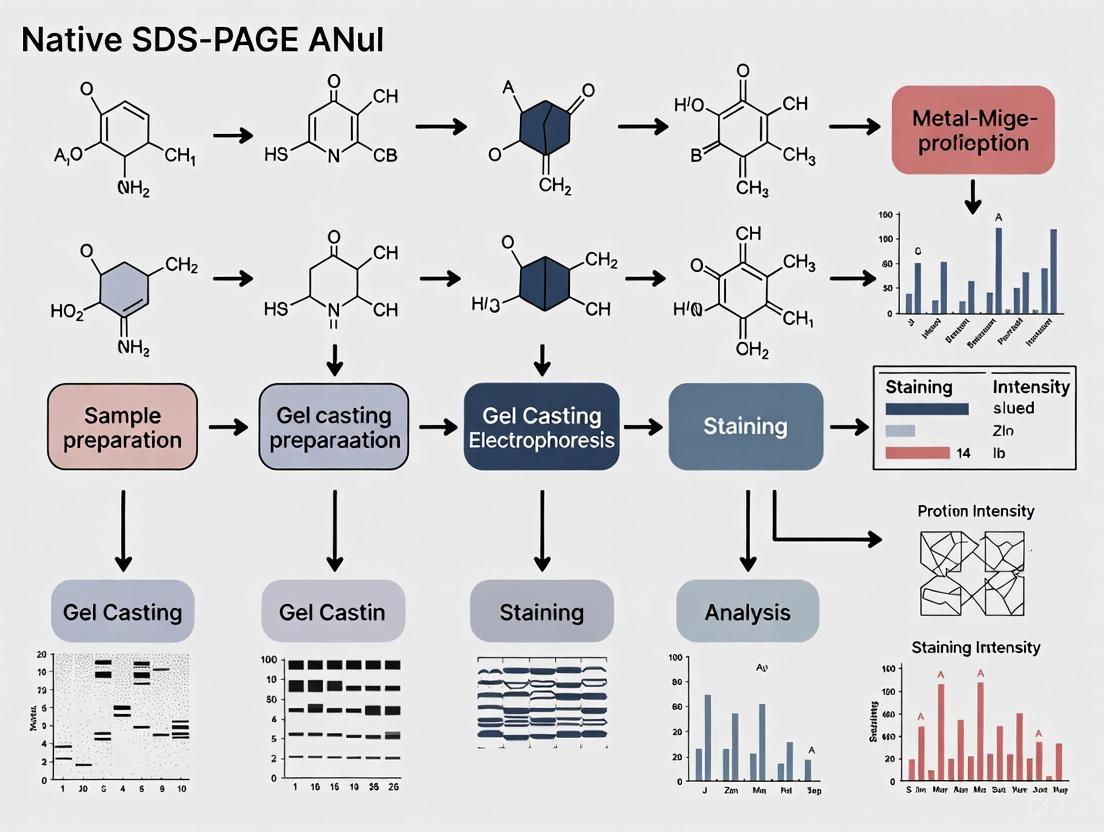
This article provides a comprehensive guide to Native SDS-PAGE (NSDS-PAGE), an electrophoretic method that combines high-resolution protein separation with the retention of metalloprotein function.
Native SDS-PAGE for Metalloprotein Analysis: A Protocol for Preserving Metal Cofactors and Enzymatic Activity
Abstract
This article provides a comprehensive guide to Native SDS-PAGE (NSDS-PAGE), an electrophoretic method that combines high-resolution protein separation with the retention of metalloprotein function. Tailored for researchers and drug development professionals, we cover the foundational principles distinguishing this technique from denaturing SDS-PAGE and Blue-Native PAGE, deliver a detailed step-by-step protocol for analyzing zinc and other metalloproteins, and offer extensive troubleshooting advice for common issues like smearing and poor resolution. The guide also includes validation strategies using techniques like LA-ICP-MS and in-gel activity assays, and compares NSDS-PAGE with alternative methods, providing a complete framework for successful functional analysis of metalloproteins in biomedical research.
Understanding Native SDS-PAGE: Why Standard Methods Fail Metalloproteins
The Critical Limitation of Denaturing SDS-PAGE for Metalloprotein Studies
The study of metalloproteins, which are crucial for countless biological processes including enzymatic catalysis, cellular signaling, and structural integrity, presents unique analytical challenges. Denaturing sodium dodecyl sulfate-polyacrylamide gel electrophoresis (SDS-PAGE) has been a cornerstone technique in biochemical laboratories for decades, prized for its ability to separate proteins based primarily on molecular weight [1] [2]. However, its fundamental operating principle—complete protein denaturation—creates a critical analytical limitation for metalloproteins. The very process that makes SDS-PAGE effective for molecular weight determination actively disrupts the non-covalent interactions that bind metal ions to their protein scaffolds, thereby destroying the functional metalloprotein complexes that researchers seek to study [3] [4].
This application note delineates the specific limitations of denaturing SDS-PAGE in metalloprotein analysis and presents native SDS-PAGE as a viable alternative methodology. Within the broader context of metalloproteomics research, understanding these limitations is essential for researchers, scientists, and drug development professionals working with metal-binding proteins or metallodrug-protein interactions [5] [4]. The thermodynamic and kinetic properties of metal-protein complexes ultimately determine which analytical approaches can yield meaningful results, with labile complexes being particularly vulnerable to the denaturing conditions of standard SDS-PAGE [4].
The Mechanism of Denaturing SDS-PAGE and Its Impact on Metalloproteins
Fundamental Principles of Denaturing SDS-PAGE
In denaturing SDS-PAGE, proteins are subjected to a multi-step denaturation process before electrophoresis. The protocol involves heating protein samples (typically between 70-100°C) in a sample buffer containing excess SDS (an anionic detergent) and a reducing agent such as dithiothreitol (DTT) or β-mercaptoethanol [1] [2]. SDS binds to the polypeptide backbone at a relatively constant ratio of approximately 1.4 g SDS per 1 g of protein, unfolding the tertiary structure and imparting a uniform negative charge that masks the protein's intrinsic charge [2]. The reducing agent cleaves disulfide bonds, ensuring complete denaturation into linear polypeptide chains [2]. This process ensures that separation occurs primarily on the basis of molecular weight rather than charge or shape [6] [1].
Disruption of Metal-Protein Interactions
For metalloproteins, this denaturation process is particularly destructive. The binding of SDS disrupts the non-covalent interactions—including hydrogen bonds, hydrophobic interactions, and ionic bonds—that are essential for maintaining the three-dimensional structure of the metal-binding pocket [2]. Consequently, metal ions that were coordinated by specific amino acid side chains in the native protein are released into the solution. This is especially problematic for metal ions that form labile complexes, which include most essential biological metals such as Zn²⁺, Cu²⁺, and Mn²⁺, as they are characterized by rapid ligand exchange kinetics and are easily displaced under denaturing conditions [4]. The result is a loss of critical information regarding the metalation status, stoichiometry, and functional state of the metalloprotein.
Table 1: Impact of Denaturing SDS-PAGE on Metalloprotein Integrity
| Aspect of Analysis | Impact of Denaturing SDS-PAGE | Consequence for Metalloprotein Studies |
|---|---|---|
| Protein Structure | Complete unfolding and linearization | Destruction of metal-binding pockets |
| Metal Cofactor Retention | Non-covalent metal binding is disrupted | Loss of bound metal ions; inability to determine metalation status |
| Functional Activity | Biological activity is destroyed | Enzymatic activity cannot be assessed after separation |
| Quaternary Structure | Multi-subunit complexes are dissociated | Inability to study metal bridges in protein complexes |
| Molecular Weight Determination | Accurate for polypeptide chain only | Does not reflect the mass of the holo-protein (protein + metal) |
Quantitative Evidence: Comparative Analysis of Electrophoretic Methods
The limitations of denaturing SDS-PAGE become starkly evident when compared with alternative methods that preserve metal-protein interactions. Research has demonstrated dramatic differences in metal retention and functional preservation across electrophoretic techniques.
Table 2: Quantitative Comparison of Metal Retention and Enzyme Activity Across PAGE Methods
| Method | Zinc Retention in Proteomic Samples | Enzymatic Activity Preservation (Model Systems) | Key Preservation Features |
|---|---|---|---|
| Denaturing SDS-PAGE | 26% | 0/9 model enzymes retained activity | Molecular weight information only |
| Blue-Native (BN)-PAGE | Not Quantified | 9/9 model enzymes retained activity | Preserves native structure and function |
| Native (N)SDS-PAGE | 98% | 7/9 model enzymes retained activity | High metal retention with good resolution |
As evidenced in Table 2, denaturing SDS-PAGE results in a substantial loss (approximately 74%) of bound zinc from proteomic samples, and completely destroys the enzymatic activity of all model enzymes tested [3]. In contrast, native SDS-PAGE (NSDS-PAGE) preserves 98% of bound zinc and maintains the activity of most enzymes, while still providing high-resolution separation comparable to traditional SDS-PAGE [3]. This makes NSDS-PAGE particularly valuable for metalloproteomic studies where both metal composition and resolution are important.
The following workflow diagram illustrates the procedural differences between these methods and their outcomes for metalloprotein analysis:
Experimental Approaches: Methodologies for Native SDS-PAGE of Metalloproteins
Native SDS-PAGE Protocol for Metalloprotein Analysis
The following detailed protocol for native SDS-PAGE has been adapted from published methodologies that successfully preserved zinc in proteomic samples and metalloenzyme activity [3]:
Sample Preparation
- Sample Buffer Composition: 100 mM Tris HCl, 150 mM Tris base, 10% (v/v) glycerol, 0.0185% (w/v) Coomassie G-250, 0.00625% (w/v) Phenol Red, pH 8.5 [3].
- Procedure: Mix 7.5 μL of protein sample with 2.5 μL of 4X NSDS sample buffer. Do not heat the sample [3] [7].
- Critical Note: Omit denaturing agents (urea, guanidine hydrochloride) and do not include reducing agents (DTT, β-mercaptoethanol) that would disrupt metalloprotein structure.
Gel Preparation and Electrophoresis
- Gel System: Use standard precast NuPAGE Novex 12% Bis-Tris 1.0 mm mini-gels or equivalent [3].
- Gel Pre-treatment: Prior to sample loading, run the gel at 200V for 30 minutes in double distilled H₂O to remove storage buffer and any unpolymerized acrylamide [3].
- Running Buffer: 50 mM MOPS, 50 mM Tris Base, 0.0375% SDS, pH 7.7 [3]. Note the significantly reduced SDS concentration compared to denaturing SDS-PAGE (0.1% SDS).
- Electrophoresis Conditions: Load prepared samples and run at constant voltage (200V) for approximately 45 minutes at room temperature until the dye front reaches the end of the gel [3].
Post-Electrophoresis Analysis
- Metal Detection: For zinc-containing proteins, in-gel fluorophore staining with TSQ (N-(6-methoxy-8-quinolyl)-p-toluenesulfonamide) can be employed [3].
- Activity Staining: Use substrate-specific assays to detect enzymatic activity directly in the gel.
- Protein Visualization: Standard protein stains (Coomassie Brilliant Blue, SYPRO Ruby) can be used, though note that Coomassie is already present in the sample buffer.
Semi-Native PAGE for Screening Metal Complex-Protein Interactions
For studies investigating interactions between synthetic metal complexes and proteins, semi-native PAGE provides a rapid screening method [5]. This technique involves loading non-denatured protein samples on a gel containing SDS, leading to separation based on differences in structural stability rather than complete denaturation [5]. The approach is particularly valuable for screening potential protein scaffolds for synthetic catalysts in artificial metalloenzyme development, as it doesn't rely on spectral changes of the metal complex upon protein interaction and can be applied for high-throughput screening [5].
Essential Reagents and Materials for Native SDS-PAGE
Successful implementation of native SDS-PAGE for metalloprotein studies requires specific reagents and materials designed to preserve metal-protein interactions while enabling electrophoretic separation.
Table 3: Essential Research Reagent Solutions for Native SDS-PAGE Metalloprotein Analysis
| Reagent/Material | Specification/Composition | Function in Protocol | Critical Notes for Metalloprotein Studies |
|---|---|---|---|
| Sample Buffer | 100 mM Tris HCl, 150 mM Tris base, 10% glycerol, 0.0185% Coomassie G-250, 0.00625% Phenol Red, pH 8.5 | Maintains protein solubility and native state while providing density for loading | Omit EDTA and denaturing agents; Coomassie may assist in maintaining solubility [3] |
| Running Buffer | 50 mM MOPS, 50 mM Tris Base, 0.0375% SDS, pH 7.7 | Provides conducting medium with minimal denaturing capacity | Reduced SDS concentration (0.0375% vs standard 0.1%) critical for metal retention [3] |
| Polyacrylamide Gel | 12% Bis-Tris, 1.0 mm thickness | Molecular sieve for size-based separation | Standard gels can be used after pre-electrophoresis to remove storage buffers [3] |
| Metal-Specific Stains | TSQ fluorophore (for Zn²⁺) | Detection of metal retention post-electrophoresis | Requires UV transillumination; specific for certain metals [3] |
| Activity Assay Reagents | Enzyme-specific substrates | Functional validation of metalloenzymes after separation | Confirms retention of biological function post-electrophoresis [3] |
The critical limitation of denaturing SDS-PAGE for metalloprotein studies stems from its fundamental incompatibility with the preservation of non-covalently bound metal cofactors. The technique's requirement for complete protein denaturation and dissociation directly conflicts with the need to maintain the structural integrity of metal-binding sites. Native SDS-PAGE and related techniques like semi-native PAGE offer powerful alternatives that balance the high-resolution separation capabilities of traditional SDS-PAGE with the preservation of metalloprotein integrity. By implementing these methodological adaptations—including modified buffer systems, elimination of heating steps, and reduced detergent concentrations—researchers can successfully investigate metalloproteins in their functional, metal-bound states, enabling more accurate characterization of these crucial biomolecules in basic research and drug development applications.
In the field of protein research, the structural and functional analysis of metalloproteins presents a unique challenge, as it requires techniques that can provide high-resolution separation while preserving non-covalent interactions with essential metal cofactors. Sodium dodecyl sulfate-polyacrylamide gel electrophoresis (SDS-PAGE) is a cornerstone technique for protein separation but traditionally denatures proteins, destroying metal-protein interactions and enzymatic activity [3] [8]. Native SDS-PAGE (NSDS-PAGE) has emerged as a refined method that balances the exceptional resolving power of traditional SDS-PAGE with the preservation of native protein states, making it particularly valuable for metalloprotein analysis in research and drug development [3].
This application note details the principles and protocols of NSDS-PAGE, framing them within the context of metalloprotein research. We provide experimentally validated methodologies, including specific buffer formulations and operational parameters, to enable researchers to implement this technique effectively for analyzing metal-retaining proteins and active enzymes.
Core Principles of Native SDS-PAGE
Conceptual Foundation and Comparative Advantages
Native SDS-PAGE modifies traditional denaturing SDS-PAGE conditions to preserve aspects of protein native state while maintaining high resolution separation. The key innovation involves reducing SDS concentration and eliminating denaturing steps such as heating and the use of chelating agents like EDTA [3]. This creates a environment where proteins can remain in a conformation that retains metal ions and biological activity, yet still be separated based on a combination of size, charge, and shape due to the reduced detergent action.
Compared to alternative techniques, NSDS-PAGE occupies a unique position in the methodological landscape. Blue Native (BN)-PAGE fully preserves native conformations and complexes but offers lower resolution for complex protein mixtures and can complicate molecular weight determination [3] [9]. Traditional SDS-PAGE provides excellent resolution but completely denatures proteins, stripping away metal cofactors and destroying enzymatic activity [8] [2]. NSDS-PAGE strikes a balance between these approaches, enabling high-resolution separation while retaining sufficient native structure to preserve metal binding sites and enzyme function for many proteins [3].
Methodological Comparison
Table 1: Comparison of Electrophoresis Methods for Protein Analysis
| Parameter | SDS-PAGE | BN-PAGE | Native SDS-PAGE |
|---|---|---|---|
| Separation Basis | Molecular weight | Size, charge, & shape | Size, charge, & shape |
| Resolution | High | Moderate | High |
| Protein State | Denatured | Native | Partially Native |
| Metal Retention | Low (26% for Zn²⁺) [3] | High | High (98% for Zn²⁺) [3] |
| Enzyme Activity | Not preserved | Preserved | Preserved for many enzymes |
| Disulfide Bonds | Reduced (if reducing agent used) | Maintained | Maintained |
The following diagram illustrates the decision-making workflow for selecting the appropriate electrophoresis method based on research objectives:
Experimental Protocols and Reagents
Research Reagent Solutions
Successful implementation of NSDS-PAGE requires careful preparation and selection of specific reagents. The table below details the essential materials and their functions for a standard NSDS-PAGE workflow.
Table 2: Essential Reagents for Native SDS-PAGE
| Reagent/Category | Specific Example/Composition | Function in Protocol |
|---|---|---|
| Sample Buffer | 100 mM Tris HCl, 150 mM Tris base, 10% glycerol, 0.0185% Coomassie G-250, 0.00625% Phenol Red, pH 8.5 [3] | Stabilizes proteins without denaturation; glycerol adds density for loading; dyes visualize migration. |
| Running Buffer | 50 mM MOPS, 50 mM Tris Base, 0.0375% SDS, pH 7.7 [3] | Provides conductive medium with reduced SDS concentration to minimize denaturation while enabling electrophoretic mobility. |
| Staining Solutions | Coomassie Brilliant Blue, Silver Stain, Fluorescent dyes (e.g., SYPRO Ruby) [8] [2] | Visualizes separated protein bands; Coomassie offers MS compatibility; silver provides high sensitivity. |
| Molecular Weight Standards | NativeMark Unstained Protein Standard [3] | Provides reference for molecular weight estimation under non-denaturing conditions. |
| Metalloprotein Models | Yeast Alcohol Dehydrogenase (Zn-ADH), Bovine Alkaline Phosphatase (Zn-AP), Cu,Zn-SOD, Carbonic Anhydrase (Zn-CA) [3] | Serve as positive controls for metal retention and activity assays. |
Step-by-Step NSDS-PAGE Protocol
Sample Preparation
- Protein Extraction: Prepare protein samples using mild, non-denaturing lysis buffers. For metalloprotein analysis, avoid chelating agents (e.g., EDTA) that could strip metal cofactors [3].
- Sample Buffer Addition: Combine 7.5 μL of protein sample with 2.5 μL of 4X NSDS sample buffer [3]. Do not heat the samples.
- Brief Centrifugation: Centrifuge samples at 12,000 × g for 30 seconds to pellet any insoluble debris [10].
Gel Preparation and Electrophoresis
- Gel Selection: Use pre-cast gels (e.g., NuPAGE Novex 12% Bis-Tris 1.0 mm minigels) or prepare discontinuous polyacrylamide gels with stacking (4-5%) and resolving (7.5-20%) sections tailored to target protein size [3] [8].
- Buffer Preparation: Prepare running buffer by diluting stock solutions to achieve final concentrations of 50 mM MOPS, 50 mM Tris Base, and 0.0375% SDS at pH 7.7 [3].
- Sample Loading: Load prepared samples and native molecular weight standards into wells.
- Electrophoresis Run: Run gel at constant voltage (150-200V) for approximately 45 minutes or until dye front reaches the bottom [3] [8]. Monitor temperature to prevent heat-induced denaturation.
The workflow below summarizes the key procedural steps in the NSDS-PAGE protocol:
Post-Electrophoresis Analysis
Protein Visualization
- Staining: Transfer gel to incubation plate and submerge in Coomassie stain solution for 15 minutes with gentle shaking [10].
- Destaining: Replace stain with destain solution (methanol:acetic acid:water or water-based solutions) and shake gently for 10-minute intervals until background is clear and protein bands are visible [10] [8].
- Documentation: Image gel using white light transilluminator or gel documentation system [10].
Functional and Metal Analysis
- In-Gel Activity Assays: For enzymatic metalloproteins, adapt activity stains specific to the protein of interest. For example, for medium-chain acyl-CoA dehydrogenase, an assay using nitro blue tetrazolium chloride (NBT) can detect active tetramers [9].
- Metal Detection: Confirm metal retention using techniques like laser ablation-inductively coupled plasma-mass spectrometry (LA-ICP-MS) or specific fluorescent probes such as TSQ for zinc [3].
- Band Quantification: Use densitometry to quantify relative protein abundance and assess metal content or enzymatic activity through band intensity measurements [8] [9].
Applications in Metalloprotein Research
Quantitative Performance Data
NSDS-PAGE demonstrates significant advantages for metalloprotein analysis, as evidenced by quantitative comparisons with traditional methods.
Table 3: Performance Metrics of Native SDS-PAGE for Metalloprotein Analysis
| Analyte/Application | Traditional SDS-PAGE Result | Native SDS-PAGE Result | Significance for Research |
|---|---|---|---|
| Zinc Retention in Proteome | 26% retention [3] | 98% retention [3] | Enables analysis of metalloproteome without metal loss; preserves structural integrity. |
| Enzyme Activity Retention | 0 of 9 model enzymes active [3] | 7 of 9 model enzymes active [3] | Allows functional assays post-separation; links migration to activity. |
| MCAD Tetramer Analysis | Not applicable (denatured) | Linear activity correlation for tetramers (R² > 0.95) [9] | Enables separation of active oligomers from inactive forms; reveals variant effects. |
| Molecular Weight Determination | Accurate for denatured polypeptides | Accurate for native complexes [9] | Provides size estimation under near-native conditions. |
Case Study: MCAD Deficiency Analysis
The application of native electrophoresis to medium-chain acyl-CoA dehydrogenase (MCAD) deficiency demonstrates the power of NSDS-PAGE for structural-functional analysis of metabolic enzymes [9]. Researchers implemented a high-resolution clear native PAGE system coupled with an in-gel activity assay to differentiate between properly assembled tetramers and misfolded MCAD variants.
Key findings from this application include:
- The assay showed linear correlation between protein amount, FAD content, and enzymatic activity, enabling quantification of even minor MCAD species [9].
- Pathogenic variants (p.R206C, p.K329E) resulted in altered migration patterns and reduced enzymatic activity, revealing their impact on tetramer stability [9].
- The method successfully distinguished active tetramers from inactive lower molecular weight forms, providing insights not obtainable through standard spectrophotometric assays [9].
This case study highlights how NSDS-PAGE can reveal the molecular mechanisms underlying metabolic disorders by preserving the relationship between protein structure and function.
Troubleshooting and Optimization
Addressing Common Challenges
- Incomplete Protein Separation: Ensure sufficient run time and adjust acrylamide concentration based on target protein size. Increase gel run time or adjust voltage if bands are poorly resolved [8].
- Smiling or Frowning Bands: These artifacts result from uneven heating or current distribution. Ensure even buffer distribution and consistent sample loading, and monitor gel temperature during runs [8].
- Loss of Enzyme Activity: If activity is not preserved, verify that samples were not heated and that SDS concentration in running buffer does not exceed 0.0375%. Include positive control enzymes with known activity [3].
- Poor Metal Retention: Confirm that EDTA or other chelators are absent from all buffers. Use high-purity reagents and include metalloprotein positive controls [3].
Method Optimization Guidelines
- Gel Percentage Selection: Choose acrylamide concentration based on target protein size: 8-10% for proteins 25-200 kDa, 10-12% for proteins 15-100 kDa, or 12-15% for smaller proteins [8] [2].
- Voltage and Run Time Optimization: Standard conditions of 150-200V for 40-60 minutes typically provide good resolution. Adjust based on protein size and complex stability [8].
- Alternative Detergent Concentrations: For particularly sensitive metalloproteins, test SDS concentrations from 0.025% to 0.05% to balance resolution and native state preservation [3].
Native SDS-PAGE represents a significant methodological advancement for metalloprotein research, successfully balancing the competing demands of high-resolution separation and native state preservation. By modifying buffer compositions to reduce SDS concentration and eliminate denaturing steps, this technique maintains metal-protein interactions and enzymatic activity while providing excellent protein separation. The protocols and applications detailed in this document provide researchers with a robust framework for implementing NSDS-PAGE in metalloprotein characterization, drug discovery, and disease mechanism studies. As demonstrated through quantitative comparisons and case studies, this method offers unique insights into protein structure-function relationships that are not accessible through fully denaturing approaches.
In the field of metalloprotein research, the analysis of proteins in their native state, complete with bound metal cofactors, presents a significant analytical challenge. Standard SDS-PAGE is a fundamental technique for protein separation but has a critical limitation: its denaturing conditions destroy native protein properties. The procedure, which involves heating proteins in a buffer containing the anionic detergent SDS and the metal chelator EDTA, effectively strips proteins of their non-covalently bound metal ions and disrupts their higher-order structures, thereby abolishing enzymatic activity [3]. For researchers studying zinc-, copper-, or other metalloproteins, this results in a complete loss of the functional information they seek to understand.
To address this, Blue Native (BN)-PAGE was developed as an alternative that preserves protein function. However, this method often sacrifices the high resolution that makes SDS-PAGE so valuable for analyzing complex protein mixtures [3]. Bridging this methodological gap, a novel technique termed Native SDS-PAGE (NSDS-PAGE) has been developed. This protocol employs key modifications—specifically, reducing SDS concentration, omitting EDTA, and eliminating the heating step—to achieve high-resolution separation of proteins while remarkably retaining their native functional properties, including bound metal ions [3]. This application note details the implementation and advantages of the NSDS-PAGE protocol within the context of metalloprotein analysis.
Background and Principle
The principle behind standard SDS-PAGE is to denature all proteins in a sample, imparting a uniform negative charge that allows separation based almost exclusively on molecular mass. While effective for size determination, the required denaturation destroys quaternary structures, protein-protein interactions, and enzymatic function, and causes the loss of essential metal cofactors [3] [8].
In contrast, NSDS-PAGE operates on a different premise. By strategically reducing the concentration of SDS and omitting the chelating agent EDTA from the buffers, and by omitting the heating step during sample preparation, the protocol minimizes the denaturing forces acting on the proteins. This allows many proteins to maintain their native conformation, or at least a conformation that preserves metal-binding capabilities and enzymatic active sites, throughout the electrophoretic process. The result is a powerful hybrid technique that offers the high resolution of traditional SDS-PAGE while maintaining the functional integrity characteristic of native gel systems [3].
The core modifications of the NSDS-PAGE protocol can be visualized as a deliberate departure from standard denaturing conditions, as outlined in the workflow below.
The specific buffer compositions and conditions for each method are quantitatively detailed in the table below, highlighting the critical modifications that enable the preservation of native properties.
Table 1: Comparative Buffer Compositions and Conditions for SDS-PAGE, BN-PAGE, and NSDS-PAGE [3]
| Component | SDS-PAGE | BN-PAGE | NSDS-PAGE |
|---|---|---|---|
| Sample Buffer | 2% LDS, 0.51 mM EDTA, 10% Glycerol | 50 mM BisTris, 50 mM NaCl, 10% Glycerol | 10% Glycerol, No SDS, No EDTA |
| Heating Step | 70°C for 10 minutes | Not Specified | Omitted |
| Running Buffer | 0.1% SDS, 1 mM EDTA | Cathode & Anode Buffers | 0.0375% SDS, No EDTA |
| Key Additives | Phenol Red | Coomassie G-250, Ponceau S | Coomassie G-250, Phenol Red |
Experimental Protocol for NSDS-PAGE
The following section provides a detailed, step-by-step protocol for performing Native SDS-PAGE, as derived from the cited research.
Materials and Reagent Preparation
Table 2: Research Reagent Solutions for NSDS-PAGE [3]
| Reagent / Material | Function / Specification | Notes |
|---|---|---|
| Pre-cast Bis-Tris Gels | Neutral pH (6.4) separating gel matrix. | NuPAGE Novex 12% Bis-Tris 1.0 mm mini-gels are recommended for their neutral pH stability. |
| 4X NSDS Sample Buffer | Prepares proteins for loading without denaturation. | Composition: 100 mM Tris HCl, 150 mM Tris Base, 10% (v/v) Glycerol, 0.0185% (w/v) Coomassie G-250, 0.00625% (w/v) Phenol Red, pH 8.5. |
| NSDS Running Buffer | Conducts current and provides minimal SDS. | Composition: 50 mM MOPS, 50 mM Tris Base, 0.0375% (w/v) SDS, pH 7.7. |
| Protein Molecular Weight Standard | Provides molecular size reference. | Pre-stained or unstained standards can be used. |
| Electrophoresis Cell | Houses gel and buffers for electrophoresis. | Compatible system, e.g., XCell SureLock Mini-Cell. |
Step-by-Step Procedure
- Gel Pre-electrophoresis: Prior to sample loading, place the pre-cast NuPAGE Novex 12% Bis-Tris gel into the electrophoresis cell. Fill the chamber with double-distilled (dd) H₂O and run at a constant voltage of 200V for 30 minutes. This step is crucial to remove the gel storage buffer and any unpolymerized acrylamide [3].
- Sample Preparation: Mix the protein sample (e.g., 7.5 µL containing 5-25 µg of protein) with 4X NSDS Sample Buffer (e.g., 2.5 µL). Do not heat the sample. Briefly centrifuge to bring all liquid to the bottom of the tube [3].
- Gel Loading: After the pre-electrophoresis step, discard the water from the buffer chambers and replace it with the prepared NSDS Running Buffer. Load the prepared samples and an appropriate protein molecular weight standard into the wells of the gel.
- Electrophoresis: Run the gel at a constant voltage of 200V at room temperature. The run should be completed in approximately 45 minutes, or once the dye front (Phenol Red) has reached the bottom of the gel [3].
- Post-Electrophoresis Analysis: Following separation, the gel can be processed for various downstream applications:
- In-gel Activity Staining: To detect active enzymes, incubate the gel in an appropriate substrate solution specific to the enzyme of interest.
- Metal Detection: Use laser ablation-inductively coupled plasma-mass spectrometry (LA-ICP-MS) for direct elemental analysis or stain with metal-specific fluorophores like TSQ for zinc [3].
- Protein Staining: Use standard Coomassie, silver, or fluorescent staining protocols to visualize the total protein profile [11] [8].
- Western Blotting: Transfer proteins to a membrane for immunodetection, though the native conformation may affect antibody binding.
Key Experimental Outcomes and Validation
The efficacy of the NSDS-PAGE protocol is demonstrated by direct comparisons with standard methods using both complex proteomic samples and purified model enzymes.
Retention of Bound Metal Ions
A critical validation of the NSDS-PAGE method was its ability to preserve metal-protein interactions. Research using pig kidney (LLC-PK1) cell proteome fractions demonstrated a dramatic increase in zinc retention. When shifting from standard SDS-PAGE to the NSDS-PAGE conditions, the retention of bound Zn²⁺ increased from 26% to 98%, as confirmed by LA-ICP-MS and in-gel staining with the zinc-specific fluorophore TSQ [3]. This confirms that the modifications successfully prevent the stripping of metal cofactors during electrophoresis.
Preservation of Enzymatic Activity
The functional integrity of proteins separated by NSDS-PAGE was assessed by testing the activity of various model enzymes after electrophoretic separation.
Table 3: Enzymatic Activity Retention Post-Electrophoresis [3]
| Enzyme | Metal Cofactor | Activity in SDS-PAGE | Activity in BN-PAGE | Activity in NSDS-PAGE |
|---|---|---|---|---|
| Alcohol Dehydrogenase (ADH) | Zn²⁺ | Denatured | Active | Active |
| Alkaline Phosphatase (AP) | Zn²⁺ | Denatured | Active | Active |
| Carbonic Anhydrase (CA) | Zn²⁺ | Denatured | Active | Active |
| Superoxide Dismutase (SOD) | Cu²⁺, Zn²⁺ | Denatured | Active | Active |
| Five Other Model Enzymes | Various | Denatured | Active | Four of Five Active |
As summarized in Table 3, seven out of nine model enzymes, including all four tested Zn²⁺-proteins, retained their activity after NSDS-PAGE separation. While all nine were active after BN-PAGE, they were all denatured during standard SDS-PAGE, underscoring the functional superiority of the native and NSDS-PAGE methods [3].
Discussion and Application in Drug Development
The development of NSDS-PAGE represents a significant advancement for researchers and drug development professionals working with metalloproteins. This technique directly addresses the long-standing trade-off between resolution and the preservation of native function. In the context of drug discovery, where understanding the interaction between therapeutic compounds and their metalloprotein targets is paramount, NSDS-PAGE provides a tool to study these complexes directly from complex biological mixtures.
The ability to separate proteins while retaining bound metal ions and enzymatic activity opens up new avenues for:
- High-Throughput Screening: Identifying drug candidates that stabilize or disrupt metalloprotein complexes.
- Biomarker Validation: Discovering and validating metal-associated protein biomarkers in diseases like cancer or neurodegenerative disorders under native conditions.
- Toxicology Studies: Investigating the impact of environmental toxins on the metalation status of native proteomes.
The strategic modifications of reducing SDS concentration to 0.0375%, omitting EDTA from all buffers, and eliminating the heating step during sample preparation are the foundational pillars of the Native SDS-PAGE protocol. As validated by experimental data, this optimized method enables high-resolution electrophoretic separation of proteins while simultaneously preserving critical native properties. For the field of metalloprotein research, NSDS-PAGE provides a powerful and much-needed analytical technique that bridges the gap between the high resolution of denaturing gels and the functional preservation of native gels, thereby facilitating more accurate and insightful studies of metal-protein interactions in health and disease.
This application note details the Native SDS-PAGE (NSDS-PAGE) technique, an electrophoretic method that achieves exceptional preservation of metalloprotein native states and bound metal ions. We present quantitative data demonstrating a dramatic increase in zinc retention from 26% to 98% compared to standard SDS-PAGE, alongside protocols for implementing this method in metalloprotein research. The methodology enables high-resolution separation while maintaining enzymatic activity and metal-cofactor integrity, addressing critical limitations in conventional denaturing electrophoretic techniques for metalloproteomics applications.
Conventional SDS-PAGE has been a cornerstone technique for protein separation since its development by Laemmli in the 1970s [8]. The method employs sodium dodecyl sulfate (SDS) to denature proteins, masking their intrinsic charge and enabling separation primarily by molecular weight. However, this denaturation process destroys functional properties, including the presence of non-covalently bound metal ions essential for approximately one-third of all proteins' structure and function [3].
Blue-Native PAGE (BN-PAGE) was introduced to preserve native properties but achieves this at the cost of protein resolving power [3]. This creates a significant methodological gap for metalloprotein researchers who require both high resolution and retention of metal-binding characteristics. Native SDS-PAGE (NSDS-PAGE) addresses this need by systematically modifying standard SDS-PAGE conditions to maintain proteins in their native state during electrophoretic separation, enabling advanced metalloprotein analysis with exceptional metal retention rates [3] [12].
Principle and Mechanism: How NSDS-PAGE Preserves Metal Binding
Core Modifications to Standard SDS-PAGE
NSDS-PAGE achieves native state preservation through strategic modifications to standard SDS-PAGE protocols. These modifications collectively reduce protein denaturation while maintaining excellent separation resolution:
- SDS and EDTA elimination from sample buffer: Removes primary denaturing agent and metal-chelating compound
- Omission of heating step: Prevents thermal denaturation of protein structure
- Substantial SDS reduction in running buffer: Decreases from standard 0.1% to precisely 0.0375% SDS
- EDTA removal from running buffer: Eliminates metal chelation during separation
- Inclusion of Coomassie G-250: May stabilize protein structure during electrophoresis [3]
Table 1: Critical Buffer Modifications in NSDS-PAGE
| Component | Standard SDS-PAGE | NSDS-PAGE | Functional Impact |
|---|---|---|---|
| Sample Buffer SDS | Present (2% LDS) | Absent | Prevents initial denaturation |
| Sample Buffer EDTA | 0.51 mM | Absent | Eliminates metal stripping |
| Heating Step | 70°C for 10 minutes | Omitted | Preserves tertiary structure |
| Running Buffer SDS | 0.1% | 0.0375% | Reduces denaturation during separation |
| Running Buffer EDTA | 1 mM | Absent | Prevents metal loss during run |
| Coomassie G-250 | Not present | 0.01875% | May stabilize native conformation |
Mechanism of Metal Retention
The NSDS-PAGE methodology preserves metal ions through multiple complementary mechanisms. The substantial reduction of SDS concentration limits detergent binding to proteins, preventing the unfolding that typically exposes metal-binding pockets and leads to metal ion dissociation. Simultaneously, eliminating EDTA from both sample and running buffers removes competing chelators that would strip metals from protein binding sites [3].
The omission of the heating step maintains proteins' tertiary structures, keeping metal-binding pockets intact throughout the process. These modifications collectively enable proteins to maintain their native conformations with bound metal ions while still allowing sufficient electrophoretic mobility for high-resolution separation based on subtle differences in mass-to-charge ratios of native proteins [3].
The experimental workflow below illustrates the key modifications and their effects on metalloprotein integrity:
Quantitative Data: Metal Retention and Enzymatic Activity Preservation
Zinc Retention Metrics
Experimental data demonstrates that NSDS-PAGE achieves remarkable metal retention compared to standard methods. In proteomic samples from pig kidney (LLC-PK1) cells, zinc retention increased from 26% in standard SDS-PAGE to 98% when using NSDS-PAGE conditions [3] [12]. This represents a 3.77-fold improvement in metal preservation, a critical advancement for metalloprotein research.
Laser ablation-inductively coupled plasma-mass spectrometry (LA-ICP-MS) and in-gel zinc-protein staining using the fluorophore TSQ confirmed metal retention after electrophoresis, providing orthogonal validation of the method's effectiveness [3].
Enzymatic Activity Preservation
Beyond metal retention, NSDS-PAGE demonstrates exceptional preservation of protein function. In studies with nine model enzymes, including four zinc-binding proteins, seven retained enzymatic activity following NSDS-PAGE separation [3]. All nine enzymes were active after BN-PAGE, while all underwent complete denaturation during standard SDS-PAGE [3].
Table 2: Quantitative Performance Comparison of Electrophoretic Methods
| Performance Metric | SDS-PAGE | BN-PAGE | NSDS-PAGE |
|---|---|---|---|
| Zinc Retention (%) | 26% | Not Reported | 98% |
| Enzymatic Activity Retention | 0/9 enzymes | 9/9 enzymes | 7/9 enzymes |
| Separation Resolution | High | Moderate | High |
| Separation Basis | Molecular mass (denatured) | Charge, size, shape | Molecular mass (native) |
| Metal Cofactor Preservation | Destroyed | Retained | Retained |
| Protein Complex Integrity | Disrupted | Maintained | Maintained for most |
Experimental Protocols
Sample Preparation Protocol
Materials Required:
- Protein sample (5-25 μg per lane recommended)
- 4X NSDS Sample Buffer (100 mM Tris HCl, 150 mM Tris base, 10% v/v glycerol, 0.0185% w/v Coomassie G-250, 0.00625% w/v Phenol Red, pH 8.5)
- Deionized water
Procedure:
- Combine 7.5 μL protein sample with 2.5 μL 4X NSDS Sample Buffer [3]
- Mix gently by pipetting - DO NOT HEAT the sample
- Incubate at room temperature for 5-10 minutes before loading
- Centrifuge briefly to collect contents at bottom of tube
Critical Notes:
- Heating is strictly avoided as it denatures proteins and disrupts metal binding
- For metalloprotein analysis, ensure buffers are prepared with high-purity water to avoid metal contamination
- Sample should not contain chelating agents that could strip metals
Gel Electrophoresis Protocol
Materials Required:
- Precast NuPAGE Novex 12% Bis-Tris 1.0 mm minigels (or equivalent)
- NSDS Running Buffer (50 mM MOPS, 50 mM Tris Base, 0.0375% SDS, pH 7.7)
- Protein molecular weight standards (appropriate for native conditions)
- Electrophoresis cell and power supply
Procedure:
- Gel Preparation:
- Remove precast gel from storage and rinse cassette with deionized water
- Run gel at 200V for 30 minutes in ddH₂O to remove storage buffer and unpolymerized acrylamide [3]
Buffer Preparation:
- Prepare 1X NSDS Running Buffer by diluting stock solution
- Fill upper and lower buffer chambers with NSDS Running Buffer
Sample Loading:
- Rinse wells with running buffer before loading
- Load prepared samples (including molecular weight standards)
- Include appropriate controls for metal binding and activity assays
Electrophoresis Conditions:
- Run at constant voltage (200V) for approximately 45 minutes at room temperature
- Continue until dye front reaches the bottom of the gel (60 mm)
- Monitor current: expected start 30-40mA, end 8-12mA for single gel [13]
Post-Electrophoresis Processing:
- Carefully open cassette and process gel for downstream applications
- For zinc detection: proceed to TSQ staining or LA-ICP-MS analysis
- For activity assays: use appropriate substrate incubation protocols
Research Reagent Solutions
Table 3: Essential Materials for NSDS-PAGE Metalloprotein Analysis
| Reagent/Category | Specific Examples | Function/Application |
|---|---|---|
| Precast Gels | NuPAGE Novex 12% Bis-Tris 1.0 mm minigels | Provides consistent pore size for separation |
| Buffer Components | MOPS, Tris Base, Tris HCl | Maintains optimal pH and conductivity |
| Detergent | SDS (ultrapure) | Limited quantity maintains minimal denaturation |
| Staining Dyes | Coomassie G-250, Phenol Red | Tracking dye and potential protein stabilization |
| Metal Detection | TSQ (6-methoxy-8-p-toluenesulfonamido-quinoline) | Fluorophore for zinc visualization in gels |
| Analytical Validation | LA-ICP-MS standards | Quantitative metal analysis post-separation |
| Model Enzymes | Yeast alcohol dehydrogenase, Bovine alkaline phosphatase, Carbonic anhydrase, Superoxide dismutase | Positive controls for zinc retention and activity |
Applications in Metalloprotein Research
NSDS-PAGE enables multiple advanced applications in metalloprotein research that were previously challenging with standard electrophoretic methods:
- Metalloproteome Mapping: Identification and characterization of metal-binding proteins in complex proteomic samples with high resolution separation
- Functional Metalloprotein Analysis: Direct correlation between protein separation and enzymatic activity through in-gel activity assays
- Metal Cofactor Stability Studies: Investigation of metal-binding stability under various physiological conditions
- Drug Development Applications: Screening protein-metal complex interactions for pharmaceutical development [5]
- Diagnostic Applications: Detection of metalloprotein patterns relevant to disease states, such as kidney conditions [8]
The method is particularly valuable for studying zinc proteins, which constitute approximately 10% of the human proteome and play critical roles in catalytic, structural, and regulatory functions.
NSDS-PAGE represents a significant methodological advancement for metalloprotein research, successfully addressing the fundamental limitation of conventional SDS-PAGE while maintaining high resolution separation capabilities. The documented improvement in zinc retention from 26% to 98%, coupled with preservation of enzymatic activity in most cases, provides researchers with a powerful tool for investigating metal-protein interactions under native conditions.
The protocols detailed in this application note enable immediate implementation of NSDS-PAGE in metalloprotein studies, from basic characterization to drug discovery applications. As metalloproteins continue to emerge as important therapeutic targets and diagnostic markers, NSDS-PAGE offers a robust methodology to advance understanding of their structure-function relationships.
For researchers studying metalloproteins and native protein complexes, the choice of electrophoretic technique presents a fundamental trade-off. Traditional denaturing sodium dodecyl sulfate-polyacrylamide gel electrophoresis (SDS-PAGE) provides high resolution but destroys native protein structure and function, including the presence of non-covalently bound metal ions [3]. To address this, Blue Native PAGE (BN-PAGE) was developed, which preserves functional properties but at the cost of protein resolving power [3] [14]. This application note examines a refined technique—Native SDS-PAGE (NSDS-PAGE)—that achieves an optimal balance between these competing priorities, enabling high-resolution separation while retaining native properties including bound metal ions.
Technical Comparison of Electrophoretic Methods
Fundamental Principles and Limitations
SDS-PAGE employs the anionic detergent SDS to denature proteins, masking their intrinsic charge and providing a uniform negative charge-to-mass ratio. This allows separation primarily by molecular weight, but destroys higher-order structure, enzymatic activity, and non-covalent metal binding [8]. The process involves heating samples in SDS-containing buffer, which strips away metal cofactors essential for metalloprotein function [3].
BN-PAGE uses non-denaturing conditions and the anionic dye Coomassie Blue G-250, which binds to protein surfaces without disrupting their native structure [15] [16]. This preserves protein complexes, enzymatic activity, and metal binding, but provides lower resolution due to separation based on both size and charge rather than molecular weight alone [3] [14].
Quantitative Performance Comparison
Table 1: Direct Comparison of SDS-PAGE, BN-PAGE, and NSDS-PAGE Techniques
| Parameter | SDS-PAGE | BN-PAGE | NSDS-PAGE |
|---|---|---|---|
| Zn²⁺ Retention | 26% | >98% | 98% |
| Enzyme Activity Retention | 0/9 model enzymes | 9/9 model enzymes | 7/9 model enzymes |
| Resolution Capability | High | Moderate | High |
| Protein Complex Integrity | Destroyed | Preserved | Partially preserved |
| Molecular Weight Determination | Accurate | Less accurate | Accurate |
| SDS in Running Buffer | 0.1% | 0% | 0.0375% |
| Critical Sample Preparation Steps | Heating with SDS + EDTA | No heating, mild detergents | No heating, no SDS/EDTA in sample buffer |
The data reveal that NSDS-PAGE achieves near-complete metal retention (98% Zn²⁺) comparable to BN-PAGE, while maintaining the high resolution traditionally associated with SDS-PAGE [3] [12]. The technique preserves enzymatic function in most cases (7 of 9 tested enzymes), positioning it as an ideal compromise for metalloprotein analysis [12].
Applications and Limitations Across Techniques
Table 2: Method Applications and Limitations in Metalloprotein Research
| Method | Optimal Applications | Key Limitations |
|---|---|---|
| SDS-PAGE | - Molecular weight determination- Protein purity assessment- Western blot sample preparation- Routine protein separation | - Complete denaturation of proteins- Loss of metal cofactors- Destruction of enzymatic activity- Cannot study protein complexes |
| BN-PAGE | - Analysis of native protein complexes- Protein-protein interaction studies- Mitochondrial complex analysis- Enzymatic activity assays | - Lower resolution than SDS-based methods- Less accurate molecular weight determination- Complex operation requiring optimization- Time-consuming procedures |
| NSDS-PAGE | - Metalloprotein analysis- High-resolution native separation- Enzyme activity studies post-electrophoresis- Zinc proteome analysis | - Not all enzymes retain activity (7/9 success)- Requires protocol optimization- Limited to certain protein types |
BN-PAGE has demonstrated particular utility in studying membrane protein complexes, such as thylakoid complexes in photosynthetic organisms [15] and mitochondrial oxidative phosphorylation complexes [16]. The two-dimensional BN/SDS-PAGE variant provides enhanced capability for analyzing complex protein interactions, as demonstrated in studies of snake venom proteins [17]. However, these benefits come with operational complexities, including lengthy procedures and specialized equipment requirements [14].
Native SDS-PAGE Experimental Protocol
Research Reagent Solutions
Table 3: Essential Reagents for NSDS-PAGE Implementation
| Reagent | Composition/Specifications | Function in Protocol |
|---|---|---|
| NSDS Sample Buffer (4X) | 100 mM Tris HCl, 150 mM Tris base, 10% glycerol, 0.0185% Coomassie G-250, 0.00625% Phenol Red, pH 8.5 | Maintains native state while providing necessary ions and tracking dye |
| NSDS Running Buffer | 50 mM MOPS, 50 mM Tris Base, 0.0375% SDS, pH 7.7 | Provides electrophoretic medium with reduced SDS concentration |
| Pre-Cast Gels | NuPAGE Novex 12% Bis-Tris 1.0 mm mini-gels | Consistent pore size for reproducible separation |
| Model Zn-Proteins | Alcohol dehydrogenase, alkaline phosphatase, carbonic anhydrase, superoxide dismutase | Positive controls for metal retention and activity assays |
| Protease Inhibitors | PMSF, leupeptin, pepstatin | Prevent protein degradation during sample preparation |
| Desalting Columns | Sephadex G-25 | Remove small molecules that might interfere with separation |
Step-by-Step Procedure
Sample Preparation: Mix 7.5 μL of protein sample (5-25 μg) with 2.5 μL of 4X NSDS sample buffer. Do not heat the sample [3].
Gel Pre-Electrophoresis: Run pre-cast NuPAGE Novex 12% Bis-Tris 1.0 mm mini-gels at 200V for 30 minutes in double distilled H₂O to remove storage buffer and unpolymerized acrylamide [3].
Sample Loading: Load prepared samples into wells alongside appropriate molecular weight standards.
Electrophoresis: Run at constant voltage (200V) for approximately 45 minutes using NSDS running buffer (50 mM MOPS, 50 mM Tris Base, 0.0375% SDS, pH 7.7) until the dye front reaches the gel bottom [3].
Post-Electrophoresis Analysis:
- For metal detection: Use laser ablation-inductively coupled plasma-mass spectrometry or in-gel Zn-protein staining with fluorophore TSQ [3] [12].
- For enzyme activity: Perform in-gel activity assays using specific substrates.
- For protein visualization: Use standard Coomassie, silver, or fluorescent staining protocols [8].
Critical Optimization Parameters
- SDS Concentration: The reduced SDS concentration in the running buffer (0.0375% versus 0.1% in standard SDS-PAGE) is critical for maintaining native properties while allowing adequate separation [3].
- Sample Treatment: Elimination of heating steps and SDS/EDTA from sample buffer is essential for preserving metal binding [3] [12].
- Gel Composition: 12% Bis-Tris gels provide optimal resolution for most metalloproteins, though gradient gels (e.g., 4-12%) may enhance separation of complex mixtures [3] [8].
Methodology Selection Workflow
Native SDS-PAGE represents a significant methodological advancement for metalloprotein research, effectively bridging the gap between the high resolution of denaturing SDS-PAGE and the functional preservation of BN-PAGE. By strategically modifying buffer composition and eliminating denaturing steps, researchers can achieve excellent protein separation while retaining bound metal ions and enzymatic activity in most cases. This protocol is particularly valuable for drug development professionals studying metalloenzyme targets, environmental scientists investigating metal-binding proteins, and researchers exploring the zinc proteome. The method's ability to provide high-resolution separation of native proteins addresses a critical need in functional proteomics, enabling more accurate analysis of metalloprotein composition and activity without sacrificing separation quality.
A Step-by-Step Native SDS-PAGE Protocol for Metalloprotein Analysis
In protein electrophoresis, the composition of sample and running buffers is a critical determinant of experimental success, controlling protein stability, charge, and migration during electrophoresis. For the specific analysis of metalloproteins—proteins that require bound metal ions for their structure and function—the choice of buffer system is paramount. Standard denaturing SDS-PAGE protocols employ harsh detergents and heating, which strip essential metal ions, thereby destroying native protein structure and function [3]. Consequently, specialized buffer formulations for native SDS-PAGE (NSDS-PAGE) have been developed to enable high-resolution separation while preserving metalloprotein integrity [3]. This application note details these specialized buffer compositions and protocols, providing researchers with methodologies essential for advanced metalloprotein analysis in drug development and basic research.
Comparative Analysis of Buffer Formulations
The fundamental difference between denaturing, native, and hybrid electrophoresis approaches lies in their buffer formulations. The table below provides a detailed comparison of the buffer systems.
Table 1: Comprehensive Comparison of Electrophoresis Buffer Compositions
| Component | Standard SDS-PAGE (Denaturing) | Blue Native (BN)-PAGE | Native SDS (NSDS)-PAGE |
|---|---|---|---|
| Core Purpose | Separate by molecular weight only [8] | Separate by native charge, size, & shape [18] | High-resolution separation of native proteins, retaining metals [3] |
| Sample Buffer | SDS, Tris-HCl, Glycerol, EDTA, Bromophenol Blue, Heating required [19] [20] | BisTris, NaCl, Glycerol, Ponceau S [3] | Tris HCl, Tris Base, Glycerol, Coomassie G-250, Phenol Red, No heating [3] |
| Running Buffer | MOPS/Tris, SDS (0.1%), EDTA [3] | BisTris/Tricine, Coomassie G-250 (Cathode) [3] [18] | MOPS/Tris, Reduced SDS (0.0375%), No EDTA [3] |
| Key Additives | Ionic detergent (SDS), Reducing agents (DTT, BME) [20] [1] | Non-ionic detergent, Coomassie G-250 dye [18] | Reduced SDS, Coomassie dye, No chelators (EDTA) [3] |
| Impact on Metalloproteins | Denatures proteins and dissociates metal ions (e.g., only 26% Zn²⁺ retention) [3] | Retains metal ions and function (e.g., 98% Zn²⁺ retention for NSDS-PAGE) [3] | Retains metal ions and function; 98% Zn²⁺ retention demonstrated [3] |
Key Formulation Rationale
- SDS Concentration: The reduction of SDS in the running buffer from 0.1% to 0.0375% is a critical modification in NSDS-PAGE. This lower concentration is sufficient to impart charge for electrophoresis but is inadequate to fully denature the protein, thereby preserving the native structure and metal-binding pockets [3].
- Chelating Agents: The omission of EDTA from both sample and running buffers is essential. EDTA is a potent chelator that would strip metal cofactors from metalloproteins during the electrophoresis process [3].
- Alternative Charge Agents: NSDS-PAGE incorporates Coomassie G-250 in the sample buffer, which binds to proteins and confers a uniform negative charge without causing significant denaturation, similar to its role in BN-PAGE [3] [18].
- Sample Preparation: A pivotal step in the NSDS-PAGE protocol is the elimination of the heating step. Heating denatures proteins, and for metalloproteins, this invariably leads to the loss of structurally bound metal ions [3].
Experimental Protocol for Native SDS-PAGE of Metalloproteins
Reagent Preparation
Table 2: Research Reagent Solutions for Native SDS-PAGE
| Reagent / Kit | Function in the Protocol |
|---|---|
| 4X NSDS Sample Buffer [3] | Prepares protein samples for loading; provides charge via Coomassie G-250 and maintains native state. |
| NSDS Running Buffer [3] | Creates the conductive medium for electrophoresis with reduced SDS to prevent denaturation. |
| Pre-cast Bis-Tris Gels (e.g., 12%) [3] | Provides a consistent, reproducible polyacrylamide matrix for separation at a near-neutral pH. |
| Coomassie G-250 Dye [3] [18] | Binds hydrophobically to proteins, imparting negative charge and enabling migration toward the anode. |
| Protease Inhibitors (e.g., PMSF) [3] | Added during cell lysis to prevent proteolytic degradation of the target metalloprotein. |
| Benzonase Nuclease [3] | Digests nucleic acids in the sample lysate to reduce viscosity and prevent non-specific interactions. |
Step-by-Step Methodological Workflow
Sample Preparation:
- Lyse cells in a mild, non-denaturing buffer (e.g., 20 mM Tris-Cl, pH 7.4) supplemented with protease inhibitors (e.g., 500 µM PMSF) and nuclease (e.g., Benzonase) to reduce viscosity [3].
- Clarify the lysate by centrifugation at 47,000 × g for 30 minutes at 4°C.
- For partial purification or buffer exchange, desalt the supernatant using a gel filtration column (e.g., Sephadex G-25) equilibrated with a degassed, low-ionic-strength buffer (e.g., 5 mM Tris-Cl, pH 8.0) [3].
- Mix the protein sample with 4X NSDS Sample Buffer at a 3:1 ratio (e.g., 7.5 µL sample + 2.5 µL buffer). Do not heat the sample [3].
Gel Pre-Electrophoresis:
- Utilize a pre-cast Bis-Tris polyacrylamide gel (e.g., 12%). To remove storage buffer and unpolymerized acrylamide, pre-run the gel at 200V for 30 minutes in double-distilled H₂O [3].
- After pre-run, carefully replace the water in the buffer chambers with the prepared NSDS Running Buffer.
Sample Loading and Electrophoresis:
- Load the prepared samples (typically 5-25 µg of protein) and an appropriate native molecular weight standard into the wells.
- Run the gel at a constant voltage of 200V for approximately 30-45 minutes at room temperature, or until the dye front (Phenol Red) reaches the bottom of the gel [3].
Post-Electrophoresis Analysis:
- In-Gel Activity Staining: If the metalloprotein is an enzyme, the gel can be incubated in a substrate solution to detect enzymatic activity directly, confirming the retention of native function [3] [18].
- Metal Detection: Use laser ablation-inductively coupled plasma-mass spectrometry (LA-ICP-MS) or specific fluorescent metal stains (e.g., TSQ for Zn²⁺) to confirm the presence and location of the metal cofactor within the gel [3].
- Western Blotting: For immunodetection, transfer proteins to a PVDF membrane. Nitrocellulose is not recommended as it binds Coomassie G-250 dye too tightly [18].
Figure 1: Native SDS-PAGE Workflow for Metalloprotein Analysis. This diagram outlines the key procedural steps, highlighting critical stages like the omission of heating and the use of specialized buffers that preserve metal-protein interactions.
Underlying Principles and Mechanisms
The efficacy of the NSDS-PAGE protocol is rooted in the specific molecular interactions between buffer components and the protein.
Figure 2: Molecular Interactions in NSDS-PAGE Buffers. This schematic illustrates how individual buffer components interact with a metalloprotein to achieve the final outcome of a separated, yet functional, protein.
- Molecular Sieving and Charge Shielding: The polyacrylamide gel acts as a molecular sieve, separating proteins based on their size and three-dimensional structure. In NSDS-PAGE, the reduced SDS concentration and the presence of Coomassie dye allow the protein's native conformation to significantly influence its migration, unlike in denaturing SDS-PAGE where separation is based almost solely on polypeptide chain length [8] [1].
- Advanced Technique: MICS-BN-PAGE for High-Sensitivity Analysis: For the most demanding metalloprotein analyses, where even trace metal contaminants can cause misidentification, Metal ion Contaminant Sweeping BN-PAGE (MICS-BN-PAGE) can be integrated. This technique uses chelating agents like TPEN and EDTA in the running buffer to sweep contaminant metal ions toward the electrodes, creating a metal-free separation field within the gel. This prevents apo-metalloproteins from mis-associating with free contaminants and allows for the precise identification of true holo-metalloproteins [21].
Troubleshooting and Optimization
- Incomplete Protein Separation: This can result from insufficient run time or an incorrect acrylamide concentration. Adjust the gel percentage based on the target protein's size—use lower percentages for larger proteins and higher percentages for smaller proteins. Allow the electrophoresis to run until the dye front has fully migrated out of the gel [8].
- Loss of Protein Activity Post-Electrophoresis: If the metalloprotein loses activity, confirm that the heating step was omitted and that the sample was not exposed to denaturing detergents. Ensure that the running buffer was prepared with the correct, reduced concentration of SDS (0.0375%) and contains no EDTA [3].
- Artifactual Banding or Smiling Effects: Artifactual banding or "smiling" effects are often caused by uneven heating during the run due to excessive voltage or an uneven buffer distribution. Running the gel at a constant, recommended voltage and ensuring the apparatus is properly assembled can mitigate this [8]. Protein aggregation can also be a cause, which may be alleviated by optimizing the sample buffer.
Metalloproteins, which constitute approximately one-third of all proteins, rely on bound metal ions for structural stability and catalytic function [22] [23]. Conventional protein analysis techniques, particularly standard sodium dodecyl sulfate-polyacrylamide gel electrophoresis (SDS-PAGE), deliberately denature proteins, destroying functional properties including non-covalently bound metal ions [3] [24]. This presents a significant methodological challenge for researchers studying native metalloprotein structure-function relationships, metal binding stoichiometry, and enzymatic activity.
The fundamental limitation of traditional SDS-PAGE lies in its sample preparation protocol, which typically includes strong anionic detergent (SDS), chelating agents like EDTA, and heating steps to achieve complete denaturation [3] [8]. While effective for molecular weight determination, this process strips metals from metalloproteins, obliterates enzymatic activity, and disrupts higher-order structures. To address this critical shortcoming, researchers have developed modified electrophoretic methods that maintain the high resolution of SDS-PAGE while preserving metalloprotein native properties [3] [5].
Methodological Comparison: Denaturing Versus Native Approaches
Limitations of Standard SDS-PAGE for Metalloprotein Studies
In standard SDS-PAGE, the sample preparation protocol systematically destroys metalloprotein native states. SDS, an anionic detergent, unfolds proteins by breaking hydrophobic interactions and coating the polypeptide chain with uniform negative charge [8]. This process alone is sufficient to disrupt most metal-binding sites. The addition of EDTA or other chelating agents in sample buffers actively sequesters metal ions from metalloproteins [3]. Finally, the heating step (typically 70-100°C) completes the denaturation process, ensuring irreversible metal loss and structural unfolding. The consequence is that while covalent structural features can be analyzed, functional properties are destroyed, including the presence of non-covalently bound metal ions essential for metalloprotein function [3] [24].
Alternative Electrophoretic Methods
Several electrophoretic approaches offer alternatives to standard SDS-PAGE for metalloprotein analysis, each with distinct advantages and limitations:
Blue-Native (BN)-PAGE preserves native protein structures and functions but sacrifices resolution and molecular weight accuracy [3]. In BN-PAGE, separation depends on both protein size and charge, and the method faces limitations in resolving complex proteomic mixtures compared to SDS-PAGE.
Semi-native PAGE represents a hybrid approach where non-denatured protein samples are loaded on gels containing SDS, leading to separation based on differences in structural stability [5]. This method has proven effective for screening metal complex-protein interactions while maintaining some native characteristics.
Native SDS-PAGE (NSDS-PAGE) has emerged as a method that combines the high resolution of traditional SDS-PAGE with retention of native properties including bound metal ions [3] [24]. By strategically modifying buffer composition and eliminating denaturing steps, NSDS-PAGE enables high-resolution separation while preserving metalloprotein function.
Table 1: Comparative Analysis of Electrophoretic Methods for Metalloprotein Analysis
| Method | Sample Preparation | Metal Retention | Enzymatic Activity | Resolution | Molecular Weight Determination |
|---|---|---|---|---|---|
| SDS-PAGE | SDS, EDTA, heating | 26% (Zn²⁺) [3] | None preserved [3] | High | Accurate |
| BN-PAGE | Non-denaturing dyes, no heating | High | All enzymes active [3] | Moderate | Less accurate |
| Semi-native PAGE | No heating, SDS in gel only | Moderate (inferred) | Variable | Moderate | Less accurate |
| NSDS-PAGE | Greatly reduced SDS, no EDTA, no heating | 98% (Zn²⁺) [3] | 7 of 9 enzymes active [3] | High | Accurate |
Native SDS-PAGE: Principles and Optimization Strategy
Theoretical Basis for Native Metal Retention
The NSDS-PAGE method operates on the principle that minimal SDS concentrations below the critical micelle concentration can maintain protein solubility while insufficient to cause complete unfolding of robust metalloprotein structures [3]. This approach leverages the inherent stability of many metalloprotein metal-binding domains, which remain folded under mild detergent conditions. Additionally, by eliminating EDTA from all buffers, metal ions are not actively chelated away from their protein binding sites during electrophoresis.
Experimental evidence confirms that the strategic reduction of SDS in running buffer from 0.1% to 0.0375%, coupled with deletion of EDTA from both sample and running buffers, dramatically increases zinc retention from 26% to 98% in proteomic samples [3]. Furthermore, seven of nine model enzymes, including four zinc proteins, retained activity after NSDS-PAGE separation [3].
Workflow Comparison: Traditional versus Native SDS-PAGE
The following workflow diagram illustrates the critical differences in sample preparation and buffer composition between conventional denaturing SDS-PAGE and the Native SDS-PAGE method that preserves metalloprotein integrity:
Detailed NSDS-PAGE Protocol for Metalloprotein Analysis
Reagent Preparation
Table 2: NSDS-PAGE Buffer Compositions for Metalloprotein Analysis
| Buffer Component | NSDS-PAGE Formulation | Traditional SDS-PAGE | Function in Metalloprotein Preservation |
|---|---|---|---|
| Sample Buffer | 100 mM Tris HCl, 150 mM Tris base, 10% glycerol, 0.0185% Coomassie G-250, 0.00625% Phenol Red, pH 8.5 [3] | Contains SDS, EDTA, LDS, requires heating [3] | Eliminates denaturants and metal chelators that disrupt metalloprotein structure |
| Running Buffer | 50 mM MOPS, 50 mM Tris Base, 0.0375% SDS, pH 7.7 [3] | 50 mM MOPS, 50 mM Tris Base, 1 mM EDTA, 0.1% SDS, pH 7.7 [3] | Reduces SDS to below protein-unfolding threshold, removes metal-chelating EDTA |
| Critical Modifications | No EDTA, minimal SDS, no heating step | Contains EDTA, higher SDS, heating required | Preserves metal-binding sites and native protein conformation |
Step-by-Step Procedure
Sample Preparation:
- Mix 7.5 μL of protein sample (5-25 μg protein) with 2.5 μL of 4X NSDS sample buffer [3].
- Do not heat the sample. Incubate at room temperature for 5-10 minutes.
- For metalloprotein standards, include known zinc-binding proteins (e.g., alcohol dehydrogenase, carbonic anhydrase) as positive controls.
Gel Pre-electrophoresis:
- Use precast NuPAGE Novex 12% Bis-Tris 1.0 mm mini-gels or equivalent.
- Pre-run the gel at 200V for 30 minutes in double distilled H₂O to remove storage buffer and any unpolymerized acrylamide [3].
- Replace water with NSDS-PAGE running buffer after pre-electrophoresis.
Sample Loading and Electrophoresis:
- Load prepared samples into wells. Include native protein standards for molecular weight comparison.
- Run electrophoresis at constant voltage (200V) for approximately 45 minutes at room temperature until the dye front reaches the gel bottom [3].
- Monitor voltage to prevent overheating; reduce voltage if excessive heating occurs.
Post-Electrophoresis Analysis:
- For metal detection: Transfer proteins to PVDF membrane for laser ablation-inductively coupled plasma-mass spectrometry (LA-ICP-MS) analysis [3].
- For enzymatic activity: Perform in-gel activity assays using specific substrates.
- For zinc-specific staining: Use fluorophore TSQ (6-methoxy-8-p-toluenesulfonamido-quinoline) to detect zinc-containing proteins [3] [25].
- For total protein visualization: Use Coomassie, silver, or SYPRO Ruby staining compatible with metal retention.
The Scientist's Toolkit: Essential Reagents for NSDS-PAGE
Table 3: Key Research Reagent Solutions for Native Metalloprotein Electrophoresis
| Reagent | Specifications | Function in NSDS-PAGE |
|---|---|---|
| Tris-Based Buffers | 100 mM Tris HCl, 150 mM Tris base, pH 8.5 (sample buffer); 50 mM MOPS, 50 mM Tris Base, pH 7.7 (running buffer) [3] | Maintains optimal pH environment without introducing metal chelators |
| Coomassie G-250 | 0.0185% in sample buffer [3] | Serves as charge shift agent and tracking dye without denaturing proteins |
| Glycerol | 10% in sample buffer [3] | Increases density for gel loading without affecting protein structure |
| Phenol Red | 0.00625% in sample buffer [3] | Tracking dye for monitoring electrophoresis progress |
| Reduced SDS | 0.0375% in running buffer only (none in sample buffer) [3] | Provides minimal anionic charge for electrophoretic mobility without complete denaturation |
| Metalloprotein Standards | Zinc proteins: alcohol dehydrogenase (Zn-ADH), alkaline phosphatase (Zn-AP), carbonic anhydrase (Zn-CA) [3] | Positive controls for metal retention and enzymatic activity after electrophoresis |
| TSQ Fluorophore | 6-methoxy-8-p-toluenesulfonamido-quinoline [3] [25] | Zinc-specific fluorescent stain for detecting zinc proteins in gels |
Validation and Analytical Techniques for Metal Retention
Verification Methods for Successful Metal Preservation
Confirming metal retention following NSDS-PAGE requires specialized analytical approaches:
LA-ICP-MS (Laser Ablation-Inductively Coupled Plasma-Mass Spectrometry) provides direct elemental analysis of metals in gel bands with high sensitivity and specificity [3] [25]. This technique enables simultaneous detection of multiple metals and quantification of metal-protein stoichiometry.
In-gel TSQ Staining offers a specialized fluorescent method for zinc detection [3] [25]. TSQ (6-methoxy-8-p-toluenesulfonamido-quinoline) forms fluorescent complexes with zinc ions still bound to their protein partners, allowing visualization of zinc proteins directly in gels.
In-gel Enzymatic Activity Assays provide functional validation that metalloproteins retain native conformation after electrophoresis [3]. Specific substrate solutions applied directly to gels can reveal active enzymes through colorimetric, fluorescent, or chemiluminescent signals.
Troubleshooting Common Issues
- Poor Resolution: If band separation is suboptimal, verify that SDS concentration in running buffer is precisely 0.0375% and that pre-electrophoresis step was completed [3].
- Incomplete Metal Retention: Check for accidental EDTA contamination in buffers or water sources. Verify that no heating was applied to samples.
- Low Enzymatic Activity: Ensure samples were maintained at 4°C during preparation and that electrophoresis was performed at room temperature without excessive heating.
- Band Artifacts: If unusual band patterns occur, confirm that metalloprotein samples have not undergone oxidative damage or proteolysis prior to electrophoresis.
Applications in Metalloprotein Research
The NSDS-PAGE method enables several advanced applications in metalloprotein research that are impossible with traditional denaturing methods:
Metalloproteomics allows comprehensive profiling of metal-binding proteins in complex biological samples [3]. The high resolution of NSDS-PAGE combined with metal retention enables mapping of metalloprotein distributions in cell lysates and tissue extracts.
Functional Characterization of metalloenzyme families under different physiological conditions or in response to stressors can be performed while maintaining enzymatic activity for subsequent analysis [3].
Drug Development Applications include screening potential metalloprotein-targeted therapeutics and studying their effects on metal binding and protein stability without artifacts introduced by denaturation [5].
Engineering Artificial Metalloproteins benefits from analytical methods that verify successful metal incorporation into designed protein scaffolds [22] [23].
Native SDS-PAGE represents a significant methodological advancement for metalloprotein research, bridging the gap between the high resolution of denaturing electrophoresis and the functional preservation of native techniques. By implementing these detailed sample preparation guidelines, researchers can avoid denaturation and metal loss, enabling more accurate characterization of metalloprotein structure and function.
The analysis of metalloproteins presents a unique challenge in biochemical research: achieving high-resolution separation while preserving the native metal-protein complexes that are essential for structural and functional studies. Traditional SDS-PAGE methodologies, while excellent for molecular weight determination, invariably denature proteins and strip away non-covalently bound metal ions, thereby destroying the very structural features researchers seek to understand [3] [8]. Within this context, the selection of an appropriate gel chemistry and proper pre-electrophoresis conditioning emerge as critical first steps for success.
Bis-Tris polyacrylamide gels, utilized within a modified native SDS-PAGE (NSDS-PAGE) framework, offer a solution to this dilemma [3] [11]. Their principal advantage lies in providing a neutral-pH environment during electrophoresis. This contrasts sharply with the highly alkaline conditions (pH ~9.5) of the traditional Laemmli Tris-glycine system, which promotes metal ion dissociation and protein deamidation [11]. The neutral pH of Bis-Tris gels maximizes the stability of both the gel matrix and the proteins themselves, leading to superior band resolution and, crucially, the retention of labile metal cofactors [3] [11]. Furthermore, the pre-electrophoresis or pre-conditioning of these gels is a vital preparatory step to remove persulfate and other oxidizing agents from the polymerization process, which can oxidize protein samples and promote metal loss [3]. This application note details the protocols for selecting, conditioning, and employing Bis-Tris gels for the analysis of metalloproteins via NSDS-PAGE.
Fundamental Advantages of Bis-Tris Gel Chemistry
Bis-Tris (Bis[2-hydroxyethyl]iminotris[hydroxymethyl]methane) gels possess distinct chemical properties that make them ideally suited for native protein analysis. The most significant characteristic is its pKa of approximately 6.5, which provides an optimal buffering range between pH 5.8 and 7.2 [26]. Electrophoresis at this neutral pH offers several key benefits for metalloprotein research:
- Enhanced Protein and Metal Stability: Many metal-binding sites in proteins are sensitive to alkaline conditions. The neutral environment helps prevent the hydrolysis of metal-protein bonds, thereby preserving the native metalloprotein structure [3].
- Suppression of Cysteine Reoxidation: The mildly acidic to neutral conditions help suppress the reoxidation of reduced cysteine residues, minimizing intra- and intermolecular disulfide bond formation that can cause artifactual banding and protein aggregation [26] [11].
- Improved Gel Shelf Life: The lower pH used during gel casting (pH ~6.4) significantly reduces the rate of polyacrylamide hydrolysis, extending the usable shelf life of pre-cast gels to up to 12 months, compared to 4-6 weeks for traditional Laemmli-style gels [11].
It is important to note that Bis-Tris is a known chelating agent and binds strongly to divalent cations like zinc, calcium, and nickel [26]. While this must be considered during experimental design, in the context of NSDS-PAGE, the chelating property is mitigated by the use of specific running buffers that minimize metal stripping [3].
The Principle of Native SDS-PAGE (NSDS-PAGE)
Native SDS-PAGE is a modified electrophoretic technique designed to balance the high-resolution separation of SDS-PAGE with the functional preservation of native electrophoresis. As detailed in the foundational research, NSDS-PAGE achieves this by drastically reducing the SDS concentration and eliminating EDTA from both the sample and running buffers [3].
The standard SDS-PAGE protocol uses a running buffer containing 0.1% SDS and includes a heating step, which collectively denatures proteins and removes nearly 75% of bound zinc ions, for example. In contrast, NSDS-PAGE employs a running buffer with only 0.0375% SDS and omits both the heating step and EDTA [3]. This gentle treatment allows proteins to be separated based on molecular weight while retaining their bound metal ions; research demonstrates that zinc retention increases from 26% in standard SDS-PAGE to 98% in NSDS-PAGE [3]. Furthermore, the majority of model enzymes tested remain active after separation by NSDS-PAGE [3].
Table 1: Key Buffer Composition Differences Between Electrophoretic Methods [3]
| Component | Standard SDS-PAGE | BN-PAGE | NSDS-PAGE |
|---|---|---|---|
| Sample Buffer | Tris, EDTA, SERVABlue, 2% LDS | BisTris, NaCl, Ponceau S | Tris, Glycerol, Coomassie G-250, Phenol Red |
| Running Buffer | MOPS, Tris, 1 mM EDTA, 0.1% SDS | BisTris, Tricine, Coomassie | MOPS, Tris, 0.0375% SDS |
| Key Additives | Denaturing detergent (LDS), Chelator (EDTA) | Non-denaturing dye | Low SDS, No EDTA, Commassie dye |
Materials and Reagents
The Scientist's Toolkit: Essential Research Reagents
The following table lists the key reagents and materials required for successfully executing NSDS-PAGE using Bis-Tris gels.
Table 2: Essential Research Reagent Solutions for NSDS-PAGE
| Reagent/Material | Function/Description | Key Consideration for Metalloprotein Research |
|---|---|---|
| Bis-Tris Pre-Cast Gels (e.g., NuPAGE Novex) | Neutral pH gel matrix for protein separation. | Superior metal retention and band sharpness compared to Tris-glycine gels [11]. |
| 4X NSDS Sample Buffer (100 mM Tris HCl, 150 mM Tris base, 10% glycerol, 0.0185% Coomassie G-250, pH 8.5) | Prepares protein sample for loading. Contains no SDS or EDTA to preserve metal binding [3]. | |
| NSDS Running Buffer (50 mM MOPS, 50 mM Tris Base, 0.0375% SDS, pH 7.7) | Conducts current and facilitates protein migration. Greatly reduced SDS concentration is critical for native state preservation [3]. | |
| MES or MOPS SDS Running Buffer | Alternative trailing ion for Bis-Tris systems. Use MES for proteins ≤50 kDa; MOPS for proteins ≥50 kDa [26] [11]. | |
| Antioxidant (e.g., NuPAGE Antioxidant) | Added to running buffer to maintain a reduced environment. Prevents reoxidation of cysteine residues during electrophoresis [11]. | |
| Molecular Weight Standards | For estimating protein size. | Use unstained standards for subsequent activity assays; pre-stained for Western blotting [27]. |
| Metal-Sensitive Fluorophore (e.g., TSQ) | For in-gel staining of zinc-containing proteins [3]. |
Detailed Experimental Protocols
Protocol 1: Pre-Electrophoresis Conditioning of Bis-Tris Gels
Purpose: To remove residual ammonium persulfate (APS), TEMED, and other unpolymerized acrylamides from the gel matrix that can oxidize proteins and catalyze metal loss [3].
Procedure:
- Remove the pre-cast Bis-Tris gel from its packaging and carefully open the cassette according to the manufacturer's instructions.
- Place the gel in a clean, appropriate electrophoresis chamber.
- Fill the inner and outer chambers of the electrophoresis unit with double-distilled or ultrapure water. The water should cover the electrode contacts.
- Conduct the pre-run at a constant voltage of 200V for 30 minutes at room temperature [3].
- After the pre-run, turn off the power supply, disconnect the electrodes, and discard the water from both chambers.
- The gel is now conditioned and ready for the preparation of the running buffer and sample loading.
Protocol 2: Native SDS-PAGE (NSDS-PAGE) for Metalloprotein Analysis
Purpose: To separate complex protein mixtures with high resolution while retaining bound metal ions and enzymatic activity [3].
Step-by-Step Workflow:
- Sample Preparation:
- Mix 7.5 µL of protein sample (e.g., partially purified proteome fraction) with 2.5 µL of 4X NSDS Sample Buffer [3].
- Critical Note: Do not add SDS, EDTA, or other denaturing chelators to the sample. Omit the heating step typically used in denaturing SDS-PAGE.
Gel Conditioning:
- Perform the Pre-Electrophoresis Conditioning as described in Protocol 4.1.
Running Buffer Preparation:
Sample Loading and Electrophoresis:
- Load the prepared samples and appropriate molecular weight standards into the wells of the conditioned gel.
- Fill the inner and outer chambers of the apparatus with the prepared NSDS Running Buffer.
- Run the gel at a constant voltage of 200V for approximately 45 minutes, or until the dye front (Phenol Red) has migrated to the bottom of the gel [3].
Post-Electrophoresis Analysis:
- Proteins can be visualized using standard stains (Coomassie, Silver Stain) compatible with Bis-Tris gels [11].
- For metalloprotein detection, use specific techniques such as:
The following workflow diagram summarizes the key steps of the NSDS-PAGE protocol, highlighting the critical differences from standard SDS-PAGE.
Diagram 1: NSDS-PAGE Workflow for Metalloprotein Analysis
Troubleshooting and Optimization Guidance
Successful implementation of NSDS-PAGE requires attention to detail. The table below outlines common challenges and their solutions.
Table 3: Troubleshooting Guide for NSDS-PAGE with Bis-Tris Gels
| Problem | Potential Cause | Solution |
|---|---|---|
| Poor Band Resolution | Incomplete gel conditioning; residual oxidants. | Ensure pre-run is performed for full 30 minutes with fresh ultrapure water [3]. |
| Incorrect running buffer. | Use fresh MES or MOPS SDS Running Buffer, not Tris-glycine buffer [26] [11]. | |
| Loss of Metal Ions/Activity | Contamination from metal chelators (e.g., EDTA). | Scrupulously avoid EDTA in all buffers. Use ultrapure water and high-purity reagents [3] [28]. |
| Sample overheating during run. | Ensure adequate cooling; run at recommended voltage (200V) [3]. | |
| Smeared Protein Bands | Protein aggregation. | Include a mild reducing agent in the running buffer (e.g., sodium bisulfite) to prevent disulfide bond formation [26]. |
| Gel percentage inappropriate for target protein size. | Refer to Table 4 and select the correct gel percentage for your protein's molecular weight [29]. | |
| Incomplete Protein Separation | Insufficient run time. | Continue electrophoresis until the dye front has completely migrated out of the gel [8]. |
Optimizing Separation Conditions
- Gel Percentage Selection: The optimal acrylamide concentration depends on the molecular weight of your target metalloprotein(s). Use the following table as a guide:
Table 4: Bis-Tris Gel Percentage Selection Based on Protein Molecular Weight [29] [27]
| Target Protein Size (kDa) | Recommended Gel Percentage |
|---|---|
| 3 - 100 | 15% |
| 10 - 200 | 12% |
| 30 - 300 | 10% |
| 50 - 500 | 7% |
| 100 - 600 | 4% |
- Running Buffer Additives: For metalloproteins prone to disulfide bond formation, adding a mild reducing agent like sodium bisulfite (5 mM) to the running buffer can help maintain solubility and improve band sharpness without significantly disrupting metal-binding sites [26].
The meticulous selection of Bis-Tris gels and their proper conditioning via pre-electrophoresis are foundational to the success of Native SDS-PAGE for metalloprotein analysis. This methodology effectively bridges the gap between the high resolution of denaturing SDS-PAGE and the functional preservation of native electrophoresis. By maintaining a neutral pH and a minimally denaturing environment, researchers can achieve high-resolution separations while preserving the structural integrity of metal-protein complexes, enabling downstream analyses such as enzymatic activity assays, metal-specific staining, and elemental mapping. This protocol provides a robust starting point for investigating the critical role of metal ions in protein function within complex biological systems.
Within the context of metalloprotein analysis, maintaining protein native state is paramount for preserving metal cofactors and biological activity. Standard SDS-PAGE employs denaturing conditions that strip metals and destroy function, rendering it unsuitable for metalloprotein studies [3]. Native SDS-PAGE (NSDS-PAGE) represents a refined methodology that balances high-resolution separation with the preservation of structural integrity, enabling researchers to investigate metalloproteins in their native conformation [3] [30]. This protocol details the optimized electrophoretic parameters—voltage, time, and temperature—critical for successful NSDS-PAGE, providing a foundation for advanced research in drug development targeting metalloenzymes.
The fundamental distinction of NSDS-PAGE lies in its modified buffer systems and controlled electrophoretic conditions. By significantly reducing SDS concentration and eliminating denaturing steps such as heating and reducing agents, the method prevents the dissociation of metal ions from their protein scaffolds [3]. For scientists investigating zinc-finger proteins, metalloproteases, or other metal-dependent systems, these optimizations ensure that separated proteins retain not only their metal content but also, in many cases, their enzymatic activity [3].
Principles and Parameter Optimization
Fundamental Concepts of Native SDS-PAGE
Native SDS-PAGE separates proteins based on a combination of molecular size, shape, and intrinsic charge, unlike denaturing SDS-PAGE which separates primarily by molecular weight [1]. This is achieved through minimal SDS concentrations that provide electrophoretic mobility while maintaining protein structure. The anionic detergent SDS binds to proteins in a constant weight ratio, imparting a negative charge [8]. However, in NSDS-PAGE, the reduced SDS concentration (typically 0.0375% in running buffer versus 0.1% in traditional SDS-PAGE) allows for partial preservation of secondary and tertiary structures while still facilitating electrophoretic separation [3]. This delicate balance enables the retention of non-covalently bound metal ions and functional protein domains.
The optimization of electrical parameters directly impacts protein migration, resolution, and most critically, the preservation of metal-protein complexes. Heat generation during electrophoresis presents a particular challenge for metalloprotein analysis, as excessive temperatures can denature proteins and disrupt metal binding sites [31] [32]. Understanding the relationships between voltage, current, power, and resistance through Ohm's Law (V = I × R) and the Power Equation (P = I × V) is essential for controlling electrophoretic conditions [31]. These principles guide the selection of appropriate running modes—constant current, constant voltage, or constant power—each offering distinct advantages for native electrophoresis.
Optimized Parameter Tables for Native SDS-PAGE
Table 1: Comparative Electrical Parameters for SDS-PAGE Modalities
| Parameter | Standard SDS-PAGE | Native SDS-PAGE (NSDS-PAGE) | Blue Native (BN)-PAGE |
|---|---|---|---|
| SDS in Running Buffer | 0.1% [3] | 0.0375% [3] | None [3] |
| Sample Preparation | Heating with SDS and reducing agents [8] | No heating, no reducing agents [3] | Native conditions with Coomassie [3] |
| Running Voltage | 100-300V [31] [33] | 200V constant voltage [3] | 150V constant voltage [3] |
| Run Time | 45 min - 2 hours [31] | ~45 minutes [3] | 90-95 minutes [3] |
| Separation Basis | Molecular weight [8] | Size and charge with native structure [1] | Native charge and size [3] |
| Metal Retention | ~26% [3] | ~98% [3] | ~100% [3] |
Table 2: Optimized Voltage and Temperature Parameters for Different Gel Formats
| Gel Format | Initial Stacking Phase | Separation Phase | Temperature Control | Recommended Mode |
|---|---|---|---|---|
| Mini-gel | 50-60V for 30 min [31] | 100-150V [8] [33] or 5-15 V/cm [32] | Room temperature or cooled [3] | Constant voltage [3] |
| Midi-gel | 50-60V for 30 min [31] | 150-200V | Cooled chamber (4°C) | Constant voltage |
| Large Format | 50-60V for 30 min [31] | 200-300V [31] | Cold room (4°C) | Constant current with cooling |
Table 3: Advantages and Disadvantages of Electrophoresis Modes for Native SDS-PAGE
| Mode | Advantages | Disadvantages | Recommended Applications |
|---|---|---|---|
| Constant Voltage | Limited heat production; safer operation; multiple chambers can run simultaneously [31] [32] | Migration slows as resistance increases; potentially diffuse bands [31] [32] | Recommended for NSDS-PAGE; most common for native applications [3] |
| Constant Current | Constant migration rate; predictable run times; sharper bands [31] [32] | Voltage and heat increase during run; risk of overheating and "smiling bands" [31] [32] | Denaturing SDS-PAGE with cooling systems [31] |
| Constant Power | Limited heat production; safer operation [31] | Unpredictable migration rate; extended run times [31] | Specialized applications requiring strict temperature control |
Strategic Implementation of Parameters
Voltage Optimization: The strategic application of voltage in phases proves critical for high-resolution separation. An initial low-voltage phase (50-60V for approximately 30 minutes) facilitates proper protein stacking at the interface between stacking and resolving gels, ensuring proteins enter the resolving gel as a tight band [31]. For the separation phase in NSDS-PAGE, constant voltage between 150-200V for mini-gels provides optimal migration while minimizing heat-induced denaturation [3]. The rule of thumb of 5-15V per centimeter of gel provides a useful starting point, with smaller gels running closer to 100V and larger gels approaching 300V [31] [32].
Temperature Control Strategies: Temperature regulation represents perhaps the most critical parameter for successful NSDS-PAGE of metalloproteins. Excessive heat causes gel expansion, uneven migration ("smiling" bands), and protein denaturation with consequent metal ion loss [31] [32]. For standard SDS-PAGE, some heat benefits denaturation, but for NSDS-PAGE, maintaining lower temperatures is essential [31] [3]. Effective strategies include:
- Active Cooling Systems: Circulating chilled water or coolant around the electrophoresis chamber [33]
- Environmental Control: Performing electrophoresis in a cold room (4°C) [31] [32]
- Ice Bath Submersion: Placing the entire electrophoresis unit in an ice bath [31]
Time Optimization: Electrophoresis duration must balance resolution against protein integrity. Extended runs increase resolution for complex mixtures but risk metal dissociation from proteins. Typical NSDS-PAGE runs require approximately 45 minutes [3], compared to 45 minutes to 2 hours for standard SDS-PAGE [31]. Monitoring the migration of tracking dyes (e.g., bromophenol blue) provides a visual cue for run completion, typically when the dye front reaches 1-2 cm from the gel bottom [33].
Diagram 1: NSDS-PAGE Experimental Workflow. This diagram illustrates the sequential steps for successful Native SDS-PAGE, highlighting critical parameter control points.
Materials and Methods
Research Reagent Solutions
Table 4: Essential Reagents for Native SDS-PAGE
| Reagent/Chemical | Function/Purpose | NSDS-PAGE Specific Considerations |
|---|---|---|
| Acrylamide/Bis-acrylamide | Forms porous gel matrix for molecular sieving [34] [1] | Gradient gels (4-20%) ideal for broad MW range [34] |
| SDS (Sodium Dodecyl Sulfate) | Imparts negative charge; disrupts some non-covalent bonds [8] | Reduced concentration (0.0375%) preserves metal binding [3] |
| Tris-HCl/MOPS Buffers | Maintains pH during electrophoresis [3] | Optimal pH for metalloprotein stability (typically 7.7-8.5) [3] |
| TEMED (Tetramethylethylenediamine) | Catalyzes acrylamide polymerization [34] [1] | Standard concentration; degas solution for proper polymerization [33] |
| Ammonium Persulfate (APS) | Initiates free radical polymerization of acrylamide [34] [1] | Fresh preparation required for efficient gel polymerization [33] |
| Coomassie G-250 | Tracking dye for migration monitoring [3] | Used in sample buffer at 0.01875% [3] |
| Glycerol | Increases sample density for well loading [3] | Standard concentration (10%) in sample buffer [3] |
Equipment Specifications
- Electrophoresis Unit: Vertical gel system with cooling capability [33]
- Power Supply: Capable of constant current, constant voltage, and constant power modes [31] [32]
- Temperature Control System: Circulating water bath or Peltier cooling device [33]
- Gel Casting System: Glass plates, spacers (0.75-1.5mm), and combs [34]
Detailed NSDS-PAGE Protocol for Metalloprotein Analysis
Sample Preparation
- Protein Extraction: Harvest cells and suspend in degassed 20 mM Tris-Cl pH 7.4 [3]. Include protease inhibitors (e.g., 500 μM PMSF) but exclude metal-chelating agents like EDTA [3]
- Sample Buffer Preparation: Prepare 4X NSDS sample buffer (100 mM Tris HCl, 150 mM Tris base, 10% v/v glycerol, 0.01875% w/v Coomassie G-250, 0.00625% w/v Phenol Red, pH 8.5) [3]
- Sample Mixing: Combine 7.5 μL protein sample with 2.5 μL 4X NSDS sample buffer [3]. Do not heat samples to preserve native structure [3]
Gel Preparation
- Gel Composition: For metalloprotein analysis, 10-12% Bis-Tris gels provide optimal resolution for most applications [3] [33]
- Gel Casting:
- Gel Equilibration: Pre-run gels at 200V for 30 minutes in ddH₂O to remove storage buffers and unpolymerized acrylamide [3]
Electrophoresis Execution
- Apparatus Assembly: Mount gel in electrophoresis chamber and fill with NSDS running buffer (50 mM MOPS, 50 mM Tris Base, 0.0375% SDS, pH 7.7) [3]
- Sample Loading: Load 10-25 μg protein per well using micro-sampler [3] [33]. Include appropriate native molecular weight standards [3]
- Electrical Parameters:
Post-Electrophoresis Analysis
- Protein Visualization: Use Coomassie staining (0.25% for 2-4 hours) or compatible staining method [33]
- Metal Detection: Employ specific techniques such as:
- Activity Staining: For enzymatic metalloproteins, use in-gel activity assays to confirm functional preservation [3]
Advanced Applications and Troubleshooting
Metalloprotein-Specific Applications
Native SDS-PAGE enables several advanced applications for metalloprotein research. For metalloenzyme analysis, the preserved activity allows direct in-gel activity staining, confirming both molecular size and function [3]. Metal-binding studies benefit from techniques like LA-ICP-MS to map metal distribution across gel lanes, verifying metal retention in specific protein bands [3]. For protein-metal complex interactions, NSDS-PAGE serves as a screening tool for identifying synthetic metallo-complex binding to haem proteins and other metal-containing proteins [5].
The method has proven particularly valuable for zinc proteome analysis, where it demonstrated 98% zinc retention compared to only 26% with standard SDS-PAGE [3]. This preservation enables researchers to distinguish between apo- and holo-forms of metalloproteins and investigate metal transfer between proteins. For drug development targeting metalloenzymes, NSDS-PAGE facilitates screening of compounds that stabilize or disrupt metal-protein interactions.
Diagram 2: Parameter Optimization Strategy for Metalloprotein Preservation. This diagram illustrates the relationship between controlled parameters and experimental outcomes in NSDS-PAGE.
Troubleshooting Guide
Table 5: Troubleshooting Common Issues in Native SDS-PAGE
| Problem | Potential Causes | Solutions |
|---|---|---|
| Poor Metal Retention | Excessive heat; incorrect buffer composition; residual chelators | Enhance cooling; verify SDS concentration (0.0375%); exclude EDTA from all buffers [3] |
| Smiling Bands | Uneven heat distribution across gel [31] [8] | Improve cooling; ensure buffer circulation; reduce voltage if using constant current [31] |
| Diffuse Bands | Run time too long; voltage too low; protein aggregation | Optimize run time; increase voltage slightly; add compatible detergents to reduce aggregation [8] |
| Incomplete Separation | Insufficient run time; incorrect gel percentage; improper buffer pH | Extend run time; adjust acrylamide concentration (higher % for smaller proteins); verify buffer pH [8] |
| No Enzyme Activity | Sample heating; denaturing conditions; metal dissociation | Avoid sample heating; verify SDS concentration; include stabilizing cofactors in buffers [3] |
| Gel Polymerization Issues | Old APS; improper TEMED amount; oxygen inhibition | Use fresh APS; optimize TEMED concentration; degas solutions before polymerization [33] |
Method Validation and Quality Control
For rigorous metalloprotein research, implement these validation steps:
- Positive Controls: Include known metalloproteins (e.g., carbonic anhydrase, alcohol dehydrogenase) to verify metal retention [3]
- Activity Assays: Perform in-gel or post-electrophoresis activity stains for enzymatic metalloproteins [3]
- Metal Detection: Use specific probes (e.g., TSQ for zinc) or LA-ICP-MS to confirm metal presence in bands [3]
- Western Blotting: Transfer proteins to membranes for immunodetection with specific antibodies [8]
- Mass Spectrometry Compatibility: Optimize staining protocols (e.g., Coomassie rather than silver stain) for downstream protein identification [8]
The optimized parameters for Native SDS-PAGE—controlled voltage application, regulated temperature, and precise timing—create a delicate balance that preserves metalloprotein integrity while achieving high-resolution separation. By implementing constant voltage electrophoresis (150-200V for mini-gels) with active temperature control (4-20°C) and reduced SDS concentrations (0.0375%), researchers can maintain approximately 98% metal retention in metalloproteins, a significant improvement over the 26% retention in standard denaturing SDS-PAGE [3]. This methodology enables seven out of nine model enzymes to retain activity post-electrophoresis, confirming the preservation of functional native structures [3].
For drug development professionals targeting metalloenzymes, these protocols provide a robust framework for investigating metal-protein interactions, screening potential therapeutic compounds, and validating metalloprotein behavior under conditions that more closely resemble physiological states. The ability to separate complex protein mixtures while retaining metal cofactors and biological activity makes Native SDS-PAGE an indispensable tool in metalloprotein research, bridging the gap between fully denaturing techniques and low-resolution native methods.
Within the framework of metalloprotein analysis research using native SDS-PAGE, downstream applications for functional validation are paramount. The separation of proteins under semi- or fully native conditions preserves metal cofactors and higher-order structures, enabling researchers to probe both enzymatic activity and metal-binding characteristics directly within the gel matrix. These downstream techniques are crucial for confirming protein function, identifying metal-binding partners, and understanding structural-functional relationships in metalloproteins and artificial metalloenzymes [5] [35]. This application note details established and emerging protocols for in-gel activity staining and metal detection, providing life science researchers and drug development professionals with robust methodologies to characterize metalloproteins after electrophoretic separation.
In-Gel Activity Staining for Functional Analysis
In-gel activity staining allows for the direct visualization of enzymatic activity in proteins separated under native conditions. This is possible because the mild procedures preserve the protein's ternary and quaternary structure, keeping the enzyme catalytically active [35] [36].
Staining Protocols for Oxidative Phosphorylation Complexes
Validated protocols for in-gel activity staining exist for several mitochondrial oxidative phosphorylation (OXPHOS) complexes. These assays are typically performed after Blue- or Clear-Native PAGE (BN/CN-PAGE) [35] [36].
- Complex I (NADH:ubiquinone oxidoreductase) Activity: The in-gel activity assay relies on the catalytic reduction of nitrotetrazolium blue (NBT). The gel is incubated in a solution containing NADH and NBT. Active Complex I transfers electrons from NADH to NBT, forming an insoluble, dark-blue formazan precipitate at the band position [35].
- Complex II (Succinate dehydrogenase) Activity: This assay uses a similar principle. The gel is incubated with succinate as the substrate and NBT or phenazine methosulfate (PMS) as the electron acceptor. Succinate oxidation by Complex II leads to the reduction of NBT, resulting in a purple-blue formazan band [35].
- Complex IV (Cytochrome c oxidase) Activity: Activity is detected using the chromogenic substrate 3,3'-diaminobenzidine (DAB). The gel is incubated in a reaction buffer containing DAB and cytochrome c. The oxidation of reduced cytochrome c by Complex IV is coupled to the oxidation of DAB, which polymerizes into a brown-colored precipitate at the location of the active complex [35].
- Complex V (F1Fo-ATP synthase) Activity: The protocol is based on a reverse reaction where the hydrolysis of ATP is coupled to the formation of an insoluble phosphate precipitate. The gel is incubated in a solution containing ATP, calcium ions, and lead ions. ATP hydrolysis by Complex V releases phosphate, which reacts with lead to form lead phosphate (white precipitate). This precipitate is then converted to a more visible lead sulfide (brown-black precipitate) by treatment with ammonium sulfide. A noted enhancement to this protocol involves an additional step to improve sensitivity, resulting in markedly clearer bands [35] [36].
A key consideration is the choice between BN-PAGE and CN-PAGE. While BN-PAGE is excellent for protein separation and western blotting, the Coomassie dye can interfere with some activity stains. CN-PAGE is therefore recommended when followed by in-gel activity staining, as it avoids this interference [35] [36]. A limitation of these methods is the comparative insensitivity of in-gel Complex IV staining and the current lack of a reliable in-gel activity stain for Complex III [35] [36].
Comparison of Total Protein and Activity Stains
Following electrophoresis, total protein stains are used to visualize all separated proteins, while activity stains are specific for functional enzymes. The table below summarizes common total protein staining methods for comparison.
Table 1: Comparison of Common Total Protein Gel Staining Methods
| Staining Method | Detection Mechanism | Sensitivity (per band) | Typical Protocol Time | Compatibility with Downstream Analysis |
|---|---|---|---|---|
| Coomassie Staining | Binds basic/hydrophobic residues; color change to blue | 8 - 25 ng | 10 - 135 min | Mass spectrometry, sequencing, western blotting (non-fixative methods) |
| Silver Staining | Silver ions bind protein functional groups, reduced to metallic silver | 0.25 - 0.5 ng | 30 - 120 min | Certain formulations are MS-compatible |
| Fluorescent Staining | Fluorescent dye binds proteins non-covalently | 0.25 - 0.5 ng | ~60 min | Mass spectrometry, western blotting |
| Zinc Staining | Background stain: Zinc-imidazole precipitate makes proteins clear | 0.25 - 0.5 ng | ~15 min | Mass spectrometry, western blotting |
Metal Detection and Metalloprotein Profiling
Characterizing the metal content and identity of metalloproteins is a critical step in understanding their function. Several gel-based and proteomic strategies have been developed for this purpose.
Semi-Native PAGE for Screening Metal Complex-Protein Interactions
Semi-native PAGE has been established as a rapid screening technique for studying the binding of synthetic metal complexes to protein scaffolds. This method involves loading non-denatured protein samples onto a gel containing SDS, leading to separation based on differences in structural stability rather than fully denatured molecular weight. Shifts in the protein band or changes in mobility in the presence of a metal complex indicate interaction [5].
This technique is particularly useful for creating artificial metalloenzymes and has been successfully applied to screen the binding of cobalt- and ruthenium-based catalysts to haem proteins. Its key advantage is that it does not rely on spectral changes of the metal complex upon protein interaction, making it suitable for high-throughput screening where spectroscopic methods may not be applicable [5].
CysMP: A Cysteine-Centered Metalloproteome Profiling Strategy
For a comprehensive, large-scale analysis of metalloproteins, the CysMP (cysteine-centered metalloproteome profiling) strategy represents a significant methodological advance. This proteomic approach enables the creation of metal ion-specific metalloproteome maps by targeting cysteine residues involved in metal coordination [39].
Table 2: Key Research Reagent Solutions for Metalloprotein Analysis
| Research Reagent / Tool | Function in Experimental Workflow |
|---|---|
| n-Dodecyl-β-d-maltoside | Mild, nonionic detergent for solubilizing membrane proteins without dissociating native complexes for BN-PAGE [35] [36]. |
| Digitonin | Very mild, nonionic detergent used to preserve higher-order supercomplexes (e.g., respiratory chain respirasomes) during native PAGE [35] [36]. |
| Coomassie Blue G-250 | Anionic dye used in BN-PAGE to impose a negative charge shift on proteins, preventing aggregation and ensuring migration towards the anode [35] [36]. |
| 6-Aminocaproic Acid | Zwitterionic salt used to support protein extraction during BN-PAGE sample preparation; zero net charge at pH 7.0 avoids interference with electrophoresis [35] [36]. |
| EZ-Link Iodoacetyl-PEG2-Biotin (Iodo-APB) | Cysteine-reactive chemical probe used in the CysMP strategy to label cysteine sites that become accessible after metal chelation [39]. |
| EDTA (Ethylenediaminetetraacetic acid) | Chelating agent used to strip metal ions from proteins in controlled metalloprotein experiments [39]. |
The following diagram illustrates the logical workflow of the CysMP strategy:
The CysMP protocol involves several critical steps [39]:
- Stripping and Rebinding: Cell lysates are first treated with the chelating agent EDTA to remove endogenous metal ions. After EDTA removal, specific metal ions of interest are added back to the lysate, allowing them to rebind to their cognate proteins.
- Selective Alkylation and Labeling: Free cysteine residues (not bound to metal) are blocked by alkylation with iodoacetamide (IAA). Subsequently, EDTA is added again to chelate the metals, which exposes the metal-binding cysteine residues. These specific cysteines are then labeled with the cysteine-reactive probe iodo-APB.
- Enrichment and Identification: The labeled proteins are digested with trypsin, and the probe-modified peptides (which correspond to metal-binding sites) are enriched using avidin beads and identified by liquid chromatography-tandem mass spectrometry (LC-MS/MS).
This strategy has been successfully used to profile the metalloproteomes of 11 different metal ions, identifying 8895 metal-binding sites across 4150 proteins, and revealing both the promiscuity and preferences of different metal ions [39].
The combination of native electrophoretic techniques with robust downstream applications like in-gel activity staining and advanced metal detection methods provides a powerful toolkit for metalloprotein research. From the targeted functional analysis of specific enzyme complexes to the global profiling of metalloproteomes, these protocols enable a deep investigation into the role of metal ions in protein function and regulation. The continued refinement of these methods, including increased sensitivity and compatibility with downstream analytical techniques, will further accelerate discovery in metallobiology, with significant implications for understanding disease mechanisms and developing novel therapeutics.
Troubleshooting Native SDS-PAGE: Solving Smearing, Aggregation, and Activity Loss
Smeared bands are a common issue in SDS-PAGE that can severely compromise data quality, especially in metalloprotein research where analyzing protein purity and subunit composition is critical. This application note provides a systematic troubleshooting guide to help researchers identify and resolve the root causes of poor band resolution, ensuring reliable protein separation.
In Sodium Dodecyl Sulfate-Polyacrylamide Gel Electrophoresis (SDS-PAGE), proteins are separated by molecular weight under denaturing conditions. Ideal results show sharp, discrete bands. Smeared, diffuse, or distorted bands indicate suboptimal conditions that prevent clean protein separation [40]. For metalloprotein research, where the goal is often to analyze native or artificially incorporated metal-binding sites, achieving high resolution is a prerequisite for accurate analysis [41]. The causes of smearing can be traced to issues in sample preparation, gel composition, and electrophoresis conditions, each requiring specific corrective actions.
Troubleshooting Guide: Causes and Solutions
The following table systematically outlines the primary causes of smeared bands and their respective solutions.
| Primary Cause | Underlying Reason | Recommended Solution |
|---|---|---|
| Improper Sample Preparation [42] [43] | Incomplete protein denaturation or reduction; high salt concentration; protein aggregation. | Add fresh reducing agents (DTT/BME); boil samples at 95°C for 5 mins; keep salt concentrations <500 mM; add urea for hydrophobic proteins [42] [43]. |
| Suboptimal Electrophoresis Conditions [40] [42] | Voltage too high, causing overheating; prolonged running time; buffer issues. | Run gel at 10-15 V/cm; use a lower voltage for longer time; perform run in a cold room or with cooling; prepare fresh running buffer [40] [42]. |
| Gel-Related Issues [40] [42] | Acrylamide concentration inappropriate for target protein size; incomplete polymerization. | Use a gel percentage optimal for your protein's size range; ensure gel has polymerized completely before use [40] [42]. |
| Overloading of Wells [43] | Too much protein loaded per well. | Load an optimal amount (e.g., 10-20 µg) of protein per well to prevent over-saturation and smearing [43]. |
Detailed Experimental Protocols
Optimized Sample Preparation Protocol
Proper sample preparation is the most critical step for preventing smeared bands, as it ensures proteins are uniformly denatured and linearized.
Materials:
- Lysis Buffer: Typically containing Tris-HCl, SDS, and a reducing agent.
- 2X Laemmli Sample Buffer: 4% SDS, 10% 2-mercaptoethanol (or 100mM DTT), 20% glycerol, 0.004% bromophenol blue, 0.125 M Tris HCl, pH ~6.8 [44].
- Protease and Phosphatase Inhibitors: To prevent sample degradation.
- Heating Block or Water Bath
Method:
- Mix Sample and Buffer: Combine your protein sample with an equal volume of 2X Laemmli sample buffer in a microcentrifuge tube [10].
- Denature and Reduce: Incubate the mixture in a heating block or boiling water bath at 95–100°C for 5–10 minutes [42] [10]. This step is crucial for denaturing proteins and reducing disulfide bonds.
- Brief Centrifugation: Pulse-centrifuge the samples (e.g., 12,000g for 30 seconds) to bring all condensation to the bottom of the tube [10].
- Load Immediately: Load the samples onto the gel immediately after preparation to minimize time between loading and applying current, thus preventing diffusion from the wells [40].
Troubleshooting Notes:
- For hydrophobic proteins or proteins prone to aggregation, include 4-8M urea in the lysis buffer to improve solubility [43].
- Always use fresh reducing agents. DTT and BME can oxidize over time, losing their efficacy [42].
- Ensure the final concentration of SDS is sufficient (around 1-2%) to fully coat the proteins [45].
Optimized SDS-PAGE Running Protocol
Consistent and controlled running conditions are key to achieving sharp bands.
Materials:
- Running Buffer: 25 mM Tris, 192 mM glycine, 0.1% SDS, pH 8.3 [44].
- Pre-cast or Hand-cast Polyacrylamide Gel
- Electrophoresis Apparatus with a power supply.
- Cooling Option: Ice bath, cold room, or a dedicated cooling unit.
Method:
- Assemble Apparatus: Place the polymerized gel into the electrophoresis chamber.
- Fill with Buffer: Add freshly prepared running buffer to the inner and outer chambers of the apparatus [10].
- Load Samples: Carefully load prepared samples and a molecular weight marker into the wells. Avoid overloading; do not fill wells beyond 3/4 capacity [43].
- Apply Constant Voltage: Connect the power supply and run the gel.
- Monitor Run: Stop the electrophoresis when the dye front (blue line) is about to run off the bottom of the gel [40].
Troubleshooting Notes:
- If smearing persists, run the entire gel at a lower voltage (e.g., 100V) for a longer duration [40].
- To dissipate heat, run the gel in a cold room or place the entire apparatus in an ice-water bath [40] [42].
- Always use freshly prepared running buffer. Old buffer with altered pH or ionic strength can cause poor resolution and fuzzy bands [40] [42].
Workflow and Logical Diagrams
The following diagram illustrates the logical decision process for troubleshooting smeared bands, guiding researchers from problem identification to solution.
The experimental workflow for a successful SDS-PAGE run, from sample preparation to analysis, is outlined below.
The Scientist's Toolkit: Essential Research Reagents
The following table lists key reagents and materials essential for successful SDS-PAGE, along with their critical functions.
| Reagent/Material | Function in SDS-PAGE | Key Consideration |
|---|---|---|
| SDS (Sodium Dodecyl Sulfate) [44] [45] | Denatures proteins and confers a uniform negative charge, masking intrinsic charge differences. | Use sufficient concentration (~1.4g SDS/g protein) for complete denaturation and charge masking. |
| Acrylamide/Bis-Acrylamide [45] [46] | Forms the polyacrylamide gel matrix that acts as a molecular sieve for size-based separation. | Concentration determines pore size; choose % based on target protein size (e.g., 12% for 40-100 kDa). |
| Reducing Agents (DTT, BME) [42] [45] | Breaks disulfide bonds, ensuring proteins are linearized and subunits are separated. | Must be fresh; oxidation over time renders them ineffective, leading to aggregation and smearing. |
| Tris-Glycine Buffer [44] [46] | The standard discontinuous buffer system; glycine's charge shift is key to stacking. | pH is critical; improper pH disrupts the ion fronts, leading to poor stacking and resolution. |
| APS and TEMED [44] [45] | Catalyzes the polymerization of acrylamide to form the polyacrylamide gel. | Necessary for complete and consistent gel polymerization; incomplete polymerization causes smearing. |
| Glycerol [44] [43] | Adds density to the sample, helping it sink to the bottom of the well during loading. | Prevents sample from diffusing out of the well before the current is applied. |
| Coomassie Brilliant Blue [10] | Anionic dye that binds to proteins, allowing visualization of separated bands after destaining. | Standard for general protein staining; provides clear background and blue protein bands. |
Achieving sharp, well-resolved bands in SDS-PAGE is fundamental to accurate protein analysis. For researchers studying metalloproteins, where assessing purity and composition is a critical step, smeared bands can obscure vital results. By systematically addressing sample preparation, optimizing electrophoresis conditions, and using appropriate gels and reagents as outlined in this guide, the common issue of band smearing can be effectively diagnosed and corrected. This ensures high-quality, reproducible data for downstream applications and analyses.
Preventing Protein Aggregation and Improper Migration in the Gel
Within the context of metalloprotein research, maintaining protein native structure during analysis is paramount. Protein aggregation and improper migration during SDS-Polyacrylamide Gel Electrophoresis (SDS-PAGE) present significant challenges that can compromise data interpretation, particularly when analyzing metal-binding proteins that require structural integrity for function. These anomalies manifest as smeared bands, high molecular weight aggregates, or inconsistent migration patterns that do not correlate with formula molecular weights—a phenomenon known as "gel shifting" [47] [46].
The interaction between SDS and proteins is complex and concentration-dependent [48]. While SDS above its critical micelle concentration (CMC) typically denatures proteins and confers uniform charge, certain protein classes, particularly membrane proteins and metalloproteins, exhibit atypical binding behaviors. These proteins may bind varying amounts of detergent (ranging from 3.4–10 g SDS/g protein), leading to altered electrophoretic mobility that does not reflect their true molecular mass [47]. For metalloproteins, the preservation of non-covalently bound metal ions is essential for native structure, yet standard SDS-PAGE conditions typically strip these metals and destroy functional properties [3].
Understanding and mitigating these phenomena is crucial for researchers employing native SDS-PAGE protocols for metalloprotein analysis, where the goal is to balance sufficient separation with preservation of structural and functional characteristics.
Principles of SDS-Protein Interactions
Mechanisms of SDS Binding
Sodium dodecyl sulfate (SDS) interacts with proteins through a complex binding process that varies significantly based on protein structure and detergent concentration. The widely cited model suggests that SDS binds to proteins at an approximately constant weight ratio of 1.4 g SDS per gram of protein, effectively unfolding most globular proteins into linear polypeptides with uniform negative charge density [2] [1]. This fundamental property enables separation primarily by molecular weight rather than inherent charge or shape.
However, this model does not universally apply. Hydrophobic protein regions, particularly transmembrane domains of membrane proteins, can embed within SDS micelle interiors, leading to significantly higher detergent binding ratios—up to 3.4–10 g SDS/g protein as observed in helix-loop-helix model membrane proteins [47]. This differential solvation by SDS can result from replacing protein-detergent contacts with protein-protein contacts, indicating that detergent binding and folding are intimately linked [47].
At low concentrations (e.g., 0.1% SDS), the effects appear intermediate between negligible and extensive binding, highlighting potential for novel applications with less destructive protein manipulation [48]. This concentration-dependent behavior is particularly relevant for native SDS-PAGE protocols where complete denaturation is undesirable.
Molecular versus Micellar Binding
SDS interacts with proteins through two distinct mechanisms:
Molecular interactions occur below the critical micelle concentration (CMC), where individual SDS molecules bind to specific hydrophobic regions on protein surfaces. These interactions can occur without complete denaturation and are utilized in techniques such as separating soluble and insoluble neuropathological fibrillar proteins [48].
Micellar interactions dominate above the CMC, where SDS micelles disrupt almost all non-covalent molecular interactions, leading to comprehensive protein denaturation and unfolding [48]. This forms the basis for standard SDS-PAGE where complete denaturation is desired.
The necklace and bead model describes the resultant protein-detergent complexes, consisting of helical SDS-coated polypeptide regions spatially separated by flexible and uncoated linkers [47]. Individual sizes of the micellar "beads" can vary and appear to be determined by amino acid sequence, explaining why some protein regions are more susceptible to denaturation than others [47].
Table 1: SDS Binding Characteristics for Different Protein Classes
| Protein Class | SDS Binding Ratio (g SDS/g protein) | Structural Outcome | Migration Behavior |
|---|---|---|---|
| Globular Proteins | 1.4–1.6 [47] [2] | Complete unfolding to linear chains | Predictable by molecular weight |
| Membrane Proteins | 3.4–10.0 [47] | Partial denaturation, retained structure | Anomalous (gel shifting) |
| Metalloproteins | Variable under native conditions [3] | Metal retention or loss | Dependent on metal binding status |
| Intrinsically Disordered Proteins | Varies by sequence [48] | Extended conformation | May migrate faster than expected |
Experimental Protocols for Aggregation Prevention
Optimized Sample Preparation
Proper sample preparation is critical for preventing aggregation and ensuring uniform migration. The following protocol is specifically adapted for metalloprotein analysis:
Materials Needed:
- Lysis Buffer: 50 mM Tris-HCl, pH 8.0, 150 mM NaCl
- Protease Inhibitor Cocktail (EDTA-free for metalloproteins)
- Benzonase Nuclease (1000 U) [3]
- Sample Buffer (4X): 100 mM Tris HCl, 150 mM Tris base, 10% glycerol, 0.0185% Coomassie G-250, 0.00625% Phenol Red, pH 8.5 [3]
- Reducing Agent: 500 mM Dithiothreitol (DTT) or 1.4 M β-mercaptoethanol [2] [8]
- SDS Solution: 10% (w/v) in distilled water
Procedure:
- Cell Lysis and Extraction
- Harvest cells and wash 3× in cold DPBS [3]
- Resuspend in lysis buffer supplemented with protease inhibitors (EDTA-free) and 1000 U Benzonase nuclease to degrade nucleic acids that can promote aggregation [3]
- Sonicate on ice (3 × 10-second bursts at 10% power) [49]
- Centrifuge at 47,000 × g for 30 minutes at 4°C to remove cellular debris [3]
- Sample Denaturation
- Mix protein sample with 4X sample buffer at 3:1 ratio (7.5 μL sample : 2.5 μL buffer) [3]
- For standard SDS-PAGE: Add SDS to final 1-2% and DTT to 50 mM, then heat at 70–100°C for 10 minutes [8] [1]
- For native SDS-PAGE: Omit heating step and reduce SDS concentration (0.0375% in running buffer) to preserve metal binding [3]
- Centrifuge at 15,000 rpm for 1 minute at 4°C before loading supernatant [50]
Critical Considerations for Metalloproteins:
- Avoid chelating agents (EDTA) that strip essential metal cofactors [3]
- Maintain pH stability throughout preparation (pH 7.4–8.0)
- For oxygen-sensitive metalloproteins, perform procedures under anaerobic conditions when possible
Native SDS-PAGE for Metalloprotein Analysis
The native SDS-PAGE method represents a significant advancement for metalloprotein analysis, enabling high-resolution separation while preserving metal ions and functional properties:
Gel Preparation:
- Use pre-cast NuPAGE Novex 12% Bis-Tris 1.0 mm mini-gels or equivalent [3]
- Pre-run gels at 200V for 30 minutes in double distilled H₂O to remove storage buffer and unpolymerized acrylamide [3]
- Maintain gel temperature at 4°C during electrophoresis to stabilize metal-protein interactions
Running Buffer Composition for NSDS-PAGE:
- 50 mM MOPS
- 50 mM Tris Base
- 0.0375% SDS (versus 0.1% in standard SDS-PAGE) [3]
- pH 7.7
- Note: Intentional omission of EDTA preserves metal cofactors [3]
Electrophoresis Conditions:
- Load 7.5 μL of protein sample mixed with 2.5 μL 4X NSDS sample buffer [3]
- Run at constant voltage (200V) for approximately 45 minutes at room temperature [3]
- Monitor migration with Phenol Red tracking dye [3]
Validation of Metal Retention:
- Confirm zinc retention using laser ablation-inductively coupled plasma-mass spectrometry [3]
- Perform in-gel zinc-protein staining with fluorophore TSQ [3]
- Assess enzymatic activity retention for functional metalloproteins [3]
Troubleshooting and Optimization
Common Issues and Solutions
Protein aggregation and migration anomalies can arise from multiple sources. The table below summarizes common problems and evidence-based solutions:
Table 2: Troubleshooting Guide for Protein Aggregation and Migration Issues
| Issue | Possible Causes | Recommended Solutions |
|---|---|---|
| Smearing or Streaking | Insufficient denaturation [46], protein degradation [8], high nucleic acid content [3] | Add fresh reducing agents [46], boil samples 5+ minutes at 100°C [46], include Benzonase nuclease [3], use protease inhibitors [8] |
| Gel Shifting (Anomalous Migration) | Variable SDS binding [47], retained structure [47], metal ion effects [3] | Optimize SDS concentration [3], use appropriate molecular weight markers, consider native versus denaturing conditions [3] |
| Protein Aggregation at Gel Well | Insufficient solubility [46], disulfide bond formation [8], incomplete unfolding | Increase reducing agent concentration [2], maintain salt concentrations below 500 mM [46], include 1-2% SDS in sample buffer [8] |
| "Smiling" or "Frowning" Bands | Uneven heating [8], improper buffer composition [46], uneven current distribution [8] | Ensure adequate buffer volume, run at lower voltage, use cooling apparatus, check buffer composition [46] [8] |
| Loss of Enzyme Activity/Metal Cofactors | Standard denaturing conditions [3], chelating agents [3], excessive heating | Employ NSDS-PAGE protocol [3], omit EDTA [3], eliminate heating step [3] |
Optimization Strategies for Specific Protein Types
For Membrane Proteins:
- Incorporate mild detergents (e.g., Sarkosyl, sodium N-lauroyl glutamate) during initial extraction [48]
- Account for inherent gel shifting by using membrane protein-specific markers
- Recognize that membrane proteins may load 2-fold greater amounts of SDS than globular polypeptides [47]
For Metalloproteins:
- Utilize NSDS-PAGE conditions with reduced SDS (0.0375%) in running buffer [3]
- Preserve metal cofactors by omitting EDTA and chelating agents from all buffers [3]
- Consider metal-specific staining techniques to confirm metal retention post-electrophoresis [3]
For High Molecular Weight Complexes:
- Use lower acrylamide concentrations (4-8%) or gradient gels (4-20%) to improve separation [8] [1]
- Employ agarose gels for very large complexes (700–4,200 kDa) [8]
- Avoid overloading by determining optimal protein concentration via Bradford, Lowry, or BCA assays [46]
Research Reagent Solutions
Table 3: Essential Research Reagents for Preventing Protein Aggregation
| Reagent | Function | Application Notes |
|---|---|---|
| Dithiothreitol (DTT) | Reduces disulfide bonds [2] | Use at 50-100 mM fresh; alternative: β-mercaptoethanol [2] |
| Protease Inhibitor Cocktail (EDTA-free) | Prevents protein degradation [8] | Essential for metalloprotein studies; preserves metal cofactors [3] [8] |
| Benzonase Nuclease | Degrades nucleic acids [3] | Reduces viscosity and prevents nonspecific aggregation; use at 1000 U [3] |
| Sarkosyl | Mild anionic detergent [48] | Alternative to SDS for initial fractionation; smaller aggregation number [48] |
| Sodium N-lauroyl Glutamate (SLG) | Mild anionic detergent [48] | Similar applications to low-concentration SDS; compatible with native structures [48] |
| Coomassie G-250 | Tracking dye and mild detergent [3] | Used in NSDS-PAGE sample buffer at 0.0185% [3] |
| Protease Inhibitors | Prevent protein degradation [8] | Critical for handling sensitive proteins; prevents truncation and artifacts [8] |
| Phosphatase Inhibitors | Preserve phosphorylation state [46] | Important for studying post-translational modifications [46] |
| Glycerol | Increases sample density [2] | Ensures samples sink properly into wells; typically used at 5-10% [2] |
| TEMED | Polymerization catalyst [1] | Accelerates acrylamide gel formation; use fresh for consistent results [1] |
Workflow Visualization
The following workflow diagram illustrates the integrated process for preventing protein aggregation and ensuring proper migration, specifically adapted for metalloprotein research:
Diagram 1: Integrated workflow for preventing protein aggregation in electrophoresis
Successful prevention of protein aggregation and improper migration in gel electrophoresis requires a comprehensive understanding of SDS-protein interactions and their concentration-dependent effects. For metalloprotein research, the adaptation toward native SDS-PAGE protocols with modified detergent concentrations, exclusion of chelating agents, and elimination of heating steps enables high-resolution separation while preserving structural integrity and metal cofactors [3].
The implementation of optimized sample preparation protocols, appropriate buffer systems, and protein-specific electrophoretic conditions provides researchers with a robust framework for obtaining reliable, reproducible results. Through systematic application of these principles, scientists can effectively address the challenges of protein aggregation and anomalous migration, advancing research in metalloprotein characterization and drug development.
Optimizing Protein Load and Sample Integrity for Clear Results
Within metalloprotein research, the integrity of a protein sample at the point of analysis is not merely a technical consideration—it is the foundation upon which biologically relevant data is built. Standard denaturing sodium dodecyl sulfate-polyacrylamide gel electrophoresis (SDS-PAGE), while excellent for determining molecular weight, destroys native protein structure, strips away non-covalently bound metal ions, and abolishes enzymatic activity [1] [3]. For researchers studying metalloproteins, this denaturation severs the critical link between protein identity and function. Native SDS-PAGE (NSDS-PAGE) has emerged as a powerful alternative, offering a compromise between the high resolution of traditional SDS-PAGE and the preservation of native properties achieved by techniques like Blue Native (BN)-PAGE [3] [24].
This application note provides a detailed framework for optimizing protein load and maintaining sample integrity specifically for NSDS-PAGE in the context of metalloprotein analysis. We summarize key quantitative comparisons, provide step-by-step protocols for critical experiments, and visualize workflows to ensure that researchers can obtain clear, reproducible, and functionally informative results.
Core Principles of Native SDS-PAGE for Metalloproteins
NSDS-PAGE is a modified electrophoretic method designed to separate proteins with high resolution while retaining their native conformations, including bound metal cofactors and biological activity [3]. The principle involves drastically reducing or eliminating denaturing steps in the standard SDS-PAGE protocol.
In standard SDS-PAGE, the anionic detergent SDS denatures proteins by wrapping around the polypeptide backbone, conferring a uniform negative charge and allowing separation primarily by molecular mass [1] [8]. This process requires heating the samples in a buffer containing SDS and a reducing agent, which disrupts non-covalent interactions and cleaves disulfide bonds. For metalloproteins, this results in the loss of essential metal ions and disruption of their active sites [3].
In contrast, NSDS-PAGE achieves separation by modifying key conditions: omitting the heating step, removing SDS and EDTA from the sample buffer, and significantly reducing the SDS concentration in the running buffer [3] [24]. These modifications gently linearize proteins enough for sieving without fully unfolding them or displacing coordinated metal ions. Consequently, proteins are thought to migrate based on a combination of mass, charge, and shape, while retaining function. Research has demonstrated that this method increases the retention of bound Zn²⁺ in proteomic samples from 26% to 98% and allows seven out of nine model enzymes to retain activity after electrophoresis [3].
Quantitative Optimization Data
Successful experimentation requires careful consideration of protein load and gel composition. The following tables summarize optimized conditions derived from published research.
Table 1: Optimized Protein Load and Gel Conditions for NSDS-PAGE
| Protein Sample Type | Recommended Load | Gel Percentage | Key Findings from Application |
|---|---|---|---|
| Recombinant MCAD | < 1 µg to 5 µg [9] | 4-16% Gradient HRCN-PAGE [9] | Linear correlation between protein amount, FAD content, and in-gel activity was observed for even less than 1 µg of protein. |
| Pig Kidney (LLC-PK1) Cell Proteome | 5-25 µg total protein [3] | 12% Bis-Tris Mini Gels [3] | This load provided clear resolution for metalloprotein analysis using techniques like LA-ICP-MS. |
| MIN6 Cell Lysate (Proinsulin Analysis) | ~10 µg total protein [51] | 12% NuPAGE Bis-Tris Gels [51] | A fixed 12% gel ensured consistent and efficient electrotransfer for subsequent immunoblotting. |
| General Recombinant Proteins | 5-25 µg [3] | 12% or 4-16% Gradient [3] [9] | A 12% gel offers standard resolution, while a gradient is superior for resolving complexes of varying sizes. |
Table 2: Impact of Electrophoresis Method on Metalloprotein Integrity
| Property Assessed | SDS-PAGE | BN-PAGE | NSDS-PAGE |
|---|---|---|---|
| Bound Metal Retention (e.g., Zn²⁺) | 26% [3] | Not Reported | 98% [3] |
| Enzymatic Activity Retention | 0 out of 9 model enzymes [3] | 9 out of 9 model enzymes [3] | 7 out of 9 model enzymes [3] |
| Protein Resolution | High [1] [3] | Low to Moderate [3] | High [3] |
| Key Differentiating Condition | Sample heated with SDS & reducing agent [8] | No SDS; Coomassie used for charge shift [3] | No heat; minimal SDS in running buffer only [3] |
Detailed Experimental Protocols
Protocol 1: Standard NSDS-PAGE for Metalloprotein Analysis
This protocol is adapted from a study that demonstrated high retention of bound metal ions and enzymatic activity [3].
Research Reagent Solutions
- Lysis Buffer: 20 mM Tris-HCl, pH 7.4. Keep degassed and store at 4°C.
- Protease Inhibitor Cocktail: Add to lysis buffer immediately before use to prevent protein degradation [52].
- 4X NSDS Sample Buffer: 100 mM Tris HCl, 150 mM Tris base, 10% (v/v) glycerol, 0.0185% (w/v) Coomassie G-250, 0.00625% (w/v) Phenol Red, pH 8.5 [3].
- NSDS Running Buffer: 50 mM MOPS, 50 mM Tris Base, 0.0375% SDS, pH 7.7 [3].
- Precast Gels: NuPAGE Novex 12% Bis-Tris 1.0 mm mini-gels.
Methodology
- Sample Preparation: Lyse cells or tissues in a suitable non-denaturing lysis buffer (e.g., 20 mM Tris-HCl, pH 7.4) containing a protease inhibitor cocktail. Keep samples on ice throughout to minimize proteolysis [52]. Clarify the lysate by centrifugation at 12,000–15,000 × g for 15 minutes at 4°C.
- Protein Quantification: Determine the protein concentration of the supernatant using a detergent-compatible assay such as the BCA assay [52].
- Sample Mixing: Combine 7.5 µL of protein sample (containing 5-25 µg total protein) with 2.5 µL of 4X NSDS Sample Buffer. Do not heat the mixture. [3].
- Gel Pre-run: Pre-run the precast gel at 200V for 30 minutes in double-distilled H₂O to remove storage buffer and any unpolymerized acrylamide [3].
- Electrophoresis: Load the samples onto the gel. Perform electrophoresis at a constant voltage of 200V for approximately 30-45 minutes using NSDS Running Buffer until the dye front (Phenol Red) approaches the bottom of the gel [3].
Protocol 2: In-Gel Activity Assay for Enzymes
This protocol, based on a study of medium-chain acyl-CoA dehydrogenase (MCAD), allows for the visualization of enzymatic activity directly in the gel after native electrophoresis [9].
Research Reagent Solutions
- Reaction Buffer: 100 mM Tris-HCl, pH 7.0.
- Substrate Solution: 1-2 mM octanoyl-CoA (physiological substrate for MCAD) in Reaction Buffer.
- Electron Acceptor: 0.5-1.0 mg/mL Nitro Blue Tetrazolium (NBT) in Reaction Buffer.
Methodology
- Electrophoresis: First, separate the protein sample using a high-resolution clear native PAGE (hrCN-PAGE) or NSDS-PAGE system as described in Protocol 1 [9].
- Staining Incubation: Carefully place the separated gel into a staining tray. Incubate the gel in the dark at room temperature in a freshly prepared reaction mixture containing Reaction Buffer, Substrate Solution, and Electron Acceptor.
- Activity Visualization: Monitor the gel for the development of insoluble purple diformazan bands, which indicate enzymatic activity. The reaction typically becomes visible within 10-15 minutes [9].
- Reaction Termination: Once bands are sufficiently developed, stop the reaction by rinsing the gel with distilled water or a fixing solution.
Workflow Visualization
The following diagram illustrates the logical progression and key decision points in the optimized NSDS-PAGE protocol for metalloprotein analysis.
The Scientist's Toolkit: Essential Research Reagents
Table 3: Essential Reagents for NSDS-PAGE and Metalloprotein Analysis
| Reagent / Material | Function / Application | Specific Example |
|---|---|---|
| Protease Inhibitor Cocktail | Prevents proteolytic degradation of samples during preparation, preserving protein integrity [52]. | cOmplete, Mini Protease Inhibitor Cocktail (Roche) [51]. |
| Non-Denaturing Lysis Buffer | Efficiently extracts proteins while maintaining native structure and metal binding. | 20 mM Tris-HCl, pH 7.4 [3]; RIPA Buffer (for some applications) [51]. |
| Compatible Protein Assay | Accurately quantifies protein concentration in detergent-containing lysates for equal loading. | Thermo Scientific Pierce BCA Protein Assay Kit [51]. |
| Specialized Electrophoresis Gels | Provides a consistent matrix for high-resolution separation under native conditions. | NuPAGE Novex 4-16% or 12% Bis-Tris Gels [51] [3]. |
| Activity Assay Components | Enables functional staining of enzymes directly after native electrophoresis. | Octanoyl-CoA (substrate) and NBT (electron acceptor) for MCAD [9]. |
| Metal-Sensitive Fluorophores | Allows in-gel detection and visualization of metalloproteins. | TSQ fluorophore for Zn²⁺ staining [3]. |
Troubleshooting and Best Practices
Achieving clear results in NSDS-PAGE requires vigilance against common pitfalls. The following table addresses key challenges.
Table 4: Troubleshooting Guide for NSDS-PAGE
| Problem | Potential Cause | Solution |
|---|---|---|
| Poor Band Resolution | Incorrect gel percentage; sample overload; insufficient run time. | Use a gradient gel (e.g., 4-16%) for broad MW range; optimize protein load (5-25 µg); ensure complete run [9] [8]. |
| Loss of Enzymatic Activity | Accidental denaturation (e.g., heating, SDS contamination). | Strictly avoid heating samples; verify composition of sample and running buffers [3]. |
| Protein Degradation/Smearing | Protease activity; sample contamination. | Always add fresh protease inhibitors to lysis buffer; keep samples on ice [52]. |
| Inconsistent Metal Retention | Presence of chelators (e.g., EDTA); harsh sample handling. | Ensure all buffers are EDTA-free; use degassed buffers to prevent oxidation [3]. |
The meticulous optimization of protein load and sample integrity is paramount for unlocking the full potential of Native SDS-PAGE in metalloprotein research. By adopting the detailed protocols, quantitative guidelines, and troubleshooting strategies outlined in this application note, researchers can reliably separate complex protein mixtures while preserving the native metal-binding capacity and biological activity of their targets. This approach provides a powerful and accessible method to bridge the gap between protein identification and functional analysis, offering profound insights for drug development and fundamental biochemical research.
Fixing 'Smiling' Bands and Edge Effects from Heat and Buffer Issues
Within metalloprotein research, the integrity of protein-native structure, including bound metal ions, is paramount. The Native SDS-PAGE (NSDS-PAGE) protocol has emerged as a vital technique, enabling high-resolution electrophoretic separation while preserving metalloprotein function [3]. However, the technical artifacts of 'smiling' bands and edge effects can compromise data quality and reproducibility. This application note details the mechanistic causes of these issues and provides validated troubleshooting protocols to ensure reliable analysis of metalloprotein samples.
Understanding the Artifacts: Causes and Impacts on Data
'Smiling' bands and edge effects are primarily thermodynamic and electrical artifacts that can distort protein separation, leading to misinterpretation of molecular weight, protein complex integrity, and metal-binding status.
'Smiling' Bands (
): This phenomenon describes upward-curving protein bands, more severe at the gel's edges. It is predominantly caused by uneven heat distribution across the gel. During electrophoresis, resistance to electrical current generates heat. If this heat is not dissipated uniformly, the gel's center becomes warmer than the edges. Since electrophoretic mobility increases with temperature, proteins in the warmer center migrate faster, resulting in the characteristic curved bands [53]. This artifact is critical to eliminate when analyzing metalloprotein complexes, as aberrant migration can falsely suggest changes in oligomeric state or metal content.Edge Effects: This issue manifests as distorted or smeared bands in the outermost lanes of the gel. A primary cause is running the gel with empty wells on either side of loaded samples. The empty lanes create a path of lower resistance for the electrical current, causing it to "bunch" and run unevenly at the edges, which pulls adjacent protein bands out of alignment [53]. For precious metalloprotein samples, this can lead to cross-contamination between lanes and loss of resolution.
Table 1: Primary Causes and Consequences of Common Gel Artifacts
| Artifact | Primary Cause | Impact on Metalloprotein Analysis |
|---|---|---|
| 'Smiling' Bands | Non-uniform heating across the gel during electrophoresis [53] | Altered migration distance; inaccurate molecular weight estimation; potential misinterpretation of metal-induced oligomeric states |
| Edge Effects | Empty wells on the periphery of the gel, leading to uneven current flow [53] | Distorted band shape in outer lanes; reduced resolution; potential lane-to-lane contamination |
Troubleshooting Protocols: A Systematic Approach
The following protocols outline a step-by-step method to diagnose and resolve heating and buffer-related issues. The solutions are designed to be compatible with the NSDS-PAGE technique to preserve metalloprotein integrity [3].
Protocol 1: Mitigating 'Smiling' Bands Caused by Excessive Heat
Principle: To ensure even heat distribution across the gel during electrophoresis, preventing localized temperature differences that cause differential migration rates.
Materials:
- Pre-cast or hand-cast polyacrylamide gel
- Electrophoresis apparatus and power supply
- Circulating water cooler or cold room (4°C)
- Ice packs compatible with the gel apparatus
Method:
- Reduce Operating Voltage: Run the gel at a lower constant voltage (e.g., 100-125 V) instead of higher voltages (e.g., 150-200 V). While this extends the run time, it significantly reduces overall heat generation [53] [54].
- Implement Active Cooling: Place the entire gel apparatus in a cold room (4°C) during the run. Alternatively, use a pre-chilled running buffer or insert compatible ice packs directly into the buffer chamber of the apparatus to maintain a uniform, low temperature [54].
- Monitor Run Parameters: Adhere to standard run times and voltages. For a 1.0 mm mini-gel, a run at 125 V constant voltage for approximately 90 minutes is a typical benchmark [13]. Stop the run immediately once the dye front has reached the bottom of the gel to prevent over-running and additional, unnecessary heat exposure [53].
Protocol 2: Eliminating Edge Effects from Improper Loading
Principle: To ensure a uniform electric field across all lanes of the gel by loading samples or control solutions into every well.
Materials:
- Experimental protein samples
- Non-precious control proteins (e.g., BSA), protein ladder, or sample buffer
Method:
- Avoid Empty Peripheral Wells: Never leave the outermost wells (left-most and right-most) empty.
- Load All Wells: If the number of experimental samples is less than the total number of wells, load protein molecular weight standards, a control protein from lab stock, or a dummy sample (e.g., 1X sample buffer) into the unused wells, especially those at the edges [53].
- Sequential Loading: To minimize sample diffusion from wells, reduce the time lag between loading the first sample and starting the electrophoresis. Load samples swiftly and start the run immediately after placing the lid on the apparatus [53].
Table 2: Troubleshooting Guide for Gel Electrophoresis Artifacts
| Observed Problem | Possible Cause | Recommended Solution |
|---|---|---|
| 'Smiling' Bands | Gel run at too high a voltage [53] | Lower the voltage and increase the run time. |
| Inefficient heat dissipation [53] | Run the gel in a cold room or use an apparatus with a cooling function. | |
| Edge Effects | Empty wells at the gel's periphery [53] | Load ladders, control proteins, or buffer in all unused wells. |
| Poor Band Resolution | Gel run time too short; improper buffer [53] [54] | Run the gel until the dye front reaches the bottom; prepare fresh running buffer. |
| Incomplete protein denaturation (for SDS-PAGE) [54] | Ensure sample is boiled (for denaturing gels) or kept cool (for native gels) as required. | |
| Protein Samples Migrating Out of Wells Prematurely | Long delay between loading and starting the run [53] | Start electrophoresis immediately after finishing sample loading. |
The Scientist's Toolkit: Essential Reagents for Native SDS-PAGE
Successful execution of NSDS-PAGE for metalloprotein analysis requires specific reagents that balance effective separation with the preservation of native protein structure and metal cofactors.
Table 3: Key Research Reagent Solutions for Native SDS-PAGE
| Reagent | Function in NSDS-PAGE | Key Consideration for Metalloproteins |
|---|---|---|
| Tris-Based Buffers | Maintains stable pH during electrophoresis, critical for protein stability and charge [13]. | A pH of ~8.5 is common; avoids chelating agents like EDTA that strip metal ions [3]. |
| Reduced SDS Concentration | Imparts charge for electrophoretic migration while minimizing protein denaturation [3]. | NSDS-PAGE uses low SDS (e.g., 0.0375%) in running buffer to help retain native structure and bound metals [3]. |
| Coomassie G-250 | Anionic dye used in sample and/or cathode buffer. | Imparts negative charge shift, enhances protein solubility, and prevents aggregation without harsh denaturation (as used in BN-PAGE) [36]. |
| Glycerol | Adds density to the sample buffer, ensuring samples settle evenly at the bottom of the wells [3]. | A standard component (e.g., 10%) in both denaturing and native sample buffers. |
| Non-Reducing Conditions | Omitting reducing agents (DTT, β-mercaptoethanol) preserves disulfide bonds. | Essential for studying the native quaternary structure of metalloproteins and their metal-binding pockets. |
Experimental Workflow for Artifact-Free Native SDS-PAGE
The following diagram summarizes the logical decision-making process for preventing and correcting 'smiling' bands and edge effects in a single, integrated workflow.
Integrated Troubleshooting Workflow
Within metalloprotein research, the analysis of protein structure and function is often reliant on techniques that separate proteins while preserving their native conformations and associated metal ions. Sodium dodecyl sulfate-polyacrylamide gel electrophoresis (SDS-PAGE) is a cornerstone technique for protein separation based on molecular weight but traditionally denatures proteins, stripping them of metal ions and destroying enzymatic activity [3] [8]. Native SDS-PAGE (NSDS-PAGE) has emerged as a critical methodological adaptation, enabling high-resolution separation of proteins while retaining their functional properties [3]. This application note details the essential checks and adjustments required to successfully preserve enzymatic activity during electrophoretic separation, framed within the context of metalloprotein analysis.
Core Principles of Activity Retention in NSDS-PAGE
The fundamental difference between traditional SDS-PAGE and NSDS-PAGE lies in the treatment of the protein structure. In conventional SDS-PAGE, the combination of the anionic detergent SDS, a reducing agent, and heat thoroughly denatures proteins, unfolding them into linear chains and displacing non-covalently bound cofactors, including metal ions [8]. This process destroys enzymatic activity but allows for precise molecular weight determination.
In contrast, NSDS-PAGE is engineered to achieve separation while maintaining the protein's native fold and function. The key principles underpinning this are:
- Minimized Denaturation: The protocol deliberately omits the heating step and uses significantly reduced concentrations of SDS in the running buffer (e.g., 0.0375% vs. standard 0.1%) [3]. This milder environment is less disruptive to the protein's tertiary structure.
- Chelator-Free Buffers: The removal of EDTA from sample and running buffers is critical for metalloprotein studies, as it prevents the chelation of essential metal ions from the protein's active site [3].
- Metal Ion Retention: These modifications have been shown to dramatically increase the retention of bound metal ions, with one study reporting an increase in Zn²⁺ retention from 26% in standard SDS-PAGE to 98% in NSDS-PAGE [3].
Critical Checks and Adjustments for Protocol Optimization
Success in retaining enzymatic activity hinges on a series of deliberate adjustments to the standard SDS-PAGE workflow. The following table summarizes the key parameters that require optimization.
Table 1: Critical Adjustments for Enzymatic Activity Retention in NSDS-PAGE
| Parameter | Standard SDS-PAGE | Native SDS-PAGE (NSDS-PAGE) | Rationale for Adjustment |
|---|---|---|---|
| Sample Preparation | Heating at 70-100°C for 10 min [3] [8] | Omit heating step; incubate at room temperature or 4°C [3] | Prevents thermal denaturation of the protein's three-dimensional structure. |
| SDS in Sample Buffer | Contains SDS (e.g., 2% LDS) [3] | Remove SDS from the sample buffer [3] | Prevents denaturation prior to entering the gel. |
| SDS in Running Buffer | 0.1% SDS [3] | Reduce to 0.0375% SDS [3] | Minimizes denaturation during electrophoresis while maintaining separation. |
| Chelating Agents | Often contains EDTA [3] | Remove EDTA from all buffers [3] | Preserves non-covalently bound metal ions essential for enzymatic activity. |
| Sample Buffer Additives | Strong anionic detergent (SDS/LDS) & reducing agent [8] | May include Coomassie G-250 & glycerol [3] | Coomassie can aid in visualization and may assist in mild complexation. |
| Electrophoresis Conditions | Constant voltage (e.g., 200V for 45 min) [3] | Similar run time & voltage, but monitor dye front [3] | Ensures proper protein migration through the modified gel system. |
Experimental Protocol for NSDS-PAGE
The following detailed protocol is adapted for the separation of metalloproteins, such as the model enzymes yeast alcohol dehydrogenase (Zn-ADH) or bovine carbonic anhydrase (Zn-CA) [3].
Materials:
- Precast Bis-Tris polyacrylamide gels (e.g., Invitrogen NuPAGE Novex 12%) [3]
- NSDS-PAGE Running Buffer (50 mM MOPS, 50 mM Tris Base, 0.0375% SDS, pH 7.7) [3]
- NSDS-PAGE Sample Buffer (100 mM Tris HCl, 150 mM Tris base, 10% glycerol, 0.0185% Coomassie G-250, 0.00625% Phenol Red, pH 8.5) [3]
- Protein samples and native molecular weight standards
Method:
- Gel Equilibration: Pre-run the precast gel in double-distilled H₂O at 200V for 30 minutes to remove the storage buffer and any unpolymerized acrylamide [3].
- Sample Preparation: Mix the protein sample (e.g., 7.5 µL containing 5-25 µg protein) with 4X NSDS sample buffer (2.5 µL). Do not heat the sample. Incubate on ice or at room temperature for 5-10 minutes [3].
- Gel Loading: Load the prepared samples and native molecular weight standards into the wells.
- Electrophoresis: Submerge the gel in NSDS-PAGE running buffer. Run at a constant voltage of 200V for approximately 30-45 minutes at 4°C (or room temperature, depending on protein stability) until the dye front reaches the bottom of the gel [3].
- Post-Electrophoresis Analysis: Proceed immediately with in-gel activity staining or transfer for native western blotting.
Verification of Success: Assessing Retained Activity and Metal Content
Following separation, it is imperative to verify that enzymatic activity has been preserved. This requires specific functional assays post-electrophoresis.
Table 2: Methods for Verifying Enzymatic Activity and Metal Retention
| Method | Application | Key Outcome | Reference Example |
|---|---|---|---|
| In-Gel Activity Staining | Directly visualizes enzymatic activity in the gel matrix using specific chromogenic or fluorogenic substrates. | A colored or fluorescent band at the expected molecular weight confirms a functional, separated enzyme. | Seven of nine model enzymes retained activity after NSDS-PAGE [3]. |
| Laser Ablation ICP-MS | Quantitatively maps metal distribution directly in the gel. | Confirms the co-localization of a specific metal (e.g., Zn, Cu) with the protein band. | Used to confirm Zn retention in proteomic samples [3] [25]. |
| In-Gel Fluorophore Staining | Detects specific metal ions bound to proteins. | Fluorescence indicates the presence of the metal-protein complex. | TSQ staining successfully detected Zn-proteins after NSDS-PAGE [3]. |
| Zymography | A specialized activity stain for proteases; the gel is cast with a substrate (e.g., gelatin). | Clear zones of hydrolysis on a stained gel indicate proteolytic activity. | A standard technique for proteases, adaptable for NSDS-PAGE. |
The Scientist's Toolkit: Essential Reagent Solutions
Table 3: Key Research Reagents for NSDS-PAGE
| Reagent / Solution | Function in NSDS-PAGE |
|---|---|
| Coomassie G-250 | A mild anionic dye used in the sample buffer; may aid in complex formation and provides visual tracking during runs [3]. |
| Metal-Free Tris & MOPS Buffers | Provide a stable, non-chelating pH environment to prevent stripping of metal ions from metalloproteins [3]. |
| Low-Concentration SDS Running Buffer | Facilitates electrophoretic mobility and separation while minimizing protein denaturation [3]. |
| Glycerol | Increases sample density for easier gel loading and may contribute to protein stability [3]. |
| Protease Inhibitor Cocktails (e.g., PMSF) | Added to protein extraction buffers to prevent proteolytic degradation of the sample prior to and during analysis [3]. |
Troubleshooting and Alternative Approaches
Despite careful optimization, challenges may arise. The following workflow diagram outlines a logical path for diagnosing and resolving common issues with activity retention.
Troubleshooting Common Issues:
- Complete Loss of Activity: If no activity is detected, systematically verify every step against Table 1, ensuring no heating was applied and that all buffers are free of denaturants and chelators.
- Smiling or Frowning Bands: This can result from uneven heating during electrophoresis. Ensure the run is performed at 4°C or that the apparatus has efficient cooling [8].
- Poor Resolution: Incomplete separation can be due to insufficient run time, incorrect acrylamide concentration, or improper buffer preparation [8]. Optimize the gel percentage for the target protein's size.
Alternative Techniques: When NSDS-PAGE does not yield the desired results, consider these alternative methods:
- Blue-Native PAGE (BN-PAGE): A well-established technique that uses Coomassie dye for charge shifting and fully preserves native structure and complexes. However, it often offers lower resolution than (N)SDS-PAGE [3].
- Semi-Native PAGE: A hybrid technique where non-denatured protein samples are loaded onto a gel containing SDS. This separates proteins based on differences in structural stability and is useful for screening metal complex-protein interactions [5].
Concluding Remarks
The NSDS-PAGE protocol represents a powerful tool for researchers bridging the gap between high-resolution protein separation and functional analysis. By meticulously adjusting sample preparation, buffer composition, and electrophoresis conditions, it is possible to retain the enzymatic activity of a majority of proteins, including sensitive metalloproteins. The critical checks and verification methods outlined in this application note provide a robust framework for drug development professionals and researchers to confidently apply this technique, enabling the direct correlation of protein separation with metabolic function and metal binding status in biomedical research.
Validating and Comparing Native SDS-PAGE: Techniques and Benchmarks
The analysis of metalloproteins is crucial for understanding numerous biological processes, as metals are integral cofactors for thousands of proteins involved in enzymatic catalysis, structural integrity, and cellular signaling [55] [56]. Traditional denaturing sodium dodecyl sulfate-polyacrylamide gel electrophoresis (SDS-PAGE) effectively separates protein complexes but destroys non-covalently bound metal ions, thereby obliterating functional metalloprotein information [3]. This limitation has driven the development of native separation techniques that preserve metal-protein interactions, enabling meaningful functional analysis.
Within this context, robust validation techniques are essential for confirming metal identity, quantity, and localization within protein complexes. This application note details the integrated use of Laser Ablation Inductively Coupled Plasma Mass Spectrometry (LA-ICP-MS) for direct elemental quantification and TSQ (6-methoxy-8-p-toluenesulfonamido-quinoline) staining for fluorescent zinc detection. We frame these methodologies within a broader research workflow employing Native SDS-PAGE (NSDS-PAGE), a modified electrophoretic technique that maintains protein metalation by omitting EDTA and reducing SDS concentration [3]. The protocols herein are designed for researchers, scientists, and drug development professionals requiring high-sensitivity, spatially resolved metal analysis in biological samples.
LA-ICP-MS for Metal Quantification
Principle and Applications
LA-ICP-MS is a direct solid sampling technique that combines a laser system for sample ablation with inductively coupled plasma mass spectrometry for elemental detection. The laser is used to raster across a sample surface, such as a gel or western blot membrane, generating an aerosol that is transported to the ICP-MS for ionization and mass analysis. This technique provides high spatial resolution (down to µm scale) and excellent sensitivity for metals and metalloids, making it ideal for mapping elemental distributions in biological samples [57] [56].
In metalloprotein research, LA-ICP-MS is routinely employed for the mapping of protein-bound metals in gels and gel blots [57]. It allows researchers to correlate protein bands (separated by molecular weight) with specific metal signals, confirming the metal-carrying capacity of proteins. A key application is monitoring metal drug distribution in tissue or cells, providing critical insights into drug penetration and localization in preclinical development [56]. Compared to traditional digestion-based quantification, LA-ICP-MS offers direct analysis without laborious sample preparation, preserving spatial information.
Detailed Experimental Protocol
Sample Preparation
- Electrophoresis: Perform Native SDS-PAGE (NSDS-PAGE) according to established protocols [3]. Key modifications from denaturing SDS-PAGE include:
- Sample Buffer: Omit SDS and EDTA. Use 100 mM Tris HCl, 150 mM Tris base, 10% glycerol, 0.0185% Coomassie G-250, 0.00625% Phenol Red, pH 8.5.
- Running Buffer: Reduce SDS to 0.0375% and delete EDTA. Use 50 mM MOPS, 50 mM Tris Base, 0.0375% SDS, pH 7.7.
- No Heating: Do not heat samples prior to loading to preserve non-covalent metal binding.
- Blotting (Optional): For western blot analysis, transfer proteins to a polyvinylidene fluoride (PVDF) membrane using standard semi-dry transfer systems. The membrane can be stained for total protein before LA-ICP-MS analysis [57].
- Drying: Ensure gels or membranes are completely dry before LA-ICP-MS analysis to maintain spatial integrity and analytical performance.
LA-ICP-MS Instrumentation and Data Acquisition
- Laser System: Utilize a commercially available LA system (e.g., NWR Image or similar) equipped with a low-dispersion ablation cell.
- ICP-MS: A quadrupole or time-of-flight (TOF) ICP-MS is suitable. TOF instruments are advantageous for simultaneous multi-element monitoring [56].
- Key Operational Parameters:
- Laser Wavelength: 193 nm ArF excimer laser is commonly used.
- Laser Spot Size: Adjustable; typically 10-100 µm for gel/membrane imaging.
- Scan Speed: 10-200 µm/s, depending on desired resolution and analysis time.
- Laser Fluence: 1-3 J/cm².
- Carrier Gas: Helium or argon, optimized for efficient aerosol transport.
- ICP-MS Isotopes Monitored: Target metal isotopes (e.g., 66Zn, 63Cu, 57Fe, 195Pt) and 13C for organic matrix normalization.
- Data Processing: Use commercial software (e.g., Iolite) or instrument-specific software to convert transient signals into 2D elemental distribution maps. Overlay these maps with protein stain images to correlate metal signals with specific protein bands.
Table 1: Key Performance Metrics for LA-ICP-MS in Protein Blot Analysis [57]
| Parameter | Performance Value | Notes |
|---|---|---|
| Spatial Resolution | 10 - 100 µm | Dependent on laser spot size |
| Analysis Time for 50x60 mm area | ~1-2 hours | System-dependent |
| Detection Limits (fg) | La: 564; Gd: 54; Tb: 2.5 | For lanthanide-tagged proteins on blot paper |
| Multi-element Capability | Yes | Simultaneous monitoring of multiple isotopes |
TSQ Staining for Zinc Detection
Principle and Applications
TSQ is a zinc-responsive fluorophore that has been widely used for decades to detect chelatable or loosely protein-bound zinc in cells and tissues [55]. It functions as a bidentate ligand, coordinating Zn²⁺ via its quinoline and sulfonamide nitrogens. The formation of a Zn(TSQ)₂ complex results in a characteristic fluorescence emission maximum at 490 nm.
Critically, TSQ does not merely detect free Zn²⁺ ions. In biological systems like gels or cells, it can form ternary complexes with Zn²+ already bound to proteins (TSQ-Zn-Protein), characterized by a blue-shifted emission maximum around 470 nm [55] [3]. This property makes TSQ staining highly suitable for in-gel detection of zinc-containing proteins after native electrophoresis, allowing visualization of Zn-proteome profiles. It serves as a rapid, cost-effective validation tool before more advanced elemental analysis like LA-ICP-MS.
Detailed Experimental Protocol
Staining Solution Preparation
- TSQ Stock Solution: Prepare a 10-30 mM stock solution of TSQ in high-quality DMSO. Protect from light and store at -20°C.
- Working Staining Solution: Dilute the stock solution to a final concentration of 30 µM TSQ in Dulbecco's Phosphate Buffered Saline (DPBS) or a similar physiological buffer immediately before use [55].
In-Gel Staining Procedure
- Electrophoresis: Carry out NSDS-PAGE as described in Section 2.2.1.
- Equilibration: Following electrophoresis, gently rinse the gel with deionized water.
- Staining: Incubate the gel in the 30 µM TSQ working solution for 30 minutes at room temperature in the dark with gentle agitation [3].
- Destaining/Washing: Remove the staining solution and wash the gel with DPBS or deionized water for 5-10 minutes to reduce non-specific background fluorescence.
- Visualization: Image the gel using a UV or blue-light transilluminator with an appropriate filter set (e.g., excitation ~360 nm, emission ~470 nm for the ternary complex).
Data Interpretation and Controls
- Emission Wavelength: A fluorescence emission maximum at 470 nm is indicative of a TSQ-Zn-protein ternary complex, whereas a shift to 490 nm suggests the formation of Zn(TSQ)₂, which may occur in the presence of high or unbound zinc [55].
- Specificity Controls:
- Negative Control: Stain a duplicate gel with TSQ in the presence of a high-affinity zinc chelator like TPEN (e.g., 50-100 µM). Quenching of fluorescence confirms the signal is zinc-specific [55].
- Positive Control: Include a known zinc-metalloprotein, such as carbonic anhydrase or alcohol dehydrogenase, on the gel [3].
Table 2: Research Reagent Solutions for Metalloprotein Analysis
| Reagent/Chemical | Function/Application | Key Notes |
|---|---|---|
| p-SCN-Bn-DOTA | Chelating agent for covalent lanthanide tagging of proteins (e.g., for LA-ICP-MS standards) [57] | Reacts with lysine residues; used to create metal-protein bioconjugates. |
| TSQ (Zinquin) | Fluorophore for specific detection of Zn in proteins and cells [55] [3] | Forms fluorescent ternary complexes with protein-bound zinc. |
| TPEN | Cell-permeant heavy metal chelator (Zn²⁺, Fe²⁺, etc.) [55] | Used as a negative control in TSQ staining to quench zinc-specific fluorescence. |
| Native SDS-PAGE Buffers | Electrophoresis under metal-retaining conditions [3] | Lacks EDTA/heat and uses reduced SDS vs. denaturing PAGE. |
| Lanthanide Salts (e.g., La(NO₃)₃, Gd(NO₃)₃, TbCl₃) | Elemental tags for protein detection via ICP-MS [57] | Provide a sensitive, isotopic label for tracking proteins. |
Comparative Data Analysis
The complementary nature of LA-ICP-MS and TSQ staining is evident in their performance characteristics. LA-ICP-MS offers superior sensitivity and multi-element capability, while TSQ staining provides a rapid, accessible method for specific zinc detection.
Table 3: Comparison of LA-ICP-MS and TSQ Staining for Metalloprotein Validation
| Characteristic | LA-ICP-MS | TSQ Staining |
|---|---|---|
| Target Analytes | Metals & Metalloids (multi-element) | Primarily Zinc |
| Detection Limit | fg - pg range for metals [57] | Low nM range for Zn (in-gel) [55] |
| Spatial Resolution | High (µm scale) [56] | Limited by gel diffusion & imaging system |
| Quantification | Fully quantitative (with standards) | Semi-quantitative |
| Throughput | Medium (mapping takes minutes-hours) | High (staining in <1 hour) |
| Cost & Accessibility | High cost, specialized equipment | Low cost, widely accessible |
| Key Application | Absolute metal quantification & mapping | Rapid screening for zinc proteins |
Integrated Workflow and Data Visualization
A powerful approach for comprehensive metalloprotein analysis involves the sequential application of NSDS-PAGE, TSQ staining, and LA-ICP-MS. Below is a workflow diagram illustrating this integrated pipeline.
Diagram 1: Integrated workflow for metalloprotein analysis using Native SDS-PAGE, TSQ staining, and LA-ICP-MS.
The following diagram details the chemical mechanism of TSQ staining, highlighting its specificity for protein-bound zinc.
Diagram 2: Mechanism of TSQ fluorescence upon formation of a ternary complex with a zinc-metalloprotein.
Within the field of protein science, demonstrating that a purification or separation technique successfully preserves the native, functional state of proteins is paramount. This is particularly critical for metalloproteins, where the retention of structurally or catalytically essential metal ions is a key indicator of native conformation. For research focused on native SDS-PAGE (NSDS-PAGE), a high-resolution method that aims to separate proteins in their functional state, providing evidence of functional retention is a core component of the methodology [3]. In-gel enzyme activity assays serve as this direct, visual proof, confirming that proteins separated within the gel matrix remain catalytically active. This application note details the quantitative assessment and protocols for using in-gel activity assays to validate the success of NSDS-PAGE for metalloprotein analysis, providing a crucial tool for researchers and drug development professionals studying metal-dependent biological systems.
The Scientific Basis of In-Gel Activity Assays
In-gel enzyme activity assays are a powerful validation tool because they directly report on a protein's functional state following electrophoresis. The underlying principle involves incubating the entire gel in a reaction mixture containing the necessary substrates and co-factors for the enzyme of interest. A detectable signal, such as a colorimetric, fluorescent, or chemiluminescent readout, is generated at the location of the enzyme band, confirming that the protein is not only present but also active [35].
This approach stands in stark contrast to denaturing methods like standard SDS-PAGE, which dismantles tertiary and quaternary structures, strips away metal co-factors, and irrevocably destroys enzyme function [3]. The key advantage of NSDS-PAGE is its ability to resolve complex protein mixtures with high resolution while maintaining a significant degree of native protein structure. This is achieved through critical modifications to standard protocols, including the removal of EDTA (a metal chelator) and reducing agents from sample buffers, omission of a heating step, and a substantial reduction of SDS concentration in the running buffer [3]. For metalloenzymes, whose activity often depends on non-covalently bound metal ions like Zn²⁺, Fe²⁺, or Mn²⁺, these gentle conditions are essential for preserving metal-protein complexes and, consequently, catalytic function [58].
Quantitative Assessment of Functional Retention
Rigorous validation requires quantitative data. Research has demonstrated that shifting from denaturing SDS-PAGE to NSDS-PAGE conditions dramatically increases the retention of metal ions in proteomic samples and preserves enzymatic activity.
Metal Retention and Enzymatic Activity Data
The table below summarizes key experimental findings comparing SDS-PAGE, BN-PAGE, and NSDS-PAGE, highlighting the efficacy of NSDS-PAGE for functional analysis.
Table 1: Quantitative Comparison of Electrophoresis Methods for Functional Analysis
| Method | Key Characteristic | Zn²⁺ Retention in Proteome | Enzymatic Activity Retention (Model Enzymes) | Resolution |
|---|---|---|---|---|
| SDS-PAGE | Fully Denaturing | 26% | 0 out of 9 active | High [3] |
| BN-PAGE | Fully Native | Not Specified | 9 out of 9 active [3] | Low to Moderate [3] |
| NSDS-PAGE | Semi-Native / High-Resolution | 98% [3] | 7 out of 9 active [3] | High [3] |
These findings show that NSDS-PAGE offers a superior compromise, achieving near-complete metal retention and high activity preservation while maintaining the high resolution needed for analytical separations.
The Continuum of Metal Preference
For metalloenzymes that can utilize different metals, activity is not a simple binary outcome. Studies on the SodFM family of superoxide dismutases reveal that metal preference is a continuous property, forming a spectrum between perfect manganese and iron specificity [58]. This continuum can be quantified using an approximate cambialism ratio (aCR), defined as the Fe-dependent activity divided by the Mn-dependent activity. Enzymes can be positioned on this scale, with an aCR of 1 representing perfect cambialism, aCR >2 indicating Fe-preference, and aCR <0.5 indicating Mn-preference [58]. This nuanced understanding is crucial for interpreting in-gel activity data, as the choice of metal supplied in the assay buffer can influence the detected signal.
Experimental Protocols
Protocol 1: NSDS-PAGE for Metalloprotein Separation
This protocol is adapted for the analysis of metalloproteins and is designed to retain metal ions and enzymatic activity [3].
Research Reagent Solutions:
- Sample Buffer (4X): 100 mM Tris HCl, 150 mM Tris Base, 10% (v/v) glycerol, 0.0185% (w/v) Coomassie G-250, 0.00625% (w/v) Phenol Red, pH 8.5. The absence of EDTA and reducing agents is critical for metal retention.
- Running Buffer (1X): 50 mM MOPS, 50 mM Tris Base, 0.0375% SDS, pH 7.7. The reduced SDS concentration is key to maintaining semi-native conditions.
- Pre-cast Gels: NuPAGE Novex 12% Bis-Tris 1.0 mm mini-gels (or equivalent).
Step-by-Step Procedure:
- Sample Preparation: Mix 7.5 μL of protein sample (5-25 μg) with 2.5 μL of 4X NSDS sample buffer. Do not heat the sample.
- Gel Pre-Run: Rinse the gel wells with deionized water. Pre-run the precast gel at 200V for 30 minutes in ddH₂O to remove storage buffer and any unpolymerized acrylamide.
- Electrophoresis: Load prepared samples and molecular weight standards. Run the gel at a constant voltage of 200V for approximately 45 minutes using the 1X NSDS running buffer until the dye front migrates to the bottom of the gel.
Protocol 2: In-Gel Enzymatic Activity Staining
This general protocol can be adapted for various enzymes after NSDS-PAGE or BN-PAGE [35].
Research Reagent Solutions:
- Activity Staining Buffer: Enzyme-specific buffer (e.g., 50 mM Diethanolamine (DEA), 1 mM MgCl₂, pH 9.8, for alkaline phosphatase).
- Substrate Solution: A fluorogenic or colorigenic substrate (e.g., 6,8-difluoro-4-methylumbelliferyl phosphate (DiFMUP) for phosphatases [59]; Nitroblue tetrazolium (NBT) and 5-Bromo-4-chloro-3-indolyl phosphate (BCIP) for some phosphatases or other hydrolases).
- Stop Solution: 20 mM EDTA or another suitable inhibitor.
Step-by-Step Procedure:
- Post-Electrophoresis Equilibration: Following electrophoresis, gently rinse the gel with deionized water. Equilibrate the gel in an appropriate activity staining buffer (2 x 15 minutes) to remove electrophoresis salts and provide the correct pH environment for the enzyme.
- Substrate Incubation: Prepare the substrate in the activity staining buffer according to the manufacturer's instructions or published literature. Incubate the gel in the substrate solution in the dark at room temperature or 37°C with gentle agitation.
- Signal Development & Detection: Monitor the gel periodically for the appearance of bands. The reaction time can vary from minutes to hours.
- For fluorogenic substrates (e.g., DiFMUP), visualize bands using a UV transilluminator or a gel imaging system with the appropriate filters.
- For colorigenic substrates (e.g., NBT/BCIP), the reaction will produce an insoluble precipitate at the site of enzyme activity.
- Stopping the Reaction: Once bands are sufficiently intense, stop the reaction by rinsing the gel with deionized water or incubating in a stop solution like 20 mM EDTA.
- Documentation: Capture an image of the gel immediately.
The following workflow diagram illustrates the key decision points and steps in selecting and performing the appropriate electrophoresis and activity assay.
The Scientist's Toolkit: Essential Reagents for NSDS-PAGE and Activity Staining
Successful execution of these protocols relies on specific reagents. The following table details key materials and their functions.
Table 2: Essential Research Reagents for NSDS-PAGE and In-Gel Activity Assays
| Item | Function / Role in the Experiment |
|---|---|
| Bis-Tris Gels | The preferred gel matrix for NSDS-PAGE, providing a stable pH environment that minimizes protein degradation and metal hydrolysis [3]. |
| Coomassie G-250 | Included in the sample buffer at low concentration to impart charge and improve solubility without significant denaturation [3]. |
| Metal-Specific Substrates | Enzyme-specific reagents (e.g., DiFMUP for phosphatases) that yield a detectable product upon catalysis, enabling localization of active bands [59]. |
| Non-Chelating Buffers | Buffers like Tris, MOPS, or Bis-Tris are used instead of phosphate or citrate to avoid stripping essential metal ions from metalloproteins [3]. |
| Specialized Detergents | Mild detergents like n-Dodecyl-β-D-maltoside (for BN-PAGE) are used for membrane protein solubilization while preserving native complexes [35]. |
In-gel enzyme activity assays provide the definitive evidence required to frame NSDS-PAGE as a legitimate and powerful technique for the high-resolution separation of functional metalloproteins. The quantitative data showing near-total metal retention and high enzymatic activity following NSDS-PAGE, combined with the robust protocols outlined herein, establish a clear application note for the scientific community. By integrating this validation step, researchers in metallomics and drug development can confidently employ NSDS-PAGE to probe metal-protein interactions, discover new metalloenzymes, and evaluate therapeutic interventions, secure in the knowledge that the functional state of their proteins of interest has been preserved.
In the field of proteomics and metalloprotein research, polyacrylamide gel electrophoresis (PAGE) serves as a fundamental tool for separating complex protein mixtures. While denaturing SDS-PAGE provides high-resolution separation based primarily on molecular mass, it destroys native protein properties, including enzymatically active sites and non-covalently bound metal ions [3] [1]. To address this limitation, researchers have developed alternative methods that preserve protein function, notably Blue Native-PAGE (BN-PAGE) and, more recently, Native SDS-PAGE (NSDS-PAGE) [3] [24]. This application note provides a detailed comparative analysis of these three techniques, with particular emphasis on their utility for metalloprotein analysis where retention of metal cofactors is essential for functional studies.
The critical challenge in metalloprotein research lies in maintaining the integrity of metal-protein interactions during separation procedures. Standard SDS-PAGE employs denaturing conditions that strip metals from their protein partners, thereby obliterating functional characteristics [3]. BN-PAGE preserves these interactions but at the cost of resolution power [3] [25]. NSDS-PAGE emerges as a hybrid approach, offering a compelling compromise between resolution and native property retention [3] [24]. This technical review provides researchers with performance data, detailed protocols, and implementation guidelines to enable informed method selection for specific experimental needs in drug development and basic research.
Performance Comparison and Technical Specifications
The following tables summarize the key characteristics and performance metrics of the three electrophoretic methods, highlighting their respective advantages and limitations for different research applications.
Table 1: Fundamental characteristics and applications of PAGE methods
| Parameter | Denaturing SDS-PAGE | BN-PAGE | NSDS-PAGE |
|---|---|---|---|
| Separation Principle | Molecular mass [1] [60] | Size, charge, & shape of native structure [1] [16] | Mass with retained native properties [3] |
| Sample Condition | Denatured & reduced [1] [60] | Native [1] [16] | Semi-native [3] [5] |
| Resolution | High [3] | Lower [3] | High [3] |
| Metal Retention | Poor (26%) [3] [24] | Excellent [3] [24] | Excellent (98%) [3] [24] |
| Enzyme Activity | Destroyed [3] [24] | Preserved [3] [24] | Mostly preserved (7/9 enzymes) [3] [24] |
| Best Applications | Molecular weight determination, purity checks, western blot [61] [60] | Analysis of protein complexes, oligomeric state, intact protein interactions [3] [1] | High-resolution separation of metalloproteins, functional studies [3] |
Table 2: Buffer composition and sample preparation requirements
| Component | Denaturing SDS-PAGE | BN-PAGE | NSDS-PAGE |
|---|---|---|---|
| Sample Buffer Detergent | SDS (denaturing) [1] | Lauryl maltoside or digitonin (non-denaturing) [16] | Minimal SDS (0.01875% Coomassie) [3] |
| Reducing Agent | DTT or β-mercaptoethanol [1] | Often omitted | Omitted [3] |
| Heat Denaturation | Required (70-100°C) [1] | Not performed | Not performed [3] |
| Running Buffer Additives | 0.1% SDS, EDTA [3] | Coomassie Blue G [16] | 0.0375% SDS, no EDTA [3] |
| Key Preservative | N/A | Coomassie dye, aminocaproic acid [16] | Omission of EDTA, reduced SDS [3] |
Experimental Protocols
NSDS-PAGE Protocol for Metalloprotein Analysis
Sample Preparation:
- Prepare proteomic samples or purified metalloproteins in degassed, low-salt buffer (e.g., 5 mM Tris-Cl, pH 8.0) to prevent premature oxidation or metal loss [3].
- Mix 7.5 μL of protein sample with 2.5 μL of 4X NSDS sample buffer (100 mM Tris HCl, 150 mM Tris base, 10% v/v glycerol, 0.0185% w/v Coomassie G-250, 0.00625% w/v Phenol Red, pH 8.5) [3].
- Do not heat the sample and avoid reducing agents to preserve metal-protein interactions [3].
Gel Electrophoresis:
- Use standard precast NuPAGE Novex 12% Bis-Tris 1.0 mm mini-gels or equivalent [3].
- Pre-run the gel at 200V for 30 minutes in double distilled H₂O to remove storage buffer and unpolymerized acrylamide [3].
- Prepare NSDS-PAGE running buffer (50 mM MOPS, 50 mM Tris Base, 0.0375% SDS, pH 7.7) [3].
- Load samples and run at constant voltage (200V) for approximately 45 minutes or until the dye front reaches the gel bottom [3].
Post-Electrophoresis Analysis:
- For metal detection: Utilize in-gel zinc staining with fluorophore TSQ or laser ablation-inductively coupled plasma-mass spectrometry (LA-ICP-MS) [3] [25].
- For enzyme activity: Incubate gel in appropriate substrate buffer to detect functional enzymes [3].
- For protein visualization: Use standard Coomassie or silver staining protocols [1].
BN-PAGE Protocol for Protein Complex Analysis
Mitochondrial Preparation and Solubilization:
- Isolate mitochondria from cells or tissues (0.4 mg sedimented mitochondria) [16].
- Resuspend in 40 μL buffer A (0.75 M 6-aminocaproic acid, 50 mM Bis-Tris/HCl, pH 7.0) containing protease inhibitors (1 mM PMSF, 1 μg/mL leupeptin, 1 μg/mL pepstatin) [16].
- Add 7.5 μL of 10% n-dodecyl-β-D-maltopyranoside, mix and incubate for 30 minutes on ice [16].
- Centrifuge at 72,000 × g for 30 minutes and collect supernatant [16].
Gel Electrophoresis:
- Prepare a linear gradient native gel (6-13% acrylamide) using a gradient former [16].
- Add 2.5 μL 5% Coomassie blue G in 0.5 M aminocaproic acid to the supernatant [16].
- Load 5-20 μL samples onto the gel [16].
- Run with cathode buffer (50 mM Tricine, 15 mM Bis-Tris, 0.02% Coomassie blue G, pH 7.0) and anode buffer (50 mM Bis-Tris, pH 7.0) at 150V for approximately 2 hours [16].
Second Dimension Analysis (Optional):
- Cut gel lane from first dimension and soak in SDS denaturing buffer [16].
- Load onto SDS-PAGE 10-20% acrylamide gel, turning 90° from original orientation [16].
- Perform standard SDS-PAGE for subunit analysis [16].
Denaturing SDS-PAGE Protocol
Sample Preparation:
- Mix protein sample with 4X LDS sample buffer [3].
- Heat at 70-100°C for 10 minutes in the presence of reducing agent (DTT or β-mercaptoethanol) [1].
- Centrifuge briefly to collect condensed sample.
Gel Electrophoresis:
- Use precast NuPAGE Novex Bis-Tris gels with MOPS SDS running buffer [3].
- Load samples and molecular weight markers.
- Run at constant voltage (200V) for approximately 45 minutes until separation is achieved [3].
Method Selection Workflow
The following diagram illustrates the decision-making process for selecting the appropriate electrophoretic method based on research objectives:
The Scientist's Toolkit: Essential Research Reagents
Table 3: Key reagents and materials for native electrophoresis
| Reagent/Material | Function/Purpose | Method |
|---|---|---|
| n-Dodecyl-β-D-maltopyranoside | Mild non-ionic detergent for solubilizing membrane protein complexes while preserving native structure [16] | BN-PAGE |
| Coomassie Blue G-250 | Imparts negative charge to proteins proportionally to their mass under native conditions [3] [16] | BN-PAGE, NSDS-PAGE |
| 6-Aminocaproic Acid | Provides ionic strength and minimizes protein aggregation during electrophoresis [16] | BN-PAGE |
| Bis-Tris Buffers | Maintains stable pH during extended electrophoresis runs, critical for native separations [3] [16] | BN-PAGE, NSDS-PAGE |
| Protease Inhibitor Cocktails | Prevents protein degradation during sample preparation and electrophoresis [3] [16] | BN-PAGE, NSDS-PAGE |
| TSQ (6-methoxy-8-p-toluenesulfonamido-quinoline) | Fluorophore for specific detection of zinc-containing proteins in gels [3] [25] | NSDS-PAGE |
| Lauryl Maltoside | Alternative non-ionic detergent for gentle protein complex solubilization [16] | BN-PAGE |
Technical Insights and Implementation Considerations
Metalloprotein Preservation Strategies
NSDS-PAGE achieves remarkable metal retention (98% for zinc proteomes compared to 26% with standard SDS-PAGE) through deliberate protocol modifications [3] [24]. The critical factors include complete removal of EDTA from all buffers, reduction of SDS concentration in the running buffer to 0.0375%, elimination of the heat denaturation step, and use of Coomassie G-250 in the sample buffer instead of SDS [3]. These conditions appear to maintain proteins in a semi-native state where sufficient SDS is present to provide uniform charge distribution while preserving enough native structure to retain bound metal ions [3] [5].
For metalloprotein researchers, the enzymatic activity preservation demonstrated in NSDS-PAGE (seven of nine tested enzymes remained active, including four zinc metalloenzymes) provides exceptional opportunities for functional proteomics [3]. This enables not only separation but subsequent activity assays directly in gels, facilitating correlation between protein migration and function—a powerful combination for characterizing novel metalloproteins or studying metalloprotein alterations in disease states.
Resolution and Throughput Optimization
While BN-PAGE excels at preserving supramolecular complexes, its resolution for complex proteomic mixtures falls short of SDS-based methods [3]. NSDS-PAGE bridges this gap by maintaining the high-resolution separation characteristic of traditional SDS-PAGE while adding native property preservation [3]. This makes NSDS-PAGE particularly valuable for metalloprotein researchers who require fine separation of complex protein mixtures without compromising metal binding or enzymatic function.
For comprehensive metalloprotein analysis, researchers may employ orthogonal separation techniques. As demonstrated in comparative studies, combining separation methods such as 1D SDS-PAGE and IEF-IPG provides complementary protein identification results [62]. Similarly, NSDS-PAGE can be coupled with BN-PAGE for two-dimensional analysis, where first-dimension BN-PAGE separates native complexes followed by second-dimension NSDS-PAGE for high-resolution separation of components with retained metal binding capacity.
The development of NSDS-PAGE represents a significant advancement in electrophoretic techniques for metalloprotein research, offering an optimal balance between resolution capability and preservation of native protein properties. While denaturing SDS-PAGE remains the gold standard for molecular weight determination and purity assessment, and BN-PAGE provides unparalleled analysis of intact protein complexes, NSDS-PAGE fills the critical niche for high-resolution separation of metalloproteins with retention of metal ions and enzymatic activity. Researchers studying zinc proteomes, metalloenzymes, or metal-dependent biological processes will find NSDS-PAGE particularly valuable for maintaining functional integrity throughout the analytical process. As metallomics continues to emerge as a key field in understanding cellular physiology and disease mechanisms, techniques like NSDS-PAGE that preserve metal-protein interactions will become increasingly essential tools in both basic research and drug development pipelines.
The analysis of complex metalloprotein mixtures presents a significant challenge in proteomic studies. Metalloproteins, which constitute nearly half of all known proteins, incorporate metal cofactors essential for their structural integrity and diverse biological functions, including catalysis, electron transfer, and oxygen transport [63]. Traditional denaturing separation methods destroy these essential metal-protein interactions, necessitating the development of specialized techniques that preserve native conformations and metal-binding characteristics. This application note details optimized methodologies based on Native SDS-PAGE (NSDS-PAGE) for the high-resolution separation of metalloprotein mixtures while maintaining their functional properties, providing researchers with robust protocols for metalloproteomic analysis.
The Critical Need for Native Separation Techniques
Standard SDS-PAGE employs denaturing conditions including heating samples in SDS-containing buffers, reducing agents, and chelators like EDTA. While excellent for molecular weight determination, this approach strips proteins of bound metal ions and disrupts non-covalent interactions, rendering metalloproteins non-functional [3]. This is particularly problematic for metalloprotein analysis because metal ions in many metalloproteins form labile complexes that readily dissociate under denaturing conditions [64].
Blue-Native PAGE (BN-PAGE) preserves native protein states but falls short in resolution capability compared to SDS-PAGE, adding ambiguities to molecular weight determinations [3]. Native SDS-PAGE addresses this methodological gap by offering a high-resolution separation technique that maintains metalloprotein integrity through modified electrophoretic conditions, enabling simultaneous analysis of protein complexity and metal-binding functionality.
Native SDS-PAGE Protocol for Metalloprotein Analysis
Principle
Native SDS-PAGE achieves high-resolution separation of metalloproteins while preserving metal binding and biological activity through strategic modification of standard SDS-PAGE conditions. Key modifications include eliminating reducing agents and chelators (EDTA), significantly reducing SDS concentration, and omitting the heating step during sample preparation [3]. This creates a environment where proteins maintain their folded structure with metal cofactors intact while still achieving separation based on molecular size.
Materials and Reagents
Table 1: Essential Reagents for Native SDS-PAGE
| Reagent Category | Specific Examples | Function in Protocol |
|---|---|---|
| Lysis Buffers | NP-40 Lysis Buffer, Triton X-100 Lysis Buffer, CHAPS Lysis Buffer [65] | Cell disruption while maintaining protein native state |
| Sample Buffers | Modified Laemmli Buffer (without reducing agents) [65] | Protein solubilization without denaturation |
| Running Buffers | Tris-Glycine-Native Running Buffer, MOPS-SDS Running Buffer [65] | Electrophoresis at reduced SDS concentrations (0.0375%) |
| Gel Matrices | Precast NuPAGE Novex Bis-Tris Gels [3] | Protein separation with minimal denaturing effects |
| Detection Reagents | Coomassie G-250, Phenol Red [3] | Visualization without metal chelation |
Step-by-Step Procedure
Sample Preparation
- Cell Lysis: Use non-denaturing lysis buffers such as NP-40 or CHAPS to extract proteins while preserving metal-protein interactions [65]. Keep samples on ice throughout the procedure to prevent degradation.
- Clarification: Centrifuge lysates at 14,000 × g for 15 minutes to remove insoluble debris. Transfer supernatant to clean microcentrifuge tubes [65].
- Protein Quantification: Determine protein concentration using compatible assays (Bradford or BCA). Note that BCA assay offers higher sensitivity for samples containing <5% detergent [65].
- Sample Buffer Preparation: Dilute protein samples (10-50μg) in NSDS sample buffer (100 mM Tris HCl, 150 mM Tris base, 10% glycerol, 0.0185% Coomassie G-250, 0.00625% Phenol Red, pH 8.5). CRITICAL STEP: Do not heat samples [3].
Gel Preparation and Electrophoresis
- Gel Equilibration: Pre-run precast NuPAGE Novex Bis-Tris gels in ddH₂O for 30 minutes at 200V to remove storage buffer and unpolymerized acrylamide [3].
- Sample Loading: Load prepared samples alongside native protein standards. Include a molecular weight ladder in one lane for reference. Asymmetrical loading helps maintain gel orientation during subsequent processing [65].
- Electrophoresis Conditions: Run gels at constant voltage (200V) using NSDS-PAGE running buffer (50 mM MOPS, 50 mM Tris Base, 0.0375% SDS, pH 7.7) until the dye front reaches the gel bottom [3].
Post-Electrophoresis Analysis
- Metal Retention Assessment: Utilize laser ablation-inductively coupled plasma-mass spectrometry (LA-ICP-MS) for direct elemental analysis or fluorometric staining with metal-sensitive probes like TSQ for zinc detection [3].
- Activity Staining: For enzymatic metalloproteins, develop gels with specific substrate solutions to detect retained biological function [3].
- Protein Visualization: Stain with Coomassie Blue or compatible dyes for total protein detection. For image enhancement, apply global contrast adjustments using software like Photoshop or GIMP, ensuring no selective alteration of band intensities [66].
Quantitative Performance Assessment
Table 2: Comparative Performance of Electrophoretic Methods for Metalloprotein Analysis
| Parameter | Standard SDS-PAGE | BN-PAGE | Native SDS-PAGE |
|---|---|---|---|
| Zn²⁺ Retention | 26% | >95% | 98% |
| Enzyme Activity Retention | 0/9 model enzymes | 9/9 model enzymes | 7/9 model enzymes |
| Resolution | High | Moderate | High |
| Molecular Weight Determination | Accurate | Ambiguous | Accurate |
| Compatibility with Western Blotting | Excellent | Limited | Excellent [65] |
| Typical Run Time | 45 minutes | 90-95 minutes | 45 minutes [3] |
Advanced Applications in Metalloproteomics
Metallodrug-Protein Interaction Studies
NSDS-PAGE provides a robust platform for investigating interactions between proteins and metallodrugs such as cisplatin (Pt), KP1019 (Ru), and auranofin (Au). These xenobiotic metals typically form more stable complexes compared to essential metals, making them amenable to electrophoretic separation under native conditions [64]. The method enables tracking of metallodrug distribution across proteomic fractions and identification of specific protein targets.
Fragment-Based Drug Discovery
The pharmaceutical industry increasingly applies fragment-based lead design (FBLD) to metalloprotein targets. NSDS-PAGE facilitates screening of metal-binding fragment libraries against zinc-metalloproteins like matrix metalloproteinases (MMPs), histone deacetylases (HDACs), and bacterial toxins [67]. This approach has yielded hit rates of 2-34% across various metalloprotein targets, demonstrating its utility in early drug discovery [67].
Metalloprotein Binding Site Prediction
Coupling NSDS-PAGE with artificial intelligence approaches creates powerful workflows for metalloprotein characterization. Machine learning models, particularly Random Forest algorithms and 3D convolutional neural networks, achieve up to 99% and 96% accuracy respectively in predicting metal-binding sites from sequence and structural data [63]. The separation capabilities of NSDS-PAGE provide purified metalloprotein fractions for training and validating these computational models.
Troubleshooting and Optimization
- Poor Metal Retention: Ensure complete omission of EDTA and other chelators from all buffers. Verify that sample heating step has been eliminated.
- Suboptimal Resolution: Optimize acrylamide concentration based on target protein size—lower percentages for larger proteins. Minimize sample handling to prevent degradation.
- Weak Band Detection: Utilize sensitive staining methods compatible with native conditions. For Coomassie-stained gels, appropriate image contrast enhancement can improve visualization without data misrepresentation [66].
- Background Interference: Include adequate washing steps and optimize blocking conditions when performing immunodetection.
Native SDS-PAGE represents a significant methodological advancement for metalloprotein analysis, successfully bridging the resolution limitations of BN-PAGE and the denaturing nature of traditional SDS-PAGE. The protocol detailed herein enables researchers to separate complex metalloprotein mixtures with exceptional resolution while preserving metal-binding capacity and biological activity. As metalloproteomics continues to expand into drug discovery, toxicology, and fundamental biological research, NSDS-PAGE provides an indispensable tool for elucidating the crucial relationships between protein structure, metal cofactors, and biological function.
The functional analysis of metalloproteins, particularly zinc-binding proteins, presents a significant challenge in biochemical research. These proteins rely on bound metal ions for their structural integrity and catalytic activity. However, conventional analytical techniques that employ harsh denaturing conditions often strip the essential metal cofactors, leading to a loss of native conformation and biological function. This case study details a refined native SDS-PAGE protocol that successfully resolves zinc-metalloproteins while preserving their metal-binding capability and enzymatic activity, providing a reliable method for researchers and drug development professionals to analyze these critical biomolecules.
Experimental Principles and Rationale
The Challenge of Metalloprotein Analysis
Metalloproteins, such as the zinc-dependent enzymes featured in this study, require the bound metal ion for correct folding and function. In standard SDS-PAGE, the anionic detergent sodium dodecyl sulfate (SDS) unfolds proteins by binding to the polypeptide chain, imparting a uniform negative charge that allows separation by molecular weight. This process typically involves heating samples in the presence of reducing agents like β-mercaptoethanol, which disrupts disulfide bonds and removes non-covalently bound metal ions [68]. For metalloproteins, this results in irreversible denaturation and loss of activity.
Native SDS-PAGE modifies this approach by omitting reducing agents and avoiding heat denaturation, thereby preserving the protein's tertiary structure and metal-binding capacity [30]. Proteins are separated based on both size and charge, allowing functional analysis post-electrophoresis.
Metal-Binding Site Engineering and Analysis
Recent advances in computational design have enabled the precise engineering of metal-binding sites in proteins. Tools like Metal-Installer utilize geometric parameters derived from natural metalloproteins to propose mutation sites for metal ligation with atomic precision [41]. This case study leverages such innovations to create and analyze artificial zinc-metalloproteins, demonstrating the compatibility of native SDS-PAGE with state-of-the-art protein design methodologies.
Materials and Methods
Research Reagent Solutions
Table 1: Essential Research Reagents for Native SDS-PAGE of Metalloproteins
| Reagent | Function | Composition/Specifications |
|---|---|---|
| Acrylamide/Bis-Acrylamide | Gel matrix formation | 30% acrylamide, 0.8% bis-acrylamide [69] |
| Tris-Based Buffers | pH maintenance during electrophoresis | Separating gel: 1.875 M Tris-Cl, pH 8.9; Stacking gel: 0.3 M Tris-phosphate, pH 6.7 [69] |
| Non-Reducing Sample Buffer | Sample preparation without denaturation | 1X LDS sample buffer without reducing agents [70] |
| Native Running Buffer | Maintain native state during separation | 1X Tris-Glycine [70] |
| Coomassie Staining Solution | Protein visualization | 0.05% Coomassie Brilliant Blue R-250, 40% ethanol, 10% acetic acid [69] |
Protein Design and Preparation
The artificial zinc-metalloproteins were computationally designed using Metal-Installer, which employs four geometric restraints derived from comprehensive analysis of natural metalloprotein structures [41]. The tool generated probable mutation sites for zinc ligation, incorporating cysteine and histidine residues as primary metal coordinators based on probability maps of natural zinc-binding sites.
Protein expression was performed in E. coli BL21(DE3) cells grown in standard LB medium. For metal incorporation studies, cultures were supplemented with 100 μM ZnSO₄ during the induction phase. Cells were harvested by centrifugation and lysed using non-denaturing methods to preserve metal-protein complexes.
Native SDS-PAGE Protocol
Gel Preparation
Table 2: Native SDS-PAGE Gel Composition for Metalloprotein Analysis
| Component | Separating Gel (12%) | Stacking Gel (4%) |
|---|---|---|
| 30% Acrylamide/Bis | 2.2 mL | 0.28 mL |
| Separating Gel Buffer | 2.2 mL | - |
| Stacking Gel Buffer | - | 0.33 mL |
| Distilled Water | 1.1 mL | 1.0 mL |
| TEMED | 5 μL | 2 μL |
| 10% Ammonium Persulfate | 50 μL | 15 μL |
- Assemble gel plates with 1.0 mm spacers according to manufacturer instructions [69].
- Prepare separating gel by mixing components in Table 2 in the order listed. Pour immediately between glass plates, leaving space for stacking gel.
- Overlay with butanol to ensure even polymerization and eliminate air [69].
- After polymerization (approximately 20 minutes), pour off butanol, rinse with water, and dry completely.
- Prepare stacking gel by mixing components in Table 2. Pour over polymerized separating gel and insert comb carefully to avoid bubbles.
- Allow complete polymerization (approximately 10 minutes) before proceeding.
Sample Preparation and Electrophoresis
- Prepare protein samples by mixing with 1X LDS sample buffer without reducing agents [70]. Do not boil samples.
- Load samples into pre-formed wells alongside native molecular weight standards.
- Assemble electrophoresis apparatus and fill chambers with 1X Tris-Glycine native running buffer [70].
- Run electrophoresis at constant voltage (125-200V) for appropriate duration (28 minutes to 2.5 hours depending on gel size and protein characteristics) [70].
- Terminate run when tracking dye approaches the bottom of the gel.
Post-Electrophoresis Analysis
Protein Visualization
Proteins were visualized using Coomassie staining:
- Incubate gel in Coomassie staining solution for 30 minutes to 2 hours with gentle agitation [69].
- Destain with destaining solution (40% ethanol, 10% acetic acid) until background is clear and protein bands are visible [69].
- Document results using a gel imaging system.
Activity Staining
For zinc-metalloprotein activity assessment:
- Incubate gel in activity assay buffer specific to the metalloprotein's enzymatic function.
- Add appropriate substrate to visualize catalytic activity.
- Compare activity bands with Coomassie-stained bands to confirm retained function.
Metal Content Analysis
Select protein bands were excised for metal analysis:
- Excise bands of interest from native gel.
- Extract proteins using non-denaturing elution buffers.
- Analyze metal content by ICP-MS to confirm zinc retention [71].
Results and Data Analysis
Successful Resolution of Zinc-Metalloproteins
The refined native SDS-PAGE protocol effectively separated zinc-metalloproteins while maintaining their structural integrity. Comparison with denaturing SDS-PAGE demonstrated significant differences in migration patterns, indicating preservation of higher-order structure in the native approach.
Table 3: Comparison of Zinc-Metalloprotein Characteristics Under Different Electrophoretic Conditions
| Protein | Theoretical MW (kDa) | Denaturing SDS-PAGE (kDa) | Native SDS-PAGE (kDa) | Zinc Retention (%) | Activity Retention (%) |
|---|---|---|---|---|---|
| Zn-MncA | 24.5 | 25.1 | 28.3 | 92.5 ± 3.2 | 88.7 ± 4.1 |
| Zn-CucA | 26.8 | 27.2 | 31.5 | 89.7 ± 2.8 | 85.3 ± 3.6 |
| Artificial Zn-1 | 22.3 | 22.7 | 25.9 | 94.2 ± 2.5 | 91.2 ± 3.8 |
| Artificial Zn-2 | 29.4 | 30.1 | 33.8 | 87.9 ± 3.4 | 83.5 ± 4.3 |
Metal Binding Specificity
The metal-binding specificity of the resolved proteins was confirmed through ICP-MS analysis, which demonstrated successful incorporation of zinc with minimal non-specific binding of other metals. The designed proteins exhibited metal preferences consistent with the Irving-Williams series, with a notable preference for zinc in the specific structural contexts engineered [71].
Functional Validation
Activity staining confirmed that the resolved zinc-metalloproteins retained enzymatic function post-electrophoresis. The correlation between zinc content and catalytic activity demonstrated the effectiveness of the native approach in preserving functional metalloprotein complexes.
Experimental Workflow and Conceptual Framework
Native SDS-PAGE Workflow for Metalloprotein Analysis
Metal Competition and Protein Metalation
Discussion and Application Notes
Methodological Advantages
The successful application of native SDS-PAGE for zinc-metalloprotein analysis demonstrates several significant advantages over conventional approaches:
Preservation of Metal-Protein Complexes: By eliminating reducing agents and heat denaturation, the protocol maintains the coordination bonds between zinc ions and their protein ligands (typically cysteine sulfurs and histidine nitrogens) [41] [71].
Functional Analysis Compatibility: The ability to perform activity staining directly after electrophoresis provides a direct correlation between protein migration and biological function, enabling rapid assessment of metalloprotein integrity.
Versatility for Engineered Proteins: The method successfully resolved both natural and computationally designed zinc-metalloproteins, confirming its utility for cutting-edge protein engineering applications [41].
Implications for Drug Development
For pharmaceutical professionals, this protocol offers valuable applications in biopharmaceutical characterization:
Quality Control of Biologics: The method can monitor metalloprotein drug stability and metal content throughout purification processes, ensuring product consistency [72].
Biosimilar Development: Comparison of originator and biosimilar metalloproteins can be performed under non-denaturing conditions to confirm equivalent higher-order structure and metalation.
Formulation Optimization: Excipient effects on metalloprotein stability can be rapidly assessed using this approach.
Troubleshooting and Optimization Notes
Based on our experimental experience, we recommend the following considerations for optimal results:
- Sample Preparation: Avoid any reducing agents (DTT, β-mercaptoethanol) and do not heat samples above room temperature to preserve metal binding.
- Gel Composition: Adjust acrylamide concentration based on target protein size (lower percentages for higher molecular weight complexes) [69].
- Buffer System: Ensure proper pH of running buffers to maintain protein stability and metal binding capacity.
- Metal Supplementation: For metal-dependent proteins, consider adding low concentrations of zinc (50-100 μM) to running buffers to prevent metal leaching during electrophoresis.
The refined native SDS-PAGE protocol presented in this case study provides an effective method for resolving zinc-metalloproteins while preserving their metal-binding capability and biological activity. By maintaining the structural integrity of these complexes, researchers can obtain more meaningful data about metalloprotein function, stability, and interactions. This approach bridges the gap between structural analysis and functional assessment, offering valuable insights for basic research and biopharmaceutical development alike. The compatibility with computationally designed proteins further extends its utility to the rapidly advancing field of artificial metalloprotein engineering.
Conclusion
Native SDS-PAGE establishes itself as a powerful hybrid technique, successfully bridging the critical gap between the high resolution of denaturing SDS-PAGE and the functional preservation of BN-PAGE for metalloprotein analysis. By implementing the specific buffer conditions, sample handling, and electrophoresis parameters outlined—notably the reduction of SDS, omission of EDTA and heating, and use of Coomassie dye—researchers can achieve exceptional separation while retaining up to 98% of bound metal ions and enzymatic activity in most cases. This protocol opens new avenues for directly correlating protein migration with metal content and function within complex proteomic samples. Future directions involve adapting this method for high-throughput drug screening targeting metalloenzymes, investigating metal-related diseases, and refining the technique for even more sensitive detection of labile metal cofactors, thereby accelerating both basic research and clinical applications in metallobiology.
References
- 1. Overview of Protein Electrophoresis [https://www.thermofisher.com/us/en/home/life-science/protein-biology/protein-biology-learning-center/protein-biology-resource-library/pierce-protein-methods/overview-electrophoresis.html]
- 2. Overview of SDS-PAGE [https://www.creative-proteomics.com/resource/overview-of-sds-page.htm]
- 3. Native SDS-PAGE: High Resolution Electrophoretic ... [https://pmc.ncbi.nlm.nih.gov/articles/PMC4517606/]
- 4. Recent Advances in Metalloproteomics [https://www.mdpi.com/2218-273X/14/1/104]
- 5. A screening method for binding synthetic metallo ... [https://www.sciencedirect.com/science/article/pii/S0003269722002445]
- 6. How Is Native PAGE Different from SDS-PAGE? [https://synapse.patsnap.com/article/how-is-native-page-different-from-sds-page]
- 7. Differences between SDS PAGE and Native PAGE [https://www.geeksforgeeks.org/biology/differences-between-sds-page-and-native-page/]
- 8. SDS-PAGE guide: Sample preparation to analysis [https://www.abcam.com/en-us/knowledge-center/western-blot/sds-page-guide]
- 9. High-resolution native electrophoresis in-gel activity assay ... [https://www.nature.com/articles/s41598-025-24684-3]
- 10. SDS-PAGE Protocol [https://neutab.creative-biolabs.com/sds-page-analysis.htm]
- 11. One-Dimensional SDS Gel Electrophoresis of Proteins with ... [https://www.thermofisher.com/us/en/home/references/protocols/proteins-expression-isolation-and-analysis/sds-page-protocol/one-dimensional-sds-gel-electrophoresis-of-proteins-pre-cast-gels-.html]
- 12. Native SDS-PAGE: high resolution electrophoretic separation ... [https://pubmed.ncbi.nlm.nih.gov/24686569/]
- 13. One-Dimensional SDS and Non-Denaturing Gel ... [https://www.thermofisher.com/us/en/home/references/protocols/proteins-expression-isolation-and-analysis/sds-page-protocol/one-dimensional-sds-and-non-denaturing-gel-electrophoresis.html]
- 14. Advantages and Disadvantages of 2D Blue Native/SDS- ... [https://www.mtoz-biolabs.com/advantages-and-sisadvantages-of-2d-blue-native-sds-page-protein-complex-analysis.html]
- 15. Qualitative and quantitative evaluation of thylakoid complexes ... [https://plantmethods.biomedcentral.com/articles/10.1186/s13007-022-00858-2]
- 16. Blue native electrophoresis protocol [https://www.abcam.com/en-us/technical-resources/protocols/blue-native-electrophoresis]
- 17. Two-Dimensional Blue Native/SDS Polyacrylamide Gel ... [https://pubmed.ncbi.nlm.nih.gov/36287928/]
- 18. Native PAGE Gels | Thermo Fisher Scientific - US [https://www.thermofisher.com/us/en/home/life-science/protein-biology/protein-gel-electrophoresis/protein-gels/specialized-protein-gels/nativepage-bis-tris-gels.html]
- 19. SDS-PAGE Protocol [https://www.rockland.com/resources/sds-page-protocol/?srsltid=AfmBOooK6DC8WYNf-pg1sRGcl6QLoym9ntdUu8fJVeYo9bZUjwmiZXmw]
- 20. SDS-PAGE [https://en.wikipedia.org/wiki/SDS-PAGE]
- 21. Two-Dimensional Polyacrylamide Gel Electrophoresis for ... [https://www.nature.com/articles/s41598-019-46955-6]
- 22. Chemical methods to stabilize segments of metalloproteins ... [https://pmc.ncbi.nlm.nih.gov/articles/PMC12614252/]
- 23. Recent advances and future challenges in predictive ... [https://www.sciencedirect.com/science/article/pii/S1016847825000159]
- 24. Native SDS-PAGE: high resolution electrophoretic ... [https://pubs.rsc.org/en/content/articlelanding/2014/mt/c4mt00033a]
- 25. high resolution electrophoretic separation of proteins with ... [https://www.semanticscholar.org/paper/Native-SDS-PAGE%3A-high-resolution-electrophoretic-of-Nowakowski-Wobig/31919f2dee6d0a1da25134cbeeeca6f05060110a]
- 26. How to Prepare Bis-Tris Gels and Why They Are so Great! [https://bitesizebio.com/82474/bis-tris-gels-2/]
- 27. SDS-PAGE Protocol [https://www.rockland.com/resources/sds-page-protocol/?srsltid=AfmBOoqEO5ox_SpcZOvuzbaS417GQzyIcYYbOvR7Dcl6aZj3rULrJ7z1]
- 28. Sample preparation for metalloprotein analysis: A case ... [https://www.sciencedirect.com/science/article/abs/pii/S0039914006006023]
- 29. SDS-PAGE Optimization for Western Blot [https://www.bosterbio.com/protocol-and-troubleshooting/western-blotting-optimization/sds-page?srsltid=AfmBOoo7FaGzZNTOD6-p8qnXFeH6ybOm_lzQ7w4YYPK9YNifZrTo1SO-]
- 30. Final Native SDS PAGE Protocol | PDF [https://www.scribd.com/document/879497241/Final-Native-SDS-PAGE-Protocol]
- 31. How current, voltage, and power settings affect SDS-PAGE [https://www.biossusa.com/blogs/news/how-current-voltage-and-power-settings-affect-sds-page?srsltid=AfmBOoqfBjPbhQN4bm4QibV35EML1QhAk0CrLjtdck7ixTydo49Sytsx]
- 32. Constant Current or Voltage in SDS-PAGE [https://bitesizebio.com/51744/constant-current-or-voltage-in-sds-page/]
- 33. SDS-PAGE Experiment Protocol [https://microbiosci.creative-biogene.com/sds-page-experiment-protocol.html]
- 34. 13.11: Lab Technique - SDS-PAGE [https://bio.libretexts.org/Courses/West_Los_Angeles_College/Biotechnology/13%3A_Biotechnology_Lab_Protocols/13.11%3A_Lab_Technique_-_SDS-PAGE]
- 35. and clear-native polyacrylamide gel electrophoresis protocols ... [https://journals.plos.org/plosone/article?id=10.1371/journal.pone.0332065]
- 36. Validation of blue- and clear-native polyacrylamide gel ... [https://pmc.ncbi.nlm.nih.gov/articles/PMC12445495/]
- 37. Protein Gel Staining Methods [https://www.thermofisher.com/us/en/home/life-science/protein-biology/protein-biology-learning-center/protein-biology-resource-library/pierce-protein-methods/protein-gel-stains.html]
- 38. Protein Gel Staining: Coomassie, Silver, Fluorescent & More [https://www.creative-proteomics.com/resource/protein-gel-staining-methods.htm]
- 39. CysMP reveals metal ion–specific metalloproteomes and ... [https://pmc.ncbi.nlm.nih.gov/articles/PMC12533568/]
- 40. Troubleshooting SDS-PAGE Gel Running Issues [https://www.goldbio.com/blogs/articles/troubleshooting-sds-page-gel-running-issues?srsltid=AfmBOooYZ9hyBOA-2uKK8KTgSd529szYqg5zBeHJiq7VNgnBF2DOr60u]
- 41. Accurate computational design of artificial metalloproteins ... [https://www.sciencedirect.com/science/article/pii/S2451929425002347]
- 42. SDS-PAGE Troubleshooting: Why Are My Protein Bands ... [https://synapse.patsnap.com/article/sds-page-troubleshooting-why-are-my-protein-bands-fuzzy]
- 43. Troubleshooting SDS-PAGE Sample Preparation Issues [https://www.goldbio.com/blogs/articles/troubleshooting-sds-page-sample-preparation-issues?srsltid=AfmBOop9IY2Q9H0on2nv4pH9qIUpH43Nm-58QBKP-ynhvmrfw7WbOgQG]
- 44. SDS-PAGE: The science behind all those bubbles [https://www.antibodiesinc.com/pages/sds-page-demystified?srsltid=AfmBOoq05-gYu-pouONDyhITHKqY7S5F2k4F2zApJg5zmHvDni3HUoAy]
- 45. SDS-PAGE: A Cornerstone of Protein Analysis in Modern ... [https://www.metwarebio.com/sds-page-protein-analysis/]
- 46. Western blotting guide: Part 2, Protein separation by SDS- ... [https://www.jacksonimmuno.com/secondary-antibody-resource/technical-tips/western-blotting-guide-part-2/]
- 47. Detergent binding explains anomalous SDS-PAGE ... [https://pmc.ncbi.nlm.nih.gov/articles/PMC2644111/]
- 48. SDS protein interactions [https://www.sciencedirect.com/science/article/abs/pii/S0301462225001462]
- 49. SDS-PAGE analysis of protein aggregation [https://bio-protocol.org/exchange/minidetail?id=4824420&type=30]
- 50. The principle and method of polyacrylamide gel ... [https://www.mblbio.com/bio/g/support/method/sds-page.html]
- 51. Quantification of Folded and Misfolded Proinsulin Forms ... [https://pmc.ncbi.nlm.nih.gov/articles/PMC12152102/]
- 52. Preparing High-Quality Samples for Electrophoresis: Best ... [https://www.labx.com/resources/preparing-high-quality-samples-for-electrophoresis-best-practices/5550]
- 53. Troubleshooting SDS-PAGE Gel Running Issues [https://www.goldbio.com/blogs/articles/troubleshooting-sds-page-gel-running-issues?srsltid=AfmBOor9v_UvvUrt8EEeKtiK6PSJJEU3r5yFW5pTlMm-zmqWi-ZGFXlU]
- 54. 6 Best Tips for Troubleshooting Poor Band Separation on ... [https://azurebiosystems.com/blog/6-tips-for-troubleshooting-poor-band-separation-on-sds-page-gels/]
- 55. TSQ, a Common Fluorescent Sensor for Cellular Zinc, Images ... [https://pmc.ncbi.nlm.nih.gov/articles/PMC3155411/]
- 56. Review about Powerful Combinations of Advanced and ... [https://pmc.ncbi.nlm.nih.gov/articles/PMC9181184/]
- 57. Mapping of lanthanide-tagged proteins on western blot paper ... [https://pubs.rsc.org/en/content/articlehtml/2025/ja/d4ja00440j]
- 58. An ancient metalloenzyme evolves through metal ... [https://www.nature.com/articles/s41559-023-02012-0]
- 59. Development, validation and quantitative assessment of an ... [https://www.sciencedirect.com/science/article/pii/S2214753515000236]
- 60. Should I Use A Native Or Denaturing Gel? [https://info.gbiosciences.com/blog/should-i-use-a-native-or-denaturing-gel]
- 61. Native Versus Denaturing Gels [https://bitesizebio.com/27332/native-versus-denaturing-gels/]
- 62. Comparison of in-gel protein separation techniques ... [https://pmc.ncbi.nlm.nih.gov/articles/PMC4234072/]
- 63. Artificial intelligence in metalloprotein binding site prediction [https://www.sciencedirect.com/science/article/abs/pii/S014181302507223X]
- 64. Recent Advances in Metalloproteomics - PMC - PubMed Central [https://pmc.ncbi.nlm.nih.gov/articles/PMC10813065/]
- 65. SDS-PAGE and Western Blot Protocol [https://www.bostonbioproducts.com/resources/western-blotting-protocol/]
- 66. gel band contrast - proteins [https://biology.stackexchange.com/questions/72786/gel-band-contrast]
- 67. Targeting Metallo-proteins by Fragment-Based Lead ... [https://pmc.ncbi.nlm.nih.gov/articles/PMC3135788/]
- 68. SDS-PAGE Analysis of proteins: Principles, methodology ... [https://deepscienceresearch.com/dsr/catalog/book/107/chapter/407]
- 69. Protein analysis SDS PAGE [https://www.qiagen.com/us/knowledge-and-support/knowledge-hub/bench-guide/protein/protein-analysis/protein-analysis-sds-page]
- 70. Non-reducing PAGE and native PAGE protein analysis [https://bio-protocol.org/exchange/minidetail?id=16558527&type=30]
- 71. A metal-trap tests and refines blueprints to engineer ... [https://www.nature.com/articles/s41467-025-56199-w]
- 72. Quantitative analysis of a biopharmaceutical protein in cell ... [https://www.sciencedirect.com/science/article/pii/S0731708517306696]