Molecular Mechanisms of Antibiotic Resistance in Bacteria: From Fundamental Pathways to Next-Generation Countermeasures
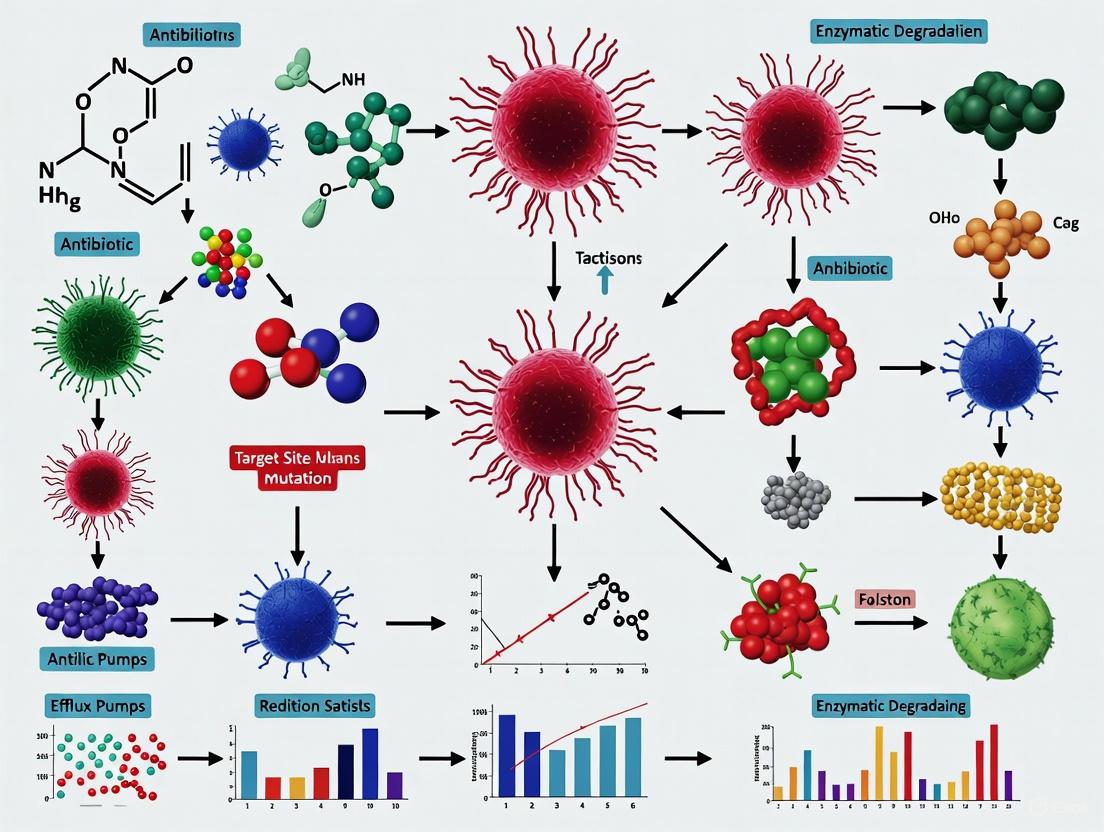
This article provides a comprehensive analysis of the molecular mechanisms underpinning bacterial antibiotic resistance, a critical challenge in modern medicine and drug development.
Molecular Mechanisms of Antibiotic Resistance in Bacteria: From Fundamental Pathways to Next-Generation Countermeasures
Abstract
This article provides a comprehensive analysis of the molecular mechanisms underpinning bacterial antibiotic resistance, a critical challenge in modern medicine and drug development. We explore the foundational principles of resistance, including enzymatic drug inactivation, target site modification, efflux pumps, and membrane permeability barriers. The scope extends to advanced methodological approaches for studying these mechanisms, troubleshooting persistent resistance in clinical and research settings, and validating novel therapeutic strategies through comparative analysis. Synthesizing the latest research, we detail emerging countermeasures such as AI-driven drug discovery, resistance-resistant treatment regimens, and CRISPR-based antimicrobials, offering a vital resource for researchers and scientists developing the next generation of antibacterial therapies.
Decoding the Core Molecular Armory of Resistant Bacteria
Antimicrobial resistance (AMR) represents one of the most severe threats to modern medicine, potentially causing 10 million deaths annually by 2050 if left unaddressed [1]. Among the many resistance mechanisms bacteria employ, enzymatic inactivation of antibiotics remains the most prevalent and challenging to overcome in clinical settings. This technical guide examines three primary enzymatic resistance mechanisms: β-lactamases, carbapenemases, and aminoglycoside-modifying enzymes, which collectively undermine the efficacy of essential antibiotic classes [2] [1].
These enzymes have evolved to inactivate antibiotics through sophisticated biochemical mechanisms, often encoded on mobile genetic elements that facilitate rapid horizontal spread among bacterial populations [1]. The continuous emergence of novel enzyme variants and the dissemination of resistance genes across global bacterial populations necessitate ongoing surveillance and research into countermeasures [3]. This whitepaper provides an in-depth analysis of these enzymatic systems within the broader context of molecular resistance mechanisms, aiming to equip researchers and drug development professionals with current knowledge and methodologies essential for combating this pressing public health crisis.
β-Lactamases: Mechanisms and Clinical Impact
Biochemical Foundations and Classification
β-lactamases are bacterial enzymes that confer resistance to β-lactam antibiotics by hydrolyzing the essential β-lactam ring structure, thereby inactivating the drug's antibacterial properties [4]. These antibiotics—including penicillins, cephalosporins, cephamycins, monobactams, and carbapenems—all share the common structural element of a four-atom β-lactam ring [4]. β-lactamases are primarily secreted by Gram-negative bacteria and are classified based on molecular structure and catalytic mechanism into two broad categories: serine-β-lactamases (SBLs) and metallo-β-lactamases (MBLs) [4].
Serine β-lactamases (Classes A, C, and D) utilize an active-site serine residue for nucleophilic attack on the β-lactam ring carbonyl carbon, forming an acyl-enzyme intermediate that is rapidly hydrolyzed to regenerate free enzyme and release inactivated antibiotic [4]. These enzymes share structural and mechanistic similarities with penicillin-binding proteins (PBPs), from which they are thought to have evolved [4]. In contrast, metallo-β-lactamases (Class B) require one or two zinc ions at their active site to activate a water molecule for direct hydrolysis of the β-lactam ring without formation of a covalent intermediate [4].
Table 1: Major β-Lactamase Classes and Characteristics
| Molecular Class | Catalytic Mechanism | Representative Families | Inhibitor Sensitivity | Primary Substrates |
|---|---|---|---|---|
| A | Serine-based | TEM, SHV, CTX-M, KPC, GES | Clavulanate, tazobactam, sulbactam, avibactam | Penicillins, cephalosporins, aztreonam (variable) |
| B | Zinc-dependent | IMP, VIM, NDM, SPM, GIM | EDTA (metal chelators) but not β-lactam inhibitors | Carbapenems, penicillins, cephalosporins |
| C | Serine-based | AmpC, ACT, CMY, FOX | Resistant to clavulanate; inhibited by avibactam, vaborbactam | Cephalosporins, cephamycins |
| D | Serine-based | OXA-type | Variable (often resistant to clavulanate) | Penicillins, carbapenems (OXA-48) |
Extended-Spectrum β-Lactamases (ESBLs)
Extended-spectrum β-lactamases represent a significant evolutionary adaptation primarily among Class A enzymes, particularly TEM, SHV, and CTX-M variants [4]. ESBLs hydrolyze extended-spectrum cephalosporins containing an oxyimino side chain (cefotaxime, ceftriaxone, ceftazidime) as well as the monobactam aztreonam [4]. These enzymes typically derive from point mutations in genes encoding TEM-1, TEM-2, or SHV-1 β-lactamases that alter the amino acid configuration around the active site, expanding the substrate spectrum while often increasing susceptibility to β-lactamase inhibitors like clavulanic acid [4].
The CTX-M family has become increasingly prevalent globally, with over 172 variants identified [4]. Unlike TEM and SHV ESBLs that emerged via point mutations, CTX-M enzymes originated from the chromosomal β-lactamases of Kluyvera species through plasmid acquisition events [4]. These enzymes generally exhibit greater hydrolytic activity against cefotaxime than ceftazidime, though some variants have expanded their spectrum to include ceftazidime [4].
Carbapenemases: The Versatile β-Lactamases
Classification and Epidemiological Significance
Carbapenemases represent the most versatile family of β-lactamases, with a breadth of spectrum unrivaled by other β-lactam-hydrolyzing enzymes [3]. These enzymes can hydrolyze almost all hydrolyzable β-lactams, including the last-resort carbapenems, and most demonstrate resilience against commercially available β-lactamase inhibitors [3]. Carbapenemases belong to molecular classes A, B, and D, with class A and D enzymes utilizing serine-based hydrolysis and class B enzymes being metallo-β-lactamases that require zinc for activity [3] [5].
The emergence of plasmid-encoded carbapenemases has transformed carbapenem resistance from a clonal concern to a global problem of interspecies dissemination [3]. Key carbapenemase families include KPC (Class A), IMP, VIM, and NDM (Class B), and OXA-48-type (Class D) enzymes [3] [5]. The rapid global spread of carbapenem-resistant Enterobacteriaceae (CRE), particularly Klebsiella pneumoniae and Escherichia coli, poses a grave public health threat due to limited treatment options and associated high mortality rates [1] [5].
Table 2: Major Carbapenemase Families and Properties
| Carbapenemase Family | Molecular Class | Representative Variants | Primary Bacterial Hosts | Key Biochemical Properties |
|---|---|---|---|---|
| KPC | A | KPC-2, KPC-3 | K. pneumoniae, E. coli | Inhibited by avibactam, vaborbactam; hydrolyzes penicillins, cephalosporins, carbapenems |
| IMP | B | IMP-1, IMP-4, IMP-8 | P. aeruginosa, Enterobacteriaceae | Zinc-dependent; broad spectrum including carbapenems; inhibited by EDTA |
| VIM | B | VIM-1, VIM-2 | P. aeruginosa, Enterobacteriaceae | Zinc-dependent; hydrolyzes all β-lactams except aztreonam; inhibited by EDTA |
| NDM | B | NDM-1, NDM-5 | K. pneumoniae, E. coli | Zinc-dependent; broad spectrum including carbapenems; inhibited by EDTA |
| OXA-48-type | D | OXA-48, OXA-181 | K. pneumoniae, A. baumannii | Preferentially hydrolyzes penicillins and carbapenems; poor activity against cephalosporins |
Detection Methods for Carbapenemase Producers
Modified Carbapenem Inactivation Method (mCIM)
The modified carbapenem inactivation method (mCIM) is a phenotypic test for detecting carbapenemase production in Enterobacteriaceae [6]. The standard protocol involves:
- Emulsify several colonies of test isolate in 2 mL of tryptic soy broth to create a suspension with turbidity equivalent to a 1 McFarland standard
- Add a 10 μg meropenem disk to the suspension and incubate at 35°C±2°C for 4 hours±15 minutes
- Remove the disk and place on a Mueller-Hinton agar plate seeded with a 0.5 McFarland suspension of E. coli ATCC 25922
- Incubate at 35°C±2°C for 18-24 hours
- Measure zone diameter: ≤15 mm (positive), 16-18 mm (indeterminate), ≥19 mm (negative) [6]
The mCIM demonstrates excellent sensitivity (97-100%) and specificity (99-100%) for detecting carbapenemase production across Ambler classes A, B, and D [6]. This method is straightforward to perform, uses readily available materials, and provides results within 24 hours [6].
EDTA-Modified Carbapenem Inactivation Method (eCIM)
The eCIM test is performed in parallel with mCIM to distinguish metallo-β-lactamases (class B) from serine carbapenemases (classes A and D) [5]:
- Prepare two bacterial suspensions as for mCIM
- To one tube, add 20 μL of 0.5 M EDTA (final concentration ~5 mM)
- Add meropenem disks to both tubes and incubate simultaneously under identical conditions
- Compare zone diameters: ≥5 mm increase with EDTA indicates MBL production [5]
The mCIM/eCIM combination correctly identifies carbapenemase producers with 100% sensitivity and 100% specificity for mCIM, while eCIM shows 89.3% sensitivity and 98.7% specificity for detecting metallo-β-lactamases compared to genotypic methods [5].
Diagram 1: mCIM/eCIM Detection Workflow (43 characters)
Aminoglycoside-Modifying Enzymes
Enzymatic Mechanisms and Classification
Aminoglycoside-modifying enzymes represent the most prevalent mechanism of aminoglycoside resistance in clinical settings [2]. These enzymes catalyze the chemical modification of specific functional groups on the 2-deoxystreptamine nucleus or sugar moieties of aminoglycoside antibiotics, reducing their binding affinity to the bacterial ribosomal target [2] [7]. Three major classes of these enzymes have been identified:
- Aminoglycoside N-acetyltransferases (AACs): Catalyze acetyl-CoA-dependent acetylation of amino groups (-NH₂) [2] [7]
- Aminoglycoside O-adenylyltransferases (ANTs): Mediate ATP-dependent adenylation of hydroxyl groups (-OH) [2] [7]
- Aminoglycoside O-phosphotransferases (APHs): Facilitate ATP-dependent phosphorylation of hydroxyl groups (-OH) [2] [7]
These enzymes display remarkable diversity, with multiple variants identified within each class that exhibit distinct substrate specificities [7]. The modifying enzymes are often encoded on mobile genetic elements, facilitating horizontal transfer between bacterial species and contributing to the rapid dissemination of aminoglycoside resistance [2].
Molecular Basis of Enzyme Action
Structural studies have revealed that aminoglycoside-modifying enzymes belong to larger enzyme superfamilies with diverse cellular functions [7]. The APHs show structural homology to eukaryotic protein kinases, while the ANTs share similarity with DNA polymerase β and other nucleotidyltransferases [7]. The AACs belong to the GCN5-related N-acetyltransferase (GNAT) superfamily, which includes histone acetyltransferases [7].
This structural insight has important implications for drug development. For instance, the similarity between APHs and protein kinases has inspired investigations into whether known kinase inhibitors might also inhibit aminoglycoside-modifying enzymes [7]. Indeed, certain inhibitors of serine/threonine and tyrosine kinases (e.g., isoquinoline sulfonamides and flavanoids) demonstrate inhibitory activity against APHs in the mid-μM range [7].
Table 3: Major Classes of Aminoglycoside-Modifying Enzymes
| Enzyme Class | Reaction Catalyzed | Cofactor Requirement | Representative Enzymes | Primary Modifications |
|---|---|---|---|---|
| AAC | N-acetylation of amino groups | Acetyl-CoA | AAC(3)-Ia, AAC(6′)-Ib | Acetylation at N-1, N-3, N-6′, or N-2′ positions |
| APH | O-phosphorylation of hydroxyl groups | ATP | APH(3′)-IIIa, APH(2″)-Ia | Phosphorylation at 3′-OH, 4-OH, 6-OH, or 2″-OH positions |
| ANT | O-adenylylation of hydroxyl groups | ATP | ANT(4′)-Ia, ANT(2″)-Ia | Adenylation at 4′-OH, 2″-OH, or 3″-OH positions |
Research Methodologies and Experimental Approaches
The Scientist's Toolkit: Essential Research Reagents
Table 4: Key Research Reagents for Studying Antibiotic Resistance Enzymes
| Reagent/Category | Specific Examples | Research Application | Key Function in Experiments |
|---|---|---|---|
| β-Lactamase Inhibitors | Clavulanic acid, sulbactam, tazobactam, avibactam, vaborbactam | β-lactamase characterization | Distinguish enzyme classes; restore antibiotic activity in combination therapies |
| Metal Chelators | EDTA, dipicolinic acid | Metallo-β-lactamase studies | Inhibit zinc-dependent MBLs; distinguish class B from other carbapenemases |
| Carbapenem Substrates | Meropenem, imipenem, ertapenem disks | Carbapenemase detection | Serve as substrates in phenotypic tests (mCIM, eCIM) |
| Indicator Strains | E. coli ATCC 25922 | Phenotypic detection assays | Carbapenem-susceptible indicator in mCIM/eCIM tests |
| PCR Reagents | Specific primers for blaKPC, blaNDM, blaIMP, blaVIM, blaOXA-48 | Molecular confirmation | Gold standard for detecting and differentiating carbapenemase genes |
| Growth Media | Tryptic soy broth, Mueller-Hinton agar | Phenotypic assays | Support bacterial growth in standardization suspension (mCIM) and antibiotic diffusion tests |
Enzyme Kinetics and Characterization
The biochemical characterization of resistance enzymes follows standardized methodologies:
Enzyme Purification Protocol:
- Clone resistance gene into expression vector (e.g., pET series)
- Transform into expression host (typically E. coli)
- Induce expression with IPTG
- Lyse cells and purify enzyme using affinity chromatography (His-tag, GST-tag)
- Verify purity via SDS-PAGE and determine concentration [8]
Kinetic Parameter Determination:
- Measure initial reaction rates at varying substrate concentrations
- Monitor substrate depletion or product formation spectrophotometrically
- Calculate Km, Vmax, kcat, and kcat/Km values from Michaelis-Menten plots
- Assess inhibitor potency through IC50 and KI determinations [8]
For β-lactamases, hydrolysis is typically monitored by tracking decreased absorbance of β-lactam antibiotics at specific wavelengths (e.g., 240 nm for penicillins, 260 nm for cephalosporins, 300 nm for carbapenems) [3] [8]. Aminoglycoside modification assays often employ radioactive cofactors (³H-acetyl-CoA for AACs, γ-³²P-ATP for APHs) or HPLC-based detection methods [7].
Diagram 2: Enzyme Characterization Workflow (36 characters)
Emerging Solutions and Future Directions
Innovative Therapeutic Approaches
Confronting the challenge of enzymatic antibiotic resistance requires innovative strategies that move beyond traditional antibiotic development:
β-Lactamase Inhibitor Combinations: Recent advances include novel β-lactamase inhibitors such as avibactam, relebactam, and vaborbactam, which are co-administered with β-lactam antibiotics to restore efficacy against resistant strains [9]. Avibactam demonstrates activity against class A, C, and some class D β-lactamases through reversible covalent binding, unlike earlier suicide inhibitors [9]. These combinations (ceftazidime-avibactam, meropenem-vaborbactam, imipenem-relebactam) have become essential tools for treating infections caused by ESBL-producing and carbapenem-resistant organisms [9].
Resistance Mechanism Exploitation: A groundbreaking approach involves "resistance hacking" – exploiting the bacterial resistance machinery against itself [10]. Recent proof-of-concept research demonstrated that a structurally modified florfenicol prodrug is activated by Eis2, a resistance protein in Mycobacterium abscessus [10]. This creates a perpetual cascade where antibiotic activation triggers more resistance protein production, which in turn generates more active antibiotic, effectively reversing resistance [10]. This approach minimizes mitochondrial toxicity and microbiome disruption associated with long-term antibiotic treatment [10].
Environmental Antibiotic Degradation: Enzymatic degradation has emerged as an environmentally friendly approach to reducing residual antibiotics in environmental compartments [8]. Research has demonstrated that enzyme cocktails combining β-lactamases with complementary substrate spectra (e.g., CTX-M-33 [class A] with VIM-1 [class B]) can simultaneously degrade antibiotics from all four β-lactam classes (penicillins, cephalosporins, carbapenems, and monobactams) with efficiencies exceeding 99% [8]. This approach shows promise for treating pharmaceutical industry wastewater, agricultural runoff, and contaminated natural waters [8].
Diagnostic Advancements
Rapid, accurate detection of resistance mechanisms is crucial for effective infection control and antibiotic stewardship. The evolution from the Modified Hodge Test (MHT) to contemporary mCIM/eCIM protocols represents significant progress in phenotypic detection [6] [5]. Molecular methods including PCR, DNA microarrays, and whole-genome sequencing provide genotypic confirmation but require specialized equipment and expertise [5]. Future diagnostic development should focus on:
- Point-of-care platforms for rapid detection (<2 hours)
- Multiplexed assays covering broad resistance panels
- Cost-effective methods accessible in resource-limited settings
- Integration of phenotypic and genotypic approaches
The continuing global spread of enzymatic resistance mechanisms demands coordinated multidisciplinary efforts spanning basic science, clinical medicine, public health, and environmental management. Through enhanced surveillance, rational antibiotic use, and innovative therapeutic approaches, the scientific community can work to preserve the efficacy of existing antibiotics while developing novel strategies to overcome bacterial resistance.
Antibiotic resistance represents one of the most pressing challenges to global public health, with target site alterations constituting a fundamental molecular mechanism by which pathogens evade antimicrobial activity [11] [12]. This resistance strategy involves structural modifications to antibiotic binding sites that reduce drug affinity while preserving the essential biological function of the target [13]. Among the most clinically significant alterations are mutations in ribosomal RNA, DNA gyrase, and penicillin-binding proteins (PBPs), which undermine the efficacy of major antibiotic classes including aminoglycosides, fluoroquinolones, and β-lactams [13] [14].
The continued evolution of target site mutations contributes substantially to the growing burden of antimicrobial resistance. According to recent World Health Organization reports, one in six laboratory-confirmed bacterial infections globally now demonstrate resistance to standard antibiotic treatments, with resistance increasing at an annual rate of 5-15% for many pathogen-antibiotic combinations [15]. This technical guide examines the molecular basis, experimental characterization, and research methodologies relevant to these critical resistance mechanisms for researchers and drug development professionals working to address this mounting threat.
Molecular Mechanisms of Target Site Alterations
Ribosomal RNA Mutations
Ribosomal RNA modifications represent a primary resistance mechanism against antibiotics that target protein synthesis. The most well-characterized rRNA modification involves enzymatic methylation of specific adenine residues in the 23S rRNA component, particularly within the peptidyl transferase center [13]. This modification, mediated by erythromycin resistance methylases (Erm), confers resistance to macrolides, lincosamides, and streptogramin B antibiotics (MLSᴮ phenotype) by sterically hindering antibiotic binding without disrupting ribosomal function [13]. Mutations in 23S rRNA at positions A2058 and A2059 (E. coli numbering) have been directly linked to macrolide resistance across diverse bacterial pathogens including Mycobacterium tuberculosis and Staphylococcus aureus [13].
Additionally, mutations in ribosomal proteins L4 and L22, which form the entrance tunnel to the peptidyl transferase center, can confer resistance by altering the ribosomal architecture and reducing antibiotic binding affinity [13]. These target site modifications demonstrate the remarkable plasticity of the bacterial ribosome in evolving resistance while maintaining translational fidelity.
DNA Gyrase and Topoisomerase IV Mutations
Fluoroquinolone antibiotics target the essential bacterial enzymes DNA gyrase and topoisomerase IV, which regulate DNA supercoiling and chromosome segregation [11] [13]. Resistance arises primarily through mutations in the quinolone resistance-determining regions (QRDRs) of the gyrA and parC genes, which encode the primary drug targets [11] [13].
Specific mutations in GyrA (particularly at Ser83 and Asp87 in E. coli) reduce fluoroquinolone binding by altering the enzyme's conformation and charge distribution within the drug-binding pocket [13]. In gram-positive bacteria, primary mutations often occur in parC (encoding topoisomerase IV), followed by secondary mutations in gyrA, with the accumulation of mutations leading to progressively higher resistance levels [13]. The quantitative relationship between specific mutations and minimum inhibitory concentration (MIC) increases is detailed in Table 1.
Penicillin-Binding Protein Modifications
Penicillin-binding proteins (PBPs) are the molecular targets of β-lactam antibiotics, which inhibit bacterial cell wall synthesis. Resistance through PBP modifications occurs via two primary mechanisms: (1) acquisition of exogenous, low-affinity PBPs (e.g., PBP2a in methicillin-resistant Staphylococcus aureus) and (2) mutational alterations in native PBPs that reduce drug binding [13].
The mecA gene, carried on the staphylococcal cassette chromosome mec (SCCmec), encodes PBP2a, which exhibits markedly reduced affinity for β-lactams while maintaining transpeptidase activity [13]. This allows cell wall synthesis to proceed even in the presence of inhibitory antibiotic concentrations. In Streptococcus pneumoniae, remodelling of native PBPs through recombination with homologous genes from commensal streptococci generates mosaic PBPs with decreased β-lactam affinity [13]. These structural alterations typically involve mutations in the active site vicinity that narrow the substrate binding pocket, sterically hindering antibiotic access while accommodating the natural peptide substrate [13].
Figure 1: Molecular Pathways of Target Site-Mediated Antibiotic Resistance. This diagram illustrates the relationship between major antibiotic classes, their molecular targets, specific resistance mechanisms involving target site alterations, and the resulting clinical resistance phenotypes. QRDR: Quinolone Resistance-Determining Region; FQ: Fluoroquinolone; PBP: Penicillin-Binding Protein; MRSA: Methicillin-Resistant Staphylococcus aureus; PRSP: Penicillin-Resistant Streptococcus pneumoniae.
Quantitative Analysis of Resistance Mutations
Table 1: Mutation Frequency and Resistance Levels for Key Antibiotic Targets
| Target | Gene | Common Mutations | MIC Increase | Mutation Frequency in Clinical Isolates | Primary Antibiotics Affected |
|---|---|---|---|---|---|
| DNA Gyrase | gyrA | Ser83→Leu, Asp87→Asn | 8-64 fold | 40-90% in FQ-resistant E. coli [13] | Ciprofloxacin, Levofloxacin |
| DNA Gyrase | gyrB | Asp426→Asn | 4-16 fold | 5-15% in FQ-resistant isolates [13] | Ciprofloxacin, Levofloxacin |
| Topoisomerase IV | parC | Ser80→Ile, Glu84→Lys | 4-32 fold | 60-85% in FQ-resistant S. aureus [13] | Ciprofloxacin, Levofloxacin |
| Topoisomerase IV | parE | Ser458→Ala, Ile527→Leu | 2-8 fold | 10-20% in FQ-resistant isolates [13] | Ciprofloxacin, Levofloxacin |
| 23S rRNA | rrl | A2058G, A2059G | 8-256 fold | 10-50% in macrolide-resistant pathogens [13] | Erythromycin, Clarithromycin |
| Ribosomal Protein L4 | rplD | Lys63→Glu, Gly66→Glu | 4-16 fold | 5-30% in macrolide-resistant S. pneumoniae [13] | Erythromycin, Azithromycin |
| PBP2a | mecA | Acquisition of mecA | >256 fold | ~100% in MRSA [13] | Methicillin, Oxacillin |
| PBP2x | pbp2x | Thr338→Ala, Gly597→Ala | 4-32 fold | 70-100% in penicillin-resistant S. pneumoniae [13] | Penicillin, Ampicillin |
Table 2: Global Prevalence of Target-Mediated Resistance in Key Pathogens
| Pathogen | Resistance Mechanism | Antibiotic Affected | Global Resistance Prevalence (2023) [15] | Regional Variance |
|---|---|---|---|---|
| Klebsiella pneumoniae | DNA Gyrase mutations | Fluoroquinolones | >55% resistant to ciprofloxacin | 40-70% by region |
| Escherichia coli | DNA Gyrase mutations | Fluoroquinolones | >40% resistant to ciprofloxacin | 30-60% by region |
| Staphylococcus aureus | PBP2a (mecA) acquisition | Methicillin | 20-50% (MRSA) [16] | 15-70% by region |
| Streptococcus pneumoniae | PBP gene mosaicism | Penicillin | 10-40% (non-meningeal) | 5-50% by region |
| Neisseria gonorrhoeae | 23S rRNA mutations | Azithromycin | 5-30% | Highly variable |
| Enterococcus faecium | PBP5 modifications | Ampicillin | 40-80% | 30-85% by region |
Experimental Methodologies
Protocol for Detection of gyrA/parC Mutations
Principle: This protocol details the identification of mutations in the quinolone resistance-determining regions (QRDRs) of gyrA and parC genes using polymerase chain reaction (PCR) amplification followed by DNA sequencing [13].
Materials:
- Bacterial isolates grown overnight in appropriate medium
- DNA extraction kit (commercial)
- PCR reagents: Taq polymerase, dNTPs, MgCl₂, reaction buffer
- Primer pairs specific for gyrA and parC QRDRs
- Agarose gel electrophoresis equipment
- DNA sequencing facilities
Procedure:
- Extract genomic DNA from bacterial isolates using standardized methods.
- Amplify QRDR regions using specific primers:
- gyrA: Forward 5'-TACACCGGTCAACATTGAGG-3', Reverse 5'-TTAATGATTGCCGCCGTCGG-3' (produces ~320bp fragment)
- parC: Forward 5'-GTGACTGATGAAGTTATGCG-3', Reverse 5'-TGCCGAGTATCGCTTAATGG-3' (produces ~285bp fragment)
- Perform PCR amplification: Initial denaturation at 95°C for 5 min; 35 cycles of 95°C for 30s, 55°C for 30s, 72°C for 45s; final extension at 72°C for 7 min.
- Confirm amplification by agarose gel electrophoresis (1.5% gel).
- Purify PCR products and subject to bidirectional Sanger sequencing.
- Align sequences with reference strains (e.g., E. coli ATCC 25922) to identify mutations.
Interpretation: Compare amino acid sequences to reference strains. Key mutations: GyrA Ser83→Leu/Phe, Asp87→Asn/Gly; ParC Ser80→Ile, Glu84→Lys/Val. Correlate identified mutations with MIC data [13].
Protocol for PBP2a Detection in MRSA
Principle: This method detects PBP2a production in Staphylococcus aureus isolates using latex agglutination, which provides rapid results for clinical decision-making [13].
Materials:
- MRSA latex agglutination test kit
- Bacterial colonies from pure culture
- Extraction reagent (provided in kit)
- Test cards and mixing sticks
- Positive and negative controls
Procedure:
- Emulsify several colonies from an overnight culture in 2-3 drops of extraction reagent.
- Mix thoroughly and heat the suspension at 100°C for 3 minutes.
- Centrifuge briefly to pellet debris.
- Place 30μl of the supernatant on a test circle.
- Add 1 drop of anti-PBP2a latex reagent and mix gently with a stirrer.
- Rotate the card mechanically for 3 minutes while observing for agglutination.
Interpretation: Positive result: Visible agglutination within 3 minutes. Negative result: No agglutination. Confirm equivocal results with mecA PCR [13].
Protocol for rRNA Methylation Detection
Principle: This protocol detects 23S rRNA methylation associated with macrolide resistance using real-time PCR targeting erm genes [13].
Materials:
- Bacterial DNA template
- Real-time PCR instrument
- Commercial master mix containing DNA polymerase, dNTPs, MgCl₂
- erm gene-specific primers and probes
- Positive controls (erm-positive strains)
- Negative controls (erm-negative strains)
Procedure:
- Design primers and probes to detect common erm genes (ermA, ermB, ermC).
- Prepare reaction mix: 12.5μl master mix, 0.5μl each primer (10μM), 0.25μl probe (10μM), 5μl DNA template, nuclease-free water to 25μl.
- Run real-time PCR: 50°C for 2 min; 95°C for 10 min; 45 cycles of 95°C for 15s and 60°C for 1 min.
- Analyze amplification curves. Cycle threshold (Ct) values <35 indicate positive results.
Interpretation: Positive detection of erm genes correlates with MLSᴮ resistance phenotype. Confirm with disk diffusion testing showing resistance to erythromycin with clindamycin induction [13].
Figure 2: Experimental Workflow for Detecting Target Site-Mediated Resistance Mechanisms. The diagram outlines three primary methodological pathways for identifying different types of target site alterations: DNA sequencing for gyrase/topoisomerase mutations, latex agglutination for PBP2a detection, and real-time PCR for rRNA methylation genes. QRDR: Quinolone Resistance-Determining Region; MLSᴮ: Macrolide-Lincosamide-Streptogramin B.
Research Reagent Solutions
Table 3: Essential Research Reagents for Studying Target Site Alterations
| Reagent/Category | Specific Examples | Research Application | Key Features |
|---|---|---|---|
| PCR Primers | gyrA QRDR primers, parC QRDR primers, mecA primers | Amplification of target genes for sequencing analysis | Specific binding to resistance-determining regions |
| DNA Sequencing Kits | Sanger sequencing kits, Next-generation sequencing platforms | Comprehensive mutation profiling | High accuracy for base calling |
| Latex Agglutination Tests | PBP2a detection kits, Penicillin-binding protein assays | Rapid detection of altered PBPs in clinical isolates | Visual results within 15 minutes |
| Real-time PCR Assays | erm gene detection kits, methyltransferase gene panels | Detection of rRNA modification genes | Quantitative results with high sensitivity |
| Antibiotic Disks | Erythromycin, ciprofloxacin, oxacillin, ceftaroline | Phenotypic confirmation of resistance | Standardized concentrations for MIC correlation |
| Reference Strains | ATCC 25922 (E. coli), ATCC 29213 (S. aureus), ATCC 49619 (S. pneumoniae) | Quality control and method validation | Well-characterized susceptibility profiles |
| Bioinformatics Tools | BLAST, RDP, Geneious, CLC Genomics Workbench | Sequence analysis and mutation identification | Automated alignment and variant calling |
Discussion and Future Perspectives
Target site alterations represent an evolving challenge in antimicrobial resistance, with the continual emergence of novel mutations requiring ongoing surveillance. The WHO GLASS report highlights alarming trends, with resistance to essential antibiotics including fluoroquinolones and third-generation cephalosporins exceeding 40% globally for pathogens like E. coli and K. pneumoniae [15]. Particularly concerning is the rapid dissemination of NDM-CRE (New Delhi metallo-β-lactamase-producing carbapenem-resistant Enterobacterales), which increased by 460% between 2019-2023 in the United States alone [16].
Future research directions should prioritize the development of novel therapeutic approaches that circumvent existing resistance mechanisms. Promising strategies include CRISPR/Cas9 systems engineered to specifically target and eliminate resistance genes [17] [18]. Early experimental successes include targeting mecA, ermB, and tetA genes to resensitize pathogens to conventional antibiotics [17]. Additionally, artificial intelligence-driven antibiotic discovery and resistance prediction platforms show potential for identifying compounds less susceptible to existing resistance mechanisms [12].
The continued evolution of target site mutations underscores the necessity for robust surveillance systems and innovative therapeutic strategies. As noted by the WHO, strengthening laboratory capacity worldwide is essential for tracking resistance patterns and informing treatment guidelines [15]. For researchers and drug development professionals, understanding the molecular basis of these resistance mechanisms provides the foundation for developing next-generation antimicrobials capable of overcoming current and emerging resistance challenges.
1. Introduction
The rise of multi-drug resistant (MDR) pathogenic bacteria represents a grave challenge to global public health, with antimicrobial resistance (AMR) ranking as a leading cause of mortality worldwide [19] [20]. Understanding the molecular mechanisms of antibiotic resistance is therefore crucial for developing effective therapeutic strategies. A major contributor to this resistance in Gram-negative bacteria is the activity of efflux pumps, particularly those of the Resistance-Nodulation-Division (RND) superfamily [19] [21]. These transmembrane transporters are constitutively expressed and function as part of tripartite complexes that span the entire cell envelope, actively extruding a remarkably wide range of structurally diverse toxic compounds, including many clinically relevant antibiotics, from the bacterial cell [20] [22]. The activity of RND pumps works synergistically with the low permeability of the Gram-negative outer membrane, underpinning the characteristic intrinsic resistance of these pathogens to many antimicrobial agents [22]. This in-depth technical guide will detail the structure, function, and regulation of RND superfamily pumps, framing them within the broader context of molecular antibiotic resistance mechanisms.
2. Structural Organization of RND Efflux Pumps
RND efflux pumps do not function as single entities but as sophisticated, three-component complexes that form a contiguous conduit from the inner membrane to the extracellular space.
- 2.1. The Tripartite Complex: The functional unit consists of:
- An Inner Membrane RND Transporter (IMP): This is the engine of the complex, which utilizes the proton motive force to power substrate translocation. It is also the primary determinant of substrate specificity [20] [21].
- A Periplasmic Adapter Protein (PAP or MFP): This protein structurally links the IMP to the OMF, forming a bridge across the periplasmic space [20] [22].
- An Outer Membrane Factor (OMF): This protein forms a channel in the outer membrane, allowing the extruded substrates to be released directly into the external medium [21] [22].
Table 1: Core Components of the RND Tripartite Efflux Complex
| Component | Location | Primary Function | Example Proteins |
|---|---|---|---|
| RND Transporter (IMP) | Inner Membrane | Substrate recognition & energy transduction; drug/proton antiport | AcrB (E. coli), MexB (P. aeruginosa) |
| Periplasmic Adapter (PAP/MFP) | Periplasm | Structural adaptor; stabilizes complex formation | AcrA (E. coli), MexA (P. aeruginosa) |
| Outer Membrane Factor (OMF) | Outer Membrane | Forms an exit channel to the exterior | TolC (E. coli), OprM (P. aeruginosa) |
The following diagram illustrates the architecture and functional rotation mechanism of the RND efflux pump, based on the well-characterized AcrAB-TolC system:
Diagram 1: Tripartite RND Efflux Pump Architecture. The diagram shows the three essential components: the inner membrane RND transporter (IMP), the periplasmic adapter protein (PAP), and the outer membrane factor (OMF). Arrows indicate the direct extrusion pathway for substrates from the cell.
3. Function and Mechanism of Substrate Extrusion
The RND efflux pump mechanism is a sophisticated process that involves precise conformational changes and substrate binding.
3.1. Energy Coupling and Transport: RND pumps are secondary active transporters that function as drug/proton antiporters. They utilize the energy from the influx of protons (H+) along the electrochemical gradient to drive the active extrusion of drug substrates against their concentration gradient [22].
3.2. Substrate Capture and the Peristaltic Pump Model: A key feature of RND pumps is their ability to capture substrates from multiple locations. While they can expel hydrophobic compounds that partition into the inner membrane, strong evidence confirms they can also capture substrates directly from the periplasm [22]. This is critically important for antibiotics like dianionic β-lactams (e.g., carbenicillin) that cannot cross the cytoplasmic membrane and are located exclusively in the periplasm [22]. The widely accepted functional model for the RND transporter (e.g., AcrB) is the rotary or peristaltic mechanism, where the trimeric complex cycles through three distinct conformational states—Loose (L) for substrate access, Tight (T) for substrate binding, and Open (O) for substrate extrusion. These states rotate sequentially among the three protomers, effectively "walking" the substrate through the pump and into the OMF channel for expulsion [23]. Recent research highlights that conformational plasticity and the equilibrium between these states are phylogenetically conserved and can significantly impact the resistance profile of different RND pumps [23].
Table 2: Experimentally Determined Kinetic and Binding Parameters for the AcrB Efflux Pump
| Parameter | Value / Observation | Experimental Context | Significance |
|---|---|---|---|
| Binding Affinity (K~i~) | Taurocholate: ~15 µM | In vitro reconstitution assay [22] | Suggests conjugated bile salts are high-affinity natural substrates |
| Cloxacillin: ~100 µM | In vitro reconstitution assay [22] | Illustrates lower affinity for certain antibiotics | |
| Transport Efficiency | Synergy with TetA pump increases Tetracycline MIC from 4 µg/ml to 512 µg/ml | Intact cell assay [22] | Demonstrates synergy between single-component and tripartite pumps |
| Substrate Capture | Can extrude dianionic β-lactams (e.g., Carbenicillin) that cannot cross cytoplasmic membrane | Intact cell susceptibility testing [22] | Confirms periplasmic capture of substrates |
4. Regulation of RND Pump Expression
The expression of RND efflux pumps is tightly regulated and can be induced by a wide array of environmental signals, leading to adaptive antibiotic resistance.
4.1. Transcriptional Regulation: The most common clinical mechanism of enhanced efflux-mediated resistance is the overexpression of RND pumps due to mutations in their local transcriptional regulators [21]. For instance, in Pseudomonas aeruginosa, mutations in repressor genes like mexR (controlling mexAB-oprM) lead to constitutive overexpression and increased resistance to multiple drug classes [21].
4.2. Induction by Diverse Molecules: Beyond mutational deregulation, the expression of RND pumps can be modulated by numerous and common molecules, a phenomenon with significant clinical implications. These inducers include bile salts, biocides, pharmaceuticals, food additives, and plant extracts [19]. This induction underscores the complexity of antibiotic resistance mechanisms, as exposure to non-antibiotic compounds in the environment or host can inadvertently promote a resistant phenotype.
5. Experimental Methods for Studying RND Pumps
A combination of genetic, biochemical, and structural biology approaches is essential for characterizing RND efflux pump function and inhibition.
5.1. Minimum Inhibitory Concentration (MIC) Determination
- Purpose: To quantitatively assess the impact of efflux pump activity or inhibition on antibiotic susceptibility.
- Protocol: Serial dilutions of an antibiotic are prepared in a microtiter plate and inoculated with a standardized bacterial suspension. The MIC is defined as the lowest concentration that inhibits visible growth after incubation. Comparing MICs in a wild-type strain versus an isogenic efflux pump knockout mutant reveals the pump's contribution to resistance. Similarly, a reduction in MIC in the presence of a putative Efflux Pump Inhibitor (EPI) confirms its activity [20] [21].
5.2. Single-Particle Cryo-Electron Microscopy (Cryo-EM)
- Purpose: To determine high-resolution three-dimensional structures of RND transporters in different conformational states.
- Protocol: The purified RND transporter (e.g., AcrB, OqxB) is frozen in a thin layer of vitreous ice. A transmission electron microscope is used to collect thousands of projection images. Computational algorithms then classify and average these particle images to generate high-resolution 3D density maps, allowing for atomic model building and the visualization of substrate-binding pockets and conformational states (e.g., L, T, O) [23].
5.3. In Vitro Reconstitution Assay
- Purpose: To study the transport activity and kinetics of a purified RND pump in a controlled, artificial membrane system.
- Protocol: The RND transporter (e.g., AcrB) is purified and incorporated into liposomes or nanodiscs. Transport is initiated by adding a substrate and an energy source (e.g., a proton gradient). Substrate extrusion can be measured directly or indirectly via competitive inhibition of a fluorescent reporter's transport (e.g., a fluorescent phospholipid). This assay allows for the determination of kinetic constants and the assessment of substrate affinity [22].
The following diagram illustrates a generalized workflow for key experiments in this field:
Diagram 2: Key Experimental Workflow. A generalized pipeline for investigating RND efflux pumps, from genetic manipulation to biochemical and structural analysis.
6. The Scientist's Toolkit: Key Research Reagents and Materials
Table 3: Essential Research Reagents for Studying RND Efflux Pumps
| Reagent / Material | Function / Application | Example / Note |
|---|---|---|
| Isogenic Bacterial Mutants | To directly assess the contribution of a specific efflux pump to resistance by comparing mutant to wild-type. | e.g., ΔacrB E. coli strain [20] |
| Efflux Pump Inhibitors (EPIs) | To chemically block pump activity, restoring antibiotic sensitivity and confirming efflux-mediated resistance. | Phenylalanyl-arginyl-β-naphthylamine; Pyranopyridine derivatives [24] [22] |
| Fluorescent Substrate Dyes | To visualize and quantify efflux activity in real-time using fluorometry or flow cytometry. | Ethidium bromide, Hoechst 33342 [20] |
| Proteoliposomes / Nanodiscs | Artificial membrane systems for the in vitro reconstitution of purified transporters to study function in isolation. | e.g., Salipro nanodiscs used for Cryo-EM [23] |
| Detergents | To solubilize and purify membrane-bound RND transporter proteins while maintaining stability and activity. | n-Dodecyl-β-D-maltoside (DDM) [23] |
7. Conclusion
RND efflux pumps are formidable adversaries in the battle against multidrug-resistant Gram-negative infections. Their tripartite structure, energetically efficient mechanism, and ability to be induced by a plethora of signals make them a central pillar of intrinsic and adaptive antibiotic resistance. A deep and nuanced understanding of their structure-function relationships, conformational dynamics, and regulatory networks, as detailed in this guide, is paramount. Future research must continue to leverage advanced techniques like Cryo-EM and machine learning [20] [23] to uncover new vulnerabilities. The development of clinically effective broad-spectrum efflux pump inhibitors remains a critical, albeit challenging, frontier for rejuvenating our existing arsenal of antibiotics and safeguarding public health [20] [24].
Abstract The asymmetric outer membrane (OM) of Gram-negative bacteria constitutes a formidable impermeability barrier, conferring intrinsic resistance to a wide array of antimicrobial agents. This whitepaper delineates the molecular architecture of the OM and its role as a primary determinant of antibiotic resistance. We explore the two principal pathways for antibiotic permeation—porin-mediated diffusion for hydrophilic molecules and lipid-mediated transport for hydrophobic compounds—and the mechanisms by which bacteria modify these pathways to achieve resistance. Supported by contemporary research, this review integrates quantitative data on permeability, provides standardized experimental protocols for its assessment, and visualizes key concepts to equip researchers and drug development professionals with a advanced understanding of this critical resistance mechanism.
The Gram-negative bacterial envelope is a complex, multi-layered structure that presents a significant challenge to antimicrobial therapy. The outer membrane (OM), in particular, functions as a highly selective permeability barrier, allowing the bacterium to survive in hostile environments, including those containing antibiotics [25] [26]. Its unique asymmetric architecture is fundamental to its protective role. The inner leaflet is composed of phospholipids, while the outer leaflet is predominantly made of lipopolysaccharide (LPS) [27] [28]. This LPS layer is heavily charged and cross-linked by divalent cations, creating a dense, poorly fluid matrix that is intrinsically impermeable to many toxins, detergents, and antibiotics [29] [26]. The World Health Organization has identified multidrug-resistant Gram-negative pathogens, including Acinetobacter baumannii, Pseudomonas aeruginosa, and Enterobacteriaceae such as Klebsiella pneumoniae and Escherichia coli, as critical priorities, largely due to the efficacy of this OM barrier [27].
The clinical urgency is stark; infections caused by these pathogens lead to significant mortality, and the economic burden is projected to escalate into the trillions of dollars without intervention [27]. A precise understanding of how antibiotics traverse the OM and how bacteria modulate this permeability is therefore a cornerstone for developing novel therapeutic strategies to overcome multidrug resistance.
Molecular Architecture of the Gram-Negative Outer Membrane
The exceptional barrier function of the OM arises from its specific molecular composition.
2.1. The Asymmetric Lipid Bilayer: The OM's asymmetry is its defining feature. The inner leaflet contains phospholipids such as phosphatidylethylamine, phosphatidylglycerol, and cardiolipin. The outer leaflet is composed of LPS [28] [26]. A single LPS molecule consists of:
- Lipid A: A glucosamine-based phospholipid embedded in the membrane, featuring six saturated fatty acid chains. This structure confers low fluidity and high stability [26].
- Core Oligosaccharide: A short, branched chain of sugars attached to lipid A.
- O-Antigen: A repeating polysaccharide chain that extends into the extracellular space, contributing to serotype specificity and immune evasion [28]. The dense packing of LPS molecules, stabilized by divalent cations (e.g., Mg²⁺, Ca²⁺) that bridge their anionic phosphate groups, creates a formidable hydrophobic barrier [29] [26].
2.2. Outer Membrane Proteins (OMPs): The OM is studded with β-barrel proteins that facilitate selective exchange. The most abundant are the general diffusion porins, such as OmpF and OmpC in E. coli [25] [30]. These proteins form trimeric, water-filled channels that allow the passive diffusion of small, hydrophilic molecules, including many antibiotics like β-lactams and fluoroquinolones [30] [28]. The size, charge, and physicochemical properties of the porin channel lumen critically determine which molecules can pass through.
The following diagram illustrates the core architecture and major permeability pathways of the Gram-negative outer membrane.
Diagram 1: Architecture and Permeability Pathways of the Gram-Negative Outer Membrane. Hydrophilic antibiotics (red) primarily traverse via porin channels, while hydrophobic antibiotics (blue) diffuse through the lipid matrix. Divalent cations (green) stabilize the LPS layer.
Mechanisms of Antibiotic Permeation and Resistance
Bacteria exploit modifications to both the lipid and protein components of the OM to limit antibiotic uptake, a key strategy in antimicrobial resistance (AMR). The following table summarizes the primary resistance mechanisms related to OM permeability.
Table 1: Major Outer Membrane Permeability Resistance Mechanisms
| Resistance Mechanism | Targeted Pathway | Molecular Alteration | Effect on Antibiotics | Example Pathogens |
|---|---|---|---|---|
| LPS Modification [26] [31] | Lipid-mediated | Addition of 4-amino-4-deoxy-L-arabinose (L-Ara4N) or phosphoethanolamine to Lipid A phosphates. | Reduces net negative charge, repelling cationic antimicrobial peptides (e.g., polymyxins) and hydrophobic agents. | Salmonella typhimurium, E. coli, Pseudomonas aeruginosa |
| Porin Loss or Downregulation [25] [30] | Porin-mediated | Mutations leading to loss-of-function or transcriptional downregulation of general porins (e.g., OmpF, OmpC). | Decreases influx of hydrophilic antibiotics (e.g., β-lactams, carbapenems). | Klebsiella pneumoniae, Enterobacter aerogenes |
| Porin Mutation [30] [28] | Porin-mediated | Point mutations altering the constriction zone of the porin channel (e.g., OmpK36 in K. pneumoniae). | Reduces channel size or alters electrostatics, hindering antibiotic passage. | K. pneumoniae, E. coli |
| Efflux Pump Synergy [27] [26] | Both | Overexpression of multi-drug efflux pumps (e.g., AcrAB-TolC). | Synergistically works with low permeability; actively exports antibiotics that slowly penetrate the OM. | Widespread in Gram-negative bacteria |
The interplay of these mechanisms can be visualized as a coordinated bacterial response to antibiotic pressure.
Diagram 2: Coordination of Outer Membrane Resistance Mechanisms. Antibiotic pressure selects for mutations that reduce drug influx (porin/LPS modifications) and enhance clearance (efflux, enzymatic degradation), synergistically leading to high-level resistance.
Quantitative Assessment of Outer Membrane Permeability
Measuring OM permeability is essential for evaluating antibiotic efficacy and resistance. Fluorescence-based assays provide a rapid and quantitative method.
Table 2: Key Research Reagent Solutions for Membrane Permeability Assays
| Research Reagent | Chemical Nature | Function in Assay | Target Membrane | Key Property |
|---|---|---|---|---|
| 1-N-phenylnaphthylamine (NPN) [32] [33] | Hydrophobic fluorescent dye | Intercalates into the outer leaflet of a disrupted OM; fluorescence increases in a hydrophobic environment. | Outer Membrane | Non-fluorescent in aqueous solution; fluoresces upon entry into the phospholipid bilayer. |
| Propidium Iodide (PI) [33] | Positively charged, fluorescent nucleic acid stain. | Enters cells with a permeabilized inner membrane and binds to DNA, exhibiting a strong red fluorescence. | Inner Membrane | Impermeant to live cells; used as a viability dye. |
Detailed Experimental Protocol: Concurrent Measurement of Outer and Inner Membrane Permeability
This protocol, adapted from Ma et al. (2021), allows for the contemporaneous evaluation of both OM and IM integrity in Gram-negative bacteria [33].
4.1. Principle: The assay uses two fluorescent probes: NPN for the OM and PI for the IM. Treatment with a membrane-permeabilizing agent (e.g., an antimicrobial peptide) allows NPN to enter the OM and fluoresce. If the damage is severe enough to compromise the IM, PI enters the cell and stains DNA, providing a second fluorescence signal.
4.2. Reagents and Equipment:
- Bacterial culture (e.g., E. coli ATCC 25922).
- Cation-adjusted Mueller-Hinton Broth (CAMHB).
- Antibacterial molecule (e.g., the antimicrobial peptide Thanatin [33] or Polymyxin B).
- Fluorescent probes: 10 µM NPN and 4.8 µM PI stock solutions.
- Assay buffer (e.g., 5 mM HEPES, pH 7.2).
- 96-well black microtiter plates with clear bottoms.
- Fluorescence microplate reader capable of measuring fluorescence at multiple wavelengths.
4.3. Procedure:
- Culture and Treatment: Grow bacteria to mid-log phase in CAMHB. Dilute to ~5 × 10⁵ CFU/mL in fresh CAMHB. Incubate the bacterial suspension with the antibacterial molecule at the desired concentration (e.g., at or above the MIC) for a specific duration (e.g., 1-2 hours) under standard growth conditions.
- Sample Preparation: After incubation, centrifuge the bacteria and wash the pellet with assay buffer to remove the broth and any unbound antibacterial molecule that might interfere with fluorescence.
- Fluorescence Measurement: Resuspend the bacterial pellets in assay buffer containing both NPN (final conc. 10 µM) and PI (final conc. 4.8 µM). Immediately transfer the suspension to a 96-well plate.
- Data Acquisition: Measure fluorescence kinetics in the plate reader.
- NPN Fluorescence: Excitation = 350 nm, Emission = 420 nm. An increase indicates OM permeabilization.
- PI Fluorescence: Excitation = 535 nm, Emission = 615 nm. An increase indicates IM permeabilization and loss of viability.
- Controls: Include untreated bacteria (negative control) and bacteria treated with a known permeabilizer like Polymyxin B or EDTA (positive control).
The workflow for this integrated assay is outlined below.
Diagram 3: Experimental Workflow for Concurrent Membrane Permeability Measurement. This protocol assesses outer membrane (via NPN) and inner membrane (via PI) integrity simultaneously after antibacterial treatment.
The impermeability of the Gram-negative outer membrane remains a primary obstacle in the treatment of bacterial infections. Its role as a synergistic partner to efflux pumps and enzymatic degradation systems creates a multi-layered defense that is highly effective. The molecular understanding of porin and LPS biology, combined with robust methods for quantifying permeability, provides a foundation for innovative therapeutic approaches. Future research must focus on deciphering the precise regulatory networks controlling OM homeostasis and on developing novel agents that can selectively disrupt this barrier. Such strategies, potentially involving permeabilizer adjuvants that breach the OM to allow conventional antibiotics to reach their targets, represent a promising avenue for restoring the efficacy of our existing antimicrobial arsenal and combating the rising tide of multidrug-resistant Gram-negative infections.
The global rise of antimicrobial resistance (AMR) presents a critical threat to public health, with horizontal gene transfer (HGT) serving as a primary accelerator of this crisis. Unlike vertical gene transfer, HGT enables the direct exchange of genetic material between contemporary bacteria, dramatically speeding the dissemination of antibiotic resistance genes (ARGs) across microbial populations and species boundaries [34] [35]. This process effectively bypasses the slower pace of Darwinian evolution, allowing pathogens to acquire sophisticated resistance mechanisms in a single transfer event.
Among the molecular agents facilitating HGT, plasmids, transposons, and integrons constitute a powerful trio that collectively operates as a natural genetic engineering system. These mobile genetic elements (MGEs) function both individually and in concert to capture, mobilize, express, and disseminate ARGs across diverse bacterial habitats [34] [35] [36]. Their collective action transforms the microbial world into a vast, interconnected resistome where resistance traits can rapidly emerge and spread under selective pressure from antibiotic use.
Understanding the precise molecular mechanisms by which these elements operate is crucial for developing novel strategies to combat AMR. This technical review examines the specialized roles of plasmids, transposons, and integrons in HGT-mediated resistance dissemination, frames this knowledge within the One Health paradigm, and provides experimental approaches for investigating these processes in clinical and environmental settings.
Molecular Mechanisms of Horizontal Gene Transfer
Plasmids: Conjugative Mobility and Broad Host Range
Plasmids are extrachromosomal DNA elements that replicate independently of the bacterial chromosome. They serve as principal vehicles for ARG dissemination through conjugation, a process of direct cell-to-cell DNA transfer [34]. The molecular architecture of conjugative plasmids includes a "backbone" containing genes essential for replication, maintenance, regulation, and the conjugation machinery itself, alongside "accessory" regions that frequently harbor ARGs, metal resistance genes, and virulence factors [34].
The conjugation process involves the formation of a mating pair between donor and recipient cells, followed by the transfer of a single-stranded DNA copy of the plasmid through a specialized type IV secretion system. Recent research has revealed that plasmid conjugation follows a Holling's Type II functional response, becoming limited by engagement time rather than cell density at higher bacterial concentrations [37]. This finding has significant implications for understanding transfer dynamics in dense microbial communities like biofilms or the mammalian gut.
Plasmids are classified as conjugative (encoding complete transfer machinery), mobilizable (possessing only an origin of transfer), or non-mobilizable [34]. Particularly concerning are the broad-host-range (BHR) plasmids, such as those from the IncP-1 group, which can replicate and transfer across diverse bacterial taxa, effectively bridging phylogenetic gaps between environmental, commensal, and pathogenic bacteria [34]. These BHR plasmids have been frequently isolated from wastewater, soil, manure, and agricultural environments, highlighting their role in connecting resistomes across different habitats [34].
Table 1: Classification and Characteristics of Plasmid Types
| Plasmid Type | Size Range | Self-Transfer Capability | Key Features | Clinical Relevance |
|---|---|---|---|---|
| Conjugative | 30 - >500 kb | Yes | Encodes complete conjugation machinery; often carries multiple ARGs | High; associated with MDR pandemics |
| Mobilizable | 5 - 30 kb | No (requires helper plasmid) | Contains origin of transfer (oriT); smaller genetic cargo | Moderate; can hitchhike with conjugative plasmids |
| Non-mobilizable | 1 - 10 kb | No | Relies on transformation/transduction; high copy number common | Variable; may amplify specific ARGs |
| Broad-Host-Range | 50 - 400 kb | Often | Replicates across diverse bacterial taxa; connects habitats | Very high; bridges clinical and environmental resistomes |
Transposons: Intracellular Mobility and Gene Capture
Transposons, or transposable elements, are DNA sequences that can move within or between DNA molecules through transposition. These "jumping genes" play a crucial role in capturing ARGs from chromosomes and mobilizing them onto plasmids, thereby converting localized resistance into transferable resistance [38]. Transposons achieve this through two primary mechanisms: replicative transposition (where the element copies itself to a new location) and conservative transposition (where the element excises and reinserts elsewhere).
Structurally, transposons contain genes encoding transposase enzymes flanked by inverted repeat sequences that are recognized by these enzymes. Composite transposons consist of two insertion sequences (IS) flanking one or more accessory genes, while non-composite transposons have simpler structures with terminal inverted repeats [38]. The activity of transposons is frequently regulated by host factors, including the SOS response system, which can be induced by antibiotic stress itself [38].
A significant evolutionary adaptation observed under antibiotic selection is the duplication of transposable ARGs. Experimental evolution studies have demonstrated that antibiotic selection pressure drives the transposition of ARGs onto multicopy plasmids, resulting in increased gene dosage and consequently higher levels of resistance [38]. Bioinformatic analyses of clinical isolates confirm that duplicated ARGs are highly enriched in bacteria from humans and livestock—environments with substantial antibiotic exposure—highlighting the clinical relevance of this adaptation mechanism [38].
Integrons: Natural Gene Cassette Platforms
Integrons are sophisticated genetic platforms that specialize in acquiring, stockpiling, and expressing promoterless gene cassettes, particularly those encoding antibiotic resistance [35] [39]. The core integron structure consists of: an integrase gene (intI) encoding a tyrosine recombinase; a primary recombination site (attI); and a promoter (Pc) that drives expression of captured gene cassettes [35] [39].
The molecular mechanism of cassette integration involves site-specific recombination between the attI site and the attC site (a imperfect inverted repeat) associated with each gene cassette [35]. The integrase excises cassettes as circularized molecules and integrates them at the attI site, maintaining a sequential order of cassettes from the promoter. This organization creates an expression gradient where cassettes closer to the promoter are expressed at higher levels [39].
Among the various classes, class 1 integrons have become particularly significant in clinical settings due to their association with multiple ARGs and their presence on mobile genetic elements [35]. These elements are not mobile themselves but are frequently carried by plasmids and transposons, creating nested genetic structures that maximize mobility potential. This combination has been described as a "Russian doll" configuration, where integrons containing multiple ARGs are embedded within transposons that are in turn carried on plasmids [40].
Table 2: Classification and Features of Major Integron Classes
| Integron Class | Structural Features | Primary Habitat | Cassette Content | Mobility Association |
|---|---|---|---|---|
| Class 1 | intI1, attI1, Pc promoter, often 3'-CS (qacEΔ1/sul1) | Clinical, wastewater | Multiple ARG cassettes | Tn402-like transposons; plasmids |
| Class 2 | intI2, attI2 | Clinical, commensal | Mainly dihydrofolate reductase | Tn7 transposons |
| Class 3 | intI3, attI3 | Rare, clinical | Limited ARG variety | Plasmids |
| Chromosomal | Various intI, attI | Environmental bacteria | Diverse metabolic functions | Sedentary (rarely mobile) |
Interplay Between Mobile Genetic Elements
The true efficiency of HGT in spreading ARGs emerges from the synergistic interactions between plasmids, transposons, and integrons. These elements form combinatorial systems that overcome the limitations of each individual component [34] [35] [36]. Plasmids provide the conjugative mobility for intercellular transfer, transposons enable intracellular movement between chromosomes and plasmids, and integrons serve as versatile platforms for accumulating and expressing multiple resistance genes.
This collaboration is exemplified by the "carry-back" model of gene transfer between actinobacteria (antibiotic producers) and proteobacterial pathogens [41]. This multi-step process begins with conjugative transfer of a carrier sequence from proteobacteria to actinobacteria, followed by recombination of the carrier sequence with actinobacterial ARGs, and culminates in natural transformation of proteobacteria with the carrier-sandwiched ARG [41]. Such sophisticated mechanisms demonstrate how MGEs can bridge even wide phylogenetic gaps.
The functional relationships between these elements can be visualized as follows:
This diagram illustrates how mobile genetic elements work in concert to mobilize, vector, and disseminate antibiotic resistance genes across bacterial populations under selective pressure.
Recent metagenomic studies of wastewater treatment plant effluents have revealed the existence of "plasmid communities"—ensembles of co-existing plasmids within bacterial cells that enable cooperative survival strategies [42]. In these communities, non-AMR plasmids can persist under antimicrobial selection by co-existing with resistant partners, representing a previously unrecognized mechanism for maintaining mobile genetic elements in bacterial populations [42].
Quantitative Analysis of Resistance Gene Dissemination
Empirical measurements of HGT frequencies and ARG distributions provide critical insights into the dynamics of resistance dissemination. Quantitative studies have revealed that conjugation rates follow density-dependent kinetics at low cell densities but become limited by engagement time at higher concentrations, with an average interval of 40-60 minutes required between successful matings [37].
Genomic analyses of wastewater treatment plant isolates have quantified the prevalence of different resistance mechanisms among captured plasmids. One comprehensive study of 173 circularized plasmids transferred into Escherichia coli revealed that 42% contained at least one ARG, with 73% of these being multidrug-resistant (MDR) plasmids carrying up to 12 distinct resistance genes [42]. These plasmids conferred resistance across ten antimicrobial classes, with particular enrichment of aminoglycoside, beta-lactam, sulfonamide, and tetracycline resistance genes.
Table 3: Distribution of Antibiotic Resistance Genes on Wastewater Plasmids
| Antibiotic Class | Representative Genes | Percentage of AMR Plasmids Carrying Gene Class | Common Genetic Context |
|---|---|---|---|
| Aminoglycosides | aac, aad, aph variants | 68% | Class 1 integrons, composite transposons |
| Beta-lactams | blaTEM-1, blaSHV-134 | 57% | IS26-flanked modules, integrons |
| Sulfonamides | sul1, sul2, sul3 | 49% | 3'-conserved segment of class 1 integrons |
| Tetracyclines | tetA, tetB, tetD | 42% | Transposons, plasmid-borne modules |
| Quinolones | qnrA, qnrB, aac(6')-Ib-cr | 18% | Often linked with other ARGs in MDR plasmids |
| Macrolides | ereA, mph, msr | 15% | Integron gene cassettes |
| Polymyxins | mcr-9 | 4% | mcr flanked by IS5/IS26 elements |
The distribution of duplicated ARGs in natural bacterial populations provides evidence of ongoing selection and HGT. Analysis of 24,102 complete bacterial genomes revealed significant enrichment of duplicated ARGs in isolates from humans and livestock compared to those from wildlife and natural environments [38]. This pattern was further amplified in antibiotic-resistant clinical isolates, supporting the hypothesis that antibiotic selection drives the evolution of duplicated resistance genes through MGE transposition.
Experimental Approaches and Methodologies
Conjugation Rate Determination
Accurate measurement of plasmid transfer rates is essential for quantifying HGT potential in clinical and environmental settings. The following protocol adapts methods from recent studies to determine conjugation efficiency [37]:
Donor and recipient preparation: Grow donor (plasmid-bearing) and recipient (plasmid-free) strains to mid-exponential phase in appropriate selective media. Use differentially marked strains (e.g., antibiotic resistance, fluorescence) to distinguish donors, recipients, and transconjugants.
Mating assay setup: Mix donor and recipient cells at varying densities (typically ranging from 10^4 to 10^8 CFU/mL) in both liquid and solid mating formats. Include controls for spontaneous mutation and donor/recipient viability.
Conjugation period: Incubate mating mixtures for a defined period (1-24 hours) at optimal growth temperatures without selection to allow conjugation.
Transconjugant selection: Plate appropriate dilutions on selective media that counterselect against donors and recipients while allowing transconjugant growth.
Calculation of transfer frequency: Determine conjugation rate using the formula: Transfer Frequency = (Number of Transconjugants)/(Number of Donors × Number of Recipients) for density-dependent estimation, or employing more sophisticated models that account for engagement time limitations at higher cell densities [37].
This method can be modified to test conjugation under different environmental conditions, including various antibiotic concentrations, pH levels, or temperatures relevant to specific habitats.
Plasmid Capture and Sequencing
Characterizing the full complement of mobile genetic elements in complex samples requires sophisticated capture and sequencing approaches [42]:
Sample processing and filtration: Concentrate bacterial cells from environmental or clinical samples through filtration or centrifugation.
Donor strain preparation: Use an appropriate recipient strain (often E. coli or other well-characterized species) with high transformation efficiency and limited restriction systems.
Exogenous plasmid isolation: Perform biparental or triparental mating with the sample as donor and the laboratory strain as recipient under selective conditions.
Plasmid library construction: Extract plasmids from transconjugants and prepare sequencing libraries using methods that preserve long-range information (e.g., long-read technologies like PacBio or Nanopore).
Sequence assembly and annotation: Perform de novo assembly of circular plasmid sequences, followed by annotation of ARGs, MGEs, and other genomic features using specialized databases (CARD, INTEGRALL, ISfinder).
This approach has successfully captured diverse plasmids from wastewater treatment plants, revealing a preponderance of multi-plasmid communities in which non-AMR plasmids evade antimicrobial selection through co-existence with resistant partners [42].
Topological Data Analysis for HGT Detection
Topological data analysis (TDA) provides a powerful mathematical framework for detecting HGT patterns in large genomic datasets without requiring alignment to reference sequences [43]. The methodology involves:
Resistome profiling: Create a presence-absence matrix of AMR markers across bacterial isolates from a defined environment (e.g., hospital setting).
Metric space construction: Represent each bacterium as a point in multidimensional space based on its resistome profile, with distances between points reflecting resistome dissimilarity.
Filtered simplicial complex generation: Construct Vietoris-Rips complexes across increasing distance thresholds, connecting points (bacteria) with edges, triangles, and higher-dimensional simplices as distance increases.
Persistent homology calculation: Compute Betti numbers (β0, β1, β2) that quantify connected components and holes in the simplicial complex at different filtration steps.
HGT inference: Identify persistent 1-holes (loops) in the topological structure that indicate non-tree-like evolutionary relationships characteristic of HGT, as vertical inheritance alone produces strictly hierarchical patterns without holes [43].
This approach has successfully detected HGT between Klebsiella and Escherichia in clinical settings using only presence-absence data of resistance markers, providing an alignment-free method for identifying genetic exchange networks [43].
The Scientist's Toolkit: Essential Research Reagents
Table 4: Key Research Reagents for Investigating Horizontal Gene Transfer
| Reagent/Category | Specific Examples | Research Application | Technical Considerations |
|---|---|---|---|
| Bacterial Strains | E. coli DH5α, MG1655; Pseudomonas PAO1; Klebsiella ATCC strains | Conjugation assays, transformation efficiency, host range studies | Select strains with appropriate resistance markers and known restriction-modification systems |
| Selective Markers | Antibiotic resistance genes (tetA, bla, aph); fluorescent proteins (GFP, mCherry) | Distinguishing donors, recipients, and transconjugants in mating assays | Ensure selective concentrations are optimized for specific strain backgrounds |
| Plasmid Vectors | Broad-host-range vectors (IncP, IncQ, IncW); mobilizable vectors; cloning vectors | Conjugation efficiency studies, host range determination, genetic manipulation | Consider copy number, stability, and compatibility with native plasmids |
| Sequence Technologies | Long-read sequencing (PacBio, Nanopore); short-read sequencing (Illumina) | Complete plasmid assembly, identification of MGE structures, HGT detection | Long-read essential for resolving repetitive regions and mosaic structures |
| Bioinformatics Tools | CARD, INTEGRALL, ISfinder, RAIphy, topological data analysis packages | ARG annotation, integron analysis, HGT detection, phylogenetic inference | Use database-specific parameters and validate with manual curation |
| Experimental Evolution Systems | Chemostats, biofilm reactors, animal infection models | Studying HGT dynamics under controlled selective conditions | Monitor population dynamics with high temporal resolution |
Plasmids, transposons, and integrons collectively form a sophisticated, interconnected system that drives the rapid dissemination of antibiotic resistance genes across bacterial populations. Through their specialized functions and synergistic interactions, these mobile genetic elements effectively circumvent the limitations of vertical inheritance, enabling pathogens to rapidly adapt to antimicrobial pressure. The molecular mechanisms underlying these processes—conjugation, transposition, and site-specific recombination—represent fundamental biological phenomena that have been co-opted for resistance dissemination under the selective pressure of antibiotic use.
Contemporary research approaches, including long-read sequencing, topological data analysis, and controlled evolution experiments, continue to reveal new dimensions of this complex network. The discovery of plasmid communities, the enrichment of duplicated ARGs in clinical settings, and the mathematical modeling of conjugation dynamics all contribute to a more sophisticated understanding of how resistance spreads at the molecular level. This knowledge provides the foundation for developing novel interventions that target the mobile genetic elements themselves rather than the bacteria that harbor them—a promising approach for mitigating the global AMR crisis while preserving our diminishing antibiotic arsenal.
The antibiotic resistome is a concept that describes the global collection of all antibiotic resistance genes (ARGs), their precursors, and associated mobile genetic elements found in both environmental bacteria and clinical pathogens [44]. Understanding this environmental reservoir is critical, as it is the source from which many modern resistance genes in pathogens have originated [44] [45]. This whitepaper explores the natural reservoirs of antibiotic resistance and its ancient evolutionary history, providing researchers with a technical framework for studying the environmental resistome within the broader context of molecular resistance mechanisms.
The prevailing anthropocentric view of antibiotic resistance as a modern clinical phenomenon fails to account for substantial evidence demonstrating that resistance mechanisms predate the clinical use of antibiotics by millennia [44] [46]. Environmental bacteria, particularly antibiotic-producing organisms like Streptomyces, have existed for millions of years and possess intrinsic resistance mechanisms to their own toxic metabolites [44]. These organisms have likely served as the original sources for many antibiotic resistance genes currently circulating in clinical settings [44]. The study of pristine environments reveals that resistance is not merely a product of human antibiotic use but represents an ancient, natural feature of microbial ecosystems.
The Ancient Origins of Antibiotic Resistance
Paleogenetic Evidence from Ancient DNA
Table 1: Evidence of Ancient Antibiotic Resistance from Diverse Environmental Samples
| Sample Source | Estimated Age | Key Resistance Elements Identified | Significance |
|---|---|---|---|
| Canadian Permafrost [44] | ~30,000 years | β-lactam, tetracycline, and glycopeptide resistance genes; Functional vancomycin resistance cluster | Demonstrated conservation of gene sequence and synteny with modern clinical resistance clusters |
| Siberian Permafrost [44] | >5,000 years | Working resistance genes confirmed via functional metagenomics | Established functionality of ancient resistance mechanisms |
| Pre-Columbian Andean Mummy [44] | 980–1170 AD | Homology to β-lactam, fosfomycin, chloramphenicol, aminoglycoside, macrolide, sulfa, quinolone, tetracycline, and vancomycin resistance genes | Revealed ancient human microbiome as historical resistance gene reservoir |
| Medieval Monastery Skeletons [44] | 950–1200 CE | Aminoglycoside, β-lactam, bacitracin, bacteriocin, and macrolide resistance; plasmid-encoded conjugative transposon with efflux pump homology | Showed human microbiome served as resistance reservoir without modern antibiotic selection pressure |
| Pristine Antarctic Soils [46] | Contemporary (historical genes) | 177 ARGs, predominantly efflux pumps; aminoglycoside, chloramphenicol, and β-lactam inactivation mechanisms | Demonstrated ancestral gene diversity in uncontaminated environments |
Bioinformatic analyses and experimental studies of ancient DNA samples have fundamentally altered our understanding of resistance origins. Metagenomic analysis of 30,000-year-old permafrost samples from the Canadian High North has revealed functionally competent resistance genes against β-lactam, tetracycline, and glycopeptide antibiotics [44]. Detailed examination of the vancomycin resistance gene cluster from these samples showed remarkable conservation of gene sequence, synteny, and protein function with modern clinical resistance clusters, indicating an ancient origin for this sophisticated resistance mechanism [44].
The analysis of human specimens from the pre-antibiotic era provides additional compelling evidence. The gut microbiome of a pre-Columbian Andean mummy (980–1170 AD) contained genes with homology to numerous modern resistance determinants, including those for β-lactams, fosfomycin, chloramphenicol, aminoglycosides, macrolides, sulfa drugs, quinolones, tetracyclines, and vancomycin [44]. Similarly, medieval human skeletons from a monastery dating to 950–1200 CE harbored native resistance to aminoglycosides, β-lactams, bacitracin, bacteriocins, and macrolides, along with a near-complete plasmid-encoded conjugative transposon carrying efflux pump genes with high homology to CTn5 of Clostridium difficile [44].
Evolutionary Dating of Resistance Elements
Attempts to date the evolutionary origin of antibiotic resistance mechanisms suggest they significantly predate human existence. The serine β-lactamases are estimated to have originated approximately 2 billion years ago, while pathways for synthesis of antibiotics like erythromycin and streptomycin date back more than 600 million years [47]. Gene transfer events between bacteria and fungi for isopenicillin-N synthase (a key enzyme in penicillin synthesis) have been estimated at approximately 370 million years [44].
These dating analyses employ sophisticated bioinformatic approaches that compare genes from different species that have evolved from a common ancestral gene (orthologs). Divergence times are determined using the fossil record to calibrate expected identity levels among conserved orthologs across major groups in the tree of life [44]. The Grishin equation (q = ln(1+2D)/2D) relates the average fraction of unchanged residues (q) to evolutionary distance (D), which can be converted to a calibrated time of the last common ancestor of compared sequences [44].
Natural Reservoirs of the Environmental Resistome
Pristine Environments as Windows to the Pre-Antibiotic Resistome
Studies of remote, pristine environments with minimal anthropogenic impact provide unique insights into the ancestral diversity of antibiotic resistance genes. Research on pristine Antarctic soils from the Mackay Glacier region revealed 177 naturally occurring ARGs, most encoding single or multi-drug efflux pumps [46]. Resistance mechanisms for aminoglycosides, chloramphenicol, and β-lactam antibiotics were also common, with Gram-negative bacteria harboring most ARGs (71%) [46]. Strikingly, the abundance of ARGs per sample exhibited a strong negative correlation with species richness (r = -0.49, P < 0.05), suggesting these genes represent ancient acquisitions that have been vertically inherited over generations rather than recently acquired through horizontal gene transfer [46].
Table 2: Resistance Mechanisms in Natural Environments
| Resistance Mechanism | Examples | Primary Environmental Reservoirs | Clinical Significance |
|---|---|---|---|
| Efflux Pumps [44] [46] | Single and multi-drug efflux systems | Ubiquitous across bacterial taxa, especially Gram-negative organisms | Major mechanism for multidrug resistance in pathogens |
| Enzymatic Inactivation [44] [45] | β-lactamases, aminoglycoside-modifying enzymes | Antibiotic-producing organisms (Streptomyces, Bacillus) | Primary resistance mechanism for β-lactam and aminoglycoside antibiotics |
| Target Modification [45] [48] | Mutated DNA gyrase, altered ribosomal targets | Environmental bacteria with intrinsic resistance | Emerging resistance to quinolones, macrolides |
| Target Protection [45] | Tetracycline resistance proteins that ribosomes | Soil bacteria, including antibiotic producers | Clinically relevant tetracycline resistance |
| Bypass Pathways [45] | Alternative peptidoglycan biosynthesis enzymes | Intrinsic resistance in vancomycin-producing organisms | Vancomycin resistance in enterococci |
The resistome in these pristine environments carries a strong phylogenetic signal and forms a monophyletic group relative to ARGs from human-impacted environments, suggesting these genes represent functional, efficient historical genes that have been maintained through evolutionary time [46]. The lack of mobile genetic elements flanking these ARGs further supports their status as ancient acquisitions rather than recently mobilized elements [46].
Antibiotic Producers as Original Resistance Reservoirs
Soil-dwelling bacteria, particularly Actinomycetes (most notably the genus Streptomyces), represent prolific producers of specialized metabolites with antibiotic activity, including streptomycin, tetracycline, chloramphenicol, erythromycin, and vancomycin [44]. These organisms possess intrinsic resistance mechanisms to the antibiotics they produce, encoded within the same biosynthetic gene clusters [44] [47]. This co-localization suggests that resistance mechanisms evolved alongside antibiotic production as a necessary protective measure.
Modern Streptomyces exhibit resistance to an average of seven to eight antibiotics, including newly developed and clinically important therapeutics [44]. This multidrug resistance phenotype likely originated through both vertical inheritance and horizontal gene transfer events within complex soil microbial communities [44]. The environmental resistome thus constitutes a vast genetic resource accessible to members of the microbial community via horizontal gene transfer, with potentially dire consequences when these genes transfer to human pathogens [44].
Molecular Mechanisms of Resistance in Environmental Bacteria
Fundamental Resistance Mechanisms
Environmental bacteria employ the same fundamental resistance mechanisms as clinical pathogens, reflecting the common evolutionary origin of these systems:
Prevention of Access to Drug Targets: This includes reduced permeability of cellular membranes and active efflux of antibiotics [49] [50]. Multidrug efflux pumps with broad specificity are particularly common in environmental bacteria, providing resistance to multiple antibiotic classes simultaneously [46].
Modification or Inactivation of Antibiotics: Enzymatic modification represents a sophisticated resistance strategy widespread in environmental bacteria. β-lactamases that hydrolyze β-lactam antibiotics [45] [46], enzymes that modify aminoglycosides [45], and other inactivation mechanisms provide specific resistance to particular antibiotic classes.
Modification or Protection of Target Sites: Alteration of antibiotic targets through mutation or enzymatic modification prevents antibiotic binding while maintaining cellular function [49]. This includes mutated DNA gyrase conferring quinolone resistance [51] and ribosomal protection proteins conferring tetracycline resistance [45].
Bypass of Metabolic Pathways: Some bacteria develop alternative metabolic pathways that circumvent antibiotic inhibition, such as the use of different folate biosynthesis enzymes to bypass sulfonamide inhibition [45].
Horizontal Gene Transfer and Resistome Mobilization
The mobilization of resistance genes from environmental reservoirs to human pathogens occurs primarily through horizontal gene transfer (HGT), which mediates inter- and intra-species dissemination of ARGs [50]. The three main mechanisms of HGT are:
Conjugation: Direct cell-to-cell transfer of plasmids and conjugative transposons carrying resistance genes [45]. This represents the most significant mechanism for disseminating multidrug resistance.
Transformation: Uptake and incorporation of free environmental DNA containing resistance genes [46]. The persistence of extracellular DNA in soil matrices, facilitated by cation binding and low temperatures in certain environments, enables this transfer mechanism [46].
Transduction: Bacteriophage-mediated transfer of resistance genes between bacteria [48].
Mobile genetic elements (MGEs) such as plasmids, transposons, and integrons play crucial roles in the capture, accumulation, and dissemination of resistance genes [50]. These elements facilitate the assembly of diverse resistance determinants into novel genetic elements of increasing complexity and flexibility, which have become fixed at high frequency in diverse bacterial lineages through human antibiotic use [47].
Diagram 1: The Environmental Resistome and Clinical Resistance Emergence. This diagram illustrates the flow of antibiotic resistance genes (ARGs) from natural environmental reservoirs to human pathogens through horizontal gene transfer mechanisms, facilitated by human-generated selection pressure.
Methodologies for Resistome Characterization
Metagenomic Approaches for Resistome Analysis
Table 3: Experimental Approaches for Resistome Characterization
| Methodology | Key Applications | Advantages | Limitations |
|---|---|---|---|
| Shotgun Metagenomics [52] [46] | Comprehensive ARG profiling without cultivation; identification of novel resistance elements | Culture-independent; provides context of microbial community | Computational intensive; may miss low-abundance genes |
| Functional Metagenomics [44] | Discovery of novel resistance genes through expression in heterologous hosts | Activity-based screening; identifies functional genes without prior sequence knowledge | Limited by expression efficiency in host systems |
| Metagenome-Assembled Genomes (MAGs) [52] | Linking ARGs to specific microbial taxa; studying ARG association with mobile elements | Reveals phylogenetic context of resistance genes; enables study of unculturable organisms | Quality dependent on sequencing depth and assembly |
| High-Throughput qPCR [50] | Targeted quantification of known ARGs across multiple samples | Highly sensitive; quantitative; suitable for large-scale screening | Limited to known resistance genes |
| Culture-Based Methods [50] | Isolation of antibiotic-resistant bacteria; functional validation of resistance | Provides living isolates for further study; confirms resistance phenotype | Captures only cultivable fraction of microbiota |
Modern metagenomic approaches have revolutionized our ability to characterize environmental resistomes without the need for cultivation. The standard workflow involves:
Sample Collection and DNA Extraction: Soil samples are collected using sterile techniques, typically from surface soils (0-5 cm depth) [46]. DNA extraction employs established buffer-chloroform/phenol protocols or commercial kits like the Mag-Bind Soil DNA Kit [52] [46].
Library Preparation and Sequencing: DNA samples are fragmented to appropriate sizes (approximately 350 bp) using instruments like the Covaris M220 [52]. Library construction utilizes kits such as the NEXTFLEX Rapid DNA-Seq Kit, with paired-end sequencing conducted on Illumina platforms (e.g., NovaSeq 6000) [52].
Bioinformatic Analysis: Quality control of raw reads is performed using tools like fastp, followed by assembly using metaSPAdes [52] [46]. Gene prediction employs Prodigal with meta parameters, and predicted genes are compared against specialized ARG databases [52] [46].
ARG Database Comparison: Custom non-redundant ARG databases (e.g., noradab) created by concatenating established resources like the Antibiotic Resistance Genes Database (ARDB) and Comprehensive Antibiotic Resistance Database (CARD) provide comprehensive reference datasets [46].
Taxonomic Binning and Mobile Element Analysis: Tools like Metabat2, MaxBin2, and CONCOCT perform metagenomic binning, with consolidation using DAS Tools [52]. CheckM assesses MAG quality, and mobile genetic elements are identified by comparison to specialized databases [52] [46].
Diagram 2: Metagenomic Workflow for Resistome Analysis. This diagram outlines the comprehensive workflow for characterizing environmental resistomes, from sample collection through bioinformatic analysis to final outputs.
Table 4: Essential Research Reagents for Resistome Studies
| Reagent/Resource | Specific Examples | Application | Technical Notes |
|---|---|---|---|
| DNA Extraction Kits | Mag-Bind Soil DNA Kit [52] | High-quality metagenomic DNA extraction from soil | Optimized for difficult soil matrices with inhibitors |
| Sequencing Kits | NovaSeq 6000 S4 Reagent Kit [52] | High-throughput metagenomic sequencing | Provides sufficient depth for complex soil communities |
| ARG Databases | CARD [46], ARDB [46], noradab [46] | Reference databases for ARG annotation | Custom concatenated databases improve annotation coverage |
| Assembly Software | MEGAHIT [52], metaSPAdes [46] | De novo metagenome assembly from short reads | Critical for reconstructing genes from complex communities |
| Binning Tools | Metabat2 [52], MaxBin2 [52], CONCOCT [52] | Recovery of metagenome-assembled genomes | Enables linking ARGs to specific microbial lineages |
| Quality Control Tools | CheckM [52], fastp [52] | Assessment of MAG quality and read preprocessing | Essential for ensuring data reliability |
| Taxonomic Assignment | GTDB-Tk [52] | Standardized taxonomic classification | Uses Genome Taxonomy Database for consistent taxonomy |
Implications for Drug Development and Resistance Management
The recognition of the environmental resistome as a vast, ancient reservoir of resistance genes has profound implications for antibiotic drug development and resistance management strategies. The continuous exchange of resistance genes between environmental microbes and human-associated microbial communities increases the risk of colonization by resistant microbes [52]. This necessitates innovative approaches to antibiotic discovery and resistance monitoring:
Ecologically-Informed Drug Discovery: Understanding the natural functions of antibiotics and resistance in microbial ecosystems can inform the development of compounds that are less likely to select for pre-existing resistance [47].
Resistome Monitoring in Risk Assessment: Comprehensive characterization of environmental resistomes, particularly in agricultural and clinical settings, can identify emerging resistance threats before they enter clinical populations [50] [52].
Alternative Therapeutic Strategies: Approaches that circumvent conventional resistance mechanisms, including phage therapy [48] [53], CRISPR-Cas technologies [48] [53], and anti-virulence compounds [48], may provide solutions to the resistance crisis by reducing selection for conventional resistance mechanisms.
The development of novel antibiotics faces significant economic challenges, with most pharmaceutical companies having abandoned antibiotic research due to limited profitability [53]. However, recognition of the societal value of antibiotics and the ongoing threat of resistance has spurred new funding programs and alternative economic models to support antibiotic development [53]. Innovative regulatory pathways and economic incentives are needed to ensure continued development of antimicrobial therapies in the face of the relentless evolutionary capacity of the environmental resistome.
The environmental resistome represents a ancient, dynamic, and extensive reservoir of antibiotic resistance genes that predates human antibiotic use by millennia. Paleogenetic evidence from permafrost, ancient human specimens, and pristine environments demonstrates that resistance mechanisms are natural, evolved features of microbial ecosystems rather than purely modern clinical phenomena. The study of this resistome provides crucial insights into the origins, evolution, and future trajectory of antibiotic resistance.
For researchers and drug development professionals, understanding the environmental resistome is essential for predicting resistance evolution and developing sustainable antimicrobial strategies. Metagenomic approaches enable comprehensive characterization of resistance reservoirs, while evolutionary perspectives inform drug discovery and stewardship practices. As the crisis of antibiotic resistance continues to escalate, integrating knowledge of environmental resistance reservoirs with clinical practice will be essential for preserving the efficacy of existing antibiotics and guiding the development of novel therapeutic approaches.
Advanced Techniques for Mapping and Exploiting Resistance Pathways
Antimicrobial resistance (AMR) represents a critical global health crisis, directly causing an estimated 1.27 million deaths annually and contributing to nearly 5 million more [54] [55]. The proliferation of antibiotic resistance genes (ARGs) undermines the efficacy of existing treatments, threatening decades of medical progress [56]. The One Health framework, which recognizes the interconnected health of humans, animals, plants, and environments, is particularly apt for understanding and combating AMR, as the irresponsible and excessive use of antimicrobials in agriculture, livestock, and human medicine drives resistance across ecosystems [54] [55].
The advent of next-generation sequencing (NGS) technologies, coupled with sophisticated bioinformatic tools, has revolutionized our capacity to identify and track ARGs from both cultured bacterial isolates and complex, uncultured microbial communities [56] [55] [57]. This in-depth technical guide explores how genomic and metagenomic surveillance strategies are being deployed across One Health domains to monitor the occurrence, evolution, and dissemination of resistance determinants, providing researchers and public health professionals with the insights needed to develop robust mitigation strategies.
Antibiotic Resistance Gene Databases: A Comparative Analysis
ARG databases are specialized repositories that compile curated information on genes associated with AMR, serving as essential references for identifying resistance determinants in genomic and metagenomic datasets [56]. They can be broadly classified into manually curated databases and consolidated databases, each with distinct strengths and limitations [56].
Table 1: Key Antibiotic Resistance Gene Databases and Their Characteristics
| Database Name | Type | Primary Focus | Key Features | Inclusion Criteria/Data Sources |
|---|---|---|---|---|
| CARD [56] | Manually Curated | Comprehensive AMR mechanisms | Antibiotic Resistance Ontology (ARO); Resistance Gene Identifier (RGI) tool | Experimental validation (MIC increase); peer-reviewed publications |
| ResFinder/PointFinder [56] | Manually Curated | Acquired ARGs & chromosomal mutations | Integrated tool for genes & mutations; K-mer based alignment for rapid analysis | Lahey Clinic β-Lactamase DB, ARDB, literature review |
| NDARO [56] | Consolidated | Integrated data from multiple sources | Broad coverage of ARGs | Aggregates data from multiple public databases |
| ARG-ANNOT [56] | Manually Curated | Acquired ARGs | Strict inclusion criteria & expert validation | Manually curated from literature |
| MEGARes [56] | Manually Curated | AMR & MGEs | Detailed metadata & hierarchical structure | Expert validation & strict criteria |
Computational Tools for ARG Identification
Selecting the appropriate computational tool is critical for accurate ARG detection. These tools leverage different algorithms, from sequence homology to machine learning, to predict ARGs in sequencing data [56].
Table 2: Bioinformatics Tools for Antibiotic Resistance Gene Detection
| Tool Name | Underlying Algorithm | Primary Application | Strengths | Limitations |
|---|---|---|---|---|
| AMRFinderPlus [56] | BLAST-based, protein-based homology | Whole genome sequencing (WGS) data | High accuracy; integrates with NCBI's pathogen detection pipeline | Relies on curated reference sequences |
| DeepARG [56] | Deep Learning (AI) | Metagenomic reads & assemblies | Predicts novel & low-abundance ARGs; suitable for exploratory studies | "Black box" predictions; requires substantial computational resources |
| HMD-ARG [56] | Machine Learning | Metagenomic datasets | Detects novel or low-abundance ARGs | Model performance dependent on training data |
| RGI (CARD) [56] | BLASTP alignment with curated bit-score thresholds | Genomic & metagenomic sequences | High accuracy via curated thresholds & reference sequences | Limited to genes and variants present in CARD |
Methodologies for ARG Surveillance in Environmental Matrices
Environmental surveillance, particularly of water systems, is crucial for understanding the dissemination of ARGs. Wastewater treatment plants (WWTPs) are key surveillance points as they collect ARGs from human and animal waste [58] [59]. The following protocol outlines a standard methodology for quantifying ARGs in water and biosolids.
Experimental Protocol: Concentration, Detection, and Quantification of ARGs in Water and Biosolids
1. Sample Collection:
- Collect wastewater (e.g., 1L of secondary effluent) and biosolid samples from WWTPs and relevant river locations in sterile containers [58] [59].
- Store samples at 4°C and process within a few hours of collection [58].
2. Sample Concentration (for water samples): Two common methods are filtration-centrifugation and precipitation:
- Filtration–Centrifugation (FC) Method: Filter 200 mL of wastewater through a 0.45 µm sterile filter. Place the filter in buffered peptone water with Tween, agitate, and sonicate. Centrifuge the suspension, discard the supernatant, and resuspend the pellet in PBS [58].
- Aluminum-based Precipitation (AP) Method: Adjust the pH of 200 mL of wastewater to 6.0. Add AlCl3, shake, and centrifuge. Resuspend the pellet in 3% beef extract, shake, centrifuge again, and finally resuspend the pellet in PBS [58]. Studies have shown the AP method can yield higher ARG concentrations than the FC method [58].
3. DNA Extraction:
- Use commercial kits (e.g., Maxwell RSC Pure Food GMO and Authentication Kit) for concentrated water samples and biosolids [58].
- Incorporate a lysis step with CTAB and proteinase K at 60°C for 10 minutes to ensure efficient extraction [58].
- Include a negative control with nuclease-free water to monitor for contamination.
4. Purification of Phage-Associated DNA (Optional):
- To investigate the role of bacteriophages in ARG transfer, filter concentrates through 0.22 µm membranes to remove bacteria and treat with chloroform to purify phage particles before DNA extraction [58].
5. ARG Quantification:
- Quantitative PCR (qPCR): A widely used method that provides sensitive and specific quantification across a broad dynamic range. However, it requires a standard curve for absolute quantification and can be impaired by inhibitors in complex matrices [58].
- Droplet Digital PCR (ddPCR): Partitions the sample into thousands of nanoliter-sized droplets, enabling absolute quantification without a standard curve. It demonstrates greater resistance to PCR inhibitors and offers enhanced sensitivity for low-abundance targets in complex samples like wastewater [58].
The following diagram illustrates the core workflow for the detection and quantification of antibiotic resistance genes from environmental samples.
The Scientist's Toolkit: Essential Reagents and Materials
Table 3: Essential Research Reagents and Materials for ARG Surveillance
| Item Name | Function/Application | Specific Example/Detail |
|---|---|---|
| Maxwell RSC Pure Food GMO and Authentication Kit [58] | Automated nucleic acid extraction and purification from complex matrices like biosolids and wastewater concentrates. | Includes CTAB and proteinase K for efficient lysis. Used with the Maxwell RSC instrument. |
| Aluminum Chloride (AlCl3) [58] | Flocculating agent in the aluminum-based precipitation (AP) method for concentrating microorganisms from large water volumes. | Added to water samples at a ratio of 1 part 0.9N AlCl3 per 100 parts sample. |
| Sterile Polyethersulfone (PES) Membranes [58] | Filtration for phage purification (0.22 µm) and bacterial concentration (0.45 µm). | Low protein-binding membranes (e.g., Millex-GP) prevent loss of viral particles. |
| Gene-Specific Primers/Probes [58] [59] | Target amplification and quantification of specific ARGs (e.g., sul1, blaTEM, tetQ) and indicator genes (e.g., intI1, crAssphage) in qPCR/ddPCR assays. |
Crucial for sensitivity and specificity. Targets are selected based on clinical relevance and environmental prevalence. |
| crAssphage PCR Assay [59] | Acts as a human-specific fecal pollution marker to correlate ARG abundance with human waste contamination in environmental waters. | Strong correlation with high-abundance ARGs indicates human sewage as a significant source. |
Quantitative ARG Distribution in a One Health Context: A Case Study
Surveillance data from environmental compartments provides critical insights into the persistence and spread of ARGs. A 2025 study in a tropical urbanized watershed in Central Thailand quantified the absolute abundance of key ARGs, demonstrating their prevalence and the limited effectiveness of wastewater treatment in their complete removal [59].
Table 4: Quantitative Distribution of ARGs and Markers in a Wastewater Impacted Watershed [59]
| Target Gene | Function/Resistance | Mean Log10 Copies/100 mL (Influent) | Mean Log10 Copies/100 mL (Effluent) | Mean Log10 Copies/100 mL (River Water) | Log Reduction Value (LRV) by WWTP |
|---|---|---|---|---|---|
| intI1 | Marker for mobile genetic elements (Integron) | 7.89 | 5.37 | 4.93 | 2.52 |
| sul1 | Sulfonamide | 7.62 | 4.98 | 4.83 | 2.64 |
| blaTEM | Beta-lactam (ESBL) | 6.71 | 4.85 | 4.31 | 1.86 |
| tetQ | Tetracycline | 5.87 | 3.82 | 2.71 | 2.05 |
| crAssphage | Human fecal marker | 8.21 | 5.16 | 5.01 | 3.05 |
Key findings from this quantitative data include:
- Uniform Gene Levels: The consistent levels of
intI1,sul1,blaTEM, andtetQacross different river and WWTP sites suggest that any site could potentially serve as a sentinel for AMR monitoring [59]. - Limited WWTP Effectiveness: While WWTPs achieved significant reductions (0.62 to >4.05 LRV) in ARG concentrations, the persistence of these genes in treated effluents highlights that conventional treatment processes cannot fully eliminate ARGs, leading to their continuous release into the environment [59].
- Human Fecal Linkage: The strong correlation (rho 0.65 - 0.81) between the human-specific crAssphage and the more abundant ARGs implies that human waste is a significant contributor to the environmental burden of ARGs [59].
The Role of Mobile Genetic Elements and Metagenomics in AMR Dissemination
The horizontal gene transfer (HGT) of ARGs via mobile genetic elements (MGEs) is a primary driver of resistance spread across bacterial populations and One Health compartments [55]. Metagenomic sequencing is a transformative tool for surveilling these dynamics as it allows for the culture-free analysis of the entire genetic content of an environmental sample, providing a comprehensive view of the "resistome" [55] [57].
The following diagram illustrates how MGEs facilitate the transfer of antibiotic resistance genes between bacteria, a key process in the spread of AMR.
Key MGEs involved in ARG dissemination include:
- Plasmids: Self-replicating circular DNA molecules that can transfer between bacteria via conjugation, often carrying multiple ARGs [55].
- Integrons: Genetic platforms that can capture and express gene cassettes, including ARGs, through site-specific recombination [55] [59].
- Transposons: DNA sequences that can move ("jump") within or between genomes, sometimes carrying ARGs [55].
- Bacteriophages: Viruses that infect bacteria and can sometimes transfer bacterial DNA, including ARGs, between cells through transduction [58] [55]. The role of phages is complex and debated, but their detection in effluents and biosolids raises concerns due to their intrinsic resistance to disinfection [58].
The application of metagenomics allows for the simultaneous detection of ARGs and their genetic context, including association with MGEs, in a single sequencing run. This is a significant advantage over traditional, culture-based methods, which miss approximately 99% of environmental bacteria and provide no information on the genetic location of ARGs [55] [57]. While second-generation sequencing (e.g., Illumina) provides high-accuracy short reads ideal for quantifying ARG abundance, third-generation sequencing (e.g., Oxford Nanopore, PacBio) generates long reads that can span entire MGEs, directly linking an ARG to its plasmid or chromosomal context [57]. This capability is critical for understanding the potential for ARG spread.
Antibiotic resistance represents one of the most severe threats to global public health, with the World Health Organization reporting that one in six laboratory-confirmed bacterial infections in 2023 were resistant to standard antibiotic treatments [15]. Between 2018 and 2023, antibiotic resistance rose in over 40% of the pathogen-antibiotic combinations monitored, with an average annual increase of 5-15% [15] [60]. This "silent pandemic" is particularly driven by Gram-negative bacteria such as Escherichia coli and Klebsiella pneumoniae, with more than 40% of E. coli and over 55% of K. pneumoniae isolates globally now resistant to third-generation cephalosporins, the first-choice treatment for serious infections [15].
Structural biology provides powerful tools to combat this crisis by elucidating the molecular mechanisms underlying resistance. Techniques such as X-ray crystallography and cryo-electron microscopy (cryo-EM) enable researchers to visualize drug-target interactions at atomic or near-atomic resolution, revealing how antibiotics interact with their targets and how resistance mechanisms subvert these interactions. This structural information is critical for rational drug design, enabling the development of new antibiotics that circumvent existing resistance mechanisms and potentiating agents that block resistance pathways [61] [62] [63].
Key Structural Techniques in Antibiotic Resistance Research
X-ray Crystallography: Historical Foundation
X-ray crystallography has been the traditional workhorse of structural biology, providing the foundational knowledge of drug-target interactions in antibiotic research. This technique involves growing protein crystals, exposing them to X-rays, and calculating electron density maps from the resulting diffraction patterns to determine atomic structures [63].
Technical Advancements and Applications: High-throughput crystallography has revolutionized drug discovery by enabling rapid screening of fragment binding and structure-based optimization of lead compounds [63]. In antibiotic resistance research, crystallography has elucidated the structures of resistance–nodulation–cell division (RND) family inner membrane proteins (IMPs), β-lactamase enzymes, and mutated drug targets [61] [62]. The first structure of AcrB, the IMP from the AcrAB-TolC efflux system in E. coli, was solved almost 20 years ago, providing crucial insights into the molecular basis of multidrug efflux [61].
Cryo-Electron Microscopy: Revolutionary Advancement
The emergence of single-particle cryo-EM has provided a powerful alternative that surmounts many limitations of X-ray crystallography. This technique involves flash-freezing protein samples in vitreous ice and using advanced electron detectors and image processing to generate three-dimensional reconstructions from images of individual particles [61].
Technical Advantages for Resistance Research: Cryo-EM has significantly enhanced the ability to solve structures of large multi-protein complexes and extract meaningful data from heterogeneous samples [61]. Unlike crystallography, which requires static crystal lattices, cryo-EM can capture multiple conformational states from a single dataset, providing dynamic insights into transport mechanisms. This capability is particularly valuable for studying complete efflux systems and membrane-associated complexes in near-native states [61]. The technique has been successfully applied to solve structures of challenging targets such as the AdeB efflux pump from Acinetobacter baumannii and MtrD from Neisseria gonorrhoeae [61].
Table 1: Comparison of Key Structural Biology Techniques
| Feature | X-ray Crystallography | Single-Particle Cryo-EM |
|---|---|---|
| Sample Requirements | High concentration of pure protein; well-ordered crystals | Low concentration possible; no crystallization needed |
| Membrane Protein Study | Often requires detergent extraction; may disrupt native lipid environment | Compatible with lipid bilayer mimetics (nanodiscs, SMALPs) |
| Structural Artifacts | Potential constraints from crystal lattice | Minimal perturbations; near-native state |
| Conformational Flexibility | Typically single snapshot | Can capture multiple states from heterogeneous sample |
| Resolution Range | Atomic to near-atomic | Near-atomic to intermediate |
| Throughput | High for well-behaved targets | Increasingly high for complex targets |
Structural Insights into Key Resistance Mechanisms
Bacterial Efflux Systems
Bacterial efflux systems represent a primary defense mechanism against antibiotics, particularly in Gram-negative pathogens. The canonical architecture of an RND-type efflux system consists of three components: an outer membrane channel protein (OMP), a periplasmic membrane fusion protein (MFP), and an inner membrane efflux pump (IMP) [61] [62]. The IMP captures substrates from the outer leaflet of the inner membrane or periplasm and transports them to the OMP for export, using the proton motive force as an energy source [61].
Structural Basis of Substrate Recognition and Transport: Structural studies of AcrB, the prototypical RND transporter from E. coli, have revealed that substrates bind to a surface pocket and are then transported to a deeper distal pocket before being funneled to the TolC outer membrane channel [62]. The cavity of AcrB appears to be filled with a lipid bilayer confluent with the inner membrane, enabling substrate binding through interactions with both protein residues and phospholipids [62]. This organization allows pumps to recognize compounds based on charge and lipophilicity, explaining their broad substrate specificity.
Inhibitor Development Strategies: Structural information has guided two primary strategies for combating efflux-mediated resistance:
- Designing antibiotics that are not efflux pump substrates
- Developing efflux pump inhibitors (EPIs) for co-administration with antibiotics [62]
Cocrystallization studies have revealed that EPIs such as MBX2319 bind at the interface between the surface and distal pockets of AcrB, potentially preventing substrate movement [62]. Molecular dynamics simulations suggest that a cluster of phenylalanine residues plays a critical role in inhibitor binding [62].
Table 2: Structurally Characterized RND Inner Membrane Proteins
| Organism | Inner Membrane Protein | Year | Method | Key Insights |
|---|---|---|---|---|
| Escherichia coli | AcrB | 2002/2006 | X-ray | Prototypical RND transporter; revealed access and deep binding pockets |
| Pseudomonas aeruginosa | MexB | 2009 | X-ray | Homolog with differential residue properties affecting substrate specificity |
| Neisseria gonorrhoeae | MtrD | 2020 | Cryo-EM | Demonstrated cryo-EM application for conformational analysis |
| Acinetobacter baumannii | AdeB | 2019 | Cryo-EM | Drug-resistant pathogen target; studied in near-native state |
Enzymatic Drug Inactivation: β-Lactamases
β-lactam antibiotics, including penicillins, cephalosporins, and carbapenems, represent a cornerstone of anti-bacterial chemotherapy. These compounds target the transpeptidase domain of penicillin-binding proteins (PBPs), mimicking the D-alanine-D-alanine linkages of glycan strands and irreversibly inhibiting cell wall synthesis [62].
Structural Classification of β-Lactamases: β-lactamase enzymes are structurally classified into four classes. Classes A, C, and D employ a nucleophilic serine to acylate the β-lactam bond, while Class B uses a Zn²⁺ ion in the active site [62]. The high structural homology between β-lactamases and PBPs explains why β-lactam antibiotics exhibit high affinity for these resistance enzymes.
Structure-Guided Inhibitor Design: Structural studies of β-lactamase-antibiotic complexes have revealed the molecular details of the acylation and hydrolysis reactions that deactivate these drugs [62]. This information has been instrumental in designing β-lactamase inhibitors such as clavulanic acid, which form more stable acyl-enzyme complexes with the serine β-lactamases, effectively protecting co-administered antibiotics from degradation.
Conjugative Transfer of Resistance Genes
Bacterial conjugation represents a crucial pathway for the horizontal transfer of antibiotic resistance genes among bacterial populations. A 2025 cryo-EM study elucidated the structure of the relaxosome, a DNA-processing machinery essential for bacterial conjugation [64]. This complex, encoded by the F plasmid in E. coli, contains the relaxase enzyme TraI and accessory proteins TraY, TraM, and IHF assembled at the origin of transfer (oriT) region [64].
Structural Insights into Relaxosome Function: The cryo-EM structure reveals an asymmetric U-shaped dsDNA hairpin generated by IHF binding, with three TraY molecules inducing longitudinal bending of the dsDNA along its long axis [64]. This architecture positions the nic site for cleavage by the TraI relaxase, initiating the transfer process. Understanding these structural details provides potential targets for interventions that could block the spread of resistance genes.
Experimental Protocols for Structural Analysis
Sample Preparation for Membrane Protein Structural Studies
Detergent-Based Extraction: Traditional membrane protein extraction employs detergent-based buffers to facilitate removal from cellular membranes. The type and concentration of detergent must be experimentally determined to extract soluble protein in its functional state [61].
Protocol:
- Express the target membrane protein in a suitable bacterial or eukaryotic system
- Solubilize cell membranes using optimized detergent conditions (e.g., DDM, OG, LDAO)
- Purify the solubilized protein using affinity chromatography (e.g., His-tag, Strep-tag)
- Further purify by size-exclusion chromatography to obtain monodisperse protein
Detergent-Free Systems Using Lipid Bilayer Mimetics: Recent advances have developed native-like membrane environments that maintain protein function [61]:
- Bicelles: Lipid bilayers stabilized by detergent molecules [61]
- Lipid Cubic Phase: Lipidic mesophases that mimic the native membrane environment [61]
- Nanodiscs: Nanoscale phospholipid bilayers stabilized by membrane scaffold proteins [61]
- Styrene Maleic-Acid Lipid Particles (SMALPs): Native nanodiscs formed by styrene-maleic acid copolymers that extract proteins with their native lipid environment [61]
Cryo-EM Workflow for Complex Structure Determination
The following workflow diagram illustrates the key steps in determining structures of antibiotic resistance complexes using single-particle cryo-EM:
Structural Bioinformatics and Quality Assessment
Data Mining from the Protein Data Bank: The PDB houses over 242,000 macromolecular structural models, providing a rich resource for comparative analyses [65]. Effective structural bioinformatics requires:
- Defining biological selection criteria based on research questions
- Removing redundancy through sequence or structure-based clustering
- Mapping PDB entries to external databases (UniProt, CATH, SCOP) using the SIFTS database [65]
Quality Control Metrics: When utilizing structural data from the PDB, researchers should consider:
- Resolution and refinement statistics (R-factors)
- Electron density map quality (for crystallography) or map resolution (for cryo-EM)
- Geometric validation (Ramachandran plots, rotamer outliers)
- B-factors (atomic displacement parameters) indicating flexibility [65]
The Scientist's Toolkit: Essential Research Reagents and Materials
Table 3: Key Research Reagent Solutions for Structural Studies of Antibiotic Resistance
| Reagent/Material | Function/Application | Examples/Notes |
|---|---|---|
| Detergents | Solubilization of membrane proteins | DDM, OG, LDAO; critical for extracting functional IMPs [61] |
| Lipid Mimetics | Native-like membrane environments | Bicelles, lipid cubic phase, nanodiscs, SMALPs [61] |
| Expression Systems | Recombinant protein production | E. coli, insect cell, mammalian systems; choice affects yield and post-translational modifications |
| Affinity Tags | Protein purification | His-tag, Strep-tag, GST-tag; enable efficient purification of recombinant proteins |
| Crystallization Screens | Crystal formation | Commercial sparse matrix screens; condition optimization for challenging targets |
| Grids for Cryo-EM | Sample support | UltrAuFoil, Quantifoil; surface properties affect particle distribution and orientation |
| Cryoprotectants | Vitrification prevention | Glycerol, ethylene glycol for crystallography; not typically used for plunge freezing |
| Software Tools | Data processing and analysis | RELION, cryoSPARC (cryo-EM); PHENIX, CCP4 (crystallography); PyMOL, ChimeraX (visualization) |
Future Perspectives and Concluding Remarks
The convergence of structural biology techniques with advanced computational methods presents unprecedented opportunities for addressing the antibiotic resistance crisis. The integration of cryo-EM with molecular dynamics simulations, artificial intelligence-based structure prediction, and virtual screening platforms creates a powerful pipeline for accelerated antibiotic discovery [61] [63] [65].
Future directions will likely focus on:
- Time-Resolved Structural Studies: Capturing transient intermediates in resistance mechanisms to identify vulnerable steps for intervention
- In situ Structural Biology: Applying cryo-electron tomography to study resistance complexes in their native cellular environments
- Integrated "One Health" Approaches: Applying structural insights to address resistance across human, animal, and environmental sectors [15] [60]
- Fragment-Based Drug Discovery: Using structural information to guide the development of novel chemotypes that circumvent existing resistance mechanisms [63]
As structural methodologies continue to advance, they will play an increasingly vital role in elucidating the molecular basis of antibiotic resistance and guiding the development of next-generation therapeutics. The global commitment to open data sharing through resources such as the PDB and EMDB will be essential for accelerating progress against this critical public health threat [65].
Antimicrobial resistance (AMR) is a quantifiable, escalating global health crisis, directly responsible for over 1.27 million deaths annually and implicated in nearly 5 million more [1] [66]. Without urgent intervention, AMR-related mortality is projected to rise to 10 million deaths per year by 2050, potentially surpassing cancer [1]. This crisis is fueled by the rapid evolution of molecular resistance mechanisms in bacteria, including enzymatic degradation of drugs (e.g., β-lactamases), target site modifications, and overexpression of efflux pumps, coupled with a stark innovation gap in the antibiotic development pipeline [1] [67]. In this context, Artificial Intelligence (AI) and Machine Learning (ML) have emerged as disruptive paradigms. This technical guide explores the integration of AI within AMR research, focusing on two complementary fronts: the use of predictive models to forecast resistance and the application of generative AI for the de novo design of novel antibacterial compounds, thereby addressing the challenge from molecular prediction to molecular creation.
Predictive ML Models for Antimicrobial Resistance
Predictive ML models leverage existing data to forecast antibiotic resistance, offering the potential to guide empirical therapy and inform stewardship programs before traditional susceptibility results are available.
Core Methodologies and Algorithmic Approaches
The development of a predictive ML model for AMR follows a structured pipeline, from data acquisition to model deployment. The cornerstone of this process is the choice of algorithm, each with distinct strengths for handling clinical and microbiological data.
- Key Algorithms and Applications: Several supervised learning algorithms are prevalently used. Random Forest (RF) and eXtreme Gradient Boosting (XGBoost) are ensemble methods known for their high performance and ability to model complex, non-linear interactions. Support Vector Machines (SVM) are powerful for classification tasks, while Logistic Regression (LR) provides a strong, interpretable baseline. More recently, Deep Neural Networks (DNNs) have been applied to leverage large-scale, multimodal data [68] [69] [70].
- Data Sources and Feature Engineering: Predictive models are trained on diverse datasets. Large-scale surveillance programs, such as the Pfizer ATLAS database, provide a rich resource of antibiotic susceptibility test (AST) results, patient demographics, and sample metadata for hundreds of thousands of bacterial isolates [68]. For clinical deployment, models can be built using electronic health record (EHR) data, incorporating features like patient comorbidities, prior antibiotic exposure, recent hospitalizations, and previous infection history [69]. A critical advance is the integration of genotypic features, such as the presence or absence of known resistance genes (e.g.,
blaCTX-M,blaKPC,mecA), to enhance predictive accuracy and provide biological insight [68] [70].
Performance Metrics and Interpretability
The performance of predictive models is typically evaluated using the Area Under the Receiver Operating Characteristic Curve (AUROC), which measures the model's ability to distinguish between resistant and susceptible isolates. Other relevant metrics include accuracy, sensitivity, specificity, and precision-recall curves [68] [69].
A model's utility in a clinical or research setting is greatly enhanced by its interpretability. Techniques like SHAP (SHapley Additive exPlanations) analysis are employed to quantify the contribution of each feature to a final prediction [68] [70]. For instance, SHAP can reveal that the specific antibiotic tested or the presence of a particular β-lactamase gene were the most influential factors in a resistance prediction, thereby linking the model's output back to known molecular mechanisms.
Table 1: Performance Metrics of ML Models in Predicting Antimicrobial Resistance
| Model | Dataset | Key Features | Performance (AUC) | Key Findings |
|---|---|---|---|---|
| XGBoost [68] | Pfizer ATLAS (917,049 isolates) | Antibiotic drug, pathogen species, patient demographics, AST history | 0.96 (Phenotype-Only) | The antibiotic used was the most influential feature for predicting resistance. |
| XGBoost [68] | Pfizer ATLAS (589,998 isolates subset) | Phenotype data + Genotype markers (e.g., CTXM) | 0.95 (Phenotype + Genotype) | Integration of genetic data provided additional predictive power and biological insight. |
| Various (RF, SVM, LR) [69] | Multiple single-center & multi-center studies | EHR data, comorbidities, prior antibiotic use, hospital exposure | AUCs ranging from ~0.80 to 0.95 across studies | Demonstrated feasibility of using clinical data for early prediction of MDR infections. |
Figure 1: Workflow for developing a predictive machine learning model for antimicrobial resistance, from data acquisition to clinical application.
Generative AI for Novel Antibiotic Design
While predictive models forecast resistance, generative AI creates solutions. This class of AI moves beyond analysis to actively design novel molecular structures with desired properties, dramatically accelerating the early-stage drug discovery process.
Architectural Frameworks for Molecular Generation
Generative models learn the underlying probability distribution of existing chemical and biological data to produce new, synthetically viable molecules [71] [72].
- Variational Autoencoders (VAEs): VAEs encode input molecules (e.g., in SMILES string format) into a compressed, continuous latent space. The decoder then learns to reconstruct molecules from points in this space. By sampling from this latent distribution, the VAE can generate novel molecular structures. A key advantage is the continuous nature of the latent space, which allows for smooth interpolation between molecules [72].
- Generative Adversarial Networks (GANs): GANs consist of two competing neural networks: a generator that creates new molecules and a discriminator that evaluates their authenticity against a training set of real molecules. Through this adversarial training, the generator learns to produce increasingly realistic and valid molecular structures [72].
- Autoregressive Models (e.g., Transformers): Inspired by natural language processing, these models generate molecules token-by-token (e.g., character-by-character in a SMILES string), with each new token conditioned on the previously generated ones. This allows for the generation of highly complex and valid molecular sequences [71] [72].
- Diffusion Models: A more recent advancement, diffusion models work by progressively adding noise to data and then learning to reverse this process. In molecular design, they learn to generate novel molecular structures by iteratively denoising from a random state. These models have shown state-of-the-art performance in generating high-quality, diverse molecules and have been extended to protein and antibody design [71].
Case Study: SyntheMol and the Discovery of Novel Anti-Acinetobacter Compounds
A landmark application of generative AI is the development of SyntheMol (for synthesizing molecules), designed to create new antibiotics targeting Acinetobacter baumannii, a critical threat pathogen [73].
Experimental Protocol: SyntheMol Workflow
- Model Training and Constraint Definition: SyntheMol was trained on a library of over 130,000 molecular building blocks and a set of validated chemical reactions. This crucial constraint ensured that any generated molecule would be synthesizable, addressing a major limitation of earlier generative models.
- Activity-Guided Generation: The model was further trained on data correlating chemical structures with antibacterial activity against A. baumannii. This conditioned the generation process towards molecules with a high predicted likelihood of efficacy.
- De Novo Molecular Generation: Operating within these guardrails, SyntheMol generated 25,000 novel candidate antibiotic structures in under nine hours, along with explicit synthesis recipes for each.
- Filtering for Dissimilarity: To circumvent pre-existing resistance, the generated compounds were filtered to select only those structurally dissimilar to known antibiotics.
- Synthesis and In Vitro Validation: From the top candidates, 58 compounds were synthesized by the chemical company Enamine. Six of these demonstrated potent activity against resistant A. baumannii in laboratory tests, and two were found to be safe in preliminary mouse toxicity studies [73].
Broader Applications and the synBNP Approach
Beyond small-molecule design, generative AI is reshaping antibiotic discovery through other innovative pathways. The synthetic-bioinformatic natural product (synBNP) approach combines genomic mining with peptide synthesis. In one study, researchers analyzed over 1,200 bacterial genomes from the Paenibacillaceae family to identify silent biosynthetic gene clusters (BGCs) [74]. They computationally predicted the structures of non-ribosomal peptides encoded by these BGCs and then chemically synthesized them. This led to the discovery of paenimicin, a novel depsi-lipopeptide antibiotic with a unique dual-binding mechanism (targeting lipid A in Gram-negative bacteria and teichoic acids in Gram-positive bacteria) and no detectable resistance in initial studies [74].
Table 2: Key Research Reagent Solutions in AI-Driven Antibiotic Discovery
| Reagent / Resource | Type | Function in AI-Driven Discovery |
|---|---|---|
| ATLAS Database [68] | Surveillance Data | Provides a vast, global dataset of AST results for training and validating predictive ML models on resistance patterns. |
| ChEMBL [72] | Bioactive Molecule Database | A curated repository of bioactive molecules with drug-like properties, used to train generative models on desirable chemical space. |
| ZINC [72] | Purchasable Compound Database | A massive collection of commercially available compounds, useful for pre-training generative models and virtual screening. |
| Molecular Building Blocks [73] | Chemical Reagents | A library of validated chemical fragments (e.g., >130,000 in SyntheMol) used to constrain AI-generated molecules to be synthetically feasible. |
| Solid-Phase Peptide Synthesis [74] | Laboratory Technique | The gold-standard method for chemically synthesizing the peptide-based structures predicted by AI or synBNP approaches for experimental validation. |
Figure 2: End-to-end workflow for generative AI-driven antibiotic discovery, from data curation to in vivo validation.
The integration of AI and ML into AMR research represents a paradigm shift from reactive to proactive management of the resistance crisis. Predictive models, trained on vast surveillance and clinical datasets, are evolving into indispensable tools for forecasting resistance patterns and guiding therapy, thereby strengthening antimicrobial stewardship. In parallel, generative AI models like SyntheMol and bioinformatic approaches like synBNP are fundamentally reshaping antibiotic discovery by enabling the rapid, targeted design of novel therapeutic candidates that operate through distinct molecular mechanisms, potentially evading existing resistance pathways. The convergence of these two fields—predictive analytics and generative design—creates a powerful, closed-loop framework for tackling AMR. By directly linking the molecular understanding of resistance mechanisms with the computational creation of solutions, AI is poised to accelerate the development of the next generation of antibacterial therapies, offering a critical advantage in the ongoing battle against resistant pathogens.
Antibiotic resistance (AR) presents a monumental challenge to modern medicine, with projections estimating it could cause 10 million deaths annually by 2050 [75]. While resistance was once viewed primarily through the lens of clinical settings, it is now understood as the outcome of complex ecological and molecular interactions spanning environmental reservoirs including soil, water, agriculture, animals, and humans [75]. The concept of the resistome—the full collection of antibiotic resistance genes (ARGs) in microorganisms and microbial populations—has fundamentally reshaped our understanding of AR [76]. This resistome represents an expansive genetic reservoir where clinical multidrug resistance often arises when selective pressures mobilize ancient, environmentally-derived genes into human pathogens [75].
Functional metagenomics has emerged as a powerful, culture-independent approach for investigating this resistome, particularly in the vast majority of bacteria that cannot be cultivated in laboratory conditions [77]. Unlike sequence-based methods that rely on known genetic markers, functional metagenomics involves cloning environmental DNA into surrogate hosts and screening for expressed resistance phenotypes, enabling discovery of novel ARGs without prior sequence knowledge [77] [78]. This technical guide explores how functional metagenomics is revolutionizing our understanding of antibiotic resistance mechanisms by providing direct access to the functional resistance potential of diverse microbiomes.
Core Principles and Methodological Framework
Fundamental Concepts and Advantages
Functional metagenomics is distinguished from other metagenomic approaches by its focus on gene function rather than sequence. While targeted (PCR-based) metagenomics can only track known resistance genes, and sequence-based metagenomics identifies known genes through database comparisons, functional metagenomics can reveal completely novel ARGs because it requires no prior sequence knowledge [77]. This capability is critically important since environmental resistomes contain a diversity of ARGs that are evolutionarily distant from known resistance genes [78].
The technique involves extracting total DNA from an environmental sample, cloning it into a vector suitable for expression in a surrogate host (typically E. coli), and then screening clones for resistance phenotypes against various antibiotics [77]. Clones that grow in the presence of antibiotics presumably carry functional resistance genes, which can then be sequenced and characterized. This approach provides direct evidence for antibiotic resistant phenotype and has led to the identification of numerous novel ARGs that would have been missed by sequence-based analyses alone [78].
Key Methodological Considerations
Several crucial factors determine the success of functional metagenomic screens:
- DNA Extraction Quality: The method must yield high-molecular-weight DNA that represents the taxonomic diversity of the sample while minimizing bias [78].
- Vector Selection: Choice of vector (e.g., fosmids, BACs, plasmids) impacts insert size, copy number, and expression efficiency [77].
- Host Range Limitation: Most functional metagenomic screens rely on E. coli as a host, meaning ARGs that don't express well in this background remain undetected [77] [79].
Table 1: Comparison of Vector Systems for Functional Metagenomics
| Vector Type | Insert Size | Key Features | Primary Applications |
|---|---|---|---|
| pUC plasmids | <10 kb | High copy number; commercial availability | Cloning single antibiotic resistance genes |
| Fosmids | Up to 40 kb | Stable replication; modified versions available with T7 promoter for enhanced expression | Library construction with medium insert sizes |
| BACs (Bacterial Artificial Chromosomes) | Up to 300 kb | Low copy number; stable replication of large inserts | Isolation of operons and large genetic elements; phylogenetic studies |
| Shuttle vectors | Varies | Can be maintained in multiple host species | Expression of genes not functional in E. coli |
Advanced Methodological Approaches
Standard Functional Metagenomic Workflow
The conventional functional metagenomics pipeline involves sequential steps from sample collection to gene identification, as visualized below:
Expanding Host Range with Reprogrammed Bacteriophage Particles
A significant limitation of conventional functional metagenomics is the restricted range of suitable host bacterial species, which biases the identified ARGs and limits interpretation of their clinical relevance [79]. The DEEPMINE (Reprogrammed Bacteriophage Particle Assisted Multi-species Functional Metagenomics) pipeline represents a groundbreaking advancement that addresses this limitation [79].
This innovative approach combines T7 bacteriophage with exchanged tail fibres and targeted mutagenesis to expand phage host-specificity and efficiency for functional metagenomics. Modified phage particles are used to introduce large metagenomic plasmid libraries into clinically relevant bacterial pathogens, substantially expanding the list of identifiable ARGs [79]. The process involves:
- Tail Fiber Engineering: Creating hybrid T7 phage particles displaying tail fibre proteins from other bacteriophages (e.g., Salmonella phage ΦSG-JL2, Klebsiella phage K11) to alter host specificity [79].
- Directed Evolution: Applying DIvERGE mutagenesis to host-range-determining regions (HRDRs) of phage tail fibres to further expand and optimize host range [79].
- Library Transduction: Using engineered phage particles to deliver metagenomic libraries into multiple clinically relevant bacterial species [79].
Table 2: Key Research Reagents for Advanced Functional Metagenomics
| Reagent/System | Function | Application Note |
|---|---|---|
| Hybrid T7 Phage Particles | DNA library delivery into diverse bacterial hosts | Enables functional screening in clinically relevant pathogens beyond E. coli |
| pMDB14 Shuttle Vector | Maintenance in multiple bacterial species | Allows expression of genes not functional in E. coli |
| DIvERGE Mutagenesis | High-frequency site-directed mutagenesis | Introduces random mutations in host-range-determining regions to expand phage tropism |
| Fosmid pM0579 | Enhanced expression vector | Uses T7 promoter to drive metagenomic DNA expression, ignoring termination signals |
| PARFuMS System | High-throughput library analysis | Enables parallel annotation and re-assembly of functional metagenomic selections |
Applications and Key Findings Across Diverse Environments
Soil and Agricultural Environments
Soil represents a particularly rich reservoir of ARGs due to its complex microbial community and diverse antibiotic-producing microbes [78]. Functional metagenomic studies of agricultural soils have revealed an astonishing diversity of novel resistance determinants. A landmark study of Chinese agricultural soils identified 45 clones conferring resistance to minocycline, tetracycline, streptomycin, gentamicin, kanamycin, amikacin, chloramphenicol, and rifampicin [78]. Strikingly, the similarity of identified ARGs with the closest protein in GenBank ranged from 26% to 92%, with more than 60% of identified ARGs having low similarity (<60%) at the amino acid level, highlighting the vast unexplored diversity of soil resistance determinants [78].
Agricultural practices significantly influence ARG diversity. Studies have demonstrated that manure amendment increases the diversity of antibiotic resistance genes in soil bacteria, with approximately 70% of identified ARGs originating from soils with manure application [78]. This finding has crucial implications for understanding how agricultural practices contribute to the dissemination of antimicrobial resistance in the environment.
Human and Animal Microbiomes
The gastrointestinal microbiota of wild boars provides compelling evidence for the transmission of antibiotic resistance between human activities and wildlife. Metagenomic analyses of free-living wild boars from natural habitats in Hungary revealed the presence of tetQ, tetW, tetO, and mefA antibiotic resistance genes that are highly prevalent among domestic livestock populations [76]. These findings suggest that wild boars feeding on agricultural lands may accumulate antibiotic-resistant bacteria derived from their diverse diet, facilitating the dissemination of antimicrobial resistance throughout the environment [76].
Human gut microbiome studies using functional metagenomics have identified numerous novel resistance genes, including against critically important last-resort antibiotics. The DEEPMINE approach applied to human gut microbiomes revealed ARGs against antibiotics that are currently under clinical development or have recently been approved, indicating that new antibiotics are just as prone to resistance formation as established ones [79].
Wastewater and Environmental Transmission
Wastewater treatment plants (WWTPs) represent critical hotspots for antibiotic resistance dissemination. Metagenomic analysis of WWTPs and receiving water bodies has demonstrated that treated wastewater effluents increase microbial diversity and ARG abundance in river water [80]. Studies have documented transmission of microorganisms and ARGs to the respiratory tract of WWTP employees, with Actinobacteria and associated ARGs (including ermB, ant(2″)-I, tetM, penA, and cfxA2) detected in upper respiratory tract swabs [80]. The discharged wastewater significantly increases taxonomic diversity of microorganisms and concentrations of various ARGs (including bacA, emrE, sul1, sul2, and tetQ) in receiving rivers, posing potential global epidemiological threats [80].
Integration with Genomic and Machine Learning Approaches
Genome-Resolved Metagenomics
Genome-resolved metagenomics represents a complementary approach that aims to reconstruct microbial genomes directly from whole-metagenome sequencing data [81]. This technique allows for the assembly of novel genomes spanning various microorganisms, enabling in-depth investigations of variations within species and the development of comprehensive pangenomes [81]. The construction of metagenome-assembled genomes (MAGs) comprises a two-step process involving assembly (piecing short reads into longer contigs) and binning (grouping contigs into genome bins) [81].
When combined with functional metagenomics, genome-resolved metagenomics provides powerful insights into the genetic context and mobilization potential of identified resistance genes. This integration is particularly valuable for studying horizontal gene transfer mechanisms, including the role of plasmids, integrons, and insertion sequences in disseminating ARGs across microbial communities [75] [81].
Machine Learning for Resistance Prediction
Artificial intelligence and machine learning are increasingly applied to predict antibiotic resistance patterns and identify novel resistance mechanisms. The XGBoost algorithm has demonstrated remarkable performance in predicting bacterial antibiotic resistance, achieving AUC values of 0.96 for phenotype-only datasets [68]. Across all models, the antibiotic used emerged as the most influential feature in predicting resistance outcomes [68].
Interpretable machine learning models are being developed specifically for clinical antimicrobial resistance applications, modeling complex, non-linear interactions between resistance-associated genes while maintaining transparency and clinical utility [70]. These models integrate phenotype-genotype synergy to better understand AMR mechanisms, combining machine learning with biological insights to offer more reliable AMR predictions [70].
Table 3: Quantitative Results from Functional Metagenomic Studies Across Environments
| Environment | Number of ARGs Identified | Novel ARGs (Low Similarity) | Key Resistance Mechanisms |
|---|---|---|---|
| Agricultural Soils (China) | 45 | >60% with <60% AA similarity | Aminoglycoside modification, ribosome protection, efflux pumps |
| Wild Boar Gut Microbiome | 4 major gene types | Not specified | Tetracycline resistance (tetQ, tetW, tetO), macrolide efflux (mefA) |
| Human Gut Microbiome | Multiple novel ARGs | Specific to new drug classes | Resistance to clinically developing antibiotics |
| WWTP and River Systems | Increased sul1, sul2, tetQ | Not specified | Sulfonamide and tetracycline resistance genes |
Technical Protocols
Standard Functional Metagenomic Screening Protocol
Sample Collection and DNA Extraction:
- Collect environmental samples (soil, water, feces) using sterile techniques
- Extract high-molecular-weight DNA using commercial kits (e.g., QIAamp DNA Stool Mini Kit) with modifications to maximize yield and representativeness [76]
- Assess DNA quality and quantity using spectrophotometry and gel electrophoresis
Metagenomic Library Construction:
- Fragment DNA mechanically or enzymatically to desired size (1.5-5 kb for small-insert libraries; 40-300 kb for large-insert libraries) [79]
- Clone fragments into appropriate vectors (plasmids, fosmids, or BACs) using standard cloning techniques
- Transform or transduce libraries into host strains (typically E. coli but expanding to other hosts with advanced methods)
Functional Screening for ARGs:
- Plate library clones on selective media containing antibiotics at concentrations that inhibit growth of untransformed hosts
- Incubate plates and select resistant colonies for further analysis
- Isplicate and sequence plasmid DNA from resistant clones to identify inserted DNA fragments
Bioinformatic Analysis:
- Annotate sequenced inserts using tools like ResFinder, VirulenceFinder, and Comprehensive Antibiotic Resistance Database [76]
- Perform comparative genomic analysis to assess novelty of identified ARGs
- Analyze genetic context to identify mobile genetic elements and potential for horizontal transfer
DEEPMINE Protocol for Multi-Species Functional Metagenomics
Phage Particle Engineering:
Library Delivery via Reprogrammed Phage Particles:
- Package metagenomic plasmid libraries into engineered phage particles [79]
- Transduce libraries into clinically relevant bacterial pathogens (e.g., Salmonella enterica, Klebsiella pneumoniae, Enterobacter cloacae) [79]
- Achieve transduction efficiencies of >10^7 transductants per mL required for comprehensive library coverage [79]
Cross-Species Resistance Profiling:
- Screen for resistance phenotypes across multiple bacterial species and antibiotics
- Identify species-specific resistance effects where ARGs provide high-level resistance in one species but limited resistance in related species [79]
- Characterize genetic elements facilitating cross-species ARG transfer
Functional metagenomics has proven to be an indispensable tool for uncovering the vast diversity of antibiotic resistance determinants in environmental and human-associated microbiomes. By providing direct access to the functional resistome without cultivation bias, this approach has revealed that ARGs are more diverse and widespread than previously appreciated, with many determinants having low similarity to known sequences. The continuous development of methodologies—particularly the expansion of host range using engineered phage particles—is further enhancing our ability to discover clinically relevant resistance genes that would remain hidden using conventional approaches. As the field advances, integration of functional metagenomics with genome-resolved metagenomics, machine learning, and One Health surveillance frameworks will be crucial for comprehensively understanding and mitigating the global antimicrobial resistance crisis.
The escalating crisis of antimicrobial resistance (AMR) represents one of the most significant threats to global public health, with antibiotic-resistant infections contributing to over 1.2 million deaths annually worldwide [82]. Understanding the molecular mechanisms that underpin bacterial resistance is paramount to developing novel therapeutic strategies. Efflux pump systems, particularly those belonging to the resistance-nodulation-division (RND) family, serve as critical frontline defenses for bacterial cells, actively expelling a wide range of antibiotics and contributing to multidrug resistance phenotypes [83] [84]. The regulation of these complex membrane transporters is deeply intertwined with bacterial stress response pathways and represents a key focus in the broader thesis on molecular mechanisms of antibiotic resistance.
Transcriptomic and proteomic technologies have revolutionized our ability to profile these bacterial responses comprehensively. While transcriptomics captures gene expression dynamics at the mRNA level, proteomics provides the essential link to functional protein expression, revealing post-transcriptional regulatory events that often critically influence phenotypic outcomes [82]. The integration of these approaches offers unprecedented insights into the real-time adaptations of bacterial pathogens to antibiotic pressure, revealing the complex regulatory networks that coordinate efflux pump expression with broader cellular stress responses [85] [86]. This technical guide details the methodologies, applications, and data interpretation frameworks for employing these powerful omics technologies to dissect the molecular basis of efflux-mediated resistance in bacterial pathogens.
Efflux Pump Systems in Antibiotic Resistance
Structural and Functional Organization
Efflux pumps are membrane transporter proteins that recognize and expel toxic compounds, including multiple classes of antibiotics, from the bacterial cell. In Gram-negative bacteria, the most clinically significant systems form tripartite complexes that span both the inner and outer membranes [83]. These complexes typically consist of: (1) an inner membrane transporter that provides substrate specificity and energy coupling; (2) a periplasmic adaptor protein that bridges the transporter; and (3) an outer membrane channel that forms the exit duct [83].
The primary efflux pump families are classified based on their structure and energy source:
- Resistance-Nodulation-Division (RND) family: Utilize the proton motive force and include clinically relevant systems like AcrAB-TolC in Enterobacteriaceae and MexAB-OprM/MexEF-OprN in Pseudomonas aeruginosa [83] [87].
- Major Facilitator Superfamily (MFS): Proton-driven transporters such as EmrB [83].
- ATP-Binding Cassette (ABC) family: Utilize ATP hydrolysis, exemplified by MacB [83].
- Small Multidrug Resistance (SMR) and Multidrug and Toxic Compound Extrusion (MATE) families: Additional proton/sodium-driven transporters [84].
Table 1: Major Efflux Pump Families in Gram-Negative Bacteria
| Family | Energy Source | Example Systems | Key Substrates |
|---|---|---|---|
| RND | Proton motive force | AcrAB-TolC, MexAB-OprN | β-lactams, quinolones, chloramphenicol, tetracyclines |
| ABC | ATP hydrolysis | MacAB-TolC | Macrolides, peptide antibiotics |
| MFS | Proton motive force | EmrAB-TolC | Nalidixic acid, CCCP |
| MATE | Proton/sodium ion gradient | NorM, PmpM | Fluoroquinolones, aminoglycosides |
| SMR | Proton motive force | EmrE, QacC | Quaternary ammonium compounds |
Transcriptional Regulation and Network Integration
Efflux pump genes are not constitutively expressed but rather integrated into complex transcriptional regulatory networks that respond to environmental stimuli, including antibiotic exposure. Research on P. aeruginosa has revealed that its virulence is largely determined by its transcriptional regulatory network (TRN), which coordinates responses to antibiotic stress and controls key processes like biofilm formation [85]. Advanced transcriptomic approaches, such as independent component analysis (ICA), have identified independently modulated sets of genes (iModulons) that capture signals from transcriptional regulators and provide insights into condition-specific activity levels [85].
For instance, the MexEF-OprN efflux system in P. aeruginosa is regulated by the transcriptional activator MexT and repressor MexS, with mutations in these regulatory elements leading to either overexpression or inactivation of the efflux pump [87]. Recent findings surprisingly demonstrate that inactivation of mexEFoprN increases P. aeruginosa virulence during infection through enhanced quorum sensing, illustrating the complex trade-offs in efflux pump evolution [87].
Transcriptomic Approaches
Experimental Workflow and Methodologies
Transcriptomic profiling enables comprehensive analysis of gene expression patterns under different conditions, including antibiotic exposure. The standard workflow encompasses sample preparation, RNA sequencing, and computational analysis.
Sample Preparation and RNA Extraction
For bacterial transcriptomic studies, cultures are typically grown to mid-log phase (OD600 ≈ 0.4) under controlled conditions, with antibiotics added at specific concentrations (e.g., 2× or 5× MIC) for defined exposure periods (e.g., 1 hour) prior to collection [85]. RNA stabilization is critical immediately upon collection using reagents such as RNAprotect Bacteria Reagent (Qiagen). Total RNA is then isolated and purified using commercial kits (e.g., Zymo Research Quick-RNA Fungal/Bacterial Microprep Kit), with ribosomal RNA removed via thermostable RNase H and DNA oligos complementary to rRNA [85].
Library Preparation and Sequencing
RNA sequencing libraries are prepared from rRNA-depleted RNA using kits such as KAPA RNA HyperPrep with unique barcodes for multiplexing. Quality control steps include fluorometric quantification and size distribution analysis (e.g., Agilent TapeStation). Libraries are pooled and sequenced on high-throughput platforms (Illumina NextSeq or NovaSeq) to generate 15-30 million reads per sample typically required for robust transcriptional profiling [85].
Diagram 1: Transcriptomic Analysis Workflow
Data Analysis and Interpretation
Computational Pipelines
Raw sequencing data undergoes quality control (FastQC), adapter trimming, and alignment to reference genomes (Bowtie2, BWA). Differential expression analysis is performed using tools like DESeq2 or edgeR, with normalization to account for library size and composition biases [85]. For deeper regulatory insights, advanced computational approaches such as Independent Component Analysis (ICA) can deconstruct transcriptomic data into independently modulated gene sets (iModulons) that reflect the activity of specific regulatory programs [85].
Table 2: Key Transcriptomic Findings in P. aeruginosa Efflux Pump Regulation
| Condition/Strain | Efflux System | Key Transcriptional Changes | Functional Outcome |
|---|---|---|---|
| β-lactam exposure [85] | MexAB-OprN | Differential "Cell Division" iModulon activity | Altered cell division rates |
| nfxC mutants [87] | MexEF-OprN | Altered quorum sensing gene expression | Increased elastase, rhamnolipid production |
| Biofilm growth [85] | Multiple systems | PprB iModulon activation | Transition to biofilm lifestyle |
| ΔmexEFoprN [87] | MexEF-OprN (inactive) | Enhanced rhlA expression | Increased swarming motility, virulence |
Integration with Regulatory Networks
Transcriptomic data becomes most valuable when integrated with existing knowledge of regulatory networks. Databases such as the Pseudomonas Genome DB provide annotations of transcription factors that can be correlated with observed expression patterns [85]. The iModulon approach has proven particularly powerful, revealing novel roles for regulators in modulating antibiotic efflux pumps and identifying substrate-efflux pump associations that were not previously apparent from individual gene expression studies [85].
Proteomic Approaches
Mass Spectrometry-Based Proteomics
While transcriptomics reveals gene expression patterns, proteomics provides direct quantification of the functional effectors within bacterial cells—the proteins that ultimately execute stress responses and efflux functions.
Sample Preparation and Protein Extraction
Bacterial pellets are lysed using chemical (e.g., SDS, urea) or mechanical methods (e.g., bead beating) to extract total protein. Proteins are then digested enzymatically, typically with trypsin, and resulting peptides are desalted and fractionated to reduce complexity [82].
LC-MS/MS Analysis and Quantification
Peptide mixtures are separated by liquid chromatography (LC) and analyzed by tandem mass spectrometry (MS/MS). Label-free quantification (LFQ) or isobaric tagging methods (TMT, iTRAQ) enable comparative analysis across conditions. Data-independent acquisition (DIA) approaches provide comprehensive profiling, while targeted methods (SRM/PRM) offer high sensitivity for specific proteins of interest [82].
Diagram 2: Proteomic Analysis Workflow
Functional Proteomics of Efflux Systems
Proteomic analyses have revealed that efflux pumps are frequently co-regulated with other resistance mechanisms and cellular stress response pathways. For instance, exposure to β-lactam antibiotics triggers not only changes in efflux pump components but also alterations in cell envelope biogenesis, energy metabolism, and oxidative stress response proteins [82]. These coordinated responses highlight the integration of efflux systems into global cellular physiology.
Table 3: Proteomic Signatures of Bacterial Antibiotic Responses
| Antibiotic Class | Key Proteomic Changes | Efflux System Modulation | Reference |
|---|---|---|---|
| β-lactams | Altered PBP expression, cell envelope stress proteins | MexAB-OprM, MexCD-OprJ upregulation | [82] |
| Aminoglycosides | Ribosomal protein changes, ROS response proteins | RND pump component increases | [82] |
| Fluoroquinolones | SOS response proteins, DNA repair enzymes | MexEF-OprN, MexXY-OprM induction | [82] [87] |
| Tetracyclines | Ribosomal protection proteins, metabolic shifts | AcrAB-TolC overexpression | [84] |
Integrated Multi-Omics and Functional Validation
Data Integration Strategies
The true power of omics approaches emerges from integrating transcriptomic and proteomic datasets to build comprehensive models of bacterial stress responses. Statistical correlation methods can identify concordant and discordant mRNA-protein pairs, with the latter often revealing important post-transcriptional regulatory events [82]. Multi-optic data integration has revealed that efflux pump activity creates feedback loops that influence global cellular physiology, including envelope stability, metabolic flux, and intercellular communication [86].
Diagram 3: Efflux Regulatory Network
Functional Validation Approaches
Omics discoveries require functional validation through targeted genetic and biochemical approaches:
Genetic Manipulation
Construction of defined knockout mutants (e.g., ΔmexB, ΔmexEFoprN) enables determination of efflux pump contributions to resistance phenotypes [85] [87]. Complementation studies restore gene function to confirm observed effects. For regulatory elements, site-directed mutagenesis of promoter regions or transcription factor binding sites tests predicted regulatory relationships [87].
Phenotypic Assays
- Antibiotic susceptibility testing: MIC determinations assess resistance profiles [87]
- Efflux pump activity assays: Fluorometric accumulation assays using substrates like ethidium bromide [83]
- Biofilm formation: Crystal violet staining or microscopy of structured communities [85] [86]
- Virulence assessments: Animal infection models (e.g., murine acute pneumonia) evaluate in vivo consequences [87]
The Scientist's Toolkit: Research Reagent Solutions
Table 4: Essential Research Reagents for Efflux Pump Studies
| Reagent/Category | Specific Examples | Function/Application | Reference |
|---|---|---|---|
| RNA Stabilization Reagents | RNAprotect Bacteria Reagent (Qiagen) | Preserves in vivo RNA expression profiles immediately upon collection | [85] |
| RNA Extraction Kits | Zymo Research Quick-RNA Fungal/Bacterial Microprep Kit | High-quality total RNA isolation with DNase treatment | [85] |
| rRNA Depletion Kits | Thermostable RNase H-based kits | Removal of ribosomal RNA to enrich mRNA for sequencing | [85] |
| RNA Library Prep Kits | KAPA RNA HyperPrep Kit | Preparation of sequencing libraries with barcoded adapters | [85] |
| Mass Spectrometry Grade Enzymes | Trypsin, Lys-C | Specific protein digestion for LC-MS/MS analysis | [82] |
| Efflux Pump Substrates | Ethidium bromide, Hoechst 33342 | Fluorescent compounds for efflux activity assays | [83] |
| Efflux Pump Inhibitors | PAβN, CCCP | Chemical inhibition of efflux function for mechanistic studies | [83] [84] |
| Biofilm Analysis Reagents | Crystal violet, FM4-64 dye, SYTOX Green | Visualization and quantification of biofilm structures | [85] |
Transcriptomic and proteomic approaches provide powerful, complementary tools for dissecting the complex regulation of bacterial efflux pumps and their integration with global stress response networks. The methodologies outlined in this technical guide enable researchers to move beyond static genomic information to capture the dynamic molecular adaptations that occur under antibiotic pressure. As these technologies continue to advance, their integration with computational modeling and functional validation promises to unlock new therapeutic strategies for overcoming efflux-mediated resistance, ultimately contributing to the broader goal of preserving antibiotic efficacy in the face of evolving bacterial resistance mechanisms.
High-Throughput Screening Platforms for Identifying Resistance-Breaking Compounds
The global health crisis of antimicrobial resistance (AMR) is underscored by the relentless emergence of multidrug-resistant bacterial pathogens. These organisms employ sophisticated molecular strategies to evade the action of conventional antibiotics, rendering first-line and even last-resort therapies increasingly ineffective. The molecular mechanisms of resistance are diverse, including the enzymatic inactivation of drugs, alteration of antibiotic targets, reduced permeability of the cell envelope, and active efflux of compounds from the cell [14] [88]. Furthermore, the rapid horizontal gene transfer (HGT) of resistance determinants, such as carbapenemase genes located on mobile genetic elements, accelerates the dissemination of resistance across bacterial populations [89] [90]. This landscape creates an urgent imperative for the discovery and development of novel resistance-breaking compounds. High-throughput screening (HTS) platforms are pivotal in this endeavor, enabling the rapid evaluation of thousands to millions of chemical or biological entities to identify those capable of circumventing established resistance pathways. This technical guide details state-of-the-art HTS methodologies framed within the context of bacterial resistance mechanisms, providing researchers and drug development professionals with advanced tools to combat AMR.
Core Molecular Mechanisms of Bacterial Antibiotic Resistance
A deep understanding of bacterial resistance mechanisms is fundamental to designing effective screening campaigns for new therapeutics. These mechanisms can be intrinsic, acquired, or adaptive, and often work in concert to provide robust protection.
Limiting Drug Uptake and Active Efflux: Bacteria, particularly Gram-negatives, possess a formidable outer membrane that acts as a permeability barrier. Porin channels can be mutated or downregulated to reduce antibiotic influx [88]. Complementing this, multidrug efflux pumps of the RND (Resistance-Nodulation-Division) family, such as AcrB in E. coli, actively export a wide range of structurally diverse antibiotics from the cell, maintaining sub-lethal intracellular concentrations [14] [88].
Enzymatic Inactivation of Antibiotics: Bacteria produce a vast array of enzymes that directly modify and inactivate antibiotics. β-lactamases, including the critically concerning carbapenemases (KPC, NDM, VIM, IMP, OXA-48-like), hydrolyze the β-lactam ring of penicillins, cephalosporins, and carbapenems [89] [90]. Other enzymes catalyze the modification of aminoglycosides, chloramphenicol, and macrolides.
Modification and Protection of Drug Targets: Resistance can arise from mutations in the genes encoding antibiotic targets, such as DNA gyrase/topoisomerase IV (conferring resistance to fluoroquinolones) or RNA polymerase (resistance to rifampin) [51]. Alternatively, bacteria employ target-protection proteins; for example, ribosomal protection proteins confer resistance to tetracyclines [14].
Global Regulation and Persistence: Sophisticated regulatory systems, such as two-component systems (e.g., PhoPQ and PmrAB in Salmonella), can modulate the expression of numerous genes involved in resistance, including those for efflux pumps and cell envelope modifications that reduce cationic antimicrobial peptide (AMP) uptake [31]. It is also crucial to distinguish between genetic resistance and phenotypic persistence, where a sub-population of dormant bacterial cells transiently tolerates antibiotic exposure without acquiring heritable resistance genes [14].
Table 1: Major Molecular Mechanisms of Antibiotic Resistance
| Mechanism Category | Specific Example | Key Antibiotic Classes Affected |
|---|---|---|
| Enzymatic Inactivation | β-lactamases (e.g., KPC, NDM) [89] | β-lactams (penicillins, cephalosporins, carbapenems) |
| Aminoglycoside-modifying enzymes [14] | Aminoglycosides | |
| Target Alteration | Mutations in DNA gyrase/topoisomerase IV [51] | Fluoroquinolones |
| Mutations in 23S rRNA (e.g., A2063G in M. pneumoniae) [91] | Macrolides | |
| Reduced Uptake & Efflux | Porin loss (e.g., OmpK35/36 in K. pneumoniae) [88] | β-lactams, carbapenems |
| RND-type efflux pumps (e.g., AcrAB-TolC) [88] | Multiple classes (e.g., tetracyclines, macrolides, β-lactams) | |
| Target Protection | Methylation of 23S rRNA (erm genes) [14] | Macrolides, lincosamides, streptogramins B |
| Ribosomal protection proteins (tet genes) [14] | Tetracyclines |
High-Throughput Screening Platforms and Methodologies
Modern HTS platforms leverage automation, miniaturization, and sophisticated detection technologies to efficiently probe vast chemical and biological spaces. The following section outlines several leading platforms, their experimental protocols, and their applications in overcoming specific resistance mechanisms.
Genomic-Based Detection: Digital Multiplex Ligation Assay (dMLA)
The dMLA represents a powerful high-throughput tool for the surveillance of resistance determinants, which is critical for understanding the local resistance landscape and informing screening strategies.
Principle and Workflow: The dMLA simultaneously detects 43 priority genes in E. coli, including those for antibiotic resistance (n=19), virulence factors (n=16), and phylogroup markers (n=6) [92]. The assay functions by using gene-specific probes that ligate when their target DNA sequence is present. The ligated products are then amplified via PCR and sequenced on a short-read sequencer, enabling massively parallel, multiplexed analysis of numerous samples and gene regions [92].
Detailed Protocol:
- DNA Extraction: Purify genomic DNA from bacterial isolates (e.g., from culture collections or clinical samples).
- Probe Hybridization and Ligation: Incubate the DNA with the pool of target-specific probe pairs. Adjacent probes hybridize to the target gene and are ligated, forming a stable, amplifiable template.
- PCR Amplification: Amplify the ligated products using universal primers.
- High-Throughput Sequencing: Pool the amplicons from multiple samples and perform short-read sequencing.
- Bioinformatic Analysis: Map the sequencing reads to a database of target gene references to determine the presence or absence of each resistance and virulence gene.
Performance and Application: In validation studies, the dMLA demonstrated 100% sensitivity and >99.9% specificity on synthetic DNA controls, and a balanced accuracy of 90% for bacterial isolates when compared to whole-genome sequencing [92]. This platform is ideal for rapidly characterizing large libraries of bacterial isolates to identify strains harboring specific, high-priority resistance genes (e.g., carbapenemases) against which novel compounds can be screened.
Artificial Intelligence-Driven Discovery: Generative AI for Antimicrobial Peptides (AMPs)
Generative artificial intelligence represents a paradigm shift in HTS, moving from physical screening of compound libraries to in silico generation and prioritization of candidate molecules.
Principle and Workflow: A pre-trained protein large language model (LLM), ProteoGPT, was developed on the manually curated Swiss-Prot database. Through transfer learning, this base model was fine-tuned into specialized sub-models for specific tasks [93]:
- AMPSorter: A classifier that distinguishes AMPs from non-AMPs with high accuracy (AUC=0.99).
- BioToxiPept: A classifier that predicts peptide cytotoxicity.
- AMPGenix: A generator that creates novel peptide sequences with specified properties.
Detailed Protocol:
- Model Pre-training: Pre-train the foundational ProteoGPT model on hundreds of thousands of non-redundant protein sequences from Swiss-Prot to learn fundamental principles of protein language.
- Transfer Learning and Fine-Tuning: Fine-tune the model on curated, domain-specific datasets. For AMPSorter, this involves training on confirmed AMP and non-AMP sequences.
- Virtual Screening and Generation: Use AMPGenix, guided by high-frequency starting amino acids (e.g., G, K, F, R, A, L), to generate hundreds of millions of novel peptide sequences. Subsequently, screen these sequences through AMPSorter and BioToxiPept to filter for those with high predicted antimicrobial activity and low predicted cytotoxicity.
- Experimental Validation: Synthesize the top-ranking generated peptides and test them in vitro against multidrug-resistant (MDR) pathogens like carbapenem-resistant A. baumannii (CRAB) and methicillin-resistant S. aureus (MRSA), followed by in vivo efficacy studies in animal infection models [93].
Performance and Application: This AI pipeline successfully discovered AMPs that exhibited comparable or superior efficacy to clinical antibiotics in murine thigh infection models, with mechanisms of action involving membrane disruption and depolarization [93]. Notably, these AMPs showed a reduced susceptibility to resistance development in MDR pathogens, making this platform a powerful tool for creating new classes of resistance-breaking therapeutics.
Functional Protein-Based Screening: Multiplex Protein Microarrays for Carbapenemase Detection
For targeting specific resistance enzymes, functional protein-level screening is essential. Protein microarrays offer a high-throughput solution for developing detection tools and identifying inhibitory compounds.
Principle and Workflow: This platform utilizes a microarray slide printed with dozens to hundreds of monoclonal antibodies (mAbs) in triplicate. The array is then probed with bacterial lysates containing carbapenemase enzymes (e.g., KPC, NDM, IMP, VIM, OXA-48) [89] [90]. The binding events are quantified, allowing for the simultaneous identification of high-affinity, specific antibody pairs for each carbapenemase family.
Detailed Protocol:
- Antigen and Antibody Production: Express and purify recombinant carbapenemase antigens. Generate or source mAbs against these targets.
- Microarray Fabrication: Spot mAbs onto the array slide in a predefined grid using a non-contact printer.
- Assay Execution: Incubate the array with lysates from fully sequenced reference strains expressing specific carbapenemases.
- Signal Detection and Analysis: Use a fluorescence scanner to measure signal intensities. Quantify the data to assess the diagnostic performance (sensitivity, specificity) of each antibody and identify optimal capture-detector pairs.
- Cross-Reactivity Mapping: The parallel layout of the array instantly reveals any cross-reactivity between antibodies and non-target carbapenemases, a key advantage over sequential ELISA testing [89].
Performance and Application: In one study, this approach screened 49 mAbs, with approximately 22% showing strong, reproducible reactivity. For several targets (KPC, IMP, VIM, OXA-58), 100% sensitivity was achieved with a specificity ≥99% [89] [90]. While directly used for diagnostic development, this platform can be adapted to screen for small molecules or other compounds that inhibit the interaction between a carbapenemase and its antibody, potentially identifying novel enzyme inhibitors.
Diagram 1: Protein Microarray Workflow
The Scientist's Toolkit: Essential Research Reagents and Materials
Successful implementation of HTS campaigns requires a carefully selected suite of reagents and tools. The following table details key materials referenced in the featured platforms.
Table 2: Key Research Reagent Solutions for HTS Platforms
| Reagent / Material | Function / Application | Example from Search Results |
|---|---|---|
| Monoclonal Antibody (mAb) Libraries | Capture and detection agents for immunoassays; used in protein microarrays to identify specific resistance enzymes. | 49 mAbs targeting KPC, NDM, IMP, VIM, OXA-23/48/58, MCR-1 [89]. |
| Fully Sequenced Reference Strains | Gold-standard controls for validating assays; provide known genetic and phenotypic profiles. | Strain collections with defined carbapenemase genes (e.g., blaKPC-2, blaNDM-1, blaOXA-48) [90]. |
| Recombinant Antigens | Purified protein targets for antibody production, characterization, and functional inhibition assays. | Recombinant carbapenemase enzymes (KPC, NDM, etc.) cloned into pET-16b expression vector [89]. |
| Specialized Growth Media & Assay Kits | Supports bacterial culture and specific phenotypic or genotypic testing. | Rapid Mycoplasma pneumoniae culture medium and drug susceptibility test plates [91]. |
| High-Fidelity Polymerase & Sequencing Kits | Accurate amplification and preparation of genetic material for sequencing-based assays like dMLA. | Kits for library prep (e.g., SQK-NBD114.24 for Oxford Nanopore sequencing) [90]. |
| Curated Bioinformatics Databases | Provide the reference data for genetic analysis, target identification, and AI model training. | UniProtKB/Swiss-Prot for AI training [93]; ResFinder/CARD for resistance genotyping [90]. |
Integrated Data Analysis and Future Directions
The massive datasets generated by HTS platforms demand robust bioinformatic pipelines for analysis, including read mapping for dMLA, peptide property prediction for AI models, and signal quantification for microarrays. The future of HTS for resistance-breaking compounds lies in the integration of these diverse platforms. For instance, genomic surveillance (dMLA) can identify prevalent resistance mechanisms in a clinical setting, which then informs the design of targeted functional screens (microarrays) and the generation of novel compound classes (AI models). Emerging technologies like CRISPR/Cas9-based genome editing are also being explored to directly target and eliminate resistance genes in bacterial populations, offering a therapeutic rather than a drug-discovery approach [18]. As resistance mechanisms continue to evolve, the continued innovation and integration of high-throughput strategies will be paramount in replenishing the antimicrobial arsenal.
Overcoming Resistance: Strategies for Sabotaging Bacterial Defense Systems
The SOS response, a conserved bacterial DNA damage response, has emerged as a critical determinant of antibiotic resistance evolution. This inducible stress response activates error-prone DNA repair pathways, significantly increasing mutagenesis and facilitating the acquisition of resistance mechanisms. This whitepaper examines the molecular basis of the SOS response and its connected error-prone repair pathways, detailing experimental evidence that establishes their role in resistance development. We present quantitative data on SOS-induced mutagenesis, describe screening methodologies for inhibitor discovery, and explore therapeutic strategies aimed at suppressing bacterial evolvability. Within the broader context of molecular resistance mechanisms, targeting these adaptive processes represents a promising adjuvant strategy for prolonging antibiotic efficacy against multidrug-resistant pathogens.
The bacterial SOS response is a conserved global reaction to DNA damage, orchestrating the expression of dozens of genes involved in DNA repair, damage tolerance, and cell cycle regulation [94] [95]. While this pathway enables bacterial survival under genotoxic stress, it also paradoxically accelerates evolution by activating error-prone DNA repair polymerases, leading to a transient mutator phenotype or hypermutation [94]. This state dramatically increases the likelihood of mutations conferring antibiotic resistance.
The core molecular components of the SOS pathway are the RecA sensor protein and the LexA transcriptional repressor. Under normal conditions, LexA represses the transcription of SOS genes. Upon DNA damage, RecA polymerizes on single-stranded DNA (forming RecA* filaments), which stimulates LexA to undergo autoproteolysis [95]. LexA cleavage derepresses the SOS regulon, including error-prone DNA polymerases IV and V (encoded by dinB and umuDC, respectively) that perform translesion synthesis (TLS) [94]. Although TLS allows replication past DNA lesions, it is intrinsically error-prone and constitutes a major source of mutations.
Antibiotics themselves, particularly DNA-damaging agents like fluoroquinolones, are potent inducers of the SOS response [96] [75]. Beyond chromosomally encoded resistance, the SOS response also promotes horizontal gene transfer by activating integron recombination systems and prophages, facilitating the spread of resistance genes [75]. Consequently, the SOS response represents a high-value target for therapeutic intervention. Inhibiting this pathway could potentially curb bacterial evolvability, reduce resistance acquisition, and enhance the efficacy of conventional antibiotics.
Molecular Mechanisms: Core Pathways and Error-Prone Repair
The Core SOS Signaling Pathway
The activation of the SOS response is initiated by the recognition of DNA damage. The following diagram illustrates the core signaling pathway from DNA damage induction to the emergence of antibiotic resistance.
Error-Prone DNA Repair Pathways Activated by SOS
The SOS response regulates several DNA repair mechanisms, with the error-prone components being critical for mutagenesis. The key pathways include:
Translesion Synthesis (TLS): Error-prone TLS polymerases (Pol IV, Pol V) replicate over damaged DNA templates that would stall high-fidelity replicative polymerases. While promoting cell survival, these polymerases incorporate incorrect nucleotides at a high frequency, directly generating point mutations [94] [97].
Alternative End Joining (Alt-EJ): This is a group of Ku-independent, microhomology-mediated repair pathways for double-strand breaks. Alt-EJ is inherently mutagenic, typically resulting in deletions flanked by short (1-8 bp) microhomologies [98]. A subset, Synthesis-Dependent Microhomology-Mediated End-Joining (SD-MMEJ), can also generate templated insertions at break sites, further increasing genetic diversity [98].
The following table summarizes the characteristics of these key error-prone repair pathways.
| Pathway | Key Enzymes/Features | Mutagenic Outcomes | Regulation by SOS |
|---|---|---|---|
| Error-Prone Translesion Synthesis | DNA Polymerases IV (DinB), V (UmuD'~2~C) | Point mutations, base substitutions | Direct transcriptional induction of dinB and umuDC operons [94] |
| Alternative End Joining (Alt-EJ) | Polymerase Theta, PARP1, Mre11, CtIP | Deletions, insertions, chromosomal rearrangements [98] | Induced via upregulation of component proteins and resection factors |
Experimental Evidence: Quantifying SOS-Induced Resistance
In Vitro and In Vivo Induction of Hypermutation
Studies using both in vitro models and in vivo infection models have quantified the impact of SOS induction on antibiotic resistance frequencies. Key inducers include antibiotics like ciprofloxacin and non-antibiotic drugs like the antiretroviral zidovudine [94].
The following table compiles quantitative data from these studies, demonstrating the increase in resistance frequency following SOS induction and the inhibitory effect of zinc.
Table 1. Quantitative Effects of SOS Induction on Antibiotic Resistance Frequencies
| Experimental Condition | SOS Inducer | Selecting Antibiotic | Resistance Frequency (vs Control) | Effect of Zinc Acetate |
|---|---|---|---|---|
| In Vitro (E. coli E22) | Ciprofloxacin | Rifampin | Significantly Increased [94] | Blocked the increase [94] |
| In Vitro (E. coli E22) | Zidovudine | Rifampin | Significantly Increased [94] | Blocked the increase [94] |
| In Vitro (E. coli E22) | Zidovudine | Minocycline | Significantly Increased [94] | Blocked the increase [94] |
| In Vivo (Rabbit Model) | Zidovudine | Rifampin | ~10-fold Increase [94] | Not Reported |
| In Vivo (Rabbit Model) | Zidovudine | Minocycline | Significantly Increased [94] | Significantly Decreased the increase [94] |
SOS-Independent Resistance and the Repair-Redox Axis
Surprisingly, recent research reveals that resistance can evolve rapidly even in the absence of a functional SOS response. Studies in E. coli lacking recA (ΔrecA) showed that a single exposure to ampicillin could lead to a 20-fold increase in MIC within 8 hours [96].
This SOS-independent pathway involves a two-step mechanism:
- Increased Mutational Supply: recA deletion impairs DNA repair and downregulates antioxidative defense genes, leading to excessive accumulation of reactive oxygen species (ROS) and increased genetic instability.
- Antibiotic-Driven Selection: The antibiotic pressure selectively enriches rare resistant mutants arising from this hypermutable background [96].
This highlights the repair-redox axis as a key determinant of bacterial evolvability and suggests that therapeutic strategies must consider both SOS-dependent and SOS-independent routes to resistance.
Methodologies: Screening for SOS Pathway Inhibitors
High-Throughput Screening Assay for LexA Autoproteolysis
A key strategy for inhibiting the SOS response is to target the LexA autoproteolysis step. The following workflow outlines a fluorescence polarization (FP)-based High-Throughput Screening (HTS) assay developed for this purpose [95].
Detailed Protocol [95]:
- Protein Engineering: A truncated LexA protein is engineered, retaining the C-terminal protease domain and a portion of the linker region. An N-terminal tag containing a tetracysteine motif (CCPGCC) is added.
- Fluorescent Labeling: The tetracysteine motif is specifically labeled with the biarsenical fluorophore FlAsH-EDT2.
- HTS Assay Setup: The FlAsH-LexA construct is incubated with activated RecA filaments (RecA*) in the presence of test compounds from a library.
- Signal Measurement: In the absence of inhibition, RecA* stimulates LexA autoproteolysis. Cleavage releases the small FlAsH-labeled peptide, causing a significant drop in fluorescence polarization (FP). Inhibitors of LexA cleavage, RecA filament formation, or their interaction will maintain a high FP signal.
- Validation: Initial hits must be counter-screened against the RecA*-independent alkaline cleavage of LexA to exclude non-specific protease inhibitors. Cell-based assays reporting on SOS activation (e.g., GFP reporters under SOS promoter control) are used to confirm cellular activity.
This assay enabled the screening of 1.8 million compounds, leading to the identification of first-in-class small molecules that specifically target the LexA autoproteolysis step [95].
The Scientist's Toolkit: Key Research Reagents
Table 2. Essential Reagents for SOS Response and Error-Prone Repair Research
| Reagent / Tool | Function/Description | Key Utility |
|---|---|---|
| Fluorescent LexA Autoproteolysis Assay | FP-based HTS assay using truncated, FlAsH-tagged LexA [95] | Identifying direct inhibitors of the RecA*/LexA cleavage step |
| SOS Reporter Strains | Bacterial strains with GFP or other reporters under control of SOS promoters (e.g., sulA, recA, umuDC) [95] | Measuring SOS induction in live cells; validating inhibitor activity |
| recA Deletion Mutants | Isogenic bacterial strains with recA gene knocked out [96] | Disrupting the SOS pathway; studying SOS-independent resistance mechanisms |
| Zinc Acetate | Divalent cation that inhibits SOS-induced hypermutation [94] | Experimental control to block SOS-mediated mutagenesis in vitro and in vivo |
| Error-Protein Polymerase Mutants | Strains with deletions in dinB (Pol IV) and umuDC (Pol V) [94] | Dissecting the specific contribution of TLS to stress-induced mutagenesis |
Therapeutic Targeting: Strategies and Challenges
Inhibiting the SOS response is pursued not to kill bacteria directly but to slow resistance evolution and potentiate existing antibiotics. The primary strategic approaches include:
- Direct LexA Autoproteolysis Inhibitors: As identified in the HTS campaign, these first-in-class small molecules target the unique self-cleavage reaction of LexA, offering high specificity with no direct mammalian homologs [95].
- RecA Antagonists: Several natural products and synthetic compounds (e.g., suramin) have been reported to inhibit RecA filament formation or its ATPase activity. However, the structural and functional homology between RecA and the human Rad51 protein raises potential challenges for therapeutic selectivity [95].
- Adjuvant Therapy with Zinc: Experimental data shows that zinc acetate can inhibit SOS-induced hypermutation in vitro and in an animal model, without blocking the primary bactericidal activity of antibiotics [94]. This positions zinc, or compounds with similar activity, as a potential resistance-suppressing adjuvant.
The primary therapeutic goal is to co-administer an SOS inhibitor with a DNA-damaging antibiotic (e.g., a fluoroquinolone). This combination is expected to reduce mutagenesis-driven resistance and potentially increase bacterial killing by preventing SOS-mediated repair and survival pathways [95].
Targeting the SOS response and associated error-prone DNA repair pathways represents a paradigm shift in combating antimicrobial resistance. Rather than directly killing pathogens, this strategy aims to suppress bacterial evolvability, thereby preserving the efficacy of existing antibiotics. Robust experimental evidence confirms that inhibiting this response, for instance with zinc, reduces the emergence of resistance in vivo [94].
Future efforts must focus on optimizing lead SOS inhibitor compounds for potency, stability, and safety. The discovery of SOS-independent but ROS-driven resistance pathways indicates that combination therapies targeting multiple sources of genetic instability may be necessary [96]. Furthermore, integrating these approaches with a One Health perspective—which recognizes that environmental reservoirs and agricultural practices contribute to resistance evolution—is crucial for effective mitigation [66] [75]. As the molecular mechanisms of mutagenesis continue to be unraveled, the development of anti-evolvability adjuvants promises to be a critical component of next-generation antimicrobial strategies.
The rise of antimicrobial resistance (AMR) represents one of the most severe threats to global public health, with drug-resistant infections causing approximately 1.27 million deaths annually and rendering conventional antibiotics increasingly ineffective [99] [66]. The molecular mechanisms of antibiotic resistance in bacteria have evolved to counter virtually all known antibiotic classes, creating an urgent need for innovative therapeutic strategies [14] [100]. Combination therapies—using either multiple antibiotics or antibiotics paired with non-antibiotic adjuvants—represent a promising approach to combat resistant pathogens by either bypassing or overwhelming bacterial resistance mechanisms [99] [101]. This strategy aims to extend the lifespan of existing antibiotics, enhance treatment efficacy, and suppress the emergence of resistance through sophisticated manipulation of bacterial evolutionary pressures and physiological processes [100] [99]. This technical guide examines the current scientific framework underlying combination therapies, with particular focus on synergistic drug pairs and antibiotic adjuvants, providing researchers and drug development professionals with experimental methodologies and conceptual advances in this critical field.
Molecular Mechanisms of Antibiotic Resistance
Bacteria employ diverse molecular strategies to evade antibiotic activity, which can be categorized into several core mechanisms as detailed in Table 1. A comprehensive understanding of these resistance pathways is fundamental to designing effective combination therapies that disrupt, circumvent, or exploit these bacterial defense systems [14] [101].
Table 1: Fundamental Molecular Mechanisms of Antibiotic Resistance in Bacteria
| Resistance Mechanism | Molecular Basis | Example Antibiotics Affected | Key Bacterial Elements |
|---|---|---|---|
| Enzymatic Inactivation | Production of enzymes that modify or degrade antibiotics | β-lactams, Aminoglycosides | β-lactamases, Aminoglycoside-modifying enzymes |
| Target Modification | Alteration of antibiotic binding sites through mutation or enzymatic modification | Vancomycin, Macrolides, Quinolones | Altered PBP2a (MRSA), Erm methyltransferases, DNA gyrase mutations |
| Reduced Permeability | Decreased antibiotic uptake via porin mutations or membrane composition changes | Carbapenems, β-lactams | Porin channels (OmpF, OmpC), Lipopolysaccharide modifications |
| Efflux Pump Systems | Active transport of antibiotics out of the bacterial cell | Tetracyclines, Macrolides, Fluoroquinolones | AcrAB-TolC (E. coli), MexAB-OprM (P. aeruginosa) |
| Biofilm Formation | Structured communities embedded in extracellular matrix providing physical and physiological protection | Multiple antibiotic classes | Extracellular polymeric substances, Persister cells |
The intricate nature of bacterial resistance is further complicated by the ability of pathogens to accumulate multiple mechanisms simultaneously, resulting in multidrug-resistant (MDR), extensively drug-resistant (XDR), and even pan-drug-resistant (PDR) phenotypes that present formidable clinical challenges [101]. The ESKAPE pathogens (Enterococcus faecium, Staphylococcus aureus, Klebsiella pneumoniae, Acinetobacter baumannii, Pseudomonas aeruginosa, and Enterobacter species) exemplify this concerning trend, as they collectively represent the majority of hospital-acquired infections that evade conventional antibiotic treatments [100] [66].
Synergistic Antibiotic Combinations
Fundamental Concepts and Definitions
Synergy in antibiotic combinations occurs when the combined inhibitory effect of two or more antimicrobial agents exceeds the sum of their individual effects [102] [103]. This enhanced activity can manifest through various pharmacological interactions:
- Potentiation: One drug enhances the activity of another without significant intrinsic antibacterial effect
- Parallel pathway inhibition: Simultaneous targeting of different steps in the same essential metabolic pathway
- Sequential inhibition: Consecutive blocking of different steps in a biochemical pathway
- Facilitated uptake: One compound increases the intracellular concentration of another
The theoretical foundation for identifying and quantifying synergy relies on established mathematical models, each with distinct assumptions and applications in experimental design [102] [103].
Quantitative Assessment of Synergistic Interactions
Table 2: Standard Models for Quantifying Drug Interactions in Combination Therapies
| Model | Theoretical Basis | Calculation Method | Advantages | Limitations |
|---|---|---|---|---|
| Bliss Independence | Drugs act independently through different mechanisms | EAB = EA + EB - (EA×EB) where E is fractional inhibition | Simple calculation, no dose-response curves required | Assumes stochastic independence; may not capture nonlinear responses |
| Loewe Additivity | Drugs act similarly or identically | Combination Index (CI) = (D1/Dx1) + (D2/Dx2) | Accounts for dose-response relationships | Requires full dose-response curves for accurate implementation |
| Chou-Talalay | Based on mass-action law principles | CI = (D)1/(Dx)1 + (D)2/(Dx)2 | Provides quantitative index (CI<1=synergy; CI=1=additive; CI>1=antagonism) | Complex calculations; mechanism-dependent assumptions |
Clinically Established Synergistic Combinations
Several antibiotic combinations have demonstrated clinical success through synergistic interactions:
- Trimethoprim-Sulfamethoxazole: Sequential inhibition of bacterial folate synthesis
- β-lactam + Aminoglycoside: Enhanced cell wall penetration facilitating aminoglycoside uptake
- Amoxicillin + Clavulanic acid: β-lactam antibiotic combined with β-lactamase inhibitor
- Isoniazid + Rifampin + Pyrazinamide: Multi-targeting approach against Mycobacterium tuberculosis
Recent experimental approaches have identified novel synergistic pairs, particularly against resistant pathogens. For instance, the combination of venetoclax with AZD5991 (an MCL-1 inhibitor) has demonstrated significant synergy in acute myeloid leukemia models, though similar approaches are being explored in bacterial systems [102].
Antibiotic Adjuvants: Resensitizing Resistant Pathogens
Conceptual Framework and Classification
Antibiotic adjuvants represent a paradigm shift in combating resistance, as these compounds lack intrinsic antibacterial activity but restore or enhance the efficacy of co-administered antibiotics [100] [101]. Adjuvants can be systematically categorized based on their mechanism of action:
- Resistance enzyme inhibitors: Block antibiotic-degrading enzymes (e.g., β-lactamase inhibitors)
- Efflux pump inhibitors: Disrupt membrane transporters that remove antibiotics from bacterial cells
- Membrane permeabilizers: Increase bacterial envelope permeability to enhance antibiotic penetration
- Biofilm disruptors: interfere with the structural integrity or signaling pathways of bacterial biofilms
Major Adjuvant Classes and Representative Compounds
Table 3: Antibiotic Adjuvants: Mechanisms, Representatives, and Developmental Status
| Adjuvant Class | Molecular Target | Representative Compounds | Resistance Counteracted | Development Status |
|---|---|---|---|---|
| β-Lactamase Inhibitors | Serine β-lactamases, Metallo-β-lactamases | Clavulanic acid, Avibactam, Vaborbactam | β-lactam resistance (ESBL, KPC) | Clinically approved (multiple generations) |
| Efflux Pump Inhibitors | RND-type multidrug efflux pumps | Phenylalanine-arginine β-naphthylamide (PAβN), MC-04,124 | Macrolide, tetracycline, fluoroquinolone resistance | Predominantly preclinical research |
| Membrane Permeabilizers | Outer membrane integrity | Polymyxin derivatives, SPR741 | Intrinsic Gram-negative resistance | Early clinical development |
| Resistance Modifiers | Two-component regulatory systems | LED209, arsenicals | Virulence-associated resistance | Experimental compounds |
The clinical success of β-lactam/β-lactamase inhibitor combinations (e.g., piperacillin-tazobactam, ceftazidime-avibactam) validates the adjuvant approach and highlights its potential to extend the therapeutic lifespan of existing antibiotics [100] [101]. Contemporary research focuses on expanding the spectrum of β-lactamase inhibition, particularly against metallo-β-lactamases (MBLs) for which no clinically approved inhibitors currently exist [100].
Exploiting Evolutionary Constraints: Collateral Sensitivity and Resistance Trade-offs
An emerging strategy in combination therapy exploits the evolutionary trade-offs inherent in resistance development. Collateral sensitivity occurs when a genetic mutation conferring resistance to one antibiotic simultaneously increases susceptibility to a different antibiotic [99]. This phenomenon creates opportunities for designing combination therapies or treatment cycling strategies that constrain resistance evolution by imposing opposing selective pressures.
Experimental evolution studies in Pseudomonas aeruginosa and Staphylococcus aureus have revealed robust collateral sensitivity networks that can be therapeutically exploited [99]. For example:
- Resistance to ciprofloxacin often confers collateral sensitivity to neomycin in S. aureus
- β-lactamase expression in Escherichia coli generates collateral sensitivity to colistin and azithromycin
- Resistance to aminoglycosides may increase susceptibility to β-lactams in certain Gram-negative pathogens
These evolutionary constraints enable the design of "evolutionarily informed" combination therapies that not only kill bacterial pathogens but also guide resistance evolution toward less fit or more susceptible populations [99].
Experimental Methodologies for Evaluating Combination Therapies
High-Throughput Synergy Screening
Modern approaches to identifying synergistic combinations employ systematic screening methodologies:
Diagram 1: Combination screening workflow.
Checkerboard Assay Protocol [99] [103]:
- Preparation of antibiotic stock solutions: Prepare serial two-fold dilutions of each antibiotic in appropriate solvent (typically DMSO or water)
- Plate setup: Dispense Antibiotic A in increasing concentrations along the x-axis and Antibiotic B along the y-axis in 96-well microtiter plates
- Inoculation: Add standardized bacterial inoculum (5×10^5 CFU/mL) to each well
- Incubation: Incubate plates at 37°C for 16-24 hours under appropriate atmospheric conditions
- Endpoint determination: Measure bacterial growth using optical density (OD600) or resazurin reduction assays
- Data analysis: Calculate fractional inhibitory concentration index (FICI) where FICI ≤0.5 indicates synergy, 0.5-4.0 indicates additivity/no interaction, and >4.0 indicates antagonism
Time-Kill Kinetics Assay
For bactericidal combinations, time-kill assays provide dynamic assessment of antibacterial activity:
- Culture preparation: Prepare bacterial suspension at approximately 5×10^5 to 1×10^6 CFU/mL in appropriate growth medium
- Antibiotic exposure: Add antibiotics alone and in combination at predetermined concentrations
- Sampling: Remove aliquots at 0, 4, 8, 12, and 24-hour time points
- Viable count determination: Perform serial dilution and plating on non-selective agar media
- Data interpretation: Synergy is defined as ≥2-log10 decrease in CFU/mL between the combination and its most active constituent after 24 hours
The Scientist's Toolkit: Essential Research Reagents and Methodologies
Table 4: Essential Research Reagents and Platforms for Combination Therapy Studies
| Reagent/Platform | Function/Application | Key Characteristics | Representative Examples |
|---|---|---|---|
| Checkerboard Assay System | High-throughput synergy screening | 96-well or 384-well format, automated liquid handling compatibility | Customizable plates, automated dispensers |
| Bacterial Strains | Resistance mechanism evaluation | Well-characterized resistance genotypes, reference strains | ATCC strains, clinical isolates with defined resistance mechanisms |
| Growth Monitoring Systems | Real-time bacterial growth kinetics | Continuous OD measurement, temperature control | Bioscreen C, OD600-compatible microplate readers |
| Synergy Analysis Software | Data modeling and visualization | Bliss, Loewe, or Chou-Talalay model implementation | Combenefit, R packages (synergyfinder) |
| Specialized Media | Optimized bacterial growth conditions | Cation-adjusted Mueller-Hinton broth for antibiotic testing | CAMHB for standard susceptibility testing |
Emerging Frontiers and Future Directions
Computational Approaches to Combination Discovery
Machine learning algorithms are increasingly employed to predict synergistic interactions, reducing experimental burden [103]. These computational models utilize features such as:
- Chemical structure properties: Molecular weight, hydrophobicity, charge distribution
- Pharmacological parameters: MIC values, dose-response curves
- Genomic features: Presence of resistance genes, mutational profiles
- Network properties: Position in bacterial metabolic or regulatory networks
Random forest models trained on high-throughput screening data have demonstrated significant predictive power (AUC >0.86) for identifying synergistic combinations, enabling prioritization for experimental validation [103].
CRISPR-Based Approaches to Combat Resistance
Novel genome editing strategies, particularly CRISPR-Cas systems, offer innovative approaches to target antibiotic resistance at the genetic level [18]. These platforms enable:
- Precise targeting and elimination of resistance genes in bacterial populations
- Re-sensitization of resistant strains through selective removal of resistance plasmids
- Development of sequence-specific antimicrobials that target resistant pathogens while sparing commensal flora
Bacteriophage-delivered CRISPR-Cas systems demonstrate particular promise for selectively eliminating resistance genes while minimizing collateral damage to the microbiome [18].
Combination therapies employing synergistic antibiotic pairs or antibiotic-adjuvant combinations represent a sophisticated, multifaceted approach to overcoming bacterial resistance. By leveraging insights into molecular resistance mechanisms, evolutionary constraints, and pharmacological interactions, researchers can design therapeutic strategies that not only enhance immediate bacterial killing but also suppress resistance development. The continued refinement of high-throughput screening methodologies, computational prediction tools, and evolutionarily-informed treatment designs will accelerate the development of next-generation combination regimens to address the escalating crisis of antimicrobial resistance.
The relentless spread of antibiotic resistance represents one of the most pressing challenges in modern medicine, with multidrug-resistant bacterial infections causing significant morbidity and mortality worldwide [14] [104]. This crisis is exacerbated by the stagnant pipeline of novel antibiotic discovery and the remarkable adaptive capacity of bacterial pathogens [105] [106]. In this landscape, conventional therapeutic approaches that rely solely on maximum tolerable dosing regimens are increasingly failing, necessitating innovative strategies that explicitly account for bacterial evolution [107] [106].
Evolutionary therapies represent a paradigm shift in combating resistant infections by exploiting predictable evolutionary trade-offs rather than fighting against them [106] [108]. Among these approaches, the strategic cycling or sequential administration of antibiotics based on collateral sensitivity networks offers a promising avenue for extending the clinical lifespan of existing antibiotics [105] [109]. Collateral sensitivity describes the phenomenon whereby resistance mutations to one antibiotic confer hypersensitivity to a second drug, creating evolutionary "traps" that can be leveraged to shepherd bacterial populations toward vulnerable genetic states [106] [110]. This technical guide examines the molecular foundations, experimental methodologies, and clinical implementation frameworks for exploiting these evolutionary constraints, positioning collateral sensitivity within the broader context of molecular mechanisms governing antibiotic resistance in bacteria.
Molecular Mechanisms of Antibiotic Resistance and Collateral Effects
Fundamental Resistance Mechanisms
Bacteria employ four primary strategies to counteract antibiotic activity, each with distinct molecular components:
- Reduced drug uptake: Modifications to outer membrane permeability, particularly in Gram-negative bacteria through lipopolysaccharide (LPS) alterations, limit intracellular antibiotic accumulation [14].
- Target modification: Genetic mutations that alter antibiotic binding sites without compromising the essential function of the target protein (e.g., mutations in DNA gyrase conferring resistance to fluoroquinolones) [51].
- Drug inactivation: Enzymatic modification or degradation of antibiotics, such as β-lactamase-mediated hydrolysis of β-lactam antibiotics [14].
- Efflux pump overexpression: Upregulation of multidrug efflux systems (e.g., MexAB-OprM in Pseudomonas aeruginosa) that actively export antibiotics from the cell [14] [51].
These mechanisms can be intrinsic to bacterial species or acquired through horizontal gene transfer and mutational events [14] [104].
Genetic Foundations of Collateral Sensitivity
Collateral sensitivity emerges from the pleiotropic effects of resistance mutations, where adaptive changes to withstand one antibiotic inadvertently create vulnerabilities to others [105] [110]. The principal molecular pathways include:
- Efflux trade-offs: Mutations regulating multidrug efflux pumps may enhance export of one antibiotic while simultaneously increasing intracellular accumulation of another [106]. For example, loss-of-function mutations in the efflux pump regulator NfxB in P. aeruginosa cause overexpression of the MexCD-OprJ efflux system, conferring resistance to ciprofloxacin while creating hypersensitivity to aminoglycosides [108].
- Metabolic burdens: Resistance mutations often carry fitness costs that compromise cellular energetics, such as reduced proton motive force generation that incidentally sensitizes bacteria to proton-motive force-dependent antibiotics [106].
- Cell wall remodeling: Adaptations to resist cell wall-active antibiotics (e.g., β-lactams) may alter peptidoglycan composition and cross-linking, creating unexpected vulnerabilities to other antibiotic classes [110].
- Compensatory mutation cascades: Evolutionary paths to resistance may require secondary compensatory mutations that restore fitness but create new hypersensitivity profiles [107] [110].
Table 1: Molecular Mechanisms Underlying Collateral Sensitivity Relationships
| Resistance Mechanism | Molecular Components | Collateral Sensitivity Outcome |
|---|---|---|
| Efflux pump regulation | NfxB mutation, MexCD-OprJ overexpression | Ciprofloxacin resistance → Aminoglycoside sensitivity [108] |
| Ribosomal target modification | 16S rRNA mutations, ribosomal protein S12 alterations | Streptomycin resistance → β-lactam sensitivity [110] |
| Cell wall synthesis alteration | Penicillin-binding protein modifications, peptidoglycan remodeling | β-lactam resistance → Aminoglycoside sensitivity [110] |
| Metabolic pathway adaptation | Proton motive force reduction, energetics trade-offs | Multidrug resistance → Colistin sensitivity [106] |
Quantitative Profiling of Collateral Sensitivity Networks
Dynamic Nature of Collateral Effects
Collateral sensitivity profiles are not static but evolve throughout the adaptation process. Recent longitudinal studies in Enterococcus faecalis revealed that collateral resistance predominates during early adaptation phases, whereas collateral sensitivity becomes increasingly prevalent with continued selection pressure [109]. This temporal dynamic creates precisely timed therapeutic windows that must be identified for optimal drug sequencing.
In P. aeruginosa, the evolutionary stability of collateral sensitivity varies significantly across antibiotic pairs. Reciprocal collateral sensitivity (where resistance to drug A sensitizes to drug B, and vice versa) creates particularly powerful evolutionary traps, though these relationships may be asymmetric in effect size [110]. The magnitude of hypersensitivity is a critical determinant of therapeutic utility, with larger effect sizes providing more robust constraints on evolutionary escape [110].
Quantitative Collateral Sensitivity Profiles
Table 2: Experimentally Measured Collateral Sensitivity Profiles in Pathogenic Bacteria
| Selecting Antibiotic | Testing Antibiotic | Fold Change in Susceptibility | Pathogen | Genetic Basis |
|---|---|---|---|---|
| Piperacillin/Tazobactam | Streptomycin | ≥8-fold increase in sensitivity | P. aeruginosa | Mutations in efflux regulators and cell wall synthesis [110] |
| Ciprofloxacin | Ceftriaxone | 4-fold increase in sensitivity | E. faecalis | Temporal dynamic, strongest at day 6 of adaptation [109] |
| Linezolid | Ceftriaxone | 4-fold increase in sensitivity | E. faecalis | Temporal dynamic, peaks at day 4 of adaptation [109] |
| Carbenicillin | Gentamicin | ≥8-fold increase in sensitivity | P. aeruginosa | Reciprocal trade-off with asymmetric strength [110] |
| Ciprofloxacin | Aminoglycosides | ≥4-fold increase in sensitivity | P. aeruginosa | nfxB mutation → MexCD-OprJ overexpression [108] |
Experimental Framework for Profiling Collateral Sensitivity
Laboratory Evolution Protocols
Serial Passage Evolution with Escalating Dosing
- Objective: Generate isogenic strains with clinically relevant resistance mutations through controlled evolutionary pressure [109] [110].
- Methodology:
- Inoculate 4-8 independent replicate populations of target pathogen (e.g., P. aeruginosa, E. faecalis) in brain heart infusion (BHI) or Mueller-Hinton broth.
- Subject populations to serial passage (typically 1:100-1:1000 dilution) every 24-48 hours with increasing concentrations of selecting antibiotic.
- Escalate drug concentration using two approaches:
- Incremental increases: Raise concentration by 1.5-2× when growth density (OD600) reaches ≥80% of drug-free controls.
- Linear increases: Implement predetermined concentration gradients over 8-60 day experiments [110].
- Archive populations at regular intervals (e.g., every 2-4 days) by cryopreservation at -80°C in 25% glycerol.
- Isolate single clones from each population at endpoint and intermediate time points for collateral sensitivity profiling.
Collateral Sensitivity Phenotyping
- Dose-response characterization:
- Determine minimum inhibitory concentrations (MICs) for evolved strains against a panel of clinically relevant antibiotics using broth microdilution according to CLSI guidelines.
- Calculate fold-change in susceptibility relative to ancestral strain:
c ≡ log2(IC50,Mut/IC50,WT)[109]. - Define significant collateral sensitivity as
c < -3σWT(where σWT refers to the standard error of the mean in the wild type) [109]. - Generate dose-response curves for antibiotics showing significant collateral effects to quantify effect size and potential therapeutic window.
Advanced Evolutionary Steering Models
Large Population Barcoding Approach
- Rationale: Standard evolution experiments using small populations (10^6-10^7 cells) fail to recapitulate the extensive intra-tumoral heterogeneity and pre-existing resistant subclones present in clinical infections [111].
- Methodology:
- Label an initial population of 1 million cells with 1 million distinct genetic barcodes using high-complexity lentiviral barcoding.
- Expand barcoded population to very large sizes (10^8-10^9 cells) using HYPERflask or bioreactor systems to maintain diversity.
- Split the large "POT" (pool of tagged cells) into multiple replicates for treatment with different drug sequences.
- Track clonal dynamics through longitudinal barcode sequencing to distinguish pre-existing from de novo resistance [111].
- Apply selective pressure with antibiotic sequences and monitor enrichment/depletion of specific barcodes.
Table 3: Research Reagent Solutions for Evolutionary Steering Studies
| Reagent/Resource | Specifications | Research Application |
|---|---|---|
| HYPERflask cell culture | 10x capacity of T175 flask | Maintenance of large diverse populations without replating bottlenecks [111] |
| High-complexity barcoding library | ~1 million unique barcodes | Longitudinal tracking of clonal dynamics and distinction between pre-existing vs de novo resistance [111] |
| Morbidostat/chemostat | Continuous culture with feedback control | Maintain constant selective pressure while monitoring evolutionary dynamics [110] |
| β-lactam antibiotic panel | 15+ antibiotics with diverse mechanisms | Comprehensive collateral sensitivity mapping in Gram-negative pathogens [107] |
| Whole genome sequencing | Illumina NovaSeq, PacBio | Identification of resistance mutations and collateral effect mediators [109] [110] |
Computational Frameworks for Optimizing Antibiotic Sequencing
Markov Decision Process Models
The evolutionary trajectory of bacterial populations under antibiotic selection can be formalized as a Markov decision process (MDP), where each state represents a genotypic configuration and transitions correspond to mutation events under selection [107] [108]. The fundamental mathematical framework defines:
- State space:
S = {all possible genotype combinations}representing presence/absence of relevant resistance mutations. - Action space:
A = {available antibiotics}including drug-free passages. - Transition probabilities:
P(s'|s,a)determined by mutation rates and selection coefficients under antibiotic a. - Reward structure:
R(s)assigning negative values to resistant genotypes and positive values to sensitive or collaterally sensitive states.
For a population initially in state μ (distribution over genotypes), the probability of reaching state μ' after exposure to drug X is given by:
μ' = μ · P_X^*
where P_X^* is the limit of the transition matrix under successive multiplication, representing evolutionary equilibrium in fitness landscape X [107].
Data-Driven Treatment Optimization
Recent computational platforms integrate empirical collateral sensitivity data to predict optimal antibiotic sequences [108]. The core algebraic operation formalizes the state transition under antibiotic exposure:
R:CS → S
where resistance (R) to one antibiotic combined with collateral sensitivity (CS) to the current antibiotic transitions the population to a susceptible (S) state [108].
These models can systematically eliminate treatment sequences that promote multidrug resistance while identifying evolutionary steering strategies that maintain populations in susceptible states. Ternary diagrams provide visualization of antibiotic interaction profiles, positioning drugs according to their proportions of collateral sensitivity, cross-resistance, and insensitive interactions across a tested panel [108].
Clinical Translation and Therapeutic Implementation
Overcoming Heterogeneity in Collateral Responses
A significant challenge in translating collateral sensitivity to clinical practice lies in the idiosyncratic nature of evolutionary paths across genetic backgrounds and environmental conditions [105] [109]. Strategies to address this variability include:
- Population-level steering: Designing sequences effective against the most probable evolutionary paths rather than targeting all possible trajectories [107].
- High-throughput phenotypic testing: Rapid susceptibility profiling of clinical isolates against antibiotic panels to identify patient-specific collateral sensitivity networks [109] [108].
- Dynamic monitoring: Serial assessment of resistance evolution during treatment to adapt cycling strategies to emerging vulnerabilities [109].
Practical Guidelines for Protocol Design
Based on experimental and computational evidence, effective evolutionary steering protocols should incorporate these key principles:
- Reciprocity prioritization: Favor drug pairs with strong, reciprocal collateral sensitivity relationships (e.g., piperacillin/tazobactam and streptomycin in P. aeruginosa) that create evolutionary double binds [110].
- Temporal optimization: Align antibiotic switching with peaks in collateral sensitivity, which may occur at intermediate rather than final stages of resistance evolution [109].
- Effect size threshold: Select collateral sensitivity relationships with substantial susceptibility increases (≥4-fold MIC reduction) to ensure therapeutic impact [110].
- Fail-safe mechanisms: Incorporate redundancy with backup antibiotics that target common evolutionary escape routes from collateral sensitivity traps [108] [110].
Evolutionary steering through collateral sensitivity-based antibiotic cycling represents a transformative approach to combating antimicrobial resistance that works with, rather than against, bacterial evolutionary dynamics. By leveraging the fundamental trade-offs inherent in resistance mechanisms, this strategy shepherds bacterial populations toward vulnerable genetic states while avoiding evolutionary dead ends that lead to multidrug resistance. Successful implementation requires integrating empirical susceptibility profiling, computational modeling of evolutionary trajectories, and careful temporal orchestration of antibiotic exposures. As the field advances, personalized collateral sensitivity profiling combined with machine learning-driven sequence optimization promises to elevate evolutionary steering from theoretical concept to practical therapeutic paradigm, extending the clinical utility of our existing antibiotic arsenal against increasingly resistant pathogens.
Novel β-Lactam/β-Lactamase Inhibitor Combinations (e.g., Taniborbactam) to Counteract Enzymatic Degradation
The escalating crisis of antimicrobial resistance (AMR), particularly among Gram-negative bacteria, represents one of the most pressing challenges in modern infectious disease management. β-Lactam antibiotics, encompassing penicillins, cephalosporins, carbapenems, and monobactams, constitute the most extensively prescribed antibiotic class globally, accounting for over 50% of all antibiotic prescriptions and approximately 65% of the global antibiotic market [112] [113] [12]. The efficacy of these vital therapeutic agents is increasingly compromised by bacterial production of β-lactamase enzymes, which hydrolyze the β-lactam ring, rendering the antibiotics inactive [112] [12]. With more than 2,000 β-lactamase variants identified, this resistance mechanism demonstrates remarkable structural and functional heterogeneity, continuously evolving in response to clinical antibiotic use [112]. The emergence and global dissemination of multi-drug resistant (MDR) Gram-negative pathogens producing carbapenemases, including Klebsiella pneumoniae, Pseudomonas aeruginosa, Acinetobacter baumannii, and carbapenem-resistant Enterobacteriaceae, have been associated with alarmingly high mortality rates due to the limited therapeutic options available [112] [113] [114]. This review examines the molecular mechanisms of bacterial resistance mediated by β-lactamases and explores the pioneering development of novel β-lactam/β-lactamase inhibitor combinations, with a particular focus on taniborbactam, the first pan-spectrum β-lactamase inhibitor to enter clinical development.
Molecular Mechanisms of β-Lactam Resistance
β-Lactamase Classification and Function
β-Lactamases are bacterial enzymes that confer resistance to β-lactam antibiotics through enzymatic hydrolysis of the critical β-lactam ring structure. Based on amino acid sequence homology (Ambler classification), these enzymes are categorized into four classes (A, B, C, and D) [112]. Classes A, C, and D are serine-β-lactamases (SBLs) that utilize an active-site serine residue for nucleophilic attack on the β-lactam carbonyl carbon. Clinically significant SBLs include:
- Class A: TEM-, SHV-, and CTX-M-type extended-spectrum β-lactamases (ESBLs), and KPC-type carbapenemases
- Class C: AmpC- and plasmid-encoded CMY-type cephalosporinases
- Class D: OXA-type oxacillinases
Class B enzymes are metallo-β-lactamases (MBLs) that require zinc ions for their catalytic activity and are characterized by an exceptionally broad substrate profile, including strong carbapenemase activity [112] [114]. MBLs are further subdivided into subclasses B1, B2, and B3, with the clinically important B1 subclass encompassing NDM-, IMP-, and VIM-type variants [112]. These enzymes are frequently encoded by plasmids in clinical isolates of Enterobacteriaceae, Pseudomonas spp., and Acinetobacter spp., facilitating their rapid dissemination and contributing to the emergence of pan-drug-resistant phenotypes [112].
Evolution of Resistance to Conventional Inhibitors
The strategic combination of β-lactams with β-lactamase inhibitors (BLIs) has proven successful in overcoming enzyme-mediated resistance. First-generation BLIs (clavulanic acid, tazobactam, sulbactam) primarily target certain class A SBLs but demonstrate limited efficacy against class C cephalosporinases, serine carbapenemases (KPC, OXA), and class B MBLs [112]. Furthermore, as these early inhibitors are themselves β-lactams, their use has selected for inhibitor-resistant β-lactamase variants [112]. Next-generation inhibitors, including the diazabicyclooctanes (avibactam, relebactam) and the boronic acid-based vaborbactam, exhibit expanded spectra against KPC-type and some OXA-type carbapenemases [112] [113]. However, a significant limitation of these agents is their lack of activity against MBLs, leaving a critical therapeutic gap [112]. The molecular basis of resistance to inhibitors often involves point mutations in β-lactamase genes that alter the enzyme active site or surrounding loops, reducing inhibitor binding while maintaining catalytic activity against β-lactam antibiotics [115]. This adaptive tradeoff creates selective pressure for "escape mutations" that can circumvent the evolutionary constraint between resistance to the antibiotic and resistance to the inhibitor [115].
Taniborbactam: A Pan-Spectrum β-Lactamase Inhibitor
Design and Development Rationale
Taniborbactam (formerly VNRX-5133) represents a breakthrough in BLI development as the first investigational agent demonstrating potent inhibition of both serine- and metallo-β-lactamases across all four Ambler classes [112] [116]. This cyclic boronate inhibitor emerged from an iterative drug discovery program integrating medicinal chemistry, structural biology, biochemical profiling, and microbiological assessment [112]. The design strategy leveraged the cyclic boronate scaffold, which covalently binds the catalytic serine residue of SBLs, forming a tetrahedral adduct that mimics the transition state of β-lactam hydrolysis [112] [117]. For MBL inhibition, researchers hypothesized that the carboxylic acid group, cyclic boronate oxygen, and hydroxyl groups could coordinate with the active-site zinc atoms [112]. Critical to the compound's broad-spectrum activity was the appendage of a hydrophobic group to enhance van der Waals interactions with conserved hydrophobic residues within diverse β-lactamase active sites [112]. Additionally, to optimize penetration through the Gram-negative outer membrane, the design incorporated polar groups to achieve favorable physicochemical properties (clogP < 1, polar surface area > 150 Ų) compatible with porin-mediated uptake [112].
Mechanism of Action
Taniborbactam exhibits a dual mechanism of inhibition, employing distinct approaches for serine- and metallo-β-lactamases:
For Serine-β-Lactamases: Taniborbactam acts as a covalent, reversible inhibitor. The boron atom undergoes nucleophilic attack by the active-site serine residue, forming a stable tetrahedral complex that mimics the transition state of β-lactam hydrolysis [112] [117]. This adduct effectively blocks the enzyme's active site, preventing antibiotic degradation.
For Metallo-β-Lactamases: Taniborbactam functions as a competitive inhibitor. The carboxylate group of taniborbactam coordinates with the Zn²⁺ ions in the MBL active site, while the boronate moiety interacts with the zinc-bound water molecule, mimicking the tetrahedral transition state of hydrolysis [116] [117].
The inhibitor's side chain, specifically the N-(2-aminoethyl)cyclohexylamine group, plays a crucial role in enhancing binding affinity and spectrum by forming electrostatic interactions with conserved residues (Glu149, Asp236) in the active site loops of class B β-lactamases [117]. This comprehensive binding mechanism enables taniborbactam to inhibit a wide range of clinically relevant β-lactamases, including CTX-M-15, KPC-2, KPC-3, OXA-48, NDM-1, VIM-1, VIM-2, and SPM-1 [112] [116].
Table 1: Spectrum of Taniborbactam Inhibition Against Clinically Significant β-Lactamases
| Ambler Class | Enzyme Type | Representative Variants | Inhibition by Taniborbactam |
|---|---|---|---|
| Class A | ESBLs | CTX-M-15, TEM, SHV | + |
| Class A | Serine Carbapenemases | KPC-2, KPC-3 | + |
| Class B | Metallo-β-Lactamases | NDM-1, VIM-1, VIM-2, SPM-1 | + |
| Class B | Metallo-β-Lactamases | IMP-type variants | - (Except IMP-59) |
| Class C | Cephalosporinases | AmpC, PDC-3, PDC-88 | + |
| Class D | Oxacillinases | OXA-48 | + |
Microbiological and Biochemical Characterization
Taniborbactam demonstrates potent restoration of β-lactam activity against MDR Gram-negative pathogens. In combination with cefepime, taniborbactam reduces minimum inhibitory concentrations (MICs) against carbapenem-resistant Pseudomonas aeruginosa and carbapenem-resistant Enterobacteriaceae both in vitro and in vivo [112] [116]. Time-kill assays against KPC-3-producing Escherichia coli have confirmed the bactericidal activity of the cefepime-taniborbactam combination, with rapid killing observed within 4 hours of treatment [116]. Morphological studies using time-lapse microscopy revealed that bacterial cells treated with cefepime-taniborbactam exhibit significant elongation and cellular voids, consistent with PBP3 inhibition and septation defects, while taniborbactam alone demonstrates no inherent antibacterial activity [116].
Biochemical analyses reveal taniborbactam's superior inhibition parameters compared to other BLIs. Against Pseudomonas-derived cephalosporinase (PDC) variants, taniborbactam exhibits lower apparent inhibition constants (Kᵢᵃᵖᵖ) and higher association rates (k₂/K) than avibactam, with similar dissociation rates [118]. Notably, taniborbactam effectively inhibits PDC variants with R2-loop deletions (e.g., PDC-88) that confer resistance to extended-spectrum cephalosporins and reduce susceptibility to ceftazidime-avibactam and ceftolozane-tazobactam [118]. Structural studies confirm that taniborbactam maintains similar binding modes in both wild-type and deletion variant enzymes, interacting with numerous active site residues to achieve potent inhibition despite structural alterations in the β-lactamase [118].
Table 2: Kinetic Parameters of Taniborbactam Inhibition Against Class C β-Lactamases
| Enzyme | Variant Type | Kᵢᵃᵖᵖ (μM) | k₂/K (μM⁻¹s⁻¹) | kₒff (s⁻¹) |
|---|---|---|---|---|
| PDC-3 | Wild-type | 0.11 | 0.027 | 3.0 × 10⁻⁵ |
| PDC-88 | R2-loop deletion | 0.03 | 0.031 | 3.0 × 10⁻⁵ |
| AmpC | Class C | 0.05 | 0.035 | 2.8 × 10⁻⁵ |
Experimental Approaches for BLI Characterization
Biochemical Assays for Inhibition Profiling
Enzyme Inhibition Kinetics: Determine IC₅₀ values and inhibition mechanism through continuous enzyme activity assays using nitrocefin or other chromogenic β-lactam substrates. Prepare β-lactamase enzymes via recombinant expression and purification from E. coli. Conduct reactions in buffer containing zinc sulfate (for MBLs) or EDTA (for SBLs). Pre-incubate enzymes with serial dilutions of taniborbactam before adding substrate and monitoring hydrolysis spectrophotometrically at 482 nm [112] [118].
Determination of Kinetic Parameters: Measure apparent inhibition constant (Kᵢᵃᵖᵖ) under steady-state conditions using progress curve analysis. Calculate association rate (k₂/K) from the dependence of observed rate constant (kₒbₛ) on inhibitor concentration. Determine dissociation rate constant (kₒff) through dilution or substrate competition experiments [118].
Surface Plasmon Resonance: Characterize binding affinity and kinetics for β-lactamase-inhibitor interactions. Immobilize purified β-lactamases on CMS sensor chips and measure real-time binding responses to taniborbactam concentrations [117].
Microbiological Susceptibility Testing
Broth Microdilution MIC Determinations: Perform according to Clinical and Laboratory Standards Institute (CLSI) guidelines. Prepare cation-adjusted Mueller-Hinton broth with serial dilutions of β-lactam antibiotics alone and in combination with fixed concentrations of taniborbactam (typically 4 μg/mL). Inoculate with standardized bacterial suspensions (5×10⁵ CFU/mL) and incubate at 35°C for 16-20 hours [116] [118].
Time-Kill Assays: Evaluate bactericidal activity over 24 hours. Expose logarithmic-phase bacteria (approximately 10⁶ CFU/mL) to antibiotics alone and in combination at multiples of MIC. Remove aliquots at predetermined time points, perform serial dilutions, and plate on Mueller-Hinton agar for colony counting after overnight incubation [116].
Morphological Studies Using Time-Lapse Microscopy: Grow bacterial cells in microfluidic devices or chambered coverslips under continuous flow of medium containing sub-MIC or supra-MIC concentrations of cefepime alone and combined with taniborbactam. Capture phase-contrast images at regular intervals (e.g., every 10 minutes) for several hours to monitor filamentation, lysis, and other morphological changes [116].
Structural Biology Techniques
X-ray Crystallography: Determine high-resolution structures of β-lactamase-taniborbactam complexes. Purify and crystallize β-lactamases using vapor diffusion methods. Soak crystals with taniborbactam or co-crystallize enzyme-inhibitor complexes. Collect diffraction data at synchrotron sources and solve structures by molecular replacement [117] [118].
Molecular Dynamics Simulations: Investigate the structural basis of resistance mutations and inhibitor binding. Perform docking simulations of taniborbactam with wild-type and mutant β-lactamases. Run 1 μs-long all-atom molecular dynamics simulations in explicit solvent to analyze conformational flexibility and binding stability [117].
Resistance Mechanisms and Clinical Considerations
Emerging Resistance to Taniborbactam
Despite taniborbactam's broad spectrum, resistance mechanisms have been identified, primarily involving point mutations in MBLs. Single amino acid substitutions can disrupt critical electrostatic interactions between the inhibitor and enzyme active site:
NDM-9: A Glu149Lys substitution introduces a positively charged lysine residue that repels the amine groups of taniborbactam's side chain, reducing the population of productive binding poses and increasing the B-OH⁻ distance to 3.65 Å (compared to 2.83 Å in NDM-1), making the nucleophilic attack kinetically unfeasible [117].
VIM-83: Similarly contains a Glu149Lys substitution that confers resistance through analogous repulsive interactions [117].
NDM-30: An Asp236Tyr substitution also elicits resistance, though through different steric and electronic perturbations [117].
Docking simulations reveal that these mutations significantly decrease the population of productive inhibitor conformations while increasing non-productive binding modes that preclude effective inhibition [117]. Notably, these resistance mutations predate taniborbactam's development, having been initially reported in 2014, suggesting they emerged independently under different selective pressures [117].
Clinical Development Status
The cefepime-taniborbactam combination has completed phase 3 clinical development for complicated urinary tract infections, including acute pyelonephritis, demonstrating superiority to meropenem regarding the composite outcome of microbiologic and clinical success [118] [117]. This combination is currently under regulatory review by the U.S. Food and Drug Administration [118]. If approved, taniborbactam would become the first clinically available BLI with activity against all four Ambler classes of β-lactamases, representing a significant advancement in addressing the challenge of carbapenem-resistant Gram-negative infections [118].
The Scientist's Toolkit: Essential Research Reagents
Table 3: Key Research Reagents for Investigating β-Lactam/β-Lactamase Inhibitor Combinations
| Reagent/Category | Specific Examples | Research Application |
|---|---|---|
| Recombinant β-Lactamases | NDM-1, KPC-2, VIM-2, OXA-48, CTX-M-15, PDC-3, PDC-88 | Enzyme source for biochemical inhibition assays and structural studies |
| Chromogenic Substrates | Nitrocefin, CENTA, Pyridine-2-azo-p-dimethylaniline cephalosporin | Continuous monitoring of β-lactamase activity in kinetic assays |
| Reference Antibiotics | Cefepime, ceftazidime, meropenem, aztreonam, piperacillin | Susceptibility testing and combination studies with BLIs |
| Reference Inhibitors | Avibactam, vaborbactam, tazobactam, clavulanic acid | Comparator agents for assessing novel BLI potency and spectrum |
| Clinical Isolates | Carbapenem-resistant Enterobacteriaceae, MDR P. aeruginosa, CRAB | Microbiological profiling of BLI-antibiotic combinations |
| Molecular Biology Tools | Site-directed mutagenesis kits, expression vectors, protein purification systems | Engineering and production of β-lactamase variants |
| Crystallization Reagents | Commercial sparse matrix screens, cryoprotectants | Structural determination of enzyme-inhibitor complexes |
| Analytical Standards | Certified reference materials for taniborbactam, cefepime | Quality control and assay validation |
Visualizing Key Concepts
Molecular Mechanism of Taniborbactam Inhibition
Experimental Workflow for BLI Characterization
The development of novel β-lactam/β-lactamase inhibitor combinations represents a cornerstone strategy in addressing the escalating threat of antimicrobial resistance. Taniborbactam exemplifies the innovative application of structure-based drug design to create the first pan-spectrum inhibitor capable of targeting both serine- and metallo-β-lactamases. Its unique mechanism of action, combining reversible covalent inhibition of SBLs with competitive inhibition of MBLs, addresses a critical therapeutic gap left by previous generations of β-lactamase inhibitors. While emerging resistance mutations highlight the perpetual evolutionary arms race between antibiotics and bacteria, the comprehensive characterization of these mechanisms informs rational drug design and combination strategies. The ongoing clinical development of cefepime-taniborbactam heralds a promising advancement in our antimicrobial arsenal, potentially offering an effective therapeutic option against carbapenem-resistant Gram-negative pathogens that currently pose substantial clinical challenges. Future research directions should focus on optimizing taniborbactam analogs with enhanced activity against IMP-type MBLs and preemptively targeting known resistance mechanisms, while surveillance programs monitor the potential emergence and dissemination of resistant variants in clinical settings.
Antimicrobial resistance (AMR) represents one of the most pressing global public health threats of the 21st century, causing an estimated 1.27 million deaths worldwide annually and associated with nearly 5 million additional deaths [119]. The Centers for Disease Control and Prevention conservatively estimates that at least 35,000 people die each year in the United States alone as a direct result of antibiotic-resistant infections [11] [119]. This crisis is exacerbated by the remarkable genetic plasticity of bacterial pathogens, which enables them to develop resistance to virtually all antibiotics currently available in clinical practice through mutational adaptations, acquisition of genetic material, or alteration of gene expression [11]. The bacterial response to antibiotic exposure represents the pinnacle of evolutionary adaptation, following the "survival of the fittest" principle through immense genetic plasticity [11].
In this context, "resistance-resistant" antibacterial strategies have emerged as a promising approach to combat AMR. These therapeutic regimens are specifically designed to slow or stall resistance development in targeted pathogens [120]. Unlike conventional antibiotics that impose strong selective pressures leading to resistance, resistance-resistant strategies aim to outmaneuver bacterial adaptation mechanisms by targeting the evolutionary processes themselves. This approach is particularly urgent given that the emergence of resistant bacteria is outpacing the introduction of new drugs, largely due to the high costs and difficulties associated with antibiotic development [120]. The development of these innovative strategies requires a deep understanding of the molecular mechanisms of antibiotic resistance and the genetic basis of bacterial evolution, which will be explored in this technical guide.
Molecular Mechanisms of Antibiotic Resistance: The Foundation for Counter-Strategies
Bacteria employ sophisticated biochemical strategies to overcome antibiotic action, which can be categorized into three major mechanisms: (1) modifications of the antimicrobial molecule, (2) prevention of the antibiotic from reaching its target, and (3) changes to or protection of the antibiotic target [11] [88].
Enzymatic Inactivation and Modification of Antibiotics
Bacteria can produce enzymes that directly modify or destroy antibiotics before they reach their cellular targets. For example, Klebsiella pneumoniae produces carbapenemases, enzymes that break down carbapenem drugs and most other beta-lactam antibiotics [119]. Similarly, Gram-negative bacteria can modify aminoglycosides through enzymatic acetylation, phosphorylation, or adenylation, significantly reducing their binding affinity to ribosomal targets [88].
Reduced Antibiotic Permeability and Enhanced Efflux
Gram-negative bacteria possess an outer membrane that selectively controls antibiotic entry, often restricting access by changing entryways or limiting their number [119]. Additionally, bacteria utilize efflux pumps—transmembrane proteins that actively export antibiotics from the cell. For instance, some Pseudomonas aeruginosa strains produce pumps capable of removing multiple antibiotic classes, including fluoroquinolones, beta-lactams, chloramphenicol, and trimethoprim [119]. These pumps often exhibit broad substrate specificity, contributing to multidrug resistance phenotypes.
Target Modification and Protection
Bacteria can modify antibiotic targets through genetic mutations or post-translational modifications, reducing drug binding affinity. Escherichia coli with the mcr-1 gene adds a compound to the outside of its cell wall, preventing colistin from latching on effectively [119]. Alternatively, bacteria may employ target protection proteins, such as the Qnr protein that binds to DNA gyrase and topoisomerase IV, shielding these targets from fluoroquinolone inhibition [11].
Table 1: Major Molecular Mechanisms of Antibiotic Resistance and Representative Examples
| Resistance Mechanism | Biochemical Strategy | Representative Example |
|---|---|---|
| Enzymatic Inactivation | Antibiotic degradation or modification | β-lactamases in Klebsiella pneumoniae; Aminoglycoside-modifying enzymes |
| Reduced Permeability | Decreased antibiotic uptake | Porin loss in carbapenem-resistant Enterobacteriaceae |
| Efflux Pump Activation | Active antibiotic extrusion | MexAB-OprM system in Pseudomonas aeruginosa |
| Target Modification | Alteration of antibiotic binding sites | PBP2a mutation in MRSA; rRNA methylation in macrolide resistance |
| Target Protection | Physical shielding of target | Qnr proteins protecting DNA gyrase from fluoroquinolones |
| Bypass Pathways | Development of alternative metabolic routes | Alternative peptidoglycan synthesis in vancomycin-resistant enterococci |
Genetic Basis of Resistance and Horizontal Gene Transfer
Bacteria utilize two primary genetic strategies to develop antibiotic resistance: mutational resistance and horizontal gene transfer (HGT). Understanding these mechanisms is crucial for designing resistance-resistant therapies [11].
Mutational Resistance
Mutational resistance occurs when bacterial populations develop chromosomal mutations that confer resistance, typically through modifications of the antimicrobial target, decreased drug uptake, activation of efflux mechanisms, or global changes in metabolic pathways [11]. For example, fluoroquinolone resistance commonly arises through mutations in genes encoding DNA gyrase (gyrA) and topoisomerase IV (parC), reducing drug binding affinity [11]. While often costly to bacterial fitness, these mutations are maintained under antibiotic selective pressure.
Horizontal Gene Transfer Mechanisms
HGT enables bacteria to acquire external genetic material through three principal mechanisms [11] [121]:
- Conjugation: Direct cell-to-cell transfer of mobile genetic elements (plasmids, transposons) through specialized connection structures.
- Transduction: Bacteriophage-mediated transfer of genetic material between bacterial cells.
- Transformation: Uptake and incorporation of naked DNA from the environment.
These mechanisms facilitate the rapid dissemination of resistance genes across bacterial populations and species. Integrons play a particularly important role in this process, serving as site-specific recombination systems that can accumulate multiple resistance gene cassettes [11].
The following diagram illustrates the interrelationship between resistance mechanisms, genetic determinants, and resistance-resistant strategies:
Diagram 1: Relationship between resistance mechanisms, genetic determinants, and resistance-resistant strategies
Resistance-Resistant Therapeutic Strategies
Inhibiting Bacterial Evolvability to Prevent Resistance Development
Dampening Mutagenic Stressors
Antibiotic treatment can perturb bacterial metabolism, increasing production of reactive metabolic byproducts (RMB) such as reactive oxygen species (ROS) [120]. These reactive metabolites damage macromolecules including DNA, leading to mutagenic events that can generate resistance-conferring mutations. Scavenging these reactive metabolites represents a promising strategy to reduce resistance development.
Pribis and colleagues demonstrated that a small subpopulation of ciprofloxacin-treated Escherichia coli generates ROS, leading to mutagenic DNA repair and subsequent resistance development [120]. When treated with the antioxidant edaravone, ROS levels decreased, ultimately reducing the number of resistance mutants and preserving ciprofloxacin's killing efficacy [120]. This approach, however, requires careful optimization, as some studies have shown that hindering RMB generation might reduce antibiotic efficacy under certain conditions [120].
Table 2: Compounds Targeting Mutagenic Stressors and Stress Responses
| Compound/Strategy | Molecular Target | Mechanism of Action | Experimental Evidence |
|---|---|---|---|
| Edaravone | Reactive oxygen species | Free radical scavenger that reduces ROS-mediated DNA damage | Reduced ciprofloxacin resistance emergence in E. coli [120] |
| SOS Pathway Inhibitors | LexA autoproteolysis | Prevents SOS response activation and error-prone DNA repair | SOS-deficient E. coli unable to evolve resistance to ciprofloxacin or rifampicin [120] |
| Mfd Inhibitors | Transcription-repair coupling factor | Reduces mutagenesis and resistance development | Decreased likelihood of resistance-conferring mutations in multiple pathogens [120] |
| Error-Prone DNA Polymerase Inhibitors | DinB orthologs | Blocks translesion synthesis and associated mutagenesis | Enhanced antibiotic efficacy and reduced resistance emergence in laboratory evolution experiments |
Inhibiting Mutagenic Stress Responses
An alternative approach involves inhibiting evolution-driving pathways that respond to antibiotic-induced stressors [120]. The SOS response—a DNA repair process activated by antibiotic-induced DNA damage—represents a key target. This response can activate mutagenic DNA polymerases that lack proofreading activity, potentially leading to resistance-conferring mutations [120].
Cirz and colleagues found that SOS-deficient E. coli were unable to evolve resistance against ciprofloxacin or rifampicin [120]. Similarly, nanobodies or phages that prevent cleavage of LexA—a repressor protein that undergoes proteolysis during SOS response activation—effectively block DNA repair and antibiotic resistance development [120]. Other SOS pathway components, including RecA and error-prone DNA polymerases, represent promising targets for combination therapies aimed at limiting resistance mutations.
Evolutionary Steering Through Sequential Treatment and Cycling
Evolutionary steering capitalizes on an important evolutionary principle: developing resistance to one antibiotic often involves trade-offs that increase susceptibility to other drugs (collateral sensitivity) or decrease general fitness [120]. Treatment cycling, or sequential treatment, aims to exploit these collateral sensitivities by killing the majority of bacteria with an initial antibiotic, effectively "trapping" resistant variants that emerge into genotypes that are highly susceptible to a second antibiotic [120].
The success of cycling regimens depends on multiple factors, including antibiotic properties, treatment duration before switching, bacterial genetics, and the genetic complexity of resistance mechanisms [120]. For instance, resistance to rifampicin may require only a single nucleotide mutation, whereas tetracycline resistance via TetA efflux pump acquisition requires uptake of larger genetic elements [120].
The following diagram illustrates the experimental workflow for identifying and validating collateral sensitivity networks for evolutionary steering:
Diagram 2: Experimental workflow for evolutionary steering strategy development
Combination Therapies to Prevent Resistance Emergence
Combination therapy employs multiple antibacterial agents simultaneously to reduce the emergence of resistance. The fundamental principle is that the probability of a bacterium developing simultaneous resistance to multiple drugs is exponentially lower than developing resistance to a single agent [120]. This approach has demonstrated success in treating tuberculosis, HIV, and other complex infections.
Dual antibiotic therapies can produce synergistic effects through various mechanisms:
- Simultaneous targeting of parallel pathways: Disrupting multiple essential bacterial processes concurrently
- Inhibition of resistance mechanisms: One component inhibits a resistance mechanism, restoring susceptibility to the second antibiotic
- Enhanced bacterial killing: Reducing the bacterial load decreases the probability of resistance emergence
The effectiveness of combination therapies depends on multiple factors, including pharmacokinetic compatibility, overlapping toxicity profiles, and the genetic background of the target pathogen. Barbosa and colleagues demonstrated that certain antibiotic pairs are more effective at suppressing resistance than others, independent of their individual killing efficacy [120].
Quantitative Framework for Predicting Resistance Evolution
Predicting antimicrobial resistance evolution requires a quantitative systems-based approach integrating mathematical models with multiscale experimental data [122]. This framework distinguishes between evolutionary predictability—the existence of a probability distribution describing evolutionary outcomes—and evolutionary repeatability—the likelihood of specific events occurring within that distribution [122].
Quantifying Predictability and Repeatability
The predictability of an evolutionary process can be defined by the existence of a probability distribution governing resistance emergence [122]. If such a distribution can be derived theoretically or obtained empirically, the evolutionary process can be statistically predicted. Evolutionary repeatability can be quantified using Shannon entropy:
$$H = E[-\log(p(x))] = -\sum{i=1}^{N} pi \log(p_i)$$
Where $H$ represents the entropy or uncertainty associated with evolutionary outcomes, and $p_i$ denotes the probability of each possible resistance mutation or evolutionary trajectory [122]. Lower entropy values indicate more repeatable evolution, where the same resistance mechanisms consistently emerge across independent populations.
Practical Limits on Predicting Antimicrobial Resistance
Several fundamental and practical factors limit our ability to predict resistance evolution [122]:
- Random genetic mutations and drift: Stochastic processes introduce inherent uncertainty, particularly in small bacterial populations or during early stages of resistance development
- Epistatic interactions: Non-additive interactions between mutations create complex fitness landscapes where the effect of a mutation depends on genetic background
- Clonal interference: Competition between different beneficial mutations in large asexual populations affects which mutations ultimately fix
- Gene expression variability: Nongenetic resistance arising from stochastic gene expression can facilitate subsequent genetic resistance evolution
- Data limitations: Incomplete knowledge of initial conditions and environmental parameters reduces predictive accuracy
Despite these challenges, evidence suggests that short-term AMR microevolution can be predicted using systems biology approaches integrating quantitative models with multiscale data [122]. For example, mutations emerging during evolution experiments with yeast harboring synthetic drug resistance gene networks were successfully predicted computationally based on the costs and benefits of network expression [122].
Experimental Protocols and Methodologies
Protocol for Assessing Mutagenesis Inhibition Strategies
Objective: Evaluate the efficacy of SOS response inhibitors in reducing antibiotic resistance emergence.
Materials:
- Bacterial strains (wild-type and SOS-deficient derivatives)
- Antibiotics (ciprofloxacin, rifampicin, etc.)
- SOS pathway inhibitors (e.g., lexA stabilization compounds)
- Mueller-Hinton agar and broth
- 96-well microtiter plates
Methodology:
- Prepare serial dilutions of test antibiotics in Mueller-Hinton broth across 96-well plates
- Inoculate wells with approximately 5 × 10^5 CFU/mL of bacterial suspension
- Add subinhibitory concentrations of SOS pathway inhibitors to appropriate wells
- Incubate plates at 37°C for 18-24 hours
- Determine minimum inhibitory concentrations (MICs) for each condition
- Passage bacteria from wells showing growth into fresh medium containing increasing antibiotic concentrations
- Monitor resistance development over multiple passages (typically 20-30 generations)
- Sequence resistant clones to characterize resistance mutations
Validation: Compare resistance development rates between inhibitor-treated and untreated conditions. SOS inhibition should significantly delay resistance emergence without compromising initial antibiotic efficacy [120].
Protocol for Collateral Sensitivity Profiling
Objective: Identify antibiotic cycling regimens that exploit collateral sensitivity networks.
Materials:
- Bacterial strain of interest
- Panel of clinically relevant antibiotics
- Automated liquid handling systems
- Growth monitoring equipment (spectrophotometer or automated cell imager)
Methodology:
- Evolve independent bacterial populations under increasing concentrations of a primary antibiotic until resistance develops
- Isolate multiple resistant clones from each population
- Determine MIC values for all antibiotics in the test panel against both ancestral and resistant strains
- Identify antibiotics to which resistant strains show increased susceptibility (collateral sensitivity)
- Validate potential cycling partners in serial passage experiments
- Develop mathematical models to predict optimal switching times and sequences
- Test predicted cycling regimens in animal infection models
Data Analysis: Calculate collateral sensitivity indices as the fold-change in susceptibility between resistant and ancestral strains. Effective cycling partners typically show at least 4-fold increased susceptibility in resistant populations [120].
Table 3: Key Research Reagent Solutions for Resistance-Resistant Strategy Development
| Reagent/Category | Function/Application | Specific Examples |
|---|---|---|
| SOS Response Reporters | Monitor DNA damage response activation | sulA-gfp fusions; recN-lacZ transcriptional fusions |
| Error-Prone Polymerase Inhibitors | Suppress mutagenic DNA repair | Small molecule inhibitors of DinB (Pol IV) and UmuDC (Pol V) |
| Reactive Oxygen Species Scavengers | Reduce oxidative stress-induced mutagenesis | Edaravone; N-acetylcysteine; Thiourea derivatives |
| Collateral Sensitivity Screening Platforms | High-throughput identification of evolutionary traps | Multiplexed automated evolution instrumentation; droplet microfluidics systems |
| Bacterial Evolution Mathematical Modeling Software | Predict resistance evolution and optimize treatment regimens | Modèles stochastiques of mutation appearance; Population dynamics simulations |
| Antibiotic Cycling Validation Systems | Test sequential treatment regimens in controlled environments | In vitro chemostat systems; Animal infection models (e.g., wax moth larvae, murine models) |
Resistance-resistant treatment strategies represent a paradigm shift in antimicrobial therapy, moving from simply killing bacteria to strategically managing their evolutionary trajectories. By targeting the fundamental processes driving resistance development—including mutagenic stress responses, horizontal gene transfer, and evolutionary adaptation—these approaches offer promising alternatives to conventional antibiotic development.
The future of resistance-resistant therapies will likely involve several key developments. First, machine learning and artificial intelligence will play increasingly important roles in predicting resistance evolution and optimizing combination therapies [120] [122]. These computational approaches can integrate multi-omics data, clinical outcomes, and evolutionary dynamics to identify effective resistance-resistant regimens. Second, personalized medicine approaches may tailor antibiotic therapies based on the specific resistance mechanisms and evolutionary capacities of infecting pathogens [120]. Finally, novel drug delivery systems that maintain optimal antibiotic concentrations and combinations at infection sites will enhance the efficacy of resistance-resistant strategies.
As the AMR crisis continues to escalate, resistance-resistant therapies offer hope for extending the useful lifespan of existing antibiotics and potentially defeating the evolutionary arms race that has characterized antibacterial therapy since its inception. Through continued research into the molecular mechanisms of resistance and innovative approaches to circumvent them, we may ultimately render antimicrobial resistance a manageable challenge rather than a global emergency.
The escalating global health crisis of antimicrobial resistance (AMR) is driven by the remarkable ability of bacteria to evolve and deploy sophisticated molecular countermeasures against antibiotics [20] [123]. Among these, active drug efflux—a mechanism where membrane transporter proteins eject antibiotics from the bacterial cell—represents a primary defense system for many pathogens [124]. Efflux pumps significantly lower the intracellular concentration of antibiotics, preventing these drugs from reaching their cellular targets and thereby rendering the bacteria resistant [125]. This process is a major contributor to the multidrug-resistant (MDR) phenotype, a serious challenge in treating infections caused by Gram-negative pathogens like Acinetobacter baumannii, Klebsiella pneumoniae, and Escherichia coli [126] [125].
The development of efflux pump inhibitors (EPIs) offers a promising therapeutic strategy to circumvent this form of resistance [126] [127]. EPIs are adjuvant compounds that, when co-administered with existing antibiotics, block the efflux pumps' function. This action restores the intracellular accumulation and efficacy of the antibiotic [127] [123]. By targeting the resistance mechanism rather than the bacterium's viability, EPIs can rejuvenate our current arsenal of antibiotics, potentially delaying the need for novel drug discovery and extending the therapeutic life of existing treatments [127]. This whitepaper delves into the molecular mechanisms of efflux-mediated resistance, summarizes current research on EPIs, and provides detailed methodologies for their evaluation, framed within the broader context of combating bacterial AMR.
Molecular Basis and Physiological Role of Bacterial Efflux Pumps
Classification and Mechanisms of Major Efflux Pump Families
Bacterial efflux pumps are classified into several families based on their structure, energy source, and phylogeny [20] [124]. The most clinically significant families, particularly in Gram-negative bacteria, are the Resistance-Nodulation-Division (RND) family, which often form tripartite complexes spanning the inner and outer membranes [125] [124].
Table 1: Major Families of Bacterial Multidrug Efflux Pumps
| Efflux Pump Family | Energy Source | Typical Topology | Key Examples | Representative Substrates |
|---|---|---|---|---|
| RND (Resistance-Nodulation-Division) | Proton Motive Force | Tripartite Complex (12 TMS) | AcrB (E. coli), MexB (P. aeruginosa), AdeB (A. baumannii) | β-lactams, fluoroquinolones, tetracyclines, macrolides, chloramphenicol, dyes, detergents [125] [124] |
| MFS (Major Facilitator Superfamily) | Proton Motive Force | 12 or 14 TMS | NorA (S. aureus), TetA (Various) | Tetracyclines, fluoroquinolones, chloramphenicol [20] [123] |
| ABC (ATP-Binding Cassette) | ATP Hydrolysis | 12 TMS (Full transporter) | MacB (E. coli, Salmonella) | Macrolides, peptides, virulence factors [20] [124] |
| MATE (Multidrug and Toxic Compound Extrusion) | H+ or Na+ Ion Gradient | 12 TMS | NorM (V. parahaemolyticus) | Fluoroquinolones, aminoglycosides, ethidium bromide [20] [124] |
| SMR (Small Multidrug Resistance) | Proton Motive Force | 4 TMS | EmrE (E. coli) | Disinfectants, dyes, some antibiotics [124] [123] |
Abbreviations: TMS, Transmembrane Segments.
The RND family pumps, such as AcrAB-TolC in E. coli, are particularly effective in Gram-negative bacteria due to their tripartite structure. This system consists of an inner membrane RND transporter (e.g., AcrB), a periplasmic adapter protein (PAP, e.g., AcrA), and an outer membrane factor (OMF, e.g., TolC) [125] [124]. This assembly creates a contiguous conduit that allows antibiotics to be transported directly from the cell's interior or periplasm to the external environment, bypassing both the inner and outer membranes [124].
Physiological Functions and Regulation
While efflux pumps are widely recognized for their role in antibiotic resistance, their primary physiological functions are critical for bacterial survival and pathogenicity [124]. These intrinsic roles include:
- Stress Response and Detoxification: Efflux pumps help bacteria expel toxic metabolites, host-derived compounds (like bile salts), and reactive oxygen species, thereby relieving cellular stress [125] [124].
- Virulence and Pathogenicity: These pumps contribute to bacterial virulence by exporting toxins and other virulence factors. For instance, the MacAB system in Salmonella is regulated by the PhoPQ two-component system and is essential for pathogenicity in mouse infection models [124].
- Biofilm Formation: Efflux pumps are involved in the extrusion of quorum-sensing molecules and other components necessary for biofilm development, a key factor in chronic infections [20] [128].
- Intercellular Communication: By transporting signaling molecules, efflux pumps can influence quorum sensing and bacterial community behavior [20].
The expression of efflux pumps is tightly regulated. Mutations in regulatory genes (e.g., adeRS in A. baumannii, which controls the AdeABC pump) are a common mechanism for pump overexpression in clinical isolates, leading to increased antibiotic resistance under selective pressure from antimicrobial use [125] [123].
Current Research and Quantitative Findings on EPIs
Recent research has focused on identifying and characterizing EPIs from both natural and synthetic sources. The synergistic use of EPIs with antibiotics has been shown to effectively reverse resistance in multiple MDR pathogens.
Table 2: Quantitative Findings from Recent Studies on Efflux Pump Inhibitors
| Efflux Pump Inhibitor (EPI) | Target Efflux Pump/Bacterium | Experimental Finding | Impact on Antibiotic Efficacy |
|---|---|---|---|
| PAβN (MC-207,110) | MexAB-OprM (P. aeruginosa); RND pumps in E. coli & K. pneumoniae | Downregulation of efflux gene expression; Upregulation of oxidative stress response genes [126] | Potentiates levofloxacin, erythromycin; Restores susceptibility to multiple drug classes [126] [123] |
| Plant-derived Compounds (e.g., Berberine, Palmatine, Curcumin) | Various pumps in E. coli, E. faecalis, B. cereus, P. mirabilis | Reduction in maximum bacterial growth rate by up to 53.8%; Significant changes in growth curve dynamics and cell morphology [129] | Shows intrinsic antimicrobial activity; Acts as a potentiator in combination therapy [129] |
| Dual-Inhibitor Compounds (Conceptual) | NorA (S. aureus) & P-glycoprotein (Mammalian) | Research protocol established to identify compounds with activity against bacterial and cancer cell efflux pumps [130] | Aims to reverse both antimicrobial and cancer MDR; Highlights challenge of selective inhibition [130] |
A 2025 study on multidrug-resistant E. coli and K. pneumoniae demonstrated that the EPI PAβN (Phe-Arg-β-naphthylamide) not only inhibited efflux activity but also led to the downregulation of key efflux pump genes [126]. This suggests that EPIs can influence bacterial physiology at the genetic level, potentially triggering broader stress responses. Furthermore, the study found that antibiotic exposure alone upregulated efflux genes, a effect that was reversed by co-administration of an EPI [126].
Experimental Protocols for Evaluating Efflux Pump Inhibitors
Protocol 1: Gene Expression Analysis via qPCR to Confirm EPI Mechanism
This protocol is designed to quantify changes in the expression levels of efflux pump genes upon treatment with an EPI, providing molecular evidence for its mechanism of action [126].
Bacterial Strains and Growth Conditions:
- Use reference strains and clinically isolated MDR strains (e.g., MDR E. coli and K. pneumoniae).
- Grow bacteria overnight in appropriate broth (e.g., Mueller-Hinton Broth). Dilute the fresh culture to a standard optical density (e.g., 0.08-0.1 at 600 nm) for experiments.
Treatment Conditions:
- Group 1 (Control): Bacteria exposed to growth medium only.
- Group 2 (Antibiotic): Bacteria exposed to a sub-inhibitory concentration of a relevant antibiotic (e.g., ciprofloxacin, tetracycline).
- Group 3 (EPI): Bacteria exposed to a sub-inhibitory concentration of the EPI (e.g., PAβN).
- Group 4 (Antibiotic + EPI): Bacteria co-exposed to the same concentrations of antibiotic and EPI.
- Incubate cultures for a predetermined time (e.g., 2-4 hours) under optimal growth conditions.
RNA Extraction and cDNA Synthesis:
- Harvest bacterial cells by centrifugation.
- Extract total RNA using a commercial kit with DNase treatment to remove genomic DNA contamination.
- Quantify RNA purity and concentration using a spectrophotometer.
- Reverse-transcribe equal amounts of RNA from each sample into complementary DNA (cDNA) using a reverse transcriptase enzyme and random primers.
Quantitative PCR (qPCR):
- Design and validate primers specific to the target efflux pump genes (e.g., acrB, adeB, tolC) and housekeeping genes (e.g., rpoB, gyrB).
- Prepare qPCR reactions in triplicate for each sample, containing cDNA template, gene-specific primers, and a fluorescent dye (e.g., SYBR Green).
- Run the qPCR protocol: initial denaturation, followed by 40 cycles of denaturation, annealing, and extension.
- Analyze the data using the comparative Ct (ΔΔCt) method. Normalize the expression of the target gene to the housekeeping gene in each sample and calculate the fold change in expression relative to the control group.
Protocol 2: Screening for EPI-Mediated Chemosensitization Using Broth Microdilution
This protocol assesses the ability of an EPI to lower the minimum inhibitory concentration (MIC) of an antibiotic, demonstrating functional reversal of resistance [130] [129].
Preparation of Stock Solutions:
- Prepare stock solutions of the test antibiotic and the candidate EPI in appropriate solvents (e.g., water, DMSO). Sterilize by filtration.
Broth Microdilution in 96-Well Plates:
- In a sterile 96-well plate, perform twofold serial dilutions of the antibiotic in broth across the rows.
- Add a fixed, sub-inhibitory concentration of the EPI to all wells in the test columns. Include control columns without the EPI.
- Inoculate all wells with a standardized bacterial suspension (e.g., 5 x 10^5 CFU/mL final concentration). Include growth and sterility controls.
- Cover the plate and incubate under appropriate conditions for 16-20 hours.
Determination of Minimum Inhibitory Concentration (MIC):
- After incubation, visually inspect the plate or use a resazurin dye assay to determine bacterial growth [129].
- The MIC of the antibiotic alone is the lowest concentration that prevents visible growth.
- The MIC of the antibiotic in the presence of the EPI is determined from the test columns.
- A fourfold or greater decrease in the MIC of the antibiotic when combined with the EPI is considered a positive chemosensitization effect, indicating successful efflux pump inhibition.
The Scientist's Toolkit: Key Research Reagents and Materials
Table 3: Essential Reagents and Materials for EPI Research
| Reagent/Material | Function/Application | Specific Examples & Notes |
|---|---|---|
| Multidrug-Resistant (MDR) Bacterial Strains | In vitro models for testing EPI efficacy | Clinically isolated MDR E. coli, K. pneumoniae, A. baumannii, P. aeruginosa [126] [125] |
| Known EPIs & Antibiotics | Positive controls and assay components | PAβN (broad-spectrum EPI), CCCP (proton motive force disruptor); Fluoroquinolones, Tetracyclines, β-lactams [126] [123] |
| qPCR Reagents | Molecular analysis of efflux pump gene expression | SYBR Green master mix, primers for acrB, adeB, mexB, etc., RNA extraction kit, reverse transcriptase [126] |
| Cell Culture Consumables | Routine bacterial culture and assays | Mueller-Hinton Broth/Agar, 96-well microtiter plates, sterile tubes [130] [129] |
| Viability Assay Dyes | Detecting bacterial growth and metabolic activity | Resazurin (alamarBlue), which changes from blue to pink/colorless upon reduction in metabolically active cells [129] |
| Plant-derived Compounds | Screening natural product libraries for novel EPIs | Berberine, Palmatine, Curcumin, Piperine (require solubility optimization, e.g., in DMSO) [129] |
Future Directions and Challenges in EPI Development
The path to clinically successful EPIs is fraught with challenges. A major hurdle is achieving selective toxicity—inhibiting bacterial efflux pumps without affecting human homologs like P-glycoprotein (MDR1), which is crucial for drug metabolism and tissue protection [130] [123]. Furthermore, candidate EPIs must possess favorable pharmacokinetic properties, including stability, low toxicity, and the ability to reach their target site in effective concentrations when co-administered with an antibiotic [123].
Future strategies are increasingly leveraging advanced technologies. Machine learning and chemoinformatics are being employed to screen vast chemical libraries and predict compounds with high potential for efflux inhibition and low toxicity [20]. The exploration of natural products, particularly plant-derived compounds, continues to be a rich source of novel EPI scaffolds [129]. Additionally, research into the regulatory networks controlling efflux pump expression may yield alternative targets for adjuvant therapy [128].
In conclusion, efflux pump inhibitors represent a potent strategic tool in the fight against multidrug-resistant bacterial infections. By understanding their molecular mechanisms of action, employing robust experimental protocols for their evaluation, and systematically addressing the current developmental challenges, researchers can advance these promising adjuvants closer to clinical application, thereby helping to secure the future efficacy of existing antibiotics.
Bench to Bedside: Validating New Strategies and Comparing Clinical Resistance Threats
The molecular evolution of Methicillin-Resistant Staphylococcus aureus (MRSA) represents a paradigm for understanding bacterial adaptation under antimicrobial selection pressure. Central to this process is the acquisition of the mecA gene and its genomic vehicle, the Staphylococcal Chromosomal Cassette mec (SCCmec). This genetic acquisition fundamentally rewires the bacterial cell wall biosynthesis machinery, conferring resistance to the entire β-lactam antibiotic class, which includes methicillin, penicillins, and cephalosporins [131] [132]. The mecA gene encodes an alternative penicillin-binding protein, PBP2a, with significantly reduced affinity for β-lactams, allowing cell wall synthesis to proceed even in the presence of these antibiotics [133] [134]. Understanding the mechanisms of SCCmec acquisition, integration, and regulation is crucial for addressing the global public health threat posed by MRSA, which was responsible for approximately 130,000 deaths worldwide in 2021 [131]. This case study examines the molecular underpinnings of this evolutionary process within the broader context of bacterial antibiotic resistance mechanisms.
Molecular Mechanisms of Resistance
The Genetic Determinants:mecAand PBP2a
The mecA gene is the central genetic determinant of methicillin resistance. It encodes for the penicillin-binding protein PBP2a (also known as PBP2'), which functions as a substitute transpeptidase in the critical final stages of bacterial cell wall synthesis [133] [132]. Unlike native PBPs, PBP2a exhibits a markedly low binding affinity for β-lactam antibiotics. This structural property allows the peptidoglycan cross-linking to proceed efficiently even when therapeutic concentrations of β-lactams are present, thereby conferring resistance [131] [134].
The functionality of PBP2a enables cell wall biosynthesis despite the inhibition of native PBPs, creating a bypass mechanism that renders β-lactams ineffective. This resistance is not limited to methicillin but extends across most β-lactam antibiotics, creating a significant therapeutic challenge [132]. The mecA gene is not native to S. aureus but was acquired through horizontal gene transfer, likely from coagulase-negative staphylococci or other related species [135].
The SCCmecMobile Genetic Element
The mecA gene is embedded within a larger mobile genetic element known as the Staphylococcal Chromosomal Cassette mec (SCCmec). This cassette integrates at a specific site within the S. aureus chromosome, located at the 3' end of an origin of replication gene known as orfX [135] [131]. The SCCmec element is remarkably diverse, varying in size from approximately 21 to 67 kilobases, and is classified into different types and subtypes based on its genetic composition [131].
The SCCmec element contains two essential components:
- The
mecgene complex: This includes themecAgene and its regulatory components (mecIandmecR1), though these regulatory genes are often impaired or absent in clinical isolates [132]. - The
ccrgene complex: This contains genes encoding recombinases (ccrAandccrBorccrC) that mediate the precise excision and horizontal transfer of the SCCmecelement between staphylococcal species [135] [131].
Table 1: Major SCCmec Types and Their Characteristics
SCCmec Type |
mec Gene Complex Class |
Typical Size (kb) | Primary Epidemiology | Notable Features |
|---|---|---|---|---|
| I | B | ~34 | HA-MRSA | Lacks functional mecI-mecR1 |
| II | A | ~53 | HA-MRSA | Contains intact mecI-mecR1 |
| III | A | ~67 | HA-MRSA | Largest SCCmec; multiple resistance genes |
| IV | B | ~21-24 | CA-MRSA | Small size may enhance fitness and transmission |
| V | C | ~28 | CA-MRSA | Contains ccrC recombinase |
| VII | - | - | Livestock-associated | Hybrid SCCmec-mecC element [135] |
| XI | - | - | Wild animals, livestock | Associated with mecC gene [135] |
Regulatory Mechanisms and Expression
The expression of mecA is controlled by a complex regulatory system. The canonical regulatory genes include mecI, which encodes a repressor protein, and mecR1, which encodes a signal transducer and anti-repressor [132]. In the absence of β-lactams, MecI binds to the mecA promoter region and suppresses transcription. When β-lactams are present, they bind to the extracellular domain of MecR1, triggering a proteolytic cascade that leads to the cleavage of MecI and subsequent derepression of mecA transcription [132].
However, contemporary clinical MRSA strains often exhibit full β-lactam resistance despite carrying intact mecI and mecR1 genes, as seen in SCCmec type II strains. This observation challenges the conventional understanding of mecA regulation and suggests the existence of additional, yet unidentified regulatory determinants [132]. The cross-talk between the mec and bla (β-lactamase) regulatory systems further complicates this picture, as each system can influence the transcription of the other's structural genes [132].
Evolution and Transmission
Origins and Phylogeny
Molecular evidence suggests that the SCCmec element originated in commensal staphylococcal species, particularly Mammaliicoccus sciuri (formerly Staphylococcus sciuri), which appears to be an ancestral reservoir for ccr recombinase genes and early mec gene homologs [135]. The mecA gene shares significant homology with native PBPs from other staphylococcal species, supporting the hypothesis of horizontal gene transfer followed by evolutionary optimization in S. aureus [135].
Phylogenomic analyses reveal that specific MRSA clones have disseminated globally, with studies showing close relatedness (<20 single nucleotide polymorphisms) between M. sciuri and M. lentus strains from geographically distinct regions such as Algeria, Tunisia, and Brazil [135]. This suggests recent intercontinental transmission events and the evolution of successful epidemic clones through the acquisition of specific SCCmec types.
BeyondmecA: EmergingmecHomologs
In addition to the classic mecA gene, several homologs have been identified that confer similar β-lactam resistance phenotypes. These include mecB, mecC, and mecD, each encoding alternative PBPs with reduced affinity for β-lactams [135] [131]. The mecC gene, in particular, shares approximately 69% nucleotide identity with mecA and is often associated with SCCmec type XI, initially identified in MRSA isolates from bovine mastitis and wild animals [135]. The discovery of these variants underscores the dynamic evolutionary landscape of methicillin resistance.
Blurring Epidemiological Boundaries
The traditional distinction between healthcare-associated (HA-MRSA) and community-associated (CA-MRSA) strains is becoming increasingly blurred [131]. Initially, HA-MRSA strains were characterized by larger SCCmec types (I-III) and multidrug resistance profiles, while CA-MRSA typically carried smaller SCCmec elements (IV, V) and were resistant to fewer antibiotic classes [131]. However, CA-MRSA strains are now routinely identified in healthcare settings, and HA-MRSA strains have been detected in the community, complicating epidemiological tracking and control measures [131].
Table 2: Global Prevalence and Molecular Characteristics of MRSA
| Region/Country | Reported MRSA Prevalence | Predominant SCCmec Types |
Notable Clonal Complexes | Key Observations |
|---|---|---|---|---|
| GCC Countries | 26.4% - 54.8% of S. aureus isolates [131] | IV, V | Diverse | Increasing CA-MRSA in healthcare settings |
| Lebanon | Increased from 36% (2015-2019) to 62% in 2020 [136] | Not specified | Not specified | Majority of isolates multi-drug resistant |
| Greece & Romania | Varies by region and healthcare setting [133] | Not specified | Not specified | Higher resistance to multiple antibiotics in Greece |
| Africa | Widespread across continent [137] | Diverse | Diverse | Major Facilitator Superfamily (MFS) efflux pumps most abundant resistance mechanism |
Research Methodologies
Molecular Detection and Characterization
DNA Isolation and PCR Amplification
The molecular identification of MRSA relies on the detection of the mecA gene and SCCmec typing. Begin with bacterial culture on selective media such as Mannitol Salt Agar supplemented with methicillin. Resuspend several colonies in 200μL of TE buffer (10mM Tris-HCl, 1mM EDTA, pH 8.0) containing 20μg/mL lysostaphin. Incubate at 37°C for 30 minutes. Extract genomic DNA using a commercial kit or standard phenol-chloroform extraction. For mecA detection, prepare a PCR master mix containing: 1X PCR buffer, 1.5mM MgCl₂, 200μM dNTPs, 0.5μM each of the forward (mecA-F: 5'-AAAATCGATGGTAAAGGTTGGC-3') and reverse (mecA-R: 5'-AGTTCTGCAGTACCGGATTTGC-3') primers, 1.25U DNA polymerase, and 2μL DNA template. Amplify using the following thermal cycling conditions: initial denaturation at 94°C for 5 minutes; 35 cycles of 94°C for 30 seconds, 55°C for 30 seconds, and 72°C for 1 minute; final extension at 72°C for 7 minutes. Analyze the 533bp amplicon by gel electrophoresis [133].
SCCmec Typing by Multiplex PCR
SCCmec typing employs a multiplex PCR approach targeting type-specific regions. Prepare separate reaction mixtures for types I-V according to established schemes. A typical 25μL reaction contains: 1X PCR buffer, 2.0mM MgCl₂, 200μM dNTPs, 0.2-0.8μM of each type-specific primer, 1.25U DNA polymerase, and 2μL DNA template. Use the following cycling parameters: initial denaturation at 94°C for 5 minutes; 10 cycles of 94°C for 45 seconds, 65°C for 45 seconds (decreasing by 1°C per cycle), and 72°C for 1.5 minutes; followed by 25 cycles of 94°C for 45 seconds, 55°C for 45 seconds, and 72°C for 1.5 minutes; final extension at 72°C for 10 minutes. Include appropriate control strains with known SCCmec types. Isolates not typable by this method are classified as non-typeable (NT) [138].
Whole Genome Sequencing and Bioinformatics
For comprehensive analysis, whole genome sequencing provides the highest resolution data. Extract high-quality genomic DNA as described above. Prepare sequencing libraries using a commercial kit appropriate for your sequencing platform (Illumina, Oxford Nanopore, or PacBio). Sequence to achieve a minimum coverage of 50-100x. Process raw reads by quality trimming and adapter removal. Perform de novo assembly using appropriate algorithms (SPAdes, Velvet, etc.). Annotate assemblies using tools like PROKKA or RAST. For SCCmec characterization, use bioinformatics tools such as SCCmecFinder or MLST 2.0 for sequence typing. Identify antimicrobial resistance genes by comparing to curated databases such as the Comprehensive Antibiotic Resistance Database (CARD) using BLAST or RGI [137].
Regulatory Studies
To investigate mecA regulation, construct recombinant plasmids expressing regulatory elements such as mecI. Transform clinical MRSA strains with these plasmids using electroporation. Compare β-lactam MIC values (via broth microdilution) and mecA expression levels (via RT-qPCR) between transformed and wild-type strains to assess the functional impact of regulatory elements [132].
Visualization of Molecular Mechanisms
SCCmecIntegration and Regulation
Diagram 1: SCCmec Integration and mecA Regulatory Pathway. This diagram illustrates the molecular mechanism of β-lactam resistance conferred by the SCCmec* element, showing the relationship between regulatory genes (mecI,mecR1), the structural gene (mecA`), and its protein product (PBP2a).
Experimental Workflow for MRSA Characterization
Diagram 2: Experimental Workflow for MRSA Characterization. This workflow outlines the key steps in processing samples for MRSA identification, from initial culture through molecular characterization and data analysis.
The Scientist's Toolkit
Table 3: Essential Research Reagents and Materials for MRSA Molecular Studies
| Reagent/Material | Function/Application | Examples/Specifications |
|---|---|---|
| Selective Media | Isolation and presumptive identification of MRSA | Mannitol Salt Agar with methicillin; Bacto Staphylococcus broth with polymyxin B and potassium tellurite [138] |
| Lysostaphin | Enzymatic digestion of staphylococcal cell walls for DNA extraction | 20μg/mL in TE buffer; incubate at 37°C for 30 minutes [138] |
| PCR Reagents | Amplification of target genes (mecA, SCCmec typing) |
Specific primers for mecA, SCCmec types I-V; dNTPs; thermostable DNA polymerase; MgCl₂ [133] [138] |
| DNA Sequencing Kits | Whole genome sequencing for comprehensive analysis | Library preparation kits for Illumina, Oxford Nanopore, or PacBio platforms [137] |
| Bioinformatics Tools | Analysis of genomic data | CARD (Comprehensive Antibiotic Resistance Database); SCCmecFinder; MLST tools; BEAST for evolutionary analysis [137] |
| Control Strains | Quality assurance for molecular assays | Well-characterized MRSA strains with known SCCmec types (I-V) [138] |
The molecular evolution of MRSA resistance through the acquisition of mecA and SCCmec elements exemplifies the remarkable adaptability of bacterial pathogens under selective pressure. The continuous diversification of SCCmec elements and the emergence of novel mec homologs highlight the dynamic nature of this evolutionary process. Furthermore, the blurring boundaries between healthcare-associated and community-associated MRSA strains, coupled with the global dissemination of successful clones, presents ongoing challenges for infection control. Future research must focus on elucidating the complete regulatory network controlling mecA expression, understanding the mechanisms of SCCmec transfer and integration, and developing novel therapeutic strategies that target the resistance machinery itself. The integration of advanced genomic surveillance with traditional microbiological approaches will be essential for tracking the continued evolution of MRSA and mitigating its impact on public health.
The escalating crisis of multidrug-resistant (MDR) Gram-negative bacterial pathogens has compelled the reintroduction of colistin, a polymyxin antibiotic abandoned decades ago due to its toxicity, as a last-resort therapeutic option [139]. Colistin's efficacy stems from its cationic detergent-like activity, which disrupts the integrity of the bacterial outer membrane by binding to the anionic lipid A moiety of lipopolysaccharide (LPS) [140] [141]. Until 2015, resistance to colistin was understood to occur primarily through chromosomal mutations in regulatory systems such as PmrAB and PhoPQ, which modify lipid A to reduce colistin binding [142] [139]. The paradigm shifted dramatically with the discovery of the plasmid-borne mobilized colistin resistance gene, mcr-1, in China [143] [144]. This finding revealed the capacity for horizontal gene transfer to disseminate colistin resistance, posing a catastrophic threat to global public health by potentially rendering a last-line antibiotic ineffective [145] [144]. This case study examines the molecular mechanisms, global epidemiology, and multifaceted experimental approaches defining the mcr crisis, framing it within the broader context of molecular antibiotic resistance.
Molecular Mechanisms of MCR-Mediated Resistance
Enzyme Structure and Catalytic Function
The MCR family enzymes are phosphoethanolamine (pEtN) transferases that belong to the YhjW/YkdB/YijP alkaline phosphatase superfamily [145]. These enzymes catalyze the addition of a pEtN group to the 1(4')-phosphate position of the glucosamine moieties in lipid A, the membrane-anchored domain of LPS [141]. This enzymatic modification introduces a positive charge that electrostatically repels the cationic colistin molecule, thereby diminishing its binding affinity and neutralizing its bactericidal activity [140] [141]. Structural analyses confirm that despite varying phylogenetic origins, MCR enzymes, including the distinct MCR-4 variant, possess a conserved substrate-binding cavity and exploit an analogous ping-pong catalytic mechanism to facilitate lipid A modification [141].
Genetic Platforms and Mobilization
The rapid dissemination of mcr genes is facilitated by their association with mobile genetic elements. The prototype mcr-1 is believed to have been initially mobilized by a composite transposon, ISApl1, which flanked the gene and a putative open reading frame [144]. Phylogenetic evidence indicates a single mobilization event for mcr-1 occurring in the mid-2000s (2002-2008), followed by global expansion [144]. Over time, the flanking insertion sequences (IS) are often lost, stabilizing the mcr gene within various plasmid backbones [144]. These mcr-carrying plasmids (pMCRs) belong to diverse incompatibility (Inc) groups, with IncI2, IncHI2, and IncX4 being the most prevalent and epidemiologically significant [146]. A recent genomic diversity study of 868 pMCRs found IncI2 to be the primary epidemic type (28.1%), followed by IncHI2 (25.5%) and IncX4 (18.4%) [146]. These plasmids often exhibit an open pan-genome, indicating ongoing integration of new genetic elements, which amplifies the risk of co-selecting for resistance to other antibiotic classes [146].
Table 1: Major Plasmid Types Carrying mcr Genes and Their Characteristics
| Plasmid Replicon Type | Prevalence (%) | Average Size | Key Features |
|---|---|---|---|
| IncI2 | 28.1 | ~30-60 kbp | Primary epidemic type; low copy number; highly conjugative [146] |
| IncHI2 | 25.5 | Wide range, up to large sizes | Frequently co-harbors multiple resistance genes (e.g., β-lactamases) [140] [146] |
| IncX4 | 18.4 | ~30-60 kbp | Small, stable, and highly transmissible [140] [146] |
Global Epidemiology and Drivers of Spread
The plasmid-mediated nature of mcr genes has enabled their staggering global dissemination across all inhabited continents. A systematic review and meta-analysis found the overall prevalence of mcr-mediated colistin resistance in Escherichia coli to be 6.51% (n = 11,583/177,720), reported across 54 countries [143]. The distribution, however, is heterogeneous, with Asia and Europe reporting the highest number of studies and cases [143] [147]. Another systematic review of clinical isolates found that Asia accounted for 66.72% of reported mcr-harbouring E. coli, followed by Europe at 25.49% [147].
The primary reservoirs for mcr-positive bacteria are food-producing animals, particularly chickens and pigs, where colistin was historically used extensively as a growth promoter and for prophylaxis [143] [142]. This agricultural use created immense selective pressure, driving the emergence and amplification of mcr genes within the food chain. Consequently, the highest crude prevalence of mcr in E. coli is found in chickens (15.8%) and pigs (14.9%), compared to healthy humans (7.4%) and human clinical isolates (4.2%) [143]. The transmission to humans occurs primarily via the consumption of contaminated food or through direct contact with animals and environments contaminated with animal feces [143].
Table 2: Global Prevalence of mcr-mediated Colistin Resistance in E. coli by Host [143]
| Host / Source | Crude Prevalence (n positive / n total) | Estimated Prevalence % (95% CI) |
|---|---|---|
| Chickens | Not specified | 15.8% |
| Pigs | Not specified | 14.9% |
| Healthy Humans | Not specified | 7.4% |
| Clinical Human Isolates | 1,020 / 58,033 | 4.2% |
| Overall | 11,583 / 177,720 | 6.51% |
Recognizing this threat, many countries, including China and Brazil, have implemented bans on colistin use in animal feed. These policies have demonstrated success, with studies in China showing a significant decrease in the prevalence of mcr-positive Salmonella among diarrheal patients following the ban, particularly those associated with IncHI2-type plasmids [148]. However, mcr genes persist at low levels, likely due to co-selection by other antibiotics and the stability of pMCRs in the absence of direct colistin pressure [142] [146].
Experimental Approaches for Studying mcr Resistance
Core Methodologies and Workflows
Research into plasmid-mediated colistin resistance employs a multi-faceted experimental approach, combining phenotypic assays with genotypic and transcriptomic analyses to fully characterize the impact of mcr acquisition.
Conjugation Assays: To evaluate the horizontal transfer potential of pMCRs, filter-mating conjugation assays are performed. Donor bacteria carrying the mcr-plasmid are mixed with recipient strains (often an antibiotic-marked E. coli like strain J53) on a membrane filter. After incubation, transconjugants are selected on agar containing colistin (to select for the mcr gene) and an antibiotic to which the recipient is resistant [142]. Conjugation frequency is calculated as the number of transconjugants per recipient. These assays confirmed that pMCRs transfer at frequencies ranging from 10⁻⁷ to 10⁻² cells/recipient, with type IV secretion systems (T4SS) in IncI2 plasmids playing a critical role [142] [146].
Fitness Cost Measurements: The biological cost of mcr-plasmid carriage is a key determinant of its persistence. This is typically assessed by comparing the growth kinetics of plasmid-carrying transconjugants with the isogenic plasmid-free recipient in liquid culture [142]. Studies have shown that mcr-1-bearing plasmids often impose a fitness cost, resulting in a significantly lower growth rate for transconjugants [142] [145]. Serial passage experiments over 10 days without colistin pressure further assess plasmid stability, demonstrating variable plasmid retention, from complete loss to full retention [142].
Transcriptomic Analysis (RNA-seq): To understand the global impact of mcr-plasmid acquisition on bacterial physiology, RNA sequencing is employed. This involves comparing the transcriptome of a wild-type strain, a transconjugant (harboring the mcr-plasmid), and an mcr-deletion mutant [140]. This approach revealed that mcr-1 plasmid acquisition triggers extensive transcriptional reprogramming, including the dramatic upregulation of the wec operon, which drives the biosynthesis of surface polysaccharides like the enterobacterial common antigen (ECA) [140].
The Scientist's Toolkit: Key Research Reagents and Materials
Table 3: Essential Research Reagents for mcr and Plasmid Biology Studies
| Reagent / Material | Specific Example | Function in Experimental Protocol |
|---|---|---|
| Reference Strains | E. coli J53 (Azide-R) | Recipient strain in conjugation assays for selecting transconjugants [142]. |
| Growth Media | LB Broth/Agar, Mueller-Hinton Broth | Standard media for bacterial cultivation, conjugation mating, and antimicrobial susceptibility testing [142]. |
| Antimicrobial Agents | Colistin sulfate, Sodium azide | Selective agents for isolating transconjugants and resistant clones [142]. |
| DNA Extraction Kits | Commercial plasmid & genomic DNA kits | Isolating high-quality DNA for PCR and sequencing applications [140] [148]. |
| PCR Reagents | Primers for mcr-1 to mcr-10, DNA polymerase | Multiplex PCR for initial screening and identification of mcr gene variants [142]. |
| Sequencing Platforms | Illumina (short-read), PacBio/Oxford Nanopore (long-read) | Whole-genome sequencing for genotyping, plasmid analysis, and RNA-seq [148] [146] [144]. |
Beyond Resistance: The Unexpected Virulence Link
A pivotal discovery in mcr research is that resistance plasmids can confer advantages beyond antibiotic resistance, directly enhancing bacterial pathogenicity. The acquisition of an mcr-1 plasmid was found to concurrently increase antimicrobial resistance and pathogenicity in E. coli [140]. This dual enhancement is mediated by a cooperative mechanism on the plasmid: the XRE-family transcriptional regulator EcaR works with MCR-1 to activate the wec operon [140]. This drives the biosynthesis of two surface polysaccharides: enterobacterial common antigen (ECA) and a high-molecular-weight O-chain. The expression of these surface polysaccharides was shown to increase bile resistance and virulence in a murine model and further elevate colistin resistance [140]. This finding uncovers a mechanism by which resistance plasmids remodel the bacterial surface, linking horizontal gene transfer to the coordinated regulation of antimicrobial resistance and virulence, a concerning evolutionary advantage for resistant pathogens.
Control Strategies and Future Perspectives
Combating the spread of mcr-mediated resistance requires an integrated, multi-pronged approach.
- Antimicrobial Stewardship and Policy: The implementation of bans on colistin use as a growth promoter in agriculture has proven effective in reducing mcr prevalence in the food-anine reservoir and subsequently in humans [148] [145]. This remains a cornerstone control strategy.
- Novel Therapeutic and Inhibitor Development: Research is focused on developing MCR inhibitors that can restore colistin's efficacy. Strategies include small-molecule inhibitors based on the MCR structure (e.g., cajanin stilbene acid, nordihydroguaiaretic acid) and peptide nucleic acids that target mcr mRNA [145].
- Plasmid Incompatibility and Curing: Exploiting plasmid biology, such as using conjugative CRISPR/Cas9 systems to specifically target and eliminate mcr-harboring plasmids from bacterial populations, shows promise as a gene-editing approach to reverse resistance [145].
- Enhanced Genomic Surveillance: The incorporation of plasmid genomic data into national and international surveillance systems, as demonstrated in studies of Salmonella in China, provides a powerful tool for understanding and interrupting high-risk transmission pathways [148].
The fight against mcr-mediated colistin resistance exemplifies the broader challenge of antimicrobial resistance. It underscores the intricate connections between agricultural practices, molecular genetics, bacterial evolution, and human medicine. Future success will depend on continued research into the fundamental biology of resistance mechanisms, vigilant global surveillance, and the unwavering commitment to antibiotic stewardship across the One Health spectrum.
Comparative Analysis of Resistance Mechanisms in ESKAPE Pathogens
The ESKAPE pathogens—Enterococcus faecium, Staphylococcus aureus, Klebsiella pneumoniae, Acinetobacter baumannii, Pseudomonas aeruginosa, and Enterobacter species—represent a group of life-threatening bacteria capable of "escaping" the bactericidal activity of antibiotics [149]. These organisms are responsible for the majority of nosocomial infections worldwide and contribute significantly to the global burden of antimicrobial resistance (AMR) [149] [150]. Among the ESKAPE pathogens, specific groups pose particularly serious threats, including carbapenem-resistant A. baumannii (CR-AB), carbapenem-resistant K. pneumoniae (CR-KPN), and methicillin-resistant S. aureus (MRSA) [149]. In 2019 alone, MRSA was responsible for more than 100,000 AMR-related deaths, while carbapenem-resistant A. baumannii and K. pneumoniae each caused between 50,000 and 100,000 deaths [149]. The molecular mechanisms underlying antibiotic resistance in these pathogens are diverse, sophisticated, and continuously evolving, presenting a critical challenge to modern healthcare systems [150] [151]. This comprehensive analysis examines the comparative resistance mechanisms across ESKAPE pathogens, explores experimental methodologies for investigating these mechanisms, and discusses emerging strategies to combat multidrug-resistant infections.
Comparative Analysis of Resistance Mechanisms
ESKAPE pathogens employ a diverse array of molecular strategies to counteract antibiotic activity. These mechanisms include enzymatic inactivation of antibiotics, modification of drug targets, reduced drug permeability through porin loss or mutation, overexpression of efflux pumps, and biofilm formation [150] [152]. The prevalence and specific manifestation of these mechanisms vary significantly across different bacterial species, contributing to their success as nosocomial pathogens.
Table 1: Comparative Resistance Mechanisms Across ESKAPE Pathogens
| Pathogen | Primary Resistance Mechanisms | Key Resistance Genes/Proteins | Notable Resistance Phenotypes |
|---|---|---|---|
| Enterococcus faecium | Target site modification, Enzymatic inactivation, Efflux pumps | pbp5, vanA/vanB, aac(6′)-Ii | VRE, Ampicillin-High-Level Resistance [153] |
| Staphylococcus aureus | Target site alteration, Enzymatic inactivation, Efflux pumps | mecA/mecC, blaZ, vat(A), cfr | MRSA, VISA/VRSA [154] [155] |
| Klebsiella pneumoniae | Enzymatic inactivation, Porin loss, Efflux pumps, Biofilm formation | blaKPC, blaNDM, blaOXA-48, OmpK35/36 | CRKP, ESBL-Producing [152] [156] |
| Acinetobacter baumannii | Enzymatic inactivation, Efflux pumps, Target site modification | blaOXA-23, blaNDM, adeABC | CRAB, XDR-AB [149] [151] |
| Pseudomonas aeruginosa | Efflux pumps, Enzymatic inactivation, Porin modification | mexAB-oprM, blaVIM, oprD | DTR-PA, CRPA [149] [151] |
Gram-Positive ESKAPE Pathogens
1Enterococcus faecium
E. faecium exhibits intrinsic tolerance to several antibiotic classes, with a remarkable ability to acquire additional resistance determinants [153]. Resistance to β-lactam antibiotics, particularly ampicillin and penicillin, is primarily mediated by the expression of penicillin-binding protein PBP5, which has low affinity for these drugs [153]. In E. faecium, pbp5 is located in an operon with two other genes implicated in cell wall synthesis: psr (PBP synthesis repressor) and ftsW [153]. High-level ampicillin resistance (MIC ≥ 128 μg/ml) is associated with increased production of PBP5 and specific mutations near the active site, particularly a Met485→Ala substitution and insertion of a serine residue at position 466 [153].
Vancomycin resistance in E. faecium is primarily mediated by the vanA and vanB gene clusters, which alter the peptidoglycan precursor target, reducing vancomycin binding affinity by 1,000-fold [153]. The vanA operon, often carried on Tn1546-like transposons, confers high-level resistance to both vancomycin and teicoplanin, while vanB confers variable resistance to vancomycin only [153]. The recruitment and maintenance of these gene clusters have been facilitated by the genetic plasticity of E. faecium, with vancomycin resistance rates surpassing 80% in clinical isolates in the United States [153].
2Staphylococcus aureus
S. aureus resistance to β-lactam antibiotics is primarily mediated by two mechanisms: production of β-lactamases and synthesis of the alternative penicillin-binding protein PBP2a [154]. β-lactamases, encoded by the blaZ gene, hydrolyze the β-lactam ring of penicillin and related antibiotics [154]. Methicillin resistance, conferred by mecA or mecC genes, results in the production of PBP2a, which has low affinity for all β-lactam antibiotics except the latest-generation cephalosporins ceftaroline and ceftobiprole [154]. These genes are carried on staphylococcal cassette chromosome mec (SCCmec) elements, which have evolved into multiple types and subtypes through recombination events [154].
Glycopeptide resistance in S. aureus manifests through several mechanisms. The VISA phenotype (vancomycin-intermediate S. aureus) involves progressive thickening of the cell wall and reduced autolysis, often associated with mutations in regulatory systems such as walkR [154]. Fully vancomycin-resistant S. aureus strains typically acquire the vanA operon from enterococci, though expression in S. aureus is uncommon without additional genetic adaptations [154]. Resistance to oxazolidinones like linezolid can occur through mutation of the 23S rRNA target site or through acquisition of the cfr gene, which encodes a methyltransferase that modifies the antibiotic binding site [154].
Gram-Negative ESKAPE Pathogens
1Klebsiella pneumoniae
K. pneumoniae employs five major resistance strategies: enzymatic antibiotic inactivation and modification, antibiotic target alteration, porin loss and mutation, increased efflux pump expression, and biofilm formation [152]. Enzymatic inactivation through β-lactamase production is particularly concerning, with extended-spectrum β-lactamases, AmpC cephalosporinases, and carbapenemases rendering bacteria resistant to most β-lactam antibiotics [152]. Carbapenem resistance is primarily mediated by K. pneumoniae carbapenemase enzymes, with blaKPC being the most prevalent globally [152] [156]. Metallo-β-lactamases and OXA-48-like enzymes also contribute significantly to carbapenem resistance [152].
Porin loss, particularly involving OmpK35 and OmpK36, reduces antibiotic penetration into the bacterial cell, further enhancing resistance [152]. The AcrAB-TolC efflux system actively exports multiple antibiotic classes, including β-lactams, macrolides, fluoroquinolones, and tetracyclines, contributing to the multidrug-resistant phenotype [152]. Biofilm formation creates a physical barrier that reduces antibiotic penetration and promotes persistence, with capsular polysaccharides and pili playing crucial roles in biofilm development [152].
2Acinetobacter baumanniiandPseudomonas aeruginosa
A. baumannii exhibits high rates of resistance to carbapenems, with one study reporting 74.29% of clinical isolates resistant to these last-resort antibiotics [149]. Resistance mechanisms include carbapenemase production, particularly OXA-type enzymes, and upregulated efflux systems [149]. The AdeABC efflux pump contributes to resistance to aminoglycosides, tetracyclines, and fluoroquinolones [149].
P. aeruginosa demonstrates relatively lower resistance rates compared to other ESKAPE pathogens but remains challenging due to its intrinsic resistance mechanisms [149]. This species possesses inducible AmpC β-lactamases and robust efflux systems such as MexAB-OprM [151] [67]. Additionally, P. aeruginosa can develop resistance through mutations in the oprD porin gene, which specifically facilitates carbapenem entry [151]. Biofilm formation in P. aeruginosa contributes significantly to its persistence in chronic infections, particularly in cystic fibrosis airways [149].
Table 2: Comparative Resistance Rates in Clinical ESKAPE Isolates
| Pathogen | MDR Rate (%) | Carbapenem Resistance (%) | Notable Resistance Genes | Biofilm Formation Capability |
|---|---|---|---|---|
| E. faecium | 90 | N/A | vanB (20% of isolates) | Moderate [149] |
| S. aureus | 10 | N/A | mecA (46.7% of isolates) | Moderate [149] |
| K. pneumoniae | High (Specific rate not provided) | 45.71 | blaKPC (Highest carbapenemase prevalence) | High [149] |
| A. baumannii | High (Specific rate not provided) | 74.29 | Multiple blaOXA variants | High [149] |
| P. aeruginosa | Lower than other Gram-negatives | Lower than A. baumannii and K. pneumoniae | blaVIM, mexAB-oprM | High (particularly in chronic infections) [149] |
Experimental Methodologies for Investigating Resistance Mechanisms
Antibiotic Susceptibility Testing
Determining antibiotic susceptibility profiles is fundamental to resistance characterization. The disk diffusion method provides qualitative data on antibiotic effectiveness, while minimum inhibitory concentration (MIC) assays deliver quantitative measurements of bacterial susceptibility [149]. Clinical breakpoints established by organizations such as EUCAST and CLSI guide the interpretation of these results [154]. For novel antibiotic candidates, the highest available peak plasma concentrations achieved at intravenous administration can serve as a provisional reference point for assessing potential clinical relevance when established breakpoints are unavailable [151].
Detection of Specific Resistance Mechanisms
Carbapenemase production can be detected using the modified carbapenem inactivation method, with the EDTA-modified carbapenem inactivation method specifically identifying metallo-β-lactamases [149]. Molecular techniques including polymerase chain reaction and whole-genome sequencing are employed to identify resistance genes such as mecA in S. aureus and vanA/vanB in Enterococcus species [149] [154]. Functional metagenomics can identify mobile resistance genes present in clinical isolates, soil, and human gut microbiomes, providing insights into the potential for horizontal gene transfer [151].
Biofilm Formation Assays
The microtiter plate biofilm formation assay quantitatively measures biofilm production capacity [149]. In this method, bacteria are cultured in microtiter plates, and after incubation and washing, adherent biofilms are stained with crystal violet. The bound dye is then solubilized and measured spectrophotometrically to quantify biofilm formation [149]. Isolates are typically classified as non-biofilm producers, weak, moderate, or strong biofilm producers based on optical density thresholds [149].
Laboratory Evolution Experiments
Adaptive laboratory evolution studies expose bacterial populations to increasing antibiotic concentrations over multiple generations to investigate resistance development trajectories [151]. These experiments typically involve propagating bacteria for approximately 120 generations (60 days) with serial passaging in media containing sub-inhibitory antibiotic concentrations [151]. The frequency-of-resistance analysis complements these long-term experiments by quantifying the spontaneous emergence of resistant mutants when large bacterial populations are exposed to selective antibiotic concentrations on agar plates [151].
Diagram 1: Experimental workflow for comprehensive analysis of antibiotic resistance mechanisms in ESKAPE pathogens.
Emerging Resistance and Novel Therapeutic Approaches
Evolution of Resistance to New Antibiotics
Recent evidence indicates that antibiotics in development show similar susceptibility to resistance emergence as established antibiotics [151]. Laboratory evolution experiments demonstrate that clinically relevant resistance can arise within 60 days of antibiotic exposure in E. coli, K. pneumoniae, A. baumannii, and P. aeruginosa [151]. Importantly, resistance mutations selected during in vitro evolution are already present in natural pathogen populations, indicating that clinical resistance can emerge rapidly through selection of pre-existing variants [151]. Functional metagenomics has confirmed that mobile resistance genes against antibiotic candidates are prevalent in clinical isolates, soil, and human gut microbiomes [151].
Innovative Strategies to Combat Resistance
Novel approaches are being developed to address the challenge of antibiotic resistance. "Resistance hacking" strategies exploit bacterial resistance mechanisms against the pathogen itself [10]. For example, a structurally modified version of florfenicol acts as a prodrug that is activated by Eis2, a protein induced by Mycobacterium abscessus as part of its resistance response [10]. As WhiB7 activates more Eis2 production, increasingly more prodrug is converted to its active form, creating a perpetual cascade that continuously amplifies the antibiotic effect [10]. This approach minimizes mitochondrial toxicity and healthy microbiome disruption, representing a promising strategy for tackling intrinsically resistant bacteria [10].
Other innovative approaches include CRISPR-modified genome editing, bacteriophage therapies, antimicrobial peptides, and artificial intelligence-driven diagnostic tools [67]. Combination therapies are also being explored to delay resistance emergence, as the simultaneous use of antibiotics with different mechanisms of action increases pharmacodynamic killing activity [152] [151].
Diagram 2: Mechanism of "resistance hacking" where a bacterial resistance protein (Eis2) is exploited to continuously amplify antibiotic activation.
Research Reagent Solutions
Table 3: Essential Research Reagents for Antibiotic Resistance Studies
| Reagent/Category | Specific Examples | Research Application | Key Features |
|---|---|---|---|
| Antibiotic Standards | Cefiderocol, SPR-206, Eravacycline | Susceptibility testing, Evolution experiments | Recent antibiotics for MDR/XDR strains [151] |
| Molecular Detection Kits | PCR reagents for mecA, vanA/B, blaKPC, blaNDM | Resistance gene identification | Specific detection of key resistance determinants [149] [154] |
| Biofilm Assay Materials | Crystal violet, Microtiter plates, Tissue culture-grade incubators | Biofilm quantification | High-throughput screening capability [149] |
| Cell Culture Systems | Cation-adjusted Mueller-Hinton broth, Agar plates | AST, ALE studies | Standardized media for reproducible results [149] [151] |
| Sequencing Platforms | Whole genome sequencing, Functional metagenomics | Mutation analysis, Resistance gene discovery | Comprehensive identification of resistance mechanisms [151] |
The comparative analysis of resistance mechanisms in ESKAPE pathogens reveals both shared and unique evolutionary strategies that enable these bacteria to withstand antimicrobial pressure. Gram-positive pathogens like E. faecium and S. aureus predominantly rely on target site modifications and enzymatic inactivation, while Gram-negative species employ complex multilayered defenses including enzymatic inactivation, reduced permeability, and efflux pump systems [153] [154] [152]. The high prevalence of biofilm formation among ESKAPE pathogens further complicates treatment by creating physical and metabolic barriers to antibiotic penetration [149].
Recent studies indicate that resistance can rapidly emerge against both established antibiotics and novel candidates in development, with resistance mutations pre-existing in natural bacterial populations [151]. This troubling finding underscores the need for innovative approaches that proactively address resistance evolution during drug development. Promising strategies include "resistance hacking" that exploits bacterial defense mechanisms [10], combination therapies that delay resistance emergence [152] [151], and enhanced surveillance systems to monitor resistance spread [67].
Addressing the challenge of ESKAPE pathogens requires continued research into their molecular resistance mechanisms, development of rapid diagnostic tools, prudent antibiotic use, and investment in novel therapeutic approaches. By integrating fundamental knowledge of resistance mechanisms with innovative treatment strategies, the scientific community can work toward mitigating the public health crisis posed by these formidable pathogens.
The relentless rise of antimicrobial resistance (AMR) represents one of the most severe threats to global public health, signaling a potential return to the pre-antibiotic era where common infections could once again become fatal. The molecular mechanisms driving this crisis include enzymatic inactivation of antibiotics (e.g., β-lactamases), target site modification, efflux pump overexpression, and membrane permeability reduction [157]. These evolutionary adaptations are compounded by the rapid horizontal gene transfer of resistance determinants among bacterial populations, further accelerating the spread of multi-drug resistant (MDR) pathogens [157]. With the antibiotic pipeline dwindling and the approval of novel antibacterial classes stagnating, the scientific community has been compelled to explore biologically innovative alternatives that operate through mechanisms distinct from conventional antibiotics [158] [159].
Among the most promising alternatives are bacteriophage-derived therapies, engineered lysins, and antimicrobial peptides (AMPs). These modalities represent a paradigm shift in antimicrobial strategy, moving from small-molecule inhibition to macromolecular disruption of essential bacterial structures. Bacteriophages, the natural predators of bacteria, offer exquisite specificity and self-amplification capabilities [160]. Lysins (endolysins), the phage-encoded enzymes that cleave bacterial peptidoglycan during viral egress, present rapid bactericidal activity with low resistance development [158]. Antimicrobial peptides, fundamental components of innate immunity across species, employ membrane-disrupting mechanisms that are difficult for bacteria to circumvent [157] [161]. This whitepaper provides an in-depth technical examination of these novel therapeutic modalities, focusing on their molecular mechanisms, experimental validation, and translational potential within the broader context of combating molecular antibiotic resistance mechanisms.
Bacteriophage Therapy: Precision Bacterial Predation
Molecular Mechanisms and Therapeutic Applications
Bacteriophages (phages) are viruses that specifically infect and lyse bacterial cells through a highly precise molecular mechanism. Lytic phages, the primary class used therapeutically, follow a defined infection cycle: attachment to specific bacterial surface receptors, injection of genetic material, hijacking of bacterial replication machinery, assembly of progeny virions, and ultimately, cell lysis through phage-encoded endolysins to release new infectious particles [159]. This intrinsic bacteriolytic activity makes them ideal therapeutic candidates, particularly against MDR pathogens.
The therapeutic specificity of phages stems from their recognition of particular bacterial surface receptors, which can include proteins, carbohydrates, lipopolysaccharides, or flagellar components. This molecular recognition limits their host range, potentially preserving beneficial microbiota—a significant advantage over broad-spectrum antibiotics [160]. Phages can be administered as monotherapies or as customized cocktails targeting multiple bacterial strains simultaneously. The WHO recognizes phage therapy as a promising tool for controlling AMR, particularly for infections where antibiotic options have been exhausted [160].
Experimental Protocols and Validation
Phage Isolation and Characterization:
- Sample Collection: Isolate phages from environmental sources rich in target bacteria (e.g., wastewater, soil, clinical samples) [159].
- Enrichment and Plaque Isolation: Culture with bacterial host and purify through successive plaque assays until genetically homogeneous.
- Host Range Determination: Spot-test phage lysates on lawn of different bacterial strains to determine lytic spectrum.
- Genomic Sequencing: Sequence phage DNA to identify virulence genes, lysogeny potential, and taxonomic classification.
- Transmission Electron Microscopy: Visualize phage morphology for classification.
In Vitro Efficacy Assessment:
- Time-Kill Kinetics: Co-incubate phage with bacteria at various multiplicities of infection (MOI) and quantify viable counts over 24 hours.
- Biofilm Disruption Assays: Grow biofilms in microtiter plates or catheter segments, treat with phages, and quantify remaining biomass using crystal violet or viability staining.
In Vivo Validation: Utilize murine models of localized or systemic infection. Administer phage intravenously, intraperitoneally, or topically at varying timepoints post-infection. Monitor survival, bacterial load in organs, and inflammatory markers [159].
Engineered Lysins: Targeted Bacterial Lysis
Structural Biology and Engineering Strategies
Lysins are phage-encoded enzymes that degrade the bacterial peptidoglycan cell wall during the lytic cycle. Their molecular structure dictates their function: lysins against Gram-positive bacteria typically feature a modular architecture with an N-terminal enzymatically active domain (EAD) and a C-terminal cell wall-binding domain (CBD) connected by a short linker region [158]. The EAD cleaves specific bonds in the peptidoglycan (e.g., glycosidic, amide, or peptide bonds), while the CBD confers target specificity by recognizing surface epitopes like teichoic acids or carbohydrate modifications [158].
For Gram-negative bacteria, the outer membrane presents a physical barrier that blocks access to the peptidoglycan. Native lysins against these pathogens often possess a cationic C-terminal region that competitively displaces divalent cations to destabilize the outer membrane, enabling peptidoglycan access [162]. Protein engineering has been employed to overcome this limitation and enhance lysin efficacy:
- Fusion with Membrane-Permeabilizing Peptides: Conjugation of lysins with antimicrobial peptides (e.g., cecropin A) creates chimeric proteins that penetrate the outer membrane. One study fused cecropin A to the N-terminus of AbEndolysin, resulting in eAbEndolysin with 2-8 fold enhanced bactericidal activity against multidrug-resistant Acinetobacter baumannii [163].
- Cationic Peptide Addition: Strategically adding arginine or lysine residues to lysin-derived peptides increases net positive charge, enhancing interaction with anionic bacterial surfaces. The engineered peptide P156 was created by adding arginine residues to both termini of the parental peptide PiP01, yielding potent activity against Cutibacterium acnes and Staphylococcus aureus [164] [162].
- Domain Shuffling and Directed Evolution: Creating hybrid lysins with novel catalytic and binding domain combinations can broaden lytic spectra and increase potency [158].
Quantitative Efficacy of Engineered Lysins
Table 1: Bactericidal Activity of Engineered Lysin-Derived Peptides
| Peptide Name | Parent Molecule | Engineering Strategy | Target Pathogens | Potency (Minimum Effective Concentration) | Killing Kinetics |
|---|---|---|---|---|---|
| P156 | PlyPi01 (Prevotella intermedia phage lysin) | Arginine residues added to N- and C-termini | C. acnes (multiple strains), S. aureus (MRSA/MSSA) | ≥5 μg/mL (≥3-log kill all strains) [164] | >5-log reduction in 10 minutes [162] |
| eAbEndolysin | AbEndolysin (+ Cecropin A) | Cecropin A fused to N-terminus | Multidrug-resistant A. baumannii | 2-8 fold improvement over parental lysin [163] | Not specified |
| Exebacase (CF-301) | PlySs2 (Streptococcus phage) | Native lysin against Gram-positive bacteria | S. aureus (including MRSA) | Phase III clinical trials; 40% higher cure rate vs antibiotics alone [158] | Rapid bactericidal activity |
Experimental Protocols for Lysin Evaluation
Protein Engineering and Production:
- Gene Design and Synthesis: Design gene sequence for engineered lysin, optimizing codon usage for expression host (typically E. coli).
- Cloning: Insert gene into expression vector (e.g., pET series) with in-frame affinity tags (e.g., 6xHis, MBP).
- Recombinant Expression: Transform expression strain (e.g., E. coli BL21(DE3)), induce with IPTG.
- Purification: Lyse cells, purify protein via immobilized metal affinity chromatography (IMAC), and remove tags via protease cleavage if necessary [163].
Potency and Efficacy Assays:
- Minimum Inhibitory Concentration (MIC): Use broth microdilution in 96-well plates according to CLSI standards.
- Time-Kill Kinetics: Dilute lysin in buffer, mix with log-phase bacteria, sample at intervals (e.g., 10, 30, 60 min), plate for viable counts [164].
- Synergy Testing (Checkerboard Assay): Combine lysin with antibiotics at sub-MIC concentrations in 2D matrix. Calculate Fractional Inhibitory Concentration (FIC) index. FIC ≤0.5 indicates synergy [163].
In Vivo Models: Use murine models of bacteremia, pneumonia, or skin infection. Inject bacteria to establish infection, then treat with lysin intravenously or topically. Assess survival, bacterial load in organs (CFU/g), and cytokine levels [163].
Antimicrobial Peptides: Innate Immunity Arsenal
Mechanisms of Action and Therapeutic Advantages
Antimicrobial peptides (AMPs) are short, cationic, and amphipathic peptides that constitute a fundamental component of the innate immune system across all kingdoms of life. Their primary mechanism of action involves disrupting the structural integrity of microbial membranes, a trait that confers broad-spectrum activity against bacteria, fungi, viruses, and parasites [161]. The molecular basis for their selectivity lies in the electrostatic interaction between the positively charged AMPs and the negatively charged phospholipids (e.g., phosphatidylglycerol, cardiolipin) that are abundant in bacterial membranes, compared to the neutral phospholipids dominant in mammalian cell membranes [157] [161].
The mechanisms of AMP action can be categorized as follows:
- Membrane-Targeting Mechanisms:
- Transmembrane Pore Models: Includes the barrel-stave model (AMPs form transmembrane pores) and toroidal pore model (AMPs induce lipid monolayers to curve inward) [161].
- Non-Porous Models: Includes the carpet model (AMPs cover the membrane surface causing disintegration) and detergent-like model (AMPs solubilize membranes) [161].
- Non-Membrane Targeting Mechanisms:
AMPs offer several therapeutic advantages, including rapid killing, anti-biofilm activity, immunomodulatory functions, and low propensity for resistance development due to their physical membrane disruption mechanism [157] [161].
Clinical Translation Status of AMPs
Table 2: Clinically Developed Antimicrobial Peptides
| Peptide Name | Origin/Type | Mode of Action | Clinical Indication | Development Status |
|---|---|---|---|---|
| Polymyxin B | Natural product | Binds LPS, disrupts OM and IM in Gram-negative bacteria | Gram-negative bacterial infections | Approved [161] |
| Daptomycin | Natural product | Binds PG/Lipid II, inserts into membrane, causes depolarization | Complicated skin infections, S. aureus bacteremia | Approved [161] |
| Murepavadin | Synthetic | Targets outer membrane protein LptD in P. aeruginosa | Multidrug-resistant P. aeruginosa infections | Phase III [161] |
| NP213 (Novexatin) | Cyclic synthetic peptide | Fungal membrane disruption | Onychomycosis (fungal nail infection) | Phase II completed [161] |
| Omiganan | Synthetic indolicidin analog | Microbial membrane disruption | Genital lesions from HPV, atopic dermatitis | Phase II [161] |
| Melittin (nanoparticle-delivered) | Bee venom peptide | Membrane disruption | Solid tumors | Early clinical trials [161] |
Experimental Protocols for AMP Development
Peptide Design and Synthesis:
- Sequence Optimization: Modify natural AMP sequences to enhance charge, amphipathicity, or introduce D-amino acids for protease resistance.
- Solid-Phase Peptide Synthesis (SPPS): Synthesize using Fmoc/t-Bu chemistry on resin support.
- Purification and Characterization: Purify via reverse-phase HPLC, verify mass by mass spectrometry, and assess purity (>95%) [164].
Activity and Safety Assessment:
- MIC/MBC Determination: Use broth microdilution per CLSI guidelines. Determine minimum bactericidal concentration (MBC) by subculturing.
- Mechanism Studies: Use circular dichroism to confirm secondary structure in membrane mimetics. Perform dye leakage assays with liposomes.
- Cytotoxicity Testing: Incubate AMPs with mammalian cell lines (e.g., HEK293, HaCaT). Measure cell viability via MTT assay and hemolysis with human red blood cells [164] [161].
Delivery System Development:
- Nanoparticle Formulation: Encapsulate AMPs in PLGA or lipid nanoparticles via double emulsion or nanoprecipitation.
- Hydrogel Loading: Incorporate AMPs into chitosan or polyethylene glycol hydrogels for sustained topical release.
- Release Kinetics: Use Franz diffusion cells to measure AMP release from delivery systems into buffer over time [161].
Visualization of Therapeutic Modalities
Molecular Mechanisms of Novel Antimicrobials
Lysin Engineering and Enhancement Workflow
The Scientist's Toolkit: Essential Research Reagents
Table 3: Key Reagents for Antimicrobial Modality Research
| Reagent/Category | Specific Examples | Function/Application | Technical Notes |
|---|---|---|---|
| Expression Systems | E. coli BL21(DE3), pET vectors | Recombinant protein/peptide production | Use tunable promoters (T7/lac), include solubility tags (MBP, SUMO) [163] |
| Purification Tags | 6xHis, MBP, GST | Affinity purification of recombinant proteins | IMAC for His-tag; amylose resin for MBP; protease cleavage sites for tag removal [163] |
| Bacterial Strains | MRSA (USA300, USA400), MDR A. baumannii, P. aeruginosa | Target pathogens for efficacy testing | Utilize reference strains (ATCC) and clinically isolated MDR strains [164] [163] |
| Cell Culture Lines | HEK293, A549, HaCaT | Cytotoxicity and immunogenicity assessment | Perform MTT/WST-1 assays for viability; measure LDH for membrane integrity [164] [161] |
| Animal Models | Murine bacteremia, skin infection, pneumonia models | In vivo efficacy and toxicity evaluation | Monitor survival, bacterial load (CFU/organ), and cytokine levels [163] |
| Analytical Instruments | HPLC, MALDI-TOF, CD spectrometer | Peptide purification, characterization, structural analysis | RP-HPLC for purity; MS for mass verification; CD for secondary structure [164] |
The therapeutic modalities of bacteriophage therapy, engineered lysins, and antimicrobial peptides represent a formidable arsenal in the battle against antimicrobial resistance. Each approach employs distinct molecular mechanisms that target fundamental bacterial structures—the cell membrane, peptidoglycan layer, and essential surface receptors—making resistance development considerably more challenging compared to conventional antibiotics.
While these technologies show immense promise, challenges remain in their clinical translation. For phages, these include regulatory hurdles related to their biological nature and the need for personalized approaches [160]. For lysins and AMPs, issues of stability, delivery, immunogenicity, and large-scale production require further optimization [158] [161]. Future research directions will likely focus on synergistic combinations of these modalities with traditional antibiotics, advanced engineering to enhance stability and efficacy, and the development of sophisticated delivery systems for targeted release. As these innovative antimicrobial strategies continue to mature through rigorous preclinical validation and clinical trials, they hold the potential to fundamentally reshape our therapeutic approach to multidrug-resistant infections and avert the impending post-antibiotic era.
In vitro and In Vivo Models for Assessing Resistance Development and Treatment Efficacy
Antimicrobial resistance (AMR) represents a critical threat to global health, projected to cause 10 million deaths annually by 2050 if left unaddressed [1]. The development and spread of drug-resistant bacteria undermine decades of progress in infectious disease control and complicate modern medical procedures from organ transplantation to chemotherapy [53]. Framed within the broader context of molecular mechanisms of antibiotic resistance, this technical guide provides researchers and drug development professionals with comprehensive methodologies for evaluating resistance development and treatment efficacy through established in vitro and in vivo model systems. These experimental approaches enable the systematic study of resistance mechanisms—including enzymatic degradation, efflux pump overexpression, target modification, and horizontal gene transfer—that contribute to the emergence of multidrug-resistant (MDR) and extensively drug-resistant (XDR) phenotypes [1] [67]. As the antibacterial pipeline faces a dual crisis of scarcity and lack of innovation, with only 15 of 90 agents in development qualifying as truly innovative [165], robust experimental models become increasingly vital for prioritizing candidates and designing effective therapeutic strategies against priority pathogens identified in the WHO Bacterial Priority Pathogens List (BPPL) [166].
Molecular Mechanisms of Antibiotic Resistance: Experimental Implications
Understanding the molecular basis of bacterial resistance is fundamental to designing appropriate experimental models. The primary resistance mechanisms include enzymatic inactivation of antibiotics, modification of drug targets, reduced membrane permeability, and active efflux of antimicrobial compounds [1]. These mechanisms, either individually or in combination, enable pathogens to survive antibiotic exposure and complicate treatment outcomes.
From an experimental perspective, different resistance mechanisms require specific modeling approaches. For instance, studying enzymatic resistance (e.g., β-lactamase production) necessitates models that can quantify enzyme kinetics and inhibition, while investigating efflux pump-mediated resistance requires systems that monitor compound accumulation and export. Target-based resistance (e.g., PBP2a in MRSA) demands binding affinity studies, and membrane permeability alterations call for models assessing porin expression and function [1].
Table 1: Major Antibiotic Resistance Mechanisms and Corresponding Experimental Assessment Methods
| Resistance Mechanism | Key Molecular Elements | Primary In Vitro Assessment Methods | Relevant Pathogens |
|---|---|---|---|
| Enzymatic Inactivation | β-lactamases (e.g., blaKPC, blaNDM), aminoglycoside-modifying enzymes | MIC determination, enzyme kinetics, inhibitor synergy tests | K. pneumoniae, E. coli, A. baumannii |
| Target Modification | Altered PBPs (e.g., PBP2a), ribosomal mutations, DNA gyrase mutations | Binding assays, genetic sequencing, complementation tests | MRSA, VRE, FQ-resistant Enterobacteriaceae |
| Efflux Pump Overexpression | MexAB-OprM, AcrAB-TolC, Tet pumps | Efflux assays, ethidium bromide accumulation, mutant construction | P. aeruginosa, A. baumannii, E. coli |
| Reduced Permeability | Porin loss (OmpF, OmpC), membrane lipid modifications | Membrane permeability assays, porin expression profiling | P. aeruginosa, K. pneumoniae, Enterobacter spp. |
| Horizontal Gene Transfer | Plasmids, transposons, integrons | Conjugation assays, transformation efficiency, plasmid stability testing | Most Gram-negative pathogens, Enterococci |
The experimental workflow for investigating these mechanisms typically begins with in vitro assessments that provide controlled conditions for mechanistic studies, followed by validation in increasingly complex in vivo systems that account for host-pathogen interactions and pharmacokinetic/pharmacodynamic (PK/PD) parameters.
Figure 1: Experimental workflow for investigating antibiotic resistance mechanisms, progressing from in vitro characterization to in vivo validation.
In Vitro Models for Resistance Development and Efficacy Testing
Minimum Inhibitory Concentration (MIC) Determination
Protocol: Broth Microdilution Method for MIC Determination
- Prepare cation-adjusted Mueller-Hinton broth (CAMHB) following Clinical and Laboratory Standards Institute (CLSI) guidelines
- Create serial two-fold dilutions of the antimicrobial agent in 96-well microtiter plates
- Standardize bacterial inoculum to 0.5 McFarland standard (approximately 1-2 × 10^8 CFU/mL) and further dilute to achieve final inoculum of 5 × 10^5 CFU/mL per well
- Incubate plates at 35°C ± 2°C for 16-20 hours under appropriate atmospheric conditions
- Determine MIC as the lowest concentration that completely inhibits visible growth
- Include quality control strains (e.g., S. aureus ATCC 29213, E. coli ATCC 25922) with each assay run [167]
Quantitative Analysis of MIC Data For systematic evaluation of antibiotic efficacy, MIC data should be analyzed using quantitative metrics including MIC50, MIC90, and geometric mean MIC values. These parameters provide comprehensive assessment of antibiotic potency against bacterial populations and enable comparison between different compounds or resistance mechanisms.
Table 2: Quantitative Metrics for In Vitro Antibiotic Efficacy Assessment
| Metric | Calculation Method | Interpretation | Application in Resistance Monitoring |
|---|---|---|---|
| MIC50 | Concentration inhibiting 50% of isolates | Middle-range potency | Tracking emerging resistance in populations |
| MIC90 | Concentration inhibiting 90% of isolates | High-end potency | Identifying resistant subpopulations |
| MIC Range | Lowest to highest MIC values | Spectrum of activity | Detecting heterogeneity in susceptibility |
| Geometric Mean MIC | nth root of the product of n MIC values | Central tendency measure | Comparing potency across studies |
| Resistance Breakpoint | CLSI/EUCAST-defined thresholds | Categorical interpretation | Standardizing resistance classification |
Time-Kill Kinetics Assays
Protocol: Time-Kill Kinetics Methodology
- Prepare bacterial suspension in appropriate medium at approximately 5 × 10^5 CFU/mL
- Expose to antimicrobial concentrations representing 0.5×, 1×, 2×, and 4× MIC
- Remove aliquots at predetermined timepoints (0, 2, 4, 6, 8, 12, and 24 hours)
- Perform serial dilutions in sterile saline and plate on appropriate agar media
- Enumerate colonies after 18-24 hours incubation
- Plot log10 CFU/mL versus time to determine bactericidal (≥3-log reduction) or bacteriostatic activity
Time-kill studies provide critical information on the rate and extent of bacterial killing, enabling differentiation between concentration-dependent and time-dependent antibiotics. These assays are particularly valuable for assessing potential synergistic combinations when testing multiple antimicrobial agents simultaneously.
Resistance Development Studies
Protocol: Serial Passage Assay for Resistance Development
- Initiate cultures with subinhibitory antibiotic concentrations (0.25× MIC)
- Passage bacteria daily into fresh medium containing increasing antibiotic concentrations
- Determine MIC every 3-5 passages to track resistance development
- Continue for a minimum of 20 passages or until significant resistance emerges (≥8-fold MIC increase)
- Isolate and bank resistant mutants at critical resistance milestones
- Perform whole-genome sequencing (WGS) to identify resistance-conferring mutations
This methodology allows researchers to simulate the natural evolution of resistance under antibiotic selective pressure and identify mutational pathways that confer reduced susceptibility. The frequency of resistance emergence can be quantified by plating high-density bacterial cultures on antibiotic-containing agar and calculating the proportion of resistant mutants.
In Vivo Models for Treatment Efficacy and Resistance Emergence
Murine Models of Bacterial Infection
Protocol: Murine Thigh Infection Model
- Utilize immunocompetent or neutropenic mice (6-8 weeks old, 18-22 g)
- Render mice neutropenic (if required) with cyclophosphamide (150 mg/kg IP 4 days before infection and 100 mg/kg 1 day before infection)
- Inoculate thighs with 0.1 mL bacterial suspension (approximately 10^6 CFU/mL)
- Initiate antimicrobial therapy at predetermined intervals post-infection (typically 2 hours)
- Administer test compounds via appropriate routes (IV, SC, PO) using human-equivalent dosing regimens
- Sacrifice animals at 24 hours, harvest thigh tissues, homogenize, and quantify bacterial burden by plating serial dilutions
- Calculate efficacy as reduction in log10 CFU/thigh compared to untreated controls [166]
The murine thigh infection model enables PK/PD analysis through varying dosing regimens and facilitates correlation of antibiotic exposure with microbiological outcomes. This model is particularly valuable for determining the PK/PD indices (fAUC/MIC, fT>MIC, fCmax/MIC) that best predict antibacterial efficacy.
Protocol: Murine Sepsis Model
- Prepare bacterial inoculum from log-phase culture in sterile saline
- Administer via intraperitoneal route (0.5-1.0 mL containing 1-5 × LD50)
- Initiate treatment 1-2 hours post-infection with appropriate antimicrobial regimens
- Monitor survival for 5-7 days, recording mortality rates and times
- For sublethal models, quantify bacterial loads in blood, liver, and spleen at predetermined endpoints
- Collect blood samples at multiple timepoints for PK analysis and determination of serum antibacterial activity
The sepsis model provides critical in vivo efficacy data for systemic infections and enables assessment of treatment impact on survival—a clinically relevant endpoint. This model is particularly appropriate for studying last-resort antibiotics against multidrug-resistant Gram-negative pathogens.
PK/PD Modeling and Indices
In vivo efficacy data should be analyzed through PK/PD modeling to establish exposure-response relationships and identify optimal dosing regimens. The three primary PK/PD indices include:
- fT>MIC: Percentage of dosing interval that free drug concentrations exceed MIC (critical for β-lactams)
- fAUC/MIC: Ratio of area under the free drug concentration-time curve to MIC (critical for fluoroquinolones, aminoglycosides)
- fCmax/MIC: Ratio of maximum free drug concentration to MIC (critical for aminoglycosides, daptomycin)
Protocol: PK/PD Index Determination
- Conduct pharmacokinetic studies in infected animals to characterize drug exposure
- Measure bacterial density at 24 hours for various dosing regimens that produce different PK/PD index values
- Plot the change in log10 CFU relative to baseline against each PK/PD index
- Fit data using an inhibitory sigmoid Emax model to determine the magnitude of each index required for static, bactericidal (1-log kill), and maximal effect
Figure 2: Relationship between pharmacokinetic parameters, pharmacodynamic measures, and PK/PD indices that predict treatment outcome.
In Vivo Resistance Emergence Studies
Protocol: Assessment of Resistance Development During Treatment
- Establish infection in animal models as described above
- Administer suboptimal dosing regimens that partially suppress bacterial growth
- Monitor bacterial populations for emergence of resistance during treatment
- Isplicate colonies from infected tissues at treatment endpoint
- Determine MIC values for all isolates to identify resistant subpopulations
- Perform molecular characterization (WGS, RT-PCR) of resistant isolates to identify resistance mechanisms
- Compare resistance development rates between different dosing regimens
This approach enables researchers to evaluate the resistance potential of antimicrobial agents under in vivo conditions where host factors and PK variability influence selective pressure. The data generated informs optimal dosing strategies that maximize efficacy while minimizing resistance development.
Advanced Models and Specialized Applications
Biofilm Models
Protocol: Calgary Biofilm Device Assay
- Inoculate pegs of the MBEC device with bacterial suspension (1.5 × 10^7 CFU/mL)
- Incubate for 24-48 hours to establish mature biofilms
- Transfer pegs to antimicrobial solutions for 24 hours exposure
- Remove and vortex pegs to disrupt biofilms and determine surviving bacterial counts
- Calculate minimum biofilm eradication concentration (MBEC) as the lowest concentration that eradicates the biofilm
Biofilm models are essential for studying chronic infections where bacteria exhibit dramatically reduced antibiotic susceptibility compared to planktonic cultures. These models are particularly relevant for device-related infections and respiratory infections in cystic fibrosis patients.
Hollow-Fiber Infection Models
The hollow-fiber infection model (HFIM) represents an advanced in vitro system that simulates human PK profiles while maintaining bacterial populations in a contained environment. This system enables prolonged studies of antibiotic effects against both susceptible and resistant subpopulations under dynamically changing drug concentrations.
Protocol: Hollow-Fiber Model Operation
- Establish bacterial cultures in the peripheral compartment of hollow-fiber cartridges
- Program pump systems to simulate human PK profiles for test antibiotics
- Sample regularly to monitor bacterial dynamics and resistance emergence
- Maintain systems for up to 4 weeks to study long-term resistance development
- Analyze population analysis profiles (PAP) to quantify resistant subpopulations
HFIM provides superior predictive capability for resistance development compared to static in vitro systems and serves as a critical bridge between conventional in vitro studies and in vivo models.
Research Reagent Solutions for Resistance Studies
Table 3: Essential Research Reagents for Antibiotic Resistance Studies
| Reagent Category | Specific Examples | Research Application | Technical Considerations |
|---|---|---|---|
| Culture Media | Cation-adjusted Mueller-Hinton broth, RPMI-1640, Artificial urine medium | Standardized susceptibility testing, Specialized infection models | Cation content critical for aminoglycoside/polymyxin activity; Protein binding considerations |
| Antibiotic Standards | CLSI-grade reference powders, Quality control strains | MIC determination, PK/PD modeling | Purity certification essential; Proper storage to maintain stability; QC strains with each run |
| Molecular Biology Kits | Whole-genome sequencing kits, PCR master mixes, Plasmid extraction kits | Resistance mechanism identification, Genetic basis of resistance | Long-read technologies valuable for structural variations; RNA stabilizers for expression studies |
| Animal Models | Immunocompetent/neutropenic mice, Specific pathogen-free breeding | In vivo efficacy studies, Resistance emergence during treatment | Immunosuppression regimen validation; Age/weight standardization; Ethical compliance |
| Detection Assays | ATP bioluminescence, Resazurin reduction, Live/dead staining | Rapid susceptibility testing, Biofilm viability assessment | Correlation with CFU enumeration; Signal stability considerations; Dynamic range validation |
| Biofilm Materials | MBEC devices, Microtiter plates, Catheter segments | Biofilm susceptibility testing, Device-related infection models | Maturation time optimization; Standardized disruption methods; Imaging validation |
The comprehensive evaluation of antibiotic resistance development and treatment efficacy requires a multifaceted approach integrating both in vitro and in vivo models. These experimental systems enable researchers to dissect the molecular mechanisms driving resistance, quantify the activity of new therapeutic agents against priority pathogens, and identify optimal dosing strategies that suppress resistance emergence. As the global AMR crisis escalates—with only 5 of 90 antibacterial agents in clinical development representing truly innovative approaches [165]—robust and predictive experimental models become increasingly vital for prioritizing the most promising candidates. The continuing innovation in model systems, including more sophisticated in vitro simulations of human pharmacokinetics and genetically engineered animal models that better recapitulate human disease, will enhance our ability to address the multifaceted challenge of antimicrobial resistance. Through the systematic application of these experimental approaches, researchers can contribute to revitalizing the dwindling antibiotic pipeline and developing the next generation of therapeutics against drug-resistant bacterial infections.
Antimicrobial resistance (AMR) represents one of the most pressing global public health threats of our time, undermining the efficacy of life-saving treatments and jeopardizing decades of medical progress. The World Health Organization (WHO) has consistently ranked antibiotic resistance among the top ten global health threats, with bacterial AMR directly responsible for 1.27 million deaths in 2019 and contributing to nearly five million fatalities globally [60]. This "silent pandemic" is driven by the misuse and overuse of antibiotics in humans, animals, and agriculture, compounded by inadequate infection control and limited access to quality medicines [60].
The 2024 WHO Bacterial Priority Pathogens List (BPPL) represents a critical tool for guiding global research, development, and public health strategies against AMR [168]. This comprehensive prioritization framework, built upon a multicriteria decision analysis, scores antibiotic-resistant bacterial pathogens based on eight criteria: mortality, non-fatal burden, incidence, 10-year resistance trends, preventability, transmissibility, treatability, and antibacterial pipeline status [168]. Understanding the molecular mechanisms underlying resistance in these priority pathogens is essential for developing novel therapeutic strategies and containing the spread of resistant infections.
This technical assessment provides an in-depth analysis of the current resistance landscapes for WHO-critical priority pathogens, with a specific focus on their genetic and physiological resistance mechanisms. Designed for researchers, scientists, and drug development professionals, this whitepaper integrates the latest global surveillance data with mechanistic insights to inform targeted interventions and research priorities.
The 2024 WHO Bacterial Priority Pathogens List: A Framework for Action
The 2024 WHO BPPL refines and builds upon the initial 2017 list by incorporating new epidemiological evidence and addressing previous limitations. The list ranks 24 antibiotic-resistant bacterial pathogens into three priority tiers based on a quartile scoring system: critical (highest quartile), high (middle quartiles), and medium (lowest quartile) [168].
Table 1: 2024 WHO Bacterial Priority Pathogens List (Critical and High Priority Tiers)
| Priority Tier | Pathogen | Key Resistance Phenotypes | Total Score (%) |
|---|---|---|---|
| Critical | Klebsiella pneumoniae | Carbapenem-resistant | 84% |
| Acinetobacter baumannii | Carbapenem-resistant | - | |
| Escherichia coli | Carbapenem-resistant, Third-generation cephalosporin-resistant | - | |
| Mycobacterium tuberculosis | Rifampicin-resistant | - | |
| High | Salmonella enterica serotype Typhi | Fluoroquinolone-resistant | 72% |
| Shigella spp. | Fluoroquinolone-resistant | 70% | |
| Neisseria gonorrhoeae | Extended-spectrum cephalosporin-resistant | 64% | |
| Pseudomonas aeruginosa | Carbapenem-resistant | - | |
| Staphylococcus aureus | Methicillin-resistant | - |
The 2024 BPPL demonstrates the persistent and escalating threat posed by Gram-negative bacteria, particularly carbapenem-resistant strains of Klebsiella pneumoniae, Acinetobacter baumannii, and Escherichia coli [168]. These pathogens, along with rifampicin-resistant Mycobacterium tuberculosis, constitute the critical priority tier [168]. The list also highlights concerning trends in community-acquired infections, with fluoroquinolone-resistant Salmonella Typhi and Shigella spp., along with drug-resistant Neisseria gonorrhoeae, ranking in the high-priority tier [168].
The methodology employed a preferences survey with 78 international experts, which showed strong inter-rater agreement (Spearman's rank correlation coefficient = 0.9) and high stability in the final rankings across subgroup analyses [168]. This robust framework ensures that the BPPL serves as a reliable guide for prioritizing research and development investments and informing global public health policies.
Global Resistance Prevalence and Trends
Recent data from the WHO Global Antimicrobial Resistance and Use Surveillance System (GLASS) provides a sobering picture of the accelerating AMR crisis worldwide. The 2025 GLASS report, drawing on data from 110 countries between 2016 and 2023, reveals that approximately one in six laboratory-confirmed bacterial infections globally were resistant to standard antibiotic treatments in 2023 [15] [60]. Between 2018 and 2023, antibiotic resistance increased in over 40% of the pathogen-antibiotic combinations monitored, with an average annual rise of 5-15% [15].
The burden of AMR is not uniformly distributed across regions. Resistance is highest in the WHO South-East Asian and Eastern Mediterranean Regions, where one in three reported infections were resistant in 2023 [15] [60]. In the African Region, this figure stands at one in five infections, with resistance exceeding 70% for some critical pathogen-drug combinations [15]. These disparities reflect variations in health system capacity, diagnostic access, and antibiotic stewardship.
Table 2: Global Resistance Prevalence for Key Pathogen-Antibiotic Combinations (2023)
| Pathogen | Antibiotic Class | Global Resistance Prevalence | Regional Variation |
|---|---|---|---|
| Escherichia coli | Third-generation cephalosporins | >40% | Exceeds 70% in African Region |
| Klebsiella pneumoniae | Third-generation cephalosporins | >55% | Exceeds 70% in African Region |
| Klebsiella pneumoniae | Carbapenems | Increasing | Previously rare, now narrowing treatment options |
| Acinetobacter spp. | Carbapenems | Increasing | Forcing reliance on last-resort antibiotics |
| Neisseria gonorrhoeae | Extended-spectrum cephalosporins | High | Complicates treatment of sexually transmitted infections |
The most alarming threat comes from Gram-negative bacteria, which are becoming increasingly resistant to essential, life-saving antibiotics [15] [60]. Beyond third-generation cephalosporins, resistance to other critical classes including carbapenems and fluoroquinolones is growing against E. coli, K. pneumoniae, Salmonella, and Acinetobacter [15]. This escalating resistance is forcing clinicians to turn to last-resort antibiotics, which are often costly, complex to administer, and frequently unavailable in lower-income countries [60].
National surveillance data from countries like Canada corroborates these global trends, reporting that drug-resistant Gram-negative bacteria and drug-resistant sexually transmitted infections are emerging as top domestic threats [169]. Specifically, carbapenemase-producing Enterobacterales (CPE) and extended-spectrum β-lactamase (ESBL)-producing Enterobacterales infections are trending upward in Canada [169].
Molecular Mechanisms of Resistance in Priority Pathogens
Bacteria employ a sophisticated arsenal of genetic and biochemical strategies to evade antibiotic activity. Understanding these mechanisms is fundamental to developing effective countermeasures.
Genetic Foundations and Horizontal Gene Transfer
The evolution of AMR is driven by spontaneous genetic mutations and the horizontal acquisition of resistance genes. Horizontal Gene Transfer (HGT) encompasses three primary mechanisms: conjugation (direct transfer via pilus), transformation (uptake of environmental DNA), and transduction (transfer by bacteriophages) [12]. These processes facilitate the rapid dissemination of resistance genes via mobile genetic elements such as plasmids, integrons, and transposons [12]. These elements often carry clusters of resistance genes, enabling pathogens like E. coli, K. pneumoniae, and S. aureus to exhibit multidrug resistance phenotypes [12].
The vfdb database serves as a comprehensive resource for exploring the relationship between virulence factors and antimicrobial resistance, systematically curating data on anti-virulence compounds and their molecular targets [170].
Key Biochemical Resistance Mechanisms
Priority pathogens utilize several core biochemical strategies to neutralize antibiotics:
- Enzymatic Inactivation: Production of enzymes that modify or destroy antibiotics. The most clinically significant are β-lactamases, including extended-spectrum β-lactamases (ESBLs) and carbapenemases (e.g., KPC, NDM), which hydrolyze the β-lactam ring in penicillins, cephalosporins, and carbapenems [12].
- Target Site Modification: Alteration of antibiotic binding sites through mutation or enzymatic modification. Examples include mutations in penicillin-binding proteins (PBPs) in Gram-positive bacteria, alterations in DNA gyrase/topoisomerase IV (conferring fluoroquinolone resistance), and modifications in ribosomal RNA (conferring resistance to macrolides and aminoglycosides) [12].
- Efflux Pump Upregulation: Overexpression of membrane transporters that actively export antibiotics from the cell. Gram-negative bacteria possess numerous efflux pumps (e.g., AcrAB-TolC in E. coli) that contribute to both intrinsic and acquired resistance to multiple drug classes [12].
- Reduced Permeability: Modification of outer membrane porins in Gram-negative bacteria to limit antibiotic entry, often working synergistically with efflux pumps [12].
- Biofilm Formation: Creation of structured microbial communities encased in an extracellular matrix that provides a physical barrier against antibiotics and host immune responses [12].
Diagram 1: Core Antibiotic Resistance Mechanisms
Pathogen-Specific Resistance Profiles
- Carbapenem-resistant K. pneumoniae (CRKP): Represents the top-ranked critical pathogen [168]. Resistance is primarily mediated by carbapenemase genes (e.g., blaKPC, blaNDM) carried on transferable plasmids [66]. A significant clinical challenge is the emergence of resistance to ceftazidime-avibactam (CZA), a last-line therapy, through mechanisms such as the production of KPC-145 variant [66].
- Carbapenem-resistant A. baumannii (CRAB): Possesses intrinsic resistance due to its unique outer membrane structure and can acquire carbapenemases. It frequently exhibits pan-drug resistance profiles, leaving few therapeutic options [168].
- Methicillin-resistant S. aureus (MRSA): Carries the mecA gene (or variants), which encodes an alternative penicillin-binding protein (PBP2a) with low affinity for β-lactam antibiotics [12] [66]. Global lineages like ST45 can also carry additional resistance and virulence genes on mobile genetic elements [66].
- Drug-resistant N. gonorrhoeae: Has developed resistance to multiple antibiotic classes, including fluoroquinolones, azithromycin, and extended-spectrum cephalosporins through target site mutations and efflux pumps [168] [169].
Experimental Methodologies for AMR Research
Comprehensive investigation of AMR requires integrated experimental approaches spanning genotypic and phenotypic analyses.
Protocol for Antimicrobial Susceptibility Testing (AST)
Purpose: To determine the minimum inhibitory concentration (MIC) of an antibiotic against a bacterial isolate. Methodology:
- Sample Preparation: Standardize bacterial inoculum to 0.5 McFarland standard (~1.5 × 10^8 CFU/mL) in sterile saline [165].
- Inoculation: Apply inoculum to Mueller-Hinton agar plates or dispense into broth microdilution panels.
- Antibiotic Application: Apply antibiotic gradient strips (Etest) or prepare serial two-fold dilutions in broth.
- Incubation: Incubate at 35±2°C for 16-20 hours (standard bacteria) or according to pathogen-specific guidelines.
- MIC Determination: Identify the lowest antibiotic concentration that completely inhibits visible growth. Compare with Clinical and Laboratory Standards Institute (CLSI) or EUCAST breakpoints for susceptibility categorization [165].
Protocol for Molecular Detection of Resistance Genes
Purpose: To identify specific resistance genes in bacterial isolates. Methodology:
- DNA Extraction: Use commercial kits (e.g., QIAamp DNA Mini Kit) to extract genomic DNA from pure bacterial cultures.
- Primer Design: Design oligonucleotide primers specific to target resistance genes (e.g., blaKPC, mecA, vanA) using reference sequences from databases like NCBI or CARD.
- PCR Amplification: Set up 25-50 μL reactions containing template DNA, primers, dNTPs, reaction buffer, and DNA polymerase. Perform amplification with thermal cycling conditions optimized for primer sets.
- Amplicon Analysis: Separate PCR products by agarose gel electrophoresis and visualize under UV light. Confirm positive results by DNA sequencing of amplicons.
- Advanced Applications: For comprehensive analysis, utilize Whole Genome Sequencing (WGS) on platforms like Illumina or Oxford Nanopore, followed by bioinformatic analysis for resistance gene identification using tools like ResFinder or CARD [66].
Diagram 2: AMR Analysis Workflow
Research Reagent Solutions
Table 3: Essential Research Reagents for AMR Investigations
| Reagent/Category | Specific Examples | Research Function |
|---|---|---|
| Culture Media | Mueller-Hinton Agar/Broth | Standardized medium for antimicrobial susceptibility testing |
| Antibiotic Standards | CLSI/EUCAST reference powders | Preparation of accurate antibiotic dilutions for MIC testing |
| DNA Extraction Kits | QIAamp DNA Mini Kit, DNeasy Blood & Tissue Kit | High-quality genomic DNA extraction for molecular analyses |
| PCR Reagents | Taq DNA polymerase, dNTPs, primer sets | Amplification of specific resistance genes for detection |
| Sequencing Kits | Illumina DNA Prep, Nanopore Ligation Sequencing Kit | Library preparation for whole genome sequencing |
| Bioinformatics Tools | ResFinder, CARD, VFDB | In silico identification of resistance genes and virulence factors |
The Therapeutic and Diagnostic Pipeline
The clinical pipeline for new antibacterial agents is insufficient to address the escalating threat of AMR. According to WHO's 2025 analysis, the number of antibacterials in clinical development has decreased from 97 in 2023 to 90 in 2025 [165]. This pipeline faces a dual crisis of scarcity and lack of innovation.
Among the 90 agents in development, only 15 qualify as truly innovative, and for 10 of these, available data are insufficient to confirm the absence of cross-resistance [165]. Most concerning is that only five of the antibacterials in the pipeline are effective against at least one of the WHO "critical" priority pathogens [165]. The preclinical pipeline remains more active, with 232 programs across 148 groups worldwide, though 90% of involved companies are small firms with fewer than 50 employees, highlighting the fragility of the research and development ecosystem [165].
Diagnostic gaps similarly impede effective AMR control. WHO identifies persistent limitations, including the absence of multiplex platforms suitable for intermediate referral laboratories to identify bloodstream infections directly from whole blood without culture, insufficient access to biomarker tests to distinguish bacterial from viral infections, and limited simple, point-of-care diagnostic tools for primary and secondary care facilities [165]. These limitations disproportionately affect patients in low-resource settings.
Emerging Strategies and Novel Therapeutic Approaches
Anti-Virulence Therapeutics
Anti-virulence strategies represent a promising alternative to conventional antibiotics by targeting bacterial pathogenicity rather than essential growth processes. The Virulence Factor Database (VFDB) has curated 902 anti-virulence compounds across 17 superclasses reported by 262 studies worldwide [170]. These compounds target various virulence mechanisms:
- Inhibition of Adhesion: Pilicides and related compounds inhibit chaperone-usher pathways, preventing pilus biogenesis and bacterial attachment [170].
- Quorum Sensing Interference: Small molecules that block bacterial cell-to-cell communication, reducing toxin production and biofilm formation [170].
- Toxin Neutralization: Inhibitors that block pore-forming toxins like cholesterol-dependent cytolysins (e.g., pneumolysin) [170].
- Siderophore Disruption: Compounds that interfere with bacterial iron acquisition systems, such as furan-based inhibitors of mycobacterial siderophore biosynthesis [170].
Approximately 78% of documented anti-virulence compounds remain in preclinical stages, with only four having progressed to clinical trials [170]. About 40% lack comprehensive mechanistic studies linking them to specific molecular targets [170].
Advanced Technologies and Approaches
- Artificial Intelligence and Machine Learning: AI-driven platforms are accelerating antibiotic discovery by predicting resistance evolution, identifying novel compound structures, and optimizing lead candidates [12] [165].
- Multi-Armed Antibiotics (MAAs): These compounds feature an inert core with multiple inactive arms that become active upon cleavage, targeting multiple bacterial processes simultaneously [12].
- CRISPR-Cas Systems: Gene editing technology shows promise for selectively eliminating resistance genes from bacterial populations or developing sequence-specific antimicrobials [12].
- Bacteriophage Therapy: Utilizing viruses that specifically infect and lyse bacterial hosts, particularly valuable for treating biofilm-associated infections [165].
The global threat assessment of WHO-critical priority pathogens reveals an accelerating crisis characterized by widespread resistance to essential antibiotics, particularly among Gram-negative bacteria. The molecular mechanisms underlying this resistance—including enzymatic inactivation, target site modification, efflux pumps, and biofilm formation—continue to evolve and disseminate across global populations.
Addressing this multifaceted threat requires a comprehensive approach that includes enhanced surveillance using standardized methodologies, accelerated development of innovative therapeutics and rapid diagnostics, and implementation of robust antimicrobial stewardship programs. The One Health perspective, which integrates human, animal, and environmental health, is essential for effectively containing the spread of resistance [66].
For researchers and drug development professionals, priorities should include focusing on the critical priority pathogens identified in the 2024 WHO BPPL, advancing anti-virulence strategies and non-traditional approaches, developing rapid diagnostic platforms suitable for resource-limited settings, and fostering international collaboration to ensure equitable access to new treatments. The scientific community must respond with unprecedented innovation and collaboration to prevent a regression to the pre-antibiotic era.
Conclusion
The fight against antibiotic resistance demands a deep and continuously evolving understanding of its molecular foundations. This synthesis reveals that the solution lies not only in discovering new antibiotics but in developing multi-pronged, intelligent strategies that anticipate and counter bacterial evolution. The integration of AI-driven discovery, resistance-resistant treatment paradigms, and a robust One Health surveillance framework is paramount. Future directions for biomedical research must prioritize the translation of mechanistic insights into clinical tools, focusing on therapies that exploit bacterial vulnerabilities, such as collateral sensitivity and fitness costs of resistance. By bridging cutting-edge molecular biology with translational medicine, the scientific community can outmaneuver adaptive pathogens and safeguard the future efficacy of antimicrobial therapies.
References
- 1. The Global Challenge of Antimicrobial Resistance [https://pmc.ncbi.nlm.nih.gov/articles/PMC12284435/]
- 2. Aminoglycoside Modifying Enzymes - PMC - PubMed Central [https://pmc.ncbi.nlm.nih.gov/articles/PMC2992599/]
- 3. Carbapenemases: the Versatile β-Lactamases - PMC [https://pmc.ncbi.nlm.nih.gov/articles/PMC1932750/]
- 4. Beta-lactamase [https://en.wikipedia.org/wiki/Beta-lactamase]
- 5. Combination of modified carbapenem inactivation method ... [https://bmcmicrobiol.biomedcentral.com/articles/10.1186/s12866-020-02010-3]
- 6. Modified Carbapenem Inactivation Method for Phenotypic ... [https://pmc.ncbi.nlm.nih.gov/articles/PMC5527410/]
- 7. Review Aminoglycoside-modifying enzymes [https://www.sciencedirect.com/science/article/abs/pii/S1369527499000077]
- 8. One-step degradation of 4 classes of β-lactam using ... [https://www.nature.com/articles/s41598-025-16947-w]
- 9. Beta-Lactamase Inhibitors - StatPearls - NCBI Bookshelf [https://www.ncbi.nlm.nih.gov/books/NBK557592/]
- 10. Approach to combat antibiotic resistance turns bacterium's ... [https://www.stjude.org/media-resources/news-releases/2025-medicine-science-news/approach-to-combat-antibiotic-resistance-turns-bacteriums-genes-against-it.html]
- 11. Mechanisms of Antibiotic Resistance - PMC - PubMed Central [https://pmc.ncbi.nlm.nih.gov/articles/PMC4888801/]
- 12. Antibiotic Resistance: A Genetic and Physiological Perspective [https://pmc.ncbi.nlm.nih.gov/articles/PMC12579171/]
- 13. Bacterial resistance to antibiotics: Modified target sites [https://www.sciencedirect.com/science/article/abs/pii/S0169409X05000992]
- 14. An overview of the antimicrobial resistance mechanisms ... [https://pmc.ncbi.nlm.nih.gov/articles/PMC6604941/]
- 15. WHO warns of widespread resistance to common ... [https://www.who.int/news/item/13-10-2025-who-warns-of-widespread-resistance-to-common-antibiotics-worldwide]
- 16. CDC Report Finds Sharp Rise in Dangerous Drug ... [https://www.cdc.gov/media/releases/2025/2025-cdc-report-finds-sharp-rise-in-dangerous-drug-resistant-bacteria.html]
- 17. Recent Advances in Understanding the Molecular ... [https://pmc.ncbi.nlm.nih.gov/articles/PMC10859101/]
- 18. Exploring molecular mechanisms of drug resistance in ... [https://www.sciencedirect.com/science/article/pii/S2699940425000438]
- 19. RND Efflux Pump Induction: A Crucial Network Unveiling ... [https://pubmed.ncbi.nlm.nih.gov/38927168/]
- 20. Role of bacterial efflux pumps in antibiotic resistance ... [https://pmc.ncbi.nlm.nih.gov/articles/PMC10268834/]
- 21. Efflux pump-mediated resistance to new beta lactam ... [https://www.nature.com/articles/s43856-024-00591-y]
- 22. Mechanisms of RND Multidrug Efflux Pumps - PubMed Central [https://pmc.ncbi.nlm.nih.gov/articles/PMC2696896/]
- 23. Conformational plasticity across phylogenetic clusters of ... [https://www.nature.com/articles/s41467-025-66751-3]
- 24. Efflux inhibitors: A strategy to tackle multidrug resistance [https://revive.gardp.org/efflux-inhibitors-a-strategy-to-tackle-multidrug-resistance/]
- 25. Outer membrane permeability and antibiotic resistance [https://pubmed.ncbi.nlm.nih.gov/19100346/]
- 26. Outer Membrane Permeability and Antibiotic Resistance - PMC [https://pmc.ncbi.nlm.nih.gov/articles/PMC2696358/]
- 27. Evaluation of Antibiotic Resistance Mechanisms in Gram ... [https://pmc.ncbi.nlm.nih.gov/articles/PMC10668847/]
- 28. Outer membrane permeability and antibiotic resistance [https://www.sciencedirect.com/science/article/abs/pii/S1570963908003592]
- 29. Physical properties of the bacterial outer membrane [https://www.nature.com/articles/s41579-021-00638-0?error=cookies_not_supported&code=b76350cc-de1b-4d3c-93b0-e2757d7949fb]
- 30. Understanding antibiotic resistance via outer membrane ... [https://pmc.ncbi.nlm.nih.gov/articles/PMC5903844/]
- 31. Molecular Mechanisms of Bacterial Resistance to ... [https://www.mdpi.com/2076-2607/12/7/1259]
- 32. barrier of the Permeability - Gram ... negative bacterial outer membrane [https://cris.vtt.fi/en/publications/permeability-barrier-of-the-gram-negative-bacterial-outer-membran]
- 33. Contemporaneous Measurement of Outer and Inner Membrane ... [https://pubmed.ncbi.nlm.nih.gov/33659522/]
- 34. Plasmids, a Molecular Cornerstone of Antimicrobial ... [https://pmc.ncbi.nlm.nih.gov/articles/PMC12440250/]
- 35. Integrons in the development of antimicrobial resistance [https://pmc.ncbi.nlm.nih.gov/articles/PMC10500605/]
- 36. Vehicles and pathways for horizontal dissemination in bacteria [https://pmc.ncbi.nlm.nih.gov/articles/PMC3575428/]
- 37. Encounter rates and engagement times limit the ... [https://pubmed.ncbi.nlm.nih.gov/39919124]
- 38. Duplicated antibiotic resistance genes reveal ongoing ... [https://www.nature.com/articles/s41467-024-45638-9]
- 39. Integrons in the development of antimicrobial resistance [https://www.frontiersin.org/journals/microbiology/articles/10.3389/fmicb.2023.1231938/full]
- 40. Editorial: Horizontal transfer of antibiotic resistance genes ... [https://www.frontiersin.org/journals/microbiology/articles/10.3389/fmicb.2025.1692478/full]
- 41. Dissemination of antibiotic resistance genes from ... [https://www.nature.com/articles/ncomms15784]
- 42. Communities of plasmids as strategies for antimicrobial ... [https://www.nature.com/articles/s44259-025-00151-x]
- 43. Topological data analysis captures horizontal gene transfer ... [https://pmc.ncbi.nlm.nih.gov/articles/PMC12092391/]
- 44. The Prehistory of Antibiotic Resistance - PMC [https://pmc.ncbi.nlm.nih.gov/articles/PMC4888810/]
- 45. Origins and Evolution of Antibiotic Resistance - PubMed Central [https://pmc.ncbi.nlm.nih.gov/articles/PMC2937522/]
- 46. A reservoir of 'historical' antibiotic resistance genes in remote ... [https://microbiomejournal.biomedcentral.com/articles/10.1186/s40168-018-0424-5]
- 47. Evolutionary consequences of antibiotic use for the ... [https://www.frontiersin.org/journals/microbiology/articles/10.3389/fmicb.2013.00004/full]
- 48. Origin of Antibiotics and Antibiotic Resistance, and Their ... [https://pmc.ncbi.nlm.nih.gov/articles/PMC10675245/]
- 49. Molecular mechanisms of antibiotic resistance [https://pubmed.ncbi.nlm.nih.gov/25435309/]
- 50. Emergence of environmental antibiotic resistance [https://www.sciencedirect.com/science/article/pii/S2666765723000674]
- 51. Antibiotic action and resistance: updated review of ... [https://www.frontiersin.org/journals/pharmacology/articles/10.3389/fphar.2023.1305294/full]
- 52. Insights into antibiotic resistomes from metagenome ... [https://pmc.ncbi.nlm.nih.gov/articles/PMC12640132/]
- 53. Antibiotics re-booted—time to kick back against drug ... [https://www.nature.com/articles/s44259-025-00096-1]
- 54. Antimicrobial resistance: One Health approach - PMC [https://pmc.ncbi.nlm.nih.gov/articles/PMC9047147/]
- 55. Metagenomics as a Transformative Tool for Antibiotic Resistance Surveillance: Highlighting the Impact of Mobile Genetic Elements with a Focus on the Complex Role of Phages - PMC [https://pmc.ncbi.nlm.nih.gov/articles/PMC11939754/]
- 56. Identification of antibiotic resistance genes from whole genome and metagenome sequencing datasets | One Health Advances | Full Text [https://onehealthadv.biomedcentral.com/articles/10.1186/s44280-025-00079-x]
- 57. Metagenomic-based surveillance systems for antibiotic resistance in non-clinical settings - PMC [https://pmc.ncbi.nlm.nih.gov/articles/PMC9755710/]
- 58. Comparative Analysis of Concentration and Quantification ... [https://pmc.ncbi.nlm.nih.gov/articles/PMC12566704/]
- 59. Quantitative distribution of antibiotic resistance genes and ... [https://www.sciencedirect.com/science/article/abs/pii/S0048969724067251]
- 60. Antibiotic resistance surges globally, UN health agency warns [https://news.un.org/en/story/2025/10/1166087]
- 61. Cryo-EM as a tool to study bacterial efflux systems and the ... [https://pmc.ncbi.nlm.nih.gov/articles/PMC7946387/]
- 62. Understanding the structural mechanisms of antibiotic ... [https://pmc.ncbi.nlm.nih.gov/articles/PMC4944398/]
- 63. Structural biology and bioinformatics in drug design [https://pmc.ncbi.nlm.nih.gov/articles/PMC1609333/]
- 64. Cryo-EM Structure of the relaxosome, a complex essential ... [https://www.nature.com/articles/s41467-025-60116-6]
- 65. Ten rules for a structural bioinformatic analysis [https://journals.plos.org/ploscompbiol/article?id=10.1371/journal.pcbi.1013094]
- 66. Editorial: Evolution, molecular mechanisms and the ... [https://www.frontiersin.org/journals/cellular-and-infection-microbiology/articles/10.3389/fcimb.2025.1582613/full]
- 67. Antimicrobial resistance: Linking molecular mechanisms to ... [https://www.sciencedirect.com/science/article/pii/S2472555225000255]
- 68. Prediction of antibiotic resistance from ... [https://www.nature.com/articles/s41598-025-14078-w]
- 69. Using Machine Learning to Predict Antimicrobial Resistance ... [https://pmc.ncbi.nlm.nih.gov/articles/PMC10044642/]
- 70. Towards an interpretable machine learning model for ... [https://www.sciencedirect.com/science/article/pii/S221371652500195X]
- 71. Generative AI for drug discovery and protein design [https://www.sciencedirect.com/science/article/pii/S2590098625000107]
- 72. Deep generative molecular design reshapes drug discovery [https://pmc.ncbi.nlm.nih.gov/articles/PMC9797947/]
- 73. Generative AI develops potential new drugs for antibiotic ... [https://med.stanford.edu/news/all-news/2024/03/ai-drug-development.html]
- 74. A broad-spectrum antibiotic targets multiple-drug-resistant ... [https://www.nature.com/articles/s41467-025-62407-4]
- 75. Beyond the Resistome: Molecular Insights, Emerging ... [https://pmc.ncbi.nlm.nih.gov/articles/PMC12561093/]
- 76. Metagenomic Analysis of Acquired Antibiotic Resistance ... [https://pmc.ncbi.nlm.nih.gov/articles/PMC7105989/]
- 77. Functional metagenomics for the investigation of antibiotic ... [https://pmc.ncbi.nlm.nih.gov/articles/PMC3979872/]
- 78. Functional metagenomic characterization of antibiotic ... [https://www.sciencedirect.com/science/article/abs/pii/S0160412013002997]
- 79. Characterization of antibiotic resistomes by reprogrammed ... [https://www.nature.com/articles/s41564-023-01320-2]
- 80. Metagenomics analysis of probable transmission ... [https://www.sciencedirect.com/science/article/pii/S0048969722014474]
- 81. Genome-resolved metagenomics: a game changer for ... [https://www.nature.com/articles/s12276-024-01262-7]
- 82. Proteomic Insights into Bacterial Responses to Antibiotics [https://www.mdpi.com/1422-0067/26/15/7255]
- 83. Efflux-Mediated Resistance in Enterobacteriaceae [https://pmc.ncbi.nlm.nih.gov/articles/PMC12382670/]
- 84. Small-molecule strategies to combat antibiotic resistance [https://pubs.rsc.org/en/content/articlehtml/2025/ra/d5ra04047g]
- 85. Advanced transcriptomic analysis reveals the role of efflux ... [https://pmc.ncbi.nlm.nih.gov/articles/PMC9508857/]
- 86. Antimicrobial efflux and biofilms: an interplay leading to ... [https://www.sciencedirect.com/science/article/pii/S0966842X25001234]
- 87. Evolutionary loss of an antibiotic efflux pump increases ... [https://www.nature.com/articles/s41467-025-63284-7]
- 88. Molecular mechanisms of antibiotic resistance [https://www.nature.com/articles/nrmicro3380]
- 89. High-throughput screening of monoclonal antibodies ... [https://www.frontiersin.org/journals/microbiology/articles/10.3389/fmicb.2025.1650094/full]
- 90. High-throughput screening of monoclonal antibodies ... [https://pmc.ncbi.nlm.nih.gov/articles/PMC12418781/]
- 91. Association of drug resistance of Mycoplasma pneumoniae ... [https://pmc.ncbi.nlm.nih.gov/articles/PMC7389332/]
- 92. High-Throughput Multiplex Detection of Antibiotic-Resistant ... [https://www.sciencedirect.com/science/article/pii/S1525157825000832]
- 93. A generative artificial intelligence approach for the ... [https://www.nature.com/articles/s41564-025-02114-4]
- 94. Role of the SOS Response in the Generation of Antibiotic ... [https://pmc.ncbi.nlm.nih.gov/articles/PMC8373240/]
- 95. Inhibitors of LexA autoproteolysis and the bacterial SOS ... [https://pmc.ncbi.nlm.nih.gov/articles/PMC5893282/]
- 96. Fast evolution of SOS-independent multi-drug resistance in ... [https://elifesciences.org/articles/95058]
- 97. Mechanisms of DNA damage, repair and mutagenesis - PMC [https://pmc.ncbi.nlm.nih.gov/articles/PMC5474181/]
- 98. Regulation of Error-Prone DNA Double-Strand Break Repair ... [https://pmc.ncbi.nlm.nih.gov/articles/PMC7407515/]
- 99. Drug combinations targeting antibiotic resistance [https://www.nature.com/articles/s44259-024-00047-2]
- 100. The Challenge of Overcoming Antibiotic Resistance [https://pmc.ncbi.nlm.nih.gov/articles/PMC5798239/]
- 101. Antibiotic adjuvants: synergistic tool to combat multi-drug ... [https://www.frontiersin.org/journals/cellular-and-infection-microbiology/articles/10.3389/fcimb.2023.1293633/full]
- 102. Synergistic Drug Combinations Promote the Development ... [https://pmc.ncbi.nlm.nih.gov/articles/PMC10905516/]
- 103. A Computational Approach for Identifying Synergistic Drug ... [https://journals.plos.org/ploscompbiol/article?id=10.1371/journal.pcbi.1005308]
- 104. Antibiotic resistance in microbes: History, mechanisms ... [https://www.sciencedirect.com/science/article/pii/S1876034121003403]
- 105. Evolutionary drivers of divergent collateral sensitivity ... [https://pubmed.ncbi.nlm.nih.gov/40846761/]
- 106. Resistance-resistant antibacterial treatment strategies [https://www.frontiersin.org/journals/antibiotics/articles/10.3389/frabi.2023.1093156/full]
- 107. Steering Evolution with Sequential Therapy to Prevent the ... [https://pmc.ncbi.nlm.nih.gov/articles/PMC4567305/]
- 108. Computational framework for streamlining the success of ... [https://www.nature.com/articles/s44259-025-00160-w]
- 109. Dynamic collateral sensitivity profiles highlight opportunities ... [https://journals.plos.org/plosbiology/article?id=10.1371/journal.pbio.3002970]
- 110. Evolutionary stability of collateral sensitivity to antibiotics in ... [https://elifesciences.org/articles/51481]
- 111. Exploiting evolutionary steering to induce collateral drug ... [https://www.nature.com/articles/s41467-020-15596-z]
- 112. Discovery of Taniborbactam (VNRX-5133): A Broad- ... [https://pmc.ncbi.nlm.nih.gov/articles/PMC7104248/]
- 113. New β-Lactam/β-Lactamase Inhibitor Combination Antibiotics [https://pmc.ncbi.nlm.nih.gov/articles/PMC12029989/]
- 114. β-lactamase inhibitors: a promising strategy for restoring ... [https://www.sciencedirect.com/science/article/abs/pii/S001429992500980X]
- 115. Escape mutations circumvent a tradeoff between ... [https://www.nature.com/articles/s41467-020-15666-2]
- 116. The Next-Generation β-Lactamase Inhibitor Taniborbactam ... [https://pmc.ncbi.nlm.nih.gov/articles/PMC8557880/]
- 117. Structural basis of metallo-β-lactamase resistance to ... [https://pmc.ncbi.nlm.nih.gov/articles/PMC10848773/]
- 118. Structure and mechanism of taniborbactam inhibition of the ... [https://pmc.ncbi.nlm.nih.gov/articles/PMC12217481/]
- 119. About Antimicrobial Resistance [https://www.cdc.gov/antimicrobial-resistance/about/index.html]
- 120. Resistance-resistant antibacterial treatment strategies - PMC [https://pmc.ncbi.nlm.nih.gov/articles/PMC9954795/]
- 121. Transfer of antibiotic resistance [https://www.reactgroup.org/toolbox/understand/antibiotic-resistance/transfer-of-antibiotic-resistance/]
- 122. Quantitative systems-based prediction of antimicrobial ... [https://www.nature.com/articles/s41540-023-00304-6]
- 123. Efflux pump inhibitors for bacterial pathogens: From bench ... [https://pmc.ncbi.nlm.nih.gov/articles/PMC6563736/]
- 124. Function and Inhibitory Mechanisms of Multidrug Efflux ... [https://www.frontiersin.org/journals/microbiology/articles/10.3389/fmicb.2021.737288/full]
- 125. Types and Mechanisms of Efflux Pump Systems and the ... [https://pmc.ncbi.nlm.nih.gov/articles/PMC10974122/]
- 126. Synergistic effects of antibiotics and efflux pump inhibitors ... [https://pubmed.ncbi.nlm.nih.gov/40613831/]
- 127. Antibiotic adjuvants: synergistic tool to combat multi-drug ... [https://pmc.ncbi.nlm.nih.gov/articles/PMC10765517/]
- 128. Efflux Pump-mediated Antimicrobial Resistance [https://www.frontiersin.org/research-topics/69006/efflux-pump-mediated-antimicrobial-resistance-mechanisms-clinical-impact-and-emerging-inhibitory-approachesundefined]
- 129. Efflux pump inhibitors from plant compounds: A new ... [https://www.sciencedirect.com/science/article/pii/S0926669025009240]
- 130. Identification of Compounds With Potential Dual Inhibitory ... [https://www.researchprotocols.org/2025/1/e66197]
- 131. Molecular epidemiology of methicillin-resistant ... [https://www.frontiersin.org/journals/microbiology/articles/10.3389/fmicb.2025.1714252/full]
- 132. - Methicillin in Resistance Is Not... | PLOS One Staphylococcus aureus [https://journals.plos.org/plosone/article?id=10.1371/journal.pone.0023287]
- 133. A Comparative Analysis of MRSA: Epidemiology and ... [https://pmc.ncbi.nlm.nih.gov/articles/PMC11277345/]
- 134. Antibiotic action and resistance: updated review of ... [https://pmc.ncbi.nlm.nih.gov/articles/PMC10820715/]
- 135. Beyond the Wild MRSA : Genetic Features and Phylogenomic Review ... [https://pmc.ncbi.nlm.nih.gov/articles/PMC10818522/]
- 136. Methicillin-resistant Staphylococcus aureus (MRSA) and ... [https://www.sciencedirect.com/science/article/pii/S2950194625001736]
- 137. Profile and evolution of antimicrobial resistance genes in ... [https://www.nature.com/articles/s41598-025-01398-0]
- 138. Comparison of Multi-Drug Resistant Environmental ... [https://www.frontiersin.org/journals/microbiology/articles/10.3389/fmicb.2013.00074/full]
- 139. Understanding Recent Developments in Colistin Resistance [https://pmc.ncbi.nlm.nih.gov/articles/PMC12561702/]
- 140. Colistin resistance plasmids dually enhance bacterial ... [https://www.nature.com/articles/s41467-025-65412-9]
- 141. Action and mechanism of the colistin resistance enzyme ... [https://www.nature.com/articles/s42003-018-0278-1]
- 142. Occurrence and Biological Cost of mcr-1-Carrying ... [https://pmc.ncbi.nlm.nih.gov/articles/PMC9598650/]
- 143. Worldwide Prevalence of mcr-mediated Colistin-Resistance ... [https://pmc.ncbi.nlm.nih.gov/articles/PMC9230117/]
- 144. The global distribution and spread of the mobilized colistin ... [https://www.nature.com/articles/s41467-018-03205-z]
- 145. Plasmid-mediated colistin-resistance genes: mcr - ScienceDirect [https://www.sciencedirect.com/science/article/abs/pii/S0966842X23002950]
- 146. Genomic diversity of mcr-carrying plasmids and the role ... [https://www.nature.com/articles/s42003-025-07748-y]
- 147. Global prevalence and molecular epidemiology of mcr ... [https://www.sciencedirect.com/science/article/pii/S2213716521002447]
- 148. Distribution and Transmission of Colistin Resistance ... [https://pmc.ncbi.nlm.nih.gov/articles/PMC9927481/]
- 149. Comparative Analysis of Biofilm Formation and Antibiotic ... [https://pmc.ncbi.nlm.nih.gov/articles/PMC12382965/]
- 150. Antimicrobial Multidrug Resistance and Mechanisms of ... [https://pmc.ncbi.nlm.nih.gov/articles/PMC12646968/]
- 151. ESKAPE pathogens rapidly develop resistance against ... [https://www.nature.com/articles/s41564-024-01891-8]
- 152. Characteristics of antibiotic resistance mechanisms and genes ... [https://pmc.ncbi.nlm.nih.gov/articles/PMC10183727/]
- 153. Mechanisms of antibiotic resistance in enterococci - PMC [https://pmc.ncbi.nlm.nih.gov/articles/PMC4433168/]
- 154. Molecular Mechanisms of Drug Resistance in Staphylococcus ... [https://pmc.ncbi.nlm.nih.gov/articles/PMC9332259/]
- 155. Mechanism of staphylococcal resistance to clinically ... [https://www.sciencedirect.com/science/article/pii/S1368764624001055]
- 156. The mechanisms of antibiotic resistance and drug ... [https://www.nature.com/articles/s41429-025-00860-5]
- 157. An Emerging Alternative for Treating Drug-Resistant Bacteria [https://pmc.ncbi.nlm.nih.gov/articles/PMC9765339/]
- 158. Next-generation antimicrobials: A review of phage lysins as ... [https://pmc.ncbi.nlm.nih.gov/articles/PMC12452485/]
- 159. Phage therapy: An alternative to antibiotics in the age of ... [https://pmc.ncbi.nlm.nih.gov/articles/PMC5547374/]
- 160. Bacteriophages and their use in combating antimicrobial ... [https://www.who.int/europe/news-room/fact-sheets/item/bacteriophages-and-their-use-in-combating-antimicrobial-resistance]
- 161. Antimicrobial peptide biological activity, delivery systems and ... [https://translational-medicine.biomedcentral.com/articles/10.1186/s12967-025-06321-9]
- 162. Engineered Lysin-Derived Peptide as a Potent ... [https://www.mdpi.com/2079-6382/14/4/344]
- 163. Engineering of lysin by fusion of antimicrobial peptide ... [https://www.frontiersin.org/journals/microbiology/articles/10.3389/fmicb.2022.988522/full]
- 164. Engineered Lysin-Derived Peptide as a Potent ... [https://pubmed.ncbi.nlm.nih.gov/40298522/]
- 165. WHO releases new reports on new tests and treatments in ... [https://www.who.int/news/item/02-10-2025-who-releases-new-reports-on-new-tests-and-treatments-in-development-for-bacterial-infections]
- 166. Current economic and regulatory challenges in developing ... [https://www.nature.com/articles/s44259-025-00123-1]
- 167. Quantitative and qualitative evaluation of antimicrobial usage [https://pmc.ncbi.nlm.nih.gov/articles/PMC11076899/]
- 168. The WHO Bacterial Priority Pathogens List 2024 [https://pubmed.ncbi.nlm.nih.gov/40245910/]
- 169. Canadian Antimicrobial Resistance Surveillance System [https://www.canada.ca/en/public-health/services/publications/drugs-health-products/canadian-antimicrobial-resistance-surveillance-system-2025-key-findings.html]
- 170. VFDB 2025: an integrated resource for exploring anti ... [https://pmc.ncbi.nlm.nih.gov/articles/PMC11701737/]