Molecular Mechanisms of Allergic Inflammation: From Biochemical Pathways to Targeted Therapeutic Mitigation
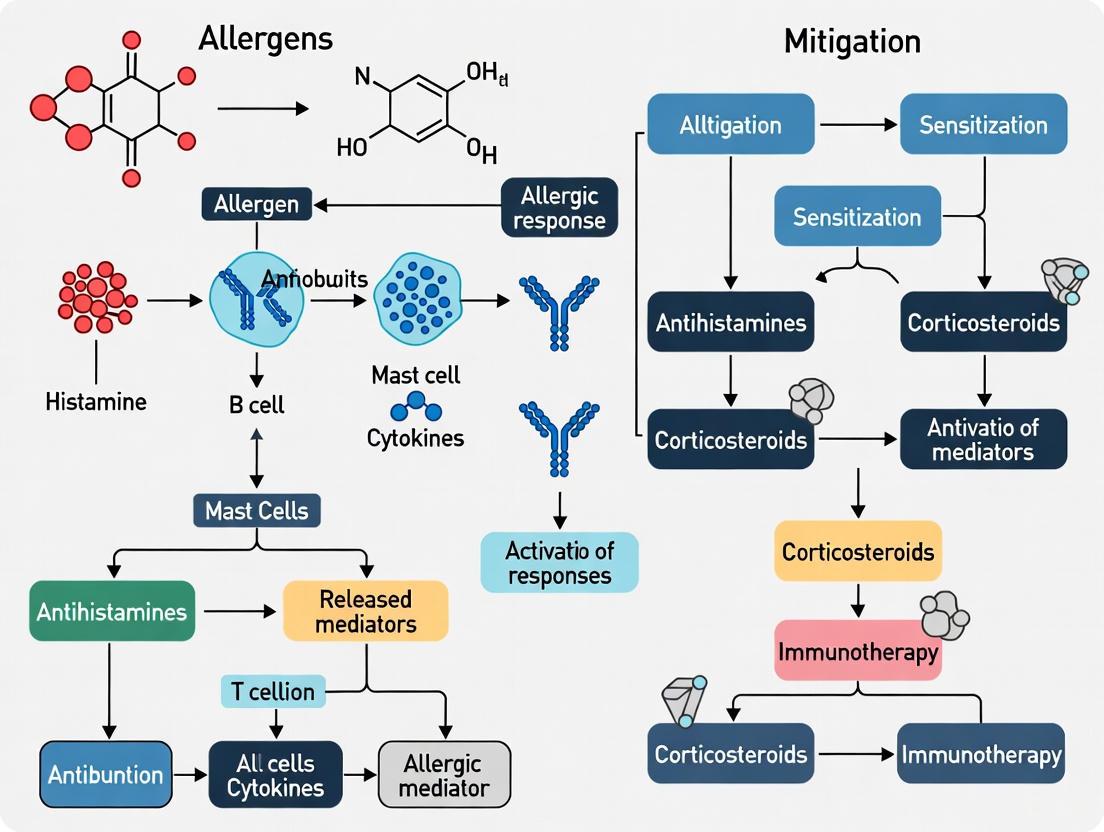
This article provides a comprehensive analysis of the biochemical and immunologic basis of allergic reactions for a specialized audience of researchers and drug development professionals.
Molecular Mechanisms of Allergic Inflammation: From Biochemical Pathways to Targeted Therapeutic Mitigation
Abstract
This article provides a comprehensive analysis of the biochemical and immunologic basis of allergic reactions for a specialized audience of researchers and drug development professionals. It explores the foundational science of IgE-mediated mast cell activation, eosinophil recruitment, and the molecular features conferring allergenicity. The scope extends to methodological advances in immunotherapy and biologics, troubleshooting challenges related to reaction thresholds and variability, and a critical validation of emerging therapies through the lens of late-stage clinical trials and investment trends. The synthesis of these areas aims to inform future research and the development of precise, mechanism-based anti-allergic interventions.
Decoding the Biochemical Triggers: IgE, Mast Cells, and Innate Immune Activation
The immunoglobulin E (IgE)-FcεRI axis represents a cornerstone mechanism in the pathogenesis of type I hypersensitivity reactions, serving as the primary molecular bridge between allergen recognition and the initiation of allergic inflammation. The interaction between IgE and its high-affinity receptor, FcεRI, is characterized by exceptional binding affinity (K_d ≈ 10^-10 M), which is at least two orders of magnitude greater than that of IgG for its Fcγ receptors [1]. This profound affinity enables the sensitization of mast cells and basophils for prolonged periods, establishing a primed state wherein subsequent allergen exposure triggers immediate and potent inflammatory responses. The clinical manifestations of this axis range from mild local reactions to systemic anaphylaxis, affecting up to 30% of the population in Western countries, with prevalence steadily increasing [2]. Understanding the structural, biochemical, and signaling mechanisms of this axis is paramount for developing targeted therapeutic strategies for allergic disorders.
This review comprehensively examines the IgE-FcεRI interaction from molecular structure to translational applications, providing researchers with both foundational knowledge and contemporary experimental approaches for investigating this critical pathway in allergic disease.
Molecular Architecture of IgE and FcεRI
Structural Features of Immunoglobulin E
Immunoglobulin E exhibits a unique molecular architecture that distinguishes it from other antibody classes. Unlike IgG antibodies, IgE lacks a hinge region and instead features an additional constant domain in its heavy chain, resulting in a Fc region composed of Cε2, Cε3, and Cε4 domains (Figure 1a,b) [1]. The Cε2 domain pair functionally replaces the hinge region found in IgG and demonstrates remarkable conformational flexibility [1]. Biophysical and structural studies have revealed that IgE-Fc adopts an acutely bent, asymmetrical conformation in solution, with the Cε2 domain pair folded back against the Cε3-Cε4 domains (Figure 2a) [1]. This compact structure undergoes significant conformational changes upon receptor binding, transitioning toward more extended forms that facilitate immune recognition [3].
Table 1: Key Structural Domains of IgE and Their Functions
| Domain | Structural Features | Functional Roles |
|---|---|---|
| Cε2 | Replaces hinge region; mediates Fab flexibility | Stabilizes IgE-FcεRI interaction; allosteric regulation [1] [4] |
| Cε3 | Binds FcεRIα; undergoes conformational opening | Primary receptor binding site; allosteric communication with Cε4 [1] [3] |
| Cε4 | Membrane-proximal domain; structural homology to IgG Cγ3 | CD23 binding site; allosteric communication with Cε3 [1] [3] |
| Fab | Antigen-binding fragments; variable regions | Allergen recognition and binding; cross-linking initiates signaling [1] |
A conserved glycosylation site at Asn394 in the Cε3 domain, structurally homologous to Asn297 in IgG Cγ2, is always fully occupied and contributes to structural stability [1]. Unlike IgG, however, IgE glycosylation at this site is of the "high-mannose" type, which may influence its interactions with immune cells [1].
FcεRI: The High-Affinity IgE Receptor
FcεRI exists in multiple oligomeric forms with distinct expression patterns across cell types (Table 2). The classical tetrameric form (αβγ₂) is constitutively expressed on mast cells and basophils, while a trimeric form (αγ₂) is present on antigen-presenting cells such as monocytes, dendritic cells, and Langerhans cells [5]. The α chain contains the IgE-binding site, the β chain enhances receptor maturation and signal amplification, and the γ chain homodimer mediates signal transduction through immunoreceptor tyrosine-based activation motifs (ITAMs) [5].
Table 2: FcεRI Isoforms and Their Cellular Distribution
| Isoform | Subunit Composition | Cell Type Expression | Primary Functions |
|---|---|---|---|
| Tetrameric | αβγ₂ | Mast cells, basophils | High-affinity IgE binding; signal amplification; mediator release [5] |
| Trimeric | αγ₂ | Monocytes, dendritic cells, Langerhans cells | IgE binding; antigen presentation; IgE-mediated antigen focusing [5] |
The unliganded FcεRI on mast cell surfaces has a relatively short half-life of approximately 24 hours in vitro. However, when bound to IgE, the receptor complex is stabilized and expressed throughout the cell's lifespan [5]. This stabilization has significant implications for allergic sensitization and the persistence of allergic phenotypes.
IgE-FcεRI Interaction Dynamics and Allosteric Regulation
Binding Affinity and Complex Formation
The interaction between IgE and FcεRI represents one of the highest affinity protein-protein interactions in the immune system, with a dissociation constant (K_d) of approximately 10^-10 M [5]. This extraordinary affinity results in most IgE being cell-bound rather than circulating freely, with only minimal amounts of allergen required to trigger mast cell degranulation through receptor cross-linking [1]. The binding interface primarily involves the Cε3 domains of IgE and the extracellular domain of the FcεRI α chain [1] [3].
Recent structural studies have revealed that IgE-Fc undergoes significant conformational changes upon FcεRI binding, with the Cε3 domains adopting a more "open" conformation to engage the receptor [3]. Surprisingly, the Cε2 domain, while not directly participating in the binding interface, plays a crucial role in stabilizing the IgE-FcεRI complex, as its deletion increases the dissociation rate of IgE from the receptor [4].
Allosteric Modulation of IgE-Receptor Interactions
The IgE-Fc structure exhibits remarkable allosteric communication between distant receptor-binding sites, providing opportunities for therapeutic intervention (Figure 3) [1]. For example, the anti-IgE antibody omalizumab binds to the Cε3 domains overlapping with the FcεRI binding site and inhibits receptor engagement through a combination of steric hindrance and allosteric mechanisms [3]. Similarly, MEDI4212 locks the Cε3 domains in an open conformation incompatible with FcεRI binding [3].
Recent research has identified a novel mechanism of allosteric inhibition through targeting of the Cε2 homodimer domain. The HMK-12 Fab fragment binds simultaneously to two equivalent epitopes on the Cε2 domain, reducing the binding affinity of Fc domains and causing rapid removal of IgE from preformed receptor complexes [4]. This allosteric disruption occurs even after allergen challenge and inhibits anaphylactic reactions, suggesting therapeutic potential for acute allergic responses [4].
FcεRI-Mediated Signaling Cascades: From Receptor Engagement to Effector Responses
Proximal Signaling Events
The FcεRI signaling cascade initiates when multivalent allergens cross-link receptor-bound IgE molecules, bringing multiple FcεRI complexes into proximity and triggering a well-characterized phosphorylation cascade (Figure 4) [5] [6]. The tyrosine kinase Lyn, constitutively associated with the FcεRI β chain, phosphorylates the ITAMs present in the FcεRI β and γ chains [5] [6]. This phosphorylation recruits additional Lyn molecules and spleen tyrosine kinase (Syk) through their Src homology 2 (SH2) domains [5].
Activated Syk phosphorylates several adapter proteins, including linker for activation of T cells (LAT) and SH2 domain-containing leukocyte protein of 76 kDa (SLP-76), nucleating the formation of a multimolecular signaling complex [5] [6]. This complex recruits and activates phospholipase C gamma (PLCγ), which hydrolyzes phosphatidylinositol 4,5-bisphosphate (PIP₂) to generate inositol 1,4,5-trisphosphate (IP₃) and diacylglycerol (DAG) [5].
Calcium Mobilization and Downstream Pathways
The production of IP₃ triggers calcium release from endoplasmic reticulum stores through IP₃ receptor channels, leading to the opening of calcium release-activated calcium (CRAC) channels in the plasma membrane and sustained calcium influx [6]. The resulting elevation in intracellular calcium concentration, synergizing with DAG, activates protein kinase C (PKC) isoforms and other calcium-sensitive effectors [6].
These signaling events culminate in the activation of transcription factors including nuclear factor kappa B (NF-κB) and nuclear factor of activated T-cells (NFAT), which regulate the expression of numerous proinflammatory cytokines, chemokines, and growth factors [5] [6]. Concurrently, the rearrangement of the actin cytoskeleton facilitates the fusion of cytoplasmic granules with the plasma membrane, leading to the release of preformed mediators [6].
Post-Translational Regulation
Recent research has identified ubiquitin-specific protease 5 (USP5) as a critical regulator of FcεRI stability and signaling. USP5 interacts with FcεRIγ, leading to its deubiquitylation and stabilization [7]. USP5 knockdown or inhibition with WP1130 attenuates IgE-mediated mast cell activation and allergic inflammation in mice, identifying the USP5-FcεRIγ axis as a potential therapeutic target [7]. The E3 ubiquitin ligase Cbl-b promotes FcεRIγ polyubiquitylation and degradation, establishing a balanced regulatory mechanism for receptor turnover [7].
Figure 1: FcεRI-Mediated Signaling Cascade. Allergen-mediated cross-linking of IgE-bound FcεRI triggers a phosphorylation cascade involving Lyn and Syk kinases, leading to PLCγ activation. Subsequent calcium mobilization and PKC activation stimulate degranulation and transcription factors that induce cytokine production [5] [6].
Experimental Methodologies for Investigating the IgE-FcεRI Axis
Structural Biology Approaches
X-ray crystallography has been instrumental in elucidating the atomic-level details of IgE-Fc and its complexes with receptors and therapeutic antibodies. Structures of IgE-Fc alone and in complex with FcεRI, CD23, and various Fab fragments have revealed the conformational flexibility and allosteric regulation of this system [1] [4] [3]. For example, the structure of the HMK-12 Fab/IgE F(ab')₂ complex at 2.9 Å resolution demonstrated simultaneous binding to two epitopes on the Cε2 homodimer, providing mechanistic insight into allosteric inhibition [4].
Small-angle X-ray scattering (SAXS) studies of IgE and IgE-Fc in solution have confirmed the compact, bent conformation observed in crystal structures and provided information about conformational dynamics [1]. Fluorescence resonance energy transfer (FRET) using IgE molecules fluorescently labeled in their antigen-binding sites and C-termini has enabled distance measurements that validate the bent conformation in solution [1].
Binding and Functional Assays
Surface plasmon resonance (SPR) is widely used to characterize the kinetics and affinity of IgE-receptor interactions. For example, SPR studies of the 8D6 Fab interaction with IgE-Fc revealed a 2:1 binding stoichiometry with subnanomolar affinity (K_d ≈ 20-60 pM), demonstrating higher affinity than omalizumab [3]. Standard protocols involve covalent coupling of one binding partner to the sensor chip and flowing the other partner over the surface while monitoring binding in real time [3].
Flow cytometry assays measure IgE binding to FcεRI-expressing cells (e.g., PT18 mouse mast cells) and the inhibitory effects of therapeutic antibodies. Cells are incubated with fluorescently labeled IgE in the presence or absence of inhibitors, washed, and analyzed by flow cytometry to quantify receptor binding [4].
Table 3: Key Experimental Assays for Studying IgE-FcεRI Interactions
| Method | Application | Key Readouts | Considerations |
|---|---|---|---|
| Surface Plasmon Resonance | Binding kinetics and affinity | Kd, kon, k_off values; stoichiometry | Requires purified components; label-free detection [3] |
| Flow Cytometry | Cellular binding and inhibition | Fluorescence intensity; % inhibition | Preserves cellular context; requires FcεRI-expressing cells [4] |
| Calcium Imaging | Signaling activation | Intracellular Ca²⁺ flux; response kinetics | Functional readout; real-time monitoring [6] |
| β-Hexosaminidase Release | Mast cell degranulation | Enzyme activity in supernatant | Correlates with histamine release; colorimetric detection [4] [7] |
| Western Blotting | Signaling phosphorylation | Protein phosphorylation; expression levels | Requires phospho-specific antibodies; semi-quantitative [4] [7] |
Functional Characterization of Mast Cell Responses
Degranulation assays measure the release of preformed mediators such as β-hexosaminidase or histamine from mast cells following IgE cross-linking [4] [7]. Bone marrow-derived mast cells (BMMCs) are typically sensitized with IgE overnight, stimulated with antigen, and supernatant enzyme activity is measured colorimetrically [4] [7].
Cytokine production is assessed by ELISA or multiplex assays following mast cell activation. Unlike rapid degranulation, cytokine secretion occurs over hours, reflecting de novo synthesis [6].
In vivo models of passive cutaneous anaphylaxis (PCA) evaluate the functional consequences of IgE-FcεRI interactions. Mice are sensitized by intradermal injection of allergen-specific IgE, followed hours or days later by intravenous antigen challenge with Evans blue dye. Extravasation of dye at the sensitization site quantifies vascular permeability and mast cell-dependent anaphylaxis [4].
The Scientist's Toolkit: Essential Research Reagents
Table 4: Key Research Reagents for Investigating IgE-FcεRI Biology
| Reagent/Cell Line | Key Features | Research Applications |
|---|---|---|
| SPE-7 IgE | Anti-DNP murine IgE antibody; well-characterized specificity | Mast cell sensitization; binding studies; anaphylaxis models [4] |
| LAD2 Cells | Human mast cell line; expresses FcεRI and MRGPRX2 | Human mast cell biology; IgE-mediated activation studies [8] |
| Bone Marrow-Derived Mast Cells (BMMCs) | Primary murine mast cells differentiated with IL-3 | Physiological signaling studies; knockout/transgenic validation [6] |
| Omalizumab (Xolair) | Humanized anti-IgE monoclonal antibody; clinically approved | Therapeutic mechanism studies; IgE neutralization controls [1] [3] |
| HMK-12 Antibody | Rat anti-murine IgE monoclonal antibody; targets Cε2 domain | Allosteric inhibition studies; complex dissociation experiments [4] |
| 8D6 Fab | Anti-IgE antibody fragment; inhibits FcεRI but not CD23 binding | Selective receptor blockade studies; structural biology [3] |
| WP1130 | USP5 deubiquitinase inhibitor | FcεRI stability regulation studies; allergic inflammation modulation [7] |
Therapeutic Targeting and Future Directions
Established and Emerging Strategies
Therapeutic targeting of the IgE-FcεRI axis has advanced significantly with the clinical success of omalizumab, a humanized anti-IgE monoclonal antibody that binds circulating IgE and prevents receptor engagement [1] [3]. Omalizumab reduces free IgE levels by up to 95% and downregulates FcεRI expression on basophils, providing benefit in allergic asthma and chronic urticaria [3].
Emerging approaches include allosteric inhibitors like HMK-12 Fab that target the Cε2 domain and dissociate preformed IgE-FcεRI complexes, offering potential for intervention even after allergen exposure [4]. The USP5-FcεRIγ axis represents another promising target, with USP5 inhibition attenuating mast cell activation and allergic inflammation in preclinical models [7].
IgE in Cancer Immunotherapy
Beyond allergic disease, the powerful effector functions of IgE are being harnessed for cancer immunotherapy. IgE antibodies offer extremely high affinity for FcεRI on immune effector cells known to infiltrate solid tumors [1]. Unlike IgG-based therapies, IgE engages distinct effector populations and is not subject to inhibition by FcγRIIB [1]. The first anti-cancer IgE antibody, MOv18, has entered clinical testing, demonstrating the potential of this novel therapeutic modality [1].
Figure 2: Therapeutic Targeting Strategies. Multiple approaches to modulate the IgE-FcεRI axis include IgE neutralization (omalizumab), complex dissociation (HMK-12), signaling inhibition (USP5 inhibitors), CD23 modulation (lumiliximab), cytokine targeting, and leveraging IgE for cancer immunotherapy [1] [4] [3].
Concluding Perspectives
The IgE-FcεRI axis continues to reveal unexpected complexity in its structural organization, dynamic regulation, and functional versatility. The conformational flexibility of IgE-Fc, the allosteric communication between receptor binding sites, and the context-dependent signaling outcomes underscore the sophistication of this system in orchestrating immune responses. Future research directions include elucidating the structural basis of IgE memory, developing more effective strategies to disrupt established allergic sensitization, and harnessing IgE effector functions for novel therapeutic applications beyond allergy.
For researchers investigating this axis, the integration of structural biology with cellular signaling studies and in vivo models remains essential to advance both fundamental understanding and translational applications. The continued refinement of targeted interventions promises improved outcomes for the growing population affected by IgE-mediated disorders.
Mast cells are tissue-resident immune cells that function as sentinels at host-environment interfaces such as the skin, respiratory tract, and gastrointestinal mucosa. These long-lived cells originate from bone marrow progenitors that complete their maturation in tissues under the influence of local microenvironmental factors, particularly stem cell factor (SCF) which signals through the c-Kit receptor [9]. Their strategic location positions mast cells to be among the first responders to pathogens, toxins, and allergens. Mast cells are equipped with an impressive arsenal of bioactive compounds stored within specialized cytoplasmic granules, poised for immediate release upon activation—a process known as degranulation [10]. This rapid-response capability makes mast cells central players in allergic inflammation, host defense, and various pathological conditions.
The biochemical basis of allergic reactions fundamentally revolves around mast cell activation and the subsequent release of three major classes of mediators: preformed mediators (stored in granules and released within seconds to minutes), newly synthesized lipid mediators (produced over minutes), and cytokines/chemokines (released over hours) [11]. Understanding the precise mechanisms governing the production and release of these mediators provides the foundation for developing targeted therapeutic strategies to mitigate allergic diseases, which represent one of the most common chronic health conditions worldwide [12].
Preformed Mediators: The Rapid-Response Arsenal
The secretory granules of mast cells contain a diverse array of preformed compounds that are released within seconds to minutes of activation through a process of regulated exocytosis [10] [13]. These mediators are responsible for the immediate symptoms of allergic reactions and establish the initial inflammatory milieu.
Table 1: Major Classes of Preformed Mast Cell Mediators
| Mediator Class | Specific Examples | Primary Biological Functions |
|---|---|---|
| Biogenic Amines | Histamine, Serotonin, Dopamine | Vasodilation, increased vascular permeability, bronchoconstriction, smooth muscle contraction [10] |
| Proteoglycans | Serglycin (with heparin/chondroitin sulfate chains) | Granule matrix organization, mediator stabilization, anticoagulant activity [10] |
| Proteases | Tryptase, Chymase, Carboxypeptidase A3, Cathepsins, MMP-9 | Tissue matrix degradation, activation of complementary enzyme systems, regulation of inflammation [10] [14] |
| Lysosomal Enzymes | β-Hexosaminidase, β-Glucuronidase, Arylsulfatase A | Carbohydrate degradation, potential extracellular functions post-release [10] |
| Preformed Cytokines | TNF-α, IL-4, TGF-β, bFGF-2, VEGF | Endothelial activation, promotion of TH2 responses, tissue remodeling, angiogenesis [10] [15] |
The release of these preformed mediators occurs through a highly coordinated process of membrane fusion events involving specific proteins including VAMP, Syntaxins, and SNAP-23 [14]. Notably, mast cells can undergo differential release of mediators depending on the stimulus, with some activation pathways triggering selective release of specific mediators without full-scale degranulation [11].
Lipid Mediator Synthesis: The Secondary Wave
Following the initial degranulation event, mast cells initiate the de novo synthesis of lipid mediators from membrane phospholipid precursors. This secondary wave of mediator production occurs over minutes to hours and significantly amplifies and prolongs the inflammatory response [15] [16].
The biosynthesis of lipid mediators begins with phospholipase A2-mediated release of arachidonic acid from membrane phospholipids. This fatty acid precursor then enters one of two major enzymatic pathways:
- The cyclooxygenase pathway produces prostaglandins (including PGD₂) and thromboxanes
- The 5-lipoxygenase pathway generates leukotrienes (LTC₄, LTD₄, LTE₄) [15]
Table 2: Major Newly Synthesized Lipid Mediators in Mast Cells
| Lipid Mediator | Biosynthetic Pathway | Biological Effects |
|---|---|---|
| Prostaglandin D₂ (PGD₂) | Cyclooxygenase | Bronchoconstriction, vasodilation, recruitment of TH2 cells [15] |
| Leukotriene C₄ (LTC₄) | 5-Lipoxygenase | Increased vascular permeability, smooth muscle contraction, mucus production [15] |
| Platelet-Activating Factor (PAF) | Remodeling pathway | Platelet aggregation, leukocyte activation, increased vascular permeability [17] [16] |
| Endocannabinoids (AEA, 2-AG) | Membrane phospholipid-derived | Modulation of degranulation and cytokine synthesis via CB1/CB2 receptors [16] |
Recent research has revealed that mast cells also produce specialized pro-resolving mediators (SPMs) such as lipoxins, resolvins, and protectins, which actively promote the resolution of inflammation [18] [16]. For example, Protectin D1 has been shown to inhibit mast cell degranulation and suppress allergic inflammation by blocking FcεRI signaling pathways [18].
Cytokine Cascades: Sustaining and Regulating Inflammation
Beyond the rapid release of preformed mediators and lipid mediators, activated mast cells initiate sophisticated cytokine and chemokine cascades that develop over hours and orchestrate the late-phase and chronic aspects of allergic inflammation [15]. These signaling molecules recruit and activate additional immune cells, including eosinophils, basophils, and T lymphocytes, thereby amplifying and sustaining the inflammatory response.
Mast cells are capable of producing a broad spectrum of cytokines and chemokines, with their specific profile influenced by the nature of the activating stimulus and the tissue microenvironment. Key cytokines produced include:
- Tumor Necrosis Factor-α (TNF-α): Stored preformed in granules and also newly synthesized; activates endothelial cells to increase adhesion molecule expression, promoting leukocyte influx into tissues [15]
- Interleukin-4 (IL-4) and Interleukin-13 (IL-13): Drive TH2 cell differentiation and B cell class switching to IgE production [9] [15]
- Interleukin-5 (IL-5): Promotes eosinophil production, recruitment, and activation [15]
- Interleukin-33 (IL-33): An alarmin released from damaged epithelial cells that amplifies mast cell activation and TH2 responses [9]
The cytokine cascades initiated by mast cells not only perpetuate inflammation but also contribute to structural changes in affected tissues, including fibrosis, angiogenesis, and tissue remodeling [15] [14].
Signaling Pathways Governing Mast Cell Activation
Mast cell degranulation and mediator synthesis are initiated through multiple receptor systems that detect diverse activating stimuli. The best-characterized pathway is the FcεRI-mediated signaling cascade triggered by allergen cross-linking of surface-bound IgE [10] [15].
Diagram 1: FcεRI Signaling Pathway (Title: IgE-Mediated Mast Cell Activation)
The FcεRI signaling cascade begins with antigen-mediated cross-linking of IgE-bound FcεRI receptors, which initiates a phosphorylation cascade involving Lyn, Fyn, and Syk kinases [18]. This leads to calcium influx and activation of transcription factors including NF-κB, ultimately resulting in three major outcomes: (1) microtubule-driven granule translocation and fusion with the plasma membrane (degranulation), (2) activation of enzymes for lipid mediator synthesis, and (3) cytokine gene transcription and protein synthesis [18].
In addition to FcεRI, mast cells express numerous other receptors that can trigger or modulate activation:
- Mas-related G-protein coupled receptors (MRGPRX2): Activated by neuropeptides, venom components, and certain drugs [9] [14]
- Toll-like receptors (TLRs): Recognize pathogen-associated molecular patterns [11] [14]
- Complement receptors: Bind anaphylatoxins C3a and C5a [11]
- Cytokine receptors: Including IL-33R/ST2 which amplifies mast cell responses [9]
Experimental Models and Methodologies
In Vitro Mast Cell Culture Systems
Research on mast cell biology employs various culture systems that replicate different aspects of mast cell development and function:
- Mouse Bone Marrow-Derived Mast Cells (BMMCs): Generated by culturing bone marrow progenitors with IL-3 for 4-5 weeks; represent mucosal-like mast cells [11] [9]
- Human Peripheral Blood-Derived Mast Cells: Cultured from circulating CD34+ progenitors with SCF and IL-6; develop into mature mast cells over 8-12 weeks [11] [14]
- Rodent Peritoneal Mast Cells: Isolated directly from peritoneal cavities; represent connective tissue-type mast cells [11]
- Human Mast Cell Lines (LAD2, HMC-1): Immortalized lines useful for genetic and biochemical studies [11] [18]
Degranulation Assays
Quantification of mast cell degranulation employs multiple complementary approaches:
- β-Hexosaminidase Release: Measures activity of this lysosomal enzyme released into supernatants; most common degranulation marker [10] [11]
- Histamine Release: Quantified using ELISA or fluorometric assays [11]
- Tryptase Release: Particularly relevant for human mast cell studies; measured by ELISA [13]
- Surface Expression of CD63 or CD107a: Flow cytometric analysis of granule membrane proteins that translocate to the cell surface during degranulation [11]
Signaling Studies
Molecular analysis of mast cell activation pathways utilizes:
- Western Blotting: To detect phosphorylation of signaling intermediates (Lyn, Fyn, Syk) [18]
- Calcium Imaging: Using fluorescent indicators (Fura-2, Fluo-4) to measure intracellular calcium flux [18]
- Gene Expression Analysis: RNA sequencing or qPCR to quantify cytokine and chemokine mRNA levels [11]
- Pharmacological Inhibition: Using specific kinase inhibitors to dissect signaling pathways [18] [14]
Diagram 2: Experimental Workflow (Title: Mast Cell Activation Study Design)
The Scientist's Toolkit: Essential Research Reagents
Table 3: Key Research Reagents for Mast Cell Studies
| Reagent/Category | Specific Examples | Research Applications |
|---|---|---|
| Mast Cell Activators | Anti-IgE antibodies, compound 48/80, calcium ionophore A23187, substance P | Induce degranulation through specific receptor pathways or direct calcium influx [11] |
| Signaling Inhibitors | Syk inhibitors (R406), Src-family kinase inhibitors (PP2), NF-κB inhibitors | Dissect molecular mechanisms of mast cell activation [18] [14] |
| Lipid Mediator Modulators | Protectin D1, lipoxin A4, resolvins, endocannabinoids | Investigate resolution of inflammation and negative regulation of mast cells [18] [16] |
| Detection Antibodies | Anti-phospho-Syk, anti-tryptase, anti-histamine, cytokine-specific ELISA kits | Quantify mediator release and signaling pathway activation [11] [18] |
| Animal Models | Mast cell-deficient mice (c-Kit mutants), humanized mouse models, passive cutaneous anaphylaxis models | Study mast cell functions in physiological contexts and disease models [10] [18] |
Therapeutic Implications and Future Directions
The detailed understanding of mast cell degranulation mechanisms and mediator production has enabled the development of targeted therapeutic strategies for allergic diseases. Current approaches include:
- Anti-IgE Therapy: Omalizumab, a monoclonal antibody that binds circulating IgE and prevents FcεRI engagement [17] [14]
- Receptor Antagonists: Drugs targeting histamine H1 receptors, cysteinyl leukotriene receptors, and prostaglandin receptors [14]
- Signal Transduction Inhibitors: Kinase inhibitors targeting Syk or other signaling intermediates [14]
- Stabilizing Compounds: Cromolyn sodium and related agents that prevent mast cell degranulation [14]
Emerging research focuses on the nuanced regulation of mast cell responses, including the role of lipid-derived specialized pro-resolving mediators [18] [16] and the potential for biologics targeting specific mast cell surface receptors such as MRGPRX2 [9] [14]. Future therapeutic innovations will likely exploit the growing understanding of mast cell heterogeneity and tissue-specific differences to develop more precise interventions with improved efficacy and safety profiles.
The continued elucidation of the biochemical basis of mast cell activation and mediator production remains essential for advancing our ability to mitigate allergic reactions and other mast cell-driven pathologies.
Allergic diseases are systemic disorders resulting from powerful immune responses to typically innocuous substances known as allergens. Understanding the molecular basis of allergenicity is crucial for developing effective diagnostic and therapeutic strategies. Research conducted over recent years has revealed that allergens possess common intrinsic features that enable them to be recognized as Th2-inducing antigens by innate immune defenses [19]. These molecular patterns—protease activity, specific surface features, and characteristic glycosylation profiles—either individually or collectively trigger signaling pathways that lead to T helper 2 (Th2) cell polarization, hyper-immunoglobulin E (IgE) production, and the clinical manifestations of allergy [19]. This review synthesizes current understanding of these molecular patterns, their mechanisms in initiating allergic responses, and their implications for therapeutic intervention.
Protease Activity in Allergens
Protease Allergens and Their Substrate Specificities
Proteolytically active allergens represent a significant category of allergenic proteins that directly cleave biological substrates to initiate and amplify allergic responses. These allergens predominantly include cysteine proteases (e.g., Der p 1 from house dust mites), serine proteases (e.g., Per a 10 from cockroaches), and aspartic proteases found in various allergenic sources [19] [20]. Their enzymatic activity is not merely incidental but central to their allergenicity, as it enables them to breach physiological barriers and modulate immune cell functions [21].
The substrate specificity of these protease allergens determines their biological impact. Key substrates include tight junction proteins (ZO-1, occludin), cell surface receptors (CD23, CD25, PAR-2), and innate immune proteins (surfactant proteins A and D, alpha-1-antitrypsin) [19] [20]. For instance, the cysteine protease activity of Der p 1 specifically cleaves tight junction proteins in respiratory epithelium, increasing paracellular permeability and facilitating allergen access to submucosal immune cells [19]. Similarly, Der p 1 cleaves CD23 (the low-affinity IgE receptor) from B-cell surfaces, which disrupts the negative feedback mechanism for IgE synthesis and promotes excessive IgE production [19].
Table 1: Protease Allergens and Their Biological Substrates
| Allergen | Source | Protease Type | Key Biological Substrates | Immunological Consequences |
|---|---|---|---|---|
| Der p 1 | House dust mite | Cysteine protease | Tight junctions, CD23, CD25, SP-A/D | Barrier disruption, enhanced IgE production, reduced IL-2 signaling [19] |
| Per a 10 | Cockroach | Serine protease | Tight junctions, CD23, CD25 | Epithelial barrier disruption, Th2 bias [20] |
| Pen c 13 | Mold | Serine protease | Tight junctions | Increased epithelial permeability [20] |
| Fungal proteases | Various fungi | Serine proteases | PAR-2 | Initiation of inflammatory signaling [19] |
Experimental Protocols for Assessing Protease Activity
Epithelial Barrier Integrity Assay
Purpose: To evaluate the effect of protease allergens on epithelial tight junction integrity [20].
Methodology:
- Culture human airway epithelial cells (e.g., Calu-3, BEAS-2B) at air-liquid interface until fully differentiated and polarized.
- Expose cells to native proteolytically active allergens, heat-inactivated allergens, or recombinant inactive allergens (typical concentration: 10-20 μg/mL) for varying durations (2-24 hours).
- Measure transepithelial electrical resistance (TEER) using volt-ohm meter at regular intervals.
- Assess paracellular permeability by adding fluorescently-labeled dextran (4 kDa) to the apical chamber and measuring its appearance in the basolateral chamber over time using fluorometry.
- Confirm tight junction disruption immunofluorescence by staining for ZO-1 and occludin with specific antibodies followed by confocal microscopy analysis.
Key Controls: Include cells exposed to PBS (negative control) and cells exposed to proteolytically inactive allergen preparations (e.g., heat-inactivated, recombinant inactive, or protease inhibitor-treated allergens) to demonstrate activity-dependent effects [20].
Receptor Cleavage Assay
Purpose: To detect allergen-mediated cleavage of immune cell surface receptors (e.g., CD23, CD25) [20].
Methodology:
- Isolate human PBMCs or purified B cells/T cells from fresh blood samples using density gradient centrifugation.
- Incubate cells (1×10^6 cells/mL) with serial dilutions of proteolytically active or inactive allergens (0-20 μg/mL) for 2-4 hours at 37°C.
- Wash cells and stain with fluorescently-labeled anti-CD23 (for B cells) or anti-CD25 (for T cells) antibodies.
- Analyze surface receptor expression using flow cytometry, comparing mean fluorescence intensity and percentage of positive cells between treatment conditions.
- Confirm cleavage specificity by pre-treating allergens with protease inhibitors before cell exposure.
Surface Features and Structural Motifs
Molecular Surface Patterns in Allergen Recognition
Beyond enzymatic activity, allergens possess distinctive surface features and structural motifs that contribute to their allergenicity. These surface characteristics include specific molecular patterns recognizable by innate immune receptors, hydrophobic patches that influence antigen processing and presentation, and structural stability features that resist degradation and prolong immune exposure [19]. For instance, the grass pollen allergen Phl p 1 exhibits surface features that may represent allergen-specific molecular patterns recognizable by pattern recognition receptors on immune cells [19].
The hydrophobicity and charge distribution on allergen surfaces influence their interaction with antigen-presenting cells and subsequent processing for MHC class II presentation. Allergens with specific surface characteristics may undergo limited proteolysis in endolysosomal compartments, generating peptide fragments with enhanced affinity for MHC class II molecules that preferentially activate Th2 cells [19] [21]. Additionally, surface-exposed amino acid residues may directly engage with Toll-like receptors or C-type lectins on dendritic cells, initiating signaling cascades that promote Th2 polarization [19].
Lipid Transfer Proteins as Model Allergens
Plant non-specific lipid transfer proteins (LTPs) exemplify the importance of structural features in allergenicity. These compact proteins are stabilized by four disulfide bonds that confer remarkable resistance to thermal processing and gastrointestinal digestion [22]. This structural stability allows LTPs to reach the intestinal immune system intact, increasing their potential for systemic absorption and severe allergic reactions [22]. The structural conservation of LTPs across plant species explains the extensive cross-reactivity observed in patients sensitized to these allergens, who may react to botanically unrelated plant-derived foods [22].
Table 2: Structural Features of Major Allergen Families
| Allergen Family | Representative Members | Key Structural Features | Impact on Allergenicity |
|---|---|---|---|
| Lipid Transfer Proteins | Pru p 3 (peach), Ara h 9 (peanut) | Compact structure, 4 disulfide bonds, hydrophobic cavity | High stability to heat and digestion, cross-reactivity [22] |
| Profilins | Bet v 2 (birch), Hev b 8 (latex) | Conserved actin-binding domain | Extensive cross-reactivity across plant species [19] |
| Tropomyosins | Der p 10 (mite), Pen a 1 (shrimp) | Highly conserved protein structure | Cross-reactivity between invertebrates (mites, crustaceans, insects) [19] |
| Bet v 1-like | Bet v 1 (birch), Ara h 8 (peanut) | PR-10 protein structure, hydrophobic cavity | Cross-reactivity in pollen-food syndrome [19] |
Glycosylation Patterns in Allergens
Glycosylation as a Recognition Element
Glycosylation is one of the most abundant post-translational modifications, affecting over 50% of human proteins [23]. For allergens, specific glycosylation patterns serve as recognition elements for innate immune cells, particularly through C-type lectin receptors such as the mannose receptor (CD206) and DC-SIGN [19] [24]. Analysis of major allergens including Der p 1, Fel d 1, Ara h 1, and others has revealed that dominant sugar moieties include 1-2, 1-3, and 1-6 linked mannose residues [24]. These carbohydrate structures are largely absent in mammalian glycoproteins, making them recognizable as "non-self" patterns by immune cells [24].
The mannose receptor mediates internalization of glycosylated allergens by dendritic cells, influencing subsequent T-cell polarization toward Th2 responses [19] [24]. Supporting this mechanism, deglycosylated Der p 1 exhibits minimal uptake by dendritic cells compared to its native and hyperglycosylated counterparts, with the latter being more readily internalized [24]. Additionally, glycosylated allergens stimulate lung epithelial cells to secrete TSLP in a carbohydrate-dependent manner, creating a Th2-promoting microenvironment [24].
Glycan-Binding Proteins in Allergic Sensitization
Multiple families of glycan-binding proteins (GBPs) participate in allergic sensitization to glycosylated allergens. C-type lectins (e.g., mannose receptor, DC-SIGN, dectin-1, dectin-2) function as pattern recognition receptors that bind specific carbohydrate structures on allergens [23]. Siglecs (sialic acid-binding immunoglobulin-like lectins) typically contain immunoreceptor tyrosine-based inhibitory motifs and generally suppress immune cell activation, though they can be engaged by sialylated allergens [23]. Galectins, which bind β-galactoside-containing glycans, regulate immune cell function both intracellularly and extracellularly [23].
Table 3: Glycan-Binding Proteins in Allergic Immunity
| GBP Family | Example Receptors | Ligand Specificity | Role in Allergic Sensitization |
|---|---|---|---|
| C-type Lectins | Mannose Receptor (CD206), DC-SIGN | High mannose structures, fucose | Allergen uptake by DCs, Th2 polarization [19] [24] |
| Siglecs | CD22 (Siglec-2), Siglec-8 | Sialic acid residues | Immune inhibition; allergen engagement may modulate response [23] |
| Galectins | Galectin-1, Galectin-3 | β-galactosides (e.g., poly-LacNAc) | T-cell and neutrophil regulation; direct microbial effects [23] |
| Selectins | E-selectin, P-selectin | Sialylated Lewis antigens | Leukocyte trafficking to inflammatory sites [23] |
Experimental Analysis of Allergen Glycosylation
Lectin-Based Glycosylation Profiling
Purpose: To characterize qualitative and quantitative carbohydrate content of allergens using lectin binding specificities [24].
Methodology:
- Separate allergen proteins (5 μg per sample) using 12% Tris-Glycine SDS-PAGE under reducing conditions.
- Transfer proteins to nitrocellulose membrane using standard western blotting protocols.
- Probe membranes with digoxigenin-labeled lectins with specific sugar binding preferences:
- GNA (Galanthus nivalis agglutinin): terminal mannose residues
- SNA (Sambucus nigra agglutinin): sialic acid linked α-2,6 to galactose
- PNA (peanut agglutinin): galactose β-1,3 N-acetylgalactosamine
- MAA (Maackia amurensis agglutinin): sialic acid linked α-2,3 to galactose
- DSA (Datura stramonium agglutinin): galactose β-1,4 N-acetylglucosamine
- Detect bound lectins using anti-digoxigenin antibodies conjugated to alkaline phosphatase followed by colorimetric development.
- Include positive and negative control glycoproteins with known glycosylation patterns.
Advanced Applications: For spatial distribution analysis, use lectin staining on tissue sections or cell monolayers exposed to allergens, followed by fluorescence microscopy [24].
Periodate Deglycosylation and Functional Assessment
Purpose: To evaluate the functional contribution of carbohydrate moieties to allergen recognition and immune activation [24].
Methodology:
- Treat purified allergens with sodium metaperiodate at a 5:1 molar ratio (periodate:allergen) for 30-60 minutes at room temperature in the dark.
- Stop the oxidation reaction by adding 0.25 mL ethylene glycol per mL of sample.
- Dialyze treated allergens against PBS overnight at room temperature to remove reaction byproducts.
- Confirm deglycosylation by reduced lectin binding in western blot assays.
- Assess functional consequences by comparing:
- Dendritic cell uptake of native vs. deglycosylated allergens using flow cytometry
- Epithelial cell TSLP secretion in response to glycoforms using ELISA
- T-cell polarization capacity using co-culture systems with allergen-pulsed DCs
Integrated Model of Allergen Recognition and Signaling
The molecular patterns of allergens function in concert to initiate and amplify allergic responses through integrated mechanisms. Protease activity breaches epithelial barriers and activates innate immune signaling; surface features facilitate recognition and processing by antigen-presenting cells; and glycosylation patterns engage lectin receptors that direct Th2 polarization. These events collectively create a microenvironment conducive to allergic sensitization.
Diagram 1: Integrated Allergen Recognition and Signaling Pathway. Allergens utilize protease activity, glycosylation patterns, and surface features to disrupt epithelial barriers, activate innate immunity, and polarize adaptive responses toward Th2 and IgE production.
Therapeutic Implications and Research Applications
Targeting Molecular Patterns for Therapeutic Intervention
Understanding the molecular patterns of allergens has enabled novel therapeutic approaches targeting specific mechanisms of allergenicity:
Protease Inhibitors: Small molecule protease inhibitors can neutralize the enzymatic activity of allergens, preventing barrier disruption and receptor cleavage [21]. For example, cystatin A inhibits Der p 1 activity and reduces IL-8 production by keratinocytes [19].
Glycosylation-Modified Vaccines: Recombinant allergens with modified glycosylation patterns show promise as tolerance-inducing vaccines. Subcutaneous administration of glycosylation-modified β-lactoglobulin prevented cow's milk allergy in a mouse model and showed potential for treating existing allergies when combined with anti-CD20 co-therapy [25].
Receptor Blockers: Monoclonal antibodies targeting key receptors in allergic inflammation (e.g., anti-IgE, anti-TSLP, anti-IL-5) represent biological approaches that interrupt the allergic cascade [26].
The Scientist's Toolkit: Essential Research Reagents
Table 4: Key Research Reagents for Studying Allergen Molecular Patterns
| Reagent Category | Specific Examples | Research Applications | Functional Role |
|---|---|---|---|
| Protease Inhibitors | E-64, PMSF, Aprotinin, Leupeptin | Protease activity characterization, functional validation | Inhibit specific protease classes to confirm activity-dependent effects [19] [20] |
| Lectins | GNA, SNA, PNA, MAA, DSA | Glycosylation pattern analysis, carbohydrate profiling | Detect specific sugar moieties on allergens and cells [24] |
| Cell Lines | BEAS-2B (bronchial epithelium), Calu-3 (airway epithelium), DC lines | Barrier function studies, immune activation assays | Model human tissue responses to allergen exposure [20] [24] |
| Recombinant Allergens | rDer p 1, rPer a 10, glycosylation mutants | Structure-function studies, vaccine development | Define molecular features without confounding natural variations [20] [24] |
| Detection Antibodies | Anti-CD23, anti-CD25, anti-ZO-1, anti-Occludin | Receptor cleavage, barrier integrity assessment | Quantify molecular changes induced by protease activity [20] |
The molecular patterns of allergens—protease activity, surface features, and glycosylation profiles—represent fundamental determinants of allergenicity that initiate and amplify Th2 immune responses. These patterns enable allergens to breach physiological barriers, activate innate immune cells through specific receptors, and create microenvironments conducive to allergic sensitization. Understanding these mechanisms at the molecular level provides not only insights into the basic biology of allergic diseases but also promising targets for innovative therapeutic strategies. As research methodologies advance, particularly in structural biology and glycomics, continued investigation of these molecular patterns will undoubtedly yield new opportunities for intervention in the growing epidemic of allergic diseases.
Allergic inflammation is a complex biological response orchestrated by multiple immune cells and mediators. Among these, eosinophils and basophils serve as critical effector cells that significantly amplify and sustain the inflammatory response, particularly during the late-phase reaction [15]. While mast cell degranulation initiates the immediate hypersensitivity response, the subsequent recruitment and activation of eosinophils and basophils contributes substantially to the chronification of inflammation and associated tissue damage [15] [27]. Understanding the precise mechanisms governing the recruitment and activation of these cells is paramount for developing targeted therapeutic strategies for allergic diseases.
This review examines the coordinated effector mechanisms of eosinophils and basophils within the context of allergic inflammation, with particular focus on their recruitment pathways, activation markers, and functional contributions to disease pathology. The intricate interplay between these cells creates a self-amplifying inflammatory loop that characterizes persistent allergic conditions, making them attractive targets for therapeutic intervention.
Cellular Orchestrators of the Allergic Response
Effector Cell Origins and Characteristics
Eosinophils and basophils are granulocytic leukocytes that originate in the bone marrow but follow distinct developmental and migratory pathways. Eosinophils are characterized by granules containing arginine-rich basic proteins that stain bright orange with eosin, while basophils contain granules rich in acidic proteoglycans that take up basic dyes [15]. Under physiological conditions, only very small numbers of eosinophils are present in the circulation, with most residing in tissues, particularly in connective tissue underneath respiratory, gut, and urogenital epithelium [15]. In contrast, basophils are fully mature when they leave the bone marrow and circulate as blood cells [28].
The activation of these cells is tightly regulated, as their inappropriate activation would be highly detrimental to the host [15]. Eosinophil production in the bone marrow is increased by cytokines such as IL-5, which is released when TH2 cells are activated [15]. Interestingly, while transgenic animals overexpressing IL-5 have increased numbers of eosinophils in the circulation, they do not necessarily have more eosinophils in their tissues, indicating that migration from circulation into tissues is regulated separately [15].
Initiation of the Allergic Cascade
The allergic cascade begins when allergens cross-link preformed IgE bound to the high-affinity receptor FcεRI on mast cells [15]. Mast cells line body surfaces and serve as sentinels for the immune system. Upon activation, they release preformed mediators including histamine and enzymes such as tryptase and chymase, followed by the synthesis of leukotrienes, cytokines, and chemokines [15]. This initial response triggers the early phase of allergic reaction, but it is the subsequent recruitment of other effector cells that drives the late-phase response.
The late-phase inflammatory response involves the coordinated recruitment of TH2 lymphocytes, eosinophils, and basophils, which significantly contribute to the immunopathology of allergic responses [15]. This late response typically occurs hours after the initial exposure and is characterized by sustained inflammation that can lead to tissue damage and remodeling.
Mechanisms of Cell Recruitment and Activation
Molecular Regulators of Eosinophil Trafficking
Eosinophil recruitment from the circulation to tissues is a multi-step process regulated by cytokines, adhesion molecules, and chemokines. The key molecules controlling eosinophil migration are CC chemokines, particularly eotaxin 1, eotaxin 2, and other ligands for the CCR3 receptor [15]. The eotaxin receptor on eosinophils, CCR3, is a member of the chemokine receptor family that also binds the CC chemokines MCP-3, MCP-4, and RANTES, all of which induce eosinophil chemotaxis [15].
The CCR3-CCL11 axis is crucial for eosinophil accumulation in numerous disease states, including experimental models of asthma and eosinophilic gastrointestinal disorders [29]. Increased expression of CCR3 and its ligands correlates with disease severity in patients with asthma, making this pathway a promising target for therapeutic intervention [29]. Beyond chemotaxis, eotaxin-mediated activation of CCR3 triggers the respiratory burst apparatus, induces eosinophil degranulation, and upregulates adhesion molecule expression [29].
Table 1: Key Surface Markers of Eosinophil Activation in Allergic Diseases
| Marker | Observation | Clinical/Research Utility |
|---|---|---|
| CD69 | Up-regulated in severe atopic dermatitis [28] | Marker of severe disease |
| CD44 | Higher in well-controlled vs poorly controlled asthma [28] | Distinguishes disease control status |
| CCR3 | Down-regulated in eosinophilic esophagitis (EoE) [28] | Correlates inversely with tissue eosinophilia |
| Activated β1 integrin | Increased in non-severe asthma; correlates with lung function [28] | Predicts decreased pulmonary function |
| CD25 (IL-2Rα) | Up-regulated in eosinophilic asthma, atopic dermatitis, and EoE [28] | Indicates activation by IL-5 and GM-CSF |
| FcεRII (CD23) | Up-regulated in EoE [28] | Disease-specific marker |
Basophil Recruitment and Activation
Basophils play a significant role in promoting allergic inflammation through the release of proinflammatory mediators including histamine, leukotriene C4, IL-4, and IL-13 [27]. In allergic subjects, basophils exist in higher numbers and in a more activated state compared with nonatopic controls [27]. This enhanced activation state includes increased expression of intracellular and surface markers and hyperreleasability of allergy mediators.
Research has demonstrated that eosinophils can mediate basophil-dependent allergic skin inflammation [30]. In mouse models of IgE-dependent chronic allergic inflammation, FcεRI expression in basophils was required for the ear swelling response, and basophils promoted the expression of eosinophil-recruiting chemokines in the ear [30]. This suggests that IgE-activated basophils orchestrate eosinophil recruitment through secretion of IL-4/IL-13, leading to STAT6-dependent expression of CCL24 from endothelial cells and extravasation of eosinophils into tissues [30].
Integrated Recruitment Pathway
The recruitment of eosinophils and basophils follows a coordinated sequence of events. The process begins with mast cell activation and release of chemotactic factors, followed by endothelial activation and upregulation of adhesion molecules. This permits rolling and adhesion of circulating cells, followed by transmigration into tissues guided by chemokine gradients. Once in tissues, these cells undergo priming and activation, leading to mediator release that perpetuates the inflammatory response.
The diagram below illustrates the integrated signaling pathway for eosinophil and basophil recruitment during the late-phase allergic response:
Quantitative Biomarker Profiles in Allergic Diseases
The activation state of eosinophils and basophils can be quantified through specific surface markers and soluble mediators, providing valuable biomarkers for disease activity and therapeutic monitoring.
Table 2: Biomarkers of Eosinophil and Basophil Involvement in Allergic Inflammation
| Biomarker Category | Specific Marker | Utility/Interpretation |
|---|---|---|
| Surface Markers | CD69, CD44, CCR3, Activated β1 integrin | Indicate cell activation state; correlate with disease severity and control [28] |
| Granule Proteins | Major basic protein, Eosinophil cationic protein, Eosinophil-derived neurotoxin | Cytotoxic to airway epithelial cells and cardiac muscle cells; contribute to tissue damage [29] |
| Lipid Mediators | Leukotriene C4, Prostaglandin D2 | Cause smooth muscle contraction, increased vascular permeability, mucus secretion [15] [27] |
| Cytokines | IL-4, IL-13, IL-5 | Perpetuate TH2 response; promote IgE production and eosinophil development [15] [31] |
| Chemokines | CCL11 (Eotaxin-1), CCL24 (Eotaxin-2) | Promote recruitment of eosinophils via CCR3 [15] [29] |
| Receptors | FcεRI, CCR3, CRTH2 | Expression levels indicate activation state; targets for therapeutic intervention [28] [29] |
Experimental Models and Methodologies
In Vitro Cell Activation Assays
Basophil Activation Test (BAT)
The Basophil Activation Test is a flow cytometry-based assay that detects cell surface marker changes following allergen exposure. The methodology involves:
- Cell Preparation: Isolation of peripheral blood mononuclear cells (PBMCs) or whole blood from subjects.
- Allergen Stimulation: Incubation with increasing concentrations of allergen or anti-IgE positive control.
- Staining: Addition of fluorochrome-labeled antibodies against activation markers (typically CD63 or CD203c) and basophil identification markers (CRTH2 or CD123).
- Analysis: Flow cytometric quantification of the percentage of activated basophils and their threshold of response [32].
BAT demonstrates superior discriminatory power for severe peanut and baked egg reactions, with one study reporting 100% sensitivity and 97% specificity for prediction of severe or life-threatening reactions to peanut [32]. The test essentially functions as an in vitro challenge, providing both the percentage of responder cells and the threshold of response to allergens [32].
Eosinophil Purification and Culture
Human eosinophils can be purified from peripheral blood for in vitro studies using efficient methods that now allow reproducible investigation of their role in various pathophysiological conditions [28]. Key methodological considerations include:
- Purification: Negative selection methods to obtain eosinophils of high purity from venous blood.
- Activation Assessment: Measurement of surface marker expression by flow cytometry, mediator release by ELISA, and functional responses such as chemotaxis.
- Stimulation: Use of cytokines (IL-5, GM-CSF), chemokines (eotaxins), or immunoglobulin (IgE complexes) to mimic allergic inflammation.
These approaches have contributed to the identification of molecules that are either released from or expressed on the surface of activated eosinophils and have been associated with their involvement in human disease [28].
Animal Models of Allergic Inflammation
Mouse models have been instrumental in elucidating the functional roles of eosinophils and basophils in allergic inflammation. The experimental workflow typically involves:
The IgE-mediated chronic allergic skin inflammation (IgE-CAI) model has demonstrated that FcεRI expression in basophils is required for the ear swelling response, and that basophils promote the expression of eosinophil-recruiting chemokines [30]. In this model, eosinophil-deficient ΔdblGATA mice show only weak ear swelling response, which can be enhanced by eosinophil transfer, suggesting that eosinophils are critical effector cells that cause pathology [30].
Therapeutic Targeting Strategies
Current and Emerging Approaches
Therapeutic strategies targeting eosinophils and basophils have traditionally focused on blocking recruitment or impairing survival, but innovative approaches are emerging:
Table 3: Therapeutic Approaches Targeting Eosinophils and Basophils
| Therapeutic Approach | Mechanism of Action | Development Stage |
|---|---|---|
| Corticosteroids | Inhibit eosinophil survival and promote clearance from tissues [29] | Clinically established |
| Anti-IL-5/IL-5R | Reduce eosinophil production and survival [29] | Approved for severe eosinophilic asthma |
| CCR3 Antagonists | Block eosinophil recruitment [29] | Phase II trials |
| Anti-IgE | Reduce FcεRI expression on basophils and mast cells [31] | Clinically established |
| Syk Inhibitors | Block FcεRI signaling [31] | Experimental |
| CD23 Targeting | Modulates IgE synthesis and presentation [31] | Clinical studies |
Biomarker-Driven Treatment Selection
The development of targeted therapies necessitates companion biomarkers for patient stratification and treatment monitoring. Basophil activation markers and eosinophil surface proteins show promise in this context. For example, the expression of some eosinophil surface proteins changes in response to intervention, such as administration of corticosteroids or anti-IL-5 antibody [28]. Specifically, the expression of β2 integrin is decreased by corticosteroids and CCR3 is decreased by anti-IL-5 in eosinophilic esophagitis [28].
The utility of these potential markers as predictors of response to intervention needs to be further explored in clinical studies but represents a promising approach for personalized medicine in allergic diseases [28].
Table 4: Essential Research Reagents for Studying Eosinophil and Basophil Biology
| Reagent Category | Specific Examples | Research Application |
|---|---|---|
| Cell Isolation | Anti-CD16, Anti-CD3, Anti-CD19, Negative selection kits | Purification of eosinophils and basophils from peripheral blood [28] |
| Activation Markers | Anti-CD63, Anti-CD203c, Anti-CD69, Anti-CD44 | Detection of activated basophils and eosinophils by flow cytometry [28] [32] |
| Cytokines/Chemokines | Recombinant IL-3, IL-5, GM-CSF, Eotaxins (CCL11, CCL24, CCL26) | In vitro cell stimulation, differentiation, and chemotaxis assays [28] [29] |
| Signal Inhibitors | Syk inhibitors, STAT6 inhibitors, CCR3 antagonists | Mechanistic studies of signaling pathways [29] [31] |
| Animal Models | ΔdblGATA mice (eosinophil-deficient), Mcpt8Cre mice (basophil-deficient) | Functional studies of specific cell types in vivo [30] |
| Detection Antibodies | Anti-major basic protein, Anti-eosinophil cationic protein, Anti-IL-4, Anti-IL-13 | Measurement of mediator release and intracellular staining [29] [27] |
Eosinophils and basophils are central effectors in the amplification and persistence of allergic inflammation. Their coordinated recruitment and activation following the initial mast cell response creates a self-sustaining inflammatory loop that characterizes chronic allergic diseases. Understanding the precise mechanisms governing their trafficking, activation, and effector functions has revealed numerous potential therapeutic targets. As we advance our knowledge of the heterogeneity of these cells and their specific roles in different allergic conditions, we move closer to personalized approaches that can selectively modulate their pathogenic functions while preserving their beneficial roles in immunity and homeostasis. The continued development of sophisticated experimental models and biomarker-driven assessment will be crucial for translating these insights into improved therapies for patients with allergic diseases.
Allergic diseases represent a significant global health burden, affecting over 500 million people worldwide and ranking among the WHO's top three priority diseases for the 21st century [26] [33]. These conditions arise from complex interactions between genetic susceptibility and environmental exposures. This whitepaper synthesizes current understanding of the genetic and epigenetic architecture of allergic diseases, highlighting how genome-wide association studies (GWAS) have identified key susceptibility loci and how epigenetic mechanisms mediate gene-environment interactions. We present quantitative heritability estimates, detailed experimental methodologies for elucidating these mechanisms, and visualizations of critical pathways. The integration of multi-omics data is unveiling the molecular foundations of allergic endotypes, paving the way for novel diagnostic and therapeutic strategies that target specific pathological pathways rather than broad clinical phenotypes.
Allergic diseases, including asthma, allergic rhinitis, atopic dermatitis, and food allergy, are systemic disorders caused by immune system dysregulation [26]. Their development follows a characteristic pattern known as the "atopic march," where atopic dermatitis and food allergy typically manifest in infancy, followed by asthma and allergic rhinitis in childhood [34]. This sequential progression suggests shared underlying mechanisms that manifest differently across organ systems and developmental stages.
Twin and family studies provide compelling evidence for the heritability of allergic conditions, with estimates ranging from 35% to 95% for asthma, 33% to 91% for allergic rhinitis, and 71% to 84% for atopic dermatitis [34]. The development of GWAS has enabled researchers to move beyond these broad heritability estimates to identify specific genetic variants contributing to disease susceptibility. These studies have revealed that allergic diseases are polygenic, involving numerous genes with small individual effects that collectively contribute to disease risk [34].
More recently, epigenetic mechanisms have emerged as crucial mediators between genetic susceptibility and environmental exposures. DNA methylation, histone modifications, and non-coding RNAs can modulate gene expression without altering the underlying DNA sequence, providing a mechanistic explanation for how environmental factors such as pollution, diet, and microbial exposures influence disease development [26]. The integration of genetic and epigenetic data is now illuminating the complete molecular picture of allergic disease pathogenesis.
Genetic Architecture Revealed by GWAS and SNP Analyses
Key Susceptibility Loci and Biological Pathways
GWAS have identified numerous susceptibility loci for allergic diseases, highlighting several key biological pathways in disease pathogenesis:
Epithelial Barrier Function: Genes encoding epithelial cell-derived cytokines, including IL-33 and thymic stromal lymphopoietin (TSLP), and the IL1RL1 gene encoding the IL-33 receptor ST2, highlight the central role of innate immune response pathways that promote T-helper 2 (Th2) cell activation and differentiation [34].
17q21 Locus: Variation at this locus, containing the ORMDL3 and GSDML genes, is specifically associated with childhood-onset asthma but not with allergic sensitization, suggesting distinct pathways for asthma development independent of atopy [34].
HLA Region: The human leukocyte antigen (HLA) region, particularly HLA-DR and HLA-DQ, shows strong associations with allergic sensitization and food allergies, underscoring the importance of antigen presentation in disease development [26].
Novel Population-Specific Loci: Cross-ancestry meta-analyses have identified both population-shared and population-specific loci. For instance, a Japanese GWAS identified 18 susceptibility loci specific to this population and 23 loci from cross-ancestry analysis, including four novel regions [35].
Table 1: Key Genetic Loci Associated with Allergic Diseases
| Genetic Locus | Gene(s) | Associated Disease(s) | Proposed Mechanism |
|---|---|---|---|
| 17q21 | ORMDL3, GSDML | Childhood-onset asthma | Airway remodeling, sphingolipid metabolism |
| 5q31 | IL-4, IL-5, IL-13 | Allergic sensitization, asthma | Th2 cell differentiation and cytokine production |
| 11q13 | LRRC32 | Allergic sensitization, atopic dermatitis | TGF-β signaling, regulatory T cell function |
| 6p21 | HLA-DR, HLA-DQ | Food allergy, allergic sensitization | Antigen presentation and immune recognition |
| 1q31 | IL33 | Asthma, allergic rhinitis | Epithelial-derived alarmin, innate immunity |
| 2q12 | IL1RL1 (ST2) | Asthma, eosinophilic inflammation | Receptor for IL-33, amplifies type 2 immunity |
Shared Genetic Architecture Across Allergic Diseases
Genomic structural equation modeling (Genomic SEM) has revealed substantial shared genetic architecture across multiple allergic conditions. A recent study integrating GWAS data for eight allergic disorders (allergic asthma, atopic dermatitis, contact dermatitis, allergic rhinitis, allergic conjunctivitis, allergic urticaria, anaphylaxis, and eosinophilic esophagitis) identified 2,038 genome-wide significant SNP loci, including 31 previously unreported loci [33]. This shared genetic component explains the frequent co-occurrence of these conditions in the same individuals and families.
Similarly, multi-trait analysis of GWAS (MTAG) applied to asthma, allergic rhinitis, and pollinosis in East Asian populations revealed significant positive genetic correlations, with particularly strong correlations between asthma and allergic rhinitis (rg = 0.52) and between allergic rhinitis and pollinosis (rg ≈ 1) [36]. Stratified LD score regression analysis identified heritability enrichments in blood/immune and digestive tissues, consistent with the immunological and mucosal barrier dysfunction models of allergic pathogenesis [36].
Table 2: Heritability Estimates and Genetic Correlations of Allergic Diseases
| Disease/Phenotype | Heritability Estimate | Key Genetic Correlations | Sample Size (Cases/Controls) |
|---|---|---|---|
| Allergic Sensitization | 3.01% (Japanese) [36] | - | 20,492/23,342 (Japanese) [35] |
| Asthma | 3.01% (East Asian) [36] | rg = 0.52 with allergic rhinitis [36] | 153,763/1,647,022 (European) [37] |
| Allergic Rhinitis | 1.14% (East Asian) [36] | rg ≈ 1 with pollinosis [36] | 26,107/436,826 (European) [37] |
| Atopic Dermatitis | 2.18% (East Asian) [36] | - | 7,024/198,740 (European) [37] |
| DNAm Signature (Immune Response) | h² = 0.21 [38] | - | 284 (URECA cohort) [38] |
| DNAm Signature (Barrier Integrity) | h² = 0.26 [38] | - | 284 (URECA cohort) [38] |
Epigenetic Regulation in Allergic Diseases
DNA Methylation Signatures and Airway Endotypes
Epigenetic mechanisms, particularly DNA methylation (DNAm), serve as critical interfaces between genetic susceptibility and environmental exposures. A landmark study of nasal mucosal cells from children in the Urban Environment and Childhood Asthma (URECA) birth cohort identified three distinct DNAm signatures associated with specific asthma endotypes [38]:
- Inhibited immune response to microbes
- Impaired epithelial barrier integrity
- Activated type 2 immune pathways
These signatures were associated with clinical phenotypes including allergic asthma, allergic rhinitis, atopy, total IgE, eosinophil count, and fractional exhaled nitric oxide (FeNO). Crucially, these signatures demonstrated significant heritability, with joint SNP heritability estimates of 0.21, 0.26, and 0.17 for the three signatures respectively [38]. This finding indicates that genetic variation contributes substantially to epigenetic patterning in airway cells and suggests that susceptibility to specific asthma endotypes is present at birth and poised to mediate individual epigenetic responses to early-life environments.
Epigenetic-Gene Expression Interactions
The integration of epigenomic and transcriptomic data has revealed how DNA methylation regulates gene expression in allergic diseases. Genes correlated with the three DNAm signatures reflected fundamental pathological processes: immune response to microbes, epithelial barrier function, and type 2 inflammation [38]. These findings were replicated in independent cohorts (INSPIRE and CREW), confirming the robustness of these epigenetic-endotype relationships.
Beyond DNA methylation, other epigenetic mechanisms including post-translational histone modifications and non-coding RNAs contribute to allergic disease pathogenesis by modulating chromatin accessibility and gene expression [26]. These epigenetic marks respond to environmental exposures such as air pollution, tobacco smoke, and microbial stimuli, providing a molecular memory of environmental encounters that shapes long-term disease risk.
Experimental Protocols for Genetic and Epigenetic Analysis
Genome-Wide Association Study (GWAS) Protocol
Objective: To identify genetic variants associated with allergic diseases and related quantitative traits.
Sample Collection:
- Collect peripheral blood or saliva samples from cases (individuals with physician-diagnosed allergic disease) and controls (individuals without allergic diseases).
- Ensure appropriate sample size (typically thousands to tens of thousands) to achieve sufficient statistical power.
- Record detailed phenotypic data including disease subtype, age of onset, severity, and relevant comorbidities [35] [36].
Genotyping and Quality Control:
- Perform genome-wide genotyping using standardized arrays (e.g., Illumina Global Screening Array).
- Apply rigorous quality control filters: call rate >98%, minor allele frequency >1%, Hardy-Weinberg equilibrium P > 1×10⁻⁶.
- Impute ungenotyped variants using reference panels (1000 Genomes Project, TOPMed) [35].
Association Analysis:
- Conduct logistic regression for case-control phenotypes or linear regression for quantitative traits, adjusting for principal components to account for population stratification.
- Apply genome-wide significance threshold of P < 5 × 10⁻⁸.
- Perform conditional analysis to identify independent signals [35] [36].
Replication and Validation:
- Replicate significant associations in independent cohorts.
- Perform functional annotation of associated variants using databases such as GTEx for expression quantitative trait loci (eQTL) effects [36].
DNA Methylation Profiling Protocol
Objective: To identify differentially methylated regions (DMRs) associated with allergic diseases or environmental exposures.
Sample Collection:
- Collect relevant tissues (nasal epithelial cells, bronchial epithelial cells, or peripheral blood).
- For longitudinal studies, collect serial samples to track temporal changes [38].
DNA Extraction and Bisulfite Conversion:
- Extract genomic DNA using standardized kits.
- Treat DNA with bisulfite to convert unmethylated cytosines to uracils while leaving methylated cytosines unchanged.
Methylation Profiling:
- Perform genome-wide methylation analysis using arrays (Illumina EPIC array) or sequencing-based methods (whole-genome bisulfite sequencing).
- For candidate gene approaches, utilize pyrosequencing or methylation-specific PCR [38].
Data Analysis:
- Normalize data using appropriate methods (e.g., BMIQ for array data).
- Identify DMRs using linear models, adjusting for potential confounders (cell type composition, batch effects).
- Integrate with transcriptomic data to identify methylation quantitative trait loci (meQTLs) and associate methylation changes with gene expression [38].
Multi-Omic Integration Protocol
Objective: To integrate genetic, epigenetic, and transcriptomic data to identify functional mechanisms.
Data Generation:
- Generate GWAS, DNA methylation, and RNA sequencing data from the same individuals or matched samples.
Integration Methods:
- Perform colocalization analysis to determine if GWAS signals and eQTLs/share causal variants.
- Conduct Mendelian randomization to assess causal relationships between methylation and gene expression.
- Implement pathway enrichment analysis to identify biological processes enriched for multi-omic associations [38] [33].
Validation:
- Use functional assays (luciferase reporter assays, CRISPR editing) to validate regulatory effects of identified variants.
- Employ animal models or cell culture systems to test mechanistic hypotheses [39].
Visualization of Key Pathways and Workflows
Genetic and Epigenetic Interplay in Allergic Pathogenesis
Genetic and Epigenetic Interplay: This diagram illustrates how genetic predisposition and environmental exposures interact through epigenetic mechanisms to drive immune dysregulation and allergic disease development.
GWAS to Functional Validation Workflow
GWAS to Functional Validation Workflow: This workflow outlines the process from initial sample collection through genetic discovery to functional validation of allergic disease mechanisms.
The Scientist's Toolkit: Essential Research Reagents
Table 3: Essential Research Reagents for Genetic and Epigenetic Studies of Allergy
| Reagent Category | Specific Examples | Application in Allergy Research |
|---|---|---|
| Genotyping Arrays | Illumina Global Screening Array, Infinium Asian Screening Array | Genome-wide SNP genotyping in diverse populations [35] |
| Methylation Arrays | Illumina EPIC array, Custom Asthma & Allergy array | Genome-wide DNA methylation profiling [38] |
| RNA Sequencing Kits | Illumina TruSeq, SMARTer Ultra Low Input RNA kits | Transcriptomic profiling of low-input clinical samples |
| Cell Isolation Kits | CD4+ T cell isolation kits, EpCAM+ epithelial cell isolation kits | Cell-type specific omics analyses [38] |
| Cytokine Assays | IL-4, IL-5, IL-13, TSLP, IL-33 ELISA/ELLA kits | Quantification of type 2 inflammatory mediators [39] |
| Functional Assays | Luciferase reporter vectors, CRISPR/Cas9 systems | Validation of regulatory variants and gene function [39] |
The integration of GWAS with epigenetic profiling has fundamentally advanced our understanding of allergic diseases, revealing a complex interplay between inherited genetic variants and dynamic epigenetic modifications that mediate responses to environmental exposures. Key insights include the identification of specific heritable DNA methylation signatures that define molecular endotypes of asthma [38], the discovery of both shared and population-specific genetic loci [35] [36], and the elaboration of an integrated genetic-epigenetic architecture underlying allergic disease comorbidity [33].
These findings have profound implications for drug development and precision medicine in allergic diseases. First, the identification of endotype-specific epigenetic signatures enables patient stratification beyond clinical phenotypes, facilitating targeted therapy. Second, novel molecular pathways such as extracellular ATP signaling [39] and epithelial barrier repair mechanisms represent promising therapeutic targets. Third, understanding population-specific genetic architecture informs the development of genetically-tailored interventions.
Future research directions should include: (1) expanded diverse population genomics to address current Eurocentric biases; (2) longitudinal multi-omic studies to map temporal dynamics of epigenetic changes; (3) single-cell multi-omic approaches to resolve cellular heterogeneity; and (4) integration of environmental exposure data with molecular profiling to complete the gene-environment interaction picture. As these efforts mature, they will accelerate the development of novel diagnostic biomarkers and targeted therapies that address the fundamental molecular mechanisms of allergic diseases rather than merely alleviating symptoms.
Translating Mechanisms into Mitigation: Immunotherapy, Biologics, and Diagnostic Tools
Allergen Immunotherapy (AIT) is a curative treatment approach for Immunoglobulin E (IgE)-mediated allergic conditions, including allergic rhinitis, asthma, and venom hypersensitivity, with emerging applications in food allergy [40]. Unlike conventional pharmacotherapies that merely suppress symptoms, AIT addresses the underlying immunological dysfunction by reprogramming the immune system's response to allergens, thereby inducing a state of long-term tolerance [41] [40]. The fundamental immunological basis of allergic disease involves a dysregulated T helper 2 (Th2) response. Upon initial exposure to an allergen in susceptible individuals, allergen-specific naive T cells differentiate into Th2 cells, which produce cytokines such as IL-4, IL-5, and IL-13 [41]. These cytokines drive B cell class switching to produce allergen-specific IgE antibodies. IgE then binds to high-affinity receptors (FcεRI) on mast cells and basophils, sensitizing the immune system. Subsequent allergen exposure cross-links surface-bound IgE, triggering effector cell degranulation and the release of inflammatory mediators (e.g., histamine, leukotrienes) responsible for the symptoms of immediate hypersensitivity [41] [42]. AIT, introduced over a century ago, counteracts this pathogenic process through repeated administration of increasing doses of the causative allergen, ultimately restoring immune tolerance via multiple, interconnected mechanisms [40].
Molecular and Cellular Mechanisms of AIT
The therapeutic effects of AIT are mediated by a complex interplay of innate and adaptive immune cells, resulting in a shift from a pro-inflammatory, allergic phenotype to a tolerant state. The key mechanisms can be categorized into early desensitization effects and long-term tolerance induction.
Early Effector Cell Desensitization
One of the earliest observable effects of AIT is the reduced reactivity of mast cells and basophils [41]. This desensitization occurs within hours to days of initiating therapy and is characterized by a raised threshold for allergen-induced degranulation. The proposed mechanism involves the piecemeal release of mediators like histamine and leukotrienes below the systemic reaction threshold, which gradually depletes granule content and increases the activation threshold of these cells [41]. This process is akin to the rapid desensitization protocols used for drug hypersensitivity. Furthermore, histamine released during AIT may engage specific histamine receptors (e.g., H2R), which are coupled to tolerogenic immune pathways, thereby contributing to early suppression [41].
Modulation of the T Cell Compartment: From Th2 to Treg Dominance
The induction and activation of allergen-specific regulatory T (Treg) cells represent a cornerstone of long-term tolerance in AIT [41]. Two main types of Treg cells are involved: naturally occurring FoxP3+ CD4+CD25+ Treg cells and inducible type 1 Treg (Tr1) cells. These cells suppress allergic inflammation through multiple mechanisms:
- Suppression of Dendritic Cells: Treg cells inhibit the function of dendritic cells that would otherwise support the generation of effector Th2 cells [41].
- Direct Suppression of Effector T Cells: Treg cells directly suppress Th1, Th2, and Th17 cells [41].
- Cytokine-Mediated Suppression: Treg cells produce anti-inflammatory cytokines such as IL-10 and TGF-β. IL-10 plays a pivotal role by inhibiting effector T cells and promoting a switch in B cell antibody production from IgE to IgG4 and IgA [41] [40]. TGF-β contributes to the maintenance of immune tolerance and is associated with the induction of allergen-specific IgA2 [41] [40]. This "immune deviation" from a Th2-dominated to a Treg-dominated response is a key event in the development of a healthy immune response to allergens and is a critical biomarker for a successful AIT outcome [41].
Modulation of the Humoral Immune Response: The Role of Blocking Antibodies
AIT induces a significant shift in the allergen-specific antibody profile. Over time, serum levels of allergen-specific IgE decrease or remain stable, while there is a marked increase in allergen-specific IgG4 (and IgA) antibodies [41] [40] [42]. Allergen-specific IgG4 acts as a "blocking antibody" by competing with IgE for allergen binding. Since IgG4 has a low affinity for activating Fc receptors on mast cells and basophils, the formation of allergen-IgG4 complexes prevents the allergen from cross-linking IgE on effector cells, thereby averting degranulation [41] [42]. This IgG4-mediated neutralization of allergens is a crucial mechanism for maintaining clinical tolerance. The induction of these blocking antibodies is driven by Treg-derived IL-10 [41].
Table 1: Key Immune Cells and Molecules in AIT-Induced Tolerance
| Immune Component | Role in Allergic Inflammation | Modulation by AIT |
|---|---|---|
| Th2 Cells | Produce IL-4, IL-5, IL-13; drive IgE production and eosinophilia. | Suppressed; decreased numbers and cytokine production. |
| Treg Cells | Deficient function in allergy. | Induced and activated; produce IL-10 and TGF-β. |
| IgE | Binds FcεRI on mast cells/basophils; triggers degranulation. | Levels decrease or stabilize over the long term. |
| IgG4 | Low levels in allergy. | Levels significantly increase; acts as a blocking antibody. |
| Mast Cells/Basophils | Loaded with IgE; release inflammatory mediators upon allergen exposure. | Desensitized; higher activation threshold. |
| Dendritic Cells | Present allergen and promote Th2 differentiation. | Tolerogenic phenotype induced. |
AIT Modalities and Clinical Evidence
AIT can be administered via several routes, each with distinct protocols, efficacy, and safety profiles. The two most established and widely used modalities are subcutaneous and sublingual immunotherapy.
Subcutaneous Immunotherapy (SCIT)
SCIT, the classical method introduced in 1911, involves repeated subcutaneous injections of increasing quantities of allergen extracts in a clinical setting, followed by a multi-year maintenance phase [40] [43]. It is effective for a range of environmental allergies, including pollen, dust mite, and cat dander [43]. A large-scale, real-world study in children and adolescents demonstrated that SCIT provides long-term benefits, including greater reductions in allergic rhinitis and asthma medication use, fewer severe asthma exacerbations, and a reduced need for oral corticosteroids compared to controls [44]. The primary risk of SCIT is the potential for systemic reactions, including anaphylaxis, which necessitates a 30-minute observation period post-injection in a clinic equipped with emergency medication [45] [43].
Sublingual Immunotherapy (SLIT)
SLIT involves placing a tablet or liquid extract containing the allergen under the tongue, where it is held for several minutes before being swallowed. The first dose is administered in a doctor's office, after which treatment can typically be continued at home [43]. FDA-approved SLIT tablets exist for grass and ragweed pollen, as well as house dust mites [43]. An umbrella review of systematic analyses concluded that SLIT is an active and effective treatment for allergic rhinitis in both adults and children [46]. A key advantage is its superior safety profile compared to SCIT, making it suitable for home use. However, it currently treats only one allergen at a time, whereas SCIT can be formulated to target multiple allergens simultaneously [43].
Other and Emerging Modalities
- Oral Immunotherapy (OIT): Primarily investigated and approved for food allergies (e.g., peanut). It involves the oral ingestion of gradually increasing amounts of the allergenic food protein. While effective for desensitization (increasing the reaction threshold during active therapy), the evidence for inducing long-term tolerance (sustained unresponsiveness after discontinuation) is less robust [40] [42].
- Epicutaneous (EPIT), Intralymphatic (ILIT), and Cluster Immunotherapy: These are newer approaches aimed at improving efficacy, safety, and convenience. However, an umbrella review found that evidence for the efficacy of ILIT and cluster SCIT for allergic rhinitis was not significant compared to placebo, indicating a need for more research [46].
Table 2: Comparison of Major AIT Modalities
| Parameter | Subcutaneous (SCIT) | Sublingual (SLIT) | Oral (OIT) for Food Allergy |
|---|---|---|---|
| Administration | Clinic-based injections. | Daily at-home tablets (after first in-clinic dose). | Daily at-home dosing (after dose escalation in clinic). |
| Treatment Duration | 3-5 years. | 3 or more years. | Indefinite maintenance is often required. |
| Key Efficacy | Long-term, disease-modifying effect; prevents new sensitizations. | Effective for allergic rhinitis; disease-modifying. | Effective for desensitization; limited evidence for long-term tolerance. |
| Safety | Risk of systemic reactions; requires clinical supervision. | Excellent safety profile; rare systemic reactions. | Frequent, though often mild, adverse events; risk of anaphylaxis. |
| FDA-Approved Allergens | Customized extracts for various environmental allergens. | Grass/ragweed pollen, house dust mite. | Peanut. |
Experimental Models and Research Methodologies
Investigating the mechanisms of AIT relies on a combination of in vivo models, ex vivo cellular assays, and sophisticated biomarker analysis.
In Vivo Models and Clinical Trial Designs
- Murine Models: Used to elucidate basic immunological mechanisms. Protocols often involve sensitizing mice with an allergen and an adjuvant (e.g., alum) to generate a strong Th2/IgE response, followed by a period of chronic allergen challenge via the nasal or respiratory tract to simulate airway inflammation. AIT is then administered, typically via subcutaneous or sublingual routes, and its efficacy is assessed by measuring symptom reduction, antibody isotypes (IgE, IgG1, IgG2a, IgA), cytokine profiles from splenocytes or lymph node cells (e.g., IL-4, IL-5, IL-10, IFN-γ via ELISA or flow cytometry), and Treg cell populations [41].
- Human Clinical Trials: The gold standard for evaluating AIT efficacy. Key methodologies include:
- Double-Blind, Placebo-Controlled Food Challenges (DBPCFC): Essential for evaluating food OIT, where patients are gradually fed increasing amounts of the allergen or placebo under blinded, clinical supervision to determine the threshold dose that provokes a reaction [42] [47].
- Symptom and Medication Scores (SS/MS): Diaries kept by patients with allergic rhinitis to quantify daily symptom severity and rescue medication use, which are combined into a composite score to assess treatment efficacy [46].
- Allergen-Specific Antibody Levels: Serial measurements of serum allergen-specific IgE, IgG4, and IgA throughout the treatment course [41] [40].
- Cellular Assays: Ex vivo stimulation of peripheral blood mononuclear cells (PBMCs) with the allergen to measure T cell proliferation and cytokine production (e.g., Th2 vs. Treg cytokines) [41].
The Scientist's Toolkit: Key Research Reagents and Assays
Table 3: Essential Reagents and Tools for AIT Research
| Research Tool | Function/Application in AIT Research |
|---|---|
| Recombinant Allergens & Peptides | Defined antigens for precise immunological studies; hypoallergenic variants are used for safer vaccine development [40]. |
| ELISA/ELLA Kits | Quantify allergen-specific antibody isotypes (IgE, IgG4, IgA) and cytokine levels (e.g., IL-4, IL-10, IL-13, IFN-γ) in serum and cell culture supernatants [41]. |
| Flow Cytometry Panels | Characterize and sort immune cell populations (e.g., T cell subsets like Th1, Th2, Th17, Treg; B cells; dendritic cells) using surface (CD3, CD4, CD25) and intracellular markers (FoxP3, cytokines) [41]. |
| Functional Cell Assays | Basophil activation test (BAT) to assess effector cell sensitivity; T cell suppression assays to measure Treg function [41]. |
| Multi-Omic Platforms | Transcriptomics, proteomics, and epigenetics to identify novel biomarkers, disease endotypes, and mechanisms of tolerance [48]. |
Signaling Pathways and Immunological Workflow in AIT
The following diagram summarizes the key immunological shifts induced by successful AIT, from initial allergen sensing to the establishment of peripheral tolerance.
Immune Reprogramming by AIT
Novel Strategies and Future Directions
The field of AIT is rapidly evolving with research focused on improving safety, efficacy, and convenience. Key emerging strategies include:
- Biologics and Combination Therapies: The anti-IgE monoclonal antibody, omalizumab, has been approved for food allergy and is being investigated as an adjunct to AIT. By binding free IgE and downregulating FcεRI on mast cells and basophils, omalizumab can increase the safety and speed of dose escalation during AIT [42] [47]. The recent OUtMATCH trial demonstrated its superiority over OIT alone in treating multiple food allergies, with a higher success rate and fewer adverse events [47].
- Novel Vaccine Formulations: Researchers are developing recombinant allergens and hypoallergenic variants to minimize side effects while preserving immunogenicity. The use of peptides containing T cell epitopes can modulate T cell responses without triggering IgE-mediated effector cell activation [40].
- Targeting Dendritic Cells: Novel approaches aim to directly program dendritic cells towards a tolerogenic phenotype to enhance Treg induction [49].
- Big Data and Artificial Intelligence (AI): AI and machine learning are being applied to integrate data from electronic health records, multi-omics, environmental sensors, and patient-reported outcomes. This helps identify disease endotypes, predict exacerbations, personalize treatment strategies, and discover novel biomarkers for AIT response [48].
Allergen Immunotherapy remains the sole disease-modifying treatment for allergic diseases. Its efficacy stems from a multi-faceted orchestration of the immune system, encompassing the early desensitization of mast cells and basophils, the pivotal reprogramming of the T cell landscape from a Th2 to a Treg bias, and the induction of blocking IgG4 and IgA antibodies. While established routes like SCIT and SLIT provide robust clinical benefits, ongoing research into novel adjuvants, biologics, peptide vaccines, and data-driven personalized medicine approaches promises to further enhance the safety, efficacy, and accessibility of AIT, ultimately offering a more definitive solution for patients with allergic diseases.
The treatment of severe allergic diseases, particularly asthma, has been revolutionized by the development of monoclonal antibodies (mAbs) that precisely target key inflammatory pathways. These biologic therapies represent a shift from broad immunosuppression toward precision medicine approaches that address specific molecular mechanisms driving disease pathology. The most established targets include immunoglobulin E (IgE) and interleukin-5 (IL-5) and its receptor, with emerging therapies focusing on upstream regulators like thymic stromal lymphopoietin (TSLP). These targeted interventions have demonstrated significant efficacy in reducing exacerbations, improving lung function, and enhancing quality of life for patients with severe disease phenotypes that are refractory to standard corticosteroid treatments [50] [51].
The biochemical basis of allergic reactions involves complex cascades of immune cell activation, cytokine release, and inflammatory mediator production. mAbs function by selectively binding to soluble proteins or cell surface receptors, thereby interrupting these pathogenic pathways at critical junctures. Omalizumab targets the IgE-mediated allergic response, while anti-IL-5 therapies (mepolizumab, reslizumab) and anti-IL-5 receptor therapy (benralizumab) address eosinophilic inflammation. More recently, tezepelumab's inhibition of TSLP represents a strategic approach to target a master upstream regulator of multiple inflammatory cascades [52] [53]. This whitepaper provides an in-depth technical analysis of these targeted therapies, their mechanisms of action, experimental evidence, and practical applications in clinical research and drug development.
Molecular Targets and Pathway Mechanisms
IgE and the Omalizumab Pathway
Immunoglobulin E (IgE) plays a central role in type I hypersensitivity reactions by binding to high-affinity FcεRI receptors on mast cells and basophils. Upon allergen exposure, cross-linking of receptor-bound IgE molecules triggers cellular degranulation and release of preformed mediators (histamine, tryptase) and newly synthesized lipid mediators (leukotrienes, prostaglandins) that drive immediate allergic symptoms [54] [55]. Omalizumab, a humanized monoclonal antibody, binds to the Fc region of circulating IgE, forming inert IgE-anti-IgE complexes that prevent IgE from engaging with FcεRI receptors on effector cells [50]. This mechanism reduces FcεRI receptor density on basophils and mast cells and attenuates the allergic cascade, thereby decreasing inflammatory cell activation and mediator release.
Diagram 1: IgE Pathway and Omalizumab Mechanism
IL-5 Pathway and Therapeutic Targeting
Interleukin-5 (IL-5) is a homodimeric glycoprotein that functions as the principal cytokine regulating eosinophil proliferation, differentiation, activation, and survival [55]. The IL-5 receptor consists of a ligand-specific α chain (IL-5Rα/CD125) and a common β chain (βc/CD131) shared with IL-3 and GM-CSF receptors. IL-5 binding induces heterodimerization of these receptor subunits, activating intracellular signaling pathways including JAK/STAT, MAPK, and PI3K, which promote eosinophil maturation in bone marrow and migration to inflammatory sites [51] [55]. Eosinophils contribute to tissue damage through release of granule proteins (e.g., major basic protein, eosinophil cationic protein), lipid mediators, and cytokines that perpetuate inflammation and airway remodeling in severe asthma.
Three monoclonal antibodies target this pathway: mepolizumab and reslizumab bind directly to IL-5, preventing its interaction with IL-5Rα, while benralizumab targets IL-5Rα itself [50] [51]. Benralizumab's afucosylated Fc region enhances binding to FcγRIIIa receptors on natural killer cells, macrophages, and neutrophils, potentiating antibody-dependent cell-mediated cytotoxicity (ADCC) that rapidly depletes eosinophils and basophils [50].
Diagram 2: IL-5 Signaling and Therapeutic Inhibition
TSLP as an Upstream Regulator
Thymic stromal lymphopoietin (TSLP) is an epithelial-derived alarmin that sits at the apex of inflammatory cascades, functioning as a master regulator of both type 2 (T2-high) and non-type 2 (T2-low) immune responses [52] [53]. Released from airway epithelial cells in response to environmental triggers (allergens, viruses, pollutants), TSLP activates dendritic cells to promote T-helper 2 (Th2) cell differentiation and stimulates group 2 innate lymphoid cells (ILC2s) to produce type 2 cytokines (IL-4, IL-5, IL-13) [53]. TSLP also directly and indirectly enhances neutrophilic inflammation through induction of IL-1, IL-17, and other mediators, positioning it as a key coordinator of broader inflammatory networks beyond purely allergic pathways.
Tezepelumab, a fully human monoclonal antibody, binds TSLP with high affinity, preventing its interaction with the TSLP receptor complex (TSLPR and IL-7Rα) [52] [53]. By targeting this upstream alarmin, tezepelumab effectively blocks multiple downstream inflammatory pathways simultaneously, explaining its efficacy across diverse asthma phenotypes regardless of eosinophil status [53] [56].
Diagram 3: TSLP as an Upstream Inflammatory Regulator
Quantitative Clinical Outcomes and Comparative Effectiveness
Table 1: Comparative Clinical Outcomes of Monoclonal Antibodies in Severe Asthma
| Therapeutic Agent | Target | Blood Eosinophil Reduction | ACT Score Improvement | Exacerbation Rate Reduction | FEV1 Improvement | OCS Reduction |
|---|---|---|---|---|---|---|
| Omalizumab | IgE | Moderate | +4-5 points | ~50% | ~5% | ~30% |
| Mepolizumab | IL-5 | Significant | +6 points | ~53% | ~8% | ~50% |
| Reslizumab | IL-5 | Significant | +6 points | ~50-59% | ~7% | ~45% |
| Benralizumab | IL-5Rα | Near-complete depletion | +6 points | ~7% | ~75% | |
| Tezepelumab | TSLP | Significant | +5-7 points | 56-71% | ~6% | ~90% |
Data synthesized from multiple clinical trials and real-world studies [50] [57] [52]. ACT: Asthma Control Test; FEV1: Forced Expiratory Volume in 1 second; OCS: Oral Corticosteroids.
Table 2: Biomarker Profiles and Phenotypic Responses
| Biologic Therapy | Key Predictive Biomarkers | Most Responsive Phenotype | Onset of Clinical Effect | Remission Rates |
|---|---|---|---|---|
| Omalizumab | High IgE, Allergic sensitization | T2-allergic asthma | 12-16 weeks | ~25% |
| Anti-IL-5/IL-5R | Blood eosinophils >150-300 cells/μL | T2-eosinophilic asthma | 4-12 weeks | 41-47% |
| Tezepelumab | Broad efficacy across biomarker ranges | T2-high and T2-low asthma | 4-8 weeks | ~30% |
Data compiled from clinical trials and real-world evidence [50] [57] [52]. Remission defined as sustained absence of symptoms without exacerbations and minimal OCS use.
Real-world evidence complements findings from randomized controlled trials, demonstrating high adherence (95%) and persistence (median 2.0 years) with biologic therapies for severe asthma [50]. Discontinuation primarily occurs due to insufficient clinical response (48.4%) or drug supply issues (42.2%) [50]. Across all classes, monoclonal antibody therapies have demonstrated significant reductions in healthcare utilization, including emergency department visits and hospitalizations, contributing to their cost-effectiveness despite high acquisition costs.
Experimental Protocols and Research Methodologies
Clinical Trial Endpoints and Assessment Protocols
Robust evaluation of monoclonal antibodies in allergic diseases requires standardized clinical, functional, and biomarker assessments. The following protocol outlines key methodologies for assessing treatment efficacy in severe asthma clinical trials:
Baseline Characterization:
- Document demographic variables (age, sex, BMI), asthma phenotype (T2-allergic, T2-eosinophilic, non-T2), and comorbidities [50] [57].
- Record previous asthma treatments, including high-dose inhaled corticosteroids (ICS), long-acting β2-agonists (LABA), and oral corticosteroid use [50].
- Perform laboratory assessments: complete blood count with differential (focus on eosinophil count), serum IgE levels, fractional exhaled nitric oxide (FeNO) [50] [51].
- Conduct respiratory function testing: spirometry (FEV1, FVC, FEF25-75), plethysmography if available [50] [56].
- Administer quality of life and control questionnaires: Asthma Control Test (ACT), Asthma Quality of Life Questionnaire (AQLQ), Asthma Control Questionnaire (ACQ) [57].
Treatment and Monitoring Protocol:
- Administer biologic therapy per approved dosing regimens: omalizumab (75-600 mg subcutaneously every 2-4 weeks, dose based on IgE and weight), mepolizumab (100 mg subcutaneously every 4 weeks), benralizumab (30 mg subcutaneously every 4 weeks for first 3 doses, then every 8 weeks), tezepelumab (210 mg subcutaneously every 4 weeks) [50] [52] [56].
- Schedule follow-up assessments at 1, 3, 6, and 12 months with repeat testing of biomarkers, lung function, and patient-reported outcomes [57] [56].
- Record exacerbations requiring systemic corticosteroids, emergency visits, and hospitalizations [50].
- Monitor oral corticosteroid reduction in dependent patients, aiming for minimal effective dose or discontinuation [52] [56].
- Assess safety through adverse event monitoring, with particular attention to anaphylaxis, hypersensitivity reactions, and infection rates [54].
Endpoint Definitions:
- Clinical remission: Sustained absence of asthma symptoms (ACQ <1 or ACT >20) without exacerbations in the previous year and oral corticosteroid dose ≤7.5 mg/day [57].
- Complete remission: Meeting clinical remission criteria plus normalized lung function (FEV1 >80% predicted) and biomarker normalization [57].
- Exacerbation: Worsening asthma requiring systemic corticosteroid bursts for ≥3 days or hospitalization [50].
Biomarker Assessment Techniques
Precise biomarker measurement is essential for patient selection and response monitoring in targeted biologic therapies:
Blood Eosinophil Count Methodology:
- Collect peripheral blood in EDTA tubes and process within 24 hours [51].
- Perform complete blood count with automated differential; confirm elevated eosinophils manually if needed.
- Interpretation: Counts >150 cells/μL suggest T2 inflammation; >300 cells/μL predicts better response to anti-IL-5 therapies [51].
Fractional Exhaled Nitric Oxide (FeNO) Measurement:
- Use electrochemical or chemiluminescence analyzer following ATS/ERS guidelines [51].
- Instruct patients to avoid food, alcohol, and exercise 1 hour before testing; avoid inhaled corticosteroids 12 hours before.
- Interpretation: Levels >25-50 ppb indicate eosinophilic airway inflammation and response to T2-targeted biologics [51] [56].
Serum Periostin Analysis:
- Collect serum samples and store at -80°C until analysis [51].
- Use commercial ELISA kits following manufacturer protocols.
- Interpretation: Elevated periostin indicates IL-13 activity and potential response to T2-targeted therapies [51].
Immunoglobulin E (IgE) Quantification:
- Measure total serum IgE using immunonephelometry or chemiluminescent immunoassay [54].
- For omalizumab dosing, calculate based on body weight and baseline IgE levels (30-700 IU/mL) [54].
The Scientist's Toolkit: Essential Research Reagents and Materials
Table 3: Key Research Reagents for Investigating mAb Targets
| Reagent/Material | Specific Examples | Research Application | Technical Notes |
|---|---|---|---|
| Anti-human IgE mAb | Omalizumab biosimilar | IgE binding studies, mast cell stabilization assays | Affinity measurements via SPR; inhibits IgE-FcεRI binding |
| Recombinant human IL-5 | R&D Systems Cat# 250-05 | Eosinophil differentiation assays, receptor binding studies | Forms homodimers; use with IL-5Rα/Fc chimera for blocking studies |
| Anti-IL-5 mAbs | Mepolizumab, Reslizumab | Neutralization assays, structural biology studies | Epitope mapping differentiates mepolizumab vs. reslizumab binding |
| Anti-IL-5Rα mAb | Benralizumab with afucosylated Fc | ADCC assays, eosinophil depletion studies | Use with NK cell co-culture to demonstrate enhanced cytotoxicity |
| Recombinant TSLP | R&D Systems Cat# 1398-TS | Epithelial cell signaling, dendritic cell activation assays | Long-form (159 aa) for inflammatory studies; check activity via STAT5 phosphorylation |
| Anti-TSLP mAb | Tezepelumab | Epithelial cell challenge models, ternary complex disruption studies | Blocks TSLP binding to TSLPR/IL-7Rα heterodimer |
| TSLPR/IL-7Rα heterodimer | Sino Biological Cat# 10290-H08H | Binding assays, structural studies of ternary complex | Use with Biacore/SPR to characterize binding kinetics of inhibitors |
| Eosinophil isolation kit | Miltenyi Biotec CD16 MicroBeads | Functional assays of eosinophil migration, survival, activation | Isolate from peripheral blood; purity >95% typical |
| FcγRIIIa (CD16) expressing cells | NK-92 cell line | ADCC bioassays for afucosylated mAbs | Engineered for consistent FcγRIIIa expression |
| Phospho-STAT5 antibody | Cell Signaling Technology #9351 | Signaling pathway analysis for IL-5 and TSLP pathways | Flow cytometry or Western blot after cytokine stimulation |
These research reagents enable mechanistic studies of target engagement, signaling pathway modulation, and cellular responses to biologic therapies. Appropriate assay validation using relevant positive and negative controls is essential for generating reproducible data in both basic research and drug development settings.
Emerging Targets and Future Directions
The success of monoclonal antibodies targeting IgE, IL-5, and TSLP has catalyzed development of next-generation biologic therapies with enhanced properties. Novel approaches include bispecific antibodies that simultaneously engage multiple targets, such as lunsekimig (anti-TSLP/IL-13) and ATI-052 (anti-TSLP/IL-4R), which may provide broader inhibition of inflammatory networks [52]. Receptor-targeting strategies like verekitug (anti-TSLPR) demonstrate potential for higher affinity binding and less frequent dosing compared to ligand-targeting approaches [52].
The TSLP inhibitor market specifically exemplifies rapid therapeutic innovation, with over 20 molecules in clinical development across major pharmaceutical companies [52]. The market is projected to grow from USD 250 million in 2024 to USD 472 million by 2031, reflecting both commercial interest and clinical need [58]. Beyond asthma, these therapies are being investigated for chronic rhinosinusitis with nasal polyps (CRSwNP), atopic dermatitis, chronic spontaneous urticaria, eosinophilic esophagitis, and chronic obstructive pulmonary disease (COPD), indicating their potential applicability across multiple inflammatory conditions [52] [55].
Future research directions include refining patient selection biomarkers beyond eosinophil counts and FeNO, identifying predictors of early response, understanding mechanisms of non-response and potential resistance, and developing protocols for biologic switching or combination approaches. Long-term real-world evidence will be crucial for understanding the impact of these targeted therapies on disease modification, airway remodeling, and potentially altering the natural history of severe allergic diseases.
Component-Resolved Diagnosis (CRD), also known as molecular allergology, represents a paradigm shift in allergy diagnostics by enabling the precise identification of a patient's Immunoglobulin E (IgE) reactivity profiles at a molecular level [59]. Unlike traditional methods that use crude allergen extracts, CRD utilizes purified natural or recombinant allergen components to establish a patient's specific sensitization fingerprint [59]. This approach has moved allergology into the era of precision medicine, allowing for improved diagnosis, risk assessment, and management of allergic diseases [59]. The fundamental principle underlying CRD is that the specific pattern of IgE recognition of molecular allergen components correlates with clinical phenotypes, including reaction severity, cross-reactivity patterns, and persistence of allergies [32] [59]. By establishing these detailed IgE reactivity profiles, clinicians and researchers can stratify patients more accurately and develop personalized management strategies.
The biochemical basis of allergic reactions centers on the IgE-mediated activation of effector cells. In sensitized individuals, allergen-specific IgE antibodies bind to high-affinity FcεRI receptors on mast cells and basophils [60]. Upon subsequent allergen exposure, cross-linking of receptor-bound IgE molecules triggers cellular degranulation, releasing pre-formed mediators such as histamine and tryptase, and newly synthesized mediators including leukotrienes, prostaglandins, and cytokines [60]. These mediators collectively drive the physiological manifestations of allergic reactions, ranging from local symptoms to systemic anaphylaxis [60]. CRD enhances our understanding of these processes by identifying the specific molecular triggers and their clinical implications.
The Biochemical Basis of Allergic Reactions: From Molecular Recognition to Physiological Response
The pathophysiology of IgE-mediated allergic reactions involves a sophisticated cascade of biochemical events beginning with antigen recognition and culminating in inflammatory mediator release. The initial sensitization phase involves antigen presentation to T cells, which drive B cell differentiation and IgE production [60]. Allergen-specific IgE then binds to FcεRI receptors on mast cells and basophils, completing the sensitization process. Upon re-exposure, the allergen cross-links IgE molecules bound to these receptors, initiating an intracellular signaling cascade that results in mediator release [60].
The signaling pathway begins with the aggregation of FcεRI receptors, which activates Src family kinases including Lyn. This leads to phosphorylation of Immunoreceptor Tyrosine-Based Activation Motifs (ITAMs) on the FcεRI β and γ chains, recruiting and activating Syk kinase [60]. Syk activation propagates the signal through multiple pathways including MAPK, PI3K, and NF-κB, ultimately triggering calcium mobilization and microtubule formation that facilitates the fusion of secretory granules with the plasma membrane [60]. This process releases pre-formed mediators including histamine, proteases (tryptase, chymase), and proteoglycans, which are responsible for immediate hypersensitivity responses [60]. Simultaneously, newly synthesized lipid mediators (leukotrienes, prostaglandins) and cytokines (IL-4, IL-5, IL-13, TNF-α) are produced, amplifying and sustaining the inflammatory response [60].
The following diagram illustrates the core IgE-mediated signaling pathway in mast cells and basophils that leads to allergic symptoms:
The clinical manifestations of allergic reactions follow directly from these biochemical events. Histamine induces vasodilation, increased vascular permeability, and smooth muscle contraction, leading to flushing, hypotension, wheezing, and gastrointestinal symptoms [60]. Tryptase contributes to tissue remodeling and inflammation, while leukotrienes (LTC₄, LTD₄, LTE₄) cause prolonged bronchoconstriction and mucus secretion [60]. Prostaglandin D₂ (PGD₂) promotes bronchoconstriction and vasodilation, and cytokines including IL-4, IL-5, and IL-13 regulate immune cell recruitment and sustain inflammatory responses [60]. Understanding these molecular mechanisms provides the foundation for developing targeted diagnostic and therapeutic approaches.
Component-Resolved Diagnosis: Principles and Methodologies
Core Technological Platforms
CRD employs several sophisticated technological platforms to measure IgE reactivity to specific allergen components. The primary methodologies include:
Immunofluorescence Assays: Multiplex immunoassays, particularly microarray-based systems, enable simultaneous detection of IgE antibodies against numerous allergen components using minimal serum volumes [59]. In these systems, allergen components are immobilized on a solid surface in a predefined array pattern. When patient serum is applied, specific IgE antibodies bind to their corresponding allergens. Detection is achieved using fluorescent-labeled anti-IgE antibodies, with signal intensity correlating with IgE concentration [59]. The ImmunoCAP ISAC system is a prominent example that allows testing against over 100 allergen components from diverse sources in a single assay [59].
Bead-Based Assays: Liquid-phase bead arrays represent another multiplexing approach where allergen components are coupled to color-coded magnetic beads [32]. Following incubation with patient serum and fluorochrome-conjugated detection antibodies, the beads are analyzed using flow cytometry. This platform offers flexibility in customizing allergen panels and provides quantitative results [32]. The bead-based epitope assay (BBEA) represents a further refinement, mechanically coupling peptides representing linear epitopes to microbeads for high-throughput epitope mapping [32].
Automated Single-Plex Immunoassays: Systems like the ImmunoCAP and Immulite platforms offer component testing in single-plex format, providing high quantitative accuracy for individual allergen components [60]. These systems are widely available in clinical laboratories and have well-established performance characteristics [60].
Major Allergen Components and Their Clinical Significance
CRD distinguishes between different classes of allergen components with distinct biochemical properties and clinical implications:
Pathogenesis-Related (PR-10) Proteins: These include Bet v 1 (birch pollen), Cor a 1 (hazelnut), and Ara h 8 (peanut), which are homologs of the major birch pollen allergen [32]. These proteins are labile to heat and digestion, typically causing mild, oral symptoms associated with pollen-food allergy syndrome (PFAS) [32]. Sensitization to these components indicates cross-reactivity with pollen allergens rather than primary food allergy.
Seed Storage Proteins: These include Ara h 1, Ara h 2, Ara h 3, Ara h 6 (peanut), Cor a 9, Cor a 14 (hazelnut), and Jug r 1 (walnut) [32]. These proteins are stable to heat and digestion, capable of triggering systemic reactions. Sensitization to these components is associated with a more severe allergy phenotype and persistent allergies [32]. Specifically, an Ara h 2 level above 1.4 kU/L suggests a more severe peanut allergy phenotype [32].
Lipid Transfer Proteins (LTPs): These pan-allergens, including Pru p 3 (peach), are stable to heat and digestion and can cause severe systemic reactions [59]. LTP sensitization is particularly common in Mediterranean regions and may be associated with multiple food sensitizations [59].
Cross-Reactive Carbohydrate Determinants (CCDs): These are plant carbohydrate structures that can cause IgE binding in vitro without clinical relevance [59]. Detection of anti-CCD IgE helps prevent misdiagnosis of clinically irrelevant sensitization.
Table 1: Major Allergen Components and Their Clinical Significance in Food Allergy
| Allergen Source | Component | Protein Family | Clinical Significance |
|---|---|---|---|
| Peanut | Ara h 1, Ara h 2, Ara h 3, Ara h 6 | Seed storage proteins (2S albumins, vicilins, legumins) | Associated with systemic reactions and more severe phenotype; Ara h 2 >1.4 kU/L suggests severe allergy [32] |
| Peanut | Ara h 8 | PR-10 protein | Associated with pollen-food syndrome and mild symptoms [32] |
| Hazelnut | Cor a 9, Cor a 14 | Seed storage proteins (11S legumin, 2S albumin) | Associated with systemic reactions and primary food allergy [32] |
| Hazelnut | Cor a 1 | PR-10 protein | Associated with pollen-food syndrome and mild symptoms [32] |
| Cow's Milk | Casein | Phosphoprotein | Stable to heat; associated with persistent allergy and more severe reactions [61] |
| Hen's Egg | Ovomucoid | Serpin inhibitor | Heat-stable; associated with persistent allergy and reactions to cooked egg [61] |
Advanced Diagnostic Integration: Complementing CRD with Functional Assays
The Basophil Activation Test (BAT)
The Basophil Activation Test (BAT) is a functional cellular assay that complements CRD by measuring the biological response of basophils to allergen challenge [60]. BAT assesses basophil degranulation following in vitro allergen stimulation by detecting upregulation of activation markers (CD63 and CD203c) using flow cytometry [60] [61]. The test involves collecting fresh blood, stimulating with allergens at varying concentrations, staining with fluorochrome-labeled antibodies, and analyzing by flow cytometry to determine the percentage of activated basophils [60].
The BAT protocol requires specific reagents and equipment: fresh heparinized whole blood, allergen extracts or purified components, anti-CD63-FITC and/or anti-CD203c-PE antibodies, anti-CCR3-PC5 or anti-HLA-DR-PerCP for basophil gating, stimulation buffer, erythrocyte lysis solution, and a flow cytometer with appropriate analysis software [60]. The stimulation time is typically 15-20 minutes at 37°C, with time-course experiments sometimes performed at intervals from seconds to 20 minutes to capture activation kinetics [60].
BAT demonstrates superior diagnostic performance for certain allergies, with sensitivity of 75% and specificity of 98% for peanut allergy, sensitivity of 89% and specificity of 83% for cow's milk allergy, and sensitivity ranging from 63%-77% with 96%-100% specificity for egg allergy [60]. For severe or life-threatening peanut reactions, BAT shows sensitivity of 100% and specificity of 97% [32]. BAT also helps identify the approximately 10%-15% of individuals whose basophils are non-responsive to IgE-mediated stimulation, potentially due to SYK gene promoter mutations [60].
Mast Cell Activation Test (MAT)
The Mast Cell Activation Test (MAT) addresses some limitations of BAT by using cultured mast cell lines or primary human mast cells from healthy donors [32]. These cells are passively sensitized with patient IgE before allergen challenge [32]. MAT is not dependent on fresh patient cells, eliminating timeliness concerns, but has lower sensitivity than BAT (75% vs. 83%) [32]. MAT may be particularly useful as a fall-back test for BAT non-responders [32].
Bead-Based Epitope Assay (BBEA)
The Bead-Based Epitope Assay (BBEA) represents a further refinement of CRD, enabling high-throughput assessment of sensitization to specific linear allergen epitopes [32]. This method involves coupling peptides representing epitopes of interest to microbeads, incubating with patient serum, and performing multiplex analysis with fluorophore-labeled secondary antibodies [32]. For peanut allergy, a combination of epitopes Ara h2008 and Ara h20019 yields a sensitivity of 92% and specificity of 94% [32]. A limitation is that BBEA only assesses linear epitopes, while conformational epitopes may also play important roles in reaction severity [32].
The workflow below illustrates how CRD integrates with functional cellular assays in modern allergy diagnostics:
Quantitative Biomarker Performance in Allergy Diagnosis
The diagnostic accuracy of CRD and related biomarkers has been extensively evaluated in clinical studies. The following table summarizes performance characteristics for major food allergens:
Table 2: Diagnostic Performance of Component-Resolved Diagnostics and Cellular Assays for Food Allergy
| Allergen | Diagnostic Method | Sensitivity (%) | Specificity (%) | Clinical Utility |
|---|---|---|---|---|
| Peanut | Ara h 2-sIgE [61] | 82 | 92 | Predicts systemic reactions; >1.4 kU/L suggests severe phenotype [32] |
| Peanut | BAT [60] [61] | 75-84 | 90-98 | Discriminates severity; 100% sensitivity for severe reactions [32] |
| Hazelnut | Cor a 14-sIgE [61] | - | 95 | Identifies primary food allergy vs. pollen cross-reactivity [32] |
| Cashew | Ana o 3-sIgE [61] | - | 94 | Marker of genuine cashew allergy [61] |
| Cow's Milk | Casein-sIgE [61] | 67 | 93 | Predicts persistent allergy [61] |
| Cow's Milk | BAT [60] | 89 | 83 | Reduces false positives compared to sIgE [60] |
| Hen's Egg | Ovomucoid-sIgE [61] | 74 | 91 | Predicts reactivity to cooked egg [61] |
| Hen's Egg | BAT [60] | 63-77 | 96-100 | Identifies clinical reactivity; 75% accuracy for baked egg [32] |
| Sesame | BAT [61] | 89 | 93 | Highly accurate for sesame allergy diagnosis [61] |
The Scientist's Toolkit: Essential Research Reagents and Methodologies
Implementing CRD and cellular assays requires specific reagents and methodologies. The following table outlines essential research tools for allergy biomarker investigation:
Table 3: Essential Research Reagents and Materials for Allergy Biomarker Research
| Reagent/Material | Specification | Research Application |
|---|---|---|
| Recombinant Allergens | Purified natural or recombinant allergen components (e.g., Ara h 2, Cor a 14) | Component-resolved diagnostics; epitope mapping [59] |
| Detection Antibodies | Fluorochrome-conjugated anti-human IgE, CD63-FITC, CD203c-PE | BAT flow cytometry; microarray detection [60] [59] |
| Cell Culture Media | Serum-free media for mast cell cultures (for MAT) | Mast cell activation test [32] |
| Peptide Libraries | Synthetic peptides representing linear epitopes | Bead-based epitope assay [32] |
| Multiplex Platforms | Allergen microarrays (e.g., ISAC) or bead arrays (e.g., Luminex) | High-throughput IgE sensitization profiling [59] |
| Mass Spectrometry Systems | LC-MS/MS systems with high resolution and accuracy | Metabolomic profiling; biomarker verification [62] |
| Flow Cytometers | Multi-laser instruments with appropriate filter sets | Basophil and mast cell activation tests [60] |
Future Directions: Omics Technologies and Integrated Diagnostics
The future of allergy diagnostics lies in integrating multiple diagnostic modalities and leveraging emerging omics technologies. Metabolomics approaches using liquid chromatography-mass spectrometry (LC-MS) have identified potential biomarkers for fatal anaphylaxis, including linoleic acid, prostaglandin D2, and N-acetylhistamine [62]. Proteomic platforms such as OLINK proximity extension assay (PEA) technology enable multiplexing thousands of proteins using minimal sample volumes, offering promising tools for improved patient stratification [63]. Microbiome analysis through high-throughput sequencing provides insights into microbial composition changes associated with allergic diseases [63].
Artificial intelligence (AI) systems are being developed to integrate test results and clinical information, potentially enhancing diagnostic accuracy [61]. These systems can analyze complex patterns in multiplex diagnostic data to improve prediction of clinical reactivity and severity [61]. The integration of CRD with functional cellular assays, omics technologies, and computational analysis represents the cutting edge of allergy precision medicine.
As these technologies advance, the application of molecular allergy diagnosis in daily clinical practice will require continuous medical education and training [59]. Clinical decision support systems incorporating diagnostic algorithms that leverage artificial intelligence may facilitate this transition, ultimately improving patient care through more precise diagnosis and personalized management strategies [59].
Component-Resolved Diagnosis has fundamentally transformed the paradigm of allergy diagnostics by enabling precise molecular profiling of individual sensitization patterns. When integrated with functional cellular assays like BAT and emerging omics technologies, CRD provides powerful insights into allergy phenotypes, severity risk, and cross-reactivity patterns. The continuing evolution of these diagnostic approaches promises to further advance personalized medicine in allergology, ultimately improving patient outcomes through more accurate diagnosis and targeted management strategies. For researchers and drug development professionals, understanding these biomarker applications is essential for developing novel therapeutics and diagnostic tools that address the complex biochemical basis of allergic diseases.
Allergic diseases are systemic disorders arising from a dysregulated immune response to harmless environmental antigens, characterized by the pathological production of immunoglobulin E (IgE). The pathogenesis initiates when allergens cross epithelial barriers and are captured by antigen-presenting cells, which activate naive CD4+ T lymphocytes to differentiate into T helper 2 (Th2) cells [26]. These Th2 cells secrete cytokines including IL-4, IL-5, and IL-13, which drive B cell class switching to produce allergen-specific IgE antibodies [64] [26].
The synthesized IgE binds with high affinity to FcεRI receptors on mast cells and basophils, sensitizing the immune system for subsequent allergen encounters [15]. Upon re-exposure, allergen cross-linking of surface-bound IgE triggers immediate mast cell degranulation, releasing preformed mediators such as histamine, proteases, and tumor necrosis factor (TNF)-α [15]. This initial phase is followed within hours by the synthesis and release of lipid mediators (leukotrienes, prostaglandins), chemokines, and additional cytokines that orchestrate a late-phase inflammatory response characterized by the recruitment of eosinophils, basophils, and TH2 lymphocytes [15].
Oral Immunotherapy (OIT) and Sublingual Immunotherapy (SLIT) represent antigen-specific approaches that modulate this pathological immune cascade by administering gradually increasing doses of allergen to induce clinical desensitization and potentially long-term tolerance [65] [66].
Immunotherapy Mechanisms: Re-educating the Immune System
Key Immunological Modifications
Both OIT and SLIT operate through dynamic immune reprogramming, shifting the balance from pathogenic to protective immunity. The mechanisms include:
- Antibody Isotype Modulation: OIT induces an initial increase followed by a significant decrease in allergen-specific IgE levels, particularly in young children. Concurrently, both OIT and SLIT stimulate robust production of allergen-specific IgG4, particularly OIT, which acts as a blocking antibody that competes with IgE for allergen binding and inhibits FcεRI cross-linking [65] [42] [66].
- Effector Cell Downregulation: A critical outcome is reduced mast cell and basophil reactivity. Omalizumab, an anti-IgE monoclonal antibody, demonstrates this mechanism by binding free IgE and downregulating FcεRI expression on effector cells, preventing degranulation even upon allergen exposure [42].
- T-cell Polarization: Both therapies suppress Th2 and T-follicular helper (Tfh) cell responses, which are responsible for driving IgE production. They concurrently promote the expansion of regulatory T cells (Tregs) that secrete anti-inflammatory cytokines such as IL-10 and TGF-β, fostering a tolerogenic microenvironment [42] [66].
- Inflammatory Cell Recruitment: By reducing the production of Th2 cytokines (IL-4, IL-5, IL-13), immunotherapy diminishes the recruitment and activation of eosinophils and other inflammatory cells at target tissues, mitigating late-phase allergic responses [15].
Table 1: Comparative Immune Mechanisms of OIT and SLIT
| Immune Parameter | OIT Response | SLIT Response |
|---|---|---|
| sIgE Production | Marked decrease over time, especially in young children [66] | Decreased [65] |
| sIgG4 Induction | Strong increase; key blocking antibody [65] [66] | Moderate increase [65] |
| T-cell Polarization | Suppression of Th2/Tfh; induction of Tregs [42] [66] | Shift away from Th2 profile [65] |
| Mast Cell/Basophil Reactivity | Reduced degranulation threshold [65] | Reduced degranulation threshold [65] |
| Theoretical Basis for Tolerance | Induction of sustained unresponsiveness [66] | Primarily maintains desensitization during treatment [65] |
The following diagram illustrates the mechanistic shift from a pathogenic allergic response to the tolerant state induced by immunotherapy:
Oral Immunotherapy (OIT): Protocols and Applications
OIT Clinical Workflow
OIT involves the daily ingestion of precisely measured quantities of an allergenic food, beginning with sub-threshold doses that are gradually increased under medical supervision [66]. The process is methodically structured into distinct phases:
Detailed OIT Protocol Specifications
Table 2: OIT Protocol Specifications for Various Allergens
| Allergen | Initial Dose | Maintenance Dose Target | Build-Up Duration | Key Clinical Trial Evidence |
|---|---|---|---|---|
| Peanut (Palforzia) | 0.5 mg protein [66] | 300 mg protein [66] | ~6 months [66] | PALISADE: 67% desensitization vs 4% placebo [42] |
| Peanut (Real Food) | Individualized threshold | 300-4000 mg protein [65] | 6-12 months [65] | IMPACT (1-3yr): 71% desensitization [42] [66] |
| Sesame | Individualized threshold | 200 mg protein [66] | Not specified | Real-world: 85% desensitization (18/21) [66] |
| Milk, Egg | Individualized threshold | Varies | 6-12 months [65] | Multiple trials demonstrate efficacy [65] |
Key Definitions and Outcomes:
- Desensitization: An increased threshold of reactivity while on active therapy. This is the primary initial goal, providing protection against accidental exposures [66].
- Sustained Unresponsiveness (Remission): The ability to consume the allergen without reaction after a period of therapy cessation (e.g., 26 weeks in the IMPACT trial). This is more achievable in young children, with rates up to 78% in toddlers [66].
- Immune Correlates: Successful OIT is characterized by a decrease in allergen-specific IgE, a significant increase in allergen-specific IgG4, reduced basophil activation, and increased regulatory T cell activity [65] [66].
Sublingual Immunotherapy (SLIT): Protocols and Applications
SLIT Clinical Workflow
SLIT delivers allergens in liquid or tablet form held under the tongue for 1-2 minutes before being swallowed or spat out [65] [67]. Antigen is captured by sublingual dendritic cells, promoting local and systemic immune tolerance with a favorable safety profile [65].
Detailed SLIT Protocol Specifications
Table 3: FDA-Approved SLIT Tablets and Treatment Regimens
| Allergen | Product Examples | Age Indication | Dosing Schedule | Treatment Duration |
|---|---|---|---|---|
| Dust Mite | Not specified | Adults and children [67] | Year-round [67] | Continued indefinitely [67] |
| Grass Pollen | Not specified | Adults and children ≥10 years [67] | Pre- and co-seasonal [67] | Continued indefinitely [67] |
| Ragweed | Not specified | Adults and children [67] | Pre- and co-seasonal [67] | Continued indefinitely [67] |
Safety and Efficacy Profile: SLIT demonstrates an excellent safety profile with primarily local side effects (oral itching, mild gastrointestinal discomfort) that typically diminish over time [65] [67]. Systemic reactions are rare, making it suitable for home administration without initial medical supervision after the first dose [67]. While SLIT is less potent than OIT in raising reactivity thresholds, it offers superior tolerability, particularly for risk-averse families or younger children [65].
The Researcher's Toolkit: Essential Reagents and Models
Table 4: Essential Research Tools for Immunotherapy Investigation
| Research Tool | Application in OIT/SLIT Research | Key Function | Example Use |
|---|---|---|---|
| Allergen Extracts/Flours | Pharmaceutical-grade allergens for controlled dosing [42] | Standardized active pharmaceutical ingredient | Peanut flour (Palforzia) [42] |
| Immunoassays | Quantification of sIgE, sIgG4, and other immunoglobulins [66] | Monitoring immune modulation | ELISA, ImmunoCAP |
| Basophil Activation Test (BAT) | Ex vivo measurement of basophil reactivity [66] | Functional assessment of desensitization | Flow cytometric analysis of activation markers |
| Oral Food Challenge (OFC) | Gold-standard for diagnosing allergy and assessing desensitization [42] [66] | Primary efficacy endpoint in clinical trials | Double-blind, placebo-controlled food challenge (DBPCFC) [42] |
| Cytokine Profiling | Measurement of Th2 (IL-4, IL-5, IL-13) and Treg (IL-10, TGF-β) cytokines [26] [66] | Characterization of T-cell response | Multiplex immunoassays, ELISpot |
| Flow Cytometry Panels | Immunophenotyping of T-cell, B-cell, and innate lymphoid cell populations [66] | Deep immune monitoring | Identification of Th2, Tfh, Treg subsets |
Future Directions and Combinatorial Approaches
The future of allergy immunotherapy lies in optimizing efficacy and safety through combinatorial approaches and precision medicine. Promising strategies include:
Biologic-Immunotherapy Combinations: Omalizumab, an anti-IgE monoclonal antibody, demonstrates synergistic potential when combined with OIT. It enables faster up-dosing, reduces adverse reactions, and permits simultaneous desensitization to multiple foods [65] [42]. As a monotherapy, omalizumab significantly increases reaction thresholds, with the OUtMATCH trial showing 67% of peanut-allergic participants could consume ≥600 mg peanut protein after 16-20 weeks of treatment [42].
Early Intervention Strategies: Emerging evidence strongly supports initiating OIT during infancy and toddler years (1-4 years), when the immune system exhibits greater plasticity. The IMPACT trial demonstrated substantially higher rates of sustained unresponsiveness in younger children (71% for ages 12-24 months vs. 19% for ages 36-48 months) [66].
Digital Health Integration: Technology platforms like the AllergyVax app show significant promise in improving adherence to SLIT, with one study demonstrating 92.11% adherence among app users compared to 46.32% in control groups [68].
Microbiome Modulation: Growing understanding of the gut-skin-airway axis reveals that gut microbiota dysbiosis contributes to allergic disease development through effects on immune maturation and barrier function [69]. Future therapies may incorporate probiotic interventions or target microbial metabolites to enhance treatment outcomes.
OIT and SLIT represent transformative approaches in allergy therapeutics that directly target the underlying immunological mechanisms of allergic disease. While OIT typically induces more robust desensitization, SLIT offers an exceptionally favorable safety profile. The evolving landscape of allergy treatment now enables personalized approaches based on patient age, risk profile, allergen type, and treatment goals, with combination therapies and early intervention strategies offering particularly promising avenues for achieving lasting tolerance. Continued research into the biochemical pathways governing allergic sensitization and tolerance induction will further refine these immunomodulatory approaches, ultimately expanding therapeutic options for allergic individuals worldwide.
Allergic reactions are fundamentally biochemical processes initiated by the immune system's hypersensitivity to typically harmless substances. The core mechanism involves immunoglobulin E (IgE) antibodies binding to allergens, which triggers mast cell degranulation and the release of inflammatory mediators like histamine, leukotrienes, and cytokines such as Interleukin-4 (IL-4) and Interleukin-13 (IL-13) [70]. The threshold concept is central to understanding and managing these reactions, representing the minimum dose of an allergen required to elicit a clinical response. This threshold is not static but varies based on multiple factors including allergen properties, host immunological status, and environmental cofactors [71] [72]. In clinical practice, understanding individual threshold levels enables the development of personalized management strategies ranging from dietary modifications for low-LTP (Lipid Transfer Protein) foods to sophisticated drug desensitization protocols using micro-dosing principles. The emerging science of threshold manipulation represents a paradigm shift from blanket avoidance strategies toward precision medicine in allergy care, allowing for improved quality of life while maintaining safety parameters [72].
Quantitative Data on Allergen Thresholds and Clinical Relevance
Food Allergy Threshold Ranges
Individual thresholds for food allergens demonstrate significant variability across populations and allergen types. Research has established that low-dose reactivity is relatively common, with studies demonstrating that a precisely defined eliciting dose can help manage risk for most of the allergic population [71].
Table 1: Documented Food Allergen Thresholds from Clinical Challenges
| Allergen | Eliciting Dose (ED) | Reactive Population | Anaphylaxis Risk at 5 mg | Key Factors Influencing Threshold |
|---|---|---|---|---|
| Peanut | ED05: 1.5 mg protein (6 mg whole peanut) [72] | 5% of peanut-allergic individuals [72] | 4.5% (95% CI: 1.9%-10.1%) [72] | Exercise, sleep deprivation, NSAIDs, infection [72] |
| Peanut (High Threshold) | ≥100 mg protein [72] | 25-30% of peanut-allergic children [72] | Not specified | Natural high-threshold phenotype [72] |
| Multiple Foods | Low dose reactivity common [71] | Not specific to peanuts [71] | Not specified | Industry contamination controls needed for all major allergens [71] |
Threshold Variability and Modulating Factors
Threshold stability is complex and influenced by numerous contextual factors. Short-term thresholds may vary by up to 3 logs, though 71.2% of individuals exhibit variation limited to a half-log [72]. Several specific factors have been quantitatively demonstrated to alter individual thresholds:
- Exercise reduces peanut reactive thresholds by 45% (95% CI: 21%-61%) [72]
- Sleep deprivation reduces peanut reactive thresholds by 45% (95% CI: 22%-62%) and increases reaction severity by 48% (95% CI: 12%-84%) [72]
- Immunological status including high-affinity specific IgE levels and underlying mast cell disorders [72]
- Active treatments including oral immunotherapy (OIT), sublingual immunotherapy (SLIT), and omalizumab [72]
Experimental Protocols for Threshold Determination and Clinical Application
Oral Food Challenges for Threshold Identification
Formal oral food challenges represent the gold standard for determining individual allergen thresholds in clinical practice [71] [72]. The single-dose oral food challenge at the eliciting dose for 5% of the population (ED05) has been validated as a safe and effective approach:
- Preparation: Ensure patient is free from exacerbating conditions (asthma, infection), avoid exercise and sleep deprivation prior to challenge, discontinue antihistamines [72]
- Dosing Administration: Administer single dose of 1.5 mg peanut protein (equivalent to 6 mg whole peanut) [72]
- Monitoring: Observe for objective and subjective symptoms for 2-4 hours post-administration
- Outcome Assessment:
- 65% experience no allergic reaction
- 18% have subjective symptoms only
- 15% experience mild transient reactions
- No severe reactions reported at this dose level [72]
This approach has demonstrated significant improvements in quality of life regardless of challenge outcome and has been shown to be highly cost-effective (>$19 million per life-year saved) [72].
Micro-Dosing Protocols for Drug Desensitization
Antimicrobial desensitization protocols establish temporary drug tolerance through carefully controlled micro-dosing regimens, particularly valuable for patients with no alternative treatment options [73].
Table 2: Antimicrobial Desensitization Protocol Framework
| Protocol Element | IgE-Mediated Reactions | Non-IgE-Mediated Reactions | Key Considerations |
|---|---|---|---|
| Initial Dose | Micrograms (typically 1:100 or 1:1000 dilutions) [73] | Milligrams [73] | Route selection (oral safer than IV) [73] |
| Dose Escalation | Double every 15-60 minutes [73] | Over hours to days (e.g., 6h to 10 days) [73] | Closely monitor for urticaria, angioedema, GI distress, hypotension [73] |
| Protocol Duration | Hours [73] | Hours to days [73] | Complete therapeutic dose achieved within specified timeframe [73] |
| Mechanism of Action | Blunting mast cell response via gradual IgE binding without cross-linking [73] | Unknown [73] | Temporary state of tolerance (requires ongoing administration) [73] |
Specific Case Example – Cephalosporin Anaphylaxis with Microdosed Epinephrine [74]:
A 27-year-old patient presented with cephalosporin-induced anaphylaxis manifesting as severe tachycardia (169 bpm), facial angioedema, generalized urticaria, and decreased oxygen saturation (87%) but with normotension (100/60 mmHg). The standard intramuscular epinephrine was contraindicated due to concerns about worsening tachyarrhythmia. The alternative protocol implemented:
- ABCDE Protocol: Airway, Breathing, Circulation, Disability, Exposure assessment
- Supportive Care: Oxygen supplementation, nebulized bronchodilators, intravenous fluids
- Microdosed Epinephrine: Carefully titrated intravenous epinephrine using a dilution protocol under close monitoring
- Outcome: Rapid symptom improvement without cardiovascular instability, followed by ICU monitoring and subsequent discharge with oral antihistamines, corticosteroids, and allergen avoidance instructions
This case demonstrates the critical importance of clinical judgment when standard guideline-based approaches may pose specific risks to individual patients [74].
Signaling Pathways and Biochemical Mechanisms
The biochemical basis of allergic reactions involves complex signaling pathways that can be modulated through threshold-based interventions.
Allergy Signaling Pathways and Immunomodulation
This diagram illustrates the fundamental biochemical pathways in allergic reactions and their modulation through threshold-based interventions. The yellow nodes represent the classical IgE-mediated allergic response pathway, beginning with allergen exposure and culminating in clinical symptoms through mast cell degranulation and mediator release. The green nodes depict immunomodulatory mechanisms activated by micro-dosing and immunotherapy approaches, which ultimately induce tolerance through IgE reduction and blocking antibody production [73] [70]. Key inflammatory cytokines including IL-4 and IL-13 are critically involved in this process, and their suppression represents a therapeutic target for emerging treatments [70].
Advanced and Emerging Threshold-Based Interventions
Next-Generation Immunotherapy Approaches
Building upon traditional allergy shots, several advanced immunotherapy approaches are leveraging threshold concepts:
- Sublingual Immunotherapy (SLIT): Needle-free approach involving daily tablet or liquid drops placed under the tongue, allowing for home administration with improved safety profile [75]
- Epicutaneous Immunotherapy (EPIT): "Peanut patch" technology delivering allergens through the skin to build tolerance with minimal systemic risk [75]
- Intralymphatic Immunotherapy (ILIT): Experimental approach involving direct lymph node injection, requiring far fewer injections (often just three) than traditional protocols [75]
- Oral Immunotherapy (OIT): Leverages known thresholds to guide starting doses, with studies demonstrating that 25-30% of children with peanut allergy have thresholds of at least 100 mg, making them excellent candidates for low-dose OIT (100-300 mg/day) [72]
Novel Biologics and Vaccine Approaches
Emerging biological therapies represent the cutting edge of threshold modulation in allergy management:
- Biologics: Precision-targeted therapies designed to block specific molecules in the immune system, such as IgE or interleukins (IL-4, IL-5, IL-13) that drive allergic inflammation [75]
- mRNA-LNP Vaccines: Novel approach using lipid nanoparticles to deliver allergen-specific mRNA, shown in mouse models to reduce inflammatory cells (eosinophils), decrease inflammatory cytokines (IL-4, IL-13), and produce allergen-specific blocking antibodies [70]
- Microbiome-Based Therapies: Approaches targeting gut health to modulate immune system function, including specially formulated probiotics designed to reduce allergic tendencies [75]
The Scientist's Toolkit: Essential Research Reagents and Materials
Table 3: Key Research Reagents for Threshold and Allergy Research
| Reagent/Material | Function/Application | Specific Examples/Notes |
|---|---|---|
| Specific Allergens | Oral food challenges, threshold determination | Purified food proteins (peanut, milk, egg), standardized extracts [71] [72] |
| mRNA-LNP Formulations | Vaccine development, immunomodulation studies | Allergen-specific mRNA strands attached to lipid nanoparticles (~50nm) [70] |
| Cytokine Detection Assays | Quantifying inflammatory mediators | IL-4, IL-13 measurement in serum and tissues [70] |
| IgE Detection Systems | Immunological monitoring | Specific IgE quantification, basophil activation tests [73] |
| Desensitization Dilutions | Drug allergy protocols | 1:100 or 1:1000 dilutions of therapeutic agents [73] |
| Model Organisms | In vivo studies of allergic mechanisms | Mouse models for asthma, food allergy (e.g., C57BL/6, BALB/c) [70] |
The strategic application of threshold concepts represents a transformative approach in clinical allergy management, moving beyond blanket avoidance toward personalized, precision medicine. Understanding individual threshold levels enables clinicians to empower patients with accurate risk assessment, appropriate dietary freedom, and targeted therapeutic interventions ranging from low-LTP food recommendations to sophisticated drug desensitization protocols. The emerging toolkit of threshold-based interventions—including advanced immunotherapies, biologics, and novel vaccine platforms—promises to fundamentally reshape allergy care by addressing the underlying immunological mechanisms rather than merely managing symptoms. As research continues to refine our understanding of threshold variability and stability, and as new technologies enable more precise threshold determination and modulation, the potential grows for truly personalized allergy management that balances safety with improved quality of life. The integration of these approaches into clinical practice requires close collaboration between researchers, clinicians, and patients through shared decision-making frameworks to ensure optimal outcomes across the spectrum of allergic diseases.
Navigating Clinical Complexity: Threshold Variability, Cofactors, and Phenotypes
Allergic reactions represent a significant and growing global health concern, affecting approximately 20-30% of the population [64]. The pathogenesis of allergic diseases exhibits marked heterogeneity, with variations in both threshold dose (the minimum dose required to trigger any reaction) and reaction severity (the intensity of the clinical manifestation) [76] [26]. This distinction is critical for risk assessment and therapeutic development, as these two dimensions of allergic response are governed by distinct, though interconnected, biological mechanisms. Within the context of the biochemical basis of allergic reactions, understanding this heterogeneity is fundamental to advancing mitigation research. The complex interplay between allergen characteristics, host immune status, genetics, and environmental exposures creates a spectrum of clinical phenotypes that challenge both diagnosis and treatment [64] [26]. This whitepaper examines the molecular drivers, methodological approaches, and research implications of this crucial distinction for scientific and drug development professionals.
Molecular Mechanisms Underlying Heterogeneous Responses
Immunological Pathways in Allergy Development
Allergic reactions are initiated by complex immune mechanisms involving sensitization and effector phases. The sensitization phase begins when allergens contact epithelial barriers, prompting dendritic cells to process and present antigens to naive CD4+ T cells. This interaction drives T-cell differentiation toward a T helper 2 (Th2) phenotype, which secretes IL-4 and IL-13 [64] [26]. These cytokines stimulate B cells to undergo class switching and produce allergen-specific immunoglobulin E (sIgE) antibodies. IgE antibodies then bind to high-affinity FcεRI receptors on the surface of mast cells and basophils, completing sensitization [26].
Upon re-exposure, the allergen cross-links IgE molecules on sensitized mast cells, triggering immediate degranulation and release of preformed mediators including histamine, proteases, and proteoglycans [26]. Within hours, this is followed by the synthesis and release of lipid mediators (leukotrienes, prostaglandins, platelet-activating factor) and cytokines (IL-4, IL-5, IL-13, TNF-α) that propagate the inflammatory response [26]. The resulting clinical manifestations range from localized urticaria and rhinitis to systemic anaphylaxis, reflecting the heterogeneity of immune activation across individuals.
Figure 1: Immunological Pathways in Allergic Sensitization and Reaction. The diagram illustrates the sequence from initial allergen exposure through T-cell and B-cell activation to IgE production and subsequent mast cell degranulation upon re-exposure.
Genetic and Epigenetic Determinants of Response Heterogeneity
The substantial variation in individual allergic responses is strongly influenced by genetic and epigenetic factors. Twin studies reveal that food allergy has a heritability of approximately 81%, while allergic rhinitis reaches 91% heritability [26]. Genome-wide association studies (GWAS) have identified multiple susceptibility loci, including genes encoding HLA-DR and HLA-DQ molecules, filaggrin (FLG), and Transcription Factor FOXP3 [26].
Epigenetic modifications serve as critical interfaces between environmental exposures and gene expression, with DNA methylation, post-translational histone modifications, and non-coding RNAs regulating immune cell development and function [26]. These mechanisms contribute to the heterogeneity observed in both threshold doses and reaction severity by modulating the responsiveness of immune pathways to allergen exposure.
Methodological Framework: Assessing Threshold and Severity
Quantitative Risk Assessment and Dose-Response Relationships
Quantitative risk assessment (QRA) models have advanced our understanding of population-level dose-response relationships for food allergens. These models characterize the population distribution of minimum eliciting doses (MEDs) obtained through double-blind, placebo-controlled food challenges (DBPCFCs) [76]. A critical insight from QRA is that while limiting exposure reduces reaction frequency, its impact on the relative frequency of severe reactions at different doses remains unclear [76].
The eliciting dose (ED) concept is central to this framework, with the ED₁₀ (dose triggering objective symptoms in 10% of the allergic population) often informing reference doses for risk management [76]. However, emerging data suggest that graded food challenges may overestimate severe reaction rates compared to single-dose challenges, highlighting the methodological complexities in establishing robust dose-severity relationships [76].
Table 1: Key Concepts in Allergic Reaction Risk Assessment
| Term | Definition | Application in Risk Assessment |
|---|---|---|
| Minimum Eliciting Dose (MED) | The lowest dose of an allergen that produces detectable objective symptoms in an allergic individual [76] | Basis for characterizing population threshold distributions |
| Eliciting Dose (ED) | A specific dose (e.g., ED₁₀, ED₀₅) that produces symptoms in a defined percentage of the allergic population [76] | Used to establish reference doses for precautionary allergen labeling |
| Reference Dose | A scientifically determined dose below which only rare, mild reactions would be expected [76] | Informs action levels for allergen management in food production |
| Quantitative Risk Assessment (QRA) | A process that estimates the probability of allergic reactions under defined exposure conditions [76] | Provides population-level risk estimates combining consumption patterns and threshold distributions |
Severity Scoring Systems and Their Clinical Applications
Multiple scoring systems have been developed to standardize the assessment of reaction severity, though considerable variability exists among these tools [77]. These systems range from 3-tier to 5-tier scales, with recent developments incorporating input from multidisciplinary and international expert panels [77].
The NIAID/FAAN criteria and subsequent WAO revised criteria provide consensus clinical definitions for anaphylaxis, outlining specific scenarios that qualify as this severe reaction [77]. Importantly, anaphylaxis exists along a severity spectrum, with management implications ranging from single epinephrine administration to intensive care support [77]. The ideal grading system would be developed through statistical analysis of objective data from a large patient population across the clinical severity spectrum [77].
Table 2: Comparison of Selected Allergic Reaction Severity Grading Systems
| Grading System | Scale | Development Method | Anaphylaxis Definition | Key Features |
|---|---|---|---|---|
| Brown (2004) [77] | 3-tier | Logistic regression of ED hypersensitivity reactions | Not explicitly defined | Mild: skin only; Severe: hypotension/hypoxia |
| Sampson (2003) [77] | 5-tier | Expert opinion | Grade 5: respiratory/cardiovascular | Focuses on food allergy reactions |
| Cox et al (2017) [77] | 5-tier | Expert opinion international panel | Grades 4-5 | Includes multidisciplinary input |
| Gold et al (2023) [77] | 3-tier | Expert opinion international panel | All 3 levels describe anaphylaxis | Developed by allergists and public health officials |
Experimental Approaches and Research Protocols
In Vivo and Ex Vivo Models for Studying Reaction Heterogeneity
Advanced experimental models are essential for dissecting the complex relationship between dose, severity, and individual response variation. Ex vivo drug sensitivity testing using multiplexed immunofluorescence, automated microscopy, and deep-learning-based single-cell phenotyping has emerged as a powerful approach for quantifying heterogeneous treatment responses [78].
In this methodology, bone marrow mononuclear cells (BMNCs) are isolated from patient samples and exposed to various stimuli or therapeutics. Convolutional neural networks (CNNs) then classify cell types and quantify responses at single-cell resolution, enabling detection of subpopulations with distinct phenotypic features and sensitivity patterns [78]. This approach captures the extensive inter- and intra-patient heterogeneity characteristic of complex immune responses.
Molecular Profiling for Allergen Characterization
Landmark translational studies have begun identifying specific allergenic epitopes responsible for triggering immune responses. A recent multi-institutional study utilized single-cell RNA sequencing, T-cell receptor sequencing, and tetramer-based diagnostics to pinpoint the precise milk protein (β-casein AA 59-78) triggering eosinophilic esophagitis in a patient [79].
This molecular approach, historically used in oncology, employs major histocompatibility complex (MHC) tetramers to identify antigen-specific T cells and their target antigens [79]. The methodology represents a significant advancement in understanding the molecular basis of food antigen recognition and could be replicated to identify other allergenic triggers.
Figure 2: Experimental Workflow for Allergen Epitope Identification. The diagram illustrates the integrated approach combining single-cell technologies to identify specific allergenic epitopes responsible for triggering immune responses in individual patients.
Research Reagent Solutions for Allergy Investigations
Table 3: Essential Research Reagents for Investigating Allergic Reaction Heterogeneity
| Reagent/Category | Specific Examples | Research Application | Technical Considerations |
|---|---|---|---|
| Tetramer Reagents [79] | MHC Class II tetramers | Identification of antigen-specific T cells and their target epitopes | Requires knowledge of HLA restriction; complex synthesis |
| Single-Cell Sequencing Kits [78] [79] | scRNA-seq, TCR sequencing | Profiling transcriptional heterogeneity and T-cell receptor repertoires | Cell viability critical; requires specialized equipment |
| Cell Isolation Kits [78] | CD138+, CD14+, CD3+ magnetic bead separation | Isolation of specific immune cell populations from heterogeneous samples | Purity vs. yield trade-offs; activation state preservation |
| Cytokine Detection Assays [26] | Multiplex cytokine panels, ELISA | Quantifying inflammatory mediators in biological samples | Dynamic range considerations; matrix effects |
| Phospho-Specific Antibodies [26] | Flow cytometry antibodies for signaling markers | Monitoring immune cell activation states | Fixation/permeabilization optimization; stability issues |
| Allergen Extracts/Proteins [76] | Purified food proteins, peptide libraries | In vitro and in vivo challenge studies | Standardization challenges; stability concerns |
Implications for Therapeutic Development and Clinical Translation
The distinction between threshold dose and reaction severity has profound implications for drug development and clinical management of allergic diseases. Biomarker-led research and development approaches are increasingly crucial for understanding heterogeneous diseases and developing targeted therapies [80]. This is particularly relevant for conditions like non-alcoholic steatohepatitis (NASH) and various cancers, where disease heterogeneity mirrors the complexity of allergic disorders [80].
Prognostic biomarkers can identify patient populations more likely to respond to specific treatments, while safety biomarkers help avoid administering treatments to patients who might not respond or could be harmed [80]. The higher success rates for trials involving biomarker-selected patients demonstrate the value of this approach for precision medicine in allergic diseases [80].
Emerging biological therapies for allergic diseases include anti-immunoglobulin E (IgE), anti-interleukin (IL)-5, and anti-thymic stromal lymphopoietin (TSLP)/IL-4 agents that target specific pathways in the allergic response [26]. Understanding the heterogeneity of both threshold doses and reaction severity will enable better patient stratification for these targeted therapies, improving clinical outcomes and advancing personalized therapeutic strategies.
The distinction between threshold dose and reaction severity represents a fundamental aspect of allergic disease heterogeneity with significant implications for both basic research and clinical practice. While substantial progress has been made in characterizing population threshold distributions through quantitative risk assessment approaches, the relationship between dose and severity remains complex and multifactorial [76]. Advances in single-cell technologies, molecular profiling, and biomarker development are providing unprecedented insights into the mechanisms underlying this heterogeneity [78] [79]. For researchers and drug development professionals, integrating these approaches will be essential for developing more effective, personalized strategies for allergic disease prevention and treatment. Future research should focus on elucidating the molecular determinants of severe reactions independent of threshold sensitivity, enabling more precise risk assessment and therapeutic targeting.
For individuals with food allergies, the eliciting dose (ED)—the minimum amount of an allergen required to trigger a clinical reaction—is not a fixed value. Instead, it is a dynamic threshold influenced by various physiological and environmental modulators. Understanding these factors is critical for accurate risk assessment, the development of effective therapeutic strategies, and improving the safety of food-allergic consumers. This review synthesizes current evidence on how exercise, sleep deprivation, and medications significantly alter allergic reactivity, framing these findings within the biochemical pathways that underpin allergic reactions. A precise understanding of these modulators enables more sophisticated risk management models and informs the drug development pipeline for next-generation therapies aimed at stabilizing mast cells and broader immune responses.
Quantified Impact of Modulating Factors on Eliciting Doses
Research demonstrates that common co-factors can substantially lower the threshold dose required to elicit an allergic reaction. The data, summarized in the table below, provides a quantitative basis for risk assessment.
Table 1: Impact of Modulating Factors on Eliciting Doses for Various Allergens
| Modulating Factor | Allergen | Quantified Impact on Eliciting Dose | Key Findings | Source Study |
|---|---|---|---|---|
| Exercise | Peanut | ▼ 45% reduction in mean threshold dose | Mean ED dropped from 214 mg (non-intervention) to 117.7 mg. Population ED01 (dose predicted to elicit a reaction in 1% of the population) fell from 1.5 mg to 0.3 mg. | TRACE Peanut Study [81] |
| Exercise | Wheat | Trigger for reactions in WALDA | 85% of recreationally active individuals with wheat allergy experienced systemic anaphylaxis when wheat ingestion was combined with endurance exercise. | WALDA Clinical Study [82] |
| Sleep Deprivation | Peanut | ▼ 45% reduction in mean threshold dose | Mean ED reduced from 214 mg to 117.7 mg. Population ED01 fell from 1.5 mg to 0.5 mg. | TRACE Peanut Study [81] [83] |
| Sleep Deprivation | Peanut | ▲ 48% increase in reaction severity | In addition to lowering the threshold, sleep deprivation also worsened the severity of allergic reactions. | TRACE Peanut Study [72] |
| Medication (NSAIDs) | Wheat | Common augmentation factor | Acetylsalicylic acid (ASA) is used alongside exercise and alcohol in standardized oral challenge tests to confirm WALDA diagnosis and identify individual thresholds. | WALDA Diagnostic Protocol [82] |
Biochemical Pathways of Modulation
The modulation of allergic thresholds by factors like exercise and stress can be visualized as a convergence on mast cell stability. The following diagram illustrates the integrated biochemical pathway.
Figure 1: Integrated biochemical pathway of allergic reaction modulation. Modulating factors induce cellular stress, neural signaling changes, and gastrointestinal effects that collectively lower the mast cell's activation threshold, leading to degranulation at lower allergen doses.
Detailed Pathway Mechanisms
Cellular and Systemic Stress: Exercise and sleep deprivation induce a state of physiological stress, increasing the production of reactive oxygen species (ROS) and pro-inflammatory cytokines. This inflammatory milieu can prime mast cells and basophils, lowering their threshold for IgE-mediated degranulation. Sleep deprivation, in particular, is known to disrupt immune homeostasis, promoting a Th2-skewed inflammatory response [72] [81].
Altered Neural Signaling: Physical stress from exercise and psychological stress from sleep deprivation activate the sympathetic nervous system and the hypothalamic-pituitary-adrenal (HPA) axis. This leads to the release of neurotransmitters and neuropeptides—such as norepinephrine, substance P, and corticotropin-releasing hormone (CRH)—many of which have been shown to directly or indirectly enhance mast cell reactivity and degranulation [84].
Gastrointestinal Changes: Exercise diverts blood flow away from the gut, which can compromise intestinal integrity. NSAIDs inhibit cyclooxygenase (COX) enzymes, reducing protective prostaglandins. Both mechanisms are hypothesized to increase intestinal permeability, facilitating enhanced absorption of intact or partially digested allergens into the systemic circulation. This allows a higher allergen load to reach mast cells in tissues, effectively lowering the clinical eliciting dose [82].
Experimental Protocols for Investigating Modulating Factors
To generate the quantitative data in Section 2, robust and controlled clinical protocols are required. The following section details the key methodologies.
The TRACE Peanut Challenge Protocol
The TRACE study provides a gold-standard model for prospectively evaluating co-factors [81].
- Study Design: A multicenter, randomized crossover study.
- Participants: 81 peanut-allergic adults (mean age 25 years), with allergy confirmed by a double-blind, placebo-controlled food challenge (DBPCFC).
- Interventions: Each participant underwent three open peanut challenges in random order:
- Non-Intervention Challenge: Baseline peanut challenge.
- Exercise Challenge: Participants exercised on a static bike at 85% of their pre-determined VO₂ max for 10 minutes, starting 5 minutes after each ingested peanut dose.
- Sleep Deprivation Challenge: Participants were admitted to a clinical research ward the night before the challenge and allowed only a maximum of 2 hours of sleep.
- Challenge Procedure: A harmonized dosing regimen was used, with participants consuming increasing doses of peanut protein (3 µg, 30 µg, 300 µg, 3 mg, 30 mg, 100 mg, 300 mg, 1 g) at 20-30 minute intervals.
- Endpoint Definition: The challenge was stopped when the participant met the objective threshold of three concurrent "yellow" symptoms (e.g., mild urticaria, rhinorrhea) or one "red" symptom (e.g., persistent cough, wheezing, significant hypotension) according to modified PRACTALL criteria. The threshold dose was recorded.
WALDA Diagnostic Challenge Protocol
The diagnosis of Wheat Allergy Dependent on Augmentation Factors (WALDA) requires a structured inpatient challenge to identify individual thresholds [82].
- Challenge Substance: Specially prepared gluten buns with known and increasing amounts of wheat gluten (8 g, 16 g, 32 g, 64 g).
- Stepwise Protocol:
- Day 1 - Gluten Alone: Challenge with increasing doses of wheat gluten alone.
- Day 2 - Gluten + ASA: If no reaction on Day 1, challenge with gluten plus 1000 mg of acetylsalicylic acid (ASA).
- Day 3 - Gluten + ASA + Alcohol + Exercise: If no reaction on Day 2, challenge with gluten, ASA, 20 mL of 95% ethanol, and 20 minutes of treadmill exercise.
- Endpoint and Safety: The challenge is stopped upon an objective allergic reaction, and appropriate antiallergic treatment is administered. The dose and augmentation factor combination at which the reaction occurs define the patient's personalized threshold.
The Scientist's Toolkit: Key Research Reagents & Materials
Table 2: Essential Reagents and Materials for Food Allergy Threshold Research
| Reagent / Material | Function in Research | Specific Example & Context |
|---|---|---|
| Standardized Allergen Food Matrix | Provides a consistent and blinded vehicle for allergen delivery during oral food challenges. | EuroPrevall dessert matrix containing precisely weighed, partially defatted peanut flour [81]. |
| Validated Oral Challenge Protocol | Ensures reproducible, safe, and clinically relevant dose escalation to determine individual thresholds. | Modified PRACTALL criteria with "green/yellow/red" symptom scoring to standardize challenge stopping points [81]. |
| ImmunoCAP Assay | Quantifies allergen-specific IgE levels to confirm sensitization and correlate with clinical reactivity. | Measuring sIgE to ω5-gliadin for screening and diagnosing WALDA [82]. |
| Augmentation Factor Standardization | Objectively applies co-factors like exercise and sleep deprivation to assess their modulating effect. | Static bicycle ergometer set to 85% VO₂ max; controlled inpatient sleep deprivation (<2 hours sleep) [81]. |
| Dose Distribution Modeling Software | Statistically models individual threshold data to estimate population-level eliciting doses (e.g., ED01, ED05). | Stacked Model Averaging for interval-censored data, incorporating random effects for study heterogeneity [85]. |
Implications for Risk Assessment and Drug Development
The evidence demands a paradigm shift from static to dynamic risk assessment models for food allergies.
Refining Allergen Risk Management: The finding that ED01 for peanut can drop from 1.5 mg to 0.3 mg with exercise necessitates a re-evaluation of reference doses used for precautionary allergen labeling (PAL). Risk assessment models must incorporate "margin of safety" adjustments to account for these common co-factors, ensuring protection for allergic consumers under real-world conditions [81] [85] [83].
Guiding Clinical Management and Shared Decision-Making: Clinicians must educate patients that their risk profile is context-dependent. A food tolerated at rest may trigger a reaction when combined with exercise or illness. This understanding is crucial for personalized risk management plans and reduces anxiety by empowering patients with knowledge [72] [82].
Informing Therapeutic Development and Evaluation: The profound impact of co-factors has direct implications for clinical trials of immunotherapies (e.g., Oral Immunotherapy - OIT). A therapy's efficacy should be evaluated not just under ideal conditions, but also in the presence of common co-factors. This research validates targets for adjunctive therapies, such as drugs designed to stabilize mast cells or block specific neuro-immune pathways (e.g., CRH receptors) that are activated by stress and exercise [72] [84].
Allergic diseases represent a growing global health concern, characterized by heterogeneous clinical presentations and underlying molecular mechanisms. The distinction between clinical phenotypes (observable traits and symptoms) and molecular endotypes (distinct pathobiological mechanisms) has emerged as a crucial framework for advancing precision medicine in allergy research and treatment [86]. This paradigm recognizes that similar clinical presentations may stem from different biological pathways, necessitating tailored diagnostic and therapeutic approaches. Understanding these phenotype-endotype correlations is fundamental to developing targeted interventions that address the root causes rather than merely suppressing symptoms of allergic diseases.
The biochemical basis of allergic reactions involves complex interactions between immune cells, inflammatory mediators, and environmental factors. Traditional approaches have often treated allergic diseases as uniform entities, but emerging research reveals remarkable diversity in their underlying mechanisms. This whitepaper synthesizes current understanding of how specific clinical manifestations in allergic diseases correlate with distinct molecular pathways, providing researchers and drug development professionals with a comprehensive framework for advancing targeted therapeutic strategies in allergy mitigation research.
Molecular Endotypes in Allergic Diseases: Mechanisms and Classifications
Endotype Classification in Drug Hypersensitivity
Drug-induced immune reactions demonstrate the complex relationship between clinical phenotypes and molecular endotypes. According to the EAACI Task Force Report, these reactions are classified into immediate-drug hypersensitivity reactions (IDHRs) and delayed-DHRs (DDHRs) based on their phenotype, but can be further stratified by underlying mechanisms [86]. IDHRs encompass both antigenic (IgE and IgG-mediated) and nonantigenic immune responses, including:
- Complement activation reactions (CARPA)
- Mas-related G-protein coupled receptor member X2 (MRGPRX2) activation
- Cyclooxygenase (COX)-1 inhibition
- Cytokine release reactions (CRRs)
Delayed-DHRs display even greater complexity due to the diverse cell subsets and mechanisms involved [86]. The establishment of specific biomarkers is essential for accurate diagnosis and risk stratification, though most biomarkers have not progressed beyond analytic or clinical validity to widespread clinical utility.
Pathway-Specific Anaphylaxis Mechanisms
Groundbreaking research has revealed that the route of allergen exposure determines distinct molecular pathways in anaphylaxis. A 2025 study demonstrated that ingested allergens trigger a fundamentally different response compared to injected allergens [87] [88]. When allergens enter through the intestine, specialized mast cells produce lipid-based leukotrienes rather than histamine, which primarily drives anaphylaxis in response to injected allergens [87]. This pathway-specific understanding explains why antihistamines are often ineffective against severe food-triggered reactions and suggests that targeting leukotrienes could offer new preventive approaches for food-triggered anaphylaxis.
Table 1: Comparative Molecular Pathways in Anaphylaxis by Allergen Exposure Route
| Exposure Route | Primary Mediators | Key Immune Cells | Mast Cell Subtype | Effective Interventions |
|---|---|---|---|---|
| Ingested (Gut) | Cysteinyl leukotrienes | Intestinal mast cells | Gut-primed mast cells | Zileuton (5-LOX inhibitor) |
| Injected (Systemic) | Histamine | Systemic mast cells | Connective tissue mast cells | Antihistamines, Epinephrine |
| Skin Exposure | Histamine, IL-4, IL-13 | Cutaneous mast cells | Skin-resident mast cells | Topical steroids, Antihistamines |
Disease-Specific Phenotype-Endotype Correlations
Food Allergy Phenotypes and Biomarkers
Food allergy reaction severity presents a challenging clinical dilemma, with no single biomarker serving as a definitive predictor. However, emerging tools are refining our understanding of the relationship between clinical presentations and underlying mechanisms [32]. The basophil activation test (BAT) has demonstrated superior discriminatory power for severe peanut and baked egg reactions, with one study reporting 100% sensitivity and 97% specificity for predicting severe or life-threatening reactions to peanut [32]. This functional assay measures basophil responsiveness to allergen exposure through flow cytometric detection of cell surface activation markers.
Component-resolved diagnostics have also advanced, with Ara h2-specific IgE levels above 1.4 kU/L suggesting a more severe peanut allergy phenotype [32]. The bead-based epitope assay (BBEA) represents a further refinement, allowing high-throughput assessment of sensitization to specific linear allergen epitopes. For peanut allergy, a combination of epitopes Ara h2008 and Ara h20019 yields a sensitivity of 92% and specificity of 94% for predicting clinical reactivity [32].
Table 2: Biomarkers for Predicting Food Allergy Severity and Phenotype
| Biomarker Category | Specific Test/Marker | Predictive Value | Mechanistic Insight | Clinical Utility |
|---|---|---|---|---|
| Component Diagnostics | Ara h2 >1.4 kU/L | 100% sensitivity, 93% specificity for severe peanut reactions | Seed storage protein reactivity | Distinguishes PFAS from systemic reactivity |
| Cellular Activation | Basophil Activation Test (BAT) | 100% sensitivity, 97% specificity for severe reactions | In vitro functional response | Best discriminatory ability for severity |
| Epitope Mapping | Bead-Based Epitope Assay (BBEA) | 92% sensitivity, 94% specificity for peanut allergy | Linear epitope recognition diversity | Predicts threshold dose in three strata |
| Mast Cell Mediators | Tryptase rise (not baseline) | Correlates with reaction severity | Mast cell degranulation extent | Dynamic measurement during reaction |
Shared Mechanisms in Allergic Rhinitis and Atopic Dermatitis
Integrative bioinformatics approaches have revealed shared molecular mechanisms between frequently co-occurring allergic conditions. A 2025 transcriptomic analysis identified 36 overlapping differentially expressed genes (DEGs) between allergic rhinitis (AR) and atopic dermatitis (AD) [89]. Machine learning algorithms further refined these to five hub genes with strong diagnostic value: CD274, CYP2E1, FOLH1, SERPINB4, and SPRR1B [89].
Functional analysis indicated these hub genes are involved in epithelial barrier regulation, immune cell signaling, and oxidative stress pathways. Immune infiltration profiling showed significant associations between these genes and dendritic cells, T cells, and natural killer cells in both AR and AD cohorts [89]. These findings provide molecular evidence for the epidemiological concept of the "atopic march," in which AD in early childhood often precedes the development of AR and other allergic conditions.
Allergen Signature Patterns in Multisystem Allergic Disease
Large-scale sensitization pattern analysis using advanced computational approaches has identified distinct allergen signatures associated with specific clinical phenotypes. A study of 45,065 patients undergoing multiplex allergen testing applied non-negative matrix factorization (NMF) to disentangle overlapping immunoglobulin E (IgE) signals, revealing four clinically meaningful allergen signatures [90]:
- Mite signature: Predominated (57.6% of patients) and strongly associated with allergic rhinitis (adjusted OR: 7.21)
- Pet signature: Strongest predictor of asthma (OR: 8.90)
- Tree signature: Strongest association with atopic dermatitis (OR: 6.27) and broader multisystem allergic morbidity
- Grass/weed signature: Exhibited biphasic age trajectory with modest clinical impact
These data-driven signatures refine attribution of asthma, allergic rhinitis, and atopic dermatitis to specific sensitization patterns and link serologic patterns to systemic inflammation markers [90].
Experimental Methodologies for Endotype Characterization
Transcriptomic Analysis for Shared Pathway Identification
The identification of shared molecular mechanisms between allergic diseases requires sophisticated transcriptomic approaches. The following protocol outlines the key steps for identifying shared diagnostic genes and pathways [89]:
Sample Processing and Data Acquisition:
- Obtain gene expression matrices and clinical data from public repositories (e.g., GEO)
- For allergic rhinitis: GSE19187 (14 AR, 11 controls) and GSE43523 (7 AR, 5 controls) as validation
- For atopic dermatitis: GSE121212 (27 AD, 38 controls) and GSE32924 (13 AD, 8 controls) for validation
- Apply normalization using "NormalizeBetweenArrays" function of "limma" package to eliminate batch effects
Differential Expression and Functional Analysis:
- Identify differentially expressed genes (DEGs) using limma package on log2-transformed values
- Apply threshold of P < 0.05 and |log2FC| >0.5 for DEG discovery
- Conduct Gene Ontology (GO) and Kyoto Encyclopedia of Genes and Genomes (KEGG) pathway enrichment using "clusterProfiler"
- Perform gene set enrichment analysis (GSEA) for hallmark pathways
Network Construction and Hub Gene Identification:
- Construct protein-protein interaction (PPI) networks using STRING database
- Calculate degree scores and identify core proteins (degree ≥ average)
- Apply random forest algorithm ("RandomForest" package) with 500 trees
- Rank genes by importance and select top feature genes
- Identify intersection of disease-specific feature genes
Experimental Validation:
- Collect peripheral blood samples from patients and healthy controls
- Extract RNA using commercial kits (e.g., MolPure Blood RNA Kit)
- Perform cDNA synthesis and quantitative PCR with validated primers
- Validate identified hub genes through expression analysis
Cellular Activation Assays for Functional Phenotyping
Functional cellular assays provide critical insights into allergic endotypes by measuring immune cell responses to allergen exposure:
Basophil Activation Test (BAT) Protocol:
- Collect fresh blood samples in EDTA-coated tubes
- Process within 24 hours to maintain cell viability
- Stimulate with increasing allergen concentrations
- Detect activation markers (CD63, CD203c) via flow cytometry
- Quantify both percentage of responder cells and threshold of response
Mast Cell Activation Test (MAT) Protocol:
- Utilize immortalized mast cell lines or primary human mast cells from healthy donors
- Passive sensitization with patient IgE
- Stimulate with allergens and measure activation markers
- Lower sensitivity (75%) compared to BAT (83%) but useful for BAT non-responders
These functional assays bridge the gap between molecular sensitization profiles and clinical reactivity, providing a more comprehensive understanding of allergic endotypes [32].
The Scientist's Toolkit: Essential Research Reagents and Solutions
Table 3: Key Research Reagents for Phenotype-Endotype Correlation Studies
| Reagent/Category | Specific Examples | Research Application | Functional Role |
|---|---|---|---|
| Transcriptomic Profiling | Limma R package, clusterProfiler | Differential expression analysis | Statistical analysis of RNA-seq/microarray data |
| Pathway Analysis | GO, KEGG databases | Functional enrichment analysis | Biological context for gene lists |
| Network Analysis | STRING database, Cytoscape | PPI network construction | Protein interaction mapping and visualization |
| Machine Learning | RandomForest R package | Feature selection and classification | Identification of diagnostic gene patterns |
| Cellular Assays | Basophil Activation Test (BAT) kits | Functional immune cell profiling | Ex vivo measurement of allergic response |
| Epitope Mapping | Bead-based epitope assay (BBEA) | Linear epitope characterization | High-resolution IgE specificity profiling |
| Pathway Inhibitors | Zileuton (5-LOX inhibitor) | Leukotriene pathway blockade | Experimental validation of mediator role |
| Cytokine/Chemokine Profiling | Multiplex immunoassays | Inflammatory mediator quantification | Systemic and local immune response assessment |
Signaling Pathways in Allergic Endotypes: Visualizing Molecular Mechanisms
The correlation between clinical phenotypes and molecular endotypes represents a paradigm shift in allergic disease research and therapeutic development. The evidence presented demonstrates that route-specific anaphylaxis mechanisms, shared molecular pathways across allergic conditions, and distinct allergen signatures provide a sophisticated framework for understanding allergy heterogeneity. These advances enable researchers and drug development professionals to move beyond symptomatic treatment toward mechanism-targeted interventions.
Future research directions should focus on validating these endotypic classifications in diverse populations, developing point-of-care diagnostic tools for endotype identification, and designing clinical trials that stratify patients by underlying mechanisms rather than phenotypic presentation alone. The integration of artificial intelligence and machine learning approaches with multi-omics data holds particular promise for advancing this field [91]. Furthermore, the investigation of novel therapeutic approaches combining biologics with immunotherapy represents an exciting frontier for addressing the complex biochemical basis of allergic reactions [92]. As our understanding of phenotype-endotype correlations deepens, so too will our ability to develop precisely targeted mitigation strategies that address the root causes of allergic diseases rather than merely suppressing their symptoms.
Immunotherapy has revolutionized the treatment of cancer and allergic diseases by harnessing the body's own immune system, but two significant challenges impede its full potential: the management of immune-related adverse events (irAEs) and the optimization of dosing regimens. In oncology, immune checkpoint inhibitors (ICIs) such as anti-PD-1, anti-PD-L1, and anti-CTLA-4 antibodies have dramatically changed the landscape of cancer care, especially for tumor types with traditionally poor outcomes [93]. These agents work by blocking inhibitory pathways that naturally constrain T-cell reactivity, thereby releasing inherent limits on T-cell effector function and enabling robust antitumor responses [94]. However, stimulating anticancer immune responses can also elicit an unusual pattern of irAEs distinct from conventional chemotherapy toxicities, likely due to self-tolerance impairment featuring production of autoreactive lymphocytes and autoantibodies [93].
Similarly, in allergic disease management, allergen immunotherapy (AIT) represents the only causal treatment with disease-modifying potential by shifting the immune response from Th2 to Th1 dominance and eventually leading to IgE suppression [95]. Despite its efficacy, barriers remain in its application for more severe cases of allergic asthma and in optimizing treatment protocols for maximal benefit. The field faces the dual challenge of maintaining therapeutic efficacy while minimizing treatment-related complications, requiring a delicate balance between immune activation and control. Understanding the biochemical basis of these therapies and their associated adverse events is fundamental to developing improved mitigation strategies that can benefit patients across multiple disease states.
Biochemical Mechanisms of Immunotherapies
Immune Checkpoint Inhibitors in Oncology
The biochemical basis of immune checkpoint inhibitors centers on their interference with inhibitory pathways that naturally constrain T-cell reactivity. T lymphocytes are the core of cell-mediated immunity, and their activation is tightly regulated by a complex network of surface receptors and signaling pathways [94]. Immune checkpoints such as PD-1, PD-L1, and CTLA-4 serve as negative regulators of the immune system, mediating self-tolerance and preventing autoimmunity under normal physiological conditions [94].
PD-1 (programmed death 1 or CD279) is a coinhibitory transmembrane protein expressed on antigen-stimulated T and B lymphocytes, natural killer cells, and myelosuppressive dendritic cells. After binding to its ligands PD-L1 or PD-L2, it inhibits the PI3K-AKT and Ras-Raf-MEK-ERK signaling pathways, thereby suppressing the proliferation and differentiation of effector T cells [94]. CTLA-4 (cytotoxic T-lymphocyte-associated protein 4) is a type I transmembrane glycoprotein that binds to CD80 (B7-1) and CD86 (B7-2) on antigen-presenting cells with higher affinity than the costimulatory molecule CD28 of T cells, consequently inhibiting cytotoxic T-cell activity and enhancing regulatory T-cell (Treg) immunosuppressive activity [94]. Other emerging checkpoints include LAG-3, which binds to MHC II molecules and other ligands to hinder antitumor cellular immunity; TIM-3, which mediates T-cell dysfunction and exhaustion through interaction with galectin-9; and TIGIT, which inhibits antitumor activity of T cells and NK cells through binding with CD155 [94].
Allergen Immunotherapy in Allergic Diseases
Allergen immunotherapy functions through fundamentally different biochemical mechanisms by modulating the immune response to external allergens. AIT involves the repeated administration of allergen extracts to induce a shift from Th2 to Th1 immune response, ultimately leading to IgE suppression [95]. This immunomodulatory approach addresses the underlying cause of allergic diseases rather than merely suppressing symptoms. The treatment induces specific T-cell tolerance through multiple mechanisms, including generation of allergen-specific regulatory T cells (Tregs) and B cells, production of inhibitory cytokines such as IL-10 and TGF-β, and reduction in inflammatory cell recruitment to tissues [95]. The complex immunological changes induced by AIT result in long-lasting clinical benefits that persist after treatment discontinuation, representing a key advantage over symptomatic pharmacotherapies.
Immune-Related Adverse Events: Mechanisms and Manifestations
Biochemical Basis of irAEs
The development of immune-related adverse events following checkpoint inhibitor therapy represents a significant challenge in oncology immunotherapy. IrAEs are believed to reflect an exaggerated host immune reaction resulting from a breakdown in self-tolerance mechanisms [93]. The precise biochemical pathways involved in irAEs are complex and multifactorial, involving several interconnected mechanisms. Current evidence suggests that irAEs may result from potential cross-reactivity between tumor and self-antigens, underlying collateral damage due to cytokine-induced inflammation, antigen-specific T-cell responses, and autoantibody production [93]. The diversification and sub-compartmental expansion of lymphocytes induced by ICIs in secondary lymphoid organs, peripheral tissues, and blood has been hypothesized to promote the development of autoreactive T cells and B cells [93].
Emerging data on patients developing irAEs support a cross-reactivity of T-cell clones with antigens and/or epitopes shared between tumor cells and healthy tissue [93]. Another key biochemical feature is the loss of naive T cells and the accumulation of overactive memory T-cells invading peripheral organs, triggering inflammatory damage [93]. Modulation of regulatory T-cell (Treg) stability may also contribute to the balance between antitumor immunity and irAEs, since this subset of T-cells is involved in the exhaustion of the immune response. Depletion of FoxP3+ Treg has been shown to worsen liver toxicity in murine models [93]. The varying populations of initial priming T-cells targeted by ICIs may influence the severity and time to onset of irAEs, with a trend to higher frequencies of CD8+ T cells in both newly detected clones and increased preexisting clonotypes reported in patients developing irAEs [93].
Spectrum and Incidence of irAEs
Immune-related adverse events can involve any organ system and exhibit distinct patterns based on the specific checkpoint inhibitor used. Gastrointestinal and brain toxicity are more common with anti-CTLA-4 drugs, while hypothyroidism, hepatotoxicity, and pneumonitis are more frequent with anti-PD-1/PD-L1 targeted therapies [93]. A recent meta-analysis of trial data sets estimated a very wide range of incidence of irAEs, occurring in 15-90% of patients, with serious irAEs reported in 30% of patients treated with anti-CTLA-4 and 15% with anti-PD-1 inhibitors [93]. The timing of irAE onset also varies considerably, with some events occurring early in treatment while others may manifest months after initiation or even following treatment discontinuation.
Table 1: Spectrum of Immune-Related Adverse Events and Their Frequency
| Organ System | Clinical Manifestations | More Common With | Incidence Range |
|---|---|---|---|
| Gastrointestinal | Colitis, diarrhea | Anti-CTLA-4 | 15-45% |
| Endocrine | Hypothyroidism, hypophysitis | Anti-PD-1/PD-L1 | 5-20% |
| Hepatic | Hepatitis, elevated transaminases | Anti-PD-1/PD-L1 | 3-15% |
| Pulmonary | Pneumonitis | Anti-PD-1/PD-L1 | 3-10% |
| Dermatological | Rash, pruritus, vitiligo | Both classes | 15-45% |
| Musculoskeletal | Arthralgia, myalgia | Both classes | 5-20% |
AIT-Related Adverse Events
In allergen immunotherapy, adverse events range from local reactions to systemic responses including anaphylaxis. A recent study on AIT in severe allergic asthma patients reported systemic reactions in 8.6% of patients (8/93), with most reactions being mild to moderate and occurring during the initiation phase [96]. Of 16 systemic reactions documented, 13 were immediate and 12 occurred during the initiation phase, with all systemic reactions occurring in patients receiving subcutaneous immunotherapy rather than sublingual formulations [96]. Only 3 patients discontinued treatment due to adverse events, indicating generally acceptable tolerability even in this severe asthma population [96].
Experimental Models for Studying irAE Mechanisms
Murine Models for irAE Investigation
Murine models have been instrumental in elucidating the fundamental mechanisms underlying immune-related adverse events. The lack of CTLA-4 in murine models produces extensive infiltration of activated lymphocytes into lymph nodes, the spleen, and thymus, with lymphocyte infiltration also observed in the heart, lung, liver, and pancreas, but not in the kidney, together with high antibody levels [93]. These models have demonstrated that anti-CTLA-4 antibodies of the IgG2a isotype can engage Fcγ receptors expressed by tumor-associated macrophages within the tumor microenvironment, mediating antitumor activity via Treg depletion [93].
Experimental Protocol for Murine irAE Studies:
- Animal Selection: Utilize genetically modified mice (e.g., CTLA-4 knockout or PD-1 deficient strains) or wild-type mice treated with checkpoint inhibitors.
- Treatment Administration: Administer anti-CTLA-4, anti-PD-1, or combination therapy via intraperitoneal injection at specified intervals.
- Tissue Collection: Harvest target organs (colon, liver, lung, heart, etc.) at predetermined timepoints for histological analysis.
- Immune Cell Profiling: Analyze tissue-infiltrating lymphocytes by flow cytometry for T-cell subsets (CD4+, CD8+, Treg), activation markers (CD69, CD44), and exhaustion markers (PD-1, TIM-3, LAG-3).
- Cytokine Measurement: Quantify serum and tissue cytokine levels using ELISA or multiplex assays.
- Histopathological Assessment: Score tissue inflammation and damage using standardized irAE grading systems.
In Vitro T-cell Reactivity Assays
In vitro models using human peripheral blood mononuclear cells (PBMCs) or tissue-derived lymphocytes provide complementary approaches for investigating irAE mechanisms.
Experimental Protocol for T-cell Reactivity Assessment:
- Cell Isolation: Collect PBMCs from patients pre- and post-ICI therapy using density gradient centrifugation.
- Antigen Stimulation: Culture PBMCs with self-antigen libraries or tumor lysates.
- T-cell Expansion: Expand reactive T-cell clones using IL-2 and antigen-presenting cells.
- Cross-reactivity Testing: Test expanded T-cell clones against shared antigen libraries from healthy tissues.
- Functional Assays: Measure cytokine production (IFN-γ, IL-6, IL-17, TNF-α) by ELISA or intracellular staining and assess cytotoxic activity against autologous targets.
- TCR Sequencing: Perform T-cell receptor sequencing to track clonal dynamics.
Table 2: Key Research Reagents for irAE Mechanistic Studies
| Research Reagent | Function/Application | Experimental Context |
|---|---|---|
| Anti-mouse CTLA-4 antibody | Blocks CTLA-4 checkpoint in murine models | In vivo irAE pathogenesis studies |
| Anti-human PD-1 antibody | Blocks PD-1 checkpoint in human cell cultures | In vitro T-cell reactivity assays |
| Fcγ receptor blockers | Distinguishes Fc-dependent vs independent effects | Mechanism of action studies |
| Cytokine multiplex arrays | Measures multiple inflammatory mediators | Immune monitoring of irAEs |
| TCR sequencing kits | Tracks clonal T-cell dynamics | Cross-reactivity studies |
| Flow cytometry antibodies | Identifies immune cell populations | Immunophenotyping of irAEs |
Dosage Optimization Strategies in Immunotherapy
Limitations of Traditional Oncology Dosing Approaches
Dosage selection for oncology drugs has traditionally relied on initial dose-finding trials to determine a maximum tolerated dose (MTD), which is then further evaluated in approval-supporting registrational trials [97]. While this approach may have established optimized dosages for cytotoxic chemotherapeutics, many modern oncology drugs developed through this approach have been poorly optimized, requiring additional dosage optimization efforts in the post-market setting [97]. The U.S. Food and Drug Administration has recognized the unsustainability of this approach, instead recommending the identification of a potentially optimized dosage at earlier stages through direct comparison of multiple dosages before marketing application submission [97].
The MTD-centric paradigm presents particular challenges for immunotherapies, where the relationship between dose, efficacy, and toxicity may not follow traditional patterns. For immune checkpoint inhibitors, target engagement and immune system activation may reach a plateau effect, beyond which higher doses do not necessarily increase efficacy but may potentially amplify immune-related adverse events. This necessitates more nuanced approaches to dosage optimization that incorporate biological activity measures alongside traditional toxicity endpoints.
Biomarker-Driven Dosage Optimization
The incorporation of biomarkers represents a critical strategy for advancing dosage optimization in immunotherapy. Biomarkers provide essential tools for establishing the biologically effective dose (BED) range of a drug, which may include potential doses lower than the MTD [97]. The Pharmacological Audit Trail (PhAT) provides a structured framework for leveraging biomarkers throughout drug development, connecting key questions at different development stages to various go/no-go decisions [97].
Categories of Biomarkers Relevant to Immunotherapy Dosage Optimization:
- Pharmacodynamic Biomarkers: Measure biological responses to treatment, such as T-cell activation markers (CD69, CD25), checkpoint receptor occupancy, or cytokine changes.
- Predictive Biomarkers: Identify patients more likely to respond to treatment, such as PD-L1 expression, tumor mutational burden, or microsatellite instability.
- Safety Biomarkers: Indicate likelihood or presence of toxicity, such as autoantibodies, cytokine profiles, or immune cell subsets associated with irAE development.
- Surrogate Endpoint Biomarkers: Serve as substitutes for clinical endpoints, such as ctDNA dynamics for monitoring treatment response.
Circulating tumor DNA (ctDNA) exemplifies a multifunctional biomarker with applications throughout immunotherapy development. Beyond its established role as a predictive biomarker for enrolling patients in molecularly targeted trials, ctDNA shows promise as a pharmacodynamic and surrogate endpoint biomarker to aid in dosing selection [97]. Retrospective analyses have demonstrated that changes in ctDNA concentration in blood over the course of treatment correlate with radiographic response, enabling determination of biologically active dosages when combined with other clinical data [97].
Innovative Trial Designs for Dosage Optimization
Novel clinical trial designs are emerging to address the limitations of traditional dose-finding approaches. The Bayesian Optimal Interval (BOIN) design, a class of model-assisted dose finding design granted FDA fit-for-purpose designation for dose finding in 2021, allows more flexible dose exploration than traditional 3+3 designs [97]. BOIN designs enable treatment of more than 6 patients at a dose level, potential return to a dose level multiple times if not excluded by the design or safety stopping rules, and the ability to escalate and de-escalate across different dose levels via a spreadsheet design/table [97].
Additional innovative trial elements include backfill cohorts that allow additional patients to be treated at doses below the current maximum dose being evaluated, and expanded enrollment cohorts that facilitate collection of more comprehensive safety and efficacy data across multiple dose levels. The integration of randomized dose expansion cohorts represents another advancement, enabling direct comparison of multiple dosages with sufficient statistical power to inform dosage selection for subsequent trials.
AIT Dosing and Regimen Optimization
Evidence for AIT Dosing in Severe Asthma
While allergen immunotherapy has been well-established for mild to moderate allergic asthma, its application in severe asthma has been more limited due to safety concerns. However, recent real-world evidence supports the safety and effectiveness of AIT in patients with well-controlled severe asthma [96]. A retrospective study of 93 patients with severe asthma (GEMA steps 5-6 and GINA step 5) demonstrated significant improvements in both fractional exhaled nitric oxide (FeNO) and forced expiratory volume in 1 second (FEV1%) after 6 and 12 months of AIT, respectively [96]. Quality of Life scores measured by mini-AQLQ improved at 1, 2, and 3 years after initiation of AIT compared to baseline, with a significant increase in the number of patients who did not require rescue medication for asthma and a 75.8% reduction in emergency visits [96].
Conjoint Analysis for Patient Selection
Conjoint analysis methodology has been employed to define the profile of patients with moderate to severe allergic asthma who are most likely to benefit from AIT [95]. A study with 91 allergists from Spain and Portugal identified that clinical control of allergic asthma was the most important attribute (relative importance of 51.6%), followed by preserved lung function (relative importance of 25.0%) when considering AIT prescription [95]. This approach facilitates more precise patient selection for AIT, optimizing the risk-benefit ratio by identifying candidates most likely to respond favorably to treatment.
Methodology for Conjoint Analysis in AIT Candidate Selection:
- Attribute Selection: Identify key clinical attributes (lung function, asthma control, current treatment, etiological confirmation).
- Level Definition: Define specific levels for each attribute (e.g., FEV1 ≥70% or <70%; totally controlled, partly controlled, or uncontrolled disease).
- Profile Generation: Use fractional factorial analysis to generate orthogonal patient profiles.
- Preference Elicitation: Have allergists rank profiles according to prescription preference.
- Utility Calculation: Calculate partial utilities or "part-worths" for each attribute level.
- Relative Importance Determination: Determine the relative importance of each attribute in decision-making.
Sublingual Immunotherapy Dosing Efficacy
Systematic review evidence supports the efficacy of sublingual immunotherapy (SLIT), particularly for house dust mite (HDM) allergic asthma. A review of 15 studies on HDM SLIT-tablet efficacy found that 13 reported significant improvements in asthma symptoms, while 2 found no changes [98]. Of 10 studies assessing lung function, 6 reported significant improvements and 4 reported no significant changes [98]. Importantly, 6 of 8 studies measuring controller medication use reported a significant reduction in daily mean dose of inhaled corticosteroids (ICS), with reductions up to 300+ µg/day, demonstrating the steroid-sparing potential of SLIT [98].
Integrative Management Approaches
Mitigation Strategies for irAEs
Effective management of immune-related adverse events requires a multifaceted approach that begins with appropriate patient selection. Underlying host factors such as age, genetic predisposition to autoimmunity, pre-existing autoimmune disorders, and the host microbiome may influence immunotherapy tolerance [93]. Not all patients with pre-existing autoimmune diseases experience exacerbation upon ICI prescription, suggesting the pathogenesis of irAEs is more complex than simple breaches in immune tolerance alone [93].
Proactive monitoring strategies include:
- Baseline Assessment: Comprehensive evaluation including autoantibody panels, organ function tests, and documentation of pre-existing autoimmune conditions.
- Monitoring Schedule: Regular assessment of symptoms and laboratory parameters during treatment, with frequency based on specific agents and patient risk factors.
- Biomarker Development: Identification of predictive biomarkers for irAE risk, such as specific cytokine profiles, immune cell subsets, or genetic markers.
Pharmacological management of irAEs follows a graded approach based on severity, with corticosteroids serving as first-line treatment for most moderate to severe irAEs. Additional immunomodulatory agents such as TNF-α inhibitors (infliximab), mycophenolate mofetil, or other targeted therapies may be employed for steroid-refractory cases. The challenge in management lies in suppressing undesirable autoimmunity while preserving antitumor immunity, requiring careful dose titration and duration of immunosuppressive therapy.
AIT Safety Optimization
Safety optimization for AIT, particularly in severe asthma populations, involves several key strategies:
- Patient Selection: Prioritize patients with well-controlled asthma and preserved lung function.
- Dose Escalation: Utilize gradual up-dosing protocols with extended intervals during the initiation phase.
- Concomitant Therapy: Ensure optimal controller medication use before initiating AIT.
- Monitoring Protocols: Implement appropriate observation periods after administration, particularly during the initiation phase.
- Biologic Combinations: Consider combination therapy with biologics such as omalizumab to improve AIT safety, particularly in high-risk patients.
Biomarker-Driven Personalization
The future of immunotherapy optimization lies in increasingly personalized approaches based on comprehensive biomarker profiles. Integration of pharmacogenomics, immune monitoring, and clinical parameters will enable more precise matching of patients with optimal immunotherapy agents, dosages, and schedules. For AIT, component-resolved diagnosis may allow more precise allergen targeting and dose selection based on individual sensitization profiles [95]. For checkpoint inhibitors, multiplexed biomarker signatures incorporating tumor and host factors may guide dose selection and predict both efficacy and toxicity risks.
Overcoming barriers in immunotherapy requires a deep understanding of the biochemical basis of both therapeutic effects and adverse events. The intricate balance between immune activation and control lies at the heart of both immune-related adverse events and dosing optimization challenges. Advances in biomarker development, innovative trial designs, and mechanistic studies are progressively enabling more refined approaches to immunotherapy management. The integration of real-world evidence with data from controlled trials further enhances our understanding of these complex treatments across diverse patient populations. As the field evolves, the continued elucidation of immunological mechanisms underlying both efficacy and toxicity will guide the development of next-generation immunotherapies with improved therapeutic indices, ultimately benefiting patients through enhanced efficacy and reduced treatment-related complications.
In the context of the biochemical basis of allergic reactions, the concept of the reaction threshold is fundamental. It represents the minimum dose of a food allergen required to trigger an objective clinical reaction [72]. Understanding the stability and reproducibility of these thresholds is critical for both risk management in clinical practice and for establishing robust endpoints in therapeutic drug development, such as for oral immunotherapy (OIT) and biologic therapies [72] [99]. Thresholds are distinct from reaction severity, though both are central to the allergic phenotype [72] [100]. This review examines the evidence for threshold stability from short-term (days to weeks) and long-term (years to decades) perspectives, detailing the biochemical, host, and environmental variables that introduce variability, and the experimental methodologies used to quantify them.
Quantitative Analysis of Threshold Stability
The temporal stability of allergic thresholds is not absolute but is influenced by a complex interplay of factors. The evidence suggests that while thresholds demonstrate a degree of short-term reproducibility, significant variability exists both in the short and long term.
Table 1: Evidence for Short-Term vs. Long-Term Threshold Stability
| Aspect | Short-Term Perspective (Days to Weeks) | Long-Term Perspective (Years to Decades) |
|---|---|---|
| Key Evidence | Individual participant data meta-analysis found half-log variation in 71.2% of individuals over a short period [72]. | The stability over years to decades is less certain and is likely impacted by immunologic status and active treatment [72]. |
| Degree of Variation | Variation of up to 3 logs observed, though most variation was within a half-log [72]. | Lacks robust systematic data, but thresholds are known to evolve with natural history (e.g., transient vs. persistent allergies) [72] [101]. |
| Reproducibility | High reproducibility (Fleiss kappa of 0.94) for patients with recurrent anaphylaxis; lower for milder phenotypes [72]. | Phenotypes can shift (e.g., from transient milk/egg allergy to persistent), inherently changing the threshold [72] [101]. |
| Major Influencing Factors | Cofactors (exercise, sleep deprivation), illness, medications, menstrual cycle [72]. | Natural history of the allergy, immunologic changes (e.g., affinity of sIgE), and interventions like OIT or omalizumab [72]. |
Table 2: Impact of Cofactors on Threshold and Reaction Severity
| Cofactor | Effect on Threshold | Effect on Reaction Severity | Evidence |
|---|---|---|---|
| Exercise | Reduces threshold by 45% (95% CI: 21%-61%) [72]. | Can increase severity [100]. | TRACE peanut study (N=81 adults) [72]. |
| Sleep Deprivation | Reduces threshold by 45% (95% CI: 22%-62%) [72]. | Increases severity by 48% (95% CI: 12%-84%) [72]. | TRACE peanut study (N=81 adults) [72]. |
| Alcohol & NSAIDs | Can lower the eliciting dose required [72]. | May modulate severity [100]. | Clinical observations and cohort studies [72] [100]. |
Biochemical and Host Mechanisms Underlying Threshold Variability
The variability in thresholds is rooted in the underlying biochemical and immunologic processes of a food allergy. The key mechanism is the IgE-mediated allergic response [101].
The IgE-Mediated Pathway
The pathway begins with the sensitization phase, where allergens cross the intestinal epithelial barrier. This process is facilitated by M-cells, goblet cell-associated antigen passages (GAPs), and dendritic cells (DCs) [101]. Allergens are presented by Antigen Presenting Cells (APCs) to naive T-cells. In a predisposed environment rich in epithelial-derived alarmins (IL-25, IL-33, TSLP) and type 2 cytokines (IL-4, IL-5, IL-13) from Group 2 Innate Lymphoid Cells (ILC2s), a Type 2 Helper T-cell (Th2) response is promoted [101]. These activated Th2 cells produce IL-4, IL-5, IL-9, and IL-13, which drive B-cells to undergo class-switching to become IgE-secreting plasma cells. The allergen-specific IgE antibodies then bind to the high-affinity IgE receptor (FcεRI) on the surface of mast cells and basophils, sensitizing the host [101].
Upon re-exposure, the effector phase is triggered. The allergen cross-links specific IgE molecules bound to FcεRI on mast cells and basophils. This cross-linking activates the cells, leading to the release of preformed mediators (e.g., histamine, serotonin, tryptase, heparin) and the synthesis of newly formed mediators (e.g., leukotrienes, prostaglandin D2, platelet-activating factor) [101]. These mediators collectively cause the clinical symptoms of an allergic reaction, ranging from urticaria to anaphylaxis [101].
Factors Influencing the Biochemical Pathway
The threshold dose is the point at which this cascade generates a sufficient mediator release to cause objective symptoms. Several factors introduce variability:
- Allergen Epitopes: The integrity of linear and conformational B-cell epitopes after digestion determines whether the allergen can be recognized by IgE. Processing and digestion can alter these epitopes [101].
- Barrier Function: A compromised intestinal barrier, due to factors like a high-fat diet, alcohol, or infection, allows increased passage of allergens, effectively lowering the threshold [101].
- Mast Cell/Basophil Reactivity: The inherent sensitivity of these effector cells, potentially influenced by underlying mast cell disorders or inflammatory priming, can alter the dose-response curve [72] [100].
- Cofactors: Conditions like exercise or sleep deprivation may potentiate mediator release or vascular permeability, lowering the threshold and increasing severity without being absolute prerequisites for a reaction [72].
Diagram 1: Biochemical pathway of allergy and variability factors.
Experimental Protocols for Threshold Determination
The gold standard for determining an individual's threshold is the Double-Blind, Placebo-Controlled Food Challenge (DBPCFC).
Double-Blind, Placebo-Controlled Food Challenge (DBPCFC) Protocol
Objective: To precisely determine the minimum eliciting dose (threshold) for an objective allergic reaction in a controlled, blinded setting.
Materials:
- The suspected food allergen in a dehydrated, powdered, or liquid form.
- Placebo food: A visually and texturally identical substance that does not contain the allergen.
- Opaque capsules or a masking vehicle (e.g., a strongly flavored food like applesauce or pudding).
- Emergency equipment and medications, including epinephrine, antihistamines, corticosteroids, and equipment for managing anaphylaxis.
- Clinical space equipped for continuous patient monitoring.
Methodology:
- Preparation: The allergen is carefully weighed and mixed with the masking vehicle or placed in opaque capsules. The placebo is prepared identically.
- Dosing Schedule: The challenge follows a pre-defined, escalating dosing schedule. A common protocol may start with a dose as low as 1 mg of protein (e.g., ~4 mg of whole peanut), doubling the dose every 15-30 minutes until a cumulative dose of up to 4-8 grams of protein is reached or a reaction occurs [72].
- Blinding and Administration: The order of active and placebo doses is randomized and administered under double-blind conditions, typically on separate days.
- Monitoring: The patient is closely monitored for objective signs of an allergic reaction (e.g., urticaria, vomiting, wheezing, change in blood pressure) after each dose.
- Endpoint: The challenge is stopped when objective clinical reactions are observed. The threshold is recorded as the dose that elicited the reaction.
Variations:
- Single-Dose Challenge: Used in research to determine population thresholds, such as the eliciting dose for 5% of the allergic population (ED05). Participants consume a single, pre-defined dose (e.g., 1.5 mg of peanut protein) to observe the response [72].
- Cofactor Challenges: To assess threshold stability, challenges can be repeated under the influence of a cofactor like exercise or after a period of sleep deprivation [72].
Diagram 2: Food challenge workflow for threshold determination.
Biomarker Assays for Severity and Threshold Prediction
While not direct measures of threshold, several biomarker assays are under investigation for predicting reaction severity and, by correlation, threshold levels.
Table 3: Key Reagent Solutions for Food Allergy Research
| Research Tool / Reagent | Primary Function in Evaluation | Key Insights & Limitations |
|---|---|---|
| Basophil Activation Test (BAT) | Measures in vitro degranulation of basophils in response to allergen exposure. | Demonstrates superior discriminatory power for severe reactions to peanut and baked egg compared to specific IgE. A promising biomarker but not yet in widespread clinical use [100] [99]. |
| Component-Resolved Diagnostics (CRD) | Quantifies IgE antibodies to specific allergenic protein components (e.g., Ara h 2 from peanut). | An Ara h 2 level >1.4 kU/L suggests a more severe peanut allergy phenotype and may correlate with a lower threshold [100]. |
| Bead-Based Epitope Assay (BBEA) | Maps IgE binding to specific linear and conformational epitopes on an allergen. | Emerging tool; specific epitope recognition patterns may be associated with persistent and severe allergy [100] [99]. |
| Allergen for OFC | The purified, characterized food allergen used for oral food challenges. | The gold standard for threshold determination. Requires careful preparation and blinding to ensure safety and protocol validity [72]. |
Implications for Research and Clinical Practice
The nuanced understanding of threshold stability has direct applications in drug development and patient management.
Therapeutic Development: In clinical trials for OIT and biologics like omalizumab, thresholds are a key efficacy endpoint. Understanding their variability is crucial for trial design, interpreting "treatment success," and defining outcomes like desensitization and sustained unresponsiveness [72] [99]. Biomarkers like BAT and BBEA are being validated to serve as surrogate endpoints, potentially reducing the need for frequent OFCs [99].
Clinical Management:
- Empowerment through Knowledge: Informing a patient that their threshold is high (e.g., >100 mg of peanut protein) can reduce anxiety and improve quality of life. Studies show that knowing one's threshold is empowering, regardless of the outcome [72].
- Personalized Immunotherapy: Threshold levels can guide the starting dose for OIT, making the process safer and more efficient [72]. For example, patients with high thresholds may be candidates for simplified, low-dose, or home-based OIT protocols [72].
- Precautionary Allergen Labeling (PAL): Population threshold data (e.g., ED05) can be used to inform science-based allergen labeling policies, helping patients to avoid foods that are truly risky while reducing unnecessary dietary restriction [72].
- Shared Decision-Making: A holistic approach that incorporates threshold data, patient phenotype, and patient values is central to modern food allergy care, allowing for tailored risk management strategies [72].
The stability and reproducibility of food allergy thresholds are best described as contextual and probabilistic rather than fixed. Short-term data shows a recognizable pattern for individuals, but with meaningful variability influenced by cofactors. Long-term stability is less defined and shaped by the natural history of the disease and therapeutic interventions. The biochemical basis for this variability lies in the complex IgE-mediated pathway and its modulation by host and environmental factors. Ongoing research into biomarkers and refined challenge protocols continues to enhance our understanding, driving more personalized risk assessment and effective drug development for allergic diseases.
Evaluating the Evidence: Clinical Trial Landscapes and Comparative Therapeutic Efficacy
The field of allergy therapeutics is experiencing a significant transformation, moving beyond decades-old symptomatic treatments toward targeted and potentially curative interventions. This renaissance is characterized by a record number of late-stage clinical trials and substantial financial investments, signaling a paradigm shift in how allergic diseases are managed. The global allergy market, projected to grow from $67.8 billion in 2025 to $96.4 billion by 2030, is being driven by advances in personalized medicine, immunotherapy, and a deeper understanding of the molecular mechanisms underlying allergic inflammation [102]. This whitepaper provides a comprehensive analysis of the current late-stage pipeline, examining the novel drug classes, therapeutic modalities, and underlying biochemical mechanisms that are reshaping allergy treatment for researchers and drug development professionals.
For decades, allergy treatment has been dominated by a limited arsenal of antihistamines, corticosteroids, and emergency epinephrine, offering primarily symptomatic relief rather than addressing underlying disease mechanisms. The treatment landscape is now rapidly evolving, with an emphasis on immunotherapy and biologics for severe allergic conditions [102]. This shift is fueled by several converging factors: improved understanding of immune pathways driving allergic inflammation, advances in biotechnology enabling targeted therapeutic approaches, and a recognized global increase in allergy prevalence affecting hundreds of millions worldwide [26].
According to investment banking firm Stifel's latest biopharma update, more than 160 allergy and immunology drugs are currently in development, with allergy biotechs seeing their average enterprise value climb 72% to $1.35 billion in 2025 [102]. This gain outpaced even obesity drug development and ranked second only to RNA therapies, demonstrating the considerable investor confidence in this sector. A search on ClinicalTrials.gov reveals more than 180 active late-stage clinical trials focused on allergies, spanning conditions from peanut and milk allergies to dust mite and seasonal rhinitis [102].
Market Context and Epidemiology
Global Market Dynamics
The global allergy market is demonstrating robust growth, with the overall asthma and anti-allergics category growing by +3.0% in the year to MAT Q2 2025, a significant acceleration from the +0.8% growth observed in the previous year [103]. This growth is unevenly distributed across regions, with EMEA (+8.4%) and Latin America (+8.3%) comfortably outpacing the global average, while North America (-0.7%) declined despite being the largest market by value [103]. The competitive landscape remains concentrated, with leading companies including Kenvue (14.5%), Opella (12.4%), Bayer (9.3%), and Haleon (8.0%) controlling more than half of the global market [103].
The food allergy segment specifically is expected to expand at a remarkable CAGR of 11.3%, reaching approximately $9,205 million by 2034, up from an estimated $3,518 million in 2025 across the seven major markets (7MM) [104]. This growth is being driven by rising prevalence, improved diagnostic capabilities, and the anticipated launch of novel therapies that address significant unmet needs in this space.
Epidemiological Burden
Allergic diseases represent a substantial global health burden, with allergic rhinitis affecting 10-40% of the global population [105]. In the United States alone, approximately 60 million individuals are affected by allergic rhinitis, with 35-50% of adults reporting moderate to severe symptoms that significantly impact daily life [105]. Food allergies affect as many as 520 million people worldwide, with food-allergic reactions sending someone to the emergency room every three minutes in the U.S. [102].
Across the 7MM, there were an estimated 60,276,500 diagnosed prevalent cases of food allergies in 2024, with severe food allergy cases among adults being the most prevalent at approximately 24,979,000 [104]. Shellfish allergy was the most common type in the United States, with approximately 8,549,100 reported cases [104]. These significant epidemiological figures underscore the urgent need for more effective therapeutic options and explain the heightened investment in allergy drug development.
Table 1: Global Market Overview for Allergy Therapeutics
| Market Segment | 2025 Market Size (Est.) | Projected 2030/2034 Market Size | CAGR | Key Growth Drivers |
|---|---|---|---|---|
| Overall Allergy Market | $67.8 billion [102] | $96.4 billion (2030) [102] | ~7.3% | Immunotherapies, biologics, rising prevalence |
| Food Allergy Segment | $3,518 million (7MM) [104] | $9,205 million (2034, 7MM) [104] | 11.3% | Novel desensitization therapies, biologics |
| Regional Growth (MAT Q2 2025) | ||||
| - EMEA | - | - | +8.4% [103] | Rx-to-OTC switches, market expansion |
| - LATAM | - | - | +8.3% [103] | Market development, access expansion |
| - APAC | - | - | +4.7% [103] | Growing diagnosis rates, urbanization |
| - North America | - | - | -0.7% [103] | Market maturity, generics competition |
Molecular Mechanisms of Allergic Inflammation
Immunopathological Pathways
Allergic diseases are systemic disorders caused by immune system dysregulation, with different conditions including allergic rhinitis (AR), allergic asthma (AAS), atopic dermatitis (AD), and food allergy (FA) arising from complex interactions between genetic and environmental factors [26]. The pathogenesis involves a marked heterogeneity, with phenotypes defining visible features and endotypes describing the associated molecular mechanisms [26].
The classical allergic response begins with allergen sensitization, where dendritic cells present allergens to naïve T cells, promoting their differentiation into T-helper 2 (Th2) cells. These Th2 cells secrete cytokines including IL-4, IL-5, and IL-13, which promote B cell class switching to produce allergen-specific immunoglobulin E (IgE) [26]. Recent research has revealed that follicular helper T (Tfh) cells, rather than Th2 cells, are the key regulators of IgE production [26]. Upon re-exposure, allergens cross-link IgE antibodies bound to FcεRI receptors on mast cells and basophils, triggering degranulation and release of preformed mediators (histamine, tryptase) and newly synthesized lipid mediators (leukotrienes, prostaglandins) [26].
Emerging Mechanistic Insights
Recent studies have highlighted the crucial role of the epithelial barrier as the first line of defense against environmental allergens [106]. Chronic exposure to pollutants, chemicals, and pathogens can disrupt this barrier, prompting damaged epithelial cells to release alarmins such as IL-33 and TSLP (thymic stromal lymphopoietin) [106]. These alarmins are key activators of the Th2 pathway, particularly through activation of Group 2 innate lymphoid cells (ILC2s) and eosinophils [106].
Extracellular vesicles (EVs) have emerged as significant players in allergic inflammation, with research revealing that EVs released by Staphylococcus aureus, Malassezia sympodialis, and host mast cells can both promote and in some cases suppress atopic dermatitis [106]. S. aureus EVs promote AD pathogenesis through increased epidermal thickening and keratinocyte necrosis, disrupting the barrier function [106]. They also carry biologically active betalactamase (BlaZ), enabling transfer of transient antibiotic resistance to surrounding bacteria [106].
The field of AllergoOncology has further expanded our understanding by exploring the intersection of allergic diseases and cancer, focusing on shared immune mechanisms [107]. Scoping reviews have identified 451 molecules associated with monocyte and macrophage responses across allergic disorders, with semantic similarity and pathway enrichment analyses highlighting a common molecular signature across major allergic conditions [107]. These consistently show enrichment in interleukin signaling and immune activation pathways, providing potential targets for therapeutic intervention.
Figure 1: Molecular Pathways in Allergic Inflammation. This diagram illustrates the key immunological pathways involved in allergic sensitization and effector phases, highlighting the roles of epithelial barrier dysfunction, T-cell differentiation, and mast cell activation.
Analysis of Late-Stage Pipeline Candidates
Food Allergy Pipeline
The food allergy pipeline is particularly robust, with multiple innovative approaches moving through clinical development. Peanut allergy alone has over 12 pipeline drugs in development across more than 10 companies [108]. These emerging therapies focus on novel immunotherapies including epicutaneous patches, peptide mixtures, and nanoparticle-based vaccines that offer potential for improved safety and quality of life [108].
Notable late-stage candidates include:
- DBV712: DBV Technologies' investigational epicutaneous immunotherapy product delivered via skin patch application is currently in Phase III development [108]. The approach aims to desensitize the immune system through direct skin exposure, potentially offering a non-invasive option for peanut allergy management.
- PVX-108: Developed by Aravax Pty Ltd, this peptide-based immunotherapy targets peanut-specific T cells and promises a safe, needle-free treatment with minimal risk of triggering allergic reactions [108]. The candidate is currently in Phase II trials.
- INT301: Intrommune Therapeutics is developing this novel oral immunotherapy that demonstrated excellent safety and tolerability in trials, with no reports of moderate or severe systemic reactions or anaphylaxis among treated participants [104].
The competitive landscape for food allergy treatments includes major players such as Aimmune Therapeutics, Novartis Pharmaceuticals, DBV Technologies, Intrommune Therapeutics, and Regeneron, with therapies including Palforzia, Ligelizumab, Viaskin Peanut, and Dupilumab at various stages of development [104].
Allergic Rhinitis Pipeline
The allergic rhinitis pipeline analysis covers over 100 pipeline drugs and 50+ companies, with Phase III trials representing 38% of the total allergic rhinitis clinical trials, followed by Phase II at 36% and Phase IV at 14% [105]. This distribution reflects a strong pipeline with significant potential to advance new treatments and improve patient outcomes.
Promising candidates in late-stage development:
- LY3650150 (Lebrikizumab): Sponsored by Eli Lilly and Company, this monoclonal antibody is specifically designed to block key molecules that drive allergic inflammation in perennial allergic rhinitis [105]. The Phase 3 study is examining its ability to reduce nasal congestion, sneezing, and other allergy symptoms while evaluating overall safety and tolerability in adult participants.
- SHR-1819: Developed by Guangdong Hengrui Pharmaceutical Co., Ltd., this innovative monoclonal antibody is designed to specifically bind to human IL-4Rα, thereby blocking IL-4 and IL-13 signalling pathways that drive allergic inflammation [105]. The drug is currently in Phase II trials for seasonal allergic rhinitis.
- Allergen-blocking antibodies: Regeneron has reported positive Phase 3 trials for first-in-class antibody blockers of cat (REGN1908/1909) and birch (REGN5713/5715) allergies [109]. In the cat allergy trial, a single dose of the FelD1-blocking antibody combination reduced ocular itch by 52% (p<0.0001), conjunctival redness by 39% (p<0.0001), and skin prick reactivity by 44% (p<0.0001) [109].
Table 2: Selected Late-Stage Pipeline Candidates in Allergy Therapeutics
| Drug Candidate | Company/Sponsor | Mechanism of Action | Phase | Key Results/Focus |
|---|---|---|---|---|
| DBV712 (peanut patch) | DBV Technologies | Epicutaneous immunotherapy (EPIT) | Phase III | Viaskin Peanut Patch for children aged 4-7; ongoing VITESSE trial [108] [104] |
| REGN1908/1909 (cat allergy) | Regeneron | FelD1-blocking antibody combination | Phase III | 52% reduction in ocular itch, 39% reduction in conjunctival redness [109] |
| REGN5713/5715 (birch allergy) | Regeneron | BetV1-blocking antibody combination | Phase III | 51% reduction in ocular itch, 46% reduction in conjunctival redness [109] |
| LY3650150 (Lebrikizumab) | Eli Lilly and Company | Monoclonal antibody against allergic inflammation | Phase III | For perennial allergic rhinitis; targets nasal congestion, sneezing [105] |
| PVX-108 | Aravax Pty Ltd | Peptide-based immunotherapy targeting peanut-specific T cells | Phase II | Needle-free, minimal risk of triggering allergic reactions [108] |
| SHR-1819 | Guangdong Hengrui Pharmaceutical | Anti-IL-4Rα monoclonal antibody | Phase II | Blocks IL-4/IL-13 signaling in seasonal allergic rhinitis [105] |
| Dupilumab | Regeneron | Anti-IL-4Rα monoclonal antibody | Phase II (for food allergy) | For severe food allergy; part of novel combination approach [104] [109] |
Emerging Modalities and Technological Approaches
The allergy pipeline features several innovative technological approaches that represent significant advances over conventional therapies:
Biologics and Monoclonal Antibodies: Targeted biologics represent the most significant shift in allergy treatment, with approaches including anti-IgE (Ligelizumab), anti-IL-5, anti-TSLP, and anti-IL-4/IL-13 (Dupilumab) therapies [26] [104]. These biologics specifically interrupt key pathways in the allergic inflammation cascade, offering more precise intervention with potentially fewer side effects than broad immunosuppressants.
Novel Immunotherapy Platforms: Beyond traditional subcutaneous and sublingual immunotherapy, new delivery platforms are emerging. Epicutaneous immunotherapy (EPIT) via skin patches represents a promising approach, particularly for food allergies where other routes may pose safety concerns [108]. Oral mucosal immunotherapy (OMIT) is another innovative approach being developed by companies like Intrommune Therapeutics [104].
Vaccine Approaches: Virus-like particle (VLP) technology is being explored for peanut allergy vaccines, with Allergy Therapeutics reporting advancement of its VLP Peanut Phase I/IIa PROTECT trial to the final stage of treatment [104]. Early trials have confirmed the vaccine's safety and tolerability, showing no allergic reactions during skin prick tests when compared to control treatments.
Hypoallergenic Variants: Research is progressing on designing hypoallergenic variants of allergens for safer immunotherapy. Studies have demonstrated that amino acid substitutions in allergens such as Aln g 1 (from Alnus glutinosa) can reduce their ability to bind hydrophobic ligands and IgE in the sera of allergic patients while maintaining immunogenicity for desensitization [106].
Key Clinical Trial Design Considerations
Endpoint Selection and Measurement
Modern allergy trials employ sophisticated endpoint assessment methodologies to demonstrate efficacy. The conjunctival allergen challenge (CAC) model has emerged as a valuable tool for evaluating ocular allergy symptoms, with rigorous scoring systems for objective measurement [109]. In recent Phase 3 trials of allergen-blocking antibodies, ocular itch was assessed on a 0-4 point Ora Calibra Conjunctival Allergen Challenge Ocular Itching Scale, while conjunctival redness was assessed on a 0-4 point Ora Calibra Ocular Hyperemia Scale [109].
For food allergy trials, the field is moving beyond simple avoidance measures to include desensitization thresholds measured through controlled oral food challenges. These challenges quantify the amount of allergen that can be tolerated after treatment, providing an objective measure of clinical improvement. Additionally, quality of life measures are increasingly incorporated as secondary endpoints to capture the full impact of interventions on patients' daily functioning.
Patient Stratification and Biomarkers
Advancements in understanding allergy endotypes are enabling more targeted clinical trial designs. Research into molecular signatures of allergic diseases has revealed distinct pathways that may predict treatment response [107]. In the Regeneron cat allergy trial, a post-hoc exploratory analysis revealed that patients whose cat allergy was more specifically driven by FelD1 (the majority of the population) showed greater reductions in ocular itch (64%) and conjunctival redness (49%) compared to the overall population [109]. This highlights the importance of patient stratification based on specific allergen sensitivity in trial design.
Biomarker development is also progressing, with studies investigating metabolic pathways and their association with allergic phenotypes. Transcriptomic analysis of genes associated with Platelet-Activating Factor (PAF) metabolism has revealed potential biomarkers for type 2 inflammation severity, with upregulation of LPCAT1, PAFAH1B2, and PTAFR and downregulation of PAFAH2 expression observed in patients with severe type 2 inflammation [106].
The Scientist's Toolkit: Essential Research Reagents and Methods
Table 3: Key Research Reagents and Experimental Tools for Allergy Research
| Reagent/Tool | Application in Allergy Research | Example Use Case |
|---|---|---|
| Ora-CAC Model | Standardized ocular allergy challenge | Phase 3 trials of allergen-blocking antibodies [109] |
| Allergen-specific IgE assays | Quantification of sensitization | Patient stratification in clinical trials [109] |
| Cytokine/Ligand Binding Assays | Mechanism of action studies | Evaluation of IL-4/IL-13 pathway blockade [105] |
| Epithelial cell culture models | Barrier function studies | Research on epithelial barrier disruption mechanisms [106] |
| Tetramer-based assays | Antigen-specific T cell detection | Monitoring immune responses to immunotherapy |
| Mass cytometry (CyTOF) | High-dimensional immune profiling | Deep phenotyping of allergic inflammation [107] |
| scRNA-seq platforms | Single-cell transcriptomics | Identification of novel cell populations in allergy [107] |
| CRISPR/Cas9 systems | Gene editing for target validation | Development of hypoallergenic variants [106] |
Key Experimental Protocols
Conjunctival Allergen Challenge (CAC) Model: The CAC model has been optimized for evaluating ocular allergy therapeutics. In recent Phase 3 trials, patients received direct ocular instillation of allergen (cat dander or birch pollen) at day 8 following a single subcutaneous administration of the investigational treatment [109]. Trial endpoints assessed signs and symptoms of ocular allergy measured after instillation of allergen in the eye, with rigorous standardization of allergen concentration and challenge procedures to ensure reproducibility.
Controlled Oral Food Challenges: For food allergy trials, double-blind, placebo-controlled food challenges (DBPCFC) remain the gold standard for establishing efficacy. These challenges typically employ a graded dosing protocol with increasing amounts of allergen administered at set time intervals under medical supervision. Primary endpoints often include the cumulative tolerated dose or the dose triggering objective allergic symptoms, with rigorous criteria for stopping challenges to ensure patient safety.
Skin Prick Testing: Standardized skin prick testing continues to be an important assessment tool in allergy trials, with recent Phase 3 studies demonstrating 44% reduction in skin prick reactivity following treatment with allergen-blocking antibodies [109]. This objective measure provides complementary data to patient-reported symptoms and challenge-based outcomes.
Future Directions and Research Opportunities
The ongoing surge in late-stage allergy drug development is likely to continue, fueled by several emerging trends and unmet needs. The convergence of allergy and oncology research (AllergoOncology) is revealing shared immune mechanisms that may lead to repurposing of cancer immunotherapies for allergic diseases [107]. The development of ALO•HA, a web application for interactive data exploration of monocyte and macrophage molecular responses in human allergy, represents the kind of tool that may enhance reproducibility and translational utility for researchers and clinicians [107].
Multi-omics approaches integrating genomics, transcriptomics, proteomics, and metabolomics are expected to yield novel biomarkers for patient stratification and treatment response prediction. Research examining the interplay between immune cells and metabolic pathways has identified potential connections between lipid metabolites and allergic inflammation, suggesting opportunities for metabolic interventions [106].
The role of the microbiome in allergy development and treatment represents another promising research direction. Studies with VE416, a defined bacterial consortium being developed by Vedanta Biosciences for food allergy, highlight the potential of microbiome-based interventions [104]. Understanding how microbial communities influence immune tolerance may lead to novel probiotic or live biotherapeutic approaches.
Finally, combination therapies targeting multiple pathways simultaneously represent an emerging strategy, particularly for complex or severe allergic diseases. Regeneron is exploring an innovative approach in food allergy that involves ablating IgE-producing cells with a BCMAxCD3 bispecific antibody followed by ongoing treatment with Dupilumab to prevent their return [109]. Such sophisticated combination approaches may offer transformative potential for patients with the most severe disease.
Figure 2: Future Research Directions in Allergy Therapeutics. This diagram outlines the key emerging research areas and their potential applications in developing next-generation allergy treatments.
The current surge in late-stage allergy drug trials represents a fundamental shift in our approach to allergic diseases, moving from symptomatic control to targeted interventions that address underlying immune mechanisms. With over 160 allergy and immunology drugs in development and a record number of late-stage clinical trials [102], the field is poised to deliver transformative new therapies to patients in the coming years.
The convergence of advanced biologic platforms, novel immunotherapy approaches, and deeper understanding of allergic inflammation pathways has created unprecedented opportunities for therapeutic innovation. As these pipeline candidates progress through clinical development, they offer the promise of more effective, safer, and more convenient treatments for the millions worldwide affected by allergic diseases. For researchers and drug development professionals, this evolving landscape presents both opportunities and challenges, requiring sophisticated trial designs, biomarker development, and patient stratification approaches to successfully bring these novel therapies to market.
The ongoing research into molecular mechanisms of allergy, combined with advances in biotechnology and drug delivery, suggests that the current surge in allergy drug development is not merely a temporary trend but rather the beginning of a new era in allergy therapeutics that will fundamentally reshape patient care in the decades to come.
Allergic diseases are systemic disorders arising from a dysregulated immune response to harmless environmental antigens, affecting nearly a billion people globally and representing a significant public health challenge [26]. The pathogenesis of these conditions is characterized by a complex interplay of genetic, epigenetic, and environmental factors that lead to the sensitization and elicitation phases of allergy [110] [26]. At the molecular level, the allergic response is primarily mediated by a type 2 immune response, involving the activation of T helper 2 (Th2) cells, which produce key cytokines such as interleukin-4 (IL-4), IL-5, and IL-13 [111] [26]. These cytokines drive B-cell class switching to produce allergen-specific immunoglobulin E (IgE), which then binds to high-affinity IgE receptors (FcεRI) on mast cells and basophils [111]. Upon re-exposure to the allergen, cross-linking of IgE-bound receptors triggers the release of preformed and newly synthesized mediators like histamine, leukotrienes, and prostaglandins, resulting in the immediate hypersensitivity reaction and symptoms characteristic of allergic rhinitis, asthma, atopic dermatitis, and food allergy [26].
The therapeutic landscape for allergic diseases has evolved to target different components of this pathological cascade. Symptomatic drugs, such as antihistamines and corticosteroids, provide temporary relief by blocking receptors or reducing general inflammation but do not alter the underlying disease course [26]. Allergen Immunotherapy (AIT) represents a disease-modifying approach, administering gradually increasing doses of the culprit allergen to induce immune tolerance, primarily through the induction of regulatory T (Treg) and B cells and the production of allergen-blocking IgG4 antibodies [111]. More recently, biologics have emerged as precision medicines—monoclonal antibodies designed to target and neutralize specific molecules in the allergic inflammatory pathway, such as IgE, IL-5, or IL-4/13 receptors [112] [113] [111]. This whitepaper provides a comparative analysis of these three therapeutic classes, evaluating their mechanisms, efficacy, and applications within the framework of the biochemical basis of allergy.
Molecular Mechanisms and Targeted Pathways
Biochemical Basis of Allergic Reactions
The allergic response is a coordinated cascade involving innate and adaptive immune cells, signaling proteins, and lipid mediators. The core pathway can be summarized as follows:
- Allergen Presentation and Sensitization: Allergens breach epithelial barriers, triggering the release of alarmins (TSLP, IL-25, IL-33) from damaged epithelial cells [110] [26]. These cytokines activate Group 2 innate lymphoid cells (ILC2s) and dendritic cells, which present allergens to naïve T cells, promoting their differentiation into Th2 cells [111] [26].
- Effector Cell Activation and IgE Production: Th2 cells secrete IL-4 and IL-13, which direct B cells to class-switch and produce allergen-specific IgE [111] [114]. IgE antibodies bind to FcεRI receptors on mast cells and basophils, sensitizing them for future allergen encounters.
- Allergen Elicitation and Symptom Generation: Upon re-exposure, the allergen cross-links IgE molecules on mast cells, triggering degranulation and the release of histamine, tryptase, and other pre-formed mediators. This is followed by the synthesis and release of leukotrienes (e.g., LTC4, LTD4) and prostaglandins (e.g., PGD2), which cause vasodilation, smooth muscle contraction, and mucus production, leading to clinical symptoms [26].
The following diagram illustrates the key signaling pathways in allergic inflammation and the specific targets of different drug classes.
Diagram Title: Allergic Inflammation Pathways and Drug Targets
Mechanism of Action: Comparative Molecular Targeting
The three therapeutic classes intervene at distinct points in the allergic pathway, as detailed below.
Symptomatic Drugs: These agents act on downstream effector mechanisms. Antihistamines competitively antagonize histamine H1 receptors on blood vessels, nerves, and smooth muscle, reducing vasodilation, pruritus, and bronchoconstriction. Corticosteroids exert broad anti-inflammatory effects by inhibiting the transcription of multiple cytokine genes and reducing the recruitment and activation of immune cells like eosinophils and T-cells [26]. They do not alter the underlying immune sensitization to allergens.
Allergen Immunotherapy (AIT): AIT is a disease-modifying treatment that re-educates the adaptive immune system. It involves the repeated administration of standardized allergen extracts via subcutaneous (SCIT) or sublingual (SLIT) routes. Mechanistically, AIT promotes a shift from a Th2-dominated response to a T-regulatory (Treg) cell response [111]. These Treg cells produce IL-10 and TGF-β, which suppress Th2 cells and innate lymphoid cells (ILC2s). Critically, IL-10 and TGF-β also induce B cells to produce allergen-specific IgG4, particularly IgG4, which acts as a "blocking antibody" by competing with IgE for allergen binding and inhibiting FcεRI cross-linking on mast cells and basophils [111].
Biologics: These are monoclonal antibodies engineered to target specific, pivotal molecules in the type 2 inflammatory cascade with high precision [113].
- Anti-IgE (Omalizumab): Binds to free IgE, preventing its interaction with FcεRI and FcεRII (CD23) receptors. This leads to downregulation of FcεRI expression on mast cells, basophils, and dendritic cells, reducing their reactivity [111].
- Anti-IL-5 (Mepolizumab) / Anti-IL-5R (Benralizumab): Target the IL-5 pathway, which is essential for eosinophil maturation, activation, and survival. Benralizumab, an afucosylated antibody, induces antibody-dependent cell-mediated cytotoxicity (ADCC) of eosinophils and basophils, leading to their rapid depletion [112].
- Anti-IL-4Rα (Dupilumab): Blocks the shared receptor component for IL-4 and IL-13, two key cytokines driving IgE production, mucus secretion, and tissue fibrosis. This dual inhibition makes it effective across multiple atopic conditions [111].
Comparative Effectiveness and Clinical Outcomes
Quantitative Efficacy Data Across Conditions
The efficacy of these drug classes varies significantly based on the specific allergic disease, patient phenotype, and treatment endpoint. The table below summarizes key quantitative findings from recent clinical studies.
Table 1: Comparative Clinical Effectiveness Across Allergic Diseases
| Therapeutic Class | Specific Agent | Condition | Key Efficacy Outcomes | Effect Size / Magnitude |
|---|---|---|---|---|
| Biologics | Omalizumab | Respiratory Allergy (N-ERD)Severe Allergic Asthma | Improvement in Sino-Nasal Outcome Test (SNOT) score & Asthma Control Test (ACT) score; Reduced OCS use [112] | SNOT: ES=1.76; ACT: ES=2.31; OCS use: ES=0.86 [112] |
| Benralizumab | N-ERD | Reduction in blood eosinophil count; Reduced ED visits [112] | Eosinophils: ES=2.81; ED visits: ES=0.69 [112] | |
| Mepolizumab | N-ERD | Improvement in loss of smell/taste score [112] | Smell/Taste score: ES=0.88 [112] | |
| Secukinumab (Anti-IL-17) | Plaque Psoriasis | PASI score reduction; Faster skin lesion resolution [115] | PASI: 26.98 → 2.48 (24 wks); Lesion resolution: 7.04 days [115] | |
| AIT | Aspirin Therapy After Desensitization (ATAD) | N-ERD | Improvement in SNOT score, ACT score, eosinophils, OCS use, smell/taste, ED visits [112] | SNOT: ES=2.0; ACT: ES=-2.1; Eos: ES=1.6; OCS: ES=1.0; Smell/Taste: ES=0.7; ED: ES=0.3 [112] |
| AIT + Biologics | ATAD + Biologic (Omalizumab, Mepolizumab, Benralizumab) | N-ERD | Most comprehensive improvement across all clinical domains [112] | Largest effect sizes observed for combination therapy [112] |
| Traditional Systemic Drugs | Methotrexate, Cyclosporine | Plaque Psoriasis | PASI score reduction; Slower skin lesion resolution [115] | PASI: 25.82 → 10.40 (24 wks); Lesion resolution: 14.56 days [115] |
ES: Effect Size; N-ERD: NSAID-Exacerbated Respiratory Disease; OCS: Oral Corticosteroids; ED: Emergency Department; PASI: Psoriasis Area and Severity Index
Phenotype-Guided Treatment Selection
Emerging evidence strongly supports a precision medicine approach where treatment choice is guided by the patient's underlying molecular endotype and clinical phenotype [112]. A 2025 retrospective study on N-ERD utilized hierarchical clustering to identify three distinct phenotype groups and their optimal treatment responses:
- Cluster 1: Benefited most from combination therapy (ATAD + Biologic).
- Cluster 2: Derived the greatest benefit from biologics alone.
- Cluster 3: Achieved optimal outcomes with ATAD alone [112].
This demonstrates that comparative effectiveness is not absolute but is heavily dependent on individual patient characteristics. Similar stratification is seen in asthma, where eosinophilic endotypes respond best to anti-IL-5/5R biologics, while those with high IgE levels or allergic features respond well to omalizumab.
Experimental Protocols for Efficacy Evaluation
Clinical Trial Design for Biologics in Allergic Disease
Robust evaluation of novel biologics requires well-defined clinical protocols. The following workflow outlines a standard Phase III trial design for a biologic in a condition like severe asthma or chronic rhinosinusitis with nasal polyps.
Diagram Title: Clinical Trial Protocol for Biologics
Key Protocol Elements:
- Screening & Phenotyping: Participants are selected based on confirmed diagnosis and disease severity despite standard therapy. Biomarker profiling (e.g., blood eosinophils, IgE, fractional exhaled nitric oxide - FeNO) is critical for endotype-driven patient selection [112].
- Baseline Assessment: Comprehensive baseline metrics are collected, including validated patient-reported outcomes (e.g., SNOT-22 for chronic rhinosinusitis, ACT for asthma), objective measures (lung function, nasal polyp size via endoscopy), and quality of life scores [112].
- Randomization & Blinding: Patients are randomized to receive investigational biologic or placebo, typically in a double-blind fashion, often on a background of stable standard care (e.g., intranasal corticosteroids for rhinitis) [115].
- Intervention & Dosing: The biologic is administered per protocol (e.g., subcutaneous injection every 2-8 weeks). The control group receives matching placebo. Dosing is often weight/IgE-based for anti-IgE therapy [111].
- Endpoint Assessment: Primary endpoints are assessed at the end of the treatment period (e.g., 24-52 weeks). Common co-primary endpoints include the change from baseline in a composite symptom score and the annualized rate of severe exacerbations. Reduction in oral corticosteroid use is a key endpoint in steroid-dependent populations [112] [115].
- Safety & Biomarker Analysis: Safety monitoring includes adverse events, laboratory parameters, and immunogenicity. Exploratory endpoints often include serial biomarker measurements (e.g., eosinophil counts, IgE levels, specific IgG4) to correlate with clinical response [115].
Protocol for Evaluating AIT-Biologic Combination Therapy
Given the promise of combination therapy, specific protocols have been developed to evaluate the synergy between AIT and biologics.
- Objective: To assess the efficacy and safety of a biologic (e.g., Omalizumab) as an adjunct to AIT in facilitating faster up-dosing and reducing AIT-induced adverse reactions [111].
- Design: Randomized, double-blind, placebo-controlled trial.
- Intervention Arm: Pre-treatment with biologic for 8-16 weeks before initiating AIT, followed by concurrent administration of biologic and AIT during the build-up phase.
- Control Arm: Pre-treatment and concurrent administration with placebo.
- Primary Outcomes: The proportion of patients reaching the target maintenance dose of AIT; The incidence and severity of systemic allergic reactions during the build-up phase [111].
- Mechanistic Outcomes: Changes in allergen-specific IgE, IgG4, and basophil activation thresholds.
The Scientist's Toolkit: Key Research Reagents and Models
Table 2: Essential Research Tools for Allergic Disease and Therapeutic Investigation
| Tool / Reagent | Category | Specific Example | Research Application / Function |
|---|---|---|---|
| Tetramer-based Diagnostics | Cellular Assay | MHC Tetramers loaded with allergen peptides (e.g., β-casein) [79] | Identification and isolation of allergen-specific T-cell clones from patient samples. |
| Single-Cell RNA Sequencing (scRNA-seq) | Genomic Analysis | 10x Genomics Platform | Unbiased profiling of transcriptional heterogeneity in immune cells (T cells, B cells) from allergic tissues to define novel endotypes [79]. |
| Cytokine-Specific mAbs | Protein Detection / Neutralization | Anti-IL-4, Anti-IL-5, Anti-IL-13 for ELISA/Flow Cytometry | Quantifying cytokine levels in patient sera or cell culture supernatants; neutralizing cytokines in in vitro functional assays [111]. |
| Humanized Mouse Models | In Vivo Model | NSG mice engrafted with human PBMCs from allergic donors | Pre-clinical testing of biologics and AIT in a system with a functional human immune system. |
| Allergen-Specific IgE & IgG4 ELISAs | Immunoassay | Commercial kits for specific allergens (e.g., Der p 1, Ara h 2) | Monitoring humoral immune responses during AIT and biologic treatment (e.g., IgE:IgG4 ratio) [111]. |
| Basophil Activation Test (BAT) | Functional Cellular Assay | Flow cytometric detection of CD63/CD203c | Measuring the degree of basophil degranulation in response to allergen challenge ex vivo; used to assess functional efficacy of anti-IgE therapy [111]. |
| Epithelial Air-Liquid Interface (ALI) Cultures | In Vitro Model | Differentiated primary human bronchial or nasal epithelial cells | Studying the role of the epithelial barrier, alarmin release (TSLP, IL-33), and response to environmental triggers in allergy pathogenesis [110]. |
The comparative analysis of symptomatic drugs, AIT, and biologics reveals a clear evolution in allergy treatment: from broad symptomatic relief to targeted immunomodulation and finally to precision medicine. Symptomatic drugs remain essential for immediate management but fail to modify the disease. AIT is the sole curative-oriented intervention, inducing immune tolerance but with limitations in efficacy and safety for some patients. Biologics offer a highly effective and safe option for severe, treatment-refractory cases by targeting specific endotypes, though they do not induce permanent tolerance and require continuous administration.
The future of allergy therapeutics lies in several key areas:
- Personalized Combination Therapies: Leveraging AIT to re-educate the immune system, while using biologics to enhance safety and efficacy, particularly in the initial phases, presents a powerful strategy [112] [111].
- Expanding the Biologic Arsenal: New targets beyond the Th2 pathway, such as TSLP, IL-25, and IL-33, are under active investigation to address a wider range of patient endotypes [26].
- Microbiome-Based Interventions: The gut microbiota plays a vital role in immune system maturation. Research on specific microbial taxa and metabolites (e.g., short-chain fatty acids) is exploring their potential in preventing and modifying allergic diseases [69].
- Hypoallergenic Molecules for AIT: Protein engineering is being used to create modified allergens with reduced IgE-binding capacity (hypoallergens) for safer and potentially more effective AIT [110].
In conclusion, the choice between biologics, AIT, and symptomatic drugs is no longer a one-size-fits-all decision. It requires a deep understanding of the biochemical pathways driving an individual's disease. As research continues to unravel the molecular intricacies of allergy, treatment strategies will become increasingly personalized, moving towards the ultimate goal of sustained remission and prevention.
Allergic diseases represent a significant and growing global health challenge, affecting approximately 20-30% of the population worldwide [116]. This high prevalence has translated into substantial market opportunities, with the global allergy treatment market projected to grow from $21.08 billion in 2024 to $41.93 billion by 2033, at a compound annual growth rate (CAGR) of 7.94% [117]. This growth is fundamentally reshaping research and development priorities across the allergy sector, creating a dynamic interplay between financial investments and scientific innovation. Within this context, understanding the biochemical basis of allergic reactions becomes paramount for developing targeted therapies that are both clinically effective and commercially viable.
The allergic response involves complex biochemical pathways, primarily initiated when allergens breach epithelial barriers and trigger a maladaptive type 2 immune response [110]. This process involves dendritic cell activation, T-helper 2 cell differentiation, and IgE-mediated mast cell degranulation, releasing inflammatory mediators like histamine, leukotrienes, and various cytokines [116]. Recent research has further elucidated additional mechanisms, including the role of type I interferons in priming dendritic cells to promote allergic T-cell development [118], and the involvement of extracellular vesicles from pathogens like Staphylococcus aureus in exacerbating atopic dermatitis through barrier disruption and cytokine promotion [110]. These mechanistic insights provide critical targets for therapeutic intervention and are increasingly directing both public and private research investments.
Financial Drivers Shaping the Allergy Treatment Landscape
Market Size and Growth Projections
The allergy treatment market demonstrates robust growth across multiple segments and regions, creating substantial financial incentives for continued investment in research and development. The table below summarizes key market projections that are influencing strategic R&D decisions.
Table 1: Allergy Treatment Market Projections and Growth Trends
| Market Segment | 2024/2025 Value | Projected Value | CAGR | Key Growth Drivers |
|---|---|---|---|---|
| Overall Allergy Treatment | $21.08 billion (2024) [117] | $41.93 billion (2033) [117] | 7.94% [117] | Rising allergy prevalence, biologic innovations, digital health integration |
| Food Allergy Immunotherapy | $99.7 million (2025) [119] | $249.3 million (2035) [119] | 8.1% [119] | Pediatric prevalence, parental demand, first FDA-approved therapies (PALFORZIA) |
| Allergy Diagnostics | $6.54 billion (2024) [120] | $11.63 billion (2030) [120] | 10.39% [120] | Need for precision medicine, component-resolved diagnostics, rising testing volumes |
| Asthma Segment | 32.2% market share (2025) [121] | - | - | High global prevalence, biologic innovations for severe phenotypes |
| North America Market | 39% global share (2025) [121] | - | 7.5% (U.S. CAGR) [119] | Advanced healthcare infrastructure, high diagnosis rates, favorable reimbursement |
This substantial market expansion is primarily driven by the increasing global prevalence of allergic conditions, accelerated by environmental factors such as urbanization, pollution, and climate change [117] [116]. The economic burden of allergic diseases extends beyond treatment costs to include emergency visits, hospitalizations, and lost productivity, creating additional pressure for effective interventions [120]. Pharmaceutical companies are responding to these market signals by prioritizing R&D in areas with the greatest commercial potential, particularly biologics, immunotherapies, and diagnostic technologies that enable personalized treatment approaches.
Key Financial Investment Areas
Strategic investments are flowing toward several high-growth areas within the allergy sector, each with distinct R&D implications:
Biologics and Monoclonal Antibodies: The success of omalizumab (Xolair) and dupilumab has validated the market for targeted biologic therapies, spurring investment in antibodies targeting specific immune pathways including IgE, IL-4, IL-5, IL-13, IL-33, and TSLP [110] [121]. These therapies command premium pricing and address significant unmet needs in severe allergic diseases, creating strong financial incentives for continued pipeline development.
Immunotherapy Platforms: Oral immunotherapy (OIT), sublingual immunotherapy (SLIT), and epicutaneous immunotherapy represent growing market segments with long-term treatment paradigms that ensure sustained revenue streams. PALFORZIA's dominance in the peanut OIT market (82.7% share in 2025) demonstrates the commercial potential of first-to-market immunotherapy approaches [119].
Digital Health Integration: The market is increasingly favoring integrated care solutions that incorporate digital adherence tools, telehealth monitoring, and personalized immunotherapy regimens [119]. These technologies improve treatment outcomes while creating new revenue streams through complementary services and platforms.
Precision Diagnostics: Advances in component-resolved diagnostics and multi-omics approaches are creating investment opportunities in sophisticated testing platforms that enable better patient stratification and targeted therapy selection [122] [120].
Influence of Financial Drivers on R&D Priorities
Shift Toward Targeted Biologic Therapies
Financial considerations are profoundly influencing basic and translational research directions, with significant funding flowing toward targeted approaches that offer premium pricing potential and address severe disease phenotypes. The pipeline for allergy biologics has expanded dramatically, with multiple candidates in clinical development:
Table 2: Selected Allergy Biologics in Clinical Development
| Drug/Candidate | Target | Development Phase | Potential Indications | Key Companies |
|---|---|---|---|---|
| Ligelizumab | IgE | Phase III [121] | Chronic spontaneous urticaria [121] | Novartis [121] |
| Dupilumab | IL-4/IL-13 | Phase II [121] | Peanut allergy, seasonal allergies [121] | Sanofi/Regeneron [121] |
| TQC2731 | TSLP | Early-phase [121] | Chronic respiratory allergies [121] | - |
| PF-06817024 | IL-33 | Early-phase [121] | Chronic respiratory allergies [121] | - |
| Etokimab | IL-33 | Phase II [121] | Eosinophilic disorders [121] | - |
This focus on biologics reflects their commercial advantages, including orphan drug designations for severe conditions, premium pricing models, and targeted mechanisms that align with the growing understanding of allergic endotypes. The financial appeal of these therapies has redirected substantial R&D resources away from traditional small molecules toward biologic platforms that offer disease-modifying potential rather than mere symptom control.
Personalized Medicine and Endotype-Driven Development
The growing commercial recognition of allergy heterogeneity is driving R&D investment toward precision medicine approaches. Integrative omics technologies—encompassing genomics, transcriptomics, proteomics, metabolomics, and microbiomics—are being increasingly deployed to identify disease endotypes and biomarkers that can predict treatment response [122]. This approach allows for segmentation of patient populations and development of targeted therapies with higher efficacy in specific subgroups, enhancing both clinical outcomes and commercial success rates.
For instance, transcriptomic profiling in chronic rhinosinusitis with nasal polyps (CRSwNP) has identified distinct endotypes with differential expression of Platelet-Activating Factor (PAF) metabolism genes, suggesting potential for targeted anti-PAF therapies in specific patient subgroups [110]. Similarly, research into epithelial barrier dysfunction has revealed different mechanistic pathways that may require tailored therapeutic approaches [110] [116]. The financial appeal of this precision medicine paradigm lies in its potential to achieve higher efficacy rates, secure biomarker-driven regulatory approvals, and command premium pricing for targeted therapies.
Immunotherapy Innovation and Platform Technologies
Financial drivers are accelerating innovation in allergy immunotherapy, particularly for food allergies where unmet need remains high. The market success of PALFORZIA has established a commercial pathway for OIT products, prompting increased investment in similar approaches for other food allergens such as egg and milk [119]. Currently, the peanut allergy segment dominates the allergen-specific immunotherapy market with an 84.5% share, reflecting both clinical need and commercial opportunity [119].
R&D priorities in this space include improving safety profiles through hypoallergenic variants, enhancing convenience through novel delivery systems, and combining immunotherapies with biologics to improve efficacy. For example, research on the major pollen allergen Aln g 1 has demonstrated that targeted amino acid substitutions (Asp27 and Leu30) can reduce IgE binding while maintaining immunogenicity, offering a template for safer immunotherapy candidates [110]. Similarly, investigations into ancient wheat glutenin from Aegilops tauschii have confirmed intrinsic allergenicity while suggesting potential for gene modifications to reduce allergenic potential [110].
Experimental Approaches in Allergy Research
Elucidating Molecular Mechanisms: Type I Interferon Signaling in Allergic Sensitization
Background and Objective: Previous research from the Ronchese Laboratory at the Malaghan Institute had established that type I interferons play a role in promoting allergic disease in the skin, contrary to their conventional understanding as antiviral mediators [118]. The objective of this follow-up study was to pinpoint the exact cellular targets of type I interferons in the allergic sensitization cascade and determine whether their action on dendritic cells is correlative or causative in driving allergic responses.
Experimental Protocol:
Genetic Modeling: Utilized conditional knockout mice with dendritic-cell-specific deletion of the type I interferon receptor (IFNAR1) to ablate interferon signaling specifically in dendritic cells [118].
Allergen Sensitization: Applied model allergens to the skin of both genetically modified and control mice to induce allergic sensitization.
Transcriptomic Analysis: Employed RNA sequencing to profile gene expression changes in dendritic cells following type I interferon stimulation, identifying approximately 100 differentially expressed genes [118].
Functional Validation: Using CRISPR-Cas9 gene editing, systematically knocked out specific interferon-responsive genes in dendritic cells to determine which genes are essential for priming allergic T-cells [118].
T-cell Profiling: Quantified development and polarization of allergen-specific T-cells in both wild-type and knockout models to assess functional outcomes of disrupted interferon signaling.
Key Findings: The research demonstrated that type I interferons act directly on dendritic cells to promote the development of allergic T-cells [118]. Genetic ablation of interferon signaling specifically in dendritic cells significantly reduced the production of allergic T-cells, establishing a causative role rather than mere correlation [118].
Figure 1: Type I Interferon Signaling in Allergic Sensitization. Allergens breach the epithelial barrier, triggering type I interferon release. Interferons act directly on dendritic cells, inducing gene expression changes that drive allergic T-cell development and subsequent allergic responses [118].
Investigating Epithelial Barrier Dysfunction and Extracellular Vesicles
Background and Objective: The epithelial barrier serves as the first line of defense against environmental allergens, and its dysfunction is increasingly recognized as a critical factor in allergic sensitization [110]. This study aimed to characterize the role of extracellular vesicles (EVs) released by pathogens and host cells in modulating epithelial barrier function and promoting allergic inflammation in atopic dermatitis.
Experimental Protocol:
Vesicle Isolation: Collected extracellular vesicles from Staphylococcus aureus, Malassezia sympodialis, and host mast cells using ultracentrifugation and size-exclusion chromatography [110].
Barrier Function Assessment: Evaluated epithelial barrier integrity using transepithelial electrical resistance measurements and fluorescent dextran permeability assays following EV exposure.
Histological Analysis: Examined skin architecture and keratinocyte necrosis through hematoxylin and eosin staining of tissue sections treated with pathogen-derived EVs [110].
Cytokine Profiling: Quantified inflammatory cytokine production (IL-33, TSLP, IL-25) using ELISA and multiplex immunoassays following EV exposure.
Antibiotic Resistance Transfer: Investigated transfer of β-lactamase activity via S. aureus EVs through antibiotic susceptibility testing and enzymatic assays [110].
Immune Cell Activation: Assessed dendritic cell maturation and lymphocyte proliferation using flow cytometry and CFSE dilution assays following exposure to mast cell-derived EVs [110].
Key Findings: The research demonstrated that S. aureus EVs promote atopic dermatitis pathogenesis through increased epidermal thickening and keratinocyte necrosis, while also carrying biologically active β-lactamase that can confer transient antibiotic resistance [110]. Malassezia-derived EVs contained allergens and promoted inflammatory cytokine production, while mast cell-derived EVs promoted dendritic cell maturation and lymphocyte proliferation [110].
Essential Research Tools and Reagents
The evolving research priorities in allergy medicine have driven development and adoption of specific experimental tools and platforms that enable sophisticated mechanistic studies and therapeutic development.
Table 3: Essential Research Reagent Solutions for Allergy Investigation
| Research Tool Category | Specific Examples | Research Applications | Key Functions |
|---|---|---|---|
| Gene Editing Tools | CRISPR-Cas9 systems [118] | Identification of critical genes in dendritic cells for allergic T-cell priming [118] | Targeted gene knockout to establish causative mechanisms |
| Single-Cell Omics Platforms | scRNA-seq [122] | Identification of novel cell populations and inflammatory pathways in allergic tissues [122] | High-resolution cellular profiling in heterogeneous tissues |
| Extracellular Vesicle Isolation Systems | Ultracentrifugation, size-exclusion chromatography [110] | Characterization of pathogen-derived vesicles in barrier dysfunction [110] | Isolation and purification of extracellular vesicles from biological fluids |
| Multi-omics Integration Platforms | LC-MS/MS, RNA-seq, WGCNA [122] | Molecular endotyping of allergic diseases across diverse patient populations [122] | Integrated analysis of multiple molecular data layers |
| Animal Disease Models | Conditional knockout mice, humanized mouse models [110] [118] | In vivo validation of therapeutic targets and mechanisms | Preclinical assessment of target relevance and therapeutic efficacy |
These research tools enable the sophisticated mechanistic studies required to identify and validate novel therapeutic targets in the increasingly competitive allergy space. The commercial availability of these platforms has accelerated research progress while creating business opportunities for research tools companies.
The intersection of financial markets and allergy research has created a dynamic environment where scientific innovation and commercial opportunity mutually reinforce each other. Substantial market growth—projected to exceed $40 billion by 2033—is driving increased R&D investment in targeted biologic therapies, personalized medicine approaches, and innovative immunotherapy platforms [117]. Simultaneously, advances in our understanding of fundamental allergic mechanisms, from epithelial barrier dysfunction to the role of extracellular vesicles and interferon signaling pathways, are creating new opportunities for therapeutic intervention and commercial development [110] [118].
The future trajectory of allergy R&D will likely be characterized by several key trends, including greater integration of multi-omics data for patient stratification, development of combination therapies targeting multiple pathways, and increased application of gene editing technologies to create novel therapeutic modalities [122] [118]. Furthermore, the growing emphasis on real-world evidence and digital health integration will create new opportunities for optimizing therapy delivery and adherence while generating valuable data for further research and development [119] [103]. As financial drivers continue to shape research priorities, maintaining focus on the fundamental biochemical mechanisms underlying allergic disease will remain essential for delivering meaningful advances in patient care.
The evolving landscape of immunology has unveiled critical pathways driving allergic and autoimmune pathologies, positioning T follicular helper (Tfh) cells and specific cytokine networks as premier therapeutic targets. This whitepaper synthesizes recent clinical and preclinical evidence validating the modulation of Tfh cells, particularly through their master regulator Bcl6, and the interception of key cytokines such as IL-21 and IL-13 as transformative strategies. Bibliometric analyses reveal a rapidly accelerating field, with research output on Tfh cells and tumors more than doubling in the last five years, underscoring its scientific momentum [123]. Concurrently, the delineation of pathogenic Tfh13 cell subsets has provided a precise cellular target for mitigating high-affinity IgE responses in allergic diseases [124] [125]. This document provides an in-depth technical guide for researchers and drug development professionals, detailing the biochemical basis, validated targets, experimental protocols, and essential research tools that underpin the next generation of immunotherapies.
Clinical and Preclinical Validation of Novel Targets
Robust evidence from clinical trials and disease models has solidified the role of specific immune components in disease pathogenesis, providing a strong rationale for targeted therapeutic intervention.
Tfh Cells and the Bcl6 Axis
Tfh cells, a distinct subset of CD4+ T cells characterized by the expression of CXCR5, PD-1, and the transcription factor Bcl6, are indispensable for germinal center (GC) formation, B cell maturation, and antibody production [123] [126]. Their dysregulation is a hallmark of autoimmune and allergic pathologies.
- Validation in Myasthenia Gravis (MG): In experimental autoimmune MG, the use of RNA interference (RNAi) via lentiviral vectors to target Bcl6 resulted in a significant reduction of clinical disease severity, Tfh cell frequency, and anti-acetylcholine receptor (AChR) antibody titers [126]. This demonstrates that targeting the core Tfh transcriptional program can re-establish immune homeostasis.
- Therapeutic Targeting with Small Molecules: The immunosuppressant Tacrolimus (FK506) has been shown to alter Tfh-related cytokine expression. By forming a complex with FKBP12 and inhibiting calcineurin, it blocks the NFAT pathway and IL-2 transcription, which are crucial for T-cell activation and differentiation, thereby indirectly modulating Tfh activity [126].
Table 1: Key Clinically Validated Targets in Tfh and Cytokine Pathways
| Target | Biological Function | Therapeutic Modality | Validation Context | Key Outcome Measures |
|---|---|---|---|---|
| Bcl6 | Master transcription factor for Tfh differentiation and GC maintenance [126]. | RNAi (Lentiviral vectors) [126]. | Experimental Autoimmune Myasthenia Gravis [126]. | ↓ Clinical severity, ↓ Tfh cells, ↓ autoantibody titers [126]. |
| IL-21 | Tfh-derived cytokine; promotes B cell class switching, SHM, and plasma cell formation [123] [127]. | Engine cytokines, neutralizing antibodies. | SARS-CoV-2 vaccination models, allergic airway disease [124] [127]. | Essential for GC B cell responses and antibody affinity maturation [124] [127]. |
| IL-13 | Cytokine produced by Tfh13 cells; drives high-affinity IgE responses [124] [125]. | Neutralizing antibodies, cellular depletion. | Allergic airway disease, food allergy [124] [125]. | Required for allergen-specific IgE and IgG; synergizes with IL-21 [124]. |
| Tfh13 Cells | Pathogenic Tfh subset producing IL-13; linked to high-affinity IgE [124] [125]. | Intersectional genetic ablation (Tfh13-DTR model) [124]. | Allergic airway disease (e.g., house dust mite) [124]. | Attenuation of GC B cell responses and allergen-specific IgG/IgE [124]. |
Anti-Cytokine Strategies
Cytokines serve as potent messengers in the immune system, and their targeted inhibition has proven to be a highly effective strategy.
- IL-21 and IL-13 Synergy in Allergy: Research using fate-mapping mouse models has revealed that Tfh13 cells are essential for driving broad germinal center responses and allergen-specific IgG and IgE [124]. These cells can arise through progressive differentiation from IL-21-producing Tfh cells or directly from precursors. Notably, IL-21 acts as a broad positive regulator of allergen-specific GC B cells after class switching and synergizes with IL-13 produced by Tfh13 cells to amplify allergic responses [124].
- IL-6 in Myasthenia Gravis: Evidence from experimental MG models indicates that blocking IL-6 can suppress disease, highlighting its pro-inflammatory role in this context and validating it as a candidate target [126].
- Engineered Cytokines for Safety: A phase I study of an engineered IL-2 protein demonstrated the potential for improved safety profiles. This variant was designed with increased affinity for CD8+ T and NK cells and reduced stimulation of regulatory T cells, resulting in a favorable safety profile without the severe adverse events (e.g., vascular leak syndrome) associated with native IL-2 therapy [128].
Molecular Mechanisms and Signaling Pathways
A deep understanding of the molecular circuitry governing Tfh cell biology and cytokine action is fundamental to rational drug design.
Tfh Cell Differentiation and the Central Role of Bcl6
The differentiation of a naïve CD4+ T cell into a Tfh cell is a multi-stage process controlled by a core transcriptional network. The transcription factor Bcl6 is the lineage-defining regulator that promotes Tfh differentiation by repressing alternative cell fates [126]. It mediates this by inhibiting transcriptional repressors like Blimp1 and positively regulating homing receptors like CXCR5, enabling T cells to migrate to B cell follicles [126].
Figure 1: Regulatory Network of Tfh Cell Differentiation and Subset Specification. The diagram illustrates the stepwise differentiation of T follicular helper (Tfh) cells from a naive CD4+ T cell, highlighting the central role of the transcription factor Bcl6, the intrinsic regulation by FoxP1, extrinsic suppression by T follicular regulatory (Tfr) cells, and the stabilization of the Tfh13 subset by JunB. TF = Transcription Factor. [126] [124] [127]
Cytokine Signaling in Allergic Inflammation
In allergic diseases, a defined set of cytokines drives the pathological immune response. The recently identified Tfh13 cell subset, which can co-express IL-13 and IL-21, plays a critical role in orchestrating high-affinity IgE responses [124] [125]. The signaling of these cytokines in B cells within the germinal center is a key control point for antibody class switching and affinity maturation.
Figure 2: Tfh13 Cell Orchestration of Allergic Humoral Immunity. Tfh13 cells produce IL-13 and IL-21, which act synergistically on germinal center B cells to drive the production of high-affinity IgE and allergen-specific IgG, amplifying the allergic response. The transcription factor JunB is critical for maintaining Tfh13 cells. [124] [125]
Detailed Experimental Protocols for Key Investigations
To empirically validate these targets and mechanisms, robust and reproducible experimental methodologies are required.
Protocol 1: In Vivo Functional Analysis of Tfh13 Cells Using an Inducible Depletion Model
This protocol leverages intersectional genetics to precisely determine the functional requirement of Tfh13 cells in an allergic response [124].
- Animal Model: Utilize Tfh13-DTR mice (e.g., generated by crossing Il13Cre and Il21VFP reporter mice with a diphtheria toxin receptor (DTR) strain amenable to inducible ablation).
- Disease Induction: Sensitize and challenge mice with a relevant allergen, such as house dust mite (HDM) extract, administered intranasally every two days over a period of 2-3 weeks to establish allergic airway disease.
- Experimental Depletion: During the peak of the immune response (e.g., day 10-14), administer diphtheria toxin (DT) intraperitoneally to the experimental group to selectively ablate Tfh13 cells. Control groups should receive a vehicle injection.
- Endpoint Analysis: 72-96 hours post-depletion, harvest draining lymph nodes and spleen for analysis.
- Flow Cytometry: Quantify GC B cells (B220+GL7+Fas+), total Tfh cells (CD4+CXCR5+PD-1+), and Tfh13 cells (via fate-mapping reporters or intracellular staining for IL-13).
- Serology: Measure allergen-specific IgE and IgG levels in serum by ELISA.
- GC B Cell Analysis:
- Frequency: Analyze by flow cytometry.
- Somatic Hypermutation (SHM): Isolate GC B cells by FACS and perform high-throughput sequencing of the B cell receptor (BCR) Ig VH genes to quantify mutation frequency.
Protocol 2: Characterization of Human Allergen-Specific T Cells Using an Activation-Induced Marker (AIM) Assay
This method allows for the identification and phenotypic characterization of rare, low-frequency human antigen-specific T cells without the need for HLA-restricted tetramers [125].
- Sample Collection: Collect peripheral blood mononuclear cells (PBMCs) from allergic and non-allergic control donors.
- In Vitro Stimulation:
- Resuspend PBMCs in complete culture medium.
- Stimulate with a crude allergen extract (e.g., peanut, dust mite) or a pool of defined peptide antigens. Include a negative control (medium alone) and a positive control (e.g., Staphylococcal enterotoxin B).
- To stabilize CD154 (CD40L) expression on the cell surface, add a monoclonal anti-CD40 blocking antibody at the start of culture.
- Culture for a short, defined period (e.g., 12-24 hours) in the presence of co-stimulatory anti-CD28 antibody.
- Flow Cytometry Staining and Analysis:
- Surface stain for viability and the following markers:
- Lineage: CD3, CD4, CD8.
- Activation-Induced Markers (AIM): CD154, CD137 (4-1BB), OX40, CD69.
- Fix cells and acquire data on a high-parameter flow cytometer.
- Surface stain for viability and the following markers:
- Gating Strategy:
- Gate on live, singlet, CD3+CD4+ T cells.
- Allergen-specific T cells are identified as CD154+CD137+ (or other combinations like CD154+OX40+).
- For deep phenotyping, sort the AIM+ population for downstream applications like single-cell RNA sequencing (scRNA-seq) or T cell receptor (TCR) sequencing.
The Scientist's Toolkit: Essential Research Reagents
Advancing research in this field requires a suite of specialized reagents and model systems.
Table 2: Key Research Reagent Solutions for Tfh and Cytokine-Targeted Research
| Reagent / Model | Specific Example | Function and Application |
|---|---|---|
| Fate-Mapping Mouse Models | Il21Cre x Rosa26-LSL-YFP [127]; Il13Cre x Rosa26-LSL-Tdtomato [124]. | Tracks historical cytokine expression (IL-21, IL-13) to define developmental history and lineage relationships of Tfh subsets. |
| Intersectional Ablation Models | Tfh13-DTR model [124]. | Enables inducible, specific depletion of defined cell populations (e.g., IL-13+ IL-21+ Tfh cells) to assess their functional requirement in vivo. |
| Activation-Induced Marker (AIM) Assay | CD154 (CD40L) / CD137 (4-1BB) co-staining [125]. | Identifies and allows sorting of rare, low-frequency human antigen-specific CD4+ T cells from PBMCs, independent of HLA haplotype. |
| MHC Class II Tetramers | Peptide-loaded tetramers [125]. | Directly identifies T cells specific for a single peptide epitope in the context of a specific MHC II molecule for high-specificity phenotyping. |
| Reporter Cell Lines | IL-21-VFP (Violet Fluorescent Protein) reporter [124]. | Visualizes and isolates cells actively expressing a cytokine of interest, enabling real-time tracking of cytokine production. |
| Gene Regulation Tools | Lentiviral vectors for Bcl6 RNAi [126]. | Knocks down expression of key transcriptional regulators (e.g., Bcl6) to investigate their function in T cell differentiation and disease models. |
The clinical and preclinical validation of Tfh cells and associated cytokine pathways marks a paradigm shift in the targeted treatment of immune-mediated diseases. The evidence supporting Bcl6 inhibition and Tfh13 cell disruption is particularly compelling, offering direct strategies to quell aberrant humoral immunity at its source. The future of this field lies in translating these mechanistic insights into safe and effective therapies for human disease. This will require a focus on several key areas:
- Biomarker Development: As emphasized in recent FDA workshops, identifying reliable biomarkers for patient stratification and treatment response prediction is crucial for the success of targeted immunotherapies [128] [99].
- Advanced Molecular Therapeutics: Further development of gene therapy approaches (e.g., optimized RNAi, CRISPR-based regulation) and engineered biologics (e.g., half-life extended antibodies, biased cytokine receptors) will enhance the precision and durability of these interventions [129] [126] [128].
- Combination Therapies: Rational combination strategies that simultaneously target multiple nodes in the pathogenic network, such as co-inhibition of α4β7 and TL1A or IL-23, may yield superior efficacy by addressing the complex pathophysiology of immune diseases [129].
The continued elucidation of Tfh cell biology, coupled with innovative drug development platforms, promises to deliver a new arsenal of personalized therapies for a wide spectrum of allergic and autoimmune disorders.
The landscape of clinical trial design for allergic diseases is undergoing a profound transformation, moving from subjective symptom scoring toward precision medicine based on objective biological measures and the authentic patient voice. This shift is driven by recognition that allergic conditions like asthma, atopic dermatitis, and food allergies comprise multiple molecular endotypes with distinct underlying immune pathways, despite similar clinical presentations [130]. The "biochemical basis of allergic reactions and their mitigation" fundamentally relies on understanding these Type 2 and non-Type 2 inflammatory pathways, which involve complex interactions between immunoglobulin E (IgE), eosinophils, cytokines, epithelial barrier functions, and the microbiome [130]. Modern trial design now integrates biomarkers to identify these endotypes and patient-reported outcomes (PROs) to capture treatment effects that matter most to patients, creating a more comprehensive and patient-centric approach to evaluating therapeutic efficacy.
Regulatory science is rapidly evolving to support this integration. The U.S. Food and Drug Administration (FDA) has emphasized biomarker qualification and patient-focused drug development through a series of methodological guidance documents [131]. Simultaneously, international consortia like SISAQOL-IMI have developed standardized guidelines for implementing PROs in clinical trials, ensuring that patient experience data are collected and analyzed with the same rigor as traditional clinical endpoints [132]. This whitepaper examines the current state and future directions of biomarker and PRO incorporation in allergic disease trials, providing technical guidance for researchers and drug development professionals working to advance treatments that are both scientifically targeted and personally meaningful to patients.
Biomarkers in Allergic Disease Trials: From Classification to Precision Targeting
Established and Emerging Biomarker Classes
Biomarkers in allergic diseases serve multiple functions: diagnosis, phenotyping/endotyping, prediction of treatment response, and monitoring of disease activity [130]. The most established biomarkers reflect key pathways in the biochemical basis of allergic inflammation, particularly Type 2 inflammation driven by IL-4, IL-5, and IL-13 cytokines.
Table 1: Established and Emerging Biomarkers in Allergic Diseases
| Biomarker Category | Specific Examples | Associated Disease | Clinical/Research Utility |
|---|---|---|---|
| Type 2 Inflammation Biomarkers | Blood/sputum eosinophils, Fractional Exhaled Nitric Oxide (FeNO), Specific IgE, Periostin, IL-13, DPP-4 | Asthma, Atopic Dermatitis, Chronic Rhinosinusitis with Nasal Polyps (CRSwNP) | Patient stratification for biologic therapies (anti-IgE, anti-IL-4/13, anti-IL-5), Treatment response monitoring [130] |
| Epithelial Barrier Biomarkers | Skin tape strip biomarkers, Electrical impedance spectroscopy measurements | Atopic Dermatitis, Food Allergy | Prediction of disease development in infants, Barrier function monitoring [133] |
| Microbiome-Related Biomarkers | Gut/skin microbiome composition, Fungal exposome, Microbial metabolites | Asthma, Atopic Dermatitis | Disease risk stratification, Understanding environmental influences on immune development [130] |
| Oxidative Stress Biomarkers | Urinary bromotyrosine, Malondialdehyde, Isoprostanes, Exhaled breath condensate pH/H₂O₂ | Severe Asthma | Monitoring disease severity and oxidative tissue damage [130] |
| Digital Biomarkers | Wearable device data (heart rate variability, activity), Voice analysis, Smartphone-based cognitive tests | Asthma, "Chemo brain" in oncology (emerging in allergy) | Continuous, real-world monitoring of functional status and symptoms [134] |
Biomarker-Driven Clinical Trial Protocols
The integration of biomarkers into clinical trials requires standardized protocols for collection, processing, and analysis. The following experimental workflow outlines a comprehensive approach for incorporating biomarker assessments in allergic disease trials:
Protocol 1: Baseline Endotyping Assessment
- Objective: To stratify patients based on underlying inflammatory endotypes prior to randomization
- Methodology:
- Blood Collection: Draw peripheral blood for eosinophil count, specific IgE, serum tryptase, and cytokine measurements (IL-4, IL-5, IL-13, IL-33) [130] [133]
- Airway Sampling: Measure FeNO using electrochemical analyzer; collect induced sputum for eosinophil count and inflammatory mediator analysis (protocol must standardize technique, processing, and staining methods) [130]
- Epithelial Sampling: For atopic dermatitis trials, use standardized tape stripping to collect skin biomarkers; for respiratory trials, consider nasal epithelial brushing [133]
- Microbiome Sampling: Collect stool (gut), skin swabs, or nasal swabs for 16S rRNA sequencing and metabolomic analysis [130]
- Quality Control: Implement standardized pre-analytical processing protocols; use validated sampling devices; adhere to appropriate sample storage conditions (-80°C for omics analyses) [133]
Protocol 2: Longitudinal Biomarker Monitoring
- Objective: To track dynamic changes in biomarker levels throughout the trial and correlate with clinical outcomes
- Methodology:
- Fixed Timepoints: Schedule biomarker assessments at predefined intervals (e.g., weeks 4, 12, 24, 52) aligned with clinical assessments
- Digital Biomarkers: Implement wearable devices (activity trackers, smart inhalers) for continuous monitoring of physiological parameters and medication use [134]
- Liquid Biopsies: For systemic inflammation monitoring, collect plasma/serum for analysis of exosome-derived microRNAs, inflammatory proteins, and metabolites [135]
- Patient Self-Sampling: Where validated, provide participants with home collection kits for capillary blood (dried blood spots), saliva, or stool samples [134]
Patient-Reported Outcomes: Standardizing the Patient Voice in Allergy Trials
PRO Instrument Selection and Validation
Patient-reported outcomes capture the direct assessment by patients of their symptoms, treatment side effects, and health-related quality of life without interpretation by clinicians. In allergic diseases, PROs are particularly valuable because many symptoms (itch, nasal congestion, breathlessness) are inherently subjective and best understood by the patient. The SISAQOL-IMI consortium recently published comprehensive guidelines for standardizing PRO implementation in clinical trials, providing a framework for ensuring these measures generate reliable, interpretable data [132].
Table 2: Key PRO Measures in Allergic Disease Trials
| PRO Domain | Validated Instruments | Allergic Disease Application | Considerations for Trial Design |
|---|---|---|---|
| Disease-Specific Symptom Burden | Atopic Dermatitis Symptom Scale (ADSS), Allergic Rhinitis Symptom Scale, Asthma Control Questionnaire (ACQ) | Disease-specific trials | Select instruments with demonstrated responsiveness to change; align recall periods with mechanism of action (e.g., daily diaries for rapid-onset treatments) |
| Health-Related Quality of Life | Dermatology Life Quality Index (DLQI), Rhinitis Quality of Life Questionnaire (RQLQ), Asthma Quality of Life Questionnaire (AQLQ) | Across allergic conditions | Generic (EQ-5D) and disease-specific measures may be combined to support both regulatory and health technology assessment requirements |
| Treatment Satisfaction | Treatment Satisfaction Questionnaire for Medication (TSQM), Patient Global Impression of Change (PGIC) | Across interventional trials | Particularly important for comparative effectiveness trials and to support product differentiation |
| Symptom-Specific Impact | Peak Pruritus Numerical Rating Scale (PP-NRS), Insomnia Severity Index | Atopic dermatitis, chronic urticaria | Captures impact of specific debilitating symptoms across conditions; may be more sensitive to change than broader instruments |
PRO Implementation Protocol
The SISAQOL-IMI guidelines provide a standardized framework for PRO implementation throughout the trial lifecycle [132]:
Protocol 3: Electronic PRO (ePRO) Implementation
- Platform Selection: Choose validated ePRO systems with appropriate usability for the target population (e.g., touch-screen interfaces for elderly patients, mobile apps for younger demographics) [136]
- Administration Schedule:
- Baseline: Complete PRO assessment prior to first dose
- During Treatment: Implement daily symptom diaries for rapidly fluctuating symptoms (e.g., itch, rescue medication use); weekly or monthly for more stable concepts (e.g., quality of life)
- Endpoint Assessment: Schedule PRO completion at predefined primary endpoint timepoints
- Compliance Optimization: Incorporate automated reminders, user-friendly interfaces, and adequate training; monitor compliance in real-time to address issues proactively [136] [134]
Protocol 4: PRO Analysis and Interpretation
- Statistical Analysis Plan: Pre-specify methods for handling missing data, multiplicity adjustments, and anchor-based analyses to establish clinical meaningfulness [132]
- Interpreting Results: Apply both statistical significance and patient-centered interpretations of change; utilize cumulative distribution plots to show full range of treatment responses [132]
- Integration with Biomarker Data: Conduct correlative analyses between PRO domains and biomarker changes to understand biological correlates of patient-experienced benefits [134]
Integrated Approaches and Future Directions
The Scientist's Toolkit: Essential Research Reagent Solutions
Successfully implementing biomarkers and PROs in allergic disease trials requires specialized reagents and technologies. The following table details key solutions for researchers designing next-generation clinical trials:
Table 3: Research Reagent Solutions for Biomarker and PRO Integration
| Tool Category | Specific Solutions | Function in Clinical Trials | Technical Considerations |
|---|---|---|---|
| Immunoassay Platforms | Multiplex cytokine arrays (Luminex, MSD), ImmunoCAP ISAC microarray, Allergen component-resolved diagnostics | Simultaneous measurement of multiple inflammatory mediators and allergen-specific IgE profiles | Platform validation required; consider dynamic range and sensitivity requirements for different biomarkers [130] |
| Omics Technologies | RNA sequencing for transcriptomics, Mass spectrometry for proteomics/metabolomics, 16S rRNA sequencing for microbiome | Comprehensive molecular profiling for endotype discovery and monitoring | Standardized sample collection protocols critical; bioinformatics expertise required for data interpretation [130] [135] |
| Point-of-Care Devices | FeNO analyzers (NIOX Vero), Portable spirometers, Hand-held eosinophil counters | Rapid, clinic-based biomarker assessment for treatment decision support | Require clinical validation; ensure consistency across trial sites [130] |
| Digital Health Technologies | Wearable activity trackers, Smart inhalers, Electronic daily diary apps, Remote video assessments | Continuous, real-world data collection on symptoms and functional impacts | Data security and privacy protections; interoperability with clinical data systems; validation in target population [136] [134] |
| PRO Administration Platforms | Tablet-based ePRO systems, Interactive voice response, Web-based portals | Standardized collection of patient-reported experience data | 21 CFR Part 11 compliance; multilingual capabilities; accessibility features [136] [132] |
Emerging Technologies and Future Applications
The field of clinical trial design for allergic diseases continues to evolve with several emerging technologies poised to transform research approaches:
Artificial Intelligence and Machine Learning Integration AI and ML algorithms are increasingly applied to analyze complex multi-omics biomarker data, identify novel endotypes, and predict treatment responses [135]. By integrating biomarker data with PRO measures, these approaches can identify patterns not apparent through traditional analysis methods. For example, ML analysis of serum exosome inflamma-miRs combined with PRO data has revealed surrogate biomarkers for asthma phenotype and severity [133]. Future trials will increasingly incorporate AI-driven adaptive designs that use accumulating biomarker and PRO data to optimize treatment assignments in real-time.
Digital Biomarkers and Continuous Monitoring Digital biomarkers derived from wearables, smartphones, and connected devices provide continuous, objective data on physiological parameters and functional status in patients' natural environments [134]. In allergic diseases, relevant digital biomarkers include:
- Respiratory patterns from smart inhalers and acoustic monitoring
- Sleep quality from wearable devices correlating with nocturnal asthma control
- Scratching activity from smartwatches quantifying pruritus in atopic dermatitis
- Voice characteristics from smartphone apps detecting early laryngeal edema
These technologies enable a shift from intermittent clinic-based assessments to continuous real-world monitoring, capturing disease fluctuations and treatment responses with unprecedented granularity.
Multi-Omics Integration and Systems Biology Approaches The trend toward multi-omics integration (genomics, transcriptomics, proteomics, metabolomics) provides a more comprehensive understanding of the biochemical basis of allergic diseases [135]. By analyzing these data layers simultaneously, researchers can identify master regulatory pathways and develop composite biomarker signatures that more accurately predict treatment response than single biomarkers. The ongoing FDA biomarker qualification program emphasizes the importance of "omics" technologies and translational science in biomarker development [137].
Regulatory Science Advancements Regulatory frameworks are evolving to accommodate these innovative approaches. The recent ICH E6(R3) guideline on Good Clinical Practice emphasizes flexibility, risk-based quality management, and integration of digital technologies, which aligns perfectly with digital biomarker implementation [134]. Simultaneously, the FDA's Patient-Focused Drug Development Guidance Series provides a methodological framework for incorporating the patient voice into medical product development and regulatory decision-making [131]. These regulatory advancements will facilitate more efficient evaluation of novel therapies for allergic diseases.
The incorporation of biomarkers and patient-reported outcomes represents the future of clinical trial design for allergic diseases, enabling a more precise, personalized, and patient-centric approach to drug development. Biomarkers allow researchers to target specific biochemical pathways underlying allergic inflammation, while PROs ensure that treatments demonstrate meaningful benefits from the patient perspective. As these technologies and methodologies continue to evolve, they promise to accelerate the development of more effective, targeted therapies for patients suffering from allergic conditions, ultimately fulfilling the promise of precision medicine in allergy and immunology.
Conclusion
The intricate biochemistry of allergic reactions, centered on IgE-mediated mast cell activation and amplified by recruited eosinophils and specific T-cell responses, provides a clear roadmap for therapeutic intervention. The transition from broad-acting antihistamines to targeted biologics and refined immunotherapies marks a significant evolution in allergy mitigation, directly informed by this molecular understanding. Future progress hinges on tackling the remaining challenges of patient-specific variability, the stability of induced tolerance, and the cost-effective integration of new therapies. For researchers and drug developers, the priorities are clear: deepening the exploration of endotypes, validating novel targets like TSLP and Tfh cells, and designing smarter clinical trials that leverage biomarkers and real-world evidence. The convergence of robust scientific insight with a revitalized clinical pipeline promises a new era of precision medicine for allergic diseases.
References
- 1. IgE Antibodies: From Structure to Function and Clinical ... [https://pmc.ncbi.nlm.nih.gov/articles/PMC6640697/]
- 2. Allergy, Anaphylaxis, and Nonallergic Hypersensitivity: IgE ... [https://pmc.ncbi.nlm.nih.gov/articles/PMC9841766/]
- 3. Structural basis for selective inhibition of immunoglobulin E ... [https://www.nature.com/articles/s41598-018-29664-4]
- 4. Allosteric inhibition of IgE–FcεRI interactions by ... [https://www.nature.com/articles/s42003-024-06633-4]
- 5. Deciphering the structure and function of FcεRI/mast cell axis ... [https://pmc.ncbi.nlm.nih.gov/articles/PMC11114762/]
- 6. New Mechanistic Advances in FcεRI-Mast Cell–Mediated ... [https://link.springer.com/article/10.1007/s12016-022-08955-9]
- 7. USP5 deubiquitylates and stabilizes FcεRIγ to enhance IgE ... [https://pubmed.ncbi.nlm.nih.gov/40729432/]
- 8. Mast cell–neuron axis as a core mechanism in chronic ... [https://www.frontiersin.org/journals/immunology/articles/10.3389/fimmu.2025.1645095/full]
- 9. Degranulation of Mast Cells as a Target for Drug Development [https://pmc.ncbi.nlm.nih.gov/articles/PMC10253146/]
- 10. Biological implications of preformed mast cell mediators - PMC [https://pmc.ncbi.nlm.nih.gov/articles/PMC11114649/]
- 11. Mast Cell Mediators: Their Differential Release and the ... [https://pmc.ncbi.nlm.nih.gov/articles/PMC4231949/]
- 12. Allergies and the Immune System [https://www.hopkinsmedicine.org/health/conditions-and-diseases/allergies-and-the-immune-system]
- 13. Mast Cell Degranulation - an overview [https://www.sciencedirect.com/topics/medicine-and-dentistry/mast-cell-degranulation]
- 14. Targeting mast cells: Uncovering prolific therapeutic role in ... [https://www.sciencedirect.com/science/article/abs/pii/S1567576916303939]
- 15. Effector mechanisms in allergic reactions - Immunobiology [https://www.ncbi.nlm.nih.gov/books/NBK27112/]
- 16. Modulation of Mast Cell Reactivity by Lipids [https://www.frontiersin.org/journals/immunology/articles/10.3389/fimmu.2019.01174/full]
- 17. How to Prevent and Mitigate Hypersensitivity Reactions ... [https://pmc.ncbi.nlm.nih.gov/articles/PMC8591239/]
- 18. Protectin D1, an omega-3–derived lipid mediator, resolves ... [https://www.sciencedirect.com/science/article/pii/S0753332225002549]
- 19. The molecular basis of allergenicity [https://www.sciencedirect.com/science/article/abs/pii/S1471490608002366]
- 20. Cockroach protease allergen induces allergic airway ... [https://www.nature.com/articles/srep42341]
- 21. The Regulation of Allergic Responses by Proteolysis [https://www.frontiersin.org/research-topics/58562/the-regulation-of-allergic-responses-by-proteolysis-from-protease-allergens-to-host-proteases-modulation/magazine]
- 22. The biochemical basis and clinical evidence of food allergy ... [https://pubmed.ncbi.nlm.nih.gov/23179517/]
- 23. The role of glycosylation in clinical allergy and immunology [https://pmc.ncbi.nlm.nih.gov/articles/PMC10872775/]
- 24. The Glycosylation Pattern of Common Allergens [https://pmc.ncbi.nlm.nih.gov/articles/PMC3316510/]
- 25. Glycosylation-modified antigens as a tolerance-inducing ... [https://www.sciencedirect.com/science/article/pii/S2666379123005633]
- 26. Pathogenesis of allergic diseases and implications for ... [https://www.nature.com/articles/s41392-023-01344-4]
- 27. Systemic activation of basophils and eosinophils [https://www.sciencedirect.com/science/article/pii/S009167490050774X]
- 28. Biomarkers of the involvement of mast cells, basophils and ... [https://pmc.ncbi.nlm.nih.gov/articles/PMC4751725/]
- 29. Targeting Eosinophils in Allergy, Inflammation and Beyond [https://pmc.ncbi.nlm.nih.gov/articles/PMC3822762/]
- 30. Eosinophils Mediate Basophil-Dependent Allergic Skin ... [https://www.sciencedirect.com/science/article/pii/S0022202X19313387]
- 31. IgE, Mast Cells, Basophils, and Eosinophils - PMC [https://pmc.ncbi.nlm.nih.gov/articles/PMC2847274/]
- 32. Prediction of food allergy reaction severity: biomarkers and ... [https://www.frontiersin.org/journals/allergy/articles/10.3389/falgy.2025.1578601/full]
- 33. Genomic structural equation modeling elucidates the shared ... [https://translational-medicine.biomedcentral.com/articles/10.1186/s12967-025-06465-8]
- 34. The Genetics of Asthma and Allergic Disease - PubMed Central [https://pmc.ncbi.nlm.nih.gov/articles/PMC3151648/]
- 35. A genome-wide meta-analysis reveals shared and ... [https://www.sciencedirect.com/science/article/abs/pii/S0091674924012855]
- 36. Identification of shared genetic loci for asthma, allergic ... [https://www.nature.com/articles/s41598-025-90443-z]
- 37. Potential association between allergic disease and risk of ... [https://pmc.ncbi.nlm.nih.gov/articles/PMC12016102/]
- 38. Genetic contributions to epigenetic-defined endotypes of ... [https://pmc.ncbi.nlm.nih.gov/articles/PMC12256822/]
- 39. A new gateway for food allergy mechanism research? [https://www.sciencedirect.com/science/article/abs/pii/S030881462403471X]
- 40. Allergen immunotherapy: past, present and future [https://www.nature.com/articles/s41577-022-00786-1]
- 41. Mechanisms of allergen-specific immunotherapy and immune ... [https://pmc.ncbi.nlm.nih.gov/articles/PMC4430874/]
- 42. Anti-IgE therapy versus allergen-specific immunotherapy ... [https://www.frontiersin.org/journals/immunology/articles/10.3389/fimmu.2025.1617153/full]
- 43. Immunotherapy for Allergies [https://allergyasthmanetwork.org/health-a-z/immunotherapy/]
- 44. Long-Term, Real-World Effectiveness of Allergen ... [https://pubmed.ncbi.nlm.nih.gov/41031547/]
- 45. Loss of Tolerance in Long-Term Allergen Immunotherapy [https://pmc.ncbi.nlm.nih.gov/articles/PMC12571693/]
- 46. Efficacy of different allergen-specific immunotherapies for ... [https://www.frontiersin.org/journals/immunology/articles/10.3389/fimmu.2025.1658826/full]
- 47. Newsroom [https://www.hopkinsmedicine.org/news/newsroom/news-releases/2025/03/johns-hopkins-medicine-study-shows-how-recently-approved-drug-for-food-allergies-compares-to-oral-immunotherapy-whether-it-allows-patients-to-eat-their-food-allergens]
- 48. Big Data and Artificial Intelligence: Current State ... [https://www.sciencedirect.com/science/article/pii/S2213219825009055]
- 49. Mechanisms underlying allergen-specific immunotherapy [https://link.springer.com/article/10.1007/s15007-025-6498-z]
- 50. Monoclonal antibodies in severe asthma: outcomes from ... [https://www.frontiersin.org/journals/medicine/articles/10.3389/fmed.2025.1635688/full]
- 51. Recent Developments in Monoclonal-Antibody-Based ... [https://www.mdpi.com/2073-4468/14/4/101]
- 52. TSLP Inhibitors: Redefining Inflammatory Disease Treatment [https://www.delveinsight.com/blog/tslp-inhibitors-landscape]
- 53. Key role of thymic stromal lymphopoietin as a molecular ... [https://www.frontiersin.org/journals/allergy/articles/10.3389/falgy.2025.1671353/full]
- 54. Systematic review and meta-analysis of omalizumab for IgE ... [https://pmc.ncbi.nlm.nih.gov/articles/PMC12588869/]
- 55. Insight into IL-5 as a Potential Target for the Treatment of ... [https://www.mdpi.com/2227-9059/12/7/1531]
- 56. Effectiveness of tezepelumab in severe asthma [https://www.sciencedirect.com/science/article/pii/S0953620525004066]
- 57. Anti-IL-5 and anti-IL-5 receptor therapy significantly ... [https://pmc.ncbi.nlm.nih.gov/articles/PMC12351985/]
- 58. TSLP Monoclonal Antibody Drugs Market Outlook 2025-2032 [https://www.intelmarketresearch.com/tslp-monoclonal-antibody-drugs-market-4636]
- 59. Molecular allergy diagnosis enabling personalized medicine [https://www.sciencedirect.com/science/article/pii/S009167492500065X]
- 60. Enhancing allergy diagnosis: mass spectrometry as a ... [https://pmc.ncbi.nlm.nih.gov/articles/PMC12162513/]
- 61. The future of food allergy diagnosis [https://www.frontiersin.org/journals/allergy/articles/10.3389/falgy.2024.1456585/full]
- 62. Serum metabolomics analysis reveals potential biomarkers ... [https://www.nature.com/articles/s41598-024-74623-x]
- 63. Allergy-associated biomarkers in early life identified by ... [https://www.frontiersin.org/journals/allergy/articles/10.3389/falgy.2024.1359142/full]
- 64. Global Burden of Allergies: Mechanisms of Development ... [https://pmc.ncbi.nlm.nih.gov/articles/PMC12194400/]
- 65. , OIT , biologics usher in new era in SLIT treatment food allergy [https://www.healio.com/news/allergy-asthma/20250804/oit-slit-biologics-usher-in-new-era-in-food-allergy-treatment]
- 66. oral immunotherapy | Food , Asthma & Clinical Immunology Allergy [https://aacijournal.biomedcentral.com/articles/10.1186/s13223-025-00948-5]
- 67. SLIT | Allergy Treatment | ACAAI Public Website [https://acaai.org/allergies/management-treatment/allergy-immunotherapy/immunotherapy-with-allergy-tablets/]
- 68. Real-world study with a new app/web platform AllergyVax® [https://www.sciencedirect.com/science/article/pii/S1939455125000419]
- 69. Advances in research on gut microbiota and allergic ... [https://www.sciencedirect.com/science/article/pii/S2666517425000240]
- 70. Nanoparticle Based Vaccines to Treat, Prevent Severe ... [https://scienceblog.cincinnatichildrens.org/nanoparticle-based-vaccines-to-treat-prevent-severe-allergic-reactions/]
- 71. The threshold concept in food safety and its applicability to ... [https://pubmed.ncbi.nlm.nih.gov/11298018/]
- 72. Food allergy thresholds, context, and balance in 2025 - PMC [https://pmc.ncbi.nlm.nih.gov/articles/PMC12322902/]
- 73. Antimicrobial Desensitization: A Review of Published ... [https://pmc.ncbi.nlm.nih.gov/articles/PMC6789802/]
- 74. A Case of Microdosed Epinephrine Over Standard Protocols [https://pubmed.ncbi.nlm.nih.gov/40861756/]
- 75. Beyond Antihistamines: Exploring The Future Of Allergy ... [https://doralhw.org/beyond-antihistamines-exploring-the-future-of-allergy-treatment-in-2025/]
- 76. How does dose impact on the severity of food‐induced ... [https://pmc.ncbi.nlm.nih.gov/articles/PMC6032860/]
- 77. A review of allergic reaction severity scoring systems - PMC [https://pmc.ncbi.nlm.nih.gov/articles/PMC10696494/]
- 78. Ex vivo drug response heterogeneity reveals personalized ... [https://www.nature.com/articles/s43018-023-00544-9]
- 79. Molecular basis of food allergy [https://www.sciencedaily.com/releases/2025/02/250203142148.htm]
- 80. The Guiding Light for R&D in Heterogeneous Diseases [https://drug-dev.com/biomarkers-biomarkers-the-guiding-light-for-rd-in-heterogeneous-diseases/]
- 81. The effect of sleep deprivation and exercise on reaction ... [https://pmc.ncbi.nlm.nih.gov/articles/PMC6904229/]
- 82. Clinical Characteristics and Disease Burden of Wheat Allergy ... [https://pmc.ncbi.nlm.nih.gov/articles/PMC12421479/]
- 83. Exercise, Sleep Deprivation, Allergic Reactions & Peanut ... [https://www.aaaai.org/about/news/news/sleep]
- 84. Neuro-immune crosstalk in cancer: mechanisms and ... [https://www.nature.com/articles/s41392-025-02241-8]
- 85. Updated population minimal eliciting dose distributions for ... [https://www.sciencedirect.com/science/article/abs/pii/S0278691520301472]
- 86. Endotypes in Immune Mediated Drug Reactions [https://pubmed.ncbi.nlm.nih.gov/40329700/]
- 87. Discovery could lead to new treatments for life-threatening ... [https://news.asu.edu/20250825-science-and-technology-discovery-could-lead-new-treatments-lifethreatening-allergic]
- 88. Paradigm shift in food allergy response could change ... [https://allergenbureau.net/paradigm-shift-in-food-allergy-response-could-change-treatments/]
- 89. Shared diagnostic genes and potential mechanism ... [https://www.frontiersin.org/journals/allergy/articles/10.3389/falgy.2025.1686370/full]
- 90. Association of allergen signatures with individualized ... [https://www.sciencedirect.com/science/article/pii/S1323893025001091]
- 91. AI-Driven Biomarker Discovery and Personalized Allergy ... [https://pubmed.ncbi.nlm.nih.gov/40459653/]
- 92. Food Allergy News & Updates [https://hsph.harvard.edu/nadeau-lab/news/food-allergy-news-updates/]
- 93. Biological Bases of Immune-Related Adverse Events and ... [https://pmc.ncbi.nlm.nih.gov/articles/PMC8591245/]
- 94. Immune-related adverse events of immune checkpoint ... [https://pmc.ncbi.nlm.nih.gov/articles/PMC10247998/]
- 95. Allergen immunotherapy for the control of moderate to ... [https://www.frontiersin.org/journals/allergy/articles/10.3389/falgy.2025.1676399/full]
- 96. Safety and Effectiveness of Allergen Immunotherapy in ... [https://pubmed.ncbi.nlm.nih.gov/40994702/]
- 97. FDA-AACR Strategies for Optimizing Dosages for Oncology ... [https://pmc.ncbi.nlm.nih.gov/articles/PMC12614637/]
- 98. The Efficacy of Sublingual Immunotherapy in Patients With ... [https://www.sciencedirect.com/science/article/pii/S0011393X25000104]
- 99. Biomarker-driven drug development for allergic diseases ... [https://www.sciencedirect.com/science/article/pii/S009167492500329X]
- 100. Prediction of food allergy reaction severity: biomarkers and ... [https://pubmed.ncbi.nlm.nih.gov/40880890/]
- 101. Food Allergenicity Evaluation Methods: Classification, ... [https://pmc.ncbi.nlm.nih.gov/articles/PMC12191692/]
- 102. Allergy Drugs are Drawing a Surge of Trials and Fresh Funding [https://wewillcure.com/insights/therapeutics/medtech/allergy-drugs-surge-of-trials-and-fresh-funding]
- 103. Allergy Market 2025: Growth, Shifts and Evolving Dynamics [https://www.iqvia.com/blogs/2025/10/allergy-market-2025]
- 104. Food Allergy Market Analysis by 2034 [https://www.delveinsight.com/insights/food-allergy-market-insights-and-forecast]
- 105. Allergic Rhinitis Pipeline Analysis Report 2025 [https://www.expertmarketresearch.com/clinical-trials/allergic-rhinitis-pipeline-insight]
- 106. Special Issue “Molecular Mechanisms and Treatment of ... [https://www.mdpi.com/1422-0067/26/15/7461]
- 107. An EAACI AllergoOncology Scoping Review [https://pubmed.ncbi.nlm.nih.gov/40878618/]
- 108. Peanut Allergy Pipeline Market Insights Report 2025 [https://finance.yahoo.com/news/peanut-allergy-pipeline-market-insights-131200423.html]
- 109. Regeneron Advances Allergy Pipeline with Two Positive ... [https://newsroom.regeneron.com/news-releases/news-release-details/regeneron-advances-allergy-pipeline-two-positive-phase-3-trials]
- 110. Special Issue “Molecular Mechanisms and Treatment of ... [https://pmc.ncbi.nlm.nih.gov/articles/PMC12347895/]
- 111. Biologic drugs and allergen immunotherapy: potential allies [https://www.explorationpub.com/Journals/eaa/Article/100914]
- 112. Clinical Efficacy of Biologics and ATAD in NSAID- ... [https://pubmed.ncbi.nlm.nih.gov/40752740/]
- 113. Understanding Biologics - What Patients Need to Know [https://coreprescribingsolutions.co.uk/understanding-biologics/]
- 114. Editorial: T and B cell immune dynamics in allergic response [https://www.frontiersin.org/journals/allergy/articles/10.3389/falgy.2025.1558724/full]
- 115. Comparative effectiveness of combined biologic agents ... [https://pmc.ncbi.nlm.nih.gov/articles/PMC11445141/]
- 116. Global Burden of Allergies: Mechanisms of Development, ... [https://www.mdpi.com/2075-1729/15/6/878]
- 117. Allergy Treatment Global Market Forecast and Company ... [https://www.businesswire.com/news/home/20251002138292/en/Allergy-Treatment-Global-Market-Forecast-and-Company-Analysis-Report-2025-2033-Featuring-AbbVie-ALK-Abello-ALLERGOPHARMA-Almirall-DBV-GSK-HAL-Allergy-Novartis-Teva-and-Viatris---ResearchAndMarkets.com]
- 118. Tracking allergies to their source: new research offers ... [https://www.malaghan.org.nz/news-and-resources/news/tracking-allergies-to-their-source-new-research-offers-insight-into-mechanisms-priming-the-allergic-response]
- 119. Allergy Immunotherapy Growth & Trends 2025 to 2035 [https://www.futuremarketinsights.com/reports/allergy-immunotherapy-market]
- 120. Allergy Diagnostics Market Trends Analysis Report 2025- ... [https://www.globenewswire.com/news-release/2025/08/11/3130997/28124/en/Allergy-Diagnostics-Market-Trends-Analysis-Report-2025-2030-Rising-Allergy-Rates-Diagnostic-Innovations-and-Government-Investments-Drive-Market-Growth.html]
- 121. Allergy Treatment Market Share & Opportunities 2025-2032 [https://www.coherentmarketinsights.com/market-insight/allergy-treatment-market-5143]
- 122. Integrative omics redefining allergy mechanisms and ... [https://www.sciencedirect.com/science/article/pii/S1323893025000917]
- 123. Global research prospects and trends in TFH cells and tumors [https://pmc.ncbi.nlm.nih.gov/articles/PMC11867951/]
- 124. Progressively Differentiated Tfh13 Cells are Stabilized by ... [https://pmc.ncbi.nlm.nih.gov/articles/PMC12169414/]
- 125. Role of human antigen-specific T cells in tolerance and IgE ... [https://www.frontiersin.org/journals/immunology/articles/10.3389/fimmu.2025.1595696/full]
- 126. Therapeutic development towards T follicular helper cells ... [https://www.sciencedirect.com/science/article/abs/pii/S0165572824002224]
- 127. Stepwise differentiation of follicular helper T cells reveals ... [https://www.nature.com/articles/s41467-023-43427-4]
- 128. Editorial: Early Phase Clinical Trials for the Development of ... [https://www.frontiersin.org/journals/immunology/articles/10.3389/fimmu.2025.1750018/full]
- 129. Our Approach [https://www.spyre.com/our-approach]
- 130. Biomarkers for diagnosis and prediction of therapy responses ... [https://pmc.ncbi.nlm.nih.gov/articles/PMC7756301/]
- 131. Patient-Focused Drug Development Guidance Series [https://www.fda.gov/drugs/development-approval-process-drugs/fda-patient-focused-drug-development-guidance-series-enhancing-incorporation-patients-voice-medical]
- 132. SISAQOL-IMI provides guidance for implementing patient ... [https://www.news-medical.net/news/20251126/SISAQOL-IMI-provides-guidance-for-implementing-patient-reported-outcomes-in-cancer-clinical-trials.aspx]
- 133. Biomarkers - Allergy [https://journalallergy.com/biomarkers]
- 134. Unlocking the Power of Digital Biomarkers in Clinical Trials [https://acrpnet.org/2025/08/19/unlocking-the-power-of-digital-biomarkers-in-clinical-trials]
- 135. Challenges and Future Trends in Biomarker Analysis for ... [https://blog.crownbio.com/challenges-and-future-trends-in-biomarker-analysis-for-clinical-research-whats-ahead-in-2025]
- 136. The Future of Clinical Trials: 2025 Outlook [https://signanthealth.com/resources/blog/the-future-of-clinical-trials-2025-trends]
- 137. Biomarker-driven Drug Development for Allergic Diseases ... [https://www.fda.gov/news-events/fda-meetings-conferences-and-workshops/biomarker-driven-drug-development-allergic-diseases-and-asthma-public-workshop-02222024]