Mastering SDS-PAGE for Western Blotting: A Complete Guide to Protein Transfer Preparation
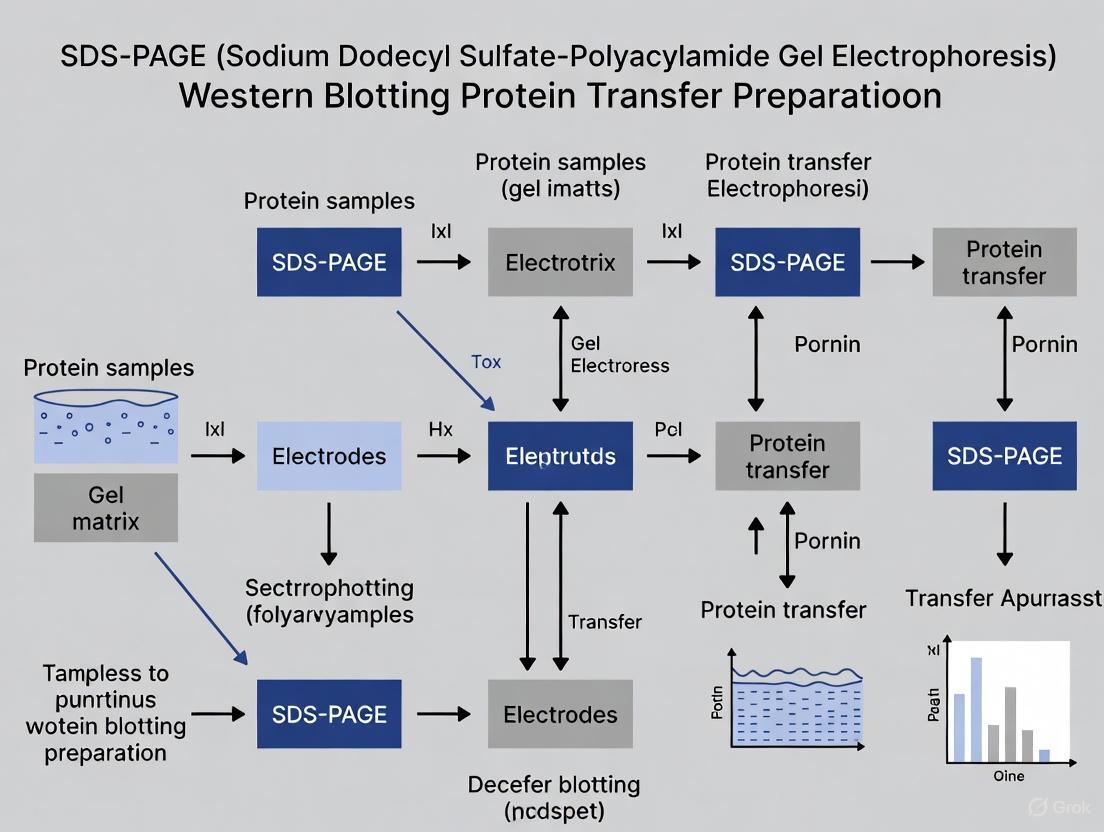
This article provides a comprehensive guide for researchers and drug development professionals on preparing SDS-PAGE gels for efficient protein transfer in Western blotting.
Mastering SDS-PAGE for Western Blotting: A Complete Guide to Protein Transfer Preparation
Abstract
This article provides a comprehensive guide for researchers and drug development professionals on preparing SDS-PAGE gels for efficient protein transfer in Western blotting. Covering foundational principles to advanced applications, it details optimized protocols for diverse protein sizes, systematic troubleshooting for common transfer issues, and rigorous validation strategies to ensure result reliability. The content integrates current methodologies, including rapid semi-dry and dry transfer techniques, and emphasizes the critical link between proper gel preparation and successful immunodetection, particularly for challenging targets like high molecular weight or low-abundance proteins.
The Science of SDS-PAGE: Core Principles for Effective Protein Separation and Transfer
Understanding the Role of SDS-PAGE in Western Blotting Workflow
Sodium dodecyl sulfate-polyacrylamide gel electrophoresis (SDS-PAGE) serves as the critical foundation for successful western blotting, enabling precise protein separation by molecular weight prior to immunodetection. This application note details the integral role of SDS-PAGE within the western blotting workflow, providing optimized protocols for reproducible protein separation and transfer. Within the broader context of thesis research on protein transfer preparation, we emphasize how proper SDS-PAGE execution directly influences transfer efficiency, detection sensitivity, and data accuracy. The guidelines presented herein are designed to assist researchers, scientists, and drug development professionals in standardizing their western blotting methodologies to generate reliable, publication-quality data, with particular attention to troubleshooting common pitfalls and implementing appropriate normalization controls.
Western blotting remains a cornerstone technique in molecular biology and biochemistry for detecting specific proteins in complex mixtures. This technique combines the separation power of gel electrophoresis with the specificity of antibody-based immunodetection [1]. The process begins with protein separation using SDS-PAGE, followed by transfer to a solid membrane support, and culminates in antibody probing for target protein identification [2]. The role of SDS-PAGE in this workflow is fundamental—it provides the initial separation matrix that resolves proteins based solely on their molecular weight, creating a predictable pattern for subsequent analysis.
The principle of SDS-PAGE relies on the denaturing action of sodium dodecyl sulfate (SDS), an anionic detergent that coats proteins with a uniform negative charge mass ratio [1]. This SDS coating masks the proteins' inherent charges, ensuring migration through the polyacrylamide gel matrix depends primarily on molecular size rather than shape or native charge [3]. Smaller proteins navigate the gel pores more readily and migrate farther, while larger proteins encounter greater resistance and remain closer to the origin [1]. This molecular sieving effect allows researchers to estimate protein size by comparing migration distances to standardized molecular weight markers run concurrently [3].
The polyacrylamide gel itself typically consists of two distinct regions: a stacking gel with lower acrylamide concentration and pH where proteins converge into sharp bands, and a resolving gel with higher acrylamide concentration and pH where actual size-based separation occurs [3]. This discontinuous system is crucial for achieving high-resolution separation, as it concentrates disparate protein samples into narrow zones before they enter the resolving region. The entire SDS-PAGE process transforms a complex protein mixture into an ordered, size-fractionated array, creating the essential foundation for effective protein transfer and specific detection in subsequent western blotting steps [4].
Theoretical Framework and Principles
Biochemical Basis of SDS-PAGE
The efficacy of SDS-PAGE stems from the combined action of SDS and reducing agents on protein structure. SDS binds to polypeptide chains in a constant ratio of approximately 1.4 g SDS per 1.0 g protein [3], conferring a relatively uniform negative charge density that overwhelms most proteins' intrinsic charge differences. Simultaneously, reducing agents such as dithiothreitol (DTT) or β-mercaptoethanol break disulfide bonds that maintain tertiary and quaternary structures [1]. This dual action linearizes proteins into rods with charge proportional to molecular weight, establishing the prerequisite for separation based primarily on size rather than charge or conformation.
The polyacrylamide gel matrix creates a molecular sieve through crosslinking between acrylamide monomers and bis-acrylamide. The pore size within this matrix determines the separation range and is controlled by the total acrylamide concentration—higher percentages create smaller pores better suited for resolving lower molecular weight proteins, while lower percentages with larger pores accommodate larger proteins [1]. The gradient gel format, with increasing acrylamide concentration from top to bottom, provides an extended separation range within a single gel, resolving both high and low molecular weight proteins effectively [3].
Integrated Workflow Logic
The western blotting process constitutes a sequential workflow where each stage directly influences subsequent steps. SDS-PAGE represents the critical initial separation phase that determines the ultimate resolution achievable in the final blot. Following electrophoresis, proteins are transferred from the gel onto a membrane support, typically nitrocellulose or PVDF, which provides a durable, protein-binding surface accessible to antibody probes [4]. The transfer efficiency varies with protein size, gel density, and transfer method, requiring optimization for different target proteins [5].
After transfer, membrane blocking with proteins such as bovine serum albumin (BSA) or non-fat dry milk prevents nonspecific antibody binding [6]. Incubation with a primary antibody specific to the target protein follows, then detection with a conjugated secondary antibody that generates a measurable signal through chemiluminescence, fluorescence, or colorimetric methods [1]. Throughout this cascade, the quality of the initial SDS-PAGE separation remains paramount, as imperfections in band sharpness or resolution propagate through subsequent stages, compromising data interpretation and quantification.
Figure 1: Complete Western Blotting Workflow. The process begins with sample preparation and SDS-PAGE separation, followed by protein transfer to a membrane, antibody-based detection, and final data analysis. Each step builds upon the previous one, with SDS-PAGE serving as the critical separation foundation.
Materials and Reagents
Research Reagent Solutions
The following table details essential reagents required for SDS-PAGE and western blotting, along with their specific functions in the experimental workflow:
| Reagent | Function | Application Notes |
|---|---|---|
| Lysis Buffer (e.g., RIPA) | Extracts proteins from cells/tissues while maintaining integrity [1]. | Include protease/phosphatase inhibitors for phosphoproteins or unstable targets [1]. |
| SDS (Sodium Dodecyl Sulfate) | Denatures proteins and confers negative charge proportional to mass [3]. | Critical for linearizing proteins and enabling separation by molecular weight. |
| Reducing Agents (DTT, β-mercaptoethanol) | Breaks disulfide bonds to fully denature proteins [1]. | Fresh aliquots recommended as these agents can oxidize over time [7]. |
| Polyacrylamide Gel | Forms molecular sieve for size-based protein separation [3]. | Gradient gels (4-20%) optimal for broad molecular weight range; fixed percentage gels for specific sizes [1]. |
| Molecular Weight Markers | Reference standards for estimating protein size and transfer efficiency [3]. | Prestained markers allow visual tracking during electrophoresis and transfer [5]. |
| Transfer Buffer | Medium for electrophoretic protein transfer from gel to membrane [4]. | Methanol (10-20%) enhances protein binding to membranes, particularly nitrocellulose [4]. |
| Blocking Agent (BSA, non-fat dry milk) | Prevents nonspecific antibody binding to membrane [6]. | Avoid milk with phospho-specific antibodies or biotin-streptavidin systems [8]. |
| Primary Antibody | Binds specifically to target protein of interest [6]. | Must be validated for western blotting; optimal dilution determined empirically [8]. |
| HRP-Conjugated Secondary Antibody | Binds primary antibody and generates detectable signal [6]. | Species-specific; concentration typically 1:2000-1:10000 [6]. |
| Chemiluminescent Substrate | Generates light signal upon reaction with HRP enzyme [6]. | Enhanced sensitivity substrates available for low-abundance targets [8]. |
Gel Selection Guidelines
The appropriate polyacrylamide gel concentration depends primarily on the molecular weight of the target protein, as detailed in the following table:
| Protein Size Range | Recommended Gel Chemistry | Buffer System | Separation Characteristics |
|---|---|---|---|
| 10-30 kDa | 4-12% acrylamide gradient Bis-Tris gel | MES running buffer | Optimal resolution of small proteins; prevents band compression [1]. |
| 31-150 kDa | 4-12% acrylamide gradient Bis-Tris gel | MOPS running buffer | Standard range for most cellular proteins; balanced resolution [1]. |
| >150 kDa | 3-8% acrylamide gradient Tris-Acetate gel | Tris-Acetate running buffer | Larger pore size facilitates big protein migration [1]. |
| Broad Range (10-300 kDa) | 4-20% acrylamide gradient | Tris-Glycine or Bis-Tris | Maximum flexibility for multiple unknown targets [3]. |
Experimental Protocols
Sample Preparation Protocol
Proper sample preparation is critical for achieving high-resolution SDS-PAGE separation. The following protocol is optimized for both cell culture and tissue samples:
Materials Needed:
- Lysis buffer (e.g., RIPA buffer)
- Protease inhibitor cocktail
- Phosphatase inhibitors (for phosphoproteins)
- PBS (phosphate-buffered saline)
- Dithiothreitol (DTT)
- Loading buffer (2X or 4X Laemmli buffer)
- BCA or Bradford assay kit
- Sonicator
- Microcentrifuge
Cell Culture Protocol:
- Wash cells twice with ice-cold PBS by centrifugation (100-500 × g, 5 min, 4°C).
- Resuspend cell pellet in ice-cold lysis buffer (approximately 1 mL per 1×10⁷ cells) containing protease inhibitors [1].
- Incubate suspension on ice for 10 minutes with gentle rocking.
- Sonicate the suspension using brief pulses (10-15 seconds) to complete cell lysis and shear genomic DNA [6].
- Centrifuge at 14,000-17,000 × g for 5 minutes at 4°C to pellet insoluble debris.
- Transfer supernatant (protein lysate) to a fresh tube kept on ice.
- Determine protein concentration using BCA or Bradford assay according to manufacturer's instructions.
- Dilute lysate with loading buffer containing DTT (final concentration 50 mM) to achieve 1-2 mg/mL total protein concentration [1].
- Denature samples by heating at 95-100°C for 5-10 minutes [6].
- Briefly centrifuge samples before loading onto gel; store unused aliquots at -80°C.
Tissue Sample Protocol:
- Dissect tissue with clean tools on ice as rapidly as possible to prevent protease degradation.
- Place tissue (approximately 200 mg) in lysis buffer (1,200 μL) containing protease inhibitors in tubes with glass beads [1].
- Homogenize using an automated homogenizer for approximately 3 minutes at 4°C.
- Incubate homogenate on ice for 5 minutes, then centrifuge at 14,000-17,000 × g for 5-10 minutes at 4°C.
- Collect supernatant and determine protein concentration as above.
- Dilute with loading buffer, denature, and store as described for cell culture samples.
Critical Considerations:
- Maintain samples on ice throughout preparation to minimize protease activity.
- Include phosphatase inhibitors when studying phosphorylated proteins.
- Avoid excessive sonication or heating that might promote protein aggregation.
- Ensure consistent protein concentrations across samples for comparable loading.
SDS-PAGE Electrophoresis Protocol
Materials Needed:
- Precast or hand-cast polyacrylamide gel
- Electrophoresis apparatus
- Running buffer (e.g., Tris-Glycine, MOPS, or MES)
- Prestained molecular weight markers
- Power supply
Procedure:
- Select an appropriate gel percentage based on target protein molecular weight (refer to Table 2 for guidance).
- Assemble electrophoresis chamber according to manufacturer instructions.
- Fill inner and outer chambers with running buffer, ensuring complete immersion of gel.
- Load molecular weight markers (5-10 μL) in first or reference well.
- Load equal amounts of protein samples (10-40 μg for cell lysates, 10-500 ng for purified protein) into subsequent wells [1].
- Include appropriate controls (negative control lysate, positive control if available).
- Run gel at constant voltage: 80-100 V for stacking gel, 120-150 V for resolving gel, or according to gel manufacturer's recommendations.
- Continue electrophoresis until dye front approaches bottom of gel (typically 60-90 minutes).
- Proceed to protein transfer or temporarily store gel in transfer buffer at 4°C.
Troubleshooting Tips:
- If bands appear distorted or smeared, ensure samples were properly denatured and reduced.
- If band migration is inconsistent between lanes, check for salt concentrations exceeding 100 mM in samples [8].
- If "smiling" bands occur (curved upward at edges), reduce voltage to prevent overheating.
- To improve well visibility for loading, consider adding acidic dye to the stacking gel [9].
Protein Transfer Optimization
Following SDS-PAGE, separated proteins must be efficiently transferred to a membrane for immunodetection. The transfer method should be selected based on protein characteristics and available equipment:
Materials Needed:
- Transfer apparatus (wet, semi-dry, or dry system)
- Nitrocellulose or PVDF membrane
- Transfer buffer
- Filter paper
- Gel roller
General Transfer Assembly:
- Activate PVDF membrane in methanol (not required for nitrocellulose).
- Prepare gel/membrane sandwich in transfer buffer: sponge/filter paper/gel/membrane/filter paper/sponge.
- Remove all air bubbles between layers by rolling with a gel roller [7].
- Place sandwich in transfer apparatus with membrane oriented toward anode (+).
- Transfer according to method-specific parameters below.
Transfer Method Comparison:
| Parameter | Wet Transfer | Semi-Dry Transfer | Dry Transfer |
|---|---|---|---|
| Time Requirements | 30-120 minutes (standard); overnight for large proteins | 10-60 minutes | As few as 3-7 minutes [4] |
| Buffer Requirements | Large volume (∼1L) with methanol | Minimal buffer (∼200mL); often methanol-free | No buffer required [4] |
| Efficiency Range | Excellent for all protein sizes | Good for proteins 10-300 kDa | Comparable to wet transfer [4] |
| Optimal For | High molecular weight proteins (>150 kDa); multiple gels | Routine applications; rapid processing | High-throughput labs; convenience |
| Cooling Required | Yes for extended transfers | Sometimes | No [4] |
Method-Specific Protocols:
Wet Transfer Protocol:
- Use Towbin buffer (25 mM Tris, 192 mM glycine, 20% methanol) [4].
- Transfer at constant voltage (25-100 V) for 1-2 hours or constant current (200-400 mA) overnight at 4°C.
- For proteins >100 kDa, include 0.01-0.05% SDS in transfer buffer to enhance mobility [8].
Semi-Dry Transfer Protocol:
- Equilibrate gel and filter papers in transfer buffer for 15 minutes.
- Transfer at constant current (0.1-0.4 A) or voltage (10-25 V) for 30-60 minutes [4].
- Ensure filter papers are precisely cut to gel size without overhangs.
Dry Transfer Protocol:
- Follow manufacturer's instructions for pre-assembled transfer stacks.
- Transfer typically completes in 3-7 minutes without buffer preparation [4].
Transfer Efficiency Controls:
- Use prestained markers to visually confirm complete transfer.
- After transfer, stain gel with Coomassie blue to detect residual proteins [5].
- For small proteins, use double membranes to detect "blow-through" [5].
Figure 2: SDS-PAGE Separation Principle. Proteins in a complex mixture are denatured and linearized with SDS and reducing agents, conferring a uniform negative charge. During electrophoresis, these proteins separate by molecular weight as they migrate through the polyacrylamide gel matrix, with smaller proteins moving faster than larger ones.
Troubleshooting and Optimization
Despite its widespread use, SDS-PAGE presents numerous potential pitfalls that can compromise western blot results. The following table addresses common issues, their probable causes, and recommended solutions:
| Problem | Possible Causes | Solutions |
|---|---|---|
| Weak or No Signal | Inefficient transfer; low antibody affinity; insufficient antigen [8]. | Verify transfer efficiency with protein stain; increase antibody concentration; load more protein [8]. |
| High Background | Excessive antibody concentration; insufficient blocking or washing [8]. | Titrate antibodies; extend blocking time; increase wash number/volume; add Tween-20 to buffers [8]. |
| Multiple Bands | Non-specific antibody binding; protein degradation; protein isoforms [7]. | Use validated antibodies; add fresh protease inhibitors; research expected isoforms [7]. |
| Smiled Bands | Improper buffer pH; excessive running voltage [3]. | Prepare fresh running buffer; reduce voltage; perform electrophoresis at 4°C [3]. |
| Diffuse Bands | Protein overload; improper gel polymerization; salt concentration too high [8]. | Reduce protein load; ensure proper gel formulation; desalt samples if necessary [8]. |
| Atypical Band Migration | Post-translational modifications (phosphorylation, glycosylation) [7]. | Treat with glycosidases or phosphatases; check literature for expected migration [7]. |
| Vertical Streaks | DNA contamination; insoluble protein aggregates [8]. | Sonicate samples more thoroughly; centrifuge at higher speed; add more SDS/DTT [8]. |
Special Considerations for Challenging Proteins
High Molecular Weight Proteins (>150 kDa):
- Use low-percentage gels (3-8%) or gradient gels for better resolution [1].
- Extend transfer time (overnight at low voltage) for complete transfer [7].
- Include 0.01-0.05% SDS in transfer buffer to facilitate protein movement from gel [8].
Low Molecular Weight Proteins (<20 kDa):
- Use high-percentage gels (12-20%) or Tris-Tricine buffer systems for better resolution [3].
- Include 20% methanol in transfer buffer to enhance membrane binding [8].
- Reduce transfer time to prevent "blow-through" (proteins passing completely through membrane) [5].
- Use smaller pore size membranes (0.2 μm instead of 0.45 μm) [8].
Membrane Proteins:
- Avoid heating samples above 60°C to prevent aggregation [7].
- Use specialized lysis buffers with compatible detergents (e.g., digitonin).
- Consider brief sonication after lysis to disrupt membrane aggregates.
Data Normalization and Quantification
Accurate quantification in western blotting requires appropriate normalization strategies to account for variations in protein loading and transfer efficiency. The most common normalization approaches include:
Housekeeping Protein Normalization
Housekeeping proteins are constitutively expressed proteins used to correct for loading variations:
- Common Targets: β-actin, GAPDH, tubulin, HSP90 [10]
- Advantages: Widely accepted; relatively simple implementation
- Limitations: Expression can vary between experimental conditions, tissues, and cell states [10]
- Best Practices: Validate stability under experimental conditions; avoid saturated signals
Total Protein Normalization
Total protein normalization methods account for the entire protein load in each lane:
- Ponceau S Staining: Reversible stain applied to membrane before blocking; moderate sensitivity (~200 ng) [10]
- Coomassie Blue Staining: Higher sensitivity (~50 ng) but requires gel staining before transfer [10]
- Stain-Free Technology: Uses trihalo compounds in gels that fluoresce when bound to tryptophan residues; high sensitivity (~20 ng) [10]
Spike-In Controls
For critical quantitative applications, consider adding known amounts of standardized proteins to samples before processing. This approach controls for variations in sample preparation, electrophoresis, and transfer, but requires careful experimental design.
SDS-PAGE represents the foundational separation step in western blotting that determines the ultimate quality and interpretability of experimental results. Through proper sample preparation, appropriate gel selection, optimized electrophoresis conditions, and efficient protein transfer, researchers can achieve reproducible, high-resolution protein separation. The protocols and guidelines provided herein address the most critical aspects of SDS-PAGE within the western blotting workflow, with particular emphasis on troubleshooting common problems and implementing appropriate controls.
For researchers engaged in thesis work focused on protein transfer preparation, understanding the intimate relationship between SDS-PAGE conditions and subsequent transfer efficiency is paramount. The molecular weight of the target protein, gel composition, transfer method selection, and buffer composition all interact to determine final blot quality. By systematically optimizing these parameters and implementing rigorous normalization strategies, scientists can generate reliable, quantitative western blot data capable of supporting robust scientific conclusions in both academic research and drug development contexts.
Sodium Dodecyl Sulfate-Polyacrylamide Gel Electrophoresis (SDS-PAGE) is a foundational technique in biochemistry and molecular biology for separating proteins based on their molecular weight. As a critical preparatory step for western blotting, SDS-PAGE provides the initial resolution of protein mixtures, enabling subsequent transfer and specific immunological detection. This application note details the core components of SDS-PAGE—polyacrylamide gradients, buffer systems, and detergents—framed within the context of preparing samples for high-quality western blot analysis. Understanding the precise function and optimization of these components is essential for researchers and drug development professionals seeking reliable, reproducible protein characterization data. The following sections provide both the theoretical principles and detailed methodological protocols necessary to master this technique.
The Principle of SDS-PAGE
SDS-PAGE separates protein molecules based almost exclusively on their molecular mass by leveraging a powerful anionic detergent and a porous polyacrylamide gel matrix [11] [12]. The critical mechanism involves the binding of sodium dodecyl sulfate (SDS) to denatured proteins, which masks the proteins' intrinsic charges and confers a uniform negative charge density [13] [14]. When an electric field is applied, these SDS-protein complexes migrate through the polyacrylamide gel towards the anode, where the gel acts as a molecular sieve [15]. Smaller proteins navigate the pores more easily and migrate faster, while larger proteins are retarded, resulting in separation by size [11].
The process relies on a discontinuous buffer system that uses differences in gel pore size and pH to first concentrate proteins into sharp bands before they enter the separating gel, a phenomenon known as the stacking effect [11] [16]. This combination of charge uniformity and molecular sieving allows for the accurate estimation of protein molecular weight, assessment of sample purity, and analysis of subunit composition, forming a robust foundation for downstream applications like western blotting [13].
Figure 1: SDS-PAGE Workflow for Western Blot Preparation. The process begins with protein denaturation and linearization, followed by electrophoretic separation through discontinuous gel layers to achieve precise size-based separation.
Core Component 1: Polyacrylamide Gel and Gradients
The Polyacrylamide Matrix
The polyacrylamide gel forms the physical sieve for protein separation. It is created through the polymerization of acrylamide monomers cross-linked by N,N'-methylenebisacrylamide (Bis) [13]. This reaction is catalyzed by ammonium persulfate (APS) and tetramethylethylenediamine (TEMED) [11] [14]. The pore size of the resulting gel is determined by the total concentration of acrylamide (%T) and the concentration of the cross-linker (%C) [15]. A higher %T creates a gel with smaller pores, which is more effective at resolving low molecular weight proteins, while a lower %T with larger pores is better for separating high molecular weight proteins [17].
Polyacrylamide Gradient Gels
Gradient gels contain a continuous change in acrylamide concentration, typically from a low percentage to a high percentage, creating a corresponding pore size gradient [11] [17]. As proteins migrate, they encounter progressively smaller pores, causing each protein to slow down until it reaches a pore size that essentially halts its migration [17]. This results in several key advantages over fixed-concentration gels, especially for western blot preparation where resolution impacts transfer efficiency and detection sensitivity.
Advantages of Gradient Gels:
- Broad Separation Range: A single gradient gel can resolve a much wider range of protein sizes than a fixed-percentage gel, maximizing precious samples [17].
- Sharper Bands: The decreasing pore size causes the leading edge of a protein band to slow relative to the trailing edge, resulting in sharper, more focused bands [17]. This is critical for western blotting, as sharp bands lead to clearer detection and more accurate quantification.
- Improved Resolution of Similar-Sized Proteins: The band-sharpening effect allows for better separation between proteins of similar molecular weights, which might co-migrate as a single, fuzzy band on a fixed-percentage gel [17].
Table 1: Guide to Polyacrylamide Gel Concentration and Gradient Selection
| Target Protein Size Range | Fixed Gel Percentage | Recommended Gradient | Application Rationale |
|---|---|---|---|
| >200 kDa | 4-6% | 4-12% | Large pores allow entry and resolution of very large complexes. |
| 50-200 kDa | 8% | 8-15% | Balanced pore size for common high-to-mid molecular weight proteins. |
| 15-100 kDa | 10% | 8-15% or 10-20% | Standard range for many cytoplasmic and nuclear proteins. |
| 10-70 kDa | 12.5% | 10-20% | Optimal for resolving moderate to small-sized proteins. |
| 4-40 kDa | Up to 20% | 4-20% | High %T needed to sieve and resolve small polypeptides. |
Core Component 2: Buffer Systems
The discontinuous (or disc) buffer system is a hallmark of traditional SDS-PAGE, designed to concentrate samples into sharp lines before they enter the separating gel, thereby dramatically improving resolution [11] [16].
The Tris-Glycine-Chloride System
The most common discontinuous system uses three key ions distributed in different parts of the apparatus:
- Chloride (Cl⁻) ions: Present as the leading ion in the gel buffers (from Tris-HCl) [16].
- Glycinate ions: Present as the trailing ion in the running buffer (from Tris-Glycine) [16].
- Protein-SDS complexes: The proteins, coated in SDS, have a net negative charge and a mobility intermediate between Cl⁻ and glycinate under the stacking conditions [11].
The Stacking Mechanism
The stacking mechanism relies on the unique charge properties of glycine, which is a zwitterion whose net charge is highly dependent on pH [16].
- In the Stacking Gel (pH ~6.8): The glycine from the running buffer enters the low-pH stacking gel. At this pH, a significant proportion of glycine molecules carry no net charge (zwitterionic form) and thus migrate very slowly [16]. The highly mobile Cl⁻ ions race ahead, while the slow glycinate trails. This sets up a narrow, high-voltage gradient between the two ion fronts. The protein-SDS complexes, with intermediate mobility, are compressed ("stacked") into extremely sharp bands within this moving boundary [11] [16].
- Transition to the Separating Gel (pH ~8.8): Upon reaching the separating gel, the pH increases dramatically. At this higher pH, glycine loses protons and becomes predominantly negatively charged glycinate [16]. Its mobility increases sharply, and it overtakes the proteins. The glycinate now becomes a leading ion, and the voltage gradient dissipates. The now-unstacked, sharp protein bands enter the separating gel and begin to be sieved according to size [16].
Figure 2: Discontinuous Buffer System Mechanism. The stacking effect is created by differential ion mobilities at different pH levels, focusing proteins into sharp bands before separation.
Alternative Buffer Systems
While Tris-Glycine is the most common, other buffers like MOPS and MES are used in pre-cast gel systems, particularly Bis-Tris gels, which are stable at a nearly neutral pH and can be stored for weeks [11]. MOPS running buffer, for instance, can provide greater resolution between bands compared to MES, which visualizes a broader protein size range [17].
Core Component 3: Detergents and Denaturants
Sodium Dodecyl Sulfate (SDS)
SDS is the cornerstone detergent of the technique. It is an anionic surfactant with a hydrophobic 12-carbon tail and a hydrophilic sulfate head group [18]. Its primary functions are:
- Protein Denaturation: SDS disrupts nearly all non-covalent bonds (hydrogen bonds, hydrophobic interactions) in the protein, unfolding it and destroying secondary and tertiary structures [11] [18].
- Charge Conferral: SDS binds to the denatured polypeptide backbone at a relatively constant ratio of approximately 1.4 g SDS per 1.0 g of protein [11] [14]. This binding confers a uniform negative charge per unit mass, ensuring that charge differences between proteins are negated and separation is based solely on molecular size [13].
The effectiveness of SDS is concentration-dependent. At concentrations above 1 mM (well above its critical micelle concentration), it fully denatures most proteins [11]. However, recent research highlights that low concentrations of SDS (e.g., 0.1%) can be used for more subtle applications like fractionating aggregated proteins without complete denaturation, as its effects at this concentration are intermediate between negligible and extensive binding [18].
Reducing Agents
To achieve complete linearization of proteins, reducing agents are added to the sample buffer to break disulfide bonds, a key component of tertiary and quaternary structures. Common agents include:
The combination of heat, SDS, and a reducing agent ensures proteins are fully unfolded into linear polypeptide chains, allowing for accurate molecular weight determination [14].
Table 2: Key Reagents for SDS-PAGE and Their Functions
| Reagent Category | Specific Reagent | Function in SDS-PAGE |
|---|---|---|
| Detergent | Sodium Dodecyl Sulfate (SDS) | Denatures proteins and confers uniform negative charge; essential for size-based separation. |
| Reducing Agents | β-mercaptoethanol (BME), Dithiothreitol (DTT) | Breaks disulfide bonds to fully linearize proteins. |
| Gel Matrix | Acrylamide, Bis-Acrylamide | Polymerizes to form a porous gel matrix that sieves proteins by size. |
| Polymerization Initiators | Ammonium Persulfate (APS), TEMED | Catalyzes the free-radical polymerization of acrylamide. |
| Buffers | Tris-HCl, Glycine | Creates the discontinuous pH system for stacking and separating proteins. |
| Tracking Dye | Bromophenol Blue | Visualizes the migration progress of the protein front during electrophoresis. |
| Additive | Glycerol | Adds density to the sample, ensuring it sinks to the bottom of the loading well. |
Detailed SDS-PAGE Protocol for Western Blot Preparation
Sample Preparation
- Lysis: Lyse cells or tissues in an appropriate, ice-cold buffer (e.g., RIPA for whole cell/membrane/nuclear extracts, NP-40 for whole cell/cytoplasmic extracts) supplemented with protease and phosphatase inhibitors to prevent degradation [19] [20].
- Clarification: Centrifuge the lysate at 14,000 x g for 15 minutes at 4°C to remove insoluble debris. Transfer the supernatant to a new tube [20].
- Quantification: Determine protein concentration using a compatible assay (e.g., BCA or Bradford assay) [19] [20].
- Denaturation: Dilute protein samples in Laemmli sample buffer (e.g., 2X or 4X) containing SDS, a reducing agent (DTT or BME), glycerol, and bromophenol blue [20]. Heat the samples at 95°C for 5 minutes (or 70°C for 10 minutes) to fully denature the proteins [11] [20]. Centrifuge briefly before loading.
Gel Preparation and Electrophoresis
- Assemble Gel Cassette: Clean and assemble glass plates with spacers in a casting stand [12].
- Prepare Separating Gel: Mix acrylamide/bis-acrylamide solution, separating gel buffer (pH 8.8), water, and SDS. Add APS and TEMED last to initiate polymerization, then pour immediately. Overlay with water-saturated butanol or isopropanol to create a flat interface and exclude oxygen [11] [12]. Allow to polymerize completely (~20-30 min).
- Prepare Stacking Gel: Pour off the overlay. Prepare the stacking gel solution (pH 6.8) with APS and TEMED. Pour over the separating gel and immediately insert a clean comb without introducing bubbles [12]. Polymerize for ~15-20 min.
- Load and Run Gel: Mount the polymerized gel in the electrophoresis chamber and fill with running buffer (e.g., Tris-Glycine-SDS). Carefully remove the comb and flush wells with buffer. Load equal amounts of protein (e.g., 10-50 μg) and a molecular weight marker into the wells [20]. Apply a constant voltage of 100-200 V until the dye front reaches the bottom of the gel [20].
Following this protocol, the gel is ready for transfer to a membrane for western blotting, the critical next step where the high-resolution separation achieved by optimized SDS-PAGE enables clear and specific detection.
How Protein Size, Charge, and Conformation Affect Electrophoretic Mobility
In the context of preparing samples for western blotting, understanding the factors that govern protein electrophoretic mobility is fundamental to obtaining high-quality, interpretable results. Sodium dodecyl sulfate-polyacrylamide gel electrophoresis (SDS-PAGE) is the cornerstone technique for separating proteins prior to transfer to a membrane [21]. This application note details how the properties of proteins—specifically their size, charge, and conformation—are manipulated during SDS-PAGE to achieve separation primarily by molecular weight. A deep understanding of these principles allows researchers to troubleshoot experimental anomalies, optimize protocols for specific protein targets, and accurately interpret their data within the broader scope of protein analysis in drug development.
Fundamental Principles of Electrophoretic Mobility
Electrophoretic mobility refers to the rate at which a charged molecule migrates through a matrix under the influence of an electric field. In a native state, a protein's movement in an electric field is determined by a complex interplay of its net charge, molecular size, and three-dimensional shape [22]. Proteins with a high negative charge density migrate more rapidly toward the positive anode, while larger molecules experience greater frictional drag, slowing their progress [22]. The gel matrix itself acts as a molecular sieve, further regulating movement based on size and shape [22].
The power of SDS-PAGE lies in its use of the ionic detergent sodium dodecyl sulfate (SDS) to simplify these variables. SDS denatures proteins by wrapping around the polypeptide backbone and neutralizing their intrinsic charges [22] [11]. Most polypeptides bind SDS in a constant weight ratio of approximately 1.4 g of SDS per 1 g of polypeptide [11]. This confers a uniform negative charge density, effectively masking the protein's original charge [22] [23]. Consequently, the SDS-polypeptide complexes migrate through the polyacrylamide gel based almost exclusively on their molecular size [22] [23]. The gel's porous structure means that smaller proteins navigate the pores more easily and migrate faster, while larger proteins are hindered and migrate more slowly [22] [21].
Quantitative Analysis of Factors Affecting Mobility
The following table summarizes the impact of each key factor on protein mobility under standard SDS-PAGE conditions.
Table 1: Factors Influencing Protein Electrophoretic Mobility in SDS-PAGE
| Factor | Native-PAGE (No SDS) | SDS-PAGE (Denaturing) | Quantitative Relationship |
|---|---|---|---|
| Size/Mass | Contributes to frictional drag, affecting mobility [22] | Primary determinant of mobility [22] [23] | Inverse relationship; larger mass = slower mobility [23] |
| Net Charge | Primary determinant of mobility [22] | Masked by SDS binding; minimal effect [22] [23] | ~1.4g SDS binds / 1g protein, overwhelming intrinsic charge [11] |
| Conformation/Shape | Significant effect on mobility [22] | Eliminated by denaturation into linear chains [23] | Disulfide bonds reduced by DTT/β-mercaptoethanol [24] [23] |
To ensure accurate molecular weight estimation, a molecular weight marker (protein ladder) containing proteins of known sizes is run alongside samples [11]. The relative mobility of the unknown proteins is compared to the standard curve generated by the marker, allowing for size estimation with a typical error of ±10% [11].
Comparative Electrophoresis Methods and Their Applications
While denaturing SDS-PAGE is the most common form of protein gel electrophoresis, other methods preserve native protein properties for specific applications. The table below compares key electrophoresis techniques relevant to western blotting preparation.
Table 2: Comparison of Common Polyacrylamide Gel Electrophoresis (PAGE) Methods
| Method | Key Condition | Separation Basis | Impact on Protein Structure | Typical Applications |
|---|---|---|---|---|
| SDS-PAGE (Denaturing) | SDS, reducing agents, heat [22] [24] | Molecular mass [22] | Denatured; subunits dissociated [22] | Molecular weight estimation, purity analysis [22] [23] |
| Native-PAGE | No denaturants [22] | Net charge, size, and shape [22] | Native structure and activity often retained [22] | Analysis of oligomeric state, enzymatic activity [22] |
| NSDS-PAGE (Native SDS-PAGE) | Low SDS, no EDTA, no heat [25] | Molecular mass (with high resolution) [25] | Native functional properties often retained (e.g., metal ions, activity) [25] | Metalloprotein analysis, activity assays post-electrophoresis [25] |
| 2D-PAGE | First dimension: IEF; Second dimension: SDS-PAGE [22] | 1st: pI; 2nd: Molecular mass [22] | Denatured in second dimension | High-resolution analysis of complex protein mixtures (proteomics) [22] |
Essential Reagents for SDS-PAGE
Successful SDS-PAGE relies on a core set of reagents, each with a specific function in sample preparation, gel formation, and electrophoresis.
Table 3: Key Research Reagent Solutions for SDS-PAGE
| Reagent / Material | Function / Purpose | Typical Working Concentration / Amount |
|---|---|---|
| SDS (Sodium Dodecyl Sulfate) | Denatures proteins and confers uniform negative charge [23] | 0.1-0.5% in gels and buffers [11] [23] |
| Acrylamide/Bis-acrylamide | Forms the cross-linked porous gel matrix [22] [23] | 4-20% total monomer, depending on target protein size [22] |
| APS & TEMED | Catalyze free radical polymerization of acrylamide gel [22] [23] | 0.1% APS (catalyst); TEMED (accelerator) [22] [23] |
| Tris-Glycine Buffer | Conducts current and maintains pH during electrophoresis [11] [26] | 25mM Tris, 192mM Glycine, 0.1% SDS [26] |
| DTT or β-Mercaptoethanol | Reducing agents that cleave disulfide bonds [11] [23] | 10-100mM DTT or 1-5% β-mercaptoethanol in sample buffer [11] [27] |
| Laemmli Sample Buffer | Denaturing buffer containing SDS, reducing agent, glycerol, and tracking dye [24] [27] | 1X or 2X final concentration with sample [24] [27] |
| Molecular Weight Marker | Provides size reference for estimating sample protein masses [11] | 5-10 μL per lane [24] [26] |
Experimental Protocol: SDS-PAGE for Western Blotting
This protocol provides a detailed methodology for separating proteins via SDS-PAGE as a preparatory step for western blotting, incorporating considerations for protein size and conformation.
Sample Preparation
- Lysis: Lyse cells or tissue in an appropriate cold lysis buffer (e.g., RIPA buffer: 50 mM Tris-HCl pH 8.0, 150 mM NaCl, 1% NP-40, 0.5% sodium deoxycholate, 0.1% SDS) supplemented with protease and phosphatase inhibitors [24] [27].
- Clarification: Pellet insoluble debris by centrifugation at 14,000-16,000 x g for 10-15 minutes at 4°C. Transfer the supernatant to a new tube [24] [27].
- Quantification: Determine the protein concentration of the supernatant using an assay such as BCA, Bradford, or Lowry [24] [27].
- Denaturation and Reduction: Normalize protein concentrations and mix the sample with 2X or 4X Laemmli sample buffer (containing SDS and a reducing agent like DTT or β-mercaptoethanol). Heat the mixture at 70-100°C for 5-10 minutes to fully denature the proteins and reduce disulfide bonds [24] [27] [26].
Gel Preparation and Electrophoresis
- Assemble Gel Cassette: Follow manufacturer's instructions to assemble the gel casting apparatus.
- Cast Resolving Gel: Prepare and pour the resolving (separating) gel solution. Common percentages are 10-12% for standard proteins, but lower percentages (e.g., 7.5%) are better for high molecular weight proteins (>150 kDa), and higher percentages (e.g., 12.5-15%) for smaller proteins [24]. Layer with water-saturated alcohol (e.g., isopropanol) to create a flat interface. Allow to polymerize completely [11].
- Cast Stacking Gel: After removing the alcohol, pour the stacking gel (typically 4-5% acrylamide) and insert a comb. Allow to polymerize [11] [24].
- Load Samples: Place the gel cassette into the electrophoresis tank and fill with 1X running buffer (e.g., Tris-Glycine-SDS). Load equal amounts of protein (e.g., 20-30 μg) and molecular weight marker (5-10 μL) into the wells [24] [27] [26].
- Run Electrophoresis: Connect the power supply and run the gel. A common condition is 80-100 V until the dye front enters the resolving gel, then 120-150 V until the dye front approaches the bottom of the gel (approximately 1-1.5 hours total) [24] [23].
The workflow below illustrates the logical relationship between sample preparation and the separation principle in SDS-PAGE.
Advanced Protocol: Native SDS-PAGE for Functional Analysis
For experiments where retaining native metal cofactors or enzymatic activity is desirable alongside good resolution, Native SDS-PAGE (NSDS-PAGE) is a valuable tool [25]. This method modifies standard conditions to minimize denaturation.
Specific Modifications to Standard Protocol
- Sample Buffer: Omit SDS and EDTA from the sample buffer. Do not heat the samples [25].
- Running Buffer: Use a running buffer with a significantly reduced SDS concentration (e.g., 0.0375% instead of 0.1%) and no EDTA [25].
- Procedure: Follow the same gel casting and loading procedures. Run electrophoresis at constant voltage (e.g., 200V) [25].
This gentler approach can preserve the activity of many enzymes and the binding of metal ions (e.g., Zn²⁺), with one study showing metal retention increasing from 26% in standard SDS-PAGE to 98% in NSDS-PAGE [25]. The comparative workflow below highlights the critical differences between standard and native SDS-PAGE methods.
The electrophoretic mobility of proteins is a direct function of their size, charge, and conformation. SDS-PAGE simplifies this relationship by using SDS to create a uniform charge density and linearize polypeptides, making molecular weight the key determinant of separation. Mastery of this principle, along with its practical implementation through robust protocols, is indispensable for preparing high-quality samples for western blotting. Furthermore, understanding alternative methods like Native SDS-PAGE provides researchers with a versatile toolkit for probing not just protein size, but also function, thereby supporting critical research and development efforts in biomedicine and drug discovery.
The Critical Link Between Gel Composition and Subsequent Transfer Efficiency
In western blotting, the efficiency with which proteins are transferred from the polyacrylamide gel to a membrane is fundamentally constrained by the initial gel composition. The electrophoretic separation achieved through SDS-PAGE establishes the foundational conditions that either facilitate or impede optimal protein transfer. This application note examines the critical relationship between gel composition and subsequent transfer efficiency, providing researchers with evidence-based methodologies to optimize protein transfer for different molecular weight ranges and experimental requirements. Understanding these interrelationships is essential for generating reproducible, high-quality western blot data in protein research and drug development applications.
The Mechanistic Relationship Between Gel Composition and Transfer
The transfer of proteins from gel to membrane represents a second electrophoretic separation where proteins must migrate through the gel matrix to reach the immobilizing membrane. The density of this matrix, determined by the acrylamide percentage and cross-linking, directly governs protein mobility during transfer.
Gel Pore Size and Protein Mobility
Polyacrylamide gels create a molecular sieve through their cross-linked structure, with pore sizes inversely related to the total acrylamide concentration. During transfer, proteins must navigate through these pores to reach the membrane interface. Higher percentage gels (e.g., 15%) create smaller pores that significantly restrict the movement of larger proteins, potentially leading to incomplete transfer or requiring extended transfer times. Lower percentage gels (e.g., 8-10%) feature larger pores that facilitate easier migration of proteins toward the membrane, particularly benefiting high molecular weight targets.
The graph below illustrates the relationship between acrylamide percentage, protein size, and relative transfer efficiency:
Molecular Weight Considerations
Protein size significantly influences how gel composition affects transfer efficiency. The table below summarizes recommended gel percentages based on protein molecular weight and the expected impact on transfer:
Table 1: Gel Percentage Recommendations Based on Protein Molecular Weight
| Protein Size Range | Recommended Gel Percentage | Impact on Transfer Efficiency | Special Considerations |
|---|---|---|---|
| <40 kDa | 12-20% | Potential over-transfer for small proteins; use 0.2 µm membranes | High acrylamide concentrations may trap smaller proteins |
| 40-100 kDa | 10-12% | Optimal balance of resolution and transfer efficiency | Standard transfer conditions typically effective |
| 100-200 kDa | 8% | May require extended transfer times or SDS in buffer | Lower methanol concentration (10-15%) improves transfer |
| >200 kDa | 4-6% | Significantly hindered transfer; requires optimized conditions | Add 0.1% SDS to transfer buffer; overnight transfer recommended |
Research indicates that transfer efficiencies of 80-100% are achievable for proteins between 14-116 kDa under optimal conditions, but efficiency decreases substantially for proteins falling outside this range without proper optimization [4].
Experimental Protocols for Optimized Gel Composition and Transfer
Gel Selection and Preparation Protocol
Objective: Prepare SDS-PAGE gels with appropriate acrylamide concentrations for target protein size to maximize subsequent transfer efficiency.
Materials:
- Acrylamide/bis-acrylamide solution (appropriate concentration)
- Ammonium persulfate (APS)
- Tetramethylethylenediamine (TEMED)
- Tris buffers (stacking gel: pH 6.8; resolving gel: pH 8.8)
- SDS solution (10%)
- Gel casting system
Procedure:
- Determine optimal acrylamide percentage based on target protein molecular weight using Table 1.
- Prepare resolving gel solution by mixing appropriate volumes of acrylamide/bis-acrylamide, Tris-HCl (pH 8.8), SDS, and deionized water.
- Initiate polymerization by adding APS and TEMED, then immediately pour between glass plates, overlay with water-saturated butanol or isopropanol, and allow to polymerize completely (20-30 minutes).
- Prepare stacking gel solution (typically 4-5% acrylamide) with Tris-HCl (pH 6.8).
- Pour stacking gel after removing overlay liquid from polymerized resolving gel, insert well comb, and allow to polymerize (15-20 minutes).
- For high molecular weight proteins (>150 kDa), consider reducing bis-acrylamide crosslinker ratio to 1:100 (acrylamide:bis) to create larger pores.
- For low molecular weight proteins (<20 kDa), consider higher bis-acrylamide ratios (1:29) to create smaller pores and prevent over-transfer.
Technical Notes: Gel polymerization conditions significantly affect pore structure uniformity. Incomplete polymerization or oxygen inhibition can create heterogeneous pores that cause irregular transfer patterns. Using freshly prepared APS and degassing solutions can improve polymerization consistency [3] [28].
Transfer Method Selection and Optimization
Objective: Select and optimize protein transfer method based on gel composition and protein characteristics.
Materials:
- Transfer apparatus (wet, semi-dry, or dry system)
- Transfer membranes (nitrocellulose or PVDF)
- Transfer buffers
- Filter paper
- Cooling system (for wet transfer)
Procedure: Wet Transfer Method:
- Following SDS-PAGE, equilibrate gel in transfer buffer for 15 minutes.
- Pre-wet membrane in appropriate solvent (nitrocellulose in transfer buffer; PVDF in methanol then transfer buffer).
- Prepare transfer sandwich in the following order: cathode (+), sponge, filter paper, gel, membrane, filter paper, sponge, anode (-).
- Remove air bubbles carefully by rolling a 15 mL tube over each layer.
- Place sandwich in transfer tank filled with chilled transfer buffer.
- Apply appropriate electrical conditions based on protein size and gel composition (refer to Table 2).
- Maintain cooling during transfer using ice packs or chilled water circulation.
Semi-Dry Transfer Method:
- Prepare gel and membrane as described for wet transfer.
- Soak filter papers in transfer buffer and place on anode plate.
- Assemble sandwich with membrane, gel, and additional buffer-soaked filter papers.
- Place cathode plate on top and apply constant current (typically 0.1-0.4 A) for 15-60 minutes depending on protein size.
Table 2: Transfer Conditions Based on Protein Size and Gel Composition
| Protein Size | Gel Percentage | Transfer Method | Optimal Conditions | Buffer Modifications |
|---|---|---|---|---|
| <15 kDa | 15-20% | Wet transfer | 30V, 100-150 mA, 3-4 hours or overnight | Reduce methanol to 5-10%; use 0.2 µm membrane |
| 15-50 kDa | 12-15% | Wet or semi-dry | 70-100V, 200-300 mA, 1-2 hours | Standard Tris-glycine with 20% methanol |
| 50-100 kDa | 10% | Wet or semi-dry | 100V, 250-350 mA, 1.5-2 hours | Standard conditions |
| 100-200 kDa | 8% | Wet transfer | 25-30V, 100-200 mA, overnight | Reduce methanol to 10-15%; add 0.1% SDS |
| >200 kDa | 4-6% | Wet transfer | 25V, 100 mA, overnight 12-16 hours | 10% methanol, 0.1% SDS in transfer buffer |
Technical Notes: For high percentage gels (>12%) with high molecular weight proteins, including SDS in the transfer buffer helps maintain protein solubility and mobility. For low percentage gels (<8%) with low molecular weight proteins, increasing methanol concentration to 20% prevents over-transfer and protein passage through the membrane [4] [29].
The Scientist's Toolkit: Research Reagent Solutions
Table 3: Essential Reagents for Optimized Gel Composition and Protein Transfer
| Reagent/Category | Function | Specific Examples & Applications |
|---|---|---|
| Acrylamide/Bis-acrylamide | Forms the polyacrylamide gel matrix that separates proteins by size | 29:1 ratio for standard resolution; 37.5:1 for larger pores for high molecular weight proteins; 19:1 for smaller pores for low molecular weight proteins |
| Tris Buffers | Maintains pH during electrophoresis and transfer | Resolving gel: Tris-HCl, pH 8.8; Stacking gel: Tris-HCl, pH 6.8; Running buffer: Tris-glycine, pH 8.3 |
| Transfer Membranes | Immobilizes transferred proteins for antibody probing | Nitrocellulose (0.2 µm for small proteins <20 kDa; 0.45 µm for standard proteins); PVDF (enhanced mechanical strength, requires methanol activation) |
| Transfer Buffers | Facilitates protein migration from gel to membrane | Towbin buffer (25 mM Tris, 192 mM glycine, 20% methanol, 0.1% SDS); Bjerrum buffer (48 mM Tris, 39 mM glycine, 20% methanol, 0.04% SDS) |
| Molecular Weight Markers | Reference for protein size and transfer efficiency | Prestained markers (visualize transfer progress); Unstained markers (higher accuracy for molecular weight determination) |
| Chemical Additives | Enhance transfer efficiency for specific applications | SDS (0.1%) for large proteins; Methanol (10-20%) for protein adhesion to membrane; EDTA for metal-chelation in phosphoprotein studies |
Troubleshooting Common Issues
The interrelationship between gel composition and transfer efficiency manifests in several common experimental challenges:
Incomplete Transfer of High Molecular Weight Proteins
Problem: Large proteins (>100 kDa) fail to transfer completely from standard percentage gels.
Root Cause: The gel pore size is too small relative to the protein size, physically restricting migration.
Solutions:
- Reduce acrylamide percentage to 4-8% for better transfer of large proteins [30]
- Add SDS (0.1%) to transfer buffer to maintain protein charge and solubility [29]
- Extend transfer time (overnight at low voltage) for large proteins in dense gels [4]
- Consider using agarose gels for very large protein complexes (700-4,200 kDa) [3]
Over-Transfer of Low Molecular Weight Proteins
Problem: Small proteins (<20 kDa) pass through the membrane or show poor retention.
Root Cause: Excessive mobility through gel and membrane pores due to small size.
Solutions:
- Increase acrylamide percentage (15-20%) to restrict mobility [30]
- Use membranes with smaller pore size (0.2 µm instead of 0.45 µm) [29]
- Reduce transfer time (1-2 hours instead of overnight) for small proteins [4]
- Increase methanol concentration to 20% in transfer buffer [29]
Variable Transfer Efficiency Across Gel
Problem: Inconsistent transfer across the gel surface with regions of incomplete transfer.
Root Cause: Non-uniform gel polymerization or poor contact between gel and membrane.
Solutions:
- Ensure complete removal of air bubbles during sandwich assembly [29]
- Use freshly prepared APS and TEMED for consistent gel polymerization [28]
- Validate gel uniformity by including molecular weight markers across multiple lanes [3]
- Ensure proper orientation of gel-membrane sandwich in transfer apparatus [4]
The workflow below illustrates the integrated process of gel selection, transfer, and troubleshooting:
Gel composition establishes the fundamental parameters that govern subsequent protein transfer efficiency in western blotting. The acrylamide percentage, cross-linking density, and gel buffer system collectively determine the pore size matrix through which proteins must migrate during electrophoretic transfer. By strategically selecting gel compositions based on target protein characteristics and correspondingly optimizing transfer conditions, researchers can significantly improve detection sensitivity, reproducibility, and quantitative accuracy. The protocols and troubleshooting guidelines presented here provide a systematic approach to addressing the most common challenges in the gel-transfer interface, enabling researchers to produce more reliable protein data for critical research and drug development applications.
The success of protein analysis via SDS-PAGE and western blotting is fundamentally dependent on the selection of an appropriate gel chemistry. This choice directly impacts resolution, band sharpness, and transfer efficiency, particularly when dealing with proteins across a wide molecular weight (MW) spectrum. The three predominant gel systems—Tris-glycine, Bis-Tris, and Tris-acetate—each possess unique chemical properties that make them suited for specific applications. This application note provides a detailed comparison of these gel chemistries, offering structured protocols and data-driven guidance to enable researchers to optimize their experimental outcomes for western blotting protein transfer preparation.
Fundamental Principles of SDS-PAGE
Sodium dodecyl sulfate polyacrylamide gel electrophoresis (SDS-PAGE) separates proteins based on their molecular weight. The anionic detergent SDS denatures proteins and confers a uniform negative charge, allowing migration through a polyacrylamide gel matrix under an electric field. The gel acts as a molecular sieve, with smaller proteins migrating faster than larger ones [31] [32]. Discontinuous buffer systems, which use different ions and pH in the stacking and resolving gels, are employed to sharpen protein bands before separation [33].
Comparative Analysis of Gel Chemistries
The key differences between the three gel systems arise from their buffering constituents, operating pH, and optimal separation ranges.
Table 1: Key Characteristics of SDS-PAGE Gel Chemistries
| Feature | Tris-Glycine | Bis-Tris | Tris-Acetate |
|---|---|---|---|
| Buffering Ion | Tris-Glycine [33] | Bis-Tris [34] | Tris-Acetate [35] |
| Typical Operating pH | ~9.5 [34] | ~7.0 [34] | Information not available in search results |
| Primary Advantage | Widely available, standard protocol [33] | Sharp bands, minimal protein degradation [36] [34] | Superior separation and transfer of high molecular weight (HMW) proteins [35] |
| Primary Disadvantage | High pH can cause protein modifications and band degradation [34] | Chelates metal cations [36] | Information not available in search results |
| Recommended Running Buffer | Tris-Glycine SDS [33] | MES SDS or MOPS SDS [34] | Information not available in search results |
Gel Selection Based on Protein Molecular Weight
Choosing the correct gel and buffer system is critical for achieving optimal resolution.
Table 2: Gel and Buffer Selection Guide by Protein Size
| Target Protein Size | Recommended Gel Chemistry | Recommended Running Buffer | Rationale |
|---|---|---|---|
| < 50 kDa | 4-12% Bis-Tris [1] | MES [1] [34] | MES buffer provides excellent resolution for low MW proteins [34]. |
| 15 - 260 kDa | 4-12% Bis-Tris [1] [34] | MOPS [1] [34] | MOPS buffer resolves a broad range of medium to large proteins [34]. |
| >150 kDa (HMW) | 3-8% Tris-Acetate [35] [1] | Tris-Acetate [1] | The large-pore gel matrix allows HMW proteins to migrate and transfer efficiently [35]. |
| Broad Range (e.g., 6-200 kDa) | 4-20% Tris-Glycine [35] [33] | Tris-Glycine SDS [33] | A popular, broad-range gradient, though not ideal for proteins >200 kDa [35]. |
Diagram 1: A workflow to guide the selection of gel chemistry and running buffer based on the molecular weight of the target protein.
Detailed Experimental Protocols
Protocol: SDS-PAGE Using Pre-cast Tris-Glycine Gels
The following protocol is adapted for standard Tris-Glycine pre-cast gels using the XCell SureLock Mini-Cell [33].
Materials Required:
- Novex Tris-Glycine Pre-cast Gels [33]
- Tris-Glycine SDS Running Buffer (10X) [33]
- Tris-Glycine SDS Sample Buffer (2X) [33]
- Protein Molecular Weight Marker [33]
Procedure:
- Gel Preparation: Remove the gel cassette from its pouch and rinse with deionized water. Peel the tape from the cassette bottom and gently pull the comb straight out. Rinse the sample wells three times with 1X Tris-Glycine SDS Running Buffer [33].
- Apparatus Setup: Place the gel cassette into the Mini-Cell, ensuring the notched "well" side faces inward. Secure with the Gel Tension Wedge. Add a small amount of running buffer to the inner chamber to check for leaks, then fill completely. Fill the outer chamber with the recommended buffer volume (e.g., 600 mL for the Mini-Cell) [33].
- Sample Preparation: Dilute protein lysate with an equal volume of 2X Tris-Glycine SDS Sample Buffer. For reduced samples, add DTT to a final concentration of 50 mM. Heat the samples at 85°C for 2 minutes [33].
- Loading and Electrophoresis: Load an equal mass of protein (10-40 µg for lysates) into each well, including an appropriate MW marker. Run the gel at a constant 125 V until the bromophenol blue tracking dye front reaches the bottom of the gel (approximately 90 minutes) [33].
- Post-Run Processing: After electrophoresis, carefully separate the cassette plates with a gel knife. The gel can then be used for transfer to a membrane or stained for visualization [33].
Protocol: Optimized Western Blot Transfer for High Molecular Weight Proteins
Efficient transfer of proteins >150 kDa from the gel to a membrane requires specific optimization, regardless of the transfer system used [35].
Materials Required:
- Transfer Apparatus (e.g., iBlot 2 for dry transfer, standard tank for wet transfer) [35]
- Transfer Stack (Nitrocellulose or PVDF membrane) [35]
- Transfer Buffer (appropriate for the method)
Dry Transfer Protocol (e.g., iBlot 2):
- Gel Equilibration (for non-Tris-acetate gels): After electrophoresis, submerge the gel in 20% ethanol prepared in deionized water. Equilibrate for 5-10 minutes at room temperature on a shaker. This step removes salts and adjusts the gel size, improving HMW protein transfer [35].
- Stack Assembly: Place the gel on the pre-wetted transfer stack according to the manufacturer's instructions. Ensure no air bubbles are trapped.
- Transfer Execution: Place the stack into the transfer device. For proteins >150 kDa, increase the transfer time. Use a program with 20-25 V for 8-10 minutes, rather than the standard 7-minute protocol [35].
General Considerations for All Transfer Methods:
- Wet Transfer: For large proteins (>100 kDa), use low voltage (25-30 V) overnight or with SDS (0.1%) in the transfer buffer. Reducing the methanol concentration to 10-15% can also improve elution of HMW proteins [29].
- Semi-Dry Transfer: When transferring HMW proteins, extend the run time to 10-12 minutes [35].
The Scientist's Toolkit: Essential Reagents and Materials
Table 3: Key Research Reagent Solutions for SDS-PAGE and Western Blotting
| Reagent | Function | Key Considerations |
|---|---|---|
| Lysis Buffer (e.g., RIPA) | Solubilizes proteins from cells or tissues [1] [19]. | Contains protease/phosphatase inhibitors to prevent degradation [1] [19]. Choice depends on protein subcellular location [19]. |
| SDS Sample Buffer | Denatures proteins and provides negative charge and density for loading [32]. | Often contains a reducing agent (DTT) to break disulfide bonds [33] [32]. |
| Tris-Glycine SDS Running Buffer | Conducts current and maintains pH during electrophoresis in Tris-Glycine systems [33]. | A discontinuous buffer system with Tris, Glycine, and SDS [33]. |
| MES or MOPS SDS Running Buffer | Running buffer for Bis-Tris gel systems [34]. | MES for low MW proteins (≤50 kDa), MOPS for higher MW proteins (14-260 kDa) [1] [34]. |
| NuPAGE/Bolt LDS Sample Buffer | A proprietary sample buffer for use with Bis-Tris gels [34]. | Maintains a higher pH during heating than Laemmli buffer, minimizing acid-induced protein cleavage (Asp-Pro bond breakdown) [34]. |
| Transfer Buffer | Facilitates protein movement from gel to membrane during electroblotting [29]. | Composition (e.g., methanol, SDS content) can be adjusted to optimize transfer, especially for HMW proteins [29]. |
Technical Notes and Optimization Strategies
Addressing Common Challenges
- Protein Degradation and Smearing: Smearing or multiple bands can result from protein degradation or inefficient denaturation. Using Bis-Tris gels at a neutral pH significantly reduces protein modifications and aspartyl-prolyl bond cleavage compared to high-pH Tris-glycine gels, leading to sharper bands and higher sample integrity [34]. Always use fresh reducing agents and protease inhibitors [1] [32].
- Transfer of High Molecular Weight Proteins: HMW proteins transfer inefficiently because they migrate slowly through the gel matrix. To optimize, use a large-pore gel (e.g., 3-8% Tris-acetate), extend transfer times, and consider an alcohol equilibration step for Bis-Tris or Tris-glycine gels [35].
- Gel Polymerization Issues: Failed polymerization is often due to degraded ammonium persulfate (APS) or TEMED. Prepare fresh APS solutions and store them at 4°C for no longer than one week [32].
Data Interpretation and Representative Results
The choice of gel chemistry has a demonstrable impact on data quality. Figure 2 in the search results shows that a ~190 kDa protein (EGFR) is detected with much higher sensitivity when separated on a 3-8% Tris-acetate gel compared to a 4-20% Tris-glycine gel, with 9 ng visualized versus 750 ng required for detection on the Tris-glycine gel [35]. Furthermore, Figure 4 demonstrates that western blots of various protein kinases from Bolt Bis-Tris Plus Gels show clean, sharp bands corresponding to full-length proteins, whereas the same samples run on a Tris-glycine gel show multiple lower molecular weight degradation products [34].
Practical Protocols: Optimized SDS-PAGE Setup for Diverse Protein Transfer Methods
Sample preparation is the foundational step in western blotting that ultimately determines the success of protein separation, transfer, and detection. Proper execution of this phase ensures accurate and reproducible results by preserving protein integrity, maintaining post-translational modifications, and enabling precise quantification. This guide provides detailed protocols for preparing protein samples specifically optimized for SDS-PAGE and subsequent western blotting protein transfer, addressing the critical requirements of researchers and drug development professionals who require robust, standardized methodologies for protein analysis. The procedures outlined herein focus on maintaining protein stability through controlled lysis conditions, appropriate buffer selection, and optimized denaturation protocols to ensure high-quality protein separation and transfer.
Protein Lysis Strategies
Cell lysis represents the initial critical step in sample preparation, requiring careful selection of buffers compatible with both the protein of interest and subsequent western blotting procedures. The optimal lysis strategy varies significantly depending on cellular compartmentalization and protein solubility characteristics.
Lysis Buffer Selection
The composition of lysis buffers must be tailored to the subcellular localization of the target protein, as different cellular compartments require varying detergent strengths for efficient protein extraction [37].
Table 1: Recommended Lysis Buffers Based on Protein Localization
| Protein Localization | Recommended Buffer | Key Components | Mechanism of Action |
|---|---|---|---|
| Whole Cell Lysate | NP-40 Buffer | 150 mM NaCl, 1% NP-40, 50 mM Tris pH 8.0 [37] | Mild non-ionic detergent disrupts lipid membranes while maintaining protein-protein interactions |
| Nucleus | RIPA Buffer | 150 mM NaCl, 1% NP-40, 0.5% sodium deoxycholate, 0.1% SDS, 50 mM Tris pH 8.0 [37] | Combination of non-ionic and ionic detergents disrupts nuclear membrane and dissociates DNA-bound proteins |
| Mitochondria | RIPA Buffer | 150 mM NaCl, 1% NP-40, 0.5% sodium deoxycholate, 0.1% SDS, 50 mM Tris pH 8.0 [37] | Effective for disrupting robust mitochondrial membranes and solubilizing membrane proteins |
| Cytoplasm | Tris-HCl Buffer | 20 mM Tris-HCl, pH 7.5 [37] | Mild osmotic disruption ideal for soluble cytoplasmic proteins |
| Membrane-bound Proteins | RIPA Buffer or Strong SDS-containing Buffers | 150 mM NaCl, 1% NP-40, 0.5% sodium deoxycholate, 0.1% SDS, 50 mM Tris pH 8.0 [37] | Strong detergents essential for solubilizing hydrophobic transmembrane domains |
Protease and Phosphatase Inhibition
Immediately following cell disruption, endogenous proteases and phosphatases become activated and can rapidly degrade or modify proteins of interest. Therefore, addition of inhibitors to lysis buffers is essential for preserving protein integrity [37] [38].
Table 2: Essential Protease and Phosphatase Inhibitors
| Inhibitor | Target | Final Concentration | Mechanism |
|---|---|---|---|
| PMSF | Serine proteases | 1 mM [37] | Irreversibly binds to serine residues in active sites |
| Aprotinin | Trypsin, chymotrypsin, plasmin | 2 µg/mL [37] | Polypeptide inhibitor that forms stable complexes with serine proteases |
| Leupeptin | Lysosomal proteases | 1-10 µg/mL [37] | Reversible inhibitor of cysteine, serine, and threonine proteases |
| Pepstatin A | Aspartic proteases | 1 µg/mL [37] | Potent inhibitor of acid proteases through binding to active sites |
| EDTA | Mg²⁺ and Mn²⁺ metalloproteases | 1-5 mM [37] | Chelates divalent cations essential for metalloprotease activity |
| Sodium Fluoride | Serine/threonine phosphatases | 5-10 mM [37] | General phosphatase inhibitor that binds to active sites |
| Orthovanadate | Tyrosine phosphatases | 1 mM [37] | Phosphate analog that competitively inhibits tyrosine phosphatases |
Cell Lysis Protocol
The following protocol describes the standard procedure for lysing adherent cell cultures, with modifications provided for suspension cells and tissues [37] [39].
A. Lysate Preparation from Adherent Cell Culture
- Pre-cooling and Washing: Place cell culture dish on ice and wash cells with ice-cold phosphate-buffered saline (PBS) to remove media constituents [37] [39].
- Lysis Buffer Application: Aspirate PBS and add ice-cold lysis buffer containing freshly added protease and phosphatase inhibitors (1 mL per 10⁷ cells/100 mm dish/150 cm² flask) [37] [38].
- Cell Scraping: Using a cold plastic cell scraper, dislodge adherent cells from the dish and transfer the cell suspension to a pre-cooled microcentrifuge tube [37] [39].
- Agitation and Incubation: Agitate cells for 30 minutes at 4°C to ensure complete lysis [37] [39].
- Clarification by Centrifugation: Centrifuge cell lysate at 12,000 × g for 20 minutes at 4°C to pellet insoluble material [37] [39].
- Supernatant Collection: Transfer the supernatant (clarified lysate) to a fresh tube kept on ice, discarding the pellet [37] [39].
B. Tissue Lysis Protocol
- Tissue Dissection and Collection: Dissect tissue of interest with clean tools on ice and rapidly process to minimize protein degradation [39].
- Snap Freezing: Place tissue in microcentrifuge tubes and immerse in liquid nitrogen for snap-freezing. Store at -80°C or proceed immediately to homogenization [39].
- Homogenization: For a ~5 mg tissue piece, add ~300 μL ice-cold lysis buffer and homogenize with an electric homogenizer [39].
- Extraction: Maintain constant agitation for 2 hours at 4°C to ensure complete extraction [39].
- Clarification: Centrifuge at 12,000 × g for 20 minutes at 4°C and collect supernatant [39].
Workflow Diagram 1: Protein Extraction and Lysis Process. This diagram outlines the sequential steps for efficient protein extraction from cells or tissues, highlighting critical temperature control and inhibition steps.
Protein Quantification Methods
Accurate protein quantification ensures equal loading across SDS-PAGE gels, which is essential for meaningful comparative analysis in western blotting. Several reliable methods are available, each with distinct advantages and limitations.
Quantitative Assay Comparison
Table 3: Protein Quantification Method Comparison
| Assay Method | Principle | Compatible with Detergents | Dynamic Range | Key Considerations |
|---|---|---|---|---|
| BCA Assay | Copper reduction in alkaline medium followed by BCA chelation | Compatible with up to 5% detergents [38] | 20-2000 μg/mL [38] | Less protein-to-protein variation than Bradford; suitable for most lysates |
| Bradford Assay | Coomassie dye binding to arginine, aromatic residues | Incompatible with many detergents | 1-100 μg/mL | Rapid but susceptible to interference from lysis buffer components |
| Lowry Assay | Copper complexation under alkaline conditions | Limited compatibility | 1-150 μg/mL | Sensitive but time-consuming; multiple reagents required |
BCA Assay Protocol
The Bicinchoninic Acid (BCA) assay provides superior compatibility with lysis buffer components and is recommended for most western blotting applications [38].
- Standard Preparation: Prepare diluted albumin (BSA) standards in the same buffer as samples [38].
- Working Reagent Preparation: Mix 50 parts BCA Reagent A with 1 part BCA Reagent B (50:1 ratio) [38].
- Sample Application: Pipette 25 μL of each standard or unknown sample replicate into microplate wells [38].
- Reagent Addition: Add 200 μL Working Reagent to each well and mix thoroughly [38].
- Incubation: Cover plate and incubate at 37°C for 30 minutes [38].
- Absorbance Measurement: Cool plate to room temperature and measure absorbance at or near 562 nm [38].
- Concentration Calculation: Determine protein concentration using the standard curve [38].
Sample Denaturation and Reduction
Proper denaturation and reduction are critical for linearizing proteins and ensuring migration proportional to molecular weight during SDS-PAGE.
Laemmli Sample Buffer Composition
The standard loading buffer for SDS-PAGE is Laemmli buffer, which contains multiple components each serving specific functions in protein preparation [37] [39].
Table 4: Laemmli Sample Buffer Components and Functions
| Component | Final Concentration in 2X Buffer | Function | Mechanistic Basis |
|---|---|---|---|
| SDS | 4% [37] | Protein denaturation and negative charge impartation | Binds polypeptide backbone at ratio of 1.4g SDS:1g protein, masking intrinsic charge [37] |
| Reducing Agent (β-mercaptoethanol or DTT) | 5-10% [37] [39] | Disulfide bond reduction | Cleaves covalent disulfide bonds, converting multimers to monomers [37] |
| Glycerol | 10-20% [37] [39] | Density agent | Increases sample density for facile well loading and prevents diffusion [37] |
| Bromophenol Blue | 0.004% [37] | Tracking dye | Migrates ahead of proteins to visualize electrophoresis progress [37] |
| Tris HCl | 0.125 M, pH 6.8 [37] | Buffering agent | Maintains optimal pH during denaturation [37] |
Denaturation Conditions
Optimal denaturation conditions vary significantly based on protein characteristics and must be optimized for different protein types [40].
Table 5: Denaturation Conditions for Different Protein Types
| Protein Category | Temperature | Duration | Rationale | Special Considerations |
|---|---|---|---|---|
| Standard Proteins | 95-100°C [37] [40] | 5 minutes [37] [40] | Complete denaturation for accurate molecular weight separation | Suitable for most soluble proteins without modifications |
| Large Proteins (>150 kDa) | 70°C [40] | 5-10 minutes [40] | Prevents aggregation that occurs at higher temperatures | Reduces hydrophobic interactions that cause high MW protein aggregation |
| Heat-Sensitive Proteins | 70°C [40] | 5-10 minutes [40] | Preserves conformational epitopes destroyed by boiling | Alternative for antibodies recognizing native structures |
| Phosphorylated Proteins | Room temperature [40] | 15-30 minutes [40] | Prevents degradation of phosphorylation-sensitive epitopes | Maintains post-translational modifications for detection |
| Multi-pass Membrane Proteins | 70°C [39] | 5-10 minutes [39] | Reduces aggregation tendency of hydrophobic proteins | Improves gel entry efficiency for membrane proteins |
Sample Preparation Protocol for Gel Loading
- Protein Concentration Adjustment: Dilute or concentrate protein samples to desired concentration based on quantification results [37].
- Buffer Addition: Combine protein sample with equal volume of 2X Laemmli buffer [37] [39]. For example, for 20 μL protein sample, add 20 μL 2X Laemmli buffer.
- Reduction and Denaturation: Heat samples according to conditions in Table 5 [37] [40].
- Brief Centrifugation: Centrifuge samples at 12,000 × g for 1-2 minutes to pellet any insoluble material [41].
- Loading Preparation: Load recommended amount (10-50 μg) per lane for SDS-PAGE [37].
Workflow Diagram 2: Sample Denaturation and Preparation Process. This decision tree guides appropriate denaturation conditions based on protein characteristics, ensuring optimal linearization while preserving epitope integrity.
Specialized Electrophoresis Conditions
While standard denaturing SDS-PAGE suffices for most applications, specific research questions require modified electrophoretic conditions to preserve protein properties.
Alternative Electrophoresis Conditions
Table 6: Loading and Running Buffer Conditions for Specialized Applications
| Protein State | Sample Loading Buffer | Gel Running Buffer | Applications |
|---|---|---|---|
| Reduced and Denatured | SDS + β-ME or DTT [37] | SDS [37] | Standard western blotting; most common condition |
| Reduced and Native | β-ME or DTT, No SDS [37] | No SDS [37] | Detection of epitopes sensitive to SDS denaturation |
| Oxidized and Denatured | SDS, No β-ME or DTT [37] | SDS [37] | Preservation of disulfide bonds and quaternary structure |
| Oxidized and Native | No SDS and No β-ME or DTT [37] | No SDS [37] | Analysis of native protein complexes and interactions |
The Scientist's Toolkit: Essential Reagents
Table 7: Key Research Reagent Solutions for Western Blot Sample Preparation
| Reagent Category | Specific Examples | Function | Application Notes |
|---|---|---|---|
| Lysis Buffers | RIPA, NP-40, Tris-HCl [37] | Cellular disruption and protein solubilization | Select based on protein localization; RIPA for nuclear/membrane proteins [37] |
| Protease Inhibitors | PMSF, Aprotinin, Leupeptin, Pepstatin A [37] | Prevention of protein degradation | Use cocktails for broad-spectrum protection; add fresh before use [37] |
| Phosphatase Inhibitors | Sodium fluoride, Orthovanadate, β-glycerophosphate [37] | Preservation of phosphorylation states | Essential for phosphoprotein analysis [37] |
| Reducing Agents | β-mercaptoethanol, DTT [37] [41] | Disulfide bond reduction | DTT more stable than β-mercaptoethanol; use fresh solutions [37] |
| Detergents | SDS, Triton X-100, Sodium deoxycholate [37] | Protein denaturation and solubilization | SDS for complete denaturation; milder detergents for native conditions [37] |
| Protein Assays | BCA, Bradford, Lowry [37] [38] | Protein quantification | BCA recommended for detergent-compatible quantification [38] |
| Loading Buffers | Laemmli buffer [37] [39] | Sample preparation for electrophoresis | Contains SDS, reducing agent, glycerol, tracking dye [37] |
Troubleshooting Common Sample Preparation Issues
Several common problems arise during sample preparation that can compromise western blot results. These issues are frequently traceable to specific steps in the preparation process.
Table 8: Troubleshooting Guide for Sample Preparation Issues
| Problem | Potential Causes | Solutions |
|---|---|---|
| Protein Degradation | Inadequate protease inhibition; insufficient cooling [37] | Add fresh protease inhibitors; maintain samples at 4°C [37] |
| Poor Resolution or Smearing | Incomplete denaturation; insufficient reduction [3] | Ensure fresh reducing agents; boil samples properly [3] |
| Protein Aggregation | Improper heating of large proteins; insufficient detergent [40] | Use 70°C instead of boiling for large proteins [40] |
| Inconsistent Results Between Samples | Variable protein quantification; improper loading [37] | Use compatible protein assay; verify equal loading [37] |
| Loss of Antigenicity | Over-heating sensitive epitopes [40] | Reduce temperature or duration; room temperature incubation [40] |
| High Background | Non-specific antibody binding; insufficient blocking | Optimize antibody concentrations; extend blocking time |
Proper sample preparation is the critical foundation for successful western blotting, directly influencing protein separation efficiency, transfer quality, and detection specificity. This comprehensive guide outlines systematic approaches for cell lysis, protein quantification, and sample denaturation tailored to different protein types and experimental requirements. By carefully selecting appropriate lysis buffers, maintaining rigorous temperature control, implementing comprehensive protease inhibition, and applying optimized denaturation conditions, researchers can ensure reproducible, high-quality results. The protocols and troubleshooting guidance provided herein establish a robust framework for sample preparation that supports reliable protein analysis in both basic research and drug development contexts.
Selecting Gel Percentage Based on Target Protein Molecular Weight
Within the broader context of SDS-PAGE optimization for western blotting protein transfer preparation, selecting the appropriate polyacrylamide gel concentration is a fundamental prerequisite for successful protein separation. This selection is primarily determined by the molecular weight (MW) of the target protein, as the pore size of the polymerized gel matrix dictates the electrophoretic mobility of denatured proteins. Optimal resolution is achieved when the gel pore size physically restricts protein migration in a size-dependent manner, a principle critical for researchers, scientists, and drug development professionals who require precise protein analysis for downstream applications such as immunoblotting.
The following application note provides a structured framework for gel percentage selection, detailed protocols for gel preparation and electrophoresis, and essential considerations to ensure high-resolution separation tailored to specific experimental needs.
Gel Percentage Selection Guide
The concentration of acrylamide in the resolving gel determines the effective pore size, which in turn controls the range of protein sizes that can be separated with high resolution. Higher percentages of acrylamide create denser gels with smaller pores, ideal for resolving low molecular weight proteins, while lower percentages create more porous gels suitable for larger proteins [42] [43].
The table below provides a guideline for selecting the appropriate gel percentage based on the molecular weight of your target protein.
Table 1: Optimal Gel Percentage for Protein Separation Based on Molecular Weight
| Protein MW Range | Recommended Gel Concentration |
|---|---|
| 100 - 600 kDa | 4 - 8% |
| 50 - 500 kDa | 7 - 10% |
| 30 - 300 kDa | 10 - 12% |
| 10 - 200 kDa | 12 - 13% |
| 3 - 100 kDa | 15% |
For proteins with a very broad molecular weight range, the use of gradient gels (e.g., 4-20%) is highly recommended as they provide a wide linear separation range within a single gel [43].
Experimental Protocol: SDS-PAGE Setup and Execution
Reagent Preparation
Table 2: Research Reagent Solutions for SDS-PAGE
| Reagent | Function | Key Considerations |
|---|---|---|
| Acrylamide/Bis-acrylamide | Forms the porous gel matrix for size-based separation. | The ratio of acrylamide to bis-acrylamide (typically 29:1 or 37.5:1) fine-tunes the pore structure [43]. |
| SDS (Sodium Dodecyl Sulfate) | Denatures proteins and confers a uniform negative charge. | Coats linearized proteins, ensuring separation is based on size rather than intrinsic charge [42]. |
| Tris-HCl Buffer | Provides the appropriate pH for electrophoresis and gel polymerization. | Stacking gel (pH ~6.8) and resolving gel (pH ~8.8) create a discontinuous system [42] [44]. |
| Ammonium Persulfate (APS) & TEMED | Catalyzes the radical polymerization of acrylamide. | TEMED catalyzes the formation of free radicals from APS, initiating cross-linking [42] [44]. |
| Glycine | Leading ion in the running buffer. | Its charge state, dependent on local pH, is critical for the stacking effect in the discontinuous buffer system [42]. |
| Laemmli Sample Buffer | Denatures proteins, adds charge and density for loading. | Contains SDS, glycerol, Tris-HCl, Bromophenol Blue dye, and often a reducing agent like BME [42]. |
Simplified Gel Preparation Protocol (Can be completed in ~10 min) [44]:
- Premixed Solution: Combine deionized water, 30% Acr-Bis solution, Tris (at the appropriate pH for the resolving or stacking gel), and 10% SDS. This premixed solution can be stored at 4°C in the dark for at least one month.
- Polymerization: To the premixed solution, add the catalyst Ammonium Persulfate (AP) and TEMED to initiate gel polymerization. The amounts of AP and TEMED can be adjusted to accelerate the process.
- Pouring: Immediately pour the solution between glass plates. Overlay with isopropanol or water for a flat interface. Once polymerized, pour the stacking gel on top and insert the comb.
Electrophoresis Procedure
- Sample Preparation: Mix protein samples with Laemmli sample buffer. Heat at 70-95°C for 5-10 minutes to fully denature the proteins [42].
- Gel Loading: Load equal amounts of protein (typically 10-50 µg) and a pre-stained protein molecular weight ladder into the wells.
- Electrophoresis Running Conditions:
- Standard Method: Use a traditional running buffer (25 mM Tris, 192 mM Glycine, 0.1% SDS, pH 8.3). Run at a constant voltage of 80 V through the stacking gel, then increase to 120 V through the resolving gel until the dye front reaches the bottom [42].
- Rapid Method: Use a modified running buffer (38 mM Tris, 267 mM Glycine, 21 mM HEPES, 0.1% SDS, pH 8.3). Run at a constant 200 V at room temperature, completing electrophoresis in approximately 35 minutes. For voltages of 250-300 V, an ice-water bath is required to dissipate heat [44].
The Logical Workflow of SDS-PAGE Optimization
The diagram below illustrates the critical decision points and experimental workflow for optimizing SDS-PAGE for western blotting preparation.
Key Considerations for Downstream Western Blotting
The success of SDS-PAGE directly impacts the subsequent western blot transfer. Consider these factors for optimal protein transfer:
- Protein Size and Transfer Time: Transfer efficiency is dependent on protein size. Small proteins (< 30 kDa) can be over-transferred ("blow-through") if the duration is too long, while large proteins (>100 kDa) may require extended transfer times to exit the gel completely [4] [29]. As a guideline, for semi-dry transfer: 15 min for 10-25 kDa, 20 min for 25-55 kDa, 25 min for 55-70 kDa, and 30-35 min for 70-130 kDa proteins [44].
- Membrane Pore Size: The standard membrane pore size is 0.45 µm. However, for proteins smaller than 20 kDa, a 0.2 µm pore size membrane is recommended to prevent loss [29]. Studies confirm that 0.22 µm PVDF membranes retain small-molecular-weight proteins significantly better than 0.45 µm membranes [44].
- Verification of Transfer Efficiency: After transfer, stain the SDS-PAGE gel with Coomassie blue. A clear gel indicates successful protein transfer, while residual blue bands suggest incomplete transfer [5]. To test for over-transfer, use a double-membrane setup; the presence of protein on the second membrane indicates that the transfer time was too long [5].
In the context of preparing samples for western blotting protein transfer, SDS-PAGE (sodium dodecyl sulfate–polyacrylamide gel electrophoresis) serves as the critical first step for separating complex protein mixtures by molecular weight. Traditional Tris-glycine SDS-PAGE methods, while foundational, often require extended run times of 90 minutes or more and struggle to resolve very small (<10 kDa) and very large (>250 kDa) proteins simultaneously on standard single-percentage gels. These limitations create bottlenecks in high-throughput research and drug development pipelines. Recent advances in buffer chemistry now enable gradient-like separation across an exceptionally broad molecular weight range (10-400 kDa) in just 45 minutes, significantly accelerating downstream western blot analysis without compromising resolution. This application note details a rapid SDS-PAGE protocol utilizing Tris-Tricine-HEPES buffer that achieves superior separation efficiency for western blot preparation.
Principle of the Method
The protocol centers on replacing the traditional Tris-glycine running buffer with a novel Tris-Tricine-HEPES formulation. In conventional discontinuous SDS-PAGE, the stacking effect relies on the differential mobility of ions between the stacking and separating gel zones. The new buffer system optimizes this ion mobility, creating a more effective stacking interface and a linear, uniform electric field that facilitates faster protein migration while maintaining exceptional resolution. Tricine, as a trailing ion, effectively replaces glycine, offering improved separation characteristics, particularly for lower molecular weight proteins. HEPES contributes to buffer capacity maintenance throughout the rapid electrophoresis process. This combination allows proteins from 10 to 400 kDa to be separated on a standard single-percentage gel with resolution comparable to gradient gels but in a significantly reduced timeframe.
Table 1: Key Advantages of Fast SDS-PAGE with Tris-Tricine-HEPES Buffer
| Parameter | Traditional Tris-Glycine SDS-PAGE | Fast Tris-Tricine-HEPES SDS-PAGE |
|---|---|---|
| Typical Run Time | 90 minutes to several hours [11] | 45 minutes [45] |
| Effective Separation Range | 5-250 kDa [11] | 10-400 kDa [45] |
| Small Protein Resolution | Poor in standard systems; requires specialized Tris-Tricine protocols [11] | Excellent, simultaneous with large proteins [46] |
| Heat Generation | Excessive at higher voltages [46] | Reduced, enabling more stable operation [46] |
| Throughput Compatibility | Low to moderate | High [45] |
Experimental Protocols
Buffer and Reagent Preparation
Tris-Tricine-HEPES Running Buffer (10X Stock Solution):
- Final 1X concentration: 25 mM Tris, 192 mM Tricine, and 0.1% (w/v) SDS [46].
- To prepare 1 L of 10X stock: Weigh 30.3 g of Tris, 269.5 g of Tricine, and 10 g of SDS. Add distilled water to approximately 900 mL, mix until completely dissolved, then adjust pH to 8.0-8.3. Adjust final volume to 1 L with distilled water.
- Store at 4°C. Dilute to 1X working concentration with distilled water as needed.
Sample Lysis Buffer (Denaturing):
- Components: 50 mM Tris-HCl (pH 7.5), 150 mM NaCl, 1% (v/v) NP-40 or RIPA buffer, 0.1% (w/v) SDS, and 1x protease inhibitor cocktail [19].
- Protease inhibitor cocktail should include: 1-10 µg/mL Aprotinin, 1 mM PMSF, 1-10 µg/mL Leupeptin, and 1 µg/mL Pepstatin A [19].
- For phosphoprotein analysis, add phosphatase inhibitors: 1-2 mM β-glycerophosphate, 1 mM Sodium orthovanadate, and 5-10 mM Sodium fluoride [19].
2X Laemmli Sample Buffer:
- Composition: 125 mM Tris-HCl (pH 6.8), 4% (w/v) SDS, 20% (v/v) glycerol, 0.02% (w/v) bromophenol blue.
- Add a reducing agent immediately before use: 5% (v/v) β-mercaptoethanol or 100 mM dithiothreitol (DTT) [11].
Fast SDS-PAGE Electrophoresis Workflow
The following diagram illustrates the complete workflow for the fast SDS-PAGE protocol and subsequent western blot transfer:
Step 1: Protein Sample Preparation
- Lysis: Harvest cells or tissue and lyse in an appropriate denaturing lysis buffer. Maintain samples on ice throughout to prevent proteolysis [19].
- Clarification: Centrifuge lysates at 12,000-16,000 × g for 15 minutes at 4°C to remove insoluble debris. Transfer the supernatant to a new tube [19].
- Quantification: Determine protein concentration using a BCA assay, which is compatible with most detergents and denaturing reagents [45] [19].
- Preparation: Dilute protein extracts to the desired concentration with lysis buffer. Mix with an equal volume of 2X Laemmli sample buffer containing a reducing agent (final protein concentration >0.5 µg/µL) [19].
- Denaturation: Heat samples at 95°C for 5 minutes to fully denature proteins [11]. Cool briefly and centrifuge before loading.
Step 2: Gel Preparation and Electrophoresis
- Gel Selection: Use a standard single-percentage Tris-acetate gel (e.g., 10-12% acrylamide) or cast gels according to standard protocols [45].
- Assembly: Mount the gel in the electrophoresis chamber and fill both inner and outer chambers with the prepared 1X Tris-Tricine-HEPES running buffer.
- Loading: Load 20-50 µg of total protein per well alongside a pre-stained protein molecular weight marker [47].
- Electrophoresis: Run at a constant voltage (traditional settings adjusted for the new buffer system). The run is complete when the bromophenol blue dye front reaches the bottom of the gel, typically within 45 minutes [45].
Fast Semi-Dry Protein Transfer for Western Blotting
To maintain the rapid workflow, pair the fast SDS-PAGE with an optimized transfer protocol.
Fast Semi-Dry Transfer Buffer (FSDT):
- Prepare homemade Tris/HEPES- or Tris/EPPS-based buffers as an alternative to standard Towbin buffer [45].
- Typical composition: 48 mM Tris, 39 mM Glycine, 20% Methanol, 0.04% SDS (optional for high MW proteins) [29].
Transfer Protocol:
- Gel Equilibration: Following electrophoresis, equilibrate the gel in the FSDT buffer for 5-10 minutes.
- Membrane Activation: For PVDF membranes, pre-wet in 100% methanol for 15 seconds, then rinse in transfer buffer. For nitrocellulose, hydrate directly in transfer buffer [29].
- Sandwich Assembly: On the anode plate, stack in order: filter paper, membrane, gel, filter paper. Carefully roll out air bubbles with a tube [48] [29].
- Transfer: Run the semi-dry transfer at constant current or voltage for 10-14 minutes [45].
- Verification: After transfer, stain the membrane with Ponceau S or proceed with immunodetection.
Results and Data Interpretation
Performance Characteristics
The fast SDS-PAGE protocol demonstrates exceptional separation capabilities across a broad molecular weight spectrum. The Tris-Tricine-HEPES buffer system produces a linear separation profile from 10-400 kDa on a single-percentage gel, eliminating the need for gradient gels in most applications. Protein bands are sharp and well-resolved, with superior resolution of low molecular weight proteins compared to traditional glycine-based systems. The reduced running time of 45 minutes decreases total experimental time from sample to blot by more than 50% compared to conventional protocols.
Optimization Guidelines
Table 2: Gel Concentration Selection Guide for Target Protein Size
| Target Protein Molecular Weight Range | Recommended Gel Concentration | Additional Considerations |
|---|---|---|
| 3 - 100 kDa | 15% | Ideal for small proteins and peptides [49] |
| 10 - 200 kDa | 12% | Standard range for most applications [49] |
| 30 - 300 kDa | 10% | Balanced resolution for mixed samples [49] |
| 50 - 500 kDa | 7% | Improved transfer for large proteins [49] |
| 100 - 600 kDa | 4% | Maximizes transfer efficiency for very large proteins [49] |
Troubleshooting Common Issues
- Smiling Bands: Caused by excessive heat. Ensure adequate cooling; do not exceed recommended voltage [47].
- Poor Resolution of Small Proteins: Verify buffer pH and composition; consider increasing gel concentration [46].
- Incomplete Transfer of Large Proteins: For proteins >100 kDa, add 0.1% SDS to the transfer buffer and extend transfer time [29].
- High Background on Blot: Optimize blocking conditions; for phosphorylated proteins, use BSA-based instead of milk-based blockers [47].
The Scientist's Toolkit
Table 3: Essential Research Reagent Solutions for Fast SDS-PAGE
| Reagent/Material | Function | Application Notes |
|---|---|---|
| Tris-Tricine-HEPES Buffer | Running buffer for electrophoresis | Enables broad-range separation in 45 min; stable at 4°C [45] [46] |
| Protease Inhibitor Cocktail | Prevents protein degradation during lysis | Essential for maintaining sample integrity; use ice-cold buffers [19] |
| PVDF Membrane | Protein immobilization for blotting | High binding capacity; requires methanol activation [48] [4] |
| Semi-Dry Transfer Buffer | Protein transfer from gel to membrane | Tris/HEPES or Tris/EPPS-based for rapid 10-14 min transfer [45] |
| Pre-stained Protein Marker | Molecular weight reference and transfer control | Verifies separation and transfer efficiency; different colors track various sizes [48] |
The integration of Tris-Tricine-HEPES buffer into SDS-PAGE protocols represents a significant advancement in protein separation methodology for western blotting. This fast SDS-PAGE protocol achieves gradient-like separation across an unprecedented molecular weight range (10-400 kDa) in just 45 minutes, dramatically accelerating protein analysis workflows without compromising resolution. When coupled with the optimized semi-dry transfer method completing in 10-14 minutes, the entire gel separation and transfer process can be accomplished in approximately one hour—a substantial improvement over traditional methods requiring up to two days. This streamlined approach is particularly valuable in research and drug development environments where high-throughput protein analysis is essential, enabling more rapid experimental iteration and data generation while maintaining the reliability and resolution required for publication-quality results.
Within the framework of SDS-PAGE for western blotting, the electrophoretic transfer of proteins from the gel to a membrane presents a significant technical challenge, particularly for high molecular weight (HMW) proteins exceeding 150 kDa. The compact gel matrix that separates these large proteins during electrophoresis subsequently impedes their elution, often resulting in poor transfer efficiency and reduced detection sensitivity. Pre-transfer gel equilibration, a critical preparative step, serves to condition the gel and its resident proteins for the subsequent electroblotting process. The inclusion of alcohol, typically methanol or ethanol, in the equilibration and transfer buffers plays a multifaceted and crucial role in this context. This application note delineates the function of alcohol treatment, provides optimized protocols for HMW proteins, and presents experimental data to guide researchers and drug development professionals in achieving reliable and reproducible results.
The Science of Gel Equilibration and Alcohol
The Multifaceted Role of Alcohol
In western blotting, alcohol is not a single-function reagent but a critical modulator of the transfer process. Its roles are interconnected and essential for successful protein capture on the membrane.
SDS Displacement and Protein Binding: Alcohol, primarily methanol, functions to dissociate SDS from the protein-SDS complexes [50]. This removal of the strongly anionic detergent is vital because it allows the exposed hydrophobic domains of the proteins to interact effectively with the blotting membrane, such as PVDF, thereby enhancing protein retention [51] [52]. For nitrocellulose membranes, which do not require alcohol activation, alcohol still improves protein binding capacity [53] [50].
Gel Structure Management: During electrophoresis, heat generation can cause polyacrylamide gels to swell. Methanol in the transfer buffer prevents this gel swelling [52]. Furthermore, an alcohol equilibration step allows the gel to adjust to its final size before transfer, as certain gels shrink in methanol-containing buffers [54] [55]. This pre-sizing prevents distortion of protein bands during the transfer process.
Buffer Conductivity and Heat Management: The equilibration step, which involves soaking the gel in transfer buffer, serves to remove contaminating electrophoresis buffer salts [55]. These salts can increase the conductivity of the transfer buffer, leading to excessive heat generation during electroblotting, which can denature proteins and distort bands. Alcohol equilibration mitigates this risk.
Special Considerations for High Molecular Weight Proteins
The transfer of HMW proteins is uniquely challenging due to their slow migration through the gel matrix. While alcohol is beneficial, its application for HMW proteins requires specific optimization. High concentrations of methanol can cause protein precipitation and reduce gel pore size, hindering the elution of large proteins [52]. Therefore, for proteins >150 kDa, it is often recommended to reduce the methanol concentration (e.g., to 5-10%) and in some cases, add a small amount of SDS (0.01-0.1%) back into the transfer buffer to facilitate protein movement out of the gel [29] [52]. Notably, when using ideal gel chemistries like Tris-acetate, which have a more open matrix, an alcohol equilibration step may be less critical, as HMW proteins transfer more efficiently from these gels to begin with [54].
Experimental Data and Optimization
Quantitative Data on Transfer Efficiency
Systematic investigations have quantified the impact of gel type, transfer time, and alcohol equilibration on the detection of HMW proteins. The following table summarizes key experimental findings from these studies.
Table 1: Summary of Experimental Findings for HMW Protein Transfer
| Parameter Varied | Experimental Comparison | Key Finding | Reference Experiment |
|---|---|---|---|
| Gel Chemistry | 3-8% Tris-acetate gel vs. 4-20% Tris-glycine gel | Detection of ~190 kDa EGFR: 9 ng visualized (Tris-acetate) vs. 750 ng visualized (Tris-glycine) | [54] |
| Transfer Time | iBlot 2 Dry Transfer of ~190 kDa EGFR at 25 V | Efficient transfer achieved at 8-10 minutes; less efficient at standard 6-7 minutes. | [54] |
| Alcohol Equilibration | 20% Ethanol pre-treatment of Bis-Tris gel vs. no treatment | Dramatic increase in transfer efficiency for ~360-400 kDa KLH protein with pre-treatment. | [54] |
| Semi-Dry Transfer Time | Power Blotter for proteins >150 kDa | Recommended run time of 10-12 minutes with 1-Step Transfer Buffer. | [54] |
Optimized Transfer Parameters for Different Systems
Based on empirical data, the following table provides a consolidated guide for transferring HMW proteins using different blotting systems.
Table 2: Optimized Transfer Parameters for HMW Proteins (>150 kDa)
| Transfer Method | Recommended Voltage/Current | Recommended Time | Buffer & Alcohol Recommendations |
|---|---|---|---|
| Wet Transfer | 25-30 V (constant) or 100-200 mA (constant) | Overnight (12-16 hours) | Reduce methanol to 5-10%; add 0.05-0.1% SDS [29] [52]. |
| Semi-Dry Transfer | Constant current as per instrument guidelines | 10-60 minutes (HMW-specific: 10-12 min) | Standard Towbin buffer (20% methanol) often sufficient; can be optimized [54] [29]. |
| Rapid Dry Transfer | 20-25 V (e.g., iBlot 2) | 8-10 minutes (vs. standard 7 min) | Use pre-programmed methods (e.g., P0, P3); integrated stack [54]. |
Detailed Protocols
Protocol 1: Alcohol-Enhanced Equilibration for Wet Transfer
This protocol is designed for standard wet tank transfer systems and is critical when using Bis-Tris or Tris-glycine gels for HMW targets [54] [55].
Workflow Overview:
Step-by-Step Methodology:
Gel Equilibration: Following SDS-PAGE, carefully remove the gel from its cassette. Submerge the gel in a sufficient volume of pre-chilled transfer buffer (e.g., Towbin buffer with 10% methanol for HMW proteins). Equilibrate with gentle agitation (60-120 rpm) for 10-15 minutes at room temperature [55] [56]. This step removes SDS and salts and allows the gel to shrink to its final size.
Membrane Preparation: While the gel is equilibrating, cut a PVDF membrane to the size of the gel. Activate the PVDF membrane by soaking it in 100% methanol for 15-30 seconds [56]. Briefly rinse the membrane with deionized water and then equilibrate it in transfer buffer for at least 5 minutes. (Note: Nitrocellulose membranes only require wetting in transfer buffer [29]).
Sandwich Assembly: Assemble the transfer "sandwich" in a container filled with transfer buffer to prevent drying. The order from cathode (-) to anode (+) is: sponge, filter paper, gel, PVDF membrane, filter paper, sponge. Roll a 15 mL tube or a dedicated roller firmly over the stack after adding each layer to remove all air bubbles, which can block protein transfer [29] [56].
Electrotransfer: Place the cassette into the transfer tank filled with pre-chilled buffer. For HMW proteins, use a low voltage (e.g., 25-30 V) overnight (12-16 hours) with cooling, or a high voltage (100V) for 1.5-2 hours with the tank surrounded by an ice pack [29]. The extended time facilitates the slow migration of large proteins out of the gel.
Protocol 2: Rapid Dry Transfer with Optimized Timing
This protocol utilizes modern dry transfer systems, such as the iBlot 2, which offer speed but require parameter adjustment for HMW proteins [54].
Workflow Overview:
Step-by-Step Methodology:
Optional Gel Pre-treatment: For gels other than Tris-acetate, a pre-equilibration in 20% ethanol for 5-10 minutes can significantly enhance the transfer of HMW proteins. This step is not typically needed if using Tris-acetate gels [54].
Stack Assembly: Place the gel directly onto the bottom stack of the pre-made transfer stack. Place the pre-cut membrane on top of the gel. Complete the assembly according to the manufacturer's instructions. No additional buffer is required.
Program Selection: Select the pre-programmed method on the transfer device. Crucially, for proteins >150 kDa, extend the transfer time beyond the standard 7 minutes. Data shows that 8-10 minutes at 20-25 V is optimal for efficient transfer of a ~190 kDa protein [54].
The Scientist's Toolkit
Table 3: Essential Research Reagent Solutions for HMW Protein Transfer
| Item | Function & Rationale |
|---|---|
| Tris-Acetate Gels (e.g., 3-8%) | Provides an open gel matrix that allows better migration and elution of HMW proteins compared to standard Tris-glycine gels [54]. |
| PVDF Membrane (0.2 or 0.45 µm) | Offers high protein-binding capacity and mechanical strength. Requires activation with 100% methanol prior to use [51] [56]. |
| Methanol or Ethanol | Critical component of transfer buffer. Removes SDS, improves protein binding to PVDF, and prevents gel swelling. Ethanol is a safer, effective alternative to methanol [53] [50]. |
| Transfer Buffer (Towbin) | Standard buffer (25 mM Tris, 192 mM Glycine, pH 8.3) with methanol. For HMW proteins, methanol concentration can be reduced to 5-10% and 0.05-0.1% SDS can be added to facilitate movement [52]. |
| Wet or Semi-Dry Blotter | Wet systems offer flexibility for HMW protein transfer via extended run times. Modern semi-dry systems can also be effective with optimized protocols [54] [29]. |
Successful western blot analysis of HMW proteins hinges on a meticulously optimized transfer process. Pre-transfer gel equilibration, particularly with alcohol, is a fundamental step that addresses the multiple challenges of SDS displacement, gel morphology, and heat management. The experimental data and protocols presented herein demonstrate that the combination of appropriate gel chemistry, optimized alcohol treatment, and extended transfer times is essential for achieving high transfer efficiency. By integrating these evidence-based practices, researchers can overcome the historical hurdle of HMW protein blotting, thereby ensuring accurate detection and reliable data in both basic research and drug development applications.
Tailoring Gel Preparation for Wet, Semi-Dry, and Dry Transfer Systems
In Western blotting, the successful transfer of proteins from a sodium dodecyl sulfate-polyacrylamide gel electrophoresis (SDS-PAGE) gel to a membrane is a pivotal step that directly impacts detection sensitivity and data accuracy. This transfer process is not universal; the efficiency of protein migration from gel to membrane varies significantly based on the transfer methodology employed. As protein transfer represents the crucial interface between separation and detection, tailoring your SDS-PAGE gel preparation to your specific transfer system can dramatically improve experimental outcomes. Wet, semi-dry, and dry transfer systems each create distinct electrophoretic environments with unique advantages and limitations [29] [4]. Understanding these differences enables researchers to optimize gel composition, protein separation, and transfer conditions for specific experimental needs, particularly when working with challenging protein targets such as very large or small polypeptides [57]. This application note provides detailed methodologies for tailoring gel preparation and transfer protocols within the context of a broader thesis on SDS-PAGE optimization for Western blotting.
Fundamental Principles of Western Blot Transfer Systems
Protein transfer in Western blotting involves the electrophoretic movement of proteins from the SDS-PAGE gel onto a solid support membrane, where they become accessible for antibody probing [4]. The three primary electroblotting methods—wet (tank), semi-dry, and dry transfer—all utilize an electric field to drive negatively charged protein-SDS complexes toward a positively charged anode, but they differ substantially in their buffer systems, equipment requirements, and physical configurations [29] [4].
In wet transfer, the gel-membrane sandwich is fully submerged in a large volume of transfer buffer within a tank apparatus, with electrodes positioned vertically in the solution [58]. This system allows for extensive heat dissipation and enables extended transfer times, making it particularly suitable for large proteins [29]. Semi-dry transfer employs horizontal plate electrodes that directly contact buffer-saturated filter papers on either side of the gel-membrane sandwich [29] [4]. This configuration minimizes buffer volume and reduces transfer time but may generate more heat in a localized area. Dry transfer eliminates liquid buffer entirely, using pre-hydrated gel matrices containing proprietary buffer components incorporated into disposable stacks [29] [4]. This method offers the fastest transfer times and minimal setup but provides the least opportunity for protocol customization.
Key Factors Influencing Transfer Efficiency
Several critical factors determine the efficiency of protein transfer across different systems. Protein size significantly impacts transfer kinetics, with larger proteins (>100 kDa) requiring longer transfer times or modified conditions to migrate effectively out of the gel matrix [29] [59]. Gel thickness and acrylamide concentration affect transfer resistance, with thicker gels and higher percentages of acrylamide posing greater challenges for complete protein elution [60]. The pore size of the transfer membrane (typically 0.2 µm or 0.45 µm) must be appropriate for the target protein size to ensure effective retention [29]. Buffer composition, including the presence of methanol or SDS, influences protein solubility during transfer and membrane binding characteristics [29] [58]. Finally, electrical parameters (voltage, current, time) must be optimized for each transfer method and protein type to ensure complete transfer without overheating or buffer depletion [29] [59].
Comparative Analysis of Transfer Methods
Technical Specifications and Performance Metrics
Table 1: Comparative Analysis of Western Blot Transfer Methods
| Parameter | Wet Transfer | Semi-Dry Transfer | Dry Transfer |
|---|---|---|---|
| Transfer Time | 1-2 hours to overnight [29] [4] | 15-60 minutes [29] [4] | 3-10 minutes [4] [57] |
| Buffer Consumption | High (500-1000 mL) [57] [58] | Low (50-200 mL) [57] | None [4] |
| Equipment Cost | Low to moderate [58] | Moderate [29] | High (system and consumables) [29] [57] |
| Typical Protein Size Range | Broad (10-300 kDa) [29] | Medium (15-150 kDa) [57] | Medium to Large (20-300 kDa) [4] |
| Heat Management | Requires cooling system [29] [57] | Moderate heating [29] | Minimal heating [29] |
| Optimization Flexibility | High [57] | Moderate [29] | Low [57] |
| Best Applications | Quantitative blots, difficult proteins, large proteins (>100 kDa) [29] [57] | Routine applications, medium-throughput, proteins 15-150 kDa [29] [57] | High-throughput, fast results, minimal setup [4] [57] |
Method Selection Guide
Table 2: Transfer Method Selection Based on Experimental Requirements
| Experimental Requirement | Recommended Method | Rationale |
|---|---|---|
| Quantitative Western Blotting | Wet Transfer [57] | Allows extensive customization of time, temperature, voltage, and buffer composition for optimal transfer efficiency [57]. |
| Time-Sensitive Experiments | Dry Transfer [57] | Fastest method (as little as 3-10 minutes) with minimal setup requirements [4] [57]. |
| Limited Hazardous Waste | Semi-Dry or Dry Transfer [58] | Significantly reduces volume of methanol-containing buffer waste compared to wet transfer [29] [58]. |
| Very Large Proteins (>150 kDa) | Wet Transfer [29] [59] | Extended transfer time with cooling enables complete migration of large proteins out of the gel [29]. |
| Very Small Proteins (<15 kDa) | Wet Transfer [29] | Customizable conditions with smaller pore membranes (0.2 µm) prevent blow-through [29]. |
| High-Throughput Applications | Dry Transfer [57] | Rapid processing and minimal setup enable multiple blots in short timeframes [57]. |
Figure 1: Western Blot Transfer Method Selection Guide. This decision tree illustrates the process for selecting the optimal transfer method based on key experimental parameters including protein size, quantitative requirements, time constraints, and waste considerations [29] [57].
Gel Preparation Optimization for Specific Transfer Systems
SDS-PAGE Gel Composition Guidelines
Table 3: Optimizing Gel Percentage for Protein Size and Transfer Method
| Target Protein Size (kDa) | Recommended Gel % | Wet Transfer Optimization | Semi-Dry Transfer Optimization | Dry Transfer Considerations |
|---|---|---|---|---|
| <15 kDa | 15% [60] | Use 0.2 µm membrane; reduce methanol to 10%; add 0.1% SDS [29] | Short transfer time (10-15 min); discontinuous buffer system [57] | Standard protocol typically sufficient; verify small protein retention [29] |
| 15-50 kDa | 12% [60] | Standard Tris-glycine buffer with 20% methanol; 70-100V for 1-2 hours [29] | Standard protocol; 10-15V for 30-45 minutes [29] | Follow manufacturer's recommended settings [4] |
| 50-100 kDa | 10% [60] | Standard conditions; 100V for 1.5-2 hours [29] | 15-25V for 45-60 minutes [29] | May require extended time (7-10 min) [29] |
| 100-200 kDa | 8% [60] | Add 0.1% SDS to buffer; reduce methanol to 10-15%; overnight transfer at 25-30V [29] | Extended time (45-60 min) with cooling if possible [29] | Verify complete transfer with post-transfer gel staining [57] |
| >200 kDa | 4-8% [60] | 0.1% SDS, 10% methanol; overnight transfer at 25-30V [29] | Not recommended for >300 kDa [4] | System-dependent; may require optimization [29] |
Specialized Gel Formulations
For proteins at the extreme ends of the molecular weight spectrum, specialized gel formulations may be necessary. Gradient gels (e.g., 4-20% acrylamide) provide optimal resolution for samples containing proteins of widely varying molecular weights, as they create a pore size gradient that simultaneously resolves both large and small proteins [61]. For membrane proteins or other challenging samples, adding up to 4M urea to the gel can improve solubility and transfer efficiency [62]. When working with very basic proteins, the use of alternative buffer systems such as Tris-acetate (instead of Tris-glycine) in the gel can improve separation and subsequent transfer [61].
Detailed Experimental Protocols
Wet Transfer Protocol
Materials and Reagents
- Transfer apparatus (tank system with cassettes)
- Transfer buffer (25 mM Tris, 192 mM glycine, 20% methanol, pH 8.3) [59]
- Methanol (for PVDF membrane activation)
- Filter paper, sponges, and membrane (nitrocellulose or PVDF)
Step-by-Step Methodology
Pre-electrophoresis Preparation: Prepare SDS-PAGE gel with appropriate acrylamide concentration for your target protein (Table 3). Cast gel and allow to polymerize completely [61].
Sample Preparation and Electrophoresis: Load protein samples and molecular weight markers. Run gel at constant voltage (100-150V) until dye front reaches the bottom of the gel [61].
Membrane Activation:
Gel Equilibration: Following electrophoresis, incubate gel in transfer buffer for 15 minutes to remove electrophoresis salts and detergents that may interfere with transfer [29].
Sandwich Assembly (on cathode side):
- Cassette tray
- Sponge
- 2 sheets filter paper (pre-soaked in transfer buffer)
- SDS-PAGE gel
- Membrane (carefully aligned over gel)
- 2 sheets filter paper (pre-soaked in transfer buffer)
- Sponge
Close cassette firmly [59]
Critical note: Roll a 15 mL tube over each layer to remove air bubbles that would disrupt transfer [29].
Transfer Execution: Place cassette in tank with membrane facing anode. Fill tank with pre-chilled transfer buffer. Apply appropriate conditions based on protein size (Table 4). For extended transfers, use a cooling unit or perform in a cold room [29].
Table 4: Wet Transfer Conditions Based on Protein Size
| Protein Size | Voltage | Current | Time | Special Conditions |
|---|---|---|---|---|
| <15 kDa | 30V | 100-150 mA | 3-4 hours or overnight | 0.2 µm membrane, reduced methanol [29] |
| 15-50 kDa | 70-100V | 200-300 mA | 1-2 hours | Standard conditions [29] |
| 50-100 kDa | 100V | 250-350 mA | 1.5-2 hours | Standard conditions [29] |
| >100 kDa | 25-30V | 100-200 mA | Overnight (12-16 hours) | 0.1% SDS, 10-15% methanol [29] |
- Post-Transfer Analysis: Disassemble cassette and check transfer efficiency using Ponceau S staining or post-transfer gel staining [58].
Semi-Dry Transfer Protocol
Materials and Reagents
- Semi-dry transfer apparatus
- Transfer buffer (25 mM Tris, 192 mM glycine, 20% methanol optional) [29]
- Extra-thick filter paper (cut to gel size) [4]
Step-by-Step Methodology
Gel Preparation and Membrane Activation: Follow steps 1-3 of the wet transfer protocol.
Filter Paper Preparation: Saturate 6 pieces of extra-thick filter paper in transfer buffer [4].
Sandwich Assembly (on anode plate):
Transfer Execution: Close apparatus and apply appropriate conditions:
Post-Transfer Analysis: Proceed as with wet transfer protocol.
Dry Transfer Protocol
Materials and Reagents
- Dry transfer system (e.g., iBlot system)
- Pre-assembled transfer stacks
- DI water
Step-by-Step Methodology
System Preparation: Place bottom stack (anode) on blotting unit with alignment guides positioned correctly.
Gel Application: Place equilibrated SDS-PAGE gel directly on bottom stack without additional buffer.
Membrane Placement: Position pre-wetted membrane (with DI water) over gel.
Stack Completion: Place top stack (cathode) over membrane, ensuring correct orientation.
Transfer Execution: Close system and run with manufacturer-prescribed program:
Post-Transfer Analysis: Proceed as with previous protocols.
The Scientist's Toolkit: Essential Research Reagents and Materials
Table 5: Essential Reagents and Materials for Western Blot Transfer
| Item | Function | Selection Guide |
|---|---|---|
| Transfer Membranes | Immobilizes transferred proteins for antibody probing [4] | Nitrocellulose: General purpose, cost-effective [58]. PVDF: Higher binding capacity, better for low-abundance targets [58]. |
| Filter Paper | Provides buffer reservoir and even pressure distribution [29] | Standard thickness for wet transfer; extra-thick (3mm) for semi-dry transfer [4]. |
| Transfer Buffers | Conducts current and maintains protein solubility during transfer [29] | Tris-glycine with methanol: Standard for wet transfer [59]. Methanol-free buffers: Option for semi-dry transfer [4]. |
| Molecular Weight Markers | Track transfer efficiency and estimate protein size [58] | Pre-stained markers allow visual monitoring of transfer progress [58]. |
| Methanol | Promotes SDS removal from proteins and enhances membrane binding [58] | Concentration typically 10-20%; may be reduced for large proteins [29]. |
| SDS | Added to transfer buffer (0.1%) to improve transfer of large proteins [29] | Enhances protein solubility during transfer but may reduce membrane binding [29]. |
Troubleshooting and Optimization Strategies
Common Transfer Issues and Solutions
Incomplete Transfer: Evidenced by strong residual signal in post-stained gel. For wet transfer, extend transfer time or add SDS to buffer. For semi-dry, verify buffer saturation of filter papers and ensure proper gel-membrane contact [29] [61].
Bubble Artifacts: Caused by trapped air between gel and membrane. Carefully roll a tube or pipette over each layer during sandwich assembly to remove bubbles [29].
Overheating: Particularly problematic in semi-dry systems. Reduce voltage, incorporate cooling elements, or transfer in a cold environment [29].
Low Molecular Weight Protein Loss ("Blow-Through"): Use smaller pore membrane (0.2 µm), reduce transfer time, or decrease methanol concentration in buffer [29] [4].
Poor Transfer of Large Proteins (>150 kDa): For wet transfer, extend time overnight with low voltage, add SDS to buffer, and reduce methanol to 10%. For semi-dry transfer, consider switching to wet transfer for optimal results [29].
Validation and Quality Control
Rigorous validation of transfer efficiency is essential for quantitative Western blotting. Implement these quality control measures:
Post-Transfer Gel Staining: Use Coomassie or silver stain to visualize residual proteins in the gel after transfer [58].
Membrane Staining: Apply reversible stains like Ponceau S to visualize transferred proteins before blocking [58].
Dual Membrane Technique: Place a second membrane behind the first to detect over-transfer of small proteins [58].
Loading Control Antibodies: Include antibodies against housekeeping proteins to normalize for potential transfer variations [58].
Tailoring SDS-PAGE gel preparation to specific transfer systems represents a critical optimization step in Western blotting that significantly impacts data quality and reproducibility. The selection of appropriate transfer methodology—wet, semi-dry, or dry—should be guided by experimental priorities including protein size, quantitative requirements, time constraints, and resource availability. Wet transfer remains the gold standard for quantitative applications and challenging proteins, particularly those at molecular weight extremes, due to its high customization potential [57]. Semi-dry transfer offers an effective balance between performance and convenience for routine applications [29], while dry transfer provides unparalleled speed for high-throughput workflows [4]. By understanding the fundamental principles of each system and implementing the optimized protocols detailed in this application note, researchers can significantly enhance transfer efficiency and generate more reliable, reproducible data in their protein analysis workflows.
Troubleshooting Transfer Failures: Optimizing SDS-PAGE to Solve Common Western Blot Problems
Addressing Theoretical vs. Actual Molecular Weight Discrepancies
Within the framework of thesis research focused on optimizing protein transfer for Western blotting, a fundamental and recurring challenge is the discrepancy between the theoretical molecular weight (MW) of a protein, calculated from its amino acid sequence, and its actual migration distance observed on SDS-PAGE. This discrepancy can complicate protein identification, antibody validation, and data interpretation. This application note details the primary causes of these MW shifts and provides structured, experimental protocols to systematically identify the source of such variances, thereby enhancing the reliability of Western blot data in protein analysis and drug development research.
Key Factors Causing Molecular Weight Discrepancies
The migration of a protein in SDS-PAGE is influenced by multiple factors beyond its polypeptide chain length. The table below summarizes the common causes, their effects on observed MW, and proposed experimental solutions.
Table 1: Primary Causes and Experimental Resolutions for Molecular Weight Discrepancies
| Category | Specific Factor | Effect on Observed MW | Experimental Solution |
|---|---|---|---|
| Post-Translational Modifications (PTMs) | Glycosylation [63] [64] | Increase | Enzymatic deglycosylation: Treat samples with PNGase F for N-linked glycans [64]. |
| Phosphorylation (extensive) [63] [64] | Slight Increase | Phosphatase treatment: Incubate lysate with phosphatase (e.g., λ-phosphatase) [65]. | |
| Ubiquitination [63] [64] | Increase (+8.6 kDa per ubiquitin) | Detection of ubiquitin chains: Use ubiquitin-specific antibodies or proteasome inhibition [64]. | |
| Protein Structure & Processing | Signal/Pro-peptide Cleavage [64] | Decrease | Bioinformatics analysis: Use tools like UniProt to predict cleavage sites; use antibodies against mature protein [64]. |
| Protein Multimerization/Aggregation [63] [64] | Increase | Enhanced reduction/denaturation: Use fresh β-mercaptoethanol or DTT; boil samples thoroughly [64] [3]. | |
| High Acidic Amino Acid Content [66] | Increase | Quantitative analysis: Calculate % of acidic residues (Asp + Glu); use established correction equations [66]. | |
| Experimental Artifacts | Proteolytic Degradation [63] [65] | Decrease/Smeared Bands | Use protease inhibitors: Include complete protease inhibitor cocktails in lysis buffers [63] [65]. |
| Incomplete Denaturation [3] | Variable/Inaccurate | Optimize sample prep: Ensure sufficient SDS and reducing agent; boil samples for 5-10 minutes [3]. |
The Scientist's Toolkit: Essential Reagents for Investigation
The following reagents are critical for diagnosing and resolving MW discrepancies.
Table 2: Key Research Reagent Solutions and Their Functions
| Reagent / Tool | Function in Troubleshooting MW Discrepancies |
|---|---|
| PNGase F | Enzyme that removes N-linked glycan chains, confirming glycosylation by a downward MW shift on a blot [64]. |
| Phosphatase Inhibitors/Enzymes | Phosphatase enzymes (e.g., λ-phosphatase) remove phosphate groups to check for phosphorylation-induced shifts. Inhibitors (e.g., sodium orthovanadate) prevent dephosphorylation during preparation [65] [64]. |
| Protease Inhibitor Cocktails | Added to lysis buffers to prevent protein degradation by endogenous proteases, which can cause lower MW bands or smearing [63] [65]. |
| Strong Reducing Agents (DTT, β-Mercaptoethanol) | Break disulfide bonds to ensure complete protein unfolding and disrupt non-covalent multimers [64] [3]. |
| Bioinformatics Databases (UniProt, PUMBAA) | UniProt predicts cleavage sites and PTMs. The PUMBAA database provides accurate, experimentally derived electrophoretic migration patterns for thousands of human proteins for comparison [64] [67]. |
| Isoform-Specific Antibodies | Antibodies targeting unique epitopes of specific protein isoforms help distinguish between splice variants [65] [64]. |
Experimental Protocols for Diagnosing Discrepancies
Protocol 1: Confirming Glycosylation via Enzymatic Deglycosylation
Purpose: To determine if a higher-than-expected MW is due to N-linked glycosylation.
Materials:
- Protein lysate
- PNGase F enzyme and recommended reaction buffer (e.g., PBS)
- Heated dry block or water bath
Method:
- Denature the Protein: Combine 10-20 µg of protein lysate with 1X denaturing buffer. Boil the mixture for 10 minutes.
- Set Up Reactions:
- Experimental: Add denatured lysate, NP-40 (1% final concentration), and PNGase F (e.g., 500-1000 units).
- Control: Add denatured lysate, NP-40, and an equal volume of buffer without enzyme.
- Incubate: Incubate reactions at 37°C for 1-3 hours.
- Analyze: Stop the reaction by adding SDS-PAGE loading buffer. Boil samples and analyze by Western blotting alongside the control.
Expected Outcome: A successful deglycosylation will result in a downward shift of the protein band in the experimental sample compared to the control, indicating the protein is glycosylated [64].
Protocol 2: Investigating Phosphorylation Status
Purpose: To assess if multiple phosphorylation events contribute to a slight MW increase or band smearing.
Materials:
- Protein lysate
- Lambda protein phosphatase (λ-PPase) and reaction buffer
- Phosphatase inhibitors (e.g., sodium fluoride, β-glycerophosphate)
Method:
- Split Lysate: Divide the protein lysate into two aliquots.
- Treat:
- Experimental: Incubate lysate with λ-PPase and its supplied buffer according to the manufacturer's instructions.
- Control: Incubate lysate with buffer alone, or with buffer plus phosphatase inhibitors.
- Incubate: Incubate at 30°C for 30-60 minutes.
- Analyze: Terminate the reaction with SDS-PAGE loading buffer containing phosphatase inhibitors. Boil and analyze by Western blot.
Expected Outcome: Phosphatase treatment may cause a slight increase in protein mobility (faster migration) or a simplification of banding patterns if the protein is phosphorylated at multiple sites [65] [64].
Protocol 3: Analyzing the Impact of Acidic Amino Acids
Purpose: To quantitatively evaluate if a high proportion of acidic residues (aspartic acid [D] and glutamic acid [E]) is responsible for MW overestimation.
Materials:
- Protein amino acid sequence (from databases like UniProt)
- Computational tool (e.g., ExPASy ProtParam)
Method:
- Calculate Acidic Residue Percentage: Obtain the protein's amino acid sequence. Calculate the percentage (x) of acidic residues (D + E) using the formula: x = [(number of D + E) / total number of amino acids] * 100.
- Apply Correction Equation: Based on research by [66], use the established linear correlation to estimate the average ΔMW per amino acid: y = 276.5x – 31.33, where y is the average ΔMW per residue in Daltons.
- Estimate Total Shift: Multiply y by the total number of amino acids in the protein to estimate the total ΔMW.
- Predict Displayed MW: Add the calculated total ΔMW to the theoretical MW to predict the SDS PAGE-displayed MW.
Expected Outcome: This equation provides a calculated estimate for the apparent MW, which can be compared against the observed MW. It is particularly useful for proteins with acidic residue percentages between 11.4% and 51.1% [66].
Workflow Visualization
The following diagram outlines a logical decision-making process for troubleshooting molecular weight discrepancies.
Diagram 1: A logical workflow for diagnosing the cause of molecular weight discrepancies in Western blotting.
Discrepancies between theoretical and observed molecular weight in SDS-PAGE are not mere artifacts but are often informative data points regarding a protein's chemical nature and structural state. By applying the systematic experimental protocols and diagnostic workflow outlined in this application note, researchers can accurately interpret these discrepancies, thereby validating their antibodies and experimental findings with greater confidence. This rigorous approach is fundamental to producing reliable data in protein biochemistry, cell signaling studies, and drug development pipelines.
Optimizing Gel Systems for High Molecular Weight Proteins (>150 kDa)
Western blotting for high molecular weight (HMW) proteins exceeding 150 kDa presents unique challenges that require specialized modifications to standard SDS-PAGE protocols. These large proteins migrate more slowly through gel matrices and transfer inefficiently to membranes, often resulting in weak signals, poor resolution, and incomplete detection [54] [68]. Successful analysis of HMW proteins demands optimization at every stage—from gel selection and electrophoresis conditions to transfer methodologies and detection protocols. This application note provides detailed, evidence-based protocols to overcome these challenges, enabling researchers to achieve reliable separation, efficient transfer, and clear detection of proteins in the 150-400 kDa range, which is particularly relevant for drug development professionals studying large structural proteins, signaling complexes, and membrane receptors.
Gel Selection and Optimization for HMW Proteins
Gel Chemistry and Composition
The choice of gel matrix fundamentally impacts HMW protein separation. While standard Tris-glycine gels (4-20%) are popular for broad-range separation, they compress proteins >200 kDa into a narrow region at the gel top, severely limiting resolution [54]. Superior separation is achieved with Tris-acetate gels (3-8%) or low-percentage Bis-Tris gels (4-6%) [54] [69]. The more open matrix structure of these gels allows HMW proteins to migrate further, increasing inter-band distance and significantly improving transfer efficiency. Experimental data demonstrates a dramatic improvement in detection sensitivity—from 750 ng visualized with a 4-20% Tris-glycine gel to 9 ng detected with a 3-8% Tris-acetate gel when targeting epidermal growth factor receptor (EGFR) at ~190 kDa [54].
Table 1: Optimal Gel Selection Based on Protein Size
| Protein Molecular Weight Range | Recommended Gel Type | Key Advantages |
|---|---|---|
| >200 kDa | 3-8% Tris-acetate | Most open matrix; best separation and transfer efficiency |
| 150-300 kDa | 4-6% Tris-glycine | Good resolution; widely available |
| Broad range (including HMW) | 4-12% Gradient | Versatile for mixed samples; good resolution across sizes |
Gel Percentage and Pore Size Optimization
The polyacrylamide concentration directly determines the gel's pore size and sieving properties. For optimal HMW protein separation, lower acrylamide percentages (4-8%) create larger pores that facilitate better migration [70]. Researchers can fine-tune separation by adjusting the acrylamide-to-bisacrylamide crosslinker ratio, with 40:1 reportedly providing better results for very large proteins (~400 kDa) compared to standard 37.5:1 ratios [71]. Gradient gels (e.g., 4-20%) offer a practical compromise for samples containing both HMW and lower molecular weight proteins, though dedicated low-percentage gels provide superior resolution for targets >150 kDa [72] [61].
Electrophoresis Conditions for Optimal Separation
Electrophoresis Parameters
Running conditions significantly impact HMW protein resolution. While standard protocols use 100-150V for 40-60 minutes, HMW proteins benefit from lower voltages (80-100V) and extended run times [71]. This prevents protein smearing, reduces heating artifacts, and provides sufficient time for large proteins to migrate adequately through the gel matrix. For proteins ~300-400 kDa, electrophoresis may require 5-6 hours until the 250 kDa marker migrates approximately halfway through the gel [71]. Maintaining consistent temperature between 10-20°C is crucial to prevent "smiling" or "frowning" band distortions caused by uneven heat distribution across the gel [72].
Sample Preparation Considerations
Proper sample preparation is foundational for successful HMW protein separation. Key considerations include:
- Denaturation: Heat samples in Laemmli buffer at 70-100°C for 10 minutes to ensure complete denaturation [69]. For particularly complex HMW proteins, extended heating at 95°C for 5 minutes may be necessary.
- Reducing Agents: Include dithiothreitol (DTT) or β-mercaptoethanol in sample buffer to break disulfide bonds, though these should be omitted if studying non-covalent protein complexes [72].
- Loading Amount: Load 20-100 μg of total protein per lane for HMW targets, with higher amounts often necessary for low-abundance proteins [68] [69].
- Alcohol Equilibration: When using non-ideal gel chemistries (e.g., Bis-Tris), equilibrate the gel in 20% ethanol for 5-10 minutes pre-transfer to remove buffer salts and prevent excessive heat generation during transfer [54].
Diagram 1: Complete workflow for HMW protein western blotting
Transfer Optimization Strategies
Transfer Method Selection and Parameters
Efficient transfer of HMW proteins from gel to membrane represents the most critical challenge. While rapid semi-dry and dry systems work well for smaller proteins, wet transfer systems generally provide superior results for HMW targets due to more complete elution from the gel matrix [68] [73]. The following table summarizes optimized transfer conditions for different systems:
Table 2: Transfer Conditions for HMW Proteins (>150 kDa) by System Type
| Transfer System | Recommended Conditions | Advantages | Limitations |
|---|---|---|---|
| Wet Transfer | 100 mA for 16-20 hours at 4°C [69] OR 500 mA for 1 hour at 4°C [68] | Most efficient for HMW proteins; consistent results | Time-consuming; requires large buffer volumes |
| Rapid Dry Transfer | 20-25V for 8-10 minutes (extended from standard 7 minutes) [54] | Fast; convenient for high-throughput workflows | May require optimization; equipment-specific |
| Semi-Dry Transfer | 10-12 minutes with high ionic strength transfer buffer [54] | Faster than wet transfer; reasonably efficient | Less efficient for proteins >200 kDa |
Membrane Choice and Activation
PVDF membranes are generally preferred for HMW proteins due to their high binding capacity and mechanical strength [73]. Proper activation in 99.5% methanol for 15-30 seconds is essential before use [68]. Nitrocellulose membranes with smaller pore sizes (0.2 μm) can prevent blow-through of smaller proteins but may offer reduced binding capacity for HMW targets [74]. Including 0.1% SDS in the transfer buffer can enhance elution of large proteins from the gel, though it may reduce membrane binding efficiency—a balance that requires empirical optimization for specific targets [68].
Troubleshooting and Quality Control
Common Issues and Solutions
- Poor Transfer Efficiency: Extend transfer time; include SDS in transfer buffer; use lower-percentage gels; ensure proper membrane activation [54] [68].
- Smeared Bands: Reduce electrophoresis voltage; ensure adequate cooling; check gel polymerization; avoid overloading [72] [61].
- Weak Signal: Increase protein loading; extend antibody incubation times; use high-sensitivity detection substrates [68] [69].
- Loss of Low Molecular Weight Proteins: When using extended transfer times for HMW proteins, smaller proteins may transfer completely through the membrane. Consider sequential transfer or use membranes with smaller pore sizes [74].
Validation of Results
Implement rigorous controls to validate HMW protein detection. Use pre-stained HMW protein markers to monitor transfer efficiency [68]. Perform Ponceau S staining post-transfer to visualize total protein pattern and confirm complete transfer [73]. Include positive and negative controls lysates to verify antibody specificity [68]. For quantitative studies, validate that the detection system operates within its linear range for the target protein.
The Scientist's Toolkit: Essential Reagents and Materials
Table 3: Key Research Reagent Solutions for HMW Protein Western Blotting
| Reagent/Material | Function | Recommendation for HMW Proteins |
|---|---|---|
| Tris-Acetate Gels (3-8%) | Protein separation | Provides most open matrix for optimal HMW migration [54] |
| PVDF Membrane | Protein immobilization | High binding capacity; mechanical strength for reprobing [73] |
| Methanol | Membrane activation | Essential for PVDF; enables protein binding [68] |
| Transfer Buffer with SDS | Protein elution and migration | Enhances HMW protein transfer from gel [68] |
| HMW Protein Markers | Size reference | Pre-stained markers validate transfer efficiency [68] |
| 20% Ethanol | Gel equilibration | Improves transfer from Bis-Tris gels; removes salts [54] |
| Blocking Buffer (BSA-based) | Reduce background | Preferred over milk for phospho-epitopes and HMW targets [73] |
Diagram 2: Troubleshooting guide for HMW protein issues
Successful western blot analysis of HMW proteins (>150 kDa) requires a comprehensive optimization strategy addressing both separation and transfer challenges. Key elements include selecting appropriate gel matrices (preferably Tris-acetate 3-8%), modifying electrophoresis conditions to favor complete HMW protein migration, implementing extended transfer protocols specifically optimized for large proteins, and utilizing proper controls to validate results. By systematically applying these protocols, researchers can overcome the technical hurdles associated with HMW protein analysis, enabling more reliable detection and quantification of these biologically significant targets in drug development and basic research applications.
Solving Transfer Issues for Low Molecular Weight Proteins (<15 kDa)
Within the broader context of SDS-PAGE and western blotting protein transfer preparation research, the efficient transfer and retention of low molecular weight (LMW) proteins below 15 kDa presents a persistent methodological challenge. Standard western blotting protocols, optimized for proteins in the 30-250 kDa range, often fail to adequately resolve and retain these small proteins and peptides [75] [76]. The inherent physicochemical properties of LMW proteins—including their rapid migration through gel matrices, increased diffusion rates, and poor retention on standard blotting membranes—frequently result in signal loss, poor resolution, or complete absence of detection [75] [77]. This application note details a specialized methodology that systematically addresses these limitations through optimized electrophoretic separation, tailored transfer conditions, and enhanced membrane retention strategies, enabling reliable detection of challenging LMW targets for research and drug development applications.
The Scientific Basis of LMW Protein Transfer Challenges
The difficulties encountered in transferring LMW proteins stem from fundamental principles of electrophoretic mobility and protein-membrane interactions. During standard SDS-PAGE, the migration velocity of proteins is inversely proportional to their molecular weight, meaning LMW proteins move rapidly through the gel matrix [78]. This accelerated migration, combined with their small size, predisposes them to several transfer-related issues:
- Over-transfer: LMW proteins migrate much more easily from the gel through the membrane, often passing completely through standard pore-size membranes if transfer conditions are not properly adjusted [77].
- Insufficient retention: The small hydrodynamic radius of LMW proteins allows them to pass through the larger pores (typically 0.45 μm) of standard western blotting membranes, leading to inadequate immobilization for subsequent antibody detection [75] [76].
- Suboptimal separation: Traditional Tris-glycine SDS-PAGE systems provide inadequate resolution for proteins below 20-30 kDa due to limitations in the stacking mechanism at the interface between stacking and resolving gels [76].
The fundamental difference in separation capabilities between glycine and tricine-based gel systems is attributed to the distinct physicochemical properties of these buffer ions, particularly their pKa values and ionic mobility [76]. Tricine, with its higher pKa compared to glycine, maintains more effective stacking conditions in the lower molecular weight range, preventing overloading at the gel interface and producing sharper, better-resolved bands for LMW proteins [76].
Material and Methods
Research Reagent Solutions
The following table details the essential reagents and materials required for successful LMW protein western blotting:
Table 1: Essential Reagents and Materials for LMW Protein Western Blotting
| Item | Specification | Function/Rationale |
|---|---|---|
| Acrylamide | 15-16.5% for resolving gel | Creates tighter gel matrix to improve separation of small proteins [75] |
| Tricine | High purity, for running buffer | Replaces glycine to improve low MW protein resolution [75] [76] |
| PVDF Membrane | 0.2 μm or 0.1 μm pore size | Enhances retention of small proteins vs. standard 0.45 μm membranes [75] [77] |
| Methanol | 99.5%, for membrane activation and transfer buffer | Promotes protein binding to PVDF; 20% in transfer buffer improves retention [75] [77] |
| Transfer Buffer | Low SDS content | Minimizes protein elution from membrane; prevents over-transfer [75] [77] |
| Molecular Weight Marker | Pre-stained, low MW range | Enables monitoring of transfer efficiency for small proteins [5] |
Optimized Electrophoresis Using Tricine-SDS-PAGE
Traditional glycine-based SDS-PAGE systems provide inadequate resolution for proteins below 20-30 kDa. The Tris-Tricine buffer system replaces glycine with tricine in the running buffer, which significantly improves resolution of small proteins by altering ion migration dynamics and enhancing stacking efficiency [75] [76].
Table 2: Tricine-SDS-PAGE System Components
| Component | Composition/Specification |
|---|---|
| Stacking Gel Buffer | Tris-HCl, pH 6.8 [75] |
| Resolving Gel Buffer | Tris-HCl, pH 8.45 [75] |
| Running Buffer | 100 mM Tris, 100 mM Tricine, 0.1% SDS [75] |
| Resolving Gel | 15-16.5% acrylamide for proteins <10 kDa [75] |
| Stacking Gel | Standard 4-5% acrylamide [75] |
| Electrophoresis Conditions | 150 V for approximately 1 hour [75] |
Sample Preparation Protocol:
- Prepare protein samples in standard Laemmli buffer containing SDS and fresh reducing agent (DTT or β-mercaptoethanol) [19].
- Heat denature samples at 95-100°C for 5 minutes [3].
- Load 20-40 μg of total protein per lane to ensure sufficient target protein concentration while minimizing background [75].
- Include an appropriate low molecular weight marker in at least one lane.
Optimized Membrane Transfer Protocol
Effective transfer and retention of LMW proteins requires careful optimization of membrane selection and transfer conditions to prevent over-transfer while ensuring complete elution from the gel.
Membrane Preparation:
- Membrane Selection: Use PVDF membrane with 0.2 μm pore size for optimal retention of proteins <15 kDa [75] [76]. PVDF demonstrates superior protein binding capacity compared to nitrocellulose for LMW targets.
- Membrane Activation: Immerse PVDF membrane in 99.5% methanol for 15 seconds, then transfer to chilled transfer buffer for equilibration [75].
Transfer Buffer Optimization:
- Prepare Tris-glycine transfer buffer containing 20% methanol without SDS [75].
- Pre-chill all buffers and maintain system at 4°C during transfer to prevent overheating [75].
Electrotransfer Conditions:
- Assemble transfer cassette with pre-equilibrated gel and membrane.
- Perform wet transfer at constant current of 200 mA for 1 hour at 4°C [75].
- For semi-dry transfer systems, consider shorter transfer times (30-45 minutes) as semi-dry transfer may work better for LMW proteins [77].
Validation of Transfer Efficiency
Confirm successful transfer and retention of LMW proteins using these quality control measures:
- Visual Inspection: Use pre-stained molecular weight markers to verify complete transfer of proteins from the gel [5].
- Post-Transfer Gel Staining: After transfer, stain the SDS-PAGE gel with Coomassie blue to detect residual proteins; a mostly clear gel indicates successful transfer [5].
- Double-Membrane Technique: Place a second membrane behind the first in the transfer stack. After transfer, stain both membranes with Ponceau S. Protein detection on the second membrane indicates over-transfer, signaling that transfer time or voltage needs reduction [77] [5].
Workflow Integration
The complete optimized workflow for LMW protein western blotting integrates the specialized components previously described into a unified process, as illustrated below:
Troubleshooting Guide
Even with optimized protocols, researchers may encounter specific challenges when working with LMW proteins. The following table addresses common issues and provides targeted solutions:
Table 3: Troubleshooting Common Issues in LMW Protein Western Blotting
| Problem | Potential Causes | Solutions |
|---|---|---|
| Faint or missing bands | Over-transfer, insufficient membrane retention, low protein loading | Use smaller pore PVDF (0.2 µm), reduce transfer time, increase protein loading to 20-40 µg [75] [77] |
| Smeared bands | Incomplete denaturation, buffer issues | Add fresh reducing agent to sample buffer, boil samples for 5 min, ensure proper buffer pH [3] |
| High background | Inefficient blocking, antibody concentration too high | Optimize blocking conditions (5% NFDM/TBST), titrate antibodies [75] |
| Protein visible in gel after transfer | Incomplete transfer | Increase transfer time or voltage, check buffer composition [5] |
| Signal on second membrane | Over-transfer | Reduce transfer time, add SDS back to transfer buffer (0.01-0.05%) [77] [5] |
The successful transfer and detection of low molecular weight proteins below 15 kDa requires deliberate methodological adjustments beyond standard western blotting protocols. The integrated approach presented here—combining Tris-Tricine SDS-PAGE for superior separation, optimized PVDF membranes with appropriate pore sizes for enhanced retention, and carefully controlled transfer conditions—systematically addresses the unique challenges posed by LMW proteins. By implementing this specialized methodology, researchers can achieve reliable detection of small proteins, peptides, and their modified forms, thereby advancing research in proteomics, signaling biology, and drug development where these molecular targets play critical roles.
Correcting Skewed Bands, Smiling Effects, and Poor Resolution
In the context of western blotting protein transfer preparation research, SDS-Polyacrylamide Gel Electrophoresis (SDS-PAGE) serves as the critical first step for separating complex protein mixtures by molecular weight. However, researchers frequently encounter three pervasive technical anomalies that compromise data integrity: skewed bands, smiling effects, and poor resolution. These artifacts introduce significant variability that can obscure true biological effects and undermine experimental reproducibility. Skewed bands manifest as irregular or wavy migration patterns that hinder accurate molecular weight determination and densitometric analysis. The smiling effect, characterized by upward-curving bands at the gel edges, results from uneven heat distribution during electrophoresis. Poor resolution appears as blurred, overlapping bands that prevent clear separation of protein targets. A systematic approach to identifying and rectifying these issues is therefore essential for generating publication-quality data and ensuring the reliability of downstream western blot analysis [79] [80] [81].
Troubleshooting Common Electrophoresis Artifacts
The following section provides a detailed analysis of common SDS-PAGE artifacts, their underlying causes, and evidence-based corrective methodologies. Understanding these fundamental principles enables researchers to diagnose issues rapidly and implement appropriate solutions.
Table 1: Troubleshooting Guide for Common SDS-PAGE Anomalies
| Anomaly | Primary Causes | Corrective Methodologies | Prevention Strategies |
|---|---|---|---|
| Skewed/Wavy Bands | - Air bubbles during casting- Improper glass plate cleaning- Inconsistent polymerization- High salt concentrations in samples | - Degas acrylamide solution before polymerization- Meticulously clean plates and combs- Ensure proper mixing of gel reagents- Desalt protein samples if necessary | - Implement standardized gel casting protocols- Use gel compatibility tests before sample loading [79] [19] |
| Smiling Effect | - Excessive heat generation during run- Inadequate buffer circulation- Current leakage from gel apparatus | - Reduce running voltage (e.g., 10-15 V/cm)- Perform electrophoresis in cold room or with cooling- Check gaskets and seals for leaks- Use appropriate running buffer | - Implement constant voltage with cooling- Validate apparatus integrity before each run [80] [82] |
| Poor Resolution | - Incorrect acrylamide percentage- Old or improperly prepared buffers- Insufficient run time- Overloaded protein | - Match gel percentage to protein size (e.g., 8% for 25-200 kDa, 12% for 10-70 kDa)- Prepare fresh running buffers- Extend run time for high MW proteins- Optimize protein loading (15-40 μg for mini-gels) | - Create fresh buffers for each experiment- Use gradient gels for broad MW ranges [80] [83] |
| Edge Effect | - Empty peripheral wells- Uneven electric field distribution- Buffer leakage at edges | - Load reference samples in edge wells- Ensure uniform buffer levels- Verify cassette integrity | - Load protein ladder or control samples in all peripheral wells [80] |
| Smeared Bands | - Protein degradation- Insufficient SDS in sample buffer- Voltage too high | - Use fresh protease/phosphatase inhibitors- Ensure proper SDS concentration- Lower voltage and increase run time | - Prepare fresh samples with complete lysis buffer- Follow standardized running conditions [80] [19] |
The Smiling Effect: Causes and Corrections
The smiling effect, where bands curve upward at the gel edges, occurs primarily due to excessive and uneven heat distribution during electrophoresis. When electric current passes through the gel, resistance generates heat that causes the polyacrylamide matrix to expand. The gel's center typically becomes warmer than the edges, leading to faster migration in the warmer central regions and creating the characteristic "smile" pattern [80]. This temperature gradient problem is exacerbated by several factors: running at excessively high voltages, using old or improperly formulated running buffers, and inadequate heat dissipation from the electrophoresis apparatus.
To correct and prevent smiling effects, researchers should implement the following validated protocols. First, optimize running conditions by reducing voltage to 10-15 volts per centimeter of gel length, which may require extending run time but produces superior band morphology [80]. Second, implement active cooling systems by running gels in a cold room (4°C) or using specialized gel apparatus with built-in cooling cores. Alternatively, placing the entire gel tank in an ice bath during electrophoresis effectively dissipates heat. Third, inspect electrophoresis equipment for potential current leakage, as faulty gaskets or seals can cause irregular current flow that contributes to smiling [82]. Finally, ensure the use of fresh, properly formulated running buffers at the correct pH and ionic strength, as deteriorated buffers increase electrical resistance and heat generation.
Skewed and Wavy Bands: Diagnostic and Resolution
Skewed or wavy protein bands represent another common challenge in SDS-PAGE that stems primarily from imperfections in the gel matrix or sample composition. These anomalies manifest as non-rectangular band shapes that complicate molecular weight determination and quantitative analysis. Primary causes include incomplete mixing of gel solutions leading to uneven polymerization, air bubbles trapped during casting creating physical barriers to migration, contaminated glass plates introducing nucleation sites, and high ionic strength samples causing local field strength variations [79] [19].
A systematic resolution approach begins with standardized gel preparation protocols. Researchers should implement thorough degassing of acrylamide solutions before polymerization to eliminate oxygen that inhibits complete polymerization and introduces inconsistencies [79]. Meticulous cleaning of glass plates and combs with laboratory-grade detergents and ethanol removes residues that might disrupt uniform gel formation. For sample-related issues, dialysis or desalting columns can reduce high salt concentrations, while ensuring complete sample dissolution in Laemmli buffer with adequate SDS (1-2% final concentration) promotes uniform charge distribution. Additionally, loading techniques should be optimized to avoid introducing bubbles into wells, using specialized gel loading tips instead of standard pipette tips for precise sample application [83].
Poor Band Resolution: Optimization Strategies
Poor resolution in SDS-PAGE appears as blurred, diffuse, or inadequately separated protein bands that compromise accurate analysis. This critical issue stems from multiple potential sources including incorrect gel pore size for the target proteins, suboptimal electrophoresis conditions, buffer system failures, or protein overloading. Inadequate resolution prevents clear distinction between proteins of similar molecular weights and invalidates quantitative comparisons between samples [80] [83].
The foundational correction strategy involves matching gel percentage to the molecular weight range of target proteins. As guidance, use 8% gels for high molecular weight proteins (25-200 kDa), 10% for standard separations (15-100 kDa), and 12% or higher for lower molecular weight targets (<50 kDa) [83]. For samples containing proteins with diverse molecular weights, gradient gels (e.g., 4-20% acrylamide) provide superior resolution across a broad size range. Electrophoresis conditions must be carefully controlled, with sufficient run time allowed for proper separation—particularly for high molecular weight proteins that may require extended migration even after the dye front reaches the gel bottom [80]. Buffer quality is paramount, as old or improperly prepared running buffers with incorrect pH or ionic strength disrupt uniform charge distribution and protein mobility. Finally, protein loading should be optimized empirically, with 15-40 μg of total protein per mini-gel well representing a standard starting point that may require adjustment based on target abundance [83].
Experimental Protocols for Anomaly Resolution
Protocol 1: Standardized Gel Casting for Optimal Band Morphology
This protocol establishes a reproducible method for preparing SDS-PAGE gels that minimizes skewed bands and improves resolution through controlled polymerization and elimination of physical defects.
Materials:
- Acrylamide/bis-acrylamide solution (appropriate concentration for target proteins)
- Ammonium persulfate (APS): 10% solution in deionized water, prepared fresh
- Tetramethylethylenediamine (TEMED)
- Tris-HCl buffers (stacking and resolving gel concentrations, pH-adjusted)
- SDS solution: 10% in deionized water
- Isopropanol or water-saturated butanol
- Gel casting system (glass plates, spacers, comb)
Methodology:
- Solution Preparation: Combine resolving gel components in the following order: deionized water, Tris buffer, acrylamide solution, SDS solution. Mix gently by swirling to avoid introducing excessive air bubbles. Critical step: Degas the solution for 5-10 minutes under vacuum to remove dissolved oxygen that inhibits polymerization and creates uneven gel density [79].
- Polymerization Initiation: Add TEMED and freshly prepared APS solution to the degassed acrylamide. Swirl gently to mix completely but avoid aeration. The solution should be used immediately after addition of polymerization initiators.
- Gel Casting: Pipette the resolving gel solution between assembled glass plates, leaving appropriate space for the stacking gel. Critical step: Carefully overlay the gel solution with isopropanol or water-saturated butanol to create a flat, even interface and exclude oxygen during polymerization. Allow complete polymerization for 30-45 minutes.
- Stacking Gel Preparation: Pour off the overlay solution and prepare stacking gel mixture following similar procedures. Insert clean combs without introducing air bubbles into the wells. Allow to polymerize for 20-30 minutes.
- Quality Assessment: After polymerization, visually inspect the gel for uniformity, absence of bubbles, and straight well dividers. Gels with visible imperfections should be discarded and recast.
Protocol 2: Optimized Electrophoresis Conditions to Prevent Smiling
This protocol establishes controlled electrophoresis conditions that minimize heat-related artifacts while maintaining appropriate run times for proper protein separation.
Materials:
- Cast polyacrylamide gel (from Protocol 1)
- Fresh SDS-PAGE running buffer: 25 mM Tris, 192 mM glycine, 0.1% SDS, pH 8.3
- Prestained protein molecular weight markers
- Electrophoresis apparatus with cooling capability
- Power supply
Methodology:
- Apparatus Assembly: Place the cast gel into the electrophoresis chamber according to manufacturer instructions. Ensure all gaskets and seals are properly positioned to prevent buffer leakage that causes uneven current distribution [82].
- Buffer Introduction: Fill the inner and outer chambers with freshly prepared running buffer. Check for leaks and ensure the gel is completely submerged with no air bubbles trapped at the bottom interface.
- Sample Loading: Load protein samples (15-40 μg total protein per well) and molecular weight markers using gel loading tips. Include samples or ladder in all peripheral wells to prevent edge effect [80]. Load samples promptly and begin electrophoresis immediately to prevent diffusion from wells.
- Electrophoresis Parameters: Set power supply to constant voltage mode. For standard mini-gels, apply 80-100V through the stacking gel, then increase to 110-150V for the resolving gel. Critical step: Monitor gel temperature during run—if the apparatus becomes warm to touch, reduce voltage or implement active cooling [80].
- Process Completion: Stop electrophoresis when the bromophenol blue dye front reaches approximately 1 cm from the gel bottom. Proceed immediately to transfer or staining procedures to prevent protein diffusion.
Workflow for Optimal SDS-PAGE
The following workflow diagram illustrates the systematic approach to preventing and correcting common SDS-PAGE anomalies, integrating the protocols and troubleshooting guidance from previous sections.
Diagram 1: Systematic workflow for optimal SDS-PAGE execution integrating preventive measures and quality checkpoints to avoid common anomalies.
The Scientist's Toolkit: Essential Research Reagents
Table 2: Essential Research Reagents for Optimal SDS-PAGE
| Reagent/Category | Specification | Function | Optimization Notes |
|---|---|---|---|
| Acrylamide/Bis-acrylamide | 29:1 or 37.5:1 ratio | Forms porous polyacrylamide matrix for size-based separation | Match percentage to target protein size; degas before use to ensure even polymerization [79] |
| Tris Buffers | High-purity, pH verified | Maintains stable pH during electrophoresis | Prepare fresh or aliquot; check pH before each use; avoid repeated freeze-thaw cycles [79] |
| APS (Ammonium Persulfate) | 10% solution in dH₂O | Free radical initiator for gel polymerization | Prepare fresh weekly; store at 4°C; discard if precipitation occurs [19] |
| TEMED | Molecular biology grade | Catalyzes acrylamide polymerization by accelerating free radical formation | Store at 4°C protected from light; use minimal effective concentration [19] |
| SDS (Sodium Dodecyl Sulfate) | >99% purity, 10% solution | Denatures proteins and confers uniform negative charge | Filter through 0.45µm membrane; avoid precipitation by storing at room temperature [83] |
| Protein Molecular Weight Markers | Prestained and unstained options | Provides size reference for unknown proteins and monitors run progress | Include in peripheral wells to combat edge effect; choose markers spanning target size range [83] |
| Protease/Phosphatase Inhibitors | Cocktails tailored to sample type | Preserves protein integrity during extraction and preparation | Add fresh to lysis buffers; consider specific requirements (e.g., PMSF for serine proteases) [19] |
| Loading Buffers | 2X or 4X Laemmli buffer with reducing agents | Denatures proteins and provides tracking dye for migration | Include fresh DTT or β-mercaptoethanol; avoid multiple freeze-thaw cycles [19] |
The consistent generation of high-quality SDS-PAGE results free from skewed bands, smiling effects, and poor resolution requires meticulous attention to both theoretical principles and practical execution. By implementing the systematic troubleshooting approaches, standardized protocols, and preventive strategies outlined in this technical note, researchers can significantly improve the reliability and reproducibility of their protein separation data. These optimized electrophoretic separations form the critical foundation for successful downstream western blot analysis, ultimately enhancing the rigor of protein research in both basic science and drug development contexts. The integration of these methodologies into routine laboratory practice represents an essential step toward overcoming the reproducibility challenges currently facing the biomedical research community.
The detection of low-abundance proteins presents a significant challenge in western blotting, often resulting in faint bands or non-detectable signals that compromise data analysis. This challenge arises from multiple factors, including inherently low protein expression levels, inefficient extraction from complex samples, or limited starting material [84]. Successful detection requires a systematic approach that enhances sensitivity at every stage of the western blot workflow, from sample preparation through final detection. This application note provides detailed protocols and strategic frameworks for researchers and drug development professionals seeking to optimize detection of low-abundance targets within the context of SDS-PAGE preparation for western blotting.
Strategic Approaches for Enhanced Detection
Sample Preparation and Enrichment Strategies
Effective sample preparation is fundamental for maximizing the yield and integrity of low-abundance proteins, directly influencing downstream detection sensitivity.
Table 1: Protein Extraction Strategies for Different Sample Types
| Sample Type | Recommended Lysis Buffer | Key Additives | Special Considerations |
|---|---|---|---|
| Cultured Mammalian Cells | NP-40 or RIPA [19] | Protease inhibitors [19] | Use RIPA for membrane-bound proteins [19] |
| Tissue Samples | Optimized buffers specific to source [84] | Broad-spectrum protease inhibitors [84] | Homogenize or sonicate thoroughly [19] |
| Nuclear Proteins | RIPA [19] | Protease/phosphatase inhibitors [85] | Ultrasonication for protein release [85] |
| Membrane Proteins | RIPA or Zwitterionic (CHAPS) [19] | Protease inhibitors | Avoid boiling; incubate at RT or 70°C [85] |
| Plant Roots | Tris-EDTA with phenolic extraction [86] | PMSF, protease inhibitor mixtures [86] | TCA/acetone precipitation to remove interferents [86] |
For particularly challenging low-abundance targets, additional enrichment steps may be necessary prior to SDS-PAGE. Immunoprecipitation using target-specific or epitope-tag antibodies can significantly increase effective concentration [19]. Alternative enrichment methods include wheat germ agglutinin (WGA) beads for glycosylated proteins such as GPCRs, which bind specifically to carbohydrate motifs [19]. For tissue samples rich in interfering compounds, such as plant roots, TCA/acetone precipitation effectively removes contaminants while concentrating proteins [86].
Sample handling conditions critically impact protein stability. Maintain samples on ice throughout preparation, use freshly added protease inhibitors (e.g., PMSF, aprotinin, leupeptin) [19], and consider phosphatase inhibitors for phosphoprotein analysis [85]. For easily degraded proteins, use freshly prepared lysate rather than frozen aliquots [85]. When using loading buffer, employ 5× concentration instead of 2× to avoid excessive sample dilution [85].
Gel Electrophoresis Optimization
Proper gel selection and electrophoresis conditions determine separation quality and subsequent transfer efficiency of low-abundance proteins.
Table 2: Gel Chemistry Selection Guide for Optimal Separation
| Gel Chemistry | Optimal Separation Range | Key Advantages | Best Applications |
|---|---|---|---|
| Bis-Tris | 6-250 kDa [84] | Neutral pH preserves protein integrity; better band resolution [84] | General use; sensitive detection; most low-abundance proteins |
| Tris-Glycine | Broad range [84] | Widely available; effective for mixed proteins [84] | General use when high sensitivity not required |
| Tris-Acetate | 40-500 kDa [84] | Improved transfer efficiency for high MW proteins [84] | High molecular weight proteins (>100 kDa) |
| Tricine | 2.5-40 kDa [84] | Superior resolution of low MW proteins [84] | Small proteins and peptides (<20 kDa) |
For low-abundance targets, increase sample load to 50-100 μg per lane [85]. Gels with 1.5 mm combs can accommodate larger sample volumes than standard 1.0 mm combs [85]. Gradient gels provide superior separation across a broad molecular weight range, helping resolve closely migrating species that might obscure low-abundance targets [85]. The target protein should migrate through approximately 70% of the gel length for optimal resolution [84].
Protein Transfer and Membrane Selection
Efficient transfer of separated proteins from gel to membrane is critical for low-abundance targets. PVDF membranes are preferred over nitrocellulose for their higher protein-binding capacity [85]. Note that PVDF requires pre-wetting in methanol before use [85].
Gel chemistry significantly impacts transfer efficiency. Neutral-pH gels (Bis-Tris, Tris-Acetate) demonstrate better transfer efficiencies than alkaline Tris-glycine gels due to minimized protein degradation and cleaner protein release from the gel matrix [84]. For high molecular weight proteins (>300 kDa), traditional wet tank transfer often provides higher efficiency, though dry electroblotting systems offer comparable performance with greater convenience and consistency [84].
Immunodetection and Signal Amplification
Optimized antibody incubation and detection maximize signal from limited target protein.
Primary antibody selection should prioritize antibodies with verified specificity and validation for western blotting [84]. Use higher antibody concentrations than standard protocols recommend, incubating overnight at 4°C [85]. For blocking, consider reducing concentration (0%-5% non-fat dry milk or BSA) or shortening incubation time to prevent masking of low-abundance targets [85].
High-sensitivity chemiluminescent substrates significantly enhance detection limits. Modern substrates such as SuperSignal West Atto offer >3x more sensitivity than conventional ECL, enabling detection down to the attogram level [84]. Ensure no sodium azide is present in detection systems, as it inhibits HRP activity [85].
Figure 1: Optimized Western Blot Workflow for Low-Abundance Proteins. This enhanced protocol incorporates critical modifications (red ellipses) at each stage to maximize detection sensitivity for low-abundance targets.
The Scientist's Toolkit: Essential Research Reagents
Table 3: Key Research Reagent Solutions for Low-Abundance Protein Detection
| Reagent Category | Specific Examples | Function & Application |
|---|---|---|
| Protease Inhibitors | PMSF (1 mM), Aprotinin (2 µg/ml), Leupeptin (1-10 µg/ml) [19] | Prevent protein degradation during extraction; crucial for low-abundance targets |
| Phosphatase Inhibitors | β-glycerophosphate (1-2 mM), Sodium orthovanadate (1 mM) [19] | Preserve phosphorylation states; essential for phosphoprotein analysis |
| Extraction Buffers | RIPA, NP-40, Tris-HCl, Tris-Triton [19] | Solubilize proteins based on subcellular location; select based on target |
| Specialized Gels | Bis-Tris (neutral pH), Tris-Acetate (high MW), Tricine (low MW) [84] | Optimal separation tailored to protein properties; improves transfer efficiency |
| Membranes | PVDF [85] | High protein-binding capacity for maximum target retention |
| Detection Substrates | SuperSignal West Atto [84] | High-sensitivity chemiluminescent detection; enables attogram-level detection |
| Enrichment Reagents | WGA beads, Immunoprecipitation antibodies [19] | Pre-concentrate target proteins before SDS-PAGE |
Advanced Methodology: Detailed Protocol for Low-Abundance Targets
Stage 1: Enhanced Sample Preparation Protocol
- Cell Culture and Treatment: Grow cells to suitable density. For secreted proteins, add Brefeldin A (BFA) before ending culture to prevent protein secretion [85].
- Cell Collection: Collect cells and wash twice with PBS by centrifugation (100-500 × g, 5 min, 4°C) [85].
- Lysis: Resuspend pellet in cold RIPA buffer supplemented with protease inhibitor cocktail. Place on ice for 15 minutes [85].
- Ultrasonication: Use an ultrasonic cell disruptor (3s pulses, 10s intervals, 5-15 times at 40 kW) until lysate becomes clear. This step is particularly important for nuclear proteins [85].
- Clarification: Centrifuge at 14,000-17,000 × g for 5 minutes at 4°C. Transfer supernatant to a fresh tube kept on ice [85].
- Protein Quantification: Determine protein concentration using Bradford or BCA assay [85].
- Sample Preparation: Add 5× loading buffer. For most proteins, heat at 100°C for 10 minutes. For multi-transmembrane proteins, do not boil; instead incubate at room temperature for 15-20 minutes, on ice for 30 minutes, or at 70°C for 10-20 minutes [85].
Stage 2: Gel Electrophoresis and Transfer
- Gel Loading: Load 50-100 μg protein per lane using gels with 1.5 mm combs [85]. Include positive control samples confirmed to express the target protein.
- Electrophoresis: Run gel under standard conditions appropriate for the selected gel chemistry.
- Membrane Transfer: Transfer proteins to pre-wetted PVDF membrane using semi-dry or wet transfer methods [85].
- Transfer Verification: Stain membrane with Ponceau red dye for 1-10 minutes to confirm transfer efficiency. Remove stain by washing with distilled water, PBST, or TBST [85].
Stage 3: Optimized Immunodetection
- Blocking: Block membrane for 1 hour at room temperature using 5% blocking buffer. Consider reduced blocking concentration or duration if signal remains weak [85].
- Primary Antibody Incubation: Incubate with higher concentration primary antibody overnight at 4°C on a shaker. Use a dilution lower than recommended, prepared in 0%-5% NFDM/TBST or BSA/TBST [85].
- Washing: Wash membrane with 1× TBST three times for 5 minutes each at room temperature.
- Secondary Antibody Incubation: Incubate with higher concentration HRP-conjugated secondary antibody for 1 hour at room temperature on a shaker. Ensure no sodium azide is present in the detection system [85].
- Final Washing: Wash membrane with 1× TBST three times for 5 minutes each.
- Detection: Use high-sensitivity chemiluminescent substrate according to manufacturer instructions. Image with appropriate system capable of detecting low-intensity signals.
Alternative and Emerging Technologies
While western blotting remains a cornerstone technique for protein analysis, alternative approaches offer complementary capabilities for low-abundance protein detection. Nanoparticle-based enrichment strategies coupled with mass spectrometry have demonstrated remarkable sensitivity for detecting low-abundance proteins directly from complex mixtures like human serum [87]. These methods utilize peptide-functionalized superparamagnetic nanoparticles to specifically capture target proteins while simultaneously depleting highly abundant interferents [87].
For protein-protein interaction studies involving low-abundance partners, innovative methods such as TIE-UP-SIN (Targeted Interactome Experiment for Unknown Proteins by Stable Isotope Normalization) combine metabolic labeling with crosslinking and affinity purification to preserve transient or weak interactions during purification [88]. This approach is particularly valuable for mapping interaction networks that conventional co-immunoprecipitation might miss.
Each methodological approach offers distinct advantages: western blotting provides information on protein size and modification state, ELISA offers superior quantification, and mass spectrometry-based methods enable comprehensive proteoform characterization. The optimal choice depends on specific research objectives, required sensitivity, and available resources.
Validation and Method Comparison: Ensuring Reliable Protein Transfer from SDS-PAGE Gels
In protein analysis, the western blot remains a cornerstone technique for detecting specific proteins within a complex mixture. The reliability of data generated by this method, however, is fundamentally dependent on the inclusion of appropriate controls. Within the context of SDS-PAGE and subsequent protein transfer, controls are not merely supplementary; they are essential for validating the entire experimental workflow, from gel loading and electrophoretic separation to efficient transfer onto the membrane and specific antibody detection. They provide the necessary benchmarks to distinguish authentic biological results from technical artifacts, ensuring that observed differences in protein expression are genuine. This application note details the critical role of positive, negative, and knockout/knockdown lysate controls, providing detailed protocols for their use to uphold the highest standards of data integrity in research and drug development.
The Critical Role of Controls in Western Blotting
Controls are indispensable for recognizing both random and systemic sources of error, allowing researchers to troubleshoot and validate their protocols before conclusions are compromised [89]. In the specific context of preparing samples for SDS-PAGE and protein transfer, controls serve several vital functions. They confirm that a negative result in an experimental sample is due to a true absence of the protein and not a failure in the multi-step process, which includes gel electrophoresis, transfer to a membrane, and immunodetection [90]. Furthermore, they verify the specificity of the primary antibody, ruling out non-specific binding and false-positive signals [89]. By accounting for variations in sample loading and transfer efficiency across the gel, proper controls enable meaningful semi-quantitative comparison between different samples [89] [90]. Ultimately, the use of robust controls is a prerequisite for publication-quality work, as it provides the strong evidence required to support scientific conclusions [89].
Essential Control Lysates for Validated Results
Positive Control Lysate
A positive control lysate is derived from a cell line or tissue sample known to express the protein target. Its primary purpose is to confirm that every step of the western blot procedure—from SDS-PAGE separation and electrotransfer to antibody incubation and detection—is functioning correctly [89].
- Purpose and Interpretation: A clear band in the positive control lane, even when experimental samples show no signal, verifies the validity of the negative results. Conversely, a lack of signal in the positive control indicates a fundamental problem with the protocol, reagents, or antibodies, invalidating any conclusions drawn from the experimental samples [89].
- Selection Criteria: For initial experiment setup, a positive control lysate provides immediate confidence [89]. If the target protein's expression is not well-characterized, a lysate from a cell line or tissue overexpressing the protein is ideal. Cell lysate is often preferred over tissue lysate due to more consistent protein expression levels, as tissue samples can be affected by individual heterogeneity [89].
- Sourcing Guidance: Antibody datasheets often suggest suitable positive controls. If not provided, researchers can consult product citations, online databases like Swiss-Prot or GeneCards, or conduct a literature search on PubMed to identify expressing cell lines or tissues [89]. It is critical to ensure that the control is from a species tested for the antibody.
Negative and Knockout/Knockdown Control Lysates
These controls are used to confirm the specificity of the antibody-antigen interaction and to rule out non-specific binding.
- Negative Control Lysate: This is a lysate from a cell line or tissue sample known not to express the protein of interest. The absence of a band in this lane confirms that the primary antibody is not binding to non-target proteins and producing a false-positive result [89] [90].
- Knockout/Knockdown Control Lysate: This is the gold standard for a negative control. It involves a lysate from a genetically engineered cell line or organism where the gene encoding the target protein has been deleted (knockout) or its expression significantly reduced (knockdown) [89] [90]. The complete absence of a band in the knockout control, while a band is present in the wild-type lysate, provides the strongest evidence for antibody specificity. As illustrated in the search results, a beta-actin knockout HAP1 cell lysate showed no band, confirming the specificity of the anti-beta-actin antibody [89].
Table 1: Summary of Essential Control Lysates
| Control Type | Description | Purpose | Interpretation of a Valid Result |
|---|---|---|---|
| Positive Control | Lysate from cells/tissue known to express the target protein [89]. | Verifies that the entire western blot protocol is working correctly. | A clear band is observed in this lane. |
| Negative Control | Lysate from cells/tissue known not to express the target protein [89] [90]. | Checks for non-specific antibody binding and false positives. | No band is observed in this lane. |
| Knockout/Knockdown Control | Lysate from cells where the target gene has been deleted or silenced [89] [90]. | Confirms antibody specificity; provides the most rigorous negative control. | No band is observed, while the wild-type control shows a band. |
Integrated Experimental Protocol
The following protocol integrates the use of control lysates into a standard western blot workflow, from sample preparation through to detection.
Sample Preparation and SDS-PAGE
- Protein Quantification: Quantify all protein samples, including control lysates, using an assay such as BCA, Bradford, or Lowry. Prepare samples to a consistent concentration to ensure equal loading [91] [90].
- Sample Denaturation: Mix protein samples with a loading buffer containing SDS and a reducing agent (e.g., DTT). The SDS coats the proteins with a negative charge, and the reducing agent breaks disulfide bonds, ensuring separation by molecular weight during electrophoresis [92]. A typical recipe includes 0.25 M Tris-HCl pH 6.8, 200 mM DTT, 8% SDS, 30% glycerol, and a tracking dye [91].
- Denaturation: Boil the samples at 95°C for 5-10 minutes to fully denature the proteins [91].
- Gel Loading: Load an equal mass of protein (e.g., 20 µg) for each experimental and control sample onto an SDS-PAGE gel [91]. The acrylamide percentage of the gel should be chosen based on the molecular weight of the target protein for optimal resolution.
- Electrophoresis: Run the gel at a constant voltage (e.g., 80 V until the dye front leaves the stacking gel, then 100-120 V until separation is complete) [91].
Protein Transfer to Membrane
After electrophoresis, the separated proteins are transferred from the gel to a solid membrane, a critical step for antibody accessibility.
- Membrane Preparation:
- Assemble Transfer Sandwich: On the bottom half of the transfer cassette, stack the following components, carefully rolling out any air bubbles with a tube or roller [91] [29]:
- Filter paper (buffer-soaked)
- SDS-PAGE gel
- Membrane
- Filter paper (buffer-soaked)
- Electrotransfer: Close the cassette and place it in the transfer tank, ensuring the correct orientation (membrane facing the anode). Transfer parameters depend on the method and protein size. The table below provides general guidelines for wet transfer [29].
Table 2: Wet Transfer Conditions Based on Protein Size
| Protein Size | Voltage | Current | Transfer Time | Key Buffer Considerations |
|---|---|---|---|---|
| < 15 kDa | 30 V | 100-150 mA | 3-4 hours or Overnight | Use 0.2 µm pore membrane; reduce methanol content to prevent blow-through [29]. |
| 15-50 kDa | 70-100 V | 200-300 mA | 1-2 hours | Standard conditions with 0.45 µm membrane [29]. |
| 50-100 kDa | 100 V | 250-350 mA | 1.5-2 hours | May require extended time for complete transfer [29]. |
| > 100 kDa | 25-30 V | 100-200 mA | Overnight (12-16 hours) | Add SDS (0.1%) to the transfer buffer and reduce methanol to 10-15% to facilitate movement of large proteins [29]. |
Immunodetection
- Blocking: Incubate the membrane in a blocking buffer (e.g., 5% non-fat milk or a commercial blocking buffer) for 30-60 minutes at room temperature with agitation to prevent non-specific antibody binding [93] [91].
- Primary Antibody Incubation: Dilute the primary antibody in blocking buffer according to the supplier's recommendations. Incubate the membrane with the antibody solution for 1 hour at room temperature or overnight at 2-8°C with agitation [93] [91].
- Washing: Wash the membrane 3 times for 10 minutes each in a wash buffer like TBST (Tris-Buffered Saline with 0.05% Tween 20) to remove unbound primary antibody [93] [91].
- Secondary Antibody Incubation: Dilute an enzyme- or fluorophore-conjugated secondary antibody (e.g., HRP-conjugated) specific to the host species of the primary antibody in wash or blocking buffer. Incubate the membrane for 1 hour at room temperature with agitation, protected from light if using fluorophores [93] [91].
- Final Washing: Wash the membrane 6 times for 5 minutes each in wash buffer to thoroughly remove any unbound secondary antibody, which is crucial for minimizing background [93].
- Detection: For chemiluminescent detection, incubate the membrane with an appropriate substrate (e.g., ECL) according to the manufacturer's instructions and image using a CCD camera or film [91].
Experimental Workflow and Visualization
The following diagram illustrates the logical workflow for establishing and utilizing proper controls in a western blot experiment, from initial sample selection to final data interpretation.
Western Blot Control Workflow
The Scientist's Toolkit: Essential Research Reagents
Table 3: Key Research Reagent Solutions for Western Blotting
| Reagent / Material | Function / Purpose | Examples & Notes |
|---|---|---|
| Control Lysates | Validate protocol and antibody specificity. | Positive (known expresser), Negative (non-expresser), Knockout (genetically validated) [89] [90]. |
| Primary Antibodies | Specifically bind to the protein of interest. | Should be validated for western blotting. Check datasheet for recommended controls and dilutions [93]. |
| Secondary Antibodies | Bind to primary antibody; conjugated for detection. | HRP-conjugated for chemiluminescence; fluorophore-conjugated for fluorescence. Must be specific to the host species of the primary antibody [93]. |
| Transfer Membrane | Solid support for immobilized proteins. | Nitrocellulose: Common, good for most proteins. PVDF: Higher binding capacity, more durable for stripping/reprobing [4] [94]. |
| Chemiluminescent Substrate | Enzymatic reaction for HRP-based detection. | ECL substrates with varying sensitivity (e.g., Pico, Femto, Dura) to match protein abundance [93]. |
| Blocking Buffer | Reduces non-specific antibody binding. | 5% non-fat milk or BSA in TBST; commercial fluorescent blocking buffers available for reduced background [93] [91]. |
| Loading Control Antibodies | Normalize for total protein loaded per lane. | Target housekeeping proteins (e.g., GAPDH, Actin, Tubulin) [89] [90]. Must be on same membrane as target. |
The establishment of proper controls is a non-negotiable aspect of rigorous western blotting. Positive, negative, and knockout/knockdown lysates form the foundation of a validated experiment, providing critical information on the functionality of the protocol and the specificity of the reagents. By systematically integrating these controls into the SDS-PAGE and western blot workflow as detailed in this application note, researchers can generate reliable, interpretable, and publication-quality data that robustly supports scientific conclusions in basic research and drug development.
Genetic validation is a critical step in functional genomics and drug development, confirming that observed phenotypic changes result from specific genetic modifications. The emergence of CRISPR-Cas9 technology has revolutionized gene editing, offering a system that is three to four times more efficient than traditional methods like ZFN and TALEN [95]. While RNA interference (RNAi) remains a valuable tool for gene knockdown, CRISPR-Cas9 enables complete gene knockout, resulting in full ablation of protein encoding [95]. These technologies have become indispensable for uncovering gene function and validating therapeutic targets, particularly in cancer research where understanding genetic dependencies is crucial [96].
The validation of genetically engineered cell lines presents significant challenges. Off-target effects remain a concern for both RNAi and CRISPR-Cas9 approaches [95] [96]. Additionally, unintended transcriptional changes often go undetected by standard DNA-focused validation methods [97]. A comprehensive validation strategy must therefore employ multiple complementary techniques to confirm genetic modifications at the DNA, RNA, and protein levels, ensuring reliable experimental outcomes in downstream applications like western blotting.
Multi-Level Validation Framework
Effective validation requires a multi-level approach that examines the impact of genetic modifications across molecular layers. The table below outlines the core validation methodologies and their applications.
Table 1: Multi-Level Validation Strategies for Genetically Modified Cell Lines
| Validation Level | Technique | Key Applications | Critical Insights Provided |
|---|---|---|---|
| DNA Level | Sanger Sequencing [95] | Confirmation of indel mutations, verification of target site editing | Identifies precise sequence alterations, confirms frameshift mutations |
| Next-Generation Sequencing (NGS) [95] [96] | Comprehensive off-target profiling, deep indel characterization | Reveals spectrum of mutations, detects large deletions/complex events | |
| RNA Level | RNA Sequencing (RNA-seq) [97] | Transcriptome-wide analysis, alternative splicing assessment | Detects unintended transcriptional consequences, fusion transcripts, exon skipping |
| Quantitative RT-PCR (qPCR) [95] [97] | Gene expression quantification, validation of knockout efficiency | Confirms reduced target mRNA levels, validates knockdown efficacy | |
| Protein Level | Western Blotting [95] [19] | Direct protein ablation confirmation, size/expression changes | Provides definitive evidence of protein knockout, detects truncated forms |
| Immunocytochemistry (ICC) [95] | Subcellular localization assessment | Visualizes protein loss in cellular context, confirms spatial distribution changes | |
| Functional Level | Cellular Fitness Assays (e.g., CelFi) [96] | Phenotypic validation of essential genes, growth dependency mapping | Quantifies fitness defects from gene loss, correlates indels with growth phenotypes |
The Critical Role of Western Blotting in Protein-Level Validation
Western blotting serves as a cornerstone technique for protein-level validation, providing direct evidence of successful protein ablation in knockout cell lines. The process begins with optimal sample preparation using appropriate lysis buffers containing protease and phosphatase inhibitors to prevent protein degradation [19]. For proteins localized to specific cellular compartments, buffer selection is crucial: RIPA buffer is suitable for whole cell, membrane-bound, and nuclear extracts, while NP-40 or Triton X-100 buffers are preferred for cytoplasmic proteins [19].
Following SDS-PAGE separation, efficient protein transfer to membranes is critical. Nitrocellulose membranes are commonly used due to their low background signal, while PVDF membranes offer greater robustness for stripping and reprobing [98]. The transfer method significantly impacts results; wet transfer systems provide high efficiency for proteins of all sizes, particularly superior for large molecular weight proteins (>300 kDa), while semi-dry and dry transfers offer faster processing times [4] [98]. Adequate validation of transfer efficiency using temporary stains like Ponceau S confirms uniform protein blotting before immunodetection [98].
Experimental Protocols
Protocol 1: CRISPR-Cas9 Knockout Cell Line Generation and Validation
This protocol outlines a streamlined approach for generating knockout cancer cell lines using transient transfection, optimized for a 10-week timeline [99].
Part 1: gRNA Design and Vector Preparation (Week 1)
- Design gRNAs using bioinformatics tools (e.g., https://zlab.squarespace.com/guide-design-resources) to target early exons of the target gene [97] [99]. Select sequences with minimal predicted off-target effects.
- Order oligonucleotides containing the designed gRNA sequence with appropriate overhangs for cloning.
- Anneal oligonucleotides by mixing equimolar amounts in a thermal cycler (95°C for 5 minutes, ramp down to 25°C at 5°C/minute) [99].
- Clone annealed oligos into the BbsI site of the pX459 (or similar CRISPR) vector using T4 DNA ligase [99].
- Transform recombinant plasmids into competent E. coli, select on ampicillin plates, and isolate high-quality plasmid DNA.
Part 2: Cell Transfection and Selection (Week 2)
- Culture target cells (e.g., HCT-116) in appropriate medium (e.g., DMEM with 10% FBS) [99].
- Determine optimal puromycin concentration using an MTT assay prior to selection [99].
- Transfect cells with the recombinant plasmid using a lipid-based transfection reagent (e.g., Lipofectamine 3000) in Opti-MEM reduced serum medium [99].
- Select transfected cells 48 hours post-transfection using the predetermined puromycin concentration for 24-48 hours [99].
Part 3: Monoclonal Cell Isolation and Expansion (Weeks 3-6)
- Isolate single cells by limiting dilution in 96-well plates, ensuring statistical probability of one cell per well [95] [99].
- Expand monoclonal populations for 2-3 weeks, refreshing medium regularly until sufficient cells for analysis are obtained [99].
Part 4: Molecular Validation (Weeks 7-8)
- Extract genomic DNA from expanded monoclonal lines.
- Amplify target region by PCR and submit for Sanger sequencing [99].
- Analyze sequencing chromatograms for frameshift mutations or indels in both alleles compared to wild-type controls [99].
- Validate knockout at protein level by western blotting (see Protocol 3).
Part 5: Functional Validation (Optional, Weeks 9-10)
- Perform CelFi assay for essential genes by transfecting cells with RNP complexes, tracking indel profiles over 21 days via NGS to monitor fitness effects [96].
Figure 1: CRISPR-Cas9 knockout cell line generation and validation workflow.
Protocol 2: RNAi Cell Line Generation and Validation
This protocol details the creation of stable knockdown cell lines using RNAi technology.
Part 1: shRNA Design and Vector Preparation (Week 1)
- Design shRNA sequences targeting multiple regions of the mRNA transcript to maximize efficacy.
- Clone validated shRNA sequences into appropriate lentiviral or plasmid vectors containing selection markers (e.g., puromycin resistance).
Part 2: Virus Production and Transduction (Week 2)
- Package lentiviral particles by co-transfecting HEK293T cells with the shRNA vector and packaging plasmids.
- Harvest viral supernatant 48-72 hours post-transfection, filter through 0.45μm membrane.
- Transduce target cells with viral supernatant in the presence of polybrene (8μg/mL) to enhance infection efficiency.
- Select transduced cells with appropriate antibiotics (e.g., puromycin) beginning 48 hours post-transduction.
Part 3: Validation of Knockdown Efficiency (Weeks 3-4)
- Extract total RNA from polyclonal or monoclonal populations using appropriate isolation methods.
- Perform quantitative RT-PCR using gene-specific primers to quantify mRNA reduction compared to non-targeting shRNA controls.
- Confirm protein knockdown by western blotting (see Protocol 3).
- Assess phenotypic effects through relevant functional assays specific to the target gene.
Protocol 3: Western Blotting for Protein Knockout Validation
This protocol ensures reliable detection of protein ablation in validated cell lines.
Part 1: Sample Preparation
- Lyse cells in appropriate buffer (e.g., RIPA for total protein) containing protease and phosphatase inhibitors [19].
- Determine protein concentration using BCA or Bradford assays [19].
- Prepare samples with Laemmli buffer, heat denature at 95°C for 5 minutes [19].
Part 2: Gel Electrophoresis and Transfer
- Load 20-30μg protein per lane on SDS-PAGE gel alongside prestained molecular weight markers [19].
- Separate proteins by electrophoresis at constant voltage (100-150V) until dye front reaches bottom [19].
- Assemble transfer stack in the order: cathode, sponge, filter paper, gel, membrane, filter paper, sponge, anode [4] [98].
- Transfer proteins using optimized conditions:
- Confirm transfer efficiency by Ponceau S staining [98].
Part 3: Immunodetection
- Block membrane with 5% non-fat milk or BSA in TBST for 1 hour at room temperature.
- Incubate with primary antibody diluted in blocking buffer overnight at 4°C.
- Wash membrane 3×10 minutes with TBST.
- Incubate with HRP-conjugated secondary antibody for 1 hour at room temperature.
- Wash membrane 3×10 minutes with TBST.
- Detect signal using chemiluminescent substrate and imaging system.
Figure 2: Western blot workflow for protein validation in knockout cell lines.
Research Reagent Solutions
Successful genetic validation requires carefully selected reagents and tools. The table below outlines essential solutions for CRISPR and RNAi workflows.
Table 2: Essential Research Reagents for Genetic Validation Studies
| Reagent Category | Specific Examples | Key Functions | Application Notes |
|---|---|---|---|
| CRISPR Tools | pSpCas9(BB)-2A-Puro (PX459) vector [99] | All-in-one Cas9 and gRNA expression with puromycin selection | Simplifies cloning and selection of transfected cells |
| SpCas9 protein [96] | Ribonucleoprotein (RNP) complex formation for direct delivery | Reduces off-target effects, enables transient editing | |
| RNAi Tools | Lentiviral shRNA vectors | Stable integration for persistent gene knockdown | Allows long-term studies, requires biosafety precautions |
| siRNA pools [96] | Transient knockdown for rapid assessment | Quick results, minimal biosafety concerns | |
| Selection Agents | Puromycin dihydrochloride [99] | Selection of successfully transfected/transduced cells | Concentration must be optimized for each cell line via MTT assay [99] |
| Validation Reagents | PCR primers for target amplification [99] | Amplification of genomic target region for sequencing | Should flank CRISPR target site by 200-300bp |
| Target-specific primary antibodies | Detection of protein of interest in western blot | Check validation data for application-specific use | |
| Cell Culture | Lipofectamine 3000 [99] | Lipid-based transfection of plasmid DNA | High efficiency for many cell types, low toxicity |
| Opti-MEM reduced serum medium [99] | Dilution medium for transfection complexes | Improves transfection efficiency compared to full serum media |
Advanced Applications and Integrated Analysis
Addressing Off-Target Effects and Unintended Transcriptional Consequences
Comprehensive validation must account for off-target effects and unintended transcriptional changes. RNA-sequencing has revealed that CRISPR editing can cause unexpected consequences including inter-chromosomal fusions, exon skipping, chromosomal truncations, and unintentional modification of neighboring genes [97]. These changes are frequently undetectable by standard PCR amplification of the target DNA region alone. Integrating RNA-seq analysis into the validation pipeline provides a critical safety check, ensuring that only clones with the intended specific edit proceed to further experimentation [97].
Advanced computational methods are enhancing the reliability of genetic screens. For example, the Chronos algorithm developed for the Cancer Dependency Map (DepMap) models cell population dynamics in CRISPR screens to generate gene essentiality scores, where more negative scores indicate greater essentiality [96]. The recently developed CelFi assay provides experimental validation of these computational predictions by tracking out-of-frame indel proportions over time, directly linking specific genetic perturbations to cellular fitness defects [96].
Integration with Protein Analysis Techniques
Genetic validation strategies are most powerful when integrated with protein analysis techniques like western blotting. A confirmed knockout at the DNA and RNA level must demonstrate complete absence or dramatic reduction of the target protein on western blots [95]. For difficult-to-detect low abundance proteins, prior enrichment strategies such as wheat germ agglutinin (WGA) bead binding or immunoprecipitation may be necessary before western blot analysis [19].
When analyzing western blot results from genetically modified cell lines, consider that in-frame mutations or alternative start codon usage can sometimes produce N-terminal truncated proteins instead of complete knockout [97]. These scenarios require careful interpretation alongside DNA sequencing data to fully characterize the molecular consequences of genetic edits and their appropriate validation for downstream research applications.
Comparing Transfer Efficiencies Across Wet, Semi-Dry, and Dry Blotting Systems
This application note provides a systematic comparison of wet, semi-dry, and dry electroblotting systems for protein transfer in western blotting. Within the broader context of SDS-PAGE and western blotting optimization research, we evaluate the efficiency, practicality, and specific applications of each transfer method to guide researchers in selecting appropriate methodologies for their experimental needs. We present structured quantitative comparisons, detailed operational protocols, and optimization strategies to enhance protein detection across diverse molecular weight ranges and sample types, providing life science researchers and drug development professionals with actionable guidance for implementing robust protein analysis workflows.
Following protein separation by sodium dodecyl sulfate-polyacrylamide gel electrophoresis (SDS-PAGE), electroblotting is a critical step that transfers resolved proteins from the gel matrix onto a solid support membrane for subsequent antibody probing [4] [100]. This process immobilizes proteins, facilitating better handling and significantly improving target protein accessibility for macromolecular probes like antibodies [4]. The fundamental principle involves applying an electric field perpendicular to the gel and membrane, driving negatively charged protein-SDS complexes toward the positively charged anode, through the gel, and onto the membrane where they become tightly adsorbed [4] [98].
Three primary electroblotting methods have emerged: wet (tank), semi-dry, and dry transfer systems. Each method employs distinct mechanisms and apparatuses to achieve protein transfer, with varying efficiencies for different protein sizes and experimental requirements [4] [29]. The transfer efficiency—the proportion of proteins successfully moved from the gel to the membrane—directly impacts detection sensitivity and data quality, making method selection a crucial consideration in western blot experimental design [58] [101].
Comparative Analysis of Blotting Methods
Performance Characteristics and Method Selection
The selection of an appropriate transfer method depends on multiple factors, including target protein characteristics, required throughput, available equipment, and desired balance between efficiency and convenience. Each method offers distinct advantages and limitations that must be considered within specific experimental contexts.
Table 1: Comprehensive Comparison of Western Blot Transfer Methods
| Parameter | Wet/Tank Transfer | Semi-Dry Transfer | Dry Transfer |
|---|---|---|---|
| Transfer Time | 1 hour to overnight [58] [29] | 7-60 minutes [58] [4] [29] | 3-10 minutes [4] [29] [101] |
| Buffer Volume | High (~1000 mL) [4] | Low (~200 mL) [4] | None required [4] |
| Cooling Requirement | Essential [58] [29] | Not typically required [58] | Not required [4] |
| Protein Size Efficiency | Broad range (14-116 kDa) [29]; optimal for large proteins (>80 kDa) [102] [103] | Optimal for mid-range proteins (30-120 kDa) [101]; less efficient for large proteins (>300 kDa) [4] | Broad range with optimization [101] |
| Transfer Efficiency | High (80-100% for 14-116 kDa proteins) [4] | Moderate to high (60-80%) [29] | Comparable to wet transfer in optimized systems [4] |
| Equipment Cost | Relatively inexpensive [58] | Moderate [98] | High (instrument and consumables) [58] [29] |
| Methanol in Buffer | Typically 20% [100] | Often omitted [4] | Not applicable |
| Throughput | Multiple gels possible [4] | Multiple gels possible [98] | Typically single gel |
| Optimization Flexibility | High [29] | Moderate [29] | Low [58] [29] |
Operational Workflows and System Configurations
The following diagram illustrates the fundamental differences in apparatus configuration and current flow for the three primary electroblotting methods:
Detailed Experimental Protocols
Wet Transfer Protocol
Principle: Proteins are electrophoretically transferred from the gel to a membrane with the entire sandwich assembly fully submerged in transfer buffer within a tank apparatus [4] [29].
Procedure:
- Gel Equilibration: Following SDS-PAGE, equilibrate the polyacrylamide gel in transfer buffer for 15-30 minutes [29] [100].
- Membrane Preparation: Pre-wet nitrocellulose membrane in transfer buffer or activate PVDF membrane in 100% methanol for 30 seconds, then rinse in transfer buffer [29] [98].
- Sandwich Assembly: On the cassette, sequentially assemble:
- Bubble Removal: Roll a 15 mL tube or glass pipette firmly over the assembled stack to remove air bubbles between layers [29].
- Cassette Closure: Secure the closed cassette and place it in the transfer tank with the membrane facing the anode (positive electrode) - "Run to Red" [58].
- Buffer Addition: Fill the tank with transfer buffer (typically Towbin buffer: 25 mM Tris, 192 mM glycine, 20% methanol, pH 8.3) [98] [100] [101].
- Transfer Conditions: Apply constant voltage or current according to protein size:
- Cooling: Maintain temperature at 4°C using a cooling unit, ice pack, or refrigerated room, especially for extended transfers [58] [29].
Semi-Dry Transfer Protocol
Principle: Transfer occurs between two plate electrodes with buffer volume restricted to pre-wetted filter papers in the transfer stack, maximizing current through the gel [4].
Procedure:
- Gel Equilibration: Equilibrate the polyacrylamide gel in transfer buffer for 10-15 minutes [29].
- Membrane Preparation: Pre-wet nitrocellulose in transfer buffer or activate PVDF in methanol followed by transfer buffer rinse [29].
- Filter Paper Preparation: Cut two pieces of extra-thick filter paper (approximately 3mm) to exact gel dimensions and saturate with transfer buffer [4] [29].
- Sandwich Assembly: On the bottom anode plate, sequentially assemble:
- Bubble Removal: Roll a tube or pipette firmly over the stack to eliminate air bubbles [29].
- Electrode Placement: Lower the cathode plate to complete the assembly [4].
- Transfer Conditions: Apply constant current or voltage:
- Completion: Disassemble apparatus and proceed to blocking step [29].
Dry Transfer Protocol
Principle: Proprietary transfer stacks with incorporated buffer matrices enable rapid transfer without external buffer solutions [4] [29].
Procedure:
- Gel Preparation: Use SDS-PAGE gel directly without equilibration in transfer buffer [4].
- Stack Preparation: Utilize manufacturer-provided transfer stacks containing integrated buffer components [4].
- Assembly: Position the gel on the bottom stack, place membrane on gel, and complete with top stack, aligning electrical contacts [4].
- Transfer Conditions: Use manufacturer-prescribed settings:
- Completion: Disassemble stack and proceed to membrane processing [4].
The Scientist's Toolkit: Essential Research Reagents and Materials
Table 2: Key Research Reagent Solutions for Western Blot Transfer
| Item | Function | Selection Considerations |
|---|---|---|
| Nitrocellulose Membrane | Protein immobilization via electrostatic and hydrophobic interactions [58] [98] | 0.2 µm pore size for proteins <15 kDa; 0.45 µm for most proteins; cost-effective; becomes brittle when dry [58] [98] [101] |
| PVDF Membrane | Protein immobilization via stronger hydrophobic interactions [58] [98] | Higher protein binding capacity (~150 µg/cm²); better for glycoproteins, high MW proteins, and low abundance targets; requires methanol activation; more expensive [58] [98] |
| Towbin Transfer Buffer | Conducting medium for electrophoretic transfer [98] [100] [101] | Standard formulation: 25 mM Tris, 192 mM glycine, 20% methanol, pH 8.3; methanol promotes SDS removal and protein binding [98] [100] [101] |
| Methanol | Transfer buffer additive for improved protein-membrane binding [100] | Enhances protein adsorption; can be substituted with ethanol in many cases; concentration adjustments needed for different protein sizes [58] [100] |
| Pre-stained Protein Ladder | Transfer efficiency monitoring [48] | Visual assessment of transfer completion and molecular weight estimation; colored markers track different sized proteins [48] |
| Ponceau S Stain | Temporary membrane staining for transfer assessment [98] | Rapid visualization of transferred proteins (250 ng detection limit); reversible with water; compatible with both nitrocellulose and PVDF [98] |
| CAPS Buffer | Alternative transfer buffer for specific applications [101] | 10 mM CAPS, 20% methanol, pH 11; useful for high molecular weight proteins (>50 kDa) and proteins with high pI [101] |
Optimization Strategies and Troubleshooting
Protein Size-Specific Transfer Optimization
The molecular weight of target proteins significantly influences transfer efficiency and requires method-specific adjustments:
Low Molecular Weight Proteins (<15 kDa):
- Use 0.2 µm pore size membranes to prevent blow-through [29] [101]
- Increase methanol concentration to 15-20% in transfer buffer to enhance protein retention [102]
- Reduce transfer time to minimize diffusion through membrane [101]
- Consider semi-dry transfer with limited equilibration time (<10 minutes) [101]
High Molecular Weight Proteins (>80 kDa):
- Reduce methanol concentration to 5-10% to prevent gel shrinkage and protein trapping [102] [103]
- Add SDS (0.01-0.1%) to transfer buffer to maintain protein solubility [102] [101]
- Extend transfer time (overnight for very large proteins) at lower voltage [29]
- Wet transfer system generally preferred for superior efficiency [103]
Broad Molecular Weight Range:
- Implement multi-step transfer protocols with varying conditions [102]
- Consider specialized buffers like Bjerrum and Schafer-Nielsen (48 mM Tris, 39 mM glycine, 20% methanol, pH 9.2) for wide size distributions [101]
- Use two-membrane approach to capture proteins of different sizes [48]
Transfer Efficiency Monitoring and Troubleshooting
Efficiency Assessment Methods:
- Pre-stained markers: Monitor complete transfer from gel to membrane [48]
- Post-transfer gel staining: Coomassie Blue staining reveals residual proteins in gel [48]
- Membrane staining: Ponceau S provides rapid protein visualization on membrane [98]
- Dual-membrane technique: Detects over-transfer when protein appears on second membrane [58] [48]
Common Issues and Solutions:
- Banded or distorted patterns: Caused by air bubbles; ensure thorough rolling during assembly [29] [102]
- Incomplete transfer: Increase transfer time or voltage; add SDS to buffer; optimize methanol concentration [102] [101]
- High background: Ensure proper membrane blocking; adjust antibody concentrations; verify methanol concentration [102]
- Heat generation: Use cooling for wet transfer; reduce voltage or current; shorten transfer time [102]
Transfer efficiency fundamentally impacts western blotting results, with each electroblotting method offering distinct advantages for specific research applications. Wet transfer remains the gold standard for maximum efficiency across broad molecular weight ranges, particularly for large proteins, despite longer procedure times and higher buffer consumption. Semi-dry transfer provides an effective balance of efficiency and speed for mid-range proteins while reducing reagent requirements. Dry transfer offers exceptional speed and convenience for high-throughput applications but with higher consumable costs and limited optimization flexibility.
Method selection should consider target protein characteristics, required throughput, and available resources. Regardless of the chosen system, appropriate optimization and efficiency monitoring are essential for robust, reproducible protein detection. Researchers should implement the optimization strategies outlined herein to maximize transfer efficiency within their specific experimental contexts, thereby enhancing data quality and reliability in protein analysis workflows.
Within the framework of SDS-PAGE and Western blotting research, the confirmation of protein identity and expression levels remains a fundamental challenge. Antibody-based detection, while widely accessible, can be compromised by issues of cross-reactivity and off-target binding, leading to concerns about data reproducibility [104] [105]. Orthogonal validation addresses this critical limitation by verifying Western blot results through an independent, non-antibody-based methodology. This Application Note details a robust framework for employing targeted proteomics, specifically Parallel Reaction Monitoring (PRM) mass spectrometry, to provide confirmatory quantitative data for Western blot findings. This approach aligns with the "orthogonal methods" pillar of validation proposed by the International Working Group for Antibody Validation (IWGAV), which emphasizes confirming protein identity and abundance using a method with a different principle of detection [104] [106]. By implementing this correlative strategy, researchers can generate highly reliable, quantitative protein data essential for both basic research and drug development pipelines.
The Principle of Orthogonal Validation
Orthogonal validation functions on the core principle of corroborating experimental findings using a method that relies on fundamentally different chemical or physical principles. In the context of protein analysis, this typically involves comparing data from an antibody-dependent technique (Western blot) with an antibody-independent technique (targeted mass spectrometry) [104] [107].
The primary advantage of this approach is its ability to discount artifacts inherent to either method. For instance, a Western blot band at the expected molecular weight does not conclusively prove the identity of the target protein, as antibodies can cross-react with unrelated proteins of similar size [105]. Conversely, while mass spectrometry excels at identifying proteins, its effective application often benefits from prior separation by techniques like SDS-PAGE. By correlating the size-based separation of Western blotting with the precise identification capabilities of mass spectrometry, researchers can achieve a high level of confidence in their results. This process is particularly powerful when applied across a panel of samples exhibiting variable expression of the target protein, allowing for a correlation of expression profiles between the two platforms [104]. A recent study utilizing this strategy demonstrated a remarkably high correlation (Pearson correlation of 0.92-0.95) between immunoassays and PRM-MS for specific biomarkers, underscoring the reliability of this orthogonal approach [107].
Experimental Design and Workflow
A successful orthogonal validation experiment requires careful planning to ensure the data generated by the two methods are comparable. The foundational step involves preparing samples with a wide dynamic range of expression for the target protein. This can be achieved by using a panel of 3-5 cell lines known, from transcriptomic or proteomic databases, to express the target protein at varying levels [104]. Alternatively, interventions such as gene-specific siRNA knockdown can be employed in a single cell line to create expression gradients [104].
The core experimental workflow integrates two parallel analytical pathways that converge for data correlation.
Sample Preparation and Panel Design
- Cell Line Selection: Start by consulting resources like the Human Protein Atlas or the Cancer Cell Line Encyclopedia (CCLE) to identify cell lines with highly variable RNA or protein expression for your target [104] [105]. A minimum of five biologically distinct samples is recommended to establish a meaningful correlation.
- Sample Lysis and Quantification: Harvest and lyse cells using a buffer compatible with both Western blot and MS sample preparation (e.g., RIPA buffer). Quantify protein concentration for all samples using a standardized assay like BCA or Bradford to ensure equal loading [108].
- Aliquotting: Split each sample into two aliquots after quantification. One aliquot is designated for Western blot analysis, and the other for targeted proteomics. This ensures the same starting material is used for both techniques.
Western Blot Protocol
The Western blot protocol must be optimized for quantification to ensure data is within a linear dynamic range [109] [110].
- Gel Electrophoresis: Load equal amounts of total protein (e.g., 20-30 µg) for each sample onto a pre-cast SDS-PAGE gel alongside a pre-stained protein ladder [106].
- Protein Transfer: Perform a wet or semi-dry transfer to a PVDF or nitrocellulose membrane. To optimize and confirm transfer efficiency, use a pre-stained ladder and/or stain the post-transfer gel with Coomassie blue to visualize residual protein [5].
- Immunodetection:
- Block the membrane with 5% non-fat milk or BSA in TBST for 1 hour.
- Incubate with a validated primary antibody against the target protein. The antibody should be titrated to find the optimal dilution that provides a strong specific signal with minimal background [105].
- Wash and incubate with an appropriate HRP-conjugated secondary antibody.
- Detect using a enhanced chemiluminescence (ECL) substrate.
- Image Acquisition and Quantification:
- Capture the blot image using a digital imager capable of capturing signals in a linear, non-saturated range. Avoid overexposure [109].
- Use image analysis software (e.g., ImageJ) to perform background subtraction and quantify the band intensity of the target protein and a loading control (e.g., actin, GAPDH) for each sample [109].
- Calculate the normalized density for each sample:
(Target Protein Density) / (Loading Control Density).
Targeted Proteomics (PRM) Protocol
Targeted proteomics using PRM requires prior knowledge of the target protein to design specific assays.
- Protein Digestion:
- PRM Assay Development:
- Identify 3-5 unique proteotypic peptides (peptides unique to the target protein) from protein databases or in-house spectral libraries.
- Synthesize stable isotope-labeled (SIS) versions of these peptides to be used as internal standards for precise quantification [107].
- LC-PRM/MS Analysis:
- Spike a known amount of SIS peptides into the digested sample.
- Separate the peptides by nano-liquid chromatography (LC).
- Analyze the eluting peptides by mass spectrometry in PRM mode. The mass spectrometer is programmed to selectively monitor the precursor ions of the target peptides and their associated fragment ions, ensuring high specificity and sensitivity [107].
- Data Analysis:
- Use software (e.g., Skyline) to quantify the peak areas for both the endogenous (light) and isotope-labeled (heavy) peptides.
- Calculate the light-to-heavy ratio for each peptide to determine the absolute or relative abundance of the target protein in each sample [107].
Data Analysis and Correlation
The final, critical step is to correlate the quantitative data obtained from both platforms.
Table 1: Example Dataset from Orthogonal Validation of Hypothetical Protein "X"
| Sample ID | Western Blot (Normalized Density) | Targeted Proteomics (Peptide Ratio) | RNA-seq (TPM) |
|---|---|---|---|
| Cell Line A | 0.15 | 0.12 | 5 |
| Cell Line B | 0.45 | 0.38 | 18 |
| Cell Line C | 1.05 | 0.91 | 42 |
| Cell Line D | 2.50 | 2.20 | 105 |
| Cell Line E | 3.80 | 3.45 | 158 |
- Statistical Correlation: Plot the normalized Western blot density values against the quantified PRM values for all samples in the panel. Calculate the Pearson correlation coefficient (r) to objectively measure the strength of the linear relationship. A correlation coefficient exceeding 0.7 is generally considered a strong positive correlation, while values above 0.9 indicate excellent agreement, as demonstrated in studies validating biomarkers for Duchenne muscular dystrophy [104] [107].
- Interpretation: A high correlation coefficient provides compelling evidence that the antibody used in the Western blot is specifically detecting the intended target protein across a range of expression levels. This validates the antibody's specificity and selectivity for that application [104].
Essential Research Reagent Solutions
The following toolkit is critical for implementing a successful orthogonal validation strategy.
Table 2: Key Reagents and Resources for Orthogonal Validation
| Item | Function and Importance | Example/Note |
|---|---|---|
| Validated Primary Antibodies | Binds specifically to the target protein in Western blot. Critical for generating reliable initial data. | Recombinant antibodies are preferred for minimal batch-to-batch variation [105]. |
| Cell Line Panel | Provides samples with a dynamic range of target protein expression, enabling meaningful correlation. | Select 3-5 lines from databases like CCLE or Human Protein Atlas [104]. |
| Stable Isotope-Labeled (SIS) Peptides | Internal standards for PRM-MS; enable precise and absolute quantification of the target protein. | Essential for high-quality targeted proteomics data [107]. |
| Protein Ladder | Allows monitoring of transfer efficiency and estimation of protein size on Western blots. | Pre-stained, tri-color ladders are ideal [5]. |
| Housekeeping Protein Antibodies | Loading controls for Western blot normalization (e.g., Actin, GAPDH, Tubulin). | Must be validated for stable expression under experimental conditions [109]. |
| Image Analysis Software | Converts Western blot band images into quantitative, numerical data for statistical analysis. | ImageJ is a widely used open-source option [109]. |
| Proteomics Software (e.g., Skyline) | Used to design PRM assays and process raw mass spectrometry data for quantification. | Free and widely adopted in the proteomics community. |
Troubleshooting and Best Practices
- Low Correlation Between Datasets: This can result from non-specific antibody binding in the Western blot or poor-quality proteomics data. Confirm antibody specificity using a genetic (knockout) control if possible [105]. Ensure the PRM assay uses high-purity, specific proteotypic peptides.
- Non-Linear Western Blot Signals: Saturated or overexposed bands cannot be quantified accurately. Always capture multiple exposures of your blot and use the image where band intensities are within the linear dynamic range of the detector [109] [110].
- High Variation in PRM Data: Inconsistent sample digestion is a common culprit. Follow a standardized digestion protocol meticulously and use internal standard (SIS) peptides to correct for any preparation inconsistencies [107] [108].
- Incorporating Transcriptomics: While not a replacement for proteomic validation, RNA-seq data from the same cell lines can serve as a preliminary orthogonal method or for initial panel design, provided a sufficient fold-change in expression exists (e.g., >5-fold) [104].
Integrating targeted proteomics with Western blotting through orthogonal validation provides a powerful solution to one of the most persistent challenges in protein biochemistry: confirming the identity of the protein being detected. The structured workflow presented here—from designing a variable expression panel to performing correlation analysis—empowers researchers to rigorously validate their antibodies and generate quantitative protein data with high confidence. This approach is indispensable for critical research applications, including biomarker confirmation, characterization of therapeutic targets, and providing robust, reproducible data for publication and drug development.
Within the broader context of SDS-PAGE research for western blotting protein transfer preparation, antibody validation stands as a critical cornerstone for ensuring experimental reproducibility and data integrity. The accuracy of western blot results relies heavily on the quality of the primary antibody employed in the immunoblotting [111]. Well-characterized antibody reagents play a key role in the reproducibility of research findings, and inconsistent antibody performance leads to variability in Western blotting and other immunoassays [105]. This application note provides detailed methodologies for establishing antibody specificity and lot-to-lot consistency, framed specifically within the workflow of protein separation and transfer from SDS-PAGE gels to membranes. For researchers, scientists, and drug development professionals, implementing rigorous antibody validation protocols is not merely optional but fundamental to generating reliable, publication-quality data that can withstand increasing journal scrutiny [112] [113].
Antibody Validation Strategies
The International Working Group for Antibody Validation (IWGAV) proposes multiple strategies for antibody validation, recommending that researchers employ at least two of these approaches to confidently confirm antibody specificity [105] [114]. The performance of primary antibodies is strongly influenced by assay context, and an antibody that performs well in one application might not be suitable for another [105] [115].
Table 1: Core Antibody Validation Strategies for Western Blotting
| Validation Strategy | Core Principle | Key Experimental Approaches | Interpretation of Positive Validation |
|---|---|---|---|
| Genetic Strategies [105] [114] | Comparison of signal between wild-type and target-deficient systems | CRISPR-Cas9 knockout (KO) cells; RNA interference (RNAi) knockdown; siRNA transfection [111] [114] | Absence or significant reduction of signal in target-deficient lanes compared to wild-type controls |
| Orthogonal Strategies [105] [115] | Verification using non-antibody-based detection methods | Mass spectrometry; proteomic profiling; transcriptomic analysis of mRNA [105] [115] [114] | Correlation between antibody-based protein detection and results from orthogonal quantification methods |
| Independent Antibody Strategies [115] [114] | Using multiple antibodies against different epitopes on the same target | Immunoprecipitation (IP) with western blot using different antibodies; probing identical samples with antibodies against non-overlapping epitopes [115] | Comparable detection patterns and specificity across multiple independent antibodies targeting the same protein |
| Expression of Tagged Proteins [114] | Correlation of antibody signal with expressed tagged target | Endogenous gene tagging with FLAG, v5, GFP, or other tags; recombinant protein expression [115] [116] | Co-localization of antibody signal with tag-specific detection in Western blots |
The following workflow diagram illustrates the strategic decision-making process for selecting and implementing these validation methods:
Experimental Protocols
Genetic Knockout Validation Protocol
Genetic knockout validation is increasingly considered the "gold standard" for western blotting antibody validation [105] [114]. This protocol details the use of CRISPR-Cas9-generated knockout cell lines to confirm antibody specificity.
Materials:
- Wild-type cell line (positive for target protein expression)
- CRISPR-Cas9-generated knockout cell line (complete knockout) or RNAi knockdown cells (partial reduction)
- Standard Western blotting equipment and reagents
- Target-specific antibody and appropriate loading control antibodies
Procedure:
- Cell Culture and Lysis: Culture wild-type and knockout cell lines under identical conditions. Harvest cells at similar confluence and prepare lysates using standard RIPA buffer or appropriate lysis buffer supplemented with protease and phosphatase inhibitors.
- Protein Quantification: Determine protein concentration for all lysates using a compatible protein assay (e.g., BCA or Bradford assay). Normalize concentrations across samples [113].
- Gel Electrophoresis: Load equal amounts of protein (typically 10-30 μg) from wild-type and knockout lysates onto SDS-PAGE gel. Include pre-stained protein molecular weight markers.
- Protein Transfer: Transfer proteins from gel to nitrocellulose or PVDF membrane using optimized wet, semi-dry, or dry transfer methods [4] [98].
- Immunoblotting:
- Block membrane with 5% non-fat milk or BSA in TBST for 1 hour at room temperature.
- Incubate with primary antibody diluted in blocking buffer overnight at 4°C.
- Wash membrane 3×10 minutes with TBST.
- Incubate with appropriate HRP-conjugated or fluorescently-labeled secondary antibody for 1 hour at room temperature.
- Wash membrane 3×10 minutes with TBST.
- Detection and Analysis: Develop blot using appropriate chemiluminescent or fluorescent detection system. Compare signal intensity between wild-type and knockout lanes.
Validation Criteria: A specifically validated antibody will show a distinct band at the expected molecular weight in the wild-type lane that is absent or dramatically reduced in the knockout lane [105] [117]. Additional bands present in both wild-type and knockout lanes represent non-specific binding and should be noted for future experiments.
Specificity Testing Using Multiple Cell Lines and Tissues
Comprehensive antibody validation requires testing across multiple biological contexts to ensure consistent performance and detect potential cross-reactivity.
Materials:
- Panel of 3-5 cell lines with known expression levels of the target protein (including both high-expressing and low/no-expressing lines)
- Alternatively, tissue lysates from different organs/sources with documented expression profiles
- Resources for expected expression patterns: Expression Atlas (www.ebi.ac.uk/gxa/home), GeneCards, Human Protein Atlas, or Cancer Cell Line Encyclopedia (CCLE) [105]
Procedure:
- Cell Line Selection: Identify and procure cell lines with varying expression levels of your target protein using online expression databases.
- Lysate Preparation: Prepare lysates from each cell line following standard protocols, ensuring consistent protein extraction across all samples.
- Western Blotting:
- Load equal protein amounts from each cell line lysate adjacent to molecular weight markers.
- Perform electrophoresis and transfer under standardized conditions.
- Probe with target antibody following optimized protocol.
- Data Analysis: Compare band patterns across different cell lines. The intensity of the primary band should correlate with known expression levels of the target protein.
Interpretation: Antibody specificity is supported when a single band at the expected molecular weight appears in cell lines with known target expression and is absent in cell lines with no known expression [105] [116]. Multiple bands or bands in unexpected cell lines may indicate cross-reactivity or non-specific binding.
Table 2: Troubleshooting Antibody Specificity Issues in Western Blotting
| Observed Result | Potential Causes | Recommended Solutions |
|---|---|---|
| Multiple bands [105] [116] | Cross-reactivity with unrelated proteins; Protein degradation; Splice variants; Post-translational modifications | Run KO validation; Optimize antibody concentration; Use fresh protease inhibitors; Check for known isoforms |
| No bands | Antibody not recognizing denatured epitope; Insensitive detection system; Improper protein transfer | Verify antibody is validated for western blotting; Optimize protein transfer [4] [98]; Increase protein load; Try more sensitive substrate |
| High background [98] | Non-specific antibody binding; Insufficient blocking; Antibody concentration too high | Optimize blocking conditions [105]; Titrate antibody dilution; Increase wash stringency; Include negative controls |
| Bands at unexpected molecular weights | Protein aggregation; Incomplete denaturation; Post-translational modifications; Cross-reactivity | Freshly prepare samples with adequate reducing agent; Include KO controls; Research known PTMs |
Lot-to-Lot Consistency Testing
Variation between antibody batches is a significant source of irreproducibility in western blotting [105]. Implementing rigorous lot consistency testing ensures experimental reproducibility over time.
Materials:
- Multiple lots of the same antibody (current and previous lots)
- Standardized positive control lysate (aliquoted and stored at -80°C)
- Reference antibody with known performance
Procedure:
- Sample Preparation: Prepare a single batch of positive control cell lysate, aliquot, and store at -80°C to ensure identical sample material across tests.
- Parallel Testing: Run identical western blots comparing previous validated lot and new lot side-by-side on the same gel/membrane.
- Dilution Series: Test multiple dilutions of each antibody lot (e.g., 1:500, 1:1000, 1:2000) to confirm consistent affinity and optimal working concentration.
- Quantitative Comparison: Use densitometry to quantify band intensities and compare signal patterns between lots.
Acceptance Criteria: Less than 20% variance in band intensity between lots at the same dilution factor, identical banding patterns, and consistent signal-to-noise ratios indicate acceptable lot-to-lot consistency [111] [116].
Lot Consistency and Recombinant Antibodies
Traditional antibody production methods, particularly polyclonal antibodies, are prone to significant batch-to-batch variation due to biological variability in host animals [105]. Recombinant antibody production represents a significant advancement in addressing lot consistency challenges. Recombinant antibodies are produced via a synthetic DNA expression vector introduced into a suitable expression system that removes traditional reliance on hybridoma cells [105]. This technique reliably produces high titers of homogenous antibody while avoiding hybridoma instability and/or the "genetic drift" that can compromise performance. The sequence for an antibody variable domain can be accessed from a validated monoclonal-producing hybridoma, or from synthetic libraries through phage display technologies [105]. Recombinant monoclonal antibodies provide the largest benefit to both manufacturers and scientists as they can be produced at scale in a short time with unlimited supply and greater consistency [105].
When evaluating antibodies for long-term research projects, particularly in drug development where consistency is paramount, prioritize recombinant antibodies or suppliers who perform validation testing on every batch produced [105] [111]. For essential antibodies only available as traditional monoclonals or polyclonals, maintain a sufficient supply of a single validated lot for extended project timelines, or implement the lot consistency testing protocol described in section 3.3 when transitioning to new lots.
The Scientist's Toolkit: Essential Research Reagents
Table 3: Essential Research Reagents for Antibody Validation
| Reagent/Category | Specific Examples | Function in Antibody Validation |
|---|---|---|
| Validation Controls [105] [116] | Knockout cell lysates; siRNA-treated cells; Positive control lysates | Provide definitive negative and positive controls for specificity testing |
| Membrane Types [4] [98] | Nitrocellulose (0.2µm, 0.45µm); PVDF | Solid support matrix for protein immobilization; Different pore sizes optimize transfer efficiency for different protein sizes |
| Transfer Buffers [4] [98] | Towbin buffer (192 mM glycine, 25 mM Tris, 20% methanol); Tris-glycine; Tris-borate | Maintain pH above protein isoelectric point ensuring negative charge and migration toward anode during transfer |
| Detection Systems [113] | Chemiluminescent substrates (e.g., SuperSignal West Dura); Fluorescent secondaries; Near-IR detection | Enable target protein visualization with varying sensitivity and dynamic range for quantitative analysis |
| Normalization Reagents [113] | Housekeeping protein antibodies (β-actin, GAPDH, α-tubulin); Total protein stains (No-Stain Protein Labeling Reagent) | Control for loading and transfer variations between lanes enabling accurate quantification |
| Blocking Agents [105] [98] | Non-fat dry milk; BSA; Casein; Commercial blocking buffers | Reduce non-specific antibody binding to membrane minimizing background signal |
The following diagram illustrates the strategic integration of these reagents into a comprehensive antibody validation workflow:
Conclusion
Successful Western blotting is fundamentally dependent on the careful preparation of SDS-PAGE gels, a step that dictates the efficiency of subsequent protein transfer and detection. Mastering gel chemistry selection, optimizing protocols for specific protein characteristics, and implementing rigorous validation and troubleshooting practices are essential for generating reproducible and reliable data. As biomedical research increasingly focuses on complex targets like post-translationally modified proteins, membrane receptors, and low-abundance biomarkers, the continued refinement of SDS-PAGE methodologies will be crucial for advancing drug discovery and clinical diagnostic development. Future directions will likely involve further integration of rapid protocols, enhanced sensitivity for quantitative analysis, and standardized validation frameworks to improve cross-laboratory reproducibility.
References
- 1. Western blot protocol [https://www.abcam.com/en-us/technical-resources/protocols/western-blot]
- 2. SDS -PAGE and Western Blotting Techniques [https://pubmed.ncbi.nlm.nih.gov/21340897/]
- 3. Western blotting guide: Part 2, Protein separation by SDS- ... [https://www.jacksonimmuno.com/secondary-antibody-resource/technical-tips/western-blotting-guide-part-2/]
- 4. Western Blot Transfer Methods [https://www.thermofisher.com/us/en/home/life-science/protein-biology/protein-biology-learning-center/protein-biology-resource-library/pierce-protein-methods/western-blot-transfer-methods.html]
- 5. How to Optimize Your Western Blot Transfers [https://bitesizebio.com/8276/how-to-optimize-your-western-blot-transfers/]
- 6. Western Blotting Protocol [https://www.cellsignal.com/learn-and-support/protocols/protocol-western?srsltid=AfmBOorkSsNH0S9ZjFLErfNo1L7wGHDuhbJf-38MC-2dL-vTo2wjivoZ]
- 7. Western Blot Troubleshooting [https://www.antibodies.com/applications/western-blotting/western-blot-troubleshooting]
- 8. Western Blot Troubleshooting [https://www.thermofisher.com/us/en/home/life-science/protein-biology/protein-biology-learning-center/protein-gel-electrophoresis-information/western-blot-troubleshooting.html]
- 9. Sodium dodecyl sulfate-polyacrylamide gel electrophoresis ... [https://www.sciencedirect.com/science/article/pii/S000326972200207X]
- 10. Western Blotting Using In-Gel Protein Labeling as a ... [https://pmc.ncbi.nlm.nih.gov/articles/PMC12288770/]
- 11. SDS-PAGE [https://en.wikipedia.org/wiki/SDS-PAGE]
- 12. The principle and method of polyacrylamide gel ... [https://www.mblbio.com/bio/g/support/method/sds-page.html]
- 13. SDS-PAGE: A Cornerstone of Protein Analysis in Modern ... [https://www.metwarebio.com/sds-page-protein-analysis/]
- 14. SDS-PAGE [https://www.wikidoc.org/index.php/SDS-PAGE]
- 15. Polyacrylamide gel electrophoresis [https://en.wikipedia.org/wiki/Polyacrylamide_gel_electrophoresis]
- 16. SDS-PAGE: The science behind all those bubbles [https://www.antibodiesinc.com/pages/sds-page-demystified?srsltid=AfmBOoqyZVIEDsn-H6MtyfSfEya1QUVq7Dad_di5HBu3BuQWRBJzrb3w]
- 17. A Guide to Gradient Gels: The Why's and How's [https://bitesizebio.com/47184/gradient-gels/]
- 18. SDS protein interactions [https://www.sciencedirect.com/science/article/abs/pii/S0301462225001462]
- 19. Western Blot: The Complete Guide [https://www.antibodies.com/applications/western-blotting]
- 20. SDS-PAGE and Western Blot Protocol [https://www.bostonbioproducts.com/resources/western-blotting-protocol/]
- 21. How SDS-PAGE Separates Proteins [https://azurebiosystems.com/blog/how-sds-page-separates-proteins/]
- 22. Overview of Protein Electrophoresis [https://www.thermofisher.com/us/en/home/life-science/protein-biology/protein-biology-learning-center/protein-biology-resource-library/pierce-protein-methods/overview-electrophoresis.html]
- 23. SDS-PAGE Electrophoresis [https://www.bocsci.com/blog/sds-page-separation-of-proteins-based-on-size/?srsltid=AfmBOoqi21Zl1BTDQNPF92OpCPcW7xChU4GRbwFqsXxiK-PAlzOgZB9z]
- 24. SDS-PAGE and Western Blotting [https://www.protocols.io/view/sds-page-and-western-blotting-gy6gbxzbx.html]
- 25. Native SDS-PAGE: High Resolution Electrophoretic ... [https://pmc.ncbi.nlm.nih.gov/articles/PMC4517606/]
- 26. Western Blotting Protocol [https://www.cellsignal.com/learn-and-support/protocols/protocol-western?srsltid=AfmBOoqt32iJQCgXtI7zLsRLInp235Dx8VgLjcPgOOiCIAy7Cqr_ubaL]
- 27. Western Blot Protocols [https://www.antibodies.com/applications/western-blotting/western-blot-protocol]
- 28. SDS PAGE [https://www.bostonbioproducts.com/research-and-discovery/sds-page/]
- 29. Western blot transfer techniques [https://www.abcam.com/en-us/knowledge-center/western-blot/western-blot-transfer-methods]
- 30. Western Blot SDS-PAGE [https://www.novusbio.com/support/support-by-application/western-blot-sds-page?srsltid=AfmBOorpWC3oVhJ6jWVnq2aFiWehxj6qcrkHUmbASh21rUF7uITxApJo]
- 31. Overview of Protein Electrophoresis [https://www.thermofisher.com/in/en/home/life-science/protein-biology/protein-biology-learning-center/protein-biology-resource-library/pierce-protein-methods/overview-electrophoresis.html]
- 32. How Does SDS-PAGE Work? A Comprehensive Guide [https://www.metwarebio.com/how-sds-page-works-guide/]
- 33. One-Dimensional SDS and Non-Denaturing Gel ... [https://www.thermofisher.com/us/en/home/references/protocols/proteins-expression-isolation-and-analysis/sds-page-protocol/one-dimensional-sds-and-non-denaturing-gel-electrophoresis.html]
- 34. NuPAGE Bis-Tris and Bolt Bis-Tris Plus Gels [https://www.thermofisher.com/us/en/home/life-science/protein-biology/protein-gel-electrophoresis/protein-gels/nupage-bis-tris-gels.html]
- 35. Successful Transfer High Molecular Weight Proteins during Western ... [https://www.thermofisher.com/ru/ru/home/life-science/protein-biology/protein-biology-learning-center/protein-biology-resource-library/protein-biology-application-notes/successful-transfer-high-mw-proteins-western-blotting.html]
- 36. How to Prepare Bis-Tris Gels and Why They Are so Great! [https://bitesizebio.com/82474/bis-tris-gels-2/]
- 37. Western Blot Sample Preparation Protocol: Lysis, Inhibitors ... [https://www.bio-techne.com/applications/western-blotting/western-blot-sample-preparation]
- 38. Western Blot Sample Preparation Protocol [https://www.thermofisher.com/us/en/home/life-science/protein-biology/protein-biology-learning-center/protein-gel-electrophoresis-information/western-blot-protocols/western-blot-sample-preparation.html]
- 39. Sample preparation for western blot [https://www.abcam.com/en-us/technical-resources/guides/western-blot-guide/sample-preparation-for-western-blot]
- 40. Boiling Proteins for Western Blotting: Optimal Conditions ... [https://www.assaygenie.com/blog/boiling-proteins-for-western-blotting-optimal-conditions-and-best-practices/?srsltid=AfmBOoqodLmob0Yg9F6-uV67TcHRZ2zVgPabgJGg9atcEQBxqLTuzaSj]
- 41. SDS-PAGE Protocol [https://www.rockland.com/resources/sds-page-protocol/?srsltid=AfmBOopNsaNwX7Hb2TCg4DvFRX10NsBhI2YzCmmuDxQQ6tmrZD6A8ksQ]
- 42. SDS-PAGE: The science behind all those bubbles [https://www.antibodiesinc.com/pages/sds-page-demystified?srsltid=AfmBOopgkKRuEu7ZAMZJ9nDvLOtWBjyOPmG-28t62dX5M2NdkYvoHgyl]
- 43. SDS-PAGE Optimization for Western Blot [https://www.bosterbio.com/protocol-and-troubleshooting/western-blotting-optimization/sds-page?srsltid=AfmBOoqm7MUFvkv8h1MGMpdnZBDU5KMLFEGz7-0lL7L6TrkXIyQiS-Ht]
- 44. Comprehensive Optimization of Western Blotting - PMC [https://pmc.ncbi.nlm.nih.gov/articles/PMC10453944/]
- 45. Western Blotting with Fast SDS-PAGE and Semi-Dry ... [https://pubmed.ncbi.nlm.nih.gov/37462371/]
- 46. The gradient-like separation and reduced running time with ... [https://pubmed.ncbi.nlm.nih.gov/35738440/]
- 47. How To Optimize Your Western Blot [https://www.ptglab.com/support/western-blot-protocol/how-to-optimize-your-western-blot/?srsltid=AfmBOoo1RlS3qySMmxhPGyr9gZcRQNObOd67-I3A2glmLC_HcRTvdS-j]
- 48. 3 Hot Tips to Optimize Your Western Blot Transfers [https://bitesizebio.com/7356/optimize-your-western-blot/]
- 49. SDS-PAGE Optimization for Western Blot [https://www.bosterbio.com/protocol-and-troubleshooting/western-blotting-optimization/sds-page?srsltid=AfmBOoqUjb1Q9sQuyg20_9oMZZFoe9YxkrpM0-2Cbm_OSnzHH13sFzoR]
- 50. What roles do SDS and alcohol play in the western blot ... [https://www.aatbio.com/resources/faq-frequently-asked-questions/what-roles-do-sds-and-alcohol-play-in-the-western-blot-transfer-step]
- 51. Transfer Buffer Containing Methanol Can Be Reused ... [https://pmc.ncbi.nlm.nih.gov/articles/PMC2685604/]
- 52. Choosing the Right Western Blot Transfer Method [https://www.licorbio.com/blog/choosing-the-right-western-blot-transfer-method]
- 53. Can methanol in transfer buffer be replaced by less toxic ... [https://www.agrisera.com/en/blogg/technical-blog/2025/05/12/can-methanol-in-transfer-buffer-be-replaced-by-less-toxic-alternative-.html]
- 54. Successful Transfer High Molecular Weight Proteins during ... [https://www.thermofisher.com/us/en/home/life-science/protein-biology/protein-biology-learning-center/protein-biology-resource-library/protein-biology-application-notes/successful-transfer-high-mw-proteins-western-blotting.html]
- 55. Equilibrating your way to a perfect Western blot [https://bitesizebio.com/20098/equilibrating-your-way-to-a-perfect-western-blot/]
- 56. Western blot transfer condition protocols [https://www.cytoskeleton.com/western-blot-transfer]
- 57. When to use Wet, Semi-Dry and Dry Transfers for Western ... [https://azurebiosystems.com/blog/western-blot-transfer-methods/]
- 58. The Pros and Cons of Wet, Semi-dry and Dry Transfer ... [https://www.labconscious.com/green-lab-tips/the-pros-and-cons-of-wet-semi-dry-and-dry-transfer-for-western-blots]
- 59. Western Blot Wet Transfer [https://www.sinobiological.com/category/wb-wet-transfer]
- 60. SDS-PAGE Optimization for Western Blot [https://www.bosterbio.com/protocol-and-troubleshooting/western-blotting-optimization/sds-page?srsltid=AfmBOoq0Odlo9Bfd1WjUDs9NyL-6-VS3kUBiHbtMLwYU1xCrbCw2o5HB]
- 61. SDS-PAGE guide: Sample preparation to analysis [https://www.abcam.com/en-us/knowledge-center/western-blot/sds-page-guide]
- 62. Extended investigation of tube-gel sample preparation [https://www.nature.com/articles/s41598-018-26600-4]
- 63. Western Blotting: Why Are Observed and Calculated ... [https://www.sigmaaldrich.com/US/en/technical-documents/technical-article/protein-biology/western-blotting/observed-vs-calculated-molecular-weight?srsltid=AfmBOop65u8CA3ZjzIoPLVox1H_uyWCahrdC_APwQWq38ydh56yUHb3r]
- 64. Western Blot Troubleshooting: Why Does The Observed ... [https://www.ptglab.com/support/western-blot-protocol/western-blot-troubleshooting-why-does-the-observed-protein-molecular-weight-mw-differ-from-the-calculated-one/?srsltid=AfmBOorAcUC80Om0H2CLlrTvFzJXqRftprB4CDgLMZ-ej7BMzym_DO16]
- 65. Common Troubleshooting Tips for Western Blot Results [https://www.bosterbio.com/blog/post/common-troubleshooting-tips-for-western-blot-results-part-1?srsltid=AfmBOook6_SRhrLkn6EPd5CNJONo7KhV9cXKVmS3DqfcztN-aKKY38mw]
- 66. An equation to estimate the difference between ... [https://www.nature.com/articles/srep13370]
- 67. A Database of Accurate Electrophoretic Migration Patterns ... [https://www.sciencedirect.com/science/article/pii/S0022283622005605]
- 68. Western blot protocol for high molecular weight proteins [https://www.abcam.com/en-us/technical-resources/protocols/western-blot-for-high-molecular-weights]
- 69. Western Blot (WB) Protocol for High Molecular Weight ... [https://www.alomone.com/info/western-blot-protocol-for-high-molecular-weight-hmw-proteins?srsltid=AfmBOorm5kYkhqsomtDbVOH6IN6fV1fIm_HA0P783HrKk3HJsk9Yij6p]
- 70. SDS-PAGE Optimization for Western Blot [https://www.bosterbio.com/protocol-and-troubleshooting/western-blotting-optimization/sds-page?srsltid=AfmBOopQkCyHGovgqtPL3tUmKoYqbB4BZh9lI1jvG-SpWKUvMYyeZK_w]
- 71. help-SDS-PAGE of heavy proteins - Protein and Proteomics [https://www.protocol-online.org/biology-forums/posts/18424.html]
- 72. Tips for Optimal SDS-PAGE Separation [https://www.rockland.com/resources/tips-for-optimal-sds-page-separation/?srsltid=AfmBOoqYJ9_RokVllhoV2JAjHq45e_7GiiT0Fi91SxN2kDC8C23XS_kr]
- 73. Western Blot Protocol [https://www.ptglab.com/support/western-blot-protocol/western-blot-protocol/?srsltid=AfmBOooZcvruo90FtCGtv3L4i9b3V12qpdD1PouzCDgB0i7wtsqWg7Ek]
- 74. Western Blotting: An Introduction - PMC [https://pmc.ncbi.nlm.nih.gov/articles/PMC7304528/]
- 75. Western blot protocol for low molecular weight proteins [https://www.abcam.com/en-us/technical-resources/protocols/western-blot-protocol-for-low-molecular-weight-proteins]
- 76. How To Optimize Your Results With Low MW Proteins [https://www.ptglab.com/support/western-blot-protocol/how-to-optimize-your-results-with-low-mw-proteins/?srsltid=AfmBOor9buim2VP4hHbTyOtkWZwvP1hT4o-6YFidbsJuC8ea9Dk6lzcV]
- 77. How to transfer proteins of low molecular weight? [https://www.agrisera.com/en/blogg/technical-blog/2022/03/21/how-to-transfer-proteins-of-low-molecular-weight.html]
- 78. SDS-PAGE: The science behind all those bubbles [https://www.antibodiesinc.com/pages/sds-page-demystified?srsltid=AfmBOorlcUjkB483Q_iSQWRqjjfY6_4SNwOfKRlDMAfm0GphrtR243_c]
- 79. What to do about Bendy Bands - SDS-PAGE [https://azurebiosystems.com/blog/bendy-bands-and-what-to-do-with-them/]
- 80. Troubleshooting SDS-PAGE Gel Running Issues [https://www.goldbio.com/blogs/articles/troubleshooting-sds-page-gel-running-issues?srsltid=AfmBOorNr8yd7VfWuJL3reiyI_dwFultZv81iNk16VFuECDvx5Qq2eQk]
- 81. Improving rigor and reproducibility in western blot ... [https://www.nature.com/articles/s41598-024-70096-0]
- 82. Upside-down smiley occurs when running SDS PAGE [http://www.protocol-online.org/biology-forums-2/posts/24754.html]
- 83. Electrophoresis in western blot [https://www.abcam.com/en-us/technical-resources/guides/western-blot-guide/electrophoresis]
- 84. Detecting Low Abundance Proteins in Western Blotting [https://www.thermofisher.com/ru/en/home/life-science/protein-biology/protein-biology-learning-center/protein-biology-resource-library/pierce-protein-methods/detecting-low-abundance-proteins-in-western-blotting.html]
- 85. Western blot protocol for low abundance proteins [https://www.abcam.com/en-us/technical-resources/protocols/western-blot-protocol-for-low-abundance-proteins]
- 86. High-Efficiency Protein Extraction From Lupine Roots [https://pmc.ncbi.nlm.nih.gov/articles/PMC12514137/]
- 87. Nanoproteomics enables proteoform-resolved analysis of ... [https://www.nature.com/articles/s41467-020-17643-1]
- 88. TIE-UP-SIN: a novel method for enhanced identification of ... [https://www.frontiersin.org/journals/microbiology/articles/10.3389/fmicb.2025.1657647/full]
- 89. Recommended controls for western blot [https://www.abcam.com/en-us/technical-resources/guides/western-blot-guide/recommended-controls-for-western-blot]
- 90. Western Blot Controls [https://www.antibodies.com/applications/western-blotting/western-blot-controls]
- 91. Western Blot [https://www.protocols.io/view/western-blot-g8grbztv7.html]
- 92. How to Master SDS-PAGE and Western Blot in 5 Easy Steps [https://www.neobiotechnologies.com/resources/sds-page-western-blot/?srsltid=AfmBOoodsL9jqaIyHPXkzyAA7ytYNhZO6L798JuY0Fpzt7TWxatLUcBj]
- 93. Western Blot Protocols and Recipes [https://www.thermofisher.com/us/en/home/life-science/protein-biology/protein-biology-learning-center/protein-gel-electrophoresis-information/western-blot-protocols.html]
- 94. Western Blot: Protein Transfer Overview - PMC [https://pmc.ncbi.nlm.nih.gov/articles/PMC3978941/]
- 95. Generating and validating CRISPR-Cas9 knock-out cell lines [https://www.abcam.com/en-us/stories/articles/crispr-cas9-knockout-cell-lines]
- 96. Rapid and robust validation of pooled CRISPR knockout ... [https://www.nature.com/articles/s41598-025-96095-3]
- 97. Techniques for Validating CRISPR Changes Using RNA ... [https://pmc.ncbi.nlm.nih.gov/articles/PMC12027141/]
- 98. Western blotting guide: Part 3, Electroblotting – Protein ... [https://www.jacksonimmuno.com/secondary-antibody-resource/technical-tips/western-blotting-guide-part-3/]
- 99. Step-by-Step Protocol for Generating CRISPR-Mediated ... [https://www.protocols.io/view/step-by-step-protocol-for-generating-crispr-mediat-dhg433yw.html]
- 100. Western Blot - StatPearls - NCBI Bookshelf - NIH [https://www.ncbi.nlm.nih.gov/books/NBK542290/]
- 101. Six Tips for Efficient Transfer of Your Proteins [https://www.bioradiations.com/six-tips-for-efficient-transfer-of-your-proteins/]
- 102. Semi-Dry or Tank Electrotransfer | Life Science Research [https://www.merckmillipore.com/CL/es/20160321_193618]
- 103. Wet vs Semi-dry Transfer for Western Blotting - CST Blog [https://blog.cellsignal.com/wet-versus-semi-dry-transfer]
- 104. Enhanced validation of antibodies for research applications [https://www.nature.com/articles/s41467-018-06642-y]
- 105. Antibody validation for Western blot: By the user, for the user [https://pmc.ncbi.nlm.nih.gov/articles/PMC6983856/]
- 106. What is SDS-PAGE? Uses, How It Works & Top Companies ... [https://www.linkedin.com/pulse/what-sds-page-uses-how-works-top-companies-2025-clearsedge-research-kztwf]
- 107. Orthogonal proteomics methods warrant the development ... [https://pmc.ncbi.nlm.nih.gov/articles/PMC10258980/]
- 108. Experimental Design for Proteomic Analysis [https://protavio.com/experimental-design-for-proteomic-analysis/]
- 109. Guide to western blot quantification [https://www.abcam.com/en-us/knowledge-center/western-blot/western-blot-quantification]
- 110. A systematic approach to quantitative Western blot analysis [https://www.sciencedirect.com/science/article/pii/S000326971930750X]
- 111. Antibody Validation for Western Blotting [https://www.cellsignal.com/about-us/our-approach-process/antibody-validation-western-blotting?srsltid=AfmBOorQCEljhPhC_5yKW5J2JY-CrNKjkDxVfYsBQ85jw1T4GNI0865_]
- 112. Use Accurate Analysis Tools to Compare Western Blot Bands [https://www.licorbio.com/applications/quantitative-western-blots/analysis]
- 113. Quantitative Western Blot Analysis [https://www.thermofisher.com/us/en/home/life-science/protein-biology/protein-biology-learning-center/protein-biology-resource-library/pierce-protein-methods/quantitative-western-blot-analysis.html]
- 114. How and why you should validate your antibodies [https://azurebiosystems.com/blog/quantitative-western-blotting-how-and-why-you-should-validate-your-antibodies/]
- 115. Tools to Confirm Antibody Specificity | Validation - CST Blog [https://blog.cellsignal.com/tools-to-confirm-antibody-specificity]
- 116. Validating Antibodies for Western Blotting [https://www.rockland.com/resources/validating-antibodies-for-western-blotting-whitepaper/?srsltid=AfmBOoq1ugvQoj9fIUsv2sgR0Zn4tCd8F90283gQKqKCNqXqh9tJV4qF]
- 117. Inside our application testing [https://www.abcam.com/en-us/stories/articles/inside-our-application-testing]