GeLC-MS/MS Protein Fractionation Workflow: A Comprehensive Guide from Fundamentals to Clinical Applications
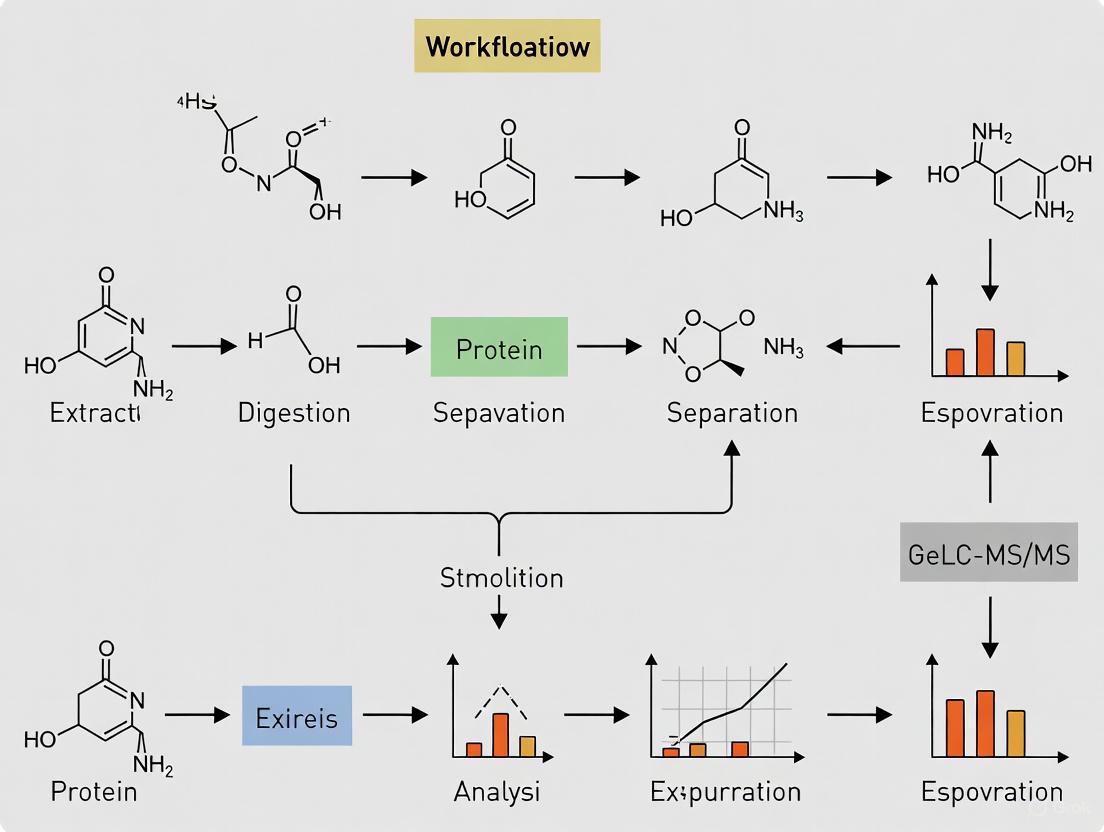
This article provides a complete resource for researchers and drug development professionals on the GeLC-MS/MS proteomics workflow, which combines SDS-PAGE separation with liquid chromatography-tandem mass spectrometry.
GeLC-MS/MS Protein Fractionation Workflow: A Comprehensive Guide from Fundamentals to Clinical Applications
Abstract
This article provides a complete resource for researchers and drug development professionals on the GeLC-MS/MS proteomics workflow, which combines SDS-PAGE separation with liquid chromatography-tandem mass spectrometry. It covers foundational principles, detailed step-by-step protocols, and optimization strategies for processing complex protein samples from cells and tissues, including clinically relevant FFPE material. The content explores the workflow's high reproducibility in protein identification and quantification, its application in biomarker discovery and differential expression profiling, and a comparative analysis with alternative proteomic methods. Practical troubleshooting advice and insights into future directions in clinical and biomedical research are also included.
Understanding GeLC-MS/MS: Core Principles and Strategic Advantages in Proteomics
What is GeLC-MS/MS? Defining the Workflow and its Niche in Bottom-Up Proteomics
GeLC-MS/MS is a cornerstone proteomic workflow that combines classical gel electrophoresis with modern mass spectrometry. The term refers to a specific bottom-up proteomics approach where a complex protein mixture is first separated by SDS-PAGE (GeL), followed by in-gel enzymatic digestion of the separated proteins, and subsequent analysis of the resulting peptides by liquid chromatography-tandem mass spectrometry (LC-MS/MS) [1] [2]. This versatile strategy leverages the advantages of both traditional biochemistry—specifically the robust protein fractionation and visualization capabilities of SDS-PAGE—and the powerful protein identification and quantification capabilities of state-of-the-art mass spectrometry [1].
In the context of a broader thesis on protein fractionation workflows, GeLC-MS/MS represents a hybrid methodology that bridges gel-based and solution-based proteomic approaches. It has proven particularly valuable for analyzing complex samples—from cell culture and tissue to bodily fluids and recombinantly-expressed proteins—where reducing sample complexity prior to MS analysis is critical for achieving sufficient analytical depth [1] [2]. The technique allows for the visible assessment of protein amount and quality through conventional staining methods before committing samples to mass spectrometry, providing an intermediate level of quality control that is especially valuable in core facilities and clinical proteomics [3].
The GeLC-MS/MS Workflow: A Detailed Experimental Protocol
The standard GeLC-MS/MS protocol encompasses multiple well-defined stages from sample preparation to mass spectrometric analysis. The comprehensive workflow is visualized in the following diagram, with detailed procedural explanations following thereafter.
Sample Preparation and Pre-Fractionation
The initial phase of the GeLC-MS/MS workflow focuses on proper sample preparation to ensure optimal protein extraction and digestion. Starting with any biological sample—cell culture, tissue, body fluid, or immunoprecipitate—proteins must be extracted from non-proteinaceous matter that could interfere with downstream analysis [1]. For samples with high protein concentration (>500 µg/mL), methanol-chloroform precipitation is recommended, while trichloroacetic acid (TCA)-acetone precipitation is more suitable for dilute samples and larger volumes [1].
A critical step before SDS-PAGE fractionation is reduction and alkylation to break disulfide bonds and prevent their reformation, thereby enhancing protein digestion efficiency. The typical protocol involves:
- Reduction: Incubation with 5 mM tris(2-carboxyethyl)phosphine (TCEP) at room temperature for 20 minutes [1]
- Alkylation: Treatment with 10 mM iodoacetamide (IAA) in the dark at room temperature for 20 minutes to alkylate free cysteine residues [1]
- Quenching: Addition of 10 mM dithiothreitol (DTT) to consume any excess IAA [1]
Following reduction and alkylation, proteins are separated by SDS-PAGE using standard protocols. The entire gel lane is typically excised into multiple slices (commonly 5-20 depending on sample complexity) to fractionate the proteome by molecular weight [2] [3]. This pre-fractionation step significantly reduces sample complexity, allowing for deeper proteome coverage in subsequent LC-MS/MS analyses.
In-Gel Digestion and Peptide Extraction
After gel fractionation, proteins within each gel slice undergo in-gel digestion, a process that involves several sequential steps:
Gel Destaining: Coomassie-stained gel pieces are destained using a solution of 50% acetonitrile in 50 mM EPPS buffer (pH 8.5) until the blue color disappears [1]
Proteolytic Digestion: Gel pieces are incubated with a trypsin working solution (typically 12.5 ng/µL in 25-50 mM NH₄HCO₃ or 100 mM EPPS pH 8.5) overnight at 37°C [1] [4]. Trypsin is the most widely used protease due to its high specificity and ability to generate peptides ideal for MS analysis [2]
Peptide Extraction: Following digestion, peptides are extracted from the gel matrix using a solution containing 1% formic acid and 75% acetonitrile [1]. This acidic environment helps to protonate peptides and the high organic content facilitates their release from the gel matrix
Peptide Desalting: Extracted peptides are typically desalted using StageTips (home-made microcolumns containing C18 membrane disks) or commercial solid-phase extraction tips to remove salts, detergents, and other contaminants that could interfere with LC-MS/MS analysis [1]. The desalting process involves:
- Equilibration with 1% formic acid
- Sample loading
- Washing with 1% formic acid, 5% acetonitrile
- Elution with 1% formic acid, 70% acetonitrile [1]
LC-MS/MS Analysis and Data Processing
The final purified peptides are analyzed by nanoflow liquid chromatography coupled to tandem mass spectrometry. A typical analytical setup includes:
- Chromatography System: Ultimate 3000 RSLC or similar nano-UHPLC system [5] [4]
- LC Configuration:
- Trap column for desalting and concentration
- Analytical nano-column (e.g., 75 µm ID × 15-50 cm length) packed with C18 material
- Gradient: 4-55% acetonitrile (with 0.1% formic acid) over 90 minutes at ~300 nL/min flow rate [4]
- Mass Spectrometer: High-resolution instrument such as LTQ Orbitrap Velos or similar [5] [4]
- Data Acquisition:
The resulting MS/MS spectra are searched against protein databases (e.g., NCBI nr, SwissProt) using algorithms such as Mascot, MaxQuant, or SEQUEST [2] [5]. Search parameters typically include: trypsin specificity with up to 2 missed cleavages; fixed modification of carbamidomethylcysteine; variable modifications including methionine oxidation and N-terminal acetylation; mass tolerances of 5-10 ppm for precursors and 0.2-0.8 Da for fragment ions [5] [4]. Protein identifications are validated using statistical approaches (e.g., Protein Prophet algorithm) with false discovery rates typically set at <1% [5] [4].
Table 1: Key Research Reagent Solutions for GeLC-MS/MS
| Reagent/Solution | Composition | Function in Workflow |
|---|---|---|
| Reduction Solution | 5 mM TCEP or DTT in ultrapure water | Breaks disulfide bonds to denature proteins |
| Alkylation Solution | 10 mM IAA in ultrapure water | Blocks cysteine residues to prevent reformation of disulfides |
| Destaining Buffer | 50% acetonitrile, 50% 100 mM EPPS pH 8.5 | Removes Coomassie stain from gel pieces |
| Digestion Buffer | 100 mM EPPS pH 8.5 or 25-50 mM NH₄HCO₃ | Provides optimal pH environment for tryptic digestion |
| Trypsin Working Solution | 12.5 ng/µL sequencing-grade trypsin in digestion buffer | Proteolytically cleaves proteins at lysine/arginine residues |
| Peptide Extraction Solution | 1% formic acid, 75% acetonitrile | Extracts peptides from gel matrix after digestion |
| StageTip Equilibration Buffer | 1% formic acid in ultrapure water | Prepares C18 membrane for peptide binding |
| StageTip Wash Buffer | 1% formic acid, 5% acetonitrile | Removes salts and contaminants while retaining peptides |
| StageTip Elution Buffer | 1% formic acid, 70% acetonitrile | Elutes purified peptides from C18 membrane |
Optimized and Alternative GeLC-MS/MS Protocols
Whole-Gel Processing Procedure
To address the bottleneck of manual processing in large-scale GeLC-MS/MS experiments, a streamlined whole-gel (WG) procedure has been developed [3]. This approach performs washing, reduction, and alkylation steps on the intact gel prior to slicing, substantially reducing hands-on time when processing multiple samples. As demonstrated in Figure 1A of the search results, the conventional in-gel digestion (IGD) protocol multiplies all processing steps by the number of gel slices, while the WG procedure performs these steps only once per gel [3].
The performance of the WG procedure has been rigorously benchmarked against conventional IGD. When processing 90 gel slices (equivalent to 9 samples), the WG procedure reduces processing time on day one by approximately 75% compared to IGD [3]. Critically, this efficiency gain does not compromise data quality: protein identification overlap between WG and IGD procedures exceeds 80%, and label-free quantification shows excellent correlation (R² = 0.94) [3]. This makes the WG procedure particularly valuable for clinical proteomics studies where sample numbers are relatively high and reproducibility is essential.
Quantitative GeLC-MS/MS Approaches
Several quantification strategies have been successfully implemented in GeLC-MS/MS workflows:
Label-Free Quantification: Based on spectral counting or precursor intensity measurements [4]. For example, in a study of rooster fertility biomarkers, researchers used both spectral counting and average precursor intensity methods, considering proteins with fold changes ≤0.71 or ≥1.4 and p-values <0.05 as statistically significant [4]
Isobaric Labeling: GeLC-MS/MS is fully compatible with isobaric tags (e.g., TMT, iTRAQ) for multiplexed quantification [1]. Peptides from different samples can be labeled after in-gel digestion and combined prior to LC-MS/MS analysis
Stable Isotope Dimethyl Labeling: A recently developed method couples stable isotope dimethyl labeling with GeLC-MS/MS for highly accurate and precise quantification [6]. In this approach, light- and heavy-labeled samples are mixed before SDS-PAGE separation, allowing proteins with different isotopes in a single extracted band to be quantitatively compared in one LC-MS/MS injection. This strategy minimizes variability from gel extraction and LC-MS procedures, enabling accurate determination of abundance ratios even for low-abundance peptides [6]
Table 2: Comparison of GeLC-MS/MS Quantification Methods
| Quantification Method | Principle | Advantages | Limitations | Typical Applications |
|---|---|---|---|---|
| Label-Free (Spectral Counting) | Number of MS/MS spectra identifying a protein | Simple, cost-effective, no chemical labeling | Lower precision, requires strict normalization | Differential expression studies [4] |
| Label-Free (Precursor Intensity) | MS1 peak area or height | Potentially more accurate than spectral counting | Requires high MS1 reproducibility | Biomarker discovery [4] |
| Isobaric Tagging (TMT, iTRAQ) | Chemical labeling with isobaric tags | Multiplexing (up to 16 samples), high throughput | Ratio compression due to co-isolated peptides | Multiplexed time courses, multiple conditions [1] |
| Stable Isotope Dimethyl Labeling | Chemical labeling with formaldehyde isotopes | High accuracy, reduced variability, cost-effective | Limited to 2-3 plex in standard implementation | Precise quantification, proteolysis studies [6] |
Applications and Comparative Advantages of GeLC-MS/MS
Key Research Applications
GeLC-MS/MS has been successfully applied across diverse biological and clinical research areas:
Stem Cell and Developmental Biology: In mammary epithelial cell subpopulations, GeLC-MS/MS revealed distinct switches in components modulating Wnt and ephrin signaling between basal/mammary stem cells, luminal progenitor, and mature luminal cells [7]. The technology identified Wnt10a as uniquely expressed in basal/mammary stem cells, potentially maintaining stem cell activity through canonical Wnt signaling [7]
Biomineralization Studies: Comprehensive proteomic analysis of chicken eggshell formation identified 216 matrix proteins and quantified their abundance across four key mineralization stages [5]. This application demonstrated the utility of GeLC-MS/MS for temporal profiling of complex biological processes
Biomarker Discovery: The technology has been used to identify differential protein expression in wound healing research, despite being underutilized in this field [2]. Similarly, fertility studies in roosters have employed GeLC-MS/MS to discover protein biomarkers associated with fertility status [4]
Clinical Proteomics: GeLC-MS/MS is particularly popular in clinical proteomics due to its ability to handle a wide range of sample types and qualities while providing an intermediate level of quality control through gel visualization [3]
Niche in the Proteomics Workflow Landscape
The relationship between GeLC-MS/MS and other major proteomic approaches can be visualized as follows, highlighting its unique position in the methodological ecosystem:
GeLC-MS/MS occupies a strategic niche in the proteomics workflow landscape, offering distinct advantages that complement both traditional 2D-GE and fully gel-free approaches:
Comparative Advantages over MudPIT: While multidimensional protein identification technology (MudPIT) separates peptides based on charge and hydrophobicity, GeLC-MS/MS fractionates at the protein level by molecular weight [2]. This preserves valuable molecular weight information and effectively partitions high- and low-abundance proteins into different fractions, potentially improving reproducibility [2]. Additionally, SDS-PAGE removes low molecular weight impurities including detergents and buffer constituents that can be detrimental to mass spectrometer performance and reverse phase columns [2] [3]
Advantages over Simple Shotgun Proteomics: Compared to direct shotgun analysis of complex mixtures, GeLC-MS/MS significantly reduces sample complexity through pre-fractionation, enabling deeper proteome coverage [2]. This is particularly important for detecting low-abundance proteins in samples with wide dynamic ranges
Complementarity with 2D-GE: Although 2D gels remain valuable for specific applications such as separation and quantitation of intact protein isoforms and modified proteins [8], GeLC-MS/MS offers higher sensitivity and better compatibility with hydrophobic membrane proteins that are challenging to resolve by 2D-GE
Emerging Applications: Recent developments such as PEPPI-MS (passively eluting proteins from polyacrylamide gels as intact species for mass spectrometry) extend the utility of gel-based separation into top-down and middle-down proteomics, allowing efficient recovery of intact proteins below 100 kDa separated by SDS-PAGE for analysis of proteoforms [9]
GeLC-MS/MS remains a cornerstone methodology in bottom-up proteomics, offering a versatile and robust platform for protein identification and quantification across diverse sample types. Its unique strength lies in combining the separation power and visualization capabilities of SDS-PAGE with the sensitivity and specificity of modern mass spectrometry. The continued development of optimized protocols—including whole-gel processing for enhanced throughput and stable isotope labeling for improved quantification—ensures that GeLC-MS/MS maintains its relevance in an evolving proteomics landscape.
For researchers embarking on protein fractionation workflow studies, GeLC-MS/MS represents a balanced approach that provides sufficient analytical depth while maintaining practical implementability in most biochemistry and molecular biology laboratories. Its compatibility with complex biological samples, tolerance to various buffer conditions, and intermediate level of quality control make it particularly valuable for exploratory studies and clinical applications where sample quality may vary. As proteomics continues to advance, the fundamental principles of GeLC-MS/MS will likely continue to influence new methodologies that build upon its proven strengths in protein separation and fractionation.
GeLC-MS/MS is a powerful, robust strategy in mass spectrometry-based proteomics for analyzing complex protein mixtures. This method couples the high-resolution, size-based separation of proteins by Sodium Dodecyl Sulfate–Polyacrylamide Gel Electrophoresis (SDS-PAGE) with the sensitive identification and quantification capabilities of Liquid Chromatography-Tandem Mass Spectrometry (LC-MS/MS). The workflow involves separating a protein lysate via SDS-PAGE, excising the entire gel lane, and subdividing it into multiple slices. Proteins within these gel pieces are then subjected to enzymatic in-gel digestion into peptides, which are subsequently analyzed by nano-flow reversed-phase LC-MS/MS [10] [3]. The database search results from all gel slices are combined to yield comprehensive protein identification and relative quantification for the entire sample [3]. This approach is particularly valued for its ability to handle complex samples, its high tolerance to salts and detergents, and the protein-level fractionation it provides, which deepens proteome coverage and can offer information on protein isoforms based on molecular weight [10].
SDS-PAGE: Principle and Protocol
The Science of SDS-PAGE
SDS-PAGE separates proteins based almost exclusively on their molecular weight [11] [12]. This is achieved through the action of Sodium Dodecyl Sulfate (SDS), a detergent that performs two critical functions: it denatures proteins by breaking non-covalent bonds and coats them uniformly with negative charges. This charge coating nullifies the proteins' intrinsic charge, ensuring they all migrate towards the positive anode during electrophoresis [11] [12]. Additional sample preparation steps include heating the protein sample to around 95°C to break hydrogen bonds and treatment with reducing agents like Beta-Mercaptoethanol (BME) or Dithiothreitol (DTT) to break disulfide bridges, ensuring proteins are fully linearized [12].
The separation occurs through a discontinuous polyacrylamide gel system, typically consisting of two distinct layers [11] [12]:
- Stacking Gel (pH ~6.8): A low-percentage acrylamide gel that serves to concentrate and align all protein samples into a sharp, unified band before they enter the resolving gel.
- Resolving Gel (pH ~8.8): A higher-percentage acrylamide gel that acts as a molecular sieve, separating the linearized, negatively charged proteins based on their size [11] [12].
The entire process is driven by an electric current. The key role of glycine in the running buffer (pH 8.3) and the disparate pH of the gel layers create a steep voltage gradient that herds the proteins into a thin line within the stacking gel. When this protein front reaches the resolving gel at a higher pH, glycine ions gain negative charge and speed past the proteins, depositing them as a tight band at the top of the resolving layer where the actual size-based separation begins [11].
Detailed SDS-PAGE Protocol
Table 1: Key Reagents for SDS-PAGE [11] [10] [12]
| Reagent Category | Specific Reagents | Function in the Protocol |
|---|---|---|
| Denaturing Agent | Sodium Dodecyl Sulfate (SDS) | Unfolds proteins and confers uniform negative charge. |
| Reducing Agent | Dithiothreitol (DTT) or β-Mercaptoethanol (BME) | Breaks disulfide bonds to linearize proteins. |
| Gel Matrix | Acrylamide & Bis-acrylamide | Forms the cross-linked polyacrylamide gel matrix. |
| Polymerization Initiators | Ammonium Persulfate (APS) & TEMED | Catalyzes the free-radical polymerization of acrylamide. |
| Running Buffer | Tris, Glycine, SDS | Conducts current and maintains pH for separation. |
| Sample Buffer | Tris-HCl, SDS, Glycerol, Bromophenol Blue | Denatures proteins, adds sample density, and visualizes migration. |
Materials:
- Protein sample.
- Precast Bis-Tris gradient gel (e.g., 4-12%) or materials for casting a polyacrylamide gel (Acrylamide/Bis-acrylamide solution, Tris-HCl buffers, APS, TEMED) [10].
- SDS-PAGE running buffer (e.g., 1X MES or Tris-Glycine-SDS buffer) [10].
- Sample loading buffer (e.g., 4X LDS buffer) containing a reducing agent [10].
- Pre-stained protein molecular weight ladder [10].
- Coomassie Brilliant Blue-based stain and destain solutions [10] [3].
Method:
- Sample Preparation: Mix the protein sample with 4X sample loading buffer and reducing agent (e.g., DTT). Heat the mixture at 70°C for 10 minutes to denature the proteins fully [10].
- Gel Setup: If casting manually, prepare the resolving gel solution, pour it between glass plates, and overlay with isopropanol to ensure a flat surface. After polymerization, pour the stacking gel and insert a comb to create wells [12]. For a precast gel, remove the tape from the bottom of the cassette [10].
- Loading and Running: Place the gel into the electrophoresis tank and fill with running buffer. Load the prepared samples and protein ladder into the wells. Apply a constant voltage (e.g., 200V) until the dye front (e.g., Bromophenol Blue) reaches the bottom of the gel [11] [10].
- Visualization: After electrophoresis, carefully open the cassette and stain the gel with Coomassie Blue to visualize the separated protein bands. Destain the gel to remove background stain [10] [3].
In-Gel Digestion: From Proteins to Peptides
Conceptual Workflow
In-gel digestion (IGD) is the process of enzymatically cleaving the size-separated proteins directly within the polyacrylamide gel matrix into peptides, which are amenable to MS analysis. To streamline large-scale GeLC-MS/MS experiments, the Whole Gel (WG) procedure was developed. In this optimized workflow, critical processing steps—including washing, reduction, and alkylation—are performed on the intact gel lane before it is sliced into fractions. This drastically reduces the number of liquid handling steps and hands-on time compared to the conventional method where each gel slice is processed individually from the start [3].
Detailed In-Gel Digestion Protocol (Whole Gel Procedure)
Table 2: Key Reagents for In-Gel Digestion and Peptide Extraction [10] [3] [13]
| Reagent Category | Specific Reagents | Function in the Protocol |
|---|---|---|
| Destaining Solution | 25 mM Ammonium Bicarbonate (AmBic) / 50% Acetonitrile | Removes Coomassie stain and shrinks gel pieces. |
| Reducing Agent | Tris(2-carboxyethyl)phosphine (TCEP) or DTT | Reduces disulfide bonds. |
| Alkylating Agent | Iodoacetamide (IAM) | Alkylates free thiols to prevent reformation of disulfides. |
| Protease | Trypsin (sequencing grade) | Site-specifically cleaves proteins at lysine/arginine into peptides. |
| Extraction Solvent | 50% Acetonitrile / 5% Formic Acid | Extracts peptides from the gel matrix into solution. |
Materials:
- Coomassie-stained gel lane.
- 25 mM Ammonium Bicarbonate (AmBic).
- Destain solution: 25 mM AmBic in 50% Acetonitrile.
- Reducing solution: 5-10 mM TCEP or DTT in 25 mM AmBic.
- Alkylating solution: 20-55 mM Iodoacetamide in 25 mM AmBic (prepare fresh, protect from light).
- Trypsin solution: 10-12.5 ng/μL sequencing-grade trypsin in 25 mM AmBic (prepare fresh).
- Peptide extraction solution: 1% Formic Acid or 50% Acetonitrile/5% Formic Acid.
- Low-protein-binding microcentrifuge tubes [10] [3] [13].
Method:
- Whole-Gel Processing: Place the excised gel lane in a clean container.
- Wash/Destain: Add destain solution to cover the gel. Agitate for 20-30 minutes, repeating until the gel is clear. Remove liquid [3] [13].
- Reduction: Add fresh TCEP or DTT solution to cover the gel. Incubate at 56°C for 1 hour. Remove supernatant [13].
- Alkylation: Add fresh IAM solution to cover the gel. Incubate at room temperature in the dark for 45 minutes. Remove supernatant [13].
- Final Wash/Dehydration: Wash the gel with 25 mM AmBic, then dehydrate with destain solution. SpeedVac the gel to complete dryness [13].
- Gel Slicing: Using a clean scalpel, slice the entire dry gel lane into 5-20 bands of equal size, guided by the pre-stained molecular weight marker. Dice each band into ~1 mm³ pieces and transfer to individual low-protein-binding tubes [3] [13].
- Trypsin Digestion: Add enough trypsin solution to just cover the dried gel pieces. Allow the gel pieces to rehydrate on ice or at 4°C for 10-15 minutes. Add more 25 mM AmBic if needed to keep the gel pieces submerged. Incubate at 37°C for 4 hours to overnight [10] [13].
- Peptide Extraction:
- Transfer the supernatant (aqueous extraction) to a new tube.
- Add enough extraction solution to cover the gel pieces. Vortex and/or sonicate for 20-30 minutes.
- Combine the extract with the initial supernatant.
- Repeat the extraction step once [13].
- Sample Preparation for MS: Concentrate the combined extracts in a SpeedVac to reduce volume. The peptides can now be desalted (e.g., using C18 ZipTips) or diluted in LC-MS compatible solvent (e.g., 0.1% Formic Acid) for immediate analysis [13].
LC-MS/MS: Peptide Analysis and Data Acquisition
The Role of Liquid Chromatography and Mass Spectrometry
Following in-gel digestion, the complex peptide mixture is analyzed by Liquid Chromatography-Tandem Mass Spectrometry (LC-MS/MS). This stage consists of two main parts [14] [15]:
- Nano-Flow Liquid Chromatography (LC): Peptides are first separated based on their hydrophobicity using a reverse-phase C18 column with a nanoliter-per-minute flow rate. This separation reduces sample complexity by ensuring that fewer peptides enter the mass spectrometer simultaneously, which prevents signal suppression and increases the number of identifications [14] [15].
- Tandem Mass Spectrometry (MS/MS): The eluting peptides are ionized (typically via electrospray ionization) and analyzed in two stages. The first stage (MS1) measures the mass-to-charge ratio (m/z) of intact peptide ions. The second stage (MS2) selects specific peptide ions, fragments them, and measures the m/z of the resulting fragment ions. This fragmentation pattern provides sequence information that allows for peptide identification [14].
LC-MS/MS Protocol and Data Analysis
Materials:
- Peptide extract from in-gel digestion.
- LC Solvent A: 0.1% Formic Acid in water.
- LC Solvent B: 0.1% Formic Acid in Acetonitrile.
- Nano-flow LC system coupled to a high-resolution tandem mass spectrometer (e.g., LTQ Orbitrap, timsTOF) [10] [15].
- Trap and analytical columns (e.g., C18, 75 µm ID x 150-250 mm length, 1.5-3 µm particle size) [10] [15].
Method:
- Liquid Chromatography:
- Load the peptide sample onto a trap column for desalting and concentration.
- Elute peptides from the trap onto the analytical column using a shallow gradient of increasing Solvent B (e.g., from 5% to 35% B over 60-120 minutes).
- The separated peptides elute directly into the mass spectrometer's ion source [14] [15].
- Mass Spectrometry Data Acquisition:
- Operate the mass spectrometer in Data-Dependent Acquisition (DDA) mode. In this mode, the instrument continuously performs a full MS1 scan to measure all intact peptide ions. Then, it automatically selects the most abundant ions from the MS1 scan for fragmentation (MS2 scans) [14].
- For more comprehensive and reproducible quantification, Data-Independent Acquisition (DIA or SWATH-MS) can be used, where all ions within consecutive m/z windows are fragmented without pre-selection [14].
- Data Processing and Bioinformatics:
- The raw MS/MS data is converted to peak lists.
- These spectra are searched against a protein sequence database (e.g., UniProt) using search engines (e.g., Mascot, MaxQuant) to identify peptides and proteins.
- Statistical validation is applied to control the false discovery rate (FDR), typically to <1% [14].
- For quantification, label-free methods based on spectral counting or MS1 peak intensities can be employed to compare protein abundance across samples [14] [3].
Table 3: Performance Comparison of GeLC-MS/MS Workflow Reproducibility [3]
| Sample Type | Processing Method | Protein Identification Overlap | Quantitative Correlation (R²) |
|---|---|---|---|
| HCT116 Cell Lysate | WG vs. IGD | 85% - 95% | 0.94 |
| Mouse Tumor Tissue | WG vs. IGD | 83% - 88% (for slices 2-4) | Not Specified |
| HCT116 Cell Lysate (Triplicate WG) | WG Reproducibility | >88% Overlap | CV < 20% |
Essential Research Reagent Solutions
Table 4: The Scientist's Toolkit for GeLC-MS/MS
| Essential Material/Reagent | Specific Examples | Critical Function |
|---|---|---|
| Protein Separation Matrix | Polyacrylamide/Bis-acrylamide, precast gradient gels (e.g., 4-12% Bis-Tris) | Provides the molecular sieve for size-based protein separation. |
| Denaturing & Reducing Agents | SDS, DTT, TCEP, Iodoacetamide | Unfolds proteins, breaks disulfide bonds, and alkylates cysteines for complete denaturation. |
| Proteolytic Enzyme | Sequencing-grade modified trypsin | Site-specifically digests proteins into peptides suitable for MS analysis. |
| Chromatography Column | Nano-flow C18 reversed-phase columns (e.g., PepSep, 75µm ID, 1.5µm particles) | Separates peptides prior to MS to reduce complexity and increase sensitivity. |
| Mass Spectrometer | High-resolution instruments (e.g., Orbitrap, timsTOF) | Precisely measures peptide mass and fragments them for sequence identification. |
| Data Analysis Software | Search engines (Mascot, MaxQuant), quantitative platforms (Scaffold, Progenesis) | Identifies peptides/proteins from MS data and performs statistical quantification. |
The GeLC-MS/MS workflow, deconstructed into its core components of SDS-PAGE, in-gel digestion, and LC-MS/MS, remains a powerful and accessible strategy for proteomic analysis. Its robustness, high tolerance to contaminants, and ability to provide protein-level fractionation make it particularly well-suited for the analysis of complex samples, including clinically relevant materials like FFPE tissue [3]. The adoption of streamlined protocols, such as the Whole Gel digestion procedure, significantly enhances throughput and reproducibility, making large-scale differential proteomics studies more feasible. As mass spectrometry instrumentation and bioinformatics tools continue to advance, the integration of this well-established wet-lab method with modern analytical technologies ensures that GeLC-MS/MS will remain a vital tool for researchers and drug development professionals seeking deep and reliable proteome coverage.
GeLC-MS/MS, a proteomic workflow that couples gel electrophoresis with liquid chromatography-tandem mass spectrometry, is a powerful and versatile strategy for the analysis of complex protein mixtures. The technique separates proteins by molecular weight using SDS-PAGE, followed by in-gel enzymatic digestion and LC-MS/MS analysis of the resulting peptides [1] [10]. Its robustness stems from three core advantages: an exceptional ability to solubilize complex samples, a built-in desalting and cleanup step, and a direct quality control feature via gel staining. These attributes make it particularly valuable for discovery-based proteomics, biomarker research, and the analysis of challenging sample types, from cell lysates to clinical specimens [1] [3]. This application note details the protocols and underlying principles that make GeLC-MS/MS an indispensable tool in modern proteomics.
Advantage 1: Solubilization of Complex Samples
Sodium dodecyl sulfate-polyacrylamide gel electrophoresis (SDS-PAGE) is a cornerstone of GeLC-MS/MS due to its high tolerance for diverse sample conditions. The anionic detergent SDS denatures proteins and confers a uniform negative charge, allowing separation based primarily on molecular weight. This process effectively solubilizes a wide array of complex samples, making it ideal for protein mixtures that are difficult to handle with other methods.
The gel matrix acts as a robust sieve, separating proteins from low molecular weight compounds, salts, detergents, and other buffer components that can interfere with downstream mass spectrometric analysis [1]. This is particularly useful for samples prone to contain interfering substances, such as body fluids or tissues. The table below summarizes the compatibility of GeLC-MS/MS with various sample types and lysis conditions.
Table 1: Sample Compatibility and Solubilization in GeLC-MS/MS
| Sample Type | Compatible Lysis Methods | Compatible Lysis Buffers/Detergents | Key Considerations |
|---|---|---|---|
| Cell Culture | Needle lysis, Dounce homogenization, sonication [1] | 8 M Urea, 2% SDS [1] | Protease inhibitors should be added [1]. |
| Tissues | Mechanical lysis, homogenization [10] | Strong detergents, chaotropes [10] | Protein concentration must be determined (e.g., BCA assay) [1]. |
| Bodily Fluids | Direct denaturation [1] | SDS-based buffers [1] | Effective for pancreatic fluid and other digestive tract fluids [1]. |
| Immunoprecipitates | Direct solubilization [10] | LDS (Lauroyl Sarcosine) Sample Buffer [10] | Precipitate proteins to remove incompatible salts/detergents [10]. |
Advantage 2: Built-in Desalting
A critical, built-in advantage of the GeLC-MS/MS workflow is its intrinsic desalting and cleanup capability. During electrophoresis, proteins migrate into the polyacrylamide gel, while low molecular weight contaminants such as salts, lipids, and residual detergents are left behind or diffuse out during subsequent staining and destaining steps [1]. This process is fundamentally a form of size exclusion, where the gel matrix excludes larger proteins but allows small molecules to pass through freely.
This built-in desalting is crucial for mass spectrometry, as salts and other impurities can suppress ionization, leading to poor sensitivity and unreliable data [16] [17]. By integrating this cleanup into the fractionation process, GeLC-MS/MS minimizes the need for additional, potentially sample-losing desalting steps, such as spin columns or dialysis, prior to mass spectrometry analysis [17]. The in-gel digestion that follows takes place in a clean environment, and the resulting peptides are simply extracted from the gel matrix, yielding a sample that is largely free of MS-interfering substances [1] [16].
Advantage 3: Quality Control via Staining
GeLC-MS/MS provides a unique and direct quality control step that is absent from many in-solution proteomic workflows: the ability to visually assess the sample using protein stains after electrophoresis. Before committing to lengthy mass spectrometry analysis, researchers can inspect the gel for several key quality metrics.
Coomassie Brilliant Blue or similar stains allow for the visual confirmation of protein separation, estimation of protein concentration through band intensity, and assessment of sample integrity [1] [10]. For instance, smearing can indicate protein degradation, while unexpected banding patterns may suggest contamination or improper sample handling [3]. This pre-analytical check is invaluable for troubleshooting and ensuring that only high-quality samples proceed to the instrument, saving both time and resources. This is especially important in core facilities or clinical proteomics where sample quality can be highly variable [3].
Table 2: Quantitative Performance of GeLC-MS/MS in Proteomic Analysis
| Performance Metric | Experimental Findings | Context and Workflow |
|---|---|---|
| Protein Identification Reproducibility | >88% overlap in protein IDs between triplicate analyses [3]. | Whole-gel procedure on HCT116 cell lysate and FFPE tissue [3]. |
| Protein Quantitation Reproducibility | Coefficient of Variation (CV) <20% on protein quantitation [3]. | Label-free spectral counting in whole-gel procedure [3]. |
| Quantitative Correlation | R² = 0.94 for spectral counts between IGD and WG procedures [3]. | Back-to-back comparison using human HCT116 cell lysate [3]. |
| Identification Overlap | 85-95% protein ID overlap between IGD and WG procedures [3]. | Analysis of five gel regions from a 4-12% gradient gel [3]. |
Detailed Experimental Protocols
Protocol 1: Standard In-Gel Digestion for GeLC-MS/MS
This protocol is adapted from established methodologies for processing gel bands or entire gel lanes sliced into multiple fractions [1] [10].
Materials & Reagents:
- Destaining Buffer: 50% acetonitrile, 50% 100 mM EPPS pH 8.5 [1].
- Digestion Buffer: 100 mM EPPS pH 8.5 [1].
- Reduction & Alkylation Stock Solutions: 500 mM TCEP, 500 mM IAA, 500 mM DTT in ultrapure water [1].
- Trypsin, sequencing grade [1] [10].
- Peptide Extraction Solution: 1% formic acid, 75% acetonitrile [1].
Procedure:
- Protein Denaturation, Reduction, and Alkylation: Begin with a protein sample solubilized in an SDS-based buffer. Add TCEP to a final concentration of 5 mM and incubate at room temperature for 20 minutes to reduce disulfide bonds. Add IAA to 10 mM to alkylate free cysteines, and incubate in the dark for 20 minutes. Quench the reaction with 10 mM DTT, incubating for a further 20 minutes in the dark [1].
- SDS-PAGE Fractionation: Load the reduced and alkylated protein sample onto a polyacrylamide gel (e.g., a Bis-Tris 4-12% gradient gel). Run the gel using an appropriate SDS-running buffer until adequate separation is achieved [10].
- Gel Staining and Destaining: Visualize proteins using a mass spectrometry-compatible Coomassie stain. Destain the gel with a solution such as 25 mM ammonium bicarbonate/50% acetonitrile until the background is clear and protein bands are visible [10] [3].
- Gel Band Excision: Excise the entire protein-containing lane(s) and slice them into 5-20 bands of equal size based on the molecular weight marker. Transfer each gel slice to a low-protein-binding microcentrifuge tube [10] [3].
- In-Gel Digestion: Dice the gel pieces into small cubes (~1 mm³) and destain thoroughly. Add enough trypsin working solution (e.g., 10 ng/µL in 25 mM ammonium bicarbonate) to cover the gel pieces. Incubate on ice for 30-45 minutes to allow trypsin absorption, then replace any excess liquid with Digestion Buffer and incubate overnight at 37°C [1] [10].
- Peptide Extraction: Following digestion, add Peptide Extraction Solution to the gel pieces and incubate with agitation (e.g., 15 minutes in a sonication bath). Transfer the supernatant to a new tube. Repeat the extraction once or twice and pool all supernatants [1].
- Sample Cleanup and Analysis: Dry the pooled extracts in a vacuum concentrator. Desalt the peptides using a C18 StageTip or similar micro-column [1]. Reconstitute the peptides in a MS loading buffer (e.g., 5% formic acid, 5% acetonitrile) for subsequent LC-MS/MS analysis [1] [10].
Protocol 2: Whole-Gel Processing for High-Throughput Workflows
For processing many samples, the Whole-Gel (WG) procedure significantly reduces hands-on time by performing washing, reduction, and alkylation on the intact gel before slicing [3].
Materials & Reagents:
- Solutions are identical to Protocol 1 but are prepared in larger volumes.
Procedure:
- SDS-PAGE and Staining: Separate the protein sample by SDS-PAGE and stain with Coomassie as described in Protocol 1, steps 2-3.
- Whole-Gel Processing: Instead of slicing the gel, place the entire destained gel in a container. Perform all washing, reduction (with TCEP or DTT), and alkylation (with IAA) steps on the whole gel by adding and removing solutions (e.g., 25 mL per step) [3].
- Gel Slicing and Digestion: After the final alkylation wash, slice the entire gel lane into fractions. Subsequently, process each slice for in-gel digestion and peptide extraction as outlined in Protocol 1, steps 5-7 [3].
GeLC-MS/MS Workflow Diagram
The Scientist's Toolkit: Key Research Reagent Solutions
The following table catalogs essential reagents and materials required for a successful GeLC-MS/MS experiment, as derived from the protocols.
Table 3: Essential Reagents and Materials for GeLC-MS/MS
| Item | Function/Application | Example Specifications |
|---|---|---|
| Trypsin, Sequencing Grade | Proteolytic enzyme for in-gel digestion; generates peptides for MS analysis. | Promega, V5111; dissolved in 0.1% acetic acid [1]. |
| Reducing Agent (TCEP or DTT) | Breaks disulfide bonds to denature proteins and facilitate digestion. | TCEP stock: 500 mM; DTT: 500 mM [1] [10]. |
| Alkylating Agent (IAA) | Modifies cysteine residues to prevent reformation of disulfide bonds. | IAA stock: 500 mM (prepare fresh, light-sensitive) [1] [10]. |
| MS-Compatible Gel Stain | Visualizes separated proteins for quality control and band excision. | SimplyBlue Coomassie Stain [1]. |
| Buffers (EPPS, Ammonium Bicarbonate) | Provides optimal pH environment for enzymatic digestion steps. | Digestion Buffer: 100 mM EPPS, pH 8.5 [1]. |
| Desalting Stationary Phase (C18) | Desalts and concentrates peptides prior to LC-MS/MS. | Empore C18 Membrane Disk for StageTips [1]. |
The GeLC-MS/MS workflow stands as a powerful and accessible platform for proteomic analysis, combining robust solubilization of complex samples, an efficient built-in desalting mechanism, and an unparalleled visual quality control step. The detailed protocols provided here, including the high-throughput Whole-Gel method, empower researchers to implement this technique effectively. By leveraging these key advantages, scientists can achieve comprehensive protein identification and reliable quantification, advancing discovery in basic biology and drug development.
GeLC-MS/MS combines gel electrophoresis with liquid chromatography-tandem mass spectrometry to fractionate complex protein mixtures for in-depth proteomic analysis. This workflow is particularly powerful for biomarker discovery and differential expression profiling because it effectively reduces sample complexity, enabling identification of low-abundance proteins that might otherwise be missed in direct LC-MS/MS analysis [18] [3]. The method involves separating a complex protein lysate by SDS-PAGE, slicing the entire gel lane into multiple fractions, performing in-gel digestion of proteins in each slice, and analyzing the resulting peptide mixtures by nanoLC-MS/MS [3]. Database search results from all fractions are combined to yield comprehensive protein identification and quantification for each biological sample [3]. This approach is especially valuable for analyzing challenging sample types, including clinical specimens and membrane-protein-enriched fractions, where compatibility with detergents and salts is essential for effective protein solubilization [18] [14].
Table 1: Key Advantages of GeLC-MS/MS for Proteomic Applications
| Advantage | Technical Benefit | Application Impact |
|---|---|---|
| Superior Dynamic Range | Fractionation reduces peptide complexity, increasing MS sampling depth [18] | Enables detection of low-abundance potential biomarkers |
| Detergent Compatibility | SDS ensures complete solubilization of hydrophobic proteins [18] [14] | Ideal for membrane proteins and challenging clinical samples |
| Sample Cleanup | Electrophoresis removes MS-interfering salts, buffers, and detergents [3] | Improves spectral quality and protein identification rates |
| Intermediate QC | Coomassie staining pattern provides quality control before MS [3] | Critical for core facilities processing diverse sample types |
| All Peptides in One Fraction | All tryptic peptides from a protein remain in a single fraction [3] | Simplifies quantitative comparisons across samples |
Experimental Design and Strategic Planning
Key Technical Considerations
Successful GeLC-MS/MS experiments require careful planning of several technical parameters. The optimal protein load for a 1.0 mm mini-gel with 10 wells is approximately 50 μg without causing band smearing [18]. For fractionation strategies, the number of gel slices represents a trade-off between instrument time and depth of analysis; 10-20 fractions per sample typically provide substantial proteome coverage [18]. The gel volume to protein ratio should be minimized during in-gel digestion to ensure efficient protease digestion and peptide recovery [18]. Modern high-resolution mass spectrometers can typically handle 1.0 μg of tryptic digest per run on a 75 μm internal diameter nanocapillary column [18].
Workflow Comparison: Whole-Gel vs. Conventional In-Gel Digestion
For large-scale studies, the whole-gel (WG) procedure significantly streamlines processing by performing washing, reduction, and alkylation steps on the intact gel prior to slicing [3]. This approach reduces manual processing time dramatically compared to conventional in-gel digestion (IGD), where each processing step must be performed individually on every gel slice [3]. Performance comparisons demonstrate that both methods yield highly similar results in both protein identification (>80% overlap) and label-free quantification (R² = 0.94) [3].
Diagram Title: GeLC-MS/MS Workflow Comparison
Table 2: Processing Time Comparison for Different Scale Experiments
| Processing Step | 10 Gel Slices (1 sample) | 90 Gel Slices (9 samples) | ||
|---|---|---|---|---|
| IGD | WG | IGD | WG | |
| Gel Slicing | 15 min | 15 min | 135 min | 135 min |
| Washing/Reduction/Alkylation | 30 min | 30 min | 270 min | 30 min |
| Trypsin Digestion | Overnight | Overnight | Overnight | Overnight |
| Peptide Extraction | 60 min | 60 min | 540 min | 540 min |
| Total Hands-on Time | ~105 min | ~105 min | ~945 min | ~705 min |
| Key Advantage | Comparable effort | Significantly more time-consuming | 25% time savings |
Detailed Experimental Protocols
Protocol 1: GeLC-MS/MS with Fractionation for Deep Proteome Coverage
This protocol is designed for complex samples such as mammalian cell or tissue extracts where comprehensive proteome coverage is desired [18].
Materials Required:
- Pre-cast 4-12% Bis-Tris gradient gel or equivalent
- Colloidal Coomassie staining solution
- Destaining solution (40% ethanol, 10% acetic acid)
- Reduction buffer (10 mM DTT in 50 mM ammonium bicarbonate)
- Alkylation buffer (55 mM iodoacetamide in 50 mM ammonium bicarbonate)
- Sequencing-grade modified trypsin
- Extraction buffer (1% formic acid, 50% acetonitrile)
Procedure:
- Sample Preparation: Dilute 50 μg of protein lysate in 1× SDS loading buffer. Heat at 70°C for 10 minutes [18].
- Gel Electrophoresis: Load samples onto a 4-12% gradient gel. Include pre-stained molecular weight markers in a separate lane. Run at 150-200 V until the dye front has migrated 2-4 cm into the gel [18].
- Fixing and Staining: Fix the gel in 40% ethanol, 10% acetic acid for 1 hour. Stain with colloidal Coomassie overnight [3].
- Destaining: Destain with 40% ethanol, 10% acetic acid until background is clear and protein bands are visible [3].
- Gel Slicing: Excise the entire sample lane using a clean scalpel. Cut the lane into 1.0 mm slices, resulting in 20-40 fractions depending on separation distance [18].
- Whole-Gel Processing (Optional but Recommended):
- Transfer the intact gel to a 50 ml conical tube.
- Wash with 25 ml of 50 mM ammonium bicarbonate for 15 minutes with gentle agitation.
- Reduce with 25 ml of 10 mM DTT in 50 mM ammonium bicarbonate at 56°C for 45 minutes.
- Alkylate with 25 ml of 55 mM iodoacetamide in 50 mM ammonium bicarbonate at room temperature for 30 minutes in the dark [3].
- In-Gel Digestion:
- Peptide Extraction:
- Add 50 μl of extraction buffer (1% formic acid, 50% acetonitrile) to each digest.
- Sonicate for 15 minutes in a water bath sonicator.
- Transfer supernatant to a new tube.
- Repeat extraction once and combine supernatants.
- Concentrate peptides in a vacuum concentrator until approximately 20 μl remains [3].
- LC-MS/MS Analysis: Reconstitute peptides in 2% acetonitrile, 0.1% formic acid for nanoLC-MS/MS analysis.
Protocol 2: Rapid GeLC-MS/MS Without Fractionation for Sample Cleanup
This streamlined protocol is ideal for sample cleanup when fractionation is not required, particularly for samples containing MS-incompatible detergents or buffers, or when working with limited protein amounts (<10 μg) [18].
Materials Required:
- Pre-cast 4-12% Bis-Tris gradient gel
- All solutions from Protocol 1
Procedure:
- Sample Preparation: Dilute 5-10 μg of protein lysate in 1× SDS loading buffer. Heat at 70°C for 10 minutes [18].
- Short-Distance Electrophoresis: Load samples and run at 150-200 V until the dye front has migrated only 0.5 cm into the gel [18].
- Fixing and Staining: Fix and stain as in Protocol 1, but reduce staining time to 2-4 hours.
- Gel Excision: Excise the entire 0.5 cm migration region as a single band [18].
- In-Gel Digestion: Process the single gel piece following the in-gel digestion steps in Protocol 1.
- LC-MS/MS Analysis: Analyze using a longer LC gradient (up to 4 hours) to maximize proteome coverage from a single fraction [18].
Data Analysis and Bioinformatics
Protein Identification and Quantification
Raw MS data processing typically involves database searching against a reference protein sequence database (e.g., UniProt) using search engines such as MaxQuant or Proteome Discoverer [14]. False discovery rate (FDR) thresholds of <1% should be applied at the peptide and protein levels to ensure high-confidence identifications [14]. For label-free quantification, spectral counting or extracted ion chromatogram (XIC) methods can be employed [3]. The quantitative results from all fractions of a single sample are combined to generate a comprehensive protein expression profile [3].
Differential Expression Analysis
For biomarker discovery, statistical analysis identifies proteins with significant abundance changes between experimental conditions [14]. Tools like Discriminant-Cut integrate multiple test statistics to improve detection of differentially expressed features while controlling false discovery rates [19]. Following statistical analysis, functional enrichment analysis using Gene Ontology, KEGG pathways, or protein-protein interaction networks helps interpret the biological significance of results [14].
Table 3: Performance Metrics for GeLC-MS/MS in Reproducibility Studies
| Performance Metric | HCT116 Cell Lysate | FFPE Tumor Tissue |
|---|---|---|
| Total Proteins Identified | 5386 | 5081-5125 |
| Identification Reproducibility | >88% overlap | >88% overlap |
| Quantification Reproducibility | CV < 20% | CV < 20% |
| WG vs IGD Protein ID Overlap | 85-95% per slice | 83-88% for slices 2-4 |
| WG vs IGD Quantification Correlation | R² = 0.94 | Similar performance |
Applications in Biomarker Discovery and Challenging Samples
Biomarker Discovery and Validation
GeLC-MS/MS plays a crucial role in biomarker discovery pipelines, enabling deep profiling of clinical samples including plasma, serum, and tissue biopsies [18] [3]. The workflow's fractionation approach is particularly valuable for analyzing biological fluids with large dynamic ranges, such as plasma (>10¹⁰ concentration range), where immunodepletion of abundant proteins combined with GeLC-MS/MS significantly increases depth of analysis [18]. In cancer research, this methodology has identified protein signatures distinguishing disease subtypes and predicting treatment responses [20]. The intermediate quality control provided by Coomassie staining patterns is especially valuable for clinical samples of variable quality [3].
Analysis of Challenging Sample Types
The exceptional compatibility with detergents makes GeLC-MS/MS ideal for membrane protein studies, as SDS provides superior solubilization of hydrophobic proteins compared to MS-compatible detergents [18] [14]. For formalin-fixed paraffin-embedded (FFPE) tissues, the workflow has demonstrated excellent performance, identifying >5,000 proteins with high reproducibility (CV < 20%) [3]. When working with limited sample amounts (<10 μg), the non-fractionated GeLC-MS/MS approach minimizes sample loss while still providing effective cleanup of contaminants that would interfere with LC-MS/MS analysis [18].
The Scientist's Toolkit: Essential Research Reagents
Table 4: Key Research Reagent Solutions for GeLC-MS/MS Workflows
| Reagent/Category | Specific Examples | Function in Workflow |
|---|---|---|
| Detergents for Lysis | SDS, Non-ionic detergents | Complete protein solubilization, especially membrane proteins [14] |
| Reducing Agents | DTT, TCEP | Reduction of disulfide bonds for protein denaturation [14] |
| Alkylating Agents | Iodoacetamide | Cysteine alkylation to prevent reformation of disulfide bonds [14] |
| Proteases | Sequencing-grade trypsin | Specific protein digestion to generate MS-compatible peptides [18] [14] |
| Mass Spec Standards | iRT peptides | Retention time standardization for LC-MS alignment [14] |
| Chromatography | C18 stationary phase, Acetonitrile | Peptide separation prior to MS analysis [14] |
Workflow Visualization and Decision Guide
Diagram Title: GeLC-MS/MS Workflow Selection Guide
In mass spectrometry-based bottom-up proteomics, the sample preparation and pre-fractionation strategy is a critical determinant of the depth and accuracy of the analysis. Researchers are often faced with choosing between several well-established workflows, primarily GeLC-MS/MS, in-solution digestion, and Strong Cation Exchange (SCX) fractionation. Each method presents a unique balance of analytical depth, throughput, reproducibility, and compatibility with different sample types. This application note provides a structured, evidence-based comparison of these three core strategies. Framed within broader research on GeLC-MS/MS workflows, we summarize quantitative performance data, provide detailed experimental protocols, and offer guidance to enable scientists and drug development professionals to select the optimal methodology for their specific proteomic challenges.
Performance Comparison and Quantitative Data
The choice of fractionation method significantly impacts key performance metrics, including the number of protein and peptide identifications, sequence coverage, and dynamic range. The tables below summarize comparative data from controlled studies to inform experimental design.
Table 1: Overall Performance Comparison of Fractionation Methods
| Performance Metric | GeLC-MS/MS | In-Solution Digestion | SCX Fractionation |
|---|---|---|---|
| Typical Proteome Coverage | High [10] [3] | Variable; can be very high with optimized protocols [21] [22] | Highest in some comparisons [23] [24] |
| Identification of Low-Abundance Proteins | Good, simplifies mixtures to aid detection [10] | Good, especially with detergent-assisted protocols [22] | Excellent, high dynamic range is a key strength [25] |
| Hands-on Time & Throughput | Lower throughput, more manual steps [21] [3] | Higher throughput, quicker, fewer peptide loss steps [21] | Intermediate, requires HPLC system [24] |
| Reproducibility | High reproducibility demonstrated [3] | High, minimizes manual error [21] | High with automated systems |
| Sample Loss Risk | Higher due to multiple transfer steps [26] | Lower, minimizes handling [21] | Intermediate, depends on steps [26] |
| Orthogonality & Additional Data | Provides protein molecular weight information [23] [10] | No native protein data | Provides peptide isoelectric point (pI) information [23] |
| Compatibility with Complex Samples | High tolerance to detergents/salts [10] [3] | May require cleanup; optimized protocols handle lipids/membranes [22] | Requires pre-cleaning; best with digested peptides [25] |
Table 2: Quantitative Identification Data from Comparative Studies
| Study Context | GeLC-MS/MS / SDS-PAGE | In-Solution Digestion | SCX Fractionation | Notes |
|---|---|---|---|---|
| Human Plasma Analysis [23] | 183 proteins, 1,642 peptides (23% mean coverage) | Not Tested | 1,139 proteins, 6,731 peptides (35% mean coverage) | SCX significantly outperformed SDS-PAGE in proteome coverage for plasma. |
| E. coli Lysate Analysis [23] | 139 proteins identified | Not Tested | 281 proteins identified (Protein-level RP-HPLC) | On-line SCX identified 178 proteins. |
| Kidney/Liver Perfusate Analysis [21] | Lower peptide/protein ID | Highest peptide/protein ID with greater sequence coverage | Not Tested | In-solution digestion was quicker, easier, and provided higher-confidence data. |
| Mitochondrial Protein Analysis [22] | Not Tested | >3,700 distinct peptides, 40% sequence coverage (Deoxycholate-assisted protocol) | Not Tested | Demonstrated the high efficiency of an optimized in-solution protocol. |
Detailed Experimental Protocols
GeLC-MS/MS Workflow Protocol
The GeLC-MS/MS method separates proteins by molecular weight before digestion, simplifying complex mixtures and providing molecular weight data [10] [3].
Workflow Diagram:
Step-by-Step Procedure:
- Protein Separation: Dilute the protein sample (e.g., 30-100 μg) in 1× LDS sample buffer, reduce with DTT, and heat at 70°C for 10 minutes. Load onto a 4-12% Bis-Tris gradient gel and run with MES SDS running buffer until adequate separation is achieved [10].
- Gel Staining & Slicing: Stain the gel with a Coomassie Brilliant Blue-based stain. Destain until bands are visible. Using a clean razor blade or scalpel, excise the entire lane and slice it into 5-20 uniform bands based on a pre-stained protein ladder [10] [3]. For higher throughput, a "Whole Gel" (WG) procedure can be used, where washing, reduction, and alkylation are performed on the intact gel before slicing [3].
- In-Gel Digestion & Peptide Extraction:
- Destain: For each gel piece, add 100-200 μL of 25 mM ammonium bicarbonate/50% acetonitrile (ACN) and vortex. Incubate until the blue stain is removed.
- Reduce and Alkylate: Add 10-100 μL of 5 mM TCEP in 25 mM ammonium bicarbonate and incubate at 37°C for 30-60 minutes to reduce disulfide bonds. Remove the solution, add 10-100 μL of 20 mM iodoacetamide in 25 mM ammonium bicarbonate, and incubate for 30 minutes in the dark to alkylate cysteines.
- Digest: Remove the solution, add enough 10 ng/μL trypsin in 25 mM ammonium bicarbonate to cover the gel piece, and incubate overnight at 37°C [10].
- Extract Peptides: Add enough 1% formic acid to cover the gel pieces, vortex, and incubate. Transfer the supernatant to a new low-protein-binding tube. Perform a second extraction with 50% ACN/1% formic acid, combine the supernatants, and dry in a SpeedVac concentrator [10].
Optimized In-Solution Digestion Protocol
In-solution digestion is efficient and high-throughput, especially when combined with optimized detergent-based protocols for unbiased protein analysis [21] [22].
Workflow Diagram:
Step-by-Step Procedure (Deoxycholate-Assisted Protocol) [22]:
- Denaturation: Solubilize the protein sample in 1% sodium deoxycholate (SDC) in 100 mM Tris-HCl, pH 8.5.
- Reduction and Alkylation: Reduce proteins with 5 mM Tris(2-carboxyethyl)phosphine (TCEP) at 37°C for 30 minutes. Alkylate with 10 mM iodoacetamide (IAA) at room temperature for 30 minutes in the dark.
- Digestion: Add trypsin at a 1:50 (w/w) enzyme-to-protein ratio and digest overnight at 37°C.
- Detergent Removal and Peptide Recovery: Add ethyl acetate (equal volume) and acidify with 0.5% trifluoroacetic acid (TFA). Vortex vigorously. The SDC will precipitate at the interface, while peptides remain in the aqueous phase. Centrifuge and carefully recover the aqueous (bottom) layer containing the peptides.
SCX Fractionation Protocol
SCX separates peptides based on their charge, often after in-solution digestion and immunodepletion of abundant proteins, to achieve deep proteome coverage [25] [23].
Workflow Diagram:
Step-by-Step Procedure (Off-line SCX) [25] [24]:
- Sample Preparation: Immunodeplete the most abundant proteins (e.g., top 20) from the sample (e.g., 100 μL of plasma) using a commercial immunoaffinity column. Precipitate the flow-through proteins with ethanol, and resuspend the pellet for digestion [25].
- Digestion: Perform an in-solution trypsin digestion on the depleted protein sample as described in Section 3.2.
- SCX Chromatography: Reconstitute the peptide digest in SCX Buffer A (e.g., 25% acetonitrile, 5 mM K₂HPO₄, pH 3.0). Load onto a PolySulfoethyl A SCX column. Elute peptides using a linear gradient from 5% to 100% of SCX Buffer B (e.g., 25% acetonitrile, 500 mM K₂HPO₄, pH 3.0) over 60 minutes [24].
- Fraction Collection and Cleanup: Collect fractions every 5 minutes (or based on UV profile). Dry down each fraction and reconstitute in 0.1% formic acid for LC-MS/MS analysis. Desalting with StageTips or similar may be required.
The Scientist's Toolkit: Essential Research Reagents
Table 3: Key Reagents and Materials for Proteomic Workflows
| Reagent / Material | Function / Application | Example Use Case |
|---|---|---|
| Trypsin, Sequencing Grade | Proteolytic enzyme that cleaves specifically at the C-terminal side of lysine and arginine residues. The cornerstone of bottom-up proteomics. | Used in all three protocols for digesting proteins into peptides [21] [25] [10]. |
| Sodium Deoxycholate (SDC) | Acid-labile detergent for protein solubilization and denaturation in in-solution digestion. Easily removed by acid precipitation. | Optimal reagent in deoxycholate-assisted in-solution digestion for efficient and unbiased peptide generation [22]. |
| Tris(2-carboxyethyl)phosphine (TCEP) | Reducing agent for breaking protein disulfide bonds. More stable than DTT. | Used in GeLC-MS/MS and in-solution protocols to reduce proteins prior to alkylation [10] [22]. |
| Iodoacetamide (IAM) | Alkylating agent that modifies reduced cysteine residues to prevent reformation of disulfide bonds. | Used in all protocols after reduction to carbamidomethylate cysteines [10] [22]. |
| PolySulfoethyl A SCX Column | Chromatographic stationary phase for separating peptides based on their positive charge (cation exchange). | Used for off-line or on-line SCX fractionation of complex peptide mixtures [24]. |
| Immunodepletion Column (e.g., ProteoPrep20) | Removes high-abundance proteins (e.g., albumin, immunoglobulins) from biofluids like plasma or serum to enhance detection of low-abundance proteins. | Critical pre-fractionation step for plasma proteomics prior to SCX or other methods [25]. |
| Coomassie Brilliant Blue Stain | Dye for visualizing proteins in polyacrylamide gels after electrophoresis. | Used in the GeLC-MS/MS workflow to visualize separated protein bands for excising [10] [3]. |
The selection of a proteomic workflow is a strategic decision that balances depth of analysis, throughput, and sample compatibility.
- GeLC-MS/MS is a robust and versatile method that provides excellent protein separation, tolerates many contaminants, and yields molecular weight information, making it ideal for qualitative analysis of complex or challenging samples.
- In-solution digestion offers superior speed and throughput with minimized sample loss. When coupled with optimized protocols like deoxycholate-assisted digestion, it achieves high proteome coverage and is highly suitable for quantitative studies and membrane proteomics.
- SCX Fractionation provides the highest peak capacity and orthogonality for peptide separation, enabling the deepest proteome coverage, particularly for discovery-phase analysis of highly complex samples like plasma.
For researchers, the choice often depends on the primary goal: GeLC-MS/MS for robustness and additional protein-level information, in-solution digestion for efficiency and quantification, and SCX for maximum depth of coverage in discovery applications.
Executing the GeLC-MS/MS Workflow: A Step-by-Step Protocol from Sample to Spectra
Within GeLC-MS/MS protein fractionation workflow research, strategic planning of protein load, fractionation, and throughput is fundamental to generating reproducible and high-quality data. This Application Note provides detailed protocols and decision-making frameworks to optimize these parameters, ensuring robust protein identification and quantification for drug development and clinical proteomics.
Protein Quantification Methods for Accurate Load Determination
Selecting an appropriate protein quantification assay is critical for determining optimal protein load for SDS-PAGE separation and subsequent in-gel digestion. Inaccurate quantification can lead to overloading, poor resolution, or insufficient signal, compromising the entire workflow. The table below compares the top protein quantification methods [27].
Table 1: Comparison of Protein Quantification Assays
| Assay | Principle | Advantages | Disadvantages | Optimal Use Case in GeLC-MS/MS |
|---|---|---|---|---|
| Absorbance at 280 nm | Measures absorbance of aromatic residues (Tyr, Trp) [27]. | Quick; no special reagents required [27]. | Interference from nucleic acids, buffers, DTT; requires known extinction coefficient [27]. | Rapid check of purified protein samples in known, compatible buffers. |
| Bradford Assay | Coomassie dye binding to Arg and aromatic residues, causing a spectral shift [27]. | Quick, stable, and compatible with reducing agents [27]. | Variable response based on protein composition; interference by detergents [27]. | General use for cell lysates without high detergent concentrations. |
| BCA Assay | Cu²⁺ reduction to Cu⁺ by peptide bonds in alkaline conditions (biuret reaction); Cu⁺ reacts with BCA [27]. | More uniform response across proteins; compatible with detergents [27]. | Interference by reducing agents; requires incubation [27]. | Ideal for samples containing >5% detergents; high-throughput via microplate [27]. |
| Folin-Lowry Assay | Biuret reaction followed by reduction of Folin-Ciocalteu reagent by Tyr and Trp [27]. | Measures at 750 nm for low background; stable endpoint [27]. | Incompatible with many common reagents (EDTA, Tris, reducing agents) [27]. | Less common for MS samples due to incompatibility with standard buffers. |
| Kjeldahl Method | Digestion of sample to convert nitrogen to ammonia, which is quantified [27]. | Precise and reproducible [27]. | Tedious, requires large sample mass, measures non-protein nitrogen [27]. | Impractical for most proteomic applications. |
For GeLC-MS/MS workflows, the BCA assay is often the most practical choice for quantifying complex lysates due to its tolerance for detergents and denaturants [27]. Furthermore, research demonstrates that BCA, RP-HPLC, and HPLC-ELSD can all be reliably adapted for the direct quantification of proteins encapsulated within liposomal delivery systems, with limits of quantification (LOQ) below 10 µg/mL [28].
Determining Fractionation Needs via GeLC-MS/MS
The GeLC-MS/MS approach, which involves separating a protein lysate by SDS-PAGE, slicing the entire lane into fractions, and performing in-gel digestion and LC-MS/MS analysis for each, provides an intermediate level of fractionation that reduces sample complexity and increases proteome coverage [3].
Strategic Workflow for GeLC-MS/MS
The following diagram illustrates the core decision pathway for implementing a GeLC-MS/MS workflow.
Optimizing Throughput: Whole-Gel vs. Conventional In-Gel Digestion
A major bottleneck in large-scale GeLC-MS/MS experiments is the manual processing time for individual gel slices. The Whole-Gel (WG) procedure streamlines this by performing washing, reduction, and alkylation steps on the intact gel prior to slicing, drastically reducing hands-on time [3].
Table 2: Throughput Comparison: In-Gel Digestion (IGD) vs. Whole-Gel (WG) Procedure
| Parameter | In-Gel Digestion (IGD) | Whole-Gel (WG) Procedure |
|---|---|---|
| Workflow | Slice gel first, then process each slice individually [3]. | Process entire gel (wash, reduce, alkylate), then slice and digest [3]. |
| Processing Time for 90 Slices | Significantly higher (e.g., ~4-5 hours) [3]. | Significantly lower (e.g., ~1-2 hours) [3]. |
| Protein Identification | High (Benchmark) [3]. | Highly similar (>80% overlap with IGD) [3]. |
| Quantitative Reproducibility | High (Benchmark) [3]. | Excellent (R² = 0.94 vs. IGD; CV < 20% in replicates) [3]. |
| Ideal Application | Small-scale experiments focusing on specific bands [3]. | Large-scale differential proteomics, especially clinical samples with high throughput needs [3]. |
The WG procedure offers a substantial reduction in processing time for multi-sample experiments while maintaining performance nearly identical to the conventional IGD protocol in terms of protein identification and label-free quantitation accuracy [3].
Experimental Protocols
Protocol A: Whole-Gel Procedure for GeLC-MS/MS Sample Preparation
This protocol is adapted for processing SDS-PAGE gels for high-throughput GeLC-MS/MS analysis [3].
Materials:
- SDS-PAGE gel with separated protein samples.
- Destaining solution (e.g., 50% methanol, 10% acetic acid).
- Washing buffer (e.g., 50 mM ammonium bicarbonate, ACN).
- Reduction solution: 10 mM DTT in 50 mM ammonium bicarbonate.
- Alkylation solution: 55 mM iodoacetamide in 50 mM ammonium bicarbonate.
- Digestion buffer: 50 mM ammonium bicarbonate with trypsin.
- Extraction solution: 1% formic acid, 50% ACN.
Procedure:
- Destaining: After electrophoresis, place the entire gel in a container with destaining solution. Gently agitate until protein bands are visible and background is clear.
- Washing: Wash the intact gel with washing buffer multiple times to remove SDS and salts.
- Reduction: Add reduction solution to cover the gel. Incubate at 56°C for 45 minutes.
- Alkylation: Remove reduction solution. Add alkylation solution and incubate at room temperature for 30 minutes in the dark.
- Gel Slicing: After a final wash, slice the entire gel lane into 5-20 fractions based on the molecular weight marker.
- In-Gel Digestion: For each gel slice, add enough digestion buffer to cover the piece. Incubate on ice for 30 minutes, then overnight at 37°C.
- Peptide Extraction: Transfer the supernatant to a new tube. Add extraction solution to the gel piece, sonicate, and incubate with agitation. Combine the extracts with the original supernatant and dry down in a vacuum concentrator.
Protocol B: Protein Quantification via BCA Assay
This protocol is suitable for quantifying complex protein lysates prior to GeLC-MS/MS [28] [27].
Materials:
- Protein sample.
- BCA Protein Assay Kit.
- Bovine Serum Albumin (BSA) standards.
- Microplate reader.
Procedure:
- Prepare Standards: Prepare a series of BSA standards in the same buffer as your unknown samples (e.g., 0, 25, 125, 250, 500, 750, 1000, 1500 µg/mL).
- Prepare Working Reagent: Mix the BCA reagents according to the manufacturer's instructions.
- Assay Setup: Combine 150 µL of each standard or unknown sample with 150 µL of working reagent in a microplate well.
- Incubation and Measurement: Cover the plate and incubate at 35-37°C for 30 minutes to 2 hours. Measure the absorbance at 562 nm using a microplate reader.
- Data Analysis: Generate a standard curve from the BSA standards and use it to determine the concentration of the unknown samples.
The Scientist's Toolkit: Key Research Reagent Solutions
Table 3: Essential Materials for GeLC-MS/MS Workflows
| Reagent/Material | Function | Example & Notes |
|---|---|---|
| Lipids for Delivery Systems | Form liposomal vesicles for protein encapsulation and delivery [28]. | 1,2-distearoyl-sn-glycero-3-phosphocholine (DSPC), 1,2-dioleoyl-3-trimethylammonium-propane (DOTAP) [28]. |
| Quantification Assay Kits | Determine protein concentration for accurate gel loading. | Pierce BCA Protein Assay Kit; choose detergent- or reducing agent-compatible versions as needed [28] [27]. |
| Chromatography Columns | Peptide separation prior to mass spectrometry. | Jupiter C18 column (e.g., 150 × 4.6 mm, 5 µm) for RP-HPLC [28]. |
| Volatile Buffers | Maintain LC-MS compatibility and ionization efficiency. | Ammonium acetate, ammonium formate; avoid non-volatile salts and ion-pairing reagents like TFA [29] [30]. |
| Digestion Enzyme | Cleaves proteins into peptides for MS analysis. | Sequencing-grade trypsin. |
Workflow Integration and Data Analysis
Successful integration of GeLC-MS/MS data from multiple fractions is critical. The database search results for all slices from a single biological sample are combined to produce a global protein identification and quantification list for that sample [3]. For quantitative differential analysis, label-free methods such as spectral counting have been shown to be highly reproducible (R² = 0.94) when comparing different sample preparation procedures [3]. Data visualization tools, including parallel coordinate plots and scatterplot matrices available in R/Bioconductor packages like bigPint, are indispensable for quality control, verifying normalization, and assessing differential expression patterns across samples and replicates [31].
In mass spectrometry-based proteomics, sample preparation is the most critical step influencing experimental outcomes. Within the context of a GeLC-MS/MS workflow—where protein separation by SDS-PAGE precedes in-gel digestion and LC-MS/MS analysis—the initial protein extraction and lysis steps fundamentally determine the depth and quality of proteomic coverage [3]. Inadequate lysis directly compromises the entire analytical pipeline, resulting in incomplete protein recovery, biased representation of proteome subsets, and ultimately, unreliable quantification. The complex architecture of cells and tissues presents unique challenges that demand tailored extraction strategies. This application note provides a comprehensive guide to optimizing protein extraction protocols for diverse sample types, with specific emphasis on integration into GeLC-MS/MS workflows for drug development and basic research.
Comparative Analysis of Protein Extraction Methodologies
Systematic Evaluation of Extraction Efficiency
The choice of extraction methodology significantly impacts protein yield, proteome coverage, and reproducibility. Research across multiple sample types demonstrates that combined physical and chemical disruption strategies generally outperform single-method approaches.
Table 1: Comparison of Protein Extraction Method Performance Across Biological Samples
| Sample Type | Extraction Method | Key Findings | Identified Proteins/Peptides | Reference |
|---|---|---|---|---|
| Human Skin | Chemical (2% SDS) + Mechanical (bead homogenizer) | Optimized protocol identified ~6000 proteins; effective for healthy and diseased tissue | ~6000 proteins | [32] |
| S. cerevisiae (Yeast) | Detergent-based (Y-PER) vs. Mechanical (bead beating) | Detergent lysis superior to mechanical disruption; method choice overshadowed genetic variances | >4700 proteins (~80% of proteome) | [33] |
| E. coli & S. aureus | SDT-B-U/S (Boiling + Ultrasonication) | Outperformed other methods; highest technical replicate correlation (R²=0.92) | E. coli: 16,560 peptides; S. aureus: 10,575 peptides | [34] |
| General Animal Tissues | Liquid nitrogen grinding + Lysis buffer + Sonication | Recommended for heart, liver, spleen, lung, kidney, muscle, and brain tissues | Protocol-dependent | [35] |
Key Insights from Comparative Studies
The data reveal several critical principles for optimization. First, integration of thermal and mechanical disruption (SDT-B-U/S) proves particularly effective for bacterial samples, enhancing extraction of proteins within key molecular weight ranges (20-30 kDa for E. coli; 10-40 kDa for S. aureus) and improving membrane protein recovery [34]. Second, the influence of extraction method can exceed biological variables, as demonstrated in yeast studies where extraction methodology accounted for more variation in proteomic profiles than genetic deletions [33]. Third, sample-specific optimization is essential, with Gram-positive bacteria requiring more rigorous disruption methods than Gram-negative species due to their thicker peptidoglycan layer [34].
Sample-Specific Extraction Protocols
Cell Culture Samples
Cell samples represent one of the more straightforward sample types for protein extraction. For suspension cells, pellet cells by centrifugation and wash with PBS to remove medium components. For adherent cells, scrape them from the plate rather than using trypsin, as trypsin can digest proteins of interest [36]. The following protocol is optimized for mammalian cells:
- Lysis Buffer Formulation: Prepare a lysis buffer containing 4% SDS, 100 mM Tris-HCl (pH 7.6), and 100 mM DTT [34]. Include protease and phosphatase inhibitors appropriate for your experimental goals [32].
- Cell Lysis: Resuspend cell pellet in lysis buffer. For effective lysis, subject the suspension to a combination of boiling and ultrasonication: incubate in a 98°C water bath for 10 minutes, cool, then sonicate on ice (e.g., 5 cycles of 5 seconds on, 8 seconds off) [34].
- Clarification: Centrifuge the lysate at 10,000-15,000 × g for 10 minutes at 4°C to remove insoluble debris [35] [36].
- Protein Precipitation: Add four volumes of pre-cooled acetone to the supernatant and incubate at -20°C overnight to precipitate proteins. Centrifuge, wash the pellet with cold acetone, and resuspend in an appropriate buffer for quantification and downstream analysis [34].
Animal Tissue Samples
Animal tissues require more aggressive homogenization to disrupt the extracellular matrix. The protocol below is suitable for common organs such as heart, liver, spleen, and kidney.
- Pre-processing: Rinse the tissue with ice-cold PBS to remove blood contaminants, which can introduce high-abundance proteins and interfere with analysis [35] [36].
- Homogenization: For effective cell wall disruption, flash-freeze the tissue in liquid nitrogen and grind to a fine powder using a chilled mortar and pestle [35] [36].
- Lysis and Extraction: Transfer the powdered tissue to lysis buffer (e.g., 4% SDS, 100 mM DTT, 100 mM Tris-HCl). Homogenize further using a mechanical homogenizer. To ensure complete lysis, sonicate the homogenate on ice [35].
- Clarification and Cleaning: Centrifuge at 15,000 × g for 10 minutes at 4°C. Collect the supernatant. If the sample has high lipid content, a second centrifugation may be needed. For fatty tissues, use a silica column to adsorb lipids [36]. Nucleic acids can be fragmented by sonication to prevent aggregation with proteins [36].
Plant Tissue Samples
Plant tissues present unique challenges due to their rigid cell walls and high levels of interfering compounds.
- Disruption: Grind tissue to a fine powder under liquid nitrogen using a mortar and pestle to break down the sturdy cell walls [35].
- Lysis with Strong Detergents: Use a strong lysis buffer such as SDS-based buffer or phenol extraction reagent to effectively lyse plant cells and solubilize proteins [35].
- Pigment Removal: Precipitate proteins using acetone or TCA. This step washes away pigments that dissolve in acetone but not the precipitated protein. Resuspend the final protein pellet in 8M urea solution for downstream analysis [35].
Integration with GeLC-MS/MS Workflows
The Whole-Gel Processing Advantage
The GeLC-MS/MS workflow, which involves separating a protein lysate by SDS-PAGE, slicing the gel lane, and performing in-gel digestion before LC-MS/MS analysis, is a mainstay in proteomics [3]. Streamlining this process is crucial for efficiency, especially in large-scale studies. The Whole-Gel (WG) procedure significantly reduces manual processing time by performing washing, reduction, and alkylation steps on the entire gel lane before slicing it into fractions [3].
Table 2: Essential Research Reagent Solutions for Protein Extraction
| Reagent/Category | Specific Examples | Function and Application Notes |
|---|---|---|
| Strong Ionic Detergents | SDS (Sodium Dodecyl Sulfate) [32] [34] | Effective solubilization of membrane proteins; denatures proteins completely. Commonly used at 2-4% (w/v). |
| Protease Inhibitors | PMSF, EDTA-based cocktails [32] [36] | Prevent protein degradation during extraction. PMSF and EDTA are cost-effective bases for many experiments. |
| Reducing Agents | DTT (Dithiothreitol), TCEP [34] [37] | Break disulfide bonds. DTT is common; TCEP is more stable and effective for certain applications. |
| Alkylating Agents | Iodoacetamide [37] | Cysteine alkylation prevents reformation of disulfide bonds after reduction. |
| Lysis Additives | Urea (8M), Octyl-beta-glucopyranoside (OGS) [37] | Urea denatures; OGS is a non-ionic detergent for membrane protein solubilization. |
| Specific Kits | Y-PER Reagent (Yeast) [33], IgY14 Depletion Column (Plasma) [37] | Optimized for specific sample types. Y-PER for convenient yeast lysis; IgY14 for depleting top 14 abundant plasma proteins. |
This approach condenses numerous pipetting steps into single operations per gel, drastically cutting hands-on time without compromising protein identification or quantitative accuracy compared to the conventional in-gel digestion (IGD) method [3]. The WG procedure demonstrates high reproducibility, with protein identification overlaps exceeding 88% and quantification correlations (R²) of 0.94 compared to IGD [3].
Workflow Optimization from Lysis to Analysis
The following diagram illustrates the complete optimized workflow from sample preparation through to GeLC-MS/MS analysis, highlighting key decision points and optimization strategies.
Optimized protein extraction is the foundational step upon which successful GeLC-MS/MS proteomics is built. The protocols and data presented herein demonstrate that a tailored approach, considering sample-specific challenges and leveraging combined disruption strategies, maximizes protein recovery and proteome coverage. Integration of these optimized lysis methods with streamlined workflows like the Whole-Gel procedure enables robust, reproducible, and deep proteomic profiling. This is essential for advancing research and drug development, where accurate protein quantification is critical for understanding disease mechanisms and identifying therapeutic targets.
Within the integrated GeLC-MS/MS workflow, SDS-PAGE is not merely a preparatory step but a critical fractionation stage that significantly enhances the depth of proteomic analysis. This technique separates complex protein mixtures into distinct bands based on molecular weight, effectively reducing sample complexity before mass spectrometry analysis [10]. The high resolving power of SDS-PAGE, compatibility with detergents used in sample extraction, and capacity to handle samples across a wide dynamic range make it an indispensable tool for comprehensive proteome coverage [10]. By physically separating proteins, it allows for the isolation of abundant proteins, thereby improving the identification of lower-abundance species during subsequent LC-MS/MS analysis [10]. This application note details optimized protocols for gel selection, electrophoresis conditions, and staining methods specifically tailored for GeLC-MS/MS applications, providing researchers with a robust framework for successful proteomic fractionation.
Principles of SDS-PAGE in GeLC-MS/MS
In SDS-PAGE, proteins are denatured by the anionic detergent sodium dodecyl sulfate (SDS), which binds to the polypeptide backbone at a relatively constant ratio of about 1.4 g SDS per 1 g of protein [38]. This binding masks the proteins' intrinsic charges and confers a uniform negative charge-to-mass ratio, ensuring that separation during electrophoresis occurs primarily based on molecular size rather than charge [38] [39]. When an electric field is applied, the SDS-protein complexes migrate through the polyacrylamide gel matrix, with smaller proteins moving faster through the pores than larger ones [39].
The discontinuous gel system, pioneered by Laemmli, utilizes a stacking gel with a neutral pH (e.g., pH 6.8) and a separating gel with a basic pH (e.g., pH 8.8) [38] [39]. This configuration creates an environment where proteins are initially concentrated into a sharp zone before entering the separating gel, where the actual size-based separation occurs, resulting in significantly sharper bands and improved resolution [38]. For GeLC-MS/MS, this high-resolution separation is paramount, as it directly correlates with the number of distinct protein fractions that can be excised and analyzed, thereby maximizing proteome coverage.
Gel Selection and Preparation
Gel Composition and Percentage Selection
The choice of acrylamide concentration is the primary determinant of the gel's pore size and thus its effective separation range. The table below provides guidance on selecting gel percentages based on the target protein molecular weights.
Table 1: Acrylamide Gel Percentage Selection Guide
| Gel Percentage (%) | Effective Separation Range (kDa) | Best For |
|---|---|---|
| 8 | 25 - 200 | Very large proteins and protein complexes [39] |
| 10 | 15 - 100 | Standard separation of a wide range of proteins [39] |
| 12 | 10 - 60 | Higher resolution of smaller proteins |
| 4-12% Gradient | 10 - 200 | Complex mixtures with a wide MW range [39] |
For GeLC-MS/MS, where the goal is to fractionate an entire proteomic sample, gradient gels (e.g., 4-12% Bis-Tris) are highly recommended [10]. They provide a broad separation range, allowing for the simultaneous resolution of both high- and low-molecular-weight proteins in a single run, which is essential for comprehensive analysis.
Gel Casting Protocol
The following protocol is adapted for standard mini-gel formats.
Materials:
- Resolving Gel Solution: Acrylamide/bis-acrylamide mix (e.g., 30%), 1.5 M Tris-HCl (pH 8.8), 10% SDS, 10% Ammonium Persulfate (APS), TEMED [40].
- Stacking Gel Solution: 1.0 M Tris-HCl (pH 6.8), 10% SDS, 10% APS, TEMED [40].
- Equipment: Glass plates, spacers, casting stand, comb.
Method:
- Assemble the glass plates and spacers in the casting apparatus securely [40].
- Prepare Resolving Gel: Mix components for the resolving gel as per the desired percentage. For a 10% gel, a typical mixture is 3.3 mL of 30% acrylamide, 2.5 mL of 1.5 M Tris-HCl (pH 8.8), 0.1 mL of 10% SDS, and 4.0 mL of water. To initiate polymerization, add 0.1 mL of 10% APS and 10 μL of TEMED, and mix swiftly without introducing bubbles [40].
- Cast Resolving Gel: Pour the solution between the glass plates, leaving space for the stacking gel. Carefully overlay the gel solution with a few milliliters of water-saturated butanol or isopropanol to exclude oxygen and create a flat meniscus [38] [40].
- Polymerize: Allow the gel to polymerize completely for approximately 30 minutes at room temperature. A distinct refractive interface will form upon polymerization.
- Prepare and Cast Stacking Gel: After polymerization, pour off the overlay liquid and rinse the top of the gel with water. Prepare the stacking gel solution (e.g., 4%). Add APS and TEMED, pour it onto the resolving gel, and immediately insert a clean comb without bubbles [40].
- Polymerize Stacking Gel: Allow the stacking gel to polymerize for at least 30 minutes. The gel can be used immediately or stored wrapped in moist paper towels and plastic film at 4°C for a short period [40].
Electrophoresis Conditions
Sample Preparation for GeLC-MS/MS
Proper sample preparation is critical for successful downstream MS analysis.
Materials:
- Sample Buffer (4X): Typically contains 141 mM Tris Base, 106 mM Tris HCl, 2% LDS, 0.51 mM EDTA, 0.22 mM SERVA Blue G250, 10% glycerol, pH 8.5 [10] [41].
- Reducing Agent: 500 mM Dithiothreitol (DTT) or 2.5% β-mercaptoethanol [10].
Method:
- Mix: Combine the protein sample with 4X sample buffer and a reducing agent (e.g., DTT to a final concentration of 50 mM) to break disulfide bonds [10].
- Denature: Heat the mixture at 70°C for 10 minutes [10]. While 95°C for 5 minutes is common, the slightly lower temperature can help reduce protein modifications that interfere with MS.
- Centrifuge: Briefly centrifuge at 12,000g for 30 seconds to pellet any insoluble debris [40].
Gel Running Conditions
Materials:
- Running Buffer (20X): 50 mM MES, 50 mM Tris Base, 0.1% SDS, 1 mM EDTA, pH 7.3. Dilute to 1X for use [10].
- Equipment: Electrophoresis chamber, power supply.
Method:
- Assemble: Place the cast gel into the electrophoresis chamber and fill the inner and outer chambers with freshly prepared 1X running buffer.
- Load Samples: Carefully remove the comb and load the prepared samples and a molecular weight marker into the wells.
- Run Electrophoresis: Apply a constant voltage. For a standard mini-gel, a common protocol is to run at 90V until the dye front migrates into the resolving gel, then increase to 150V until the dye front just reaches the bottom of the gel [40]. The total run time is typically 40-60 minutes.
- Optimization Tip: To prevent overheating and "smiling" bands, ensure the buffer concentration is correct and the run is performed in a cool environment. Adjust voltage and run time based on the protein size range of interest; running too long can cause loss of low-molecular-weight proteins [39].
Staining and In-Gel Processing for MS
Protein Staining and Visualization
For GeLC-MS/MS, staining must be compatible with subsequent mass spectrometry.
Materials:
- Coomassie Stain: 0.1% Coomassie Brilliant Blue G250, 10% glacial acetic acid, 40% methanol [10] or commercial aqueous-based formulations.
- Destain Solution: 25 mM ammonium bicarbonate / 50% acetonitrile (for MS-compatible destaining) or 25% methanol, 7.5% glacial acetic acid (standard) [10].
Method:
- Stain: Following electrophoresis, carefully remove the gel from the plates and place it in a container with sufficient Coomassie stain solution to cover it. Agitate gently on an oscillating table for 15-60 minutes [40].
- Destain: Pour off the stain and add the destain solution. Agitate, changing the destain solution every 10-15 minutes until the background is clear and protein bands are sharply visible [40].
- MS Compatibility: Methanol-free, acetic acid-free aqueous Coomassie stains are preferred for GeLC-MS/MS as they improve peptide recovery and avoid protein modifications that can interfere with MS analysis [10].
In-Gel Digestion Protocol
This is the core step that links SDS-PAGE fractionation to MS identification.
Materials:
- Destain Solution: 25 mM ammonium bicarbonate / 50% acetonitrile.
- Reducing/Alkylating Agents: 5 mM Tris(2-carboxyethyl)phosphine (TCEP) and 20 mM iodoacetamide (IAM, prepared fresh) [10].
- Trypsin: Sequencing grade, 10 ng/μL in 25 mM ammonium bicarbonate.
- Extraction Solution: 1% formic acid / 50% acetonitrile.
Method:
- Excise Bands: Using a clean scalpel or razor blade, excise the entire gel lane as a series of bands based on the molecular weight marker [10]. Place each band into a low-protein-binding microcentrifuge tube.
- Destain: For Coomassie-stained bands, add 200-400 μL of 25 mM ammonium bicarbonate / 50% acetonitrile to cover the gel pieces. Agitate at 37°C for 15-30 minutes or until the blue color is removed. Discard the supernatant and repeat if necessary [10].
- Dehydrate: Add enough acetonitrile to cover the gel pieces and incubate for 5 minutes until they shrink and become opaque. Remove the acetonitrile.
- Reduce and Alkylate: Rehydrate the gel pieces with 10-50 μL of 5 mM TCEP in 25 mM ammonium bicarbonate and incubate at 60°C for 10 minutes to reduce disulfide bonds. Cool to room temperature, then add an equal volume of 20 mM IAM and incubate in the dark for 30 minutes to alkylate the cysteine residues [10].
- Wash/Dehydrate: Remove the solution. Perform a quick wash/dehydration cycle with 25 mM ammonium bicarbonate, followed by acetonitrile.
- Digest: Add enough trypsin solution to rehydrate the gel pieces (∼2-3x the gel volume). Incubate on ice for 30 minutes to allow absorption. Add more 25 mM ammonium bicarbonate if needed to keep the gel pieces submerged. Incubate at 37°C for 4-16 hours.
- Extract Peptides: Add enough extraction solution (e.g., 1% formic acid/50% ACN) to cover the gel pieces. Agitate at 37°C for 15 minutes. Transfer the supernatant (containing extracted peptides) to a new tube. Repeat the extraction once and pool the supernatants.
- Concentrate: Dry the pooled extracts in a SpeedVac concentrator. The peptide pellet can be reconstituted in a small volume of 0.1% formic acid for LC-MS/MS analysis [10].
The Scientist's Toolkit
Table 2: Essential Reagents and Materials for GeLC-MS/MS
| Item | Function/Application |
|---|---|
| Bis-Tris Gels (4-12%) | Preferred gel chemistry for GeLC-MS/MS; provides a near-neutral pH environment that reduces protein modifications like acrylamide adducts on cysteine residues, improving MS compatibility [10]. |
| Dithiothreitol (DTT) | A reducing agent used to break protein disulfide bonds during sample preparation, ensuring complete denaturation and linearization [10]. |
| Iodoacetamide (IAM) | An alkylating agent that caps cysteine residues post-reduction, preventing reformation of disulfide bonds and aiding in protein identification [10]. |
| Sequencing Grade Trypsin | A high-purity protease that specifically cleaves proteins at the C-terminal side of lysine and arginine residues, generating peptides ideal for LC-MS/MS analysis [10]. |
| Coomassie G-250 | A protein dye used for visualization. Aqueous, MS-compatible formulations are critical to avoid interference with mass spectrometry [10] [42]. |
| Tris(2-carboxyethyl)phosphine (TCEP) | An alternative, odorless reducing agent that is more stable than DTT and effective at a wider pH range [38] [10]. |
| Polyvinylidene difluoride (PVDF) Membrane | For western blotting validation steps that may precede or run parallel to a GeLC-MS/MS workflow [43]. |
| Low-Protein-Bind Tubes | Minimizes sample loss due to adsorption of proteins and peptides to tube walls, which is crucial for low-abundance species [10]. |
Troubleshooting and Optimization
Table 3: Common SDS-PAGE Issues and Solutions for GeLC-MS/MS
| Problem | Potential Cause | Solution |
|---|---|---|
| Poor Band Resolution | Incorrect gel percentage; improper buffer pH; insufficient run time. | Match gel percentage to protein MW range; ensure fresh running buffer; optimize voltage and run time [39]. |
| Horizontal Band Distortion ("Smiling") | Uneven heat distribution across the gel. | Run electrophoresis at a lower voltage or with active cooling to prevent localized overheating [39]. |
| Low Protein Recovery from Gel | Inefficient passive extraction or digestion. | Ensure complete destaining; finely mince gel bands; use MS-compatible stains; consider enhanced extraction methods like PEPPI-MS which uses CBB as an extraction enhancer [42]. |
| High Background in MS | Contaminants from staining (methanol, acetic acid) or keratin. | Use MS-compatible stains and solvents; work in a clean environment; use high-purity (sequencing grade) trypsin [10]. |
Within mass spectrometry-based proteomics, the GeLC-MS/MS workflow—which separates protein lysates by SDS-PAGE followed by in-gel digestion and LC-MS/MS analysis—is a cornerstone for global protein identification and quantification [44]. This method is particularly valued in clinical proteomics and biomarker discovery due to its ability to handle complex samples, provide quality control via staining patterns, and remove interferents [44] [18]. However, a significant bottleneck has traditionally been the manual processing time involved when a single gel lane is sliced into numerous fractions, each requiring independent washing, reduction, and alkylation [44]. To address this challenge, the Whole-Gel (WG) processing procedure was developed, performing these critical steps on the intact gel prior to slicing. This application note details the WG protocol and validates its performance against conventional methods, framing it within the broader context of optimizing GeLC-MS/MS for large-scale, high-throughput research and drug development.
Methodologies and Protocols
Whole-Gel Processing Protocol
The following workflow describes the Whole-Gel procedure designed to minimize hands-on time for large-scale experiments.
Pre-Processing and Staining
After SDS-PAGE separation, fix and stain the gel using a compatible stain like colloidal Coomassie. Capture a digital image of the stained gel alongside the pre-stained molecular weight markers. This image will serve as a guide for subsequent gel slicing [44].
Whole-Gel Processing Steps
- Washing: Place the entire destained gel in a clean container. Add a sufficient volume (e.g., 25-50 mL) of a washing solution (e.g., 50:50 100 mM ammonium bicarbonate (Ambic):acetonitrile (ACN)) and incubate with gentle agitation for 10-15 minutes. Remove and discard the solution [44] [45]. This step removes detergents, salts, and buffers.
- Reduction: Add a volume of 10 mM dithiothreitol (DTT) or tris-(2-carboxyethyl)-phosphine (TCEP) in 100 mM Ambic sufficient to cover the gel. Incubate at 56°C for 45 minutes to reduce cysteine disulfide bonds [44] [45].
- Alkylation: After cooling the gel to room temperature, remove the reduction solution. Add a volume of an alkylation reagent (e.g., 55 mM iodoacetamide (IAA) in 100 mM Ambic) to cover the gel. Incubate in the dark for 30-60 minutes to alkylate the reduced cysteine residues and prevent reformation of disulfide bonds [44] [45]. Note that the choice of alkylation reagent can impact protein identification, with non-iodine reagents like acrylamide sometimes showing benefits [46].
- Post-Alkylation Wash: Repeat the washing step as described above to remove excess alkylation reagent [45].
Slicing and Digestion
- Gel Slicing: Using a clean scalpel and guided by the scanned image and pre-stained markers, excise the entire gel lane and slice it into 5-20 equal fractions or regions of interest [44]. For complex proteomes, more slices increase fractionation depth [18].
- In-Gel Digestion: Mince each gel slice into small pieces (1-2 mm³). Add enough trypsin solution (e.g., 10 ng/µL in 50 mM Ambic with 10% ACN) to rehydrate the gel pieces. Incubate on ice for 15-30 minutes, then add more 50 mM Ambic to cover the pieces, and digest overnight at 30°C [44] [45].
Peptide Extraction and Cleanup
- Extraction: Add formic acid to a final concentration of 1% to stop the digestion. Transfer and save the supernatant. Perform a series of peptide extractions by adding 30 µL of 50% ACN with 5% formic acid, sonicating for 5 minutes, and collecting the supernatant. Repeat this extraction. A final extraction with 90% ACN with 5% formic acid can be performed [45].
- Concentration: Combine all supernatants and dry them completely in a vacuum concentrator. The resulting peptides can be reconstituted for LC-MS/MS analysis [45].
Comparative Analysis: Whole-Gel vs. Conventional In-Gel Digestion
The conventional in-gel digestion (IGD) procedure involves slicing the gel immediately after destaining. All subsequent washing, reduction, and alkylation steps are then performed individually on each gel slice, dramatically increasing the number of liquid handling steps [44].
Results and Validation
The Whole-Gel procedure has been rigorously benchmarked against the conventional IGD method in independent experiments using complex samples like human HCT116 cell lysate and mouse tumor tissue lysate [44].
Experimental Performance Data
Table 1: Protein Identification Overlap between WG and IGD Procedures
| Sample Type | Gel Band | Total IDs (IGD) | Total IDs (WG) | Overlap in Identifications |
|---|---|---|---|---|
| Human HCT116 Cell Lysate | 1 | 178 | 193 | >85% |
| 2 | 252 | 260 | >90% | |
| 3 | 300 | 305 | >90% | |
| 4 | 301 | 312 | >90% | |
| 5 | 54 | 53 | >85% | |
| Mouse Tumor Tissue Lysate | 2 | 130 | 127 | 83-88% |
| 3 | 248 | 239 | 83-88% | |
| 4 | 233 | 226 | 83-88% |
Source: Adapted from [44]. Data for mouse tissue slices 1, 5, and 6 showed more variable overlap.
Table 2: Quantitative Correlation and Reproducibility of the WG Procedure
| Analysis Type | Metric | Result |
|---|---|---|
| Label-Free Quantitation (Spectral Counting) | Correlation (WG vs. IGD) | R² = 0.94, Slope = 0.97 [44] |
| Protein Identification Reproducibility (WG Triplicate) | Overlap | >88% [44] |
| Protein Quantitation Reproducibility (WG Triplicate) | Coefficient of Variation (CV) | <20% [44] |
The data demonstrate that the streamlined WG procedure delivers highly comparable protein identification and quantitative results relative to the more labor-intensive conventional IGD protocol [44].
Hands-On Time Efficiency
The primary advantage of the WG procedure is the substantial reduction in manual processing time for experiments involving a large number of gel slices.
Table 3: Estimated Processing Time Comparison for Multiple Gel Slices
| Number of Gel Slices | Procedure | Estimated Processing Time (Day 1) |
|---|---|---|
| 10 | Conventional IGD | ~2 hours 30 minutes |
| Whole-Gel (WG) | ~2 hours | |
| 90 | Conventional IGD | ~8 hours |
| Whole-Gel (WG) | ~2 hours 30 minutes |
Source: Adapted from [44]. Times are estimates and can vary by lab.
Implementation for Research and Drug Development
The Scientist's Toolkit: Essential Research Reagents
Table 4: Key Reagents for GeLC-MS/MS Workflows
| Reagent | Function/Application | Example |
|---|---|---|
| Reduction Reagents | Breaks disulfide bonds between cysteine residues to denature proteins. | Dithiothreitol (DTT), Tris-(2-carboxyethyl)-phosphine (TCEP), β-mercaptoethanol [44] [46] [45]. |
| Alkylation Reagents | Modifies reduced cysteine residues to prevent reformation of disulfide bonds. | Iodoacetamide (IAA), Acrylamide, Chloroacetamide [44] [46] [45]. |
| Protease | Enzymatically cleaves proteins into peptides for MS analysis. | Sequencing-grade modified trypsin [45]. |
| Buffers & Salts | Maintains optimal pH for enzymatic and chemical reactions. | Ammonium bicarbonate (Ambic) [45]. |
| Solvents | Dehydrates gel pieces, extracts peptides, and stops digestion. | Acetonitrile (ACN), Formic Acid, Trifluoroacetic Acid (TFA) [45]. |
Application in Clinical and Large-Scale Studies
The Whole-Gel procedure is particularly suited for scenarios common in drug development and clinical proteomics:
- High-Throughput Screening: The streamlined process enables the processing of many biological replicates or compound-treated samples in parallel, accelerating discovery pipelines [44].
- Biomarker Discovery from Clinical Specimens: The method has been successfully applied to formalin-fixed paraffin-embedded (FFPE) tumor tissue, a key resource in clinical research, showing high reproducibility (CV<20%) [44].
- Core Facility Operations: The reduced hands-on time and maintained performance make the WG protocol ideal for core facilities that need to process diverse sample types reliably and efficiently [44].
The Whole-Gel processing innovation represents a significant practical advancement in GeLC-MS/MS workflows. By transferring the washing, reduction, and alkylation steps to the intact gel prior to slicing, it achieves a substantial reduction in manual labor and processing time without compromising the quality of protein identification or quantification. This protocol is robust, reproducible, and directly applicable to both cell line models and clinically relevant tissue samples. For researchers and drug development professionals engaged in large-scale differential proteomics, adopting the Whole-Gel procedure can enhance throughput, improve efficiency, and facilitate the deeper analysis of complex biological systems.
Within the context of a GeLC-MS/MS protein fractionation workflow, the steps of gel slicing and in-gel digestion represent a critical juncture where protein separation transitions to preparation for mass spectrometric analysis. This protocol is a cornerstone of bottom-up proteomics, where proteins are identified based on their constituent peptides. The fundamental objective at this stage is to maximize the yield and recovery of peptides from gel-embedded proteins, as this directly dictates the depth and confidence of subsequent protein identifications and quantitations [18] [47]. Efficient peptide recovery is particularly crucial for analyzing complex proteomes and samples with limited starting material, where losses can compromise the entire experiment [48].
The in-gel digestion method, introduced in 1992, has undergone innumerable refinements, yet its core principles remain intact [47]. The process involves four key stages: destaining of the gel to remove MS-interfering dyes, reduction and alkylation of cysteine residues to denature proteins, proteolytic cleavage (typically with trypsin) to generate peptides, and peptide extraction from the gel matrix [47]. Each step presents opportunities for peptide loss, necessitating a carefully optimized protocol to ensure high analytical sensitivity and reproducibility for researchers and drug development professionals engaged in biomarker discovery, host cell protein analysis, and quantitative proteomic studies [49] [14].
Strategic Planning and Quantitative Considerations
Successful implementation of the GeLC-MS/MS workflow requires strategic planning centered on the specific goals of the proteomic study. Key factors to consider include the total protein amount available, the desired depth of proteome coverage, and the number of samples to be processed [18].
Table 1: Strategic Planning Guide for GeLC-MS/MS Workflows
| Factor | Consideration | Impact on Peptide Yield and Recovery |
|---|---|---|
| Total Protein Load | Optimal load for a 75 μm i.d. column is ~1.0 μg of tryptic digest. A 5 μg load on a short (0.5 cm) gel without fractionation provides enough material for re-analysis. For fractionation, 50 μg of a complex sample (e.g., cell lysate) can be separated on a 1.0 mm mini-gel. [18] | Prevents column overloading and ion suppression in the MS, ensuring optimal peptide detection. Sufficient protein input accounts for inevitable losses during processing. |
| Need for Fractionation | Essential for increasing protein identifications in complex samples (e.g., mammalian cells, tissue, plasma). The number of fractions is a trade-off between instrument time and depth of analysis. [18] [3] | Reduces sample complexity per LC-MS/MS run, allowing the mass spectrometer to detect more low-abundance peptides, thereby increasing overall proteome coverage. |
| Gel Separation Distance | A short run (0.5 cm) is ideal for sample cleanup without fractionation. For fractionation, running samples 2.0 to 4.0 cm provides better size-based separation. [18] | Minimizes gel volume-to-protein ratio, which is crucial for digestion efficiency and peptide recovery. A longer separation improves fractionation resolution. |
| Gel Slice Number & Pooling | A single lane can be cut into ~20 x 1-mm slices. Slices can be digested individually or pooled (e.g., 2 slices per digest) to balance depth of analysis with throughput. [18] | Processing more, thinner slices can improve protein digestion and peptide extraction efficiency but increases the number of LC-MS/MS runs required. |
The quantitative outcomes of in-gel digestion are robust. When benchmarked against conventional in-gel digestion, the streamlined whole-gel procedure demonstrates highly similar performance, with an overlap in protein identifications ranging from 85% to 95% and a very strong correlation in label-free quantitation (R² = 0.94) [3]. This demonstrates that optimization focuses primarily on efficiency and reproducibility without sacrificing data quality.
Workflow Comparison and Protocol Selection
Two primary methodological approaches exist for processing SDS-PAGE gels in a GeLC-MS/MS pipeline: the traditional In-Gel Digestion (IGD) protocol and the streamlined Whole-Gel (WG) procedure. The choice between them depends on the scale and goals of the experiment.
The following diagram illustrates the key differences in these two workflows, highlighting the significant reduction in manual processing steps in the WG method.
Workflow Diagram Explanation: The diagram contrasts the IGD and WG procedures. The WG workflow performs washing, reduction, and alkylation on the intact gel before it is sliced, condensing multiple repetitive steps into single, bulk operations. This architectural change is the key to its efficiency, especially when processing many gel slices from multiple samples, as it reduces hands-on time and minimizes potential human error [3].
- Choose the IGD protocol when working with a small number of samples or when specific protein bands need to be excised based on their molecular weight and staining pattern [3].
- Choose the WG protocol for large-scale differential proteomics experiments, such as in clinical proteomics, where the entire lane is fractionated into multiple slices and high throughput is essential. This method maintains performance comparable to IGD ( >88% identification overlap) while significantly reducing processing time and labor [3].
Detailed Experimental Protocols
Whole-Gel (WG) Protocol for Large-Scale Studies
This protocol is optimized for processing entire gel lanes cut into multiple slices, ideal for maximizing proteome coverage from complex samples [3].
Protein Extraction and Gel Electrophoresis:
- Solubilize proteins using a lysis buffer containing 5% SDS for efficient extraction, particularly for hydrophobic membrane proteins [18] [48].
- Separate the protein sample (e.g., 50 μg for fractionation) by 1D SDS-PAGE. Run the gel until the dye front has migrated 2-4 cm for optimal fractionation. Include a pre-stained molecular weight marker.
- Fix and stain the gel with colloidal Coomassie Blue. Destain the entire gel with a solution of 30-50% acetonitrile (ACN) and 10-50 mM ammonium bicarbonate (NH₄HCO₃) [3] [47].
Whole-Gel Processing (Reduction and Alkylation):
- Wash: Transfer the destained, intact gel to a clean container. Wash the whole gel with 25 mL of 50 mM NH₄HCO₃ for 15 minutes with gentle agitation.
- Reduction: Add 25 mL of 10 mM dithiothreitol (DTT) in 50 mM NH₄HCO₃. Incubate at 56°C for 30-60 minutes to reduce disulfide bonds [48] [47].
- Alkylation: Remove the DTT solution. Add 25 mL of 100 mM iodoacetamide (IAA) in 50 mM NH₄HCO₃. Incubate at room temperature for 45 minutes in the dark to alkylate cysteine residues and prevent reformation of disulfide bonds [48] [47].
- Final Wash: Wash the gel twice with 25 mL of 50 mM NH₄HCO₃, followed by a wash with 25 mL of 50% ACN to dehydrate the gel.
Gel Slicing:
- Place the processed gel on a clean glass plate. Using a clean scalpel, slice the entire lane into 1-mm slices guided by the pre-stained markers. Alternatively, for lower resolution, pool larger regions or slice the lane into 10-20 equal pieces. Transfer each slice to a separate low-protein-binding microcentrifuge tube or a well in a 96-well pierced plate [18] [3].
In-Gel Digestion:
- Dehydration: Add enough 100% ACN to each gel slice to cover it. Incubate for 5-10 minutes until the gel pieces shrink and turn white. Remove the ACN.
- Trypsin Addition: Prepare a trypsin solution (10-20 ng/μL in 50 mM NH₄HCO₃). Add enough solution to rehydrate the gel pieces (typically 10-20 μL). Incubate on ice for 30-45 minutes to allow the protease to diffuse into the gel.
- Digestion: If all trypsin solution is absorbed, add a minimal volume of 30% ACN in 50 mM NH₄HCO₃ to keep the gels submerged. Incubate at 37°C overnight (~12-15 hours) [47].
Peptide Extraction:
- Acidic Extraction: After digestion, add 30-50 μL of 0.1% formic acid (FA) in 50% ACN to each sample. Vortex and incubate at room temperature with shaking for 10-15 minutes. Collect the supernatant, which contains the extracted peptides.
- Repeat Extraction: Pool the first extract. Perform a second extraction with 0.1% FA in 60% ACN, incubate for 10-15 minutes, and pool the supernatants [50] [47].
- Final Extraction: Perform a final extraction with 100% ACN to recover highly hydrophobic peptides, and pool the extract.
- Concentration: Dry the pooled extracts completely in a vacuum concentrator (SpeedVac). The dried peptides can be stored at -20°C or reconstituted in a loading buffer (e.g., 0.1% FA) for LC-MS/MS analysis.
Optimized Single-Band/Slice In-Gel Digestion Protocol
This protocol is tailored for processing a limited number of specific protein bands or gel slices, maximizing recovery for individual targets [50] [47].
Excision and Destaining:
- Excise the protein band of interest with a clean scalpel, minimizing the gel volume. Transfer the gel piece to a low-protein-binding microcentrifuge tube.
- Destain the gel piece by adding 200 μL of a destaining solution (e.g., 30% ACN, 50 mM NH₄HCO₃). Vortex and incubate until the blue color is gone, typically for 5-15 minutes. Remove the solution. Repeat if necessary.
Reduction and Alkylation:
- Dehydrate the gel piece with 200 μL of 100% ACN for 5 minutes. Remove ACN.
- Add 50-100 μL of 10 mM DTT in 50 mM NH₄HCO₃. Incubate at 56°C for 30-60 minutes. Allow to cool, then remove the DTT solution.
- Add 50-100 μL of 100 mM IAA in 50 mM NH₄HCO₃. Incubate at room temperature for 45 minutes in the dark. Remove the IAA solution.
Digestion and Extraction:
- Wash the gel piece with 200 μL of 50 mM NH₄HCO₃ for 10 minutes. Dehydrate with 200 μL of 100% ACN.
- Remove ACN and add 20 μL of trypsin solution (10 ng/μL in 50 mM NH₄HCO₃). Allow the gel to rehydrate on ice for 30-45 minutes.
- Add 30 μL of 30% ACN to keep the gel submerged and digest overnight at 37°C.
- The next day, extract peptides by adding 30 μL of 50% ACN / 0.1% FA, incubating for 10 minutes with shaking, and collecting the supernatant. Repeat extraction once and pool the extracts.
- Dry the pooled extract in a SpeedVac and store or reconstitute for LC-MS/MS.
The Scientist's Toolkit: Essential Reagents and Materials
Table 2: Key Research Reagent Solutions for In-Gel Digestion
| Item | Function/Benefit | Protocol Specifics |
|---|---|---|
| S-Trap Micro Columns | Unique technology for efficient cleanup and digestion of protein samples, especially effective for samples in SDS. [48] | Used in modern protein digestion protocols as an alternative to traditional in-gel processing, offering high recovery. |
| Dithiothreitol (DTT) | Reducing agent. Breaks disulfide bonds to denature proteins, making them more accessible to enzymatic cleavage. [47] | Typical working concentration: 10-50 mM. Incubation: 30-60 min at 56°C. [48] [50] |
| Iodoacetamide (IAA) | Alkylating agent. Modifies cysteine thiols post-reduction to prevent reformation of disulfide bonds. [47] | Typical working concentration: 50-100 mM. Incubation: 45 min at RT in the dark. [48] [50] |
| Trypsin, Mass Spec Grade | Serine protease. Cleaves specifically at the C-terminal of arginine and lysine, generating peptides ideal for MS analysis. [47] | Use modified, sequencing-grade trypsin to minimize autolysis. Typical enzyme-to-substrate ratio is 1:20 to 1:50. [50] [47] |
| Ammonium Bicarbonate (NH₄HCO₃) | Buffering agent. Maintains a stable pH (~8.0-8.5) optimal for tryptic digestion. It is also volatile, allowing easy removal. [47] | Used in washing, destaining, and digestion buffers, typically at 50-100 mM concentrations. |
| Acetonitrile (ACN) | Organic solvent. Used for gel dehydration, destaining, and peptide extraction. Aids in disrupting hydrophobic interactions. [47] | Concentrations from 30% to 100% are used for various steps, including destaining and extraction. |
| Formic Acid (FA) | Acidifying agent. Stops the digestion reaction, protonates peptides for positive-mode ESI-MS, and is a common component of LC mobile phases. [47] | Used at 0.1-1.0% in water or ACN for peptide extraction and sample reconstitution. |
| Low-Protein-Bind Tubes | Labware. Minimizes adsorptive losses of peptides during processing, which is critical for low-abundance samples. [48] | Essential for all steps post-digestion to maximize peptide recovery. |
Advanced Applications and Integration in Modern Proteomics
The principles of gel slicing and in-gel digestion extend beyond simple protein identification and are deeply integrated into advanced proteomic applications.
- Phosphoproteomics and PTM Analysis: For post-translational modification (PTM) studies like phosphorylation, a standard in-gel digest may serve as the foundation for a subsequent enrichment step. However, due to the low stoichiometry of most PTMs, in-solution digests starting with larger amounts of protein (e.g., >200 μg) are typically preferred for PTM enrichment workflows [18] [48]. For example, a dual-enrichment strategy using Fe-NTA magnetic beads followed by TiO2 has been developed to enhance phosphopeptide yield from limited tissue samples [48].
- Host Cell Protein (HCP) Monitoring in Biopharma: Mass spectrometry, often employing GeLC-MS/MS workflows, is increasingly used as a complementary method to immunoassays for monitoring residual HCPs in biologic drug products. It provides detailed, sequence-specific detection of individual HCP impurities throughout biopharmaceutical production, which is critical for drug safety and quality control [49].
- Data Analysis Advancements: Following LC-MS/MS analysis, data processing is a critical final step. Modern rescoring platforms (e.g., inSPIRE, MS2Rescore) can be integrated into the proteomics pipeline to re-evaluate peptide-spectrum matches, leading to substantial increases in peptide identifications (40-53%) and confidence [51]. This underscores that wet-lab optimization for peptide yield must be matched by sophisticated dry-lab analysis to fully leverage the data generated.
Within the framework of a thesis investigating GeLC-MS/MS protein fractionation workflows, the configuration of liquid chromatography (LC) gradients and mass spectrometry (MS) parameters is a critical determinant of success. This protocol details the optimization of these parameters to achieve high sensitivity and reproducibility in the identification and quantification of proteins from complex biological samples. The GeLC-MS/MS approach, which couples SDS-PAGE separation with in-gel digestion and LC-MS/MS analysis, is a powerful tool for proteomic profiling in drug development and basic research [18] [3]. The following sections provide a structured guide to method optimization, from strategic planning to practical implementation, complete with detailed protocols and data tables.
Strategic Planning for GeLC-MS/MS Analysis
The design of a GeLC-MS/MS experiment requires careful consideration of several factors that impact the depth of analysis and resource allocation. The primary considerations are:
- Sample Input and Fractionation: The amount of total protein and the decision to fractionate the sample are interconnected. For a simple cleanup without fractionation, loading 5 µg of protein and running a short gel distance (0.5 cm) is sufficient. For deeper proteome coverage, loading 50 µg of a complex sample (e.g., a cancer cell lysate) and slicing the gel lane into 10 or more fractions is recommended. Each fraction should ideally contain 1-5 µg of digested peptides for optimal LC-MS/MS analysis [18].
- Chromatographic Gradient Length: The choice of gradient length is a trade-off between analysis time and proteome coverage. For a single fraction ("one-shot") analysis from a short gel run, a longer gradient (up to 4 hours) can identify ~4,000-5,000 proteins from a cancer cell lysate. When fractionating a sample into 10 fractions, shorter gradients (70-90 minutes) per fraction can be used while still significantly increasing the total number of identifications [18].
- Throughput and Processing Protocol: For large-scale experiments involving many samples and fractions, the "Whole Gel" (WG) processing method significantly reduces hands-on time compared to the conventional "In-Gel Digestion" (IGD) method. The WG method performs washing, reduction, and alkylation steps on the intact gel before slicing, streamlining the workflow without compromising protein identification or quantitative reproducibility [3].
Configuring Chromatography Gradients
Principles of Gradient Elution
Gradient elution is essential for separating complex peptide mixtures. It involves a gradual change in mobile phase composition from a high percentage of aqueous solvent (e.g., water with 0.1% formic acid) to a high percentage of organic solvent (e.g., acetonitrile with 0.1% formic acid) [52]. This ensures that peptides with a wide range of hydrophobicities are eluted in a narrow, concentrated band, improving resolution, sensitivity, and reducing overall analysis time compared to isocratic elution [52].
Flow Regime Selection
The choice of flow rate directly impacts sensitivity and solvent consumption. The following table compares the common flow regimes used in LC-MS/MS.
Table 1: Comparison of LC Flow Regimes for MS/MS Analysis
| Flow Regime | Typical Flow Rate | Advantages | Disadvantages | Ideal Application |
|---|---|---|---|---|
| Standard Flow | 1 mL/min to 200 µL/min | Well-established; good separation efficiency; wide detector compatibility [52]. | High solvent consumption [52]. | Standard protein/peptide analysis with ample sample. |
| Microflow | 2 - 20 µL/min | Improved sensitivity; reduced solvent consumption [52]. | Requires specialized pumps and columns [52]. | Sensitivity-critical applications with limited sample. |
| Nanoflow | 100 nL/min to 750 nL/min | Highest sensitivity; minimal solvent consumption; ideal for very small samples [18] [52]. | Most technically challenging; susceptible to clogging [52]. | Proteomics of limited samples (e.g., single cells, FFPE tissue) [18]. |
For most GeLC-MS/MS applications in proteomics, nanoflow LC is the preferred regime due to its superior sensitivity and compatibility with typical sample amounts [18].
Stationary Phase and Gradient Optimization
- Stationary Phase: Reversed-phase chromatography using a C18 column is the standard for peptide separation. Columns can vary in chemistry (e.g., monolithic, polymeric, endcapped) and particle size, which influences efficiency and backpressure. Superficially porous particles offer a good balance of efficiency and robustness [52].
- Gradient Steepness: The rate of organic solvent increase should be optimized. A shallow gradient increases resolution for complex mixtures but extends run time. A steeper gradient reduces run time but may compromise separation [52]. For a 90-minute analysis of a complex fraction, a linear gradient from 5% to 35% acetonitrile over 70-80 minutes is a typical starting point.
- Column Equilibration: Ensure sufficient time (typically 5-10 column volumes) for the column to re-equilibrate to the starting mobile phase conditions before the next injection. This is critical for achieving reproducible retention times [52].
Optimizing Mass Spectrometry Parameters
Ion Source and Ionization
The efficient generation of gas-phase ions is fundamental for sensitivity.
- Ionization Mode: Electrospray Ionization (ESI) is most common for polar, ionizable analytes like peptides. For less polar compounds, Atmospheric Pressure Chemical Ionization (APCI) or Photoionization (APPI) can be evaluated [53].
- Capillary Voltage: This parameter has a major effect on ionization efficiency and should be optimized for the specific analyte, eluent, and flow rate. A suboptimal voltage can lead to variable ionization and poor reproducibility [53].
- Gas Flows and Temperatures: The nebulizing gas (helps form the spray) and drying gas (desolvates the droplets) flow rates and temperatures must be optimized. These requirements change with the eluent composition and flow rate. Highly aqueous mobile phases often require higher drying gas temperatures or flows [53].
- Solvent Composition: To maximize ESI response, the mobile phase pH should be controlled so that the analyte is in its ionized form (pH > pKa for acids, pH < pKa for bases). Use volatile buffers (e.g., ammonium formate, ammonium bicarbonate) with a pKa within ±1 unit of the eluent pH. Avoid non-volatile ion-pairing reagents like trifluoroacetic acid [53].
Mass Analyzer and Fragmentation
- Declustering Potentials: Applying a voltage in the interface region between the ion source and the mass analyzer can decluster analyte molecules from solvent clusters, reducing background noise and improving signal-to-noise ratios [53].
- Collision Energy: In MS/MS mode, the energy applied to fragment precursor ions must be optimized for each specific ion transition. Optimal collision energy produces abundant fragment ions without completely destroying the precursor ion [53].
- Dwell Time: The time spent monitoring a specific ion transition should be optimized to ensure sufficient data points across a chromatographic peak while minimizing "cross-talk" between consecutive transitions in scheduled methods [53].
Integrated GeLC-MS/MS Protocol: Whole-Gel Fractionation
This protocol describes the streamlined "Whole-Gel" (WG) method for processing SDS-PAGE gels for high-throughput GeLC-MS/MS analysis [3].
Materials and Reagents
Table 2: Research Reagent Solutions for GeLC-MS/MS
| Item | Function/Application |
|---|---|
| C18 Solid Phase Extraction Tips | Desalting and concentrating peptide mixtures prior to LC-MS/MS. |
| Pre-cast SDS-PAGE Gels | Reproducible protein separation by molecular weight. |
| Mass Spectrometry-Grade Trypsin | Specific proteolytic cleavage of proteins at lysine and arginine residues. |
| Volatile Buffers (e.g., Ammonium bicarbonate) | Maintaining pH during digestion; compatible with MS as they evaporate easily. |
| Reducing Agent (e.g., Dithiothreitol, DTT) | Breaking protein disulfide bonds. |
| Alkylating Agent (e.g., Iodoacetamide) | Modifying cysteine residues to prevent reformation of disulfide bonds. |
| Nanoflow UPLC System | High-pressure, high-resolution separation of peptides. |
| Tandem Mass Spectrometer | Identification and quantification of separated peptides. |
Step-by-Step Procedure
- Protein Separation: Separate the protein sample (e.g., 50 µg for fractionation) by 1D SDS-PAGE. Run the gel until the dye front has migrated 2-4 cm to achieve adequate separation [18].
- Gel Staining and Destaining: Fix the gel in a suitable fixative (e.g., 40% ethanol, 10% acetic acid) for 30 minutes. Stain with colloidal Coomassie Blue for 1 hour and then destain with Milli-Q water until protein bands are visible against a clear background. Scan the gel for documentation [3].
- Whole-Gel Processing:
- Wash: Transfer the entire gel to a container. Wash with a solution of 50% acetonitrile in 50 mM ammonium bicarbonate to remove the stain.
- Reduce: Incubate the gel with 10 mM DTT in 100 mM ammonium bicarbonate at 56°C for 30-45 minutes to reduce disulfide bonds.
- Alkylate: Replace the DTT solution with 55 mM iodoacetamide in 100 mM ammonium bicarbonate and incubate in the dark at room temperature for 30 minutes to alkylate cysteine residues [3].
- Gel Slicing: After a final wash with water, carefully excise the entire gel lane. Using a clean scalpel, slice the lane into 10-20 equal segments based on the pre-stained molecular weight markers [18] [3].
- In-Gel Digestion: Mince each gel slice into smaller pieces (∼1 mm³) and place them in a reaction tube. Add enough trypsin solution (e.g., 12.5 ng/µL in 50 mM ammonium bicarbonate) to cover the gel pieces. Incubate overnight (∼16 hours) at 37°C [18].
- Peptide Extraction: Following digestion, add an extraction buffer (e.g., 50% acetonitrile, 1% formic acid) to each tube and sonicate for 15 minutes. Transfer the supernatant to a new tube. Repeat the extraction once and combine the supernatants. Dry the extracted peptides in a vacuum concentrator [3].
- LC-MS/MS Analysis: Reconstitute the dried peptide samples in a suitable injection solvent (e.g., 2% acetonitrile, 0.1% formic acid). Analyze using nanoflow LC-MS/MS with the optimized chromatography gradients and mass spectrometry parameters described in Sections 3 and 4.
The following workflow diagram summarizes the entire GeLC-MS/MS process.
Expected Results and Performance Metrics
When optimized according to this protocol, the GeLC-MS/MS workflow provides highly reproducible and comprehensive data. The Whole-Gel procedure yields performance comparable to conventional in-gel digestion, with over 80% overlap in protein identifications and excellent quantitative correlation (R² = 0.94) in label-free spectral counting measurements [3]. For a complex sample like a human cancer cell lysate, triplicate analysis of 5 fractions per sample can consistently identify over 5,000 proteins with a coefficient of variation (CV) of less than 20% on protein quantification [3].
Table 3: Expected Performance of GeLC-MS/MS Workflow
| Metric | Expected Outcome | Notes |
|---|---|---|
| Protein ID Overlap (WG vs. IGD) | >80% | Demonstrates equivalence of streamlined protocol [3]. |
| Quantitative Correlation (R²) | 0.94 | Based on spectral counting between WG and IGD [3]. |
| Identification Reproducibility | >88% | Overlap in protein IDs across triplicate analyses [3]. |
| Protein Quantification CV | <20% | Coefficient of variation for label-free quantitation [3]. |
| Proteins ID'd (Cell Lysate) | 4,000-5,000 (single fraction); >8,000 (with fractionation) | Depth of analysis depends on fractionation and LC gradient [18]. |
This application note provides a detailed framework for configuring LC gradients and MS parameters within a GeLC-MS/MS protein fractionation workflow. By adhering to the optimized protocols for chromatography, ionization, and sample processing—particularly the high-throughput Whole-Gel method—researchers can achieve deep, reproducible, and quantitative coverage of complex proteomes. This structured approach is essential for robust protein analysis in drug development and biomedical research.
Within GeLC-MS/MS protein fractionation workflow research, a core thesis is that this versatile methodology successfully bridges classic biochemistry with modern mass spectrometry to enable robust proteomic profiling across diverse and challenging sample types. The GeLC-MS/MS approach, which combines protein separation via SDS-PAGE with liquid chromatography-tandem mass spectrometry, is a cornerstone technique in discovery proteomics [1] [10]. Its resilience to contaminants and ability to provide visual quality control make it particularly valuable for real-world biological samples, including complex cell lysates, precious formalin-fixed paraffin-embedded (FFPE) tissues, and biofluids like blood plasma with their characteristically high dynamic range of protein abundances [1] [3] [54]. This application note details how the GeLC-MS/MS workflow is tailored and successfully applied to these distinct sample types, providing validated protocols and performance benchmarks to guide researchers in drug development and biomedical science.
The fundamental GeLC-MS/MS workflow involves multiple stages, from initial sample preparation to final protein identification and quantification. The following diagram illustrates the core process and its key decision points for different sample types.
Application-Specific Protocols & Performance
Profiling Cell Lysates with High Reproducibility
Detailed Protocol for HCT116 Colorectal Cancer Cell Lysate Analysis [3]:
- Lysis and Preparation: Lyse HCT116 cells using a suitable mechanical method (e.g., needle lysis, sonication) or buffer system (e.g., 8 M urea, 2% SDS). Determine protein concentration using a Bradford or BCA assay.
- Reduction and Alkylation: Add TCEP to a final concentration of 5 mM and incubate at room temperature for 20 minutes to reduce disulfide bonds. Alkylate free cysteines by adding iodoacetamide (IAA) to 10 mM and incubating in the dark for 20 minutes. Quench excess IAA with 10 mM DTT (20-minute incubation in the dark) [1].
- SDS-PAGE and Staining: Separate 10-50 µg of protein on a 4-12% Bis-Tris gradient gel. Fix and stain the gel using a mass spectrometry-compatible Coomassie stain.
- Whole-Gel Processing: Instead of excising bands immediately, process the entire gel lane. Destain, reduce, and alkylate the intact gel in large volumes of solution to minimize hands-on time. After these steps, slice the entire lane into 5-20 fractions based on the pre-stained molecular weight markers [3].
- In-Gel Digestion: Dice each gel slice into 1 mm³ pieces. Destain with 50 mM EPPS pH 8.5 and 50% acetonitrile. Add trypsin working solution and digest overnight at 37°C.
- Peptide Extraction and Cleanup: Extract peptides sequentially with peptide extraction solution (1% formic acid, 75% acetonitrile) and 100% acetonitrile. Combine extracts, concentrate in a SpeedVac, and desalt using C18 StageTips before LC-MS/MS analysis [1] [3].
Performance Data: This protocol demonstrates high reproducibility, with triplicate analyses of HCT116 cell lysate showing an 88.2% overlap in protein identifications and a coefficient of variation (CV) of less than 20% on label-free quantitation [3].
Unlocking Biomarker Discovery in FFPE Tissues
Detailed Protocol for FFPE Tissue Proteomics (RapiGest Method) [55]:
- Sectioning and Deparaffinization: Cut three serial 10 µm thick sections from the FFPE block. Deparaffinize by incubation in xylene (3x 5 min), then rehydrate through a graded ethanol series (95%, 70%, 50%) and water [55].
- Protein Extraction with RapiGest: Air-dry the tissue and suspend it in a lysis buffer containing 4% SDS and 0.5 M DTT. Vortex, sonicate on ice, and then incubate at 95°C for 30 minutes, followed by 80°C for 2 hours with agitation. Quantify protein yield. For digestion, use a portion of the extract (e.g., 100 µg protein) and add the acid-labile surfactant RapiGest. Process the sample further for in-solution digestion, which has been shown to yield a proteome that closely resembles the fresh frozen proteome [55].
- Compatibility with GeLC-MS/MS: After extraction and cleanup, the protein sample can be processed through the standard GeLC-MS/MS workflow outlined above (SDS-PAGE, in-gel digestion, LC-MS/MS).
- Critical Consideration - Fixation Time: Fixation time significantly impacts data quality. While proteins can be extracted from samples fixed for up to 8 days, MS identification efficiency decreases with increasing fixation times. Standardizing fixation time across compared samples is critical for biomarker studies [56] [57].
Performance Data: The RapiGest-based extraction method for FFPE tissues demonstrates a high overlap with fresh frozen tissue proteomes (~69%) and yields greater technical reproducibility compared to other methods like FASP [55]. When combined with advanced extraction techniques like Pressure Cycling Technology (PCT) and phase-transfer surfactant (PTS) buffer, peptide abundance data from FFPE samples can show over 93% agreement within a 1.5-fold range with data from matched fresh samples, even for challenging membrane proteins [58].
Navigating the Dynamic Range of Plasma Proteomes
Rapid Preparation Protocol for Blood Plasma [59]:
- Denaturation and Digestion: Dilute 10 µL of plasma with 90 µL of a denaturation buffer containing 6 M guanidine hydrochloride, 10 mM TCEP, and 40 mM 2-chloroacetamide (CAA). Incubate at 95°C for 10 minutes in a sand bath or dry block heater to rapidly denature proteins and inactivate native proteases.
- Dilution and Enzymatic Digestion: Dilute the sample 1:10 with 100 mM Tris pH 8.0 to reduce the guanidine hydrochloride concentration. Add Lys-C (1 µg) and trypsin (5 µg) simultaneously.
- Digestion and Cleanup: Incubate at 37°C for 3 hours. Acidify the digest with trifluoroacetic acid (TFA) to a final concentration of 1%. Desalt the peptides using reversed-phase solid-phase extraction (e.g., Strata-X plates) prior to LC-MS/MS.
- GeLC-MS/MS Application: For GeLC-MS/MS, the digested peptides can be analyzed directly. Alternatively, to reduce complexity, proteins can first be separated by SDS-PAGE after the denaturation step, followed by the standard in-gel digestion protocol [1] [59].
Performance Data: Label-free LC-MS/MS analysis of neat plasma, particularly using Data-Independent Acquisition (DIA) methods, achieves excellent technical reproducibility with protein-level CVs between 3.3% and 9.8% [54]. This demonstrates the feasibility of precise quantitative measurements even in the complex plasma matrix.
Table 1: Performance Metrics of GeLC-MS/MS Across Sample Types
| Sample Type | Key Performance Metric | Reported Outcome | Quantification Method |
|---|---|---|---|
| Cell Lysate (HCT116) | Protein Identification Reproducibility | >88% overlap in triplicate analysis [3] | Label-free (Spectral Counting) |
| Cell Lysate (HCT116) | Quantitative Correlation (WG vs IGD) | R² = 0.94 [3] | Label-free (Spectral Counting) |
| FFPE Tissue | Quantitative Agreement with Fresh Tissue | 93.8% of peptides within 1.5-fold range [58] | SWATH-MS (DIA) |
| Plasma | Technical Reproducibility | CV: 3.3% - 9.8% (at protein level) [54] | Label-free (DIA) |
| FFPE Tissue | Impact of Long Fixation (8 days) | Decreased MS identification efficiency [56] | Spectral Counting |
The Scientist's Toolkit: Key Research Reagents
Table 2: Essential Reagents for GeLC-MS/MS Workflows
| Reagent / Material | Function in the Workflow | Application Notes |
|---|---|---|
| Trypsin, Sequencing Grade | Proteolytic enzyme for digesting proteins into peptides for MS analysis. Critical for protocol success and reproducibility [59]. | Essential for all protocols. |
| DTT (Dithiothreitol) / TCEP | Reducing agents to break protein disulfide bonds. TCEP is often preferred for its stability [1]. | Used in all sample types. |
| Iodoacetamide (IAA) | Alkylating agent to modify cysteine residues, preventing reformation of disulfide bonds [1]. | Used in all sample types. |
| RapiGest / SDC (Sodium Deoxycholate) | Acid-labile surfactants (RapiGest) or phase-transfer surfactants (SDC) that aid protein solubilization and extraction, and can be easily removed prior to MS [55] [58]. | Particularly valuable for efficient protein extraction from FFPE tissues. |
| C18 StageTips / Plates | Micro-solid phase extraction devices for desalting and concentrating peptides before LC-MS/MS [1]. | Used in all protocols for sample cleanup. |
| Pressure Cycling Technology (PCT) | Uses rapid hydrostatic pressure changes to greatly improve protein extraction from FFPE samples [58]. | Specialized tool for FFPE tissue analysis. |
| BAC (N,N'-bis(acryloyl)cystamine) | A dissolvable gel cross-linker. Allows gel pieces to be solubilized after electrophoresis, speeding up digestion from overnight to under 1 hour [60]. | Enables rapid GeLC-MS/MS workflows. |
Workflow Innovation: Accelerating Traditional Methods
The core GeLC-MS/MS workflow is robust but can be time-consuming. Recent innovations focus on significantly reducing processing time. The BAC-DROP (BAC-gel dissolution to digest PAGE-resolved objective proteins) workflow uses polyacrylamide gels cross-linked with N,N'-bis(acryloyl)cystamine (BAC). After protein separation, the gel fragments can be reductively dissolved in under 5 minutes. The released proteins are then digested in-solution with trypsin at 70°C, completing the process in less than 1 hour—a 90-95% reduction in time compared to conventional in-gel digestion [60]. This innovation is applicable to all sample types discussed and is particularly useful for high-throughput clinical applications, such as the quantification of serum biomarkers.
Optimizing Performance and Troubleshooting Common Challenges in GeLC-MS/MS
In mass spectrometry-based proteomics, the depth of proteome coverage is a primary objective, yet it is invariably constrained by practical considerations of instrument time and resource allocation. This balance is particularly critical in the GeLC-MS/MS workflow, where protein samples are separated by SDS-PAGE and gel lanes are sliced into fractions to reduce sample complexity prior to LC-MS/MS analysis [18] [3]. The core challenge lies in optimizing the trade-off between the number of gel fractions (which directly influences proteomic depth) and the total mass spectrometry instrument time required. This application note provides a structured framework and detailed protocols to guide researchers in designing efficient GeLC-MS/MS experiments that maximize protein identifications within realistic time and resource constraints. We present quantitative data and decision matrices to inform strategic planning, ensuring that both high-throughput screening and deep discovery projects can be executed effectively.
Quantitative Trade-offs: Fractionation Depth vs. Instrument Time
The relationship between fractionation, instrument time, and protein identifications is not linear. Understanding these diminishing returns is crucial for efficient experimental design. The following table synthesizes key quantitative relationships from empirical studies.
Table 1: Impact of Fractionation on Protein Identifications and Instrument Time
| Sample Type | Separation Strategy | Approx. Number of Fractions | Typical Protein Identifications | Key Findings |
|---|---|---|---|---|
| Cancer Cell Lysate [18] | Single-shot (no fractionation, 4h gradient) | 1 | ~4,000 - 5,000 | Provides a solid baseline for high-throughput studies. |
| Cancer Cell Lysate [18] | Gel-based fractionation | 10 | >8,000 | Represents ~80% of expressed genes; significant depth for discovery. |
| Plasma (major protein-depleted) [18] | Single-shot (no fractionation, 4h gradient) | 1 | ~700 | Suitable for focused analysis of abundant plasma proteins. |
| HCT116 Cell Lysate / Mouse Tissue [3] | Whole-Gel (WG) Procedure | 5 - 6 | Highly reproducible (ID overlap >88%, CV <20%) | Streamlined workflow ideal for large-scale clinical proteomics. |
The decision to fractionate must also consider the associated cost in instrument time. The table below outlines this relationship, helping to contextualize the data from Table 1.
Table 2: Instrument Time Investment for Different Fractionation Schemes
| Fractionation Scenario | Number of LC-MS/MS Runs | Total Instrument Time (Assuming 2h LC gradient) | Recommended Use Case |
|---|---|---|---|
| Single-shot analysis | 1 | ~2.5 hours | High-throughput screening, verification studies. |
| Moderate fractionation | 10 | ~25 hours | Standard in-depth discovery proteomics. |
| Deep fractionation | 20 | ~50 hours | Maximizing coverage for extremely complex samples. |
A recent study on plasma proteomics further underscores that the relationship between measurement time invested in building a spectral library and the number of identifications is predictable, with longer measurement times enhancing library depth and subsequent protein/peptide identifications [61]. This principle directly extends to the analysis phase: investing more instrument time by running more fractions leads to deeper proteome coverage, but with progressively smaller gains.
Strategic Experimental Planning
The design of a GeLC-MS/MS experiment should be guided by the following key considerations [18]:
- Total Protein Amount: The optimal amount of tryptic digest injected on a 75 μm i.d. column is typically about 1.0 μg. For a single-shot analysis, loading 5 μg on the gel provides adequate material. For fractionation, loading 50 μg of a complex sample onto a 1.0 mm mini-gel is standard.
- Required Proteome Depth: The choice between a single-shot and a fractionated approach depends on the biological question.
- Number of Samples: High-throughput processing of many samples benefits from streamlined protocols like the Whole-Gel procedure [3].
- LC-MS/MS Gradient Length: Longer gradients generally improve peptide separations and identifications, but this must be multiplied by the number of fractions.
Decision Workflow
The following diagram illustrates the logical decision process for planning a GeLC-MS/MS experiment, integrating the factors discussed above.
Detailed GeLC-MS/MS Protocols
Protocol 1: Single-Shot Analysis for High-Throughput
This protocol is designed for sample cleanup and rapid analysis without fractionation, ideal for situations with limited sample material or a need for high throughput [18].
- Step 1: Sample Preparation. Dilute protein extract in SDS-PAGE sample buffer. Heat denature at 95°C for 5 minutes.
- Step 2: Gel Electrophoresis. Load sample onto a 1.0 mm mini-gel. Electrophorese until the dye front has migrated 0.5 - 1.0 cm into the resolving gel. This minimizes gel volume for subsequent steps.
- Step 3: Gel Staining and Excising. Fix the gel in 50% methanol/10% acetic acid for 20 min. Stain with a compatible stain (e.g., Colloidal Coomassie). Destain as needed. Excise the entire protein-containing band as a single slice.
- Step 4: In-Gel Digestion.
- Wash & Destain: Wash the gel slice with 50% 50 mM ammonium bicarbonate (ABC)/50% acetonitrile (ACN) until the stain is removed.
- Reduction & Alkylation: Add 10 mM DTT in 50 mM ABC and incubate at 56°C for 30 min. Replace liquid with 55 mM iodoacetamide in 50 mM ABC and incubate in the dark for 20 min.
- Trypsin Digestion: Wash gel pieces with 50 mM ABC, then ACN. Add trypsin (10-20 ng/µL) in 50 mM ABC and incubate on ice for 30 min. Remove excess liquid, add fresh 50 mM ABC, and digest overnight at 37°C.
- Step 5: Peptide Extraction. Add 50% ACN/5% formic acid to the gel pieces and sonicate for 15 min. Transfer the supernatant. Repeat extraction once. Combine and concentrate the extracts in a vacuum centrifuge.
- Step 6: LC-MS/MS Analysis. Reconstitute peptides in 0.1% formic acid. Analyze using a longer LC gradient (e.g., 2-4 hours) on a high-resolution mass spectrometer.
Protocol 2: Whole-Gel Procedure for Efficient Fractionation
This streamlined protocol performs key processing steps on the intact gel before slicing, drastically reducing hands-on time for large-scale or multi-sample fractionation experiments [3]. The workflow is depicted in the diagram below.
- Step 1: Gel Separation. Separate the protein sample (e.g., 50 µg) by 1D SDS-PAGE, running the dye front 2-4 cm for optimal fractionation.
- Step 2: Staining and Destaining. Fix and stain the entire gel (e.g., with Colloidal Coomassie). Destain completely. Scan the gel for reference.
- Step 3: Whole-Gel Processing. Perform all washing, reduction, and alkylation steps on the intact gel in a single container.
- Wash the gel with 25 mL of 50% ABC/50% ACN for 20 min with gentle agitation.
- Reduce with 25 mL of 10 mM DTT in 50 mM ABC for 30 min at 56°C.
- Alkylate with 25 mL of 55 mM iodoacetamide in 50 mM ABC for 20 min in the dark.
- Wash again with 25 mL of 50 mM ABC.
- Step 4: Gel Slicing. Using a clean scalpel and guided by the scanned image or pre-stained markers, slice the entire lane into 5-20 equal fractions. Transfer each slice to a separate well of a 96-well pierced plate or a microcentrifuge tube.
- Step 5: In-Gel Digestion. To each gel slice, add a minimal volume of trypsin solution (10-20 ng/µL in 50 mM ABC). Incubate overnight at 37°C.
- Step 6: Peptide Extraction. Add 50% ACN/5% formic acid to each well and agitate for 15 min. Transfer the peptide-containing supernatant from each fraction to a new tube. Combine extracts from the same fraction and dry down.
- Step 7: LC-MS/MS Analysis. Reconstitute each fraction in 0.1% formic acid and analyze sequentially using a moderate-length LC gradient (e.g., 70-90 min).
The Scientist's Toolkit: Essential Research Reagents and Materials
Table 3: Key Reagents and Materials for GeLC-MS/MS Workflows
| Item Name | Function/Application | Key Specifications |
|---|---|---|
| SDS-PAGE Gels | Separation of proteins by molecular weight. | 4-12% Bis-Tris gradient gels are commonly used for optimal resolution across a wide mass range [3]. |
| Trypsin (Sequencing Grade) | Proteolytic digestion of gel-separated proteins into peptides. | MS-grade, modified to reduce autolysis. Promega is a common supplier [61] [62]. |
| Dithiothreitol (DTT) | Reduction of protein disulfide bonds. | Typically used at 10 mM concentration in 50 mM ammonium bicarbonate [3]. |
| Iodoacetamide (IAA) | Alkylation of cysteine residues to prevent reformation of disulfide bonds. | Typically used at 55 mM concentration in 50 mM ammonium bicarbonate [3]. |
| C18 StageTips | Desalting and concentration of peptides prior to LC-MS/MS. | In-house prepared with Empore SDB-RPS material or commercial equivalents (e.g., from Evosep) [61]. |
| nanoLC Column | Reversed-phase separation of peptides prior to MS analysis. | Common columns: 15-25 cm length, 75 µm i.d., packed with C18 material (1.5-3 µm particle size) [61] [63]. |
| Ammonium Bicarbonate (ABC) | Common buffer for in-gel digestion, maintaining optimal pH for trypsin. | 50 mM solution, pH ~8.0. |
| Formic Acid (FA) | Acidification of peptide samples to promote protonation for ESI-MS and improve chromatography. | LC-MS Grade, typically used at 0.1-1.0%. |
| Acetonitrile (ACN) | Organic solvent for peptide extraction, washing, and LC mobile phase. | LC-MS Grade. |
Concluding Remarks
Achieving maximum protein identifications in GeLC-MS/MS is an exercise in strategic resource management. There is no universal solution; the optimal balance between fractionation depth and instrument time must be determined by the specific goals of the experiment. For high-throughput screening, the Single-Shot protocol offers an excellent compromise of speed and depth. For comprehensive proteome discovery, especially with multiple samples, the Whole-Gel fractionation protocol provides a robust and efficient path to deep coverage without a prohibitive amount of manual labor. By applying the quantitative frameworks and detailed methodologies outlined in this application note, researchers can design and execute GeLC-MS/MS experiments that are both deep in insight and efficient in execution.
In GeLC-MS/MS workflows, in-gel protein digestion is a critical step that bridges protein separation by SDS-PAGE with downstream mass spectrometric analysis. Despite its widespread use, researchers frequently encounter the challenge of low peptide yield during this process, which severely impacts protein identification rates, quantitative accuracy, and overall experimental reproducibility. The gel matrix itself presents inherent limitations to efficient protein digestion and peptide extraction due to restricted enzyme diffusion and incomplete peptide recovery. This application note systematically addresses these challenges by presenting optimized protocols and strategic modifications that significantly enhance peptide recovery from gel slices. Drawing upon recent methodological advancements, we provide evidence-based solutions to maximize peptide yield while maintaining compatibility with subsequent LC-MS/MS analysis, thereby strengthening the reliability of proteomic data generated within GeLC-MS/MS fractionation workflows.
Critical Factors Influencing Peptide Yield
Key Optimization Parameters
Multiple factors throughout the in-gel digestion process collectively determine final peptide recovery. Understanding and optimizing these parameters is fundamental to addressing low yields.
Digestion Efficiency: The accessibility of protein substrates to proteolytic enzymes within the gel matrix limits digestion efficiency. Extended incubation times (18-24 hours) with trypsin allow for more complete diffusion of the enzyme into the gel matrix and subsequent protein cleavage [64]. The use of LysC in combination with trypsin has been shown to reduce missed cleavage rates, leading to more complete digestion and higher quality MS data [65].
Extraction Solvent Composition: The chemical composition of solutions used to extract peptides from the gel matrix profoundly impacts recovery. Research demonstrates that adding calcium chloride (CaCl₂) and acetonitrile (ACN) to the tryptic digest buffer can enhance peptide recovery by up to tenfold compared to standard protocols [66]. This enhancement is attributed to improved enzyme activity and peptide solubilization.
Gel Staining Implications: Certain staining methods introduce significant yield penalties. SYPRO Ruby staining has been quantitatively shown to have a negative effect on subsequent peptide yield, while proper gel fixation prior to digestion positively influences recovery [66]. When possible, minimizing stain usage or opting for MS-compatible stains preserves yield.
Quantitative Impact of Optimization Strategies
Table 1: Comparative Effectiveness of Peptide Yield Enhancement Strategies
| Optimization Strategy | Experimental Impact | Mechanism of Action |
|---|---|---|
| Additive Enhancement (CaCl₂ + ACN) | Up to 10-fold yield increase [66] | Improves tryptic activity and peptide solubilization |
| SP3 Bead-Based Digestion | 3x faster processing; increased proteins/GVPs identified [64] | Efficient protein binding and immobilization |
| HiT-Gel Method | 5% more peptides; 10% higher ion intensity [67] | Reduced handling losses and contamination |
| Filter-Aided (FAXP) Workflow | 255% increase in protein IDs; 50% time reduction [65] | Integrated filtration improves processing efficiency |
| LysC + Trypsin Digestion | Reduced missed cleavage rates [65] | More complete protein digestion |
Optimized In-Gel Digestion Protocol
Standardized Workflow with Enhanced Recovery Modifications
The following protocol incorporates critical enhancements for maximizing peptide yield from gel slices, integrating the most effective strategies identified in recent research.
Step 1: Gel Processing
- Excise protein bands of interest with a clean scalpel, minimizing excess gel.
- Critical Note: Contrary to traditional protocols, recent evidence indicates that dicing gel slices into 1 mm cubes provides no positive effect on peptide recovery and significantly increases contamination risk [67]. Instead, process slices as intact bands whenever possible.
- Transfer intact gel pieces to low-protein-binding microcentrifuge tubes or 96-well plates for high-throughput processing.
Step 2: Destaining and Washing
- Wash gel pieces with 100-200 µL of 100 mM ammonium bicarbonate (ABC).
- Destain completely with 200-300 µL of 50% acetonitrile/100 mM ABC for 45-60 minutes with agitation.
- Dehydrate with 100% acetonitrile for 5-10 minutes until gel pieces shrink and become opaque.
- Remove acetonitrile and dry gel pieces in a speed vacuum concentrator for 5-10 minutes.
Step 3: Reduction and Alkylation
- Enhanced Reduction: Add 50-100 µL of 10-20 mM DTT in 100 mM ABC and incubate at 56°C for 1 hour [65] [68].
- Remove DTT solution and add 50-100 µL of 55 mM iodoacetamide in 100 mM ABC.
- Incubate for 45 minutes in the dark at room temperature.
- Remove alkylation solution and wash with 100-200 µL of 100 mM ABC for 10 minutes.
Step 4: Proteolytic Digestion with Yield Enhancers
- Dehydrate gel pieces with 100% acetonitrile and dry slightly (do not over-dry).
- Prepare digestion solution containing:
- Add enough digestion solution to cover gel pieces (typically 25-50 µL).
- Rehydrate on ice for 20-45 minutes, then add additional ABC if needed to keep gels submerged.
- Digest at 37°C for 18-24 hours.
Step 5: Peptide Extraction
- First Extraction: Add equal volume of 50% acetonitrile/5% formic acid (e.g., 50 µL) and incubate with agitation for 15-30 minutes. Collect supernatant.
- Second Extraction: Add equal volume of 100% acetonitrile and incubate 15 minutes. Collect and combine with first extract.
- Third Extraction (Optional): Rehydrate with 50-100 µL of 30% acetonitrile/1% formic acid, incubate 15 minutes, and combine with previous extracts.
- Dry combined extracts in a speed vacuum concentrator.
Figure 1: Enhanced In-Gel Digestion Workflow with Critical Yield Improvement Steps
Alternative High-Efficiency Methodologies
SP3 Bead-Based Digestion as Gel-Free Alternative
For challenging samples where in-gel digestion consistently yields poor results, the SP3 (Single-Pot, Solid-Phase-Enhanced Sample Preparation) method offers a robust alternative that eliminates issues associated with the gel matrix [64] [69].
SP3 Workflow for Protein Processing:
- Protein Binding: Combine extracted proteins with carboxylate-modified magnetic beads in 80% ethanol (optimized concentration for efficient binding) [64].
- Wash Steps: Immobilize beads on magnetic rack and perform three washes with 80% ethanol to remove detergents and contaminants.
- On-Bead Digestion: Perform enzymatic digestion directly on beads using trypsin and LysC with enzyme-to-protein ratio of 1:20 for 18 hours at 37°C [64].
- Peptide Recovery: Collect peptide supernatant after digestion; beads can be removed magnetically.
Advantages: SP3 workflow is three times faster than traditional in-gel digestion, demonstrates high reproducibility, and has shown increased identification of proteins and genetically variant peptides (GVPs) in human hair samples, which are notoriously challenging [64]. This method is particularly valuable for samples where gel-based processing proves inefficient.
HiT-Gel High-Throughput Method
The HiT-Gel (High Throughput in-Gel digestion) method addresses both yield and scalability concerns through streamlined processing [67].
Key Modifications:
- Elimination of Gel Dicing: Processing intact gel pieces instead of 1 mm cubes reduces handling losses and contamination.
- 96-Well Plate Format: Enables parallel processing using multi-channel pipettes, drastically reducing labor intensity.
- Optimized Solution Volumes: Adjusted to ensure complete submersion of intact gel pieces.
Performance: HiT-Gel demonstrates 5% higher peptide identification and approximately 10% higher ion intensity in MS analysis compared to conventional methods, indicating superior peptide recovery [67]. This method is particularly suitable for large-scale studies requiring high sample throughput.
Filter-Aided Expansion Proteomics (FAXP)
For exceptionally small samples or single-cell applications, FAXP integrates optimized in-gel digestion with filter-based strategies to enhance recovery from minimal material [65].
Key Enhancements:
- Reduction/Alkylation Optimization: 20 mM DTT/55 mM IAA on whole tissue-hydrogel composites improves alkylation performance and identification stability.
- Filter-Based Cleanup: Integrated C18 filter tips prevent sample loss during processing.
- Volumetric Resolution: 14.5-fold improvement over previous methods enables work with sub-nanoliter samples.
Application: While developed for expanded tissue samples, the principles of FAXP can be adapted to challenging gel samples, particularly when protein amount is limiting.
Research Reagent Solutions
Table 2: Essential Research Reagents for Enhanced Peptide Recovery
| Reagent/Category | Specific Examples | Function in Workflow | Optimization Notes |
|---|---|---|---|
| Proteolytic Enzymes | Trypsin (Promega V5111), LysC (Promega V1671) [64] | Protein cleavage into peptides | Trypsin/LysC mixture reduces missed cleavages [65] |
| Magnetic Beads | Sera-Mag Carboxylate-Modified Beads (Cytiva) [64] | SP3 protein binding and cleanup | Hydrophilic + hydrophobic beads at 40:1 protein ratio [64] |
| Digestion Enhancers | Calcium Chloride (CaCl₂) [66] | Trypsin activity enhancement | 1-2 mM in digestion buffer provides up to 10x yield boost [66] |
| Organic Solvents | Acetonitrile (ACN), Ethanol [64] | Peptide extraction, binding facilitation | 80% EtOH optimal for SP3; 50% ACN/5% FA for extraction [64] |
| Detergents & Surfactants | SDS, RapiGest (Waters) [64] | Protein extraction and solubilization | Must be removed pre-MS; SP3 effective for detergent removal [64] |
| Reducing/Alkylating Agents | DTT, TCEP, IAA [65] [68] | Cysteine reduction and alkylation | 20 mM DTT/55 mM IAA optimal for complex samples [65] |
Troubleshooting Low Yield Scenarios
Diagnostic Framework and Corrective Actions
Despite protocol optimization, specific sample types may present persistent challenges. The following troubleshooting guide addresses common scenarios.
Table 3: Troubleshooting Guide for Persistent Low Yield Issues
| Problem Symptom | Potential Causes | Corrective Actions |
|---|---|---|
| Low peptide yield across all fractions | Incomplete digestion, inefficient extraction, enzyme activity issues | Implement CaCl₂/ACN enhancement [66]; Verify pH (8.0) during digestion; Extend digestion time to 18-24 hours; Test fresh enzyme aliquots |
| High missed cleavage rates | Suboptimal enzyme-to-substrate ratio, enzyme inhibition, insufficient time | Use LysC/trypsin combination [65]; Increase enzyme:protein ratio to 1:20; Ensure denaturation completeness with fresh DTT |
| Specific protein classes under-represented | Membrane protein insolubility, extreme pI or MW proteins | Incorporate complementary SP3 protocol [64]; Pre-fractionate by molecular weight; Consider alternative surfactants (RapiGest) [64] |
| High contamination (keratin) | Excessive handling, contaminated reagents | Implement HiT-Gel intact processing [67]; Use clean workstations; Filter solutions; Wear gloves throughout |
| Inconsistent replicates | Variable handling, incomplete solution exchange | Adopt 96-well plate format [67]; Standardize incubation times; Use multi-channel pipettes for parallel processing |
Quality Control Metrics
Implement these quantitative assessments to monitor digestion efficiency:
- Peptide Recovery Rate: Compare total ion intensity across samples; >10% CV indicates processing issues.
- Digestion Completeness: Monitor missed cleavage rates; target <20% for trypsin-only, <15% for trypsin/LysC.
- Extraction Efficiency: Assess number of unique peptides per microgram of protein input; significant drops suggest extraction problems.
- Alkylation Efficiency: Quantify percentage of carbamidomethylated cysteine residues; >90% indicates proper alkylation.
Optimizing peptide yield from gel slices requires a multifaceted approach addressing both enzymatic digestion efficiency and physical extraction parameters. The strategies presented herein—particularly the incorporation of calcium chloride and acetonitrile in digestion buffers, the adoption of intact gel piece processing, and the availability of alternative bead-based methods like SP3—provide researchers with practical, evidence-based solutions to overcome low yield challenges. By implementing these optimized protocols and troubleshooting strategies within GeLC-MS/MS workflows, researchers can significantly enhance peptide recovery, improve protein identification rates, and increase the robustness and reproducibility of their proteomic studies. The continued refinement of these methodologies promises further advancements in the efficiency and reliability of gel-based proteomic fractionation workflows.
In the field of proteomics, the extensive dynamic range of protein abundance within complex biological samples presents a significant analytical challenge. This is particularly evident in plasma, where a small number of highly abundant proteins can obscure the detection of low-abundance species that may hold crucial biological or clinical significance. Similarly, in cellular proteomics, the comprehensive analysis of proteoforms—structurally distinct variants of proteins derived from single genes—requires techniques capable of resolving extraordinary molecular complexity. While mass spectrometry (LC-MS) has emerged as a powerful tool for biomolecular analysis, its effectiveness is often limited by the sheer complexity of proteomic samples, where the signal from abundant components can dominate, preventing the detection of less abundant yet biologically important molecules.
The core challenge lies in the fact that conventional LC-MS alone cannot comprehensively detect all proteoforms present in biological samples due to their complex composition [70]. This limitation has driven the development of innovative fractionation and enrichment strategies designed to compress the dynamic range of samples prior to mass spectrometric analysis. These approaches physically separate proteins or peptides based on various properties, effectively reducing sample complexity and enabling more comprehensive profiling of proteomes. By addressing these fundamental limitations, researchers can achieve deeper proteomic coverage, identify low-abundance biomarkers, and characterize intricate proteoform patterns that would otherwise remain undetectable.
Gel-Based Pre-Fractionation: The PEPPI-MS Workflow
Principles and Applications
The PEPPI-MS (Polyacrylamide-Gel-Based Prefractionation for Analysis of Intact Proteoforms and Protein Complexes by Mass Spectrometry) workflow represents an innovative approach to dynamic range compression through size-based fractionation. Originally developed by the Takemori group at Ehime University, this method leverages SDS-polyacrylamide gel electrophoresis (SDS-PAGE) to achieve high-resolution fractionation of proteoforms before mass spectrometric analysis [70]. The technique is particularly valuable for top-down proteomics, where intact proteins are analyzed directly, and middle-down proteomics, which involves analyzing large peptide fragments generated by limited proteolysis.
A key advantage of the PEPPI-MS approach is its accessibility—the method requires no specialized equipment and can be performed with standard biochemical laboratory tools [70] [71]. This has led to its widespread adoption as a standard method for sample preparation in deep top-down proteomics studies. The workflow has proven particularly effective for analyzing trace biological samples, enabling large-scale proteoform characterization that contributes to building comprehensive proteoform atlases and developing disease diagnostic methods based on precise proteoform information [70].
Integrated GeLC-FAIMS-MS Protocol
The PEPPI-MS methodology has evolved into an integrated GeLC-FAIMS-MS workflow that combines multiple dimensions of separation for enhanced proteoform analysis. This comprehensive approach couples gel-based prefractionation with liquid chromatography (LC) and FAIMS (Field Asymmetric Ion Mobility Spectrometry) ion mobility separation prior to mass spectrometric analysis [72]. The incorporation of FAIMS technology provides an additional gas-phase separation dimension that further reduces sample complexity and improves detection sensitivity.
In practice, protein samples are first separated by molecular weight using SDS-PAGE. The gel lane is then sliced into multiple fractions, each containing a subset of proteins based on size. Proteins are extracted from these gel slices and subjected to LC-FAIMS-MS analysis. For middle-down proteomics applications, an optimized limited Glu-C digestion step is incorporated to generate large peptides (>3 kDa) that are particularly useful for characterizing high-molecular-weight proteins difficult to analyze intact [72]. This multidimensional separation strategy has demonstrated significant improvements in protein sequence coverage, detection of post-translational modifications, and overall proteoform identification compared to conventional approaches.
Table 1: Comparison of PEPPI-MS Workflow Configurations
| Workflow | Separation Dimensions | Key Applications | Advantages |
|---|---|---|---|
| Basic PEPPI-MS | SDS-PAGE + LC-MS | Top-down proteomics | Simple, accessible, cost-effective |
| GeLC-FAIMS-MS | SDS-PAGE + LC + FAIMS + MS | Deep top-down proteomics | Enhanced sensitivity, reduced interference |
| Middle-down GeLC-FAIMS-MS | SDS-PAGE + Glu-C digestion + LC + FAIMS + MS | Characterization of high-MW proteins | Improved coverage of large proteins |
Plasma Proteome Enrichment Strategies
Method Comparisons and Performance
Plasma represents one of the most challenging biological fluids for proteomic analysis due to its extreme dynamic range, which spans over 10 orders of magnitude. Recent advances in enrichment strategies have significantly improved plasma proteome coverage, enabling detection of thousands of proteins previously obscured by high-abundance species. A comprehensive comparison of three advanced enrichment workflows—Proteograph (Seer), Mag-Net (ReSynBio), and ENRICHplus (PreOmics)—reveals distinct performance characteristics and protein class biases [73].
The Proteograph workflow employs nanoparticle-based corona formation to enrich low-abundance proteins, demonstrating particular strength in capturing cytokines and hormones [73]. This method quantified approximately 4,000 proteins from plasma samples, showing reproducible enrichment and depletion patterns across individuals. The ENRICHplus method predominantly captured lipoproteins, identifying around 2,800 proteins, while Mag-Net enabled quantification of approximately 2,300 proteins [73]. Traditional extracellular vesicle (EV) enrichment through centrifugation achieved the highest proteome coverage, quantifying an average of ~4,500 proteins, with strong enrichment of EV markers such as CD81 [73].
Each method demonstrates specific biases in the classes of proteins enriched, allowing researchers to select approaches based on their specific analytical goals. The enrichment efficiency correlates strongly with the depletion of high-abundance proteins and concomitant enrichment of low-abundance species, including platelet-derived proteins. Importantly, the study introduced point biserial correlation versus coefficient of variation (CV) as a novel metric for evaluating method repeatability and enrichment compression performance [73].
Quantitative Assessment of Enrichment Methods
Table 2: Performance Metrics of Plasma Proteome Enrichment Methods
| Enrichment Method | Average Proteins Quantified | Key Enriched Protein Classes | Notable Characteristics |
|---|---|---|---|
| EV Centrifugation | ~4,500 | EV markers (CD81), platelet proteins | Highest overall coverage |
| Proteograph | ~4,000 | Cytokines, hormones | Reproducible enrichment patterns |
| ENRICHplus | ~2,800 | Lipoproteins | Specific lipoprotein capture |
| Mag-Net | ~2,300 | Diverse low-abundance proteins | Magnetic bead-based platform |
| Neat Plasma | ~900 | High-abundance plasma proteins | Baseline comparison |
Advanced MS Technologies for Sensitivity Enhancement
Multiple Accumulation Precursor Mass Spectrometry (MAP-MS)
The Multiple Accumulation Precursor Mass Spectrometry (MAP-MS) technique represents an innovative approach to extending the dynamic range of Orbitrap-based mass spectrometers by addressing their primary limitation of slower scanning speed compared to time-of-flight or linear ion trap analyzers [74]. This method modifies the selected ion monitoring approach to multiplex several precursor m/z ranges into a single scan, effectively expanding the precursor dynamic range without requiring hardware or software modifications.
The MAP-MS approach strategically hides additional ion accumulation steps during the time required for other Orbitrap measurements, producing precursor spectra with nearly 2× dynamic range with minimal operational consequences [74]. When evaluated using both data-dependent acquisition (DDA) and data-independent acquisition (DIA) methods, MAP-MS demonstrated significant improvements in detection capabilities. With DDA, MAP-MS precursor quantification benefits from higher quality measurements, while DIA detection is enhanced by up to 11% when combining precursor and tandem mass spectra for peptide identification [74]. This approach therefore optimizes both peptide identification and quantification across different acquisition strategies.
Chip-Tip Workflow for Single-Cell Proteomics
Single-cell proteomics (SCP) presents unique dynamic range challenges due to the extremely limited sample material available for analysis. The recently developed Chip-Tip workflow addresses this challenge through a nearly lossless LFQ-based approach that identifies >5,000 proteins in individual HeLa cells [75]. This high-sensitivity method combines nanoliter-scale sample preparation using a proteoCHIP EVO 96 with direct transfer to Evotip disposal trap columns and analysis using the Evosep One LC system coupled to narrow-window DIA (nDIA) on the Orbitrap Astral mass spectrometer.
A key innovation of this workflow is its ability to process up to 120 label-free SCP samples per day while maintaining exceptional sensitivity [75]. The method has demonstrated particular utility for direct detection of post-translational modifications in single cells without the need for specific enrichment protocols. When applied to larger cell quantities, the workflow identified more than 7,000 proteins from just 20 cells, with median protein sequence coverage of 25% [75]. The extensive dynamic range achieved by this technology spans several orders of magnitude, enabling detection of proteins across all subcellular localizations, including over 200 plasma membrane proteins that are typically challenging to identify in single-cell analyses.
The Scientist's Toolkit: Essential Research Reagents and Materials
Table 3: Key Research Reagent Solutions for Dynamic Range Enhancement
| Reagent/Platform | Application | Function | Key Features |
|---|---|---|---|
| SDS-PAGE System | PEPPI-MS fractionation | Size-based separation of intact proteoforms | Standard equipment, cost-effective |
| Proteograph (Seer) | Plasma proteome enrichment | Nanoparticle-based corona formation | Enriches cytokines and hormones |
| ENRICHplus (PreOmics) | Plasma proteome enrichment | Lipoprotein capture | Specific lipoprotein enrichment |
| Mag-Net (ReSynBio) | Plasma proteome enrichment | Magnetic bead-based enrichment | Versatile platform |
| proteoCHIP EVO 96 | Single-cell proteomics | Nanoliter-scale sample preparation | Compatible with Evosep One LC |
| Glu-C Protease | Middle-down proteomics | Limited digestion for large peptides | Generates peptides >3 kDa |
| Evotip Columns | Single-cell proteomics | Sample trapping and separation | Minimal sample loss |
Workflow Integration and Visual Guide
The following diagram illustrates the integrated GeLC-FAIMS-MS workflow for comprehensive proteoform analysis, highlighting the sequential steps from sample preparation to data analysis:
GeLC-FAIMS-MS Workflow for Enhanced Proteoform Analysis
This integrated workflow demonstrates how multidimensional separation strategies effectively overcome dynamic range limitations by progressively reducing sample complexity at each analytical stage. The initial SDS-PAGE separation divides the proteome into manageable fractions based on molecular weight, while subsequent LC and FAIMS dimensions provide orthogonal separation mechanisms that further compress dynamic range and enhance detection of low-abundance species.
For plasma proteome analysis, the selection of appropriate enrichment methods depends on the specific research objectives and target protein classes. The following decision framework guides researchers in selecting optimal strategies:
Method Selection for Plasma Proteomics
Concluding Remarks
The ongoing challenge of dynamic range limitations in proteomics continues to drive innovation in sample preparation, fractionation technologies, and mass spectrometric analysis. The integration of gel-based pre-fractionation methods like PEPPI-MS with advanced enrichment strategies and sensitive MS platforms represents a powerful framework for comprehensive proteome characterization. As these technologies mature and become more accessible, they promise to unlock deeper insights into proteoform biology, enable more sensitive biomarker discovery, and support the development of advanced diagnostic applications based on precise protein characterization. The continued refinement of these approaches will be essential for mapping the complete human proteoform atlas and understanding the intricate relationships between protein structure, function, and disease.
Within GeLC-MS/MS protein fractionation workflows, the steps of gel slicing and subsequent processing are fundamental yet frequently overlooked sources of technical variability. Achieving high reproducibility in mass spectrometry-based proteomics is critically dependent on standardizing these pre-analytical procedures. Inconsistent gel slicing, variable exposure to ultraviolet (UV) light, and non-standardized incubation times can significantly impact protein recovery, peptide yield, and ultimately, the depth and reliability of protein identification and quantification. This application note details a standardized protocol for gel slicing and processing, framing it within the broader context of reproducible GeLC-MS/MS research for drug development and biomarker discovery.
Critical Parameters for Standardization
The following parameters must be rigorously controlled to ensure reproducible results across experiments and laboratories. Key quantitative values are summarized in Table 1.
Table 1: Critical Parameters for Gel Slicing and Processing
| Parameter | Recommended Standardized Practice | Impact on Reproducibility |
|---|---|---|
| Gel Slicing | Use a clean, sharp scalpel; minimize excess gel [76] [77]. | Prevents cross-contamination and improves buffer efficiency. |
| UV Exposure | Minimize duration; use long-wavelength UV if extracting DNA [78]. | Reduces protein/DNA damage and oxidative artifacts. |
| Gel Dissolution | Incubate at 50-60°C with periodic inversion until fully dissolved [76]. | Ensures complete protein elution from the gel matrix. |
| Binding Step | Let dissolved gel cool to room temperature before column loading [77]. | Optimizes binding efficiency to the silica membrane. |
| Incubation Time | Incubate for a full minute after applying elution buffer [77]. | Maximizes yield, especially for longer DNA fragments. |
| Elution Buffer | Pre-warm to 50-60°C for increased yield [76] [77]. | Enhances the recovery of high molecular weight species. |
Standardized Protocol for Gel Slicing and Processing
This protocol is adapted from established gel extraction kits and best practices, optimized for a GeLC-MS/MS workflow where the "DNA" being extracted is protein or peptide fragments within the gel.
Materials and Reagents
- Research Reagent Solutions: The following table details essential materials for the gel processing workflow.
Table 2: Essential Research Reagent Solutions
| Item | Function/Description |
|---|---|
| Agarose Gel | Typically 0.7%-2% concentration for separation [78]. |
| TAE or TBE Buffer | Standard running buffer for gel electrophoresis [78]. |
| Binding Buffer | Contains chaotropic salts to facilitate binding to the silica column [76]. |
| Wash Buffer | Ethanol-based solution to remove salts and contaminants [76] [77]. |
| Elution Buffer | Low-salt buffer (e.g., 10 mM Tris-HCl, pH 8.5) or ultrapure water for final recovery [77]. |
| Purification Column | Silica membrane column for binding and purifying nucleic acids or proteins [76]. |
Step-by-Step Workflow
- Gel Electrophoresis and Visualization: After electrophoresis, visualize the protein bands using a standardized staining and destaining procedure. For GeLC-MS/MS, the entire lane is typically cut into uniform slices or slices corresponding to specific molecular weight ranges.
- Gel Slicing:
- Use a clean, sharp scalpel or razor blade for each sample to prevent cross-contamination [76] [77].
- Trim excess gel as close to the band or region of interest as possible. Minimizing gel volume reduces the amount of binding buffer required and increases final yield [77].
- Minimize UV exposure during excision. Prolonged UV light can damage proteins/peptides, leading to artifactual modifications that interfere with MS analysis [77] [78].
- Gel Dissolution:
- Place each gel slice into a pre-weighed microcentrifuge tube.
- Add a 1:1 volume (μL) to weight (mg) ratio of Binding Buffer (e.g., 200 μL buffer for a 200 mg gel slice) [76].
- Incubate the tube at 50-60°C for 10 minutes, or until the gel slice is completely dissolved. Invert the tube every 2-3 minutes to aid dissolution [76]. For thicker slices or higher agarose concentrations (>2%), extend the incubation time as needed [77].
- Purification and Binding:
- Let the dissolved gel mixture cool to room temperature before applying it to the purification column. This step is critical for efficient binding [77].
- Transfer the dissolved gel solution to the purification column. For larger volumes (>800 μL), process the solution in multiple batches [76].
- Centrifuge at 12,000 g for 1 minute. Discard the flow-through and reassemble the column with the collection tube [76].
- Washing:
- Add 700 μL of Wash Buffer (supplemented with ethanol as required) to the column.
- Centrifuge at 12,000 g for 1 minute. Discard the flow-through.
- Perform a second centrifugation at 12,000 g for 1 minute to remove any residual ethanol from the wash buffer, which can inhibit downstream enzymatic reactions [76].
- Elution:
- Place the purification column into a clean, labeled microcentrifuge tube.
- Apply 30-50 μL of pre-warmed (50°C) Elution Buffer or ultrapure water directly to the center of the column membrane [76] [77].
- Incubate at room temperature for 1 minute to allow the buffer to distribute fully across the membrane [77].
- Centrifuge at 12,000 g for 1 minute to elute the purified sample. The eluate contains the proteins/peptides ready for downstream processing, such as tryptic digestion for LC-MS/MS.
Workflow Integration and Visualization
The standardized gel processing protocol is an integral part of the larger GeLC-MS/MS pipeline. The following diagram illustrates its role in the complete workflow, from sample preparation to data analysis.
Figure 1: GeLC-MS/MS Workflow with Critical Gel Steps
The critical sub-process of gel slicing and dissolution itself contains several key standardized steps, as detailed below.
Figure 2: Key Steps in Gel Slice Processing
Standardizing the procedures for gel slicing and processing is not a minor technical detail but a foundational requirement for generating robust, reproducible, and high-quality data in GeLC-MS/MS-based proteomics. By adhering to the detailed protocols for excision, dissolution, and purification outlined in this document, researchers can significantly reduce technical variability. This enhanced reproducibility is essential for achieving reliable protein quantification and valid biological conclusions, thereby accelerating discovery in basic research and drug development.
In the context of Gel-LC-MS/MS protein fractionation workflow research, the choice of proteomic strategy profoundly influences the depth and quality of analytical results. While the bottom-up (BU) approach, which relies on the analysis of short proteolytic peptides (typically 7–20 amino acid residues), serves as the workhorse for most proteomic studies, it presents significant limitations for characterizing complex protein modifications [79]. These limitations include the protein inference problem and difficulties in identifying proteoforms and combinatorial post-translational modifications (PTMs) [79]. At the other extreme, the top-down (TD) approach sequences intact proteins without proteolysis but remains technically challenging for high-throughput proteomics [79].
The middle-down (MD) proteomics approach emerges as a powerful alternative that bridges the gap between these methodologies. By employing restricted proteolysis to generate longer proteolytic peptides (typically 50-60 amino acids), MD proteomics provides enhanced sequence coverage and enables the study of coexisting PTMs across extended protein segments [79] [80]. This approach is particularly valuable for targeted analyses of specific protein classes where PTM crosstalk regulates biological function, such as histones in epigenetics and antibodies in biopharmaceutical development [79].
Within Gel-LC-MS/MS workflows, MD strategies can be integrated as a refined fractionation step, offering researchers a robust method to address specific biological questions that require characterization of proteoforms and modification patterns that would be lost in traditional bottom-up protocols.
Key Principles and Advantages of Middle-Down Proteomics
Fundamental Concepts
Middle-down proteomics shares initial sample preparation steps with bottom-up approaches, including protein extraction and purification, but diverges in the proteolysis strategy. Where BU methods typically use trypsin to generate short peptides, MD approaches utilize special proteases with restricted cleavage specificity or controlled digestion conditions to produce longer polypeptides [79]. These longer peptides (approximately 50-60 amino acids for histone tails) retain connectivity information between modification sites, enabling the preservation of combinatorial PTM patterns that define specific proteoforms [80].
The analytical workflow then subjects these longer peptides to LC-MS/MS analysis, typically using electron transfer dissociation (ETD) or electron capture dissociation (ECD) fragmentation techniques, which are better suited for preserving labile PTMs on longer peptide sequences compared to traditional collision-induced dissociation [80].
Comparative Advantages
The strategic value of middle-down proteomics becomes evident when comparing its capabilities to alternative approaches:
Table 1: Comparison of Proteomic Approaches for PTM Analysis
| Parameter | Bottom-Up | Middle-Down | Top-Down |
|---|---|---|---|
| Typical Peptide Length | 7-20 amino acids [79] | 50-60 amino acids [80] | Intact protein |
| PTM Connectivity | Limited to short stretches | Extended range for combinatorial PTMs [80] | Complete protein coverage |
| Sequence Coverage | Moderate | Enhanced [79] | Comprehensive |
| Technical Complexity | Low | Moderate | High |
| Throughput | High | Moderate | Low |
| Proteoform Identification | Limited | Improved [79] | Excellent |
For histone analysis specifically, middle-down proteomics enables quantification of co-existing PTMs across the entire N-terminal tail, revealing biologically significant patterns such as the coexistence of H3K4me1 and H3K27ac that mark active enhancers [80]. This capability to decipher the "histone code" makes MD approaches particularly valuable for epigenetics research where combinatorial PTM patterns define chromatin states and regulatory mechanisms.
Experimental Protocols for Middle-Down Proteomics
Sample Preparation for Histone Analysis
Histones represent a prime application for middle-down proteomics due to their extensive PTM patterns. The following protocol adapts standard Gel-LC-MS/MS workflows for MD analysis:
Reagents Required:
- SDS-PAGE gel system (12% NuPAGE gels recommended) [25]
- Protease-specific reagents (e.g., IdeS, Sap9, or GluC) [79]
- Propionic anhydride or NHS-propionate for chemical derivatization [80]
- Sequencing grade modified trypsin (for arg-C like digestion) [80]
- HPLC-grade solvents for LC-MS/MS
Step-by-Step Procedure:
Protein Extraction and Separation:
In-Gel Protein Processing:
- Excise protein bands of interest and destain
- Perform chemical derivatization with propionic anhydride to block lysine residues [80]
- This step creates Arg-C like cleavage specificity when using trypsin
Controlled Proteolysis:
Peptide Extraction and Cleanup:
- Extract peptides from gel pieces using 50-100 μL of 1% formic acid/50% acetonitrile
- Concentrate using vacuum centrifugation
- Desalt using C18 stage tips or columns
LC-MS/MS Analysis Conditions
Chromatographic Conditions:
- Column: C18 capillary column (75 μm i.d., 25-50 cm length)
- Mobile Phase A: 0.1% formic acid in water
- Mobile Phase B: 0.1% formic acid in acetonitrile
- Gradient: 5-35% B over 60-120 minutes
- Flow Rate: 200-300 nL/min
Mass Spectrometry Parameters:
- Instrument: High-resolution mass spectrometer (e.g., Q-Exactive series or similar)
- MS1 Resolution: 60,000-120,000
- MS2 Resolution: 15,000-30,000
- Fragmentation: ETD or ECD preferred [80]
- Isolation Window: 3-5 m/z for precursor selection
- Dynamic Exclusion: 30 seconds
Performance Comparison and Data Analysis
Quantitative Assessment of Middle-Down Performance
The implementation of middle-down proteomics within Gel-LC-MS/MS workflows provides measurable advantages for specific applications:
Table 2: Performance Metrics of Middle-Down Proteomics for Histone Analysis
| Performance Metric | Bottom-Up Results | Middle-Down Results |
|---|---|---|
| Sequence Coverage | Limited to short segments [79] | Extended coverage of histone tails (50-60 aa) [80] |
| PTMs Identified per Analysis | Single modifications per peptide | 3-5 coordinated PTMs [80] |
| Proteoforms Resolved | Limited by peptide inference | Multiple combinatorial proteoforms [79] |
| Crosstalk Detection | Restricted to adjacent sites | Extended range connectivity [80] |
| Sample Throughput | High (dozens of samples) | Moderate (5-10 samples daily) |
For histone analysis specifically, middle-down approaches have enabled quantification of over 20 combined PTM states on a single H3 tail, revealing functionally distinct chromatin states that would be impossible to reconstruct from bottom-up data alone [80].
Data Processing and Interpretation
The analysis of middle-down data requires specialized bioinformatic approaches:
Database Search Parameters:
- Use proteomics search engines (e.g., MaxQuant, Proteome Discoverer) with custom settings
- Set maximum missed cleavages to 0-1 due to restricted proteolysis
- Include variable modifications for relevant PTMs (methylation, acetylation, phosphorylation)
- Adjust peptide length limits to accommodate longer sequences (up to 60 aa)
Proteoform Quantification:
- Use software tools specifically designed for middle-down data (e.g., MiddleDown)
- Apply manual validation for isobaric proteoforms with different PTM distributions
- Utilize spectral deconvolution algorithms for complex fragmentation spectra
Implementation in Targeted Analyses
Application to Histone Epigenetics
Middle-down proteomics has proven particularly valuable for epigenetic studies where histone PTM patterns define chromatin states:
Figure 1: Middle-down workflow for histone analysis, enabling chromatin state characterization through proteoform identification.
The workflow enables researchers to connect specific PTM combinations with biological functions, such as:
- Active Enhancers: Co-occurrence of H3K4me1 and H3K27ac [80]
- Transcriptional Elongation: Patterns involving H3K36me2/3
- Repressive States: Combinations of H3K9me3 and H3K27me3
Biopharmaceutical Applications
For therapeutic antibody characterization, middle-down approaches using proteases like IdeS generate long F(ab')2 and Fc fragments that preserve PTM relationships across functional domains [79]. This enables comprehensive assessment of:
- Glycosylation patterns in Fc regions
- Oxidation and deamidation sites in complementarity-determining regions
- Charge variant analysis with PTM localization
Research Reagent Solutions
Successful implementation of middle-down proteomics requires specific reagents tailored to the approach:
Table 3: Essential Research Reagents for Middle-Down Proteomics
| Reagent Category | Specific Examples | Function in Workflow |
|---|---|---|
| Specialized Proteases | IdeS, Sap9, OmpT [79] | Restricted proteolysis to generate long peptides |
| Chemical Derivatization | Propionic anhydride, NHS-propionate [80] | Block lysine residues for Arg-C like digestion |
| Separation Materials | C18 capillary columns (75 μm i.d.) [18] | High-resolution separation of long peptides |
| MS-Compatible Buffers | Ammonium bicarbonate, LC-MS grade solvents [25] | Maintain MS sensitivity and peptide recovery |
| Chromatographic Standards | iRT kits or custom peptide standards | Retention time alignment and LC performance |
Concluding Remarks
Middle-down proteomics represents a powerful adaptation to standard Gel-LC-MS/MS workflows that addresses specific limitations in bottom-up approaches for characterizing proteoforms and combinatorial PTMs. By generating longer proteolytic peptides, the MD approach preserves connectivity information between modification sites while remaining more practically feasible than top-down methods for many laboratories.
The implementation of middle-down strategies is particularly valuable for targeted analyses in epigenetics (histone code), biopharmaceuticals (therapeutic antibodies), and clinical research where understanding PTM patterns provides critical biological insights. As protease specificity and fragmentation techniques continue to advance, middle-down proteomics is positioned to become an increasingly accessible and powerful tool for researchers requiring enhanced characterization of protein modifications beyond what traditional bottom-up approaches can provide.
In top-down proteomics (TDP), the identification and characterization of intact proteoforms—defined as all molecular forms of a protein including genetic variants, splice isoforms, and post-translational modifications—is essential for understanding biological functions at the molecular level [81]. Unlike bottom-up approaches that digest proteins into peptides prior to analysis, TDP preserves proteoform information, providing a comprehensive view of proteome complexity [82]. However, the exquisite sensitivity of liquid chromatography-mass spectrometry (LC-MS) methods used in proteomics makes these analyses particularly vulnerable to pitfalls in sample preparation, with lysis buffer selection representing one of the most critical factors influencing data quality and proteoform coverage [83] [81].
The lysis buffer choice directly determines which proteoforms are efficiently extracted, their structural integrity during processing, and ultimately, which subsets of the proteome are accessible to identification and quantification [81]. This application note examines how lysis buffer composition impacts proteoform identification within the context of GeLC-MS/MS workflows, which combine intact proteoform separation via SDS-PAGE with subsequent LC-MS/MS analysis, and provides optimized protocols to maximize proteome coverage while minimizing analytical artifacts [82].
The Impact of Lysis Buffer Composition on Proteoform Identification
Systematic Comparison of Lysis Buffer Performance
Recent systematic investigations have revealed that different lysis conditions preferentially extract distinct subsets of proteoforms, introducing significant bias into proteomic analyses [81]. When evaluating six different lysis solutions for TDP of human Caco-2 cells, researchers observed substantial variations in the number, mass distribution, isoelectric point (pI), and chemical integrity of identified proteoforms (Table 1) [81].
Table 1: Impact of Lysis Buffer Composition on Proteoform Identification in Top-Down Proteomics
| Lysis Buffer | Total Proteoforms Identified | Median Mass (kDa) | Mass Range Bias | pI Distribution | Notable Artifacts |
|---|---|---|---|---|---|
| Guanidinium HCl (GndHCl) | Highest count | 7.4 | Low-mass proteoforms | Wide distribution | Artificial truncation at aspartate-proline bonds |
| ACN-TEAB | High count | 4.6 | Extreme low-mass bias | Acidic proteoforms | Minimal chemical modifications |
| Phosphate-Buffered Saline (PBS) | Moderate count | 11.8 | High-mass proteoforms | Basic proteoforms (pI > 9) | Minimal hydrolysis artifacts |
| SDS-Tris | Moderate count | 10.3 | High-mass proteoforms | Basic proteoforms (pI > 9) | Compatible with membrane proteins |
| Urea-ABC | Moderate count | 7.9 | Low-mass proteoforms | Basic proteoforms (pI > 9) | Potential carbamylation |
| ACN-NaCl | Lower count | 7.2 | Low-mass proteoforms | Basic proteoforms | Selective for histones |
The chaotropic agent GndHCl yielded the highest number of identified proteoforms but introduced significant artifacts, including artificial truncation specifically C-terminal to aspartate residues, particularly at aspartate-proline bonds, due to the acidic nature of unbuffered GndHCl solutions [81]. This demonstrates that extraction efficiency alone is insufficient as a metric for lysis buffer selection without considering structural preservation.
ACN-based lysis buffers (ACN-TEAB and ACN-NaCl) showed a strong bias toward low-mass proteoforms, making them excellent for studying small proteins but inadequate for comprehensive proteoform analysis [81]. The ACN-TEAB buffer specifically enriched acidic proteoforms, while ACN-NaCl preferentially extracted basic proteoforms like histones, highlighting how buffer chemistry selectively targets proteoforms with specific physicochemical properties [81].
Buffer-Specific Biases in Proteoform Properties
Different lysis buffers systematically bias proteoform identification based on physicochemical properties. Buffers like PBS and SDS-Tris enabled identification of larger proteoforms (median masses of 11.8 kDa and 10.3 kDa, respectively), while chaotropic buffers (GndHCl and urea) and ACN-based buffers preferentially extracted smaller proteoforms (median masses of 4.6-7.9 kDa) [81]. This mass bias directly impacts proteome coverage, as larger proteoforms often contain critical functional domains and post-translational modifications.
The isoelectric point (pI) distribution of identified proteoforms also varied significantly across lysis conditions. Neutral to acidic lysis solutions (e.g., PBS, SDS-Tris, Urea-ABC) preferentially extracted basic proteoforms (pI > 9), likely because proteoforms with alkaline pI remain more highly charged and thus more soluble in these solutions [81]. In contrast, ACN-TEAB extraction biased toward acidic proteoforms, reflecting the complex interplay between solvent pH, protein charge, and solubility [81].
Optimized Lysis Protocols for GeLC-MS/MS Workflows
Guanidinium HCl-Based Lysis for Comprehensive Proteoform Extraction
The following protocol is optimized for TDP applications requiring broad proteoform coverage, with specific modifications to minimize artifactual proteolysis [81] [82]:
- Reagents Required: 8M guanidinium hydrochloride (GndHCl), 200 mM triethylammonium bicarbonate (TEAB, pH 8.5), protease inhibitors (e.g., cOmplete EDTA-free), Tris(2-carboxyethyl)phosphine (TCEP), iodoacetamide (IAA) or iodoTMT reagents, methanol, chloroform.
Procedure:
- Resuspend cell pellets in ice-cold lysis buffer containing 8M GndHCl, 200 mM TEAB (pH 8.5), and 1X protease inhibitors [82].
- Lyse cells using probe sonication on ice (10 cycles of 30 seconds at 28% power, with cooling intervals between cycles) [82].
- Clarify the lysate by centrifugation at 21,100 × g for 30 minutes at 4°C [82].
- Determine protein concentration using BCA assay [82].
- For TDP: Reduce disulfide bonds with 200 mM TCEP (60 minutes at 50°C) and alkylate with iodoTMT reagents (50 minutes at 37°C in the dark) for multiplexed quantification [82].
- Combine labeled samples and purify proteins using methanol-chloroform precipitation [82].
- Resuspend protein pellets in Laemmli buffer, heat at 70°C for 15 minutes, and proceed to SDS-PAGE separation [82].
Critical Considerations: The acidic nature of unbuffered GndHCl promotes artificial hydrolysis of peptide bonds C-terminal to aspartate residues [81]. Always use TEAB-buffered GndHCl at pH 8.5 to minimize these artifacts. While GndHCl extracts a broad range of proteoforms efficiently, the potential for chemical artifacts necessitates careful buffer control.
SDS-Tris Lysis for Membrane Proteome and High-Mass Proteoforms
This protocol is particularly effective for membrane proteins and high-mass proteoforms that are challenging to solubilize [81] [84]:
- Reagents Required: 1-4% sodium dodecyl sulfate (SDS), 50 mM Tris-HCl (pH 7.5-8.0), protease inhibitors, DTT or TCEP, iodoacetamide, SP3 paramagnetic beads, ethanol.
Procedure:
- Homogenize cells or tissue in SDS-Tris buffer (1-4% SDS, 50 mM Tris-HCl, pH 7.5-8.0) with protease inhibitors [81] [84].
- Lyse using sonication or mechanical disruption, with heating to 95°C for 5 minutes if necessary for complete solubilization [84].
- Clarify by centrifugation at 16,000 × g for 10 minutes [84].
- Determine protein concentration (BCA assay compatible with SDS) [85].
- For SP3 processing: Reduce with 5-10 mM DTT or TCEP (10-30 minutes, 60-95°C) and alkylate with 15-40 mM iodoacetamide (20-30 minutes, room temperature in dark) [84].
- Acidify with equal volume of ethanol, add SP3 beads, and incubate to bind proteins [84].
- Wash beads repeatedly with 80% ethanol to remove SDS [84].
- Digest on-bead with trypsin/Lys-C mixture or elute intact proteins for GeLC-MS/MS [84].
Critical Considerations: SDS is notoriously difficult to remove and suppresses MS ionization [83] [84]. The SP3 cleanup protocol with additional ethanol washes (2-3 washes with 80% ethanol) effectively removes SDS traces while maintaining high recovery [84]. SDS extraction enables exceptional membrane proteome coverage, with SP3/SDS protocols identifying 17% more membrane proteins than chaotrope-based methods [84].
Acidic Acetonitrile Lysis for Low-Mass Proteoform Enrichment
For studies focusing on small proteins and peptides (<15 kDa), acidic ACN lysis provides targeted enrichment [81]:
- Reagents Required: Acetonitrile, water, NaCl, formic acid, or triethylammonium bicarbonate (TEAB).
Procedure:
- Resuspend cell pellets in chilled acidic ACN solution (ACN:water:formic acid, 40:59:1 v/v/v) with 150 mM NaCl [81].
- Vortex vigorously and incubate on ice for 10-15 minutes.
- Centrifuge at 16,000 × g for 10 minutes to pellet insoluble material.
- Transfer supernatant containing enriched LMW proteoforms to a fresh tube.
- Concentrate using speed vacuum or proceed directly to cleanup.
- For TDP analysis, use reversed-phase solid-phase extraction or MWCO filters to desalt and concentrate samples.
Critical Considerations: This approach specifically enriches proteoforms below 15 kDa but may miss larger proteoforms [81]. The ACN-NaCl variant shows particular efficacy for histone proteins, while ACN-TEAB extracts a wider range of small acidic proteoforms [81].
Lysis Buffer Selection Workflow
The following decision pathway guides researchers in selecting the optimal lysis buffer for specific TDP applications:
The Scientist's Toolkit: Essential Reagents for Lysis Buffer Preparation
Table 2: Key Research Reagent Solutions for Proteomics Sample Preparation
| Reagent | Function | Application Notes | Compatibility Concerns |
|---|---|---|---|
| Guanidinium HCl | Chaotropic denaturant; efficiently unfolds proteins and disrupts cellular structures | Use TEAB-buffered (pH 8.5) to prevent acid-induced hydrolysis artifacts [81] | Unbuffered solutions cause artificial truncations; interferes with some protein assays [81] |
| Sodium Dodecyl Sulfate (SDS) | Ionic detergent; excellent solubilization of membrane proteins | Optimal at 1-4% concentrations; requires thorough removal via SP3 or column-based methods [84] | Suppresses MS ionization; inhibits trypsin activity; must be removed before LC-MS [83] [84] |
| Urea | Chaotropic agent; protein denaturation without strong ionization suppression | Keep solutions cold (<37°C) to prevent cyanate formation and protein carbamylation [83] [85] | Decomposes to cyanate at higher temperatures; cyanate causes lysine carbamylation [83] |
| Triethylammonium Bicarbonate (TEAB) | Volatile buffer; maintains alkaline pH during extraction | Compatible with MS; volatilizes during lyophilization, minimizing salt residues [82] | Limited buffering capacity at extreme pH values; may require fresh preparation |
| Acetonitrile (ACN) | Organic solvent; protein precipitation and solubilization | Acidic ACN solutions selectively enrich low-mass proteoforms [81] | May precipitate larger proteins; not comprehensive for full proteome analysis [81] |
| SP3 Paramagnetic Beads | Solid-phase support for protein cleanup and detergent removal | Enable SDS removal with additional 80% ethanol washes; compatible with high-throughput formats [84] | Requires optimization of bead:sample ratio; potential for peptide loss with improper handling |
| Protease Inhibitor Cocktails | Prevent protein degradation during extraction | Essential for preserving intact proteoforms; use EDTA-free formulations for metal-chelation sensitivity [82] | Some formulations may interfere with downstream labeling chemistry or MS detection |
Lysis buffer selection fundamentally shapes proteoform identification in GeLC-MS/MS workflows, introducing both opportunities for targeted enrichment and risks of significant analytical bias. No single lysis buffer provides comprehensive proteome coverage, with each chemistry preferentially extracting specific proteoform subsets based on mass, solubility, and physicochemical properties [81]. The complementary use of multiple lysis conditions substantially increases overall proteome coverage, particularly for extreme proteoform classes including very large, very small, highly hydrophobic, or membrane-associated species [81].
For comprehensive proteoform analysis, TEAB-buffered GndHCl provides the broadest extraction efficiency but requires careful pH control to minimize artifactual hydrolysis [81] [82]. For membrane proteomics, SDS-Tris buffer with rigorous SP3 cleanup delivers superior results despite the challenges of detergent removal [84]. For targeted analysis of low-mass proteoforms, ACN-based buffers offer specific enrichment capabilities [81]. By understanding these trade-offs and implementing optimized protocols, researchers can avoid critical pitfalls in sample preparation and maximize the biological insights gained from their top-down proteomics studies.
Assessing GeLC-MS/MS Data: Validation, Reproducibility, and Cross-Platform Comparison
Within the context of GeLC-MS/MS protein fractionation workflow research, demonstrating robust reproducibility is paramount for generating reliable, high-quality data suitable for biomarker discovery and differential expression profiling [44]. This application note provides a detailed protocol and benchmark data for a streamlined Whole Gel (WG) processing method, evaluating its reproducibility through protein overlap and quantitative precision in replicate analyses. The WG procedure significantly reduces manual hands-on time compared to conventional In-Gel Digestion (IGD), enabling larger-scale clinical proteomics studies without compromising data quality [44].
Core Findings: Reproducibility of the Whole Gel Procedure
A back-to-back comparison was conducted between the conventional IGD procedure and the WG procedure using complex protein samples, including human HCT116 cell lysate and mouse tumor tissue lysate [44]. The results demonstrate that the WG procedure performs with high similarity to the conventional method at both the qualitative (protein identification) and quantitative (label-free protein quantitation) levels.
Table 1: Protein Identification Overlap between IGD and WG Procedures
| Sample Type | Gel Band | Total ID (IGD) | Total ID (WG) | Overlap in Identified Proteins |
|---|---|---|---|---|
| Human HCT116 Cell Lysate | 1 | 178 | 181 | 85% - 95% |
| 2 | 252 | 248 | ||
| 3 | 300 | 295 | ||
| 4 | 301 | 293 | ||
| 5 | 164 | 153 | ||
| Mouse Tumor Tissue Lysate | 2 | 144 | 148 | 83% - 88% |
| 3 | 198 | 210 | ||
| 4 | 176 | 178 |
The quantitative accuracy of the WG procedure was assessed using spectral counting on proteins identified in both IGD and WG sample pairs (N=1085) [44]. A scatter plot of the spectral counts revealed a highly positive correlation (R² = 0.94, slope = 0.97), indicating that quantitative performance is preserved.
To evaluate reproducibility across replicate analyses, the WG procedure was performed in triplicate on both HCT116 cell lysate and formalin-fixed paraffin-embedded (FFPE) tumor tissue [44]. The results showed high identification reproducibility, with an overlap of >88% in proteins identified across the three replicates. Furthermore, the quantitative precision, measured by the coefficient of variation (CV) on protein quantitation, was <20%.
Table 2: Intra-Procedure Reproducibility of the WG Workflow
| Metric | Performance | Sample Types Demonstrated |
|---|---|---|
| Identification Reproducibility | >88% overlap in triplicate analysis | HCT116 cell lysate, FFPE tumor tissue |
| Quantitative Precision | CV < 20% on protein quantitation | HCT116 cell lysate, FFPE tumor tissue |
Experimental Protocols
Whole Gel (WG) Processing Protocol for GeLC-MS/MS
This protocol describes the processing of an entire SDS-PAGE gel lane prior to slicing, minimizing hands-on time for large-scale experiments [44].
Day 1: Whole Gel Processing & Slicing
- Separation: Separate the protein lysate by SDS-PAGE (e.g., on a 4-12% gradient gel) alongside a pre-stained molecular weight marker.
- Staining & Destaining: Fix and stain the gel with a compatible stain (e.g., Coomassie). Destain the gel completely.
- Whole Gel Washing: Transfer the entire gel to a clean container. Wash the intact gel with a suitable buffer (e.g., 25 mL of 50 mM ammonium bicarbonate) to remove residual solvents.
- Whole Gel Reduction: Remove the washing solution. Add a reduction solution (e.g., 25 mL of 10 mM dithiothreitol (DTT) in 50 mM ammonium bicarbonate) and incubate with gentle agitation (e.g., 45-60 minutes at 56°C).
- Whole Gel Alkylation: Remove the reduction solution. Add an alkylation solution (e.g., 25 mL of 55 mM iodoacetamide (IAA) in 50 mM ammonium bicarbonate) and incubate at room temperature in the dark (e.g., 30-60 minutes).
- Gel Slicing: Following the final wash, carefully slice the entire gel lane into fractions (typically 5-20 slices) using a scalpel. The slicing should be guided by the pre-stained markers and the scanned image of the Coomassie-stained gel.
Day 2: In-Gel Digestion & Peptide Extraction
- Destaining & Dehydration: For each individual gel slice, destain (if necessary), dehydrate with acetonitrile, and dry in a vacuum concentrator.
- Trypsin Digestion: Rehydrate each gel piece with a trypsin solution (e.g., 12.5 ng/µL sequencing-grade modified trypsin in 50 mM ammonium bicarbonate). Incubate overnight (~16 hours) at 37°C.
- Peptide Extraction: Extract peptides from the gel pieces by adding a volume of extraction buffer (e.g., 50% acetonitrile, 5% formic acid) and sonicating for 15 minutes. Transfer the supernatant to a new tube. Repeat the extraction once and pool the supernatants.
- Sample Concentration: Concentrate the pooled extracts in a vacuum concentrator to remove organic solvent.
- LC-MS/MS Analysis: Reconstitute the peptides in an appropriate LC-MS loading buffer and analyze by nanoLC-MS/MS.
Alternative Protocol: GeLC-MS/MS with Stable Isotope Dimethyl Labeling
For even higher quantitative accuracy, a GeLC-MS/MS method coupled with stable isotope dimethyl labeling can be employed [6]. This strategy controls for variability in gel extraction and LC-MS/MS analysis.
- Sample Labeling: Derive two protein samples separately using light- and heavy-formaldehyde, respectively.
- Mixing: Mix the light- and heavy-labeled samples in a 1:1 protein ratio.
- GeLC-MS/MS: Load the mixed sample onto a single SDS-PAGE gel lane. Process the gel according to the standard WG or IGD protocol.
- Quantification: The abundance ratio of peptides between the two original samples is determined from the MS1 signal intensity of the light and heavy peptide pairs from a single gel band and a one-shot LC-MS injection. This internally referenced approach provides high accuracy for comparative analyses [6].
Workflow Diagrams
GeLC-MS/MS Whole Gel Procedure
Conventional In-Gel Digestion Workflow
The Scientist's Toolkit: Research Reagent Solutions
Table 3: Essential Reagents and Materials for GeLC-MS/MS Workflows
| Item | Function / Application | Key Details / Rationale |
|---|---|---|
| Sequencing-Grade Modified Trypsin | Proteolytic digestion of gel-separated proteins. | Ensures specific cleavage and minimizes autolysis, critical for reproducible peptide generation [44]. |
| Dithiothreitol (DTT) | Reduction of disulfide bonds. | Used in the reduction step (e.g., 10 mM DTT) to unfold proteins for alkylation [86]. |
| Iodoacetamide (IAA) | Alkylation of cysteine residues. | Used after reduction (e.g., 55 mM IAA) to prevent reformation of disulfide bonds [86]. |
| Trifluoroethanol (TFE) | Cell lysis and protein denaturation. | A chaotropic reagent for efficient cell lysis in single-cell workflows; can improve protein/peptide identifications compared to pure water [87]. |
| Tandem Mass Tag (TMT) Reagents | Multiplexed quantitative proteomics. | Isobaric labels allowing simultaneous analysis of multiple samples; TMTpro allows 16-plexing [87]. |
| C18 Solid-Phase Extraction (SPE) Cartridges / StageTips | Peptide desalting and clean-up. | Removes salts, detergents, and other impurities prior to LC-MS/MS analysis to prevent column clogging and ion suppression [86]. |
Technical Notes
- Carrier Proteome Effects: In multiplexed single-cell proteomics workflows that use a carrier channel (e.g., SCoPE-MS), the carrier-to-sample ratio is critical. While a 200x carrier can boost identifications, it can impair quantitative accuracy. For optimal balance, a maximum carrier level of ~20x is recommended for improved ion statistics and quantification accuracy [86].
- MS Acquisition for Quantification: When performing multiplexed quantification, MS instrument settings like injection time (IT) and automatic gain control (AGC) target significantly impact quantitative performance. Higher IT/AGC targets improve signal-to-noise and quantitative accuracy but reduce proteome depth due to longer cycle times. Parameters must be optimized for the specific application [87].
Within proteomics research utilizing GeLC-MS/MS workflows, the in-gel digestion step is a critical determinant of overall efficiency, reproducibility, and throughput. For over 25 years, conventional in-gel digestion (IGD) has been a standard method for preparing protein samples for mass spectrometry analysis [67]. However, its extensive manual handling requirements pose significant limitations for large-scale studies. This application note benchmarks two streamlined approaches—the Whole-Gel (WG) procedure and the High-Throughput in-Gel (HiT-Gel) method—against the conventional IGD protocol, providing a quantitative and practical framework for researchers to optimize their protein fractionation workflows.
Quantitative Performance Benchmarking
The following table summarizes key performance metrics from direct comparative studies of the Whole-Gel, HiT-Gel, and Conventional In-Gel Digestion methods.
Table 1: Comparative Performance of In-Gel Digestion Methodologies
| Performance Metric | Conventional IGD | Whole-Gel (WG) Procedure | HiT-Gel Method |
|---|---|---|---|
| Protein Identification Overlap | Baseline (Reference) | 83% - 95% [3] | 77.7% with conventional [67] |
| Quantitative Correlation (R²) | Baseline (Reference) | 0.94 (Spectral Counting) [3] | Slightly lower technical variation [67] |
| Total Proteins Identified | 3,696 [67] | Highly similar to IGD [3] | 3,890 [67] |
| Peptide Recovery | Baseline (Reference) | Highly similar to IGD [3] | ~5% higher than conventional [67] |
| Sample Contamination | Higher (Reference) | Not Explicitly Reported | "Dramatic decrease" [67] |
| Primary Advantage | Established protocol | Drastic reduction in hands-on time [3] | High-throughput, 96-well format, reduced handling [67] |
Detailed Experimental Protocols
Whole-Gel (WG) Digestion Protocol
The WG procedure performs washing, reduction, and alkylation steps on an intact gel prior to slicing, drastically reducing manual processing time [3].
- Sample Preparation: Separate protein lysate (e.g., 50 µg for complex samples) by 1D SDS-PAGE. Visualize proteins using colloidal Coomassie staining [18] [3].
- Whole-Gel Processing:
- Washing: Transfer the entire destained gel to a container. Wash with 25 mL of 25 mM ammonium bicarbonate (AMBIC, pH 8.0) buffer containing 50% acetonitrile (ACN) to remove SDS, salts, and fixative [3] [88].
- Reduction: Add 25 mL of 10 mM dithiothreitol (DTT) in AMBIC. Incubate at 60°C for 30 minutes to reduce protein disulfide bonds [3].
- Alkylation: Replace the DTT solution with 25 mL of 55 mM iodoacetamide in AMBIC. Incubate at room temperature in the dark for 20 minutes to alkylate cysteine residues [3].
- Gel Slicing: Excise the entire gel lane and slice it into 5-20 fractions of equal size based on pre-stained molecular weight markers [3].
- In-Gel Digestion: Transfer gel slices to individual tubes or a 96-well plate.
- Peptide Extraction: Extract peptides from the gel matrix using a series of solutions, typically starting with 50% ACN/5% formic acid. Pool extracts, and concentrate via vacuum centrifugation [67] [3].
HiT-Gel Digestion Protocol
The HiT-Gel method utilizes a 96-well plate format and eliminates the step of dicing gel bands into small cubes, minimizing handling and contamination [67].
- Gel Excison and Placement: Following SDS-PAGE and staining, excise protein bands or entire lanes. Instead of dicing, transfer intact gel fractions directly into the wells of a 96-well plate [67].
- Solution Exchange: Use a multi-channel pipette to perform all subsequent washing, reduction, alkylation, and dehydration steps. Adjusted volumes ensure complete submersion of the intact gel pieces [67].
- In-Gel Digestion: Add trypsin solution to cover the gel pieces for overnight digestion at 37°C [67].
- Peptide Elution and Desalting: Using a multi-channel pipette, transfer the peptide-containing supernatant to a new 96-well plate. Remove ACN via vacuum centrifugation and proceed to desalting prior to LC-MS/MS analysis [67].
Workflow Architecture
The following diagram illustrates the procedural steps and key differentiators of the Conventional, Whole-Gel, and HiT-Gel workflows.
Research Reagent Solutions
The table below lists essential reagents and materials critical for implementing the described in-gel digestion protocols.
Table 2: Essential Reagents and Materials for In-Gel Digestion Workflows
| Reagent/Material | Function/Application | Protocol Specificity |
|---|---|---|
| Sequencing-Grade Trypsin | Proteolytic enzyme for protein digestion to peptides. | Universal [18] [3] |
| Dithiothreitol (DTT) | Reduction of protein disulfide bonds. | Universal [3] [88] |
| Iodoacetamide | Alkylation of cysteine residues to prevent reformation of disulfide bonds. | Universal [3] [88] |
| Ammonium Bicarbonate (AMBIC) | Volatile buffer for maintaining pH during digestion steps. | Universal [3] [88] |
| Acetonitrile (ACN) | Dehydration of gel pieces and extraction of peptides. | Universal [67] [3] |
| Polyacrylamide Gel Matrix | Matrix for protein incorporation and digestion (Tube-Gel). | Tube-Gel Digestion [88] |
| 96-Well Plates | Platform for high-throughput sample processing. | HiT-Gel [67] |
| Multi-Channel Pipette | Enables parallel liquid handling for multiple samples. | HiT-Gel [67] |
| Formic Acid | Acidification for peptide extraction and LC-MS/MS compatibility. | Universal [3] [88] |
The Whole-Gel and HiT-Gel methodologies present significant advancements over conventional in-gel digestion for GeLC-MS/MS workflows. The Whole-Gel procedure is optimal for studies involving detailed fractionation of many samples, as it dramatically reduces hands-on time while maintaining performance parity with conventional methods [3]. The HiT-Gel method is superior for high-throughput applications, offering scalability in a 96-well format, reduced technical variation, and lower sample contamination [67]. The choice between them depends on the specific experimental needs: WG for maximizing efficiency in complex fractionation designs, and HiT-Gel for maximizing sample throughput with minimal processing time.
Within GeLC-MS/MS protein fractionation workflows, demonstrating that a method is robust, reproducible, and quantitatively reliable is paramount for its adoption in research and drug development. Label-free quantitation, particularly using spectral counting, offers a accessible yet powerful means of validation. This application note details the experimental and computational protocols for establishing high correlation in spectral counting data, thereby validating a GeLC-MS/MS workflow. We provide a framework to demonstrate that the quantitative data derived from your spectral counts are consistent across replicates and sensitive to true biological variation, ensuring confidence in downstream analyses.
Theoretical Foundation of Spectral Counting
Spectral counting relies on the principle that in a shotgun proteomics experiment, the number of tandem mass spectra identified for a given protein correlates with its abundance in the sample [89]. The underlying assumption is that more abundant proteins will yield more tryptic peptides that, in turn, are selected for fragmentation more frequently during data-dependent acquisition.
However, raw spectral counts are influenced by several factors beyond mere abundance, including:
- Protein Length: Larger proteins generate more observable peptides, inflating their spectral counts relative to smaller proteins of similar molar abundance.
- Peptide Detectability: The mass spectrometry detectability of peptides varies significantly based on their physicochemical properties, such as length, amino acid composition, and hydrophobicity [89].
- Dynamic Range: Low-abundance proteins inherently exhibit greater variation in their spectral counts due to the stochastic nature of MS/MS sampling in complex mixtures [90].
Therefore, validation requires not just demonstrating correlation, but also implementing appropriate normalization strategies to correct for these biases and ensure quantitative accuracy.
Experimental Protocol for GeLC-MS/MS and Spectral Counting
This protocol is designed for the fractionation and analysis of a complex protein mixture from mammalian cells, with steps optimized for quantitative consistency.
Sample Preparation and Gel Electrophoresis
- Cell Lysis: Lyse cells in a modified RIPA buffer (50 mM Tris-HCl pH 7.4, 150 mM NaCl, 1% NP-40, 0.1% SDS, 1 mM PMSF, and protease inhibitors). Avoid lysis conditions that promote artificial protein hydrolysis, such as unbuffered acidic chaotropes, which can bias results [91].
- Protein Quantification: Determine protein concentration using a colorimetric assay (e.g., Bradford assay). Use 50-100 µg of total protein per sample for gel separation.
- SDS-PAGE Fractionation:
- Prepare samples in Laemmli buffer containing 100 mM DTT, boil for 10 minutes, and load onto a 4-15% gradient polyacrylamide gel.
- Run electrophoresis until the dye front has migrated sufficiently to separate proteins. Do not run to completion to maximize protein concentration in each gel slice.
- Visualize proteins by staining with Coomassie Brilliant Blue [92].
In-Gel Digestion and Peptide Extraction
- Gel Excision: Excise each entire lane into a series of uniform slices (e.g., 20-30 slices). Use a consistent cutting scheme across all samples to minimize technical variation.
- Destaining and Reduction/Alkylation: Destain gel pieces with 50 mM ammonium bicarbonate in 50% acetonitrile. Reduce proteins with 10 mM DTT and alkylate with 55 mM iodoacetamide.
- Trypsin Digestion: Digest proteins in-gel with sequencing-grade trypsin (e.g., 12.5 ng/µL) overnight at 37°C [92].
- Peptide Extraction: Extract peptides from the gel pieces first with 1% formic acid, then with 50% acetonitrile/5% formic acid. Pool the supernatants and vacuum-dry the resulting peptide mixtures.
- Sample Reconstitution: Prior to LC-MS/MS analysis, resuspend dried peptides in 0.2% formic acid.
LC-MS/MS Analysis
- Chromatography: Analyze peptide mixtures using nanoflow liquid chromatography. A typical setup uses a reverse-phase C18 column with a gradient elution (e.g., from 5% to 35% acetonitrile over 120 minutes).
- Mass Spectrometry: Operate the mass spectrometer in data-dependent acquisition (DDA) mode.
- Perform a full MS scan in the Orbitrap mass analyzer (e.g., resolution of 60,000).
- Select the top 10-20 most intense precursor ions for fragmentation via higher-energy collisional dissociation.
- Acquire MS/MS spectra in the ion trap.
A minimum of three technical replicates per sample is strongly recommended to assess quantitative precision.
Data Analysis and Validation Workflow
The following workflow transforms raw MS data into validated quantitative results.
Protein Identification and Spectral Counting
- Database Searching: Search the raw MS/MS data against a appropriate protein sequence database (e.g., UniProt Human) using search engines such as SEQUEST or Mascot.
- Protein Inference: Process the results with tools like ProteinProphet to generate a list of protein identifications with associated probabilities [89].
- Spectral Count Extraction: For each identified protein, sum all the MS/MS spectra that can be attributed to its peptide sequences. This is the raw spectral count (SpC).
Normalization and Statistical Validation
Raw spectral counts must be normalized to enable meaningful comparison. The table below compares common normalization methods.
Table 1: Comparison of Spectral Count Normalization Methods
| Method | Formula | Advantages | Limitations |
|---|---|---|---|
| Total SpC Normalization | ( \text{Norm SpC} = \frac{\text{Protein SpC} \times \text{Mean(Total SpC)}}{\text{Total SpC in Sample}} ) | Simple, intuitive. | Assumes total protein load is constant. |
| Normalized Spectral Abundance Factor (NSAF) [92] | ( \text{NSAF} = \frac{\text{Protein SpC / Protein Length}}{\sum (\text{All Protein SpC / Protein Length})} ) | Corrects for protein length bias. | Can be sensitive to outlier proteins. |
| Complexity Based Normalization (CBN) [92] | ( \text{CBN(P)} = \frac{\text{Protein SpC} \times \text{Mean(Total Proteins)}}{\text{Total Proteins in Sample}} ) | Adjusts for sample complexity; shown to be highly sensitive and reliable [92]. | Requires a robust and consistent number of protein identifications. |
For validation, we recommend the CBN(P) method, which normalizes spectral counts based on the total number of proteins identified in a sample, thereby accounting for differences in analytical depth [92].
Assessing Correlation and Quantitative Accuracy
Validation hinges on demonstrating strong correlation in normalized spectral counts.
- Technical Replicate Correlation: Calculate the Pearson or Spearman correlation coefficient for the normalized spectral counts of all proteins between technical replicates. A correlation coefficient (R) of >0.95 is indicative of excellent reproducibility.
- Analysis of Variance: For low-abundance proteins (mean SpC < 5), expect higher inherent variability [90]. Statistical refinement methods, such as the Moment Adjusted Imputation (MAI), can be applied to improve the confidence in quantifying these proteins. The MAI model adjusts mis-measured data by incorporating error estimates, refining the spectral counts to better reflect true abundance [90].
- Differential Expression Analysis: To test quantitative accuracy, spik known amounts of standard proteins (e.g., ADH, ENO) into a complex background and process them through the entire workflow. The log2 fold-change in spectral counts for the spiked proteins should closely match their actual log2 abundance ratios [92].
The following diagram illustrates the logical flow of the data analysis and validation pipeline:
Diagram 1: Data Analysis and Validation Workflow
The Scientist's Toolkit: Essential Reagents and Software
Table 2: Key Research Reagent Solutions and Software Tools
| Item | Function/Description | Example/Catalog |
|---|---|---|
| Sequencing-Grade Trypsin | Proteolytic enzyme for specific cleavage at lysine/arginine, generating peptides for MS analysis. | Promega Trypsin, Gold |
| TMT or iTRAQ Reagents | Isobaric chemical labels for multiplexed relative quantification (can be used orthogonal to label-free validation). | Thermo Scientific TMTpro |
| High-pH Reversed-Phase Fractionation Kit | For offline peptide fractionation to increase proteome coverage and depth. | Pierce High pH Reversed-Phase Peptide Fractionation Kit |
| Proteomics Database Search Engine | Software for matching MS/MS spectra to theoretical spectra from protein databases. | Mascot, SEQUEST |
| Spectral Processing & Normalization | Platform for processing raw data, protein identification, and label-free quantification. | MaxQuant (incorporates MaxLFQ algorithm [93]) |
| Statistical Analysis Environment | Open-source platform for performing complex statistical analysis, including CBN and MAI. | R/Bioconductor with custom scripts |
Concluding Remarks
The GeLC-MS/MS workflow, validated through rigorous label-free spectral counting, provides a powerful and accessible platform for quantitative proteomics. By adhering to the detailed protocols for sample preparation, data acquisition, and—crucially—the implementation of robust normalization and statistical refinement techniques, researchers can generate highly correlated and biologically meaningful quantitative data. This validated approach is essential for applications ranging from basic research into cellular mechanisms to the identification of biomarkers in drug development pipelines.
In modern proteomics, the integration of complementary analytical platforms is essential for achieving comprehensive biological insights. Gel electrophoresis-liquid chromatography-tandem mass spectrometry (GeLC-MS/MS) and affinity-based proteomic assays, such as Olink's Proximity Extension Assays (PEA), represent two powerful yet fundamentally different approaches for protein quantification and characterization [94] [18]. The GeLC-MS/MS workflow leverages physical separation and untargeted mass analysis, providing extensive proteome coverage and detailed information on protein isoforms and post-translational modifications. In contrast, affinity-based platforms utilize specific binder molecules for highly sensitive, targeted quantification of predefined protein panels, offering superior throughput and precision for clinical applications [94]. This application note delineates the synergistic relationship between these platforms, providing detailed protocols and data to guide researchers in employing an integrated proteomic strategy.
Comparative Platform Analysis: Performance and Coverage
Direct comparisons reveal that GeLC-MS/MS and affinity-based assays offer complementary proteome coverage and performance characteristics. A recent evaluation of Olink Explore 3072 and a peptide fractionation-based MS method (HiRIEF LC-MS/MS) on human plasma samples demonstrated that while the platforms exhibited moderate quantitative agreement (median correlation: 0.59), they provided largely complementary protein detection [94].
Table 1: Comparative Performance of GeLC-MS/MS and Affinity-Based Assays
| Performance Metric | GeLC-MS/MS | Affinity-Based Assays (e.g., Olink) |
|---|---|---|
| Principle of Detection | Untargeted peptide-spectrum matching [94] | Targeted binding by antibodies/aptamers [94] |
| Typical Proteome Coverage | 2578 proteins (in plasma, with depletion and fractionation) [94] | 2913 proteins (in plasma, Olink Explore 3072) [94] |
| Coverage Strength | Mid- to high-abundance proteins; predicted secreted proteins, enzymes [94] | Low-abundance proteins (e.g., cytokines); predicted membrane proteins [94] |
| Technical Precision (Median CV) | 6.8% [94] | 6.3% [94] |
| Quantitative Concordance | Moderate median correlation of 0.59 with Olink [94] | Moderate median correlation of 0.59 with MS [94] |
| Key Advantage | Detection of uncharacterized proteins, proteoforms, and PTMs; high specificity [94] [18] | High sensitivity for low-abundance signaling proteins; excellent throughput [94] |
The combined use of both platforms covered 63% of a reference plasma proteome, significantly exceeding the coverage achievable by either platform alone [94]. This synergy is further evidenced by their bias towards different protein classes: GeLC-MS/MS was enriched for proteins involved in hemostasis and complement activation, while affinity-based assays were superior for detecting cytokines and other low-abundance signaling molecules [94].
Experimental Protocols
Protocol A: GeLC-MS/MS for In-Depth Plasma Proteomics
This protocol is adapted for complex samples like plasma and is designed for maximum proteome depth [18].
- Step 1: High-Abundance Protein Depletion. Use immunoaffinity columns to remove the top 14-20 abundant plasma proteins (e.g., albumin, IgG). This is critical for accessing lower-abundance proteins.
- Step 2: In-Solution Reduction and Alkylation (Pre-Gel). Dilute 50 µg of depleted protein extract. Reduce with 5 mM dithiothreitol (37°C, 30 min) and alkylate with 15 mM iodoacetamide (room temperature, 30 min in the dark).
- Step 3: 1D SDS-Gel Electrophoresis and Fractionation. Load the sample onto a 1.0 mm mini-gel. Electrophorese until the dye front has migrated 2-4 cm. Stain with colloidal Coomassie. Excise the entire lane and slice it into 20 equal fractions.
- Step 4: In-Gel Tryptic Digestion. Destain gel slices with 50 mM ammonium bicarbonate in 50% acetonitrile. Digest with sequencing-grade trypsin (12.5 ng/µL) in 50 mM ammonium bicarbonate at 37°C for 16 hours. Extract peptides with 50% acetonitrile/5% formic acid.
- Step 5: Peptide Fractionation and LC-MS/MS Analysis. Reconstitute digested peptides in a MS-compatible solvent. Analyze using a nanocapillary UPLC system (e.g., 75 µm i.d. column) coupled to a high-resolution tandem mass spectrometer (e.g., Thermo Q Exactive series). Employ a data-dependent acquisition (DDA) method.
Protocol B: Olink Proximity Extension Assay
This protocol summarizes the workflow for the Olink Explore 3072 platform [94].
- Step 1: Sample Preparation and Quality Control. Dilute plasma samples 1:1 with Olink Sample Diluent. Ensure samples are free of precipitates or significant hemolysis.
- Step 2: Incubation with Proximity Probes. Incaculate 1 µL of diluted sample with a panel of DNA-oligoconjugated antibodies (Proximity Probes) at 4°C for 16 hours. Each protein is detected by a pair of antibodies, ensuring high specificity.
- Step 3: Extension and Pre-Amplification. Add a PCR master mix. If two probes bind the same target protein, their DNA tails hybridize and are extended by a DNA polymerase, creating a unique DNA barcode. Amplify the barcode via pre-amplification PCR.
- Step 4: Quantification by qPCR. Quantify the amplified DNA barcodes using microfluidic qPCR (e.g., Biomark HD system). Data is output as Normalized Protein Expression (NPX) values on a log2 scale.
The Scientist's Toolkit: Essential Research Reagents and Materials
Table 2: Key Reagent Solutions for Integrated Proteomics Workflows
| Item | Function/Description |
|---|---|
| Immunoaffinity Depletion Column | Removes high-abundance proteins from plasma/serum (e.g., albumin, IgG) to enhance detection of lower-abundance species [18]. |
| Sequencing-Grade Modified Trypsin | Protease that specifically cleaves peptide bonds at the C-terminal side of lysine and arginine residues, generating peptides for MS analysis [18]. |
| Tandem Mass Tag (TMT) Reagents | Isobaric chemical labels for multiplexed relative quantification of peptides across multiple samples in a single MS run [94]. |
| Proximity Probes (Olink) | Matched pairs of antibodies conjugated to DNA oligonucleotides; binding to a target protein enables formation of a quantifiable DNA barcode, ensuring specificity [94]. |
| Colloidal Coomassie Staining Solution | A sensitive, MS-compatible protein stain used to visualize protein bands in SDS-PAGE gels prior to in-gel digestion [18]. |
Data Integration and Visualization
Effective integration of data from these complementary platforms requires robust bioinformatic tools. The development of platforms like PeptAffinity, a publicly available tool, enables peptide-level exploration of agreement between MS and affinity-based data [94]. This is crucial for resolving discrepancies, as it can reveal whether differences in protein quantification arise from technical factors or the measurement of different proteoforms.
Visualization tools are equally critical for quality control and data interpretation. Advanced software can create interactive 2D visualizations of LC-MS data ("virtual gels"), allowing researchers to quickly inspect entire runs for ionisation or chromatographic issues and assess MS/MS precursor coverage [95]. Similarly, tools like QUIMBI provide intuitive visual exploration of mass spectrometry imaging data, facilitating the detection of spatial co-location patterns [96].
The strategic combination of GeLC-MS/MS and affinity-based proteomic assays provides a more comprehensive and reliable profile of the plasma proteome than either platform can achieve independently. The untargeted, discovery-oriented power of GeLC-MS/MS perfectly complements the high-sensitivity, targeted capabilities of platforms like Olink. As proteomics continues to drive advances in biomarker discovery and precision medicine, leveraging the synergistic relationship between these cross-platform perspectives will be paramount for generating robust biological and clinical insights.
Within GeLC-MS/MS protein fractionation workflows, robust data quality metrics are the cornerstone of reliable proteomic analysis. These metrics allow researchers to distinguish true biological signals from technical artifacts, providing confidence in protein identifications and quantitative measurements. This application note details the essential metrics and protocols for evaluating data quality, specifically within the context of a GeLC-MS/MS workflow. We provide a standardized framework for researchers, scientists, and drug development professionals to assess protein identification confidence and interpret quantitative precision through coefficient of variation (CV) analysis, supported by practical experimental protocols and data interpretation guidelines.
Core Data Quality Metrics
In proteomics, data quality assessment is stratified into two primary domains: identification confidence and quantitative precision.
Protein Identification Confidence Metrics
Confidence in protein identification is paramount. The following metrics, typically generated by database search engines, are critical for validation.
- False Discovery Rate (FDR): This is the estimated proportion of incorrect identifications within a dataset. A threshold of < 1% at the peptide-spectrum match (PSM) and protein level is the community standard for high-confidence data [14]. It is calculated using target-decoy strategies, where spectra are searched against a database of real (target) and reversed (decoy) protein sequences.
- Peptide/Protein Counts: The total number of identified entities. While depth of coverage is important, it must be evaluated alongside FDR to ensure identifications are reliable. In single-cell DIA-MS studies, for instance, Spectronaut's directDIA workflow quantified 3,066 ± 68 proteins, whereas DIA-NN identified 11,348 ± 730 peptides per run [97].
- Peptide Spectral Match (PSM) Quality: This encompasses several supporting pieces of evidence for an identification, including:
- Missed Cleavages: The count of peptides with non-tryptic termini; a low percentage indicates efficient and complete digestion.
- Precursor Charge State Distribution: The distribution of +2, +3, and +4 charged precursors; a typical profile for tryptic digests is dominated by +2 charges [98].
- Average Spectrum Quality Scores: Search engine-specific scores (e.g., Mascot Ion Score, Sequest HT XCorr) that reflect the similarity between the experimental MS/MS spectrum and the theoretical spectrum from the database.
Quantitative Precision and Accuracy Metrics
Once identifications are confident, the focus shifts to the reliability of quantitative data.
- Coefficient of Variation (CV): The ratio of the standard deviation to the mean, expressed as a percentage. It is the primary metric for assessing technical precision (reproducibility) in replicate analyses. Lower CV values indicate higher precision. Benchmarking studies have shown that for label-free DIA single-cell proteomics, median protein CVs can range from 16.5%–18.4% for DIA-NN to 22.2%–30.0% for other software tools [97]. In robust micro-flow LC-MS/MS systems, protein quantification CVs of < 7.5% can be achieved across thousands of samples [99].
- Quantitative Accuracy (Fold Change): This measures how close the observed fold change is to the expected or theoretical value. It is assessed using samples with known ratios, such as spiked-in proteins or mixed-species proteomes. The distribution of log2(fold change) values around the theoretical line indicates accuracy [97].
- Data Completeness: The proportion of missing values across a dataset. In single-cell proteomics, a high degree of missing data is common. Strategies to handle this include reporting the number of proteins shared across all replicate runs (e.g., 57% for Spectronaut in a 30-run study) or applying data completeness filters prior to differential analysis [97].
Table 1: Benchmarking Data for Software Performance in Single-Cell DIA-MS
| Software Tool | Analysis Strategy | Proteins Identified (mean ± SD) | Median Protein Quantitative CV | Key Strength |
|---|---|---|---|---|
| DIA-NN | Library-free / PublicLib | 11,348 ± 730 peptides | 16.5% – 18.4% | Best quantitative precision |
| Spectronaut | directDIA | 3,066 ± 68 | 22.2% – 24.0% | Highest proteome coverage |
| PEAKS Studio | Sample-specific library | 2,753 ± 47 | 27.5% – 30.0% | Sensitive library-based identification |
Experimental Protocols
Protocol: GeLC-MS/MS Workflow with Label-Free Quantification
This protocol is adapted from methodologies for analyzing complex samples, including clinical bronchoalveolar lavage fluid (BALF) and cell secretomes [100] [101].
I. Sample Preparation and 1D PAGE Fractionation
- Protein Extraction and Quantification: Lyse cells or tissue in an appropriate buffer (e.g., RIPA with protease inhibitors). Quantify total protein concentration using a compatible assay (e.g., BCA).
- Reduction and Alkylation: Dilute an aliquot of protein (e.g., 10-50 µg) in a suitable buffer. Reduce with 5 mM dithiothreitol (DTT) at 45°C for 20 min. Alkylate with 15 mM iodoacetamide (IAA) at room temperature in the dark for 15 min.
- 1D SDS-PAGE: Load the reduced and alkylated protein onto a pre-cast polyacrylamide gel. Run the gel at constant voltage until the dye front has migrated a sufficient distance (e.g., 1-2 cm) to separate proteins from contaminants. Do not run to completion.
- In-Gel Tryptic Digestion: a. Excise the entire protein lane as a single band. b. Destain the gel slice with 50 mM ammonium bicarbonate in 50% acetonitrile (ACN). c. Dehydrate the gel piece with 100% ACN and dry in a speed-vac. d. Rehydrate the gel piece with a sequencing-grade trypsin solution (e.g., 12.5 ng/µL in 50 mM NH₄HCO₃) on ice for 45 min. e. Remove excess trypsin solution, add enough digestion buffer to cover the gel, and incubate at 37°C for 12-16 hours.
- Peptide Extraction: Extract peptides from the gel piece by sequential addition of 50 mM NH₄HCO₃, 50% ACN/5% formic acid, and 100% ACN with sonication. Pool the supernatants and dry completely in a speed-vac.
II. LC-MS/MS Analysis
- Peptide Reconstitution: Reconstitute the dried peptide digest in 0.1% formic acid.
- Liquid Chromatography: Inject the sample onto a nano-flow or micro-flow LC system. Use a reverse-phase C18 column and separate peptides with a gradient of increasing ACN (e.g., 5-35% over 60-120 min).
- Mass Spectrometry Acquisition: Acquire data using a data-dependent acquisition (DDA) mode on a high-resolution mass spectrometer. Full MS1 scans should be followed by MS2 fragmentation of the most intense precursors.
III. Data Processing and Quality Control
- Database Searching: Search the raw MS/MS data against a appropriate protein sequence database using search engines (e.g., FragPipe, Comet, Mascot). Set a 1% FDR threshold for PSM and protein identification.
- Label-Free Quantification: Use software tools (e.g., the algorithm described in [101]) that integrate spectral counting, ion intensity, and peak area for robust quantification.
- Quality Control Checks: Calculate the key quality indicators listed in Section 2. Generate a report of metrics such as missed cleavage counts, precursor charge state distribution, and total protein/peptide identifications to confirm the run's integrity [98].
Protocol: Assessing Quantitative Performance Using Spike-in Standards
This protocol allows for the direct evaluation of quantitative accuracy and precision [97].
- Sample Preparation: Create a set of simulated samples with known protein ratios. For example, mix proteomes from different organisms (e.g., human, yeast, E. coli) in defined ratios, or use a commercial spike-in standard.
- Data Acquisition: Analyze the sample set with multiple technical replicates using your established GeLC-MS/MS and LC-MS/MS workflow.
- Data Analysis: a. Precision (CV): For each protein whose abundance is expected to be constant across all samples, calculate the CV of its abundance (or intensity) across the technical replicates. The median CV of these proteins is a measure of the experiment's global quantitative precision. b. Accuracy (Log2 Fold Change): For proteins with known abundance changes (e.g., yeast proteins at a 1.6:1 ratio to a reference), calculate the observed log2(fold change). Plot the observed vs. expected log2(fold change). The slope and scatter of the data points indicate the quantitative accuracy and dynamic range.
Data Interpretation Guidelines
Interpreting the calculated metrics is the final, critical step.
- Establishing Acceptability Thresholds: While thresholds are project-dependent, the following provide strong baselines:
- FDR: < 1% is non-negotiable for publication-quality data.
- Quantitative CVs: Aim for a median CV < 20% across technical replicates. CVs below 15% are excellent for label-free studies, while higher CVs may be acceptable in extremely challenging applications like single-cell proteomics [97] [99].
- Data Completeness: Apply a filter to include only proteins quantified in a high percentage of replicates (e.g., 70-80%) within a condition for downstream statistical analysis.
- Troubleshooting Poor Metrics:
- High FDR: Check sample preparation for contaminants (e.g., polymers, keratin). Verify the database is correct and complete. Optimize search engine parameters.
- High Quantitative CVs: Investigate LC-MS performance. Check for consistent peptide loading, stable chromatography (retention time shifts), and instrument calibration. Ensure the number of technical replicates is sufficient.
- Leveraging Quality Control Tools: Implement automated QC systems like QSample to monitor quality indicators (number of protein groups, TIC, missed cleavages) during data acquisition, enabling prompt intervention [98].
The Scientist's Toolkit
Table 2: Essential Research Reagent Solutions for GeLC-MS/MS Workflows
| Item | Function/Application |
|---|---|
| Sequencing-Grade Trypsin | Proteolytic enzyme for specific digestion of proteins into peptides for MS analysis. |
| Iodoacetamide (IAA) | Alkylating agent that modifies cysteine residues to prevent disulfide bond reformation. |
| Dithiothreitol (DTT) | Reducing agent that breaks disulfide bonds in proteins for unfolding and digestion. |
| PROCAL RT Standard | Synthetic peptide mixture spiked into samples to monitor liquid chromatography retention time stability and performance [99]. |
| S-Trap Columns | A sample preparation device for efficient protein trapping, contaminant removal, and in-well digestion, improving reproducibility [100]. |
| iST-PSI Kit | An integrated kit for high-throughput, automated sample preparation including lysis, reduction, alkylation, and digestion [102]. |
Workflow and Decision Pathways
The following diagram illustrates the logical workflow for data quality assessment and the subsequent decision-making process in a GeLC-MS/MS experiment.
Data Quality Assessment Workflow
Rigorous assessment of data quality metrics is not an optional step but a fundamental requirement for deriving biologically meaningful conclusions from GeLC-MS/MS experiments. By implementing the protocols and interpretation guidelines outlined in this document—specifically, enforcing a strict 1% FDR threshold and monitoring quantitative CVs—researchers can ensure the integrity and reproducibility of their proteomic data. This standardized approach provides a critical foundation for advancements in basic research and drug development.
Formalin-fixed, paraffin-embedded (FFPE) tissue samples represent an invaluable resource for clinical proteomics, offering unparalleled access to vast archival collections with associated clinical data. Within the broader context of GeLC-MS/MS protein fractionation workflow research, leveraging these samples enables robust retrospective and translational studies. Historically, fresh-frozen tissue (FFT) has been the gold standard for proteomic analysis due to concerns about formalin-induced protein cross-linking complicating protein extraction and digestion. However, recent advances in mass spectrometry (MS) methodologies and sample preparation protocols have established that proteomic profiles are well preserved in FFPE specimens and are compatible with high-resolution, quantitative analysis, making them a reliable alternative for profiling tumor tissues [103] [104].
Experimental Validation and Comparative Reliability
Quantitative Comparison of FFPE and Fresh-Frozen Tissues
Multiple studies have systematically evaluated the concordance between proteomic profiles derived from FFPE and FFT samples. The high correlation between these sample types confirms the reliability of FFPE tissues for clinical proteomics.
Table 1: Correlation of Protein Identification Between FFPE and Fresh-Frozen Tissues
| Study Context | Protein Identification Concordance | Key Findings | Reference |
|---|---|---|---|
| Lupus Nephritis (Mouse model) | >97% | High reproducibility in protein identification; 12-29% of proteins quantified differently but consistently. | [105] |
| Human Cardiac Tissue | Pearson Correlation R = 0.99 | FFPE and FFT processed with identical workflows showed exceptionally high correlation in protein intensity. | [103] |
| Human Substantia Nigra | >5,600 proteins quantified | Optimized protocol for laser-capture microdissected FFPE tissue enabled deep proteome coverage from ~3,000 cells. | [106] |
Variance decomposition analysis in cardiac tissue research demonstrated that formalin fixation itself contributed minimally (median of 1.1%) to the total proteome-wide variance, which was substantially less than the variance introduced by sample processing workflow (28.9%) or biological differences between individuals (10.6%) [103]. This indicates that FFPE preservation introduces negligible bias compared to biological and technical factors.
Considerations for Inflammatory and Membrane Proteins
A notable caveat is that some studies report a consistent under-representation of specific protein categories in FFPE samples. Research on lupus nephritis indicated that certain proteins involved in 'inflammatory response' and 'innate immune system' pathways were quantified less in FFPE tissues compared to FFTs [105]. Similarly, an analysis of human heart tissue suggested that membrane proteins can be more challenging to retrieve efficiently from FFPE samples [103]. These findings highlight the importance of optimizing protocols for specific protein classes of interest.
Detailed Experimental Protocols for FFPE Tissue Proteomics
Protein Extraction from FFPE Tissue Sections
Efficient reversal of formalin-induced cross-links is critical for successful proteomic analysis of FFPE samples. The following protocol is adapted from optimized workflows for cardiac and neurological tissue [106] [103].
Materials:
- Xylene (or heptane): For deparaffinization.
- Ethanol series (100%, 96%, 70%): For rehydration.
- SDS Extraction Buffer: 2% SDS in 300 mM Tris-HCl, pH 8.0. SDS effectively solubilizes proteins from fixed tissue [106].
- Alternative Buffers: Sodium deoxycholate (SDC) or Rapigest can also be used.
Procedure:
- Deparaffinization: Cut 4-10 μm thick FFPE sections into a 1.5 mL tube. Incubate with 500 μL heptane or xylene for 1 hour. Add 100 μL methanol, vortex thoroughly, and centrifuge. Remove supernatant and air-dry the pellet [106].
- Protein Extraction and Cross-link Reversal: Resuspend the dried tissue pellet in 100-200 μL of SDS extraction buffer.
- Incubate the sample under the following conditions:
- Boil at 99°C for 25 minutes with agitation.
- Sonicate in a bath sonicator for 20 cycles (30 seconds on, 30 seconds off).
- Heat at 80°C for 2 hours with agitation.
- Repeat the sonication step [106].
- Clarification: Centrifuge at 21,300 × g for 10 minutes. Transfer the supernatant (containing extracted proteins) to a new tube.
- Post-extraction Processing: Reduce cysteines with 10 mM DTT (45 min, 50°C) and alkylate with 20 mM iodoacetamide (45 min, 22°C, in the dark) [106].
GeLC-MS/MS Workflow Integration and Protein Digestion
The extracted proteins can be integrated into a GeLC-MS/MS workflow, which involves separation by SDS-PAGE, in-gel digestion, and peptide analysis by LC-MS/MS. For in-solution digestion, the SP3 (Single-Pot Solid-Phase-Enhanced Sample Preparation) method is highly effective for cleaning up and digesting proteins from SDS-containing extracts [106].
Materials:
- Sera-Mag SpeedBeads: Carboxylate-modified magnetic particles.
- Acetonitrile (ACN).
- Trypsin: For proteolytic digestion.
- Ammonium Bicarbonate (ABC) Buffer: 50 mM, pH ~8.
- Acidified Wash Solution: Ethanol or ACN with 1% formic acid to increase peptide recovery [106].
Procedure:
- Protein Capture: Add 10 μL of a 20 μg/μL SP3 bead stock to the protein extract. Add ACN to a final concentration of 70% and incubate for 10 minutes.
- Wash: Place the tube on a magnetic rack to separate beads. Remove supernatant. Wash beads twice with 1 mL of 70% ethanol and once with 1 mL ACN.
- Digestion: Resuspend beads in 80 μL of 50 mM ABC. Add trypsin (e.g., 0.5 μg for limited samples) and digest overnight at 37°C [106].
- Peptide Recovery: Apply a magnetic field and transfer the peptide-containing supernatant to a new vial. Acidifying the wash solution can significantly enhance peptide yield [106].
Mass Spectrometry Analysis and Quantification
For quantitative profiling, both labeled and label-free MS approaches are applicable.
- Tandem Mass Tag (TMT) Labeling: Following digestion, peptides from different samples are labeled with isobaric TMT reagents, pooled, and fractionated using high-pH reverse-phase chromatography to reduce complexity. LC-MS/MS analysis is then performed on a high-resolution instrument [106] [103].
- Label-Free Quantification (DIA): Data-Independent Acquisition (DIA), such as dia-PASEF, is ideal for large-scale studies as it minimizes missing values. Peptides are separated using nano-LC and analyzed by MS without prior labeling [103] [104].
Table 2: Key Research Reagent Solutions for FFPE Tissue Proteomics
| Reagent / Material | Function / Application | Considerations |
|---|---|---|
| SDS Extraction Buffer | Efficient protein solubilization and reversal of cross-links from FFPE tissue. | Compatible with subsequent SP3 clean-up. |
| SP3 Magnetic Beads | Protein and peptide clean-up; removal of SDS and other contaminants. | Allows processing in a single tube; high recovery with acidified washes. |
| Trypsin | Proteolytic digestion of extracted proteins into peptides for MS analysis. | Standard enzyme for bottom-up proteomics. |
| TMT Isobaric Labels | Multiplexed quantification of peptides from up to 10+ samples in a single MS run. | Increases throughput and reduces instrument time. |
| C18 StageTips | Desalting and fractionation of peptides prior to LC-MS/MS. | Low-cost, reproducible alternative to columns. |
Workflow Visualization
The following diagram summarizes the integrated workflow for GeLC-MS/MS-based proteomic analysis of FFPE tumor samples:
Application in Clinical and Translational Research
The reliability of FFPE tissue proteomics enables its application in spatially resolved mapping and disease profiling. For instance, proteomic analysis of the human sinoatrial node from FFPE heart tissue revealed enrichments of collagen VI and G protein-coupled receptor signaling proteins [103]. In oncology, FFPE proteomics has been used to stratify patients and discover predictive biomarkers, such as FKBP4 and S100A9 for neoadjuvant chemotherapy response in breast cancer [104]. The ability to work with极小样本量s, such as 3,000 cells isolated via laser-capture microdissection, further empowers the analysis of specific tumor subpopulations from FFPE specimens [106].
FFPE tissue biospecimens are a robust and reliable resource for quantitative clinical proteomics within GeLC-MS/MS workflow research. When processed with optimized protocols for protein extraction and digestion, they yield proteomic data of high quality and biological fidelity, comparable to fresh-frozen tissues in relative quantification. This unlocks the potential for large-scale retrospective studies utilizing hospital pathology archives, thereby accelerating biomarker discovery and precision medicine in oncology and beyond.
Conclusion
The GeLC-MS/MS workflow stands as a robust, reproducible, and highly effective strategy for in-depth proteome analysis, particularly valuable for complex and challenging sample types like FFPE tissues. Its key strengths include superior protein solubilization, inherent sample cleanup, and the ability to handle a wide dynamic range of protein abundances. The streamlined 'Whole-Gel' procedure specifically addresses the bottleneck of manual processing, making large-scale clinical studies feasible. As proteomics continues to drive discoveries in biomarker identification and drug development, the GeLC-MS/MS platform, especially when integrated with emerging technologies like FAIMS for middle-down proteomics, is poised to remain a cornerstone methodology. Future directions will likely focus on further automation, enhanced integration with ion mobility separation, and refined applications for characterizing specific proteoforms, solidifying its role in advancing precision medicine.
References
- 1. Sample preparation for proteomic analysis using a GeLC ... [https://pmc.ncbi.nlm.nih.gov/articles/PMC4959781/]
- 2. Bottom-Up Mass Spectrometry–Based Proteomics as an ... [https://pmc.ncbi.nlm.nih.gov/articles/PMC3842888/]
- 3. Whole gel processing procedure for GeLC-MS/MS based ... [https://proteomesci.biomedcentral.com/articles/10.1186/1477-5956-11-17]
- 4. Bottom-Up Proteomic by GeLC-MS/MS [https://bio-protocol.org/exchange/minidetail?id=9429867&type=30]
- 5. Data set for the proteomic inventory and quantitative ... [https://pmc.ncbi.nlm.nih.gov/articles/PMC4534581/]
- 6. Highly accurate and precise quantification strategy using ... [https://www.sciencedirect.com/science/article/pii/S0006291X21003296]
- 7. Proteomic profiling of secretome and adherent plasma ... [https://pubmed.ncbi.nlm.nih.gov/21834135/]
- 8. 2D gels still have a niche in proteomics [https://www.sciencedirect.com/science/article/abs/pii/S1874391913000389]
- 9. PEPPI-MS: gel-based sample pre-fractionation for deep top ... [https://pubmed.ncbi.nlm.nih.gov/39820051/]
- 10. GeLC-MS/MS Analysis of Complex Protein Mixtures - PMC [https://pmc.ncbi.nlm.nih.gov/articles/PMC4416643/]
- 11. SDS-PAGE: The science behind all those bubbles [https://www.antibodiesinc.com/pages/sds-page-demystified?srsltid=AfmBOoqLeEzwhPAdPwtbm4d6fv1Ls-aDnx7PxqJGvzX41M9c-L8gYr5U]
- 12. Protein Electrophoresis Using SDS-PAGE: A Detailed ... [https://www.goldbio.com/blogs/articles/protein-electrophoresis-sds-page-overview?srsltid=AfmBOoqcmYHuwH3oLwM79EuM0_nqnRXDvw96CDb3CJ_o_OtaA-q9P0yQ]
- 13. UCSF In-Gel Digestion Protocol [https://msf.ucsf.edu/protocols.html]
- 14. Proteomics Workflow: Sample Prep to LC-MS Data Analysis [https://www.technologynetworks.com/analysis/articles/navigating-the-modern-proteomics-workflow-key-technical-considerations-406576]
- 15. Mastering Liquid Chromatography for Proteomics Workflows [https://www.preomics.com/blog/mastering-liquid-chromatography-proteomics-workflows]
- 16. Protein Sample Preparation for Mass Spectrometry [https://www.thermofisher.com/us/en/home/life-science/protein-biology/protein-biology-learning-center/protein-biology-resource-library/pierce-protein-methods/sample-preparation-mass-spectrometry.html]
- 17. Desalting in Protein Purification [https://www.creative-proteomics.com/resource/guide-desalting-protein-purification.htm]
- 18. Proteome Analysis Using Gel-LC-MS/MS - PMC [https://pmc.ncbi.nlm.nih.gov/articles/PMC6653605/]
- 19. Robust differential expression analysis by learning ... [https://bmcbioinformatics.biomedcentral.com/articles/10.1186/s12859-016-1386-x]
- 20. Biomarker discovery and validation: Bridging research and ... [https://www.abcam.com/en-us/knowledge-center/immunology-and-infectious-disease/biomarker-discovery-and-validation]
- 21. Comparison of in-gel and in-solution proteolysis in the ... [https://pmc.ncbi.nlm.nih.gov/articles/PMC10648346/]
- 22. Quantitative Assessment of In-solution Digestion Efficiency ... [https://www.sciencedirect.com/science/article/pii/S153594762031519X]
- 23. Comparing Protein and Peptide Fractionation Methods for ... [https://www.thermofisher.com/blog/proteomics/comparing-protein-and-peptide-fractionation-methods-for-proteomics/]
- 24. Comparison of Two-Dimensional Fractionation Techniques ... [https://pmc.ncbi.nlm.nih.gov/articles/PMC2548321/]
- 25. Systematic Comparison of Fractionation Methods for In- ... [https://pmc.ncbi.nlm.nih.gov/articles/PMC3430803/]
- 26. Comparison of in-gel protein separation techniques ... [https://pmc.ncbi.nlm.nih.gov/articles/PMC4234072/]
- 27. Top 5 Protein Quantification Assays [https://bitesizebio.com/23824/top-5-protein-quantification-assays/]
- 28. Comparative Analysis of Protein Quantification Methods for ... [https://pmc.ncbi.nlm.nih.gov/articles/PMC6358724/]
- 29. Optimizing LC–MS and LC–MS-MS Methods [https://www.chromatographyonline.com/view/optimizing-lc-ms-and-lc-ms-ms-methods]
- 30. Optimizing LC‑MS/MS Sensitivity: Strategies to Overcome ... [https://biotech-spain.com/en/articles/optimizing-lc-ms-ms-sensitivity-strategies-to-overcome-ion-suppression-and-boost-robustness-in-bioanalysis/]
- 31. Visualization methods for differential expression analysis [https://bmcbioinformatics.biomedcentral.com/articles/10.1186/s12859-019-2968-1]
- 32. Optimized protein extraction protocol from human skin ... [https://pubmed.ncbi.nlm.nih.gov/40575148/]
- 33. Evaluating Protein Extraction Techniques for Elucidating ... [https://pmc.ncbi.nlm.nih.gov/articles/PMC12286038/]
- 34. Evaluation of protein extraction methodologies on bacterial ... [https://www.frontiersin.org/journals/microbiology/articles/10.3389/fmicb.2025.1586662/full]
- 35. Proteomics sample preparation: Choosing the right ... [https://www.metwarebio.com/proteomics-sample-preparation-choosing-extraction-methods/]
- 36. Lysate Preparation: How Do I Optimize My Extraction? [https://www.ptglab.com/news/blog/lysate-preparation-how-do-i-optimize-my-extraction/?srsltid=AfmBOorW2saZ_HxO0Vfo9a9ry0uC5A9cbR6sy0pZBWKdWmdS-fs_zpGg]
- 37. A Dual Workflow to Improve the Proteomic Coverage in ... [https://pmc.ncbi.nlm.nih.gov/articles/PMC10360210/]
- 38. SDS-PAGE - Wikipedia [https://en.wikipedia.org/wiki/SDS-PAGE]
- 39. SDS-PAGE guide: Sample preparation to analysis | Abcam [https://www.abcam.com/en-us/knowledge-center/western-blot/sds-page-guide]
- 40. SDS-PAGE Protocol [https://neutab.creative-biolabs.com/sds-page-analysis.htm]
- 41. Native SDS-PAGE: High Resolution Electrophoretic Separation of Proteins With Retention of Native Properties Including Bound Metal Ions - PMC [https://pmc.ncbi.nlm.nih.gov/articles/PMC4517606/]
- 42. In-depth structural proteomics integrating mass ... [https://www.frontiersin.org/journals/analytical-science/articles/10.3389/frans.2022.1107183/full]
- 43. Western Blotting: Products, Protocols, & Applications [https://www.thermofisher.com/us/en/home/life-science/protein-biology/protein-biology-learning-center/protein-biology-resource-library/pierce-protein-methods/overview-western-blotting.html]
- 44. Whole gel processing procedure for GeLC-MS/MS based ... [https://pmc.ncbi.nlm.nih.gov/articles/PMC3656797/]
- 45. In-gel digestion and extraction [https://www.biotech.cornell.edu/core-facilities-brc/facilities/proteomics-metabolomics-facility/protocols/gel-digestion-extraction]
- 46. Systematic Evaluation of Protein Reduction and Alkylation ... [https://www.sciencedirect.com/science/article/pii/S1535947620341827]
- 47. In-gel digestion [https://en.wikipedia.org/wiki/In-gel_digestion]
- 48. Optimized Workflow for Proteomics and Phosphoproteomics ... [https://pmc.ncbi.nlm.nih.gov/articles/PMC11179667/]
- 49. Advanced mass spectrometry techniques for monitoring ... [https://www.sciencedirect.com/science/article/pii/S0167779925003117]
- 50. In-Gel Digestion - an overview [https://www.sciencedirect.com/topics/biochemistry-genetics-and-molecular-biology/in-gel-digestion]
- 51. Comparative Analysis of Data-Driven Rescoring Platforms ... [https://pubmed.ncbi.nlm.nih.gov/39895169/]
- 52. LC MS Technologies | Education and Workflows [https://www.alifesci.com/chromatography]
- 53. Optimizing LC–MS and LC–MS-MS Methods [https://www.chromatographyonline.com/view/optimizing-lc-ms-and-lc-ms-ms-methods-1]
- 54. Multicenter evaluation of label-free quantification in human ... [https://www.nature.com/articles/s41467-025-64501-z]
- 55. Comparative evaluation of two methods for LC-MS ... [https://pmc.ncbi.nlm.nih.gov/articles/PMC7900714/]
- 56. Impact of fixation time on GeLC-MS/MS proteomic profiling ... [https://pubmed.ncbi.nlm.nih.gov/21439415/]
- 57. Impact of fixation time on GeLC–MS/MS proteomic profiling ... [https://www.sciencedirect.com/science/article/abs/pii/S1874391911001060]
- 58. Establishment and validation of highly accurate formalin ... [https://www.nature.com/articles/s41598-020-68245-2]
- 59. Rapid preparation of human blood plasma for bottom-up ... [https://pmc.ncbi.nlm.nih.gov/articles/PMC8503661/]
- 60. BAC-DROP: Rapid Digestion of Proteome Fractionated via... | CoLab [https://colab.ws/articles/10.1021/acs.jproteome.0c00749]
- 61. Considering Measurement Time and Depth in diaPASEF ... [https://pmc.ncbi.nlm.nih.gov/articles/PMC12604034/]
- 62. Unbiased Filtering of Background Tandem Mass Spectra ... [https://pmc.ncbi.nlm.nih.gov/articles/PMC2842913/]
- 63. Breaking barriers in crosslinking mass spectrometry with ... [https://www.nature.com/articles/s41467-025-64844-7]
- 64. An Improved Sample Preparation Method for Protein and ... [https://pmc.ncbi.nlm.nih.gov/articles/PMC10829973/]
- 65. Spatial proteomics of single cells and organelles on tissue ... [https://www.nature.com/articles/s41467-024-53683-7]
- 66. Enhancing peptide recovery after gel fractionation - PMC [https://pmc.ncbi.nlm.nih.gov/articles/PMC4413792/]
- 67. Hit-Gel: Streamlining in-gel protein digestion for high- ... [https://www.nature.com/articles/s41598-018-26639-3]
- 68. In-Gel Digestion and Peptide Extraction for Mass ... [https://bio-protocol.org/exchange/minidetail?id=18320082&type=30]
- 69. Peptidomic and proteomic analysis of precision-cut lung ... [https://www.sciencedirect.com/science/article/pii/S0003269725000752]
- 70. PEPPI-MS protocols reveal chemical structure of cellular ... [https://www.sciencedaily.com/releases/2025/01/250127124455.htm]
- 71. PEPPI-MS protocols reveal chemical structure of cellular ... [https://www.asiaresearchnews.com/content/peppi-ms-protocols-reveal-chemical-structure-cellular-proteins-large-scale]
- 72. GeLC-FAIMS-MS workflow for in-depth middle-down ... [https://pubmed.ncbi.nlm.nih.gov/37548120/]
- 73. Mining the plasma proteome: Evaluation of enrichment ... [https://www.sciencedirect.com/science/article/pii/S1874391925001460]
- 74. Improving Proteomic Dynamic Range with Multiple ... [https://pubmed.ncbi.nlm.nih.gov/40940309/]
- 75. Enhanced sensitivity and scalability with a Chip-Tip ... [https://www.nature.com/articles/s41592-024-02558-2]
- 76. Gel Extraction using GeneJET Kit - 2025 UBC iGEM Wiki [https://2025.igem.wiki/ubc-vancouver/protocols/gel-extraction-using-genejet-kit]
- 77. Essential Tips for Successful DNA Gel Extraction [https://www.neb.com/en-sg/nebinspired-blog/essential-tips-for-successful-dna-gel-extraction?srsltid=AfmBOopwD_xo3ZF92Zhd-Z7USFQ4m4Ilpg8XBAw7Ppte2hTsyw0CR5t7]
- 78. Protocols Agarose Gel Electrophoresis [https://www.addgene.org/protocols/gel-electrophoresis/]
- 79. Middle-down approach: a choice to sequence and ... [https://pmc.ncbi.nlm.nih.gov/articles/PMC9059502/]
- 80. Middle-Down Proteomics: A Still Unexploited Resource for ... [https://pmc.ncbi.nlm.nih.gov/articles/PMC5699467/]
- 81. Influence of different sample preparation approaches on ... [https://pmc.ncbi.nlm.nih.gov/articles/PMC11621018/]
- 82. Cysteine-Directed Isobaric Labeling Combined with GeLC ... [https://pmc.ncbi.nlm.nih.gov/articles/PMC11894657/]
- 83. Pitfalls in Proteomics: Avoiding Problems That Can Occur ... [https://www.chromatographyonline.com/view/pitfalls-in-proteomics-avoiding-problems-that-can-occur-before-data-acquisition-begins]
- 84. Comparing Efficiency of Lysis Buffer Solutions and Sample ... [https://pmc.ncbi.nlm.nih.gov/articles/PMC9181984/]
- 85. High-Throughput Proteomics Sample Preparation [https://www.metwarebio.com/proteomics-sample-prep-high-throughput-lc-msms/]
- 86. Quantitative Accuracy and Precision in Multiplexed Single- ... [https://pmc.ncbi.nlm.nih.gov/articles/PMC8829824/]
- 87. Quantitative single-cell proteomics as a tool to characterize ... [https://www.nature.com/articles/s41467-021-23667-y]
- 88. Tube-Gel Digestion: A NOVEL PROTEOMIC APPROACH ... [https://pmc.ncbi.nlm.nih.gov/articles/PMC1360194/]
- 89. Label-Free Protein Quantitation Using Weighted Spectral ... [https://pmc.ncbi.nlm.nih.gov/articles/PMC3654649/]
- 90. Refinements of LC-MS/MS Spectral Counting Statistics ... [https://www.nature.com/articles/s41598-019-49665-1]
- 91. Influence of different sample preparation approaches on ... [https://www.nature.com/articles/s41592-024-02481-6]
- 92. New label-free methods for protein relative quantification ... [https://pmc.ncbi.nlm.nih.gov/articles/PMC7473538/]
- 93. Accurate Proteome-wide Label-free Quantification by ... [https://www.sciencedirect.com/science/article/pii/S1535947620333107]
- 94. Comparative evaluation of Olink Explore 3072 and mass ... [https://pmc.ncbi.nlm.nih.gov/articles/PMC12586489/]
- 95. Streaming visualisation of quantitative mass spectrometry data ... [https://pmc.ncbi.nlm.nih.gov/articles/PMC4405052/]
- 96. Fast visual exploration of mass spectrometry images with ... [https://www.nature.com/articles/s41598-021-84049-4]
- 97. Benchmarking informatics workflows for data-independent ... [https://www.nature.com/articles/s41467-025-65174-4]
- 98. QSample: An Automated System for Rapid Monitoring of ... [https://pmc.ncbi.nlm.nih.gov/articles/PMC12418486/]
- 99. Robust, reproducible and quantitative analysis of ... [https://www.nature.com/articles/s41467-019-13973-x]
- 100. An optimized workflow for MS-based quantitative proteomics ... [https://clinicalproteomicsjournal.biomedcentral.com/articles/10.1186/s12014-023-09404-1]
- 101. Label-free Quantitative Analysis of One-dimensional PAGE ... [https://www.sciencedirect.com/science/article/pii/S1535947620308653]
- 102. Enhancing High Throughput Sample Preparation in Bottom ... [https://www.preomics.com/blog/enhancing-high-throughput-sample-preparation-bottom-up-proteomics]
- 103. Quantitative proteomics of formalin-fixed, paraffin ... [https://www.nature.com/articles/s44161-025-00721-2]
- 104. Mass spectrometry-based proteomics as an emerging tool in ... [https://clinicalproteomicsjournal.biomedcentral.com/articles/10.1186/s12014-023-09424-x]
- 105. Quantitative Proteomics Using Formalin-fixed, Paraffin ... [https://pmc.ncbi.nlm.nih.gov/articles/PMC7236785/]
- 106. Quantitative Profiling of the Human Substantia Nigra ... [https://pmc.ncbi.nlm.nih.gov/articles/PMC7196589/]