Decoding the Molecular Architecture of Type 2 Diabetes: From Core Pathways to Precision Therapeutics
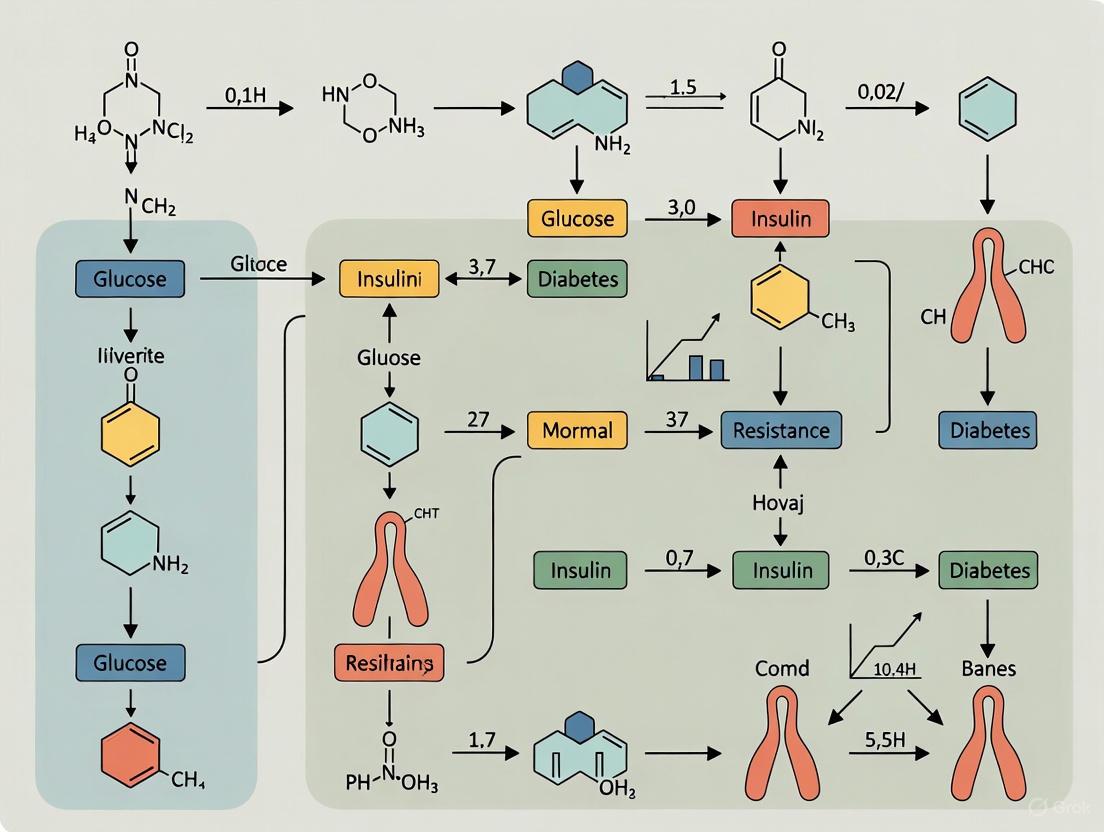
This article provides a comprehensive analysis of the complex biochemical pathways driving the pathogenesis of Type 2 Diabetes (T2D), tailored for researchers, scientists, and drug development professionals.
Decoding the Molecular Architecture of Type 2 Diabetes: From Core Pathways to Precision Therapeutics
Abstract
This article provides a comprehensive analysis of the complex biochemical pathways driving the pathogenesis of Type 2 Diabetes (T2D), tailored for researchers, scientists, and drug development professionals. It systematically explores foundational mechanisms like insulin signaling defects and β-cell dysfunction, examines advanced methodological approaches including multi-omics and AI-driven analytics, discusses troubleshooting strategies for patient stratification and treatment optimization, and validates predictive models and novel therapeutic targets. By integrating the latest research from 2024-2025, this review serves as a strategic framework for translating pathway knowledge into personalized diabetes interventions and future drug development.
Core Pathogenic Pathways: Unraveling Insulin Resistance and β-Cell Dysfunction
The insulin receptor (IR) signaling pathway and the phosphoinositide 3-kinase (PI3K)-Akt pathway form an essential signaling duet that orchestrates fundamental metabolic processes including glucose homeostasis, lipid metabolism, and protein synthesis. This intricate network enables the body to transition seamlessly between fed and fasted states, maintaining energy balance through precise molecular communication [1] [2]. In the context of type 2 diabetes mellitus (T2DM), the breakdown of this central duet represents a core pathophysiological mechanism that drives disease progression. Insulin, a 51-amino acid peptide hormone produced by pancreatic β-cells, initiates its biological effects by binding to and activating its cell-surface tyrosine kinase receptor [2] [3]. This interaction triggers a conformational change in the receptor that activates its intrinsic tyrosine kinase activity, initiating a phosphorylation cascade that ultimately recruits and activates the PI3K-Akt signaling axis [1]. The precise modulation of this pathway is vital for metabolic adaption, and its dysregulation leads to the insulin resistance that characterizes T2DM [1] [2]. Understanding the molecular architecture and functional dynamics of this pathway is therefore essential for developing targeted therapeutic strategies for diabetes and its associated complications.
Molecular Architecture of the Insulin Receptor and Ligand Interaction
The insulin receptor is a disulfide-linked transmembrane glycoprotein encoded by 22 exons, comprising two α-subunits and two β-subunits that together form two half-receptors [3]. The extracellular α-subunits contain the hormone-binding domains, while the β-subunits span the membrane and contain intracellular tyrosine kinase domains. The IR extracellular structure consists of leucine-rich L1 and L2 domains, a cysteine-rich (CR) domain, and three fibronectin type III domains (Fn1, Fn2, and Fn3) [3]. In the absence of insulin, both IR half-receptors are maintained in a constrained conformation. Insulin binding to the α-subunits releases these constraints, triggering a significant conformational change that results in auto-trans-phosphorylation of the tyrosine kinase domains in the β-subunits [3]. The IR messenger RNA undergoes alternative splicing of exon 11, producing two isoforms: IR-A (predominantly expressed in fetal tissues and brain) and IR-B (highest expression in the liver) [1]. These isoforms differ in their ligand affinity and internalization rates, with IR-A having higher affinity for both insulin and IGF-2 and a higher rate of internalization compared to IR-B [1].
The interaction between insulin and its receptor involves sophisticated allostery and conformational changes to overcome steric clashes [3]. Insulin itself exists in different oligomeric states—from zinc-bound hexameric storage forms to active monomers—with its transition between these states regulated through allosteric mechanisms that are crucial considerations for therapeutic insulin design [3]. The mature insulin molecule is a heterodimer of A and B chains, connected by two disulfide bonds with an additional intra-chain disulfide bridge within the A chain [3]. These cysteine residues are conserved across species and play critical roles in conferring the proper tertiary structure necessary for receptor binding and activation.
The PI3K-Akt Signaling Cascade: Mechanism and Regulation
The PI3K-Akt pathway serves as the central signaling node downstream of the activated insulin receptor, translating receptor activation into diverse metabolic responses. Upon insulin stimulation and IRS protein phosphorylation, class I PI3-kinases are recruited to the membrane through their regulatory subunits binding to specific phosphotyrosine motifs on IRS proteins [1]. This recruitment relieves the inhibitory effect on the catalytic subunit, activating the enzyme [1]. The activated PI3K then phosphorylates the lipid substrate phosphatidylinositol 4,5-bisphosphate (PIP2) to generate phosphatidylinositol (3,4,5)-triphosphate (PIP3) [4] [1]. This lipid second messenger serves as a plasma membrane docking site for proteins containing pleckstrin homology (PH) domains, including Akt and its upstream activator PDK1 [4] [5].
Akt, also known as protein kinase B (PKB), is subsequently activated through a two-step phosphorylation process: PDK1 phosphorylates Akt at Thr308, leading to partial activation, while mTOR complex 2 (mTORC2) phosphorylates Akt at Ser473, resulting in full enzymatic activity [4] [5]. There are three highly related Akt isoforms (Akt1, Akt2, and Akt3) that share many substrates but also have isoform-specific functions. Akt2 is particularly important in insulin-sensitive tissues such as skeletal muscle, adipose tissue, and liver [4]. The activation of Akt is precisely balanced by negative regulators including PTEN, which dephosphorylates PIP3 back to PIP2, and protein phosphatase 2A (PP2A) and PHLPP, which dephosphorylate Akt at Thr308 and Ser473 respectively [4] [5].
Figure 1: The PI3K-Akt Signaling Cascade. This diagram illustrates the sequential activation pathway from insulin receptor to Akt, including key regulatory steps and negative feedback mechanisms.
Downstream Metabolic Effects of Akt Activation
Activated Akt phosphorylates numerous downstream substrates containing the consensus motif RxRxxS/T, regulating diverse cellular processes including glucose metabolism, lipid synthesis, and protein synthesis [4] [5]. For glucose metabolism, Akt phosphorylates AS160 (also known as TBC1D1), promoting the translocation of glucose transporter 4 (GLUT4) to the plasma membrane and facilitating glucose uptake into skeletal muscle and adipose tissue [4] [2]. Akt also phosphorylates and inhibits glycogen synthase kinase 3 (GSK3), leading to the activation of glycogen synthase and subsequent glycogen synthesis [4]. In the liver, Akt phosphorylates the transcription factor FoxO1, promoting its export from the nucleus and thereby inhibiting the expression of gluconeogenic enzymes such as phosphoenolpyruvate carboxykinase (PEPCK) and glucose-6-phosphatase (G6PC) [4] [2].
Regarding lipid metabolism, Akt activation stimulates lipid synthesis through multiple mechanisms. Akt activates sterol regulatory element-binding proteins (SREBPs), particularly SREBP-1c, which increases the expression of genes involved in cholesterol and fatty acid synthesis [4]. Additionally, Akt contributes to the activation of ATP citrate lyase (ACLY) and the dephosphorylation of acetyl-CoA carboxylase (ACC) through inhibition of AMP-dependent protein kinase (AMPK), further promoting de novo lipogenesis [2]. In adipocytes, Akt phosphorylates phosphodiesterase 3B (PDE3B) and ABHD15, which suppresses lipolysis by inhibiting adipose triglyceride lipase (ATGL) and hormone-sensitive lipase (HSL) [2]. For protein synthesis and cell growth, Akt phosphorylates and inhibits the TSC1/TSC2 complex, leading to activation of mTORC1, which subsequently phosphorylates downstream effectors such as S6K1 and 4E-BP1 to promote mRNA translation and protein synthesis [4] [2].
Quantitative Analysis of Pathway Components in Normal and Diabetic States
Table 1: Key Protein Alterations in Insulin-Resistant States
| Pathway Component | Normal Function | Change in T2DM/Insulin Resistance | Functional Consequence |
|---|---|---|---|
| Insulin Receptor | Binds insulin and initiates signaling | Decreased surface content and kinase activity [2] | Reduced signal initiation |
| IRS-1 | Primary docking protein for PI3K activation | Reduced expression and increased serine phosphorylation [2] | Impaired PI3K activation |
| PI3K | Generates PIP3 second messenger | Decreased IRS-1-associated activity [2] | Reduced PIP3 production |
| Akt | Central signaling kinase | Impaired phosphorylation at Ser473 [2] | Decreased metabolic actions |
| GLUT4 | Insulin-regulated glucose transporter | Impaired translocation to cell surface [2] | Reduced glucose uptake |
| mTORC1 Feedback | Positive feedback to IRS-1 | Attenuated in expanded adipose tissue [6] | System-wide signal reduction |
Table 2: Tissue-Specific manifestations of PI3K/Akt Pathway Dysregulation in T2DM
| Tissue | Primary Metabolic Function | Consequence of PI3K/Akt Dysregulation |
|---|---|---|
| Skeletal Muscle | ~90% of insulin-stimulated glucose utilization [4] | Reduced insulin-stimulated glucose transport and glycogen synthesis [4] |
| Liver | Suppression of gluconeogenesis | Increased hepatic glucose production due to failed FoxO1 inhibition [4] [2] |
| Adipose Tissue | Lipid storage and adipokine secretion | Increased lipolysis and inflammatory adipokine release [2] [6] |
| Pancreatic β-Cells | Insulin secretion | β-cell failure after prolonged compensation [2] |
Mathematical modeling of insulin signaling in human adipocytes from normal and diabetic subjects reveals that the core of insulin resistance involves attenuation of a positive feedback from mTORC1 to IRS-1, which explains reduced sensitivity and signal strength throughout the entire signaling network [6]. This systems-level analysis demonstrates that most alterations in the insulin signaling pathway in diabetes may be explained by this single original effect, which creates a vicious cycle of worsening insulin resistance [6].
Experimental Analysis of Insulin Signaling and PI3K-Akt Pathway
Key Methodologies for Investigating Pathway Function
The experimental analysis of insulin receptor signaling and the PI3K-Akt pathway requires a combination of biochemical, molecular, and cellular approaches. Primary human adipocytes isolated from subcutaneous adipose tissue by collagenase digestion provide a physiologically relevant model system for investigating insulin signaling in metabolically important cells [6]. These cells are typically incubated in Krebs-Ringer solution with varying insulin concentrations, and signaling responses are terminated by rapidly separating cells from medium using centrifugation through dinonyl phthalate, followed by immediate dissolution in SDS and β-mercaptoethanol with protease and phosphatase inhibitors to minimize post-incubation signaling alterations [6].
The gold standard for assessing insulin signaling dynamics involves quantitative immunoblotting of key phosphorylated and total proteins after SDS-PAGE separation. Essential phosphorylation sites for monitoring pathway activity include: IR tyrosine phosphorylation, IRS-1 tyrosine phosphorylation, Akt Ser473 and Thr308 phosphorylation, AS160 Thr642 phosphorylation, and S6K Thr389 phosphorylation [6]. The linearity of chemiluminescence signals must be ascertained for accurate quantification, with β-tubulin or actin serving as loading controls. For functional metabolic outputs, glucose uptake is measured using 2-deoxy-d-[1-3H]glucose uptake assays, typically performed after 15 minutes of insulin stimulation with uptake measured over 30 minutes in human adipocytes [6].
Research Reagent Solutions for Pathway Investigation
Table 3: Essential Research Reagents for Insulin Signaling Studies
| Reagent Category | Specific Examples | Research Application |
|---|---|---|
| Phospho-Specific Antibodies | Anti-phospho-Akt-Ser473 [6], Anti-phospho-Akt-Thr308 [6], Anti-phospho-AS160-Thr642 [6] | Detection of pathway activation status through Western blot |
| Insulin Signaling Modulators | Rapamycin (mTORC1 inhibitor) [6], PI3K inhibitors (e.g., LY294002) [5] | Pathway perturbation studies to establish causal relationships |
| Metabolic Assay Reagents | 2-deoxy-d-[1-3H]glucose [6], Collagenase (type 1) [6] | Functional assessment of glucose uptake capability |
| Protein Analysis Tools | Protease and phosphatase inhibitors [6], SDS-PAGE reagents, Chemiluminescence detection systems [6] | Sample preparation and protein quantification |
Mathematical modeling using ordinary differential equations has emerged as a powerful tool for understanding the insulin signaling network in a systems biology framework. Parameters are typically optimized using algorithms that minimize the difference between simulated model outputs and experimental data, with the model structure and parameters kept identical in normal and diabetic states except for specific changes in key components such as IR concentration, GLUT4 concentration, and mTORC1 feedback strength [6].
Therapeutic Implications and Future Directions
The intricate understanding of insulin receptor signaling and PI3K-Akt pathway breakdown has opened promising avenues for therapeutic intervention in T2DM. Recent advances in computational protein design have led to the creation of de novo-designed IR agonists that stabilize distinct receptor conformations and fine-tune signaling responses [7]. Remarkably, some of these designed agonists surpass native insulin in potency, cause longer-lasting glucose lowering in vivo, retain activity on disease-causing IR mutants, and largely avoid the cancer cell proliferation induced by insulin [7]. This represents a paradigm shift in insulin therapy, moving from hormone replacement to receptor engineering.
The PI3K/Akt pathway itself has become an attractive therapeutic target, with ongoing development of small molecule inhibitors and activators for various components of this pathway [8] [5]. The tissue-specific expression of different Akt isoforms (Akt1, Akt2, Akt3) and the development of isoform-specific modulators offers the potential for targeted therapies with reduced side effects [4] [5]. Additionally, strategies to enhance the positive feedback from mTORC1 to IRS-1 or to inhibit negative regulators such as PTEN, PP2A, or PHLPP represent promising approaches to reverse insulin resistance at a molecular level [6].
The future of therapeutic development in this field will likely involve combination strategies that simultaneously target multiple nodes in the insulin signaling pathway, potentially including IR sensitizers, PI3K activators, and Akt enhancers. Furthermore, the integration of structural biology insights with dynamic mathematical models of pathway function will enable more predictive drug development and personalized medicine approaches for diabetes treatment [3] [6].
Figure 2: Integrated View of Normal Insulin Signaling and Breakdown in T2DM. This diagram illustrates the complete signaling pathway from insulin binding to metabolic outcomes, highlighting key points of dysregulation in type 2 diabetes.
The pathogenesis of type 2 diabetes (T2D) is characterized by a progressive decline in functional β-cell mass, moving beyond traditional concepts of apoptosis to include dedifferentiation, mitochondrial dysfunction, and impaired proteostasis. Once considered primarily a disorder of insulin resistance, T2D is now fundamentally recognized as a disease of β-cell failure. Recent research has elucidated key biochemical pathways through which chronic metabolic stress triggers loss of β-cell identity and function. This whitepaper synthesizes current mechanistic understanding of β-cell failure, highlighting the roles of endoplasmic reticulum (ER) stress, oxidative stress, transcriptional regulation, and protein misfolding. The development of therapeutic strategies targeting these pathways offers promising avenues for preserving and restoring functional β-cell mass in T2D.
Type 2 diabetes represents a growing global health crisis characterized by persistent hyperglycemia resulting from insulin resistance and pancreatic β-cell dysfunction [9] [10]. While insulin resistance is a hallmark of the disease, insufficient insulin secretion from the β-cell ultimately drives the transition to overt hyperglycemia [11] [12]. The normal pancreatic β-cell response to insulin resistance is compensatory insulin hypersecretion to maintain normoglycemia; T2D develops specifically in individuals unable to sustain this compensatory response [13].
Traditional views attributed β-cell failure primarily to apoptosis (programmed cell death). However, emerging evidence demonstrates that β-cell dedifferentiation—a regression from a mature insulin-secretory phenotype to a progenitor-like state—represents an equally important mechanism of functional β-cell mass loss [9] [14]. This paradigm shift, alongside growing understanding of mitochondrial dysfunction and oxidative stress, has transformed our understanding of diabetes pathophysiology and opened new therapeutic avenues focused on preserving β-cell identity and function.
Core Mechanisms of β-Cell Failure
β-Cell Dedifferentiation
β-cell dedifferentiation describes a pathological reversion of specialized endocrine cells to a less differentiated state, effectively altering their transcriptional program and functional capacity [9]. This process is characterized by three signature molecular features:
- Downregulation of β-cell identity genes including key transcription factors PDX1, MAFA, and NKX6.1, which are crucial for maintaining mature β-cell function [9] [14]
- Aberrant expression of "forbidden" genes normally suppressed in mature β-cells, such as aldehyde dehydrogenase 1 family member A3 (ALDH1A3), a recognized biomarker of the dedifferentiated state [9]
- Reactivation of endocrine progenitor markers including neurogenin 3 (Ngn3), OCT4, and Nanog, reflecting partial reversal to an earlier developmental state [9] [14]
At the functional level, these molecular changes manifest as impaired glucose-stimulated insulin secretion and cellular metabolism abnormalities. Notably, dedifferentiation appears to be a graded process rather than an all-or-none phenomenon, with cells existing in various intermediate developmental stages [9]. The reversibility of dedifferentiation offers exciting therapeutic promise for diabetes treatment.
Table 1: Key Molecular Markers of β-Cell Dedifferentiation
| Category | Gene/Protein | Function in Mature β-Cells | Change in Dedifferentiation |
|---|---|---|---|
| β-Cell Identity Markers | PDX1 | Regulates insulin gene expression; maintains β-cell identity | Downregulated |
| MAFA | Master regulator of insulin transcription | Downregulated | |
| NKX6.1 | Maintains β-cell function and identity | Downregulated | |
| FoxO1 | Nutrient sensor and stability factor | Inhibited | |
| Dedifferentiation Markers | ALDH1A3 | Not normally expressed | Ectopically upregulated |
| Ngn3 | Endocrine progenitor marker | Reactivated | |
| OCT4 | Pluripotency marker | Reactivated |
Metabolic Stress and ER Stress
The initiation and progression of β-cell dedifferentiation are driven by several correlated factors, with metabolic stress emerging as a prominent trigger. Chronic hyperglycemia (glucotoxicity) and elevated free fatty acids (lipotoxicity) create a toxic environment that disrupts normal β-cell function and identity [9]. High glucose suppresses major β-cell transcription factors including PDX1 and MAFA, while activating stress-response pathways that trigger phenotypic conversion [9].
Endoplasmic reticulum stress serves as a central mediator of β-cell dedifferentiation under conditions of metabolic overload. The ER, responsible for protein folding and calcium homeostasis, becomes overwhelmed when β-cells are chronically exposed to high glucose and fatty acids, inducing activation of the unfolded protein response (UPR) [9]. Research by Wang et al. provided direct ultrastructural evidence of ER stress in dedifferentiating β-cells, demonstrating severe dilation of the ER lumen in palmitic acid-stressed and high glucose-stressed INS-1 cells [9]. Molecular examination revealed concurrent upregulation of UPR markers including phosphorylated eukaryotic translation initiation factor alpha and activating transcription factor 4.
The causal contribution of ER stress is further supported by experiments showing that chemical chaperones like 4-phenylbutyric acid can rescue dedifferentiation, while ER stressors like tunicamycin can replicate the phenotype [9]. The interaction between ER stress and dedifferentiation appears bidirectional; while ER stress causes loss of β-cell identity, dedifferentiated cells also become more susceptible to subsequent ER stress, creating a vicious cycle that exacerbates β-cell dysfunction.
Mitochondrial Dysfunction and Oxidative Stress
Mitochondria are essential for β-cell function, coupling glucose metabolism to ATP production and insulin secretion through glucose-stimulated insulin secretion (GSIS) [15]. In diabetes, β-cell mitochondrial dysfunction arises from oxidative stress, impaired quality control, and disrupted dynamics, leading to reduced oxidative phosphorylation, defective insulin release, and progressive cell loss [15].
Under physiologic conditions, β-cell mitochondria maintain an optimal balance between energy production and reactive oxygen species (ROS) generation. However, β-cells have relatively low antioxidant defenses, making them especially vulnerable to oxidative stress. Chronic nutrient overload (glucotoxicity and lipotoxicity) leads to mitochondrial overwork and ROS accumulation [15]. In vitro studies demonstrate that under conditions of high glucose and/or fatty acids, β-cell apoptosis is driven by mitochondrial ROS, and antioxidants can prevent β-cell apoptosis in this context [15].
Mitochondrial morphology and turnover are tightly regulated to match metabolic needs. Mitochondria constantly undergo fission and fusion, with fusion allowing mixing of mitochondrial contents and fission helping segregate damaged segments [15]. Under stress, β-cells show fragmented mitochondria, reflecting enhanced fission or impaired fusion. This fragmentation affects mitochondrial function and can signal for initial general autophagy, allowing the cell to degrade damaged organelles and maintain homeostasis [15].
Mitophagy, the selective autophagy of mitochondria, represents a critical quality-control mechanism in β-cells. Under normal conditions, basal mitophagy helps eliminate old or mildly dysfunctional mitochondria, maintaining a healthy pool [15]. The canonical PINK1-Parkin pathway initiates mitophagy: PINK1 accumulates on depolarized mitochondria and recruits Parkin, which ubiquitinates outer membrane proteins to tag the organelle for autophagosome engulfment [15]. Mitophagy-deficient β-cells accumulate damaged mitochondria and exhibit impaired insulin secretion.
FoxO1 Inhibition and Loss of β-Cell Identity
The forkhead box transcription factor FoxO1 plays a pivotal role in preserving β-cell identity under stress, and its failure contributes significantly to dedifferentiation processes [9]. FoxO1 serves as a nutrient sensor and stability factor for mature β-cells, regulating expression of important β-cell identity genes like PDX1 and MAFA [9].
Research by Wang et al. demonstrated that metabolic stress conditions lead to inhibition of FoxO1 through post-translational modifications and reduced nuclear localization, thus suppressing its transcriptional activity [9]. Their use of the selective FoxO1 inhibitor AS1842856 provided compelling evidence for FoxO1's protective role by showing that pharmacological inhibition exacerbates palmitate/glucose-induced dedifferentiation [9]. These findings align with genetic studies showing that β-cell-specific FoxO1 knockout mice develop diabetes with dramatic dedifferentiation characteristics under metabolic stress [9].
FoxO1 appears to integrate multiple stress signals in β-cells, potentially serving as a nexus between metabolic stress, ER stress, and transcriptional reprogramming. The mechanisms through which FoxO1 maintains β-cell identity include direct transcriptional activation of key β-cell genes and potential interactions with other stress-response pathways.
Protein Misfolding and Impaired Proteostasis
Recent research highlights the importance of protein misfolding in β-cell failure in T2D [16]. The expression levels of mitochondrial matrix chaperones and proteases, key for mitochondrial proteostasis, are disrupted in diabetic β-cells. Contrary to expectations, research found decreased expression of LONP1 (a mitochondrial protease) in β-cells from people with T2D [16].
Studies generating β-cell-specific knockout of Lonp1 in mice (β-Lonp1 KO mice) demonstrated progressively worse hyperglycemia with age, along with reduced islet insulin content [16]. The β-Lonp1 KO mice also exhibited decline in β-cell mass and survival compared with control mice, suggesting that LONP1 plays a role in maintaining β-cell mass [16].
These findings indicate that impaired mitochondrial proteostasis represents an additional mechanism contributing to β-cell failure in T2D. The identification of specific proteostatic mechanisms opens new avenues for therapeutic intervention aimed at preserving β-cell function.
Experimental Models and Methodologies
In Vitro Models for Studying Dedifferentiation
Several established in vitro models enable detailed investigation of β-cell dedifferentiation mechanisms:
INS-1 Cell Line under Metabolic Stress
- Protocol: Culture INS-1 insulinoma cells with high glucose (20-25 mM) and/or palmitic acid (0.25-0.5 mM) for 48-72 hours [9]
- Measurements: Assess ER stress markers (phosphorylated eIF2α, ATF4), FoxO1 localization, and dedifferentiation markers (ALDH1A3, Ngn3) via immunofluorescence and Western blot [9]
- Interventions: Utilize chemical chaperones (4-PBA, 0.5-1 mM) or FoxO1 inhibitors (AS1842856, 1-5 μM) to modulate stress pathways [9]
Primary Human Islet Cultures
- Protocol: Culture human islets from non-diabetic donors with cytokine cocktail (IL-1β, TNF-α, IFN-γ) or high glucose/fatty acids for 5-7 days [11]
- Measurements: Analyze insulin secretion capacity, apoptosis rate (TUNEL staining), and dedifferentiation markers (PDX1, MAFA, ALDH1A3) via immunostaining and qPCR [11] [12]
- Single-cell RNA sequencing: Profile transcriptional changes at single-cell resolution to identify heterogenous responses to metabolic stress [11]
Table 2: Quantitative Changes in β-Cell Markers Under Metabolic Stress
| Experimental Model | Treatment | β-Cell Identity Markers | Dedifferentiation Markers | Functional Outcome |
|---|---|---|---|---|
| INS-1 Cells [9] | High glucose (25 mM) + palmitate (0.5 mM), 72h | PDX1: ↓~60%MAFA: ↓~70%FoxO1 (nuclear): ↓~80% | ALDH1A3: ↑8-foldNgn3: ↑5-fold | GSIS: ↓~75% |
| Human Islets [11] | Cytokine mix, 7 days | Insulin content: ↓~50%PDX1: ↓~40% | Multi-hormonal cells: ↑3-fold | Glucose-stimulated insulin secretion: ↓~60% |
| db/db Mice Islets [9] [14] | 12-week-old diabetic | PDX1: ↓~70%MAFA: ↓~65%NKX6.1: ↓~50% | ALDH1A3: ↑6-foldNgn3: ↑4-fold | Fasting insulin: ↓~60% |
Genetic Models of β-Cell Failure
FoxO1 Knockout Models
- Model: β-cell-specific FoxO1 knockout mice under metabolic stress (aging, multiparity) [9]
- Phenotype: Develop diabetes with dramatic dedifferentiation characteristics, including loss of β-cell identity markers and functional impairment [9]
- Applications: Study of FoxO1's protective role in maintaining β-cell identity under stress conditions
LONP1 Knockout Models
- Model: β-cell-specific Lonp1 knockout mice (β-Lonp1 KO) [16]
- Phenotype: Progressively worse hyperglycemia with age, reduced islet insulin content, and decline in β-cell mass and survival [16]
- Applications: Investigation of mitochondrial proteostasis in β-cell failure
Assessment Techniques for Dedifferentiation
Lineage Tracing Approaches
- Methodology: Genetic labeling of insulin-positive cells followed by fate mapping under diabetic conditions [14]
- Applications: Direct demonstration of β-cell lineage conversion to other endocrine cell types or progenitor states
- Measurements: Quantification of former β-cells expressing other hormones (glucagon, somatostatin) or progenitor markers
Multiplex Immunofluorescence Imaging
- Protocol: Simultaneous staining for insulin, other islet hormones, and dedifferentiation markers (ALDH1A3) on pancreatic sections [9] [11]
- Analysis: Quantitative image analysis to determine percentage of dedifferentiating β-cells
- Applications: Correlation of dedifferentiation extent with clinical parameters in human pancreatic samples
The Scientist's Toolkit: Essential Research Reagents
Table 3: Key Research Reagents for Investigating β-Cell Failure Mechanisms
| Reagent/Category | Specific Examples | Research Application | Key Findings Enabled |
|---|---|---|---|
| Cell Models | INS-1 cell line, EndoC-βH1 cells, primary human/islet cultures | In vitro dedifferentiation studies under controlled metabolic stress | Synergistic effects of glucotoxicity and lipotoxicity on ER stress and FoxO1 inhibition [9] |
| Animal Models | db/db mice, β-cell-specific FoxO1 KO, β-Lonp1 KO mice, ZDF rats | In vivo study of dedifferentiation progression and β-cell mass regulation | Demonstration that dedifferentiation, not just apoptosis, causes β-cell mass decline [9] [14] |
| Inhibitors/Activators | FoxO1 inhibitor AS1842856, chemical chaperone 4-PBA, ER stressor tunicamycin | Pathway modulation to establish causality in dedifferentiation mechanisms | FoxO1 inhibition exacerbates, while chemical chaperones rescue, metabolic stress-induced dedifferentiation [9] |
| Antibodies | Anti-PDX1, anti-MAFA, anti-ALDH1A3, anti-Ngn3, anti-FoxO1 | Immunostaining and Western blotting for dedifferentiation markers | Identification of β-cells losing identity in human T2D islets [9] [11] |
| OMICs Technologies | Single-cell RNA-seq, ATAC-seq, proteomics, metabolomics | Comprehensive molecular profiling of dedifferentiating β-cells | Discovery of altered expression in vesicle fusion machinery (STX1A, VAMP2, UNC13A) in human T2D islets [11] [10] |
Integrated Pathway of β-Cell Failure
The multiple mechanisms of β-cell failure converge into an integrated pathological pathway that progresses from initial compensation to overt dysfunction:
Therapeutic Implications and Future Directions
The evolving understanding of β-cell failure mechanisms has significant implications for developing novel therapeutic strategies for T2D:
Targeting Dedifferentiation and Promoting Redifferentiation The reversibility of β-cell dedifferentiation suggests therapeutic potential for agents that promote redifferentiation [9]. Approaches might include:
- FoxO1 pathway activation to stabilize β-cell identity
- ER stress reduction using chemical chaperones
- ALDH1A3 inhibition to prevent progression of dedifferentiation
Mitochondrial-Targeted Therapies Given the central role of mitochondrial dysfunction, several strategies show promise:
- Mitophagy enhancers to improve mitochondrial quality control
- Mitochondrial antioxidants to reduce oxidative stress
- Metabolic modulators that restore balance between glycolytic and oxidative ATP production [15]
Amyloid Deposition Inhibition Research indicates that islet amyloid polypeptide (IAPP) deposition contributes to β-cell loss in T2D through oxidative stress and inflammation [17]. Reducing amyloid formation preserves β-cells, suggesting potential for amyloid inhibitors currently in development for Alzheimer's disease to be repurposed for T2D [17].
Personalized Medicine Approaches Advances in multi-omics technologies and AI-driven analytics enable identification of molecular signatures and regulatory networks involved in insulin signaling, lipid metabolism, and mitochondrial function [10] [18]. This facilitates patient stratification based on dominant metabolic disturbances and lays the groundwork for precision medicine in T2D, matching patients to targeted therapies most likely to address their specific β-cell pathophysiology [10].
The understanding of β-cell failure in T2D has evolved significantly beyond simplistic models of apoptosis to encompass complex mechanisms including dedifferentiation, mitochondrial dysfunction, ER stress, and impaired proteostasis. The integrated pathway of β-cell failure involves initiation by chronic metabolic stress, progressing through ER stress, FoxO1 inhibition, oxidative stress, and ultimately loss of β-cell identity and function. The reversibility of dedifferentiation and the development of targeted therapies addressing specific failure mechanisms offer promising avenues for preserving and restoring functional β-cell mass. Future research leveraging multi-omics technologies, single-cell analyses, and AI-driven computational tools will further refine understanding of T2D heterogeneity and accelerate the development of personalized therapeutic approaches targeting the fundamental mechanisms of β-cell failure.
Metabolic inflexibility, defined as the impaired capacity to switch between lipid and carbohydrate oxidation in response to physiological cues, represents a fundamental defect in the pathogenesis of type 2 diabetes (T2D) [19] [20]. This physiological impairment is intrinsically linked to two core pathological processes: mitochondrial dysfunction, which disrupts cellular energy production and substrate utilization, and ectopic lipid deposition, characterized by the accumulation of fat in non-adipose tissues including liver, skeletal muscle, and pancreas [21] [22]. Within the broader framework of biochemical pathways in T2D research, these interconnected processes create a self-perpetuating cycle that drives disease progression through the disruption of insulin signaling, promotion of inflammatory pathways, and ultimately, failure of pancreatic β-cell function [10] [23].
The transition from normal metabolic homeostasis to T2D involves a complex interplay of nutrient excess, genetic susceptibility, and dysregulated interorgan crosstalk [10] [24]. Under conditions of chronic energy surplus, the coordinated biochemical pathways governing substrate selection become dysregulated, leading to the accumulation of lipid intermediates that activate stress kinases and inhibit insulin signal transduction [21] [22]. Concurrently, mitochondrial dysfunction reduces oxidative capacity, creating a metabolic environment where lipid substrates are incompletely oxidized, further exacerbating lipid accumulation and promoting reactive oxygen species (ROS) generation [25] [23]. This review examines the mechanistic links between mitochondrial dysfunction and ectopic lipid deposition, exploring how their interplay establishes metabolic inflexibility as a central pathway in T2D pathogenesis.
Pathophysiological Framework
The Cycle of Mitochondrial Dysfunction and Ectopic Lipid Accumulation
The relationship between mitochondrial dysfunction and ectopic lipid deposition forms a vicious cycle that perpetuates metabolic inflexibility and insulin resistance. In skeletal muscle, mitochondrial abnormalities include reduced oxidative phosphorylation capacity, decreased fatty acid β-oxidation, and impaired ATP production [21] [23]. These deficiencies force muscle cells to accumulate lipid intermediates such as diacylglycerols (DAG) and ceramides, which activate stress signaling pathways involving novel PKC isoforms that phosphorylate and inhibit insulin receptor signaling [21]. The subsequent impairment of insulin-stimulated glucose uptake further exacerbates the metabolic imbalance, redirecting carbohydrate flux toward the liver and accelerating hepatic de novo lipogenesis [22].
In adipose tissue, mitochondrial dysfunction manifests as downregulation of PGC-1α and other mitochondrial biogenesis factors, reduced mitochondrial density, and diminished fatty acid oxidation capacity [21]. This mitochondrial insufficiency promotes incomplete fat oxidation and enhances the release of free fatty acids (FFAs) into circulation, further contributing to ectopic lipid deposition in liver and muscle [21] [22]. The "ballooning effect" describes how therapeutic interventions targeting lipid accumulation in a single organ often lead to compensatory lipid deposition in other tissues, merely shifting the distribution rather than resolving the underlying lipid excess [22].
Table 1: Key Pathological Features in Metabolic Tissues
| Tissue | Mitochondrial Alterations | Consequences for Lipid Metabolism | Impact on Insulin Signaling |
|---|---|---|---|
| Skeletal Muscle | Reduced OXPHOS capacity, decreased ETC components, lower mitochondrial density [21] | Accumulation of DAG and ceramides, reduced fatty acid β-oxidation [21] [23] | Activation of PKC isoforms, impaired Akt phosphorylation [21] |
| Liver | Decreased OXPHOS capacity and efficiency, increased ROS generation [21] | Enhanced hepatic de novo lipogenesis, impaired VLDL export [22] | Hepatic insulin resistance, increased gluconeogenesis [22] |
| Adipose Tissue | Downregulation of PGC-1α, reduced mitochondrial density [21] | Incomplete fat oxidation, enhanced FFA release [21] [22] | Reduced adiponectin secretion, chronic inflammation [21] |
| Pancreatic β-cells | Impaired glucose-stimulated insulin secretion [21] | Lipotoxicity from chronic lipid exposure [22] | β-cell dysfunction and apoptosis [21] |
Molecular Pathways Linking Mitochondria and Lipid Metabolism
The molecular interplay between mitochondrial dysfunction and ectopic lipid accumulation involves multiple interconnected pathways. Mitochondrial oxidative capacity determines the rate at which lipids can be completely oxidized to CO₂ and water, with deficiencies leading to the accumulation of reactive lipid species that interfere with insulin signaling [21] [25]. Nutrient excess and inflammatory cytokines such as TNF-α, IL-6, and IL-1β further impair mitochondrial function, creating a feed-forward loop that worsens metabolic stress [21] [23].
Damaged mitochondria release increased ROS and mitochondrial DNA, which activate inflammatory pathways including the NLRP3 inflammasome and NF-κB signaling [21] [23]. These pathways further promote the secretion of pro-inflammatory cytokines, establishing a cycle where inflammation begets mitochondrial dysfunction, which in turn amplifies the inflammatory response [23]. The integration of these pathways across tissues highlights the systemic nature of metabolic inflexibility in T2D, with disruptions in interorgan crosstalk contributing to the breakdown of metabolic homeostasis [10].
Figure 1: Pathophysiological Pathways in Metabolic Inflexibility. This diagram illustrates the self-reinforcing cycle linking mitochondrial dysfunction, ectopic lipid deposition, and chronic inflammation in the development of insulin resistance and type 2 diabetes. Solid arrows represent established pathways, while dashed arrows indicate reinforcing feedback mechanisms.
Quantitative Assessment of Metabolic Inflexibility
Methodological Approaches for Assessing Metabolic Phenotypes
The gold standard for assessing metabolic flexibility involves measuring changes in the respiratory exchange ratio (ΔRER) during hyperinsulinaemic-euglycaemic clamp studies [19]. In this protocol, insulin is infused at a fixed rate (typically ~40 mU/m²/min) to create a standardized stimulatory condition, while glucose is simultaneously infused to maintain euglycaemia [19]. The respiratory exchange ratio, calculated as the ratio of carbon dioxide production to oxygen consumption (VCO₂/VO₂), is measured in both basal and insulin-stimulated states using indirect calorimetry [19]. The difference between these states (ΔRER) reflects the capacity to switch from predominantly fat oxidation in the fasted state to carbohydrate oxidation under insulin stimulation [19].
Additional methodologies for evaluating mitochondrial function and ectopic lipid deposition include magnetic resonance spectroscopy (MRS) for quantifying intramyocellular and intrahepatic lipid content [22], assessment of mitochondrial oxidative capacity in muscle biopsies through respirometry [21], and biochemical measurement of lipid intermediates such as diacylglycerols and ceramides [21]. The integration of these complementary approaches provides a comprehensive assessment of the metabolic inflexibility phenotype.
Table 2: Methodological Approaches in Metabolic Flexibility Research
| Technique | Measured Parameters | Experimental Protocol | Interpretation |
|---|---|---|---|
| Hyperinsulinaemic-Euglycaemic Clamp with Indirect Calorimetry | ΔRER (change in respiratory exchange ratio), glucose infusion rate (GIR) [19] | Insulin infusion at 40 mU/m²/min with euglycaemia maintenance; RER measurement at baseline and during insulin stimulation [19] | Higher ΔRER indicates greater metabolic flexibility; reduced ΔRER indicates metabolic inflexibility [19] |
| Magnetic Resonance Spectroscopy (MRS) | Intramyocellular lipid (IMCL), intrahepatic lipid (IHL) content [22] | Non-invasive measurement of fat content in specific tissues using chemical shift imaging [22] | Elevated IMCL and IHL correlate with insulin resistance; reveals ectopic lipid deposition patterns [22] |
| High-Resolution Respirometry | Mitochondrial oxidative capacity, electron transport chain function [21] | Measurement of oxygen consumption in muscle biopsies with specific substrate combinations [21] | Reduced oxidative capacity indicates mitochondrial dysfunction; correlates with metabolic inflexibility [21] |
| Biochemical Assays | DAG, ceramide content, mitochondrial DNA damage, ROS production [21] [23] | Tissue homogenization followed by lipid extraction and analysis via mass spectrometry; PCR-based mtDNA assessment [21] | Elevated lipid intermediates inhibit insulin signaling; mitochondrial damage markers indicate dysfunction [21] |
Quantitative Evidence from Metabolic Studies
Meta-analyses of clamp studies reveal distinct patterns of metabolic flexibility across different metabolic phenotypes. Lean individuals demonstrate greater metabolic flexibility (ΔRER ≈ 0.10) compared to overweight/obese (ΔRER ≈ 0.07) and T2D groups (ΔRER ≈ 0.07), though high statistical heterogeneity exists across studies [19]. Importantly, body mass index appears to be more strongly associated with reduced ΔRER than T2D status per se, suggesting that adiposity rather than diabetic diagnosis primarily drives metabolic inflexibility [19]. This observation highlights the central role of adipose tissue dysfunction in the pathogenesis of T2D.
Mitochondrial abnormalities show consistent quantitative patterns across tissues. Insulin-resistant offspring of T2D patients exhibit approximately 38% lower mitochondrial density in skeletal muscle compared to controls [21]. In adipose tissue, downregulation of PGC-1α and other mitochondrial biogenesis factors correlates with reduced fatty acid oxidation capacity and enhanced FFA release [21]. These quantitative deficits establish a metabolic environment conducive to ectopic lipid accumulation and insulin resistance.
Experimental Models and Research Tools
Methodological Protocols for Investigating Metabolic Inflexibility
Hyperinsulinaemic-Euglycaemic Clamp with Indirect Calorimetry
Purpose: To assess whole-body metabolic flexibility under standardized insulin stimulation [19].
Procedure:
- After an overnight fast, participants rest in a supine position for 30 minutes before baseline measurements.
- Baseline indirect calorimetry is performed for 30 minutes to determine fasting RER.
- A primed continuous intravenous insulin infusion is initiated at 40 mU/m²/min.
- Variable glucose infusion (20% dextrose) is adjusted to maintain euglycaemia (5.0-5.5 mmol/L).
- After achieving steady-state insulinemia (approximately 60-120 minutes), indirect calorimetry is repeated during the final 30 minutes of the clamp.
- Blood samples are collected at regular intervals for analysis of glucose, insulin, FFA, and other metabolites.
Data Analysis: ΔRER is calculated as the difference between insulin-stimulated and basal RER values. Glucose infusion rate during the final 30 minutes indicates insulin sensitivity [19].
Assessment of Mitochondrial Function in Muscle Biopsies
Purpose: To evaluate mitochondrial oxidative capacity and electron transport chain function.
Procedure:
- Muscle tissue is obtained via percutaneous needle biopsy under local anesthesia.
- Tissue is immediately placed in ice-cold preservation buffer (BIOPS or similar).
- Mitochondria are isolated via differential centrifugation or fiber bundles are prepared for respirometry.
- High-resolution respirometry (Oroboros O2k or similar) measures oxygen consumption with various substrate-uncoupler-inhibitor titration protocols.
- Specific metabolic states are assessed: leak respiration (fatty acids or carbohydrates), OXPHOS capacity, and electron transport system capacity.
Data Analysis: Respiratory control ratios, OXPHOS coupling efficiency, and maximum enzymatic capacities are calculated [21].
Ectopic Lipid Quantification via MRS
Purpose: To non-invasively measure lipid content in specific tissues.
Procedure:
- Participants are positioned in the MRI/MRS scanner with the region of interest centered.
- Localizer images are acquired for anatomical reference.
- Single-voxel spectroscopy is performed using point-resolved spectroscopy sequence with water suppression.
- Voxels are placed in liver (avoiding major vessels), skeletal muscle (tibialis anterior or soleus), or other tissues of interest.
- Spectra are acquired with appropriate repetition and echo times for lipid quantification.
Data Analysis: Lipid peaks are quantified relative to water reference or using absolute quantification methods [22].
The Scientist's Toolkit: Essential Research Reagents
Table 3: Key Research Reagents for Investigating Metabolic Inflexibility
| Reagent/Category | Specific Examples | Research Application | Functional Role |
|---|---|---|---|
| Mitochondrial Function Assessment | Oroboros O2k Respirometer, Seahorse XF Analyzer [21] | Measurement of mitochondrial oxygen consumption rates in tissue samples or cells [21] | Quantifies oxidative phosphorylation capacity, fatty acid oxidation rates, and metabolic flexibility at cellular level |
| Lipid Quantification | Mass spectrometry kits for DAG, ceramides [21] | Biochemical measurement of lipid intermediates in tissue homogenates [21] | Identifies specific lipid species that impair insulin signaling through PKC activation |
| Genetic Analysis Tools | TPMv1 SNP array, PRSice-2 for polygenic risk scores [24] | Genotyping and genetic risk assessment for T2D susceptibility [24] | Identifies genetic variants (e.g., KCNQ1, PAX4) associated with mitochondrial dysfunction and T2D risk |
| Indirect Calorimetry Systems | Metabolic carts with canopy hood systems [19] | Measurement of respiratory exchange ratio (RER) during clamp studies [19] | Determines whole-body substrate utilization and metabolic flexibility |
| Mitochondrial Biogenesis Modulators | PGC-1α expression vectors, AMPK activators (AICAR) [21] | Experimental manipulation of mitochondrial content and function [21] | Investigates causal relationships between mitochondrial capacity and metabolic flexibility |
Figure 2: Experimental Workflow for Metabolic Inflexibility Research. This diagram outlines a comprehensive approach to investigating mitochondrial dysfunction and ectopic lipid deposition in human metabolic studies, integrating physiological assessments with molecular analyses.
Therapeutic Implications and Future Directions
Targeting Mitochondrial Dysfunction and Ectopic Lipid Deposition
Emerging therapeutic strategies aim to disrupt the cycle of mitochondrial dysfunction and ectopic lipid accumulation through multiple mechanisms. Mild mitochondrial uncoupling represents a promising approach for promoting true lipid disposal rather than merely redistributing lipids among tissues [22]. By dissipating substrate energy as heat, mitochondrial uncoupling reduces the mitochondrial membrane potential that drives ROS production while increasing fatty acid oxidation [22]. This approach addresses the fundamental energy imbalance that underlies ectopic lipid accumulation.
Other targeted interventions include enhancement of mitochondrial biogenesis through activation of PGC-1α pathways, regulation of mitophagy to remove damaged mitochondria, and inflammasome modulation to break the cycle of inflammation and mitochondrial dysfunction [21] [23]. Lifestyle interventions, particularly exercise, remain foundational as they simultaneously improve mitochondrial function, promote lipid oxidation, and reduce inflammatory signaling [21] [20]. The integration of these approaches within a precision medicine framework holds promise for matching specific therapeutic strategies to individual patterns of metabolic dysfunction [10] [26].
Advanced Research Applications and Precision Medicine
The investigation of metabolic inflexibility is increasingly incorporating multi-omics technologies and artificial intelligence to unravel the complex pathophysiology of T2D [10]. Integration of genomic, transcriptomic, proteomic, and metabolomic data provides a systems-level perspective on the interactions between mitochondrial dysfunction, lipid metabolism, and inflammatory pathways [10]. Machine learning approaches can identify molecular signatures that predict therapeutic responses, enabling more targeted interventions for specific metabolic phenotypes [10] [24].
Novel therapeutic targets emerging from these approaches include specific microRNAs that regulate mitochondrial function and lipid metabolism, gut microbiota modifications that influence systemic metabolism, and immune-modulatory approaches that break the cycle of inflammation and metabolic dysfunction [26]. The future of metabolic disease therapeutics lies in moving beyond glucocentric approaches to address the fundamental processes of mitochondrial dysfunction and ectopic lipid deposition that drive metabolic inflexibility and disease progression [22] [26].
Metabolic inflexibility, characterized by the impaired ability to switch between lipid and carbohydrate oxidation, represents a central pathophysiological feature in the development of T2D. The interplay between mitochondrial dysfunction and ectopic lipid deposition creates a self-reinforcing cycle that promotes insulin resistance, chronic inflammation, and eventual β-cell failure. Understanding the biochemical pathways that connect these processes provides critical insights for developing targeted therapeutic strategies that address the root causes of metabolic disease rather than merely managing its symptoms. As research continues to unravel the complexity of these interactions, the potential grows for personalized approaches that can restore metabolic flexibility and interrupt the progression to overt diabetes.
Insulin resistance (IR) is a fundamental pathological feature in the pathogenesis of Type 2 Diabetes Mellitus (T2DM) and metabolic syndrome, affecting an estimated 16% to 47% of adults globally [27]. Chronic, low-grade inflammation is recognized as a key mechanism driving the development of IR [28] [29]. This technical review delineates the critical role of pro-inflammatory cytokines—such as Tumor Necrosis Factor-alpha (TNF-α), Interleukin-1 Beta (IL-1β), and Interleukin-6 (IL-6)—and the subsequent activation of the c-Jun N-terminal Kinase (JNK) signaling pathway in impairing insulin action across target tissues. We detail the molecular mechanisms by which inflammatory signaling directly interferes with the insulin receptor substrate (IRS) and phosphoinositide 3-kinase/protein kinase B (PI3K/Akt) pathway, creating a self-reinforcing cycle that sustains metabolic dysfunction. Supported by experimental data and protocols, this whitepaper provides an in-depth analysis for researchers and drug development professionals, framing these mechanisms within the broader context of biochemical pathway dysregulation in T2DM.
Insulin resistance is characterized by a diminished ability of insulin target tissues—primarily skeletal muscle, liver, and adipose tissue—to respond to insulin, leading to impaired glucose disposal and elevated hepatic glucose output [30] [2]. The condition is a precursor event to T2DM and is intricately linked to a cluster of metabolic disorders, including obesity, cardiovascular disease, and metabolic dysfunction-associated fatty liver disease (MASLD) [2] [27]. While traditionally viewed as a metabolic disorder, IR is now understood to have a significant inflammatory component.
Obesity creates a state of chronic low-grade inflammation characterized by elevated plasma levels of pro-inflammatory cytokines and acute-phase proteins [28] [29]. This inflammation originates not only from the immune cells infiltrating expanding adipose tissue but also from the insulin-sensitive tissues themselves [29] [31]. Key pro-inflammatory mediators, notably TNF-α, IL-1β, and IL-6, activate intracellular stress kinase pathways, among which JNK serves as a critical node integrating inflammatory signals with the impairment of insulin signaling [31] [32]. This cross-talk forms a vicious cycle: obesity-driven inflammation promotes IR, and IR, in turn, exacerbates metabolic stress and inflammation. Understanding the precise mechanisms of this interaction is paramount for developing targeted therapeutic strategies.
Molecular Mechanisms of Inflammatory Signaling in Insulin Resistance
Key Pro-inflammatory Cytokines and Their Modes of Action
Pro-inflammatory cytokines act through autocrine, paracrine, and endocrine pathways to disrupt insulin signal transduction. The table below summarizes the origins, mechanisms, and effects of the primary cytokines involved.
Table 1: Pro-Inflammatory Cytokines in Insulin Resistance
| Cytokine | Primary Cellular Sources | Mechanism of Insulin Signaling Disruption | Key Metabolic Consequences |
|---|---|---|---|
| TNF-α [28] [29] [31] | Adipocytes, M1 Macrophages | Activates JNK & IKKβ, leading to serine phosphorylation of IRS-1 (e.g., Ser307); reduces expression of INSR, IRS1, and GLUT4. | Impairs glucose uptake in muscle and fat; promotes adipose tissue lipolysis, increasing circulating FFAs. |
| IL-1β [28] | Macrophages, β-cells | Binds IL-1RI, activates JNK & other kinases; induces serine phosphorylation of IRS-1; promotes production of IL-6 and other cytokines. | Contributes to β-cell dysfunction and apoptosis; induces systemic inflammation and IR in peripheral tissues. |
| IL-6 [28] | Adipocytes, M1 Macrophages, Liver | Induces SOCS proteins (SOCS1/3), which bind to INSR/IRS1, blocking interaction with PI3K and promoting ubiquitin-mediated degradation. | Reduces non-oxidative glucose metabolism; increases triglyceride levels; implicated in hepatic IR. |
The JNK Signaling Pathway: A Central Integrator of Metabolic Stress
The c-Jun N-terminal kinase (JNK) pathway is a major mediator of stress-induced insulin resistance. It is activated by a variety of extracellular and intracellular stimuli, including TNF-α, IL-1β, free fatty acids (FFAs), and endoplasmic reticulum (ER) stress [31] [32].
Activation Mechanism: Extracellular stimuli (e.g., TNF-α) trigger the activation of upstream MAP3Ks (such as TAK1 and MEKK1). These kinases subsequently phosphorylate and activate the MAP2Ks MKK4 and MKK7, which are the direct activators of JNK. MKK7 phosphorylates JNK on Thr183, while MKK4 phosphorylates Tyr185; dual phosphorylation is required for full JNK activation [31].
Impairment of Insulin Signaling: Activated JNK promotes insulin resistance through two primary mechanisms:
- Serine phosphorylation of IRS proteins: JNK phosphorylates IRS-1 on specific serine residues (e.g., Ser307). This phosphorylation inhibits the ability of IRS-1 to undergo insulin-stimulated tyrosine phosphorylation, effectively blocking the signal from the insulin receptor to downstream effectors like PI3K and Akt [29] [31] [32].
- Transcriptional activation of pro-inflammatory genes: JNK phosphorylates and activates transcription factors such as c-Jun (a component of AP-1), which drives the expression of additional pro-inflammatory cytokines, thereby creating a positive feedback loop that sustains the inflammatory state [31].
The critical role of JNK1 is validated by in vivo studies; JNK1-deficient mice are protected from diet-induced obesity and insulin resistance [32].
Figure 1: JNK acts as a critical node, integrating signals from pro-inflammatory cytokines and free fatty acids to directly inhibit insulin signaling via serine phosphorylation of IRS-1 and to promote a sustained inflammatory response via transcriptional activation.
Experimental Analysis of Cytokine-JNK Cross-Talk in Insulin Resistance
In Vitro Assessment of JNK Activation and Insulin Signaling Impairment
This protocol outlines a standard method for investigating the direct effects of pro-inflammatory cytokines on insulin signaling in cultured adipocytes or myotubes.
Objective: To determine the dose- and time-dependent effect of TNF-α on JNK pathway activation and subsequent inhibition of insulin-stimulated Akt phosphorylation.
Materials and Reagents:
- Cell Line: Differentiated 3T3-L1 adipocytes or L6 myotubes.
- Cytokines: Recombinant mouse/rat TNF-α (and IL-1β/IL-6 for comparative studies).
- Insulin: Recombinant human insulin for stimulation.
- Inhibitors: SP600125 (a pharmacological JNK inhibitor) for rescue experiments.
- Antibodies: Phospho-specific antibodies for JNK (Thr183/Tyr185), IRS-1 (Ser307), Akt (Ser473); total antibodies for JNK, IRS-1, Akt; and HRP-conjugated secondary antibodies.
- Lysis Buffer: RIPA buffer supplemented with protease and phosphatase inhibitors.
Methodology:
- Cell Treatment:
- Serum-starve differentiated cells for 4-6 hours.
- Pre-treat cells with varying concentrations of TNF-α (e.g., 0, 1, 10, 50 ng/mL) for different durations (0, 15, 30, 60, 120 min). Include a group pre-treated with JNK inhibitor (e.g., 20 μM SP600125) for 1 hour prior to TNF-α exposure.
- Stimulate cells with 100 nM insulin for the final 10 minutes of the treatment period.
Protein Extraction and Western Blotting:
- Lyse cells in ice-cold RIPA buffer.
- Resolve equal amounts of protein (20-30 μg) by SDS-PAGE and transfer to PVDF membranes.
- Block membranes and probe with primary antibodies (eospho-JNK, ephospho-IRS-1(Ser307), ephospho-Akt(Ser473), and corresponding total proteins) overnight at 4°C.
- Incubate with HRP-conjugated secondary antibodies and develop using enhanced chemiluminescence (ECL).
Data Analysis:
- Quantify band intensities using densitometry software.
- Normalize phospho-protein levels to total protein levels.
- Compare the ratio of phospho-Akt to total Akt across treatment groups to assess insulin signaling integrity. Successful TNF-α treatment will show increased phospho-JNK and phospho-IRS-1(Ser307), coupled with decreased insulin-stimulated phospho-Akt.
In Vivo Validation in Rodent Models of Obesity
Animal studies are crucial for validating the pathophysiological role of the cytokine-JNK axis.
Objective: To evaluate the contribution of JNK signaling to whole-body insulin resistance in a diet-induced obesity (DIO) model and assess the therapeutic potential of JNK inhibition.
Experimental Design:
- Animals: C57BL/6J mice (n=10-12 per group).
- Diets: Control group fed a standard chow (10% kcal fat); DIO group fed a high-fat diet (HFD; 60% kcal fat) for 12-16 weeks.
- Intervention: A subset of HFD-fed mice receives a JNK inhibitor (e.g., via daily intraperitoneal injection or osmotic minipump) for the final 4 weeks of the study.
Physiological and Molecular Endpoint Analyses:
- Metabolic Phenotyping:
- Glucose Tolerance Test (GTT): After an overnight fast, inject glucose (2 g/kg body weight i.p.). Measure blood glucose from tail vein at 0, 15, 30, 60, 90, and 120 minutes.
- Insulin Tolerance Test (ITT): After a 6-hour fast, inject insulin (0.75-1.0 U/kg body weight i.p.). Measure blood glucose at 0, 15, 30, 60, and 90 minutes.
- HFD-fed mice will exhibit significant glucose intolerance and insulin resistance, which should be ameliorated by JNK inhibition.
- Tissue Collection and Analysis:
- Euthanize mice and collect epididymal white adipose tissue (eWAT), liver, and skeletal muscle (gastrocnemius).
- Analyze tissue lysates via Western blotting (as in Section 3.1) to confirm JNK activation and impaired insulin signaling in HFD groups.
- Perform immunohistochemistry on eWAT sections for F4/80 to quantify macrophage infiltration (crown-like structures).
Table 2: Key Research Reagents and Resources
| Reagent / Resource | Function / Purpose in Research | Example Application |
|---|---|---|
| Recombinant TNF-α | To directly stimulate the inflammatory JNK pathway in vitro. | Treatment of 3T3-L1 adipocytes to model inflammatory insulin resistance [29]. |
| Phospho-Specific Antibodies | To detect activated (phosphorylated) or inhibited components of signaling pathways. | Western blot analysis of phospho-JNK, phospho-IRS-1(Ser307), and phospho-Akt(Ser473) [29] [31]. |
| JNK Inhibitors (e.g., SP600125) | Pharmacological tool to inhibit JNK activity, establishing causal relationship. | Rescue experiments in cells and animals to reverse cytokine-induced or HFD-induced insulin resistance [32]. |
| JNK1-Knockout Mice | Genetic model to study the specific role of the JNK1 isoform in metabolic disease. | In vivo validation that JNK1 deficiency protects from HFD-induced insulin resistance [32]. |
| High-Fat Diet (HFD) Rodent Models | To induce obesity, chronic inflammation, and insulin resistance in vivo. | Diet-induced obesity (DIO) mouse model for studying the pathophysiology of T2DM [31] [32]. |
Visualization and Analysis of Pathway Data
The complexity of biological pathway data necessitates specialized visualization tools for effective integration and interpretation of experimental results. When analyzing omics data (e.g., from phosphoproteomics or transcriptomics studies) in the context of cytokine and JNK signaling, several tools and considerations are essential.
Key Tools and Approaches:
- Pathway Databases: KEGG, Reactome, and WikiPathways provide curated maps of insulin signaling and inflammatory pathways, which serve as scaffolds for data overlay [33] [34].
- Data Integration: Tools like Pathview and enRoute allow researchers to map heterogeneous experimental data (e.g., gene expression, protein phosphorylation) onto pathway maps, enabling visual identification of modulated nodes and edges [33] [34].
- Handling Challenges: Effective visualization must address scalability for large datasets, heterogeneity of data types (e.g., expression vs. mutation status), and multi-mapping issues where one pathway node corresponds to multiple genes or proteins [34].
Figure 2: A representative workflow for experimental investigation, combining in vivo and in vitro models with molecular and omics analyses, culminating in data integration for mechanistic insight.
The cross-talk between pro-inflammatory cytokines and the JNK signaling pathway represents a core mechanism in the pathogenesis of insulin resistance and T2DM. Evidence from both in vitro and in vivo studies consistently demonstrates that cytokines like TNF-α and IL-1β activate JNK, which directly impairs insulin action by phosphorylating IRS proteins on inhibitory serine residues. This molecular insight validates JNK as a promising therapeutic target for breaking the link between obesity, inflammation, and metabolic disease.
Future research should focus on delineating the tissue-specific contributions of this axis, exploring the dynamic interplay between JNK and other stress-activated kinases, and investigating the potential of isoform-specific JNK inhibitors to maximize efficacy while minimizing side effects. As we advance our understanding, the integration of complex omics datasets with sophisticated pathway visualization tools will be critical for translating these mechanistic discoveries into novel therapeutic strategies for insulin resistance and Type 2 Diabetes.
The human gut microbiota, a complex ecosystem of trillions of microorganisms, has emerged as a pivotal regulator of systemic metabolic homeostasis. Through the production of bioactive metabolites, gut microbes engage in extensive interorgan communication, influencing physiological and pathological processes across multiple systems. Within the context of type 2 diabetes mellitus (T2DM), this gut-centric signaling network plays a fundamental role in disease development and progression [35] [36]. T2DM is characterized by insulin resistance, relative insulin deficiency, and hyperglycemia, affecting hundreds of millions worldwide and presenting a substantial global health burden [36] [37].
The gut microbiota functions as a metabolic interface between dietary factors and host physiology, producing metabolites that can either promote or protect against metabolic dysfunction [38] [35]. These microbiota-derived compounds enter systemic circulation and modulate energy metabolism, insulin sensitivity, inflammatory pathways, and glucose homeostasis in distant organs, including the liver, adipose tissue, and pancreas [35]. Understanding the mechanisms by which gut microbial metabolites contribute to T2DM pathogenesis provides valuable insights for developing novel diagnostic and therapeutic strategies targeting the gut microbiome [36] [37].
Key Microbial Metabolites in Type 2 Diabetes Pathogenesis
Gut microbiota-derived metabolites serve as critical signaling molecules that mediate the cross-talk between the gastrointestinal tract and peripheral metabolic tissues. The table below summarizes the primary microbial metabolites implicated in T2DM development and their mechanistic roles.
Table 1: Key Gut Microbiota-Derived Metabolites and Their Roles in Type 2 Diabetes
| Metabolite | Microbial Producers | Primary Mechanisms of Action | Overall Effect on T2DM |
|---|---|---|---|
| Short-Chain Fatty Acids (SCFAs) | Bacteroides, Bifidobacterium, Lactobacillus, Faecalibacterium [37] | G-protein coupled receptor activation (GPR41, GPR43); histone deacetylase inhibition; glucagon-like peptide-1 (GLP-1) secretion [39] [35] | Protective: Enhance insulin sensitivity, reduce inflammation, improve gut barrier integrity [35] [37] |
| Trimethylamine N-Oxide (TMAO) | Clostridium, Bacteroides [37] | Promotes inflammation via NF-κB activation; induces insulin resistance; impairs cholesterol metabolism [39] | Detrimental: Contributes to insulin resistance and cardiovascular complications [39] [36] |
| Branched-Chain Amino Acids (BCAAs) | Prevotella copri, Bacteroides [40] [37] | Activation of mTOR signaling pathway; induction of insulin resistance in peripheral tissues [39] [40] | Detrimental: Correlate with insulin resistance and diabetes risk [39] [40] |
| Lipopolysaccharides (LPS) | Gram-negative bacteria (Escherichia, Klebsiella, Desulfovibrio) [37] | TLR4-mediated inflammatory activation; NF-κB signaling; systemic inflammation [35] [37] | Detrimental: Promotes chronic inflammation and insulin resistance [35] [37] |
| Bile Acids | Bacteroides, Clostridium, Lactobacillus [35] | FXR and TGR5 receptor activation; GLP-1 secretion; energy expenditure regulation [39] [35] | Dual Role: Secondary bile acids can improve glucose homeostasis; disproportionate amounts may promote metabolic dysfunction [39] [35] |
| Imidazole Propionate | Unspecified gut microbes | Impairs insulin signaling via p62 phosphorylation and mTOR activation [36] | Detrimental: Contributes to insulin resistance [36] |
| Tryptophan Derivatives | Bacteroides | Aryl hydrocarbon receptor activation; intestinal barrier function modulation [39] | Dual Role: Can be protective or detrimental depending on specific derivatives [39] |
The balance between protective and detrimental metabolites is crucial for maintaining metabolic health. In T2DM, this equilibrium is disrupted toward a pro-diabetic state, characterized by reduced SCFA production and elevated levels of TMAO, BCAAs, and LPS [39] [40] [37]. This metabolic shift contributes to the pathogenesis of T2DM through multiple interconnected mechanisms, including impaired insulin signaling, chronic inflammation, and altered energy metabolism.
Mechanistic Insights: Metabolite-Mediated Signaling Pathways
Gut microbiota-derived metabolites influence host metabolism through complex signaling networks that engage multiple organs and systems. The following sections detail the primary mechanisms through which these metabolites contribute to T2DM pathogenesis.
Short-Chain Fatty Acids: Protective Signaling Mechanisms
Short-chain fatty acids (SCFAs), including acetate, propionate, and butyrate, are produced by microbial fermentation of dietary fiber in the colon. These metabolites exert beneficial effects on glucose metabolism through several mechanisms:
- Receptor-Mediated Signaling: SCFAs activate G-protein coupled receptors (GPR41 and GPR43), stimulating the secretion of glucagon-like peptide-1 (GLP-1) from intestinal L-cells [35]. GLP-1 enhances glucose-dependent insulin secretion, inhibits glucagon release, and slows gastric emptying, collectively improving glycemic control.
- Epigenetic Regulation: Butyrate functions as a histone deacetylase (HDAC) inhibitor, modifying gene expression patterns in metabolic tissues to enhance insulin sensitivity and reduce inflammation [39].
- Anti-inflammatory Effects: SCFAs suppress the activation of nuclear factor kappa-B (NF-κB), a key regulator of pro-inflammatory gene expression, thereby reducing chronic low-grade inflammation associated with insulin resistance [39] [37].
- Gut Barrier Enhancement: Butyrate serves as the primary energy source for colonocytes, strengthening intestinal barrier function and reducing the translocation of pro-inflammatory bacterial components such as lipopolysaccharides (LPS) into systemic circulation [37].
In T2DM, the abundance of SCFA-producing bacteria (e.g., Faecalibacterium, Roseburia, Bifidobacterium) is often reduced, diminishing these protective effects and contributing to metabolic dysfunction [40] [37].
Trimethylamine N-Oxide and Branched-Chain Amino Acids: Detrimental Effects
Trimethylamine N-oxide (TMAO) and branched-chain amino acids (BCAAs) represent two prominent examples of microbiota-derived metabolites that promote insulin resistance and T2DM progression:
- TMAO Production and Signaling: Dietary choline and carnitine are metabolized by gut microbes to trimethylamine (TMA), which is subsequently oxidized in the liver to TMAO [39]. Elevated TMAO levels activate inflammatory pathways, including NF-κB signaling, leading to impaired insulin signaling in peripheral tissues. TMAO also contributes to cardiovascular complications, a common comorbidity in T2DM [39] [36].
- BCAA Metabolism and Insulin Resistance: Gut microbiota-derived BCAAs (leucine, isoleucine, and valine) activate the mammalian target of rapamycin (mTOR) signaling pathway, which phosphorylates insulin receptor substrate proteins on serine residues rather than tyrosine residues, blunting insulin signal transduction and promoting insulin resistance [39] [40]. Clinical studies have identified Prevotella copri as a key microbial contributor to elevated circulating BCAA levels in insulin-resistant states [37].
The diagram below illustrates the core signaling pathways through which gut microbiota-derived metabolites influence systemic metabolism and insulin sensitivity.
Figure 1: Gut Microbiota-Derived Metabolite Signaling Pathways in Systemic Metabolism
Experimental Methodologies for Gut Microbiota-Metabolite Research
Investigating the role of gut microbiota-derived metabolites in T2DM requires sophisticated experimental approaches that integrate microbiology, metabolomics, and molecular biology techniques. The table below outlines essential methodologies and their applications in this research field.
Table 2: Key Experimental Methodologies for Gut Microbiota and Metabolite Research
| Methodology | Technical Approach | Key Applications | Considerations |
|---|---|---|---|
| 16S rRNA Gene Sequencing | Amplification and sequencing of hypervariable regions of the 16S rRNA gene using primers (e.g., 341F: 5′-CCTAYGGGRBGCASCAG-3′ and 806R: 5′-GGACTACNNGGGTATCTAAT-3′) [40] | Profiling microbial community composition; identifying taxonomic differences between diabetic and non-diabetic individuals [40] | Provides taxonomic information but limited functional data; sample collection and storage conditions critical for reproducibility |
| Metabolomic Analysis | Liquid chromatography-mass spectrometry (LC-MS) of stool or blood samples; annotation against HMDB database [40] | Quantitative profiling of microbial metabolites (SCFAs, TMAO, BCAAs); identification of metabolic pathway alterations [38] [40] | Requires sophisticated normalization protocols; challenged by high inter-individual variability |
| Gnotobiotic Models | Germ-free animals colonized with defined microbial communities | Establishing causal relationships between specific microbes and metabolic phenotypes [36] | Technically demanding; expensive facilities required; limited translational relevance |
| Fecal Microbiota Transplantation (FMT) | Transfer of gut microbiota from human donors to germ-free or antibiotic-treated animal models [39] [36] | Demonstrating causal role of gut microbiota in disease phenotypes; testing therapeutic interventions [39] [36] | Donor selection critical; potential for pathogen transfer; ethical considerations for human trials |
| Functional Metagenomics | PICRUSt2 algorithm to predict metagenome functions from 16S rRNA data [40] | Inferring functional capabilities of microbial communities; identifying enriched metabolic pathways [40] | Predictive approach requiring validation; accuracy depends on reference database completeness |
| Cell-Based Assays | Treatment of cultured cells (hepatocytes, adipocytes) with purified microbial metabolites | Elucidating molecular mechanisms of metabolite action; studying receptor activation and signaling pathways [36] | May oversimplify complex in vivo interactions; concentration relevance to physiological levels important |
Integrated Workflow for Gut Microbiota and Metabolite Analysis
A comprehensive investigation of gut microbiota-derived metabolites in T2DM typically follows an integrated workflow that combines multiple methodological approaches:
Figure 2: Integrated Workflow for Gut Microbiota and Metabolite Analysis
This integrated approach enables researchers to correlate specific microbial taxa with metabolic outputs and functional consequences in T2DM. For instance, studies utilizing this workflow have revealed that diabetic individuals exhibit distinct gut microbial communities characterized by reduced abundance of SCFA-producing bacteria (Roseburia, Faecalibacterium) and increased abundance of opportunistic, endotoxin-producing gram-negative bacteria (Bacteroides, Escherichia coli) [40] [37]. These microbial shifts are associated with altered metabolic outputs, including elevated circulating levels of TMAO and BCAAs, which promote insulin resistance through the mechanisms illustrated in Figure 1.
Investigating gut microbiota-derived metabolites and their role in T2DM requires specialized reagents and tools. The following table compiles essential resources for conducting research in this field.
Table 3: Essential Research Reagents and Resources for Gut Microbiota-Metabolite Studies
| Category | Specific Reagents/Tools | Application/Function | Key Features |
|---|---|---|---|
| DNA Extraction Kits | QIAamp Fast DNA Stool Mini Kit (Qiagen) [40] | Microbial DNA isolation from fecal samples | Optimized for difficult-to-lyse bacterial cells; inhibitor removal technology |
| Sequencing Reagents | Illumina MiSeq v2, 2×250 bp kits; 16S V3-V4 primers (341F/806R) [40] | 16S rRNA gene amplification and sequencing | High-throughput sequencing; targets hypervariable regions for taxonomic discrimination |
| Bioinformatic Tools | QIIME2 pipeline; DADA2; PICRUSt2; LEfSe [40] | Microbiome data analysis; functional prediction; biomarker identification | Open-source platforms; standardized workflows; phylogenetic analysis capabilities |
| Metabolomics Standards | HMDB database; METLIN database [38] | Metabolite identification and annotation | Curated metabolite databases; mass spectrometry reference data |
| Cell-Based Assay Reagents | GPR41/GPR43 agonists/antagonists; TLR4 inhibitors; NF-κB reporters | Mechanistic studies of metabolite signaling | Pathway-specific modulation; receptor selectivity |
| Animal Models | Germ-free mice; gnotobiotic facilities; streptozotocin-induced diabetic models [36] [37] | Causal studies of microbial contributions to T2DM | Controlled microbial exposure; established diabetic phenotypes |
| Reference Materials | Synthetic metabolites (SCFAs, TMAO, BCAAs); isotope-labeled standards | Metabolite quantification; method validation | High purity standards; quantitative calibration |
The intricate interplay between gut microbiota-derived metabolites and host systemic metabolism represents a fundamental aspect of type 2 diabetes pathophysiology. Through diverse signaling mechanisms—including receptor activation, epigenetic modifications, and inflammatory pathway regulation—microbial metabolites significantly influence insulin sensitivity, glucose homeostasis, and metabolic inflammation. The experimental methodologies and resources outlined in this review provide researchers with essential tools to further elucidate these complex relationships and develop novel microbiota-targeted therapeutic interventions for T2DM and its associated complications.
Advanced Analytics: Mapping T2D Heterogeneity with Multi-Omics and Systems Biology
Type 2 diabetes (T2D) represents a global pandemic, with projections indicating that 642 million adults worldwide will be affected by 2040, the vast majority having T2D [41]. This complex metabolic disorder exhibits significant heterogeneity in clinical presentation, disease progression, and complication risk, necessitating sophisticated approaches to decipher its underlying pathophysiology [41]. Multi-omics technologies have emerged as powerful tools to address this complexity, providing unprecedented insights into the molecular architecture of T2D by simultaneously examining multiple layers of biological information [42] [10].
The integration of genomics, proteomics, and metabolomics is particularly valuable for T2D research because these molecules sit at the interface of genetic predisposition, physiological changes, and environmental influences [41]. Metabolites and proteins serve as dynamic indicators of physiological status, reflecting both genetic programming and responses to factors such as diet, physical activity, and medication [41]. Recent advances in high-throughput technologies now enable comprehensive profiling of circulating biomarkers, revealing disturbances that can precede overt diabetes by more than a decade [41]. This systematic approach facilitates the mapping of complete molecular networks and pathway interactions that drive diabetes development and progression, moving beyond traditional single-biomarker approaches to provide a holistic view of the disease landscape [10].
Methodological Framework for Multi-Omics Integration
Core Omics Technologies and Platforms
The successful implementation of multi-omics studies requires robust technological platforms for each molecular layer. For metabolomic profiling, both nuclear magnetic resonance (NMR) spectroscopy and mass spectrometry (MS) approaches are widely employed, with MS often coupled with gas chromatography (GC-MS) or liquid chromatography (LC-MS) for enhanced separation and identification [41]. Proteomic analyses commonly utilize mass spectrometry-based methods alongside emerging affinity-based techniques including multiplex nucleic acid aptamers and proximity extension assays with nucleotide-labeled antibodies [41]. Genomic profiling typically involves genome-wide association studies (GWAS) to identify genetic variants associated with disease risk or molecular traits [43].
Table 1: Core Analytical Platforms in Multi-Omics Research
| Omics Domain | Primary Technologies | Key Strengths | Common Limitations |
|---|---|---|---|
| Metabolomics | NMR, GC-MS, LC-MS | High-throughput, high sensitivity/specificity, measures functional readout of physiological state | Identification of unknown compounds laborious; pathway analysis complex |
| Proteomics | MS, Multiplex aptamers, Proximity extension assay | Direct link to genetic transcription; good sensitivity; small sample requirements | Limited ability to identify novel proteins; potential specificity issues in high-throughput methods |
| Genomics | GWAS, Whole-genome sequencing | Established methodologies; comprehensive variant detection | Limited functional context; primarily identifies associations rather than mechanisms |
Each technology platform offers distinct advantages and limitations that must be considered in experimental design. NMR spectroscopy is sample non-destructive and provides highly quantitative data, while MS-based approaches offer superior sensitivity and coverage [41]. Proteomic technologies increasingly enable the measurement of hundreds to thousands of proteins simultaneously, providing insights into signaling pathways and cellular processes [41]. The integration of these complementary technologies creates a powerful framework for connecting genetic variation to functional outcomes through protein expression and metabolic regulation [44].
Integration Strategies and Computational Approaches
The integration of multi-modal omics data presents significant computational challenges due to differences in data dimensionality, measurement scales, and inherent noise characteristics across platforms [45]. Several sophisticated computational frameworks have been developed to address these challenges. The multi-omics variational autoencoders (MOVE) framework uses deep learning to integrate heterogeneous data types, including continuous omics measurements and categorical clinical variables [45]. This approach demonstrates particular strength in handling missing data and identifying complex, non-linear relationships across omic modalities [45].
Additional integration methods include multi-omics factor analysis (MOFA), which identifies latent factors that capture shared variation across different data types, and DIABLO (Data Integration Analysis for Biomarker Discovery using Latent Components), which uses a multivariate approach to identify correlated features across multiple datasets that differentiate sample groups [46]. These methods enable researchers to move beyond simple correlation analyses to identify coordinated molecular patterns that underlie disease phenotypes.
For causal inference, Mendelian randomization (MR) has emerged as a powerful approach that uses genetic variants as instrumental variables to infer causal relationships between molecular traits and disease outcomes [41] [43]. This method helps overcome limitations of observational studies, which are vulnerable to confounding and reverse causation [43]. When combined with pathway enrichment tools such as REACTOME, these integrated analyses can link molecular signatures to specific biological pathways, facilitating functional interpretation [46].
Diagram 1: Multi-Omics Integration Workflow. The framework begins with biological sample collection, proceeds through multi-omics profiling, computational integration using various algorithms, and culminates in biological insights including pathway identification, biomarker discovery, and disease subtyping.
Multi-Omics Insights into Type 2 Diabetes Pathways
Metabolic Pathway Disruptions in T2D
Metabolomic studies have revealed consistent alterations in specific biochemical pathways in individuals with T2D and prediabetes. Comprehensive profiling of 1,912 metabolites in Chinese populations identified six metabolites strongly associated with T2D, including two potential protective factors (PC [O-16:0/0:0] and its derivative LPC [O-16:0]) and four potential risk factors ([R]-2-hydroxybutyric acid, 2-methyllactic acid, eplerenone, and rauwolscine) [43]. Cross-ancestry analyses further highlighted creatine as a potential protective metabolite for T2D across diverse populations [43].
A particularly significant finding from integrated metabolomics and genomics studies is the role of urea cycle-related metabolites in T2D and its cardiovascular complications [43]. Mendelian randomization analyses demonstrated that nine urea cycle-related metabolites significantly influence cardiovascular complications of T2D, suggesting this pathway may represent both a biomarker source and potential therapeutic target [43]. These studies also revealed a regulatory path initiated by a genetic variant near CPS1, which codes for a urea cycle-related mitochondrial enzyme that influences serum creatine levels and subsequently modulates T2D risk [43].
Table 2: Key Metabolite Classes Altered in Type 2 Diabetes
| Metabolite Class | Specific Examples | Direction in T2D | Proposed Biological Role |
|---|---|---|---|
| Amino Acids | Branched-chain amino acids (BCAAs) | Increased | Associated with insulin resistance; potential early markers |
| Lipids | Lysophosphatidylcholines | Mixed (varies by species) | Membrane integrity; cell signaling |
| Carbohydrates | 1,5-anhydroglucitol | Decreased | Marker of short-term glycemic control |
| Urea Cycle Metabolites | Creatine | Decreased | Potential protective factor |
| Organic Acids | [R]-2-hydroxybutyric acid | Increased | Indicator of oxidative stress |
Proteomic Signatures and Signaling Pathways
Proteomic profiling has identified distinctive protein signatures associated with different aspects of T2D pathophysiology. In severe insulin-resistant diabetes (SIRD), proteins involved in impaired insulin signaling are prominently dysregulated, while the mild obesity-related diabetes (MOD) subtype shows elevations in leptin and fatty acid binding protein levels [47]. These protein signatures reflect the underlying physiological disturbances characteristic of each subtype.
Integrated multi-omics approaches have proven particularly valuable for understanding diabetic complications. A comprehensive study of diabetic kidney disease (DKD) integrating single-cell RNA sequencing with serum proteomics identified a three-protein panel (IGFBP2, B2M, and CST3) as a non-invasive biomarker for tracking DKD progression [48]. Pathway analysis revealed that dysregulated integrin signaling, aberrant immune activation, and heightened epithelial repair represent core pathological processes in DKD [48]. This multi-omics approach also facilitated computational drug prediction, nominating pramlintide and rivipansel as potential therapeutic agents [48].
For prediabetes, proteomic analyses using iTRAQ-LC-MS/MS methodology identified LAMA2, MLL4, and PLXDC2 as novel serum biomarkers with 20-40% greater sensitivity than traditional fasting blood glucose or HbA1c measurements [42]. These proteins participate in fundamental processes relevant to diabetes development: MLL4 regulates transcriptional activation in β-cells, while LAMA2 deficiency is associated with impaired skeletal muscle metabolism, a major driver of prediabetes [42].
T2D Subtyping Through Multi-Omics Integration
The heterogeneity of T2D has been formally addressed through multi-omics approaches that identify distinct disease subtypes. The original clustering by Ahlqvist et al. identified four subtypes: severe insulin-deficient diabetes (SIDD), severe insulin-resistant diabetes (SIRD), mild obesity-related diabetes (MOD), and mild age-related diabetes (MARD) [47]. Subsequent multi-omics characterization has revealed distinct molecular signatures for each subtype.
In Arab populations, SIDD is characterized by activation of the complement system with features of autoimmune diabetes and reduced 1,5-anhydroglucitol [47]. The SIRD subtype shows molecular evidence of impaired insulin signaling, while the MOD cluster exhibits elevated leptin and fatty acid binding protein levels consistent with their obese phenotype [47]. The MARD cluster demonstrates the healthiest metabolomic and proteomic profiles, most closely resembling controls [47]. These subtype-specific signatures enable more precise targeting of interventions and illuminate the diverse pathophysiological pathways that can lead to hyperglycemia.
Diagram 2: Type 2 Diabetes Subtypes and Their Molecular Features. Multi-omics approaches have identified four distinct subtypes of T2D, each characterized by unique molecular signatures that reflect different underlying pathophysiological processes.
Experimental Protocols for Multi-Omics Studies
Sample Collection and Preparation
Proper sample collection and handling procedures are critical for generating high-quality multi-omics data. For metabolomic and proteomic analyses, blood samples should be collected after an overnight fast to minimize dietary influences [43]. Plasma and serum each have advantages for different analyses, with EDTA-plasma generally preferred for metabolomic studies to preserve metabolic stability [44]. For comprehensive multi-omics profiling, multiple sample types including blood, urine, and saliva can be collected to capture complementary biological information [44].
Immediate processing of blood samples is essential to maintain sample integrity. Centrifugation should occur within 30 minutes of collection at 4°C to separate cellular components from plasma or serum [43]. Aliquoting samples into multiple cryovials avoids repeated freeze-thaw cycles, which can degrade metabolites and proteins [44]. Long-term storage at -80°C ensures molecular stability until analysis. For biobanking initiatives, standardized protocols across collection sites are essential to minimize technical variability [49].
Integrated Multi-Omics Analysis Pipeline
A robust analytical pipeline for multi-omics integration involves sequential processing of each data type followed by integrated analysis. For metabolomic data, preprocessing includes peak detection, alignment, and normalization using quality control samples [43]. Metabolite identification should be confirmed using authentic standards when possible [43]. Proteomic data requires similar preprocessing including peak picking, normalization, and batch correction, with protein identification through database searching [48]. Genomic data processing involves quality control, imputation, and population stratification assessment [43].
Following individual omics processing, integration can be achieved through multiple computational approaches. The MOVE framework employs deep learning to integrate heterogeneous data types through a variational autoencoder architecture [45]. This method can handle both continuous and categorical data while being robust to missing values [45]. DIABLO integration uses a multivariate approach to identify correlated variables across multiple datasets that differentiate sample groups [46]. Pathway enrichment analysis using databases such as REACTOME places identified molecular features in biological context [46].
Validation of findings should employ independent cohorts when possible. For example, protein biomarkers identified in the Qatar Biobank were validated in the European AGES population, with 97.2% of associations showing directional concordance [47]. Similarly, metabolomic findings from Chinese cohorts were validated in European populations to establish cross-ancestry consistency [43].
Table 3: Key Research Reagent Solutions for Multi-Omics Studies
| Resource Category | Specific Examples | Primary Function | Application Notes |
|---|---|---|---|
| Metabolomics Platforms | Metabolon DiscoveryHD4, NMR platforms | Comprehensive metabolite profiling | Choice depends on coverage needs (targeted vs. untargeted) |
| Proteomics Assays | SOMAscan, Proximity Extension Assay, LC-MS/MS | High-throughput protein quantification | SOMAscan offers exceptional multiplexing; MS provides deeper characterization |
| Genotyping Arrays | Illumina ASA-750K, Whole-genome sequencing | Genetic variant identification | Arrays cost-effective for GWAS; sequencing provides complete variant data |
| Multi-Omics Integration Tools | Metabolon Multi-Omics Tool, MOFA, DIABLO | Data integration and pathway analysis | Web-based platforms improve accessibility for non-bioinformaticians |
| Pathway Databases | REACTOME, KEGG, Gene Ontology | Biological context and functional interpretation | REACTOME offers particularly comprehensive pathway coverage |
Future Directions and Clinical Applications
The integration of artificial intelligence and machine learning with multi-omics data represents the cutting edge of T2D research [10]. These computational approaches can identify complex, non-linear patterns across omics layers that may not be apparent through traditional statistical methods [45]. For example, AI-driven analytics can uncover molecular signatures and regulatory networks involved in insulin signaling, lipid metabolism, mitochondrial function, and immune-metabolic cross-talk [10]. The development of digital twin concepts—virtual simulations of individual patients—shows particular promise for personalizing interventions and predicting treatment responses [10].
From a clinical perspective, multi-omics approaches are advancing precision medicine for T2D by enabling patient stratification based on dominant metabolic disturbances [10]. This stratification facilitates matching patients to targeted therapies, moving beyond the one-size-fits-all approach to diabetes management [10]. Additionally, multi-omics profiling shows potential for identifying individuals at high risk for specific complications, such as diabetic kidney disease or retinopathy, enabling preemptive interventions [48] [49].
As multi-omics technologies continue to evolve and become more accessible, their implementation in large-scale cohort studies and clinical trials will likely transform our understanding and management of T2D. The creation of open-access resources such as the "Molecular Human" web interface (http://comics.metabolomix.com) facilitates data exploration and hypothesis generation by the broader research community [44]. These developments promise to accelerate the translation of multi-omics discoveries into improved patient care and outcomes for individuals with or at risk for T2D.
Type 2 diabetes (T2D) represents a global health pandemic, affecting approximately 463 million adults worldwide with projections rising to 700 million by 2045 [10]. This complex metabolic disorder arises from the interplay between insulin resistance in target tissues and dysfunctional insulin secretion from pancreatic β-cells [50]. Traditional bulk omics approaches have provided valuable insights into generalized molecular changes but have fundamentally limited our understanding by averaging signals across heterogenous cell populations, thereby obscuring critical subpopulation-specific alterations [51]. The advent of single-cell technologies has revolutionized our capacity to dissect this cellular heterogeneity, enabling unprecedented resolution in identifying cell-type-specific drivers of T2D pathogenesis.
Single-cell multi-omics approaches have revealed that key pathophysiological events in T2D occur in specific cellular subpopulations. For instance, β-cell dedifferentiation—marked by loss of insulin expression and acquisition of progenitor markers—occurs only in a subset of cells in human T2D islets, a phenomenon completely masked in bulk RNA-seq studies [51]. Similarly, adipose tissue inflammation in obesity involves dynamic crosstalk between specific macrophage, adipocyte, and stromal cell subpopulations that bulk analyses fail to resolve [51]. This technical guide explores how single-cell technologies are deconstructing cell-type-specific disease drivers within the framework of biochemical pathway dysregulation in T2D, providing researchers with methodologies and frameworks to advance precision diabetes therapeutics.
Technical Foundations of Single-Cell Analysis
Core Single-Cell Methodologies
Single-cell RNA sequencing (scRNA-seq) enables comprehensive profiling of transcriptional heterogeneity by capturing the entire transcriptome of individual cells. The Smart-seq2 protocol, which provides high sequencing depth (~1 million reads/cell), has been successfully applied to human pancreatic islets from T2D and non-diabetic donors, enabling detection of approximately 6,000 genes per alpha and beta cell [52]. This high-depth approach is particularly valuable for identifying subtle transcriptional changes and low-abundance transcripts critical for understanding endocrine cell function.
Single-nucleus ATAC-seq (snATAC-seq) maps chromatin accessibility at single-cell resolution, revealing epigenetic regulatory mechanisms underlying cellular heterogeneity. Studies applying this technology to human islets from non-diabetic, pre-T2D, and T2D donors have identified disease-associated chromatin accessibility changes in beta cells, with 6,711 differential candidate cis-regulatory elements (cCREs) in T2D [53]. Multi-modal approaches that simultaneously measure transcriptomic and epigenomic states from the same cells provide even deeper insights into gene regulatory mechanisms.
Computational Frameworks for Data Analysis
Advanced computational methods are essential for interpreting high-dimensional single-cell data. The differential Gene Coordination Network Analysis (dGCNA) represents a novel network-based approach that identifies differentially coordinated gene programs in single cell types [52]. This method employs linear mixed-effect models to account for donor-specific effects while identifying gene pairs with significant correlation differences between disease states, followed by dynamic bootstrap-based thresholding to create robust differential networks.
Additional key computational tools include:
- Batch correction algorithms (Harmony, BBKNN) to address technical variability across samples
- Multi-omics integration frameworks (Seurat WNN, MOFA+) for combining transcriptomic and epigenomic data
- Pseudotime analysis to reconstruct developmental trajectories and disease progression
- Gene regulatory network inference to identify master regulators of cell fate decisions
- Ligand-receptor interaction tools (CellChat, CellPhoneDB) to map altered cellular crosstalk in T2D
Table 1: Core Computational Tools for Single-Cell Data Analysis
| Tool Category | Specific Tools | Primary Function | Application in T2D Research |
|---|---|---|---|
| Data Integration | Harmony, BBKNN | Batch effect correction | Integrating multi-donor islet datasets |
| Multi-omics Analysis | Seurat WNN, MOFA+ | Combining omics modalities | Linking chromatin accessibility to gene expression |
| Trajectory Inference | Monocle, PAGA | Reconstructing cell transitions | Mapping β-cell dedifferentiation paths |
| Network Analysis | dGCNA | Identifying coordinated gene programs | Revealing dysregulated pathways in T2D β-cells |
| Cell Communication | CellChat, CellPhoneDB | Inferring ligand-receptor interactions | Discovering altered islet-immune crosstalk |
Cell-Type-Specific Dysregulation in Pancreatic Islets
Beta Cell Heterogeneity and Dysfunction
Single-cell analyses have revealed remarkable heterogeneity within pancreatic beta cells, with distinct subpopulations exhibiting varying functional capacities and susceptibility to T2D-associated stress. Machine learning applied to snATAC-seq data from human islets has identified two transcriptionally and functionally distinct beta cell subtypes that undergo significant abundance shifts during T2D progression [53]. The beta-1 subtype predominates in non-diabetic individuals (67.2 ± 2.8%), while the beta-2 subtype becomes predominant in T2D (71.7 ± 3.8%) [53]. This subtype shift correlates strongly with HbA1c levels (Pearson's R = 0.78), indicating clinical relevance to disease severity.
Application of dGCNA to beta cells from 16 T2D and 16 non-T2D individuals revealed eleven networks of differentially coordinated genes (NDCGs) with remarkable ontological specificity [52]. These networks pinpoint precise biological processes disrupted in T2D, including both established and novel pathways:
Table 2: Dysregulated Beta Cell Networks in Type 2 Diabetes
| Biological Process | Coordination Change in T2D | Key Genes Involved | Functional Implications |
|---|---|---|---|
| Mitochondrial ETC | De-coordinated | Complex I and IV subunits | Reduced oxidative phosphorylation capacity |
| Glycolysis | De-coordinated | ENO1, ALDOC, PGAM1, TPI1 | Impaired glucose metabolism and sensing |
| Insulin Secretion | Hyper-coordinated | G6PC2, ABCC8, SLC30A8, KCNK16 | Compensatory secretory mechanism enhancement |
| Unfolded Protein Response | De-coordinated | TRIB3, DDIT3, DDIT4, EIF4EBP1 | Persistent ER stress and adaptive signaling |
| Transcription Factors | De-coordinated | PDX1, NEUROD1, MAFA, MAFB | Loss of β-cell identity and maturation |
| Cytoskeleton Organization | De-coordinated | ACTN1, MARCKS, WASL | Altered vesicle transport and cell morphology |
Functional validation experiments confirmed the predictive power of these networks, demonstrating that TMEM176A/B regulates beta cell microfilament organization and that CEPBG is an important regulator of the unfolded protein response [52]. These findings illustrate how single-cell network analysis can nominate novel candidates for functional investigation.
Beta Cell Dedifferentiation and Developmental Reprogramming
Pseudotime analysis of T2D beta cells has revealed a pronounced reversal of developmental trajectories, characterized by systematic reactivation of immature gene programs [51]. Diabetic beta cells deviate from normal maturation pathways, reverting toward an immature neonatal and early childhood state. This is evidenced by re-expression of characteristic genes such as Calcyphosine (CAPS) and Peroxiredoxin 2 (PRDX2) at neonatal levels [51].
The dedifferentiation process involves loss of mature beta cell identity markers, including PDX1, MAFA, and NKX6-1, coupled with acquisition of progenitor markers typically expressed during embryonic development [51]. This transcriptomic reversion compromises insulin production and secretion capacity, contributing directly to the progressive beta cell failure observed in T2D.
Non-Beta Endocrine Cell Alterations
Single-cell technologies have also revealed T2D-associated changes in other islet endocrine cells. In alpha cells, distinct GCG-high and GCG-low subpopulations have been identified through chromatin accessibility profiling [51]. GCG-high subpopulations maintain glucagon secretion competence through increased chromatin accessibility at the GCG promoter, while GCG-low alpha cells adapt to stress microenvironments through MAPK pathway activation [51].
Comparative analysis between beta and alpha cells has demonstrated substantial cell-type-specific alterations in T2D, with limited overlap in dysregulated pathways between these major endocrine cell types [52]. This highlights the importance of cell-type-resolution analysis for understanding the comprehensive pathophysiology of T2D.
Experimental Workflows and Methodologies
Sample Preparation and Single-Cell Isolation
Robust sample preparation is critical for high-quality single-cell data. For pancreatic islet studies, hand-picked islets from brain-dead organ donors (with confirmed insulin secretion capacity) are dissociated into single cells and analyzed acutely within 48 hours of collection [52]. For immune cell analyses, peripheral blood mononuclear cells (PBMCs) are isolated from blood samples using Ficoll-Paque density gradient centrifugation within 2-24 hours after collection [54].
The following dot script illustrates a standardized workflow for single-cell islet analysis:
Library Preparation and Sequencing
For high-depth transcriptomic analysis, the Smart-seq2 protocol is recommended, providing full-length transcript coverage and sensitivity for low-abundance genes [52]. For droplet-based approaches that prioritize cell throughput, the 10x Genomics Chromium system with 3' or 5' gene expression kits can be employed. For snATAC-seq, the 10x Genomics Chromium Single Cell ATAC solution provides robust chromatin accessibility profiling [53].
Libraries are typically sequenced on Illumina platforms (NovaSeq 6000 or HiSeq 2500) with sufficient depth to capture biological complexity—approximately 50,000 reads per cell for droplet-based scRNA-seq and 100,000 reads per cell for snATAC-seq [53].
Data Processing and Quality Control
Raw sequencing data processing begins with alignment to the reference genome (GRCh38 for human studies) using tailored pipelines (CellRanger for 10x Genomics data). Quality control metrics must be rigorously applied, excluding cells with fewer than 200 detected genes and high mitochondrial gene content (>5-10%) indicating compromised cell viability [54].
Batch effect correction is critical when integrating data from multiple donors or experimental batches. Harmony and BBKNN algorithms effectively mitigate technical variability while preserving biological signals [51]. For multi-omic integration, Seurat's Weighted Nearest Neighbor (WNN) approach simultaneously leverages transcriptomic and epigenomic measurements to define cellular states [51].
Signaling Pathways in Type 2 Diabetes Pathogenesis
Single-cell technologies have elucidated how dysregulation of key signaling pathways contributes to T2D pathophysiology in a cell-type-specific manner. The following dot script illustrates major pathways and their interconnections:
Metabolic and Stress Response Pathways
The PI3K/Akt insulin signaling pathway is centrally disrupted in T2D, affecting multiple tissue types. In beta cells, single-cell analyses have revealed coordinated dysregulation of mitochondrial electron transport chain components, glycolytic enzymes, and unfolded protein response genes [52]. The AMPK signaling pathway serves as an energy sensor that becomes dysregulated in T2D, interacting with PGC-1α, PI3K/Akt, NOX4, and NF-κB pathways to modulate metabolic responses [55].
Inflammation emerges as a critical pathway in T2D pathogenesis, with single-cell RNA sequencing of PBMCs from T2D patients revealing pro-inflammatory activation of CD14 monocytes, increased cytotoxicity in CD4 and CD8 T cells, and clonal expansion of γδ T cells [54]. These systemic immune alterations contribute to insulin resistance and beta cell dysfunction through circulating inflammatory mediators.
The Scientist's Toolkit: Essential Research Reagents
Table 3: Essential Research Reagents for Single-Cell Diabetes Research
| Reagent/Category | Specific Examples | Function | Application Notes |
|---|---|---|---|
| Tissue Dissociation Kits | Multi-tissue dissociation kits | Tissue processing into single cells | Optimize protocol for islet viability |
| Cell Viability Stains | Trypan blue, DAPI, Propidium iodide | Distinguish live/dead cells | Critical for data quality |
| Single-Cell Platform | 10x Genomics Chromium, Smart-seq2 | Partitioning cells for sequencing | Choice depends on depth vs. throughput needs |
| Library Prep Kits | Chromium Single Cell 3', Smart-seq2 | cDNA synthesis and library construction | Full-length vs. 3' end counting tradeoffs |
| Epigenomic Assays | snATAC-seq, scCTCF-seq | Chromatin accessibility and architecture | Requires nuclei isolation |
| Antibody Panels | CITE-seq antibodies, Cell surface markers | Protein level validation | Multi-modal validation |
| Bioinformatics Tools | Seurat, Scanpy, CellRanger | Data processing and analysis | R/Python environment setup required |
| Reference Genomes | GRCh38, GENCODE annotations | Read alignment and quantification | Essential for accurate mapping |
Single-cell technologies have fundamentally transformed our understanding of type 2 diabetes pathogenesis by deconstructing cell-type-specific drivers of disease. The integration of transcriptomic, epigenomic, and proteomic data at single-cell resolution has revealed unprecedented heterogeneity within metabolic tissues, identified novel cellular subpopulations with distinct functional properties, and illuminated the precise molecular pathways disrupted in T2D.
These advances are paving the way for precision medicine approaches in diabetes care. By mapping the complex cellular ecosystems and regulatory networks underlying disease progression, researchers can identify novel therapeutic targets specific to pathological cell states while sparing normal physiological functions. The continuing evolution of single-cell multi-omics technologies, combined with advanced computational methods and functional validation approaches, promises to accelerate the development of targeted interventions that address the root causes of T2D pathophysiology in specific cellular contexts.
As these technologies become more accessible and standardized, their integration into both basic research and clinical translation will be essential for developing the next generation of diabetes therapeutics that move beyond glucose management to address the fundamental cellular drivers of disease progression.
Type 2 diabetes (T2D) represents a global health pandemic, affecting an estimated 537 million adults worldwide, with projections suggesting a rise to 783 million by 2045 [56]. This disease is characterized by tissue-specific insulin resistance and pancreatic β-cell dysfunction, driven by a complex interplay of genetic, environmental, and metabolic factors [10]. The inherent heterogeneity of T2D has long posed a significant challenge for understanding its pathophysiology and developing targeted therapies.
Artificial intelligence (AI) and machine learning (ML) are now revolutionizing our approach to this complexity. By integrating and analyzing high-dimensional, multi-layered data generated through multi-omics technologies, AI-driven analytics can identify nonlinear associations and hidden patterns across genetic, transcriptomic, proteomic, and metabolomic layers [10]. This capability enables the uncovering of precise molecular signatures and regulatory networks critical to T2D pathogenesis, moving research beyond statistical associations toward mechanistic insight and personalized therapeutic strategies [10].
AI-Driven Analytical Frameworks for Multi-Omics Integration
Core Machine Learning Methodologies
AI applications in T2D research employ both traditional and advanced ML techniques, each with distinct strengths for specific analytical tasks. The table below summarizes the key algorithms and their primary applications in diabetes research.
Table 1: Key AI/ML Techniques in T2D Research
| Algorithm Category | Specific Methods | Primary Research Applications | Key Advantages |
|---|---|---|---|
| Traditional ML | Support Vector Machines (SVMs) [56] | Disease subtyping [56], hospital readmission prediction [56] | High accuracy for diagnosis; handles linear and non-linear data [56] |
| Random Forest, Decision Trees [56] | Screening complications [56], hypoglycemia prediction [56] | Feature interpretability, handles mixed data types | |
| Regression Models [56] | Risk stratification [56] | Statistical inference, well-established | |
| Deep Learning | Recurrent Neural Networks (RNNs), LSTMs [57] | Glucose forecasting [57] | Excels with time-series data (e.g., CGM) |
| Neural Networks (ANN) [56] | Enhanced insulin delivery (Neural-net Artificial Pancreas) [56] | Adapts insulin dosing using population-level data [56] | |
| Ensemble Methods | Gradient Boosting (XGBoost) [56] [24] | Predicting disease progression [56], drug response [58] | High predictive accuracy, robust performance |
| Explainable AI (XAI) | SHAP (Shapley Additive Explanations) [57] | Model interpretation [57], feature importance analysis [57] | Enhances trust and transparency in "black-box" models [57] |
Workflow for Multi-Omics Data Integration and Analysis
A standardized workflow is crucial for the effective application of AI to multi-omics data. The following diagram illustrates the key stages from data collection to clinical insight.
Diagram 1: AI-Driven Multi-Omics Analysis Workflow. This workflow outlines the process from raw data collection through to clinical application, highlighting the central role of AI modeling in extracting biological insights.
Unraveling Molecular Signatures and Pathways in T2D
Proteomic and Phosphoproteomic Signatures
Cut-edge proteomics technology has enabled the mapping of the proteome and phosphoproteome of skeletal muscle from individuals with varying glucose tolerance and insulin sensitivity. One seminal study analyzed over 120 men and women, revealing that fasting proteome and phosphoproteome signatures strongly predict insulin sensitivity [59]. Furthermore, the insulin-stimulated phosphoproteome revealed both dysregulated and preserved signaling nodes—even in individuals with severe insulin resistance [59]. This research emphasizes the necessity of incorporating disease heterogeneity into T2D care strategies.
Key Biochemical Pathways Identified Through AI
AI-driven analysis of multi-omics data has been instrumental in elucidating key dysfunctional pathways in T2D. Pathway-centric systems biology moves beyond associations to provide mechanistic insight into disease pathology [10].
Table 2: Key Biochemical Pathways in T2D Pathogenesis Identified via AI and Multi-Omics
| Pathway Category | Specific Pathway | Biological Role in T2D | Multi-Omics Evidence |
|---|---|---|---|
| Insulin Signaling | PI3K-Akt [10] | Primary insulin signaling pathway; defects cause peripheral insulin resistance [10] | Genomics, proteomics, phosphoproteomics [10] [59] |
| Nutrient Sensing | AMPK [10] | Cellular energy sensor; activated by low energy status (e.g., metformin) [10] | Metabolomics, proteomics |
| mTOR [10] | Regulates cell growth/anabolism in response to nutrients; hyperactivation linked to insulin resistance [10] | Proteomics, transcriptomics | |
| Metabolic Regulation | WNT/β-catenin [24] | Implicated in adipose tissue function and inflammation [24] | Genomic (GWAS), transcriptomic [24] |
| Inflammatory Stress | JNK [10] | Activated by inflammatory cytokines and ER stress; induces insulin resistance [10] | Proteomics, transcriptomics |
| Mitochondrial Function | Sirtuins [10] | NAD+-dependent deacylases; regulate metabolism, mitochondrial biogenesis [10] | Metabolomics, proteomics |
Signaling Pathways in Type 2 Diabetes
The following diagram summarizes the core signaling pathways involved in T2D pathogenesis, highlighting the complex interconnections between nutrient sensing, insulin signaling, and inflammatory stress pathways.
Diagram 2: Core Signaling Pathways in T2D Pathogenesis. This diagram illustrates key pathways implicated in T2D, including the central insulin signaling axis (PI3K-Akt), nutrient-sensing (mTOR), stress-responsive (JNK), and energy-sensing (AMPK) pathways, which are often dysregulated and identified via multi-omics studies.
Experimental Protocols for AI-Driven Discovery
Protocol 1: Multi-Omics Integration for Pathway Discovery
Objective: To identify key dysregulated pathways and molecular signatures in T2D by integrating genomic, transcriptomic, and proteomic data.
Methods:
- Data Collection: Utilize large-scale biomedical datasets, such as electronic health records (EHRs) from major medical centers, which can include genetic data from precision medicine projects [24]. For example, one study analyzed EMRs from 315,424 T2D cases and 141,484 controls [24].
- Genotyping and GWAS: Perform genotyping using customized SNP arrays (e.g., Thermo Fisher TPMv1). Conduct quality control (call rate < 98%, HWE P < 1×10^−10, MAF < 0.01) and impute genotypes using tools like Beagle 5.2 [24].
- Polygenic Risk Score (PRS) Construction: Identify genome-wide significant SNPs from GWAS. Construct PRS using clumping and thresholding approaches with software such as PRSice-2, iteratively selecting SNPs (e.g., P-value threshold of 0.05) to form clumps around index SNPs [24].
- Phenome-Wide Association Study (PheWAS): Extract diagnosis data from EMRs and map ICD codes to Phecodes using the R "PheWAS" package. Use logistic regression to evaluate associations between T2D PRSs and numerous health outcomes to identify genetic links to complications [24].
- Pathway Analysis: Input significant genes into core analysis modules in pathway analysis software (e.g., Qiagen's IPA). Use Fisher's exact t-test (significance level of 0.05) to identify statistically significant over-representation of genes in known biological pathways, such as IL-15 production and WNT/β-catenin signaling [24].
Protocol 2: Multimodal AI for Glycemic Spike Correlation
Objective: To define multimodal glycemic risk profiles by correlating continuous glucose monitor (CGM) data with diverse phenotypic, lifestyle, and biological factors.
Methods:
- Cohort Establishment: Prospectively enroll a deeply phenotyped cohort comprising individuals with normoglycemia, prediabetes, and T2D. Aim for diversity, including participants underrepresented in biomedical research (UBR) [60].
- Multimodal Data Collection: Remotely collect a unique combination of data over a tracking period (e.g., 10 days):
- Physiological: CGM data (worn at least 16h/day for 5 days) [60].
- Lifestyle: Food logging data and activity data from consumer wearables (e.g., Fitbit) [60].
- Biological: Self-collected blood (for HbA1c), stool (for gut microbiome diversity analysis), and saliva (for polygenic risk score) [60].
- Clinical: Electronic Health Record (EHR) data for medication history and comorbidities [60].
- Glucose Spike Metric Calculation: From CGM data, derive key metrics including mean glucose level, nocturnal hypoglycemia, percentage of time >150 mg/dL, expected maximum spike value, expected daily number of spikes, and spike resolution (time to absorb 50% of spike) [60].
- Multimodal Correlation Analysis: Compute Spearman’s rank correlation coefficients between glucose spike metrics and multimodal factors (demographic, metabolic, lifestyle), while controlling for confounders like age, sex, and PRS [60].
- Model Building and Risk Stratification: Train a multimodal binary classification model (e.g., to separate normoglycemic and T2D individuals). Validate the model in an independent cohort to assess its power for enhanced risk stratification, particularly among prediabetic individuals [60].
The Scientist's Toolkit: Essential Research Reagents and Platforms
The following table catalogs critical reagents, technologies, and computational tools essential for conducting AI-driven research into the molecular signatures of T2D.
Table 3: Essential Research Reagents and Platforms for AI-Driven T2D Research
| Tool Category | Specific Tool / Technology | Function in Research |
|---|---|---|
| Omics Technologies | High-throughput Proteomics & Phosphoproteomics [59] | Maps protein abundance and signaling network activity in tissue samples (e.g., skeletal muscle). |
| SNP Microarrays & Next-Generation Sequencing (NGS) [24] | Genotypes individuals for Genome-Wide Association Studies (GWAS) and Polygenic Risk Score (PRS) calculation. | |
| Metabolomics Platforms [10] | Profiles small-molecule metabolites to uncover metabolic dysregulation. | |
| Data Sources | Electronic Health Records (EHRs) [24] [60] | Provides large-scale, longitudinal clinical and outcome data for model training and validation. |
| Public Genomic Databases (e.g., GEO) [61] | Sources pre-existing genomic datasets (e.g., for differential expression analysis). | |
| Biobanks (e.g., Taiwan Biobank) [24] | Provides genetic and clinical data for external validation of models and scores. | |
| Wearable Sensors | Continuous Glucose Monitors (CGM) [57] [60] | Captures high-frequency, real-time interstitial glucose data for dynamic phenotyping. |
| Consumer Wearables (e.g., Fitbit) [60] | Tracks lifestyle factors (physical activity, sleep, heart rate) for multimodal integration. | |
| Computational & AI Tools | PLINK [24] | Tool for whole-genome association analysis. |
| PRSice-2 [24] | Software for constructing and applying polygenic risk scores. | |
| WGCNA (Weighted Gene Co-expression Network Analysis) [61] | R package for constructing co-expression networks and identifying modules correlated with clinical traits. | |
| SVM, Random Forest, XGBoost [56] [24] [58] | Core machine learning algorithms for classification, prediction, and feature selection. | |
| SHAP (Shapley Additive Explanations) [57] | Method for interpreting the output of complex machine learning models. | |
| IPA (Ingenuity Pathway Analysis) [24] | Software for core pathway analysis and biological network generation. |
AI and machine learning are fundamentally transforming our understanding of type 2 diabetes by decoding its complex molecular architecture. The integration of multi-omics data through sophisticated computational frameworks has moved the field from observing phenotypic associations to uncovering mechanistic insights grounded in specific biochemical pathways and regulatory networks. These advances enable a pathway-centric approach to drug discovery and patient stratification, laying a robust foundation for true precision medicine in diabetes care. As these technologies continue to evolve, they promise to deliver increasingly personalized diagnostic, prognostic, and therapeutic strategies, ultimately mitigating the global burden of this escalating metabolic disease.
Digital twin technology represents a paradigm shift in biomedical research, creating dynamic virtual replicas of physical entities that enable simulation, prediction, and optimization of biological processes. In the context of metabolic disease research, digital twins provide a powerful framework for modeling the complex biochemical pathways involved in conditions like type 2 diabetes (T2D) and for accelerating therapeutic development [62] [63]. These computational constructs integrate multi-omics data, physiological parameters, and clinical information to create patient-specific models that can simulate metabolic responses to interventions without risking patient safety [64] [62].
The application of digital twins to T2D research is particularly valuable given the disease's complex pathophysiology, characterized by tissue-specific insulin resistance and pancreatic β-cell dysfunction driven by intricate interplays of local tissue abnormalities and systemic disruptions in interorgan crosstalk [10]. By creating virtual representations of these metabolic processes, researchers can decode individual metabolic profiles and optimize treatment strategies in real-time, moving beyond standardized protocols toward truly personalized therapeutic approaches [64].
This technical guide examines the implementation of digital twin technology for in silico modeling of metabolic pathways in T2D, with a specific focus on applications in drug discovery and testing. We explore the technical architectures, analytical frameworks, and validation methodologies that underpin these virtual models, providing researchers with a comprehensive resource for leveraging this transformative technology.
Digital Twin Architectures for Metabolic Pathway Modeling
Foundational Modeling Approaches
Digital twins for metabolic pathway modeling employ diverse computational frameworks, each with distinct advantages for specific applications in T2D research:
Mechanistic Models Based on Ordinary Differential Equations (ODEs): These models leverage domain-specific knowledge of human physiology to formulate mathematical structures that capture essential dynamics of real-world systems. In T2D modeling, ODEs typically represent changes in concentrations of glucose, insulin, and other metabolites over time, based on interactions between different components of the metabolic system [63]. The strength of these models lies in their interpretability and foundation in established physiological principles.
Data-Driven Machine Learning Algorithms: ML approaches utilize pattern recognition across large datasets to predict metabolic behaviors and treatment responses. These models excel at identifying nonlinear associations and hidden patterns across genetic, transcriptomic, and metabolomic layers [10]. Advanced implementations include recurrent neural networks (RNNs), Long Short-Term Memory (LSTM) models, and ensemble methods that can integrate continuous glucose monitoring, dietary inputs, and physical activity data [64] [62].
Hybrid Modeling Strategies: Combining mechanistic and data-driven approaches, hybrid models leverage the interpretability of ODE-based systems while incorporating the predictive power of ML algorithms. These frameworks are particularly valuable for addressing the multi-scale nature of T2D, connecting molecular-level perturbations to whole-body physiological outcomes [63].
Multi-Omics Integration in Metabolic Digital Twins
Contemporary digital twin architectures for T2D increasingly incorporate multi-omics data to capture the complex molecular architecture of the disease. This integration spans multiple analytical layers:
Genomics and Transcriptomics: Digital twins incorporate data from genome-wide association studies (GWAS) and single-cell RNA sequencing to identify genetic variants and regulatory elements associated with T2D risk and progression. Single-cell technologies further refine this perspective by identifying cell-type-specific drivers of β-cell failure, hepatic glucose dysregulation, and adipose inflammation [10].
Proteomics and Metabolomics: Proteomic profiles provide insights into signaling pathway activities, while metabolomic data capture real-time functional readouts of metabolic states. Integration of these layers helps elucidate key pathways disrupted in T2D, including PI3K-Akt, AMPK, mTOR, JNK, and sirtuin signaling networks [10].
Microbiomics: Gut microbiome composition and function are increasingly recognized as important modulators of host metabolism. Digital twin architectures incorporate metagenomic and metabolomic data to model how gut microbial metabolites influence insulin sensitivity, inflammation, and glucose homeostasis [10] [38].
Table 1: Core Modeling Approaches for Metabolic Digital Twins
| Model Type | Key Features | Primary Applications | Limitations |
|---|---|---|---|
| Mechanistic ODE Models | Based on physiological principles; Highly interpretable; Parameters have biological meaning | Simulation of metabolic fluxes; Prediction of drug effects on specific pathways; Hypothesis testing | Require extensive domain knowledge; May oversimplify complex biology |
| Data-Driven ML Models | Discover patterns from large datasets; Handle high-dimensional data; Adapt to new information | Patient stratification; Treatment response prediction; Risk assessment | Limited interpretability; Require large training datasets; Black-box nature |
| Hybrid Models | Combine interpretability with predictive power; Integrate multi-scale data | Personalized treatment optimization; Clinical decision support; Clinical trial simulation | Implementation complexity; Validation challenges |
Technical Implementation and Workflow
Data Acquisition and Integration
The development of effective digital twins for T2D research requires robust data acquisition strategies that capture the multi-scale nature of the disease:
Clinical and Physiological Data: Electronic health records provide baseline demographic information, medical history, medication use, and laboratory values. These are supplemented with data from continuous glucose monitors (CGM), insulin pumps, and other wearable devices that capture dynamic physiological responses [64] [63].
Digital Twin Architecture Diagram:
Model Personalization and Validation
The process of creating patient-specific digital twins involves sophisticated parameter estimation and validation protocols:
Parameter Estimation: Model parameters are estimated using Bayesian inference, maximum likelihood estimation, or other optimization techniques that calibrate the digital twin to individual patient data. This process often incorporates prior distributions from population-level studies to inform parameter estimates, especially when individual data are sparse [63].
Model Validation: Rigorous validation is essential to ensure digital twins accurately represent individual physiology. This includes:
- Internal Validation: Assessing model fit to the data used for parameter estimation
- External Validation: Evaluating predictive performance on new data not used during model development
- Prospective Validation: Testing model predictions in controlled clinical settings
- Cross-Validation: Assessing model robustness across different patient subgroups and conditions [64] [63]
Applications in Drug Discovery and Testing
In Silico Hypothesis Testing
Digital twins enable sophisticated in silico hypothesis testing that can prioritize the most promising therapeutic approaches before costly wet-lab experiments or clinical trials. A notable example comes from a study that used quantitative systems pharmacology (QSP) modeling to evaluate the therapeutic value of converting proinsulin to insulin as a potential treatment for T2D [65].
Experimental Protocol: Proinsulin Conversion Therapeutic Assessment
Objective: Determine whether developing peptides that convert circulating proinsulin to insulin would provide meaningful therapeutic benefit for T2D patients
Methods:
- Model Enhancement: A pre-existing QSP model of glucose homeostasis was expanded to include proinsulin biology, with parameters informed by literature on proinsulin binding potency (~10-fold less potent than insulin) and pharmacokinetics
- Virtual Patient Generation: Virtual patients with T2D were created representing subpopulations at varying disease stages, with particular attention to phenotypic traits including proinsulin/insulin ratios
- Intervention Simulation: Clinical trials were simulated evaluating the therapeutic impact of perfect proinsulin-to-insulin conversion across the virtual patient population
- Outcome Assessment: Primary endpoint was reduction in HbA1c; secondary analyses examined factors influencing therapeutic response
Results: The in silico trials predicted only a ~0.2% reduction in HbA1c from proinsulin conversion, an effect size deemed therapeutically insignificant. Patients with higher proinsulin/insulin ratios showed larger reductions, but clinically meaningful (≥0.5%) HbA1c decreases required ratios beyond the physiological range [65]
Impact: This digital twin-based assessment provided compelling evidence against investing further resources in proinsulin conversion therapy, demonstrating how in silico hypothesis testing can derisk drug development decisions
Clinical Trial Optimization
Digital twins populated with virtual patients are increasingly used to optimize clinical trial designs for T2D therapeutics:
Virtual Patient Populations: The University of Virginia-University of Padova (UVa-Padova) T1D Simulator, accepted by the FDA as a substitute for animal trials in 2008, exemplifies this approach. This simulator incorporates inter-subject variability through parameters derived from clinical data of 204 individuals, enabling realistic assessment of treatment performance across heterogeneous populations [66]. Similar approaches are being extended to T2D research.
Trial Simulation: Digital twins enable simulation of virtual clinical trials that assess intervention efficacy and safety across diverse patient demographics, comorbidities, and concomitant medications. These simulations can identify optimal inclusion criteria, sample sizes, and endpoint definitions before initiating actual trials [66] [63].
Table 2: Key Applications of Digital Twins in T2D Drug Development
| Application Area | Implementation | Reported Outcomes |
|---|---|---|
| Target Validation | QSP modeling of proposed therapeutic mechanisms | Identification of low-value targets (e.g., proinsulin conversion) prior to experimental investment [65] |
| Clinical Trial Simulation | Virtual patient populations representing disease heterogeneity | Optimization of trial designs; Prediction of subgroup responses; Reduced clinical trial costs [66] |
| Treatment Personalization | Patient-specific models simulating individual responses to interventions | Improved time-in-range (TIR) for glucose control; HbA1c reductions; Hypoglycemia prevention [67] [64] |
| Drug Repurposing | Screening of existing compounds against digital twin disease models | Identification of novel therapeutic applications for approved drugs [68] |
Signaling Pathway Analysis in T2D Digital Twins
Digital twins enable sophisticated modeling of the key signaling pathways disrupted in T2D, providing insights into disease mechanisms and therapeutic interventions:
Insulin Signaling Pathway: Digital twins model the PI3K-Akt pathway, capturing defects in insulin receptor signaling, IRS1 phosphorylation, and GLUT4 translocation that characterize insulin resistance in muscle, liver, and adipose tissue [10].
Nutrient-Sensing Pathways: AMPK and mTOR signaling networks are incorporated to simulate cellular energy status and anabolic processes, reflecting the balance between catabolic and anabolic metabolism [10].
Inflammatory Pathways: JNK and NF-κB signaling modules simulate the low-grade inflammation associated with T2D, connecting immune-metabolic crosstalk to insulin resistance development [10].
Metabolic Pathway Diagram:
Experimental Protocols and Methodologies
Protocol: Digital Twin-Guided Clinical Intervention
Recent advances have demonstrated the clinical utility of digital twins for optimizing T2D management. The following protocol outlines a representative approach from recent clinical studies:
Human-Machine Co-adaptation Using Digital Twin Technology
Study Design: 6-month randomized clinical trial with 72 participants with T1D/T2D completed the study [67]
Digital Twin Implementation:
- Data Transmission: AID data automatically transmitted to cloud application
- Twin Mapping: Each participant mapped to personalized digital twin
- Parameter Optimization: AID control parameters optimized bi-weekly through simulation
- What-If Scenarios: Participants could experiment with different parameters via their digital twins
Intervention Components:
- Adaptive Bio-behavioral Control (ABC) system using digital twin technology
- Bi-weekly optimization of carbohydrate ratio, correction factor, and basal rate
- Interactive simulation environment for patient engagement
Primary Outcome: Time-in-range (TIR: 3.9-10 mmol/L) improved from 72% to 77% (p < 0.01) with digital twin co-adaptation
- Secondary Outcomes: HbA1c reduced from 6.8% to 6.6%; greatest benefits observed in participants with suboptimal baseline control (HbA1c ≥7.0%) [67]
Protocol: In Silico Drug Target Validation
The following detailed methodology provides a framework for using digital twins in target validation studies:
Quantitative Systems Pharmacology for Therapeutic Assessment
Model Specification:
- Implement core physiology model using ordinary differential equations
- Incorporate relevant metabolic pathways (e.g., glucose homeostasis, insulin signaling)
- Include population variability through parameter distributions
- Validate against clinical datasets for qualification [65]
Virtual Population Generation:
- Define target patient population characteristics (e.g., T2D subphenotypes)
- Sample parameter values from multivariate distributions reflecting inter-individual variability
- Verify virtual patient characteristics match real-world populations
- Create sufficient virtual subjects for statistical power (typically n > 1000) [65] [66]
Intervention Simulation:
- Implement proposed therapeutic mechanism in model structure
- Define dosing regimen and treatment duration
- Simulate intervention across virtual population
- Perform sensitivity analyses on key parameters
Outcome Analysis:
- Calculate primary and secondary endpoints for each virtual subject
- Compare treatment vs. control groups using appropriate statistical methods
- Identify responder characteristics through subgroup analysis
- Assess robustness through sensitivity analysis and model variants [65]
Research Reagent Solutions
The successful implementation of digital twins for metabolic pathway modeling requires specialized computational tools and frameworks:
Table 3: Essential Research Tools for Metabolic Digital Twins
| Tool Category | Specific Solutions | Application in T2D Research |
|---|---|---|
| Simulation Platforms | MATLAB SimBiology; UCSF BioSim; UVa-Padova T1D Simulator | Implementation of ODE-based metabolic models; Simulation of clinical trials [65] [66] |
| Data Integration Frameworks | Kepler; Taverna; Custom Python/R pipelines | Harmonization of multi-omics data; Integration of continuous sensor data [64] |
| Machine Learning Libraries | TensorFlow; PyTorch; Scikit-learn | Development of predictive models for disease progression; Patient stratification [64] [10] |
| Model Optimization Tools | COPASI; PottersWheel; Monolix | Parameter estimation; Model calibration; Sensitivity analysis [63] |
| Visualization Frameworks | Matplotlib; Seaborn; Plotly; Cytoscape | Creation of pathway diagrams; Visualization of simulation results; Network analysis [64] |
| Databases | HMDB; METLIN; KEGG; Reactome; TCM Database@Taiwan | Access to metabolite information; Pathway data; Phytochemical compounds [68] [38] |
Future Directions and Implementation Challenges
Emerging Innovations
The field of digital twins for metabolic disease research is rapidly evolving, with several promising directions emerging:
Generative AI Integration: Combining digital twins with generative artificial intelligence presents opportunities for creating synthetic patient data, augmenting limited datasets, and exploring novel therapeutic hypotheses in silico [68].
Multi-Scale Modeling Advancements: Future models will better connect molecular-level events (e.g., protein phosphorylation, metabolite concentrations) to organ-level physiology (e.g., hepatic glucose production, pancreatic insulin secretion) and ultimately to whole-body outcomes [10] [63].
Real-Time Adaptive Systems: Next-generation digital twins will feature continuous learning capabilities, automatically updating model parameters as new patient data becomes available from connected sensors and devices [62] [63].
Implementation Barriers
Despite their significant potential, digital twins face several challenges in widespread adoption for T2D research and clinical care:
Data Quality and Standardization: Inconsistent data quality, fragmented interoperability standards, and heterogeneous data formats complicate the integration of multi-source information needed for robust digital twin development [64].
Validation Requirements: Demonstrating that digital twins accurately predict real-world outcomes remains challenging, particularly for regulatory acceptance. Prospective validation in diverse populations is essential but resource-intensive [64] [63].
Computational Scalability: High-fidelity models that incorporate multi-omics data and run in real-time demand substantial computational resources, creating barriers to implementation in routine clinical settings [62].
Clinical Integration: Successful adoption requires seamless integration into clinical workflows, which currently occurs at low rates (approximately 35.3% according to one review) [64].
Digital twin technology represents a transformative approach to modeling metabolic pathways for drug testing in T2D research. By creating virtual replicas of individual patients' metabolic systems, researchers can simulate interventions, predict outcomes, and optimize therapies with unprecedented personalization. The integration of multi-omics data, physiological monitoring, and advanced computational modeling enables a systems-level understanding of T2D pathogenesis and treatment response.
As the field advances, digital twins promise to accelerate therapeutic development through improved target validation, optimized clinical trial designs, and personalized treatment optimization. However, realizing this potential will require addressing significant challenges in data standardization, model validation, and clinical integration. With continued development and rigorous validation, digital twins are poised to become indispensable tools in the quest for effective, personalized therapies for type 2 diabetes and other complex metabolic disorders.
The global rise in Type 2 Diabetes Mellitus (T2DM) represents a significant health crisis, driving an urgent need for advanced diagnostic and monitoring tools. Biomarker discovery through mass spectrometry (MS)-based assays and metabolite profiling has emerged as a powerful approach to elucidate the complex biochemical pathways involved in T2DM development. These technologies enable researchers to identify metabolic alterations that precede and accompany disease progression, offering insights for early intervention and personalized treatment strategies. The integration of advanced MS platforms with machine learning algorithms is now revolutionizing how researchers detect, monitor, and understand the underlying metabolic dysregulation in T2DM, moving beyond traditional glucose-centric models to a more comprehensive view of the disease pathology [69].
Mass spectrometry technologies have significantly broadened the spectrum of detectable metabolites, even at low concentrations, providing unprecedented opportunities for biomarker discovery in diabetes research. These advances are particularly valuable for identifying metabolic signatures associated with insulin resistance, β-cell dysfunction, and the development of diabetic complications [69]. This technical guide examines current MS-based methodologies, experimental protocols, and emerging applications in T2DM research, with a specific focus on their role in clarifying the biochemical pathways central to diabetes pathogenesis.
Mass Spectrometry Technologies in Diabetes Research
Core Analytical Platforms
Mass spectrometry platforms offer complementary strengths for diabetes biomarker research, each with specific applications in metabolomic analysis:
Liquid Chromatography-Tandem Mass Spectrometry (LC-MS/MS): This workhorse technology provides high sensitivity and specificity for targeted quantification of known diabetes-related metabolites. It enables absolute qualification and quantitative analysis of specific metabolites using standards, making it invaluable for validating biomarker panels. Reverse-phase chromatography is commonly employed for its ability to separate a wide range of endogenous metabolites, including lipids, amino acids, and organic acids relevant to insulin resistance pathways [69].
Gas Chromatography-Mass Spectrometry (GC-MS): GC-MS offers excellent separation efficiency for volatile compounds and is particularly well-suited for analyzing fatty acids, organic acids, and sugar derivatives. The technique requires chemical derivatization for non-volatile metabolites but provides highly reproducible fragmentation patterns and enables compound identification using standardized spectral libraries. This makes it valuable for discovering novel associations between microbial metabolites and diabetes progression [69].
Nanoparticle-Enhanced Laser Desorption/Ionization MS (NELDI-MS): An emerging technology that enables high-throughput analysis of trace volume samples. This platform can achieve metabolic fingerprinting from as little as 10 nL of body fluid with detection times of approximately 30 seconds per sample. The approach utilizes ferric nanoparticles as a matrix to enhance signal response by one to three orders of magnitude compared to conventional MALDI-MS, making it particularly suitable for analyzing limited-volume clinical specimens like tear fluids or capillary blood [70].
Ultra-Performance Liquid Chromatography Coupled to Electrospray Ionization Quadrupole Time-of-Flight Mass Spectrometry (UPLC-ESI-Q-TOF-MS): This platform combines high-resolution separation with accurate mass measurement, enabling comprehensive untargeted profiling of complex biological samples. The technology is particularly valuable for discovering novel metabolic signatures associated with prediabetes and early-stage T2DM, as it can detect thousands of metabolite features without prior knowledge of compound identities [69].
Table 1: Performance Comparison of Mass Spectrometry Platforms in Diabetes Metabolomics
| Platform | Sample Volume | Analysis Time | Key Strengths | Primary Applications in Diabetes Research |
|---|---|---|---|---|
| LC-MS/MS | 10-100 μL | 10-30 min/sample | High sensitivity and specificity; quantitative accuracy | Targeted analysis of known biomarker panels; validation studies |
| GC-MS | 10-100 μL | 30-60 min/sample | Excellent separation; standardized spectral libraries | Discovery of novel metabolic associations; microbial metabolites |
| NELDI-MS | 10 nL | 30 sec/sample | Ultra-high throughput; minimal sample consumption | Rapid metabolic fingerprinting; trace body fluid analysis |
| UPLC-ESI-Q-TOF-MS | 10-50 μL | 10-20 min/sample | Comprehensive coverage; accurate mass measurement | Untargeted discovery; novel biomarker identification |
Experimental Workflow for Metabolomic Analysis
A standardized workflow ensures reproducible and biologically meaningful results in diabetes metabolomics studies:
Sample Collection and Preparation:
- Sample Types: Plasma, serum, urine, tears, and aqueous humor each provide complementary metabolic information. Plasma collected in EDTA tubes is standard for large cohort studies, while emerging research utilizes trace fluids like tears (200 nL) for non-invasive monitoring [70]. Proper collection protocols are critical, including immediate processing, snap-freezing in liquid nitrogen, and storage at -80°C to preserve metabolic profiles.
- Protein Precipitation: For LC-MS-based methods, protein precipitation using cold organic solvents (typically methanol or acetonitrile at 2:1 or 3:1 solvent-to-sample ratio) is standard. For NELDI-MS, samples are typically diluted with ultrapure water (100-fold for tear fluids, 5-fold for aqueous humor) to avoid salt crystallization interference during detection [70].
- Quality Control: Incorporation of pooled quality control (QC) samples throughout the analytical batch is essential for monitoring instrument stability. QC samples should be prepared from an aliquot of all study samples and analyzed at regular intervals throughout the sequence.
Data Acquisition Parameters:
- LC-MS/MS Conditions: Reverse-phase C18 columns (e.g., 2.1 × 100 mm, 1.7-1.8 μm) with mobile phases consisting of water (A) and acetonitrile or methanol (B), both containing 0.1% formic acid. Gradient elution typically spans 5-95% organic phase over 10-20 minutes with flow rates of 0.2-0.4 mL/min [69].
- Mass Spectrometer Settings: Electrospray ionization in both positive and negative modes with source temperatures of 120-150°C and desolvation temperatures of 400-500°C. Data-independent acquisition (DIA) modes like SWATH provide comprehensive fragmentation data, while multiple reaction monitoring (MRM) offers superior sensitivity for targeted assays.
Key Metabolic Biomarkers in Type 2 Diabetes
Biomarker Classes and Pathophysiological Significance
Metabolomic studies have identified several chemically distinct classes of biomarkers with specific roles in T2DM development:
Carbohydrate Metabolites: Beyond glucose, metabolites like 1,5-anhydroglucitol (1,5-AG), mannose, and various sugar alcohols show strong associations with glycemic control. 1,5-AG demonstrates an inverse correlation with diabetes status (r = -0.297, p < 0.0001) and has been identified as having a protective effect against high glucose-induced lens oxidative stress in diabetic cataracts [71] [70]. These metabolites reflect alterations in polyol pathway flux and pentose phosphate pathway activity, which are implicated in diabetic complications.
Amino Acids and Derivatives: Branched-chain amino acids (leucine, isoleucine, valine) and aromatic amino acids (phenylalanine, tyrosine) show elevated levels in insulin-resistant states and predict future T2DM development. These alterations reflect mitochondrial dysfunction and impaired substrate utilization in muscle and liver tissue. Additionally, glutamine, glycine, and glutamate ratios demonstrate associations with β-cell function and insulin secretion dynamics [69] [72].
Lipid Species: Specific phospholipids, sphingolipids, and carnitine esters show distinct alterations in T2DM. Total triglycerides emerge as pivotal hub biomarkers in metabolic networks, with high eigencentrality in risk modules. Conversely, large HDL cholesterol particles function as protective hubs in the metabolic network, highlighting the importance of lipid subclass composition beyond conventional lipid measures [72]. These lipid alterations reflect underlying distortions in lipoprotein metabolism and mitochondrial fatty acid oxidation.
Inflammatory Markers: GlycA, an inflammatory glycoprotein marker, demonstrates high closeness centrality in females with T2DM, suggesting a sex-specific inflammatory risk component in diabetes pathogenesis. This marker reflects the chronic low-grade inflammation characteristic of insulin-resistant states [72].
Table 2: Key Metabolite Biomarkers in Type 2 Diabetes Pathogenesis
| Biomarker Category | Specific Metabolites | Direction in T2DM | Pathophysiological Significance | Assay Platform |
|---|---|---|---|---|
| Carbohydrates | 1,5-anhydroglucitol | Decreased | Renal glucose excretion; marker of glycemic excursions | LC-MS/MS, NELDI-MS |
| Mannose | Increased | Altered hexose metabolism; insulin resistance | LC-MS/MS | |
| Amino Acids | Branched-chain amino acids | Increased | Mitochondrial dysfunction; insulin resistance | LC-MS/MS, NMR |
| Aromatic amino acids | Increased | Altered hepatic metabolism; insulin secretion defects | LC-MS/MS, NMR | |
| Glutamine/glutamate ratio | Decreased | Altered anaplerosis; β-cell dysfunction | LC-MS/MS | |
| Lipid Species | Total triglycerides | Increased | Central hub in risk network; VLDL overproduction | NMR, LC-MS/MS |
| Large HDL cholesterol | Decreased | Protective hub; reverse cholesterol transport | NMR | |
| Specific phospholipids | Altered | Membrane dysfunction; insulin signaling defects | LC-MS/MS | |
| Inflammatory Markers | GlycA | Increased | Chronic inflammation; female-specific risk | NMR |
Biomarker Panels and Predictive Models
Integrated biomarker panels outperform individual metabolites in predicting T2DM risk and progression. Machine learning approaches applied to metabolomic datasets have demonstrated impressive predictive performance:
Logistic Regression Models: Applied to metabolomic data from the Qatar Biobank, logistic regression achieved 93.3% accuracy, F1 score of 0.625, and ROC AUC of 0.941 for diabetes prediction. This model balanced performance with interpretability, identifying glucose (r = 0.281, p < 0.0001), mannose (r = 0.247, p < 0.0001), and 1,5-anhydroglucitol (r = -0.297, p < 0.0001) as the most predictive metabolites [71].
XGBoost Models: In analyses of UK Biobank data, XGBoost algorithms utilizing metabolic networks demonstrated enhanced prediction of T2DM incidence. Models incorporating topological network features outperformed those based solely on individual metabolites, highlighting the value of understanding metabolite interactions in disease prediction [72].
Network Analysis: Construction of metabolic networks revealing small-world properties (high clustering, short path lengths) has identified total triglycerides and large HDL cholesterol as central hubs in T2DM risk architecture. This approach addresses limitations of false positives and collinearity in single-metabolite studies, offering insights for pathway-based interventions [72].
Advanced Experimental Protocols
Targeted Metabolomics for Diabetes Biomarker Validation
Objective: Absolute quantification of a predefined panel of diabetes-related metabolites in plasma/serum samples.
Materials and Reagents:
- Internal Standards: Stable isotope-labeled analogs of target metabolites (e.g., 13C-glucose, D7-leucine, 15N-tyrosine)
- Mobile Phases: LC-MS grade water with 0.1% formic acid (A) and LC-MS grade acetonitrile with 0.1% formic acid (B)
- Calibrators: Pure reference standards for each target metabolite at minimum 8 concentrations
- Quality Controls: Pooled human plasma at low, medium, and high concentrations
Protocol:
- Sample Extraction: Thaw samples on ice and aliquot 50 μL into pre-chilled microtubes. Add 200 μL of ice-cold methanol containing internal standards. Vortex vigorously for 30 seconds and incubate at -20°C for 20 minutes. Centrifuge at 14,000 × g for 15 minutes at 4°C. Transfer 150 μL of supernatant to autosampler vials for analysis [69].
LC-MS/MS Analysis:
- Chromatography: Employ a reverse-phase C18 column (2.1 × 100 mm, 1.7 μm) maintained at 40°C. Use a gradient elution: 5% B for 1 minute, increasing to 95% B over 10 minutes, holding for 2 minutes, then re-equilibrating at 5% B for 3 minutes. Flow rate: 0.4 mL/min.
- Mass Spectrometry: Operate in multiple reaction monitoring (MRM) mode with electrospray ionization in both positive and negative polarity. Optimize compound-specific parameters (collision energy, declustering potential) using pure standards. Use scheduled MRM with 60-second windows to maximize monitoring points across peaks [69].
Data Processing: Integrate peak areas for each analyte and internal standard. Calculate analyte-to-internal standard peak area ratios. Generate calibration curves using weighted (1/x) linear regression. Apply quality control criteria including <15% coefficient of variation for QC samples and <20% deviation for calibration standards [69].
NELDI-MS for High-Throughput Metabolic Fingerprinting
Objective: Rapid metabolic profiling of trace volume biofluids for diabetes classification.
Materials and Reagents:
- Ferric Nanoparticles: Synthesized via optimized solvothermal method, characterized by SEM and XRD
- NELDI-MS Chip: Microarrayed platform with 384 sample spots
- Dilution Buffer: Ultrapure water for sample dilution
Protocol:
- Sample Preparation: Dilute tear fluid or aqueous humor samples 100-fold and 5-fold, respectively, with ultrapure water to minimize salt interference. Load 1 μL of diluted sample onto the NELDI-MS chip pre-coated with ferric nanoparticles. Allow to dry at room temperature (approximately 30 seconds) [70].
Data Acquisition: Perform analysis using a MALDI-TOF/TOF mass spectrometer equipped with a 337 nm nitrogen laser. Acquire mass spectra in positive ion reflection mode across m/z 100-1000 Da. Use automated acquisition with 30 seconds per sample spot, accumulating 500 laser shots per spectrum with laser intensity optimized for signal-to-noise ratio [70].
Data Processing: Export raw spectra and perform peak detection with uniform parameters (signal-to-noise threshold >5, minimum peak intensity 0.1%). Align m/z features across samples using 0.1 Da window. Generate a data matrix of m/z features (rows) × samples (columns) with peak intensities as values. Apply total area normalization to correct for overall signal intensity variations [70].
Integrated Workflow for Biomarker Discovery and Validation
The most robust approaches combine discovery and validation phases:
The Rapid 2-D Information Feature Matching Strategy based on Trace Samples (R2DIFMS-TS) integrates NELDI-MS for high-throughput discovery with LC-MS/MS for reliable metabolite annotation. This approach uses both m/z and fold change information for accurate feature matching while maintaining the advantages of NELDI-MS in throughput and minimal sample consumption [70].
The Scientist's Toolkit: Essential Research Reagents and Materials
Table 3: Essential Research Reagents for Diabetes Metabolomics
| Category | Specific Items | Technical Function | Application Notes |
|---|---|---|---|
| Chromatography | C18 reverse-phase columns (1.7-1.8 μm) | Separation of complex metabolite mixtures | Provides optimal balance of resolution and throughput for diverse metabolites |
| HILIC columns | Retention of polar metabolites | Complementary to reverse-phase; essential for polar metabolome coverage | |
| LC-MS grade solvents and additives | Minimize background interference and ion suppression | Critical for sensitivity and reproducibility | |
| Mass Spectrometry | Stable isotope-labeled internal standards | Normalization of extraction and ionization efficiency | Enables precise quantification; corrects for matrix effects |
| Ferric nanoparticles (NELDI-MS) | Enhanced desorption/ionization efficiency | Signal enhancement of 1-3 orders of magnitude vs. conventional MALDI | |
| Calibration standards | Mass accuracy and instrument performance verification | Essential for metabolite identification and quantification | |
| Sample Preparation | Protein precipitation reagents (MeOH, ACN) | Macromolecule removal and metabolite extraction | Cold organic solvents preserve labile metabolites |
| Solid-phase extraction cartridges | Sample cleanup and metabolite enrichment | Reduces matrix effects in complex biofluids | |
| Enzyme kits for specific metabolites | Complementary validation of MS findings | Orthogonal verification of key biomarker changes | |
| Data Analysis | QC reference materials | Monitoring of instrument performance | Pooled samples for system suitability assessment |
| Database resources (HMDB, METLIN) | Metabolite identification and pathway mapping | Structural annotation of discriminatory features | |
| Statistical software packages | Multivariate analysis and machine learning | Pattern recognition and biomarker panel development |
Applications in Diabetes Research and Clinical Translation
Insights into Type 2 Diabetes Biochemical Pathways
Metabolomic approaches have revealed several key pathway alterations in T2DM pathogenesis:
Mitochondrial Dysfunction and Substrate Utilization: Elevated branched-chain amino acids reflect impaired mitochondrial substrate oxidation in insulin-sensitive tissues. This metabolic signature precedes hyperglycemia and correlates with insulin resistance severity. The BCAA signature exhibits small-world network characteristics exclusively in pre-T2DM individuals, suggesting their potential as early intervention indicators [72].
Hepatic Metabolic Reprogramming: Alterations in lipid subspecies, particularly triglycerides and HDL subclasses, indicate hepatic steatosis and dysfunctional lipid metabolism as central components of T2DM pathogenesis. Network analysis identifies these as hubs within the metabolic architecture of diabetes risk [72].
Inflammatory Activation: The prominence of GlycA as a female-specific risk biomarker highlights the role of chronic inflammation in diabetes development, with potential implications for sex-specific pathophysiology and treatment approaches [72].
Ocular Complications: Research on diabetic cataracts has identified 1,5-anhydroglucitol as not only a diagnostic biomarker but also a protective factor against high glucose-induced lens oxidative stress and opacification. This reveals connections between systemic metabolic control and tissue-specific complications [70].
Emerging Applications and Future Directions
Non-Invasive Diagnostic Platforms: NELDI-MS analysis of tear fluids (10 nL volume) achieves an AUC of 0.923 for discriminating diabetic cataracts from age-related cataracts, demonstrating the potential for truly non-invasive metabolic monitoring in diabetes complications [70].
Multi-Omics Integration: Combining metabolomic data with genomic, proteomic, and clinical datasets provides a systems-level understanding of T2DM heterogeneity. This approach supports the development of precision medicine interventions targeting specific metabolic subtypes.
Microsampling Technologies: Integration of dried blood spot (DBS) microsampling with MS-based assays enables frequent monitoring of metabolic changes, capturing dynamic responses to interventions and disease progression with minimal patient burden [73].
Point-of-Care Translation: Miniaturized MS systems and simplified sample preparation workflows are moving metabolomic approaches toward clinical implementation, potentially enabling rapid metabolic phenotyping in routine diabetes care.
Mass spectrometry-based metabolomics has fundamentally advanced our understanding of the biochemical pathways involved in Type 2 diabetes development. The technologies and methodologies detailed in this technical guide provide researchers with powerful tools to discover novel biomarkers, elucidate metabolic mechanisms, and develop predictive models for diabetes progression and complications. As these approaches continue to evolve toward higher sensitivity, throughput, and accessibility, they hold significant promise for transforming diabetes management through early detection, personalized risk assessment, and targeted metabolic interventions. The integration of advanced MS platforms with computational biology and network medicine approaches represents the cutting edge of diabetes research, offering new pathways to address this global health challenge.
Precision Stratification: Optimizing Therapies Based on Pathophysiological Subtypes
Type 2 diabetes mellitus (T2D) represents a major global health challenge, traditionally managed as a single disease entity. However, emerging research underscores its significant pathophysiological heterogeneity, driven by defects in multiple biochemical pathways that dysregulate glycemic homeostasis [74]. This heterogeneity manifests in variable clinical presentations, progression rates, and complication risks, challenging the one-size-fits-all therapeutic approach. The recognition that T2D encompasses distinct subtypes with unique underlying mechanisms has catalyzed a paradigm shift toward precision medicine [75]. This whitepaper explores a novel framework classifying T2D into seven clinically actionable subgroups, each characterized by specific pathophysiological profiles, complication risks, and therapeutic implications. This approach facilitates targeted intervention strategies aligned with the predominant biochemical disturbances in each subgroup, potentially optimizing metabolic outcomes and reducing complication-related morbidity.
The Seven Subgroups: Pathophysiological Profiles and Clinical Trajectories
Research indicates that patients with recently diagnosed T2D can be stratified into seven distinct subgroups based on their predominant pathophysiological defects [74]. This classification provides a scaffold for personalizing diabetes management beyond glycemic control alone.
Table 1: The Seven Clinically Actionable T2D Subgroups
| Subgroup Name | Key Pathophysiological Features | Primary Biochemical Disturbances | Associated Complication Risks |
|---|---|---|---|
| Diabetes with Pancreatic β-cell Deficiency | Severe insulin secretion defect | β-cell apoptosis, inflammatory signaling (IL-1β, TNF-α), oxidative stress [74] | High risk of retinopathy [75] |
| Insulin-Resistant Diabetes | Predominant insulin resistance | Altered phosphorylation of IRS-1, reduced PI3K/Akt activity, decreased GLUT4 translocation [74] | Not specified in search results |
| Combined Deficient Secretion & Resistance | Mixed defect: insulin deficiency and resistance | Combined features of β-cell dysfunction and insulin signaling impairment | Not specified in search results |
| Obesity-Related Diabetes | High BMI, moderate insulin resistance | Adipokine imbalance (leptin, resistin), chronic inflammation, potential lipotoxicity [74] | Not specified in search results |
| Severe Obesity & High Insulin Resistance | Very high BMI, severe insulin resistance | Significant lipotoxicity, high pro-inflammatory cytokines (IL-6, TNF-α), ectopic fat accumulation [74] | High risk of diabetic kidney disease, MASLD, cardiovascular outcomes [75] |
| Age-Related Diabetes | Late-onset, milder phenotype | Not specified in search results | Not specified in search results |
| Diabetes with Hereditary Components | Strong family history | Genetic susceptibility variants in pathways like insulin signaling (e.g., TCF7L2, PTEN) [76] | Not specified in search results |
These subgroups exhibit distinct clinical trajectories. For instance, the Severe Insulin-Resistant Diabetes (SIRD) subtype is strongly associated with a high risk of metabolic dysfunction-associated steatotic liver disease (MASLD) and diabetic kidney disease [75]. Conversely, the Severe Insulin-Deficient Diabetes (SIDD) subtype carries the highest burden of microvascular complications, particularly retinopathy and neuropathy [75] [76]. This stratification enables proactive screening for specific complications based on subgroup affiliation.
Underlying Biochemical Pathways in T2D Development
The pathophysiology of T2D centers on two core defects: pancreatic β-cell dysfunction and insulin resistance in peripheral tissues. These processes are interconnected through a cascade of metabolic disturbances involving multiple organs and signaling pathways.
Pathways of Pancreatic β-Cell Dysfunction
Functional damage and apoptosis of pancreatic β-cells are central to T2D development. Key mediators include:
- Adipokine Signaling: Adipose tissue dysfunction, particularly in obesity, alters adipokine secretion. Increased leptin inhibits insulin synthesis and induces inflammation and oxidative stress in β-cells. Imbalanced secretion of resistin promotes the release of pro-inflammatory cytokines like IL-6 and TNF-α via NF-κB activation [74].
- Inflammatory Cytokines: Cytokines such as interleukin-1β (IL-1β) inhibit insulin secretion and β-cell proliferation by inducing chemokine transcription and secretion [74]. This creates a local inflammatory milieu that exacerbates dysfunction.
- Oxidative Stress: Metabolic overload in β-cells leads to excessive production of reactive oxygen species (ROS), which damages cellular structures and further impairs insulin secretion.
The following diagram illustrates the key pathways leading to β-cell dysfunction:
Mechanisms of Insulin Resistance
Insulin resistance (IR) is characterized by a diminished response of target tissues (muscle, liver, adipose) to insulin. The biochemical mechanisms include:
- Insulin Receptor Signaling Defects: Reduced number and catalytic activity of insulin receptors (IR), increased phosphorylation of serine/threonine (Ser/Thr) residues of the IR and insulin receptor substrate (IRS), and decreased activity of key signaling molecules like phosphatidylinositol 3-kinase (PI3K) and serine/threonine kinase (Akt) [74].
- GLUT4 Translocation Impairment: Alterations in the expression and function of glucose transporter type 4 (GLUT4) directly reduce glucose uptake into muscle and fat cells [74].
- Lipotoxicity: In obesity, elevated free fatty acids (FFAs) lead to ectopic fat accumulation. This promotes the formation of diacylglycerol (DAG), which activates protein kinase C (PKC) isoforms. PKC activation subsequently impairs the IRS-1/PI3K signaling pathway, blocking GLUT4 translocation [74].
- Inflammation: Cytokines such as TNF-α and IL-6 alter the phosphorylation of IRS-1 and the genetic expression of GLUT-4, further entrenching insulin resistance [74].
The diagram below summarizes the key pathways contributing to insulin resistance:
Experimental Protocols for Subclassification and Pathway Analysis
Translating the subgroup framework into research and clinical practice requires robust methodologies. Below are detailed protocols for key experiments used to identify subgroups and elucidate their underlying biochemistry.
Protocol for Patient Clustering Analysis
This protocol, adapted from established clinical and genetic studies, details the process for stratifying patients with T2D into distinct subgroups [76].
Table 2: Key Research Reagents for T2D Subclassification Studies
| Reagent / Tool | Specific Example | Function in Research |
|---|---|---|
| TaqMan SNP Genotyping Assays | Thermo Fisher Scientific assays | For allelic discrimination of genetic variants associated with T2D subtypes (e.g., in TCF7L2, PTEN) [76]. |
| Enzyme-enhanced Chemiluminescence Kits | IMMULITE C-peptide kit | Quantification of serum C-peptide levels, a crucial parameter for calculating HOMA-B and HOMA-IR indices [76]. |
| HPLC Analyzer | ADAMS A1c HA-8182 analyzer | Precise measurement of glycated hemoglobin (HbA1c), a key variable for clustering and glycemic control assessment [76]. |
| Standard Photometric Kits | Beckman Coulter lipid profile kits | Measurement of lipid parameters (TC, TG, HDL-C, LDL-C) for comprehensive metabolic phenotyping [76]. |
Methodology:
- Participant Recruitment and Data Collection: Recruit a cohort of individuals with T2D and ethnically matched controls. Collect baseline data, including:
- Calculation of Derived Indices:
- Clustering Analysis:
- Data Preprocessing: Identify and exclude outliers in the key variables (age at diagnosis, BMI, HbA1c, HOMA-IR, HOMA-B) using the interquartile range (IQR) method [76].
- Algorithm Application: Perform clustering using a combination of k-means and hierarchical algorithms on the five core variables [76].
- Cluster Validation: Validate the stability and clinical relevance of the resulting clusters by examining their distinct complication profiles and genetic associations.
- Genetic Association Analysis:
- Genotyping: Perform genotyping on selected single nucleotide polymorphisms (SNPs) in genes related to neurotransmission, appetite regulation, and insulin signaling (e.g., HTR1B, NPY2R, TCF7L2) using real-time PCR with TaqMan assays [76].
- Statistical Analysis: Conduct logistic regression under an additive model, adjusted for age and sex. Correct for multiple comparisons using the Benjamini-Hochberg method to identify genetic variants significantly associated with T2D or specific subtypes [76].
The workflow for the comprehensive subtyping of T2D patients is summarized below:
Protocol for Investigating Insulin Signaling and Resistance
To dissect the molecular mechanisms of insulin resistance in specific subgroups, detailed cellular and molecular analyses are required. Methodology:
- Cell Culture and Treatment: Use cultured human skeletal muscle or adipocyte cell lines. Induce insulin resistance by treating with high concentrations of palmitate (a saturated fatty acid) or TNF-α to mimic the in vivo environment of lipotoxicity and inflammation [74].
- Assessment of Insulin Signaling:
- Western Blotting: Analyze key proteins in the insulin signaling pathway. Measure phosphorylation levels of the insulin receptor (IR), IRS-1 (at both tyrosine and serine residues), Akt, and PKC. A decrease in tyrosine phosphorylation of IRS-1 and an increase in serine phosphorylation are hallmarks of insulin resistance [74].
- PI3K Activity Assay: Use immunoprecipitation followed by an in vitro kinase assay to directly measure PI3K activity, which is often impaired in insulin-resistant states [74].
- Glucose Uptake Measurement: Treat cells with insulin and measure the uptake of a radioactive or fluorescent glucose analog (e.g., 2-NBDG). A reduced rate of uptake in response to insulin indicates impaired GLUT4 translocation and function [74].
- Gene Expression Analysis: Use quantitative RT-PCR to measure the mRNA expression levels of GLUT4 and other relevant genes in insulin-responsive tissues.
Implications for Drug Development and Personalized Therapy
The subclassification of T2D provides a powerful framework for developing and deploying targeted therapies. Evidence suggests that pharmacological agents may have divergent efficacies across different subgroups [74].
Table 3: Proposed Therapeutic Strategies for T2D Subgroups
| T2D Subgroup | Proposed Targeted Therapies | Rationale |
|---|---|---|
| Diabetes with Pancreatic β-cell Deficiency | Insulin or secretagogues | Directly addresses the primary defect of profound insulin deficiency [74]. |
| Insulin-Resistant Diabetes | Thiazolidinediones (TZDs), SGLT-2 inhibitors, GLP-1 receptor agonists | TZDs are potent insulin sensitizers; SGLT2i and GLP-1 RAs improve glucose control and offer cardiorenal benefits, which are crucial in insulin-resistant patients [74]. |
| Obesity-Related Diabetes | GIP/GLP-1 receptor agonists, GLP-1 receptor agonists, DPP-4 inhibitors | These agents provide effective glycemic control with significant benefits for weight management (particularly GLP-1 RAs and dual agonists) [74]. |
| All Subgroups | Metformin | Recommended as a first-line universal agent across all patient subgroups due to its efficacy, safety, and low cost [74]. |
This stratified approach moves beyond a uniform treatment algorithm. It aligns therapeutic mechanisms with the predominant pathophysiology of each subgroup, potentially improving outcomes and reducing the risk of complications specific to each profile, such as using agents with proven renal protection in subgroups at high risk for diabetic kidney disease [75].
The classification of T2D into seven clinically actionable subgroups marks a significant advancement in diabetes research and care. By integrating clinical phenotyping with insights into distinct biochemical pathways—ranging from β-cell apoptosis and inflammatory signaling to defects in insulin receptor cascades and lipotoxicity—this framework establishes a foundation for precision medicine in diabetes. For researchers and drug developers, this paradigm emphasizes the need to define specific patient endotypes in clinical trials and to develop therapies that target the core pathophysiological drivers of each subgroup. Future work will focus on refining these classifications with multi-omics data, validating subtype-specific treatment algorithms in prospective studies, and identifying novel molecular targets for drug development, ultimately paving the way for more effective and personalized management of this complex heterogeneous disease.
The management of Type 2 Diabetes (T2D) is undergoing a paradigm shift, moving away from a one-size-fits-all approach toward precision medicine strategies that match therapeutic mechanisms to individual patient pathophysiology. This transformation is driven by the recognition that T2D is a heterogeneous disease with diverse underlying metabolic disturbances [10] [50]. Algorithm-guided treatment represents the clinical application of this principle, leveraging computational frameworks to integrate multi-dimensional patient data and optimize therapy selection based on dominant pathological pathways.
Understanding the biochemical pathways dysregulated in T2D provides the essential foundation for rational treatment algorithms. Insulin resistance and β-cell dysfunction, the core pathophysiological defects in T2D, emerge from complex interactions across multiple organ systems and molecular pathways [50]. Recent advances in systems biology and artificial intelligence now enable researchers to decode this complexity, identifying distinct patient endophenotypes characterized by specific pathway predominance [10] [18]. This whitepaper examines the current landscape of algorithm-guided treatment in T2D, focusing on the integration of pathway biology with computational analytics to match drug mechanisms to patient profiles for improved therapeutic outcomes.
Biochemical Pathways in Type 2 Diabetes: Therapeutic Targeting Foundations
The development of effective algorithm-guided treatment requires comprehensive understanding of the key biochemical pathways dysregulated in T2D. These pathways provide the mechanistic links between molecular dysfunction and clinical phenotypes, serving both as targets for therapeutic intervention and as biomarkers for patient stratification [10].
Insulin Signaling and PI3K-Akt Pathway
The canonical insulin signaling pathway is centrally impaired in T2D. Insulin binding to its receptor activates IRS-1, which subsequently recruits and activates PI3K, leading to Akt phosphorylation [50]. Activated Akt orchestrates multiple metabolic responses:
- GLUT4 translocation from cytoplasmic vesicles to the plasma membrane, facilitating cellular glucose uptake [50]
- Inhibition of hepatic gluconeogenesis through phosphorylation and cytoplasmic sequestration of FOXO1 [50]
- Glycogen synthesis via inactivation of GSK3 [50]
- Protein synthesis through mTOR signaling activation [50]
Disruption at any point in this pathway—from reduced IR tyrosine kinase activity to impaired GLUT4 translocation—contributes to insulin resistance in skeletal muscle, liver, and adipose tissue [50]. Therapeutic approaches targeting this pathway include insulin sensitizers and agents that enhance downstream signaling components.
Nutrient-Sensing Pathways: AMPK and mTOR
Energy-sensing pathways integrate nutrient status with metabolic regulation:
- AMPK acts as a cellular energy gauge, activated under low-energy conditions (increased AMP:ATP ratio) [10]. It promotes glucose uptake and fatty acid oxidation while inhibiting anabolic processes.
- mTOR, particularly mTORC1, is activated in nutrient-replete states and promotes protein synthesis, lipid biogenesis, and cell growth [10] [50].
Dysregulation of these opposing pathways contributes to metabolic imbalance in T2D. Metformin, a first-line T2D therapy, partially exerts its effects through AMPK activation, while mTOR inhibitors are being investigated for their potential metabolic benefits [10].
Stress-Activated Pathways: JNK and ER Stress
Metabolic overload activates stress-responsive pathways that impair insulin signaling:
- JNK is activated by inflammatory cytokines, free fatty acids, and endoplasmic reticulum (ER) stress [10]. Activated JNK phosphorylates IRS-1 on inhibitory serine residues, disrupting insulin signal transduction.
- ER stress triggered by nutrient excess activates the unfolded protein response, which can simultaneously impair insulin signaling and promote β-cell apoptosis through IRE1α-dependent JNK activation [50].
These pathways represent promising targets for interventions aimed at breaking the cycle between metabolic stress and insulin resistance.
Inflammatory Pathways
Chronic low-grade inflammation is a hallmark of T2D, particularly in adipose tissue. Proinflammatory cytokines including TNF-α, IL-6, and IL-1β activate signaling cascades (NF-κB, JNK) that interfere with insulin action [10] [50]. Inflamed adipose tissue also exhibits macrophage infiltration and altered adipokine secretion, further exacerbating systemic insulin resistance.
Gut Microbiota-Derived Signaling
Gut microbiota and their metabolites influence host metabolism through multiple signaling pathways:
- Short-chain fatty acids (SCFAs) act as signaling molecules through G-protein coupled receptors, influencing gluconeogenesis, insulin sensitivity, and incretin secretion [18].
- Bile acid metabolites activate FXR and TGR5 receptors, modulating glucose and lipid metabolism [18].
- Tryptophan derivatives and other microbiota-derived metabolites influence host metabolism through aromatic hydrocarbon receptor signaling [18].
Dysbiosis in T2D alters the production of these bioactive metabolites, contributing to metabolic dysfunction [18].
Table 1: Key Biochemical Pathways in T2D Pathogenesis and Their Therapeutic Implications
| Pathway | Primary Defect in T2D | Key Molecular Components | Potential Therapeutic Targets |
|---|---|---|---|
| Insulin Signaling | Impaired signal transduction | IR, IRS-1, PI3K, Akt, GLUT4 | Insulin sensitizers, GLUT4 activators |
| AMPK | Reduced activation | LKB1, AMPK, TSC1/2 | Metformin, AMPK agonists |
| mTOR | Overactivation | mTORC1, S6K1 | mTOR inhibitors |
| JNK | Overactivation | JNK, IRS-1 (serine phosphorylation) | JNK inhibitors |
| Inflammatory | Chronic activation | TNF-α, IL-6, IL-1β, NF-κB | Anti-cytokine therapies, salicylates |
| Gut-Microbiota | Dysbiosis, altered metabolites | SCFAs, bile acids, TLR ligands | Pre/probiotics, fecal transplant |
Computational Methodologies for Patient Stratification and Pathway Analysis
Algorithm-guided treatment depends on computational frameworks that integrate heterogeneous data types to identify patient subgroups with distinct pathway abnormalities. These methodologies range from unsupervised clustering for patient stratification to supervised models for treatment response prediction.
Multi-Omics Integration and AI-Driven Analytics
Advanced computational approaches enable researchers to decompose T2D heterogeneity by identifying molecularly distinct subgroups:
- Unsupervised machine learning algorithms, including k-means clustering and hierarchical clustering, applied to multi-omics data have revealed distinct T2D endotypes characterized by specific patterns of β-cell dysfunction, insulin resistance, and lipid metabolism [10].
- Supervised machine learning models, including support vector machines (SVM) and extreme gradient boosting (XGBoost), predict treatment response by learning patterns from labeled training data [10].
- Dimensionality reduction techniques such as principal component analysis (PCA) and t-distributed stochastic neighbor embedding (t-SNE) visualize high-dimensional molecular data, facilitating the identification of patient clusters [10].
AI-driven analytics integrate data from genomics, transcriptomics, proteomics, microbiomics, and metabolomics to create a systems-level view of T2D pathophysiology [10] [18]. These integrated datasets can uncover regulatory networks involved in insulin signaling, lipid metabolism, mitochondrial function, and immune-metabolic cross-talk [10].
Digital Twins and Simulation Models
The concept of "digital twins"—virtual representations of individual patients—enables simulation of disease trajectories and treatment responses in silico [10]. These models:
- Incorporate individual genetic, metabolic, and clinical parameters
- Simulate real-time responses to interventions
- Enable personalized treatment optimization through virtual testing [10]
Bayesian causal AI frameworks represent an advanced approach that moves beyond correlation to infer causality, helping researchers understand not only if a therapy is effective, but how and in whom it works [77]. These models start with mechanistic priors grounded in biology and integrate real-time trial data as it accrues [77].
Algorithm-Guided Therapeutic Interventions: From Discovery to Clinical Application
AI-Driven Drug Discovery Platforms
AI has transformed early drug discovery, with multiple platforms successfully advancing T2D-relevant candidates:
- Generative chemistry platforms (e.g., Exscientia, Insilico Medicine) use deep learning models trained on chemical libraries to design novel molecular structures satisfying precise target product profiles [78].
- Phenomics-first systems (e.g., Recursion) leverage high-content cellular screening combined with AI analysis to identify compounds that reverse disease-associated phenotypes [78].
- Knowledge-graph repurposing platforms (e.g., BenevolentAI) integrate heterogeneous biomedical data to identify new indications for existing compounds [78].
- Physics-plus-ML design (e.g., Schrödinger) combines molecular simulations with machine learning to optimize compound binding and properties [78].
These platforms have demonstrated substantial reductions in discovery timelines. For instance, Exscientia reports in silico design cycles approximately 70% faster and requiring 10× fewer synthesized compounds than industry norms [78]. Insilico Medicine's generative-AI-designed drug for idiopathic pulmonary fibrosis progressed from target discovery to Phase I trials in just 18 months [78].
Table 2: Leading AI-Driven Drug Discovery Platforms and Their Applications in Metabolic Disease
| Platform/Company | AI Approach | Key Applications | Reported Efficiency Gains |
|---|---|---|---|
| Exscientia | Generative chemistry, automated design | Oncology, immunology, metabolic disease | 70% faster design cycles, 10× fewer compounds |
| Insilico Medicine | Generative adversarial networks | Fibrotic disease, metabolic disorders | 18 months from target to Phase I |
| Recursion | Phenomic screening, computer vision | Rare disease, metabolism | High-throughput cellular profiling |
| BenevolentAI | Knowledge graphs, natural language processing | Drug repurposing, target identification | Prioritization of novel target-disease relationships |
| Schrödinger | Physics-based simulation, machine learning | Small molecule optimization | Enhanced binding affinity predictions |
Clinical Trial Optimization with AI
AI methodologies are transforming clinical trial design and execution, particularly through enhanced patient stratification:
- Bayesian causal AI models enable real-time adaptive trial designs, allowing investigators to adjust dosing, modify inclusion criteria, or expand cohorts based on emerging biologically meaningful data [77].
- Patient matching platforms (e.g., BEKHealth, Dyania Health) use natural language processing to analyze structured and unstructured electronic health record data, identifying protocol-eligible patients with reported accuracy up to 96% and 170× speed improvement over manual review [79].
- Decentralized trial platforms (e.g., Datacubed Health) incorporate AI to enhance patient engagement through personalized content and behavioral science-driven strategies, improving retention rates and compliance [79].
These approaches address critical bottlenecks in clinical development, with 80% of startups in the AI clinical development space focusing on automation to eliminate time-wasting inefficiencies that drive up costs [79].
Algorithm-Guided Insulin Titration
Structured algorithm-guided insulin titration represents a mature application of computational treatment optimization in T2D. The ALRT telehealth system exemplifies this approach:
- FDA-cleared web-based platform integrates self-monitoring of blood glucose (SMBG) with algorithm-driven insulin dose adjustments [80]
- Predefined titration algorithm adjusts prebreakfast and/or predinner insulin doses by up to 15-20% when glucose readings consistently fall outside target range (4-8 mmol/L) [80]
- Physician oversight maintains clinical supervision while automating data interpretation and dose recommendation [80]
In a 24-week pre-post intervention study of insulin-treated T2D patients, this approach demonstrated:
- Significant HbA1c reduction from 8.6% to 7.4% (P<0.001) [80]
- High patient adherence (97.3% of prescribed SMBG measurements completed) [80]
- Predominantly mild hypoglycemia with no severe events [80]
Experimental Protocols for Algorithm Validation
Protocol 1: Multi-Omic Patient Stratification
Objective: To identify molecularly distinct T2D endotypes using integrated multi-omics data and validate their differential response to targeted therapies.
Methodology:
- Cohort Recruitment: Recruit 500 T2D patients with comprehensive phenotyping (clinical history, physical exam, laboratory assessments)
- Sample Collection: Obtain blood, urine, and stool samples for multi-omics profiling
- Molecular Profiling:
- Genomics: Whole-genome sequencing or targeted sequencing of T2D-associated loci [10]
- Transcriptomics: RNA sequencing from peripheral blood mononuclear cells [10]
- Proteomics: Multiplexed plasma protein assays targeting inflammatory markers and adipokines [10]
- Metabolomics: LC-MS-based profiling of plasma metabolites [10] [18]
- Microbiomics: 16S rRNA sequencing and metagenomic sequencing of stool samples [18]
- Data Integration: Apply integrative clustering approaches (MOFA+, iCluster) to identify molecular subgroups [10]
- Pathway Analysis: Enrichment analysis (KEGG, Reactome) to identify dominant pathways in each subgroup [10]
- Validation: Prospective assignment to targeted therapies based on dominant pathways with assessment of glycemic response
Key Reagent Solutions:
- DNA/RNA Extraction Kits (e.g., Qiagen AllPrep): Simultaneous purification of genomic DNA, total RNA, and proteins from single samples
- Metabolomic Profiling Platforms (e.g., Biocrates MxP Quant 500): Comprehensive quantification of diverse metabolite classes
- Multi-omics Integration Software (e.g., MOFA+): Factor analysis framework for integrated analysis of multi-omics data
Protocol 2: Bayesian Adaptive Trial Design
Objective: To evaluate the efficacy of a targeted therapy in a biomarker-defined T2D subgroup using an adaptive Bayesian clinical trial design.
Methodology:
- Biomarker Definition: Pre-specify biomarker signature identifying patients with predicted sensitivity to the investigational agent
- Trial Design: Platform trial with multiple experimental arms and a common control group
- Adaptive Features:
- Response-adaptive randomization: Allocation ratio favors better-performing arms
- Sample size re-estimation: Based on interim analysis of treatment effect variability
- Biomarker threshold refinement: Adjust inclusion criteria based on accumulating data [77]
- Bayesian Analysis: Continuous updating of posterior probability of treatment efficacy
- Decision Rules: Pre-specified thresholds for efficacy/futility guiding early termination decisions [77]
Key Reagent Solutions:
- Bayesian Analysis Software (e.g., Stan, JAGS): Flexible platform for Bayesian statistical modeling
- Electronic Data Capture Systems (e.g., REDCap): Secure web-based application for clinical trial data management
- Biomarker Assay Kits: Validated laboratory-developed tests for biomarker measurement
Pathway Visualization and Analytical Framework
The following diagram illustrates the core analytical framework for algorithm-guided treatment in T2D, integrating multi-omics data, computational analytics, and clinical application:
Algorithm-Guided Treatment Framework in T2D
The following diagram details the key biochemical pathways in T2D and their corresponding therapeutic targets:
Key Biochemical Pathways and Therapeutic Targets in T2D
The Scientist's Toolkit: Essential Research Reagents and Platforms
Table 3: Essential Research Reagents and Platforms for Algorithm-Guided Diabetes Research
| Category | Specific Tools/Reagents | Research Application | Key Features |
|---|---|---|---|
| Multi-Omics Profiling | RNA-seq kits (Illumina) | Transcriptome analysis of patient samples | High-throughput gene expression profiling |
| LC-MS/MS platforms | Metabolomic and proteomic profiling | Comprehensive small molecule and protein quantification | |
| 16S rRNA sequencing kits | Microbiome analysis | Microbial community profiling | |
| Computational Analysis | MOFA+ | Multi-omics factor analysis | Integration of heterogeneous molecular data |
| XGBoost | Supervised machine learning | Treatment response prediction | |
| KEGG/Reactome databases | Pathway enrichment analysis | Annotation of molecular pathways | |
| Cell-Based Assays | Primary human islet cells | β-cell function studies | Physiologically relevant insulin secretion models |
| Glucose uptake assays (e.g., 2-NBDG) | Insulin sensitivity measurement | Quantitative glucose uptake assessment | |
| Clinical Validation | Continuous glucose monitors (CGM) | Glycemic variability assessment | Ambulatory glucose profiling |
| Electronic health record systems | Real-world data collection | Longitudinal clinical outcome assessment |
The field of algorithm-guided treatment in T2D is rapidly evolving, with several promising directions emerging. First, digital twin technology promises to create virtual patient replicas that can simulate individual disease trajectories and treatment responses in real-time, enabling truly personalized therapeutic optimization [10]. Second, Bayesian causal AI frameworks that prioritize biological mechanism over pure correlation will enhance the interpretability and reliability of treatment algorithms [77]. Third, emerging therapeutic modalities including dual incretin agonists, SGLT1/2 inhibitors, glucagon receptor antagonists, and gene-editing technologies will expand the arsenal of targetable pathways [81].
The successful implementation of algorithm-guided treatment in T2D requires continued advancement along several fronts: (1) refinement of patient stratification algorithms through integration of dynamic multi-omics data; (2) validation of pathway-based treatment assignments in prospective clinical trials; and (3) development of scalable computational infrastructure to support real-time treatment decision support in clinical practice. As these elements converge, algorithm-guided treatment will progressively transform T2D management from reactive glycemic control to proactive targeting of underlying pathogenic mechanisms tailored to individual patient biology.
The convergence of pathway biology, multi-omics technologies, and artificial intelligence represents a paradigm shift in T2D therapeutics. Algorithm-guided treatment frameworks that systematically match drug mechanisms to patient profiles promise to enhance therapeutic efficacy while reducing adverse effects. For researchers and drug development professionals, this approach offers a structured methodology to navigate the complexity of T2D heterogeneity and accelerate the development of precision interventions for this multifaceted disease.
Type 2 diabetes (T2D) represents a profound challenge to global health systems, not merely as a disorder of glycemic control, but as a multisystem pathological state characterized by synergistic cardiorenal complications. Diabetic kidney disease (DKD) affects approximately 40% of people with diabetes and has emerged as the leading global cause of end-stage kidney disease (ESKD) [82]. The intricate interplay between metabolic dysregulation, cardiovascular disease, and progressive renal dysfunction creates a self-perpetuating cycle of organ damage. This pathophysiological continuum, now recognized as Cardiovascular-Kidney-Metabolic (CKM) syndrome, demonstrates that the coexistence of these conditions multiplies risk rather than simply adding it [83]. Historically, therapeutic strategies focused predominantly on glycemic targets, but landmark trials have revealed that this approach alone is insufficient to mitigate the substantial residual cardiorenal risk [82] [84]. The emergence of glucagon-like peptide-1 receptor agonists (GLP-1 RAs) and sodium-glucose cotransporter-2 (SGLT2) inhibitors represents a paradigm shift in therapeutic strategy, offering organ protection that extends far beyond their glucoregulatory actions.
Molecular Mechanisms of Cardiorenal Protection
SGLT2 Inhibitors: Hemodynamic and Metabolic Reprogramming
SGLT2 inhibitors primarily block the sodium-glucose cotransporter 2 located on the luminal membrane of the S1 and S2 segments of the renal proximal tubule, responsible for approximately 90% of renal glucose reabsorption [85] [86]. This inhibition induces glycosuria and natriuresis, but the consequent cardiorenal benefits are mediated through more complex pathways.
Hemodynamic Effects: The primary renal protective mechanism involves the restoration of tubuloglomerular feedback (TGF). Increased sodium delivery to the macula densa triggers adenosine-mediated vasoconstriction of the afferent arteriole, thereby reducing intraglomerular pressure and glomerular hyperfiltration—a cornerstone of DKD progression [82] [85]. This hemodynamic effect decelerates the decline in estimated glomerular filtration rate (eGFR) and preserves kidney function long-term.
Metabolic Substrate Switching: SGLT2 inhibition induces a fasted-like metabolic state, promoting ketogenesis and elevating circulating β-hydroxybutyrate levels. These ketone bodies serve as a more efficient fuel source for the myocardium, enhancing cardiac energy production while reducing oxidative stress [84] [83]. This shift in substrate utilization is particularly beneficial in the failing heart, which struggles to efficiently utilize fatty acids.
Anti-inflammatory and Anti-fibrotic Pathways: Preclinical models demonstrate that SGLT2 inhibitors activate AMP-activated protein kinase (AMPK) signaling, leading to suppression of mammalian target of rapamycin complex 1 (mTORC1) activity and reduced expression of pro-inflammatory cytokines and adhesion molecules [82]. They also modulate the nuclear factor kappa B (NF-κB) pathway, decreasing the production of inflammatory cytokines such as IL-6, TNF-α, and IL-1β [83]. Additionally, these agents attenuate sympathetic nervous system overactivity, a common feature in T2D and chronic kidney disease that contributes to disease progression [82].
The following diagram illustrates the integrated signal pathways and physiological effects of SGLT2 inhibitors:
GLP-1 Receptor Agonists: Multisystem Integrative Signaling
GLP-1 receptor agonists mimic the action of endogenous glucagon-like peptide-1, an incretin hormone synthesized in L-cells of the distal ileum that is released in response to nutrient ingestion [87] [88]. The peptide is rapidly degraded by dipeptidyl peptidase-4 (DPP-4) within 2-3 minutes, necessitating synthetic analogues with extended half-lives for therapeutic use.
Receptor Distribution and Downstream Signaling: GLP-1 receptors (GLP-1Rs) are G-protein coupled receptors widely expressed in pancreatic islets, kidney, heart, gastrointestinal tract, and specific brain regions [87]. Agonist binding activates adenylate cyclase, increasing intracellular cyclic adenosine monophosphate (cAMP) levels, which in turn activates protein kinase A (PKA) and cAMP-binding protein Epac [87] [88]. This signaling cascade mediates most of the pleiotropic effects of GLP-1 RAs.
Pancreatic and Metabolic Actions: In the pancreas, GLP-1 RAs stimulate glucose-dependent insulin secretion from β-cells while suppressing glucagon release from α-cells [88]. They also promote β-cell proliferation and reduce β-cell apoptosis, potentially preserving functional β-cell mass—a critical factor in the progressive natural history of T2D [87].
Direct Cardiorenal Signaling: Beyond pancreatic effects, GLP-1 RAs exert direct actions on cardiovascular and renal tissues. They enhance endothelial function by increasing nitric oxide bioavailability and reducing expression of adhesion molecules like VCAM-1 and ICAM-1 [83]. GLP-1 RAs also modulate systemic inflammation through inhibition of the NF-κB pathway and reduce oxidative stress in vascular walls, thereby attenuating atherosclerotic progression [87] [83]. Renal benefits include reduced albuminuria through direct actions on the glomerulus and possibly induction of natriuresis independent of SGLT2 inhibition [82] [87].
The diagram below illustrates the comprehensive signaling network of GLP-1 Receptor Agonists:
Quantitative Clinical Outcomes from Landmark Trials
Kidney Outcome Comparisons
Table 1: Comparative Kidney Outcomes from Major Clinical Trials
| Trial Name | Intervention | Population | Primary Kidney Outcome | Risk Reduction |
|---|---|---|---|---|
| CREDENCE [82] | Canagliflozin | T2D with CKD (UACR >300 mg/g) | ESKD, doubling of creatinine, renal death | 30% |
| DAPA-CKD [82] | Dapagliflozin | CKD with/without T2D (UACR 200-5000 mg/g) | ≥50% eGFR decline, ESKD, renal death | 39% |
| EMPA-KIDNEY [82] | Empagliflozin | CKD with/without T2D | ≥50% eGFR decline, ESKD, renal death | 28% |
| FLOW [82] | Semaglutide | T2D with CKD | ESKD, ≥50% eGFR decline, renal death | 24% |
Cardiovascular Outcome Comparisons
Table 2: Comparative Cardiovascular Outcomes from Major Clinical Trials
| Trial Name | Intervention | Population | Cardiovascular Outcome | Risk Reduction |
|---|---|---|---|---|
| EMPA-REG OUTCOME [84] | Empagliflozin | T2D with CVD | CV death, HF hospitalization | 35% (HF) |
| LEADER [84] | Liraglutide | T2D with high CV risk | MACE (CV death, MI, stroke) | 13% |
| SUSTAIN-6 [84] | Semaglutide | T2D with high CV risk | MACE (CV death, MI, stroke) | 26% |
| REWIND [88] | Dulaglutide | T2D with CV risk factors | MACE (CV death, MI, stroke) | 12% |
Experimental Methodology for Mechanistic Studies
Network Pharmacology Analysis for SGLT2 Inhibitors
Objective: To identify the complex targets and pathways underlying the cardiorenal protective effects of SGLT2 inhibitors using a systems biology approach [86].
Methodology:
- Target Identification: Structural formulae of SGLT2 inhibitors (Canagliflozin, Dapagliflozin, Empagliflozin, Ertugliflozin, etc.) were obtained from PubChem. Targets were predicted using SwissTargetPrediction (probability >0) and DrugBank databases.
- Disease Target Collection: Disease-related targets for "Chronic Kidney Disease," "Heart Failure," and "Type 2 Diabetes Mellitus" were retrieved from Genecards, DisGeNet, OMIM, PharmGKB, and Therapeutic Target Database.
- Network Construction: Common targets between drugs and diseases were identified using Venn diagrams. Protein-protein interaction (PPI) networks were constructed using STRING database (interaction score ≥0.4) and visualized with Cytoscape.
- Enrichment Analysis: Gene ontology (GO) and Kyoto Encyclopedia of Genes and Genomes (KEGG) pathway analyses were performed using clusterProfiler R package (p-value cutoff <0.05, q-value cutoff <0.05).
- Molecular Docking: Core targets identified through network analysis were validated through molecular docking with SGLT2 inhibitors using Autodock Vina.
Key Findings: This approach identified 146 common targets of SGLT2 inhibitors across the three diseases. Key pathways included lipid and atherosclerosis, MAPK signaling, Rap1 signaling, TNF signaling, and AGE-RAGE signaling in diabetic complications [86].
In Vitro Models for GLP-1 RA Anti-inflammatory Effects
Objective: To elucidate the molecular mechanisms by which GLP-1 RAs reduce inflammation and macrophage polarization [83].
Methodology:
- Cell Culture: Human monocyte cell lines (e.g., THP-1) differentiated into macrophages using phorbol esters.
- Macrophage Polarization: Macrophages polarized to M1 (pro-inflammatory) phenotype using LPS and IFN-γ, or to M2 (anti-inflammatory) phenotype using IL-4.
- GLP-1 RA Treatment: Cells treated with various GLP-1 RAs (liraglutide, semaglutide) at therapeutic concentrations.
- Inflammatory Marker Assessment: NF-κB activation measured via electrophoretic mobility shift assays or reporter gene assays. Expression of pro-inflammatory cytokines (TNF-α, IL-6, IL-1β) quantified using ELISA and qRT-PCR.
- Macrophage Phenotype Analysis: Surface markers of M1 (CD86) and M2 (CD206) macrophages assessed by flow cytometry. Secretion of phenotype-specific cytokines measured.
Key Findings: GLP-1 RAs suppress NF-κB activation and reduce expression of VCAM-1, ICAM-1, and endothelin-1. Treatment promotes a shift from M1 to M2 macrophage polarization, creating an anti-inflammatory milieu [83].
The Scientist's Toolkit: Essential Research Reagents
Table 3: Key Research Reagents for Investigating Cardiorenal Protective Mechanisms
| Reagent/Category | Specific Examples | Research Application | Key Function in Investigation |
|---|---|---|---|
| SGLT2 Inhibitors | Canagliflozin, Dapagliflozin, Empagliflozin | In vitro and in vivo models | Probe SGLT2-independent pathways; study tubular-glomerular feedback |
| GLP-1 Receptor Agonists | Liraglutide, Semaglutide, Exenatide | Cell signaling studies, animal models | Investigate direct cardiorenal vs. systemic metabolic effects |
| Cell Lines | THP-1 (human monocytes), HK-2 (human proximal tubule), cardiomyocytes | In vitro mechanistic studies | Model human-specific responses in kidney and heart tissue |
| Animal Models | db/db mice, ZDF rats, STZ-induced diabetic models | Preclinical efficacy and safety | Study disease progression and organ protection in complex systems |
| Antibodies for Detection | Anti-SGLT2, Anti-GLP-1R, Phospho-AMPK, NF-κB p65 | Western blot, immunohistochemistry | Validate target engagement and pathway modulation |
| Metabolic Assays | Glucose uptake assays, ketone body measurements, mitochondrial respiration | Metabolic phenotyping | Quantify substrate utilization and energy metabolism shifts |
| Inflammatory Panels | ELISA for TNF-α, IL-6, IL-1β, MCP-1 | Inflammation profiling | Measure anti-inflammatory effects in plasma and tissues |
Integrated Pathway Analysis and Therapeutic Implications
The network pharmacology analysis of SGLT2 inhibitors reveals that their cardiorenal protective effects converge on several key signaling axes. The MAPK signaling pathway emerges as a central hub, integrating various stress signals and modulating cellular responses in both cardiac and renal tissues [86]. The AGE-RAGE signaling pathway in diabetic complications represents another critical node, connecting hyperglycemia-induced damage to inflammatory and fibrotic responses. Additionally, the TNF signaling pathway and fluid shear stress pathways provide mechanistic links between metabolic disturbances and cardiovascular dysfunction [86].
For GLP-1 RAs, the mechanisms extend beyond canonical cAMP signaling to include modulation of the relaxin signaling pathway, which shares overlapping cardiorenal protective effects including antifibrotic actions and vasodilation [86] [88]. The neurotrophin signaling pathway may contribute to the potential neurological benefits and satiety effects mediated through central GLP-1 receptors [86].
The complementary mechanisms of these two drug classes create a compelling rationale for combination therapy. SGLT2 inhibitors primarily target hemodynamic stress and metabolic efficiency, while GLP-1 RAs address inflammatory pathways and atherosclerotic processes. This mechanistic synergy explains why combination therapy demonstrates additive benefits on cardiovascular and renal outcomes without increased toxicity [83]. Future therapeutic development should focus on optimizing this multimodal approach, potentially through dual-receptor agonists or sequential therapy initiation based on individual patient cardiorenal risk profiles.
The evolution of GLP-1 RAs and SGLT2 inhibitors from glucoregulatory agents to organ-protective therapeutics represents a fundamental shift in our understanding of T2D management. Their pleiotropic effects on hemodynamic, metabolic, and inflammatory pathways address the core pathophysiological processes driving CKM syndrome. The mechanistic insights gained from network pharmacology and detailed experimental studies provide a roadmap for future drug development targeting the interconnected nature of cardiorenal diseases. As research continues to unravel the complex biochemical pathways involved, these agents serve as prototypes for a new class of therapeutics designed for integrated organ protection rather than singular risk factor modification.
Diabetes mellitus represents a global metabolic health crisis, with its pathophysiology intricately linked to mitochondrial dysfunction, oxidative stress, and impaired cellular quality control mechanisms. This technical review examines three interconnected therapeutic targets in type 2 diabetes (T2D): thioredoxin-interacting protein (TXNIP), mitophagy, and disallowed genes. We synthesize current understanding of the molecular pathways through which hyperglycemia-induced TXNIP expression disrupts mitochondrial quality control, the central role of mitophagic dysregulation in diabetic complications, and the emerging significance of disallowed genes in beta-cell dysfunction. The review provides detailed experimental methodologies for investigating these pathways and presents a comprehensive analysis of therapeutic strategies targeting these mechanisms, including small molecule inhibitors, repurposed pharmaceuticals, and novel biological agents currently in development.
Diabetes mellitus has reached epidemic proportions globally, with projections estimating 783.2 million affected individuals by 2045 [89]. While traditional therapeutic approaches have focused primarily on glycemic control, emerging research reveals that mitochondrial dysfunction and impaired cellular quality control mechanisms represent fundamental pathophysiological elements in diabetes progression [90]. The intricate interplay between TXNIP, mitophagy, and disallowed genes creates a self-perpetuating cycle of metabolic deterioration that extends beyond pancreatic beta cells to encompass the microvascular complications that substantially compromise patient quality of life [89] [91].
At the core of this metabolic dysregulation lies the mitochondrial quality control (MQC) system, a sophisticated network encompassing mitochondrial biogenesis, dynamics (fission and fusion), and mitophagy – the selective autophagic clearance of damaged mitochondria [90]. Under physiological conditions, MQC maintains functional mitochondrial populations tailored to cellular energetic demands. In diabetes, chronic nutrient excess disrupts this delicate balance, triggering a cascade of molecular events characterized by TXNIP overexpression, impaired mitophagic flux, and aberrant expression of disallowed genes that collectively drive insulin resistance and beta-cell failure [92] [90].
This technical review provides an in-depth analysis of these interconnected pathways, with particular emphasis on: (1) the regulation and multifunctional roles of TXNIP as a critical nutrient stress sensor; (2) the molecular mechanisms of mitophagy and its dysregulation in diabetic tissues; and (3) the emerging concept of disallowed genes in metabolic dysregulation. Additionally, we present detailed experimental frameworks for investigating these pathways and catalog current therapeutic approaches targeting these mechanisms.
TXNIP: A Master Regulator of Cellular Redox State and Nutrient Stress
Molecular Regulation and Functions of TXNIP
Thioredoxin-interacting protein (TXNIP), also known as VDUP1 (vitamin D3 upregulated protein-1), functions as a critical nutrient sensor and regulator of cellular redox homeostasis. TXNIP is a 50kD protein that contains 391 amino acid residues and is encoded on chromosome 1q21.1 [93]. Its expression is strongly induced by glucose, with microarray analyses identifying TXNIP as the most highly glucose-responsive gene in human islets [94]. This induction occurs through multiple transcriptional mechanisms involving carbohydrate response element (ChoRE) in the TXNIP promoter, which binds transcription factors ChREBP and MondoA under high glucose conditions [93].
At the post-translational level, TXNIP undergoes phosphorylation and O-GlcNAcylation modifications that regulate its stability and function in a "yin-yang" relationship [93]. Energy stress triggers AMPK-mediated phosphorylation leading to TXNIP degradation, while nutrient excess promotes O-GlcNAcylation via the hexosamine biosynthesis pathway, enhancing TXNIP stability in diabetic conditions [93]. Additionally, microRNAs including miR-17, miR-20b-3p, and miR-128-3p regulate TXNIP expression post-transcriptionally, with these miRNAs being downregulated under hyperglycemic conditions [93].
The primary recognized function of TXNIP is its inhibition of thioredoxin (Trx), a critical redox protein that scavenges reactive oxygen species (ROS) through its thiol-reducing activity [95]. TXNIP binds to the catalytic site of Trx, forming a mixed disulfide bond that inhibits its antioxidant function, thereby increasing cellular oxidative stress [93]. Beyond this canonical function, TXNIP participates in diverse cellular processes including glucose uptake regulation through GLUT transporter internalization, inflammasome activation, and mitochondrial function modulation [94] [96].
TXNIP in Diabetes Pathogenesis and Complications
TXNIP expression is elevated in multiple tissues under diabetic conditions, including pancreatic islets, retina, kidney, heart, and peripheral nerves [93]. In pancreatic beta cells, TXNIP overexpression promotes apoptosis through multiple mechanisms, including mitochondrial dysfunction and endoplasmic reticulum stress, while TXNIP deficiency protects against both type 1 and type 2 diabetes in mouse models [94]. This beta-cell toxicity occurs through several pathways: TXNIP inhibits insulin production and transcription, induces mitochondrial apoptosis pathways, and activates inflammatory cascades including the NLRP3 inflammasome [94].
In diabetic complications, TXNIP-mediated oxidative stress and mitochondrial dysfunction drive tissue injury across multiple organ systems. In diabetic retinopathy, TXNIP upregulation contributes to mitochondrial damage, mitophagic dysregulation, and NLRP3 inflammasome activation, ultimately leading to retinal neuronal cell death and vascular dysfunction [95] [96]. In diabetic nephropathy, TXNIP induces mitochondrial ROS production, inhibits mitophagy, and promotes renal fibrosis through extracellular matrix deposition [97]. Similarly, in diabetic neuropathy and cardiomyopathy, TXNIP overexpression exacerbates mitochondrial dysfunction and cellular injury [89] [98].
Table 1: TXNIP Pathological Roles in Diabetic Complications
| Complication | Key TXNIP-Mediated Pathologies | Experimental Evidence |
|---|---|---|
| Diabetic Retinopathy | Mitochondrial damage, NLRP3 inflammasome activation, increased ROS, vascular dysfunction | TXNIP knockout prevents retinal LC3B puncta formation; TXNIP siRNA reduces mitochondrial damage [95] [96] |
| Diabetic Nephropathy | Mitochondrial dysfunction, mtROS production, inhibition of mitophagy, renal fibrosis | TXNIP DNAzyme reduces collagen deposition; TXNIP siRNA reverses high glucose-induced mitophagy inhibition [97] |
| Diabetic Neuropathy | Impaired mitochondrial transport, neuronal energy deficit, oxidative stress | TXNIP deletion protects against neuronal injury; TXNIP regulates Parkin/PINK1 mitophagy [89] [98] |
| Diabetic Cardiomyopathy | Cardiac mitochondrial dysfunction, lipid accumulation, diastolic impairment | TXNIP deficiency improves cardiac function; TXNIP promotes mitochondrial fission [89] [94] |
Mitophagy: Molecular Mechanisms and Diabetic Dysregulation
Molecular Pathways of Mitophagy
Mitophagy, the selective autophagic clearance of damaged mitochondria, represents a critical component of mitochondrial quality control. This process employs several molecular pathways that can be broadly categorized into ubiquitin-dependent and ubiquitin-independent mechanisms [91].
The most extensively characterized mitophagy pathway involves PINK1 (PTEN-induced putative kinase 1) and Parkin, an E3 ubiquitin ligase. Under normal conditions, PINK1 is imported into mitochondria and degraded by presenilin-associated rhomboid-like protein (PARL) [91]. However, upon mitochondrial depolarization, PINK1 accumulates on the outer mitochondrial membrane where it undergoes autophosphorylation and activation [91]. Activated PINK1 phosphorylates ubiquitin, which recruits and activates Parkin. Parkin then ubiquitinates numerous outer mitochondrial membrane proteins, including mitofusins (MFN1/2), VDAC1, and MIRO1 [91]. These ubiquitinated proteins are recognized by autophagy adaptor proteins such as p62/SQSTM1, NDP52, and optineurin, which simultaneously bind LC3 (microtubule-associated protein 1 light chain 3) on forming autophagosomes, thereby targeting damaged mitochondria for degradation [91].
Ubiquitin-independent mitophagy pathways utilize outer mitochondrial membrane receptors that directly interact with LC3, including FUNDC1, BNIP3, NIX, and BCL2L13 [89] [90]. These receptors contain LC3-interacting regions (LIR) that facilitate direct recruitment of autophagosomal machinery to damaged mitochondria. The FUNDC1 pathway is particularly important in cardiac tissue, where it interacts with DRP1 and OPA1 to coordinate mitochondrial fission, fusion, and mitophagy [89].
Additional regulatory mechanisms include the mitochondrial-derived vesicles (MDVs) pathway, which selectively packages and removes damaged mitochondrial components under mild stress conditions, and more recently discovered processes such as licensed mitophagy and mitocytosis [90].
Mitophagic Dysregulation in Diabetic Complications
Impaired mitophagy is a hallmark of diabetic tissues, contributing to the accumulation of dysfunctional mitochondria and exacerbating oxidative stress and cellular injury. The table below summarizes key mitophagy alterations across diabetic complications:
Table 2: Mitophagy Alterations in Diabetic Complications
| Complication | Mitophagy Alterations | Key Molecular Changes |
|---|---|---|
| Diabetic Cardiomyopathy | Impaired mitophagy leads to mitochondrial dysfunction and lipid accumulation | Loss of Parkin inhibits mitophagy; FUNDC1 downregulation alleviates calcium overload [89] |
| Diabetic Nephropathy | Reduced autophagic clearance with accumulation of damaged mitochondria | Increased LC3 and p62 indicating impaired flux; BNIP3 upregulation; mTOR pathway activation [97] |
| Diabetic Retinopathy | Enhanced but incomplete mitophagic flux leading to inflammasome activation | TXNIP-mediated mitochondrial damage; lysosomal enlargement; PINK1/Parkin dysregulation [95] [96] |
| Diabetic Neuropathy | Disrupted mitochondrial quality control in neuronal axons | PINK1/Parkin pathway inhibition; PARP1-mediated suppression of mitophagy [89] [92] |
In diabetic retinopathy, mitophagic flux is enhanced but ultimately inefficient, leading to lysosomal enlargement and permeabilization with leakage of digestive enzymes into the cytosol [96]. The accumulated damaged mitochondria produce excessive ROS and release mitochondrial DNA, which activate the NLRP3 inflammasome and caspase-1-dependent interleukin processing, promoting inflammation and pyroptotic cell death [95] [96].
In diabetic nephropathy, impaired mitophagy results in the accumulation of dysfunctional mitochondria in renal tubular cells, characterized by increased LC3 and p62 levels, indicating blocked autophagic flux rather than enhanced initiation [97]. This mitophagic impairment is mediated through TXNIP upregulation and subsequent activation of the mTOR signaling pathway, a key inhibitor of autophagy [97].
Experimental Methodologies for Investigating TXNIP and Mitophagy
Assessing Mitophagic Flux: Technical Approaches
Accurate measurement of mitophagic flux is essential for investigating mitochondrial quality control in diabetic models. Multiple methodological approaches have been developed, each with distinct advantages and limitations:
mt-Keima Assay: mt-Keima is a coral-derived fluorescent protein targeted to the mitochondrial matrix that exhibits pH-dependent excitation shifting. At neutral mitochondrial pH (~8.0), mt-Keima is excited at 440 nm (green), while in acidic lysosomal environments (pH ~4.5), it is excited at 586 nm (red) [95] [96]. This property enables quantification of mitochondria delivered to lysosomes without being affected by lysosomal proteolysis. The limitation is that mt-Keima requires live-cell imaging and cannot be used in fixed tissues [96].
Mito-QC (Mitochondrial Quality Control): This probe consists of mCherry and GFP tags targeted to the mitochondrial outer membrane via an FIS1 sequence. In mitochondria, both fluorophores are visible (yellow), but when mitochondria are delivered to acidic lysosomes, GFP fluorescence is quenched while mCherry persists (red) [96]. Unlike mt-Keima, Mito-QC can be used in fixed cells and tissues, making it suitable for histological analysis.
Adenovirus-CMV-2×mt8a-mCherry-EGFP: This recently developed probe targets mCherry and EGFP to the mitochondrial matrix using tandem COX8a mitochondrial targeting sequences [96]. Similar to Mito-QC, it exhibits pH-dependent fluorescence, with EGFP quenching in acidic environments. This probe is effective in both live and fixed cells, addressing limitations of previous probes [96].
Transmission Electron Microscopy (TEM): TEM remains the gold standard for visualizing mitochondrial ultrastructure and autophagic vacuoles. It allows direct observation of mitochondrial swelling, cristae disruption, and the presence of autophagosomes containing mitochondrial material [97]. In diabetic nephropathy research, TEM has revealed swollen mitochondria with disrupted cristae in renal tubular cells under high glucose conditions [97].
Immunofluorescence Co-localization Studies: This approach assesses mitophagy by measuring co-localization between mitochondrial markers (e.g., TOM20, COX IV) and autophagosomal markers (LC3, p62) or lysosomal markers (LAMP1, LAMP2) [97] [98]. Increased co-localization suggests enhanced mitophagy, though careful interpretation is required to distinguish increased initiation from impaired completion.
TXNIP Manipulation and Functional Assessment
Genetic Approaches:
- TXNIP Knockout Models: Whole-body and tissue-specific TXNIP knockout mice have demonstrated protection against diabetes and its complications [94]. Beta-cell specific TXNIP deletion protects against streptozotocin-induced diabetes, while systemic TXNIP deficiency ameliorates diabetic nephropathy, retinopathy, and cardiomyopathy [94] [97].
- RNA Interference: TXNIP siRNA and shRNA effectively reduce TXNIP expression in cultured cells. In renal tubular cells (HK2), TXNIP siRNA reverses high glucose-induced mitochondrial dysfunction and inhibits collagen production [97]. In retinal cells, TXNIP siRNA prevents high glucose-induced LC3B puncta formation and mitochondrial damage [95].
- DNAzyme Technology: TXNIP-specific DNAzymes catalytic nucleic acids that cleave TXNIP mRNA have been used successfully in diabetic rat models, attenuating renal fibrosis and improving mitophagy [97].
Pharmacological Inhibition:
- Verapamil: This calcium channel blocker non-specifically inhibits TXNIP expression by reducing intracellular calcium and calcineurin signaling [94]. Verapamil has shown efficacy in mouse models of diabetes and in human clinical trials for type 1 diabetes, improving beta-cell function and reducing insulin requirements [94].
- TXNIP-IN1: A specific small molecule inhibitor that blocks TXNIP binding to thioredoxin, reducing oxidative stress [96].
- TIX100 (SRI-37330): A novel chemical entity specifically developed as a TXNIP inhibitor, which has received FDA clearance for clinical trials in diabetes [94].
Therapeutic Strategies and Research Reagent Solutions
Targeting TXNIP and Mitophagy: Therapeutic Approaches
Several therapeutic strategies have emerged to address TXNIP and mitophagy dysregulation in diabetes:
TXNIP-Targeted Therapies:
- Verapamil Repurposing: Clinical trials have demonstrated that verapamil (slow-release, once daily) improves beta-cell function in adults and children with recent-onset type 1 diabetes, as measured by mixed-meal stimulated C-peptide area under the curve [94]. Participants required less insulin, spent more time in target glucose range, and experienced fewer hypoglycemic events.
- TIX100/SRI-37330: This specifically designed TXNIP inhibitor has shown promising anti-diabetic effects in preclinical studies and is now progressing to clinical trials [94].
- Combination Therapies: A triple drug combination targeting TXNIP (TXNIP-IN1), mitochondrial antioxidants (Mito-Tempo), and lysosomal function (ML-SA1, a TRPML1 activator) has demonstrated efficacy in preventing retinal injury in diabetic models [96].
Mitophagy-Targeted Approaches:
- Small Molecule Mitophagy Inducers: Compounds such as actinonin, spermidine, and urolithin A have shown potential to enhance mitophagy and improve mitochondrial function in preclinical models [92].
- Natural Compounds: Plant-derived compounds including astragaloside IV, piceatannol, and Ginseng-Sanqi-Chuanxiong (GSC) formulation demonstrate mitophagy-stimulating properties and protective effects in diabetic neuropathy models [92].
- Metformin: Beyond its glucose-lowering effects, metformin has been shown to enhance mitophagy through AMPK activation and may help restore mitochondrial homeostasis in diabetes [90].
Table 3: Research Reagent Solutions for TXNIP and Mitophagy Investigation
| Reagent/Category | Specific Examples | Research Application | Key Functions |
|---|---|---|---|
| TXNIP Modulators | TXNIP siRNA, TXNIP DNAzyme, Verapamil, TIX100 | Mechanistic studies and therapeutic screening | Inhibit TXNIP expression or function to reduce oxidative stress and improve mitophagy |
| Mitophagy Probes | mt-Keima, Mito-QC, Adenovirus-CMV-2×mt8a-CG | Quantifying mitophagic flux in live/fixed cells and tissues | pH-sensitive fluorescent probes that distinguish mitochondrial vs. lysosomal localization |
| Mitochondrial Stress Inducers | High glucose (25mM), CCCP, Streptozotocin | Modeling diabetic conditions in vitro and in vivo | Induce mitochondrial dysfunction and stress response pathways relevant to diabetes |
| Pathway Inhibitors/Activators | Mito-Tempo, ML-SA1, PARP1 inhibitors | Dissecting specific pathway components | Target oxidative stress (Mito-Tempo), lysosomal function (ML-SA1), or regulatory proteins |
| Animal Models | STZ-induced diabetic mice, db/db mice, TXNIP knockout mice | Preclinical therapeutic evaluation | Reproduce diabetic pathophysiology with or without genetic modifications of target pathways |
Signaling Pathway Integration and Experimental Workflows
The investigation of TXNIP and mitophagy in diabetes requires integrated experimental approaches. Below is a DOT language script visualizing the core signaling pathway connecting high glucose exposure to mitochondrial dysfunction through TXNIP:
Diagram 1: TXNIP-Mediated Mitochondrial Dysfunction in Diabetes. This diagram illustrates the core signaling pathway through which high glucose induces TXNIP expression, leading to mitochondrial dysfunction, reactive oxygen species (ROS) production, mitophagy dysregulation, and NLRP3 inflammasome activation, ultimately driving diabetic complications.
For standardized investigation of these pathways, the following experimental workflow provides a systematic approach:
Diagram 2: Experimental Workflow for Investigating TXNIP and Mitophagy-Targeted Therapies. This workflow outlines a systematic approach for evaluating therapeutic strategies targeting TXNIP and mitophagy in diabetic models, from model establishment through functional, molecular, and outcome assessments.
The interconnected pathways of TXNIP overexpression, mitophagic dysregulation, and disallowed gene expression represent critical therapeutic targets in diabetes that extend beyond conventional glycemic control. The evidence reviewed demonstrates that TXNIP functions as a master regulator of cellular redox state and mitochondrial function, with its inhibition showing promising results in both preclinical models and early clinical trials. Similarly, restoring mitophagic flux emerges as a viable strategy to break the cycle of mitochondrial dysfunction and cellular injury in diabetic complications.
Future research directions should focus on several key areas: (1) developing more specific TXNIP inhibitors with optimized therapeutic profiles; (2) elucidating tissue-specific differences in mitophagy regulation to enable targeted therapeutic approaches; (3) exploring combination therapies that simultaneously address multiple components of the mitochondrial quality control system; and (4) investigating the temporal dynamics of these pathways throughout diabetes progression to identify optimal intervention windows.
The integration of novel MQC mechanisms including mitochondrial-derived vesicles, licensed mitophagy, and mitocytosis into therapeutic development represents a particularly promising frontier. As our understanding of these complex pathways deepens, targeting TXNIP and mitophagy holds significant potential for developing disease-modifying therapies that address the fundamental mitochondrial pathologies underlying diabetes and its complications.
The contemporary understanding of type 2 diabetes (T2D) pathophysiology has evolved to recognize it as a core component of a broader metabolic dysfunction syndrome (MDS), rather than an isolated disorder of glycemic control [99] [50]. This paradigm shift carries profound implications for managing diabetic complications. The conventional term "diabetic complications" is increasingly viewed as incomplete, as it implies hyperglycemia as the sole causative factor [50]. Modern evidence indicates that target organ damage (TOD) in T2D patients results from the integrated pathophysiology of MDS, which includes dyslipidemia, hypertension, preobesity/obesity, and metabolic dysfunction-associated steatotic liver disease (MASLD) acting in concert [99] [50]. These upstream metabolic disorders collectively drive TOD through shared pathways including chronic inflammation, oxidative stress, endoplasmic reticulum stress (ERS), and ectopic lipid deposition [99] [100] [50]. This whitepaper provides a comprehensive technical guide for researchers and drug development professionals, framing the holistic management of MDS-related TOD within the context of biochemical pathway research and therapeutic innovation.
Pathophysiological Pathways Driving MDS-Related Target Organ Damage
The progression from metabolic dysfunction to overt organ damage involves multiple interconnected pathological mechanisms. Understanding these pathways is crucial for developing targeted therapeutic interventions.
Core Insulin Signaling Disruption and Metabolic Stress
At the molecular level, insulin resistance manifests through impaired insulin receptor substrate-1/phosphoinositide 3-kinase/protein kinase B (IRS-1/PI3K/Akt) signaling, which represents a fundamental defect in MDS [50]. This disruption leads to aberrant glucose uptake through impaired GLUT4 translocation, increased hepatic gluconeogenesis via failed forkhead box O1 (FOXO1) inactivation, and reduced glycogen synthesis through glycogen synthase kinase 3 (GSK3) dysregulation [50]. The metabolites of chronic overnutrition—particularly high glucose and non-esterified fatty acids (NEFAs)—initiate a cascade of metabolic stresses including oxidative stress and ERS, which further amplify insulin resistance and create a pathological feedback loop that accelerates TOD [50].
Oxidative Stress and Inflammatory Pathways
Oxidative stress emerges as a central contributor to both diabetes initiation and TOD progression [100]. Hyperglycemia and hyperlipemia drive excessive reactive oxygen species (ROS) generation through multiple mechanisms: elevated mitochondrial respiration, increased nicotinamide adenine dinucleotide phosphate (NADPH) oxidase activity, and pro-oxidative processes including protein kinase C (PKC) pathways, hexosamine flux, polyol pathway activity, and advanced glycation endproducts (AGE) formation [100]. This oxidative milieu impairs insulin production, increases insulin resistance, maintains "hyperglycemic memory," and induces systemic inflammation [100] [101].
The interplay between oxidative stress and inflammation creates a vicious cycle that propagates TOD. Patients with T2D demonstrate significantly altered inflammatory markers, with notable elevations in C-reactive protein (CRP), tumor necrosis factor-alpha (TNF-α), and interleukin-6 (IL-6) [102] [101]. TNF-α inhibits insulin transduction by reducing GLUT4 expression and inducing serine phosphorylation of IRS-1, while IL-6 stimulates CRP production, creating a chronic pro-inflammatory state [101]. This chronic inflammation is not merely a consequence but an active driver of insulin resistance and endothelial dysfunction, accelerating cardiovascular complications and other forms of TOD [102] [101].
Table 1: Key Biomarkers in MDS-Related Target Organ Damage
| Biomarker Category | Specific Markers | Pathophysiological Role | Detection Methods |
|---|---|---|---|
| Inflammatory Mediators | TNF-α, IL-1β, IL-6 | Drive insulin resistance, endothelial dysfunction | ELISA, multiplex immunoassays |
| Acute Phase Reactants | CRP, Serum Amyloid A | Systemic inflammation markers | Immunoturbidimetry, ELISA |
| Oxidative Stress Markers | SOD, GPX1, CAT | Antioxidant enzymes altered in diabetes | Enzyme activity assays, ELISA |
| Metabolic Regulators | NEFAs, AGEs | Induce metabolic stress, insulin resistance | Mass spectrometry, HPLC |
| Adipokines | Leptin, Resistin, Adiponectin | Link adipose tissue to systemic metabolism | ELISA, RIA |
Beta-Cell Dysfunction Trajectory
The pancreatic beta-cell plays a decisive role in T2D progression, with dysfunction preceding overt hyperglycemia [11]. Recent human studies indicate that early abnormalities in insulin secretion, rather than reduced beta-cell mass, play a fundamental role in early T2D pathogenesis [11]. Genetic studies have identified over 500 independent loci associated with T2D risk, many implicating genes with key roles in beta-cell biology, including SLC30A8 (zinc transporter ZnT8), CALCOCO2 (selective autophagy receptor), and MAP3K15 (cellular stress response) [11].
Longitudinal analysis of beta-cell function reveals a non-linear trajectory with distinct phases. Research involving 2,898 Chinese T2D subjects identified three clear phases of HOMA-β change: an initial ascending phase over 4.2 years from diagnosis (3.34% change per year), followed by a phase of exponential decline up to 20.9 years from diagnosis (-3.04% change per year), and finally a low plateau phase (0.17% change per year) [103]. This pattern was verified in longitudinal follow-up data, highlighting critical windows for therapeutic intervention to preserve beta-cell function [103].
Table 2: Multi-Phase Model of Beta-Cell Function Decline in Type 2 Diabetes
| Phase | Duration from Diagnosis | Annual HOMA-β Change | Clinical Implications |
|---|---|---|---|
| Initial Ascending Phase | 0-4.2 years | +3.34% [0.04, 6.52] | Early intervention opportunity |
| Exponential Decline Phase | 4.2-20.9 years | -3.04% [-3.78, -2.29] | Critical period for preservation strategies |
| Low Plateau Phase | >20.9 years | +0.17% [-0.72, 1.05] | Limited recovery potential |
Experimental Methodologies for Investigating MDS Pathways
Assessment of Beta-Cell Function and Insulin Resistance
HOMA-β and HOMA-IR Methodology: The homeostasis model assessment of beta-cell function (HOMA-β) and insulin resistance (HOMA-IR) provide standardized approaches for evaluating pancreatic function and insulin sensitivity in clinical and research settings [103]. The protocol requires collection of fasting blood samples after an 8-hour fast. Measurements include fasting plasma glucose (FPG) using automated chemistry systems and fasting C-peptide (FCP) via electrochemical luminescence method [103]. HOMA-β is calculated using the formula: HOMA-β (%) = 0.27 × FCP (pmol/L) / [FPG (mmol/L) - 3.5] [103]. For longitudinal studies, repeated measurements should be conducted under standardized conditions with careful attention to assay variability. The inter-assay and intra-assay variation coefficients should be maintained at 3.7-4.1% and 1.0-3.3%, respectively, to ensure data reliability [103].
Advanced Functional Testing: For more detailed physiological assessment, hyperglycemic clamps and mixed-meal tolerance tests provide dynamic measures of beta-cell responsivity. Additionally, isolated human islet studies enable direct investigation of beta-cell function through glucose-stimulated insulin secretion (GSIS) assays, calcium imaging, and electrophysiological measurements [11]. The Human Pancreas Analysis Program (HPAP) has established protocols for evaluating gene expression involved in insulin granule docking and exocytosis (e.g., STX1A, VAMP2, UNC13A) in donor islets, providing molecular insights into beta-cell dysfunction [11].
Quantifying Oxidative Stress and Inflammation
Antioxidant Enzyme Profiling: Comprehensive assessment of oxidative stress requires evaluation of key antioxidant enzymes including superoxide dismutase (SOD), glutathione peroxidase 1 (GPX1), and catalase (CAT) [101]. Using enzyme-linked immunosorbent assay (ELISA) protocols, these enzymes can be quantified in serum or plasma samples. Studies indicate that diabetes significantly alters antioxidant enzyme activity, with elevated SOD and GPX activity suggesting chronic oxidative stress [101]. BMI correlates with CAT concentration (p < 0.0001), necessitating stratification by body composition in analyses [101].
Inflammatory Marker Analysis: The pro-inflammatory milieu in MDS can be characterized through multiplex profiling of cytokines including IL-6, TNF-α, and CRP [102] [101]. ELISA remains the gold standard for precise quantification, with high-sensitivity CRP (hs-CRP) assays providing enhanced sensitivity for cardiovascular risk stratification. Research demonstrates that TNF-α levels rise with diabetes duration, potentially serving as a biomarker for disease progression and complications [101]. Higher IL-6 levels have been associated with use of medications other than metformin (p = 0.01), highlighting the importance of accounting for treatment effects in study design [101].
Genetic and Molecular Techniques
Genome-Wide Association Studies (GWAS): Large-scale GWAS have identified hundreds of genetic loci associated with T2D risk, many implicating beta-cell function [11]. The TIGER resource (Type 2 Diabetes Genetic Exploration by Next-generation sequencing in multi-Ethnic Samples) provides extensive islet expression quantitative trait loci (eQTL) data that enables identification of novel T2D risk genes [11]. Functional validation of identified loci requires CRISPR-based screens in human beta cells to establish mechanistic links between genetic variants and cellular phenotypes [11].
Epigenetic Profiling: DNA methylation analysis in human islets from donors with and without T2D has revealed widespread methylation changes at regulatory regions associated with beta-cell function [11]. Bisulfite sequencing techniques can identify methylation quantitative trait loci (meQTLs) that provide a direct link between epigenetic variation and transcriptomic output in islets [11].
Signaling Pathway Visualizations
MDS Pathophysiology Network
Beta-Cell Function Trajectory
Research Reagent Solutions for MDS-TOD Investigation
Table 3: Essential Research Tools for MDS-Related Target Organ Damage Studies
| Research Tool Category | Specific Reagents/Assays | Research Application | Technical Notes |
|---|---|---|---|
| Beta-Cell Function Assessment | HOMA-β calculation reagents (FCP, FPG measurements) | Quantify pancreatic beta-cell function | Use standardized 8-hour fasting samples; electrochemical luminescence for C-peptide |
| Oxidative Stress Profiling | SOD, GPX1, CAT ELISA kits | Measure antioxidant enzyme activity and concentration | Account for BMI correlations with CAT levels |
| Inflammatory Cytokine Analysis | IL-6, TNF-α, CRP ELISA kits; multiplex cytokine panels | Characterize chronic inflammation in MDS | Note medication effects on IL-6 levels |
| Genetic Analysis Tools | GWAS arrays, CRISPR-Cas9 systems, eQTL mapping resources | Identify and validate T2D risk genes | Utilize TIGER resource for islet-specific eQTL data |
| Metabolic Pathway Assays | AMPK activation assays, insulin signaling phospho-arrays | Evaluate key metabolic regulators | Focus on IRS-1/PI3K/Akt pathway disruptions |
| Epigenetic Profiling Kits | DNA methylation arrays, bisulfite sequencing kits | Investigate metabolic memory mechanisms | Analyze regulatory regions in human islets |
Future Perspectives and Therapeutic Innovation
The evolving understanding of MDS as an integrated syndrome necessitates a fundamental shift in therapeutic development. Future strategies must address the multifactorial nature of TOD rather than focusing exclusively on glycemic control. Promising approaches include dual incretin receptor agonists that combine GLP-1 and GIP receptor agonism, resulting in improved insulin secretion, reduced glucagon release, and significant weight loss [81]. Similarly, dual SGLT1/2 inhibitors target glucose regulation in both the gut and kidneys, providing more comprehensive metabolic control [81].
Emerging research on glucagon receptor antagonists, GPR119 agonists, and FGF21 analogs suggests potential for enhancing insulin sensitivity and glucose metabolism through novel pathways [81]. Gene editing technologies, including CRISPR-Cas9, represent frontier approaches for addressing the underlying pathophysiology of T2D more fundamentally [81]. Furthermore, the concept of targeting metabolic memory through epigenetic modifiers offers exciting possibilities for preventing TOD despite previous exposure to metabolic insults [100] [101].
The integration of these innovative approaches with personalized medicine paradigms, informed by genetic, epigenetic, and metabolic profiling, holds potential for transforming MDS management. This holistic framework acknowledges the interconnected nature of metabolic disorders and provides a comprehensive pathway for combating the complex challenge of MDS-related target organ damage.
Predictive Modeling and Target Validation: From Genetic Risk to Clinical Application
Type 2 diabetes (T2D) represents a complex interplay between genetic susceptibility and metabolic dysfunction across multiple organ systems. The disease pathogenesis is primarily characterized by two core pathophysiological mechanisms: insulin resistance in liver, muscle, and adipose tissue, and progressive β-cell dysfunction in the pancreas [50]. These processes are governed by dysregulated biochemical pathways including PI3K-Akt insulin signaling, AMPK nutrient sensing, mTOR growth regulation, and JNK inflammatory cascades [10]. Within this framework, polygenic risk scores (PRS) have emerged as powerful tools for quantifying inherited susceptibility by aggregating the effects of numerous genetic variants across the genome.
Recent advances in multi-omics technologies have enabled researchers to connect genetic risk variants to specific pathway disruptions, thereby bridging the gap between statistical associations and mechanistic understanding [10]. This technical guide examines the validation of PRS models for predicting T2D onset and complications, with particular emphasis on their performance across diverse populations and their relationship to underlying biochemical pathways. The integration of PRS with pathway-level analyses represents a transformative approach to precision medicine in diabetes care, moving beyond generalized risk assessment toward targeted intervention strategies based on individual genetic architecture.
Current Landscape of T2D PRS Validation
Performance Metrics Across Diverse Populations
Recent large-scale studies have systematically evaluated the predictive performance of T2D PRS across diverse ancestral groups. The construction of trans-ancestry PRS models has addressed a critical limitation of earlier European-centric scores, though performance variability persists.
Table 1: Predictive Performance of Trans-ancestry T2D PRS Across Populations
| Population | Cohort Size (Cases/Controls) | Odds Ratio (Top 2% vs Rest) | AUROC | Key Findings |
|---|---|---|---|---|
| European | 11,945/57,694 [104] | 4.5-fold | 0.842 [24] | Best performance in younger individuals without hypertension or obesity [105] |
| East Asian | 4,570/84,996 [104] | 3.2-fold | - | Better performance in males and younger individuals [105] |
| African | 5,137/9,657 [104] | 2.5-fold | - | Attenuated but significant performance; benefits from trans-ancestry modeling |
| Hispanic/Latino | Included in eMERGE [104] | ~3.0-fold | - | Intermediate performance between European and African groups |
The predictive accuracy of T2D PRS shows significant context-dependence beyond ancestral background. A 2025 analysis of 244,637 cases and 637,891 controls across diverse populations demonstrated that PRS performance is enhanced in younger individuals, males, those without hypertension, and individuals who are not obese or overweight [105]. This suggests that genetic risk manifests more prominently when not compounded by strong clinical risk factors.
Clinical and Complication Associations
Beyond disease prediction, T2D PRS shows significant associations with complications and related metabolic traits:
Table 2: T2D PRS Associations with Complications and Comorbidities
| Complication/Condition | Population Studied | Association Strength | Pathway Insights |
|---|---|---|---|
| Vascular Dementia | 33,136 older Chinese adults [106] | Significant (p < 0.05) | Driven by hyperinsulinemia pathway variants |
| Alzheimer's Disease | Same cohort [106] | Not significant | Suggests distinct pathological mechanisms |
| Diabetic Retinopathy | Taiwanese cohort [24] | Significant (p < 0.05) | IL-15 production and WNT/β-catenin pathways implicated |
| Hypertension | Multiple populations [105] [24] | Significant (p < 0.05) | Shared genetic architecture with metabolic syndrome |
| Cardiometabolic Traits | Diverse biobanks [105] | Consistently significant | Reflects pleiotropic effects of T2D risk variants |
Cluster-specific partitioned polygenic scores (pPS) have revealed that different T2D pathophysiological pathways confer distinct complication risks. Elevated genetic risk specific to the hyperinsulinemia pathway shows particularly strong association with increased incidence of vascular dementia, highlighting the potential role of insulin-related metabolic abnormalities in cerebrovascular pathogenesis [106].
Methodological Protocols for PRS Implementation
Trans-ancestry PRS Construction
The development of robust trans-ancestry PRS requires specific methodological considerations to ensure equitable performance across populations:
Figure 1: Workflow for constructing trans-ancestry polygenic risk scores using the PRS-CSx method. The approach integrates genome-wide association studies from diverse populations using Bayesian modeling with population-specific linkage disequilibrium reference panels.
The PRS-CSx method employs a shared continuous shrinkage prior that couples genetic effects across populations while allowing for effect size heterogeneity [104]. This approach:
- Jointly models summary statistics from multiple ancestral groups
- Leverages linkage disequilibrium (LD) diversity across populations for improved effect size estimation
- Utilizes population-specific 1000 Genomes Project reference panels
- Implements efficient Gibbs sampling for posterior inference without hyperparameter tuning
Phenome-Wide Association Studies (PheWAS) for Complication Profiling
PheWAS methodologies enable systematic assessment of relationships between T2D PRS and diverse health outcomes:
Figure 2: Experimental workflow for phenome-wide association study (PheWAS) to identify connections between T2D PRS and clinical complications.
Key methodological considerations for PheWAS implementation include:
- Phenotype Definition: Cases defined by ≥2 instances of specific Phecode diagnoses; controls with no corresponding diagnoses
- Statistical Adjustment: Models typically adjusted for age, sex, and principal components to account for population stratification
- Power Considerations: Restricting analysis to phenotypes with >50 cases to ensure sufficient statistical power
- Multiple Testing Correction: Applying false discovery rate (FDR) correction for the number of phenotypes tested
Pathway-Specific Partitioned Polygenic Scores
Advanced PRS methodologies now enable decomposition of overall genetic risk into specific pathophysiological pathways:
Protocol for Cluster-Specific pPS Construction:
- Variant Annotation: Group T2D-associated SNPs according to their associations with specific metabolic traits
- Pathway Allocation: Assign variants to biologically interpretable pathways (e.g., insulin deficiency, insulin resistance, lipid metabolism)
- Score Calculation: Compute separate PRS for each pathway using validated weights
- Association Testing: Evaluate relationships between pathway-specific scores and clinical outcomes
This approach has identified twelve biologically interpretable pathways with validation in East Asian populations [106], providing insights into the biological mechanisms underlying T2D heterogeneity.
Biochemical Pathways Linking PRS to T2D Pathogenesis
Insulin Signaling and Related Pathways
The integration of PRS with multi-omics data has illuminated how genetic risk variants perturb specific biochemical pathways:
Figure 3: Core insulin signaling pathway and its disruption by genetic and metabolic factors. T2D PRS influences multiple components of this pathway and interacts with inflammation, lipid deposition, and cellular stress mechanisms.
The PI3K-Akt pathway represents a central hub in T2D pathogenesis, with PRS variants affecting multiple components:
- GLUT4 Translocation: Impaired glucose uptake in muscle and adipose tissue due to defective insulin-stimulated GLUT4 vesicle translocation [50]
- Hepatic Gluconeogenesis: Dysregulated FOXO1 phosphorylation leading to increased PEPCK and G6Pase expression [50]
- Glycogen Synthesis: Reduced GSK3 inhibition impairing glycogen storage capacity [50]
Pathway analyses of T2D PRS have additionally highlighted the involvement of IL-15 production and WNT/β-catenin signaling in disease pathogenesis [24], suggesting broader immune and developmental pathway involvement beyond core metabolic processes.
Integration with Multi-omics Data
Advanced analytical frameworks now integrate PRS with multi-omics data to map complete pathogenic pathways:
- Transcriptomics: Identifies cell-type-specific expression quantitative trait loci (eQTLs) linked to T2D risk variants
- Proteomics: Reveals circulating protein biomarkers (e.g., adipokines, hepatokines) associated with genetic risk
- Metabolomics: Discovers metabolic signatures (e.g., branched-chain amino acids, lipid species) preceding clinical onset
- Microbiomics: Characterizes gut microbiota composition and function modulated by host genetics
AI-driven analytics and machine learning excel at identifying nonlinear associations and hidden patterns across these genetic, transcriptomic, and metabolomic layers [10], enabling the construction of comprehensive pathway networks that connect PRS to physiological outcomes.
Research Reagent Solutions for PRS Studies
Table 3: Essential Research Reagents and Platforms for T2D PRS Studies
| Reagent/Platform | Specific Example | Research Application | Technical Considerations |
|---|---|---|---|
| Genotyping Array | TPMv1 customized SNP array (Thermo Fisher) [24] | Genome-wide variant detection | Customizable content for population-specific variants |
| Imputation Software | Beagle 5.2 [24] | Genotype gap filling | Reference panel selection critical for imputation accuracy |
| PRS Construction | PRSice-2 v2.3.5 [24] | Clumping and thresholding | Multiple p-value thresholds for optimization |
| Bayesian PRS Methods | PRS-CSx [104] | Trans-ancestry PRS | Requires population-specific LD reference panels |
| Pathway Analysis | IPA Software (Qiagen) [24] | Biological network analysis | Fisher's exact test with significance threshold p < 0.05 |
| Metabolomics Platform | UPLC-MS [107] | Metabolic biomarker discovery | Enables quantification of ~295 metabolites from serum |
The validation of polygenic risk scores for T2D onset and complications represents a significant advancement in diabetes research, particularly as these tools are refined for diverse populations and integrated with pathway-level analyses. Current evidence demonstrates that trans-ancestry PRS robustly predict disease risk across populations, though with varying performance characteristics that must be accounted for in clinical implementation.
The future of T2D PRS research lies in deeper integration with multi-omics data, single-cell technologies, and advanced computational methods including artificial intelligence. These approaches will further elucidate how genetic risk variants perturb specific biochemical pathways, enabling truly personalized prevention and treatment strategies based on an individual's unique genetic architecture and predominant metabolic disturbances. As these tools mature, they hold promise for transforming T2D from a uniformly managed disease to a precisely targeted disorder with interventions matched to underlying pathogenic processes.
Phenome-Wide Association Studies (PheWAS) represent a powerful, high-throughput approach that systematically tests associations between genetic variants and a wide spectrum of human phenotypes, primarily derived from electronic health records (EHRs) [108] [109]. This methodology serves as a complementary approach to Genome-Wide Association Studies (GWAS), where the direction of inference is reversed: while GWAS examines multiple genetic variants for association with a single phenotype, PheWAS investigates a single genetic variant (or set of variants) for associations with numerous phenotypes [110] [109]. In the context of type 2 diabetes (T2D) research, PheWAS enables researchers to uncover the complex pleiotropic effects of genetic risk factors, revealing how susceptibility variants influence not only diabetes risk but also related complications, comorbidities, and potentially shared biological pathways [24].
The growing application of PheWAS in metabolic disease research coincides with an evolving understanding of T2D as a condition with strong genetic determinants that extend beyond traditional metabolic pathways. Recent evidence suggests that many genetic risk factors for T2D are actually immune-related rather than metabolism-related, with observed metabolic disease potentially secondary to chronic inflammation [111]. This paradigm shift underscores the value of PheWAS in uncovering novel relationships between genetic risk factors and clinical outcomes in T2D, moving beyond conventional single-disease approaches to capture the full phenotypic spectrum of this complex disorder.
Key Methodological Components of PheWAS
PheWAS leverages large-scale biomedical data repositories containing both genotypic information and detailed phenotypic data. The primary data sources include:
- Electronic Health Records (EHRs): Clinical data from medical systems containing demographic information, laboratory data, and International Classification of Diseases (ICD) codes [108]
- Biobanks: Large-scale research initiatives such as the UK Biobank (~500,000 participants) and the Million Veteran Program (~600,000 participants) that combine genome-wide data with EHRs and survey data [110]
- Epidemiologic Studies: Population-based studies with extensive phenotyping and biomarker measurements [112]
The process of converting raw EHR data into research-ready phenotypes typically involves mapping ICD codes to phecodes, a system that groups related billing codes into clinically meaningful phenotypes while maintaining hierarchical relationships [108] [113]. This mapping addresses challenges such as ICD code variability and organizes phenotypes into 18 major categories (e.g., circulatory system, endocrine/metabolic, mental disorders) [114].
Table 1: Common Data Sources for PheWAS in Diabetes Research
| Data Source | Sample Size | Key Features | Applications in T2D |
|---|---|---|---|
| UK Biobank | ~500,000 | Extensive clinical, epidemiological, and genomic data | Pleiotropy discovery, risk variant characterization |
| Million Veteran Program (MVP) | ~600,000 | Diverse ancestry representation, EHR-linked | Trans-ancestry genetic studies, complication mapping |
| Taiwan Biobank | 95,233+ | Han Chinese ancestry, clinical measurements | Population-specific risk scores, validation studies |
| eMERGE Network | Multi-site collaboration | Multiple healthcare systems, standardized phenotyping | Algorithm validation, cross-institutional replication |
Statistical Approaches and Multiple Testing
The core statistical framework of PheWAS involves mass univariate regression, testing each genetic variant against hundreds or thousands of phenotypes simultaneously [115]. The fundamental regression models include:
- Logistic regression for binary phenotypes (presence/absence of diseases)
- Linear regression for continuous measures (laboratory values, physiological parameters)
For a PheCode ( P ) and genotype ( G ), with covariates ( C1, C2, ..., Ck ), the basic PheWAS model is: [ P \sim G + C1 + C2 + \cdots + Ck ]
The reverse regression approach is also possible, where the target variable becomes the dependent variable: [ G \sim P + C1 + C2 + \cdots + C_k ]
Multiple testing correction presents a significant challenge in PheWAS due to the vast number of statistical tests performed. Common approaches include:
- Bonferroni correction: Conservative method controlling family-wise error rate
- False Discovery Rate (FDR): Less stringent approach allowing for more discoveries while controlling the proportion of false positives [115]
- Custom thresholds: Study-specific significance levels based on prior knowledge
Application to Type 2 Diabetes: A Technical Protocol
Integrating Polygenic Risk Scores with PheWAS
Polygenic Risk Scores (PRS) aggregate the effects of many genetic variants into a single quantitative measure of genetic predisposition for a disease. The integration of PRS with PheWAS enables researchers to examine how overall genetic burden for T2D associates with diverse clinical outcomes [24].
Table 2: PRS-PheWAS Protocol for T2D Genetic Risk Assessment
| Step | Procedure | Tools/Software | Quality Control |
|---|---|---|---|
| 1. Cohort Identification | Identify T2D cases and controls from EHR using ICD codes (ICD-9: 250.xx; ICD-10: E11.xx) | EHR query systems | Case definition: ≥2 diagnoses; Controls: no diabetes diagnoses or medications |
| 2. Genotyping & Imputation | Genome-wide SNP array followed by imputation to reference panels | PLINK, Beagle, IMPUTE2 | Call rate >98%, HWE P>1×10⁻¹⁰, MAF>0.01, INFO score R²≥0.3 |
| 3. GWAS for PRS Construction | Perform T2D GWAS in discovery cohort | PLINK, REGENIE | Covariates: age, sex, genetic principal components |
| 4. PRS Generation | Calculate individual risk scores using clumping and thresholding | PRSice-2, LDpred | P-value thresholds, LD clumping (r²=0.2, 250kb window) |
| 5. PheCode Mapping | Convert ICD-9/10 codes to PheCodes | R package "PheWAS", phecode maps | Exclusion of non-informative codes (e.g., symptoms, non-specific labs) |
| 6. PheWAS Execution | Test PRS-phenotype associations across all PheCodes | pyPheWAS, R PheWAS | Covariates: age, sex, PCs; Phenotype incidence threshold: N>50 |
| 7. Validation | External replication in independent biobank | Same as above | Consistency of effect directions, significance thresholds |
A recent implementation of this approach in a Taiwanese population analyzed 315,424 individuals and identified 14 genome-wide significant SNPs for T2D, which were used to construct a PRS [24]. The resulting integrated predictive model demonstrated high accuracy (AUROC 0.842) and was successfully validated in the Taiwan Biobank. The PRS-PheWAS revealed significant associations between T2D genetic risk and complications including diabetic retinopathy and hypertension [24].
Workflow Visualization
Analytical Tools and Research Reagents
Software and Computational Tools
The PheWAS ecosystem has developed specialized software tools to address the analytical challenges of high-dimensional phenotype-genotype association testing.
Table 3: Essential Research Reagent Solutions for PheWAS
| Tool/Resource | Function | Application in T2D Research | Access |
|---|---|---|---|
| pyPheWAS | End-to-end PheWAS analysis pipeline | Mapping T2D genetic risk to complications across phenome | Python package [113] |
| PheWAS Catalog | Standardized phecode mappings | Consistent phenotype definitions across studies | Online repository [113] |
| PheKB | Collaborative phenotyping algorithms | Validated T2D and complication phenotyping | Web portal [110] |
| Global Biobank Engine | Precomputed genotype-phenotype associations | Rapid lookup of T2D variant associations | Web browser [110] |
| PheWAS-View | Visualization of PheWAS results | Interpretation of pleiotropic T2D variant effects | R package [112] |
| phewasHelper | Phecode data management and normalization | Standardizing T2D-related phenotype data | R package [114] |
| PRSice-2 | Polygenic risk score calculation | T2D genetic risk quantification | Standalone software [24] |
| Open Targets Genetics | Integration of GWAS with functional genomics | Prioritizing causal T2D genes from PheWAS hits | Web platform [110] |
Visualization Approaches for PheWAS Results
Effective visualization is critical for interpreting PheWAS results, given the high dimensionality of the data. Specialized plotting techniques include:
- Manhattan plots: Display -log10(P-value) for each PheCode, organized by category [113]
- Volcano plots: Show effect size versus statistical significance for all associations [115]
- Effect size plots: Present coefficients with confidence intervals for significant associations [113]
- Sun plots: Illustrate all significant results for a single variant [112]
The pyPheWAS Explorer tool provides an interactive graphical interface that enables real-time model building and multifaceted result visualization, significantly enhancing exploratory analysis capabilities [115].
Pathway Insights from PheWAS in Type 2 Diabetes
Biological Pathways Identified Through PheWAS
PheWAS applications in T2D have revealed important biological pathways that connect genetic risk to clinical outcomes. Pathway analysis of T2D PRS PheWAS results has highlighted several key processes [24]:
- IL-15 production: Inflammatory signaling linked to insulin resistance
- WNT/β-catenin signaling: Regulation of adipogenesis and pancreatic β-cell function
- Mitochondrial metabolism: Fatty acid oxidation and branched-chain amino acid catabolism
- Inflammatory signaling: NF-κB and JNK pathways mediating insulin resistance
These findings align with emerging understanding that T2D pathophysiology extends beyond traditional metabolic pathways to include immune and inflammatory mechanisms [111]. The PheWAS approach is particularly valuable for identifying these connections because it can detect associations between T2D genetic risk factors and seemingly unrelated phenotypes that share underlying biological mechanisms.
Pathway Visualization
Methodological Challenges and Limitations
Despite its considerable potential, PheWAS faces several methodological challenges that researchers must address:
- Phenotype Misclassification: EHR-based phenotypes may not always reflect true clinical status
- Population Stratification: Genetic ancestry can confound associations if not properly controlled
- Multiple Testing: The massive number of statistical tests requires careful correction to balance false positives and false negatives [109]
- Data Heterogeneity: Differences in EHR systems and coding practices across institutions
- Selection Bias: Healthcare-seeking populations may not represent general populations
In T2D research specifically, additional challenges include:
- Medication Effects: Antidiabetic treatments can mask or alter phenotypic expression
- Disease Duration: Complications develop over time, requiring longitudinal approaches
- Comorbidity: T2D patients often have multiple conditions that may interact
Recent advances addressing these limitations include the development of more sophisticated phenotyping algorithms that incorporate clinical notes, laboratory values, and medication data beyond just ICD codes [108]. Data interoperability initiatives and federated analysis approaches are also helping to mitigate the paucity of replication analyses in PheWAS, which currently affects approximately 69.4% of studies [108].
Future Directions in PheWAS for Diabetes Research
The future of PheWAS in T2D research will likely focus on several key areas:
- Integration of Multi-omics Data: Combining PheWAS with transcriptomic, proteomic, and metabolomic data to elucidate mechanisms
- Deep Phenotyping: Moving beyond diagnoses to incorporate disease severity, trajectory, and quantitative traits [108]
- Ancestry-aware Approaches: Expanding beyond European populations to ensure equitable benefit from genetic discoveries [110]
- Drug Repurposing: Identifying novel therapeutic applications for existing drugs based on genetic evidence [109]
- Longitudinal Analyses: Modeling how genetic risk manifests across the lifespan
As EHR data continues to grow in breadth and depth, PheWAS will remain a powerful approach for translating genetic discoveries into clinical insights for T2D and its complications. The integration of PRS with comprehensive phenotyping will enable more personalized risk prediction and targeted intervention strategies, ultimately advancing precision medicine for this complex metabolic disorder.
Pathway analysis has established itself as an indispensable bioinformatics tool for interpreting high-throughput biological data (HTBD) within the context of known molecular interactions, providing researchers with a systems-level understanding of complex diseases like Type 2 Diabetes Mellitus (T2DM) [116] [117]. These methodologies transform overwhelming lists of differentially expressed genes or associated genetic variants into coherent biological narratives by identifying functionally related gene sets that are statistically enriched in omics datasets. The core premise is that diseases like T2DM, a complex polygenic disorder affecting over 537 million people globally, arise from disturbances in interconnected molecular pathways rather than isolated gene defects [24]. Within this framework, two pathways have recently emerged as critically involved in T2DM pathogenesis: IL-15-mediated signaling and the WNT/β-catenin pathway. Genome-wide association studies (GWAS) and subsequent pathway analyses have highlighted biological processes including IL-15 production and WNT/β-catenin signaling as being significantly implicated in T2D and its complications [24]. This technical guide examines the experimental validation of these pathways, providing detailed methodologies and analytical frameworks for researchers investigating T2DM pathophysiology.
Fundamental Principles of Pathway Analysis
Pathway analysis methodologies operate by coupling statistical algorithms with curated biological knowledge from databases such as KEGG, Reactome, and WikiPathways [117]. The analysis workflow typically begins with a list of altered genes or proteins derived from omics technologies (e.g., RNA-sequencing, microarrays, GWAS), followed by the identification of functional gene sets (FGS) that are over-represented in this altered gene set (AGS) [116].
Table 1: Core Methodologies in Pathway Analysis
| Method Category | Key Principle | Statistical Approach | Key Advantage |
|---|---|---|---|
| Over-representation Analysis (ORA) | Measures overlap between AGS and pre-defined FGS | Fisher's exact test, Hypergeometric test | Simple implementation, intuitive results |
| Functional Class Scoring (FCS) | Uses genome-wide ranked gene lists; considers coordinated subtle changes | Gene Set Enrichment Analysis (GSEA) | Detects subtle coordinated expression changes |
| Pathway Topology (PTA) | Incorporates pathway structure (interactions, directions) | Impact Analysis | Accounts for gene position and interaction effects |
| Network Enrichment Analysis (NEA) | Maps AGS genes to global interaction networks | Specialized statistical tests comparing edge numbers | Identifies indirect connections between genes |
The Over-representation Analysis (ORA) approach, one of the most widely used methods, operates on a simple principle: it identifies pathways (FGS) that contain significantly more AGS members than expected by chance [117]. For example, if a GWAS identifies 14 genome-wide significant SNPs associated with T2D [24], ORA would determine whether these SNPs' corresponding genes cluster within specific pathways like WNT signaling or IL-15 production more frequently than in random gene sets. The statistical significance is typically calculated using Fisher's exact test or a hypergeometric distribution.
More advanced methods like Pathway Topology Analysis (PTA) incorporate information about the pathway structure, including the direction of interactions (activation/inhibition) and the positional role of genes within the pathway [117]. This approach provides a more nuanced understanding of how alterations in specific genes might impact the overall pathway functionality. For T2DM research, this is particularly relevant for the WNT/β-catenin pathway, where the positional context of genes within this signaling cascade significantly influences the biological outcome.
The IL-15 Production Pathway in T2DM
Biological Context and Mechanistic Insights
Interleukin-15 (IL-15) is a pleiotropic cytokine belonging to the four α-helix bundle family that signals through a trimeric receptor complex (IL-15Rαβγ) [118]. While initially characterized for its roles in T-cell and natural killer cell proliferation, recent evidence has established IL-15 as a significant regulator of metabolic processes relevant to T2DM. IL-15 demonstrates effects on glucose homeostasis by increasing glucose uptake in striated muscle and improving insulin sensitivity [118]. Additionally, it influences lipid metabolism by reducing triacylglyceride synthesis and storage in adipose tissue, ultimately leading to reduced white adipose tissue mass [118].
In the context of T2DM pathogenesis, IL-15 appears to function as a counter-regulatory factor to the pro-inflammatory effects of TNF-α. Patients with T2DM exhibit a low-grade chronic inflammatory state characterized by elevated TNF-α, which promotes insulin resistance by inhibiting autophosphorylation of the insulin receptor and phosphorylation of insulin receptor substrate-1 (IRS-1) [118]. IL-15 has been shown to modulate these negative effects, potentially serving as an endogenous mechanism to attenuate the deleterious impact of TNF-α on insulin signaling.
Recent research has further elucidated the cellular sources and targets of IL-15 in T2D. A 2025 study revealed that monocytes and macrophages are significant producers of IL-15, which in turn promotes the generation and pro-inflammatory functions of CD226+ B cells [119]. This monocyte/macrophage-IL-15-CD226+ B cell axis represents a novel immunological pathway connecting innate and adaptive immunity in diabetes pathogenesis.
Figure 1: IL-15 Signaling Pathway in T2DM. IL-15 counteracts TNF-α-induced insulin resistance and activates CD226+ B cells [119] [118].
Experimental Validation Protocols
In Vivo Assessment of IL-15 Pathway
Animal Models and Intervention:
- Utilize non-obese diabetic (NOD) mice or streptozotocin (STZ)/high-fat diet-induced diabetic mice as in vivo models [119] [120].
- Administer anti-IL-15 monoclonal antibody (anti-IL-15) or anti-CD132 monoclonal antibody (anti-CD132) via intraperitoneal injection to block IL-15 signaling [119].
- For therapeutic studies, implement combination therapy with anti-CD3 monoclonal antibody (anti-CD3) and anti-CD132 in cyclophosphamide-accelerated NOD mice [119].
- Include control groups receiving isotype-matched antibodies or vehicle solutions.
Sample Collection and Analysis:
- Collect peripheral blood and pancreatic tissues at endpoint.
- Isolate peripheral blood mononuclear cells (PBMCs) and splenocytes for flow cytometry analysis.
- Analyze percentage of CD226+ B cells using fluorescence-activated cell sorting (FACS) with anti-CD19 and anti-CD226 antibodies [119].
- Assess disease severity through blood glucose monitoring, glucose tolerance tests, and insulin measurements.
- Evaluate insulitis through histopathological examination of pancreatic sections.
In Vitro Functional Assays
Cell Culture and Stimulation:
- Isolate B cells from T1D patients or NOD mice using magnetic-activated cell sorting (MACS) with CD19 microbeads [119].
- Culture cells in RPMI-1640 medium supplemented with 10% fetal bovine serum.
- Stimulate cells with recombinant IL-15 (10-50 ng/mL) for 24-72 hours [119].
- For inhibition studies, pre-treat cells with anti-IL-15 or anti-CD132 antibodies before stimulation.
Functional Readouts:
- Measure B cell activation markers (CD69, CD86) via flow cytometry.
- Assess proliferative capacity using CFSE dilution or BrdU incorporation assays.
- Quantify pro-inflammatory cytokine production (IFN-γ, TNF-α) using ELISA.
- Evaluate metabolic changes via glycolytic rate analysis (extracellular acidification rate) and mitochondrial respiration (oxygen consumption rate) [119].
- Perform RNA sequencing to identify transcriptional changes in CD226+ B cells.
The WNT/β-Catenin Signaling Pathway in T2DM
Biological Context and Mechanistic Insights
The WNT/β-catenin pathway, commonly referred to as the canonical WNT signaling pathway, is an evolutionarily conserved signaling cascade that plays crucial roles in development, tissue homeostasis, and disease [121]. In the context of T2DM, dysregulation of this pathway has been implicated in both the metabolic disturbances and vascular complications of the disease. The pathway is initiated when WNT ligands bind to Frizzled receptors and LRP5/6 coreceptors, leading to stabilization and nuclear translocation of β-catenin, which then partners with TCF/LEF transcription factors to regulate target gene expression [121].
A 2025 study demonstrated that the canonical WNT/β-catenin pathway is excessively activated in diabetic cardiomyopathy (DCM), contributing to myocardial remodeling and cardiac dysfunction [120]. The research identified transcription factor 7-like 2 (TCF7L2) as the main β-catenin partner in adult human hearts and revealed that the β-catenin/TCF7L2 bipartite directly upregulates carbonic anhydrase 2 (CA2) to promote pathological cardiac changes in T2DM [120]. This finding is particularly significant given that GWAS studies have previously identified TCF7L2 as the strongest genetic risk factor for T2DM [24].
Beyond cardiac complications, WNT signaling influences multiple aspects of T2DM pathophysiology. Different WNT ligands (humans have 19 WNT family members) can activate either canonical (β-catenin-dependent) or non-canonical (β-catenin-independent) signaling pathways, creating a complex regulatory network that affects pancreatic β-cell function, insulin secretion, and insulin sensitivity [121]. The pathway's activity is fine-tuned by various secreted antagonists, including soluble Frizzled-related proteins (sFRPs) and WIF-1, which themselves show altered expression in T2DM [121].
Figure 2: WNT/β-Catenin Signaling Pathway in T2DM. Activated pathway leads to TCF7L2-mediated upregulation of target genes like CA2 [121] [120].
Experimental Validation Protocols
In Vivo Assessment of WNT/β-Catenin Pathway
Animal Models and Intervention:
- Employ STZ/high-fat diet-induced diabetic mice as in vivo model of T2DM [120].
- Treat experimental groups with β-catenin/TCF7L2 bipartite inhibitor iCRT14 (5 mg/kg/day, intraperitoneally) for 4-8 weeks [120].
- Include control groups receiving vehicle solution (e.g., DMSO in saline).
- Monitor body weight, random blood glucose, and serum insulin levels throughout the study.
Functional and Molecular Analyses:
- Assess cardiac function using echocardiography to measure ejection fraction, E/A ratio, and cardiac output [120].
- Collect heart tissues for histopathological evaluation (hematoxylin-eosin and Masson's trichrome staining) to quantify myocardial hypertrophy and fibrosis.
- Determine β-catenin and TCF7L2 expression and subcellular localization through western blotting, RT-qPCR, and immunohistochemistry of myocardial tissues [120].
- Measure CA2 expression at mRNA and protein levels.
In Vitro Mechanistic Studies
Cell Culture and Treatments:
- Isolate neonatal rat cardiomyocytes (NRCMs) from 1-2 day old Sprague Dawley rats [120].
- Culture cells in high glucose medium (25-30 mM glucose) with or without palmitic acid to mimic diabetic conditions.
- Treat cells with iCRT14 (5-20 μM) to inhibit β-catenin/TCF7L2 signaling or SKL2001 (10-50 μM) to stabilize β-catenin [120].
- Perform TCF7L2 knockdown using siRNA or overexpression using plasmid vectors.
Molecular Interaction Studies:
- Evaluate β-catenin/TCF7L2 complex formation using co-immunoprecipitation (IP) assays [120].
- Investigate direct binding of β-catenin/TCF7L2 bipartite to CA2 promoter using chromatin immunoprecipitation (ChIP) assays [120].
- Confirm transcriptional regulation of CA2 by β-catenin/TCF7L2 using luciferase reporter assays with CA2 promoter constructs [120].
- Assess hypertrophic responses by measuring cardiomyocyte size and expression of atrial natriuretic peptide (ANP).
Integrated Analytical Framework for Pathway Validation
Pathway Analysis Workflow
The validation of IL-15 production and WNT/β-catenin signaling pathways in T2DM research follows a systematic workflow that integrates computational and experimental approaches. The process begins with the identification of candidate pathways through genomic or transcriptomic studies, followed by targeted experimental validation and functional characterization.
Table 2: Pathway Analysis Workflow for T2DM Research
| Analysis Stage | Key Activities | Output | Tools/Methods |
|---|---|---|---|
| Candidate Pathway Identification | GWAS, transcriptomic profiling, polygenic risk score construction | List of significantly associated pathways | PRSice-2, PLINK, GWAS significance threshold (P < 5×10⁻⁸) [24] |
| Pathway Enrichment Analysis | Over-representation analysis, functional class scoring | Statistically enriched pathways (P < 1×10⁻⁵) [24] | Fisher's exact test, hypergeometric distribution, GSEA |
| Experimental Validation | In vitro and in vivo functional studies | Mechanistic insights into pathway involvement | Animal models, cellular assays, molecular biology techniques |
| Network Integration | Construction of pathway crosstalk maps | Comprehensive view of pathway interactions | IPA, Pathway Studio, Cytoscape |
Data Integration and Interpretation
Effective pathway validation requires integration of multiple data types and careful statistical interpretation. For genetic studies, a polygenic risk score (PRS) model constructed from genome-wide significant SNPs (e.g., 14 T2D-associated SNPs with P < 5×10⁻⁸) can be used to stratify patients according to genetic susceptibility [24]. Pathway analysis then identifies biological processes enriched among these genetic associations, with a typical significance threshold of P < 1×10⁻⁵ for follow-up investigation [24].
Phenome-wide association studies (PheWAS) represent a powerful extension to traditional pathway analysis, enabling researchers to identify connections between PRS and multiple T2D-related complications, such as diabetic retinopathy and hypertension [24]. This approach helps contextualize pathway activities within the broader clinical spectrum of T2DM.
Figure 3: Integrated Pathway Analysis Workflow. From omics data generation to functional validation [116] [24] [117].
Research Reagent Solutions
Table 3: Essential Research Reagents for IL-15 and WNT/β-Catenin Pathway Analysis
| Reagent/Category | Specific Examples | Research Application | Experimental Context |
|---|---|---|---|
| Pathway Inhibitors | iCRT14 (β-catenin/TCF7L2 inhibitor), anti-IL-15 monoclonal antibody, anti-CD132 monoclonal antibody | Mechanistic validation of pathway necessity | In vivo: 5 mg/kg/day iCRT14 IP in mice; In vitro: 5-20 μM iCRT14 [119] [120] |
| Pathway Activators | SKL2001 (β-catenin stabilizer), recombinant IL-15 (10-50 ng/mL) | Pathway sufficiency testing | Cellular models: NRCMs hypertrophy induction; B cell functional assays [119] [120] |
| Molecular Biology Tools | TCF7L2 siRNA/overexpression plasmids, CA2 siRNA, luciferase reporter constructs, ChIP assay kits | Gene regulation studies | Direct target validation (CA2 promoter regulation by β-catenin/TCF7L2) [120] |
| Animal Models | STZ/HFD-induced diabetic mice, NOD mice, cyclophosphamide-accelerated NOD mice | In vivo pathway validation | Disease modeling and therapeutic testing [119] [120] |
| Analysis Kits/Reagents | Metabolic assay kits (glycolysis, mitochondrial respiration), ELISA kits (cytokines), flow cytometry antibodies (CD19, CD226) | Functional phenotyping | B cell characterization: activation, proliferation, metabolism [119] |
Pathway analysis provides a powerful conceptual and methodological framework for moving beyond associative genetic findings to mechanistic understanding of complex diseases like T2DM. The integration of computational pathway enrichment methods with targeted experimental validation has firmly established both IL-15 production and WNT/β-catenin signaling as critically involved in T2DM pathogenesis and complications. The continued refinement of pathway analysis methodologies, particularly approaches that incorporate pathway topology and network biology, will further enhance our ability to identify and validate therapeutically targetable pathways in T2DM. For researchers in the field, the experimental frameworks and methodologies outlined in this technical guide provide a roadmap for rigorous pathway validation that bridges computational findings with biological mechanism.
Type 2 diabetes mellitus (T2DM) is a complex metabolic disorder characterized by insulin resistance and progressive β-cell dysfunction. Conventional therapeutic strategies have primarily focused on established pathways governing glucose homeostasis, such as insulin signaling and incretin hormone action. However, the persistent global rise in T2DM prevalence underscores the need for novel therapeutic approaches. Recent research has unveiled two complex and interactive biological systems—microRNAs (miRNAs) and the gut microbiota—as potent regulators of metabolic health. This whitepaper provides a comparative analysis of these novel targets against established pathways, evaluating their therapeutic efficacy, experimental validation, and potential for integration into a next-generation, multi-target treatment paradigm for T2DM. The content is framed within a broader thesis on biochemical pathways in T2DM development, offering drug development professionals a technical guide to the evolving therapeutic landscape.
Established Pathways in T2DM: Mechanisms and Limitations
Established T2DM drug targets focus on well-characterized hormonal and cellular pathways responsible for maintaining glucose homeostasis.
Core Pathways and Existing Therapeutics:
- Insulin Signaling Pathway: Insulin resistance in liver, muscle, and adipose tissue is a hallmark of T2DM. Drugs like metformin improve insulin sensitivity primarily in the liver.
- Incretin System: Glucagon-like peptide-1 (GLP-1) enhances glucose-dependent insulin secretion, suppresses glucagon release, and slows gastric emptying. GLP-1 receptor agonists (e.g., liraglutide, semaglutide) and dipeptidyl peptidase-4 (DPP-4) inhibitors (e.g., sitagliptin) exploit this pathway.
- Renin-Angiotensin System (RAS): Beyond blood pressure regulation, RAS dysregulation contributes to insulin resistance and inflammation. Angiotensin-converting enzyme (ACE) inhibitors and angiotensin II receptor blockers (ARBs) are sometimes used in patients with T2DM and hypertension or diabetic nephropathy [122].
- Sodium-Glucose Cotransporter-2 (SGLT2): SGLT2 inhibitors (e.g., canagliflozin, empagliflozin) block glucose reabsorption in the kidney, promoting urinary glucose excretion.
Limitations of Established Targets: While these therapies are effective, they often fail to halt disease progression. They primarily manage hyperglycemia without addressing underlying pathophysiological processes like systemic inflammation, epigenetic reprogramming, and gut dysbiosis. This underscores the necessity for novel targets that act on different mechanistic levels of the disease.
Novel Target 1: The Gut Microbiota in T2DM Pathogenesis
The gut microbiota, a complex ecosystem of trillions of microorganisms, is now recognized as a key regulator of host metabolism. Its influence on T2DM is mediated through multiple mechanisms.
Microbial Dysbiosis and Metabolic Dysregulation
Individuals with T2DM exhibit a distinct gut microbiota signature, often characterized by reduced microbial diversity, a lower abundance of beneficial SCFA-producing bacteria, and an increase in opportunistic, endotoxin-producing gram-negative bacteria [35]. A study comparing diabetic and control groups found significantly different microbial communities, with taxonomic profiling showing an increased relative abundance of Bacteroidaceae and Lachnospiraceae in the diabetic group [40]. The ratio of Firmicutes to Bacteroidetes (F/B ratio) is frequently elevated in metabolic syndrome and T2DM, a finding corroborated by a pilot study showing a log F/B ratio of 0.7 ± 0.5 in the MetS group compared to -0.4 ± 0.1 in controls (p < 0.001) [123].
Key Microbial Metabolites and Mediators
The gut microbiota influences host physiology through the production of a wide array of metabolites:
- Short-Chain Fatty Acids (SCFAs): Produced by bacterial fermentation of dietary fiber, SCFAs (e.g., acetate, propionate, butyrate) improve insulin sensitivity, enhance gut barrier integrity, and reduce inflammation [35]. Butyrate-producing bacteria are often reduced in T2DM [26].
- Lipopolysaccharides (LPS): Derived from the outer membrane of gram-negative bacteria, LPS can trigger chronic low-grade inflammation and insulin resistance when it translocates into the bloodstream due to impaired gut barrier function [35].
- Bile Acids: Gut microbes modify primary bile acids into secondary bile acids, which act as signaling molecules through receptors like FXR and TGR5, regulating glucose and lipid metabolism [35].
- Branched-Chain Amino Acids (BCAAs): Gut microbiota can influence circulating BCAA levels, which are often elevated in insulin-resistant states and associated with an increased risk of T2DM [40] [35].
Table 1: Key Gut Microbiota Taxa and Their Proposed Roles in T2DM
| Microbial Taxon | Abundance in T2DM | Postulated Role in T2DM | Key Metabolites/Mechanisms |
|---|---|---|---|
| Akkermansia muciniphila | Decreased | Improves gut barrier, reduces inflammation, enhances insulin sensitivity [26] | SCFAs, Mucin degradation |
| Bifidobacterium spp. | Decreased | Anti-inflammatory, SCFA production | SCFAs (Acetate) |
| Lactobacillus spp. | Varied | Strain-dependent effects on metabolism | Lactic acid, SCFAs |
| Bacteroides fragilis | Increased | May activate pro-inflammatory pathways [124] | LPS |
| Roseburia intestinalis | Decreased | Butyrate production, anti-inflammatory [125] | SCFAs (Butyrate) |
| Firmicutes/Bacteroidetes Ratio | Increased | Marker of dysbiosis, associated with insulin resistance [123] | N/A |
Therapeutic Modulation of the Gut Microbiota
- Probiotics and Prebiotics: Specific strains, such as Lactobacillus acidophilus, Bifidobacterium bifidum, and Akkermansia muciniphila, have shown promise in improving glycemic control and reducing inflammation in human and animal studies [124] [26].
- Fecal Microbiota Transplantation (FMT): Transferring microbiota from healthy donors to T2DM patients is under investigation to reset the gut microbial ecosystem and improve metabolic parameters [35].
- Engineered Probiotics: Advances in synthetic biology enable the design of probiotics for targeted drug delivery. For instance, Lactobacillus paracasei has been engineered to deliver human angiotensin-converting enzyme 2 (ACE2), offering a novel approach to modulate the renin-angiotensin system for diabetic complications like retinopathy [122].
- Dietary Interventions: Diets high in fiber and polyphenols can selectively promote the growth of beneficial SCFA-producing bacteria, thereby improving metabolic outcomes [35].
Novel Target 2: MicroRNAs (miRNAs) as Regulators and Biomarkers in T2DM
MiRNAs are small, non-coding RNAs that function as post-transcriptional regulators of gene expression. Their dysregulation is intricately linked to the pathogenesis of T2DM.
miRNA Dysregulation in T2DM
Dysregulated miRNAs impact key processes in T2DM, including insulin secretion, insulin signaling, adipocyte differentiation, and inflammatory pathways. A large case-control study identified significant associations between genetic variants in miRNA genes and susceptibility to T2DM. For example, the rs1531212 variant in the MIR27a host gene was associated with an increased risk of T2DM (OR = 1.375, p = 0.018), while variants near MIR146a (rs883517, OR = 0.728, p = 0.024) appeared protective [126]. Another study in individuals with metabolic syndrome found plasma levels of miR-122 and miR-370 (both involved in lipid metabolism) were significantly elevated compared to controls (miR-122: 1.43 vs. 0.73, p = 0.0065; miR-370: 1.39 vs. 0.83, p = 0.0089) [123].
Key miRNAs and Their Metabolic Functions
- miR-375: A key regulator of pancreatic β-cell mass and insulin secretion.
- miR-33a/b: Regulates cholesterol homeostasis and fatty acid metabolism.
- miR-122: A liver-specific miRNA that is a central regulator of cholesterol and fatty acid synthesis; its inhibition improves plasma lipid profiles and reduces hepatic steatosis [123].
- miR-146a: An important modulator of innate immune and inflammatory responses; its dysregulation is linked to insulin resistance [125] [126].
- miR-181: Regulated by the gut microbiota, this miRNA family modulates key pathways related to adiposity and insulin sensitivity in white adipose tissue [127].
Table 2: Key miRNAs Implicated in T2DM Pathophysiology
| miRNA | Expression in T2DM | Proposed Function in Metabolism | Potential as Biomarker |
|---|---|---|---|
| miR-375 | Dysregulated | Controls β-cell mass and insulin secretion | Yes |
| miR-122 | Upregulated [123] | Master regulator of hepatic lipid metabolism | Yes (AUC = 0.946 for MetS [123]) |
| miR-370 | Upregulated [123] | Regulates miR-122 and fatty acid oxidation | Yes (AUC = 0.964 for MetS [123]) |
| miR-146a | Dysregulated | Modulates inflammatory pathways, insulin resistance [126] | Yes |
| miR-27a | Dysregulated | Genetic variants associated with T2DM risk [126] | Yes |
| miR-21-5p | Upregulated | Interacts with gut microbiota; regulates metabolic pathways [127] | Yes |
| miR-690 | Downregulated (in context) | Improves insulin sensitivity [26] | Potential |
Therapeutic Targeting of miRNAs
- miRNA Antagonists (AntagomiRs): Chemically modified antisense oligonucleotides can be used to inhibit overexpressed miRNAs. For instance, antagonism of miR-122 in preclinical models has shown efficacy in improving lipid and glucose metabolism [123].
- miRNA Mimics: Synthetic double-stranded RNAs can be used to restore the function of beneficial miRNAs that are downregulated in T2DM.
- Exosome-Based Therapy: M2-polarized macrophage-derived exosomes containing high levels of miR-690 have been shown to improve insulin sensitivity in vitro and in vivo, suggesting a novel delivery mechanism for miRNA-based therapeutics [26].
The Bidirectional Interaction: Gut Microbiota-miRNA Crosstalk
A critical emerging paradigm is the bidirectional crosstalk between the gut microbiota and host miRNAs, forming a complex regulatory network that significantly influences T2DM pathogenesis.
Host miRNAs Shape the Gut Microbiota: Host-derived miRNAs can directly modulate the gut microbiota composition. Fecal miRNAs have been shown to target bacterial genes, influencing their growth and function. For example, specific fecal miRNAs (e.g., mmu-miR-5119, mmu-miR-5126) in mice target bacterial species like Bacteroides and Lachnospiraceae, affecting their abundance [128]. This suggests that host miRNAs can act as a communication mechanism to shape the microbial environment.
Gut Microbiota Regulates Host miRNA Expression: Conversely, the gut microbiota and its metabolites can profoundly influence host miRNA expression in various tissues, including the gut epithelium, liver, and adipose tissue. For instance, Bifidobacterium animalis was shown to alter the expression of 19 miRNAs, including miR-30b-3p, involved in dendritic cell antigen presentation [124]. Similarly, Lactobacillus fermentum and L. salivarius can enhance the expression of miR-223 and miR-155, which contribute to gut barrier integrity [124]. A study in obesity identified an interaction between three miRNAs (miR-130b-3p, miR-185-5p, and miR-21-5p) and the bacterium Bacteroides eggerthi in relation to BMI (r² = 0.148, p = 0.004) [127].
This bidirectional relationship creates a feedback loop where dysbiosis can lead to aberrant miRNA expression, which in turn exacerbates dysbiosis and metabolic dysfunction, driving the progression of T2DM.
Comparative Efficacy Analysis: Novel vs. Established Targets
The therapeutic potential of novel targets (miRNAs, gut microbiota) must be weighed against established pathways based on mechanistic scope, therapeutic precision, and clinical translation.
Table 3: Comparative Analysis of Established and Novel Therapeutic Targets in T2DM
| Feature | Established Pathways | Novel Targets: Gut Microbiota | Novel Targets: miRNAs |
|---|---|---|---|
| Mechanistic Scope | Focused on direct glucose-regulating hormones and enzymes (e.g., insulin, GLP-1, SGLT2) | Broad, systemic influence via metabolites, immune modulation, and barrier function [35] | Precise, multi-gene regulatory control over fundamental cellular processes [126] |
| Therapeutic Precision | High target specificity (e.g., receptor agonists, enzyme inhibitors) | Ecosystem-level modulation; less precise but multi-faceted | High potential for specificity, but challenges in tissue-specific delivery |
| Stage of Clinical Translation | Widespread clinical use, long-term safety data established | Probiotics in use; FMT and engineered microbes in early trials [122] | Primarily in preclinical stages; some antagonists in early trials |
| Key Advantage | Proven efficacy and well-understood mechanisms | Addresses upstream systemic causes like inflammation and dysbiosis | Potential to reverse core pathophysiological processes at the epigenetic level |
| Key Challenge | Does not halt disease progression; side effects (e.g., hypoglycemia) | High inter-individual variability; complex, unstable ecosystem [35] | Off-target effects; inefficient in vivo delivery and stability |
| Biomarker Potential | Well-established (HbA1c, glucose) | Microbial signatures (e.g., F/B ratio) [40] [123] | Circulating miRNA profiles (e.g., miR-122, miR-146a) [123] [126] |
| Potential for Personalization | Moderate (guided by comorbidities, e.g., CVD, CKD) | High (based on individual microbiome profile) | High (based on individual miRNA and genetic profile) [26] |
Experimental and Methodological Framework
Research into these novel targets requires a distinct set of methodologies and reagents.
Key Experimental Protocols
1. Protocol for 16S rRNA Sequencing of Gut Microbiota (as used in [40]):
- DNA Extraction: Microbial DNA is extracted from fecal samples (e.g., 200 mg) using a commercial kit (e.g., QIAamp Fast DNA Stool Mini Kit). DNA concentration and purity are checked via spectrophotometry (A260/A280 ratio).
- Library Preparation and Sequencing: The hypervariable V3-V4 region of the 16S rRNA gene is amplified using primer pairs (e.g., 341F and 806R). Illumina barcoded libraries are constructed and sequenced on a platform like the Illumina MiSeq (2 × 250 bp).
- Bioinformatic Analysis: Sequences are processed using a pipeline like QIIME2. After quality control and denoising with DADA2, amplicon sequence variants (ASVs) are generated. Taxonomic assignment is performed against a reference database (e.g., Silva). Alpha diversity (Shannon Index) and beta diversity (Bray-Curtis dissimilarity, PCoA) are calculated.
2. Protocol for miRNA Expression and Correlation Analysis (as used in [123] [127]):
- miRNA Quantification: Total RNA, including small RNAs, is isolated from plasma or tissue. Reverse transcription and quantitative PCR (RT-qPCR) are performed using specific stem-loop primers and assays for miRNAs of interest (e.g., miR-122, miR-370). Data is normalized using stable reference genes (e.g., miR-16-5p) or global mean normalization.
- Small RNA Sequencing: For discovery-based approaches, small RNA libraries are prepared and sequenced. After quality trimming, reads are aligned to a reference genome and miRBase to identify known miRNAs and their expression levels.
- Correlation and Target Prediction: miRNA expression levels are correlated with clinical parameters (e.g., HOMA-IR) or microbial abundance using statistical methods (e.g., Pearson's correlation). Computational tools (e.g., TargetScan, miRDB) predict mRNA targets of dysregulated miRNAs, followed by pathway enrichment analysis (e.g., KEGG, GO).
The Scientist's Toolkit: Essential Research Reagents and Materials
Table 4: Key Reagents and Tools for Investigating Novel T2DM Targets
| Reagent / Tool | Function / Application | Example Use Case |
|---|---|---|
| QIAamp Fast DNA Stool Mini Kit | Efficient extraction of microbial DNA from complex fecal samples [40] | 16S rRNA sequencing for gut microbiota profiling |
| Illumina MiSeq System | High-throughput sequencing of 16S rRNA amplicons or small RNA libraries [40] [128] | Determining microbial community structure or miRNA expression profiles |
| miRCURY LNA miRNA PCR Custom Panel | Sensitive and specific quantification of miRNA expression by RT-qPCR [127] | Validating dysregulated miRNAs in patient plasma/serum |
| PICRUSt2 Algorithm | Predicts functional potential of a microbial community from 16S rRNA gene data [40] | Inferring changes in metabolic pathways (e.g., SCFA production) from taxonomic data |
| AntagomiR / miRNA Mimic | Chemically modified oligonucleotides to inhibit or restore miRNA function in vivo | Preclinical validation of miRNA targets (e.g., miR-122 antagonism) |
| Germ-Free Mouse Model | Animal model reared without any microorganisms, allowing for controlled colonization | Establishing causal roles of specific bacteria or miRNAs in host metabolism |
| MetaboAnalystR Package | Statistical and functional analysis of metabolomics data [40] | Identifying gut microbiota-derived metabolites dysregulated in T2DM |
The exploration of miRNAs and the gut microbiota represents a paradigm shift in T2DM research, moving beyond symptomatic management to targeting fundamental regulatory networks. While established pathways provide a solid foundation for current therapy, their limitations are clear. The novel targets offer a broader, systems-level approach with the potential to modify the disease course by addressing upstream drivers like epigenetic dysregulation and gut ecosystem imbalance.
The most promising future lies not in choosing one target over another, but in integration. The bidirectional crosstalk between miRNAs and the gut microbiota creates a powerful axis for therapeutic intervention. Future drug development should focus on:
- Multi-target Therapies: Designing combination treatments that simultaneously modulate the gut microbiota (e.g., with next-generation probiotics or prebiotics) and correct pathogenic miRNA expression (e.g., with targeted AntagomiRs).
- Personalized Medicine: Utilizing an individual's microbiome and miRNA profile to tailor therapeutic strategies, maximizing efficacy and minimizing side effects [26].
- Advanced Delivery Systems: Leveraging engineered probiotics or exosomes as vehicles to deliver miRNA-based therapeutics directly to the gut or systemic circulation [122] [26].
In conclusion, while established pathways remain essential in the clinical arsenal, the integration of novel targets like miRNAs and the gut microbiota into a unified therapeutic framework holds the key to developing more effective, durable, and potentially curative strategies for the growing global population affected by T2DM.
The path from preclinical biomarker discovery to validated clinical target represents one of the most significant challenges in type 2 diabetes (T2D) therapeutic development. Despite remarkable strides in biomarker discovery, a troubling chasm persists between preclinical promise and clinical utility [129]. This translational gap is particularly pronounced in complex metabolic diseases like T2D, which involves multiple organ systems, chronic inflammation, and intricate biochemical pathways including insulin signaling, glucose metabolism, and immune regulation [130] [61]. The failure to adequately bridge this gap contributes significantly to the sobering statistic that fewer than 10% of drug candidates that enter clinical trials ultimately secure regulatory approval [77].
The validation of emerging targets in T2D requires a sophisticated understanding of the disease's biochemical architecture. T2D is characterized by a combination of defective insulin secretion by pancreatic β-cells and the inability of insulin-sensitive tissues to respond appropriately to insulin [130]. These processes involve complex molecular mechanisms including insulin receptor signaling, glucose transporter translocation, and inflammatory pathways that contribute to insulin resistance. Recent research has further revealed surprising connections between T2D and other conditions such as chronic obstructive pulmonary disease (COPD), uncovering shared immune-related pathways and diagnostic markers that may open new avenues for therapeutic intervention [61].
This technical guide examines the iterative strategies, methodologies, and analytical frameworks essential for robustly validating emerging T2D targets from preclinical models to human studies, with particular emphasis on the biochemical pathways that underpin this metabolic disorder.
Preclinical Model Systems for Target Validation
Limitations of Conventional Models
Traditional preclinical models for T2D research face significant limitations in predicting clinical success. Over-reliance on traditional animal models with poor human correlation remains a fundamental challenge [129]. These models often fail to fully recapitulate the complex pathophysiology of human T2D, which develops progressively over long periods and involves multiple interacting organ systems, including the pancreas, liver, skeletal muscle, adipose tissue, and brain [130]. The inherent biological differences between animals and humans—including genetic, immune system, metabolic, and physiological variations—profoundly affect biomarker expression and behavior [129]. Furthermore, conventional preclinical studies rely on controlled conditions that cannot fully capture the heterogeneity of human T2D, which varies not just between patients but within individual metabolic processes over time [129].
Advanced Human-Relevant Model Systems
Advanced human-relevant model systems that better mimic human physiology are essential for improving translational predictivity:
Patient-Derived Organoids: These 3D structures recapitulate the identity and function of the organ or tissue being modeled, particularly pancreatic islets or adipose tissue in T2D research. Patient-derived organoids more faithfully retain characteristic biomarkers than two-dimensional culture models and have been used to effectively predict therapeutic responses [129]. For T2D research, organoids enable the study of human β-cell function, insulin secretion dynamics, and the effects of potential therapeutics on human metabolic pathways.
3D Co-culture Systems: These systems incorporate multiple cell types (including immune, stromal, and endothelial cells) to provide comprehensive models of human tissue microenvironment [129]. For T2D, this is particularly relevant for modeling the interplay between adipocytes, immune cells, and hepatocytes in the development of insulin resistance. These systems have become essential for replicating in vivo environments and more physiologically accurate cellular interactions [129].
Humanized Mouse Models: These models, incorporating human cells or tissues into immunodeficient mice, provide a more physiologically relevant platform for studying human-specific aspects of T2D pathophysiology and treatment response [131]. They are particularly valuable for investigating the role of human immune cells in the chronic inflammation associated with insulin resistance.
Microphysiological Systems (Organs-on-Chips): These devices are designed to recapitulate the compartmentalized and dynamic configuration of organs/tumors in tissue-culture conditions [131]. For T2D research, multi-organ systems can model the gut-pancreas-liver axis critical to glucose regulation, enabling study of inter-organ communication in metabolic regulation.
Table 1: Advanced Preclinical Model Systems for T2D Target Validation
| Model System | Key Applications in T2D Research | Advantages | Limitations |
|---|---|---|---|
| Patient-Derived Organoids | β-cell function studies, insulin secretion dynamics, drug screening | Retain patient-specific characteristics, 3D architecture enables cell-cell interactions | Lack full tissue microenvironment, may lose stromal components |
| 3D Co-culture Systems | Adipocyte-immune cell interactions, hepatocyte inflammation models | Incorporates multiple relevant cell types, better mimics tissue complexity | Challenging to standardize, variable between batches |
| Humanized Mouse Models | Human immune system function in insulin resistance, human-specific therapeutic responses | Enables in vivo study of human cells, models systemic effects | Expensive, technically demanding, incomplete humanization |
| Microphysiological Systems | Multi-organ metabolic interactions, gut-pancreas-liver axis modeling | Controlled fluid flow and mechanical forces, high-throughput capability | Simplified compared to in vivo complexity, challenging to validate |
The Scientist's Toolkit: Essential Research Reagents and Platforms
Table 2: Key Research Reagent Solutions for T2D Target Validation
| Reagent/Platform | Function | Application Examples |
|---|---|---|
| Peripheral Blood Mononuclear Cells (PBMCs) | Study immune cell involvement in T2D inflammation and insulin resistance | Isolation of T-cells for functional studies; validation of shared biomarkers like SUMF2 in T2D and COPD [61] |
| Lymphocyte Isolation Solution | Separation of specific immune cell populations from blood or tissue | Isolation of T-cells for co-culture studies with adipocytes or hepatocytes |
| MetaboAnalyst Platform | Comprehensive metabolomics data analysis and integration with other omics data | Statistical analysis of metabolic profiles, pathway analysis, biomarker evaluation [132] |
| RNAprep Pure Hi-Blood Kit | High-quality RNA extraction from blood samples | Gene expression analysis in patient blood samples for biomarker validation |
| PrimeScriptTM RT Reagent Kit | cDNA synthesis for gene expression analysis | RT-qPCR validation of candidate biomarkers like PES1, CANX, SUMF2, and DCXR [61] |
| Human-Relevant Growth Factors | Tissue-specific differentiation and maintenance in 3D cultures | Pancreatic β-cell differentiation in organoid cultures |
| Extracellular Matrix Components | Provide structural support and biochemical cues for 3D cultures | Matrigel for pancreatic organoid formation and maintenance |
Integrating Multi-Omics Approaches for Comprehensive Target Assessment
The integration of multi-omics technologies—including genomics, transcriptomics, proteomics, and metabolomics—provides a comprehensive understanding of host-microbe interactions and metabolic dysregulation in T2D [129] [133]. Rather than focusing on single targets, multi-omic approaches leverage multiple technologies to identify context-specific, clinically actionable biomarkers that may be missed with a single approach [129].
Bioinformatics platforms like MetaboAnalyst enable researchers to perform sophisticated analyses of these complex datasets. The platform supports various analytical modules including statistical analysis (both single factor and with metadata tables), biomarker analysis using ROC curves, pathway analysis, enrichment analysis, and network analysis [132]. For T2D research, this facilitates the identification of key pathways and networks disrupted in the disease state. For instance, recent bioinformatics analyses have identified 25 key genes and 75 co-differential genes shared between T2D and COPD, predominantly enriched in immune-related pathways, particularly those involving T-cell signaling [61].
The depth of information obtained via multi-omic approaches enables the identification of potential biomarkers for early detection, prognosis, and treatment response across multiple diseases with shared pathways [129]. Functional enrichment analyses, such as Gene Ontology (GO) and Kyoto Encyclopedia of Genes and Genomes (KEGG) pathway analyses, help elucidate the biological processes, molecular functions, and pathways associated with candidate biomarkers [61].
Diagram 1: Multi-Omics Integration Workflow for Target Identification. This workflow illustrates the comprehensive approach to target discovery through integration of multiple omics technologies, followed by bioinformatics analysis and experimental validation.
Biochemical Pathways in Type 2 Diabetes: From Molecular Mechanisms to Therapeutic Targets
Understanding the intricate biochemical pathways involved in T2D is essential for meaningful target validation. The core pathophysiology of T2D involves two primary defects: insulin resistance in peripheral tissues and impaired insulin secretion from pancreatic β-cells [130]. The insulin signaling pathway represents a central biochemical cascade that regulates glucose uptake and metabolism. When insulin binds to its receptor on cell surfaces, it triggers a tyrosine kinase cascade that ultimately leads to the translocation of glucose transporter 4 (GLUT4) to the cell surface, facilitating glucose uptake [134].
Beyond the canonical insulin signaling pathway, several other biochemical pathways contribute to T2D pathogenesis:
- Inflammatory Pathways: Chronic inflammation plays a crucial role in the development of insulin resistance. Pro-inflammatory cytokines such as TNF-α and IL-6 disrupt insulin signaling through multiple mechanisms, including serine phosphorylation of insulin receptor substrate (IRS) proteins [130].
- Oxidative Stress Pathways: Elevated glucose levels promote the formation of reactive oxygen species (ROS) and advanced glycosylation end-products (AGES), which contribute to β-cell dysfunction and insulin resistance [130] [134].
- Mitochondrial Metabolic Pathways: Mitochondrial dysfunction in skeletal muscle and liver contributes to impaired glucose and lipid metabolism, further exacerbating insulin resistance [130].
- Gut Microbiome-Derived Metabolic Pathways: Gut microbiota influence host metabolism through multiple mechanisms, including production of short-chain fatty acids, bile acid metabolism, and regulation of intestinal barrier function [133].
Diagram 2: Key Biochemical Pathways in Type 2 Diabetes Pathogenesis. This diagram illustrates the core insulin signaling pathway (blue) and major pathological pathways (red) that contribute to insulin resistance in T2D.
Recent research has revealed additional complexity in T2D pathophysiology, with evidence of shared pathways between T2D and other chronic conditions. A 2025 bioinformatics analysis identified significant overlap in immune-related pathways between T2D and COPD, with T-cell signaling pathways particularly implicated in both diseases [61]. This intersection highlights the importance of validating targets across disease boundaries and considering systemic rather than organ-specific effects.
Strategic Clinical Trial Design for Target Validation
Incorporating AI and Adaptive Designs
Artificial intelligence, particularly biology-first Bayesian causal AI, is revolutionizing clinical trial design for T2D target validation. Unlike traditional "black box" models that identify patterns without mechanistic understanding, Bayesian causal AI starts with biological priors grounded in T2D pathophysiology—genetic variants, proteomic signatures, and metabolomic shifts—and integrates real-time trial data as it accrues [77]. These models infer causality, helping researchers understand not only if a therapy is effective, but how and in whom it works.
Adaptive trial designs enabled by AI represent a significant advancement over traditional static protocols. Bayesian causal models allow for real-time learning, enabling investigators to adjust dosing, modify inclusion criteria, or expand cohorts based on emerging biologically meaningful data [77]. This approach is particularly valuable for T2D trials, where patient heterogeneity significantly impacts treatment response. The FDA has recognized this potential, announcing plans to issue guidance on the use of Bayesian methods in the design and analysis of clinical trials by September 2025 [77].
Biomarker Validation in Clinical Cohorts
Robust biomarker validation requires carefully designed clinical studies with appropriate patient stratification. The use of peripheral blood mononuclear cells (PBMCs) has emerged as a valuable approach for validating diagnostic markers in T2D research. A 2025 study employed PBMCs from healthy controls, COPD patients, and T2D patients to validate shared diagnostic markers, confirming PES1, CANX, SUMF2, and DCXR as shared diagnostic markers with Area Under the Curve (AUC) values ranging from 0.606 to 0.684 [61]. Single-cell sequencing data further revealed that SUMF2 showed statistically significant differential expression in comorbid patients and was strongly associated with T-cell subpopulations, suggesting a role in immunomodulatory mechanisms underlying T2D [61].
Table 3: Quantitative Biomarker Performance in T2D and COPD Validation Study
| Biomarker | AUC for T2D | AUC for COPD | Validation Method | Key Finding |
|---|---|---|---|---|
| PES1 | 0.676 | 0.615 | PBMC analysis, ROC curves | Shared diagnostic marker |
| CANX | 0.668 | 0.642 | PBMC analysis, ROC curves | Shared diagnostic marker |
| SUMF2 | 0.684 | 0.679 | PBMC analysis, single-cell sequencing | Strong association with T-cell subpopulations |
| DCXR | 0.625 | 0.606 | PBMC analysis, ROC curves | Shared diagnostic marker |
Longitudinal and Functional Validation Strategies
While biomarker measurements at a single time-point offer valuable snapshots of disease status, they cannot capture dynamic changes in T2D progression or treatment response. Repeatedly measuring biomarkers over time provides a more comprehensive view, revealing subtle changes that may indicate disease development or treatment efficacy [129]. This longitudinal approach is particularly relevant for T2D, where metabolic parameters can fluctuate significantly.
Functional validation strategies complement traditional biomarker approaches by confirming biological relevance. Rather than simply measuring biomarker presence or quantity, functional assays evaluate whether candidate biomarkers play direct, biologically relevant roles in disease processes or treatment responses [129]. For T2D targets, this might include assays measuring glucose uptake, insulin secretion, inflammatory responses, or mitochondrial function in response to target modulation.
Case Studies: Successes and Lessons in T2D Target Validation
Novel Therapeutic Approaches in Clinical Development
The T2D therapeutic landscape continues to evolve with several promising targets advancing through clinical validation. Novo Nordisk's amylin agonist, amycretin, demonstrated significant efficacy in a Phase II trial, achieving a 1.8% reduction in HbA1c levels and weight loss of up to 14.5% over a 36-week period [135]. Based on these results, the company is advancing the drug to Phase III trials in T2D, scheduled to begin in 2026 [135]. This case exemplifies the successful translation from preclinical models to clinical proof-of-concept.
Other notable approaches in advanced clinical development include:
- Retatrutide: A triple agonist currently in outcomes trials for adults with obesity and cardiovascular disease or chronic kidney disease [136].
- Dulaglutide: Being evaluated in pediatric populations with T2D, assessing additional dosing options beyond the established adult regimens [136].
- Endoscopic Intestinal Re-Cellularization Therapy: An innovative approach being studied in individuals with T2D inadequately controlled on non-insulin glucose-lowering medications [136].
Biomarker Translation from Preclinical Discovery to Clinical Application
The translation of the SUMF2 biomarker from bioinformatics discovery to clinical validation illustrates a systematic approach to target validation. Initially identified through bioinformatics analysis of shared pathways between T2D and COPD, SUMF2 was subsequently validated using human PBMCs from multiple patient groups [61]. Further investigation using single-cell sequencing revealed its specific association with T-cell subpopulations, providing mechanistic insights into its potential role in the immunomodulatory mechanisms underlying T2D [61]. This stepwise approach—from computational discovery to analytical validation and biological characterization—exemplifies a robust framework for target validation.
Validating emerging targets from preclinical models to human studies in T2D requires an iterative, multidisciplinary approach that integrates advanced model systems, multi-omics technologies, and innovative clinical trial designs. The convergence of human-relevant models, biology-first AI, and adaptive trial methodologies offers a path toward more efficient and effective translation of T2D targets into meaningful clinical interventions. As our understanding of the complex biochemical pathways in T2D continues to evolve, so too must our approaches to target validation, embracing iterative refinement and continuous learning throughout the drug development process. This comprehensive framework promises to enhance the predictivity of preclinical models, improve success rates in clinical trials, and ultimately deliver more effective therapies for patients with T2D.
Conclusion
The intricate molecular architecture of T2D, centered on dysregulated pathways like PI3K-Akt, AMPK, and inflammatory signaling, is now being decoded with unprecedented resolution through multi-omics and AI. This knowledge is catalyzing a paradigm shift from a one-size-fits-all approach to a precision medicine framework, where patients are stratified into pathophysiologically distinct subgroups for targeted intervention. Future research must focus on translating these pathway discoveries into clinical practice by validating novel therapeutic targets—such as specific miRNAs, gut microbiota modulators, and mitophagy regulators—in diverse populations. The integration of digital twins and continuous biomarker monitoring will further refine predictive models, ultimately enabling preemptive, personalized strategies to halt disease progression and prevent complications, thereby reducing the global burden of T2D.
References
- 1. Insulin Receptor Signaling in Normal and Insulin-Resistant ... [https://pmc.ncbi.nlm.nih.gov/articles/PMC3941218/]
- 2. Trends in insulin resistance: insights into mechanisms and ... [https://www.nature.com/articles/s41392-022-01073-0]
- 3. Harnessing Structural Data of Insulin and Insulin Receptor ... [https://jofem.org/index.php/jofem/article/view/302/364]
- 4. The PI3K/AKT pathway in obesity and type 2 diabetes - PMC [https://pmc.ncbi.nlm.nih.gov/articles/PMC6158718/]
- 5. PI3K / Akt Signaling [https://www.cellsignal.com/pathways/pathways-akt-signaling?srsltid=AfmBOoqTkx2BKboVeMUBH7zjupfu4rW1bQ00vL3201ISgqRpIRMnCvKB]
- 6. Insulin Signaling in Type 2 Diabetes [https://pmc.ncbi.nlm.nih.gov/articles/PMC3617287/]
- 7. Tuning insulin receptor signaling using de novo-designed ... [https://www.sciencedirect.com/science/article/pii/S1097276525007804]
- 8. The PI3K/Akt signaling axis and type 2 diabetes mellitus ... [https://pubmed.ncbi.nlm.nih.gov/38812089/]
- 9. β-cell dedifferentiation in type 2 diabetes - PubMed Central - NIH [https://pmc.ncbi.nlm.nih.gov/articles/PMC12444295/]
- 10. From omics to AI—mapping the pathogenic pathways in type 2 ... [https://pmc.ncbi.nlm.nih.gov/articles/PMC12643064/]
- 11. The role of the beta cell in type 2 diabetes - PubMed Central [https://pmc.ncbi.nlm.nih.gov/articles/PMC12423227/]
- 12. The role of the beta cell in type 2 diabetes: new findings ... [https://link.springer.com/article/10.1007/s00125-025-06499-z]
- 13. Islet β cell failure in type 2 diabetes - PMC - PubMed Central [https://pmc.ncbi.nlm.nih.gov/articles/PMC1483155/]
- 14. A Brief Review of the Mechanisms of β-Cell ... [https://www.mdpi.com/2072-6643/13/5/1593]
- 15. β-Cell Mitochondrial Dysfunction: Underlying Mechanisms ... [https://www.mdpi.com/2073-4409/14/23/1861]
- 16. Protein misfolding in β-cell failure [https://www.nature.com/articles/s41574-025-01169-x]
- 17. Banting Medalist explains how beta cells hold the key to ... [https://www.adameetingnews.org/banting-medalist-explains-how-beta-cells-hold-the-key-to-type-2-diabetes/]
- 18. The research progress and future directions in ... [https://www.frontiersin.org/journals/medicine/articles/10.3389/fmed.2025.1555077/full]
- 19. Are Individuals With Type 2 Diabetes Metabolically ... [https://pmc.ncbi.nlm.nih.gov/articles/PMC12048703/]
- 20. Metabolic Flexibility and Its Impact on Health Outcomes [https://www.sciencedirect.com/science/article/pii/S0025619622000428]
- 21. Obesity-Driven Metabolic Disorders - PubMed Central - NIH [https://pmc.ncbi.nlm.nih.gov/articles/PMC12525337/]
- 22. Mild Mitochondrial Uncoupling for True Ectopic Lipid Disposal [https://pmc.ncbi.nlm.nih.gov/articles/PMC12386836/]
- 23. Obesity-Driven Metabolic Disorders: The Interplay of ... [https://www.mdpi.com/1422-0067/26/19/9715]
- 24. Pathway insights and predictive modeling for type 2 ... [https://www.nature.com/articles/s41598-025-13391-8]
- 25. a perspective of mitochondrial biomarkers in type 2 diabetes [https://www.frontiersin.org/journals/endocrinology/articles/10.3389/fendo.2025.1595557/full]
- 26. New discoveries in therapeutic targets and drug development ... [https://eurjmedres.biomedcentral.com/articles/10.1186/s40001-025-02682-5]
- 27. Metabolic crossroads in insulin resistance: exploring lipid ... [https://www.frontiersin.org/journals/immunology/articles/10.3389/fimmu.2025.1692742/full]
- 28. Mechanisms of inflammatory responses and development of insulin resistance: how are they interlinked? | Journal of Biomedical Science | Full Text [https://jbiomedsci.biomedcentral.com/articles/10.1186/s12929-016-0303-y]
- 29. Inflammation and Insulin Resistance - PMC [https://pmc.ncbi.nlm.nih.gov/articles/PMC2246086/]
- 30. Mechanisms of muscle insulin resistance and the cross‐talk ... [https://pmc.ncbi.nlm.nih.gov/articles/PMC7547588/]
- 31. Role of c-Jun N-terminal Kinase (JNK) in Obesity and Type 2 Diabetes - PMC [https://www.ncbi.nlm.nih.gov/pmc/articles/PMC7140703/]
- 32. JNK: bridging the insulin signaling and inflammatory pathway - PubMed [https://pubmed.ncbi.nlm.nih.gov/16259218/]
- 33. Tools for visualization and analysis of molecular networks ... [https://pmc.ncbi.nlm.nih.gov/articles/PMC4461095/]
- 34. enRoute: dynamic path extraction from biological pathway ... [https://bmcbioinformatics.biomedcentral.com/articles/10.1186/1471-2105-14-S19-S3]
- 35. Mechanisms and key mediators of gut microbiota and type ... [https://www.sciencedirect.com/science/article/pii/S2590097825000254]
- 36. The role of the gut microbiota and its metabolites [https://eurjmedres.biomedcentral.com/articles/10.1186/s40001-025-02824-9]
- 37. Gut Microbiota and Metabolites: Biomarkers ... [https://www.mdpi.com/2072-6643/17/16/2603]
- 38. Gut-associated metabolites and diabetes pathology [https://www.frontiersin.org/journals/endocrinology/articles/10.3389/fendo.2025.1559638/full]
- 39. Gut Microbiota‐Derived Metabolites Orchestrate Metabolic ... [https://pmc.ncbi.nlm.nih.gov/articles/PMC12406765/]
- 40. Integrative analysis of gut microbiota and metabolic ... [https://www.nature.com/articles/s41598-025-09328-w]
- 41. Metabolomics and Proteomics in Type 2 Diabetes - PMC [https://pmc.ncbi.nlm.nih.gov/articles/PMC11118076/]
- 42. Multi-omics approaches for biomarker discovery and precision ... [https://pmc.ncbi.nlm.nih.gov/articles/PMC11949806/]
- 43. Integrative metabolomics and genomics reveal molecular ... [https://cardiab.biomedcentral.com/articles/10.1186/s12933-025-02718-4]
- 44. A roadmap to the molecular human linking multiomics with ... [https://www.nature.com/articles/s41467-024-51134-x]
- 45. Discovery of drug–omics associations in type 2 diabetes ... [https://www.nature.com/articles/s41587-022-01520-x]
- 46. Multiomics Tool [https://www.metabolon.com/bioinformatics/multiomics/]
- 47. Metabolic and proteomic signatures of type 2 diabetes ... [https://www.nature.com/articles/s41467-022-34754-z]
- 48. Multi-Omics discovery and clinical validation of IGFBP2 ... [https://www.sciencedirect.com/science/article/pii/S037811192500647X]
- 49. Plasma multi-omics and machine learning reveal predictive ... [https://translational-medicine.biomedcentral.com/articles/10.1186/s12967-025-07113-x]
- 50. Type 2 diabetes mellitus in adults: pathogenesis, ... [https://www.nature.com/articles/s41392-024-01951-9]
- 51. Single-Cell Multi-Omics in Type 2 Diabetes Mellitus [https://pmc.ncbi.nlm.nih.gov/articles/PMC12652634/]
- 52. Single-cell mRNA-regulation analysis reveals cell type ... [https://www.nature.com/articles/s41467-025-65060-z]
- 53. Integrating genetics with single-cell multiomic measurements ... [https://pmc.ncbi.nlm.nih.gov/articles/PMC10550816/]
- 54. Single-cell analysis of human PBMCs in healthy and type 2 ... [https://www.frontiersin.org/journals/endocrinology/articles/10.3389/fendo.2024.1397661/full]
- 55. The role of AMPK signaling pathway in the pathogenesis ... [https://www.sciencedirect.com/science/article/pii/S2589936825000532]
- 56. Artificial Intelligence in Diabetes Care: Applications ... [https://pmc.ncbi.nlm.nih.gov/articles/PMC12424542/]
- 57. Integration of artificial intelligence and wearable ... [https://www.nature.com/articles/s41746-025-02036-9]
- 58. Applications of AI in Predicting Drug Responses for Type 2 ... [https://diabetes.jmir.org/2025/1/e66831]
- 59. Personalized molecular signatures of insulin resistance ... [https://pubmed.ncbi.nlm.nih.gov/40436015/]
- 60. Multimodal AI correlates of glucose spikes in people with ... [https://www.nature.com/articles/s41591-025-03849-7]
- 61. A comprehensive bioinformatics analysis of pathways and ... [https://www.frontiersin.org/journals/immunology/articles/10.3389/fimmu.2025.1536551/full]
- 62. Digital twins in healthcare: a comprehensive review and ... [https://www.frontiersin.org/journals/digital-health/articles/10.3389/fdgth.2025.1633539/full]
- 63. Digital twins and artificial intelligence in metabolic disease ... [https://www.sciencedirect.com/science/article/abs/pii/S1043276024001139]
- 64. Mapping the Landscape of Digital Twins for Personalized ... [https://www.mdpi.com/2075-4426/15/11/504]
- 65. In Silico Hypothesis Testing in Drug Discovery [https://www.mdpi.com/1999-4923/17/12/1522]
- 66. Metabolic Models, in Silico Trials, and Algorithms - PMC [https://pmc.ncbi.nlm.nih.gov/articles/PMC12213549/]
- 67. a randomised clinical trial using digital twin technology [https://www.nature.com/articles/s41746-025-01679-y]
- 68. A review on computational tools for antidiabetic herbs ... [https://link.springer.com/article/10.1007/s44371-025-00135-w]
- 69. Advanced Mass Spectrometry-Based Biomarker Identification ... [https://pmc.ncbi.nlm.nih.gov/articles/PMC11173766/]
- 70. A mass spectrometry-based strategy allows signature ... [https://www.nature.com/articles/s41467-025-65082-7]
- 71. Metabolomics-based prediction model for diabetes [https://www.sciencedirect.com/science/article/pii/S0168822725004176]
- 72. Metabolomic network reveals novel biomarkers for type 2 ... [https://pmc.ncbi.nlm.nih.gov/articles/PMC12046487/]
- 73. Marking World Diabetes Day with Treatment Progress in ... [https://www.bioanalysis-zone.com/marking-world-diabetes-day-with-treatment-progress-in-2025/]
- 74. New approach to optimize therapy in type 2 diabetes mellitus [https://pmc.ncbi.nlm.nih.gov/articles/PMC12620229/]
- 75. Diabetes mellitus as a multisystem disease [https://link.springer.com/article/10.1007/s42000-025-00701-y]
- 76. Exploring Genetic Heterogeneity in Type 2 Diabetes ... [https://www.mdpi.com/2073-4425/16/10/1131]
- 77. The next generation of clinical trials with AI [https://www.ddw-online.com/the-next-generation-of-clinical-trials-with-ai-36171-202508/]
- 78. Leading AI-Driven Drug Discovery Platforms [https://www.sciencedirect.com/science/article/abs/pii/S0031699725075118]
- 79. How AI Is Transforming Clinical Trials | AHA [https://www.aha.org/aha-center-health-innovation-market-scan/2025-10-21-how-ai-transforming-clinical-trials]
- 80. Web-Based, Algorithm-Guided Insulin Titration in Insulin ... [https://formative.jmir.org/2025/1/e68914]
- 81. Type 2 diabetes mellitus – conventional therapies and ... [https://www.sciencedirect.com/science/article/pii/S2405580825001244]
- 82. SGLT2 Inhibitors and GLP-1 Receptor Agonists in Diabetic ... [https://pmc.ncbi.nlm.nih.gov/articles/PMC12086580/]
- 83. SGLT2 Inhibitors and GLP-1 Receptor Agonists in ... [https://pmc.ncbi.nlm.nih.gov/articles/PMC12383900/]
- 84. A decade of progress in type 2 diabetes and ... [https://www.frontiersin.org/journals/endocrinology/articles/10.3389/fendo.2025.1605746/full]
- 85. An Overview of the Cardiorenal Protective Mechanisms of ... [https://pmc.ncbi.nlm.nih.gov/articles/PMC8998569/]
- 86. Mechanisms of Cardiorenal Protection With SGLT2 ... [https://www.frontiersin.org/journals/cardiovascular-medicine/articles/10.3389/fcvm.2022.857952/full]
- 87. Mechanisms of Cardiorenal Protection of Glucagon-Like ... [https://pmc.ncbi.nlm.nih.gov/articles/PMC9119551/]
- 88. Mechanisms of Cardiorenal Protection of Glucagon-Like ... [https://www.sciencedirect.com/science/article/abs/pii/S1548559521000409]
- 89. Research Progress of Mitochondrial Dynamics and Autophagy ... [https://pmc.ncbi.nlm.nih.gov/articles/PMC12413846/]
- 90. Mitochondrial quality control in diabetes mellitus and ... [https://www.nature.com/articles/s41419-025-07936-y]
- 91. Important regulatory role of mitophagy in diabetic ... [https://translational-medicine.biomedcentral.com/articles/10.1186/s12967-025-06307-7]
- 92. Investigating the interplay between mitophagy and diabetic ... [https://www.sciencedirect.com/science/article/pii/S1043661824003396]
- 93. Thioredoxin-interacting protein in diabetic retinal ... [https://www.frontiersin.org/journals/neuroscience/articles/10.3389/fnins.2022.957667/full]
- 94. A novel class of oral, non-immunosuppressive, beta cell ... [https://pmc.ncbi.nlm.nih.gov/articles/PMC11486709/]
- 95. The Role of Txnip in Mitophagy Dysregulation and ... [https://pmc.ncbi.nlm.nih.gov/articles/PMC5786434/]
- 96. Potential Combination Drug Therapy to Prevent Redox ... [https://pmc.ncbi.nlm.nih.gov/articles/PMC8700204/]
- 97. Thioredoxin interacting protein (TXNIP) regulates tubular ... [https://www.nature.com/articles/srep29196]
- 98. Thioredoxin-Interacting Protein (TXNIP) Regulates Parkin ... [https://pmc.ncbi.nlm.nih.gov/articles/PMC7142185/]
- 99. Type 2 diabetes mellitus in adults: pathogenesis, ... [https://pubmed.ncbi.nlm.nih.gov/39353925/]
- 100. Oxidative stress in diabetes mellitus and its complications [https://pubmed.ncbi.nlm.nih.gov/39503316/]
- 101. Oxidative stress markers and inflammation in type 1 and 2 ... [https://www.nature.com/articles/s41598-025-05818-z]
- 102. Chronic Inflammation: A Multidisciplinary Analysis of Shared ... [https://pmc.ncbi.nlm.nih.gov/articles/PMC12087386/]
- 103. Multi-phases of islet beta-cell function change in type 2 ... [https://www.frontiersin.org/journals/endocrinology/articles/10.3389/fendo.2025.1602796/full]
- 104. Development and validation of a trans-ancestry polygenic risk ... [https://genomemedicine.biomedcentral.com/articles/10.1186/s13073-022-01074-2]
- 105. Polygenic risk score for type 2 diabetes shows context- ... [https://www.nature.com/articles/s41467-025-63546-4]
- 106. Polygenic risk score and cluster-based analysis suggests ... [https://pmc.ncbi.nlm.nih.gov/articles/PMC12630647/]
- 107. Clinical metabolomics in type 2 diabetes mellitus [https://www.frontiersin.org/journals/endocrinology/articles/10.3389/fendo.2025.1501305/full]
- 108. a review of the phenome-wide association study - PubMed - NIH [https://pubmed.ncbi.nlm.nih.gov/40041255/]
- 109. Phenome-wide association study [https://en.wikipedia.org/wiki/Phenome-wide_association_study]
- 110. Maturation and application of phenome-wide association studies [https://pmc.ncbi.nlm.nih.gov/articles/PMC8930498/]
- 111. Metabolic Pathways at the Crossroads of Diabetes and Inborn ... [https://pmc.ncbi.nlm.nih.gov/articles/PMC6757345/]
- 112. Visually integrating and exploring high throughput Phenome-Wide... [https://biodatamining.biomedcentral.com/articles/10.1186/1756-0381-5-5]
- 113. PheWAS Tools — pyPheWAS 4.2.0 documentation [https://pyphewas.readthedocs.io/en/latest/phewas_tools.html]
- 114. Helpers For Working With PheWas And PheCode Data [https://nickstrayer.me/phewasHelper/]
- 115. pyPheWAS Explorer: a visualization tool for exploratory analysis of... [https://pmc.ncbi.nlm.nih.gov/articles/PMC10070037/]
- 116. Pathway Analysis: State of the Art - PMC - PubMed Central [https://pmc.ncbi.nlm.nih.gov/articles/PMC4681784/]
- 117. Pathway analysis [https://en.wikipedia.org/wiki/Pathway_analysis]
- 118. IL-15 that a regulator of TNF-α in patients with diabetes ... [https://www.sciencedirect.com/science/article/abs/pii/S0306987713001278]
- 119. Monocyte/macrophage-derived interleukin-15 mediates the ... [https://pmc.ncbi.nlm.nih.gov/articles/PMC12466144/]
- 120. The canonical Wnt/β-catenin signaling pathway ... [https://www.sciencedirect.com/science/article/abs/pii/S0024320525001407]
- 121. The complex role of Wnt ligands in type 2 diabetes mellitus ... [https://pmc.ncbi.nlm.nih.gov/articles/PMC8278111/]
- 122. Systems biology and microbiome innovations for ... [https://www.nature.com/articles/s41540-025-00607-w]
- 123. Significant Association Between Abundance of Gut Microbiota ... [https://pmc.ncbi.nlm.nih.gov/articles/PMC12563822/]
- 124. A review on gut microbiota and miRNA crosstalk [https://pmc.ncbi.nlm.nih.gov/articles/PMC11872870/]
- 125. Systematic review of bidirectional interaction between gut ... [https://www.frontiersin.org/journals/microbiology/articles/10.3389/fmicb.2025.1540943/full]
- 126. Strong Association Between MiRNA Gene Variants and ... [https://www.mdpi.com/1422-0067/26/21/10447]
- 127. Comprehensive Analysis Reveals Novel Interactions ... [https://pmc.ncbi.nlm.nih.gov/articles/PMC7765005/]
- 128. Bacterial targets of fecal host miRNAs in high-fat diet-fed mice [https://journals.plos.org/plosone/article?id=10.1371/journal.pone.0315871]
- 129. Bridging the Gap: Translating Preclinical Biomarkers to ... [https://blog.crownbio.com/bridging-the-gap-translating-preclinical-biomarkers-to-clinical-success]
- 130. Pathophysiology of Type Mellitus - PMC 2 Diabetes [https://pmc.ncbi.nlm.nih.gov/articles/PMC7503727/]
- 131. Preclinical ex vivo and in vivo models to study immunotherapy ... [https://pmc.ncbi.nlm.nih.gov/articles/PMC12574409/]
- 132. MetaboAnalyst [https://www.metaboanalyst.ca/]
- 133. From big data and experimental models to clinical trials [https://www.sciencedirect.com/science/article/pii/S0092867425001072]
- 134. Understanding Diabetes Biochemistry [https://www.numberanalytics.com/blog/ultimate-guide-diabetes-biochemistry]
- 135. Novo Nordisk to advance amylin agonist to Phase III in type ... [https://www.clinicaltrialsarena.com/news/novo-nordisk-amycretin-t2d-phase-ii-success/]
- 136. UCLA Diabetes Type 2 Clinical Trials for 2025 — Los Angeles [https://ucla.clinicaltrials.researcherprofiles.org/diabetes-type-2]