Centrifugation and Ultracentrifugation: A Comprehensive Guide for Cell Component Separation in Biomedical Research
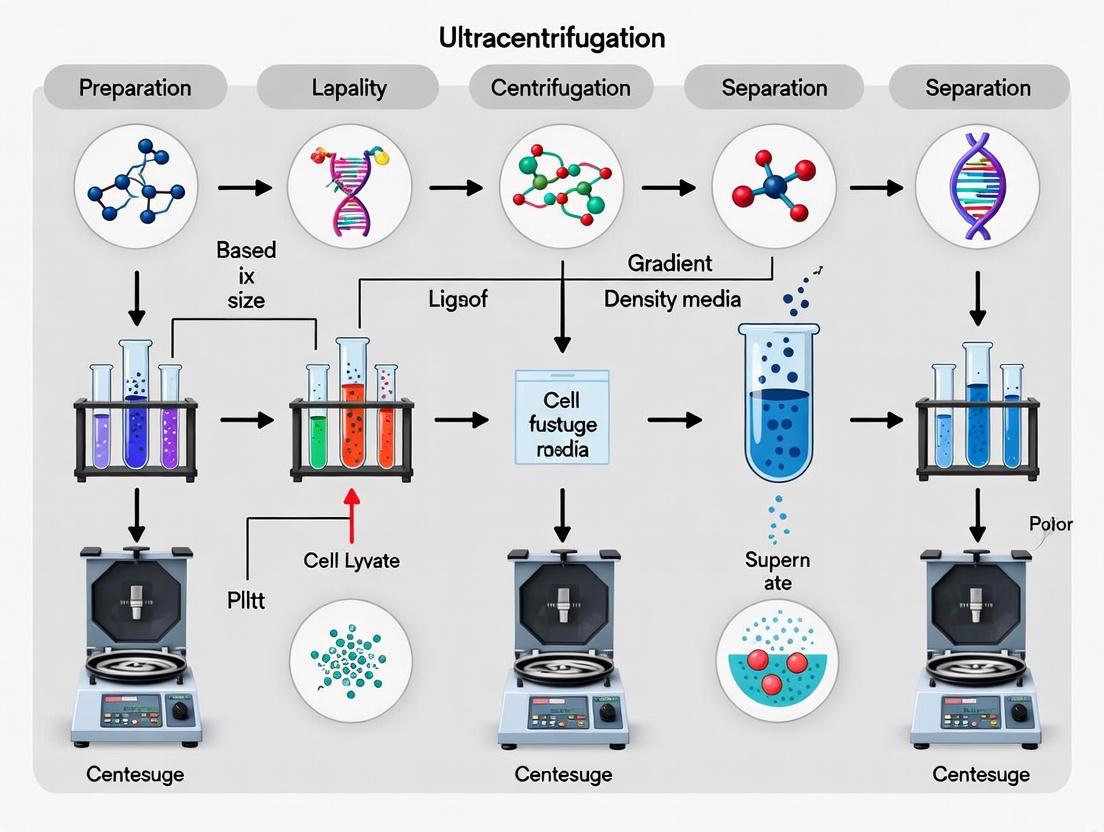
This article provides researchers, scientists, and drug development professionals with a complete guide to centrifugation and ultracentrifugation for isolating cell components.
Centrifugation and Ultracentrifugation: A Comprehensive Guide for Cell Component Separation in Biomedical Research
Abstract
This article provides researchers, scientists, and drug development professionals with a complete guide to centrifugation and ultracentrifugation for isolating cell components. It covers the fundamental principles of separation by density and size, details specific methodologies for applications from protein purification to exosome isolation, and offers practical troubleshooting advice for common issues. The content also explores the validation of separation efficacy and compares advanced, high-throughput technologies, equipping readers with the knowledge to optimize their protocols for downstream analytical and therapeutic applications in fields like biopharmaceuticals and personalized medicine.
Core Principles: How Centrifugation Separates Cell Components by Density and Size
Centrifugation is a foundational mechanical technique used for separating particles from a solution based on their size, shape, density, the viscosity of the medium, and the rotor speed [1] [2]. In practice, a sample suspended in a liquid medium is placed in a tube within a centrifuge rotor. As the rotor spins at high speed, it generates a centrifugal force that acts perpendicular to the axis of rotation, causing denser particles to move radially away from the center while less dense components migrate towards the center [1] [2]. This process dramatically accelerates the natural sedimentation that would occur under Earth's gravity, reducing separation times from hours or days to minutes [3]. The technique is indispensable across numerous scientific fields, including biochemistry, cell biology, pharmaceutical development, and environmental engineering [1] [3].
The effectiveness of centrifugation is governed by several key principles and forces. The Relative Centrifugal Force (RCF), measured in multiples of gravitational force (×g), is the driving parameter for separation, not merely the rotational speed (RPM) [1] [2]. The RCF experienced by a sample is calculated using the formula: RCF = 1.118 × 10⁻⁵ × r × (RPM)², where r is the rotational radius in centimeters [1] [2]. This force is counteracted by the buoyant force (the force needed to displace the liquid medium) and the frictional force generated as particles migrate through the solution [2]. Sedimentation occurs at a constant rate only when the applied centrifugal force exceeds the sum of these counteracting forces [2].
Defining Ultracentrifugation and Its Distinctive Characteristics
Ultracentrifugation represents a specialized subset of centrifugation, optimized for spinning rotors at exceptionally high speeds to generate much greater centrifugal forces [4]. Modern ultracentrifuges are classified as instruments capable of exceeding 100,000 ×g, with some advanced models reaching forces of up to 1,000,000 ×g [1] [4]. This tremendous force enables the separation of much smaller particles—including macromolecules like proteins, nucleic acids, and even small organelles like ribosomes—that would not sediment in standard centrifuges [1] [5].
There are two primary classes of ultracentrifuges, each designed for different research objectives. The preparative ultracentrifuge is used for the actual isolation, purification, and harvesting of specific biological particles, such as cellular organelles, viruses, plasmids, and proteins [1] [4]. In contrast, the analytical ultracentrifuge (AUC) is equipped with an optical detection system for real-time monitoring of the sedimentation process [1] [5]. AUC is employed not for purification but for analyzing macromolecular properties in solution, including molecular weight, shape, composition, and conformational changes [1] [5].
Table 1: Key Specifications and Applications of Centrifuge Types
| Centrifuge Type | Typical Maximum Speed | Typical Maximum RCF | Primary Applications |
|---|---|---|---|
| Microcentrifuge | ~17,000 RPM [1] | Up to 30,000 ×g [1] | Small-volume protocols (nucleic acids, spin columns) [2] |
| Low-Speed Centrifuge | < 10,000 RPM [1] | Not specified in results | Harvesting whole cells, nuclei, chloroplasts [1] |
| High-Speed Centrifuge | ~30,000 RPM [1] | Not specified in results | Harvesting microorganisms, mitochondria, lysosomes [1] |
| Ultracentrifuge | Up to 150,000 RPM [1] | Up to 1,000,000 ×g [1] [4] | Separating membranes, ribosomes, proteins, nucleic acids [1] |
Quantitative Data and Application-Based Speed Selection
Selecting the correct centrifugal speed and force is critical for experimental success. Insufficient speed results in incomplete separation, while excessive speed can damage samples or equipment [6]. The required speed is not a single universal value but is determined by the specific characteristics of the target particle and the desired separation outcome [6].
For example, gentle pelleting of cultured cells to minimize damage typically requires low speeds of 200-300 ×g, whereas efficient pelleting of denser cell types may need 1,000-2,000 ×g [6]. In nucleic acid extraction, low speeds are used for phase separation, while higher speeds are applied for pelleting nucleic acids [6]. The most critical factor is that the centrifugal force must be specified in RCF (×g), not just RPM, to ensure reproducibility across different centrifuge models, as the same RPM will generate different forces in rotors with differing radii [2] [6].
Table 2: Guideline Centrifugation Parameters for Common Biological Applications
| Application | Typical RCF Range | Typical Use Case or Note |
|---|---|---|
| Cell Pelleting (Gentle) | 200 - 300 ×g [6] | For minimizing cell damage [6] |
| Cell Pelleting (Denser Cells) | 1,000 - 2,000 ×g [6] | For more efficient pelleting [6] |
| Blood Sample Processing | 500 - 3,000 ×g [6] | Lower for serum/plasma; higher for cell pelleting [6] |
| Nucleic Acid Extraction | 2,000 - 15,000 ×g [6] | Lower for phase separation; higher for precipitation [6] |
| Protein Fractionation | 10,000 - 20,000 ×g [6] | Separating fractions by molecular weight [6] |
| Isolating Organelles/Viruses | > 100,000 ×g [6] | Requires ultracentrifugation [6] |
Essential Research Reagent Solutions
The success of centrifugation, particularly in density-based separations, relies on a suite of specialized reagents and materials.
Table 3: Key Research Reagent Solutions for Centrifugation
| Reagent/Material | Function in Centrifugation |
|---|---|
| Sucrose Density Gradients | Used for the purification and separation of cellular organelles such as mitochondria and lysosomes in swinging-bucket, fixed-angle, or vertical rotors [1] [4]. |
| Caesium Salt Gradients | Essential for the isopycnic separation of nucleic acids based on their buoyant density during ultracentrifugation [4]. |
| Iodixanol | A contrast medium used to create high-density, iso-osmotic solutions for purifying subcellular particles like vesicles and organelles [1]. |
| Fixed-Angle Rotors | Made from a single block of material (e.g., aluminum, titanium, carbon fiber); ideal for simple pelleting tasks and some gradient work in preparative ultracentrifugation [1] [4]. |
| Swinging-Bucket Rotors | Allow tubes to reorient to a horizontal plane during acceleration; ideal for density gradient purification of cells, viruses, and organelles, providing high-resolution separation [1] [4] [2]. |
| Carbon Fiber Composite Rotors | Modern rotors that are up to 60% lighter, enabling faster acceleration/deceleration and offering high corrosion resistance, which mitigates a major cause of rotor failure [4]. |
Detailed Experimental Protocol: Isolation of Extracellular Vesicles by Ultracentrifugation
The following protocol, adapted from a STAR Protocols methodology, details the isolation of extracellular vesicles (EVs) from bone marrow-derived macrophages, a common application of preparative ultracentrifugation in cell biology research [7].
Materials and Equipment
- Cell Culture Supernatant: Conditioned media from bone marrow-derived macrophages.
- Centrifuge Tubes: Ultracentrifuge-compatible tubes (e.g., polypropylene, polycarbonate).
- Refrigerated Low-Speed Centrifuge [1].
- Preparative Ultracentrifuge capable of achieving 100,000 ×g or higher [4] [5].
- Fixed-Angle or Swinging-Bucket Rotor compatible with ultracentrifuge tubes.
- Phosphate-Buffered Saline (PBS), sterile and cold.
- 0.22 µm Pore Size Sterile Filters.
Step-by-Step Procedure
Sample Collection and Pre-Clearing: a. Collect the cell culture supernatant containing the secreted extracellular vesicles. b. Perform an initial centrifugation at 400 ×g for 30 minutes at 4°C to pellet intact cells and large cellular debris [5] [7]. c. Carefully transfer the supernatant to a new tube without disturbing the pellet. d. Centrifuge the supernatant at 10,000-20,000 ×g for 30 minutes at 4°C to remove larger vesicles, apoptotic bodies, and organellar debris [5]. e. Filter the supernatant through a 0.22 µm filter to remove any remaining large particles.
Ultracentrifugation: a. Transfer the clarified supernatant to ultracentrifuge tubes, ensuring they are properly balanced. b. Load the tubes into a pre-chilled rotor. Centrifuge at 100,000-150,000 ×g for 2 hours at 4°C [5] [7]. This high-force step pellets the exosomes and smaller extracellular vesicles. c. After the run, carefully decant and discard the supernatant. A small, translucent pellet should be visible at the bottom of the tube.
Washing and Final Resuspension: a. To increase purity, gently wash the pellet by resuspending it in a large volume of cold, sterile PBS. b. Repeat the ultracentrifugation step (100,000-150,000 ×g for 2 hours at 4°C) to re-pellet the washed vesicles [5]. c. Finally, carefully discard the supernatant and resuspend the final EV pellet in a small volume (e.g., 50-100 µL) of PBS or an appropriate storage buffer. d. The isolated EVs are now ready for downstream characterization, such as nanoparticle tracking analysis, western blotting, or functional studies [5].
Advanced Protocol: Analytical Ultracentrifugation for Protein Characterization
Analytical Ultracentrifugation (AUC) is a powerful method for studying the hydrodynamic properties and oligomeric states of macromolecules in solution without the need for fixation or labeling [5] [8]. The following protocol outlines a sedimentation velocity experiment.
Materials and Equipment
- Analytical Ultracentrifuge (e.g., Beckman Optima XL-I) equipped with UV/Vis absorbance and/or interference optical systems [8].
- Analytical Rotor (e.g., An-50 Ti) [8].
- Double-Sector Centerpieces (e.g., charcoal-filled Epon) [8].
- Purified Protein Sample in a suitable buffer.
Step-by-Step Procedure
Sample and Buffer Preparation: a. Purify the protein of interest to homogeneity. b. Dialyze the protein extensively into a matched buffer (e.g., 20 mM Tris pH 8.0, 150-300 mM NaCl, 1 mM DTT) that will be used as the reference blank [8]. Accurate buffer matching is critical to prevent artifactual signals.
Cell Assembly: a. Load the protein sample into one sector of a double-sector centerpiece. b. Load the exact matched dialysis buffer into the reference sector. c. Assemble the centerpiece, windows, and housing into the AUC cell according to the manufacturer's instructions, ensuring a leak-free seal. d. Load the assembled cell into the analytical rotor, recording its precise position.
Centrifugation and Data Acquisition: a. Place the rotor in the pre-equilibrated ultracentrifuge. b. Set the experimental parameters: temperature (e.g., 20°C), rotor speed (e.g., 36,000 - 42,000 RPM), and run duration [8]. c. Start the run. The optical system will periodically scan the cell, collecting concentration data of the sedimenting boundary along the radius of the cell over time.
Data Analysis: a. After the run, use specialized software such as SEDFIT to analyze the sedimentation velocity data [8]. b. Fit the data to a model (e.g., continuous c(s) distribution) to obtain the sedimentation coefficient (s) distribution. c. Using auxiliary programs like Sednterp, calculate the partial specific volume of the protein based on its amino acid sequence, as well as the density and viscosity of the solvent [8]. d. The sedimentation coefficient and diffusion coefficient can be used to calculate the molecular weight and infer the oligomeric state and shape of the macromolecule [5] [8].
Centrifugation is a cornerstone technique in biomedical and biological research for separating particles based on their physical properties. By applying centrifugal force, this process enables researchers to isolate specific cells, organelles, and macromolecules from complex mixtures, forming the foundation for downstream analysis and experimentation in drug development and basic science [9]. The technique operates on fundamental physics principles—primarily centrifugal force, sedimentation, and buoyant density—which collectively determine the behavior of particles in a centrifugal field.
When a sample is rotated at high speed, an outward force acts on the particles, causing denser components to migrate away from the axis of rotation while less dense components are displaced toward the center. This results in the formation of a pellet at the bottom of the tube (containing the most dense particles) and a supernatant (containing the lighter particles) [9]. The efficacy of separation depends on several factors including particle size, shape, density, and the properties of the suspension medium [9]. For research into cell components, these principles allow for the precise isolation of organelles such as nuclei, mitochondria, and ribosomes, which is critical for understanding cellular functions and developing therapeutic interventions.
Core Physical Principles
Centrifugal Force and Sedimentation
Centrifugal force is the apparent outward force experienced by an object moving in a curved path. In a centrifuge, this force acts radially from the center of rotation, causing the movement and sedimentation of particles suspended in the sample [9]. This force is quantified as the Relative Centrifugal Force (RCF) or "g-force," which is a multiple of the Earth's gravitational acceleration. The RCF is calculated using the formula: [ RCF = 1.118 \times 10^{-5} \times r \times (RPM)^{2} ] where ( r ) is the rotational radius in centimeters, and ( RPM ) is the speed in revolutions per minute.
Sedimentation is the process by which denser particles settle at the bottom of a sample tube under the influence of centrifugal force [9]. The rate of sedimentation is governed by the size, shape, and density of the particles, with heavier and denser particles sedimenting faster [9]. During rapid centrifugation, particles sediment into a compact mass known as a pellet at the base of the tube, while the remaining liquid medium, called the supernatant, can be separated for further analysis [9].
Buoyant Density
Buoyant density is the density at which a particle neither sinks nor floats when suspended in a density gradient medium. It is a fundamental property exploited in advanced centrifugation techniques to separate particles with similar sizes but different densities [10]. In density gradient centrifugation, a medium such as sucrose or cesium chloride is used to create a column of fluid with increasing density from top to bottom [9] [11]. When a sample is centrifuged through this gradient, particles migrate until they reach a position where their density matches the density of the surrounding medium—their isopycnic point [10]. This allows for the high-resolution separation of biomolecules like proteins and nucleic acids based on their intrinsic buoyant densities rather than just their size [11].
Centrifugation Techniques for Cell Component Separation
Several centrifugation techniques have been developed to isolate and purify cellular components, each leveraging the core physical principles in different ways to achieve specific separation goals.
Differential Centrifugation: This technique utilizes multiple sequential centrifugation steps at progressively higher speeds and centrifugal forces to separate components primarily by size. Initial low-speed spins pellet larger components like whole cells, nuclei, and cytoskeletal elements. The resulting supernatant is then subjected to higher speeds to sediment smaller organelles such as mitochondria and lysosomes. Finally, very high-speed centrifugation pellets microsomes and ribosomes [9] [12]. While straightforward, this method typically yields fractions enriched in specific components rather than achieving absolute purity.
Density Gradient Centrifugation: This method offers higher resolution by separating particles based on their buoyant density. A sample is layered atop a pre-formed density gradient medium and centrifuged. Particles migrate through the gradient until they reach their isopycnic point, forming distinct bands that can be individually harvested [9] [10]. Common gradient media include Ficoll-Paque, Percoll, and sucrose for separating organelles and cesium chloride for purifying nucleic acids [10]. This technique is further refined in ultracentrifugation, which operates at extremely high speeds (up to 150,000 RPM) to separate smaller molecules like DNA, RNA, and proteins [11].
Ultracentrifugation: Operating at speeds from 60,000 to 150,000 RPM, ultracentrifuges are indispensable for separating macromolecules and subcellular components [11]. It comes in two forms:
- Preparative Ultracentrifugation: Used for the isolation and purification of specific particles, such as viral particles, ribosomal subunits, and macromolecules, via techniques like differential and density gradient centrifugation [11].
- Analytical Ultracentrifugation (AUC): Equipped with optical detection systems, AUC allows researchers to monitor sedimentation in real-time. This provides insights into hydrodynamic properties, molecular masses, stoichiometries, and conformational changes of macromolecules [11] [13]. A specialized form of AUC, the band-forming experiment (BFE), allows for the study of reactions and mixtures with minimal sample consumption by overlaying a sample onto a denser solution [13].
The workflow below illustrates the decision-making process for selecting the appropriate centrifugation technique based on the research goal.
Application Notes and Protocols
Protocol 1: Isolation of Peripheral Blood Mononuclear Cells (PBMCs) using Density Gradient Centrifugation
This protocol details the separation of PBMCs from whole blood, a critical first step in immunology research and cellular therapy development [10].
Principle: Whole blood is layered over a density gradient medium. During centrifugation, red blood cells and granulocytes sediment through the medium, while PBMCs, which have a lower density, band at the plasma-gradient interface [10].
Materials:
- Whole blood (anti-coagulated with EDTA or heparin)
- Density gradient medium (e.g., Ficoll-Paque, Lymphoprep, density ~1.077 g/mL)
- Sterile phosphate-buffered saline (PBS)
- Centrifuge with swing-out rotor
- Centrifuge tubes (e.g., 15 mL or 50 mL)
- SepMate tubes or standard centrifuge tubes [10]
Method:
- Dilution: Dilute anti-coagulated whole blood with an equal volume of PBS to reduce viscosity.
- Layering: Carefully layer the diluted blood slowly over an equal volume of density gradient medium in a centrifuge tube. For SepMate tubes, add the medium first, insert the funnel, then layer the diluted blood [10].
- Centrifugation:
- Centrifuge at 400-450 x g for 30 minutes at room temperature.
- Ensure the centrifuge brake is OFF to prevent gradient disturbance [10].
- Harvesting: After centrifugation, four layers will be visible: plasma (top), PBMC band (opaque interface), density gradient medium, and pellet (red blood cells & granulocytes).
- Carefully aspirate the upper plasma layer.
- Transfer the opaque PBMC band at the interface to a new sterile tube using a pipette.
- Washing: Resuspend the harvested cells in a large volume (e.g., 10-50 mL) of PBS. Centrifuge at 250-350 x g for 10 minutes to wash. Discard the supernatant.
- Repeat Wash: Repeat the washing step once more to ensure removal of platelets and gradient medium.
- Resuspension: Resuspend the final PBMC pellet in an appropriate buffer or culture medium for counting and downstream applications.
Protocol 2: Subcellular Fractionation of Liver Tissue using Differential Centrifugation
This protocol is designed to isolate major organelles (nuclei, mitochondria) from liver tissue for metabolic and functional studies [12].
Principle: Homogenized tissue is subjected to a series of centrifugation steps at increasing RCF. Larger, denser organelles pellet at lower speeds, while smaller organelles require higher forces [12].
Materials:
- Fresh liver tissue
- Homogenization buffer (0.25 M sucrose, 10 mM HEPES, pH 7.4, 1 mM EDTA) kept ice-cold
- Dounce homogenizer
- Refrigerated centrifuge with fixed-angle or swing-out rotor
- Centrifuge tubes
Method:
- Homogenization:
- Rinse liver tissue in ice-cold homogenization buffer.
- Mince the tissue finely with scissors and place it in a Dounce homogenizer with a small volume of buffer.
- Homogenize with 10-15 strokes of a loose-fitting pestle, keeping the sample on ice.
- Low-Speed Spin:
- Transfer the homogenate to a centrifuge tube.
- Centrifuge at 1,000 x g for 10 minutes at 4°C.
- The resulting pellet (P1) contains nuclei, heavy membranes, and unbroken cells.
- The supernatant (S1) is carefully transferred to a new tube.
- Medium-Speed Spin:
- Centrifuge supernatant S1 at 10,000 x g for 15 minutes at 4°C.
- The resulting pellet (P2) is enriched with mitochondria, lysosomes, and peroxisomes.
- The supernatant (S2) is transferred to a new tube.
- High-Speed Spin:
- Centrifuge supernatant S2 at 100,000 x g for 60 minutes at 4°C.
- The resulting pellet (P3) contains microsomal fragments (derived from endoplasmic reticulum) and plasma membranes.
- The final supernatant (S3) represents the cytosolic fraction.
- Homogenization:
The following workflow summarizes the sequential steps of this differential centrifugation protocol.
Essential Research Reagent Solutions
Successful cell component separation relies on a suite of specialized reagents and consumables. The table below details key solutions and their functions in centrifugation workflows.
Table 1: Key Reagents and Materials for Centrifugation-Based Separation
| Item | Function/Description | Common Examples |
|---|---|---|
| Density Gradient Media | Creates a density column for separating particles based on buoyant density. | Ficoll-Paque, Percoll, OptiPrep, Cesium Chloride (CsCl) [10] |
| Isotonic Buffers | Maintains osmotic balance during homogenization and centrifugation to prevent organelle damage. | Sucrose, Mannitol buffers [12] |
| Protease Inhibitors | Added to buffers to prevent proteolytic degradation of sample components during processing. | Commercial cocktails (e.g., PMSF, EDTA) |
| Centrifuge Rotors | Holds sample tubes during centrifugation; choice affects separation efficiency and time. | Fixed-Angle Rotor, Swing-Out Bucket Rotor [14] [11] |
| Specialized Tubes | Tubes designed for specific protocols to simplify layering and harvesting steps. | SepMate Tubes [10] |
| Immunomagnetic Beads | Antibody-coated magnetic particles for high-purity positive or negative selection of specific cell types. | Used in Immunomagnetic Cell Separation [10] |
Quantitative Data and Operational Parameters
Precise control of operational parameters is critical for reproducible results. The following tables summarize key quantitative data for centrifugation protocols.
Table 2: Centrifugation Parameters for Blood Component Separation [14]
| Application | Recommended Speed | Relative Centrifugal Force (RCF) | Time | Rotor Type |
|---|---|---|---|---|
| Clinical Diagnostics | ~4,000 RPM | ~2,270 x g | < 15 minutes | Swing-Out Rotor |
| Research Applications | ~6,500 RPM | ~3,873 x g | < 15 minutes | Fixed-Angle Rotor |
| PBMC Isolation | 400 - 450 x g | 400 - 450 x g | 30 minutes (brake off) | Swing-Out Rotor [10] |
Table 3: Ultracentrifuge Operational Specifications and Applications [11]
| Parameter | Typical Range | Application Notes |
|---|---|---|
| Rotational Speed | 60,000 - 150,000 RPM | Higher speeds separate smaller particles like proteins and nucleic acids. |
| Relative Centrifugal Force | Up to 1,000,000 x g | Sufficient force to sediment ribosomes and viral particles. |
| Application - Preparative | N/A | Pelleting of mitochondria, ribosomes, viruses; density gradient separation of DNA/RNA. |
| Application - Analytical | N/A | Determination of molecular mass, stoichiometry, and conformational changes. |
Mastering the physics of centrifugal force, sedimentation, and buoyant density is essential for designing and executing effective cell separation protocols. From the straightforward size-based separation of differential centrifugation to the high-resolution, density-based purification achievable with ultracentrifugation, these techniques provide a powerful toolkit for dissecting cellular complexity. As the field advances with innovations in automation, smart sensors, and improved materials, the precision and efficiency of these methods will continue to grow, further empowering research and drug development efforts aimed at understanding and treating human disease [15] [16]. The protocols and data summarized in this document provide a foundational guide for researchers to apply these principles reliably in the laboratory.
Within the context of centrifugation and ultracentrifugation for cell component separation research, the selection of an appropriate rotor is a critical determinant of experimental success. The rotor, the component of the centrifuge that holds the sample tubes, directly influences the efficiency, resolution, and quality of the separation process. The two predominant rotor designs used in laboratories are the fixed-angle rotor and the swinging-bucket rotor (also commonly referred to as a swing-out rotor). Each type possesses distinct geometric and functional characteristics that make it uniquely suited for specific applications in biochemistry, molecular biology, and drug development. Fixed-angle rotors hold sample tubes at a constant angle, typically between 30° and 45°, throughout the centrifugation run [17] [18]. In contrast, swinging-bucket rotors hold tubes in buckets that are hinged; when the rotor spins, these buckets swing outward to a position that is essentially horizontal (90°) to the axis of rotation [19] [20]. This fundamental difference in operation dictates the path length of particle sedimentation, the final location of the pellet, the relative centrifugal force (RCF) that can be achieved, and the overall suitability for various separation protocols. For researchers isolating subcellular organelles, nucleic acids, or proteins, understanding this core instrumentation is essential for optimizing purity, yield, and viability of delicate samples.
Technical Comparison: Fixed-Angle vs. Swinging-Bucket Rotors
The choice between a fixed-angle and a swinging-bucket rotor involves balancing multiple performance characteristics, including speed, pellet formation, sample throughput, and application-specific requirements. The following table summarizes the key operational differences between these two rotor types, providing a structured overview for informed decision-making.
Table 1: Comparative Analysis of Fixed-Angle and Swinging-Bucket Rotors
| Characteristic | Fixed-Angle Rotor | Swinging-Bucket Rotor |
|---|---|---|
| Rotor Geometry | Tubes are held at a fixed angle (typically 30°-45°) [17] [18] | Buckets swing out to a horizontal position (90°) during operation [19] [20] |
| Pellet Formation | Pellet forms at an angle on the side of the tube [17] [21] | Pellet forms evenly at the very bottom of the tube [17] [18] |
| Maximum Speed/RCF | Generally higher maximum speeds and g-forces [17] [20] | Lower maximum speeds and g-forces due to higher metal stress on moving parts [19] [17] |
| Typical Capacity | Holds a greater number of tubes due to efficient spacing [22] [20] | Typically holds fewer tubes to accommodate the swinging mechanism [17] [21] |
| Sedimentation Time | Shorter run times due to higher achievable g-force [19] [18] | Longer run times are often required [18] |
| Key Advantages | High g-force, compact pellets, high sample throughput, shorter run times [19] [17] | Ideal pellet location, superior for gradient separations, high vessel flexibility [19] [18] |
| Common Applications | Pelleting cells, organelles, and macromolecules (DNA, RNA, proteins); high-speed and ultracentrifugation [17] [23] | Density gradient centrifugation; pelleting live cells; phase-separation (e.g., phenol-chloroform); clinical separations [17] [18] |
Experimental Protocols for Cell Component Separation
Protocol 1: Rapid Pelleting of Bacterial Cells Using a Fixed-Angle Rotor
This protocol is designed for the efficient harvesting of bacterial cells from a culture broth, leveraging the high-speed capabilities of a fixed-angle rotor to minimize processing time.
Principal Reagents and Materials:
- Fixed-angle centrifuge rotor (e.g., capable of holding 50 mL tubes)
- Centrifuge tubes (50 mL, conical-bottom, compatible with the target RCF)
- Bacterial culture broth
- Phosphate-Buffered Saline (PBS) or appropriate wash buffer
- Benchtop centrifuge or high-speed centrifuge
Step-by-Step Methodology:
- Sample Preparation: Aseptically transfer the bacterial culture into pre-chilled 50 mL centrifuge tubes. Ensure tubes are filled symmetrically to within 0.1 g for balance.
- Rotor Loading: Securely place the tubes in the fixed-angle rotor. Directly opposite positions must contain tubes of equal mass.
- Centrifugation Parameters:
- Temperature: 4°C
- Speed / RCF: 5,000 - 10,000 x g [22]
- Duration: 10-20 minutes
- Acceleration/Deceleration: Use default or "fast" profiles unless specified otherwise.
- Post-Centrifugation Handling: After the run, carefully remove the tubes. The bacterial pellet will be firmly compacted on the outer side of the tube at an angle. Decant the supernatant promptly without disturbing the pellet.
- Pellet Resuspension: Resuspend the pellet in an appropriate volume of cold PBS or lysis buffer by gentle pipetting or vortexing.
Troubleshooting Notes:
- Diffuse Pellet: Increase centrifugation time or RCF. Ensure the rotor angle is appropriate for forming a compact pellet (e.g., 45°) [19].
- Pellet Disturbance during Supernatant Removal: Use a vacuum aspirator with a fine tip, taking care to position the tip opposite the pellet.
Protocol 2: Density Gradient Separation of Peripheral Blood Mononuclear Cells (PBMCs) Using a Swinging-Bucket Rotor
This protocol outlines the isolation of PBMCs from whole blood using a Ficoll-Paque density gradient, a application that necessitates the use of a swinging-bucket rotor to preserve the integrity of the gradient layers during acceleration and deceleration.
Principal Reagents and Materials:
- Swinging-bucket centrifuge rotor
- Sterile centrifuge tubes (15 mL or 50 mL, round-bottom preferred)
- Ficoll-Paque PLUS or equivalent density gradient medium
- Whole blood (anticoagulated with EDTA or heparin)
- Phosphate-Buffered Saline (PBS) diluted 1:1 with sterile saline
Step-by-Step Methodology:
- Gradient Preparation: Gently layer 5 mL of diluted whole blood slowly down the side of a 15 mL tube containing 5 mL of Ficoll-Paque. Maintain a sharp interface between the two layers.
- Rotor Loading: Carefully place the prepared tubes into the buckets of the swinging-bucket rotor. Ensure buckets are properly seated on their hinges.
- Centrifugation Parameters:
- Temperature: 20°C (room temperature)
- Speed / RCF: 400 x g
- Duration: 30-40 minutes
- Acceleration: Use the lowest available setting (e.g., "soft start" or 1-2) to prevent mixing of the layers.
- Deceleration: Ensure the brake is OFF to avoid disturbing the established gradient layers after centrifugation [19] [18].
- Post-Centrifugation Handling: After centrifugation, the tube will show distinct layers: plasma at the top, then a PBMC ring at the Ficoll-plasma interface, followed by the Ficoll solution, and finally, granulocytes and erythrocytes at the bottom.
- Cell Harvesting: Carefully aspirate the upper plasma layer. Using a sterile pipette, harvest the opaque PBMC ring at the interface and transfer it to a new tube.
Troubleshooting Notes:
- Blurred Interface/Gradient Disruption: Ensure the brake is disabled during deceleration. Practice layering technique to avoid disturbing the Ficoll interface.
- Low PBMC Yield: Use fresh blood and avoid vibrations during centrifugation that can mix layers.
Visualization of Separation Dynamics
The following diagrams illustrate the fundamental differences in sample orientation and particle sedimentation paths between the two rotor types, which underpin their distinct application profiles.
Diagram 1: Centrifuge Rotor Separation Dynamics. This workflow contrasts the operational principles of fixed-angle and swinging-bucket rotors, highlighting the differences in tube orientation, sedimentation path length, and final pellet or gradient formation.
Essential Research Reagent Solutions
Successful implementation of the aforementioned protocols relies on the use of specific, high-quality reagents and materials. The following table details key solutions required for experiments in cell component separation.
Table 2: Key Research Reagents and Materials for Centrifugation-Based Separations
| Reagent/Material | Function/Application | Specific Example |
|---|---|---|
| Ficoll-Paque | A density gradient medium for the isolation of mononuclear cells from whole blood or other cell suspensions by density-based separation. | Ficoll-Paque PLUS [17] |
| Lysis Buffers | Solutions containing detergents and salts designed to disrupt cell membranes and release intracellular components for subsequent pelleting of organelles or nucleic acids. | RIPA Buffer for protein extraction; SDS-based buffers for DNA/RNA isolation. |
| Protease & Nuclease Inhibitors | Essential additives to lysis buffers to prevent the degradation of proteins and nucleic acids by endogenous enzymes during cell fractionation. | EDTA, PMSF, Protease Inhibitor Cocktail Tablets. |
| PBS (Phosphate-Buffered Saline) | An isotonic, pH-balanced solution used for washing cell pellets and resuspending samples without causing osmotic shock. | 1X PBS, pH 7.4 |
| Tris-based Buffers | Common buffering agents used in molecular biology to maintain stable pH during the separation and resuspension of biological macromolecules like DNA and RNA. | TE Buffer (Tris-EDTA), TAE/TBE for electrophoresis. |
The biopharmaceutical industry is navigating a period of unprecedented change, marked by significant scientific innovation alongside considerable economic and regulatory challenges. Key market drivers include the accelerating pace of novel therapeutic modalities, intensifying patent expiration pressures, and the transformative potential of artificial intelligence and advanced analytics in drug discovery and development [24] [25] [26]. Against this backdrop, robust and reliable laboratory techniques for biomolecule separation, particularly centrifugation and ultracentrifugation, have become indispensable for ensuring drug quality, characterizing complex biologics, and de-risking the development pipeline. These techniques provide the critical analytical foundation upon which the industry's progress is built, enabling researchers to isolate, purify, and analyze cellular components with high precision.
Key Market Drivers in Biopharma and Clinical Research
The strategic direction of the biopharmaceutical sector is being shaped by several powerful, interconnected trends. These drivers are influencing investment decisions, R&D prioritization, and the operational models of successful companies.
Table 1: Key Drivers in the Biopharmaceutical Market
| Market Driver | Impact on the Industry | Implications for Research & Development |
|---|---|---|
| Rise of Novel Modalities [25] | Shift from small molecules to complex therapeutics like gene therapies, CAR-T, and other advanced modalities; novel modalities projected to make up ~15% of the market by 2030, up from 5% in 2020. | Creates a need for more sophisticated analytical techniques, like AUC, to characterize size, aggregation, and interaction of large biomolecules. |
| The Patent Cliff [24] [26] | Drugs accounting for an estimated $175B-$300B in revenue facing patent expiration by 2030, eroding sales of established products. | Increases pressure to efficiently develop new blockbusters and biosimilars, requiring highly productive R&D and robust process development. |
| Portfolio Optimization & Therapeutic Area Focus [25] [26] | Hyper-competition in key areas like oncology; focused companies see a 65% increase in shareholder return vs. 19% for diversified firms. | Demands deep expertise in specific disease biology and necessitates tools for fail-fast decision-making and efficient target validation. |
| AI and Data-Driven R&D [25] [26] | AI can reduce preclinical discovery time by 30-50% and lower costs by 25-50%; over 40% of traditional pharma have yet to materially adopt AI. | Requires high-quality, reliable data from foundational techniques (e.g., centrifugation) to train models and validate AI-designed candidates. |
| Geopolitical and Supply Chain Shifts [24] [25] | Complexities in global trade, tariffs, and the rise of China as an innovation hub (15% of global pipeline assets, up from 4% in 2012). | Drives need for resilient supply chains and rigorous, standardized quality control across globally sourced materials and products. |
Centrifugation and Ultracentrifugation: Core Protocols for Cell Component Separation
The separation of cellular components is a foundational step in understanding disease mechanisms, identifying drug targets, and characterizing biopharmaceutical products. The following protocols detail standard methods for isolating key organelles and analyzing macromolecular assemblies.
Protocol: Isolation of Mononuclear Cells from Whole Blood Using Density Gradient Centrifugation
Principle: This method separates cells based on their buoyant density. When centrifuged, blood components partition into layers: platelets and plasma remain in the plasma layer, mononuclear cells (lymphocytes, monocytes) form a buffy coat just above the density gradient medium, while granulocytes and erythrocytes pellet at the bottom [27] [28].
Materials:
- Lymphoprep or Ficoll-Paque density gradient medium [28]
- Fresh whole blood, anti-coagulated with EDTA or heparin
- Sterile Dulbecco's Phosphate Buffered Saline (DPBS)
- Centrifuge with a swinging-bucket rotor
- SepMate tubes (optional) or standard conical centrifuge tubes [28]
Method:
- Dilution: Dilute whole blood 1:1 with DPBS or saline and mix gently.
- Layering: Carefully layer the diluted blood sample over the density gradient medium in a centrifuge tube. For a 15 mL tube, use 5 mL of Lymphoprep and carefully layer 10 mL of diluted blood on top without mixing the layers.
- Centrifugation: Centrifuge at 400 x g for 30 minutes or 1200 x g for 20 minutes at Room Temperature (15-25°C). The brake must be set to OFF to prevent disturbance of the gradients [28].
- Harvesting: After centrifugation, use a pipette to carefully aspirate the upper plasma layer. Then, collect the mononuclear cell layer (the cloudy interface between the plasma and the gradient medium) and transfer it to a new clean tube.
- Washing: Resuspend the harvested cells in a large volume (e.g., 10-15 mL) of DPBS or culture medium. Centrifuge at 300 x g for 5-10 minutes at Room Temperature with the brake ON to pellet the cells [28].
- Final Pellet: Discard the supernatant and gently resuspend the cell pellet in an appropriate buffer or medium for downstream applications.
Protocol: Differential Centrifugation for Subcellular Fractionation
Principle: This technique sequentially separates organelles from a cell homogenate based on their size and density by applying progressively higher centrifugal forces. Larger, denser organelles pellet at lower speeds, while smaller ones require higher speeds [29] [12].
Materials:
- Homogenization buffer (e.g., 0.25 M sucrose, 10 mM HEPES pH 7.4, 1 mM EDTA) kept ice-cold
- Cell culture or tissue sample
- Dounce homogenizer or similar
- Refrigerated centrifuge with fixed-angle rotor
Method:
- Homogenization: Wash and resuspend cells in ice-cold homogenization buffer. Homogenize on ice using a Dounce homogenizer (e.g., 20-30 strokes) until >90% of cells are lysed. Keep the homogenate on ice at all times [12].
- Low-Speed Spin (Nuclei & Debris): Transfer the homogenate to a centrifuge tube. Centrifuge at 1,000 x g for 10 minutes at 4°C.
- Pellet: Contains nuclei, heavy membranes, and unbroken cells.
- Supernatant (S1): Carefully decant and keep for the next step.
- Medium-Speed Spin (Mitochondria, Lysosomes, Peroxisomes): Transfer supernatant S1 to a new tube. Centrifuge at 10,000 x g for 15-20 minutes at 4°C.
- Pellet: Contains mitochondria, lysosomes, and peroxisomes.
- Supernatant (S2): Carefully decant and keep for the next step.
- High-Speed Spin (Microsomes): Transfer supernatant S2 to a new tube. Centrifuge at 100,000 x g for 60 minutes at 4°C using an ultracentrifuge.
- Pellet: Contains microsomes (fragments of the endoplasmic reticulum and Golgi apparatus) and plasma membrane fragments.
- Supernatant (S3): The final supernatant contains the soluble cytosolic fraction.
Protocol: Analytical Ultracentrifugation (AUC) for Assessing Protein Aggregation
Principle: Sedimentation velocity AUC is a critical, label-free method for directly quantifying protein aggregation and determining the sedimentation coefficient of macromolecules in solution. It is considered an orthogonal method to verify data from size-exclusion chromatography (SEC) [30].
Materials:
- Purified protein sample in its final formulation buffer
- Reference buffer (matching the sample buffer)
- Analytical ultracentrifuge equipped with absorbance and/or interference optics
- Double-sector centerpieces
Method:
- Sample Preparation: Clarify the protein sample and reference buffer by centrifugation (e.g., 15,000 x g for 10 minutes) to remove any particulate matter. Sample testing is conducted in the exact or nearly exact liquid formulation of the biopharmaceutical [30].
- Cell Assembly: Load ~400 µL of reference buffer into one sector of a double-sector centerpiece and an equal volume of protein sample into the other sector. Assemble the cell housing securely.
- Equilibration: Place the cell in the rotor and install the rotor in the ultracentrifuge. Allow the system to equilibrate to the set temperature (typically 20°C) under vacuum without spinning.
- Data Acquisition: Start the centrifugation run at a high speed (e.g., 40,000-50,000 rpm). Collect continuous scans of absorbance (at 280 nm or other relevant wavelength) or interference versus radial position over time (e.g., every 2-5 minutes).
- Data Analysis: Use software like SEDFIT to model the sedimentation data. The analysis generates a continuous sedimentation coefficient distribution [c(s)], which provides a high-resolution profile of the sample's oligomeric state, revealing the presence of monomers, aggregates, and fragments [30].
Table 2: Centrifugation Parameters for Specific Cell Types and Applications
| Application / Cell Type | Relative Centrifugal Force (RCF) | Time | Temperature | Brake |
|---|---|---|---|---|
| Regular Cell Washing [28] | 300 x g | 5 - 10 min | Room Temperature | On |
| Gentle Cell Washing [28] | 100 x g | 5 - 6 min | Room Temperature | On |
| Platelet Removal [28] | 120 x g | 10 min | Room Temperature | Off |
| Processing Neurospheres [28] | 90 x g | 5 min | Room Temperature | On |
| Isolating Mononuclear Cells (Ficoll) [28] | 400 x g | 30 min | Room Temperature | Off |
| Mitochondrial Isolation [12] | 10,000 x g | 15-20 min | 4°C | On |
Workflow Visualization: From Homogenate to Analysis
The following diagram illustrates the logical workflow of a multi-technique approach to subcellular fractionation and component analysis, integrating the protocols described above.
The Scientist's Toolkit: Essential Reagents and Materials
Successful execution of separation protocols relies on a set of key reagents and materials, each serving a specific function to ensure purity, viability, and integrity of the isolated components.
Table 3: Essential Research Reagent Solutions for Cell Fractionation
| Reagent / Material | Function / Application | Key Characteristics |
|---|---|---|
| Density Gradient Media (e.g., Lymphoprep, Ficoll-Paque, Sucrose) [28] [12] | Separation of blood components or subcellular organelles based on buoyant density. | Pre-formulated, sterile, with defined density. Inert and non-toxic to cells. |
| Homogenization Buffers [12] | Medium for cell lysis and suspension of homogenate. | Typically isotonic (e.g., containing 0.25 M sucrose or mannitol) to prevent osmotic shock; includes protease inhibitors. |
| Protease Inhibitor Cocktails | Added to homogenization and lysis buffers to prevent proteolytic degradation of proteins during fractionation. | Broad-spectrum or specific; often used as a mixture to inhibit serine, cysteine, aspartic, and metalloproteases. |
| Chromatography Resins [29] [12] | Further purification of proteins from isolated fractions. | Includes ion-exchange (IEC), size-exclusion (SEC), and affinity resins (e.g., Protein A, glutathione-sepharose). |
| Antibodies for Specific Markers (e.g., against TOM20 for mitochondria, Lamin A/C for nuclei) [12] | Identification and validation of organelle purity and integrity via Western Blot or immunofluorescence. | High-specificity, well-validated antibodies are critical for accurate assessment. |
From Theory to Bench: Proven Protocols for Cell Component Isolation
Centrifugation and ultracentrifugation are foundational techniques in life sciences, enabling the precise separation of cellular components based on physical properties like size, density, and shape. These methods are indispensable for protein purification and analysis, forming the cornerstone of research in biochemistry, molecular biology, and biopharmaceutical development [31] [32]. The ability to isolate high-purity proteins is critical for understanding disease mechanisms, evaluating drug effects, and discovering new biomarkers [33]. This application note details advanced protocols and methodologies that leverage centrifugation techniques within a broader research framework focused on cell component separation, providing researchers with robust tools for their experimental workflows.
Key Centrifugation Techniques for Cell Fractionation
The separation of cellular components primarily relies on two principal centrifugation methods: differential centrifugation and density gradient centrifugation. Each technique exploits different physical properties of particles to achieve separation and is suited for particular applications and sample types.
- Differential Centrifugation: This method separates particles primarily based on their mass and size through a series of increasing centrifugal forces. Larger and heavier components sediment faster and pellet at lower centrifugal forces, while smaller, lighter components require higher speeds and longer durations. A key characteristic is that it is typically performed without specialized separation reagents [34]. It is most effectively used for the separation of cells and larger organelles [34]. A common application is the preparation of a buffy coat from whole blood [34].
- Density Gradient Centrifugation: This technique separates particles based primarily on their density. Samples are spun in a pre-formed gradient medium with a known density profile. Particles will migrate until they reach a position in the gradient where their own density matches that of the surrounding medium [34]. This process requires density-known medium reagents (e.g., sucrose, Percoll) to form the gradient [34]. It is particularly useful for separating molecules, particles, and cells of similar size but different densities, such as separating white blood cells from red blood cells [34].
Table 1: Comparison of Centrifugation Techniques for Cell Fractionation.
| Feature | Differential Centrifugation | Density Gradient Centrifugation |
|---|---|---|
| Separation Principle | Mass and size | Density |
| Reagent Requirement | Not required | Requires density gradient media |
| Typical Applications | Separating cells and organelles; preparing buffy coat from whole blood [34] | Separating molecules and particles; isolating specific cell populations like PBMCs [34] |
| Key Advantage | Simplicity and straightforward protocol [34] | High specificity for separating particles with similar sizes but different densities [34] |
Advanced Protein Purification Protocol
SpyDock-Modified Epoxy Resin for Affinity Purification
Traditional affinity chromatography (AC) methods, such as His-tag purification, often face limitations including high resin costs and the need for additional tag-removal steps to obtain the native protein. The following protocol describes a robust and cost-effective alternative using SpyDock-modified epoxy resin coupled with a pH-inducible self-cleaving intein for direct purification of proteins with authentic N-termini [35].
Key Features of the Method:
- Authentic N-Termini: Delivers purified proteins without the need for post-purification tag removal [35].
- High Purity and Yield: Achieves >90% purity with yields comparable to commercial His-tag methods [35].
- Cost-Effectiveness: The resin is easy to prepare and reusable, reducing long-term costs [35].
Experimental Protocol:
- Resin Preparation: Synthesize the SpyDock-modified epoxy resin by conjugating the SpyDock protein to epoxy-activated resin according to established Spy chemistry protocols [35].
- Cell Lysis and Clarification:
- Resuspend the cell pellet expressing the target protein (fused to the SpyTag-intein construct) in an appropriate lysis buffer.
- Lyse the cells using a method suitable for your cell type (e.g., sonication, homogenization).
- Clarify the cell lysate by centrifugation at 12,000 × g for 20 minutes at 4°C to remove cellular debris [35].
- Affinity Binding:
- Incubate the clarified lysate with the prepared SpyDock-modified resin for 1-2 hours at room temperature with gentle mixing to allow covalent binding between SpyTag and SpyDock [35].
- Washing:
- Wash the resin extensively with a suitable wash buffer (e.g., phosphate-buffered saline) to remove non-specifically bound contaminants [35].
- Elution via Intein Cleavage:
- Induce on-column self-cleavage of the intein by applying a mild pH shift (e.g., to pH 6.0-7.0) and incubating at 4°C for 16-24 hours.
- Collect the eluate, which contains the purified target protein with an authentic N-terminus [35].
- Resin Regeneration:
- Regenerate the resin for reuse by washing with a low-pH buffer (e.g., 0.1 M glycine-HCl, pH 2.5) followed by re-equilibration in the storage buffer [35].
The following workflow diagram illustrates the key steps in this purification protocol:
Performance Metrics
This method has been quantitatively evaluated against traditional approaches. The following table summarizes key performance data for the SpyDock-modified resin method compared to a standard His-tag purification.
Table 2: Quantitative Performance of SpyDock-Modified Resin for Protein Purification [35].
| Parameter | SpyDock-Modified Resin Method | Traditional His-Tag Method |
|---|---|---|
| Purity | >90% | >90% |
| Yield | Comparable to His-tag | Benchmark |
| Tag Removal | Not required (authentic N-terminus) | Additional enzymatic step required |
| Resin Reusability | Yes, multiple cycles | Limited |
Advanced Cell Sorting via Fluidized Bed Centrifugation
For the separation of viable and non-viable cells at a large scale, fluidized bed centrifugation (FBC) presents a novel, scalable solution. This technology is particularly valuable for intensifying biopharmaceutical manufacturing processes, such as continuous perfusion cultivation [36].
Principle of Operation: An FBC system captures mammalian cells inside a rotating chamber where a counter-flow of fluid is applied. Cells are captured at a position where the hydrodynamic drag force equals the opposing centrifugal force [36]. Since the drag force decreases from the chamber inlet to the outlet while the centrifugal force remains relatively constant, a sorting effect occurs: larger, viable cells are enriched in the tip of the chamber, while smaller, non-viable cells and debris are enriched near the outlet and can be washed out [36].
Experimental Protocol for Viable Cell Sorting:
- System Setup: Use a single-use FBC system (e.g., Ksep series). For small-scale trials, a system with 25 mL chambers is appropriate [36].
- Parameter Configuration:
- Cell Loading and Overloading: Load the cell broth from the bioreactor into the FBC chamber. To achieve sorting, intentionally overload the centrifuge chambers to ensure a fully packed bed, which enhances the separation based on cell size and viability [36].
- Washing for Separation: Wash the captured cells by exchanging approximately 2.6 times the chamber volume with fresh cell culture media. This washing step elutes non-viable cells and debris, which are collected in the flow-through [36].
- Harvesting Viable Cells: The enriched fraction of viable cells can be recovered from the chamber and directly transferred back into a bioreactor for subsequent cultivation [36].
- Process Integration: This sorting method can be applied periodically during a cultivation process to maintain high culture viability and productivity, enabling innovative process strategies like continuous fed-batch [36].
The separation mechanism within the FBC chamber is visualized below:
The Scientist's Toolkit: Essential Research Reagents and Materials
Successful implementation of the described protocols requires specific reagents and materials. The following table lists key solutions for centrifugation-based separation and advanced protein purification.
Table 3: Key Research Reagent Solutions for Protein Purification and Cell Separation.
| Item | Function/Description | Application Context |
|---|---|---|
| Density Gradient Media (e.g., Sucrose, Percoll) | Reagents with known density used to form a separation gradient during centrifugation [34]. | Density gradient centrifugation for isolating specific cell populations (e.g., PBMCs from blood) or organelles [34]. |
| SpyDock-Modified Epoxy Resin | A custom affinity resin that covalently binds to SpyTag-fused proteins, enabling purification without tag removal [35]. | Affinity chromatography for purifying proteins with authentic N-termini [35]. |
| pH-Inducible Self-Cleaving Intein | A protein segment that, when fused to a target protein, undergoes self-cleavage in response to a mild pH shift [35]. | Used in conjunction with SpyTag/SpyDock for eluting the purified target protein from the resin [35]. |
| Single-Use FBC Chambers | Disposable consumables for fluidized bed centrifuges, designed for sterile processing of cell cultures [36]. | Large-scale, sterile sorting of viable and non-viable mammalian cells in bioprocessing [36]. |
The centrifugation-based methods detailed in this application note—from fundamental density gradient separation to advanced fluidized bed sorting and innovative affinity purification—provide powerful and scalable strategies for protein analysis and cell component separation. The SpyDock-intein purification protocol offers a robust path to high-purity proteins with native sequences, while fluidized bed centrifugation addresses modern bioprocessing challenges by enabling viable cell sorting. Integrating these techniques into research and development workflows can significantly enhance productivity, yield, and efficiency in both basic life science research and industrial biopharmaceutical applications.
Lipoprotein profiling is a cornerstone of cardiovascular disease research and diagnostic medicine, providing critical insights into lipid metabolism and atherogenic risk. The accurate separation and analysis of lipoprotein subclasses are technically challenging yet essential for understanding their distinct biological functions and roles in disease pathogenesis. Density-based ultracentrifugation remains the foundational methodology for isolating lipoproteins from biological fluids, leveraging their intrinsic physicochemical properties for purification [29]. This protocol details the application of sequential ultracentrifugation techniques for the comprehensive separation of major lipoprotein classes, supplemented by contemporary analytical methods for characterization. The methodologies described herein are designed to support basic research on lipoprotein biology, preclinical drug development, and the refinement of diagnostic assays requiring high-resolution fractionation.
Principles of Lipoprotein Separation
Lipoproteins are complex macromolecular assemblies comprising a hydrophobic core of triglycerides and cholesteryl esters surrounded by an amphiphilic monolayer of phospholipids, free cholesterol, and apolipoproteins. The core principle underlying their separation via ultracentrifugation is differential buoyant density, a property dictated by their lipid-to-protein ratio [29] [37].
- Density Ranges: Each major lipoprotein class occupies a characteristic and non-overlapping density range in solution. Chylomicrons are the least dense (<0.95 g/mL), followed by VLDL (0.95-1.006 g/mL), IDL (1.006-1.019 g/mL), LDL (1.019-1.063 g/mL), and HDL (1.063-1.21 g/mL) [37].
- Centrifugal Force: When subjected to a powerful centrifugal field, particles in a solution experience a force proportional to their mass and the square of the angular velocity. In a medium adjusted to a specific density, lipoproteins will either sediment or float based on whether their intrinsic density is greater or less than that of the surrounding medium [29].
- Fractionation Strategy: Sequential ultracentrifugation involves adjusting the density of the serum or plasma sample and applying precisely controlled centrifugal forces for defined durations. This process allows for the step-wise isolation of lipoprotein classes in order of increasing density, yielding fractions suitable for downstream biochemical, cellular, or molecular analyses [29].
Experimental Protocols
Density Gradient Ultracentrifugation for Lipoprotein Fractionation
This protocol describes the isolation of VLDL, LDL, and HDL from human serum or plasma using a discontinuous density gradient, which provides superior resolution and purity compared to sequential flotation.
Materials:
- Preparative Ultracentrifuge: Capable of maintaining temperatures at 4-16°C and achieving forces up to 500,000 × g [29].
- Ultracentrifuge Tubes: Polypropylene or similar compatible tubes (e.g., 5-13 mL volume).
- Density Solutions: Prepare stock solutions of NaCl, KBr, or NaCl/NaBr for density adjustment. Validate density using a densitometer.
- Serum/Plasma Sample: Fresh or previously frozen (-80°C) EDTA-plasma or serum.
Procedure:
- Sample Preparation: Thaw frozen plasma/serum on ice. Add a preservative cocktail (e.g., 1 mM EDTA, 0.05% sodium azide, 1 μM aprotinin) to inhibit oxidation and proteolysis.
- Density Adjustment: Adjust the density of the sample to 1.30 g/mL by adding solid KBr (approximately 0.326 g/mL of plasma). Dissolve gently to avoid denaturation.
- Gradient Formation: In an ultracentrifuge tube, layer the following solutions sequentially to form a discontinuous gradient:
- 2.5 mL of density-adjusted sample (d=1.30 g/mL)
- 2.5 mL of NaCl-KBr solution (d=1.182 g/mL)
- 2.5 mL of NaCl-KBr solution (d=1.063 g/mL)
- 2.5 mL of NaCl solution (d=1.019 g/mL)
- Top up with a NaCl solution (d=1.006 g/mL)
- Ultracentrifugation:
- Rotor: Use a swinging-bucket rotor (e.g., SW 41 Ti).
- Conditions: Centrifuge at 200,000 × g at 16°C for 24 hours.
- Fraction Collection: After centrifugation, carefully fractionate the tube contents from the top using a pipette or a tube slicer. The bands, from top to bottom, will correspond to:
- VLDL (d < 1.006 g/mL)
- IDL (d=1.006-1.019 g/mL)
- LDL (d=1.019-1.063 g/mL)
- HDL (d=1.063-1.21 g/mL)
- Post-Processing: Dialyze individual fractions against a buffer such as Tris-EDTA (pH 7.4) to remove salt and concentrate if necessary using centrifugal filters. Determine protein or cholesterol concentration before use.
Centrifugation Parameter Optimization for Solubility and Stability
The integrity of lipoprotein structure and function during separation is highly sensitive to centrifugation parameters. Systematic optimization is required to balance separation efficiency with biomolecular preservation.
Critical Parameters:
- Relative Centrifugal Force (RCF) and Time: Excessive force or duration can disrupt lipoprotein integrity. A systematic study on phase separation found that lower-speed centrifugation (e.g., 5 min at 5000 rpm/~2180 × g) yielded results closest to the reference sedimentation method, while higher speeds (10,000 rpm/~8720 × g for 20 min) caused overestimation of solubility in heterogeneous systems, likely due to forced suspension of colloids [38].
- Rotor Type: Fixed-angle rotors generally yield faster separations, while swing-out rotors provide better resolution for density gradients, as their particle path is straighter [29] [39].
- Temperature Control: Maintain centrifugation at 4-16°C to minimize lipid oxidation and microbial growth, especially during long runs.
The workflow below summarizes the key decision points for method selection and optimization.
Analytical Techniques for Lipoprotein Characterization
Following fractionation, isolated lipoproteins require comprehensive characterization. The table below compares the primary analytical methods used.
Table 1: Analytical Techniques for Lipoprotein Characterization
| Method | Principle | Measured Parameters | Advantages | Limitations |
|---|---|---|---|---|
| Enzymatic Assays [37] | Chromogenic reactions specific to cholesterol, triglycerides, or phospholipids. | Concentration of specific lipids in a fraction. | High-throughput, automated, low cost. | Requires pre-separation; measures bulk lipid, not particle nature. |
| 2D Diffusion-Ordered NMR Spectroscopy [40] | Diffusion coefficients and NMR signals of lipoprotein subclasses. | Particle number (LDL-P, HDL-P), size distribution. | Rapid, no separation needed, measures particle number. | High instrument cost; complex data analysis. |
| Gel Filtration Chromatography [29] | Size-based separation via porous beads. | Hydrodynamic size, approximate molecular weight. | Preserves native structure; can be scaled. | Lower resolution than ultracentrifugation; may dilute sample. |
| Immunoassays [37] [41] | Antibody-based detection of specific apolipoproteins. | ApoB, ApoA-I, Lp(a) concentration. | High specificity and sensitivity. | Cross-reactivity possible; requires specific antibodies. |
Advanced Applications and Clinical Correlations
Lipoprotein(a) Profiling
Lipoprotein(a), or Lp(a), is a genetically determined, atherogenic lipoprotein particle similar to LDL but containing a unique glycoprotein, apolipoprotein(a) [41]. Its measurement is critical for advanced risk assessment.
- Clinical Significance: Elevated Lp(a) is an independent risk factor for atherosclerotic cardiovascular disease (ASCVD), aortic stenosis, and thrombosis [41]. Levels are largely genetically determined and remain stable throughout life.
- Measurement Methods: Immunoassays (immunoturbidimetry or immunonephelometry) are standard [37]. Results can be reported in mass units (mg/dL) or molar concentration (nmol/L), with high risk defined as >50 mg/dL or >100 nmol/L [42] [41].
- Centrifugation Considerations: Lp(a) resides in a density range overlapping with LDL and HDL. Precise isolation often requires a combination of ultracentrifugation and subsequent immunoaffinity chromatography for pure preparations.
Impact on Cardiovascular Risk Assessment
Advanced lipoprotein profiling provides data that refines clinical risk assessment beyond standard lipid panels.
- Risk Stratification Targets: Contemporary guidelines, including the 2025 ESC/EAS update, recommend aggressive, risk-based LDL-C targets:
- <70 mg/dL for high-risk individuals
- <55 mg/dL for very-high-risk individuals
- <40 mg/dL for those at extreme risk [42].
- Non-HDL-C and ApoB: These are increasingly recognized as superior targets, as they reflect the total burden of all atherogenic lipoproteins (VLDL, IDL, LDL, Lp(a)). Non-HDL-C is calculated as Total Cholesterol minus HDL-C, with a target of 30 mg/dL higher than the corresponding LDL-C goal [43] [37]. ApoB measurement provides a direct count of atherogenic particles [37].
Research Reagent Solutions
Successful lipoprotein profiling relies on a suite of specialized reagents and materials.
Table 2: Essential Research Reagents and Materials for Lipoprotein Profiling
| Item | Function/Application | Examples/Specifications |
|---|---|---|
| Density Gradient Salts | Adjust solvent density for ultracentrifugation. | NaCl, KBr, NaBr. Purity: >99.5%. Prepare stock solutions with verified density. |
| Enzymatic Assay Kits | Quantify cholesterol, triglycerides, phospholipids in fractions. | Commercially available kits based on cholesterol oxidase-peroxidase (CHO-POD) or glycerol-3-phosphate oxidase peroxidase (GPO-POD) methods [37]. |
| Chromatography Resins | Size-based separation (gel filtration) or affinity purification. | Cross-linked agarose or dextran beads (e.g., Sepharose, Sephadex); immunoaffinity resins with anti-ApoB or anti-ApoA-I antibodies. |
| Collection Tubes | Blood sample integrity for lipid analysis. | EDTA tubes for plasma (inhibits coagulation); serum separation tubes; plain glass tubes for PRF [39]. |
| Buffer Additives | Preserve sample integrity during processing. | EDTA (chelator, inhibits oxidation), Sodium Azide (antimicrobial), Protease Inhibitor Cocktails. |
Mastering the techniques of lipoprotein and cholesterol profiling through ultracentrifugation is fundamental for advancing lipid metabolism research and developing new therapeutic strategies. This detailed protocol emphasizes that method robustness depends on a thorough understanding of both the physicochemical principles of separation and the careful optimization of centrifugation parameters to preserve native lipoprotein structure. The integration of these classic separation methods with modern analytical platforms like 2D NMR and high-sensitivity immunoassays provides a powerful, multi-dimensional view of lipoprotein biology, directly feeding into both basic science and the evolution of precision medicine for cardiovascular disease.
Exosomes, small extracellular vesicles (sEVs) ranging from 30–200 nm in diameter, are released by virtually all cell types and are present in biological fluids such as blood, urine, and saliva [44] [45]. These nanoscale vesicles act as crucial messengers in intercellular communication, carrying a functional molecular cargo (proteins, nucleic acids, and lipids) from their parent cells [45]. Because their composition often reflects the physiological or pathological state of their cell of origin, exosomes have emerged as a promising source of biomarkers for a wide array of diseases, including cancer, infectious diseases, and cardiovascular conditions [44] [46].
The isolation of exosomes is a critical first step in the research pipeline. The inherent heterogeneity of exosomes, the complexity of biological fluids, and the presence of nanoscale contaminants like lipoproteins make their isolation a significant challenge [46]. The choice of isolation method directly impacts the yield, purity, and biological integrity of the recovered exosomes, thereby influencing the reliability and reproducibility of all subsequent analyses [47] [45]. This article provides a detailed comparison of prevailing and emerging isolation techniques, with a special focus on the role of centrifugation, and presents an optimized protocol for ultracentrifugation to aid researchers in this vital field.
Comparative Analysis of Exosome Isolation Methods
No single isolation method is perfect; each offers a different balance of yield, purity, speed, and cost. The choice depends on the specific requirements of the downstream application. The table below summarizes the key characteristics of major isolation techniques.
Table 1: Comparison of Major Exosome Isolation Methods
| Method | Principle | Purity | Yield/Recovery | Time | Key Advantages | Key Disadvantages |
|---|---|---|---|---|---|---|
| Differential Ultracentrifugation (UC) | Size & density sedimentation via centrifugal force [46] | Medium [46] [45] | Low to Medium [46] [48] | >4 hours (Time-consuming) [45] | Considered the "gold standard"; simple operation; suitable for large sample volumes [46] [45] | Low repeatability; may damage exosome integrity; requires expensive instrumentation [46] [45] |
| Density Gradient Centrifugation | Buoyant density in a medium [46] | High [46] [45] | Low [46] | >16 hours (Time-consuming) [45] | High purity; separates exosomes from non-vesicular particles [46] | Complex operation; time-consuming [45] |
| Size-Exclusion Chromatography (SEC) | Particle size & hydrodynamic properties [49] [45] | High [46] [45] | Relatively Low [46] | ~20 minutes (Fast) [46] | Maintains exosome integrity and function; simple and fast [46] [45] | Sample volume limited; can be contaminated by similar-sized particles (e.g., lipoproteins) [46] [47] |
| Polymer-Based Precipitation | Alters solubility & dispersibility using polymers (e.g., PEG) [47] [45] | Low [46] [45] | High [46] [49] | 30 min - 12 hours [45] | Simple; high yield; no specialized equipment needed [46] | Co-precipitates contaminants (e.g., lipoproteins); polymers may interfere with downstream analysis [46] |
| Immunoaffinity Capture | Antibody binding to specific surface markers (e.g., CD63, CD81) [46] [49] | High [46] | Relatively Low [46] | Information Missing | Isolates specific exosome subpopulations; high specificity [46] | Expensive; low yield; requires specific antibodies [46] [49] |
| Ultrafiltration | Membrane filtration by size [47] | Low [46] | High [46] | Faster than UC [47] | Simple; no specialized equipment; good for large volumes [46] | Shear stress may damage exosomes; membrane clogging [47] |
| Microfluidic Chips | Size, affinity, or other properties on a miniaturized platform [46] | High [46] | High [46] | Ultra-fast [46] | High throughput; high purity; portable integration; low sample loss [46] | Emerging technology; can be complex [46] |
Recent comparative research underscores the practical implications of method selection. A 2025 study found that while PEG-based precipitation (CP) yielded the highest concentration of particles, the combination of precipitation with ultrafiltration (CPF) resulted in superior purity and more specific exosome marker expression (CD9) with minimal non-vesicular artifacts [49]. In contrast, ultracentrifugation, while widely used, often yielded the lowest particle concentration [49]. Another 2024 optimization study for urinary sEVs found that extending ultracentrifugation time to 48 minutes and replacing a large vesicle (LEVs) pelleting step with simple filtering increased sEV recovery by 1.7-fold. Furthermore, a washing step was shown to decrease sEV yield by half, highlighting the need for protocol-specific optimization [48].
Detailed Protocol: Isolation of Small Extracellular Vesicles from Bone Marrow-Derived Macrophages (BMDMs) by Ultracentrifugation
The following protocol, adapted from a 2025 STAR Protocols article, details the isolation of small extracellular vesicles (sEVs) from mouse Bone Marrow-Derived Macrophages using ultracentrifugation, a method suitable for many cell culture models [50].
Pre-isolation Requirements and Reagent Preparation
- Institutional Permissions: All animal experiments must be approved by the relevant Animal Care and Use Committee [50].
- Preparation of EV-Depleted FBS: Fetal Bovine Serum (FBS) contains bovine EVs that contaminate the sample.
- Heat-inactivate FBS by incubating in a 56°C water bath for 30 minutes.
- Ultracentrifuge the heat-inactivated FBS at 100,000 × g for 120 minutes at 4°C.
- Collect the supernatant and sterilize it using a 0.22 μm syringe filter. This EV-depleted FBS is used for preparing the cell culture medium [50].
- Key Reagents and Equipment:
- Macrophage Colony-Stimulating Factor (M-CSF): Reconstitute lyophilized powder to 0.1–0.5 mg/mL in sterile PBS. Avoid vortexing; pipette gently [50].
- Cell Culture Medium: Use DMEM high-glucose medium supplemented with 10% EV-depleted FBS and 1% Penicillin-Streptomycin [50].
- Ultracentrifuge and Rotor: Pre-cool to 4°C before use. A fixed-angle rotor (e.g., P45AT) with appropriate tubes (e.g., 70PC) is required [50].
Step-by-Step Isolation Workflow
Graphical workflow of the sEV isolation protocol from BMDMs
Procedure:
- Generate BMDMs: Isolate bone marrow from mouse tibia and femur and culture it in complete medium with M-CSF for 7 days to differentiate into macrophages [50].
- Harvest Supernatant: Culture the generated BMDMs under desired polarization conditions. Collect the cell culture supernatant and proceed immediately or store at 4°C for short periods [50].
- Low-Speed Centrifugation: Centrifuge the supernatant at 300 × g for 10 minutes at 4°C to pellet intact cells. Transfer the supernatant to a new tube [50].
- Intermediate-Speed Centrifugation: Centrifuge the resulting supernatant at 2,000 × g for 10 minutes at 4°C to remove dead cells and large debris. Transfer the supernatant to ultracentrifuge tubes [50].
- High-Speed Centrifugation: Centrifuge the supernatant at 10,000 × g for 30 minutes at 4°C to pellet large extracellular vesicles (LEVs) and apoptotic bodies. Carefully transfer the supernatant to new ultracentrifuge tubes [50].
- Ultracentrifugation (sEV Pellet): Ultracentrifuge the supernatant at 100,000 × g for 70 minutes at 4°C to pellet the small EVs (sEVs). Note: Optimized protocols for urine suggest that 48-60 minutes at 200,000 × g can improve recovery [48].
- Wash sEVs (Optional): Resuspend the sEV pellet in a large volume of sterile, cold PBS. Perform a second ultracentrifugation at 100,000 × g for 70 minutes at 4°C. Note: This step improves purity but can significantly reduce yield [48].
- Resuspend and Store: Discard the supernatant and resuspend the final sEV pellet in 50-100 μL of sterile PBS. Aliquot and store at -80°C [50].
Critical Parameters for Centrifugation Optimization
The efficiency of sedimentation during centrifugation is governed by several key factors, as described by the simplified equation for sedimentation time [51]:
t ≅ (6π × η × l) / (d² × (ρ − ρ₀) × G)
Where:
- t: Sedimentation time
- η: Viscosity of the suspension
- l: Pathlength of suspension in the centrifuge tube
- d: Diameter of the particle (e.g., exosome)
- ρ and ρ₀: Densities of the particle and solvent, respectively
- G: Centrifugal force (RCF)
Table 2: Key Factors Influencing Centrifugation Efficiency
| Factor | Impact on Sedimentation | Practical Recommendation |
|---|---|---|
| Temperature | Viscosity (η) of water is 25% lower at 25°C than at 4°C, reducing sedimentation time [51]. | For temperature-sensitive samples, balance the need for speed with preserving bioactivity. Pre-cool rotors and use a temperature-controlled centrifuge. |
| Solution Viscosity (η) & Osmolarity | Viscosity is influenced by the salt concentration and type (kosmotropes increase η, chaotropes decrease η) [51]. | Use consistent, physiologically balanced buffers (e.g., PBS). Be aware that changing buffers between steps alters viscosity. |
| Relative Centrifugal Force (RCF or G-force) | Higher RCF decreases sedimentation time. Always use RCF (× g), not RPM, for reproducibility across rotors [51]. | Calculate RCF using the formula: RCF = (1.118 × 10⁻⁵) × r × (RPM)², where 'r' is the radius in cm. |
| Rotor Type & Tube Angle | The effective pathlength (l) and sedimentation dynamics are affected by the rotor geometry. Inclined rotors can enhance separation rates via the "Boycott effect" [52]. | Fixed-angle rotors are standard. For protocols, note the rotor type and k-factor, which describes its clearing efficiency. |
Post-Isolation Characterization and The Scientist's Toolkit
Following isolation, it is essential to characterize the sEV preparation to confirm the presence of vesicles and assess their purity and integrity. The Minimal Information for Studies of Extracellular Vesicles (MISEV) guidelines recommend a combination of techniques.
Core Characterization Techniques
- Nanoparticle Tracking Analysis (NTA): Determines the particle size distribution and concentration of the isolated sEVs [50] [49].
- Transmission Electron Microscopy (TEM): Visualizes the ultrastructural morphology (e.g., cup-shaped morphology, lipid bilayer) of sEVs [50] [49].
- Western Blotting: Detects the presence of exosomal protein markers (e.g., CD63, CD9, CD81, TSG101, Alix, Flotillin-1) and the absence of negative markers (e.g., GM130 for Golgi, Calnexin for endoplasmic reticulum) [50] [49].
The Scientist's Toolkit: Key Reagent Solutions
Table 3: Essential Reagents and Tools for sEV Isolation & Characterization
| Reagent/Tool | Function/Application | Example |
|---|---|---|
| EV-Depleted FBS | Used in cell culture media to prevent contamination of sample with bovine serum-derived EVs [50]. | Prepared by ultracentrifugation or available commercially. |
| Antibody Panels for sEV Markers | Critical for characterization by Western Blot or immunoaffinity capture. | Anti-CD63, CD9, CD81, TSG101, Flotillin-1 [50] [47]. |
| Negative Marker Antibodies | Assess purity of preparation by detecting common contaminants. | Anti-GM130 (Golgi marker) [50]. |
| Protease Inhibitor Cocktails | Added to samples during isolation to prevent protein degradation. | Information Missing |
| Ultracentrifuge & Rotors | Essential equipment for density-based separation methods like UC and density gradients. | Fixed-angle (e.g., P45AT) or swinging-bucket rotors [50]. |
| Size-Exclusion Columns | For purifying sEVs based on size; used in SEC method. | qEV columns (commercially available) [46]. |
| Polyethylene Glycol (PEG) | Polymer used to precipitate sEVs out of solution for easier collection. | Used in precipitation-based kits and protocols [47] [49]. |
The isolation of high-quality exosomes is a foundational step in biomarker discovery and functional studies. While ultracentrifugation remains a widely used and versatile method, researchers must be aware of its limitations, including potential low yield and long processing time. The emergence of promising hybrid methods, such as precipitation-ultrafiltration, offers simpler and more efficient alternatives for certain applications [49]. The optimal method depends on the sample type, downstream application, and available resources. By understanding the principles behind each technique, carefully optimizing protocols—particularly centrifugation parameters—and employing rigorous characterization, researchers can ensure the reliability of their exosome research and fully leverage the potential of these vesicles in diagnostic and therapeutic development.
Cell separation is a foundational step in biomedical research and therapy development, serving as a critical prerequisite for advanced applications. This article details specialized methodologies for two key areas: the manufacturing of Chimeric Antigen Receptor T-cell (CAR-T) therapies for cancer treatment and lineage-specific chimerism analysis for monitoring patients post-hematopoietic stem cell transplantation (HSCT). Within the broader context of centrifugation and ultracentrifugation research, these protocols rely on precision separation techniques to isolate highly pure cell populations from complex starting materials like whole blood, bone marrow, and leukapheresis products. The efficiency, purity, and viability of the isolated cells directly determine the success of downstream therapeutic applications and diagnostic accuracy [53] [54] [55].
Application Note: Cell Separation for CAR-T Therapy Manufacturing
Background and Significance
CAR-T cell therapies have revolutionized the treatment of relapsed/refractory B-cell malignancies by redirecting a patient's own T cells to target tumor cells. The manufacturing success of these autologous cell products is highly dependent on the initial T-cell isolation step, which impacts final product phenotype, efficacy, and safety [55]. A major challenge is that the starting leukapheresis material from heavily pre-treated patients often contains a high monocyte count, which can actively engulf activation beads and hinder T-cell activation and expansion if not properly managed during separation [56].
Key Performance Metrics for Cell Separation in CAR-T Manufacturing
The table below outlines critical parameters for evaluating T-cell separation efficiency in a CAR-T manufacturing context.
Table 1: Key Performance Metrics for CAR-T Cell Separation
| Parameter | Target Value | Impact on CAR-T Manufacturing |
|---|---|---|
| Purity | >90% CD3+ T cells [56] | Ensures efficient transduction and expansion; reduces non-T cell contamination. |
| Recovery | Maximized yield of target T cells [57] | Critical for patients with low T-cell counts; ensures sufficient final product. |
| Viability | >80% [58] | Maintains functional integrity of T cells for activation and genetic modification. |
| Cell Function | Preserved activation and proliferation capacity [57] [56] | Directly correlates with the potency and persistence of the final CAR-T product. |
| Monocyte Depletion | Critical in monocyte-rich samples [56] | Prevents bead engulfment, enabling effective T-cell activation. |
Detailed Protocol: T-Cell Isolation from Peripheral Blood Mononuclear Cells (PBMC) for CAR-T Manufacturing
Principle: This protocol uses CD3/CD28 paramagnetic beads for the simultaneous positive selection and activation of T cells from patient PBMCs. The key innovation is the use of Dulbecco's Phosphate-Buffered Saline (DPBS) as the isolation buffer to prevent monocyte-mediated inhibition of T-cell activation, which can occur in nutrient-rich media [56].
Materials:
- Starting Material: Cryopreserved PBMCs from patient leukapheresis.
- Reagents: CTS Dynabeads CD3/CD28 or similar, DPBS (with calcium and magnesium), X-VIVO 15 or similar CAR-T culture medium, recombinant IL-2.
- Equipment: Cell culture incubator (37°C, 5% CO2), biological safety cabinet, magnet for bead separation.
Methodology:
- Thaw and Rest PBMCs: Thaw cryopreserved PBMCs and rest overnight in complete culture medium (e.g., X-VIVO 15 with serum) at 37°C and 5% CO2 [56].
- Wash and Resuspend: Collect cells, wash, and resuspend in DPBS selection buffer. Using DPBS, rather than a culture medium, is critical for preventing monocyte interference in samples with high monocyte content [56].
- Bead Incubation: Add CD3/CD28 paramagnetic beads to the cell suspension at a recommended bead-to-cell ratio. Incubate for 30 minutes at room temperature under gentle agitation [56].
- Magnetic Separation: Place the tube on a magnet for 2 minutes. Carefully remove the supernatant without disturbing the bead-bound T cells.
- Wash and Culture: Wash the isolated T cells while still on the magnet to remove unbound cells. Resuspend the activated CD3+ T cells in complete culture medium supplemented with IL-2. They are now ready for the next manufacturing step—genetic modification via viral transduction [56].
Troubleshooting:
- Poor T-cell activation: This is frequently caused by high CD14+ monocyte content in the PBMC. Ensure DPBS is used as the selection buffer for all samples, regardless of initial CD3+ percentage, to mitigate this risk [56].
- Low cell recovery: Optimize bead-to-cell ratio and ensure the magnet has a sufficient field strength for efficient capture.
The following workflow diagram illustrates the key stages of the CAR-T cell manufacturing process, from cell isolation to the final product.
Application Note: Cell Separation for Chimerism Analysis
Background and Significance
Following allogeneic HSCT, monitoring the proportion of donor and recipient cells—known as chimerism analysis—is crucial for assessing engraftment, detecting relapse, and guiding immunotherapy. While traditional methods analyzed whole leukocytes, lineage-specific chimerism offers superior sensitivity. This approach isolates specific cell lineages (e.g., T cells, B cells, myeloid cells) before analysis, as patients can show complete donor chimerism in one lineage while harboring residual recipient disease in another [54] [59]. The sensitivity of modern next-generation sequencing (NGS)-based chimerism assays like CASAL, which can detect recipient DNA below 0.1%, makes high-purity cell separation more critical than ever [54].
Key Performance Metrics for Cell Separation in Chimerism Analysis
The required performance metrics for chimerism analysis differ from those for CAR-T manufacturing, as shown in the table below.
Table 2: Key Performance Metrics for Chimerism Cell Separation
| Parameter | Target Value | Impact on Chimerism Analysis |
|---|---|---|
| Purity | >95% for T cells & granulocytes; >85% for B cells [58] [59] | Preents skewing of results due to contamination by other cell lineages. |
| Cross-Contamination | Minimal between sequential isolations [59] | Ensures the integrity of lineage-specific results when isolating multiple types. |
| DNA Yield | Sufficient for downstream NGS analysis [59] | Enables high-sensitivity chimerism testing; ~0.8-9.0 µg DNA per mL blood. |
| Throughput | High, with minimal hands-on time [58] [59] | Supports routine monitoring of large patient cohorts in clinical labs. |
Detailed Protocol: Automated Sequential Isolation of Lymphoid and Myeloid Lineages from Whole Blood
Principle: This protocol uses a fully automated, column-free immunomagnetic cell separation system (e.g., RoboSep-S) to sequentially isolate B cells (CD19+), T cells (CD3+), and myeloid cells (CD33+CD66b+) from a single, low-volume sample of whole blood or buffy coat. Automation standardizes the process, reduces hands-on time, and minimizes cross-contamination risk [59].
Materials:
- Starting Material: Human whole blood collected in EDTA tubes.
- Reagents:
- EasySep HLA Chimerism Whole Blood CD19 Positive Selection Kit (#17874)
- EasySep HLA Chimerism Whole Blood CD3 Positive Selection Kit (#17871)
- EasySep HLA Chimerism Whole Blood Myeloid Positive Selection Kit (#17884)
- EasySep RBC Lysis Buffer
- PBS with 2% FBS and 1mM EDTA
- Equipment: RoboSep-S instrument, centrifuge, flow cytometer for purity assessment.
Methodology:
- Sample Preparation:
- Transfer up to 4.5 mL of whole blood to a 14 mL tube.
- Add an equal volume of 1X RBC Lysis Buffer, mix, and incubate for 10-15 minutes at room temperature. The sample is now ready for loading [59].
- Alternatively, for buffy coat preparation: Dilute blood with an equal volume of buffer, centrifuge at 800 x g for 10 minutes (brake off), and collect the leukocyte band [59].
- Instrument Setup:
- Load the prepared sample into quadrant 1 of the RoboSep-S carousel.
- Load the respective positive selection kits into their designated quadrants (CD19 in Q1, CD3 in Q2, Myeloid in Q3) along with the required waste and collection tubes [59].
- Automated Sequential Isolation:
- The instrument automatically executes a three-step process:
- Step 1 (Q1): Labels and isolates CD19+ B cells from the starting sample. The CD19-depleted supernatant is transferred to quadrant 2.
- Step 2 (Q2): Labels and isolates CD3+ T cells from the CD19-depleted supernatant. The supernatant, now depleted of both B and T cells, is transferred to quadrant 3.
- Step 3 (Q3): Labels and isolates CD33+CD66b+ myeloid cells from the final supernatant [59].
- The instrument automatically executes a three-step process:
- Cell Collection and Analysis:
- After the run, collect all three isolated cell fractions from their respective tubes within the magnets.
- Determine purity by flow cytometry. For positive selection, use antibodies against unblocked epitopes (e.g., CD2 for T cells, CD20 for B cells) or secondary antibodies [57] [59].
- Isolate genomic DNA from each lineage for downstream NGS-based chimerism analysis (e.g., CASAL assay) [54] [59].
The following workflow summarizes the automated sequential separation process for chimerism analysis.
Comparative Analysis of Cell Separation Technologies
The field of cell separation has evolved significantly, offering various technologies suitable for these advanced applications. The table below compares several key platforms and their relevance to CAR-T manufacturing and chimerism analysis.
Table 3: Comparison of Cell Separation Technologies
| Technology / Platform | Principle | Throughput & Automation | Key Advantages | Best Suited For |
|---|---|---|---|---|
| Magnetic-Activated Cell Sorting (MACS) [58] [55] | Positive or negative selection using antibody-conjugated magnetic beads. | Semi- (autoMACS Pro) to fully automated (MultiMACS X). High throughput. | Well-established, robust, good purity and recovery. | Routine, high-throughput clinical chimerism labs; CAR-T manufacturing. |
| Microbubble-Based Separation (Alerion) [60] | Negative selection using buoyant microbubbles to remove unwanted cells. | Scalable from research to manufacturing. | Very gentle on cells, high viability, excellent for negative selection. | Allogeneic CAR-T workflows where untouched, highly viable T cells are critical. |
| Dynabeads [56] | Positive selection using magnetic beads for isolation and activation. | Manual processing. | Effective for combined isolation and activation of T cells. | Small-scale or research-based CAR-T manufacturing. |
| RoboSep-S [59] | Fully automated, column-free immunomagnetic separation. | Fully automated. Processes up to 4 samples/cell types simultaneously. | High purity, no cross-contamination, minimal hands-on time. | Clinical labs requiring sequential isolation of multiple lineages for chimerism. |
| RosetteSep [58] | Negative selection via cross-linking unwanted cells to RBCs. | Manual processing. | Target cells remain unlabeled and in solution. | Applications requiring completely unmodified cells; limited by hematocrit. |
The Scientist's Toolkit: Essential Reagents and Materials
Successful implementation of the protocols above requires a set of core reagents and instruments.
Table 4: Essential Research Reagent Solutions
| Item | Function / Application | Example Product / Kit |
|---|---|---|
| CD3/CD28 Activation Beads | Simultaneous isolation and activation of T cells for CAR-T manufacturing. | CTS Dynabeads CD3/CD28 [56] |
| Lineage-Specific Positive Selection Kits | Immunomagnetic isolation of pure T cell, B cell, and myeloid populations from whole blood. | EasySep HLA Chimerism Whole Blood Selection Kits [59] |
| Cell Separation Instruments | Automated, high-throughput platforms for reproducible cell isolation. | RoboSep-S [59], MultiMACS X [58] |
| RBC Lysis Buffer | Preparation of whole blood samples by removing red blood cells. | EasySep RBC Lysis Buffer [59] |
| Cell Culture Medium | Ex vivo expansion and culture of isolated T cells and CAR-T products. | X-VIVO 15 [56] |
| NGS-Based Chimerism Assay | High-sensitivity detection of donor/recipient DNA in isolated cell lineages. | CASAL Assay [54] |
Centrifugal microfluidic Lab-on-a-Disc (LoaD) systems represent a transformative technological platform for addressing the significant challenges inherent in rare cell detection, such as the isolation of circulating tumor cells (CTCs) from peripheral blood. These compact disc-based systems leverage centrifugal forces to automate complex fluidic operations including cell separation, mixing, and analysis within microscale channels, eliminating the requirement for external pumps and reducing manual intervention [61]. The relevance of these platforms is particularly pronounced within the broader thesis context of centrifugation and ultracentrifugation for cell component separation, as they miniaturize and automate these fundamental principles for application at the point-of-care. For researchers and drug development professionals, these systems offer a promising avenue to obtain high-purity rare cell populations for subsequent molecular analysis, disease monitoring, and therapy response assessment [62] [63].
This document provides detailed application notes and experimental protocols for utilizing centrifugal microfluidic platforms in rare cell detection. It synthesizes performance data from recent platforms, outlines a detailed step-by-step protocol for a specific assay, and presents essential research reagents and solutions required to implement these advanced methodologies.
Rare cell isolation on LoaD platforms can be achieved through passive, active, or hybrid methods. Passive methods rely solely on hydrodynamic forces and channel geometry to separate cells based on intrinsic properties like size and deformability [63]. Active methods employ external force fields (e.g., magnetic, acoustic) to manipulate target cells, often after labeling with specific biomarkers [63]. Hybrid methods combine passive and active techniques to enhance separation efficiency and purity [63].
The table below summarizes the performance characteristics of various centrifugal microfluidic platforms developed for rare cell and particle separation.
Table 1: Performance Comparison of Centrifugal Microfluidic Platforms for Cell Separation
| Platform / Technology | Separation Principle | Target Cell/Particle | Reported Efficiency | Throughput / Volume | Key Advantage |
|---|---|---|---|---|---|
| FAST Disc [62] | Label-free, fluid-assisted separation technology | NSCLC CTCs from whole blood | High CTC capture for mutation detection (100% EGFR mutation concordance) | >3 mL/min directly from whole blood | Label-free, unbiased molecular characterization of individual CTCs |
| Ultra-Fast Centrifuge Tunnel (UFCT) [64] | Acoustic streaming via Lamb Wave Resonators | 2 µm and 10 µm particles | High-fold enrichment | 50 µL droplet, 62 mm/s linear speed | Ultra-fast, biocompatible, contactless manipulation |
| Hybrid Centrifugal Device [63] | Inertial focusing & magnetophoresis | MCF-7 cells from L929 cells | 85% recovery rate | Optimized at 1200 rpm | High efficiency from combined passive/active approach |
| Passive Centrifugal Device [63] | Inertial effects & bifurcation law (Zweifach-Fung effect) | MCF-7 cells from L929 cells | 76% recovery rate | Optimized at 2100 rpm | No cell labeling, lower cost and complexity |
| Integrated CD Platform [61] | Pinched Flow Fractionation (PFF) | Blood components (RBCs, WBCs, Platelets) | 99.99% efficiency | N/A | High-efficiency, label-free blood component separation |
| Microfluidic Disk with Negative Selection [65] | Immunomagnetic negative selection | MCF-7 cells spiked in Jurkat cells/MNCs | ~60% yield, 99.96% depletion of non-targets | N/A | Near-constant yield over a wide range of rarity (10⁻³ to 10⁻⁶) |
Detailed Experimental Protocol: Hybrid Inertial-Magnetophoretic Isolation of CTCs
This protocol details the procedure for isolating rare cancer cells (e.g., MCF-7 breast cancer cells) from a background cell population using a hybrid centrifugal microfluidic device that combines a contraction-expansion array (CEA) microchannel for inertial focusing with a magnetophoretic capture region [63].
Pre-Experiment Preparation
Research Reagent Solutions: Table 2: Essential Research Reagents and Materials
| Reagent/Material | Function/Application |
|---|---|
| EpCAM Antibodies | Biological recognition element for specific binding to epithelial cell surface markers on CTCs [63]. |
| Magnetic Nanoparticles | Serve as carriers for antibodies and enable magnetophoretic manipulation when exposed to an external magnetic field [63]. |
| Cell Culture Media (e.g., RPMI 1640) | Maintains cell viability during and after the separation process [62]. |
| Phosphate Buffered Saline (PBS) | Used for washing cells and diluting samples [62]. |
| FabFluor-488 Labeled Antibodies | For fluorescent staining and identification of target cells in downstream analysis [66]. |
| Microfluidic Disk | The centrifugal platform, typically fabricated from PMMA or PDMS, containing the CEA and magnetophoretic capture regions [63] [61]. |
| Permanent Magnets (e.g., 0.34 T) | Source of external magnetic field for magnetophoretic capture in the hybrid system [63]. |
Equipment Setup:
- Place the spinning motor unit and the associated optical detection system (if integrated) on a stable, vibration-free surface.
- If using an automated system, ensure the control software for managing spin profiles is installed and functional [67].
- Mount the permanent magnets (e.g., Neodymium, 0.34 T) at the predetermined position downstream of the CEA microchannel on the disk housing [63].
Step-by-Step Workflow
Step 1: Cell Sample Preparation. Prepare a co-culture of target cells (e.g., MCF-7) and background cells (e.g., mouse fibroblast L929) in a known ratio to simulate a rare cell population. Resuspend the cell mixture in an appropriate buffer or culture medium at a concentration suitable for microfluidic processing [63].
Step 2: Immunomagnetic Labeling. Incubate the cell suspension with magnetic nanoparticles that have been functionalized with anti-EpCAM antibodies. This process specifically labels the target cells, enabling their subsequent manipulation by a magnetic field [63]. Optimize the incubation time and temperature to maximize binding efficiency while preserving cell viability.
Step 3: Disk Loading. Pipette the immunomagnetically labeled cell suspension into the sample inlet reservoir of the sterile microfluidic disk. Carefully seal the inlet port to prevent evaporation or leakage during rotation [63] [61].
Step 4: Centrifugal Processing. Place the disk on the motorized spindle. Initiate the spin protocol with a pre-optimized rotational speed of 1200 rpm. The centrifugal force automatically drives the sample through the microfluidic network without the need for external pumps [63].
Step 5: Inertial Focusing. As the sample flows through the Contraction-Expansion Array (CEA) microchannel, cells are focused into specific streamlines within the channel based on their size and deformability due to inertial lift forces and Dean drag forces. This passive step organizes the cell mixture before they reach the active capture region [63].
Step 6: Magnetophoretic Capture. Upon exiting the CEA channel, the pre-focused cell stream enters the region equipped with permanent magnets. The magnetically labeled target cells experience a magnetophoretic force strong enough to deflect and capture them from the flow stream. Unlabeled background cells, unaffected by the magnetic field, continue flowing toward the waste reservoir [63].
Step 7: Waste Removal. Continue disk rotation to elute the non-target cells and the majority of the buffer into the designated waste chamber, thereby clearing the microchannel of background cells [65].
Step 8: Target Cell Retrieval. Stop the disk rotation. Remove the external magnetic field or reposition the disk to release the captured target cells. Flush the capture zone with a small volume of buffer into a sterile collection tube for downstream applications such as genetic analysis (e.g., EGFR mutation detection), cell culture, or single-cell profiling [62] [63].
Data Analysis and Interpretation
- Enumeration and Purity Assessment: Use fluorescent microscopy or an integrated imaging system to count the retrieved cells. Calculate the recovery rate: (Number of target cells retrieved / Number of target cells input) × 100%. Assess purity as (Number of target cells / Total number of cells retrieved) × 100% [63].
- Downstream Molecular Analysis: Perform genomic DNA extraction on the isolated cells. Utilize droplet digital PCR (ddPCR) to detect and quantify specific mutations (e.g., EGFR L858R, 19del, T790M). Compare the mutation profile with that from traditional tissue biopsies to validate the liquid biopsy approach [62].
Advanced Applications and Integrated Workflows
Beyond the hybrid protocol, LoaD platforms can be integrated with other state-of-the-art technologies to create comprehensive "sample-to-answer" systems.
Integration with Ultrafast Imaging and Cell Recognition
For applications requiring extreme throughput and morphological data, LoaD systems can be coupled with ultrafast flow cytometer imaging. These systems, which can operate at rates up to 100,000 cells per second, use a spatially dispersed laser beam and time-stretch imaging to capture high-resolution images of individual flowing cells [68]. The massive image dataset generated can be analyzed in real-time using a high-speed cell recognition algorithm that involves a two-stage cascaded detection process. This algorithm first binarizes the image and identifies connected cell regions, then segments clustered cells using chamfer distance transform and watershed algorithms. Finally, cells are classified based on morphological features (length, width, average gray value) using a Gaussian Mixture Model (GMM) without the need for prior training, making it highly efficient [68].
Label-Free Acoustic Separation
An alternative to immunomagnetic methods is acoustic-based centrifugation. A cutting-edge example is the Ultra-Fast Centrifuge Tunnel (UFCT), which uses a ring array of eight Lamb Wave Resonators (LWRs) to generate a powerful, unified vortex in a fluid droplet. This acoustic streaming effect concentrates energy into a primary vortex, enabling ultra-fast centrifugation with high linear speed (62 mm/s) and low power consumption (50 mW). This biocompatible, contactless method is highly effective for enriching particles and cells of different sizes and shows potential for creating ring-shaped micro-organs in hydrogel for tissue engineering [64].
The workflow for a fully integrated LoaD system for rare cell analysis is visualized below.
Maximizing Yield and Purity: Troubleshooting Common Issues and Best Practices
Centrifugation and ultracentrifugation are indispensable techniques in biomedical research, enabling the separation and purification of cellular components, from organelles and macromolecules to extracellular vesicles and proteins. The integrity of subsequent analytical data—such as that from proteomic, genomic, and glycoproteomic studies—is critically dependent on the quality of the initial separation [69]. Within this context, the mechanical stability of the centrifuge itself is a foundational prerequisite for reproducible and high-fidelity results. Vibration, rotor imbalance, and overheating are not merely equipment nuisances; they are significant sources of experimental variability that can compromise sample integrity, reduce resolution, and lead to catastrophic equipment failure [70] [71] [72]. This Application Note details the common causes of these problems, provides structured protocols for their diagnosis and resolution, and presents essential tools for researchers to maintain optimal centrifuge performance and ensure the reliability of their separation workflows.
Common Problems: Causes, Identification, and Resolution
The following tables summarize the primary issues, their root causes, diagnostic signatures, and recommended corrective actions.
Table 1: Troubleshooting Vibration and Imbalance
| Problem | Root Causes | Key Identification Signs | Corrective & Preventive Actions |
|---|---|---|---|
| Rotor Imbalance [71] [72] | - Uneven sample distribution across rotor- Use of mismatched tube masses- Accumulation of debris on rotor- Impeller damage (in pump systems) | - Vibration amplitude proportional to rotational speed (1x RPM)- Highest vibration in horizontal/vertical directions [72]- Audible noise from the centrifuge | - Pre-balance all tubes to within 0.1 grams [71]- Use matched pairs of tubes and buckets- Regularly clean rotor and inspect for damage/corrosion |
| Shaft Misalignment [70] [71] | - Improper installation- Loose motor or drive assembly mounts- Thermal expansion-induced shifts | - High axial vibration [72]- Elevated bearing temperatures- Excessive coupling wear | - Perform laser or dial indicator alignment checks [70]- Tighten all foundation bolts and mounts [71]- Verify alignment after major service or relocation |
| Mechanical Looseness [71] | - Loose bolts, screws, or foundation supports- Worn or cracked drive components | - Non-linear, unpredictable vibration patterns- Multiple harmonics in vibration spectrum | - Conduct regular torque checks on all fasteners- Inspect for structural cracks or wear |
| Bearing Wear or Failure [70] [71] | - Inadequate or degraded lubrication- Contamination from samples or environment- Normal operational fatigue | - High-frequency noise or "rumbling" sounds- Rising bearing temperature over time- Increased vibration at specific bearing frequencies | - Follow manufacturer's lubrication schedule- Ensure seal integrity to prevent contamination- Replace bearings at recommended intervals |
Table 2: Troubleshooting Overheating and Aerodynamic/Hydraulic Issues
| Problem | Root Causes | Key Identification Signs | Corrective & Preventive Actions |
|---|---|---|---|
| System Overheating | - Failed or faulty refrigeration unit- Inadequate ventilation around the centrifuge- Excessive ambient temperature- High friction from worn components | - Sample temperature rise during run- Over-temperature alarm or shutdown- Hot exterior cabinet or motor housing | - Verify proper clearance around vents- Service refrigeration system regularly- Operate in a climate-controlled environment |
| Cavitation [70] [72] | - Inadequate Net Positive Suction Head (NPSH)- Blocked filters or suction strainers- Operation outside designated pump range | - Loud noise described as "marbles or gravel" inside the pump [72]- Fluctuating discharge pressure- Impeller pitting and damage | - Inspect and clean suction strainers/filters regularly [72]- Monitor system pressure with a flow meter- Ensure operation within specified pump curves |
| Aerodynamic/Hydraulic Instabilities [73] [71] | - Operation near surge line (compressors)- Flow pulsations and turbulence- Blockages (e.g., strainer obstruction) | - Surging or fluctuating pressure readings- Intermittent, low-frequency vibration- Loss of forward flow | - Ensure anti-surge valves are functional [73]- Design piping to minimize flow restrictions [72]- Clean in-line strainers and filters [73] |
Experimental Protocols for Diagnosis and Maintenance
Protocol for Systematic Vibration Analysis and Imbalance Correction
This protocol provides a step-by-step methodology for identifying and correcting the root causes of centrifuge vibration.
I. Pre-Experimental Preparation
- Safety Precautions: Always disconnect the centrifuge from power before performing physical inspections. Wear appropriate personal protective equipment (PPE).
- Materials Required: Vibration analysis tool (accelerometer or vibration meter), laser alignment tool or dial indicator, precision balance, lint-free cloth, isopropyl alcohol.
II. Step-by-Step Procedure
- Visual Inspection: Examine the rotor for visible signs of damage, corrosion, or accumulation of debris. Inspect the chamber for any foreign objects. Clean the rotor and buckets with a lint-free cloth and isopropyl alcohol [70].
- Static Imbalance Check:
- Using a precision balance, ensure all sample tubes are filled to identical levels and their total masses are matched to within 0.1 grams.
- Load the tubes symmetrically in the rotor according to the manufacturer's diagram.
- Operational Vibration Analysis:
- Reconnect the centrifuge to power.
- Attach a vibration meter or accelerometer to a stable point on the centrifuge casing.
- Run the centrifuge at a low speed and record the vibration amplitude. Gradually increase the speed while monitoring for significant changes in vibration levels, particularly at specific frequencies (e.g., 1x RPM indicating imbalance) [70] [72].
- Alignment Verification (If vibration persists):
- Power down and disconnect the centrifuge.
- Use a laser alignment tool or dial indicator to check the alignment between the motor shaft and the drive shaft. Correct any misalignment by adjusting the motor position as per the tool's instructions [70].
- Bearing Inspection:
- Manually rotate the rotor feeling for roughness or binding.
- With the centrifuge safe to operate, run it briefly and use a non-contact thermometer to check for abnormal heat generation at bearing locations, which can indicate wear or inadequate lubrication [70].
III. Data Analysis and Interpretation
- Compare recorded vibration readings with the centrifuge manufacturer's acceptable vibration limits.
- A dominant vibration frequency at 1x RPM strongly suggests rotor or sample imbalance [72].
- High axial vibration can indicate misalignment [72].
IV. Troubleshooting Tips
- If imbalance is confirmed, re-check tube masses and rotor loading configuration.
- For persistent high-frequency vibration, consider professional inspection of the bearings and drive assembly.
Protocol for Optimizing Ultracentrifugation for sEV Isolation
This protocol exemplifies how proper centrifuge maintenance directly impacts a common, sensitive application: isolating small extracellular vesicles (sEVs) for downstream 'omics' analysis.
I. Application Background The isolation of pure sEVs from biological fluids like serum or saliva is critical for biomarker discovery [69] [74]. Vibration or overheating during ultracentrifugation can compromise vesicle integrity, cause co-sedimentation of contaminants, and reduce yield and purity.
II. Step-by-Step Workflow
- Sample Pre-processing:
- Serum Preparation: Centrifuge human serum at 300 × g for 10 min at 4°C to remove cells. Transfer supernatant and centrifuge at 2,000 × g for 10 min at 4°C to pellet debris. Perform a final centrifugation at 10,000 × g for 30 min at 4°C to remove larger EVs. Filter the supernatant through a 0.22 µm filter [69].
- Saliva Preparation: Centrifuge saliva at 400 × g for 10 min, then at 2,000 × g for 20 min at 4°C. Filter the supernatant through a 0.22 µm filter [74].
- Ultracentrifugation (UC):
- Transfer the pre-processed supernatant to ultra-clear centrifuge tubes. Balance tube masses precisely.
- Load the rotor symmetrically. Centrifuge at 100,000 - 118,000 × g for 70-90 min at 4°C [69] [74]. The use of refrigeration is critical to prevent sample overheating.
- Carefully decant the supernatant. Resuspend the sEV pellet in a suitable buffer (e.g., PBS).
- Ultracentrifugation with Purification Step (UC + PS):
- For higher purity, resuspend the initial pellet from Step 2 in a large volume of PBS (e.g., 2.5 mL).
- Perform a second ultracentrifugation step at 118,000 × g for 90 min at 4°C to wash the sEVs [74].
- Post-Isolation Characterization:
III. Critical Parameter Optimization
- Rotor Type: Swinging-bucket rotors are often preferred for density gradient separations and provide more uniform pelleting [75].
- Speed and Time: These must be optimized for the specific sEV subpopulation and sample type. Higher speeds and longer times can increase yield but may also pellet non-vesicular contaminants [69].
- Temperature: Maintaining 4°C throughout the process is essential to preserve sEV integrity and prevent protease or nuclease activity.
Workflow Visualization
The following diagram illustrates the logical pathway for diagnosing and resolving common centrifuge problems, integrating the protocols and troubleshooting guidance from this note.
The Scientist's Toolkit: Essential Research Reagents and Materials
Table 3: Key Reagents and Materials for Ultracentrifugation Workflows
| Item | Function/Application | Example Use-Case |
|---|---|---|
| Polycarbonate Ultra-Clear Tubes | Designed to withstand high g-forces; allow visual monitoring of pellets. | General pelleting and sEV isolation via UC [69] [74]. |
| Density Gradient Media (e.g., Sucrose, Iodixanol) | Form inert, non-ionic density gradients for high-resolution separation of particles based on buoyant density. | Separation of lipoprotein classes or different EV subpopulations [75] [27]. |
| Protease and Nuclease Inhibitors | Prevent degradation of biomolecules (proteins, RNA) during the isolation process. | Added to lysis or resuspension buffers for downstream proteomic/transcriptomic analysis of pellets [69]. |
| Phosphate-Buffered Saline (PBS) | An isotonic, pH-balanced solution for washing pellets and resuspending final samples without causing osmotic damage. | Washing sEV pellets in UC+PS protocol; resuspending final cell pellets [69] [74]. |
| Polyethylene Glycol (PEG) | A polymer used to precipitate vesicles and macromolecules out of solution, often as a pre-enrichment step. | Used in polymer-based precipitation (PBP) protocols for EV isolation, sometimes combined with UC (PBP+UC) [74]. |
| Ultracentrifuge Refrigerant | Specialized coolant for the ultracentrifuge to maintain stable low temperatures during long, high-speed runs. | Essential for all ultracentrifugation protocols to maintain 4°C and preserve sample integrity [75]. |
Centrifugation is a cornerstone technique in biochemical and biomedical research for the separation of cellular components, proteins, and other macromolecules. The efficacy of separation directly influences the purity, yield, and biological activity of the isolated materials, thereby impacting the downstream analyses and experimental conclusions. Optimization is not merely a procedural refinement but a critical necessity for data reproducibility and integrity. This application note provides a structured framework for selecting key centrifugation parameters—rotor type, speed (relative centrifugal force, RCF), and run time—within the context of advanced research, including analytical ultracentrifugation (AUC) for characterizing macromolecular assemblies in drug development.
The fundamental principle of centrifugation is sedimentation, where particles in a solution are subjected to a centrifugal force, causing them to migrate based on their size, shape, and density [76]. The relationship between these forces is described by the sedimentation coefficient, and the centrifugal force (RCF) is a more accurate and reproducible metric than revolutions per minute (RPM) because it accounts for the rotor's geometry [51] [6]. The formula for converting between RPM and RCF is essential for protocol standardization:
RCF = (1.118 × 10⁻³) × r × RPM², where 'r' is the rotor radius in millimeters [51] [6].
Selecting the Appropriate Rotor
The rotor is a critical determinant of separation efficiency. Its design dictates the sedimentation path length and the effective force applied to the sample, influencing the resolution and duration of the run.
Rotor Types and Their Applications
The two most common rotor types are fixed-angle and swinging-bucket rotors, each with distinct advantages for specific applications. A recent comparative study on platelet-rich plasma (PRP) preparation underscores the practical impact of this choice, finding that a fixed-angle rotor demonstrated higher platelet recovery efficiency, increased platelet content, and greater growth factor (PDGF-BB) levels compared to a horizontal (swinging-bucket) rotor, all within a shorter processing time [77].
- Fixed-Angle Rotors: Tubes are held at a constant angle (typically 20° to 45°) relative to the rotation axis. During centrifugation, particles travel a short, direct path to the outer wall of the tube and then slide down to form a pellet. These rotors are ideal for high-speed and ultracentrifugation applications, such as pelleting proteins, nucleic acids, and subcellular fractions like microsomes [77] [78]. They are generally more efficient for pelleting due to the shorter path length.
- Swinging-Bucket Rotors: The tube holders swing outward to a horizontal position during rotation. This creates a longer, vertical sedimentation path. These rotors are preferred for density gradient centrifugations, such as isolating mononuclear cells using Ficoll-Paque, as they provide better resolution for separating multiple distinct bands within a gradient [51] [28] [76].
Table 1: Comparison of Centrifuge Rotor Types
| Rotor Type | Sedimentation Path | Best For | Examples in Practice |
|---|---|---|---|
| Fixed-Angle | Short, direct [78] | Pelleting efficiency; high-speed applications; short run times [77] [78] | Pellet of proteins, nucleic acids, PRP preparation [77] [78] |
| Swinging-Bucket | Long, vertical [76] | Density gradient separation; resolution of multiple components [28] [76] | Mononuclear cell isolation (Ficoll-Paque); rate-zonal centrifugation [28] |
The following workflow can guide the initial selection of a rotor and subsequent parameter optimization:
Optimizing Centrifugation Speed and Time
Speed (RCF) and run time are interdependent parameters that must be optimized to achieve the desired separation while preserving the integrity of the target component.
Key Factors Influencing Speed and Time
The required RCF and time for effective sedimentation are governed by the properties of the particle and the suspension medium, as described by the following relationship [51]:
t ≅ (6π × η × l) / (d² × (ρ − ρ₀) × G)
Where:
- t = sedimentation time (s)
- η = viscosity of the suspension (kg.m⁻¹.s⁻¹)
- l = pathlength of suspension in a centrifuge tube (m)
- d = average diameter of the particle (m)
- ρ and ρ₀ = densities of the particle and solvent, respectively (kg.m⁻³)
- G = centrifugal force (m.s⁻²), which is RCF × g
From this equation, several critical optimization factors emerge:
- Particle Size and Density (d, ρ): Larger, denser particles (e.g., whole cells, nuclei) sediment at lower RCFs and shorter times, while smaller, less dense particles (e.g., proteins, small organelles) require higher RCFs and longer durations [6] [78].
- Medium Viscosity and Density (η, ρ₀): The viscosity (η) of the medium is highly dependent on temperature and osmolarity. A shift from 4°C to 25°C can decrease the viscosity of water by approximately 25%, significantly reducing the required sedimentation time or RCF [51]. The presence of salts and other solutes also alters viscosity and must be controlled for reproducibility [51].
- Rotor k-Factor: The k-factor (or pelleting efficiency) accounts for the rotor's geometry and maximum speed. A lower k-factor indicates higher efficiency, meaning a shorter run time is required to pellet a particle. This is crucial for adapting protocols between different centrifuges and rotors [79].
Practical Speed and Time Parameters
The table below summarizes recommended centrifugation parameters for a variety of common research applications, from gentle cell processing to rigorous protein purification.
Table 2: Optimized Centrifugation Parameters for Common Research Applications
| Application / Cell Type | Recommended RCF (× g) | Recommended Time | Temperature | Notes |
|---|---|---|---|---|
| Gentle Cell Washing | 100 - 300 [28] | 5 - 10 min [28] | Room Temp [28] | Prevents cell damage; brake can typically be set to "On" [28]. |
| PBMC Isolation (Ficoll) | 400 - 1200 [28] | 20 - 30 min [28] | Room Temp [28] | Use swinging-bucket rotor; brake "Off" to avoid disturbing gradient [28]. |
| Cell Pelleting | 200 - 2000 [6] | 5 - 15 min [28] [6] | 4°C - Room Temp | Speed varies with cell type and density [6]. |
| Protein Pelleting | 10,000 - 20,000 [6] [78] | 15 - 30 min [78] | 4°C [78] | Cold temperature prevents aggregation/denaturation [78]. |
| Subcellular Organelles / Ultracentrifugation | > 100,000 [6] | 1 - 4+ hours | 4°C | Requires ultracentrifuge; used for microsomes, vesicles, etc. [6]. |
| Analytical Ultracentrifugation (SV-AUC) | Varies widely | Varies | Controlled | Used to characterize size, shape, and interactions of macromolecules in solution [80] [81]. |
Detailed Experimental Protocols
Protocol 1: Differential Centrifugation for Subcellular Fractionation
This protocol is designed to separate cellular components (e.g., nuclei, mitochondria, microsomes) from a cell lysate based on sequential increases in centrifugal force [76] [78].
Workflow Diagram:
Step-by-Step Methodology:
- Sample Preparation: Homogenize tissue or cells in an appropriate ice-cold isotonic buffer (e.g., containing sucrose) with protease inhibitors. Keep samples on ice at all times to prevent proteolytic degradation [78].
- Low-Speed Spin: Transfer the homogenate to centrifuge tubes and balance accurately. Centrifuge at 600 × g for 10 minutes at 4°C using a fixed-angle rotor. The resulting pellet (P1) contains nuclei and any unbroken cells. The supernatant (S1) contains smaller organelles and cytosolic components [76].
- Medium-Speed Spin: Carefully decant and retain supernatant (S1). Resuspend pellet (P1) if nuclear fraction is desired. Centrifuge supernatant (S1) at a higher force of 10,000 × g for 20 minutes at 4°C. The resulting pellet (P2) contains heavy organelles like mitochondria and lysosomes. The supernatant (S2) contains lighter vesicles and microsomes [76] [78].
- High-Speed / Ultracentrifugation Spin: Transfer supernatant (S2) to ultracentrifuge tubes. Centrifuge at >100,000 × g for 60 minutes at 4°C using a fixed-angle or ultra-rotor. The final pellet (P3) contains microsomal fractions and small vesicles. The supernatant (S3) is the clarified cytosolic protein fraction [6] [78].
- Analysis: Analyze each fraction by protein assay, SDS-PAGE, or Western blotting to confirm the enrichment of specific markers and the success of the separation.
Protocol 2: Density Gradient Centrifugation for Mononuclear Cell Isolation
This protocol uses a swinging-bucket rotor to separate mononuclear cells (lymphocytes, monocytes) from whole blood based on buoyant density [28].
Workflow Diagram:
Step-by-Step Methodology:
- Preparation: Dilute whole blood 1:1 with a balanced salt solution or PBS. Gently layer the diluted blood carefully onto an equal volume of Ficoll-Paque or Lymphoprep in a centrifuge tube, avoiding mixing of the two phases [28].
- Centrifugation: Load the tubes into a swinging-bucket rotor and ensure they are perfectly balanced. Centrifuge at 400 × g for 30 minutes at room temperature. It is critical to set the centrifuge brake to "Off" to prevent disturbance of the formed gradients during deceleration [28].
- Harvesting: After centrifugation, four distinct layers will be visible: top-plasma layer, the mononuclear cell band (opaque interface), the clear density gradient medium, and the pellet of granulocytes and erythrocytes. Carefully aspirate the upper plasma layer and then use a pipette to harvest the mononuclear cell band at the interface into a new tube [28].
- Washing: Add excess wash buffer (e.g., PBS) to the harvested cells and mix. Centrifuge at 300 × g for 10 minutes at room temperature with the brake "On" to pellet the cells. Carefully decant the supernatant. Repeat this wash step once more to ensure removal of platelets and residual gradient medium [28].
- Resuspension: Resuspend the final cell pellet in an appropriate culture medium or buffer for counting and subsequent applications.
The Scientist's Toolkit: Essential Research Reagents and Materials
The following table lists key reagents and materials essential for successful centrifugation-based separations.
Table 3: Essential Research Reagent Solutions for Centrifugation Protocols
| Reagent / Material | Function / Application | Example Use Case |
|---|---|---|
| Ficoll-Paque / Lymphoprep | Density gradient medium for isolating cells based on buoyant density [28]. | Isolation of mononuclear cells from peripheral blood or bone marrow [28]. |
| Protease Inhibitor Cocktails | Added to lysis buffers to prevent proteolytic degradation of proteins during cell fractionation [78]. | Essential for maintaining protein integrity during subcellular fractionation protocols [78]. |
| Phosphate-Buffered Saline (PBS) | Isotonic, pH-balanced solution for washing cells and diluting samples [28]. | Washing cell pellets post-isolation or pre-dilution of blood for density gradient centrifugation [28]. |
| Sucrose Solutions (Isotonic) | Provides an osmotic buffer to prevent organelle lysis during homogenization and fractionation [78]. | Key component of homogenization buffers for subcellular fractionation to maintain organelle integrity [78]. |
| Cesium Chloride (CsCl) | Salt used to create high-resolution density gradients for isopycnic separation [76]. | Purification of plasmid DNA, viruses, or lipoproteins by equilibrium centrifugation [76]. |
| Ultracentrifuge Tubes | Specialized tubes designed to withstand extreme centrifugal forces (>100,000 × g) [6]. | Required for high-speed and ultracentrifugation steps in protein or vesicle pelleting [6]. |
Optimizing centrifugation protocols is a systematic process that requires careful consideration of the rotor type, speed (RCF), run time, and sample environment. By understanding the underlying principles and leveraging standardized parameters—such as using fixed-angle rotors for efficient pelleting and swinging-bucket rotors for high-resolution gradient separations—researchers can significantly enhance the yield, purity, and functionality of their isolated cellular components and macromolecules. Adherence to these optimized and reproducible protocols is fundamental for generating reliable data in basic research and for ensuring the quality and consistency of products in drug development pipelines.
Within cell component separation research, the precision of centrifugation and ultracentrifugation is foundational. These techniques separate cellular components based on physical properties like size, shape, and density, enabling the detailed study of organelles, proteins, and nucleic acids [82] [12]. The integrity of this research is wholly dependent on the steps taken before the centrifuge rotor even begins to spin. Meticulous sample preparation, precise balancing, and appropriate tube selection are not merely preliminary tasks; they are critical practices that directly determine the success of an experiment, the safety of personnel, and the longevity of valuable equipment [83] [84]. This document outlines essential protocols and best practices to ensure optimal separation outcomes in both research and drug development.
Foundational Principles
Core Separation Concepts
Ultracentrifugation operates on the principle of sedimentation, where particles in a solution migrate under the influence of a centrifugal force [84]. The rate of this migration is described by the sedimentation coefficient (s-value), which is influenced by a particle's mass, density, and shape, as well as the density and viscosity of the surrounding medium [84]. During centrifugation, denser particles move outward more rapidly, forming a pellet at the bottom of the tube, while the less dense material remains in the liquid phase, or supernatant [82].
The fundamental difference between standard centrifugation and ultracentrifugation lies in the force and application. While standard centrifuges generate forces sufficient for separating cells and large debris, ultracentrifuges operate at extreme speeds—often exceeding 100,000 RPM and generating forces up to 800,000 x g—to separate much smaller particles, including viruses, ribosomes, and individual macromolecules [84].
Techniques for Cell Component Separation
Several centrifugation techniques are routinely employed for isolating specific cellular components:
- Differential Centrifugation: This technique involves sequential centrifugation steps at progressively higher speeds and forces. It is commonly used to separate organelles, with larger components like nuclei pelleting at lower speeds, and smaller components like ribosomes requiring the highest forces [82] [12].
- Density Gradient Centrifugation: This method utilizes a pre-formed gradient of a dense substance (e.g., sucrose or cesium chloride) to separate particles based on their buoyant density. The two primary types are:
- Rate-Zonal Centrifugation: Separates particles based on size and shape as they move through the gradient during a set centrifugation time [84].
- Isopycnic Centrifugation: Separates particles solely based on their buoyant density, as they migrate until they reach a position in the gradient that matches their own density [84].
The following workflow illustrates a generalized protocol for cell fractionation using these techniques:
Diagram 1: Cell Fractionation Workflow. This chart outlines the decision points in a typical differential centrifugation protocol, leading to either direct pellet collection or further purification via density gradient ultracentrifugation.
Critical Best Practices
Sample Preparation
Proper sample preparation is the first and most critical step in ensuring valid results.
- Homogenization and Lysis: Cells must be effectively homogenized in an isotonic buffer (e.g., containing sucrose or mannitol) to preserve organelle integrity by preventing osmotic shock [12]. Methods include mechanical homogenization (for tough tissues), sonication (for prokaryotic cells), or osmotic lysis (for specific cell types like red blood cells) [12].
- Sample Clarification: Initial low-speed centrifugation is often required to remove large debris or intact cells, generating a clarified supernatant for subsequent high-resolution separation [82].
- Temperature Control: Samples should be temperature-equilibrated before centrifugation. Cold samples can register a higher mass, while warm samples may suffer from evaporation, both leading to inaccuracies and potential sample loss [85]. For sensitive biological samples, maintaining low temperatures during ultracentrifugation is essential to prevent degradation [84].
The Imperative of Precise Balancing
Imbalance is a primary cause of equipment failure, poor separation, and safety hazards in the laboratory. The forces generated at high speeds mean that even a minor imbalance can cause significant rotor stress and damage [83].
Rules for Balancing:
- Always balance sample tubes in direct opposition to one another on the rotor [83].
- Use a precision analytical balance for weighing tubes. The balance should be properly calibrated, level, and located in a vibration-free, draft-free environment [85].
- Tubes and their contents should be balanced to within the manufacturer's specified tolerance, often as little as 0.1 grams [83]. For a swinging-bucket rotor, balance buckets with their seals and caps assembled.
- When an odd number of samples must be processed, create a dummy "balance tube" filled with water or a density-matched solution to counterbalance the sample tube.
Balancing Tolerances for Ultracentrifugation
Table 1: Quantitative guidelines for balancing samples in ultracentrifugation.
| Rotor Type | Maximum Allowable Imbalance | Key Consideration |
|---|---|---|
| Fixed-Angle Rotor | Typically < 0.1 g difference between opposing tubes [83] | Imbalance forces are absorbed by the rotor and drive assembly. |
| Swinging-Bucket Rotor | Balance each bucket assembly to within 0.1 g [83] | The entire bucket assembly (tube + bucket + caps) must be balanced. |
| Vertical Tube Rotor | Strictest tolerance required; consult manufacturer's manual | Tubes are held parallel to the axis of rotation, making balance critical. |
Tube and Vessel Selection
Choosing the correct tube is vital for preventing sample loss, chemical incompatibility, and tube failure under extreme force.
- Material Compatibility: Tube material must be chemically resistant to the sample solvent. Common materials include polypropylene (good general chemical resistance), polycarbonate (for clarity), and ultra-clear tubes for high-resolution density gradient work.
- Pressure and Force Rating: Ultracentrifuge tubes are rated for a maximum speed (RPM) and relative centrifugal force (RCF). Never exceed these ratings, as tubes can collapse, crack, or implode under excessive force, especially when a vacuum is applied [83] [84].
- Seals and Closures: Ensure that tube caps and seals are designed for high-speed use and are properly installed to prevent leakage and vacuum loss during a run.
Properties of Common Ultracentrifuge Tube Materials
Table 2: A comparison of tube materials used in ultracentrifugation.
| Material | Chemical Resistance | Clarity | Typical Use Cases |
|---|---|---|---|
| Polypropylene | High | Opaque | General purpose pelleting; resistant to many organic solvents. |
| Polycarbonate | Moderate | Transparent | Pelleting where visual inspection of the pellet is needed; not for strong acids/bases. |
| Polyallomer | Good | Translucent | Excellent for density gradients; resistant to stress cracking. |
Detailed Protocol: Isolation of Extracellular Vesicles from Plasma
The following protocol, adapted from current methodologies, details the isolation of extracellular vesicles (EVs) from human plasma using ultracentrifugation [86].
Research Reagent Solutions
Table 3: Essential materials and reagents for the extracellular vesicle isolation protocol.
| Item | Function / Specification |
|---|---|
| Fresh or Frozen Human Plasma | Sample source containing extracellular vesicles. |
| Phosphate-Buffered Saline (PBS) | Sterile, cold; for dilution and washing of samples. |
| Ultracentrifuge | Capable of achieving ≥ 100,000 x g [86]. |
| Fixed-Angle or Swinging-Bucket Rotor | Compatible with desired tube volume and maximum force. |
| Polypropylene Ultracentrifuge Tubes | Rated for speed and force to be used; volume as required. |
| Differential Centrifugation | Pre-clearing spin at 2,000 x g to remove cells and debris. |
Step-by-Step Methodology
- Sample Pre-Clearing: Dilute the plasma sample with an equal volume of cold, sterile PBS. Centrifuge the diluted plasma at 2,000 x g for 20 minutes at 4°C to remove cells and large debris. Carefully collect the supernatant without disturbing the pellet.
- Tube Preparation: Transfer the clarified supernatant into ultracentrifuge tubes. Precisely balance the tubes to within 0.1 g using PBS.
- Ultracentrifugation: Load the balanced tubes into the rotor. Centrifuge at 100,000 x g for 70 minutes at 4°C to pellet the EVs [86].
- Wash Step (Optional but Recommended): Carefully discard the supernatant, taking care not to disturb the often-invisible pellet. Resuspend the EV pellet in a large volume of PBS. Balance the tubes again.
- Second Ultracentrifugation: Repeat the ultracentrifugation step (100,000 x g, 70 minutes, 4°C) to wash the EV pellet.
- Final Resuspension: Discard the supernatant completely. Resuspend the final, purified EV pellet in a small volume (e.g., 50-100 µL) of PBS or a suitable buffer for downstream analysis.
The logical flow and decision points of this protocol are summarized below:
Diagram 2: EV Isolation Protocol. This flowchart visualizes the key stages of the extracellular vesicle isolation protocol, highlighting critical steps like balancing and ultracentrifugation.
Maintenance and Safety
Rigorous maintenance and adherence to safety protocols are non-negotiable for the reliable and safe operation of ultracentrifuges.
- Rotor Inspection and Care: Rotors have a finite lifespan and must be regularly inspected for signs of stress corrosion, cracks, or pitting, especially around the tube cavities and bottom [83]. A maintenance log should be kept for each rotor, tracking its usage and inspection history.
- Proactive Maintenance Plan: Implementing a proactive maintenance plan helps prevent critical equipment failures. This includes regular servicing by qualified engineers and ensuring vacuum systems and seals are functioning correctly [83].
- Operational Safety: Always ensure the centrifuge lid is fully closed and locked before starting a run. Never open the lid while the rotor is in motion, and do not attempt to stop the rotor by hand. Wait until the rotor has come to a complete stop before opening the lid [83] [87].
Routine Maintenance and Calibration for Consistent Performance and Longevity
In the fields of biochemistry, molecular biology, and biopharmaceutical manufacturing, centrifugation and ultracentrifugation are foundational techniques for separating cells, organelles, and macromolecules [88]. The integrity of research and the efficacy of industrial processes, from monoclonal antibody production [36] to viral vector purification [89], depend heavily on the precision and reliability of these instruments. Analytical Ultracentrifugation (AUC), in particular, can provide absolute measurements of macromolecular properties, but its accuracy is entirely contingent on proper instrument calibration [90]. This application note details the essential protocols for the routine maintenance and calibration of centrifuges and ultracentrifuges, ensuring consistent performance, operational safety, and extended instrument longevity within the context of cell component separation research.
The Critical Importance of Maintenance and Calibration
Ensuring Data Accuracy and Reproducibility
Calibration is not merely a recommendation but a requirement for generating trustworthy data. A multi-laboratory benchmark study on Analytical Ultracentrifuges revealed that uncalibrated instruments can introduce systematic errors of up to 15% or more in measured sedimentation coefficients [90]. Such inaccuracies render quantitative analyses, such as determining molecular weights or studying protein interactions, meaningless. Regular calibration of speed, timer, and temperature controls ensures that experimental results are both accurate and reproducible across different time periods and various instruments [91].
Promoting Operational Safety and Instrument Longevity
Centrifuges operate under immense mechanical stress. A poorly maintained or imbalanced centrifuge poses a significant safety risk, including potential for rotor failure [91]. Regular maintenance, such as inspecting rotors for wear and tear and ensuring the instrument is properly leveled, mitigates these hazards. Furthermore, proactive maintenance identifies minor issues before they escalate into major, costly repairs, thereby extending the operational life of the equipment [91].
Routine Maintenance Protocols
A consistent and documented maintenance schedule is the first line of defense against instrument degradation and failure.
Table 1: Routine Maintenance Schedule for Centrifuges and Ultracentrifuges
| Frequency | Maintenance Task | Key Actions |
|---|---|---|
| Daily | Visual Inspection | Check for obvious damage, debris, or spills. Ensure the rotor spins freely. |
| Pre-Run | Sample Load Balancing | Precisely balance all tubes and buckets. Use a precision scale. |
| Weekly | Chamber Cleaning | Clean the chamber and rotor with mild detergent and water to prevent corrosion. |
| Monthly | Rotor Inspection | Closely examine rotors for signs of stress, cracks, or corrosion. |
| Annually | Comprehensive Service | Engage the manufacturer or qualified technician for a full mechanical and electrical inspection. |
Workflow for Routine Centrifuge Maintenance
The following diagram outlines the logical sequence for maintaining centrifuge performance and safety, from daily checks to annual servicing.
Detailed Calibration Procedures
Calibration verifies and adjusts the instrument's operational parameters against known standards. The following step-by-step protocol, summarized from industry best practices, should be performed regularly and whenever results are suspect [91].
Step-by-Step Calibration Guide
- Preliminary Preparation: Review the manufacturer's manual for specific instructions. Gather necessary personal protective equipment (PPE), calibration standards (e.g., certified tachometer, calibrated thermometer, stopwatch), and ensure the centrifuge is powered off and unplugged [91].
- Level the Instrument: Use a spirit level on the centrifuge lid or rotor chamber. Adjust the instrument's leveling feet until it is perfectly horizontal to prevent undue stress and vibration [91].
- Inspect Rotor and Tubes: Visually inspect the rotor and tubes for any damage, cracks, or chemical degradation. A compromised rotor or tube can fail catastrophically at high speeds [91].
- Speed (RPM/RCF) Calibration: Use a calibrated optical tachometer or strobe light to measure the actual rotational speed. Compare the measured value to the setpoint on the centrifuge display and adjust the calibration parameters as per the manufacturer's instructions to align the values [91].
- Timer Calibration: Start the centrifuge for a set duration (e.g., 10 minutes) simultaneously with a calibrated stopwatch. Compare the actual run time with the centrifuge's indicated time and adjust the timer settings if a significant discrepancy is found [91].
- Temperature Calibration: For refrigerated models, use a calibrated thermometer or NIST-traceable temperature logger (e.g., an iButton) placed in a dummy tube filled with a non-freezing liquid [90]. Run the centrifuge at a set temperature and compare the logged temperature with the setpoint. Apply necessary corrections to the temperature control system [91].
Advanced Calibration for Analytical Ultracentrifuges
AUC requires exceptional precision, with critical parameters being temperature, radial magnification, and scan time [90]. External calibration is essential:
- Temperature: Use a NIST-traceable iButton temperature logger placed on a resting or spinning rotor to determine the true temperature, which can vary by over 4°C between instruments [90].
- Radial Magnification: Use a reference material with a known sedimentation coefficient to calibrate the optical system. Errors in magnification can lead to significant inaccuracies in calculated sedimentation coefficients [90].
Table 2: Summary of Calibration Results and Tolerances
| Parameter | Calibration Standard | Acceptable Tolerance | Corrective Action |
|---|---|---|---|
| Speed (RPM) | Optical Tachometer | ± 1% of set speed | Adjust internal calibration settings. |
| Time | Calibrated Stopwatch | ± 0.5% of set time | Adjust internal timer calibration. |
| Temperature | NIST-Traceable Thermometer | ± 1.0 °C | Recalibrate temperature control system. |
| Rotor Balance | Precision Scale | 0.1 g difference between opposing loads | Redistribute sample mass. |
The Scientist's Toolkit: Essential Research Reagents and Materials
Successful cell separation relies on both properly maintained equipment and the appropriate selection of reagents.
Table 3: Key Reagent Solutions for Centrifugation-Based Cell Separation
| Item | Function/Application | Example: Density Gradient Medium |
|---|---|---|
| Density Gradient Media | Forms a density column to separate particles based on buoyant density during centrifugation. | Sucrose, Cesium Chloride (CsCl), Ficoll, Percoll [88] [92]. |
| Cell Culture Media | Provides nutrients and a physiological environment for maintaining cell viability during washing and concentration steps. | DMEM, RPMI-1640 [36]. |
| Buffers (e.g., PBS) | Used for washing cells to remove contaminants like media proteins or reagents without altering the cellular environment. | Phosphate-Buffered Saline (PBS) [36]. |
| Certified Reference Materials | Provides a known standard for calibrating analytical ultracentrifuges and validating separation protocols. | NISTmAb (RM 8671) [90], Bovine Serum Albumin (BSA). |
Optimizing Performance for Specific Applications
Different research applications demand unique centrifuge configurations and parameters. Optimizing these factors is key to achieving high purity and yield.
- Biopharmaceutical Manufacturing (mAb Production): Fluidized Bed Centrifuges (FBC) are used for large-scale viable cell sorting. Optimal parameters include a centrifugal force of 1,000 - 2,000 xg and a flow rate of 50-100 mL/min per chamber to gently separate viable from non-viable cells, leading to significant increases in antibody titers [36].
- Cell Biology (Organelle Isolation): Differential centrifugation is standard. This involves a series of sequential spins at progressively higher speeds and forces to pellet different components like nuclei, mitochondria, and microsomes [88].
- Clinical Research (Blood Component Separation): Density gradient centrifugation with media like Ficoll-Paque is widely used. This technique efficiently separates whole blood into distinct layers of plasma, peripheral blood mononuclear cells (PBMCs), and red blood cells based on density [92].
Routine maintenance and precise calibration are not optional administrative tasks but are integral to the scientific method when using centrifugation. They underpin the generation of reliable, reproducible data in basic research and are critical for ensuring the safety, efficiency, and cost-effectiveness of industrial bioprocesses [36] [90] [91]. By implementing the detailed protocols and schedules outlined in this application note, researchers and drug development professionals can safeguard their instrumentation, validate their findings, and push the boundaries of discovery in cell component separation.
Ensuring Accuracy: Validating Separation Efficacy and Comparing Technological Advances
Centrifugation and ultracentrifugation are foundational techniques in biomedical research for the separation of cellular components. The reproducibility and success of downstream applications—from basic cell biology to advanced therapeutic development—hinge on the rigorous assessment of separation quality. This application note details the core validation metrics of purity, cell recovery, and viability, providing standardized protocols and quantitative benchmarks to ensure the integrity of separated cell populations within the broader context of cell component isolation research.
Quantifying Key Performance Metrics
For any cell separation protocol, whether based on traditional centrifugation or novel microfluidic technologies, three metrics are paramount for validation. The following table summarizes the target values for these metrics as established in recent literature.
Table 1: Key Performance Metrics for Validated Cell Separation
| Metric | Definition | Calculation | Target Performance |
|---|---|---|---|
| Purity | Proportion of target cells within the final isolated population [58]. | (Number of target cells / Total number of cells) x 100% | >85% for clinical reporting; >87% for WBCs via microfluidics [93] [58]. |
| Cell Recovery | Yield of the target cells from the original sample [58]. | (Number of target cells post-separation / Number of target cells pre-separation) x 100% | >93.6% (Microfluidic WBCs); 97.5% (Inertial MNCs) [93] [94]. |
| Viability | Percentage of live, intact cells post-separation [58]. | (Number of viable cells / Total number of cells) x 100% | Median of 75-83% for various blood cells sorted via magnetic systems [58]. |
These metrics are interdependent. A method that delivers high purity but poor recovery may leave insufficient material for analysis. Similarly, high recovery is meaningless if the cells are not viable for downstream culture or assays. The following workflow diagram illustrates the logical relationship between the separation process, the key metrics, and the final outcome.
Experimental Protocols for Metric Assessment
Protocol: Assessment of Cell Purity via Flow Cytometry
Principle: Flow cytometry identifies and quantifies specific cell types within a heterogeneous population using antibodies conjugated to fluorescent markers, allowing for precise purity calculation [58].
Materials:
- Isolated cell suspension
- Fluorescently-labeled antibodies (e.g., anti-CD3 for T cells, anti-CD19 for B cells)
- Flow cytometry staining buffer (e.g., PBS with 1% BSA)
- Flow cytometer
Method:
- Prepare Staining Samples: Aliquot approximately 1x10^5 cells into a flow tube. Include a tube with unstained cells for background signal compensation.
- Stain Cells: Add the recommended volume of fluorescent antibody to the cell pellet. Resuspend gently and incubate for 20-30 minutes in the dark at 4°C.
- Wash Cells: Add 2 mL of staining buffer to the tube. Centrifuge at 300-400 x g for 5 minutes. Carefully decant the supernatant to remove unbound antibody.
- Resuspend and Analyze: Resuspend the final cell pellet in a fixed volume of buffer (e.g., 200-500 µL). Acquire data on the flow cytometer, gating on the live cell population based on forward/side scatter to exclude debris.
- Calculate Purity: Purity is calculated as the percentage of cells positive for the specific marker within the gated live cell population [58].
Protocol: Assessment of Cell Recovery and Viability
Principle: Cell recovery measures the efficiency of the separation process, while viability assesses cell health, typically using a dye exclusion method.
Materials:
- Cell sample before and after separation
- Automated cell counter (or hemocytometer)
- Trypan blue solution (0.4%) or other viability dyes
Method:
- Count Pre-Separation Sample: Take an aliquot of the well-mixed starting sample. Mix with Trypan blue at a defined ratio (e.g., 1:1) and count the total and viable (unstained) cells using an automated counter or hemocytometer. Record the total number of target cells.
- Count Post-Separation Sample: Repeat the counting process with the final isolated cell sample.
- Calculate Recovery: Recovery (%) = (Total viable target cells post-separation / Total viable target cells pre-separation) x 100 [58].
- Calculate Viability: Viability (%) = (Number of viable cells / Total number of cells counted) x 100 [58].
Optimizing Centrifugation Parameters for Cell Integrity
Differential centrifugation is a critical step that, if not optimized, can adversely impact all key validation metrics. The following protocol and table outline a systematic approach to determining optimal centrifugation conditions to maximize sedimentation efficiency while minimizing cell damage [51].
Table 2: Key Parameters for Optimizing Cell Centrifugation
| Parameter | Impact on Separation | Guidelines & Considerations |
|---|---|---|
| Relative Centrifugal Force (RCF) | High RCF can cause cell damage or activation; low RCF leads to poor pellet formation and cell loss [51]. | Use RCF (x g), not RPM, for reproducibility. Optimize force for specific cell type (e.g., 125-300 x g for many eukaryotes). |
| Time | Insufficient time reduces yield; excessive time compacts pellet and increases shear stress [51]. | Determine minimal time required for full sedimentation at the chosen RCF. |
| Temperature | Affects medium viscosity. Lower temperature (4°C) increases viscosity, requiring longer time or higher RCF for equivalent sedimentation [51]. | Maintain consistent temperature. Water viscosity is ~25% higher at 4°C vs. 25°C. |
| Osmolarity & Medium | Ionic composition changes viscosity; osmotic shock can damage cells [51]. | Use isotonic buffers. Be aware that salt type/concentration can alter viscosity and impact sedimentation time. |
Optimization Protocol:
- Define Initial Conditions: Select an RCF and time based on vendor recommendations or literature for your cell type.
- Perform Step Test: Centrifuge identical sample aliquots across a range of RCFs or times. For each condition, carefully separate the supernatant from the pellet.
- Quantify Yield and Viability: Count the cells in both the pellet and the supernatant fractions and assess viability.
- Determine Optimal Setting: The optimal RCF/time is the point that maximizes the yield of viable, target cells in the pellet while minimizing both the cell count in the supernatant and cell death.
The interplay of these parameters and their impact on the final cell product is summarized in the workflow below.
Research Reagent and Technology Solutions
The field of cell separation has evolved beyond traditional centrifugation, offering researchers a toolkit of technologies tailored to different needs. The following table catalogs key solutions and their functions.
Table 3: Cell Separation Technologies and Reagents
| Technology / Reagent | Function in Cell Separation |
|---|---|
| Magnetic-Activated Cell Sorting (MACS) | Uses antibodies conjugated to magnetic beads for high-purity positive or negative selection of cells. Automated systems (e.g., AutoMACS, MultiMACS) enable high-throughput processing [58]. |
| Buoyancy-Activated Cell Sorting | Utilizes microbubbles that bind to target cells, causing them to float to the top of the solution for gentle, high-viability isolation [95]. |
| Inertial Microfluidics | Leverages fluid dynamics in microchannels to separate cells based on size and deformability in a label-free, high-throughput manner [93] [94]. |
| Ficoll Paque / Density Gradient Media | Polysaccharide solution used in density gradient centrifugation to separate mononuclear cells from whole blood based on density [94]. |
| RosetteSep | Technique for negative selection where unwanted cells are cross-linked to red blood cells and removed via density gradient centrifugation [58]. |
| Trypan Blue | A vital dye used to assess cell viability; non-viable cells with compromised membranes take up the dye and appear blue [58]. |
Within the broader context of centrifugation and ultracentrifugation for cell component separation research, the selection of an appropriate cell isolation technique is a critical foundational step. This article provides a detailed comparative analysis of two predominant approaches: Magnetic-Activated Cell Sorting (MACS) and various centrifugation-based methods. Centrifugation techniques, including density gradient centrifugation, separate cell populations based on physical characteristics such as size, density, and mass [10] [96]. In contrast, MACS operates on an immunoaffinity-based principle, using antibody-conjugated magnetic microbeads to specifically target cell surface markers, thereby isolating cells based on their biological characteristics [10] [97]. The choice between these methods involves significant trade-offs in purity, yield, viability, and throughput, with implications for downstream applications in research, diagnostics, and therapeutic development [10]. The following sections present a structured comparison through quantitative data, detailed protocols, and analytical workflows to guide researchers and drug development professionals in selecting and implementing the optimal separation strategy for their specific needs.
Quantitative Comparison of MACS and Centrifugation Methods
The performance of MACS and centrifugation-based methods varies significantly across different applications and biological samples. The tables below summarize key quantitative findings from comparative studies.
Table 1: Performance Comparison in Sperm Selection from Thawed Boar Semen [98]
| Sperm Quality Parameter | MACS | Single Layer Centrifugation (SLC) | Control (Unselected) |
|---|---|---|---|
| Membrane Integrity | Not Improved | Higher than Control | Baseline |
| Mitochondrial Potential | Not Improved | Higher than Control | Baseline |
| Chromatin Immaturity | Fewer spermatozoa with immature chromatin | Not Reported | Baseline |
| General Sperm Quality | Lower than SLC samples | Better than MACS and Control | Baseline |
Table 2: Efficiency in Human Mesenchymal Stem Cell (hMSC) Exosome Isolation [99]
| Isolation Parameter | Magnetically Activated Cell Sorting (MACS) | Ultracentrifugation (Gold Standard) |
|---|---|---|
| Purity | High | Low |
| Particle Number (Yield) | Higher | Lower |
| Protein Concentration | Lower (relative to particle count) | Higher (relative to particle count) |
| Purity Ratio (Particles/μg protein) | Higher | Lower |
| Process Duration | Quick (~3-4 hours including incubation) | Lengthy (multiple hours of serial centrifugation) |
| Equipment Requirement | Specialized magnet and columns | Specialized and expensive ultracentrifuge |
Table 3: General Methodological Comparison for Cell Isolation [10] [100]
| Characteristic | MACS | Density Gradient Centrifugation | Fluorescence-Activated Cell Sorting (FACS) |
|---|---|---|---|
| Principle | Immunoaffinity (surface markers) | Physical (cell density & size) | Immunoaffinity & light scattering |
| Purity | High (>95%) | Low to Moderate | High (can be higher than MACS) |
| Throughput | High | Low | Low |
| Speed | Fast (<1 hour) | Slow (≈30-60 minutes) | Slow (>4 hours) |
| Cell Viability | High (gentle process) | Variable | Can be lower due to prolonged process |
| Cost | Low equipment cost, recurring reagent cost | Inexpensive | High (expensive equipment) |
| Multi-parameter Sorting | Not possible (typically single marker) | Not applicable | Possible (multiple markers simultaneously) |
| Technical Complexity | Simple | Laborious, requires technique | High, requires specialized training |
Experimental Protocols
Protocol 1: Density Gradient Centrifugation for Mononuclear Cell Isolation
This protocol is adapted for isolating peripheral blood mononuclear cells (PBMCs) from whole blood using a density gradient medium like Ficoll-Paque [10].
Research Reagent Solutions:
- Density Gradient Medium: e.g., Lymphoprep, Ficoll-Paque (density ~1.077 g/mL). Functions as a separation barrier based on cellular density [10].
- Phosphate-Buffered Saline (PBS): Used for diluting the sample and washing the isolated cells.
- Cell Culture Medium: Typically supplemented with serum, used for resuspending the final cell pellet.
Methodology:
- Preparation: Dilute whole blood with an equal volume of PBS or saline to reduce sample viscosity [10].
- Layering: Carefully layer the diluted blood sample over the density gradient medium in a centrifuge tube. For easier layering, a specialized tube like SepMate can be used to prevent mixing of layers [10].
- Centrifugation: Centrifuge the tube at 800 × g for 20-30 minutes at room temperature. Crucially, the centrifuge brake must be turned off to prevent disturbance of the formed gradients [10].
- Harvesting: After centrifugation, four distinct layers will be visible from top to bottom: plasma, a mononuclear cell layer (PBMCs) at the plasma-gradient medium interface, the gradient medium, and a pellet of granulocytes and red blood cells.
- Cell Collection: Carefully aspirate the upper plasma layer. Using a pipette, transfer the opaque PBMC layer at the interface to a new clean tube.
- Washing: Wash the harvested cells by adding ample PBS (e.g., 10 mL) and centrifuging at 250 × g for 8-10 minutes. Discard the supernatant and repeat the wash step once more.
- Resuspension: Resuspend the final cell pellet in an appropriate culture medium or buffer for counting and downstream application.
Protocol 2: Magnetic-Activated Cell Sorting (MACS) for Positive Selection
This protocol describes the positive selection of a target cell population from a single-cell suspension using antibody-conjugated magnetic microbeads [10] [101] [97].
Research Reagent Solutions:
- Magnetic Microbeads: Superparamagnetic particles conjugated with antibodies specific to a cell surface antigen (e.g., CD9, CD63, CD81 for exosomes [99]). These bind to and label the target cells for separation [97].
- MACS Column and Separator: A column containing ferromagnetic spheres placed within a permanent magnet. The column retains labeled cells when placed in the magnetic field [97].
- Isolation/Binding Buffer: Typically PBS supplemented with a protein like BSA and EDTA. It reduces non-specific binding and keeps cells in suspension.
Methodology:
- Sample Preparation: Create a single-cell suspension and centrifuge to obtain a pellet. Pass the suspension through a cell strainer if clumps are present.
- Labeling: Resuspend the cell pellet in isolation buffer. Add the appropriate volume of MACS microbeads and mix thoroughly. Incubate for 15 minutes at room temperature (or as specified by the manufacturer) [101].
- Column Preparation: Place a MACS column in the magnetic field of the separator. Rinse the column with buffer to prepare it for separation.
- Separation: Apply the cell-bead mixture onto the column. The unlabeled cells, which are not captured by the magnetic field, will flow through as the "flow-through" fraction (negative fraction). This fraction can be collected if desired.
- Washing: Wash the column with buffer multiple times to remove any residual unlabeled cells completely.
- Elution: Remove the column from the magnetic separator. Place the column over a clean collection tube. Add buffer to the column and firmly flush out the magnetically labeled target cells using the plunger provided [97].
- Analysis: The eluted cell fraction is now highly enriched for the target cells and can be used for subsequent experiments.
MACS Positive Selection Workflow
Protocol 3: Combined MACS and Centrifugation for Sperm Selection
This protocol, used in assisted reproduction research, combines density gradient centrifugation (DGC) with MACS to isolate high-quality sperm with low DNA fragmentation [101].
Methodology:
- Initial Processing: Perform initial sperm selection using a standard DGC protocol as described in Protocol 3.1 to separate motile sperm from semen and debris [101].
- Preparation for MACS: After DGC, wash the obtained sperm pellet and resuspend it in an appropriate buffer, such as Annexin V binding buffer.
- Annexin V Binding: Incubate the sperm sample with Annexin V-conjugated magnetic microbeads. Annexin V binds to phosphatidylserine (PS) residues, which are externalized on the membrane of apoptotic sperm cells [101].
- MACS Separation: Pass the incubated sample through a MACS column placed in a magnetic separator. The apoptotic sperm cells, bound to the magnetic beads, are retained in the column.
- Collection of Viable Sperm: The flow-through fraction contains the viable, non-apoptotic sperm that are not bound to the beads. This fraction is collected for use in procedures like Intracytoplasmic Sperm Injection (ICSI) [101].
Combined DGC-MACS Sperm Selection
The Scientist's Toolkit: Essential Research Reagent Solutions
Table 4: Key Reagents and Equipment for Cell Separation Protocols
| Item Name | Function/Application | Example Products/Brands |
|---|---|---|
| Density Gradient Medium | Separates cells based on density; forms a barrier during centrifugation. | Lymphoprep, Ficoll-Paque, Percoll [10] |
| MACS Microbeads | Antibody-conjugated magnetic particles for specific cell targeting and isolation. | Miltenyi Biotec MicroBeads [99] [101] |
| MACS Column & Separator | Creates a magnetic field to retain labeled cells; the physical system for separation. | Miltenyi Biotec MACS Columns and Separators [99] [97] |
| Fluorochrome-Conjugated Antibodies | Labels cells with fluorescent markers for detection and sorting in FACS. | Various vendors (BioLegend, BD Biosciences) [100] |
| SepMate Tubes | Specialized tubes that simplify layering of blood over density gradient medium. | SepMate Tubes [10] |
| Ultracentrifuge | High-speed centrifuge for pelleting small particles like exosomes and viruses. | Beckman Coulter Ultracentrifuges [99] |
| RosetteSep | Immunodensity cell separation reagent for negative selection from whole blood. | RosetteSep [10] |
The comparative analysis reveals that neither MACS nor centrifugation-based methods are universally superior; rather, they serve complementary roles in the cell separation toolkit. Centrifugation techniques offer a cost-effective, label-free approach for initial bulk separation based on physical properties, making them ideal for processing large sample volumes or when target cell surface markers are undefined [10] [96]. Conversely, MACS provides high-purity isolation based on specific biological markers, is relatively fast and easy to perform, and is exceptionally suited for isolating rare cell populations or when high viability is critical [10] [97]. The emerging trend of combining these methods—using centrifugation for initial enrichment followed by MACS for high-purity refinement—leverages the strengths of both to achieve superior results in complex samples [10] [101]. The choice of technique must be guided by the specific experimental requirements, including the required purity, yield, cell viability, throughput, and available resources.
Centrifugation and ultracentrifugation are cornerstone techniques in biomedical research for the separation of cellular components, ranging from whole cells and viruses to subcellular organelles and extracellular vesicles. These techniques leverage differences in particle size, density, and shape to achieve high-purity separations essential for downstream analysis, therapeutic development, and diagnostic applications. The evolution of this field is increasingly defined by a transition from traditional, labor-intensive manual methods toward semi-automated and fully automated high-throughput platforms. This shift is driven by the growing demands of the biopharmaceutical industry, where reproducibility, scalability, and efficiency are paramount. The global cell separation market, projected to grow from USD 10.7 billion in 2025 to USD 29.1 billion by 2035 at a CAGR of 10.6%, underscores the critical importance and rapid advancement of these technologies [102].
This application note provides a structured evaluation of manual, semi-automated, and high-throughput centrifugation platforms. It is designed to assist researchers, scientists, and drug development professionals in selecting the appropriate technological tier for their specific applications, from basic research to clinical manufacturing. By presenting quantitative comparisons, detailed protocols, and key decision-making factors, this document aims to frame these technologies within the broader context of a thesis on cell component separation, highlighting both current capabilities and future directions.
Platform Comparison and Quantitative Analysis
The choice between manual, semi-automated, and high-throughput platforms involves balancing factors such as throughput, reproducibility, labor, and cost. The following analysis synthesizes data from market reports and peer-reviewed studies to offer a direct comparison.
Table 1: Operational and Performance Characteristics of Centrifugation Platforms
| Feature | Manual Platforms | Semi-Automated Platforms | High-Throughput Platforms |
|---|---|---|---|
| Throughput | Low (1-6 samples per run) | Medium (8-24 samples per run) | High (16-96+ samples per run) |
| Hands-on Labor | High | Medium (≈1/6th of manual labor [103]) | Low (minimal intervention) |
| Reproducibility | User-dependent, variable | High (automated fractionation improves reproducibility [103]) | Very High (standardized protocols) |
| Upfront Cost | Low | Medium | High |
| Operational Scalability | Low | Medium | High |
| Typical Applications | Basic research, method development, small-scale EV isolation [104] [49] | Process development, SIP metagenomics [103], AAV capsid separation [105] | Drug discovery, clinical-grade AAV production [105], biomarker screening [106] |
| Sample Input Flexibility | High | Medium | Can require optimization |
Table 2: Market Context and Application Focus (2025-2035 Outlook) [102]
| Parameter | Manual Platforms | Semi-Automated & High-Throughput Platforms |
|---|---|---|
| Projected Market Growth (CAGR) | Foundational, growth tied to overall market expansion | Driving market innovation; segment growth exceeds 10.6% CAGR |
| Key Growth Driver | Established protocols, cost-effectiveness | Demand for automation, miniaturization, and integrated data management |
| Leading Product Segment | Consumables (reagents, kits, beads) | Integrated systems and consumables |
| Dominant Technique Share | Centrifugation (41.1% of market) | Increasing integration with magnetic, acoustic, and microfluidic systems |
| Emerging Application | Basic biomolecule isolation (30.4% of application share) | Clinical therapeutic processing (e.g., CAR-T, AAV vectors), advanced biomarker discovery |
The data reveals a clear trend: while manual methods hold a significant market share due to their established role and low cost, the impetus for growth and innovation lies in semi-automated and high-throughput systems. These advanced platforms address critical bottlenecks in translational research, such as the need for robust, reproducible separation of adeno-associated virus (AAV) full and empty capsids for gene therapy [105] and the high-throughput processing required for stable isotope probing (SIP) to link microbial identity to function in complex communities [103].
Detailed Experimental Protocols
Protocol 1: Manual Density Gradient Ultracentrifugation for Extracellular Vesicle Isolation
This foundational protocol is adapted for isolating small extracellular vesicles (sEVs) from human plasma with high purity, suitable for biomarker discovery [104] [49].
Key Research Reagent Solutions:
- OptiPrep Density Gradient Medium (60% Iodixanol): Used to create a non-ionic, iso-osmotic gradient for separating particles based on buoyant density without damaging vesicles.
- Phosphate-Buffered Saline (PBS): Serves as the standard buffer for dilution, washing, and resuspension to maintain physiological pH and osmolarity.
- Protease Inhibitor Cocktails: Added to PBS to prevent proteolytic degradation of EV-associated proteins during the isolation process.
- BCA Protein Assay Kit: A colorimetric method for quantifying total protein concentration in the final EV isolate, used for calculating particle-to-protein ratios as a purity metric.
Procedure:
- Sample Preparation: Thaw frozen plasma at room temperature and centrifuge at 3,000g for 10 minutes at 4°C to remove cells and debris.
- Ultracentrifugation (UC) Pelletization: Dilute 100 μL of clarified plasma with 11.9 mL of PBS. Transfer to an ultra-clear centrifuge tube and pellet particles using a Sorvall WX 80 Ultracentrifuge with a TH-641 rotor at 150,000g for 3 hours at 4°C.
- Gradient Preparation: Carefully prepare a discontinuous iodixanol density gradient in a 13.2 mL ultra-clear tube by sequentially layering solutions of 5%, 10%, 20%, and 40% (w/v) iodixanol in PBS.
- Density Gradient Ultracentrifugation (DGUC): Resuspend the pellet from Step 2 in PBS and gently overlay it onto the prepared gradient. Centrifuge at 120,000g for 18 hours at 4°C in a swinging-bucket rotor.
- EV Harvesting: After centrifugation, carefully collect the 6 mL fraction from the top of the gradient, which is enriched in sEVs.
- Washing and Final Resuspension: Dilute the harvested fraction with an equal volume of ice-cold PBS and centrifuge at 120,000g for 4 hours at 4°C to wash the EVs. Discard the supernatant and resuspend the final EV pellet in 100 μL of PBS for downstream analysis.
Protocol 2: Semi-Automated High-Throughput Stable Isotope Probing (HT-SIP)
This protocol describes a semi-automated pipeline for fractionating DNA from CsCl density gradients, reducing hands-on labor to one-sixth of manual methods while improving reproducibility [103].
Key Research Reagent Solutions:
- Cesium Chloride (CsCl) Stock (1.885 g mL⁻¹): Forms the high-density salt solution essential for creating isopycnic gradients for nucleic acid separation.
- TE Buffer (1x): A buffer containing Tris and EDTA used to suspend DNA, maintaining a stable pH and chelating divalent cations that could degrade DNA.
- Gradient Buffer with Non-Ionic Detergent: The buffer used to mix with DNA and CsCl; the addition of a non-ionic detergent has been shown to improve SIP DNA recovery [103].
- PicoGreen Assay: A fluorescent nucleic acid stain used for the automated quantification of DNA in the collected fractions.
Procedure:
- Gradient Setup: Combine 1-5 μg of environmental DNA (e.g., from a 13C-labeled hyphosphere soil sample) with 150 μL of 1xTE buffer and 1.0 mL of gradient buffer. Mix this with 4.6 mL of CsCl stock to achieve a final density of 1.725–1.730 g mL⁻¹.
- Sealing and Ultracentrifugation: Load the mixture into a 5.1 mL Quick-Seal polypropylene tube (Beckman Coulter) and seal. Centrifuge for 108 hours at 176,284 RCFavg (×g) at 20°C in a Beckman Coulter Optima XE-90 ultracentrifuge with a VTi65.2 rotor.
- Automated Fractionation: Connect an Agilent 1260 Isocratic Pump and 1260 Fraction Collector to a Beckman Coulter Fraction Recovery System. Puncture the top and bottom of the ultracentrifuge tube with needles. Pump sterile water into the top at 0.25 mL min⁻¹ to displace the gradient, which is collected from the bottom into a 96-deep well plate as 22 fractions (≈236 μL each).
- Density Measurement and Fraction Cleanup: Manually measure the density of every fraction using a digital refractometer. Clean the DNA in each fraction to remove CsCl, for instance, using a commercial PCR cleanup kit.
- Automated Quantification: Use a liquid handling robot to combine aliquots from each fraction with PicoGreen reagent in a plate reader to quantify the DNA distribution across the gradient.
Protocol 3: Hybrid Modeling for Automated AAV Capsid Separation
This protocol outlines a model-supported, scalable ultracentrifugation process for separating full and empty adeno-associated virus (AAV) capsids, a critical step in gene therapy manufacturing [105].
Key Research Reagent Solutions:
- Density Gradient Medium (DGM) Solutions: Proprietary solutions of low, mid, and high density used to form the radial density gradient during centrifugation, tailored to the specific AAV serotype.
- Chromatography-Purified AAV Process Intermediate: The semi-purified viral material loaded into the centrifuge, characterized by its density and optical density (OD) profiles.
- PAT Sensors (Density, OD254/OD280): Process Analytical Technology sensors that provide real-time, in-line monitoring of the density and nucleic acid/protein content during the harvesting process.
Procedure:
- Process Design and Simulation: Input serotype, transgene length, and load material attributes (density, OD peak areas) into a validated hybrid mathematical model (combining mechanistic functions with artificial neural networks). The model simulates the separation and recommends optimal operating conditions (DGM volumes, flowrate).
- Centrifuge Operation: Load the rotor with the DGM solutions and the AAV process intermediate. Operate the centrifuge (e.g., Hitachi CC40S or Alfa Wassermann PROMATIX 1000) at a constant serotype-specific rotational speed until a steady-state radial gradient is established.
- Automated Harvesting: Decelerate the centrifuge and evacuate the content using a pump. Monitor the eluent in real-time with in-line density and OD sensors.
- Intelligent Fractionation: Use the real-time sensor data to automatically trigger fraction collection, harvesting the peak enriched with full capsids and minimizing cross-contamination with empty capsids.
- Model Verification and Refinement: Analyze the harvested fractions for critical quality attributes (e.g., full/empty ratio, potency). Compare the results with the model's predictions and use this data to further refine the model for future runs.
Workflow and Decision Pathways
The following workflow diagrams illustrate the logical progression of the semi-automated HT-SIP and automated AAV separation protocols, highlighting the integration of instrumentation, software, and decision points.
Diagram 1: HT-SIP semi-automated workflow for metagenomics.
Diagram 2: Automated AAV separation with hybrid modeling and PAT.
The Scientist's Toolkit: Essential Research Reagents and Materials
Successful implementation of centrifugation-based separation protocols relies on a foundation of specific, high-quality reagents and instruments. The following table details key solutions used across the featured experiments.
Table 3: Key Research Reagent Solutions for Centrifugation-Based Separations
| Item Name | Function/Principle | Example Application Context |
|---|---|---|
| OptiPrep (Iodixanol) | Non-ionic, iso-osmotic density gradient medium; separates particles based on buoyant density without osmotic damage. | Isolation of intact extracellular vesicles (EVs) from plasma [104] [49]. |
| Cesium Chloride (CsCl) | High-density salt solution for forming isopycnic gradients; separates nucleic acids based on buoyant density influenced by isotopic enrichment. | High-Throughput Stable Isotope Probing (HT-SIP) to identify active microbes [103]. |
| qEV Size Exclusion Columns | Porous polymer matrix that separates particles based on hydrodynamic size; larger EVs elute before smaller proteins and contaminants. | Rapid, standardized isolation of EVs from small plasma volumes (100 μL) [104]. |
| MagCapture Exosome Isolation Beads | Magnetic beads conjugated with Tim4 protein that specifically binds phosphatidylserine (PS) on EV surfaces for affinity-based capture. | Isolation of a specific subpopulation of PS-positive EVs from plasma with high purity [104]. |
| PicoGreen Assay | Fluorescent dye that exhibits a massive fluorescence enhancement upon binding to double-stranded DNA, enabling highly sensitive quantification. | Automated quantification of DNA distribution across SIP gradient fractions [103]. |
| PEG-based Precipitation Reagents | Polymers that occupy space in solution, reducing solubility and forcing vesicles out of solution to form a pelletable aggregate. | Quick, equipment-light initial concentration of small EVs from cell culture media [49]. |
| Density Gradient Medium (DGM) Solutions | Proprietary solutions formulated to create stable, serotype-specific radial density gradients during ultracentrifugation. | Separation of full and empty adeno-associated virus (AAV) capsids for gene therapy [105]. |
The evaluation of manual, semi-automated, and high-throughput centrifugation platforms reveals a clear technological trajectory aimed at overcoming the limitations of traditional methods. Manual ultracentrifugation remains a vital, accessible tool for foundational research and low-throughput applications. However, the compelling advantages of semi-automated and high-throughput systems—drastically reduced hands-on time, enhanced reproducibility, and scalability—make them indispensable for modern translational research and biopharmaceutical production.
The integration of automation with advanced process analytical technology (PAT) and hybrid modeling, as demonstrated in AAV processing, represents the future of cell component separation. These intelligent systems not only execute protocols but also learn and optimize from each run, moving towards more predictable and efficient biomanufacturing. As the field advances, the choice of platform will continue to be guided by the specific requirements of throughput, precision, and the critical need to translate laboratory discoveries into reliable clinical therapeutics.
Centrifugation and ultracentrifugation are foundational techniques for separating cellular components, enabling advancements in cell biology, pharmaceutical development, and clinical diagnostics. However, researchers and drug development professionals consistently face significant technical constraints related to throughput, specificity, and standardization that can compromise data integrity, experimental reproducibility, and process efficiency. Throughput limitations arise from lengthy run times and finite sample capacities, particularly in complex density gradient and ultracentrifugation protocols. Specificity challenges include insufficient resolution to isolate subcellular particles with similar densities and the potential for damaging delicate structures like organelles and protein complexes. Standardization remains elusive due to inconsistent reporting of parameters, knowledge gaps among personnel, and a lack of unified protocols across laboratories.
This application note details these pressing challenges and provides evidence-based protocols and strategic frameworks to overcome them. By implementing standardized methodologies, optimizing existing equipment, and understanding the critical factors influencing separation efficacy, laboratories can enhance the reliability of their centrifugation workflows and accelerate research outcomes.
Technical Constraints in Centrifugation
Throughput Challenges
Throughput in centrifugation is a function of processing time, sample volume capacity, and the required level of separation purity. A primary bottleneck exists in long run times, especially for protocols demanding high resolution, such as the isolation of small organelles or macromolecules. For instance, pelleting ribosomes may require up to two hours at 100,000 × g [107]. Furthermore, sample capacity is often inversely related to the achievable speed and force; ultracentrifuges that generate forces over 800,000 × g typically accommodate volumes of only a few milliliters, creating a significant throughput constraint for large-scale applications like viral vector purification for gene therapy [108] [109].
The separation process itself can also limit throughput. A study on equilibrium solubility measurement found that a 6-hour stirring period followed by an 18-hour sedimentation phase was necessary to achieve results closest to the true thermodynamic equilibrium before centrifugation. Omitting this sedimentation step led to overestimated solubility values, particularly at higher centrifugal speeds and longer durations [110]. This illustrates a fundamental trade-off between speed and accuracy that directly impacts throughput in quantitative assays.
Specificity and Resolution Limitations
Achieving high specificity—the precise isolation of a target component from a complex mixture—is a major challenge. Key factors limiting resolution include:
- Rotor Selection: The choice of rotor directly impacts separation efficiency. Fixed-angle rotors facilitate rapid pelleting but can cause convection that disturbs gradients, while swing-out bucket rotors are superior for achieving sharp, well-defined bands in density gradient separations [107] [109].
- Particle Properties: The success of separation is governed by the density, size, and shape of the target particles relative to contaminants. For example, isolating mitochondria (>10,000 × g) requires significantly different forces than sedimenting erythrocytes (200–400 × g) [107]. Furthermore, particles of similar size but different densities (or vice-versa) are notoriously difficult to resolve with standard differential centrifugation.
- Centrifugation Parameters: Relative Centrifugal Force (RCF or g-force), not just RPM, is the critical parameter for ensuring reproducible results across different centrifuges. The use of RPM without reference to the rotor radius is a common source of error and poor specificity [111] [112]. Braking is another parameter affecting specificity; using the brake during gradient centrifugations can remix carefully separated layers, negating the separation achieved during the spin [111].
Standardization and Reproducibility Gaps
Standardization is perhaps the most pervasive challenge, with implications for both research reproducibility and clinical diagnostics.
- Knowledge and Training Gaps: A 2025 survey of 397 medical laboratory personnel revealed that 71% had never received formal centrifuge training. This deficiency manifested in poor theoretical and practical knowledge, such as understanding the difference between RPM and RCF and the importance of proper balancing. These gaps directly increase the risk of pre-analytical errors [112].
- Parameter Reporting and Adherence: Many protocols in literature under-report critical centrifugation parameters like time, temperature, and RCF, making experimental replication difficult [110]. Adherence to manufacturer-recommended protocols for different sample tubes is also inconsistent [112].
- Quantifiable Impact of Parameter Variation: Research demonstrates that variable centrifugation parameters directly alter experimental outcomes. In pharmaceutical solubility studies, centrifugation at 10,000 rpm (8,720 × g) for 20 minutes without prior sedimentation overestimated the solubility of papaverine hydrochloride by 60–70% compared to the reference sedimentation method. In contrast, lower-speed centrifugation (5,000 rpm for 5 minutes) yielded results closest to the reference, highlighting how deviations can significantly skew data [110].
Table 1: Effects of Centrifugation Parameters on Solubility Measurement of Model Compounds
| Model Compound | Centrifugation Condition | Pre-Treatment | Impact on Solubility vs. Reference |
|---|---|---|---|
| Papaverine HCl | 10,000 rpm, 20 min | Continuous stirring | 60-70% overestimation |
| Papaverine HCl | 5,000 rpm, 5 min | 6h stir + 18h sediment | Closest to reference value |
| Multiple Compounds | 10,000 rpm, 20 min | Continuous stirring | Often led to overestimation |
| Multiple Compounds | 5,000 rpm, 5 min | 6h stir + 18h sediment | Lower standard deviations |
Table 2: Centrifuge Knowledge Assessment Among Laboratory Personnel (n=397)
| Assessment Area | Key Finding | Implication |
|---|---|---|
| Formal Training | 71% had never received training | High risk of procedural errors |
| Theoretical vs. Practical Knowledge | Significant disparity (P < 0.001) | Personnel understand principles but fail in correct execution |
| Critical Concept Understanding | Confusion between RPM and RCF | Leads to irreproducible force across different equipment |
Application Notes & Protocols
Protocol: Standardized Differential Centrifugation for Subcellular Fractionation
This protocol outlines a standardized method for isolating key subcellular components (nuclei, mitochondria, microsomes) from homogenized mammalian tissues or cells, designed to maximize yield and purity while ensuring reproducibility.
1. Principle Differential centrifugation separates organelles based on their sedimentation velocity, which is a function of size and density. By applying progressively increasing centrifugal forces, larger/denser components pellet first, while smaller/lighter ones remain in the supernatant for subsequent rounds of centrifugation [107] [109].
2. Materials and Equipment
- Pre-cooled Centrifuge: Capable of precise temperature control (4°C) and generating forces up to 20,000 × g. A preparative ultracentrifuge is required for the final step.
- Rotor: Fixed-angle rotor (e.g., 8 × 50 mL configuration).
- Homogenization Buffer: 250 mM Sucrose, 20 mM HEPES (pH 7.4), 1 mM EDTA, plus protease inhibitors.
- Balanced Centrifuge Tubes: Compatible with the chosen rotor and rated for the maximum g-force.
3. Step-by-Step Procedure
- Sample Homogenization: Mince 5g of tissue and homogenize in 30 mL of ice-cold Homogenization Buffer using a Dounce homogenizer. Centrifuge the homogenate at 1,000 × g for 10 minutes at 4°C.
- Pellet 1 (Nuclei & Debris): Carefully decant the supernatant (S1) and retain. The pellet (P1) contains nuclei and unbroken cells. For a pure nuclear fraction, resuspend P1 in buffer and centrifuge again at 1,000 × g for 10 minutes.
- Pellet 2 (Mitochondria): Transfer supernatant S1 to new tubes. Centrifuge at 10,000 × g for 15 minutes at 4°C. The resulting pellet (P2) is the mitochondrial fraction.
- Pellet 3 (Microsomes): Transfer the supernatant (S2) from the previous step to ultracentrifuge tubes. Balance tubes precisely by mass. Centrifuge at 100,000 × g for 60 minutes at 4°C using an ultracentrifuge. The resulting pellet (P3) contains microsomes and small vesicles.
- Final Supernatant (Cytosol): The final supernatant (S3) represents the cytosolic fraction.
4. Critical Steps and Notes
- Balancing: Always balance tubes by mass, not volume, especially when dealing with solutions of different densities [111].
- Temperature Control: Perform all steps at 4°C to inhibit proteases and preserve sample integrity. Use a refrigerated centrifuge [107] [113].
- Brake Usage: Do not use the brake when pelleting during the differential spins to prevent resuspension of the delicate pellets [111].
- Validation: Validate the purity of each fraction using Western blotting with organelle-specific markers (e.g., Lamin A/C for nuclei, COX IV for mitochondria).
Subcellular Fractionation Workflow
Protocol: High-Resolution Density Gradient Ultracentrifugation for Virus Purification
This protocol describes a high-specificity method for purifying viral vectors using isopycnic (equilibrium) centrifugation in a density gradient, yielding high-purity viral particles suitable for gene therapy and vaccine development.
1. Principle Particles are separated based on their buoyant density rather than size. Under high centrifugal force, particles migrate until their density matches that of the surrounding gradient medium (e.g., cesium chloride or iodixanol), forming discrete bands that can be collected [108] [109].
2. Materials and Equipment
- Preparative Ultracentrifuge: Capable of sustained operation at ≥ 100,000 × g.
- Swinging Bucket Rotor: Optimal for generating stable, horizontal gradients.
- Gradient Medium: Cesium Chloride (CsCl) or iodixanol.
- Sample Collection System: Fractionator or pipette.
3. Step-by-Step Procedure
- Gradient Formation: Prepare a discontinuous or continuous gradient of CsCl in a suitable ultracentrifugation tube. For a discontinuous gradient, carefully layer solutions of decreasing density (e.g., 1.45 g/mL, 1.40 g/mL, 1.35 g/mL).
- Sample Layering: Gently layer the clarified viral lysate on top of the pre-formed gradient.
- Ultracentrifugation: Balance the tubes meticulously. Centrifuge at 100,000 × g for 16-18 hours at 4°C. The brake must be turned off to prevent gradient disruption during deceleration.
- Band Visualization and Collection: After the run, distinct opaque bands corresponding to viral particles and contaminants should be visible. Carefully puncture the tube side or collect from the top using a fractionator to extract the target viral band.
- Desalting/Buffer Exchange: Use dialysis or size-exclusion chromatography to remove the dense gradient medium from the purified viral sample.
4. Critical Steps and Notes
- Rotor Choice: A swinging bucket rotor is essential for this application as it allows the gradient to reorient horizontally, maximizing resolution [109].
- Brake Usage: Never use the brake. Allow the rotor to coast to a complete stop naturally [111].
- Sterility: For therapeutic applications, perform the procedure under aseptic conditions if possible.
- Quantification: Quantify viral titer and assess purity (e.g., via absorbance ratios, electron microscopy, or qPCR for residual host cell DNA).
Virus Purification via Density Gradient
Framework: Optimizing Centrifugation Parameters for Solubility Determination
Based on recent pharmaceutical research, this framework provides a standardized approach to centrifugation in the Saturation Shake-Flask (SSF) method to prevent overestimation of equilibrium solubility [110].
1. Principle Inappropriate centrifugation speed and time can force colloidal or finely suspended particles into the supernatant, artificially inflating the measured solubility value. This framework establishes parameters that minimize this disturbance.
2. Recommended Protocol for SSF Method
- Equilibration: Stir the suspension for 6 hours at a controlled temperature (e.g., 25°C).
- Pre-Sedimentation: Allow the stirred suspension to stand undisturbed (sediment) for 18 hours.
- Centrifugation: Centrifuge aliquots of the pre-sedimented sample at 5,000 RPM (≈2,180 × g) for 5 minutes.
- Analysis: Carefully sample the supernatant without disturbing the pellet for concentration analysis.
3. Data and Rationale Empirical data demonstrates that this "low and slow" centrifugation approach, preceded by sedimentation, yields solubility values closest to the sedimentation-only reference method, with lower standard deviations. In contrast, centrifugation at 10,000 RPM for 20 minutes without pre-sedimentation caused significant overestimation [110].
Table 3: Optimized Centrifugation Parameters for Solubility Assays
| Parameter | Suboptimal Condition | Optimized Condition | Impact of Optimization |
|---|---|---|---|
| Pre-Treatment | Continuous 24h stirring | 6h stir + 18h sediment | Pre-removes colloids, prevents overestimation |
| Centrifugation Speed | 10,000 rpm (8,720 × g) | 5,000 rpm (2,180 × g) | Reduces mechanical disturbance |
| Centrifugation Time | 20 minutes | 5 minutes | Minimizes particle forcing |
| Reported Result | Overestimation (e.g., +60%) | Closest to reference value | Accurate equilibrium solubility |
The Scientist's Toolkit: Research Reagent Solutions
Table 4: Essential Materials for Advanced Centrifugation Protocols
| Item | Function/Application | Key Considerations |
|---|---|---|
| Fixed-Angle Rotors | Rapid pelleting of particles; differential centrifugation. | Shorter sedimentation path than swing-out rotors; ideal for high-speed pelleting [107] [109]. |
| Swinging Bucket Rotors | Density gradient centrifugation; formation of distinct bands. | Provides a straight, horizontal path for particles, critical for high-resolution gradient separations [108] [109]. |
| Polypropylene Tubes | General-purpose centrifugation; resistant to many chemicals. | Choose tubes rated for the maximum RCF and temperature of your protocol. Translucent tubes are preferred for sample visibility [114]. |
| Density Gradient Media (e.g., Sucrose, Cesium Chloride, Iodixanol) | Forms density gradients for high-resolution isopycnic or rate-zonal separations. | Sucrose is common for organelles; CsCl and iodixanol are used for nucleic acids and viruses. Iodixanol is less cytotoxic and osmotic than CsCl [108] [109]. |
| Ultra-Clear Tubes | Density gradient ultracentrifugation. | Allow for easy visualization of separated bands; ensure they are compatible with ultracentrifuge forces [114]. |
| Refrigerated/Vacuum Ultracentrifuge | Separation of small particles (proteins, viruses, organelles). | Maintains sample integrity at high speeds; vacuum reduces friction and heat generation, enabling higher speeds and temperature stability [108] [109]. |
Conclusion
Centrifugation and ultracentrifugation remain indispensable, versatile tools in the life scientist's arsenal, fundamental to advancing research and therapeutic development. The foundational principles of density-based separation underpin a wide array of critical applications, from routine protein purification to the cutting-edge isolation of exosomes and circulating tumor cells. By applying method-specific protocols, rigorous troubleshooting, and validation metrics, researchers can achieve the high purity and yield required for sensitive downstream analyses. The future of the field points toward greater automation, integration with microfluidics, and the development of high-throughput systems, all driven by the growing demands of cell-based therapies, personalized medicine, and biopharmaceutical production. Mastering these techniques is crucial for unlocking deeper biological insights and accelerating the translation of research from the bench to the clinic.
References
- 1. Centrifugation [https://en.wikipedia.org/wiki/Centrifugation]
- 2. Centrifugation Theory - Fisher Scientific [https://www.fishersci.se/se/en/scientific-products/centrifuge-guide/centrifugation-theory.html]
- 3. Centrifugation - an overview [https://www.sciencedirect.com/topics/biochemistry-genetics-and-molecular-biology/centrifugation]
- 4. Ultracentrifuge [https://en.wikipedia.org/wiki/Ultracentrifuge]
- 5. Ultracentrifugation - an overview [https://www.sciencedirect.com/topics/biochemistry-genetics-and-molecular-biology/ultracentrifugation]
- 6. Optimizing Centrifuge : Importance & Calculation | TOMY Speed [https://tomy.amuzainc.com/centrifuges/optimizing-centrifuge-speed/]
- 7. Protocol for isolating and characterizing extracellular ... [https://www.sciencedirect.com/science/article/pii/S2666166725005040]
- 8. Analytical ultracentrifugation [https://bio-protocol.org/exchange/minidetail?id=2524653&type=30]
- 9. Centrifugation Principles | Supernatant vs Pellet [https://www.akadeum.com/centrifugation/?srsltid=AfmBOooMo_nGT1NyXFAoZSkFNVY2xUwxg5WZ6pZ5vE5zscmmryRSJwCq]
- 10. Cell Separation and Cell Isolation Methods [https://www.stemcell.com/cell-separation/methods]
- 11. Ultracentrifuge: Principle, Types, Parts, Procedure, Uses [https://microbenotes.com/ultracentrifuge/]
- 12. Cell fractionation: Techniques and applications [https://www.abcam.com/en-us/knowledge-center/cell-biology/cell-fractionation]
- 13. Predictive model for evolving density and viscosity ... [https://pmc.ncbi.nlm.nih.gov/articles/PMC12552396/]
- 14. The most effective blood separation methods [https://www.news-medical.net/whitepaper/20230113/Everything-about-blood-separation.aspx]
- 15. Centrifugation Market Analysis and Forecast, 2025-2035 - [https://www.globenewswire.com/fr/news-release/2025/05/01/3072247/28124/en/Centrifugation-Market-Analysis-and-Forecast-2025-2035-Industry-Growing-on-the-Back-of-Personalized-Medicine-Vaccine-Development-and-Diagnostics-Boom.html]
- 16. The Future of Best Centrifuge Technology Trends for 2025 ... [https://www.myshuke.com/blog/future-centrifuge-technology-trends-2025-guide/]
- 17. Swing-Out vs. Fixed-Angle Rotors [https://labsup.net/blogs/blog/what-is-the-difference-between-a-fixed-angle-and-a-swing-out-rotor?srsltid=AfmBOoo0bk9A39DndiwZJZ3qQ8BGVgo0GVO-bWLdY04ZpLEDPpkYw7WL]
- 18. Fixed Angle or Swing Out rotor, that is the question! [https://asiapacific.ohaus.com/en-ap/about-us/news/fixed-angle-or-swing-out-rotor-that-is-the-questio]
- 19. When to Use a Fixed-angle Rotor or a Swing-bucket Rotor? [https://www.eppendorf.com/us-en/lab-academy/topics-methods-technology/centrifugation/when-to-use-a-fixed-angle-rotor-or-a-swing-bucket-rotor]
- 20. When to Choose Swing Out or Fixed Angle Centrifuge Rotors [https://www.labnetinternational.com/blog/2018/02/laboratory-centrifuges-when-choose-swing-out-or-fixed-angle-centrifuge-rotors]
- 21. Fixed Angle vs. Swing Out Rotors: What's the difference? [https://www.richmondscientific.com/difference-between-fixed-angle-and-swing-out-centrifuge-rotors?srsltid=AfmBOoq6pTJRmRf5d8V-VVRAuJSYMXf1H1Y_0qymdtio42WqeluUcqhh]
- 22. Advice: Swing out rotor or fixed angle rotor? [https://www.thermoline.com.au/blog/news/advice-swing-out-rotor-or-fixed-angle-rotor]
- 23. Fixed-angle vs Swinging-bucket Rotors: Centrifugation Tips [https://www.linkedin.com/advice/1/what-pros-cons-fixed-angle-swinging-bucket]
- 24. Six Possible Boosts for Biopharma [https://www.morganstanley.com/insights/articles/biopharma-industry-outlook-2025]
- 25. Biopharma Trends 2025 [https://www.bcg.com/publications/2025/biopharma-trends]
- 26. Trends Shaping Biopharma in 2025 [https://www.deloitte.com/us/en/Industries/life-sciences-health-care/blogs/health-care/trends-shaping-biopharma.html]
- 27. Centrifuge Applications | Thermo Fisher Scientific - ES [https://www.thermofisher.com/us/en/home/life-science/lab-equipment/lab-equipment-learning-center/centrifuges/centrifuge-applications.html]
- 28. Cell Centrifugation Speed, Time, and Temperature [https://www.stemcell.com/centrifugation-speed-and-time.html]
- 29. Fractionation of Cells - Molecular Biology of the Cell - NCBI [https://www.ncbi.nlm.nih.gov/books/NBK26936/]
- 30. Role of analytical ultracentrifugation in assessing ... [https://pmc.ncbi.nlm.nih.gov/articles/PMC2761066/]
- 31. 离心:实验技术、范例和类型| 康宁 [https://www.corning.com/cn/zh/products/life-sciences/resources/stories/at-the-bench/unveiling-centrifugation-techniques-theory-and-applications.html]
- 32. 離心- 維基百科,自由的百科全書 [https://zh.wikipedia.org/wiki/%E7%A6%BB%E5%BF%83]
- 33. Protein Analysis Techniques: A New Era of Detection and ... [https://www.uprtek.com/en/blogs/protein-analysis-techniques]
- 34. Density Gradient Centrifugation for Cell Separation [https://www.akadeum.com/blog/density-gradient-centrifugation/?srsltid=AfmBOorTTrjt-4fsnverKdvR5fYUYEAR_xbSjdsY8E8yaZZlz0GQrOAg]
- 35. A Robust and Easy Protein Purification Method Using ... [https://pubmed.ncbi.nlm.nih.gov/40291415/]
- 36. Viable cell sorting by fluidized bed centrifugation enables ... [https://www.frontiersin.org/journals/bioengineering-and-biotechnology/articles/10.3389/fbioe.2025.1667343/full]
- 37. Laboratory evaluation of lipid parameters in clinical practice [https://pmc.ncbi.nlm.nih.gov/articles/PMC11019328/]
- 38. Effects of Different Centrifugation Parameters on ... [https://www.mdpi.com/2409-9279/8/5/116]
- 39. The Impact of Centrifugation Devices and Collection Tubes ... [https://pmc.ncbi.nlm.nih.gov/articles/PMC12564377/]
- 40. Liposcale: a novel advanced lipoprotein test based on 2D ... [https://www.sciencedirect.com/science/article/pii/S0022227520356017]
- 41. Lipoprotein (a): Levels & Testing [https://my.clevelandclinic.org/health/articles/25226-lipoprotein-a]
- 42. Updated Cholesterol Guidelines – What's New? ... [https://familyheart.org/esc-and-eas-cholesterol-guidelines-2025]
- 43. 2025 Consensus on the Clinical Pathway of Blood ... [https://pmc.ncbi.nlm.nih.gov/articles/PMC11923786/]
- 44. New way to isolate cultured cell exosomes [https://pubmed.ncbi.nlm.nih.gov/40709977/]
- 45. Small extracellular vesicles isolation and separation [https://pmc.ncbi.nlm.nih.gov/articles/PMC9516236/]
- 46. Recent developments in isolating methods for exosomes - PMC [https://pmc.ncbi.nlm.nih.gov/articles/PMC9879965/]
- 47. Exosome isolation and detection: Methods and applications [https://www.abcam.com/en-us/knowledge-center/cell-biology/exosome-isolation-and-detection]
- 48. Improved recovery of urinary small extracellular vesicles by ... [https://www.nature.com/articles/s41598-024-62783-9]
- 49. A simplified and efficient method for isolating small ... [https://www.nature.com/articles/s41598-025-99822-y]
- 50. Protocol for isolating and characterizing extracellular ... [https://pmc.ncbi.nlm.nih.gov/articles/PMC12478242/]
- 51. Guidelines for an optimized differential centrifugation of cells [https://pmc.ncbi.nlm.nih.gov/articles/PMC10709023/]
- 52. A theoretical framework to determine the optimal ... [https://www.sciencedirect.com/science/article/abs/pii/S0924424723000833]
- 53. CAR-T cell therapy for cancer: current challenges ... - Nature [https://www.nature.com/articles/s41392-025-02269-w]
- 54. Real‐world clinical experience with NGS‐based chimerism ... [https://pmc.ncbi.nlm.nih.gov/articles/PMC12378913/]
- 55. CAR-T cell manufacturing: Major process parameters and next ... [https://pmc.ncbi.nlm.nih.gov/articles/PMC10791545/]
- 56. A simple and effective method to purify and activate T cells for ... [https://translational-medicine.biomedcentral.com/articles/10.1186/s12967-022-03833-6]
- 57. Evaluating the Performance of Cell Separation Methods [https://www.stemcell.com/cell-separation/parameters]
- 58. Validation of a New High-Throughput Cell Separation ... [https://pmc.ncbi.nlm.nih.gov/articles/PMC12295580/]
- 59. Fully Automated, High-Purity Cell Isolation for Chimerism ... [https://www.stemcell.com/fully-automated-high-purity-cell-isolation-chimerism-labs.html]
- 60. CAR T Cell Isolation for Manufacturing Cancer Treatment [https://www.akadeum.com/blog/scalable-car-t-cell-isolation-cancer-treatment-manufacturing/?srsltid=AfmBOopyFb0mV6xIVY5DzM4Yoe65Ho-pWZn3iTsYYirb2aA5-HyEAtMm]
- 61. An Integrated Lab on a CD Microfluidic Platform for High- ... [https://arxiv.org/html/2507.01977v1]
- 62. A lab-on-a-disc platform enables serial monitoring of ... [https://pmc.ncbi.nlm.nih.gov/articles/PMC7196290/]
- 63. Cancer cell enrichment on a centrifugal microfluidic ... [https://www.nature.com/articles/s41598-021-81661-2]
- 64. Concentration of Microparticles/Cells Based on an Ultra-Fast ... [https://pmc.ncbi.nlm.nih.gov/articles/PMC11202289/]
- 65. Separation and detection of rare cells in a microfluidic disk ... [https://pubs.rsc.org/en/content/articlelanding/2011/lc/c0lc00332h]
- 66. Cell-by-Cell Analysis for Live-Cell Assays [https://www.sartorius.com/en/applications/life-science-research/live-cell-assays/morphological-analysis/cell-by-cell-analysis]
- 67. An integrated centrifugal microfluidic strategy for point-of- ... [https://pubmed.ncbi.nlm.nih.gov/37979545/]
- 68. High-speed cell recognition algorithm for ultrafast flow ... [https://www.spiedigitallibrary.org/journals/journal-of-biomedical-optics/volume-23/issue-04/046001/High-speed-cell-recognition-algorithm-for-ultrafast-flow-cytometer-imaging/10.1117/1.JBO.23.4.046001.full]
- 69. Glycoproteomic profiling of serum-derived small ... [https://pmc.ncbi.nlm.nih.gov/articles/PMC12218995/]
- 70. How To Diagnose Common Vibration Issues In Centrifugal ... [https://winstonengineering.com/how-to-diagnose-common-vibration-issues-in-centrifugal-pumps/]
- 71. Common Causes of Vibration in Centrifugal Compressors [https://www.linkedin.com/pulse/common-causes-vibration-centrifugal-compressors-oh0zc]
- 72. 8 Reasons for Pump Vibration and How to Mitigate it. [https://www.jeepumps.com/8-reasons-for-pump-vibration-and-how-to-mitigate-it]
- 73. Root Cause Identification of Vibration and Wear Due to ... [https://www.sciepublish.com/article/pii/646]
- 74. Salivary Extracellular Vesicles Separation: Analysis of ... [https://pmc.ncbi.nlm.nih.gov/articles/PMC12021316/]
- 75. The Science Behind Ultracentrifugation: Methods, Speeds, ... [https://torontech.com/the-science-behind-ultracentrifugation/]
- 76. Centrifugation Principles | Supernatant vs Pellet [https://www.akadeum.com/centrifugation/?srsltid=AfmBOopbsz6OM-RJFSGObQzfXcJf1MBwib9n38lELG_8-mHdUcPD4Qyt]
- 77. Effect of Fixed-Angle and Horizontal Rotor Centrifugation ... [https://pubmed.ncbi.nlm.nih.gov/40456994/]
- 78. Optimizing Centrifugation Protocols for Enhanced Protein ... [https://www.longdom.org/open-access/optimizing-centrifugation-protocols-for-enhanced-protein-purification-1101660.html]
- 79. Adapting Centrifuge Time and Speed [https://www.eppendorf.com/us-en/lab-academy/life-science/molecular-biology/adapting-centrifugation-time/]
- 80. Analytical Ultracentrifugation (AUC) - PubMed Central - NIH [https://pmc.ncbi.nlm.nih.gov/articles/PMC7781197/]
- 81. Analytical Ultracentrifugation (AUC) - Danaher Life Sciences [https://lifesciences.danaher.com/us/en/library/analytical-ultracentrifugation.html]
- 82. Centrifugation Principles | Supernatant vs Pellet [https://www.akadeum.com/centrifugation/?srsltid=AfmBOoqvrCMdKhXNfTmnyrXK1Ej8JjwzFuk5gelLBpA1IUFIgQtIPoS7]
- 83. Best Practices in Ultracentrifugation [https://www.labmanager.com/best-practices-in-ultracentrifugation-32100]
- 84. Understanding Ultracentrifugation: An Introductory Guide [https://daiscientific.com/ultracentrifugation-introductory-guide/?srsltid=AfmBOoqGmaiqW9giGm8lftjLC2CocNxB3KUF65q95XS394y4rxEiDzVS]
- 85. A Matter of Balance [https://www.chromatographyonline.com/view/matter-balance]
- 86. 2021-11-25 - Plasma Ultracentrifugation Protocol [https://www.protocols.io/view/2021-11-25-plasma-ultracentrifugation-protocol-36wgq7rj5vk5/v2]
- 87. Centrifuge Comprehensive Guide to Separation Technology [https://discountscales.com/blogs/blogs/centrifuge-comprehensive-guide-to-separation-technology]
- 88. Understanding Ultracentrifugation: An Introductory Guide [https://daiscientific.com/ultracentrifugation-introductory-guide/?srsltid=AfmBOorK7kRdVoKxNQ4LYMM5Utwq1diE-AscjPEvcMc4F84yG18qvhRQ]
- 89. Ultracentrifuge Market: Technological Advancements ... [https://www.linkedin.com/pulse/ultracentrifuge-market-technological-advancements-98occ]
- 90. Calibrating Analytical Ultracentrifuges - PMC [https://pmc.ncbi.nlm.nih.gov/articles/PMC8192337/]
- 91. How to Calibrate A Centrifuge: A Detailed Step-by- ... [https://www.drawellanalytical.com/how-to-calibrate-a-centrifuge-a-detailed-step-by-step-guide/]
- 92. Density Gradient Centrifugation for Cell Separation [https://www.akadeum.com/blog/density-gradient-centrifugation/?srsltid=AfmBOooRugDW83cHSdTu-voBZDFbsqVi_Bhmn6jI_Pkx37OK1o1S9uNV]
- 93. All-in-one efficient label-free cell washing and separation ... [https://www.sciencedirect.com/science/article/abs/pii/S1383586625028436]
- 94. Separation of mononuclear cells from progenitor products ... [https://pubmed.ncbi.nlm.nih.gov/40580340/]
- 95. New Partnership Brings Next-Generation Cell Isolation ... [https://www.akadeum.com/news/next-gen-cell-isolation-partnership/?srsltid=AfmBOoq0sWx4arfaqMlM7BVz_vjdYazA7kU7imBE434R41KltnhqnARQ]
- 96. Density Gradient Centrifugation for Cell Separation [https://www.akadeum.com/blog/density-gradient-centrifugation/?srsltid=AfmBOorliw3JovfldRmjUPcxi77JMUpdKfYwAqiGn12ppW_q_BrWKjAh]
- 97. Magnetic Activated Cell Sorting: Principle of MACS... [https://www.akadeum.com/technology/macs-magnetic-activated-cell-sorting/?srsltid=AfmBOoqt5JtVcZCxxklfcucnCYAC0u3TY0hFa7_fM9S7utwFjz2ejdPX]
- 98. Comparison of single layer centrifugation and magnetic ... [https://www.sciencedirect.com/science/article/pii/S1871141322000336]
- 99. Comparative analysis of magnetically activated cell sorting ... [https://pmc.ncbi.nlm.nih.gov/articles/PMC9974127/]
- 100. Comparing fluorescence-activated Cell Separation and ... [https://www.rwdstco.com/comparison-of-two-cell-sparation-methods/]
- 101. The Impact of Magnetic Activated Cell Sorting (MACS) on ... [https://fertilityscienceresearch.org/the-impact-of-magnetic-activated-cell-sorting-macs-on-assisted-reproduction-outcomes/]
- 102. Cell Separation Market | Global Market Analysis Report [https://www.futuremarketinsights.com/reports/cell-separation-market]
- 103. HT-SIP: a semi-automated stable isotope probing pipeline ... [https://microbiomejournal.biomedcentral.com/articles/10.1186/s40168-022-01391-z]
- 104. Comprehensive Comparison of Methods for Isolation ... [https://pmc.ncbi.nlm.nih.gov/articles/PMC12150312/]
- 105. Hybrid modeling of an ultracentrifugation process for ... [https://pmc.ncbi.nlm.nih.gov/articles/PMC11101501/]
- 106. Centrifugal Microfluidic Systems for Cancer Cell Separation [https://www.sciencedirect.com/science/article/pii/S2666053925001055]
- 107. Top Factors Affecting Centrifugal Effects [https://www.drawellanalytical.com/top-factors-affecting-centrifugal-effects/]
- 108. Understanding Ultracentrifugation: An Introductory Guide [https://daiscientific.com/ultracentrifugation-introductory-guide/?srsltid=AfmBOor0gNSIUEq16PwryRhqMmasn72XDWQgwrCRHLVUDsqN-5Q9AzHB]
- 109. Ultracentrifugation: Types, Techniques & Applications [https://lifesciences.danaher.com/us/en/library/ultracentrifugation.html]
- 110. Effects of Different Centrifugation Parameters on ... [https://pmc.ncbi.nlm.nih.gov/articles/PMC12566593/]
- 111. Confident centrifugation: 6 need to know considerations [https://bitesizebio.com/47991/centrifuges-centrifugation/]
- 112. Assessment of centrifugation knowledge among medical ... [https://pmc.ncbi.nlm.nih.gov/articles/PMC11921549/]
- 113. An Overview of Centrifugation in the Research Laboratory [https://www.bostonind.com/blog/an-overview-of-centrifugation-in-the-research-laboratory?srsltid=AfmBOor-t8XYBYZjpGIRr-JlT9WPjZ7BEQpSw-NSYFkeCV5fQnexom7a]
- 114. Ultracentrifugation Tubes Market [https://www.futuremarketinsights.com/reports/ultracentrifugation-tubes-market]