Bridging the Gap: A Comparative Analysis of Biochemical and Cellular Assays for Robust Drug Discovery
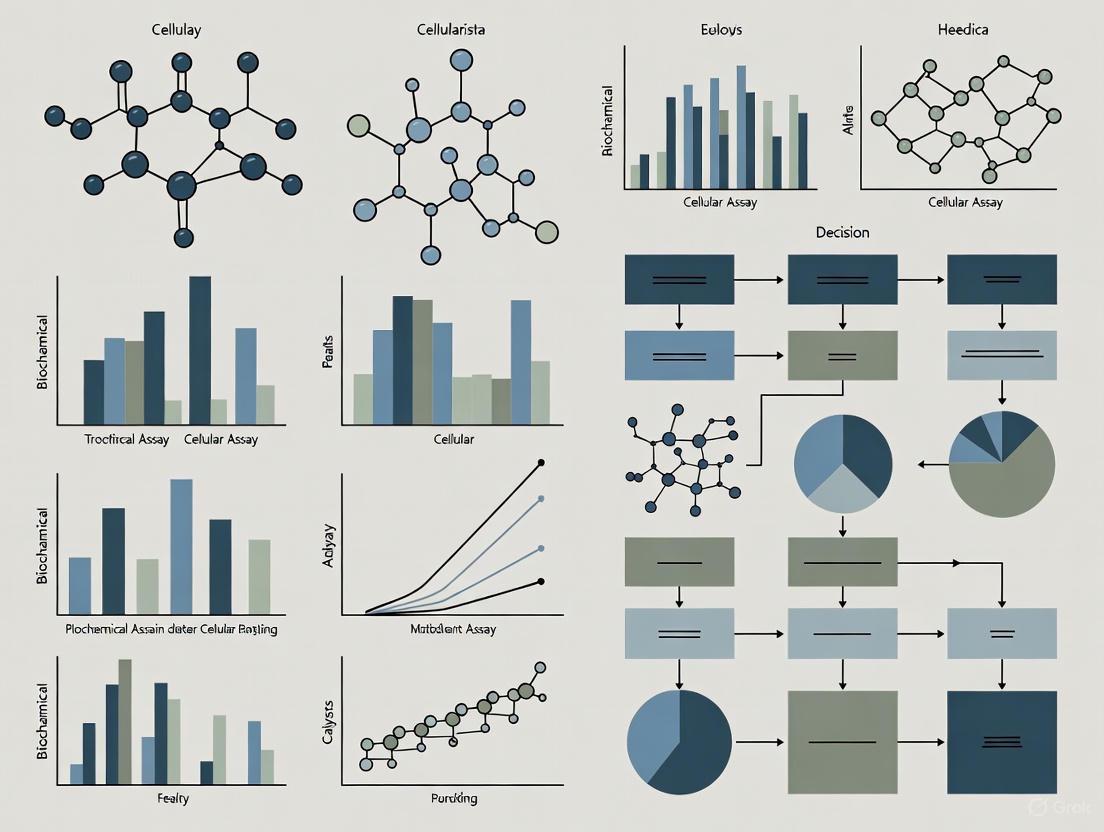
This article provides a comprehensive comparative analysis of biochemical and cellular assay conditions, addressing a critical challenge in biomedical research and drug development.
Bridging the Gap: A Comparative Analysis of Biochemical and Cellular Assays for Robust Drug Discovery
Abstract
This article provides a comprehensive comparative analysis of biochemical and cellular assay conditions, addressing a critical challenge in biomedical research and drug development. It explores the foundational causes of common discrepancies in activity data between these two platforms, such as differences in physicochemical environments and cellular permeability. The content delivers methodological guidance for selecting and applying appropriate assay formats, from binding assays to high-content phenotypic screens. It further offers practical strategies for troubleshooting and optimizing assay conditions to enhance reproducibility and data quality. Finally, the article establishes a framework for the rigorous validation and integrated interpretation of data from both assay types, empowering researchers to design more predictive screening cascades and accelerate the development of effective therapeutics.
Understanding the Divide: Why Biochemical and Cellular Assay Data Often Diverge
In the rigorous landscape of drug discovery and basic biological research, assays are the fundamental tools that translate cellular and molecular phenomena into quantifiable data. Among the most critical are biochemical and cellular assays, each serving distinct yet complementary roles. Biochemical assays investigate molecular interactions in a purified, cell-free environment, while cellular assays measure biological responses within the complex context of a living cell [1] [2]. The choice between these platforms is pivotal, influencing everything from hit identification to lead optimization. This guide provides an objective comparison of their core principles, applications, and performance to inform strategic experimental design.
Core Principles and Definitions
The foundational difference between these assays lies in their complexity and what they measure.
- Biochemical Assays are performed in vitro with purified components, such as enzymes, substrates, and potential drug molecules. They are designed to measure a specific activity, like enzyme inhibition or receptor-ligand binding, in isolation from other cellular processes [3] [1]. This reductionist approach allows for precise dissection of direct molecular interactions.
- Cellular Assays are conducted using live cells, ranging from immortalized cell lines to more physiologically relevant primary cells or 3D cultures. They measure a compound's effect on a cellular phenotype, such as viability, proliferation, or pathway activation [4] [2]. This systems-based approach provides critical information on a compound's activity in a more biological context, including its ability to cross cell membranes and its potential for acute cytotoxicity.
The diagram below illustrates the fundamental workflows and decision-making process for selecting and implementing these two assay platforms.
Comparative Analysis: Performance and Applications
The following tables summarize the key characteristics, advantages, and limitations of biochemical and cellular assays, highlighting their divergent profiles.
Table 1: Core Characteristics and Typical Applications
| Feature | Biochemical Assays | Cellular Assays |
|---|---|---|
| Experimental System | Purified proteins, enzymes, or nucleic acids in buffer [1]. | Live cells (immortalized, primary, or stem cells) in culture [2]. |
| Key Readouts | Binding affinity (Kd, Ki), enzymatic activity (IC50, EC50), product formation [3] [1]. | Cell viability, proliferation, cytotoxicity, reporter gene expression, morphological changes [5] [4] [2]. |
| Primary Applications | Target validation, primary high-throughput screening (HTS), mechanistic studies, structure-activity relationship (SAR) [3] [1]. | Secondary validation, assessment of cell permeability & cytotoxicity, mechanism of action (MOA) studies, phenotypic screening [2]. |
| Data Output | Direct measurement of target engagement and compound potency. | Functional, physiologically relevant response integrating compound permeability and metabolism. |
Table 2: Advantages and Limitations
| Aspect | Biochemical Assays | Cellular Assays |
|---|---|---|
| Advantages | • High reproducibility and low variability due to controlled conditions [1].• Well-suited for HTS and automation with simple "mix-and-read" formats [3].• Direct mechanism study without confounding cellular factors. | • Provides physiological context (e.g., membrane permeability, metabolism) [2].• Can distinguish between agonists and antagonists [2].• Detects acute cytotoxicity and off-target effects [2]. |
| Limitations | • Lacks physiological context; may not predict cellular activity [6].• Cannot assess cell permeability or compound stability in cells.• Vulnerable to false positives from compound interference (e.g., fluorescence, aggregation) [7]. | • Higher variability and more complex, costly protocols [7].• Indirect measurement; requires follow-up to identify molecular target.• Signal can be influenced by general cell health, not just the pathway of interest. |
Bridging the Gap: The Assay Condition Discrepancy
A significant challenge in research is the frequent inconsistency between activity values (e.g., IC50) obtained from biochemical versus cellular assays for the same compound [6]. This discrepancy is often attributed to factors like a compound's permeability, solubility, and stability. However, a critical and often overlooked factor is the difference in intracellular physicochemical conditions compared to the simplified buffers used in standard biochemical assays [6].
The intracellular environment is characterized by high macromolecular crowding, specific ionic balance (high K+/low Na+), and different viscosity and lipophilicity. In contrast, common biochemical assay buffers like Phosphate-Buffered Saline (PBS) more closely mimic extracellular conditions [6]. Performing biochemical measurements under conditions that better mimic the intracellular environment—considering crowding, salt composition, and cosolvents—is a promising strategy to bridge the observed activity gap and improve the predictive power of biochemical assays [6].
Essential Research Reagent Solutions
The table below details key reagents and materials essential for developing and running robust biochemical and cellular assays.
Table 3: Key Research Reagent Solutions for Assay Development
| Reagent / Material | Function and Application | Assay Type |
|---|---|---|
| Universal Detection Assays (e.g., Transcreener) | Homogeneous, "mix-and-read" assays that detect universal enzymatic products (e.g., ADP, SAH), allowing one platform to be used for multiple targets within an enzyme family [3]. | Biochemical |
| Fluorescent Ligands & Substrates | Enable highly sensitive detection for binding assays (FP, TR-FRET) and enzymatic activity assays, facilitating automation and miniaturization [1]. | Biochemical & Cellular |
| Tetrazolium Salts (e.g., WST-1, MTT) | Compounds reduced by metabolically active cells to a colored formazan, serving as a marker for cell viability and proliferation [5] [4]. | Cellular |
| Cytoplasm-Mimicking Buffer | A buffer system designed to replicate intracellular conditions (macromolecular crowding, high K+/low Na+), potentially aligning biochemical assay results more closely with cellular activity [6]. | Biochemical |
| 3D Cell Culture Scaffolds | Supports the growth of cells in three dimensions, enabling the formation of spheroids and organoids that better recapitulate the in vivo tissue microenvironment for more physiologically relevant screening [2]. | Cellular |
Experimental Protocols in Practice
Detailed Protocol: WST-1 Cell Viability Assay
The WST-1 assay is a commonly used cellular viability assay based on the reduction of a tetrazolium salt to a water-soluble formazan dye by metabolically active cells [5].
- Cell Seeding: Seed cells into the wells of a 96-well plate at an optimized density. Incubate under standard culture conditions for the desired period (e.g., 24-96 hours) with or without test compounds [5].
- Reagent Addition: Add WST-1 reagent directly to each well. A typical volume is 10 µL per 100 µL of culture medium, but manufacturer instructions should be followed [5].
- Control Setup:
- Blank Control: Culture medium and WST-1 reagent only (no cells).
- Untreated Control: Cells and culture medium without test compounds.
- Positive/Negative Controls: Cells treated with a known cytotoxic agent or growth factor [5].
- Incubation and Detection: Incubate the plate for 0.5 to 4 hours under standard conditions. Monitor color development. The amount of formazan dye produced is proportional to the number of viable cells and is quantified by measuring absorbance at 440-450 nm, using a reference wavelength above 600 nm for background correction [5].
Detailed Protocol: MTT Biochemical/Cellular Assay
The MTT assay can be used to measure cell viability (cellular context) or, in adapted formats, enzymatic activity in cell lysates (biochemical context) [4].
- MTT Solution Preparation: Dissolve MTT in Dulbecco’s Phosphate Buffered Saline (DPBS) to a concentration of 5 mg/ml. Filter-sterilize and store protected from light [4].
- Reaction Setup: For cellular viability, add the MTT solution (0.2-0.5 mg/ml final concentration) to cells in culture and incubate for 1-4 hours. For biochemical applications, the MTT reaction is often coupled to an enzymatic process in a purified system [4].
- Solubilization: The formazan product from MTT is insoluble and must be solubilized before reading. Add an appropriate solubilization solution (e.g., containing SDS or DMSO) and mix thoroughly to dissolve the formazan crystals [4].
- Detection: Measure the absorbance of the solubilized formazan product at 570 nm. A reference wavelength of 630 nm can be used to correct for background interference [4].
Biochemical and cellular assays are not competing platforms but sequential, complementary tools in the research pipeline. Biochemical assays excel in unraveling direct mechanisms and enabling high-throughput screening of compound-target interactions under controlled conditions. Cellular assays are indispensable for validating these hits in a biologically relevant context, providing critical information on permeability, cytotoxicity, and overall phenotypic effect. The strategic researcher leverages the strengths of both, often using biochemical assays for primary screening and cellular assays for secondary validation, to efficiently translate molecular discoveries into potential therapeutic breakthroughs.
In the pursuit of biological discovery and drug development, researchers routinely navigate two distinct experimental landscapes: the precisely controlled in vitro environment and the complex intracellular milieu of living systems. Despite studying the same biological molecules, data generated in these two settings frequently diverge, creating significant challenges for translating basic research into clinical applications [8] [6]. This discrepancy arises because standard laboratory buffers, such as phosphate-buffered saline (PBS), replicate extracellular conditions but fail to capture the unique physicochemical properties of the cytoplasm where most drug targets reside [6]. This article provides a comparative analysis of these two environments, highlighting how differences in molecular crowding, ionic composition, and viscosity contribute to the observed gaps between biochemical and cellular assay results, and proposes experimental frameworks to bridge this divide.
Physicochemical Properties: A Head-to-Head Comparison
The intracellular environment and standard laboratory buffers represent vastly different physicochemical worlds. Understanding these differences is crucial for interpreting experimental data and designing more predictive assay systems.
Table 1: Comparative Analysis of Cytoplasmic vs. Standard In Vitro Conditions
| Parameter | Intracellular (Cytoplasmic) Environment | Standard In Vitro (e.g., PBS) Environment |
|---|---|---|
| Macromolecular Crowding | 30-40% volume occupancy [6] | Negligible (dilute solution) |
| Viscosity | Significantly elevated due to crowding [8] | Near-water viscosity |
| Predominant Cations | High K+ (140-150 mM), Low Na+ (~14 mM) [6] | High Na+ (157 mM), Low K+ (4.5 mM) [6] |
| pH | ~7.2, tightly regulated [6] | Easily controlled, typically 7.4 for extracellular mimicry |
| Water Structure | ~50% exists as hydration water [6] | Behaves as bulk solvent |
| Redox Environment | Reducing (high glutathione) [6] | Typically oxidizing |
| Key Impact on Kd | Can alter in-cell Kd by up to 20-fold or more vs. dilute buffer [6] | Reference value, may not reflect physiological binding |
Implications of Environmental Differences on Experimental Outcomes
The parameters detailed in Table 1 are not merely descriptive; they actively influence biochemical outcomes. Molecular crowding can alter enzyme kinetics by up to 2000% and significantly affect the dissociation constant (Kd), a fundamental measure of binding affinity [6]. The reversal of potassium and sodium ion concentrations in PBS compared to the cytoplasm can influence protein stability and electrostatic interactions. Furthermore, the high viscosity of the cytoplasm impacts molecular diffusion and conformational dynamics, factors absent in standard dilute solutions [8] [6]. It is therefore not surprising that the half-maximal inhibitory concentration (IC50) values derived from cellular assays often differ by orders of magnitude from those measured in biochemical assays, a discrepancy that cannot always be explained by compound permeability or solubility alone [6].
Experimental Protocols for Bridging the Environmental Gap
Direct Measurement of Intracellular Compound Concentration
A critical step in reconciling biochemical and cellular data is to directly measure how much of a compound actually enters the cell, rather than relying on extrapolations.
- Objective: To quantitatively determine the intracellular concentration of test compounds in HeLa cells following incubation, providing insights into cell permeability and accumulation [9].
- Procedure:
- Cell Culture and Compound Exposure: HeLa cells are cultured under standard conditions. Cells are incubated with the test compound at desired concentrations and for specified durations.
- Sample Preparation: After incubation, cells are washed to remove extracellular compound. Cells are then lysed, and the lysate is processed for analysis.
- Analysis by RapidFire Tandem Mass Spectrometry (MS): The lysate is directly injected into a RapidFire-MS system. This system provides high-throughput, semi-automated analysis of compound concentration, with the potential to profile up to 100 compounds per day [9].
- Data Validation: The initial assay validation is performed using ultra-high performance liquid chromatography tandem mass spectrometry (UHPLC-MS/MS) to ensure accuracy before transferring to the higher-throughput RapidFire-MS platform [9].
- Significance: This direct measurement provides the missing link often used to explain differences between biochemical potency and cellular activity, moving beyond estimations from logP or artificial membrane permeability assays [9].
Developing a Cytoplasm-Mimicking Buffer (CMB)
To make biochemical assays more physiologically relevant, researchers are encouraged to design buffers that mimic the intracellular environment.
- Objective: To create an in vitro solution that more accurately simulates the intracellular environment, thereby reducing discrepancies with cell-based assay results [8] [6].
- Procedure:
- Base Buffer Formulation: Start with a standard buffer system (e.g., HEPES) adjusted to cytoplasmic pH (~7.2).
- Ionic Composition Adjustment: Replace the high Na+/low K+ ratio of PBS with a high K+ (~140-150 mM) / low Na+ (~14 mM) ratio to reflect the cytoplasmic ion balance [6].
- Introducing Molecular Crowding: Add macromolecular crowding agents to achieve 30-40% volume occupancy. Common agents include Ficoll, dextrans, or bovine serum albumin (BSA) [6].
- Modulating Viscosity and Lipophilicity: Include viscosity-modifying compounds and cosolvents to adjust the solution's physical properties closer to those of the cytoplasm, influencing hydrophobic solvation [6].
- Assay Validation: Perform parallel biochemical assays using both the new CMB and standard buffer (e.g., PBS). Compare the resulting Kd, Ka, or IC50 values with data from relevant cellular assays to validate the improved predictive power of the CMB.
Visualizing the Environmental Disparity and Its Impact
The following diagram synthesizes the core concepts of this article, illustrating how the different properties of standard in vitro and intracellular environments lead to divergent experimental outcomes.
Diagram 1: The Assay Discrepancy Pathway. This workflow illustrates how a single drug candidate can yield different results in standard biochemical versus cellular assays due to environmental differences, creating a gap that can be bridged by using cytoplasm-mimicking buffers.
The Scientist's Toolkit: Essential Reagents for Environmental Mimicry
Table 2: Key Research Reagent Solutions for Cytoplasmic Mimicry
| Reagent Category | Specific Examples | Function in Assay |
|---|---|---|
| Crowding Agents | Ficoll, Dextrans, Bovine Serum Albumin (BSA) | Mimics the volume exclusion and altered thermodynamic activity caused by high macromolecule concentration in the cytoplasm [6]. |
| Ionic Salts | Potassium Chloride (KCl), Potassium Glutamate | Establishes the high K+/low Na+ ionic composition characteristic of the intracellular milieu [6]. |
| Viscogens | Glycerol, Sucrose | Increases the viscosity of the solution to better reflect the diffusive barriers present inside a cell [8] [6]. |
| Cosolvents | Polyethylene Glycol (PEG) | Modulates solution lipophilicity, affecting hydrophobic interactions and solvation [6]. |
| Reducing Agents | Dithiothreitol (DTT), β-mercaptoethanol | Recreates the reducing environment of the cytosol (use with caution, as they may disrupt protein structure) [6]. |
| Advanced Systems | Organ-on-a-Chip (Organ-Chips) | Provides a complex 3D in vitro culture system that exposes cells to biomechanical forces, fluid flow, and heterogenous cell contacts, encouraging in vivo-like behavior [10]. |
The tale of different worlds between the intracellular and in vitro environments is a fundamental challenge in biomedical research. While standard biochemical assays offer control and simplicity, their failure to replicate the crowded, viscous, and potassium-rich interior of the cell often renders their predictions misleading. By acknowledging these differences and adopting more physiologically relevant strategies—such as using cytoplasm-mimicking buffers and direct intracellular concentration measurements—researchers can significantly improve the predictive power of their in vitro data. This paradigm shift is crucial for accelerating drug discovery, building more reliable structure-activity relationships, and ultimately, translating basic scientific findings into effective clinical therapies.
In the critical pathway of drug discovery, a persistent challenge is the frequent failure of compounds that show high promise in initial, simplified biochemical assays (BcAs) to maintain their efficacy in more complex cellular assays (CBAs). This disconnect often arises from three key sources of discrepancy: permeability, solubility, and specificity. Understanding and mitigating these factors is essential for improving the predictive accuracy of early-stage research and accelerating the development of viable therapeutics. This guide provides a comparative analysis of how these parameters affect assay outcomes, supported by experimental data and methodologies.
The journey from a scientific concept to a viable therapeutic agent is a complex process that relies on robust experimental systems to measure the interaction between candidate compounds and biological targets [1]. Biochemical assays (BcAs), which utilize purified protein targets in a controlled, cell-free environment, are a cornerstone of early drug discovery for measuring binding affinity (Kd) and enzyme inhibition (IC50) [6] [1]. These assays are prized for their consistency and reliability [1].
However, further validation of a compound's biological activity is crucial and is typically achieved through cell-based assays (CBAs), which are performed later to validate initial screening hits [6]. These assays provide a functional readout within living cells, offering insights into toxicity, efficacy, and mechanism of action in a more physiologically relevant context [1].
A significant and common challenge is the inconsistency between the activity values obtained from these two assay types [6]. IC50 values derived from CBAs are often orders of magnitude higher (indicating lower potency) than those measured in BcAs [6]. This discrepancy can delay research progress and drug development, as the structure-activity relationship (SAR) established in biochemical conditions fails to translate to a cellular environment [6]. While factors such as permeability, solubility, and specificity are often blamed, the fundamental differences between the simplified conditions of a test well and the complex intracellular environment play a major, and often underestimated, role [6].
Permeability
Permeability refers to a compound's ability to traverse biological membranes to reach its intracellular target. Low permeability is a primary reason for low efficacy in cellular assays, even for compounds highly active in biochemical assays [6] [11].
- Mechanism of Transport: Drug permeability across eukaryotic cell membranes occurs through active transport (facilitated by proteins) or passive diffusion [11]. Passive transport, which depends on establishing a concentration gradient, is highly influenced by a compound's polarity, molecular weight, and lipophilicity [11].
- The Permeability-Solubility Balance: A key challenge in drug design is balancing permeability with solubility. The Biopharmaceutical Classification System (BCS) categorizes drugs based on these parameters [11]. Many drug candidates fall into BCS Class II (low solubility, high permeability) or Class IV (low solubility, low permeability), highlighting permeability as a common bottleneck [11].
- Experimental Evidence: A study on detecting neuronal autoantibodies highlighted how permeability differences between sample types affect outcomes. For instance, anti-NMDAR antibodies are highly specific when detected in cerebrospinal fluid (CSF), but an isolated positivity in serum can occur in other diseases and healthy subjects, suggesting serum alone may not reliably indicate target engagement in the central nervous system [12].
Solubility
Solubility is the ability of a compound to dissolve in an aqueous medium, which is critical for it to be available for interaction with its target.
- Impact on Assay Discrepancy: It has been noted that approximately 40% of marketed drugs and up to 75% of those in development face challenges related to low solubility [11]. Insufficient solubility can prevent a compound from reaching the required concentration in the assay medium, leading to underestimated potency or false negatives. However, researchers note that in many cases, a compound's solubility exceeds the concentrations used in BcAs and CBAs by orders of magnitude, indicating that solubility alone cannot fully explain the observed activity gaps [6].
- Strategies for Enhancement: Common strategies to improve solubility include particle size reduction, the use of advanced pharmaceutical systems (e.g., cyclodextrins, lipid-based systems), and the prodrug approach [11].
Specificity
Specificity refers to a compound's ability to selectively interact with its intended target without affecting unrelated biological pathways.
- Contribution to Discrepancy: A lack of specificity, resulting in off-target effects, can lead to false-positive signals or masked toxicity in biochemical assays. These issues often become apparent only in the more physiologically complex environment of cellular assays [1].
- Assay Design for Specificity: Biochemical assays are fundamental for assessing specificity during target validation and hit-to-lead optimization. Techniques like fluorescence polarization (FP) and FRET-based binding assays help characterize affinity and specificity, distinguishing selective binding from off-target effects [13] [1].
The Intracellular Environment
Beyond the three primary factors, the stark difference between standard assay buffers and the intracellular environment is a critical source of discrepancy.
- Physicochemical (PCh) Conditions: The intracellular environment is characterized by macromolecular crowding, high viscosity, specific salt compositions (high K+, low Na+), and distinct cosolvent content [6]. Common buffers like PBS (Phosphate-Buffered Saline) mirror extracellular, not intracellular, conditions [6].
- Impact on Binding and Kinetics: These PCh conditions can significantly influence molecular interactions. Experimental data show that in-cell Kd values can differ by up to 20-fold or more from values measured in standard BcAs [6]. Enzyme kinetics can change by as much as 2000% under macromolecular crowding conditions [6]. Therefore, a biochemical assay conducted in a simplified buffer may not accurately reflect the true binding affinity or enzymatic inhibition that occurs in the crowded cellular milieu.
Table 1: Summary of Key Discrepancy Sources and Their Impact on Assay Outcomes
| Source of Discrepancy | Impact on Biochemical Assays (BcA) | Impact on Cellular Assays (CBA) | Common Experimental Mitigations |
|---|---|---|---|
| Permeability | Not a factor (cell-free system) | Major factor; limits intracellular compound concentration | Prodrug design [11]; Permeability enhancers; CBA in CSF for neurotargets [12] |
| Solubility | Can cause precipitation, low apparent activity | Limits bioavailability and target engagement | Formulation (e.g., cyclodextrins) [11]; Prodrug strategy [11] |
| Specificity | Off-target effects may cause false positives | Complex environment can reveal true off-target toxicity | Counter-screening; Orthogonal binding assays (FP, SPR) [13] [1] |
| Buffer Conditions | Simplified buffer (e.g., PBS) may overestimate activity | Native intracellular environment provides true physiological context | Cytoplasm-mimicking buffers (crowding agents, correct K+/Na+ ratio) [6] |
Experimental Protocols and Comparative Data
Protocol 1: Comparative Assay for Autoantibody Detection
A prospective cohort study directly compared commercial and in-house assays for detecting autoantibodies targeting neuronal surface proteins, highlighting how methodology and sample type affect results [12].
- Methodology: Between March and June 2021, 2135 CSF samples from 2283 patients were tested in parallel using three assays: a commercial immunofluorescence assay (cIFA), an in-house IFA (hIFA), and a commercial cell-based assay (cCBA) [12]. Serum samples were tested with both cCBA and in-house CBA (hCBA) [12].
- Key Findings: The data indicated that cIFA and hIFA performed similarly for screening CSF [12]. However, for serum samples, discrepancies were observed, with the commercial GABABR CBA suspected of lacking specificity as clinical correlations were negative [12]. This underscores the importance of assay validation and choice of sample type (CSF vs. serum) for specific targets.
Table 2: Comparative Results from Autoantibody Detection Study [12]
| Sample Type & Assay Comparison | Result | Implication |
|---|---|---|
| CSF: cIFA vs hIFA concordance | 93/2135 samples positive in both (4.4%) | Both IFA methods are reliable for CSF screening. |
| CSF: cCBA on IFA-positive samples | 37/93 (39.8%) positive on cCBA | cCBA identified specific autoantibodies in a subset of positive screens. |
| Serum: cCBA vs hCBA for specific targets | 4 patients positive for GABABR on cCBA but negative on hCBA; CSF was negative in 3 of these. | Suggests a potential lack of specificity in the commercial CBA for this particular target in serum. |
Protocol 2: Accelerated Biochemical Assay Optimization
Researchers at the University of Oxford developed a novel approach to accelerate the development of robust biochemical assays, which is crucial for generating reliable data early in discovery [14].
- Traditional Method: The one-factor-at-a-time (OFAT) optimization, where input factors (e.g., temperature, pH) are varied sequentially, can take several months [14].
- Novel Approach: The team used a combination of statistical Design of Experiments (DoE) and Functional Data Analysis (FDA). This allows for changing multiple factors in a single experiment and predicting the effect of each individual factor [14].
- Outcome: As a proof-of-concept, the team optimized a new assay for the bacterial enzyme RecBCD in only two weeks, achieving industry-standard quality for high-throughput drug screening [14]. This method saves valuable time and increases the information generated from experiments.
Protocol 3: Prodrug Strategy to Enhance Permeability
The prodrug approach is a validated strategy for improving the permeability of compounds with low membrane diffusion [11].
- Principle: A prodrug is a minimally active or inactive compound that releases the active parental drug through enzymatic or chemical cleavage in vivo [11]. By modifying the parent drug, permeability can be enhanced.
- Application: An analysis found that 59% of prodrug design goals were aimed at enhancing bioavailability, with 35% specifically targeting improved permeability [11]. This approach is also being applied to new modalities like PROteolysis TArgeting Chimeras (PROTACs), which often face permeability challenges due to their high molecular weight [11].
Visualization of Experimental Workflows
Biochemical vs. Cellular Assay Discrepancy Workflow
The following diagram illustrates the core pathway of a drug candidate and the key points where discrepancies in permeability, solubility, and specificity arise between biochemical and cellular assay environments.
Diagram 1: Pathway to Assay Discrepancy. This chart shows how drug candidates are evaluated first in biochemical assays and then in cellular assays. The red "Assay Discrepancy" node highlights the common failure point, caused by permeability barriers, solubility issues, and off-target effects or the crowded cellular environment.
Strategies to Bridge the Assay Gap
This diagram outlines key experimental strategies researchers can employ to mitigate the primary sources of discrepancy between assay types.
Diagram 2: Mitigation Strategies for Assay Discrepancies. This chart maps specific experimental solutions to the three main sources of discrepancy. The green nodes show actionable strategies to address permeability, solubility, and specificity/buffer-related issues.
The Scientist's Toolkit: Key Research Reagent Solutions
Table 3: Essential Reagents and Materials for Assay Development
| Research Reagent / Material | Function in Assay Development |
|---|---|
| Cytoplasm-Mimicking Buffer | A buffer solution designed to replicate intracellular conditions (e.g., high K+, crowding agents, specific cosolvents) to make BcA results more physiologically relevant [6]. |
| Universal Assay Kits (e.g., Transcreener) | Homogeneous, "mix-and-read" assays that detect universal enzymatic products (e.g., ADP). They simplify development for multiple targets within an enzyme family and are amenable to high-throughput screening (HTS) [13]. |
| Fluorescent Ligands & Tracers | Used in fluorescence-based detection techniques (FP, FRET, TR-FRET) for sensitive, real-time visualization of molecular interactions in binding and enzymatic assays [13] [1]. |
| CRISPR-Engineered Cell Lines | Genetically modified cell lines that provide physiologically relevant and consistent cellular models for CBAs, improving translational accuracy [15]. |
| 3-D Organoid Models | Advanced cell culture systems that more accurately recapitulate in-vivo tissue biology and are increasingly used in precision oncology and toxicity screening [15]. |
| Crowding Agents (e.g., Ficoll, PEG) | Polymers added to assay buffers to simulate the macromolecular crowding of the cytoplasm, which can significantly impact binding equilibria and enzyme kinetics [6]. |
| Prodrug Motifes | Chemical groups (e.g., esters, phosphates) temporarily attached to a drug molecule to enhance its permeability or solubility, which are cleaved in vivo to release the active drug [11]. |
The discrepancy between biochemical and cellular assay readouts, driven by permeability, solubility, and specificity, remains a significant hurdle in drug discovery. However, a proactive approach that acknowledges these pitfalls can significantly improve predictive success. Key strategies include adopting more physiologically relevant cytoplasm-mimicking buffers for biochemical assays, leveraging universal assay platforms and advanced statistical tools for robust assay development, and considering prodrug strategies early for compounds with suboptimal properties. Furthermore, a critical evaluation of assay data, with an understanding of the limitations of each method and sample type, is essential. By systematically addressing these key sources of discrepancy, researchers can bridge the gap between in vitro potency and cellular efficacy, de-risking the drug development pipeline and accelerating the delivery of new therapies.
In drug discovery and basic research, a persistent challenge is the frequent inconsistency between activity values obtained from simplified in vitro biochemical assays (BcAs) and more complex cell-based assays (CBAs) [16]. These discrepancies, which can show orders of magnitude difference in measured IC₅₀ values, often delay research progress and drug development [16]. While factors such as compound permeability and solubility are often blamed, a primary source of this disconnect is the profound difference in physicochemical conditions between the two systems [16]. Standard assay buffers, like Phosphate-Buffered Saline (PBS), are designed to mimic extracellular fluid, characterized by high sodium (~157 mM), low potassium (~4.5 mM), and a neutral pH [16]. In stark contrast, the intracellular milieu—where most drug targets reside—is a crowded, viscous environment with high potassium (~140-150 mM), low sodium (~14 mM), and a complex web of macromolecules that can occupy up to 40% of the available volume [16] [17]. This article provides a comparative analysis of how key physicochemical parameters—macromolecular crowding, pH, and ion concentration—critically influence experimental outcomes, and how mimicking the intracellular environment more closely can bridge the gap between biochemical and cellular data.
Comparative Analysis of Assay Conditions and Their Biological Impact
The table below summarizes the fundamental differences between standard biochemical assay conditions and the intracellular environment, along with their direct consequences on molecular interactions.
Table 1: Comparison of Standard Biochemical vs. Intracellular Physicochemical Conditions
| Physicochemical Parameter | Standard Biochemical Assay (e.g., PBS) | Intracellular Environment (Cytosol) | Impact on Molecular Interactions & Assay Data |
|---|---|---|---|
| Macromolecular Crowding | Negligible (dilute, simple buffer) | High (20-40% volume occupied) [17] | Alters binding affinity & specificity; enhances protein-protein binding [18]. |
| Major Cation Composition | High Na⁺ (~157 mM), Low K⁺ (~4.5 mM) [16] | High K⁺ (~140-150 mM), Low Na⁺ (~14 mM) [16] | Can influence protein folding, stability, and enzyme cofactor binding. |
| Ionic Strength | Defined by buffer recipe (e.g., ~150 mM for PBS) | Complex, dynamic mixture | Affects electrostatic interactions and protein solubility. |
| pH | Typically 7.4 (extracellular) | ~7.2 (slightly more acidic) [16] | Critical for ionization of active site residues; small changes can denature enzymes [19]. |
| Viscosity | Low (similar to water) | High (cytoplasmic viscosity) [16] | Influences diffusion rates and reaction kinetics. |
| Redox Potential | Oxidizing | Reducing (high glutathione) [16] | Affects disulfide bond formation and stability of cysteine-dependent proteins. |
The impact of these differences is not merely theoretical. Experimental data quantifies how these conditions directly alter key measurement parameters.
Table 2: Experimental Data on the Effects of Physicochemical Conditions
| Condition Change | Experimental System | Observed Effect | Magnitude of Change | Reference |
|---|---|---|---|---|
| Macromolecular Crowding | Ubiquitin/UIM1 complex | Change in binding free energy | Decrease (stabilization) | [18] |
| Crowding (In-cell vs. BcA) | Protein-ligand interactions | Difference in Kd values | Up to 20-fold or more | [16] |
| Crowding on Enzyme Kinetics | Various enzymes | Change in reaction rate | Up to 2000% (20-fold) | [16] |
| Organic Solvent (Mimics Apolarity) | BTL2 Lipase in 10% Isopropanol | Increase in reaction rate | ~6-fold | [20] |
| Biomolecular Condensates | BTL2 Lipase in Condensates | Increase in overall reaction rate | ~3-fold | [20] |
Detailed Experimental Protocols for Investigating Physicochemical Effects
Protocol 1: Assessing the Impact of Macromolecular Crowding on Protein-Protein Binding Affinity
This protocol is adapted from studies that use coarse-grained models and scaled particle theory to quantify crowding effects [18].
Objective: To determine the change in binding free energy (ΔG) for a protein-protein complex in the presence of macromolecular crowding agents.
Materials:
- Proteins: Purified protein partners (e.g., ubiquitin and UIM1).
- Crowding Agents: A mixture of high molecular weight, inert polymers such as polyethylene glycol (PEG) and Ficoll to mimic the size distribution of cellular macromolecules.
- Buffer: A suitable physiological buffer (e.g., 20 mM HEPES, 150 mM KCl, pH 7.2).
- Equipment: Analytical equipment for measuring binding (e.g., Isothermal Titration Calorimetry (ITC), Surface Plasmon Resonance (SPR), or Fluorescence Anisotropy).
Method:
- Prepare Crowding Solutions: Create assay solutions containing a defined mixture of crowding agents. A typical total concentration might range from 50 to 200 g/L to simulate intracellular crowding levels [17].
- Control Measurement: Perform the binding assay between the two protein partners in a standard buffer without crowding agents. This provides the baseline binding affinity (Kdcontrol) and free energy (ΔGcontrol).
- Crowded Measurement: Repeat the identical binding assay in the buffer containing the crowding agent mixture to determine the new binding affinity (Kdcrowded) and free energy (ΔGcrowded).
- Calculate Effect: The change in binding free energy due to crowding is ΔΔGcrowding = ΔGcrowded - ΔG_control. A negative value indicates enhanced binding (stabilization) due to the excluded volume effect.
- Data Analysis: Map the aspherical proteins onto equivalent spheres and use a model like Scaled Particle Theory to quantitatively describe the stabilizing effect without fitting parameters [18].
Protocol 2: Evaluating the Role of Biomolecular Condensates in Modulating Enzymatic Activity
This protocol is based on recent research demonstrating how condensates can enhance activity through local concentration and environmental buffering [20].
Objective: To compare the enzymatic activity of a lipase in a homogeneous solution versus within biomolecular condensates, and to assess the role of local pH.
Materials:
- Enzyme: A conformationally flexible enzyme like Bacillus thermocatenulatus Lipase 2 (BTL2).
- Condensate-Forming Construct: A chimeric protein, e.g., Laf1-BTL2-Laf1, where the RGG domain of Laf1 drives phase separation [20].
- Substrate: A fluorogenic substrate such as 4-Methyl Umbelliferone Butyrate (MUB).
- Buffers: Tris or HEPES buffer at various pH levels (e.g., pH 6.5, 7.5, 8.5).
- Equipment: Confocal fluorescence microscope, plate reader, centrifuge.
Method:
- Form Condensates: Incubate the Laf1-BTL2-Laf1 construct in a low-salt buffer (e.g., 24 mM Tris, 10 mM NaCl, pH 7.5) to induce phase separation. Confirm formation using bright-field or fluorescence microscopy [20].
- Measure Partitioning: Separate the dense (condensate) and dilute phases via centrifugation. Use size exclusion chromatography (SEC) or other methods to quantify the enzyme concentration in the supernatant and calculate the partitioning coefficient, which can be very high (e.g., ~73,000) [20].
- Activity Assay:
- Homogeneous Control: Measure the initial reaction rate of MUB hydrolysis by the native BTL2 enzyme in standard buffer.
- Condensate System: Measure the initial reaction rate of the Laf1-BTL2-Laf1 system in the condensate-forming buffer at the same total enzyme and substrate concentration.
- Dissolved Control: Repeat the Laf1-BTL2-Laf1 assay in a high-salt buffer (e.g., 750 mM NaCl) that dissolves the condensates, confirming the effect is due to condensation.
- Assess pH Buffering: Perform the activity assay across a range of solution pH values for both the homogeneous and condensate systems. The condensate system will show a broader optimal pH range and maintain higher activity at otherwise sub-optimal pH due to local environmental buffering [20].
- Data Analysis: Compare the initial rates. A significant increase (e.g., 3-fold) in the condensate system indicates enhanced activity due to the combined effects of local concentration and a distinct physicochemical environment.
The Scientist's Toolkit: Key Research Reagent Solutions
Table 3: Essential Reagents for Studying Physicochemical Effects in Assays
| Reagent / Solution | Function & Rationale |
|---|---|
| Macromolecular Crowding Agents (e.g., PEG, Ficoll, Dextran) | Inert polymers used to simulate the excluded volume effect of the crowded cellular interior, allowing study of its impact on binding affinity and reaction rates [16] [18]. |
| Cytoplasm-Mimetic Buffer | A buffer system with high K⁺ (~140 mM), low Na⁺ (~14 mM), and adjusted pH to more accurately represent the intracellular ionic milieu compared to PBS [16]. |
| Biomolecular Condensate Scaffolds (e.g., RGG domains) | Intrinsically disordered protein domains used to create engineered condensates for studying how phase separation alters local concentration and environment to modulate enzymatic activity [20] [21]. |
| Environmental Sensitivity Probes (e.g., PRODAN dye) | Fluorophores whose emission spectrum shifts with the polarity of their surroundings; used to measure the relative apolarity inside condensates versus the bulk solution [20]. |
| Universal Activity Assays (e.g., Transcreener) | Homogeneous, "mix-and-read" assays that detect universal enzymatic products (e.g., ADP); simplify HTS and provide robust data across multiple targets, reducing development time [22]. |
| SDR Assay Kits | Kits based on the Structural Dynamics Response assay, which uses a NanoLuc luciferase sensor to detect ligand-induced protein motions, working without the need for target-specific substrates [23]. |
Visualizing Concepts and Workflows
The following diagrams illustrate the core concepts and experimental workflows discussed in this guide.
The Disconnect Between Assay Environments
Workflow for a Condensate-Modulated Activity Assay
The critical role of physicochemical conditions in biochemical and cellular research can no longer be an afterthought. As the comparative data and experimental evidence show, parameters like macromolecular crowding, ion composition, and local pH are not mere background variables but active determinants of molecular behavior. The persistent discrepancy between biochemical and cellular assay data is largely a consequence of ignoring the complex, crowded, and compositionally distinct nature of the intracellular environment. By adopting more physiologically relevant assay conditions—through the use of crowding agents, cytoplasm-mimetic buffers, and even engineered biomolecular condensates—researchers can generate more predictive and biologically meaningful data. This paradigm shift, from using simplified buffers to embracing intracellular mimicry, holds the key to accelerating drug discovery and deepening our understanding of fundamental biological processes.
In drug discovery, accurately profiling the interaction between a compound and its biological target is paramount. This process relies on key quantitative metrics, primarily the dissociation constant (Kd), the half-maximal inhibitory concentration (IC50), and the inhibition constant (Ki). While these parameters are fundamental to evaluating compound potency and affinity, they are not absolute. Their values can shift significantly based on the specific biochemical and cellular assay conditions under which they are measured [24]. A deep understanding of what each metric represents, and the experimental factors that influence them, is crucial for researchers to make valid comparisons across studies and to select the most promising drug candidates. Confusing these values can lead to the misinterpretation of assay results and costly rework, underscoring the necessity for clear guidelines [25]. This guide provides a comparative analysis of Kd, IC50, and Ki, detailing how they are impacted by assay design and how to navigate these shifts for more robust decision-making.
Defining the Metrics and Their Core Differences
At their core, these metrics describe different aspects of a compound's interaction with its target. The table below summarizes their fundamental definitions and key characteristics.
Table 1: Core Definitions and Characteristics of Kd, IC50, and Ki
| Metric | Full Name | What It Measures | Defining Characteristics | Dependence on Assay Conditions |
|---|---|---|---|---|
| Kd | Dissociation Constant | The binding affinity between a drug and its target, defined as the concentration at which half the target sites are occupied [24]. | A thermodynamic parameter; represents an intrinsic property of the drug-target interaction [24]. | Low. As a direct measure of binding affinity, Kd is largely unaffected by variations in experimental setup [24]. |
| IC50 | Half-Maximal Inhibitory Concentration | The functional potency of an inhibitor, defined as the concentration needed to inhibit a specific biological process or response by 50% [25]. | An empirical, operational measure of potency under a specific set of conditions [24]. | High. IC50 is highly sensitive to experimental conditions, such as substrate concentration and incubation time [24] [26]. |
| Ki | Inhibition Constant | The equilibrium dissociation constant for an enzyme-inhibitor complex, representing the affinity of the inhibitor for the enzyme. | A calculated, intrinsic value derived from IC50 data using equations like Cheng-Prusoff [27]. | Low. Once calculated, Ki is an intrinsic measure of affinity, similar to Kd. |
The critical distinction lies in Kd measuring binding affinity, while IC50 measures functional potency in a specific assay system [25]. A lower Kd value indicates stronger binding (higher affinity), whereas a lower IC50 indicates greater inhibitory potency [25]. Although both high and low values for these metrics are valuable depending on the context, a common mistake is assuming a lower IC50 always means stronger binding, which is not necessarily true because IC50 depends on experimental conditions [25]. Techniques like surface plasmon resonance (SPR) can directly measure Kd and provide valuable kinetic parameters, while IC50 is typically determined from functional dose-response curves [28].
Factors Causing Shifts in Kd, IC50, and Ki Values
The values of Kd, IC50, and Ki are not fixed properties of a compound alone; they are co-determined by the compound and the specific experimental environment. Understanding the factors that cause these metrics to shift is essential for robust assay design and data interpretation.
Factors Influencing IC50 and its Conversion to Ki
The IC50 is particularly susceptible to assay conditions. Its value can shift due to several key factors, which in turn affects the subsequent calculation of the intrinsic Ki.
- Substrate Concentration ([S]): For enzyme inhibition assays, the substrate concentration relative to its Michaelis constant (Km) is a major factor. For competitive inhibitors, the observed IC50 value increases linearly with increasing substrate concentration [26]. Specifically, the relationship is defined by the Cheng-Prusoff equation: IC50 = Ki * (1 + [S]/Km). This means that at a [S] much higher than Km, the measured IC50 will be significantly larger than the true Ki. Research has shown that the difference in initial rates with and without an inhibitor is maximized at an optimal substrate concentration ([S]opt), which for competitive inhibitors is approximately 2-3 times the Km for typical [I]/Ki ratios [26].
- Assay Type and Conditions: The IC50 is an empirical measure of functional potency under specific conditions [24]. Variations in buffer composition, pH, ionic strength, temperature, and incubation time can all alter the observed IC50 value. This is why IC50 values for the same compound can vary significantly between different laboratories or assay formats [24].
- Target Concentration and System Complexity: In binding assays, the concentration of the target protein and the affinity/concentration of any probes (e.g., radioligands or fluorescent ligands) influence the IC50 [24]. In cellular assays, factors like cell permeability, efflux pumps, and metabolic degradation add further layers of complexity, leading to a measured "Kd-apparent" that may differ from the biochemical Kd [24].
Factors Influencing Kd Measurement
While Kd is an intrinsic measure of affinity, the techniques used to measure it can be technically demanding [24]. Methods like Surface Plasmon Resonance (SPR) and Isothermal Titration Calorimetry (ITC) require specialized instruments [24]. Furthermore, for techniques like SPR, protein immobilization strategies can sometimes impair protein conformation or lead to heterogeneous orientation, potentially complicating results and affecting the measured Kd if the protein is not in its native state [28].
The following diagram illustrates the logical relationship between the core metrics and the key factors that influence them.
Experimental Protocols for Metric Determination
Reliable determination of Kd, IC50, and Ki requires standardized, well-optimized experimental protocols. Below are detailed methodologies for key experiments cited in this field.
Direct Kd Determination via Surface Plasmon Resonance (SPR)
SPR is a powerful label-free technique for directly measuring binding affinity and kinetics [28]. The following protocol is adapted from kinase inhibitor studies using single-site specifically biotinylated kinases to minimize conformational impairment.
- Step 1: Protein Preparation: Generate a single-site specifically biotinylated kinase. This ensures uniform orientation during immobilization, which is critical for obtaining reliable kinetic data [28].
- Step 2: Immobilization: Bind the biotinylated kinase to a streptavidin-coated sensor chip on a multichannel SPR instrument (e.g., ProteOn XPR36). This allows for parallel analysis and increases throughput [28].
- Step 3: Ligand Injection: Inject a concentration series of the drug compound over the sensor chip surface. The instrument measures the change in the refractive index (Response Units, RU) at the sensor surface as the compound binds to and dissociates from the immobilized kinase.
- Step 4: Data Analysis: Analyze the resulting sensorgrams (plot of RU vs. time) using the instrument's software. Global fitting of the association and dissociation curves for all concentrations is performed to determine the association rate constant (kon), dissociation rate constant (koff), and the equilibrium dissociation constant (Kd = koff / kon) [28].
IC50 Determination and Conversion to Ki via Enzymatic Assay
This protocol outlines a standard procedure for determining IC50 from a functional enzyme inhibition assay and converting it to the intrinsic Ki.
- Step 1: Assay Optimization: Prior to inhibitor testing, optimize the enzyme assay conditions. Use approaches like Design of Experiments (DoE) to efficiently identify optimal buffer, pH, enzyme concentration, and substrate concentration [29]. A key consideration is running the assay at a substrate concentration near the Km to ensure sensitivity.
- Step 2: Dose-Response Curve Generation: In the presence of a fixed, optimal concentration of substrate, incubate the enzyme with a serial dilution of the inhibitor. Measure the initial reaction rate (velocity) for each inhibitor concentration.
- Step 3: IC50 Calculation: Plot the measured velocity (or % inhibition) against the logarithm of the inhibitor concentration. Fit the data to a four-parameter logistic (4PL) model to determine the IC50, the concentration that gives 50% inhibition [30].
- Step 4: Ki Calculation: Use the Cheng-Prusoff equation for competitive inhibition to calculate Ki: Ki = IC50 / (1 + [S]/Km). Here, [S] is the substrate concentration used in the assay and Km is the Michaelis constant for the substrate, determined beforehand [26].
The Scientist's Toolkit: Essential Research Reagents and Solutions
The following table details key materials and solutions essential for conducting experiments to determine Kd, IC50, and Ki values.
Table 2: Key Research Reagent Solutions for Binding and Inhibition Assays
| Reagent / Material | Function in Experiments | Specific Examples & Notes |
|---|---|---|
| Biotinylated Protein | Enables specific, oriented immobilization on sensor chips for SPR, leading to more reliable Kd and kinetic data [28]. | Single-site specifically biotinylated kinases. Critical for avoiding impaired conformations and heterogeneity. |
| SPR Sensor Chips | The solid support for immobilizing the target molecule in SPR assays. | Streptavidin-coated chips are commonly used with biotinylated proteins. |
| Cryopreserved "Thaw-and-Use" Cells | Provide a consistent, ready-to-use cellular system for cell-based potency bioassays, minimizing inter-assay variation [30]. | Promoted for benefits like flexibility, run-to-run consistency, and ease of global tech transfer in GMP environments. |
| Radioactive or Fluorescent Probes | Act as competitive tracers in binding assays (e.g., radioligand binding assays) for determining IC50 values. | High-quality probes with known affinity (Kd) are required. Fluorescent probes are increasingly used to avoid radioactivity [24]. |
| Design of Experiments (DoE) Software | A statistical approach for efficient optimization of multiple assay parameters simultaneously, speeding up assay development [29] [30]. | Used to optimize buffer, pH, and reagent concentrations for enzymatic and bioassays, replacing slower one-factor-at-a-time approaches. |
Navigating Metric Variability in Drug Discovery
The variability of Kd, IC50, and Ki under different assay conditions is not a flaw but a fundamental aspect of these metrics. Successfully navigating this variability is key to accurate decision-making in drug discovery. The choice of which metric to prioritize depends on the question being asked. Kd is best for understanding the fundamental, intrinsic strength of the drug-target interaction and is ideal for comparing compounds across different studies [24]. IC50 is most useful for understanding the functional potency of an inhibitor within the specific context of a particular assay system, which can be highly relevant for predicting efficacy in a complex cellular environment [25]. Ki serves as a valuable bridge, providing an intrinsic affinity value calculated from functional IC50 data, allowing for a more standardized comparison of inhibitors from functional screens [27].
Ultimately, the most robust strategy is to employ both binding (Kd) and functional (IC50/Ki) assays in tandem. Evaluating both physicochemical and biochemical properties provides a more holistic understanding of a compound's character and helps to de-risk the drug discovery process by ensuring that promising binding affinity translates into meaningful functional inhibition [28]. By rigorously controlling and reporting experimental conditions, researchers can ensure their data on these key metrics is reproducible, interpretable, and impactful.
Selecting Your Tools: A Guide to Assay Types and Their Applications in Drug Discovery
In the rigorous field of preclinical research and drug discovery, biochemical assays are the fundamental tools that translate biological phenomena into quantifiable data. These assays enable scientists to measure the presence, concentration, or activity of biological molecules, such as enzymes, proteins, and nucleic acids, providing critical insights for understanding biological processes, diagnosing diseases, and developing new treatments [31]. The choice of assay technology can profoundly influence the quality, depth, and reliability of the data obtained. For decades, traditional workhorses like the Enzyme-Linked Immunosorbent Assay (ELISA) have served as the gold standard for detection and quantification. However, the increasing complexity of scientific questions has driven the emergence of more advanced techniques such as Surface Plasmon Resonance (SPR), which provides real-time kinetic data. More recently, the development of Universal Enzymatic Platforms represents a significant leap forward, offering streamlined, mix-and-read formats that can be applied across multiple enzyme classes to accelerate research [32].
This guide provides a comparative analysis of these key technologies, framing the discussion within the critical context of assay condition research. A persistent challenge in the field is the frequent inconsistency between activity values obtained from simplified in vitro biochemical assays and those from more complex cell-based assays [16]. These discrepancies are often due to differences in intracellular physicochemical conditions—such as macromolecular crowding, viscosity, salt composition, and lipophilicity—which are not replicated in standard buffer systems like Phosphate-Buffered Saline (PBS) [16]. Therefore, the selection and optimization of an assay platform are not merely technical decisions but are crucial for generating biologically relevant data that can reliably predict compound behavior in more complex biological systems.
Technology Comparison: ELISA, SPR, and Universal Platforms
A side-by-side comparison of these core technologies reveals distinct advantages and ideal use cases for each. The following table summarizes their key characteristics based on current capabilities and applications.
Table 1: Comparative Analysis of ELISA, SPR, and Universal Enzymatic Assays
| Feature | ELISA | SPR | Universal Enzymatic Platforms |
|---|---|---|---|
| Primary Measurement | End-point, quantitative concentration [33] | Real-time affinity (Kd/Ki) and kinetics (ka/kd) [33] | Functional enzymatic activity (IC50/EC50); product formation [32] |
| Data Output | Total binding amount | Binding affinity and kinetics | Enzyme inhibition/modulation and mechanism of action |
| Throughput | High (plate-based) | Moderate to High (multi-channel systems) [33] | High (homogeneous, mix-and-read) [32] |
| Label Requirement | Requires enzyme-conjugated labels [33] | Label-free [33] | Often uses fluorescent or chemiluminescent detection [32] |
| Assay Development | Can be complex and time-consuming [33] | Requires sensor surface optimization | Streamlined; once established, easily adapted to new targets [32] |
| Key Advantage | Highly sensitive, cost-effective, and accessible [33] | Provides rich kinetic data and label-free detection [33] | Broad applicability, simplified workflow, and suitability for HTS [32] |
| Key Limitation | No kinetic data; multiple washing steps can lose low-affinity binders [33] | Higher instrument cost; can require technical expertise [33] | May not be suitable for non-enzymatic targets |
ELISA: The Established Gold Standard
The ELISA is a well-characterized and widely adopted plate-based immunoassay. Its fundamental principle involves immobilizing a target antigen on a solid surface, followed by binding with a specific antibody linked to an enzyme. The signal is generated when the enzyme converts a substrate into a detectable product, with the intensity proportional to the target concentration [31]. While ELISAs are renowned for their high sensitivity, specificity, and accessibility, they are end-point assays that only provide information on the amount of binding, not the kinetics [33]. A significant drawback is their reliance on multiple washing steps, which can disrupt weak interactions and lead to the loss of low-affinity binders, potentially causing false-negative results [33]. For instance, in detecting low-affinity anti-drug antibodies, one study found an SPR method identified a positivity rate of 4%, compared to only 0.3% by ELISA [33].
SPR: Real-Time Kinetic Profiling
SPR is an optical technique that measures biomolecular interactions in real-time without labels. In an SPR assay, one binding partner (ligand) is immobilized on a sensor chip, and the other (analyte) is flowed over the surface. Binding events cause a change in the refractive index at the sensor surface, which is detected as a resonance angle shift [33]. This allows researchers to observe binding as it happens, determining not only affinity (Kd) but also the association (ka) and dissociation (kd) rate constants. These kinetic parameters are crucial for understanding the mechanism of interaction and are particularly valuable in drug discovery for characterizing lead compounds. SPR has been shown to correlate well with ELISA data while providing a more comprehensive picture of the interaction [34]. Its label-free nature also simplifies assay design and minimizes potential artifacts introduced by labels.
Universal Enzymatic Platforms: Streamlining Functional Analysis
Universal enzymatic platforms, such as the Transcreener platform, represent a strategic shift towards simplified, functional assays. These are homogeneous, "mix-and-read" assays that detect common products of enzymatic reactions, such as ADP for kinases or SAH for methyltransferases [32]. This universal product detection principle means a single assay format can be applied to a broad range of targets within an enzyme family, dramatically simplifying and accelerating assay development. For example, once a researcher optimizes a universal ADP assay for one kinase, they can rapidly adapt it for many other kinase targets with minimal re-development [32]. These assays are inherently suited for high-throughput screening (HTS) due to their simple workflows, reduced variability, and robust performance in miniaturized formats. They excel at providing quantitative data on enzyme modulation, such as IC50 values, which are vital for establishing structure-activity relationships (SAR) during lead optimization [32].
Experimental Data and Performance Benchmarks
The theoretical advantages of these platforms are borne out in experimental data. Performance metrics such as sensitivity, resolution, and the ability to characterize challenging interactions highlight the unique value of each method.
Table 2: Experimental Performance and Resolution Comparison
| Assay Type | Reported Sensitivity | Experimental Resolution* | Key Application Evidence |
|---|---|---|---|
| ELISA | Below ng/mL level [34] | ~25% (manual method) [35] | Excellent for high-affinity interactions; standard for protein quantification [33]. |
| SPR | Below ng/mL level [34] | Information Missing | Effectively quantifies both low- and high-affinity interactions; superior for detecting low-affinity anti-drug antibodies [33]. |
| Biochemical Assays (e.g., Clinical Chemistry) | Varies by target | ~10% (some as low as 1%) [35] | High resolution and robustness for measuring metabolic enzymes and metabolites. |
| qPCR | High (amplification-based) | ~10% [35] | High sensitivity for nucleic acid detection, though resolution is lower than some biochemical tests. |
| Universal Activity Assays | Sufficient for HTS (e.g., nM ADP detection) [32] | Information Missing | Used to determine IC50/EC50 rapidly, accelerating Structure-Activity Relationship (SAR) studies [32]. |
*Experimental resolution is defined as the minimum concentration gradient that can be reliably detected by an assay. A lower percentage indicates a higher resolution and better ability to distinguish between small concentration changes [35].
The data in Table 2 illustrates that while techniques like ELISA and SPR can have similar sensitivities, their operational strengths differ. The relatively lower experimental resolution of manual ELISA (25%) compared to standard biochemical tests (10%) may reflect the multi-step, heterogeneous nature of the protocol, where washing and incubation steps can introduce variability [35]. In contrast, SPR's ability to characterize low-affinity interactions without washing steps makes it indispensable for studying weak but biologically important interactions, such as those involving transient signaling complexes.
Detailed Experimental Protocols
To ensure reproducibility and provide a clear understanding of the workflow for each technology, this section outlines standard operating procedures.
Protocol: Sandwich ELISA
The sandwich ELISA is a common format for detecting antigens in complex mixtures [31].
- Coating: Coat a microplate with a capture antibody specific to the target protein. Incubate overnight, then wash to remove unbound antibody.
- Blocking: Block the plate with a protein-based blocking solution (e.g., BSA) to prevent nonspecific binding in subsequent steps. Wash.
- Sample Incubation: Add the sample or standard containing the target antigen to the plate. Incubate to allow the antigen to bind to the capture antibody. Wash thoroughly.
- Detection Antibody Incubation: Add a detection antibody, which is also specific to the target but binds a different epitope. This antibody is conjugated to an enzyme such as Horseradish Peroxidase (HRP). Incubate and wash.
- Signal Generation: Add an enzyme substrate (e.g., TMB for HRP). The enzyme converts the substrate to a colored product.
- Signal Detection: Stop the reaction and measure the absorbance of the solution with a plate reader. The signal intensity is proportional to the amount of captured antigen.
Protocol: Surface Plasmon Resonance (SPR)
A general protocol for a kinetic SPR experiment is as follows [33]:
- Surface Preparation: Immobilize the ligand (e.g., a protein target) onto a sensor chip surface using a suitable coupling chemistry (e.g., amine coupling).
- Blocking: Block any remaining reactive groups on the surface with a small inert molecule like ethanolamine.
- Baseline Establishment: Flow running buffer over the sensor surface to establish a stable baseline.
- Association Phase: Inject the analyte (e.g., a drug candidate) over the ligand surface for a set time. Binding is observed as an increase in the response signal (Resonance Units, RU).
- Dissociation Phase: Switch back to running buffer. The decrease in signal as the analyte dissociates from the ligand is monitored.
- Regeneration: Inject a regeneration solution (e.g., low pH buffer) to remove all bound analyte from the ligand, readying the surface for the next sample.
- Data Analysis: The resulting sensorgram (a plot of RU vs. time) is analyzed using software to calculate kinetic rate constants (ka and kd) and the equilibrium dissociation constant (Kd).
Protocol: Universal Enzymatic Assay (e.g., Transcreener ADP Assay)
This protocol exemplifies the simplicity of universal, homogenous assays [32].
- Reaction Setup: In a microplate, combine the enzyme, its substrate(s), and the test compound in an appropriate reaction buffer.
- Enzymatic Reaction: Incubate to allow the enzymatic conversion of substrate to product (e.g., ATP to ADP for a kinase).
- Detection: Add the homogeneous detection mix. This typically contains antibodies or aptamers specific to the universal product (e.g., ADP), along with a tracer that competes with the product for binding sites, and a signal-generating element.
- Readout: Incubate and then read the plate using a fluorescence intensity (FI), fluorescence polarization (FP), or TR-FRET plate reader. The signal is inversely proportional to the amount of product formed, which correlates with enzyme activity.
Workflow and Signaling Pathway Visualization
The fundamental difference between binding assays and functional activity assays can be understood through their core operational logic.
Diagram 1: Core operational logic differentiating binding assays from functional activity assays.
Universal enzymatic assays often rely on competitive immunoassays or aptamer-based detection. The following diagram details the signaling principle of a competitive assay format used in platforms like Transcreener.
Diagram 2: Signaling principle of a competitive universal assay. The enzymatic product competes with a tracer for a limited number of binding sites, generating a signal inversely proportional to product concentration.
The Scientist's Toolkit: Essential Research Reagents and Materials
Successful execution of biochemical assays relies on a suite of core reagents and materials. The following table details the essential components of a researcher's toolkit for the assays discussed in this guide.
Table 3: Key Research Reagent Solutions for Biochemical Assays
| Reagent/Material | Function | Example Use Cases |
|---|---|---|
| Microplates | Solid support for reactions and detection. | ELISA (high-binding plates), SPR (specialized sensor chips), universal assays (low-volume, non-binding surface plates). |
| Detection Antibodies | Specific recognition and signal generation. | ELISA (capture and enzyme-conjugated detection antibodies). |
| Sensor Chips | Gold-coated glass surfaces for immobilizing biomolecules. | SPR (amine-coupled chips for protein ligand immobilization). |
| Universal Assay Kits (e.g., Transcreener) | Pre-optimized reagents for detecting common enzymatic products. | Kinase assays (ADP detection), Methyltransferase assays (SAH detection). |
| Enzyme Substrates | Molecule upon which an enzyme acts. | All enzymatic activity assays (e.g., ATP for kinases, acetylated peptides for deacetylases). |
| Buffers and Cofactors | Maintain optimal pH, ionic strength, and provide essential factors. | All biochemical assays (crucial for mimicking physiological conditions and ensuring enzyme activity) [16]. |
| Fluorescent Tracers & Antibodies | Generate a quantifiable signal upon binding or enzymatic turnover. | Universal assays (competitive FP/TR-FRET assays). |
| Blocking Solutions (e.g., BSA) | Prevent non-specific binding to surfaces. | ELISA, SPR surface preparation. |
The biochemical assay arsenal provides researchers with a powerful spectrum of tools, each with distinct strengths. The strategic selection of ELISA, SPR, or a universal platform depends on the specific research question. ELISA remains a cost-effective and highly sensitive choice for straightforward quantification of biomolecules, particularly when kinetic data is not required. SPR is unparalleled when detailed binding kinetics and mechanism-of-action data are critical for characterizing molecular interactions. Universal Enzymatic Platforms offer superior efficiency and scalability for functional screening campaigns across multiple targets, especially in drug discovery's early stages.
The future of biochemical detection is likely to see a greater emphasis on technologies that bridge the gap between simplified in vitro conditions and the complex intracellular environment [16]. Furthermore, emerging label-free technologies like the Structural Dynamics Response (SDR) assay, which measures ligand-induced changes in protein vibrations, promise to further expand the arsenal, enabling binding detection without the need for specific substrates or reagents [23]. By understanding the capabilities and limitations of each platform, researchers can make informed decisions that optimize resources, accelerate timelines, and generate the most biologically relevant data to advance their scientific goals.
The accurate assessment of biological activity is a cornerstone of modern drug discovery and biomedical research. As biological products and signaling pathways become increasingly complex, the demand for specific, sensitive, and reproducible cellular assay techniques has grown substantially. This guide provides a comparative analysis of three fundamental cellular assay methodologies: reporter gene assays, FRET biosensors, and cell viability assays. Each technique offers distinct advantages and limitations for researchers investigating cellular processes, from gene expression regulation to real-time signaling dynamics and cell survival. Framed within the broader context of comparative analysis of biochemical and cellular assay conditions, this guide examines the technical performance, experimental requirements, and practical applications of each method to inform selection for specific research needs. The content is particularly relevant for researchers, scientists, and drug development professionals seeking to implement robust assay systems for their investigative or quality control workflows.
Comparative Performance Metrics of Cellular Assay Techniques
The selection of an appropriate assay technique requires careful consideration of performance characteristics relative to experimental objectives. Key metrics include sensitivity, dynamic range, and reproducibility, which vary significantly across method categories. The table below summarizes these parameters for major assay types, enabling direct comparison of their technical capabilities.
Table 1: Performance comparison of cellular assay techniques
| Assay Category | Specific Method | Limit of Detection (LOD) | Dynamic Range | Intra-batch CV | Inter-batch CV |
|---|---|---|---|---|---|
| Transgenic Cell-Based | Reporter Gene Assay | ~10⁻¹² M | 10²–10⁶ relative light units | Below 10% | Below 15% [36] |
| Cell-Based Viability | Cell Proliferation Inhibition | ~10⁻⁹–10⁻¹² M | PBMC:MSC ratio of 1:1 to 1:0.1 | Below 10% | Below 15% [36] |
| Cell-Based Viability | Cytotoxicity Assay | ~100 cells per test well | 10–90% cell death | Below 10% | Below 15% [36] |
| Cell-Based Function | ADCC | ~10⁻⁷ M | 20–90% cell death | Below 15% | Below 20% [36] |
| Cell-Based Function | CDC | ~10⁻⁶ M | 10–90% cell death | Below 15% | Below 20% [36] |
| New Technology-Based | SPR | ~10⁻⁹ M | Wide, typically 10⁴–10⁶ | ~1–5% | ~5–10% [36] |
| New Technology-Based | HTRF | ~10⁻¹² M | Moderate, typically 10²–10⁴ | ~2–8% | ~5–12% [36] |
| New Technology-Based | Alpha Technology | ~10⁻¹¹ M | Moderate, typically 10²–10⁴ | ~3–10% | ~6–15% [36] |
Reporter gene assays demonstrate exceptional sensitivity with detection limits approaching 10⁻¹² M, outperforming many viability and functional assays. This high sensitivity makes them particularly valuable for detecting low-abundance targets or weak cellular responses. Furthermore, their superior reproducibility (both intra- and inter-batch CV below 10% and 15%, respectively) ensures reliable data across experimental repetitions, a critical consideration for long-term studies or quality control applications [36].
Techniques such as ADCC and CDC assays, while highly relevant for specific biological contexts like immune effector function assessment, typically show higher variability and less sensitivity. This reflects their dependence on more complex biological systems with inherent variability [36]. New technology-based methods like SPR and HTRF offer competitive sensitivity and excellent reproducibility but may require specialized instrumentation and are often limited to measuring binding interactions rather than functional cellular responses [36].
Fundamental Principles and Experimental Protocols
Reporter Gene Assays
Reporter gene assays investigate gene expression regulation and cellular signal transduction pathway activation through easily detectable reporter genes. These assays are highly dependent on drug mechanisms, offering high accuracy and precision [36]. The core principle involves linking a regulatory DNA element (responsive to the pathway of interest) to a gene encoding a readily measurable protein. Common reporter genes include luciferase and β-galactosidase, which produce luminescent or colorimetric signals upon activation [36].
Table 2: Key components of reporter gene systems
| Component | Function | Common Examples |
|---|---|---|
| Regulatory Response Element | Controls expression of the reporter gene based on pathway activation | Promoter/enhancer elements responsive to specific transcription factors |
| Reporter Gene | Encodes a protein that generates a measurable signal | Luciferase, β-galactosidase |
| Stable Cell Line | Provides a consistent biological context for reproducible assays | CRISPR/Cas9-edited cells with site-specific reporter integration [36] |
Experimental Protocol:
- Stable Cell Line Development: Employ genetic engineering techniques, preferably CRISPR/Cas9-mediated gene editing, to insert the reporter gene construct into a specific genomic locus. This ensures stable, consistent expression across experiments [36].
- Cell Seeding and Treatment: Plate cells in appropriate multi-well plates and allow to adhere. Treat with experimental compounds, cytokines, or other stimuli for specified durations.
- Signal Detection: Add appropriate substrate (e.g., luciferin for luciferase) and measure signal output using a microplate reader capable of detecting luminescence, fluorescence, or absorbance [37].
- Data Analysis: Normalize reporter signal to cell viability or total protein content. Compare treated samples to controls to determine fold activation or inhibition.
Figure 1: Reporter Gene Assay Signaling Pathway
FRET Biosensors
Förster Resonance Energy Transfer (FRET) biosensors enable real-time monitoring of protein signaling cascades in living systems with high spatiotemporal resolution [38]. These biosensors exploit energy transfer between two fluorophores (a donor and an acceptor) when they are in close proximity (typically 1-10 nanometers), detecting conformational changes or protein-protein interactions [39].
Experimental Protocol (STATeLight FRET Biosensor for STAT5 Activation):
- Biosensor Design: Fuse mNeonGreen (donor) and mScarlet-I (acceptor) fluorophores to the C-terminus of STAT5A SH2 domains. This positioning maximizes FRET efficiency changes upon cytokine-induced parallel dimerization [38].
- Cell Transfection: Introduce the biosensor construct into target cells (e.g., HEK-Blue IL-2 cells) via adenoviral infection or transfection.
- Culture Optimization: For challenging primary cells like adult mouse cardiomyocytes, use specialized culture conditions (e.g., 6.25 µM blebbistatin in minimal essential medium with 10 mM HEPES and 0.2% BSA) to maintain cell morphology during extended culture periods needed for biosensor expression [40].
- Stimulation and Imaging: Treat cells with appropriate stimulus (e.g., IL-2 for STAT5 activation) and perform live-cell imaging using fluorescence lifetime imaging microscopy (FLIM) or ratiometric FRET detection.
- Data Analysis: Calculate FRET efficiency based on donor fluorescence lifetime or acceptor/donor emission ratio. For FLIM-FRET, decreased donor fluorescence lifetime indicates increased FRET efficiency and target activation [38].
Figure 2: FRET Biosensor Activation Mechanism
Cell Viability and Functional Assays
Cell viability assays evaluate compound effects on cell survival, proliferation, and death, providing crucial information for toxicity screening and efficacy assessment. These encompass diverse methods measuring different aspects of cellular health.
Experimental Protocol (Cell Proliferation Inhibition Assay):
- Cell Seeding: Plate cells at optimized density in multi-well plates, typically including controls for background and maximum proliferation.
- Compound Treatment: Apply test compounds at various concentrations, often using serial dilution schemes. Include reference standards when available.
- Incubation: Culture cells for predetermined duration (typically 24-72 hours) to allow compound effects to manifest.
- Viability Measurement:
- For staining-based methods: Add reagents like MTT, WST, or resazurin that generate colorimetric or fluorescent signals proportional to metabolic activity.
- For direct counting: Use automated cell counters or flow cytometry, potentially with viability dyes (e.g., trypan blue, propidium iodide).
- Data Analysis: Calculate percentage inhibition relative to untreated controls. Determine IC₅₀ values through nonlinear regression of concentration-response curves [36].
Research Reagent Solutions
Successful implementation of cellular assays requires specific reagents and materials optimized for each technique. The following table details essential research reagent solutions for the featured assay methodologies.
Table 3: Essential research reagents for cellular assay techniques
| Reagent Category | Specific Product/System | Function/Application | Compatible Assay Types |
|---|---|---|---|
| Fluorescent Proteins | mNeonGreen, mScarlet-I, CFP/YFP pairs | FRET donor-acceptor pairs for biosensors | FRET Biosensors [38] [40] |
| Reporter Gene Systems | Luciferase, β-galactosidase | Generate measurable signal upon pathway activation | Reporter Gene Assays [36] |
| Cell Culture Additives | Blebbistatin, (S)-nitro-blebbistatin | Maintain cardiomyocyte morphology during extended culture | FRET Biosensors (primary cells) [40] |
| Gene Editing Tools | CRISPR/Cas9 systems | Site-specific integration for stable cell line generation | Reporter Gene Assays [36] |
| Detection Kits | Transcreener ADP², AptaFluor SAH | Universal biochemical assay platforms for enzymatic products | Secondary validation assays [41] |
| Specialized Buffers | Cytoplasm-mimicking buffers | Replicate intracellular conditions for biochemical assays | Bridging biochemical-cellular gap [6] |
Method Selection Guidance
Choosing the appropriate cellular assay technique depends on multiple factors, including research objectives, available resources, and required throughput. The following considerations can guide this selection process:
Reporter Gene Assays are ideal for high-throughput screening applications and pathway-specific investigations where transcriptional endpoints are relevant. Their stability in CRISPR-edited cell lines enables consistent long-term studies [36].
FRET Biosensors provide unparalleled temporal resolution for kinetic studies of signaling events in live cells. Their implementation requires specialized imaging equipment and expertise but offers unique insights into dynamic cellular processes [38].
Viability and Functional Assays deliver essential information on compound toxicity and effector functions, particularly relevant for immunology and oncology applications. These methods often reflect more complex biological responses but may show higher variability [36].
Researchers should also consider the growing importance of buffer systems that better mimic intracellular conditions, as standard buffers like PBS poorly replicate cytoplasmic environments, potentially contributing to discrepancies between biochemical and cellular assay results [6] [8].
High-Throughput Screening (HTS) has revolutionized drug discovery by enabling rapid assessment of thousands to millions of chemical compounds against biological targets. This approach has become a standard method in pharmaceutical research, fundamentally transforming how scientists identify potential therapeutic candidates [42]. The core evolution of HTS has been driven by two interconnected paradigms: automation of laboratory processes using robotic systems and miniaturization of assay formats to reduce volumes, costs, and resource consumption while increasing throughput [43]. Where traditional methods could process perhaps dozens of samples per day, modern HTS can evaluate 10,000–100,000 compounds daily, with Ultra-High-Throughput Screening (uHTS) pushing these limits even further to over 300,000 assays per day [42] [43].
This transformation addresses critical challenges in contemporary drug discovery. With combinatorial chemistry and genomics expanding the library of available compounds and potential targets, the ability to efficiently screen these vast collections has become indispensable [44]. HTS technology has advanced to meet this demand through sophisticated integration of liquid handling robots, detection systems, and data analytics, creating seamless workflows that accelerate the identification of novel lead compounds while conserving precious biological materials [45]. The migration from manual 96-well plates to automated 384-well, 1536-well, and even 9600-well formats exemplifies this progression, with assay volumes dramatically decreasing from milliliters to mere nanoliters [44] [42].
Technological Foundations: Automation and Miniaturization Strategies
Assay Miniaturization: Principles and Implementation
Assay miniaturization represents a cornerstone of modern HTS, enabling researchers to conduct more experiments with limited biological samples and reagents while significantly reducing costs. The fundamental principle involves scaling down reaction volumes while maintaining or even enhancing data quality through improved precision and reduced reagent consumption [46]. This approach has evolved from standard 96-well plates (working volume ~100-200 μL) to 384-well (volume ~5-50 μL), 1536-well (volume ~2-10 μL), and pioneering 9600-well formats capable of performing assays in just 0.2 μL [44] [42].
The implementation of miniaturization technologies has been facilitated by advanced liquid handling systems that overcome the technical hurdles of working with nanoliter volumes. Acoustic dispensing and pressure-driven methods have emerged as key innovations, enabling precise, non-contact dispensing that eliminates cross-contamination while handling volumes as low as 10 nL with remarkable accuracy [47] [46]. Systems like the I.DOT Liquid Handler can dispense these minute volumes across a 384-well plate in just 20 seconds, dramatically accelerating workflow setup while conserving up to 50% of reagents through minimal dead volume [46]. The successful miniaturization of assays extends across various application domains, including ELISA, compound screening, and CRISPR workflows, making it particularly valuable for working with rare or precious biological samples that would be impractical to screen in conventional formats [46].
Automation Technologies: Robotic Systems and Workflow Integration
Automation in HTS encompasses far more than simple mechanization of manual processes; it represents the integration of sophisticated robotic systems, software platforms, and data management solutions that create seamless, end-to-end experimental workflows [45]. Modern HTS platforms typically incorporate automated liquid handlers for sample preparation and reagent dispensing, robotic arms for plate movement between stations, environmental controllers to maintain optimal conditions, and detection systems equipped with various reading technologies [43]. These components are orchestrated by specialized software that schedules tasks, monitors system performance, and captures experimental data with minimal human intervention.
The benefits of comprehensive automation extend significantly beyond mere speed enhancement. By replacing manual pipetting – which is notably prone to fatigue-induced error, especially with low volumes – automated systems ensure exceptional consistency and reproducibility across large batches and long-term experiments [46]. This reliability is further strengthened through integration with compound management systems that handle storage, retrieval, and quality control of chemical libraries, ensuring sample integrity throughout the screening process [43]. Contemporary platforms like Scispot exemplify the trend toward fully integrated solutions that combine digital plate maps, instrument integration, and automated data analysis pipelines, effectively removing silos between wet lab execution and computational analysis to dramatically accelerate screening cycles [45].
Table 1: Comparison of HTS Automation and Miniaturization Platforms
| Platform/System | Key Features | Throughput Capability | Volume Range | Primary Applications |
|---|---|---|---|---|
| I.DOT Liquid Handler | Non-contact dispensing, dead volume of 1μL | 96-well in 10 seconds, 384-well in 20 seconds | 10 nL and above | Compound screening, cell-based assays, CRISPR workflows |
| 9600-Well Assay System | Ultra-high density plate design | Thousands to millions of compounds | 0.2 μL | Primary screening of combinatorial libraries |
| 1536-Well Format | Fluorescence intensity detection | >315,000 compounds per day | 1-2 μL | Enzymatic assays, protein phosphatase inhibitor screening |
| Scispot Platform | AI-driven QC, automated workflow engine | Thousands of samples daily | Multiple formats | End-to-end screening workflow management |
Comparative Analysis of HTS Assay Formats
The selection of appropriate assay formats represents a critical decision point in HTS experimental design, with significant implications for data quality, physiological relevance, and translational potential. HTS assays broadly fall into two categories: biochemical assays that focus on molecular interactions in purified systems, and cell-based assays that provide more complex biological context.
Biochemical vs. Cell-Based Assays: Applications and Limitations
Biochemical assays typically utilize purified molecular targets such as enzymes, receptors, or nucleic acids to measure compound activity in a controlled environment. These assays employ various detection technologies including fluorescence resonance energy transfer (FRET), homogeneous time-resolved fluorescence (HTRF), fluorescence polarization, and mass spectrometry [42] [43]. For instance, assays targeting histone deacetylase (HDAC) inhibitors employ a peptide substrate coupled to a fluorescent leaving group that enables quantification of enzyme activity [43]. The primary advantages of biochemical assays include well-defined molecular mechanisms, minimal confounding cellular factors, and compatibility with ultra-miniaturized formats. However, their simplified nature may overlook critical aspects of cellular permeability, metabolism, and toxicity that ultimately determine a compound's therapeutic utility [43].
In contrast, cell-based assays evaluate compound effects within living cellular environments, providing invaluable information about biological activity in more physiologically relevant contexts. These assays have evolved significantly from simple 2D monolayer cultures to sophisticated 3D cell models including spheroids, organoids, and organ-on-chip systems that better replicate tissue-like conditions [47]. As noted by Dr. Tamara Zwain, a pharmaceutical science lecturer, "The beauty of 3D models is that they behave more like real tissues. You get gradients of oxygen, nutrients and drug penetration that you just don't see in 2D culture" [47]. This enhanced biological relevance comes with increased technical complexity, higher costs, and greater challenges in miniaturization and automation. Despite these hurdles, cell-based assays currently dominate the HTS landscape, capturing approximately 33.4-39.4% of the technology segment market share due to their superior predictive value for clinical outcomes [48] [49].
Advanced Model Systems: 3D Cultures and Organoids
The transition from conventional 2D cultures to three-dimensional model systems represents one of the most significant advances in cell-based HTS. While 2D monolayers offer technical simplicity and compatibility with high-content imaging, they fail to recapitulate critical aspects of tissue architecture, cell-cell interactions, and microenvironmental gradients that influence drug responses in vivo [47]. 3D models address these limitations by enabling cells to assemble into structures that more closely resemble native tissues, exhibiting differential proliferation zones, nutrient gradients, and more realistic barriers to drug penetration.
Among the most physiologically relevant advanced models are patient-derived organoids, which can be generated from individual patients to capture genetic and phenotypic diversity in drug screening applications [47]. These models show particular promise in personalized medicine approaches, where they may be used to test drug responses before clinical trials begin, potentially identifying variability and resistance mechanisms early in the development process. As Zwain predicts, "Organoids are going to become a standard part of the pipeline, probably not for the first screening round, but for validation" [47]. The integration of these advanced models with microfluidic "organ-on-chip" technologies further enhances their utility by incorporating dynamic flow conditions and multiple tissue interfaces, creating increasingly sophisticated models of human physiology for more predictive screening.
Table 2: Performance Comparison of HTS Assay Formats
| Parameter | Biochemical Assays | 2D Cell-Based Assays | 3D Cell Models/Organoids |
|---|---|---|---|
| Physiological Relevance | Low (isolated targets) | Moderate (cellular context) | High (tissue-like architecture) |
| Throughput Potential | Very High | High | Moderate |
| Miniaturization Compatibility | Excellent (nanoliter scale) | Good (microliter scale) | Challenging (limited by model size) |
| Z-Factor/Data Quality | Typically 0.7-0.9 | Typically 0.5-0.8 | Variable (0.3-0.7) |
| Clinical Translation | Lower (lacks ADME-Tox) | Moderate | Higher (improved predictability) |
| Key Applications | Enzyme inhibition, receptor binding | Functional responses, cytotoxicity | Complex biology, tumor models, neurobiology |
Experimental Protocols and Methodologies
Protocol for Cell-Based Viability Screening in 3D Cultures
The following protocol outlines a standardized approach for compound screening using 3D cell models, incorporating automation-compatible steps for HTS implementation:
Step 1: 3D Model Generation Seed cells in low-attachment 384-well or 1536-well plates at optimized densities (typically 500-2000 cells/well for spheroids) using automated liquid handling systems. Centrifuge plates briefly (500 rpm for 2 minutes) to promote aggregate formation. Incubate for 3-5 days to allow spheroid maturation, with media exchange if necessary using nanoliter dispensers [47].
Step 2: Compound Treatment Prepare compound libraries in DMSO stocks using acoustic dispensers for nanoliter-scale transfer to assay plates. Include controls (vehicle alone for 100% viability, reference cytotoxic compound for 0% viability) in each plate. Use liquid handlers to perform serial dilutions directly in the assay plate, maintaining DMSO concentrations below 0.1% to avoid solvent toxicity. Incubate plates for predetermined time periods (typically 72-144 hours) based on model doubling times [47] [46].
Step 3: Viability Assessment Add cell viability reagents (such as ATP-based luminescence assays) using automated dispensers. For heterogeneous models like glioblastoma spheroids, consider multiplexed readouts that assess viability in different spatial regions. Incubate according to manufacturer specifications and measure signal using appropriate plate readers. For high-content analysis, employ fluorescent dyes marking live/dead cells followed by automated imaging [47].
Step 4: Data Acquisition and Analysis Collect raw data and normalize to vehicle and positive controls. Apply quality control metrics including Z'-factor calculations (acceptable >0.5) to validate assay performance. For concentration-response studies, fit curves to calculate IC50 values using four-parameter logistic regression. Implement automated data processing pipelines to flag potential false positives from compound interference [43].
Protocol for Biochemical Enzyme Inhibition Assay
This protocol describes a miniaturized enzymatic assay suitable for uHTS campaigns, adapted from Swingle et al.'s phosphatase inhibitor screening [43]:
Step 1: Assay Miniaturization and Plate Preparation Format assay in 1536-well plates with total volumes of 1-2 μL per well using non-contact dispensers. Prepare enzyme stocks (e.g., PP1C or PP5C phosphatases) in optimized reaction buffers. Use acoustic transfer to deliver test compounds from source plates, including controls (no inhibitor, maximal inhibition reference) [43].
Step 2: Reaction Initiation and Kinetics Initiate enzymatic reactions by addition of fluorogenic substrate using synchronized multichannel dispensers. Monitor reaction progress through continuous fluorescence measurement or end-point detection after fixed incubation period. Maintain temperature control throughout using integrated thermal modules [43].
Step 3: Signal Detection and Interference Correction Read plates using fluorescence plate readers equipped with appropriate excitation/emission filters. For assays prone to compound interference (autofluorescence, quenching), implement counter-screening protocols using alternate detection methods or orthogonal assays [43].
Step 4: Hit Identification and Triaging Process raw fluorescence data to calculate inhibition percentages. Apply statistical thresholds (typically 3 standard deviations above mean noise) for initial hit identification. Submit hits to cheminformatic triage using pan-assay interference substructure filters to exclude promiscuous inhibitors [43].
Diagram 1: HTS Workflow from Screening to Lead Identification
Essential Research Reagent Solutions for HTS
Successful implementation of HTS relies on a comprehensive ecosystem of specialized reagents, instruments, and software solutions. The following toolkit represents critical components for establishing robust screening capabilities:
Table 3: Essential HTS Research Reagent Solutions
| Category | Specific Examples | Function in HTS Workflow | Key Features |
|---|---|---|---|
| Liquid Handling Systems | I.DOT Liquid Handler, Acoustic dispensers | Precise nanoliter-scale reagent distribution | Non-contact dispensing, minimal dead volume, high speed (384-well in 20s) |
| Detection Reagents | Fluorogenic substrates, Luminescent viability assays | Signal generation for activity measurement | High sensitivity, compatibility with miniaturization, minimal interference |
| Cell Culture Consumables | Ultra-low attachment plates, 3D culture matrices | Support for advanced cell models | Spheroid formation, compatibility with automation and imaging |
| Compound Libraries | Diverse chemical collections, Targeted libraries | Source of potential therapeutic candidates | Structural diversity, known pharmacology, drug-like properties |
| Software Platforms | Scispot, Automated workflow managers | Data integration and process control | Instrument integration, AI-driven QC, analysis-ready datasets |
Future Perspectives and Emerging Trends
The HTS landscape continues to evolve rapidly, driven by technological innovations and changing demands in drug discovery. Several transformative trends are shaping the future of screening technologies:
Integration of Artificial Intelligence and Machine Learning AI and ML are increasingly embedded throughout the HTS workflow, from virtual screening of compound libraries to analysis of complex high-content screening data [48] [47]. These technologies enable predictive modeling of compound activity, pattern recognition in phenotypic screening, and quality control through anomaly detection. As noted by industry experts, AI-driven platforms can analyze massive HTS datasets with unprecedented speed and accuracy, reducing the time needed to identify promising drug candidates while minimizing false positives [48]. The convergence of AI with robotics and cloud computing creates opportunities for adaptive screening systems that can iteratively refine screening strategies based on incoming data.
Advanced Biosensors and Continuous Monitoring Traditional HTS endpoints provide snapshot data of biological responses, but emerging biosensor technologies enable continuous monitoring of cellular processes in miniaturized formats [43]. Multiplexed sensor systems that simultaneously track multiple parameters (pH, oxygen, metabolic activity) offer richer dynamic data from each screening well, potentially revealing subtler compound effects that would be missed in conventional assays [43]. These systems are particularly valuable for complex models like 3D cultures where gradient effects and temporal responses play important roles in compound activity.
Personalized Screening and Patient-Derived Models The future of HTS points toward more personalized approaches utilizing patient-derived cells and tissues [47]. As organoid and microphysiological system technologies mature, they enable screening campaigns tailored to specific patient populations or even individuals. This approach could transform drug discovery by identifying subpopulations most likely to respond to particular therapies, potentially reducing late-stage clinical attrition. The growing emphasis on personalized medicine aligns with government initiatives worldwide, particularly in regions like Asia-Pacific where precision medicine investments are driving HTS market growth [49].
The continued miniaturization and automation of HTS will likely push toward even higher density formats and reduced volumes, while the integration of biologically complex models will enhance clinical translation. As these parallel advancements converge, HTS is poised to become not just faster, but fundamentally smarter and more predictive, accelerating the delivery of novel therapeutics to patients.
Diagram 2: Evolution of HTS Technologies Toward Future Ecosystem
In the rigorous process of drug discovery, mechanism of action (MOA) studies serve as the critical bridge connecting compound screening to therapeutic application. These studies aim to delineate the specific pharmacological processes through which a substance produces its intended effect, informing both efficacy and safety profiles [50]. The fundamental challenge in MOA determination lies in the frequent discrepancy between compound activity observed in simplified biochemical systems and their behavior in complex cellular environments [16]. This discrepancy often stems from fundamental differences in physicochemical conditions between well-defined biochemical buffers and the crowded, organized intracellular milieu [16] [8].
Biochemical assays typically measure binding affinity (Kd, Ki) or inhibitory potential (IC50) using purified protein targets under standardized buffer conditions, providing excellent control for initial screening. In contrast, cellular assays validate biological activity in living systems, accounting for critical factors like membrane permeability, metabolic stability, and off-target effects [16] [4]. The transition between these systems often reveals significant activity shifts, sometimes by orders of magnitude, that cannot be fully explained by traditional parameters like solubility or permeability alone [16]. Understanding these disparities requires careful assay design that considers the profound influence of cytoplasmic conditions on molecular interactions.
Comparative Analysis of Assay Platforms
Biochemical vs. Cellular Assay Characteristics
Table 1: Key distinctions between biochemical and cellular assay approaches
| Parameter | Biochemical Assays | Cellular Assays |
|---|---|---|
| Environment | Simplified buffer systems (e.g., PBS) | Complex intracellular milieu |
| Measured Parameters | Kd, Ka, IC50, Ki | IC50, EC50, phenotypic changes, viability |
| Key Advantages | Direct target engagement data, controlled conditions, high throughput | Physiological context, accounts for permeability/metabolism |
| Limitations | Lacks cellular context, may not predict cellular activity | More variable, complex interpretation, lower throughput |
| Throughput Capability | Very high (HTS compatible) | Moderate to high |
| Cost Considerations | Generally lower per compound | Higher due to cell culture requirements |
| Physiological Relevance | Low - minimal cellular context | High - includes cellular processing |
| Typical Z'-factor | >0.7 (excellent for HTS) | >0.5 (acceptable for HTS) [51] [52] |
Quantitative Comparison of Assay Performance
Table 2: Performance metrics across assay types
| Assay Type | Signal-to-Background Ratio | Z'-factor | CV (%) | Time to Results | Key Applications in MOA |
|---|---|---|---|---|---|
| Universal Biochemical | 10:1 to 20:1 | 0.7-0.9 | 5-10 | Minutes to hours | Target engagement, enzyme inhibition, binding affinity |
| Cell Viability (MTT) | 3:1 to 8:1 | 0.5-0.8 | 8-15 | 1-2 days | Cytotoxicity, proliferation effects |
| Multiplexed Flow Cytometry | 5:1 to 15:1 | 0.5-0.7 | 10-20 | Hours to days | Multiple parameters simultaneously, pathway analysis |
| High-Content Imaging | 4:1 to 10:1 | 0.4-0.7 | 15-25 | Days | Subcellular localization, morphological changes |
The Intracellular Environment: Recreating Physiological Conditions
The discrepancy between biochemical and cellular assay results can be largely attributed to the profound physicochemical differences between standard assay buffers and the intracellular environment. While commonly used phosphate-buffered saline (PBS) contains 157 mM Na+ and only 4.5 mM K+, the intracellular environment features a reverse ratio with approximately 140-150 mM K+ and only 14 mM Na+ [16]. This ionic composition significantly influences electrostatic interactions, protein stability, and binding equilibria.
Beyond ion composition, the crowded intracellular environment exhibits markedly different properties including molecular crowding (affecting apparent dissociation constants), elevated viscosity (impacting diffusion rates), and distinct redox potential [16]. Research demonstrates that in-cell Kd values can differ by up to 20-fold or more from corresponding biochemical measurements [16]. These variations affect not only equilibrium binding but also enzymatic kinetics, which can change by as much as 2000% under crowding conditions that mimic the intracellular environment [16] [8].
The following diagram illustrates the key factors contributing to the assay gap and strategies to bridge it:
Essential Methodologies for MOA Determination
Biochemical Assay Development
Biochemical assay development follows a structured approach beginning with clear biological objective definition, followed by detection method selection, component optimization, and rigorous validation [51]. A critical advancement in this field is the emergence of universal activity assays that detect common enzymatic products rather than target-specific events. For example, the Transcreener platform measures ADP formation across various kinase targets, while the AptaFluor assay quantifies S-adenosylhomocysteine (SAH) for methyltransferase applications [51].
The optimization process employs systematic approaches such as Design of Experiments (DoE), which can significantly accelerate assay development from over 12 weeks using traditional methods to less than 3 days [29]. This methodology efficiently evaluates multiple variables simultaneously, including buffer composition, enzyme and substrate concentrations, and detection parameters. Validation includes determining key performance metrics such as signal-to-background ratio, coefficient of variation, and Z'-factor, with values >0.5 indicating robustness suitable for high-throughput screening [51].
Table 3: Research reagent solutions for MOA studies
| Reagent Category | Specific Examples | Function in MOA Studies | Key Considerations |
|---|---|---|---|
| Universal Detection | Transcreener, AptaFluor | Detect common enzymatic products (ADP, SAH) across multiple targets | Enables broad target screening with consistent readout |
| Cell Viability Indicators | MTT, MTS, XTT, Resazurin | Measure metabolic activity as proxy for viable cells | Interpretation as proliferation vs. metabolic effect |
| Biosensors | FRET-based glucose/ATP sensors, GFP-based pH sensors | Multiplexed monitoring of metabolic parameters in live cells | Enables real-time tracking of pathway modulation |
| Crowding Agents | Ficoll, PEG, Dextran | Mimic intracellular macromolecular crowding | Adjusts binding equilibria toward physiological relevance |
| Cytoplasm-Mimicking Buffers | High K+, molecular crowders, viscosity modifiers | Better replicate intracellular conditions in biochemical assays | Reduces gap between biochemical and cellular activity |
Cellular Assay Implementation
Cellular assays for MOA determination encompass diverse formats, from simple viability measurements to complex pathway analyses. Viability assays using tetrazolium compounds (MTT, MTS, XTT) or resazurin reduction provide information on cytotoxicity but require careful interpretation as they reflect metabolic activity rather than direct proliferation [4]. These assays function by detecting active metabolism in viable cells through substrate conversion to colored or fluorescent products, with signal generation dependent on parameters including reagent concentration, incubation period, and the metabolic activity of the cells themselves [4].
Advanced cellular screening approaches now incorporate multiplexed biosensors monitored via flow cytometry, enabling simultaneous measurement of multiple parameters such as ATP levels, glucose concentration, organelle pH, and viability markers in the same experiment [52]. This multiplexing provides internal validation of compound effects and offers preliminary target clues, with demonstrated Z'-factor values acceptable for high-throughput screening applications [52].
Experimental Protocols for MOA Studies
Biochemical Enzyme Inhibition Assay
Objective: Determine inhibitor potency (IC50) and mechanism for a kinase target using a universal detection approach.
Materials:
- Purified kinase enzyme
- ATP and specific substrate
- Transcreener ADP Detection Kit [51]
- Test compounds in DMSO
- 384-well assay plates
- Plate reader capable of FI, FP, or TR-FRET detection
Procedure:
- Prepare reaction buffer with cytoplasmic-mimicking conditions: 140 mM KCl, 10 mM NaCl, 5 mM MgCl2, 1 mM DTT, 25 mM HEPES pH 7.4, plus crowding agent (e.g., 2% PEG 8000).
- Titrate enzyme concentration with fixed substrate to determine linear reaction conditions.
- Dispense 10 μL enzyme solution (at optimized concentration) to assay plates.
- Add 100 nL compound solutions in DMSO (0.5% final concentration) using acoustic dispensing.
- Initiate reaction with 10 μL substrate/ATP mixture at Km concentrations.
- Incubate at 37°C for 60 minutes within the linear reaction range.
- Stop reaction with 20 μL detection mix containing ADP antibody and tracer.
- Incubate 30 minutes at room temperature and read plate using TR-FRET detection.
- Include controls: no enzyme (background), no inhibitor (positive control), and reference inhibitor.
Data Analysis:
- Calculate % inhibition relative to positive and background controls.
- Generate dose-response curves and fit to four-parameter logistic equation to determine IC50 values.
- For mechanism studies, vary ATP concentration and analyze using Lineweaver-Burk plots to distinguish competitive vs. non-competitive inhibition.
Multiplexed Cellular Pathway Analysis
Objective: Simultaneously monitor multiple metabolic parameters in response to compound treatment to elucidate MOA.
Materials:
- T. brucei bloodstream form parasites transfected with FRET biosensors for glucose and ATP, plus GFP-based pH sensor [52]
- Thiazole red viability dye
- 384-well plates with pre-dispensed compounds
- Flow cytometer with 488nm excitation and appropriate emission filters
- Culture medium appropriate for cell type
Procedure:
- Culture sensor cell lines to log-phase growth.
- Pool glucose, ATP, and pH sensor cell lines at optimal ratios determined by preliminary titration.
- Dispense 50 μL cell suspension (2×10^5 cells/mL) to assay plates.
- Centrifuge plates briefly (500g, 1 minute) to settle cells.
- Incubate at 37°C for 4-16 hours depending on expected compound kinetics.
- Add thiazole red to final concentration of 1 μM 30 minutes before analysis.
- Analyze plates by flow cytometry, collecting minimum 1,000 events per well.
- Set up gating to exclude debris and dead cells (thiazole red high).
- Record FRET ratios for glucose and ATP sensors, and GFP intensity for pH sensor.
Data Analysis:
- Normalize data to vehicle control (0% effect) and maximum effect controls (2-deoxyglucose for glucose sensor, etc.).
- Calculate Z'-factor for each biosensor: Z' = 1 - (3σc+ + 3σc-)/|μc+ - μc-| where c+ and c- are positive and negative controls.
- Generate dose-response curves for each parameter to determine compound potency and selectivity across pathways.
- Cluster analysis of response patterns across multiple parameters to group compounds with similar MOA.
Validation and Translation to Clinical Relevance
Rigorous validation ensures assay reliability and relevance for decision-making. For prioritization applications, a streamlined validation process can demonstrate fitness for purpose while accelerating implementation [53]. Key validation parameters include:
- Reproducibility: Mean statistic ratio (MSR) <3.0 for concentration-response curves
- Robustness: Z'-factor >0.5 indicates excellent separation between controls
- Specificity: Demonstration that assay responds appropriately to reference compounds with known mechanisms
- Translational correlation: Where possible, correlation between assay results and clinical outcomes
The relationship between MOA, potency, and efficacy requires careful delineation. Potency represents the attribute enabling a product to achieve its intended MOA, while efficacy reflects the ability to produce the desired clinical effect [50]. This distinction is crucial, as products can be "potent but not efficacious" or "not potent but efficacious" depending on the complex interplay between the measured potency attribute and the clinical context [50].
Effective mechanism of action studies require strategic integration of both biochemical and cellular approaches, with careful consideration of the physicochemical environment in assay design. Biochemical assays provide controlled, high-throughput assessment of direct target engagement, while cellular assays contextualize activity within physiological complexity. The emerging approach of using cytoplasm-mimicking buffers in biochemical assays shows promise in bridging the historical gap between these systems, potentially yielding more predictive data for compound prioritization.
Universal assay platforms that detect common products across enzyme families offer significant advantages in development efficiency and consistency, while multiplexed cellular approaches provide richer datasets from limited material. Regardless of the specific technologies employed, rigorous validation against reference compounds and clear understanding of the distinctions between potency and efficacy remain fundamental to successful MOA determination in drug discovery.
The targeted inhibition of specific protein classes represents a cornerstone of modern molecular therapeutics. Among the most critical targets are GTPases and kinases, two vast superfamilies of proteins that act as essential molecular switches and signal transducers within the cell [54] [55]. These proteins regulate virtually all fundamental cellular processes, including morphogenesis, polarity, movement, cell division, and gene expression [54]. Their dysfunction is implicated in a wide spectrum of human diseases, most notably cancer, but also inflammatory, neurodegenerative, and metabolic disorders [55] [56]. This case study provides a comparative analysis of the multi-assay strategies employed to target GTPases and kinases in drug discovery. It examines the distinct biochemical and cellular assay conditions required for each target class, supported by experimental data and protocols, to guide researchers in developing effective therapeutic interventions.
The clinical and commercial imperative for targeting these proteins is substantial. The global market for cell-based assays, which are fundamental to this research, is projected to grow from USD 17.84 billion in 2025 to USD 27.55 billion by 2030, reflecting the intense activity in this field [57]. Similarly, the cell viability assays market, a key readout in many of these studies, is expected to reach USD 4.24 billion by 2034 [58]. This growth is fueled by the rising prevalence of cancer, increased R&D investments, and a shift toward personalized medicine, necessitating robust and reliable assay systems to evaluate novel compounds [58] [57].
Biological Foundations: GTPases and Kinases as Molecular Targets
GTPases: Structure, Regulation, and Disease Links
GTPases function as binary molecular switches, cycling between an active GTP-bound state and an inactive GDP-bound state [54] [59]. This cycle is regulated by three key classes of proteins: Guanine nucleotide Exchange Factors (GEFs) that promote activation by facilitating GDP/GTP exchange; GTPase-Activating Proteins (GAPs) that inactivate the switch by stimulating intrinsic GTP hydrolysis; and Guanine nucleotide Dissociation Inhibitors (GDIs) that sequester prenylated GTPases in the cytoplasm [54]. The RAS superfamily, including RHOA, RAC1, and CDC42, are classic examples of small GTPases. Their activity is prerequisite to membrane association, which is achieved through post-translational isoprenylation at a C-terminal CAAX motif [54] [59].
Dysregulation of GTPases is a recurring theme in human malignancies. Mutations in Ras genes (HRAS, KRAS, NRAS) are found in 20-30% of all human tumors, rising to 90% in specific cancers like pancreatic cancer [59]. Beyond oncology, GTPases like LRRK2 are critically implicated in neurodegenerative diseases such as Parkinson's disease, where mutations in its GTPase domain lead to reduced hydrolysis activity and contribute to neuronal loss [56].
Kinases: Classification, Mechanism, and Therapeutic Impact
Kinases are enzymes that catalyze the transfer of a phosphate group from adenosine triphosphate (ATP) to specific substrates, a process known as phosphorylation [55]. This post-translational modification is a key regulatory mechanism for numerous cellular activities. Protein kinases are categorized based on their substrate preference:
- Tyrosine Kinases (TKs): Include receptor TKs (e.g., EGFR, ALK) and non-receptor TKs (e.g., Src, Abl).
- Serine/Threonine Kinases (STKs): Regulate the cell cycle (e.g., CDKs), the MAPK pathway (e.g., MEK), and mitosis (e.g., Aurora kinases).
- Dual-specificity Kinases: Capable of phosphorylating both tyrosine and serine/threonine residues (e.g., MEK1/2) [55].
Kinases have emerged as one of the most successful drug target classes. The development of protein kinase inhibitors (PKIs) has revolutionized cancer treatment, with drugs like imatinib (targeting BCR-ABL) demonstrating profound clinical efficacy [55]. A more recent paradigm is the rise of tumor-agnostic kinase inhibitors—such as larotrectinib, selpercatinib, and dabrafenib–trametinib—which are approved based on the presence of specific genomic alterations in the tumor, regardless of its tissue of origin [60].
The diagram below illustrates the core signaling pathways and regulatory mechanisms of GTPases and kinases.
Signaling Pathways and Regulation of GTPases and Kinases. This diagram illustrates the activation cycles of GTPases and kinases. GTPases are activated by GEFs and inactivated by GAPs. Active GTPases can, in turn, activate kinase signaling pathways. Kinases transfer a phosphate group from ATP to substrates, a process inhibited by PKIs, leading to altered cellular responses. Created with DOT language.
Comparative Assay Strategies: A Multi-Tiered Approach
Targeting GTPases and kinases effectively requires a multi-tiered experimental strategy that progresses from biochemical to cellular to phenotypic assays. Each level provides distinct and complementary information.
Biochemical ("In Vitro") Assays
Biochemical assays measure the direct interaction between a compound and its purified protein target, providing a clear readout of target engagement and mechanism of action.
- GTPase Biochemical Assays: A primary method is the GTPase-Glo Assay, which quantifies the GTP remaining after hydrolysis by measuring ATP production coupled via nucleoside diphosphate kinase. A decrease in luminescence signal indicates GTPase activity. For screening regulators, a common approach is to use non-hydrolyzable GTP analogs (e.g., GTPγS) and measure their binding to purified GTPases in the presence of test compounds, GEFs, or GAPs [56].
- Kinase Biochemical Assays: The cornerstone is the ATP-site competition assay. These assays measure the transfer of the gamma-phosphate of ATP to a peptide or protein substrate. Technologies include fluorescence polarization (FP), time-resolved fluorescence resonance energy transfer (TR-FRET), and radioactive filter-binding assays (e.g., using ³³P-ATP). A key parameter derived from these assays is the IC₅₀ value, which represents the concentration of an inhibitor required to reduce enzyme activity by half [55].
Cell-Based ("In Cellulo") Assays
Cell-based assays confirm that a compound can penetrate the cell membrane and engage its target within the complex cellular environment.
- GTPase Cell-Based Assays: A widely used method is the GTP-Rho/Rac/Cdc42 Pull-Down Assay. Active, GTP-bound small GTPases from cell lysates are captured using specific binding domains (e.g., Rhotekin-RBD for Rho, PAK-PBD for Rac/Cdc42) immobilized on beads. The levels of active GTPase are then quantified by Western blotting. This assay directly measures the activation state of endogenous GTPases in response to stimuli or inhibitors [54].
- Kinase Cell-Based Assays: These often rely on detecting phosphorylation of the direct kinase target or its downstream substrates. Western blotting with phospho-specific antibodies is the gold standard. For higher throughput, Immunofluorescence (IF) and cell-based ELISAs are employed. A critical application is the Pharmacodynamic (PD) Assay, which measures target engagement and modulation in patient samples. For example, PAR immunoassays were developed to demonstrate target engagement of PARP inhibitors like veliparib in clinical trial biopsies [61].
Phenotypic and Functional Assays
These assays determine the ultimate biological consequence of target inhibition on cell behavior, bridging the gap between target engagement and therapeutic effect.
- Functional Readouts:
- Cell Viability/Proliferation: Measured using metabolic activity assays like MTT, CellTiter-Glo (ATP quantitation), or PrestoBlue [58] [62].
- Cytoskeletal Remodeling: GTPase inhibition (e.g., of Rho or Rac) affects stress fiber formation (Rho) and membrane ruffling (Rac), visualized by phalloidin staining of F-actin.
- Migration/Invasion: Assessed via Transwell (Boyden chamber) or wound healing (scratch) assays, processes heavily dependent on GTPase and kinase signaling.
- Apoptosis: Measured by caspase-3/7 activity assays or Annexin V staining.
- High-Content and High-Throughput Screening (HCS/HTS): These approaches combine automated microscopy, multi-parameter image analysis (e.g., using CellProfiler), and multiplexed assays to capture complex phenotypic outcomes in a single experiment, enabling the screening of large compound libraries [57].
The table below summarizes the core assays used for GTPase and kinase drug discovery.
Table 1: Comparative Assay Platforms for GTPase and Kinase Targeting
| Assay Tier | Assay Type | Key Readout | Application to GTPases | Application to Kinases | Throughput |
|---|---|---|---|---|---|
| Biochemical (In Vitro) | GTPase Activity (GTPase-Glo) | Luminescence (GTP consumption) | Direct activity measurement of purified GTPase [56] | N/A | High |
| Kinase Activity (FP, TR-FRET) | Fluorescence polarization/transfer | N/A | Direct inhibition of purified kinase; IC₅₀ determination [55] | High | |
| Cell-Based (In Cellulo) | Pull-Down Assay | Western Blot (Active GTPase) | Measure endogenous Rho/Rac/Cdc42 activation state (e.g., using Rhotekin/PAK beads) [54] | N/A | Medium |
| Phospho-Specific Western/IF | Chemiluminescence/Fluorescence | N/A | Measure target or pathway phosphorylation (e.g., p-ERK) in cell lines [61] | Low-Medium | |
| Pharmacodynamic (PD) Assays | ELISA / MSD / IHC | Measurement of PAR polymer for PARP inhibitor trials [61] | Measurement of γH2AX for DNA damage-inducing agents [61] | Low (Clinical) | |
| Phenotypic/Functional | Cell Viability (ATP-based) | Luminescence | Assess oncogene dependence (e.g., KRAS-mutant cells) [58] | Assess efficacy against kinase-driven cancers [58] [62] | High |
| Cytoskeletal Staining | Fluorescence Microscopy | Quantify stress fiber loss (Rho inhibition) or membrane ruffling (Rac inhibition) [54] | N/A | Medium | |
| High-Content Analysis | Multi-parameter Imaging | Multiplexed analysis of morphology, activation markers [57] | Multiplexed analysis of signaling, proliferation, death [57] | Medium |
Experimental Protocols for Key Assays
Protocol: Rho GTPase Activation Pull-Down Assay
This protocol is used to isolate and quantify the active, GTP-bound form of Rho family GTPases (Rho, Rac, Cdc42) from cell lysates [54].
- Cell Stimulation and Lysis: Culture and treat cells with the compound of interest or relevant stimulus (e.g., growth factors). Wash cells with ice-cold PBS and lyse using a specific lysis buffer (e.g., 50 mM Tris pH 7.4, 1% Triton X-100, 0.5% Na-deoxycholate, 0.1% SDS, 500 mM NaCl, 10 mM MgCl₂, and protease/phosphatase inhibitors).
- Clarification: Centrifuge lysates at high speed (e.g., 16,000 × g for 10 min at 4°C) to remove insoluble material. Collect the supernatant and determine protein concentration.
- GTPase Pull-Down: Incubate equal amounts of clarified lysate with GST-fusion proteins pre-bound to glutathione-sepharose beads. Use the following binding domains:
- Rhotekin-RBD for active RhoA.
- PAK-PBD for active Rac1 and Cdc42.
- Perform the incubation for 45-60 minutes at 4°C with gentle agitation.
- Washing and Elution: Pellet the beads and wash thoroughly 3-4 times with lysis buffer to remove non-specifically bound proteins.
- Western Blot Analysis: Resuspend the beads in Laemmli sample buffer, boil to elute proteins, and separate by SDS-PAGE. Transfer to a membrane and immunoblot using specific antibodies against the GTPase of interest (e.g., anti-RhoA, anti-Rac1, anti-Cdc42). To assess total GTPase levels, run an aliquot of the original cell lysate (input control) in parallel.
- Quantification: Use densitometry to quantify the band intensities from the pull-down (active GTPase) and the input (total GTPase). The ratio of active/total represents the relative activation state.
Protocol: Cell-Based Pharmacodynamic Assay for Kinase Target Engagement
This protocol, adapted from the NCI's experience, outlines the steps for validating a PD assay to measure kinase inhibition in clinical tumor biopsies [61].
Assay Development and Fit-for-Purpose Validation:
- Preclinical Modeling: Use human tumor xenograft models in mice to guide clinical trial design. This identifies the drug dose and the optimal post-administration time window for tumor biopsy that yields a robust PD signal.
- Antibody Validation: Source and rigorously validate critical reagents, especially phospho-specific antibodies, for specificity and sensitivity. Account for potential lot-to-lot variability from commercial vendors.
- Feasibility on Human Tissue: Perform a small-scale study on human clinical biopsy samples (e.g., core needle biopsies) before analyzing trial specimens. This is critical as biomarker levels and protein yield can be lower and more variable than in xenograft models, potentially requiring lysis buffer or assay loading volume modifications [61].
Clinical Specimen Collection and Processing:
- Standardized SOPs: Develop and validate standard operating procedures for the entire process, from biopsy collection and stabilization to sample preparation, assay performance, and data analysis.
- Tumor Biopsies: Collect paired biopsies (pre-treatment and on-treatment). Immediately post-collection, flash-freeze biopsies in liquid nitrogen or place in formalin for fixation and paraffin-embedding (FFPE).
- Liquid Biopsies: For less invasive monitoring, collect blood samples at multiple timepoints to isolate Peripheral Blood Mononuclear Cells (PBMCs) or Circulating Tumor Cells (CTCs) for PD analysis.
PD Biomarker Measurement:
- For FFPE Tissue: Perform immunohistochemistry (IHC) or immunofluorescence (IF) using validated phospho-specific antibodies. Use H&E-stained slides to bound the tumor area for analysis and exclude necrosis.
- For Frozen Tissue/Soluble Lysates: Use immunoassays (e.g., ELISA, Meso Scale Discovery) to quantify the PD biomarker, such as poly-ADP ribose (PAR) for PARP inhibitors or γH2AX for DNA damage agents [61].
- Data Analysis and Reporting: Quantify the drug-induced change in the biomarker. For IFA, this may involve quantifying the fraction of positive cells and scaling the effect to a responsive xenograft tissue "reference standard" [61].
The workflow for developing and implementing a robust PD assay is illustrated below.
Pharmacodynamic Assay Workflow for Clinical Trials. This diagram outlines the multi-stage process of developing and implementing a PD assay to measure kinase or GTPase target engagement in a clinical setting, from preclinical modeling to final data analysis. Created with DOT language.
The Scientist's Toolkit: Key Research Reagent Solutions
Successful implementation of the assays described above relies on a suite of reliable reagents and tools. The table below details essential materials for research in this field.
Table 2: Essential Research Reagent Solutions for GTPase and Kinase Studies
| Reagent/Tool | Function | Key Providers |
|---|---|---|
| Active GTPase Assay Kits | Pull-down assays to detect GTP-bound Rho, Rac, Cdc42; includes specific binding domains and controls. | Cytoskeleton, Inc., Thermo Fisher Scientific, Merck KGaA [54] |
| Phospho-Specific Antibodies | Detect phosphorylation of kinase targets (e.g., p-ERK, p-AKT) or downstream substrates (e.g., γH2AX) via Western, IF, IHC. | Cell Signaling Technology, Abcam, Bio-Rad [61] |
| Cell Viability/Cytotoxicity Kits | Measure metabolic activity (MTT, PrestoBlue), ATP content (CellTiter-Glo), or membrane integrity. | Promega, Thermo Fisher Scientific, Abcam [58] [62] |
| Kinase Profiling Services | Screen compound selectivity against hundreds of human kinases. | Reaction Biology, Carna Biosciences, Eurofins [55] [57] |
| Validated Cell Lines | Disease-relevant models (e.g., KRAS-mutant, kinase-fusion driven) for compound screening. | ATCC, Horizon Discovery, Thermo Fisher Scientific [57] |
| GTPase & Kinase Expression Clones | Source of purified proteins for biochemical assays; tools for cellular overexpression. | Addgene, DNASU, Merck KGaA [54] [55] |
| Multiplex Immunoassay Platforms | Simultaneously quantify multiple analytes (e.g., phosphoproteins) from limited samples (e.g., biopsies). | Meso Scale Discovery, Luminex, Revvity [61] |
Discussion and Concluding Perspectives
The comparative analysis in this case study reveals both shared and distinct challenges in targeting GTPases and kinases. A central finding is that a multi-assay strategy, progressing from simple biochemical confirmation to complex phenotypic readouts in physiologically relevant models, is non-negotiable for success. This integrated approach de-risks drug discovery by ensuring that lead compounds not only bind their target but also exert the desired biological effect in a cellular context [61] [63].
Kinase drug discovery has historically been more successful, partly due to the conserved and "druggable" nature of the ATP-binding pocket [55] [56]. However, the field continues to evolve with allosteric inhibitors (e.g., trametinib) that bind outside the ATP pocket, offering greater specificity and helping to avoid feedback activation [55]. Furthermore, the rise of tumor-agnostic approvals represents a paradigm shift from histology-based to biomarker-driven treatment, underscoring the critical role of companion diagnostic assays that can detect specific kinase aberrations like NTRK fusions or BRAF V600E mutations across all cancer types [60].
Targeting GTPases remains notoriously challenging. The smooth molecular surface of GTPases like Ras and the high picomolar affinity for GTP/GDP make developing competitive inhibitors difficult [59] [56]. The field has therefore pivoted towards innovative strategies, including:
- Targeting GEFs or GAPs: Indirectly modulating GTPase activity by targeting their regulators.
- Allosteric Inhibition: As exemplified by the breakthrough K-Ras G12C inhibitors (e.g., sotorasib), which covalently bind to the mutant cysteine and trap the protein in its inactive, GDP-bound state [59] [56].
- Targeted Protein Degradation: Using technologies like PROTACs to degrade the GTPase protein entirely, rather than just inhibiting its activity [55].
Future perspectives point towards increased automation and the integration of Artificial Intelligence (AI). AI is already playing a vital role in cell viability assays by improving efficiency, accuracy, and reproducibility, allowing researchers to focus on interpreting complex results [58]. In the longer term, AI-driven drug design will be crucial for predicting drug interactions and optimizing chemical scaffolds for both kinase and GTPase targets [55]. Finally, as argued in Genome Biology, the field should move beyond the term "experimental validation" for orthogonal methods. Instead, concepts like "experimental calibration" or "corroboration" are more appropriate, as they acknowledge that all methods, computational and experimental, have inherent limitations and that confidence is built through convergent evidence from multiple, complementary lines of inquiry [63]. This philosophical shift, combined with robust multi-assay strategies, will accelerate the development of next-generation therapeutics targeting these critical molecular switches.
From Problem to Performance: Optimizing and Troubleshooting Your Assay Conditions
In preclinical research and drug discovery, the reliability of biochemical assays is foundational. A frequent and significant challenge is the discrepancy between data obtained from simplified in vitro biochemical assays (BcAs) and more complex cell-based assays (CBAs) [6]. This inconsistency can delay research progress and hinder drug development [6].
Often, factors like a compound's permeability or solubility are blamed for this disparity. However, a growing body of evidence suggests that a primary cause is the fundamentally different environment inside a cell compared to the conditions of a standard laboratory assay [6]. The intracellular milieu is densely crowded, has a specific ionic composition high in potassium and low in sodium, and possesses unique physicochemical properties that can dramatically alter molecular interactions [6].
This guide provides a comparative analysis of strategies to bridge this gap, focusing on optimizing key parameters like buffer composition, cofactors, and temperature to create biochemical assay conditions that more accurately predict biological activity.
Comparative Analysis of Buffer Systems
The choice of buffer is critical, as it provides the environmental context for the biochemical reaction. Standard buffers like Phosphate-Buffered Saline (PBS) are designed to mimic extracellular fluid, making them poorly suited for studying intracellular targets [6] [8].
The Cytoplasmic Environment vs. Standard Buffers
The interior of a cell differs from standard assay conditions in several key aspects:
- Ionic Composition: The cytoplasm is characterized by a high concentration of potassium (K⁺, ~140-150 mM) and a low concentration of sodium (Na⁺, ~14 mM)—the inverse of PBS, which contains 157 mM Na⁺ and only 4.5 mM K⁺ [6].
- Macromolecular Crowding: The cell is densely packed with proteins, nucleic acids, and other macromolecules, which can occupy up to 40% of the volume [6]. This crowding affects protein folding, binding affinity, and reaction rates.
- Viscosity and Lipophilicity: The cytoplasmic environment is more viscous and lipophilic than a simple aqueous buffer, influencing molecular diffusion and the hydrophobic effect [6].
Table: Comparison of Standard Buffer vs. Cytoplasmic Conditions
| Parameter | Standard PBS Buffer | Intracellular Environment | Impact on Assay |
|---|---|---|---|
| Na⁺/K⁺ Ratio | High Na⁺ (157 mM), Low K⁺ (4.5 mM) | High K⁺ (140-150 mM), Low Na⁺ (~14 mM) | Alters protein stability and ligand binding [6] |
| Macromolecular Crowding | None | High (20-40% of volume) | Can change Kd values by up to 20-fold or more [6] |
| Viscosity | Low, similar to water | High | Slows molecular diffusion, affects reaction kinetics [6] |
| Redox Potential | Oxidizing | Reducing (high glutathione) | Can affect cysteine residues and protein structure [6] |
Criteria for an Effective Biochemical Buffer
Beyond mimicking cytoplasmic conditions, any buffer used for biochemical assays should meet several key criteria to ensure experimental success [64]:
- Optimal pKa: The buffer's pKa should be between 6 and 8, which is the range for most biochemical reactions, and within one pH unit of the experiment's target pH.
- Solubility & Stability: It must be highly soluble in water and chemically stable under working conditions.
- Minimal Interference: The buffer should not interact with critical reaction components, such as by chelating required metal ions (e.g., calcium precipitates in phosphate buffers).
- Minimal Salt & Temperature Effects: Its dissociation should be minimally affected by changes in concentration or temperature.
Optimization of Cofactors and Ligands
Cofactors are essential for the activity of many enzymes, and their binding can be probed and optimized to improve assay performance.
Probing Cofactor Binding with Thermal Shift Assay (TSA)
The Thermal Shift Assay (TSA) is a high-throughput method that leverages the fact that ligand binding often stabilizes a protein, increasing its melting temperature ((T_m)) [65]. This allows researchers to quickly identify necessary cofactors and optimal binding conditions.
Experimental Protocol for TSA [65]:
- Sample Preparation: In a PCR plate, mix purified protein with a buffer and an environmentally sensitive fluorescent dye like SYPRO Orange.
- Additive Testing: Include wells with potential cofactors (e.g., metals like Mg²⁺ or Mn²⁺, nucleotides like ATP).
- Thermal Denaturation: Slowly heat the plate in a real-time PCR machine while monitoring fluorescence. As the protein unfolds, the dye binds to exposed hydrophobic regions, causing a fluorescence increase.
- Data Analysis: Plot fluorescence vs. temperature to determine the (Tm). A positive shift in (Tm) in the presence of an additive indicates binding and stabilization.
The following workflow illustrates the key steps and decision points in the TSA protocol:
The Role of Biomolecular Condensates
Recent research highlights that some enzymatic reactions occur within biomolecular condensates, which are membraneless organelles formed by liquid-liquid phase separation. These condensates can enhance enzymatic activity by creating a unique local environment—such as a different pH or a more apolar solvent—that stabilizes the enzyme's active conformation [20]. For example, a lipase enzyme showed increased activity inside condensates, an effect comparable to adding an organic solvent like isopropanol [20]. This underscores the importance of the local physicochemical environment on enzyme function.
Temperature Optimization and Control
Temperature is a critical variable that must be carefully controlled and optimized, as it directly affects reaction rates and enzyme stability.
Temperature Dependence and the Pitfalls of Common Buffers
The pH of some common buffers is highly sensitive to temperature. For instance, a Tris buffer prepared at pH 7.0 at 4°C will drop to pH 5.95 when moved to 37°C [64]. This significant shift can render the assay buffer ineffective and compromise enzyme activity. Therefore, it is essential to prepare and adjust all buffers at the temperature at which the assay will be performed [64].
Advanced Optimization Strategies: Design of Experiments (DoE)
Traditional "one-factor-at-a-time" (OFAT) optimization is inefficient and can miss critical interactions between factors. The Design of Experiments (DoE) approach is a statistical methodology that systematically varies multiple factors simultaneously to find optimal conditions with minimal experimental runs [29] [66].
Experimental Protocol for DoE [29] [66]:
- Define Objective: Set a clear goal (e.g., maximize enzyme activity, minimize cost).
- Select Factors and Ranges: Identify key variables (e.g., [pH], [substrate], [cofactor], temperature) and their test ranges.
- Generate Experimental Design: Use specialized software to create a set of experiments (e.g., a fractional factorial or D-optimal design) that efficiently explores the multi-factor space.
- Run Experiments and Analyze Data: Perform the prescribed experiments and fit the data to a model to understand main effects and factor interactions.
- Validate Model: Confirm the predicted optimal conditions with a validation experiment.
The following diagram contrasts the inefficient OFAT method with the systematic DoE approach:
Table: Comparison of Assay Optimization Methods
| Feature | One-Factor-at-a-Time (OFAT) | Design of Experiments (DoE) |
|---|---|---|
| Experimental Efficiency | Low; requires many runs to explore the same space [66] | High; uses statistical models to reduce the number of runs [29] [66] |
| Detection of Interactions | Cannot detect interactions between factors [29] | Explicitly models and identifies factor interactions [66] |
| Optimum Identification | May only find a local, sub-optimal maximum [66] | More likely to find the global optimum within the design space [66] |
| Best Use Case | Quick check of a single critical parameter | Comprehensive optimization of multiple, potentially interacting factors |
The Scientist's Toolkit: Essential Research Reagents and Materials
Table: Key Reagents for Biochemical Assay Optimization
| Reagent / Material | Function in Assay Optimization | Key Considerations |
|---|---|---|
| HEPES, MOPS Buffers | "Good" buffers with pKa in physiological range; minimal interference [64]. | MOPS must be protected from light; HEPES reacts with DEPC, so not for RNA work [64]. |
| Potassium Chloride (KCl) | Adjusts ionic strength to mimic intracellular K⁺ levels [6]. | Use instead of sodium salts for assays of intracellular targets. |
| Macromolecular Crowders | Agents like Ficoll, PEG, or BSA simulate the crowded cellular environment [6]. | Can significantly increase viscosity and alter binding constants (Kd) [6]. |
| Dithiothreitol (DTT) | Reducing agent that mimics the reducing environment of the cytoplasm [6]. | Can denature proteins reliant on disulfide bonds; use with caution [6]. |
| SYPRO Orange Dye | Environmentally sensitive dye for Thermal Shift Assays (TSA) [65]. | Incompatible with detergents; protein and dye concentration must be optimized [65]. |
| Universal Assay Kits | Kits (e.g., Transcreener) that detect common products like ADP, useful for screening enzyme families [67]. | Simplify development with mix-and-read formats for high-throughput screening [67]. |
Optimizing biochemical assay conditions is not merely a procedural step but a critical strategic endeavor to generate biologically relevant data. The evidence clearly shows that moving away from simplistic buffers like PBS toward cytoplasm-mimicking conditions that account for ionic composition, crowding, and viscosity can bridge the gap between biochemical and cellular assay results [6].
Furthermore, employing robust techniques like the Thermal Shift Assay to identify essential cofactors [65] and leveraging the power of Design of Experiments for systematic, efficient optimization [29] [66] provides a powerful framework for researchers. By adopting these advanced strategies, scientists can enhance the predictive power of their biochemical assays, thereby accelerating drug discovery and increasing the translational success of preclinical research.
Cellular assays are fundamental tools in biomedical research and drug discovery, serving as the critical bridge between target identification and pre-clinical development. However, the scientific community faces a significant challenge: a lack of reproducibility in cell-based data that can invalidate screening results, delay drug development pipelines, and waste valuable research resources. A core thesis emerging in comparative assay condition research is that many experimental discrepancies originate from insufficient attention to two fundamental variables: cell passage number and culture conditions. Studies indicate that 18-36% of common cell lines are mislabeled or contaminated, and cell lines frequently evolve divergent lineages, leading to substantial phenotypic differences [68]. This guide provides a comparative analysis of how these variables impact assay outcomes, supported by experimental data and standardized protocols to enhance data reliability across laboratories.
The Impact of Passage Number on Cellular Phenotypes
Defining Passage Number and Genetic Drift
The passage number refers to the number of times a cell population has been subcultured or transferred from vessel to vessel. Each passage represents a potential genetic bottleneck where selection pressures in the culture environment favor subsets of cells with faster growth rates or better survival, leading to overgrowth within the population [69]. This is not a minor issue; it is an evolutionary process. As cells are continually subcultured, they accumulate genetic and epigenetic changes in a phenomenon known as cellular drift. This drift results in heterogeneous populations that no longer accurately represent the original biological material [69]. The consequences are particularly pronounced in transformed and diseased cell lines, where pre-existing genomic instability is exacerbated by continuous culture.
Comparative Phenotypic Changes Across Cell Lines
The effects of high passage number are not uniform but are observable across a wide range of cell types, influencing critical experimental parameters. The table below summarizes documented phenotypic changes in common cell lines.
Table 1: Documented Effects of High Passage Number in Various Cell Lines
| Cell Line | Documented Changes at High Passage | Experimental Impact | Reference |
|---|---|---|---|
| HeLa | Genetic divergence, chromosome segments varying from 1-6 copies per cell; cell doubling time variance (18-33 hours) | Discordance in susceptibility to pathobiont infection; irreproducible growth kinetics | [68] |
| MIN-6 (Mouse Insulinoma) | Differential expression of nearly 1,000 genes involved in secretion, adhesion, and proliferation | Altered differentiation state; compromised function in diabetes research models | [69] |
| LNCaP (Prostate Cancer) | Passage-dependent PI3K/Akt pathway regulation of androgen receptor activity | Misleading conclusions on signaling pathways relevant to cancer progression | [69] |
| Caco-2 (Intestinal Epithelium) | Decreased doubling times; altered cellular monolayer permeability | Unreliable data in drug transport and absorption studies | [68] [69] |
| MCF-7 & HEK293 | Substantial phenotypic differences between lineages, including drug response and ability to grow in suspension | Inconsistent compound efficacy and toxicity screening results | [68] |
| Embryonic/Induced Pluripotent Stem Cells (ESCs/iPSCs) | ~13% of lineages become aneuploid, with recurrent amplifications on chromosomes 8, 12, 17, 20, and X | Unpredictable differentiation potential and growth characteristics | [68] |
The data compellingly shows that using high-passage cells introduces uncontrolled variables that directly affect key assay endpoints, from gene expression and signaling to morphology and drug response.
Signaling Pathway Alterations: The LNCaP Example
The passage-dependent manipulation of the PI3K/Akt pathway in LNCaP cells provides a clear example of how culture history can directly alter a critical signaling axis in cancer research [69]. This pathway influences cell survival, proliferation, and metabolism, and its altered state can drastically change a cell's response to therapeutic agents.
The following diagram illustrates the documented passage-induced molecular changes in LNCaP cells and their downstream consequences on assay phenotypes.
Optimizing Culture Conditions for Assay Consistency
The Critical Role of the Culture Environment
Beyond passage number, the physicochemical environment in which cells are grown exerts a powerful influence on their biology and, consequently, on assay results. Standardized culture conditions are not merely for maintaining cell viability; they are essential for ensuring a stable and consistent phenotype. Research indicates that intracellular physicochemical conditions—including crowding, viscosity, salt composition, and cosolvent content—differ markedly from the conditions in standard assay buffers like PBS (Phosphate-Buffered Saline) [16]. These differences can cause dissociation constants (Kd) to vary by up to 20-fold or more between biochemical and cellular assays, creating a significant "activity gap" that hinders drug discovery [16].
Key Culture Parameters and Optimization Methodologies
Systematic optimization of culture conditions is a proven strategy to maximize cell growth, functionality, and experimental reproducibility. The following workflow, adapted from methodologies used in microbial fermentation and cell culture, outlines a robust approach to this process [70] [71] [72].
Table 2: Key Culture Condition Variables and Their Optimized Ranges from Comparative Studies
| Culture Parameter | Standard/Common Practice | Optimized Range (from Studies) | Impact on Assay Reproducibility |
|---|---|---|---|
| Passage Number | Often unreported or high-number passages used for convenience. | Use lowest possible passage; define a validated passage range (e.g., P5-P15) for all experiments. | Prevents genetic drift and phenotypic shifts that invalidate longitudinal studies. [68] [69] |
| Physicochemical Buffer | Use of PBS (extracellular-like conditions: high Na+, low K+). | Use of cytosol-like buffers (high K+ ~140mM, crowding agents). | Bridges the "activity gap," providing more physiologically relevant Kd/IC50 values. [16] |
| Serum Lot & Concentration | Uncontrolled variation between serum lots. | Standardize serum source and lot; use defined, serum-free media where possible. | Reduces batch-to-batch variability in growth factors and hormones. [69] |
| pH Control | Inconsistent buffering capacity leading to drift. | Tight control (e.g., pH 7.2-7.6 for most mammalian cells) via HEPES/CO₂. | Maintains consistent enzyme kinetics and cellular metabolic activity. |
| Dissociation Method | Over-use of harsh enzymatic dissociation. | Use gentle, clumped cell transfer for sensitive cells (e.g., stem cells). | Minimizes anoikis and karyotypic changes, preserving population heterogeneity. [68] |
| Freeze-Thaw Cycles | Multiple cycles on the same stock. | Use low-passage master banks; avoid re-freezing thawed stocks. | Prevents genetic bottlenecks where fitter subpopulations dominate. [68] |
Essential Reagents and Research Solutions
A standardized toolkit is vital for implementing reproducible cell culture practices. The following table lists key reagents and their critical functions in maintaining assay consistency.
Table 3: Research Reagent Solutions for Reproducible Cell Culture
| Reagent/Solution Category | Specific Examples | Function in Assay Reproducibility |
|---|---|---|
| Defined Culture Media | DMEM, RPMI-1640, ISP2 Medium, Serum-Free Formulations | Provides consistent nutritional background, removing variability introduced by complex additives like serum. [70] |
| Cytoplasm-Mimicking Buffers | Custom buffers with ~140mM K+, crowding agents (Ficoll, dextran) | Replicates intracellular ionic and crowding conditions, yielding more predictive biochemical data. [16] |
| Cryopreservation Media | DMSO-based freezing media | Ensures high viability upon thawing and preserves genetic integrity of low-passage cell banks. |
| Gentle Dissociation Reagents | Enzyme-free dissociation buffers, Low-concentration Trypsin/EDTA | Reduces stress and phenotypic changes during subculturing, preserving surface receptors. [68] |
| Cell Authentication Kits | STR Profiling Kits, Mycoplasma Detection Kits | Validates cell line identity and confirms absence of contamination, a prerequisite for reproducible data. [69] |
Improving the reproducibility of cellular assays is an achievable goal that requires rigorous attention to cell biology fundamentals. The comparative data presented in this guide underscores that controlling passage number and standardizing culture conditions are not ancillary concerns but are central to generating reliable and meaningful scientific data. By adopting a disciplined approach that includes using low-passage cells from authenticated sources, defining a strict passage range for experiments, and optimizing and maintaining culture environments, researchers can significantly reduce experimental noise. This, in turn, accelerates the drug discovery process by providing more predictive and reproducible cellular models, ultimately enhancing the translation of in vitro findings to clinical success.
In drug discovery and biochemical research, a significant and persistent challenge is the frequent inconsistency between activity values obtained from purified biochemical assays (BcAs) and those from cell-based assays (CBAs) [6]. A ligand's binding affinity, expressed as Kd or IC50, is typically established in a BcA using purified protein targets in simplified buffer solutions. Further validation in CBAs often yields values that are orders of magnitude different [16]. While factors such as compound permeability, solubility, and stability are often held responsible, a critical and frequently overlooked factor is that intracellular physicochemical conditions are profoundly different from the conditions used in most in vitro biochemical assays [6].
The most widely used buffer solution for studying molecular interactions is phosphate-buffered saline (PBS), which closely approximates extracellular conditions [6]. However, the majority of drug targets are located inside the cell [6]. Using PBS to study intracellular processes is therefore fundamentally misaligned with the physiological environment. It is reasonable to assume that discrepancies between BcAs and CBAs would be minimized if biochemical measurements were performed under conditions that more accurately mimic the intracellular environment. This guide provides a comparative analysis of standard versus cytoplasm-mimicking buffers, offering strategies and methodologies to enhance the physiological relevance of your biochemical data.
Comparative Analysis: Standard Buffers vs. The Cytoplasmic Environment
The intracellular milieu possesses distinct physicochemical properties that drastically influence molecular interactions. The table below summarizes the key differences between a standard buffer and the actual cytoplasmic environment.
Table 1: Key Differences Between Standard Assay Conditions and the Cytoplasmic Environment
| Parameter | Standard Buffer (e.g., PBS) | Cytoplasmic Environment | Impact on Biochemical Assays |
|---|---|---|---|
| Ionic Composition | High Na+ (157 mM), Low K+ (4.5 mM) [6] | High K+ (140-150 mM), Low Na+ (~14 mM) [6] | Alters electrostatic interactions and protein stability. |
| Macromolecular Crowding | Negligible | High (≈80-200 mg/mL of macromolecules) [6] | Increases effective molecule concentration, alters binding affinity (Kd) and reaction kinetics. |
| Viscosity | Low, similar to water | High (≈4x higher than water) [6] | Slows diffusion, influences association/dissociation rates. |
| Redox Potential | Oxidizing | Highly reducing (high glutathione) [6] | Affects oxidation state of cysteine residues, impacting protein function and folding. |
| Cosolvents/Lipophilicity | Aqueous | Presence of various metabolites and osmolytes [6] | Modifies hydrophobic interactions and solvation energy. |
The following diagram illustrates the core problem and the proposed solution of using cytoplasm-mimicking buffers to bridge the data gap.
Diagram 1: The core problem of assay data discrepancy and the proposed solution of using cytoplasm-mimicking buffers to bridge the gap.
The direct measurement of protein-ligand Kd values within living cells has shown that in-cell Kd values can differ by up to 20-fold or more from their corresponding values measured in standard buffers [6]. Furthermore, enzyme kinetics can change by as much as 2000% under molecular crowding conditions that mimic the cytoplasm [6]. These findings underscore the critical importance of replicating the cytoplasmic environment for physiologically relevant results.
Designing a Cytoplasm-Mimicking Buffer: Key Parameters and Components
Creating a buffer that mimics the cytoplasm involves more than just adjusting the pH. It requires a holistic approach that incorporates several key physicochemical parameters. The following diagram outlines the workflow for designing and validating such a buffer.
Diagram 2: A workflow for designing and validating a cytoplasm-mimicking buffer.
Core Components of a Cytoplasm-Mimicking Buffer
Based on the comparative analysis, here are the essential components to consider when formulating a physiologically relevant buffer.
Table 2: Essential Components of a Cytoplasm-Mimicking Buffer
| Component | Physiological Role | Common Reagents for Mimicry | Considerations |
|---|---|---|---|
| pH Buffer | Maintains cytosolic pH (~7.2) | HEPES, PIPES, MOPS (Good's Buffers) [73] | Choose inert buffers with pKa near 7.2. Avoid phosphate for intracellular mimicry. |
| Ionic Composition | Maintains membrane potential, enzyme cofactors | KCl, NaCl, MgCl₂, CaCl₂ | Use high K+ (140-150 mM) and low Na+ (~10-15 mM). Adjust divalent cations as needed. |
| Molecular Crowders | Mimics excluded volume effect | Ficoll PM-70, Dextran, PEG 8000 | Use at 50-150 g/L. Monitor for viscosity changes and potential non-specific interactions. |
| Viscogens | Mimics cytoplasmic viscosity | Glycerol, Sucrose | Adjust to achieve viscosity ~4x that of water (~3-4 cP). |
| Redox System | Maintains reducing environment | Glutathione (GSH/GSSG), DTT, TCEP [6] | Use with caution as reducing agents can disrupt protein disulfide bonds [6]. |
| Metabolites/Osmolytes | Affects solvation, protein stability | Betaine, Taurine, Amino Acids | Can be added at low mM concentrations to modulate hydrophobic effects. |
Experimental Protocols for Buffer Validation and Application
Protocol 1: Formulating a Basic Cytoplasm-Mimicking Buffer (CMB)
This protocol provides a starting formulation for a basic CMB to which crowders, viscogens, and other components can be added based on specific experimental needs.
Objective: To prepare 1 Liter of a basic CMB at pH 7.2. Principle: This buffer reverses the Na+/K+ ratio of PBS to more closely match the intracellular ionic environment, using a biologically inert pH buffer like HEPES.
Materials (Research Reagent Solutions):
- HEPES free acid: A zwitterionic sulfonic acid buffer, minimal interference with biological reactions [73].
- Potassium Chloride (KCl): To provide the dominant intracellular cation (K+).
- Sodium Chloride (NaCl): To provide a low level of Na+, mimicking cytoplasmic conditions.
- Magnesium Chloride (MgCl₂): An essential cofactor for many intracellular enzymes and ATP-dependent processes.
- Dithiothreitol (DTT) or Reduced Glutathione: A reducing agent to mimic the cytosolic redox state (use with caution).
- Molecular Crowding Agents: Ficoll PM-70 or Dextran.
- pH Meter: Calibrated with standard buffers at the appropriate temperature.
Procedure:
- Base Solution: In 800 mL of purified water (e.g., Milli-Q), dissolve the following components while stirring:
- HEPES: 20 mM (4.77 g)
- KCl: 140 mM (10.44 g)
- NaCl: 10 mM (0.58 g)
- MgCl₂: 1-2 mM (e.g., 0.19 g for 1 mM)
- pH Adjustment: Bring the solution to pH 7.2 at 37°C using a concentrated KOH solution (e.g., 10 M).
- Final Volume: Add purified water to bring the final volume to 1 Liter.
- Optional Additions:
- Crowding/Viscosity: Add a molecular crowder like Ficoll PM-70 to a final concentration of 100 g/L. Note that this will significantly increase viscosity.
- Redox Potential: Add DTT to 1-2 mM or reduced glutathione to 5 mM immediately before use, as these agents oxidize over time.
- Sterilization: Sterilize the buffer by filtration through a 0.22 µm membrane. Do not autoclave HEPES-based solutions.
Protocol 2: Evaluating Buffer Impact on Protein-Ligand Binding Affinity (Kd)
Objective: To compare the dissociation constant (Kd) of a protein-ligand interaction in a standard buffer (PBS) versus the CMB. Principle: Isothermal Titration Calorimetry (ITC) or a similar binding assay is used to quantify the binding affinity under different physicochemical conditions.
Materials (Research Reagent Solutions):
- Purified Target Protein: In both PBS and CMB.
- Ligand/Inhibitor Solution: Prepared in the same buffer as the protein.
- ITC Instrument or Plate-Based Binding Assay Kit: For quantitative measurement.
- Dialysis tubing or Desalting Columns: For buffer exchange if necessary.
Procedure:
- Sample Preparation:
- Dialyze or desalt the purified protein into both PBS and the newly formulated CMB. Ensure the protein is in an identical state in both buffers.
- Dissolve the ligand in the corresponding PBS or CMB.
- Binding Assay:
- Perform the binding assay (e.g., ITC, fluorescence polarization) according to standard protocols for your system, using identical protein and ligand concentrations in both PBS and CMB.
- For ITC, titrate the ligand solution into the protein solution and measure the heat changes.
- Data Analysis:
- Fit the binding isotherm data to an appropriate model to extract the Kd value for both conditions.
- Compare the Kd values obtained in PBS versus CMB. A significant difference (e.g., a 5 to 20-fold change) is indicative of the cytoplasmic environment's impact on the interaction.
Assessing Cytosolic Access in Cell-Based Assays
When correlating with CBAs, it is crucial to unambiguously validate that a therapeutic has reached its cytosolic target. Common pitfalls include mistaking punctate (endosomal) signals for diffuse (cytosolic) signals [74]. The most reliable methods include:
- Nuclear Translocation: For proteins <60 kDa (e.g., GFP), fluorescence in the nucleus is a clear indicator of cytosolic access, as they passively diffuse through nuclear pores [74].
- Live-Cell Video Microscopy: This technique allows real-time visualization of the delivery process, providing clear insights into cargo internalization and avoiding artifacts associated with fixed cells [74].
The widespread use of simplified, extracellular-like buffers such as PBS for studying intracellular targets is a significant source of the disconnect between biochemical and cellular assay data. By adopting buffer strategies that incorporate key cytoplasmic features—specifically, a corrected K+/Na+ ratio, macromolecular crowding, and physiological viscosity—researchers can generate more physiologically relevant data in their initial screens. This paradigm shift from a one-buffer-fits-all approach to a context-aware, physiologically mimetic strategy promises to enhance the predictive power of in vitro assays, improve structure-activity relationships, and ultimately accelerate the drug development process by reducing late-stage attrition due to poor intracellular efficacy.
In the rigorous field of drug discovery and assay development, robust quality control (QC) is the cornerstone of reliable and reproducible data. Researchers and scientists depend on statistical metrics to objectively evaluate the performance and suitability of biological assays before committing valuable resources to high-throughput screening (HTS) campaigns. Two such pivotal metrics are the Z'-factor and the Signal-to-Background Ratio (S/B), each providing unique insights into assay quality [75] [76].
The Z'-factor (Z') is a statistical parameter that has become a standard in the HTS community for assessing assay quality based on control samples alone, without the inclusion of test compounds [75]. In parallel, the S/B ratio offers a more fundamental comparison of the mean signal intensity between experimental and control conditions [77]. While both metrics are used to evaluate assay performance, they differ significantly in their calculation, interpretation, and the aspects of assay quality they emphasize. This guide provides a comparative analysis of these two key metrics, detailing their appropriate applications, limitations, and roles in ensuring robust assay design and validation within biochemical and cellular assay environments.
Metric Definitions and Calculations
Signal-to-Background Ratio (S/B)
The Signal-to-Background Ratio is a straightforward metric that compares the average signal of a positive control to the average signal of a negative control.
- Formula: S/B = μpc / μnc
Where
μ_pcis the mean of the positive control andμ_ncis the mean of the negative control [77]. - Key Characteristics: S/B is a simple ratio that indicates the magnitude of the assay's response. However, a critical limitation is that it contains no information regarding data variation [77]. It cannot distinguish between an assay with low variability and one with high variability, provided the mean values are similar.
Z'-Factor (Z')
The Z'-factor is a more sophisticated metric that evaluates the quality of an assay by accounting for both the dynamic range between the controls and the variability of their signals.
- Formula: Z' = 1 - [ 3(σpc + σnc) / |μpc - μnc| ]
Where
σ_pcandσ_ncare the standard deviations of the positive and negative controls, respectively [75] [78]. - Key Characteristics: The Z'-factor defines a "separation band" between the positive and negative control populations, incorporating information about both the means and the variances of the signals [78] [77]. This makes it a more robust indicator of an assay's ability to reliably distinguish between states.
Table 1: Core Characteristics of Z'-factor and Signal-to-Background Ratio
| Feature | Z'-Factor | Signal-to-Background Ratio |
|---|---|---|
| Formula | 1 - [ 3(σpc + σnc) / |μpc - μnc| ] | μpc / μnc |
| Data Used | Means & Standard Deviations of controls | Means of controls only |
| Variability Considered | Yes, both controls | No |
| Primary Use | Assessing assay robustness & suitability for HTS | Initial assessment of signal magnitude |
Comparative Analysis of Metrics
While S/B and Z' are related, they provide fundamentally different information about an assay. The following diagram illustrates the logical relationship between these metrics and the assay parameters they influence.
Performance Interpretation Guidelines
The interpretation of these metrics follows distinct scales, with Z' offering a more graded and informative evaluation system.
Table 2: Interpretation Guidelines for Z'-factor and S/B Ratio
| Z'-Factor Value | Interpretation | S/B Ratio Value | Interpretation |
|---|---|---|---|
| Z' > 0.5 | Excellent assay [78] | S/B > 1 | Signal is above background |
| 0 < Z' ≤ 0.5 | Marginal to acceptable assay [78] [79] | S/B = 1 | Signal equals background |
| Z' = 0 | Complete overlap between controls at 3SD [77] | S/B < 1 | Signal is below background |
| Z' < 0 | Significant overlap; assay not useful for screening [78] |
Critical Comparison of Strengths and Weaknesses
Information Comprehensiveness: The Z'-factor is a superior metric for assay quality because it integrates all four key parameters: the mean signal, mean background, signal variation, and background variation [77]. In contrast, the S/B ratio only considers the mean values and ignores variability, which can lead to misleading conclusions about assay quality if used in isolation [77].
Practical Utility and Limitations: The simplicity of the S/B ratio is both its strength and weakness; it is easy to calculate but fails to capture the reproducibility of an assay. The Z'-factor, while more powerful, has its own limitations. It can be sensitive to outliers and assumes a normal distribution of data [76]. Furthermore, the rigid application of a Z' > 0.5 cutoff can be a barrier for essential but inherently variable assays, such as many cell-based or phenotypic screens [75] [79]. A more nuanced, case-by-case approach is often warranted.
Experimental Protocols for Metric Determination
General Workflow for Assay Quality Assessment
The process of determining both Z'-factor and S/B follows a standardized workflow that begins with careful experimental design. The following diagram outlines the key steps from plate setup to final metric calculation.
Example Protocol: Enzyme Activity HTS Assay
The following is a representative protocol for determining Z' and S/B in a biochemical assay, such as a kinase inhibition assay, adapted for a 96-well or 384-well microplate format [75].
Materials:
- Test Compound Library
- Enzyme/Protein Target: Purified protein of interest.
- Substrate: Specific peptide or compound.
- Positive Control Inhibitor: A known potent inhibitor (e.g., staurosporine).
- Negative Control: Vehicle (e.g., DMSO) without inhibitor.
- Detection Reagents: e.g., ATP, ADP-Glo Kit or other detection system.
- Microplate Reader: Suitable for HTS (e.g., luminometer or fluorimeter) [75].
Procedure:
- Plate Layout: Design the microplate to include multiple replicates (e.g., n=16-32) of both positive controls (wells with known inhibitor) and negative controls (wells with vehicle only), distributed across the plate to capture positional effects [76].
- Reaction Setup: In a final volume of 20-50 μL, add the enzyme, substrate, and co-factors in an appropriate buffer. For positive controls, include the known inhibitor at a concentration that provides 80-95% inhibition. For negative controls, use an equal volume of vehicle.
- Incubation: Incubate the plate at a defined temperature (e.g., 25°C or 37°C) for the optimal reaction time (e.g., 60 minutes).
- Signal Detection: Initiate the detection method according to the manufacturer's protocol. For a luminescence-based assay, this would involve adding the detection reagent, incubating, and reading the plate on a compatible microplate reader.
- Data Collection: Record the raw signal (e.g., Relative Luminescence Units - RLU) for every well.
Data Analysis:
- For the negative control (NC) wells, calculate the mean signal (μnc) and standard deviation (σnc).
- For the positive control (PC) wells, calculate the mean signal (μpc) and standard deviation (σpc).
- Calculate S/B: S/B = μnc / μpc *(Note: Ratio can be inverted based on assay signal direction).
- Calculate Z': Z' = 1 - [ 3(σpc + σnc) / |μpc - μnc| ]
Applications in Different Assay Formats
The utility of Z'-factor and S/B extends across various assay technologies common in drug discovery. The choice of metric and the expected values can vary significantly depending on the assay format.
Biochemical vs. Cellular Assays: Biochemical assays (e.g., enzyme activity, protein-protein binding) typically exhibit lower variability and can often achieve excellent Z'-factors (>0.5) [75] [79]. In contrast, cell-based assays (e.g., cell viability, gene reporter assays, high-content screening) are inherently more variable due to biological complexity. Insisting on a strict Z' > 0.5 cutoff for these assays may be unreasonable and could prevent important screens from advancing [75] [79]. For such assays, a Z' between 0 and 0.5 may be acceptable with proper justification.
Technology Specifics:
- TR-FRET/HTRF Assays: These homogenous assays often yield high Z'-factors. For example, an application note measuring cAMP and IP1 in a GPCR assay reported Z' > 0.75, confirming excellent suitability for HTS [75].
- Cell Viability Assays: Assays like CellTiter-Glo (ATP quantitation) or MTT (metabolic activity) are common. When comparing different methods for assessing viability (e.g., flow cytometry, automated counters), metrics like Z' can help standardize the comparison of their performance [80].
- High-Content Screening (HCS): HCS generates multiparametric data. While Z' is traditionally applied to a single readout, extensions of the Z'-factor have been suggested to integrate multiple readouts for a more comprehensive assay quality assessment [81].
Research Reagent Solutions
Successful implementation of QC metrics depends on the use of high-quality reagents and instruments. The following table lists essential materials and their functions in establishing a robust assay.
Table 3: Essential Research Reagents and Instruments for Quality Control
| Category | Specific Examples | Function in QC |
|---|---|---|
| Detection Technologies | TR-FRET/HTRF (Cisbio) [75], AlphaLISA/AlphaScreen [75], Luminescence (CellTiter-Glo) [75] | Generate the primary signal for distinguishing positive and negative controls. |
| Viability/Cytotoxicity Assays | Trypan Blue [80], 7-AAD/Propidium Iodide (Flow Cytometry) [80], Acridine Orange/Propidium Iodide (Cellometer) [80] | Provide controls for cell health in cellular assays. |
| Instrumentation | PHERAstar FSX Microplate Reader [75], Vi-Cell BLU Cell Viability Analyzer [80], BD FACSCanto Flow Cytometer [80] | Precisely measure assay signals with low noise and high consistency across wells. |
| Critical Reagents | Known Agonists/Antagonists (e.g., PDBu) [79], Carba NP Test reagents [82], CMV Peptide Pools (QuantiFERON-CMV) [83] | Serve as reliable and potent positive controls to define the assay's dynamic range. |
Both the Z'-factor and the Signal-to-Background Ratio are invaluable tools in the scientist's toolkit for assay quality control, yet they serve distinct purposes. The S/B ratio provides a quick, initial check on the magnitude of the assay's response but is insufficient as a standalone metric due to its disregard for data variability. The Z'-factor offers a far more robust assessment by integrating both the dynamic range and the variability of the control data, making it the definitive metric for evaluating an assay's suitability for high-throughput screening.
Researchers should adopt a strategic approach: use S/B for a preliminary signal check, but rely on Z' for a definitive judgment on assay robustness. Furthermore, the context of the assay is critical. While a Z' > 0.5 is an excellent target for stable biochemical assays, a more flexible interpretation is necessary for complex cellular and phenotypic assays, where a Z' between 0 and 0.5 can still be fit-for-purpose, especially when investigating critical biological targets with high unmet need [79]. By understanding the strengths and limitations of these metrics, scientists can make more informed decisions, ultimately enhancing the quality and efficiency of the drug discovery pipeline.
In the landscape of drug discovery and biochemical research, the integrity of data generated from assays is paramount. Compound interference and artifacts pose significant threats to this integrity, often leading to false leads, wasted resources, and flawed scientific conclusions. A comparative analysis of biochemical and cellular assay conditions reveals that susceptibility to interference is highly dependent on the assay format and detection technology. This guide provides an objective comparison of common assay platforms, detailing the nature of these pitfalls, and presenting experimental data and protocols for their identification and mitigation. Understanding these factors is crucial for researchers to validate their findings and accelerate the development of reliable bioanalytical methods.
Understanding Compound Interference and Artifacts
Compound-mediated interference occurs when a test compound affects an assay's readout through mechanisms unrelated to its intended interaction with the biological target. These artifacts can mistakenly be interpreted as genuine biological activity [84]. The challenges are multifaceted:
- Prevalence and Impact: Interference is a common challenge in high-throughput screening (HTS). When undiagnosed, interfering compounds can waste significant scientific resources and lead to incorrect conclusions [84].
- Assay Format Vulnerability: Homogeneous "mix-and-read" assays, which lack wash steps, are particularly susceptible because potential interference compounds are not removed prior to signal acquisition [84].
- Diverse Mechanisms: Interference can arise from a wide range of properties, including a compound's inherent fluorescence, its ability to quench light, its tendency to form aggregates, or its chemical reactivity with assay components [84].
The following sections will compare different assay technologies, highlighting their specific vulnerabilities and providing direct experimental data to guide researchers in diagnosing and overcoming these issues.
Comparative Analysis of Assay Technologies and Their Vulnerabilities
Different assay technologies are susceptible to distinct types of interference based on their underlying physical principles. The table below provides a comparative overview of common homogeneous proximity assays, their working principles, and their specific vulnerabilities.
Table 1: Comparison of Homogeneous Proximity Assays and Associated Interferences
| Assay Technology | Basic Principle | Common Signal Interferences | Advantages | Disadvantages |
|---|---|---|---|---|
| FRET (Förster Resonance Energy Transfer) | Dipole-dipole coupling between a donor fluorophore and a proximal acceptor fluorophore [84]. | Autofluorescence, inner-filter effects, light scattering, compound quenching [84]. | Well-established technology; suitable for direct protein-protein interaction studies [84]. | Short-lived fluorescence makes it susceptible to compound autofluorescence [84]. |
| TR-FRET (Time-Resolved FRET) | FRET utilizing lanthanide donor complexes with long emission lifetimes (1-2 ms) [84]. | Reduced interference from short-lived fluorescence; still susceptible to quenching and inner-filter effects [84]. | Time-delay before acquisition minimizes short-lived background fluorescence; not light sensitive [84]. | Requires specific lanthanide chelates and instrumentation. |
| BRET (Bioluminescence Resonance Energy Transfer) | Resonance energy transfer from a bioluminescent protein (e.g., luciferase) to an acceptor fluorophore [84]. | Reduced autofluorescence (no external light source); susceptible to compound quenching and enzyme inhibition [84]. | Very low background signal due to no excitation light source; improved sensitivity [84]. | Requires introduction of bioluminescent protein as a fusion construct. |
| Alpha (Amplified Luminescent Proximity Homogeneous Assay) | Singlet oxygen transfer from a donor bead to an acceptor bead within ~200 nm, generating a chemiluminescent signal [84]. | Signal attenuation (quenching), chemical scavengers of singlet oxygen, colored compounds that absorb light [84]. | Large dynamic range and sensitivity; compatible with larger molecular complexes due to longer interaction distance [84]. | Susceptible to a wide range of spectroscopic interferences. |
Beyond these technology-specific issues, compound aggregation is a widespread problem that can cause nonspecific inhibition across multiple assay types. Aggregates can sequester proteins, leading to false-positive inhibition readings [84]. The critical aggregation concentration (CAC) is a key parameter to determine for suspect compounds [84].
Experimental Protocols for Diagnosing Interference
To ensure the validity of screening hits, researchers must employ counter-screens and orthogonal assays. The following protocols provide detailed methodologies for diagnosing common interference mechanisms.
Protocol: Detecting Protease Contamination in SDS-PAGE Samples
Purpose: To determine if multiple bands or smearing in an SDS-PAGE analysis of a purified protein are due to protease activity [85].
Materials:
- Protein sample
- SDS sample buffer (containing SDS and reducing agent)
- Heating block
- SDS-PAGE gel system
Method:
- Add the protein of interest to two separate aliquots of SDS sample buffer.
- Mix both aliquots well.
- Immediately heat one aliquot at 95-100°C for 5 minutes.
- Leave the other aliquot at room temperature for 2-4 hours, then heat it at the same temperature and duration.
- Analyze both samples on an SDS-PAGE gel.
- Compare the banding patterns. Degradation (additional bands or smearing) in the sample left at room temperature indicates the presence of active proteases [85].
Solution: To avoid this, always heat samples immediately after adding them to the SDS sample buffer. Alternatively, heating at 75°C for 5 minutes has been found to inactivate proteases while avoiding another common artifact—cleavage of the heat-labile Asp-Pro bond [85].
Protocol: Counter-Screen for Compound Aggregation
Purpose: To determine if apparent inhibitory activity is caused by nonspecific compound aggregation [84].
Materials:
- Test compound(s)
- Target enzyme and assay reagents
- Non-ionic detergent (e.g., Triton X-100, Tween-20)
- Standard assay plate reader
Method:
- Perform the primary activity assay (e.g., an enzymatic assay) with the test compound to establish an initial IC₅₀ value.
- Repeat the assay under identical conditions but include a non-ionic detergent in the reaction buffer (e.g., 0.01% Triton X-100).
- Compare the dose-response curves and IC₅₀ values from both conditions.
- Interpretation: A significant right-shift in the IC₅₀ (i.e., reduced potency) in the presence of detergent is a strong indicator that the inhibition is mediated by compound aggregation, as the detergent disrupts the aggregates [84].
Protocol: Identifying Fluorescence-Based Interference (TR-FRET Example)
Purpose: To determine if a compound's activity in a TR-FRET assay is genuine or due to spectroscopic interference (quenching or autofluorescence) [84].
Materials:
- Test compound(s)
- TR-FRET assay reagents (donor and acceptor)
- Assay buffer
- Time-resolved fluorescence-capable plate reader
Method:
- Set up a donor-only control (no acceptor) and an acceptor-only control (no donor) in the presence and absence of the test compound.
- Prepare a full TR-FRET reaction mixture without the test compound to measure the baseline FRET signal.
- Measure the TR-FRET signal in the presence of the test compound.
- Interpretation: If the compound quenches the donor signal, the donor-only signal will be reduced. If it quenches the acceptor emission, the acceptor-only signal will be affected. A compound that is highly fluorescent at the emission wavelengths will increase the background in all wells. A genuine inhibitor will reduce the FRET signal without disproportionately affecting the individual donor or acceptor control signals [84].
Visualizing Interference and De-risking Workflows
The following diagrams illustrate key concepts and experimental workflows for diagnosing assay interference.
Diagram 1: A logical workflow for systematically de-risking compound bioactivity by testing for common interference mechanisms. Following this pathway helps distinguish genuine hits from artifacts [84] [86].
Diagram 2: A summary table visualizing the primary interference mechanisms associated with different high-throughput screening assay technologies [84] [86].
The Scientist's Toolkit: Key Reagents and Materials
The following table details essential reagents and materials used for developing robust assays and combating interference.
Table 2: Key Research Reagent Solutions for Mitigating Interference
| Reagent / Material | Function | Example Application |
|---|---|---|
| Non-ionic Detergents (Triton X-100, Tween-20) | Disrupts nonspecific compound aggregates, confirming or ruling out aggregation-based inhibition [84]. | Added to assay buffer at low concentrations (e.g., 0.01-0.1%) as a counter-screen. |
| Mixed-Bed Resin (e.g., AG 501-X8) | Removes ionic contaminants from urea solutions to prevent protein carbamylation, a common artifact that alters charge and mass [85]. | Treating urea solutions before use in sample preparation for electrophoresis or other assays. |
| Chemical Scavengers (e.g., Glycinamide) | Reduces cyanate levels in urea solutions, thereby preventing protein carbamylation [85]. | Added at 5-25 mM to 8 M urea solutions to stabilize proteins. |
| Ammonium Salts (e.g., NH₄Cl) | Uses the common ion effect to push the chemical equilibrium of urea away from cyanate formation, minimizing carbamylation [85]. | Replacing some NaCl with 25-50 mM ammonium chloride in urea buffers. |
| Benzonase Nuclease | Degrades all forms of DNA and RNA without proteolytic activity, reducing sample viscosity in crude cell extracts [85]. | Treatment of viscous samples prior to addition of SDS sample buffer for electrophoresis. |
| Universal Assay Platforms (e.g., Transcreener) | Homogeneous, mix-and-read assays that directly detect common enzymatic products (e.g., ADP, SAH), simplifying workflows and reducing variability [86]. | High-throughput screening of kinases, GTPases, and methyltransferases using FI, FP, or TR-FRET readouts. |
| Affinity Capture Components (Antibodies, Affinity Tags) | Used to tether biomolecules of interest in proximity assays; understanding their chemistry is key to diagnosing interference [84]. | Conjugation to proteins for assays like AlphaScreen, TR-FRET, and FRET. |
The comparative analysis of biochemical and cellular assay conditions underscores a central thesis: no assay technology is immune to artifacts, but its specific vulnerabilities can be understood and managed. The path to reliable data involves a mindset of rigorous validation. Key takeaways include:
- Technology Choice is Critical: Selecting an assay with lower inherent vulnerability to expected interferences (e.g., TR-FRET over FRET for fluorescent compounds) is a proactive first step [84].
- Systematic De-risking is Non-negotiable: Employing the counter-screens and orthogonal assays described herein is essential for confirming the mechanism of action of any hit compound [84] [86].
- Universal Assays Offer Robustness: Platforms that detect universal products (like ADP) with simple, homogeneous formats can significantly reduce development time and variability, providing a more solid foundation for discovery [86].
By integrating these principles and practical tools, researchers and drug development professionals can effectively tackle compound interference, thereby enhancing the efficiency and success of their scientific endeavors.
Ensuring Data Integrity: Validation Strategies and Integrated Data Interpretation
In the rigorous world of drug discovery and development, the journey from initial screening to validated assay represents a critical pathway that can determine the success or failure of research programs. Validation pipelines serve as the structural framework ensuring that biochemical and cellular assays produce reliable, reproducible, and biologically relevant data. With the global cell viability assays market projected to reach USD 4.24 billion by 2034, the stakes for implementing robust validation strategies have never been higher [58].
The fundamental challenge in assay development lies in the frequent discrepancies observed between biochemical assay (BcA) and cell-based assay (CBA) results. These inconsistencies often stem from differences in physicochemical conditions between simplified in vitro systems and complex intracellular environments [6]. Factors such as macromolecular crowding, viscosity, ion composition, and cosolvent content can significantly alter dissociation constant (Kd) values—in some cases by up to 20-fold or more when comparing traditional buffer systems to intracellular conditions [6].
This comparison guide examines the complete validation pipeline, from initial pre-screening to advanced cross-validation techniques, providing researchers with a structured framework for evaluating assay performance across different technological platforms and experimental conditions.
Assay Fundamentals and Market Context
Defining the Assay Landscape
Biochemical and cellular assays represent complementary approaches in drug discovery, each with distinct advantages and limitations. Biochemical assays typically utilize purified protein targets to measure binding affinity or enzymatic activity, providing precise mechanistic information under controlled conditions [87]. In contrast, cell-based assays employ whole living cells to capture more complex biological responses, including membrane permeability, metabolic processing, and downstream signaling events [88].
The market for these technologies reflects their essential role in research and development. Cell viability assays alone constitute a substantial market segment, with metabolic activity-based assays dominating with approximately 50% market share in 2024 [58]. The reagents and kits segment holds the largest market share (65%), underscoring the continued demand for standardized, reliable components in assay development [58].
Key Discrepancies Between Biochemical and Cellular Assays
Table 1: Fundamental Differences Between Biochemical and Cellular Assays
| Parameter | Biochemical Assays | Cellular Assays |
|---|---|---|
| Environment | Simplified buffer systems | Complex intracellular environment |
| Kd Measurements | Often lower due to ideal conditions | Typically higher due to crowding effects |
| Physicochemical Conditions | Controlled, defined | Dynamic, variable |
| Information Obtained | Binding affinity, enzyme kinetics | Permeability, toxicity, metabolic effects |
| Throughput Potential | Generally higher | Often lower |
| Cost Structure | Lower per data point | Higher per data point |
The discrepancy between BcA and CBA results represents one of the most persistent challenges in assay validation. Research has demonstrated that direct measurement of protein-ligand Kd values within living cells can differ substantially from those obtained in traditional biochemical assays [6]. These variations arise from fundamental differences in crowding conditions, viscosity, and ionic composition that affect molecular interactions.
The Validation Pipeline: Step-by-Step Methodology
Pre-screen Development and Optimization
The validation pipeline begins with careful pre-screen development, where researchers define biological objectives and select appropriate detection methods. The fundamental steps include:
Objective Definition: Clearly identify the enzyme or target and determine the specific functional outcome to be measured (e.g., product formation, substrate consumption, or binding events) [87].
Detection Method Selection: Choose detection chemistry compatible with the target's enzymatic products—options include fluorescence intensity (FI), fluorescence polarization (FP), time-resolved FRET (TR-FRET), or luminescence, based on sensitivity requirements and instrument availability [87].
Component Optimization: Determine optimal substrate concentration, buffer composition, enzyme and cofactor levels, and detection reagent ratios through systematic titration experiments [87].
Performance Validation: Evaluate key metrics including signal-to-background ratio, coefficient of variation (CV), and Z′-factor, with Z′ > 0.5 typically indicating robustness suitable for high-throughput screening [87].
Recent innovations have introduced universal assay platforms that can significantly accelerate this process. Technologies like the Transcreener ADP² Kinase Assay directly measure ADP formation from ATP using competitive immunodetection, providing a broad applicability across multiple enzyme classes [87]. These platforms employ a mix-and-read format that simplifies automation and produces robust results, making them particularly valuable for high-throughput applications.
Validation Metrics and Acceptance Criteria
Establishing rigorous validation metrics is essential for ensuring assay reliability. The validation of a potency assay for CD34+ cell-based therapy provides an exemplary case study in applying international guidelines [89]. Key validation parameters include:
Table 2: Essential Validation Metrics for Bioassays
| Validation Parameter | Acceptance Criteria | Experimental Approach |
|---|---|---|
| Linearity (Working Range) | R² ≥ 0.95 | 8 concentrations across proposed range (e.g., 20-2800 pg/mL) |
| Precision (Repeatability) | CV ≤ 10% | Multiple replicates of same sample in same run |
| Intermediate Precision | CV ≤ 20% | Multiple replicates across different days/operators |
| Accuracy | Recovery 85-105% | Spiked samples with known concentrations |
| Specificity | Signal in blank < LLOQ | Analysis of negative controls (e.g., culture medium alone) |
| Robustness | Consistent performance under varied conditions | Deliberate, small changes to method parameters |
In the CD34+ cell therapy case study, researchers validated a VEGF quantification method that demonstrated excellent linearity (R² = 0.9972) across the range of 20-2800 pg/mL, with precision metrics meeting international standards (CV for repeatability ≤10% and intermediate precision ≤20%) [89]. The method showed mean recoveries between 85% and 105%, confirming accuracy, and effectively distinguished true signals from background noise, with maximal VEGF concentration in unspiked controls below the lower limit of quantification [89].
Cross-Validation Strategies
Cross-validation techniques provide critical frameworks for assessing model performance and generalizability, particularly with limited datasets. The choice of cross-validation strategy must align with the data structure and research objectives:
Diagram 1: Cross-Validation Strategy Selection
Different validation approaches can yield dramatically different performance estimates. In healthcare informatics research, subject-wise cross-validation correctly mimics clinical study processes by ensuring complete subject separation between training and validation sets, while record-wise approaches can significantly overestimate performance by allowing data from the same subject to appear in both sets [90].
Research on Parkinson's disease classification demonstrated that record-wise cross-validation overestimated classifier performance and underestimated classification error compared to subject-wise approaches [90]. This highlights the critical importance of selecting cross-validation strategies that accurately reflect real-world application scenarios.
For research involving sequential measurements or time-series data, time-aware cross-validation is essential to prevent data leakage [91]. Similarly, with imbalanced datasets, stratified k-fold approaches maintain consistent class ratios across folds, preventing skewed performance estimates [91].
Experimental Protocols and Case Studies
Detailed Protocol: VEGF Potency Assay Validation
The validation of a potency assay for CD34+ cell-based therapy offers an exemplary case study in applying international guidelines [89]. This protocol demonstrates comprehensive assay validation according to EMA and FDA requirements:
Materials and Equipment:
- ELLA automated immunoassay system (Bio-Techne)
- Simple Plex Cartridge Kit containing VEGF-A
- Cell culture supernatants from expanded CD34+ cells
- Positive controls (high and low concentration)
- StemFeed culture medium for negative controls
Experimental Procedure:
- Sample Preparation: Collect cell culture supernatants after 9 days of CD34+ cell expansion
- System Setup: Load samples into ELLA system using single-use cartridges
- Assay Execution: Run automated immunoassay with factory-calibrated standard curve
- Data Collection: Measure relative fluorescence units (RFU) proportional to VEGF concentration
- Validation Series: Perform 11 independent series for method validation
Validation Criteria Assessment:
- Linearity: Test 8 concentrations across 20-2800 pg/mL range
- Precision: Analyze repeatability (same run) and intermediate precision (different days)
- Accuracy: Calculate recovery percentages for spiked samples
- Specificity: Verify minimal cross-reactivity with negative controls
- Robustness: Evaluate performance under deliberate method variations
This validation approach successfully supported the release of 38 clinical batches, demonstrating consistent VEGF secretion (mean value 596.2 ± 242.3 pg/mL) with no significant difference between samples from AMI patients and healthy donors [89].
Accelerated Assay Development Using DoE and FDA
Traditional assay optimization approaches that vary one factor at a time can require several months of research. Innovative methodologies combining Statistical Design of Experiments (DoE) and Functional Data Analysis (FDA) can achieve similar outcomes in days rather than months [14].
The protocol for accelerated development includes:
- Parallel Factor Testing: Systematically vary multiple input factors simultaneously using DoE principles
- Response Modeling: Apply FDA to model entire shape of enzyme reaction curves
- Effect Prediction: Predict individual factor effects from multifactor experiments
- Condition Optimization: Identify optimal assay conditions through statistical modeling
This approach was successfully implemented for a RecBCD assay, achieving industry-standard quality for high-throughput drug screening within just two weeks, compared to traditional timelines of several months [14].
The Scientist's Toolkit: Essential Research Reagents and Solutions
Table 3: Key Research Reagent Solutions for Assay Validation
| Reagent/Technology | Function/Application | Key Features |
|---|---|---|
| Transcreener ADP² Assay | Universal kinase activity detection | Measures ADP formation; mix-and-read format; FI, FP, or TR-FRET readouts |
| AptaFluor SAH Assay | Methyltransferase activity detection | Aptamer-based TR-FRET; SAH quantification |
| ELLA Automated System | Automated immunoassays | Microfluidic cartridge design; no cross-contamination; reproducible |
| Cytoplasm-Mimicking Buffers | Intracellular environment simulation | Adjusted K+/Na+ ratio (140mM/14mM); crowding agents; viscosity modifiers |
| Design of Experiments (DoE) | Multifactor assay optimization | Tests multiple variables in parallel; predicts individual factor effects |
| Functional Data Analysis (FDA) | Curve response modeling | Models entire shape of enzyme reaction curves to changing conditions |
Comparative Performance Analysis
Technology Platform Comparison
The selection of appropriate detection technologies significantly impacts assay performance and validation outcomes. Automated systems like the ELLA platform demonstrate advantages over traditional methods, reducing coefficients of variation below 15% compared to traditional ELISA methods that often exceeded this threshold [89].
Diagram 2: Automated vs. Traditional Assay Platform Comparison
Universal assay platforms offer significant advantages for multi-target research programs. Technologies like Transcreener detect common enzymatic reaction products (e.g., ADP for kinases), enabling researchers to study multiple targets within enzyme families using standardized protocols [87]. This approach simplifies method transfer between projects and reduces development timelines for new targets.
Cross-Validation Method Performance
The choice of cross-validation strategy dramatically impacts performance estimates and model generalizability:
Table 4: Cross-Validation Method Comparison in Healthcare Applications
| Validation Method | Application Context | Performance Impact | Advantages |
|---|---|---|---|
| Subject-Wise CV | Healthcare diagnostics, clinical studies | Accurate error estimation | Correctly simulates clinical workflow; prevents data leakage |
| Record-Wise CV | General machine learning | Overestimates performance | Maximizes data utilization; standard approach |
| Stratified k-Fold | Imbalanced datasets | Stable precision/recall | Maintains class distribution; reduces variance |
| Time Series CV | Temporal data, forecasting | Realistic performance | Respects temporal ordering; prevents future leakage |
| Group k-Fold | Grouped observations | Prevents group leakage | Keeps correlated samples together; more realistic |
Research on Parkinson's disease classification demonstrated that record-wise cross-validation significantly overestimated classifier performance compared to subject-wise approaches when applied to healthcare data with multiple recordings per subject [90]. This highlights the critical importance of matching cross-validation strategies to the underlying data structure.
Implementation Roadmap and Future Directions
Building an Effective Validation Pipeline
Implementing a robust validation pipeline requires systematic planning and execution. The following roadmap provides a structured approach:
Pre-screen Phase (Weeks 1-2): Define biological objectives, select detection method, and establish initial conditions using universal platforms where possible [87].
Optimization Phase (Weeks 3-4): Apply DoE principles to optimize multiple factors simultaneously, significantly reducing traditional optimization timelines [14].
Validation Phase (Weeks 5-6): Establish linearity, precision, accuracy, and specificity according to international guidelines [89].
Cross-Validation Phase (Weeks 7-8): Implement appropriate cross-validation strategies based on data structure (subject-wise, time-series, or grouped) [90] [91].
Documentation and Transfer (Weeks 9-10): Compile validation reports, establish acceptance criteria, and transfer methods to production teams.
Emerging approaches focus on developing cytoplasm-mimicking buffer systems that more accurately replicate intracellular conditions, potentially bridging the gap between biochemical and cellular assay results [6]. These advanced buffer systems adjust critical parameters including K+/Na+ ratios (approximately 140mM/14mM instead of standard PBS's 4.5mM/157mM), incorporate macromolecular crowding agents to simulate cytoplasmic density, and include viscosity modifiers to better represent the intracellular environment [6].
The Role of Artificial Intelligence in Validation
Artificial intelligence is increasingly transforming assay validation pipelines through automated data interpretation, real-time monitoring, and quality control. AI-enhanced approaches can identify subtle patterns in validation data that might escape human detection, improving the efficiency and reliability of assay development processes [58].
As validation technologies evolve, the integration of universal assay platforms, cytoplasm-mimicking conditions, and AI-enhanced analytics promises to further accelerate the transition from pre-screen to validated assay while improving the biological relevance of results. These advances will be particularly valuable in addressing the persistent challenge of correlating biochemical and cellular assay data, ultimately strengthening the drug discovery pipeline.
In target-based drug discovery, the biological activity of a compound is a key metric that researchers must accurately quantify. This assessment typically begins by measuring a compound's binding affinity for a purified protein target in a biochemical assay, often expressed as Kd (equilibrium dissociation constant) or IC50 (half-maximal inhibitory concentration). However, to establish true biological relevance, this initial data must be further validated through cellular assays that measure activity in live cells [16] [92].
A persistent challenge in pharmaceutical research is the frequent discrepancy between potency values obtained from these different assay formats. It is common for IC50 values derived from cellular assays to differ—sometimes by orders of magnitude—from those measured in biochemical assays [16]. This disconnect can significantly delay research progress and drug development. This guide provides a comparative analysis of biochemical and cellular assay approaches, focusing on strategies to bridge this gap and establish robust structure-activity relationships (SAR) that reliably predict compound behavior in physiologically relevant contexts.
Comparative Analysis: Fundamental Principles and Applications
Biochemical Assays
Biochemical assays are reductionist systems that study molecular interactions outside of a cellular context. These assays utilize purified protein targets and operate under simplified, well-controlled conditions to measure direct binding or inhibition [93].
- Key Measurements: Kd (equilibrium dissociation constant), Ka (equilibrium association constant), IC50 (half-maximal inhibitory concentration), and Ki (inhibition constant) [16].
- Typical Format: Enzymatic or binding reactions conducted in buffer systems like phosphate-buffered saline (PBS) [16].
- Primary Advantage: Enable precise quantification of direct target engagement without confounding cellular factors.
Cellular Assays
Cellular assays evaluate compound activity within the complex environment of living cells, providing a more physiologically relevant context that accounts for cellular permeability, metabolism, and other biological processes [93].
- Key Measurements: Cellular viability, proliferation, cytotoxicity, and pathway-specific modulation (e.g., reporter gene assays) [93].
- Typical Format: Live cells cultured in multi-well plates and treated with compounds, followed by measurement of a phenotypic or mechanistic endpoint [93].
- Primary Advantage: Offer biologically relevant information that better predicts compound effects in whole organisms by accounting for cellular context [92].
Table 1: Fundamental Characteristics of Biochemical and Cellular Assays
| Characteristic | Biochemical Assays | Cellular Assays |
|---|---|---|
| System Complexity | Simplified, purified components | Complex, living cellular environment |
| Primary Readout | Direct target binding or inhibition | Phenotypic response or pathway modulation |
| Physiological Relevance | Low | High |
| Throughput Potential | Typically high | Variable, often moderate |
| Key Confounding Factors | Limited | Permeability, metabolism, efflux, off-target effects |
Understanding the Potency Gap: Key Discrepancy Factors
The disconnect between biochemical and cellular potency readings arises from fundamental differences in the assay environments. Understanding these factors is crucial for meaningful SAR development.
The Intracellular Physicochemical Environment
The standardized buffer conditions (e.g., PBS) used in most biochemical assays differ significantly from the intracellular milieu. Key differing parameters that notably impact binding affinity (Kd) include [16]:
- Macromolecular Crowding: The high concentration of macromolecules (200–300 g/L) in the cytoplasm creates an excluded volume effect that can alter binding equilibria and reaction rates.
- Ionic Composition: While PBS is dominated by Na+ (157 mM) with low K+ (4.5 mM), the intracellular environment features high K+ (~140-150 mM) and low Na+ (~14 mM) concentrations [16].
- Viscosity and Lipophilicity: The cytoplasmic viscosity is substantially higher than in standard buffers, and the overall lipophilicity of the cellular interior can influence compound partitioning.
Experimental evidence indicates that in-cell Kd values can differ by up to 20-fold or more from their corresponding biochemical assay values due to these physicochemical differences alone [16].
Compound-Specific Factors
Several compound-specific properties contribute to the observed potency discrepancies:
- Membrane Permeability: A compound must traverse the cell membrane to reach an intracellular target, creating a potential barrier not present in biochemical assays [92].
- Active Transport and Efflux: Transporters (e.g., P-glycoprotein) can actively pump compounds out of cells, reducing intracellular concentrations regardless of biochemical potency [92].
- Cellular Metabolism: Compounds may be metabolically activated or degraded within cells, altering the effective concentration and identity of the active species.
- Subcellular Compartmentalization: Certain compounds can accumulate in specific organelles (e.g., lysosomal sequestration of sunitinib), creating local concentration gradients that are not reflected in biochemical systems [92].
Target-Related Considerations
The target protein itself may behave differently in cellular versus biochemical contexts:
- Post-translational Modifications: Phosphorylation, acetylation, or other modifications in the cellular environment can alter protein conformation and compound binding sites, potentially increasing or decreasing potency [92].
- Protein Complex Formation: Intracellular targets often exist within multi-protein complexes that may obscure binding sites or create new allosteric regulatory mechanisms not present with purified proteins [92].
- Protein Expression Levels: The endogenous expression level of the target in cellular assays influences the apparent potency, as described by the Cheng-Prusoff equation for competitive inhibitors [16].
Table 2: Factors Contributing to Biochemical vs. Cellular Potency Discrepancies
| Factor Category | Specific Factor | Impact on Cellular vs. Biochemical Potency |
|---|---|---|
| Physicochemical Environment | Macromolecular Crowding | Can increase or decrease apparent potency by altering binding equilibria |
| Altered Ionic Composition | May affect electrostatic interactions and protein stability | |
| Increased Viscosity | Can influence diffusion rates and binding kinetics | |
| Compound Properties | Membrane Permeability | Decreased cellular potency if permeability is poor |
| Efflux Transport | Typically decreases cellular potency | |
| Lysosomal Sequestration | Can increase or decrease functional potency depending on mechanism | |
| Cellular Metabolism | May activate (increase potency) or degrade (decrease potency) compounds | |
| Target Presentation | Post-translational Modifications | May create or obscure binding sites, altering potency |
| Multi-protein Complexes | Can shield binding sites or create new allosteric sites | |
| Target Abundance | Higher expression typically increases IC50 in cellular assays |
Experimental Approaches for SAR Correlation
Strategies for Better Mimicry of Cellular Conditions
To bridge the gap between biochemical and cellular assay results, researchers can modify biochemical assay conditions to better approximate the intracellular environment:
- Crowding Agents: Incorporate macromolecular crowders (e.g., Ficoll, dextran, or bovine serum albumin) at concentrations of 50–150 g/L to simulate the excluded volume effects of the cytoplasm [16].
- Intracellular-like Buffers: Replace standard PBS with buffers that mirror the intracellular ionic composition, particularly with high K+ (~140 mM) and low Na+ (~14 mM) concentrations [16].
- Viscosity Modifiers: Add agents like glycerol or sucrose to increase viscosity to levels more representative of the cytoplasmic environment.
Direct Cellular Target Engagement Technologies
Recent technological advances enable direct measurement of target engagement in live cells, providing a crucial link between biochemical and cellular activity:
- NanoBRET Target Engagement Assays: These live-cell assays use bioluminescence resonance energy transfer (BRET) to quantitatively measure compound binding to specific protein targets in their native cellular environment, directly assessing intracellular target engagement [92].
- Cellular Thermal Shift Assay (CETSA): This method monitors protein thermal stability changes in cells upon compound binding, indicating direct target engagement in a physiological context.
- Photoaffinity Labeling: Coupled with chemical proteomics, this approach enables identification and quantification of cellular target engagement for compounds across the proteome.
Protocol for Integrated Potency Assessment
A robust strategy for correlating biochemical and cellular potency involves parallel assessment using the following workflow:
Diagram 1: Experimental Workflow for Integrated Potency Assessment
Case Study: Dasatinib Profiling
The multi-targeted kinase inhibitor dasatinib illustrates the importance of cellular target engagement assessment. When profiled using NanoBRET target engagement assays in live cells, dasatinib demonstrated differentiated cellular potencies and improved selectivity compared to previous reports from biochemical assays [92]. For certain kinase targets, cellular potencies were decreased relative to biochemical potencies, while for others, they were increased—highlighting how cellular context can differentially influence apparent potency across related targets.
The Scientist's Toolkit: Essential Research Reagents and Solutions
Table 3: Key Research Reagents for Biochemical and Cellular Potency Assessment
| Reagent/Technology | Primary Function | Application Context |
|---|---|---|
| FLUOR DE LYS HDAC Assay | Fluorescent measurement of histone deacetylase activity | Biochemical assay for epigenetic targets [93] |
| NanoBRET TE Intracellular Kinase Assay | Live-cell measurement of kinase target engagement | Cellular target engagement assessment [92] |
| CELLESTIAL Viability Assays | Fluorescence-based measurement of cell viability and cytotoxicity | Cellular phenotypic screening [93] |
| ApoSENSOR ATP Assay | Bioluminescent detection of ATP levels for viability assessment | Cellular apoptosis and proliferation screening [93] |
| LDH Cytotoxicity WST Assay | Colorimetric measurement of lactate dehydrogenase release | Cellular cytotoxicity determination [93] |
| Custom Cell Mimics (e.g., TruCytes) | Engineered cells simulating target biology | Potency assay standardization and control [94] |
| Macromolecular Crowding Agents | Simulation of intracellular crowding effects | Physiologically relevant biochemical assays [16] |
Data Integration and SAR Development Strategies
Analytical Framework for Potency Correlation
Successful SAR development requires systematic analysis of the relationship between biochemical and cellular potency data. The following framework facilitates this correlation:
Diagram 2: SAR Development and Data Integration Framework
Interpretation of Potency Discrepancy Patterns
Systematic analysis of potency correlation patterns provides meaningful insights for chemical optimization:
- Poor Cellular Potency Despite Strong Biochemical Activity: Typically indicates poor membrane permeability, active efflux, or extensive cellular metabolism. Solution: Focus on improving physicochemical properties (e.g., reduced molecular weight, improved lipophilicity) or designing compounds that evade specific efflux transporters [92].
- Unexpectedly Strong Cellular Potency: May result from intracellular metabolic activation (prodrug mechanism), lysosomal trapping enhancing local concentration, or engagement with unexpected secondary targets that synergize with the primary mechanism [92].
- Variable Cellular Potency Across Related Targets: Suggests differential effects of cellular context on target engagement (e.g., varying post-translational modifications or protein complex formation). Solution: Utilize live-cell target engagement technologies to guide selective compound optimization [92].
Bridging the gap between biochemical and cellular potency requires a multifaceted approach that acknowledges the complexities of the intracellular environment. The most successful strategies integrate data from both assay formats while accounting for the factors that contribute to potency discrepancies.
Key recommendations for establishing robust SAR include:
- Implement modified biochemical assays that better mimic intracellular conditions through crowding agents and physiologically relevant buffers [16].
- Utilize direct cellular target engagement technologies (e.g., NanoBRET) to quantify compound binding in live cells [92].
- Systematically analyze potency correlation patterns to identify compounds with favorable cellular activity profiles.
- Prioritize compounds that maintain potent activity in cellular contexts rather than those with biochemical potency alone.
By adopting these practices, researchers can develop more predictive SAR that accelerates the identification of compounds with robust biological activity, ultimately improving the efficiency of drug discovery pipelines.
In the rigorous process of drug discovery, a persistent challenge has been the frequent inconsistency between activity values obtained from simplified biochemical assays (BcAs) and the subsequent validation in cell-based assays (CBAs) [16]. These discrepancies, which can span orders of magnitude, are often attributed to factors such as membrane permeability, solubility, and compound stability [16]. However, even when these parameters are well-characterized, inconsistencies often remain, suggesting a fundamental limitation of traditional in vitro conditions [16]. The core of the issue lies in the fact that standard assay buffers, such as phosphate-buffered saline (PBS), closely mimic extracellular conditions but fail to replicate the complex intracellular environment—characterized by macromolecular crowding, distinct ionic compositions, and specific viscosity—in which most drug targets reside [16].
It is within this context that the Cellular Thermal Shift Assay (CETSA) has emerged as a transformative technology. Introduced in 2013, CETSA provides a direct, label-free method for quantifying drug-target engagement in a physiologically relevant setting: the intact cellular environment [95] [96] [97]. By measuring the ligand-induced stabilization or destabilization of a target protein under thermal stress, CETSA bridges the critical gap between biochemical affinity measurements and phenotypic confirmation, offering researchers a powerful tool to ensure that compounds not only bind to their purified target but also engage with it within a native cellular system [95] [98].
CETSA Fundamentals: Principle and Workflow
Core Principle of CETSA
The foundational principle of all thermal shift assays is that a protein's thermal stability is often altered upon ligand binding. Typically, binding of a small molecule stabilizes the protein's native conformation, making it more resistant to heat-induced denaturation [96]. CETSA leverages this phenomenon by applying a controlled heat pulse to cells or lysates that have been treated with a drug of interest. When a protein is denatured by heat, it becomes insoluble and can be separated from the remaining soluble, natively folded proteins. The key readout is the amount of soluble protein that persists after heating.
A positive CETSA result, indicated by an increased amount of soluble target protein in drug-treated samples compared to untreated controls, is direct evidence of cellular target engagement [95] [97]. This shift can be presented in two primary ways:
- Melt Curve (Tm shift): A saturating concentration of compound is applied, and samples are heated across a gradient of temperatures. The melting temperature (Tm) is the point at which 50% of the protein is denatured. A ligand-induced increase in Tm (ΔTm) confirms binding but does not directly indicate potency [97].
- Isothermal Dose-Response (EC50 determination): A range of compound concentrations is applied, and all samples are heated at a single, fixed temperature near the protein's Tm. The half-maximal effective concentration (EC50) derived from this curve provides a quantitative measure of target engagement potency that incorporates critical cellular factors like permeability [95] [96].
Universal CETSA Workflow
The following diagram illustrates the standard procedural workflow for a CETSA experiment, which is consistent across different detection formats.
Comparative Analysis: CETSA vs. Alternative Target Engagement Methods
CETSA belongs to a broader family of label-free target engagement methods, each with distinct capabilities and limitations. The table below provides a direct comparison of CETSA against other common techniques.
Table 1: Comparison of Label-Free Target Engagement Methods
| Method | Principle | Sample Matrix | Key Advantages | Key Limitations |
|---|---|---|---|---|
| CETSA [95] [96] [97] | Ligand-induced thermal stability shift | Intact cells, lysates, tissues | Measures engagement in physiological cellular environment; multiple detection formats; applicable in vivo. | Requires ligand to induce thermal shift; low-abundance proteins can be challenging. |
| DARTS [96] [97] | Ligand-induced protection from proteolysis | Lysates only | No special equipment needed; can hint at binding site. | Requires cell lysis; high false-positive rate from single-peptide data. |
| SPROX [97] | Ligand-induced protection from chemical denaturation/oxidation | Lysates only | Can analyze high molecular weight proteins and weak binders. | Requires cell lysis and mass spectrometry; complex data analysis. |
| Limited Proteolysis (LiP) [97] | Ligand-induced changes in protease accessibility | Lysates only | Can provide information on binding site. | Relies on peptide-level data; requires mass spectrometry and lysis. |
| NanoBRET [97] | Ligand-induced conformational change alters bioluminescence resonance energy transfer | Intact cells, lysates | Real-time engagement kinetics. | Requires engineered cell line with tagged protein; not direct binding measurement. |
CETSA's most significant differentiator is its unique ability to probe target engagement directly in intact cells under physiological conditions, a feature not shared by DARTS, SPROX, or LiP, which require cell lysis [97]. This allows CETSA to account for critical factors such as cellular permeability, drug metabolism, and the presence of native co-factors and protein complexes [95]. Furthermore, unlike NanoBRET, which infers binding through a conformational reporter, CETSA directly measures the biophysical consequence of ligand binding—protein stabilization [97].
CETSA Platform Formats and Their Applications in the Drug Discovery Workflow
CETSA is not a single protocol but a versatile platform with multiple formats, each tailored for specific stages of the drug discovery pipeline. The choice of format depends on the research objective, whether it's validating a single target, screening a large compound library, or deconvoluting the mechanism of an uncharacterized molecule.
Comparison of CETSA Detection Formats
The following table outlines the primary CETSA formats, their methodologies, and their typical applications.
Table 2: Key CETSA Formats and Their Applications in Drug Discovery
| CETSA Format | Detection Method | Throughput | Key Applications | Advantages | Disadvantages |
|---|---|---|---|---|---|
| Western Blot (WB) [95] [96] | Gel electrophoresis & antibody probing | Low (1-10 compounds) | Target validation; in vivo engagement [97]. | No labeled protein; transferable between matrices [95]. | Low throughput; antibody-dependent [95]. |
| High-Throughput (HT) [95] [98] | Dual-antibody proximity assays | High (>100,000 compounds) | Primary screening; hit confirmation; lead optimization [95]. | Amenable to automation; high sensitivity [95]. | Requires specific antibodies [97]. |
| Mass Spectrometry (MS) / TPP [95] [96] [97] | Quantitative proteomics via mass spectrometry | Low (1-10 compounds) | Target identification; mechanism-of-action studies; selectivity profiling [95] [96]. | Unbiased, proteome-wide (>7,000 proteins); no antibodies needed [95] [97]. | Low throughput; cost; expertise required [95]. |
| Split Reporter (e.g., BiTSA) [97] | Reconstitution of split luciferase tags | High (>100,000 compounds) | Primary screening; hit confirmation in engineered systems [97]. | No antibodies needed; automatable [97]. | Requires CRISPR-engineered cell line; tag may affect protein function [95] [97]. |
Workflow for Method Selection
The following decision tree aids in selecting the appropriate CETSA format based on the research goal and available resources.
Experimental Protocols for Key CETSA Applications
Protocol 1: CETSA HT for Hit Identification and Confirmation
This protocol is designed for screening compound libraries against a predefined target, such as B-Raf or PARP1 [98].
- Cell Preparation: Culture adherent or suspension cells in appropriate media. On the day of the assay, harvest cells and seed them into microtiter plates.
- Compound Incubation: Treat cells with a range of concentrations of the test compounds or a DMSO vehicle control. Incubate under normal growth conditions (e.g., 37°C, 5% CO2) for a predetermined time (e.g., 1-2 hours) to allow for cellular uptake and target engagement.
- Heat Challenge: Using a thermal cycler or water bath, subject the assay plates to a single, fixed temperature. This temperature is selected based on prior melt curve experiments and is typically close to the Tm of the unbound target protein.
- Cell Lysis and Separation: Lyse the cells using multiple freeze-thaw cycles (e.g., rapid freezing in liquid nitrogen followed by thawing at room temperature) or with a detergent-based lysis buffer. Centrifuge the plates to pellet the denatured, insoluble proteins.
- Protein Detection: Transfer the supernatant containing the soluble protein to a detection plate. Use a dual-antibody proximity assay (e.g., AlphaLISA or HTRF) with antibodies specific to the target protein to quantify the amount of remaining folded protein.
- Data Analysis: Normalize signals to vehicle controls. Plot the soluble protein signal against the compound concentration to generate ITDR curves and calculate EC50 values for potency ranking [98].
Protocol 2: CETSA MS / Thermal Proteome Profiling (TPP) for Target Deconvolution
This protocol is used for identifying novel drug targets and assessing selectivity across the proteome [96] [97].
- Sample Treatment: Divide a large culture of cells (e.g., 10-20 million cells per condition) and treat with a saturating concentration of the drug or vehicle.
- Temperature Gradient: After incubation, split the cell suspension into multiple aliquots (e.g., 10 aliquots). Each aliquot is heated at a different temperature across a broad range (e.g., 37°C to 67°C in 3°C increments).
- Protein Solubility Preparation: Lyse the heated samples by repeated freeze-thawing. Separate the soluble fraction by centrifugation. The soluble fractions from all temperature points for a single condition are collected.
- Mass Spectrometry Sample Preparation: Digest the soluble proteins into peptides using trypsin. For isobaric labeling-based TPP (e.g., using Tandem Mass Tags - TMT), label the peptides from each temperature point of a single condition with a different isobaric tag. Pool all labeled samples from one condition into a single tube for multiplexed analysis.
- LC-MS/MS and Data Acquisition: Analyze the pooled peptide samples by liquid chromatography coupled to tandem mass spectrometry (LC-MS/MS). The reporter ions from the isobaric tags allow for the simultaneous quantification of each protein's abundance across all temperature points.
- Bioinformatic Analysis: For each protein, plot the normalized abundance against temperature to generate a melt curve. Compare the melt curves from drug-treated and vehicle-treated samples. Proteins that show a significant ligand-induced shift in their melt curve (ΔTm) are considered putative direct targets of the drug [96] [97].
The Scientist's Toolkit: Essential Reagents and Materials
Successful implementation of CETSA relies on a set of key reagents and materials. The following table details these essential components.
Table 3: Key Research Reagent Solutions for CETSA Experiments
| Reagent / Material | Function | Key Considerations |
|---|---|---|
| Live Cells or Tissues | The biologically relevant sample matrix for target engagement. | Choice of cell type (primary, engineered, disease-relevant) is critical for physiological relevance [97]. |
| High-Quality Antibodies | For specific detection and quantification of the target protein in WB and HT formats. | Antibody specificity and performance are paramount; lack thereof may necessitate alternative formats [95] [97]. |
| Isobaric Mass Tags (e.g., TMT) | Enable multiplexed, quantitative proteomics in MS-CETSA/TPP. | Allows pooling of samples from multiple temperatures/conditions, reducing run-to-run variability [97]. |
| Lysis Buffer | To disrupt cells and release proteins after heat challenge. | Buffer composition (e.g., presence of protease inhibitors) can affect protein stability and assay background. |
| Crowding / Viscosity Agents | To make biochemical assay conditions more physiologically relevant. | Agents like Ficoll or dextrans can mimic the crowded intracellular environment, helping to bridge the gap between BcA and CBA results [16]. |
| Cytoplasm-Mimicking Buffer | To replace standard buffers like PBS in lysate assays. | Contains high K+ (~140 mM), low Na+ (~14 mM), and crowding agents to better simulate the intracellular physicochemical environment [16]. |
The disconnect between biochemical binding data and cellular phenotypic activity has long been a major hurdle in drug discovery. CETSA directly addresses this challenge by providing a robust and versatile platform for confirming that a compound engages its intended target within the complex and physiologically relevant context of the living cell. As detailed in this guide, its various formats—from high-throughput screens for lead optimization to proteome-wide profiling for target deconvolution—make it an indispensable tool for modern drug discovery workflows. By integrating CETSA data with functional and phenotypic readouts, researchers can build a stronger chain of evidence from biochemical binding to cellular mechanism, thereby de-risking the pipeline and increasing the likelihood of clinical success [95]. The ongoing development of the method, including efforts toward single-cell resolution and application in complex models like organoids, promises to further enhance its impact on the development of new therapeutics [99].
Developing a Multi-Assay Strategy for Lead Optimization and Triaging
In the field of drug discovery, lead optimization is one of the most prolonged and resource-intensive phases, requiring numerous tests to be performed in parallel to establish a compound's Structure-Activity Relationship (SAR) and therapeutic potential [100]. A fundamental challenge in this process is the frequent inconsistency between activity values obtained from biochemical assays (BcAs) and cell-based assays (CBAs) [6]. These discrepancies, often orders of magnitude apart, can delay research progress and hinder drug development [6]. Factors such as compound permeability, solubility, specificity, and stability are typically blamed for this disparity, but even when these parameters are well-characterized, inconsistencies often remain difficult to explain [6]. This article provides a comparative analysis of assay technologies and presents a framework for developing an integrated multi-assay strategy that enables effective lead optimization and triaging, ultimately accelerating the identification of promising clinical candidates.
Comparative Analysis of Assay Technologies and Performance Metrics
Understanding Key Assay Performance Parameters
When building a multi-assay strategy, understanding fundamental performance metrics is crucial for comparing technologies and interpreting results across different platforms. Three key parameters provide critical insights into assay quality and reliability:
EC₅₀ and IC₅₀ Values: These values describe the concentration of a drug that produces 50% of its maximum activation (EC₅₀) or inhibition (IC₅₀) response [101]. They serve as vital indicators of compound potency during lead optimization, with lower values indicating greater potency. Importantly, these values are not constants but can vary significantly between different assay platforms [101].
Signal-to-Background Ratio (S/B): Also known as Fold-Activation (F/A) in agonist-mode assays or Fold-Reduction (F/R) in antagonist-mode assays, this metric represents the ratio of the receptor-specific signal from treated assay wells to the background signal from untreated wells [101]. High S/B ratios indicate strong functional responses and are a hallmark of robust assays.
Z' Factor: This statistical score (ranging from 0 to 1) assesses assay suitability for screening applications by incorporating both standard deviation and signal-to-background metrics [101]. Assays with Z' values between 0.5 and 1.0 are considered good-to-excellent quality and suitable for high-throughput screening, while values below 0.5 indicate poor quality unsuitable for screening purposes [101].
Technology Platform Comparison for Cytokine Profiling
The selection of appropriate assay technologies must align with specific research goals, throughput requirements, and sensitivity needs. Comparative studies of immunoassay technologies for cytokine profiling reveal distinct performance characteristics across platforms:
Table 1: Comparative Analysis of Immunoassay Technologies for Cytokine Profiling
| Technology | Sensitivity | Dynamic Range | Multiplexing Capability | Throughput | Key Strengths |
|---|---|---|---|---|---|
| MSD | Highest (best low-end detection) | Broadest | Moderate | High | Superior sensitivity and dynamic range |
| CBA (Cytometric Bead Array) | High | Broad | High | High | Suitable for high-throughput screening with multiplexing |
| Luminex | High | Broad | High | High | Balanced performance for multiplexed applications |
| ELISA | Moderate | Moderate | Low | Medium | Established, widely available technology |
| TR-FRET | Moderate | Moderate | Low | Medium | Homogeneous format, reduced washing steps |
| AlphaLISA | Moderate | Moderate | Moderate | High | Homogeneous, no-wash assay format |
| FirePlex | Moderate | Moderate | High | Medium | Multiplexing capability with moderate sensitivity |
This comparative analysis highlights Meso Scale Discovery (MSD) as the most sensitive technology with the broadest dynamic range, while CBA and Luminex also demonstrate superior performance in both sensitivity and dynamic range [102]. For high-throughput screening with multiplexing capability, CBA emerges as the most suitable technology [102].
Biochemical vs. Cellular Assay Discrepancies
The divergence between biochemical and cellular assay results represents a critical challenge in lead optimization. Biochemical assays typically measure binding affinity (Kd) or inhibition (Ki) using purified protein targets, while cellular assays evaluate compound activity in more physiologically relevant environments [6]. Several factors contribute to the observed discrepancies:
- Physicochemical Differences: Intracellular conditions differ markedly from standard in vitro assay environments in parameters such as macromolecular crowding, viscosity, ionic composition, and lipophilicity [6].
- Cation Composition: Standard buffers like PBS contain high sodium (157 mM) and low potassium (4.5 mM), while intracellular conditions feature reversed ratios (K+ ~140-150 mM, Na+ ~14 mM) [6].
- Crowding Effects: Direct measurement of protein-ligand Kd values within living cells reveals differences of up to 20-fold or more compared to biochemical assay values [6].
- Enzyme Kinetics: Experimental data shows that enzyme kinetics can change significantly (by as much as 2000%) under molecular crowding conditions that better mimic the intracellular environment [6].
Experimental Protocols for Integrated Assay Strategies
Cytoplasm-Mimicking Buffer Preparation Protocol
To bridge the gap between biochemical and cellular assay results, researchers can employ cytoplasm-mimicking buffer systems that more accurately replicate intracellular conditions:
- Step 1: Base Buffer Preparation: Create a base buffer system with maintained physiological pH (7.2-7.4) and temperature (37°C), similar to standard conditions [6].
- Step 2: Cation Adjustment: Modify cation composition to reflect intracellular ratios, targeting potassium concentrations of ~140-150 mM and sodium at approximately 14 mM [6].
- Step 3: Crowding Agents: Include macromolecular crowding agents such as Ficoll, dextran, or polyethylene glycol at concentrations of 5-20% w/v to simulate cytoplasmic crowding [6].
- Step 4: Viscosity Modifiers: Adjust solution viscosity using glycerol or similar compounds to approximate cytoplasmic viscosity [6].
- Step 5: Cosolvent Addition: Incorporate cosolvents to modulate solution lipophilicity, better mimicking intracellular environments [6].
This buffer system more accurately represents the target environment for most drug targets, as the majority of known drug targets and nearly all key drug-metabolizing enzymes are located intracellularly [6].
Multi-Assay Triage Workflow Implementation
An effective triage strategy requires systematic progression through assay types with increasing physiological relevance:
Multi-Assay Triage Workflow
High-Throughput Screening Assay Validation
For assays intended for high-throughput screening during lead optimization, rigorous validation is essential:
- Step 1: Assay Development: Optimize reagent concentrations, incubation times, and detection parameters using positive and negative controls.
- Step 2: Z' Factor Determination: Calculate Z' factor using the formula: Z' = 1 - [3×(σc⁺ + σc⁻) / |μc⁺ - μc⁻|], where σc⁺ and σc⁻ are standard deviations of positive and negative controls, and μc⁺ and μc⁻ are their means [101].
- Step 3: Signal-to-Background Optimization: Adjust assay conditions to achieve S/B ratios >5 for robust assay performance [101].
- Step 4: Inter-Assay Correlation: Establish correlation between biochemical assays (with cytoplasm-mimicking buffers) and cell-based assays using reference compounds.
- Step 5: Miniaturization and Automation: Adapt assay to appropriate format (384-well or 1536-well plates) and implement automation compatible screening protocols.
Research Reagent Solutions for Multi-Assay Platforms
A standardized set of research reagents and materials ensures consistency across different assay types and platforms:
Table 2: Essential Research Reagent Solutions for Multi-Assay Strategies
| Reagent Category | Specific Examples | Function in Multi-Assay Strategy |
|---|---|---|
| Cytoplasm-Mimicking Buffers | Custom buffers with adjusted K+/Na+ ratios, crowding agents | Bridges gap between biochemical and cellular assay results by simulating intracellular environment [6] |
| Cell Viability Assay Reagents | MTT, XTT, CCK-8, luminescent ATP detection kits | Assess compound cytotoxicity and therapeutic windows; metabolic activity-based assays dominate with 50% market share [58] |
| Reporters for Cell-Based Assays | Luciferase, fluorescent proteins, SEAP | Enable functional assessment of pathway modulation and compound activity in cellular contexts [88] |
| Immunoassay Platforms | MSD, CBA, Luminex, AlphaLISA kits | Provide multiplexed cytokine and biomarker profiling with varying sensitivity and dynamic range characteristics [102] |
| Automation-Compatible Assay Kits | Homogeneous, no-wash formats (AlphaLISA, TR-FRET) | Facilitate high-throughput screening with minimal manual steps, improving reproducibility [102] [100] |
Data Integration and Performance Assessment Framework
Cross-Platform Assay Data Normalization
Effective multi-assay triaging requires systematic normalization of data across different platforms and technologies:
- Reference Standardization: Include validated reference compounds in all assay runs to enable cross-platform data normalization.
- Activity Index Calculation: Develop composite scores that integrate potency (IC₅₀/EC₅₀), efficacy (% response), and selectivity indices.
- Correlation Analysis: Establish correlation matrices between different assay formats to identify consistent structure-activity relationships.
- Data Transformation: Apply appropriate mathematical transformations (log, normalized response) to enable direct comparison of results across different measurement scales.
Statistical Considerations for Multi-Assay Data Analysis
The analysis of multiple endpoints across different assay platforms introduces statistical challenges that must be addressed:
- Multiple Comparisons Problem: As the number of statistical tests increases, so does the probability of false positives (Type I errors) [103]. For 100 independent tests conducted at α=0.05, the probability of at least one false positive is approximately 99.4% [103].
- False Discovery Rate Control: For exploratory studies, control of the False Discovery Rate (FDR) is often preferred over strict Family-Wise Error Rate (FWER) control, as it identifies a set of "candidate positives" for further validation [103].
- Assay Performance Tracking: Monitor key parameters (Z' factor, S/B ratios) over time to detect assay drift and maintain data quality throughout the screening campaign [101].
Relationship Between Key Assay Performance Metrics
Understanding how different assay quality metrics interrelate is crucial for proper assay design and data interpretation:
Assay Performance Metric Relationships
Market Context and Implementation Considerations
Cell-Based Assay Market Dynamics
The growing importance of cell-based assays in drug discovery is reflected in market trends and technological advancements:
- Market Growth: The cell viability assays market is projected to grow from USD 2.05 billion in 2025 to USD 4.24 billion by 2034, reflecting a CAGR of 8.54% [58].
- Technology Adoption: Metabolic activity-based assays dominate with 50% market share, while luminescent technologies are expected to grow at the highest CAGR [58].
- Automation Impact: Automated systems like the Cydem VT Automated Clone Screening System accelerate biologic drug discovery by enabling high-throughput clone screening [58].
- AI Integration: Artificial intelligence plays an increasingly vital role in cell viability assays by introducing automation, improving accuracy, and enabling real-time monitoring [58].
Logistics and Workflow Optimization
Efficient management of the lead optimization process requires attention to logistical considerations beyond pure assay technology:
- Assay Requesting Systems: Implement software solutions that enable scientists to request multiple assays across compound libraries while automatically checking sample availability and preventing duplicate requests [100].
- Batch Optimization: Consolidate assay requests into optimized batches to improve efficiency of reagent, platform, and consumable use [100].
- Progress Tracking: Provide real-time visibility into assay processing status to enable better project planning and resource allocation [100].
- Inventory Integration: Connect assay requesting systems with compound inventory management to automatically trigger restocking when solution supplies are depleted [100].
A strategically implemented multi-assay approach that integrates biochemical assays conducted under cytoplasm-mimicking conditions with progressively more complex cellular systems provides a powerful framework for efficient lead optimization and triaging. By understanding the performance characteristics of different assay technologies, implementing appropriate statistical controls for multiple comparisons, and leveraging workflow optimization tools, research teams can significantly accelerate the identification of promising clinical candidates while reducing late-stage attrition due to efficacy failures. As the field continues to evolve, the integration of artificial intelligence and further refinement of physiologically relevant assay systems will continue to enhance the efficiency and predictive power of multi-assay strategies in drug discovery.
Best Practices for Reporting and Interpreting Combined Assay Data
In modern drug discovery and biological research, the integration of data from multiple assay types is paramount for building a robust understanding of compound activity. Combined assay data typically encompasses results from both biochemical assays (BcAs), which measure interactions with purified targets in controlled buffers, and cell-based assays (CBAs), which assess activity within the complex physiological environment of a living cell. A significant challenge in this field is the frequent observation of inconsistent activity values between these assay formats, often delaying research progress and therapeutic development [6] [8].
Traditionally, factors such as a compound's membrane permeability, aqueous solubility, and chemical stability are blamed for these discrepancies. However, even when these parameters are well-characterized, inconsistencies in activity measurements often remain difficult to explain [6]. This gap is not surprising given that the intracellular physicochemical (PCh) conditions are profoundly different from the simplified conditions used in most in vitro biochemical assays [6] [8]. This article outlines best practices for reporting and interpreting combined assay data, with a focus on bridging this methodological divide to enhance data reliability and accelerate scientific discovery.
The Core Challenge: The Assay Condition Gap
The central hypothesis for reconciling BcA and CBA data is that differences would be minimized if biochemical measurements were performed under conditions that more accurately mimic the intracellular environment [6] [8]. The most common buffer used in biochemical assays, Phosphate-Buffered Saline (PBS), closely approximates extracellular fluid but is a poor surrogate for the cytoplasm [6].
Table 1: Key Differences Between Standard Biochemical and Cytoplasmic Conditions
| Parameter | Standard Biochemical Assay (e.g., PBS) | Intracellular (Cytoplasmic) Environment | Impact on Kd/Activity |
|---|---|---|---|
| Major Cations | High Na+ (157 mM), Low K+ (4.5 mM) | High K+ (~140-150 mM), Low Na+ (~14 mM) | Alters electrostatic interactions and binding affinity [6] |
| Macromolecular Crowding | Minimal to none | High (80-200 mg/ml of protein/RNA) | Can alter Kd values by up to 20-fold or more due to excluded volume effects [6] [8] |
| Viscosity | Low, akin to water | High (~2-4 times that of water) | Impacts diffusion rates and molecular conformational dynamics [6] |
| Redox Potential | Oxidizing | Reducing (high glutathione) | Can affect protein folding and stability, particularly for disulfide-bonded proteins [6] |
Quantitative studies demonstrate that these physicochemical differences have a direct and significant impact on measured binding affinities. Direct measurements of protein-ligand Kd values within living cells have shown that in-cell Kd values can differ by up to 20-fold, or even more, from their corresponding BcA values [6] [8]. Furthermore, enzyme kinetics can change dramatically—by as much as 2000%—under macromolecular crowding conditions that mimic the cellular interior [6]. Therefore, a critical best practice is to acknowledge and account for this "assay condition gap" when interpreting divergent data.
Best Practices for Experimental Design & Protocols
Designing a Cytoplasm-Mimicking Buffer
To bridge the gap between biochemical and cellular assays, researchers should consider developing a cytoplasm-mimicking buffer (CMB). The goal is not to replicate the cytoplasm exactly, but to incorporate key physicochemical parameters that influence molecular interactions [6].
Key Components of a CMB:
- Ionic Composition: Replace high Na+ with high K+ (~140-150 mM) to reflect the intracellular ionic milieu [6].
- Macromolecular Crowding Agents: Include high concentrations of inert, water-soluble polymers such as Ficoll 70, polyethylene glycol (PEG), or dextran at concentrations of 80-150 g/L to simulate the crowded cellular environment [6].
- Viscosity Modifiers: Glycerol or sucrose can be used to adjust the solution viscosity to match cytoplasmic levels (~2-4 cP) [6].
- pH Buffering: Use standard biological buffers (e.g., HEPES) to maintain a cytosolic pH of ~7.2.
- Redox Considerations: The inclusion of reducing agents like DTT or β-mercaptoethanol should be approached with caution, as they can disrupt proteins reliant on disulfide bonds. Their use must be adapted to the specific assay context [6].
Protocol for Comparative Binding Affinity Assessment
This protocol is designed to systematically evaluate how a compound's measured activity shifts across different assay conditions, providing a more holistic view of its biological relevance.
Step 1: Protein Purification. Purify the recombinant protein target of interest (e.g., SARS-CoV-2 nucleocapsid protein, a kinase) using standard chromatographic methods. Determine protein concentration and purity via spectrophotometry and SDS-PAGE [104].
Step 2: Buffer Preparation. Prepare three distinct assay buffers:
- Standard Buffer: PBS or Tris-buffered saline.
- Cytoplasm-Mimicking Buffer (CMB): As described in section 3.1, containing high K+, a crowding agent (e.g., 100 g/L Ficoll 70), and adjusted viscosity.
- Lysis Buffer (for cellular assays): A mild, non-denaturing detergent-based buffer for extracting soluble protein from cells.
Step 3: Biochemical Assay (in triplicate).
- Incubate a fixed concentration of the purified protein with a serial dilution of the test compound in both the Standard Buffer and the CMB.
- For an enzymatic target, measure the reaction rate (e.g., via fluorescence or absorbance). For a binding target, use a method like surface plasmon resonance (SPR) or fluorescence polarization (FP).
- Plot dose-response curves and calculate the half-maximal inhibitory concentration (IC50) or equilibrium dissociation constant (Kd) for each buffer condition [6].
Step 4: Cellular Assay (in triplicate).
- Culture relevant cell lines (e.g., HEK293T, HeLa) and treat with the same serial dilution of the test compound.
- For targets involved in processes like phase separation (e.g., SARS-CoV-2 N protein), use high-content screening (HCS) with fluorescence microscopy to quantify condensate formation [104].
- Alternatively, employ more dynamic methods like high-throughput single molecule tracking (htSMT) to monitor protein diffusion or NanoBRET/NanoBIT biosensors to report on protein proximity and condensation [104].
- Extract the protein from treated cells using the lysis buffer and measure the cellular IC50 or Kd.
Step 5: Data Integration. Compare the IC50 or Kd values obtained from the three different conditions (Standard Buffer, CMB, and Cellular Assay) to quantify the shift in apparent activity.
Quantitative Data Comparison Across Assay Formats
The following tables summarize hypothetical, yet representative, experimental data that illustrate the patterns and discrepancies often observed when a compound is characterized across multiple assay formats. This structured presentation is key to objective comparison.
Table 2: Comparative IC50 Data for a Kinase Inhibitor Series (nM)
| Compound ID | Biochemical Assay (PBS) | Biochemical Assay (CMB) | Cellular Assay (Proliferation) | Fold Shift (PBS vs. Cell) | Notes |
|---|---|---|---|---|---|
| CPD-001 | 10 | 45 | 500 | 50x | Improved correlation with CMB data |
| CPD-002 | 5 | 15 | 1200 | 240x | High cellular shift suggests permeability issues |
| CPD-003 | 8 | 35 | 80 | 10x | Good correlation; best overall profile |
| CPD-004 | 2 | 6 | 25 | 12.5x | Potent in all systems |
Table 3: Comparative Performance of Assay Technologies for Condensate Modulators
| Assay Technology | Readout | Throughput | Information Gained | Key Limitation |
|---|---|---|---|---|
| High-Content Screening (HCS) | Microscopy of condensates | Medium | Morphology, size, count | Limited dynamics, resolution limits [104] |
| High-Throughput Single Molecule Tracking (htSMT) | Protein diffusion coefficients | High | Direct dynamics, early changes (e.g., 3h post-treatment) | Complex data analysis [104] |
| Proximity Biosensors (NanoBRET/NanoBIT) | Luminescence from protein proximity | Very High | Condensation-independent of imaging | No spatial/morphological data [104] |
The Scientist's Toolkit: Essential Research Reagent Solutions
Successful execution of combined assay studies relies on a suite of reliable reagents and tools. The following table details key solutions for researchers in this field.
Table 4: Key Research Reagent Solutions for Combined Assay Analysis
| Reagent / Solution | Function / Purpose | Example Application |
|---|---|---|
| Cytoplasm-Mimicking Buffer (CMB) | Provides a more physiologically relevant in vitro environment for biochemical assays, bridging the gap with cellular data. | Measuring accurate Kd/IC50 values for proteins that function in a crowded cellular space [6] [8]. |
| Macromolecular Crowding Agents | Simulate the high concentration of macromolecules in the cytoplasm, which can significantly alter binding equilibria and kinetics. | Ficoll 70, PEG, dextran used in CMBs to study the effect of excluded volume on protein-ligand interactions [6]. |
| High-Content Screening (HCS) Reagents | Fluorescent dyes and antibodies for automated microscopy to quantify cellular phenotypes like protein condensation. | Identifying and quantifying drug-induced condensation of the SARS-CoV-2 N protein in fixed cells [104]. |
| Live-Cell Biosensors (NanoBRET/NanoBIT) | Genetically encoded tags that produce a luminescent signal upon protein-protein proximity or conformational change. | Real-time, high-throughput reporting of biomolecular condensation in living cells without microscopy [104]. |
| Lysosome-Targeted Probes | Fluorescent chemical tools that accumulate in acidic compartments like lysosomes via ion trapping. | Assessing cellular permeability and intracellular compartmentalization of compounds in cell-based assays [6]. |
A Framework for Reporting and Interpretation
To standardize communication and enable meaningful meta-analyses, reporting combined assay data should follow a structured framework.
1. Mandatory Contextual Information:
- Detailed Buffer Composition: The exact formulation of all buffers used in biochemical assays must be reported, including types and concentrations of salts, crowding agents, and viscosity modifiers [6].
- Cell Line Characterization: Specify the cell line used, its passage number, and relevant genetic background. The health and confluence of cells at the time of assay should be noted.
- Assay Readout Linearity and Dynamic Range: Report the validation data for the assay readouts to ensure they are quantitative within the used range.
2. Quantitative Data Presentation:
- Always report sample size (n) and number of experimental replicates.
- Present key metrics (IC50, Kd, Ki) with associated measures of precision (e.g., standard error, confidence intervals).
- Include the raw data (e.g., dose-response curves) for both biochemical and cellular assays in supplementary information to allow for independent assessment.
3. Interpretation and Structure-Activity Relationship (SAR) Analysis:
- Discuss discrepancies between BcA and CBA data in the context of compound properties (e.g., logP, polar surface area) and the assay condition gap.
- Use data from CMBs to determine if a loss of potency in cells is due to a true permeability issue or a fundamental shift in binding affinity under cytoplasmic conditions [6].
- Acknowledge limitations and avoid over-interpreting data from a single assay format. The most robust SAR is one that is consistent across multiple orthogonal assays.
By adopting these best practices in experimental design, data presentation, and interpretation, researchers can more effectively navigate the complexities of combined assay data, leading to more reliable conclusions and a more efficient path from initial screening to developed therapeutic.
Conclusion
The successful integration of biochemical and cellular assays is not merely a technical exercise but a strategic imperative in modern drug discovery. Acknowledging and systematically addressing the inherent differences between these platforms—through optimized physiologically relevant conditions, rigorous troubleshooting, and robust validation—is key to generating reliable and translatable data. The future lies in developing even more sophisticated assay systems, such as 3D cell cultures and organ-on-a-chip technologies, that better bridge the in vitro to in vivo gap. By adopting the multi-assay strategies and comparative frameworks outlined in this article, researchers can de-risk the drug discovery pipeline, minimize late-stage failures, and accelerate the development of novel, life-changing therapies for patients.
References
- 1. Biochemical assays in drug discovery and development [https://www.celtarys.com/science-highlights/biochemical-assays-drug-discovery.html]
- 2. How are cell-based assays useful in drug discovery ... [https://www.enzo.com/note/how-are-cell-based-assays-useful-in-drug-discovery-research/]
- 3. Biochemical Assay Development: Strategies to Speed Up ... [https://bellbrooklabs.com/accelerate-biochemical-assay-development/?srsltid=AfmBOorKnQ7jpZ6m75p0S_ls7nPchtBFouPnG1wX2DxHWcXhnbEVVDVE]
- 4. Cell Viability Assays - Assay Guidance Manual - NCBI Bookshelf [https://www.ncbi.nlm.nih.gov/books/NBK144065/]
- 5. WST-1 Assay: principles, protocol & best practices for cell ... [https://www.abcam.com/en-us/knowledge-center/cell-biology/wst-1-assay-principles-protocols-and-best-practices-for-cell-viability]
- 6. Comparative Analysis of Biochemical and Cellular Assay ... [https://www.mdpi.com/1420-3049/30/17/3630]
- 7. Assay Development: 5 Considerations and 8 Fundamentals [https://www.labome.com/method/Assay-Development-5-Considerations-and-8-Fundamentals.html]
- 8. Comparative Analysis of Biochemical and Cellular Assay ... [https://pubmed.ncbi.nlm.nih.gov/40942155/]
- 9. Direct Measurement of Intracellular Compound ... [https://www.sciencedirect.com/science/article/pii/S2472555222070642]
- 10. In Vitro vs In Vivo: A History of Modern Cell Culture [https://emulatebio.com/in-vitro-vs-in-vivo-cell-culture/]
- 11. Prodrug Approach as a Strategy to Enhance Drug Permeability [https://pmc.ncbi.nlm.nih.gov/articles/PMC11946379/]
- 12. Comparison of commercial and in-house tissue-based and ... [https://www.frontiersin.org/journals/immunology/articles/10.3389/fimmu.2025.1563877/full]
- 13. Biochemical Assay Development: Strategies to Speed Up ... [https://bellbrooklabs.com/accelerate-biochemical-assay-development/?srsltid=AfmBOop4eNMna_01EkysIzoBG0utL2gmOnmBS1hAuiZIGr_R3Vqjz_6H]
- 14. Oxford scientists cut drug assay development time that could ... [https://www.ineosoxford.ox.ac.uk/amr/news/oxford-scientists-cut-drug-assay-development-time-could-accelerate-validation-new]
- 15. Cell Based Assay Market Size & Share Analysis [https://www.mordorintelligence.com/industry-reports/global-cell-based-assay-market-industry]
- 16. Comparative Analysis of Biochemical and Cellular Assay ... [https://pmc.ncbi.nlm.nih.gov/articles/PMC12429910/]
- 17. Underestimated role of macromolecular crowding in ... [https://www.sciencedirect.com/science/article/pii/S2590006425003321]
- 18. Macromolecular crowding effects on protein- ... [https://pubmed.ncbi.nlm.nih.gov/21133453/]
- 19. 19.5: Effect of Concentration on Enzyme Activity [https://chem.libretexts.org/Courses/Saint_Francis_University/Chem_114%3A_Human_Chemistry_II_(Muino)/19%3A_Enzymes_and_Vitamins/19.05%3A_Effect_of_Concentration_on_Enzyme_Activity]
- 20. Enhancement of enzymatic activity by biomolecular ... [https://www.nature.com/articles/s41467-025-61013-8]
- 21. Current practices in the study of biomolecular condensates [https://pmc.ncbi.nlm.nih.gov/articles/PMC12365244/]
- 22. Biochemical Assay Development: Strategies to Speed Up ... [https://bellbrooklabs.com/accelerate-biochemical-assay-development/?srsltid=AfmBOopQWBvlOEABZMiGlrAm64wmjIxD_ZwTyy-Gme_G4pBDzYn6mOlM]
- 23. New Assay Technology Could Reshape Approach to Drug ... [http://ncats.nih.gov/news-events/news/new-assay-technology-could-reshape-approach-drug-discovery]
- 24. Exploring the Relationship Between IC50 and Kd in ... [https://www.promegaconnections.com/exploring-the-relationship-between-ic50-and-kd-in-pharmacology/]
- 25. IC50, EC50 and Kd: What is the Difference and Why Do ... [https://www.promegaconnections.com/ic50-ec50-and-kd-what-is-the-difference-and-why-do-they-matter/]
- 26. A Practical Consideration for the Substrate Concentration ... [https://pubmed.ncbi.nlm.nih.gov/41118672/]
- 27. Predicting drug-target interactions using machine learning ... [https://pmc.ncbi.nlm.nih.gov/articles/PMC12134243/]
- 28. Quick Evaluation of Kinase Inhibitors by Surface Plasmon ... [https://www.sciencedirect.com/science/article/pii/S2472555222073452]
- 29. A General Guide for the Optimization of Enzyme Assay ... [https://www.sciencedirect.com/science/article/pii/S247255522206779X]
- 30. Optimizing Bioassays for Biologics [https://www.immunogenicitysummit.com/Bioassays-for-Biologics/17]
- 31. 101: A Beginner's Biochemical Assays Guide [https://www.numberanalytics.com/blog/biochemical-assays-101]
- 32. Biochemical Assay Development: Strategies to Speed Up ... [https://bellbrooklabs.com/accelerate-biochemical-assay-development/?srsltid=AfmBOop6qAW6lJKN7t_gFh2pF1uCSaANEYqK7s6MfWyAD8zHNPIzWCe7]
- 33. SPR vs ELISA | Comparing techniques for biomolecular ... [https://nicoyalife.com/blog/spr-vs-elisa-comparing-techniques-for-biomolecular-detection/]
- 34. Comparative study of SPR and ELISA methods based on ... [https://pubmed.ncbi.nlm.nih.gov/19157844/]
- 35. A method for measuring the experimental resolution of laboratory... [https://pmc.ncbi.nlm.nih.gov/articles/PMC8649380/]
- 36. Advancements in the application of reporter gene cell lines ... [https://pmc.ncbi.nlm.nih.gov/articles/PMC12460214/]
- 37. Gene reporter assays [https://www.bmglabtech.com/en/blog/gene-reporter-assays/]
- 38. Real-time visualization of STAT activation in live cells using ... [https://www.nature.com/articles/s41589-025-02012-0]
- 39. An intramolecular FRET biosensor for the detection of SARS ... [https://pubs.rsc.org/en/content/articlehtml/2025/nr/d4nr05040a]
- 40. Illuminating cell signaling with genetically encoded FRET ... [https://pmc.ncbi.nlm.nih.gov/articles/PMC6219686/]
- 41. Biochemical Assay Development: Strategies to Speed Up ... [https://bellbrooklabs.com/accelerate-biochemical-assay-development/?srsltid=AfmBOoq7UU_4iuzGNsjfWGWgINWD_B63dgAPjvPjP3mS-jm5CNH7GsKm]
- 42. Adaptation of High-Throughput Screening in Drug Discovery ... [https://pmc.ncbi.nlm.nih.gov/articles/PMC3269696/]
- 43. High-Throughput Screening - Drug Discovery [https://www.technologynetworks.com/drug-discovery/articles/high-throughput-screening-principles-applications-and-advancements-405121]
- 44. Assay Miniaturization for Ultra-High Throughput Screening ... [https://www.sciencedirect.com/science/article/pii/S2472555222087032]
- 45. Top High Throughput Screening Software for Labs | Trends [https://www.scispot.com/blog/top-high-throughput-screening-software-for-labs]
- 46. 3 Ways High-Throughput Assay Development Accelerates ... [https://dispendix.com/blog/3-ways-high-throughput-assay-development-accelerates-discovery]
- 47. High-Throughput Screening Meets AI and 3D Models [https://www.technologynetworks.com/drug-discovery/articles/how-high-throughput-screening-is-transforming-modern-drug-discovery-405922]
- 48. High Throughput Screening Market Forecast, 2025-2032 [https://www.coherentmarketinsights.com/industry-reports/high-throughput-screening-market]
- 49. High Throughput Screening Market [https://www.futuremarketinsights.com/reports/high-throughput-screening-market]
- 50. Mechanism of action, potency and efficacy: considerations for ... [https://translational-medicine.biomedcentral.com/articles/10.1186/s12967-024-05179-7]
- 51. Biochemical Assay Development: Strategies to Speed Up ... [https://bellbrooklabs.com/accelerate-biochemical-assay-development/?srsltid=AfmBOop_ZSG_I7xXfgI9RINULZOM6oR8wzQSfxoa1mstQP_RQ9YIMz5h]
- 52. A multiplexed high throughput screening assay using flow ... [https://www.sciencedirect.com/science/article/pii/S2211320724000381]
- 53. Perspectives on Validation of High-Throughput Assays ... [https://pmc.ncbi.nlm.nih.gov/articles/PMC3934015/]
- 54. The RHO Family GTPases: Mechanisms of Regulation and ... [https://pmc.ncbi.nlm.nih.gov/articles/PMC8305018/]
- 55. Advancements in Protein Kinase Inhibitors: From Discovery to ... [https://pmc.ncbi.nlm.nih.gov/articles/PMC12180671/]
- 56. Targeting GTPases in Parkinson's disease: comparison to ... [https://www.frontiersin.org/journals/molecular-neuroscience/articles/10.3389/fnmol.2014.00052/full]
- 57. Cell‑Based Assays Report 2025: Key Market Drivers, Tech [https://www.globenewswire.com/news-release/2025/07/21/3118464/28124/en/Cell-Based-Assays-Report-2025-Key-Market-Drivers-Tech-Trends-Competitive-Landscape-to-2030.html]
- 58. Cell Viability Assays Market Surging to USD 2.05 Billion ... [https://www.towardshealthcare.com/insights/cell-viability-assays-market-sizing]
- 59. Ras GTPase [https://en.wikipedia.org/wiki/Ras_GTPase]
- 60. Tumour-agnostic kinase inhibitors [https://www.nature.com/articles/s41573-025-01147-y]
- 61. Implementation of Validated Pharmacodynamic Assays in ... [https://pmc.ncbi.nlm.nih.gov/articles/PMC4096894/]
- 62. Cell Activity Assay Service 2025-2033 Trends and ... [https://www.datainsightsmarket.com/reports/cell-activity-assay-service-1404118]
- 63. Re-evaluating experimental validation in the Big Data Era [https://genomebiology.biomedcentral.com/articles/10.1186/s13059-021-02292-4]
- 64. Buffers for Biochemical Reactions [https://www.promega.com/resources/guides/lab-equipment-and-supplies/buffers-for-biochemical-reactions/]
- 65. Utilizing Thermal Shift Assay to Probe Substrate Binding ... [https://pmc.ncbi.nlm.nih.gov/articles/PMC11608410/]
- 66. Design of experiments for cost optimization of a glucose ... [https://link.springer.com/article/10.1007/s40828-025-00211-9]
- 67. Biochemical Assay Development: Strategies to Speed Up ... [https://bellbrooklabs.com/accelerate-biochemical-assay-development/?srsltid=AfmBOophtD3SSHqo6K4m2FC9qJzCziWlKWAopD_dDreWz7TKm8ZTnt5a]
- 68. Tracking cell lineages to improve research reproducibility - PMC [https://pmc.ncbi.nlm.nih.gov/articles/PMC9644290/]
- 69. Passage Number Effects in Cell Lines [https://www.atcc.org/resources/technical-documents/passage-number-effects-in-cell-lines]
- 70. Optimization of culture conditions for growth and secondary ... [https://www.sciencedirect.com/science/article/pii/S2950194625001918]
- 71. Optimization of Culture Conditions for Bacteriocin ... [https://www.mdpi.com/2311-5637/11/8/470]
- 72. Optimization of the fermentation culture conditions ... [https://www.frontiersin.org/journals/microbiology/articles/10.3389/fmicb.2025.1552645/full]
- 73. What is a Biological Buffer and How to Choose the Best ... [https://www.goldbio.com/blogs/articles/what-is-a-biological-buffer-and-how-to-choose-the-best-buffer-for-your-experiment?srsltid=AfmBOorEUFvmYEjLBgnVbitgk4SlZZHimYaLZnrQ73xZ1Am6ONCvx0ie]
- 74. recent developments in direct cytosolic delivery of biologics [https://pubs.rsc.org/en/content/articlehtml/2025/pm/d5pm00129c]
- 75. The Z prime value (Z´) [https://www.bmglabtech.com/en/blog/the-z-prime-value/]
- 76. What Metrics Are Used to Assess Assay Quality? [https://htds.wordpress.ncsu.edu/topics/what-metrics-are-used-to-assess-assay-quality/]
- 77. Better metrics for comparing instruments and assays [https://www.moleculardevices.com/en/assets/app-note/br/better-metrics-for-comparing-instruments-and-assays]
- 78. Calculating a Z-factor to assess the quality of a screening ... [https://www.graphpad.com/support/faq/calculating-a-z-factor-to-assess-the-quality-of-a-screening-assay/]
- 79. Z' Does Not Need to Be > 0.5 - PMC [https://pmc.ncbi.nlm.nih.gov/articles/PMC7509605/]
- 80. Assessment and Comparison of Viability Assays for ... [https://pmc.ncbi.nlm.nih.gov/articles/PMC10872314/]
- 81. Integration of Multiple Readouts into the Z′ Factor for ... [https://www.sciencedirect.com/science/article/pii/S2472555222078662]
- 82. of a novel, rapid chromogenic Comparison , the... biochemical assay [https://mayoclinic.elsevierpure.com/en/publications/comparison-of-a-novel-rapid-chromogenic-biochemical-assay-the-car/]
- 83. Comparison of four different assays to evaluate cellular ... [https://www.frontiersin.org/journals/immunology/articles/10.3389/fimmu.2025.1567253/full]
- 84. Compound-Mediated Assay Interferences in Homogeneous ... [https://www.ncbi.nlm.nih.gov/books/NBK553584/]
- 85. Common artifacts and mistakes made in electrophoresis [https://pmc.ncbi.nlm.nih.gov/articles/PMC7295095/]
- 86. Biochemical Assay Development: Strategies to Speed Up ... [https://bellbrooklabs.com/accelerate-biochemical-assay-development/?srsltid=AfmBOoohiXZOkWFUrI1usq4_D7lAPIf8vHVtCEZ3Dl8FBfV7fFXfv8wy]
- 87. Biochemical Assay Development: Strategies to Speed Up ... [https://bellbrooklabs.com/accelerate-biochemical-assay-development/?srsltid=AfmBOoq5TdqrBt2FJ1kxtX5ikoVMfSTqGTzI5BczUgY8e27AK8IOfFN4]
- 88. Cell-Based Assay & High Content Screening Market ... [https://finance.yahoo.com/news/cell-based-assay-high-content-160600386.html]
- 89. Validation of a potency assay for CD34 + cell based therapy [https://www.nature.com/articles/s41598-025-14828-w]
- 90. Impact of the Choice of Cross-Validation Techniques on ... [https://pmc.ncbi.nlm.nih.gov/articles/PMC8369053/]
- 91. Cross-model evaluation: Fair comparison methods [https://www.statsig.com/perspectives/crossmodeleval-faircomparison]
- 92. Factors Influencing Compound Potency in Biochemical and ... [https://www.promegaconnections.com/factors-influencing-compound-potency-in-biochemical-and-cellular-assays/]
- 93. Cell-Based Assay or Biochemical Assay? Now That's the ... [https://www.enzo.com/note/cell-based-assay-or-biochemical-assaynow-thats-the-question/]
- 94. How Potency Assay Strategy Can Accelerate Cell Therapy ... [https://slingshotbio.com/how-potency-assay-strategy-can-accelerate-cell-therapy-development/]
- 95. Cellular Thermal Shift Assay-Enabled Drug Discovery [https://pmc.ncbi.nlm.nih.gov/articles/PMC10108388/]
- 96. Applications of the Cellular Thermal Shift Assay to Drug ... [https://www.mdpi.com/1422-0067/26/9/3940]
- 97. Current Advances in CETSA [https://www.frontiersin.org/journals/molecular-biosciences/articles/10.3389/fmolb.2022.866764/full]
- 98. Positioning High-Throughput CETSA in Early Drug ... [https://www.sciencedirect.com/science/article/pii/S2472555222125670]
- 99. Perspective on CETSA Literature: Toward More ... [https://www.sciencedirect.com/science/article/pii/S2472555222065340]
- 100. Efficiency Gains With Requesting Assays [https://www.titian.co.uk/blog/efficiency-gains-with-requesting-assays]
- 101. Understanding Assay Performance Metrics [https://indigobiosciences.com/understanding-assay-performance-metrics/]
- 102. Comparative Analysis of Multiple Immunoassays for ... [https://pubmed.ncbi.nlm.nih.gov/32924773/]
- 103. Multiple comparisons problem [https://en.wikipedia.org/wiki/Multiple_comparisons_problem]
- 104. Comparative evaluation of cell-based assay technologies ... [https://www.sciencedirect.com/science/article/pii/S2472555225000139]