Beyond the Test Tube: Bridging the Gap Between In Vitro and Cellular Enzyme Kinetics in Crowded Environments
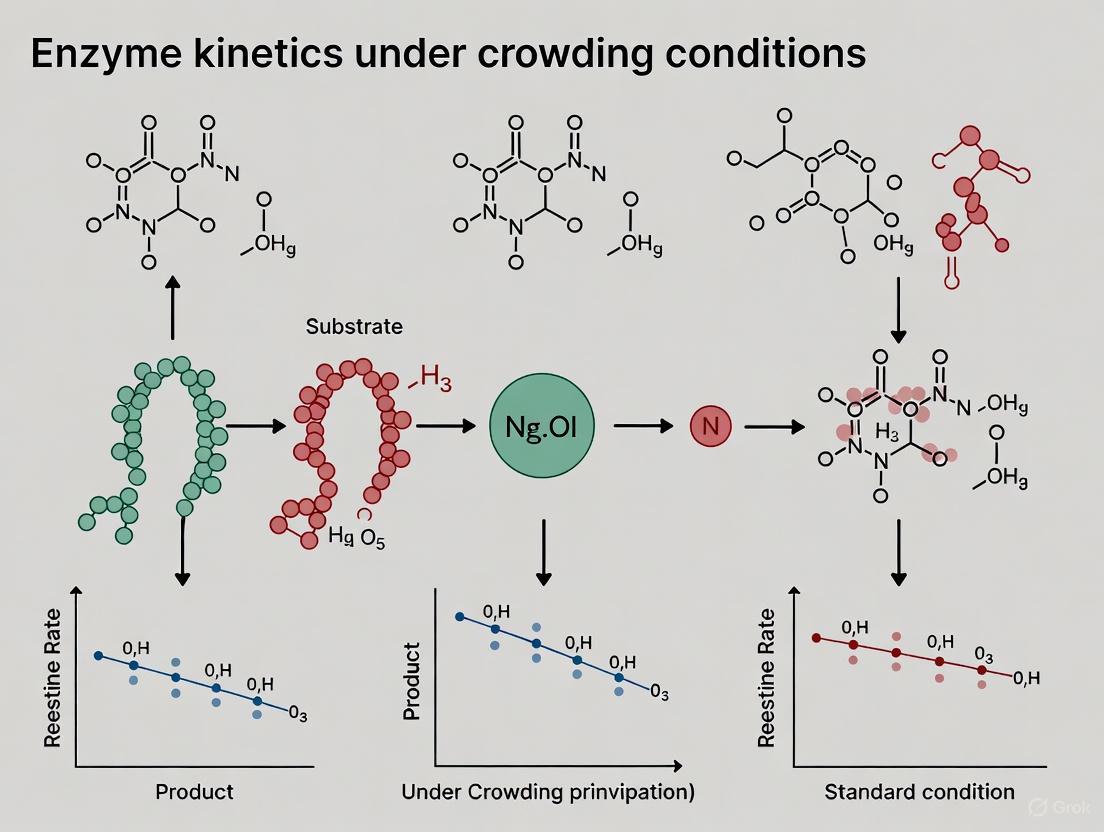
This article addresses the critical challenge of reconciling discrepancies in enzyme kinetic data obtained from simplified in vitro assays versus complex cellular environments.
Beyond the Test Tube: Bridging the Gap Between In Vitro and Cellular Enzyme Kinetics in Crowded Environments
Abstract
This article addresses the critical challenge of reconciling discrepancies in enzyme kinetic data obtained from simplified in vitro assays versus complex cellular environments. Aimed at researchers, scientists, and drug development professionals, it explores the profound effects of macromolecular crowding—a key feature of the intracellular milieu—on enzyme catalysis. We first establish the foundational principles of how crowding alters protein dynamics, stability, and conformational ensembles. The discussion then progresses to methodological approaches for mimicking cellular crowding in vitro and their application in drug discovery. The article provides a troubleshooting framework for optimizing biochemical assays to better predict cellular behavior and concludes with a comparative analysis of techniques for validating kinetic parameters in living cells. By synthesizing insights across these four intents, this work provides a comprehensive guide to obtaining more physiologically relevant enzyme kinetics, thereby enhancing the predictive power of in vitro data for therapeutic development.
The Crowded Cell: Fundamental Principles of Macromolecular Crowding and Enzyme Behavior
Frequently Asked Questions (FAQs)
Q1: What is the fundamental difference between studying enzymes in dilute solution versus in a crowded cellular environment?
In dilute solutions, enzymes are studied in an idealized, non-physiological environment where water is the dominant component. In contrast, the interior of a cell is a highly crowded milieu, where macromolecules like proteins, nucleic acids, and polysaccharides can occupy 20-40% of the total volume [1] [2] [3]. This macromolecular crowding profoundly alters the properties of the cellular environment, leading to:
- Reduced Diffusion Rates: The movement of enzymes and substrates is slowed down due to increased viscosity and obstructions [1] [2].
- Excluded Volume Effects: The physical space occupied by crowders reduces the available volume for other molecules, favoring more compact states and shifting reaction equilibria [1] [4] [3].
- Altered Protein Dynamics: Crowding can suppress large-scale conformational changes in enzymes and stabilize their structures, which directly impacts catalysis [1].
- Soft Interactions: Beyond simple volume exclusion, weak, non-specific chemical interactions (e.g., electrostatic, hydrophobic) with crowders can further modulate enzyme behavior [2] [4].
Q2: My enzyme's activity changes when I add crowders. Why does it sometimes increase and sometimes decrease?
The variable effects on activity arise because crowding influences multiple factors simultaneously, and the net outcome depends on which factor dominates for your specific enzyme and reaction. The table below summarizes the primary mechanisms.
Table: Mechanisms Behind Crowding-Induced Changes in Enzyme Activity
| Effect on Activity | Primary Mechanism | Example |
|---|---|---|
| Increase | Excluded volume effect favors compact, active conformations and can enhance substrate binding affinity (lower Km). | Acetaldehyde reduction by yeast alcohol dehydrogenase (YADH) showed an increased Vmax with Ficoll and dextran crowders [4]. |
| Decrease | Increased viscosity slows diffusional encounter rates between enzyme and substrate, and can hinder product release. | Ethanol oxidation by YADH showed decreased Vmax and Km in the presence of Ficoll and dextran [4]. The tryptophan synthase α2β2 complex showed reduced rates of conformational transitions [1]. |
| Substrate-Selective Change | Combined effects of viscosity, excluded volume, and soft interactions that differentially affect hydrophobic vs. hydrophilic substrates. | α-Chymotrypsin activity was enhanced only for a hydrophobic substrate when mixed with functionalized gold nanoparticles, but not for other substrates [1]. |
Q3: How do I choose the right crowding agent for my in vitro experiments?
The choice of crowding agent depends on whether you aim to study a generic excluded volume effect or more physiologically relevant interactions. The key is to understand their properties, as detailed in the table below.
Table: Research Reagent Solutions for Mimicking Cellular Crowding
| Crowding Agent | Key Properties & Functions | Considerations |
|---|---|---|
| Ficoll | Synthetic polymer, inert, spherical shape. Often used to study excluded volume effects with minimal soft interactions [4]. | A common starting point for probing pure crowding effects. |
| Dextran | Branched polysaccharide. Used to study excluded volume and chemical interactions [4]. | Can form a depletion layer around the enzyme when larger than the protein, mitigating viscous effects [4]. |
| Polyethylene Glycol (PEG) | Synthetic polymer, chemically inert, available in various molecular weights. Mimics molecules of different sizes [1] [3]. | Low molecular weight PEG can behave differently than high molecular weight PEG [1]. Can induce substrate-selective effects. |
| Proteins (e.g., BSA) | Physiologically relevant crowders. Introduce both excluded volume and a complex network of potential weak interactions [2]. | Most accurately mimics the intracellular environment but results are more complex to interpret. |
Q4: My kinetic data (Km and Vmax) is inconsistent under crowding conditions. What could be going wrong?
Inconsistent kinetic parameters are a common challenge that often stems from an interplay of factors not accounted for in the assay design.
- Viscosity Artifacts: High viscosity can make substrate diffusion rate-limiting, leading to an underestimation of Vmax. Ensure you are working in the linear range for your assay and consider using low molecular weight crowders or those that create a depletion layer to mitigate this [5] [4].
- Non-Ideal Mixing: With viscous crowding agents, ensure your reaction mixture is homogenized thoroughly to avoid concentration gradients.
- Crowder-Enzyme Interactions: The crowders may not be inert. "Soft interactions" can directly stabilize or destabilize the enzyme's active conformation, altering both Km and Vmax. Try replicating your experiment with a different type of crowder (e.g., switch from dextran to Ficoll) to probe for these interactions [4].
- Assay Linearity: Always verify that your assay operates in the linear range with respect to time and enzyme concentration, as crowding can shift this range [5].
Troubleshooting Guides
Issue: Determining Whether a Change in Enzyme Activity is Due to Crowding or Viscosity
A change in observed activity can be caused by a genuine crowding effect (e.g., a shift in conformational equilibrium) or simply by the increased viscosity of the solution slowing diffusion. This protocol helps you distinguish between the two.
Diagram: Workflow for Distinguishing Crowding from Viscosity Effects
Experimental Protocol:
- Prepare Samples:
- Sample A (Baseline): Enzyme and substrate in your standard assay buffer.
- Sample B (Viscosity Control): Enzyme and substrate in buffer supplemented with an inert viscosity-increasing agent like glycerol or sucrose. The concentration should be adjusted to match the viscosity of your crowder solution. A viscometer is ideal for this, or you can use literature values.
- Sample C (Crowding Test): Enzyme and substrate in buffer containing your chosen crowding agent (e.g., 25 g/L Ficoll 70).
- Measure Initial Rates: Perform your enzyme activity assay under identical conditions (temperature, pH, substrate concentration) for all three samples. Ensure the measurements are taken in the linear range [5].
- Analyze Data:
- If the activity in Sample B (viscosity control) is similar to Sample C (crowder), the effect is likely due to macroscopic viscosity.
- If the activity in Sample C is significantly different (higher or lower) than in Sample B, it indicates a specific crowding effect beyond simple viscous slowing, such as excluded volume or soft interactions [4].
Issue: Optimizing an Enzyme Assay for Crowded Conditions
Traditional, one-factor-at-a-time optimization can be time-consuming. This guide uses a systematic approach to efficiently find optimal assay conditions.
Experimental Protocol: A Design of Experiments (DoE) Approach The following steps, adapted for crowding research, can significantly speed up assay optimization [6].
- Define Your Objective: Clearly state what you want to optimize (e.g., maximize initial reaction rate, or signal-to-noise ratio).
- Identify Key Factors: Select the variables you will test. For a crowding assay, critical factors often include:
- Crowder Concentration (e.g., 0, 50, 100 g/L)
- Substrate Concentration (relative to Km)
- Enzyme Concentration
- pH
- Type of Crowder (this is a categorical factor)
- Run a Fractional Factorial Design: This screening design allows you to test multiple factors simultaneously with a minimal number of experiments to identify which factors have the most significant impact on your objective.
- Perform Response Surface Methodology (RSM): Once the key factors are identified, use a RSM design (e.g., Central Composite Design) to model the relationship between these factors and your response. This will help you find the optimal levels for each factor.
- Verify the Model: Run a confirmation experiment using the predicted optimal conditions to validate the model's accuracy.
Key Quantitative Data in Crowding Research
The following table consolidates experimental findings from various studies to illustrate how crowding diversely affects different enzymes.
Table: Compiled Kinetic Parameters of Enzymes Under Macromolecular Crowding Conditions
| Enzyme | Crowding Agent | Observed Change in Kinetics | Postulated Mechanism |
|---|---|---|---|
| Yeast Alcohol Dehydrogenase (YADH) [4] | Ficoll, Dextran | Ethanol Oxidation: Vmax ↓, Km ↓Acetaldehyde Reduction: Vmax ↑, Km ↑ | Direction-dependent balance of excluded volume (favors compact state) vs. viscosity (hinders diffusion/product release). |
| α-Chymotrypsin [1] | PEG Conjugation / Dextran | Catalytic rate (kcat) ↓, Km ↑ | Reduced structural dynamics and conformational flexibility; slower diffusion. |
| α-Chymotrypsin [1] | Gold Nanoparticles (AuTEG) | Activity ↑ for hydrophobic substrate only | Substrate-selective enhancement due to combined crowding and chemical interactions. |
| Multi-copper Oxidase (Fet3p) [1] | Not Specified | Low Crowding: Km ↑, Kcat ↑High Crowding: Km ↓, Kcat ↓ | Complex, concentration-dependent interplay of multiple factors. |
| G-Quadruplex (G4) DNA Stability [3] | PEG 200 | Melting Temperature (Tm) ↑ from 68.4°C to >80°C | Excluded volume effect strongly stabilizes compact nucleic acid structures. |
The intracellular environment is a densely packed milieu, with biological macromolecules occupying 5%–40% of cellular volume and reaching total concentrations of 80 to 400 mg/mL [7]. This creates a unique crowded medium that differs significantly from the ideal, dilute conditions typically used in in vitro biochemical assays [7]. Understanding how this crowded environment affects enzyme kinetics is crucial for extrapolating in vitro findings to in vivo conditions.
This technical support center addresses the core mechanisms through which crowding operates: excluded volume effects, soft interactions, and depletion layers. The following sections provide troubleshooting guidance and methodological support for researchers investigating these phenomena in enzyme kinetics.
Core Mechanisms & Troubleshooting FAQs
FAQ 1: Why is my enzyme's activity affected differently by various crowding agents, even when they have similar molecular weights?
Issue: Different crowding agents (e.g., Ficoll vs. Dextran) of similar molecular weight produce divergent effects on kinetic parameters.
Explanation: This occurs because the impact of crowding extends beyond simple excluded volume effects. The overall effect is a sum of multiple factors [7] [8] [9]:
- Excluded Volume Effect: Tends to increase thermodynamic activity and can favor compact states, potentially increasing reaction rates [7].
- Viscosity and Perturbed Diffusion: High viscosity from crowding agents can slow molecular diffusion, counteracting excluded volume effects and reducing reaction rates, particularly for diffusion-limited enzymes [7] [8].
- Soft Interactions: Non-specific, weak chemical interactions (e.g., repulsive or attractive forces) between the crowder and your enzyme can alter stability and conformation [7] [9]. Repulsive interactions can mimic excluded volume, while attractive interactions can oppose them.
- Depletion Layer Effects: In solutions containing crowders significantly larger than the enzyme, a depletion layer can form around the enzyme, locally reducing viscosity and diminishing the hindrance to diffusion [8].
Solution:
- Characterize both the thermodynamic and viscous properties of your crowding solutions.
- Use multiple, structurally different crowding agents to disentangle steric effects from chemical interactions.
- For suspected depletion layer effects, use crowders of varying sizes relative to your enzyme.
FAQ 2: Why do I observe a decrease in catalytic rate (kcat) despite predictions that crowding should accelerate my reaction?
Issue: Observed reaction rates decrease under crowded conditions, contrary to theoretical predictions based solely on excluded volume.
Explanation: This is a common finding, as seen with Mycobacterium tuberculosis InhA, where some crowders showed negligible or negative effects on activity [9]. Potential causes include:
- Viscosity Dominance: For reactions where product release or a conformational change is rate-limiting, increased microviscosity can slow this step more than excluded volume accelerates the binding or chemical step [8].
- Unfavorable Transition State Stabilization: If the enzyme's transition state is more expanded than the ground state, crowding can paradoxically destabilize it, increasing the activation energy [9].
- Non-Specific "Soft" Interactions: Attractive interactions between the crowder and the enzyme can lead to a more compact, less active conformer or cause minor unfolding, as suggested by molecular dynamics simulations in sucrose solutions [9].
Solution:
- Determine the rate-limiting step of your enzyme's catalytic cycle.
- Perform Arrhenius analysis to investigate changes in the activation energy; non-linear plots can indicate significant "soft" interactions [9].
- Use techniques like circular dichroism or fluorescence spectroscopy to probe for crowding-induced conformational changes.
FAQ 3: How can I experimentally distinguish the contribution of excluded volume from other crowding mechanisms?
Issue: Difficulty in attributing observed kinetic changes specifically to excluded volume.
Explanation: Pure excluded volume effects are thermodynamic in nature, while the observed kinetics are an amalgam of thermodynamic and dynamic (viscous) factors.
Solution:
- Use Inert, Spherical Crowders: Ficoll is often preferred over dextran or PEG for initial studies as it is more globular and exhibits fewer chemical interactions [9].
- Compare Small Molecules vs. Polymers: Use a small molecule osmolytes (e.g., glucose) versus a polymeric crowder (e.g., dextran) at the same mass concentration. Glucose will contribute to osmotic pressure but has a much smaller excluded volume effect, helping to isolate the steric component [8] [9].
- Analyze Activation Parameters: Determine the Gibbs free energy of activation (ΔG‡). If excluded volume is the dominant factor, you would expect a significant change in ΔG‡. Similar ΔG‡ values between crowded and non-crowded conditions, as found for InhA, suggest that excluded volume effects are not facilitating the formation of the activated complex [9].
Table 1: Interpreting Crowding Effects on Kinetic Parameters
| Observation | Possible Mechanism | Experimental Verification |
|---|---|---|
↑ kcat, ↓ or Km |
Dominant excluded volume effect favoring transition state | Measure thermodynamic activity; use inert crowders like Ficoll [8]. |
↓ kcat, ↑ Km |
Dominant viscosity hindering diffusion or conformational changes | Measure microviscosity; use crowders of different intrinsic viscosity [7] [8]. |
↓ kcat / Km, unchanged ΔG‡ |
Significant "soft" interactions altering enzyme conformation | Perform Arrhenius analysis; use spectroscopic methods to check structure [9]. |
| Disparate effects from crowders of similar size | Specific chemical (soft) interactions with crowder | Use a panel of chemically distinct crowders (e.g., Ficoll, dextran, PEG) [8]. |
Experimental Protocols
General Protocol for Assessing Crowding Effects on Enzyme Kinetics
This protocol is adapted from studies on alcohol dehydrogenase and InhA [8] [9].
1. Reagent Preparation:
- Prepare a concentrated stock solution of your chosen crowding agent (e.g., 300-400 g/L) in assay buffer.
- Clarify solutions by filtration or centrifugation if necessary.
- Confirm that the crowder does not absorb at wavelengths used for detection.
2. Initial Velocity Measurements:
- Prepare assay mixtures containing a fixed, saturating concentration of one substrate and varying concentrations of the other substrate.
- Include crowding agent across a concentration range (e.g., 0, 50, 100, 200 g/L).
- Pre-incubate all reaction components except the enzyme at the desired temperature.
- Initiate reactions by adding enzyme. For very viscous solutions, ensure thorough mixing.
- Monitor product formation continuously (preferred) or use fixed time points.
3. Data Analysis:
- Fit initial velocity (
v) vs. substrate concentration ([S]) data to the Michaelis-Menten equation (v = (Vmax * [S]) / (Km + [S])) or the Hill equation for non-hyperbolic kinetics [9]. - Plot derived parameters (
Km,kcat,kcat/Km) against crowder concentration to identify trends.
Advanced Protocol: Determining Activation Parameters
To gain deeper insight into the crowding mechanism, perform the above experiment at multiple temperatures (e.g., 15, 20, 25, 30 °C) and construct an Arrhenius plot [9].
1. Data Collection:
- Determine
kcatat a minimum of four different temperatures for both crowded and non-crowded conditions.
2. Analysis:
- Construct an Arrhenius plot by plotting
ln(kcat)against1/T(where T is temperature in Kelvin). - The slope of the linear fit is
-Ea/R, whereEais the activation energy and R is the gas constant. - Calculate the activation enthalpy (ΔH‡) and entropy (ΔS‡) using the Eyring equation.
- The Gibbs free energy of activation (ΔG‡) is calculated as ΔG‡ = ΔH‡ - TΔS‡.
- Compare these activation parameters between crowded and non-crowded conditions. A change in ΔG‡ suggests a thermodynamic effect (e.g., excluded volume), while a non-linear Arrhenius plot indicates complex behavior, potentially from "soft" interactions [9].
Visualizing the Mechanisms
The following diagram illustrates the core mechanisms through which macromolecular crowding agents influence enzyme kinetics, integrating excluded volume, soft interactions, viscosity, and depletion layers.
Diagram 1: Crowding mechanisms influencing enzyme kinetics.
The Scientist's Toolkit: Key Research Reagents
Table 2: Common Reagents for Crowding Studies
| Reagent | Typical MW Range | Key Properties & Uses | Considerations & Potential Artifacts |
|---|---|---|---|
| Ficoll | 70 - 400 kDa | Synthetic copolymer of sucrose and epichlorohydrin. Globular, highly hydrophilic. Often used as an "inert" crowder to model excluded volume with minimal soft interactions [8] [9]. | Solutions have lower viscosity than linear polymers of similar MW. Ficoll 400 may show mild attractive interactions with some proteins [9]. |
| Dextran | 40 - 2000 kDa | Branched polysaccharide of glucose. Linear and flexible polymer. Used to study effects of polymer flexibility and size on crowding [8]. | Can exhibit significant viscosity. May form depletion layers when much larger than the test protein, reducing local viscosity [8]. |
| Polyethylene Glycol (PEG) | 1 - 20 kDa | Linear, flexible polymer. Very commonly used. Can induce macromolecule condensation and phase separation [9]. | Hydrophobic character can lead to significant attractive soft interactions with protein surfaces, potentially causing aggregation or conformational changes [9]. |
| Sucrose | 342 Da | Disaccharide. Used as a small molecule control and to study osmotic effects vs. polymeric crowding. Also a natural cryoprotectant [10]. | Contributes little to excluded volume but can alter water activity and stabilize proteins via preferential hydration. Can induce compact conformations [9]. |
| Glucose | 180 Da | Monosaccharide. Used as a negative control for polymeric crowders, as it has minimal excluded volume effect [9]. | Primarily alters osmotic pressure. Useful for isolating the steric component of larger polymers by comparison [9]. |
The table below summarizes real experimental findings from the literature to illustrate how different crowding mechanisms manifest in practice.
Table 3: Experimental Observations of Crowding Mechanisms in Enzyme Kinetics
| Enzyme | Crowding Agent | Observed Effect on Kinetics | Proposed Dominant Mechanism |
|---|---|---|---|
| Yeast Alcohol Dehydrogenase (YADH) - Ethanol Oxidation [8] | Ficoll, Dextran | ↓ Vmax, ↓ Km |
Viscosity hindering product release (NAD+) counteracting some excluded volume effects on substrate binding. |
| Yeast Alcohol Dehydrogenase (YADH) - Acetaldehyde Reduction [8] | Ficoll, Dextran | or ↑ Vmax |
Excluded volume effect favoring the reaction (possibly more compact transition state), partially counteracted by viscosity. |
| M. tuberculosis InhA [9] | Ficoll 70, Ficoll 400, Dextran 70 | Negligible effects on Km, kcat, and kcat/Km |
A balance of opposing factors (excluded volume, viscosity, soft interactions), with no net dominance of excluded volume. |
| M. tuberculosis InhA [9] | PEG 6000 | Complex effects, non-linear Arrhenius plot | Significant "soft" interactions between PEG and the enzyme, introducing an enthalpic component. |
| M. tuberculosis InhA [9] | Sucrose | Decreased kcat/Km for NADH and kcat for DD-CoA |
"Soft" interactions leading to a more compact, less active enzyme conformation, as suggested by MD simulations. |
Enzyme kinetics under cellular-like crowding conditions often deviate from results obtained in dilute, ideal solutions. This discrepancy arises because crowding fundamentally alters protein dynamics, conformational ensembles, and stability [11] [12]. In confined and crowded environments, enzymes operate within a complex thermodynamic and kinetic landscape, where excluded volume effects, anomalous diffusion, and altered solvation can modulate function [11]. A comprehensive understanding requires shifting from viewing proteins as static structures to analyzing them as dynamic ensembles interconverting between multiple conformations [13] [12]. This technical guide addresses the specific experimental issues and solutions for characterizing protein dynamics and allosteric regulation under these non-ideal conditions.
Troubleshooting Guides & FAQs
FAQ 1: Why do my measured enzyme kinetic parameters (Km, kcat) change significantly under molecular crowding conditions?
Answer: Changes in observed kinetics are frequently due to the altered thermodynamic and dynamic environment, not just a simple change in enzyme activity.
- Molecular Crowding and Excluded Volume: Crowding agents reduce the available volume, which can stabilize more compact conformations and shift the conformational ensemble of the protein. This shift can affect substrate binding (apparent Km) and the rates of conformational changes necessary for catalysis (apparent kcat) [11] [12].
- Modulation of Protein Dynamics: Allosteric regulation is mediated not only by conformational shifts but also by changes in the dynamics and fluctuations of the protein on timescales from picoseconds to milliseconds [13]. Crowding can dampen or enhance these dynamics, thereby affecting the reaction coordinate and the enzyme's catalytic efficiency [14].
- Altered Cofactor Dynamics: For cofactor-dependent enzymes, crowding can affect the local concentration, diffusion, and binding equilibrium of cofactors within the confined space, directly impacting the apparent reaction rate [11].
Solution: Move beyond bulk measurements. Employ techniques like time-lapse fluorescence microscopy at the single-particle level to measure intraparticle kinetics and cofactor diffusion directly within the crowded environment [11].
FAQ 2: My NMR spectra show significant line broadening under crowding conditions. How can I distinguish between true allosteric regulation and non-specific effects?
Answer: Line broadening can indicate altered dynamics or heterogeneous interactions. Disentangling these causes is key.
- Specific Allosteric Regulation: Involves defined communication pathways between allosteric and active sites, often mediated by networks of residues showing correlated changes in dynamics or conformation [13]. This typically results in specific, residue-specific changes in NMR parameters (e.g., chemical shifts, relaxation rates).
- Non-Specific Quinary Interactions: Crowding can lead to weak, transient "quinary interactions" with other macromolecules, causing non-specific broadening across many residues due to increased viscosity or heterogeneous complex formation [12].
Solution: Perform a residue-by-residue analysis.
- Compare Dynamics: Measure NMR relaxation parameters (R₁, R₂, NOE) under both dilute and crowded conditions. Residues involved in specific allosteric pathways will show targeted changes in picosecond-nanosecond or microsecond-millisecond dynamics, while non-specific interactions cause widespread dynamic perturbations [13] [12].
- Utilize Integrative Structural Biology: Correlate NMR data with other techniques. Molecular dynamics (MD) simulations can identify potential communication pathways and residue correlations [13] [12]. Techniques like cryo-EM can provide structural insights into populated conformational states within the ensemble [12].
FAQ 3: How can I experimentally validate if a proposed allosteric pathway is functional and relevant under crowding?
Answer: Validating allosteric pathways requires a combination of computational prediction and experimental mutational analysis.
- Computational Identification: Use Molecular Dynamics (MD) simulations to identify networks of residues with correlated motions or to calculate communication pathways based on protein structure [13].
- Experimental Mutational Analysis: Introduce point mutations at key residues identified in the proposed pathway.
- Functional Assays: Measure the impact of mutations on allosteric regulation under crowding conditions. A functional residue will show a significant change in the allosteric response (e.g., a change in substrate binding affinity or catalytic efficiency upon effector binding) without completely disrupting the native fold [13].
- Dynamic Characterization: Use NMR spectroscopy to confirm that the mutation perturbs the dynamic network, for example, by altering microsecond-millisecond conformational exchange dynamics detected through CPMG or R₁ρ relaxation dispersion experiments [13].
Table 1: Troubleshooting Common Experimental Challenges
| Problem | Potential Cause | Solution |
|---|---|---|
| Irreproducible kinetics in crowded systems | Particle-to-particle heterogeneity in enzyme density and distribution [11] | Perform single-particle or intraparticle kinetic analysis using fluorescence microscopy [11] |
| Loss of allosteric effect | Crowding alters the conformational equilibrium or quenches essential dynamics [13] [12] | Use NMR to probe if the effector still induces changes in dynamics and the conformational ensemble [13] |
| Uncertain transition pathway | Debate between induced-fit vs. conformational selection mechanisms [13] | Vary effector concentration; induced-fit becomes dominant at high concentrations [13]. Use TROSY-based NMR to detect minor populations. |
Experimental Protocols for Key Methodologies
Protocol 1: Time-Lapse Fluorescence Microscopy for Intraparticle Kinetics
Objective: To measure apparent Michaelis-Menten parameters and cofactor diffusion within a single porous particle under operando conditions [11].
- Sample Preparation:
- Data Acquisition:
- Place the biocatalyst particles in a flow cell or on a microscope slide with the reactant solution.
- Use a fluorescence microscope with a temperature-controlled stage.
- For kinetic assays, record time-lapse images of individual particles upon introduction of substrate. The fluorescence change of the cofactor (e.g., NADH to NAD⁺) reports on the reaction progress [11].
- For diffusion studies, perform Fluorescence Recovery After Photobleaching (FRAP) by bleaching a spot on a particle and monitoring fluorescence recovery over time [11].
- Image Analysis and Kinetics:
- Process images to extract fluorescence intensity over time for individual particles.
- Plot initial reaction rates (V₀) against substrate concentration for each particle.
- Fit the data to the Michaelis-Menten model (V₀ = (Vₘₐₓ * [S]) / (Kₘ + [S])) to determine the apparent Kₘ and Vₘₐₓ for that specific particle and its local crowded environment [11].
Protocol 2: NMR Relaxation Measurements to Probe Dynamics
Objective: To characterize protein backbone and side-chain dynamics on picosecond-nanosecond and microsecond-millisecond timescales [13].
- Sample Preparation:
- Prepare ¹⁵N- or ¹³C/¹⁵N-labeled protein in a buffer compatible with crowding agents (e.g., synthetic polymers, sugars, or high concentrations of inert proteins like BSA).
- For studies of allostery, prepare samples: (a) apo, (b) with allosteric effector bound, (c) with substrate bound, and (d) with both.
- Data Acquisition:
- Picosecond-Nanosecond Dynamics: Perform ¹⁵N T₁, T₂, and heteronuclear {¹H}-¹⁵N NOE experiments. Model-free analysis of this data provides order parameters (S²) and effective correlation times, reporting on fast local motions [13].
- Microsecond-Millisecond Dynamics: Perform CPMG (Carr-Purcell-Meiboom-Gill) relaxation dispersion experiments (R₂). A dispersion profile indicates conformational exchange processes on this timescale, and fitting the data can provide the kinetics (kₑₓ) and thermodynamics (populations) of the exchange, as well as the chemical shift difference between states [13].
- Data Interpretation:
- Map residues with significant changes in dynamics (S² or R₂) upon ligand binding onto the protein structure.
- A pathway of dynamically perturbed residues connecting the allosteric and active sites suggests a potential communication network [13].
Protocol 3: Transition Path Sampling (TPS) Simulations
Objective: To rigorously determine the reaction coordinate and atomic-level mechanism of a chemical step in an enzyme, including the role of promoting vibrations [14].
- System Setup:
- Build a simulation system with the enzyme in a solvated box, applying periodic boundary conditions.
- Use a QM/MM potential, treating the reacting atoms with quantum mechanics and the protein environment with molecular mechanics.
- Harvesting Reactive Trajectories:
- Use the TPS methodology to perform a Monte Carlo walk in trajectory space, generating an ensemble of true reactive trajectories that connect the reactant and product states without being trapped in intermediate minima [14].
- Identifying the Reaction Coordinate:
- Calculate the stochastic separatrix (the transition state ensemble).
- Use machine learning methods like kernel PCA on the separatrix to identify the minimal set of atomic coordinates (degrees of freedom) that are invariant on the separatrix. These constitute the reaction coordinate [14].
- Test the identified reaction coordinate using a committor analysis to ensure it accurately describes the progression of the reaction [14].
Visualization of Signaling Pathways and Workflows
The Scientist's Toolkit: Research Reagent Solutions
Table 2: Essential Research Reagents and Materials
| Item | Function/Application in Research | Key Consideration |
|---|---|---|
| His-tagged Enzymes | Enables oriented, site-specific immobilization on functionalized solid supports for heterogeneous biocatalysis studies [11]. | Ensures uniform attachment and controlled density on carrier surfaces. |
| Cationic Polymers (PEI, PAH) | Coating for carriers to enable reversible adsorption and confinement of phosphorylated cofactors (NADH, FAD, PLP) [11]. | Different polymer structures (primary, secondary, tertiary amines) influence cofactor binding affinity and capacity [11]. |
| Porous Agarose Microbeads | Common solid support for enzyme immobilization, providing a confined, crowd-like environment with defined porosity [11]. | Porosity controls intraparticle diffusion and the effective concentration of enzymes and cofactors. |
| Isotope-Labeled Proteins (¹⁵N, ¹³C) | Essential for NMR spectroscopy studies to assign resonances and measure site-specific dynamics via relaxation experiments [13] [12]. | Required for probing dynamics and allostery at atomic resolution. |
| Synthetic Crowding Agents (Ficoll, PEG) | Mimic the excluded volume effect of the cellular interior in in vitro experiments [11] [12]. | Inert polymers are preferred to avoid specific interactions that complicate interpretation. |
| Transition Path Sampling (TPS) | A computational rare-event simulation methodology to uncover the true reaction coordinate and mechanism of enzymatic catalysis [14]. | Identifies promoting vibrations and key dynamic contributions to catalysis beyond static structures. |
Troubleshooting Guide: Addressing Common Experimental Issues in Crowding Studies
FAQ 1: Why does my enzyme show no change, or an unexpected change, in activity in crowded conditions?
This is a frequent observation, as crowding effects are highly system-dependent. The activity can increase, decrease, or remain unchanged based on the enzyme's specific properties and the experimental setup.
- Probable Cause 1: Incompatibility between crowder and enzyme. Non-specific (soft) chemical interactions between the crowding agent and your enzyme or substrate can override the expected excluded volume effects.
- Solution: If you observe no effect or an unexpected effect with one crowder, try a different type. For instance, switch from a linear polymer like PEG or dextran to a more globular one like Ficoll, or use a protein-based crowder like BSA. The effects can be starkly different; for example, Ficoll was shown to enhance the activity of adenylate kinase, while dextrans had a lesser effect [15].
- Probable Cause 2: Substrate-dependent effects. The nature of the substrate can dictate how crowding influences enzyme kinetics.
- Solution: Test your enzyme with multiple substrates. A study on α-chymotrypsin found that large, hydrophobic substrates showed a marked increase in activity with certain crowders, while the hydrolysis of smaller substrates was unaffected [1].
FAQ 2: Why are my kinetic data in crowded conditions inconsistent or not fitting the Michaelis-Menten model?
Crowding can alter multiple aspects of the reaction environment, leading to complex kinetics that deviate from standard models.
- Probable Cause 1: Slowed diffusion and transient trapping. The diffusion of the enzyme and substrate is significantly hindered in a crowded milieu. Substrates can be transiently trapped by crowders, leading to fractal-like kinetics where the law of mass action breaks down [16].
- Solution: Consider extending incubation times to ensure reactions reach completion. For data analysis, models that account for diffusion limitations may be more appropriate than classic Michaelis-Menten analysis in highly crowded conditions.
- Probable Cause 2: Conformational selection is biased. Crowding can shift the equilibrium of an enzyme's conformational ensemble. If crowding stabilizes a less active conformation, it can lead to a reduction in the maximum velocity (Vmax).
- Solution: Monitor enzyme conformation using techniques like circular dichroism (CD) or fluorescence spectroscopy alongside activity assays. For HIV-1 protease, crowding agents suppress the opening of the flexible flaps, a conformation necessary for substrate binding, thereby reducing activity [17] [18].
Experimental Protocols for Key Crowding Studies
Protocol: Measuring the Effect of Crowding on HIV-1 Protease Kinetics
This protocol is adapted from fluorescence-based assays used to study HIV-1 protease [17].
Objective: To determine the kinetic parameters (KM and Vmax) of HIV-1 protease under non-crowded and crowded conditions.
Materials:
- Enzyme: HIV-1 PR (commercially available).
- Substrate: A FRET-based peptide substrate (e.g., Arg-Glu(EDANS)-Ser-Gln-Asn-Tyr-Pro-Ile-Val-Gln-Lys(DABCYL)-Arg). Cleavage separates the EDANS donor and DABCYL acceptor, increasing fluorescence.
- Crowding Agents: Polyethylene glycol (PEG) of varying molecular weights (e.g., PEG 600 and PEG 6000).
- Buffer: 100 mM sodium acetate buffer, pH 4.7, containing 1 M NaCl, 1 mM EDTA, and 1 g/L BSA.
- Equipment: Fluorescence plate reader capable of excitation at 340 nm and emission detection at 490 nm.
Method:
- Stock Solutions: Prepare stock solutions of the crowding agents (e.g., 100, 200, and 300 g/L) in the assay buffer.
- Substrate Dilution: Serially dilute the FRET substrate in DMSO and then in assay buffer (with or without crowders) to achieve final concentrations between 15-120 µM in the reaction well. Keep the final DMSO concentration consistent (e.g., 15%).
- Reaction Setup: In a 100 µL reaction volume, combine the substrate solution and crowding agent/buffer. Initiate the reaction by adding HIV-1 PR to a final concentration of 4.4 nM.
- Kinetic Measurement: Immediately transfer the plate to the pre-heated reader (37°C) and record the fluorescence every 30 seconds for 30 minutes.
- Data Analysis: Convert fluorescence readings to product concentration using an EDANS standard curve. Plot the initial velocity (v0) against substrate concentration ([S]) and fit the data to the Michaelis-Menten equation to extract KM and Vmax.
Protocol: Assessing α-Chymotrypsin Activity and Stability under Crowding
This protocol synthesizes methodologies from multiple studies on α-chymotrypsin and its zymogen [1] [19].
Objective: To evaluate the effect of macromolecular crowding on the catalytic efficiency and structural stability of α-chymotrypsin.
Materials:
- Enzyme: α-Chymotrypsin.
- Substrates: A range of substrates, including N-succinyl-l-phenylalanine-p-nitroanilide (SPNA) and the more hydrophobic N-succinyl-alanine-alanine-proline-phenylalanine-p-nitroanilide (TP).
- Crowding Agents: Dextran 70 and PEG of varying molecular weights.
- Buffer: Appropriate buffer (e.g., Tris or phosphate buffer at neutral pH).
- Equipment: Spectrophotometer, fluorometer, and circular dichroism (CD) spectropolarimeter.
Method:
- Activity Assay:
- Prepare solutions with and without crowders (e.g., Dextran 70 at 0-300 g/L).
- For each condition, mix enzyme with different substrates and monitor the release of the chromogenic product (p-nitroaniline) spectrophotometrically at 410 nm.
- Calculate kinetic parameters (kcat, KM) as in the HIV-1 protease protocol.
- Thermal Stability Assay:
- Prepare enzyme samples in crowded and non-crowded buffers.
- Use a temperature-controlled spectrophotometer or fluorometer to monitor the loss of native structure (e.g., via increased turbidity or intrinsic tryptophan fluorescence) as the temperature is increased.
- Determine the melting temperature (Tm) for each condition. Crowding is expected to increase Tm, indicating stabilization [19].
- Conformational Analysis (Optional):
- Use Far-UV CD spectroscopy to monitor changes in the secondary structure of the enzyme in the presence of crowders. Crowding agents like dextran can stabilize the native structure against denaturants [19].
Data Presentation: Comparative Kinetic Effects of Crowding
| Enzyme | Crowding Agent | Observed Effect on KM | Observed Effect on kcat / Vmax | Proposed Molecular Mechanism |
|---|---|---|---|---|
| α-Chymotrypsin [1] | Dextran 70 | Increases | Decreases | Slowed diffusion; stabilization of a less active, open conformation. |
| α-Chymotrypsin [1] | PEG (Low MW) | Increases | Decreases | Increased substrate affinity but decreased turnover; coupled hydration/solvation effects. |
| α-Chymotrypsin [1] | Gold Nanoparticles (AuTEG) | Substrate-dependent (decreased for hydrophobic sub.) | Substrate-dependent (increased for hydrophobic sub.) | Selective enhancement of hydrophobic substrate binding and catalysis. |
| HIV-1 Protease [17] [18] | PEG 600 / PEG 6000 | Increases | Decreases | Suppression of flap opening dynamics; reduced enzyme-substrate diffusional encounter rates. |
Research Reagent Solutions
Table 2: Essential Reagents for Crowding Studies
| Reagent | Function in Experiment | Key Considerations |
|---|---|---|
| Ficoll 70 | A synthetic, highly branched, globular polysaccharide crowder. | Often considered relatively inert; useful for studying pure excluded volume effects. Can enhance enzyme activity (e.g., in adenylate kinase) [15]. |
| Dextran | A linear, flexible polymer of glucose used as a crowder. | Available in various molecular weights. Effects can be concentration and size-dependent; can slow reactions by increasing viscosity and residence times [16]. |
| Polyethylene Glycol (PEG) | A linear, flexible polymer commonly used as a crowder. | Can have significant chemical interactions with proteins, beyond excluded volume. Often suppresses enzyme activity by stabilizing less dynamic conformations [17] [20]. |
| Bovine Serum Albumin (BSA) | A protein-based crowding agent. | Provides a more biologically relevant crowder but introduces potential for specific and non-specific interactions, complicating data interpretation [21]. |
| FRET-based Peptide Substrates | Sensitive substrates for continuous monitoring of protease activity. | Essential for studying kinetics without interference from crowded media. The FRET signal is typically insensitive to the presence of inert crowders [17]. |
Conceptual Workflow: Analyzing Enzyme Response to Crowding
The following diagram illustrates the decision-making workflow for diagnosing how crowding affects an enzyme, based on the case studies.
Frequently Asked Questions (FAQs)
FAQ 1: What is the fundamental theoretical framework for understanding enzyme behavior in crowded environments? The energy landscape model is the key framework for understanding how macromolecular crowding influences enzymes. This model visualizes protein folding and function as a journey across a topographic map, where stable states correspond to energy minima. Crowding agents, which can occupy 20-40% of cellular volume, perturb this landscape through two primary mechanisms [1] [22]:
- Excluded Volume Effects: Crowders reduce the volume available to a protein, entropically favoring more compact native states over expanded unfolded states. This typically stabilizes the protein and increases its thermodynamic stability.
- Soft Interactions: Beyond simple steric effects, chemical interactions (e.g., electrostatic, hydrophobic) between the protein and crowders can also alter the energy landscape, sometimes leading to destabilization or aggregation [22].
In practice, crowding remodels the energy landscape by stabilizing the native state and, crucially, by compacting the unfolded state ensemble. This compaction can be detected experimentally by a decrease in the m-value (the dependence of unfolding free energy on denaturant concentration) [23]. Furthermore, crowding can alter the kinetic barriers between states, leading to observed changes in folding/unfolding rates and conformational switching [22] [24].
FAQ 2: Why do I observe unpredictable changes in enzyme kinetics under crowding conditions?
Catalytic rates (k_cat) and substrate binding (K_m) can increase, decrease, or remain unchanged because crowding's net effect results from a balance of multiple, competing factors [1]:
- Stabilization vs. Rigidification: While excluded volume stabilizes the native fold, it can also restrict the conformational dynamics essential for catalytic activity. This often manifests as an increase in thermal stability coupled with a decrease in the turnover number [1].
- Diffusion vs. Association: Crowding slows translational and rotational diffusion, which can slow substrate encounter rates. Conversely, the excluded volume effect also increases the effective concentration of reactants, favoring complex formation [25]. The dominant effect depends on the specific system and reaction.
- Altered Energy Landscapes: For complex enzymes like metamorphic proteins (e.g., KaiB, XCL1) or allosteric enzymes, crowding can selectively stabilize one functional conformation over another, thereby shifting the population equilibrium and modulating activity and specificity [1] [22].
FAQ 3: How does crowding affect the function of enzymes that switch between distinct folds? Research on metamorphic proteins shows that crowding agents shift the conformational equilibrium toward the more compact, typically inactive state. However, the effect on the switching rate is timescale-dependent [22]:
- For fast-switching proteins (e.g., XCL1, timescale of seconds), crowding can significantly slow the interconversion rate (
k_ex), as observed with PEG which reduced the rate by ~57% [22]. - For slow-switching proteins (e.g., KaiB, timescale of hours), crowding has a minimal effect on the interconversion rate but still shifts the population equilibrium [22]. This indicates that crowding acts as a tuner of both the thermodynamics and kinetics of fold-switching, which can be critical for regulating biological function in vivo.
FAQ 4: My enzyme is aggregating in crowded solutions. What is happening? Crowding can significantly increase the propensity for aggregation and misfolding [23]. The excluded volume effect not only stabilizes the native state but also stabilizes any compact state, including misfolded oligomers or aggregates. This is a major complication in experimental studies of crowding. Mitigation strategies include:
- Using inert crowding agents like Ficoll or dextran, which minimize soft, attractive interactions.
- Systematically varying the type and concentration of the crowding agent to identify conditions that favor native structure.
- Ensuring your protein is pure and monodisperse before adding crowders.
Troubleshooting Guides
Issue 1: Inconsistent Crowding Effects on Enzyme Activity
| Possible Cause | Diagnostic Experiments | Proposed Solution |
|---|---|---|
| Substrate Size & Nature | Compare kinetics with substrates of different sizes and hydrophobicity. | Use a range of substrate sizes. Interpret results considering that crowding effects can be substrate-selective [1]. |
| Crowder Properties | Test different types of crowders (e.g., Ficoll 70 vs. Dextran 70) at the same weight/volume concentration. | Characterize crowding effects with multiple, well-defined agents. Ficoll is a compact sphere; Dextran is a flexible coil; PEG can have chemical interactions [24]. |
| Conformation-Specific Effects | Use techniques like NMR or fluorescence spectroscopy to probe conformational dynamics, not just overall structure. | Interpret kinetic data in the context of conformational ensembles. Crowding may stabilize a specific, less active conformation [1]. |
Issue 2: Measuring Stability and Unfolding in Crowded Environments
Challenge: Standard denaturation experiments (e.g., urea titrations) are complicated by crowding, as the crowder itself excludes denaturant and affects its local concentration.
Protocol: Equilibrium Urea Denaturation in Ficoll 70 [23]
- Preparation: Create a series of urea stock solutions (in desired buffer) with identical concentrations of Ficoll 70. Include a reductant like TCEP if needed.
- Sample Equilibration: Mix protein stock (in the same Ficoll/buffer) with the urea/Ficoll stocks to a final protein concentration of 0.8–6.4 µM. Ensure all samples have the same Ficoll concentration.
- Incubation: Equilibrate samples for a sufficiently long time (e.g., >5.5 hours at 37°C) in a sealed, temperature-controlled incubator to prevent evaporation.
- Measurement: Monitor unfolding by intrinsic fluorescence (e.g., emission at 350 nm with excitation at 280 nm) or far-UV Circular Dichroism (CD). Centrifuge samples before measurement to remove any aggregates.
- Data Analysis: Fit the data to a two-state unfolding model. A key diagnostic parameter is the
m-value. A decrease in them-valueunder crowding indicates compaction of the denatured state ensemble [23].
Issue 3: Quantifying Altered Energy Landscapes and Binding
Challenge: Crowding reduces the size of the intermolecular energy funnel, making it harder for binding partners to find each other [26].
Protocol: Assessing the Binding Funnel Size via Docking Simulations [26]
- System Setup: Use a coarse-grained docking program (e.g., GRAMM) to generate a large number (~1000) of low-energy docking poses for a protein complex in a dilute environment.
- Introduce Crowders: Generate multiple random distributions of spherical crowders within the simulation volume, with a volume fraction matching your experimental conditions.
- Clash Detection: For each crowder distribution, count the number of docking poses that do not sterically clash with the crowders (
N_tot_nc). - Identify Functional Poses: Count the number of these clash-free poses that are located in the known biological binding site (
N_bs_nc). - Calculate Funnel Size: The binding site ratio
η = (Σ N_bs_nc) / (Σ N_tot_nc)quantifies the effective size of the energy funnel. This ratioηdecreases as crowder concentration increases, directly showing how crowding restricts productive binding [26].
Table 1: Experimental Effects of Crowding on Model Systems
| Protein | Crowding Agent | Effect on Stability | Effect on Kinetics / Function | Key Insight |
|---|---|---|---|---|
| CRABP I (β-rich protein) [23] | Ficoll 70 | Modest stability increase (ΔΔG° ≤ ~1.2 kcal/mol) | Retarded unfolding; No change in transition state. | Crowding compacts the unfolded state, decreasing the m-value. |
| α-Chymotrypsin [1] | Dextran 70 / PEG | Stabilization | Decreased vmax, Increased Km | Crowding can restrict essential conformational dynamics, reducing activity. |
| LDH in BSA-PEG Droplets [27] | Protein Droplets (~430 mg/mL BSA) | N/A | Increased kcat; Unchanged Km | Extreme crowding and compartmentalization can enhance catalytic efficiency. |
| Urease in BSA-PEG Droplets [27] | Protein Droplets (~430 mg/mL BSA) | N/A | Slightly decreased kcat/Km (3x increase in K_m) | Crowding can inhibit substrate access without majorly altering the catalytic rate. |
Table 2: Impact of Crowding on Metamorphic Protein Equilibria [22]
| Protein | Switching Timescale | Crowding Agent | Effect on Population (Inactive State) | Effect on Switching Rate (k_ex) |
|---|---|---|---|---|
| XCL1 | Seconds | Ficoll 400 (90 g/L) | Increase (~7%) | Slight decrease |
| XCL1 | Seconds | PEG 10k (90 g/L) | Increase (~21%) | Large decrease (~57%) |
| KaiB (G89A mutant) | Hours | Ficoll 400 (90 g/L) | Increase (~5%) | Slight decrease |
| KaiB (G89A mutant) | Hours | BSA (90 g/L) | Increase (~13%) | Decreased forward rate (k1) |
Conceptual Diagrams
The Energy Landscape Under Crowding
Experimental Workflow for Crowding Studies
The Scientist's Toolkit
Table 3: Essential Reagents and Methods for Crowding Research
| Reagent / Method | Function / Key Property | Application Notes |
|---|---|---|
| Ficoll 70 | Inert, spherical, highly branched polymer. Minimizes soft interactions. | Often the first choice for mimicking "hard" excluded volume effects. Useful for equilibrium and kinetic folding studies [23] [24]. |
| Dextran 70 | Inert, flexible, linear polymer. Behaves as a quasi-random coil. | Comparison with Ficoll 70 helps disentangle the effects of crowder shape and rigidity [24]. |
| PEG (various MW) | Flexible polymer. Can induce both steric exclusion and chemical (soft) interactions. | Common and inexpensive, but potential for specific interactions requires careful interpretation of results [1] [22]. |
| BSA as a Crowder | High-concentration protein solutions provide a biologically relevant crowder. | Creates a complex, heterogeneous environment. Used in phase-separated droplet systems to mimic cytoplasmic crowding [27]. |
| Urea Denaturation | Probes protein stability and unfolded state compaction. | A decrease in the m-value is a key signature of crowder-induced unfolded state compaction [23]. |
| NMR Spectroscopy | Resolves atomic-level structure and dynamics; quantifies slow conformational exchange. | Ideal for studying metamorphic proteins and allosteric regulation under crowding [22]. |
| Fluorescence Quenching | Probes solvent accessibility of specific residues (e.g., Trp, Cys). | Used to directly demonstrate compaction of the denatured state under crowding [23]. |
Mimicking the Inside of a Cell: Methodologies and Applications for In Vitro Crowding Studies
In the context of enzyme kinetics research, the internal environment of a cell is not a dilute aqueous solution but a densely packed, viscous medium where macromolecules can occupy up to 40% of the cytoplasmic volume, with concentrations reaching 400-560 g/L [28] [20]. This phenomenon, known as macromolecular crowding, significantly influences biochemical processes by altering enzyme structure, dynamics, and interaction with substrates. A core thesis in this field is that understanding the distinct effects of different crowding agents is essential to bridge the gap between traditional in vitro kinetics and true in vivo function. This guide provides a technical overview of commonly used crowders, supported by experimental data and protocols, to assist researchers in making informed choices for their studies.
Understanding Crowding Agents: Mechanisms and Key Differences
Macromolecular crowding influences enzyme kinetics through two primary, often competing, mechanisms:
- Excluded Volume Effect: An entropic force where inert crowders reduce the available space, favoring more compact molecular states and potentially enhancing association reactions [28] [29].
- Soft Interactions: Weak, non-specific enthalpic interactions (e.g., electrostatic, hydrophobic, van der Waals) between the crowder and biological molecules, which can either stabilize or destabilize the enzyme [29] [20].
The net effect on an enzymatic reaction is a complex outcome of these mechanisms and is highly dependent on the specific crowder, enzyme, and experimental conditions.
Research Reagent Solutions
The following table details key reagents used in crowding studies.
| Reagent Name | Type | Key Characteristics & Function |
|---|---|---|
| Ficoll [4] [20] | Synthetic Polymer | Highly-branched, near-spherical polysucrose. Often considered for volume exclusion studies due to its minimal "soft interactions," though this is not absolute. |
| Dextran [28] [4] | Synthetic Polymer | Linear and flexible polyglucose. Used to study excluded volume effects and can create a depletion layer that mitigates viscosity effects with large enzymes [4]. |
| Polyethylene Glycol (PEG) [29] [20] | Synthetic Polymer | Hydrophilic, non-ionic polymer. Effects are highly molecular weight-dependent; can stabilize via volume exclusion or destabilize via binding to hydrophobic protein surfaces [29]. |
| Bovine Serum Albumin (BSA) [28] [30] | Protein Crowder | A biological mimetic that provides a more physiologically relevant crowding environment, introducing specific and non-specific interactions. |
| Egg White [28] | Complex Biological Mixture | A natural, heterogeneous mixture of over 40 proteins that most accurately simulates the complex crowded environment of a cell. |
Comparative Kinetics Data Under Crowding Conditions
The choice of crowder can lead to dramatically different, and sometimes opposing, kinetic outcomes. The following data, synthesized from recent studies, highlights these agent-specific effects.
Table 1: Crowder-Specific Effects on Enzyme Kinetics
| Enzyme | Crowding Agent | Observed Effect on Kinetics | Postulated Mechanism |
|---|---|---|---|
| Glutamate Dehydrogenase (GDH) [28] | Dextran, BSA, Egg White | Decreased Vmax, Decreased Km (Glutamate) | Crowding favors a closed, less active enzyme conformation and promotes the formation of an abortive enzyme complex. |
| Yeast Alcohol Dehydrogenase (YADH) [4] | Ficoll, Dextran | Direction-dependent effects: Decreased Vmax & Km for ethanol oxidation; Increased Vmax for acetaldehyde reduction. | Combined result of excluded volume (increasing effective concentrations) and increased viscosity (slowing product release). |
| NS3/4A Protease [20] | Ficoll 400 | Increased initial & maximum velocity, Increased turnover number. | Enhanced substrate binding near the active site due to crowder-enzyme-substrate interactions. |
| NS3/4A Protease [20] | PEG 6000 | Decreased initial & maximum velocity, Decreased turnover number. | Stronger interactions with the enzyme, reducing diffusion and potentially altering structural dynamics. |
| Glucose-6-Phosphate Dehydrogenase [30] | PEG 8000, BSA | Increased Kcat at low and high crowder concentrations (with PEG at 45°C). | Modelled via excluded volume theory, which increases the thermodynamic activity of the enzyme and substrate. |
| Muscle Glycogen Phosphorylase b [29] | PEG 20000 (PEG-20K) | Stimulated enzymatic activity at room temperature. | Crowder-induced changes to the enzyme's secondary and tertiary structure. |
Troubleshooting Guide: FAQs on Experimental Design
Q1: My enzyme's activity decreased with one crowder but increased with another. Is this normal? Yes, this is a documented phenomenon. For example, Ficoll increased the activity of NS3/4A protease, while PEG decreased it [20]. This highlights the importance of "soft interactions." PEG may form more extensive hydrophobic interactions with the enzyme, altering its dynamics, whereas the structure of Ficoll may lead to different, less disruptive interactions that enhance substrate binding.
Q2: How does the molecular weight of a polymeric crowder like PEG influence its effect? The molecular weight is critical. Lower molecular weight PEGs (e.g., PEG 2000) may have fewer binding sites and interact better with unfolded protein states. In contrast, medium molecular weight PEGs can induce conformational changes through more stable binding. Higher molecular weight PEGs (e.g., PEG 20000) have a more compact structure and exert stronger excluded volume effects, but their direct chemical interactions may be reduced due to shielding within their coils [29].
Q3: Why should I consider using a biological mimetic like BSA or egg white instead of synthetic polymers? Synthetic polymers like Ficoll and Dextran are excellent for systematic studies to isolate the effects of specific parameters like size and concentration. However, protein crowders like BSA and complex mixtures like egg white more accurately represent the intracellular environment, which is heterogeneous and filled with molecules that engage in a wide range of weak, "soft" interactions. Studies show that crowders are not inert and can have distinct effects on enzyme structure and function [28] [20]. Using biological mimetics helps bridge the gap between simplified in vitro models and cellular reality.
Q4: How can I determine if the observed effect is due to volume exclusion or chemical interactions? A standard protocol is to compare a large polymer with its small-molecule counterpart. For instance, compare the effects of Dextran (a polymer of glucose) with Glucose. Since glucose is too small to create significant excluded volume, any effects it has are likely due to soft interactions. If Dextran has a significantly different effect, the excluded volume effect is likely a major contributor. This approach was used in a GDH study to confirm that the pKa shift of a critical lysine was due to dextran's excluded volume, as glucose did not cause the shift [28].
Detailed Experimental Protocol: Assessing Crowding Effects on Enzyme Kinetics
The following workflow, based on methodologies from the cited literature [28] [29] [4], provides a template for conducting crowding studies.
Step-by-Step Methodology
Reagent Preparation:
- Prepare a concentrated stock solution of your chosen crowding agent (e.g., 400 g/L) in the appropriate assay buffer. Ensure the solution is well-mixed and allow it to equilibrate to the experimental temperature. The high viscosity of some agents may require extended mixing or gentle heating.
- Prepare stock solutions of the enzyme and substrate in the same buffer.
Crowded Assay Setup (for a single crowder type and concentration):
- In a reaction vessel, combine the assay buffer, crowder stock, and substrate stock to achieve the desired final crowder concentration and a range of substrate concentrations. The total reaction volume must be consistent across all trials.
- Initiate the reaction by adding the enzyme stock solution. Mix thoroughly but carefully to avoid introducing air bubbles, which can interfere with some detection methods.
- Immediately begin monitoring the reaction (e.g., via absorbance, fluorescence) to determine the initial velocity at each substrate concentration.
- Control: Run identical assays in parallel using the same buffer but without any crowding agent.
Data Analysis:
- Plot the initial velocity (v₀) against substrate concentration ([S]) for both the crowded and control assays.
- Fit the data to the Michaelis-Menten model (or another appropriate model) to determine the apparent kinetic parameters Km and Vmax.
- Compare the parameters from the crowded assays to the control. A change in Km typically suggests an altered enzyme-substrate affinity, while a change in Vmax points to an effect on the catalytic rate constant (kcat) or product release.
Decision Framework for Crowder Selection
The following diagram synthesizes the information in this guide into a logical pathway for selecting the appropriate crowding agent based on the research objective.
Advanced Considerations: Integrating Osmolytes and Computational Tools
Combining Crowders with Osmolytes: The cellular environment contains both crowders and osmolytes (e.g., trehalose, betaine). Research on glycogen phosphorylase b shows that osmolytes can counteract the effects of crowders. For instance, trehalose was found to completely remove the stimulatory effect of PEG on the enzyme's activity [29]. Designing experiments that include both crowders and osmolytes can provide a more nuanced view of physiological regulation.
Leveraging Computational Simulations: Molecular dynamics (MD) simulations are a powerful tool for deciphering the molecular mechanisms behind observed crowding effects. For example, atomistic simulations of the NS3/4A protease revealed that while both PEG and Ficoll form contacts with the enzyme and slow its diffusion, they do so to different extents and have distinct impacts on substrate binding and enzyme dynamics [20]. Integrating simulation data with experimental kinetics can offer a complete picture from molecular interaction to functional output.
Macromolecular crowding refers to the effects exerted on molecular reactions and processes by the highly concentrated, volume-occupied environment inside cells, which can occupy up to 30% of the total volume [31]. Traditional biochemical assays are performed in dilute, ideal solutions, which can lead to results that differ by orders of magnitude from the true in vivo kinetics and equilibria [31]. Integrating crowding into standard assays is therefore essential for obtaining physiologically relevant data. This guide provides practical protocols and troubleshooting for researchers aiming to study enzyme kinetics under such conditions.
FAQ: Core Principles of Crowding
Q: Why does macromolecular crowding affect biochemical reactions? A: Crowding creates an excluded volume effect. High concentrations of inert macromolecules reduce the available solvent volume for other molecules, increasing their effective concentrations and thermodynamic activities. This favors processes that reduce the total excluded volume, such as protein folding, binding, and association [31].
Q: How do "excluded volume effects" differ from "soft interactions"? A: Excluded volume effects are primarily entropic, driven by the steric exclusion of molecules from a shared volume. Soft interactions (or chemical interactions) are enthalpic and can include weak, non-specific attractions or repulsions between the crowding agent and your proteins of interest. The overall effect of a crowder is a combination of both [28] [4].
Q: My enzyme's kinetics are different in a crowded environment. Is this expected?
A: Yes, this is the central finding of crowding research. Crowding can decrease the rate of diffusion, shift conformational equilibria, stabilize or destabilize specific enzyme forms, and alter sensitivity to allosteric effectors, all of which can change the observed Michaelis-Menten parameters (Vmax and Km) [28] [1] [4].
Experimental Protocols
Protocol: Measuring Michaelis-Menten Kinetics under Crowding
This protocol outlines the steps to adapt a standard enzyme kinetics assay to incorporate crowding agents, using the study of Glutamate Dehydrogenase (GDH) as a model [28].
Key Reagents:
- Purified enzyme (e.g., GDH).
- Substrates and cofactors (e.g., glutamate, NAD+).
- Assay buffer (note: crowding effects can be pH-dependent [28]).
- Crowding agents (e.g., dextran, Ficoll, BSA, PEG - see Section 4 for selection).
Detailed Methodology:
- Prepare Crowded Assay Solutions: Prepare a concentrated stock solution of your chosen crowding agent in the assay buffer. Use this stock to dilute your enzyme, substrates, and cofactors to the desired final concentrations. Ensure proper mixing, as viscous solutions can be challenging to handle.
- Include Controls: For every experiment, run parallel controls in dilute buffer (no crowder) and with the small-molecule counterpart of your crowder (e.g., glucose for dextran). This helps distinguish excluded volume effects from soft chemical interactions [28].
- Measure Initial Velocities: For each crowded condition, perform the standard enzyme assay to measure the initial reaction velocity (
v0) across a range of substrate concentrations. - Account for Viscosity: The high viscosity of crowded solutions can affect mixing and pipetting accuracy. Allow more time for mixing and use positive-displacement pipettes for highly viscous solutions [32].
- Data Analysis: Plot
v0versus substrate concentration for each condition and fit the data to the Michaelis-Menten equation to extractKmandVmax. Compare these parameters to your dilute control to determine the crowding effect.
The workflow below summarizes the key steps and considerations for this protocol:
Protocol: Differentiating Crowding Mechanisms
To determine whether an observed effect is due to excluded volume or soft interactions, a comparative assay can be used [28] [33].
Key Reagents:
- Large, polymeric crowder (e.g., dextran 70, Ficoll 70).
- Its small-molecule counterpart (e.g., glucose, ethylene glycol).
Detailed Methodology:
- Design Parallel Experiments: Set up three sets of identical kinetic assays:
- Set A: In dilute buffer.
- Set B: In buffer containing a high concentration of a large crowder (e.g., 100 g/L dextran).
- Set C: In buffer containing a concentration of the small-molecule control (e.g., 100 g/L glucose) that matches the chemical composition of the large crowder but cannot exert significant excluded volume.
- Measure and Compare: Measure the kinetic parameters (
Km,Vmax) or binding affinities in all three sets. - Interpret Results:
- If the effect is seen in Set B but not Set C, it is likely dominated by excluded volume.
- If the effect is seen in both Set B and Set C, soft chemical interactions are likely playing a major role.
- A combination of both is common.
- Design Parallel Experiments: Set up three sets of identical kinetic assays:
The logical relationship for interpreting the results of this protocol is as follows:
Troubleshooting Guide
The following table addresses common problems encountered when working with crowded assays.
| Observation | Possible Cause | Proposed Solution |
|---|---|---|
| High variability in replicate measurements | - Incomplete mixing of viscous solutions.- Pipetting errors due to high viscosity. | - Extend vortexing/mixing time.- Use positive-displacement pipettes.- Pre-mix all solutions thoroughly before dispensing. |
| Unexpected precipitation or protein aggregation | - Crowding can enhance aggregation of unstable proteins [31].- Specific, unfavorable interactions with the crowder. | - Check enzyme stability in crowder via CD spectroscopy or native PAGE.- Switch to a different type of crowding agent (e.g., from PEG to Ficoll). |
| No observable crowding effect | - The enzyme or reaction may be insensitive to crowding [33].- Crowder concentration may be too low. | - Increase the concentration of the crowding agent (e.g., to 100-200 g/L).- Use a more complex crowder like BSA or a protein mixture [28]. |
| Apparent enzyme inhibition | - Viscosity slowing product release (a kinetic bottleneck) [4].- Crowding stabilizes a less active enzyme conformation [28] [1]. | - Compare with small viscogen control.- Investigate if crowding alters sensitivity to known allosteric effectors. |
| Altered fluorescence signals in coupled or FRET assays | - Crowders can cause inner-filter effects by scattering light.- Direct interaction between fluorophore and crowder. | - Include appropriate crowder controls for fluorescence baselines.- Use a different detection method if possible (e.g., radioactivity). |
The Scientist's Toolkit: Research Reagent Solutions
Selecting the appropriate crowding agent is critical for experimental design. The table below summarizes common agents and their properties.
| Reagent | Type & Common Examples | Key Characteristics & Considerations |
|---|---|---|
| Synthetic Polymers | - Ficoll 70/400- Dextran 70/200- Polyethylene Glycol (PEG) | - Pros: Chemically well-defined, systematic control over size/concentration.- Cons: Can have weak chemical (soft) interactions; not perfectly inert [28] [4]. |
| Protein Crowders | - Bovine Serum Albumin (BSA)- Ovalbumin- Cell Lysates | - Pros: More biologically relevant, mimic the intracellular environment well.- Cons: Risk of specific enzymatic or inhibitory activity; can aggregate [28]. |
| Complex Mixtures | - Egg White [28]- Hemolysate | - Pros: Highly heterogeneous, best representation of in vivo conditions.- Cons: Complex and poorly defined composition; potential for interference. |
| Small Molecule Controls | - Glucose (for Dextran)- Sucrose (for Ficoll)- Ethylene Glycol (for PEG) | - Function: Critical controls to distinguish excluded volume from soft chemical interactions [28] [33]. |
FAQ: Advanced Applications & Data Interpretation
Q: Can crowding affect allosteric regulation? A: Yes. Research on GDH has shown that macromolecular crowding can abrogate activation by leucine but does not diminish inhibition by GTP. This indicates that crowding can differentially regulate allosteric networks, potentially by stabilizing specific enzyme conformations [28].
Q: How does pH interact with crowding effects? A: The effects are often interdependent. For GDH, crowding favors a closed, less active conformation at lower pH (~7), promoting the formation of an abortive enzyme complex. The crowded environment can also alter the pKa of critical catalytic residues [28]. Always consider and control for pH in crowding experiments.
Q: Are crowding effects always universal for a given enzyme?
A: No. Effects can be reaction-specific. For yeast alcohol dehydrogenase (YADH), crowding decreased Vmax and Km for the oxidation of ethanol, but had the opposite or no effect on the reverse reaction (reduction of acetaldehyde) [4]. Always test the specific reaction of interest.
Troubleshooting Guide: Enzyme Kinetics in Crowded Conditions
This guide addresses common challenges researchers face when studying enzyme kinetics under macromolecular crowding conditions.
Table 1: Troubleshooting Common Experimental Issues
| Problem Area | Specific Symptom | Potential Cause | Recommended Solution |
|---|---|---|---|
| Data Quality | Noisy spectra, unstable baselines in spectrophotometry [34]. | Instrument vibration; dirty optics or ATR crystals [34]. | Isolate spectrometer from vibrations; clean optical windows and ATR crystals with recommended solvents before use [35] [34]. |
| Data Quality | Significant result variation between identical sample replicates [35]. | Improper sample preparation leading to contamination; instrument calibration drift [35]. | Regrind samples to remove surface contamination; avoid touching sample surfaces; perform recalibration with freshly prepared standards [35]. |
| Activity & Kinetics | Enzyme activity decreases with crowding agents [1]. | Suppressed conformational dynamics (e.g., flap opening in HIV-1 protease); reduced diffusion encounter rates [1]. | Test different crowder types/sizes; use ITC to circumvent issues with labeled substrates in turbid solutions [36]. |
| Activity & Kinetics | Enzyme activity increases with crowding agents, sometimes substrate-specifically [1]. | Stabilization of active conformation; excluded volume effect favoring compact states; altered solvation [1]. | Characterize conformational stability via H/D exchange; use ITC to measure binding affinity ((Km)) and catalytic rate ((k{cat})) under crowding [1] [36]. |
| Activity & Kinetics | Substrate-dependent response to crowding; unexpected inhibition [1] [36]. | Crowder-induced allosteric regulation; product inhibition amplified in crowded milieu [1] [36]. | Design control ITC experiments to identify inhibition mechanisms and estimate inhibition constants directly in crowded solutions [36]. |
| General Methodology | Difficulty applying standard "out" or "ref" parameters in kinetic analysis software. | Software architecture limitations in newer kinetic platforms for passing multiple output values [37]. | Use a single return statement that outputs a structured data string (e.g., delimited string, JSON) for multiple parameters, then parse the data in the calling function [37]. |
Workflow Diagram for Troubleshooting
The following diagram outlines a systematic troubleshooting methodology adapted from IT support frameworks to address complex experimental problems [38].
Frequently Asked Questions (FAQs)
Q1: Why is it crucial to study enzyme kinetics in crowded conditions rather than just dilute buffers? The cellular interior is densely packed with macromolecules (200–400 g/L), creating a crowded environment that can occupy 20–30% of the total volume [1] [36]. This crowding drastically alters fundamental parameters compared to dilute solutions: it reduces diffusion rates, shifts protein interaction equilibria, changes conformational dynamics and stability, and can enhance allosteric regulation [1]. Consequently, kinetic parameters ((Km), (k{cat})) measured in dilute buffers can differ by orders of magnitude from those in a more physiologically relevant, crowded milieu, impacting drug design and biochemical understanding [36].
Q2: My spectroscopic assays are unreliable in turbid, crowded solutions. What are my options? Isothermal Titration Calorimetry (ITC) is a powerful, label-free alternative for kinetic studies in crowded solutions [36]. Unlike spectrophotometric or fluorometric methods that require substrate labels and can be impaired by solution turbidity, ITC directly measures the heat generated or absorbed during a reaction. This allows for the direct determination of (Km), (k{cat}), and inhibition constants in the presence of high concentrations of crowders like proteins, PEG, or Ficoll without interference [36].
Q3: The same crowding agent affects different enzymes in opposite ways. Why? The effect of crowding is system-dependent and relates to the enzyme's specific energy landscape and functional mechanisms [1]. Crowding can stabilize more compact, rigid conformations, which might decrease activity for enzymes that rely on large conformational changes (like HIV-1 protease flap opening) [1]. Conversely, for other enzymes, crowding can stabilize the active conformation via the excluded volume effect or enhance product release, thereby increasing activity [1] [36]. The outcome depends on whether crowding preferentially stabilizes the active or inactive state of a particular enzyme.
Q4: What are "uniform" vs. "structured" crowding, and which is more biologically relevant?
- Uniform Crowding: Refers to random crowding conditions created by synthetic, inert particles with a narrow size distribution (e.g., Ficoll, dextran) [1]. This is useful for controlled in vitro studies.
- Structured Crowding: Describes the highly organized and heterogeneous cellular environment, where proteins and other macromolecules are clustered and functionally organized [1]. While uniform crowding is experimentally simpler, structured crowding is more biologically relevant. This organized nature of cellular crowding may lead to higher enzyme efficiency and specificity, as crowders are not inert but can participate in and transmit allosteric effects [1].
The Scientist's Toolkit: Key Research Reagent Solutions
Table 2: Essential Reagents for Crowded Kinetics Experiments
| Reagent | Function in Experiment | Key Considerations |
|---|---|---|
| Bovine Serum Albumin (BSA) | A biologically relevant crowder that mimics the high protein content of the cellular environment [36]. | Abundant in serum; can act as a carrier for organic compounds. Concentrations of 100-300 g/L are typical [36]. |
| Polyethylene Glycol (PEG) | A synthetic polymer used to create uniform crowding conditions via the excluded volume effect [1] [36]. | Effects are concentration- and molecular weight-dependent. Can influence enzyme activity and stability [1]. |
| Ficoll | A synthetic, inert polysaccharide used to create a neutral, uniform crowded environment [36]. | Often used to study the physical excluded volume effect without specific chemical interactions. |
| Dextran | A polysaccharide crowder used to investigate the impact of crowding on diffusion and conformational equilibria [1]. | The exclusion volume, rather than the polymer size, is often the key factor altering catalytic rates [1]. |
| Ethylene Glycol (EG) | A low molecular weight crowding agent or cosolvent [36]. | Serves as a control or is used to study the effects of low-level crowding and osmolytes. |
| Trypsin | A model serine protease for studying enzyme kinetics and crowding effects on hydrolysis reactions [36]. | Catalyzes ester and amide bond hydrolysis; kinetic parameters can be compared using ITC and classical assays [36]. |
| Nα-benzoyl-l-arginine ethyl ester (BAEE) | A chromogenic substrate for trypsin, used in spectrophotometric kinetic assays [36]. | Allows for comparison of kinetic parameters ((Km), (k{cat})) obtained from ITC and traditional spectroscopic methods [36]. |
Conceptual Framework of Crowding Effects
The following diagram illustrates the core conceptual relationships of how macromolecular crowding influences enzyme properties and kinetics.
Detailed Experimental Protocol: ITC for Kinetics in Crowded Solutions
This protocol details the methodology for determining enzyme kinetic parameters under crowded conditions using Isothermal Titration Calorimetry (ITC), based on the work of Makowski et al. (2019) [36].
1. Principle ITC directly measures the heat flow (( \mu)J/s) of a reaction in real-time. Titrating substrate into an enzyme-containing cell allows for the monitoring of the catalyzed reaction's rate. The heat flow is proportional to the rate of the reaction ((d[P]/dt)), enabling the calculation of Michaelis-Menten parameters ((Km), (k{cat})) without the need for labeled substrates, making it ideal for turbid, crowded solutions [36].
2. Reagents and Buffer Preparation
- Enzyme Solution: Prepare a stock solution of trypsin (e.g., 1 mM in 1 mM HCl). Store at -20°C [36].
- Substrate Solution: Prepare stock solutions of the substrate (e.g., 1.5 mM BAEE in running buffer). For less soluble substrates, DMSO may be used [36].
- Running Buffer: Use a compatible buffer (e.g., 200 mM TRIS-HCl, 50 mM CaCl₂, pH 8.0). Include a non-ionic detergent like 0.05% Igepal to prevent bubble formation in the ITC cell [36].
- Crowding Agents: Prepare concentrated stock solutions of crowders (e.g., BSA, PEG, Ficoll). The final concentration in the experiment should reflect physiological levels (e.g., 100-300 g/L) [36].
3. Experimental Procedure
- Setup: Load the enzyme solution into the ITC sample cell. Fill the reference cell with water or buffer. Load the substrate solution into the injection syringe [36].
- Background Measurement (Critical): Perform a "crowding background" experiment. Place the crowding agent in the sample cell with buffer only (no enzyme) and titrate with the substrate. This measures any heat signals from substrate-crowder interactions, which must be subtracted from the main experiment [36].
- Enzyme Kinetics Experiment: Place the enzyme and the crowding agent in the sample cell. Titrate with the substrate using multiple injections.
- Data Collection: The ITC software will record the heat flow over time for each injection.
4. Data Analysis
- Correct for Dilution and Mixing Effects: Subtract the heat signals from the "crowding background" experiment from the main enzyme kinetics experiment.
- Fit Kinetic Model: The heat flow (dp/dt) is related to the kinetic parameters by the Michaelis-Menten equation. Use non-linear regression to fit the corrected data to obtain (Km) (Michaelis constant) and (V{max}) (maximum velocity), from which (k_{cat}) (turnover number) can be derived [36].
- Interpretation: Compare the (Km) and (k{cat}) values obtained in crowded conditions to those in dilute buffer to quantify the crowding effect. Analyze for potential inhibition, as ITC data can also be used to estimate inhibition constants [36].
Technical Support Center
Frequently Asked Questions (FAQs)
Q1: Our enzyme kinetics data is inconsistent between biochemical and cell-based assays. Could cellular crowding be a factor?
Yes, macromolecular crowding significantly impacts enzyme kinetics and is a key reason for discrepancies between simple in vitro assays and more complex cellular environments. The crowded cellular milieu, where proteins and nucleic acids can occupy 20–30% of the total volume, affects diffusion rates, protein-protein interactions, and conformational dynamics [1]. This can lead to observed differences in parameters like Vmax and Km between assay types. For example, research on yeast alcohol dehydrogenase (YADH) showed that crowders like Ficoll and dextran decrease Vmax and Km for ethanol oxidation but have little effect or even increase these parameters for acetaldehyde reduction [4]. When validating a target, it is crucial to employ a multi-validation approach and consider using crowding agents in your initial biochemical assays to better mimic the cellular environment [39].
Q2: Why does my lead compound show excellent potency in a biochemical assay but poor activity in a cell-based assay?
This is a common challenge during the hit-to-lead transition, and crowding conditions can be a contributing factor. The main reasons and solutions include:
- Cellular Permeability: The compound may not effectively cross the cell membrane or could be actively pumped out [40]. Evaluation of ADME (Absorption, Distribution, Metabolism, and Excretion) properties early in the hit-to-lead phase is essential to identify this issue [41].
- Target Inactivation: The compound might be targeting an inactive form of the kinase or an upstream/downstream component in the cellular context [40]. Binding assays, such as TR-FRET-based methods, can be used to study interactions with inactive forms of the protein [40].
- Crowding-Induced Modulation: The crowded cellular environment can alter enzyme conformation and dynamics, potentially reducing the compound's efficacy. Studies on the tryptophan synthase α2β2 complex show that crowding can stabilize a less catalytically active, open conformation and reduce the rates of conformational transitions linked to catalysis [1]. Incorporating crowding agents into secondary assays can help identify these issues earlier.
Q3: How can I improve the physiological relevance of my initial target validation and screening assays?
Integrating macromolecular crowding into your assay design is a powerful strategy. The use of inert, synthetic crowding agents like Ficoll, dextran, or polyethylene glycol (PEG) can create an excluded volume effect that more closely approximates the intracellular environment [1] [4]. This can provide a more accurate prediction of a compound's behavior in a cellular setting before committing to more complex and costly cell-based assays. Furthermore, for hit-to-lead assays, it is critical to use a panel of orthogonal assays—including biochemical, cell-based, and profiling assays—to evaluate potency, selectivity, and mechanism of action [41].
Q4: What could cause a complete lack of an assay window in my TR-FRET-based binding assay?
A total lack of assay window is most frequently due to an incorrect instrument setup. The most common specific reason is the use of incorrect emission filters. TR-FRET assays require precise filter sets as recommended for your specific microplate reader. It is critical to verify your reader's setup using control reagents before running your experiment [40].
Troubleshooting Guides
Problem: High Variability in EC50/IC50 Values Between Labs
| Potential Cause | Solution |
|---|---|
| Differences in compound stock solution preparation | Ensure consistent, standardized protocols for dissolving and storing compounds across all teams. Verify stock concentrations [40]. |
| Variations in assay buffer composition | Use identical, freshly prepared buffer formulations, including consistent pH, ionic strength, and reducing agents. |
| Inconsistent handling of crowding agents | Standardize the type, molecular weight, and concentration of crowding agents (e.g., Ficoll 70 vs. Dextran 70). Note that the effects can be concentration-dependent and polymer-specific [1] [4]. |
Problem: Low Z'-Factor in a High-Throughput Screening (HTS) Campaign
| Potential Cause | Solution |
|---|---|
| Poor liquid handling precision | Check and calibrate pipettes and automated liquid handlers. Use a homogeneous, "mix-and-read" assay format to minimize washing steps and associated error [41]. |
| Incorrect instrument settings or reader drift | Perform regular maintenance and calibration of the microplate reader. For TR-FRET, rigorously verify filter sets and instrument gain [40]. |
| Assay reagent instability or degradation | Prepare reagents fresh or use properly validated frozen stocks. Confirm the activity of enzymes and substrates. |
| Unexpected effects from crowding agents | If using crowders, note they can increase solution viscosity and potentially affect mixing and reaction initiation times. Optimize crowder concentration and ensure thorough mixing [4]. |
Problem: Hit Compounds Fail During Lead Optimization Due to Selectivity Issues
| Potential Cause | Solution |
|---|---|
| Insufficient early-stage profiling | Implement counter-screening early in the hit-to-lead phase against a panel of related targets (e.g., kinase panels) to identify off-target activity [41]. |
| Crowding-dependent changes in specificity | Be aware that a crowded environment can increase enzyme specificity for some substrates. A compound's selectivity profile may differ under crowded vs. non-crowded conditions [1]. Re-test selectivity in the presence of crowders. |
| Promiscuous compound behavior | Use orthogonal assay technologies (e.g., combining biochemical and cell-based assays) to confirm the compound's mechanism of action and rule out non-specific inhibition [41]. |
Data Presentation
Quantitative Effects of Crowding on Enzyme Kinetics
The following table summarizes how different crowding agents affect the steady-state kinetics of various enzymes, demonstrating the system-dependent nature of these effects.
Table 1: Impact of Macromolecular Crowders on Enzyme Kinetic Parameters
| Enzyme | Crowding Agent | Observed Effect on Kinetics | Proposed Mechanism / Notes |
|---|---|---|---|
| Yeast Alcohol Dehydrogenase (YADH) [4] | Ficoll, Dextran | - Ethanol oxidation: ↓ Vmax, ↓ Km- Acetaldehyde reduction: or ↑ Vmax | Direction-dependent effects due to excluded volume and viscosity hindering product release. A depletion layer with large dextrans mitigates viscosity effects. |
| α-Chymotrypsin [1] | Polyethylene Glycol (PEG) | ↑ Substrate affinity, ↓ Turnover number (Kcat) | Crowding decreases structural dynamics, which correlates with a decreased catalytic rate for this enzyme. |
| α-Chymotrypsin [1] | Dextran (various MW) | ↓ vmax, ↑ Km | The exclusion volume (concentration), not the size, of dextran alters the catalytic rate. |
| S. cerevisiae Fet3p [1] | Crowding Agents | - Low crowder: ↑ Km, ↑ Kcat- High crowder: ↓ Km, ↓ Kcat | Concentration-dependent effects on both substrate binding and catalytic efficiency. |
| Tryptophan Synthase α2β2 complex [1] | Dextran 70, Ficoll 70 | ↓ Rates of conformational changes, Stabilization of inactive open conformation | Crowding reduces the rates of conformational transitions directly associated with the catalytic cycle. |
Essential Research Reagent Solutions
This table lists key reagents and tools used in experiments for target validation and hit-to-lead assays under crowding conditions.
Table 2: Key Research Reagent Solutions for Crowding and Drug Discovery Assays
| Reagent / Tool | Function in Research | Example Application |
|---|---|---|
| Synthetic Crowding Agents (Ficoll, Dextran, PEG) [1] [4] | Mimic the excluded volume effect of the cellular interior in biochemical assays. | Used to study enzyme kinetics, protein-protein interactions, and compound binding under more physiologically relevant conditions. |
| siRNA / Antisense Oligonucleotides [39] | Tool for target validation by selectively knocking down the expression of a specific protein. | Used in cellular models to confirm the functional link between a target and a disease phenotype. |
| Monoclonal Antibodies (Therapeutic) [39] | Used for target validation and as biologic therapeutics; high specificity for cell surface and secreted targets. | e.g., Function-blocking anti-TrkA antibody MNAC13 validated NGF's role in chronic pain [39]. |
| TR-FRET Assay Kits [40] [41] | Homogeneous, high-throughput method to study biomolecular interactions (e.g., binding, inhibition). | Ideal for screening and profiling compound-target interactions in a high-throughput format during hit identification and lead optimization. |
| Tool Compounds (Chemical Genomics) [39] | Small, bioactive molecules used to probe the function of proteins and pathways. | Used for initial target validation and to explore structure-activity relationships (SAR) in early discovery. |
Experimental Protocols
Detailed Methodology: Measuring Enzyme Kinetics under Crowding Conditions
This protocol outlines the steps for characterizing the steady-state kinetics of an enzyme in the presence of macromolecular crowding agents.
1. Principle: The activity of an enzyme is measured by monitoring the production of a product or consumption of a substrate over time. The Michaelis-Menten parameters (Km and Vmax) are determined under steady-state conditions in both the presence and absence of crowding agents to quantify the crowding effect.
2. Reagents:
- Purified, active enzyme
- Substrate(s) and cofactors
- Assay buffer (e.g., HEPES or phosphate buffer, pH 7.4)
- Crowding agents: Ficoll 70, Dextran 70, or PEG at desired concentrations (e.g., 50-100 g/L)
- Detection reagents (e.g., chromogenic/fluorogenic probes, coupled enzyme system)
3. Procedure:
- Step 1: Solution Preparation.
- Prepare a concentrated stock solution of the crowding agent in assay buffer. Allow it to dissolve completely, which may require gentle stirring overnight. Centrifuge if necessary to remove any undissolved particulates.
- Prepare serial dilutions of the substrate in the same assay buffer. For the crowding condition, prepare these dilutions using the buffer containing the crowding agent to maintain a constant crowder concentration.
- Prepare the enzyme solution in assay buffer, with or without the crowding agent.
Step 2: Reaction Initiation.
- In a microplate or cuvette, mix the appropriate volumes of substrate solution (with or without crowder) and buffer/crowder buffer.
- Start the reaction by adding the enzyme solution. Mix rapidly and thoroughly. Note: High viscosity from crowders can impede mixing; ensure consistency.
Step 3: Kinetic Measurement.
- Immediately begin monitoring the change in absorbance or fluorescence over time (e.g., for 10-30 minutes) using a plate reader or spectrophotometer.
- Perform each substrate concentration in duplicate or triplicate.
- Run a no-enzyme control for each substrate concentration to account for non-enzymatic background.
Step 4: Data Analysis.
- Calculate the initial velocity (V0) for each substrate concentration from the linear portion of the progress curve.
- Plot V0 versus substrate concentration ([S]) for both the control and crowding conditions.
- Fit the data to the Michaelis-Menten equation (V0 = (Vmax * [S]) / (Km + [S])) using non-linear regression software to determine the apparent Km and Vmax values.
Workflow for Integrating Crowding Studies in Hit-to-Lead
Diagram Title: Hit-to-Lead Crowding Integration Workflow
Conceptual Framework of Crowding Effects on Enzyme Conformation
Diagram Title: Crowding Slows Conformational Dynamics
This technical support center provides guidance for researchers investigating the effects of Konjac Glucomannan (KGM) on digestive enzyme kinetics. KGM, a high molecular weight polysaccharide, creates a macromolecular crowding (MMC) environment in vitro, which can significantly impact the digestion of macronutrients [42]. This resource addresses common experimental challenges and provides detailed protocols to ensure robust and reproducible results in this specialized field of study.
Frequently Asked Questions (FAQs)
Q1: What is the primary mechanism by which KGM affects digestive enzyme kinetics? KGM influences enzyme kinetics primarily through macromolecular crowding (MMC). This effect is quantified by parameters like MMC, which exceeds 0.8 for higher molecular weight KGM (604.85–1002.21 kDa). The crowded environment alters the enzyme's interaction with its substrate, leading to decreased Michaelis-Menten constants (Km and Vmax) for key digestive enzymes like pancreatic α-amylase (PPA), pepsin (PEP), and pancreatic lipase (PPL) [42].
Q2: My kinetic assay results are inconsistent. What could be causing this? Inconsistencies often stem from variations in KGM's molecular weight or concentration, which directly impact the MMC effect. Ensure your KGM source is consistent and fully hydrated. Verify that the pH and temperature of your assay are tightly controlled, as these factors significantly influence kinetic parameters [42].
Q3: How do I confirm that the observed effects are due to macromolecular crowding and not simple inhibition? Characterize the mechanism using fluorescence quenching. A true MMC environment will decrease the fluorescence quenching constant (Ksv) for PPA and PPL, while it may increase Ksv for PEP. This distinctive pattern helps distinguish crowding from classical inhibition [42].
Q4: Why are the digestibility results for starch, protein, and oil different in the presence of KGM? The MMC effect impacts each macronutrient differently due to the specific enzymes involved. The digestion rates for all three decrease significantly under MMC, but the extent varies based on the enzyme's sensitivity to the crowded environment. You should run controlled experiments for each macronutrient separately [42].
Q5: What are the best practices for analyzing fluorescence quenching data in crowded systems? Use fluorescence resonance energy transfer (FRET) and microrheology to quantify the MMC effect. Ensure your fluorometer is properly calibrated, and run appropriate controls without KGM to establish baseline Ksv values for your enzymes [42].
Experimental Protocols & Data
Protocol 1: Quantifying Macromolecular Crowding (MMC)
Purpose: To measure the degree of macromolecular crowding induced by KGM using fluorescence resonance energy transfer (FRET) and microrheology.
Materials:
- Konjac Glucomannan (KGM) of known molecular weight
- Fluorescent probes for FRET
- Microrheology setup
- Buffer solutions
Procedure:
- Prepare KGM solutions at varying concentrations (e.g., 0.5%, 1%, 1.5% w/v) in appropriate buffer.
- Allow full hydration for at least 2 hours with constant stirring.
- Introduce FRET probes into the KGM solution.
- Measure energy transfer efficiency using a spectrofluorometer.
- Perform microrheology measurements to assess the viscoelastic properties of the crowded medium.
- Calculate the MMC parameter based on the combined FRET and microrheology data. An MMC value >0.8 indicates a significantly crowded environment [42].
Protocol 2: Enzyme Kinetic Assays under Crowding Conditions
Purpose: To determine the Michaelis-Menten kinetics (Km and Vmax) of digestive enzymes in the presence of KGM.
Materials:
- Purified digestive enzymes (Pancreatic α-amylase, Pepsin, Pancreatic Lipase)
- Respective substrates (Starch, Protein, Oil)
- KGM solution
- Spectrophotometer or appropriate detection system
- Temperature-controlled water bath
Procedure:
- Prepare a master mix of the enzyme with KGM solution at the desired concentration and allow it to equilibrate for 10 minutes.
- In separate reaction vessels, add increasing concentrations of the substrate.
- Initiate the reaction by adding the enzyme-KGM master mix to each substrate tube.
- Measure the initial velocity of the reaction at each substrate concentration.
- Repeat the assay without KGM as a control.
- Plot the data on a Lineweaver-Burk plot or fit directly to the Michaelis-Menten equation to determine Km and Vmax [42].
The table below summarizes key experimental findings on the effects of KGM on digestive enzyme kinetics.
Table 1: Effects of KGM on Digestive Enzyme Kinetics and Nutrient Digestibility
| Parameter | Enzyme / Nutrient | Effect of High MW KGM (MMC >0.8) | Experimental Method |
|---|---|---|---|
| Km (Michaelis Constant) | Pancreatic α-amylase (PPA) | Decrease [42] | Enzyme Reaction Kinetics |
| Km (Michaelis Constant) | Pepsin (PEP) | Decrease [42] | Enzyme Reaction Kinetics |
| Km (Michaelis Constant) | Pancreatic Lipase (PPL) | Decrease [42] | Enzyme Reaction Kinetics |
| Vmax (Maximal Rate) | PPA, PEP, PPL | Decrease [42] | Enzyme Reaction Kinetics |
| Ksv (Stern-Volmer Constant) | PPA, PPL | Decrease [42] | Fluorescence Quenching |
| Ksv (Stern-Volmer Constant) | Pepsin (PEP) | Increase [42] | Fluorescence Quenching |
| Digestibility | Starch | Significant Decrease [42] | In vitro digestion model |
| Digestibility | Protein | Significant Decrease [42] | In vitro digestion model |
| Digestibility | Oil | Significant Decrease [42] | In vitro digestion model |
Experimental Workflow Visualization
Experimental Workflow for KGM Enzyme Kinetics
Research Reagent Solutions
Table 2: Essential Research Reagents and Materials
| Reagent/Material | Function/Purpose in Research |
|---|---|
| Konjac Glucomannan (KGM) | Creates the macromolecular crowding environment; key variable affecting enzyme kinetics [42]. |
| Pancreatic α-Amylase (PPA) | Model enzyme for studying starch digestion kinetics under crowding conditions [42]. |
| Pepsin (PEP) | Model enzyme for studying protein digestion kinetics under crowding conditions [42]. |
| Pancreatic Lipase (PPL) | Model enzyme for studying lipid digestion kinetics under crowding conditions [42]. |
| FRET Probes | Used to quantitatively measure the degree of macromolecular crowding (MMC) [42]. |
| Spectrofluorometer | Essential equipment for conducting fluorescence quenching studies and FRET measurements [42]. |
Troubleshooting the Disconnect: Strategies to Optimize Assays for Predictive Power
Frequently Asked Questions (FAQs)
What are the fundamental differences between Kd and IC50?
Kd (Dissociation Constant) is a thermodynamic parameter that measures the intrinsic binding affinity between a ligand and its target. It represents the concentration at which half of the target binding sites are occupied at equilibrium and is independent of assay conditions. A lower Kd value indicates tighter binding [43] [44] [45].
IC50 (Half-Maximal Inhibitory Concentration) is an empirical, functional measure of potency. It indicates the concentration of an inhibitor required to reduce a specific biological activity by 50% under a given set of experimental conditions. Unlike Kd, IC50 is highly dependent on assay setup, including substrate concentration, incubation time, and target concentration [43] [44] [45].
Why should I be cautious about comparing IC50 values from different laboratories or publications?
Combining or comparing IC50 values from different sources introduces significant noise and can lead to misleading conclusions. A 2024 analysis found that with minimal curation, nearly 65% of compared IC50 values differed by more than 0.3 log units (a factor of two), and 27% differed by more than one log unit (a factor of ten). Even with stringent metadata matching, 48% of values still differed by more than 0.3 log units [46]. These discrepancies arise from differences in assay conditions, substrate identity and concentration, and assay technologies [46].
How does the cellular environment directly impact binding and inhibition?
The intracellular environment is fundamentally different from standard biochemical assay buffers, leading to shifts in observed activity [47].
- Macromolecular Crowding: The cytosol is densely packed with macromolecules, occupying 20-40% of the volume. This crowding can slow molecular diffusion, shift binding equilibria, and alter enzyme kinetics. In-cell Kd values can differ from their in vitro counterparts by up to 20-fold or more [47] [16].
- Ionic Composition: Standard buffers like PBS have a high Na+/low K+ composition, mimicking extracellular fluid. The intracellular environment has the reverse (high K+/low Na+), which can influence electrostatic interactions and protein stability [47].
- Cosolvents and Viscosity: The cytosol contains a complex mixture of metabolites and cosolvents, creating a different solvation environment and higher microviscosity than dilute aqueous buffers, which affects diffusion and binding events [47].
Troubleshooting Guide: Bridging the Biochemical-Cellular Assay Gap
Problem 1: My compound is highly potent in a biochemical assay but shows no activity in cellular assays.
| Potential Cause | Diagnostic Experiments | Suggested Solutions |
|---|---|---|
| Poor Membrane Permeability | - Assess logP and other physicochemical properties.- Perform a cell-based permeability assay (e.g., Caco-2). | - Consider structural modifications to improve permeability.- Use a pro-drug approach. |
| Efflux by Transporters | - Test activity in the presence of a broad-spectrum efflux pump inhibitor (e.g., verapamil). | - Identify and circumvent the specific transporter mechanism. |
| Compound Instability in Cellular Media | - Incubate the compound in cell culture medium and analyze its integrity over time via LC-MS. | - Modify the compound to increase metabolic stability.- Adjust media composition. |
| Rapid Metabolism by Cells | - Incubate the compound with cell lysates or live cells and monitor its depletion. | - Identify metabolic soft spots and perform medicinal chemistry optimization. |
Problem 2: My cellular IC50 is significantly higher (poorer potency) than my biochemical Kd/IC50.
| Potential Cause | Diagnostic Experiments | Suggested Solutions |
|---|---|---|
| Restricted Target Access | - Use a cellular target engagement assay (e.g., NanoBRET) to measure the apparent Kd (Kd-apparent) in live cells [43]. | - The cellular Kd-apparent provides a more relevant affinity measure under physiological conditions. |
| Protein Binding in Serum | - Measure IC50 in the presence of varying concentrations of serum (e.g., FBS). A right-shift in IC50 indicates serum binding. | - Report IC50 values in the presence of physiologically relevant serum levels.- Consider the free fraction of the drug in activity assessments. |
| Non-specific Binding to Cellular Components | - Use analytical methods to measure compound partitioning into membranes or binding to cellular debris. | - Account for non-specific binding in data interpretation. |
| Impact of Macromolecular Crowding | - Determine the biochemical IC50 in a cytoplasm-mimicking buffer containing crowding agents (e.g., Ficoll, dextran) at physiological concentrations (e.g., 100-200 g/L) [47]. | - Using physiologically relevant buffers for biochemical assays can yield data that better predicts cellular activity [47]. |
Problem 3: The rank order of compound potency changes between my biochemical and cellular assays.
| Potential Cause | Diagnostic Experiments | Suggested Solutions |
|---|---|---|
| Differential Susceptibility to Crowding | - Re-test the compound series in a biochemical assay with added crowding agents (e.g., 20% w/v dextran). Observe if the rank order shifts to match the cellular data [16]. | - Optimize compounds using assays that incorporate crowding to select the best candidates for cellular activity. |
| Engagement of Off-Targets in Cells | - Use a phenotypic or proteome-wide profiling approach (e.g., affinity purification, thermal proteome profiling) to identify unintended binding partners in cells. | - Refine compound structure to improve selectivity for the primary target. |
| Altered Mechanism in the Cellular Context | - Perform mechanistic studies (e.g., wash-out experiments) in the cellular assay to determine if inhibition is reversible, as in the biochemical assay [48]. | - The cellular mechanism of action may differ; focus optimization on the relevant cellular phenotype. |
Experimental Protocols & Workflows
Protocol 1: Converting Cellular IC50 to Apparent Kd (Kd-apparent) using a NanoBRET Target Engagement Assay
Purpose: To determine the intrinsic binding affinity of a test compound for its intracellular target in live cells, providing a Kd value that is more comparable to biochemical data [43].
Workflow:
Key Reagents:
- NanoBRET Tracer Ligand: A cell-permeable, fluorescently labeled ligand that binds to the target of interest. Its Kd for the target must be known [43].
- Test Compound: The unlabeled compound whose affinity is being measured.
- Cells Expressing NanoLuc-Target Fusion: Engineered cells expressing the target protein fused to the NanoLuc luciferase donor [43].
Procedure:
- Seed cells expressing the NanoLuc-tagged target protein into a multi-well plate.
- Titrate the unlabeled test compound across a concentration range.
- Add a constant, low concentration of the cell-permeable NanoBRET tracer ligand. The concentration should be near or below its Kd value.
- Incubate the cells for a sufficient time to ensure binding equilibrium is reached for both the tracer and the test compound.
- Add an extracellular NanoLuc inhibitor to suppress any background signal from damaged or non-viable cells.
- Measure the BRET ratio ( acceptor emission / donor emission).
- Fit the dose-response data to determine the IC50 value for the test compound.
- Calculate the Kd-apparent using a linearized form of the Cheng-Prusoff equation, which requires the known Kd of the tracer and its concentration used in the assay [43].
Protocol 2: Determining Biochemical IC50 and Ki under Physiologically Relevant Crowding
Purpose: To measure compound potency and inhibition constants in an in vitro environment that more closely mimics the intracellular milieu, thereby improving translatability to cellular assays [47].
Workflow:
Key Reagents:
- Crowding Agents: High molecular weight, inert polymers such as Ficoll 70 (a sucrose polymer) or dextran. A concentration of 100-200 g/L is often used to simulate cytoplasmic crowding [47] [25].
- Cytoplasm-Mimicking Buffer: A buffer that replicates the high K+/low Na+ ionic composition of the cytosol (e.g., ~140 mM KCl, ~14 mM NaCl), appropriate pH (~7.2), and may include reducing agents like glutathione [47].
Procedure:
- Prepare two sets of assay buffers: a standard buffer (e.g., PBS) and a cytoplasm-mimicking buffer containing a crowding agent like 20% w/v Ficoll 70.
- In both buffer conditions, perform an enzyme kinetics experiment by varying the substrate concentration ([S]) to determine the apparent Km (Michaelis constant) and Vmax (maximum velocity).
- Run a dose-response experiment for your test compound by varying its concentration ([I]) at a fixed substrate concentration. Perform this in both the standard and crowded buffers.
- Fit the dose-response data to a sigmoidal curve to determine the IC50 value under each condition.
- Calculate the inhibition constant (Ki) from the IC50 using the Cheng-Prusoff equation for your specific mechanism of inhibition. For competitive inhibition, the relationship is: Ki = IC50 / (1 + [S]/Km) [44] Use the apparent Km value determined in Step 2 for the corresponding buffer condition.
The Scientist's Toolkit: Essential Research Reagents
| Reagent / Solution | Function / Rationale |
|---|---|
| Ficoll 70 & Dextran | Inert, high molecular weight crowding agents used to simulate the excluded volume effects of the crowded cellular interior in biochemical assays [47] [16]. |
| Cytoplasm-Mimicking Buffer | A buffer system with high K+/low Na+ and other adjusted solutes to better replicate the intracellular ionic environment, moving beyond standard PBS [47]. |
| NanoBRET Target Engagement System | A technology that uses Bioluminescence Resonance Energy Transfer (BRET) to directly measure the binding of test compounds to their protein targets inside live cells, allowing for the determination of Kd-apparent [43]. |
| Surface Plasmon Resonance (SPR) | A label-free biophysical technique used to directly measure the binding affinity (Kd) and, crucially, the association (kon) and dissociation (koff) rates of a compound-target interaction [43] [48]. |
| Cheng-Prusoff Equation | A fundamental mathematical relationship that allows for the conversion of a functional IC50 value to a binding Ki (inhibition constant) for certain types of inhibition, provided the assay substrate concentration and its Km are known [43] [44]. |
Traditional buffers like Phosphate-Buffered Saline (PBS) are staples in biochemical laboratories. However, they are designed to mimic extracellular conditions, creating a significant disconnect when studying intracellular processes. This FAQ guide addresses how to design cytoplasm-mimicking buffers that incorporate critical factors like ionic composition and macromolecular crowding, helping to bridge the gap between in vitro assays and cellular reality for more predictive results in enzyme kinetics and drug discovery.
Why do my enzyme kinetics results from biochemical assays often fail to predict cellular activity?
This is a common challenge, primarily because standard biochemical assays are performed in simplified, dilute buffers that do not reflect the complex intracellular environment.
The discrepancy arises from several key differences between standard assay conditions and the cellular interior:
- Macromolecular Crowding: The cytoplasm is densely packed with macromolecules (proteins, nucleic acids, ribosomes) at concentrations of 50–400 mg/mL in eukaryotic cells and 200–400 mg/mL in E. coli [49]. This crowding occupies a significant fraction of the total volume (the "excluded volume effect"), which can alter enzyme stability, folding, binding affinity, and reaction rates by favoring compact states and molecular associations [50] [51] [49].
- Incorrect Ionic Composition: PBS contains a high concentration of sodium (Na⁺, ~157 mM) and low potassium (K⁺, ~4.5 mM), mirroring extracellular fluid. In contrast, the cytoplasm is rich in K⁺ (~140-150 mM) and low in Na⁺ (~14 mM) [51]. This difference can affect the activity of ion-sensitive enzymes and protein-protein interactions.
- Altered Physicochemical Parameters: Cytoplasmic conditions differ in viscosity, osmotic pressure, and lipophilicity (affected by cosolvents), all of which can influence the equilibrium dissociation constant (Kd). In-cell Kd values can differ by up to 20-fold or more from values measured in standard buffers [51].
What are the core components of a cytoplasm-mimicking buffer?
A robust cytoplasm-mimicking buffer should be designed to replicate the following key intracellular parameters:
- Correct Ionic Composition and pH: Use a K⁺-based buffer system maintained at a physiological pH of ~7.2.
- Macromolecular Crowding Agents: Include inert, water-soluble polymers to simulate the excluded volume effect.
- Cosolutes and Energy-Regenerating Systems: Add metabolites, osmolytes, and, if necessary, reducing agents to mimic the cytosolic chemical milieu.
The table below summarizes the critical differences between a standard buffer and a cytoplasm-mimicking buffer.
Table 1: Standard Buffer vs. Cytoplasm-Mimicking Buffer Composition
| Parameter | Phosphate-Buffered Saline (PBS) | Cytoplasm-Mimicking Buffer |
|---|---|---|
| Primary Cation | Na⁺ (157 mM) | K⁺ (140-150 mM) |
| pH | Extracellular (~7.4) | Cytoplasmic (~7.2) |
| Crowding Agents | None | PEG, Ficoll, Dextran (50-400 mg/mL) |
| Viscosity | ~1 cP (like water) | High, length-scale dependent (can be ~2000x water) [52] |
| Excluded Volume | Minimal | High (5-40% of total volume occupied) [49] |
| Redox Environment | Oxidizing | Reducing (may require DTT/GSH, use with caution) [51] |
Which crowding agents should I use, and at what concentrations?
The choice of crowding agent depends on the biomolecule and process being studied, as different agents can have varying effects.
Table 2: Common Macromolecular Crowding Agents
| Crowding Agent | Typical Size Range | Key Characteristics & Considerations |
|---|---|---|
| Polyethylene Glycol (PEG) | 1 - 40 kDa | Often used; can induce "soft" chemical interactions (e.g., H-bonding, hydrophobic effect) beyond steric exclusion [49] [53]. |
| Ficoll | 30 - 400 kDa | A synthetic copolymer of sucrose and epichlorohydrin. Considered more inert than PEG, primarily exerting excluded volume effects. |
| Dextran | 3 - 2000 kDa | A complex branched polysaccharide. Its effects can be size-dependent [53]. |
| BSA | 66 kDa | A protein crowder; can be used to create protein-rich crowded environments that also phase-separate into droplet phases [52]. |
Experimental Protocol 1: Testing Enzyme Kinetics Under Crowding This protocol outlines how to measure Michaelis-Menten parameters in a crowded system.
- Objective: To determine the kinetic parameters (Km, kcat) of an enzyme in a cytoplasm-mimicking crowded environment.
- Materials:
- Purified enzyme and substrate.
- Crowding agent (e.g., PEG 8kDa, Ficoll 70).
- K⁺-based buffer (e.g., 20 mM HEPES-KOH, 150 mM KCl, 5 mM MgCl₂, pH 7.2).
- Standard equipment: spectrophotometer/plate reader, pipettes, tubes.
- Method:
- Prepare a concentrated stock solution of the crowding agent in your K⁺-based buffer.
- For the crowded condition, prepare a master mix containing buffer, crowding agent (at a final concentration of e.g., 100-200 mg/mL), and a fixed amount of enzyme. For the control, prepare an identical mix without the crowding agent.
- In a 96-well plate, aliquot the master mix and initiate the reaction by adding varying concentrations of substrate.
- Monitor the reaction progress (e.g., absorbance, fluorescence) in real-time.
- Calculate the initial velocity (V₀) for each substrate concentration ([S]).
- Plot V₀ vs. [S] and fit the data to the Michaelis-Menten equation to extract Km and kcat.
- Troubleshooting:
- High Viscosity: If the solution is too viscous for accurate pipetting, use positive-displacement pipettes.
- Non-Linear Kinetics: Crowding can sometimes lead to diffusion control. Ensure you are measuring initial rates where substrate depletion is minimal [53].
- Unexpected Inhibition: Some crowders like PEG can engage in soft interactions that inhibit specific enzymes. Test multiple crowding agents [49].
The following diagram illustrates the experimental workflow and the potential effects of crowding on enzyme kinetics.
How can I create a more advanced, phase-separated crowded system?
For a high-fidelity model that also accounts for intracellular compartmentalization, you can create protein-droplet based microreactors.
Experimental Protocol 2: Creating Enzyme-Loaded Protein Droplets This protocol is adapted from a study that achieved extreme crowding and high metabolic density [52].
- Objective: To compartmentalize enzymes in dense, protein-rich liquid droplets that mimic the crowding and activity of the cytoplasm.
- Materials:
- Bovine Serum Albumin (BSA)
- Polyethylene Glycol (PEG, 4 kDa)
- Enzyme of interest (e.g., L-Lactate Dehydrogenase, LDH; or Urease)
- Potassium Phosphate Buffer
- Method:
- Prepare a stock solution with high concentrations of PEG (e.g., 232 mg/mL) and BSA (e.g., 37 mg/mL) in potassium phosphate buffer.
- Add your enzyme to this mixture. The system will spontaneously separate into two phases: a BSA-rich droplet phase and a PEG-rich continuous phase.
- To equilibrate the phases, gently vortex and incubate the mixture.
- The enzyme will strongly partition into the BSA-rich droplet phase. You can concentrate these droplets by gentle centrifugation.
- Resuspend the resulting droplet pellet in a reservoir of substrate-loaded buffer. The small molecule substrates and products can freely diffuse across the droplet interface.
- Key Considerations:
- The BSA concentration inside the droplets is extremely high (~434 mg/mL), creating a heavily crowded environment with a viscosity about 2000x that of water [52].
- This system allows for sustained enzymatic activity at metabolic densities matching those of living cells (up to 1 MW/m³) because the large substrate reservoir in the continuous phase prevents rapid depletion [52].
- Studies with LDH showed that compartmentalization in these droplets can increase catalytic efficiency (kcat/Km) compared to buffer, while urease kinetics were slightly decreased, highlighting enzyme-specific responses to crowding [52].
What are common pitfalls when working with crowded systems, and how can I avoid them?
| Problem | Possible Cause | Solution |
|---|---|---|
| High solution viscosity | High concentration of large crowding agents. | Use positive-displacement pipettes for accuracy. Scale up reaction volumes if necessary. |
| Unexpected enzyme inhibition | "Soft" chemical interactions with the crowder (e.g., PEG) [49]. | Test a different, more inert crowding agent (e.g., Ficoll). Use a lower concentration of the crowder. |
| No change in enzyme kinetics | The crowder is too small or the concentration is too low to exert a significant excluded volume effect. | Increase the concentration of the crowding agent. Use a larger molecular weight crowder. |
| Diffusion-limited reactions | Crowding severely reduces the diffusion coefficient of the substrate or enzyme [54] [53]. | Confirm you are measuring initial rates. Consider that a shift to diffusion control is a physiologically relevant result. |
| Precipitation or aggregation | Crowding can destabilize certain protein conformations or promote non-specific aggregation. | Check enzyme stability in the crowded buffer before the assay. Optimize crowder type and concentration. |
The Scientist's Toolkit: Key Research Reagents
Table 3: Essential Materials for Cytoplasm-Mimicking Experiments
| Item | Function | Example |
|---|---|---|
| K⁺-based Buffer | Provides the correct ionic composition and pH of the cytoplasm. | HEPES-KOH (20 mM), KCl (150 mM), MgCl₂ (5 mM), pH 7.2. |
| Macromolecular Crowders | Mimic the excluded volume effect of the crowded cellular interior. | PEG (1-40 kDa), Ficoll 70, Dextran, BSA. |
| Phase-Separation System | Creates a highly crowded, compartmentalized system for extreme crowding studies. | BSA (37 mg/mL) + PEG 4kDa (232 mg/mL). |
| Positive-Displacement Pipettes | Ensures accurate and precise pipetting of viscous crowded solutions. | - |
| Fluorescent Tracers / Dyes | For measuring diffusion coefficients, viscosity, and localization (e.g., FRAP) [54]. | Fluorescent dextrans, pH-sensitive dyes (e.g., SNARF-1 for urease assays) [52]. |
Enzyme kinetics in crowded environments present a complex optimization challenge for researchers in drug development. The intracellular environment is densely packed with macromolecules, occupying 20–30% of the total volume in a typical E. coli cell [1]. This macromolecular crowding significantly alters enzyme behavior through multiple mechanisms: it decreases diffusion rates, shifts the equilibrium of protein-protein and protein-substrate interactions, and changes protein conformational dynamics [1]. When investigating drug delivery systems like emulgels, researchers must additionally balance lipophilicity parameters to optimize drug diffusion and stability [55]. This technical support center provides targeted guidance for troubleshooting the intricate balance between these competing factors in experimental settings.
Essential Reagents and Materials
Research Reagent Solutions
The table below catalogs key reagents used in crowding and formulation research, along with their specific functions and experimental considerations:
| Reagent Name | Type/Function | Key Characteristics & Experimental Notes |
|---|---|---|
| Ficoll 70 [4] [56] | Synthetic crowding agent | Compact, highly cross-linked branched co-polymer; behaves as semi-rigid sphere (Rh ~55 Å); often used at 200 g/L concentration. |
| Dextran 70 [4] [56] | Synthetic crowding agent | Flexible, linear polymer of D-glucopyranose; behaves as quasi-random coil (Rh ~63 Å); common concentration: 200 g/L. |
| Carbopol Polymers [55] | Gelling/Viscosity-modifying agent | Cross-linked polyacrylic acid; provides 3D network structure for semisolid formulations; enhances viscosity and provides shear-thinning. |
| Hydroxypropylmethylcellulose (HPMC) [55] | Gelling/Viscosity-modifying agent | Cellulose-based polymer; used as alternative gelling agent in emulgels with potential superior drug delivery capabilities. |
| Span 60 & Tween 80 [55] | Mixed Surfactant System | Non-ionic surfactants; used to achieve specific HLB requirements (e.g., HLBreq 11.8) to stabilize emulsion systems. |
| Almond Oil [55] | Oil Phase / Lipophilicity Component | Serves as lipophilic phase in emulgels; selected for high ketoconazole solubility (12.4 mg/ml). |
Troubleshooting Common Experimental Issues
Frequently Asked Questions
Q1: Why do I observe unexpectedly decreased enzyme activity in my crowded system, contrary to excluded volume theory predictions?
A: This common issue arises from overlooking the distinction between uniform crowding (created by synthetic particles with narrow size distribution) and structured crowding (the highly organized cellular environment) [1]. The problem may stem from multiple factors:
- Viscosity-dominated regime: At higher crowding concentrations, solution viscosity can significantly hinder product release and substrate diffusion, overriding potential excluded volume benefits [4]. For yeast alcohol dehydrogenase (YADH) in Ficoll and dextran, this manifests as decreased Vmax and Km for ethanol oxidation [4].
- Reaction direction dependence: Crowding effects can be reaction-specific. With YADH, crowders decrease Vmax and Km for ethanol oxidation but have little effect or even increase these parameters for acetaldehyde reduction [4].
- Depletion layer effects: With large crowders, the formation of a depletion layer can mitigate viscosity effects, particularly with dextran polymers larger than the enzyme itself [4].
Troubleshooting Protocol:
- Systematically vary crowder concentration (e.g., 25 g/L to 200 g/L) to identify optimal conditions.
- Compare kinetics in both reaction directions if applicable.
- Use multiple crowding agents with different properties (e.g., Ficoll 70 vs. Dextran 70) to isolate excluded volume effects from other factors.
Q2: My formulation exhibits conflicting trends between viscosity and drug release rates. How should I resolve this?
A:
- Expected Behavior: Generally, higher viscosity emulgels show slower drug release kinetics [55].
- Conflict Scenario: Carbopol-based emulgels, despite higher viscosity, can demonstrate accelerated drug release rates [55].
- Root Cause: This may result from the acidity of the release medium affecting ionization, and the structural integrity of the gel network, which can create alternative diffusion pathways [55].
Resolution Strategy:
- Characterize rheological properties beyond simple viscosity measurements, including storage modulus and shear-thinning behavior [55].
- Evaluate multiple gelling agents (e.g., Carbopol vs. HPMC) to isolate material-specific effects [55].
- Implement multi-objective optimization using Response Surface Methodology (RSM), Artificial Neural Networks (ANN), or Support Vector Regression (SVR) to simultaneously model viscosity and release parameters [55].
Q3: My crowding experiments with small protein motifs show minimal effects on folding kinetics. Is my experimental approach valid?
A: Yes, this is a validated observation for certain systems. Studies on small folding motifs (34-residue α-helix, 34-residue cross-linked helix-turn-helix) found that 200 g/L Dextran 70 or Ficoll 70 induced no appreciable changes in folding kinetics [56]. This contrasts with larger proteins where crowding typically accelerates folding. For a 16-residue β-hairpin, crowding actually decreased the folding rate [56]. This indicates that crowding effects are highly system-dependent, and for small peptides, factors beyond excluded volume (e.g., modulation of frictional drag along the reaction coordinate) become significant [56].
Experimental Protocols & Data Analysis
Quantitative Analysis of Crowding Effects
The table below summarizes experimental findings from key studies to facilitate comparison and experimental design:
| Enzyme/System | Crowding Agent | Concentration | Key Kinetic Effects | Interpretation |
|---|---|---|---|---|
| Yeast Alcohol Dehydrogenase (YADH) [4] | Ficoll & Dextran | 25 g/L | Ethanol oxidation: ↓Vmax, ↓KmAcetaldehyde reduction: or slight ↑ in parameters | Viscosity hinders product release; effect is reaction-direction specific |
| α-Chymotrypsin [1] | PEG (Conjugated) | Varies | ↑ Thermostability, ↓ structural dynamics, ↓ catalytic rate (Kcat) | Crowding stabilizes structure but can reduce functional dynamics |
| β-hairpin (trpzip4-m1) [56] | Ficoll 70 / Dextran 70 | 200 g/L | ↓ Folding rate | Contrast with typical crowding acceleration; highlights system dependence |
| α-helical peptides [56] | Ficoll 70 / Dextran 70 | 200 g/L | Folding-unfolding kinetics | Small motifs can be insensitive to crowding |
Optimization Framework for Emulgel Formulation
The following workflow outlines a comprehensive approach for optimizing complex formulations like emulgels, balancing consistency (viscosity) with drug diffusion:
Decision Framework for Crowding Condition Experiments
This decision pathway helps researchers select appropriate experimental approaches for crowding studies based on their specific research goals:
Advanced Methodologies: Multi-Objective Optimization
For complex optimization challenges involving competing objectives (e.g., higher viscosity for stability vs. lower viscosity for drug release), advanced computational approaches are essential. Researchers can employ:
- Algorithm Comparison: Compare multiple multi-objective algorithms including NSGA-II, NSGA-III, CMA-ES, ε-MOEA, GDE3, IBEA, MOEA/D, SPEA2, OMOPSO, SMPSO, AGE-MOEA, and AGE-MOEA-II [55].
- Performance Metrics: Evaluate algorithms using Hypervolume (Hv), Generational Distance (GD), Inverted Generational Distance (IGD), Spacing (SP), and Maximum Spread (MaxSP) [55].
- Solution Selection: Apply MaxMinMax and Normalized Euclidean Distance (NED) to identify optimal solutions from the Pareto front based on dominance criteria [55].
This integrated approach of experimental troubleshooting and computational optimization provides researchers with a comprehensive framework for addressing the complex interplay between crowding, viscosity, and lipophilicity parameters in enzyme kinetics and drug formulation studies.
Troubleshooting Guide: Enzyme Kinetics in Crowded Conditions
Problem 1: Reduced Enzymatic Rate in Crowded Environments
Observations: Slower-than-expected reaction rate and diminished product yield when experiments are transitioned from dilute buffer to crowded conditions.
| Potential Cause | Underlying Mechanism | Recommended Solution |
|---|---|---|
| Transient Substrate Trapping | Substrate molecules experience nonspecific interactions or collisional encounters with crowders, creating a "residence time" (τ) where they are unavailable for reaction [16]. | • Consider substrate channeling strategies (e.g., enzyme clusters)• Use crowders with minimal nonspecific binding affinity for your substrate [16]. |
| Anomalous Diffusion | Diffusion becomes slowed and anomalous (non-Brownian) due to volume exclusion and increased microviscosity, limiting substrate arrival at the active site [2]. | • Account for slowed diffusion in kinetic models; do not assume ideal, dilute-based diffusion coefficients [16] [2]. |
| Macromolecular Size of Crowder | Larger crowders present a greater surface area for nonspecific substrate interactions, increasing the residence time (τ) and slowing the effective reaction rate beyond volume exclusion effects [16]. | • Use smaller, inert crowders if studying excluded volume effects in isolation.• Characterize reaction rates across a range of crowder sizes [16]. |
Experimental Protocol: Quantifying Crowding Effects on a Model Enzyme
This protocol outlines how to measure the kinetics of alkaline phosphatase-catalyzed hydrolysis of p-nitrophenyl phosphate (PNPP) in the presence of dextran crowders, based on experimental data [16].
1. Reagent Preparation
- Enzyme Solution: Prepare a stock solution of alkaline phosphatase (a homodimer, ~160 kDa) in an appropriate storage buffer.
- Substrate Solution: Prepare a stock solution of PNPP (220 Da) in the reaction buffer.
- Crowder Stock Solutions: Prepare high-concentration stock solutions (e.g., 40% w/w) of dextrans of varying molecular weights (e.g., 40 kDa, 500 kDa, and 2000 kDa) in the same reaction buffer.
- Reaction Buffer: Use a consistent, recommended buffer for alkaline phosphatase activity.
2. Experimental Setup
- Set up a series of reactions with a fixed, saturating concentration of PNPP and a fixed amount of alkaline phosphatase.
- Vary the concentration (e.g., 0, 5%, 10%, 15%, 20% w/w) and molecular weight (40, 500, 2000 kDa) of the dextran crowder in the reaction mixture.
- Ensure a control reaction with no crowder is included for each set.
- Pre-incubate all reaction components (except enzyme) at the desired temperature (e.g., 37°C). Initiate the reaction by adding the enzyme.
3. Data Collection
- Monitor the formation of the product (p-nitrophenol) continuously by measuring absorbance at 405 nm using a plate reader or spectrophotometer.
- Record the initial linear rate of the reaction for each condition.
4. Data Analysis
- Plot the initial reaction rate (V₀) versus the volume fraction (% w/w) of the crowder for each dextran size.
- Alternatively, plot V₀ versus dextran molecular weight for different fixed volume fractions.
Expected Experimental Outcomes
The table below summarizes typical experimental data for alkaline phosphatase activity under different crowding conditions, illustrating the combined effects of crowder concentration and size [16].
| Dextran Size (kDa) | 5% (w/w) | 10% (w/w) | 15% (w/w) | 20% (w/w) |
|---|---|---|---|---|
| 40 kDa | ~98% of Control | ~95% of Control | ~92% of Control | ~85% of Control |
| 500 kDa | ~97% of Control | ~90% of Control | ~85% of Control | ~70% of Control |
| 2000 kDa | ~90% of Control | ~80% of Control | ~60% of Control | ~50% of Control |
Data presented as approximate percentage of the reaction rate observed in the uncrowded control condition [16].
Problem 2: Altered Enzyme Stability or Structure
Observations: Unusual enzyme kinetics, loss of activity over time, or evidence of structural changes detected via spectroscopy.
| Potential Cause | Underlying Mechanism | Recommended Solution |
|---|---|---|
| Crowder-Induced Destabilization | Weak, nonspecific interactions with the crowder can remodel the enzyme's conformational energy landscape, potentially destabilizing the native state [2]. | • Use multiple techniques (e.g., circular dichroism, in-cell NMR) to probe structural integrity in crowded milieu [2]. |
| Native Complex Disruption | Crowding can sometimes weaken specific, functional protein-protein interactions while promoting nonspecific ones [2]. | • Validate multi-enzyme complex function under crowding conditions. |
Research Reagent Solutions
| Reagent | Function/Application in Crowding Studies |
|---|---|
| Dextrans (40, 500, 2000 kDa) | Inert polysaccharides used to mimic excluded volume effects and study the impact of crowder size on reaction rates and diffusion [16]. |
| Polyethylene Glycol (PEG) | A common crowding agent; all-atom or coarse-grained models can be used in simulations to study crowding effects on structure and dynamics [57]. |
| Fluorescent Probes (e.g., labeled metabolites) | Used in techniques like Fluorescence Recovery After Photobleaching (FRAP) to measure translational diffusion coefficients inside cells and in crowded solutions [16]. |
| NEBuffer r3.1 | An example of a BSA-free, salt-sensitive reaction buffer. Highlights the importance of buffer composition and cleaning up DNA to prevent enzyme inhibition in biochemical assays [58]. |
Frequently Asked Questions (FAQs)
What are the primary mechanisms by which molecular crowding slows down enzyme kinetics?
The slowing is attributed to two major mechanisms that work in concert:
- Viscosity Hindrance and Anomalous Diffusion: The high concentration of macromolecules increases the microviscosity and creates a porous environment. This physically hinders the translational movement of substrates, slowing their diffusion to the enzyme's active site. This diffusion can become "anomalous," meaning it deviates from normal Brownian motion [16] [2].
- Crowder-Specific Effects and Residence Time: Beyond simple obstruction, substrates undergo frequent nonspecific collisions and transient binding events with crowders. This introduces a "residence time" (τ) where the substrate is effectively trapped and unavailable for reaction. This residence time scales with the size of the crowding macromolecules, making larger crowders more effective at slowing reactions [16].
Why does my reaction slow down more with a 2000 kDa dextran than a 40 kDa dextran at the same % w/w concentration?
This demonstrates that crowder-specific effects are at play. At the same % w/w (volume fraction), the excluded volume effect is similar. However, larger crowders have a greater surface area, which increases the probability and duration of nonspecific substrate-crowder interactions. This results in a longer average "residence time" (τ) for the substrate on the larger crowder, making it unavailable for reaction for longer periods and thus reducing the effective reaction rate more significantly [16].
How can I troubleshoot unexpectedly high enzyme activity in crowded conditions?
While less common, an increase in activity can occur and is often due to:
- Excluded Volume Effect: In some cases, the reduction in available volume can effectively increase the local concentration of the enzyme and substrate, potentially enhancing the collision frequency and reaction rate, particularly if diffusion is not the rate-limiting step.
- Crowder-Induced Stabilization: The crowder might preferentially stabilize the active conformation of the enzyme, shifting the equilibrium toward the active form.
- Altered Solvent Properties: Changes in water structure, viscosity, or dielectric constant in a crowded environment could favorably impact the reaction kinetics or enzyme stability [2].
To troubleshoot, confirm that your assay is linear with time and enzyme concentration under the new crowded conditions. Use structural probes (e.g., CD spectroscopy) to check for crowder-induced conformational changes.
Visualizing the Experimental Workflow and Concepts
Experimental Workflow for Crowding Studies
The Residence Time (τ) Concept in Crowding
Systematic Optimization of Multi-Enzyme Cascades Under Crowding Conditions
Fundamental Concepts: Understanding the Crowded Environment
What are macromolecular crowding conditions and why are they important for enzyme cascade research?
Answer: Macromolecular crowding refers to the effect exerted by high concentrations of macromolecules (typically 300-400 mg/ml in cells) on the properties of other molecules in solution. These conditions are ubiquitous in living cells but are absent in traditional dilute laboratory assays. Crowding alters biochemical reactions through excluded volume effects, which reduce available solvent volume and increase the effective concentrations of enzymes and substrates. This can significantly influence enzyme kinetics, protein folding, complex formation, and conformational dynamics, making it essential for researchers to study enzyme cascades under realistically crowded conditions to obtain biologically relevant data [1] [31].
How does macromolecular crowding specifically affect enzyme kinetics and behavior?
Answer: The effects of macromolecular crowding on enzyme kinetics are complex and system-dependent, as illustrated in the table below.
Table 1: Documented Effects of Macromolecular Crowding on Various Enzymes
| Enzyme | Crowding Agent | Observed Effects | Reference |
|---|---|---|---|
| Yeast Alcohol Dehydrogenase (YADH) | Ficoll, Dextran | Decreased Vmax and Km for ethanol oxidation; little effect or increased parameters for acetaldehyde reduction | [4] |
| α-Chymotrypsin | Polyethylene glycol (PEG) | Increased substrate affinity but decreased turnover number (Kcat) | [1] |
| α-Chymotrypsin | Functionalized gold nanoparticles | Substrate-selective activity enhancement, particularly with hydrophobic substrates | [1] |
| Tryptophan Synthase α2β2 complex | Dextran 70, Ficoll 70 | Reduced rates of conformational transitions; stabilization of open, less active conformation | [1] |
| Multi-copper oxidase (Fet3p) | Various crowders | Increased Km and Kcat at low crowding; decreased parameters at high crowding levels | [1] |
| HIV-1 Protease | Polyethylene glycol (PEG) | Progressive suppression of flap opening and enzymatic activity | [1] [36] |
Optimization Strategies for Crowded Environments
What spatial organization strategies can enhance cascade efficiency in crowded conditions?
Answer: Spatial organization of enzymes significantly impacts cascade efficiency, particularly under crowded conditions. Research demonstrates that strategic immobilization approaches can dramatically improve performance:
- Grouped immobilization: Dividing five enzymes into upstream (DHAK, TPI, FSA) and downstream (PGI, G6PP) groups immobilized on D301 resin reduced random substrate diffusion and improved glucose yield by 6.65-fold compared to all-in-one co-immobilization [59].
- Co-immobilization advantages: Enzyme co-immobilization provides kinetic advantages over individually immobilized enzymes, particularly when KM2 < KM1. The optimal enzyme ratio differs between immobilized formulations, preventing direct extrapolation from individually immobilized enzyme data [60].
- Compartmentalization: Creating microenvironments through spatial control helps manage mass transport limitations and substrate channeling, which becomes increasingly critical under crowded conditions where diffusion rates are reduced [61].
Table 2: Comparison of Enzyme Spatial Organization Strategies
| Strategy | Advantages | Limitations | Best Use Cases |
|---|---|---|---|
| Grouped Immobilization | Reduces substrate diffusion; allows kinetic decoupling; enables customized microenvironments | More complex fabrication; potential for suboptimal grouping | Cascades with distinct kinetic modules or incompatible optimal conditions |
| All-in-One Co-immobilization | Maximum proximity; simplified reactor design | Limited optimization of individual enzyme environments; potential cross-talk | Highly compatible enzymes with similar kinetic profiles |
| Individually Immobilized | Maximum flexibility in ratio optimization; independent recycling | Increased diffusion barriers; lower local intermediate concentrations | Early-stage optimization; enzymes with highly divergent stability requirements |
How can researchers optimize enzyme ratios and loading in crowded multi-enzyme systems?
Answer: Optimization requires careful balancing of multiple factors:
- Model-based optimization: Kinetic modeling approaches have successfully minimized total enzyme loading by up to 43% while maintaining target yield and productivity. For 3'-sialyllactose synthesis, this approach maintained 61-75% yield (7-10 g/L) while optimizing enzyme activity ratios [62].
- Competing optimization goals: Researchers must prioritize among competing objectives including product concentration, yield, space-time yield, reaction rate, and operational stability, as these parameters often show contrary trends during optimization [61].
- Dynamic parameterization: Forward design of complex cascades (up to 10 enzymes) employs online mass spectrometry and continuous system operation to apply standard system theory input functions, using detailed dynamic system responses to parameterize predictive models [63].
Diagram 1: Model-Based Optimization Workflow
Measurement and Troubleshooting in Crowded Systems
What experimental techniques are available for measuring enzyme kinetics under crowding conditions?
Answer: Traditional spectroscopic assays face limitations in crowded environments due to solution turbidity. Isothermal Titration Calorimetry (ITC) provides a powerful alternative with several advantages:
- Label-free detection: ITC measures heat changes without requiring chromophore or fluorophore tags, avoiding interference from crowded solutions [36].
- Direct kinetics measurement: ITC can determine Michaelis-Menten parameters (Km, kcat) and identify product inhibition mechanisms even in solutions containing up to 300 g/L of crowding agents like PEG or BSA [36].
- Validation against traditional methods: Studies with trypsin-catalyzed hydrolysis show excellent agreement between ITC-derived kinetic parameters and those from classical spectrophoto- and fluorometrical assays [36].
What are common challenges when working with enzyme cascades in crowded conditions and how can they be addressed?
Table 3: Troubleshooting Guide for Crowded Enzyme Cascade Systems
| Problem | Potential Causes | Solutions | Preventive Measures |
|---|---|---|---|
| Unpredictable activity changes | Altered conformational dynamics; diffusion limitations; soft interactions | Systematically test multiple crowding agents; employ ITC for accurate kinetics | Pre-screen crowding agents; use orthogonal measurement techniques |
| Sub-optimal cascade efficiency | Incorrect enzyme ratios; mass transport limitations; incompatible microenvironments | Implement grouped immobilization; kinetic modeling; optimize spatial organization | Conduct preliminary single-enzyme studies; use model-based design |
| Measurement artifacts | Solution turbidity; molecular interactions with labels; detection interference | Switch to label-free methods (ITC); use internal standards; validate with orthogonal techniques | Incorporate control experiments with varied crowder concentrations |
| Inconsistent results between studies | Different crowding agents; varying experimental conditions; unaccounted interactions | Standardize reporting of crowding conditions; include multiple control conditions | Adopt community standards for crowding studies; fully characterize experimental system |
| Reduced enzyme stability | Crowder-enzyme interactions; altered solvation; molecular confinement | Screen stabilizers; optimize crowder concentration; use protein crowders (BSA) | Test enzyme stability under crowding conditions prior to cascade assembly |
Diagram 2: Troubleshooting Logic Flow
Research Reagent Solutions
Table 4: Essential Reagents for Studying Enzyme Cascades Under Crowding Conditions
| Reagent Category | Specific Examples | Function/Application | Considerations |
|---|---|---|---|
| Synthetic Crowders | Ficoll, Dextran, Polyethylene glycol (PEG) | Mimic cellular crowding through excluded volume effects; systematic studies of crowding impact | Varying molecular weights available; potential weak interactions with enzymes; concentration-dependent effects |
| Protein Crowders | Bovine Serum Albumin (BSA) | More biologically relevant crowding environment; abundant in natural systems | Potential specific interactions; higher cost; may contribute enzymatically in some systems |
| Nanoparticle Crowders | Functionalized gold nanoparticles (e.g., AuTEG) | Study size- and surface-dependent effects; substrate-selective modulation | Specific surface functionalization required; potential for strong interactions |
| Measurement Tools | Isothermal Titration Calorimetry (ITC) reagents | Label-free kinetic measurements in crowded solutions | Requires specialized instrumentation; excellent for turbid solutions |
| Immobilization Supports | D301 resin, various functionalized matrices | Spatial organization of enzyme cascades; enhanced stability and reusability | Surface chemistry impacts enzyme activity; pore size affects diffusion |
| Stabilizing Additives | Glycerol, ethylene glycol, specific osmolytes | Enhance enzyme stability under crowding conditions | May alter solvent properties; concentration optimization required |
Advanced Methodologies and Future Directions
How can researchers implement forward design principles for complex enzyme cascades?
Answer: Forward design of complex enzyme cascades under crowding conditions requires integrated computational and experimental approaches:
- Comprehensive system characterization: Employ continuous stirred tank reactors (CSTR) with precisely controlled input functions to generate standard system theory input functions, combined with online mass spectrometry for high-density data collection [63].
- Subsystem parameterization: Divide complex cascades into manageable subsystems (up to 4 enzymes) for individual parameter estimation before full cascade assembly, resolving non-identifiability issues through diverse perturbation experiments [63].
- Structured crowding implementation: Move beyond uniform crowding to implement structured crowding environments that better mimic cellular organization, where proteins and macromolecules are clustered and organized rather than randomly distributed [1].
What critical considerations ensure reliable results in crowded cascade systems?
Answer: Researchers should:
- Account for depletion layers: Recognize that solutions with crowders larger than the enzyme of interest can create depletion layers that diminish viscosity hindrance effects [4].
- Consider reaction direction: Understand that crowding effects can be reaction-direction specific, as demonstrated with yeast alcohol dehydrogenase where oxidation and reduction directions respond differently to the same crowding agents [4].
- Evaluate multiple factors: Consider that excluded volume, viscosity, soft interactions, and depletion effects all contribute to the overall crowding impact, requiring systematic evaluation of each component [4].
- Validate with biological crowders: Supplement synthetic crowder studies with biologically relevant crowding agents where possible, recognizing that "inert" crowders may still transmit allosteric effects in complex systems [1].
Validation and Comparative Analysis: From In Vitro Data to In-Cell Reality
Frequently Asked Questions (FAQs)
FAQ 1: Why do my measured enzyme kinetic parameters (Km, Kcat) change when I perform assays under macromolecular crowding conditions compared to dilute buffer?
Macromolecular crowding alters the cellular environment, affecting enzyme kinetics through two primary mechanisms:
- Excluded Volume Effect: High concentrations of macromolecules reduce the available space, which can favor more compact protein states and enhance protein-protein associations. This entropic effect can shift conformational equilibria and stabilize certain enzyme forms, thereby altering observed kinetics [1] [29].
- Soft (Chemical) Interactions: Weak, non-covalent interactions (electrostatic, hydrophobic, van der Waals) between crowding agents and enzymes can either stabilize or destabilize the protein structure. This enthalpy-driven effect can modulate enzyme activity and is highly dependent on the chemical nature of both the crowder and the enzyme [64] [29]. The combined action of these effects means that an enzyme's affinity (Km) and catalytic efficiency (Kcat) can either increase or decrease, depending on the specific enzyme-crowder pair and the crowder's concentration [1] [65].
FAQ 2: My results show that crowding agents can destabilize my protein, which contradicts the classic excluded volume theory. What could be causing this?
The classic view that crowders always stabilize proteins is incomplete. Destabilization is frequently observed and is often attributable to "soft interactions." For instance:
- Crowder-Specific Effects: Ficoll 70 has been shown to destabilize myoglobin, while dextran 70 under the same conditions may have a different effect. This is due to the distinct chemical nature and shape of each crowder, leading to different binding propensities with the protein surface [64].
- Enzyme-Specific Responses: Research on lactate dehydrogenase isozymes shows that crowding can enhance substrate inhibition in one isozyme (Ldl-LDH) while reducing it in another (Lc-LDH). This highlights that the effect is not universal but depends on the specific enzyme's properties [65].
- Polymer-Protein Interactions: Low and medium molecular weight polyethylene glycol (PEG) can interact directly with hydrophobic patches on proteins, potentially disrupting the native structure and leading to destabilization [29].
FAQ 3: How can I accurately measure binding affinities (Kd) under crowding conditions, given that traditional methods might be affected by the high viscosity or optical interference?
Choosing the right method is crucial for reliable Kd measurement in crowded milieus. The table below compares several techniques, including a novel size-based approach.
Table: Methods for Measuring Dissociation Constant (Kd)
| Method | Key Principle | Key Advantages for Crowded Systems | Potential Challenges in Crowding |
|---|---|---|---|
| Single-Molecule FRET (smFRET) [66] | Measures energy transfer between fluorophores to monitor binding/unbinding events at the single-molecule level. | Insensitive to bulk solution viscosity; can detect heterogeneity; does not require separation steps. | Requires specialized equipment and fluorescent labeling. |
| Flow-Induced Dispersion Analysis (FIDA) [67] | Measures change in hydrodynamic radius (Rh) of a receptor upon ligand binding via in-capillary diffusion. | Label-free; works in complex matrices; low sample consumption; measures affinity directly in solution. | May require optimization for very large crowder molecules. |
| Isothermal Titration Calorimetry (ITC) [64] | Directly measures heat released or absorbed during a binding event. | Provides a full thermodynamic profile (Kd, ΔH, ΔS); no need for optical labels. | Crowders may contribute significant background heat signals. |
| Electrophoretic Mobility Shift Assay (EMSA) [66] | Separates protein-substrate complexes from free substrate using gel electrophoresis. | Relatively simple and cost-effective; good for screening. | Can be influenced by altered migration in viscous crowded environments. |
FAQ 4: What are "structured crowding" and "uniform crowding," and why is this distinction important for my research?
This distinction is critical for interpreting in vitro results in a biologically relevant context.
- Uniform Crowding: Represents a random distribution of synthetic, typically inert crowding agents (e.g., Ficoll, dextran) with a narrow size distribution. This is a useful model for studying basic excluded volume effects [1].
- Structured Crowding: Refers to the organized, heterogeneous environment found in cells, where biomolecules are clustered and organized into functional complexes and compartments. In this environment, crowders are not inert and can participate in allosteric regulation and specific soft interactions [1].
Your experiments should progress from using uniform crowders to validate a concept, to incorporating more structured, physiologically relevant mixtures (including osmolytes and metabolites) to better mimic the in vivo reality [29].
Troubleshooting Guides
Issue: Inconsistent Effects of Crowding Agents on Enzyme Kinetics
Potential Causes and Solutions:
Cause 1: The nature and concentration of the crowding agent.
Cause 2: Non-hyperbolic enzyme kinetics.
- Solution: If your enzyme exhibits cooperativity or substrate inhibition, be aware that crowding can profoundly affect these regulatory mechanisms. For example, crowding has been shown to reduce cooperativity in human PKM2 and Lc-LDH. Ensure your kinetic model and data fitting procedures account for this non-ideal behavior [65].
Cause 3: Interplay between crowding and solution conditions (pH, osmolytes).
Issue: Protein Aggregation or Destabilization Under Crowding
Potential Causes and Solutions:
Cause 1: Destabilizing soft interactions with the crowding agent.
- Solution: If a particular crowder (e.g., Ficoll 70) destabilizes your protein, switch to an alternative crowder (e.g., Dextran 70) known to have different chemical properties. Pre-screen crowders using stability assays like differential scanning calorimetry (DSC) or circular dichroism (CD) [64].
Cause 2: The protein is inherently prone to aggregation, and crowding accelerates it.
- Solution: Include protective osmolytes like trehalose or betaine in your crowded solutions. Studies on muscle glycogen phosphorylase b have shown that trehalose can effectively suppress crowding-induced aggregation and stabilize the enzyme [29].
Issue: Technical Difficulties in Measuring Kinetics in Viscous Crowded Solutions
Potential Causes and Solutions:
- Cause: High viscosity affecting mixing, diffusion, and assay readings.
- Solution:
- Mixing: Increase mixing times and speeds to ensure homogeneity.
- Assay Choice: Move towards homogenous, "mix-and-read" assays where possible.
- Methodology: Consider adopting methods less sensitive to viscosity, such as single-molecule techniques (smFRET) or FIDA, which directly measure binding events without relying on bulk solution properties [66] [67].
- Solution:
The Scientist's Toolkit: Research Reagent Solutions
Table: Essential Reagents for Crowding and Stability Studies
| Item | Function in Experiment | Key Considerations |
|---|---|---|
| Ficoll 70 | Spherical, synthetic crowding agent. Used to mimic excluded volume effects. | Often used at 50-200 mg/mL; can have destabilizing effects on some proteins like myoglobin [64]. |
| Dextran 70 | Branched polysaccharide crowding agent. | Compared to Ficoll 70, may have different stabilizing/destabilizing effects based on its chemical nature [64]. |
| PEG (various MW) | Flexible polymer crowder; hydrophobicity increases with molecular mass. | Low MW PEGs may interact with unfolded states, while medium MW PEGs can induce conformational changes [29]. |
| Trehalose | Natural osmolyte | Protects against aggregation and thermal stress; can counteract effects of PEG crowders [29]. |
| Betaine | Natural osmolyte | Stabilizes proteins; may not fully counteract the effects of all crowders (e.g., PEG-20K) [29]. |
| GdmCl / Urea | Chemical denaturants | Used in chemical-induced denaturation studies to accurately measure protein stability in crowded solutions at a fixed temperature [64]. |
Experimental Protocols
Detailed Methodology 1: Chemical-Induced Denaturation to Probe Stability Under Crowding
Application: Accurately determines the thermodynamic stability of a protein in crowded environments at a constant temperature (e.g., 25°C), avoiding long extrapolations from thermal denaturation data [64].
Materials:
- Protein of interest (e.g., Myoglobin)
- Crowding agents (e.g., Dextran 70, Ficoll 70)
- Denaturants: Guanidinium Chloride (GdmCl) or Urea
- Buffer (e.g., 0.1 M KCl, 0.05 M cacodylic acid, pH-adjusted)
- Circular Dichroism (CD) Spectrometer or UV-Vis Spectrophotometer
Procedure:
- Sample Preparation: Prepare a constant concentration of your protein in a series of solutions containing a fixed concentration of the crowding agent and an increasing concentration of denaturant (e.g., 0-8 M GdmCl). Ensure all solutions have the same buffer composition and pH.
- Equilibration: Allow all samples to equilibrate at the desired temperature (e.g., 25°C) for a sufficient time to reach equilibrium.
- Data Collection: Using a structural probe (e.g., CD signal at 222 nm for helicity, or UV-Vis absorption), measure the signal for each sample across the denaturant gradient.
- Data Analysis: Plot the signal versus denaturant concentration to generate a denaturation curve. Fit the data to a suitable model to determine the free energy of unfolding (ΔG) and the [denaturant] at the midpoint of transition (Cm) in the presence and absence of crowders. A change in Cm or ΔG indicates a stabilization or destabilization effect from the crowder [64].
Detailed Methodology 2: smFRET for Kd Measurement in Crowded Solutions
Application: Directly measures binding affinity and kinetics between an enzyme and its substrate at the single-molecule level, which is largely unaffected by the viscosity of crowded solutions [66].
Materials:
- Purified enzyme and substrate (e.g., DNA for an exonuclease)
- Fluorescent dyes (e.g., Cy3, Cy5) for FRET pair
- Labeling chemistry (e.g., cysteine labeling for the protein)
- smFRET microscope with TIRF or confocal setup
- PEG-coated slides and neutravidin for surface immobilization
- Crowding agents
Procedure:
- Labeling: Site-specifically label the enzyme with a donor (Cy3) and the substrate with an acceptor (Cy5), or vice-versa. For DNA-protein interactions, smPIFE can be used, which requires labeling only the DNA.
- Immobilization: Immobilize the biotinylated substrate on a PEG-coated, neutravidin-treated glass surface.
- Imaging: Introduce a solution containing the labeled enzyme and the desired crowding agent. Observe binding and dissociation events in real-time using the smFRET microscope.
- Data Analysis:
- Collect FRET-time trajectories for individual molecules.
- Use software like vbFRET to objectively identify "bound" and "unbound" time periods.
- Histogram the bound (τon) and unbound (τoff) times. Fit these distributions to exponential decays to obtain the average lifetimes.
- Calculate the dissociation rate constant, koff = 1 / τon.
- Calculate the association rate constant, kon = 1 / (τoff * [E]), where [E] is the enzyme concentration.
- The dissociation constant is then calculated as Kd = koff / k_on [66].
Conceptual Diagrams and Workflows
The intracellular environment is a densely packed milieu, characterized by total macromolecular concentrations ranging from 80 to 400 mg/mL. These macromolecules, including proteins, nucleic acids, and polysaccharides, occupy 5%–40% of cellular volume, creating a unique crowded medium with considerably restricted amounts of free water. This crowded environment differs radically from the dilute buffer solutions typically used for in vitro biochemical assays [31] [7].
Macromolecular crowding significantly alters the properties of molecules in solution due to steric repulsion and other factors, fundamentally changing how enzymes and other biomolecules behave compared to traditional test-tube assays. The effects are primarily driven by the excluded volume effect – the volume occupied by macromolecules that is unavailable to other solutes due to mutual impenetrability. This phenomenon has profound implications for enzyme kinetics, protein folding, and metabolic efficiency [31] [7].
Researchers classify crowded environments into two main categories for experimental study:
- Uniform Crowding: Represents random crowding conditions created by synthetic particles or polymers with narrow size distributions (e.g., Ficoll, dextran, PEG).
- Structured Crowding: Refers to highly coordinated, heterogeneous environments that mimic the cellular interior, where macromolecules are clustered and organized within structures like the cytoskeleton [1].
Understanding the differential effects of these crowding types is essential for bridging the gap between in vitro kinetics and true in vivo conditions [68].
Fundamental Differences Between Uniform and Structured Crowding
The cellular interior is not randomly crowded but is highly organized. This organization limits the search and diffusion of molecules, and the crowders are not necessarily inert; they often transmit allosteric effects and play active functional roles. Overall, structured cellular crowding may lead to higher enzyme efficiency and specificity [1].
Table 1: Characteristics of Uniform vs. Structured Crowding Environments
| Feature | Uniform Crowding | Structured Crowding |
|---|---|---|
| Spatial Organization | Random distribution of crowders | Highly organized, heterogeneous organization |
| Crowder Properties | Typically inert, synthetic molecules | Often biologically relevant, potentially interactive |
| Primary Effect | Predominantly excluded volume | Combined excluded volume, microcompartmentalization, and specific interactions |
| Impact on Diffusion | Homogeneous reduction | Heterogeneous, context-dependent reduction |
| Experimental Models | Solutions of Ficoll, dextran, PEG | In vivo-like environments, cytoskeletal networks, agent-based simulations |
| Theoretical Outcome | Modulated reaction rates and equilibria | Enhanced biological efficiency and specificity |
This structured environment leads to several distinct outcomes:
- Microcompartmentalization: The cytoskeleton and other structures create specific microenvironments that can sequester molecules or co-localize enzyme complexes, promoting metabolic channeling where metabolites are processed in an assembly-line fashion [68].
- Anomalous Diffusion: Molecular crowding, especially in structured environments, can lead to time-dependent, "anomalous" diffusion, which in turn leads to fractal reaction kinetics where rate constants are not fixed but change over time [68].
- Allosteric Regulation: Structured crowding can mimic allosteric control. For example, direct kinetic assays using isothermal calorimetry have shown that molecular crowding and allosteric activators affect pyruvate kinase kinetics in similar ways [1].
Troubleshooting Guide: Frequently Asked Questions
FAQ 1: My enzyme kinetics data in crowded conditions contradict published literature. What could be the cause?
This is a common challenge often stemming from the type of crowding agent used. Different crowding agents, even at similar concentrations, can produce divergent results due to factors beyond simple excluded volume.
- Potential Cause 1: Agent-specific soft interactions. Beyond steric exclusion, crowders can engage in weak, non-specific (soft) interactions with your enzyme, such as electrostatic or hydrophobic interactions. These can either stabilize or destabilize the protein structure [7].
- Solution: Systematically compare results across different classes of crowding agents (e.g., Ficoll vs. dextran vs. PEG). Ficoll is often considered more inert, while PEG and dextran are more prone to soft interactions. Using multiple agents helps isolate the excluded volume effect from agent-specific interactions [7].
- Potential Cause 2: Mismatch between crowder size and enzyme size. The efficiency of macromolecular crowding depends on the ratio between the hydrodynamic dimensions of the crowder and the test molecule. The most effective conditions are typically those where their volumes are comparable [7].
- Solution: If studying a large enzyme complex, use high molecular weight crowders. For smaller enzymes, a range of crowder sizes should be tested to find the most physiologically relevant condition.
FAQ 2: Why do I observe a non-linear response when I increase the concentration of my crowding agent?
The effect of crowding agents on parameters like Km and Kcat is often concentration-dependent and not always linear due to the non-linear nature of the excluded volume effect.
- Potential Cause: The relationship between crowder concentration and excluded volume is exponential, not linear. At higher crowding levels, effects like viscosity and perturbed diffusion become more dominant, which can slow molecular collisions and counteract the excluded volume effect that favors association [1] [7].
- Solution: Carefully characterize the physical properties (e.g., viscosity, microrheology) of your crowding solutions. For example, in a study on Konjac glucomannan (KGM), the increased molecular weight and concentration of the crowder resulted in a more crowded environment that more significantly inhibited the digestion of macronutrients [32]. When measuring kinetics, perform experiments across a wide range of crowder concentrations to map the full response curve.
FAQ 3: How can I better model the structured crowding found in real cells?
Traditional solutions of single-type crowders model uniform crowding but fail to capture the organization and complexity of the cytosol.
- Solution 1: Use composite crowding agents. Combine crowders of different sizes and chemistries (e.g., proteins like BSA with polysaccharides like Ficoll) to create a more heterogeneous and physiologically realistic environment [7].
- Solution 2: Incorporate structural elements. For advanced models, incorporate a cytoskeletal network (e.g., actin filaments) into your experimental setup. Agent-based simulations have shown that the cytoskeleton not only reduces molecular mobility but also creates a microcompartmentalized structure that influences reaction rates and pathways [68].
- Solution 3: Employ agent-based simulation. As performed in one study, you can create a in silico simulation environment with a virtual cytoskeleton and crowding elements to analyze the effects of structured crowding on diffusion and reaction rates before moving to wet-lab experiments [68].
Experimental Protocols for Comparative Analysis
Protocol: Assessing Enzyme Kinetics under Uniform Crowding Conditions
This protocol provides a methodology for measuring fundamental kinetic parameters (Km and Kcat) in the presence of common uniform crowding agents.
Research Reagent Solutions:
- Crowding Agents: Ficoll PM70 (70 kDa), Ficoll PM400 (400 kDa), Dextran (70 kDa), Polyethylene Glycol (PEG 6000). These provide a range of sizes and chemistries to test.
- Buffers: Standard assay buffer appropriate for the enzyme of interest (e.g., phosphate or Tris buffer).
- Enzyme & Substrate: Purified enzyme and its specific substrate.
Procedure:
- Preparation of Crowded Solutions: Prepare a stock solution of your chosen crowding agent (e.g., 40% w/v) in assay buffer. Serially dilute this stock to create a series of crowding conditions (e.g., 5%, 10%, 15%, 20% w/v). Ensure proper mixing, as viscous solutions can be challenging to handle.
- Enzyme Assay: In each crowded solution, perform standard enzyme kinetics measurements. For example, use a spectrophotometric assay where the appearance of product or disappearance of substrate is monitored over time.
- Data Collection: For each crowding condition, measure the initial reaction rate (v0) at multiple substrate concentrations ([S]).
- Kinetic Analysis: Plot the data (v0 vs. [S]) and fit to the Michaelis-Menten equation using non-linear regression to determine the apparent Km (Michaelis constant) and Vmax (maximum velocity). The Kcat can be calculated from Vmax and the total enzyme concentration.
- Control Experiment: Always perform the same kinetic measurements in a dilute buffer without crowders to establish baseline parameters.
Protocol: Mimicking Structured Crowding using a Composite System
This protocol outlines an approach to create a more complex, structured crowding environment in vitro.
Research Reagent Solutions:
- Structural Crowders: Actin filaments (polymerized from G-actin) or a pre-formed cytoskeletal extract.
- Soluble Crowders: Ficoll PM400, Dextran, or inert proteins like Bovine Serum Albumin (BSA).
- Enzyme & Substrate: As in Protocol 4.1.
Procedure:
- Form the Structural Network: Polymerize actin filaments in your assay buffer according to established protocols to create a meshwork resembling the cytoskeleton.
- Add Soluble Crowders: Introduce a high concentration of soluble crowding agents (e.g., 10% w/v Ficoll PM400 and 50 mg/mL BSA) into the system containing the polymerized actin. This creates a composite environment with both structural and soluble crowding elements.
- Characterize the Environment: Use microrheology or fluorescence recovery after photobleaching (FRAP) to quantify the diffusive properties of a tracer molecule within the composite system. This verifies that a structured, diffusion-hindering environment has been created [32] [68].
- Perform Kinetic Measurements: Conduct the enzyme kinetic assay as described in Protocol 4.1 within this composite crowded system.
- Comparative Analysis: Compare the kinetic parameters (Km, Kcat) obtained in the structured system to those from the uniform crowding conditions and the dilute buffer control.
The logical workflow for designing and interpreting a comparative crowding study, from experimental setup to data analysis, is summarized in the following diagram:
Data Presentation: Quantitative Effects of Crowding Agents
The effects of crowding are highly system-dependent, with outcomes varying based on the enzyme, substrate, and type of crowder used. The following tables summarize key quantitative findings from research.
Table 2: Agent-Specific Effects on Enzyme Kinetics and Stability
| Enzyme | Crowding Agent | Observed Effect | Postulated Mechanism |
|---|---|---|---|
| α-Chymotrypsin | Polyethylene Glycol (PEG) | Increased substrate affinity (↓ Km), decreased turnover number (↓ Kcat) [1] | Protein stabilization, reduced structural dynamics [1] |
| α-Chymotrypsin | Dextran 70 | Decreased vmax, increased Km [1] | Slower protein diffusion rate, stabilization of less active conformation [1] |
| α-Chymotrypsin | Gold Nanoparticles (AuTEG) | Enhanced activity (↑ Kcat/Km) with hydrophobic substrates [1] | Substrate-selective effect, possibly related to local solvent properties [1] |
| Multi-copper Oxidase (Fet3p) | Crowding Agents (General) | Increased Km and Kcat at low crowding; decreased Km and Kcat at high crowding [1] | Concentration-dependent balance between favored association and hindered diffusion [1] |
| Digestive Enzymes (e.g., α-amylase, lipase) | Konjac Glucomannan (KGM) | Reduced digest content; inhibitory effect more significant with higher MW KGM [32] | Macromolecular crowding hinders diffusion, slowing molecular collisions [32] |
| Catalase | Macromolecular Crowders | Significant increase in thermal stability, increased structural rigidity [1] | Excluded volume effect favoring compact, native state [1] |
Table 3: Comparative Outcomes of Uniform vs. Structured Crowding
| Parameter | Uniform Crowding | Structured Crowding | Biological Implication |
|---|---|---|---|
| Molecular Diffusion | Homogeneously reduced effective diffusion coefficient (D_eff) [68] | Anomalous, heterogeneous diffusion; time-dependent rate constants [68] | Alters encounter rates, leading to fractal kinetics [68] |
| Enzyme Complex Formation | Favors association via excluded volume effect [31] | Enforces metabolic channeling via co-localization on scaffolds [68] | Increases pathway efficiency, reduces crosstalk [68] |
| Allosteric Regulation | Can mimic allosteric effects by shifting populations [1] | Direct physical interaction with scaffolds can induce allostery [1] [68] | Provides a mechanism for dynamic, spatial regulation of function [1] |
| Protein Stability | Increases stability by favoring folded state [31] | Perturbation of thermal stability may be lower but can modulate function effectively [1] | Balances stability with the need for functional dynamics [1] |
| Overall Catalytic Outcome | Can increase or decrease activity; highly system-dependent [1] | May lead to higher enzyme efficiency and specificity [1] | Optimizes cellular function in a crowded, organized environment [1] |
The Scientist's Toolkit: Essential Research Reagents
Table 4: Key Reagents for Crowding Studies and Their Functions
| Reagent / Tool | Function in Experiment | Key Considerations |
|---|---|---|
| Ficoll (PM70, PM400) | Synthetic, inert polymer used to create uniform crowding; models excluded volume effect. | Considered relatively inert; less prone to soft interactions compared to PEG or dextran [32] [7]. |
| Dextran | Polysaccharide used as a crowding agent; available in various molecular weights. | Can exhibit more significant soft interactions; efficiency depends on size relative to the test protein [1] [7]. |
| Polyethylene Glycol (PEG) | Flexible polymer used for crowding and protein precipitation. | Can interact hydrophobically with proteins; conjugation to enzymes can drastically reduce structural dynamics [1] [7]. |
| Konjac Glucomannan (KGM) | High molecular weight polysaccharide used to model viscous, diffusion-limiting environments. | Effect is molecular weight-dependent; higher MW creates a more inhibitory crowded environment for digestion [32]. |
| Gold Nanoparticles (Functionalized) | Nano-sized crowders used to create structured interfaces. | Can induce substrate-selective effects on enzyme activity, not seen with polymer crowders [1]. |
| Actin Filaments / Cytoskeletal Elements | Used to build structured, heterogeneous crowding environments in vitro. | Models the microcompartmentalization and anomalous diffusion of the true cellular interior [68]. |
| Agent-Based Simulation | In silico tool to model reactions in a crowded, structured 3D environment. | Allows separation and quantification of individual effects (crowding, mobility, binding) in a realistic cell model [68]. |
Core Concepts and Technical Challenges
Why In-Cell Kinetics Differ from Traditional Assays
Enzyme kinetics studied in purified in vitro systems often fail to replicate the conditions inside living cells. The intracellular environment introduces significant complexity that can alter enzymatic function substantially [69].
- Molecular Crowding: The densely packed intracellular space, containing high concentrations of macromolecules, can slow substrate diffusion and alter reaction rates through excluded volume effects and transient molecular interactions [16].
- Cellular Heterogeneity: Even genetically identical cells can exhibit significant variation in enzyme activity due to biological noise, differences in cell cycle stage, and varying microenvironments [70].
- Diffusion Limitations: Studies measuring metabolite diffusion coefficients in living cells found they are 1.4-3.5 times slower than in aqueous solutions, potentially making substrate flux rate-limiting rather than the enzyme's intrinsic catalytic capacity [16].
Key Technical Hurdles in Direct In-Cell Measurements
Researchers face several interconnected challenges when attempting to validate enzyme kinetics directly in living systems:
Table 1: Technical Challenges in Direct In-Cell Enzyme Kinetics
| Challenge Category | Specific Issues | Potential Consequences |
|---|---|---|
| Measurement Access | Membrane penetration while maintaining viability; intracellular delivery of substrates/reporters | Cellular stress responses; altered physiology; measurement artifacts |
| Environmental Complexity | Molecular crowding; compartmentalization; non-specific binding | Altered enzyme kinetics; reduced substrate availability; diffusion limitations |
| Detection Limitations | Signal-to-noise ratios; background fluorescence; sensor perturbation | Reduced measurement accuracy; incomplete data capture |
| Data Interpretation | Distinguishing kinetic changes from transport effects; cell-to-cell variability | Incorrect conclusions about enzyme mechanism or regulation |
Troubleshooting Guides
Microinjection and Intracellular Delivery Issues
Problem: Low Cell Viability Post-Microinjection
- Potential Cause: Excessive injection volume or pressure damaging cellular structures
- Solution: Optimize injection parameters using fluorescent tracers; use smaller tip diameters (0.5 µm); limit injection volume to <5% of cell volume [71] [69]
- Prevention: Practice technique on less valuable samples; use pressure regulation systems for consistency
Problem: Unefficient Substrate Delivery
- Potential Cause: Substrate precipitation, aggregation, or sequestration before reaching cytoplasm
- Solution: Include carrier proteins (0.1-1 mg/mL BSA); use cell-permeant substrate analogs when possible; verify intracellular distribution with control experiments [69]
- Verification: Measure substrate concentration in cytoplasm using calibration curves from control injections [69]
Signal Detection and Quantification Problems
Problem: High Background Fluorescence
- Potential Cause: Non-specific substrate cleavage or autofluorescence
- Solution: Include control cells without enzyme expression; use ratiometric measurements (e.g., FRET-based substrates); optimize imaging parameters to minimize photobleaching [70] [69]
- Advanced Approach: Implement fluorescence lifetime imaging (FLIM) to distinguish specific signals from background
Problem: Cell-to-Cell Variability in Enzyme Activity
- Potential Cause: Biological noise, differing cell cycle stages, or varying enzyme expression levels
- Solution: Measure individual cell progress curves rather than population averages; normalize activity to co-expressed fluorescent protein standards; increase sample size to account for natural variation [70] [69]
Table 2: Quantitative Differences Between In Vitro and In-Cell Enzyme Kinetics
| Parameter | In Vitro Measurement | In-Cell Measurement | Relative Change | Primary Contributing Factors |
|---|---|---|---|---|
| Catalytic Efficiency (kcat/Km) | Higher values | Reduced by up to several-fold | Decreased 25-75% | Crowding, diffusion limitations [69] |
| Michaelis Constant (Km) | Consistent across preparations | Increased with enzyme concentration | Increased 2-10 fold | Non-specific binding, partitioning [69] |
| Reaction Rate | Predictable from enzyme concentration | Often independent of enzyme concentration at higher levels | Varies | Substrate diffusion becomes rate-limiting [16] |
| Cell-to-Cell Variability | Minimal between replicates | Significant (can exceed 50% CV) | Increased | Biological noise, microenvironment [70] |
Data Analysis and Modeling Challenges
Problem: Non-Michaelis-Menten Kinetics in Progress Curves
- Potential Cause: Substrate depletion, product inhibition, or compartmentalization
- Solution: Use integrated rate equations rather than initial velocity approximations; employ progress curve analysis with fitting to the complete Michaelis-Menten equation [69] [72]
- Alternative Approach: Implement Monte Carlo simulations that account for crowding effects and diffusion limitations [16]
Problem: Discrepancies Between In Vitro and In-Cell Parameters
- Potential Cause: Crowding-induced viscosity, molecular interactions, or altered enzyme conformation
- Solution: Use residence time modeling to account for transient trapping; measure substrate diffusion rates directly in cells; avoid direct extrapolation from dilute solution data [69] [16]
Experimental Protocols
Direct In-Cell Kinetics Using Microinjection
This protocol describes a method for measuring enzyme kinetics in individual living cells by microinjection of fluorogenic substrates, adapted from studies with TEM1 β-lactamase [69].
Materials Required:
- Cells expressing enzyme of interest (ideally fused to fluorescent protein for quantification)
- Fluorogenic substrate (e.g., CCF2 for β-lactamase)
- Microinjection system with pressure regulation
- Confocal or fluorescence microscope with environmental control (37°C, CO₂)
- Image analysis software (ImageJ, MetaMorph, or equivalent)
Step-by-Step Procedure:
Cell Preparation:
- Plate cells at appropriate density (10-20 cells/mm²) on glass-bottom dishes 24-48 hours before experiment [71]
- Transfert with plasmid encoding enzyme-fluorescent protein fusion if necessary
- Ensure cells are healthy and appropriately polarized/migrating for the cell type
System Calibration:
- Generate NADH or relevant product calibration curve under identical microscope settings
- Determine fluorescence intensity to concentration conversion factor [72]
- Establish linear range of detection for both substrate and product signals
Microinjection:
- Load substrate solution into injection needle (0.5-1 µm tip diameter)
- Approach cells at 45° angle using micromanipulator [71]
- Inject substrate using minimal pressure and duration to deliver ~1-5% of cell volume
- Confirm homogeneous distribution of substrate throughout cytoplasm (~2 seconds post-injection) [69]
Image Acquisition:
- Acquire images simultaneously in both enzyme (mCherry) and product (CCF2 cleavage) channels
- Use time intervals capturing initial linear phase (typically 1-3 minutes total)
- Maintain focus and environmental conditions throughout acquisition
Data Extraction:
- Select cytoplasmic regions of interest (ROIs) excluding nucleus and boundaries
- Measure fluorescence intensity in both channels over time
- Export intensity values for kinetic analysis
Kinetic Parameter Calculation:
- Fit progress curves to appropriate kinetic model using non-linear regression
- Calculate apparent kcat/Km values from individual cell progress curves
- Normalize enzyme concentration using fluorescent protein signal
Troubleshooting Notes:
- If substrate distribution is uneven, verify needle patency and injection parameters
- If product signal plateaus too quickly, reduce injection volume or substrate concentration
- If excessive cell death occurs, optimize injection pressure and needle geometry
Validation Using Mutant Enzymes
Rationale: Comparing wild-type and mutant enzymes with known kinetic alterations validates that observed effects are due to catalytic activity rather than experimental artifacts [69].
Procedure:
- Express wild-type and mutant enzymes (e.g., β-lactamase R244Q and G238S) in parallel cultures
- Measure in-cell kinetics using identical injection and imaging parameters
- Compare relative activities between variants with published in vitro values
- Confirm expected rank-order of catalytic efficiency is maintained in cellular environment
Frequently Asked Questions
Q1: Why can't I simply use my purified enzyme kinetics parameters to model cellular metabolism?
A: Direct comparisons have shown that apparent catalytic efficiency (kcat/Km) can be significantly lower in cells than in vitro, with unexpected relationships between enzyme concentration and Km emerging in the crowded cellular environment. These differences arise from factors including diffusion limitations, molecular crowding, and nonspecific interactions that are absent in purified systems [69] [16].
Q2: How many cells do I need to measure to account for cell-to-cell variability?
A: Significant heterogeneity exists even in seemingly identical cells, with studies showing substantial variation in apparent catalytic efficiency between individual cells. We recommend measuring at least 20-30 individual cells per condition, and using statistical approaches that account for this biological noise rather than treating it as experimental error [70] [69].
Q3: What controls are essential for validating in-cell kinetic measurements?
A: Critical controls include:
- Cells without enzyme expression to assess non-specific substrate conversion
- Enzyme-active site mutants to confirm signal specificity
- Measurement of substrate diffusion rates in cytoplasm
- Comparison with in vitro measurements using the same enzyme source
- Normalization to fluorescent protein standards for enzyme concentration [69]
Q4: How does molecular crowding specifically affect my enzyme kinetics measurements?
A: Crowding impacts kinetics through multiple mechanisms:
- Reduced substrate diffusion rates (1.4-3.5× slower than in buffer)
- Transient trapping of substrates by nonspecific interactions with macromolecules
- Excluded volume effects that can alter enzyme conformation or favor association
- Increased viscosity that slows molecular collisions Monte Carlo simulations incorporating residence time (τ) for substrate-crowder interactions can help model these effects [16].
Q5: My in-cell measured enzyme activity is much lower than expected from in vitro data. Is this normal?
A: Yes, this is frequently observed. One study found that mean catalytic efficiency was lower in cells, with unexpected concentration-dependent effects on Km. This often results from substrate diffusion becoming rate-limiting rather than changes to the enzyme's intrinsic catalytic properties. Measuring substrate diffusion rates directly in cells can help distinguish these possibilities [69].
The Scientist's Toolkit: Essential Reagents and Materials
Table 3: Key Research Reagents and Materials for In-Cell Kinetics
| Item | Function | Example Products/References |
|---|---|---|
| Fluorogenic Substrates | Report enzyme activity through fluorescence increase upon cleavage | CCF2 for β-lactamase; various commercial glycosidase substrates [70] |
| FRET-Based Reporters | Measure activity through fluorescence resonance energy transfer changes | Protease and kinase substrates with donor-acceptor pairs [70] |
| Fluorescent Protein Fusions | Quantify enzyme concentration in living cells | mCherry, GFP, or other FPs fused to enzyme of interest [69] |
| Microinjection Systems | Deliver impermeant substrates directly to cytoplasm | Servo-null systems for pressure measurement; standard microinjection rigs [71] [69] |
| Metabolite Diffusion Probes | Measure solute mobility in crowded cellular environment | Fluorescently-labeled metabolites or analogs [16] |
| Crowding-Sensitive Reporters | Assess local crowding and viscosity | Environmentally-sensitive fluorescent dyes [16] |
Conceptual Framework for Crowding Effects
The diagram below illustrates how intracellular crowding influences enzyme kinetics through multiple parallel mechanisms:
Frequently Asked Questions (FAQs)
Q1: Why do I observe an increase in Vmax for one reaction direction but a decrease for the reverse reaction under the same crowding conditions?
This is a common observation and is often due to the competing effects of excluded volume and solution viscosity. The excluded volume effect, caused by macromolecules taking up space, can favor compact states and potentially enhance substrate binding or product release, increasing Vmax. Simultaneously, high viscosity can slow down diffusion and product dissociation, decreasing Vmax. The net effect depends on which factor dominates for a specific reaction direction [4]. Furthermore, "soft interactions" (weak chemical interactions) between crowders, substrates, and the enzyme can also differentially influence the kinetics of forward and reverse reactions [4].
Q2: My cellular activity data does not match the trends predicted by my in vitro crowding experiments. What could explain this discrepancy?
The cellular environment is not uniformly crowded but is "structured," meaning macromolecules are organized and clustered. In contrast, many in vitro experiments use "uniform" crowding agents like Ficoll or dextran. This structured crowding in cells can limit search processes and involve crowders that are not inert but can transmit allosteric effects, leading to higher enzyme efficiency and specificity than predicted by simple crowding models [1]. Additionally, your in vitro system might not fully replicate the specific composition, viscosity, and organization of the cytosol.
Q3: How can I accurately measure changes in metabolic activity in cells to compare with my crowding kinetics data?
Bioluminescence-based assays offer a sensitive and high-throughput method to measure key metabolic indicators directly from cell culture media. For instance, you can monitor:
- Glycolytic Activity: Using assays for glucose consumption (e.g., Glucose-Glo) and lactate production (e.g., Lactate-Glo) [73].
- Glutaminolysis: Using assays for glutamine consumption and glutamate secretion (e.g., Glutamine/Glutamate-Glo) [73]. These assays provide a quantitative, non-destructive way to track metabolic shifts, such as the Warburg effect in cancer cells or T-cell activation, which can be correlated with kinetic parameters from crowding studies [73].
Q4: What are the best controls for an experiment investigating crowding effects on enzyme kinetics?
Essential controls include:
- No-Crowder Control: A baseline measurement of enzyme kinetics in a standard buffer.
- Small Molecule Control: Using small osmolytes like glucose at the same concentration as the crowder to help distinguish excluded volume effects from other chemical interactions [4].
- Viscosity Controls: Using agents that increase viscosity without significant excluded volume to isolate the impact of diffusion limitations.
- Crowder Mixtures: Using binary mixtures of crowders can help reveal how different factors "tune" the overall kinetic outcome [4].
Troubleshooting Guides
Problem: Inconsistent Kinetic Results with Different Crowding Agents
Potential Causes and Solutions:
- Cause 1: Depletion layer effects. Large crowders can create a depletion layer around the enzyme, effectively mitigating their own crowding effects and reducing the expected hindrance from viscosity [4].
- Solution: Characterize the size of your crowding agents relative to your enzyme. Be aware that large dextrans, for example, may have diminished effects due to this phenomenon [4].
- Cause 2: Varying contributions from "soft interactions." Not all crowding effects are due to excluded volume. Chemical interactions between the crowder and the enzyme (e.g., with dextran vs. Ficoll) can lead to disparate results even at the same mass concentration [4].
- Solution: Systematically compare crowders with different chemical properties (e.g., 25 g/L dextran vs. 25 g/L Ficoll) and include small molecule controls (e.g., glucose/sucrose) to deconvolute volume exclusion from soft interactions [4].
- Cause 3: Crowder-induced stabilization of inactive conformations. Crowding can alter the enzyme's energy landscape, potentially stabilizing less catalytically active conformations. For example, crowding has been shown to stabilize an open, less active form of the tryptophan synthase complex [1].
- Solution: If possible, use spectroscopic methods (e.g., fluorescence, circular dichroism) to monitor crowding-induced conformational changes in parallel with activity assays.
Problem: Poor Correlation Between Kinetic Data and Cell-Based Assay Readouts
Potential Causes and Solutions:
- Cause 1: The in vitro crowding system is too simplified. Cells represent a "structured crowded environment" with organized macromolecules, which can modulate function more effectively and dynamically than random, uniform crowding in a test tube [1].
- Solution: Consider moving towards more complex in vitro environments, such as cell lysates or extracts, which provide a more physiologically relevant crowded milieu. Acknowledge the limitation of synthetic crowders in your data interpretation.
- Cause 2: Incorrect metabolic endpoint is being measured.
- Solution: Carefully select your cellular assay based on the enzyme's metabolic role. For example, if studying an enzyme in glycolysis, directly measure extracellular acidification rate (ECAR), glucose uptake, and lactate production to get a comprehensive view [73]. The table below summarizes key metabolic indicators.
| Metabolic Pathway | Key Indicator | Example Assay Method |
|---|---|---|
| Glycolysis | Glucose consumption | Glucose-Glo Assay [73] |
| Lactate production | Lactate-Glo Assay [73] | |
| Glutaminolysis | Glutamine consumption | Glutamine/Glutamate-Glo Assay [73] |
| Glutamate secretion | Glutamine/Glutamate-Glo Assay [73] | |
| Lipogenesis/Steatosis | Triglyceride accumulation | Triglyceride-Glo Assay [73] |
| Lipolysis | Glycerol release | Glycerol-Glo Assay [73] |
| Insulin Action | Glucose uptake | Glucose Uptake-Glo Assay [73] |
- Cause 3: Underlying variability in cell health and viability.
The following table summarizes the disparate effects of macromolecular crowding on the kinetics of yeast alcohol dehydrogenase (YADH), as reported in the literature. This highlights the direction-dependent nature of crowding effects [4].
Table 1: Crowding Effects on YADH Kinetics for Opposing Reactions [4]
| Reaction Direction | Crowding Agent | Effect on Vmax | Effect on Km | Proposed Major Contributing Factor |
|---|---|---|---|---|
| Ethanol Oxidation | Ficoll, Dextran | Decrease | Decrease | Viscosity hindering product release |
| Acetaldehyde Reduction | Ficoll, Dextran | Little effect or Increase | Little effect or Increase | Excluded Volume Effects |
Essential Experimental Protocols
Protocol 1: Measuring Enzyme Kinetics Under Macromolecular Crowding
This protocol outlines a general method for assessing the steady-state kinetics of an enzyme in the presence of crowding agents.
Materials:
- Purified enzyme
- Substrate(s)
- Cofactors (e.g., NAD+/NADH)
- Crowding agents (e.g., Ficoll, dextran, PEG of varying molecular weights)
- Assay buffer
- Spectrophotometer or plate reader
Method:
- Preparation of Crowded Solutions: Prepare a stock solution of your chosen crowding agent in assay buffer. Consider a range of concentrations (e.g., 50, 100, 200 g/L). Ensure proper dissolution without introducing bubbles.
- Enzyme Dilution: Dilute your purified enzyme into both crowded solutions and a no-crowder control buffer. Allow it to equilibrate for 10-15 minutes.
- Reaction Setup: In a cuvette or microplate well, mix the crowded enzyme solution with the necessary cofactors.
- Kinetic Measurement: Start the reaction by adding varying concentrations of substrate. Continuously monitor the change in absorbance (or fluorescence) over time.
- Data Analysis: Calculate initial velocities (v0) at each substrate concentration. Plot the data according to the Michaelis-Menten equation (or appropriate model) to determine Km and Vmax for each crowding condition [4].
Protocol 2: Correlative Cellular Metabolic Assay (Glucose Uptake)
This protocol uses a bioluminescent assay to measure glucose uptake in cells, a key indicator of glycolytic metabolism that can be correlated with kinetic data.
Materials:
- Cells of interest (e.g., 3T3-L1 adipocytes, cancer cell lines)
- Cell culture media and reagents
- Glucose Uptake-Glo Assay kit [73]
- Luminometer (e.g., GloMax Discover)
- White-walled multiwell plates
Method:
- Cell Culture and Treatment: Seed cells in a multiwell plate and grow them to the desired confluence. Apply the experimental treatments (e.g., drug candidates, growth factors).
- Stimulation: Stimulate glucose uptake as required. For insulin action studies, treat cells with insulin (e.g., EC50 ~0.1 nM for adipocytes) for a designated time [73].
- Assay Procedure: Following the manufacturer's instructions, remove the culture media and add a glucose-free assay solution containing 2-deoxyglucose (2DG). After an incubation period to allow 2DG uptake, lyse the cells and detect the accumulated 2DG-6-phosphate using a coupled enzymatic reaction that generates luminescence.
- Detection and Analysis: Measure the luminescent signal on a luminometer. The signal is proportional to the amount of glucose taken up by the cells. Normalize data to cell viability if necessary [73].
Experimental Workflow Visualization
The following diagram illustrates the logical workflow for designing experiments that correlate in vitro crowding kinetics with cellular activity data.
The Scientist's Toolkit: Key Research Reagents and Materials
Table 2: Essential Reagents for Crowding and Cellular Metabolism Studies
| Item | Function/Application in Context |
|---|---|
| Synthetic Crowders (Ficoll, Dextran) | Inert polymers used to create a uniformly crowded environment in vitro to study excluded volume effects [4]. |
| Protein Crowders (e.g., BSA) | Provide a more physiologically relevant crowding agent compared to synthetic polymers, potentially introducing specific interactions [4]. |
| Bioluminescent Metabolite Assays (e.g., Glucose-Glo, Lactate-Glo) | Sensitive, high-throughput kits for directly quantifying metabolite levels in cell culture media, enabling non-destructive tracking of metabolic activity [73]. |
| Cell Viability Dyes (e.g., AOPI, Trypan Blue) | Used to distinguish live cells from dead cells, ensuring that metabolic readouts are not compromised by cell death. AOPI is more accurate for certain cell types [74]. |
| NAD+/NAH Cofactors | Essential cofactors for many dehydrogenases, including YADH; their concentration and redox state are critical for kinetic assays [4]. |
Establishing predictive validity for biochemical assays—ensuring that results accurately forecast outcomes in clinical or complex physiological settings—is a fundamental challenge in translational research. This challenge intensifies when considering the crowded intracellular environment, where macromolecular crowding can significantly influence enzyme kinetics and protein behavior. Predictive validity is defined as the extent to which an assay's results can predict performance in response to defined experimental manipulations in the target environment [76].
For researchers and drug development professionals, the disconnect between idealized buffer-based assays and the structured crowded milieu of cells can undermine the clinical relevance of findings. This technical support resource addresses the specific experimental issues encountered when working toward predictive validity, with particular emphasis on accounting for crowding effects in enzyme kinetics research. The following sections provide detailed troubleshooting guidance, methodological frameworks, and essential resources to enhance the clinical predictive power of your biochemical assays.
Core Concepts: Crowding Effects on Enzyme Kinetics
Understanding the Cellular Environment
The intracellular environment is highly crowded, with macromolecules (proteins, nucleic acids, polysaccharides) occupying 20-30% of the total volume in Escherichia coli and similar proportions in other cells [1]. This macromolecular crowding decreases diffusion rates, shifts equilibria of protein-protein and protein-substrate interactions, and alters protein conformational dynamics [1]. These effects collectively influence enzyme catalysis and must be considered when designing clinically predictive assays.
Researchers should distinguish between uniform crowding (created by synthetic particles with narrow size distribution) and structured crowding (the highly coordinated cellular environment where macromolecules are clustered and organized) [1]. Structured crowding may lead to higher enzyme efficiency and specificity, more closely mimicking the in vivo situation [1].
Documented Effects on Kinetic Parameters
The effects of crowding on enzyme kinetics are complex and system-dependent, as shown in the table below summarizing findings from key studies:
| Enzyme | Crowding Agent | Effect on Km | Effect on kcat or Vmax | Clinical Relevance |
|---|---|---|---|---|
| Yeast Alcohol Dehydrogenase (YADH) | Ficoll, Dextran | Decreased for ethanol oxidation [4] | Decreased for ethanol oxidation [4] | Direction-dependent effects complicate prediction |
| Yeast Alcohol Dehydrogenase (YADH) | Ficoll, Dextran | Little effect or increase for acetaldehyde reduction [4] | Little effect or increase for acetaldehyde reduction [4] | Reaction direction must be considered |
| Yeast Phosphoglycerate Kinase (PGK) | Ficoll PM70 (200 g/L) | No significant perturbation [77] | No significant perturbation [77] | Some enzymes may be evolutionarily adapted to crowding |
| Glyceraldehyde-3-phosphate Dehydrogenase (GAPDH) | Ficoll PM70 (200 g/L) | No significant perturbation [77] | No significant perturbation [77] | Km may evolve in consonance with cellular substrate concentration |
| Acylphosphatase | Ficoll PM70 (200 g/L) | No significant perturbation [77] | No significant perturbation [77] | Supports correlation between Km and cellular substrate levels |
| α-Chymotrypsin | Poly(ethylene glycol) | Increased affinity for substrate (decreased Km) [1] | Decreased turnover number (kcat) [1] | Complex effects on different kinetic parameters |
| Monomeric Multi-copper Oxidase (Fet3p) | Crowding agents | Increased at low crowding, decreased at high crowding [1] | Increased at low crowding, decreased at high crowding [1] | Concentration-dependent effects |
The relationship between crowding and allosteric regulation is particularly relevant for clinical prediction. Direct kinetic assays have shown that molecular crowding and allosteric activators can affect enzyme kinetics in similar ways [1]. Dynamic, allosteric enzymes could be more sensitive to cellular perturbations if their free energy landscape is flatter around the native state [1].
Diagram 1: Mechanisms through which macromolecular crowding influences enzyme kinetics and clinical predictive validity. Crowding impacts kinetic parameters through multiple physical mechanisms that must be considered in assay design.
Essential Methodologies for Predictive Assays
Foundational Enzyme Assay Principles
Robust enzyme assays must adhere to fundamental principles to ensure data quality and interpretability:
- Initial Velocity Conditions: Measure the initial linear portion of the enzyme reaction when less than 10% of substrate has been depleted. This ensures substrate concentration doesn't significantly change and the reverse reaction doesn't contribute to the rate [78].
- Enzyme Concentration Optimization: Perform time courses at multiple enzyme concentrations to establish the linear range. Reduce enzyme concentration if needed to extend linear kinetics and avoid substrate depletion [78].
- Detection System Validation: Determine the linear range of detection for your instrument using various product concentrations. Ensure enzyme reaction conditions fall within this linear portion to avoid signal saturation [78].
Establishing Kinetic Parameters Under Crowding Conditions
Proper determination of Michaelis-Menten parameters is essential for predictive validity:
- Substrate Variation Experiments: Measure initial velocity at 8 or more substrate concentrations between 0.2-5.0 × Km to generate a proper saturation curve [78].
- Competitive Inhibitor Identification: Use substrate concentrations at or below Km when identifying competitive inhibitors. Higher substrate concentrations make competitive inhibitor identification more difficult [78].
- Steady-State Conditions: Maintain a large excess of substrate over enzyme (typically >100:1 ratio) to meet steady-state assumptions [78].
Incorporating Crowding into Experimental Design
To enhance clinical predictive power, incorporate crowding conditions that better mimic the cellular environment:
- Crowder Selection: Choose crowders relevant to your research question. Ficoll and dextran are common synthetic crowders, while protein mixtures provide more physiological relevance [1] [4] [77].
- Concentration Range: Use crowding agent concentrations in the 100-200 g/L range to approximate cellular conditions [1] [77].
- Time Considerations: For prognostic biomarkers, consider time-integrated concentrations over 12-24 months rather than single time points, as these often show better predictive value [79].
Diagram 2: Workflow for developing clinically predictive enzyme assays that account for crowding effects. This sequential approach ensures proper characterization before introducing complexity.
Troubleshooting Guide: Experimental Issues and Solutions
Common Assay Problems and Solutions
| Problem | Possible Sources | Corrective Actions |
|---|---|---|
| High Background Signal | Insufficient washing [80] | Increase wash number; add 30-second soak between washes [80] |
| No Signal When Expected | Reagents added incorrectly; degraded standard; insufficient antibody [80] | Repeat assay with fresh reagents; check calculations; increase antibody concentration [80] |
| Poor Duplicate Correlation | Insufficient washing; uneven plate coating; reused plate sealers [80] | Check plate washer function; ensure uniform coating; use fresh sealers [80] |
| Poor Assay-to-Assay Reproducibility | Temperature variations; protocol deviations; contaminated buffers [80] | Standardize incubation conditions; adhere strictly to protocol; prepare fresh buffers [80] |
| Altered Kinetics Under Crowding | Viscosity effects; excluded volume; soft interactions [4] | Account for microviscosity; consider crowder size vs. enzyme; control for chemical interactions [4] |
| Inconsistent Crowding Effects | Depletion layer formation with large crowders [4] | Consider smaller crowders or mixtures; account for local concentration differences |
| Non-Linear Reaction Progress | Enzyme instability; substrate depletion; product inhibition [78] | Reduce enzyme concentration; ensure <10% substrate conversion; check for product inhibition [78] |
Specific Issues in Crowding Experiments
Unexpected Kinetic Results in Crowded Assays When observing unexpected Km or kcat values under crowding conditions:
- Solution A: Test multiple crowder types (Ficoll, dextran, proteins) to distinguish between excluded volume effects and specific interactions [1] [4].
- Solution B: Systematically vary crowder concentration to identify concentration-dependent effects, as seen with Fet3p [1].
- Solution C: Consider the direction of the reaction, as crowding may differentially affect forward and reverse reactions, as demonstrated with YADH [4].
Discrepancies Between Biochemical and Cellular Activity When in vitro kinetics don't correlate with cellular activity:
- Solution A: Evaluate whether Km values are in the physiological range of cellular substrate concentrations, as many enzymes appear to have evolved Km values matched to their in vivo substrate concentrations [77].
- Solution B: Incorporate physiological crowders rather than just synthetic polymers to better capture the structured crowding of cells [1].
- Solution C: Consider allosteric effects, as crowding can modulate allosteric regulation similarly to traditional allosteric activators [1].
Research Reagent Solutions
Essential Materials for Predictive Assays
| Reagent Category | Specific Examples | Function in Assay Development |
|---|---|---|
| Synthetic Crowding Agents | Ficoll 70, Dextran (various MW), Polyethylene glycol (PEG) [1] [4] [77] | Mimic excluded volume effects; systematic study of crowding impacts |
| Enzyme Sources | Recombinant enzymes (e.g., yeast PGK, human acylphosphatase); tissue-derived enzymes (e.g., rabbit muscle GAPDH) [77] | Provide consistent, well-characterized catalysts for kinetic studies |
| Detection Systems | NADH (UV-Vis detection), HRP-based detection with TMB substrate [78] [80] | Enable quantitative measurement of reaction rates and product formation |
| Biomarker Assays | Commercial ELISA kits for cartilage/bone markers (CTX-I, CTX-II, NTX-I, HA) [79] | Facilitate correlation of biochemical markers with clinical outcomes |
| Buffer Components | Tris, KPi, MgCl2, DTT, EDTA [77] | Maintain optimal pH, ionic strength, and cofactor requirements |
| Plate Platforms | High-binding ELISA plates (not tissue culture plates) [80] | Ensure efficient antibody binding and minimal background |
Validation Criteria for Clinical Predictive Power
Establishing Biomarker Validity
For biochemical assays with clinical aspirations, three essential validity criteria must be established:
- Analytical Validity: The assay's ability to accurately and reliably measure the target molecule. This includes assessment of sensitivity, specificity, precision, and accuracy [81].
- Clinical Validity: The ability of the assay to identify or predict the presence or absence of a specific disease or condition. This includes evaluation of sensitivity, specificity, positive predictive value, and negative predictive value in a clinical context [81].
- Clinical Utility: The practical value of the assay in clinical decision-making, considering impact on patient outcomes, cost-effectiveness, and feasibility of implementation [81].
Biomarker Performance Metrics
The Osteoarthritis Research Society International/FDA Biomarkers Working Group framework uses the BIPEDS classification system for biomarker qualification [79]:
- Burden of disease
- Investigational
- Prognostic
- Efficacy of intervention
- Diagnostic
- Safety
For prognostic biomarkers (predicting disease progression), statistical measures such as the c-statistic (AUC), net reclassification index, and integrated discrimination improvement index provide quantitative assessment of predictive performance [79].
FAQ: Addressing Common Researcher Questions
Q1: Why should I incorporate crowding effects into my enzyme kinetics assays? A: The crowded cellular environment significantly influences enzyme behavior through excluded volume effects, increased microviscosity, and altered molecular interactions. Assays conducted in dilute buffers may not accurately predict enzyme function in physiological conditions, potentially compromising the clinical predictive validity of your findings [1] [4].
Q2: What concentration of crowding agents should I use? A: Studies typically use crowding agent concentrations of 100-200 g/L to approximate the intracellular environment. However, effects can be concentration-dependent, so testing a range is advisable. For example, Fet3p shows increased Km and kcat at low crowding but decreased parameters at higher crowding levels [1] [77].
Q3: My enzyme kinetics are linear in buffer but become non-linear under crowding conditions. What could be causing this? A: This could result from several factors: (1) increased viscosity slowing substrate diffusion, (2) molecular interactions between crowder and enzyme, (3) formation of depletion layers with larger crowders, or (4) enzyme instability under crowded conditions. Try reducing enzyme concentration further and ensure you're measuring true initial velocity [4] [78].
Q4: How can I determine if my biochemical assay has predictive validity for clinical outcomes? A: Establish three types of validity: (1) Analytical validity - the assay accurately measures your target; (2) Clinical validity - the assay correlates with clinical status; and (3) Clinical utility - the assay provides actionable information that improves patient outcomes [81]. For prognostic applications, time-integrated biomarker measurements often show better predictive value than single time points [79].
Q5: Why do some enzymes show significant crowding effects while others don't? A: The sensitivity to crowding depends on factors including: (1) the enzyme's structural flexibility, (2) whether it undergoes large conformational changes during catalysis, (3) its oligomeric state, and (4) its evolutionary adaptation to cellular conditions. Some enzymes may have evolved Km values that account for crowding effects [1] [77].
Q6: What's the most common mistake in developing predictive biochemical assays? A: Failing to establish proper initial velocity conditions is a frequent issue. Measurements must be taken when less than 10% of substrate has been converted to product to ensure valid kinetic parameters. Additionally, many researchers use substrate concentrations far above Km, making identification of competitive inhibitors difficult [78].
Conclusion
The transition from considering enzymes in isolation to understanding their function within the crowded cellular reality is paramount for biomedical research. The key takeaway is that macromolecular crowding is not a minor perturbation but a fundamental regulator of enzyme kinetics, influencing conformational dynamics, catalytic efficiency, and allosteric control. By adopting the methodologies and optimization strategies outlined—such as using cytoplasm-mimicking buffers and structured crowding agents—researchers can significantly enhance the physiological relevance of their in vitro data. This alignment is crucial for drug development, where inaccurate in vitro predictions can lead to costly late-stage failures. Future efforts must focus on developing more sophisticated, high-throughput platforms that integrate multiple physicochemical parameters of the cell and leverage computational models to predict in vivo behavior. Embracing this holistic view of enzyme kinetics will undoubtedly accelerate the discovery of more effective therapeutics and deepen our fundamental understanding of cellular metabolism.
References
- 1. Structured Crowding and Its Effects on Enzyme Catalysis [https://pmc.ncbi.nlm.nih.gov/articles/PMC6361544/]
- 2. Crowding in Cellular Environments at an Atomistic Level from ... [https://pmc.ncbi.nlm.nih.gov/articles/PMC5582368/]
- 3. Effects of Molecular Crowding on the Structure, Stability, and ... [https://pmc.ncbi.nlm.nih.gov/articles/PMC10134454/]
- 4. Macromolecular crowding effects on the kinetics of ... [https://www.sciencedirect.com/science/article/pii/S2405580821000509]
- 5. Guide to Enzyme Unit Definitions and Assay Design [https://resources.biomol.com/biomol-blog/guide-to-enzyme-unit-definitions-and-assay-design]
- 6. A General Guide for the Optimization of Enzyme Assay ... [https://www.sciencedirect.com/science/article/pii/S247255522206779X]
- 7. Beyond the Excluded Volume Effects: Mechanistic ... [https://pmc.ncbi.nlm.nih.gov/articles/PMC6272634/]
- 8. Macromolecular crowding effects on the kinetics of ... [https://pubmed.ncbi.nlm.nih.gov/33665382/]
- 9. Observed crowding effects on Mycobacterium tuberculosis ... [https://www.nature.com/articles/s41598-017-07266-w]
- 10. Applying soft matter techniques to solve challenges in ... [https://www.frontiersin.org/journals/soft-matter/articles/10.3389/frsfm.2023.1219497/full]
- 11. Intraparticle Kinetics Unveil Crowding and Enzyme ... [https://pmc.ncbi.nlm.nih.gov/articles/PMC8689653/]
- 12. Protein structure and dynamics in the era of integrative ... [https://www.frontiersin.org/journals/biophysics/articles/10.3389/frbis.2023.1219843/full]
- 13. Protein Allostery and Conformational Dynamics - PMC [https://pmc.ncbi.nlm.nih.gov/articles/PMC5011433/]
- 14. Protein dynamics and the enzymatic reaction coordinate - PMC [https://pmc.ncbi.nlm.nih.gov/articles/PMC4346281/]
- 15. Understanding enzyme behavior in a crowded scenario ... [https://www.sciencedirect.com/science/article/abs/pii/S1570963921001059]
- 16. Consequences of Heterogeneous Crowding on an ... [https://pmc.ncbi.nlm.nih.gov/articles/PMC6649177/]
- 17. Enzymatic activity of human immunodeficiency virus type 1 ... [https://pmc.ncbi.nlm.nih.gov/articles/PMC6742607/]
- 18. The Influence of Macromolecular Crowding on HIV-1 Protease ... [https://pmc.ncbi.nlm.nih.gov/articles/PMC2525809/]
- 19. Macromolecular crowding stabilises native structure of α- ... [https://www.sciencedirect.com/science/article/abs/pii/S0141813020342409]
- 20. Varying molecular interactions explain aspects of crowder ... [https://pmc.ncbi.nlm.nih.gov/articles/PMC10162569/]
- 21. Crowded environment affects the activity and inhibition of ... [https://www.sciencedirect.com/science/article/abs/pii/S0300908420301632]
- 22. Crowded environments tune the fold-switching in ... [https://www.nature.com/articles/s42004-023-00909-2]
- 23. Macromolecular crowding remodels the energy landscape ... [https://pmc.ncbi.nlm.nih.gov/articles/PMC2921862/]
- 24. Effect of Macromolecular Crowding on Protein Folding ... [https://www.sciencedirect.com/science/article/abs/pii/S0022283609010006]
- 25. Biochemical reactions in crowded environments: revisiting ... [https://www.frontiersin.org/journals/physics/articles/10.3389/fphy.2015.00045/full]
- 26. Size of the protein-protein energy funnel in crowded ... [https://www.frontiersin.org/journals/molecular-biosciences/articles/10.3389/fmolb.2022.1031225/full]
- 27. Sustained enzymatic activity and flow in crowded protein ... [https://www.nature.com/articles/s41467-021-26532-0]
- 28. Can Macromolecular Crowding Help Regulate Glutamate ... [https://pmc.ncbi.nlm.nih.gov/articles/PMC12612887/]
- 29. Effects of osmolytes under crowding conditions on the ... [https://www.sciencedirect.com/science/article/abs/pii/S0300908423003280]
- 30. What is the true enzyme kinetics in the biological system? ... [https://pubmed.ncbi.nlm.nih.gov/21237136/]
- 31. Macromolecular crowding [https://en.wikipedia.org/wiki/Macromolecular_crowding]
- 32. The effect of konjac glucomannan on enzyme kinetics and ... [https://www.sciencedirect.com/science/article/abs/pii/S096399692400317X]
- 33. Common Crowding Agents Have Only a Small Effect on ... [https://pmc.ncbi.nlm.nih.gov/articles/PMC2718159/]
- 34. FT-IR Troubleshooting Guide: How to Solve Common ... [https://www.spectroscopyonline.com/view/ftir-troubleshooting-guide-how-to-solve-common-problems-in-infrared-spectroscopy]
- 35. Troubleshooting Common Spectrometer Issues [https://verichek.net/troubleshooting-common-spectrometer-issues.html]
- 36. Enzyme kinetics in crowded solutions from isothermal ... [https://www.sciencedirect.com/science/article/abs/pii/S0003269718304019]
- 37. Can't use out and ref in Kinetic Configurator UD methods [https://www.epiusers.help/t/cant-use-out-and-ref-in-kinetic-configurator-ud-methods/112481]
- 38. Use a Troubleshooting Methodology for More Efficient IT ... [https://www.comptia.org/en-us/blog/use-a-troubleshooting-methodology-for-more-efficient-it-support/]
- 39. Principles of early drug discovery - PMC - PubMed Central [https://pmc.ncbi.nlm.nih.gov/articles/PMC3058157/]
- 40. Drug Discovery Assays Support—Troubleshooting [https://www.thermofisher.com/tr/en/home/technical-resources/technical-reference-library/drug-discovery-development-support-center/drug-discovery-assays-support/drug-discovery-assays-support-troubleshooting.html]
- 41. Hit to Lead Assays: Accelerating Early Drug Discovery [https://bellbrooklabs.com/hit-to-lead-assays/?srsltid=AfmBOoqJXKp4MUI_LZ8QknddiRor9K9ZWdoFRj4BIJgSpWXnkszmyuke]
- 42. The effect of konjac glucomannan on enzyme kinetics and ... [https://pubmed.ncbi.nlm.nih.gov/38609226/]
- 43. Exploring the Relationship Between IC50 and Kd in ... [https://www.promegaconnections.com/exploring-the-relationship-between-ic50-and-kd-in-pharmacology/]
- 44. The difference between Ki, Kd, IC50, and EC50 values [https://www.sciencesnail.com/science/the-difference-between-ki-kd-ic50-and-ec50-values]
- 45. IC50, EC50 and Kd: What is the Difference and Why Do ... [https://www.promegaconnections.com/ic50-ec50-and-kd-what-is-the-difference-and-why-do-they-matter/]
- 46. Combining IC50 or Ki Values from Different Sources Is a ... [https://pmc.ncbi.nlm.nih.gov/articles/PMC10934815/]
- 47. Comparative Analysis of Biochemical and Cellular Assay ... [https://pmc.ncbi.nlm.nih.gov/articles/PMC12429910/]
- 48. Analyzing Kinetic Binding Data - Assay Guidance Manual - NCBI [https://www.ncbi.nlm.nih.gov/books/NBK569501/]
- 49. Quest for space: Tenacity of DNA, Protein, and Lipid macromolecules... [https://www.degruyterbrill.com/document/doi/10.1515/bmc-2025-0053/html]
- 50. Comparative Analysis of Biochemical and Cellular Assay Conditions... [https://pubmed.ncbi.nlm.nih.gov/40942155/]
- 51. Comparative Analysis of Biochemical and Cellular Assay Conditions... [https://www.mdpi.com/1420-3049/30/17/3630]
- 52. Sustained enzymatic activity and flow in crowded protein droplets [https://www.nature.com/articles/s41467-021-26532-0?error=cookies_not_supported&code=81c2824b-e913-4921-b4e0-dc257e571e68]
- 53. (PDF) Macromolecular crowding upon in-vivo-like enzyme - kinetics ... [https://www.academia.edu/122422043/Macromolecular_crowding_upon_in_vivo_like_enzyme_kinetics_effect_of_enzyme_obstacle_size_ratio]
- 54. Frontiers | The effect of macromolecular crowding on mobility of... [https://www.frontiersin.org/journals/physics/articles/10.3389/fphy.2014.00054/full]
- 55. A comparative study of multi-objective methods and ... [https://www.sciencedirect.com/science/article/abs/pii/S1773224723008481]
- 56. Effect of Macromolecular Crowding on Protein Folding ... [https://pmc.ncbi.nlm.nih.gov/articles/PMC2754818/]
- 57. Crowding affects structural dynamics and contributes to ... [https://www.sciencedirect.com/science/article/pii/S0006349521005609]
- 58. Restriction Enzyme Troubleshooting Guide [https://www.neb.com/en-us/tools-and-resources/troubleshooting-guides/restriction-enzyme-troubleshooting-guide?srsltid=AfmBOoojokaZiU6_hBKbMNFKzIzSJXBqw0MTV-AyDb4Wp-7YDTQfNFUl]
- 59. Boosting multi-enzyme cascade activity for glucose ... [https://pubs.rsc.org/en/content/articlelanding/2025/gc/d5gc03123k]
- 60. Co-immobilized enzymes advantages depend on ... [https://www.sciencedirect.com/science/article/pii/S0009250925010401]
- 61. Strategies to Optimize In Vitro Multi-Enzymatic Reactions [https://www.mdpi.com/2073-4344/11/10/1183]
- 62. Engineering analysis of multienzyme cascade reactions for 3ʹ ... [https://pmc.ncbi.nlm.nih.gov/articles/PMC9290085/]
- 63. Forward design of a complex enzyme cascade reaction - PMC [https://pmc.ncbi.nlm.nih.gov/articles/PMC5052792/]
- 64. Interactions Under Crowding Milieu: Chemical-Induced ... [https://pmc.ncbi.nlm.nih.gov/articles/PMC7175338/]
- 65. Macromolecular crowding effects on enzymes that display non ... [https://dsc.duq.edu/etd/2376/]
- 66. Simple methods to determine the dissociation constant, Kd [https://pmc.ncbi.nlm.nih.gov/articles/PMC11471161/]
- 67. Dissociation constant (Kd) - what is it, how is it measured ... [https://www.fidabio.com/blogs/dissociation-constant-kd-what-is-it-how-is-it-measured-and-why-does-it-matter]
- 68. Agent-based simulation of reactions in the crowded and ... [https://bmcsystbiol.biomedcentral.com/articles/10.1186/1752-0509-5-71]
- 69. Quantifying enzyme activity in living cells - PMC [https://pmc.ncbi.nlm.nih.gov/articles/PMC5612114/]
- 70. Measuring enzyme activity in single cells - PMC [https://pmc.ncbi.nlm.nih.gov/articles/PMC3080453/]
- 71. Direct Measurement of Intracellular Pressure - PMC [https://pmc.ncbi.nlm.nih.gov/articles/PMC4075330/]
- 72. Kinetic modelling: an integrated approach to analyze enzyme ... [https://plantmethods.biomedcentral.com/articles/10.1186/s13007-017-0218-y]
- 73. How to Measure Cellular Metabolism [https://www.promega.com/resources/guides/cell-biology/how-to-measure-cellular-metabolism/]
- 74. The Ultimate Guide to Cell Viability Measurement [https://logosbio.com/the-ultimate-guide-to-cell-viability-measurement/]
- 75. Troubleshooting Protocols - Biological Sciences: Summer ... [https://guides.library.cmu.edu/biologicalsciencesSRI/troubleshooting]
- 76. Predictive Validity - an overview [https://www.sciencedirect.com/topics/nursing-and-health-professions/predictive-validity]
- 77. Enzyme Activity in the Crowded Milieu | PLOS One [https://journals.plos.org/plosone/article?id=10.1371/journal.pone.0039418]
- 78. Basics of Enzymatic Assays for HTS - NCBI - NIH [https://www.ncbi.nlm.nih.gov/books/NBK92007/]
- 79. Predictive validity of biochemical biomarkers in knee ... [https://pmc.ncbi.nlm.nih.gov/articles/PMC5851287/]
- 80. Troubleshooting Guide: ELISA [https://www.rndsystems.com/resources/troubleshooting-guide-elisa-development]
- 81. Unveiling the Essential Criteria for Validating Clinical ... [https://oxfordglobal.com/precision-medicine/resources/validating-clinical-biomarkers]