BCR Repertoire Dynamics in Multiple Sclerosis: A Comparative Analysis of Relapse vs. Remission for Diagnostic and Therapeutic Insight
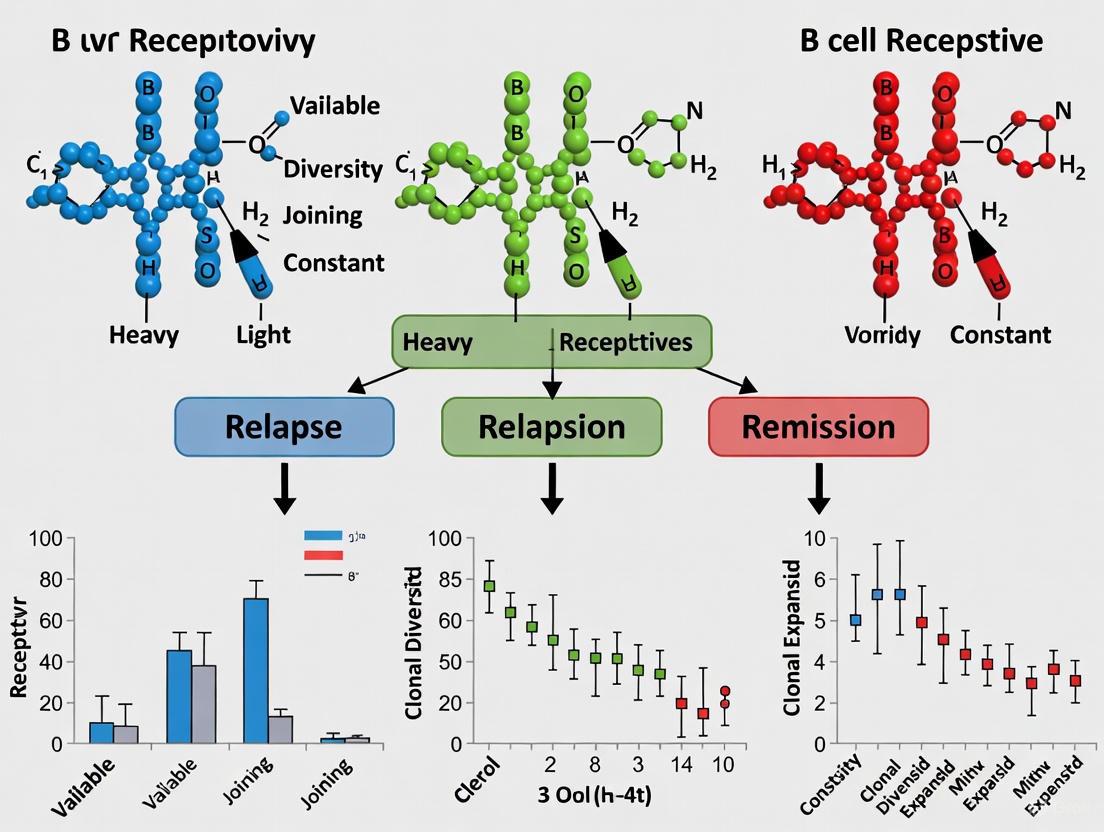
This review provides a comprehensive analysis of B cell receptor (BCR) repertoire dynamics in Multiple Sclerosis (MS), comparing the relapse and remission phases.
BCR Repertoire Dynamics in Multiple Sclerosis: A Comparative Analysis of Relapse vs. Remission for Diagnostic and Therapeutic Insight
Abstract
This review provides a comprehensive analysis of B cell receptor (BCR) repertoire dynamics in Multiple Sclerosis (MS), comparing the relapse and remission phases. We explore the foundational role of B cells in MS pathogenesis, where recent studies using next-generation sequencing (NGS) reveal that relapsing patients exhibit a distinct peripheral blood BCR repertoire characterized by lower diversity and a higher rate of somatic hypermutation. Methodologically, we detail the application of BCR repertoire sequencing, from library preparation and NGS platforms to specialized bioinformatics pipelines for error correction, clonal assignment, and analysis of repertoire properties. The article further addresses common troubleshooting and optimization challenges in Rep-seq studies. Finally, we validate these findings by examining their correlation with clinical disease activity and serum immunoglobulins, and discuss the comparative efficacy of B-cell-targeting therapies. This synthesis highlights the potential of BCR repertoire analysis as a source of diagnostic biomarkers and a guide for developing targeted immunotherapies, underscoring the need for studies in diverse populations to account for genetic and environmental influences.
The Critical Role of B Cells and BCR Repertoire in Multiple Sclerosis Pathogenesis
The understanding of B cells in central nervous system (NS) disorders has undergone a profound transformation over the past decade. Historically viewed primarily as antibody-producing factories, B cells are now recognized as sophisticated orchestrators of neuroinflammatory processes through multiple effector mechanisms. This paradigm shift has been largely driven by the remarkable clinical success of B cell-depleting therapies in multiple sclerosis (MS), which have demonstrated that B cells play central roles in disease pathogenesis beyond antibody production [1] [2]. The efficacy of these therapies, particularly those targeting the CD20 protein on B cells, has forced a fundamental reconsideration of MS as a purely T cell-mediated disease and highlighted the complex interplay between humoral and cellular immunity in neuroinflammation [1] [3].
The contemporary view of B cells in neuroinflammation encompasses a diverse array of functions, including antigen presentation, cytokine secretion, lymphoid neogenesis, and bidirectional communication with both innate and adaptive immune systems. These multifaceted roles are particularly evident in the context of multiple sclerosis, where B cells contribute to both acute inflammatory attacks and progressive neurodegenerative processes [2] [4]. This comprehensive analysis will examine the comparative features of B cell biology across neuroinflammatory states, with particular emphasis on the dynamic changes in B cell receptor repertoires during MS relapse and remission phases, and explore the mechanistic underpinnings of B cell-driven neuroinflammation.
Comparative Analysis of B Cell Receptor Repertoires in Relapse vs. Remission
Methodological Framework for BCR Repertoire Analysis
The investigation of B cell receptor (BCR) repertoire dynamics in multiple sclerosis relies on sophisticated next-generation sequencing (NGS) approaches that enable high-resolution characterization of B cell populations. The standard experimental protocol involves several critical steps: (1) peripheral blood collection from MS patients during clinically defined relapse and remission phases; (2) isolation of peripheral blood mononuclear cells (PBMCs) via density gradient centrifugation; (3) B cell enrichment using negative or positive selection strategies; (4) RNA/DNA extraction from purified B cells; (5) amplification of immunoglobulin variable regions using multiplex PCR primers; (6) high-throughput sequencing of amplified products; and (7) bioinformatic analysis of sequence data for clonality, diversity, and somatic hypermutation assessment [5]. This methodological pipeline allows researchers to capture the complex dynamics of the BCR repertoire and identify distinctive signatures associated with disease activity.
Quantitative Differences in BCR Repertoire Profiles
Recent investigations have revealed striking differences in B cell receptor repertoire characteristics between relapse and remission phases in multiple sclerosis patients. A 2024 comparative study employing next-generation sequencing demonstrated that relapsing MS patients exhibit significantly lower BCR diversity compared to patients in remission, suggesting clonal expansions during active disease phases [5]. Furthermore, B cells during relapse showed a substantially higher rate of somatic hypermutation (SHM), indicating active antigen-driven selection and affinity maturation processes. The study also identified a greater percentage of shared clonotypes among relapsing patients, pointing toward convergent B cell responses during disease exacerbations [5].
Table 1: B Cell Receptor Repertoire Characteristics in Relapse vs. Remission Phases of Multiple Sclerosis
| Parameter | Relapse Phase | Remission Phase | Healthy Controls | Significance |
|---|---|---|---|---|
| BCR Diversity | Significantly Lower | Moderate | Highest | p < 0.01 |
| Somatic Hypermutation Rate | Substantially Elevated | Moderate | Baseline | p < 0.001 |
| Clonal Expansion | Extensive | Limited | Minimal | p < 0.01 |
| Shared Clonotypes | Highest Percentage | Moderate | Lowest | p < 0.05 |
| IGHV4-32 Usage | Prominent | Reduced | Rare | p < 0.01 |
| IGLV3-21 Usage | Elevated | Moderate | Baseline | p < 0.05 |
The serological correlates of these BCR repertoire changes include elevated IgG and IgD levels in the serum of MS patients during remission, with IgG remaining elevated during relapse phases as well [5]. These findings suggest that altered B cell responses and potential class-switching events represent important features of MS immunopathology that persist even during clinically quiescent periods.
Disease-Specific BCR Signatures
Beyond these general repertoire characteristics, specific immunoglobulin gene segments have emerged as potential biomarkers for multiple sclerosis. The IGHV4-32 gene has been identified as a differential biomarker between MS and other inflammatory neurological diseases (OIND), while IGLV3-21 represents a potential MS-specific biomarker [5]. The identification of these disease-associated gene segments not only provides insights into the antigenic drivers of MS but also offers potential diagnostic utility for distinguishing MS from other neurological conditions with similar clinical presentations.
Antigen Presentation and T Cell Collaboration in B Cell-Mediated Neuroinflammation
Mechanisms of B Cell-Mediated Antigen Presentation
B cells function as highly efficient antigen-presenting cells (APCs) in the context of neuroinflammation, with a capacity for antigen presentation that can be up to 10,000-fold more efficient than other professional APCs due to their unique antigen processing machinery and B cell receptor-mediated antigen capture [6]. This remarkable efficiency stems from the BCR's ability to recognize and internalize specific antigens, which are then processed and loaded onto major histocompatibility complex (MHC) class II molecules for presentation to CD4+ T cells [1] [6]. In multiple sclerosis, B cells express increased levels of MHC proteins and co-stimulatory molecules, enhancing their capacity to activate autoreactive T cells [2].
The antigen-presenting function of B cells is particularly significant in light of the strong genetic association between MS and specific HLA class II molecules, particularly HLA-DR15 [1]. This haplotype encodes two heterodimeric proteins (DR2a and DR2b) that account for approximately half of the total genetic risk for developing MS [1]. Remarkably, B cells expressing HLA-DR15 molecules have been shown to present self-peptides derived from their own MHC molecules, creating a potential feed-forward loop for autoreactive T cell activation [1].
Table 2: Antigen Presentation Capabilities of Different Antigen-Presenting Cells in Neuroinflammation
| Cell Type | Antigen Uptake Mechanism | Antigen Processing Efficiency | MHC Expression in MS | T Cell Activation Capacity |
|---|---|---|---|---|
| B Cells | BCR-mediated endocytosis | Highly efficient (up to 10,000x) | Significantly upregulated | Extraordinarily potent |
| Dendritic Cells | Macropinocytosis, phagocytosis | Moderate | Moderately upregulated | Potent |
| Macrophages/Microglia | Phagocytosis, receptor-mediated endocytosis | Variable | Moderately upregulated | Moderate |
| Monocytes | Phagocytosis, pinocytosis | Limited | Mildly upregulated | Limited |
Molecular Mimicry and Cross-Reactive Immune Responses
A critical mechanism linking B cell antigen presentation to MS pathogenesis involves molecular mimicry, wherein immune responses targeting foreign antigens cross-react with self-structures in the central nervous system. Seminal research has demonstrated that HLA-DR15-restricted T cell clones from MS patients can recognize structurally similar peptides from myelin basic protein, Epstein-Barr virus (EBV), and other pathogens [1]. More recent work has identified RAS guanyl releasing protein-2 (RASGRP2) as a potential autoantigen in MS, with B cells presenting RASGRP2 peptides to autoreactive CD4+ T cells that subsequently migrate to the CNS [1].
The cross-reactive potential of these T cells extends beyond single antigens, with demonstrated reactivity against myelin basic protein, Epstein-Barr virus epitopes, and Akkermansia muciniphila (a commensal gut bacterium associated with MS) [1] [2]. This cross-reactivity follows an antigen hierarchy, with RASGRP2 serving as the strongest agonist, followed by Epstein-Barr virus and Akkermansia epitopes, while HLA-DR-derived self-peptides function as weak agonists [1]. This hierarchical response pattern suggests a mechanism whereby initial immune responses against foreign antigens may broaden over time to include progressively weaker self-antigens, potentially explaining the episodic nature of MS relapses and the phenomenon of epitope spreading.
Diagram 1: B Cell-Mediated T Cell Activation Pathway in Neuroinflammation. This schematic illustrates the sequential process by which B cells uptake, process, and present antigens to T cells, leading to T cell activation, CNS migration, and subsequent neuroinflammation.
B Cell Heterogeneity and Effector Functions in Neuroinflammatory Pathogenesis
Pro-inflammatory and Regulatory B Cell Subsets
B cells represent a highly heterogeneous population with functionally distinct subsets that can either promote or suppress neuroinflammatory responses. Pro-inflammatory B cells in multiple sclerosis include memory B cells and plasmablasts that produce elevated levels of pro-inflammatory cytokines such as interleukin-6 (IL-6), granulocyte-macrophage colony-stimulating factor (GM-CSF), and tumor necrosis factor-α (TNFα) [2]. These cells demonstrate increased expression of co-stimulatory molecules and enhanced antigen-presenting capacity, particularly within the CSF and CNS compartments [2] [4].
In contrast, regulatory B cells (Bregs) represent a functionally distinct subset characterized by their ability to produce anti-inflammatory cytokines such as IL-10, IL-35, and TGFβ [6] [7]. These cells can suppress pathogenic T cell responses, promote the development of regulatory T cells, and shift macrophage polarization toward an anti-inflammatory phenotype [7]. The balance between pro-inflammatory and regulatory B cell subsets appears disrupted in multiple sclerosis, with a relative deficiency of regulatory function during active disease phases [6].
CNS Compartmentalization of B Cell Responses
B cells in multiple sclerosis display distinct compartmentalization patterns, with clonally expanded populations found in the peripheral blood, cerebrospinal fluid, CNS parenchyma, and meningeal structures [4] [3]. Importantly, clonally related B cells can traffic between these compartments, suggesting ongoing bidirectional exchange and potential coordination of neuroinflammatory responses across the blood-brain barrier [4]. The meninges, in particular, have been identified as sites of ectopic lymphoid-like structures in progressive MS, containing organized aggregates of B cells, T cells, and plasma cells that may sustain chronic inflammation and contribute to cortical pathology [3].
The cerebrospinal fluid of MS patients shows a significant accumulation of B cells, particularly IgM-IgD- class-switched memory B cells and plasmablasts, which correlate with intrathecal IgG synthesis and the presence of oligoclonal bands [4]. These CSF B cells exhibit evidence of somatic hypermutation and affinity maturation, indicating antigen-driven selection within the CNS compartment [4].
Therapeutic Implications and Future Directions
B Cell-Depleting Therapies: Mechanisms and Limitations
The profound therapeutic benefits of B cell-depleting monoclonal antibodies (such as rituximab, ocrelizumab, and ofatumumab) in relapsing multiple sclerosis have provided compelling evidence for the pathogenic role of B cells in this disorder [1] [2]. These agents selectively target CD20-expressing mature B lymphocytes while sparing plasma cells, resulting in rapid and sustained depletion of peripheral B cells [2]. The clinical efficacy of these therapies is particularly noteworthy given that total immunoglobulin levels and oligoclonal bands typically persist despite treatment, suggesting that their mechanism of action extends beyond the reduction of antibody production [2].
The therapeutic effects of anti-CD20 therapies are likely mediated through multiple mechanisms, including: (1) reduction of antigen presentation to T cells; (2) decreased production of pro-inflammatory cytokines; (3) impairment of T cell activation and differentiation; (4) disruption of meningeal lymphoid aggregates; and (5) alteration of macrophage/microglia activation states [2] [3]. However, these therapies show limited efficacy in progressive forms of MS, suggesting that compartmentalized inflammation within the CNS may be refractory to peripherally administered antibodies [2].
Emerging Therapeutic Strategies and Research Tools
Current research efforts are focused on developing more targeted approaches to modulate pathogenic B cell responses while preserving protective functions. These include strategies to selectively deplete specific B cell subsets, inhibit B cell trafficking into the CNS, disrupt antigen presentation, and promote regulatory B cell functions [2] [3]. Additionally, investigations into the potential reparative effects of certain B cell populations, as demonstrated in traumatic brain injury models where B cell treatment promoted a neuroprotective microenvironment, may open new therapeutic avenues [7].
Table 3: Essential Research Reagents for B Cell Neuroimmunology Investigations
| Research Tool | Application | Key Utility in Neuroinflammation Research |
|---|---|---|
| Anti-CD20 monoclonal antibodies | B cell depletion studies | Demonstrate causal role of B cells in disease pathogenesis |
| Next-generation sequencing platforms | BCR repertoire analysis | Identify clonal expansions and disease-associated signatures |
| MHC class II tetramers | Antigen-specific B cell tracking | Isolate and characterize autoreactive B cell populations |
| Cytokine multiplex assays | B cell cytokine profiling | Define pro-inflammatory vs regulatory B cell phenotypes |
| Flow cytometry panels | B cell subset characterization | Distinguish memory, naive, plasma cell, and Breg populations |
| Humanized mouse models | In vivo functional studies | Investigate human B cell responses in neuroinflammatory context |
Diagram 2: B Cell Effector Mechanisms in Neuroinflammation. This diagram illustrates the diverse pathogenic mechanisms employed by B cells in neuroinflammatory diseases, including antibody production, antigen presentation, cytokine secretion, and immune complex formation.
The comprehensive analysis of B cell functions in neuroinflammation reveals these lymphocytes as central orchestrators of pathological processes in multiple sclerosis and related disorders. Through their roles in antigen presentation, cytokine secretion, antibody production, and organization of tertiary lymphoid structures, B cells integrate multiple arms of the immune response and bridge peripheral and CNS inflammation. The dynamic changes in B cell receptor repertoires during relapse versus remission phases provide critical insights into disease mechanisms and offer potential biomarkers for monitoring disease activity and treatment response.
Future research directions should focus on elucidating the specific antigenic targets driving pathogenic B cell responses in MS, understanding the factors governing B cell trafficking and compartmentalization within the CNS, and developing more selective therapeutic strategies that target pathogenic B cell functions while preserving protective immunity. The continued investigation of B cells as key drivers of neuroinflammation will undoubtedly yield important insights into disease pathogenesis and novel therapeutic opportunities for these disabling neurological conditions.
B cell receptors (BCRs) are membrane-bound immunoglobulins that serve as the primary antigen recognition molecules on B lymphocytes, forming a critical component of the adaptive immune system. Each B cell expresses a unique BCR, and the collective ensemble of BCRs throughout the body constitutes the "BCR repertoire." The structural architecture of BCR consists of two identical heavy chains and two identical light chains, forming a Y-shaped molecular complex. Each chain contains constant regions and variable regions, with the latter comprising three complementarity-determining regions (CDR1, CDR2, and CDR3) that collectively form the antigen-binding site responsible for specific antigen recognition [8].
The extraordinary diversity of BCR repertoires stems from sophisticated genetic mechanisms that operate during B cell development. This diversity generation begins with V(D)J recombination, a somatic recombination process that assembles variable (V), diversity (D), and joining (J) gene segments from the immunoglobulin heavy chain locus (IGH) on chromosome 14, and V and J segments from the light chain loci (IGL or IGK) [9]. In humans, this process draws from approximately 44 functional IGHV gene segments, 25 D segments, and 6 J segments for the heavy chain, creating immense combinatorial diversity [9]. Additional junctional diversity is introduced through random deletion or insertion of nucleotides at segment junctions, further expanding the potential repertoire. The theoretical diversity resulting from these mechanisms is staggering, with models predicting at least 10¹⁸ possible unique BCR sequences—far exceeding the total number of B cells in the human body [9].
Following antigen encounter, BCRs undergo further diversification through affinity maturation, an accelerated evolutionary process involving somatic hypermutation (SHM) and selection. SHM introduces point mutations at rates of approximately 10⁻³ changes per nucleotide per cell division—roughly one mutation per cell division in the relevant locus—driven by the enzyme activation-induced cytidine deaminase (AID) [9]. This process is notably context-dependent, with mutation probability strongly influenced by neighboring nucleotides [9]. Through iterative cycles of mutation and selection, BCRs progressively improve their antigen-binding affinity, enabling the immune system to refine its response against pathogens and other antigens with remarkable precision.
Methodologies for BCR Repertoire Analysis
Sequencing Technologies and Experimental Design
Next-generation sequencing (NGS) of BCR repertoires has revolutionized our ability to study adaptive immune responses at unprecedented depth and resolution. The experimental workflow begins with critical decisions regarding template selection, each with distinct advantages and limitations. Genomic DNA (gDNA) templates provide stability and capture both productive and nonproductive BCR rearrangements, enabling estimation of total repertoire diversity and accurate clonal quantification since each cell contributes a single template [10]. However, gDNA-based approaches cannot assess transcriptional activity or functional immune responses. In contrast, RNA/cDNA templates reflect the actively expressed, functional repertoire, making them ideal for studying dynamic immune responses, though they are more prone to technical biases during reverse transcription and may not represent the complete clonal diversity [10].
Two primary sequencing strategies dominate BCR repertoire analysis: bulk sequencing and single-cell sequencing. Bulk sequencing, which pools nucleic acids from cell populations, offers a cost-effective, scalable approach for profiling overall repertoire diversity and is well-suited for large-scale studies [10]. However, this method loses information about native heavy and light chain pairing—a critical limitation for functional studies. Single-cell sequencing preserves this pairing information and provides cellular context, enabling deeper insights into BCR functionality and lineage relationships, though at higher cost and computational complexity [10].
Another fundamental methodological consideration is the target region for sequencing. CDR3-only sequencing focuses on the most variable and antigen-specific region of the BCR, providing efficient profiling of clonal diversity with reduced sequencing costs and simpler bioinformatics requirements [10]. Conversely, full-length sequencing captures the complete variable region, including CDR1, CDR2, and framework regions, enabling comprehensive analysis of receptor functionality, somatic hypermutation patterns, and native chain pairing—information crucial for understanding antigen specificity and developing therapeutic antibodies [10].
Bioinformatics Processing and Analysis
The analysis of BCR sequencing data requires specialized computational pipelines to transform raw sequencing reads into biologically interpretable repertoire data. The process typically involves three major stages: pre-processing, determination of population structure, and repertoire analysis [11].
Pre-processing begins with quality control of raw FASTQ files, removal of low-quality reads and bases, and identification and annotation of primer sequences. The incorporation of unique molecular identifiers (UMIs) is crucial for accurate error correction and elimination of PCR amplification biases [11]. For paired-end sequencing data, reads are assembled to create consensus sequences, and UMI-based clustering helps generate accurate molecular counts, distinguishing true biological variants from technical artifacts [11].
Population structure analysis involves several critical steps. V(D)J assignment maps sequences to their germline gene segments (V, D, and J), which can be challenging due to somatic hypermutation and the need to account for novel alleles [11]. Clonal grouping then clusters sequences that originate from the same progenitor B cell, typically based on shared V and J genes and similar CDR3 lengths, to define clonal lineages [11]. Lineage tree construction reconstructs the phylogenetic relationships within clones, visualizing the evolutionary history of somatic hypermutation and selection during affinity maturation [11].
Advanced repertoire analysis includes somatic hypermutation modeling to characterize mutation patterns and identify AID hotspot motifs; selection analysis to detect evidence of positive or negative selection in framework and complementarity-determining regions; and analysis of stereotyped or convergent responses to identify similar antibody sequences across individuals, which may indicate common immune responses to specific antigens [11].
Table 1: Key Bioinformatics Tools for BCR Repertoire Analysis
| Analysis Stage | Tool/Approach | Function | Considerations |
|---|---|---|---|
| Pre-processing | pRESTO/Change-O [11] | Quality control, UMI handling, primer masking | Modular pipeline; handles annotation propagation |
| V(D)J Assignment | IMGT/HighV-QUEST [11] | Germline gene segment identification | Gold standard reference; requires handling of novel alleles |
| Clonal Grouping | CDR3 similarity + V/J identity [11] | Groups sequences into clonal families | Threshold selection critical; impacts downstream analysis |
| Lineage Tree Construction | Phylogenetic algorithms [11] | Reconstructs mutational history within clones | Must account for BCR-specific biology |
| SHM Analysis | Mutation frequency models [11] | Quantifies and characterizes hypermutation | Context-dependent mutation models improve accuracy |
BCR Repertoire Dynamics in Multiple Sclerosis
Comparative Analysis of Relapse versus Remission
Multiple sclerosis (MS) is a chronic immune-mediated disorder of the central nervous system characterized by demyelination, axonal loss, and neuroinflammation [12]. The role of B cells and their receptors in MS pathogenesis has gained increasing recognition, supported by the clinical efficacy of B-cell depleting therapies such as ocrelizumab and rituximab [13]. Recent comparative studies of BCR repertoires during relapse and remission phases have revealed distinctive repertoire patterns associated with disease activity.
A 2024 study by Pérez-Saldívar et al. directly compared peripheral blood BCR repertoires from 11 MS patients during relapse and remission phases, alongside controls with other inflammatory neurological diseases (OIND) and healthy subjects (HCs) [5]. This research demonstrated that relapsing MS patients exhibited significantly lower BCR diversity and higher somatic hypermutation (SHM) rates compared to other study groups [5]. Within the relapse group, researchers observed the highest percentage of shared clonotypes, suggesting clonal expansions of antigen-experienced B cells [5]. The study also identified specific genetic signatures, including increased usage of IGHV4-32 and IGL3-21 genes as potential differential biomarkers for MS [5].
Parallel investigations of B cell-depleting therapies have provided additional insights into BCR repertoire dynamics. A 2025 study tracking patients before and after ocrelizumab treatment revealed that peripheral immunoglobulin heavy chain repertoires six months post-depletion showed a bimodal distribution: some patients had few B cells with high SHM levels and significant sequence overlap with baseline samples, indicating incomplete depletion of differentiated B cells; others showed higher numbers of less differentiated B cells, suggesting reconstitution from germline sources [14]. This pattern highlights the resilience of certain B cell subsets to depletion therapy and their potential role in persistent disease activity.
Table 2: BCR Repertoire Characteristics in MS Clinical Phases
| Repertoire Feature | Relapse Phase | Remission Phase | Technical Measurement |
|---|---|---|---|
| Diversity | Lower [5] | Higher | Shannon diversity index; clonotype counts |
| Somatic Hypermutation | Higher rate [5] | Lower rate | Mutation frequency in V region compared to germline |
| Clonal Expansion | Increased shared clonotypes [5] | More distributed repertoire | Clonality index; top clone frequency |
| IGHD Gene Usage | IGHV4-32 increased [5] | Normalized pattern | V gene frequency from alignment data |
| B Cell Numbers | Variable | Variable | Absolute counts from sequencing |
Technical Protocols for MS BCR Repertoire Studies
Sample Collection and Processing Protocol:
- Sample Types: Collect peripheral blood mononuclear cells (PBMCs) via venipuncture with Ficoll density gradient separation. Cerebrospinal fluid (CSF) collection via lumbar puncture provides crucial CNS-specific repertoire data [13].
- Cell Isolation: Use CD19+ magnetic bead separation to enrich B cells from PBMCs, improving sequencing depth for low-abundance populations.
- Nucleic Acid Extraction: Extract gDNA using silica-column methods for repertoire diversity studies or RNA using Trizol-based methods for expression-focused analyses. RNA extraction should include DNase treatment to eliminate genomic contamination.
- Library Preparation: For RNA-based approaches, employ 5' RACE PCR with isotype-specific constant region primers to amplify all V regions without bias [11]. Incorporate unique molecular identifiers (UMIs) during reverse transcription to control for PCR amplification biases and enable error correction.
- Sequencing: Utilize paired-end sequencing on Illumina platforms (2x150bp or 2x250bp) to ensure sufficient read length for V(D)J region coverage.
Bioinformatics Analysis Pipeline:
- Pre-processing: Apply quality filtering (Phred score >30) and UMI-based consensus building using tools like pRESTO [11].
- V(D)J Assignment: Align sequences to IMGT reference database using IgBLAST or IMGT/HighV-QUEST, allowing for somatic hypermutation and novel allele detection [11].
- Clonal Grouping: Cluster sequences into clonal lineages based on shared V/J genes and ≥85% CDR3 nucleotide identity.
- SHM Analysis: Calculate mutation frequencies relative to germline sequences and identify AID hotspot motifs (e.g., RGYW/WRCY).
- Repertoire Metrics: Compute diversity indices (Shannon, Simpson), clonality, and isotype distribution for comparative analyses between clinical phases.
Signaling Pathways and Visualization
BCR Signaling Cascade
The BCR signaling cascade is initiated when the receptor binds its cognate antigen, triggering a series of intracellular events that lead to B cell activation, proliferation, and differentiation. This process begins with BCR cross-linking by multivalent antigens, which brings multiple receptors into proximity and enables phosphorylation of immunoreceptor tyrosine-based activation motifs (ITAMs) on the cytoplasmic domains of Igα (CD79a) and Igβ (CD79b) by Src-family tyrosine kinases (Lyn, Fyn, Blk) [8].
The phosphorylated ITAMs recruit and activate syk tyrosine kinase, which phosphorylates downstream adaptor proteins including B-cell linker (BLNK) and B-cell adapter for phosphoinositide 3-kinase (BCAP) [8]. These events trigger two critical signaling pathways: the phospholipase C-gamma (PLC-γ) pathway and the PI3K pathway. PLC-γ hydrolyzes phosphatidylinositol 4,5-bisphosphate (PIP2) to generate inositol trisphosphate (IP3) and diacylglycerol (DAG). IP3 binds to receptors on the endoplasmic reticulum, causing calcium release and activation of calcineurin and NFAT, while DAG activates protein kinase C (PKC) and subsequently NF-κB [8]. Simultaneously, PI3K activation generates PIP3, recruiting pleckstrin homology domain-containing proteins such as Akt and Btk, which promote cell survival and proliferation [8].
The following diagram illustrates the core BCR signaling pathway:
BCR Diversity Generation Mechanisms
The generation of BCR diversity involves multiple molecular mechanisms operating at different stages of B cell development and activation. The initial diversity is created through V(D)J recombination during B cell development in the bone marrow, where one each of the V, D (for heavy chains), and J gene segments are randomly selected and joined together [9]. This process is mediated by recombination-activating genes (RAG1/RAG2) and introduces additional junctional diversity through imprecise joining and addition of non-templated (N) nucleotides [9].
After antigen encounter, B cells migrate to germinal centers where they undergo somatic hypermutation (SHM), an process driven by activation-induced cytidine deaminase (AID) that introduces point mutations primarily in the variable regions of immunoglobulin genes at a rate approximately 10⁶-fold higher than the basal mutation rate [9]. AID preferentially targets specific motifs (e.g., RGYW/WRCY) and initiates mutation by deaminating cytosine to uracil, leading to base substitution during repair [9].
Simultaneously, B cells undergo class switch recombination (CSR), another AID-dependent process that changes the immunoglobulin isotype from IgM/IgD to IgG, IgA, or IgE by replacing the constant region gene, altering effector functions without changing antigen specificity [9].
The following diagram illustrates these diversity generation mechanisms:
Research Reagent Solutions for BCR Repertoire Studies
Table 3: Essential Research Reagents for BCR Repertoire Analysis
| Reagent Category | Specific Examples | Function/Application | Technical Considerations |
|---|---|---|---|
| Sample Collection | CD19+ magnetic beads [14] | B cell enrichment from PBMCs | Purity critical for sequencing efficiency |
| Nucleic Acid Extraction | TRIzol (RNA), Silica-column (gDNA) [10] | Nucleic acid isolation | RNA integrity number (RIN) >8 for reliable results |
| Library Preparation | 5' RACE primers, UMI adapters [11] | Amplification of BCR transcripts | UMI length (8-12bp) balances complexity and sequencing cost |
| Sequencing Platforms | Illumina MiSeq/Novaseq [11] | High-throughput sequencing | 2x150bp minimum for CDR3 coverage; 2x300bp for full-length |
| V(D)J Reference | IMGT database [11] | Germline gene assignment | Regular updates needed for novel allele detection |
| Analysis Software | pRESTO, Change-O, IgBLAST [11] | Bioinformatics pipeline | Integration improves workflow efficiency |
The comprehensive analysis of B cell receptor repertoires provides unprecedented insights into the adaptive immune system's dynamics in health and disease. In multiple sclerosis research, comparative BCR repertoire profiling during relapse and remission phases has revealed distinctive signatures of disease activity, including reduced diversity, elevated somatic hypermutation, and clonal expansions during symptomatic periods. The identification of specific genetic biomarkers such as IGHV4-32 and IGL3-21 usage further highlights the potential clinical utility of BCR repertoire analysis in MS diagnosis and monitoring [5].
Methodological advances in sequencing technologies, particularly the combination of single-cell approaches with UMI-based error correction, have dramatically improved the accuracy and resolution of repertoire studies. These technical developments, coupled with standardized bioinformatics pipelines, now enable robust detection of subtle changes in BCR architecture in response to therapeutic interventions such as B-cell depletion therapy [14] [11]. The emerging understanding of BCR dynamics in MS underscores the complex role of B cells beyond antibody production, including antigen presentation, cytokine secretion, and formation of ectopic lymphoid structures in the CNS [13].
As BCR repertoire analysis continues to evolve, integration with other omics technologies and functional validation studies will be essential to fully decipher the mechanistic links between BCR signatures and disease pathogenesis. These advances hold promise for developing BCR-based biomarkers for disease activity, treatment response, and prognosis in multiple sclerosis and other immune-mediated disorders, ultimately contributing to more personalized therapeutic approaches.
B cell receptor (BCR) repertoire analysis provides critical insights into the immunological mechanisms driving multiple sclerosis (MS) pathogenesis. This comparative guide examines the distinct molecular signatures of BCR repertoires during relapse and remission phases in MS, synthesizing evidence from high-throughput sequencing studies to delineate pathological B cell dynamics. During relapse, the peripheral blood BCR repertoire demonstrates significantly lower diversity and a higher rate of somatic hypermutation compared to remission periods and healthy controls. Clonal expansion patterns and specific variable gene segment usage further differentiate these clinical states, with IGHV4-34 and IGHV4-32 emerging as potential disease-associated biomarkers. This analysis integrates quantitative repertoire metrics, experimental methodologies, and emerging clinical applications to inform both basic research and therapeutic development, providing a framework for understanding how B cell immunobiology contributes to MS disease activity.
Multiple sclerosis is a chronic inflammatory and neurodegenerative disease of the central nervous system characterized by relapsing-remitting or progressive courses. While historically considered T cell-mediated, the remarkable efficacy of B cell-depleting therapies has underscored the crucial role of B cells in MS pathogenesis [5] [15]. The BCR repertoire—the collective totality of B cell receptors in an individual—serves as a dynamic record of immunological history, antigen exposure, and cellular selection processes. Each BCR is generated through V(D)J recombination, junctional diversity, and somatic hypermutation (SHM), creating a diverse repertoire capable of recognizing countless antigens [16] [17].
Advances in next-generation sequencing (NGS) now enable comprehensive characterization of BCR repertoires at unprecedented depth and scale. These technological innovations have revealed that the BCR repertoire represents not just a catalog of potential antigen specificities, but also a reflection of underlying B cell biology and pathology in autoimmune conditions [16] [17]. In MS, particular interest has focused on how BCR characteristics differ between clinical states, potentially revealing mechanisms driving disease exacerbation and resolution.
This guide systematically compares the architectural features of BCR repertoires during relapse versus remission phases in MS, integrating quantitative data across multiple studies to define the molecular signature of disease activity. Understanding these repertoire landscapes provides crucial insights for developing biomarkers, identifying therapeutic targets, and personalizing treatment strategies.
Methodological Framework: Experimental Approaches for BCR Repertoire Analysis
Sample Collection and Processing
Comparative BCR repertoire studies typically employ peripheral blood samples collected from RRMS patients during clinically defined relapse and remission phases. Relapse is generally characterized by the appearance of new or worsening neurological symptoms lasting ≥24 hours in the absence of fever or infection, while remission represents clinical stability following relapse resolution [5] [18]. Most protocols isolate peripheral blood mononuclear cells (PBMCs) via density gradient centrifugation, with some studies specifically sorting B cell subsets (e.g., naïve, memory, plasmablasts) using fluorescence-activated cell sorting (FACS) based on surface markers (CD19, CD27, CD38, IgD) [15] [16].
Sequencing Strategies and Bioinformatics
The standard methodological workflow for BCR repertoire analysis encompasses RNA/DNA extraction, library preparation targeting immunoglobulin genes, high-throughput sequencing, and specialized bioinformatic processing:
Library Preparation: Most studies employ multiplex PCR systems using V gene family-specific primers or 5' rapid amplification of cDNA ends (RACE) protocols to amplify rearranged V(D)J segments from IGH, IGK, or IGL loci. Template-switching mechanisms sometimes incorporate unique molecular identifiers (UMIs) to correct for PCR amplification bias and enable precise clonal tracking [14] [19].
Sequencing Platforms: Illumina MiSeq (2×300 bp) and NextSeq platforms are most commonly used, providing sufficient read length to cover the entire complementarity-determining region 3 (CDR3), the most variable part of the BCR that primarily determines antigen specificity [5] [19].
Bioinformatic Analysis: Raw sequencing data undergoes quality filtering, read assembly, and V(D)J gene assignment using tools like IgBLAST against IMGT reference databases. Clonal grouping typically clusters sequences sharing the same V and J genes with ≥85% nucleotide identity in CDR3 regions. Downstream analysis quantifies repertoire diversity, clonality, SHM frequency, V/J gene usage, and CDR3 physicochemical properties [15] [19].
Table 1: Core Experimental Parameters in BCR Repertoire Studies
| Parameter | Typical Specifications | Key Considerations |
|---|---|---|
| Sample Type | Peripheral blood mononuclear cells (PBMCs) or sorted B cell subsets | CSF provides compartment-specific data but is less accessible |
| Sequencing Target | Immunoglobulin heavy chain (IGH) most common; occasionally light chains (IGK/IGL) | IGH provides most comprehensive repertoire representation |
| Sequencing Depth | 50,000-100,000 reads per sample (varies by B cell count) | Sufficient depth required to detect rare clones |
| Molecular Barcoding | Unique Molecular Identifiers (UMIs) in newer protocols | Reduces PCR amplification bias; improves accuracy |
| Bioinformatic Tools | IgBLAST, IMGT/HighV-QUEST, Change-O, Immcantation | Standardized pipelines enable cross-study comparisons |
Figure 1: Experimental workflow for comparative BCR repertoire analysis in MS, encompassing sample processing, sequencing, bioinformatic analysis, and data interpretation phases.
Comparative Analysis: BCR Repertoire Signatures in Relapse versus Remission
Repertoire Diversity and Clonality
The overall architecture of the BCR repertoire demonstrates fundamental differences between relapse and remission phases in MS. During relapse, the repertoire exhibits significantly lower diversity, indicating oligoclonal expansion of specific B cell populations. This contracted diversity is accompanied by a higher percentage of shared clonotypes between cells, suggesting antigen-driven selection and expansion [5] [18]. In contrast, remission phases are characterized by a more diverse, polyclonal repertoire resembling patterns observed in healthy controls.
Table 2: Comparative BCR Repertoire Metrics in Relapse vs. Remission
| Repertoire Feature | Relapse Phase | Remission Phase | Healthy Controls | Measurement Method |
|---|---|---|---|---|
| Diversity | Significantly lower | Higher (similar to HC) | Reference standard | Shannon entropy, D50 index, clonality metrics |
| Somatic Hypermutation | Higher rate | Lower rate | Intermediate | Nucleotide mutations from germline per sequence |
| Clonal Expansion | Increased | Reduced | Minimal | Top 10% clone fraction, shared clonotype percentage |
| Serum IgG | Elevated | Elevated (less than relapse) | Normal | ELISA quantification |
| Serum IgD | Not elevated | Elevated | Normal | ELISA quantification |
Somatic Hypermutation Patterns
The frequency and distribution of somatic hypermutations (SHM) in BCR sequences provide insights into antigen exposure and germinal center activity. During relapse, MS patients demonstrate a higher rate of SHM in their peripheral blood BCR repertoire compared to both remission phases and healthy controls [5]. This elevated mutation burden suggests increased antigen-driven selection and affinity maturation during disease activity. Particularly high SHM frequencies are observed in specific B cell subsets, including class-switched memory B cells and plasmablasts during active disease [16].
The pattern of SHM also differs between disease phases. In remission, the SHM rate decreases but does not fully normalize, indicating persistent abnormalities in B cell selection. Interestingly, regulatory B cell subsets (such as transitional Bregs with CD19+CD24highCD38high phenotype) in highly active MS show a lower SHM burden in their BCRs compared to those from healthy donors, suggesting impaired maturation of regulatory populations during active disease [15].
Variable Gene Usage Biases
Specific immunoglobulin variable gene segments demonstrate differential usage between relapse and remission phases. The IGHV4 family, particularly IGHV4-34 and IGHV4-32, shows increased utilization during relapse compared to remission [5] [18] [16]. IGHV4-34 is notable for its intrinsic autoreactive properties, as its germline-encoded sequence can recognize self-antigens on hematopoietic cells, and it is normally negatively selected during B cell development. Its increased presence during MS relapse suggests breakdown of tolerance mechanisms [16].
In the relapse phase, the IGHV4-32 gene has been identified as a potential differential biomarker distinguishing MS from other inflammatory neurological diseases (OIND), while IGLV3-21 may serve as a more general MS biomarker [5] [18]. These gene usage biases appear consistent across diverse populations, though some studies note important variations in non-Caucasian cohorts, highlighting influences of genetic background and environmental exposures on repertoire composition [5].
CDR3 Characteristics and B Cell Subset Distribution
The complementarity-determining region 3 (CDR3) constitutes the most variable part of the BCR and primarily determines antigen specificity. In MS, CDR3 length distributions differ between B cell subsets and disease phases. During relapse, class-switched memory B cells and plasmablasts exhibit longer CDR3 regions compared to healthy controls, suggesting breakdown of peripheral tolerance checkpoints that normally eliminate B cells with elongated CDR3s due to their increased autoreactivity potential [16].
B cell subset distribution also shifts between disease phases. Transitional CD19+CD24highCD38high B cells are increased in frequency during active disease, while differentiated CD27+ cells within this transitional subset are decreased compared to healthy donors [15]. This pattern suggests impaired maturation of regulatory B cells during MS progression, potentially contributing to inflammatory activity.
The Scientist's Toolkit: Essential Research Reagents and Solutions
Table 3: Key Research Reagents for BCR Repertoire Studies
| Reagent Category | Specific Examples | Research Application | Technical Considerations |
|---|---|---|---|
| Cell Isolation | Anti-CD19, CD27, CD38, CD24, IgD antibodies | B cell subset purification via FACS | Panel design critical for subset resolution |
| Sequencing Library Prep | IGHV family-specific primers, template-switch oligos, UMIs | Amplification of rearranged V(D)J segments | UMI incorporation reduces PCR bias |
| Bioinformatic Tools | IgBLAST, IMGT/HighV-QUEST, Change-O, Immcantation | V(D)J assignment, clonal grouping | Standardized pipelines enable reproducibility |
| Validation Reagents | Antigen microarrays, ELISA for serum immunoglobulins | Functional validation of repertoire findings | Confirms biological relevance of sequences |
Signaling Pathways and Biological Mechanisms
BCR signaling dynamics and downstream pathway activation differ substantially between relapse and remission phases in MS. During disease activity, B cells demonstrate enhanced responsiveness to BCR engagement, potentially contributing to pathogenic activation and autoreactivity.
Figure 2: BCR signaling pathway in MS relapse, highlighting key activation nodes and therapeutic intervention points. During relapse, enhanced signaling through BTK, SYK, and downstream pathways promotes clonal expansion, somatic hypermutation, and plasmablast differentiation.
The BCR signaling pathway illustrates how antigen engagement triggers intracellular cascades that promote B cell activation, proliferation, and differentiation. During relapse, this pathway demonstrates heightened activity, particularly through Bruton's tyrosine kinase (BTK)-dependent signaling. BTK inhibitors represent an emerging therapeutic class that targets this pathway in both B cells and myeloid cells, potentially addressing compartmentalized inflammation within the central nervous system [20].
Therapeutic interventions like anti-CD20 antibodies (ocrelizumab, rituximab) and BTK inhibitors (evobrutinib, tolebrutinib) differentially impact BCR signaling and repertoire composition. Anti-CD20 therapies deplete circulating B cells, leading to repertoire reconstitution dominated by naïve B cells with reduced clonality and SHM upon repopulation [14] [19]. In contrast, BTK inhibitors modulate BCR signaling without direct cellular depletion, potentially affecting antigen presentation and cytokine production functions of B cells [20].
Clinical Applications and Therapeutic Implications
BCR repertoire analysis extends beyond basic research to emerging clinical applications in MS management. The distinct repertoire signatures of relapse versus remission phases offer potential as biomarkers for disease activity monitoring, potentially complementing or surpassing conventional clinical and radiological assessments [5] [18]. Specific features like elevated IGHV4-34 usage and increased SHM could serve as early indicators of impending relapse or treatment response.
BCR repertoire profiling also informs therapeutic decision-making. The persistence of expanded clones during apparent remission may indicate subclinical disease activity and predict future relapse risk [5]. Monitoring repertoire normalization during treatment may provide a sensitive measure of therapeutic efficacy, potentially guiding treatment intensification or switching. For patients receiving B cell-depleting therapies, repertoire characteristics during repopulation phases may help optimize retreatment timing and identify reconstitution of potentially pathogenic clones [14] [19].
The compartmentalization of BCR repertoires between peripheral blood and cerebrospinal fluid (CSF) provides insights into disease mechanisms. CSF-resident B cells often show distinct clonal expansions with features of antigen-driven selection, suggesting localized immune responses within the CNS [14]. Interestingly, some CNS-resident B cell populations and CD20dim T cells with tissue-resident memory phenotypes demonstrate relative resistance to anti-CD20 therapies, potentially explaining treatment non-response or progression independent of relapse activity (PIRA) in some patients [14]. These compartmentalized populations represent potential targets for next-generation therapies with enhanced CNS penetration.
Comparative analysis of BCR repertoires in relapse versus remission phases of MS reveals fundamental differences in repertoire architecture, somatic mutation patterns, variable gene usage, and signaling pathway activation. The relapse phase is characterized by oligoclonal expansions with heightened somatic hypermutation and biased IGHV4 family usage, particularly IGHV4-34 and IGHV4-32. These signatures reflect antigen-driven B cell selection and affinity maturation during disease activity, providing molecular insights into MS pathogenesis.
Methodological standardization remains essential for translating BCR repertoire analysis into clinical practice. Consistent sampling protocols, sequencing approaches, and bioinformatic pipelines will enable cross-study comparisons and biomarker validation. Future research directions should include longitudinal tracking of repertoire dynamics through disease phases, integration with T cell receptor repertoire data, and correlation with radiographic and clinical outcomes. As BCR-targeted therapies continue to evolve, repertoire analysis will play an increasingly important role in guiding personalized treatment strategies for MS patients.
Multiple sclerosis (MS) is a chronic inflammatory and demyelinating disease of the central nervous system (CNS) characterized by an autoimmune response against components of the myelin sheaths [18]. The critical role of B cells in MS pathogenesis is well-established, supported by the clinical efficacy of B-cell depletion therapies and the persistent presence of oligoclonal bands in patient cerebrospinal fluid (CSF) [21]. The B-cell receptor (BCR), a membrane-bound immunoglobulin, enables antigen recognition and triggers B-cell activation, proliferation, and differentiation. Each BCR consists of two heavy chains and two light chains, containing variable regions encoded by recombined immunoglobulin heavy variable (IGHV) and immunoglobulin light variable (IGLV or IGKV) genes [16]. The collection of BCRs within an individual constitutes the BCR repertoire, reflecting the immune system's history and state. Advances in high-throughput sequencing now allow detailed characterization of this repertoire, revealing distinct patterns associated with disease activity, specific clinical phases, and potential pathogenic mechanisms in MS [18] [22]. This guide synthesizes current research identifying disease-associated IGHV and IGLV genes, compares their expression across disease states, details experimental protocols for their discovery, and outlines essential research tools for continued investigation.
Comparative Analysis of MS-Associated Immunoglobulin Genes
The B cell receptor repertoire exhibits distinct characteristics when comparing MS patients to healthy controls and other neurological diseases. Specific IGHV and IGLV genes demonstrate differential expression and usage patterns linked to MS disease status.
Table 1: Disease-Associated IGHV and IGLV Genes in Multiple Sclerosis
| Gene | Gene Type | Association | Study Findings | Potential Clinical Utility |
|---|---|---|---|---|
| IGHV4-32 | Heavy Chain | MS vs. Other Inflammatory Neurological Diseases (OIND) | Identified as a potential differential biomarker; showed significant differential usage [18] [5]. | Differential diagnosis |
| IGLV3-21 | Light Chain (Lambda) | Multiple Sclerosis | Identified as a potential specific biomarker for MS [18] [5]. | Diagnostic biomarker |
| IGHV4-34 | Heavy Chain | Autoimmunity (e.g., SLE); potential cross-relevance | Germline sequence has self-antigen binding property; often eliminated from memory B cells by negative selection; elevated in other autoimmune conditions [16]. | Pathogenesis indicator |
| IGHV4-59 | Heavy Chain | MS and EBV cross-reactivity | Found in LMP1-cross-reactive anti-myelin autoantibodies; suggested as a hallmark of an EBV-specific B-cell subpopulation involved in MS triggering [23]. | Understanding pathogen trigger |
| IGHV3 family | Heavy Chain | MS IgG aggregates | IgG aggregates in MS plasma, enriched for IgG1/IgG3, show mutations in the Framework Region 3 (FR3) of IGHV3 genes [21]. | Component of unique IgG structure |
Beyond individual genes, the global properties of the BCR repertoire differ in MS. During relapse, the peripheral blood BCR repertoire of MS patients shows lower diversity and a higher rate of somatic hypermutation (SHM) compared to periods of remission, patients with other inflammatory neurological diseases, and healthy subjects [18]. Furthermore, relapsing patients exhibit the highest percentage of shared B-cell clonotypes, suggesting the expansion of a specific set of B cells during active disease [18].
Table 2: Global BCR Repertoire Features in MS Relapse vs. Remission
| Repertoire Feature | Relapse Phase | Remission Phase | Comparison Groups |
|---|---|---|---|
| Diversity | Lower [18] | Higher | OIND and Healthy Controls |
| Somatic Hypermutation (SHM) Rate | Higher [18] | Lower | OIND and Healthy Controls |
| Clonality (Shared Clonotypes) | Highest percentage observed [18] | Lower | Within relapsing MS group |
| Serum Immunoglobulins | Elevated IgG [18] | Elevated IgG and IgD [18] | Healthy Controls |
Experimental Protocols for BCR Repertoire Analysis
Identifying disease-associated genes requires sophisticated methodologies to capture the immense diversity of the BCR repertoire. The following sections detail the key experimental and analytical workflows.
Sample Collection and B-Cell Isolation
The initial phase focuses on obtaining high-quality B-cell samples from relevant compartments.
- Sample Types: Studies typically use peripheral blood mononuclear cells (PBMCs) isolated from patient blood samples. For MS-specific investigations, paired samples during relapse and remission are crucial [18]. Cerebrospinal fluid (CSF) and, where available, brain tissue can provide insights into the compartmentalized immune response.
- Cell Isolation: PBMCs are isolated via density gradient centrifugation (e.g., using Ficoll). B-cell subsets, such as memory B cells (e.g., CD27-positive cells) or naive B cells, can be further purified using fluorescence-activated cell sorting (FACS) or magnetic-activated cell sorting (MACS) with specific antibody panels [24] [19]. For example, one protocol used a memory B-cell isolation kit to enrich CD27+ circulating memory B cells from PBMCs [24].
Library Preparation and Next-Generation Sequencing (NGS)
This is the core step for capturing BCR sequence diversity.
- RNA Extraction and cDNA Synthesis: Total RNA is extracted from isolated B cells or PBMCs. Reverse transcription is performed to generate cDNA. Some protocols use template-switching reverse transcription to append a universal sequence to the 5' end of full-length transcripts, ensuring capture of the complete V(D)J region [19].
- PCR Amplification: The BCR variable regions are amplified using multiplex PCR primers. These are typically a set of forward primers targeting the leader sequences or framework regions of various IGHV or IGLV families, and reverse primers annealing to the constant regions of different isotypes (e.g., IgM, IgG, IgA) [19]. This allows for isotype-specific analysis. The process is often semi-nested to improve specificity and yield.
- Sequencing: The resulting amplicon libraries are prepared and sequenced on high-throughput platforms, such as Illumina MiSeq (2x300 bp) or HiSeq, providing sufficient read length to cover the entire V(D)J region [18] [19].
The following diagram illustrates the key steps in this experimental workflow.
Bioinformatic Analysis and Data Interpretation
Raw sequencing data is processed through a specialized pipeline to derive biological insights.
- Preprocessing and Alignment: Quality-controlled reads are assembled and aligned to germline gene databases (e.g., IMGT) using tools like IgBlast to assign IGHV, IGHD, IGHJ, IGLV, and IGLJ genes and identify the CDR3 region [19].
- Clonal Grouping: Sequences are clustered into clones based on shared IGHV/IGHJ gene usage and highly similar CDR3 nucleotide sequences (e.g., >85% identity) [19]. This groups B cells derived from a common ancestor.
- Repertoire Metrics Calculation: Key quantitative metrics are computed:
- Clonality/Diversity: Measures like the D50 index (the minimum fraction of clones making up 50% of reads) indicate oligoclonality [19].
- Somatic Hypermutation (SHM): The frequency of mutations in the V gene sequence compared to the germline is calculated.
- Gene Usage: The relative frequency of specific IGHV and IGLV genes is determined across cohorts.
- Differential Analysis: Statistical comparisons (e.g., of gene usage, diversity) are performed between patient groups (relapse vs. remission, MS vs. OIND, MS vs. HC) to identify significantly associated genes [18].
The Scientist's Toolkit: Key Research Reagent Solutions
Successful BCR repertoire analysis relies on a suite of specialized reagents and tools.
Table 3: Essential Research Reagents and Tools for BCR Repertoire Studies
| Reagent / Tool | Function | Example / Note |
|---|---|---|
| Memory B Cell Isolation Kit | Immunomagnetic negative or positive selection of specific B-cell subsets from PBMCs. | Miltenyi Biotec's kit was used to isolate CD27+ memory B cells [24]. |
| Multiplex IGHV/IGLV PCR Primers | Amplify the highly diverse variable regions of immunoglobulin genes for sequencing. | Primer sets covering all major IGHV and IGLV families and constant region primers for isotyping are required [19]. |
| Illumina MiSeq System | High-throughput sequencing platform ideal for amplicon sequencing with read lengths sufficient for V(D)J analysis. | Commonly used with 2x300 bp configuration [18] [19]. |
| IMGT Database | The international reference for immunoglobulin gene sequences, used for V(D)J assignment. | Essential resource for germline sequence alignment and annotation [19]. |
| Immcantation Framework | A bioinformatics pipeline (pRESTO, IgBlast, Change-O) for processing and analyzing raw BCR sequencing data. | From quality control to clonal assignment and repertoire analysis [19]. |
| ELISA Kits | Quantify total immunoglobulin levels (IgG, IgM, IgA, IgD) or specific subclasses in serum/CSF. | Used to correlate repertoire findings with serum Ig levels [18] [21]. |
The comparative analysis of B cell receptor repertoires in relapse versus remission MS research has identified specific IGHV and IGLV genes, such as IGHV4-32 and IGLV3-21, as promising biomarker candidates. The experimental pathway—from careful patient cohort design and B-cell subset isolation to deep sequencing and sophisticated bioinformatics—provides a powerful framework for discovering and validating these biomarkers. The observed repertoire shifts during relapse, including decreased diversity and increased somatic hypermutation, underscore a dynamic B-cell response intimately linked to disease activity. Future work validating these genes across larger, diverse populations and integrating them with proteomic and clinical data will be crucial for translating these discoveries into diagnostic tools and personalized therapeutic strategies for multiple sclerosis.
Advanced Sequencing and Analytical Frameworks for BCR Repertoire Profiling
The evolution of sequencing technologies from bulk next-generation sequencing (NGS) to single-cell resolution represents one of the most significant advancements in modern biomedical research, particularly in complex fields such as immunology and autoimmune disease investigation. This technological progression has enabled scientists to transition from observing population-level averages to discerning individual cellular contributions within heterogeneous systems. In the context of multiple sclerosis (MS) research, specifically in the comparative analysis of B cell receptor (BCR) repertoires during relapse versus remission phases, this enhanced resolution has proven invaluable. Where bulk sequencing methods could only provide composite profiles masking critical cellular heterogeneity, single-cell approaches now enable researchers to identify rare pathogenic B cell clones, track clonal evolution, and correlate specific BCR signatures with disease activity [25] [5]. This guide provides a comprehensive comparison of these sequencing technologies, their experimental frameworks, and their specific applications in advancing our understanding of B cell biology in MS pathophysiology.
Technological Foundations: From Bulk NGS to Single-Cell Resolution
Fundamental Methodological Differences
Bulk RNA-seq is an NGS-based method that measures the whole transcriptome across a population of cells, providing a readout of the average gene expression profile for the entire sample with many different cells pooled together. In this workflow, biological samples are digested to extract RNA, which is converted to cDNA and processed into sequencing-ready libraries. The resulting data represents the average expression levels for individual genes across all cells in the sample [26].
In contrast, single-cell RNA sequencing (scRNA-seq) studies the whole transcriptome gene expression profile of each individual cell from a sample. This requires generating viable single-cell suspensions from whole samples through enzymatic or mechanical dissociation, followed by cell counting and quality control. In platforms such as the 10X Genomics Chromium system, single cells are isolated into individual micro-reaction vessels (Gel Beads-in-emulsion, or GEMs) where cell-specific barcodes are added to analytes, ensuring molecules from each cell can be traced back to their origin [26]. This fundamental difference in resolution enables the detection of cellular heterogeneity that drives the expression patterns observed in bulk RNA-seq.
Emerging Long-Read Sequencing Technologies
Third-generation sequencing technologies, including single-molecule long-read sequencing (SMS) from Pacific Biosciences (PacBio) and Oxford Nanopore Technologies (ONT), have further expanded single-cell capabilities. These platforms generate long reads that enable direct reading of intact cDNA molecules, overcoming the limitation of NGS-based scRNA-seq in capturing comprehensive information about transcript structure and diversity due to short read lengths [27] [28]. SMS-based single-cell transcriptome sequencing directly identifies full-length RNA isoforms, enabling the study of complex alternative splicing events at single-cell resolution. PacBio achieves 99.9% accuracy while ONT reaches over 99% accuracy, making them increasingly suitable for characterizing complex biological systems [28].
Comparative Performance in B Cell Receptor Repertoire Analysis
Technical Capabilities of Sequencing Platforms
Table 1: Performance Comparison of Single-Cell Sequencing Platforms
| Platform | Technology Type | Read Length | Cell Throughput | Key Advantages | Limitations |
|---|---|---|---|---|---|
| 10X Chromium | Droplet-based (NGS) | Short-read | High (tens of thousands) | High cell throughput, robust workflow | Underrepresents cells with low mRNA content [29] |
| BD Rhapsody | Microwell-based (NGS) | Short-read | High | Better recovery of low-mRNA cells like T cells [29] | Lower recovery of epithelial cells [29] |
| Parse Evercode BCR | Multiplexed (NGS) | Short-read | Very high (up to 1M) | Detects paired chains in up to 89% of cells [30] | Requires specialized fixation protocols |
| PacBio | Long-read SMS | Long-read | Moderate | Superior novel isoform identification, allele-specific expression [27] | Lower throughput, higher cost |
| Oxford Nanopore | Long-read SMS | Long-read | Moderate | Higher cDNA read count, real-time sequencing [27] | Lower sequencing accuracy than PacBio [27] |
Quantitative Performance Metrics in BCR Repertoire Studies
Table 2: Platform Performance in B Cell Receptor Sequencing Applications
| Performance Metric | 10X Chromium | BD Rhapsody | Parse Evercode BCR | PacBio | Oxford Nanopore |
|---|---|---|---|---|---|
| Cell Recovery Efficiency | Variable by cell type [29] | Superior for low-RNA cells [29] | High (demonstrated for 1M cells) [30] | Moderate | Moderate |
| Paired Chain Detection | Standard | Standard | Up to 89% [30] | Limited data | Limited data |
| Clonotype Detection Sensitivity | High | High | >900,000 unique clonotypes [30] | Moderate (lower throughput) | Moderate (lower throughput) |
| Mutation Detection Accuracy | High with sufficient coverage | High with sufficient coverage | High with sufficient coverage | High for isoform identification [27] | Moderate [27] |
| Diversity Assessment | Comprehensive | Comprehensive | Comprehensive at very large scale [30] | Isoform-level diversity | Isoform-level diversity |
Experimental Design for BCR Repertoire Analysis in MS
Sample Preparation and Single-Cell Isolation
The critical first step in single-cell BCR sequencing involves generating high-quality single-cell suspensions from patient samples. For MS studies investigating peripheral blood B cells during relapse and remission, this typically involves:
PBMC Isolation: Peripheral blood mononuclear cells are isolated from fresh blood samples using density gradient centrifugation (e.g., Ficoll-Paque) [5] [31].
B Cell Enrichment: Negative or positive selection of B cells using magnetic-activated cell sorting (MACS) with commercial kits such as Pan B Cell Isolation Kit. Some protocols use negatively selected B cells from healthy donors and patients [30].
Cell Viability Assessment: Determination of cell concentration and viability using trypan blue staining or automated cell counters, with targets of >80% viability for optimal results [27].
Cell Fixation (Optional): For platforms like Parse Biosciences Evercode BCR, fixed samples are stabilized using cell fixation kits to preserve RNA and maintain cell integrity until processing [30].
Library Preparation and Sequencing
Library preparation methods vary significantly by platform:
Droplet-Based Methods (10X Genomics):
- Single cells are partitioned into nanoliter-scale droplets with barcoded beads
- Cells are lysed within droplets and RNA is captured
- Reverse transcription occurs with cell-specific barcodes
- cDNA is amplified and libraries constructed for sequencing [26]
Microwell-Based Methods (BD Rhapsody):
- Cells are loaded onto microwell cartridges
- Magnetic barcoded beads are added to capture cells
- Beads are retrieved and used for library preparation [29]
Massive-Scale Methods (Parse Evercode BCR):
- Fixed samples from multiple patients are processed in a single experiment
- Whole transcriptome and BCR-specific libraries are prepared separately
- Sequencing performed on high-throughput platforms like Illumina NovaSeq X [30]
Data Analysis Approaches
Bioinformatic analysis of single-cell BCR sequencing data typically involves:
Cell Ranger/V(D)J Analysis: For 10X Genomics data, the Cell Ranger pipeline aligns sequences, assembles contigs, and annotates V(D)J genes [27].
Clonotype Definition: Clonotypes are defined based on shared V and J genes and identical CDR3 amino acid sequences [5].
Diversity Metrics: Calculation of clonality, Shannon entropy, and other diversity indices to compare repertoire breadth between conditions [5].
Somatic Hypermutation Analysis: Quantification of mutation frequencies in variable regions, particularly relevant for MS studies where increased SHM has been observed during relapse [5].
Differential Usage Analysis: Identification of significantly enriched or depleted V(D)J genes between patient groups, such as the identification of IGHV4-32 as a potential differential biomarker between MS and other inflammatory neurological diseases [5] [18].
Application to Multiple Sclerosis B Cell Research
Key Findings in Relapse vs. Remission
Single-cell BCR sequencing has revealed critical insights into MS pathophysiology:
Repertoire Dynamics: The BCR repertoire of relapsing MS patients shows lower diversity and a higher rate of somatic hypermutation compared to patients in remission, those with other inflammatory neurological diseases, and healthy controls [5].
Clonal Expansion: During relapse phases, MS patients exhibit the highest percentage of shared clonotypes, suggesting antigen-driven expansion of specific B cell clones [5] [18].
Potential Biomarkers: The IGHV4-32 gene has been identified as a potential differential biomarker between MS and other inflammatory neurological diseases, while IGL3-21 may serve as a potential MS-specific biomarker [5] [18].
Serum Correlations: Elevation of IgG and IgD has been found in the serum of MS patients during remission, with IgG also elevated during relapse phases, suggesting continuous B cell activation [5].
Technical Considerations for MS Studies
When designing MS BCR repertoire studies, several technical factors require special consideration:
Patient Stratification: Studies should include appropriate control groups, including MS patients in relapse and remission, patients with other inflammatory neurological diseases, and healthy subjects [5].
Longitudinal Sampling: To track clonal evolution and persistence, longitudinal sampling across disease phases provides more meaningful data than single timepoints.
Population Diversity: Genetic background significantly influences BCR repertoires, highlighting the need for studies in diverse populations rather than relying solely on Caucasian cohorts [5].
Multiomics Integration: Combining scBCR-seq with transcriptomic data provides insights into the functional state of clonally expanded B cells, as demonstrated in studies of immune aging [31].
Essential Research Reagents and Platforms
Table 3: Essential Research Tools for Single-Cell BCR Sequencing
| Category | Specific Product/Platform | Key Function | Application in MS BCR Research |
|---|---|---|---|
| Single-Cell Platforms | 10X Genomics Chromium | Partitioning and barcoding | High-throughput BCR profiling |
| BD Rhapsody | Microwell-based capture | Improved recovery of specific subsets | |
| Parse Evercode BCR | Fixed RNA profiling | Massive-scale studies across many samples | |
| Library Prep Kits | Chromium Next GEM Single Cell 3' | Library preparation | Standardized workflow for BCR sequencing |
| Evercode BCR Mega Kit | Targeted BCR library prep | Focused BCR repertoire analysis | |
| Analysis Software | Cell Ranger | Data processing | V(D)J annotation and clonotype calling |
| Seurat | Single-cell analysis | Integration with transcriptomic data | |
| Cell Handling | MACS Cell Separation | B cell isolation | Sample preparation prior to sequencing |
| Evercode Cell Fixation Kit | Sample preservation | Stabilization for batch processing |
The choice between bulk NGS, short-read single-cell, and emerging long-read single-cell technologies depends heavily on the specific research questions and resources available. For large-scale BCR repertoire studies in multiple sclerosis comparing relapse and remission states, high-throughput droplet-based methods like 10X Genomics and Parse Evercode BCR offer the practical throughput needed for statistically robust cohort designs. When investigating alternative splicing, isoform diversity, or allele-specific expression in B cells, long-read approaches like PacBio provide unique advantages despite their current throughput limitations. As the field continues to evolve, the integration of these complementary technologies will likely provide the most comprehensive understanding of B cell dynamics in MS pathogenesis, potentially revealing novel therapeutic targets and biomarkers for this complex autoimmune disorder.
B cell receptor repertoire sequencing (BCR Rep-seq) has emerged as a powerful technique for probing the adaptive immune system at unprecedented resolution. In the context of multiple sclerosis (MS) research, where B cells are recognized as crucial players in disease pathogenesis, analyzing the BCR repertoire provides critical insights into disease mechanisms, particularly when comparing relapse and remission phases. Studies have demonstrated that relapsing MS patients exhibit a distinct peripheral blood BCR repertoire characterized by lower diversity and a higher rate of somatic hypermutation compared to periods of remission and healthy controls [18]. This comprehensive guide details the essential steps of BCR Rep-seq analysis, from raw data to biological interpretation, providing a framework for comparative studies in MS and other immune-mediated diseases.
Experimental Background and Workflow
Before sequencing, careful experimental design is required. The first decision involves choosing the starting material: genomic DNA (gDNA) or messenger RNA (mRNA) [32] [33] [34]. gDNA as a template captures both productive and non-productive rearrangements, providing a view of the total BCR diversity, and is ideal for clone quantification since each cell contributes a single template [33]. In contrast, mRNA/cDNA templates represent the actively expressed repertoire, reflecting the functional immune response, and are essential for studying isotype-specific dynamics [33]. For MS studies focused on the functional, antibody-secreting B cell response, cDNA is often the template of choice.
The following workflow outlines the core stages of BCR Rep-seq data analysis:
Step 1: Pre-processing of Sequencing Data
The goal of pre-processing is to transform raw sequencing reads into high-quality, error-corrected BCR sequences ready for analysis [32].
Quality Control and Read Annotation
The initial step involves assessing raw read quality using tools like FastQC [32]. Key actions include:
- Demultiplexing: Assigning reads to their respective samples using sample identification tags (MIDs) [32].
- Quality Trimming: Removing low-quality bases from read ends. Sequences with an average Phred quality score below a threshold (e.g., ~20) should be discarded to ensure accuracy, as BCRs can differ by single nucleotides [32].
- Primer/Adapter Annotation: Identifying and masking primer sequences used in library preparation. In 5' RACE-based protocols, V segment primers are absent, simplifying this step [32]. It is crucial to ensure all reads are in the same orientation for downstream analysis.
Handling Paired-end Reads
For paired-end sequencing, the two reads from each fragment are assembled. If the library design provides sufficient overlap, this assembly step can correct errors present in individual reads [32]. After assembly, the consensus sequence for each fragment is carried forward.
Step 2: Error Correction
Sequencing errors artificially inflate repertoire diversity and must be corrected. The average base error rate of platforms like Illumina MiSeq is approximately 1%, which can introduce 3-4 errors in a typical antibody variable region sequence [35]. The table below compares primary error correction strategies.
Table 1: Comparison of BCR Rep-Seq Error Correction Methods
| Method | Principle | Key Advantages | Key Limitations | Typical Read Retention |
|---|---|---|---|---|
| Unique Molecular Identifiers (UMIs) [32] [34] | Short random oligonucleotides tag each original molecule during library prep; reads with the same UMI are grouped and consensus is generated. | Highly accurate correction of errors from both PCR and sequencing. | Requires specialized library prep; UMI synthesis must be uniform to avoid bias; PCR errors in the UMI itself can complicate analysis [35]. | High (Dependent on UMI quality) |
| Sequence-based Clustering (e.g., Hamming Graph) [35] | Groups reads based on sequence similarity (Hamming distance) without UMIs; consensus is generated for each cluster. | Does not require UMIs; can be applied to existing datasets; algorithmic and cost-effective. | May struggle to distinguish highly similar sequences from truly related BCR clones. | High (e.g., 94% with tau=5 [35]) |
| Global Abundance Filtering | Discards all sequences that appear only once (singletons) or below a set threshold. | Simple to implement. | Extremely wasteful; can discard up to 88% of reads and genuine low-abundance clones [35]. | Low (e.g., 12% [35]) |
Simulation studies show that a "do nothing" approach results in massive artifactual diversity, with nearly all reads being incorrect singletons. In contrast, clustering-based error correction can retain 94% of reads, with 88.4% at the correct abundance [35].
Step 3: V(D)J Assignment and Clonotype Definition
This is the core step where processed sequences are mapped back to the immunoglobulin germline.
V(D)J Gene Assignment
Each error-corrected sequence is aligned to a database of known V, D, and J genes using specialized tools like IgBLAST [32] [36]. This process identifies the germline segments that constitute the receptor and precisely defines the boundaries of the Complementarity Determining Regions (CDR1, CDR2, and CDR3). The CDR3 region, generated by V(D)J recombination and junctional diversity, is the most critical for antigen specificity and is often the focus of repertoire studies [37] [33].
Clonotype Clustering
B cells that originate from the same progenitor and share the same V(D)J rearrangement belong to the same clonotype. They are typically defined by grouping sequences that share the same V gene, J gene, and CDR3 amino acid sequence [32]. Clonal assignment allows researchers to move from analyzing individual sequences to studying expanded B cell clones, which is vital in MS research for identifying expanded, potentially pathogenic clones during relapse [18].
Step 4: Advanced Repertoire Analysis and MS Research Applications
With clonotypes defined, researchers can quantify and explore the properties of the BCR repertoire.
Table 2: Key Analytical Metrics for Comparative BCR Repertoire Studies in MS
| Analytical Metric | Description | Interpretation in MS Relapse vs. Remission |
|---|---|---|
| Diversity Indices | Measures the richness and evenness of clonotypes in the repertoire. | A lower diversity indicates a less diverse, more focused repertoire, a hallmark of antigen-driven expansion observed in relapsing MS patients [18]. |
| Somatic Hypermutation (SHM) | The number of point mutations in the variable region compared to the inferred germline sequence. | A higher SHM rate suggests active antigen-driven B cell maturation in germinal centers, which is elevated in relapse [18]. |
| Clonal Expansion | Identification and quantification of the most abundant clonotypes. | Relapse is associated with larger, more dominant clones. Tracking these over time can reveal persistence of pathogenic clones [18]. |
| V/J Gene Usage | The frequency of different V and J gene segments across the repertoire. | Can reveal biases; for example, IGHV4-32 has been identified as a potential differential biomarker between MS and other inflammatory neurological diseases [18]. |
| Lineage Tree Analysis | Reconstruction of the evolutionary history of a B cell clone from its shared mutations. | Illustrates the dynamics of affinity maturation within expanded clones, providing insight into ongoing immune responses. |
The Scientist's Toolkit: Essential Bioinformatics Platforms
Choosing the right computational tools is critical for a successful BCR Rep-seq analysis. The following table summarizes key platforms and their applicability.
Table 3: Bioinformatics Tools for scRNA-seq and BCR Analysis (2025 Landscape)
| Tool / Platform | Best For | Key Features Relevant to BCR Rep-seq | Cost & Access |
|---|---|---|---|
| pRESTO / Change-O [32] | Specialized modular pipeline for immune repertoire sequencing. | A toolkit of independent modules for pre-processing, error correction, and clonal analysis; highly customizable for experts. | Open-source |
| BD Rhapsody Sequence Analysis Pipeline [36] | Integrated analysis of single-cell multiomics data, including TCR/BCR. | Handles VDJ data from BD platforms; improved assembly algorithm for TCR/BCR; provides AIRR-compliant outputs. | Free for cloud-based analysis |
| Seurat [38] [39] | R-based standard for general single-cell RNA-seq data. | Versatile toolkit that can integrate VDJ data with transcriptomic clusters for multimodal analysis. | Open-source |
| Scanpy [38] [39] | Python-based dominant tool for large-scale single-cell analysis. | Optimized for millions of cells; integrates with scvi-tools; ideal for large-scale repertoire studies. | Open-source |
| Cell Ranger [39] | Preprocessing raw data from 10x Genomics platforms. | The gold standard for generating gene-barcode matrices from 10x data, feeding directly into Seurat or Scanpy. | Commercial (from 10x Genomics) |
Research Reagent Solutions
Critical wet-lab reagents form the foundation of any reliable BCR Rep-seq study.
Table 4: Essential Research Reagents for BCR Rep-Seq
| Reagent / Material | Function | Considerations for MS Research |
|---|---|---|
| B Cell Isolation Kits | Purification of B cells from complex tissues like peripheral blood mononuclear cells (PBMCs) or cerebrospinal fluid (CSF). | Comparing peripheral blood B cells with CSF-derived B cells can provide insights into compartment-specific immune responses in MS. |
| 5' RACE Primers [34] | In mRNA-based library prep, provides a universal priming site at the 5' end of the cDNA to avoid primer bias from highly variable V regions. | Crucial for obtaining an unbiased view of the repertoire, especially when studying highly mutated clones in relapse. |
| Isotype-Specific Reverse Primers [34] | Primers binding to the constant region of specific isotypes (e.g., IgG, IgA) to amplify and study isotype-switched repertoires. | Essential for focusing on the mature, antigen-experienced B cell pool, which is highly relevant to MS pathogenesis. |
| Unique Molecular Identifiers (UMIs) [32] [34] | Short random nucleotide sequences used to tag individual mRNA molecules before amplification to correct for PCR and sequencing errors. | Recommended for high-precision studies aiming to track clonal dynamics and SHM with high accuracy across relapse and remission. |
| Single-Cell Barcoding Kits | Enables single-cell resolution, preserving the native pairing of heavy and light chains. | Vital for discovering pathogenic antibodies, as it allows for the recombinant expression of fully paired antibodies from expanded clones. |
A rigorous, step-by-step approach to BCR Rep-seq analysis—from meticulous pre-processing and error correction to advanced clonal analysis—is fundamental to unlocking the secrets of the adaptive immune system. In multiple sclerosis research, applying this standardized workflow enables the precise characterization of B cell repertoire dynamics between relapse and remission. The identification of signatures such as reduced diversity, elevated somatic hypermutation, and biased V gene usage during relapse provides not only deeper insights into disease mechanisms but also paves the way for discovering novel diagnostic biomarkers and monitoring therapeutic efficacy in MS and other immune-mediated diseases.
The B-cell receptor (BCR) repertoire serves as a dynamic record of the humoral immune system's activity and history. In multiple sclerosis (MS), an inflammatory and demyelinating disease of the central nervous system (CNS), B cells play a central role in pathogenesis, as evidenced by the effectiveness of B-cell-depleting therapies [5] [40]. Comparative analysis of BCR repertoires between relapse and remission phases provides critical insights into disease mechanisms, with specific alterations in repertoire diversity, clonality, and somatic hypermutation (SHM) patterns serving as potential biomarkers for disease activity and therapeutic response [5].
The integration of next-generation sequencing (NGS) with advanced computational frameworks now enables researchers to move beyond qualitative descriptions to quantitative, statistically robust analyses of repertoire properties [41] [42]. This guide examines the key metrics, methodologies, and analytical approaches for quantifying these fundamental BCR repertoire properties within the context of MS research.
Core Repertoire Metrics and Their Clinical Significance in MS
Diversity and Clonality Metrics
Diversity metrics quantify the breadth and distribution of distinct B-cell clonotypes within a repertoire. In MS research, these measurements reveal how the immune system's focus shifts during different disease phases.
Table 1: Key Diversity and Clonality Metrics in BCR Repertoire Analysis
| Metric | Calculation/Definition | Biological Interpretation | Findings in MS Relapse vs. Remission |
|---|---|---|---|
| Clonality/Richness | Number of unique clones in a sample | Lower diversity indicates oligoclonal expansion; higher diversity suggests polyclonal response | Significantly lower diversity during relapse phases [5] |
| Shannon Index | Incorporates both number of unique clonotypes and their abundance | Sensitivity to changes in lower-frequency clonotypes; increased values indicate greater diversity | More sensitive to overall clonotype number than D50 [43] |
| D50 Index | Percentage of clones making up top 50% of total reads | Direct relationship with diversity; most diverse library = 50, less diverse approaches 0 | Available as core metric in analytical pipelines [43] |
| Inverse Simpson Index | Measure of effective number of types in dataset | Weights toward more abundant clones; measures dominance of major clones | Used for diversity measurement of unique B-cells [43] |
| Gini Index | Measures equality of distribution (0 = perfect equality, 1 = perfect inequality) | Positively correlated with T cell clonality; indicates clonal expansion | Measures equality of T cell distribution, correlated with clonality [43] |
| Pielou's Evenness | Normalized Shannon index describing distribution evenness | How equally abundant clones are in repertoire; 1 = perfect evenness | Describes evenness of TCR repertoire distribution [43] |
Research by Pérez-Saldívar et al. (2024) demonstrated that the BCR repertoire of relapsing MS patients showed significantly lower diversity compared to patients in remission, healthy controls, and those with other inflammatory neurological diseases [5]. This reduction in diversity during active disease suggests clonal expansion of specific B-cell populations, potentially targeting CNS antigens.
Somatic Hypermutation (SHM) Analysis
SHM is the diversity-generating process in antibody affinity maturation that introduces point mutations in the variable region of BCRs to enhance antigen affinity [44] [42]. During germinal center reactions, B cells undergo successive rounds of SHM, antigen selection, and proliferation [42].
Table 2: Key SHM Metrics and Analytical Approaches
| Metric/Aspect | Description | Methodological Considerations | Findings in MS |
|---|---|---|---|
| SHM Percentage/Rate | Percentage of mismatches (mutations) between data sequence and its V reference | Calculated for each unique sequence; mean represents repertoire's SHM rate [43] | Higher rate observed during relapse compared to remission [5] |
| SHM Modeling | Probabilistic models predicting mutation patterns based on local sequence context | Modern "thrifty" models use convolutional neural networks with wide nucleotide context [44] | Enables analysis of rare mutations and selective forces [44] |
| Conditional Substitution Probability (CSP) | Probability distribution describing base selection when mutation occurs | Per-site categorical distribution probabilities for alternate bases [44] | Helps understand underlying biochemical processes [44] |
| Mutation Bias | Non-uniform distribution of mutations predictable from local sequence context | Earlier models used 5-mer context; newer models expand to wider context efficiently [44] | Patterns reflect complex DNA damage and repair pathways [44] |
In MS, relapsing patients demonstrate a higher rate of SHM compared to those in remission, suggesting increased antigen-driven activation and affinity maturation during active disease [5]. Advanced modeling approaches now incorporate wider nucleotide contexts through parameter-efficient convolutional neural networks, providing more accurate predictions of SHM patterns [44].
Experimental Protocols for BCR Repertoire Analysis
Sample Processing and Template Selection
The choice of template material represents a critical decision point that defines the scope and interpretability of BCR repertoire data.
Table 3: Template Selection Considerations for BCR Repertoire Studies
| Template Type | Advantages | Limitations | Best Applications in MS Research |
|---|---|---|---|
| Genomic DNA (gDNA) | Stable template; captures both productive and non-productive rearrangements; ideal for clone quantification [10] [45] | Does not provide transcriptional activity information [10] | Estimating total BCR diversity in peripheral blood [45] |
| RNA/cDNA | Represents actively expressed repertoire; focuses on functional clonotypes [10] | Less stable than gDNA; prone to extraction and reverse transcription biases [10] | Studying functional immune responses in CSF and blood compartments [40] |
| Bulk Sequencing | Highly scalable and cost-effective; straightforward workflow [10] | Averages repertoire; loses chain pairing and cellular context [10] | Large-scale profiling of repertoire diversity [10] |
| Single-Cell Sequencing | Preserves receptor chain pairing and cellular context [10] | Higher complexity and cost; computationally intensive [10] | Studying specific B-cell clones and their functional properties [40] |
In MS research, studies often combine approaches. For example, research on treatment-naive MS patients examined both cerebrospinal fluid (CSF) and peripheral blood (PB) B cells, revealing clonal relationships between intrathecal and peripheral B-cell populations that suggest migration of B cells to and from the CNS during active disease [40].
Sequencing and Data Processing Workflow
A typical BCR sequencing workflow involves multiple critical steps to ensure data quality and analytical robustness:
Figure 1: BCR Repertoire Analysis Workflow. Key steps include UMI-based error correction and clonotype definition for accurate repertoire quantification.
Key methodological considerations:
- Error Correction: Unique Molecular Identifiers (UMIs) with window condense filters identify only UMIs with highest copy numbers, followed by PCR error filtering to remove indels and substitution errors [43].
- Clonotype Definition: A clone is typically defined as a group of cells with the same IGHV and IGHJ segments, same CDR3 length, and ≥90% nucleotide identity between CDR3s [45].
- Data QC: Rigorous quality control includes reviewing batch controls and providing detailed QC reports to ensure data integrity [43].
Analytical Frameworks for Repertoire Comparison
Statistical Approaches for Repertoire Comparison
Comparing repertoire properties between disease states requires specialized statistical methods that account for non-normal distributions and inherent data structure.
Robust Statistical Toolbox: Methods using Wilcox' robust statistics toolbox can identify statistically significant repertoire differences even when Ig property distributions are non-normally distributed [42]. The combination of Storer-Kim (SK) and Kulinskaya-Morgenthaler-Staudte (KMS) tests provides a powerful non-parametric approach that also delivers confidence intervals for assessing effect sizes [42].
Biophysical Framework for Immune Repertoire Dynamics: Advanced modeling frameworks mathematically reconstruct immune repertoire evolution through energy landscape optimization, where:
- Clonal emergence probabilities map to metastable states
- Repertoire transitions obey non-equilibrium dynamics
- Inter-repertoire distances quantify distribution transformation costs via optimal transport theory [41]
This approach enables macroscopic immune state detection from as few as 10k cells by resolving critical fluctuations in sparse sampling regimes, allowing precise unsupervised stratification of immune stages and disease states without prior clinical annotations [41].
Gene Usage and Clone Tracking Analysis
In MS research, specific patterns of gene usage and clonal persistence provide insights into disease mechanisms:
- Potential Biomarkers: The IGHV4-32 gene has been identified as a potential differential biomarker between MS and other inflammatory neurological diseases, with IGL3-21 as a potential MS-specific biomarker [5].
- Clonal Persistence: Patients who experience rejection in transplantation contexts (analogous to relapse in MS) demonstrate a specific set of expanded clones that persist after the inflammatory event, suggesting enduring immunological memory of target antigens [45].
- CSF-Periphery Relationship: Clonal relationships between cerebrospinal fluid and peripheral B cells in MS could be consistent with migration of B cells to and activation in the CNS, supported by CXCL13 gradients between CSF and blood [40].
Essential Research Reagent Solutions
Table 4: Key Research Reagents and Platforms for BCR Repertoire Analysis
| Solution Type | Specific Examples | Primary Functions | Applications in MS Research |
|---|---|---|---|
| Commercial BCR Sequencing Services | Adaptive Biotechnologies BCR Sequencing | Ultra-deep sensitivity for BCR repertoire diversity, clone tracking, B-cell depletion quantification [46] | Sensitive detection (>1 in 10^5) of total B-cells after depletion therapies [46] |
| Advanced Data Analysis Platforms | iRepertoire Advanced Data Analysis | Diversity metrics, SHM calculations, class-switch recombination percentages, cohort analysis [43] | Identifying statistically significant signals between relapse and remission cohorts [43] |
| SHM Modeling Software | NetAM Python Package | Probabilistic models of SHM using modern frameworks with wide nucleotide context [44] | Analyzing rare mutations and understanding selective forces in affinity maturation [44] |
| Targeted B-cell Depletion Therapies | Anti-CD20 therapies | Deplete B cells from periphery and CSF without eliminating oligoclonal bands [40] | Investigating B cell role in MS pathogenesis and treatment response [40] |
Quantitative analysis of BCR repertoire properties provides powerful insights into MS pathophysiology and treatment response. The integration of advanced sequencing methodologies with robust statistical frameworks enables researchers to move beyond descriptive accounts to mechanistic understandings of how B-cell responses contribute to disease activity.
Key findings demonstrate that relapsing MS patients exhibit distinct repertoire signatures characterized by reduced diversity, increased SHM, and clonal expansions that differentiate them from patients in remission [5]. The detection of clonally related B cells between CSF and peripheral compartments further supports the model of B-cell migration and activation in the CNS during active disease [40].
As analytical methods continue to evolve—particularly in SHM modeling [44] and dynamic repertoire analysis [41]—the precision and clinical utility of BCR repertoire metrics will further improve, potentially enabling earlier intervention and more personalized therapeutic approaches for multiple sclerosis.
Practical Bioinformatics Tools and Software Suites for Immunogenetic Data
The comparative analysis of B cell receptor (BCR) repertoires between relapse and remission phases in multiple sclerosis (MS) represents a critical frontier in understanding disease pathogenesis and developing targeted therapies. B cells have proven to be pivotal in MS, as demonstrated by the success of anti-B cell therapies in reducing relapses [5] [18]. Immunogenetic data generated through Adaptive Immune Receptor Repertoire sequencing (AIRR-seq) provides unprecedented insight into B cell dynamics, diversity, and somatic evolution. However, the complexity of this data demands sophisticated bioinformatics tools for accurate alignment, annotation, and interpretation.
In 2025, the bioinformatics landscape for immunogenetics is characterized by both established workhorses and innovative newcomers, each with specialized capabilities for handling the unique challenges of BCR repertoire analysis. These tools must address critical computational challenges including the accurate alignment of rearranged immunoglobulin sequences to germline allele ancestors, handling of somatic hypermutation (SHM), management of sequencing errors, and accommodation of extensive allelic diversity [47]. The selection of appropriate tools directly impacts research outcomes, from the identification of disease-specific biomarkers to the understanding of clonal dynamics in autoimmune conditions.
This guide objectively compares the performance of bioinformatics tools and suites specifically for immunogenetic data analysis within the context of MS BCR repertoire research. We synthesize data from peer-reviewed studies, performance benchmarks, and technical specifications to empower researchers, scientists, and drug development professionals in selecting optimal tools for their investigative needs.
Comparative Analysis of Bioinformatics Tools for Immunogenetic Data
Bioinformatics tools for immunogenetic analysis span multiple categories, including sequence alignment, germline reference databases, specialized AIRR-seq analysis, and multi-purpose genomic suites. The table below summarizes key tools, their primary functions, and applicability to BCR repertoire studies in MS research:
Table 1: Bioinformatics Tools for Immunogenetic Data Analysis
| Tool Name | Primary Function | Key Features for BCR Analysis | MS Research Applicability |
|---|---|---|---|
| IMGT/V-QUEST [48] | IG/TR sequence alignment | V(D)J gene assignment, junction analysis, SHM identification | High (Specialized for immunogenetics) |
| IMGT/HighV-QUEST [48] | High-throughput AIRR-seq analysis | Bulk processing, statistical analysis of clonotypes | High (Designed for large cohorts) |
| BLAST [49] [50] | Sequence similarity search | Cross-species comparison, homolog identification | Medium (General purpose) |
| Galaxy [49] [50] | Workflow management | Accessible interface, reproducible pipelines | Medium (Integration platform) |
| Bioconductor [49] [50] | Genomic analysis in R | Statistical power, custom analyses | Medium (Requires programming) |
| GenAIRR [47] | Benchmarking & simulation | Ig sequence generation with ground truths | High (Method validation) |
| GATK [49] | Variant discovery | SNP, INDEL detection in NGS data | Low (Not BCR-specific) |
| Cytoscape [49] | Network visualization | Interaction networks, pathway analysis | Medium (Data visualization) |
Performance Metrics and Experimental Data
Tool performance varies significantly across critical metrics relevant to BCR repertoire analysis. Recent benchmarking efforts, particularly those employing the GenAIRR framework, provide objective comparisons of alignment accuracy across different levels of sequence complexity [47].
Table 2: Performance Comparison of Immunoglobulin Sequence Aligners
| Aligner Type | V Gene Identification Accuracy | SHM Detection Precision | Handling of Insertions/Deletions | Computational Efficiency |
|---|---|---|---|---|
| HMM-based Methods [47] | High (92-97%) | High (89-95%) | Moderate to High | Moderate (Resource-intensive) |
| Distance-based Methods [47] | Moderate (85-90%) | Moderate (82-88%) | Moderate | High (Computationally efficient) |
| IMGT/V-QUEST [48] | High (90-96%) | High (90-94%) | High | Moderate |
Experimental data reveals that HMM-based methods generally outperform distance-based approaches for sequences with high SHM rates or complex indels, though at greater computational cost [47]. This tradeoff is particularly relevant for MS studies, where BCR repertoires in relapse patients show higher rates of somatic hypermutation compared to remission periods and healthy controls [5] [18].
Experimental Protocols for BCR Repertoire Analysis in MS
Sample Processing and Sequencing Methodology
The foundational study by Pérez-Saldívar et al. (2024) provides a robust experimental protocol for BCR repertoire analysis in MS patients, which can serve as a template for reproducible research [5] [18]:
Patient Cohort and Sample Collection:
- Cohort: 11 MS patients during relapse and remission phases, 6 patients with other inflammatory neurological diseases (OIND), and 10 healthy subjects (HCs)
- Sample Type: Peripheral blood mononuclear cells (PBMCs)
- Time Points: During clinically defined relapse and remission phases
- Ethical Considerations: Institutional review board approval and informed consent obtained
BCR Sequencing Workflow:
- PBMC Isolation: Density gradient centrifugation within 2 hours of blood draw
- B Cell Enrichment: Negative selection using magnetic bead-based separation
- RNA Extraction: Column-based method with DNase treatment
- Library Preparation: Reverse transcription with primers specific to constant regions of immunoglobulin genes
- Next-Generation Sequencing: Illumina platform with 2x150bp paired-end sequencing
- Quality Control: Bioanalyzer assessment of RNA integrity (RIN >7.0)
Serum Immunoglobulin Quantification:
- Parallel serum collection and storage at -80°C
- ELISA quantification of IgG, IgM, IgA, and IgD using commercial kits
- Standard curve generation with reference standards
Bioinformatics Analysis Pipeline
The computational analysis of BCR sequencing data requires a multi-step approach with quality control checkpoints:
Diagram 1: BCR Repertoire Analysis Workflow
Detailed Protocol Steps:
Quality Control & Filtering
- Tool Options: FastQC, Trimmomatic
- Parameters: Minimum quality score (Q20), read length >50bp, removal of duplicates
- Output: High-quality filtered sequences in FASTA/FASTQ format
Sequence Alignment & V(D)J Assignment
Clonotype Definition
- Criteria: Identical V and J genes, identical CDR3 amino acid sequence length
- Clonotype abundance calculation and normalization
- Identification of expanded clonotypes (>0.5% of total repertoire)
Diversity & SHM Analysis
- Diversity Metrics: Shannon entropy, Simpson index, clonality
- SHM Calculation: Nucleotide mutations per V region compared to germline
- Tool: Custom scripts in R or Bioconductor packages
Statistical Analysis
- Between-group comparisons (relapse vs. remission vs. controls)
- Methods: Non-parametric tests (Mann-Whitney U), multiple testing correction
- Differential abundance analysis of specific V genes
Key Findings from BCR Repertoire Studies in MS
Experimental Results and Biomarker Identification
The application of the aforementioned experimental protocol to MS research has yielded critical insights into B cell biology in this autoimmune condition. Pérez-Saldívar et al. demonstrated significant differences in BCR repertoire properties between relapse and remission phases [5] [18]:
Table 3: Key Experimental Findings from BCR Repertoire Analysis in MS
| Analysis Parameter | Relapse vs. Remission | Statistical Significance | Biological Interpretation |
|---|---|---|---|
| Repertoire Diversity | Lower in relapse | p < 0.01 | Clonal expansion during active disease |
| Somatic Hypermutation Rate | Higher in relapse | p < 0.05 | Antigen-driven activation |
| Shared Clonotypes | More frequent in relapse | p < 0.01 | Antigen-specific expansion |
| IGHV4-32 Usage | Higher in MS vs. OIND | p < 0.05 | Potential disease biomarker |
| IGL3-21 Usage | Higher in MS patients | p < 0.05 | Potential MS-specific biomarker |
| Serum IgG Levels | Elevated in relapse & remission | p < 0.01 | Chronic B cell activation |
| Serum IgD Levels | Elevated in remission | p < 0.05 | Distinct B cell subpopulation involvement |
These findings underscore the dynamic nature of B cell responses in MS and highlight potential biomarkers for disease activity and progression. The identification of IGHV4-32 and IGL3-21 as potential biomarkers illustrates the power of BCR repertoire analysis for uncovering disease-specific signatures [5] [18].
Technical Validation and Reproducibility
Ensuring the reproducibility of BCR repertoire findings requires rigorous technical validation:
Sample Processing Controls:
- Use of synthetic spike-in controls for library preparation efficiency
- Replicate sequencing of reference samples across batches
- Assessment of RNA quality and quantity thresholds
Computational Validation:
- Cross-validation with multiple alignment tools
- Ground truth validation using GenAIRR simulated datasets [47]
- Reproducible analysis workflows through Galaxy or Nextflow [50]
Data Availability:
- Raw data deposition in public repositories (NCBI SRA)
- Sharing of analysis scripts and workflows
- Adherence to AIRR Community standards for data reporting
Successful BCR repertoire studies require both wet-lab and computational resources. The following table details key reagents and their applications in MS immunogenetic research:
Table 4: Essential Research Reagent Solutions for BCR Repertoire Studies
| Reagent/Resource | Function | Application in MS BCR Research |
|---|---|---|
| PBMC Isolation Kits | Separation of mononuclear cells from whole blood | Source of B cells for repertoire analysis |
| B Cell Enrichment Kits | Negative selection of B cells | Isolation of target population while minimizing bias |
| RNA Extraction Kits | High-quality RNA preservation and extraction | Input material for library preparation |
| AIRR-Seq Library Prep Kits | Target amplification and sequencing library generation | BCR-specific amplification for NGS |
| IMGT/GENE-DB [48] | Comprehensive germline gene reference | Essential for V(D)J gene assignment |
| OGRDB Allele Sets [47] | Curated germline receptor database | Alternative reference for novel allele discovery |
| GenAIRR Framework [47] | Benchmarking dataset generation | Tool validation and performance assessment |
| CellxGene [51] | Single-cell data visualization | Exploration of B cell heterogeneity |
The comparative analysis of bioinformatics tools for immunogenetic data reveals that tool selection must align with specific research objectives and technical constraints. For MS BCR repertoire studies, IMGT suite tools provide the specialized functionality required for accurate V(D)J assignment and SHM analysis [48], while benchmarking frameworks like GenAIRR offer critical validation of analytical performance [47].
The experimental findings from recent studies highlight the dynamic nature of B cell responses in MS and underscore the importance of standardized protocols for reproducible research. The identification of repertoire signatures associated with disease phases offers promising avenues for biomarker development and targeted therapeutic interventions.
As the field advances, integration of AI-based approaches [52], improved germline reference databases [47] [53], and multi-modal data integration [51] will further enhance our ability to decipher the complex role of B cells in multiple sclerosis pathogenesis and treatment response.
Overcoming Technical Hurdles and Optimizing BCR Repertoire Study Design
Mitigating Sequencing Errors and PCR Biases with Unique Molecular Identifiers (UMIs)
In the precise world of genomic sequencing, particularly in sensitive applications like tracking B cell receptor (BCR) repertoires in multiple sclerosis (MS), accurate quantification of nucleic acid molecules is paramount. Unique Molecular Identifiers (UMIs) have emerged as a powerful tool to achieve this, enabling researchers to distinguish true biological signals from artifacts introduced during the sequencing workflow [54]. These short, random nucleotide sequences are added to each molecule in a sample before any PCR amplification steps, acting as a unique tag that allows bioinformatic identification and deduplication of PCR copies [54]. This process is crucial for removing amplification biases, where certain sequences are preferentially amplified over others, leading to skewed representations in the final data [55] [56]. In the context of MS research—where nuanced differences in the BCR repertoire between relapse and remission can reveal insights into disease mechanisms [5]—failing to correct for these technical artifacts can obscure critical, biologically relevant findings. This guide provides a comparative analysis of methods to mitigate sequencing errors and PCR biases using UMIs, focusing on their application in BCR repertoire studies.
The Necessity of UMIs in Sequencing
During library preparation for next-generation sequencing, PCR amplification is used to generate sufficient material. However, this step introduces two major types of bias:
- Amplification Bias: Preferential amplification of certain fragments depending on their sequence context, leading to overrepresentation in the data [56].
- PCR Duplicates: Multiple copies derived from a single original molecule, which can inflate estimates of that molecule's abundance [57].
Without UMIs, copies from the same original molecule are indistinguishable from each other. UMIs solve this by providing a unique barcode for each original molecule before amplification. After sequencing, reads sharing the same UMI and mapping to the same genomic locus are identified as PCR duplicates and can be collapsed into a single count, revealing the true number of original molecules [54]. This is especially critical in single-cell RNA-Seq and BCR repertoire sequencing, where accurate quantification of unique transcripts or immune receptors is the primary goal [57] [5].
Comparative Analysis of UMI Error Correction Methods
A significant challenge in UMI-based sequencing is that errors can occur within the UMI sequences themselves during PCR amplification or the sequencing process. These errors create artifactual UMIs, leading to overestimation of unique molecule counts and inaccurate quantification [58] [57]. Several computational and experimental methods have been developed to correct these errors.
Experimental UMI Design: Homotrimer Nucleotide Blocks
A recent innovative approach involves synthesizing UMIs using homotrimeric nucleotide blocks. This method uses trinucleotide units (e.g., AAA, CCC, GGG, TTT) to build the UMI sequence. During data processing, errors are corrected by assessing nucleotide similarity within each trimer block and adopting the most frequent nucleotide via a "majority vote" system [58].
Table 1: Performance of Homotrimer UMI Correction on Different Sequencing Platforms
| Sequencing Platform | % CMIs Correctly Called (Before Correction) | % CMIs Correctly Called (After Homotrimer Correction) |
|---|---|---|
| Illumina | 73.36% | 98.45% |
| PacBio | 68.08% | 99.64% |
| Oxford Nanopore (latest chemistry) | 89.95% | 99.03% |
Data adapted from Smith et al. (2024) [58]. CMI: Common Molecular Identifier.
This method has proven highly effective, correcting over 98% of errors across major sequencing platforms and demonstrating particular robustness in correcting errors introduced by increasing PCR cycles [58].
Computational Correction Methods
Computational tools correct UMI errors post-sequencing by analyzing UMI sequences at each genomic locus. The following table compares several established methods.
Table 2: Comparison of Computational UMI Error Correction Methods
| Method | Principle | Key Features and Limitations |
|---|---|---|
| Unique | Counts every distinct UMI sequence as a unique molecule. | Does not correct errors; leads to overestimation of molecule counts [57]. |
| Percentile | Removes UMIs with counts below a set threshold (e.g., 1% of the mean). | An early heuristic to remove low-count errors; may remove true, low-abundance molecules [57]. |
| Cluster | Merges all UMIs within a defined edit distance (e.g., 1-2 nucleotides). | Can handle simple error networks but may underestimate counts in complex networks [57]. |
| Adjacency | Iteratively removes the most abundant UMI in a network and all its neighbors. | Better handles complex networks than "cluster" but may still merge distinct molecules close in sequence [57]. |
| Directional | Uses directional connectivity based on UMI count ratios to resolve error networks. | Accounts for the likelihood that errors derive from a more abundant parent UMI; generally offers higher accuracy [57]. |
Performance Comparison in Biological Context
When benchmarked against computational tools like UMI-tools and TRUmiCount, the homotrimer UMI method showed substantial improvements in error correction, effectively mitigating the overcounting of transcripts [58]. In a splicing perturbation experiment, the choice of UMI correction method led to discordant rates of 7.8% for differentially expressed genes and 11% for differentially expressed transcripts when comparing monomer-based (UMI-tools) and homotrimer-based correction [58]. This highlights that the choice of UMI error correction method can directly impact biological conclusions.
Detailed Experimental Protocols for UMI Validation
To validate the accuracy of UMI correction methods, robust experimental designs are required. The following protocol, adapted from recent literature, outlines a method for quantifying UMI error rates.
Protocol: Assessing UMI Error Rates Using a Common Molecular Identifier (CMI)
Objective: To empirically measure the rate of errors introduced into molecular identifiers during library preparation and sequencing, enabling benchmarking of different correction methods [58].
Materials:
- Common Molecular Identifier (CMI): A single, known oligonucleotide sequence attached to every captured RNA molecule in the sample.
- cDNA Pool: Complementary DNA from an appropriate source (e.g., equimolar mouse and human cDNA).
- Standard Library Prep Kit: Compatible with your downstream sequencing platform (Illumina, PacBio, or Oxford Nanopore).
- Thermal Cycler
- Sequencing Platform
Method:
- Tagging: Attach the CMI to the 3' end of every RNA/cDNA molecule in the pool.
- Amplification: Perform PCR amplification on the CMI-tagged library.
- Splitting: Split the amplified library into aliquots for sequencing on different platforms (e.g., Illumina, PacBio, ONT).
- Sequencing and Analysis:
- Sequence the libraries.
- For each read, extract and map the CMI sequence.
- Calculate the Hamming distance between the observed CMI sequence and the expected, known sequence.
- The percentage of perfectly matched CMIs represents the baseline accuracy.
- Apply the UMI error correction method (e.g., homotrimer majority vote, UMI-tools directional) to the observed CMI sequences.
- Calculate the percentage of corrected CMIs to determine the method's efficacy [58].
Interpretation: In the absence of errors, every CMI should be identical, and each transcript counted once. Errors cause the CMI to mutate, leading to overcounting. A more effective correction method will restore a higher percentage of mutated CMIs to the original sequence, resulting in more accurate transcript counts [58].
The Scientist's Toolkit: Essential Reagents and Materials
Table 3: Key Research Reagent Solutions for UMI-Based Sequencing
| Item | Function in UMI Workflow |
|---|---|
| UMI Adapter Kits | Library preparation kits with built-in UMI sequences in the adapters. Essential for incorporating UMIs during the early stages of library prep [54]. |
| High-Fidelity DNA Polymerase | PCR enzymes with high fidelity and processivity to minimize errors introduced during amplification, both in the template and the UMI sequence itself [55]. |
| Homotrimer UMI Synthesized Oligos | Custom oligonucleotides where the UMI is composed of trinucleotide blocks (e.g., NNN-XXX-YYY-ZZZ). Used for implementing the novel homotrimer error-correction method [58]. |
| Common Molecular Identifier (CMI) | A controlled, single-sequence "UMI" used in validation experiments to precisely measure error and correction rates, as described in the protocol above [58]. |
| Bioinformatics Software (e.g., UMI-tools) | Computational packages designed to process raw sequencing data, perform UMI deduplication, and implement various error-correction algorithms (e.g., directional, adjacency) [57]. |
UMI Applications in B Cell Receptor Repertoire Analysis in Multiple Sclerosis
The accurate profiling of BCR repertoires is central to understanding the B-cell mediated immunopathology in MS. Studies compare the BCR repertoire in patients during relapse and remission phases to identify clonal expansions, somatic hypermutation patterns, and biases in gene usage [5]. In this context, UMIs are indispensable for:
- Accurate Clonotype Quantification: Differentiating true, expanded B cell clonotypes from PCR duplicates, ensuring that the frequency of each BCR sequence reflects its actual abundance in the sample [57].
- Identifying Rare Variants: Detecting low-frequency somatic mutations or rare BCR clones that might be biologically significant but are easily masked by sequencing errors without UMI error correction [54].
- Enhancing Reproducibility: Reducing technical noise introduced by amplification, leading to more reliable and reproducible data across different samples and studies, which is critical for longitudinal monitoring of patients [58] [5].
Research has shown that the BCR repertoire of relapsing MS patients exhibits lower diversity and a higher rate of somatic hypermutation compared to healthy controls or patients in remission [5]. Using UMIs with robust error correction ensures that these findings reflect biology rather than technical artifacts, ultimately aiding in the search for diagnostic biomarkers and therapeutic targets.
The integration of UMIs into sequencing protocols represents a critical advancement for achieving quantitative accuracy in genomics. For demanding applications like BCR repertoire analysis in complex diseases such as multiple sclerosis, simply using UMIs is not enough. The choice of how to manage the errors within those UMIs—whether through sophisticated computational models like the directional algorithm in UMI-tools or through innovative experimental designs like homotrimer nucleotides—has a direct and measurable impact on data integrity and biological interpretation. As sequencing technologies evolve and our investigations into the immune system become more refined, the continued development and rigorous application of these error-correction methods will be essential for uncovering truthful biological insights from relapse and remission dynamics in MS.
In the study of multiple sclerosis (MS), the B cell receptor (BCR) repertoire serves as a critical window into disease mechanisms. Comparative analyses of BCR repertoires during relapse and remission phases have revealed distinct patterns, including lower repertoire diversity and a higher somatic hypermutation (SHM) rate during active disease states [5]. Accurately interpreting these findings, however, hinges on overcoming two fundamental bioinformatics challenges: the detection of novel immunoglobulin alleles and achieving high-quality V(D)J alignment. Inaccuracies in germline reference databases or alignment errors can lead to misinterpretation of SHM levels, clonal relationships, and the identification of pathogenic B cell clones. This guide provides a comparative analysis of tools and methodologies designed to address these challenges, providing a robust framework for BCR repertoire analysis in MS and other immune-mediated diseases.
Section 1: Comparative Analysis of Novel Allele Detection Tools (NADTs)
Novel Allele Detection Tools are essential for identifying previously uncharacterized germline immunoglobulin gene sequences in Antibody Repertoire Sequencing (Rep-seq or Ig-seq) data. The presence of undocumented alleles can significantly impact the analysis of somatic hypermutation and clonal expansion, factors increasingly implicated in the immunopathology of MS [59] [5].
Performance Benchmarking of NADTs
A systematic evaluation of five prominent NADTs was conducted using simulated and genuine Ig-seq datasets. The simulation tool, IMPlAntS, incorporated a full spectrum of repertoire features to ensure a realistic assessment [59]. The table below summarizes the key characteristics and benchmark performance of these tools.
Table 1: Overview and Benchmarking of Five Novel Allele Detection Tools
| Tool | Year | Supported Genes | Algorithm Type | Key Strengths | Noted Limitations |
|---|---|---|---|---|---|
| TIgGER | 2015 | V (IGH, IGK, IGL) | SNP-based / Mutation accumulation models | In-silico benchmarked; identifies SNPs in reference germlines [59]. | Limited to V genes; struggles with insertions/deletions [59]. |
| IMPre | 2016 | V, J (BCR & TCR) | Seed-based extension (Seed_Clust) | Most versatile; supports BCR, TCR, V/J genes; identifies insertions/deletions [59]. | Performance varies with repertoire type and data quality [59]. |
| IgDiscover | 2016 | V, D, J (BCR) | Sequence-based / Consensus building | Supports V, D, J genes; identifies insertions/deletions; works well on naïve repertoires [59]. | Heavy reliance on repertoire type (best on naïve); no in-silico benchmark [59]. |
| LymAnalyzer | 2016 | V, J (BCR & TCR) | SNP-based / Mismatch quality control | Supports BCR and TCR analysis [59]. | No in-silico benchmark performed [59]. |
| Partis | 2019 | V (IGH, IGK, IGL) | SNP-based / Mutation accumulation models | Comprehensive in-silico benchmark and comparison with other tools [59]. | Limited to V genes; cannot detect alleles with insertions/deletions [59]. |
Experimental Protocol for NADT Benchmarking
The benchmark was designed to objectively evaluate the performance of TIgGER, IMPre, IgDiscover, LymAnalyzer, and Partis [59].
- Dataset Simulation: The IMPlAntS (Integrated and Modular Pipeline for Antibody Repertoire Simulation) tool was used to generate synthetic Ig-seq datasets. This pipeline incorporates germline gene usage, junctional modification, position-specific SHM, and clonal expansion based on 2,152 high-quality datasets. It also simulates base errors from PCR and next-generation sequencing (NGS) using the ART tool [59].
- Dataset Design: Four distinct datasets were generated for the benchmark [59]:
- DEXPR: Varied levels of gene expression.
- DSNP: Varied single nucleotide polymorphism (SNP) densities.
- DALLELE: Varied allele ratios.
- DSHM: Varied levels of somatic hypermutation (the only dataset with SHM).
- Evaluation Method: Each NADT was run on the simulated datasets. Performance was assessed based on its ability to correctly identify known novel alleles that had been incorporated into the simulations while minimizing false positives, particularly by distinguishing true germline SNPs from SHM [59].
Diagram 1: Experimental workflow for the benchmarking of Novel Allele Detection Tools (NADTs).
Section 2: Comparative Analysis of Immunoglobulin Sequence Aligners
Accurate alignment of rearranged immunoglobulin sequences to their germline ancestors is a prerequisite for all subsequent analysis, including SHM calculation and clonotype assignment. This task is complicated by V(D)J recombination, SHM, and the potential for novel alleles [47].
Benchmarking Framework for Alignment Tools
A robust benchmarking framework is crucial for objectively evaluating the performance of immunoglobulin sequence aligners. The GenAIRR simulation framework was developed to meet this need by generating synthetic Ig sequences with known ground truths, incorporating realistic V(D)J recombination, SHM, and sequence corruptions [47]. The evaluation of aligners within this framework focuses on three critical metrics:
- Allele Calling Accuracy: The fundamental ability to correctly identify the germline V, D, and J alleles constituting a rearranged sequence. Errors here propagate to all downstream analyses [47].
- Segmentation Accuracy: The precise identification of the start and end points of each gene segment within the sequence. Incorrect trimming, especially at the 3' end of the V allele, can lead to missed or erroneous SHM calls [47].
- Productivity Assessment: The correct classification of a sequence as productive (capable of encoding a functional receptor) or non-productive. Discrepancies in this assessment between aligners can arise from algorithmic differences in handling reading frames, stop codons, and junctional regions [47].
Key Considerations for V(D)J Alignment
- The Impact of Germline Reference Sets: The accuracy of any aligner is dependent on the completeness of the germline reference set used. Both the IMGT and OGRDB databases are valuable but are known to be incomplete. The use of personalized germline genotypes, which include population-specific or individual-specific novel alleles discovered by NADTs, is often necessary for precise alignment [47].
- Handling Somatic Hypermutation: Aligners must be able to distinguish between true germline variation and SHM, a challenge that becomes more difficult as mutation rates increase. This is particularly relevant in MS, where B cells in relapse show elevated SHM [5].
Section 3: The Scientist's Toolkit: Essential Research Reagents and Materials
The following table details key reagents, tools, and databases essential for conducting robust BCR repertoire analysis in the context of disease research like multiple sclerosis.
Table 2: Key Research Reagent Solutions for BCR Repertoire Analysis
| Tool/Reagent | Type | Primary Function | Application in MS BCR Research |
|---|---|---|---|
| IMPlAntS | Software Pipeline | Simulates realistic antibody repertoire sequencing data with ground truth [59]. | Benchmarking NADTs and alignment tools; generating controlled datasets for method development. |
| GenAIRR | Software Framework | Simulates rearranged Ig sequences with realistic noise and SHM for aligner benchmarking [47]. | Evaluating the accuracy of V(D)J aligners on data mimicking MS repertoires (e.g., high SHM). |
| TIgGER | Software Tool | Discovers novel immunoglobulin alleles from Rep-seq data using mutation accumulation models [59]. | Building personalized germline databases to improve alignment accuracy for MS patient samples. |
| IgDiscover | Software Tool | Discovers novel V, D, and J alleles using a sequence-based clustering approach [59]. | Comprehensive genotyping of MS patients to identify all germline gene segments. |
| Seq2Logo | Web Tool | Generates sequence logos to visualize position-specific amino acid composition in multiple sequence alignments [60]. | Visualizing conserved motifs in BCR sequences from expanded clones in MS relapse vs. remission. |
| Reactome | Database & Tool | Performs pathway over-representation analysis and visualizes molecular data on curated pathways [61]. | Placing MS-specific BCR signaling components or genetic findings into broader biological pathways. |
| IMGT | Database | Curated database of immunoglobulin, T cell receptor, and MHC gene sequences [47]. | The primary reference set for germline gene alignment and annotation. |
| OGRDB | Database | Community-curated database of inferred germline immunoglobulin alleles [47]. | An alternative, actively curated germline reference set that may include novel alleles not in IMGT. |
Diagram 2: Core workflow for BCR repertoire analysis from sample to biological insight.
The comparative data presented in this guide underscores that there is no single "best" tool for novel allele detection and V(D)J alignment. The choice depends on the experimental context: IMPre offers versatility for handling both BCR and TCR data, while IgDiscover provides a comprehensive sequence-based approach for BCR genotyping when naïve repertoire data is available. The fundamental insight is that these methodologies are deeply interconnected; the discoveries made by NADTs directly enhance the accuracy of aligners by providing more complete germline references. Applying these rigorously benchmarked tools and workflows to the study of B cell repertoires in multiple sclerosis will enable researchers to more accurately delineate the clonal dynamics, antigen-driven selection, and genetic underpinnings of B cell pathology across disease phases.
The comparative analysis of B-cell receptor (BCR) repertoires in multiple sclerosis (MS) research provides critical insights into disease mechanisms, particularly when comparing relapse and remission phases. MS is a chronic, multifactorial, inflammatory, and demyelinating disease of the central nervous system involving an autoimmune response against components of the myelin sheaths [5]. The role of B cells and their receptors has become increasingly prominent in understanding MS pathogenesis, especially with the demonstrated success of anti-B cell therapies in reducing relapses [5]. This guide examines best practices in quality control and primer design for BCR repertoire studies, focusing specifically on their application in MS research to ensure robust, reproducible data that can effectively distinguish between disease states.
Methodological Approaches in BCR Repertoire Analysis
Template Selection Considerations
The choice of template material fundamentally shapes the scope and interpretation of BCR repertoire data. Each template type offers distinct advantages and limitations that must be considered in the context of MS research questions [33].
Table 1: Template Selection for BCR Repertoire Studies
| Template Type | Advantages | Limitations | Best Applications in MS Research |
|---|---|---|---|
| Genomic DNA (gDNA) | Captures both productive and non-productive rearrangements; ideal for clone quantification; high stability [33] | Does not reflect transcriptional activity or functional immune responses [33] | Estimating total BCR diversity in MS patient cohorts [33] |
| RNA/mRNA | Represents actively expressed repertoire; reflects functional clonotypes [33] | Less stable; prone to extraction and reverse transcription biases [33] | Studying dynamic immune responses during MS relapse vs. remission [33] |
| Complementary DNA (cDNA) | Retains functional relevance of mRNA with improved experimental stability [33] | Subject to same transcriptional biases as RNA-based methods [33] | High-throughput sequencing of functional BCR repertoires [33] |
Sequencing Approach Comparisons
The decision between CDR3-only and full-length BCR sequencing represents another critical methodological branching point with significant implications for data interpretation in MS studies [33].
Table 2: CDR3 vs. Full-Length BCR Sequencing
| Parameter | CDR3-Only Sequencing | Full-Length Sequencing |
|---|---|---|
| Target Region | Complementarity-determining region 3 (CDR3) only [33] | Complete variable region including CDR1, CDR2, and constant regions [33] |
| Advantages | Efficient clonotype profiling; reduced sequencing costs; simpler bioinformatics pipelines [33] | Enables chain pairing analysis; comprehensive functional assessment; supports receptor cloning for therapeutic development [33] |
| Limitations | Limited functional interpretation; no chain pairing information [33] | Increased sequencing costs; complex data analysis; potentially lower read coverage [33] |
| MS Application | Diversity analysis and clonal expansion studies in large patient cohorts [33] | Deep mechanistic studies of antigen specificity and BCR function [33] |
BCR Repertoire Analysis in Multiple Sclerosis: Relapse vs. Remission
Key Experimental Findings
Recent studies have revealed distinctive BCR repertoire patterns between relapse and remission phases in MS patients. Pérez-Saldívar et al. (2024) conducted a comparative analysis of peripheral blood BCR repertoires from 11 MS patients during both relapse and remission phases, along with 6 patients with other inflammatory neurological diseases (OIND) and 10 healthy controls (HCs) [5]. Their findings demonstrated that relapsing MS patients exhibited lower BCR repertoire diversity coupled with a higher rate of somatic hypermutation compared to other study groups [5]. Additionally, this group showed the highest percentage of shared clonotypes, suggesting clonal expansion during disease activity [5].
The study also identified potential biomarkers for MS, with IGHV4-32 gene usage emerging as a potential differential biomarker between MS and OIND, and IGL3-21 as a potential MS-specific biomarker [5]. Serological analyses revealed elevated IgG and IgD levels in the serum of MS patients during remission, with IgG also elevated during relapse phases [5].
Another prospective study by Lomakin et al. (2022) focused on transitional Breg (tBreg) subpopulations (CD19+CD24highCD38high) in MS patients, comparing those with benign MS (BMS) and highly active MS (HAMS) [62]. Their research revealed that tBregs from HAMS patients carried heavy chains with fewer hypermutations than those from healthy donors [62]. Furthermore, the percentage of transitional CD24highCD38high B cells was elevated in MS patients, while the frequency of differentiated CD27+ cells within this transitional B cell subset was decreased compared to healthy donors [62]. This suggests impaired maturation of regulatory B cells is associated with MS progression [62].
Integration of Multi-Method Approaches
A comprehensive benchmarking study published in npj Systems Biology and Applications (2024) examined the integration of various BCR profiling technologies, highlighting their complementary strengths [63]. The study analyzed the concordance between bulk BCR sequencing (bulkBCR-seq), single-cell BCR sequencing (scBCR-seq), and antibody proteomic profiling (Ab-seq) in characterizing human BCR repertoires [63].
The research demonstrated high concordance in repertoire features, particularly VH-gene usage, between bulk and scBCR-seq within individuals, especially when technical replicates were utilized [63]. However, clonal sequence overlap was significantly affected by differences in sampling depth between these methods [63]. Importantly, the study established that Ab-seq could identify clonotype-specific peptides using both bulk and scBCR-seq library references, enabling reconstruction of paired-chain Ig sequences from serum antibody repertoires [63].
Experimental Protocols for BCR Repertoire Studies
Sample Processing and Cell Sorting
For studies focusing on specific B cell subpopulations in MS, such as transitional Bregs, fluorescence-activated cell sorting (FACS) provides the necessary precision [62]. The following protocol outlines the key steps:
PBMC Isolation: Dilute blood samples two times in PBS with 2 mM EDTA and layer onto Ficoll–Paque Plus density gradient medium. Centrifuge at 900 g for 40 minutes at room temperature [62].
Red Blood Cell Removal: Incubate PBMCs with ACK lysing buffer for complete removal of red blood cells. Wash cells with PBS to remove residual lysing buffer [62].
Cell Staining: Incubate cells with fluorochrome-conjugated antibodies against surface markers:
- α-CD19-PE-Cy7 (B-cell marker)
- α-CD24-PE
- α-CD38-APC
- α-CD27-FITC (memory B-cell marker)
- α-CD45-APC-Cy7 (leukocyte marker) Include sytox green dead cell stain for viability assessment. Incubate for 60 minutes at +4°C in the dark. Add human Fc-blocker to all samples before cell staining to minimize non-specific binding [62].
Cell Sorting: Identify and sort B cell subsets using the following surface markers:
Library Preparation and Sequencing
The choice between bulk and single-cell BCR sequencing approaches depends on the specific research objectives and sample availability [33] [63]:
Bulk BCR Sequencing:
- Provides highest sampling depth (105 to 109 cells) [63]
- Ideal for abundant samples like peripheral blood B cells [63]
- Suitable for comprehensive diversity assessment [33]
Single-Cell BCR Sequencing:
- Enables native heavy and light chain pairing [33] [63]
- Limited to 103–105 cells due to technology constraints [63]
- Preferred for characterizing rare B-cell subsets or limited samples [63]
Mass Spectrometry-Based Antibody Sequencing (Ab-Seq)
For proteomic analysis of serum antibodies:
- Isolate antibodies from serum using affinity chromatography [63]
- Digest with multiple proteases (Trypsin, Chymotrypsin, Chymotrypsin + Trypsin, and AspN) to generate overlapping peptides [63]
- Fractionate peptides by liquid chromatography [63]
- Analyze by tandem mass spectrometry (LC-MS/MS) [63]
- Match recorded mass spectra with in silico references created from genomic sequencing data [63]
Visualizing BCR Repertoire Analysis Workflows
BCR Repertoire Analysis Workflow
Quality Control Metrics and Considerations
Critical QC Parameters
Sample Quality Assessment:
- RNA Integrity Number (RIN) >7.0 for RNA-based studies
- Viability >90% for cell sorting applications
- Minimum cell input requirements met for scBCR-seq (103–105 cells) [63]
Sequencing Quality Metrics:
- Minimum read depth for reliable clonotype detection
- PCR duplicate removal for accurate diversity estimation
- Chain completion rates for full-length and single-cell protocols
Data Analysis QC:
- Productive sequence ratio
- V(D)J recombination success rates
- Contamination screening using non-productive sequences
The Scientist's Toolkit: Research Reagent Solutions
Table 3: Essential Research Reagents for BCR Repertoire Studies
| Reagent/Category | Specific Examples | Function in BCR Repertoire Studies |
|---|---|---|
| Cell Isolation | Ficoll–Paque Plus [62] | Density gradient medium for PBMC isolation from peripheral blood |
| Surface Markers | α-CD19-PE-Cy7, α-CD24-PE, α-CD38-APC, α-CD27-FITC, α-CD45-APC-Cy7 [62] | Fluorescently conjugated antibodies for identification and sorting of B cell subsets by FACS |
| Viability Stains | Sytox green dead cell stain [62] | Discrimination of live/dead cells during sorting to ensure sample quality |
| Blocking Reagents | Human Fc-blocker (Miltenyi Biotec) [62] | Reduce non-specific antibody binding during cell staining procedures |
| Proteases for Ab-Seq | Trypsin, Chymotrypsin, AspN [63] | Digest antibodies into peptides for mass spectrometry-based sequencing |
Robust BCR repertoire analysis in multiple sclerosis research requires meticulous attention to quality control and methodological optimization throughout the experimental workflow. The choice between template types, sequencing approaches, and analytical methods should be guided by specific research questions, whether focused on comprehensive diversity assessment during different disease phases or mechanistic studies of antigen specificity. The integration of genomic and proteomic approaches, along with standardized quality control metrics, enables more comprehensive understanding of B cell involvement in MS pathogenesis. As research in this field advances, particularly in diverse populations with varying genetic backgrounds and environmental exposures, these methodological considerations will be crucial for generating comparable, reproducible data that advances our understanding of MS progression and therapeutic responses.
Pitfalls in Data Interpretation and Strategies for Reproducible Analysis
The comparative analysis of B cell receptor (BCR) repertoires in multiple sclerosis (MS) patients during relapse and remission phases offers unprecedented insights into disease mechanisms and potential therapeutic targets. As B-cell therapies have proven successful in reducing relapses, understanding the dynamics of BCR repertoires becomes crucial for both basic science and clinical applications [5]. However, this field presents substantial challenges in data interpretation and requires robust analytical strategies to ensure reproducible findings. This guide examines the key methodological pitfalls in BCR repertoire studies and provides frameworks for conducting reliable comparative analyses that can drive drug development decisions.
Methodological Foundations and Technical Pitfalls
BCR Repertoire Sequencing Fundamentals
BCR repertoire sequencing (Rep-seq) involves large-scale sequencing of DNA libraries prepared by amplifying genomic DNA or mRNA coding for the BCR using PCR [11]. Each B cell expresses a practically unique receptor whose sequence results from both germline and somatic diversity, with a theoretical diversity exceeding 10^14 different sequences [64] [11]. The analysis of these complex datasets requires specialized computational methods to transform raw sequencing reads into biologically interpretable results.
Critical Pre-processing Considerations
The pre-processing stage aims to transform raw sequencing reads into error-corrected BCR sequences, with data quality being paramount since BCR sequences can differ by single nucleotides [11]. Essential steps include:
- Quality Control: Sequences with average Phred-like scores below ~20 (indicating 1 error per 100 base pairs) should be removed, and quality should be visualized across read positions [11].
- Primer Annotation: Primers must be identified, annotated, and masked based on library preparation protocols, with careful attention to their expected locations and orientations [11].
- Unique Molecular Identifiers (UMIs): UMIs enable correction for PCR and sequencing errors by tagging individual molecules before amplification [11].
- Paired-end Assembly: Overlapping paired-end reads must be accurately assembled to reconstruct full-length BCR sequences [11].
Experimental Design Limitations
Current BCR repertoire studies face a fundamental paradox: while the theoretical naïve BCR repertoire diversity is approximately 10^15 sequences, individuals sample only about 10^9 circulating naïve B-cells at any time [64]. This sampling limitation creates significant challenges for detecting true biological convergence across individuals. Furthermore, decisions regarding donor recruitment, B-cell sourcing, stratification, and sequencing depth profoundly impact functional clustering results and must be carefully documented for reproducibility [64].
Reproducible Analytical Frameworks for MS BCR Studies
Standardized Processing Workflows
Table 1: Essential Steps in BCR Repertoire Data Analysis
| Processing Stage | Key Components | Common Tools | MS-Specific Considerations |
|---|---|---|---|
| Pre-processing | Quality control, primer annotation, UMI handling, paired-end assembly | pRESTO, FastQC | Sample collection timing relative to clinical relapse/remission status [11] |
| Population Structure | V(D)J assignment, clonal grouping, novel allele detection | Change-O, IgBLAST | Attention to expanded clones in relapse phase [5] |
| Repertoire Analysis | SHM analysis, selection pressure, convergent response detection | Immcantation, Alakazam | Tracking of disease-specific clonotypes across phases [11] |
The field lacks standardized pipelines for BCR repertoire data processing, though integrated toolkits such as pRESTO/Change-O provide modular approaches that can be adapted to MS-specific research questions [11]. Consistency in processing parameters across compared datasets (relapse vs. remission, treated vs. untreated) is essential for valid interpretation.
Experimental Protocol for MS BCR Dynamics
A robust protocol for comparing BCR repertoires in relapse versus remission phases should include:
- Patient Cohort Selection: Recruit RRMS patients with clearly defined relapse criteria, matched healthy controls, and ideally, patients with other inflammatory neurological diseases (OIND) for specificity assessment [5].
- Sample Collection Timing: Collect peripheral blood during acute relapse and confirmed remission phases, with detailed clinical documentation.
- Cell Processing: Isulate peripheral blood mononuclear cells (PBMCs) using density gradient centrifugation within 8 hours of collection.
- B-Cell Enrichment: Use negative selection methods to isolate B cells without activation bias.
- RNA/DNA Extraction: Employ high-quality extraction kits with quality control measures.
- Library Preparation: Implement 5' RACE protocols to capture complete variable regions without V-segment primer bias [11].
- Sequencing: Utilize high-throughput platforms with paired-end sequencing to ensure complete CDR3 coverage.
- Data Processing: Apply consistent quality filters, error correction, and clonal grouping across all samples.
BCR RepSeq Workflow for MS Studies
Key Analytical Findings in MS BCR Repertoires
Quantitative Differences Between Disease States
Table 2: BCR Repertoire Characteristics in MS Relapse vs. Remission
| Parameter | Relapse Phase | Remission Phase | Healthy Controls | Statistical Significance |
|---|---|---|---|---|
| Repertoire Diversity | Lower [5] | Higher [5] | Highest [5] | p < 0.05 [5] |
| Somatic Hypermutation Rate | Elevated [5] | Reduced [5] | Baseline [5] | p < 0.05 [5] |
| Clonal Expansion | Increased shared clonotypes [5] | Moderate clonal expansion [5] | Minimal sharing [5] | p < 0.01 [5] |
| IGHV4-32 Usage | Potential disease biomarker [5] | Potential disease biomarker [5] | Normal expression [5] | MS vs OIND differential [5] |
| IGL3-21 Usage | Potential MS biomarker [5] | Potential MS biomarker [5] | Normal expression [5] | MS-specific [5] |
Recent investigations have revealed that relapsing MS patients show lower BCR repertoire diversity and higher rates of somatic hypermutation compared to other study groups, with the highest percentage of shared clonotypes observed during relapse [5]. These findings suggest antigen-driven clonal expansion during disease activity, providing potential biomarkers for monitoring therapeutic response.
Data Visualization and Accessible Representation
Effective visualization of complex repertoire data requires careful consideration of accessibility standards. The Web Content Accessibility Guidelines (WCAG) recommend:
- Color Contrast: All chart elements should achieve minimum 3:1 contrast ratio with neighboring elements [65].
- Dual Encodings: Use patterns, textures, or icons in addition to color to convey meaning [65].
- Text Integration: Incorporate direct labeling to reduce legend dependency [65].
- Dark Themes: Consider dark backgrounds for increased available color shades that meet contrast requirements [65].
BCR Data Analysis Pipeline
Essential Research Reagent Solutions
Table 3: Key Research Reagents for BCR Repertoire Studies in MS
| Reagent Category | Specific Examples | Function in Experimental Pipeline |
|---|---|---|
| B-cell Isolation Kits | Negative selection magnetic beads | Enrich B cells without activation for representative repertoire sampling |
| Nucleic Acid Extraction | Column-based or magnetic bead systems | High-quality RNA/DNA preservation from clinical samples |
| Reverse Transcription | Template-switch enzymes | Faithful cDNA synthesis with UMI incorporation for error correction [11] |
| Amplification Primers | Multiplex V-region or 5' RACE systems | Comprehensive coverage of BCR diversity without bias [11] |
| Sequencing Kits | High-throughput platform-specific kits | Generate sufficient reads for complex repertoire capture |
| Reference Databases | IMGT, VDJserver | Accurate V(D)J gene assignment and clonotype tracking [11] |
Interpretation Challenges and Validation Strategies
Addressing Technical Artifacts
The enormous diversity of BCR repertoires creates significant challenges for distinguishing biological signals from technical artifacts. PCR amplification biases, sequencing errors, and sampling limitations can profoundly impact diversity estimates and clonal tracking. Implementation of UMIs during library preparation is essential for distinguishing true biological variants from technical errors [11]. Additionally, spike-in controls and cross-platform validation can help identify protocol-specific biases.
Biological Interpretation in MS Context
In multiple sclerosis research, BCR repertoire analysis must differentiate between disease-relevant clonal expansions and general inflammatory responses. The identification of IGHV4-32 and IGL3-21 as potential MS biomarkers highlights the importance of gene-specific usage patterns beyond general repertoire metrics [5]. Furthermore, studies should account for population-specific differences in genetic background and environmental exposures that may influence BCR repertoires and limit generalizability of findings [5].
Comparative analysis of B cell receptor repertoires in relapse versus remission multiple sclerosis requires meticulous attention to methodological details at every stage, from experimental design through computational analysis. The pitfalls in data interpretation are significant but can be mitigated through standardized processing workflows, careful validation strategies, and accessible data visualization. As this field advances toward clinical applications, including biomarker development and patient stratification for B-cell therapies, reproducible analytical frameworks will be essential for translating BCR repertoire insights into improved patient outcomes.
Clinical Translation and Therapeutic Implications of BCR Repertoire Findings
Multiple sclerosis (MS) is a chronic inflammatory and neurodegenerative autoimmune disorder of the central nervous system (CNS) characterized by demyelination and axonal loss. [66] While traditionally considered a T-cell-mediated disease, a substantial body of evidence now firmly establishes B lymphocytes as crucial players in MS pathogenesis. [67] [66] B cells contribute to disease mechanisms through multiple functions beyond antibody production, including antigen presentation, cytokine secretion, and formation of ectopic lymphoid follicles in the meninges. [67] [68] [66] The critical role of B cells is further supported by the clinical effectiveness of B-cell-depleting therapies, such as anti-CD20 monoclonal antibodies, which significantly reduce relapse rates and disability progression. [67]
The B cell receptor (BCR) repertoire represents the totality of unique BCRs within an individual's B-cell population. [37] Each B cell expresses a distinct BCR generated through somatic recombination of variable (V), diversity (D), and joining (J) gene segments, with additional diversity introduced by somatic hypermutation (SHM) and random nucleotide insertions/deletions. [37] Technological advances in next-generation sequencing (NGS) now enable comprehensive profiling of the BCR repertoire, providing unprecedented insights into B cell dynamics in health and disease. [37] [11] This guide compares how distinct BCR signatures correlate with clinical metrics in MS, including relapse activity, disability progression, and serum immunoglobulin levels, providing researchers with experimental data and methodologies for comparative studies.
BCR Repertoire Features During Relapse vs. Remission
A 2024 comparative study directly analyzed peripheral blood BCR repertoires from 11 MS patients during both relapse and remission phases, alongside patients with other inflammatory neurological diseases (OIND) and healthy controls (HCs). [5] The findings reveal distinct BCR characteristics associated with different disease phases.
Table 1: Comparative BCR Repertoire Features in MS Relapse vs. Remission
| Feature | Relapse Phase | Remission Phase | Comparative Analysis Method |
|---|---|---|---|
| Repertoire Diversity | Lower diversity | Higher diversity | Next-generation sequencing of peripheral blood B cells [5] |
| Somatic Hypermutation (SHM) | Higher rate | Lower rate | Analysis of mutation frequency in V(D)J sequences [5] |
| Clonotype Sharing | Highest percentage of shared clonotypes | Lower clonotype sharing | Identification of identical clonotypes across samples [5] |
| Differential V-Gene Usage | IGHV4-32 and IGL3-21 identified as potential MS biomarkers | IGHV4-32 potentially differentiates MS from OIND | V(D)J segment assignment from sequencing data [5] |
| Serum IgG Levels | Elevated | Elevated | ELISA quantification [5] |
| Serum IgD Levels | Not specified as elevated | Elevated | ELISA quantification [5] |
The study demonstrated that the BCR repertoire of relapsing MS patients showed lower diversity and a higher rate of somatic hypermutation compared to patients in remission, those with OIND, and healthy controls. [5] Within the relapse group, the highest percentage of shared clonotypes was observed, suggesting the expansion of specific B cell clones during inflammatory activity. [5] Furthermore, the IGHV4-32 gene was identified as a potential differential biomarker between MS and OIND, while IGL3-21 emerged as a potential general MS biomarker. [5]
Serum immunoglobulin analyses revealed that IgG was elevated in MS patients during both relapse and remission compared to controls, while IgD was specifically elevated during the remission phase. [5] These findings underscore the dynamic nature of the BCR repertoire and humoral immunity across different clinical phases of MS.
Correlation Between BCR Signatures and Disability Progression
Disability accumulation in MS can occur through two primary mechanisms: relapse-associated worsening (RAW) and progression independent of relapse activity (PIRA). [69] PIRA is increasingly recognized as a key driver of disability and may reflect a more smoldering, neurodegenerative disease process. [69] While direct correlations between specific BCR signatures and PIRA are an emerging research area, the relationship is informed by the established roles of B cells in compartmentalized CNS inflammation.
Table 2: Clinical, Imaging, and Fluid Biomarkers of Disability Progression
| Modality | Specific Measure | Association with PIRA | Role in MS Disability |
|---|---|---|---|
| Clinical Scale | Expanded Disability Status Scale (EDSS) | Yes, but lacks sensitivity [69] | Widely used but weighted toward ambulation; poor for cognition [69] |
| Clinical Scale | Timed 25-Foot Walk (T25FW) | Yes—within PIRA plus [69] | More sensitive than EDSS for detecting progression [69] |
| Clinical Scale | Symbol Digit Modalities Test (SDMT) | Yes—within PIRA plus [69] | Captures cognitive decline often missed by EDSS [69] |
| Imaging Biomarker | Brain/Spinal Cord Atrophy | Yes [69] | Indicator of neurodegeneration [69] |
| Imaging Biomarker | Slowly Expanding Lesions (SEL) | Yes [69] | Reflects chronic, smoldering inflammation [69] |
| Fluid Biomarker | Neurofilament Light Chain (NfL) | Positive association but lacks specificity [69] [70] | Marker of neuroaxonal damage; correlates with inflammatory activity [69] [70] |
| Fluid Biomarker | Glial Fibrillary Acidic Protein (GFAP) | Positive association [69] [70] | Marker of astrocytic activation; emerging biomarker of progression [69] [70] |
The presence of clonally expanded B cells and plasma cells in the CSF, along with ectopic lymphoid follicles in the meninges of some patients with progressive MS, provides a pathological link between B cells and disability progression. [67] These compartmentalized B cell responses are thought to contribute to a chronic, smoldering disease process that underlies PIRA, likely through continuous antigen presentation, local cytokine production, and sustained humoral immune responses. [69] [67] While serum neurofilament light chain (sNfL) is a robust biomarker for acute inflammatory activity (relapses), glial fibrillary acidic protein (GFAP) is increasingly associated with progressive forms of MS and may better reflect the astrogliosis linked to PIRA. [69] [70] Integrating BCR repertoire data with these established biomarkers offers a promising path for understanding and predicting disability progression.
Experimental Protocols for BCR Repertoire Analysis
Sample Collection and Sequencing Workflow
A standardized approach for BCR repertoire sequencing is critical for generating comparable and reliable data. The following workflow outlines the key steps from sample processing to data analysis, as derived from current methodological guidelines. [11]
Key Methodological Steps
Sample Preparation and Sequencing: The typical starting point is the collection of peripheral blood mononuclear cells (PBMCs) or cerebrospinal fluid (CSF) lymphocytes. [11] RNA or DNA is extracted, and libraries are prepared using multiplex PCR primers designed to target the rearranged V(D)J regions of BCR genes. [37] [11] Incorporating unique molecular identifiers (UMIs) during reverse transcription is crucial for accurate error correction and quantification of original mRNA molecules. [11] Next-generation sequencing platforms (e.g., Illumina) are then used to generate millions of BCR sequences per sample. [37]
Bioinformatic Analysis Pipeline: Raw sequencing reads first undergo quality control, where low-quality bases are trimmed, and reads are filtered based on average quality scores. [11] Primer sequences are identified and masked. For paired-end sequencing, reads are assembled into full-length V(D)J sequences. [11] Using specialized tools (e.g., pRESTO/Change-O), [11] sequences are error-corrected using UMIs, then mapped to germline V, D, and J gene databases to determine their gene segments and identify somatic hypermutations. [37] [11] Clonotypes are assigned by grouping sequences with identical V and J genes and CDR3 nucleotide sequences. [11] Subsequent analysis quantifies repertoire diversity, clonal expansion, somatic hypermutation rates, and V-gene usage bias. [5] [11]
The Scientist's Toolkit: Essential Research Reagents and Solutions
Successful BCR repertoire studies require a suite of specialized reagents and computational tools. The following table details key components essential for conducting this research.
Table 3: Essential Research Reagent Solutions for BCR Repertoire Studies
| Item | Function/Description | Application in BCR Studies |
|---|---|---|
| Primer Sets for V/J Genes | Multiplex PCR primers designed to amplify the highly variable V(D)J regions of immunoglobulin heavy and light chains. [11] | Library preparation for BCR sequencing. [11] |
| Unique Molecular Identifiers (UMIs) | Short random nucleotide sequences added during reverse transcription to uniquely tag each original mRNA molecule. [11] | PCR error correction and precise quantification of BCR transcripts. [11] |
| pRESTO/Change-O Pipeline | A comprehensive suite of bioinformatics tools for processing raw sequencing reads into analyzed BCR repertoire data. [11] | Pre-processing, error correction, V(D)J assignment, and clonotype clustering. [11] |
| IgBLAST & IMGT/HighV-QUEST | Specialized algorithms for aligning BCR sequences against reference databases of germline V, D, and J genes. [11] | Annotation of V(D)J gene usage and identification of somatic hypermutations. [11] |
| Anti-CD19/CD20 Magnetic Beads | Antibody-conjugated beads for positive or negative selection of B cells from heterogeneous cell populations (e.g., PBMCs). | Sample preparation to enrich B cells prior to nucleic acid extraction. |
| ELISA Kits for Ig Isotypes | Commercial kits for the quantitative measurement of immunoglobulin isotypes (IgG, IgM, IgA, IgD) in serum or other fluids. [5] | Correlation of BCR repertoire data with serum antibody levels. [5] |
Comparative analysis of BCR signatures provides a powerful lens through which to view the underlying immunobiology of multiple sclerosis. The distinct patterns observed during relapse—including decreased repertoire diversity, increased somatic hypermutation, and clonal expansion—correlate directly with clinical disease activity and specific serum immunoglobulin profiles. [5] The integration of BCR repertoire data with emerging biomarkers of progression, such as GFAP and slowly expanding lesions on MRI, holds particular promise for unraveling the contributors to disability accumulation independent of relapses (PIRA). [69]
Future research must expand on these findings in more diverse populations, as genetic background and environmental exposures can significantly influence the immunological course of MS. [5] Furthermore, as the field moves beyond a sole focus on antibody production, investigating alternative B cell functions, such as antigen presentation and cytokine secretion, will be critical. [67] [68] The continued development of accessible, high-throughput sequencing methods [71] and sophisticated bioinformatic tools [11] will empower researchers and clinicians to further decipher the complex role of B cells in MS, ultimately advancing towards more personalized disease management and targeted therapeutic strategies.
In the evolving landscape of multiple sclerosis (MS) research, the characterization of B-cell receptor (BCR) repertoires has emerged as a pivotal approach for understanding disease mechanisms and identifying clinically relevant biomarkers. The critical role of B cells in MS pathophysiology is well-established, extending beyond antibody production to include antigen presentation, cytokine secretion, and the formation of ectopic lymphoid structures in the central nervous system (CNS) [72] [6] [3]. While comparative analyses of BCR signatures during relapse and remission phases provide crucial insights into disease dynamics, benchmarking these profiles against other inflammatory neurological diseases (OIND) is essential to establish their specificity and diagnostic value. This comparative guide objectively evaluates the performance of MS BCR profiles against other OINDs, synthesizing current experimental data to delineate disease-specific signatures and their potential applications in research and therapeutic development.
Comparative BCR Repertoire Features in MS and OINDs
Key Distinguishing Features of MS BCR Repertoires
Recent investigations have identified distinctive features of BCR repertoires in MS patients compared to those with other inflammatory neurological conditions. A 2024 comparative study analyzing peripheral blood BCR repertoires from MS patients during relapse and remission, patients with OIND, and healthy controls revealed several MS-specific characteristics using next-generation sequencing approaches [5] [18].
Table 1: Comparative BCR Repertoire Features in MS vs. Other Inflammatory Neurological Diseases
| Feature | MS during Relapse | MS during Remission | OIND Patients | Healthy Controls |
|---|---|---|---|---|
| BCR Diversity | Lower diversity | Higher diversity than relapse | Intermediate diversity | Highest diversity |
| Somatic Hypermutation Rate | Higher rate | Lower rate than relapse | Intermediate rate | Lowest rate |
| Shared Clonotypes | Highest percentage | Lower percentage than relapse | Not reported | Not reported |
| Potential Biomarker Genes | IGHV4-32, IGL3-21 | IGHV4-32, IGL3-21 | IGHV4-32 differential expression | Not applicable |
| Serum IgG | Elevated | Elevated | Not reported | Normal |
| Serum IgD | Not significantly elevated | Elevated | Not reported | Normal |
MS patients during relapse phases exhibit a constricted BCR repertoire with lower diversity alongside a higher rate of somatic hypermutation compared to both OIND patients and healthy controls [5]. This combination suggests an antigen-driven clonal expansion of B cells during active disease phases. Furthermore, relapsing MS patients showed the highest percentage of shared clonotypes among the study groups, indicating a focused immune response against limited antigens [18].
The study identified IGHV4-32 as a potential differential biomarker between MS and OIND, while IGL3-21 emerged as a potential MS-specific biomarker [5] [18]. These genetic signatures highlight the potential for BCR repertoire analysis to contribute to improved diagnostic specificity in clinical practice.
Comparative Analysis with Specific Demyelinating Diseases
Research has further refined our understanding of BCR repertoire differences across specific CNS inflammatory demyelinating diseases (CIDDs). A 2023 study compared BCR features in neuromyelitis optica spectrum disorder (NMOSD), myelin oligodendrocyte glycoprotein antibody-associated disease (MOGAD), and double-seronegative demyelinating disease [73].
Table 2: BCR Repertoire Features Across Different CNS Inflammatory Demyelinating Diseases
| BCR Feature | NMOSD | MOGAD | Double-Seronegative Demyelinating Disease | Multiple Sclerosis |
|---|---|---|---|---|
| Isotype Class Switching | Highest proportion of switched isotypes (IgG) | Intermediate | Lower proportion | Increased during relapse |
| Clonality | Increased | Not specified | Not specified | Increased during relapse |
| Somatic Hypermutation | Higher rates | Lower rates | Lower rates | Higher during relapse |
| CDR3 Length | Shorter | Longer | Longer | Not specified |
| Association with Age | Positive correlation with clonality/SHM | No significant association | No significant association | Not specified |
NMOSD patients displayed the most pronounced B cell activation among CIDDs, characterized by higher levels of isotype class switching, clonality, somatic hypermutation rates, and shorter CDR3 lengths [73]. These findings suggest distinct humoral immune responses in NMOSD compared to other demyelinating conditions, including MS. Notably, advanced age was identified as a clinical factor associated with activated BCR features specifically in NMOSD, implying persistent B cell activation throughout an individual's lifetime [73].
Experimental Methodologies for BCR Repertoire Analysis
Sample Processing and BCR Sequencing Workflow
Comprehensive BCR repertoire analysis relies on standardized protocols for sample processing, library preparation, and sequencing. The following workflow outlines the key methodological steps based on published studies:
Figure 1: Experimental workflow for BCR repertoire sequencing in inflammatory neurological diseases.
The technical process begins with blood collection from patients and controls, followed by centrifugation to separate plasma and peripheral blood mononuclear cells (PBMCs) [73]. PBMCs are isolated using Ficoll gradient centrifugation and typically cryopreserved in specialized freezing buffer until processing [73]. RNA is extracted from PBMCs using commercial kits such as the TRIzol Plus RNA Purification Kit, with 1μg of total RNA typically used as input for library preparation [73].
For cDNA synthesis, reverse transcription is performed with primers specific for immunoglobulin heavy chain isotypes containing unique molecular identifiers (UMIs) - short random nucleotide sequences (typically 14 nucleotides) that enable accurate quantification and error correction by tracking individual RNA molecules through subsequent amplification steps [73]. Following first-strand cDNA synthesis and purification with AmPure XP beads, second-strand cDNA is produced using immunoglobulin heavy chain variable region-specific primers [73].
BCR amplification employs targeted PCR approaches using primers specific to immunoglobulin variable regions with platform-specific adapters and indices [74]. The final libraries undergo quality control assessment, often using TapeStation systems, before high-throughput sequencing on platforms such as Illumina NovaSeq [73].
Bioinformatic Analysis Pipeline
Raw sequencing data undergoes extensive bioinformatic processing. Forward and reverse reads are typically assembled using tools like PEAR, followed by quality filtering based on Phred scores [73]. The UMI sequences are extracted based on primer locations, and reads are grouped by UMI to generate consensus sequences, reducing amplification and sequencing errors [73].
For BCR annotation, constant regions are aligned against reference databases such as the International Immunogenetics Information System, while V/D/J genes and complementarity-determining region (CDR) annotations are performed using tools like IgBLAST and ChangeO [73]. Following annotation, non-functional sequences are filtered out, and repertoire features including clonality, somatic hypermutation rates, isotype distribution, and CDR3 length distributions are calculated using specialized immunoinformatics packages.
Research Reagent Solutions Toolkit
Table 3: Essential Research Reagents and Platforms for BCR Repertoire Studies
| Category | Specific Product/Platform | Application in BCR Research |
|---|---|---|
| RNA Extraction | TRIzol Plus RNA Purification Kit | Total RNA isolation from PBMCs |
| cDNA Synthesis | SuperScript IV Reverse Transcriptase | High-efficiency first-strand cDNA synthesis with UMI incorporation |
| Library Preparation | KAPA HiFi HotStart DNA Polymerase | High-fidelity amplification of immunoglobulin genes |
| Sequence Purification | AmPure XP Beads | Size-selective purification of BCR amplicons |
| Quality Control | Agilent TapeStation 2200 | Assessment of library quality and fragment size distribution |
| High-Throughput Sequencing | Illumina NovaSeq Platform | High-depth BCR repertoire sequencing |
| Single-Cell BCR Analysis | Parse Biosciences Evercode BCR | Single-cell BCR profiling at scale (up to 1 million cells) |
| Bioinformatic Tools | IgBLAST, ChangeO/Immcantation Framework | V(D)J gene annotation, clonotype tracking, repertoire analysis |
The Parse Biosciences Evercode BCR platform deserves special mention as it enables single-cell BCR sequencing at unprecedented scale, having demonstrated the capability to profile over 1 million human B cells in a single experiment while detecting over 900,000 unique paired clonotypes [30]. This technology facilitates sensitive CDR3, clonotype, and full-length BCR detection while preserving natural pairing information between heavy and light chains, achieving detection rates of up to 89% of cells with paired heavy and light chains [30].
Discussion and Research Implications
Specificity of MS BCR Profiles
The collective evidence indicates that MS possesses a distinct BCR repertoire signature that differentiates it from other inflammatory neurological diseases. While MS shares some features of B cell activation with other CIDDs like NMOSD, the specific patterns of repertoire restriction, somatic hypermutation, and clonal expansion during relapse phases create a unique immunological fingerprint [5] [73]. The identification of IGHV4-32 as a differential biomarker between MS and OIND, along with IGL3-21 as a potential MS-specific marker, provides tangible targets for diagnostic development [5] [18].
The dynamic nature of the MS BCR repertoire across disease phases further enhances its specificity. The pronounced differences between relapse and remission phases - with relapse characterized by lower diversity, higher somatic hypermutation, and increased shared clonotypes - reflect the cyclical nature of immune activation in MS [5]. This phasic pattern may differ from the more persistent B cell activation observed in NMOSD, which shows correlation with age rather than discrete disease phases [73].
Implications for Diagnostic and Therapeutic Development
The specificity of MS BCR profiles has significant implications for diagnostic accuracy and therapeutic monitoring. Current diagnostic reliance on oligoclonal bands in cerebrospinal fluid, while valuable, could be enhanced by incorporating peripheral blood BCR repertoire analysis, particularly through the identification of disease-specific markers like IGHV4-32 and IGL3-21 [5] [18]. The demonstrated ability to detect MS-specific BCR signatures in peripheral blood [5] [75] offers a less invasive alternative to CSF analysis while potentially providing greater specificity.
From a therapeutic perspective, the distinct BCR features in MS reinforce the rationale for B cell-targeted therapies and suggest potential biomarkers for treatment response monitoring. The effectiveness of B cell depletion therapies in MS [76] [3] aligns with the evidence of pathogenic B cell involvement reflected in the BCR repertoire abnormalities. Monitoring changes in repertoire diversity, clonality, and specific V gene usage following treatment may provide insights into treatment efficacy and disease mechanisms.
Future research directions should include validation of the identified biomarkers in larger, diverse cohorts, as one study highlighted that immunological findings in Caucasian populations may not generalize to other ethnic groups due to differences in genetic background and environmental exposures [5] [18]. Longitudinal studies tracking BCR repertoire evolution throughout disease course and in response to various therapies will further refine our understanding of MS-specific BCR dynamics and their clinical applications.
The understanding of multiple sclerosis (MS) pathophysiology has undergone a fundamental shift over the past decade. Previously considered primarily a T-cell-mediated disease, MS is now recognized as a condition in which B lymphocytes play a crucial pathogenic role [77] [78]. This paradigm shift emerged from several key observations: the presence of B-cell aggregates in the meninges of patients with progressive MS, the persistence of oligoclonal bands in cerebrospinal fluid, and the co-localization of B and T cells within active lesions [77] [2]. Most significantly, the remarkable clinical efficacy of B-cell-depleting therapies provided conclusive evidence that B cells are central drivers of MS pathology [78].
B cells contribute to MS through multiple mechanisms beyond antibody production, including antigen presentation to T cells, production of pro-inflammatory cytokines, and formation of ectopic lymphoid follicles in the meninges [2]. The B-cell receptor (BCR) repertoire represents a critical interface between genetic predisposition and environmental exposures, with specific clonal expansions potentially driving disease activity [5]. This review provides a comprehensive comparison of B-cell-targeting monoclonal antibodies, examining their mechanisms, efficacy, and relationship to BCR repertoire insights in MS treatment.
B Cell Biology and Receptor Repertoire in MS
B Cell Ontogeny and Dysregulation in MS
B-cell development begins with antigen-independent maturation in bone marrow, progressing from pro-B cells (CD19-, CD20-) to pre-B cells (CD19+, CD20+) and then to immature B cells that express IgM [77] [79]. These cells subsequently undergo antigen-dependent maturation in peripheral lymphoid tissues, where they differentiate into memory B cells or plasmablasts under the influence of specific chemokines including CXCL12, CCL25, and CCL28 [77]. In MS, this carefully regulated process becomes disrupted, with peripheral B cells escaping control by functionally impaired T regulatory cells [77].
Comparative analyses of the BCR repertoire during relapse versus remission phases reveal fundamental differences in B-cell behavior. During relapse, the BCR repertoire shows lower diversity and a higher rate of somatic hypermutation compared to remission phases [5]. Relapsing MS patients also demonstrate the highest percentage of shared clonotypes, suggesting antigen-driven expansion of specific B-cell populations [5]. Certain gene segments, particularly IGHV4-32 and IGL3-21, have been identified as potential differential biomarkers for MS [5].
Pathogenic Mechanisms of B Cells in MS
Table 1: Pathogenic Functions of B Cells in Multiple Sclerosis
| Function | Mechanism | Therapeutic Implications |
|---|---|---|
| Antigen Presentation | B cells express MHC II molecules and co-stimulatory molecules, activating autoreactive T cells [2]. | Depleting B cells disrupts T-cell activation. |
| Cytokine Production | Memory B cells produce pro-inflammatory cytokines (IL-6, GM-CSF, TNF-α) [2]. | Reducing inflammatory milieu in CNS. |
| Ectopic Follicle Formation | B-cell aggregates in meninges correlate with cortical pathology [77] [2]. | May contribute to compartmentalized inflammation refractory to peripherally-restricted therapies. |
| Autoantibody Production | Despite diverse antigenic targets, antibodies may contribute to tissue damage [2]. | Plasma cells (CD20-) are not depleted by anti-CD20 therapies. |
The following diagram illustrates the central role of B cells in MS pathophysiology and the points of intervention for various therapies:
Comparative Analysis of B-Cell-Targeting Monoclonal Antibodies
Anti-CD20 Monoclonal Antibodies
The anti-CD20 monoclonal antibodies represent the most well-established class of B-cell-targeting therapies for MS. CD20 is a transmembrane protein expressed on most cells of the human B-cell lineage, from pre-B and immature B cells through naïve and memory B cells, but not on stem cells, pro-B cells, or differentiated plasma cells [78]. Currently, four anti-CD20 mAbs are utilized to treat MS: rituximab, ocrelizumab, ofatumumab, and ublituximab [77].
Table 2: Comparative Characteristics of Anti-CD20 Monoclonal Antibodies in MS
| Characteristic | Rituximab | Ocrelizumab | Ofatumumab | Ublituximab |
|---|---|---|---|---|
| CD20 Target Epitope | Binds to amino acid residues 168-175 on large extracellular loop [77] | Binds to amino acid residues 165-180 on large extracellular loop [77] | Binds to discontinuous sequences of the small (residues 74-80) and large extracellular loops (residues 145-161) [77] | Binds to residues 168-171 and 158-159 on large extracellular loop [77] |
| Degree of Humanization | Chimeric murine/human IgG1κ [77] | Recombinant humanized glycosylated IgG1VκI [77] | Fully human IgG1κ [77] | Chimeric IgG1κ with glycoengineered Fc segment [77] |
| Effector Mechanism | CDC > ADCC, apoptosis + [77] | ADCC > CDC, apoptosis ++ [77] | CDC = ADCC, apoptosis ++ [77] | ADCC > CDC [77] |
| Route of Administration | IV infusion [77] | IV infusion [77] | SC injection [77] | IV infusion [77] |
| Dosing Schedule | Initial dose 1000 mg, second dose 1000 mg at week 2, subsequent dosing 1000 mg Q6 months [77] | Initial dose 300 mg, second dose 300 mg at week 2, subsequent dosing 600 mg Q6 months [77] | Initial dose 20 mg, second dose 20 mg at weeks 1 and 2, subsequent dosing 20 mg Q4 weeks [77] | Initial dose 150 mg, second dose 450 mg at week 2, subsequent dosing 450 mg at week 24 [77] |
| Terminal Half-life | 22 days [77] | 33 days [77] | 16 days [77] | 22 days [77] |
| Immunogenicity | Most [77] | Less [77] | Least [77] | Less [77] |
These therapies achieve B-cell depletion through three primary mechanisms: complement-dependent cytotoxicity (CDC), antibody-dependent cellular cytotoxicity (ADCC), and direct induction of apoptosis [77]. The relative importance of each mechanism varies between antibodies based on their structural characteristics and target epitopes.
Emerging and Novel B-Cell-Targeting Approaches
Beyond anti-CD20 therapies, several novel approaches are emerging that target B cells through different mechanisms:
Anti-CD19 therapies: Inebilizumab is an anti-CD19 mAb that depletes B cells solely through ADCC and antibody-dependent cellular phagocytosis (ADCP) without complement activation, potentially contributing to its favorable infusion-related reaction profile [80]. CD19 has a broader expression pattern than CD20, being expressed earlier in B-cell development (from pro-B cells) and on some plasmablasts [79].
Bruton's Tyrosine Kinase (BTK) Inhibitors: BTK inhibitors such as tolebrutinib represent an innovative oral approach that modulates B-cell activation and function rather than causing depletion [81]. BTK is an enzyme that helps govern the activity of different cells involved in neurological and immune functions, including B cells and microglia [81]. The FDA recently designated tolebrutinib as a Breakthrough Therapy for non-relapsing secondary-progressive MS based on positive Phase III HERCULES study results showing a 31% delay in time to onset of six-month confirmed disability progression compared to placebo [81].
BAFF-Targeting Agents: B-cell activating factor (BAFF) is a crucial cytokine for B-cell maturation and survival that is produced by neutrophils, monocytes, activated T cells, and astrocytes [78]. Although initial studies with atacicept (which targets BAFF and APRIL) showed increased disease activity, highlighting the complexity of B-cell targeting, BAFF remains a potential target for future therapeutic development [78] [79].
The following diagram illustrates the B-cell maturation pathway and the points of intervention for different therapeutic classes:
Experimental Approaches and Research Methodologies
B Cell Receptor Repertoire Analysis
The study of BCR repertoires has emerged as a crucial methodology for understanding B-cell dynamics in MS. Next-generation sequencing (NGS) approaches enable comprehensive analysis of BCR diversity, clonality, and somatic hypermutation patterns [5]. Key experimental protocols include:
Sample Collection and Processing: Peripheral blood mononuclear cells (PBMCs) are collected from MS patients during both relapse and remission phases. For some studies, cerebrospinal fluid (CSF) samples are also collected to compare CNS and peripheral B-cell populations [5].
RNA Extraction and cDNA Synthesis: Total RNA is extracted from B-cell populations, followed by reverse transcription to cDNA with primers specific for immunoglobulin heavy and light chain constant regions [5].
Library Preparation and Sequencing: Amplification of BCR variable regions using multiplex PCR primers, followed by NGS on platforms such as Illumina. Bioinformatic processing includes quality control, V(D)J assignment, clonotype definition, and analysis of somatic hypermutation [5].
Serum Immunoglobulin Quantification: Parallel quantification of immunoglobulin isotypes (IgG, IgM, IgA, IgD) in serum using ELISA to correlate with repertoire findings [5].
These methodologies have revealed that BCR repertoire of relapsing MS patients shows lower diversity, a higher rate of somatic hypermutation, and a higher percentage of shared clonotypes compared to patients in remission or healthy controls [5].
Clinical Trial Endpoints and Assessment Methods
The efficacy of B-cell-targeting therapies is evaluated through standardized clinical and paraclinical endpoints:
Relapse Rate: The annualized relapse rate (ARR) remains a primary clinical endpoint, with anti-CD20 therapies typically reducing ARR by 46-50% compared to placebo or active comparators [78].
MRI Activity: The number of gadolinium-enhancing T1 lesions and new/enlarging T2 lesions on magnetic resonance imaging provides quantitative measures of inflammatory activity [77] [2].
Disability Progression: Confirmed disability progression (CDP) measured using the Expanded Disability Status Scale (EDSS) over 3-6 month periods assesses long-term disability accumulation [81].
Novel Endpoints in Progressive MS: For non-relapsing secondary progressive MS, endpoints such as progression independent of relapse activity (PIRA) and timed walking tests are increasingly important [81].
The Scientist's Toolkit: Essential Research Reagents and Materials
Table 3: Key Research Reagent Solutions for B-Cell Studies in MS
| Reagent/Material | Function/Application | Examples/Specifications |
|---|---|---|
| Flow Cytometry Antibodies | Identification and characterization of B-cell subsets | Anti-CD19, anti-CD20, anti-CD27, anti-CD38, anti-CD138, memory B-cell markers [77] [79] |
| BCR Sequencing Reagents | Analysis of B-cell receptor repertoire | Next-generation sequencing kits for immunoglobulin heavy and light chains, multiplex PCR primers [5] |
| Cell Separation Kits | Isolation of specific B-cell populations | CD19+ or CD20+ magnetic bead separation kits, plasma cell isolation kits [5] |
| ELISA Assays | Quantification of immunoglobulins and biomarkers | IgG, IgM, IgA, IgD quantification kits, BAFF detection assays [5] [78] |
| Cytokine Detection Assays | Measurement of B-cell-derived cytokines | IL-6, GM-CSF, TNF-α ELISA or multiplex arrays [2] |
| Immunohistochemistry Reagents | Detection of B cells in tissue sections | Antibodies for CD20, CD138, CD8 for meningeal and parenchymal staining [2] |
Clinical Efficacy and Safety Profiles
Comparative Efficacy Across MS Phenotypes
B-cell-targeting therapies have demonstrated robust efficacy across the MS spectrum, though with important variations between phenotypes:
Relapsing-Remitting MS: All anti-CD20 therapies show substantial efficacy in reducing relapse rates and MRI activity in RRMS. Ocrelizumab reduced annualized relapse rates by 46-47% in phase III trials compared with interferon beta-1a [78]. Similar efficacy has been demonstrated for ofatumumab, rituximab, and ublituximab [77].
Primary Progressive MS: Ocrelizumab is currently the only therapy with regulatory approval for primary progressive MS, showing a modest (24%) reduction in confirmed disability progression compared to placebo [77]. This established that B cells play a role even in predominantly progressive forms of MS.
Pediatric-Onset MS: POMS is characterized by a highly inflammatory disease course with an elevated relapse rate compared to adult-onset MS [79]. Emerging evidence supports the use of anti-CD20 therapies in POMS, though formal clinical trial data remain limited [79].
Progressive MS Limitations: Despite their impact on preventing relapses and new lesions, anti-CD20 therapies only modestly reduce disability worsening in progressive forms of MS [2]. This limited efficacy may relate to poor CNS penetration of monoclonal antibodies, leaving compartmentalized inflammation within the CNS relatively untreated [77] [2].
Safety Considerations and Risk Mitigation
The safety profile of B-cell-targeting therapies is generally favorable, though several class-specific concerns require attention:
Infectious Risks: The development of hypogammaglobulinemia with long-term B-cell depletion leads to increased infection risk, particularly with IgG levels falling below 5-6 g/L [77]. Regular monitoring of immunoglobulin levels is recommended, with consideration of therapy interruption or switching if significant hypogammaglobulinemia develops.
Infusion and Injection Reactions: IRRs are common, particularly with first doses, and relate to cytokine release from targeted B-cell destruction [77]. Premedication with corticosteroids, antihistamines, and antipyretics is standard practice for intravenous formulations [77]. Subcutaneous administration (ofatumumab) typically has lower systemic IRR rates [80].
Vaccine Response: B-cell depletion significantly impairs response to neoantigens, highlighting the importance of completing necessary vaccinations before treatment initiation [77].
Malignancy Risk: Theoretical concerns about malignancy risk exist with long-term immunosuppression, though the magnitude of this risk in MS populations remains uncertain [77].
Future Directions and Therapeutic Perspectives
The future of B-cell-targeting therapies in MS is evolving along several promising pathways:
Enhanced CNS Penetration: Next-generation therapies such as BTK inhibitors offer improved CNS penetration, potentially addressing the compartmentalized inflammation that may drive progression in MS [81]. The glycoengineering of monoclonal antibodies to enhance ADCC activity represents another advancement, mitigating the effects of genetic variability in FcγRIIIa polymorphisms across diverse patient populations [80].
Novel Molecular Targets: Beyond CD20, targets such as CD19, BAFF, and specific B-cell surface receptors are under investigation [79]. The fully human anti-CD20 antibody ofatumumab demonstrates reduced immunogenicity, while the anti-CD19 antibody inebilizumab targets a broader range of B-lineage cells [80].
Personalized Treatment Approaches: The role of genetic polymorphisms and pharmacogenetics is emerging as a new concept in MS, potentially opening the door to more personalized approaches as novel treatment options become available [80]. BCR repertoire analysis may eventually guide therapy selection based on individual B-cell dysregulation patterns.
Combination Therapies: Strategic combinations of B-cell-targeting agents with remyelinating or neuroprotective therapies represent a promising frontier for addressing both inflammatory and neurodegenerative components of MS [2].
As our understanding of B-cell biology in MS continues to evolve, so too will the precision and effectiveness of B-cell-targeting therapies, moving us closer to personalized approaches that address the specific B-cell perturbations driving each patient's disease.
The B cell receptor (BCR) repertoire, representing the totality of BCRs within an individual, serves as a dynamic record of immune history and current status [37]. In the context of personalized medicine, the analysis of BCR repertoires has emerged as a powerful tool for understanding disease mechanisms, predicting treatment responses, and monitoring disease activity [33] [16]. This is particularly evident in complex autoimmune diseases like multiple sclerosis (MS), where the inherent heterogeneity between patients demands a move away from "one-size-fits-all" therapeutic approaches and toward precision strategies [82]. The BCR repertoire acts as a bridge between a patient's unique genetic makeup and their environmental exposures, capturing the functional output of the adaptive immune system. By leveraging high-throughput sequencing technologies and sophisticated bioinformatics, researchers can now decode this complex information to identify clinically actionable biomarkers, ushering in a new era for the diagnosis and management of autoimmune conditions [37] [63].
Comparative Analysis of BCR Repertoires in MS Relapse vs. Remission
The clinical course of relapsing-remitting MS (RRMS) is characterized by alternating phases of relapse and remission, offering a natural model for studying the immune correlates of disease activity. A 2024 comparative study meticulously analyzed the peripheral blood BCR repertoires of MS patients during these distinct phases, revealing significant and quantifiable differences [5] [18]. The findings from this study are summarized in the table below, which compares key repertoire features across disease states and control groups.
Table 1: Comparative BCR Repertoire Features in MS Relapse vs. Remission
| Repertoire Feature | Relapse Phase | Remission Phase | Other Inflammatory Neurological Diseases (OIND) | Healthy Controls (HCs) |
|---|---|---|---|---|
| Diversity | Lower | Higher (compared to relapse) | Not specified | Higher (compared to relapse) |
| Somatic Hypermutation (SHM) Rate | Higher | Lower | Not specified | Not specified |
| Clonotype Sharing | Highest percentage of shared clonotypes | Lower | Not specified | Not specified |
| Potential Biomarkers | IGHV4-32 (differential vs. OIND); IGL3-21 (potential MS biomarker) | IGHV4-32; IGL3-21 | IGHV4-32 distinguishes from MS | N/A |
| Serum Ig Levels | Elevated IgG | Elevated IgG and IgD | Not specified | Normal |
This data demonstrates that the relapse phase is associated with a less diverse, more focused B cell response, accompanied by increased antibody affinity maturation (as indicated by a higher SHM rate) and elevated serum IgG [5] [18]. The identification of specific gene usage, such as IGHV4-32, highlights its potential as a diagnostic biomarker to distinguish MS from other inflammatory neurological conditions [18]. Furthermore, another study revealed abnormalities in the transitional Breg (tBreg) subset in MS patients, finding that these cells carried BCR heavy chains with fewer mutations in patients with highly active MS compared to healthy donors, suggesting an impairment in their maturation [62].
Experimental Protocols for BCR Repertoire Analysis
The robust data underlying comparative analyses rely on standardized, high-throughput experimental workflows. The following section details the core methodologies employed in the cited MS studies.
Sample Processing and B Cell Isolation
- Source Material: Peripheral blood mononuclear cells (PBMCs) are isolated from patient and control blood samples using density gradient centrifugation (e.g., Ficoll-Paque) [62].
- Cell Sorting: For subset-specific analysis (e.g., tBregs), PBMCs are stained with fluorescently labeled antibodies. The tBreg population is typically identified and sorted using the surface markers CD19+CD24highCD38high [62]. Memory B cells and other subsets can be defined with additional markers like CD27 [16] [62].
High-Throughput BCR Sequencing
- Bulk BCR Sequencing (bulkBCR-seq): RNA or DNA is extracted from bulk B cell populations or sorted subsets. Libraries are prepared with primers targeting the variable regions of immunoglobulin heavy and light chains, followed by next-generation sequencing (NGS) on platforms like Illumina [33] [63]. This approach provides high sampling depth, ideal for assessing overall diversity and clonality.
- Single-Cell BCR Sequencing (scBCR-seq): Single B cells are isolated (e.g., using droplet-based systems), allowing for sequencing of the paired heavy and light chains from the same cell [63]. This is critical for understanding native antibody structure and for recombinant antibody production, though at a lower throughput than bulk sequencing [33] [63].
Bioinformatic Data Processing and Analysis
The raw sequencing data is processed through specialized pipelines (e.g., the Immcantation framework) to [33] [83]:
- Preprocessing: Demultiplexing, quality filtering, and merging of paired-end reads.
- Clonotype Assignment: Grouping sequences that originate from the same progenitor B cell, primarily based on identical CDR3 amino acid sequences [16].
- V(D)J Gene Annotation: Assigning the germline variable (V), diversity (D), and joining (J) genes to each sequence.
- Feature Extraction: Quantifying repertoire properties such as:
The following diagram illustrates the core workflow for BCR repertoire sequencing and analysis:
The Scientist's Toolkit: Essential Reagents and Technologies
Table 2: Key Research Reagent Solutions for BCR Repertoire Studies
| Tool Category | Specific Examples | Function in BCR Research |
|---|---|---|
| Flow Cytometry Antibodies | α-CD19, α-CD24, α-CD38, α-CD27 [62] | Isolation and phenotyping of specific B cell subsets (e.g., tBregs, memory B cells) from complex samples like PBMCs. |
| Sequencing Library Prep Kits | BCR-specific primers for V(D)J regions [33] [63] | Target enrichment and generation of sequencing-ready libraries from B cell RNA/DNA for both bulk and single-cell applications. |
| Bioinformatics Pipelines | Immcantation [83] | A start-to-finish analytical suite for processing raw AIRR-seq data, performing clonotype assignment, lineage analysis, and repertoire feature quantification. |
| Serum Antibody Analysis | ELISA kits for IgG, IgM, IgA, IgD [18] | Quantification of antibody isotype levels in serum, providing a complementary proteomic view to genomic BCR data. |
Integration with the Future of Personalized Medicine and Clinical Trial Design
The application of BCR repertoire analysis aligns perfectly with the evolution of precision medicine in oncology and autoimmunity [82]. The insights gleaned can directly inform and enhance modern clinical trial designs:
- Umbrella Trials: These trials evaluate multiple therapies for a single disease (like MS) stratified into subgroups. BCR biomarkers could define these subgroups, identifying patients with specific B cell-driven pathologies (e.g., those with high IGHV4-34 usage) for targeted B-cell depletion therapies [82].
- Basket Trials: These trials test a single therapy on different diseases that share a common biomarker. While more common in oncology, this concept could be applied if a specific BCR signature (e.g., a public clonotype) is found across different autoimmune conditions [82].
- Monitoring Therapeutic Efficacy: Beyond patient stratification, longitudinal BCR repertoire tracking can serve as a pharmacodynamic biomarker [84]. For instance, the successful elimination of pathogenic, expanded clones and the restoration of a diverse repertoire could be an early indicator of treatment response, long before clinical symptoms change [16].
The following diagram illustrates how BCR repertoire data integrates with modern clinical development:
The comparative analysis of BCR repertoires in MS relapse versus remission provides a compelling blueprint for the future of personalized medicine. The distinct signatures of clonality, diversity, and somatic hypermutation associated with disease activity firmly establish BCR repertoires as robust, dynamic biomarkers [5] [18] [16]. As sequencing technologies become more accessible and bioinformatic tools more refined, the integration of this high-dimensional immune data into clinical practice and innovative trial designs will be crucial. This approach promises to shift the paradigm from reactive treatment to proactive, preemptive, and precisely tailored immunotherapeutic strategies for multiple sclerosis and other autoimmune diseases.
Conclusion
The comparative analysis of B cell receptor repertoires in relapse versus remission MS provides profound insights into the disease's immunopathology. Key takeaways confirm that the relapse phase is characterized by a less diverse, antigen-driven BCR repertoire with heightened somatic hypermutation, identifying specific gene usage like IGHV4-32 as potential biomarkers. Methodologically, robust NGS and bioinformatics pipelines are now established for detailed repertoire interrogation. The successful validation of these BCR signatures against clinical activity and their connection to the mechanism of high-efficacy anti-CD20 therapies solidifies the central role of B cells in MS. Future research must focus on longitudinal studies to track repertoire evolution, define the specificity of pathogenic BCRs, and explore CNS-resident B cell populations. Ultimately, standardizing BCR repertoire analysis holds immense promise for developing novel diagnostic tools, monitoring treatment response, and guiding the development of next-generation, personalized immunotherapies for multiple sclerosis.
References
- 1. Antigen Presentation by B cells in Multiple Sclerosis - PMC [https://pmc.ncbi.nlm.nih.gov/articles/PMC8029120/]
- 2. New Horizons for Multiple Sclerosis Therapy: 2025 and Beyond [https://pmc.ncbi.nlm.nih.gov/articles/PMC12278195/]
- 3. B cells in central nervous system disease [https://www.nature.com/articles/s41577-021-00652-6]
- 4. B Cells in Multiple Sclerosis and Virus-Induced ... [https://www.frontiersin.org/journals/neurology/articles/10.3389/fneur.2020.591894/full]
- 5. Comparative analysis of the B cell receptor repertoire ... [https://pubmed.ncbi.nlm.nih.gov/39551364/]
- 6. B Cells in Neuroinflammation: New Perspectives and ... [https://pmc.ncbi.nlm.nih.gov/articles/PMC8305155/]
- 7. B cell treatment promotes a neuroprotective microenvironment ... [https://jneuroinflammation.biomedcentral.com/articles/10.1186/s12974-023-02812-y]
- 8. From Structure to Function: BCR Classification, Diversity ... [https://www.cd-genomics.com/biomedical-ngs/resource/bcr-structure-function-diversity-clinical-significance.html]
- 9. The Diversity and Molecular Evolution of B-Cell Receptors ... [https://pmc.ncbi.nlm.nih.gov/articles/PMC4839220/]
- 10. Comprehensive Analysis of TCR and BCR Repertoires [https://genomicsinform.biomedcentral.com/articles/10.1186/s44342-024-00034-z]
- 11. Practical guidelines for B-cell receptor repertoire sequencing ... [https://genomemedicine.biomedcentral.com/articles/10.1186/s13073-015-0243-2]
- 12. Multiple sclerosis: molecular pathogenesis and therapeutic ... [https://www.nature.com/articles/s41392-025-02415-4]
- 13. The Elusive B Cell Antigen in Multiple Sclerosis [https://www.mdpi.com/1422-0067/26/21/10771]
- 14. B- and T cell receptor sequencing elucidates characteristics of ... [https://pmc.ncbi.nlm.nih.gov/articles/PMC12302243/]
- 15. Deconvolution of B cell receptor repertoire in multiple ... [https://pmc.ncbi.nlm.nih.gov/articles/PMC9425031/]
- 16. B cell receptor repertoire abnormalities in autoimmune ... [https://www.frontiersin.org/journals/immunology/articles/10.3389/fimmu.2024.1326823/full]
- 17. B-cell receptor repertoire sequencing: Deeper digging into ... [https://www.sciencedirect.com/science/article/pii/S2589004222012743]
- 18. Comparative analysis of the B cell receptor repertoire ... [https://www.sciencedirect.com/science/article/pii/S1521661624005072]
- 19. B cell receptor repertoire reconstitution in patients with ... [https://www.frontiersin.org/journals/immunology/articles/10.3389/fimmu.2025.1673508/full]
- 20. Beyond relapses: How BTK inhibitors are shaping the ... [https://www.sciencedirect.com/science/article/pii/S1878747925000807]
- 21. IgG Biomarkers in Multiple Sclerosis - PubMed Central - NIH [https://pmc.ncbi.nlm.nih.gov/articles/PMC11940459/]
- 22. High‐throughput sequencing of immune repertoires in ... [https://pmc.ncbi.nlm.nih.gov/articles/PMC4818741/]
- 23. Heavy–light chain interrelations of MS-associated ... [https://www.sciencedirect.com/science/article/pii/S0161589014000236]
- 24. Circulating memory B-cell receptor repertoire analysis ... [https://pmc.ncbi.nlm.nih.gov/articles/PMC12548061/]
- 25. Single-Cell Applications of Next-Generation Sequencing - PMC [https://pmc.ncbi.nlm.nih.gov/articles/PMC6771363/]
- 26. Bulk vs. single cell RNA-seq: Experimental differences and ... [https://www.10xgenomics.com/blog/bulk-vs-single-cell-RNA-seq-experimental-differences-and-advantages-of-single-cell-resolution]
- 27. Systematic evaluation of single-cell RNA-seq analyses ... [https://pmc.ncbi.nlm.nih.gov/articles/PMC12126699/]
- 28. Single-cell omics sequencing technologies: the long-read ... [https://www.sciencedirect.com/science/article/pii/S0168952525001969]
- 29. Comparative analysis of 10X Chromium vs. BD Rhapsody ... [https://www.sciencedirect.com/science/article/pii/S2405844024043895]
- 30. BCR Sequencing of 1 Million Healthy and Diseased ... [https://www.parsebiosciences.com/datasets/bcr-sequencing-of-1-million-healthy-and-diseased-samples-in-a-single-experiment/]
- 31. Integrating single-cell RNA and T cell/B cell receptor ... [https://www.nature.com/articles/s41590-024-02059-6]
- 32. Practical guidelines for B-cell receptor repertoire sequencing ... [https://pmc.ncbi.nlm.nih.gov/articles/PMC4654805/]
- 33. Comprehensive Analysis of TCR and BCR Repertoires [https://pmc.ncbi.nlm.nih.gov/articles/PMC11853700/]
- 34. Deep sequencing of B cell receptor repertoire [https://www.bmbreports.org/journal/view.html?uid=1409]
- 35. BCR Repertoire Sequencing: Error Correction [https://abterrabio.com/2019/11/05/bcr-repertoire-sequencing-errors/]
- 36. BD Rhapsody™ Sequence Analysis Pipeline [https://www.bdbiosciences.com/en-us/products/software/rhapsody-sequence-analysis-pipeline]
- 37. B-cell receptor repertoire sequencing: Deeper digging into ... [https://pmc.ncbi.nlm.nih.gov/articles/PMC9494237/]
- 38. Powerful scRNA-seq Data Analysis Tools in 2025 [https://www.nygen.io/resources/blog/single-cell-scrna-seq-multi-omics-data-analysis-tools]
- 39. Top 10 Bioinformatics Tools for scRNA-seq in 2025 [https://neovarsity.org/blogs/top-bioinformatics-tools-for-scrna-seq]
- 40. Clonal relationships of CSF B cells in treatment-naive multiple ... [https://pmc.ncbi.nlm.nih.gov/articles/PMC5752381/]
- 41. A quantitative framework for immune repertoire dynamics ... [https://www.sciencedirect.com/science/article/pii/S2667325825003000]
- 42. Quantitative Analysis of Repertoire-Scale Immunoglobulin ... [https://pmc.ncbi.nlm.nih.gov/articles/PMC5557726/]
- 43. Advanced Data Analysis [https://irepertoire.com/advanced-data-analysis/]
- 44. Thrifty wide-context models of B cell receptor somatic ... [https://pmc.ncbi.nlm.nih.gov/articles/PMC11623647/]
- 45. Characterizing pre-transplant and post-transplant kidney ... [https://www.nature.com/articles/s41467-019-09930-3]
- 46. BCR Sequencing Applications [https://www.adaptivebiotech.com/bcr-sequencing-applications/]
- 47. An unbiased comparison of immunoglobulin sequence ... [https://pmc.ncbi.nlm.nih.gov/articles/PMC11531861/]
- 48. IMGT®, the international ImMunoGeneTics information system® [https://www.imgt.org/]
- 49. Top 10 Bioinformatics Tools in 2025: Features, Pros, Cons ... [https://www.devopsschool.com/blog/top-10-bioinformatics-tools-in-2025-features-pros-cons-comparison/]
- 50. Top 10 Free Bioinformatics Tools You Must Know [https://bversity.io/blog/top-10-free-bioinformatics-tools-you-must-know]
- 51. Advanced Single-Cell Visualization Tools for Genomic ... [https://www.elucidata.io/blog/advanced-single-cell-visualization-suite-for-genomic-research]
- 52. The 2025 Bioinformatics Toolkit: From Sample Prep to AI- ... [https://blog.omni-inc.com/blog/the-2025-bioinformatics-toolkit-from-sample-prep-to-ai-driven-analysis]
- 53. Genomic Analysis Visualization Tool (GRAF) [https://velsera.com/products/graf/]
- 54. What are Unique Molecular Identifiers (UMIs) and Why do ... [https://www.lexogen.com/blog/rna-lexicon-what-are-unique-molecular-identifiers-umis-and-why-do-we-need-them/]
- 55. Analyzing and minimizing PCR amplification bias in Illumina ... [https://pmc.ncbi.nlm.nih.gov/articles/PMC3188800/]
- 56. Reducing GC & PCR Bias in Whole-Genome Sequencing [https://www.revvity.com/blog/understanding-impact-gc-and-pcr-biases-whole-genome-sequencing]
- 57. UMI-tools: modeling sequencing errors in Unique Molecular ... [https://pmc.ncbi.nlm.nih.gov/articles/PMC5340976/]
- 58. Correcting PCR amplification errors in unique molecular ... [https://www.nature.com/articles/s41592-024-02168-y]
- 59. Novel Allele Detection Tool Benchmark and Application ... [https://pmc.ncbi.nlm.nih.gov/articles/PMC8576399/]
- 60. Seq2Logo 2.0 - DTU Health Tech - Bioinformatics Tools [https://services.healthtech.dtu.dk/services/Seq2Logo-2.0/]
- 61. Analysis Tools [https://reactome.org/userguide/analysis]
- 62. Deconvolution of B cell receptor repertoire in multiple ... [https://www.frontiersin.org/journals/immunology/articles/10.3389/fimmu.2022.803229/full]
- 63. Benchmarking and integrating human B-cell receptor ... [https://www.nature.com/articles/s41540-024-00402-z]
- 64. Current strategies for detecting functional convergence across ... [https://pmc.ncbi.nlm.nih.gov/articles/PMC8604390/]
- 65. How Accessibility Standards Can Empower Better Chart ... [https://www.smashingmagazine.com/2024/02/accessibility-standards-empower-better-chart-visual-design/]
- 66. Impact of High-Efficacy Therapies for Multiple Sclerosis on ... [https://www.mdpi.com/2073-4409/14/8/606]
- 67. The Elusive B Cell Antigen in Multiple Sclerosis [https://pmc.ncbi.nlm.nih.gov/articles/PMC12608558/]
- 68. Review Autoreactive B cells in autoimmune diseases [https://www.sciencedirect.com/science/article/pii/S1568997225001119]
- 69. Biomarkers of Progression Independent of Relapse Activity ... [https://pmc.ncbi.nlm.nih.gov/articles/PMC12112593/]
- 70. Blood and CSF biomarkers for multiple sclerosis: emerging ... [https://www.sciencedirect.com/science/article/abs/pii/S1474442225002492]
- 71. St. Jude method democratizes access to T-cell receptor ... [https://www.stjude.org/media-resources/news-releases/2025-medicine-science-news/stjude-method-democratizes-access-to-t-cell-receptor-analysis.html]
- 72. CSF biomarkers of B-cell activation in multiple sclerosis [https://pmc.ncbi.nlm.nih.gov/articles/PMC11832686/]
- 73. Distinct features of B cell receptors in neuromyelitis optica ... [https://jneuroinflammation.biomedcentral.com/articles/10.1186/s12974-023-02896-6]
- 74. Deep sequencing of BCR heavy chain repertoires in ... [https://www.frontiersin.org/journals/immunology/articles/10.3389/fimmu.2025.1489312/full]
- 75. Dual role of peripheral B cells in multiple sclerosis [https://www.frontiersin.org/journals/immunology/articles/10.3389/fimmu.2023.1224217/full]
- 76. Transcriptomic profiling after B cell depletion reveals central ... [https://pmc.ncbi.nlm.nih.gov/articles/PMC12126227/]
- 77. Drugs Targeting CD20 in Multiple Sclerosis - PubMed Central [https://pmc.ncbi.nlm.nih.gov/articles/PMC10982103/]
- 78. Therapeutic strategies targeting B-cells in multiple sclerosis [https://www.sciencedirect.com/science/article/abs/pii/S1568997216300544]
- 79. Advancing Treatment in Pediatric Multiple Sclerosis [https://www.mdpi.com/1422-0067/26/13/5989]
- 80. The Rise of Precision Monoclonal Antibodies in Treating MS [https://www.ajmc.com/view/the-rise-of-precision-monoclonal-antibodies-in-treating-ms]
- 81. What's New in MS Research - January 2025 | MSAA [https://mymsaa.org/news/whats-new-in-ms-research-january-2025/]
- 82. New clinical trial design in precision medicine [https://www.nature.com/articles/s41392-024-01760-0]
- 83. Current Research < Kleinstein Lab - Yale School of Medicine [https://medicine.yale.edu/lab/kleinstein/research/]
- 84. Personalized medicine and pharmacogenetic biomarkers [https://pmc.ncbi.nlm.nih.gov/articles/PMC3495985/]