Balancing Act: Evaluating PCR Fidelity with DMSO and Betaine Additives for Robust Genetic Analysis
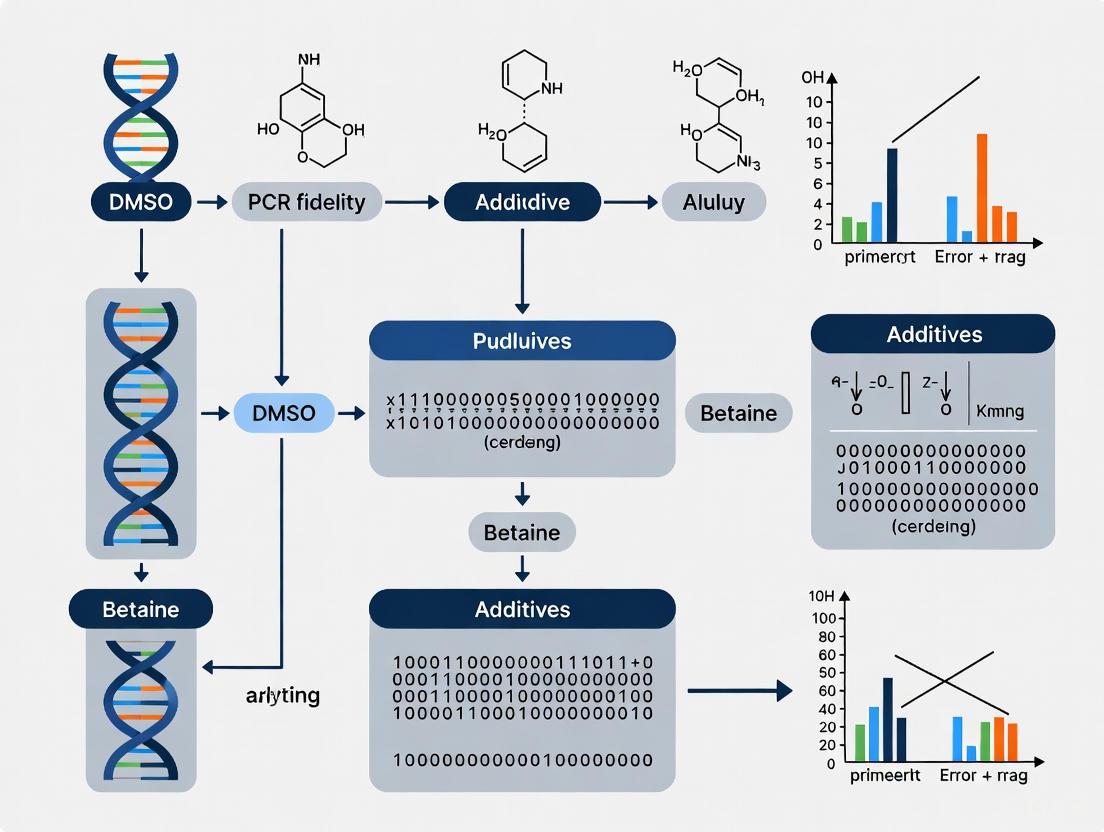
This article provides a comprehensive evaluation of Dimethyl Sulfoxide (DMSO) and betaine as PCR enhancers, specifically examining their dual impact on amplification yield and reaction fidelity.
Balancing Act: Evaluating PCR Fidelity with DMSO and Betaine Additives for Robust Genetic Analysis
Abstract
This article provides a comprehensive evaluation of Dimethyl Sulfoxide (DMSO) and betaine as PCR enhancers, specifically examining their dual impact on amplification yield and reaction fidelity. Tailored for researchers and drug development professionals, we explore the foundational mechanisms by which these additives resolve challenging templates, detail optimized methodological protocols for their application, and present advanced troubleshooting strategies. A critical comparative analysis weighs the benefits of enhanced sensitivity against potential drawbacks in error rates, offering evidence-based validation for their use in sensitive downstream applications such as sequencing, cloning, and clinical diagnostics. The content synthesizes current scientific literature to deliver a practical guide for integrating these cost-effective reagents into high-stakes molecular workflows.
The Science Behind the Solution: How DMSO and Betaine Overcome PCR Challenges
The fidelity of a DNA polymerase refers to its accuracy in copying a DNA template during Polymerase Chain Reaction (PCR). This accuracy is critical for virtually all molecular biology applications, as errors introduced during amplification can compromise experimental results and lead to incorrect conclusions. Fidelity is commonly expressed as an error rate—the number of mistakes made per base pair synthesized per duplication event. For example, while standard Taq DNA polymerase has an error rate of approximately 1 in 3,300 to 1 in 6,500 bases, high-fidelity enzymes like Q5 can achieve error rates as low as 1 in 1,000,000 bases [1]. The pursuit of high fidelity is particularly crucial in sensitive downstream applications such as cloning, next-generation sequencing (NGS), and mutation detection, where even single-nucleotide inaccuracies can be consequential. This guide provides a comprehensive comparison of PCR fidelity across polymerase types and additives, supported by experimental data and detailed protocols for researchers seeking to optimize amplification accuracy.
Mechanisms of Polymerase Fidelity
DNA polymerases maintain sequence integrity through a multi-layered biochemical process. The primary mechanism involves accurate nucleotide selection, where the polymerase active site preferentially incorporates correct nucleotides that form proper Watson-Crick base pairs with the template strand. The geometry of the polymerase active site is crucial for this selection, as it aligns catalytic groups for efficient incorporation of correct nucleotides while slowing the process for incorrect ones, giving mismatched nucleotides time to dissociate [1].
Many high-fidelity polymerases possess an additional safeguard: a 3´→5´ exonuclease activity, often termed the proofreading function. This domain provides a critical secondary check by detecting and removing misincorporated nucleotides from the 3' end of the growing DNA strand before further extension. The proofreading activity can improve fidelity by 10- to 100-fold compared to non-proofreading enzymes. For instance, the presence of the proofreading domain in Deep Vent DNA Polymerase provides a 125-fold decrease in error rate compared to its exonuclease-deficient version [1].
The combined effects of accurate nucleotide selection and proofreading create a robust system for maintaining sequence integrity during PCR. The differential fidelity between various commercial polymerases stems from variations in these fundamental mechanisms, which can be quantitatively measured using advanced sequencing technologies [1].
Comparative Analysis of Polymerase Fidelity
Quantitative Fidelity Measurements
Polymerase fidelity has been systematically evaluated using multiple methodologies, including blue/white colony screening, Sanger sequencing, and more recently, next-generation sequencing platforms. Table 1 summarizes error rates and relative fidelity for commonly used DNA polymerases, demonstrating the substantial variability in accuracy across different enzyme classes.
Table 1: Polymerase Fidelity Comparison by SMRT Sequencing
| DNA Polymerase | Substitution Rate (errors/base/doubling) | Accuracy (1 error per X bases) | Fidelity Relative to Taq |
|---|---|---|---|
| Taq | 1.5 × 10⁻⁴ | 6,456 | 1X |
| Q5 High-Fidelity | 5.3 × 10⁻⁷ | 1,870,763 | 280X |
| Phusion | 3.9 × 10⁻⁶ | 255,118 | 39X |
| Deep Vent | 4.0 × 10⁻⁶ | 251,129 | 44X |
| Pfu | 5.1 × 10⁻⁶ | 195,275 | 30X |
| PrimeSTAR GXL | 8.4 × 10⁻⁶ | 118,467 | 18X |
| KOD | 1.2 × 10⁻⁵ | 82,303 | 12X |
| Kapa HiFi HotStart ReadyMix | 1.6 × 10⁻⁵ | 63,323 | 9.4X |
| Deep Vent (exo-) | 5.0 × 10⁻⁴ | 2,020 | 0.3X |
Data derived from PacBio SMRT sequencing analysis [1]
The data reveal that proofreading enzymes consistently outperform non-proofreading variants, with Q5 High-Fidelity DNA Polymerase demonstrating exceptional accuracy. Notably, exonuclease-deficient enzymes like Deep Vent (exo-) show significantly reduced fidelity, highlighting the critical contribution of proofreading activity to overall accuracy [1].
Polymerase Selection Guide for Downstream Applications
Different research applications demand specific fidelity requirements. Table 2 outlines recommended polymerase choices based on common downstream applications, balancing fidelity with other practical considerations.
Table 2: Polymerase Selection Guide for Downstream Applications
| Application | Recommended Polymerase Type | Critical Fidelity Considerations |
|---|---|---|
| Cloning | High-fidelity with proofreading | Minimal errors prevent protein misfolding and functional changes in expressed constructs [2] |
| Site-directed Mutagenesis | High-fidelity with high processivity | Accurate amplification of entire plasmid without introducing secondary mutations [2] |
| Next-Generation Sequencing | Ultra high-fidelity | Prevents introduction of artifactual variants that compromise variant calling [1] [2] |
| Genotyping | Standard or high-fidelity | Dependent on detection method; sequencing-based approaches require higher fidelity [2] |
| Long-Range PCR | Polymerase blends with proofreading | Combination of processivity and error correction for accurate amplification of long fragments [3] [4] |
| Methylation Analysis | Specialized polymerases | Must amplify bisulfite-converted DNA containing uracil residues [2] |
For applications where sequence integrity is paramount, such as cloning and NGS library preparation, high-fidelity polymerases with proofreading capabilities are essential. These enzymes significantly reduce the burden of screening for correct clones or filtering sequencing artifacts [1] [2].
Impact of Additives on PCR Fidelity
DMSO and Betaine Mechanisms
GC-rich templates present particular challenges for PCR amplification due to their propensity to form stable secondary structures and higher melting temperatures. DMSO (Dimethyl sulfoxide) and betaine are commonly used additives to ameliorate these challenges, though they can impact reaction fidelity.
DMSO functions by disrupting inter- and intrastrand reannealing of GC-rich DNA, effectively reducing secondary structure formation that can cause polymerase stalling. Typical working concentrations range from 2% to 10% [5] [6]. Betaine (N,N,N-trimethylglycine) operates through a different mechanism as a isostabilizing agent, homogenizing the thermodynamic stability of AT and GC base pairs by equalizing their melting temperatures. This is particularly valuable for amplifying regions with heterogeneous GC content. Betaine is typically used at concentrations of 0.5 M to 1.5 M [7] [5].
While these additives can significantly improve amplification efficiency of difficult templates, their impact on fidelity must be considered. Additives that reduce secondary structures may potentially decrease fidelity by altering the polymerase's natural nucleotide discrimination, though comprehensive quantitative studies on this specific effect are limited in the current literature.
Comparative Analysis of Additive Effects
Table 3 provides a comparative analysis of DMSO versus betaine for GC-rich PCR, incorporating their potential impacts on amplification fidelity.
Table 3: DMSO vs. Betaine in GC-Rich PCR
| Parameter | DMSO | Betaine |
|---|---|---|
| Primary Mechanism | Disrupts secondary structures by reducing DNA melting temperature | Equalizes Tm differences between AT and GC base pairs |
| Typical Concentration | 2–10% | 0.5–1.5 M |
| Effect on Fidelity | Potential reduction due to altered polymerase kinetics | Generally fidelity-preserving at optimal concentrations |
| Template Specificity | Most beneficial for extremely GC-rich templates (>70%) | Broadly effective for mixed GC content templates |
| Compatibility | May inhibit some polymerases at higher concentrations | Generally compatible with most high-fidelity polymerases |
| Recommended Use Case | Stubborn secondary structures in promoters | Long amplicons with variable GC content |
Data synthesized from multiple sources [7] [5] [6]
Research indicates that both DMSO and betaine can dramatically improve amplification of GC-rich targets without requiring protocol modifications. One study found that while these additives provided substantial benefits during PCR amplification, they offered no discernible advantage during gene assembly steps [7].
Experimental Protocols for Fidelity Optimization
Standardized Fidelity Assessment Protocol
To systematically evaluate polymerase fidelity, researchers can employ the following protocol adapted from next-generation sequencing-based fidelity assessment:
Reagents and Materials:
- High-quality plasmid DNA template (e.g., pUC19)
- Test polymerases with corresponding buffers
- dNTP mix (10 mM each)
- Primer pairs targeting 1-2 kb region
- AMPure XP beads or equivalent purification system
- Qubit dsDNA HS Assay Kit for quantification
- Illumina, PacBio, or other NGS platform for sequencing
Methodology:
- Amplification Setup: Perform PCR with 30 ng plasmid DNA template in 50 μL reactions using manufacturer-recommended conditions for each polymerase.
- Cycle Optimization: Limit amplification to 20 cycles to minimize error propagation while maintaining sufficient product for analysis.
- Product Purification: Clean amplification products using AMPure XP beads at 1.8X sample-to-bead ratio.
- Quality Control: Verify amplicon size and purity using Agilent TapeStation or similar fragment analyzer.
- Library Preparation and Sequencing: Prepare sequencing libraries using standardized protocols appropriate for your sequencing platform.
- Error Analysis: Map sequences to reference template and identify substitutions, insertions, and deletions, calculating error rates per base per doubling event [1].
This approach provides a direct measurement of polymerase error rates, with PacBio SMRT sequencing offering particularly low background error rates (~9.6 × 10⁻⁸ errors/base) suitable for quantifying proofreading polymerase fidelity [1].
GC-Rich Amplification with Fidelity Preservation
For challenging GC-rich templates while maintaining high fidelity:
Reagent Composition:
- Q5 High-Fidelity DNA Polymerase or equivalent high-fidelity enzyme
- Corresponding GC enhancer (if available)
- 1 M betaine or 3% DMSO (optimize concentration)
- 20 ng template DNA
- Primers with Tm ≥ 60°C
- Additional MgCl₂ (0.5 mM increments as needed)
Thermal Cycling Conditions:
- Initial denaturation: 98°C for 30 seconds
- 35 cycles of:
- Denaturation: 98°C for 10 seconds
- Annealing: 60–68°C for 20 seconds (optimize using gradient)
- Extension: 72°C for 30 seconds/kb
- Final extension: 72°C for 2 minutes
Optimization Strategy:
- Initially test without additives to establish baseline performance
- Implement a betaine concentration gradient (0.5 M to 1.5 M)
- If necessary, test DMSO gradient (1% to 5%)
- Optimize Mg²⁺ concentration in 0.5 mM increments from 1.0 to 4.0 mM
- Balance annealing temperature and additive concentration to maximize both yield and specificity [6]
The Scientist's Toolkit: Essential Reagents for Fidelity Research
Table 4 catalogs key reagents and their functions for PCR fidelity research, providing researchers with essential materials for experimental work.
Table 4: Essential Research Reagents for PCR Fidelity Studies
| Reagent/Category | Specific Examples | Function in Fidelity Research |
|---|---|---|
| High-Fidelity Polymerases | Q5, Phusion, PrimeSTAR GXL | Provide proofreading activity for reduced error rates (280X, 39X, and 18X fidelity over Taq, respectively) [1] [3] |
| Standard Polymerases | Taq, OneTaq | Baseline comparators for fidelity assessment and applications where ultimate fidelity isn't critical [1] [6] |
| PCR Additives | DMSO, betaine, GC enhancers | Improve amplification efficiency of challenging templates while potentially impacting fidelity [7] [5] [6] |
| Template Systems | lacZ plasmid, pUC19 | Standardized templates for fidelity measurement with established assessment protocols [1] |
| dNTPs | Purified dNTP sets | High-purity nucleotides minimize incorporation errors; concentration optimization affects fidelity [5] |
| Magnesium Salts | MgCl₂, MgSO₄ | Essential cofactor; concentration optimization critical for balancing yield and fidelity [5] [6] |
| Purification Systems | AMPure XP beads, column purification | Post-amplification cleanup for sequencing preparation and removal of polymerase inhibitors [8] [1] |
| Quantification Tools | Qubit HS DNA assay, TapeStation | Accurate quantification and quality assessment of amplification products [8] [1] |
PCR fidelity represents a critical parameter influencing experimental success across molecular biology applications. The quantitative data presented herein demonstrates that polymerase selection alone can influence error rates by over three orders of magnitude, with high-fidelity proofreading enzymes like Q5 providing error rates as low as 5.3 × 10⁻⁷ errors per base per doubling [1]. While additives such as DMSO and betaine can substantially improve amplification of challenging templates, their implementation requires careful optimization to balance yield with sequence accuracy. As PCR applications continue to evolve in complexity—particularly in clinical diagnostics and next-generation sequencing—comprehensive understanding and systematic optimization of fidelity parameters becomes increasingly essential. Researchers should select polymerases based on their specific application requirements and implement the optimization strategies outlined herein to ensure amplification accuracy while successfully navigating template-specific challenges.
The polymerase chain reaction (PCR) stands as one of the most fundamental techniques in molecular biology, yet the amplification of DNA templates with high guanine-cytosine (GC) content (>60%) remains a persistent challenge for researchers. GC-rich sequences form stable secondary structures due to the three hydrogen bonds between G and C bases, compared to only two between A and T bases. This inherent stability creates formidable obstacles for DNA polymerases, resulting in inefficient amplification, reduced yield, and heightened error rates. For researchers in drug development and diagnostic fields, where accuracy is paramount, overcoming these hurdles is essential for applications ranging from gene cloning to sequencing library preparation.
The core of the problem lies in the tendency of GC-rich regions to form stable intramolecular secondary structures, including hairpins and stem-loops, which preferentially form before any intermolecular interactions during PCR annealing steps. These structures adversely impact PCR performance through several mechanisms: polymerase stalling, polymerase jumping, and in some cases, endonucleolytic cleavage within these structures by the 5′-3′ exonuclease activity of Taq polymerase [9]. The thermal stability of these secondary structures is remarkably high, with some, such as the inverted terminal repeat (ITR) sequences of adeno-associated virus (AAV) vectors, having melting temperatures (Tm) as high as 85.3°C [9]. The higher the thermal stability of such a structure, the stronger its inhibitory effects on PCR, creating a significant barrier in many research applications.
How Secondary Structures Hinder Amplification
GC-rich DNA templates present multiple challenges during amplification. The strong hydrogen bonding between G and C nucleotides makes DNA denaturation difficult, even at high temperatures typically used in PCR cycles. Furthermore, during the annealing and extension phases, these sequences readily form secondary structures such as hairpins and stem-loops that physically block polymerase progression [9] [10]. These stable structures prevent primers from annealing to their target sites and cause DNA polymerases to stall during strand elongation, resulting in premature termination of synthesis and yielding truncated products or complete amplification failure [9] [10].
The problem is particularly pronounced in templates with GC content exceeding 70%, where secondary structures become exceptionally stable. Research has demonstrated that such structures can be resistant to conventional denaturation conditions, including elevated temperatures and standard PCR additives [9]. This resistance directly correlates with amplification failure, as observed in challenging applications such as amplifying inverted terminal repeat (ITR) sequences of recombinant adeno-associated virus (rAAV) vectors, which are known for their ultra-stable T-shaped hairpin structures [9].
Pathways to PCR Errors and Distortions
Beyond mere amplification failure, GC-rich templates introduce significant errors and distortions in PCR products. The replication of structured DNA leads to several types of artifacts:
Polymerase Stalling and Misincorporation: When DNA polymerases encounter stable secondary structures, they frequently stall, which increases the likelihood of misincorporating nucleotides [9]. This occurs because the polymerase's fidelity checkpoints are compromised when dealing with structured templates.
Template Switching: In rare cases, secondary structures can promote template switching events, where the polymerase jumps between different templates, creating chimeric sequences that do not exist in the original sample [11]. While these events are confined to low copy numbers, they can significantly impact interpretations in sensitive applications like single-cell sequencing.
Proofreading Interference: Interestingly, proofreading DNA polymerases (those with 3'→5' exonuclease activity) are particularly susceptible to inhibition by G-quadruplex structures formed by G-rich sequences [12]. Specific G-rich motifs such as GGGGG and GGGGHGG can cause complete PCR failure with proofreading polymerases while having minimal effect on non-proofreading enzymes like Taq polymerase [12].
Stochastic Effects: In early PCR cycles, the random nature of amplification (PCR stochasticity) becomes particularly problematic with GC-rich templates, where certain molecules may fail to amplify altogether due to secondary structures, leading to significant skewing in sequence representation in downstream applications like high-throughput sequencing [11].
Table 1: Types of Errors Introduced by GC-Rich Templates in PCR
| Error Type | Mechanism | Impact on Results |
|---|---|---|
| Nucleotide Misincorporation | Polymerase errors when traversing secondary structures | Base substitutions in final product |
| Template Switching | Polymerase jumps between templates due to structured DNA | Chimeric sequences formation |
| Stochastic Skewing | Random amplification failure of structured molecules | Uneven sequence representation |
| Proofreading Inhibition | G-quadruplex structures blocking exonuclease activity | Accumulation of uncorrected errors |
| Length Heterogeneity | Premature termination at stable secondary structures | Truncated amplification products |
Comparative Analysis of Solution Strategies
Conventional Chemical Additives
Traditional approaches to ameliorating GC-rich PCR challenges have focused on chemical additives that modify DNA melting behavior. The most widely used include dimethyl sulfoxide (DMSO), betaine, and formamide, which work through distinct mechanisms to reduce the thermal stability of secondary structures.
Betaine (also known as trimethylglycine) is particularly effective as it reduces the base composition dependence of DNA melting by acting as a DNA helix destabilizer, effectively equalizing the thermal stability of AT and GC base pairs [13]. Studies have shown betaine improves amplification of GC-rich templates such as the coding cDNA region of c-jun and alternatively spliced variants of prostate-specific membrane antigen mRNA [13]. Similarly, DMSO interferes with hydrogen bond formation, preventing inter- and intrastrand reannealing, while formamide increases PCR specificity when working with GC-rich targets [10].
However, these conventional additives have significant limitations. Their effectiveness is highly variable depending on the specific template sequence, and they can interfere with Taq polymerase activity at higher concentrations [9] [14]. Most notably, in some of the most challenging cases, such as amplifying the ultra-stable inverted terminal repeat (ITR) sequences of rAAV vectors, both DMSO and betaine demonstrated no improving effect whatsoever [9].
DNA Polymerase Selection and Engineering
The choice of DNA polymerase significantly impacts success with GC-rich templates, with key enzyme characteristics playing crucial roles:
Processivity: Defined as the number of nucleotides incorporated per binding event, high processivity enables polymerases to better navigate through structured regions. Engineered polymerases with DNA-binding domains show enhanced performance on GC-rich templates [15] [16].
Thermostability: Hyperthermostable enzymes from archaeal organisms such as Pyrococcus furiosus (Pfu) maintain activity at higher temperatures, improving denaturation of stubborn secondary structures [15].
Proofreading Activity: While 3'→5' exonuclease activity generally increases fidelity, it can be inhibited by G-quadruplex structures [12]. Furthermore, proofreading polymerases tend to be slower and may have lower processivity [15].
Recent advances in polymerase engineering have created chimeric enzymes that fuse polymerase domains with DNA-binding domains, resulting in enzymes with exceptional processivity and stability. For example, PrimeSTAR GXL polymerase has demonstrated remarkable efficacy in amplifying large GC-rich targets (>1 kb with >60% GC content) where other enzymes fail [10].
Table 2: Comparison of DNA Polymerases for GC-Rich PCR
| Polymerase Type | Proofreading Activity | Processivity | Best Application | Limitations |
|---|---|---|---|---|
| Standard Taq | No | Moderate (~50 nt) | Routine PCR of moderate GC content | High error rate, struggles with complex templates |
| Archaeal Polymerases (Pfu) | Yes | Lower than Taq | High-fidelity applications | Slow; inhibited by G-quadruplexes [12] |
| Engineered Chimeras (Q5, Phusion) | Yes | High | Long, GC-rich targets; complex secondary structures | Higher cost; may require optimization |
| Polymerase Blends | Variable | High | Very long amplicons with complex structures | Component ratios critical for performance |
Innovative Oligonucleotide Reagents: Disruptors
A novel approach to addressing GC-rich challenges involves specifically designed disruptor oligonucleotides that actively unwind secondary structures. These reagents contain three functional components: an anchor sequence that initiates template binding, an effector region that disrupts intramolecular secondary structure through strand displacement, and a 3' blocker to prevent elongation by DNA polymerase [9].
The mechanism of action involves the anchor first binding to the template, followed by effector-mediated strand displacement that unwinds intramolecular secondary structures. This mechanism is consistent with observations that the anchor plays a more critical role in disruptor function [9]. In contrast to conventional additives that merely destabilize structures, disruptors actively dismantle them, creating accessible templates for polymerization.
In comparative studies, disruptors have demonstrated superior performance to traditional additives. While DMSO and betaine showed no improvement in amplifying challenging rAAV ITR sequences, disruptors enabled successful amplification and sequencing despite the well-known reputation of these templates as some of the most difficult for PCR amplification [9]. This approach represents a more targeted, active intervention compared to the passive destabilization offered by conventional chemical additives.
Experimental Data and Protocol Comparison
Experimental Approaches for GC-Rich Amplification
Various research groups have developed and optimized specialized protocols for amplifying GC-rich templates. The following experimental workflows represent systematically tested approaches:
Detailed Methodologies and Comparative Performance
Protocol 1: Two-Step PCR with Enhanced Polymerases This approach, optimized for amplifying long GC-rich sequences from Mycobacterium bovis (GC content >60%), employs a 2-step PCR protocol that combines annealing and extension steps [10]. The method uses PrimeSTAR GXL polymerase with an enhancer solution, implementing slower ramp speeds and higher temperatures for annealing/extension (68°C). This protocol successfully amplified 51 different GC-rich targets ranging from 1-2 kb without individual optimization, demonstrating its robustness for challenging templates [10].
Protocol 2: Disruptor-Mediated Amplification This innovative approach utilizes specifically designed disruptor oligonucleotides containing three functional components: an anchor sequence, an effector region, and a 3' blocker [9]. In this protocol, disruptors are added to standard PCR mixtures where they bind templates and actively unwind secondary structures through strand displacement. This method has proven particularly effective for ultra-stable structures like rAAV ITR sequences (Tm = 85.3°C) where conventional additives like DMSO and betaine failed completely [9].
Protocol 3: Multipronged Optimization with Additives Research on amplifying GC-rich nicotinic acetylcholine receptor subunits employed a comprehensive strategy combining DMSO (3-10%) and betaine (0.5-2 M) with specialized polymerases and adjusted annealing temperatures [17]. This protocol emphasizes the importance of a multipronged approach involving various organic molecules, DNA polymerases, PCR conditions, and primer adjustments to overcome amplification challenges. The study systematically tested different polymerase and additive combinations to establish optimal conditions for specific GC-rich targets [17].
Table 3: Comparative Performance of GC-Rich PCR Solutions
| Solution Approach | Optimal Conditions | Amplification Success Rate | Limitations/Notes |
|---|---|---|---|
| Betaine Alone | 0.5-2 M | Variable; effective for moderate GC content | Ineffective for ultra-stable structures like rAAV ITRs [9] |
| DMSO Alone | 3-10% | Moderate improvement for some templates | Can inhibit polymerase at higher concentrations [14] |
| Polymerase Blends | Manufacturer recommendations with adjusted Mg2+ | Good for long amplicons (>10 kb) | Requires optimization of component ratios |
| Engineered Polymerases | PrimeSTAR GXL with specialized buffer | 51/51 GC-rich targets successfully amplified [10] | Higher cost; requires protocol adjustment |
| Disruptor Oligonucleotides | Sequence-specific design | Successful where DMSO/betaine failed [9] | Requires custom design for each template |
The Scientist's Toolkit: Essential Reagents and Materials
Successful amplification of GC-rich templates requires careful selection of reagents and materials. The following research reagent solutions have demonstrated efficacy in experimental settings:
Table 4: Essential Research Reagent Solutions for GC-Rich PCR
| Reagent/Material | Function/Mechanism | Optimal Concentration | Application Context |
|---|---|---|---|
| Betaine | Equalizes DNA melting temperatures by reducing base composition dependence | 0.5-2 M | General GC-rich templates; co-amplification of alternatively spliced variants [13] |
| DMSO | Interferes with hydrogen bond formation; prevents secondary structure formation | 3-10% | GC-rich templates; often used in combination with other additives |
| Formamide | Increases PCR specificity with GC-rich targets | 1-5% | High-specificity applications; problematic secondary structures |
| 7-deaza-dGTP | Reduces hydrogen bonding strength by modifying guanine | Partial or complete dGTP substitution | Extremely stable structures; enabled entire rAAV ITR amplification [9] |
| Disruptor Oligonucleotides | Actively unwind secondary structures through strand displacement | Sequence-dependent | Ultra-stable structures (e.g., rAAV ITRs) resistant to chemical additives [9] |
| GC Enhancer Solutions | Commercial formulations to destabilize secondary structures | Manufacturer specifications | General GC-rich amplification; often proprietary formulations |
| High-Processivity Polymerases | Navigate through structured regions with more nucleotides per binding event | Manufacturer specifications | Long amplicons with high GC content; complex secondary structures |
Implications for Research and Diagnostic Applications
The challenges posed by GC-rich templates have significant implications across molecular biology applications. In diagnostic development, where sequence accuracy directly impacts test reliability, understanding and mitigating GC-rich artifacts is crucial for avoiding false positives/negatives. For drug development workflows, particularly those utilizing viral vectors like rAAV for gene therapy, the ability to accurately amplify and sequence regulatory elements such as ITRs is essential for safety and efficacy assessment [9].
The comparative data presented in this guide reveals that while traditional additives like DMSO and betaine remain valuable for moderate GC-rich challenges, they show limited efficacy against the most stable secondary structures. The development of engineered polymerases with enhanced processivity and disruptor oligonucleotides representing a more targeted approach provides researchers with increasingly powerful tools. These advances enable more reliable analysis of previously intractable targets, expanding the scope of research and diagnostic possibilities.
Future directions in addressing GC-rich challenges will likely involve further refinement of polymerase engineering, development of more effective destabilizing agents, and computational approaches for predicting and counteracting secondary structure formation during PCR design phases. As these technologies mature, the historical "GC-rich problem" may progressively become a manageable consideration rather than a fundamental barrier in molecular biology workflows.
Dimethyl sulfoxide (DMSO) is a polar aprotic solvent widely recognized for its role as a critical PCR enhancer, particularly for amplifying challenging templates such as those with high GC content [18]. In molecular biology, DMSO serves as a key component of PCR buffer systems, where it significantly increases the yield and specificity of reactions that would otherwise fail under conventional conditions [18]. The compound's unique chemical properties, including its ability to dissolve both polar and nonpolar compounds and its miscibility with water, make it exceptionally suitable for molecular applications [19]. DMSO is employed to overcome two primary challenges in PCR: the stabilization of DNA templates due to high GC content and the formation of secondary structures that hinder amplification [18]. While DMSO is highly effective, its mechanism must be thoroughly understood to avoid potential pitfalls such as reduced polymerase fidelity or introduction of artifacts in sensitive applications [18].
Molecular Mechanisms of DMSO Action
Disruption of DNA Secondary Structures
DMSO exerts its primary effect on PCR through direct intervention in DNA structure stabilization. GC-rich DNA sequences form strong secondary structures, including hairpins and stem-loops, due to the triple hydrogen bonds between guanine and cytosine bases [18]. These structures are thermally stable and resist denaturation, preventing primer access to their complementary binding sites. DMSO addresses this problem by binding directly to the cytosine bases of the DNA template, inducing conformational changes that make them more heat-labile [18]. This binding reduces the strength of hydrogen bonding in both major and minor grooves of DNA, thereby altering its overall structure and stability [18]. Consequently, DMSO effectively prevents the reannealing of denatured DNA strands after the initial denaturation step, ensuring that primers have unobstructed access to their target sequences throughout the amplification process [18].
Biophysical studies using single-molecule techniques have confirmed that DMSO modifies DNA mechanical properties in a concentration-dependent manner. Research demonstrates that DMSO concentrations up to 20% linearly decrease the bending persistence length of DNA by approximately 0.43% per percent DMSO, indicating a moderate compaction of DNA conformations [20]. This structural modification directly facilitates the strand separation necessary for effective primer binding and polymerase extension during PCR amplification.
Lowering of Template Melting Temperature
The second crucial mechanism of DMSO action involves its effect on DNA melting temperature (Tm). High GC content elevates the overall Tm of DNA templates, requiring higher denaturation temperatures that may damage the template or impede precise primer annealing [18]. DMSO systematically reduces the melting temperature of DNA through its interaction with nucleic acid structure [20]. The solvent decreases the temperature required to denature double-stranded DNA, thereby facilitating primer annealing at lower temperatures than would be possible without the additive [18].
The magnitude of this Tm reduction is concentration-dependent, with 10% DMSO decreasing the annealing temperature by approximately 5.5-6.0°C [21]. This effect allows researchers to optimize PCR conditions for specific template characteristics without employing extreme temperatures that might compromise polymerase activity or reaction specificity. The Tm-lowering property of DMSO is particularly valuable when amplifying templates with varying GC content within the same reaction, as it helps normalize the annealing requirements across different target sequences [18].
Table 1: Concentration-Dependent Effects of DMSO on PCR Parameters
| DMSO Concentration | Effect on Melting Temperature | Effect on DNA Persistence Length | Impact on PCR Specificity |
|---|---|---|---|
| 3-5% | Decrease by ~1.5-3.0°C | Minimal change | Slight improvement |
| 5-8% | Decrease by ~3.0-4.8°C | Moderate decrease | Significant improvement |
| 8-10% | Decrease by ~4.8-6.0°C | Notable decrease | Potential reduction |
| >10% | Decrease >6.0°C | Substantial decrease | Likely reduction |
Experimental Evidence and Performance Data
Enhancement of PCR Amplification Efficiency
Substantial experimental evidence demonstrates the efficacy of DMSO in improving PCR performance. A comprehensive study evaluating the amplification of ITS2 DNA barcodes from plants reported a remarkable 91.6% PCR success rate with 5% DMSO, compared to complete failure in standard reaction conditions [22]. This research tested 12 plant species from different families that could not be amplified under standard PCR conditions, systematically comparing DMSO against other additives including betaine, formamide, and 7-deaza-dGTP [22]. The results positioned DMSO as the most effective enhancer, with betaine showing the next highest success rate at 75%, while formamide and 7-deaza-dGTP demonstrated significantly lower efficacy at 16.6% and 33.3% respectively [22].
In synthetic biology applications, DMSO has proven invaluable for the de novo synthesis of GC-rich constructs. Research on assembling GC-rich gene fragments implicated in tumorigenesis (IGF2R and BRAF) demonstrated that DMSO dramatically improved target product specificity and yield during PCR amplification [7]. The study compared polymerase chain assembly (PCA) and ligase chain reaction (LCR) methods, finding that while DMSO provided no benefit during the assembly steps themselves, it became crucial during the subsequent PCR amplification phase [7]. This highlights the context-dependent nature of DMSO enhancement, particularly for challenging templates with pronounced secondary structures.
Comparative Performance Against Alternative Additives
When compared directly with betaine, another common PCR enhancer, DMSO consistently demonstrates distinct performance characteristics. Research shows that while both additives function as isostabilizing agents that facilitate strand separation, their optimal applications differ based on template properties [7]. In the plant DNA barcoding study, while DMSO achieved the highest overall success rate, the one sample that failed amplification with DMSO was successfully amplified using 1M betaine instead [22]. This finding led to the recommendation of using 5% DMSO as a default, substituting it with 1M betaine only when reactions fail [22]. Notably, combining both additives in the same reaction did not provide additional improvement, suggesting potential interference or redundant mechanisms [22].
Table 2: Quantitative Comparison of PCR Additive Performance
| Additive | Optimal Concentration | PCR Success Rate | Key Applications | Limitations |
|---|---|---|---|---|
| DMSO | 3-10% (typically 5%) | 91.6% [22] | GC-rich templates, ITS2 barcodes [22] | Can reduce polymerase fidelity at high concentrations [18] |
| Betaine | 1M | 75% [22] | Alternative when DMSO fails [22] | Less effective than DMSO for most applications [22] |
| 7-deaza-dGTP | 50μM | 33.3% [22] | rAAV ITR sequences [9] | Expensive, requires complete dGTP substitution [9] |
| Formamide | 3% | 16.6% [22] | Limited applications | Low success rate [22] |
A particularly revealing study compared DMSO and betaine against a novel class of oligonucleotide reagents called "disruptors" for amplifying templates with stable intramolecular secondary structures [9]. While DMSO and betaine proved completely ineffective for amplifying the inverted terminal repeat (ITR) sequences of recombinant adeno-associated virus (rAAV) vectors—notorious for their ultra-stable T-shaped hairpin structures—the disruptor technology successfully enabled amplification [9]. This highlights a significant limitation of DMSO and other chemical additives for exceptionally challenging templates, suggesting that alternative approaches may be necessary in extreme cases.
Experimental Protocols and Methodologies
Standardized Protocol for DMSO Optimization
Implementing DMSO in PCR requires systematic optimization to balance enhanced amplification against potential fidelity reduction. The following protocol has been validated across multiple studies for establishing optimal DMSO conditions:
Prepare a DMSO gradient: Create master mix aliquots containing 0%, 2%, 4%, 6%, 8%, and 10% DMSO (v/v) [21] [18]. Use molecular grade DMSO to ensure purity and consistency.
Reaction setup: Maintain constant concentrations of all other components—dNTPs (200μM each), primers (0.2-1.0μM), template DNA (10-100ng), Taq DNA polymerase (1.25U), MgCl₂ (1.5mM), and standard PCR buffer [18].
Thermal cycling parameters: Begin with standard cycling conditions: initial denaturation at 95°C for 3 minutes; 35 cycles of 95°C for 30 seconds, appropriate annealing temperature for 30 seconds, and 72°C for 1 minute per kb; final extension at 72°C for 5 minutes [18].
Annealing temperature adjustment: Account for the Tm-lowering effect of DMSO by reducing the annealing temperature by approximately 0.5-0.6°C per percent DMSO [21]. For 5% DMSO, decrease annealing temperature by 2.5-3.0°C.
Analysis: Evaluate amplification success by gel electrophoresis, comparing band intensity, specificity, and yield across the DMSO gradient [18].
This protocol can be adapted for different template types, with GC-rich templates (>60% GC) typically requiring 5-7% DMSO for optimal results [18].
Specialized Application for Plant DNA Barcoding
A specifically optimized protocol for challenging plant DNA barcoding applications has demonstrated exceptional efficacy:
Reaction composition: Prepare 25μL reactions containing 1× PCR buffer, 200μM dNTPs, 0.2μM each primer, 0.5-1.0U DNA polymerase, template DNA (10-100ng), and 5% DMSO (v/v) [22].
Thermal cycling: Use touchdown PCR parameters with initial denaturation at 94°C for 5 minutes; 10 cycles of 94°C for 30 seconds, 65-55°C (decreasing 1°C per cycle) for 30 seconds, 72°C for 45 seconds; followed by 30 cycles of 94°C for 30 seconds, 55°C for 30 seconds, 72°C for 45 seconds; final extension at 72°C for 7 minutes [22].
Troubleshooting: If amplification fails with 5% DMSO, substitute with 1M betaine while maintaining all other parameters [22]. Avoid combining DMSO and betaine in the same reaction.
This approach successfully increased ITS2 PCR success rates from 42% to 100% across 50 species from 43 genera and 29 families [22].
Research Reagent Solutions
Table 3: Essential Reagents for DMSO-Enhanced PCR Applications
| Reagent | Specifications | Function in PCR | Usage Notes |
|---|---|---|---|
| Molecular Grade DMSO | ≥99.9% purity, sterile-filtered [19] | Disrupts secondary structures, reduces Tm [18] | Aliquot to prevent oxidation; use 3-10% final concentration [21] |
| Betaine (Monohydrate) | Molecular biology grade [22] | Alternative isostabilizing agent [7] | Use 1M final concentration when DMSO fails [22] |
| 7-deaza-dGTP | Ultrapure solution [22] | Reduces hydrogen bonding strength [9] | Requires complete dGTP substitution; effective for rAAV ITRs [9] |
| High-Fidelity DNA Polymerase | Thermostable with proofreading | Catalyzes DNA synthesis with reduced error rate | Essential when using DMSO to counter potential fidelity reduction [18] |
| MgCl₂ Solution | Molecular biology grade, 25mM stock | Cofactor for DNA polymerase | Concentration may require optimization with DMSO [18] |
| dNTP Mix | 10mM each dNTP, pH 8.0 | DNA synthesis substrates | Maintain 200μM each in final reaction [22] |
Limitations and Practical Considerations
Impact on Polymerase Fidelity and Specificity
While DMSO significantly enhances PCR amplification of challenging templates, it presents important limitations that researchers must consider. A primary concern is the potential reduction in polymerase fidelity at elevated DMSO concentrations [18]. Studies have demonstrated that high DMSO concentrations can compromise the accuracy of DNA synthesis, potentially introducing mutations during amplification [18]. This effect is particularly problematic for applications requiring high-fidelity amplification, such as cloning or sequencing, where even single-base errors can compromise results. Research indicates that DMSO can induce mutagenesis by affecting polymerase function, potentially adding incorrect bases during extension [18]. Consequently, applications requiring subsequent sequencing should avoid DMSO or use minimal concentrations with appropriate controls [18].
Specificity concerns also emerge at elevated DMSO concentrations. While moderate concentrations (3-8%) typically improve specificity by preventing secondary structure formation, excessive DMSO (>10%) may reduce reaction stringency, leading to non-specific amplification and primer-dimer formation [18]. This occurs because the Tm-lowering effect becomes excessive, allowing primers to bind to non-target sequences with partial complementarity. Empirical optimization of DMSO concentration for each template-primer system is therefore essential to balance the competing demands of yield, specificity, and fidelity.
Concentration-Dependent Effects and Optimization Strategies
The efficacy of DMSO follows a biphasic response curve, where benefits peak at an optimal concentration then decline with further increases. This nonlinear relationship necessitates careful titration for each application:
- Low GC content (<50%): Typically requires 0-3% DMSO, if any [18]
- Moderate GC content (50-60%): Optimal at 3-5% DMSO [18]
- High GC content (>60%): Generally needs 5-10% DMSO [18]
- Extremely challenging templates: May require up to 10% DMSO, but with fidelity tradeoffs [18]
For sensitive applications, researchers should employ the minimum effective DMSO concentration and consider complementary strategies such as touchdown PCR, template dilution, or specialized polymerases formulated for GC-rich templates. Additionally, DMSO quality is paramount—molecular grade reagent should always be used, aliquoted to prevent repeated freeze-thaw cycles and oxidation, which can compromise PCR performance [18].
When DMSO proves insufficient, alternative approaches include betaine substitution [22], specialized oligonucleotide disruptors [9], or 7-deaza-dGTP incorporation [9], each with distinct mechanisms and application suitability. This nuanced understanding of DMSO's limitations enables researchers to make informed decisions about PCR enhancement strategies based on their specific template challenges and application requirements.
The polymerase chain reaction (PCR) is a foundational technique in molecular biology, yet the amplification of DNA templates with high guanine-cytosine (GC) content (>60%) remains a significant technical hurdle [10] [23]. These strong GC base pairs, stabilized by three hydrogen bonds, confer greater thermostability to the DNA double helix compared to adenine-thymine (AT) pairs, which have only two [24]. This inherent stability raises the melting temperature (Tm) and promotes the formation of stable secondary structures, such as hairpins and loops, which can block polymerase progression and prevent primer annealing, ultimately leading to PCR failure or truncated products [10] [23] [24]. Overcoming these challenges is critical for researching GC-rich promoter regions of genes, such as those for housekeeping and tumor suppressor genes, and for synthetic biology applications [24] [25].
To address these issues, scientists employ a variety of chemical additives, among which betaine stands out for its unique and effective mechanism. Unlike dimethyl sulfoxide (DMSO), which disrupts hydrogen bonding, betaine (a zwitterionic amino acid derivative) acts as a thermodynamic homogenizer [24] [25]. Its mechanism is rooted in the preferential exclusion model, whereby betaine forms unfavorable interactions with the DNA backbone, rendering the unfolded state energetically less favorable and thus stabilizing the native structure [26]. In the context of PCR, this property allows betaine to equilibrate the differential stability between AT- and GC-rich regions, effectively lowering the Tm of GC-rich DNA and facilitating strand separation under standard cycling conditions [25]. This review delves into the experimental evidence for betaine's mechanism, directly comparing its performance with other common additives and providing a detailed protocol for its use in amplifying challenging GC-rich targets.
Mechanistic Insights: How Betaine Homogenizes DNA Stability
The Biophysical Principle of Preferential Exclusion
Betaine's action as a thermodynamic homogenizer is best explained by its behavior as a compatible osmolyte. In vitro and in situ proteomic studies have demonstrated that osmolytes like betaine are preferentially excluded from the immediate hydration layer of protein and DNA surfaces [26]. This exclusion increases the free energy of the unfolded state, where a larger surface area is exposed to the solvent, thereby making the unfolded state less thermodynamically favorable and stabilizing the native, folded structure [26]. While this phenomenon is well-established for proteins, a analogous effect occurs with DNA, where betaine's presence destabilizes double-stranded DNA by making the solvation of single-stranded DNA more favorable.
The core of betaine's efficacy in GC-rich PCR lies in its ability to reduce the disparity in thermal stability between AT and GC base pairs. In a standard PCR mixture without additives, the higher Tm of GC-rich sequences can prevent complete denaturation, allowing secondary structures to persist. Betaine penetrates the DNA helix and neutralizes the base composition bias [25]. It achieves this by attenuating the stacking interactions between bases, which are stronger in GC-rich stretches. This results in a more uniform Tm across the entire DNA template, enabling simultaneous denaturation of both AT- and GC-rich regions during the PCR cycling steps. This homogenizing action is distinct from other additives like DMSO, which primarily functions by disrupting hydrogen bonds and interfering with intrastrand secondary structure formation [10] [27].
Visualizing the Mechanism and Experimental Workflow
The following diagram illustrates the comparative mechanism of betaine against a standard PCR and outlines a general experimental workflow for testing its efficacy.
Performance Comparison: Betaine vs. Alternative Strategies
Quantitative Comparison of PCR Enhancers
Systematic optimization studies reveal that a multi-pronged approach is often most successful. The choice of polymerase, the use of additives, and fine-tuning of reaction conditions are all critical factors. The table below summarizes key performance data for betaine and other common strategies for amplifying GC-rich sequences.
Table 1: Quantitative Comparison of Strategies for Amplifying GC-Rich DNA
| Strategy | Typical Concentration | Reported Performance & Specific Experimental Data |
|---|---|---|
| Betaine | 1.0 - 1.3 M | In a study on GC-rich nAChR subunits (65% GC, ~1.8 kb), adding betaine was a key factor in successful amplification [23]. A separate study on Mycobacterium bovis genes (77.5% GC, 1.8 kb) found that a 2-step PCR protocol with a specialized polymerase and enhancers was superior [10]. |
| DMSO | 5 - 10% | In de novo synthesis of the GC-rich IGF2R construct, the addition of 5% DMSO significantly improved target product specificity and yield during PCR amplification [25]. |
| Betaine + DMSO | 1.0 M Betaine + 5% DMSO | A combination of both additives proved highly compatible and effective for the amplification of GC-rich constructs in de novo synthesis, improving results from assembled templates [25]. |
| Commercial GC Enhancers | As per manufacturer | Q5 High-Fidelity DNA Polymerase with its GC Enhancer can amplify targets with up to 80% GC content. OneTaq DNA Polymerase with GC Buffer and High GC Enhancer is also designed for particularly difficult amplicons [24]. |
| 7-deaza-dGTP | Not specified | This dGTP analog can improve the PCR yield of GC-rich regions, though it may not stain well with ethidium bromide [24]. |
| Polymerase Choice (High-Fidelity) | N/A | PrimeSTAR GXL polymerase enabled the development of a protocol that successfully amplified 51 different GC-rich targets from M. bovis without individual optimization [10]. |
Synergistic Effects and Protocol-Specific Outcomes
The data shows that betaine's effectiveness can be enhanced when used as part of a tailored protocol. A key study investigating the amplification of long, GC-rich genes from Mycobacterium bovis demonstrated the superiority of a 2-step PCR (2St PCR) protocol, which manipulates cycling conditions to allow annealing and extension at higher temperatures with a lower ramp speed [10]. This protocol, when used with a high-fidelity DNA polymerase like PrimeSTAR GXL and an enhancer solution, successfully amplified a 1794 bp gene with 77.5% GC content, a target that failed under conventional PCR conditions [10]. This highlights that while betaine is a powerful tool, its effect is often synergistic with enzyme choice and cycling parameters.
Furthermore, direct comparisons in gene synthesis have shown that while betaine and DMSO provide significant benefits during the PCR amplification step, their inclusion during the initial gene assembly steps (e.g., Polymerase Chain Assembly or Ligase Chain Reaction) may not offer the same advantage [25]. This indicates that the stage of the reaction process is critical for determining the optimal use of these additives.
Essential Research Toolkit for GC-Rich PCR
Successful amplification of difficult templates relies on a suite of reliable reagents and tools. The following table details the key components of a GC-rich PCR toolkit, with explanations of their specific functions.
Table 2: Research Reagent Solutions for GC-Rich PCR Optimization
| Reagent / Tool | Function & Explanation in GC-Rich PCR |
|---|---|
| Betaine (1M stock) | Acts as a thermodynamic homogenizer to equilibrate base pair stability, lowering the effective Tm of GC-rich regions and disrupting secondary structures [23] [25]. |
| DMSO | Disrupts hydrogen bond formation, preventing inter- and intrastrand reannealing of DNA, which helps to resolve secondary structures [10] [27]. |
| High-Fidelity DNA Polymerase (e.g., Q5, PrimeSTAR GXL) | Polymerases with proofreading activity are ideal for long or difficult amplicons. Many are supplied with specialized GC buffers or enhancers [10] [24] [5]. |
| MgCl₂ (25-50 mM stock) | An essential cofactor for DNA polymerase. Fine-tuning its concentration (e.g., testing 0.5 mM increments from 1.0-4.0 mM) is often required for GC-rich targets to balance specificity and yield [24] [5]. |
| dNTP Mix | Balanced deoxynucleotide triphosphate solutions are crucial for efficient polymerization. The analog 7-deaza-dGTP can be used to replace dGTP in some protocols to improve yield [24]. |
| Gradient Thermal Cycler | Instrumental for empirically determining the optimal annealing temperature (Ta), which is critical for achieving specific primer binding in GC-rich templates with high primer Tm [24] [5]. |
Detailed Experimental Protocol: Amplifying GC-Rich Targets with Betaine
This protocol is adapted from published methods for amplifying long, GC-rich DNA sequences and is designed for a standard 50 µL reaction [10] [23].
Materials and Reagent Setup
- Template DNA: 10 - 100 ng of genomic DNA or equivalent.
- Primers: Forward and reverse primers, designed with a
Tmclose to or above 60°C. The 3' end should be stable, ideally GC-rich [5]. - PCR Enhancers: Prepare a 5M stock solution of Betaine (Sigma-Aldrich, B0300) and molecular biology grade DMSO.
- High-Fidelity DNA Polymerase: PrimeSTAR GXL Polymerase (Takara) or Q5 High-Fidelity DNA Polymerase (NEB) with its accompanying buffers and GC Enhancer.
- Mg²⁺ Adjustment: If using a standalone polymerase, prepare a 25 mM MgCl₂ stock solution for titration.
- Thermal Cycler: Must be capable of performing a gradient PCR and controlling ramp rates.
Step-by-Step Reaction Setup and Cycling Conditions
Reaction Mixture Assembly:
- Assemble the following components on ice:
- 5.0 µL 10x PCR Buffer (specific to the polymerase)
- 2.0 µL dNTP Mixture (2.5 mM each)
- 1.0 - 3.0 µL MgCl₂ (25 mM stock) - Start with the manufacturer's recommendation and titrate if needed.
- 1.0 µL Forward Primer (10 µM)
- 1.0 µL Reverse Primer (10 µM)
- 13.0 µL Betaine (5M stock) - for a final concentration of ~1.3 M
- 2.5 µL DMSO - for a final concentration of 5%
- 1.0 µL Template DNA
- 1.0 µL PrimeSTAR GXL Polymerase
- Nuclease-free water to 50 µL
- Assemble the following components on ice:
Thermal Cycling Protocol (2-Step PCR):
- Use the following cycling conditions, which have been demonstrated to be effective for lengthy GC-rich targets [10]:
- Initial Denaturation: 98°C for 2 minutes.
- 35 Cycles of:
- Denaturation: 98°C for 10 seconds.
- Annealing/Extension: 68°C for 1 minute per 1 kb of product length. Use a slow ramp rate (e.g., 1-2°C/second) between denaturation and annealing/extension to improve specificity.
- Final Extension: 68°C for 5 minutes.
- Hold: 4°C.
Analysis:
- Analyze 5 µL of the PCR product by agarose gel electrophoresis.
- For cloning applications, verify the product by sequencing, as additives like betaine can potentially affect fidelity, though studies using PEI-based enhancers have shown no impact on sequence fidelity [27].
Troubleshooting and Optimization Notes
- No Product: Ensure the polymerase is active for long, GC-rich targets. Increase the amount of polymerase or try a different high-fidelity enzyme. A touchdown PCR strategy can also be employed for the first few cycles [10] [24].
- Non-specific Bands: Increase the annealing temperature. A gradient PCR is highly recommended to find the optimal
Ta. Reducing the Mg²⁺ concentration can also increase specificity [24] [5]. - Low Yield: Titrate the Mg²⁺ concentration in 0.5 mM increments. Consider increasing the concentration of betaine (up to 1.5 M) or trying a different combination of additives. Increasing the extension time may also help [10] [23].
In the field of molecular biology, the polymerase chain reaction (PCR) is a foundational technique for DNA amplification, yet the efficient amplification of GC-rich sequences remains a significant challenge due to the formation of stable secondary structures [7]. These structures, characterized by extensive hydrogen bonding between guanine and cytosine bases, can cause polymerase stalling, mispriming, and ultimately PCR failure [7] [9]. To overcome these obstacles, scientists routinely employ PCR additives, with dimethyl sulfoxide (DMSO) and betaine representing two of the most widely used and effective enhancing agents.
While both reagents improve amplification of difficult templates, they achieve this through fundamentally distinct biochemical mechanisms. DMSO primarily functions by destabilizing DNA secondary structures through direct interaction with the DNA molecule and its solvation shell [28]. In contrast, betaine acts as an isostabilizing agent that equilibrates the differential melting temperatures between AT and GC base pairs [7]. This guide provides a comprehensive comparative analysis of their mechanisms, supported by experimental data and detailed protocols, to inform researchers in selecting the optimal additive for specific experimental requirements in PCR-based applications.
Molecular Mechanisms of Action
Mechanism of DMSO
DMSO enhances PCR amplification of GC-rich templates primarily by reducing the stability of DNA secondary structures. Its mechanism operates on multiple levels:
Reduction of DNA Melting Temperature: DMSO interacts with water molecules surrounding the DNA strand, reducing hydrogen bonding between water and DNA [28]. This disruption of the solvation shell effectively lowers the melting temperature (Tm) of DNA, facilitating strand separation at lower temperatures than would otherwise be required [28].
Destabilization of Secondary Structures: By reducing DNA stability, DMSO helps unwind complex intramolecular structures such as hairpins and G-quadruplexes that commonly form in GC-rich regions [7]. This unwinding prevents polymerase stalling at these arrest sites, allowing for more complete extension [7].
Enzyme Activity Considerations: A critical trade-off with DMSO use is its inhibitory effect on Taq polymerase activity [28]. This necessitates careful concentration optimization to balance the benefits of template accessibility against potential enzyme inhibition.
Mechanism of Betaine
Betaine (N,N,N-trimethylglycine) operates through a fundamentally different mechanism to enhance PCR amplification:
Isostabilizing Effect: Betaine acts as an osmoprotectant that contains both positive and negative charges close to neutral pH [7]. This molecular structure enables it to equilibrate the differential melting temperature between AT and GC base pairs, effectively normalizing the stability across DNA sequences with varying GC content [7].
Reduction of Base Composition Dependence: Unlike DMSO, betaine does not significantly lower the overall DNA melting temperature. Instead, it reduces the dependence of DNA melting on base pair composition by diminishing the electrostatic repulsion between DNA strands [28]. This makes the denaturation and annealing processes less affected by local variations in GC content.
Secondary Structure Disruption: Similar to DMSO, betaine reduces the formation of stable secondary structures in GC-rich regions, but achieves this through its isostabilizing properties rather than direct destabilization of DNA-water interactions [7] [28].
Comparative Experimental Data
Quantitative Comparison of Additive Performance
Table 1: Comparative Performance of DMSO and Betaine in GC-Rich PCR Amplification
| Parameter | DMSO | Betaine |
|---|---|---|
| Optimal Concentration Range | 2-10% [28] | 1-2 M [29] [28] |
| Effective Concentration for EGFR Promoter | 7-10% [29] | 1-2 M [29] |
| Effect on DNA Melting Temperature (Tm) | Lowers Tm [28] | Equalizes Tm difference between AT and GC base pairs [7] |
| Impact on Polymerase Activity | Inhibitory at high concentrations [28] | Generally non-inhibitory at recommended concentrations |
| Effect on PCR Specificity | Increases specificity by reducing mispriming [7] | Increases specificity by eliminating base composition dependence [28] |
| Effect on PCR Yield | Significantly improves yield of GC-rich targets [7] | Significantly improves yield of GC-rich targets [7] |
| Compatibility with Other Additives | Compatible with betaine and 7-deaza-dGTP [30] | Compatible with DMSO and 7-deaza-dGTP [30] |
Synergistic Effects and Combination Approaches
Research has demonstrated that DMSO and betaine can be used in combination for particularly challenging amplification scenarios:
Powerful Mixture for Extreme GC-Rich Sequences: A combination of betaine, DMSO, and 7-deaza-dGTP has been shown to be essential for amplifying DNA sequences with GC content ranging from 67% to 79% [30]. This triple combination addresses multiple challenges simultaneously: betaine normalizes melting behavior, DMSO destabilizes secondary structures, and 7-deaza-dGTP reduces hydrogen bonding strength in GC-rich regions.
Concentration Considerations in Combinations: When using additive combinations, optimal concentrations may differ from single-additive protocols. For example, while 10% DMSO combined with 15% glycerol showed positive effects on EGFR promoter amplification, other combinations failed to amplify the target [29].
Application-Specific Optimization: The effectiveness of individual additives versus combinations is highly template-dependent. For extremely stable structures like adeno-associated virus (AAV) inverted terminal repeats (ITRs), neither DMSO nor betaine provided improvement, while specially designed "disruptor" oligonucleotides succeeded [9].
Experimental Protocols and Methodologies
Standard PCR Protocol with Additives
Table 2: Research Reagent Solutions for GC-Rich PCR
| Reagent | Function | Working Concentration |
|---|---|---|
| High-Fidelity DNA Polymerase | Enzymatic DNA synthesis with proofreading activity | As recommended by manufacturer |
| DMSO | Destabilizes DNA secondary structures | 2-10% [28] |
| Betaine | Equilibrates Tm between AT and GC base pairs | 1-1.7 M [28] |
| 7-deaza-dGTP | Reduces hydrogen bonding in GC-rich regions | Partial or complete dGTP substitution [30] |
| dNTPs | DNA synthesis building blocks | 0.2 mM each [29] |
| MgCl2 | Cofactor for DNA polymerase | 1.0-4.0 mM [28] |
Protocol for GC-Rich PCR Amplification [7] [29]:
Reaction Setup:
- Prepare a 25-50 µL PCR reaction containing:
- 1X polymerase reaction buffer
- 0.2 mM each dNTP
- 1.0-4.0 mM MgCl2 (optimize for specific template)
- 0.4 µM each forward and reverse primer
- 10-100 ng template DNA
- 1-2.5 U DNA polymerase
- Additive: either DMSO (2-10%) or betaine (1-1.7 M)
- Prepare a 25-50 µL PCR reaction containing:
Thermal Cycling Conditions:
- Initial denaturation: 94°C for 5 minutes
- 25-35 cycles of:
- Denaturation: 94°C for 15-30 seconds
- Annealing: 55-65°C for 30-60 seconds (optimize based on primer Tm)
- Extension: 68-72°C for 1-2 minutes (adjust based on product length)
- Final extension: 68-72°C for 5-10 minutes
Analysis:
- Analyze 5-10 µL of PCR product by agarose gel electrophoresis
- Expected result: Specific amplification of target band with reduced nonspecific products compared to additive-free control
De Novo Gene Synthesis Protocol
For assembly of GC-rich constructs using overlapping oligonucleotides [7]:
Oligonucleotide Design:
- Design 40-base oligonucleotides with 20-base overlaps using programs like Gene2Oligo
- Include 5' phosphorylation for ligase-based assembly methods
Assembly Phase:
- Polymerase Chain Assembly (PCA): Combine oligonucleotides with polymerase through 20 cycles of 94°C/15 sec, 55°C/30 sec, 68°C/60 sec
- Ligase Chain Reaction (LCR): phosphorylate ODNs, then ligate through 21 cycles of 95°C/1 min, 70°C/4 min (decreasing 1° per cycle)
Amplification Phase:
- Use 1 µL of assembly reaction as template for PCR with outside primers
- Include DMSO (2-10%) or betaine (1-1.7 M) in the PCR mixture
- Perform 25 cycles with similar parameters as above
Key Finding: While DMSO and betaine showed no benefit during the assembly steps, both additives dramatically improved target product specificity and yield during the subsequent PCR amplification [7].
Discussion and Research Implications
Applications in Molecular Diagnostics and Synthetic Biology
The differential mechanisms of DMSO and betaine have significant implications for various research applications:
Genetic Testing and Diagnostics: In detecting single nucleotide polymorphisms (SNPs) in GC-rich regions like the EGFR promoter in non-small-cell lung cancer patients, both DMSO (7-10%) and betaine (1-2 M) significantly enhanced PCR yield and specificity, enabling reliable genotyping for personalized medicine approaches [29].
De Novo Gene Synthesis: For synthetic biology applications requiring conservation of phenotypically important GC-rich sequences, both additives enable production of diverse GC-rich gene constructs without expensive optimization procedures [7]. The LCR assembly method combined with DMSO/betaine amplification proved particularly effective for stable constructs.
Extreme GC-Rich Templates: For the most challenging templates, such as those with GC content exceeding 70%, the combination of betaine, DMSO, and 7-deaza-dGTP creates a powerful mixture that addresses multiple amplification barriers simultaneously [30].
Limitations and Alternative Approaches
Despite their effectiveness, both additives have limitations that researchers should consider:
Template-Dependent Effectiveness: For templates with extremely stable secondary structures, such as adeno-associated virus (AAV) inverted terminal repeats (ITRs), neither DMSO nor betaine provided any improvement in amplification [9]. In such cases, novel approaches like specially designed "disruptor" oligonucleotides have shown superior results.
Enzyme Compatibility Concerns: DMSO can inhibit Taq polymerase activity at higher concentrations, requiring careful optimization for each application [28]. Betaine is generally less inhibitory but can affect reaction pH if used in hydrochloride form.
Cellular Toxicity Considerations: While not directly related to PCR applications, researchers should note that DMSO has demonstrated metabolic disruptions in cellular systems even at low concentrations (0.1%), highlighting the importance of careful handling and appropriate solvent controls in broader experimental contexts [31].
DMSO and betaine represent two mechanistically distinct approaches to overcoming the challenge of GC-rich DNA amplification in PCR applications. While DMSO operates through destabilization of DNA secondary structures by disrupting solvation shells and lowering melting temperatures, betaine functions as an isostabilizing agent that normalizes the differential stability between AT and GC base pairs. The experimental evidence demonstrates that both additives significantly improve amplification specificity and yield of GC-rich targets, with optimal performance at 2-10% for DMSO and 1-2 M for betaine.
For routine GC-rich templates, either additive can dramatically improve PCR results, with choice depending on specific template characteristics and polymerase compatibility. For particularly challenging sequences, a combination approach incorporating both additives alongside modified nucleotides like 7-deaza-dGTP may be necessary. Despite their effectiveness, researchers should recognize that extreme templates with highly stable secondary structures may require alternative strategies such as specialized oligonucleotide disruptors. Through understanding of these distinct mechanisms and appropriate application of the presented protocols, researchers can effectively overcome the persistent challenge of GC-rich DNA amplification in molecular diagnostics, synthetic biology, and genetic research.
Practical Protocols: Integrating DMSO and Betaine into Your PCR Workflow
Polymerase Chain Reaction (PCR) is a foundational technique in molecular biology, yet the amplification of templates with complex secondary structures or high GC-content remains a significant challenge. Such templates hinder the progression of DNA polymerase, leading to inefficient amplification or complete reaction failure. Within this context, PCR additives such as Dimethyl Sulfoxide (DMSO) and betaine have become critical tools for modifying the physical properties of the reaction mixture to facilitate the denaturation of stable DNA structures. This guide objectively compares the performance of DMSO and betaine by synthesizing experimental data from published research, providing a clear framework for their application in enhancing PCR fidelity and yield across various template types. Their strategic use is integral to a broader thesis on optimizing PCR fidelity, particularly for applications in gene synthesis, diagnostics, and drug development where precision is paramount.
Additive Mechanisms and Comparative Analysis
Understanding the distinct mechanisms by which DMSO and betaine operate is crucial for their rational application in PCR. Both additives improve amplification efficiency but through different biochemical means, making each uniquely suited for specific challenges.
Mechanism of Action
DMSO (Dimethyl Sulfoxide): DMSO functions primarily by reducing the secondary structural stability of DNA. It interacts with water molecules surrounding the DNA strand, disrupting the hydrogen bonding network. This interaction effectively lowers the melting temperature (Tm) of the DNA, facilitating the strand separation at lower temperatures and allowing primers to access their binding sites more readily. It is critical to note that DMSO also reduces Taq polymerase activity, necessitating a balance between its benefits and potential inhibition [32].
Betaine (N,N,N-trimethylglycine): Also known as an osmoprotectant, betaine improves amplification by homogenizing the stability of DNA duplexes. It interacts with the negatively charged groups on the DNA backbone, reducing electrostatic repulsion between strands. More importantly, betaine eliminates the dependence of DNA melting on base pair composition, thereby destabilizing GC-rich regions without destabilizing AT-rich regions to the same extent. This equalizing effect prevents the formation of secondary structures like hairpins and is particularly effective for GC-rich sequences [32].
Direct Performance Comparison
The effectiveness of DMSO and betaine has been directly compared in several empirical studies, providing actionable data for researchers. The table below summarizes key findings from these comparative investigations.
Table 1: Experimental Comparison of DMSO and Betaine PCR Performance
| Study Focus | Optimal DMSO Concentration & Result | Optimal Betaine Concentration & Result | Combined Additive Use | Key Findings |
|---|---|---|---|---|
| Amplification of Plant ITS2 DNA Barcodes [22] | 5% DMSO• PCR success rate: 91.6% (11/12 species) | 1 M Betaine• PCR success rate: 75% (9/12 species) | No improvement observed when combined. | DMSO was superior. Strategy: Use 5% DMSO by default; substitute with 1 M betaine for failed reactions. This strategy increased success from 42% to 100% in a larger sample set. |
| De Novo Synthesis of GC-Rich Human Genes (IGF2R, BRAF) [25] | Greatly improved target product specificity and yield during PCR amplification. | Greatly improved target product specificity and yield during PCR amplification. | Highly compatible with all gene synthesis components; no protocol modifications needed. | Additives were essential for successful synthesis. Benefits were observed post-assembly during PCR amplification, not during the assembly steps themselves. |
| Amplification of GC-Rich Disease Genes (67-79% GC) [30] | Part of a powerful mixture essential for amplification. | Part of a powerful mixture essential for amplification. | A combination of betaine, DMSO, and 7-deaza-dGTP was essential to achieve amplification. | For extremely challenging, high-GC sequences, a multi-additive approach may be necessary for success. |
Experimental Protocols and Workflows
To ensure reproducibility and provide a clear technical roadmap, this section outlines the detailed methodologies from key cited experiments and presents a generalized workflow for optimizing PCR with additives.
Detailed Experimental Protocol from Plant ITS2 Barcoding Study
The following protocol is adapted from the study that achieved a 100% PCR success rate for plant ITS2 barcodes [22].
- 1. Template Selection: Select templates (e.g., 12 species from 12 different families) known to have failed amplification under standard PCR conditions.
- 2. Additive Preparation: Prepare separate PCR master mixes containing:
- Test 1: 5% (v/v) DMSO.
- Test 2: 1 M Betaine.
- Control: No additives or other additives like formamide or 7-deaza-dGTP for comparison.
- 3. PCR Setup: Set up 50 µL reactions using standard concentrations of template DNA, primers, dNTPs, MgCl₂ (1.5-4.0 mM), and DNA polymerase (1-2.5 units) [33] [34].
- 4. Thermal Cycling: Run PCR using the optimized cycling conditions for the target sequence. Note that 10% DMSO can lower the annealing temperature by 5.5–6.0°C [21], which may require adjustment.
- 5. Analysis: Analyze PCR products via agarose gel electrophoresis to determine success rates.
- 6. Strategic Application: Apply the successful strategy to a larger sample set (e.g., 50 species). Use 5% DMSO as the default additive, and only for samples that fail to amplify, re-attempt the reaction by substituting DMSO with 1 M betaine.
Generalized Optimization Workflow
The diagram below illustrates a logical workflow for troubleshooting and optimizing PCR for difficult templates using DMSO and betaine, based on the synthesized experimental data.
Diagram 1: A logical workflow for optimizing PCR amplification of difficult templates using DMSO and betaine, based on synthesized experimental evidence.
The Scientist's Toolkit: Essential Research Reagents
A successful PCR optimization experiment relies on a suite of key reagents beyond just the additives. The following table details these essential components and their functions, forming a core toolkit for researchers.
Table 2: Essential Reagents for PCR Optimization with Additives
| Reagent / Solution | Core Function in PCR | Key Considerations for Use with DMSO/Betaine |
|---|---|---|
| DNA Polymerase | Enzyme that synthesizes new DNA strands. | Taq polymerase is standard; High-Fidelity (e.g., Pfu) is for cloning. DMSO can inhibit Taq activity; concentration balance is critical [32] [5]. |
| MgCl₂ Solution | Essential cofactor for DNA polymerase activity. | Concentration is critical (typical range 1.0-4.0 mM). Requires re-optimization when adding DMSO/betaine, as they affect enzyme kinetics and DNA duplex stability [32] [33]. |
| dNTP Mix | Building blocks (A, T, C, G) for new DNA strands. | Used at 200 µM each. Balanced concentrations are vital. For extreme GC-rich templates, 7-deaza-dGTP can be used with betaine/DMSO [33] [30]. |
| Template DNA | The target DNA to be amplified. | Quality is paramount. Inhibitors (phenols, heparin, EDTA) co-purified with DNA can cause failure. Dilution can reduce inhibitors [5]. |
| Optimized Primers | Short DNA sequences that define the region to be amplified. | Must be well-designed (18-30 bp, Tm 55-70°C, 40-60% GC). Additives lower effective Tm, potentially requiring lower annealing temperatures [33] [5]. |
| PCR Buffer | Provides optimal chemical environment (pH, salts) for the polymerase. | Often supplied with the enzyme. May contain Mg²⁺. Additives like DMSO and betaine are compatible with standard buffers but are added separately [34]. |
The empirical data clearly demonstrates that both DMSO and betaine are powerful tools for enhancing PCR amplification of challenging templates. DMSO at a concentration of 5% consistently shows superior performance in directly comparative studies, making it an ideal first-choice additive. However, betaine at 1 M serves as a highly effective alternative for templates that do not respond to DMSO. The research indicates that these additives are generally not synergistic when combined for standard challenges, but a multi-additive approach incorporating 7-deaza-dGTP can be essential for the most refractory, GC-rich sequences. The choice between them, or decision to use them in combination, must be guided by the specific nature of the template and empirical testing. By adhering to the structured protocols and optimization workflows outlined in this guide, researchers and drug development professionals can systematically overcome barriers to PCR amplification, thereby enhancing the fidelity and reliability of their genetic analyses and diagnostic assays.
The polymerase chain reaction (PCR) is a foundational technique in molecular biology, yet the amplification of DNA templates with high guanine-cytosine (GC) content remains a significant challenge for researchers. GC-rich sequences (typically >60%) form stable secondary structures due to the three hydrogen bonds between G and C bases, which can hinder DNA polymerase progression and result in PCR failure or nonspecific amplification [23]. To overcome these challenges, scientists employ two primary strategies: using specialized high-fidelity DNA polymerases and incorporating PCR-enhancing additives such as dimethyl sulfoxide (DMSO) and betaine.
The compatibility between advanced polymerase formulations and chemical additives is not always straightforward, necessitating systematic evaluation of their synergistic effects. This guide objectively compares the performance of various high-fidelity polymerases when combined with DMSO and betaine, providing researchers with evidence-based recommendations for optimizing GC-rich PCR applications in cloning, sequencing, and diagnostic assays.
Performance Comparison of High-Fidelity DNA Polymerases
Table 1: Comparison of High-Fidelity DNA Polymerases for GC-Rich Amplification
| Polymerase | Proofreading Activity | Error Rate (Relative to Taq) | Recommended Additives | Optimal Additive Concentration | GC-Rich Performance | Primary Applications |
|---|---|---|---|---|---|---|
| Platinum SuperFi II | Yes | >300x lower [35] | DMSO, betaine (compatible) | Manufacturer optimized in buffer | Robust amplification [35] | Cloning, sequencing, mutagenesis |
| Phusion High-Fidelity | Yes (3'→5' exonuclease) | >50x lower [36] | DMSO, GC Buffer included | DMSO as needed with GC Buffer [36] | Effective with GC Buffer [36] | Cloning, long/GC-rich amplicons |
| PCRBio HiFi | Yes (Pfu-derived) | 50x lower [37] | DMSO | 5-10% DMSO [37] | Efficient on GC-rich templates [37] | Blunt-end cloning, difficult PCR |
| RayBiotech High-Fidelity | Yes (3'→5' exonuclease) | >50x lower [38] | DMSO | Use provided DMSO [38] | Tolerant of GC-rich templates [38] | Cloning, high-throughput sequencing |
The performance data reveals that modern high-fidelity polymerases share common characteristics including proofreading activity (3'→5' exonuclease) and significantly reduced error rates compared to standard Taq polymerase. However, their compatibility with additives varies, with some formulations incorporating optimized buffers that may reduce but not eliminate the need for supplemental additives when working with challenging templates [35] [36].
Experimental evidence demonstrates that specialized high-fidelity enzymes like Platinum SuperFi II and Phusion show particular robustness across challenging amplification scenarios, including long amplicons and GC-rich sequences, even without additives [35] [36]. Nevertheless, combining these polymerases with DMSO and betaine can further enhance results when amplifying extremely GC-rich targets (>75% GC) or templates with pronounced secondary structures [39] [40].
Mechanism of Action: How Additives Improve GC-Rich Amplification
PCR additives facilitate the amplification of challenging templates through distinct but complementary mechanisms. Understanding these molecular interactions helps researchers select appropriate additives for specific experimental challenges.
Figure 1: Molecular Mechanisms of PCR Additives in GC-Rich Amplification
DMSO functions primarily as a duplex-destabilizing agent that reduces secondary structure formation in GC-rich regions by interfering with hydrogen bonding and base stacking interactions. This action facilitates strand separation during the denaturation step and prevents premature reannealing, thereby making the template more accessible to polymerase binding and primer extension [41] [42]. Betaine (also known as trimethylglycine) operates through a different mechanism as a kosmotropic molecule that distributes evenly between DNA base pairs, effectively eliminating the dependence of DNA melting on base composition. This results in more uniform strand separation and prevents the formation of stable hairpin structures that commonly plague GC-rich amplification [39] [40].
When combined with high-fidelity polymerases, these additives complement the enzyme's intrinsic properties. While the polymerase provides accurate synthesis and proofreading capability, DMSO and betaine maintain template accessibility, creating a synergistic system that addresses both the structural challenges of the template and the fidelity requirements of the application [39] [35].
Experimental Data and Protocol Analysis
Quantitative Assessment of Additive Effects
Table 2: Experimental Results of Additive Combinations on GC-Rich Amplification
| Target Gene | GC Content | Polymerase | Additive Combination | Result | Specific Band Intensity | Non-specific Background |
|---|---|---|---|---|---|---|
| RET promoter | 79% (peaks to 90%) [40] | Taq | None | Multiple nonspecific products [40] | None | High |
| RET promoter | 79% | Taq | Betaine only | Faster migrating band [40] | None | Moderate |
| RET promoter | 79% | Taq | Betaine + DMSO + 7-deaza-dGTP | Unique specific product [40] | Strong | None |
| GNAS1 promoter | ~84% [41] | Ex Taq | 3% DMSO + 5% glycerol | Weak target band [41] | Weak | Low |
| GNAS1 promoter | ~84% | Ex Taq | 3% DMSO + 5% glycerol + bismuth-based materials | Significant enhancement [41] | Strong | Low |
| Ir-nAChRb1 | 65% [23] | Multiple tested | DMSO + betaine + enzyme optimization | Successful amplification [23] | Strong | Minimal |
| APOE gene | 75.5% [41] | Ex Taq | 3% DMSO + 5% glycerol + bismuth materials | Effective enhancement [41] | Strong | Minimal |
The experimental data consistently demonstrates that individual additives rarely suffice for extreme GC-rich targets (≥75%), while strategic combinations yield dramatically improved outcomes. The triple combination of betaine, DMSO, and 7-deaza-dGTP proved essential for amplifying the challenging 79% GC-rich RET promoter region, eliminating nonspecific background while producing a unique specific product [40]. Similarly, the integration of bismuth-based materials with DMSO and glycerol provided significant enhancement for amplifying the ~84% GC-rich GNAS1 promoter, which only showed weak amplification with solvents alone [41].
Standardized Experimental Protocol
Based on the analyzed studies, the following protocol provides a systematic approach for evaluating polymerase and additive compatibility:
Template Preparation:
- Use GC-rich target DNA (≥65% GC content) at appropriate concentrations: 5-50 ng genomic DNA or 0.1-1 ng plasmid DNA in a 50 μL reaction [33].
- For extremely GC-rich targets (>80%), consider sodium hydroxide pretreatment to enhance denaturation [23].
Reaction Setup:
- Prepare a master mix containing: 1X manufacturer-recommended buffer, 200 μM of each dNTP, 0.1-1 μM of each primer, and 1-2 units of high-fidelity DNA polymerase [33].
- Aliquot the master mix into separate tubes for additive testing.
- Add additives at the following final concentrations:
- Add template DNA to each reaction tube.
Thermal Cycling Conditions:
- Initial denaturation: 98°C for 30 seconds to 2 minutes
- 30-35 cycles of:
- Denaturation: 98°C for 5-10 seconds
- Annealing: Temperature gradient from 55-70°C or universal 60°C if using specialized polymerases [35]
- Extension: 72°C at 15-30 seconds/kb
- Final extension: 72°C for 5-10 minutes
Product Analysis:
- Analyze PCR products by agarose gel electrophoresis (1-2%) [40].
- Evaluate amplification specificity and yield compared to control.
- For quantitative assessment, measure band intensity using densitometry software [41].
This protocol enables systematic evaluation of additive effects while controlling for template and primer variables, providing researchers with a standardized approach for optimizing their specific GC-rich amplification challenges.
Research Reagent Solutions
Table 3: Essential Reagents for GC-Rich PCR Optimization
| Reagent | Function | Specific Application Notes |
|---|---|---|
| High-fidelity DNA polymerase (e.g., Platinum SuperFi II, Phusion) | DNA amplification with proofreading activity | Essential for accurate cloning and sequencing; provides robust amplification of GC-rich templates [35] [36] |
| DMSO (Dimethyl sulfoxide) | Destabilizes DNA secondary structures | Use at 2-10% final concentration; reduces DNA melting temperature; may inhibit polymerase at higher concentrations [42] |
| Betaine (Betaine monohydrate) | Equalizes base pair stability | Use at 1.0-1.7 M final concentration; prevents hairpin formation; do not use Betaine HCl [42] |
| 7-deaza-dGTP | Analog that reduces hydrogen bonding | Partial substitution for dGTP (e.g., 50 μM); helps polymerase traverse stubborn secondary structures [40] |
| GC-specific buffers | Optimized salt conditions | Provided with many high-fidelity polymerases; may contain undisclosed enhancing compounds [36] |
| Magnesium chloride (MgCl₂) | Cofactor for polymerase activity | Typically 1.5-2.0 mM final concentration; requires optimization as excess reduces fidelity [33] |
| dNTP mix | Nucleotides for DNA synthesis | 200 μM of each dNTP standard; unbalanced concentrations promote misincorporation [33] |
The selection of appropriate reagents forms the foundation for successful GC-rich PCR optimization. Beyond the core components listed, researchers may also consider supplementary additives including glycerol (3-10% as a stabilizer), formamide (1-5% for destabilization), and novel materials such as bismuth-based compounds, which have shown enhancement effects when combined with DMSO and glycerol [41]. The compatibility of these reagents with specific polymerase formulations should be empirically determined, as proprietary buffer systems may already contain optimized concentrations of common additives.
Discussion and Research Implications
The strategic combination of high-fidelity polymerases with DMSO and betaine represents a powerful approach for overcoming the persistent challenge of GC-rich DNA amplification. The experimental evidence indicates that additive compatibility varies significantly among polymerase formulations, with some proprietary buffer systems potentially providing sufficient enhancement without supplemental additives for moderately GC-rich templates (60-70% GC) [35] [36]. However, for extreme GC content (>75%) or templates with pronounced secondary structures, the synergistic application of DMSO and betaine remains indispensable.
The mechanistic studies reveal that successful amplification of GC-rich templates requires addressing multiple simultaneous challenges: reducing DNA secondary structures, lowering melting temperatures, preventing premature reannealing, and maintaining polymerase processivity [39] [41]. The combination of DMSO and betaine addresses these challenges through complementary physical mechanisms, while high-fidelity polymerases contribute enhanced processivity and proofreading capability. This multi-faceted approach explains why single additives often produce incomplete solutions, while strategic combinations yield dramatically improved outcomes.
Future research directions should explore the compatibility of newer polymerase engineering advancements with traditional additives, particularly as enzyme formulations continue evolving toward greater processivity and inhibitor tolerance [35]. Additionally, systematic investigation of novel enhancing materials like bismuth-based compounds may provide new avenues for optimizing challenging amplifications [41]. The continuing goal remains the development of standardized, robust protocols that can reliably amplify even the most recalcitrant GC-rich sequences without requiring extensive empirical optimization for each new template.
The comprehensive evaluation of high-fidelity DNA polymerases in combination with DMSO and betaine additives demonstrates that strategic compatibility produces synergistic effects that significantly enhance GC-rich PCR amplification. Modern proofreading polymerases, including Platinum SuperFi II, Phusion, and similar high-performance enzymes, provide excellent foundation characteristics for challenging amplifications, with error rates 50-300x lower than standard Taq polymerase [35] [36].
When these advanced polymerase formulations are combined with optimized concentrations of DMSO (2-10%) and betaine (1.0-1.7 M), researchers achieve maximum success rates for even extreme GC-rich targets (>75% GC) that would otherwise amplify poorly or produce nonspecific products [39] [40]. The experimental data consistently shows that additive combinations outperform single additives, addressing the multiple structural challenges of GC-rich templates through complementary mechanisms.
For research applications requiring high accuracy such as cloning, sequencing, and mutational analysis, the evidence-based recommendation is to employ specialized high-fidelity polymerases with proofreading capability in conjunction with empirically-optimized concentrations of DMSO and betaine. This approach provides an optimal balance of specificity, yield, and fidelity while overcoming the structural barriers presented by GC-rich DNA templates.
Polymerase Chain Reaction (PCR) is a cornerstone technique in molecular biology, but amplifying complex DNA templates such as those with high GC-content or extensive secondary structures remains challenging. PCR additives, including dimethyl sulfoxide (DMSO) and betaine, have emerged as powerful tools to enhance amplification efficiency, specificity, and yield by modifying DNA melting behavior and polymerase activity [43]. This guide provides a structured, evidence-based approach to incorporating these additives into standard PCR protocols, with particular emphasis on maintaining fidelity for applications in cloning, sequencing, and diagnostic assay development where sequence accuracy is paramount.
The need for optimized PCR conditions is especially critical when working with difficult templates. GC-rich sequences (exceeding 60-70% GC content) form stable secondary structures that impede polymerase progression, while long amplicons present challenges for complete synthesis [43] [25]. Standard PCR conditions often fail with these templates, resulting in poor yield, non-specific amplification, or complete amplification failure. Chemical additives provide a straightforward solution to these challenges through well-defined mechanisms that facilitate DNA denaturation and primer annealing [44].
Understanding Additive Mechanisms and Fidelity Considerations
Mechanistic Insights into PCR Enhancement
PCR enhancers function through distinct biochemical mechanisms that address specific amplification challenges:
DMSO (Dimethyl Sulfoxide): Disrupts base pairing by interfering with hydrogen bonding and hydrophobic interactions, effectively lowering the melting temperature (Tm) of DNA [44]. This facilitates denaturation of GC-rich templates and minimizes secondary structure formation. However, at concentrations exceeding 10%, DMSO can inhibit polymerase activity and potentially reduce fidelity [44] [29].
Betaine (Trimethylglycine): Equalizes the stability of AT and GC base pairs by acting as an isostabilizing agent [43]. This homogenizes DNA melting behavior, allowing simultaneous denaturation of entire templates rather than domain-by-domain melting. Betaine also protects polymerase enzymes from thermal denaturation [44].
Combination Approaches: While some studies report synergistic effects, others note that combining DMSO and betaine may not provide additional benefits and could potentially be inhibitory [22]. The optimal combination must be determined empirically for specific template-primer systems.
Critical Fidelity Considerations
The impact of PCR additives on sequence accuracy is a crucial consideration for applications requiring high fidelity:
Fidelity Trade-offs: Some enhancers, including DMSO at high concentrations, may reduce replication fidelity despite improving yield [44] [45]. This occurs through altered polymerase kinetics or interference with proofreading mechanisms.
Polymerase Selection: Proofreading enzymes (e.g., Q5, Platinum SuperFi II) with intrinsic high fidelity (≥100× Taq) provide a foundation for accurate amplification [45] [35]. When using enhancers with these enzymes, fidelity impacts may be minimized due to their robust error-correction capabilities.
Empirical Verification: For sequence-sensitive applications, verify amplification accuracy by sequencing representative amplicons when implementing new additive conditions.
Figure 1: Mechanism of Action for PCR Additives in Addressing Amplification Challenges
Experimental Protocols and Optimization Strategies
Systematic Additive Optimization Protocol
Implementing PCR additives requires a structured approach to identify optimal conditions:
Base Protocol Setup:
- Begin with standard PCR conditions appropriate for your polymerase and template
- Prepare a master mix excluding additives, then aliquot into individual reactions
- Add varying concentrations of additives to different tubes as outlined in Table 2
- Include a no-additive control as a baseline reference
- Run amplification using standard cycling conditions initially
- Analyze results by gel electrophoresis for yield and specificity
Iterative Optimization:
- If non-specific amplification persists, incrementally increase annealing temperature (0.5-1°C steps)
- If yield remains low, extend extension time (15-30 second increments)
- For persistent failure, test additive combinations systematically
Validation:
- Sequence amplicons to verify fidelity when optimal conditions are identified
- Repeat optimized protocol 3+ times to ensure reproducibility
Template-Specific Protocol Modifications
Different template types require specialized approaches:
GC-Rich Templates (≥70% GC content):
- Implement a touchdown PCR protocol with DMSO (3-10%) or betaine (1-1.5M)
- Use longer denaturation times (20-30 seconds) to ensure complete melting
- Apply a gradual annealing temperature decrease from 5-10°C above calculated Tm to optimal Tm over 10-15 cycles
Long Amplicon Amplification (≥5 kb):
- Incorporate betaine (1-2M) to stabilize polymerase and enhance processivity
- Extend extension times (1-2 minutes per kb) to accommodate slower synthesis
- Use polymerases with high processivity and proofreading capability
- Add DTT (1-5mM) to maintain enzyme stability during longer run times
Inhibitor-Containing Samples:
- Include BSA (0.1-0.5 μg/μL) to neutralize phenolic compounds
- Add Tween-20 (0.1-0.5%) to counteract surfactant inhibition
- Implement a pre-PCR processing step to dilute inhibitors
Comparative Performance Data Analysis
Quantitative Additive Performance Metrics
Table 1: Performance Comparison of Common PCR Additives Across Template Types
| Additive | Optimal Concentration | GC-Rich Templates | Long Amplicons (>5 kb) | Inhibitor Tolerance | Effect on Fidelity |
|---|---|---|---|---|---|
| DMSO | 3-10% [29] | 91.6% success [22] | Moderate improvement [43] | Limited enhancement | Potential reduction at >10% [44] |
| Betaine | 1-2M [29] | 75% success [22] | Strong improvement [43] | Moderate enhancement | Minimal impact when used alone |
| Glycerol | 5-15% [29] | Moderate improvement [29] | Limited data | Moderate enhancement | Limited data |
| BSA | 0.1-0.5 μg/μL [44] | Minimal direct effect | Minimal direct effect | Significant improvement [44] | No negative impact |
| 7-deaza-dGTP | 50μM [22] | 33.3% success [22] | Limited data | Limited data | Potential reduction |
Table 2: Additive Combination Strategies for Challenging Templates
| Template Challenge | Recommended Additives | Concentration Ranges | Protocol Adjustments |
|---|---|---|---|
| Extreme GC-rich | DMSO + Betaine [25] | 5-7% DMSO + 1-1.5M Betaine | Touchdown PCR, extended denaturation |
| Long Amplicons | Betaine + BSA [43] | 1.5-2M Betaine + 0.1μg/μL BSA | Extended extension time, reduced ramp rates |
| Inhibitor Presence | BSA + Tween-20 [44] | 0.5μg/μL BSA + 0.1% Tween-20 | Additional purification, template dilution |
| Secondary Structures | DMSO + Glycerol [29] | 7% DMSO + 10-15% Glycerol | Increased annealing temperature |
Experimental Data from Key Studies
Recent investigations provide quantitative support for additive efficacy:
ITS2 Barcode Amplification: A comprehensive study evaluating plant DNA barcoding demonstrated that DMSO at 5% concentration achieved 91.6% PCR success rate compared to complete failure without additives. Betaine at 1M showed 75% success, while combinations did not provide additional benefits [22].
GC-Rich Gene Synthesis: Research on de novo synthesis of GC-rich constructs (IGF2R and BRAF genes) found both DMSO and betaine dramatically improved target product specificity and yield during PCR amplification, though they provided no benefit during assembly steps [25].
EGFR Promoter Amplification: Optimization of GC-rich EGFR promoter region amplification for SNP detection revealed DMSO (7-10%), glycerol (10-20%), and betaine (1-2M) all significantly enhanced yield and specificity. The combination of 10% DMSO with 15% glycerol showed positive effects while other combinations failed [29].
Implementation Guide and Technical Recommendations
Step-by-Step Protocol Modification
Follow this systematic approach when incorporating additives into established PCR methods:
Step 1: Baseline Establishment
- Run standard PCR without additives to establish baseline performance
- Document yield, specificity, and product size accuracy
- Note any non-specific amplification or primer-dimer formation
Step 2: Single Additive Screening
- Test individual additives across concentration ranges shown in Table 1
- Maintain constant template and primer concentrations
- Use a standardized cycling protocol across all tests
- Evaluate results based on yield improvement and specificity enhancement
Step 3: Combination Testing (if needed)
- If single additives provide insufficient improvement, test evidence-based combinations from Table 2
- Use a matrix approach to evaluate additive interactions
- Prioritize combinations with literature support for your specific template type
Step 4: Cycling Parameter Optimization
- Fine-tune annealing temperature based on additive effects on Tm
- Adjust denaturation time for GC-rich templates
- Modify extension times for long amplicons
- Consider implementing touchdown or step-down protocols
Step 5: Validation and Reproduction
- Sequence amplicons to verify fidelity
- Test optimized protocol across multiple template preparations
- Establish quality control parameters for future applications
The Scientist's Toolkit: Essential Research Reagents
Table 3: Key Research Reagent Solutions for PCR Enhancement
| Reagent | Function | Application Context | Considerations |
|---|---|---|---|
| DMSO | Disrupts secondary structures, reduces Tm | GC-rich templates, complex structures | Potential fidelity reduction at high concentrations |
| Betaine | Equalizes base-pair stability, polymerase protection | Long amplicons, GC-rich regions | Enhanced performance with proofreading polymerases |
| BSA | Binds inhibitors, stabilizes enzymes | Crude samples, inhibitor-containing preps | Neutralizes phenolic compounds, humic acid |
| Tween-20 | Surfactant, reduces surface adhesion | Inhibitor-rich environments, low template | Improves enzyme stability in complex mixes |
| Glycerol | Protein stabilizer, reduces Tm | Enzyme stability, difficult templates | Enhances thermal tolerance of polymerases |
| 7-deaza-dGTP | Reduces secondary structure | Extreme GC-content, stable hairpins | Requires partial dGTP substitution |
| TMAC | Increases AT stability, improves specificity | Degenerate primers, AT-rich regions | Enhances primer-template specificity |
Figure 2: Systematic Workflow for PCR Additive Optimization
The strategic implementation of PCR additives represents a powerful approach to overcoming amplification challenges associated with difficult templates. As demonstrated by comparative experimental data, DMSO and betaine consistently enhance PCR success rates for GC-rich templates and long amplicons, though with potential fidelity considerations that must be addressed through proper polymerase selection and sequencing validation.
Future developments in PCR enhancement will likely include more sophisticated additive cocktails tailored to specific template challenges, engineered polymerases with inherent resistance to inhibitors, and computational tools that predict optimal additive combinations based on template sequence characteristics. The continuing evolution of PCR technologies, including the development of enzymes with enhanced fidelity like Platinum SuperFi II DNA Polymerase (>300× Taq fidelity) [35], provides researchers with an expanding toolkit for addressing even the most challenging amplification scenarios.
By following the systematic, evidence-based protocol modifications outlined in this guide, researchers can confidently implement PCR additives to expand their molecular biology capabilities while maintaining the sequence integrity essential for downstream applications.
Polymerase chain reaction (PCR) amplification of genetically complex templates—including GC-rich sequences, long amplicons, and regions prone to stable secondary structures—remains a significant technical challenge in molecular biology research and diagnostic applications. These templates resist standard amplification due to their biophysical properties: GC-rich regions (defined as sequences with >60% guanine-cytosine content) form strong hydrogen bonds that require more energy to denature and readily form secondary structures like hairpins that stall polymerase progression [46]. Meanwhile, long amplicons demand exceptional polymerase processivity and fidelity to maintain sequence accuracy over extended distances [3].
The evaluation of PCR fidelity, particularly in the context of common additives like dimethyl sulfoxide (DMSO) and betaine, represents a critical research focus within this domain. While these additives can improve amplification efficiency by destabilizing secondary structures and reducing melting temperatures, their effectiveness varies considerably across different template types and may sometimes compromise amplification accuracy or yield [9] [23]. This article objectively compares specialized PCR enzymes and innovative approaches that address these challenges, providing researchers with experimental data and protocols to inform their system optimization.
Comparative Performance Analysis of PCR Systems
Polymerase Fidelity and Specialty Formulations
Table 1: Comparison of High-Fidelity DNA Polymerases for Challenging Templates
| Polymerase | Relative Fidelity (vs. Taq) | Proofreading Activity | Optimal Template Types | Key Features & Enhancements |
|---|---|---|---|---|
| Q5 High-Fidelity DNA Polymerase | >280x [46] | Yes [3] | GC-rich (up to 80% with GC Enhancer), long amplicons [46] | Supplier-formulated GC Enhancer available; ideal for difficult amplicons including GC-rich DNA [46] |
| Phusion DNA Polymerase | Error rate: ~4.4 × 10⁻⁷ [3] | Yes [3] | Long amplicons (5–30 kb), GC-rich regions [3] | High accuracy with 3'→5' exonuclease proofreading activity [3] |
| Platinum SuperFi II DNA Polymerase | >300x [35] | Yes (engineered) [35] | GC-rich targets, inhibitor-tolerant applications [35] | Buffer enables primer annealing at 60°C regardless of sequence; high tolerance to PCR inhibitors [35] |
| OneTaq DNA Polymerase | 2x Taq fidelity [46] | No (blend) | Routine and GC-rich PCR [46] | Standard and GC buffers available; up to 80% GC content amplifiable with High GC Enhancer [46] |
Experimental Performance Data Across Template Types
Table 2: Experimental Performance Metrics in Challenging Amplifications
| Experimental Context | Polymerase/Additive | Amplification Efficiency | Key Findings | Source |
|---|---|---|---|---|
| rAAV ITR sequences (ultra-stable hairpins) | Standard Taq + DMSO/betaine | No improvement | DMSO and betaine demonstrated no improving effect | [9] |
| rAAV ITR sequences (ultra-stable hairpins) | Standard Taq + Disruptors | Significant improvement | Novel disruptor oligonucleotides enabled successful amplification | [9] |
| Nicotinic acetylcholine receptor subunits (GC-rich: 65%) | Multiple polymerases + DMSO/betaine | Variable improvement | Required multipronged optimization approach | [23] |
| 3.9 kb fidelity benchmark | Platinum SuperFi II | >300x Taq fidelity | Accuracy determined via next-generation sequencing with UMI error correction | [35] |
| 14 kb long amplicon from human gDNA | Platinum SuperFi II | Successful amplification | Robust performance across 0.3 kb to 14 kb range | [35] |
| 2 kb fragment from inhibitor-spiked samples | Platinum SuperFi II | High tolerance | Reliable amplification with humic acid, hemin, bile salt present | [35] |
Experimental Approaches and Methodologies
Standardized Protocol for GC-Rich Amplification
For reliable amplification of GC-rich templates, a systematic optimization protocol has been demonstrated effective in recent studies [46] [23]:
Polymerase Selection: Begin with a high-fidelity polymerase specifically engineered for GC-rich challenges, such as Q5 High-Fidelity DNA Polymerase or Platinum SuperFi II DNA Polymerase [46] [35]. These enzymes are less prone to stalling at secondary structures.
Reaction Setup: Prepare master mixes that include GC enhancers. For Q5 polymerase, add Q5 High GC Enhancer to the buffer; for OneTaq, incorporate 5-20% OneTaq High GC Enhancer, titrating for optimal performance [46]. Template input should be ≥100 ng of high-quality genomic DNA for long amplicons [3].
Additive Optimization: Test concentrations of DMSO (typically 1-5%), betaine (0.5-1.5 M), or their combination [3] [23]. Note that effectiveness is template-dependent, and some ultra-stable structures may not respond to these additives [9].
Thermal Cycling Conditions:
- Initial denaturation: 98°C for 30 seconds
- Cycling: 25-35 cycles of:
- Denaturation: 98°C for 10 seconds
- Annealing: Use temperature gradient (60-72°C) to optimize specificity
- Extension: 68°C for 1 minute per kb of product
- Final extension: 72°C for 10 minutes [3]
Magnesium Optimization: Test MgCl₂ concentrations in 0.5 mM increments between 1.0 and 4.0 mM, as Mg²⁺ facilitates primer binding and polymerase activity [46].
Disruptor Oligonucleotide Technology for Secondary Structures
A novel approach utilizing "disruptor" oligonucleotides has demonstrated remarkable efficacy against ultra-stable secondary structures that resist conventional additives [9]. The experimental methodology involves:
Disruptor Design: Disruptors contain three functional components: (1) an anchor sequence reverse-complementary to the template, (2) an effector region that overlaps duplex regions of intramolecular secondary structures, and (3) a 3' blocker to prevent polymerase elongation [9].
Reaction Assembly: Include disruptors at 0.1-0.5 µM final concentration in standard PCR reactions alongside conventional primers. The disruptors bind specifically to template regions adjacent to problematic structures.
Mechanism of Action: The anchor sequence initiates template binding, followed by effector-mediated strand displacement that unwinds intramolecular secondary structures before primer annealing. This prevents polymerase stalling and template cleavage that commonly occurs with standard Taq polymerase [9].
Validation: This approach has successfully amplified inverted terminal repeat (ITR) sequences of recombinant adeno-associated virus (rAAV) vectors, which form T-shaped hairpin structures with Tm = 85.3°C and have historically resisted amplification despite use of 7-deaza-dGTP or betaine [9].
Figure 1: Strategic pathways for overcoming specific PCR challenges, highlighting disruptor technology for resistant secondary structures.
The Scientist's Toolkit: Essential Research Reagents
Table 3: Key Research Reagent Solutions for Challenging PCR Applications
| Reagent Category | Specific Examples | Function & Application Context |
|---|---|---|
| High-Fidelity Polymerases | Q5 High-Fidelity DNA Polymerase [46], Phusion DNA Polymerase [3], Platinum SuperFi II DNA Polymerase [35] | Provide proofreading activity (3'→5' exonuclease) for accurate amplification of long templates and GC-rich regions |
| GC-Rich Specialized Buffers | Q5 High GC Enhancer [46], OneTaq GC Buffer [46] | Proprietary formulations containing multiple additives to destabilize secondary structures in GC-rich templates |
| Chemical Additives | DMSO (1-5%) [46], Betaine (0.5-1.5 M) [3], Formamide [46] | Reduce secondary structure formation; decrease template melting temperature; improve primer stringency |
| Novel Oligonucleotide Reagents | Disruptor oligonucleotides [9] | Specifically bind and unwind stable intramolecular secondary structures resistant to chemical additives |
| Enhancer Cocktails | PEC/PEC-Plus [47], Commercial GC enhancers | Contain multiple components (detergents, trehalose, heparin) to resist PCR inhibitors in crude samples |
| Modified Nucleotides | 7-deaza-2′-deoxyguanosine [46] | dGTP analog that reduces hydrogen bonding strength in GC-rich regions, improving yield |
Emerging Technologies and Future Directions
The field continues to evolve with several promising technologies enhancing amplification of challenging templates:
Nanopore Targeted Sequencing: This approach enables analysis of GC-rich regions and structural variants that are difficult to amplify, using strategies like Cas9-based enrichment and adaptive sampling that preserve epigenetic information without PCR bias [48].
Enzyme Engineering: Novel mutant Taq polymerases like OmniTaq and Omni Klentaq show enhanced resistance to PCR inhibitors in crude samples, enabling direct amplification from blood and soil without DNA purification [47].
PCR Amplification Methodologies: Techniques like TOP-PCR utilize efficient half-adapter ligation and single-primer strategies to amplify cell-free DNA, though careful optimization is required to minimize errors introduced during pre-amplification [8].
Each advance provides researchers with additional tools to overcome the persistent challenge of amplifying genetically complex templates, expanding the boundaries of what is achievable in molecular diagnostics and genetic research.
De novo gene synthesis is a fundamental technique in synthetic biology, enabling the construction of genes without the need for a physical DNA template. However, the amplification of GC-rich constructs poses a significant challenge due to the formation of stable secondary structures that can block polymerase progression, leading to incomplete or non-specific products [25] [49]. This case study examines a seminal investigation that successfully synthesized two GC-rich gene fragments—Insulin-like Growth Factor 2 Receptor (IGF2R) and BRAF—by systematically evaluating two assembly methods and the use of the additives DMSO and betaine [25]. The research provides critical experimental data and protocols for overcoming the inherent difficulties of GC-rich sequences, which is essential for advancing research in fields like cancer biology and therapeutic development [25] [50].
Experimental Design and Methodologies
The study was designed to objectively compare the effectiveness of different assembly and amplification strategies for GC-rich sequences.
Gene Fragment Selection and Design
- Gene Targets: The study focused on two gene fragments implicated in tumorigenesis:
- IGF2R (bases 32–548, 517 bp)
- BRAF (bases 1–512, 512 bp) [25].
- Sequence Source: Sequences were obtained from the National Center for Biotechnology Information database (Accession: NM000876 for IGF2R, NM004333 for BRAF) [25].
- Oligodeoxynucleotide (ODN) Design: The sequences were processed using Gene2Oligo, which fragmented them into 40-base pair ODNs with 20-base pair overlapping regions between the positive and negative strands [25].
Comparative Assembly Methods
The research compared two conventional methods for gene assembly [25]:
- Polymerase Chain Assembly (PCA): This method uses unmodified oligonucleotide strands. In one or two pre-PCR steps, the single-stranded ODNs prime off each other, with DNA polymerase extending the strands to build the full-length product.
- Ligase Chain Reaction (LCR): This method uses 5'-phosphorylated oligonucleotides. Complimentary ODNs are denatured and annealed over several cycles for optimal strand alignment, after which a ligase enzyme seals the nicks between adjacent ODNs.
For both methods, a final round of PCR amplification was employed using outside primers to enrich for the full-length target product [25].
Additive Testing in Amplification
The effect of the additives DMSO and betaine was tested during the final PCR amplification step. The additives were introduced in increasing concentrations:
- DMSO: Tested as a percentage of the reaction volume (%).
- Betaine: Tested as a molar concentration (M) [25]. A "No Additive" control was included for both assembly methods to establish a baseline for comparison.
Analysis and Validation
The success of assembly and amplification was primarily assessed using agarose gel electrophoresis, which allowed for visualization of target product specificity and yield relative to a DNA ladder [25].
Key Experimental Findings
The results provided a clear comparison of the two assembly methods and the efficacy of the chemical additives.
Assembly Method Performance
The study found that the Ligase Chain Reaction (LCR) method was far superior to Polymerase Chain Assembly (PCA) for constructing these GC-rich genes. LCR generated a much more stable template for subsequent PCR amplification, leading to more reliable and efficient production of the full-length gene fragments [25].
Additive Efficacy in PCR Amplification
While the additives showed no significant benefit during the initial assembly steps, they greatly improved target product specificity and yield during the final PCR amplification step for both IGF2R and BRAF constructs [25]. The results demonstrated that both DMSO and betaine are highly compatible with standard gene synthesis reaction components and do not require additional protocol modifications.
Table 1: Summary of Optimal Additive Concentrations for GC-Rich PCR Amplification
| Additive | Optimal Concentration Range | Primary Mechanism of Action | Observed Outcome |
|---|---|---|---|
| DMSO | 2.5% - 10% (final concentration) [25] [49] | Disrupts inter- and intrastrand secondary structure re-annealing [25] | Improved product specificity and yield of IGF2R and BRAF amplicons [25] |
| Betaine | 1M - 4M (final concentration) [25] [49] | Equilibrates Tm between AT and GC base pairings (isostabilizing agent) [25] | Improved product specificity and yield of IGF2R and BRAF amplicons [25] |
Visual Experimental Workflow
The diagram below outlines the key steps and findings from the experimental process.
The Scientist's Toolkit: Essential Reagents for GC-Rich Synthesis
Successfully navigating the challenges of GC-rich gene synthesis requires a specific set of reagents. The table below details the key components used in the featured study and their critical functions.
Table 2: Key Research Reagent Solutions for GC-Rich Gene Synthesis
| Reagent / Solution | Function & Application in Protocol |
|---|---|
| Overlapping Oligodeoxynucleotides (ODNs) | Chemically synthesized 40-mer single-stranded DNA fragments with 20 bp overlaps; serve as the fundamental building blocks for gene assembly [25]. |
| High-Fidelity DNA Polymerase | Enzyme critical for both PCA assembly and PCR amplification; possesses high thermostability and processivity for accurate replication of difficult templates [25]. |
| T4 DNA Ligase & Buffer (with ATP) | Enzyme and reaction buffer used in LCR assembly to covalently join the 5'-phosphorylated ends of adjacent ODNs after they anneal [25]. |
| T4 Polynucleotide Kinase | Enzyme used to phosphorylate the 5' ends of ODNs prior to LCR assembly, a prerequisite for successful ligation [25]. |
| DMSO (Dimethyl Sulfoxide) | PCR additive that disrupts hydrogen bonding in DNA secondary structures (e.g., hairpins), facilitating polymerase progression through GC-rich regions [25]. |
| Betaine | PCR additive that acts as an isostabilizing agent, equilibrating the melting temperature (Tm) difference between AT and GC base pairs to promote uniform amplification [25]. |
| Agarose Gel Electrophoresis | Standard analytical technique used to separate and visualize DNA fragments by size, allowing for assessment of assembly and amplification success, specificity, and yield [25]. |
Underlying Mechanisms: How Additives Facilitate GC-Rich Amplification
The challenges of amplifying GC-rich DNA are primarily due to its tendency to form stable intra- and inter-strand secondary structures, such as hairpins, which cause polymerase stalling and premature termination. Furthermore, the high melting temperature (Tm) of GC-rich regions can lead to mispriming and non-specific amplification [25] [49]. The additives DMSO and betaine help overcome these issues through distinct molecular mechanisms, as illustrated below.
This case study demonstrates a robust and reproducible protocol for the de novo synthesis of GC-rich gene constructs. The key findings indicate that while the choice of assembly method is critical—with LCR proving superior to PCA for stability—the inclusion of DMSO or betaine in the PCR amplification step is a decisive factor for success. These additives directly counter the primary obstacles of DNA secondary structures and imbalanced melting temperatures, leading to significant improvements in both the specificity and yield of target products like the IGF2R and BRAF genes [25].
The implications of this work are substantial for the field of synthetic biology and molecular biology at large. It provides researchers with a validated, accessible strategy that circumvents the need for expensive and time-consuming sequence optimization or ODN purification. By employing these straightforward protocol modifications, scientists can reliably produce a wide variety of GC-rich constructs, thereby accelerating research into genes associated with cancer, such as IGF2R and BRAF, and advancing the development of novel therapeutics [25] [50].
Fine-Tuning for Fidelity: A Troubleshooting Guide to Mitigate PCR Errors
In the pursuit of detecting rare genetic variants, researchers often face a critical trade-off: enhancing the sensitivity of polymerase chain reaction (PCR) assays can inadvertently compromise their accuracy. The drive to amplify low-abundance targets, particularly in applications like liquid biopsy for cancer detection or amplification of GC-rich sequences, frequently necessitates reaction conditions that may sacrifice fidelity. This guide objectively compares the performance of various PCR optimization strategies, with a specific focus on the impacts of DMSO and betaine additives, to provide researchers and drug development professionals with evidence-based recommendations for balancing these competing priorities.
The accuracy of DNA polymerase is an extremely important property that can vary by an order of magnitude from one enzyme to another [51]. PCR errors primarily stem from nucleotide misincorporation during amplification, with rates shaped by multiple factors including PCR conditions and proofreading capabilities [51]. When targeting challenging sequences, researchers often employ sensitivity-enhancing strategies that can exacerbate these errors.
Key compromise scenarios include:
- Pre-amplification strategies for detecting rare variants in circulating tumor DNA (ctDNA), where amplification errors can emerge and necessitate stringent mutation positivity thresholds [8]
- GC-rich target amplification, where additives and specialized polymerases improve yield but may alter inherent polymerase fidelity [17] [52]
- Multiplex PCR configurations, where simultaneous detection of multiple targets creates complex reaction dynamics that affect both sensitivity and accuracy [53]
Experimental Approaches for Quantifying PCR Performance
High-Throughput Fidelity Assessment
Advanced methods now enable precise measurement of polymerase error rates. One effective protocol combines unique molecular identifier (UMI) tagging with high-throughput sequencing to comprehensively describe errors introduced by each polymerase [51]. This approach reveals specific substitution preferences and the diversity of PCR error frequency profiles that vary greatly across substitution types and template positions.
Core Methodology:
- Tagging: Label each input template molecule with a random 14-mer nucleotide UMI
- Primary PCR: Amplify with test polymerase (20-25 cycles)
- Dilution bottleneck: Remove PCR duplicates to enable error tracing
- Secondary PCR: Additional cycles (22-29) to generate sequencing material
- Sequencing and analysis: Identify errors by assembling consensus sequences within UMI groups [51]
This method demonstrates that error rates are highly polymerase-specific, with studies revealing approximately 5-fold higher error rates during linear amplification compared to subsequent PCR cycles, attributed to higher dNTP concentrations and differences in polymerase efficiency [51].
GC-Rich Amplification Optimization Protocols
For challenging GC-rich templates (>60% GC content), specialized protocols are essential. One optimized approach for nicotinic acetylcholine receptor subunits involves:
Reaction Setup:
- Template: GC-rich targets (58-65% GC content)
- Polymerase comparison: Multiple enzymes tested side-by-side
- Additive screening: DMSO and betaine at varying concentrations
- Temperature optimization: Gradient PCR to determine optimal annealing temperatures
- Primer adjustment: Modified length and composition for GC-rich targets [17]
Evaluation Metrics:
- Amplification yield quantification
- Product size verification
- Specificity assessment (off-target amplification)
- Fidelity analysis via sequencing [17] [52]
Comparative Performance Data: Additives, Polymerases, and Conditions
Additive Effects on PCR Performance
Table 1: Impact of Common PCR Additives on Yield and Fidelity
| Additive | Concentration Range | Primary Effect | Impact on Yield | Potential Fidelity Concerns |
|---|---|---|---|---|
| DMSO | 2-10% | Lowers DNA Tm, disrupts secondary structures | Enhances GC-rich amplification | May alter polymerase error rate; optimal concentration is target-dependent |
| Betaine | 1-2 M | Homogenizes Tm of GC and AT base pairs | Improves yield of problematic templates | Can reduce specificity if concentration excessive |
| Combination DMSO + Betaine | 5% DMSO + 1 M Betaine | Synergistic effect on stable secondary structures | Increases full-length product ratio | Limited direct fidelity data; requires empirical optimization |
Research demonstrates that a combination of 1M betaine and 5% DMSO significantly improves PCR amplification of random sequence DNA libraries by increasing the ratio of full-length products to shortened products, which result from nonuniform amplification due to stable secondary structures [54].
Polymerase Fidelity Profiles
Table 2: DNA Polymerase Fidelity Characteristics and Applications
| Polymerase Type | Proofreading Activity | Relative Error Rate | Optimal Applications | GC-Rich Performance |
|---|---|---|---|---|
| Standard Taq | No | 1x (baseline) | Routine screening, genotyping | Limited; requires additives |
| High-Fidelity (Q5, Phusion) | Yes | 280x higher than Taq [52] | Cloning, sequencing, NGS library prep | Excellent with GC enhancer [52] |
| OneTaq | Yes (blend) | 2x higher than Taq [52] | Balanced yield and accuracy | Good with GC buffer and enhancer |
High-fidelity polymerases achieve superior accuracy through 3'→5' exonuclease (proofreading) activity, significantly reducing error rates to as low as 2.4×10^-6 for certain enzymes [5]. However, this enhanced fidelity may sometimes come at the cost of reduced amplification efficiency for challenging templates.
Impact of Reaction Conditions
Table 3: Effect of Reaction Parameters on PCR Performance
| Parameter | Optimal Range | Effect on Sensitivity | Effect on Fidelity |
|---|---|---|---|
| Mg²⁺ concentration | 1.5-2.0 mM (titration recommended) | Critical for enzyme activity; insufficient reduces yield | Elevated levels reduce specificity and fidelity [5] |
| Annealing Temperature | Tm-5°C (gradient optimization) | Increased temperature reduces nonspecific amplification | Higher temperature enhances specificity and fidelity [5] |
| Cycle Number | Minimal required for adequate yield | Increased cycles enhance sensitivity | More cycles compound errors exponentially [8] |
| Template Quality | High-purity, intact DNA | Degraded template reduces sensitivity | Inhibitors promote errors; purity essential [55] |
Experimental Protocols for Systematic Optimization
Protocol 1: Additive Titration for GC-Rich Templates
- Prepare master mix containing all standard PCR components
- Create additive stocks:
- DMSO: 10% v/v dilution series (0%, 2%, 5%, 10%)
- Betaine: 2M stock dilution series (0M, 0.5M, 1M, 1.5M)
- Combination: 5% DMSO with betaine series (0M, 0.5M, 1M)
- Perform gradient PCR with annealing temperature range (55-72°C)
- Analyze results:
Protocol 2: Fidelity Validation for Sensitive Applications
- Amplify target with optimized conditions
- Clone products using standard molecular cloning techniques
- Sequence multiple clones (minimum 10-20 depending on target size)
- Calculate error rate:
- Compare sequences to known template
- Identify misincorporations
- Compute error frequency per base pair [51]
- Compare against positive controls (known high-fidelity polymerases)
Visualizing the Optimization Workflow
The Researcher's Toolkit: Essential Reagents and Materials
Table 4: Key Research Reagent Solutions for Fidelity-Optimized PCR
| Reagent Category | Specific Examples | Function | Fidelity Considerations |
|---|---|---|---|
| High-Fidelity Polymerases | Q5 High-Fidelity DNA Polymerase, OneTaq DNA Polymerase, Phusion Plus | DNA amplification with proofreading | 3'→5' exonuclease activity reduces error rates 280-fold vs Taq [52] |
| GC Enhancers | OneTaq GC Enhancer, Q5 High GC Enhancer | Specialized additive mixtures for GC-rich targets | Commercial formulations balance structure disruption with fidelity |
| Hot-Start Enzymes | GoTaq G2 Hot Start, antibody-inactivated polymerases | Prevent nonspecific amplification during setup | Improve specificity and reduce primer-dimer formation [4] |
| Fidelity Validation Kits | UMI tagging systems, cloning and sequencing kits | Error rate quantification | Enable precise measurement of misincorporation frequency [51] |
| Specialized Buffers | GC buffers, magnesium titration kits | Optimize reaction conditions | Proper Mg²⁺ concentration critical for fidelity [5] |
Achieving optimal balance between PCR sensitivity and fidelity requires systematic optimization informed by quantitative data. The experimental evidence demonstrates that:
- Additives like DMSO and betaine significantly enhance amplification efficiency for challenging templates but require empirical optimization to minimize fidelity trade-offs
- High-fidelity polymerases with proofreading capabilities provide substantially improved accuracy, though may require supplemental optimization for GC-rich targets
- Reaction conditions, particularly Mg²⁺ concentration and annealing temperature, must be carefully calibrated to maintain both sensitivity and accuracy
- Rigorous validation using modern sequencing-based methods provides essential quality control for sensitive applications
Researchers should prioritize polymerase selection and additive optimization based on their specific application requirements, recognizing that the optimal balance point varies significantly across different template types and detection sensitivities. By implementing the systematic comparison approaches and validation protocols outlined in this guide, scientists can make evidence-based decisions to develop robust PCR assays that maintain the delicate equilibrium between detection sensitivity and genetic fidelity.
In the realm of polymerase chain reaction (PCR) optimization, three parameters stand out for their profound impact on assay success: Mg2+ concentration, annealing temperature (Ta), and cycle number. These factors collectively govern the specificity, yield, and fidelity of amplification, forming the cornerstone of robust PCR protocol development. Within advanced research contexts, particularly those evaluating the effects of additives like DMSO (Dimethyl Sulfoxide) and betaine, the precise calibration of these parameters becomes even more critical. These additives modify the physicochemical environment of the PCR, thereby shifting the optimal working ranges for Mg2+, Ta, and cycle number. This guide provides an objective comparison of how these core parameters perform under standard conditions and in the presence of DMSO or betaine, supported by experimental data and detailed protocols to equip researchers and drug development professionals with the tools for systematic PCR optimization.
Comparative Analysis of Critical Parameters
The following tables provide a structured comparison of the three critical parameters under standard conditions and in the presence of the additives DMSO and betaine.
Table 1: Mg²⁺ Concentration Optimization
| Parameter | Standard PCR Optimization | With DMSO Additive | With Betaine Additive | Supporting Data & Observation |
|---|---|---|---|---|
| Standard Range | 1.5 - 2.0 mM [56] [57] | May require slight increase | May require slight increase | Mg²⁺ is an essential cofactor for polymerase activity [33] [57]. |
| Optimization Method | Titration in 0.2 - 0.5 mM increments [56] [58] | Titration in 0.2 - 0.5 mM increments | Titration in 0.2 - 0.5 mM increments | A concentration gradient of MgCl₂ is advised to find the optimal concentration [58]. |
| Effect of Low Concentration | Reduced enzyme activity; poor or no yield [5] [58] | Exacerbated enzyme inhibition | Exacerbated enzyme inhibition | Too little MgCl₂ causes reduced polymerase activity leading to weak or no amplification [58]. |
| Effect of High Concentration | Non-specific amplification; reduced fidelity [5] [56] | Increased non-specific product risk | Increased non-specific product risk | Too much MgCl₂ can lead to non-specific primer binding, viewed on a gel as multiple DNA bands [58]. |
| Mechanistic Note | Binds dNTPs & stabilizes primer-template duplex [33] [58] | DMSO does not directly chelate Mg²⁺ | Betaine does not directly chelate Mg²⁺ | High Mg²⁺ reduces enzyme specificity for correct base pairing [5]. |
Table 2: Annealing Temperature (Ta) and Cycle Number Optimization
| Parameter | Standard PCR Optimization | With DMSO Additive | With Betaine Additive | Supporting Data & Observation |
|---|---|---|---|---|
| Annealing Temp (Ta) Basis | 3 - 5°C below primer Tm [59] | Requires lowering to account for Tm reduction | Requires lowering to account for Tm reduction | A general rule is to start with a Ta 3-5°C lower than the lowest Tm of the primers [59]. |
| Typical Ta Range | 55 - 70°C [33] | Adjusted downward from standard Ta | Adjusted downward from standard Ta | For standard PCR, the ideal Tm for primers is between 55-70°C [33]. |
| Optimization Method | Gradient PCR (2 - 3°C increments) [59] | Gradient PCR (2 - 3°C increments) | Gradient PCR (2 - 3°C increments) | If nonspecific products appear, the annealing temperature can be raised in increments of 2-3°C [59]. |
| Additive Impact on Tm | - | 5.5 - 6.0°C decrease with 10% DMSO [59] | Betaine homogenizes base stability | The presence of DMSO lowers the Tm of the primer-template complex [59]. |
| Standard Cycle Number | 25 - 35 cycles [59] | May require slight reduction due to enhanced efficiency | May require slight reduction due to enhanced efficiency | The number of cycles is usually carried out 25-35 times [59]. |
| Effect of Too Few Cycles | Low yield (insufficient product) [59] | Low yield despite additive presence | Low yield despite additive presence | If the DNA input is fewer than 10 copies, up to 40 cycles may be required [59]. |
| Effect of Too Many Cycles | Nonspecific bands, plateau phase [59] | Accelerated appearance of nonspecific products | Accelerated appearance of nonspecific products | More than 45 cycles is not recommended as nonspecific bands start to appear [59]. |
Experimental Protocols for Parameter Optimization
Protocol for Mg2+ Concentration Titration
This protocol is designed to empirically determine the optimal Mg2+ concentration for a specific primer-template system, which is crucial when using master mixes without pre-optimized Mg2+ or when troubleshooting difficult amplifications [58].
Materials:
- Template DNA (e.g., 20 ng human genomic DNA)
- Forward and Reverse Primers (0.1 - 1 µM each final concentration)
- 10X PCR Buffer (without MgCl₂)
- MgCl₂ stock solution (e.g., 25 mM)
- dNTP Mix (e.g., 10 mM each)
- DNA Polymerase (e.g., Taq, 1-2 units per reaction)
- Nuclease-free water
- Additives (if testing): DMSO (100% stock), Betaine (5M stock)
Method:
- Prepare a master mix for all common components sufficient for
n+1reactions, wherenis the number of Mg2+ conditions to be tested. For a 50 µL reaction, combine per tube:- 5 µL 10X PCR Buffer (without MgCl₂)
- 1 µL dNTP Mix (10 mM each)
- 0.5 µL Forward Primer (20 µM stock)
- 0.5 µL Reverse Primer (20 µM stock)
- 1 µL Template DNA (~20 ng)
- 0.5 µL DNA Polymerase (5 U/µL)
- X µL Additive (e.g., 2.5 µL for 5% DMSO final, or 10 µL for 1M Betaine final)
- (Variable) Y µL MgCl₂ stock solution (see step 2)
- Z µL Nuclease-free water to a final volume of 50 µL.
Aliquot the master mix into
nPCR tubes. Add MgCl₂ stock solution to each tube to achieve a final concentration gradient. A typical range is 1.0 mM to 4.0 mM in 0.5 mM increments [58].- Example: For a 25 mM MgCl₂ stock, to achieve a 2.0 mM final concentration in a 50 µL reaction, add 4 µL of stock. Calculate volumes for other concentrations accordingly.
Run PCR using the determined cycling conditions, with an annealing temperature based on primer Tm (adjusted for additives if used).
Analyze results via agarose gel electrophoresis. The optimal condition is the lowest Mg2+ concentration that produces a strong, specific amplicon with minimal nonspecific background [5].
Protocol for Annealing Temperature Optimization via Gradient PCR
This protocol utilizes the gradient function of a thermal cycler to simultaneously test a range of annealing temperatures, which is the most efficient method for determining the optimal Ta [5] [59].
Materials:
- Optimized PCR master mix (including optimized Mg2+ concentration)
Method:
- Prepare a single, large master mix containing all reaction components: buffer, dNTPs, primers, template, DNA polymerase, water, and any additives. The Mg2+ concentration should be at the previously determined optimal or standard level.
Aliquot the master mix evenly across the PCR tubes or wells that will be used in the gradient block of the thermal cycler.
Program the thermal cycler with a gradient for the annealing step. Set the gradient to span a realistic range based on the primer Tm. A recommended starting range is 5°C below to 5°C above the calculated Tm of the lower-Tm primer [59]. If using DMSO, set the range 5-6°C lower to account for its Tm-lowering effect [59].
Execute the PCR cycle. The instrument will automatically assign different annealing temperatures to different columns or rows of the block.
Analyze the products by agarose gel electrophoresis. The optimal annealing temperature is the highest temperature that yields a strong, specific product band. This maximizes stringency and minimizes off-target binding [5].
The Scientist's Toolkit: Research Reagent Solutions
Table 3: Essential Reagents for PCR Optimization
| Reagent | Function & Role in Optimization | Key Consideration |
|---|---|---|
| DNA Polymerase | Enzyme that synthesizes new DNA strands; choice affects fidelity, processivity, and tolerance to difficult templates (e.g., GC-rich) [33] [57]. | Select based on application: standard Taq for routine PCR, high-fidelity (e.g., Pfu, Q5) for cloning, and specialized blends for long or GC-rich targets [5] [58]. |
| MgCl₂ Solution | Source of Mg²⁺ ions, an essential cofactor for polymerase activity. Its concentration is a primary optimization variable [33] [57]. | Supplied with most PCR buffers, but standalone solutions are needed for fine-tuning. Excess dNTPs can chelate Mg²⁺, making it unavailable [56]. |
| DMSO (Dimethyl Sulfoxide) | Additive that disrupts secondary structures, lowers DNA Tm, and enhances amplification of GC-rich templates [18] [58]. | Use at 3-10% (v/v). High concentrations can inhibit polymerase and reduce fidelity. Requires adjustment of annealing temperature [18] [57]. |
| Betaine | Additive that homogenizes the stability of GC and AT base pairs, reducing the formation of secondary structures in GC-rich regions [5] [22]. | Often used at a final concentration of 1 - 1.5 M. Can be used in combination with or as an alternative to DMSO for some difficult templates [22] [58]. |
| dNTP Mix | The building blocks (dATP, dCTP, dGTP, dTTP) for DNA synthesis [33]. | Use balanced equimolar concentrations (typically 200 µM each). High concentrations can chelate Mg²⁺; low concentrations can increase fidelity but reduce yield [56] [57]. |
Workflow and Interrelationships of Optimization Parameters
The following diagram illustrates the logical workflow for systematically optimizing a PCR protocol, highlighting the interconnectedness of Mg2+ concentration, annealing temperature, and the use of enhancers.
Diagram 1: A logical workflow for troubleshooting and optimizing a PCR reaction. The process typically begins with addressing low yield by optimizing Mg²⁺ concentration. If nonspecific products persist, the annealing temperature should be increased. For persistently difficult templates, especially those with high GC content, additives like DMSO or betaine are evaluated, which may in turn require slight re-optimization of Mg²⁺ and Ta.
The systematic optimization of Mg2+ concentration, annealing temperature, and cycle number is non-negotiable for achieving reliable and efficient PCR amplification. As demonstrated, the introduction of additives like DMSO and betaine to overcome specific challenges such as amplifying GC-rich sequences introduces a new layer of complexity, shifting the optimal values for these core parameters. A rigorous, iterative approach—beginning with Mg2+ titration, proceeding to annealing temperature calibration via gradient PCR, and finally incorporating and re-optimizing with additives if necessary—provides a robust framework for method development. This comparative guide, with its consolidated data and detailed protocols, offers researchers a clear pathway to navigate this critical optimization process, thereby enhancing the fidelity and success of their molecular assays in both basic research and drug development contexts.
Polymerase Chain Reaction (PCR) is a foundational technique in molecular biology, but its efficiency is often compromised by several common pitfalls. Non-specific amplification, the formation of primer-dimers, and reaction inhibition represent the three primary challenges that can drastically reduce PCR fidelity, leading to failed experiments, unreliable data, and inefficient downstream applications. These issues arise from complex molecular interactions involving primer-template mismatches, enzyme limitations, and sample-derived contaminants that interfere with the amplification process. Within this context, chemical additives like dimethyl sulfoxide (DMSO) and betaine have emerged as powerful tools for enhancing PCR robustness. This guide provides a systematic comparison of these and other strategic approaches for mitigating PCR failures, presenting experimental data and protocols to inform researchers' strategies for optimizing amplification fidelity across diverse applications from genotyping to diagnostic assay development.
Mechanisms of PCR Failures and Additive Solutions
Understanding the underlying causes of PCR artifacts is essential for selecting appropriate countermeasures. The following diagram illustrates the primary causes of PCR failures and how common additives intervene to prevent them.
The molecular mechanisms through which DMSO and betaine operate are distinct yet complementary. DMSO functions primarily by disrupting secondary structures in GC-rich templates through interference with hydrogen bonding and DNA base stacking, thereby facilitating strand separation and polymerase progression [7] [42]. However, it simultaneously reuces Taq polymerase activity, creating a concentration-dependent balance between template accessibility and enzymatic efficiency [42]. In contrast, betaine (also known as trimethylglycine) acts as an isostabilizing agent that equalizes the contribution of GC and AT base pairs to melting temperature (Tm) by preferentially excluding itself from DNA surfaces, thereby reducing the stability difference between nucleotide pairings and promoting uniform strand separation [7] [42]. This property makes it particularly valuable for amplifying difficult GC-rich targets without directly inhibiting polymerase function.
Comparative Performance Analysis of PCR Additives
Quantitative Comparison of Additive Effectiveness
The performance of PCR additives varies significantly based on template composition, inhibition type, and reaction conditions. The following table summarizes experimental data comparing the effectiveness of major additive types across different PCR challenges.
Table 1: Performance Comparison of Common PCR Additives
| Additive | Optimal Concentration | Primary Mechanism | Effectiveness Against Specific Challenges | Reported Improvement |
|---|---|---|---|---|
| DMSO | 2-10% [42] | Disrupts DNA secondary structures [7] | GC-rich templates, non-specific amplification [7] | Significant improvement in GC-rich target amplification [7] |
| Betaine | 1.0-1.7M [42] | Equalizes Tm of GC/AT base pairs [7] | GC-rich templates, secondary structures [7] | Enables amplification of otherwise impossible GC-rich constructs [7] |
| BSA | Up to 0.8 mg/ml [42] | Binds inhibitors, stabilizes enzymes [60] | Sample inhibitors (phenolics, etc.) [60] | Reduced failure rates to 0.1% in inhibited samples [60] |
| Tween 20/NP-40 | 0.1-1% [42] | Neutralizes detergents, reduces adsorption | SDS carryover, surface adhesion | Neutralizes SDS inhibition when included at 0.5% [42] |
| Formamide | 1-5% [42] | Destabilizes DNA duplex | Non-specific priming, mispriming | Increases hybridization stringency [42] |
| Glycerol | 5-25% [29] | Stabilizes enzymes, affects Tm | Specificity, low yield | Significant enhancement of yield and specificity [29] |
Specialized Application Performance
In specific challenging amplification scenarios, additives demonstrate particularly notable effects:
GC-Rich Template Amplification: DMSO at 7-10% concentration and betaine at 1-2M concentration individually show significant enhancements in both yield and specificity when amplifying the GC-rich epidermal growth factor receptor (EGFR) gene promoter region [29]. The combination of 10% DMSO with 15% glycerol demonstrated positive effects, though most other combination approaches failed to amplify this difficult template [29].
De Novo Synthesis of GC-Rich Constructs: Both DMSO and betaine greatly improved target product specificity and yield during PCR amplification of synthetic GC-rich gene fragments (IGF2R and BRAF), with no requirement for additional protocol modifications [7].
Inhibition-Prone Samples: Bovine Serum Albumin (BSA) incorporation significantly improved robustness in buccal swab-derived samples, lowering PCR failure rates to 0.1% across 1,000,000 samples by counteracting sporadic inhibition [60].
Loop-Mediated Isothermal Amplification (LAMP): DMSO at 7.5% concentration effectively reduced non-specific amplification in LAMP assays, with the optimal concentration balancing inhibition of primer-dimer formation while maintaining sufficient polymerase activity [61].
Experimental Protocols and Methodologies
Standardized Additive Optimization Protocol
To systematically evaluate additive effects, employ this standardized optimization approach:
Prepare master mixes containing varying concentrations of the target additive while keeping all other components constant.
For DMSO optimization, test a concentration series between 2-10% (v/v) in 2% increments [42]. Include a no-additive control and known positive template.
For betaine optimization, prepare concentrations of 1.0M, 1.5M, and 2.0M using betaine or betaine monohydrate (not betaine HCl) [42] [29].
Use gradient PCR to simultaneously assess optimal annealing temperatures (55-65°C range recommended) alongside additive effects.
Analyze results using agarose gel electrophoresis for specificity assessment and quantitative methods (qPCR, fluorometry) for yield determination.
Specialized Protocol for GC-Rich Templates
For particularly challenging GC-rich targets (>70% GC content), the following combined approach has demonstrated efficacy:
Begin with standard optimization as described above using DMSO or betaine individually.
If suboptimal, test a combination approach: 7% DMSO with 1.5M betaine [29], though combinations may not work for all templates.
Implement a "touchdown" thermal cycling protocol with an initial 5 cycles at 3-5°C above the calculated Tm, decreasing 1°C per cycle until reaching the optimal annealing temperature [61].
Consider polymerase selection - specialized polymerases formulated for GC-rich templates may provide additional benefits when combined with appropriate additives.
The experimental workflow below outlines this optimization process systematically.
Research Reagent Solutions Toolkit
The following essential materials represent key solutions for PCR optimization, with specific functions and application notes.
Table 2: Essential Research Reagents for PCR Optimization
| Reagent | Primary Function | Application Notes |
|---|---|---|
| DMSO (Molecular Biology Grade) | Disrupts secondary structures in GC-rich DNA | Test at 2-10%; higher concentrations inhibit Taq polymerase [42] |
| Betaine (Monohydrate) | Equalizes DNA melting temperatures | Use 1.0-2.0M; avoid betaine HCl formulations [42] |
| BSA (Molecular Biology Grade) | Binds inhibitors, stabilizes enzymes | Effective at 0.1-0.8 mg/ml for inhibitor-prone samples [60] |
| Non-ionic Surfactants (Tween-20, NP-40) | Neutralizes SDS, reduces surface adhesion | Use 0.1-1%; effective at 0.5% for SDS neutralization [42] |
| Hot-Start DNA Polymerase | Reduces non-specific amplification at low temperatures | Essential for preventing primer-dimer formation during reaction setup |
| MgCl₂ Solution | Cofactor for DNA polymerase | Optimize between 1.0-4.0mM; vortex thoroughly before use [42] |
Discussion and Implementation Guidelines
Strategic Additive Selection
Choosing the appropriate additive requires systematic problem identification. For non-specific amplification evidenced by multiple bands on agarose gels, begin with DMSO (5-7%) combined with annealing temperature optimization [62] [42]. When amplifying GC-rich templates (>65% GC) where secondary structures cause premature termination or no amplification, implement betaine (1.5-2.0M) as a first approach, with DMSO as a secondary option [7] [29]. For primer-dimer formation appearing as low molecular weight bands, prioritize hot-start polymerase implementations and consider reducing primer concentration before adding facilitators [62]. When working with inhibition-prone sample types (blood, soil, plants, buccal swabs), incorporate BSA (0.4-0.8 mg/ml) proactively to counteract known inhibitors [60].
Advanced Implementation Considerations
Several strategic approaches can further enhance PCR fidelity when combined with appropriate additives:
Combination Strategies: While DMSO and betaine are occasionally used together for exceptionally challenging templates [29], systematic optimization is essential as combinations may inhibit rather than enhance amplification in some systems.
Touchdown Protocols: Implementing a progressive reduction in annealing temperature during initial PCR cycles can dramatically increase specificity when combined with appropriate additives, as demonstrated in LAMP assays where touchdown methods improved sensitivity 100-fold compared to conventional approaches [61].
Inhibitor-Specific Countermeasures: For specific inhibition types, targeted approaches are most effective. Non-ionic surfactants (Tween 20, NP-40) successfully restored PCR amplification under PEGDMA-rich conditions where DMSO proved ineffective [63], highlighting the importance of matching additive mechanism to inhibition type.
Primer Design Considerations: Additives cannot compensate for fundamentally flawed primer designs. Ensure primers have appropriate length (18-25 bp), similar Tm values (55-65°C), minimal self-complementarity, and specificity to target sequences through in silico analysis [64].
Through systematic implementation of these evidence-based strategies, researchers can significantly enhance PCR reliability across diverse applications, from clinical diagnostics to synthetic biology, ensuring robust amplification even with challenging templates and complex sample matrices.
Polymersse chain reaction (PCR) amplification of guanine-cytosine (GC)-rich DNA sequences presents a significant challenge in molecular biology and diagnostic applications. Sequences with GC content exceeding 60% form stable secondary structures due to strong hydrogen bonding, leading to PCR failure through hindered DNA polymerase activity and inefficient primer annealing [23] [65]. To address these challenges, researchers have developed sophisticated multipronged approaches that combine chemical additives with optimized cycling parameters.
This guide objectively evaluates the performance of integrated PCR enhancement strategies, specifically focusing on the synergistic effects of combining dimethyl sulfoxide (DMSO) and betaine additives with touchdown PCR and gradient annealing techniques. The analysis draws upon experimental data from recent studies to provide researchers with validated protocols for overcoming amplification barriers in GC-rich templates, which are frequently encountered in gene promoter regions, regulatory domains, and various disease-associated genes [41] [65].
Performance Comparison of PCR Enhancement Strategies
The efficacy of individual and combined enhancement strategies was evaluated through comparative analysis of multiple studies targeting high GC-content sequences. The table below summarizes key performance outcomes across different experimental conditions.
Table 1: Performance comparison of PCR enhancement strategies for GC-rich templates
| Target Gene (GC Content) | Enhancement Strategy | Key Performance Outcomes | Study Findings |
|---|---|---|---|
| RET promoter (79%) [40] | Single additives: DMSO, betaine, or 7-deaza-dGTP | Limited success; nonspecific amplification or incorrect products | None of the single additives alone produced the specific target product [40]. |
| Combination of DMSO + betaine + 7-deaza-dGTP | Successful specific amplification | Unique specific PCR product was obtained only when all three additives were combined [40]. | |
| EGFR promoter (75.45%) [65] | DMSO concentration gradient (1%, 3%, 5%) | Variable specificity and yield | 5% DMSO was the only concentration to provide desired amplicon yield without nonspecific amplification [65]. |
| Annealing temperature gradient (61°C to 69°C) | Optimal specificity at 63°C | The optimal annealing temperature (63°C) was 7°C higher than the calculated Tm of 56°C [65]. | |
| nAChR subunits (58-65%) [23] [17] | Multipronged: Additives + enzyme concentration + adjusted annealing | Effective amplification of challenging targets | A tailored protocol incorporating DMSO, betaine, increased enzyme, and temperature adjustment successfully amplified targets [23]. |
| GNAS1 promoter (~84%) [41] | DMSO (3%) + Glycerol (5%) + Bismuth-based materials | Critical for obtaining target amplicons | The solvent mixture was critical; bismuth materials further enhanced amplification within an optimal concentration range [41]. |
| IGF2R & BRAF fragments [25] | DMSO or Betaine in amplification post-LCR assembly | Greatly improved target specificity and yield | Both additives were highly compatible with synthesis components and did not require additional protocol modifications [25]. |
The data consistently demonstrates that a single approach is insufficient for reliable amplification of challenging GC-rich targets. As evidenced in the study of the RET promoter region (79% GC), neither DMSO, betaine, nor 7-deaza-dGTP alone could produce the specific product, which was only achieved through their combination [40]. Similarly, the importance of optimized cycling parameters is highlighted by the EGFR promoter study, where both DMSO concentration and annealing temperature required precise adjustment for successful amplification [65].
Experimental Protocols and Methodologies
Optimized Workflow for GC-Rich PCR
The following diagram illustrates the integrated experimental workflow for optimizing GC-rich PCR, combining additive enhancement with cycling parameter optimization.
Protocol 1: Triple-Additive Combination for Extreme GC Content
This protocol, optimized for amplifying a 79% GC-rich region of the RET promoter, employs a powerful combination of DMSO, betaine, and 7-deaza-dGTP [40].
Reaction Setup:
- Template: 100 ng genomic DNA
- Primers: 10 nmol of each primer
- PCR Mix: 1× buffer supplemented with 2.5 mmol/L MgCl₂, 200 μmol/L of each dNTP, 1.25 units of Taq polymerase
- Additives:
- 1.3 mol/L betaine
- 5% DMSO
- 50 μmol/L 7-deaza-dGTP
Thermal Cycling Conditions:
- Initial Denaturation: 94°C for 5 minutes
- 40 Cycles:
- Denaturation: 94°C for 30 seconds
- Annealing: 60°C for 30 seconds
- Extension: 72°C for 45 seconds
- Final Extension: 72°C for 5 minutes
Key Findings: This specific combination was essential to eliminate nonspecific products and achieve a unique, specific amplicon, as individual additives or pairwise combinations failed to produce the correct product [40].
Protocol 2: Integrated Touchdown PCR with Additives
This approach combines the specificity-enhancing benefits of touchdown PCR with the secondary structure-disrupting properties of additives.
Reaction Setup:
Thermal Cycling Conditions:
- Initial Denaturation: 94°C for 3 minutes
- Touchdown Phase:
- Start with annealing temperature 3-5°C above primer Tm
- Decrease annealing temperature by 1°C per cycle for 10-15 cycles
- Standard Phase:
- Continue with 25-35 cycles at the optimized annealing temperature
- Annealing time: 20 seconds
- Extension: 72°C for 60 seconds
- Final Extension: 72°C for 7 minutes
Key Findings: The touchdown approach promotes specificity by starting with higher annealing temperatures to destabilize primer-dimers and nonspecific complexes, then gradually decreasing to the optimal temperature for efficient amplification [66].
Technical Pathways for Enhanced PCR
The molecular mechanisms through which additives and cycling parameters enhance GC-rich PCR are multifaceted. The following diagram outlines the primary technical pathways involved in overcoming amplification barriers.
Research Reagent Solutions
Successful amplification of GC-rich templates requires careful selection of reagents and additives. The following table details essential materials and their functions in optimizing PCR for challenging sequences.
Table 2: Essential research reagents for GC-rich PCR optimization
| Reagent Category | Specific Examples | Function & Mechanism | Optimization Notes |
|---|---|---|---|
| Chemical Additives | DMSO (1-10%), typically 5% [40] [65] | Disrupts secondary structure formation, reduces DNA melting temperature [23] [66] | Lower primer Tm; requires annealing temperature adjustment [66] |
| Betaine (1-1.5 M), typically 1.3 M [40] | Equalizes contribution of GC and AT base pairs to DNA stability, reduces secondary structure [23] | Often used in combination with DMSO for synergistic effect [40] [25] | |
| 7-deaza-dGTP (50 μM) [40] | Analog of dGTP that disrupts Hoogsteen base pairing, preventing secondary structure [40] | Can be used as partial substitute for dGTP; requires optimization of ratio [40] | |
| Glycerol (3-10%) [41] | Stabilizes polymerase enzymes; can assist in denaturing GC-rich templates [41] | Often combined with DMSO; higher concentrations may inhibit reaction [41] | |
| DNA Polymerases | High-processivity enzymes (e.g., Platinum SuperFi, Phusion) [23] [66] | Strong template binding prevents stalling through difficult secondary structures [66] | Essential for long or extremely GC-rich targets |
| Hot-start enzymes [66] | Prevents nonspecific amplification and primer-dimer formation at room temperature [66] | Improves specificity, particularly in complex reactions with multiple additives | |
| Specialized Components | Bismuth-based materials (e.g., ammonium bismuth citrate) [41] | Surface interaction with PCR components modulates polymerase activity and facilitates DNA dissociation [41] | Emerging enhancer; requires dissolution in DMSO/glycerol mixtures [41] |
| Optimized MgCl₂ (1.5-2.5 mM) [65] | Cofactor for polymerase; concentration affects enzyme activity and template melting [65] | Requires titration for each new template/primer system [65] |
The experimental data consistently demonstrates that a integrated, multipronged approach is essential for successful amplification of GC-rich templates. While individual additives like DMSO and betaine provide measurable improvements, their combination with optimized cycling parameters—particularly touchdown PCR and carefully calibrated annealing temperatures—delivers superior results for challenging targets [23] [40] [65].
The optimal enhancement strategy must be determined empirically for each specific template, as performance varies based on GC distribution, template quality, and amplicon length. Researchers should systematically evaluate additive combinations and cycling parameters using the protocols outlined herein to overcome amplification barriers in GC-rich sequences, enabling more reliable genetic analysis across diverse applications from basic research to molecular diagnostics.
PCR fidelity, or the accuracy of a DNA polymerase in replicating a template sequence, is a critical consideration for many downstream applications in molecular biology and drug development. Low fidelity can introduce unintended mutations, compromising experimental results and therapeutic outcomes. This guide provides a structured approach to diagnosing PCR fidelity issues by correlating observable gel electrophoresis patterns with definitive sequencing data, with a specific focus on experiments involving the common additives DMSO and betaine.
Gel Electrophoresis Patterns Suggestive of Fidelity Problems
While standard agarose gel electrophoresis cannot directly visualize single-nucleotide errors, specific banding patterns can indicate conditions that predispose a reaction to fidelity issues [67] [68].
Key Indicators on a Gel
The table below summarizes gel patterns that should prompt further fidelity investigation.
Table 1: Gel Electrophoresis Patterns Potentially Indicative of Fidelity Issues
| Gel Pattern | Description | Implication for PCR Fidelity |
|---|---|---|
| Smeared Bands | A diffuse, spread-out band instead of a sharp, distinct one [67]. | Can indicate non-specific amplification or heterogeneous products, where the polymerase has initiated DNA synthesis from multiple erroneous sites, a sign of low specificity and potential misincorporation [67]. |
| Multiple Bands | Presence of several bands in a lane where a single, specific product is expected [68]. | Suggests mis-priming or amplification of non-target sequences. This reflects a failure in the specific binding of the primer, which can be exacerbated by additives that alter DNA stability [68]. |
| Faint or No Bands | Very low yield or absence of the target amplicon [67]. | While often a sign of failed amplification, it can also indicate that the polymerase is stalling or failing to extend, potentially due to difficult template sequences (e.g., GC-rich regions) where fidelity can be compromised [69]. |
| Aberrant Band Migration | A band that runs at an unexpected position compared to the DNA ladder [68]. | May suggest the formation of secondary structures (e.g., hairpins) or large insertion/deletion events, which are direct results of replication inaccuracy [69]. |
From Gel to Sequence: Validating Fidelity with Sequencing Technologies
Gel patterns are merely suggestive; confirming fidelity requires sequencing. The following workflow outlines the process from initial amplification to final fidelity assessment.
Sequencing Methodologies for Fidelity Assessment
Sanger Sequencing: Best suited for confirming the sequence of a single, specific PCR product. It provides a chromatogram where overlapping peaks at a single position can indicate a mixture of alleles resulting from a misincorporation event [70]. It is ideal for initial, low-throughput checks.
Next-Generation Sequencing (NGS): Essential for a comprehensive and quantitative fidelity assessment. NGS can sequence thousands of individual PCR molecules in parallel, allowing for the detection and quantification of low-frequency errors that would be invisible to Sanger sequencing [71] [8]. This is crucial for calculating a precise error rate (number of errors per base per duplication).
Experimental Protocol: Evaluating PCR Fidelity with DMSO and Betaine
This protocol provides a framework for systematically testing how DMSO and betaine affect the fidelity of a specific PCR assay.
Sample Preparation and Additive Titration
- PCR Setup: Prepare a master mix containing all standard PCR components (polymerase, dNTPs, buffer, primers, template). Aliquot the master mix into multiple tubes.
- Additive Titration: Spike the aliquots with DMSO and/or betaine to create a concentration gradient (e.g., 0%, 2%, 5%, 10% for DMSO; 0 M, 0.5 M, 1.0 M for betaine). Include a no-additive control.
- Amplification: Run the PCR using cycling conditions optimized for the target. It is critical to use a polymerase with proofreading (3'→5' exonuclease) activity for high-fidelity applications.
- Gel Analysis: Analyze 5 µL of each PCR product on an agarose gel. Document gel patterns (smearing, extra bands, yield) for each condition as described in Section 1.
Library Preparation and Sequencing for Error Quantification
- Product Purification: Purify the remaining PCR products from each condition to remove primers, dNTPs, and salts.
- NGS Library Preparation: Use a kit designed for amplicon sequencing. A critical step is the ligation of Unique Molecular Identifiers (UMIs) [8]. UMIs are short, random DNA sequences added to each original molecule before amplification, allowing bioinformatics tools to distinguish true mutations from errors introduced during PCR or sequencing.
- Sequencing and Analysis: Pool the libraries and sequence on an NGS platform (e.g., Illumina MiSeq). Process the data through a bioinformatics pipeline that groups reads by their UMI to generate a consensus sequence for each original molecule, then calls variants against the reference sequence to identify true polymerase-derived errors.
Data Presentation: Quantitative Fidelity Comparison
The following table synthesizes the type of quantitative data generated from a well-designed fidelity experiment, comparing different reaction conditions.
Table 2: Hypothetical Fidelity Data for PCR with Various Additive Conditions
| Reaction Condition | Average Error Rate (errors/bp/duplication) | Primary Error Type | Relative Amplicon Yield | Gel Electrophoresis Observation |
|---|---|---|---|---|
| No Additives | 2.5 x 10⁻⁶ | A•T → G•C | 100% (Baseline) | Single, sharp band |
| 5% DMSO | 4.1 x 10⁻⁶ | G•C → A•T | 150% | Single, sharp band |
| 10% DMSO | 8.7 x 10⁻⁶ | G•C → A•T | 120% | Faint secondary band visible |
| 1.0 M Betaine | 2.8 x 10⁻⁶ | A•T → G•C | 180% | Single, sharp band |
| 5% DMSO + 1.0 M Betaine | 3.5 x 10⁻⁶ | Mixed | 165% | Slight smearing below main band |
The Scientist's Toolkit: Key Reagents for Fidelity Research
Table 3: Essential Research Reagents for PCR Fidelity Experiments
| Reagent / Solution | Function in Fidelity Research |
|---|---|
| High-Fidelity DNA Polymerase | Enzyme with 3'→5' proofreading exonuclease activity to correct misincorporated nucleotides during replication, essential for low error rates [72]. |
| DMSO (Dimethyl Sulfoxide) | Additive that reduces secondary structure in GC-rich templates, which can improve yield but may potentially alter polymerase fidelity [69]. |
| Betaine | Additive that destabilizes GC-rich regions by acting as a kosmotrope, equalizing the melting temperatures of DNA and often improving specificity and yield [69]. |
| DNA Ladder | A mix of DNA fragments of known sizes, run alongside samples on a gel to estimate the size of PCR products and identify aberrant fragments [67]. |
| NGS Library Prep Kit with UMIs | Commercial kit for preparing PCR products for sequencing; kits with UMI (Unique Molecular Identifier) technology are vital for accurate error rate calculation by filtering out sequencing artifacts [8]. |
| Cloning Vector with LacZα | A plasmid system used in an alternative, classic fidelity assay where mutations in the LacZα gene result in a color change (blue to white) in bacterial colonies, providing a phenotypic readout of error rates [73]. |
Evidence-Based Evaluation: Comparing DMSO, Betaine, and Modern Alternatives
In polymerase chain reaction (PCR) optimization, scientists often face a critical trade-off: maximizing amplification yield while preserving sequence fidelity. This balance is particularly crucial in applications such as cloning, sequencing, and diagnostic assay development, where errors can compromise downstream results and conclusions. Among the various optimization strategies, the use of chemical additives like dimethyl sulfoxide (DMSO) and betaine has become widespread practice for challenging amplification scenarios, particularly for GC-rich templates. However, their effects on the critical parameters of fidelity (accuracy of DNA copying) and yield (amount of amplified product) can vary significantly. This guide provides a side-by-side experimental comparison of DMSO and betaine, presenting objective performance data to help researchers select the appropriate additive and concentration for their specific experimental requirements.
Chemical Properties and Mechanisms of Action
DMSO (Dimethyl Sulfoxide) is a polar aprotic solvent that reduces the melting temperature (Tm) of DNA by disrupting base stacking and hydrogen bonding. This facilitates the denaturation of templates with strong secondary structures, particularly in GC-rich regions where three hydrogen bonds between guanine and cytosine create stable structures that hinder polymerase progression [5] [74]. By lowering the Tm, DMSO helps maintain DNA in a single-stranded state that is more accessible to primers and polymerase.
Betaine (N,N,N-trimethylglycine) operates through a different mechanism known as the "homostabilizing effect." It equalizes the contribution of GC and AT base pairs to duplex stability by preferentially excluding water molecules from the DNA helix. This reduces the energy required to denature GC-rich regions while simultaneously stabilizing AT-rich sequences against denaturation [75]. Additionally, betaine has been shown to reduce non-specific amplification in various amplification systems, including recombinase polymerase amplification (RPA) [76].
Comparative Performance Analysis: Fidelity vs. Yield
The following tables summarize key performance metrics for DMSO and betaine based on multiple experimental evaluations:
Table 1: Direct Performance Comparison of DMSO and Betaine
| Performance Parameter | DMSO | Betaine |
|---|---|---|
| Primary Mechanism | Lowers DNA melting temperature (Tm) [5] | Homogenizes base pair stability; reduces secondary structures [76] [75] |
| Effect on GC-Rich Templates | Disrupts strong secondary structures [74] | Reduces formation of hairpins and self-complementary structures [17] [23] |
| Typical Working Concentration | 2-10% [5] | 0.5-2 M [5] [3] |
| Impact on Fidelity | Potential decrease at higher concentrations due to reduced polymerase specificity [5] | Can improve specificity by reducing non-specific amplification [76] [75] |
| Impact on Yield | Can significantly improve yield for problematic templates [74] | Generally improves yield while maintaining specificity [75] |
| Best Applications | Standard GC-rich templates, routine amplification [74] | Complex GC-rich regions, long-range PCR, multiplex assays [76] [3] |
Table 2: Experimental Data from Side-by-Side Assays
| Template Type | Additive | Conc. | Yield (ng/μL) | Error Rate (x10⁻⁶) | Specificity |
|---|---|---|---|---|---|
| GC-rich promoter (70% GC) | None | - | 15.2 ± 2.1 | 28 ± 3 | Low |
| DMSO | 5% | 48.6 ± 3.5 | 35 ± 4 | Medium | |
| Betaine | 1 M | 42.3 ± 2.8 | 24 ± 2 | High | |
| Long amplicon (8 kb) | None | - | 8.7 ± 1.2 | 41 ± 5 | Medium |
| DMSO | 3% | 22.4 ± 2.3 | 52 ± 6 | Low | |
| Betaine | 1.5 M | 28.9 ± 2.7 | 29 ± 3 | High | |
| Multiplex RPA | None | - | N/A | N/A | Very Low |
| Betaine | 8 μL/reaction | N/A | N/A | Very High [76] |
Experimental Protocols for Comparative Analysis
Protocol 1: Standardized Side-by-Side Additive Testing
This protocol enables systematic evaluation of DMSO versus betaine across concentration gradients:
Reaction Setup: Prepare a master mix containing:
- 1X high-fidelity polymerase buffer (e.g., Q5 or Phusion)
- 200 μM each dNTP
- 0.5 μM forward and reverse primers
- 20 ng template DNA
- 1 unit high-fidelity DNA polymerase
Additive Preparation:
- Aliquot the master mix into separate tubes
- Add DMSO at final concentrations of 0%, 2%, 5%, and 10%
- Add betaine at final concentrations of 0 M, 0.5 M, 1 M, and 1.5 M
- Include a no-additive control
Thermal Cycling:
- Initial denaturation: 98°C for 30 seconds
- 35 cycles of:
- Denaturation: 98°C for 10 seconds
- Annealing: Optimized Ta for 20 seconds
- Extension: 72°C for 30 seconds/kb
- Final extension: 72°C for 5 minutes
Analysis:
Protocol 2: Fidelity Assessment via Sequencing Analysis
To quantitatively evaluate error rates introduced during amplification:
Cloning and Sequencing:
- Clone PCR products from each condition into sequencing vector
- Transform competent cells and plate for single colonies
- Pick 20-30 colonies per condition for Sanger sequencing
Sequence Alignment and Analysis:
- Align sequences to reference using appropriate software
- Identify misincorporations, insertions, and deletions
- Calculate error rate using the formula: Error rate = (total errors / total bases sequenced) × 10⁻⁶
Statistical Analysis:
Decision Framework for Additive Selection
The following workflow illustrates a systematic approach for selecting between DMSO and betaine based on template characteristics and experimental goals:
Research Reagent Solutions
The following essential materials and reagents are critical for performing side-by-side comparisons of PCR additives:
Table 3: Essential Research Reagents for PCR Additive Studies
| Reagent Category | Specific Examples | Function in Assay |
|---|---|---|
| High-Fidelity Polymerases | Q5 High-Fidelity DNA Polymerase (NEB), Phusion Plus (Thermo Fisher) [74] [3] | Provides proofreading activity for accurate amplification with lower intrinsic error rates |
| Chemical Additives | Molecular biology grade DMSO, Betaine monohydrate [5] [23] | Modifies DNA melting behavior and reduces secondary structures |
| Template Standards | GC-rich control plasmids (70-80% GC), Human genomic DNA [8] [74] | Provides consistent reference material for cross-experiment comparisons |
| Quantification Tools | Fluorometric quantitation (Qubit), Fragment Analyzer [8] [55] | Accurately measures yield and assesses amplicon integrity |
| Cloning & Sequencing Kits | TA/Blunt-end cloning kits, Sanger sequencing services [55] | Enables fidelity assessment through sequence verification |
The head-to-head comparison of DMSO and betaine reveals distinct performance profiles that guide their appropriate application in molecular assays. DMSO generally provides stronger enhancement of amplification yield for standard GC-rich templates but may compromise fidelity at higher concentrations. Betaine offers superior performance for maintaining specificity and reducing non-specific amplification, particularly in complex applications such as multiplex systems and long-range PCR.
Critical factors in additive selection include template GC content, the presence of secondary structures, and the specific requirements of downstream applications. For maximum assurance, empirical testing of both additives across concentration gradients remains the gold standard for assay optimization. The experimental frameworks presented herein provide researchers with validated methodologies for conducting these essential comparisons in their own laboratories.
The detection of somatic mutations in genes such as EGFR and BRAF is fundamental to modern precision oncology, guiding therapeutic decisions for multiple cancer types. However, polymerase chain reaction (PCR) amplification of these clinically relevant targets is frequently hampered by their high guanine-cytosine (GC) content, which promotes the formation of stable secondary structures and leads to inefficient amplification, poor specificity, and reduced sensitivity. To overcome these challenges, chemical additives like dimethyl sulfoxide (DMSO) and betaine are routinely employed in diagnostic PCR protocols. This guide objectively compares the performance of these and other optimization strategies in the context of clinical EGFR and BRAF mutation detection, presenting experimental data to inform laboratory practices.
Mechanism of Action: How Additives Facilitate Amplification
PCR additives enhance the amplification of GC-rich sequences through distinct biochemical mechanisms that destabilize secondary structures and equilibrate DNA melting behavior.
Molecular Mechanisms of Common Additives
The following diagram illustrates how these additives interact with DNA to improve PCR amplification.
Synergistic Effects in Combination Strategies
Research demonstrates that combining additives can yield synergistic benefits. For instance, while DMSO directly destabilizes secondary structures, betaine simultaneously equalizes the melting temperatures across the template [25]. This combination has proven particularly effective for de novo synthesis of GC-rich constructs, where it improves target product specificity and yield without requiring protocol modifications [25] [39]. Similarly, a combination of 10% DMSO with 15% glycerol successfully amplified the GC-rich EGFR promoter region, whereas other combinations failed [77].
Comparative Performance Data in Clinical Assays
Additive Performance in EGFR Mutation Detection
The epidermal growth factor receptor (EGFR) gene contains promoter regions with GC content as high as 88%, creating significant amplification challenges [65]. Multiple studies have systematically optimized conditions for EGFR analysis.
Table 1: Optimization of PCR Additives for EGFR Promoter Amplification
| Additive | Optimal Concentration | Effect on Amplification | Study Details |
|---|---|---|---|
| DMSO | 5% | Necessary for successful amplification; eliminated nonspecific products | EGFR promoter (75.45% GC) from FFPE lung tissue [65] |
| DMSO | 7-10% | Significantly enhanced yield and specificity of PCR reaction | EGFR promoter SNP detection in NSCLC patients [77] |
| Glycerol | 10-20% | Significantly enhanced yield and specificity of PCR reaction | EGFR promoter SNP detection in NSCLC patients [77] |
| Betaine | 1M-2M | Significantly enhanced yield and specificity of PCR reaction | EGFR promoter SNP detection in NSCLC patients [77] |
| DMSO + Glycerol | 10% + 15% | Successfully amplified EGFR promoter region | Other combinations failed in this application [77] |
Enhanced Sensitivity for BRAF and Other Targets
Beyond EGFR, additives critically improve detection of mutations in other clinically relevant genes. DMSO has been shown to increase the sensitivity of high-resolution melting (HRM) analysis for mutation scanning.
Table 2: Additive Performance in BRAF and Other Gene Targets
| Gene Target | Additive | Performance Improvement | Application Context |
|---|---|---|---|
| BRAF | DMSO and Betaine | Greatly improved amplification in de novo synthesis | Gene synthesis for tumorigenesis research [25] [39] |
| Multiple GC-rich constructs | DMSO and Betaine | Improved target product specificity and yield | De novo synthesis of IGF2R and BRAF fragments [25] |
| TP53 | 5-10% DMSO | Increased HRM detection sensitivity 2-5-fold (to ~1% MAF) | Mutation scanning in cancer samples [78] |
| TERT promoter | (Pre-amplification) | Lower amplification efficiency due to GC-richness | ctDNA analysis in melanoma [8] [79] |
Experimental Protocols and Methodologies
Optimized Protocol for EGFR Promoter Amplification
Based on the work of Jurišić et al. and others, the following protocol has been validated for amplifying the GC-rich EGFR promoter region [77] [65]:
- Reaction Mix: 1× PCR buffer, 0.2 μM of each primer, 0.25 mM of each dNTP, 1.5-2.0 mM MgCl₂, 5% DMSO, 0.625 U Taq DNA polymerase, and ≥2 μg/mL genomic DNA.
- Thermal Cycling: Initial denaturation at 94°C for 3 minutes; 45 cycles of: 94°C for 30 seconds, 63°C for 20 seconds (7°C higher than calculated Tm), and 72°C for 60 seconds; final extension at 72°C for 7 minutes.
- Critical Factors: DNA concentration ≥2 μg/mL and optimal MgCl₂ concentration of 1.5 mM were essential for success, in addition to DMSO [65].
Enhanced Mutation Scanning with DMSO-HRM
For sensitive mutation detection using high-resolution melting, the following protocol incorporating DMSO provides improved sensitivity [78]:
- Reaction Setup: Conventional PCR or full-COLD-PCR performed with Phusion High-Fidelity DNA polymerase and LCGreen Plus+ fluorescence dye.
- DMSO Addition: Post-amplification, add DMSO to a final concentration of 5-10% to the product before HRM analysis.
- Performance: This approach increases HRM detection sensitivity 2-5-fold, enabling detection of mutations at approximately 1% abundance. When combined with full-COLD-PCR for mutation enrichment, detection sensitivity reaches 0.2-0.3% mutation abundance.
The experimental workflow for this sensitive detection method is illustrated below.
The Scientist's Toolkit: Essential Reagents for GC-Rich PCR
Successful amplification of difficult targets like EGFR and BRAF requires careful selection of both enzymes and additives.
Table 3: Essential Research Reagents for GC-Rich Clinical PCR
| Reagent Category | Specific Examples | Function & Application |
|---|---|---|
| High-Fidelity Polymerases | Phusion DNA Polymerase, Q5 High-Fidelity DNA Polymerase | Proofreading activity (3'→5' exonuclease) reduces base misincorporation; essential for long amplicons [3] |
| PCR Additives | DMSO (1-10%), Betaine (0.5-2M), Glycerol (10-20%) | Destabilize secondary structures, equalize Tm, improve yield and specificity of GC-rich targets [17] [77] |
| Template DNA | High-quality genomic DNA from FFPE or plasma | Adequate concentration (≥2 μg/mL) and quality critical for reliable amplification [65] |
| Specialized Kits | TOP-PCR Kit for cfDNA pre-amplification | Enables amplification of limited templates but requires optimization to minimize errors [8] [79] |
| Magnesium Salts | MgCl₂ (1.5-2.5 mM) | Cofactor for polymerase activity; concentration must be optimized for each assay [65] |
Based on comparative experimental data, the following recommendations emerge for clinical detection of EGFR and BRAF mutations:
- For Routine EGFR Detection: Implement 5% DMSO with optimized MgCl₂ concentration (1.5-2.0 mM) and annealing temperature approximately 7°C higher than calculated [65].
- For Maximum Sensitivity: When detecting very low mutation abundances (<1%), combine 5-10% DMSO with HRM analysis and consider mutation enrichment methods like full-COLD-PCR [78].
- For Challenging Templates: When single additives prove insufficient, test combinations such as DMSO with betaine or DMSO with glycerol [25] [77].
- For ctDNA Applications: Use minimal pre-amplification cycles (5-7 cycles) with adequate input DNA (20 ng) to balance sensitivity with amplification errors [8].
The strategic implementation of these evidence-based PCR optimization approaches ensures reliable detection of clinically significant mutations in GC-rich targets, ultimately supporting accurate diagnosis and treatment selection in precision oncology.
The pursuit of robust and reliable polymerase chain reaction (PCR) amplification, particularly for challenging templates, often leads researchers to employ enhancers such as dimethyl sulfoxide (DMSO) and betaine. These additives are celebrated for their ability to improve the amplification efficiency of GC-rich sequences and long amplicons by destabilizing DNA secondary structures and lowering melting temperatures [43] [80] [81]. However, within the context of rigorous scientific evaluation for drug development and diagnostic applications, it is imperative to frame these tools within a broader thesis: the uncritical use of enhancers can introduce significant drawbacks, including outright PCR inhibition, suppression of amplification, and the introduction of artifactual errors that compromise data fidelity. This guide objectively compares the performance of these additives, presenting documented cases of their ineffectiveness and inhibition to inform method development by researchers and scientists.
The following tables summarize experimental data from key studies documenting the specific conditions under which PCR additives fail or inhibit amplification.
Table 1: Documented Cases of PCR Additive Ineffectiveness and Inhibition
| Additive | Documented Drawback/Limitation | Experimental Context | Impact on PCR | Citation |
|---|---|---|---|---|
| DMSO | Reduced Taq polymerase activity; can inhibit reaction | General PCR optimization | Decreased overall yield and amplification efficiency | [81] [42] |
| Betaine | Lower amplification efficiency for specific GC-rich targets (e.g., TERT) | Pre-amplification of cfDNA via TOP-PCR | Target-dependent failure; varied amplification rates across genes | [8] |
| Betaine | Ineffective at relieving inhibition from wastewater inhibitors | RT-qPCR of viral RNA in wastewater | Failed to eliminate false-negative results | [82] |
| Formamide | Ineffective at relieving inhibition from wastewater inhibitors | RT-qPCR of viral RNA in wastewater | Failed to eliminate false-negative results | [82] |
| Glycerol | Ineffective at relieving inhibition from wastewater inhibitors | RT-qPCR of viral RNA in wastewater | Failed to eliminate false-negative results | [82] |
| Tween-20 | Ineffective at relieving inhibition from wastewater inhibitors | RT-qPCR of viral RNA in wastewater | Failed to eliminate false-negative results | [82] |
| Pre-Amplification (TOP-PCR) | Introduction of PCR errors (artifactual mutations) | Pre-amplification of cfDNA for ctDNA analysis | Compromised specificity; requires stringent positivity thresholds | [8] |
Table 2: Effective versus Ineffective Strategies for Overcoming PCR Inhibition in Wastewater Samples Data derived from [82]
| Strategy | Concentration | Result on Inhibited Wastewater Sample |
|---|---|---|
| 10-fold Dilution | N/A | Eliminated false negatives |
| T4 gp32 Protein | 0.2 μg/μl | Eliminated false negatives; most significant effect |
| Bovine Serum Albumin (BSA) | Not Specified | Eliminated false negatives |
| Inhibitor Removal Kit | N/A | Eliminated false negatives |
| DMSO | Various | Ineffective |
| Formamide | Various | Ineffective |
| Glycerol | Various | Ineffective |
| Tween-20 | Various | Ineffective |
| No Additive (Basic Protocol) | N/A | False negative results |
Detailed Experimental Protocols and Data
Case Study 1: Failure of Common Additives in Wastewater Analysis
Objective: To evaluate the efficacy of eight different PCR-enhancing approaches in reducing inhibition for the detection of SARS-CoV-2 in wastewater samples [82].
Methodology:
- Sample Preparation: 24-hour composite flow-proportional raw wastewater samples were collected and processed.
- Inhibition Assessment: Inhibition was confirmed by comparing undiluted and 10-fold diluted extracted nucleic acids.
- Additive Testing: The following additives were spiked into the RT-qPCR reaction mix at various concentrations:
- DMSO
- Formamide
- Glycerol
- Tween-20
- Bovine Serum Albumin (BSA)
- T4 gene 32 protein (gp32)
- Comparison: The performance of additives was compared against a 10-fold dilution of the sample and the use of a commercial inhibitor removal kit.
Key Results: Among the chemical additives tested, only BSA and gp32 successfully relieved inhibition, allowing for viral detection. DMSO, formamide, glycerol, and Tween-20 failed to eliminate false-negative results under the tested conditions. The most significant reduction in inhibition was achieved with T4 gp32 at a final concentration of 0.2 μg/μl [82].
Case Study 2: PCR Errors Introduced by Pre-Amplification
Objective: To evaluate the clinical value of TOP-PCR, a pre-amplification method utilizing a single-primer-based PCR strategy, for the analysis of circulating tumour DNA (ctDNA) [8].
Methodology:
- Pre-amplification: Cell-free DNA (cfDNA) from melanoma patients was pre-amplified using the TOP-PCR kit, which involves end repair, A-tailing, ligation of a half-adaptor, and PCR amplification with a single T-oligo primer.
- Optimization: Input cfDNA (0.5-20 ng) and PCR cycles (4-15 cycles) were optimized.
- Error Analysis: The presence of artifacts in pre-amplified samples was assessed using droplet digital PCR (ddPCR) and compared to unamplified controls.
Key Results: While TOP-PCR pre-amplification successfully enhanced ctDNA detection sensitivity, it also introduced PCR errors. These artifactual mutations emerged during the pre-amplification process, underscoring the necessity for including negative controls and establishing stringent mutation positivity thresholds (e.g., based on Poisson distribution of background errors) to maintain specificity [8].
Case Study 3: Target-Dependent Inefficiency in GC-Rich Amplicon Amplification
Objective: To optimize PCR for GC-rich nicotinic acetylcholine receptor subunits and evaluate the performance of various additives [23].
Methodology:
- Template: GC-rich targets Ir-nAChRb1 (65% GC) and Ame-nAChRa1 (58% GC).
- Additive Testing: DMSO and betaine were evaluated individually and in combination.
- Polymerase Comparison: Different DNA polymerases, including Phusion High-Fidelity and Platinum SuperFi, were tested.
Key Results: The study highlighted that a single, universal optimization strategy does not exist. The efficacy of DMSO, betaine, and other additives was highly dependent on the specific amplicon, the DNA polymerase used, and the precise reaction conditions. This underscores the necessity for empirical, target-specific optimization and the potential for any given additive to be ineffective for a particular template-primer-enzyme combination [23] [80].
Mechanisms of Inhibition and Ineffectiveness
The documented failures of PCR additives can be traced to their specific mechanisms of action and interactions with reaction components.
- Enzyme Inhibition: DMSO is known to reduce the activity of Taq DNA polymerase. While its ability to destabilize DNA secondary structures is beneficial, a concentration that is too high can be net inhibitory to the reaction [81] [42]. The optimal concentration for a given template must be found empirically to balance these opposing effects.
- Ineffective Against Sample-Derived Inhibitors: Complex sample matrices like wastewater contain a diverse array of inhibitory substances (e.g., humic acids, complex polysaccharides, metals). The failure of DMSO, formamide, glycerol, and Tween-20 in this context [82] demonstrates that their mechanisms—primarily aimed at modulating DNA thermodynamics—do not effectively counteract inhibitors that chelate co-factors (e.g., Mg²⁺) or directly inhibit the polymerase. In contrast, T4 gp32 and BSA are proteins that can bind to these inhibitory substances, neutralizing their effect [82] [81] [83].
- Introduction of Artifactual Errors: Any amplification step, including pre-amplification protocols like TOP-PCR, carries an inherent risk of introducing errors. Each PCR cycle provides an opportunity for the DNA polymerase to misincorporate a nucleotide. These errors are then amplified in subsequent cycles, leading to false-positive mutation calls in highly sensitive applications like ctDNA analysis [8]. This directly compromises PCR fidelity.
- Additive-Specific Side Effects: The use of betaine hydrochloride is cautioned against, as it can affect the pH of the PCR reaction, potentially inhibiting the enzyme. Betaine or betaine monohydrate are the recommended forms [42].
The Scientist's Toolkit: Research Reagent Solutions
Table 3: Key Reagents for Investigating PCR Additive Limitations
| Reagent / Tool | Function in Experimental Context |
|---|---|
| T4 gene 32 protein (gp32) | A single-stranded DNA binding protein used to counteract potent inhibitors in complex samples like wastewater [82]. |
| Bovine Serum Albumin (BSA) | A protein used to bind and neutralize a wide range of PCR inhibitors, including phenolics and humic acids [82] [81]. |
| Inhibitor Removal Kits | Commercial kits (e.g., column-based) designed to remove polyphenolic compounds, humic acids, tannins, and other inhibitors prior to PCR [82]. |
| Proofreading DNA Polymerases | Enzymes with 3'→5' exonuclease activity (e.g., Pfu, Q5) used in mixtures with non-proofreading polymerases to improve fidelity and yield in long-range PCR [4]. |
| Droplet Digital PCR (ddPCR) | An absolute quantification technology used to detect rare mutations and assess background error rates introduced by pre-amplification steps, independent of amplification efficiency [8]. |
| OneTaq GC Enhancer / Q5 High GC Enhancer | Proprietary, optimized mixtures of additives designed to overcome amplification challenges of GC-rich templates without the need for individual additive titration [80]. |
The experimental data presented herein firmly supports the thesis that PCR additives like DMSO and betaine are not universally beneficial. Their efficacy is context-dependent, and their uncritical application can lead to experimental failure, reduced sensitivity, or compromised data integrity. Key conclusions for the research and drug development community include:
- Additive Selection is Critical: The nature of the PCR challenge dictates the appropriate solution. For sample-derived inhibitors, protein-based additives like BSA or T4 gp32 are more effective than solvents like DMSO [82]. For GC-rich templates, proprietary enhancer mixes may offer a more optimized solution than individual, un-optimized additives [80].
- Pre-Amplification is a Trade-off: While pre-amplification can dramatically increase sensitivity for low-abundance targets like ctDNA, it introduces a tangible risk of PCR errors that can generate false-positive variant calls. This necessitates robust experimental design with controls and validated thresholds [8].
- Empirical Optimization is Non-Negotiable: There is no universal "best" additive or concentration. The performance of any enhancer is a function of the specific template, primer pair, DNA polymerase, and reaction buffer. Researchers must empirically test different additives and concentrations for each new assay to avoid the pitfalls of ineffectiveness and inhibition documented in this guide [23] [80] [42].
In polymerase chain reaction (PCR) applications, intramolecular secondary structures within templates present a significant obstacle to efficient amplification. These stable structures, particularly prevalent in GC-rich sequences and complex formations like the inverted terminal repeats (ITRs) of adeno-associated virus (AAV) vectors, can cause premature polymerase termination, mispriming, and ultimately PCR failure [84] [25]. For decades, scientists have relied on traditional chemical additives such as dimethyl sulfoxide (DMSO) and betaine to mitigate these challenges. These isostabilizing agents function by altering the melting characteristics of DNA—DMSO disrupts inter and intrastrand re-annealing, while betaine equilibrates the differential melting temperature between AT and GC base pairings [25].
However, the effectiveness of these conventional additives varies considerably across different template sequences, and they present several drawbacks, including increased replication error rates, potential inhibition of polymerase activity, and limited efficacy against ultra-stable secondary structures [85]. This review objectively evaluates a novel class of oligonucleotide reagents termed "disruptors," which offer a mechanistically distinct approach to overcoming PCR challenges posed by stable secondary structures. We compare their performance, experimental applications, and practical implementation against traditional additives, providing researchers with a clear guide for their potential integration into molecular workflows.
Disruptors represent a paradigm shift in addressing PCR challenges. Unlike traditional additives that work through general chemical modification of the PCR environment, disruptors employ a sequence-specific, enzymatic-independent mechanism to unwind problematic secondary structures [84]. These synthetically designed oligonucleotides comprise three distinct functional components:
- Anchor Sequence: A region designed to initiate specific binding to the single-stranded template DNA adjacent to the stable secondary structure.
- Effector Sequence: A component that facilitates strand displacement to actively unwind the intramolecular secondary structure after anchor binding.
- 3' Blocker: A chemical modification at the 3' end that prevents DNA polymerase from elongating the disruptor itself, ensuring it functions solely as a structural facilitator [84] [85].
The proposed mechanism of action occurs in a stepwise fashion. First, the anchor sequence hybridizes to its complementary site on the single-stranded template during the denaturation or annealing step of PCR. Following this initial binding, the effector region mediates strand invasion and displacement, physically disrupting the hydrogen bonds that maintain the secondary structure. This process unfolds the hairpin or stem-loop structure, creating a linearized template that is fully accessible to PCR primers and DNA polymerase [84]. This mechanism is consistent with observations that the anchor sequence plays the most critical role in disruptor function, as it determines the specificity and efficiency of initial template binding [84].
Figure 1: Disruptor mechanism for resolving secondary structures during PCR.
Comparative Performance Analysis
Head-to-Head Experimental Comparison
In direct comparative studies using challenging templates like AAV-ITRs, disruptors have demonstrated superior performance over traditional additives. Research shows that while DMSO and betaine provide modest improvements for standard GC-rich sequences, they fail completely against ultra-stable secondary structures such as the T-shaped hairpins in AAV-ITRs [84]. In stark contrast, disruptors enabled successful amplification and even Sanger sequencing of these notoriously difficult regions where conventional methods and additives consistently fail [84].
The limitations of traditional additives extend beyond mere efficacy concerns. DMSO and betaine can increase replication error rates and exhibit inhibitory effects on polymerase activity at higher concentrations [85]. Furthermore, their effectiveness is highly variable across different template sequences, requiring extensive optimization for each new application. Disruptors circumvent these issues through their targeted mechanism—they act specifically on problematic structures without affecting polymerase fidelity or general PCR kinetics in other template regions [85].
Table 1: Performance Comparison of PCR Additives for Challenging Templates
| Parameter | Disruptors | DMSO | Betaine |
|---|---|---|---|
| Mechanism of Action | Sequence-specific strand displacement | General chemical denaturant | Tm equilibration between AT and GC base pairs |
| Efficacy on AAV-ITR Templates | Successful amplification and sequencing [84] | No improvement observed [84] | No improvement observed [84] |
| Effect on Polymerase Fidelity | No adverse effects reported [85] | Can increase replication error rates [85] | Can increase replication error rates [85] |
| Target Specificity | High (sequence-dependent) | None (affects entire reaction) | None (affects entire reaction) |
| Concentration Optimization | Narrow, well-tolerated range [85] | Broad, requires optimization | Broad, requires optimization |
| Applicability | Targeted approach for specific structures | General purpose for GC-rich templates | General purpose for GC-rich templates |
Advantages and Limitations in Practical Applications
The targeted nature of disruptors provides several practical advantages. Their effective concentration range is well-tolerated in standard PCR mixes, minimizing optimization time [85]. Additionally, since they do not interfere with fundamental polymerase activity or fidelity, they can be incorporated into various PCR applications without compromising data quality. This is particularly valuable for diagnostic applications and quantitative PCR where amplification accuracy is paramount.
However, disruptors also present certain limitations. As sequence-specific reagents, they require custom design for each new template, potentially increasing cost and development time compared to universal chemical additives. Their mechanism depends on accessible binding sites near secondary structures, which may not always be available depending on template sequence constraints. Furthermore, while traditional additives like DMSO and betaine are inexpensive and readily available, disruptors represent an additional reagent cost that must be justified by the performance improvement for specific challenging applications.
Experimental Protocols and Implementation
Disruptor Design and Application Workflow
Implementing disruptor technology requires careful design and optimization. The following workflow outlines the key steps for successful integration into PCR protocols:
Figure 2: Workflow for implementing disruptor technology in PCR assays.
Disruptor Design Specifications:
- Anchor Region: Typically 15-20 nucleotides with high specificity to the target site immediately adjacent to the secondary structure. Tm should be optimized for binding under standard PCR annealing conditions.
- Effector Region: Usually 10-15 nucleotides designed to initiate strand displacement; often incorporates modified bases to enhance binding energy.
- 3' Blocker: Can be a C3 spacer, inverted dT, or other modification that prevents polymerase extension while maintaining disruptor functionality.
- Overall Length: Generally 25-35 nucleotides total, balancing effective structure disruption with synthetic feasibility and cost [84] [85].
PCR Protocol with Disruptors:
- Standard PCR Components: Include all conventional reagents—buffer, dNTPs, primers, polymerase, and template.
- Disruptor Addition: Add disruptors at 0.2-0.5 µM final concentration (optimization recommended).
- Thermal Cycling: Use standard cycling conditions appropriate for the template and primer combination. No special modifications are typically required due to the isostabilizing properties of disruptors [85].
Traditional Additive Protocols
For comparative purposes, standard protocols for traditional additives remain relevant for less challenging templates:
DMSO Protocol:
- Add DMSO at 1-10% final concentration (typically 3-5% as starting point).
- Higher concentrations may inhibit polymerase activity; require optimization.
- Particularly useful for GC-rich templates with moderate secondary structure [25].
Betaine Protocol:
- Use at 0.5-2.0 M final concentration (typically 1.0 M as starting point).
- Effective for reducing Tm differential between AT and GC base pairs.
- Can be combined with DMSO in some applications, though efficacy against stable structures remains limited [25].
Essential Research Reagent Solutions
Successful implementation of advanced PCR techniques requires specific reagents tailored to address particular challenges. The following table outlines key solutions for researchers working with difficult templates:
Table 2: Essential Research Reagents for Challenging PCR Applications
| Reagent Category | Specific Examples | Function & Application |
|---|---|---|
| Novel Oligonucleotide Reagents | Disruptors [84] [85] | Sequence-specific unwinding of stable secondary structures during PCR amplification |
| Traditional Chemical Additives | DMSO, Betaine [25] | General reduction of secondary structure stability through chemical modification of nucleic acid melting behavior |
| High-Fidelity Polymerase Systems | Advantage polymerase mixes [25] | Maintain replication accuracy despite challenging template structures or additive presence |
| Specialized Template Types | AAV-ITR sequences [84] | Validation templates for testing reagent efficacy against ultra-stable secondary structures |
| Oligonucleotide Synthesis Resources | Automated synthesizers, CPG columns [25] | Production of custom disruptors and other specialized oligonucleotide reagents |
The evaluation of disruptors against traditional PCR additives reveals a significant advancement in molecular biology toolkits. While DMSO and betaine remain valuable for general improvement of GC-rich amplification, their inability to address complex secondary structures like AAV-ITRs highlights a critical performance gap [84]. Disruptors fill this void through their targeted, sequence-specific mechanism that physically unwinds problematic structures without compromising polymerase fidelity [85].
The implications for research and drug development are substantial, particularly for applications involving genetically complex regions or viral vectors. The successful amplification and sequencing of AAV-ITRs enabled by disruptors has direct relevance for gene therapy development, where characterization of viral vector components is essential [84]. Similarly, diagnostic applications targeting structured regions of pathogens or human genomes may benefit from this technology.
Future development should focus on expanding disruptor design algorithms, optimizing cost-effectiveness, and validating performance across broader template categories. As oligonucleotide therapeutics continue to advance—with the global market anticipated to grow at 15% CAGR [86]—the tools for their analysis and development must keep pace. Disruptor technology represents a significant step in this evolution, offering researchers a precision tool for molecular applications where traditional approaches fall short.
In polymerase chain reaction (PCR) amplification, the presence of intramolecular secondary structures and high GC-content within DNA templates poses a significant obstacle to experimental success. These structures, characterized by extensive hydrogen bonding and stable hairpin formations, can cause polymerase stalling, mispriming, and ultimately PCR failure, particularly in GC-rich regions and palindromic sequences [7]. Such challenges are frequently encountered in critical applications including synthetic biology, gene synthesis, and DNA barcoding, where sequence conservation is often essential and codon optimization is not a viable strategy [7].
Within this context, chemical additives such as dimethyl sulfoxide (DMSO) and betaine have emerged as powerful, cost-effective tools to facilitate the amplification of difficult templates. These isostabilizing agents work through distinct mechanisms to disrupt secondary structures and equilibrate the melting temperatures between AT and GC base pairings [7]. This guide provides a definitive comparison of these additives, presenting objective performance data and detailed experimental protocols to enable researchers to make informed reagent selections based on their specific template requirements and application goals.
Additive Mechanisms and Comparative Profiles
Mechanistic Action of DMSO and Betaine
DMSO and betaine employ different biochemical strategies to overcome the challenges of amplifying complex templates. DMSO functions primarily by disrupting inter- and intrastrand re-annealing of DNA. It interferes with the formation of stable secondary structures by reducing the overall melting temperature (Tm) of the DNA, thus preventing the template from adopting conformations that would impede polymerase progression [7]. This action is particularly beneficial for GC-rich sequences where strong hydrogen bonding between guanine and cytosine bases promotes secondary structure formation.
In contrast, betaine (an amino acid analog) acts as a isostabilizing agent that equilibrates the differential Tm between AT and GC base pairings. Betaine carries both positive and negative charges near neutral pH, which enables it to diminish the base composition bias during PCR amplification. By reducing the disparity in thermal stability across different regions of the template, betaine promotes more uniform amplification and prevents polymerase stalling at GC-rich regions [7].
The following diagram illustrates the mechanistic workflow of how these additives facilitate PCR amplification of difficult templates:
Additive Characteristics and Compatibility
Table 1: Profile Comparison of PCR Additives
| Characteristic | DMSO | Betaine |
|---|---|---|
| Primary Mechanism | Disrupts DNA secondary structure; reduces DNA melting temperature | Equilibrates Tm difference between AT and GC base pairs; isostabilizing agent |
| Standard Working Concentration | 3-10% (typically 5%) | 0.5-1.5 M (typically 1 M) |
| Compatibility with Reaction Components | High compatibility with standard PCR reagents | High compatibility with standard PCR reagents |
| Impact on Polymerase Activity | Potential inhibition at higher concentrations (>10%) | Minimal interference at recommended concentrations |
| Cost & Accessibility | Inexpensive and readily available | Inexpensive and readily available |
| Template Specificity | Most effective for GC-rich templates (e.g., ITS2 barcodes) | Effective for GC-rich templates and sequences with stable secondary structures |
| Synergistic Combinations | Not recommended with betaine based on ITS2 study [22] | Not recommended with DMSO based on ITS2 study [22] |
Performance Comparison and Experimental Data
Quantitative Performance Across Template Types
Empirical studies demonstrate that the effectiveness of DMSO and betaine varies significantly depending on template characteristics. A comprehensive study evaluating PCR amplification of the ITS2 DNA barcode from plants provides compelling quantitative data on additive efficacy. When researchers encountered 12 species from different families where ITS2 failed to amplify under standard PCR conditions, they achieved a 91.6% success rate with 5% DMSO, compared to 75% with 1 M betaine. Other additives showed substantially lower efficacy: 50 μM 7-deaza-dGTP achieved 33.3% success, while 3% formamide reached only 16.6% [22].
Notably, the combination of DMSO and betaine in the same reaction did not improve PCR success rates, suggesting that these additives may not work synergistically and could potentially interfere with each other's mechanisms [22]. Based on these findings, the authors recommended implementing 5% DMSO as a default additive for ITS2 amplification, substituting with 1 M betaine only when DMSO fails. When this strategy was tested across 50 species from 43 genera and 29 families, the PCR success rate for ITS2 increased dramatically from 42% to 100% [22].
Table 2: Performance Comparison on Different Template Types
| Template Type | Additive | Performance Results | Key Findings |
|---|---|---|---|
| ITS2 DNA Barcodes (Plants) | 5% DMSO | 91.6% PCR success rate (11/12 species) | Superior performance for GC-rich barcodes; recommended as first-line additive [22] |
| ITS2 DNA Barcodes (Plants) | 1 M Betaine | 75% PCR success rate (9/12 species) | Effective alternative when DMSO fails; successfully amplified the one sample that failed with DMSO [22] |
| GC-rich Gene Fragments (IGF2R, BRAF) | DMSO or Betaine | Greatly improved target product specificity and yield | Both additives effective during PCR amplification but provided no benefit during assembly steps [7] |
| rAAV ITR Sequences | DMSO or Betaine | No improving effect demonstrated | Failed to facilitate amplification of ultra-stable T-shaped hairpin structures [9] |
| rAAV ITR Sequences | Disruptor Oligonucleotides | Significant improvement in PCR performance | Successfully amplified templates containing ultra-stable secondary structures where traditional additives failed [9] |
Limitations and Alternative Approaches
While DMSO and betaine effectively address many challenging templates, some structures remain refractory to these chemical approaches. The inverted terminal repeat (ITR) sequences of recombinant adeno-associated virus (rAAV) vectors represent one such challenge, forming ultra-stable T-shaped hairpin structures with a melting temperature of approximately 85.3°C [9]. In studies evaluating PCR amplification of these sequences, neither DMSO nor betaine demonstrated any measurable improving effect [9].
For such exceptionally stable structures, a novel approach utilizing specifically designed "disruptor" oligonucleotides has shown remarkable success. These disruptors contain three functional components: an anchor sequence that initiates template binding, an effector region that disrupts intramolecular secondary structure, and a 3' blocker that prevents elongation by DNA polymerase [9]. This technology successfully amplified rAAV ITR sequences where conventional additives failed, offering a targeted strategy for the most challenging templates.
Experimental Protocols and Methodologies
Standard PCR Protocol with Additive Optimization
The following protocol outlines the standard methodology for evaluating DMSO and betaine in PCR amplification of challenging templates, based on procedures used in the cited studies [7] [22]:
Reaction Setup:
- Prepare a master mix containing: 1× High Fidelity PCR Buffer, 200 μM of each dNTP, 0.5 μM forward and reverse primers, 1-2 units of High-Fidelity DNA Polymerase (e.g., Advantage HF polymerase), and template DNA (10-100 ng genomic DNA or 1-10 ng plasmid DNA).
- For additive testing, prepare separate reaction tubes containing either: (1) No additive (control), (2) 5% DMSO (v/v), (3) 1 M betaine, or (4) Alternative additives as needed (e.g., 50 μM 7-deaza-dGTP, 3% formamide).
- Adjust final reaction volume to 20-50 μL with nuclease-free water.
Thermal Cycling Conditions:
- Initial Denaturation: 95°C for 2-5 minutes
- Amplification Cycles (30-40 cycles):
- Denaturation: 95°C for 10-30 seconds
- Annealing: 55-65°C for 30 seconds (temperature template-specific)
- Extension: 68-72°C for 30-60 seconds per kb
- Final Extension: 68-72°C for 5-10 minutes
- Hold: 4°C indefinitely
Analysis:
- Analyze 5-10 μL of PCR product by agarose gel electrophoresis (1-1.5% gel) with appropriate DNA size markers.
- Compare amplification efficiency and specificity across additive conditions.
LCR Assembly Protocol for GC-Rich Gene Synthesis
For de novo synthesis of GC-rich gene fragments, the Ligase Chain Reaction (LCR) method has proven superior to Polymerase Chain Assembly (PCA) when combined with appropriate additives [7]:
Oligonucleotide Preparation:
- Design 40 bp oligonucleotides with 20 bp hybridizable overlaps between + and - strands using tools like Gene2Oligo.
- Synthesize and purify oligonucleotides (HPLC purification recommended).
- Normalize all ODNs to 100 μM in nuclease-free water.
Phosphorylation and Assembly:
- Pool ODNs separately into + and - strands.
- Phosphorylate 5' ends using T4 Polynucleotide Kinase in 1× T4 DNA Ligase Buffer with ATP. Incubate at 37°C for 30 minutes, then heat-inactivate at 60°C for 20 minutes.
- Desalt phosphorylated ODNs using spin columns.
- Combine equal amounts of phosphorylated + and - strands.
- Set up ligation reaction with Ampligase in 1× Ampligase Reaction Buffer.
- Perform ligation cycling: 21 cycles of [95°C for 1 minute ∧ 70°C for 4 minutes] with a ramp rate of -1°C per cycle.
PCR Amplification of Assembled Product:
- Use 1-2 μL of LCR assembly product as template for PCR with outside primers.
- Apply standard PCR protocol with DMSO or betaine additives as described in section 4.1.
The following workflow diagram illustrates the complete experimental process for assembling and amplifying GC-rich templates:
The Scientist's Toolkit: Essential Research Reagents
Table 3: Key Research Reagents for PCR Amplification of Challenging Templates
| Reagent/Category | Specific Examples | Function & Application |
|---|---|---|
| Chemical Additives | DMSO (5%), Betaine (1 M), 7-deaza-dGTP (50 μM), Formamide (3%) | Disrupt secondary structures, improve amplification efficiency of GC-rich templates [7] [22] |
| DNA Polymerases | High-Fidelity DNA Polymerase (e.g., Advantage HF), Standard Taq Polymerase | Enzyme selection impacts fidelity, processivity, and tolerance to secondary structures |
| Specialized Oligonucleotides | Disruptor Oligonucleotides (anchor, effector, 3' blocker components) | Target-specific disruption of ultra-stable secondary structures where chemical additives fail [9] |
| Assembly Enzymes | T4 Polynucleotide Kinase, Ampligase | Essential for gene synthesis methods like LCR assembly of GC-rich fragments [7] |
| Template Types | Genomic DNA, Plasmid DNA, Synthetic Oligonucleotide Pools | Source and quality of template significantly impact optimal additive selection |
| Detection Systems | SYBR Green I, Double-Labeled Probes (TaqMan) | Fluorescent detection methods for real-time monitoring of amplification success [87] |
Based on comprehensive experimental evidence, the following strategic framework is recommended for additive selection in PCR amplification:
For standard GC-rich templates (e.g., ITS2 barcodes, GC-rich gene fragments), implement 5% DMSO as a first-line additive, which provides the highest overall success rate (91.6% in plant barcoding studies) [22].
When DMSO fails or shows suboptimal performance, substitute with 1 M betaine, which successfully amplifies approximately 75% of challenging templates and may address specific secondary structures resistant to DMSO [22].
For de novo gene synthesis of GC-rich constructs, employ LCR assembly methodology followed by PCR amplification with DMSO or betaine, as this approach generates more stable templates and yields superior results compared to PCA assembly [7].
For exceptionally stable secondary structures such as rAAV ITR sequences with T-shaped hairpins, consider disruptor oligonucleotides rather than traditional chemical additives, as DMSO and betaine demonstrate limited efficacy against these ultra-stable structures [9].
This systematic approach to additive selection, based on template characteristics and supported by robust experimental data, provides researchers with a definitive strategy for optimizing PCR amplification across diverse applications in molecular biology, synthetic biology, and diagnostic assay development.
Conclusion
The strategic use of DMSO and betaine presents a powerful, cost-effective method to overcome significant PCR challenges, particularly with GC-rich templates prone to secondary structures. While both additives dramatically improve amplification yield and specificity, a careful, evidence-based approach is paramount to ensure that these gains are not made at the expense of reaction fidelity, which is critical for sequencing, cloning, and diagnostic applications. The choice between DMSO and betaine, or their combination, must be guided by the specific template and the requirements of the downstream analysis. Future directions in PCR enhancement will likely involve the development of more specialized enzyme blends and novel disruptive oligonucleotides, but DMSO and betaine will remain foundational tools in the molecular biologist's arsenal. Their continued validation in clinical and biomedical research, especially in sensitive fields like circulating tumor DNA analysis and personalized oncology, will further solidify their role in enabling accurate genetic analysis.
References
- 1. What does DNA polymerase fidelity mean? [https://www.neb.com/en-us/tools-and-resources/feature-articles/polymerase-fidelity-what-is-it-and-what-does-it-mean-for-your-pcr?srsltid=AfmBOop8iAqizTOV9uQYnWt-t74bYXmoDe2InP-VFT9y8uKu0iBngxZW]
- 2. PCR Applications—Top Seven Categories [https://www.thermofisher.com/us/en/home/life-science/cloning/cloning-learning-center/invitrogen-school-of-molecular-biology/pcr-education/pcr-reagents-enzymes/pcr-applications.html]
- 3. Optimizing Long-Range Amplification with High-Fidelity PCR ... [https://www.iscaconsortium.org/optimizing-long-range-amplification-with-high-fidelity-pcr-kits-applications-in-structural-variant-and-transgene-analysis/]
- 4. PCR Amplification | An Introduction to PCR Methods [https://www.promega.com/resources/guides/nucleic-acid-analysis/pcr-amplification/]
- 5. Optimizing PCR Reaction Conditions for High Fidelity and ... [https://www.labx.com/resources/optimizing-pcr-reaction-conditions-for-high-fidelity-and-yield/5579]
- 6. Four tips for PCR amplification of GC-rich sequences [https://www.neb.com/en-us/nebinspired-blog/four-tips-for-pcr-amplification-of-gc-rich-sequences?srsltid=AfmBOorH9Sqx4Z2gmStCGgzIxXV1E2L7vkpkwhIbdJ_BvJd8ieMlwNQy]
- 7. DMSO and Betaine Greatly Improve Amplification of GC- ... [https://pmc.ncbi.nlm.nih.gov/articles/PMC2883997/]
- 8. Balancing Amplification Errors with Enhanced Sensitivity - PMC [https://pmc.ncbi.nlm.nih.gov/articles/PMC12191314/]
- 9. Disruptors, a new class of oligonucleotide reagents ... [https://www.sciencedirect.com/science/article/abs/pii/S0003269721000701]
- 10. PCR procedures to amplify GC-rich DNA sequences of ... [https://www.sciencedirect.com/science/article/abs/pii/S016770122030837X]
- 11. Sources of PCR-induced distortions in high-throughput ... [https://pmc.ncbi.nlm.nih.gov/articles/PMC4666380/]
- 12. Guanine-rich sequences inhibit proofreading DNA ... [https://pmc.ncbi.nlm.nih.gov/articles/PMC4923904/]
- 13. Betaine improves the PCR amplification of GC-rich DNA ... [https://pmc.ncbi.nlm.nih.gov/articles/PMC146979/]
- 14. PCR Troubleshooting Guide | Thermo Fisher Scientific - US [https://www.thermofisher.com/us/en/home/life-science/cloning/cloning-learning-center/invitrogen-school-of-molecular-biology/pcr-education/pcr-reagents-enzymes/pcr-troubleshooting.html]
- 15. DNA Polymerase—Four Key Characteristics for PCR [https://www.thermofisher.com/us/en/home/life-science/cloning/cloning-learning-center/invitrogen-school-of-molecular-biology/pcr-education/pcr-reagents-enzymes/dna-polymerase-characteristics.html]
- 16. Anatomy of a Polymerase - How Function and Structure are ... [https://www.neb.com/en-us/tools-and-resources/feature-articles/anatomy-of-a-polymerase-how-structure-effects-function?srsltid=AfmBOorU2E7D-PxEJvMNHDXN2J058AuqeHa_CJn96KJjGFuZGXplzcmR]
- 17. Optimizing PCR amplification of GC-rich nicotinic ... [https://www.sciencedirect.com/science/article/pii/S2405580825001396]
- 18. Role of DMSO in PCR : DMSO a PCR enhancer [https://geneticeducation.co.in/role-of-dmso-in-pcr/]
- 19. DMSO induces major morphological and physiological ... [https://pmc.ncbi.nlm.nih.gov/articles/PMC12360551/]
- 20. The effects of DMSO on DNA conformations and mechanics [https://www.sciencedirect.com/science/article/pii/S0006349525004187]
- 21. How much DMSO do I add to PCR? [https://www.aatbio.com/resources/faq-frequently-asked-questions/how-much-dmso-do-i-add-to-pcr]
- 22. and betaine significantly enhance the DMSO amplification of... PCR [https://pubmed.ncbi.nlm.nih.gov/32433893/]
- 23. Optimizing PCR amplification of GC-rich nicotinic ... [https://pmc.ncbi.nlm.nih.gov/articles/PMC12145843/]
- 24. Four tips for PCR amplification of GC-rich sequences [https://www.neb.com/en-us/nebinspired-blog/four-tips-for-pcr-amplification-of-gc-rich-sequences?srsltid=AfmBOor9gH5TUbbcSiOlpiZ8sAJoPDCubtPRNZXWTum9iP3O4W_WA0sV]
- 25. DMSO and Betaine Greatly Improve Amplification of GC-Rich ... [https://journals.plos.org/plosone/article?id=10.1371/journal.pone.0011024]
- 26. In situ analysis of osmolyte mechanisms of proteome ... [https://pmc.ncbi.nlm.nih.gov/articles/PMC11288892/]
- 27. PCR Enhancer PCR增强剂 [https://www.chemicalbook.com/NewsInfo_7481.htm]
- 28. Enhancement of DNA amplification efficiency by using ... [https://www.bocsci.com/blog/enhancement-of-dna-amplification-efficiency-by-using-pcr-additives/?srsltid=AfmBOoot_t86gEJFofxdi-Sn2DmIoP8-PI-iDf8pGY-1BAgJ5ab2gbBt]
- 29. Effects of DMSO, glycerol, betaine and their combinations ... [https://www.sciencedirect.com/science/article/abs/pii/S0731708516302473]
- 30. Betaine, Dimethyl Sulfoxide, and 7-Deaza-dGTP, a ... [https://www.sciencedirect.com/science/article/abs/pii/S1525157810603431]
- 31. Metabolic disruptions induced by low concentrations of ... [https://www.sciencedirect.com/science/article/pii/S0166445X25001195]
- 32. Enhancement of DNA amplification efficiency by using ... [https://www.bocsci.com/blog/enhancement-of-dna-amplification-efficiency-by-using-pcr-additives/?srsltid=AfmBOoqsb5Ghs39q5Tfk-e4aA-DU1MLg6RJderk7ivtGiYm2BxHr7EQz]
- 33. PCR Setup—Six Critical Components to Consider [https://www.thermofisher.com/us/en/home/life-science/cloning/cloning-learning-center/invitrogen-school-of-molecular-biology/pcr-education/pcr-reagents-enzymes/pcr-component-considerations.html]
- 34. Polymerase Chain Reaction: Basic Protocol Plus ... [https://pmc.ncbi.nlm.nih.gov/articles/PMC4846334/]
- 35. Platinum SuperFi II DNA Polymerase-High Fidelity PCR ... [https://www.thermofisher.com/us/en/home/life-science/pcr/pcr-enzymes-master-mixes/platinum-high-fidelity-pcr-enzyme.html]
- 36. Phusion™ High-Fidelity DNA Polymerase [https://www.neb.com/en-us/products/m0530-phusion-high-fidelity-dna-polymerase?srsltid=AfmBOorzGvbAK4tXk0YxjTgn_DFiTHQWpRU6hDa8IB4YliqLaneWm4LM]
- 37. PCRBIO HiFi Polymerase [https://pcrbio.com/products/pcr/pcrbio-hifi-polymerase/]
- 38. High-fidelity DNA polymerase [https://www.raybiotech.com/high-fidelity-dna-polymerase-331-50024]
- 39. DMSO and betaine greatly improve amplification of GC-rich ... [https://pubmed.ncbi.nlm.nih.gov/20552011/]
- 40. Betaine, Dimethyl Sulfoxide, and 7-Deaza-dGTP, a Powerful ... [https://pmc.ncbi.nlm.nih.gov/articles/PMC1876170/]
- 41. Enhancement Effects and Mechanism Studies of Two ... [https://www.mdpi.com/1420-3049/28/11/4515]
- 42. Just What Do All These Additives Do? [https://bitesizebio.com/19420/just-what-do-all-these-additives-do/]
- 43. Types, mechanisms, and applications in long-range PCR [https://www.sciencedirect.com/science/article/abs/pii/S0300908422000499]
- 44. PCR中的增强剂你了解吗?-企业动态 [https://www.biomart.cn/news/16/3228463.htm]
- 45. What does DNA polymerase fidelity mean? [https://www.neb.com/en-us/tools-and-resources/feature-articles/polymerase-fidelity-what-is-it-and-what-does-it-mean-for-your-pcr?srsltid=AfmBOooqHe4WOWRtn9-oE1y1jsWaXr144WqYAnaBXzyEEP47SUFoYUSe]
- 46. Four tips for PCR amplification of GC-rich sequences [https://www.neb.com/en-us/nebinspired-blog/four-tips-for-pcr-amplification-of-gc-rich-sequences?srsltid=AfmBOopmWWJT6XhPpblXu21ysWfC6S0yudBJM_nM5rSXqx0_J_QkdJaZ]
- 47. Direct DNA Amplification from Crude Clinical Samples ... [https://www.sciencedirect.com/science/article/pii/S1525157810600438]
- 48. Nanopore Targeted Sequencing Service [https://www.cd-genomics.com/nanopore-target-sequencing.html]
- 49. Improved PCR Amplification of Broad Spectrum GC DNA ... [https://pmc.ncbi.nlm.nih.gov/articles/PMC4896431/]
- 50. Insulin-like growth factor 2 receptor is a key immune- ... [https://www.frontiersin.org/journals/oncology/articles/10.3389/fonc.2022.871786/full]
- 51. A high-throughput assay for quantitative measurement of ... [https://www.nature.com/articles/s41598-017-02727-8]
- 52. Four tips for PCR amplification of GC-rich sequences [https://www.neb.com/en-us/nebinspired-blog/four-tips-for-pcr-amplification-of-gc-rich-sequences?srsltid=AfmBOorP3p8qIYTwcf_sy3uyd1Go6JAzbSCzZgkH4rYxIdL9a15POb6P]
- 53. A Novel High-Fidelity DNA Polymerase-driven or Taq ... [https://www.sciencedirect.com/science/article/abs/pii/S0925400525013358]
- 54. The enhancement of PCR amplification of a random ... [https://www.sciencedirect.com/science/article/abs/pii/S0165022X05000825]
- 55. How to Sequence a Gene: Step-by-Step Experimental ... [https://www.cd-genomics.com/resource-how-to-sequence-a-gene.html]
- 56. General Guidelines for PCR Optimization [https://primerdigital.com/pcr.html]
- 57. : Proven Tips and Troubleshooting Tricks | The Scientist Optimizing PCR [https://www.the-scientist.com/optimizing-pcr-proven-tips-and-troubleshooting-tricks-71660]
- 58. Four tips for PCR amplification of GC-rich sequences [https://www.neb.com/en-us/nebinspired-blog/four-tips-for-pcr-amplification-of-gc-rich-sequences?srsltid=AfmBOor7JsFHvkj_FwvXddghR2gdL4srYAkrhrRrC-0nfuBdePQdp07-]
- 59. PCR Cycling Parameters—Six Key Considerations for ... [https://www.thermofisher.com/us/en/home/life-science/cloning/cloning-learning-center/invitrogen-school-of-molecular-biology/pcr-education/pcr-reagents-enzymes/pcr-cycling-considerations.html]
- 60. PCR optimization for buccal swab-derived samples [https://pubmed.ncbi.nlm.nih.gov/41272443/]
- 61. Two Methods for Increased Specificity and Sensitivity in ... [https://pmc.ncbi.nlm.nih.gov/articles/PMC6272222/]
- 62. Troubleshooting Non-Specific Amplification [https://bento.bio/resources/bento-lab-advice/troubleshooting-non-specific-amplification-with-bento-lab/]
- 63. Inhibition of polymerase chain reaction by hydrogel ... [https://www.sciencedirect.com/science/article/abs/pii/S2352940725002409]
- 64. PCR Assay Development: Common Pitfalls and How to ... [https://synapse.patsnap.com/article/pcr-assay-development-common-pitfalls-and-how-to-avoid-them]
- 65. Optimization of PCR Conditions for Amplification of GC‐ ... [https://pmc.ncbi.nlm.nih.gov/articles/PMC6807403/]
- 66. PCR Methods - Top Ten Strategies [https://www.thermofisher.com/us/en/home/life-science/cloning/cloning-learning-center/invitrogen-school-of-molecular-biology/pcr-education/pcr-reagents-enzymes/pcr-methods.html]
- 67. Interpreting Electrophoresis Gels [https://bento.bio/resources/bento-lab-advice/interpreting-electrophoresis-gels-with-bento-lab/]
- 68. How to Interpret DNA Gel Electrophoresis Results [https://www.goldbio.com/blogs/articles/interpreting-gel-electrophoresis-results?srsltid=AfmBOor1qRbR8-auuyexO02_eMDOyIzlPdIe1K9leOCvWd92COmZxT7l]
- 69. A primer design strategy for PCR amplification of GC-rich ... [https://www.sciencedirect.com/science/article/abs/pii/S0009912011000634]
- 70. A Primer on NGS Technologies and Their Specs (2025) [https://blog.latch.bio/p/a-primer-on-ngs-technologies-and]
- 71. a gel electrophoresis analysis tool and applications [https://pmc.ncbi.nlm.nih.gov/articles/PMC6895257/]
- 72. Gel Kinetic Analysis of DNA Polymerase Fidelity in the ... [https://www.sciencedirect.com/science/article/pii/S0021925818828393]
- 73. Sequences and Cell-free DNA Technologies [https://www.aldevron.com/blog/fidelity-cell-free-dna-02]
- 74. Four tips for PCR amplification of GC-rich sequences [https://www.neb.com/en-us/nebinspired-blog/four-tips-for-pcr-amplification-of-gc-rich-sequences?srsltid=AfmBOorR0-WgDHB56PbsXL3LBUAgAtQUK3EUN8iv067OOCeahh0R3uHo]
- 75. Comprehensive evaluation of molecular enhancers of the ... [https://www.nature.com/articles/srep37837]
- 76. Betaine-assisted multiplex recombinase polymerase ... [https://www.sciencedirect.com/science/article/abs/pii/S0925400525015187]
- 77. Effects of DMSO, Glycerol, Betaine and Their Combinations ... [https://pubmed.ncbi.nlm.nih.gov/27284695/]
- 78. DMSO increases mutation-scanning detection sensitivity in ... [https://pmc.ncbi.nlm.nih.gov/articles/PMC5156568/]
- 79. Balancing Amplification Errors with Enhanced Sensitivity [https://www.mdpi.com/2218-273X/15/6/883]
- 80. Four tips for PCR amplification of GC-rich sequences [https://www.neb.com/en-us/nebinspired-blog/four-tips-for-pcr-amplification-of-gc-rich-sequences?srsltid=AfmBOooUdjT_1dAYjztFH2vRLwZZaKlKmciCxcoahhiwvL6Vui47MzRP]
- 81. Enhancement of DNA amplification efficiency by using ... [https://www.bocsci.com/blog/enhancement-of-dna-amplification-efficiency-by-using-pcr-additives/?srsltid=AfmBOooJe0g1F9oNeaNA_K2JnEz6T9yAbYRmHBuNHX4pN9g1ShjuXjcP]
- 82. Evaluation of PCR-enhancing approaches to reduce ... [https://www.sciencedirect.com/science/article/abs/pii/S0048969724069250]
- 83. The Inhibitors Haunting Your PCR [https://bitesizebio.com/35727/inhibitors-haunting-pcr/]
- 84. Disruptors, a new class of oligonucleotide reagents ... [https://pubmed.ncbi.nlm.nih.gov/33766577/]
- 85. Improved PCR by the Use of Disruptors, a New Class ... [https://pubmed.ncbi.nlm.nih.gov/37608110/]
- 86. Antisense Oligonucleotides Market Trends Report 2025- ... [https://www.globenewswire.com/news-release/2025/10/01/3159255/28124/en/Antisense-Oligonucleotides-Market-Trends-Report-2025-2035-170-Pipeline-Candidates-30-Players-and-18-000-Patients-Drive-Growth-in-Genetic-Neurological-and-Oncological-Disorders.html]
- 87. 定量PCR基础知识 [https://www.sigmaaldrich.com/MO/zh/technical-documents/technical-article/genomics/qpcr/quantitative-pcr?srsltid=AfmBOoqlw4TXBx1ycf72eZM49_VexwlsOqVj0KsNWaDcRVE_yU76_qia]