B Cell Receptors: From Fundamental Immunology to Advanced Vaccine and Therapeutic Development
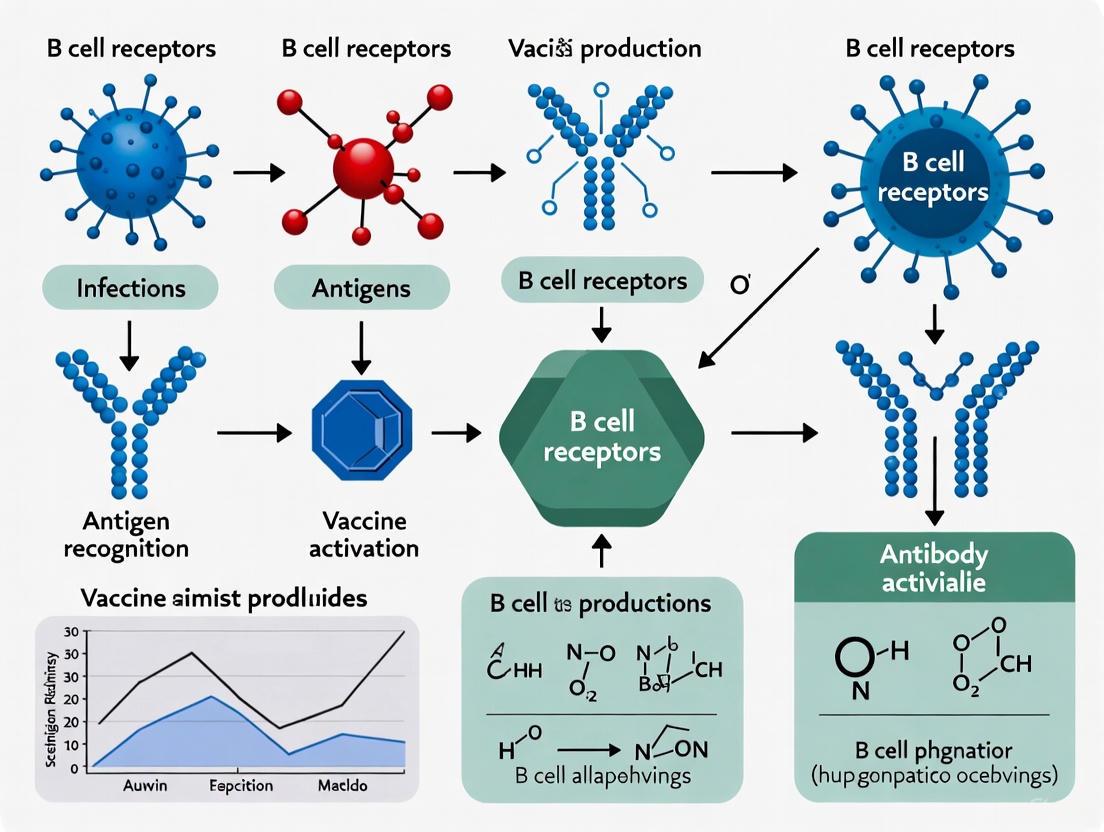
This article provides a comprehensive analysis of the dual role of B Cell Receptors (BCRs) in adaptive immunity and biomedical applications.
B Cell Receptors: From Fundamental Immunology to Advanced Vaccine and Therapeutic Development
Abstract
This article provides a comprehensive analysis of the dual role of B Cell Receptors (BCRs) in adaptive immunity and biomedical applications. It explores the fundamental signaling mechanisms of BCRs, examines cutting-edge methodologies for repertoire analysis, and discusses innovative approaches for optimizing immune responses. The scope includes foundational BCR biology, high-throughput sequencing applications, troubleshooting of immune response challenges, and comparative validation of therapeutic platforms like Antibody-Drug Conjugates (ADCs). Designed for researchers and drug development professionals, this review synthesizes current research trends and future directions in harnessing BCR biology for vaccine design and targeted cancer therapies.
Decoding B Cell Receptor Biology: Structure, Signaling, and Immune Activation
The B cell receptor (BCR) is a multiprotein complex expressed on the surface of B lymphocytes, serving as the critical sensor for antigen recognition and the initiator of humoral immune responses. From a therapeutic perspective, the BCR represents a target of immense clinical potential. Aberrant BCR signaling is directly implicated in the pathogenesis of autoimmune diseases, allergies, leukemias, and lymphomas [1]. Conversely, effective BCR engagement is fundamental to successful vaccination and the development of protective immunity [2]. The core BCR complex consists of two central components: a membrane-bound immunoglobulin (mIg) that confers antigen specificity, and a heterodimer of Ig-α (CD79a) and Ig-β (CD79b) that transduces intracellular signals [1] [3]. This whitepaper provides an in-depth technical analysis of the BCR's architectural principles, drawing on recent structural breakthroughs to elucidate its function in health, disease, and vaccine-mediated protection. A precise understanding of this architecture is foundational for the rational design of drugs and next-generation vaccines that modulate B cell activity.
Core Structural Components of the BCR
Membrane-Bound Immunoglobulin (mIg)
The antigen-binding subunit of the BCR is a membrane-bound immunoglobulin (mIg). It is a symmetrical, disulfide-linked homodimer composed of two identical heavy chains and two identical light chains [1] [4]. The mIg molecule can be of several isotypes—IgM and IgD on naïve mature B cells, and IgG, IgA, or IgE on memory B cells and plasma cells—each with distinct functional roles in the immune response [4]. The intracellular regions of mIg molecules are remarkably short; for instance, the intracellular tails of IgM and IgD contain only three amino acids (KVK), rendering them incapable of signal transduction on their own [5] [3].
The Ig-α/Ig-β (CD79a/b) Heterodimer
The signal-transducing component of the BCR is the Ig-α/Ig-β heterodimer. Ig-α and Ig-β are type I transmembrane proteins, each consisting of:
- An extracellular immunoglobulin-like (Ig-like) domain.
- A transmembrane domain (TMD).
- A cytoplasmic tail containing an immunoreceptor tyrosine-based activation motif (ITAM) [1] [5].
The heterodimer is stabilized by a conserved disulfide bond between the extracellular domains of Ig-α and Ig-β [1]. The cytoplasmic ITAM motifs are the critical signaling modules of the BCR. Upon phosphorylation, they serve as docking sites for downstream signaling enzymes and adaptor proteins [3].
Table 1: Core Protein Components of the BCR Complex
| Component | Gene | Key Structural Features | Primary Function |
|---|---|---|---|
| mIg Heavy Chain | Various IGH genes | Extracellular variable/constant domains, short transmembrane helix, minimal cytoplasmic tail | Antigen recognition and binding |
| mIg Light Chain | Various IGK/IGL genes | Extracellular variable/constant domains | Complements antigen-binding site |
| Ig-α (CD79a) | mb-1 | Ig-like ECD, transmembrane helix, cytoplasmic ITAM motif (61 aa tail) | Signal transduction; essential for BCR surface expression |
| Ig-β (CD79b) | B29 | Ig-like ECD, transmembrane helix, cytoplasmic ITAM motif (48 aa tail) | Signal transduction; essential for BCR surface expression |
Architectural Organization: A 1:1 Stoichiometric Asymmetric Complex
For decades, the textbook model of the BCR proposed a symmetric complex with two Ig-α/Ig-β heterodimers associated with one mIg homodimer. However, recent cryo-electron microscopy (cryo-EM) structures of full-length human IgM-BCR and IgG-BCR have fundamentally revised this understanding, revealing an asymmetric complex with a 1:1 stoichiometry (one mIg homodimer associated with a single Ig-α/Ig-β heterodimer) [6].
Domain Organization and Assembly
The overall architecture of the BCR is Y-shaped. The two mIg chains form the arms and stem of the "Y," with the Fab fragments exhibiting flexibility. The Fc domains pack tightly with the extracellular Ig-like domains of the Ig-α/Ig-β heterodimer [6]. A key structural feature is the interdigitated topology at the juxtamembrane region, where the membrane-proximal connecting peptide (CP) of one mIg heavy chain forms a defined, braided network of interactions with the Ig-α/Ig-β heterodimer, which is crucial for complex stability and assembly [6].
The Transmembrane Helix Bundle
Within the lipid bilayer, the transmembrane domains of the two mIg chains and the Ig-α/Ig-β heterodimer form a compact, four-helix bundle. This bundle is stabilized by specific hydrogen bonds and polar interactions between conserved residues in the TMDs [6]. The asymmetric nature of the complex is evident here; the Ig-α/Ig-β heterodimer associates closely with only one of the two mIg transmembrane helices, leaving the other mIg TMD vacant [7]. This arrangement tilts the entire complex in the membrane and prevents the binding of a second Ig-α/Ig-β heterodimer due to potential steric clashes with the lipid headgroups [7].
BCR Activation and Signaling Pathways
The mechanism of BCR activation following antigen binding has been the subject of intense research, with several models proposed. The cross-linking model posits that multivalent antigens drive BCR oligomerization, bringing intracellular ITAMs into proximity for phosphorylation [1] [7]. The dissociation activation model suggests that antigens disrupt autoinhibited BCR clusters on the cell surface, freeing ITAMs for access by kinases [1]. The conformation-induced oligomerization model proposes that antigen binding induces a conformational change that exposes oligomerization interfaces [7]. Recent molecular dynamics simulations support this latter model, showing that antigen binding increases flexibility in the membrane-proximal region and induces rearrangements in the transmembrane helices, potentially facilitating oligomerization [7].
Key Signaling Cascades
Upon BCR engagement and ITAM phosphorylation, a cascade of signaling events is triggered, primarily through three key pathways [5]:
- The PLC-γ2 Pathway: This pathway is critical for calcium mobilization and NF-κB activation. The adapter protein BLNK recruits Syk and Btk, which activate PLC-γ2. PLC-γ2 then hydrolyzes PIP₂ to generate IP₃ and DAG. IP₃ triggers calcium release from the endoplasmic reticulum, activating transcription factors like NFAT, while DAG activates PKCβ, leading to the formation of the CBM complex and subsequent NF-κB activation [5].
- The PI3K Pathway: Phosphorylation of the adapter BCAP leads to PI3K activation. PI3K phosphorylates PIP₂ to produce PIP₃, which recruits pleckstrin homology (PH) domain-containing proteins like Bam32, Akt, and PDK1. This pathway promotes cell survival, metabolism, and cytoskeletal reorganization [3].
- The MAPK Pathway: BCR signaling activates small GTPases like Ras, which initiate the MAPK cascade (ERK, JNK, p38). This pathway regulates cell proliferation, differentiation, and apoptosis [5] [4].
Table 2: Key Signaling Molecules in BCR Pathways
| Signaling Pathway | Key Effectors | Second Messengers | Transcription Factors Activated | Cellular Outcome |
|---|---|---|---|---|
| PLC-γ2 | Syk, Btk, BLNK, PLC-γ2, PKCβ | IP₃, DAG, Ca²⁺ | NFAT, NF-κB | Calcium signaling, gene expression, B cell proliferation |
| PI3K | BCAP, PI3K, Akt, Bam32 | PIP₃ | FoxO, others | Cell survival, metabolism, cytoskeletal changes |
| MAPK | Ras, Raf, MEK, ERK, JNK, p38 | - | Elk-1, c-Jun, others | Cell growth, differentiation, stress response |
Experimental Methods for Structural and Functional Analysis
Cryo-Electron Microscopy (Cryo-EM)
Protocol Overview: The determination of the full-length BCR structure was achieved through single-particle cryo-EM [6]. The BCR complex is purified from cell membranes using detergents and immediately frozen in vitreous ice. This process preserves the native structure of the complex. Thousands of particle images are collected via electron microscopy and computationally aligned and averaged to generate a high-resolution three-dimensional reconstruction [6]. Key Insight: This method was instrumental in revealing the 1:1 stoichiometry and the asymmetric, interdigitated architecture of the BCR, overturning previous symmetric models [6].
Molecular Dynamics (MD) Simulations
Protocol Overview: All-atom and coarse-grained MD simulations are used to probe the dynamics of the BCR in a modeled lipid bilayer. The initial atomic coordinates are derived from cryo-EM structures. The system, comprising the BCR protein complex embedded in a realistic lipid membrane (e.g., containing POPC, POPE, cholesterol, etc.), is solvated in water molecules and ions. Simulations are run for hundreds of nanoseconds to microseconds, solving Newton's equations of motion for all atoms to observe conformational changes [7]. Key Insight: MD simulations revealed that antigen binding increases flexibility in the membrane-proximal region and causes allosteric rearrangements in the transmembrane helices, providing support for the conformational-change model of activation [7].
GALLEX Assay
Protocol Overview: GALLEX is an in vivo assay designed to characterize transmembrane domain (TMD) interactions within natural membranes [1]. It involves the fusion of TMDs of interest (e.g., from Ig-α or Ig-β) to the DNA-binding domain of the LexA repressor. Interaction strength between TMDs is measured via reporter gene expression, allowing for the quantification of weak and strong homotypic or heterotypic interactions in a native lipid environment [1]. Key Insight: Using GALLEX, researchers demonstrated strong heterotypic interactions between the Ig-α and Ig-β TMDs and identified specific motifs (e.g., E-X₁₀-P in Ig-α) that stabilize these interactions, which are critical for BCR assembly and function [1].
BCR Repertoire Sequencing (BCR-Seq)
Protocol Overview: BCR sequencing involves high-throughput sequencing of the variable regions of BCR heavy and light chains from B cell populations [4] [8]. Genomic DNA or mRNA is isolated from B cells, and BCR gene fragments are amplified via PCR using primers targeting V, D, and J gene segments. The resulting libraries are sequenced on platforms like Illumina, and bioinformatic tools are used to analyze diversity, clonality, and somatic hypermutation [8]. Key Insight: Advanced methods like Benisse integrate BCR sequence data with single-cell RNA sequencing (scRNA-seq) data, revealing correlations between BCR sequences and the transcriptional state of B cells, thereby mapping functional relevance to the BCR repertoire [8].
Table 3: The Scientist's Toolkit - Key Research Reagents and Methods
| Tool/Reagent | Category | Primary Function in BCR Research | Key Experimental Insight |
|---|---|---|---|
| Cryo-EM | Structural Biology | Determine high-resolution 3D structure of macromolecules | Revealed asymmetric 1:1 stoichiometry of BCR complex [6] |
| GALLEX Assay | Biochemical Assay | Measure TMD interactions in natural membranes | Quantified strong Ig-α/Ig-β TMD heterodimerization [1] |
| Lipid Nanoparticles | Delivery System | Deliver mRNA encoding antigens in vaccines | Mimics natural antigen production, enhancing immunogenicity [9] |
| Bis-maleimide Crosslinker | Chemical Biology | Crosslink proteins to create multivalent antigen complexes | Mimics immune complexes, potently enhancing antibody responses [2] |
| Single-Cell BCR-Seq | Genomics | Profile paired BCR sequence and gene expression from single cells | Linked BCR sequence to cellular phenotype and function [8] |
Implications for Vaccine Research and Drug Development
The detailed architectural knowledge of the BCR complex directly informs strategies in vaccine and therapeutic design.
- Rational Vaccine Design: Understanding that multivalent antigens are superior at cross-linking BCRs and initiating strong signaling has led to novel vaccine strategies. For example, chemically cross-linking antigens (e.g., using bis-maleimide linkers) to create artificial immune complexes significantly enhances antigen-specific antibody responses compared to monovalent antigens [2]. This principle is leveraged in various nanoparticle and virus-like particle (VLP) based vaccines.
- Targeting BCR Signaling in Malignancy: In B-cell lymphomas and leukemias, malignant B cells often rely on chronic active BCR signaling for survival and proliferation [1] [5]. The structural insights into the TMD bundle and the signaling heterodimer provide new avenues for therapeutic intervention. Small molecules or biologics that disrupt critical interactions within the BCR complex could potentially inhibit this pathogenic signaling [6].
- RNA Vaccines: mRNA vaccines, encapsulated in lipid nanoparticles (LNPs), are taken up by host cells, which then translate the mRNA into the antigenic protein. This in situ production mimics a natural infection, leading to robust BCR engagement and the development of potent, long-lived humoral immunity [9]. The success of this platform is a testament to the fundamental principles of BCR biology.
The B-cell receptor (BCR) signaling cascade is the cornerstone of humoral immunity, enabling B lymphocytes to recognize a vast array of pathogens and mount a specific antibody response. This process begins with antigen binding to the surface BCR and culminates in intracellular activation events that dictate B cell fate, including proliferation, differentiation, and antibody production [5]. A precise understanding of this cascade is not only fundamental to immunology but also critical for advancing research in infectious diseases and developing novel vaccines and therapeutics for autoimmune disorders and B-cell malignancies [5] [10] [11]. This technical guide delineates the core mechanisms of BCR signaling, from the initial antigen engagement to the downstream intracellular pathways, and frames them within the context of modern immunological research and therapeutic intervention.
The BCR Complex and Resting State Distribution
The BCR complex is a multiprotein structure composed of a membrane-bound immunoglobulin (mIg) for antigen binding and a heterodimer of Igα (CD79A) and Igβ (CD79B) for signal transduction [5] [11]. The mIg subunit, which can be IgM, IgD, or other isotypes in mature B cells, possesses an extracellular antigen-binding domain but has an exceedingly short intracellular tail incapable of signaling. The signaling capacity resides in the Igα/Igβ heterodimer, each containing an immunoreceptor tyrosine-based activation motif (ITAM) in its cytoplasmic domain [5]. Upon antigen binding, these ITAMs become phosphorylated, serving as the platform for assembling the downstream signaling machinery [5] [11].
Contrary to the long-held assumption that BCR activation requires the cross-linking of monomeric receptors, recent super-resolution microscopy studies reveal a more complex pre-clustered organization on naïve, resting B cells. Using DNA-PAINT, researchers found that BCRs exist in an equilibrium of monomers, dimers, and loosely associated clusters [12]. Quantitative analysis shows that approximately 25% of BCRs are monomers, 24% are dimers, and 37% reside in small "islands" of 3-9 molecules [12]. The average nearest-neighbor distance between BCRs in these clusters is 20–30 nm, suggesting that the resting state organization is influenced by external factors like actin confinement rather than direct BCR-BCR interaction [12]. The total number of BCRs on a naïve murine B cell is estimated to be around 25,000 [12]. This pre-clustered state has significant implications for the models of initial BCR activation.
Table 1: Distribution of BCRs on Resting Naïve B Cells
| Cluster Type | Percentage of BCR Molecules | Approximate Inter-Fab Distance |
|---|---|---|
| Monomers | 25% | N/A |
| Dimers | 24% | N/A |
| Small Islands (3-9 molecules) | 37% | 20-30 nm |
| Large Islands (>9 molecules) | Rare (0% in 23% of cells) | 20-30 nm |
Models of Initial BCR Activation and Antigen Engagement
The mechanism by which antigen binding triggers the first step in BCR activation has been a subject of intense investigation. Two primary models have been proposed, with recent evidence lending support to a synthesis governed by the antigen footprint [12].
The Cross-Linking Model
The classical model posits that BCR activation is driven by the cross-linking of monomeric BCRs by multivalent antigens. This cross-linking leads to the coalescence of BCRs into larger clusters, concentrating the ITAMs on the intracellular side and facilitating their phosphorylation by Src-family kinases [12].
The Dissociation-Activation Model
An alternative model suggests that BCRs on resting B cells are held in autoinhibitory oligomers with their Fab arms closely packed. Antigen binding is proposed to dissociate these oligomers, physically separating the ITAMs and allowing kinase access [12].
The Antigen Footprint Model
Recent research leveraging engineered, monodisperse antigens has provided a more nuanced understanding. The antigen footprint—dictated by the antigen's size, rigidity, and valency—governs activation [12]. While high-affinity, multivalent antigens are potent agonists, monovalent antigens can also activate the BCR, but only if they are sufficiently large and rigid [12]. This indicates that antigen binding alone is insufficient for activation; instead, a minimal antigen size and rigidity are required to mechanically reorganize the BCR complex on the cell surface, supporting a model where the antigen's physical properties determine its agonistic potential [12].
Core BCR-Mediated Signaling Pathways
Following antigen engagement and ITAM phosphorylation, the signal is transduced through several key downstream pathways. The core pathways include the PLC-γ2 pathway, the PI3K pathway, and the MAPK pathway [5].
The PLC-γ2 Pathway
This is a central pathway leading to calcium flux and activation of key transcription factors.
- Activation: The adaptor protein BLNK (B-cell linker) recruits and coordinates the kinase Syk and Bruton's tyrosine kinase (Btk). Syk and Btk then phosphorylate and activate phospholipase C-gamma 2 (PLC-γ2) [5].
- Second Messengers: Activated PLC-γ2 catalyzes the hydrolysis of phosphatidylinositol 4,5-bisphosphate (PIP2) into two second messengers: inositol 1,4,5-trisphosphate (IP3) and diacylglycerol (DAG) [5] [11].
- Calcium Flux: IP3 binds to its receptor (IP3R) on the endoplasmic reticulum (ER), triggering the first wave of calcium (Ca2+) release. The depletion of ER Ca2+ stores is sensed by STIM1 proteins, which then activate plasma membrane CRAC channels, allowing for a sustained second wave of extracellular Ca2+ entry, known as store-operated Ca2+ entry (SOCE) [5].
- Downstream Transcription Factors:
- NFAT: The sustained increase in cytosolic Ca2+ activates calmodulin, which in turn activates calcineurin. Calcineurin dephosphorylates the transcription factor NFAT (Nuclear Factor of Activated T cells), enabling its translocation to the nucleus [5] [11].
- NF-κB: DAG, along with the increased Ca2+, activates protein kinase C beta (PKCβ). PKCβ phosphorylates the CARMA1 protein, leading to the formation of the CBM complex (CARMA1-BCL10-MALT1). This complex recruits and activates the TAK1 and IKK complexes, resulting in the phosphorylation and proteasomal degradation of the inhibitor of κB (IκB). This frees the NF-κB dimer (p50/cRel) to translocate to the nucleus and drive the expression of pro-survival and proliferative genes like BCL-2 and cyclin D [5] [11].
The PI3K Pathway
This pathway is critical for cell survival, metabolism, and growth.
- Activation: The kinase LYN phosphorylates the co-receptor CD19, which recruits and activates phosphoinositide 3-kinase (PI3K) [11].
- Second Messenger: PI3K phosphorylates PIP2 to generate phosphatidylinositol (3,4,5)-trisphosphate (PIP3) at the plasma membrane [11].
- Downstream Effectors: PIP3 serves as a docking site for pleckstrin homology (PH) domain-containing proteins, most notably the kinase Akt (PKB) and Btk [11].
- Cell Survival and Metabolism: Activated Akt promotes cell survival by inactivating pro-apoptotic proteins and activating mTOR. It also contributes to NF-κB activation and regulates glucose metabolism by inactivating GSK3 [11]. The importance of metabolic reprogramming in B cell activation is highlighted by studies showing enhanced metabolic signals, including pmTOR and pSTAT5, in B cells from vaccinated individuals, suggesting a role for the STAT5-c-Myc axis in regulating B cell metabolism [13].
The MAPK Pathway
This pathway regulates cell proliferation, survival, and differentiation.
- Activation: The pathway can be activated downstream of PKCβ or via the small GTPase Ras. The guanine nucleotide exchange factor RasGRP3, activated by the PLC-γ2/PKCβ axis, couples the BCR to Ras activation [5] [11].
- Kinase Cascade: Activated Ras triggers a phosphorylation cascade involving Raf, MEK, and finally, the extracellular signal-regulated kinases ERK1 and ERK2 [11].
- Nuclear Translocation: Phosphorylated ERK dimers translocate to the nucleus and activate transcription factors like Fos and Jun, which regulate genes responsible for cell cycle progression [11].
Negative Regulation of BCR Signaling
The potency of BCR signaling necessitates tight negative regulation to prevent uncontrolled B cell activation and autoimmunity. This is achieved through a dynamic equilibrium between activating and inhibitory mechanisms [5] [11]. A key player is the kinase Lyn, which has a dual role: it initiates positive signaling by phosphorylating ITAMs but also phosphorylates immunoreceptor tyrosine-based inhibitory motifs (ITIMs) on co-receptors like CD22 and FcγRIIb [11]. Phosphorylated ITIMs recruit phosphatases such as SHP-1 (Src homology 2 domain-containing phosphatase-1) and SHIP (SH2 domain-containing inositol phosphatase), which dephosphorylate components of the BCR signalosome, thereby arresting the signal [11]. Dysregulation of these negative checkpoints is a hallmark of autoimmune diseases and B-cell malignancies.
Experimental Protocols for BCR Signaling Research
Mapping BCR Distribution via DNA-PAINT Super-Resolution Microscopy
Objective: To determine the nanoscale organization of BCRs on the surface of resting, naïve B cells [12].
Protocol:
- Cell Preparation: Freshly isolate untouched, naïve B cells from murine spleen (e.g., B1-8hi knock-in mice). Fix cells in solution immediately after isolation to minimize activation.
- Labeling: Centrifuge fixed cells onto glass slides. Label BCRs (IgM and IgD) using an anti-mouse kappa light chain nanobody (κLC-Nb) conjugated to a single DNA docking strand. Ensure labeling efficiency is calibrated using DNA origami with a known number of target sites (~80% efficiency is achievable) [12].
- Imaging: Perform DNA-PAINT imaging in 2D TIRF mode with an imaging depth of ~100 nm. Use transient binding of fluorescently labeled "imager" oligonucleotides to the docking strands for stochastic super-resolution imaging.
- Image Analysis:
- Cluster Identification: Use Density-Based Spatial Clustering of Applications with Noise (DBSCAN) to identify BCR clusters without pre-defining cluster size.
- Quantification: Perform quantitative PAINT (qPAINT) analysis. Calibrate the imager strand influx rate using single binding sites (SBS). Use binding kinetics as a direct readout to determine the number of BCR molecules per cluster.
- Classification: Classify clusters as monomers (1 molecule), dimers (2), small islands (3-9), or large islands (>9). Calculate inter-Fab distances and total BCR per cell by extrapolating density to a spherical surface, accounting for labeling efficiency and membrane ruffles [12].
Probing Activation Requirements with Precision Nanoscaffold Antigens
Objective: To define the minimal antigen valency, affinity, and size requirements for BCR activation using monodisperse, engineered antigens [12].
Protocol:
- Antigen Engineering: Leverage a locked nucleic acid (LNA)-based nanoscaffold resembling a Holliday junction (HJ). Self-assemble the complex from four complementary synthetic oligonucleotides, each conjugated to a defined number of antigen molecules (e.g., mono-, bi-, or tetra-valent). Purify to homogeneity to ensure valency control [12].
- Cell Stimulation: Use B cells with a known BCR specificity. Stimulate with a titration of the purified nanoscaffold antigens, comparing monovalent, multivalent, and varying affinity constructs. Include controls like haptenized protein carriers (which have a Poisson distribution of valencies) and micromolecular antigens.
- Readout of Activation:
- Early Signaling: Measure ITAM phosphorylation (Igα/Igβ) and Syk activation via phospho-flow cytometry or western blotting within minutes of stimulation.
- Calcium Flux: Use calcium-sensitive dyes (e.g., Fluo-4) and live-cell imaging or flow cytometry to quantify intracellular Ca2+ flux.
- Downstream Activation: Assess nuclear translocation of NF-κB and NFAT via immunofluorescence or biochemical fractionation.
- Data Interpretation: Correlate antigen valency, affinity, and macromolecular size with the potency of BCR activation. A key finding is that monovalent macromolecular antigens can activate the BCR, whereas micromolecular ones cannot, supporting the antigen footprint model [12].
Research Reagent Solutions
Table 2: Essential Research Tools for BCR Signaling Studies
| Reagent / Tool | Function / Specificity | Key Application in BCR Research |
|---|---|---|
| Anti-IgM/IgD Antibodies | Polyclonal BCR cross-linking | General BCR stimulation and activation studies [10]. |
| Holliday Junction Nanoscaffolds | Monodisperse, precision-controlled valency and affinity | Defining minimal antigen requirements for activation [12]. |
| DNA-PAINT Nanobody Conjugates | High-efficiency, quantitative BCR labeling | Super-resolution mapping of BCR distribution and clustering [12]. |
| Phospho-Specific Antibodies | Detect phosphorylation of Syk, Btk, PLC-γ2, Akt, Erk | Monitoring early BCR signaling cascade activation [10]. |
| Calcium-Sensitive Dyes (e.g., Fluo-4) | Indicator of intracellular Ca2+ concentration | Measuring PLC-γ2 pathway activity and SOCE [5] [10]. |
| Ibrutinib (PCI-32765) | Bruton's Tyrosine Kinase (Btk) inhibitor | Investigating Btk-dependent signaling and therapeutic targeting [10] [11]. |
| Fostamatinib (R788/R406) | Syk inhibitor | Inhibiting the most proximal kinase in BCR signaling; therapeutic studies [11]. |
| Idelalisib (GS-1101) | PI3Kδ inhibitor | Studying the role of PI3K pathway in B cell survival and therapy [11]. |
BCR Signaling in Disease and Therapy
Chronic or dysregulated BCR signaling is a driver of numerous pathologies. In B-cell malignancies such as chronic lymphocytic leukemia (CLL) and mantle cell lymphoma (MCL), the BCR pathway provides critical survival and proliferation signals, often through tonic (antigen-independent) or antigen-driven signaling [5] [11]. For example, in mantle cell lymphoma, the protein CEACAM1 was recently identified as a critical mediator of hyperactive BCR signaling. CEACAM1 co-localizes with the BCR in lipid rafts, recruits and stabilizes SYK, and enhances BCR signaling output, revealing a surprising context-dependent activating role for a typically inhibitory receptor [14].
In autoimmunity, a key pathogenic population is age-associated B cells (ABCs). ABCs accumulate with age and in conditions like lupus and exhibit constitutive BCR activation, with elevated basal phosphorylation of Syk, Btk, and PLC-γ2, increased cytosolic Ca2+, and internalized surface BCRs [10]. These ABCs can arise from anergic B cells that have experienced chronic self-antigen exposure, and their development and maintenance depend on continuous BCR signaling, making them a prime therapeutic target [10].
The critical role of BCR signaling in disease has led to the successful development of several targeted therapies. Inhibitors of key downstream kinases, including Ibrutinib (BTK inhibitor), Fostamatinib (SYK inhibitor), and Idelalisib (PI3Kδ inhibitor), have shown significant clinical efficacy in treating various B-cell malignancies and are being explored for autoimmune applications [10] [11]. These therapeutics underscore the translational importance of understanding the BCR signaling cascade in precise detail.
This technical guide details the core signaling pathways—PI3K/AKT, NF-κB, and Calcium Flux—framed within the context of B cell receptor (BCR) function. Understanding these pathways is crucial for dissecting the mechanisms of B cell activation, differentiation, and antibody production, which are foundational to infection response and the rational design of next-generation vaccines.
Pathway Fundamentals and B Cell Context
PI3K/AKT Signaling Pathway
The PI3K/AKT pathway is a central regulator of cell survival, proliferation, and metabolism. Its activation begins when extracellular ligands bind to receptor tyrosine kinases (RTKs) or other cell surface receptors like the BCR, recruiting Phosphoinositide 3-kinase (PI3K) to the membrane [15]. PI3K phosphorylates the lipid phosphatidylinositol-4,5-bisphosphate (PIP2) to generate phosphatidylinositol-3,4,5-trisphosphate (PIP3). This lipid second messenger then recruits AKT and Phosphoinositide-dependent kinase 1 (PDK1) to the membrane. PDK1 phosphorylates AKT at Threonine 308, and full activation is achieved upon phosphorylation at Serine 473 by the mammalian target of rapamycin complex 2 (mTORC2) [15]. Activated AKT phosphorylates numerous downstream effectors, including mTORC1, GSK3β, and FOXO transcription factors, to promote cell growth and inhibit apoptosis.
In the context of B cells, BCR engagement provides a key activation signal for the PI3K/AKT pathway [16]. This is particularly critical for the survival and proliferation of antigen-activated B cells. Notably, dysregulation of this pathway is a hallmark of many B-cell lymphomas. For instance, the activated B-cell-like (ABC) subtype of Diffuse Large B-cell Lymphoma (DLBCL) exhibits "chronic active" BCR signaling that activates both NF-κB and PI3K/AKT pathways, while the germinal center B-cell-like (GCB) subtype shows antigen-independent "tonic" BCR signaling that primarily activates the PI3K/AKT axis [16].
NF-κB Signaling Pathway
Nuclear Factor κB (NF-κB) is a family of transcription factors (p50, p52, RelA/p65, RelB, c-Rel) that are master regulators of immune and inflammatory responses. NF-κB activation proceeds via two major branches [17] [18]:
- Canonical Pathway: Activated by a wide range of stimuli, including BCR engagement, cytokines (e.g., TNF), and Pathogen-Associated Molecular Patterns (PAMPs). This leads to the activation of the IκB kinase (IKK) complex, composed of IKKα, IKKβ, and the regulatory subunit NEMO (IKKγ). IKK phosphorylates the inhibitory protein IκBα, targeting it for ubiquitination and proteasomal degradation. This releases the canonical NF-κB dimers (typically p50/RelA and p50/c-Rel), allowing their translocation to the nucleus to induce pro-inflammatory gene expression [17].
- Noncanonical Pathway: Activated by a specific subset of TNFR superfamily members (e.g., BAFFR, CD40). This pathway depends on the NF-κB-inducing kinase (NIK), which activates IKKα. IKKα then phosphorylates the NF-κB2 precursor p100, leading to its processing into the mature p52 subunit. The p52/RelB dimer translocates to the nucleus to regulate genes involved in B cell survival and lymphoid organ development [17] [18].
In B cells, the BCR-induced canonical NF-κB activation is crucial for mounting effective immune responses. Furthermore, CD40 signaling, which is essential for T cell-dependent B cell activation and germinal center formation, robustly activates the noncanonical pathway [17].
Calcium Flux Signaling Pathway
The B cell receptor-induced calcium flux is a critical second messenger signal that governs B cell fate decisions, including proliferation, differentiation, and antibody class switching [19] [16]. The flux occurs in two coordinated waves [19] [16]:
- ER Calcium Release: BCR engagement activates tyrosine kinases (Syk, Btk), which phosphorylate and activate Phospholipase C gamma 2 (PLCγ2). PLCγ2 hydrolyzes PIP2 to generate Inositol-1,4,5-trisphosphate (IP3) and Diacylglycerol (DAG). IP3 binds to its receptor (IP3R) on the Endoplasmic Reticulum (ER), triggering the first wave of calcium release from ER stores into the cytosol.
- Store-Operated Calcium Entry (SOCE): The depletion of ER calcium stores is sensed by Stromal Interaction Molecule 1 (STIM1). STIM1 oligomerizes and translocates to ER-plasma membrane junctions, where it activates plasma membrane Calcium Release-Activated Calcium (CRAC) channels, composed of Orai proteins. This allows a sustained influx of extracellular calcium, which is essential for prolonged signaling.
This sustained calcium signal is mandatory for activating the transcription factors NFAT, NF-κB, and others that drive the expression of genes critical for B cell function [19]. A positive feedback mechanism, involving calcium-binding proteins like Swiprosin-1/EFhd2, can further amplify the BCR-induced calcium flux [20].
Table 1: Key Characteristics of B Cell Signaling Pathways
| Feature | PI3K/AKT Pathway | NF-κB Pathway | Calcium Flux Pathway |
|---|---|---|---|
| Primary Initiating Signal | BCR, CD19, Cytokine Receptors | BCR, CD40, TLRs, TNF receptors | BCR, Chemokine Receptors (GPCRs) |
| Key Second Messenger/Mediator | PIP3 | IKK Complex (canonical), NIK (noncanonical) | IP3, Calcium Ions (Ca²⁺) |
| Core Transduction Elements | PI3K, PDK1, AKT, mTORC2 | IKKα/IKKβ/NEMO, IκBα, p100/NF-κB2 | PLCγ2, IP3R, STIM, Orai |
| Major Nuclear Transcription Factors | FOXO, others | RelA/p65, c-Rel, p50, RelB/p52 | NFAT, NF-κB |
| Primary Functional Outcomes in B Cells | Survival, Proliferation, Metabolism | Proliferation, Inflammatory Response, Differentiation | Differentiation, Metabolic Switch, Antibody Secretion |
Quantitative Data and Pathogenic Dysregulation
Pathway Hyperactivation in Disease
Dysregulation of these tightly controlled pathways is a common mechanism in oncogenesis and autoimmune disorders. In cancers, particularly lymphomas, mutations in pathway components lead to constitutive activation, driving uncontrolled cell growth and survival.
Table 2: Dysregulation of Pathways in B-cell Malignancies
| Pathway | Genetic/Molecular Alteration | Functional Consequence | Associated B-cell Malignancy |
|---|---|---|---|
| PI3K/AKT | Activating mutations in PIK3CA (p110α); Loss of PTEN; Chronic active BCR signaling [15] [16] |
Enhanced cell survival, proliferation, and therapy resistance [15] [21] | DLBCL (ABC and GCB subtypes), CLL [16] |
| NF-κB | Mutations in CARD11, CD79A/B, MYD88; EBV LMP1 protein expression [17] [18] [16] |
Constitutive induction of pro-survival and inflammatory genes [17] [16] | ABC-DLBCL, Primary CNS Lymphoma [16] |
| Calcium Flux | Mutations regulating BCR signaling (e.g., SYK, BTK, PLCG2); Altered regulation of SOCE [16] |
Sustained Ca²⁺ signals promoting proliferation and survival [19] [16] | CLL, MCL, DLBCL [16] |
The PI3K/AKT pathway is hyperactivated in a significant proportion of human cancers. For example, in breast cancer, up to 70% of cases show hyperactivated AKT, while in glioblastoma, this figure rises to approximately 88% [15]. This high incidence underscores its importance as a therapeutic target.
Pathway Interdependence in B Cell Biology
These pathways do not operate in isolation but form an integrated signaling network. A prime example is the critical role of calcium flux in activating both the NF-κB and NFAT pathways in B cells. The sustained calcium entry through CRAC channels is necessary for the full activation of the canonical NF-κB pathway, facilitating B cell proliferation and immune responses [19]. Furthermore, the calcium-dependent enzyme Protein Kinase C beta (PKCβ), which is activated by DAG (the co-product of PIP2 hydrolysis by PLCγ2), phosphorylates the CARD11 protein. This is a crucial step in the formation of the CBM complex, which serves as an upstream activator of the IKK complex for canonical NF-κB activation [16]. Simultaneously, the sustained calcium signal calcineurin, which dephosphorylates and activates NFAT, leading to its nuclear translocation and the transcription of genes governing B cell differentiation and cytokine production [19].
Experimental Analysis Protocols
Protocol 1: Assessing BCR-Induced Calcium Flux
Objective: To visualize and quantify intracellular calcium concentration changes in real-time following B cell receptor stimulation.
Workflow:
- Cell Preparation: Load B cells (e.g., primary human B cells or model cell lines like WEHI-231) with a calcium-sensitive fluorescent dye, such as Fluo-4 AM or Indo-1 AM, in a buffered saline solution.
- Baseline Acquisition: Place dye-loaded cells in a spectrophotometer or flow cytometer with a maintained temperature of 37°C. Record baseline fluorescence for 1-2 minutes.
- Stimulation: Introduce a BCR-crosslinking agent, typically anti-immunoglobulin antibodies (e.g., F(ab')₂ fragments of anti-IgM or anti-IgG), to the cell suspension.
- Kinetic Measurement: Continuously monitor fluorescence for 15-30 minutes post-stimulation. The initial sharp peak represents ER calcium release, while the sustained plateau phase indicates SOCE.
- Inhibition/Sensitization (Optional): To dissect the mechanism, pre-treat cells with inhibitors:
- EGTA: A calcium chelator added extracellularly to confirm the SOCE-dependent sustained phase.
- Thapsigargin: A SERCA pump inhibitor that depletes ER stores independently of IP3, used as a positive control for SOCE activation.
- Pharmacological Inhibitors: Small molecules targeting BTK (e.g., Ibrutinib), PLCγ2, or SYK can be used to validate the upstream signaling requirements.
Data Analysis: Calculate the ratio of fluorescence emission (for ratiometric dyes like Indo-1) or plot the fold-change in fluorescence intensity over time. Key parameters include the amplitude, rate of rise, and the integral of the calcium flux.
Protocol 2: Evaluating PI3K/AKT Pathway Activation by Western Blot
Objective: To determine the activation status of the PI3K/AKT pathway by measuring the phosphorylation levels of key proteins.
Workflow:
- Cell Stimulation & Lysis: Stimulate B cells (e.g., with anti-BCR antibodies, CD40L, or BAFF) for a predetermined time (e.g., 5, 15, 30 minutes). Immediately lyse cells using RIPA buffer supplemented with protease and phosphatase inhibitors [21].
- Protein Quantification and Electrophoresis: Determine protein concentration using a Bradford or BCA assay. Resolve equal amounts of protein (e.g., 30 µg) by SDS-polyacrylamide gel electrophoresis (SDS-PAGE) [21].
- Western Blotting: Transfer proteins from the gel to a polyvinylidene difluoride (PVDF) membrane. Block the membrane with 5% BSA or non-fat milk to prevent non-specific antibody binding [21].
- Immunoblotting: Probe the membrane with specific primary antibodies overnight at 4°C.
- Key Antibodies:
- Phospho-AKT (Ser473)
- Phospho-AKT (Thr308)
- Total AKT (loading control)
- Other downstream targets: Phospho-S6 (Ser235/236), Phospho-4E-BP1 (Thr37/46) [21]
- Key Antibodies:
- Detection: Incubate with appropriate horseradish peroxidase (HRP)-conjugated secondary antibodies. Use a chemiluminescent substrate to visualize bands on a gel imager [21].
Data Analysis: The level of pathway activation is indicated by the intensity of the phospho-specific bands relative to the total protein and loading control bands. Densitometry software is used for quantification.
Protocol 3: Multiplex Analysis of Signaling Pathways
Objective: To simultaneously quantify the phosphorylation status of multiple proteins across different signaling pathways from a single small sample.
Workflow:
- Sample Preparation: Prepare cell lysates from treated and control B cells as described in Protocol 2 [21].
- Assay Setup: Use commercially available multiplex immunoassay kits (e.g., Luminex xMAP technology) designed for phosphoprotein detection. These kits use antibody-coated magnetic beads with distinct fluorescent signatures [21].
- Incubation and Binding: Incubate the cell lysates with the bead mixture. Phosphorylated proteins in the lysate will bind to their specific capture antibodies on the beads.
- Detection: After washing, add a biotinylated detection antibody followed by a streptavidin-phycoerythrin (SAPE) conjugate. The PE fluorescence intensity is measured on a multiplex array reader and is proportional to the amount of phosphorylated target [21].
Data Analysis: The instrument software provides concentration or median fluorescence intensity (MFI) values for each analyte. This allows for a direct comparison of the activation state of AKT, mTOR, and MAPK pathway components simultaneously from one sample [21].
The Scientist's Toolkit: Research Reagent Solutions
Table 3: Essential Reagents for Investigating B Cell Signaling Pathways
| Reagent / Assay | Specific Example(s) | Primary Function in Research |
|---|---|---|
| BCR Stimulation Agents | F(ab')₂ fragments of anti-human IgM/IgG Antibodies | To specifically crosslink and activate the BCR, initiating downstream signaling cascades. |
| Pathway Inhibitors | PI3K: Alpelisib (BYL719), Buparlisib (BKM120) [21]. AKT: MK-2206 [21]. BTK: Ibrutinib. SYK: Fostamatinib. | To chemically inhibit specific kinase activity, enabling functional validation of pathway components. |
| Calcium Indicator Dyes | Fluo-4 AM, Indo-1 AM | To fluorescently label intracellular calcium, allowing real-time quantification of calcium flux via flow cytometry or fluorometry. |
| Phospho-Specific Antibodies | pAKT (Ser473), pS6 (S235/236), pIKKα/β (Ser176/180), pIκBα (Ser32) | To detect and measure the activated (phosphorylated) state of key signaling proteins via Western blot or flow cytometry. |
| Multiplex Phosphoprotein Assays | Luminex xMAP Assays (e.g., AKT/mTOR, MAPK panels) [21] | To perform high-throughput, simultaneous quantification of multiple phosphoproteins from a small sample volume. |
| SOCE Modulators | Thapsigargin (SERCA pump inhibitor), EGTA (extracellular Ca²⁺ chelator), CRAC channel inhibitors (e.g., GSK-7975A) | To experimentally manipulate store-operated calcium entry and dissect its role in sustained calcium signaling. |
Pathway Visualization Diagrams
B Cell Signaling Network
Calcium Flux Mechanism
NF-κB Activation Pathways
Germinal centers (GCs) are transient microanatomical structures within secondary lymphoid organs where B cells undergo the critical processes of somatic hypermutation (SHM) and affinity maturation, leading to the production of high-affinity antibodies. This whitepaper provides an in-depth technical analysis of GC reactions, focusing on the cellular dynamics, molecular mechanisms, and regulatory circuits that govern the generation of high-affinity B cell receptors (BCRs). Within the context of infectious disease and vaccine development, we detail experimental methodologies for studying these processes and present key reagent solutions for research applications. Understanding these mechanisms is paramount for developing novel vaccine strategies aimed at eliciting broadly neutralizing antibodies against rapidly evolving pathogens.
Germinal centers are the cornerstone of adaptive humoral immunity, forming the specialized microenvironment where antigen-activated B cells undergo clonal expansion, immunoglobulin gene diversification, and selective survival based on antigen-binding affinity [22] [23]. The GC reaction is initiated when B cells are activated by foreign antigen and receive help from T cells at the border of the B cell follicle and T cell zone [23]. This interaction triggers the upregulation of BCL-6, the master transcriptional regulator of the GC program, in both B cells and T follicular helper (Tfh) cells [23]. Within days, these committed cells migrate to the center of the follicle, establishing the GC structure that becomes polarized into two distinct functional regions: the dark zone (DZ) and light zone (LZ) [22] [23].
The dark zone is characterized by a dense network of proliferating B cells (centroblasts) that undergo rapid division and somatic hypermutation of their immunoglobulin variable region genes [22] [24]. In contrast, the light zone contains a more sparse population of B cells (centrocytes) along with follicular dendritic cells (FDCs) that display antigen-antibody immune complexes, and Tfh cells that provide critical survival signals [22] [24]. GC B cells continuously cycle between these two compartments in a process called cyclic re-entry, undergoing multiple rounds of mutation in the DZ followed by selection in the LZ [22] [25]. This iterative process drives affinity maturation, whereby B cells expressing BCRs with progressively higher affinity for antigen are selectively expanded and ultimately differentiate into long-lived plasma cells that secrete high-affinity antibodies or memory B cells that provide lasting immunity [22] [24].
Core Mechanisms: Somatic Hypermutation and Affinity Maturation
Molecular Basis of Somatic Hypermutation
Somatic hypermutation is a programmed genetic diversification mechanism that introduces point mutations at a high rate specifically into the variable regions of immunoglobulin genes [24] [26]. This process is catalyzed by activation-induced cytidine deaminase (AID), an enzyme expressed exclusively in activated B cells [24] [26]. AID initiates the mutation process by deaminating cytosine to uracil in DNA, creating a U:G mismatch [26]. The resulting uracil bases are not normally found in DNA, triggering DNA repair pathways that are inherently error-prone in this context [26].
The subsequent repair process involves several pathways:
- Base excision repair (BER) initiated by uracil-DNA glycosylase, which removes uracil bases
- Mismatch repair (MMR) pathways that recognize the U:G mismatch
- Recruitment of error-prone DNA polymerases (such as polymerase η) that introduce mutations during the repair synthesis [26]
These repair mechanisms collectively generate mutations at a rate approximately 10^5–10^6 times higher than the normal somatic mutation rate [26]. The mutations occur predominantly at "hotspots" characterized by specific DNA motifs (RGYW for targeting G bases, WRCY for targeting C bases), which are concentrated in the complementarity-determining regions (CDRs) that form the antigen-binding site of the BCR [26]. This targeted mutagenesis ensures that the genetic alterations most likely affect antigen binding affinity.
Affinity Maturation and Selection Dynamics
Affinity maturation represents the functional outcome of SHM coupled with stringent selection processes within the GC. The prevailing model of GC dynamics involves B cells cycling between the DZ and LZ, with each cycle potentially increasing BCR affinity through selective processes [22] [25]. In the LZ, B cells compete to acquire antigen displayed as immune complexes on FDCs [22] [27]. B cells that successfully bind antigen internalize it, process it, and present peptide fragments on MHC class II molecules to Tfh cells [22].
The critical selection event occurs when Tfh cells recognize the peptide-MHC complexes on B cells and provide survival and proliferation signals through CD40L-CD40 interactions and cytokine secretion [22] [27]. The amount of Tfh cell help a B cell receives is proportional to the amount of antigen it has captured, which in turn reflects the affinity of its BCR [22] [27]. This help determines whether a B cell will:
- Re-enter the DZ for further rounds of proliferation and mutation
- Differentiate into a plasma cell or memory B cell and exit the GC
- Undergo apoptosis due to insufficient T cell help [22] [25]
Recent research has revealed that higher-affinity B cells receive stronger Tfh signals, leading to increased expression of c-Myc and a programmed number of cell divisions upon returning to the DZ [22] [27]. This creates a feed-forward loop wherein B cells with higher affinity BCRs undergo greater expansion, thereby disproportionately contributing to the B cell pool [22].
Table 1: Key Molecular Players in Germinal Center Reactions
| Molecule/Cell Type | Function in GC Reaction | Experimental Detection |
|---|---|---|
| AID (Activation-induced cytidine deaminase) | Initiates SHM by deaminating cytosine to uracil in Ig V-regions | mRNA expression, immunohistochemistry |
| BCL-6 | Master transcriptional regulator of GC formation; represses non-GC gene expression | Flow cytometry, Western blot |
| CXCR4 | Chemokine receptor directing B cells to CXCL12-expressing DZ | Flow cytometry, migration assays |
| CXCR5 | Chemokine receptor directing cells to CXCL13-expressing follicles | Flow cytometry, knockout models |
| CD40 | B cell surface receptor for Tfh-derived CD40L; essential for B cell selection | Blocking antibodies, flow cytometry |
| Tfh Cells | Provide survival signals to GC B cells based on antigen presentation | CD4+CXCR5+PD-1+ phenotype by flow cytometry |
| FDCs | Display antigen as immune complexes for B cell sampling | CD21/35 expression, histological staining |
A groundbreaking 2025 study revealed an additional layer of regulation in affinity maturation: high-affinity B cells not only undergo more cell divisions but also reduce their mutation rate per division [27]. This regulated SHM prevents the accumulation of deleterious mutations in already-optimized BCRs, thereby safeguarding high-affinity lineages. The mutation probability (p~mut~) decreases linearly with increasing Tfh cell help, from approximately 0.6 for B cells dividing once to 0.2 for those dividing six times [27]. This represents a threefold decrease in mutations per division for the progeny of high-affinity B cells, enhancing the establishment of expanded high-affinity B cell somatic variants without generational "backsliding" in affinity [27].
Experimental Methodologies and Technical Approaches
In Vivo Tracking of GC B Cell Dynamics
The development of sophisticated genetic mouse models has enabled precise tracking of GC B cell dynamics in real time. One powerful approach utilizes the H2B-mCherry reporter system under control of a doxycycline (DOX)-sensitive promoter [27]. In this system, all hematopoietic cells constitutively express mCherry until DOX administration, which turns off the reporter gene. Subsequently, with each cell division, the mCherry fluorescent protein dilutes proportionally, functioning similarly to proliferation dyes [27].
Protocol: Tracking GC B Cell Division In Vivo
- Immunize H2B-mCherry transgenic mice with antigen (e.g., NP-OVA or SARS-CoV-2 vaccines).
- On day 12.5 post-immunization, administer DOX to suppress mCherry expression.
- At various timepoints after DOX administration (e.g., 36 hours), harvest lymphoid organs (spleen, lymph nodes).
- Analyze GC B cells by flow cytometry for mCherry intensity, which inversely correlates with division history.
- Sort populations based on mCherry intensity (mCherry^high^ = minimal division; mCherry^low^ = extensive division).
- Perform downstream analyses including single-cell RNA sequencing, BCR sequencing, and antigen affinity measurements [27].
This methodology has revealed that GC B cells undergoing the greatest number of divisions have approximately 6-fold higher affinity for antigen than minimally-dividing cells, and these highly-dividing cells show increased SHM and enrichment for affinity-enhancing mutations [27].
In Vitro Affinity Maturation Using Mammalian Cell Surface Display
For antibody engineering applications, an in vitro system that recapitulates GC processes has been developed using mammalian cell surface display coupled with AID-mediated mutagenesis [28]. This approach enables directed evolution of antibody affinity without the need for animal immunization.
Protocol: In Vitro SHM for Antibody Affinity Maturation
- Cell Line Selection: Utilize HEK293-c18 or CHO cells that enable cell surface presentation of full-length IgG and efficient transfection [28].
- Stable Cell Line Generation:
- Co-transfect cells with plasmids encoding antibody heavy chain (HC) and light chain (LC), with HC fused to a transmembrane domain (e.g., from mouse H-2K^k^) for surface display [28].
- Select stable transfectants using puromycin (concentration predetermined by kill curve analysis).
- Use flow cytometry to isolate cells with desired surface IgG expression levels [28].
- AID Expression:
- Transiently transfect stable antibody-expressing cells with AID plasmid (modifications such as addition of N-terminal nuclear localization signal can enhance activity) [28].
- Alternatively, generate stable AID-expressing lines, though transient expression may be preferable due to potential genotoxicity [28].
- Mutation and Selection Cycles:
- Culture AID-expressing cells for multiple generations to accumulate SHM.
- Use fluorescence-activated cell sorting (FACS) to isolate cells with improved antigen binding using fluorescently-labeled antigen.
- Expand sorted populations and repeat mutation/selection cycles [28].
- Next-Generation Sequencing (NGS):
- Extract genomic DNA or mRNA from selected populations.
- Amplify and sequence Ig V-regions to identify beneficial mutations [28].
- Analyze mutation spectra and frequencies to guide further engineering.
This system has been successfully applied to affinity mature therapeutic antibodies, including humanized variants that require optimization after the humanization process [28].
Table 2: Quantitative Parameters of Somatic Hypermutation and Selection
| Parameter | Value/Range | Biological Significance | Experimental Support |
|---|---|---|---|
| SHM Rate | ~10^-3^ per base pair per cell division | Creates sufficient diversity while limiting deleterious mutations | [27] |
| Mutation Distribution | Hotspots: RGYW (A/G G C/T A/T), WRCY | Targets mutations to CDR regions for maximal effect on antigen binding | [26] |
| Mutation Probability (p~mut~) | 0.6 (low division) to 0.2 (high division) | Protects high-affinity lineages from excess mutations | [27] |
| Cell Divisions per Cycle | 1-6 divisions proportional to Tfh help | Higher affinity B cells expand more, dominating the response | [22] [27] |
| Affinity Enhancement | Up to 6-fold higher in maximally vs minimally dividing cells | Demonstrates efficiency of affinity maturation process | [27] |
| Mutation Types | Silent (50%), Lethal (30%), Deleterious (19%), Enhancing (1%) | Majority of mutations are neutral or harmful, emphasizing need for stringent selection | [27] |
Current Research Paradigms and Implications for Vaccine Development
Evolving Models of GC Selection
The traditional model of GC selection posited that Tfh cell help was strictly limiting and that B cells competed for this help in a death-limited selection process, where only the highest-affinity B cells survived [25]. However, recent evidence supports a more nuanced birth-limited selection model, wherein Tfh help determines the proliferative capacity of selected B cells rather than serving as a strict survival signal [25]. In this model, B cells are not immediately eliminated based on affinity but are given varying opportunities to proliferate, allowing for greater clonal diversity [25].
This paradigm shift aligns with observations that GCs are more permissive than previously thought, allowing B cells with a broad range of affinities to persist [25]. Such permissiveness promotes clonal diversity and may enable the rare emergence of broadly neutralizing antibodies (bnAbs) that target conserved epitopes on rapidly evolving pathogens like HIV, influenza, and SARS-CoV-2 [25]. The ability to maintain lower-affinity clones that have potential to develop breadth rather than just high affinity for a single strain represents an important consideration for vaccine design.
Regulated Somatic Hypermutation
The discovery that SHM rates are dynamically regulated represents another significant advancement in our understanding of GC biology [27]. Rather than maintaining a constant mutation rate per cell division, higher-affinity B cells that receive stronger Tfh signals and undergo more divisions simultaneously reduce their mutation probability per division [27]. This regulated SHM prevents the accumulation of deleterious mutations in already-optimized BCRs, functioning as a quality control mechanism to protect high-affinity lineages.
This finding has important implications for vaccine strategies aimed at eliciting bnAbs, which typically require extensive SHM to develop their broad specificity [25]. Understanding the mechanisms that regulate SHM rates may enable the development of interventions that modulate this process to favor the generation of bnAbs.
The Scientist's Toolkit: Essential Research Reagents
Table 3: Key Research Reagent Solutions for Germinal Center Studies
| Reagent/Cell Line | Application | Key Features & Considerations |
|---|---|---|
| H2B-mCherry Reporter Mice | In vivo tracking of cell division | Doxycycline-controlled; fluorescence dilution with division; mimics proliferation dyes [27] |
| Photoactivatable GFP (PAGFP) | Real-time migration studies in GCs | Enables tracking of cell movement between DZ and LZ using multiphoton microscopy [22] |
| HEK293-c18 Cell Line | In vitro SHM and antibody display | Supports surface presentation of full-length IgG; highly transfectable; AID-competent [28] |
| AID Expression Vectors | Engineered SHM in mammalian cells | Modifications (NLS, nuclear export disruption) can enhance mutagenic activity [28] |
| Anti-CD40 Antibodies | In vitro B cell stimulation | Provides Tfh-like signals for B cell activation and differentiation [29] |
| CD40L/BAFF-expressing Feeder Cells | iGB cell culture for IgE+ B cells | Supports in vitro GC-like B cell differentiation and class switching [29] |
| NP-OVA Antigen | Model antigen for GC studies | Well-characterated hapten-carrier system; enables tracking of affinity-enhancing mutations [27] |
Visualizing Germinal Center Dynamics
GC Cyclic Re-entry Model: This diagram illustrates the dynamic cycling of B cells between the germinal center dark zone and light zone, highlighting key cellular interactions and fate decisions.
SHM Molecular Mechanism: This diagram outlines the molecular pathway of somatic hypermutation, from AID-initiated cytosine deamination to error-prone repair and mutation generation.
The germinal center reaction represents one of the most sophisticated evolutionary systems in biology, employing complex cellular dynamics and molecular mechanisms to generate high-affinity antibodies against diverse pathogens. The processes of somatic hypermutation and affinity maturation are not merely stochastic mutation followed by simple selection, but rather a highly regulated process with feedback loops, quality control mechanisms, and dynamic regulation of mutation rates. The emerging paradigms of birth-limited selection and regulated SHM provide new frameworks for understanding how GCs balance the competing demands of affinity optimization and clonal diversity.
For researchers developing vaccines against challenging pathogens such as HIV, influenza, and SARS-CoV-2, understanding these nuanced GC dynamics is essential for designing immunization strategies that steer the immune response toward the generation of broadly neutralizing antibodies. The experimental methodologies and reagent solutions detailed in this whitepaper provide the technical foundation for continued investigation into GC biology, with the ultimate goal of harnessing these natural processes for improved vaccine efficacy and therapeutic antibody development.
The B cell receptor (BCR) repertoire represents the foundation of humoral adaptive immunity, comprising the vast collection of immunoglobulins expressed by B lymphocytes. Each B cell possesses a unique BCR generated through stochastic genetic rearrangements, enabling the recognition of an enormous diversity of antigens. The BCR is a membrane-bound complex consisting of a membrane immunoglobulin (mIg) non-covalently linked with Igα/Igβ (CD79a/CD79b) heterodimers. The mIg moiety is responsible for antigen recognition through its variable regions, while the Igα/Igβ heterodimers mediate intracellular signal transduction via immunoreceptor tyrosine-based activation motifs (ITAMs) in their cytoplasmic domains [4].
The structural organization of the BCR includes heavy and light chains, each containing variable and constant regions. The variable regions of both chains form the antigen-binding site, with three complementarity-determining regions (CDR1, CDR2, and CDR3) that directly interact with antigens. Among these, CDR3 exhibits the greatest diversity and serves as the primary determinant of antigen specificity [4]. BCR repertoire diversity enables individuals to recognize a wide spectrum of pathogens, while the processes of affinity maturation and clonal selection during immune responses improve antibody binding efficiency and form the basis of immunological memory [30].
In clinical contexts, characterizing the BCR repertoire provides critical insights into host-pathogen interactions, vaccine development, and immune-related pathologies. Recent advances in high-throughput sequencing technologies have enabled detailed analysis of BCR repertoire dynamics across various conditions, including infections, autoimmune diseases, and B-cell malignancies [31] [32]. This technical guide explores the molecular mechanisms governing BCR diversity, experimental methodologies for repertoire analysis, and applications in infectious disease and vaccine research.
Molecular Mechanisms of BCR Diversity Generation
V(D)J Recombination Process
The initial diversity of the BCR repertoire is established through V(D)J recombination, a somatic recombination process occurring during B cell development in the bone marrow. This mechanism assembles the variable region exons of immunoglobulin heavy and light chains from multiple germline gene segments. For the heavy chain (IGH locus on chromosome 14), the process brings together one variable (V), one diversity (D), and one joining (J) segment. For the light chain (IGL or IGK loci), it combines one V and one J segment [30].
The human genome contains extensive arrays of these gene segments: 123-129 IGHV gene segments (44 with open reading frames), 27 D segments (25 used in recombination), and 9 J segments (6 used in recombination) [30]. The random combinatorial assortment of these segments generates significant diversity, but additional mechanisms dramatically expand this potential. During the joining process, random deletion of nucleotides at segment junctions coupled with non-templated insertion of nucleotides by terminal deoxynucleotidyl transferase (TdT) enzyme creates unique sequences at the junctions, forming the hypervariable CDR3 region that primarily determines antigen specificity [30] [33].
The number of possible BCR sequences generated through these mechanisms is enormous, with models predicting at least 10¹⁸ distinct possibilities—far exceeding the number of B cells in the human body [30]. This extensive diversity ensures that individuals possess B cells capable of recognizing virtually any pathogen encountered, forming the foundational capacity of adaptive immunity to respond to novel infectious threats.
Somatic Hypermutation and Affinity Maturation
Following antigen exposure, B cells activated by foreign pathogens migrate to germinal centers where they undergo a second phase of diversification through somatic hypermutation (SHM). This process introduces point mutations at an exceptionally high rate—approximately 10⁻³ changes per nucleotide per cell division, corresponding to roughly one mutation per cell division in the variable region [30].
SHM is mediated by activation-induced cytidine deaminase (AID), which deaminates cytosine to uracil during transcription [30]. The resulting U:G mismatches trigger DNA repair pathways that introduce mutations throughout the variable regions. Importantly, SHM is not a random process; it exhibits strong sequence context dependence where the probability of mutation at a site is significantly influenced by neighboring nucleotides [30] [33].
The mutation process is followed by selective pressure based on antigen binding affinity. B cells expressing BCRs with mutations that improve antigen binding receive survival signals and proliferate, while those with diminished affinity undergo apoptosis. This iterative process of mutation and selection, known as affinity maturation, produces antibodies with progressively higher affinity for their target antigens over the course of an immune response [30].
Table 1: Mechanisms Generating BCR Diversity
| Diversity Mechanism | Genomic Locus | Key Enzymes | Timing in B Cell Development | Estimated Contribution to Diversity |
|---|---|---|---|---|
| V(D)J Recombination | IGH, IGK, IGL | RAG1/RAG2, TdT | Bone marrow development | ~10¹⁶ possible combinations |
| Junctional Diversity | CDR3 regions | TdT, nucleases | During V(D)J recombination | Adds 10-100 fold diversity to CDR3 |
| Somatic Hypermutation | Variable regions | AID | Germinal center response | 10⁻³ mutations/base/division |
| Class Switch Recombination | Constant regions | AID | After antigen activation | Changes effector function |
BCR Signaling and Clonal Selection
BCR signaling is initiated when the receptor binds to its cognate antigen, leading to BCR cross-linking and recruitment of tyrosine kinases including Lyn, Fyn, and Blk. These kinases phosphorylate the ITAM motifs on Igα and Igβ heterodimers, recruiting and activating additional signaling molecules such as Syk kinase [4]. The activated BCR signaling cascade triggers multiple downstream pathways including phospholipase C-γ (PLC-γ), calcium signaling, protein kinase C (PKC) activation, and mitogen-activated protein kinase (MAPK) pathways, ultimately leading to transcriptional changes that promote B cell activation, proliferation, and differentiation [4].
Clonal selection occurs when B cells with BCRs recognizing specific antigens receive survival and proliferation signals, leading to expansion of these clones. This process underlies the adaptive immune response, allowing the rapid expansion of pathogen-specific B cells during infection and the formation of memory B cells that provide long-term protection [4].
BCR Signaling Pathway: This diagram illustrates the key signaling events following BCR engagement with antigen, leading to B cell activation and clonal expansion.
Experimental Methods for BCR Repertoire Analysis
High-Throughput Sequencing Approaches
Next-generation sequencing technologies have revolutionized the study of BCR repertoires by enabling comprehensive analysis of millions of BCR sequences at single-nucleotide resolution. Two primary sequencing strategies are employed: genomic DNA-based and mRNA-based approaches [30].
Genomic DNA sequencing targets rearranged VDJ segments amplified using multiplex PCR primers specific to V and J gene segments. While this approach captures the genetic blueprint of BCRs, it may be affected by PCR amplification biases that skew variant frequencies and obscure signals of clonal expansion. Alternatively, mRNA sequencing targets expressed BCR transcripts using primers complementary to the constant regions of immunoglobulin genes. This method reduces PCR bias and provides quantitative information about BCR expression levels, but reflects the transcriptional activity of B cells rather than their absolute frequencies [30].
The extraordinary diversity of BCR sequences presents unique challenges for sequencing library preparation and analysis. Recent methodological advances include the use of unique molecular identifiers (UMIs)—random barcodes incorporated during reverse transcription that enable accurate quantification of original mRNA molecules and correction for PCR and sequencing errors [32]. The 5' RACE (Rapid Amplification of cDNA Ends) approach with UMIs allows nearly error-free, full-length sequencing of IGH variable regions from FR1 through FR4 while simultaneously identifying isotypes (IgD, IgM, IgG, IgE, IgA) [32].
BCR Repertoire Sequencing Workflow: This diagram outlines the key steps in BCR repertoire analysis, from sample processing to sequencing and data analysis.
Bioinformatic Analysis of Repertoire Data
Processing and interpreting BCR sequencing data requires specialized bioinformatic pipelines that address the unique characteristics of immunoglobulin sequences. The initial steps involve quality control of raw sequencing data, followed by UMI-based error correction, V(D)J gene assignment, and CDR3 region identification [33] [32].
A critical step in repertoire analysis is clonal family identification—grouping sequences that originate from the same V(D)J recombination event but have diversified through somatic hypermutation. Advanced computational tools like HILARy (High-precision Inference of Lineages in Antibody Repertoires) combine probabilistic models of receptor generation statistics with clustering methods to achieve accurate family identification [33]. These methods typically begin by partitioning sequences into "VJl classes" (sequences sharing the same V gene, J gene, and CDR3 length) before performing more refined clustering based on CDR3 sequence similarity and shared mutation patterns [33].
Key repertoire metrics include:
- Clonal diversity: Measured using indices like Shannon diversity or clonality scores
- Somatic hypermutation rate: Percentage of mutated nucleotides in variable regions compared to germline
- V/J gene usage: Frequency distribution of specific gene segments
- CDR3 length distribution: Profile of length variations in the CDR3 region
- Clonal expansion: Identification and quantification of expanded B cell clones
Table 2: Key Bioinformatic Tools for BCR Repertoire Analysis
| Tool/Method | Primary Function | Key Features | Applicable Data Types |
|---|---|---|---|
| HILARy | Clonal family identification | Combines generation statistics with clustering; uses CDR3 and SHM information | Single-chain or paired-chain repertoire data |
| soNNia | Generation probability estimation | Models V(D)J recombination and selection statistics | BCR sequence data with V/J annotations |
| Cell Ranger VDJ | V(D)J sequence assembly | 10x Genomics pipeline for single-cell V(D)J data | Single-cell V(D)J sequencing data |
| IgBLAST | V(D)J gene assignment | NCBI tool for immunoglobulin sequence alignment | Bulk or single-cell BCR sequences |
| VDJtools | Repertoire analysis | Suite for post-processing of VDJ sequencing data | Output from major alignment tools |
Single-Cell BCR Sequencing
Single-cell technologies enable coupled analysis of BCR sequence and transcriptional phenotype, providing unprecedented resolution to study B cell responses. By combining single-cell RNA sequencing with single-cell BCR sequencing, researchers can link clonotype information with gene expression profiles, cellular states, and differentiation trajectories [34].
The experimental workflow typically involves capturing individual B cells using microfluidic devices, followed by separate library preparation for transcriptomes and V(D)J sequences. Bioinformatic analysis then reconstructs paired heavy and light chain sequences while simultaneously assigning cells to subsets (naïve, memory, plasma cells) based on their transcriptional signatures [34].
This approach has revealed important insights into B cell biology, including:
- Clonal relationships between different B cell subsets
- Transcriptional programs associated with antigen experience
- Dynamics of B cell migration and differentiation during immune responses
- Identification of B cell lineages across tissues and timepoints
Research Reagent Solutions for BCR Repertoire Studies
Table 3: Essential Research Reagents for BCR Repertoire Analysis
| Reagent Category | Specific Examples | Application Purpose | Technical Considerations |
|---|---|---|---|
| Cell Isolation Kits | Naïve B cell isolation kit (Miltenyi); CD20+ selection beads | Enrichment of specific B cell populations | Purity vs. yield trade-offs; activation state preservation |
| 5' RACE cDNA Synthesis | SMARTer RACE cDNA Amplification Kit (Clontech) | Full-length V region amplification with UMI incorporation | Critical for error correction and accurate SHM quantification |
| BCR Amplification Primers | Isotype-specific primers (IgG, IgM, IgA, IgD) | Amplification of specific BCR isotypes | Primer bias assessment; multiplexing capabilities |
| Single-Cell Platforms | 10x Genomics Chromium Single Cell Immune Profiling | Coupled transcriptome and BCR sequencing | Cell viability requirements; capture efficiency |
| Sequencing Kits | Illumina NovaSeq kits; MiSeq Reagent Kits | High-throughput sequencing | Read length requirements (250bp PE recommended) |
| Flow Cytometry Antibodies | CD19, CD20, CD27, CD38, IgD, IgM | B cell subset identification and sorting | Panel design for memory/naïve/plasma cell discrimination |
Clinical Applications in Infections and Vaccine Research
BCR Repertoire Dynamics in Infectious Diseases
Analysis of BCR repertoires during infectious diseases has provided crucial insights into host-pathogen interactions and correlates of immune protection. During Pneumocystis infection in mouse models, longitudinal tracking revealed dynamic changes including progressively increased plasma cell frequencies, elevated ratios of (IgA + IgG) to (IgD + IgM), increased clonal expansion, and decreased overall BCR diversity [34]. These changes were accompanied by biased usage of specific V(D)J genes, notably increased frequency of IGHV9-3 usage, suggesting selection for particular antigen specificities [34].
In COVID-19, BCR repertoire characteristics have emerged as important predictors of disease outcomes. A single-cell study comparing recovered and deceased COVID-19 patients found that survivors demonstrated diverse and SARS-CoV-2-specific BCR clones, while deceased patients exhibited monoclonal BCR expansions lacking COVID-19 specificity [35]. This suggests that BCR repertoire diversity, rather than monoclonal expansion alone, correlates with favorable outcomes in severe viral infections.
BCR repertoire analysis has also illuminated age-related differences in immune responses. Studies of yellow fever vaccination in young (19-26 years) versus middle-age (45-58 years) donors revealed that younger individuals mounted more diverse antibody repertoires with more efficient somatic hypermutation processes [32]. These findings suggest that age-related immune decline manifests as reduced BCR diversity and impaired affinity maturation, potentially contributing to diminished vaccine efficacy in older populations.
BCR Signatures in Vaccine Responses
Vaccination studies provide controlled models to investigate B cell responses to defined antigens. Research on repeated influenza vaccination has revealed distinct patterns of V gene usage between first and subsequent immunizations. The first vaccination preferentially expanded IGHV3-7 dominated responses, while the second vaccination was characterized by IGHV1-69 expansion with potential for broad neutralization [36]. These differential responses were associated with distinct isotype patterns—IGHV3-7 expansion was contributed by IgM and IgG3, while IGHV1-69 expansion was associated with IgG1 and IgG2 [36].
The identification of "public" BCR clusters—shared antibody sequences across individuals—represents an important finding with significant implications for vaccine design. In influenza vaccine studies, researchers identified 41 public BCR clusters in vaccinated individuals, with both IGHV3-7 and IGHV1-69 represented alongside characteristic CDR3 motifs [36]. Such public clonotypes may represent optimal responses to conserved epitopes and could inform the development of universal vaccines.
Table 4: BCR Repertoire Features in Vaccine Studies
| Vaccine Platform | Key BCR Repertoire Findings | Clinical Implications | Reference |
|---|---|---|---|
| Influenza (Seasonal) | Differential V gene usage (IGHV3-7 vs IGHV1-69) between first and second vaccination | Informs vaccine strategy optimization | [36] |
| Yellow Fever (Live attenuated) | Younger donors show more diverse repertoires and efficient SHM | Explains age-related differences in vaccine efficacy | [32] |
| SARS-CoV-2 (mRNA) | Public clonotypes identified across individuals; association with neutralization breadth | Guides universal coronavirus vaccine design | [37] |
BCR Repertoire in B Cell Malignancies and Autoimmunity
In B-cell lymphomas, malignant cells can disrupt normal BCR repertoire development and dynamics. Research on diffuse large B cell lymphoma (DLBCL) has established a connection between residual malignant B cells and reduced clonal diversity of the peripheral BCR repertoire [38]. Using an in vitro human germinal center model, researchers demonstrated that DLBCL cells attenuated the normal increase of BCR diversity, and in patients undergoing stem cell transplantation, slowed recovery of B cell diversity post-treatment predicted future relapse [38]. These findings suggest that BCR repertoire analysis may serve as a sensitive prognostic indicator in B-cell malignancies.
In autoimmune conditions, repertoire analysis has revealed characteristic features including skewed isotype distribution, biased V gene usage, and altered CDR3 properties. A comprehensive study of six immune-mediated diseases found that IgA dominance was common in SLE, Crohn's disease, Behçet's disease, and IgA vasculitis, while IgE isotype was overrepresented in SLE, Crohn's disease, and eosinophilic granulomatosis with polyangiitis [31]. Additionally, biased usage of IGHV4 family genes, particularly IGHV4-34, was observed across multiple autoimmune conditions, and increased CDR3 lengths were associated with autoimmunity [31].
Therapeutic interventions differentially impact BCR repertoires. Rituximab (anti-CD20) treatment leads to persistence of predominantly clonally expanded and class-switched B cells, while mycophenolate mofetil results in reduced class switching and clonality with concomitant increases in IgM+ and IgD+ B cells [31]. Understanding these differential effects may inform combination therapy approaches for autoimmune conditions.
BCR repertoire diversity, generated through V(D)J recombination and refined by somatic hypermutation and clonal selection, forms the foundation of adaptive humoral immunity. Technological advances in high-throughput sequencing, coupled with sophisticated computational分析方法, have transformed our ability to characterize this diversity at unprecedented resolution. The application of BCR repertoire analysis to infectious diseases and vaccine research has yielded critical insights into protective immune responses, age-related immunological changes, and the dynamics of B cell memory formation.
Future directions in the field include the development of standardized analytical frameworks, integration of multi-omics data, and translation of repertoire-based biomarkers into clinical practice. As single-cell technologies become more accessible and computational methods more refined, BCR repertoire analysis will continue to illuminate the complexities of adaptive immunity and guide the development of novel vaccines and immunotherapies.
Advanced BCR Repertoire Analysis and Vaccine Design Strategies
High-Throughput Sequencing for BCR Repertoire Profiling
B-cell receptor (BCR) repertoire sequencing represents a transformative approach for decoding the adaptive immune system's complexity. This high-throughput sequencing (HTS) method enables comprehensive analysis of BCR diversity, clonal dynamics, and antigen-driven selection processes. As B cells play central roles in pathogen defense, autoimmune pathology, and vaccine response, BCR repertoire profiling provides critical insights into the molecular mechanisms underlying infectious diseases and antibody-mediated immunity. This technical guide examines current methodologies, analytical frameworks, and applications of BCR repertoire sequencing, with emphasis on its growing importance in infectious disease research and vaccine development.
B cells constitute a essential component of adaptive immunity, recognizing diverse antigens through specialized B-cell receptors (BCRs). Each B cell expresses a unique BCR generated through complex genetic rearrangement processes. The complete collection of BCRs within an individual comprises the "BCR repertoire," which reflects cumulative immune experiences and adaptive potential [39]. High-throughput sequencing of BCR repertoires enables researchers to capture this diversity at unprecedented scale and resolution, providing a powerful window into immune function in health and disease.
BCRs are membrane-bound immunoglobulins composed of two identical heavy chains and two identical light chains. The antigen-binding specificity is primarily determined by complementarity-determining regions (CDRs), with CDR3 exhibiting the greatest diversity due to its location spanning the V-D-J junctions in heavy chains and V-J junctions in light chains [40]. The enormous theoretical diversity of BCRs (>10^14 possibilities) arises from several mechanisms: combinatorial diversity during V(D)J recombination, junctional diversity from random nucleotide insertions and deletions, and somatic hypermutation (SHM) that occurs after antigen encounter [41] [42].
BCR repertoire sequencing applies HTS technologies to characterize these diverse BCR sequences en masse. The resulting datasets provide insights into B cell development, antigen exposure history, and pathological processes in immune-mediated diseases [39]. For infectious disease and vaccine research, BCR sequencing reveals the dynamics of antibody responses to pathogens and immunizations, facilitating development of more effective therapeutic antibodies and vaccines.
BCR Repertoire Library Preparation Methods
Library preparation represents a critical first step in BCR sequencing, with methodological choices significantly influencing data quality and interpretive scope. The main approaches utilize either bulk cell populations or single cells, with different template inputs (DNA or RNA), amplification strategies, and resolution outcomes.
Table 1: Comparison of BCR Repertoire Library Preparation Methods
| Method | Template | Amplification Strategy | Key Advantages | Key Limitations |
|---|---|---|---|---|
| Bulk Multiplex PCR | DNA/RNA from cell populations | Multiple primers targeting V segments | High throughput, cost-effective for large samples | Primer bias, no native pairing information |
| 5' RACE | RNA from cell populations | Single primer on constant region | Reduced primer bias, captures isotype information | mRNA levels don't correlate directly with cell numbers |
| Genomic DNA PCR | gDNA from cell populations | Primers targeting V and J segments | Accurate cell quantification, includes non-productive rearrangements | Lacks isotype information, lower diversity coverage |
| Single-cell BCR-seq | Single cell mRNA | Cell barcoding and emulsion PCR | Preserves native heavy-light chain pairing, connects to transcriptome | Lower throughput, higher cost, specialized equipment |
Bulk Cell Population Methods
Bulk sequencing approaches analyze BCR transcripts or genes from mixed cell populations, providing a comprehensive overview of repertoire diversity without single-cell resolution. When using RNA as input, reverse transcription is performed followed by amplification using either multiplex V-gene primers or constant region primers (5' RACE method) [40]. The 5' RACE approach minimizes primer bias by using a single primer binding site in the constant region, providing more accurate representation of V gene usage [41]. However, RNA-based methods present quantification challenges since transcript levels vary between B cell subsets and activation states.
DNA-based approaches using genomic DNA as template offer direct correlation between sequence count and B cell numbers, enabling more precise quantification of clonal expansion [40]. Genomic DNA libraries also capture non-productive V(D)J rearrangements, providing insights into B cell development processes. A significant limitation is the inability to determine antibody isotype, as the constant region exons are located several kilobases downstream from the rearranged V(D)J exon [40].
Single-Cell Approaches
Single-cell BCR sequencing preserves the natural pairing between heavy and light chains, information critical for recombinant antibody production and functional characterization [39] [40]. These methods typically utilize microfluidic devices to isolate individual B cells, followed by reverse transcription, barcoding of transcripts from each cell, and library preparation. While lower in throughput and more costly than bulk approaches, single-cell methods enable direct correlation of BCR sequence with cell phenotype through parallel transcriptome analysis [39].
Unique Molecular Identifiers
To address amplification bias and improve quantification accuracy, unique molecular identifiers (UMIs) are incorporated during cDNA synthesis [41] [40]. These short random nucleotide sequences tag individual mRNA molecules, allowing bioinformatic correction for PCR amplification bias and enabling more precise estimation of transcript abundance. UMI incorporation is particularly valuable for tracking clonal expansion and studying B cell dynamics in response to infection or vaccination.
Sequencing Platforms and Experimental Workflows
Multiple sequencing platforms are available for BCR repertoire analysis, each with distinct strengths and limitations for different research applications.
Table 2: Sequencing Platforms for BCR Repertoire Profiling
| Platform Type | Read Length | Throughput | Key Applications in BCR Research | Considerations |
|---|---|---|---|---|
| Sanger Sequencing | ~500-1000 bp | Low | Clonal validation, small-scale studies | Low throughput, high cost per base |
| Next-Generation Sequencing (Illumina) | 75-300 bp | High (millions of reads) | Comprehensive repertoire analysis, diversity assessment | Short reads may not cover full V(D)J region |
| Third-Generation Sequencing (PacBio, Oxford Nanopore) | >10,000 bp | Medium to High | Full-length BCR sequencing, haplotype resolution | Higher error rate, requires specialized analysis |
Standard BCR Sequencing Workflow
The typical BCR sequencing workflow encompasses sample processing, library preparation, sequencing, and bioinformatic analysis [42]:
B Cell Isolation: B cells are isolated from blood, tissue, or lymphoid organs using density centrifugation or magnetic bead separation. For repertoire studies, untouched B cell isolation is preferred to prevent activation during separation.
Nucleic Acid Extraction: RNA or DNA is extracted depending on the experimental design. RNA extraction preserves isotype information and captures actively transcribed BCRs, while DNA extraction provides a stable template that directly correlates with cell numbers.
Library Preparation: Using template-specific primers, BCR regions are amplified with addition of platform-specific adapters. For RNA templates, reverse transcription to cDNA is performed first. UMIs are incorporated at this stage if quantitative accuracy is prioritized.
High-Throughput Sequencing: Libraries are sequenced on an appropriate platform. For immune repertoire studies, sufficient depth is critical—typically millions of reads per sample—to adequately capture diversity.
Bioinformatic Analysis: Raw sequencing data undergoes quality control, V(D)J assignment, clonotype definition, and repertoire characterization.
The following diagram illustrates the core workflow for BCR repertoire sequencing:
BCR Sequencing Data Analysis Pipeline
Analysis of BCR sequencing data requires specialized computational approaches to handle the exceptional diversity and complex genetic rearrangements of immunoglobulin genes. The analytical workflow progresses through pre-processing, V(D)J annotation, clonal inference, and repertoire characterization [41] [40].
Pre-processing and Quality Control
Raw sequencing reads first undergo quality assessment and filtering. Tools like FastQC evaluate base-level quality scores and identify potential issues [41]. Low-quality bases are trimmed, and reads with average quality scores below a threshold (typically Phred score <20) are discarded. For UMI-containing libraries, consensus sequences are generated to correct for PCR and sequencing errors [41]. Primer sequences are identified and trimmed, taking care to properly orient all sequences.
V(D)J Sequence Annotation
The core analytical step involves assigning V, D, and J gene segments to each sequence. This is performed using either alignment-based or model-based approaches against germline immunoglobulin gene references (e.g., IMGT database) [40].
Alignment-based algorithms use local alignment methods like Smith-Waterman to identify the best-matching V, D, and J genes for each sequence. Tools like MixCR employ this approach, identifying the longest subsequence of k-mers between reads and immunoglobulin segments [40]. The alignment process also identifies CDR3 regions based on conserved motifs (starting with cysteine and ending with phenylalanine or tryptophan) [40].
Model-based algorithms use probabilistic models or hidden Markov models (HMM) to account for the complex nature of V(D)J recombination. Tools like ImmuneDB and IgReC utilize these methods to improve annotation accuracy, especially for highly mutated sequences that may align poorly to germline references [40].
Clonal Inference and Phylogenetic Analysis
Following V(D)J annotation, similar BCR sequences are grouped into clonotypes representing descendants of a common B cell precursor. Clonal grouping typically uses CDR3 nucleotide sequence similarity, with identical or highly similar CDR3 sequences assigned to the same clone [41]. For more refined analysis, phylogenetic methods reconstruct lineage trees showing the evolutionary relationships between mutated variants within a clone, revealing patterns of affinity maturation [41].
The following diagram illustrates the key stages in BCR sequencing data analysis:
Repertoire Analysis and Mining
The final analytical stage examines repertoire properties including diversity metrics, V/J gene usage, SHM patterns, and CDR3 characteristics. Diversity can be quantified using various indices (e.g., Shannon index, clonality score) to compare between samples or conditions [41]. Differential V gene usage analysis identifies statistically significant expansions of particular gene segments, such as the association of IGHV4-34 with certain autoimmune diseases [31]. SHM analysis quantifies mutation frequency and patterns, revealing antigen-driven selection. Additional specialized analyses include identification of stereotyped or convergent antibody responses across individuals, and selection analysis comparing observed mutation patterns to expected neutral evolution [41].
The Scientist's Toolkit: Essential Research Reagents and Materials
Successful BCR repertoire sequencing requires carefully selected reagents and materials at each experimental stage. The following table details essential components of a BCR sequencing workflow:
Table 3: Essential Research Reagents for BCR Repertoire Studies
| Category | Specific Reagents/Methods | Function | Considerations |
|---|---|---|---|
| B Cell Isolation | Magnetic bead separation (negative selection), FACS sorting | Enriches B cells from complex samples | Negative selection preserves native B cell state; avoid activation during processing |
| Nucleic Acid Extraction | TRIzol, column-based kits, phenol-chloroform | High-quality RNA/DNA extraction | RNA integrity critical for full-length transcript capture |
| Reverse Transcription | Oligo(dT), random hexamers, gene-specific primers | cDNA synthesis from BCR mRNA | Template-switching enzymes enhance full-length cDNA production |
| Primer Sets | Multiplex V-gene primers, isotype-specific primers | Amplification of BCR regions | Validated primer panels minimize amplification bias |
| UMIs | Random nucleotide tags (8-12 bp) | Molecular barcoding for quantification | Incorporate during cDNA synthesis for accurate molecular counting |
| Library Prep Kits | Illumina, Ion Torrent, PacBio compatible | Platform-specific library construction | Size selection improves on-target efficiency |
| Sequencing Platforms | Illumina MiSeq/NovaSeq, PacBio Sequel, Oxford Nanopore | High-throughput sequence generation | Read length requirements depend on experimental goals |
| B Cell Activation | CD40L, IL-4, BAFF | Polyclonal stimulation for functional studies | Mimics T-cell-dependent activation in vitro |
Applications in Infectious Disease and Vaccine Research
BCR repertoire sequencing provides powerful insights into host-pathogen interactions and immune response dynamics, with direct applications in infectious disease management and vaccine development.
Characterizing Pathogen-Specific Antibody Responses
During infection, B cells specific for pathogen antigens undergo clonal expansion and affinity maturation. BCR sequencing tracks these dynamics, identifying dominant clonotypes, tracing lineage development, and revealing signatures of antigen-driven selection [39]. In COVID-19, repertoire analysis has identified convergent antibody responses across individuals, with certain V genes preferentially used in SARS-CoV-2 neutralization [39]. Such studies inform therapeutic antibody development and vaccine design by highlighting naturally protective antibody signatures.
Vaccine Response Monitoring
BCR sequencing monitors the breadth, magnitude, and durability of vaccine-induced antibody responses. Longitudinal tracking reveals clonal dynamics after immunization, including primary response kinetics, memory B cell formation, and response evolution upon boosting [39]. Researchers can identify public clonotypes—antibody sequences shared among vaccine recipients—that correlate with immunogenicity and protection. These insights guide vaccine optimization and adjuvant selection.
Microbial Triggers of Autoimmunity
BCR repertoire analysis has revealed intriguing connections between infections and autoimmune disorders. Studies show expanded use of IGHV4-34 in systemic lupus erythematosus (SLE) and Crohn's disease, a gene segment known to bind both microbial antigens and autoantigens [31]. This pattern suggests that early microbial triggers may select for B cell clones that later contribute to autoimmune pathology through molecular mimicry.
Therapeutic Intervention Monitoring
BCR sequencing can evaluate how immunomodulatory treatments affect B cell populations. For example, rituximab (anti-CD20) therapy depletes most B cells but often leaves behind clonally expanded, class-switched populations that may contribute to relapse [31]. In contrast, mycophenolate mofetil reduces class switching and clonality while increasing IgM+ B cells [31]. These distinct repertoire effects inform combination therapy strategies and treatment timing.
Future Directions and Concluding Remarks
BCR repertoire sequencing continues to evolve with technological advancements. Long-read sequencing platforms now enable full-length BCR capture without assembly, providing complete haplotype information [43]. Multiplexed single-cell technologies simultaneously profile BCR sequence, transcriptome, and cell surface proteins, connecting BCR specificity to cellular phenotype and function. Computational methods are advancing to better model B cell dynamics and predict antigen specificity from sequence.
As these technologies mature, BCR repertoire profiling is poised to transform clinical practice in infectious diseases—guiding prognostic assessment, identifying therapeutic antibody candidates, and evaluating vaccine efficacy. Standardization of experimental and computational pipelines will be essential for translating BCR sequencing from research tool to clinical application.
For researchers studying host-pathogen interactions and vaccine responses, BCR repertoire sequencing offers an unparalleled window into the dynamics and evolution of antibody-mediated immunity. When carefully executed with appropriate controls and analytical methods, it provides deep insights into the molecular mechanisms underlying protection and pathology.
The B cell receptor (BCR) repertoire represents a critical pillar of adaptive immunity, and its dynamic response to vaccination forms the foundation of humoral protection. Understanding the molecular rules that govern BCR dynamics is essential for advancing vaccine science, particularly for challenging pathogens like influenza and HIV. This technical guide synthesizes current research on tracking and interpreting vaccine-induced BCR repertoire changes, providing methodologies and analytical frameworks for researchers and drug development professionals. The complex dynamics of BCR repertoires—encompassing diversity, somatic hypermutation, clonal expansion, and lineage development—offer a window into the immune system's response to vaccination, enabling more rational vaccine design and optimization.
Fundamental Concepts in BCR Biology and Repertoire Analysis
B cells recognize antigens through their BCRs, which are generated through V(D)J recombination, creating an immense diversity of antigen specificities. Upon antigen exposure, B cells undergo clonal expansion, affinity maturation through somatic hypermutation (SHM), and class switch recombination (CSR), processes that are particularly important in vaccine responses [36].
The complementarity-determining region 3 (CDR3) of the BCR heavy chain is the most diverse component, formed by the junction of V, D, and J gene segments, and serves as a major determinant of antigen specificity. High-throughput sequencing (HTS) technologies have enabled comprehensive profiling of BCR repertoires at single-nucleotide resolution, allowing researchers to track the dynamic changes in BCR architecture following vaccination [36].
Recent technological advances now permit the tracking of these BCR dynamics across vaccination timepoints, revealing patterns of clonal expansion, convergent antibody responses across individuals (public clones), and the maturation pathways that lead to high-affinity, protective antibodies.
Methodological Framework for BCR Repertoire Analysis
Experimental Workflow for BCR Repertoire Sequencing
The standard pipeline for BCR repertoire analysis involves multiple critical steps from sample collection to data interpretation, each requiring careful optimization to ensure data quality and biological relevance.
Diagram Title: BCR Repertoire Analysis Experimental Workflow
For antigen-specific BCR analysis, researchers often employ fluorescence-activated cell sorting (FACS) to isolate antigen-specific B cells or plasmablasts before sequencing. This approach was critical in the IAVI G001 HIV vaccine trial, where CD4 binding site (CD4bs)-specific B cells were isolated using engineered epitope probes [44]. The sequencing data then undergoes quality control, annotation of V(D)J genes, and clustering of related sequences to identify clonal lineages.
Key Analytical Metrics for BCR Dynamics
When tracking vaccine-induced BCR dynamics, several quantitative metrics provide insights into the immune response:
- Repertoire Diversity: Measures the richness and evenness of BCR sequences, often calculated using Shannon entropy or Hill numbers
- V/J Gene Usage: Tracks the preferential utilization of specific variable and joining gene segments
- Somatic Hypermutation (SHM) Rate: Quantifies nucleotide mutations in V regions compared to germline sequences
- Clonal Expansion: Identifies expanded B cell clones through shared CDR3 sequences and V-J combinations
- CDR3 Length Distribution: Analyzes the length patterns of the most variable region
- Isotype Distribution: Tracks class switching events through IgG, IgM, IgA proportions
Research Reagent Solutions for BCR Studies
Table 1: Essential Research Reagents for BCR Repertoire Studies
| Reagent/Category | Specific Examples | Function/Application |
|---|---|---|
| Nucleic Acid Extraction | RNeasy Mini Kit (Qiagen) | High-quality total RNA extraction from PBMCs |
| cDNA Synthesis | SMARTer RACE cDNA Amplification Kit | Reverse transcription with template switching for full-length BCR transcripts |
| BCR Amplification | Isoform-specific primers (IgG, IgM, IgA, IgD) | Multiplex PCR amplification of BCR repertoires |
| Sequencing Platform | Illumina Hi-Seq 2500 | High-throughput paired-end sequencing of BCR libraries |
| Cell Isolation | Ficoll-Paque density gradient media | PBMC separation from whole blood |
| Antigen-Specific Probes | eOD-GT8-KO mutant probes [44] | Sorting of epitope-specific B cells by FACS |
| Single-Cell Analysis | Fluorescently labeled antigens | Identification of antigen-reactive B cells |
Case Study: Influenza Vaccine-Induced BCR Dynamics
Study Design and Key Findings
A 2019-2020 longitudinal study tracked BCR repertoire dynamics in 34 healthy volunteers (16 vaccinated, 18 controls) receiving consecutive seasonal influenza vaccinations. The vaccine group received quadrivalent inactivated influenza vaccine (QIV) or trivalent inactivated influenza vaccine (TIV), with blood samples collected pre-vaccination (day 0) and post-vaccination (days 7 and 28) for BCR repertoire analysis [36].
The research revealed distinct patterns between first and subsequent vaccinations. The first vaccination elicited stronger overall changes in repertoire diversity, CDR3 length distribution, network architecture, and SHM rates. However, specific V gene segment usage differed markedly between vaccinations, with IGHV3-7 dominating the acute phase response to first vaccination, while IGHV1-69 dominated the response to the second vaccination [36].
Table 2: Key BCR Dynamics Following Influenza Vaccination
| Parameter | First Vaccination Response | Second Vaccination Response |
|---|---|---|
| Overall Repertoire Changes | Stronger in acute phase | More attenuated |
| Dominant V Genes | IGHV4-39, IGHV3-9, IGHV3-7, IGHV1-69 (IGHV3-7 dominant) | IGHV1-69 dominant |
| Associated Isotypes | IgM and IgG3 | IgG1 and IgG2 |
| SHM Patterns | Higher SHM rate increases | More moderate SHM increases |
| Public BCR Clusters | 41 identified across vaccine group | Both IGHV3-7 and IGHV1-69 involved |
| Potential Specificity | Standard strain-specific response | Broader neutralizing potential |
Notably, isotype analysis revealed that the IGHV3-7 dominance in first vaccination was driven by increased usage of IgM and IgG3, while IGHV1-69 dominance in the second vaccination was contributed by IgG1 and IgG2 usage [36]. This isotype switch suggests evolving antibody effector functions across vaccinations.
The study identified 41 public BCR clusters (shared across individuals) in the vaccine group, with both IGHV3-7 and IGHV1-69 represented, suggesting convergent antibody responses across individuals to influenza vaccination [36].
HA Stalk-Reactive B Cells in Influenza Vaccination
Another critical aspect of influenza vaccination is the induction of B cells targeting conserved regions of hemagglutinin (HA), particularly the HA stalk domain. While traditional seasonal influenza vaccines primarily elicit responses against the variable HA head domain, stalk-reactive antibodies offer broader protection across influenza strains.
A 2023 study found that seasonal influenza vaccination could expand H3 stalk-reactive memory B cells even without detectable increases in serum stalk-reactive antibodies [45]. This demonstrates that BCR repertoire analysis can detect vaccine-induced responses that serological assays might miss, highlighting the importance of directly profiling B cell responses rather than relying solely on antibody titers.
Case Study: HIV Vaccine-Induced BCR Dynamics
Germline-Targeting Vaccine Strategy
The IAVI G001 phase 1 clinical trial tested a groundbreaking germline-targeting strategy for HIV vaccination. This approach addresses a critical challenge in HIV vaccine development: the rarity of appropriate B cell precursors capable of developing into broadly neutralizing antibodies (bnAbs) [44].
The trial evaluated eOD-GT8 60mer, a self-assembling nanoparticle immunogen presenting 60 copies of an engineered HIV gp120 outer domain (eOD-GT8) designed to bind and activate VRC01-class bnAb precursors. VRC01-class antibodies target the CD4 binding site (CD4bs) of HIV envelope protein and are defined by specific genetic features: heavy chain V gene alleles VH1-2*02 or *04, and light chain CDR3 (LCDR3) length of five amino acids [44].
Key Findings from the IAVI G001 Trial
The trial demonstrated that the eOD-GT8 60mer vaccine, adjuvanted with AS01B, successfully primed VRC01-class bnAb precursors in 97% of vaccine recipients, with median frequencies reaching 0.1% among immunoglobulin G (IgG) B cells in blood [44]. This represents a critical proof-of-concept for germline-targeting vaccine priming in humans.
Diagram Title: HIV Germline-Targeting B Cell Priming Strategy
The vaccine-induced VRC01-class B cells shared properties with mature bnAbs and gained additional somatic hypermutation and affinity after boosting, supporting the development of sequential vaccination regimens to guide these precursors toward broad neutralization capacity [44].
Another HIV vaccine study (HVTN 133) targeting the membrane-proximal external region (MPER) demonstrated that vaccination could induce B cell lineages with heterologous neutralizing activity, with lineage initiation occurring after just two immunizations. The study found that vaccine selection of improbable mutations enhanced antibody binding to both gp41 and lipids, which was crucial for neutralization breadth [46].
Comparative Analysis: Influenza vs. HIV Vaccination BCR Dynamics
Table 3: Comparative BCR Dynamics in Influenza vs. HIV Vaccination
| Parameter | Influenza Vaccination | HIV Vaccination |
|---|---|---|
| Vaccine Goal | Seasonal strain adaptation & broad stalk response | Broad neutralization from inception |
| Target Epitopes | HA head (variable), HA stalk (conserved) [45] | CD4bs, MPER (conserved) [44] [46] |
| Key V Genes | IGHV1-69, IGHV3-7 [36] | VH1-2*02, *04 [44] |
| BCR Features | Public clusters across individuals [36] | Defined class features (V gene, LCDR3 length) [44] |
| Timeline | Rapid response (days 7-28) [36] | Sequential immunization required [44] |
| SHM Requirements | Moderate | High, with specific improbable mutations [46] |
| Priming Strategy | Standard protein/subunit | Germline-targeting [44] |
Advanced Technical Considerations
BCR Signaling and Cluster Dynamics
Recent research has illuminated the importance of BCR valency and clustering in antigen response. A 2025 study demonstrated that the divalent nature of immunoglobulin is evolutionarily conserved because BCR cluster scale in the plasma membrane determines the magnitude of intracellular signaling and antigen internalization efficiency [47]. Monovalent BCRs showed significantly impaired signaling and antigen internalization capabilities, highlighting the importance of multivalent interactions in B cell activation.
This finding has implications for vaccine design, as antigens with different valencies may differentially engage BCRs and influence the resulting immune response. Superresolution imaging of BCRs following stimulation revealed that subtle changes in receptor cluster sizes are translated into cellular responses, providing a mechanism for how B cells sense antigen quality and quantity [47].
Quantitative Framework for Repertoire Dynamics
Emerging computational approaches are enabling more precise quantification of immune repertoire dynamics. A 2025 publication described a quantitative framework for immune repertoire analysis that enables repertoire shift quantification and has applications in early disease screening and monitoring immune responses [48]. Such frameworks are crucial for standardizing the analysis of BCR repertoire data across studies and for identifying clinically relevant signatures in repertoire dynamics.
Machine Learning Approaches
A 2025 study posed the fundamental question: "Is the vaccination-induced B cell receptor repertoire predictable?" and explored machine learning and language model approaches to predict vaccine-induced BCR responses [49]. Such computational approaches may eventually enable the prediction of vaccine responsiveness based on baseline repertoire features or the design of immunogens optimized to elicit desired BCR responses.
Tracking vaccine-induced BCR dynamics provides unprecedented insights into the molecular-level immune response to vaccination. The case studies of influenza and HIV vaccination highlight both shared principles and distinct challenges in eliciting protective antibody responses. For influenza, the evolution of responses from strain-specific to broader reactivity and the expansion of stalk-specific B cells offer promising directions for improved vaccine design. For HIV, the successful priming of bnAb precursors through germline-targeting represents a landmark achievement in the decades-long quest for an HIV vaccine.
The integrated analysis of BCR repertoires—encompassing diversity metrics, clonal tracking, SHM analysis, and antigen-specific characterization—provides a powerful toolkit for understanding and optimizing vaccine responses. As single-cell technologies, computational methods, and our understanding of BCR biology continue to advance, tracking BCR dynamics will play an increasingly central role in vaccine development for infectious diseases, cancer, and beyond.
Germline-Targeting Immunogens for HIV Vaccine Development
The development of a prophylactic HIV vaccine remains a paramount challenge in immunology and global health. A significant scientific breakthrough in this pursuit is the strategy of germline-targeting, which aims to initiate the development of broadly neutralizing antibodies (bnAbs) by engaging their rare precursor B cells. This in-depth technical guide examines the core principles, experimental models, and recent clinical advances in germline-targeting immunogen research, framing this progress within the broader study of B cell receptor dynamics in infection and vaccine response.
The Scientific Rationale and Challenge
The Need for Broadly Neutralizing Antibodies
HIV-1's extraordinary genetic diversity and rapid mutation rate allow it to evade typical antibody responses. bnAbs represent a rare class of antibodies capable of neutralizing a wide spectrum of viral variants by targeting conserved regions, or "sites of vulnerability," on the HIV envelope (Env) glycoprotein [50]. These sites include the CD4-binding site (CD4bs), V2 apex, V3-glycan patch, fusion peptide (FP), membrane proximal external region (MPER), and the gp120-gp41 interface [50]. Evidence suggests that a broadly effective HIV vaccine will likely need to elicit antibodies targeting at least three of these epitopes concurrently [50].
The Hurdle of B Cell Biology
The induction of bnAbs through vaccination is uniquely challenging due to their unusual biological characteristics [50]:
- Rare Precursors: Naïve B cell lineages with the potential to develop into bnAbs are exceptionally rare within the human B cell repertoire.
- Extensive Somatic Hypermutation (SHM): bnAbs typically require a high number of SHMs to achieve their breadth and potency.
- Unusual Structural Features: Some bnAb classes possess long heavy chain third complementarity-determining regions (HCDR3s) or other structural anomalies that are disfavored by the immune system.
In natural infection, bnAbs appear in only a small fraction of individuals living with HIV, and often only after years of chronic antigen exposure [50]. Germline-targeting is a strategy designed to overcome these hurdles by intentionally engaging the right naïve B cells at the outset and guiding them through a structured maturation pathway.
Core Strategic Approaches
Researchers are pursuing several structure-based vaccine strategies to elicit bnAbs, which are summarized in the table below.
Table 1: Core Strategic Approaches for bnAb Elicitation
| Strategy | Core Principle | Key Features | Example Immunogens |
|---|---|---|---|
| Germline-Targeting [50] | Use reverse-engineered immunogens to specifically bind and activate rare naïve B cells expressing BCRs with bnAb potential. | - "Prime" with a designed immunogen.- "Boost" with a series of distinct immunogens to guide maturation. | eOD-GT8 60-mer [51] [50], 426c.Mod.Core [50] |
| Mutation-Guided B Cell Lineage [50] | Reconstruct the maturation history of known bnAbs from infected individuals to identify critical, improbable mutations; design immunogens to select for these mutations early. | - Based on phylogenetic analysis of bnAb lineages.- Aims to accelerate the affinity maturation process. | (Under development) |
| Germline/Agnostic Approach [50] | Use native-like HIV Env trimers to engage any naïve B cell recognizing a target epitope, then focus the response via sequential heterologous boosting. | - Leverages polyclonal naïve B cell repertoire.- Uses heterologous Env trimers to drive responses to conserved sites. | BG505 SOSIP GT1.1 [50], Native-like Env trimers |
Key Experimental Models and Methodologies
In Vivo Models for Evaluating Immunogens
The evaluation of germline-targeting immunogens relies on a hierarchy of animal models, from initial proof-of-concept to pre-clinical validation.
Table 2: Key Experimental Models in Germline-Targeting Research
| Model | Key Features & Applications | Representative Findings |
|---|---|---|
| Mouse Models (e.g., knock-in) | - Engineered to express human BCRs of specific bnAb precursors.- Ideal for high-throughput screening of immunogen ability to "prime" desired B cells. | mRNA-LNP vaccines successfully primed four distinct bnAb precursor lineages simultaneously [52]. |
| Guinea Pigs | - Used to study humoral responses, particularly against specific epitopes like the fusion peptide.- Allows for assessment of strategies like heterologous boosting and glycan engineering. | Sequential immunization with glycan-engineered, heterologous virus-like particle (VLP) carriers enhanced FP-directed antibody titers [53]. |
| Non-Human Primates (Rhesus Macaques) | - Gold standard for pre-clinical evaluation due to physiological and immunological similarity to humans.- Used to test complex sequential and combination regimens. | A combination of three immunogens targeting V3-glycan, V2 Apex, and MPER epitopes primed corresponding bnAb precursors without significant interference [52] [54]. |
| Human Phase 1 Clinical Trials | - DMCT are designed for rapid, iterative assessment of vaccine strategies in humans.- Provide critical biological insights for immunogen refinement. | IAVI G001/G002/G003 trials demonstrated successful priming and heterologous boosting of VRC01-class B cell precursors in humans [51] [50]. |
Detailed Protocol: Evaluating Immunogens in Non-Human Primates
The following methodology outlines a key study demonstrating simultaneous priming of multiple bnAb precursor classes [52] [54].
- Immunogen Design: Three distinct germline-targeting immunogens were engineered, each focusing on a different conserved epitope:
- V3-glycan/N332 supersite
- V2 Apex region
- Membrane-proximal external region (MPER)
- Animal Groups & Immunization: Thirty-six rhesus macaques were divided into groups receiving either individual immunogens, pairwise combinations, or all three immunogens simultaneously. The regimen included a prime and boost injection.
- Sample Collection & Timing: Blood and lymph node samples were collected at baseline, 2-4 weeks post-prime, and 8 weeks post-boost to monitor the longitudinal immune response.
- Immune Monitoring Techniques:
- Memory B Cell Analysis: Antigen-specific memory B cells were identified and quantified using flow cytometry and GFP-labeled Env protein baits (e.g., BG505SOSIP.664).
- Antibody Repertoire Sequencing: B cell receptors were sequenced from sorted single B cells to analyze clonality, SHM, and lineage development.
- Serum Antibody Binding & Neutralization: ELISA was used to measure serum antibody titers against the target immunogens and epitopes. Neutralization capacity was assessed against a diverse panel of HIV-1 pseudoviruses.
- Data Analysis: Bioinformatic pipelines were used for clonal inference, phylogenetic tree construction, and analysis of SHM patterns.
Clinical Trial Validation and Recent Advances
Proof-of-Concept in Humans
Recent clinical trials have provided the first compelling evidence that germline-targeting can work in humans. Key findings from these trials are summarized below.
Table 3: Key Outcomes from Recent HIV Germline-Targeting Clinical Trials
| Trial | Design | Platform | Key Outcome |
|---|---|---|---|
| IAVI G001 [51] [50] | Priming with eOD-GT8 60-mer nanoparticle. | Recombinant Protein | 97% (35/36) of participants activated the desired VRC01-class B cell precursors. |
| IAVI G002 [51] | Priming with eOD-GT8, followed by a heterologous boost. | mRNA-LNP | 100% (17/17) of prime-boost recipients developed VRC01-class responses; >80% showed "elite" responses with multiple beneficial mutations. |
| IAVI G003 [51] | Priming with eOD-GT8 in African populations. | mRNA-LNP | 94% of participants generated VRC01-class responses, supporting applicability in high-burden regions. |
| HVTN 301 [50] | Priming and boosting with 426c.Mod.Core nanoparticle. | Recombinant Protein | 38 monoclonal antibodies were isolated from recipients, showing similarities to VRC01-class bnAbs. |
Emerging Paradigms: Combination and Sequential Immunization
- Combination Immunogen Priming: Studies in both mice and non-human primates have demonstrated the feasibility of administering multiple germline-targeting immunogens simultaneously. While transient competition between B cell responses can occur, research shows that by 8 weeks post-boost, bnAb precursor lineages to all three epitopes (V3-glycan, V2 Apex, MPER) were observed with similar levels of SHM as single-immunogen controls [52] [54]. This suggests the immune system can handle multiple specificities, streamlining future vaccine regimens.
- Heterologous Prime-Boost: The IAVI G002 trial established that administering a priming immunogen (eOD-GT8) followed by a structurally distinct booster immunogen is highly effective in humans. This heterologous boosting strategy was critical for driving the B cell lineage forward, resulting in more advanced "elite" responses [51].
- Overcoming Off-Target Competition: Research on the HIV-1 fusion peptide epitope highlights the importance of focusing the immune response. Using glycan-engineered virus-like particles (VLPs) as carriers to mask recurrent off-target epitopes across sequential immunizations significantly enhanced the magnitude of FP-directed antibody titers in guinea pigs [53]. This underscores that maximizing on-target responses requires minimizing competing immunodominant, non-neutralizing epitopes.
The Scientist's Toolkit: Essential Research Reagents
The following table catalogues critical reagents and their applications in germline-targeting HIV vaccine research.
Table 4: Key Research Reagents and Resources
| Reagent / Resource | Function and Application in Research |
|---|---|
| Engineered Immunogens (e.g., eOD-GT8, 426c.Mod.Core, BG505 SOSIP GT1.1) | Designed protein antigens used to prime or boost specific bnAb-precursor B cell lineages in pre-clinical and clinical studies. |
| Fluorescent Env Baits (e.g., GFP-labeled BG505SOSIP.664, YU2gp140) | Fluorescently tagged envelope proteins used to identify and sort antigen-specific B cells via flow cytometry for single-cell analysis. |
| mRNA-LNP Platform | A vaccine delivery system that encodes immunogens; shown to elicit strong immune responses and enable concurrent priming of multiple lineages. |
| Alphavirus VLP Carriers (e.g., CHIKV, EEEV, VEEV VLPs) | Virus-like particle platforms used to present epitopes (e.g., fusion peptide) with high valency; can be glycan-engineered to mask off-target epitopes. |
| Humanized Mouse Models | Mice engineered with human immune system components, used to evaluate antibody function and viral suppression in vivo. |
| HIV-1 Pseudovirus Panels | Diverse panels of engineered HIV viruses used in neutralization assays to assess the breadth and potency of elicited or isolated antibodies. |
Conceptual Workflow and Pathways
The following diagram illustrates the core conceptual workflow and the biological pathway of the germline-targeting strategy, from immunogen design to the desired immune outcome.
Germline-targeting represents a paradigm shift in vaccinology, moving from empirical designs to a rational, structure-based approach that explicitly navigates the complexities of B cell receptor biology. The convergence of structural biology, deep sequencing, computational analysis, and novel vaccine platforms like mRNA-LNP has enabled researchers to overcome the initial barriers of rare precursor frequency and unfavorable B cell energetics. Recent clinical successes demonstrating the precise activation and maturation of bnAb-precursor B cells in humans mark a watershed moment, providing a validated pathway toward an effective HIV vaccine. This strategy not only holds immense promise for ending the HIV pandemic but also establishes a foundational framework for developing vaccines against other antigenically diverse pathogens.
Machine Learning and Language Models for Repertoire Predictability
The B cell receptor (BCR) repertoire represents the vast collection of immunoglobulins generated by the adaptive immune system, serving as a molecular record of historical immune encounters and a predictor of response to future challenges. Each BCR is composed of heavy and light chains, with the complementarity-determining region 3 (CDR-H3) exhibiting exceptional diversity due to VDJ recombination and serving as the primary determinant of antigen binding specificity [55]. Understanding and predicting the dynamics of this repertoire is fundamental to advancing infectious disease research and vaccine development, particularly for targeting highly mutable pathogens like SARS-CoV-2 and influenza.
Traditional experimental methods for BCR analysis, such as single-cell sorting and epitope mapping through X-ray crystallography or mutagenesis, are powerful but limited by low throughput, high cost, and an inability to scale to the full complexity of immune repertoires [56] [57]. The integration of machine learning (ML) and protein language models has begun to overcome these limitations by learning the complex sequence-structure-function relationships that govern antibody specificity and affinity. These computational approaches can now predict epitopes, affinity changes from mutations, and immunodominance patterns from sequence and structural data, enabling the rapid in-silico screening of vast candidate pools that would be intractable to experimental methods alone [58] [55].
Table 1: Core Challenges in BCR Repertoire Prediction and ML Solutions
| Challenge | Traditional Approach | ML/Language Model Solution | Key Advantage |
|---|---|---|---|
| Epitope Prediction | Peptide microarrays, X-ray crystallography [56] | Graph Neural Networks (e.g., GraphBepi), CNN-BiLSTM hybrids (e.g., NetBCE) [58] | Identifies conformational epitopes; AUC ~0.945 [58] |
| Affinity Prediction (ΔΔG) | FoldX, Rosetta Flex ddG [59] | Equivariant GNNs (e.g., Graphinity) [59] | Pearson correlation up to 0.87 on experimental data [59] |
| Immunodominance Hierarchies | Statistical analysis of antigenic sites [60] | GAT with protein language model embeddings (e.g., BIDpred) [60] | Predicts hierarchical immune preference (Spearman correlation) [60] |
| Antibody Structure Modeling | Homology modeling, physical simulations [55] | AlphaFold 2/3, ESM-IF1 [56] [60] | High-accuracy complex structure prediction from sequence [56] |
Foundational Concepts and Data Requirements
Protein Language Models for Sequence Representation
Protein language models, pre-trained on millions of diverse protein sequences, learn fundamental principles of protein structure and function. These models generate dense numerical embeddings for each amino acid residue in a sequence, capturing evolutionary constraints, physicochemical properties, and potential functional roles. The ESM-2 model, for instance, with up to 650 million parameters, provides residue-level representations that can be used as input features for downstream prediction tasks such as epitope identification or affinity estimation [60] [58]. These embeddings effectively summarize the context of each residue within its protein sequence, allowing ML models to make predictions without explicitly needing multiple sequence alignments for every input.
Structure-Based Graph Representations
For tasks where three-dimensional structure is critical, antibody-antigen complexes can be represented as geometric graphs. In this representation, nodes typically correspond to amino acid residues (often at the C-α level), and edges are defined by spatial proximity (e.g., residues within a 10Å cutoff) [60] [55]. Node features can include embeddings from protein language models, while edge attributes can capture distance and orientation information. This graph-based abstraction is naturally processed by graph neural networks (GNNs) and graph attention networks (GATs), which can learn to identify key interaction interfaces and propagate information across the topological structure of the complex [60] [55].
Data Volume and Diversity for Generalization
A critical finding in computational immunology is that robust ML model performance requires orders of magnitude more data than previously assumed. A 2025 investigation revealed that models trained on limited experimental ΔΔG data (e.g., ~645 mutations) appear to achieve high performance (Pearson correlation up to 0.87) but fail to generalize under proper train-test splits, with correlations dropping by an average of 63% when mutations from the same complex are excluded from training [59]. This indicates severe overtraining rather than true learning. The same study demonstrated that models trained on nearly 1 million synthetic ΔΔG values achieved correlations above 0.9 that were robust to stringent validation splits, establishing a lower bound for the data required for generalizable prediction [59]. Furthermore, diversity in training data—covering different antigen types, antibody classes, and mutation contexts—is as important as volume for model predictiveness.
Machine Learning Methodologies and Experimental Protocols
B Cell Epitope Prediction
Accurate prediction of B-cell epitopes is crucial for vaccine design, as these regions determine the specificity of neutralizing antibody responses. Approximately 90% of B-cell epitopes are discontinuous, comprising residues distant in the primary sequence but brought together by protein folding [56]. Modern ML methods have evolved beyond early sequence-based predictors that achieved only 50-60% accuracy [56].
Experimental Protocol for Epitope Prediction Benchmarking:
- Data Curation: Compile a non-redundant benchmark set of antibody-antigen complexes with high-resolution structures (e.g., from SAbDab). To prevent data leakage, use only structures published after the training cutoff dates of the models being evaluated (e.g., after September 30, 2021, for AFM and AF3) [56].
- Ground Truth Definition: Define true epitope residues as those within a specific distance (typically 4-5Å) of any antibody atom in the complex structure [56].
- Method Evaluation:
- Antibody-Agnostic Methods (e.g., DiscoTope, SEPPA): Input only the antigen structure and predict epitopes based on inherent antigen properties [56].
- Antibody-Specific Methods (e.g., EpiPred, AbEMap): Input both the antibody and antigen structures (or sequences) to predict the specific interaction interface [56].
- Co-folding Methods (e.g., AlphaFold 3): Input the sequences of both the antibody and antigen to directly predict the structure of the complex and infer the epitope [56].
- Performance Assessment: Compute threshold-independent metrics like ROC AUC and Precision-Recall AUC by comparing prediction scores against the ground truth [56].
Table 2: Performance Comparison of B-Cell Epitope Prediction Methods
| Method | Type | Input | ROC AUC | PR AUC | Key Strengths |
|---|---|---|---|---|---|
| DiscoTope 3.0 | Antibody-Agnostic | Antigen Structure | ~0.77 [56] | ~0.43 [56] | Fast; no antibody info needed |
| SEPPA 3.0 | Antibody-Agnostic | Antigen Structure | ~0.75 [56] | ~0.40 [56] | Good general epitope propensity |
| ScanNet | Antibody-Agnostic | Antigen Structure | ~0.81 [56] | ~0.48 [56] | ML-based; uses geometric and chemical features |
| AbEMap (with AF3) | Antibody-Specific | Ab & Ag Sequence/Structure | ~0.85 [56] | ~0.52 [56] | Higher accuracy; specific to antibody |
| EpiPred | Antibody-Specific | Ab & Ag Structure | ~0.79 [56] | ~0.46 [56] | Docking-based; identifies paratope-epitope pairs |
| NetBCE | Deep Learning | Sequence/Structure | ~0.85 [58] | N/R | CNN-BiLSTM hybrid with attention |
Figure 1: B-Cell Epitope Prediction Workflow
Antibody-Antigen Binding Affinity Prediction (ΔΔG)
Predicting the change in binding affinity due to mutations (ΔΔG) is essential for antibody optimization. Traditional physics-based tools like FoldX and Rosetta Flex ddG provide a foundation but can be limited in speed and accuracy [59]. Modern ML approaches, particularly equivariant graph neural networks (EGNNs), have shown remarkable performance by directly learning from structural representations.
Experimental Protocol for ΔΔG Prediction with Graphinity:
- Data Preparation:
- For experimental data, use curated datasets like AB-Bind (645 single-point mutations across 29 complexes) [59].
- For synthetic data generation, use FoldX or Rosetta Flex ddG to exhaustively mutate interface residues of structurally resolved complexes from SAbDab, generating nearly 1 million data points [59].
- Graph Construction:
- Create atomistic graphs for both wild-type and mutant antibody-antigen complexes.
- Represent non-hydrogen atoms as nodes and interactions between atoms less than 4Å apart as edges.
- Focus the graph on the neighborhood around the mutated site to reduce computational complexity [59].
- Model Architecture (Graphinity):
- Employ a Siamese EGNN architecture with shared weights to process both wild-type and mutant graphs.
- Use a modular EGNN that updates node coordinates equivariantly and node features invariantly.
- Pool the graph representations and feed them through fully connected layers to predict the final ΔΔG value [59].
- Validation:
- Implement strict train-test splits based on sequence identity cutoffs (e.g., 90% length-matched CDR identity) to prevent overfitting and assess true generalizability [59].
- Report Pearson correlation, R², and mean absolute error on held-out test sets.
B Cell Immunodominance Prediction
Immunodominance (ID) refers to the hierarchical preference of immune responses for certain epitopes over others. Predicting ID is crucial for designing vaccines that focus immunity on conserved, protective epitopes, particularly for highly variable viruses [60].
Experimental Protocol for Immunodominance Score Prediction with BIDpred:
- Data Curation and ID Score Definition:
- Download antibody-antigen structural data from SAbDab and cluster antigen sequences at 70% identity [60].
- For each cluster, build a multiple sequence alignment (MSA) using Clustal Omega [60].
- Map epitope annotations (residues within 6Å of antibodies) to each sequence in the MSA.
- Calculate the immunodominance score for each position in the representative sequence as:
ID_score = (Number of epitopes in the position) / (Number of alignments in the MSA)[60].
- Feature Extraction:
- Generate molecular graphs from protein structures with nodes as residues and edges for residues within 10Å.
- Use ESM-2 or ESM-IF1 model embeddings for node features [60].
- Incorporate geometrical (RSA, protrusion, depth), physicochemical (volume, polarizability), and evolutionary (conservation) features identified as statistically significant for immunodominance [60].
- Model Architecture (BIDpred):
- Employ a Graph Attention Network (GAT) with 8 multi-attention heads and 3 GAT layers (hidden dimensions: 2048-512-128) [60].
- Process the protein structure graph through the GAT layers to capture residue interactions.
- Use 2 fully connected layers (dimensions: 128-32-1) for the final immunodominance score prediction [60].
- Training and Evaluation:
- Train for 200 epochs with batch size 4, using Adam optimizer (lr=1e-6) and mean squared error loss.
- Evaluate primarily using Spearman correlation (to capture ranking performance) supplemented by R² and Pearson correlation [60].
Figure 2: BIDpred Immunodominance Prediction Architecture
Practical Implementation and Research Applications
The Scientist's Toolkit: Research Reagent Solutions
Table 3: Essential Research Tools for BCR Repertoire ML Research
| Resource Category | Specific Tool / Database | Key Function | Application in Research |
|---|---|---|---|
| Structural Databases | SAbDab (Structural Antibody Database) [59] [60] | Repository of antibody and antibody-antigen complex structures | Primary source of curated structural data for training and testing ML models |
| Language Models | ESM-2 (650M parameters) [60] | Generates residue-level contextual embeddings from sequence | Provides input features for epitope and immunodominance prediction |
| Structure Prediction | AlphaFold 3 [56] | Predicts 3D structures of antibody-antigen complexes from sequence | Generates structural data when experimental structures are unavailable |
| Affinity Calculation | FoldX, Rosetta Flex ddG [59] | Physics-based calculation of binding energy changes (ΔΔG) | Generation of synthetic training data; baseline for ML method comparison |
| Benchmark Datasets | AB-Bind [59], SKEMPI 2.0 [59] | Curated experimental ΔΔG values for single-point mutations | Standardized evaluation of affinity prediction methods |
| ML Frameworks | PyTorch, PyTorch Geometric [60] | Deep learning frameworks with GNN/GAT implementations | Model development and training infrastructure |
Integrated Workflow for Vaccine Antigen Design
The power of ML for BCR repertoire analysis is maximized when these methodologies are integrated into a cohesive workflow for rational vaccine design. The following protocol outlines how to combine these approaches:
Comprehensive Protocol for AI-Guided Antigen Design:
- Target Identification:
- Epitope Prioritization:
- Apply BIDpred or similar immunodominance predictors to rank potential epitopes by their likelihood of eliciting a strong antibody response [60].
- Filter for epitopes with favorable physicochemical properties (e.g., appropriate volume, polarizability, hydrogen bonding capacity) identified as significant in statistical analyses [60].
- Antigen Optimization:
- Employ Graphinity or similar ΔΔG predictors to evaluate the effect of stabilizing mutations on antigen structure [59].
- Use GearBind or other GNN-based optimizers to enhance binding affinity for broadly neutralizing antibodies, with reported improvements of up to 17-fold in binding affinity [58].
- Validate structural integrity of optimized antigens using AlphaFold 3 to ensure proper folding [56].
- Experimental Validation:
- Synthesize top candidate antigens and test binding affinity against panels of neutralizing antibodies via ELISA or surface plasmon resonance (SPR) [58].
- Assess immunogenicity in animal models, monitoring GC reactions, MBC differentiation, and LLPC formation [61] [62] [63].
- For infectious disease vaccines, conduct challenge studies to evaluate protective efficacy [63].
Machine learning and language models are fundamentally transforming our approach to B cell receptor repertoire analysis and vaccine development. The methodologies outlined in this guide—from epitope prediction with GNNs to immunodominance hierarchy mapping with graph attention networks—represent a paradigm shift from empirical screening to targeted, rational design. These approaches have demonstrated concrete successes, including the identification of previously overlooked epitopes, optimization of antigen binding affinity by orders of magnitude, and prediction of immune response patterns that guide vaccine focus [58].
The field is advancing rapidly, with several key trends emerging: the integration of larger and more diverse training datasets to overcome generalization limitations; the development of increasingly sophisticated geometric deep learning architectures that better capture structural biology principles; and the creation of unified frameworks that simultaneously optimize multiple antibody properties including affinity, specificity, and developability [59] [55]. As these tools become more accessible and validated through experimental studies, they promise to accelerate the response to emerging pathogens and enable the design of next-generation vaccines against challenging targets such as HIV, universal influenza, and antimicrobial-resistant bacteria. The convergence of computational prediction and experimental immunology marks a new era in which machine learning not only predicts repertoire dynamics but actively guides the engineering of superior immunological interventions.
Public BCR Clusters and Conserved CDR3 Motifs in Vaccine Responses
The adaptive immune system's ability to mount a protective response to vaccines hinges on the precise recognition of antigens by B-cell receptors (BCRs). The complementarity-determining region 3 (CDR3) of the BCR is the most variable segment and plays a critical role in determining antigen specificity. Following vaccination, the convergence of antibody responses across different individuals—manifested as public BCR clusters (shared clonotypes) and conserved CDR3 motifs—serves as a powerful indicator of effective, antigen-driven selection. Understanding these patterns provides key insights into the molecular mechanisms of successful immunization and offers a roadmap for rational vaccine design and evaluation. This whitepaper synthesizes recent findings on BCR repertoire dynamics in response to various human vaccines, highlighting conserved features that correlate with robust immunity.
Quantitative Data on BCR Repertoire in Vaccine Responses
Public BCR Clusters and V-Gene Usage Across Vaccines
Table 1: Summary of Public BCR Features in Different Vaccine Studies
| Vaccine / Study | Public BCR Clusters / Conserved Motifs Identified | Key V-Gene Segments Dominating Response | Associated Isotypes | References |
|---|---|---|---|---|
| Hepatitis B (HBV) | "YGLDV", "DAFD", "YGSGS", "GAFDI", "NWFDP" | Characteristic IGHV usage (specific genes not listed) | IgG | [64] [65] |
| Influenza (Repeated Vaccination) | 41 public BCR clusters | 1st Vaccination: IGHV3-7, IGHV4-39, IGHV3-92nd Vaccination: IGHV1-69 | 1st Vaccination: IgM, IgG32nd Vaccination: IgG1, IgG2 | [36] [66] |
| SARS-CoV-2 (Inactivated Vaccine - CoronaVac) | High convergence with known neutralizing antibodies from database | IgA BCRs: IGHV3-23, IGHV3-30, IGHV3-7, IGHV3-72, IGHV3-74IgG BCRs: IGHV4-39, IGHV4-59 | IgA, IgG | [67] |
| SARS-CoV-2 (Infection vs. Vaccination) | Small proportion of public clonotypes shared between infected and vaccinated groups | Infection: IGHV3-33Vaccination: IGHV3-23 | Infection enhanced SHM more than vaccination | [68] |
Dynamics of Antibody Persistence and Repertoire Features
Table 2: Longitudinal HBsAb Persistence and BCR Repertoire Dynamics in HBV Vaccine Responders
| Parameter | Ultra-High Responders (Group H) | Extremely Low Responders (Group L) | References |
|---|---|---|---|
| HBsAb Level Post-2nd Dose | 25,354 ± 17,993 mIU/mL | < 10 mIU/mL | [64] [65] |
| HBsAb Level Post-3rd Dose | 11,356 ± 9,098 mIU/mL | Not Detected | [64] [65] |
| HBsAb Level at 4-Year Follow-up | 4,229 ± 2,694 mIU/mL | Not Detected | [64] [65] |
| IgG-H CDR3 Diversity Post-2nd Vaccination | Decreased | Not Detailed | [64] [65] |
| IgG-H CDR3 Diversity Post-3rd Vaccination | Increased | Not Detailed | [64] [65] |
| IGHV Usage Frequency | Higher after vaccinations | Lower | [64] [65] |
| Average SHM Rate | Slightly higher after 3rd vaccination | Lower | [64] [65] |
Experimental Protocols for BCR Repertoire Analysis
The following section details the core methodologies employed in the cited studies to characterize vaccine-induced BCR repertoire dynamics.
Sample Collection and Immune Monitoring
Study Cohorts: Healthy, seronegative adult volunteers are typically enrolled with informed consent and ethical approval. Participants receive the standard vaccine regimen (e.g., 3-dose HBV vaccine at 0, 1, and 6 months; 2-dose influenza vaccine across seasons) [64] [36] [65].
Longitudinal Blood Sampling: Peripheral blood samples are collected at key time points to capture the dynamic immune response:
- T1 (Baseline): Pre-vaccination.
- T2 (Acute Phase): 7-14 days after a vaccine dose (e.g., post-second vaccination).
- T3 (Memory Phase): 28-30 days after the final vaccination.
- T4 (Long-term Follow-up): Months or years post-vaccination completion (e.g., 4 years) [64] [36] [65].
Serological Analysis: Serum or plasma is isolated. Antibody levels (e.g., HBsAb for HBV) are quantified using enzyme-linked immunosorbent assay (ELISA) kits with high sensitivity and specificity to stratify respondents into groups (e.g., ultra-high vs. low responders) [64] [65].
B Cell Isolation and Library Preparation for Sequencing
Peripheral Blood Mononuclear Cell (PBMC) Isolation: PBMCs are isolated from fresh blood via Ficoll-Paque density gradient centrifugation [36] [68].
B Cell Subset Isolation (Optional): For targeted repertoire analysis, total B cells, naive B cells, or memory B cells (e.g., CD27+) can be isolated using commercial magnetic-activated cell sorting (MACS) kits, such as the human Memory B Cell Isolation Kit [67].
In vitro B Cell Expansion (Optional): To enrich for antigen-specific memory B cells, particularly for low-frequency clones, PBMCs or isolated B cells can be cultured for ~7 days with stimulants like:
- IL-2 (Interleukin-2): Promotes B cell growth and differentiation.
- TLR 7/8 Agonist (R848): Mimics pathogen exposure, polyclonally activating memory B cells [67].
Nucleic Acid Extraction: Total RNA is extracted from PBMCs or sorted B cells using kits like the RNeasy Mini Kit. RNA is then reverse-transcribed into cDNA using a SMARTer RACE cDNA Amplification Kit [36].
BCR Amplification and Sequencing: Two primary approaches are used:
- Bulk BCR Repertoire Sequencing: cDNA is amplified via PCR using primers specific to constant regions of immunoglobulin isotypes (IgG, IgM, IgA, IgD). The PCR products for different isotypes are pooled and prepared for high-throughput sequencing on platforms like the Illumina Hi-Seq2500 [36].
- Single-Cell V(D)J Sequencing: Single-cell suspensions (e.g., from PBMCs) are loaded on a 10X Chromium platform. Libraries are prepared using the Chromium Single Cell V(D)J Reagent Kit, enabling paired heavy- and light-chain sequencing [68].
Bioinformatic Analysis of Repertoire Data
Data Preprocessing: Raw sequencing reads are quality-controlled using tools like fastp to obtain high-quality clean data [36].
Clonotype Assembly and Annotation:
- For bulk data, tools like IgBLAST are used to align sequences to the IMGT database, identifying V(D)J genes, CDR3 sequences, and assessing SHM [36].
- For single-cell data, the Cell Ranger vdj pipeline is used for initial alignment and assembly, followed by tools like the dandelion Python package for refined annotation [68].
Identification of Public Clusters and Conserved Motifs:
- Public Clonotypes: Clonotypes (defined by identical or similar CDR3 amino acid sequences and V/J gene usage) found in multiple individuals are identified as "public" or "convergent" [68].
- Clonotype Networks: Tools like scirpy are used to cluster clonotypes based on CDR3 amino acid sequence similarity (e.g., using BLOSUM62 matrix) and visualize them as networks [68].
- Conserved Motif Discovery: Recurrent amino acid patterns within CDR3 sequences of expanded clonotypes are identified as conserved motifs [64] [65].
Visualizing the BCR Repertoire Analysis Workflow
The following diagram illustrates the integrated experimental and computational workflow for analyzing vaccine-induced BCR repertoires, as applied in the cited studies.
The Scientist's Toolkit: Essential Research Reagents and Solutions
Table 3: Key Reagents and Tools for BCR Repertoire Analysis in Vaccine Research
| Reagent / Tool | Specific Example / Vendor | Critical Function in Workflow |
|---|---|---|
| Vaccines | Recombinant HBV Vaccine (GSK, Dalian Hissen), Quadrivalent Inactivated Influenza Vaccine (QIV), Inactivated SARS-CoV-2 Vaccine (CoronaVac, Sinovac) | The immunogenic stimulus to study the specific B cell response. |
| Serological Assay Kits | HBsAb ELISA Kit (Beijing Wantai Biological Pharmacy), SARS-CoV-2 S1/S2 Protein ELISA | Quantify antigen-specific antibody titers for respondent stratification and correlation. |
| Cell Separation Media | Ficoll-Paque | Density gradient centrifugation for isolating PBMCs from whole blood. |
| Magnetic Cell Sorting Kits | Human Memory B Cell Isolation Kit (Miltenyi Biotec) | Isolate specific B cell subsets (e.g., memory, naive) from PBMCs for targeted sequencing. |
| Cell Culture Supplements | Recombinant Human IL-2 (Sigma-Aldrich), TLR 7/8 Agonist R848 (Resiquimod, Sigma-Aldrich) | Polyclonal stimulation to expand memory B cells in vitro for repertoire analysis. |
| Nucleic Acid Extraction Kits | RNeasy Mini Kit (Qiagen) | High-quality total RNA extraction from cells. |
| cDNA Synthesis Kits | SMARTer RACE cDNA Amplification Kit (Clontech) | Reverse transcription of RNA into cDNA, optimized for amplifying variable antibody regions. |
| Sequencing Library Prep Kits | Chromium Single Cell V(D)J Reagent Kits (10X Genomics), Isotype-specific PCR primers | Prepare BCR amplicon libraries for bulk or single-cell high-throughput sequencing. |
| Bioinformatics Pipelines | Cell Ranger (10X Genomics), IgBLAST, IMGT database, Dandelion, Scirpy | Process raw sequencing data, annotate V(D)J genes, identify CDR3s, and perform advanced analysis (clonotyping, networking). |
The systematic analysis of BCR repertoires following vaccination reveals a fascinating convergence of immune responses across individuals. The identification of public BCR clusters and conserved CDR3 motifs, such as those detailed for HBV, influenza, and SARS-CoV-2 vaccines, provides a molecular signature of effective B cell immunity. These features, coupled with distinct patterns of V-gene usage and somatic hypermutation, offer a powerful set of biomarkers for predicting vaccine efficacy and durability. The standardized methodologies and reagents outlined herein empower researchers to dissect these responses with high precision. Ultimately, integrating BCR repertoire analysis into the vaccine development pipeline promises to accelerate the creation of next-generation immunogens capable of eliciting broad, potent, and long-lasting protective antibodies.
Overcoming Challenges in B Cell Responses and Therapeutic Applications
Addressing Immunodominance in Sequential Vaccination Strategies
Immunodominance describes the phenomenon where the immune system preferentially responds to a limited subset of potential epitopes present in a complex antigen. This hierarchy of immune responses represents a significant challenge in vaccinology, as it can constrain the breadth of protection against highly variable pathogens. For B cell responses, immunodominance determines which epitopes on a pathogen ultimately stimulate antibody production, directly influencing vaccine efficacy. In the context of sequential vaccination strategies, understanding and manipulating these hierarchical responses becomes paramount for directing immunity toward conserved, protective epitopes and away from variable, non-neutralizing ones. The ability to predictably shape the B cell receptor (BCR) repertoire through vaccination remains a central goal in modern immunology, with recent advances in machine learning and language models offering new pathways to decode the complex rules governing B cell responses [49].
The implications of immunodominance extend across the entire spectrum of vaccine development. During microbial infection or following vaccination, host immune responses typically focus on only a few "dominant" epitopes among many possible targets, while responses to "subdominant" epitopes remain minimal [69]. This constraint persists despite the presence of numerous immunogenic sequences in microbial genomes. Removal of dominant sequences through experimental manipulation permits stronger responses to previously subdominant epitopes, confirming that immunodominance actively suppresses broader immunity [69]. For vaccine design, this suggests that overcoming immunodominance hierarchies could unlock more comprehensive protection, particularly against pathogens with high mutation rates.
Fundamental Mechanisms of B Cell Immunodominance
Molecular and Cellular Determinants
The establishment of immunodominance hierarchies involves a complex interplay of factors spanning antigen processing, presentation, and B cell receptor recognition. Table 1 summarizes the key factors influencing B cell immunodominance and potential interventions.
Table 1: Factors Influencing B Cell Immunodominance and Potential Interventions
| Factor Category | Specific Factor | Impact on Immunodominance | Potential Intervention |
|---|---|---|---|
| Antigen Structure | Epitope accessibility | Exposed, flexible regions often dominate | Epitope masking via glycosylation or structure stabilization |
| Epitope conservation | Variable regions often more immunogenic than conserved | Scaffolding to present conserved epitopes | |
| Protein context | Surrounding sequences influence processing | Carrier protein optimization | |
| B Cell Intrinsic | BCR precursor frequency | Higher frequency clones dominate | Germline-targeting immunogens |
| BCR affinity | Higher affinity leads to competitive advantage | Affinity maturation guiding | |
| Clonal deletion | Self-reactive clones eliminated | Epitope engineering to avoid autoimmunity | |
| Host Factors | MHC haplotype | Influences T cell help for B cells | Population-tailored vaccines |
| Pre-existing immunity | Shapes response to subsequent exposures | Sequential vaccination with antigenically distant strains |
Structural characteristics of antigens significantly influence epitope dominance. For influenza virus hemagglutinin (HA), most broadly neutralizing antibodies (bnAbs) target the conserved stem region, yet this region induces fewer B cell responses than the exposed, variable, and immunodominant head region [70]. This disparity arises because the head domain presents more accessible surfaces for initial BCR engagement, creating a dominance hierarchy that favors strain-specific over broad protection. Additionally, the surrounding protein context significantly influences whether a particular epitope becomes immunodominant. Research demonstrates that grafting a known immunodominant epitope into different locations of heterologous carrier proteins can dramatically alter its dominance, confirming that epitope immunogenicity is not intrinsic but heavily influenced by molecular environment [71].
Host factors, particularly pre-existing immunity, further shape immunodominance patterns through a phenomenon known as "original antigenic sin" (OAS) or immune imprinting. An individual's first exposure to a virus or immunogen fundamentally shapes responses to subsequent exposures [70]. This imprinting effect is particularly well-characterized for influenza virus, where molecular fate mapping techniques show that pre-existing immunity suppresses de novo antibody responses in a manner dependent on the antigenic distance between priming and boosting strains [70]. The practical consequence for vaccine design is that sequential immunization must account for, and potentially overcome, these pre-programmed hierarchical responses.
Linking B Cell Responses to T Cell Help
Effective B cell responses and antibody maturation depend critically on T follicular helper (Tfh) cell support, creating an additional layer of immunodominance at the T cell level. CD4+ T cells recognize processed peptides presented by MHC class II molecules, and the immunodominance of these T cell epitopes directly influences the quality and quantity of help available for B cells targeting linked B cell epitopes. During DNA vaccination or viral infection, the coordination between B cell and T cell immunodominance hierarchies becomes particularly important. Research using lymphocytic choriomeningitis virus (LCMV) models demonstrates that immunodominance affects both T cell and antibody responses, though the mechanisms governing each may differ [69].
Gamma interferon (IFN-γ) secretion has been identified as a key mechanism in T cell immunodominance. Studies show that subdominant CD8+ T cell responses are actively suppressed by dominant responses through an IFN-γ-dependent mechanism [69]. Priming to a single dominant epitope can strongly suppress responses to other normally dominant epitopes in immunocompetent mice, effectively rendering these epitopes subdominant. This suppression is markedly reduced in mice lacking IFN-γ, where responses to these epitopes increase 6- to 20-fold [69]. This localized immunosuppressive effect likely focuses on the antigen-presenting cell with which the dominant T cell is interacting, creating a competitive microenvironment that shapes the overall hierarchy of responses.
Sequential Vaccination Strategies to Reshape Immunity
Cross-Strain Boosting Approaches
Cross-strain boosting involves sequential immunization with antigenically distinct versions of the same protein, with the goal of preferentially expanding cross-reactive B cell clones that target conserved epitopes. This approach has shown promise particularly for influenza and HIV-1 vaccine development. The fundamental principle is that each sequential exposure with variant strains boosts B cells recognizing shared epitopes while potentially suppressing strain-specific responses through competitive inhibition. Experimental evidence demonstrates that sequential vaccination with distinct virus-like particles (VLPs) containing heterologous HAs provides improved protection compared to immunizations with a mixture of VLPs, supporting the conclusion that there is preferential boosting of cross-reactive B cells rather than independent stimulation of strain-specific B cells against each variant [70].
The order of immunogen administration proves critical in cross-strain boosting regimens, reflecting the powerful influence of immune imprinting. Research in pigs infected with H3N2 influenza demonstrated that immunogen sequence significantly impacts outcomes, with one order of H3N2 strain administration yielding better responses than the inverse [70]. Similarly, human studies show that initial administration of an H7N9 antigen elicits a response with greater neutralization breadth than when an H5N1 antigen is administered first [70]. These findings highlight that the initial priming antigen establishes a hierarchy that subsequent boosts must navigate, making prime selection a critical consideration in sequential vaccine design.
Heterologous Platform Sequential Immunization
Combining different vaccine platforms in sequence represents a powerful strategy to modulate immunodominance patterns by leveraging the distinct immune response profiles elicited by different delivery systems. Recent research demonstrates that priming vaccination plays a critical role in shaping T helper (Th) bias and immunodominance hierarchies, with significant implications for cross-protective immunity [72]. In studies comparing mRNA lipid nanoparticle (LNP) and protein-based PHC nanoparticle vaccines targeting influenza hemagglutinin, distinct patterns emerged: mRNA LNP prime favored Th1-leaning responses, while PHC prime elicited Th2-skewing responses [72].
The sequence of platform administration dramatically influenced both the quality and breadth of immune responses. Heterologous sequential immunization with mRNA LNP priming followed by intranasal PHC boosting (IM (mRNA)+IN (PHC)) demonstrated optimal cross-protection against antigenically drifted and shifted influenza strains [72]. This regimen induced a Th1-leaning antibody profile (IgG2a > IgG1 in mice) resembling the mRNA vaccination pattern, while alternative sequences like IN (PHC)+IM (mRNA) facilitated Th2-leaning responses resembling the PHC pattern. Crucially, different immunization strategies led to distinct immunodominance hierarchies, with groups exhibiting Th2-skewing responses showing better IgG antibody cross-reactivity against distant strains despite lower total antigen-specific IgG levels [72].
Table 2: Comparison of Sequential Vaccination Strategies and Outcomes
| Vaccination Strategy | Immune Profile | Cross-Reactive IgG | Protection Against Challenge | Key Findings |
|---|---|---|---|---|
| IM (mRNA) + IN (PHC) | Th1-leaning (IgG2a > IgG1) | High against homologous strain, moderate against heterologous | 100% survival, no weight loss | Optimal cross-protection, strong cellular immunity |
| IN (PHC) + IN (PHC) | Th2-skewing (IgG1 > IgG2a) | Highest against heterologous and heterosubtypic strains | 100% survival, no weight loss | Best antibody cross-reactivity, strong mucosal immunity |
| IN (PHC) + IM (mRNA) | Th2-leaning | Moderate against heterologous strains | 80% survival, significant weight loss | Suboptimal protection despite moderate cross-reactivity |
| IM (mRNA) + IM (mRNA) | Th1-skewing | Low against heterologous strains | Significant weight loss | Limited breadth despite strong homologous response |
Immunofocusing Through Epitope Engineering
Immunofocusing represents a more targeted approach to sequential vaccination, employing protein engineering to direct immune responses toward specific, desirable epitopes. The core concept involves diminishing B cell responses against off-target, non-neutralizing, or subtype-specific immunodominant epitopes while enhancing responses against conserved, protective targets [70]. Table 3 outlines the primary immunofocusing strategies with their respective mechanisms and applications.
Table 3: Immunofocusing Strategies for Vaccine Design
| Strategy | Mechanism | Resolution | Example Application |
|---|---|---|---|
| Cross-strain boosting | Sequential immunization with antigenically distinct variants to boost cross-reactive B cells | Low | Sequential H1, H8, H13 HA VLPs; chimeric HAs |
| Mosaic display | Presentation of multiple antigenic variants on single nanoparticle to elicit cross-reactive responses | Medium | HIV-1 Env mosaics; influenza HA mosaics |
| Protein dissection | Isolation of target protein domains to subvert native immunodominance | Medium | Stem-only HA vaccines; isolated RBD domains |
| Epitope scaffolding | Presentation of epitope on heterologous protein scaffold to optimize presentation | High | RSF F protein epitopes on ferritin nanoparticles |
| Epitope masking | Glycosylation or mutation to shield immunodominant, non-protective epitopes | High | Hyperglycosylated HA head; masked HIV-1 V3 loop |
Chimeric hemagglutinin vaccines represent a successful application of immunofocusing principles. These constructs feature HA proteins where the stem domains remain constant across immunizations, while the head domains change. This approach redirects antibodies away from the immunodominant head and toward the conserved stem [70]. Clinical data from a Phase I study demonstrated that immunization with chimeric HAs successfully redirected antibody responses, with passive transfer of antiserum from patients primed with chimeric H5 and boosted with H8 protecting mice against heterologous viral challenge [70]. This confirms that sequential vaccination with appropriately engineered immunogens can overcome natural immunodominance hierarchies to elicit broader protection.
Experimental Approaches and Methodologies
Assessing B Cell Responses and Epitope Hierarchy
Comprehensive evaluation of B cell responses following sequential vaccination requires multifaceted approaches to delineate the specificity, breadth, and functional quality of the antibody repertoire. Intracellular cytokine staining (ICCS) for IFN-γ and TNF-α provides a robust method to quantify antigen-specific T cell responses at various timepoints post-immunization or post-infection [69]. In this protocol, splenocytes are plated with peptide epitopes representing dominant and subdominant epitopes, followed by a 6-hour incubation in the presence of interleukin-2, β-mercaptoethanol, and brefeldin A (to increase accumulation of cytokines in responding cells). Cells are then labeled with cytochrome-conjugated anti-CD8 antibody, permeabilized, stained with fluorescein-conjugated anti-IFN-γ or anti-TNF-α antibody, and analyzed by flow cytometry [69].
Epitope mapping techniques are essential for determining how sequential vaccination alters immunodominance hierarchies. A powerful approach involves measuring serum antibody cross-reactivity against diverse antigenic variants. In influenza vaccine studies, this typically includes ELISA assays against homologous vaccine strains, antigenically drifted strains, and heterosubtypic strains featuring distinct HA subtypes [72]. Additionally, neutralization assays against live or pseudotyped viruses provide functional assessment of antibody activity. The critical insight from these methodologies is that diverse immunization strategies establish distinct immunodominance hierarchies, which may not be reflected in homologous titers alone but become apparent when assessing cross-reactive potential [72].
The Scientist's Toolkit: Essential Research Reagents
Table 4: Key Research Reagents for Studying Immunodominance
| Reagent Category | Specific Examples | Research Application | Key Function |
|---|---|---|---|
| Expression Plasmids | pCMV-NP (encodes full-length LCMV nucleoprotein), pCMV-UMG4 (minigene encoding dominant epitope) [69] | DNA immunization studies | Endogenous antigen production to study immunodominance |
| Peptide Libraries | NP118-126 (RPQASGVYM), NP313-322 (subdominant epitope) [69] | T cell epitope mapping | Ex vivo stimulation to quantify epitope-specific responses |
| Cell Lines | BALB cl7 (H-2d), MC57 (H-2b) fibroblast cell lines [69] | Antigen presentation studies | MHC-matched APCs for epitope presentation |
| T Cell Hybridomas | 9H3.5 (I-Ad restricted), 10I (I-Ek restricted) [71] | Epitope immunodominance assessment | Reporter systems for T cell help availability |
| Cytokine Detection Antibodies | Fluorescein-conjugated anti-IFN-γ (0.4 μg/ml), anti-TNF-α (0.8 μg/ml) [69] | Intracellular cytokine staining | Quantification of cytokine-producing cells by flow cytometry |
| Recombinant Proteins | KMP-11, N-KMP-11, C-KMP-11 (epitope-grafted proteins) [71] | Carrier protein studies | Assessing impact of protein context on epitope dominance |
Visualization of Sequential Vaccination Workflows
The diagram below illustrates the experimental workflow for evaluating immunodominance in sequential vaccination regimens, incorporating key methodologies from the search results.
Sequential Vaccination and Analysis Workflow
The diagram below illustrates the key immunofocusing strategies discussed, showing how different approaches manipulate the immune system to target desired epitopes.
Immunofocusing Strategies and Mechanisms
Addressing immunodominance through sequential vaccination strategies represents a paradigm shift in vaccine design, moving beyond simple antigen inclusion toward active sculpting of immune hierarchies. The accumulating evidence demonstrates that the order, timing, and platform selection in vaccination regimens fundamentally shape the resulting B cell repertoire and antibody specificity. Cross-strain boosting, heterologous platform vaccination, and epitope-focused engineering each offer distinct pathways to broaden immunity by subverting natural immunodominance patterns. The critical insight unifying these approaches is that initial antigen exposure establishes a hierarchy that subsequent exposures must navigate, making strategic prime selection the cornerstone of effective sequential vaccination.
Future directions in this field will likely focus on increasing the resolution of immunofocusing strategies, potentially moving toward vaccines that expose only the minimal epitope footprint of broadly neutralizing antibodies targeting evolutionarily constrained viral regions [70]. Additionally, accounting for pre-existing immunity through tailored childhood priming regimens may help establish broader immune foundations early in life. As machine learning approaches to BCR repertoire prediction advance [49], we may eventually achieve truly rational vaccine design capable of directing immune responses with precision. For now, sequential vaccination strategies that strategically navigate immunodominance hierarchies offer the most promising path to universal protection against challenging viral pathogens.
Optimizing BCR Signaling in Malignant Transformations
The B-cell receptor (BCR) is a transmembrane signaling complex expressed on the surface of B lymphocytes, playing a pivotal role in the adaptive immune response by recognizing foreign antigens and initiating humoral immunity. In normal B cells, BCR activation triggers carefully orchestrated signaling cascades that regulate growth, differentiation, and cellular function, ultimately leading to antibody production and immunological memory. The BCR complex consists of a membrane-bound immunoglobulin (mIg) that serves as the antigen recognition unit and a heterodimer of CD79A and CD79B (Igα/Igβ) proteins that function as the signaling unit [73] [5].
In the context of malignant transformations, BCR signaling takes on a pathogenic role, driving the development and progression of various B-cell malignancies. Chronic or dysregulated BCR activation provides proliferative and survival signals to malignant B cells, making the BCR pathway a compelling therapeutic target. Understanding the precise mechanisms of BCR signaling activation and modulation in different B-cell malignancies provides the foundation for optimizing therapeutic interventions and developing targeted treatment strategies that can disrupt this critical survival pathway in cancerous B cells [73] [74].
Molecular Mechanisms of BCR Signaling
Core BCR Signaling Pathways
Upon antigen engagement, the BCR initiates a sophisticated intracellular signaling cascade through three principal pathways that collectively determine B-cell fate decisions, including survival, proliferation, energy, or apoptosis [5].
PLC-γ2 Pathway: BCR activation triggers phosphorylation of the immunoreceptor tyrosine-based activation motifs (ITAMs) on CD79A and CD79B by Src-family kinases (SFKs) such as Lyn. This recruits and activates spleen tyrosine kinase (Syk), which phosphorylates the B-cell linker (BLNK) adaptor protein. BLNK then recruits Bruton's tyrosine kinase (BTK) and phospholipase C gamma 2 (PLC-γ2). Activated PLC-γ2 hydrolyzes phosphatidylinositol 4,5-bisphosphate (PIP2) to generate inositol trisphosphate (IP3) and diacylglycerol (DAG). IP3 binding to its receptor on the endoplasmic reticulum induces calcium release, activating calcineurin and the transcription factor NFAT. Simultaneously, DAG activates protein kinase C beta (PKCβ), which phosphorylates CARD11, leading to formation of the CBM complex (CARD11-BCL10-MALT1) that activates the transcription factor NF-κB [73] [5].
PI3K Pathway: BCR engagement simultaneously activates phosphoinositide 3-kinase (PI3K), which converts PIP2 to phosphatidylinositol 3,4,5-trisphosphate (PIP3). PIP3 recruits pleckstrin homology (PH) domain-containing proteins including BTK and AKT. AKT activation subsequently inhibits FoxO transcription factors and GSK3, promoting cell survival and proliferation. The PI3K/AKT pathway also activates the mTORC1 complex, enhancing protein translation and cell growth [73] [5].
MAPK Pathway: BCR signaling activates mitogen-activated protein kinases (MAPKs) including ERK, JNK, and p38. These kinases regulate transcription factors such as Elk1, c-Myc, c-Jun, ATF2, and Max, which are critical for B-cell proliferation and survival. The MAPK pathway integrates signals from multiple inputs to fine-tune cellular responses to BCR engagement [73].
Table 1: Key BCR Signaling Pathways and Their Components
| Signaling Pathway | Key Initiating Events | Core Signaling Molecules | Major Transcription Factors Activated | Cellular Outcomes |
|---|---|---|---|---|
| PLC-γ2 Pathway | ITAM phosphorylation, SFK and Syk activation | PLC-γ2, IP3, DAG, Calcium, PKCβ | NFAT, NF-κB | Altered gene expression, survival, proliferation |
| PI3K Pathway | PI3K recruitment and activation | PIP3, AKT, mTOR, FoxO, GSK3 | FoxO (inactivation) | Metabolism, survival, growth |
| MAPK Pathway | Adaptor protein recruitment | ERK, JNK, p38 | c-Myc, c-Jun, Elk1 | Proliferation, differentiation |
Mechanisms of BCR Activation in Malignancy
In B-cell malignancies, the BCR pathway exhibits chronic activation through diverse mechanisms that can be broadly categorized as antigen-dependent or antigen-independent [73] [74].
Antigen-Dependent Activation: Certain lymphomas remain dependent on external antigens for BCR activation and survival. Prime examples include Helicobacter pylori-driven gastric mucosa-associated lymphoid tissue (MALT) lymphoma, hepatitis C virus-associated splenic marginal zone lymphoma, and chronic lymphocytic leukemia responsive to autoantigens like non-muscle myosin heavy chain IIA. This antigen dependence can sometimes be exploited therapeutically, as demonstrated by the successful eradication of H. pylori to induce gastric MALT lymphoma remission [74].
Antigen-Independent Activation: Many B-cell malignancies develop the capacity for autonomous BCR signaling through various cell-intrinsic mechanisms. These include tonic BCR signaling, where low-level signaling occurs without antigen engagement; activating mutations in BCR pathway components (e.g., CD79B mutations in diffuse large B-cell lymphoma); and downregulation of negative regulators like SHP1, PTEN, or SIGLEC10. Such perturbations create a self-sustaining signaling loop that drives malignant cell survival and proliferation [73] [74].
Therapeutic Targeting of BCR Signaling
BCR Pathway Inhibitors in Clinical Use
The critical role of BCR signaling in B-cell malignancies has led to the development of targeted inhibitors against key kinases in the pathway, revolutionizing treatment for several lymphoma subtypes [73].
Bruton's Tyrosine Kinase (BTK) Inhibitors: Ibrutinib was the first BTK inhibitor approved and demonstrates particular efficacy in chronic lymphocytic leukemia (CLL), mantle cell lymphoma (MCL), and Waldenström's macroglobulinemia. BTK inhibitors block BCR signaling downstream of BTK, disrupting both the PLC-γ2 and PI3K pathways [73].
PI3K Inhibitors: Idelalisib (targeting PI3Kδ) and copanlisib (dual PI3Kα/δ inhibitor) are approved for relapsed/refractory CLL and follicular lymphoma. PI3K inhibitors disrupt the critical survival signals mediated through the PI3K/AKT pathway [73].
SYK Inhibitors: Fostamatinib targets spleen tyrosine kinase (Syk) early in the BCR signaling cascade, showing activity in various B-cell malignancies, though it has received broader approval for immune thrombocytopenia [73].
Table 2: Clinically Approved BCR Pathway Inhibitors in B-Cell Malignancies
| Drug Target | Inhibitor Examples | Key Approved Indications | Response Durability | Key Resistance Mechanisms |
|---|---|---|---|---|
| BTK | Ibrutinib, Acalabrutinib, Zanubrutinib | CLL, MCL, WM | Varies by disease entity; often long-lasting in CLL | BTK mutations, PLCG2 mutations, alternative pathway activation |
| PI3K | Idelalisib (δ-specific), Copanlisib (α/δ) | FL, CLL (with rituximab) | Variable; some limitations due by toxicity | Alternative PI3K isoform activation, upstream pathway activation |
| SYK | Fostamatinib | Investigational in lymphomas | Under evaluation | Upstream bypass mechanisms, feedback activation |
Response Heterogeneity and Resistance Mechanisms
The clinical efficacy of BCR inhibitors varies considerably across different B-cell malignancies, reflecting the heterogeneity in BCR pathway dependency and activation mechanisms. For instance, ibrutinib produces high response rates in CLL and MCL but shows more limited activity in diffuse large B-cell lymphoma (DLBCL), particularly in the germinal center B-cell-like subtype [73].
Resistance to BCR-directed therapy emerges through multiple mechanisms, including:
BCR Pathway Mutations: Mutations in BTK (C481S) or PLCγ2 can confer resistance to BTK inhibitors by preventing effective target binding or creating autonomous downstream signaling [73].
Alternative Pathway Activation: Malignant cells can develop bypass signaling mechanisms through receptors like ROR1, which activates PI3K-AKT and MEK-ERK pathways independent of BCR engagement. ROR1 expression is associated with resistance to BTK inhibitors in mantle cell lymphoma models [74].
Lineage Reprogramming: Advanced lymphomas may undergo profound signaling reprogramming, engaging receptors and pathways typically active in hematopoietic stem cells or non-lymphoid cells, effectively bypassing the need for BCR signaling entirely [74].
Experimental Approaches for BCR Signaling Analysis
Phosphoflow Cytometry for BCR Signaling Quantification
Phosphoflow cytometry represents a powerful methodological approach for quantifying phosphorylation events in BCR signaling molecules across diverse B-cell subpopulations. This flow cytometry-based technique enables simultaneous analysis of protein phosphorylation and cell surface markers using phospho-protein-specific antibodies, providing single-cell resolution with relatively few cells compared to traditional Western blotting [75].
Table 3: Key Research Reagents for BCR Signaling Analysis
| Research Tool | Specific Application | Key Utility in BCR Research | Examples/Targets |
|---|---|---|---|
| Phosphoflow Cytometry | Quantifying phosphorylation in signaling molecules | Multiplexed, single-cell analysis of BCR pathway activation | pSYK, pBTK, pPLCγ2, pERK, pAKT |
| DNA-PAINT Microscopy | Super-resolution imaging of BCR distribution | Nanoscale visualization of BCR organization and clustering | Membrane IgM, IgD |
| Nanoscaffold Antigens | Precise control of antigen valency and affinity | Defined stimulation to determine minimal activation requirements | Holliday junction antigens with controlled valency |
| BCR Inhibitors | Pathway perturbation studies | Therapeutic targeting and functional validation | Ibrutinib (BTK), Idelalisib (PI3K) |
Detailed Experimental Protocol:
Cell Preparation: Isolate untouched, naïve B cells from human peripheral blood or murine spleen. Maintain cells in RPMI 1640 medium supplemented with fetal bovine serum [75].
BCR Stimulation: Aliquot cells into 96-well U-bottom plates. Stimulate with anti-BCR ligands (e.g., anti-IgM F(ab')2, anti-IgD) or specific antigens for defined time periods (typically 0-30 minutes) at 37°C. Include unstimulated controls for baseline phosphorylation measurements [75].
Fixation and Permeabilization: Immediately terminate stimulation by adding formaldehyde-based fixation buffer (e.g., from eBioscience FoxP3/Transcription Factor staining kit) followed by permeabilization with methanol or commercial permeabilization buffers. Methanol permeabilization is particularly effective for preserving phospho-epitopes [75].
Antibody Staining: Stain cells with phospho-protein-specific antibodies (e.g., anti-pSYK, anti-pBTK, anti-pPLCγ2) conjugated to compatible fluorophores. Combine with antibodies against B-cell subpopulation markers (e.g., CD19, CD20, CD27) to enable subset-specific analysis [75].
Flow Cytometry Acquisition: Acquire data on a flow cytometer capable of detecting the chosen fluorophores. Use compensation beads for proper spectral compensation [75].
Data Analysis: Analyze phosphorylation levels in specific B-cell subpopulations using flow cytometry analysis software. Express results as median fluorescence intensity (MFI) or as fold-change over unstimulated controls [75].
Advanced Imaging Techniques for BCR Organization Analysis
Super-resolution microscopy techniques, particularly DNA-PAINT (Points Accumulation for Imaging in Nanoscale Topography), enable detailed characterization of BCR distribution and organization on resting and activated B cells [12].
Experimental Approach:
Sample Preparation: Use untouched, naïve B cells fixed in solution to minimize pre-activation. Label BCRs with anti-immunoglobulin nanobodies conjugated to docking strands [12].
Image Acquisition: Perform 2D TIRF imaging with approximately 100nm depth. Use programmable DNA-PAINT kinetics for quantitative analysis [12].
Cluster Analysis: Apply Density-Based Spatial Clustering (DBSCAN) to identify BCR clusters without size pre-determination. Use qPAINT analysis to determine molecule numbers per cluster based on binding kinetics [12].
Key Findings: On resting naïve B cells, approximately 25% of BCRs exist as monomers, 24% as dimers, and 37% in small islands (3-9 molecules). The average inter-Fab distance between neighboring BCRs is 20-30nm, suggesting loose associations rather than direct interactions [12].
Precision Antigen Engineering for BCR Activation Studies
The development of monodisperse, nanoscaffolded antigens with precision-controlled valency and affinity has revolutionized the study of minimal BCR activation requirements [12].
Methodology:
Nanoscaffold Design: Utilize Holliday junction (HJ) DNA nanoscaffolds composed of four complementary oligonucleotides with locked nucleic acids for enhanced stability. Conjugate individual antigens to specific oligonucleotides prior to complex assembly [12].
Valency Control: Assemble monovalent, bivalent, or higher-valency antigens through controlled stoichiometry during nanoscaffold formation. Purify complexes to homogeneity to ensure defined valency [12].
Application: Use these precision antigens to stimulate B cells and measure downstream activation readouts (calcium flux, phosphorylation, metabolic changes). This approach has demonstrated that antigen size and rigidity, in addition to valency, critically determine BCR activation capacity [12].
BCR Signaling Integration with Other Pathways
Synergistic and Antagonistic Interactions
BCR signaling does not occur in isolation but integrates with signals from other receptors to collectively determine B-cell fate decisions. A key integrative relationship exists between BCR and CD40 signaling, which represents the T-cell help component in T-dependent B-cell activation [76].
Mathematical Modeling Insights:
Synergistic NF-κB Activation: Combined BCR and CD40 stimulation synergistically potentiates NF-κB cRel activation, creating a super-additive signal that promotes B-cell expansion [76].
Temporal Antagonism: Despite NF-κB synergy, BCR signaling can simultaneously induce caspase activity that promotes apoptosis. This creates a functional antagonism where the net outcome depends on the timing and intensity of both signals [76].
Temporal Proofreading: Sequential stimulation experiments reveal that CD40 signaling must follow within a specific temporal window after BCR engagement to rescue B-cells from apoptosis and promote proliferation. This temporal proofreading mechanism ensures stringent selection of appropriately stimulated B-cells [76].
Metabolic Reprogramming in BCR-Activated B Cells
BCR engagement triggers substantial metabolic reprogramming to support the biosynthetic demands of activated B cells. The STAT5-c-Myc axis plays a central role in coordinating this metabolic adaptation, enhancing both energy production and biomass synthesis [13].
Key Metabolic Changes:
Enhanced Signaling and Metabolism: SARS-CoV-2 vaccinated individuals demonstrate stronger BCR signaling and higher metabolic activity compared to convalescent individuals, with elevated expression of pS6, c-Myc, pmTOR, and pSTAT5 [13].
mTOR Activation: BCR signaling activates mTORC1 complex through AKT, increasing protein translation by activating ribosomal protein S6 kinase and eukaryotic initiation factor 4E (eIF4E) [73].
Visualization of BCR Signaling Pathways and Experimental Workflows
Core BCR Signaling Pathway
Phosphoflow Cytometry Experimental Workflow
Future Perspectives and Translational Applications
The evolving understanding of BCR signaling in malignant transformations continues to inform therapeutic development and clinical practice. Several promising directions emerge from current research:
Mechanism-Based Patient Stratification: Molecular profiling of BCR dependency mechanisms in individual patients could guide personalized therapy selection, matching specific BCR inhibitors to the appropriate disease context and resistance profiles [73] [74].
Rational Combination Therapies: Understanding the integrative signaling between BCR and complementary pathways (CD40, cytokine receptors) enables design of synergistic drug combinations that prevent resistance development and enhance therapeutic efficacy [76].
Novel Immunotherapeutic Approaches: Targeting BCR-pathway dependent malignancies with bispecific antibodies or chimeric antigen receptors (CARs) directed against BCR components or associated molecules represents a promising frontier. ROR1-targeting CAR T-cells are already in clinical trials for B-cell malignancies [74].
Dynamic Resistance Monitoring: Sequential molecular assessment of lymphomas at presentation and relapse can identify signaling reprogramming events, enabling adaptive treatment strategies that address evolving dependency mechanisms [74].
The continued refinement of our understanding of BCR signaling optimization in malignant transformations will undoubtedly yield increasingly effective targeted therapies and combination approaches, ultimately improving outcomes for patients with B-cell malignancies.
Microenvironmental Influences on BCR Signaling and Therapeutic Resistance
The B-cell receptor (BCR) signaling pathway is a cornerstone of adaptive immunity, governing B-cell development, differentiation, and antibody production. While its role in combating infection is well-established, dysregulated BCR signaling is a potent driver of pathogenesis in B-cell malignancies such as chronic lymphocytic leukemia (CLL) and mantle cell lymphoma (MCL) [77] [78]. The tumor microenvironment (TME) has emerged as a critical regulator of BCR signaling, providing survival signals that foster therapeutic resistance [77] [79] [80]. Understanding the dynamic crosstalk between malignant B cells and their microenvironment is therefore paramount for developing novel therapeutic strategies and overcoming treatment failure. This review synthesizes current knowledge on how microenvironmental components modulate BCR signaling to promote resistance, focusing on implications for the management of B-cell malignancies.
The BCR Signaling Pathway and its Microenvironmental Crosstalk
Core BCR Signaling Mechanics
The BCR is a multimeric complex composed of a membrane-bound immunoglobulin non-covalently associated with the signal-transducing heterodimer Igα (CD79A) and Igβ (CD79B) [77] [78]. Upon antigen engagement, a well-orchestrated signaling cascade is initiated:
- Initial Phosphorylation Events: Src-family kinases (e.g., LYN) phosphorylate Immunoreceptor Tyrosine-Based Activation Motifs (ITAMs) on the cytoplasmic tails of CD79A and CD79B [81] [78].
- Signal Propagation: Phosphorylated ITAMs recruit and activate spleen tyrosine kinase (SYK), which acts as a central signaling node. SYK phosphorylates the adaptor protein B-cell linker (BLNK), facilitating the assembly of a multi-protein signaling complex [81] [78].
- Key Effector Pathways: A critical downstream kinase is Bruton's tyrosine kinase (BTK), which is phosphorylated and activated by SYK. BTK then activates phospholipase C gamma 2 (PLCγ2), leading to the hydrolysis of PIP2 into secondary messengers IP3 and diacylglycerol (DAG) [81] [78]. This cascade ultimately activates transcription factors like NF-κB and NFAT, driving B-cell proliferation and survival [77] [81] [78].
The following diagram illustrates the core BCR signaling pathway and its key interactions with the tumor microenvironment.
Key Microenvironmental Components and Their Signaling Roles
The TME is a sophisticated ecosystem comprising both cellular and non-cellular components that interact with malignant B cells to sustain their survival and confer resistance [79] [80]. The major cellular constituents include:
- Mesenchymal Stromal Cells (MSCs): MSCs derived from patients with B-cell malignancies exhibit aberrant characteristics, such as increased secretion of pro-survival factors like CXCL12 and TGF-β [79]. They can also secrete pro-inflammatory cytokines (e.g., IL-6, TNF-α) that support leukemic cell survival and potentially modulate BCR signaling responsiveness [79].
- Follicular Dendritic Cells (FDCs): Residing in secondary lymphoid organs, FDCs present native antigens to B cells and provide critical survival signals through cytokine release and direct cell-cell contact, thereby activating and sustaining BCR signaling [79] [80].
- Nurse-like Cells (NLCs) / Tumor-Associated Macrophages (TAMs): These are monocyte-derived cells that differentiate into an M2-polarized, pro-tumorigenic phenotype within the TME [79] [80]. They protect malignant B cells from apoptosis by secreting soluble factors such as CXCL12 and BAFF (B-cell activating factor) [80].
- T Lymphocytes: T cells support malignant B-cells through CD40-CD40 ligand interactions and the secretion of cytokines like IL-4. IL-4 signaling activates the JAK/STAT pathway, upregulates anti-apoptotic proteins, and can enhance surface IgM expression, potentially amplifying BCR signaling capacity [81].
Table 1: Key Cellular Components of the B-cell Tumor Microenvironment
| Cell Type | Key Functions | Signaling Molecules Involved |
|---|---|---|
| Mesenchymal Stromal Cells (MSCs) | Provide pro-survival signals; create chemokine gradients; support immune evasion. | CXCL12, TGF-β, IL-6, BMP4 [79] |
| Follicular Dendritic Cells (FDCs) | Present antigen; sustain B-cell activation and survival in lymphoid organs. | BAFF, APRIL, CD31, Plexin B1 [79] [80] |
| Nurse-like Cells (NLCs) / TAMs | Differentiate into M2 phenotype; protect tumor cells from apoptosis. | CXCL12, BAFF, IL-10 [79] [80] |
| T Lymphocytes | Provide co-stimulation; secrete supportive cytokines. | CD40L, IL-4, IL-21 [81] |
The non-cellular components of the TME facilitate critical functional interactions:
- Soluble Factors: A complex network of chemokines and cytokines establishes a supportive niche. CXCL12 (SDF-1) from stromal cells binds to CXCR4 on B cells, activating PI3K and MAPK pathways to promote migration and survival [81]. The BAFF/APRIL system signals through receptors like BAFF-R and TACI, providing potent pro-survival signals via NF-κB activation [80].
- Adhesion Molecules: Interactions such as VLA-4 (on B cells) with VCAM-1 (on stromal cells) not only tether malignant cells to protective niches but also directly co-activate BCR signaling. BCR stimulation can enhance VLA-4 adhesiveness, creating a positive feedback loop that augments survival signaling [81].
Mechanisms of Therapeutic Resistance Mediated by the Microenvironment
Targeted therapies against the BCR pathway, particularly Bruton's tyrosine kinase (BTK) inhibitors like ibrutinib, have revolutionized the treatment of B-cell malignancies [77] [82]. However, the efficacy of these agents is often limited by primary and acquired resistance, with the TME playing a central role.
Genetic and Non-Genetic Resistance Mechanisms
Resistance can arise through genetic mutations or through adaptive, non-genetic mechanisms orchestrated by the TME [82] [81].
- Genetic Mutations: The most common mechanism of resistance to covalent BTK inhibitors like ibrutinib is the acquisition of mutations in the kinase, such as the BTK C481S mutation, which prevents the covalent binding of the drug [82] [81]. Mutations in the downstream effector PLCG2 can also occur, leading to constitutive, BTK-independent BCR signaling [82] [81]. Additional genetic lesions in genes like CARD11, BIRC3, TRAF2, and MYD88 can activate alternative survival pathways, including the NF-κB signaling, thereby bypassing the need for BTK activity [77] [82].
- Non-Genetic/Adaptive Resistance: The TME can foster resistance in the absence of genetic mutations by activating compensatory pro-survival pathways. When BTK is inhibited, malignant B cells can upregulate PI3K/mTOR/Akt signaling, enhance BCL-2 expression, or activate MAPK pathways to maintain survival [82] [81]. Microenvironmental signals are key drivers of this adaptation; for instance, chemokine (e.g., CXCR4) and integrin (e.g., VLA-4) signaling can be upregulated to reinforce adhesion and pro-survival crosstalk with stromal cells, effectively creating a sanctuary from drug exposure [82] [81]. T-cell derived IL-4 has been shown to partially protect malignant B cells from the cytotoxic effects of BTK inhibition [81].
Table 2: Mechanisms of Resistance to BCR Pathway Inhibitors
| Resistance Category | Specific Mechanism | Effect on Signaling and Therapy |
|---|---|---|
| Genetic Mutations | BTK C481S mutation | Prevents covalent binding of ibrutinib, rendering BTK active [82] [81]. |
| PLCG2 mutations | Produces a gain-of-function protein that signals independently of BTK [82] [81]. | |
| Mutations in NF-κB pathway genes (CARD11, BIRC3) | Constitutively activates downstream survival pathways, bypassing upstream BCR signaling [77] [82]. | |
| Non-Genetic Adaptations | PI3K/Akt/mTOR pathway activation | Provides compensatory survival signals despite BTK inhibition [82] [81]. |
| BCL-2 and MYC upregulation | Enhances anti-apoptotic programs and proliferation [82]. | |
| Microenvironmental activation (CXCR4, VLA-4) | Enhances adhesion and stromal-derived pro-survival signaling, creating a physical and biochemical drug sanctuary [82] [81]. |
The Microenvironment as a Drug Sanctuary
A pivotal concept in therapeutic resistance is the formation of drug sanctuaries within the TME. Lymph nodes, bone marrow, and other specialized niches offer a physical refuge where malignant B cells are shielded from drug exposure [77] [81] [80]. The high concentration of survival factors like BAFF, APRIL, and CXCL12 in these sites can override the pro-apoptotic signals induced by BCR pathway inhibitors. Furthermore, integrin-mediated adhesion (e.g., via VLA-4/VCAM-1) not sequesters cells in these niches but also directly delivers anti-apoptotic signals that counteract the effects of targeted therapies [81] [80]. This highlights that effective therapeutic strategies must account for both the tumor cell and its protective niche.
Experimental Approaches and Research Tools
Investigating microenvironment-driven resistance requires sophisticated experimental models that recapitulate the complex cell-cell and cell-matrix interactions found in vivo.
Key Methodologies for Studying Microenvironment-BCR Interactions
- Stromal Co-culture Systems: A fundamental methodology involves co-culturing primary malignant B cells (e.g., from CLL or MCL patients) with human stromal cell lines (e.g., HS-5) or patient-derived MSCs [79] [80]. These systems allow researchers to model the protective TME and test drug efficacy in its presence. The standard protocol involves plating stromal cells to form a confluent monolayer, then seeding fluorescently labeled primary B cells on top. After a pre-incubation period, therapeutic agents are added. The protective effect of the stroma is quantified by comparing apoptosis (e.g., via Annexin V flow cytometry) in co-culture versus B-cells alone [80].
- Induction of Tertiary Lymphoid Structures (TLS): Recent breakthroughs demonstrate that functional TLS, which mimic lymphoid organs within tumors, can be induced in vivo by simultaneous activation of the STING and lymphotoxin-β receptor (LTβR) pathways [83]. The experimental workflow involves treating tumor-bearing mice with a STING agonist (e.g., ADU-S100) via intratumoral injection and an LTβR agonistic antibody via intraperitoneal injection. The resulting TLS are characterized by immunohistochemistry for markers like BCL6 (germinal center B cells), CD21/23 (follicular dendritic cells), and PNAd (high endothelial venules) [83]. This model is crucial for studying in situ B cell activation and antibody responses within a tumor context.
The following diagram outlines the experimental workflow for inducing and analyzing Tertiary Lymphoid Structures (TLS) in a tumor model.
The Scientist's Toolkit: Essential Research Reagents
Table 3: Key Research Reagents for Investigating Microenvironment-Mediated Resistance
| Reagent / Tool | Function in Research | Example Application |
|---|---|---|
| BTK Inhibitors (e.g., Ibrutinib) | Small molecule inhibitor that covalently binds BTK, blocking BCR signaling. | Testing intrinsic sensitivity of malignant B cells and investigating stroma-induced protection in co-culture [82] [78]. |
| Stromal Cell Lines (e.g., HS-5) | Human bone marrow-derived stromal cell line that secretes supportive factors. | In vitro modeling of the protective bone marrow niche in co-culture assays [80]. |
| Recombinant Human CXCL12 | Ligand for CXCR4; key chemokine for migration and pro-survival signaling. | Studying chemotaxis and testing if CXCR4 blockade can disrupt microenvironmental protection [81]. |
| Anti-LTβR Agonistic Antibody | Activates LTβR signaling, promoting lymphoid tissue organization and HEV formation. | Used in vivo with STING agonists to induce de novo formation of TLS in tumors [83]. |
| STING Agonists (e.g., ADU-S100) | Activates the STING pathway, inducing type-I interferon and inflammatory cytokine production. | Combined with LTβR activation to induce functional TLS in "immune cold" tumor models [83]. |
| Cell Adhesion Blockers (e.g., Anti-VLA-4) | Monoclonal antibody that inhibits VLA-4 binding to VCAM-1. | Testing the role of integrin-mediated adhesion in stroma-mediated drug resistance [81]. |
The intricate dialogue between malignant B cells and their microenvironment is a fundamental determinant of disease progression and therapeutic outcome in B-cell malignancies. The TME provides a robust, adaptive signaling network that can sustain BCR pathway activation and activate compensatory survival mechanisms, thereby conferring resistance to targeted agents like BTK inhibitors. Overcoming this resistance requires a multi-faceted therapeutic approach that simultaneously targets the malignant B cell and disrupts its supportive niche. Future therapeutic strategies should explore rational combinations, such as BTK inhibitors with CXCR4 antagonists, integrin blockers, or agents that disrupt key survival factors like BAFF. A deeper understanding of the spatial biology of the TME, including the role of induced TLS, will be critical for developing the next generation of therapies that can effectively overcome microenvironment-mediated resistance.
Antibody-Drug Conjugates (ADCs) represent a revolutionary class of biopharmaceuticals that embody Paul Ehrlich's century-old vision of "magic bullets" for targeted therapy [84] [85]. These sophisticated molecules combine the precision targeting of monoclonal antibodies with the potent cell-killing activity of cytotoxic payloads, creating targeted therapies that can discriminate between malignant and healthy tissues [84] [85]. The development of ADCs is particularly relevant in the context of B cell receptor (BCR)-derived therapeutics, as they leverage the fundamental principles of antibody specificity that underlie adaptive immune protection [86] [87].
The ADC field has evolved through multiple generations of innovation, progressing from early constructs with murine antibodies and unstable linkers to contemporary therapies featuring fully humanized antibodies, stable linkers, and highly potent payloads [88] [85]. This evolution has dramatically expanded the therapeutic window of ADC drugs, making them cornerstone therapies for various hematological malignancies and solid tumors [89] [85]. As of 2025, fifteen ADCs have gained global regulatory approval, with hundreds more in clinical development, demonstrating their transformative impact on oncology therapeutics [85].
Structural Components of ADCs
ADCs comprise three fundamental components that must be carefully engineered to optimize therapeutic efficacy: the antibody for target recognition, the cytotoxic payload for cell killing, and the chemical linker that connects them [84] [88]. Each component contributes critically to the overall safety, stability, and potency of the final therapeutic agent.
Antibody Structure and Engineering
The antibody component serves as the targeting moiety, typically an immunoglobulin G (IgG) molecule that recognizes specific tumor-associated surface antigens [84] [89]. IgG1 is the most commonly employed subtype due to its long serum half-life (approximately 21 days) and ability to engage immune effector functions such as antibody-dependent cell-mediated cytotoxicity (ADCC) and complement-dependent cytotoxicity (CDC) [84] [88]. Modern ADCs predominantly use humanized or fully human antibodies to minimize immunogenicity, a significant advancement over early murine-derived antibodies that often provoked immune responses [84] [88].
Critical attributes for the ideal antibody include high specificity for tumor-associated antigens, efficient internalization upon target binding, low immunogenicity, and extended plasma half-life [84]. The antigen-binding fragments (Fabs) determine target recognition specificity, while the constant region (Fc) mediates immune effector functions and plasma half-life through interaction with the neonatal Fc receptor (FcRn) [90] [84]. Emerging engineering approaches include antibody miniaturization to improve tumor penetration and bispecific antibodies that target multiple antigens simultaneously [88].
Cytotoxic Payloads
The payload constitutes the therapeutic warhead of ADCs, typically comprising highly potent cytotoxic agents that would be too toxic for systemic administration alone [84] [88]. These payloads are conventionally categorized based on their mechanism of action:
Table 1: Major Classes of ADC Payloads
| Payload Class | Mechanism of Action | Representative Agents | Potency (IC₅₀) |
|---|---|---|---|
| Microtubule Inhibitors | Disrupt tubulin polymerization, arresting cell cycle | DM1, DM4, MMAE, MMAF | Sub-nanomolar to low nanomolar |
| DNA-Damaging Agents | Cause DNA double-strand breaks or cross-linking | Calicheamicin, Duocarmycins | Picomolar to sub-nanomolar |
| Topoisomerase I Inhibitors | Prevent DNA religation during replication | DXd, SN-38 | Sub-nanomolar |
The drug-to-antibody ratio (DAR) represents the number of cytotoxic molecules conjugated per antibody and significantly influences ADC pharmacokinetics, efficacy, and safety profiles [84] [88]. Optimal DAR values typically range from 3-4 for tubulin inhibitors to nearly 8 for topoisomerase inhibitors, balancing sufficient potency with acceptable systemic toxicity [84] [85].
Linker Chemistry and Design
Linkers provide the critical connection between antibody and payload, maintaining ADC stability during circulation while enabling efficient payload release upon internalization into target cells [84] [85]. Two primary linker categories have been developed:
Cleavable linkers respond to specific intracellular conditions such as low pH (acid-labile linkers), reducing environments (disulfide linkers), or proteolytic enzymes (peptide-based linkers) [84]. These linkers exploit physiological differences between the extracellular and intracellular environments or specific enzyme expression in tumor cells [85].
Non-cleavable linkers rely on complete antibody degradation within lysosomes to release the payload, often comprising a non-cleavable chemical bond between the antibody and cytotoxic drug [84]. While generally offering superior plasma stability, they require full internalization and processing for payload release [90] [84].
Recent innovations in linker technology include hydrophilic linkers to counter payload hydrophobicity and site-specific conjugation techniques that yield more homogeneous DAR profiles [85].
Mechanism of Action: From Target Binding to Cell Death
The therapeutic activity of ADCs involves a multi-step process that begins with specific antigen recognition and culminates in targeted cell death [84] [88]. Understanding this mechanism is essential for optimizing ADC design and overcoming resistance mechanisms.
Diagram 1: ADC Mechanism of Action
Target Binding and Internalization
The process initiates when the ADC antibody component binds to specific tumor-associated antigens on the cell surface [84] [88]. This binding facilitates clustering of ADC-antigen complexes and internalization primarily through clathrin-mediated endocytosis, though alternative pathways may also contribute [90]. Internalization efficiency depends on multiple factors including antigen density, binding affinity, and the intrinsic internalization kinetics of the target antigen [90] [89].
Intracellular Trafficking and Payload Release
Following internalization, the ADC-antigen complex traffics through the endosomal-lysosomal pathway, progressing from early endosomes to late endosomes and ultimately fusing with lysosomes [88] [85]. Within the acidic lysosomal environment (pH 4.5-5.0), proteolytic enzymes such as cathepsins degrade the antibody and/or cleave the linker, liberating the cytotoxic payload [84] [85]. For non-cleavable linkers, complete proteolytic degradation of the antibody is required to release the payload [84].
Payload Mechanisms and Bystander Effects
Released payloads exert their cytotoxic effects through various mechanisms depending on their class [84]. Microtubule inhibitors (e.g., auristatins, maytansinoids) disrupt mitotic spindle formation, arresting cell division and inducing apoptosis [88]. DNA-damaging agents (e.g., calicheamicins, duocarmycins) cause DNA double-strand breaks or cross-links, while topoisomerase I inhibitors (e.g., DXd, SN-38) prevent DNA religation during replication [84] [85].
A critical feature of some ADCs is the "bystander effect," wherein membrane-permeable payloads can diffuse into neighboring cells, including those lacking target antigen expression [90] [85]. This phenomenon is particularly beneficial in tumors with heterogeneous antigen expression and is most pronounced with certain payloads like deruxtecan (DXd), while charged molecules like MMAF typically lack this effect due to poor membrane permeability [85].
Immune Effector Functions
Beyond targeted payload delivery, the antibody component of ADCs can engage immune-mediated antitumor mechanisms through its Fc region [84] [85]. These include antibody-dependent cellular cytotoxicity (ADCC), complement-dependent cytotoxicity (CDC), and antibody-dependent cellular phagocytosis (ADCP), which recruit immune effector cells to eliminate target cells [84] [85].
Resistance Mechanisms to ADC Therapies
Despite their targeted nature, resistance to ADC therapies remains a significant clinical challenge that can emerge through various mechanisms [90]. Understanding these resistance pathways is essential for developing next-generation ADCs and combination therapies.
Diagram 2: ADC Resistance Mechanisms
Target-Related Resistance
Alterations in the target antigen represent a common resistance mechanism [90]. These include reduced antigen expression through downregulation, acquisition of mutations that impair antibody binding (e.g., TROP2 T256R mutation), and heterogeneous antigen distribution within tumors [90]. In the DAISY trial investigating T-DXd, 65% of patients showed decreased HER2 expression upon developing resistance, highlighting the clinical relevance of this mechanism [90].
Impaired Internalization and Intracellular Trafficking
Defects in the internalization and intracellular trafficking pathways can significantly impair ADC efficacy [90]. Resistance to T-DM1 has been associated with altered lysosomal trafficking, increased lysosomal pH, and sequestration in Caveolin-1-positive compartments with neutral pH [90]. Additionally, loss of SLC46A3, a lysosomal transporter protein, can impair payload cytoplasmic release [90]. Receptor dimerization patterns can also influence internalization; for instance, HER2/EGFR heterodimerization has been shown to reduce T-DXd internalization in preclinical models [90].
Payload-Associated Resistance
Resistance mechanisms affecting payload activity mirror classic chemotherapy resistance pathways [90]. Upregulation of ATP-binding cassette (ABC) transporters such as MDR1 and ABCC1 can enhance payload efflux from cancer cells, reducing intracellular concentrations [90]. Additionally, mutations in genes involved in payload activity (e.g., RB1 mutations) or apoptotic pathways can diminish payload efficacy even when successfully delivered [90].
The Scientist's Toolkit: Key Research Reagents and Methodologies
Advancing ADC research requires specialized reagents and methodologies to evaluate component function, mechanism of action, and therapeutic potential.
Table 2: Essential Research Reagents for ADC Development
| Reagent Category | Specific Examples | Research Application | Key Considerations |
|---|---|---|---|
| Target Antigens | HER2, TROP2, CD19, CD22, BCMA | Specificity and binding affinity studies | Expression levels, internalization capacity, tumor specificity |
| Antibody Formats | IgG1, IgG4, Fab fragments, bispecific antibodies | Optimization of targeting and pharmacokinetics | Immunogenicity, half-life, effector functions |
| Linker Systems | Cleavable (peptide, pH-sensitive), non-cleavable | Stability and payload release profiling | Plasma stability, intracellular cleavage efficiency |
| Cytotoxic Payloads | MMAE, DM1, DXd, SN-38, Calicheamicin | Potency and mechanism of action studies | Bystander effect potential, mechanism of cytotoxicity |
| Cell Line Panels | Antigen-positive vs. negative, resistant variants | Efficacy and resistance mechanism studies | Genetic characterization, antigen expression quantification |
| Analytical Tools | HPLC, LC-MS, surface plasmon resonance | DAR determination, binding kinetics | Sensitivity, accuracy, reproducibility |
Experimental Protocols for ADC Evaluation
Internalization and intracellular trafficking assay: Label ADCs with pH-sensitive fluorescent dyes (e.g., pHrodo) or using immunofluorescence techniques. Treat antigen-expressing cells and track localization over time using confocal microscopy with organelle-specific markers (LAMP1 for lysosomes, EEA1 for early endosomes) [90]. Quantify internalization rates using flow cytometry or high-content imaging systems.
Bystander effect evaluation: Establish co-culture systems with antigen-positive and antigen-negative cells, distinguishing populations with fluorescent markers. Treat co-cultures with ADCs and quantify cell death in each population using viability dyes or caspase activation assays [90] [85]. Compare membrane-permeable (e.g., MMAE) and impermeable (e.g., MMAF) payloads as controls.
ADC stability assessment: Incubate ADCs in human plasma at 37°C and sample at predetermined timepoints. Analyze payload release using liquid chromatography-mass spectrometry (LC-MS) and quantify intact ADC via enzyme-linked immunosorbent assay (ELISA) [84] [85]. Correlate stability findings with in vivo efficacy and toxicity.
The ADC field continues to evolve rapidly, with several innovative approaches under investigation to enhance efficacy and overcome resistance. These include bispecific antibodies that target multiple antigens or engage immune cells more effectively, novel payload classes such as immune-stimulating antibody conjugates (ISACs) that activate pattern recognition receptors (e.g., TLR agonists), and antibody–PROTAC conjugates that target protein degradation [88] [91]. Additionally, combination strategies with immunotherapy, particularly immune checkpoint inhibitors, show promise in enhancing antitumor immune responses [91].
The development of ADCs represents a remarkable convergence of immunology, protein engineering, and chemical biology that has transformed cancer therapeutics [85]. By leveraging the exquisite specificity of antibodies derived from B cell receptor paradigms, ADCs deliver potent cytotoxic agents directly to tumor cells while sparing healthy tissues [86] [87]. Despite significant progress, challenges remain in optimizing target selection, managing resistance, and expanding therapeutic applications beyond oncology [90] [85]. Continued advances in antibody engineering, linker technology, and payload innovation will further refine these "biological missiles," ultimately improving outcomes for patients with malignant diseases.
The B-cell receptor (BCR) signaling pathway is a fundamental mechanism controlling the development, survival, and proliferation of normal B lymphocytes. In B-cell malignancies, this pathway is frequently co-opted, resulting in constitutive activation that provides a continuous survival and proliferation advantage to the neoplastic clone [92]. This pathological activation occurs through both ligand-dependent and ligand-independent mechanisms, making the BCR pathway and its key component kinases—Bruton's tyrosine kinase (BTK), phosphoinositide 3-kinase (PI3K), and spleen tyrosine kinase (Syk)—attractive therapeutic targets [92] [93]. The development of inhibitors against these kinases has revolutionized the treatment of various B-cell malignancies, ushering in an era of chemotherapy-free management for many patients [93]. Understanding the precise molecular mechanisms of these kinases, their roles in oncogenic signaling, and the therapeutic potential of their inhibition provides crucial insights for both clinical management and fundamental research on B-cell function in immunity and response to infection.
Molecular Architecture of the BCR Signaling Pathway
Core Signaling Cascade
The BCR signaling cascade initiates when an antigen binds to the surface immunoglobulin (sIg), leading to the phosphorylation of immunoreceptor tyrosine-based activation motifs (ITAMs) on the cytoplasmic tails of CD79A (Igα) and CD79B (Igβ) by Src family kinases such as LYN [92]. Phosphorylated ITAMs create docking sites for Syk, which activates the B-cell linker scaffold protein (BLNK), subsequently recruiting and activating BTK [92] [93]. BTK is then phosphorylated at its Y551 residue by either LYN or SYK, leading to its full activation [92] [93]. Once activated, BTK initiates several critical downstream signaling pathways, including the phosphoinositide 3-kinase (PI3K)-AKT pathway and the phospholipase Cγ2 (PLCγ2) pathway, resulting in the activation and nuclear migration of transcription factors such as mTOR, NF-κB, ERK1/2, and NFAT [92]. These pathways collectively switch on cellular programs essential for B-cell survival, differentiation, and proliferation [92].
Pathway Visualization
The following diagram illustrates the core BCR signaling pathway and the points of inhibition by BTK, PI3K, and SYK inhibitors:
Bruton's Tyrosine Kinase (BTK) Inhibitors
Mechanism of Action and Therapeutic Evolution
BTK is a crucial kinase in the downstream signaling pathway of the BCR, essential for signal transduction in both normal and malignant B cells [94]. The activation of BTK supports the survival and proliferation of malignant B cells, making it a pivotal therapeutic target in B-cell malignancies [94]. The first-generation BTK inhibitor, ibrutinib, functions by irreversibly blocking BTK through covalent binding to the cysteine residue 481 (Cys-481) in the ATP-binding domain [92]. This binding results in the occupation of the ATP-binding site, preventing the phosphorylation of downstream targets like Akt and PLCγ2, thereby suppressing BCR signaling and ultimately leading to death of malignant B cells [92] [94].
The clinical success of ibrutinib led to the development of second-generation BTK inhibitors, including acalabrutinib, zanubrutinib, and orelabrutinib, designed to improve selectivity and reduce off-target effects [94] [93]. More recently, non-covalent BTK inhibitors (e.g., pirtobrutinib) and BTK degraders using Proteolysis-Targeting Chimeras (PROTACs) have been developed to overcome resistance mechanisms associated with Cys-481 mutations [92] [94].
Resistance Mechanisms to Covalent BTK Inhibitors
Despite the remarkable clinical efficacy of covalent BTK inhibitors, acquired resistance remains a significant challenge. The primary genetic mechanism involves mutations in the BTK gene at the C481 residue, particularly a cysteine-to-serine substitution (C481S), which disrupts the covalent binding of cBTKis [94]. Other substitutions at the same site (C481F, C481Y, C481R) and mutations in PLCγ2 have also been identified as contributors to resistance [94]. These resistance mechanisms have prompted the development of next-generation BTK inhibitors that can effectively target both wild-type and C481-mutated BTK.
Clinical Applications and Efficacy Data
BTK inhibitors have demonstrated significant efficacy across multiple B-cell malignancies. The following table summarizes key clinical efficacy data for selected BTK inhibitors:
Table 1: Clinical Efficacy of BTK Inhibitors in B-Cell Malignancies
| Inhibitor | Malignancy | Study Details | Response Rates | Key Efficacy Metrics |
|---|---|---|---|---|
| Ibrutinib | CLL/SLL | Approved based on multiple phase 3 trials | ORR: 80-90% [93] | Revolutionized CLL treatment [93] |
| Ibrutinib | MCL | First FDA approval in 2013 [92] | ORR: ~66-70% [92] | PFS: ~13-15 months [92] |
| Acalabrutinib | CLL/SLL | Phase 3 vs ibrutinib [94] | Non-inferior PFS [94] | Fewer cardiovascular AEs [94] |
| Zanubrutinib | CLL/SLL | ALPINE study [94] | Improved PFS vs ibrutinib [94] | Superior safety profile [94] |
| Pirtobrutinib | R/R MCL | BRUIN trial (n=90 prior cBTKi) [94] | ORR: 57.8% (CI: 46.9-68.1) [94] | Median DOR: 21.6 months [94] |
| Pirtobrutinib | R/R CLL/SLL | BRUIN trial [94] | ORR: ~70% post-BTK inhibitor [94] | Approved after BTKi and BCL2i [94] |
Experimental Protocol: Assessing BTK Inhibition Efficacy
Objective: To evaluate the efficacy and mechanism of action of BTK inhibitors in malignant B-cell lines.
Methodology:
- Cell Culture: Maintain human B-cell malignancy lines (e.g., MEC-1 for CLL, REC-1 for MCL) in RPMI-1640 with 10% FBS [93].
- Drug Treatment: Expose cells to serial dilutions of BTK inhibitors (ibrutinib, acalabrutinib, zanubrutinib, pirtobrutinib) for 24-72 hours. Include DMSO vehicle control [94] [93].
- Viability Assay: Assess cell viability using MTT or CellTiter-Glo assays after 72 hours of treatment. Calculate IC50 values [93].
- Signaling Analysis:
- Apoptosis Assay: Measure apoptosis by Annexin V/propidium iodide staining and flow cytometry after 48 hours of treatment [93].
- Gene Expression: Use qPCR to examine NF-κB target genes (e.g., BCL-xL, MYC) [93].
Phosphoinositide 3-Kinase (PI3K) Inhibitors
Mechanism of Action and Isoform Selectivity
The PI3K pathway plays a primary role in cellular proliferation and metabolism, and its activation contributes to B-cell survival and proliferation [95]. PI3K inhibitors function by targeting specific isoforms of the PI3K family. The delta isoform (PI3Kδ) is particularly important as its expression is limited primarily to cells of hematopoietic origin, making it an attractive target for B-cell malignancies with potentially reduced off-target toxicities [96]. Currently, three PI3K inhibitors are approved for hematologic malignancies: idelalisib (a selective PI3Kδ inhibitor), copanlisib (an intravenous inhibitor targeting both PI3Kα and PI3Kδ isoforms), and duvelisib (an oral dual inhibitor of PI3Kδ and PI3Kγ isoforms) [95] [96]. The inhibition of the gamma isoform (PI3Kγ) in addition to the delta isoform may provide enhanced efficacy by also targeting the tumor microenvironment [96].
Clinical Applications and Safety Considerations
PI3K inhibitors have shown significant clinical activity in various B-cell malignancies, though their use requires careful management of unique toxicities. Idelalisib is approved for relapsed CLL in combination with rituximab and as monotherapy for relapsed follicular lymphoma [95] [96]. In the pivotal Study 116, the combination of idelalisib with rituximab significantly improved median progression-free survival compared to rituximab plus placebo (not reached vs. 5.5 months, HR 0.15; p < .001) in patients with relapsed CLL who were unable to tolerate standard chemoimmunotherapy [95]. However, idelalisib carries boxed warnings for serious and sometimes fatal toxicities including diarrhea/colitis, hepatotoxicity, pneumonitis, and intestinal perforation [95]. The following table summarizes the key characteristics of approved PI3K inhibitors:
Table 2: Approved PI3K Inhibitors in B-Cell Malignancies
| Inhibitor | Target Isoforms | Administration | Key Indications | Common Adverse Events |
|---|---|---|---|---|
| Idelalisib | δ | Oral | R/R CLL + rituximab, R/R FL (≥2 prior therapies) [95] | Diarrhea/colitis, hepatotoxicity, pneumonitis, infections [95] |
| Copanlisib | α, δ | IV | R/R FL (≥2 prior therapies) [96] | Hyperglycemia, hypertension, neutropenia [96] |
| Duvelisib | δ, γ | Oral | R/R CLL/SLL, R/R FL (≥2 prior therapies) [95] [96] | Infections, diarrhea/colitis, rash, neutropenia [95] |
Experimental Protocol: Evaluating PI3K Inhibition
Objective: To determine the functional consequences of PI3K inhibition in primary CLL cells and cell lines.
Methodology:
- Sample Preparation: Isolate primary CLL cells from patient blood samples using Ficoll density gradient centrifugation. Obtain informed consent per institutional guidelines [95].
- Inhibitor Treatment: Treat cells with PI3K inhibitors (idelalisib, copanlisib, duvelisib) across a concentration range (1 nM-10 μM) for 1-24 hours [95].
- Viability and Proliferation:
- Pathway Analysis:
- Microenvironment Interactions: Co-culture CLL cells with CD40L-expressing fibroblasts or stromal cells to model protective microenvironment effects. Evaluate inhibitor efficacy in these co-cultures [95].
- Cytokine/Chemokine Measurement: Use ELISA or multiplex assays to measure secretion of CCL3, CCL4, and CXCL13 in supernatant after 24-hour treatment [95].
Spleen Tyrosine Kinase (SYK) Inhibitors
Mechanism of Action and Therapeutic Development
Syk is a cytosolic non-receptor protein tyrosine kinase that serves as a critical element in the BCR signaling pathway, acting upstream of both BTK and PI3K [97] [98]. Following BCR engagement, Syk is activated through binding to phosphorylated ITAMs on CD79A and CD79B via its SH2 domains, freeing its catalytic domain to phosphorylate downstream targets [97] [98]. This activation initiates multiple signaling cascades including PI3K-AKT, MAPK, and NF-κB pathways, driving B-cell proliferation, survival, and differentiation [98]. Several Syk inhibitors have been developed including fostamatinib (the first FDA-approved Syk inhibitor for immune thrombocytopenia), entospletinib, cerdulatinib, and TAK-659 [97] [98]. These inhibitors have demonstrated clinical activity in various B-cell malignancies, particularly in chronic lymphocytic leukemia and certain lymphoma subtypes.
Clinical Efficacy and Development Status
Syk inhibitors have shown promising results in clinical trials, though their development has faced challenges. In a phase I/II study of fostamatinib in patients with refractory B-cell lymphomas, the highest response rate was observed in CLL/SLL patients (55%, 6 of 11 patients) [97]. However, in a subsequent phase II randomized trial in relapsed or refractory DLBCL, the overall response rate was only 3%, with patients having the ABC genotype failing to respond [97]. Entospletinib, a second-generation Syk inhibitor, demonstrated improved selectivity and was evaluated in a phase II study of patients with relapsed or refractory CLL and NHL [97]. In the CLL cohort (n=41), entospletinib monotherapy achieved an overall response rate of 61.0% with a median progression-free survival of 13.8 months [97]. The most common treatment-emergent adverse events included dyspnea, pneumonia, febrile neutropenia, and pyrexia [97]. Further development of Syk inhibitors in B-cell malignancies is increasingly focusing on combination regimens rather than monotherapy.
Experimental Protocol: Investigating SYK Inhibition
Objective: To characterize the effects of SYK inhibition on BCR signaling and malignant B-cell function.
Methodology:
- Cell Treatment: Treat primary CLL cells or B-cell lymphoma lines with SYK inhibitors (fostamatinib, entospletinib) at clinically relevant concentrations (0.1-1 μM) for 1-24 hours [97].
- BCR Signaling Assessment:
- Calcium Flux: Load cells with Fluo-4 AM calcium dye, pre-treat with SYK inhibitors for 1 hour, then stimulate with anti-IgM. Monitor calcium flux by flow cytometry or fluorometry [97].
- Chemokine Production: Measure CCL3 and CCL4 secretion by ELISA after 24-hour treatment with SYK inhibitors, as these chemokines are involved in microenvironment interactions [97].
- Migration Assay: Evaluate CXCL12-directed migration using Transwell assays after SYK inhibitor treatment. Count migrated cells after 4 hours by flow cytometry [97].
- Viability and Apoptosis: Assess cell viability and apoptosis using Annexin V/PI staining after 48-hour treatment with SYK inhibitors [97].
The Scientist's Toolkit: Essential Research Reagents
Table 3: Key Research Reagents for Studying BCR Pathway Inhibitors
| Reagent/Category | Specific Examples | Research Application | Function in Investigation |
|---|---|---|---|
| BTK Inhibitors | Ibrutinib, Acalabrutinib, Zanubrutinib, Pirtobrutinib [94] [93] | Mechanism of action studies, resistance modeling | Target validation, signaling pathway mapping |
| PI3K Inhibitors | Idelalisib, Copanlisib, Duvelisib [95] [96] | Isoform-specific pathway analysis | Dissecting PI3K subunit contributions |
| SYK Inhibitors | Fostamatinib, Entospletinib, Cerdulatinib [97] [98] | Upstream BCR signaling studies | Understanding early BCR propagation |
| Cell Lines | MEC-1 (CLL), REC-1 (MCL), OCI-Ly10 (DLBCL) [93] | In vitro drug screening | Preliminary efficacy assessment |
| Primary Cells | Patient-derived CLL, MCL, FL cells [95] [97] | Ex vivo modeling | Clinical correlation validation |
| Phospho-Specific Antibodies | pBTK (Y551), pSYK (Y352), pAKT (S473) [94] [93] | Signaling pathway analysis | Target engagement verification |
| Apoptosis Assays | Annexin V/Propidium Iodide, Caspase assays [93] | Cell death quantification | Therapeutic efficacy measurement |
| BCR Stimulation Agents | Anti-human IgM F(ab')2, Goat anti-human IgG [97] [93] | Pathway activation studies | Signaling competence assessment |
The development of BCR pathway inhibitors targeting BTK, PI3K, and Syk has fundamentally transformed the therapeutic landscape for patients with B-cell malignancies. These targeted agents have enabled chemotherapy-free treatment approaches that are particularly beneficial for elderly or frail patients who may not tolerate conventional chemoimmunotherapy [93]. However, resistance to these agents remains a significant challenge, primarily driven by mutations in the targeted kinases (e.g., C481S in BTK) and activation of alternative survival pathways [92] [94]. The future of BCR pathway inhibition lies in the development of next-generation agents such as non-covalent BTK inhibitors, BTK degraders (PROTACs), and rational combination therapies that can overcome these resistance mechanisms [92] [94]. Furthermore, understanding the intricate relationships between these kinases in both normal and malignant B-cell signaling will provide crucial insights for optimizing therapeutic strategies and minimizing toxicities. As research continues to unravel the complexity of BCR signaling in both physiological and pathological contexts, these advances will not only improve outcomes for patients with B-cell malignancies but also enhance our fundamental understanding of B-cell biology in immune responses, including responses to infection and vaccination.
Comparative Analysis and Validation of BCR-Based Therapeutics
Comparative Efficacy of BCR-Targeting Therapies Across B-Cell Malignancies
The B-cell receptor (BCR) is a complex structure composed of a membrane-bound immunoglobulin non-covalently linked to a heterodimer of CD79A and CD79B proteins, which contain immunoreceptor tyrosine-based activation motifs (ITAMs) critical for signal initiation [99] [100]. Upon antigen engagement or through ligand-independent tonic signaling, the BCR initiates a sophisticated intracellular signaling cascade that regulates B-cell development, differentiation, proliferation, and survival [101] [100]. The pathological significance of this pathway extends beyond normal immune function, as constitutive activation of BCR signaling represents a fundamental driver in numerous B-cell malignancies, including chronic lymphocytic leukemia (CLL), diffuse large B-cell lymphoma (DLBCL), mantle cell lymphoma (MCL), follicular lymphoma (FL), and Waldenström macroglobulinemia (WM) [101] [102] [99].
The therapeutic targeting of the BCR pathway represents a paradigm shift in the management of B-cell malignancies, moving from conventional chemotherapy to precision medicine approaches that exploit specific molecular vulnerabilities. This review provides a comprehensive comparative analysis of BCR-targeting therapies across various B-cell malignancies, examining their efficacy, resistance mechanisms, and appropriate clinical contexts.
Molecular Architecture of the BCR Signaling Pathway
Core Signaling Machinery
The BCR signaling cascade involves sequential activation of multiple kinases and adapter proteins. Following antigen binding, Src family kinases (particularly Lyn) phosphorylate ITAM motifs on CD79A and CD79B, creating docking sites for spleen tyrosine kinase (SYK) [99]. SYK then initiates formation of a multi-protein "signalosome" that includes Bruton's tyrosine kinase (BTK), B-cell linker (BLNK), and phospholipase C-gamma 2 (PLC-γ2) [99]. This complex assembly propagates the signal through several critical downstream pathways:
- PLC-γ2 Pathway: BTK and SYK phosphorylate PLC-γ2, which hydrolyzes phosphatidylinositol 4,5-biphosphate (PIP2) to generate diacylglycerol (DAG) and inositol triphosphate (IP3) [99]. IP3 mediates calcium release from the endoplasmic reticulum, activating nuclear factor of activated T-cells (NFAT), while DAG and calcium together activate protein kinase C-beta (PKCβ) [99].
- NF-κB Pathway: PKCβ phosphorylates CARMA1, leading to formation of the CBM complex (CARMA1, BCL10, MALT1) that activates IκB kinase (IKK), ultimately resulting in nuclear translocation of NF-κB and transcription of pro-survival genes [101] [99].
- PI3K/AKT Pathway: Phosphoinositide 3-kinase (PI3K) generates phosphatidylinositol 3,4,5-triphosphate (PIP3) which recruits pleckstrin homology domain-containing proteins including BTK, AKT, and PDK1 to the membrane, promoting cell survival and proliferation [99].
Pathological Signaling in B-Cell Malignancies
Different B-cell malignancies exhibit distinct patterns of BCR signaling activation. In DLBCL, the activated B-cell (ABC) subtype demonstrates "chronic active" BCR signaling with constitutive NF-κB activity, while the germinal center B-cell (GCB) subtype exhibits "tonic," antigen-independent BCR signaling primarily activating the PI3K/AKT pathway [101]. In CLL, autonomous, antigen-independent signaling appears predominant, though the microenvironment also provides critical survival signals [100]. WM is characterized by highly recurrent mutations in MYD88 (present in >90% of patients) and CXCR4 (present in up to 40% of patients), which intersect with and enhance BCR signaling through BTK-dependent mechanisms [103].
Figure 1: BCR Signaling Pathway and Therapeutic Targets. The core BCR signaling cascade with key therapeutic inhibition points indicated by dashed lines.
Therapeutic Targeting Strategies
Kinase Inhibitors in the BCR Pathway
Bruton's Tyrosine Kinase (BTK) Inhibitors: Ibrutinib, a first-in-class BTK inhibitor, demonstrates remarkable efficacy across multiple B-cell malignancies but with varying response rates. In CLL, ibrutinib produces response rates of 67% with transient lymphocytosis observed in 91% of patients, reflecting redistribution of malignant cells from protective niches [102]. In DLBCL, response to ibrutinib is highly subtype-dependent, with ABC-DLBCL showing 37% response rates compared to only 5% in GCB-DLBCL [101]. In WM, BTK inhibitors are highly effective, though CXCR4 mutations confer resistance, resulting in lower response rates and shorter progression-free survival [103].
Phosphoinositide 3-Kinase (PI3K) Inhibitors: The PI3K pathway represents another critical target, with various isoforms exhibiting different expression patterns and functions. Idelalisib, a PI3Kδ inhibitor, demonstrates 57% response rates in relapsed/refractory follicular lymphoma with median progression-free survival of 11 months [104]. Newer generation PI3K inhibitors like TQ-B3525 (targeting both α and δ isoforms) show enhanced efficacy in FL with improved tolerance profiles [104]. Copanlisib, a pan-class I PI3K inhibitor with predominant activity against the α and δ isoforms, demonstrates 59% overall response rate in relapsed/refractory indolent NHL [104].
Spleen Tyrosine Kinase (SYK) Inhibitors: Fostamatinib, an oral SYK inhibitor, shows modest activity in B-cell malignancies, with response rates of 55% in CLL but only 3% in DLBCL [101] [102]. The limited efficacy of SYK inhibitors as monotherapy has restricted their clinical development compared to BTK and PI3K inhibitors.
Emerging and Combination Approaches
Beyond kinase inhibitors, several novel therapeutic classes targeting the BCR pathway have emerged. Bispecific antibodies such as epcoritamab (CD20×CD3) and glofitamab (CD20×CD3 with 2:1 configuration) engage T-cells for targeted cytotoxicity, achieving overall response rates of 63% and 52% respectively in relapsed/refractory DLBCL, with complete response rates of 39% for both agents [105]. Antibody-drug conjugates including polatuzumab vedotin (targeting CD79b) deliver cytotoxic payloads directly to B-cells and have gained approval in DLBCL [101] [105].
Combination strategies represent the frontier of BCR-targeted therapy. Epcoritamab combined with gemcitabine-oxaliplatin chemotherapy yields 82% overall response rate in transplant-ineligible R/R DLBCL [105]. Glofitamab with polatuzumab vedotin demonstrates 59% complete response rate in high-risk populations, including those with prior CAR-T exposure [105]. Novel chemo-free combinations such as epcoritamab plus lenalidomide also show encouraging activity [105].
Table 1: Efficacy of BCR Pathway Inhibitors Across B-Cell Malignancies
| Therapeutic Class | Specific Agent | CLL | DLBCL | FL | MCL | WM |
|---|---|---|---|---|---|---|
| BTK Inhibitors | Ibrutinib | ORR: 67% [102] | ABC: ORR 37% [101] GCB: ORR 5% [101] | Limited data | Effective [99] | ORR: >90% (CXCR4WT lower) [103] |
| PI3K Inhibitors | Idelalisib (δ) | Active [100] | Limited data | ORR: 57% [104] | Active [99] | Limited data |
| Copanlisib (α/δ) | Limited data | Limited data | ORR: 59% [104] | Limited data | Limited data | |
| TQ-B3525 (α/δ) | Limited data | Limited data | High efficacy [104] | Limited data | Limited data | |
| SYK Inhibitors | Fostamatinib | ORR: 55% [102] | ORR: 3% [101] | Limited data | Limited data | Limited data |
| BsAbs | Epcoritamab | N/A | ORR: 63%, CR: 39% [105] | Limited data | Limited data | N/A |
| Glofitamab | N/A | ORR: 52%, CR: 39% [105] | Limited data | Limited data | N/A |
ORR: Overall Response Rate; CR: Complete Response; N/A: Not applicable
Malignancy-Specific Therapeutic Considerations
Chronic Lymphocytic Leukemia (CLL)
BCR signaling in CLL is characterized by antigen-independent autonomous signaling with prominent microenvironmental influences [100]. BTK inhibitors have revolutionized CLL treatment, producing rapid nodal responses with characteristic transient lymphocytosis due to disruption of retention signals [102]. The efficacy of BTK inhibitors in CLL appears independent of high-risk genetic features like del(17p), distinguishing them from chemoimmunotherapy [102]. PI3K inhibitors also demonstrate significant activity in CLL, though toxicity concerns have limited their use relative to BTK inhibitors [100].
Diffuse Large B-Cell Lymphoma (DLBCL)
The efficacy of BCR pathway inhibitors in DLBCL is strongly influenced by molecular subtype. The ABC subtype, with its chronic active BCR signaling and constitutive NF-κB activity, demonstrates greater sensitivity to BTK inhibition compared to the GCB subtype [101]. Beyond cell-of-origin classification, genetic subtypes of DLBCL (e.g., MCD, N1, BN2, EZB) exhibit different dependencies on BCR signaling, with the MCD subtype (co-occurring MYD88 and CD79B mutations) showing exceptional responsiveness to BTK inhibition [101].
Follicular Lymphoma (FL)
FL demonstrates considerable genetic heterogeneity with frequent mutations in epigenetic regulators (KMT2D, CREBBP, EZH2) and components of the BCR-NFκB signaling pathway [106]. PI3K inhibitors have demonstrated particular efficacy in FL, with idelalisib, copanlisib, duvelisib, and umbralisib all showing activity in the relapsed/refractory setting [104]. The presence of EZH2 mutations in approximately 25% of FL patients creates therapeutic vulnerabilities that can be exploited with EZH2 inhibitors, potentially in combination with BCR-targeted therapies [106] [104].
Waldenström Macroglobulinemia (WM)
WM is molecularly defined by highly recurrent mutations in MYD88 (L265P in >90% of patients) and CXCR4 (up to 40% of patients) [103]. These mutations converge on BTK activation, making WM exquisitely sensitive to BTK inhibition. The presence of CXCR4 mutations, particularly nonsense variants, is associated with lower response rates and shorter progression-free survival with BTK inhibitor therapy [103]. This has led to recommendations for mutation status assessment prior to treatment initiation.
Table 2: Predictive Biomarkers for BCR-Targeted Therapies
| Malignancy | Key Genetic Alterations | Therapeutic Implications |
|---|---|---|
| CLL | IGHV mutation status, del(17p) | BTK inhibitors effective regardless of IGHV status or del(17p) [102] |
| DLBCL | Cell of origin (ABC vs GCB) | ABC: sensitive to BTK inhibitors [101] GCB: resistant to BTK inhibitors [101] |
| Genetic subtypes (MCD, N1, BN2, EZB) | MCD (MYD88/CD79B): highly BTK-sensitive [101] | |
| FL | EZH2 mutations, CREBBP/EP300 mutations | EZH2 mutations: sensitive to EZH2 inhibitors [106] |
| WM | MYD88L265P, CXCR4WHIM | MYD88mut/CXCR4WT: highest BTK response [103] MYD88mut/CXCR4mut: lower BTK response [103] |
Resistance Mechanisms and Next-Generation Approaches
Despite initial efficacy, resistance to BCR-targeted therapies frequently emerges through several mechanisms. BTK inhibitor resistance in CLL and MCL commonly occurs through mutations in BTK itself (particularly C481S) or upstream activation of alternative survival pathways [100]. PLCG2 mutations can also confer resistance by sustaining BCR signaling downstream of BTK [100]. In DLBCL, primary resistance to BTK inhibitors in GCB subtypes reflects their reliance on tonic BCR signaling through the PI3K pathway rather than the chronic active signaling seen in ABC subtypes [101].
Next-generation strategies to overcome resistance include non-covalent BTK inhibitors that remain active against C481S-mutated BTK, combination approaches targeting parallel survival pathways, and sequential or complementary use of cellular immunotherapies [100]. Bispecific antibodies and antibody-drug conjugates maintain efficacy in patients previously exposed to covalent BTK inhibitors, supporting their use in the relapse setting [105].
Research Applications and Methodologies
Experimental Approaches for BCR Signaling Analysis
Single-Cell Technologies: Advanced single-cell technologies including transcriptomics (scRNA-seq), epigenomics (scATAC-seq), and proteomics (CyTOF, flow cytometry) enable high-resolution dissection of BCR signaling heterogeneity and therapeutic responses [107]. These approaches can characterize immune cell subsets, identify rare cellular populations, track B-cell differentiation, and delineate clonotype dynamics in response to pathway inhibition [107].
BCR Repertoire Analysis: Machine learning approaches applied to B-cell receptor repertoire sequencing data can identify stereotyped patterns associated with specific antigen responses, potentially predicting therapeutic vulnerabilities [49]. Combined with single-cell transcriptomics, this enables linking of BCR specificity to functional cell states.
Pharmacodynamic Assays: Assessment of proximal BCR signaling readouts, including phospho-protein flow cytometry for BTK, PLCγ2, and ERK phosphorylation, provides direct measurement of pathway inhibition following therapeutic intervention. These assays are crucial for establishing biologically effective doses and schedule optimization in early clinical trials.
The Scientist's Toolkit: Essential Research Reagents
Table 3: Key Research Reagents for BCR Signaling Studies
| Reagent Category | Specific Examples | Research Applications |
|---|---|---|
| Kinase Inhibitors | Ibrutinib (BTK), Fostamatinib (SYK), Idelalisib (PI3Kδ) | Pathway perturbation studies, combination screening, resistance modeling |
| Activation Antibodies | Anti-human IgM, Anti-IgG, Anti-CD79b | BCR pathway stimulation, signaling studies |
| Phospho-Specific Antibodies | p-BTK, p-SYK, p-PLCγ2, p-AKT, p-ERK | Signaling node assessment, pharmacodynamic monitoring |
| Cell Line Models | MEC-1 (CLL), TMD-8 (ABC-DLBCL), SU-DHL-4 (GCB-DLBCL) | In vitro screening, mechanism studies |
| Animal Models | Eu-TCL1 (CLL), Humanized PDX models | In vivo efficacy evaluation, tumor microenvironment studies |
Figure 2: Experimental Workflow for BCR Signaling Research. Integrated multi-omics approach for comprehensive analysis of BCR signaling and therapeutic responses.
BCR pathway targeting has fundamentally transformed the therapeutic landscape for multiple B-cell malignancies, establishing a new paradigm of precision medicine in hematologic oncology. The differential efficacy of specific pathway inhibitors across disease entities reflects the remarkable biological heterogeneity of B-cell tumors and their distinct dependencies on BCR signaling components. Future directions will focus on rational combination strategies, novel therapeutic modalities beyond kinase inhibition, and sophisticated biomarker-driven patient selection to maximize therapeutic efficacy while minimizing toxicity. The continued integration of basic science insights with clinical translation promises to further refine our approach to targeting this critical pathway across the spectrum of B-cell malignancies.
Antibody-Drug Conjugates (ADCs) have emerged as a transformative class of targeted cancer therapeutics, often described as "biological missiles" for their ability to combine the precision of monoclonal antibodies with the potent cytotoxicity of small-molecule drugs [108] [109]. The core structure of an ADC comprises three essential components: a monoclonal antibody, a chemical linker, and a cytotoxic payload [108] [110]. The evolution of ADC technology spans three distinct generations, each marked by significant advancements in molecular design and, consequently, in the validation platforms required to ensure their safety and efficacy [108].
The first generation (2000-2010), represented by gemtuzumab ozogamicin, utilized humanized antibodies randomly conjugated to cytotoxins like calicheamicin, but suffered from unstable linkers, variable drug-to-antibody ratios (DARs), and poor payload control, leading to narrow therapeutic windows [108]. The second generation (2011-2018) introduced more stable, cleavable linkers and engineered conjugation sites, improving DAR consistency and enabling the use of potent microtubule inhibitors like MMAE and DM1, with successful agents including brentuximab vedotin and trastuzumab emtansine [108]. The current third generation (2019-present) focuses on site-specific conjugation, tumor-activated linkers, and next-generation payloads like topoisomerase I inhibitors (DXd, SN-38), which support both targeted cytotoxicity and a bystander effect [108].
This generational progression, from heterogeneous early constructs to programmable precision therapeutics, has fundamentally altered the landscape of ADC validation. As ADC complexity has increased, so too have the analytical challenges, requiring increasingly sophisticated platforms to characterize critical quality attributes (CQAs) throughout development [111]. This technical guide examines the validation platforms and methodologies that have evolved in parallel with ADC technology, providing researchers and drug development professionals with a comprehensive framework for ensuring therapeutic fidelity across the ADC generational spectrum.
Generational Advancements in ADC Design and Corresponding Analytical Demands
First-Generation ADCs: Foundational Concepts and Initial Validation Challenges
The first-generation ADCs, epitomized by gemtuzumab ozogamicin (approved in 2000), established the fundamental "magic bullet" concept but faced substantial limitations in clinical performance [108] [110]. These early constructs employed stochastic conjugation methods, primarily through lysine residues, resulting in highly heterogeneous mixtures with variable drug-to-antibody ratios (DARs) ranging from 0 to 8 [112] [110]. This heterogeneity posed significant analytical challenges, as conventional antibody characterization methods proved insufficient for assessing the complex drug distribution profiles.
Validation platforms for first-generation ADCs primarily relied on UV-Vis spectrophotometry for DAR determination, which provided a quick but limited estimate of average drug loading without revealing distribution heterogeneity [113]. Hydrophobic interaction chromatography (HIC) emerged as a crucial tool for resolving different DAR species, particularly for cysteine-linked conjugates, though methods were often poorly standardized across platforms [113]. The predominant linkers in this generation, such as hydrazone chemistry, demonstrated limited stability in systemic circulation, leading to premature payload release and off-target toxicity [108]. Validating linker stability required developing novel ligand-binding assays (LBAs) capable of differentiating between conjugated and unconjugated antibodies in biological matrices [113].
The analytical toolbox for first-generation ADCs was further constrained by limited understanding of the impact of conjugation site on pharmacokinetics and biological activity. As noted by Lonza, "The way that the two components are connected fundamentally changes the analytical landscape" [111], a realization that would drive innovation in subsequent generations. The manufacturing processes for these early ADCs resulted in inconsistent product profiles between batches, creating challenges for regulatory comparability and highlighting the need for more controlled conjugation methodologies [112].
Second-Generation ADCs: Improved Stability and the Rise of Standardized Platforms
Second-generation ADCs marked a significant advancement in both molecular design and analytical capabilities, addressing many limitations of their predecessors through engineered conjugation sites and more stable linker systems [108]. The introduction of cysteine-based conjugation through partial reduction of interchain disulfide bonds enabled improved DAR consistency, typically achieving distributions centered around DAR 4 [112] [110]. This period saw the successful development of brentuximab vedotin (targeting CD30) and trastuzumab emtansine (targeting HER2), which demonstrated expanded therapeutic windows and more predictable pharmacokinetic profiles [108].
The validation platforms evolved substantially to support these advancements, with HIC becoming the gold standard for DAR distribution analysis of cysteine-linked ADCs, providing critical information about drug load heterogeneity [113]. Liquid chromatography-mass spectrometry (LC-MS) emerged as a powerful tool for detailed structural characterization, enabling researchers to identify specific conjugation sites and assess payload modifications [113]. The development of cathepsin-B enzyme-based digestion assays addressed the need for evaluating linker cleavability under conditions mimicking the intracellular environment, providing critical insights into payload release mechanisms [113].
The transition to more stable linkers, particularly the widespread adoption of maleimidocaproyl-valine-citrulline-p-aminobenzyloxycarbonyl (mc-VC-PABC) dipeptide linkers cleavable by cathepsin B, necessitated more sophisticated stability-testing platforms [108] [110]. As reflected in Table 1, the analytical focus expanded from basic characterization to comprehensive understanding of in vivo behavior, including metabolic stability, antigen binding retention post-conjugation, and systemic exposure metrics for both conjugated and unconjugated species [113].
Table 1: Evolution of Key Validation Parameters Across ADC Generations
| Validation Parameter | First Generation | Second Generation | Third Generation |
|---|---|---|---|
| DAR Analysis | UV-Vis spectrophotometry (average only) | HIC (distribution analysis) | RP-HPLC, Microflow-LC-HRMS (site-specific) |
| Structural Characterization | Limited peptide mapping | LC-MS (intact and reduced) | High-resolution LC-MS with peptide mapping |
| Linker Stability Assessment | Plasma stability studies | Enzyme-cleavability assays (e.g., cathepsin B) | Tumor microenvironment-mimicking conditions |
| Critical Quality Attributes | Basic purity and potency | DAR distribution, aggregation | Site-specific conjugation, payload position |
| Pharmacokinetic Analysis | Total antibody assays | Conjugated antibody, unconjugated payload | DAR-insensitive assays, active metabolite tracking |
Third-Generation ADCs: The Era of Precision and Complexity
The current generation of ADCs represents a paradigm shift toward precision-engineered therapeutics, employing site-specific conjugation technologies to create homogeneous products with optimized pharmacological properties [112] [110]. These advances include engineered cysteine residues (THIOMAB), enzymatic conjugation using transglutaminase or sortase, glycan remodeling, and incorporation of non-canonical amino acids [110]. Third-generation ADCs such as trastuzumab deruxtecan and sacituzumab govitecan feature novel payload classes including topoisomerase I inhibitors and demonstrate enhanced bystander killing effects while maintaining favorable toxicity profiles [108].
The validation requirements for these sophisticated constructs have expanded dramatically, demanding innovative analytical platforms capable of characterizing site-specific conjugation, microheterogeneity, and complex structure-function relationships [111]. Reversed-phase liquid chromatography (RP-HPLC) and microflow-LC-HRMS have emerged as essential tools for detailed DAR analysis at the light- and heavy-chain levels, providing unprecedented resolution for drug load distribution evaluation [113]. As noted by Lonza, "The ADC field is moving beyond the standard drug linker molecules, conjugation strategies, and proteins," incorporating bispecific antibodies, domain antibodies, and novel protein scaffolds that further stretch analytical capabilities [111].
The complexity of third-generation ADCs has driven the adoption of multi-attribute monitoring (MAM) methodologies that simultaneously track multiple critical quality attributes throughout development and manufacturing [112]. Advanced mass spectrometry techniques, including native MS and ion mobility MS, are increasingly employed to resolve intact species and characterize low-abundance DAR forms that may impact safety or efficacy [112]. Furthermore, the validation paradigm has shifted toward "DAR-insensitive" assays that remain accurate even as drug molecules detach or transform in vivo, ensuring clinical relevance of preclinical data [113].
Table 2: Advanced Analytical Techniques for Third-Generation ADC Validation
| Analytical Technique | Application | Key Advantage | Technical Consideration |
|---|---|---|---|
| Microflow-LC-HRMS | Drug metabolism and pharmacokinetic evaluation | High sensitivity for low-abundance species | Requires specialized instrumentation |
| Native Mass Spectrometry | Intact ADC species analysis | Preserves non-covalent interactions | Limited for heterogeneous mixtures |
| Ion Mobility MS | ADC microheterogeneity characterization | Separates conformers and isoforms | Method development complexity |
| Multi-attribute Monitoring (MAM) | Simultaneous tracking of multiple CQAs | Comprehensive quality assessment | Data analysis infrastructure needs |
| DAR-insensitive Assays | In vivo pharmacokinetic studies | Accuracy despite DAR changes | Complex validation requirements |
Contemporary Validation Platforms and Methodologies
Comprehensive Analytical Toolbox for Modern ADC Development
The current landscape of ADC validation employs an integrated suite of analytical platforms designed to address the multifaceted complexity of modern constructs. As summarized by Crown Bioscience, "Due to their complex make-up and multiple components, analysis of their chemistry and functionality is challenging, requiring advanced assays and techniques for effective study and characterization" [113]. These platforms span from foundational binding assays to cutting-edge mass spectrometry applications, each providing unique insights into critical quality attributes.
Ligand-binding assays (LBAs) remain fundamental for assessing target engagement and pharmacokinetic behavior, though their applications have become increasingly sophisticated [113]. Contemporary LBA platforms can differentiate between total antibody, conjugated antibody, and unconjugated payload, providing essential data on ADC stability and exposure parameters. These assays are particularly valuable for large molecules and anti-drug antibody assessment, offering sensitivity, precision, and high sample throughput at relatively lower cost compared to mass spectrometry-based approaches [113].
Liquid chromatography-mass spectrometry (LC-MS) has evolved into an indispensable tool for ADC characterization, bridging the gap between small-molecule and biologic analytical paradigms [113]. The technique's principal advantage lies in its matrix and species independence, allowing the same method to be applied across different animal models and patient samples without major modifications. As Crown Bioscience notes, "As LC-MS methods have been developed which are sensitive enough to detect the lower levels of cytotoxic drugs seen in third-generation ADCs, LC-MS is likely to play a significant role in the future development of ADCs" [113]. The applications span from detailed DAR analysis and drug load distribution to structural characterization through peptide mapping.
The following workflow diagram illustrates the integrated approach required for comprehensive ADC validation in modern development pipelines:
Figure 1: Integrated Analytical Workflow for ADC Validation. This diagram illustrates the multidimensional approach required for comprehensive characterization of critical quality attributes throughout ADC development.
Experimental Protocols for Key Validation Assays
Detailed Protocol for DAR Determination Using Hydrophobic Interaction Chromatography
Hydrophobic interaction chromatography (HIC) remains the gold standard for evaluating drug-to-antibody ratio distribution, particularly for cysteine-linked ADCs [113]. The following protocol outlines a standardized approach for HIC-based DAR analysis:
Materials and Reagents:
- HIC column (e.g., ProPac HIC-10, 4.6 × 100 mm)
- Mobile Phase A: 1.5 M ammonium sulfate in 25 mM sodium phosphate, pH 7.0
- Mobile Phase B: 25 mM sodium phosphate in 25% isopropanol, pH 7.0
- ADC sample (0.5-1.0 mg/mL in phosphate-buffered saline)
- HPLC system with UV-Vis detector
Procedure:
- Equilibrate the HIC column with 20% Mobile Phase B at a flow rate of 0.8 mL/min for at least 30 minutes.
- Prepare the ADC sample by dilution to approximately 0.5 mg/mL in Mobile Phase A.
- Inject 10-20 μg of ADC sample onto the column.
- Run a linear gradient from 20% to 65% Mobile Phase B over 45 minutes.
- Monitor elution at 280 nm (antibody absorption) and 252 nm (payload-specific absorption).
- Identify DAR species based on retention time, with higher DAR species eluting later due to increased hydrophobicity.
- Calculate relative peak areas to determine DAR distribution.
- Determine weighted average DAR using the formula: DARₐᵥₑᵣₐgₑ = Σ(DARᵢ × Aᵢ)/ΣAᵢ, where Aᵢ is the peak area of species i.
Data Interpretation: The resulting chromatogram displays resolved peaks corresponding to different DAR species (DAR 0, 2, 4, 6, 8). A well-controlled conjugation process should demonstrate a consistent distribution profile with the majority species representing the target DAR. Significant shifts in distribution or the appearance of previously absent species may indicate process variability or product instability.
Protocol for Linker Stability Assessment Using Cathepsin B Digestion
Evaluating linker susceptibility to enzymatic cleavage provides critical insights into payload release mechanisms and potential in vivo performance [113].
Materials and Reagents:
- Recombinant human cathepsin B
- Activation buffer: 50 mM sodium acetate, 1 mM EDTA, pH 5.0
- DTT solution (100 mM)
- ADC sample (1 mg/mL in PBS)
- Stop solution: 10% trifluoroacetic acid in water
- LC-MS system for payload quantification
Procedure:
- Activate cathepsin B by incubating 10 μg enzyme with 1 μL DTT solution in 100 μL activation buffer for 15 minutes at 37°C.
- Add activated cathepsin B to ADC sample at 1:10 enzyme:substrate ratio (w/w).
- Incubate at 37°C in activation buffer.
- Remove 50 μL aliquots at predetermined time points (0, 1, 2, 4, 8, 24 hours).
- Immediately mix aliquots with 10 μL stop solution to terminate digestion.
- Analyze payload release using LC-MS with reference standards for quantification.
- Calculate percentage payload released over time to determine cleavage kinetics.
Data Interpretation: The cleavage profile should demonstrate appropriate kinetics for the intended therapeutic strategy. Rapid cleavage may suggest potential for premature payload release in circulation, while excessively slow cleavage could limit efficacy. Ideal linkers show minimal cleavage in plasma but efficient release under intracellular conditions.
Essential Research Reagent Solutions for ADC Validation
The following table comprehensively details key reagents and materials essential for implementing robust ADC validation platforms:
Table 3: Essential Research Reagent Solutions for ADC Validation
| Reagent Category | Specific Examples | Function in Validation | Technical Considerations |
|---|---|---|---|
| Chromatography Columns | HIC (Butyl-, Phenyl-), RP-HPLC (C4, C8), SEC | DAR distribution, aggregation analysis, purity assessment | Column chemistry must match ADC characteristics; HIC ideal for cysteine-linked ADCs |
| Reference Standards | Unconjugated antibody, free payload, internal standards | System suitability, quantification calibration | Critical for method validation; should represent all relevant analyte forms |
| Enzymatic Digestion Reagents | Cathepsin B, IdeS, PNGase F, trypsin | Linker stability testing, structural characterization | Enzyme purity and activity must be verified; optimization required for each ADC |
| Mass Spectrometry Reagents | Stable isotope-labeled peptides, calibration solutions | LC-MS method development, peptide mapping, quantification | Isotopic purity essential for accurate quantification |
| Cell-Based Assay Components | Antigen-positive/negative cell lines, effector cells, cytokines | Binding affinity, internalization, cytotoxicity, ADCC/ADCP | Cell line characterization critical; regular authentication recommended |
| Biological Matrices | Mouse, rat, monkey, human plasma/serum | Stability assessment, pharmacokinetic studies | Lot-to-lot variability must be evaluated; use appropriate anticoagulants |
Integration with B Cell Receptor Research Paradigms
The validation platforms developed for ADC therapeutics share fundamental principles with methodologies employed in B cell receptor (BCR) research, particularly in the context of vaccine development and infectious disease. Both fields require sophisticated characterization of antibody-based molecules and their interactions with biological targets. Recent advances in HIV vaccine development highlight this convergence, where "rapid analysis and interpretation of immune responses in these studies are necessary to determine whether unique vaccine candidates can effectively elicit desired B cell responses" [114].
The germline-targeting approaches being pioneered in HIV vaccine research share analytical challenges with ADC development, particularly regarding the assessment of binding affinity, specificity, and structural characterization [114]. Just as ADC validation requires monitoring critical quality attributes throughout development, B cell receptor research demands "characterizing vaccine-induced HIV-specific repertoires at sufficient depth and across multiple vaccine recipients" [114]. The labor-intensive nature of these analyses has driven both fields toward high-throughput methodologies and advanced bioinformatics pipelines.
Notably, the analytical techniques refined for ADC characterization, including LC-MS and advanced chromatography, are increasingly applied to BCR repertoire analysis. These platforms enable researchers to "characterize the quality of B cell responses induced in vaccine trials at greater depth and in a cost-effective manner" [114], mirroring the efficiency gains sought in ADC development. Furthermore, the emergence of bispecific ADCs and engineered antibody scaffolds creates additional overlap with BCR research, as both fields seek to optimize target engagement and internalization kinetics through antibody engineering.
The diagram below illustrates the conceptual and methodological synergy between ADC validation and BCR research applications:
Figure 2: Convergent Analytical Platforms in ADC and B Cell Receptor Research. This diagram illustrates the shared methodologies and complementary applications between therapeutic ADC validation and fundamental BCR research, particularly in infectious disease and vaccine development contexts.
Emerging Frontiers and Future Directions
The landscape of ADC validation continues to evolve in response to emerging therapeutic platforms and technological capabilities. Several key trends are shaping the future of ADC analytical development:
Artificial Intelligence and Predictive Modeling: AI-guided design is increasingly being applied to optimize ADC parameters, including target selection, antibody engineering, and linker-payload combination [109]. These computational approaches are extending to validation platforms, where machine learning algorithms can predict stability, pharmacokinetics, and even efficacy based on structural features. The integration of AI with high-throughput experimental data is creating powerful predictive models that accelerate development timelines and reduce attrition.
Novel Payload Classes and Mechanisms: Beyond traditional cytotoxics, the ADC landscape is expanding to include immune-stimulatory payloads, protein degraders (PROTACs), and epigenetic modulators [108] [115]. These novel mechanisms demand specialized validation approaches that move beyond conventional cytotoxicity assays to include target engagement quantification, pathway modulation assessment, and immune activation profiling. For immune-stimulating ADCs (iADCs), this requires sophisticated co-culture systems that evaluate immune cell recruitment and activation [115].
Complex Bioconjugates and Expanded Applications: The ADC paradigm is expanding beyond oncology to include autoimmune diseases, infectious diseases, and even genetic disorders through antibody-oligonucleotide conjugates (AOCs) [109] [112]. As noted in recent analysis, "Inflammation and autoimmune diseases are also being targeted, with ADC-like strategies designed to selectively deplete pathogenic immune cells" [112]. These applications introduce unique validation challenges, including assessment of target cell specificity in immune populations and evaluation of long-term immunomodulatory effects.
Advanced Manufacturing and Analytical Technologies: The adoption of site-specific conjugation methods is driving demand for increasingly sophisticated analytical technologies that can characterize precise molecular structures [112] [110]. As described by Lonza, "Site-specific approaches provide uniform ADCs with consistent drug-to-antibody ratios (DAR)" [115], but this homogeneity places greater importance on detecting minor variants and product-related impurities. Emerging technologies like microfluidic-based assays, single-molecule imaging, and real-time process analytical technology (PAT) are being integrated into development platforms to address these needs.
The future of ADC validation will likely see increased emphasis on physiological relevance through advanced models including organoids and humanized mouse platforms, coupled with high-content analytical methods that provide multidimensional data on ADC behavior in complex biological systems. As the field advances toward more personalized approaches and combination therapies, validation platforms must maintain flexibility while ensuring rigorous assessment of the critical quality attributes that determine therapeutic success.
External Quality Assessment for BCR-Related Biomarker Testing
In the evolving landscape of B-cell receptor (BCR)-related research, from infectious disease pathogenesis to vaccine development, the accuracy of biomarker testing has profound implications. BCR signaling pathways drive B-cell activation, antibody production, and immune responses, making them fundamental to understanding infection mechanisms and developing effective vaccines [73]. As BCR-directed therapies and research applications expand, ensuring laboratory testing reliability through External Quality Assessment (EQA) has become indispensable. EQA programs, also known as proficiency testing, provide a systematic approach for laboratories to evaluate their analytical performance against established standards and peer laboratories, thereby identifying potential inaccuracies and improving testing consistency [116] [117]. For BCR-related biomarkers, which may include receptor expression patterns, signaling molecules, or activation markers, EQA ensures that research findings are reliable, reproducible, and translatable to clinical applications such as vaccine response monitoring and therapeutic development.
The integration of EQA is particularly crucial when considering the complexity of BCR signaling. The BCR is a transmembrane signaling complex composed of a membrane immunoglobulin molecule and a heterodimer of CD79A and CD79B proteins [73]. Its activation triggers a cascade involving kinases like SYK, BTK, and PI3K, ultimately leading to cellular responses including proliferation, differentiation, and antibody production [73]. Variations in testing methodologies can significantly impact the quantification of these pathway components, potentially compromising research outcomes and therapeutic decisions. The implementation of standardized EQA programs addresses these challenges by establishing consistent performance benchmarks across different laboratories and testing platforms.
Fundamental Principles of EQA for Biomarker Testing
Definitions and Regulatory Framework
External Quality Assessment represents a critical component of laboratory quality management systems, designed to retrospectively and objectively evaluate testing performance through an external agency [117]. In the context of BCR-related biomarker testing, EQA serves as an early warning system for technical problems, guides improvement efforts, and identifies training needs. The process involves laboratories testing distributed samples with predetermined characteristics, then submitting their results to the EQA provider for comparison against reference values and peer performance [117].
EQA programs for biomarker testing must adhere to established international standards, particularly ISO 15189, which specifies requirements for quality and competence in medical laboratories [118] [116]. This standard provides the framework for methodological validation, analytical performance verification, and continuous quality improvement. The growing importance of EQA is reflected in initiatives by organizations like IQNPath ABSL, an umbrella organization founded by various EQA providers to harmonize programs across different methodologies and biomarkers [116].
Distinction Between Validation and Qualification
A critical conceptual foundation for EQA implementation understands the distinction between analytical validation and clinical qualification:
Analytical validation assesses the performance characteristics of the testing method itself, establishing metrics such as precision, accuracy, sensitivity, specificity, and reproducibility [119]. This process verifies that the assay reliably measures the biomarker regardless of its clinical or research implications.
Clinical qualification establishes the evidentiary relationship between the biomarker and biological processes or clinical endpoints [119]. For BCR-related biomarkers, this might involve linking specific signaling pathway activation levels to vaccine responsiveness or infection severity.
EQA programs primarily address analytical validation, ensuring that different laboratories can consistently measure the same biomarker using potentially different methodologies. However, robust analytical performance is a prerequisite for meaningful clinical or research qualification, making EQA foundational to the entire biomarker development pipeline.
EQA Implementation for BCR-Related Biomarkers: Methodological Considerations
Pre-EQA Preparation: Technical Requirements
Successful EQA participation requires thorough preliminary preparation to ensure that laboratory testing meets minimum quality thresholds. Key technical considerations for BCR-related biomarkers include:
Sample Processing Standardization: Pre-analytical variables significantly impact biomarker stability and detectability. Standardized protocols for sample collection, fixation (when applicable), and nucleic acid or protein extraction are essential. For BCR signaling studies using blood samples, consistent anticoagulant use and processing timelines are critical [120].
Method Verification: Before EQA participation, laboratories must verify that their in-house methods perform according to established specifications. This includes determining analytical sensitivity, specificity, linearity, and reportable ranges specific to BCR biomarkers [116].
Reference Material Establishment: EQA programs typically utilize well-characterized reference materials with predetermined target values. Laboratories should establish their own reference materials for daily quality control, aligned where possible with EQA samples [117].
EQA Execution: A Stepwise Protocol
The following protocol outlines a comprehensive approach to EQA implementation, adapted from successful national programs for cancer biomarkers [117]:
Table 1: Stepwise EQA Implementation Protocol
| Step | Activity | Duration | Key Outputs |
|---|---|---|---|
| Study I: Reference Value Establishment | EQA provider distributes samples to reference centers for testing using standardized protocols | 2-4 weeks | Consensus reference values; Definition of acceptable performance criteria |
| Study II: Participatory Testing | Participating laboratories test EQA samples using routine methods | 2-3 weeks | Laboratory-specific results; Documentation of methodological variations |
| Study III: Interpretation Assessment | Second independent review of stained slides or testing results | 2-3 weeks | Assessment of interpretation concordance; Identification of interpretive errors |
The specific technical procedures within this framework vary by biomarker type and methodology:
For Molecular BCR Biomarkers (e.g., BCR signaling pathway components):
- Nucleic Acid Extraction: Use validated methods for RNA/DNA extraction from appropriate specimens (whole blood, isolated B-cells).
- Quantification: Employ quantitative PCR or digital PCR with standardized calibration [120].
- Data Analysis: Calculate biomarker expression levels using appropriate reference genes and normalization methods.
- Result Reporting: Express results in standardized units (e.g., percentage ratios for fusion transcripts like BCR-ABL1) [120].
For Protein-Based BCR Biomarkers (e.g., surface receptors, signaling proteins):
- Sample Preparation: Process samples with consistent cell lysis and protein extraction methods.
- Detection Method: Employ standardized immunoassays (ELISA, flow cytometry, immunohistochemistry) with validated antibodies [121] [122].
- Quantification: Use calibrated standards and appropriate controls in each assay run.
- Data Interpretation: Apply consistent threshold values for positivity and quantitative interpretation.
BCR-Specific Technical Challenges and Solutions
BCR-related biomarker testing presents unique technical challenges that EQA programs must address:
BCR Pathway Complexity: The interconnected nature of BCR signaling pathways means that measuring individual components may not fully capture pathway activity. EQA programs should consider evaluating multiple pathway components simultaneously where feasible [73].
Cellular Heterogeneity: Variations in B-cell subpopulations across samples can significantly impact BCR biomarker measurements. Standardized gating strategies for flow cytometry or cell purification protocols are essential for comparable results [122].
Activation State Instability: BCR signaling is dynamic and can be altered by ex vivo handling. Rapid processing and standardized stimulation protocols (when assessing signaling capacity) are critical for reproducible results [73].
Quality Metrics and Performance Evaluation in EQA
Quantitative Performance Assessment
Robust EQA programs employ multiple statistical approaches to evaluate laboratory performance. The following metrics are essential for comprehensive assessment:
Table 2: Key EQA Performance Metrics for BCR Biomarker Testing
| Metric | Calculation Method | Acceptance Criterion | Application to BCR Biomarkers |
|---|---|---|---|
| Inter-laboratory Concordance | Percentage of laboratories reporting results within consensus range | >90% for established biomarkers | Measures consensus in BCR biomarker quantification |
| Intraclass Correlation Coefficient (ICC) | Estimates rating reliability through variance components | >0.8 (almost perfect correlation) | Assesses quantitative consistency across laboratories |
| Misclassification Rate | Percentage of samples incorrectly categorized for critical thresholds | <5% for clinical decision points | Evaluates accuracy in classifying BCR signaling status |
| Youden's Index | Sensitivity + Specificity - 1 | >0.9 for validated biomarkers | Measures overall diagnostic accuracy for binary outcomes |
These metrics should be interpreted in the context of the biomarker's specific application. For example, BCR signaling biomarkers used for monitoring therapy response may require more stringent performance criteria than those used for research applications.
EQA Performance Benchmarking from Existing Programs
Data from established EQA programs provides valuable benchmarks for BCR-related biomarker testing. A national EQA program for breast cancer biomarkers demonstrated that overall interpretation concordance rates exceeding 90% are achievable with proper standardization [117]. This study also revealed important patterns relevant to BCR testing:
Expression Level Impact: Specimens with extreme biomarker expression levels (very high or very low) showed almost perfect agreement (>95%), while intermediate expression categories demonstrated only moderate agreement (60-70%) [117].
Interpretation Challenges: Misclassification rates for hormone receptors were reduced by 12.20-17.07% after second opinions, highlighting the importance of interpretation training alongside technical standardization [117].
Methodological Diversity: Despite different testing methodologies across laboratories, standardization through EQA enabled consistent results, suggesting that protocol harmonization rather than uniform methodology may suffice for reliable BCR biomarker testing.
BCR Signaling Pathways: Technical Framework for EQA Development
Molecular Anatomy of BCR Signaling
The BCR signaling cascade involves a precisely coordinated sequence of molecular interactions that can serve as measurement points for EQA programs. Understanding these pathway components is essential for developing relevant EQA materials and assessments:
Figure 1: BCR Signaling Pathway with Key Biomarker Measurement Points. The diagram illustrates the sequential activation events following BCR engagement, highlighting potential targets for biomarker assessment in EQA programs.
EQA Target Selection in BCR Pathways
Within this signaling cascade, several components represent particularly valuable targets for EQA programs:
Membrane Proximal Events: Phosphorylation of CD79A/B ITAM motifs and subsequent SYK activation serve as early indicators of BCR engagement. These transient phosphorylation events require specialized detection methods but provide direct pathway activation measures [73].
Key Kinase Activation: BTK and PI3K activation represent critical amplification steps in BCR signaling. Phospho-specific flow cytometry or Western blotting can quantify activation states of these kinases [73].
Downstream Transcription Factors: Nuclear translocation of NF-κB and NFAT provides integrated measures of pathway activity over time, potentially detectable through imaging methods [73].
The selection of specific biomarkers for EQA should align with their intended application in basic research, drug development, or clinical monitoring.
Research Reagent Solutions for BCR Biomarker Analysis
The accurate assessment of BCR-related biomarkers depends on high-quality research reagents with well-characterized performance attributes. The following table outlines essential reagent categories and their functions in BCR studies:
Table 3: Essential Research Reagents for BCR Biomarker Analysis
| Reagent Category | Specific Examples | Research Application | Quality Considerations |
|---|---|---|---|
| Specific Antibodies | Anti-BCR complex, anti-phospho-SYK, anti-BTK, anti-CD79 | Detection of BCR components and signaling intermediates | Specificity validation; Phospho-specificity confirmation |
| Activation Stimuli | Anti-IgM/IgG, antigens, TLR ligands (CpG, LPS) | Controlled BCR pathway activation | Batch-to-batch consistency; Dose-response characterization |
| Inhibition Reagents | Ibrutinib (BTKi), idelalisib (PI3Kδi), fostamatinib (SYKi) | Pathway inhibition studies | Target specificity; Potency verification |
| Detection Systems | ELISA kits, flow cytometry panels, qPCR assays | Biomarker quantification | Dynamic range; Sensitivity; Multiplexing capability |
| Reference Materials | Certified cell lines, purified proteins, synthetic RNAs | Assay calibration and standardization | Stability; Commutability; Value assignment |
Reagent Validation Requirements
For EQA programs, consistent reagent performance is paramount. Key validation parameters include:
Specificity Verification: Demonstration that detection reagents (particularly antibodies) recognize intended targets without cross-reactivity, using appropriate negative controls and knockout validation where possible.
Lot-to-Lot Consistency: Establishment of acceptance criteria for new reagent lots based on performance testing with reference materials.
Stability Documentation: Defined stability profiles under appropriate storage conditions, with regular monitoring of performance over time.
Protein A, G, and L-based affinity chromatography remains a standard methodology for antibody purification, which is critical for ensuring consistent performance in BCR detection assays [123].
EQA Program Design and Management
Organizational Structure
Effective EQA programs require coordinated efforts across multiple organizational units, each with distinct responsibilities:
Figure 2: EQA Program Organizational Structure and Workflow. The diagram illustrates the relationships and responsibilities among different participants in a comprehensive EQA program for BCR-related biomarkers.
Sample Design and Composition
EQA program effectiveness depends heavily on appropriate sample design. Key considerations include:
Biomarker Expression Range: Samples should represent the full spectrum of expected values, from negative controls to high-positive specimens, with particular attention to clinically or biologically relevant decision thresholds.
Matrix Considerations: Samples should mimic actual test specimens as closely as possible, whether using cell lines, patient-derived materials, or artificial matrices spiked with recombinant biomarkers.
Stability Testing: Comprehensive stability studies under various storage and shipping conditions ensure that EQA samples maintain their characteristics throughout the testing process.
The Chinese EQA program for breast cancer biomarkers successfully used whole tissue sections instead of tissue microarrays to better simulate routine testing conditions and account for tumor heterogeneity [117].
Advanced Methodologies for BCR Biomarker Detection
Methodological Approaches and Technical Protocols
Multiple methodological platforms can be applied to BCR biomarker detection, each with specific protocol requirements:
Flow Cytometry for BCR Pathway Analysis:
- Cell Preparation: Isolate PBMCs or purified B-cells using density gradient centrifugation or negative selection.
- Stimulation: Activate cells with anti-IgM/IgG (5-20 μg/mL) or specific antigens for predetermined timepoints (typically 0-30 minutes).
- Fixation and Permeabilization: Use phospho-specific flow cytometry protocols with paraformaldehyde fixation followed by methanol permeabilization.
- Staining: Incubate with antibody panels targeting surface markers (CD19, CD20) and intracellular signaling molecules (phospho-SYK, phospho-BTK, phospho-AKT).
- Acquisition and Analysis: Collect data on flow cytometer with appropriate compensation controls; analyze using sequential gating strategies and phospho-specific signal quantification [122].
ELISA-Based BCR Biomarker Detection:
- Plate Coating: Adsorb capture antibody to polystyrene plates in carbonate/bicarbonate buffer (pH 9.6) overnight at 4°C.
- Blocking: Incubate with blocking buffer (1-5% BSA or non-fat dry milk) for 1-2 hours at room temperature.
- Sample Incubation: Add samples and standards in duplicate, incubate 1-2 hours at room temperature or overnight at 4°C.
- Detection Antibody Incubation: Add biotinylated or enzyme-conjugated detection antibody, incubate 1-2 hours.
- Signal Development: Add enzyme substrate (e.g., TMB for HRP, pNPP for AP), incubate for precise duration.
- Quantification: Measure absorbance and interpolate values from standard curve [121].
Molecular Detection Methods: For BCR-related biomarkers detectable at nucleic acid level (e.g., BCR pathway component expression, BCR repertoire analysis):
- Nucleic Acid Extraction: Use silica-based membrane columns or magnetic beads for consistent yield and purity.
- Reverse Transcription: For RNA targets, use random hexamers or gene-specific primers with controlled reaction conditions.
- Quantitative PCR: Perform with standardized thermal cycling conditions and fluorescence detection.
- Data Analysis: Use ΔΔCt method with appropriate reference genes for relative quantification [120].
Emerging Technologies and Future Directions
The landscape of BCR biomarker detection continues to evolve with several promising technological advances:
Single-Cell Analysis: Technologies like single-cell RNA sequencing and mass cytometry enable comprehensive profiling of BCR signaling at single-cell resolution, revealing heterogeneity in pathway activation.
Multiplexed Phospho-Specific Flow Cytometry: Advanced panels now allow simultaneous monitoring of multiple signaling pathways within individual B-cell populations.
Digital PCR Applications: For absolute quantification of low-abundance BCR pathway components or minimal residual disease detection in B-cell malignancies.
These technological advances will require corresponding evolution in EQA programs, including development of appropriate reference materials and data analysis standards.
External Quality Assessment represents an essential component of rigorous BCR-related research, providing the foundation for reliable, reproducible biomarker data across laboratories. As BCR signaling understanding expands, with implications for vaccine development, infection response monitoring, and therapeutic interventions, robust EQA programs ensure that biomarker data generated in research settings can be confidently translated into clinical applications. The implementation of comprehensive EQA following the principles and protocols outlined in this guide will enhance data quality, facilitate collaborative research, and ultimately accelerate the development of BCR-targeted interventions for improved human health.
The successful national EQA program for breast cancer biomarkers in China demonstrated that such initiatives significantly improve both technical performance and interpretive consistency, with overall concordance rates exceeding 90% achievable through structured programs [117]. Similarly, the ISO 15189 standards provide a framework for quality management that can be adapted to BCR-related biomarker testing [118] [116]. By adopting these principles specific to BCR research, the scientific community can address current challenges in biomarker reliability and pave the way for more definitive correlations between BCR signaling status and functional immune outcomes.
In Vitro and In Vivo Models for BCR Therapeutic Validation
The B cell receptor (BCR) plays a pivotal role in adaptive immunity, serving not only as a critical mediator of humoral immune responses but also as an emerging therapeutic target and engineering platform. Within infection and vaccine research, understanding BCR function and validating BCR-directed therapies requires robust experimental models that accurately recapitulate complex immune interactions. These models span from reductionist in vitro systems that offer precision and control to sophisticated in vivo models that provide essential physiological context. The selection of appropriate validation models is paramount for advancing B cell-based therapeutics, including engineered B cells expressing tumor-specific antibodies and novel vaccine strategies [124] [125]. This technical guide provides a comprehensive overview of current models for BCR therapeutic validation, detailing their applications, methodological considerations, and integration into preclinical development pipelines, specifically framed within the context of infectious disease and vaccine research.
In Vitro Models for BCR Analysis
In vitro models provide controlled environments for dissecting specific aspects of BCR function, antigen interaction, and therapeutic potential. These systems are invaluable for high-throughput screening and mechanistic studies.
Primary Human B Cell Cultures
Protocol: Engineering Primary Human B Cells with Antigen-Specific BCRs
- Cell Source: Isolate primary human B cells from peripheral blood mononuclear cells (PBMCs) of healthy donors using CD19+ or CD20+ selection methods [124] [125].
- Gene Editing:
- Targeting: Design guide RNAs (gRNAs) to target the J-C region of the immunoglobulin heavy (IgH) locus. A validated spacer sequence (Guide 10) achieves ~80% editing efficiency when used with RNA-guided nucleases like Nuclease A [124] [125].
- Delivery: Electroporate B cells with Nuclease A and Guide 10 ribonucleoprotein complexes.
- Donor Template: Use an Adeno-Associated Vector serotype 6 (AAV6) containing the donor cassette with the desired antibody sequence (e.g., specific for viral antigens like HPV E6 or surface proteins) [124] [125].
- Validation of Engineering:
- Flow Cytometry: Confirm surface expression of the engineered BCR 3-7 days post-editing. Efficiencies of ~75% are achievable [124] [125].
- Functional Signaling Assay: Stimulate engineered B cells with recombinant target antigen. Analyze BCR signaling cascade activation via immunoblot for phosphorylated ERK (pERK) versus total ERK [125].
- Differentiation and Antibody Secretion:
- Culture engineered B cells under conditions promoting differentiation into antibody-secreting cells (plasmablasts/plasma cells).
- Quantify antigen-specific antibody secretion using ELISA or ELISPOT assays for IgM, IgG, and IgA isotypes [125].
Functional Assays for Validated B Cells
- Antibody-Dependent Effector Functions: For B cells targeting membrane-bound antigens (e.g., viral envelope proteins), test the function of secreted antibodies using:
- Antibody-Dependent Cellular Phagocytosis (ADCP): Co-culture target antigen-expressing cells with engineered B cell supernatants and phagocytic cells, measuring uptake [125].
- Antibody-Dependent Cell-mediated Cytotoxicity (ADCC): Use reporter assays or measure lysis of target cells in the presence of secreted antibodies and NK cells [125].
- Complement-Dependent Cytotoxicity (CDC): Assess target cell lysis in the presence of secreted antibodies and complement serum [125].
- Antigen Presentation Assay:
- Engineered B cells are co-cultured with autologous CD4+ T cells.
- B cells internalize and process their target antigen (intracellular or membrane-bound).
- Antigen presentation via MHC class II activates T cells, measured by T cell proliferation (CFSE dilution) or cytokine release (e.g., IFN-γ ELISPOT) [125]. This is crucial for understanding how BCR engagement can stimulate broader adaptive immunity.
Immune Repertoire Analysis
Understanding the native BCR repertoire is fundamental for studying infection and vaccine responses.
- Template Selection:
- gDNA: Ideal for assessing total BCR diversity, including non-functional rearrangements. Best for clonal quantification [126].
- RNA/cDNA: Represents the functionally expressed repertoire, directly reflecting the immune response. Essential for studying active immunity post-infection or vaccination [126].
- Sequencing Approach:
- CDR3-Only Sequencing: Cost-effective for profiling clonotype diversity and tracking clonal dynamics. Lacks information on full receptor structure and chain pairing [126].
- Full-Length Sequencing: Provides complete V(D)J information, enabling paired heavy and light chain analysis, which is critical for reconstructing antibodies for therapeutic use [126].
- Single-Cell RNA Sequencing (scRNA-seq): Preserves native heavy and light chain pairing, allows linking of BCR sequence to B cell transcriptome (e.g., cell state, subset), and identifies rare, antigen-specific clones [126]. Bulk sequencing loses pairing information but is suitable for population-level diversity studies [126].
Table 1: Key In Vitro Functional Assays for BCR-Engineered B Cells
| Assay Type | Key Readout | Application in BCR Validation |
|---|---|---|
| BCR Signaling | pERK/ERK ratio via immunoblot | Verifies functional integrity of the engineered BCR and its activation upon antigen engagement [125]. |
| Antibody Secreting Cell (ASC) ELISPOT | Number of cells secreting antigen-specific antibodies (IgM, IgG, IgA) | Confirms that engineered B cells can differentiate and secrete antibodies of multiple isotypes [125]. |
| Antigen Presentation | T cell proliferation (CFSE dilution) or IFN-γ secretion | Demonstrates the ability of engineered B cells to process and present antigen to activate helper T cells, a key mechanism for sustaining immune responses [125]. |
| Antibody-Dependent Cytotoxicity (ADCC/CDC) | Percentage of lysed target cells | Validates the functional capacity of secreted antibodies to eliminate pathogen-infected or antigen-expressing target cells [125]. |
In Vivo Models for BCR Therapeutic Validation
In vivo models are indispensable for evaluating the therapeutic potential of BCR-directed strategies within a complex physiological environment, including aspects of trafficking, persistence, and overall immune system engagement.
Humanized Mouse Models
Protocol: Utilizing Humanized Mice for B Cell Therapy
- Model Generation: Engraft immunodeficient mice (e.g., NSG, NOG) with human CD34+ hematopoietic stem cells or a combination of human PBMCs and autologous tumor/xenograft [127].
- Therapeutic Intervention:
- Adoptively transfer human B cells engineered with pathogen- or vaccine-antigen-specific BCRs.
- Alternatively, to model in vivo B cell generation, administer viral vectors (e.g., lentivirus, AAV) or nanoparticle formulations designed to deliver BCR- or antibody-encoding genes in vivo [128].
- Monitoring and Analysis:
- Persistence and Engraftment: Periodically analyze mouse peripheral blood and lymphoid tissues (spleen, bone marrow) via flow cytometry for the presence of human B cells (CD19+, CD20+) and plasma cells (CD38+).
- Functional Humoral Response: Measure human antigen-specific antibody titers (IgG, IgM) in mouse serum over time using ELISA.
- Immune Cell Recruitment: Analyze tumor or infection sites for the formation of Tertiary Lymphoid Structures (TLSs), which contain B cells, T cells, and dendritic cells, and correlate with improved prognosis [124] [125].
- Efficacy: Monitor disease-specific outcomes, such as reduction in viral load or tumor size.
Non-Human Primate (NHP) Models
- Application: NHPs offer the closest approximation to the human immune system and are critical for advanced preclinical studies, especially for vaccines. They enable the study of B cell responses in the context of a fully functional, outbred immune system [127].
- Limitations: High cost, ethical considerations, and complex handling requirements limit their use to late-stage preclinical validation [127].
Table 2: Comparison of In Vivo Models for BCR Therapeutic Validation
| Model | Key Advantages | Key Limitations | Best Suited For |
|---|---|---|---|
| Humanized Mouse Models | • Allows study of human immune cells in vivo• Flexible (cell transfer or in vivo engineering) [128]• Enables analysis of TLS formation [124] [125] | • Incomplete immune system reconstitution• Lacks fully human TME or infection microenvironment• High cost and technical variability [127] | • Preliminary efficacy and safety studies• Mechanistic studies of human B cell behavior in vivo |
| Non-Human Primate (NHP) Models | • Closest immune system analogy to humans• Ideal for studying Vγ9Vδ2 T cells and complex immunity [127] | • Extremely high cost and ethical complexity• Lack of established tumor models• Limited availability [127] | • Late-stage preclinical validation of vaccines and immunotherapies• Toxicology and biodistribution studies |
The Scientist's Toolkit: Research Reagent Solutions
Table 3: Essential Reagents for BCR-Focused Research
| Reagent / Tool | Function | Example Use Case |
|---|---|---|
| RNA-guided Nucleases (e.g., Nuclease A, Cas9) | Precise gene editing at the IgH locus to knock in antibody genes [124] [125]. | Engineering primary human B cells to express BCRs with defined antigen specificity. |
| AAV6 Donor Vectors | High-efficiency delivery of donor DNA templates for homologous recombination during gene editing [124] [125]. | Introducing sequences for antigen-specific heavy and light chains into the B cell genome. |
| Lentiviral Vectors (e.g., VivoVec) | In vivo delivery of genetic cargo for in situ immune cell engineering [128]. | Generating CAR-T or engineered B cells directly within the host organism. |
| Cytokine Cocktails | Promoting B cell survival, proliferation, and differentiation in vitro [127]. | Expanding and maintaining primary B cell cultures; driving differentiation to antibody-secreting plasma cells. |
| Single-Cell RNA-seq Kits | Profiling the transcriptome and paired BCR repertoire of individual B cells [126]. | Identifying clonal dynamics, antigen-specific sequences, and B cell states in response to infection/vaccination. |
Visualization of Key Workflows and Pathways
B Cell Engineering and Validation Workflow
BCR Engineering and Validation Workflow
Engineered B Cell Functions in Immunity
Engineered B Cell Functions in Immunity
The rigorous validation of BCR-targeted therapies and vaccine-induced responses relies on a synergistic use of both in vitro and in vivo models. In vitro systems provide the necessary reductionist platform for dissecting molecular mechanisms, engineering B cells with precision, and conducting high-throughput functional screening. Subsequently, in vivo models, particularly humanized mice, are essential for confirming therapeutic efficacy, persistence, and safety within a complex physiological landscape that includes cell trafficking, lymphoid organization, and integrated immune responses. The ongoing development of more sophisticated models, including improved humanized systems and advanced in vivo engineering techniques, promises to further accelerate the translation of BCR-focused research into novel therapeutics for infectious diseases and enhanced vaccine platforms.
Cross-Species Comparison of BCR Signaling and Microenvironment Interactions
B cell receptor (BCR) signaling represents a cornerstone of adaptive immunity, with its intricate interplay with tissue microenvironments critically influencing both normal immune function and pathological states. This technical review provides a comprehensive cross-species analysis of BCR signaling mechanisms and their modulation by microenvironmental factors. We examine conserved and divergent features across experimental models, detailing how BCR-pathway interactions with stromal components, integrins, and microbial communities shape immune responses. The whitepaper synthesizes current understanding of BCR signaling paradigms, quantitative repertoire analyses from vaccination studies, and experimental methodologies for investigating BCR-microenvironment crosstalk. Within the broader thesis context of BCR roles in infection and vaccine development, we emphasize how precise manipulation of these interactions offers promising avenues for therapeutic intervention and vaccine optimization, particularly for challenging pathogens where conventional approaches have proven insufficient.
The B cell receptor is a multimeric complex located on the surface of B lymphocytes, composed of antigen-specific surface immunoglobulins (sIg) and the Iga/Igb heterodimers (CD79A, CD79B) that is crucial for normal B cell development and adaptive immunity [77]. BCR activation initiates a sophisticated network of signaling events that promote proliferation, survival, and differentiation of B cells, with the precise mechanisms of activation remaining an area of active investigation [129]. Several models have been proposed to explain the initial events of BCR stimulation, including the cross-linking model where BCR monomers cluster upon multivalent antigen binding, the dissociation-activation model where pre-formed autoinhibited BCR oligomers dissociate upon antigen binding, and the conformation-induced oligomerization model where antigen binding induces conformational changes that facilitate oligomerization [130] [129]. Recent structural insights have revealed evolutionary conserved leucine zipper motifs in the transmembrane α-helices of BCR components, termed immunoreceptor organization and coupling motifs (ICOM), which potentially mediate interactions within the BCR complex and with its transmembrane partners [129].
Upon BCR activation, the immunoreceptor tyrosine-based activation motifs (ITAMs) are reorganized, allowing Src family kinases such as Lyn to phosphorylate CD79A, CD79B and spleen-associated tyrosine kinase (SYK) [77] [130]. This phosphorylation cascade activates upstream kinases including Bruton's tyrosine kinase (BTK) and downstream pathways comprising calcium signaling, phospholipase C gamma 2 (PLCγ2), mitogen-activated protein kinases (MAPKs), and protein kinase Cβ (PKCβ) [77]. NF-κB signaling is subsequently activated by PLCγ2, PKCβ, and caspase recruitment domain-containing protein 11 (CARD11), inducing recruitment of B cell CLL/Lymphoma 10 (BCL10) and mucosa-associated lymphoid tissue lymphoma translocation protein 1 (MALT1) [77]. The earliest signaling events include Ca2+ flux, triggered by BCR-induced activation of PLCγ2, which generates inositol 1,4,5-triphosphate (IP3) that activates IP3 receptors on the endoplasmic reticulum (ER) [129]. Decreased ER Ca2+ levels activate stromal interaction molecule (STIM) proteins, which bind to and open calcium release-activated calcium (CRAC) channels on the plasma membrane, leading to Ca2+ influx essential for B cell development, proliferation, and differentiation [129].
BCR Signaling Mechanisms: Core Pathways and Models
Key Signaling Pathways and Molecular Players
BCR signaling involves a carefully orchestrated sequence of molecular interactions that translate extracellular antigen recognition into intracellular activation signals. The signaling cascade begins with antigen binding-induced phosphorylation of ITAM motifs on CD79A and CD79B by Src family kinases, primarily Lyn [77] [130]. Phosphorylated ITAMs then recruit and activate SYK, which amplifies the signaling cascade by phosphorylating downstream substrates including BTK [130]. This initial kinase recruitment dynamic is dependent on the actin cytoskeleton, creating a physical framework for signal propagation [130].
The downstream consequences of BCR activation diverge into several critical pathways:
- Calcium Signaling: BCR-induced activation of phospholipase Cγ2 generates IP3, which activates IP3 receptors on the ER, leading to Ca2+ release. Subsequent STIM protein activation opens CRAC channels on the plasma membrane, enabling Ca2+ influx [129].
- NF-κB Pathway: Activated through coordinated signaling from PLCγ2, PKCβ, and CARD11, which induces recruitment of BCL10 and MALT1, ultimately leading to nuclear translocation of NF-κB and transcription of genes promoting B cell survival and proliferation [77].
- MAPK Pathway: Involves activation of mitogen-activated protein kinases through sequential phosphorylation events, regulating cellular proliferation and differentiation decisions [77].
The functional status of the BCR is controlled and regulated by self-aggregation and its interaction with various membrane partners, such as the transmembrane phosphatase CD45 and the stimulatory coreceptor CD19, though the structural basis for such dynamic interactions remains a challenging question [129].
BCR Activation Models
The precise mechanism of BCR activation remains controversial, with several competing models proposed based on different experimental approaches:
Figure 1: BCR Activation Models. Multiple models explain initial BCR triggering, each supported by different experimental evidence.
The cross-linking model proposes that BCRs exist as monomers that cluster upon multivalent antigen binding, supported by FRET microscopy and direct stochastic optical reconstruction microscopy studies demonstrating spatial organization of BCRs into large clusters upon multivalent antigen binding [130] [129]. The dissociation-activation model suggests that pre-formed auto-inhibited BCR oligomers dissociate upon antigen binding, exposing phosphorylation sites of ITAMs [129]. The conformational change model proposes that antigen-induced conformational changes of membrane immunoglobulin are transduced into conformational changes in the spatial relationship between CD79a and CD79b without prerequisite BCR oligomerization [129]. It is possible that different B cell subsets employ distinct activation mechanisms, and these models may co-exist, potentially explaining varied BCR characteristics observed in malignancies [130].
Microenvironment Interactions in BCR Signaling
Integrin-Mediated Crosstalk
B cells migrate through lymphoid organs during maturation and activation in a tightly regulated sequence orchestrated through adhesion mediated by integrins and cytoskeletal changes [130]. Integrins act as mechanoreceptors, linking BCR activation to cytoskeletal remodeling, facilitating immune synapse formation, antigen recognition, and extraction [130]. This physical connection between BCR signaling and integrin-mediated adhesion creates a sophisticated regulatory system where the cellular location directly influences BCR signaling capacity, and conversely, BCR activation modulates cellular positioning.
Upon BCR activation, immune synapses form between B cells and antigen-presenting cells, enabling antigen extraction and downstream signaling [130]. Integrins stabilize these synapses, amplify BCR signaling, and modulate BCR positioning via actin reorganization [130]. The mechanical characteristics of antigen-presenting cells, such as their membrane stiffness, significantly impact BCR signaling efficacy, with increased membrane stiffness of follicular dendritic cells shown to promote more stringent affinity discrimination by B cells - a process strongly dependent on the actin cytoskeleton [130]. When the actin cytoskeleton is disrupted, the associated decrease in membrane stiffness leads to different membrane components being extracted and internalized by the B cell, potentially resulting in altered B cell responses depending on which parts of the antigen-presentation complex are extracted [130].
Gut Microbiota and Mucosal Regulation
The gut microbiota represents a particularly significant microenvironmental factor that profoundly influences B cell function and vaccine responses. The human gut microbiota contains more than 100 trillion microorganisms that perform essential functions in regulating host immunity and nutrient metabolism [131]. The intestinal mucosal immune system is a dynamic environment with trillions of microbiota organisms, and chemical and physical barriers exist that spatially isolate the gut microbiota from the host immune system to prevent excessive immune responses [131].
The gut microbiota significantly influences the development of gut-associated lymphoid tissues (GALT) and the homeostasis of the host immune system [131]. In germ-free animals, the intestinal mucosal immune system shows Peyer's patch hypoplasia and reduced numbers of plasma cells producing secretory IgA (SIgA) and T cells [131]. Specific microbial components directly influence immune cell function; for example, short-chain fatty acids (SCFAs), gut microbiota metabolites, promote actin polymerization in dendritic cells by activating signaling via the Src family kinase/phosphatidylinositol-3 kinase/Rho family GTPase pathway, thereby stimulating dendrite elongation and increasing antigen uptake and presentation capacity [131]. Additionally, certain bacterial species like Escherichia coli and Bifidobacterium can facilitate B-cell maturation [131].
As the most abundant mucosal antibody type, SIgA protects the mucosa from infection by pathogenic microorganisms and regulates the gut microbiota to promote health [131]. Approximately 20-50% of the gut microbiota is encased in IgA, mediated either by the antigen-binding domains or by the glycan moieties of IgA [131]. Research demonstrates that IgA alters the expression of the mucus-associated functional factor system and further enhances symbiosis with Firmicutes [131], illustrating the bidirectional relationship between B cell responses and microbial communities.
Cross-Species Comparative Analysis
BCR Repertoire Dynamics in Vaccination Responses
Comparative analysis of B cell receptor repertoire dynamics following vaccination reveals conserved patterns of immune response across species while highlighting important differences in repertoire characteristics associated with varying levels of vaccine responsiveness.
Table 1: BCR Repertoire Features in HBV Vaccine Responders
| Parameter | Ultra-High Responders (Group H) | Extremely Low Responders (Group L) |
|---|---|---|
| HBsAb Level Post-2nd Dose | 25,354 ± 17,993 mIU/mL | <10 mIU/mL |
| HBsAb Level Post-3rd Dose | 11,356 ± 9,098 mIU/mL | Not detected |
| HBsAb Level at 4-Year Follow-up | 4,229 ± 2,694 mIU/mL | Not detected |
| IgG-H CDR3 Diversity | Decreased after 2nd vaccination, increased after 3rd | Different pattern from Group H |
| IGHV Usage Frequency | Higher after vaccinations | Lower compared to Group H |
| Mutation Rate | Slightly higher after 3rd vaccination | Lower compared to Group H |
| Conserved CDR3 Motifs | "YGLDV", "DAFD", "YGSGS", "GAFDI", "NWFDP" | Not reported |
In a study of HBV vaccination in humans, longitudinal analysis revealed distinct patterns in antibody response kinetics between ultra-high and extremely low responders [64]. The ultra-high responder cohort showed a peak HBsAb level (25,354 ± 17,993 mIU/mL) following the second vaccine dose, followed by a gradual decline, with mean levels stabilizing at 11,356 ± 9,098 mIU/mL post-third dose and 4,229 ± 2,694 mIU/mL at the 4-year follow-up [64]. The ultra-high responders exhibited a decrease in IgG-H CDR3 diversity after the second vaccination, followed by an increase after the third vaccination, suggesting distinct dynamics of clonal selection and expansion [64]. Notably, multiple samples from ultra-high responders revealed common conserved CDR3 region motifs associated with HBV: "YGLDV", "DAFD", "YGSGS", "GAFDI", and "NWFDP" [64].
In SARS-CoV-2 vaccination studies, analysis of BCR repertoires in individuals immunized with CoronaVac, an inactivated virus vaccine, revealed a shift in the VH repertoire with increased HCDR3 length and enrichment of specific IGHV genes: IGVH 3-23, 3-30, 3-7, 3-72, and 3-74 for IgA BCRs and IGHV 4-39 and 4-59 for IgG BCRs [67]. Researchers observed a high expansion of IgA-specific clonal populations in vaccinated individuals relative to pre-pandemic controls, accompanied by shared IgA variable heavy chain (VH) sequences among memory B cells across different vaccine recipients [67]. Furthermore, high convergence was observed among vaccinees and SARS-CoV-2 neutralizing antibody sequences found in the CoV-abDab database, demonstrating the vaccine's ability to elicit antibodies with characteristics similar to those previously identified as neutralizing antibodies [67].
B Cell Memory Generation Across Species
B cell memory development follows conserved principles across species while exhibiting some species-specific characteristics. Memory B cell (MBC) generation occurs through both T cell-dependent and T cell-independent pathways, with terminal differentiation of B cells to memory fate representing a multi-factorial process with no single master regulator [132].
Table 2: Memory B Cell Subtypes and Characteristics
| MBC Subtype | Generation Pathway | Key Features | Functional Significance |
|---|---|---|---|
| Pre-GC MBCs | T cell-dependent, GC-independent | Often unswitched IgM+ isotype with unmutated/low-affinity BCRs; some switched isotypes | Maintain wide variety of antigen-specific B cells for protection against mutated pathogens |
| GC-Dependent MBCs | T cell-dependent, within germinal centers | Class-switched, high-affinity BCRs with somatic hypermutation | Provide high-affinity response to homologous reinfection |
| T Cell-Independent MBCs | T cell-independent | Limited isotype switching, lower affinity | Provide rapid response against conserved pathogen structures |
The generation of T cell-dependent MBCs can occur at two distinct stages: pre-GC/GC-independent stages and within germinal centers [132]. At the T cell-B cell border, freshly activated B cells can either join a germinal center or differentiate into plasma cells or MBCs without GC transit [132]. Although many pre-GC MBCs have unswitched IgM+ isotype with unmutated and low-affinity BCRs, switched isotype IgA+/IgG+ MBCs also exist, attributable to isotype switching that occurs early during the pre-GC stage [132].
Research has shown a critical role for various T cell-mediated signals in MBC generation, with CD40 signaling individually able to induce differentiation of activated B-cells into MBCs but not into GC cells [132]. Cytokine signaling, particularly IL-21, can elevate BCL-6 levels in B-cells, a critical transcription factor in GC development and maintenance [132]. The current model suggests that to receive sufficient T cell help, B cells must form durable conjugates with T follicular helper (Tfh) cells, allowing differentiation into GC B cells, while relatively brief conjugate periods lead to GC-independent MBC pool entry [132].
Experimental Approaches and Methodologies
B Cell Receptor Repertoire Analysis
High-throughput sequencing of BCR repertoires provides comprehensive insights into immune responses to vaccination and infection. The following workflow represents a standardized approach for BCR repertoire analysis:
Figure 2: BCR Repertoire Analysis Workflow. Standardized methodology for sequencing and analyzing B cell receptor repertoires.
In a typical BCR repertoire study, peripheral blood samples are collected at multiple time points: baseline (pre-vaccination), after initial immunization, after booster vaccination, and during long-term follow-up [64] [67]. Peripheral blood mononuclear cells (PBMCs) are isolated using density gradient centrifugation, followed by B cell enrichment using commercial isolation kits, such as the human Memory B Cell Isolation Kit that employs negative selection using antibodies against non-B cell markers (CD2, CD14, CD16, CD36, CD43, and CD235a) [67].
For enhanced detection of memory B cells, particularly when investigating antigen-specific responses, PBMCs can be cultured for seven days for cell expansion in RPMI medium with 10% FBS, human IL-2 (5 ng/mL), and TLR-7/8 agonist R848 (1 µg/mL) [67]. This stimulation protocol facilitates the expansion of circulating memory B cell populations in PBMC culture, including rare clonal subsets, making it highly suitable for immunoglobulin repertoire studies [67]. Following RNA extraction and cDNA synthesis, high-throughput sequencing of the heavy chain variable repertoire is performed using Illumina platforms [67]. Bioinformatic analysis includes VDJ assignment, CDR3 sequence identification, clonotyping, mutation analysis, and comparison with databases of known neutralizing antibodies [64] [67].
Signaling Studies and Microenvironment Modeling
Investigating BCR signaling mechanisms and microenvironment interactions requires specialized experimental approaches that capture the complexity of these dynamic processes. Reductionist approaches include:
Biochemical Signaling Studies: Employ techniques such as phospho-flow cytometry to quantify phosphorylation events in key signaling molecules (SYK, BTK, ERK) following BCR stimulation with various antigen formats [129]. Immunofluorescence and FRET microscopy visualize spatial organization and molecular interactions within the BCR complex [130] [129]. Calcium flux assays using fluorescent indicators (e.g., Fluo-4, Fura-2) monitor intracellular calcium changes following BCR engagement [129].
Mechanobiological Assessments: Utilize supported lipid bilayers or substrates with tunable stiffness to present antigens while controlling physical parameters [130]. Atomic force microscopy measures mechanical forces during BCR-antigen interactions and immune synapse formation [130]. Live-cell imaging tracks B cell behavior and cytoskeletal dynamics during antigen recognition and immune synapse formation [130].
Microenvironment Reconstruction: 3D culture systems replicate lymphoid tissue architecture using stromal cells and extracellular matrix components [77] [130]. Organoid models of gut-associated lymphoid tissue incorporate epithelial cells, immune cells, and controlled microbial communities to study mucosal immunity [131]. Microfluidic devices create controlled microenvironmental niches to study B cell migration and tissue homing [130].
Essential Research Reagents and Tools
Table 3: Essential Research Reagents for BCR Signaling Studies
| Reagent Category | Specific Examples | Research Application | Key Function |
|---|---|---|---|
| Cell Isolation Kits | Human Memory B Cell Isolation Kit (Miltenyi) | B cell subset purification | Negative selection of memory B cells using antibodies against non-B cell markers |
| Cell Stimulation Reagents | IL-2, TLR7/8 agonist R848 (Resiquimod) | B cell expansion in vitro | Polyclonal activation and expansion of memory B cell populations |
| Signaling Inhibitors | Ibrutinib (BTK inhibitor), SYK inhibitors | Pathway dissection | Selective inhibition of specific signaling nodes in BCR pathway |
| Detection Antibodies | Anti-human IgD, CD27, CD38, GL7 | B cell phenotyping | Identification of B cell subsets and differentiation stages |
| Calcium Indicators | Fluo-4, Fura-2, Indo-1 | Calcium flux measurement | Real-time monitoring of intracellular calcium signaling |
| Antigen Formats | F(ab')2 fragments, monovalent antigens, membrane-bound antigens | BCR activation studies | Testing different models of BCR activation and signaling |
Implications for Vaccine Development and Therapeutic Interventions
The precise understanding of BCR signaling and microenvironment interactions has profound implications for rational vaccine design and therapeutic development. Several strategic approaches emerge from current research:
Vaccine Formulation Strategies: Leveraging knowledge of BCR activation mechanisms to optimize antigen valency and presentation format for efficient B cell activation [129]. Incorporating microenvironmental cues as adjuvants, such as microbiota-derived molecules that promote DC activation and lymphocyte homing [131]. Designing immunization regimens that balance pre-GC and GC-derived memory B cell formation for broad and long-lasting protection [132].
Microbiome Modulation: Using probiotics or prebiotics to shape gut microbiota composition for improved oral vaccine efficacy [131]. Developing microbiota-derived adjuvants that enhance mucosal immunity through pattern recognition receptor activation [131]. Considering antibiotic timing and selective decontamination approaches in vaccination schedules to minimize interference with immune responses [131].
Therapeutic Targeting in B cell Malignancies: Employing BTK inhibitors (ibrutinib) to disrupt pathological BCR signaling in mantle cell lymphoma and chronic lymphocytic leukemia [77] [130]. Targeting integrin-mediated microenvironmental interactions that support malignant B cell survival and therapy resistance [130]. Developing combination approaches that simultaneously target intrinsic signaling pathways and extrinsic microenvironmental support [77] [130].
The cross-species conservation of core BCR signaling mechanisms provides confidence in translating findings from model systems, while species-specific differences in microenvironmental organization highlight the importance of validating concepts in human-relevant systems. Future directions include developing more sophisticated humanized models that recapitulate human microenvironmental niches, advancing single-cell technologies to decode B cell heterogeneity in physiological contexts, and applying computational modeling to predict BCR repertoire development and signaling outcomes.
Conclusion
The intricate biology of B Cell Receptors provides a foundation for revolutionary advances in vaccinology and targeted therapy. Current research demonstrates that BCR repertoire analysis enables precise tracking of immune responses to vaccination, while structural insights facilitate the rational design of germline-targeting immunogens for challenging pathogens like HIV. The parallel development of BCR pathway inhibitors and BCR-derived therapeutics such as ADCs highlights the translational potential of fundamental BCR biology. Future directions should focus on integrating multi-omics data with machine learning to predict vaccine-induced BCR responses, engineering next-generation immunogens that guide B cell maturation toward broadly protective antibodies, and developing combination therapies that modulate BCR signaling in both infectious and neoplastic diseases. The convergence of these approaches promises to unlock new paradigms in precision immunology and therapeutic development.
References
- 1. Characterization of interactions within the Igα/Igβ ... [https://pmc.ncbi.nlm.nih.gov/articles/PMC9018394/]
- 2. Mimicking immune complexes for efficient antibody ... [https://www.frontiersin.org/journals/immunology/articles/10.3389/fimmu.2025.1570487/full]
- 3. B-cell receptor [https://en.wikipedia.org/wiki/B-cell_receptor]
- 4. From Structure to Function: BCR Classification, Diversity ... [https://www.cd-genomics.com/biomedical-ngs/resource/bcr-structure-function-diversity-clinical-significance.html]
- 5. The regulators of BCR signaling during B cell activation - PMC [https://pmc.ncbi.nlm.nih.gov/articles/PMC8975005/]
- 6. A structural platform for B cell receptor signaling [https://www.nature.com/articles/s41422-022-00724-9]
- 7. Dynamics and activation of membrane-bound B cell ... [https://www.nature.com/articles/s42003-025-07478-1]
- 8. Interpreting the B-cell receptor repertoire with single- ... [https://www.nature.com/articles/s42256-022-00492-6]
- 9. Decrypting the Immune Symphony for RNA Vaccines - PMC [https://pmc.ncbi.nlm.nih.gov/articles/PMC12390541/]
- 10. Critical roles of chronic BCR signaling in the differentiation of ... [https://pmc.ncbi.nlm.nih.gov/articles/PMC12007576/]
- 11. BCR Signaling Pathway [https://www.creative-diagnostics.com/bcr-signaling-pathway.htm]
- 12. Antigen footprint governs activation of the B cell receptor [https://www.nature.com/articles/s41467-023-36672-0]
- 13. STAT5-c-Myc-axis regulates B cell metabolism in ... [https://www.sciencedirect.com/science/article/pii/S1995820X25000963]
- 14. CEACAM1 as a mediator of B-cell receptor signaling in ... [https://www.nature.com/articles/s41467-025-60208-3]
- 15. Targeting Tumorigenic Coactivators in the PI3K/AKT ... [https://pmc.ncbi.nlm.nih.gov/articles/PMC12571992/]
- 16. Calcium-dependent signalling in B-cell lymphomas [https://www.nature.com/articles/s41388-021-02025-8]
- 17. NF-κB signaling in inflammation [https://www.nature.com/articles/sigtrans201723]
- 18. The Role of Ubiquitination in NF-κB Signaling during Virus ... [https://pmc.ncbi.nlm.nih.gov/articles/PMC7908985/]
- 19. Calcium signalling and cell-fate choice in B cells - PMC [https://pmc.ncbi.nlm.nih.gov/articles/PMC2743935/]
- 20. The B cell receptor-induced calcium flux involves a ... [https://pubmed.ncbi.nlm.nih.gov/22317918/]
- 21. Role of the PI3K/AKT signaling pathway in the cellular ... [https://www.nature.com/articles/s41419-025-07546-8]
- 22. Germinal center reaction: antigen affinity and presentation ... [https://pmc.ncbi.nlm.nih.gov/articles/PMC4174395/]
- 23. Dynamics of B cells in germinal centres - PMC [https://pmc.ncbi.nlm.nih.gov/articles/PMC4399774/]
- 24. Somatic Hypermutation and Affinity Maturation - Pathologia [https://pathologia.ed.ac.uk/topic/somatic-hypermutation-and-affinity-maturation/]
- 25. A paradigm shift in simulating affinity maturation to elicit ... [https://www.frontiersin.org/journals/immunology/articles/10.3389/fimmu.2025.1627674/full]
- 26. Somatic hypermutation [https://en.wikipedia.org/wiki/Somatic_hypermutation]
- 27. Regulated somatic hypermutation enhances antibody ... [https://www.nature.com/articles/s41586-025-08728-2]
- 28. The Use of Somatic Hypermutation for the Affinity ... [https://pmc.ncbi.nlm.nih.gov/articles/PMC6497467/]
- 29. Control of germinal center B cell survival and IgE ... [https://www.nature.com/articles/s41598-024-68739-3]
- 30. The Diversity and Molecular Evolution of B-Cell Receptors ... [https://pmc.ncbi.nlm.nih.gov/articles/PMC4839220/]
- 31. Characterizing the BCR repertoire in immune-mediated ... [https://pmc.ncbi.nlm.nih.gov/articles/PMC7194096/]
- 32. Comparative Analysis of B-Cell Receptor Repertoires ... [https://www.frontiersin.org/journals/immunology/articles/10.3389/fimmu.2018.02309/full]
- 33. Combining mutation and recombination statistics to infer ... [https://elifesciences.org/articles/86181]
- 34. Signatures of B Cell Receptor Repertoire Following ... [https://www.frontiersin.org/journals/microbiology/articles/10.3389/fmicb.2021.636250/full]
- 35. BCR, not TCR, repertoire diversity is associated with ... [https://www.frontiersin.org/journals/immunology/articles/10.3389/fimmu.2024.1405013/full]
- 36. Characterizing the dynamics of BCR repertoire from ... [https://pmc.ncbi.nlm.nih.gov/articles/PMC10438862/]
- 37. B cell receptor repertoire kinetics after SARS-CoV-2 ... [https://www.sciencedirect.com/science/article/pii/S2211124722001140]
- 38. The Clonal Diversity of Peripheral B Cell Receptor Immune ... [https://pmc.ncbi.nlm.nih.gov/articles/PMC9564088/]
- 39. B-cell receptor repertoire sequencing: Deeper digging into ... [https://pmc.ncbi.nlm.nih.gov/articles/PMC9494237/]
- 40. Antibody repertoire sequencing analysis: Antibody repertoire sequencing analysis - PMC [https://pmc.ncbi.nlm.nih.gov/articles/PMC9828323/]
- 41. Practical guidelines for B-cell receptor repertoire sequencing analysis | Genome Medicine | Full Text [https://genomemedicine.biomedcentral.com/articles/10.1186/s13073-015-0243-2]
- 42. What is B-Cell Receptor Repertoire Sequencing? [https://www.cd-genomics.com/resource-bcr-seq.html]
- 43. Validation of a comprehensive long-read sequencing ... [https://pubmed.ncbi.nlm.nih.gov/40385982/]
- 44. Vaccination induces HIV broadly neutralizing antibody ... [https://pmc.ncbi.nlm.nih.gov/articles/PMC11103259/]
- 45. Influenza vaccination-induced H3 stalk-reactive memory B- ... [https://www.sciencedirect.com/science/article/abs/pii/S0264410X22016036]
- 46. Vaccine induction of heterologous HIV-1-neutralizing ... [https://www.sciencedirect.com/science/article/pii/S0092867424004598]
- 47. Immunoglobulin divalence promotes B-cell antigen ... [https://www.nature.com/articles/s41423-025-01327-1]
- 48. A quantitative framework for immune repertoire dynamics ... [https://www.sciencedirect.com/science/article/pii/S2667325825003000]
- 49. Is the vaccination-induced B cell receptor repertoire ... [https://www.sciencedirect.com/science/article/pii/S2667119025000102]
- 50. Optimizing human B cell repertoire analyses to interpret ... [https://pmc.ncbi.nlm.nih.gov/articles/PMC12271457/]
- 51. Two HIV vaccine trials show proof of concept for pathway to ... [https://www.iavi.org/press-release/two-hiv-vaccine-trials-show-proof-of-concept-for-pathway-to-broadly-neutralizing-antibodies/]
- 52. Combined HIV vaccines can act in concert to achieve ... [https://www.eatg.org/hiv-news/combined-hiv-vaccines-can-act-in-concert-to-achieve-diverse-antibody-priming/]
- 53. Novel HIV-1 fusion peptide immunogens using glycan- ... [https://www.nature.com/articles/s41541-025-01288-6]
- 54. Simultaneous induction of multiple classes of broadly ... [https://pubmed.ncbi.nlm.nih.gov/41105754/]
- 55. Machine learning approaches for interpretable antibody ... [https://arxiv.org/html/2510.23975v1]
- 56. Improving B-cell epitope prediction [https://www.sciencedirect.com/science/article/abs/pii/S1359644625002028]
- 57. Enhancing monoclonal antibody diversity by integrating ... [https://pubmed.ncbi.nlm.nih.gov/41141623/?utm_source=FeedFetcher&utm_medium=rss&utm_campaign=None&utm_content=161WTD0KV8_jVME-cADgRamkLSHyGP4XV5Tinopyy93kT3rIMS&fc=None&ff=20251028144316&v=2.18.0.post22+67771e2]
- 58. AI-driven epitope prediction: a systematic review ... [https://www.nature.com/articles/s41541-025-01258-y]
- 59. Investigating the volume and diversity of data needed for ... [https://www.nature.com/articles/s43588-025-00823-8]
- 60. BIDpred: unraveling B cell Immunodominance hierarchical ... [https://www.frontiersin.org/journals/immunology/articles/10.3389/fimmu.2025.1646946/full]
- 61. The role of antigen availability during B cell induction and its effect on sustained memory and antibody production after infection and vaccination—lessons learned from the SARS-CoV-2 pandemic - PMC [https://pmc.ncbi.nlm.nih.gov/articles/PMC9985164/]
- 62. Eliciting B cell immunity against infectious diseases using nanovaccines | Nature Nanotechnology [https://www.nature.com/articles/s41565-020-00790-3]
- 63. The role of B cells in COVID-19 infection and vaccination - PMC [https://www.ncbi.nlm.nih.gov/pmc/articles/PMC9468879/]
- 64. Dynamics of HBsAb persistence and associated BCR IgG- ... [https://www.frontiersin.org/journals/immunology/articles/10.3389/fimmu.2025.1587553/full]
- 65. Dynamics of HBsAb persistence and associated BCR IgG ... [https://pmc.ncbi.nlm.nih.gov/articles/PMC12271205/]
- 66. Characterizing the dynamics of BCR repertoire from ... [https://pubmed.ncbi.nlm.nih.gov/37542407/]
- 67. Naive and Memory B Cell BCR Repertoires in Individuals ... [https://www.mdpi.com/2076-393X/13/4/393]
- 68. Comparative global B cell receptor repertoire difference ... [https://pmc.ncbi.nlm.nih.gov/articles/PMC9377262/]
- 69. Immunodominance in Virus-Induced CD8+ T-Cell Responses ... [https://pmc.ncbi.nlm.nih.gov/articles/PMC155093/]
- 70. Bringing immunofocusing into focus | npj Vaccines [https://www.nature.com/articles/s41541-023-00792-x]
- 71. Carrier protein influences immunodominance of a known ... [https://www.sciencedirect.com/science/article/abs/pii/S0264410X13010104]
- 72. Enhancing cross-protection against influenza... | Nature Communications [https://www.nature.com/articles/s41467-024-50087-5?error=cookies_not_supported]
- 73. Mechanisms of B Cell Receptor Activation and Responses to ... [https://pmc.ncbi.nlm.nih.gov/articles/PMC7352865/]
- 74. Diverse and reprogrammable mechanisms of malignant ... [https://www.frontiersin.org/journals/oncology/articles/10.3389/fonc.2024.1383741/full]
- 75. A Versatile Protocol to Quantify BCR-mediated ... [https://bio-protocol.org/en/bpdetail?id=3902&type=0]
- 76. Synergy and antagonism in the integration of BCR ... [https://pmc.ncbi.nlm.nih.gov/articles/PMC12322056/]
- 77. B-cell receptor signaling and microenvironment crosstalk in ... [https://biosignaling.biomedcentral.com/articles/10.1186/s12964-025-02468-6]
- 78. Regulation of B-Cell Receptor Signaling and Its Therapeutic ... [https://pmc.ncbi.nlm.nih.gov/articles/PMC8870007/]
- 79. Tumor microenvironment as a novel therapeutic target for ... [https://pmc.ncbi.nlm.nih.gov/articles/PMC12031866/]
- 80. Microenvironment interactions and B-cell receptor ... [https://www.sciencedirect.com/science/article/pii/S0167488915002451]
- 81. Genetic and Non-Genetic Mechanisms of Resistance to ... [https://www.frontiersin.org/journals/oncology/articles/10.3389/fonc.2020.591577/full]
- 82. Genetic and Non-Genetic Mechanisms of Resistance to ... [https://pubmed.ncbi.nlm.nih.gov/33154951/]
- 83. Simultaneous STING and lymphotoxin-β receptor activation ... [https://www.nature.com/articles/s41590-025-02259-8]
- 84. Antibody drug conjugate: the “biological missile” ... - Nature [https://www.nature.com/articles/s41392-022-00947-7]
- 85. Antibody–Drug Conjugates (ADCs): current and future ... [https://jhoonline.biomedcentral.com/articles/10.1186/s13045-025-01704-3]
- 86. The role of B cells in COVID-19 infection and vaccination [https://pmc.ncbi.nlm.nih.gov/articles/PMC9468879/]
- 87. Principles and therapeutic applications of adaptive immunity [https://www.sciencedirect.com/science/article/pii/S0092867424003532]
- 88. Antibody–drug conjugates in cancer therapy: mechanisms ... [https://pmc.ncbi.nlm.nih.gov/articles/PMC11283588/]
- 89. Target Antigen Attributes and Their Contributions to ... [https://pmc.ncbi.nlm.nih.gov/articles/PMC10046624/]
- 90. Antibody–drug conjugates in breast cancer: mechanisms of ... [https://www.nature.com/articles/s41523-025-00829-5]
- 91. Innovative payloads for ADCs in cancer treatment [https://pmc.ncbi.nlm.nih.gov/articles/PMC11694294/]
- 92. Targeting BTK in B Cell Malignancies: From Mode of Action to ... [https://pmc.ncbi.nlm.nih.gov/articles/PMC10970225/]
- 93. Inhibitors targeting Bruton's tyrosine kinase in cancers [https://www.nature.com/articles/s41375-020-01072-6]
- 94. Next-generation Bruton tyrosine kinase inhibitors and ... [https://link.springer.com/article/10.1007/s00277-025-06515-7]
- 95. A Review of PI3K Inhibitors in B-Cell Malignancies - PMC [https://pmc.ncbi.nlm.nih.gov/articles/PMC7517780/]
- 96. Role of PI3K Inhibitors in Treatment of B-cell Malignancies [https://www.onclive.com/view/role-of-pi3k-inhibitors-in-treatment-of-b-cell-malignancies]
- 97. Syk inhibitors in clinical development for hematological ... [https://pmc.ncbi.nlm.nih.gov/articles/PMC5534090/]
- 98. Targeting spleen tyrosine kinase (SYK) [https://www.sciencedirect.com/science/article/abs/pii/S1359644624003829]
- 99. The B cell receptor signaling pathway in mantle ... [https://pmc.ncbi.nlm.nih.gov/articles/PMC5982769/]
- 100. Targeting the B cell receptor signaling pathway in chronic ... [https://www.sciencedirect.com/science/article/abs/pii/S0037196324000581]
- 101. Molecular Pathways and Targeted Therapies in Relapsed/ ... [https://pmc.ncbi.nlm.nih.gov/articles/PMC12293115/]
- 102. Targeting the B Cell Receptor Pathway in Chronic ... [https://pmc.ncbi.nlm.nih.gov/articles/PMC4557770/]
- 103. Current Approach to Waldenström - PMC Macroglobulinemia [https://pmc.ncbi.nlm.nih.gov/articles/PMC10841191/]
- 104. efficacy of PI3Kα/δ inhibitor (TQ-B3525) [https://www.nature.com/articles/s41392-024-01842-z]
- 105. Targeted Therapies and Immunotherapies for Diffuse ... [https://www.mdpi.com/2072-6694/17/15/2517]
- 106. Follicular Lymphoma: Recent and Emerging Therapies ... [https://pmc.ncbi.nlm.nih.gov/articles/PMC6853118/]
- 107. The Application of Single-Cell Technologies for Vaccine ... [https://pmc.ncbi.nlm.nih.gov/articles/PMC12300521/]
- 108. Antibody–drug conjugates in cancer therapy [https://molecular-cancer.biomedcentral.com/articles/10.1186/s12943-025-02489-2]
- 109. The next frontier in antibody-drug conjugates - PubMed Central [https://pmc.ncbi.nlm.nih.gov/articles/PMC12366496/]
- 110. Strategic and Chemical Advances in Antibody–Drug Conjugates [https://pmc.ncbi.nlm.nih.gov/articles/PMC12473541/]
- 111. The Evolving Landscape of ADC Analytical Development [https://www.lonza.com/knowledge-center/Blogs/evolving-landscape-adc]
- 112. Globalising ADC development in the US and beyond [https://www.ddw-online.com/globalising-adc-development-in-the-us-and-beyond-38109-202510/]
- 113. Key assays and analytical techniques for the development ... [https://blog.crownbio.com/key-assays-and-analytical-techniques-for-the-development-of-antibody-drug-conjugates]
- 114. Optimizing human B cell repertoire analyses to interpret ... [https://www.nature.com/articles/s41541-025-01168-z]
- 115. Latest Antibody-Drug Conjugate Trends Biotech Team ... [https://precisionantibody.com/latest-antibody-drug-conjugates-trends-biotech-team-should-know/]
- 116. Biomarker testing in oncology - Requirements for ... [https://pubmed.ncbi.nlm.nih.gov/33047156/]
- 117. External quality assessment (EQA) program for the ... [https://pmc.ncbi.nlm.nih.gov/articles/PMC6805628/]
- 118. EQA Program 2025 [https://www.aurevia.com/insights/news/eqa-program-2025]
- 119. Validation of Analytical Methods for Biomarkers Employed ... [https://pmc.ncbi.nlm.nih.gov/articles/PMC2744124/]
- 120. Comparison of BCR-ABL1 quantification in peripheral blood ... [https://pmc.ncbi.nlm.nih.gov/articles/PMC7115836/]
- 121. Enzyme Linked Immunosorbent Assay - StatPearls - NCBI - NIH [https://www.ncbi.nlm.nih.gov/books/NBK555922/]
- 122. Analysis by Flow Cytometry of B-Cell Activation and ... [https://pubmed.ncbi.nlm.nih.gov/26803633/]
- 123. Purification of antibodies using affinity chromatography [https://pubmed.ncbi.nlm.nih.gov/20978976/]
- 124. Engineered human B cells targeting tumor-associated ... [https://www.frontiersin.org/journals/immunology/articles/10.3389/fimmu.2025.1621222/full]
- 125. Engineered human B cells targeting tumor-associated ... [https://pmc.ncbi.nlm.nih.gov/articles/PMC12343648/]
- 126. Comprehensive Analysis of TCR and BCR Repertoires [https://pmc.ncbi.nlm.nih.gov/articles/PMC11853700/]
- 127. From ex vivo to in vitro models: towards a novel approach ... [https://pmc.ncbi.nlm.nih.gov/articles/PMC12052970/]
- 128. In vivo CAR-T cell engineering: concept, research progress ... [https://ehoonline.biomedcentral.com/articles/10.1186/s40164-025-00725-5]
- 129. Community series in BCR signaling and B cell activation ... [https://www.frontiersin.org/journals/immunology/articles/10.3389/fimmu.2025.1533646/full]
- 130. The cytoskeletal control of B cell receptor and integrin ... [https://pmc.ncbi.nlm.nih.gov/articles/PMC12558678/]
- 131. Modulation of oral vaccine efficacy by the gut microbiota [https://www.nature.com/articles/s41541-025-01240-8]
- 132. B cell memory: from generation to reactivation [https://www.nature.com/articles/s41420-024-01889-5]