AI-Driven Virtual Screening: Accelerating the Next Generation of Antibiotics
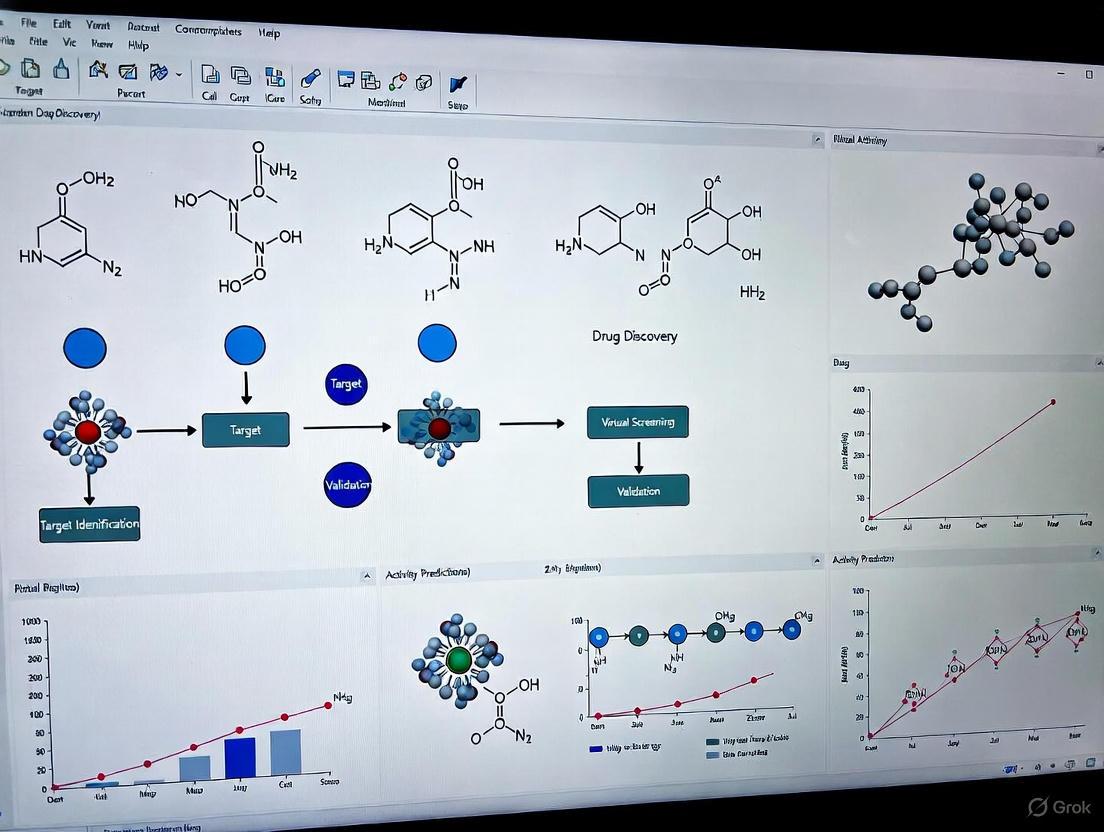
The escalating crisis of antimicrobial resistance (AMR) necessitates a paradigm shift in antibiotic discovery.
AI-Driven Virtual Screening: Accelerating the Next Generation of Antibiotics
Abstract
The escalating crisis of antimicrobial resistance (AMR) necessitates a paradigm shift in antibiotic discovery. This article explores the transformative role of Artificial Intelligence (AI) in virtual screening, a key technology for rapidly identifying novel antibiotic candidates. We first establish the urgent need for new approaches, detailing how AI is being leveraged to screen ultra-large chemical and natural compound libraries with unprecedented speed. The discussion then delves into core methodological frameworks, including generative AI for de novo molecular design and open-source screening platforms. A critical examination of current challenges—from data limitations to clinical translation—provides a troubleshooting guide for practitioners. Finally, we review the validation pipeline, from computational benchmarking to promising pre-clinical candidates now entering clinical trials, offering a comprehensive resource for researchers and drug development professionals aiming to harness AI in the fight against drug-resistant pathogens.
The AMR Crisis and AI's Disruptive Potential in Drug Discovery
The Urgent Global Burden of Antimicrobial Resistance
Global AMR Burden: Quantitative Surveillance Data
The escalating crisis of Antimicrobial Resistance (AMR) represents a critical threat to global public health, undermining the efficacy of life-saving treatments and jeopardizing decades of medical progress. The data reveals a concerning trajectory that demands an immediate and coordinated response [1] [2].
Global and Regional Resistance Prevalence
The table below summarizes the latest global and regional resistance statistics from the WHO's 2025 report and associated publications, providing a quantitative overview of the current burden [3] [1].
Table 1: Global and Regional Prevalence of Antibiotic-Resistant Infections
| Metric | Geographic Scope | Statistical Finding | Source/Year |
|---|---|---|---|
| Overall Prevalence | Global | 1 in 6 lab-confirmed bacterial infections are resistant | WHO GLASS Report 2025 [1] |
| Regional Prevalence | WHO South-East Asia & Eastern Mediterranean | 1 in 3 reported infections were resistant (approx. 33%) | WHO GLASS Report 2025 [1] |
| Regional Prevalence | African Region | 1 in 5 reported infections was resistant (20%) | WHO GLASS Report 2025 [1] |
| Regional Prevalence | Region of the Americas | 1 in 7 infections is resistant (approx. 14%) | WHO GLASS Report 2025 [1] |
| Annual Infections | United States | >2.8 million antimicrobial-resistant infections/year | CDC [4] |
| Annual Mortality | United States | >35,000 deaths as a result of AMR | CDC [4] |
| Projected Annual Mortality | Global (by 2050) | 10 million deaths/year if unaddressed | [2] |
Pathogen-Specific Resistance in Key Infections
Gram-negative bacteria, particularly Escherichia coli and Klebsiella pneumoniae, are driving the AMR crisis, with alarming resistance rates to first-line and last-resort antibiotics.
Table 2: Pathogen-Specific Resistance to Key Antibiotic Classes
| Pathogen | Antibiotic Class | Resistance Level | Clinical Significance |
|---|---|---|---|
| E. coli | Third-generation cephalosporins | >40% globally | First-choice treatment for bloodstream infections is failing [1] |
| K. pneumoniae | Third-generation cephalosporins | >55% globally | Leads to severe sepsis, organ failure; resistance >70% in Africa [1] |
| K. pneumoniae & Acinetobacter | Carbapenems | Increasing globally | Last-resort antibiotics are losing effectiveness [1] [2] |
The data from the WHO further indicates that between 2018 and 2023, antibiotic resistance rose for over 40% of the monitored antibiotics, with an average annual increase of 5-15% [1]. This trend, coupled with significant surveillance gaps—48% of countries did not report data to the WHO's GLASS system in 2023—paints a picture of a rapidly evolving threat that is still not fully quantified [1].
AI-Accelerated Virtual Screening: An Application Protocol
To combat the AMR crisis, AI-driven virtual screening offers a powerful strategy for the rapid discovery of novel antibacterial compounds. The following protocol is adapted from a state-of-the-art, open-source platform (OpenVS) that has successfully identified hit compounds against high-priority targets [5].
Protocol: AI-Accelerated Virtual Screening for Novel Antibacterial Hits
Principle: This protocol uses a structure-based virtual screening method, RosettaVS, integrated with an active learning cycle to efficiently screen multi-billion compound libraries. The method combines physics-based docking for accuracy with AI to prioritize computational resources, dramatically reducing screening time from months to days [5].
Experimental Workflow:
The logical flow of the AI-accelerated screening process, from target preparation to experimental validation, is visualized below.
Materials and Reagents:
Table 3: Research Reagent Solutions for AI-Driven Antibiotic Discovery
| Item Name | Function/Description | Application in Protocol |
|---|---|---|
| RosettaVS Software Suite | Open-source physics-based docking & scoring platform; includes RosettaGenFF-VS forcefield. | Core engine for predicting ligand binding poses and affinities. [5] |
| OpenVS Platform | AI-accelerated, scalable virtual screening platform integrated with active learning. | Manages screening workflow on HPC clusters, triaging compounds. [5] |
| Ultra-Large Chemical Library | Multi-billion compound databases (e.g., ZINC20, Enamine REAL). | Source of small molecules for virtual screening. [5] |
| High-Performance Computing (HPC) Cluster | Computing infrastructure (e.g., 3000 CPUs, RTX2080 GPU). | Provides computational power to execute screening in practical timeframes (<7 days). [5] |
| Target Protein Structure | High-resolution X-ray crystal structure or homology model (PDB format). | Defines the receptor for structure-based screening. [5] |
Procedure:
Target Preparation:
- Obtain a high-resolution 3D structure of the target protein (e.g., a bacterial enzyme or essential protein). If an experimental structure is unavailable, generate a reliable homology model.
- Preprocess the structure using standard tools (e.g., in Rosetta) to add hydrogens, assign partial charges, and optimize side-chain conformations.
- Define the binding site coordinates based on known catalytic sites or co-crystallized ligand positions.
Virtual Screening Express (VSX) with Active Learning:
- Input: Pre-processed target structure and multi-billion compound library.
- Process: Initiate the OpenVS platform. The VSX mode performs rapid, initial docking of a subset of the library. A target-specific neural network is simultaneously trained on-the-fly to predict the binding affinity of unscreened compounds.
- Active Learning Loop: The neural network iteratively selects the most promising compounds from the vast unscreened pool for subsequent rounds of VSX docking. This focuses computational effort on high-value regions of chemical space, avoiding the need to dock every single compound.
Virtual Screening High-Precision (VSH):
- Input: The top-ranking hit compounds (e.g., several thousand) identified from the VSX active learning cycle.
- Process: Subject these top hits to the more computationally expensive VSH docking mode. This mode allows for full receptor side-chain flexibility and limited backbone movement, providing a more accurate prediction of binding geometry and affinity.
- Output: A final, rank-ordered list of candidate compounds based on the RosettaGenFF-VS scoring function, which combines enthalpy (ΔH) and entropy (ΔS) estimates.
Experimental Validation:
- Procure the top-ranked virtual hit compounds (e.g., 10-50) from chemical suppliers.
- Perform in vitro binding assays (e.g., Surface Plasmon Resonance) to confirm direct interaction with the target protein.
- Determine the Minimum Inhibitory Concentration (MIC) against relevant drug-resistant bacterial pathogens to assess antibacterial activity.
Notes: This protocol successfully identified hit compounds for unrelated targets (KLHDC2 and NaV1.7) with a 14% and 44% hit rate, respectively, and binding affinities in the single-digit micromolar range, demonstrating its robustness [5]. The entire virtual screening process for a billion-compound library was completed in less than seven days [5].
Quantitative Systems Biology: Predicting Resistance Evolution
Understanding and predicting the evolution of AMR is crucial for developing "evolution-proof" therapies. A systems biology approach that integrates mathematical modeling with experimental data provides a framework for this.
Protocol: Predicting AMR Evolution Using Stochastic Modeling
Principle: This protocol uses stochastic population dynamics models to forecast the emergence of genetic resistance. It incorporates non-genetic heterogeneity (e.g., fluctuations in gene expression) as a facilitator for the evolution of permanent genetic resistance, providing probabilistic predictions on resistance mutation appearance [6] [7].
Experimental Workflow:
The interplay between non-genetic heterogeneity and the evolution of full genetic resistance, and the modeling workflow to predict it, are shown below.
Materials and Reagents:
Table 4: Research Reagent Solutions for Systems Biology of AMR
| Item Name | Function/Description | Application in Protocol |
|---|---|---|
| Synthetic Gene Network | Genetically engineered circuit (e.g., in yeast) regulating a drug resistance gene. | Provides a controlled, quantifiable system to study noise and resistance. [7] |
| Microbial Evolution Chamber | Automated chemostat or microfluidics device for high-temporal resolution growth. | Enables long-term, replicated evolution experiments under controlled drug pressure. [6] |
| Stochastic Simulation Software | Modeling environment (e.g., COPASI, SimBiology, custom C++/Python code). | Solves stochastic differential equations for gene expression and population dynamics. [7] |
| Time-Series 'Omics' Data | RNA-seq or proteomics data from evolving populations across multiple time points. | Used to parameterize and validate the mathematical model. [6] |
Procedure:
System Definition and Model Formulation:
- Define the biological system: the microbial population, the antimicrobial drug, and the key gene network involved in resistance (e.g., a network with a positive feedback loop that modulates an efflux pump).
- Formulate a stochastic mathematical model. This typically includes:
- Gene Expression Model: A set of stochastic differential equations (e.g., Chemical Langevin Equation) describing the production and degradation of the resistance protein, incorporating intrinsic noise.
- Population Dynamics Model: Equations coupling the growth rates of sensitive and resistant subpopulations to the intracellular drug concentration, which is itself affected by the resistance protein level.
Parameter Inference:
- Use experimental data from controlled evolution experiments to infer model parameters. Ideal data includes time-series measurements of population size, resistance gene expression distributions (e.g., via flow cytometry), and the timing of resistance mutation emergence across many replicates.
- Employ statistical fitting algorithms (e.g., Markov Chain Monte Carlo) to find parameter values that maximize the likelihood of the observed data.
Simulation and Prediction:
- Run multiple simulations of the parameterized stochastic model to generate an ensemble of possible evolutionary trajectories.
- From these simulations, extract predictive distributions for key quantities, such as:
- The probability of a resistance mutation appearing within a given timeframe.
- The most likely mutations to fix in the population under specific selective pressures.
- Quantify evolutionary predictability (existence of a predictive distribution) and repeatability (entropy of the distribution) for the system [6].
Model-Guided Therapeutic Design:
- Use the validated model to simulate and optimize treatment strategies. For instance, test in silico the efficacy of combination therapies or time-varying dosing regimens designed to suppress the emergence of resistant clones by exploiting the fitness costs associated with resistance.
Notes: This quantitative framework helps elucidate how gene network structures (e.g., feedforward loops, positive feedback) can enhance drug resistance by modulating gene expression noise [7]. It has been shown that non-genetic resistance can facilitate survival under drug treatment, thereby increasing the probability of acquiring subsequent genetic resistance mutations [6] [7].
The High Cost and High Failure Rate of Traditional Antibiotic Discovery
The development of new antibiotics represents one of the most critical yet economically challenging endeavors in modern medicine. Despite the growing threat of antimicrobial resistance (AMR), which causes an estimated 1.27 million deaths annually and contributes to nearly 5 million more, the pipeline for new antibiotics has dwindled to dangerous levels [8] [9]. The period following 1987 is often termed the "antibiotic discovery void" – only five novel classes of antibiotics have been marketed since 2000, and no new class has been discovered in the past 45 years [10] [11]. This crisis stems from a convergence of scientific challenges, economic barriers, and high failure rates that have caused most major pharmaceutical companies to exit the field entirely [10] [12]. As traditional discovery methods falter, AI-driven virtual screening emerges as a promising approach to revitalize antibiotic development by addressing these fundamental limitations.
Economic Challenges in Antibiotic Development
The Broken Business Model
The economic model for antibiotic development is fundamentally compromised, creating what industry analysts describe as a "broken market" [12]. Unlike medications for chronic conditions, antibiotics are typically used for short durations and must be reserved as last-line defenses, inherently limiting their revenue potential. This creates a devastating paradox: scientifically successful antibiotics often become commercial failures.
Table 1: Economic Challenges in Antibiotic Development
| Challenge | Impact | Representative Data |
|---|---|---|
| Low Return on Investment | Short treatment duration limits revenue; new antibiotics are often reserved as last-resort treatments | Average sales of $240M total per antibiotic in first 8 years on market [12] |
| High Development Costs | Antibiotics cost as much as other drugs to develop but generate substantially less revenue | Mean cost of $1.3B for systemic anti-infectives [12] |
| Post-Approval Expenses | Significant ongoing costs after regulatory approval | Additional $240-622M over 5 years post-approval [12] |
| Clinical Trial Complexities | Difficulty enrolling patients with specific resistant infections drives costs exponentially higher | Achaogen trial cost: ~$1M per recruited patient [12] |
Pharmaceutical Industry Exodus
The economic realities have triggered a massive exodus of major pharmaceutical companies from antibiotic research and development. Since the 1990s, 18 major pharmaceutical companies have exited the field, with even the remaining few (GSK, Novartis, Sanofi, and AstraZeneca) shifting their focus away between 2016 and 2019 [10]. This corporate retreat represents a catastrophic brain drain, with only approximately 3,000 AMR researchers currently active worldwide [12]. The innovation ecosystem has consequently shifted almost entirely to small biotech companies and academic institutions, which lack the resources to bring candidates through late-stage development and commercialization [12].
Scientific and Regulatory Hurdles
The Scientific Challenges of Bacterial Targets
Antibiotic discovery faces unique biological challenges that distinguish it from other drug development domains. Bacteria are evolving targets capable of rapid adaptation, with resistance mechanisms that can emerge even during clinical trials [12]. Key scientific hurdles include:
- Gram-negative Resistance: Gram-negative bacteria possess a double-membrane structure that acts as a formidable barrier to antibiotics [13]. Their outer membrane prevents many drug classes from reaching intracellular targets, while efflux pumps actively remove compounds that do penetrate [13].
- Rapid Evolution: Bacteria reproduce at astonishing rates, with the potential to produce over 16 million offspring in a single day from one surviving bacterium [12]. This accelerated evolution enables resistance to develop quickly under selective drug pressure.
- Diagnostic Limitations: The lack of rapid, precise diagnostic tools often leads to empirical broad-spectrum antibiotic use, which accelerates resistance development [14]. As noted by CARB-X executive director Kevin Outterson, "We cannot use the right drug unless we know the bug" [14].
Clinical Development Barriers
The transition from laboratory discovery to clinical application presents particularly formidable obstacles in the antibiotic field:
- Patient Recruitment Challenges: Clinical trials for antibiotics targeting resistant infections face extreme difficulty enrolling suitable patients. The Achaogen trial for plazomicin against carbapenem-resistant Enterobacteriaceae (CRE) screened 2,000 patients but successfully enrolled only 39 before being stopped prematurely [12].
- Non-inferiority Trial Requirements: Most antibiotic trials must demonstrate non-inferiority to existing therapies, requiring thousands of patients across multiple sites and driving costs prohibitively high [12].
- Stringent Safety Requirements: Antibiotics must achieve bacterial eradication without harming human host cells, creating a complex multi-property optimization problem that eliminates many promising candidates [11].
Table 2: Failure Rates and Timelines in Antibiotic Development
| Development Phase | Typical Duration | Success Rate | Key Challenges |
|---|---|---|---|
| Discovery & Preclinical | 3-5 years | <0.5% (from declared candidate) [12] | Identifying novel chemotypes; overcoming permeability barriers; avoiding cytotoxicity |
| Phase 1 Clinical Trials | 1-2 years | ~25% (Phase 1 to approval) [12] | Safety profiling; pharmacokinetic optimization |
| Phase 2/3 Clinical Trials | 5-8 years | Significant attrition | Patient recruitment; non-inferiority endpoints; emerging resistance |
| FDA Review & Approval | 1-2 years | High for candidates reaching this stage | Manufacturing compliance; risk-benefit assessment |
| Total Timeline | 10-12 years | 25% (Phase 1 to approval) [12] | Cumulative costs exceeding $1.3B [12] |
AI-Driven Virtual Screening: A Paradigm Shift
Computational Approaches to Overcome Traditional Limitations
Artificial intelligence and machine learning represent a transformative approach to addressing the core challenges of traditional antibiotic discovery. These technologies can dramatically compress the initial discovery timeline from years to weeks while reducing costs and exploring broader chemical spaces [11].
Key Methodologies in AI-Enhanced Antibiotic Discovery
Machine Learning for Compound Screening
Machine learning (ML) algorithms can be trained on known active and inactive compounds to predict antibacterial activity, enabling rapid in silico screening of massive chemical libraries [11]. Key approaches include:
- Random Forest Models: Used to search chemical libraries and predict antibacterial potency based on molecular features [15].
- Neural Networks: Employed to distinguish antibiotic sequences and design novel compounds with predicted activity [15].
- Deep Learning Frameworks: Can generate novel molecular structures with desired properties from scratch rather than simply screening existing libraries [16].
Generative AI for Novel Compound Design
Generative AI represents a significant advancement beyond virtual screening by creating entirely novel chemical entities. Researchers at MIT used two generative AI approaches:
- Fragment-Based Generation: Starting with a known active fragment (F1), researchers used chemically reasonable mutations (CReM) and fragment-based variational autoencoder (F-VAE) algorithms to generate 7 million candidates, ultimately producing NG1 with efficacy against drug-resistant gonorrhea [9].
- Unconstrained Generation: Without structural constraints, generative models produced 29 million compounds, yielding DN1 with potent activity against MRSA in mouse models [9].
Experimental Protocol: AI-Driven Antibiotic Discovery Workflow
Protocol Title: Multi-phase AI-Guided Antibiotic Discovery and Validation
Phase 1: Data Curation and Model Training
- Dataset Assembly: Compile comprehensive datasets of chemical structures with associated antimicrobial activity data (Minimum Inhibitory Concentrations). Standardize experimental conditions (temperature, pH, media) to ensure comparability [11].
- Feature Engineering: Calculate molecular descriptors, structural fingerprints, and physicochemical properties for all compounds.
- Model Training: Implement multiple machine learning architectures (random forest, neural networks, support vector machines) using curated training data. Optimize hyperparameters through cross-validation.
Phase 2: Virtual Screening and Compound Generation
- Library Preparation: Prepare digital libraries of available compounds (e.g., Enamine's REAL space with 45+ million fragments) or define chemical search spaces [9].
- AI-Powered Screening: Apply trained models to score compounds for predicted antibacterial activity, synthesizability, and low cytotoxicity.
- Generative Design: Implement generative models (CReM, VAE) to create novel molecular structures with optimized properties [9].
Phase 3: Experimental Validation
- Compound Synthesis: Partner with chemical vendors to synthesize top-ranking candidates, prioritizing synthetically tractable molecules.
- In Vitro Testing: Evaluate synthesized compounds for:
- Minimum Inhibitory Concentration (MIC) against target pathogens
- Cytotoxicity in mammalian cell lines
- Membrane permeability and efflux susceptibility
- In Vivo Validation: Advance promising candidates to animal models of infection (e.g., mouse thigh infection, neutropenic lung infection) to assess efficacy and pharmacokinetics.
The Scientist's Toolkit: Research Reagent Solutions
Table 3: Essential Resources for AI-Enhanced Antibiotic Discovery
| Resource Category | Specific Examples | Application in Research |
|---|---|---|
| Chemical Libraries | Enamine REAL Space (45M+ fragments) [9]; ChEMBL Database [9] | Training data for AI models; source of starting fragments for generative design |
| Machine Learning Platforms | Random Forest models [15]; Neural Networks; Deep Learning frameworks (CReM, F-VAE) [9] | Predictive activity modeling; novel compound generation; property optimization |
| Experimental Validation Assays | High-throughput MIC determination [11]; Time-kill kinetics; Cytotoxicity screening ( mammalian cell lines) | Confirmation of AI predictions; mechanism of action studies; safety profiling |
| Animal Infection Models | Mouse thigh infection [9]; Skin abscess model [11]; Sepsis models | In vivo efficacy assessment; pharmacokinetic/pharmacodynamic analysis |
| Specialized Reagents | Bacterial membrane components; Fluorescent probes for permeability studies; β-lactamase enzymes | Mechanism of action studies; resistance profiling |
The high costs and failure rates of traditional antibiotic discovery have created a critical innovation gap precisely when new antibiotics are most urgently needed. While traditional methods face fundamental economic and scientific challenges, AI-driven virtual screening offers a transformative approach to accelerate discovery and reduce costs. The most promising path forward involves integrating AI methodologies with experimental validation, creating a closed-loop system where computational predictions inform laboratory testing, and experimental results refine AI models [16] [11]. This synergistic approach, supported by innovative funding models and policy interventions, may finally break the cycle of antibiotic discovery failure and address the growing crisis of antimicrobial resistance. As noted by Prof. James Collins of MIT, "We're excited about the new possibilities that this project opens up for antibiotics development. Our work shows the power of AI from a drug design standpoint, and enables us to exploit much larger chemical spaces that were previously inaccessible" [9].
The discovery of antibiotics, historically marked by fortuitous events like the discovery of Penicillin in 1928, is undergoing a profound transformation [15]. The traditional drug discovery pipeline is beleaguered by high costs, lengthy timelines (averaging 12 years from discovery to market), and low success rates, a crisis exacerbated by the rapid evolution of antimicrobial resistance (AMR) which is responsible for millions of deaths annually [15] [17]. Artificial intelligence (AI), particularly machine learning (ML) and deep learning (DL), is now reshaping this landscape, moving the field from a paradigm of serendipity to one of rational design [15] [17]. AI-driven virtual screening enables the rapid, in-silico exploration of vast chemical spaces—estimated to contain up to 10^60 drug-like compounds—to identify and even generate novel antibiotic candidates with unprecedented speed and precision [18] [17]. This document provides application notes and detailed protocols for leveraging these AI technologies in antibiotic discovery research, framed within the context of virtual screening.
Quantitative Benchmarks: Traditional vs. AI-Driven Discovery
The impact of AI on the antibiotic discovery workflow is quantifiable across key performance metrics, significantly compressing timelines and improving efficiency.
Table 1: Performance Comparison: Traditional vs. AI-Driven Antibiotic Discovery
| Metric | Traditional Discovery | AI-Driven Discovery | Data Source/Example |
|---|---|---|---|
| Early Discovery Timeline | ~5 years | 1.5 - 2 years | Insilico Medicine's IPF drug: target to Phase I in 18 months [19] |
| Design Cycle Efficiency | Baseline | ~70% faster, 10x fewer compounds synthesized | Exscientia's in silico design cycles [19] |
| Compound Library Size | ~10^11 compounds (existing libraries) | >10^60 compounds (generative exploration) | Theoretical drug-like chemical space vs. enumerated libraries [18] |
| Screening Throughput | Millions of compounds empirically | Billions of compounds computationally; 45+ million fragments screened in silico | Generative AI study screening >45 million fragments [18] |
| Hit-to-Lead Success | Low single-digit success rates | 7 out of 24 synthesized compounds showed selective activity (29% success) | Validation of a generative deep learning approach [18] |
Table 2: Key AI Models and Their Applications in Antibiotic Discovery
| AI Technology | Application in Antibiotic Discovery | Key Outcome |
|---|---|---|
| Graph Neural Networks (GNNs) | Predicts antibacterial activity and cytotoxicity by representing molecules as mathematical graphs [18]. | Identifies hit compounds from large libraries; used as a scoring function for generative design [18]. |
| Generative AI (VAEs, GANs) | De novo molecular design, creating novel structures not present in existing libraries [18]. | Generated 36 million novel compounds; led to two lead compounds with efficacy in mouse models [18]. |
| Recurrent Neural Networks (RNNs) | Processes Simplified Molecular-Input Line-Entry System (SMILES) and amino acid sequences for molecule and peptide design [17]. | Used to create embedded representations and generate novel antimicrobial peptides (AMPs) [17]. |
| Random Forest Models | Classification and prediction of antibiotic mechanism of action (MOA) and potency [15]. | Successfully predicted phenotypic changes and antibacterial potency of compounds [15]. |
| Generalist Models (e.g., BoltzGen) | Unifies protein structure prediction and binder design for any biological target [20]. | Generates novel protein binders from scratch, targeting previously "undruggable" targets [20]. |
Experimental Protocols for AI-Driven Antibiotic Discovery
Protocol 1: Generative Deep Learning for De Novo Small Molecule Design
This protocol details the generative deep learning framework for designing novel antibiotics, as validated in recent studies [18].
3.1.1. Workflow Overview
The following diagram illustrates the integrated computational and experimental workflow for generative antibiotic design.
3.1.2. Materials and Reagents
- Software & Libraries: Python with PyTorch/TensorFlow, RDKit, CReM (chemically reasonable mutations) package.
- Computing Resources: High-performance computing (HPC) cluster or cloud computing (e.g., AWS, Oracle Cloud).
- Chemical Databases: ZINC15, ChEMBL, Enamine REAL, or other commercial libraries for initial model training.
- Bacterial Strains: Target pathogens (e.g., Neisseria gonorrhoeae, Staphylococcus aureus, including multidrug-resistant strains like MRSA).
- Cell Culture Reagents: Appropriate broths (e.g., Mueller-Hinton) and agar for MIC and kill curve assays.
- Animal Models: Specific pathogen-free (SPF) mice for in vivo infection models (e.g., vaginal infection for N. gonorrhoeae, skin infection for S. aureus).
3.1.3. Step-by-Step Procedure
- Data Curation and Preprocessing:
- Assemble a dataset of molecules with known antibacterial activity and cytotoxicity data from public sources (e.g., ChEMBL).
- Convert all molecular structures into a standardized format, such as SMILES. Clean the data by removing duplicates and invalid entries.
- Featurize the molecules for the GNN using graph representations, where atoms are nodes and bonds are edges.
Model Training and Molecule Generation:
- Fragment-Based Generation: Screen a library of >45 million chemical fragments in silico using a pre-trained GNN as a scoring function to identify fragments with predicted antibacterial activity. Input these promising fragments into a generative model (e.g., a Variational Autoencoder (VAE) or a genetic algorithm) to expand them into larger molecules.
- De Novo Generation: Train a generative model (VAE or genetic algorithm) on the featurized dataset of known bioactive molecules. Use the trained model to generate novel molecular structures de novo, without a fragment starting point.
In-Silico Screening and Down-Selection:
- Screen the generated library of molecules (e.g., >36 million compounds) using the trained GNN classifier to predict each compound's probability of possessing antibacterial activity and low cytotoxicity.
- Apply chemical property filters (e.g., Lipinski's Rule of Five) to prioritize drug-like molecules.
- Cluster the top-ranked candidates and select a diverse subset (e.g., 20-30 compounds) for chemical synthesis to ensure structural variety.
Experimental Validation:
- Synthesis: Synthesize the selected candidates using solid-phase or solution-phase chemistry.
- In Vitro Testing:
- Determine the Minimum Inhibitory Concentration (MIC) against a panel of clinically relevant bacterial pathogens.
- Assess selectivity by measuring cytotoxicity against mammalian cell lines (e.g., HEK-293).
- Conduct mechanism-of-action studies using techniques like whole-genome sequencing of resistant mutants or transcriptomics.
- In Vivo Testing: Evaluate the efficacy of lead compounds in validated mouse models of infection, measuring the reduction in bacterial burden compared to untreated controls.
Protocol 2: AI-Driven Discovery and Optimization of Antimicrobial Peptides (AMPs)
This protocol outlines the use of AI for the discovery and design of novel Antimicrobial Peptides (AMPs), a promising class of antibiotics [17] [21].
3.2.1. Workflow Overview
The diagram below outlines the iterative process of AI-driven AMP discovery and optimization.
3.2.2. Materials and Reagents
- AMP Databases: Public repositories such as APD3, CAMP, and DBAASP.
- Software: AI libraries (Scikit-learn, PyTorch), peptide analysis tools.
- Peptide Synthesis: Solid-phase peptide synthesis (SPPS) reagents or commercial synthesis services.
- Biological Assay Reagents:
- Bacterial strains for MIC determination.
- Red blood cells for hemolysis assays.
- Fetal bovine serum (FBS) for serum stability tests.
3.2.3. Step-by-Step Procedure
- Dataset Assembly and Featurization:
- Curate a high-quality dataset of known AMP sequences and their associated activities (e.g., MIC values) and toxicities (e.g., hemolysis data).
- Featurize the peptide sequences using methods such as one-hot encoding (a 20-dimensional vector per amino acid), amino acid composition, or physicochemical property descriptors (e.g., charge, hydrophobicity).
Model Training for Prediction:
- Train a discriminative ML model (e.g., a Convolutional Neural Network (CNN) or Random Forest) on the featurized dataset. The model's task is to predict the probability that a given peptide sequence has broad-spectrum antimicrobial activity and low toxicity.
Generative Design of Novel AMPs:
- Train a generative model, such as a Recurrent Neural Network (RNN) or a Variational Autoencoder (VAE), on the sequences of known AMPs. This model learns the underlying patterns and "language" of functional peptides.
- Use the trained generative model to create thousands of novel, non-natural peptide sequences.
In-Silico Screening and Prioritization:
- Pass the generated novel sequences through the trained predictive model from Step 2 to score them for predicted activity and toxicity.
- Select the top-ranked candidates for synthesis.
Experimental Validation and Iteration:
- Synthesize the selected peptide candidates.
- Validate them empirically through a series of assays:
- MIC Assays: Determine antimicrobial activity.
- Hemolysis Assay: Evaluate toxicity to human red blood cells.
- Serum Stability Assay: Assess stability in serum as a proxy for in vivo half-life.
- Use the experimental results to refine and retrain the AI models, creating an iterative design-make-test cycle for further optimization of the lead peptides.
The Scientist's Toolkit: Essential Research Reagents & Platforms
Table 3: Key Research Reagents and Platforms for AI-Driven Antibiotic Discovery
| Item Name | Function/Application | Example Providers/Sources |
|---|---|---|
| Schrödinger Suite | Physics-based and ML-powered drug discovery platform for virtual screening, lead optimization, and molecular dynamics. | Schrödinger [19] |
| AutoDock/Vina | Open-source software for molecular docking and virtual screening. | The Scripps Research Institute [22] |
| OpenEye Toolkits | Software for structure-based design, molecular docking, and cheminformatics. | OpenEye Scientific Software [22] |
| Oracle Cloud / AWS HPC | Cloud computing resources providing scalable infrastructure for running large-scale AI training and virtual screens. | Oracle for Research, Amazon Web Services [18] [19] |
| Enamine REAL Database | A vast, make-on-demand chemical library (billions of compounds) for virtual screening. | Enamine Ltd [18] |
| APD3 / CAMP Databases | Curated databases of Antimicrobial Peptides (AMPs) used for training AI models. | Publicly accessible repositories [21] |
| BoltzGen Model | A generalist AI model for generating novel protein binders from scratch for difficult targets. | MIT Jameel Clinic (Open-source) [20] |
| CReM (Chemically Reasonable Mutations) | Open-source Python package for fragment-based and structure-based generative chemistry. | Publicly available on GitHub [18] |
AI in Action: Core Techniques and Platforms for Antibiotic Screening
Machine Learning for High-Throughput Triage of Compound Libraries
The escalating crisis of antimicrobial resistance necessitates the rapid discovery of novel antibiotics, a challenge that traditional high-throughput screening (HTS) struggles to address efficiently due to cost and resource constraints [18] [9]. Artificial intelligence (AI), particularly machine learning (ML), now enables a paradigm shift through intelligent triage of massive compound libraries, drastically accelerating the identification of promising antibacterial candidates [21]. This application note details protocols for implementing ML-driven triage within AI-driven virtual screening pipelines for antibiotic discovery, providing researchers with practical methodologies to prioritize compounds with the highest potential for experimental validation.
Table 1: Key Challenges in Conventional HTS and ML Triage Solutions
| Challenge in Conventional HTS | ML-Powered Triage Solution | Key Benefit |
|---|---|---|
| Extreme cost and resource requirements for screening ultra-large libraries [23] | Active learning to screen only the most promising subsets [5] | Reduces computational cost by orders of magnitude |
| Low hit rates and high false-positive rates [24] | Predictive models trained on bioactivity data [23] [25] | Enriches for true positives and increases hit rates |
| Limited exploration of chemical space (~10^11 compounds) [18] | Generative AI for de novo molecular design [18] [9] | Access to vast, unexplored chemical space (~10^60 compounds) |
| Difficulty in identifying novel structural classes and mechanisms of action | AI models optimized for structural novelty and selectivity [9] | Discovers structurally distinct compounds with new mechanisms |
Core Methodologies and Experimental Protocols
Predictive Model Development for Activity Forecasting
Objective: To train robust machine learning models that can accurately predict the antibacterial activity of compounds against target pathogens.
Procedure:
Data Curation and Preprocessing:
- Source Data: Compile bioactivity data from public repositories (e.g., ChEMBL) and proprietary HTS campaigns. Data should include confirmed active and inactive compounds against the target pathogen (e.g., S. aureus, N. gonorrhoeae) [18] [23].
- Labeling: Assign binary labels (1 for active, 0 for inactive) based on experimental minimum inhibitory concentration (MIC) values or growth inhibition thresholds.
- Compound Standardization: Standardize molecular structures using tools like RDKit (https://www.rdkit.org) to remove duplicates, neutralize charges, and generate canonical representations.
- Descriptor Calculation: Compute molecular feature representations. For Graph Neural Networks (GNNs), represent molecules as graphs with atoms as nodes and bonds as edges [18]. For other models, calculate physicochemical descriptors (e.g., logP, molecular weight) or extended-connectivity fingerprints (ECFPs).
Model Training and Validation:
- Algorithm Selection: Implement multiple algorithms, including:
- Training: Split data into training (80%) and hold-out test (20%) sets. Use k-fold cross-validation (e.g., k=5) on the training set for hyperparameter tuning to optimize performance metrics like AUC-ROC.
- Validation: Evaluate the final model on the held-out test set. Critically, assess performance on a temporal validation set (data generated after the model was trained) to estimate real-world generalizability [5].
Active Learning for Intelligent Library Triage
Objective: To efficiently screen multi-billion compound libraries by iteratively docking and retraining ML models on only the most promising candidates.
Procedure:
Initial Sampling and Docking:
- From a library of billions of compounds, randomly select a small, diverse subset (e.g., 0.1% of the total library).
- Perform high-speed, flexible molecular docking (e.g., using RosettaVS-VSX mode) on this initial subset to obtain predicted binding scores [5].
Model Retraining and Compound Selection:
- Train a target-specific neural network or other ML model to predict the docking scores based on the molecular features of the initially docked compounds.
- Use this model to predict scores for all undocked compounds in the full library.
- Select the top-ranked compounds (e.g., next 0.1%) based on the model's predictions for the next round of docking.
Iteration and Enrichment:
- Iterate the process—docking the new batch of selected compounds, adding the results to the training data, and retraining the model to select the next batch.
- This active learning loop concentrates computational resources on the most relevant regions of chemical space, enabling the effective screening of billions of compounds in days rather than years [5].
Generative AI forDe NovoCandidate Design
Objective: To design novel, synthetically accessible antibiotic candidates with desired properties from scratch.
Procedure:
Fragment-Based De Novo Design:
- Fragment Screening: Screen an ultra-large library of chemical fragments (e.g., >45 million) in silico using pre-trained GNN models to identify fragments with predicted antibacterial activity and low cytotoxicity [18] [9].
- Fragment Expansion: Input the top-ranked fragments into generative algorithms:
- Chemically Reasonable Mutations (CReM): Generates new molecules by applying chemically valid mutations (atom/bond additions, deletions, replacements) to the seed fragment [18].
- Fragment-based Variational Autoencoder (F-VAE): Encodes the fragment and decodes it into a complete molecule based on patterns learned from large molecular databases [18].
- Evaluation: Screen the generated molecules for antibacterial activity, synthetic accessibility, and desirable physicochemical properties.
Unconstrained De Novo Generation:
- Remove the fragment input constraint and allow generative models (CReM, VAE) to freely explore chemical space, guided only by the rules of chemical stability and predictions of antibacterial activity from the GNN [9].
- Apply stringent filters to the generated molecules to remove those with potential toxicity, poor drug-likeness, or structural similarity to known antibiotics, ensuring novelty [9].
The following workflow integrates the predictive and generative AI approaches for comprehensive compound triage and design:
Performance Benchmarking and Validation
Validating the performance of ML triage models against established benchmarks and through experimental confirmation is critical for assessing their real-world utility.
Table 2: Virtual Screening Performance Benchmark (RosettaVS on DUD Dataset)
| Method | Screening Approach | Key Feature | Top 1% Enrichment Factor (EF1%) | Success Rate (Top 1%) |
|---|---|---|---|---|
| RosettaGenFF-VS [5] | Physics-based docking with flexibility | Models receptor flexibility & entropy | 16.72 | Highest |
| Other Leading Methods [5] | Physics-based or deep learning docking | Varies by method | ≤ 11.9 | Lower |
| Generative AI (MIT) [9] | De novo design | Explores new chemical space | N/A | 7 of 24 synthesized\n compounds were active |
Experimental Validation Protocol:
- Compound Acquisition: Select top-ranked candidates from the virtual screening or generative AI output for chemical synthesis or purchase from commercial vendors [18] [9].
- In Vitro Antibacterial Assay:
- Broth Microdilution: Determine the Minimum Inhibitory Concentration (MIC) against a panel of clinically relevant Gram-positive (e.g., MRSA) and Gram-negative (e.g., N. gonorrhoeae, E. coli) bacteria following CLSI guidelines [26].
- Cytotoxicity Assessment: Test compounds against mammalian cell lines (e.g., HEK-293) to calculate a selectivity index and prioritize compounds with low cytotoxicity [18].
- In Vivo Efficacy Studies:
- Mechanism of Action Studies: Employ techniques like transcriptomics or biochemical assays to elucidate the compound's mechanism, confirming novelty compared to existing antibiotics [9].
Table 3: Key Research Reagent Solutions for ML-Driven Antibiotic Discovery
| Item | Function/Description | Example Sources/Software |
|---|---|---|
| Bioactivity Datasets | Training data for predictive models; includes active/inactive compounds against targets. | ChEMBL, PubChem, proprietary HTS data [23] |
| Ultra-Large Compound Libraries | Billions of purchasable or virtual compounds for virtual screening. | ZINC database, Enamine REAL Space [18] [26] |
| Fragment Libraries | Small molecular fragments used as starting points for generative de novo design. | In-house curated libraries, commercial vendors [18] |
| Docking & Virtual Screening Software | Predicts binding poses and affinities of small molecules to protein targets. | RosettaVS [5], DOCK6.5 [26], AutoDock Vina [5] |
| Machine Learning Frameworks | Libraries for building and training GNNs, RF, and other ML models. | PyTorch, TensorFlow, Scikit-learn |
| Generative AI Algorithms | Designs novel molecular structures from scratch or from fragments. | CReM, VAE [18] [9] |
| Explainable AI (XAI) Tools | Interprets ML model predictions, building trust and aiding optimization. | SHAP, LIME [25] |
The strategic implementation of these protocols and resources enables research teams to harness machine learning for high-throughput triage, transforming the efficiency and success of antibiotic discovery campaigns.
Generative AI and Large Language Models for De Novo Antimicrobial Peptide Design
The escalating crisis of antimicrobial resistance (AMR) represents a major global health threat, with projections indicating it could cause 10 million deaths annually by 2050 [27] [28]. Traditional antibiotic discovery pipelines have diminished, yielding few new classes of drugs to combat resistant pathogens [27]. Antimicrobial peptides (AMPs), small amphipathic molecules that form part of the innate immune system across all living organisms, have emerged as promising alternatives to conventional antibiotics [28]. Their unique mechanism of action, primarily targeting fundamental bacterial membrane structures, makes them less prone to resistance development compared to traditional antibiotics [29] [27].
The field of AMP discovery is undergoing a transformation driven by artificial intelligence (AI). While naturally occurring AMPs provide valuable templates, their diversity is limited, and traditional discovery methods are slow and resource-intensive [28]. Generative AI and large language models (LLMs) are now accelerating the de novo design of novel AMP sequences, exploring chemical spaces beyond natural reservoirs [29] [30]. These approaches leverage deep learning architectures to learn the hidden "grammars" of AMP features and generate candidate peptides with predicted bioactivities, significantly accelerating the discovery timeline and expanding the available therapeutic candidates [30]. This application note details the latest methodologies and protocols for implementing these AI-driven approaches within the broader context of virtual screening for antibiotic drug discovery.
AI-Driven Platforms for AMP Design: Performance Metrics
Recent research has yielded several specialized AI platforms for AMP design. The table below summarizes the performance characteristics of key platforms as validated in recent studies.
Table 1: Performance Metrics of AI Platforms for De Novo AMP Design
| Platform Name | AI Architecture | Key Function | Validation Results | Reference |
|---|---|---|---|---|
| DLFea4AMPGen | Fine-tuned ProteinBERT (MP-BERT) with SHAP analysis | Generates peptides with antibacterial, antifungal, & antioxidant activities | 75% success rate (12/16 designed peptides showed bioactivity); D1 peptide effective against multidrug-resistant pathogens in vivo | [29] |
| GAN + AMPredictor | Generative Adversarial Network (GAN) + Graph Convolution Network (GCN) regressor | De novo design of bifunctional antimicrobial/antiviral peptides | P076 peptide with MIC of 0.21 μM against multidrug-resistant A. baumannii; P002 broadly inhibited five enveloped viruses | [30] |
| RosettaVS (OpenVS) | Physics-based docking with active learning | AI-accelerated virtual screening platform for target binding | 14–44% hit rate for target binding; screening completed in <7 days for billion-compound libraries | [31] |
These platforms demonstrate a significant advancement over traditional machine learning models. For instance, DLFea4AMPGen consistently outperformed traditional models like Support Vector Machine (SVM) and eXtreme Gradient Boosting (XGBoost), as well as other deep learning models like CNN, in terms of accuracy, precision, recall, F1 score, and area under the curve (AUC) [29]. The integration of these tools into the drug discovery workflow represents a paradigm shift in how researchers approach AMP development.
Experimental Protocols for AI-Driven AMP Design and Validation
This section provides detailed methodologies for the design and validation of AMPs using the aforementioned AI platforms.
Protocol: Feature-Based AMP Generation with DLFea4AMPGen
This protocol outlines the process for generating multifunctional AMPs by extracting key feature fragments from deep learning models [29].
1. Model Fine-Tuning and Multifunctional Peptide Identification
- Pre-trained Model: Utilize a pre-trained protein language model (e.g., Mindspore proteinBERT - MP-BERT).
- Fine-Tuning: Fine-tune the model on curated datasets of peptides with specific activities (e.g., antibacterial, antifungal, antioxidant) to create specialized predictors (ABP-MPB, AFP-MPB, AOP-MPB).
- Prediction: Screen large peptide datasets (e.g., 20 bioactive peptide datasets totaling 23,346 peptides) using all three models to identify sequences predicted to possess all three bioactivities.
2. Feature Extraction and Key Feature Fragment (KFF) Identification
- SHAP Analysis: Apply SHapley Additive exPlanations (SHAP) to the model outputs to quantify the contribution of each amino acid position to the predicted bioactivity.
- Fragment Selection: For each peptide, use a sliding window of 13 amino acids to extract the single fragment with the highest cumulative average SHAP value across all three models. Designate this as the KFF.
3. Phylogenetic Classification and Sequence Space Generation
- Subfamily Classification: Perform phylogenetic analysis on the extracted KFFs to classify them into distinct subfamilies based on sequence homology.
- Amino Acid Frequency Analysis: For each subfamily, analyze the frequency of occurrence of each amino acid at every position.
- Systematic Arrangement: Generate a comprehensive sequence subspace for each subfamily by systematically arranging the most frequently occurring residues at each position into all possible sequence combinations.
4. Candidate Selection and Experimental Validation
- Selection: Select a representative set of candidate AMPs (e.g., 16 sequences) from the generated sequence subspaces.
- In Vitro Validation: Test candidates for antimicrobial activity against a panel of bacterial and fungal strains, and for antioxidant activity.
- In Vivo Validation: Evaluate the most promising candidates in relevant animal models (e.g., sepsis model mice) for efficacy in reducing bacterial load and alleviating inflammatory response.
Diagram 1: DLFea4AMPGen Workflow
Protocol: De Novo Design of Bifunctional AMPs with GAN and AMPredictor
This protocol describes a framework for generating peptides with dual antimicrobial and antiviral activities [30].
1. Generator Training for Sequence Generation
- Data Preparation: Compile a set of known AMP sequences (e.g., 3,280 sequences) from databases like APD or DBAASP.
- Sequence Encoding: Encode peptide sequences using a low-dimensional vector representing physicochemical features (e.g., Amino Acid Factors - AAFs).
- GAN Training: Train a Generative Adversarial Network (GAN) on the encoded AMP sequences. The generator learns the underlying distribution of AMP features to produce novel, realistic peptide sequences.
2. Activity Prediction with AMPredictor
- Model Architecture: Implement a Graph Convolution Network (GCN)-based regressor (AMPredictor).
- Regression Task: Train AMPredictor to predict the Minimum Inhibitory Concentration (MIC) values of peptides, rather than performing simple binary classification.
- Novelty Check: Assess the novelty of generated sequences by aligning them with the training set to ensure they are distinct from known AMPs.
3. Candidate Screening and Selection
- Virtual Screening: Pass sequences generated by the GAN through the trained AMPredictor to filter for those with predicted high potency (low MIC).
- Bifunctional Focus: Apply additional filters or classifiers to identify candidates with potential antiviral activity, leveraging the similarity between viral envelopes and bacterial membrane targets.
4. Preclinical Validation
- In Vitro Profiling: Test top-ranking candidates against a spectrum of drug-resistant bacteria (e.g., ESKAPE pathogens) and enveloped viruses.
- Efficacy and Safety: Determine MIC values and cytotoxicity. Evaluate the most potent and selective peptides in animal models (e.g., mouse infection models) to assess efficacy in reducing bacterial load and overall safety profile.
Diagram 2: Bifunctional AMP Design Workflow
Successful implementation of AI-driven AMP design relies on a suite of computational and experimental resources.
Table 2: Essential Research Reagent Solutions for AI-Driven AMP Discovery
| Category / Item | Specific Examples | Function & Application in AMP Research |
|---|---|---|
| Pre-trained Protein LLMs | MP-BERT (Mindspore ProteinBERT) [29] | Foundation model fine-tuned for specific bioactive peptide prediction tasks. |
| Generative AI Models | GAN (Generative Adversarial Network) [30], VAE (Variational Autoencoder) | Learns the distribution of AMP sequences to generate novel candidate peptides. |
| Activity Prediction Models | AMPredictor (GCN-based) [30], AMPlify, TransImbAMP | Predicts antimicrobial activity (e.g., MIC) or binary classification of generated sequences. |
| Interpretability Tools | SHAP (SHapley Additive exPlanations) [29] | Quantifies the contribution of individual amino acids to the predicted bioactivity, enabling feature extraction. |
| Virtual Screening Platforms | RosettaVS (OpenVS) [31] | Physics-based docking platform for predicting protein-ligand binding poses and affinities at scale. |
| AMPs & Activity Databases | APD, DBAASP, DRAMP [30] | Curated repositories of known AMPs used for training and benchmarking AI models. |
| Key Amino Acids | Lysine (K), Arginine (R), Tryptophan (W), Cysteine (C), Proline (P), Histidine (H) [29] [27] | Provide positive charge and hydrophobic character crucial for membrane interaction; enriched in functional AMPs. |
Generative AI and large language models are fundamentally reshaping the landscape of antimicrobial peptide discovery. Platforms like DLFea4AMPGen and the GAN/AMPredictor framework demonstrate the potent capability of these technologies to not only accelerate the identification of new candidates but also to design multifunctional peptides with tailored activities. By integrating interpretable AI and robust experimental validation, these approaches offer a structured and efficient pipeline from in silico design to in vivo efficacy testing. As these tools continue to mature and integrate with high-throughput experimental systems, they hold the promise of rapidly delivering novel therapeutic agents to address the pressing global challenge of antimicrobial resistance.
Open-Source vs. Commercial AI-Accelerated Virtual Screening Platforms
The convergence of artificial intelligence (AI) and virtual screening is revolutionizing early-stage drug discovery, particularly in the urgent field of antibiotic development [32]. AI-accelerated platforms enable researchers to screen billions of compounds in days rather than years, dramatically compressing discovery timelines [5] [19]. This application note provides a structured comparison between open-source and commercial AI-virtual screening platforms, framed within the context of antibacterial discovery. We present quantitative performance data, detailed experimental protocols for both platform types, and essential resource guides to inform selection and implementation strategies for research teams.
Platform Comparison: Capabilities and Performance
The decision between open-source and commercial platforms involves trade-offs between cost, control, support, and computational requirements. The tables below summarize the key characteristics and documented performance of leading platforms.
Table 1: Characteristics of Representative Virtual Screening Platforms
| Platform Name | Type | Key Features | Licensing/Cost | Notable Applications |
|---|---|---|---|---|
| OpenVS/RosettaVS [5] | Open-Source | Physics-based docking (RosettaGenFF-VS); receptor flexibility; active learning integration | Open-Source | KLHDC2 & NaV1.7 inhibitors; 14-44% hit rates [5] |
| RDKit [33] | Open-Source | Cheminformatics toolkit; ligand-based screening; fingerprint generation | BSD License (Free) | Foundation for custom pipelines & other platforms [33] |
| Transfer Learning DGNNs [34] | Open-Source Method | Deep Graph Neural Networks; pre-training on molecular data; fine-tuning on antibacterial assays | Open-Source (Code/Models) | ESKAPE pathogen screening; 54% hit rate in E. coli [34] |
| Schrödinger [19] [35] | Commercial | Physics-based & ML-enhanced docking; quantum mechanics simulations | Commercial License (Custom) | TYK2 inhibitor (Zasocitinib) advanced to Phase III trials [19] |
| Atomwise [35] | Commercial | AtomNet Deep Learning CNN; structure-based affinity prediction | Commercial License (Custom) | Rapid hit identification for small molecules [35] |
| Exscientia [19] [35] | Commercial | Automated molecule design; active learning loops; integrated robotic labs | Commercial License (Custom) | AI-designed drug DSP-1181 (first to enter Phase I trials) [19] |
Table 2: Documented Performance Metrics of AI-Accelerated Virtual Screening
| Platform / Method | Screening Scale | Reported Performance | Experimental Validation |
|---|---|---|---|
| OpenVS/RosettaVS [5] | Multi-billion compound libraries | CASF2016: Top 1% Enrichment Factor (EF1%) = 16.72; Docking completed in <7 days [5] | X-ray crystallography confirmed binding pose; single-digit µM affinities [5] |
| Transfer Learning DGNNs [34] | >1 billion compounds | Significant improvement in enrichment vs. classical methods; High scaffold diversity [34] | 54% of selected compounds showed antibacterial activity (MIC ≤ 64 µg/mL) against E. coli; sub-micromolar potency [34] |
| Schrödinger [19] | Not Specified | Discovery and preclinical timeline compressed to ~2 years for some candidates [19] | TAK-279 (TYK2 inhibitor) advanced to Phase III clinical trials [19] |
| Exscientia [19] | Not Specified | Design cycles ~70% faster, requiring 10x fewer synthesized compounds [19] | Eight clinical compounds designed (in-house and with partners) [19] |
Application Notes & Protocols
Protocol 1: Open-Source Platform for Antibacterial Discovery
This protocol outlines a virtual screening campaign for novel antibacterials using an open-source transfer learning framework, as demonstrated against ESKAPE pathogens [34].
1. Pre-training a Deep Graph Neural Network (DGNN) Ensemble
- Objective: Learn general molecular representations from large, public datasets.
- Materials: RDKit, ExCAPE-DB, DOCKSTRING datasets [34].
- Method:
- Use an open-source DGNN architecture (e.g., from PyTor Geometric).
- Pre-train the model on a multi-task dataset combining:
- Train the model to predict these diverse molecular properties simultaneously.
2. Fine-Tuning on Sparse Antibacterial Data
- Objective: Adapt the pre-trained model to predict antibacterial activity.
- Materials: Public antibacterial datasets (e.g., COADD, Stokes et al. dataset) [34].
- Method:
- Data Preparation: Curate a dataset of compounds with known growth inhibition data against a target bacterium (e.g., E. coli). The COADD dataset for E. coli ATCC 25922 contains 159 active compounds [34].
- Transfer Learning:
- Initialize the DGNN weights with the pre-trained model.
- Fine-tune the final layers of the network using the smaller antibacterial dataset.
- Use a low learning rate (e.g., 1e-5) and early stopping to prevent overfitting.
3. Virtual Screening of Ultra-Large Libraries
- Objective: Identify high-priority candidates from billion-compound libraries.
- Materials: Access to chemical libraries (e.g., ChemDiv, Enamine); HPC resources.
- Method:
- Prediction: Apply the fine-tuned model to score each compound in the library for predicted antibacterial activity.
- Diversity Selection:
- Cluster the top-ranking compounds using molecular fingerprints (e.g., Morgan fingerprints).
- Select a diverse subset of candidates from different clusters to maximize structural variety and novelty.
- Output: A prioritized list of several hundred compounds for experimental testing.
The workflow for this protocol is summarized in the diagram below:
Protocol 2: Commercial Platform for Structure-Based Screening
This protocol describes a high-throughput virtual screening workflow using a commercial platform, exemplified by tools like Schrödinger or Atomwise, for a structure-based antibiotic discovery project [5] [35].
1. Target Preparation and Binding Site Definition
- Objective: Generate a high-quality, ready-to-dock protein structure.
- Materials: Commercial platform (e.g., Schrödinger Maestro); target protein structure (X-ray or AlphaFold2 model) [35].
- Method:
- Structure Preparation: Import the protein structure. Use the platform's protein preparation wizard to add hydrogens, assign bond orders, and optimize hydrogen bonds.
- Binding Site Identification: If the active site is unknown, use built-in cavity detection algorithms. For known sites (e.g., from a co-crystallized ligand), define the binding site grid around the native ligand.
2. AI-Accelerated Library Docking and Prioritization
- Objective: Rapidly and accurately screen a ultra-large library.
- Materials: Multi-billion compound library (e.g., ZINC, Enamine REAL); HPC cluster or cloud computing access.
- Method:
- Express Screening: Use the platform's high-speed docking mode (e.g., RosettaVS VSX mode) for an initial pass to filter billions of compounds down to millions [5]. This mode often uses rigid receptor docking for speed.
- High-Precision Re-docking: Take the top 1-5 million hits from the express screen and dock them using a high-precision mode (e.g., RosettaVS VSH mode) that incorporates full receptor side-chain flexibility and more rigorous scoring [5].
- AI-Powered Ranking: Employ the platform's integrated AI scoring function (e.g., Atomwise's AtomNet, Schrödinger's ML-enhanced scorer) to re-rank the final top 100,000 - 1,000,000 compounds based on predicted binding affinity and drug-likeness [5] [35].
3. Post-Screening Analysis and Hit Selection
- Objective: Select a chemically diverse and synthetically tractable set of compounds for experimental testing.
- Materials: Commercial or open-source cheminformatics tools (e.g., RDKit, Canvas).
- Method:
- Interaction Analysis: Visually inspect the predicted binding poses of the top-ranking compounds to confirm key protein-ligand interactions.
- Cluster Analysis: Cluster the top 1,000-10,000 compounds based on molecular fingerprints and select representatives from dominant clusters to ensure diversity.
- ADMET Filtering: Apply built-in or external ADMET prediction models to filter out compounds with poor predicted pharmacokinetics or toxicity.
The workflow for this protocol is summarized in the diagram below:
Table 3: Key Research Reagents and Computational Tools for AI-Virtual Screening
| Item / Resource | Function / Application | Example Sources / Tools |
|---|---|---|
| Chemical Libraries | Source of small molecules for virtual screening. Ultra-large libraries (>1B compounds) are now accessible. | Enamine REAL, ChemDiv, ZINC [5] [34] |
| Protein Structures | The target for structure-based virtual screening. Can be experimental or computationally predicted. | PDB, AlphaFold Protein Structure Database [35] |
| Bioactivity Datasets | Data for training, validating, and fine-tuning AI models, especially for transfer learning. | COADD, ExCAPE-DB, DOCKSTRING [34] |
| Cheminformatics Toolkits | Fundamental for molecule handling, descriptor calculation, fingerprint generation, and file format conversion. | RDKit [33] [34] |
| Deep Learning Frameworks | Infrastructure for building, pre-training, and fine-tuning custom AI models like DGNNs. | PyTorch, TensorFlow, PyTorch Geometric [34] |
| High-Performance Computing (HPC) | Essential computational resource for running large-scale virtual screens in a feasible timeframe. | Local HPC clusters, Cloud computing (AWS, Azure, GCP) [5] [19] |
The escalating crisis of antimicrobial resistance (AMR) necessitates a paradigm shift in antibiotic discovery. Traditional methods have struggled to yield structurally novel compounds, with most new antibiotics being derivatives of existing classes [18]. This application note details two cutting-edge, AI-driven methodologies that address this challenge: the generative design of de novo small molecules and the mining of ancient proteomes via molecular de-extinction. These approaches leverage artificial intelligence to explore vast, untapped chemical and biological spaces—from synthesizing molecules that have never existed to resurrecting therapeutic peptides from extinct organisms. We frame these methodologies within the broader thesis that AI-driven virtual screening is pivotal for pioneering the next generation of antibiotic drugs.
AI-Driven Strategies for Antibiotic Discovery
The following workflows represent two complementary frontiers in AI-driven antibiotic discovery.
Workflow 1: Generative AI for De Novo Molecular Design
This strategy uses generative models to create entirely new antibiotic candidates from scratch [18] [9]. The diagram below illustrates the two primary approaches: fragment-based generation and unconstrained de novo generation.
Experimental Protocol: Generative AI forDe NovoAntibiotics
Objective: To design and validate structurally novel antibiotic compounds using generative deep learning models, targeting Neisseria gonorrhoeae and Staphylococcus aureus [18].
Materials:
- Library: >45 million chemical fragments from Enamine's REAL space and other sources.
- Generative Models: Chemically reasonable mutations (CReM) and Fragment-based Variational Autoencoder (F-VAE).
- Predictive Models: Graph Neural Networks (GNNs) trained to predict antibacterial activity and cytotoxicity.
- Organisms: N. gonorrhoeae strains (e.g., FA1090), S. aureus strains (e.g., MRSA FPR3757).
Procedure:
Initial Fragment Screening (Fragment-Based Approach Only):
- Assemble a library of approximately 45 million chemical fragments.
- Screen the library using pre-trained GNNs to predict fragments with selective antibacterial activity against the target pathogen (e.g., N. gonorrhoeae).
- Apply filters to remove fragments predicted to be cytotoxic, possess chemical liabilities, or resemble existing antibiotics. This narrows the pool to ~1 million candidates.
- Through iterative computational analysis and experimental validation, identify a single promising fragment (e.g., F1) for expansion [18] [9].
Compound Generation:
- For Fragment-Based Design: Use the CReM and F-VAE models to generate new molecules by building upon the identified fragment (F1). The F-VAE model learns patterns of fragment modification from databases like ChEMBL to construct complete molecules [18] [9].
- For De Novo Design: Use the CReM and VAE models to generate molecules without any starting fragment, relying solely on learned chemical principles to create novel structures [18].
- Collect over 36 million generated compounds from both approaches.
Computational Screening:
- Screen the generated libraries using the GNN-based activity predictors.
- Apply stringent filters for antibacterial activity, low cytotoxicity, and structural novelty compared to known antibiotics.
- Select a shortlist of top candidates (e.g., 80-90 compounds) for chemical synthesis.
Chemical Synthesis and In Vitro Validation:
- Attempt synthesis of the shortlisted candidates through commercial vendors or in-house chemistry.
- Test synthesized compounds for minimum inhibitory concentration (MIC) against target pathogens.
- Assess mammalian cell cytotoxicity to determine selectivity index.
Mechanism of Action Studies:
In Vivo Efficacy Testing:
Results: This protocol led to the discovery of two lead compounds. NG1, derived from the fragment-based approach, was effective against N. gonorrhoeae and interacted with a novel target, LptA, disrupting outer membrane synthesis. DN1, from the de novo approach, showed efficacy against MRSA skin infections and appeared to disrupt bacterial cell membranes via a broad mechanism [18] [9].
Workflow 2: Molecular De-Extinction for Antibiotic Discovery
This strategy uses deep learning to mine the proteomes of extinct organisms for functional antimicrobial peptides (AMPs) [36] [37] [38]. The workflow is outlined below.
Experimental Protocol: Mining the Extinctome for AMPs
Objective: To identify and validate antimicrobial peptides from the proteomes of extinct organisms using a deep learning framework [37].
Materials:
- Data: Proteomic data from extinct organisms (the "extinctome"), totaling over 10 million peptides from species like the woolly mammoth, giant sloth, and ancient sea cow [37] [38].
- Deep Learning Model: APEX (Antibiotic Peptide De-extinction), an ensemble multitask deep learning model.
- Training Data: Curated datasets of known AMPs and inactive peptides from databases like DBAASP, plus in-house peptide activity data.
- Organisms: ESKAPEE bacterial pathogens (Enterococcus faecium, S. aureus, K. pneumoniae, A. baumannii, P. aeruginosa, Enterobacter spp., E. coli).
Procedure:
Model Training (APEX):
- Train the APEX model using an encoder neural network (combining recurrent and attention mechanisms) on curated peptide data.
- Couple the encoder to downstream neural networks for two tasks: a) regression to predict strain-specific MICs, and b) classification to distinguish AMPs from non-AMPs.
- Use ensemble learning by averaging predictions from top-performing models to enhance robustness and accuracy [37].
Proteome Mining & Peptide Selection:
- Apply the trained APEX model to screen the entire compiled extinctome.
- Select peptides predicted to have broad-spectrum activity (MIC ≤ 30 μmol L⁻¹) and that are not found in extant organisms.
- Prioritize sequences with low similarity to known AMPs to ensure novelty. This process identified 37,176 sequences with predicted activity, 11,035 of which were unique to extinct organisms [37].
- Choose a diverse subset (e.g., 69 peptides) for chemical synthesis.
In Vitro Antimicrobial Activity Assay:
- Synthesize the selected peptides.
- Determine the MIC against a panel of clinically relevant bacterial pathogens according to standard broth microdilution methods (e.g., CLSI guidelines).
- Confirm a high hit rate; one study reported 93% of synthesized peptides showed activity against at least one pathogen [39].
Mechanism of Action Studies:
- Investigate the mechanism using techniques like membrane depolarization assays (e.g., with diSC₃-5 dye) and cytoplasmic membrane permeabilization assays.
- Findings indicate that many de-extinct peptides, unlike many conventional AMPs that target the outer membrane, kill bacteria by depolarizing the cytoplasmic membrane [37].
In Vivo Efficacy Testing:
- Evaluate lead peptides in murine infection models, such as skin abscess or deep thigh infection.
- Compare the reduction in bacterial load to that achieved by established antibiotics like polymyxin B [37].
Results: This protocol successfully resurrected multiple potent AMPs. Lead compounds like Mammuthusin-2 (from the woolly mammoth) and Elephasin-2 (from the straight-tusked elephant) showed anti-infective efficacy in mouse models comparable to polymyxin B, demonstrating the therapeutic potential of molecular de-extinction [37].
Key Quantitative Results
The following tables summarize the key experimental outcomes from the cited studies.
Table 1: Efficacy of Lead Compounds from Generative AI Design [18]
| Compound | Target Pathogen | Key In Vitro / In Vivo Result | Proposed Mechanism of Action |
|---|---|---|---|
| NG1 | N. gonorrhoeae | Efficacy in a mouse model of drug-resistant gonorrhea infection. | Binds LptA, disrupting bacterial outer membrane synthesis. |
| DN1 | Methicillin-resistant S. aureus (MRSA) | Cleared MRSA skin infection in a mouse model. | Disrupts bacterial cell membrane via a broad mechanism. |
Table 2: Efficacy of Select De-Extincted Antimicrobial Peptides [37]
| Peptide Name | Source Organism | Key Experimental Result |
|---|---|---|
| Mammuthusin-2 | Woolly Mammoth | Anti-infective activity in mouse skin abscess and thigh infection models. |
| Elephasin-2 | Straight-Tusked Elephant | Anti-infective activity comparable to polymyxin B in mouse models. |
| Mylodonin-2 | Giant Sloth | Anti-infective activity comparable to polymyxin B in mouse models. |
Table 3: Performance of the APEX Deep Learning Model [37]
| Model Version | Evaluation Metric | Performance on Independent Test Set |
|---|---|---|
| Ensemble APEX v2 | R² (Coefficient of Determination) | 0.546 |
| Pearson Correlation | 0.728 | |
| Spearman Correlation | 0.607 |
The Scientist's Toolkit: Essential Research Reagents & Solutions
This section details critical reagents, computational tools, and databases employed in the featured studies.
Table 4: Key Research Reagents and Solutions for AI-Driven Antibiotic Discovery
| Category | Item / Tool / Resource | Function and Application in Research |
|---|---|---|
| Chemical Libraries | Enamine REAL Space [18] | A vast library of >45 million chemical fragments and synthesizable compounds for initial screening and generative model training. |
| CartBlanche22 [40] | A publicly accessible database of billions of purchasable, drug-like compounds for virtual screening campaigns. | |
| AI & Computational Tools | Graph Neural Networks (GNNs) [18] | Deep learning models that represent molecules as graphs; used as scoring functions to predict antibacterial activity and cytotoxicity. |
| Generative Models (CReM, VAE) [18] [9] | AI algorithms that generate novel molecular structures, either based on a starting fragment (CReM, F-VAE) or completely de novo (VAE). | |
| APEX Deep Learning Model [37] | A multitask deep learning framework specifically designed for mining proteomes (including the extinctome) to predict antimicrobial peptide activity. | |
| Molecular Docking Software (e.g., GNINA [40], RosettaVS [5]) | Programs used to predict the binding pose and affinity of a small molecule to a protein target, crucial for structure-based virtual screening. | |
| Biological Assays & Models | ESKAPEE Pathogen Panel [37] [39] | A group of high-priority, often multidrug-resistant bacterial pathogens used for in vitro antimicrobial activity testing (MIC determination). |
| Murine Infection Models [18] [37] | Preclinical animal models (e.g., skin abscess, thigh infection, vaginal infection) used to evaluate the in vivo efficacy of lead compounds. | |
| Cytotoxicity Assays [18] | Assays (e.g., using mammalian cell lines) to determine the selective toxicity of compounds against bacterial vs. host cells. |
Application Notes: AI-Driven Platforms in Antiviral Discovery
The application of artificial intelligence (AI) is fundamentally reshaping the discovery and development of host-directed therapies and broad-spectrum antivirals. By moving beyond traditional small-molecule screening, AI enables the exploration of vast chemical and biological spaces to identify novel compounds targeting both viral and host proteins. This paradigm shift is critical for preparing for future pandemics, as broad-spectrum compounds could serve as a first line of defense against emerging viruses [41].
AI for Broad-Spectrum Antiviral Development
Broad-spectrum antivirals (BSAs) are designed to target conserved viral elements or host pathways shared across multiple virus families, enabling a single drug to work against diverse pathogens [41]. AI accelerates this field by screening compound libraries, predicting viral protein structures, and identifying host-virus interaction networks even before new pathogens emerge [41].
A prominent example of this approach is the development of ASAP-0017445, a broad-spectrum pan-coronavirus antiviral and the first with its origins in AI [42]. This main protease (3CLpro) inhibitor shows promising activity against SARS-CoV-2 and other coronaviruses with pandemic potential, such as MERS-CoV [42]. Its development history, summarized in Table 1, highlights the power of open-science and AI-driven collaboration.
Table 1: Development Profile of AI-Driven Broad-Spectrum Antiviral Candidate ASAP-0017445
| Property | Description |
|---|---|
| Target | SARS-CoV-2 main protease (3CLpro/Mpro) [42] |
| Mechanism of Action | Main protease inhibitor [42] |
| Spectrum of Activity | SARS-CoV-2, MERS-CoV, and other coronaviruses [42] |
| Discovery Approach | Crowdsourcing (COVID Moonshot) & AI-driven optimization (ASAP consortium) [42] |
| Key Advantage | Royalty-free, designed for direct generic production to ensure global accessibility [42] |
| Development Status | Pre-clinical candidate (as of September 2025) [42] |
Another innovative strategy involves targeting viral glycans instead of viral proteins. Researchers have identified synthetic carbohydrate receptors (SCRs) that bind to carbohydrates on the surfaces of many viruses. Several SCRs have demonstrated the ability to block infection by all six viruses tested—including SARS-CoV-1 and 2, MERS-CoV, Nipah, Hendra, and Ebola viruses—by preventing viral attachment or entry into host cells [43]. In a mouse model, one SCR provided about 90% protection against COVID-19 after a single intranasal dose [43].
Furthermore, computational structural modeling allows for the rational design of BSAs that target conserved viral proteases. As detailed in Table 2, in silico analysis of SARS-CoV-2 3CLpro identified 24 other viral proteases with structurally similar active sites. This approach successfully repurposed lead compounds, demonstrating that molecules like NIP-22c and CIP-1 exhibit nanomolar efficacy against SARS-CoV-2, norovirus, enterovirus, and rhinovirus [44].
Table 2: Broad-Spectrum Antiviral Profiles of Viral Protease Inhibitors
| Compound | Target | Antiviral Activity (EC₅₀) | Spectrum |
|---|---|---|---|
| NIP-22c | 3CL/3Cpro | Nanomolar range [44] | SARS-CoV-2, Norovirus, Enterovirus, Rhinovirus [44] |
| CIP-1 | 3CL/3Cpro | Nanomolar range [44] | SARS-CoV-2, Norovirus, Enterovirus, Rhinovirus [44] |
| Nirmatrelvir | SARS-CoV-2 3CLpro | Inactive (up to 10 μM) [44] | SARS-CoV-2 only (inactive against other tested viruses) [44] |
AI for Host-Directed Antiviral Therapies
In contrast to direct-acting antivirals, host-directed agents (HDAs) target human cellular proteins or pathways that viruses exploit for entry, replication, or spread. This approach offers several key advantages: broad-spectrum potential, lower likelihood of drug resistance, and potential efficacy against future emerging viruses [45].
Host-directed immunotherapies aim to modulate the host's immune response to enhance pathogen clearance and reduce treatment duration. This strategy is also being advanced for bacterial infections, such as Mycobacterium tuberculosis, where it can enhance immune clearance and limit tissue damage, offering novel, resistance-independent treatment options [46].
AI's role is pivotal in deciphering the complex interplay between hosts and pathogens. Machine learning models can analyze large-scale datasets to identify key host proteins involved in viral infection cycles, predict the off-target effects of HDA candidates, and generate novel compound structures that precisely interact with selected host targets [16] [41].
Protocols: Implementing AI-Driven Discovery Workflows
This section provides a detailed methodological framework for two key AI-driven approaches in antiviral discovery.
Protocol 1: Generative AI for De Novo Antiviral Compound Design
This protocol outlines the steps for using generative AI to design novel antiviral compounds, based on a successful application in antibiotic discovery [9]. The workflow, designed to be adaptable for antiviral targets, is summarized in the diagram below.
Objective: To generate and identify novel, structurally distinct chemical compounds with predicted activity against a specific viral or host target.
Materials:
- Generative AI Models: Chemically reasonable mutations (CReM) and fragment-based variational autoencoder (F-VAE) algorithms [9].
- Computational Resources: High-performance computing cluster.
- Chemical Libraries: Database of known chemical fragments (e.g., Enamine's REAL space) [9].
- Machine Learning Models: Pre-trained models for predicting antiviral activity and cytotoxicity [9].
- Experimental Models: Relevant cell-based antiviral assays and animal infection models for validation.
Procedure:
- Define Target and Assemble Library: Select a viral (e.g., 3CLpro) or host target. Assemble a starting library of known chemical fragments [9].
- Initial Screening: Use pre-trained machine learning models to screen the fragment library for predicted activity against the target. Apply filters to remove fragments with predicted cytotoxicity, chemical liabilities, or similarity to existing drugs [9].
- Hit Identification: Select a top-ranking fragment (e.g., "F1") from the screened pool for further development [9].
- Compound Generation:
- Fragment-Based Path: Use generative AI models (CReM and F-VAE) to build complete molecules around the selected hit fragment. CReM generates new molecules by adding, replacing, or deleting atoms on a parent molecule containing F1. F-VAE builds a complete molecule by learning common modification patterns from chemical databases [9].
- Unconstrained Path: For a broader search, use CReM and VAE algorithms to freely generate molecules without a starting fragment, adhering only to rules of chemical plausibility [9].
- Computational Screening: Screen the millions of AI-generated compounds using activity prediction models. Apply stringent filters to prioritize a manageable number of top candidates (e.g., 80-100) for synthesis attempts [9].
- Synthesis and Validation: Collaborate with chemistry partners to synthesize the top-predicted compounds. Validate the efficacy and safety of synthesized compounds in vitro and in animal models (e.g., mouse model of infection) [9].
Protocol 2: In Silico Workflow for Identifying Broad-Spectrum Viral Protease Inhibitors
This protocol details a structure-based computational method to repurpose known protease inhibitors for broad-spectrum antiviral use [44].
Objective: To identify existing lead compounds with potential for broad-spectrum activity by targeting structurally similar viral proteases.
Materials:
- Software: DALI server for structural alignment; Molecular docking software (e.g., AutoDock Vina); Molecular dynamics (MD) simulation software (e.g., GROMACS) [44].
- Databases: Protein Data Bank (PDB), specifically the non-redundant PDB25 subset [44].
- Compound Libraries: Libraries of known protease inhibitors (e.g., NIP-22c, CIP-1, nirmatrelvir) [44].
Procedure:
- Structural Bioinformatics Analysis:
- Use the structure of a well-characterized viral protease (e.g., SARS-CoV-2 3CLpro domains I and II) as a query in the DALI server to search the PDB25 database for structurally similar proteases [44].
- Generate a structure-based dendrogram to visualize and analyze the phylogenetic relationships between the identified proteases [44].
- Protein and Ligand Preparation:
- Prepare the 3D structures of the selected proteases and the candidate inhibitor compounds for docking. This includes adding hydrogen atoms, assigning protonation states, and minimizing the energy of the structures [44].
- Molecular Docking and Binding Affinity Calculation:
- In Vitro Experimental Validation:
- Test the top computationally ranked compounds in enzymatic assays to determine their half-maximal inhibitory concentration (IC₅₀) against the proteases [44].
- Evaluate the antiviral efficacy (EC₅₀) and cytotoxicity (CC₅₀) of the compounds in cell-based infection models for the relevant viruses (e.g., norovirus, enterovirus, rhinovirus) [44].
- Mechanistic Analysis via Molecular Dynamics (MD):
- For compounds that show activity, run MD simulations (e.g., 100 ns) to analyze the stability of the compound-protease complex and the dynamics of the binding pocket [44].
- For inactive compounds (e.g., nirmatrelvir against other viruses), use MD to compare binding pocket volumes and physicochemical properties (e.g., hydrophobicity of the S2 sub-pocket) to hypothesize the mechanism of inactivity [44].
The Scientist's Toolkit: Research Reagent Solutions
Table 3: Essential Research Reagents for AI-Driven Antiviral Discovery
| Reagent / Resource | Function in Research | Example Application |
|---|---|---|
| Generative AI Models (CReM, F-VAE) | De novo design of novel molecular structures with desired properties. | Generating millions of candidate antibiotic/antiviral compounds [9]. |
| Fragment Libraries (e.g., Enamine REAL) | Provides a vast starting point of chemically accessible building blocks for AI-driven design. | Supplying initial fragments for machine learning screening and hit identification [9]. |
| Structural Alignment Software (DALI) | Identifies structurally similar proteins across different pathogens based on 3D shape. | Finding viral proteases with similar active sites to a known target for BSA development [44]. |
| Molecular Docking & MD Software | Predicts how a small molecule interacts with a protein target and the stability of the complex. | Validating AI-generated compound binding and explaining spectrum of activity [44]. |
| Synthetic Carbohydrate Receptors (SCRs) | Binds to glycans on viral surfaces, inhibiting entry for a wide range of viruses. | Developing a first-line, broad-spectrum antiviral against enveloped viruses from multiple families [43]. |
| Crowdsourced Compound Datasets | Open-source data from collaborative initiatives used to train and validate AI models. | COVID Moonshot's publicly available dataset of 18,000+ molecule designs for SARS-CoV-2 Mpro [42]. |
Navigating the Challenges: From Data Quality to Clinical Translation
In the field of AI-driven virtual screening for antibiotic discovery, the sophistication of machine learning (ML) and deep learning (DL) models often receives the most attention. However, the performance of these models is fundamentally constrained by the quality, standardization, and curation of the underlying training data. This data bottleneck represents a critical challenge that can impede the entire drug discovery pipeline. AI models are only as good as the data they are trained on, and developing robust, predictive virtual screening tools requires overcoming significant hurdles in data management [11]. This application note details the specific challenges of data handling in AI-driven antibiotic discovery and provides standardized protocols for building high-quality, reproducible datasets that power effective virtual screening campaigns.
The following table summarizes the core data-related challenges and their impact on the AI-driven drug discovery process.
Table 1: Core Data Challenges in AI-Driven Antibiotic Discovery
| Challenge Category | Specific Issue | Impact on AI Model Performance |
|---|---|---|
| Data Availability & Volume | Limited public activity data for specific targets (e.g., only 485 initial ULK1 data points found in BindingDB) [47] | Limits model training, especially for deep learning; can lead to overfitting. |
| Data Standardization | Inconsistent experimental conditions (e.g., pH, temperature, media) for measuring bioactivity data like Minimum Inhibitory Concentrations (MICs) [11] | Reduces comparability across datasets, introduces noise, and compromises model generalizability. |
| Data Curation & Labeling | Ambiguity in defining "active" vs. "inactive" compounds; requirement for rigorous data cleaning (removing duplicates, molecules with inappropriate properties) [47] | Affects the accuracy of model classification and its ability to identify true hits. |
| Synthetic Accessibility | AI-generated molecules may be chemically impossible or prohibitively expensive to synthesize [11] [9] | Creates a disconnect between in-silico predictions and real-world experimental validation. |
Application Note: A Standardized Protocol for Data Curation
Background
A primary example of the data bottleneck is the effort required to create meaningful training sets for predicting antimicrobial activity. As noted by researchers, the predictions of ML models are only as good as their training data, making the development of high-quality, standardized datasets paramount [11]. The following protocol outlines a standardized method for generating and curating antimicrobial activity data, specifically MICs, to ensure consistency and reliability for AI model training.
Experimental Protocol: Data Generation and Curation for Antimicrobial Activity Models
Objective: To generate a standardized dataset of Minimum Inhibitory Concentration (MIC) measurements for a diverse set of molecules against target bacterial pathogens, suitable for training machine learning models.
Materials & Reagents
- Compound Library: A diverse set of chemical compounds for screening.
- Bacterial Strains: Target pathogens (e.g., Acinetobacter baumannii, Staphylococcus aureus).
- Growth Media: Cation-adjusted Mueller-Hinton Broth (CAMHB), standardized for consistency.
- Equipment: Automated liquid handlers, multi-well plates (e.g., 96-well), plate readers, incubators.
Procedure
- Preparation:
- Prepare standardized growth media according to CLSI guidelines.
- Cultivate bacterial strains to the mid-logarithmic phase and adjust turbidity to a standard McFarland index.
- Prepare serial dilutions of each compound in the growth media within the multi-well plates.
Standardized Assay Execution:
- Inoculation: Precisely inoculate each well of the compound dilution series with the standardized bacterial suspension. Include growth control and sterility control wells.
- Incubation: Incubate the plates under constant, predefined conditions (e.g., 35±1°C for 18-20 hours). It is critical to hold temperature, pH, and media composition constant across all experiments to ensure results are comparable [11].
- Data Acquisition: After incubation, measure bacterial growth using a plate reader to determine the MIC—the lowest concentration of compound that completely inhibits visible growth.
Data Curation and Entry:
- Data Cleaning: Manually review raw data to flag and remove anomalies (e.g., contamination, poor growth in control wells).
- Structured Data Entry: Compile the results into a structured database with the following mandatory fields:
Compound_IDSMILES(Simplified Molecular-Input Line-Entry System) stringBacterial_StrainMIC_Value(in µg/mL or µM)Experimental_Conditions(Media, Temperature, pH, etc.)Date_of_Experiment
This meticulous, painstaking work of standardization is what transforms clever code into models that are genuinely useful and meaningful for predicting antibiotic activity [11].
Visualizing the Integrated AI-Virtual Screening Workflow
The following diagram illustrates a comprehensive virtual screening workflow that embeds data curation and standardization at its core, demonstrating how quality data feeds into model training and compound selection.
The Scientist's Toolkit: Research Reagent Solutions
The following table lists key databases, software, and resources essential for conducting high-quality data curation and AI-driven virtual screening.
Table 2: Essential Research Reagents and Resources for AI-Driven Drug Discovery
| Resource Name | Type | Function & Application in Research |
|---|---|---|
| BindingDB [47] | Public Database | A primary source for experimental protein-ligand interaction data, used to collect active and inactive compounds for specific targets like ULK1 during training set creation. |
| RDKit [47] | Open-Source Cheminformatics | A software toolkit for cheminformatics used to compute molecular descriptors (e.g., RDKit, Mordred), generate fingerprints (e.g., ECFP, MACCS), and perform critical data cleaning. |
| DOSAGE Dataset [48] | Structured Clinical Dataset | Provides a structured, machine-readable resource for antibiotic dosing guidelines, supporting the development of clinically relevant decision-support systems. |
| ChEMBL [9] | Public Database | A large-scale bioactivity database containing drug-like molecules, used for pre-training generative AI models and building benchmarking sets. |
| DUD-E [47] | Public Database | Directory of Useful Decoys: Enhanced, used to generate physiologically relevant negative training data (decoys) for machine learning models. |
| Enamine REAL [9] | Commercial Compound Library | A vast library of easily synthesizable compounds, used in generative AI projects to constrain model outputs to synthetically tractable chemical space. |
Protocol for Building a Virtual Screening Model with Limited Data
Background
Deep learning models typically require large amounts of data, which is often unavailable for novel or understudied biological targets. In such cases, machine learning models can significantly outperform deep learning models [47]. This protocol is adapted from a study that successfully discovered novel ULK1 inhibitors where limited training data was available.
Experimental Protocol: Ligand-Based Virtual Screening with Machine Learning
Objective: To build a classification model for virtual screening when the number of known active compounds is limited (~200-500 data points).
Materials
- Software: RDKit, scikit-learn library.
- Data: A curated set of known active and inactive compounds for the target (e.g., from BindingDB).
Procedure
- Data Preparation:
- Data Retrieval: Collect all available bioactivity data (e.g., IC50, Ki) for the target from public databases like BindingDB.
- Data Cleaning: Use RDKit to remove duplicate structures, molecules with molecular weight >700, and compounds with missing values [47].
- Labeling: Define an activity threshold (e.g., IC50 ≤ 100 nM = active; IC50 > 1100 nM = inactive) and label the data accordingly.
- Generate Inactive Set: Use the DUD-E database to generate decoy molecules (inactive compounds) that are physically similar but topologically different from the actives to improve model robustness [47].
- Data Split: Randomly split the final dataset (actives + inactives) into a training set (80%) and a test set (20%).
Molecular Featurization:
- Calculate molecular fingerprints for all compounds. The Extended Connectivity Fingerprints (ECFP) with a radius of 3 and a length of 2048 bits is a widely used and effective choice [47].
Model Training and Evaluation:
- Train Multiple Classifiers: Train multiple machine learning classification models on the training set, including Naive Bayes (NB), Support Vector Machine (SVM), Random Forest (RF), and XGBoost, using the ECFP fingerprints as input.
- Model Selection: Evaluate the performance of each model on the held-out test set using metrics like AUC-ROC (Area Under the Receiver Operating Characteristic Curve). Studies have shown that with limited data, the Naive Bayes model can outperform more complex models [47].
- Virtual Screening: Use the best-performing model to screen a large, diverse virtual compound library (e.g., 13 million compounds). Select the top-ranked candidates for further analysis.
Downstream Analysis:
- Subject the computationally selected hits to molecular docking, ADMET prediction, and finally, experimental validation to confirm bioactivity.
Balancing Generative AI's Creativity with Synthetic Feasibility
The escalating crisis of antimicrobial resistance (AMR), responsible for nearly 5 million deaths annually, has intensified the need for innovative antibiotic discovery pipelines [9]. Traditional drug discovery is notoriously time-intensive and expensive, often requiring over 12 years and exceeding $2.5 billion from initial compound identification to regulatory approval [49]. Generative Artificial Intelligence (AI) has emerged as a transformative tool, capable of rapidly designing novel molecular structures to combat this threat. However, a significant challenge persists: balancing the creative potential of AI to explore vast chemical spaces with the practical synthetic feasibility of its proposed compounds [50]. Within AI-driven virtual screening for antibiotic discovery, this balance is critical. A perfectly predicted active compound is therapeutically irrelevant if it cannot be practically synthesized and validated. These Application Notes provide detailed protocols for integrating synthetic feasibility into generative AI workflows, ensuring that computationally discovered antibiotics can transition from in silico designs to tangible preclinical candidates.
Key Concepts and Definitions
- Generative AI: A class of algorithms, including Variational Autoencoders (VAEs) and Generative Adversarial Networks (GANs), that learn the underlying distribution of existing data to generate novel molecular structures with desired properties [9] [50].
- Synthetic Feasibility: A quantitative measure predicting the ease and practicality of chemically synthesizing an AI-generated molecule in a laboratory setting.
- Chemical Space: The multidimensional descriptor space encompassing all possible molecules and compounds, both known and hypothetical [9].
- Drug-Target Interaction (DTI) Prediction: The use of AI models to predict the binding affinity and functional impact of a compound on a specific biological target, such as a bacterial protein [49].
- De Novo Drug Design: The process of creating novel molecular entities from scratch using computational methods, rather than optimizing known compounds [50].
AI Methodologies and Feasibility Assessment Protocols
The integration of AI in drug discovery employs diverse strategies, each with distinct considerations for synthetic feasibility. Two primary approaches are the fragment-based and unconstrained generation methods.
Fragment-Based Generative AI
This method uses known, synthetically accessible chemical fragments as a starting point for AI-driven expansion, inherently building synthetic feasibility into the design process.
Protocol 1: Fragment-Based Molecular Generation using a Variational Autoencoder (VAE)
- Principle: A generative model is trained to reconstruct complete drug-like molecules from their constituent chemical fragments, learning common assembly patterns in the process [9].
- Procedure:
- Fragment Library Curation: Assemble a library of chemically stable and synthetically accessible building blocks. Example sources include the Enamine's REadily AccessibLe (REAL) space, which contains billions of readily synthesizable compounds [9].
- Model Training: Train a VAE on a large database of known drug molecules (e.g., ChEMBL). The model's encoder learns to represent molecules in a latent space, while the decoder learns to reconstruct molecules from this space.
- Seeding and Generation: A promising fragment (e.g., fragment "F1" with activity against N. gonorrhoeae from MIT research [9]) is used to seed the model. The VAE decoder then generates complete molecules that incorporate this seed fragment.
- Sampling: Sample from the latent space around the seed fragment's representation to generate a diverse set of novel, complete molecules.
Unconstrained Generative AI
This approach allows AI models to generate molecules without initial fragment constraints, maximizing creativity but requiring rigorous downstream feasibility filtering.
Protocol 2: Unconstrained Generation with Ant Colony Optimization (ACO)
- Principle: This metaheuristic algorithm optimizes molecular structures by simulating the behavior of ants finding paths to food, where the "paths" represent molecular graphs with desirable properties [51].
- Procedure:
- Problem Definition: Define the drug discovery problem as a graph where nodes represent atoms and edges represent bonds.
- Pheromone Initialization: Initialize pheromone trails based on known successful molecular structures or rules of chemical stability.
- Solution Construction: "Ants" construct candidate molecules by traversing the graph, preferring paths with higher pheromone concentrations (i.e., more synthetically favorable or pharmacologically active connections).
- Pheromone Update: Evaluate the generated molecules ("solutions") for both target activity (e.g., anti-MRSA activity) and synthetic feasibility. The paths leading to the best compounds receive stronger pheromone updates, guiding subsequent iterations toward more optimal and feasible designs [51].
Quantitative Assessment of Synthetic Feasibility
Protocol 3: Computational Assessment of Synthetic Accessibility (SA)
- Objective: To computationally prioritize AI-generated compounds with a high probability of successful laboratory synthesis.
- Procedure:
- Calculate SA Score: Employ a quantitative metric like the Synthetic Accessibility (SA) score, which estimates complexity based on molecular fragments and ring systems. A lower score indicates higher synthetic accessibility.
- Evaluate Retrosynthetic Pathways: Use retrosynthesis prediction software (e.g., AIZYNTH, IBM RXN) to analyze whether plausible synthetic routes exist for the target molecule.
- Filter and Prioritize: Apply a threshold SA score (e.g., SA Score < 4.5) and the existence of a predicted retrosynthetic pathway as a critical filter before selecting compounds for in vitro testing.
Table 1: Key Metrics for Balancing Creativity and Feasibility in AI-Driven Antibiotic Discovery
| Metric | Description | Target Value/Range | Application in Screening |
|---|---|---|---|
| Synthetic Accessibility (SA) Score [51] | A computational estimate of how easy a molecule is to synthesize. | Lower score = easier synthesis (e.g., < 4.5). | Primary filter to remove overly complex structures. |
| Quantitative Estimate of Drug-likeness (QED) | Measures the overall drug-likeness of a molecule. | 0 to 1 (Higher is better). | Ensures generated antibiotics adhere to known drug-like properties. |
| Pan-assay Interference Compounds (PAINS) Alerts | Identifies substructures associated with promiscuous, non-specific activity. | Zero alerts. | Filters out compounds likely to generate false-positive results in assays. |
| Predicted IC50/MIC | The predicted half-maximal inhibitory/minimum inhibitory concentration. | Lower nM/µg/mL values indicate higher potency. | Prioritizes compounds with strong predicted activity against the bacterial target. |
Integrated Workflow for Feasible AI-Driven Antibiotic Discovery
The following workflow synthesizes the above protocols into a cohesive, end-to-end pipeline for generating synthetically feasible antibiotic candidates, as demonstrated in recent successful applications [9].
Diagram 1: Integrated AI antibiotic discovery workflow.
The Scientist's Toolkit: Research Reagent Solutions
Successful implementation of the above protocols relies on a suite of computational and experimental tools.
Table 2: Essential Research Reagents and Resources for AI-Driven Antibiotic Discovery
| Resource / Reagent | Type | Function / Application | Example / Source |
|---|---|---|---|
| REAL Space Library [9] | Chemical Library | Provides a vast collection of synthetically feasible building blocks for fragment-based AI design. | Enamine REAL Database |
| ChEMBL Database | Biological Activity Database | A curated repository of bioactive molecules used to train AI/ML models for target activity prediction. | https://www.ebi.ac.uk/chembl/ |
| Variational Autoencoder (VAE) [9] | AI Model | A generative model used for de novo molecule design, either from fragments or from scratch. | Custom implementation (e.g., in Python/PyTorch) |
| Ant Colony Optimization (ACO) [51] | AI Model | An optimization algorithm used for feature selection and generating molecules with optimal drug-target interactions. | Custom implementation (e.g., CA-HACO-LF model) |
| Synthetic Accessibility (SA) Score [51] | Computational Metric | A key filter to prioritize AI-generated compounds that are likely synthesizable in the lab. | RDKit, scikit-learn |
| Retrosynthesis Software | Computational Tool | Predicts feasible synthetic routes for computer-generated molecules, bridging the digital and physical worlds. | AIZYNTH, IBM RXN |
| Molecular Dynamics Simulation | Computational Tool | Used for lead optimization to simulate the stability of drug-target interactions (e.g., with LptA protein [9]). | GROMACS, AMBER |
Experimental Validation & Case Study
Following the generation and computational screening of candidates, rigorous experimental validation is essential.
Protocol 4: Experimental Validation of AI-Designed Antibiotics
- Objective: To synthesize and biologically evaluate the top AI-designed antibiotic candidates in vitro and in vivo.
- Materials:
- Test Compounds: AI-designed candidates (e.g., NG1 for gonorrhea, DN1 for MRSA [9]).
- Bacterial Strains: Drug-resistant clinical isolates (e.g., MRSA, multi-drug-resistant N. gonorrhoeae).
- Growth Media: Cation-adjusted Mueller-Hinton Broth (CAMHB) or other appropriate media.
- Cell Line: Mammalian cell lines (e.g., HEK-293) for cytotoxicity testing.
- Animal Model: Mouse models of infection (e.g., MRSA skin infection model [9]).
- Procedure:
- Chemical Synthesis: Engage synthetic chemistry partners to synthesize the selected candidates based on the retrosynthetic analysis.
- In Vitro Potency Assay (MIC Determination): a. Prepare a dilution series of the test compound in growth media. b. Inoculate wells with a standardized bacterial suspension (~5 × 10^5 CFU/mL). c. Incubate at 35±2°C for 16-20 hours. d. The Minimum Inhibitory Concentration (MIC) is the lowest concentration that prevents visible growth.
- Cytotoxicity Assay: a. Seed mammalian cells in a 96-well plate and incubate for 24 hours. b. Treat cells with a range of compound concentrations. c. After 48-72 hours, measure cell viability using a standard assay (e.g., MTT). d. Calculate the CC50 (cytotoxic concentration for 50% of cells). A high selectivity index (CC50/MIC) is desired.
- Mechanism of Action Studies: a. Employ techniques like whole-genome sequencing of resistant mutants or cellular fractionation to identify the drug's target (e.g., LptA protein disruption for NG1 [9]).
- In Vivo Efficacy Studies: a. Infect mice with the target pathogen (e.g., subcutaneous injection for a skin infection model). b. Treat animals with the candidate compound at various doses, using a vehicle control and a standard antibiotic as a comparator. c. Monitor bacterial load in the target organ (e.g., spleen, skin) and animal survival over time.
The integration of synthetic feasibility as a core constraint within the generative AI pipeline is no longer optional but a necessity for accelerating viable antibiotic discovery. The protocols outlined herein—from fragment-based VAE generation and ACO-driven optimization to rigorous computational SA scoring and retrosynthetic analysis—provide a concrete roadmap for researchers. By adopting this balanced approach, the scientific community can more effectively harness AI's creative power to generate novel, structurally distinct antibiotics that are not only potent against drug-resistant pathogens but also readily synthesizable, paving a faster and more reliable path from digital design to clinical solution.
Bacterial defense mechanisms, particularly biofilm formation and antibiotic persistence, represent a critical challenge in modern infectious disease management. Biofilms, complex communities of bacteria encased in an extracellular polymeric substance (EPS), can exhibit up to 1000-fold greater resistance to antibiotics compared to their planktonic counterparts [52]. Similarly, bacterial persisters—dormant, non-growing bacterial subpopulations—can survive antibiotic treatment without genetic resistance, leading to recurrent and chronic infections [53]. The World Health Organization (WHO) reports a concerning scarcity of innovative antibacterial agents, with only 90 in clinical development as of 2025 and merely 15 classified as truly innovative [54].
Artificial intelligence (AI) and machine learning (ML) are revolutionizing the fight against these bacterial defenses. These technologies can analyze complex datasets to uncover molecular signatures of persistence, identify regulatory networks governing biofilm formation, and accelerate the discovery of compounds capable of penetrating these defenses [53] [11] [55]. This application note details protocols and methodologies integrating AI-driven virtual screening with experimental validation to overcome bacterial defense mechanisms within the broader context of antibiotic discovery research.
AI-Driven Target Identification in Biofilm Regulation
Bioinformatics Pipeline for Hub Gene Discovery
Identifying central regulatory targets is crucial for effective anti-biofilm therapeutic development. The following protocol outlines a bioinformatics workflow for identifying hub genes essential for biofilm formation in bacterial pathogens, specifically validated for Pseudomonas aeruginosa [52].
Protocol: Bioinformatics Identification of Biofilm-Related Hub Genes
- Objective: Identify differentially expressed genes (DEGs) and hub targets critical for biofilm formation using GEO data and protein-protein interaction (PPI) network analysis.
Materials:
- R software (v4.3.0) with "limma" package.
- Dataset: GSE10030 from GEO database (Affymetrix platform GPL84).
- STRING database for PPI network construction.
- Cytoscape software (v3.10.1) with cytoHubba plugin.
- DAVID database for functional enrichment analysis.
Procedure:
- Data Acquisition: Search the GEO database using keywords "Pseudomonas aeruginosa" AND "biofilm". Select datasets containing both biofilm and planktonic samples with a minimum of two biological replicates and no antibiotic/chemical treatment.
- Differential Expression Analysis:
- Use the "limma" package in R to identify DEGs between biofilm and planktonic states.
- Apply significance thresholds of p-value < 0.05 and absolute logFC > 1.
- Export gene ID, gene name, p-value, adjusted p-value, and logFC for significant DEGs.
- Functional Enrichment:
- Submit significant DEGs to the DAVID database.
- Perform Gene Ontology (GO) and Kyoto Encyclopedia of Genes and Genomes (KEGG) pathway enrichment.
- Filter results for p-value < 0.05 and count > 8 for meaningful biological pathways.
- PPI Network Construction:
- Input DEGs into STRING database with a minimum interaction score of 0.400.
- Export the network and visualize using Cytoscape.
- Hub Gene Identification:
- Use the cytoHubba plugin in Cytoscape.
- Apply multiple algorithms (Betweenness, MNC, Closeness, Degree, EPC).
- Identify overlapping top 10 genes across algorithms as high-confidence hub targets.
Validation: This protocol identified GacS, a histidine kinase in a two-component system, as a critical hub gene and druggable target for biofilm disruption in P. aeruginosa [52].
Key Signaling Pathways in Biofilm Regulation
The bioinformatics analysis reveals several key pathways regulating biofilm formation. The GacS/GacA two-component system is a master regulator, influencing biofilm maturation and chronic infection via the Gac/Rsm signaling cascade [52]. Additionally, quorum sensing (QS) and iron homeostasis pathways are critically involved in P. aeruginosa pathogenicity and biofilm development [52]. The diagram below illustrates the core regulatory network.
Virtual Screening and AI Protocols for Inhibitor Discovery
Molecular Docking for Dual-Target Inhibition
Dual-target inhibition strategies simultaneously disrupt multiple bacterial defense mechanisms, potentially reducing resistance development. The following protocol details a virtual screening approach for identifying compounds that inhibit both biofilm formation and bacterial enzymatic targets [56].
Protocol: Virtual Screening for Dual-Target Anti-Biofilm Agents
- Objective: Identify phytochemicals with binding affinity to both S. mutans glucansucrase (3AIC, biofilm target) and S. aureus DNA gyrase B (3U2D, bactericidal target).
Materials:
- Software: AutoDock Vina (v1.2.0), BIOVIA Discovery Studio 2021, PyMOL (v2.5.0), RDKit library (v2021.09.4).
- Hardware: High-performance computer cluster with Intel Xeon Gold processors and NVIDIA V100 GPU accelerators.
- Target Structures: PDB IDs 3AIC (S. mutans glucansucrase) and 3U2D (S. aureus DNA gyrase B) from RCSB Protein Data Bank.
- Compound Library: Curated set of 124 neem-derived phytochemicals from PubChem, ZINC, and TCM databases.
Procedure:
- Receptor Preparation:
- Retrieve 3D structures from PDB.
- Remove crystallographic waters, add hydrogens, assign protonation states at pH 7.4.
- Minimize coordinates using CHARMM force field to 0.1 Å RMSD convergence.
- Define binding sites using co-crystallized ligands; create cubic search grids (25×25×25 Å) centered on each active site.
- Ligand Preparation:
- Generate 3D geometries for all phytochemicals.
- Energy-minimize using OPLS3e force field.
- Assign protonation states at pH 7.4 ± 1.0 using Epik.
- Molecular Docking:
- Execute AutoDock Vina with exhaustiveness = 8.
- Validate protocol by re-docking native ligands (target RMSD < 2.0 Å).
- Record binding energies (ΔG) for all compound-receptor pairs.
- Binding Analysis:
- Refine top hits with MM-GBSA to account for solvation effects.
- Analyze interaction patterns (H-bonds, hydrophobic contacts, π-stacking) using PLIP and Discovery Studio Visualizer.
- Receptor Preparation:
Key Results: The screening identified top compounds with binding energies of -10.7 kcal·mol⁻¹ for 3AIC and -8.9 kcal·mol⁻¹ for 3U2D, demonstrating high affinity for both targets [56].
Table 1: Binding Affinities and Molecular Properties of Top Dual-Target Inhibitors
| Compound ID | 3AIC Binding Affinity (kcal·mol⁻¹) | 3U2D Binding Affinity (kcal·mol⁻¹) | Molecular Weight (g·mol⁻¹) | logP | TPSA (Ų) | QED |
|---|---|---|---|---|---|---|
| Candidate 1 | -10.7 | -8.9 | 478.52 | 4.93 | 80.3 | 0.41 |
| Candidate 2 | -10.2 | -8.5 | 432.45 | 4.52 | 62.9 | 0.76 |
AI-Enhanced Antimicrobial Peptide Discovery
Machine learning approaches can mine biological data to discover novel antimicrobial peptides with activity against persistent bacteria, including from unconventional sources like extinct organisms [11].
Protocol: Mining Ancient Proteomes for Antimicrobial Peptides
- Objective: Identify antimicrobial peptides from archaic proteomes using ML-based screening.
Materials:
- Proteomic data from Neanderthals, Denisovans, and archaic animals (woolly mammoth, giant sloth).
- Rigorously curated training data with MIC values across bacterial strains.
- ML models trained on known antimicrobial peptide sequences and properties.
Procedure:
- Data Curation: Compile proteomic sequencing data from extinct organisms.
- Model Training: Train ML algorithms on known antimicrobial peptide sequences and their experimentally determined MIC values.
- Prediction: Parse proteomes to identify peptide sequences with predicted antimicrobial properties.
- Synthesis & Validation: Chemically synthesize top candidate peptides and test against drug-resistant pathogens in vitro and in vivo.
Validation: This approach discovered peptides from Neanderthals and Denisovans that effectively killed Acinetobacter baumannii in mouse models. Peptides from archaic animals like mammothisin-1 and elephasin-2 demonstrated efficacy comparable to polymyxin B in animal infection models [11].
Experimental Validation of Anti-Biofilm Compounds
In Vitro Biofilm Inhibition Assay
Computational predictions require experimental validation. This protocol details the assessment of anti-biofilm activity for hits identified through virtual screening [52].
Protocol: Assessment of Anti-Biofilm Activity for GacS Inhibitors
- Objective: Evaluate the efficacy of identified inhibitors (oxidized glutathione - GSSG and arformoterol tartrate - ARF) in preventing or disrupting P. aeruginosa biofilm formation.
Materials:
- Bacterial strain: Pseudomonas aeruginosa PAO1.
- Test compounds: GSSG, ARF, azithromycin (AZM), clarithromycin (CAM).
- Culture media: Tryptic soy broth (TSB).
- Microtiter plates (96-well).
- Crystal violet stain, acetic acid (33%).
- Microplate reader.
Procedure:
- Biofilm Cultivation:
- Grow P. aeruginosa overnight in TSB.
- Dilute culture to ~10⁶ CFU/mL in fresh TSB.
- Add 100 μL aliquots to 96-well microtiter plates.
- Compound Treatment:
- Add test compounds (GSSG, ARF) alone and in combination with AZM or CAM.
- Include untreated controls and vehicle controls.
- Incubate plates statically for 24-48 hours at 37°C.
- Biofilm Quantification (Crystal Violet Assay):
- Carefully remove planktonic cells and medium.
- Wash wells gently with phosphate-buffered saline (PBS).
- Fix biofilms with methanol for 15 minutes.
- Stain with 0.1% crystal violet for 20 minutes.
- Wash excess stain and solubilize bound dye with 33% acetic acid.
- Measure absorbance at 570-600 nm using a microplate reader.
- Data Analysis:
- Calculate percentage inhibition relative to untreated controls.
- Determine IC₅₀ values for dose-response experiments.
- Perform statistical analysis (e.g., Student's t-test, ANOVA).
- Biofilm Cultivation:
Key Findings: Both GSSG and ARF demonstrated significant anti-biofilm activity, particularly when combined with AZM or CAM, showing synergistic effects in inhibiting P. aeruginosa biofilm formation [52].
Table 2: Experimental Anti-Biofilm Activity of Identified Compounds
| Compound | Minimum Biofilm Inhibitory Concentration (μM) | Synergy with AZM (Fold Reduction in IC₅₀) | Synergy with CAM (Fold Reduction in IC₅₀) |
|---|---|---|---|
| GSSG | 125 | 3.2 | 2.8 |
| ARF | 62.5 | 4.1 | 3.7 |
| AZM alone | 250 | - | - |
| CAM alone | 500 | - | - |
The Scientist's Toolkit: Essential Research Reagents and Platforms
Table 3: Key Research Reagent Solutions for AI-Driven Antibacterial Discovery
| Category | Item/Solution | Function/Application |
|---|---|---|
| Bioinformatics & Target ID | GEO Database | Repository of gene expression datasets for identifying biofilm-related DEGs [52]. |
| STRING Database | Protein-protein interaction network analysis to identify hub genes [52]. | |
| Cytoscape with cytoHubba | Network visualization and hub gene identification using multiple algorithms [52]. | |
| AI & Virtual Screening | AutoDock Vina | Molecular docking software for predicting ligand-receptor binding affinities [56]. |
| RDKit | Cheminformatics library for molecular property calculation and analysis [56]. | |
| AlphaFold/ESMFold | Deep learning models for protein structure prediction to enable structure-based drug design [57]. | |
| Compound Libraries | FDA-Approved Drug Library | Library of clinically used drugs for repurposing screens against novel bacterial targets [52]. |
| Natural Product Libraries | Curated sets of phytochemicals (e.g., neem-derived compounds) for screening [56]. | |
| Experimental Validation | Crystal Violet Assay | Standard method for quantifying biofilm biomass [52]. |
| Raman Spectroscopy | Generates spectral fingerprints for AI-based bacterial identification and metabolic state analysis [55]. |
Integrated Workflow for AI-Driven Antibacterial Discovery
The complete pathway from target identification to validated hit integrates computational and experimental approaches as shown in the workflow below.
The integration of AI-driven virtual screening with experimental validation provides a powerful framework for overcoming bacterial defense mechanisms. The protocols detailed herein—from bioinformatics target identification and dual-target virtual screening to experimental biofilm inhibition assays—offer researchers a structured approach to discover novel anti-biofilm and anti-persister compounds. These methodologies address the critical need for innovative strategies against drug-resistant infections, aligning with global efforts to combat the AMR crisis. As AI technologies continue to advance, their integration with traditional microbiological approaches will be essential for developing the next generation of therapeutics against chronic and relapsing bacterial infections.
Application Notes
Rationale for Early Integration
Integrating cytotoxicity and ADMET (Absorption, Distribution, Metabolism, Excretion, and Toxicity) predictions during the initial virtual screening phase is a critical strategy for de-risking antibiotic drug discovery. Traditionally, toxicity assessments occur later in the development pipeline, leading to substantial financial losses when candidates fail due to safety concerns; toxicity accounts for approximately 30% of drug candidate failures [58]. Artificial Intelligence (AI) models can now predict a wide range of toxicity endpoints—including hepatotoxicity, cardiotoxicity, and nephrotoxicity—using diverse molecular representations, enabling the identification and elimination of potentially toxic compounds before significant resources are invested [59] [58]. This proactive approach creates a virtuous cycle where in silico predictions inform screening, and subsequent experimental data continuously refine the AI models, enhancing their predictive accuracy over time [59].
Regulatory and Practical Framework
Regulatory agencies are actively developing frameworks for the use of AI in drug development. The U.S. Food and Drug Administration (FDA) has issued draft guidance providing a risk-based credibility assessment framework for evaluating AI models used in regulatory decision-making [60]. Concurrently, the European Medicines Agency (EMA) has outlined a structured, risk-based approach, emphasizing the need for data quality, representativeness, and mitigation of bias [61]. For early-stage discovery, regulatory scrutiny is generally lower, but establishing model credibility through rigorous validation is paramount for eventual regulatory acceptance [61]. A significant practical challenge is the fragmented state of clinical and experimental data, which can hinder AI model training and validation. Initiatives to adopt structured digital protocols and consistent data standards are essential to provide the high-quality, machine-readable data required for robust AI-driven toxicity prediction [62].
Experimental Protocols
Protocol 1: Model Development for Cytotoxicity Prediction
This protocol details the steps for developing a machine learning model to predict general cytotoxicity, a common cause of compound failure [59] [58].
2.1.1 Data Collection and Curation
- Objective: Assemble a high-quality dataset for model training and validation.
- Procedure:
- Source Data: Download in vitro cytotoxicity data (e.g., IC₅₀ values from MTT or CCK-8 assays) from public databases such as ChEMBL [59], PubChem [58], and TOXRIC [58].
- Standardize Compounds: Apply chemical standardization rules (e.g., using RDKit) to all molecular structures to ensure consistency. This includes neutralizing charges, removing duplicates, and generating canonical SMILES strings.
- Label Data: For a binary classification model (toxic/non-toxic), convert continuous IC₅₀ values into binary labels using a predefined threshold (e.g., IC₅₀ < 10 µM = "cytotoxic").
- Split Dataset: Partition the data into training (~80%), validation (~10%), and hold-out test sets (~10%). Implement scaffold-based splitting to assess the model's ability to generalize to novel chemical structures [59].
2.1.2 Feature Engineering and Model Training
- Objective: Represent molecules numerically and train a predictive model.
- Procedure:
- Generate Molecular Features:
- Descriptors: Calculate a set of physicochemical descriptors (e.g., molecular weight, logP, number of rotatable bonds) [59].
- Fingerprints: Generate molecular fingerprints (e.g., ECFP4, Morgan fingerprints) to capture substructure information.
- Select Algorithm: Choose a suitable algorithm. Random Forest or XGBoost are recommended for their performance and interpretability on structured data [59]. For more complex relationships, a Graph Neural Network (GNN) can be used to learn directly from the molecular graph [59].
- Train Model: Train the model on the training set using the selected features.
- Hyperparameter Tuning: Optimize model performance by tuning hyperparameters (e.g., tree depth, learning rate) using the validation set.
- Generate Molecular Features:
2.1.3 Model Evaluation and Interpretation
- Objective: Assess model performance and understand prediction drivers.
- Procedure:
- Evaluate Performance: Apply the finalized model to the hold-out test set. For classification, report Accuracy, Precision, Recall, F1-score, and Area Under the ROC Curve (AUROC) [59].
- Interpret Predictions: Use model interpretation tools like SHAP (SHapley Additive exPlanations) to identify which molecular substructures or features are most influential in predicting cytotoxicity [59]. This provides actionable insights for medicinal chemists to perform structural optimization.
Protocol 2: hERG Channel Blockade Prediction
This protocol describes the prediction of cardiotoxicity risk via inhibition of the hERG (human Ether-à-go-go–related gene) potassium channel, a common and critical safety endpoint [59].
2.2.1 Data Sourcing and Preprocessing
- Objective: Compile a robust dataset for hERG inhibition.
- Procedure:
- Acquire Data: Obtain data from the hERG Central database, which contains over 300,000 experimental records, or the smaller hERG blockers dataset [59].
- Define Endpoint: Establish a binary classification label based on a standard threshold, typically using an IC₅₀ of 10 µM (compounds with IC₅₀ < 10 µM are considered hERG blockers) [59].
- Address Class Imbalance: If the dataset is imbalanced, employ techniques such as Synthetic Minority Over-sampling Technique (SMOTE) or adjust class weights during model training to prevent bias.
2.2.2 Model Building with Multitask Learning
- Objective: Leverage related data to improve model generalizability.
- Procedure:
- Prepare Multitask Data: Identify and integrate data from related toxicity endpoints (e.g., other ion channel assays from the Tox21 database) [59].
- Architecture Selection: Implement a Multitask Neural Network or a GNN with multiple output heads. This allows the model to learn shared representations from related tasks, which can improve performance on the primary hERG prediction task, especially when data is limited.
- Train and Validate: Train the model and validate its performance on the hERG endpoint using a scaffold-based test set to ensure predictive power for novel chemotypes.
Visual Workflows
AI Toxicity Prediction Pipeline
Integrated Safety Screening
The Scientist's Toolkit: Research Reagent Solutions
Table 1: Essential Databases and Tools for AI-Driven Toxicity Prediction
| Resource Name | Type | Key Function in Toxicity Prediction |
|---|---|---|
| ChEMBL [59] [58] | Database | Manually curated database of bioactive molecules with drug-like properties, providing compound structure, bioactivity, and ADMET data. |
| Tox21 [59] | Database | Contains qualitative toxicity data for ~8,250 compounds across 12 high-throughput screening assays, primarily targeting nuclear receptor and stress response pathways. |
| hERG Central [59] | Database | A comprehensive resource with over 300,000 experimental records for predicting cardiotoxicity risk via hERG channel blockade. |
| DILIrank [59] | Database | Provides curated data on drug-induced liver injury (DILI) for 475 compounds, crucial for hepatotoxicity prediction. |
| SHAP [59] | Software Library | A game theory-based method to interpret the output of machine learning models, identifying key molecular features driving toxicity predictions. |
| RDKit | Software Library | Open-source cheminformatics toolkit used for molecular standardization, descriptor calculation, and fingerprint generation. |
| FAERS [58] | Database | The FDA Adverse Event Reporting System, containing post-marketing adverse drug reaction reports for model validation with real-world clinical data. |
Quantitative Data Presentation
Table 2: Summary of Publicly Available Benchmark Datasets for Toxicity Prediction
| Dataset Name | Data Scale | Primary Toxicity Endpoint(s) | Key Application |
|---|---|---|---|
| Tox21 [59] | 8,249 compounds; 12 assays | Nuclear receptor signaling, stress response | Benchmark for classification models; mechanistic toxicity profiling. |
| ToxCast [59] | ~4,746 chemicals; hundreds of endpoints | High-throughput in vitro profiling | Broad coverage for in vitro toxicity and hazard identification. |
| ClinTox [59] | Labeled set of approved/failed drugs | Clinical trial toxicity | Comparing compounds that passed vs. failed clinical trials due to toxicity. |
| hERG Dataset [59] | >13,000 compounds | Cardiotoxicity (hERG channel blockade) | Binary classification of hERG inhibitors at 10 µM threshold. |
| DILIrank [59] | 475 compounds | Drug-Induced Liver Injury (DILI) | Evaluating compounds for their potential to cause human hepatotoxicity. |
| SIDER [59] | >1,400 drugs; multi-label | Marketed drugs side effects | Cataloging of known adverse drug reactions and side effects. |
The "Valley of Death" in AI-driven drug discovery represents the critical and often challenging transition from computationally identified hit compounds to viable preclinical candidates. In the specific context of antibiotic development, this phase demands rigorous experimental validation and optimization to bridge the gap between in silico predictions and biological efficacy. The rise of antimicrobial resistance (AMR) has created a pressing need for innovative antimicrobial research and development strategies, with traditional experimental screening methods struggling to meet current needs due to high costs and long development times [63]. Artificial intelligence has emerged as a transformative force in this landscape, enabling researchers to venture into underexplored areas of chemical space to uncover novel antibiotics with new mechanisms of action [9]. This document outlines detailed application notes and protocols to facilitate this crucial transition, with a specific focus on AI-driven virtual screening for antibiotic drug discovery.
The integration of AI into antibiotic discovery has enabled fundamentally new approaches. Researchers at MIT, for instance, have employed generative AI algorithms to design novel antibiotics that can combat hard-to-treat infections like drug-resistant Neisseria gonorrhoeae and multi-drug-resistant Staphylococcus aureus (MRSA) [9]. Their work demonstrates two complementary AI strategies: fragment-based generation that builds molecules around a specific chemical fragment with antimicrobial activity, and unconstrained design that freely generates molecules based on general chemical rules. These approaches have yielded candidates structurally distinct from existing antibiotics that appear to work by novel mechanisms disrupting bacterial cell membranes, demonstrating the potential of AI to access previously inaccessible chemical spaces.
Key Computational Strategies and Their Outputs
The initial phase of AI-driven antibiotic discovery employs diverse computational strategies to generate candidate molecules. The table below summarizes the primary approaches, their methodologies, and representative outcomes based on recent research.
Table 1: AI-Driven Antibiotic Discovery Approaches and Outcomes
| AI Approach | Methodology | Target Pathogen | Key Candidates | Proposed Mechanism |
|---|---|---|---|---|
| Fragment-Based Generative AI [9] | CReM (chemically reasonable mutations) & F-VAE (fragment-based variational autoencoder) algorithms generating compounds from specific fragments. | N. gonorrhoeae | NG1 | Interaction with LptA protein, disrupting bacterial outer membrane synthesis. |
| Unconstrained Generative AI [9] | CReM and VAE algorithms generating molecules without constraints beyond chemical plausibility. | S. aureus (MRSA) | DN1 | Disruption of bacterial cell membranes via broader effects not limited to one protein. |
| Molecular De-extinction [64] | Machine learning analysis of ancient hominid and animal proteomes to identify antimicrobial peptides. | Pan-resistant pathogens | Novel antimicrobial peptides | Membrane disruption; showed activity comparable to polymyxin B in mouse models. |
| Structure-Based Generation [65] | Models like DeepBlock and DiffSBDD that use protein structural data for target-aware molecule generation. | Multiple pathogens via conserved targets (e.g., MurC, CdsA) | Various novel inhibitors | Targeting essential, conserved, non-human homologous bacterial enzymes. |
Experimental Protocol: From AI-Generated Hit to Preclinical Candidate
Phase 1: In Silico Design and Prioritization
Objective: To generate and computationally prioritize AI-designed molecules for experimental testing.
Materials:
- Generative AI Models: Such as CReM (for chemical mutations) and F-VAE (fragment-based variational autoencoder) [9].
- Pre-trained Predictive Models: Machine learning models trained to predict antibacterial activity, cytotoxicity, and chemical liabilities [9].
- Chemical Libraries: Libraries of known chemical fragments (e.g., Enamine's REAL space) for fragment-based approaches [9].
- Computational Resources: High-performance computing (HPC) clusters or cloud computing platforms capable of handling millions of compound simulations.
Procedure:
- Compound Generation: Execute generative AI models. For a targeted approach, provide a seed fragment with known weak activity. For an unconstrained approach, allow the model to generate chemically plausible molecules freely [9].
- Virtual Screening: Pass the generated compound library (often numbering in the millions) through a filtering pipeline using pre-trained ML models:
- Step 2.1: Predict Antibacterial Activity. Rank compounds based on predicted potency against the target pathogen(s) [9].
- Step 2.2: Predict Cytotoxicity. Filter out compounds with predicted toxicity to human cells [9].
- Step 2.3: Assess Chemical Liabilities. Remove compounds with undesirable chemical properties (e.g., reactivity, metabolic instability) [9].
- Step 2.4: Remove Known Chemotypes. Eliminate compounds structurally similar to existing antibiotics to encourage novel mechanisms of action [9].
- Prioritization: The output is a shortlist of tens to hundreds of top-ranking, synthetically feasible candidates for experimental validation.
Phase 2: In Vitro Biological Validation
Objective: To experimentally confirm the antibacterial activity and selectivity of computationally prioritized hits.
Materials:
- Bacterial Strains: Include reference strains and clinically isolated multi-drug resistant (MDR) strains of the target pathogen.
- Mammalian Cell Lines: For cytotoxicity testing (e.g., HEK-293, HepG2).
- Growth Media: Appropriate broths and agars (e.g., Mueller-Hinton Broth).
- Test Compounds: Synthesized candidate molecules.
- Microplate Readers and Cell Culture Equipment.
Procedure:
- Minimum Inhibitory Concentration (MIC) Determination: Perform broth microdilution assays according to CLSI guidelines to determine the MIC of candidates against a panel of bacterial strains [9].
- Cytotoxicity Assay: Treat mammalian cell lines with the compounds and measure cell viability using assays like MTT or Alamar Blue to establish a selectivity index [9].
- Mechanism of Action Studies:
- Step 3.1: Macromolecular Synthesis Inhibition. Assess incorporation of radiolabeled precursors into DNA, RNA, proteins, and cell wall to identify the primary pathway disrupted.
- Step 3.2: Membrane Integrity Assays. Use dyes like propidium iodide to evaluate membrane damage.
- Step 3.3: Genetic Techniques. Generate resistant mutants and perform whole-genome sequencing to identify mutated targets, which can point to the mechanism [9].
Phase 3: In Vivo Efficacy Assessment
Objective: To evaluate the efficacy of lead candidates in an animal model of infection.
Materials:
- Animal Model: Typically mice (e.g., female BALB/c mice).
- Bacterial Strain: A clinically relevant, bioluminescent strain (if available) for easy monitoring.
- Test Compound: The lead antibiotic candidate, formulated for in vivo delivery (e.g., in PBS or via solubilizing agents).
- Dosing Equipment: Syringes, needles, and calipers for measuring lesions.
Procedure:
- Infection Establishment: For a skin infection model (e.g., MRSA), shave the mice and administer the bacteria subcutaneously to create a localized abscess [9].
- Treatment: Randomize animals into groups (e.g., vehicle control, candidate compound, standard antibiotic). Administer the candidate via a relevant route (e.g., intraperitoneal injection) at a predetermined dose and schedule.
- Efficacy Evaluation:
- Step 3.1: Bacterial Burden Measurement. At the endpoint, homogenize the skin tissue and plate serial dilutions to count bacterial CFUs (Colony Forming Units). A significant reduction in CFU compared to the control group indicates efficacy [9].
- Step 3.2: Lesion Size Monitoring. For skin models, regularly measure the abscess area with a caliper to track resolution.
Diagram 1: AI-Hit to Candidate Workflow
The Scientist's Toolkit: Essential Research Reagents and Materials
Successfully navigating from an AI-generated hit to a clinical candidate requires a well-characterized set of reagents and tools. The following table details key materials used in the featured experiments.
Table 2: Research Reagent Solutions for Antibiotic Discovery
| Item Name | Function/Application | Specifications & Examples |
|---|---|---|
| Generative AI Software | De novo design of novel molecular structures. | CReM, F-VAE, DeepBlock, DiffSBDD, SynthMol [9] [65]. |
| Pre-trained Predictive Models | Virtual screening for antibacterial activity, cytotoxicity, and physicochemical properties. | Models trained on pathogen-specific data (e.g., for N. gonorrhoeae, S. aureus) [9]. |
| Chemical Fragment Libraries | Provide starting points for fragment-based generative AI approaches. | Enamine's REAL space; custom libraries of chemical fragments [9]. |
| Multi-drug Resistant (MDR) Bacterial Panels | In vitro validation of candidate efficacy against clinically relevant strains. | Panels including MRSA, VRE, and MDR Gram-negative pathogens like A. baumannii [9] [64]. |
| Cytotoxicity Assay Kits | Assessment of compound safety profile against mammalian cells. | MTT, Alamar Blue, or similar cell viability assay kits [9]. |
| In Vivo Infection Model Kits | Preclinical efficacy testing in a live animal system. | Mouse models of localized (e.g., skin) or systemic infection [9]. |
Analysis of AI-Generated Hit Mechanisms
Understanding the mechanism of action (MoA) is critical for de-risking the development of a novel antibiotic. The following diagram and table outline the proposed MoAs for AI-generated candidates and the experimental evidence supporting them.
Diagram 2: Mechanisms of AI-Generated Antibiotics
Table 3: Experimental Evidence for Proposed Mechanisms of Action
| Candidate/Class | Proposed Mechanism | Supporting Experimental Evidence | Validation Assays |
|---|---|---|---|
| NG1 [9] | Targets LptA, disrupting outer membrane biogenesis in Gram-negative bacteria. | - Genetic interaction studies.- Specific activity against N. gonorrhoeae. | - Resistant mutant generation & sequencing.- In vitro protein binding assays. |
| DN1 & Unconstrained AI Leads [9] | General bacterial membrane disruption. | - Broader activity against Gram-positive MRSA.- Rapid bactericidal effects observed. | - Membrane permeability assays (propidium iodide).- Cytological profiling. |
| Ancient Antimicrobial Peptides [64] | Membrane disruption and permeabilization. | - In vitro and in vivo activity against pan-resistant A. baumannii.- Comparable efficacy to polymyxin B. | - Liposome leakage assays.- Electron microscopy. |
| Structure-Generated Inhibitors [65] | Inhibition of essential, conserved bacterial enzymes (e.g., MurC). | - Target-based AI design using Foldseek-identified proteins.- Inhibition in enzymatic assays. | - Enzyme activity assays.- Metabolic incorporation assays. |
Bridging the "Valley of Death" from AI-hit to clinical candidate requires a meticulously planned and executed pipeline that integrates robust computational design with rigorous, multi-stage experimental validation. The protocols and application notes detailed herein provide a framework for this critical transition in antibiotic discovery. Future advancements will depend on creating more integrated systems. A promising direction is the establishment of a "computation–experiment–clinical translation" closed-loop framework that integrates ML-driven design, molecular dynamics (MD) simulations for mechanistic validation, and feedback based on real-world clinical data to address the fragmentation of current research pipelines [63]. By systematically applying these structured protocols and leveraging the growing toolkit of AI and experimental methods, researchers can significantly de-risk the development of novel antibiotics, ultimately helping to combat the global crisis of antimicrobial resistance.
Proving Efficacy: Benchmarking, Experimental Validation, and Clinical Progress
In the field of AI-driven virtual screening for antibiotic discovery, standardized benchmarks provide the critical foundation for objectively evaluating and comparing computational methods. These benchmarks allow researchers to assess the performance of scoring functions, docking algorithms, and machine learning models under controlled conditions, enabling meaningful comparisons between different approaches. The Comparative Assessment of Scoring Functions (CASF) benchmark, particularly the CASF-2016 update, serves as a "scoring benchmark" where the scoring process is deliberately decoupled from the docking process to more precisely evaluate scoring function performance [66]. This benchmark employs a test set of 285 protein-ligand complexes with high-quality crystal structures and reliable binding constants, providing a robust foundation for evaluation [66].
Similarly, the Directory of Useful Decoys (DUD) and its enhanced version DUD-E provide frameworks for evaluating virtual screening methods by including active compounds against specific targets alongside carefully matched decoy molecules that are chemically similar but topologically different to minimize false positives. These standardized datasets have become indispensable tools for validating new computational approaches in antibiotic discovery, where accurately predicting protein-ligand interactions can significantly accelerate the identification of novel antimicrobial compounds against resistant pathogens [67] [63].
Table 1: Major Standardized Benchmarks for Virtual Screening Evaluation
| Benchmark Name | Primary Application | Key Metrics | Dataset Composition | Significance in Antibiotic Discovery |
|---|---|---|---|---|
| CASF-2016 [66] | Scoring function assessment | Scoring power, Ranking power, Docking power, Screening power | 285 high-quality protein-ligand complexes | Enables precise evaluation of scoring functions for antibiotic target binding prediction |
| DUD-E [68] | Virtual screening evaluation | Enrichment factor (EF), ROC curves, AUROC | 102 targets with active compounds and property-matched decoys | Tests ability to distinguish true binders from decoys for antimicrobial targets |
| PDBbind [66] | General binding affinity prediction | Binding affinity correlation, RMSD | Comprehensive collection of protein-ligand complexes with binding data | Provides training and test data for developing ML models targeting resistance mechanisms |
The CASF-2016 Benchmark: Framework and Implementation
Core Framework and Evaluation Metrics
The CASF-2016 benchmark provides a systematic approach for evaluating scoring functions through four distinct metrics that assess different capabilities required for effective virtual screening in antibiotic discovery. The "scoring power" measures the ability of a scoring function to predict binding affinities with high correlation to experimental values, which is crucial for prioritizing antibiotic candidates with the strongest potential binding to bacterial targets [66]. "Ranking power" evaluates how well a scoring function can correctly rank different ligands based on their binding affinities to the same protein target, an essential capability when screening large compound libraries against specific bacterial enzymes or receptors.
The "docking power" assesses a scoring function's ability to identify native-like binding poses from a set of computer-generated decoys, which is particularly important for understanding the precise binding mechanisms of potential antibiotics [66]. Finally, the "screening power" evaluates the function's capability to discriminate true binders from non-binders, directly testing its utility in virtual screening campaigns aimed at identifying novel antimicrobial compounds [66]. Implementation of CASF-2016 requires careful preparation of input files, including protein structure files in multiple formats, ligand structure files, and optimized ligand structures as provided in the benchmark's coreset folder [69].
Experimental Protocol for CASF-2016 Implementation
Step 1: Benchmark Setup and Data Preparation
- Download the complete CASF-2016 dataset from the official PDBbind-CN web server (http://pdbbind.org.cn/casf.php)
- Prepare a computing environment with Python 2 and necessary dependencies (as some evaluation scripts are written in Python 2)
- Familiarize yourself with the directory structure, which includes separate folders for powerscoring, powerranking, powerdocking, powerscreening, and the coreset containing the actual protein and ligand files [69]
Step 2: Scoring Power Assessment
- Navigate to the power_scoring folder and prepare input files following the example format, where each line contains PDB code and scoring function output
- Use the provided protein structures from the coreset folder and compute scores for each complex using your target scoring function
- Format results according to the example files, ensuring the last column contains the scoring function's output values
- Execute the scoring power evaluation:
python scoring_power.py -c CoreSet.dat -s ./examples/X-Score.dat -p 'positive' -o 'X-Score' - Note the critical
-pparameter which specifies whether your scoring function prefers positive or negative values, requiring validation to ensure correct interpretation [69]
Step 3: Ranking Power Assessment
- Utilize the same prepared scoring files from the scoring power assessment
- Run the ranking power evaluation:
python ranking_power.py -c CoreSet.dat -s ./examples/X-Score.dat -p 'positive' -o 'X-Score' - Collect output metrics that evaluate the scoring function's ability to correctly rank ligands by binding affinity [69]
Step 4: Docking Power Assessment
- For each protein in the coreset, prepare docking scores for all corresponding decoy conformations from the decoys_docking folder
- Format results as shown in power_docking/example files, with each protein having scores for different ligand poses
- Execute docking power evaluation:
python docking_power.py -c CoreSet.dat -s ./examples/X-Score -r ../decoys_docking/ -p 'positive' -l 2 -o 'X-Score' - The
-rparameter specifies the path to decoy docking data containing RMSD information [69]
Step 5: Screening Power Assessment
- Prepare screening input files where each protein is scored against a larger library of ligands, including those from other targets
- Run forward screening assessment:
python forward_screening_power.py -c CoreSet.dat -s ./examples/X-Score -t ./TargetInfo.dat -p 'positive' -o 'X-Score' > MyForwardScreeningPower.out - Execute reverse screening assessment:
python reverse_screening_power.py -c CoreSet.dat -s ./examples/X-Score -l ./LigandInfo.dat -p 'positive' -o 'X-Score' > MyReverseScreeningPower.out[69]
CASF-2016 Benchmark Implementation Workflow
DUD-E Benchmark: Framework and Implementation
The Directory of Useful Decoys Enhanced (DUD-E) benchmark addresses a critical need in virtual screening for antibiotic discovery: the ability to distinguish true active compounds from non-binding decoys that are chemically similar but physiologically inactive. This benchmark provides a rigorous test set specifically designed to eliminate analog bias and chemical bias that often inflate performance metrics in virtual screening evaluations. For antibiotic discovery, this capability is particularly valuable when screening for compounds that can overcome bacterial resistance mechanisms, as it tests a method's ability to identify truly novel chemotypes that may not resemble known antibiotics [68].
DUD-E contains 102 targets with active compounds carefully selected from ChEMBL, each paired with 50 property-matched decoys that mimic the physicochemical properties of actives but differ in topology to ensure they are unlikely to bind. This design creates a challenging benchmark that better reflects real-world screening scenarios where distinguishing subtle structural differences can mean the difference between identifying a promising antibiotic candidate and wasting resources on false positives. The benchmark has been extensively used to evaluate both traditional docking approaches and modern AI-driven screening methods in antimicrobial research [68].
Experimental Protocol for DUD-E Implementation
Step 1: Dataset Acquisition and Preparation
- Download the DUD-E dataset from the official repository (http://dude.docking.org/)
- Extract target-specific directories containing actives and decoys for the antimicrobial target of interest
- Prepare protein structures for each target, ensuring proper formatting and protonation states
Step 2: Virtual Screening Execution
- Perform molecular docking or AI-based screening of all active and decoy compounds against each target
- Generate ranked lists of compounds based on predicted binding scores or probabilities
- Record scores for all compounds to enable subsequent enrichment calculations
Step 3: Performance Evaluation
- Calculate enrichment factors (EF) at different percentiles of the screened library (typically EF1% and EF10%)
- Generate ROC curves and calculate area under curve (AUC) values
- Compute Boltzmann-Enhanced Discrimination of ROC (BEDROC) for early enrichment assessment
- Compare performance against baseline methods and published results on the same benchmark
Step 4: Results Interpretation and Analysis
- Identify chemical patterns that distinguish true actives from decoys for your specific method
- Analyze false positives to understand limitations of the screening approach
- Use insights to refine screening parameters or model architectures for improved performance on antibiotic targets
Table 2: Key Performance Metrics for Virtual Screening Benchmarks
| Metric | Calculation Formula | Interpretation | Optimal Range |
|---|---|---|---|
| Enrichment Factor (EF) | EF = (Hitssampled / Nsampled) / (Hitstotal / Ntotal) | Measures concentration of actives in top ranked compounds | Higher values indicate better performance (typically >10 for EF1%) |
| Area Under ROC Curve (AUC) | Integral of ROC curve plotting TPR vs FPR | Overall classification performance | 0.5 (random) to 1.0 (perfect); >0.7 good, >0.8 excellent |
| Scoring Power [66] | Pearson's R between predicted and experimental binding affinities | Linear correlation of binding affinity prediction | -1 to 1; >0.6 good, >0.8 strong |
| Docking Power [66] | Percentage of complexes with RMSD < 2Å in top-ranked pose | Ability to identify near-native binding poses | 0-100%; >50% acceptable, >70% good |
Advanced Applications in Antibiotic Discovery
Case Studies and Research Applications
The application of standardized benchmarks in antibiotic discovery has yielded significant advances in identifying novel compounds against resistant pathogens. Research targeting New Delhi metallo-β-lactamase (NDM-1), a carbapenemase enzyme that confers resistance to last-resort β-lactam antibiotics, demonstrates the power of this approach. In one study, researchers employed virtual screening of FDA-approved drugs using molecular docking evaluated against CASF-like criteria, identifying repurposing candidates including zavegepant, ubrogepant, atogepant, and tucatinib as potential NDM-1 inhibitors [70]. These candidates showed favorable binding affinities in docking studies and maintained structural stability in molecular dynamics simulations, demonstrating how benchmark-validated methods can rapidly identify promising therapeutic options against resistant mechanisms.
Another study focused on mutant penicillin-binding protein 2x (PBP2x) in Streptococcus pneumoniae, which confers resistance to β-lactam antibiotics. Researchers combined machine learning-based virtual screening with molecular dynamics simulations and density functional theory characterization to identify natural inhibitors [71]. The study implemented rigorous benchmarking approaches similar to CASF-2016 to validate their methods before applying them to screen phytocompounds, ultimately identifying glucozaluzanin C as a potential candidate. RMSD, RMSF, and hydrogen bonding analysis over 100-ns simulations confirmed stable interactions with PBP2x mutants, highlighting the importance of standardized validation in computational antibiotic discovery [71].
AI-Enhanced Approaches and Methodological Integration
The integration of artificial intelligence with traditional structure-based methods has created new opportunities for enhancing virtual screening in antibiotic discovery. Machine learning models are now being employed to develop improved scoring functions that address limitations of classical physics-based or empirical functions. For instance, the OnionNet-SFCT model incorporates a scoring function correction term based on the deviation between predicted docking poses and true conformations, demonstrating that combining traditional scoring functions with machine learning-derived corrections can significantly improve performance on CASF-2016 benchmarks [68]. When used to correct AutoDock Vina scores, this approach reduced top pose RMSD by an average of 0.736-fold in cross-docking tasks and improved success rates by 10.6% [68].
Similarly, AI approaches are being applied to enhance molecular dynamics simulations, which provide more rigorous evaluation of binding stability but are computationally expensive for large-scale screening. Neural network potentials (NNPs) trained on quantum mechanical data can now accelerate MD simulations by accurately modeling atomic interactions at reduced computational cost [67]. These AI-enhanced MD approaches enable more efficient estimation of binding free energies and kinetics parameters critical for antibiotic optimization. The development of hybrid AI-MD platforms creates opportunities for more accurate prospective virtual screening against antibiotic targets while maintaining computational feasibility [63].
Integration of AI and Benchmarks in Antibiotic Discovery
Table 3: Essential Computational Tools and Resources for Virtual Screening Benchmarking
| Tool/Resource | Type | Primary Function | Application in Antibiotic Discovery |
|---|---|---|---|
| CASF-2016 Benchmark [66] | Standardized dataset | Comprehensive scoring function evaluation | Validating methods for predicting antibiotic-target binding |
| DUD-E Dataset [68] | Benchmark library | Virtual screening performance assessment | Testing ability to identify novel antimicrobial chemotypes |
| AutoDock Vina [70] | Molecular docking software | Protein-ligand docking and scoring | Initial screening of compound libraries against bacterial targets |
| GNINA [67] | Deep learning-based docking | AI-enhanced molecular docking | Improved pose prediction and scoring for antibiotic targets |
| GROMACS [70] | Molecular dynamics package | Simulation of biomolecular systems | Validating binding stability of potential antibiotic compounds |
| PDBbind Database [66] | Curated binding affinity data | Training and testing data for ML models | Developing target-specific scoring functions for antimicrobials |
| ADMETlab 3.0 [71] | Predictive analytics tool | ADMET property prediction | Prioritizing antibiotic candidates with favorable pharmacokinetics |
| OnionNet-SFCT [68] | ML-corrected scoring function | Improved docking and screening accuracy | Enhancing virtual screening performance against resistance targets |
Standardized computational benchmarks like CASF-2016 and DUD-E have become indispensable tools in the rigorous evaluation of virtual screening methods for antibiotic discovery. These benchmarks provide objective, reproducible frameworks for assessing method performance across multiple critical dimensions including scoring accuracy, docking reliability, and screening enrichment. The structured methodologies and quantitative metrics they provide enable meaningful comparison between different computational approaches and help identify limitations that need addressing.
As antibiotic resistance continues to pose grave threats to global public health, these benchmarking frameworks will play an increasingly important role in accelerating the discovery of novel therapeutic options. The integration of AI methods with these established benchmarks represents a promising direction, combining the pattern recognition capabilities of machine learning with the rigorous validation provided by standardized assessment. Future developments will likely include more pathogen-specific benchmarks, incorporation of resistance mutation data, and increased emphasis on prospective experimental validation to bridge the gap between computational prediction and clinical application in the urgent fight against antimicrobial resistance.
The integration of artificial intelligence (AI) into drug discovery has catalyzed a paradigm shift, compressing early-stage research and development timelines from years to months. AI-driven virtual screening leverages machine learning (ML) and deep learning (DL) to sift through vast chemical spaces, identifying promising hit compounds with unprecedented speed [72] [19]. However, the true value of these in silico predictions is only realized upon successful experimental validation in the laboratory. This document outlines detailed application notes and protocols for transitioning AI-selected hits from virtual screens to in vitro experimental confirmation, with a specific focus on applications in antibiotic drug discovery. It provides a framework for validating AI predictions, ensuring that computational acceleration is matched with robust, empirically verified results.
The AI-Driven Virtual Screening Workflow
AI-powered virtual screening employs various computational models to prioritize compounds for synthesis and testing. The foundational techniques can be summarized as follows:
Core AI Techniques and Their Applications
Table 1: Core AI Techniques in Drug Discovery
| AI Technique | Sub-category | Key Function in Virtual Screening | Example Application |
|---|---|---|---|
| Machine Learning (ML) | Supervised Learning | Predicts bioactivity, toxicity, and ADMET properties using labeled datasets [73]. | Quantitative Structure-Activity Relationship (QSAR) modeling for target affinity prediction. |
| Unsupervised Learning | Identifies hidden patterns and clusters in unlabeled chemical data [73]. | Chemical clustering and scaffold-based grouping of compound libraries. | |
| Reinforcement Learning (RL) | Iteratively proposes and optimizes molecular structures based on rewards for desired properties [73]. | De novo design of novel, synthetically accessible antibiotic candidates. | |
| Deep Learning (DL) | Generative Adversarial Networks (GANs) | Generates novel, drug-like molecules by competing generator and discriminator networks [73]. | Creating novel chemotypes against a bacterial target with a defined target product profile. |
| Variational Autoencoders (VAEs) | Learns a compressed latent space of molecules for property optimization and generation [73]. | Fine-tuning lead compounds for improved solubility and permeability. | |
| Other Approaches | Physics-plus-ML | Combines physics-based simulations with machine learning for improved prediction accuracy [19]. | Predicting binding affinities for protein-ligand complexes. |
Leading AI-driven drug discovery platforms have demonstrated the efficacy of these approaches. For instance, Exscientia's platform has been reported to design clinical compounds using AI-driven cycles that are approximately 70% faster and require 10-fold fewer synthesized compounds than traditional industry norms [19]. Furthermore, generative AI enabled Insilico Medicine to progress a drug candidate for idiopathic pulmonary fibrosis from target discovery to Phase I trials in just 18 months, a fraction of the typical 5-year timeline [19].
The following workflow diagram outlines the key stages of AI-driven screening, from initial data preparation through to the output of AI-hit compounds ready for experimental validation.
Experimental Validation Protocol for AI-Hits
The transition from in silico prediction to in vitro validation is a critical juncture. This protocol provides a detailed, step-wise guide for the initial biological confirmation of AI-hit compounds, with an emphasis on assays relevant to antibiotic discovery.
Stage 1: Compound Acquisition and Preparation
- Step 1.1: Compound Sourcing. Procure predicted AI-hit compounds from commercial vendors or initiate de novo synthesis based on generative AI outputs. For novel compounds, confirm structural identity and purity (>95%) using analytical techniques such as LC-MS and NMR.
- Step 1.2: Stock Solution Preparation. Prepare a 10 mM dimethyl sulfoxide (DMSO) stock solution of each compound. Aliquot and store at -20°C to avoid freeze-thaw cycles and compound degradation.
- Step 1.3: Assay Plate Formatting. Using liquid handling robots, serially dilute stock solutions in an appropriate assay buffer or growth medium in a 96-well or 384-well microtiter plate. Include controls: a no-compound vehicle control (DMSO, typically <1%), a positive control (e.g., a known antibiotic), and a negative control (medium only).
Stage 2: Primary In Vitro Confirmatory Assay
The primary assay directly tests the hypothesized mechanism of action.
- Step 2.1: Target-Based Biochemical Assay. For an AI-predicted enzyme inhibitor (e.g., a novel bacterial DNA gyrase inhibitor):
- Principle: Measure the compound's ability to inhibit the target enzyme's activity.
- Protocol:
- In a reaction buffer, combine the purified target enzyme with its substrate.
- Add the serially diluted AI-hit compound.
- Incubate at an appropriate temperature (e.g., 37°C) for a predetermined time.
- Quantify the reaction product using a suitable method (e.g., fluorescence, absorbance, luminescence).
- Data Analysis: Calculate percent inhibition relative to vehicle and positive controls. Determine the half-maximal inhibitory concentration (IC₅₀) using non-linear regression analysis of the dose-response curve.
Stage 3: Secondary Cellular Phenotypic Assay
This confirms that compound activity translates to a whole-cell context, a crucial step for antibiotics.
- Step 3.1: Minimum Inhibitory Concentration (MIC) Determination.
- Principle: Assess the concentration of compound required to visually inhibit bacterial growth.
- Protocol:
- Inoculate a standardized suspension of the target bacterial strain (e.g., Staphylococcus aureus) into wells containing the serially diluted compound.
- Incubate the plate under optimal growth conditions for 16-20 hours.
- Visually inspect each well for turbidity, which indicates growth.
- Data Analysis: The MIC is defined as the lowest compound concentration that completely prevents visible growth. Run in at least biological triplicate.
Stage 4: Early Toxicity and Selectivity Assessment
- Step 4.1: Cytotoxicity in Mammalian Cells.
- Principle: Evaluate the selectivity of the AI-hit for bacterial vs. mammalian cells.
- Protocol:
- Seed a mammalian cell line (e.g., HEK293 or HepG2) in a 96-well plate.
- Treat cells with the serially diluted AI-hit compound for 24-48 hours.
- Assess cell viability using a colorimetric (e.g., MTT) or luminescent (e.g., ATP-based) assay.
- Data Analysis: Calculate the half-cytotoxic concentration (CC₅₀). A Selectivity Index (SI) can be calculated as CC₅₀ (mammalian cells) / MIC (bacterial cells). A high SI (>10) is desirable.
Table 2: Key Validation Assays for Antibiotic AI-Hits
| Validation Stage | Assay Type | Key Readout | Interpretation & Success Criteria |
|---|---|---|---|
| Primary Confirmation | Target-Based Biochemical Assay | IC₅₀ | Confirms direct engagement and inhibition of the intended bacterial target. IC₅₀ should be in the low µM to nM range. |
| Secondary Phenotypic | Minimum Inhibitory Concentration (MIC) | MIC (µg/mL or µM) | Confulates activity in a physiologically relevant bacterial system. A low MIC indicates high potency. |
| Selectivity | Mammalian Cell Cytotoxicity | CC₅₀, Selectivity Index (SI) | Determines preliminary safety margin. A high SI suggests the compound is selectively toxic to bacteria. |
| Mechanistic | Cellular Target Engagement (e.g., CETSA) | Thermal Shift (∆Tₘ) | Verifies direct binding to the target protein inside the bacterial cell [74]. |
The Scientist's Toolkit: Research Reagent Solutions
The following table details essential materials and reagents required to execute the validation protocols described above.
Table 3: Research Reagent Solutions for Experimental Validation
| Item/Category | Function/Description | Example Products/Assays |
|---|---|---|
| AI-Hit Compounds | The molecules identified by virtual screening for experimental testing. | Commercial vendors (e.g., MolPort, Sigma-Aldrich) or custom synthesis. |
| Biochemical Assay Kits | Provide optimized reagents and protocols for measuring specific enzyme activities. | Kinase-Glo (for kinases), β-lactamase activity assays. |
| Cell Viability/Proliferation Assays | Quantify the number of viable cells based on metabolic activity or ATP content. | MTT, CellTiter-Glo Luminescent Assay. |
| Target Engagement Technologies | Confirm direct binding of the hit compound to its intended protein target within a cellular environment. | Cellular Thermal Shift Assay (CETSA) [74]. |
| High-Content Screening Systems | Automated microscopy and image analysis for complex phenotypic readouts. | Cytation, ImageXpress systems. |
| Liquid Handling Robots | Automate repetitive pipetting tasks for assay plate formatting, increasing throughput and reproducibility. | Beckman Coulter Biomek, Hamilton Microlab STAR. |
Pathway and Workflow Visualizations
AI-Hit Validation Workflow
The end-to-end process for validating AI-derived hit compounds involves a multi-stage funnel, designed to efficiently triage and confirm promising candidates.
Synthetic Lethality in Antibiotic Discovery
The concept of synthetic lethality, where simultaneous inhibition of two non-essential gene products leads to cell death, is a powerful strategy for targeted antibiotic discovery. AI can identify novel synthetic lethal partner genes in bacterial pathways.
The escalating crisis of antimicrobial resistance (AMR) necessitates the rapid development of novel therapeutic agents. Antimicrobial peptides (AMPs) represent a promising class of alternatives to conventional antibiotics, characterized by their broad-spectrum activity and reduced likelihood of resistance development [75] [76]. However, the traditional discovery process for AMPs is time-consuming and costly. The integration of artificial intelligence (AI), particularly generative models and large language models (LLMs), has begun to transform this landscape by enabling the high-throughput design and screening of candidate peptides with desired properties [57] [76]. This Application Note details recent, successful implementations of AI-driven platforms that have discovered novel AMPs with demonstrated efficacy in vivo, framing them within the broader context of AI-driven virtual screening for antibiotic drug discovery.
AI Platform Case Studies and Performance Data
The following table summarizes key performance metrics of AI-discovered AMPs from recent successful campaigns, highlighting their efficacy in animal infection models.
Table 1: In Vivo Efficacy of AI-Designed Antimicrobial Peptides
| AI Platform / Study | Lead Candidate(s) | Infection Model | Key In Vivo Result | Comparative Control |
|---|---|---|---|---|
| AMP-Diffusion [77] [78] | Two lead candidates | Mouse skin infection model | Effectively cleared infection | Comparable efficacy to levofloxacin and polymyxin B |
| MIT Generative AI (CReM & VAE) [9] | DN1 | Mouse MRSA skin infection model | Cleared methicillin-resistant S. aureus (MRSA) infection | — |
| ProteoGPT Pipeline [75] | Multiple mined/generated AMPs | Mouse thigh infection model | Comparable or superior therapeutic efficacy | Clinical antibiotics (unspecified) |
Detailed Experimental Protocols for Validation
The transition from in silico design to in vivo validation requires a series of critical experimental steps. Below is a generalized protocol for evaluating AI-discovered AMPs.
Protocol: Pre-clinical Assessment of AI-Generated AMPs
Objective: To synthesize, screen, and validate the antimicrobial activity and toxicity of AI-generated AMP candidates prior to in vivo testing.
Materials:
- Research Reagent Solutions: Key materials required for this workflow are listed in the table below.
- Table 2: Essential Research Reagents and Materials
| Reagent/Material | Function/Application |
|---|---|
| AI-Generated Peptide Sequences | Starting point for experimental validation; provided in FASTA format. |
| Solid-Phase Peptide Synthesis (SPPS) Reagents | For chemical synthesis of the designed peptide sequences. |
| Cation-Adjusted Mueller-Hinton Broth (CAMHB) | Standardized medium for determining Minimum Inhibitory Concentration (MIC). |
| Mammalian Cell Lines (e.g., HEK-293, HepG2) | For assessing peptide cytotoxicity (e.g., via MTT or LDH assays). |
| Luria Bertani (LB) Agar/Broth | For culturing bacterial strains, including drug-resistant pathogens. |
| Mouse Models of Infection (e.g., Thigh, Skin) | For final evaluation of antimicrobial efficacy in a live host organism. |
Procedure:
- Candidate Synthesis and Preparation:
- Obtain the amino acid sequences of the top-ranking AI-generated peptides.
- Chemically synthesize the peptides using Solid-Phase Peptide Synthesis (SPPS) and purify them via high-performance liquid chromatography (HPLC) [77] [78].
- Confirm the identity and purity of the peptides using mass spectrometry.
- Prepare a stock solution of the peptide in a suitable solvent (e.g., water, DMSO) for subsequent assays.
In Vitro Antimicrobial Activity Screening:
- Following standards from the Clinical and Laboratory Standards Institute (CLSI), prepare an inoculum of the target bacterial pathogen (e.g., MRSA, CRAB) in CAMHB [75].
- Determine the Minimum Inhibitory Concentration (MIC) using a broth microdilution method. The MIC is the lowest concentration of the peptide that prevents visible growth of the bacteria after 18-24 hours of incubation.
- Include positive (standard antibiotic) and negative (growth medium only) controls in each experiment.
Cytotoxicity and Hemolysis Assessment:
- Culture mammalian cell lines (e.g., HEK-293) in appropriate medium.
- Expose the cells to a range of peptide concentrations for 24-48 hours.
- Quantify cell viability using a standardized assay such as MTT, which measures metabolic activity.
- Calculate the Selectivity Index (SI), often defined as the ratio of the cytotoxic concentration (CC50) to the MIC (SI = CC50 / MIC), to gauge the peptide's therapeutic window.
- Perform a hemolysis assay using red blood cells to ensure the peptide does not lyse eukaryotic cells at therapeutic concentrations [77].
In Vivo Efficacy Studies:
- Animal Model: Utilize an ethically approved mouse model of infection. Common models include a subcutaneous skin infection or a systemic thigh infection [75] [9] [78].
- Infection Induction: Infect mice with a predetermined inoculum of the drug-resistant pathogen (e.g., MRSA).
- Treatment: Administer the lead AI-generated AMP candidate via a relevant route (e.g., intravenously, topically) at a specific time post-infection. Include control groups treated with a vehicle or a standard-of-care antibiotic.
- Endpoint Analysis: At the end of the study, euthanize the animals and harvest the target organs (e.g., skin, thighs). Quantify the bacterial load in the tissue by homogenizing the tissue and plating serial dilutions on agar plates for colony-forming unit (CFU) counts. Compare the bacterial burden in treated versus control groups.
Mechanism of Action Studies:
- To elucidate the peptide's mechanism, perform assays such as:
- Membrane Depolarization: Use fluorescent dyes like DiSC3(5) to assess changes in bacterial membrane potential [75].
- Cytoplasmic Membrane Permeabilization: Use propidium iodide or SYTOX Green uptake to detect membrane disruption [75].
- Specific Target Identification: For peptides showing a non-membrane-lytic mechanism, techniques like pull-down assays combined with mass spectrometry can be used to identify interacting protein partners [9].
- To elucidate the peptide's mechanism, perform assays such as:
Workflow of AI-Driven AMP Discovery
The successful discovery of AMPs relies on a multi-stage AI pipeline. The following diagram illustrates the integrated workflow from initial training to in vivo validation.
Diagram 1: AI-Driven AMP Discovery Workflow.
Key Platform Architectures
ProteoGPT Pipeline: This approach utilizes a unified framework based on a protein LLM pre-trained on high-quality, manually annotated sequences from the Swiss-Prot database. The core model, ProteoGPT, is subsequently fine-tuned for specific downstream tasks through transfer learning, creating specialized sub-models [75]:
- AMPSorter: A classifier that distinguishes AMPs from non-AMPs with high accuracy (AUC = 0.99).
- BioToxiPept: A classifier that identifies potential peptide cytotoxicity to de-risk candidates early.
- AMPGenix: A generative model that creates novel peptide sequences de novo.
Generative AI (CReM & F-VAE): Researchers at MIT employed two complementary generative algorithms for drug design [9]:
- CReM (Chemically Reasonable Mutations): Starts with a known active fragment and systematically generates new molecules by adding, replacing, or deleting atoms and chemical groups.
- F-VAE (Fragment-based Variational Autoencoder): Takes a chemical fragment and builds it into a complete molecule by learning common modification patterns from large chemical databases.
AMP-Diffusion: This platform adapts latent diffusion models, similar to those used in AI image generation, to the biological domain. It iteratively refines random amino acid sequences into coherent peptides. A key innovation is its integration with a pre-trained protein language model (ESM-2), which grounds the generation in biologically plausible sequence rules, ensuring the outputs are protein-like [77] [78].
The documented success stories of AI-discovered AMPs with proven in vivo efficacy mark a pivotal shift in antibiotic drug discovery. Platforms like ProteoGPT, AMP-Diffusion, and generative AI models from MIT have demonstrated the ability to rapidly navigate the vast peptide sequence space, identifying novel, effective, and safe therapeutic candidates against priority pathogens like MRSA and CRAB. The integration of advanced AI—including LLMs, diffusion models, and specialized classifiers—into a unified virtual screening pipeline significantly accelerates the discovery process, from initial design to pre-clinical validation. These approaches not only offer a powerful strategy to combat the AMR crisis but also establish a scalable and generalizable framework for the future development of precision antimicrobials.
The escalating crisis of antimicrobial resistance (AMR) necessitates a paradigm shift in antibiotic discovery. Conventional methods, reliant on the systematic screening of natural products or chemical libraries, have yielded diminishing returns in recent decades [11]. Artificial intelligence (AI) has emerged as a transformative tool, capable of navigating vast chemical and biological spaces to identify novel antibacterial agents with unprecedented speed [79] [80]. This application note provides a comparative analysis of AI-discovered and conventional antibiotics, detailing experimental protocols for evaluating new candidates and equipping researchers with the necessary tools for AI-driven discovery within the context of virtual screening.
Comparative Analysis: AI-Discovered vs. Conventional Antibiotics
The table below summarizes the key distinctions between candidates discovered through AI and those derived from conventional methods.
Table 1: Comparative Analysis of AI-Discovered and Conventional Antibiotics
| Feature | AI-Discovered Candidates | Conventional Antibiotics |
|---|---|---|
| Discovery Paradigm | De novo generation or intelligent mining of vast chemical spaces [75] [9] | Modification of existing scaffolds & systematic screening of natural/synthetic libraries [11] |
| Representative Candidates | Halicin [81], DN1 [9], NG1 [9], AI-generated Antimicrobial Peptides (AMPs) [75], Zosurabalpin [13] | Penicillins, Aminoglycosides, Carbapenems (e.g., Meropenem) [81] |
| Chemical Novelty | High; often possess completely novel structural backbones and scaffolds [9] | Low to moderate; typically analogs of known chemical classes [9] |
| Primary Discovery Timeline | Months to a few years (e.g., 21 days for Insilico Medicine's DDR1 inhibitor) [79] | Several years to decades [82] |
| Typical Mechanism of Action | Novel mechanisms, e.g., disrupting proton motive force (Halicin) [81], inhibiting Lpt complex (Zosurabalpin) [13], membrane depolarization (AMPs) [75] | Established targets: cell wall synthesis, protein synthesis, DNA replication [81] |
| Resistance Development | Demonstrates reduced susceptibility to resistance development in preclinical models [75] | Well-characterized, common resistance mechanisms (e.g., enzyme inactivation, efflux pumps) [81] |
| Major Challenges | Synthetic feasibility, data quality and bias, regulatory acceptance for AI-designed entities [80] [11] | High cost, time consumption, high attrition rates, diminishing returns [11] [83] |
A critical economic challenge underpins this technological comparison. The traditional antibiotic business model is broken, with major pharmaceutical companies largely exiting the field due to poor economic returns despite the immense societal value of antibiotics [83]. This makes the efficiency and lower cost of AI-driven discovery not just a technical advantage, but a potential necessity for replenishing the antimicrobial pipeline.
Experimental Protocols for Validating Novel Antibiotic Candidates
Protocol: Determination of Minimum Inhibitory Concentration (MIC)
The broth microdilution method is the standard for quantifying a compound's in vitro antibacterial activity.
I. Materials and Equipment
- Cation-adjusted Mueller-Hinton Broth (CAMHB): Standardized growth medium.
- Sterile 96-well microtiter plates: With U-bottom wells.
- Automated liquid handler: For high-throughput serial dilution (optional but recommended).
- Multichannel pipettes.
- Plate sealers.
- Microplate incubator: Capable of maintaining 35°C ± 2°C.
- Microplate spectrophotometer (OD~600nm~).
II. Procedure
- Compound Preparation: Prepare a stock solution of the test antibiotic (AI-discovered or conventional) at a high concentration (e.g., 1024 µg/mL) in an appropriate solvent (e.g., DMSO, water), ensuring the final solvent concentration does not inhibit bacterial growth.
- Serial Dilution: Using CAMHB, perform a two-fold serial dilution of the antibiotic directly in the microtiter plate. A typical dilution series ranges from 512 µg/mL to 0.0625 µg/mL.
- Inoculum Preparation: Adjust the turbidity of a log-phase bacterial suspension to a 0.5 McFarland standard, then dilute in CAMHB to achieve a final concentration of approximately 5 × 10^5 CFU/mL in each well.
- Inoculation: Add the prepared bacterial inoculum to all wells containing the antibiotic dilutions. Include growth control wells (bacteria + CAMHB only) and sterility control wells (CAMHB only).
- Incubation: Seal the plate and incubate at 35°C for 16-20 hours under static conditions.
- Endpoint Determination: The MIC is the lowest concentration of antibiotic that completely inhibits visible growth, as determined visually or by spectrophotometry. For halicin, MIC values of 16 µg/mL for E. coli and 32 µg/mL for S. aureus have been reported [81].
Protocol: Time-Kill Kinetics Assay
This assay evaluates the bactericidal activity and rate of kill of an antibiotic candidate over time.
I. Materials and Equipment
- CAMHB.
- Sterile Erlenmeyer flasks.
- Orbital shaker incubator.
- Phosphate Buffered Saline (PBS), sterile.
- Serial dilution tubes containing PBS.
- Agar plates: Mueller-Hinton Agar (MHA).
II. Procedure
- Culture Setup: Inoculate CAMHB in a flask with the test bacterium and grow to mid-log phase (OD~600nm~ ~0.5).
- Antibiotic Exposure: Add the test antibiotic at predetermined multiples of the MIC (e.g., 1x, 4x, 10x MIC). Maintain an untreated growth control.
- Sampling and Plating: Immediately after antibiotic addition (T~0~) and at regular intervals thereafter (e.g., 2, 4, 6, 8, 24 hours), remove a sample from each flask. Perform serial ten-fold dilutions in PBS and plate a fixed volume onto MHA plates in duplicate.
- Incubation and Enumeration: Incubate plates for 18-24 hours at 35°C and count the resulting colonies. Calculate the CFU/mL for each time point.
- Data Analysis: Plot log~10~ CFU/mL versus time. A compound is considered bactericidal if it reduces the initial inoculum by ≥3 log~10~ (99.9%) CFU/mL within 24 hours.
Visualization of AI-Driven Discovery Workflows
The following diagram illustrates a typical integrated workflow for the discovery and validation of novel antibiotics using generative AI and machine learning.
AI Antibiotic Discovery Workflow
The second diagram contrasts the primary mechanisms of action of several prominent AI-discovered candidates with those of conventional antibiotics.
Mechanism of Action Comparison
The Scientist's Toolkit: Research Reagent Solutions
Table 2: Essential Reagents and Materials for Antibiotic Discovery and Validation
| Research Reagent / Material | Function / Application | Example Use Case |
|---|---|---|
| Cation-Adjusted Mueller-Hinton Broth (CAMHB) | Standardized medium for antimicrobial susceptibility testing (AST). | Provides a reproducible environment for determining MIC values in broth microdilution assays [81]. |
| Mueller-Hinton Agar (MHA) Plates | Solid medium for agar-based diffusion and colony counting. | Used for disk diffusion antibiograms and for determining bacterial viability (CFU/mL) in time-kill assays [81]. |
| Clinical and Laboratory Standards Institute (CLSI) Documents | Guidelines (e.g., M07, M100) for standardized AST methods and interpretation. | Ensures experimental protocols and results are consistent, reproducible, and clinically relevant [81]. |
| REadily AccessibLe (REAL) Space Library | A vast virtual library of synthetically feasible chemical compounds. | Serves as a search space for generative AI models to mine and design novel antibiotic candidates [9]. |
| Pre-trained Protein Language Models (e.g., ProteoGPT) | AI models trained on curated protein sequence databases (e.g., UniProtKB/Swiss-Prot). | Provides a foundational understanding of protein sequences for transfer learning to specific tasks like AMP identification [75]. |
| ToxinPred2.0 & ToxIBTL Databases | Curated datasets of toxic and non-toxic peptides. | Used to fine-tune AI classifiers (e.g., BioToxiPept) for early de-risking of candidate peptides by predicting cytotoxicity [75]. |
The integration of artificial intelligence (AI) into drug discovery represents a paradigm shift, moving from theoretical promise to tangible clinical impact. AI-driven platforms claim to drastically shorten early-stage research and development timelines, compressing discovery processes that traditionally took 4-5 years into as little as 18-24 months [19]. By mid-2025, the field has witnessed the remarkable transition of AI-discovered drug candidates from digital designs to human trials across diverse therapeutic areas, including infectious diseases, fibrosis, and oncology [84] [19]. This application note provides a detailed overview of the current clinical pipeline for AI-discovered therapeutics, with a specific focus on antibiotic development, and presents standardized protocols for evaluating AI-generated drug candidates.
Current Landscape of AI-Discovered Drugs in Clinical Trials
The growth of AI-derived drug candidates entering human trials has been exponential, with over 75 AI-discovered molecules reaching clinical stages by the end of 2024 [19]. These candidates emerge from diverse technological approaches, including generative chemistry, phenomics-first systems, integrated target-to-design pipelines, knowledge-graph repurposing, and physics-enabled machine learning design.
Table 1: Leading AI Drug Discovery Platforms and Their Clinical-Stage Assets
| AI Platform/Company | Core Technology | Lead Clinical Candidate | Therapeutic Area | Development Phase | Key Reported Outcomes |
|---|---|---|---|---|---|
| Insilico Medicine | Generative AI & target discovery | ISM001-055 (TNIK inhibitor) | Idiopathic Pulmonary Fibrosis | Phase 2a | Positive safety and signs of efficacy in randomized trial [84] |
| Exscientia | Generative chemistry & automated design | EXS-21546 (A2A antagonist) | Immuno-oncology | Phase 1 (discontinued) | Program halted due to insufficient therapeutic index [19] |
| Exscientia | Generative chemistry & automated design | GTAEXS-617 (CDK7 inhibitor) | Oncology (solid tumors) | Phase 1/2 | Ongoing trial; discovery claimed 70% faster with 10x fewer compounds [19] |
| Exscientia | Generative chemistry & automated design | EXS-74539 (LSD1 inhibitor) | Oncology | Phase 1 | IND approval and trial initiation in early 2024 [19] |
| Schrödinger | Physics-enabled ML design | Zasocitinib (TAK-279, TYK2 inhibitor) | Immunology | Phase 3 | Exemplifies physics-ML strategy reaching late-stage testing [19] |
| MIT Antibiotics-AI Project | Generative AI & structural design | DN1 | Multi-drug resistant S. aureus (MRSA) | Preclinical | Cleared MRSA skin infection in mouse model [9] |
| MIT Antibiotics-AI Project | Generative AI & structural design | NG1 | Drug-resistant N. gonorrhoeae | Preclinical | Effective in mouse model of drug-resistant gonorrhea [9] |
Table 2: AI-Generated Antibiotic Candidates in Advanced Preclinical Development
| Candidate/Project | Target Pathogen | AI Design Approach | Mechanism of Action | In Vivo Efficacy | Development Status |
|---|---|---|---|---|---|
| DN1 | Methicillin-resistant S. aureus (MRSA) | Unconstrained generative AI (CReM & VAE) | Disruption of bacterial cell membranes | Cleared MRSA skin infection in mouse model [9] | Lead optimization with Phare Bio [9] |
| NG1 | Drug-resistant Neisseria gonorrhoeae | Fragment-based generative AI (CReM & F-VAE) | Targets LptA protein, disrupting outer membrane synthesis | Effective in mouse model of drug-resistant gonorrhea [9] | Analog exploration and medicinal chemistry [9] |
| Mammothisin-1 & Elephasin-2 | Acinetobacter baumannii | ML mining of archaic proteomes | Depolarizes cytoplasmic membrane | As effective as polymyxin B in mouse infection models [11] | Preclinical characterization |
| Building-block constrained compounds | A. baumannii & other pathogens | Generative ML with synthesizable building blocks | Antibacterial activity demonstrated | Active against pathogens in lab studies [11] | Preclinical validation |
Experimental Protocols for AI-Driven Antibiotic Discovery
Protocol 1: Generative AI Workflow for Novel Antibiotic Design
Principle: This protocol describes a method for using generative AI models to design novel antibiotic compounds against specific bacterial pathogens, utilizing both fragment-based and unconstrained approaches [9].
Materials:
- High-performance computing cluster with GPU acceleration
- Generative AI algorithms (CReM and F-VAE/VAE)
- Chemical fragment libraries (e.g., Enamine's REAL space)
- Machine learning models trained on antibacterial activity data
- In vitro bacterial culture systems for validation
Procedure:
- Data Preparation and Model Training:
- Assemble a library of chemical fragments or known antibacterial compounds
- Train machine learning models on datasets with known antibacterial activity and cytotoxicity profiles
- Establish predictive filters for antibacterial efficacy, cytotoxicity, and chemical liabilities
Fragment-Based Design (for N. gonorrhoeae targeting):
- Screen 45+ million chemical fragments using trained ML models
- Identify promising fragment F1 with activity against target pathogen
- Apply CReM algorithm to generate molecular variations of F1
- Simultaneously apply F-VAE to build complete molecules from F1
- Screen 7+ million generated candidates for predicted activity
- Select top 80 candidates for synthetic feasibility assessment
- Proceed with synthesis of feasible candidates (e.g., NG1)
Unconstrained Design (for S. aureus targeting):
- Employ CReM and VAE without structural constraints
- Generate 29+ million theoretical compounds
- Apply filters for antibacterial activity, cytotoxicity, and structural novelty
- Select 90 top candidates for synthesis consideration
- Synthesize and test 22 most promising compounds
- Identify lead candidate (e.g., DN1) for in vivo validation
Validation and Optimization:
- Test synthesized compounds for MIC against target pathogens
- Evaluate cytotoxicity in mammalian cell lines
- Conduct mechanism of action studies (e.g., LptA interaction for NG1)
- Perform in vivo efficacy testing in relevant infection models
- Iterate design through additional AI-enabled optimization cycles
Protocol 2: AI-Enabled Mining of Biological Data for Antimicrobial Peptides
Principle: This protocol outlines procedures for using machine learning to mine genomic and proteomic data from diverse biological sources, including extinct organisms, to discover novel antimicrobial peptides [11].
Materials:
- Curated databases of genomic and proteomic sequences
- High-performance computing resources for ML analysis
- Solid-phase peptide synthesizer
- Standard bacterial culture equipment and animal infection models
Procedure:
- Dataset Curation:
- Compile proteomic datasets from target organisms (e.g., Neanderthals, Denisovans, archaic animals)
- Standardize data formats and annotate sequences with known functional domains
Machine Learning Screening:
- Train ML models on known antimicrobial peptide sequences and features
- Process proteomic datasets through trained models
- Identify candidate peptides with predicted antimicrobial properties
- Prioritize candidates based on prediction confidence scores and novelty
Peptide Synthesis and Initial Testing:
- Synthesize top candidate peptides using solid-phase synthesis
- Test minimum inhibitory concentrations against target pathogens
- Evaluate cytotoxicity against mammalian cell lines
- Assess membrane depolarization potential for mechanism insight
In Vivo Validation:
- Establish mouse models of target infections (skin abscess, thigh infection)
- Administer candidate peptides via appropriate routes
- Monitor bacterial load reduction compared to controls
- Compare efficacy to existing antibiotics (e.g., polymyxin B)
- Evaluate host toxicity and immune responses
Visualizing AI-Driven Antibiotic Discovery Workflows
AI-Driven Antibiotic Discovery and Development Pathway
AI Clinical Trial Optimization Framework
The Scientist's Toolkit: Essential Research Reagents and Platforms
Table 3: Key Research Reagents and Computational Platforms for AI-Driven Antibiotic Discovery
| Resource Category | Specific Tools/Platforms | Function in AI Drug Discovery | Application in Featured Studies |
|---|---|---|---|
| Generative AI Algorithms | CReM (Chemically Reasonable Mutations) | Generates new molecules by adding, replacing, or deleting atoms/groups from seed compounds | Used by MIT team to generate 7M+ candidates for N. gonorrhoeae and 29M+ for S. aureus [9] |
| Generative AI Algorithms | F-VAE (Fragment-based Variational Autoencoder) | Builds complete molecules from chemical fragments using patterns learned from large databases | Employed in fragment-based approach for NG1 development [9] |
| Chemical Libraries | Enamine REAL Space | Provides access to readily synthesizable chemical fragments and compounds | Source of 45M+ fragments for initial screening in gonorrhea antibiotic project [9] |
| Data Resources | ChEMBL Database | Curated database of bioactive molecules with drug-like properties | Training resource for F-VAE algorithm (1M+ molecules) [9] |
| Computational Infrastructure | Amazon Web Services (AWS) & Cloud Platforms | Provides scalable computing for generative AI and screening workflows | Exscientia's integrated AI-platform uses AWS for generative design connected to robotic synthesis [19] |
| Validation Assays | Minimum Inhibitory Concentration (MIC) Testing | Standardized assessment of antibacterial potency | Used to evaluate AI-generated compounds against target pathogens [9] [11] |
| Validation Models | Mouse Infection Models (skin, thigh) | In vivo assessment of antibiotic efficacy in relevant disease models | Used to demonstrate efficacy of DN1 against MRSA and NG1 against gonorrhea [9] |
The clinical pipeline for AI-discovered drugs has progressed from concept to concrete reality, with multiple candidates now in human trials and advanced preclinical development. The successful Phase 2a trial of Insilico Medicine's TNIK inhibitor for idiopathic pulmonary fibrosis represents a significant milestone, providing clinical validation for AI-driven discovery approaches [84]. In the antibiotic space, generative AI has demonstrated remarkable potential to address the antimicrobial resistance crisis by designing novel compounds against priority pathogens like MRSA and drug-resistant N. gonorrhoeae [9]. These AI-generated candidates exhibit structurally novel scaffolds and distinct mechanisms of action, potentially bypassing existing resistance mechanisms. As these candidates advance through clinical development, continued refinement of AI methodologies and increased integration of biological insight will be crucial for improving success rates and ultimately delivering novel therapeutics to address pressing unmet medical needs.
Conclusion
AI-driven virtual screening has unequivocally emerged as a powerful force in reinvigorating the stagnant antibiotic discovery pipeline. By integrating foundational knowledge, advanced methodological applications, robust troubleshooting, and rigorous validation, this new paradigm is systematically addressing the AMR crisis. The technology has proven its ability to compress discovery timelines from years to days, unlock novel chemical spaces through generative design, and deliver pre-clinically validated candidates against priority pathogens. Future progress hinges on collaborative efforts to build larger, higher-quality biological datasets, develop models that better account for the complexities of bacterial infection and the host environment, and create sustainable economic models to shepherd AI-discovered candidates through clinical development. The convergence of AI, open-source platforms, and multidisciplinary collaboration holds the promise of ushering in a new era of precision antibiotics, fundamentally transforming our capacity to combat resistant infections and safeguard global public health.
References
- 1. WHO warns of widespread resistance to common ... [https://www.paho.org/en/news/13-10-2025-who-warns-widespread-resistance-common-antibiotics-worldwide]
- 2. The Global Challenge of Antimicrobial Resistance [https://pmc.ncbi.nlm.nih.gov/articles/PMC12284435/]
- 3. Global antibiotic resistance surveillance report 2025 [https://www.who.int/publications/i/item/9789240116337]
- 4. Antimicrobial Resistance Facts and Stats [https://www.cdc.gov/antimicrobial-resistance/data-research/facts-stats/index.html]
- 5. An artificial intelligence accelerated virtual screening ... [https://www.nature.com/articles/s41467-024-52061-7]
- 6. Quantitative systems-based prediction of antimicrobial ... [https://www.nature.com/articles/s41540-023-00304-6]
- 7. Advancing Antimicrobial Resistance Research Through ... [https://pmc.ncbi.nlm.nih.gov/articles/PMC7530828/]
- 8. What is antimicrobial resistance and how can we tackle it? [https://www.weforum.org/stories/2025/11/antimicrobial-resistance-superbugs-antibiotics/]
- 9. Using generative AI, researchers design compounds that ... [https://news.mit.edu/2025/using-generative-ai-researchers-design-compounds-kill-drug-resistant-bacteria-0814]
- 10. Current economic and regulatory challenges in developing ... [https://www.nature.com/articles/s44259-025-00123-1]
- 11. Harnessing AI to Revolutionize Antibiotic Discovery [https://asm.org/articles/2025/august/ai-next-frontier-antibiotic-discovery]
- 12. Antibiotics re-booted—time to kick back against drug ... [https://pmc.ncbi.nlm.nih.gov/articles/PMC12125309/]
- 13. First antibiotic in 50 years to tackle superbug nears approval [https://www.labiotech.eu/trends-news/antibiotic-development-landscape/]
- 14. WHO Reports 40 Percent Jump in Antibiotic-Resistant ... [https://www.bu.edu/articles/2025/antibiotic-resistant-infection-bu-based-nonprofit-fightback/]
- 15. Artificial Intelligence and Antibiotic Discovery - PMC [https://pmc.ncbi.nlm.nih.gov/articles/PMC8614913/]
- 16. Designing the Future of Antibiotics with Generative AI [https://cos.northeastern.edu/designing-the-future-of-antibiotics-with-generative-ai-a-conversation-with-wengong-jin/]
- 17. Accelerating antibiotic discovery through artificial intelligence [https://www.nature.com/articles/s42003-021-02586-0]
- 18. A generative deep learning approach to de novo antibiotic ... [https://www.sciencedirect.com/science/article/abs/pii/S0092867425008554]
- 19. Leading AI-Driven Drug Discovery Platforms [https://www.sciencedirect.com/science/article/abs/pii/S0031699725075118]
- 20. MIT scientists debut a generative AI model that could ... [https://news.mit.edu/2025/mit-scientists-debut-generative-ai-model-that-could-create-molecules-addressing-hard-to-treat-diseases-1125]
- 21. AI-Driven Discovery and Design of Antimicrobial Peptides [https://pubmed.ncbi.nlm.nih.gov/41273666/]
- 22. Virtual Screening Software 2025-2033 Analysis [https://www.archivemarketresearch.com/reports/virtual-screening-software-556977]
- 23. Data-driven approaches used for compound library design ... [https://pmc.ncbi.nlm.nih.gov/articles/PMC6018726/]
- 24. 认清虚拟筛选中的陷阱 [http://blog.molcalx.com.cn/2019/01/01/pitfalls-in-virtual-screening.html]
- 25. 用人工智能促进药物发现医药新闻-ByDrug-一站式医药资源共享中心 ... [https://bydrug.pharmcube.com/news/detail/f12144c5ebf244fa538fd063212d1947]
- 26. 多靶点的抗菌先导化合物的虚拟筛选及活性研究 [https://html.rhhz.net/XMSYXB/html/2018/7/20180720.htm]
- 27. Current Status of the Application of Antimicrobial Peptides ... [https://www.mdpi.com/1420-3049/30/15/3070]
- 28. Antimicrobial peptides: Source, application and recent ... [https://www.sciencedirect.com/science/article/abs/pii/S135951132400223X]
- 29. DLFea4AMPGen de novo design of antimicrobial peptides ... [https://www.nature.com/articles/s41467-025-64378-y]
- 30. Exploring the repository of de novo-designed bifunctional ... [https://elifesciences.org/articles/97330]
- 31. An artificial intelligence accelerated virtual screening platform ... [https://pmc.ncbi.nlm.nih.gov/articles/PMC11377542/]
- 32. Convergence of Computer-Aided Drug Discovery and ... [https://www.sciencedirect.com/science/article/pii/S2773216925000388]
- 33. A Comparative Analysis of Cheminformatics Platforms [https://intuitionlabs.ai/articles/cheminformatics-platforms-comparison]
- 34. Transfer learning enables discovery of sub-micromolar ... [https://pubs.rsc.org/en/content/articlehtml/2025/sc/d5sc03055b]
- 35. Top 10 AI Drug Discovery Platforms Tools in 2025 [https://www.scmgalaxy.com/tutorials/top-10-ai-drug-discovery-platforms-tools-in-2025-features-pros-cons-comparison/]
- 36. Molecular de-extinction opens possibilities for new antibiotics [https://www.cas.org/resources/cas-insights/molecular-de-extinction]
- 37. Deep-learning-enabled antibiotic discovery through ... [https://www.nature.com/articles/s41551-024-01201-x]
- 38. The Case for De-extinct Antimicrobials - PMC - PubMed Central [https://pmc.ncbi.nlm.nih.gov/articles/PMC12461407/]
- 39. Deep learning reveals antibiotics in the archaeal proteome [https://www.nature.com/articles/s41564-025-02061-0]
- 40. Virtual Screening for New Antibiotics: A Machine Learning ... [https://blog.latch.bio/p/virtual-screening-for-gram-negative]
- 41. The latest trends in drug discovery [https://www.cas.org/resources/cas-insights/2025-drug-discovery-trends]
- 42. Open-science approach delivers a promising pre-clinical ... [https://dndi.org/press-releases/2025/open-science-approach-delivers-preclinical-candidate-broad-spectrum-coronavirus-antiviral/]
- 43. Progress toward a broad-spectrum antiviral [https://www.nih.gov/news-events/nih-research-matters/progress-toward-broad-spectrum-antiviral]
- 44. Discovery of broad-spectrum antivirals targeting viral ... [https://www.sciencedirect.com/science/article/abs/pii/S0166354225001718]
- 45. Overview of host-directed antiviral targets for future ... [https://www.sciencedirect.com/science/article/pii/S2211383525001431]
- 46. Host-directed immunotherapy to enhance treatment of ... [https://pubmed.ncbi.nlm.nih.gov/40915191/]
- 47. Discovery of novel ULK1 inhibitors through machine ... [https://pmc.ncbi.nlm.nih.gov/articles/PMC11485869/]
- 48. DOSAGE: Dataset for Optimized Safe Antibiotic Guidelines ... [https://www.nature.com/articles/s41597-025-05761-8]
- 49. Progress of AI-Driven Drug–Target Interaction Prediction ... [https://www.mdpi.com/1422-0067/26/20/10037]
- 50. Artificial Intelligence (AI) Applications in Drug Discovery and ... [https://pmc.ncbi.nlm.nih.gov/articles/PMC11510778/]
- 51. AI-driven drug discovery using a context-aware hybrid ... [https://www.nature.com/articles/s41598-025-19593-4]
- 52. Bioinformatics, Virtual Screening, and Biological Evaluation [https://www.mdpi.com/2076-0817/14/9/855]
- 53. AI-driven modelling, antimicrobial discovery, and precision ... [https://www.sciencedirect.com/science/article/pii/S3050787125000617]
- 54. WHO releases new reports on new tests and treatments in ... [https://www.who.int/news/item/02-10-2025-who-releases-new-reports-on-new-tests-and-treatments-in-development-for-bacterial-infections]
- 55. How AI can help us beat AMR | npj Antimicrobials and ... [https://www.nature.com/articles/s44259-025-00085-4]
- 56. Dual-Target Inhibition of Biofilm Formation and Bacterial DNA ... [https://pmc.ncbi.nlm.nih.gov/articles/PMC12467156/]
- 57. Harnessing AI-Powered Computational Drug Design to ... [https://www.sciencedirect.com/science/article/pii/S3050787125001301]
- 58. Artificial Intelligence-Driven Drug Toxicity Prediction [https://pmc.ncbi.nlm.nih.gov/articles/PMC12299075/]
- 59. Recent advances in AI-based toxicity prediction for drug ... [https://www.frontiersin.org/journals/chemistry/articles/10.3389/fchem.2025.1632046/full]
- 60. Considerations for the Use of Artificial Intelligence [https://www.fda.gov/regulatory-information/search-fda-guidance-documents/considerations-use-artificial-intelligence-support-regulatory-decision-making-drug-and-biological]
- 61. The future of AI regulation in drug development: a comparative ... [https://pmc.ncbi.nlm.nih.gov/articles/PMC12598624/]
- 62. FDA's AI bet: Fix clinical trial data first [https://www.drugdiscoverytrends.com/the-fdas-ai-ambitions-depend-on-better-data-practices/]
- 63. Computational strategies for antimicrobial discovery [https://www.sciencedirect.com/science/article/pii/S1874467225000133]
- 64. AI赋能抗生素危机:从“分子去灭绝”到超级细菌的未来防御策略 [https://www.forwardpathway.com/272671]
- 65. AI 驱动抗生素发现:从靶点到化合物测试 [https://blog.csdn.net/itwangyang520/article/details/147353277]
- 66. 评分函数的比较评估:CASF-2016 更新。 [https://suppr.wilddata.cn/browses/detail/pubmed/30481020]
- 67. Expert Opin. Drug Dis.|人工智能在虚拟筛选中的应用 [https://hub.baai.ac.cn/view/49393]
- 68. 科研进展| 基于结构的蛋白质-小分子评分函数设计 [https://szs.siat.ac.cn/siat/2025-02/20/article_2025022011435437243.html]
- 69. 【分子对接】评价打分函数:CASF2016数据集及其各项评测 ... [https://blog.csdn.net/huohuoxi/article/details/146186459]
- 70. Virtual screening and molecular dynamics simulations ... [https://www.sciencedirect.com/science/article/pii/S1570180825001617]
- 71. Machine learning-based virtual screening and density ... [https://www.nature.com/articles/s41598-025-24222-1]
- 72. The future of pharmaceuticals: Artificial intelligence in drug ... [https://www.sciencedirect.com/science/article/pii/S2095177925000656]
- 73. Integrating artificial intelligence into small molecule ... [https://www.nature.com/articles/s44386-025-00029-y]
- 74. Top 5 Drug Discovery Trends 2025 Driving Breakthroughs [https://www.pelagobio.com/cetsa-drug-discovery-resources/blog/drug-discovery-trends-2025/]
- 75. A generative artificial intelligence approach for the ... [https://www.nature.com/articles/s41564-025-02114-4]
- 76. AI Methods for Antimicrobial Peptides: Progress and ... [https://pmc.ncbi.nlm.nih.gov/articles/PMC11702388/]
- 77. AI Designs Thousands of Peptides with Antibiotic Potential [https://www.insideprecisionmedicine.com/topics/precision-medicine/ai-designs-thousands-of-peptides-with-antibiotic-potential/]
- 78. AI-designed Peptides Match Antibiotic Drugs in Mice [https://www.technologynetworks.com/drug-discovery/news/ai-model-designs-synthetic-antibiotics-with-in-vivo-efficacy-404265]
- 79. The future of pharmaceuticals: Artificial intelligence in drug ... [https://pmc.ncbi.nlm.nih.gov/articles/PMC12391800/]
- 80. Artificial Intelligence in Small-Molecule Drug Discovery [https://pmc.ncbi.nlm.nih.gov/articles/PMC12472608/]
- 81. Halicin: A New Approach to Antibacterial Therapy ... [https://pmc.ncbi.nlm.nih.gov/articles/PMC12291912/]
- 82. From Lab to Clinic: How Artificial Intelligence (AI) Is ... [https://www.mdpi.com/1424-8247/18/7/981]
- 83. Antibiotics re-booted—time to kick back against drug ... [https://www.nature.com/articles/s44259-025-00096-1]
- 84. AI-enabled drug discovery reaches clinical milestone [https://www.nature.com/articles/s41591-025-03832-2]