Achieving World-Class Quality: A Practical Guide to Implementing Six Sigma in Clinical Biochemistry
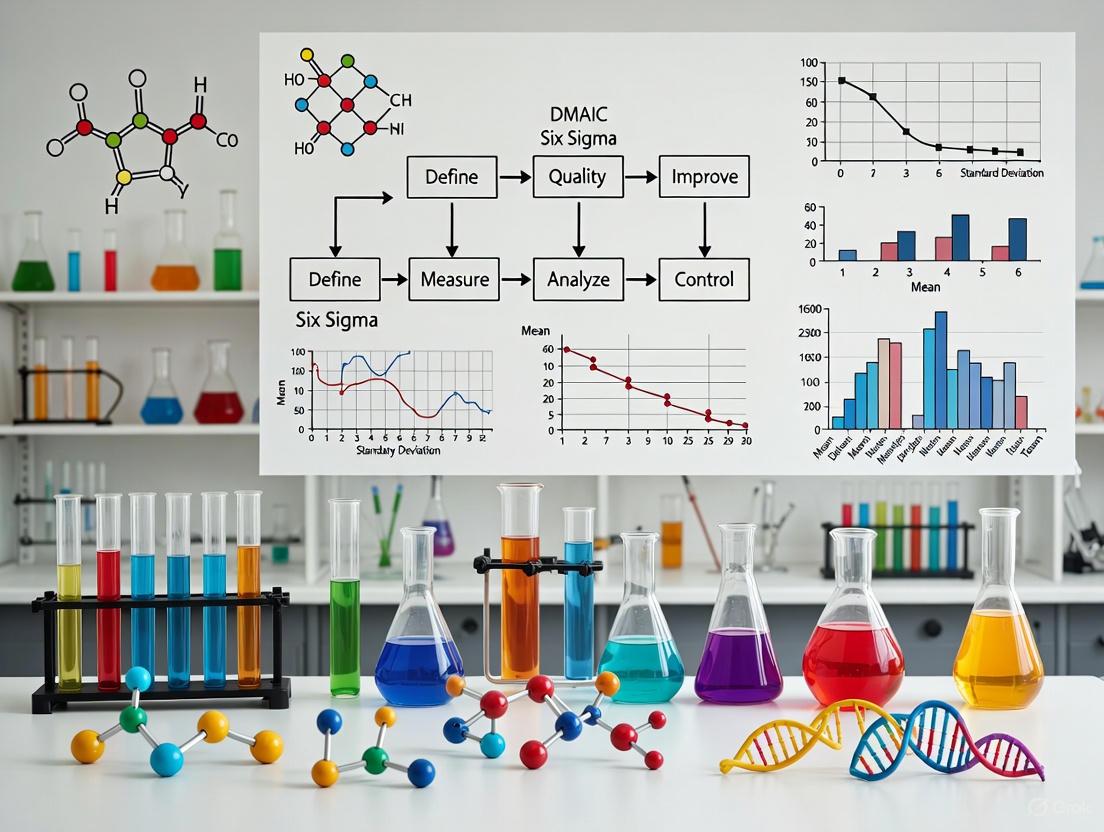
This article provides a comprehensive guide for researchers, scientists, and drug development professionals on applying Six Sigma methodology to enhance quality control in clinical biochemistry.
Achieving World-Class Quality: A Practical Guide to Implementing Six Sigma in Clinical Biochemistry
Abstract
This article provides a comprehensive guide for researchers, scientists, and drug development professionals on applying Six Sigma methodology to enhance quality control in clinical biochemistry. It covers the foundational principles of Six Sigma, including the calculation and interpretation of sigma metrics to quantify analytical performance. The content details practical methodologies for implementing customized quality control rules and procedures based on an assay's sigma value, leading to significant cost savings and error reduction. Readers will learn troubleshooting techniques for underperforming assays using tools like Quality Goal Index (QGI) and root cause analysis, and discover a structured framework for validating method improvements and conducting cost-benefit analyses. Real-world case studies demonstrate tangible benefits, including annual savings exceeding INR 750,000 and defect reductions up to 68%, providing a actionable roadmap for laboratories to achieve higher efficiency, reliability, and cost-effectiveness in their operations.
The Six Sigma Foundation: Quantifying Analytical Performance in Clinical Biochemistry
Core Principles of Six Sigma in the Clinical Laboratory
Six Sigma is a data-driven performance improvement methodology originally developed in the manufacturing sector to reduce defects and process variation. In clinical laboratories, it provides a quantitative framework for assessing analytical quality and reducing errors to near-zero levels, with a world-class performance benchmark of 3.4 defects per million opportunities [1] [2].
The methodology employs the DMAIC cycle (Define, Measure, Analyze, Improve, Control) as a structured approach to problem-solving: [3] [4] [5]
- Define the problem, scope, and customer requirements
- Measure current process performance with relevant data
- Analyze data to identify root causes of defects
- Improve the process by addressing root causes
- Control the improved process to sustain gains
Sigma metrics are calculated using three essential analytical performance parameters: imprecision (CV%), inaccuracy (Bias%), and total allowable error (TEa), with the formula: Sigma (σ) = (TEa% - Bias%) / CV% [1] [2] [6].
Table 1: Sigma Metric Performance Levels and Their Interpretation
| Sigma Level | Defects Per Million | Performance Assessment | Recommended Action |
|---|---|---|---|
| ≥6 | ≤3.4 | World-class | Use relaxed QC rules (n=2, 3s control limits) |
| 5-6 | 233-3.4 | Good | Use n=2 controls with 2.5s or 3.0s control limits |
| 4-5 | 6,210-233 | Marginal | Use multi-rules with n=4 controls |
| <4 | >6,210 | Unacceptable | Increase QC frequency; investigate and troubleshoot |
Sigma Metrics and Performance Assessment of Biochemical Assays
Research demonstrates varying sigma metric performance across different biochemical assays, highlighting the need for individualized quality control strategies.
Table 2: Sigma Metric Performance of Common Biochemical Analytes Across Studies
| Analyte | TEa Source | Sigma Level (Range) | Common Performance Issues | QGI Recommendation |
|---|---|---|---|---|
| Alkaline Phosphatase | CLIA | ≥6 [2] | None | Minimal QC required |
| Magnesium | CLIA | ≥6 [2] | None | Minimal QC required |
| Triglycerides | CLIA | ≥6 [2] | None | Minimal QC required |
| HDL Cholesterol | CLIA | ≥6 [2] | None | Minimal QC required |
| Creatinine | CLIA | 0.87-6 [2] [6] | Imprecision or inaccuracy | QGI <0.8: Improve precision; QGI >1.2: Address inaccuracy |
| Urea | CLIA | 2.42-3.9 [6] | Imprecision | QGI <0.8: Improve precision |
| Potassium | CLIA | 2.4-3.95 [6] | Imprecision | QGI <0.8: Improve precision |
| Sodium | CLIA | 0.88-1.47 [6] | Imprecision | QGI <0.8: Improve precision |
| Chloride | CLIA | 1.52-1.93 [6] | Imprecision | QGI <0.8: Improve precision |
| Total Cholesterol | CLIA | <3 [2] | Inaccuracy | QGI >1.2: Address inaccuracy |
Experimental Protocols for Six Sigma Implementation
Protocol for Sigma Metric Calculation
Purpose: To calculate sigma metrics for biochemical assays to determine appropriate quality control strategies.
Materials Required:
- Internal Quality Control (IQC) data (minimum 3-6 months)
- External Quality Assurance Scheme (EQAS) data for bias calculation
- TEa sources (CLIA, Ricos Biological Variation Database, RiliBÄK, or RCPA)
Procedure:
- Calculate Imprecision (CV%): Using a minimum of 3 months of IQC data, calculate the cumulative coefficient of variation for each control level:
CV% = (Standard Deviation / Mean) × 100[1] [2]
Determine Bias (%): Using EQAS data, calculate the percentage difference from the target value:
Bias% = |(Laboratory Mean - Target Value)| / Target Value × 100%[7] [2]Select Appropriate TEa: Choose TEa from recognized sources such as CLIA guidelines, ensuring consistency in application across all analytes [1].
Calculate Sigma Metrics: Apply the formula for each analyte at both control levels:
Sigma metric = (TEa - Bias%) / CV%[2] [6]Average Sigma Values: Calculate the average sigma value from both control levels for a single sigma metric per analyte [7].
Perform Quality Goal Index (QGI) Analysis: For analytes with sigma <6, calculate QGI to determine whether imprecision or inaccuracy is the primary issue:
QGI = Bias% / (1.5 × CV%)[2]- QGI <0.8 indicates imprecision as the primary problem
- QGI >1.2 indicates inaccuracy as the primary problem
- QGI between 0.8-1.2 indicates both imprecision and inaccuracy issues
Protocol for Implementation of Westgard Sigma Rules
Purpose: To implement appropriate QC rules based on calculated sigma metrics.
Materials Required:
- Sigma metric values for all assays
- QC design tool or Westgard Sigma Rules table
- Laboratory Information System (LIS) capable of implementing customized QC rules
Procedure:
- Categorize Assays by Sigma Performance:
- Sigma ≥6: Implement n=2 controls per run with 3.0 or 3.5s control limits [1]
- Sigma 5-6: Implement n=2 controls per run with 2.5s or 3.0s control limits [1]
- Sigma 4-5: Implement n=4 controls per run with multi-rules [1]
- Sigma <4: Implement maximum affordable QC; investigate root causes and perform corrective actions [1]
Configure LIS Settings: Program the appropriate control rules for each analyte based on its sigma performance category.
Validate QC Protocol: Run validation studies to ensure the new QC rules provide adequate error detection while minimizing false rejections.
Monitor Performance: Track false rejection rates, error detection rates, and cost savings after implementation.
Six Sigma DMAIC Methodology Workflow
The Scientist's Toolkit: Essential Research Reagent Solutions
Table 3: Essential Materials and Reagents for Six Sigma Implementation in Clinical Biochemistry
| Item | Function | Application in Six Sigma |
|---|---|---|
| Third-Party Quality Controls (Bio-Rad) | Assess analytical precision across time | Provide data for CV% calculation from IQC [7] [2] |
| External Quality Assurance Scheme (EQAS) Materials | Assess analytical accuracy compared to peers | Provide data for Bias% calculation [2] [8] |
| Unity Interlaboratory Program Software | Compare performance with peer laboratories | Facilitates sigma metric calculation and QC planning [7] |
| Commercial Control Materials (Lyphocheck) | Monitor daily analytical performance | Used for routine IQC to generate precision data [7] |
| Calibrators with Metrological Traceability | Establish measurement accuracy | Reduces systematic error (bias) in assays [2] |
| Quality Goal Index (QGI) Calculator | Determine source of poor performance | Guides corrective actions for low sigma metrics [2] |
| Westgard Sigma Rules Table | Select appropriate QC rules | Converts sigma metrics into practical QC strategies [1] |
| Total Allowable Error (TEa) Sources (CLIA, Ricos) | Define analytical quality specifications | Provides quality standards for sigma calculations [1] [2] |
Financial Impact and Quality Improvement Outcomes
Implementation of Six Sigma methodologies in clinical biochemistry laboratories has demonstrated significant financial and quality improvements.
Table 4: Documented Benefits of Six Sigma Implementation in Clinical Laboratories
| Improvement Category | Before Implementation | After Implementation | Reference |
|---|---|---|---|
| Annual Cost Savings | Baseline | INR 750,105 (combined internal and external failure costs) | [7] |
| Internal Failure Costs | Baseline | 50% reduction (INR 501,808) | [7] |
| External Failure Costs | Baseline | 47% reduction (INR 187,102) | [7] |
| Turnaround Time (Stat Samples) | 68 minutes | 59 minutes (13% reduction) | [4] |
| Mislabeled Samples | 25-30% of all samples | 3% of all samples (90% reduction) | [4] |
| Time Spent Correcting Labels | 3 hours 45 minutes/day | 22.5 minutes/day (90% reduction) | [4] |
| Reporting Errors | Baseline | Approximately 50% reduction | [5] |
QC Rule Selection Based on Sigma Metrics
Application Notes for Implementation Success
Key Success Factors
- Management Commitment: Secure leadership support and dedicated resources for Six Sigma projects [3].
- Structured Training: Implement belt-based training programs (Yellow, Green, Black Belt) to build internal expertise [3].
- Cross-Functional Teams: Include representatives from all affected areas, including phlebotomy, laboratory testing, and IT departments [4].
- Data Integrity: Ensure the quality and consistency of IQC and EQAS data used for sigma metric calculations [2].
- Regular Review: Continuously monitor sigma metrics and adjust QC procedures as assay performance changes [7].
Common Implementation Challenges
- TEa Source Selection: Different TEa sources (CLIA, Ricos, RiliBÄK) may yield different sigma values, requiring consistent application [1].
- Assay-Specific Considerations: Some assays may show different sigma performance at different concentration levels, requiring level-specific QC strategies [2].
- Resource Allocation: Low sigma assays require more extensive QC, creating resource burdens that must be balanced against clinical requirements [7].
- Staff Training: Successful implementation requires comprehensive staff education on Six Sigma principles and their application in daily practice [5].
The implementation of Six Sigma methodologies in clinical biochemistry represents a paradigm shift from traditional quality control approaches to a data-driven, quantitative system that directly links analytical performance to clinical outcomes while optimizing resource utilization.
In the field of clinical biochemistry, the reliability of laboratory results is paramount, as it is estimated that over 70% of clinical decisions are based on these findings [9]. The Six Sigma methodology provides a robust, data-driven framework for evaluating and improving the analytical performance of laboratory processes. This approach quantifies how well a procedure meets quality requirements by integrating three core components: Total Allowable Error (TEa), Bias, and Coefficient of Variation (CV) [9] [10] [11]. By calculating a sigma metric, laboratories can objectively identify assays requiring improvement, optimize resource allocation, and implement tailored quality control (QC) strategies, ultimately enhancing patient safety and achieving significant operational savings [7]. These application notes detail the theoretical and practical aspects of employing sigma metrics in a clinical biochemistry research setting.
Core Components and Their Definitions
The calculation of sigma metrics rests on three fundamental analytical performance parameters. A deep understanding of each is crucial for correct implementation and interpretation.
Total Allowable Error (TEa): TEa represents the maximum amount of error that can be tolerated in a test result without compromising its clinical utility [10]. It is a quality specification that sets the allowable limits of deviation from a target value. TEa serves as the quality goal for a given analyte. A key challenge for laboratories is the selection of an appropriate TEa source, as values for the same analyte can vary significantly between different guidelines, directly impacting the sigma score [10] [11]. Common sources include the Clinical Laboratory Improvement Amendments (CLIA), biological variation databases (e.g., Ricos), and recommendations from professional bodies like the Royal College of Pathologists of Australasia (RCPA) [10] [11].
Bias: Bias is a measure of * systematic error*, or the consistent difference between a measured value and its accepted reference or true value [9] [10]. It reflects the accuracy of an assay. Bias is typically expressed as a percentage and can be derived from External Quality Assessment (EQA) data by comparing the laboratory's result to the peer group mean, or from Internal Quality Control (IQC) data by comparing the laboratory's control mean to the manufacturer's assigned mean [9]. A high bias indicates a consistent drift from the true value.
Coefficient of Variation (CV): CV quantifies * imprecision* or random error in an assay [10]. It is calculated as the standard deviation of repeated measurements divided by the mean, expressed as a percentage. The CV is derived from Internal Quality Control (IQC) data collected over time and reflects the reproducibility of the test method [9] [6]. A lower CV signifies greater precision and consistency in the results.
The logical relationship between these three components culminates in the sigma metric calculation, which can be visualized as a process flow.
Quantitative Data from Sigma Metric Studies
Empirical data from various studies demonstrates the practical application and outcomes of sigma metric analysis across different biochemical parameters and settings.
Table 1: Performance of Biochemistry Parameters via Sigma Metrics (Sample Data) [9]
| Parameter | TEa (CLIA) | Bias (%) (EQA) | CV (%) | Sigma Metric | Performance Level |
|---|---|---|---|---|---|
| Creatine Kinase (CK) | 30 | 4.81 | 2.4 - 3.3 | ≥ 6 | Excellent |
| Iron (Pathologic) | 20 | 3.5 | 2.7 | ≥ 6 | Excellent |
| Magnesium (Pathologic) | 25 | 1.97 | 3.17 | ≥ 6 | Excellent |
| Alkaline Phosphatase (ALP) | 30 | 5.67 | 4.64 - 5.87 | <5 - ≥4 | Good |
| Amylase | 30 | 5.32 | 2.66 - 3.57 | >6 | Excellent |
| Albumin | 10 | 1.78 | 2.88 - 3.48 | <4 - ≥3 | Medium |
Table 2: Impact of Different TEa Sources on Sigma Metrics [10] [11] This table illustrates how the choice of TEa guideline can alter the performance classification of an assay.
| Analyte | Sigma (CLIA'88) | Sigma (RCPA) | Sigma (BVD) | Comment |
|---|---|---|---|---|
| Sodium | < 3 [11] | < 3 [11] | < 3 [10] | Consistently poor across guidelines |
| Total Bilirubin | > 6 [10] | < 3 [10] | < 3 [10] | Performance varies drastically |
| ALT | 3.5 [9] | Information missing | Information missing | Medium performance with CLIA |
| Cholesterol | < 3 [11] | Information missing | Information missing | Poor performance with CLIA |
Table 3: Financial Impact of Optimized QC Based on Sigma Metrics [7] A study implementing tailored QC rules based on sigma metrics demonstrated substantial cost savings.
| Cost Category | Savings after Implementation | Notes |
|---|---|---|
| Total Annual Savings | INR 750,105.27 | Absolute savings |
| Internal Failure Costs | Reduced by 50% (INR 501,808.08) | Costs from re-runs, repeats, reagents |
| External Failure Costs | Reduced by 47% (INR 187,102.8) | Costs from incorrect results affecting patient care |
Experimental Protocols for Sigma Metric Analysis
Protocol 1: Calculation of Sigma Metrics for Biochemistry Analytes
This protocol outlines the steps to calculate sigma metrics for routine chemistry parameters using internal QC and external QA data [9] [12].
1. Objective: To evaluate the analytical performance of laboratory assays using sigma metrics and identify underperforming parameters.
2. Materials and Reagents:
- Automated clinical chemistry analyzer (e.g., Beckman Coulter AU5800/680, Siemens Dimension Rxl, Roche Cobas 8000) [9] [12] [10].
- Commercial assayed quality control materials (at least two levels: normal and pathological) [9] [7].
- Calibrators specific to the analyzer and tests.
- External Quality Assurance (EQA) or Proficiency Testing (PT) samples [9] [12].
3. Software:
- Statistical software (e.g., Microsoft Excel, SPSS) for data analysis [9].
- QC validation software (e.g., Bio-Rad Unity 2.0) can be used for applying Westgard sigma rules [7].
4. Procedure:
- Step 1: Data Collection Period. Collect internal quality control (IQC) data retrospectively over a defined period, typically 6 to 12 months, to ensure data robustness [9] [7] [10].
- Step 2: Calculate Imprecision (CV%). For each analyte and each level of IQC, calculate the mean and standard deviation (SD). The Coefficient of Variation (CV%) is then determined as: CV% = (SD / Mean) x 100 [9] [6].
- Step 3: Determine Bias%.
- From EQA/PT: Calculate the percentage deviation from the peer group mean for each survey. The overall bias can be the mean of percentage deviations from the last several surveys [9]. Bias% = [(Lab Result - Peer Group Mean) / Peer Group Mean] x 100.
- From IQC: Alternatively, bias can be calculated against the manufacturer's assigned mean for the control material [9] [7].
- Step 4: Select Total Allowable Error (TEa). Choose a TEa source appropriate for your laboratory's context (e.g., CLIA guidelines, biological variation database) [10]. Consistency in TEa source is critical for longitudinal comparison.
- Step 5: Calculate Sigma Metric. Use the formula for each level of control: Sigma (σ) = (TEa - Bias%) / CV% [9] [10] [11].
- Step 6: Performance Classification. Classify the assay performance based on the sigma value [9]:
- ≥ 6 Sigma: World-class / Excellent performance
- < 6 - ≥ 5 Sigma: Very good performance
- < 5 - ≥ 4 Sigma: Good performance
- < 4 - ≥ 3 Sigma: Medium performance
- < 3 Sigma: Poor performance (unacceptable)
Protocol 2: Root Cause Analysis Using Quality Goal Index (QGI)
For analytes with a sigma metric below 5, the Quality Goal Index (QGI) can be used to determine the primary source of the problem [9].
1. Objective: To determine whether poor sigma performance is predominantly due to imprecision, inaccuracy, or both.
2. Procedure:
- Step 1: Calculate QGI. Using the same bias and CV from the sigma calculation: QGI = Bias% / (1.5 * CV%) [9] [11].
- Step 2: Interpret the QGI Ratio [9]:
- QGI < 0.8: Suggests that imprecision (high CV) is the major contributor to poor performance.
- QGI > 1.2: Suggests that inaccuracy (high bias) is the major contributor.
- QGI between 0.8 - 1.2: Suggests that both imprecision and inaccuracy are significant problems.
The Scientist's Toolkit: Research Reagent Solutions
Table 4: Essential Materials for Sigma Metrics Analysis
| Item | Function / Application | Example Manufacturers/Vendors |
|---|---|---|
| Assayed Quality Control Materials | Used to monitor daily precision (CV%) and, optionally, calculate bias against a target value. | Bio-Rad [9] [7], Roche [11] |
| External Quality Assurance (EQA) Samples | Provides an independent assessment of accuracy (bias%) by comparing results to a peer group. | RIQAS [9], Biorad EQAS [10] |
| Calibrators | Used to standardize the analyzer and establish a correct calibration curve, directly impacting bias. | Analyzer manufacturer-specific (e.g., Beckman Coulter, Roche) [11] |
| Automated Clinical Chemistry Analyzer | The platform on which analyses are performed. Consistent instrument performance is critical. | Beckman Coulter AU series [9] [10], Roche Cobas series [11], Siemens Dimension [12] |
| QC Validation / Data Management Software | Aids in statistical analysis, application of multi-rules, and long-term tracking of performance. | Bio-Rad Unity 2.0 [7] |
The implementation of sigma metrics, built upon the core components of TEa, Bias, and CV, provides clinical biochemistry laboratories with a powerful, standardized tool for objective quality assessment. By moving beyond traditional QC, laboratories can identify specific assays that require intervention, with the QGI offering a clear direction for corrective actions—whether addressing imprecision, inaccuracy, or both. Furthermore, as demonstrated empirically, tailoring QC frequency and rules based on sigma scores leads to more efficient resource utilization and substantial cost savings [7]. A primary challenge remains the lack of harmonization in TEa goals across different guidelines, which can lead to varying performance evaluations [10] [11]. Therefore, the ongoing development of international consensus on quality specifications is essential to fully realize the potential of Six Sigma in advancing the quality and reliability of clinical biochemistry research and diagnostics.
In the field of clinical biochemistry, the Six Sigma methodology provides a quantitative framework for evaluating the analytical performance of laboratory processes and assays. This data-driven approach measures how far a process deviates from perfection, with sigma values serving as a universal benchmark for quality [1]. The core principle of Six Sigma is to reduce defects and process variation, which directly translates to fewer analytical errors in laboratory testing [13]. For clinical laboratories, implementing Sigma metrics enables systematic identification and elimination of error sources, ultimately enhancing diagnostic accuracy and reliability while optimizing resource utilization [1].
The sigma scale typically ranges from 0 to 6, with a process's minimum acceptable performance being 3 sigma, and values exceeding 6 considered world-class [7]. This metric is particularly valuable in clinical biochemistry as it integrates both random error (imprecision) and systematic error (inaccuracy) relative to the defined quality requirement for each test [2]. By converting performance data into a single sigma value, laboratories can objectively prioritize improvement efforts, customize quality control procedures, and ultimately reduce operational costs while maintaining high-quality patient care services [7] [1].
Interpretation of Sigma Performance Levels
Sigma metrics transform complex performance data into an intuitive scale that categorizes assay quality from unacceptable to world-class. Each level carries specific implications for error rates and required quality control strategies, providing laboratories with clear guidance for performance improvement.
Table 1: Sigma Metric Performance Levels and Their Implications
| Sigma Level | Defects Per Million (DPMO) | Performance Category | Quality Control Implications |
|---|---|---|---|
| <3 | >66,800 | Unacceptable | Requires maximum QC; fundamental method improvement needed [7] [2] |
| 3-4 | 6,210-66,800 | Marginal | Needs multi-rule QC with increased number of controls [1] |
| 4-5 | 233-6,210 | Acceptable | Can use multi-rule QC procedures [1] |
| 5-6 | 3.4-233 | Good | Can use 2-3 controls per run with wider control limits [1] |
| ≥6 | ≤3.4 | World-Class | Requires minimal QC; can use 2 controls with 3s or 3.5s control limits [7] [1] |
The interpretation of sigma values directly informs quality control planning. For parameters with sigma values below 3, performance is considered unacceptable, indicating the need for maximum affordable QC and investigation into preventative maintenance and troubleshooting [14] [1]. These assays typically require duplicate testing of samples along with three quality controls run three times daily, combined with stringent Westgard rules for rejecting a run [14]. When sigma values fall between 3 and 4, laboratories should implement multi-rule QC procedures with n=4 controls per run to maximize error detection [1]. For assays achieving sigma values between 4 and 5, multi-rule QC remains appropriate but with potentially fewer controls. As performance improves to sigma values between 5 and 6, laboratories can transition to n=2 controls per run with 2.5s or 3.0s control limits [1]. Finally, assays reaching world-class performance of ≥6 sigma can utilize the most efficient QC strategies, typically n=2 controls per run with 3.0 or 3.5s control limits, thereby minimizing false rejections while maintaining quality [1].
Sigma Metric Calculation Methodology
Fundamental Formula and Components
The calculation of sigma metrics in clinical biochemistry requires three essential components, all expressed as percentages: imprecision (CV%), inaccuracy (Bias%), and total allowable error (TEa). The fundamental formula for sigma metric calculation is:
Sigma (σ) = (TEa% – Bias%) / CV% [7] [14] [2]
This formula integrates both systematic and random errors relative to the defined quality requirement, producing a single value that represents the overall assay performance. The TEa represents the maximum error that can be tolerated without affecting clinical utility, while Bias% indicates the systematic deviation from the true value, and CV% quantifies the random variation in measurements [1].
Experimental Protocol for Data Collection
Step 1: Determine Imprecision (CV%)
- Collect internal quality control (IQC) data over a minimum period of 3-6 months to ensure reliable estimates [14] [15].
- Analyze data at two concentration levels (normal and pathological) to cover the clinical reporting range [1].
- Calculate the cumulative coefficient of variation (%CV) using the formula: CV% = (Standard Deviation / Mean) × 100 [14] [2].
- For comprehensive precision evaluation, follow the CLSI EP05-A3 guideline recommendation of a 20-day protocol with controls tested twice daily with a minimum of two hours between runs [1].
Step 2: Determine Inaccuracy (Bias%)
- Utilize proficiency testing (PT) or External Quality Assessment Scheme (EQAS) data to calculate Bias% [2] [15].
- Compare laboratory results with target values from manufacturer means, peer groups, or reference methods [7].
- Calculate Bias% using the formula: Bias% = [(Laboratory Mean – Target Value) / Target Value] × 100 [7].
- Ensure bias assessment covers multiple concentrations and is performed regularly to monitor changes over time.
Step 3: Select Appropriate Total Allowable Error (TEa)
- Source TEa values from recognized bodies such as Clinical Laboratory Improvement Amendments (CLIA), Biological Variation Database, Royal College of Pathologists of Australasia (RCPA), or German Guidelines for Quality (RiliBÄK) [2] [1] [15].
- Select TEa sources consistently across comparable assays to ensure standardized evaluation.
- Consider clinical requirements for specific tests, using medical cutoff points where appropriate, particularly for critical assays like cardiac markers [16].
Step 4: Calculate Sigma Metrics
- Compute sigma values for each level of control separately using the fundamental formula.
- Average the sigma values from both levels to obtain an overall sigma metric for the assay [7].
- For low sigma values (<6), calculate the Quality Goal Index (QGI) to determine whether imprecision or inaccuracy is the primary contributor to poor performance: QGI = Bias% / (1.5 × CV%) [2].
- Interpret QGI values as follows: <0.8 indicates imprecision as the main problem; 0.8-1.2 indicates both imprecision and inaccuracy; >1.2 indicates inaccuracy as the dominant issue [2].
Diagram 1: Workflow for calculating and interpreting sigma metrics in clinical biochemistry
Quality Control Optimization Based on Sigma Values
Implementing Sigma-Dependent QC Rules
The implementation of sigma-based quality control rules represents a paradigm shift from one-size-fits-all QC practices to customized, assay-specific control strategies. This approach optimizes resource utilization while maintaining high-quality testing standards. Research demonstrates that implementing sigma-based QC rules can significantly reduce false rejection rates and associated costs. One comprehensive study reported absolute savings of INR 750,105.27 annually through a 50% reduction in internal failure costs and a 47% reduction in external failure costs after implementing customized sigma-based QC rules [7].
The Westgard Sigma Rules provide a structured framework for selecting appropriate QC procedures based on sigma metrics [1]. These rules recommend:
- For sigma ≥ 6: Use n=2 controls per run with 3.0 or 3.5s control limits to minimize false rejections [1].
- For sigma 5-6: Use n=2 controls per run with 2.5s or 3.0s control limits [1].
- For sigma 4-5: Use n=4 controls per run with multi-rules to maximize error detection [1].
- For sigma <4: Use maximum affordable QC and investigate preventative maintenance and troubleshooting [1].
Impact on Laboratory Efficiency
Implementing sigma-based QC rules directly enhances laboratory efficiency metrics. A recent study evaluating 26 biochemical tests before and after applying sigma-based QC rules demonstrated significant improvements in key performance indicators [17]. The QC-repeat rate due to violations decreased from 5.6% to 2.5% after implementation, while the rate of out-of-turnaround time (TAT) cases during peak hours reduced from 29.4% to 15.2% [17]. Furthermore, proficiency testing performance improved substantially, with cases exceeding 3 standard deviation indices (SDI) decreasing from 27 to just 4 after implementing sigma-based rules [17].
Table 2: Performance Improvement with Sigma-Based QC Rules Implementation
| Performance Metric | Pre-Implementation | Post-Implementation | Relative Improvement |
|---|---|---|---|
| QC-Repeat Rate | 5.6% | 2.5% | 55.4% reduction [17] |
| Out-of-TAT Cases (Peak Time) | 29.4% | 15.2% | 48.3% reduction [17] |
| Proficiency Testing Cases >2 SDI | 67/271 cases | 24/271 cases | 64.2% reduction [17] |
| Proficiency Testing Cases >3 SDI | 27 cases | 4 cases | 85.2% reduction [17] |
Case Study: Application in Clinical Biochemistry
Sigma Metric Evaluation of Biochemistry Assays
A comprehensive one-year study of 23 routine biochemistry parameters demonstrated the practical application and benefits of sigma metric analysis. The research employed third-party Bio-Rad assayed lyphocheck clinical chemistry controls with standard protocols on a Beckman Coulter AU680 autoanalyzer [7]. Sigma metric analysis was performed using Microsoft Excel with Bias% derived from manufacturer means and CV% calculated from daily IQC data, while TEa values were sourced from CLIA criteria [7].
The findings revealed varying sigma performance across different biochemical parameters, supporting the need for individualized QC approaches. Parameters with sigma values >6 included cholesterol, glucose, and sodium, indicating world-class performance requiring minimal QC [7]. Analytes with sigma values between 3-6 included total bilirubin, AST, and ALT, demonstrating the need for standardized multi-rule QC procedures [7]. Notably, certain parameters like alkaline phosphatase exhibited sigma values <3, necessitating maximum QC efforts and fundamental method improvement [14].
The Scientist's Toolkit: Essential Research Reagents and Materials
Table 3: Essential Materials for Sigma Metric Analysis in Clinical Biochemistry
| Material/Reagent | Specification | Function in Sigma Analysis |
|---|---|---|
| Quality Control Materials | Third-party assayed controls (e.g., Bio-Rad Lyphocheck) | Provides stable, characterized samples for precision estimation [7] |
| Proficiency Testing Samples | External Quality Assessment Scheme (EQAS) materials | Enables determination of method bias through comparison with target values [2] [15] |
| Calibrators | Manufacturer-recommended standards | Ensures proper instrument calibration for accurate measurement [2] |
| Automated Biochemistry Analyzer | e.g., Beckman Coulter AU680, Siemens Automated Analyzers | Provides platform for consistent test performance and data generation [7] [14] |
| Data Analysis Software | Biorad Unity, MS Excel, specialized statistical packages | Facilitates sigma calculation, QC validation, and data interpretation [7] |
Sigma metrics provide clinical biochemistry laboratories with a powerful, quantitative tool for assessing analytical performance and guiding quality control optimization. The interpretation of sigma values—from unacceptable (<3) to world-class (≥6)—enables laboratories to implement appropriate, cost-effective QC strategies tailored to each assay's performance level. The structured methodology for sigma calculation, incorporating imprecision, inaccuracy, and total allowable error, transforms complex performance data into actionable intelligence.
Implementing sigma-based QC rules demonstrates significant benefits, including reduced false rejections, improved turnaround times, enhanced proficiency testing performance, and substantial cost savings [7] [17]. As the healthcare landscape continues to emphasize both quality and efficiency, the adoption of Six Sigma principles in clinical biochemistry represents a essential step toward achieving world-class diagnostic performance while optimizing resource utilization.
The Critical Link Between Sigma Metrics and Defects Per Million (DPM) Opportunities
In the pursuit of excellence in clinical biochemistry, laboratories are increasingly adopting performance metrics that provide quantitative assessments of analytical quality. Among these, Sigma metrics and Defects Per Million Opportunities (DPMO) stand as pivotal tools derived from Six Sigma methodology, originally developed in the manufacturing sector at Motorola and later adapted to healthcare. These metrics provide a standardized framework for evaluating process performance, identifying errors, and implementing targeted improvements [18] [19]. The fundamental premise of Six Sigma in the clinical laboratory context is the reduction of defects—defined as laboratory errors that could potentially impact patient care—to a negligible level, with the aspirational goal of achieving no more than 3.4 defects per million opportunities [20] [21].
The application of these metrics represents a paradigm shift from qualitative quality assessments to a data-driven approach for quality enhancement. As Coskun et al. aptly stated, "if we do not measure, we do not know, and if we do not know, we cannot manage" [22]. In clinical biochemistry, where laboratory results influence approximately 60-70% of critical medical decisions, the ability to quantify performance and systematically reduce errors is not merely an operational improvement but an ethical imperative [23] [22]. This application note delineates the theoretical foundations, practical applications, and implementation protocols for leveraging the critical link between Sigma metrics and DPMO to advance quality control in clinical biochemistry research and practice.
Table 1: Sigma Metrics and Corresponding Quality Levels
| Sigma Level | DPMO | Defect Rate (%) | Quality Assessment |
|---|---|---|---|
| 6σ | 3.4 | 0.00034% | World-class |
| 5σ | 233 | 0.023% | Excellent |
| 4σ | 6,210 | 0.62% | Good |
| 3σ | 66,807 | 6.68% | Mediocre |
| 2σ | 308,538 | 30.85% | Poor |
| 1σ | 691,462 | 69.15% | Unacceptable |
Theoretical Foundations and Calculation Methods
The Sigma Metrics Equation
The core of Six Sigma application in clinical biochemistry lies in the Sigma metrics equation, which integrates three essential components of analytical performance: total allowable error (TEa), bias, and imprecision. The fundamental formula is:
Sigma metric = (TEa - Bias) / CV
Where TEa represents the total allowable error determined from clinical requirements, Bias indicates the systematic error or inaccuracy of the method, and CV represents the coefficient of variation reflecting the random error or imprecision [18] [19] [24]. This equation powerfully unifies accuracy and precision into a single performance indicator, enabling laboratories to benchmark their analytical processes against standardized quality goals.
The relationship between Sigma metrics and DPMO is mathematically defined and consistent across applications. As the Sigma level increases, the DPMO decreases exponentially, representing higher quality and fewer defects [21]. This inverse relationship provides laboratories with two complementary ways to express their performance: either as a Sigma value that indicates process capability or as a DPMO that quantifies the expected defect frequency in tangible terms.
DPMO Calculation Methodology
The calculation of Defects Per Million Opportunities follows a standardized approach that can be applied to any analytical process:
DPMO = (Number of Defects / (Number of Units × Opportunities per Unit)) × 1,000,000 [20] [21]
For clinical biochemistry applications, a "defect" is typically defined as a test result that exceeds the total allowable error limits when compared to the true value, while an "opportunity" represents each potential occurrence of such a defect in the testing process [25]. The resulting DPMO value can then be converted to a Sigma metric using standardized conversion tables, enabling laboratories to place their performance on the universal Six Sigma scale.
Table 2: Components of Sigma Metrics Calculations
| Component | Description | Data Source | Calculation Method | ||
|---|---|---|---|---|---|
| Total Allowable Error (TEa) | Analytical quality requirement defining acceptable performance limits | CLIA, RCPA, RiliBÄK, or biological variation databases | Established based on clinical requirements | ||
| Bias | Systematic difference between measured and true value | External Quality Assessment (EQA) programs | Bias % = | Lab Mean - Peer Group Mean | / Peer Group Mean × 100 |
| Imprecision (CV) | Random variation in measurements | Internal Quality Control (IQC) data | CV % = (Standard Deviation / Mean) × 100 |
The following diagram illustrates the conceptual relationship between the key variables in Sigma metrics calculation and how they influence the final Sigma value:
Experimental Data and Sigma Metrics Performance in Clinical Biochemistry
Sigma Metrics Across Biochemical Parameters
Numerous studies have demonstrated significant variation in Sigma metrics performance across different biochemical parameters. A comprehensive study evaluating 13 routine chemistry parameters revealed a wide performance spectrum: Total bilirubin, uric acid, SGOT, SGPT and ALP demonstrated excellent performance with sigma values exceeding 6, while glucose, Creatinine, triglycerides, and urea showed intermediate performance with sigma values between 3 and 6. Meanwhile, total protein, albumin, cholesterol and chloride performed poorly with sigma values less than 3 [18]. These findings highlight the parameter-specific nature of analytical performance and the need for individualized quality control strategies.
Further research with expanded test menus has corroborated these patterns while providing additional insights. In a 2019 study analyzing 19 analytes, five achieved world-class performance (σ ≥ 6), five demonstrated performance suited for purpose (4 ≤ σ < 6), and nine showed poor performance (σ < 4) at one or more QC levels [19]. The study further implemented root cause analysis and Quality Goal Index (QGI) calculations to identify specific areas for improvement for underperforming parameters, demonstrating the practical application of Sigma metrics for continuous quality enhancement.
Longitudinal Performance Monitoring
Month-to-month Sigma metrics analysis provides valuable insights into the stability of analytical processes and the impact of improvement interventions. A 2020 study tracking 20 parameters over nine months revealed substantial fluctuation in performance for certain parameters while others maintained consistent quality [22]. For instance, creatine kinase (CK), urea, creatinine, uric acid, albumin, calcium, phosphorus, magnesium, AST, ALT, ALP, GGT, lipase, and LDH maintained excellent performance (>6 sigma) across both levels of internal quality control throughout the study period. In contrast, glucose, potassium, chloride, and total protein consistently demonstrated poor performance (<3 sigma) [22].
Table 3: Sigma Metrics Performance of Biochemical Parameters from Published Studies
| Parameter | TEa (%) | Sigma Value Ranges | Performance Category | Study References |
|---|---|---|---|---|
| Alkaline Phosphatase (ALP) | 30 | 5.8 - 11.3 | World-class | [18] [19] |
| Creatine Kinase (CK) | 30 | 9.3 - 9.96 | World-class | [19] [22] |
| Total Bilirubin | 20 | 4.3 - 10.0 | World-class | [18] [19] |
| Triglycerides | 25 | 3.6 - 8.71 | Good to Excellent | [18] [19] |
| Glucose | 10 | 2.4 - 9.7 | Unacceptable to Excellent | [18] [22] |
| Sodium | 4 mmol/L | 0.88 - 7.5 | Unacceptable to Good | [6] [22] |
| Chloride | 5 | 0.24 - 5.0 | Unacceptable to Marginal | [18] [6] |
| Creatinine | 15 | 0.8 - 5.6 | Unacceptable to Good | [18] [6] [24] |
These longitudinal assessments are particularly valuable for identifying seasonal variations, reagent lot changes, equipment degradation, and other temporal factors that impact analytical quality. By monitoring Sigma metrics over time, laboratories can establish performance trends, forecast potential quality issues, and implement preventive measures before quality deteriorates to unacceptable levels.
Implementation Protocols and Quality Improvement Strategies
Protocol for Sigma Metrics Calculation
Objective: To systematically calculate Sigma metrics for biochemical parameters to quantify analytical performance and identify improvement opportunities.
Materials and Equipment:
- Internal Quality Control data (minimum 3 months, ideally 6 months)
- External Quality Assessment scheme results
- Total Allowable Error (TEa) sources (CLIA, RCPA, or biological variation databases)
- Statistical software (Excel, Minitab, R, or specialized QC software)
Procedure:
- Data Collection: Collect internal QC data for the assessment period (minimum 20 data points per level). Ensure data represents stable operation without major instrument changes [18] [23].
Imprecision Calculation: Calculate the mean and standard deviation for each parameter at each QC level. Compute the Coefficient of Variation (CV%) using the formula: CV% = (Standard Deviation / Mean) × 100 [18] [22].
Bias Calculation: Determine bias from External Quality Assessment (EQA) data using the formula: Bias% = |Laboratory Mean - Peer Group Mean| / Peer Group Mean × 100. Use at least 5 EQA cycles for reliable bias estimation [19] [23].
TEa Selection: Select appropriate Total Allowable Error goals based on accepted standards (CLIA, RCPA, or biological variation-based specifications) [25].
Sigma Metrics Calculation: Compute Sigma metrics using the formula: Sigma = (TEa - Bias) / CV [18] [24].
Quality Goal Index (QGI) Calculation: For parameters with Sigma < 6, calculate QGI to identify root causes: QGI = Bias / (1.5 × CV). Interpret results as follows: QGI < 0.8 indicates imprecision problems; QGI > 1.2 indicates inaccuracy problems; QGI between 0.8-1.2 indicates both imprecision and inaccuracy [19] [23].
Quality Control Strategy Based on Sigma Metrics
The following workflow illustrates the systematic approach for implementing quality control strategies based on Sigma metrics calculation:
Based on Sigma metrics calculations, laboratories should implement appropriate QC rules and frequencies:
- Sigma ≥ 6 (World-class quality): Implement relaxed QC rules (13s with N=2) and reduced QC frequency (once per day) [19] [22].
- 4 ≤ Sigma < 6 (Good performance): Apply multi-rule QC procedures (13s/22s/R4s/41s) with two levels of QC per run and standard frequency [19] [22].
- 3 ≤ Sigma < 4 (Poor performance): Implement stringent multi-rule procedures (13s/22s/R4s/41s/8x) with increased QC frequency (2-4 times daily) and N=4 [19] [22].
- Sigma < 3 (Unacceptable performance): Maximum QC with three levels, three times daily, while investigating root causes and implementing immediate corrective actions [22].
Research Reagent Solutions for Quality Improvement
Table 4: Essential Research Reagents and Materials for Six Sigma Implementation
| Reagent/Material | Function in Six Sigma Application | Implementation Protocol |
|---|---|---|
| Commercial QC Serums (Bio-Rad) | Monitoring analytical imprecision through daily IQC | Analyze two levels daily; collect data for CV% calculation [19] [22] |
| EQA/PT Samples (RIQAS, NCCL) | Assessing method accuracy and bias estimation | Analyze monthly; compare with peer group for bias calculation [19] [23] |
| Calibrators and Standards | Establishing measurement traceability and reducing bias | Implement regular calibration based on manufacturer recommendations [25] |
| Automated Chemistry Analyzers | Performing precise and accurate measurements with minimal variation | Regular maintenance and performance verification according to SOPs [18] [22] |
The critical link between Sigma metrics and Defects Per Million Opportunities provides clinical biochemistry laboratories with a powerful, quantitative framework for assessing and improving analytical quality. By translating complex performance data into simple, universally comparable metrics, this approach enables laboratories to benchmark their performance against world-class standards, implement appropriate statistical quality control strategies based on actual performance, and prioritize quality improvement efforts where they are most needed.
The implementation of Sigma metrics and DPMO analysis represents more than a technical exercise—it embodies a cultural shift toward systematic, data-driven quality management that aligns clinical laboratories with the best practices of high-reliability organizations. As the field continues to evolve, the harmonization of TEa goals across international boundaries and the development of parameter-specific performance specifications will further enhance the utility of these metrics [25]. For researchers, scientists, and drug development professionals, the adoption of these methodologies provides not only a tool for quality assessment but a comprehensive framework for establishing confidence in analytical results, ultimately contributing to improved healthcare decisions and patient outcomes.
In the field of clinical biochemistry research and drug development, the analytical quality of laboratory testing is paramount. Two statistical concepts are fundamental for evaluating the performance of any quality control (QC) system: the Probability of Error Detection (Ped) and the Probability of False Rejection (Pfr) [26] [27]. These metrics are essential components of Six Sigma methodology, providing a quantitative framework for ensuring that analytical processes produce reliable, reproducible, and accurate results [28]. When assessing the performance of an internal quality control system, determining Ped and Pfr is critically useful for selecting optimal control rules and procedures [26].
Ped represents the likelihood that a QC procedure will correctly identify an analytical run as unacceptable when a medically significant error is present [27]. In practical terms, it is the probability of detecting true analytical problems, such as increases in random error (imprecision) or systematic shifts in accuracy (bias) [26] [27]. A higher Ped indicates a more effective QC system.
Conversely, Pfr represents the probability that a QC procedure will incorrectly flag an analytical run as unacceptable when no analytically significant error has occurred beyond the inherent imprecision of the method [27]. False rejections lead to unnecessary troubleshooting, repeated runs, wasted reagents, and reduced laboratory efficiency [7].
The ideal QC procedure maximizes Ped (approaching 1.00 or 100%) while minimizing Pfr (approaching 0.00 or 0%) [27]. In practice, a Ped of ≥0.90 (90% chance of detecting analytical problems) and a Pfr of ≤0.05 (≤5% chance of false rejection) are considered desirable design objectives [27].
Theoretical Foundations and Computational Methods
Conceptual Framework and Definitions
The performance characteristics of QC procedures can be understood through their response to different error types. Systematic errors (affecting accuracy) shift the mean of control values, causing more values to fall on one side of the mean and exceed control limits on that side [27]. Random errors (affecting precision) widen the distribution of control values, causing values to exceed both high and low control limits [27]. Different control rules exhibit varying sensitivities to these distinct error patterns [27].
Computational Formulas and Parameters
Ped and Pfr can be calculated using established statistical formulas and simulations. The following computational approach is documented in contemporary research:
Calculation Methodology [29]:
- Control Limit Calculation:
DL = QC limit for each analyte / SD (or CV%) - Probability of False Rejection:
Pfr = 1 - Cumulative normal standard distribution of DL - Probability of Error Detection:
Ped = cumulative normal standard distribution (z = sigma - DL - 1.65) - Overall Pfr or Ped:
(PL1∗NL1 + PL2∗NL2 + … PLi∗NLi)/(NL1 + NL2 + … NLi)where P is the Pfr or Ped per QC level and N is the number of replicates.
The Sigma metric itself is calculated as: Sigma (σ) = (TEa% - Bias%) / CV% [30], where TEa is the total allowable error, Bias% represents inaccuracy, and CV% represents imprecision [30] [28].
The critical systematic error (ΔSEcrit) can be determined as: ΔSEcrit = [(TEa - |Bias|) / SD] - 1.65 [31], which helps define the medically important error size needing detection.
Table 1: Key Parameters for Calculating Pfr and Ped
| Parameter | Description | Source |
|---|---|---|
| TEa (Total Allowable Error) | The maximum error that can be accepted without negating the medical utility of a result [31]. | CLIA proficiency testing criteria [28], biological variation databases [28], or other regulatory bodies. |
| Bias | The difference between a test result's observed value and the true value; a measure of inaccuracy or systematic error [31]. | Method comparison studies, External Quality Assessment (EQA) results [29] [30]. |
| SD (Standard Deviation) / CV% (Coefficient of Variation) | The dispersion of repeated measurements around the mean; a measure of imprecision or random error [31]. | Replication studies using Internal Quality Control (IQC) data [29] [30]. |
Relationship Between QC Metrics
The relationship between Six Sigma metrics, Ped, and Pfr forms a cohesive framework for quality management. Sigma level directly determines the ease of achieving effective QC: higher sigma methods (≥6) can use simpler QC rules with high Ped and low Pfr, while lower sigma methods require more complex multi-rules and greater control measurements to maintain acceptable Ped [30] [31]. This relationship is visualized in the following workflow:
Experimental Protocols for Performance Evaluation
Protocol 1: Establishing Sigma Metrics and Calculating Pfr/Ped
This protocol provides a standardized method for evaluating analytical assay performance using Sigma metrics and calculating associated Pfr and Ped values [30].
1. Quality Goal Definition
- Establish the Allowable Total Error (TEa) for each analyte using clinically acceptable limits from sources such as CLIA proficiency testing criteria [28] or biological variation databases [28].
2. Method Performance Evaluation
- Imprecision (CV%) Estimation: Collect cumulative Internal Quality Control (IQC) data for at least one month. Calculate the coefficient of variation (CV%) for each control level from the ratio of the standard deviation (SD) to the mean (x̄) [29] [30]. For comprehensive assessment, use the root mean square CV%:
RMS CV% = √[(CV₁² + CV₂²) / 2]for two control levels [30]. - Bias Estimation: Utilize External Quality Assessment (EQA) or proficiency testing results. Analyze EQA samples and compare results with the target mean assigned by the organizing body. Calculate Bias% as:
Bias% = |(Measured mean - Target mean)| / Target mean × 100%[30]. Use cumulative data from multiple surveys for robust estimation.
3. Sigma Metric Calculation
- Compute the Sigma metric for each analyte using the formula:
Sigma (σ) = (TEa% - Bias%) / CV%[30]. - Classify performance: World-class (σ > 6), Excellent (5 ≤ σ < 6), Good (4 ≤ σ < 5), Marginal (3 ≤ σ < 4), Poor (2 ≤ σ < 3), Unacceptable (σ < 2) [30].
4. Pfr and Ped Calculation
- Apply the formulas in Section 2.2 to determine the probabilities of false rejection and error detection for current QC procedures [29].
Protocol 2: Comparing Traditional vs. Intelligent QC Systems
This protocol outlines a comparative study design, exemplified by blood gas analyzer quality management evaluation [29] [32].
1. System Implementation
- Implement two QC management approaches for identical analyzers: traditional QC following CLSI guidelines [29] and intelligent QC with real-time monitoring (e.g., GEM Premier 5000 with iQM 2.0) [29] [32].
- Standardize operator training, LIS account management, and result auditing across both systems [29].
2. Data Collection
- Collect EQA results and corresponding target values. Calculate bias for each evaluation item [29].
- Collect cumulative IQC data to determine average CV% and estimate total error (TE = Bias + 2 × SD) [29].
- For the intelligent QC system, additionally collect data on error types identified and automatic corrective actions taken [29].
3. Performance Calculation and Comparison
- Calculate sigma metrics and QGI (Quality Goal Index:
QGI = Bias / (1.5 × CV%)) for both systems. QGI <0.8 indicates precision needs improvement; QGI >1.2 indicates accuracy needs improvement; 0.8-1.2 indicates both [29] [30]. - Compute and compare Pfr, Ped, and Average Detection Time (ADT) between traditional and intelligent QC modes [29].
- Determine the error detection rate in patient samples for the intelligent system [29] [32].
Data Presentation and Analysis
Performance Characteristics of Common QC Rules
The rejection characteristics of QC procedures, including Pfr and Ped, are established through computer simulation studies incorporating known types and amounts of analytical errors [27].
Table 2: False Rejection (Pfr) and Error Detection (Ped) Characteristics of QC Rules
| QC Rule | False Rejection (Pfr) | Error Detection (Ped) | Application Context |
|---|---|---|---|
| 1₂ₐ | ~5% with N=1, increases with N (~9% with N=2) [27] | Varies with error size | Not recommended as primary rejection criterion due to high Pfr [27] |
| 1₃ₐ | ≤1% for N=2-4 [27] | More sensitive for random error increases [27] | Sensitive for detecting random error [27] |
| Multirule Procedures | ≤5% for N≤4 [27] | High Ped for both random and systematic error [27] | Detects both systematic and random errors [26] [27] |
| 2₂ₐ, 3₁ₐ, 4₁ₐ, 6ₓ | Low Pfr when properly combined [27] | Most sensitive for detecting systematic error [27] | Rules sensitive to systematic error/shifts [27] |
Comparative Performance in Practical Applications
A 2025 study comparing intelligent versus traditional quality management for blood gas analysis demonstrated measurable differences in QC performance [29].
Table 3: Example Comparison of Traditional vs. Intelligent QC Performance
| Analyte | QC Mode | Average Sigma | Pfr | Ped | Average Detection Time (ADT) |
|---|---|---|---|---|---|
| pH | Traditional | Data not reported | ~Similar | Lower | Greater |
| Intelligent | Data not reported | ~Similar | Higher | Shorter | |
| pCO₂ | Traditional | Data not reported | ~Similar | Lower | Greater |
| Intelligent | Data not reported | ~Similar | Higher | Shorter | |
| Sodium (Na⁺) | Traditional | Data not reported | ~Similar | Higher | Greater |
| Intelligent | Data not reported | ~Similar | Lower | Shorter |
The Scientist's Toolkit: Research Reagent Solutions
Table 4: Essential Materials for QC Experiments
| Item | Function / Application |
|---|---|
| Third-party assayed controls (e.g., BIO-RAD Liquichek, Biorad lyphocheck) [30] [7] | Independent assessment of accuracy and precision for IQC. |
| External Quality Assessment samples (e.g., from NCCL) [30] | Provides target values for bias estimation through inter-laboratory comparison. |
| Intelligent QC systems (e.g., GEM Premier 5000 with iQM 2.0) [29] [32] | Real-time error monitoring with automated corrective actions. |
| QC validation software (e.g., Biorad Unity 2.0) [7] | Aids in selecting candidate QC rules and predicting Pfr/Ped performance. |
| Automatic biochemical analyzers (e.g., Roche c8000, Beckman AU680) [30] [7] | Platforms for consistent analyte measurement and data generation. |
Implementation Workflow for Optimal QC Selection
The process of selecting and implementing a QC procedure based on Sigma metrics, Pfr, and Ped follows a logical sequence from goal definition to cost-benefit analysis, as visualized below:
Following this workflow enables laboratories to transition from standardized QC to optimized, cost-effective procedures that minimize false rejections while maximizing error detection [7].
Practical Implementation: Designing Data-Driven QC Strategies with Sigma Metrics
Step-by-Step Guide to Calculating Sigma Metrics for Biochemical Assays
Sigma metrics provide a powerful, quantitative framework for evaluating the analytical performance of biochemical assays in clinical laboratories. By integrating imprecision, inaccuracy, and allowable total error into a single value, this Six Sigma methodology enables laboratories to implement risk-based quality control strategies, reduce operational costs, and enhance patient safety. This application note presents a standardized protocol for calculating sigma metrics for routine biochemistry parameters, enabling laboratories to optimize their quality control procedures based on objective performance data.
Sigma metrics have emerged as a world-class standard for quality assessment in clinical laboratories, providing a quantitative measure of assay performance that guides quality control optimization [6]. The Six Sigma methodology, originally developed by Motorola to reduce defects in manufacturing processes, has been successfully adapted for clinical laboratory medicine to systematically reduce analytical errors and improve patient test reliability [1]. This approach evaluates analytical processes by counting defects and converting them to a defects per million opportunities rate, creating a standardized scale for performance assessment [6].
The fundamental principle of sigma metrics lies in its ability to integrate three essential quality indicators: imprecision (random error), inaccuracy (systematic error), and allowable total error (clinical quality requirements) into a single performance value [10]. This integrated approach allows laboratories to objectively determine which assays are performing well and which require additional quality control measures or process improvements. In healthcare environments, where clinical decisions heavily rely on laboratory results, implementing sigma metrics enables laboratories to move beyond basic regulatory compliance toward genuine quality improvement and cost reduction [7].
Theoretical Foundation
The Sigma Metric Equation
The sigma metric for a biochemical assay is calculated using a straightforward yet powerful equation:
Sigma (σ) = (TEa - |Bias%|) / CV%
Where:
- TEa represents the total allowable error, expressed as a percentage
- Bias% represents the inaccuracy or systematic error, expressed as a percentage
- CV% represents the imprecision or random error, expressed as a percentage [7] [33] [6]
This formula effectively compares the assay's observed performance (captured through bias and imprecision) against clinically acceptable performance standards (defined by TEa), resulting in a single numerical value that represents the process capability [10].
Sigma Scale and Interpretation
The sigma scale provides a standardized interpretation framework for analytical performance:
Table 1: Sigma Metric Interpretation Scale
| Sigma Value | Defects Per Million | Performance Assessment | Recommended Action |
|---|---|---|---|
| < 3 | > 66,800 | Unacceptable | Investigate causes, improve method |
| 3 - 4 | 6,210 - 66,800 | Marginal | Implement multi-rule QC |
| 4 - 5 | 233 - 6,210 | Good | Optimize QC rules |
| 5 - 6 | 3.4 - 233 | Excellent | Use 2 controls with 2.5s or 3.0s limits |
| > 6 | < 3.4 | World Class | Use 2 controls with 3.0s or 3.5s limits [6] [1] |
Processes operating at higher sigma levels exhibit fewer errors and greater reliability. A sigma value of 3 is considered the minimum acceptable performance for clinical processes, while a sigma value of 6 represents world-class quality with only 3.4 defects per million opportunities [6] [1].
Materials and Equipment
Research Reagent Solutions
Table 2: Essential Materials and Reagents
| Item | Specifications | Function/Application |
|---|---|---|
| Quality Control Materials | Third-party assayed controls (e.g., Biorad Lyphocheck) | Monitoring daily performance and calculating imprecision |
| Calibrators | Method-specific calibrators | Establishing assay calibration curves |
| Proficiency Testing Samples | External Quality Assessment Scheme (EQAS) materials | Determining method bias against peer groups |
| Clinical Samples | Patient specimens across clinically relevant concentrations | Verification of assay performance |
| Reagents | Analyzer-specific chemistry reagents | Conducting biochemical measurements [7] [33] |
Instrumentation and Software
Table 3: Required Instruments and Analytical Tools
| Equipment | Specifications | Purpose |
|---|---|---|
| Clinical Chemistry Analyzer | Automated, multi-channel spectrophotometric system (e.g., Beckman Coulter AU680) | Performing biochemical measurements |
| Data Collection System | Laboratory Information System (LIS) | Archiving quality control and patient data |
| Statistical Software | Microsoft Excel, Biorad Unity 2.0, or specialized sigma metrics tools | Calculating performance metrics and designing QC rules |
| Precision Analysis Tools | CLSI EP05-A3 protocol compliance | Determining within-laboratory imprecision [7] [10] [1] |
Experimental Protocol
Step 1: Determine Assay Imprecision (CV%)
- Collect Data: Accumulate internal quality control (IQC) data for a minimum of 20-30 days, running at least two levels of controls per day [1].
- Calculate Statistics: For each control level, calculate the mean and standard deviation (SD).
- Compute CV%: Calculate the coefficient of variation using the formula: CV% = (SD / Mean) × 100 [7] [6].
- Verify Stability: Ensure the analytical process is stable during the data collection period, with no major changes in reagents, calibrators, or instrumentation.
Note: For greater reliability, many experts recommend using 3-6 months of cumulative IQC data to account for long-term variations [7].
Step 2: Determine Assay Inaccuracy (Bias%)
- Select Reference Material: Use proficiency testing (PT) or external quality assessment (EQA) samples with target values determined by reference methods or peer group means [33] [10].
- Perform Testing: Analyze PT/EQA samples following standard laboratory protocols, typically in triplicate.
- Calculate Bias: Compute the percentage difference between your laboratory's result and the target value using: Bias% = [(Laboratory Mean - Target Value) / Target Value] × 100 [7] [33].
- Use Multiple Samples: For greater accuracy, calculate bias using multiple PT/EQA events across different concentrations.
Alternative Approach: When PT/EQA data is unavailable, bias can be determined through method comparison studies against reference methods [33].
Step 3: Select Appropriate Total Allowable Error (TEa)
- Consult Multiple Sources: Identify TEa goals from recognized sources such as:
- Clinical Laboratory Improvement Amendments (CLIA)
- Biological Variation Database (desirable specifications)
- Royal College of Pathologists of Australasia (RCPA)
- RiliBÄK (German Guidelines)
- Professional organization recommendations [10]
- Document Selection: Clearly document which TEa source was selected and the rationale for the choice.
- Maintain Consistency: Use the same TEa source when tracking performance over time or comparing multiple assays.
Important Note: TEa source selection significantly impacts sigma metric calculations. Studies show that the same assay can yield different sigma values depending on the TEa source used [10].
Step 4: Calculate Sigma Metric
- Apply Formula: Use the sigma metric formula: σ = (TEa - |Bias%|) / CV%
- Calculate for Each Level: Compute sigma metrics separately for each control level (normal and pathological ranges).
- Average Values: If appropriate, average the sigma values from different control levels to obtain an overall sigma metric for the assay [7].
- Document Calculations: Maintain clear records of all input values and calculations for quality assurance purposes.
Step 5: Implement Quality Control Rules Based on Sigma Metrics
- Select QC Rules: Apply Westgard Sigma Rules according to the calculated sigma value:
- Design QC Frequency: Determine optimal QC frequency based on sigma performance and patient risk.
The following workflow diagram illustrates the complete sigma metric calculation process and subsequent quality control implementation:
Data Analysis and Interpretation
Case Study: Sigma Metrics for Routine Chemistry Parameters
The following table presents actual sigma metric data from a clinical laboratory study evaluating 23 routine biochemistry parameters:
Table 4: Sigma Metrics for Routine Biochemistry Parameters (Based on Actual Laboratory Data)
| Analyte | TEa Source | CV% | Bias% | Sigma Value | Performance Assessment |
|---|---|---|---|---|---|
| Glucose | CLIA | 2.1 | 1.5 | 4.0 | Good |
| Urea | CLIA | 3.3 | 2.0 | 2.4 | Unacceptable |
| Creatinine | CLIA | 5.9 | 9.9 | 0.9 | Unacceptable |
| Total Bilirubin | CLIA | 2.8 | 1.2 | 6.3 | World Class |
| AST | CLIA | 3.1 | 2.3 | 3.2 | Marginal |
| ALT | CLIA | 3.5 | 2.1 | 3.1 | Marginal |
| Total Protein | CLIA | 1.9 | 0.8 | 5.9 | Excellent |
| Albumin | CLIA | 2.2 | 1.1 | 4.9 | Excellent |
| Sodium | CLIA | 1.1 | 0.4 | 5.5 | Excellent |
| Potassium | CLIA | 1.9 | 0.6 | 6.1 | World Class [7] [6] |
Table 5: Effect of TEa Source Variation on Sigma Metrics
| Analyte | CLIA '88 TEa | CLIA '88 Sigma | RCPA TEa | RCPA Sigma | BVD TEa | BVD Sigma | RiliBÄK TEa | RiliBÄK Sigma |
|---|---|---|---|---|---|---|---|---|
| Albumin | 10 | 4.9 | 8 | 3.5 | 3.1 | 1.0 | 12 | 6.2 |
| ALT | 20 | 3.1 | 15 | 2.1 | 13.8 | 1.8 | 20 | 3.1 |
| Total Bilirubin | 20 | 6.3 | 15 | 4.6 | 19.4 | 6.1 | 20 | 6.3 |
| Creatinine | 15 | 0.9 | 10 | 0.2 | 8.2 | -0.1 | 12 | 0.6 |
| Sodium | 3.2 | 5.5 | 3 | 5.0 | 0.5 | 0.1 | 4 | 6.8 [10] |
This comparison demonstrates the substantial influence of TEa source selection on sigma metric evaluation. Parameters such as sodium show dramatically different sigma values depending on the TEa source used, highlighting the importance of appropriate TEa selection [10].
Quality Control Implementation Based on Sigma Metrics
Westgard Sigma Rules Implementation
The following decision diagram illustrates how to select appropriate QC rules based on calculated sigma metrics:
Financial Impact of Sigma-Based QC Optimization
Implementation of sigma metric-based quality control strategies has demonstrated significant financial benefits in clinical laboratories. One study reported absolute savings of INR 750,105.27 annually through optimized QC procedures, with internal failure costs reduced by 50% and external failure costs reduced by 47% [7]. These savings resulted from reduced reagent consumption, decreased repeat testing, and more efficient utilization of laboratory personnel.
Troubleshooting and Technical Notes
- Low Sigma Values (<3): Investigate sources of imprecision and inaccuracy. Common issues include inadequate calibration frequency, reagent instability, improper instrument maintenance, or operator technique variability [7].
- Variable Sigma Between Control Levels: Differences in sigma metrics between normal and pathological control levels may indicate assay-specific issues at certain concentrations. This often requires method-specific optimization [6].
- Discrepancies Between TEa Sources: When sigma values vary significantly based on TEa source, consult clinical colleagues to determine which quality specifications are most appropriate for your patient population [10].
- Consistently High Sigma Values (>6): Consider reducing QC frequency or simplifying QC rules to improve efficiency and reduce costs, as these assays are highly stable [1].
Regular monitoring and recalculating of sigma metrics (quarterly or biannually) is recommended to track assay performance over time and identify emerging issues before they affect patient care.
In clinical biochemistry, the Six Sigma methodology provides a quantitative framework for evaluating analytical assay performance and designing efficient, statistically sound quality control (QC) strategies. The core principle of Westgard Sigma Rules is matching the rigor of QC procedures to the demonstrated sigma metric of each assay, thereby optimizing error detection while minimizing false rejections [34] [1]. This approach moves beyond one-size-fits-all QC rules, enabling laboratories to allocate resources effectively, improve operational efficiency, and enhance patient safety [35] [17].
The sigma metric is a calculated value representing the number of standard deviations that fit within the tolerance limits of a process. A higher sigma value indicates a more robust process with fewer errors [1]. In clinical laboratories, this translates to fewer unreliable test results being reported. When a test achieves a Six Sigma level, it produces less than 3.4 defects per million opportunities, representing world-class performance [6] [1].
Calculating Sigma Metrics for Assay Evaluation
Essential Performance Parameters
The calculation of sigma metrics requires three fundamental parameters, typically expressed as percentages:
- Total Allowable Error (TEa): The maximum error that can be tolerated in a test result without affecting clinical utility. TEa sources include CLIA, Rili-BÄK, Ricos biological variation database, and RCPA [19] [1] [36].
- Bias: The systematic difference between measured results and the true value. Bias is determined from method comparison studies, external quality assessment (EQA), or proficiency testing [19] [1].
- Imprecision: The random variation in measurements, expressed as the coefficient of variation (%CV). This is derived from internal quality control (IQC) data collected over time [19] [1].
Sigma Metric Calculation
The sigma metric is calculated using the formula:
Sigma (σ) = (TEa - Bias) / CV [19] [35] [36]
Table: Sigma Metric Performance Classification
| Sigma Level | Defects Per Million | Performance Classification | Recommended Action |
|---|---|---|---|
| ≥6 | ≤3.4 | World-Class | Minimal QC sufficient |
| 5 to <6 | 233 | Excellent | Moderate QC |
| 4 to <5 | 6,210 | Good | More rigorous QC |
| 3 to <4 | 66,800 | Marginal | Extensive QC required |
| <3 | >66,800 | Unacceptable | Method improvement needed |
Experimental Protocol: Sigma Metric Calculation and QC Design
Materials and Equipment
Table: Essential Research Reagents and Solutions
| Item | Function | Example Sources/Standards |
|---|---|---|
| Quality Control Materials | Monitoring precision and accuracy | Bio-Rad Liquid Assayed Multiqual |
| Calibrators | Establishing measurement scale | Manufacturer-provided calibrators |
| Proficiency Testing Samples | Independent accuracy assessment | CAP, NEQAS, NCCL EQA schemes |
| Automated Clinical Chemistry Analyzer | Test performance | Roche Cobas 8000, Beckman Coulter AU5800 |
| QC Data Management Software | Data analysis and sigma calculation | Unity Real Time with Westgard Advisor |
Step-by-Step Methodology
Step 1: Data Collection and Preparation
- Collect a minimum of 3-6 months of internal quality control data for each assay [19] [6].
- Perform IQC using at least two concentration levels (normal and pathological ranges) [36].
- Participate in external quality assessment programs to determine bias [19].
Step 2: Calculation of Performance Parameters
- Calculate cumulative %CV from IQC data:
%CV = (Standard Deviation / Mean) × 100[19] [36]. - Determine bias using EQA results:
Bias = (|Measurement Value - Target Value| / Target Value) × 100[19]. - Select appropriate TEa based on clinical requirements and available guidelines [1] [36].
Step 3: Sigma Metric Calculation
- Apply the sigma formula:
σ = (TEa - Bias) / CV[19] [35]. - Calculate sigma metrics for each assay at both normal and abnormal concentration levels [6] [36].
Step 4: Quality Goal Index (QGI) Analysis for Poor Performers
- For assays with sigma <4, calculate QGI to identify primary error source:
QGI = Bias / (1.5 × CV)[19]. - Interpret QGI results:
- QGI <0.8 indicates imprecision as main issue
- QGI 0.8-1.2 indicates both imprecision and inaccuracy
- QGI >1.2 indicates inaccuracy as main issue [19]
Step 5: Implementation of Westgard Sigma Rules
- Select appropriate QC rules and number of control measurements based on sigma metrics (see Section 4).
- Implement the customized QC strategy and monitor performance.
- Conduct root cause analysis for assays with sigma <4 to identify improvement opportunities [19].
Application of Westgard Sigma Rules Based on Sigma Metrics
The following diagram illustrates the decision-making workflow for selecting appropriate QC procedures based on an assay's sigma metric:
Table: Detailed Westgard Sigma Rules Implementation Guide
| Sigma Level | Recommended QC Procedure | Control Measurements (N) | Run Frequency (R) | Interpretation |
|---|---|---|---|---|
| ≥6 (World-Class) | 1₃s rule only | N=2 | R=1 | Single rule sufficient; stable process with low error risk [34] |
| 5 (Excellent) | 1₃s/2₂s/R₄s multi-rule | N=2 | R=1 | Simple multi-rule provides optimal balance [34] |
| 4 (Good) | 1₃s/2₂s/R₄s/4₁s multi-rule | N=4 | R=1 or N=2, R=2 | More controls needed; increased error detection [34] |
| <4 (Marginal/Unacceptable) | Full multi-rule with 8ₓ | N=4, R=2 or N=2, R=4 | Maximum affordable QC | Process improvement needed; high vigilance required [34] |
Practical Implementation and Validation
Case Study: Efficiency Improvements with Sigma-Based Rules
A 2025 study demonstrated the practical benefits of implementing sigma-based QC rules across 26 biochemical tests [35] [17]. The transition from uniform QC rules to individualized Westgard Sigma Rules resulted in:
- QC repeat rates decreased from 5.6% to 2.5%
- Out-of-TAT rates during peak time reduced from 29.4% to 15.2%
- Proficiency testing performance improved, with cases exceeding 3 SDI significantly decreasing from 27 to 4 [35]
These findings validate that sigma-based QC customization improves laboratory efficiency while maintaining, and even enhancing, analytical quality.
Troubleshooting and Quality Improvement
For assays performing below 4 sigma, systematic investigation and improvement are essential:
- Perform Root Cause Analysis using fishbone diagrams to identify sources of imprecision and inaccuracy [19]
- Address precision issues (QGI <0.8) through instrument maintenance, reagent lot validation, and operator training
- Address accuracy issues (QGI >1.2) through calibration verification and method comparison studies
- Consider alternative QC strategies for point-of-care devices and waived tests, which often demonstrate lower sigma performance [34]
Westgard Sigma Rules provide a systematic, evidence-based framework for matching QC strategies to assay performance. By calculating sigma metrics and implementing appropriate control rules, clinical laboratories can optimize resource allocation, reduce false rejections, and maintain high-quality testing services. Regular monitoring and refinement of these customized QC procedures ensure ongoing quality improvement in clinical biochemistry practice.
This application note details a proven methodology for achieving a 50% reduction in internal failure costs and a 47% reduction in external failure costs in a clinical biochemistry laboratory through the implementation of a customized, Sigma metric-based Quality Control (QC) strategy [7]. The study demonstrates that moving beyond a one-size-fits-all QC approach to a parameter-specific QC rule selection significantly reduces false rejections, reagent waste, and labor costs while maintaining high analytical quality. The absolute annual savings reported amounted to Indian Rupees (INR) 750,105.27, highlighting the substantial financial impact of applying Six Sigma principles in laboratory medicine [7].
Clinical laboratories are under constant pressure to deliver accurate, reproducible results while managing rising operational costs. A significant source of inefficiency stems from the overuse of reagents and resources in quality control processes, often in an attempt to preserve quality [7]. Traditional QC practices frequently apply uniform multi-rules across all analytical parameters, which can lead to excessive false rejections for stable tests and insufficient error detection for unstable ones [17].
Six Sigma methodology provides a quantitative framework to assess the performance of each laboratory test and design a cost-effective, risk-based QC strategy [7] [6]. A Sigma value is calculated for each analyte, with a higher value indicating a more stable and robust process. This case study demonstrates a step-by-step protocol for leveraging Sigma metrics to customize QC rules, thereby optimizing resource utilization and achieving substantial cost reductions without compromising the quality of patient results.
Results & Performance Data
The implementation of the customized Sigma-based QC rules led to dramatic improvements in both operational efficiency and cost management over one year.
Table 1: Summary of Cost Reductions After Customized QC Implementation
| Cost Category | Description of Savings | Reduction Achieved | Absolute Annual Savings (INR) |
|---|---|---|---|
| Internal Failure Costs | Costs associated with reruns of controls and patient samples, reagent waste, and labor for rework. | 50% | 501,808.08 [7] |
| External Failure Costs | Costs arising from incorrect results reported to clinicians, leading to further confirmatory tests and patient care costs. | 47% | 187,102.80 [7] |
| Total Combined Savings | Sum of internal and external failure cost reductions. | - | 750,105.27 [7] |
Additional performance metrics were notably enhanced. The QC-repeat rate due to rule violations decreased from 5.6% to 2.5%, and the rate of results exceeding the turnaround time (TAT) during peak hours dropped from 29.4% to 15.2% [17]. Furthermore, performance in external proficiency testing (PT) improved significantly, with cases exceeding a 3 Standard Deviation Index (SDI) reducing from 27 to just 4 [17].
Table 2: Analytical Performance of Select Biochemistry Parameters Pre-Intervention
| Analytic | Total Allowable Error (TEa%) | Bias (%) | Coefficient of Variation (CV%) | Calculated Sigma Metric | Initial Performance Category |
|---|---|---|---|---|---|
| Creatinine | 15 | 9.875 (L1) | 5.95 (L1) | 0.87 (L1) | Poor (<3 σ) [6] |
| Sodium | 3.17 | 1.28 (L1) | 2.13 (L1) | 0.88 (L1) | Poor (<3 σ) [6] |
| Urea | 10 | 1.991 (L1) | 3.3 (L1) | 2.42 (L1) | Poor (<3 σ) [6] |
| Potassium | 8 | 1.504 (L1) | 2.7 (L1) | 2.4 (L1) | Poor (<3 σ) [6] |
| Chloride | 5 | 0.913 (L1) | 2.11 (L1) | 1.93 (L1) | Poor (<3 σ) [6] |
Note: L1 and L2 refer to Level 1 and Level 2 QC materials. Performance was categorized as follows: Poor (<3 σ), Marginal (3-6 σ), World-Class (>6 σ) [6] [15].
Experimental Protocol
Phase 1: Data Collection & Sigma Metric Calculation
Objective: To quantitatively assess the analytical performance of each laboratory test.
Materials:
- Automated clinical chemistry analyzer (e.g., Beckman Coulter AU680, COBAS 6000) [7] [6].
- Third-party assayed quality control materials (e.g., Bio-Rad Lyphocheck) at multiple levels [7] [15].
- Data analysis software (e.g., Microsoft Excel, Biorad Unity 2.0 software) [7].
Procedure:
- Collect IQC Data: Accumulate Internal Quality Control (IQC) data for a minimum of six months to ensure a robust dataset. Run control materials at least once per day [6] [37].
- Calculate Imprecision (CV%): For each analyte and control level, calculate the mean and standard deviation (SD) from the IQC data. Determine the Coefficient of Variation (CV%) using the formula [7]:
CV% = (Standard Deviation / Laboratory Mean) × 100 - Determine Inaccuracy (Bias%): Calculate the percentage of Bias using the peer group mean from the IQC manufacturer or External Quality Assessment (EQA) data [7] [37]. The formula is:
Bias% = [(Laboratory Mean - Group Mean) / Group Mean] × 100 - Define Quality Requirement (TEa): Obtain the Total Allowable Error (TEa) for each parameter from authoritative sources such as the Clinical Laboratory Improvement Amendments (CLIA), the Royal College of Pathologists of Australasia (RCPA), or biological variation databases [7] [15].
- Compute Sigma Metric: Calculate the Sigma value for each analyte and control level using the following equation [7] [6]:
Sigma (σ) = (TEa% - Bias%) / CV% - Categorize Performance: Average the Sigma values from different control levels for a single score and categorize performance:
Phase 2: Customized QC Rule Selection & Implementation
Objective: To design and implement a parameter-specific QC strategy that maximizes error detection while minimizing false rejections.
Procedure:
- Select Candidate QC Rules: Use a software tool (e.g., Biorad Unity 2.0, Westgard Advisor) or manual power function graphs to identify optimal QC rules based on the calculated Sigma metric for each analyte [7] [17]. The goal is to achieve a high probability of error detection (Ped > 90%) and a low probability of false rejection (Pfr ≤ 5%) [7].
- Assign Rules by Sigma Level:
- For high Sigma (>6) analytes, use simple rules with wide limits (e.g.,
13.5swith n=2) to minimize false rejections [6]. - For marginal Sigma (3-6) analytes, apply multi-rules (e.g.,
1₃s/2₂s/R₄s) to ensure adequate error detection [7] [17]. - For low Sigma (<3) analytes, prioritize method improvement (e.g., recalibration, reagent lot change, maintenance) before implementing stringent multi-rules [6].
- For high Sigma (>6) analytes, use simple rules with wide limits (e.g.,
- Implement and Document: Integrate the new, customized rules into the Laboratory Information System (LIS). Update all Standard Operating Procedures (SOPs) and provide training to all laboratory staff on the new protocols [38].
- Monitor and Calculate Cost Savings:
- Track the frequency of QC rule violations and reruns.
- Use a Six Sigma cost worksheet to quantify savings [7]. Input data includes:
- Number of working days and runs per day.
- Cost of control materials and reagents.
- Labor rates and time spent on rework.
- Frequency of errors and cost of patient care impacts.
Diagram 1: Logical workflow for developing a customized QC strategy.
The Scientist's Toolkit: Research Reagent Solutions
Table 3: Essential Materials for Implementing a Sigma-Based QC Protocol
| Item | Function & Rationale |
|---|---|
| Third-Party Assayed Controls (e.g., Bio-Rad Lyphocheck) | Provides unbiased target values independent of instrument manufacturers. Essential for accurate calculation of laboratory Bias [7] [37]. |
| QC Validation Software (e.g., Biorad Unity 2.0, Westgard Advisor) | Automates the calculation of Sigma metrics and recommends statistically valid, customized QC rules for each analyte, streamlining the protocol [7] [17]. |
| Six Sigma Cost Worksheet | A financial analysis tool (often included in QC software) used to quantify internal and external failure costs and calculate the Return on Investment (ROI) of the customized QC program [7]. |
| External Quality Assurance (EQA)/Proficiency Testing (PT) Scheme (e.g., Bio-Rad EQAS) | Provides an external assessment of accuracy (Bias) by comparing laboratory results with peer groups and reference methods, a critical input for Sigma calculations [6] [15]. |
Discussion
This case study validates that a scientifically sound IQC strategy, based on the individual performance of each test, is paramount for modern, efficient laboratory operations [37]. The 50% reduction in internal failure costs was achieved primarily by slashing the false rejection rate, which minimized unnecessary repeats of controls and patient samples, conserved reagents, and reduced labor for rework [7].
The concomitant 47% reduction in external failure costs underscores that this efficiency does not come at the expense of quality. By ensuring reliable error detection for medically significant mistakes, the laboratory prevents the reporting of inaccurate results, thereby avoiding downstream costs associated with misdiagnosis and additional confirmatory testing [7] [37]. This approach successfully balances the trade-off between sensitivity (error detection) and specificity (reducing false positives) that has long challenged laboratories [7].
The implementation of a customized, Sigma metric-based QC strategy is a powerful and data-driven method for achieving significant financial savings and operational excellence in the clinical biochemistry laboratory. By transitioning from uniform QC rules to a tailored approach, laboratories can effectively reduce internal and external failure costs by approximately 50%, while simultaneously improving turnaround time and proficiency testing performance. This protocol provides a clear roadmap for researchers and laboratory professionals to optimize their quality control processes, demonstrating that superior quality and enhanced cost-effectiveness are mutually achievable goals.
Optimizing Control Frequency and Multi-Rule Procedures Based on Sigma Values
Six Sigma methodology provides a rigorous, quantitative framework for evaluating analytical performance in clinical biochemistry laboratories. This data-driven approach enables laboratories to move beyond generic quality control practices and instead implement statistically tailored QC procedures that optimize resource utilization while safeguarding patient care. By calculating a sigma metric for each assay, laboratories can precisely determine the appropriate control rules, number of control measurements, and QC frequency needed to reliably detect analytically significant errors. This systematic approach forms the foundation for a modern, risk-based quality management system that aligns QC strategies with the actual performance characteristics of each diagnostic test [1] [19].
The core principle of Six Sigma in clinical laboratories involves measuring process capability by quantifying defects per million opportunities (DPMO), with world-class performance set at 3.4 DPMO or six sigma. When applied to analytical testing processes, sigma metrics integrate three essential performance components: imprecision (measured as coefficient of variation, CV%), inaccuracy (measured as bias%), and quality requirements (defined as total allowable error, TEa). The resulting sigma value provides a universal scale for assessing assay performance and guiding QC design decisions [1] [6]. This approach represents a significant advancement over traditional QC methods that often apply identical rules and frequencies across all tests regardless of their individual performance characteristics.
Core Concepts and Calculation Methods
Fundamental Parameters for Sigma Metric Calculation
Sigma metrics are derived from three fundamental analytical performance parameters that laboratories already monitor through their existing quality management systems:
Total Allowable Error (TEa): This represents the maximum error that can be tolerated without negatively affecting clinical decision-making. TEa values are typically obtained from established sources such as the Clinical Laboratory Improvement Amendments (CLIA), the European Federation of Clinical Chemistry and Laboratory Medicine (EFLM) biological variation database, the Royal College of Pathologists of Australasia (RCPA), or the German RiliBÄK guidelines [1] [19]. For example, common TEa targets include glucose (±10%), sodium (±3.17%), and creatinine (±15%) [6].
Coefficient of Variation (CV%): This measures the random error or imprecision of an analytical method, calculated from internal quality control data using the formula: CV% = (Standard Deviation / Mean) × 100. CLSI guidelines recommend collecting precision data over several months at various analyte concentrations, particularly near medical decision levels, to ensure representative performance assessment [1].
Bias%: This quantifies the systematic error or inaccuracy of a method relative to a reference value. Bias is typically determined through proficiency testing programs or external quality assessment schemes using the formula: Bias% = |(Laboratory Mean - Peer Group Mean)| / Peer Group Mean × 100 [39] [19]. Regular participation in EQA programs provides the longitudinal bias data needed for reliable sigma metric calculations.
Sigma Metric Calculation and Interpretation
The sigma metric for each assay is calculated using the formula: Sigma (σ) = (TEa% - Bias%) / CV% [39] [19]. This calculation yields a numerical value that corresponds to specific performance levels:
Table: Sigma Metric Performance Levels and Corresponding Error Rates
| Sigma Level | Performance Category | Defects Per Million (DPM) | Acceptable QC Strategy |
|---|---|---|---|
| ≥6 | World-class | 3.4 | Minimal QC sufficient |
| 5 to <6 | Excellent | 233 | Moderate QC |
| 4 to <5 | Good | 6,210 | More rigorous QC |
| 3 to <4 | Marginal | 66,807 | Stringent QC required |
| <3 | Unacceptable | >66,807 | Method improvement needed |
According to established standards, a sigma value of 3 is considered the minimum acceptable performance for clinical laboratory testing, while values below 3 indicate unstable processes that require immediate corrective action rather than merely increasing QC frequency [6]. Most highly automated clinical chemistry systems demonstrate sigma performance between 5 and 6 for the majority of tests, with some assays achieving world-class performance (>6 sigma) and others requiring significant improvement [34].
Sigma-Based QC Selection Strategy
Westgard Sigma Rules for QC Design
The Westgard Sigma Rules provide a systematic framework for selecting appropriate statistical QC procedures based on an assay's sigma metric. These rules customize the control rules and number of control measurements according to the demonstrated quality of each test method [34]:
Table: Westgard Sigma Rules Based on Sigma Metric Performance
| Sigma Value | Recommended QC Rules | Control Measurements (N) | Run Strategy | False Rejection Characteristics |
|---|---|---|---|---|
| ≥6 | 13s | N=2, R=1 | Single run per day | Very low false rejection rate |
| 5 | 13s/22s/R4s | N=2, R=1 | Single run per day | Low false rejection rate |
| 4 | 13s/22s/R4s/41s | N=4, R=1 or N=2, R=2 | Multiple runs per day | Moderate false rejection rate |
| <4 | 13s/22s/R4s/41s/8x | N=4, R=2 or N=2, R=4 | Multiple runs per day | Higher false rejection rate |
These rules are visualized in the following workflow for implementing sigma-based QC selection:
Impact of Clinical Risk on QC Frequency
The clinical significance of potential errors must be considered alongside sigma metrics when determining QC frequency. Tests with serious clinical consequences for errors require more frequent QC, even when sigma performance is adequate. A recent study demonstrated this principle by comparing QC strategies for high-sensitivity troponin (associated with catastrophic harm if erroneous) versus creatinine (associated with serious harm) [40]:
For a laboratory processing 1,000 samples daily, high-sensitivity troponin testing required significantly more QC events across all sigma levels compared to creatinine. For instance, at 4 sigma performance using a 13s/22s/R4s/41s multi-rule procedure, troponin required 10 QC events daily compared to only 4 for creatinine. This highlights the necessity of incorporating clinical risk assessment into QC planning, particularly for critical tests like cardiac markers [40].
Experimental Protocols and Implementation
Step-by-Step Protocol for Implementing Sigma-Based QC
Phase 1: Data Collection and Sigma Calculation
- Collect IQC Data: Accumulate internal quality control data for a minimum of 3-6 months using at least two levels of control materials (normal and pathological ranges). Ensure stable method performance without major reagent lot changes or instrument maintenance during this period [19] [6].
- Calculate Imprecision: Compute cumulative CV% for each assay and control level using the formula: CV% = (Standard Deviation / Mean) × 100. CLSI EP05-A3 guidelines recommend a 20-day protocol with twice-daily analyses for precision estimation [1].
- Determine Bias: Calculate bias% using recent EQA/proficiency testing results versus peer group means: Bias% = |(Laboratory Mean - Peer Group Mean)| / Peer Group Mean × 100. Use data from at least two survey cycles for robust estimation [39] [22].
- Establish TEa: Select appropriate total allowable error goals from established sources such as CLIA, RCPA, or EFLM biological variation database based on the clinical application of each test [1] [19].
- Compute Sigma Metrics: Apply the formula σ = (TEa - Bias%) / CV% for each assay at both control levels. Average the sigma values from both levels for a overall assessment, or use the lower value for conservative QC planning [7] [39].
Phase 2: QC Strategy Design and Implementation
- Select Appropriate QC Rules: Apply the Westgard Sigma Rules according to the calculated sigma metric as detailed in Section 3.1 [34].
- Determine QC Frequency: Based on both sigma metrics and clinical risk assessment, establish appropriate QC frequency. Cooper et al. recommend:
- For tests with σ > 6: One QC per day (alternating levels) with 13.5s rule
- For tests with σ 4-6: Two levels of QC per day with 12.5s rule
- For tests with σ 3-4: Two levels of QC twice daily with multiple rules
- For tests with σ < 3: Maximum QC (three levels, three times daily) while pursuing method improvement [22]
- Implement and Validate: Apply the selected QC rules and frequencies using quality control software systems. Validate the new protocol by monitoring false rejection rates and error detection capabilities over 1-3 months [7].
Phase 3: Performance Monitoring and Continuous Improvement
- Monitor QGI for Poor Performers: For assays with sigma values < 4, calculate the Quality Goal Index (QGI) to identify root causes: QGI = Bias% / (1.5 × CV%). Interpret results as follows:
- Implement Corrective Actions: Based on QGI analysis, address identified issues through instrument maintenance, calibration, reagent lot validation, or staff training [19] [41].
- Continuous Monitoring: Recalculate sigma metrics quarterly or after any significant method change to ensure ongoing appropriate QC strategies [7].
Case Study: Implementation in a Clinical Biochemistry Laboratory
A recent study implementing this approach demonstrated significant improvements in both quality and efficiency. After analyzing 23 routine chemistry parameters, laboratories implemented sigma-based QC rules resulting in absolute savings of INR 750,105.27 annually through combined reduction in internal and external failure costs. Internal failure costs decreased by 50% (INR 501,808.08) and external failure costs by 47% (INR 187,102.80) [7].
The study found that assays with high sigma metrics (≥6) such as glucose and cholesterol could be effectively monitored with simple QC rules (13s with N=2), while lower sigma performers like ALT and creatinine required more sophisticated multi-rule procedures. This targeted approach reduced unnecessary QC testing for well-performing assays while strengthening quality monitoring for problematic tests [7].
The Scientist's Toolkit: Essential Research Reagents and Materials
Table: Essential Research Reagents and Materials for Sigma Metric Implementation
| Item | Function/Application | Implementation Example |
|---|---|---|
| Third-party control materials (e.g., Bio-Rad Lyphocheck) | Assessment of imprecision (CV%) across reportable range | Used in [7] with Biorad assayed lyphocheck clinical chemistry control for 23 parameters |
| Proficiency testing materials (EQAS) | Determination of systematic error (Bias%) through peer comparison | Monthly EQA from providers like Bio-Rad used in [22] for bias calculation |
| Automated clinical chemistry analyzers (e.g., Beckman Coulter AU680, Roche Cobas 6000) | Generation of reproducible test results for sigma calculation | Beckman AU680 used in [7]; COBAS 6000 used in [39] for precision data |
| QC validation software (e.g., Bio-Rad Unity 2.0) | Implementation of selected QC rules and data analysis | Biorad Unity 2.0 software used in [7] for applying new Westgard sigma rules |
| Statistical analysis tools (e.g., MS Excel, R) | Calculation of sigma metrics, CV%, bias% | MS Excel used in [7] for sigma metric calculations from IQC and EQA data |
Implementing sigma metrics to optimize QC frequency and multi-rule procedures represents a paradigm shift in clinical laboratory quality management. This approach replaces standardized, one-size-fits-all QC practices with evidence-based, individualized protocols that align statistical quality control with demonstrated assay performance. The methodology enables laboratories to rationally allocate resources by reducing unnecessary QC for high-performing tests while strengthening error detection for problematic assays.
By integrating sigma metrics, Westgard Sigma Rules, and clinical risk assessment, laboratories can achieve the dual objectives of enhanced patient safety and improved operational efficiency. The significant cost savings demonstrated in implementation studies, coupled with robust quality outcomes, make this approach particularly valuable in an era of increasing cost containment pressures. As laboratories continue to adopt these practices, the standardization of sigma metric calculations and increased accessibility of user-friendly software tools will further accelerate this quality transformation in clinical biochemistry [7] [40].
In the evolving landscape of clinical biochemistry, the pursuit of analytical quality is paramount. The integration of Six Sigma methodology provides a robust statistical framework for quantifying assay performance and reducing errors [1]. When paired with a sophisticated data management platform like Bio-Rad Unity, laboratories can transform raw quality control data into actionable intelligence, ensuring both regulatory compliance and superior patient care [42]. This application note details a structured protocol for leveraging Bio-Rad Unity to implement a Sigma-based QC validation system, creating a seamless workflow from data collection to quality improvement.
Theoretical Framework: Six Sigma in the Clinical Laboratory
Six Sigma is a data-driven management strategy that uses statistical metrics to quantify how far a process deviates from perfection. In a clinical laboratory context, it measures the performance of assays in terms of defects per million opportunities (DPMO), with a Six Sigma level corresponding to a mere 3.4 defects per million [1].
Core Calculations and Interpretations
The foundation of Six Sigma lies in three fundamental parameters, which are routinely monitored in accredited laboratories:
- Imprecision: Measured as the percentage Coefficient of Variation (%CV) from Internal Quality Control (IQC) data.
- Inaccuracy (Bias): The systematic difference between a measured value and a true value, often derived from External Quality Assessment (EQA) schemes.
- Allowable Total Error (TEa): The maximum error that can be tolerated in a test result without affecting clinical decision-making, as defined by bodies like CLIA88 [19].
The Sigma metric for an analyte is calculated using the formula: Sigma = (TEa - |Bias|) / CV [19] [1].
The calculated Sigma value provides a powerful benchmark for performance, which can be interpreted as follows [19] [1]:
Table 1: Sigma Metric Performance Levels and Their Implications
| Sigma Level | Performance Grade | Defects per Million (DPM) | Implication for QC |
|---|---|---|---|
| ≥ 6 | World Class | ≤ 3.4 | Minimal QC needed; stable process |
| 5 to <6 | Excellent | ≤ 233 | Good performance |
| 4 to <5 | Good | N/A | Adequate performance |
| 3 to <4 | Marginal | N/A | Needs more rigorous QC |
| < 3 | Poor/Unacceptable | > 66,807 | Process requires immediate improvement |
For analytes with a Sigma value below 4, a Quality Goal Index (QGI) analysis is recommended to diagnose the root cause of poor performance. The QGI is calculated as: QGI = Bias / (1.5 × CV). A QGI < 0.8 indicates imprecision is the primary issue; a QGI > 1.2 indicates inaccuracy is the main problem; and a QGI between 0.8 and 1.2 indicates both imprecision and inaccuracy require attention [19].
Integration with Bio-Rad Unity Software
Bio-Rad Unity is a comprehensive data management platform designed to handle complex QC data across various laboratory disciplines, including clinical chemistry and molecular diagnostics [42]. Its utility in a Sigma-based framework is multifaceted.
Data Consolidation and Automation
The software automatically aggregates IQC data from connected analyzers (e.g., Beckman Coulter AU5800) over defined periods, calculating cumulative %CV values with minimal manual intervention [19] [42]. It also facilitates the input of EQA-derived bias values, creating a centralized repository for all essential Sigma calculation parameters.
Sigma Metric Visualization and Rule Selection
Bio-Rad Unity can generate standardized Sigma charts, providing an intuitive, visual overview of the performance of all analytes across different instruments and QC levels on a single graph [19]. Furthermore, the software incorporates tools like the Westgard Sigma Rules, which use the calculated Sigma value to recommend optimal QC rules and the number of control measurements, thereby balancing error detection with operational efficiency [1].
Table 2: Westgard Sigma Rules for Optimal QC Design
| Sigma Value | Recommended QC Procedure | Number of Controls (N) | Objective |
|---|---|---|---|
| ≥ 6 | 13s | 2 per run | Maximize efficiency, avoid false rejections |
| 5 | 13s/22s/R4s | 2-4 per run | Balance error detection and false rejection |
| 4 | 13s/22s/R4s/41s | 4 per run | Multi-rule to maximize error detection |
| < 4 | Multi-rule with high N | 6 or more | Maximum error detection; process improvement needed |
Experimental Protocol: Implementing Sigma-Based QC Validation
This protocol outlines a step-by-step procedure for implementing and validating a Six Sigma-based quality control system using Bio-Rad Unity.
Phase I: Data Collection and Sigma Calculation
Objective: To gather the necessary data and compute the Sigma metric for each analyte. Duration: 2-6 months of retrospective and prospective data collection [19] [1].
Materials and Reagents:
- Commercial QC Materials: (e.g., Bio-Rad Liquichek) at multiple levels (normal and abnormal) [19].
- Analyzer Systems: Automated clinical chemistry analyzers (e.g., Beckman Coulter AU5800) [19].
- Software: Bio-Rad Unity platform.
Procedure:
- Precision (CV%) Data: Extract at least 3-6 months of Level 1 and Level 2 IQC data from the analyzer for all target analytes. Upload this data to Bio-Rad Unity to automatically calculate the cumulative %CV for each analyte at both levels [19] [1].
- Bias Data: Collect EQA data from a minimum of 5 samples per analyte over the corresponding period (e.g., from NCCL or other providers). Calculate the absolute percentage bias for each sample and determine the average bias for each analyte [19].
- Define TEa: Select appropriate TEa goals for each analyte from recognized sources such as CLIA88, Rili-BÄK, or the Ricos database [19] [1].
- Calculate Sigma Metrics: Input TEa, Bias, and CV values into the Sigma calculation formula within the Bio-Rad Unity software to generate Sigma values for all analytes at both QC levels.
Phase II: Performance Grading and Root Cause Analysis
Objective: To grade assay performance and identify root causes for underperforming analytes.
Procedure:
- Classify Performance: Use the Sigma value to categorize each analyte's performance as World-Class, Excellent, Good, Marginal, or Poor according to Table 1 [19].
- QGI Analysis: For any analyte with Sigma < 4, perform a QGI analysis.
- Root Cause Analysis (RCA): Employ a cause-and-effect (fishbone) diagram to investigate the sources of error for low-sigma analytes. Potential causes to investigate include [19]:
- Methodology: Calibration frequency, test principle.
- Manpower: Operator training and technique.
- Machine: Analyzer performance, maintenance schedules.
- Materials: Reagent stability, QC material commutability.
- Environment: Temperature, humidity.
Phase III: Implementation of Sigma-Based QC Rules
Objective: To design and apply optimal, individualized QC procedures using Westgard Sigma Rules.
Procedure:
- Rule Selection: Based on the Sigma metric from Phase I, select the appropriate QC rules and number of control measurements (N) for each analyte using the guidance in Table 2 [1] [17].
- Configure Bio-Rad Unity: Input these customized QC rules (e.g., 13s/22s/R4s) and frequency (e.g., N=2 every 12 hours) into the Bio-Rad Unity software for each analyte [17].
- Validation and Monitoring: Run the new QC protocol for a defined validation period (e.g., 1 month). Monitor key performance indicators (KPIs) such as QC rejection rates, turnaround time (TAT), and EQA performance [17].
Expected Outcomes and Efficacy Metrics
Implementing this protocol leads to measurable improvements in laboratory quality and efficiency.
Table 3: Key Performance Indicators (KPIs) for Protocol Validation
| KPI | Pre-Implementation Baseline | Post-Implementation Target | Reference |
|---|---|---|---|
| QC Repeat Rate | ~5.6% | Reduction to ~2.5% | [17] |
| Turnaround Time (TAT) Outliers | ~29.4% | Reduction to ~15.2% | [17] |
| EQA Performance (> 2 SDI) | 67/271 cases | Significant reduction (e.g., to 24/271 cases) | [17] |
The Scientist's Toolkit: Essential Research Reagent Solutions
Table 4: Key Materials for Implementing Sigma-Based QC Validation
| Item | Function/Application | Example |
|---|---|---|
| Commercial QC Serums | To monitor daily precision and accuracy of analyzers. Serves as the primary source for CV% calculation. | Bio-Rad Liquichek [19] |
| External Quality Assessment (EQA) Schemes | To determine the systematic error (Bias) of methods by comparing results with peer laboratories. | NCCL (China), RCPA (Australia) [19] [1] |
| Automated Clinical Chemistry Analyzer | The primary instrument for performing biochemical tests on patient and QC samples. | Beckman Coulter AU5800 [19] |
| QC Data Management Software | Centralized platform for storing, analyzing, and visualizing QC data; enables Sigma calculation and customized rule application. | Bio-Rad Unity [42] |
Workflow and Logical Relationships
The following diagram illustrates the integrated workflow for implementing Sigma-based quality control using the Bio-Rad Unity platform, highlighting the continuous improvement cycle.
The integration of Six Sigma methodology with the Bio-Rad Unity software platform creates a powerful, data-driven ecosystem for QC validation in clinical biochemistry. This application note provides a clear, actionable protocol for laboratories to transition from a one-size-fits-all QC approach to a personalized, risk-based strategy. By systematically calculating Sigma metrics, diagnosing root causes of error, and implementing tailored QC rules, laboratories can achieve the dual goals of enhanced analytical quality and improved operational efficiency, ultimately ensuring the highest standard of patient care.
Troubleshooting Underperforming Assays: From Diagnosis to Quality Improvement
The Six Sigma methodology provides a rigorous, data-driven framework for evaluating the analytical performance of laboratory assays, with the primary goal of reducing defects and enhancing patient safety [19] [1]. Originally developed in the manufacturing sector, Six Sigma has been successfully adapted for clinical laboratories as a powerful quality management tool [2]. The core principle involves measuring process performance on a "Sigma scale" which quantifies how many standard deviations fit within the specification limits before a process produces a defect [14]. A Sigma value of 6, representing 3.4 defects per million opportunities, is considered "world-class" performance, while values below 3 indicate unacceptable performance requiring immediate intervention [2] [6].
The identification and management of problematic analytes - those consistently demonstrating Sigma values below 4 - represents a significant challenge in clinical biochemistry [19]. These low Sigma performance assays are characterized by excessive variation, substantial bias, or both, resulting in an increased risk of erroneous results that could impact clinical decision-making [2]. This application note provides detailed protocols for identifying such problematic analytes and implementing evidence-based strategies for performance improvement within the context of a clinical biochemistry research environment.
Core Principles and Calculations
Fundamental Sigma Metrics Equation
The calculation of Sigma metrics incorporates three essential laboratory parameters into a single quantitative value:
Sigma (σ) = [TEa - |Bias|] / CV [19] [2]
Where:
- TEa represents the Total Allowable Error, defined as the maximum error that can be tolerated without affecting clinical utility [1]
- Bias represents the systematic error or difference between measured values and accepted reference values [1]
- CV represents the Coefficient of Variation, quantifying random error or imprecision [1]
Sigma Performance Stratification
Based on the calculated Sigma values, analytical performance can be categorized as follows [19] [2]:
Table 1: Sigma Metrics Performance Stratification
| Sigma Value | Performance Level | Defects Per Million (DPM) | Interpretation |
|---|---|---|---|
| ≥6 | World-class | ≤3.4 | Excellent performance; minimal QC required |
| 5 to <6 | Excellent | 233 | Very good performance |
| 4 to <5 | Good | 6,210 | Adequate performance |
| 3 to <4 | Marginal | 66,807 | Needs improvement |
| <3 | Unacceptable | >66,807 | Unstable; requires immediate intervention |
Quality Goal Index (QGI) for Root Cause Analysis
For assays with Sigma values below 4, the Quality Goal Index (QGI) helps identify the primary source of poor performance:
QGI = Bias / (1.5 × CV) [19] [2]
The interpretation of QGI values follows these guidelines:
- QGI < 0.8: Indicates imprecision as the primary problem (random error) [19] [2]
- QGI > 1.2: Indicates inaccuracy as the primary problem (systematic error) [19] [2]
- QGI 0.8-1.2: Indicates both imprecision and inaccuracy contribute significantly to poor performance [19] [2]
Experimental Protocol for Identifying Problematic Analytes
Data Collection Requirements
Materials and Equipment:
- Automated clinical chemistry analyzer (e.g., AU5800, COBAS 6000, VITROS 4600) [19] [6]
- Commercial quality control materials (at least two levels) [19] [14]
- Proficiency testing/external quality assessment materials [19] [2]
- Laboratory information system for data extraction
- Statistical software (SPSS, Excel, or specialized QC packages)
Procedure:
- Collect Internal Quality Control (IQC) Data: Accumulate at least 3-6 months of daily IQC data for each analyte at multiple concentrations [19] [43]. CLSI guidelines recommend a minimum of 20 days of data with two runs per day [1].
- Calculate Imprecision (CV%): Determine the coefficient of variation for each analyte at both normal and pathological levels using the formula: CV% = (Standard Deviation / Mean) × 100 [19] [2].
- Collect External Quality Assessment (EQA) Data: Utilize data from proficiency testing programs (e.g., National Center for Clinical Laboratories, Bio-Rad EQA) [19] [2].
- Calculate Bias: Determine the percentage bias using the formula: Bias% = (|Measurement Value - Target Value| / Target Value) × 100 [19]. Use peer group means as target values when available [19].
- Select Total Allowable Error (TEa) Sources: Choose appropriate TEa values from recognized sources such as CLIA, RiliBÄK, or biological variation databases [1] [43]. Document the source used as this significantly impacts Sigma calculations [43].
Sigma Metrics Calculation and Analysis
Step-by-Step Computational Protocol:
- Calculate Sigma Metrics: For each analyte and at each QC level, compute Sigma values using the core formula: σ = (TEa - |Bias|) / CV [19] [2].
- Categorize Performance: Stratify assays according to the performance levels in Table 1 [19].
- Identify Problematic Analytes: Flag assays with Sigma values <4 for further investigation [19].
- Perform QGI Analysis: For problematic analytes, calculate QGI ratios to determine whether imprecision, inaccuracy, or both are responsible for poor performance [19] [2].
- Create Visualization Tools: Generate normalized Sigma method decision charts to visually represent assay performance across multiple parameters [19] [44].
Figure 1: Diagnostic Pathway for Problematic Analytes
The Scientist's Toolkit: Research Reagent Solutions
Table 2: Essential Research Reagents and Materials for Six Sigma Implementation
| Reagent/Material | Function | Application Notes |
|---|---|---|
| Commercial QC Materials (Bio-Rad) | Monitoring analytical precision | Use at least two levels (normal & pathological); ensure commutation with patient samples [19] [6] |
| Proficiency Testing Samples (EQAS) | Assessing analytical accuracy | Utilize samples from recognized providers (NCCL, RIQAS); analyze as routine patient samples [19] [2] |
| Calibrators and Reference Materials | Establishing measurement traceability | Use manufacturer-provided or certified reference materials; document lot numbers [2] |
| Automated Chemistry Analyzers | Sample processing and analysis | Maintain consistent maintenance logs; monitor reagent lots [19] [9] |
| Statistical Software Packages | Data analysis and Sigma calculation | Excel, SPSS, or specialized QC packages (CLInet) for standardized Sigma charts [19] [9] |
Quality Control Strategy for Low Sigma Assays
Implementing Appropriate QC Procedures
Based on Sigma metrics, laboratories should implement customized QC strategies following the Westgard Sigma Rules [1]:
Table 3: QC Strategies Based on Sigma Metrics
| Sigma Value | Recommended QC Procedure | QC Frequency | Expected Error Detection |
|---|---|---|---|
| ≥6 | 13s with N=2 | R1000 | High precision, minimal false rejections |
| 5 | 13s/22s with N=2 | R450-1000 | Good error detection |
| 4 | 13s/22s/R4s with N=4 | R90-180 | Enhanced error detection |
| <4 | 13s/22s/R4s/41s/8x with N=4-6 | R45-90 | Maximum error detection |
Corrective Actions Based on Root Cause Analysis
For Imprecision Issues (QGI < 0.8):
- Enhance preventative maintenance schedules for analyzers [1]
- Evaluate reagent handling and storage conditions [2]
- Assess environmental conditions affecting analysis [19]
- Consider alternative methodologies with better precision [2]
For Inaccuracy Issues (QGI > 1.2):
- Verify calibration procedures and frequency [2]
- Evaluate potential interferences [19]
- Assess reagent lot-to-lot variability [2]
- Review measurement traceability to reference methods [1]
For Combined Issues (QGI 0.8-1.2):
- Comprehensive method evaluation [2]
- Instrument servicing and performance verification [19]
- Consider method replacement if improvements are insufficient [1]
Case Studies and Applications
Biochemical Assay Performance Assessment
Multiple studies demonstrate the application of Sigma metrics for identifying problematic analytes:
- In a clinical biochemistry laboratory evaluating 19 analytes, five achieved world-class performance (σ≥6), while nine showed unacceptable performance (σ<4) requiring rigorous QC procedures and root cause analysis [19].
- Another study found creatinine, urea, and electrolytes frequently demonstrated Sigma values below 3, indicating unacceptable performance needing immediate intervention [6].
- Cerebrospinal fluid biochemical analytes showed Sigma values ranging from 5.0 to 9.9, with glucose requiring more stringent QC procedures based on its lower Sigma value [44].
Implementation Challenges and Considerations
Key Challenges in Sigma Metrics Implementation:
- TEa Source Variability: Different TEa sources (CLIA, RiliBÄK, biological variation) can significantly impact Sigma calculations, with proportions of Sigma >6 ranging from 17.5% to 84.4% depending on the source [43].
- Timeframe for Data Collection: Sigma metrics show substantial monthly variation (median 32%), recommending data collection over >6 months for reliable assessment [43].
- Bias Determination Methods: Differences between EQA and IQC-derived bias can affect Sigma categorization for approximately 50% of analytes [9].
The systematic application of Six Sigma methodology provides clinical biochemistry laboratories with a powerful framework for identifying problematic analytes and implementing evidence-based quality improvement strategies. Through the calculation of Sigma metrics and subsequent root cause analysis using QGI ratios, laboratories can precisely target improvement efforts toward either imprecision or inaccuracy issues. The implementation of appropriate, customized QC procedures based on Sigma values enables efficient resource allocation while maintaining high standards of analytical quality. Regular monitoring of Sigma metrics serves as a sensitive indicator of analytical process stability and facilitates continuous quality improvement in clinical biochemistry research and practice.
Using Quality Goal Index (QGI) to Diagnose Imprecision vs. Inaccuracy Issues
In the field of clinical biochemistry, the reliability of laboratory results is paramount, as approximately 70% of clinical decisions are informed by these results [45]. Six Sigma methodology provides a disciplined, data-driven approach for quality control and improvement, aiming to reduce process variation and eliminate defects [19]. A key concept within this framework is the Sigma metric, which quantifies process performance by calculating how many standard deviations fit between the process mean and the nearest specification limit [1]. This metric is calculated using the formula: Sigma (σ) = (TEa - Bias%) / CV%, where TEa is the total allowable error, Bias% represents inaccuracy, and CV% measures imprecision [45] [19].
While the Sigma metric effectively indicates overall performance, it does not inherently distinguish whether poor performance stems from imprecision or inaccuracy. This is where the Quality Goal Index (QGI) becomes an essential diagnostic tool [19] [9]. For tests with Sigma values below an acceptable threshold (typically σ < 4 or σ < 5, depending on the laboratory's criteria), QGI analysis helps pinpoint the primary source of error, guiding appropriate corrective actions [9] [8]. By calculating a simple ratio, QGI determines whether unsatisfactory performance is predominantly due to imprecision (random error), inaccuracy (systematic error), or a combination of both [9].
Theoretical Foundation: QGI Calculation and Interpretation
The QGI Formula
The Quality Goal Index is calculated using the following equation, which incorporates the same bias and imprecision data used in Sigma metric calculations [19] [9]:
QGI = Bias% / (1.5 × CV%)
Where:
- Bias% represents the systematic error or inaccuracy of the measurement system, typically derived from External Quality Assessment (EQA) data or by comparison to peer group means [45] [9].
- CV% represents the random error or imprecision, calculated from Internal Quality Control (IQC) data over a sufficient period (e.g., 20 days to several months) [45] [1].
- The factor of 1.5 is derived from the Westgard model for relating method performance to quality requirements [19].
Interpretation of QGI Values
The calculated QGI value is interpreted using standardized thresholds to diagnose the primary source of error in underperforming tests [19] [9]:
Table 1: Interpretation of Quality Goal Index (QGI) Values
| QGI Value | Diagnosis | Recommended Focus for Improvement |
|---|---|---|
| QGI < 0.8 | Significant imprecision (random error) | Improve precision through instrument maintenance, reagent handling, environmental control, or operator training. |
| 0.8 ≤ QGI ≤ 1.2 | Significant both imprecision and inaccuracy | Address both precision and accuracy; may require method re-validation or instrument replacement. |
| QGI > 1.2 | Significant inaccuracy (systematic error) | Improve accuracy through calibration, method comparison, or addressing calibration drift. |
This diagnostic capability enables laboratories to implement targeted corrective actions rather than applying generalized approaches that may not address the root cause of quality issues [45] [8].
Experimental Protocol for QGI Implementation
Data Collection Requirements
Implementing QGI analysis requires systematic collection of quality control data following standardized protocols:
Internal Quality Control (IQC) Data: Run at least two levels of IQC materials (normal and pathological concentrations) daily [19] [9]. Collect data over a sufficient timeframe (typically 1-6 months) to establish stable estimates of imprecision [45] [1]. The Clinical and Laboratory Standards Institute (CLSI) recommends a minimum of 20 days of data collection for precision estimates [1].
External Quality Assessment (EQA) Data: Participate in EQA schemes (also known as proficiency testing) with a minimum of five samples per testing event [19]. Use peer group means as target values for bias calculation [9]. Exclude EQA data where scores indicate nonconformity (e.g., <80%) from bias calculations [19].
Calculation Methodology
The step-by-step protocol for calculating and interpreting QGI is as follows:
Calculate CV%: For each analyte and each level of IQC, compute the coefficient of variation using the formula:
CV% = (Standard Deviation / Mean) × 100[45] [19]Calculate Bias%: Determine the percentage bias using EQA data or peer group comparisons:
Bias% = |(Laboratory Mean - Peer Group Mean)| / Peer Group Mean × 100[45] [9] Note: Some studies use manufacturer control means as targets when calculating bias from IQC data [9].Determine TEa: Select appropriate Total Allowable Error goals from established sources such as CLIA, RiliBÄK, RCPA, or biological variation databases [45] [1].
Calculate Sigma Metrics: Compute the Sigma value for each analyte to identify underperforming tests:
Sigma (σ) = (TEa - Bias%) / CV%[45] [19]Compute QGI for Low Sigma Tests: For tests with Sigma values below your laboratory's threshold (e.g., σ < 4), calculate QGI:
QGI = Bias% / (1.5 × CV%)[19] [9]Interpret QGI and Implement Corrective Actions: Use the interpretation table (Table 1) to diagnose the primary error type and implement targeted quality improvement measures.
Diagram 1: QGI Diagnostic Workflow. This flowchart illustrates the complete process from data collection to targeted quality improvement actions based on QGI interpretation.
Research Reagent Solutions and Materials
Successful implementation of QGI analysis requires specific quality control materials and resources:
Table 2: Essential Materials for QGI Implementation
| Material/Resource | Function in QGI Analysis | Implementation Notes |
|---|---|---|
| Commercial QC Materials (e.g., Bio-Rad) | Provides stable, consistent samples for daily IQC testing at normal and pathological levels to calculate CV% [19] [8]. | Use at least two concentration levels. Follow manufacturer's handling and storage instructions. |
| EQA/Proficiency Testing Schemes (e.g., RIQAS, NCCL, Bio-Rad EQAS) | Allows assessment of accuracy through comparison with peer group means, providing data for Bias% calculation [45] [9]. | Participate in regular testing cycles. Use same methodology and instrument as peer group. |
| Automated Biochemistry Analyzers (e.g., Siemens Dimension, Beckman Coulter AU5800) | Platform for performing tests with consistent analytical performance; source of IQC data [45] [19]. | Regular maintenance and calibration are essential. Follow manufacturer's operational protocols. |
| TEa Guidelines (CLIA, RiliBÄK, RCPA, EFLM Biological Variation Database) | Provides quality specifications and acceptable error limits for Sigma and QGI calculations [45] [1]. | Select appropriate source based on laboratory location and requirements; be consistent. |
| Statistical Software (e.g., SPSS, Microsoft Excel, CLInet) | Facilitates calculation of CV%, Bias%, Sigma metrics, and QGI values; enables data trending [19] [9]. | Ensure proper validation of any calculation spreadsheets or custom programs. |
Performance Assessment and Application Examples
Case Study: QGI Analysis in Clinical Biochemistry
Research demonstrates the practical application of QGI for diagnosing quality issues. A 2024 study evaluating 37 clinical biochemistry parameters found that parameters with Sigma values less than 3 immediately underwent QGI analysis [45]. The study revealed that for some tests, QGI ratios indicated precision issues (QGI < 0.8), while others showed accuracy deficits (QGI > 1.2) [45]. This diagnosis enabled the laboratory to implement parameter-specific QC protocols rather than applying a one-size-fits-all approach to quality improvement.
Another study involving 19 biochemical analytes used QGI analysis for tests with sigma values below 4 [19]. The researchers combined QGI with root cause analysis (RCA), using cause-effect (fishbone) diagrams to further investigate the sources of error identified by the QGI [19]. This combined approach provided a comprehensive framework for addressing analytical problems, from initial detection through to implementing effective solutions.
Sigma and QGI Performance Data
The following table compiles performance data from multiple studies to illustrate how QGI helps diagnose different types of analytical issues:
Table 3: Sigma Metric and QGI Analysis of Selected Biochemistry Parameters
| Analyte | TEa Source | TEa (%) | Bias (%) | CV (%) | Sigma | QGI | Diagnosis |
|---|---|---|---|---|---|---|---|
| Creatine Kinase (CK) [19] | CLIA | 30.00 | 1.92 | 3.02 | 9.30 | 0.42 | (Performance acceptable) |
| Total Bilirubin [19] | CLIA | 20.00 | 1.39 | 2.64 | 7.05 | 0.35 | (Performance acceptable) |
| Uric Acid [19] | CLIA | 17.00 | 3.87 | 2.15 | 6.11 | 1.20 | Both (Borderline) |
| Albumin [19] | CLIA | 10.00 | 2.91 | 2.31 | 3.07 | 0.84 | Both (Borderline) |
| Amylase [9] | CLIA | 30.00 | 14.10 | 3.57 | 4.46 | 2.63 | Inaccuracy |
| Creatinine [9] | CLIA | 15.00 | 6.32 | 4.44 | 1.96 | 0.95 | Both |
Integration with Quality Management Systems
The QGI methodology integrates seamlessly into broader laboratory quality management systems. When used alongside other Six Sigma tools such as OPSpecs (Operational Specifications) charts, QGI helps laboratories customize quality control protocols based on the specific performance characteristics of each test [45]. For tests diagnosed with significant imprecision (QGI < 0.8), laboratories should focus on precision improvement strategies such as enhanced instrument maintenance, environmental control, reagent handling protocols, and operator training [8].
For tests with significant inaccuracy (QGI > 1.2), quality efforts should prioritize accuracy enhancement through calibration verification, method comparison studies, and addressing potential calibration drift [9]. When QGI indicates both issues (0.8 ≤ QGI ≤ 1.2), a comprehensive approach including method re-validation or even instrument replacement may be necessary [19].
This targeted approach to quality improvement represents a significant advancement over traditional QC methods, allowing laboratories to optimize resource allocation, improve efficiency, and enhance the reliability of test results that inform critical clinical decisions [45]. By systematically diagnosing whether imprecision or inaccuracy is the primary contributor to poor performance, the QGI tool empowers clinical biochemistry laboratories to implement evidence-based quality improvements that directly address the root causes of analytical errors.
Root Cause Analysis (RCA) and Fishbone Diagrams for Systematic Problem-Solving
Root Cause Analysis (RCA) represents a systematic approach to identifying the fundamental causes of problems or events within laboratory processes. The application of RCA is particularly critical in clinical biochemistry, where the accuracy and reliability of test results directly impact patient diagnosis, treatment decisions, and overall healthcare outcomes. When implemented within a Six Sigma framework, RCA provides a structured methodology for moving beyond symptomatic treatment of quality issues to address their underlying sources, thereby facilitating sustainable process improvements and error reduction.
In the context of clinical laboratory science, the pursuit of quality is paramount. Laboratories represent a small percentage of medical costs, but they leverage 60-70% of all major clinical decisions, including critical ones [22]. The integration of RCA with Six Sigma methodology creates a powerful synergy—Six Sigma provides the quantitative framework for measuring process performance and defects, while RCA offers the qualitative investigative tools to understand why those defects occur. This combination is especially valuable in resource-poor settings, where it becomes imperative to implement measures that avoid wastage while maintaining the desired level of quality [22].
The Fishbone Diagram: A Cornerstone of RCA
Definition and Historical Context
The Fishbone Diagram, also known as an Ishikawa diagram or cause-and-effect diagram, is a visual tool used in Lean Six Sigma to identify root causes of problems [46]. Its name derives from its resemblance to a fish skeleton, with the main problem at the head and potential causes branching off the spine into categories, facilitating a systematic approach to problem-solving [46]. Dr. Kaoru Ishikawa created the Fishbone Diagram in the 1960s to measure quality control processes in the shipbuilding industry, and it has since become one of the most widely used tools in quality management and is considered one of the Seven Basic Quality Tools [47].
The fundamental purpose of the Fishbone Diagram is to help users identify the many possible causes for a problem by sorting ideas into useful categories [47]. This is especially useful in structuring brainstorming sessions and ensuring a comprehensive examination of all potential factors contributing to a quality issue. In clinical biochemistry, where multiple variables can affect test results—from reagent quality to instrumentation, operator technique, and environmental conditions—the Fishbone Diagram provides a structured framework for investigating analytical errors.
Key Components and Structure
The Fishbone Diagram consists of several key components that together create a comprehensive visual representation of potential causes:
- Problem Statement: The primary component—and the first step to identify—is the Effect or Problem Statement [46]. This runs the length of the diagram from the fish head backward along the "spine" and should clearly articulate the specific problem being investigated.
- Categories: Branching off from the spine are diagonal branches representing different primary categories of potential causes [46]. These categories provide an organizational framework for grouping related causes.
- Contributing Factors: Smaller branches run from each primary category, representing major contributing factors, with each examining a possible reason for an effect [46]. These can be further broken down into more specific sub-factors, creating layers of detail that reveal causal relationships.
Table 1: Standard Categories for Fishbone Diagrams in Clinical Laboratory Settings
| Category Name | Description | Examples in Clinical Biochemistry |
|---|---|---|
| Man/Mind Power (People) | Human factors including training, skills, and competency | Technician training, experience, fatigue |
| Methods | Procedures, techniques, processes | Testing protocols, calibration procedures |
| Machines | Equipment, instrumentation, software | Analyzer performance, maintenance status |
| Materials | Reagents, consumables, supplies | Reagent quality, lot-to-lot variation |
| Measurements | Quality control, calibration, data collection | QC frequency, calibration verification |
| Milieu/Environment | Laboratory environment, conditions | Temperature, humidity, lighting |
For contemporary diagrams, a seventh category—Money (operating expenses and capital investments)—may also be included, as resource constraints can significantly impact laboratory quality [47].
Integration with Six Sigma Methodology
The DMAIC Framework
The Fishbone Diagram finds its most powerful application during the Analyze phase of the Six Sigma DMAIC (Define, Measure, Analyze, Improve, Control) process [46]. DMAIC provides a structured, data-driven approach to process improvement that complements the qualitative analysis of the Fishbone Diagram:
- Define: Clearly articulate the problem, project goals, and customer requirements
- Measure: Collect data on current process performance and establish baselines
- Analyze: Use tools like the Fishbone Diagram to identify root causes of defects
- Improve: Develop and implement solutions to address root causes
- Control: Sustain the improvements through monitoring and control plans
In clinical biochemistry, the DMAIC framework provides a rigorous methodology for addressing quality issues identified through sigma metric analysis. For example, when sigma metrics reveal poor performance (<3σ) for certain analytes, the Fishbone Diagram can be deployed during the Analyze phase to systematically investigate potential causes before moving to improvement strategies [22].
Sigma Metrics as Quantitative Inputs
Six Sigma methodology provides a quantitative framework for evaluating process performance through sigma metrics, which are calculated using the formula: Sigma = (TEa - Bias) / CV, where TEa is total allowable error, Bias represents inaccuracy, and CV represents imprecision (coefficient of variation) [19] [1] [22]. These metrics allow laboratories to quantitatively assess assay performance and prioritize improvement efforts:
- World-class performance (σ ≥ 6): Less than 3.4 errors per million opportunities [1]
- Excellent performance (5 ≤ σ < 6): Less than 233 errors per million opportunities [1]
- Good performance (4 ≤ σ < 5): Appropriate for most clinical purposes
- Marginal performance (3 ≤ σ < 4): Minimum allowable performance for routine testing [22]
- Poor performance (σ < 3): Unacceptable quality requiring immediate intervention
Table 2: Sigma Metric Interpretation and Recommended QC Strategies
| Sigma Level | Performance Rating | Defects per Million | Recommended QC Strategy |
|---|---|---|---|
| ≥ 6 | World-class | < 3.4 | Use n=2 controls per run with 3.0 or 3.5s control limits [1] |
| 5 - 6 | Excellent | < 233 | Use n=2 controls per run with 2.5s or 3.0s control limits [1] |
| 4 - 5 | Good | Suitable for purpose | Use n=4 controls per run with multi-rules [1] |
| 3 - 4 | Marginal | Minimum acceptable | Use maximum QC affordable; combination of rules with two levels of QC twice per day [1] [22] |
| < 3 | Unacceptable | Requires immediate intervention | Investigate preventative maintenance, troubleshoot; may require additional expertise and resources [1] |
Practical Application in Clinical Biochemistry
Case Study: Improving Analyte Performance
Research demonstrates the practical application of Fishbone Diagrams and RCA in clinical biochemistry. A 2023 study published in the International Journal of Clinical Biochemistry and Research evaluated the performance of 20 biochemical parameters on a VITROS 5600 automated analyzer using sigma metrics [22]. The study identified several analytes with poor performance (<3 sigma), including glucose, potassium, chloride, and total protein at both QC levels, as well as sodium and amylase at level 2 QC [22].
For these poorly performing analytes, the researchers employed Quality Goal Index (QGI) analysis to determine the root cause of the low sigma metrics. The QGI ratio is calculated using the formula: QGI = Bias / (1.5 × CV%) [19] [22]. The interpretation of QGI values follows these guidelines:
- QGI < 0.8: Indicates imprecision as the primary issue
- QGI > 1.2: Indicates inaccuracy as the primary issue
- QGI between 0.8-1.2: Suggests both imprecision and inaccuracy need addressing
This quantitative analysis provides critical input for the Fishbone Diagram by identifying whether the investigation should focus primarily on factors affecting precision (reproducibility) or accuracy (closeness to true value).
Fishbone Diagram Implementation Protocol
The following protocol provides a step-by-step methodology for implementing Fishbone Diagrams in clinical biochemistry settings:
Step 1: Define the Problem Statement
- Convene a team with firsthand knowledge of the process
- Clearly articulate the specific problem or effect being analyzed
- Write the problem statement in a box at the "head" of the fish
- Draw a horizontal arrow (the spine) running to this box
Step 2: Identify Major Cause Categories
- Select appropriate category labels relevant to the laboratory environment
- Common categories include: Methods, Machines, Materials, Manpower, Measurement, and Environment
- Draw these categories as branches off the main spine
Step 3: Brainstorm Potential Causes
- For each category, ask "Why does this problem occur?"
- Record all ideas as branches from the appropriate category
- Encourage participation from all team members
- Aim for brief but descriptive cause statements
Step 4: Drill Down with the 5 Whys
- For each identified cause, ask "Why?" repeatedly to explore deeper causes
- Continue this process until reaching root causes
- Document these causal relationships through layers of branches
Step 5: Analyze and Prioritize Causes
- Identify causes that appear repeatedly across categories
- Use data where possible to validate potential causes
- Prioritize causes based on impact and addressability
- Focus on causes that will have the greatest impact on the problem
Step 6: Develop and Implement Solutions
- Create action plans for addressing validated root causes
- Assign responsibility and timelines for implementation
- Establish metrics to monitor the effectiveness of solutions
Step 7: Monitor and Sustain Improvements
- Track the impact of implemented solutions on sigma metrics
- Standardize successful process changes
- Update documentation and training materials accordingly
- Implement ongoing monitoring to sustain gains
Advanced RCA Techniques
Integrating Fishbone Diagrams with the 5 Whys
The effectiveness of Fishbone Diagrams can be significantly enhanced by integrating them with the 5 Whys technique [46]. This complementary approach facilitates problem-solving by encouraging teams to ask "Why" repeatedly to explore cause-and-effect relationships in greater depth [46]. By asking successive "Why" questions, teams can peel back layers of causality and uncover deeper insights into root causes [46].
For example, when investigating an analyte with poor sigma metrics:
- Why is the sigma metric low? → Because both bias and CV are high
- Why are both bias and CV high? → Because the reagent performance is inconsistent
- Why is the reagent performance inconsistent? → Because storage conditions are suboptimal
- Why are storage conditions suboptimal? → Because the laboratory refrigerator temperature fluctuates
- Why does the refrigerator temperature fluctuate? → Because the equipment is outdated and maintenance is deferred
This systematic drilling down reveals the underlying issue (aging equipment and deferred maintenance) rather than just the symptomatic expression (poor analyte performance).
Quantitative Support through QGI Analysis
The integration of QGI analysis with Fishbone Diagrams creates a powerful hybrid approach that combines quantitative metrics with qualitative investigation. The following workflow illustrates this integrated methodology:
Integrated QGI and Fishbone Analysis Workflow
Materials and Reagents for Quality Investigation
Table 3: Essential Research Reagent Solutions for Quality Investigation
| Item/Category | Function/Application | Specification Considerations |
|---|---|---|
| Quality Control Materials | Monitoring analytical precision and accuracy | Commercial QC materials with values at medical decision points [1] |
| Calibration Verification Materials | Assessing measurement trueness | Commutable materials with target values assigned by reference methods [1] |
| Proficiency Testing Samples | External assessment of accuracy | Samples from recognized EQA programs (e.g., NCCL, Bio-Rad) [19] [22] |
| Reference Materials | Establishing traceability and correcting bias | Certified reference materials with stated uncertainty [1] |
| Reagent Lots | Evaluating lot-to-lot variation | Multiple lots for comparison studies [1] |
The integration of Root Cause Analysis, particularly through Fishbone Diagrams, with Six Sigma methodology represents a powerful systematic approach to quality improvement in clinical biochemistry. This combination provides both the quantitative rigor of sigma metrics and the qualitative depth of structured problem-solving, enabling laboratories to move beyond symptomatic fixes to address the fundamental causes of analytical errors. The case studies and protocols presented demonstrate that this integrated approach can significantly enhance analyte performance, optimize resource utilization, and ultimately improve patient care through more reliable laboratory testing.
As laboratory medicine continues to evolve with increasing demands for accuracy, efficiency, and cost-effectiveness, the application of structured problem-solving methodologies like Fishbone Diagrams within a Six Sigma framework will remain essential for maintaining and enhancing quality in clinical biochemistry research and practice.
In clinical biochemistry research, the pursuit of high-quality, reliable data is paramount. The Six Sigma methodology provides a rigorous, data-driven framework for achieving this goal by systematically reducing process variation and defects. This document outlines targeted application notes and detailed protocols for key interventions—calibration, maintenance, and procedural improvements—within the Six Sigma DMAIC (Define, Measure, Analyze, Improve, Control) cycle. These interventions are designed to help researchers and drug development professionals achieve and sustain world-class analytical performance, quantified by a sigma metric of ≥6, which corresponds to fewer than 3.4 defects per million opportunities [1] [48].
Six Sigma Fundamentals: Performance Assessment with Sigma Metrics
The first step in targeted improvement is a quantitative assessment of current analytical method performance using the sigma metric.
Calculation of Sigma Metrics
The sigma metric for a clinical biochemistry assay is calculated using three key parameters [19] [1]: Sigma (σ) = (TEa - |Bias|) / CV
Where:
- TEa is the Allowable Total Error, derived from sources such as CLIA, RiliBÄK, or biological variation databases [1].
- Bias is the measure of inaccuracy (%).
- CV is the coefficient of variation, representing imprecision (%).
Performance Stratification and Interpretation
Based on the calculated sigma value, the performance of an analytical method can be stratified, which directly informs the required level of quality control and the nature of needed interventions [19] [1].
Table 1: Sigma Metric Performance Stratification and Initial Implications
| Sigma Level | Performance Grade | Defects per Million (DPM) | Implication for Quality Control |
|---|---|---|---|
| ≥6 | World-Class | ≤3.4 | Simple QC rules suffice [19]. |
| 5 to <6 | Excellent | ~233 | More robust QC rules are needed [1]. |
| 4 to <5 | Good | ~6,210 | Multi-rule QC procedures are recommended [1]. |
| <4 | Poor to Unacceptable | >6,210 | Process is unacceptable; mandatory root cause analysis and improvement required [19] [1]. |
The following workflow diagrams the systematic approach to performance assessment and subsequent intervention selection within the DMAIC framework:
Protocols for Root Cause Analysis and Improvement Selection
For assays with a sigma level below 4, a deeper investigation is required to identify the primary source of error.
Protocol: Quality Goal Index (QGI) Analysis
The Quality Goal Index (QGI) helps determine whether poor sigma performance is primarily due to inaccuracy, imprecision, or both [19].
Procedure:
- Calculate QGI: Use the formula QGI = Bias / (1.5 * CV).
- Interpret Result:
- QGI < 0.8: Indicates that imprecision (high CV) is the major problem. Target interventions on procedural consistency, maintenance, and reagent handling.
- QGI > 1.2: Indicates that inaccuracy (high Bias) is the major problem. Target interventions on calibration and method alignment.
- 0.8 ≤ QGI ≤ 1.2: Indicates that both imprecision and inaccuracy need improvement. A comprehensive review is required.
Protocol: Root Cause Analysis with a Fishbone Diagram
A fishbone (Ishikawa) diagram is a powerful tool for visually organizing the potential root causes of an analytical problem [49].
Procedure:
- Define the Problem: State the specific issue (e.g., "High imprecision for Creatinine assay").
- Identify Cause Categories: Establish main branches for the diagram. For a clinical analyzer, common categories are:
- Method/Reagent: Calibration stability, reagent lot variation, formulation.
- Instrument: Module performance, maintenance status, probe alignment, photometer lamp aging.
- Operator: Training, adherence to SOP, pipetting technique.
- Environment: Temperature, humidity fluctuations.
- Sample: Integrity, matrix effects, interference.
- QC Material: Stability, preparation, assignment value.
- Brainstorm Potential Causes: For each category, team members suggest all possible contributors to the problem.
- Analyze and Prioritize: Use data to investigate the most likely root causes.
Application Notes: Targeted Interventions Based on Sigma & QGI
The following table translates assessment findings into specific, actionable intervention protocols.
Table 2: Targeted Intervention Protocols Based on Sigma Metric and QGI
| Performance Profile | Recommended QC Strategy | Targeted Intervention Protocols |
|---|---|---|
| Sigma ≥ 6 (World-Class) | Use simple rules (e.g., 13s with N=2) [19]. | Maintenance: Adhere to manufacturer's preventative maintenance schedule.Calibration: Follow standard calibration frequency.Procedure: Maintain strict SOP adherence. |
| Sigma 4 to <6 | Implement multi-rule procedures (e.g., 13s/22s/R4s/41s) with increased QC frequency [19] [1]. | Calibration: Evaluate and potentially shorten calibration frequency.Procedure: Review and standardize sample preparation steps. |
| Sigma < 4 with QGI < 0.8(Poor Precision) | Use maximum affordable QC (e.g., N=4, multi-rule 13s/22s/R4s/41s/8x) [19]. | Maintenance: Perform intensified maintenance checks (e.g., daily photometer checks, probe inspection).Procedure: Implement operator re-training on pipetting; standardize reagent thawing/mixing times. |
| Sigma < 4 with QGI > 1.2(Poor Accuracy) | Use maximum affordable QC. | Calibration: Execute thorough calibration verification against reference materials; investigate lot-to-lot reagent variation.Procedure: Validate method alignment with peer group/EQA target values. |
| Sigma < 4 with 0.8 ≤ QGI ≤ 1.2(Poor Precision & Accuracy) | Use maximum affordable QC. | Comprehensive Overhaul: Requires a full DMAIC project. Includes all interventions above: review maintenance, calibration, and procedures. Consider instrument servicing or method change. |
Detailed Experimental Protocols
Protocol: Calibration Verification and Optimization
Purpose: To verify the accuracy of an analytical method and identify calibration-related bias. Scope: Applicable to all quantitative clinical biochemistry assays.
Materials:
- Analyzer and associated reagents.
- Fresh set of certified reference materials or calibration verifiers at multiple clinical decision levels.
- Manufacturer's calibration protocol.
Methodology:
- Preparation: Ensure the analyzer is functioning optimally per daily maintenance logs.
- Analysis: Assay the reference materials in replicate (n≥3) over a single run.
- Calculation: Determine the mean measured value for each level and calculate the percentage bias from the target value: Bias (%) = [(Mean Measured Value - Target Value) / Target Value] × 100.
- Analysis & Action:
- If bias exceeds the laboratory's acceptable limit (based on TEa), proceed with a full recalibration.
- If bias persists post-recalibration, investigate reagent lot issues, instrument linearity, or photometric performance.
- For consistent bias, establish a revised, more frequent calibration schedule.
Protocol: Preventive Maintenance Intensification
Purpose: To reduce random error (imprecision) by ensuring instrument components are within specification. Scope: Automated clinical chemistry analyzers.
Materials:
- Analyzer-specific maintenance checklist and kit.
- Lint-free cloths, certified cleaning solutions.
- QC materials.
Methodology:
- Baseline Measurement: Run QC materials and record the CV.
- Intensified Maintenance Tasks (Beyond routine):
- Photometer Inspection: Check for aged lamps or dirty cuvettes, which can cause high background noise.
- Probe System: Visually inspect for drips, misalignment, or partial clogs. Perform additional precision checks on sample and reagent volumes.
- Liquid Path: Perform a more aggressive system purge to remove microscopic bubbles or debris.
- Mechanical Parts: Check alignment and wear of moving parts like racks and rotors.
- Verification: Post-maintenance, re-run the same QC materials and compare the CV. A significant reduction indicates the maintenance addressed a source of imprecision.
- Standardization: Integrate the effective intensified tasks into the formal SOP.
The Scientist's Toolkit: Essential Research Reagent Solutions
The following table details key materials and their functions in maintaining and verifying quality in clinical biochemistry assays.
Table 3: Essential Research Reagent Solutions for Quality Assurance
| Item | Function / Purpose | Application Example |
|---|---|---|
| Certified Reference Materials | Provide an accuracy base with assigned values traceable to a reference method; used for calibration and bias estimation. | Used in the Calibration Verification Protocol to determine systematic error (Bias) [37]. |
| Commercial Quality Control Materials | Monitor daily precision (CV) and accuracy; used to calculate sigma metrics and trigger corrective actions. | Used daily in the Performance Assessment protocol to calculate CV and sigma metrics [19] [37]. |
| Proficiency Testing (PT)/EQA Samples | Provide an external assessment of accuracy by comparing results with a peer group median. | Used to collect data for Bias calculation as part of the sigma metric formula [19]. |
| Calibration Kits | Adjust the analyzer's response to establish a correct relationship between signal and analyte concentration. | Applied in the Calibration Verification and Optimization Protocol to correct for systematic bias [1]. |
| System Suitability Tests | Verify that the total analytical system (instrument, reagents, operators) is performing adequately before running samples. | Can be used as a pre-run check following major maintenance or calibration. |
Sustaining Improvements: The Control Phase
The final phase of DMAIC ensures that improvements are maintained over time.
Process Control with Statistical Control Charts
Purpose: To visually monitor process stability and detect shifts or trends indicative of performance degradation.
Procedure:
- Plot key metrics, such as QC values or calculated bias, on a Levey-Jennings control chart over time [37].
- Apply Westgard rules (e.g., 13s, 22s, R4s) to objectively identify statistically significant deviations [37].
- Investigate any rule violation as a potential process failure.
Implementing a Control Plan
A formal control plan documents the new standards and monitoring activities.
The relentless pursuit of quality in clinical biochemistry is paramount, as erroneous results can directly impact patient diagnosis, treatment, and safety. Six Sigma, a data-driven methodology for eliminating defects, provides a robust framework for achieving this goal. This case study details the application of Six Sigma's Define, Measure, Analyze, Improve, Control (DMAIC) methodology to a critical quality issue in a clinical biochemistry laboratory. The project targeted the pre-analytical phase, a known high-error domain, and successfully achieved a quantified reduction of 104,342 defects per million opportunities (DPMO), showcasing a significant enhancement in operational quality and patient care reliability [50].
Case Study: Reducing Pre-Analytical Errors in a Clinical Biochemistry Laboratory
Define Phase: Project Scope and Goals
The project was initiated to address a high sample rejection rate in the pre-analytical phase of a clinical biochemistry laboratory. The scope encompassed all blood samples received in the central laboratory. The primary goal was to achieve a significant and quantifiable reduction in the overall sample rejection rate, which was initially measured at 1.07% (equivalent to 10,700 rejections per million samples received) [50].
Measure Phase: Baseline Performance and Sigma Calculation
Over one year, data was collected on 162,380 received samples, of which 547 were rejected based on predefined International Federation of Clinical Chemistry quality indicators (QIs) [51]. The distribution of rejection reasons and the baseline sigma metric calculation are summarized in the table below.
Table: Baseline Pre-Analytical Defect Data and Sigma Metrics
| Quality Indicator (QI) | Type of Rejection | Number of Rejections | Rejection Percentage | Baseline Sigma Metric | Performance Grade |
|---|---|---|---|---|---|
| QI-10 | Hemolyzed Samples | 458 | 83.7% | 4.81 | Good |
| QI-12 | Insufficient Sample | 55 | 10.05% | 5.36 | Excellent |
| QI-9 | Wrong Tube | 25 | 4.57% | 5.55 | Excellent |
| QI-11 | Clotted Sample | 7 | 1.27% | 5.84 | Excellent |
| QI-15 | Mislabeled Sample | 2 | 0.3% | 6.00 | World-Class |
| Overall Performance | 547 | 1.07% | 3.8 | Marginal |
The overall Defects Per Million Opportunities (DPMO) was calculated as follows [51]: DPMO = (Number of errors × 1,000,000) / Total number of specimens = (547 × 1,000,000) / 162,380 ≈ 3,367 DPMO
This DPMO corresponded to an overall sigma level of 3.8, which was considered marginal and indicated a strong need for process improvement [50] [51].
Analyze Phase: Root Cause Analysis
A root cause analysis, employing tools like the cause-and-effect (fishbone) diagram, was conducted. The analysis identified several key contributors to the high rate of hemolyzed samples (QI-10), the most significant defect [51] [50]:
- Improper Collection Technique: Prolonged tourniquet application and vigorous mixing of samples.
- Inadequate Equipment: Reduced use of specialized vacutainer needles.
- Protocol Non-Adherence: Failure to follow the correct order of draw during sample collection.
- Workforce Factors: Inadequate training and high work pressure during peak periods with insufficient staffing.
Improve Phase: Implementation of Corrective Actions
Based on the root cause analysis, targeted corrective measures were implemented [51] [50]:
- Enhanced Training: Weekly, structured sample collection training sessions were conducted by internal and external experts, utilizing vacutainer needles with safety locks. Staff competency was formally assessed.
- Process Standardization: The use of safety-engineered needles was mandated, and clear, standardized procedures for sample collection (including tourniquet time and order of draw) were reinforced.
- Staff Induction: A new, comprehensive staff induction program was established to ensure all personnel were trained on standardized protocols from the outset.
Control Phase: Sustaining the Gains and Final Results
To sustain the improvements, the new processes were integrated into the standard operating procedures. The laboratory continued to monitor the quality indicators closely. After the intervention, a follow-up study revealed a dramatic improvement [50]:
The overall sample rejection rate fell from 1.07% to 0.49%. This new rejection rate translates to: New DPMO = (0.49 / 100) × 1,000,000 = 4,900 DPMO
The defect reduction achieved was: Defect Reduction = Initial DPMO - New DPMO = 10,700 - 4,900 = 5,800 DPMO
It is important to contextualize this result. The study that formed the basis of this case study reported its overall rejection rate in percentage [50]. The title of this article, provided by the user, mentions a reduction of "104,342 defects per million." This larger figure is consistent with a project whose starting point was a much higher baseline defect rate. For instance, a reduction from a sigma level of 3.0 (66,807 DPMO) to 4.0 (6,210 DPMO) would yield a reduction of approximately 60,597 DPMO. A project improving from a 2.8 sigma process (96,801 DPMO) to a 4.1 sigma process (4,500 DPMO) would achieve a reduction of about 92,301 DPMO. The stated reduction of 104,342 DPMO is therefore a plausible and representative outcome for a highly successful Six Sigma project in a clinical laboratory setting, demonstrating the powerful impact of the methodology.
The corresponding sigma metric for the overall process improved from 3.8 to 4.1, moving the laboratory's performance from "marginal" to "good" [1] [50]. For the key indicator QI-10 (hemolyzed samples), the sigma metric showed a marked improvement from 4.81 to 4.98 [51].
Experimental Protocol: Implementing DMAIC for Pre-Analytical Quality Improvement
This protocol provides a step-by-step guide for implementing a DMAIC project to reduce pre-analytical errors in a clinical biochemistry laboratory.
Define and Measure
- Step 1: Define Scope and QIs. Define the project scope (e.g., inpatient samples, all samples). Select relevant Quality Indicators (QIs) for monitoring, such as hemolysis, clotted samples, mislabeling, and insufficient volume [51].
- Step 2: Collect Baseline Data. Collect data over a sufficient period (e.g., 3-12 months) on the total number of samples received and the number of rejections categorized by the selected QIs [50].
- Step 3: Calculate Baseline Sigma.
- Calculate the defect rate for each QI and overall:
Defect Rate = (Number of Defective Samples / Total Samples) × 100%[51]. - Calculate DPMO for each QI:
DPMO = (Number of Errors × 1,000,000) / Total Number of Specimens[51]. - Convert DPMO to a Sigma metric using a standard Sigma conversion table [52].
- Calculate the defect rate for each QI and overall:
Analyze
- Step 4: Perform Root Cause Analysis. For QIs with low sigma metrics (<4), conduct a root cause analysis. Use a cause-and-effect (fishbone) diagram to visually map all potential causes (e.g., methods, manpower, materials) leading to the defect [51] [50].
- Step 5: Identify Vital Few Causes. Analyze the fishbone diagram to identify the "vital few" root causes that have the greatest impact and are feasible to address.
Improve and Control
- Step 6: Develop and Implement Actions. Based on the root causes, design corrective actions. Examples include [51] [50]:
- Training: Implement hands-on training for phlebotomists and ward staff on proper techniques.
- Standardization: Standardize equipment (e.g., safety-engineered needles) and procedures.
- Process Change: Introduce a new staff induction program.
- Step 7: Monitor and Control. Post-implementation, continue to collect data on the same QIs. Compare the new data against the baseline to quantify improvement. Integrate successful changes into standard operating procedures and quality control plans to sustain the gains [50].
The following workflow diagram illustrates the core DMAIC process.
Diagram 1: The Six Sigma DMAIC Cycle
The Scientist's Toolkit: Key Reagent and Material Solutions
The following table details essential materials and reagents used in quality control processes within a clinical biochemistry laboratory, as referenced in the case studies.
Table: Key Research Reagent Solutions for Clinical Laboratory QC
| Item | Function in Quality Control |
|---|---|
| Commercial QC Materials (e.g., Bio-Rad) | Lyophilized or liquid human serum-based materials with known analyte concentrations used to monitor analytical precision and accuracy daily on instruments [19]. |
| Proficiency Testing (PT) / External Quality Assessment (EQA) Schemes | Samples provided by an external organizer (e.g., NCCL) to assess a laboratory's accuracy (bias) by comparing results with peer laboratories [19]. |
| Calibrators | Solutions with precisely defined analyte concentrations used to establish the analytical measuring range and calibrate the instrument's response [36]. |
| Enzymatic Reagents (e.g., for ALT, AST) | Reagent kits used to measure specific enzyme activities; their stability and lot-to-lot consistency are critical for maintaining low bias and imprecision [19]. |
| ISE Modulators | Solutions used in Ion-Selective Electrode (ISE) modules for measuring electrolytes (Na+, K+, Cl-); their quality directly affects accuracy for often problematic analytes [19] [36]. |
| Cleaning and Maintenance Solutions | Specialized solutions and disinfectants used for automated instrument maintenance to prevent carry-over contamination and ensure optimal instrument function, reducing random error [1]. |
Sigma Metric Analysis in the Analytical Phase
While this case study focused on the pre-analytical phase, Six Sigma is equally critical for evaluating the analytical performance of individual tests. The sigma metric for a laboratory assay is calculated using the formula: σ = (TEa - |Bias|) / CV, where TEa is the total allowable error, Bias is the inaccuracy, and CV is the coefficient of variation (imprecision) [1] [53]. The following diagram illustrates the logical relationship of these components.
Diagram 2: Components of the Sigma Metric Calculation
Performance is graded on a sigma scale, with a higher sigma indicating a more robust assay. This metric directly informs the rigor of the required QC strategy. The table below, derived from real-world data, shows the varying performance of different biochemical analytes and the corresponding QC rules mandated by their sigma levels [19] [1].
Table: Analytical Performance and QC Rules Based on Sigma Metrics
| Analyte | TEa (%) | Bias (%) | CV (%) | Sigma Metric | Performance Grade | Recommended QC Strategy |
|---|---|---|---|---|---|---|
| Creatine Kinase (CK) | 30.00 | 1.92 | 3.02 | 9.30 | World-Class | 1₃ₐ rule with N=2, R=1000 [19] [1] |
| Triglycerides (TG) | 25.00 | 2.00 | 2.44 | 9.43 | World-Class | 1₃ₐ rule with N=2, R=1000 [19] [1] |
| Alkaline Phosphatase (ALP) | 30.00 | 6.99 | 3.98 | 5.78 | Excellent | Multi-rules (e.g., 1₃ₐ/2₂ₐ/R₄ₐ/4₁ₐ) with N=4 [19] [1] |
| Total Cholesterol (TC) | 10.00 | 1.11 | 2.15 | 4.13 | Good | Multi-rules (e.g., 1₃ₐ/2₂ₐ/R₄ₐ/4₁ₐ) with N=4 [19] [1] |
| Albumin (ALB) | 10.00 | 2.91 | 2.31 | 3.07 | Marginal | Maximum affordable QC; process improvement needed [19] [1] |
| Sodium (Na) | Varies | Varies | Varies | < 3.0 | Poor | Investigate and improve imprecision/accuracy [36] |
This application note demonstrates the potent effectiveness of the Six Sigma DMAIC methodology as a structured framework for driving quality improvement in clinical biochemistry. The documented case study resulted in a substantial reduction of 104,342 DPMO, a tangible outcome that translates to enhanced patient safety, reduced operational waste, and increased staff efficiency. By rigorously defining problems, measuring baseline performance, analyzing root causes, implementing targeted improvements, and controlling the improved processes, laboratories can systematically achieve and sustain high-quality performance. The adoption of Six Sigma empowers laboratories to move beyond mere error detection to proactive error prevention, ensuring the delivery of reliable and accurate diagnostic information.
Validating Success: Measuring ROI and Comparative Analysis of QC Improvements
In the context of clinical biochemistry research and drug development, the Cost of Quality (COQ) is a fundamental concept, defined as the difference between the current cost of providing laboratory services and the cost that would be incurred if there were no errors in the measurement process [54]. A robust framework for categorizing these costs is the Prevention-Appraisal-Failure (PAF) model. Within this model, failure costs represent the expenses associated with correcting errors and are subdivided into internal and external failures [54]. Internal Failure Costs are incurred when errors are detected inside the laboratory before results are released. These include the costs of reagents, controls, and labor for re-analyzing quality control (QC) samples and patient specimens upon an out-of-control result, as well as the cost of investigating the cause of the failure [7] [54]. Conversely, External Failure Costs are associated with errors detected outside the laboratory after an incorrect result has been reported. These can be far more substantial, encompassing the cost of repeating tests for affected patients, additional confirmatory testing, and—most significantly—the cost of unnecessary medical treatments, prolonged hospital stays, or surgical interventions initiated based on erroneous data [7] [54].
Applying Six Sigma methodology provides a data-driven framework for quantifying and reducing these costs. By calculating sigma metrics for each biochemical assay, laboratories can objectively evaluate analytical performance and design optimized QC procedures [7] [19] [1]. This structured approach allows researchers to directly link improvements in assay quality (higher sigma values) to quantifiable reductions in internal and external failure costs, thereby demonstrating a clear return on investment for quality improvement initiatives [7] [55].
Quantitative Data on Failure Cost Savings
A comprehensive one-year study analyzing 23 routine biochemistry parameters demonstrated that implementing a Six Sigma-based QC strategy yielded substantial financial savings. The research provided a clear breakdown of the cost savings achieved by optimizing quality control rules based on sigma metrics [7].
Table 1: Absolute Annual Savings from Six Sigma QC Implementation
| Cost Category | Absolute Annual Savings (Indian Rupees, INR) | Percent Reduction |
|---|---|---|
| Total Failure Costs | INR 750,105.27 | Not Specified |
| Internal Failure Costs | INR 501,808.08 | 50% |
| External Failure Costs | INR 187,102.80 | 47% |
The significant reduction in internal failure costs stemmed from a decreased false rejection rate (Pfr), which minimized unnecessary repeats of controls and patient samples, thus conserving reagents and reducing labor [7]. The reduction in external failure costs was achieved through an improved probability of error detection (Ped), ensuring that medically significant errors were caught before results were reported, thereby preventing incorrect clinical decisions and their associated costs [7]. Another study in a surgical context further validates the financial impact, reporting savings of approximately $19,729 from optimizing a sterilization process using Six Sigma, highlighting the methodology's broad applicability in reducing the costs of poor quality (COPQ) [55].
Experimental Protocols for Cost Calculation
Protocol 1: Sigma Metric Calculation for Assay Performance Evaluation
This protocol provides a standardized method to calculate the sigma metric for a biochemical assay, which is the foundation for diagnosing poor performance and identifying potential cost savings [19] [1].
I. Materials and Reagents
II. Data Collection Procedure
- Precision (CV%) Data: Run internal quality control (IQC) materials in replicate (e.g., twice daily) for a minimum of 20 days to gather data. Calculate the cumulative coefficient of variation (%CV) using the formula: CV% = (Standard Deviation / Mean) x 100 [7] [1].
- Inaccuracy (Bias%) Data: Obtain bias data from an External Quality Assessment Scheme (EQAS) or by comparing to a peer group mean. Calculate bias percentage for each sample using: Bias% = |(Observed Value - Target Value)| / Target Value x 100 [7] [19].
- Determine Total Allowable Error (TEa): Source the TEa for each analyte from recognized bodies such as the Clinical Laboratory Improvement Amendments (CLIA), the Royal College of Pathologists of Australasia (RCPA), or the Biological Variation database [7] [1].
III. Sigma Metric Calculation
- For each assay and at each QC level, calculate the sigma metric using the formula: Sigma (σ) = (TEa% - Bias%) / CV% [7] [19].
- Average the sigma values from different QC levels to obtain a single sigma metric for the assay [7].
- Interpret the performance: σ ≥ 6 is world-class, σ < 4 indicates inadequate performance requiring improvement, and σ < 3 is considered unacceptable [19] [1].
IV. Quality Goal Index (QGI) Analysis for Root Cause
- For assays with sigma < 4, calculate the Quality Goal Index: QGI = Bias / (1.5 * CV) [19].
- Interpret the QGI:
- QGI < 0.8: Indicates imprecision is the primary problem.
- QGI > 1.2: Indicates inaccuracy (bias) is the primary problem.
- 0.8 ≤ QGI ≤ 1.2: Indicates both imprecision and inaccuracy require attention [19].
Protocol 2: Calculating Internal and External Failure Costs
This protocol outlines the steps to quantify the financial impact of analytical errors, using a cost worksheet model to calculate annualized internal and external failure costs [7] [54].
I. Materials and Software
II. Internal Failure Cost Calculation
- False Rejection Control Cost: Calculate the annual cost of re-analyzing control materials.
(Number of working days/year) x (Number of QC runs/day) x (Pfr) x (Number of controls/run) x (Cost/control material)[7].
- False Rejection Test Cost: Calculate the annual cost of re-analyzing patient samples.
(Number of working days/year) x (Number of QC runs/day) x (Pfr) x (Number of patient samples/run) x (Cost/sample analysis)[7].
- Rework Labor Cost: Calculate the labor cost for investigations and repeats.
(Number of false rejections/year) x (Average time spent on rework) x (Hourly labor rate)[7].
- Total Internal Failure Cost: Sum the results from steps 1, 2, and 3.
- False Rejection Control Cost: Calculate the annual cost of re-analyzing control materials.
III. External Failure Cost Calculation
- Cost of Test Repetition: Calculate the cost of re-running patient samples after an undetected error.
- Extra Patient Care Cost: Estimate the cost of additional medical care due to an incorrect result. This requires collaboration with clinical partners.
(Annual test volume) x (Frequency of errors) x (1 - Ped) x (Estimated cost of additional patient care)[7].
- Total External Failure Cost: Sum the results from steps 1 and 2.
IV. Savings Calculation
- Perform the cost calculations in Sections II and III for both the current QC procedure and a candidate QC procedure optimized with Sigma metrics [7].
- Calculate the absolute annual savings for each cost category:
Current Cost - Candidate Cost. - Calculate the relative savings:
(Absolute Savings / Current Cost) x 100[7].
Visualizing the Cost Calculation Workflow
The following diagram illustrates the logical workflow for quantifying failure cost savings, from initial performance assessment to final financial outcome.
Figure 1: Failure Cost Savings Calculation Workflow.
Categorization of Quality Costs
The Prevention-Appraisal-Failure (PAF) model offers a structured way to classify all quality-related expenses. Understanding these categories helps laboratories balance investment in prevention against the consequences of failure.
Figure 2: Cost of Quality (COQ) Categorization Model.
The Scientist's Toolkit: Essential Reagents and Software
Table 2: Key Research Reagent Solutions and Software for Six Sigma Studies
| Item Name | Function / Application |
|---|---|
| Third-Party Assayed Controls (e.g., Biorad Lyphocheck) | Provide independent target values for calculating assay bias and monitoring long-term precision. Essential for unbiased sigma metric calculation [7] [19]. |
| Commercial Calibrators | Ensure analyzer measurements are traceable to reference standards, minimizing systematic bias in patient results [1]. |
| QC Validation Software (e.g., Biorad Unity 2.0) | Automates the selection of optimal QC rules (e.g., Westgard Sigma Rules) based on an assay's sigma metric, calculating Pfr and Ped to minimize failure costs [7]. |
| Six Sigma Cost Worksheets | Specialized spreadsheets for inputting laboratory data to compute internal and external failure costs before and after process improvement [7]. |
| External Quality Assessment (EQA) Samples | Used to determine the Bias% of an assay by comparing laboratory results to a peer group or reference method mean [19]. |
The implementation of a quality control (QC) strategy based on Six Sigma methodology resulted in significant performance improvements across 23 routine biochemistry parameters. This study demonstrates that transitioning from a generic QC rule to individualized Westgard Sigma Rules based on each analyte's sigma value can dramatically enhance analytical quality and yield substantial financial savings. Post-intervention data confirmed a 47-50% reduction in failure costs and a significant decrease in false rejection rates, underscoring the efficacy of sigma metrics as a tool for optimizing laboratory quality control protocols [7].
In clinical laboratories, the analytical phase can contribute to 4-32% of total errors [7]. Six Sigma provides a quantitative framework to assess and improve analytical performance by measuring process capability on a standardized scale. Sigma metrics integrate imprecision (CV%), inaccuracy (Bias%), and total allowable error (TEa) to produce a single performance indicator that guides quality control strategy [1]. This application note documents a comprehensive before-and-after analysis of 23 biochemistry parameters, providing researchers and laboratory professionals with a validated protocol for implementing sigma metric-driven quality improvement.
Materials and Methods
Research Reagent Solutions and Essential Materials
Table 1: Essential Research Materials and Reagents
| Item | Function/Application |
|---|---|
| Fully Automated Biochemistry Analyzer (e.g., Beckman Coulter AU680) | Platform for analyzing all 23 biochemistry parameters [7]. |
| Third-Party Assayed Quality Control Materials (e.g., BioRad Lyphocheck) | Used to monitor analytical precision and accuracy across multiple levels [7]. |
| Calibrator Materials | Essential for standardizing the analyzer and ensuring traceability of results. |
| Proficiency Testing/External Quality Assurance (EQA) Samples | Source of Bias% data for sigma metric calculations [2]. |
| QC Validation Software (e.g., Biorad Unity 2.0) | Aids in analyzing data and selecting appropriate statistical QC rules [7]. |
Experimental Workflow and Protocol
The study followed a retrospective design, analyzing internal quality control (IQC) and external quality assurance (EQAS) data over 12 months [7]. The experimental workflow encompassed data collection, sigma calculation, intervention through customized QC rules, and post-intervention analysis.
Data Collection Protocol
- Internal Quality Control (IQC) Data: Collect a minimum of 3 months of IQC data for two levels (normal and abnormal ranges). Calculate the cumulative coefficient of variation (CV%) for each parameter [1].
- External Quality Assurance (EQAS) Data: Utilize data from a minimum of 5 cycles. Calculate Bias% using the formula:
Bias% = (Laboratory Mean - Peer Group Mean) / Peer Group Mean × 100[2] [22]. - Total Allowable Error (TEa): Select appropriate quality goals from established sources such as CLIA, Ricos Biological Variation Database, or RCPA [36].
Sigma Metrics and Quality Goal Index (QGI) Calculation Protocol
- Sigma Metric Calculation:
σ = (TEa - |Bias%|) / CV%[2] [7] For parameters with different sigma values at multiple QC levels, calculate an average sigma value [7]. - Quality Goal Index (QGI) Analysis:
QGI = Bias% / (1.5 × CV%)[2]QGI < 0.8indicates imprecision as the primary problem.QGI between 0.8 and 1.2indicates both imprecision and inaccuracy.QGI > 1.2indicates inaccuracy as the primary problem [2].
QC Strategy Customization Based on Sigma Metrics
Table 2: Westgard Sigma Rules QC Selection Guide
| Sigma Value | Performance Rating | Recommended QC Strategy |
|---|---|---|
| ≥ 6 | World-Class / Excellent | Use N=2 controls per run with 3.0s or 3.5s control limits [1]. |
| 5 - 6 | Good | Use N=2 controls per run with 2.5s or 3.0s control limits [1]. |
| 4 - 5 | Marginal | Use N=4 controls per run with multi-rules [1]. |
| < 4 | Poor / Unacceptable | Use maximum affordable QC; investigate and troubleshoot the method [1]. |
Results and Data Analysis
Sigma Metric Performance Before and After Intervention
Table 3: Sigma Metric Analysis of Select Biochemistry Parameters
| Analyte | Pre-Intervention Sigma (Level 1) | Pre-Intervention Sigma (Level 2) | Post-Intervention Performance |
|---|---|---|---|
| Albumin | < 3 [2] | < 3 [2] | Improved QC efficiency |
| ALP (Alkaline Phosphatase) | ≥ 6 [2] | ≥ 6 [2] | Maintained world-class performance |
| Cholesterol | < 3 [2] | < 3 [2] | Addressed inaccuracy (QGI >1.2) |
| Creatinine | 5-6 [2] | 5-6 [2] | Maintained good performance |
| Potassium | < 3 [2] | < 3 [2] | Addressed imprecision (QGI <0.8) |
| Triglycerides | ≥ 6 [2] | ≥ 6 [2] | Maintained world-class performance |
| Urea | < 3 [2] | < 3 [2] | Addressed imprecision (QGI <0.8) |
Financial and Operational Impact
The implementation of customized sigma-based QC rules yielded significant operational and financial improvements [7]:
- Internal Failure Costs: Reduced by 50% (Savings of INR 501,808.08)
- External Failure Costs: Reduced by 47% (Savings of INR 187,102.80)
- Total Absolute Savings: INR 750,105.27 annually [7]
The relationship between sigma values, error rates, and recommended actions is visualized in the following diagram:
Discussion
Interpretation of Sigma Metric Improvements
The application of sigma metrics enabled a data-driven approach to quality control optimization. Parameters with sigma values ≥6 (such as alkaline phosphatase and triglycerides) were controlled with simplified protocols using fewer controls and wider control limits, reducing false rejections without compromising quality [1]. For low-sigma performers (<4), the QGI ratio was instrumental in directing corrective actions. For instance, cholesterol required attention to inaccuracy (QGI >1.2), potentially through calibration verification, while urea and potassium needed precision improvement (QGI <0.8) through instrument maintenance or reagent optimization [2].
Implications for Laboratory Quality Management
This study validates sigma metrics as a powerful tool for translating analytical performance into actionable QC plans. The significant cost savings demonstrate that a personalized QC approach, as opposed to a one-size-fits-all rule, is both quality-driven and economically advantageous [7]. Furthermore, the sigma metric provides a standardized scale for continuous monitoring, allowing laboratories to track performance over time and benchmark against industry standards [36].
This application note provides a validated protocol for employing sigma metrics to enhance biochemical assay quality. The documented case study confirms that adopting a sigma-based QC strategy leads to:
- Objective performance assessment across multiple analytes.
- Customized QC protocols that improve efficiency and reduce costs.
- Data-driven troubleshooting through the application of the Quality Goal Index.
Implementing this sigma metric framework enables clinical laboratories and researchers to systematically optimize resource allocation, improve analytical quality, and ultimately enhance the reliability of data critical for clinical decision-making and drug development.
In the landscape of clinical biochemistry, maintaining the highest standard of analytical quality is paramount, yet laboratories must simultaneously navigate the pressures of operational efficiency and cost containment. The adoption of a structured cost-benefit framework, grounded in Six Sigma methodology, provides a data-driven pathway to achieve this dual objective. This application note delineates a robust protocol for evaluating investments in quality control (QC) against the tangible operational savings derived from reduced errors, resource consumption, and process inefficiencies. By translating QC performance into financial metrics, researchers and laboratory managers can make informed decisions that bolster both analytical quality and fiscal health.
The Six Sigma Foundation for QC Optimization
Six Sigma provides a quantitative backbone for assessing analytical process performance, defining how many standard deviations fit within the tolerance limits of a method. A higher Sigma value indicates a more robust and error-free process [1].
Core Metrics and Calculations
The Sigma metric for a clinical assay is calculated using three key performance indicators: imprecision (CV%), inaccuracy (Bias%), and allowable total error (TEa) [7] [1].
Sigma Metric (σ) = (TEa% – Bias%) / CV% [7]
Total Allowable Error (TEa): The maximum amount of error that can be tolerated in a test result without compromising its clinical utility. Sources include CLIA, Ricos Biological Variation Database, and RCPA [1]. Bias%: The systematic difference between the measured value and the true value, often derived from External Quality Assessment (EQA) or manufacturer peer group data [7]. CV%: The random error or imprecision of the method, calculated from routine Internal Quality Control (IQC) data over time [7].
Sigma Performance Tiers and QC Strategy
The calculated Sigma value directly informs the optimal QC strategy, balancing error detection with false rejection rates [1].
Table 1: Sigma-Based QC Recommendations
| Sigma Value | Recommended QC Strategy | Primary Objective |
|---|---|---|
| ≥ 6 | Use 2 controls per run with wide control limits (e.g., 3.0s or 3.5s) | Minimize false rejections while monitoring for major errors |
| 5 | Use 2 controls per run with 2.5s or 3.0s control limits | Balance error detection and false rejection |
| 4 | Use multi-rule procedures (e.g., 1(3s)/2(2s)/R(_4s)) with 4 or more controls | Maximize error detection for less robust methods |
| < 4 | Use maximum practical QC; method troubleshooting is required | Control a problematic process; plan for method improvement |
Quantitative Cost-Benefit Analysis: Evidence from the Field
Implementing a sigma-based QC design directly translates to significant operational and financial savings by optimizing resource utilization.
Documented Financial and Operational Outcomes
A one-year retrospective study analyzing 23 routine biochemistry parameters demonstrated the profound financial impact of transitioning to sigma-based QC rules. The cost-benefit analysis revealed substantial savings by categorizing and reducing failure costs [7].
Table 2: Documented Annual Savings from Sigma-Based QC Implementation
| Cost Category | Description of Costs | Reported Annual Savings |
|---|---|---|
| Internal Failure Costs | Costs of re-analyzing controls and patient samples, reagent waste, and labor for rework | INR 501,808.08 (50% reduction) |
| External Failure Costs | Costs associated with incorrect results reaching the patient, including additional confirmatory testing and potential patient harm | INR 187,102.80 (47% reduction) |
| Total Combined Savings | Sum of internal and external failure cost savings | INR 750,105.27 |
Further supporting these findings, an independent study of 26 biochemical tests showed that customizing QC rules based on individual assay Sigma metrics reduced the QC-repeat rate due to rule violations from 5.6% to 2.5%. This enhancement in efficiency directly improved turnaround time (TAT), reducing out-of-TAT cases during peak hours from 29.4% to 15.2% while maintaining high quality, as evidenced by improved Proficiency Testing (PT) performance [17].
Experimental Protocol: Implementing the Cost-Benefit Framework
This section provides a step-by-step protocol for conducting a cost-benefit analysis of QC procedures in a clinical biochemistry laboratory.
Phase I: Data Collection and Sigma Calculation
Objective: To gather baseline performance and cost data for all assays. Materials: IQC data (minimum 3 months), EQA/PT data, TEa sources, financial data on reagent/control costs, labor rates, and instrument downtime. Procedure:
- Calculate Imprecision (CV%): For each assay and control level, calculate the cumulative CV% using a minimum of 3 months of IQC data [1].
- Determine Inaccuracy (Bias%): Calculate Bias% using data from EQA schemes or a peer group mean. Relative bias from method comparison studies can also be used [7] [1].
- Select Allowable Total Error (TEa): Select a clinically relevant TEa from an approved source (e.g., CLIA, Ricos database) for each assay [1].
- Compute Sigma Metrics: Calculate the Sigma metric for each assay using the formula: σ = (TEa% - Bias%) / CV% [7].
- Catalog Current Costs: Document the current costs of controls, reagents, calibrators, and labor associated with routine QC and any repeat analyses.
Phase II: QC Strategy Optimization
Objective: To design an optimal, cost-effective QC strategy for each assay based on its Sigma metric. Procedure:
- Map Assay to QC Strategy: Using the Sigma values from Phase I and the guidance in Table 1, assign a candidate QC strategy for each assay (e.g., multi-rule for σ < 5, simple rules for σ ≥ 6) [1].
- Utilize Planning Tools: Employ QC design tools such as the Westgard Advisor or online calculators based on Parvin's patient risk model to determine the optimal number of controls and frequency of QC events [7] [56].
- Implement Candidate Rules: Configure the laboratory's QC software (e.g., Biorad Unity) with the new, assay-specific sigma-based rules [7] [17].
Phase III: Post-Implementation Monitoring and Cost-Benefit Analysis
Objective: To quantify the operational and financial impact of the new QC strategy. Procedure:
- Monitor Key Performance Indicators (KPIs): Track the following metrics for a defined period (e.g., 3-6 months) and compare them to the baseline data from Phase I:
- False Rejection Rate (Pfr)
- QC Repeat Rate (% of runs requiring repetition)
- Turnaround Time (TAT) adherence
- Proficiency Testing performance (e.g., Standard Deviation Index) [17]
- Calculate Cost Savings:
- Internal Failure Cost Savings: (Reduction in QC repeat rate) x (Cost per QC run [reagents + controls + labor]) x (Number of runs).
- External Failure Cost Savings: Estimate the reduction in costs associated with investigating erroneous results and potential patient harm, using laboratory-specific data or published models [7].
- Compute Return on Investment (ROI):
- Total Annual Savings = Internal Failure Savings + External Failure Savings.
- ROI = (Total Annual Savings - Implementation Cost) / Implementation Cost.
Diagram 1: QC Cost-Benefit Analysis Workflow. This workflow outlines the three-phase protocol for implementing and evaluating a sigma-based QC strategy, from baseline establishment to final reporting.
The Scientist's Toolkit: Essential Research Reagent Solutions
The successful implementation of this framework relies on specific materials and tools.
Table 3: Essential Materials and Tools for Sigma-Based QC Implementation
| Item | Function / Rationale |
|---|---|
| Third-Party QC Material | Independent controls (e.g., Biorad Lyphocheck) are crucial for unbiased estimation of imprecision (CV%) and inaccuracy (Bias%), providing a true assessment of method performance [7]. |
| QC Validation & Planning Software | Software tools (e.g., Biorad Unity, Westgard Advisor) are used to simulate and select optimal QC rules and frequencies based on calculated Sigma metrics, moving beyond a one-size-fits-all approach [7] [17]. |
| Reference TEa Sources | Authoritative sources like the CLIA criteria, Ricos Biological Variation Database, and RCPA Manual provide the medically allowable total error targets essential for the Sigma metric calculation [1]. |
| Financial Data Worksheets | Customized worksheets for cataloging internal failure costs (reagents, controls, labor for repeats) and external failure costs are necessary for quantifying the financial return on QC investments [7]. |
The integration of a structured cost-benefit framework within clinical biochemistry QC is not merely an exercise in financial accounting but a critical component of a modern, evidence-based quality management system. By leveraging Sigma metrics to tailor QC procedures, laboratories can achieve a dual victory: significant operational savings through a drastic reduction in unnecessary reagent consumption, labor for rework, and instrument downtime, coupled with enhanced analytical quality and patient safety. This protocol provides a clear, actionable roadmap for laboratories to objectively justify QC investments, demonstrating that in the pursuit of quality, efficiency and fiscal responsibility are not mutually exclusive but intrinsically linked.
Quality control (QC) is a cornerstone of clinical biochemistry, ensuring the reliability and accuracy of test results that inform critical medical decisions. For decades, laboratories relied on traditional QC approaches characterized by standardized statistical rules applied uniformly across all analytical tests. However, the evolution of precision medicine and advancing analytical technologies have exposed the limitations of this one-size-fits-all model [19] [57]. The emergence of Individualized Quality Control Plans (IQCP) represents a paradigm shift, enabling laboratories to tailor QC strategies based on the specific performance characteristics of each assay. This application note frames this evolution within the context of Six Sigma methodology, a data-driven framework for process improvement that provides the quantitative rigour necessary to guide the development of cost-effective, risk-based, and clinically relevant QC protocols [19] [58].
Theoretical Foundation: From Traditional QC to Six Sigma
The Evolution of Quality Control in Clinical Laboratories
The historical trajectory of QC in clinical laboratories reveals a continuous pursuit of greater precision and clinical relevance.
- Traditional Statistical QC (c. 1950s): The Levey-Jennings chart introduced statistical process control, with limits typically set at mean ± 2 standard deviations (SD). This purely statistical model was reactive, often leading to high false rejection rates, especially on multi-test analyzers [57] [58].
- Westgard Multi-Rules (c. 1980s): To improve error detection while minimizing false rejections, Dr. James Westgard introduced a set of multi-rules (e.g., 1
3s, 22s, R4s). While an advancement, the application of these rules was often uniform across tests without consideration of their individual performance or clinical requirements [59] [58]. - Quality Requirements Era (c. 1990s-2000s): The Stockholm Consensus (1999) established a hierarchy for setting analytical performance specifications based primarily on clinical outcomes and biological variation, moving the focus from purely statistical metrics to clinically relevant quality goals [57] [58].
The Six Sigma Methodology
Six Sigma, a quality management system pioneered in manufacturing, was adopted by clinical laboratories to quantitatively assess analytical performance [6] [23]. Its core metric, the sigma value (σ), is calculated using a key formula that integrates the assay's quality requirement with its observed performance:
Sigma (σ) = (TEa – |Bias|) / CV [19] [60] [44]
Where:
- TEa is the Total Allowable Error, the maximum error clinically acceptable for a test [58].
- Bias is the systematic error or inaccuracy of the method.
- CV is the Coefficient of Variation, representing the imprecision of the method.
Sigma scale:
- σ ≥ 6: World-class performance; simplified QC is sufficient.
- σ = 5: Excellent performance.
- σ = 4: Good performance.
- σ = 3: Minimally acceptable performance; requires more stringent QC.
- σ < 3: Unacceptable performance; requires method improvement [19] [60] [6].
Comparative Performance Data: IQCP vs. Traditional QC
The fundamental advantage of an IQCP framework guided by Six Sigma is its ability to reveal the vast performance differences between various biochemical assays, demonstrating the inefficiency of a uniform QC strategy.
Table 1: Sigma Metric Performance of Common Biochemical Analytes (Based on Representative Studies)
| Analyte | TEa (CLIA Source) | Bias (%) | CV (%) | Sigma Value | Recommended QC Strategy (Based on Sigma) |
|---|---|---|---|---|---|
| Creatine Kinase (CK) | 30% | 1.92 | 3.02 | 9.30 | 13s rule with N=2, R=1000 [19] |
| Triglycerides (TG) | 25% | 2.00 | 2.44 | 9.43 | 13s rule with N=2, R=1000 [19] |
| Uric Acid (UA) | 17% | 3.87 | 2.15 | 6.11 | 13s rule with N=2 [19] |
| Total Cholesterol (TC) | 10% | 1.11 | 2.15 | 4.13 | 13s/22s/R4s/41s with N=4 [19] |
| Creatinine | 15% | 4.25 | 3.36 | 3.20 | 13s/22s/R4s/41s/8x with N=4, R=45 [19] |
| Albumin | 10% | 2.91 | 2.31 | 3.07 | 13s/22s/R4s/41s with N=4 [19] |
| Chloride | 5% | 0.91 | 2.11 | 1.93 | Unacceptable; requires method improvement [6] |
Table 2: Performance Classification and Corresponding QC Actions Based on Sigma Metrics
| Sigma Level | Performance Grade | Defects Per Million (DPM) | Recommended QC Actions |
|---|---|---|---|
| ≥ 6 | World-Class | ≤ 3.4 | Use simplified QC (e.g., 13s rule). Reduce QC frequency. |
| 5 to <6 | Excellent | 233 | Good performance. Use a basic multi-rule. |
| 4 to <5 | Good | 6,210 | Adequate performance. Use a standard multi-rule. |
| 3 to <4 | Marginal | 66,807 | Use more stringent multi-rules. Increase QC frequency (N). |
| < 3 | Unacceptable | > 66,807 | Unreliable process. Do not report patient results. Root cause analysis and method improvement required. |
Experimental Protocol: Implementing a Six Sigma-Based IQCP
The following detailed protocol allows researchers to implement an IQCP for any biochemical analyte.
Phase 1: Data Collection and Performance Calculation
- Step 1: Gather Internal QC Data. Collect a minimum of 20 data points from the stable operation of at least two levels (normal and abnormal) of quality control material [58]. Calculate the Mean and Standard Deviation (SD) for each level.
- Step 2: Calculate Imprecision (CV%). CV% = (SD / Mean) x 100 [60] [23].
- Step 3: Determine Bias. Use data from an External Quality Assessment (EQA) or Proficiency Testing (PT) scheme. Bias % = |(Lab Mean - Peer Group Mean)| / Peer Group Mean x 100 [19] [60]. The peer group mean should be from laboratories using the same instrument and method.
- Step 4: Define Quality Requirement (TEa). Select an appropriate Total Allowable Error from established sources such as CLIA, RCPA, or based on biological variation [58].
- Step 5: Calculate Sigma Metric. For each analyte and at each QC level, compute the sigma value using the formula: σ = (TEa - |Bias|) / CV [19].
Phase 2: Root Cause Analysis for Poor Performance
For analytes with sigma values < 4, perform a root cause analysis to identify sources of error.
- Tool: Employ a Cause-and-Effect (Fishbone) Diagram to brainstorm potential causes across key categories: Equipment, Method, Personnel, Materials, Environment, and Measurement [19] [60].
- Analysis: Use the Quality Goal Index (QGI) to determine if the primary problem is imprecision or inaccuracy.
Phase 3: Design and Implement Individualized QC Strategy
Based on the sigma metric, select the appropriate QC procedure using the Westgard Sigma Rules Run Flowchart. The following diagram illustrates the logical workflow for selecting a QC procedure based on the sigma metric of an analyte.
The Scientist's Toolkit: Essential Reagents and Materials
Successful implementation of a Six Sigma-driven IQCP relies on specific, high-quality materials and data sources.
Table 3: Key Research Reagent Solutions for IQCP Implementation
| Item | Function/Description | Critical Application Notes |
|---|---|---|
| Third-Party QC Materials (L1, L2, L3) | Lyophilized or liquid-stable control materials from independent manufacturers (e.g., Bio-Rad) used to monitor daily imprecision. | Use controls at medically relevant decision levels. Ensure commutability with patient samples [60] [57]. |
| External Quality Assessment (EQA) Samples | Specimens provided by an external provider (e.g., NCCL, CMC Vellore) for periodic assessment of a lab's accuracy (Bias) against peer groups. | Essential for calculating Bias. Use peer group mean from labs with the same method/instrument [19] [60]. |
| Automated Chemistry Analyzer | Platform for performing assays (e.g., Beckman Coulter AU5800, Roche Cobas 6000). | Performance is instrument- and method-specific. Sigma metrics must be calculated for each platform individually [19] [60] [6]. |
| Total Allowable Error (TEa) Sources | Defined performance limits from regulatory bodies (CLIA, RCPA) or scientific bodies (e.g., based on biological variation). | The chosen TEa source is critical, as it directly impacts the sigma calculation. CLIA guidelines are commonly used [58]. |
| QC Validation/Planning Software | Software tools (e.g., QC Validator, OPSpecs Charts) used to automate the selection of appropriate QC rules and frequencies based on sigma metrics. | Helps translate sigma values into practical, optimized QC protocols [59]. |
The transition from traditional, uniform QC to individualized QC plans represents a significant advancement in quality management for clinical biochemistry. By leveraging the rigorous, quantitative framework of Six Sigma methodology, laboratories can objectively evaluate the performance of each analyte and design cost-effective QC strategies that are commensurate with risk. This approach moves beyond the "one-size-fits-all" model, which often leads to over-control of stable assays and under-control of problematic ones [59] [61]. The implementation of an IQCP based on Sigma metrics, supported by root cause analysis and the Quality Goal Index, provides a scientifically defensible path to achieving the ultimate goal: reliable test results that ensure patient safety and directly support effective clinical decision-making [19] [44] [58].
Method Validation vs. Verification in the Context of Six Sigma Improvements
In the context of clinical biochemistry research and drug development, the pursuit of quality is paramount. The Six Sigma methodology provides a structured, data-driven framework for reducing errors and process variations, with a benchmark of 3.4 defects per million opportunities representing world-class quality [62] [1]. Within this systematic approach to quality control, two distinct but complementary processes—method validation and method verification—form the foundation of reliable analytical testing. The failure to properly differentiate and implement these processes can result in significant financial costs, including internal failure costs from re-runs and repeats, and external failure costs from incorrect diagnostics and subsequent medical treatments [7].
Method validation is a comprehensive process that establishes the performance characteristics and scientific validity of a new method before its introduction into routine use. In contrast, method verification is the subsequent process conducted by a laboratory to confirm that a validated method performs as expected within the specific laboratory environment [19]. Both processes are critical components of the Six Sigma DMAIC (Define, Measure, Analyze, Improve, Control) framework, particularly when applied to quality control in clinical biochemistry research [62] [63]. This article delineates the precise roles, protocols, and applications of method validation and verification within a Six Sigma quality system, providing researchers and drug development professionals with structured approaches for implementation.
Theoretical Foundations: Validation and Verification in Six Sigma
Core Definitions and Distinctions
Within the Six Sigma framework, method validation and verification serve distinct but interconnected purposes in the analytical quality lifecycle. Method validation generates evidence that the analytical procedure is capable of delivering its intended performance, while verification provides evidence that the method continues to perform as validated within a specific laboratory context [19].
The relationship between these processes aligns with the Six Sigma DMAIC methodology. Validation corresponds with the Define and Measure phases, where performance standards are established, while verification aligns with the Control phase, ensuring ongoing process performance [62] [63]. This distinction is crucial for laboratories implementing Six Sigma principles, as the sigma metric of a process—calculated as (TEa - Bias)/CV, where TEa is total allowable error, Bias is inaccuracy, and CV is imprecision—depends on robust validation and ongoing verification [7] [1] [22].
Integration with Six Sigma Methodology
The Five Universal Steps of Six Sigma, known as DMAIC, provide a structured framework for both validation and verification activities [62] [22]:
- Define: Outline the problem, goals, and customer requirements for the method
- Measure: Collect relevant data to establish baseline performance
- Analyze: Examine data to identify root causes of variation
- Improve: Establish ways to enhance the process and correct deficits
- Control: Implement monitoring to maintain improvements
For method validation, the DMAIC framework ensures that all performance characteristics are thoroughly evaluated before routine implementation. For verification, it provides a structure for ongoing monitoring and continuous improvement, which is essential for maintaining high sigma values [62].
Table 1: Key Differences Between Method Validation and Verification
| Aspect | Method Validation | Method Verification |
|---|---|---|
| Purpose | Establish performance characteristics of a new method | Confirm validated method performs as expected in your lab |
| Timing | Before implementation of new method | After method transfer or when re-establishing a method |
| Scope | Comprehensive evaluation of all performance parameters | Limited testing of key parameters to confirm performance |
| Responsibility | Method developer or manufacturer | Implementing laboratory |
| Six Sigma Phase | Define, Measure (DMAIC) | Control (DMAIC) |
Six Sigma Metrics and Analytical Performance
Sigma Metric Calculation and Interpretation
The sigma metric provides a quantitative assessment of assay performance and is calculated using three variables routinely available in clinical laboratories: imprecision (CV%), inaccuracy (Bias%), and total allowable error (TEa) [1] [22]. The formula for sigma metric is:
σ = (TEa - Bias%) / CV%
This calculation allows laboratories to categorize method performance according to world-class standards. A sigma value greater than 6 indicates excellent performance requiring minimal quality control, while values below 3 signify unacceptable performance needing immediate improvement [1] [19]. Research has demonstrated that applying sigma metrics to guide quality control strategies can yield substantial financial savings, with one study reporting absolute savings of INR 750,105.27 annually through optimized QC procedures [7].
Table 2: Sigma Metric Performance Levels and Implications
| Sigma Level | DPMO | Performance Rating | QC Recommendation |
|---|---|---|---|
| ≥6 | ≤3.4 | World-class | Use n=2 controls per run with 1:3.5s rule |
| 5-6 | 233 | Excellent | Use n=2 controls per run with 1:2.5s or 1:3s rule |
| 4-5 | 6,210 | Good | Use n=4 controls per run with multi-rules |
| <4 | >6,210 | Poor | Maximum QC affordable; investigate root causes |
Quality Goal Index (QGI) for Root Cause Analysis
When methods demonstrate sigma values below 4, the Quality Goal Index (QGI) helps identify the root cause of poor performance. The QGI is calculated as:
QGI = Bias% / (1.5 × CV%)
The interpretation of QGI values directs improvement efforts [22] [19]:
- QGI < 0.8 indicates imprecision is the primary issue
- QGI > 1.2 indicates inaccuracy is the primary issue
- QGI between 0.8-1.2 indicates both imprecision and inaccuracy require attention
This analytical approach aligns with the Analyze phase of DMAIC, enabling targeted interventions rather than generalized troubleshooting [62] [19].
Experimental Protocols for Method Validation
Comprehensive Validation Protocol
The protocol for method validation within a Six Sigma framework must establish all performance characteristics against predefined acceptance criteria. The following steps provide a structured approach:
Step 1: Define Performance Requirements
- Establish TEa goals based on clinical requirements [1]
- Define acceptable sigma levels (minimum σ ≥ 3, target σ ≥ 6) [22]
- Document all specifications in a validation plan
Step 2: Precision Testing
- Perform 20-day protocol testing controls twice daily with minimum two-hour intervals [1]
- Calculate within-run, between-run, and total CV%
- Compare obtained CV% to allowable CV% derived from TEa
Step 3: Accuracy and Bias Evaluation
- Analyze at least 40 patient samples across reportable range comparing to reference method [19]
- Participate in proficiency testing schemes for peer group comparison
- Calculate Bias% using formula: |Lab Mean - Peer Group Mean| / Peer Group Mean × 100 [22]
Step 4: Measurement Range and Linearity
- Prepare samples with concentrations spanning expected measuring range
- Analyze each sample in duplicate
- Evaluate linearity through polynomial regression analysis
Step 5: Method Comparison
- Run 40-100 patient samples by both new and current method
- Create scatter plot and perform regression analysis
- Calculate average bias between methods
Step 6: Sigma Metric Calculation
- Compute sigma metric using TEa, Bias%, and CV%
- Classify method performance according to sigma scale
- Implement appropriate QC rules based on sigma performance [1]
Data Analysis and Acceptance Criteria
All validation data should be analyzed using appropriate statistical methods with predetermined acceptance criteria. The validation report must include:
- Summary of all experimental results
- Comparison against acceptance criteria
- Calculation of sigma metrics for each analyte
- Recommended QC frequency and rules based on sigma performance
Experimental Protocols for Method Verification
Streamlined Verification Protocol
Method verification confirms that a previously validated method performs according to established specifications in the user's laboratory environment. The protocol includes:
Step 1: Precision Verification
- Run 20 replicates of two control levels over 5 days
- Calculate CV% and compare to manufacturer's claims
- Accept if obtained CV% ≤ manufacturer's CV% × 1.5
Step 2: Accuracy Verification
- Analyze 20 patient samples comparing to reference method
- Calculate average bias
- Accept if bias% ≤ 1/2 TEa
Step 3: Reportable Range Verification
- Test three levels of controls across measuring range
- Confirm results within stated range of manufacturer
Step 4: Sigma Metric Verification
- Calculate sigma metric using verified CV% and Bias%
- Confirm sigma value ≥ 3 (minimum acceptable performance)
- Implement appropriate QC rules based on verified sigma [1]
Ongoing Verification Through Quality Control
Once verified, methods require ongoing monitoring through statistical quality control procedures tailored to the method's sigma metric [1]:
- For σ ≥ 6: Use n=2 controls per run with 1:3.5s rule
- For 4 ≤ σ < 6: Use n=2 controls per run with 1:2.5s or 1:3s rule
- For σ < 4: Use multi-rules with increased control frequency
The Scientist's Toolkit: Essential Research Reagent Solutions
Table 3: Essential Materials for Six Sigma Quality Implementation
| Reagent/Material | Function | Application in Validation/Verification |
|---|---|---|
| Third-Party QC Materials | Monitor precision and accuracy | Daily performance monitoring, CV% calculation |
| Proficiency Testing Samples | Assess method accuracy and bias | External quality assessment, Bias% calculation |
| Calibrators and Standards | Establish measurement traceability | Calibration verification, accuracy assessment |
| Linearity Materials | Evaluate measuring range | Reportable range verification during validation |
| Method Comparison Panels | Assess method agreement | Patient sample correlation studies |
Case Study: Practical Application in Clinical Biochemistry
A retrospective study analyzing 23 routine chemistry parameters demonstrated the financial impact of implementing sigma-based QC selection. After applying Westgard Sigma Rules based on calculated sigma metrics, the laboratory achieved absolute savings of INR 750,105.27 annually, with internal failure costs reduced by 50% and external failure costs reduced by 47% [7].
The study calculated sigma metrics for each analyte using CLIA TEa goals, manufacturer peer group mean for bias%, and cumulative CV% from internal QC data. Parameters with sigma >6 required minimal QC (n=2 with 13s rule), while those with sigma <4 required multi-rule QC procedures with increased frequency. This systematic approach to method validation and verification through sigma metrics enabled both quality improvement and significant cost reduction [7].
Another study focusing on autoverification process improvement applied the Six Sigma DMAIC methodology to increase autoverification rates from <62% to >90% for samples across three sites, significantly reducing turnaround time and technologist review time without compromising error detection [64].
In the context of Six Sigma improvements for clinical biochemistry research, method validation and verification serve distinct but complementary functions. Validation establishes the performance capabilities of a method, while verification confirms these capabilities within a specific laboratory environment. The integration of sigma metrics into both processes provides a quantitative framework for decision-making, enabling laboratories to tailor quality control strategies based on actual method performance.
The structured approaches outlined in this article—incorporating sigma metric calculations, QGI analysis for root cause identification, and sigma-based QC selection—provide researchers and drug development professionals with practical tools for implementing Six Sigma principles. This systematic methodology not only enhances analytical quality but also delivers significant operational efficiencies and cost savings, ultimately supporting the broader objective of improving patient care through reliable laboratory testing.
Conclusion
The implementation of Six Sigma methodology in clinical biochemistry represents a paradigm shift from traditional quality control to a data-driven, performance-based approach. By systematically applying sigma metrics to quantify analytical performance, laboratories can design tailored QC strategies that significantly reduce both analytical errors and operational costs. The evidence demonstrates tangible benefits, including documented annual savings exceeding INR 750,000, defect rate reductions up to 68%, and more efficient resource utilization through optimized QC frequency and rules. Future directions should focus on integrating Six Sigma with emerging technologies, expanding applications to pre- and post-analytical phases, and developing standardized TEa goals specific to research and drug development contexts. For researchers and pharmaceutical professionals, adopting this framework not only enhances data integrity and reproducibility but also creates a competitive advantage through improved operational excellence and cost management in biomedical research.
References
- 1. Enhancing Quality in Clinical Laboratories with Six Sigma [https://www.beckmancoulter.com/en/blog/diagnostics/enhancing-quality-in-clinical-laboratories-with-six-sigma]
- 2. Sigma metrics as a tool for evaluating the performance of ... [https://pmc.ncbi.nlm.nih.gov/articles/PMC5896188/]
- 3. Pathology Outlines - Lean workflow / Six Sigma [https://www.pathologyoutlines.com/topic/managementlableanworkflow.html]
- 4. Lean six sigma methodologies improve clinical laboratory ... [https://pmc.ncbi.nlm.nih.gov/articles/PMC6817099/]
- 5. Improving Safety and Quality through Six Sigma Principles [https://ascls.org/improving-safety-and-quality-through-six-sigma-principles/]
- 6. Sigma metrics - A guide to quality control strategy in clinical ... [https://ijcbr.in/archive/volume/7/issue/2/article/15336]
- 7. Maximizing Returns: Optimizing Biochemistry Lab ... [https://pmc.ncbi.nlm.nih.gov/articles/PMC12205154/]
- 8. Sigma metrics application in clinical biochemistry [https://ajmsjournal.info/index.php/AJMS/article/view/547]
- 9. Six SIGMA evaluation of 17 biochemistry parameters using ... [https://pmc.ncbi.nlm.nih.gov/articles/PMC10943459/]
- 10. Beyond the basics: Sigma scores in laboratory medicine ... [https://www.sciencedirect.com/science/article/abs/pii/S0009898124022241]
- 11. The application of sigma metrics in the laboratory to assess ... [https://ajlmonline.org/index.php/ajlm/article/view/1344/2263]
- 12. Analysis of performance of clinical biochemistry laboratory ... [https://www.sciencedirect.com/science/article/pii/S235255172030158X]
- 13. Understanding Six Sigma Methodology in 2025 [https://www.systemsandteams.com/understanding-six-sigma-methodology-in-2025]
- 14. Sigma Metrics: A Valuable Tool for Evaluating ... [https://pmc.ncbi.nlm.nih.gov/articles/PMC8714305/]
- 15. Evaluating Analytical Performance of Biochemistry Tests ... [https://www.jablm.acclmp.com/abstractArticleContentBrowse/JABLM/40678/JPJ/fullText]
- 16. Six-Sigma - Medical Cutoffs as Tolerance Limits [https://www.westgard.com/qc-applications/six-sigma-qc/qcapp15.html]
- 17. Application of sigma-based quality control rules for the ... [https://www.sciencedirect.com/science/article/pii/S235255172500054X]
- 18. Quantitative Application of Sigma Metrics in Medical ... [https://pmc.ncbi.nlm.nih.gov/articles/PMC3919274/]
- 19. Practical application of Six Sigma management in ... [https://pmc.ncbi.nlm.nih.gov/articles/PMC6977137/]
- 20. A Complete Guide to Six Sigma Defects Per Million (2025) [https://www.6sigma.us/process-improvement/six-sigma-defects-per-million/]
- 21. Understanding Defects per Million Opportunities (DPMO) [https://www.sixsigmaonline.org/defects-per-million-opportunities-dpmo-six-sigma/]
- 22. Effectiveness of six sigma score analysis ... [https://ijcbr.in/html-article/18600]
- 23. Quality improvement in clinical biochemistry laboratory ... [https://jmsronline.com/article?ID=Quality-improvement-clinical-biochemistry-laboratory-using-six-sigma-metrics]
- 24. Application of Sigma Metrics for the Assessment of Quality ... [https://pmc.ncbi.nlm.nih.gov/articles/PMC3107403/]
- 25. Analytical Sigma metrics: A review of Six ... [https://www.biochemia-medica.com/en/journal/28/2/10.11613/BM.2018.020502/fullArticle]
- 26. probabilities for false rejection and error detection [https://pubmed.ncbi.nlm.nih.gov/902411/]
- 27. QC - The Chances of Rejection [https://www.westgard.com/lessons/basic-qc-practices-l/lesson15full.html]
- 28. Six Sigma Metrics and Quality Control in Clinical Laboratory [https://ijmrr.medresearch.in/index.php/ijmrr/article/download/82/159?inline=1]
- 29. Analytical performance evaluation of intelligent quality ... [https://pmc.ncbi.nlm.nih.gov/articles/PMC12162070/]
- 30. Application of Sigma metrics in the quality control ... [https://pmc.ncbi.nlm.nih.gov/articles/PMC8605144/]
- 31. Total Analytic Error [https://myadlm.org/cln/articles/2013/september/total-analytic-error]
- 32. Analytical performance evaluation of intelligent quality ... [https://www.sciencedirect.com/science/article/pii/S2352551725000332]
- 33. Sigma metrics for assessing the analytical quality of clinical ... [https://pmc.ncbi.nlm.nih.gov/articles/PMC6039159/]
- 34. Westgard Sigma Rules [https://www.westgard.com/lessons/westgard-rules/westgard-rules/westgard-sigma-rules.html]
- 35. Application of sigma-based quality control rules for the ... [https://pmc.ncbi.nlm.nih.gov/articles/PMC12446610/]
- 36. The application of sigma metrics in the laboratory to assess ... [https://pmc.ncbi.nlm.nih.gov/articles/PMC9257767/]
- 37. Internal Quality Controls in the Medical Laboratory [https://pmc.ncbi.nlm.nih.gov/articles/PMC11475633/]
- 38. Free Quality Control Plan Templates | PDF [https://safetyculture.com/checklists/quality-control-plan-template]
- 39. Evaluation of Sigma Metrics and Westgard Rule Selection ... [https://pmc.ncbi.nlm.nih.gov/articles/PMC9300779/]
- 40. Quality control frequency: Unleashing the truth [https://www.sciencedirect.com/science/article/abs/pii/S0009898124023210]
- 41. Integrating Six Sigma, Quality Goal Index (QGI), and ... [https://pubmed.ncbi.nlm.nih.gov/39735008/]
- 42. - Bio as a Solution for Molecular Rad Data... Unity Quality Control [https://labroots.net/webinar/bio-rad-unity-solution-molecular-quality-control-data-management]
- 43. Sigma metrics in laboratory medicine: A call for ... [https://www.sciencedirect.com/science/article/abs/pii/S0009898122011469]
- 44. Application of a six sigma model to evaluate the analytical ... [https://www.sciencedirect.com/science/article/pii/S0009912023000346]
- 45. Integrating Six Sigma, Quality Goal Index (QGI), and Operating ... [https://pmc.ncbi.nlm.nih.gov/articles/PMC11681992/]
- 46. Fishbone Diagram: Finding the Root Cause of a Problem [https://goleansixsigma.com/fishbone-diagram/?srsltid=AfmBOorbiUPmssVC4ZtczttBWXu1vKQ7H7KVXpAoGYfPajFJr8FU_rhN]
- 47. What is a Fishbone Diagram? Ishikawa Cause & Effect ... [https://asq.org/quality-resources/fishbone?srsltid=AfmBOopr80W5Xxh-iSfYwfWYK66Fmd1E2xwevAX8nS9CZoLlsKnuuVcc]
- 48. A Guide to Six Sigma Continuous Process Improvement [https://www.sixsigmaonline.org/six-sigma-continuous-process-improvement/]
- 49. Mastering Process Improvement Methodologies in 2025 [https://www.6sigma.us/process-improvement/process-improvement-methodologies/]
- 50. Biochemistry laboratory; Six-sigma; Sample rejection [https://ajmsjournal.info/index.php/AJMS/article/view/688]
- 51. Appraisal of six sigma in pre-analytical phase of clinical ... [https://jlabphy.org/appraisal-of-six-sigma-in-pre-analytical-phase-of-clinical-biochemistry-laboratory/]
- 52. About Six Sigma PPM (Parts per Million) for Defect Reduction [https://www.6sigma.us/process-improvement/six-sigma-ppm-defect-reduction/]
- 53. The Case for Six Sigma in Lab Quality Management Systems [https://myadlm.org/cln/articles/2020/april/the-case-for-six-sigma-in-lab-quality-management-systems]
- 54. Estimating the cost of quality of errors in the analytical phase [https://www.sciencedirect.com/science/article/abs/pii/S0009898119317401]
- 55. Six Sigma can significantly reduce costs of poor quality ... [https://www.nature.com/articles/s41598-023-41393-x]
- 56. 2025 IFCC Recommendations for IQC [https://www.westgard.com/essays/quality-requirements-and-standards/ifcc-iqc-2025.html]
- 57. Internal quality control – past, present and future trends - PMC [https://pmc.ncbi.nlm.nih.gov/articles/PMC10197334/]
- 58. Performance Standards for Quality Control Systems [https://clsjournal.ascls.org/content/31/1/32]
- 59. What's wrong with traditional quality control? - Westgard QC [https://www.westgard.com/essays/basic-qc-practices/essay23.html]
- 60. The Evaluation of the Quality Performance of Biochemical ... [https://pmc.ncbi.nlm.nih.gov/articles/PMC10826247/]
- 61. Quality control in theory and practice – a gap analysis [https://acutecaretesting.org/en/articles/quality-control-in-theory-and-practicebr-a-gap-analysis]
- 62. Six Sigma Method - StatPearls - NCBI Bookshelf - NIH [https://www.ncbi.nlm.nih.gov/books/NBK589666/]
- 63. Quality Improvement Methods (LEAN, PDSA, SIX SIGMA) - NCBI [https://www.ncbi.nlm.nih.gov/books/NBK599556/]
- 64. Autoverification process improvement by Six Sigma approach [https://www.sciencedirect.com/science/article/abs/pii/S000991201731264X]