A Scientist's Guide to Eliminating Nonspecific PCR Products and Smearing
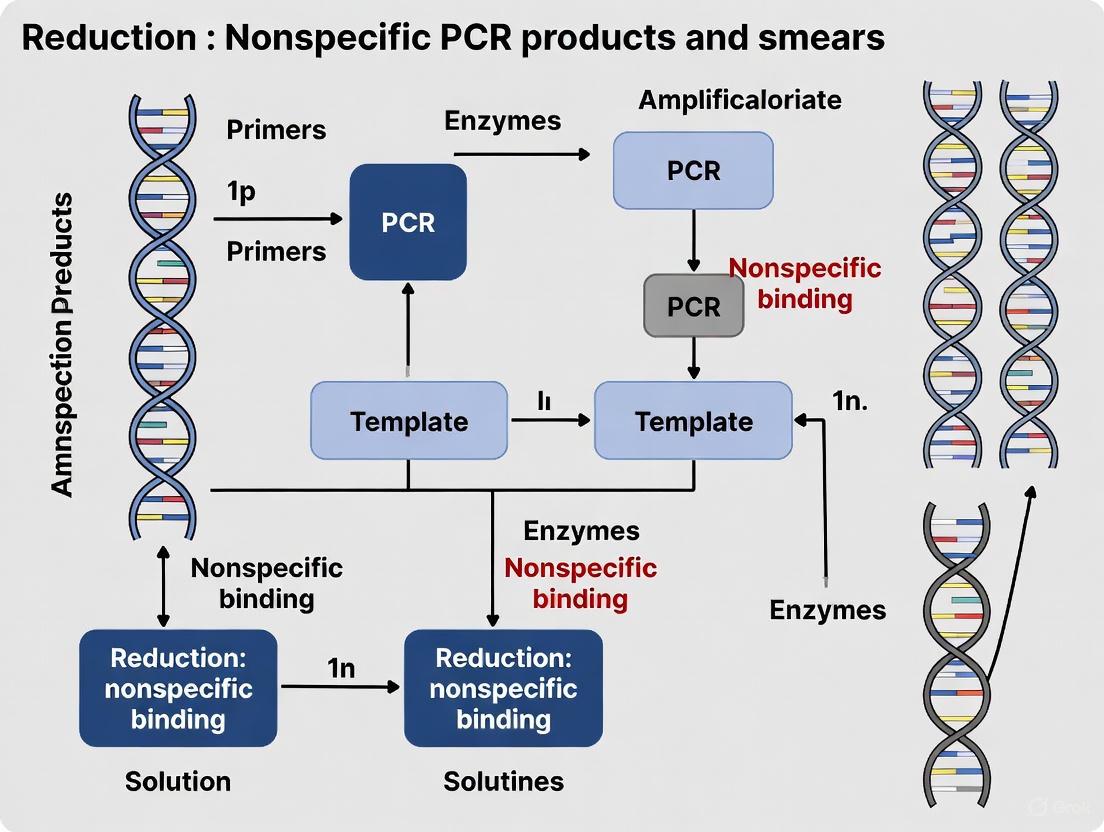
This article provides a comprehensive, evidence-based framework for researchers and drug development professionals to systematically eliminate nonspecific PCR products and smearing.
A Scientist's Guide to Eliminating Nonspecific PCR Products and Smearing
Abstract
This article provides a comprehensive, evidence-based framework for researchers and drug development professionals to systematically eliminate nonspecific PCR products and smearing. Covering foundational principles to advanced validation protocols, it details strategic primer design, precise optimization of reaction components and thermal cycling, robust contamination control practices, and rigorous assay verification methods. The guide synthesizes current best practices to ensure the generation of specific, high-yield amplicons critical for reliable data in molecular assays, cloning, and diagnostic development.
Understanding the Root Causes of Nonspecific Amplification and Smearing
A Guide to Identification and Troubleshooting
This guide will help you accurately identify common PCR artifacts and provide targeted strategies to eliminate them, thereby enhancing the specificity and reliability of your amplification results.
Frequently Asked Questions (FAQs)
1. What are the main types of PCR artifacts I might see on a gel? The three most common artifacts are primer-dimers, smearing, and nonspecific bands. Each has a distinct appearance and underlying cause [1]:
- Primer-dimers: Appear as a fuzzy smear or a sharp band very low on the gel, typically between 20-100 bp [1] [2].
- Smearing: Presents as a continuous, diffuse spread of DNA across a range of sizes, rather than discrete, sharp bands [1] [3].
- Nonspecific Bands: Are discrete bands of unexpected sizes, either larger or smaller than your target amplicon [1] [4].
2. How can I confirm that a band at the bottom of my gel is a primer-dimer and not my target product? A no-template control (NTC) is the most reliable way to confirm primer-dimer formation. Since primer-dimers form from the primers themselves, they will appear in an NTC reaction that lacks any DNA template. If the band in question is present in your NTC, it is a primer-dimer and not your specific product [2] [5].
3. My gel shows a bright smear. Does this mean my template DNA is degraded? Template DNA degradation is a common cause of smearing, but it is not the only one [6] [3]. Other potential causes include:
- Overloading the gel with too much PCR product or template DNA [1] [3].
- Suboptimal PCR conditions, such as an excessively low annealing temperature or too many cycles [1] [6].
- Using degraded or impure primers [1]. To diagnose the issue, run your template DNA on a gel separately to check its integrity, and always include a positive control to assess PCR performance [6] [5].
4. I get specific amplification, but also primer-dimers. Is my experiment flawed? Not necessarily. The presence of a primer-dimer band does not automatically invalidate an experiment, especially if your target band is strong and the correct size [2]. However, primer-dimers compete for reaction reagents and can reduce the efficiency of your target amplification. For downstream applications like sequencing, they can be removed with a purification kit [1] [2].
5. What is the single most effective change to reduce nonspecific amplification? Switching to a hot-start DNA polymerase is widely considered one of the most effective steps. These enzymes are inactive at room temperature, preventing spurious primer binding and extension during reaction setup, which is a major source of nonspecific products and primer-dimers [6] [7] [4].
Troubleshooting Guide: Identifying and Solving Common PCR Artifacts
The table below summarizes the visual characteristics, primary causes, and recommended solutions for each major type of PCR artifact.
| Artifact Type | Visual Characteristics on a Gel | Common Causes | Recommended Solutions |
|---|---|---|---|
| Primer-Dimers [1] [2] | Sharp band or fuzzy smear at very low molecular weight (20-60 bp). | • Primers with complementary 3' ends.• High primer concentration.• Low annealing temperature.• Polymerase activity during setup. | • Improve primer design to avoid 3' complementarity [6] [8].• Use a hot-start polymerase [7] [4].• Lower primer concentration [6] [2].• Increase annealing temperature [2] [5]. |
| Smearing [1] [3] | A continuous, diffuse spread of DNA, often from top to bottom of the lane. | • Degraded DNA template or primers [6].• Too much template DNA [1] [5].• Annealing temperature too low [1] [6].• Excessive number of PCR cycles [6] [5]. | • Check template/primer integrity; re-purify if needed [6].• Dilute the template DNA [1] [5].• Increase annealing temperature [6] [5].• Reduce the number of cycles [6] [4]. |
| Nonspecific Bands [1] [4] | Discrete bands at sizes other than the expected target. | • Annealing temperature is too low [6] [4].• Poor primer design/specificity [6] [8].• Excessive Mg2+ concentration [6] [4].• Too much template or enzyme [6] [5]. | • Optimize annealing temperature (use a gradient cycler) [6] [4].• Use primer design software (e.g., NCBI Primer-BLAST) [8].• Optimize Mg2+ concentration [6] [4].• Use touchdown PCR [7] [5]. |
Experimental Protocols for Cleaner Amplification
Here are detailed methodologies for two key techniques referenced in the troubleshooting guide.
Protocol 1: Hot-Start PCR Hot-start PCR is a fundamental method to suppress nonspecific amplification and primer-dimer formation that occurs during reaction setup [7].
- Reagent Preparation: Use a DNA polymerase formulated with a hot-start modification (e.g., antibody, aptamer, or chemical inhibition). Keep all reagents on ice during setup [7] [8].
- Master Mix Assembly: Combine all PCR components except the template in a master mix. The hot-start polymerase will remain inactive.
- Reaction Setup: Aliquot the master mix into PCR tubes and then add the template DNA.
- Thermal Cycling: Place the tubes in a preheated thermal cycler (or start a program that begins with an extended initial denaturation at ≥90°C). This high-temperature step activates the polymerase only after the reaction mixture is uniformly heated, preventing premature polymerization [7].
Protocol 2: Touchdown PCR Touchdown PCR is a powerful technique to increase amplification specificity by progressively increasing stringency in the early cycles [7].
- Calculate Tm: Determine the melting temperature (Tm) of your primer pair.
- Program Initial Cycles: Set the first cycle's annealing temperature to 5–10°C above the calculated Tm.
- Step-Down Phase: Program the subsequent cycles to decrease the annealing temperature by 1°C per cycle for a set number of cycles (e.g., 10 cycles).
- Standard Phase: Once the annealing temperature "touches down" to a level 3–5°C below the Tm, continue with this optimal temperature for the remaining 15–20 cycles. This method ensures that only the most specific primer-template hybrids form and are amplified in the early stages, giving them a competitive advantage [7].
The following diagram illustrates the logic flow for diagnosing and resolving the PCR artifacts discussed in this guide.
Research Reagent Solutions
A selection of key reagents and their roles in optimizing PCR and preventing artifacts.
| Reagent / Material | Function / Purpose | Considerations for Reducing Artifacts |
|---|---|---|
| Hot-Start DNA Polymerase [7] [4] | Enzyme inactive at room temperature, activated at high initial denaturation temperature. | Critical for preventing primer-dimer formation and nonspecific priming during reaction setup. |
| dNTP Mix [6] [4] | Provides the nucleotide building blocks (dATP, dCTP, dGTP, dTTP) for DNA synthesis. | Use fresh, equimolar concentrations to prevent misincorporation and reduce error rate [6] [4]. |
| Magnesium (Mg2+) Ions [6] [4] | Essential cofactor for DNA polymerase activity; influences primer annealing and specificity. | Concentration must be optimized; excess Mg2+ promotes nonspecific binding, while too little reduces yield [6] [4]. |
| PCR Additives (e.g., DMSO, Betaine) [6] [8] | Co-solvents that help denature complex templates (e.g., GC-rich sequences). | Can improve specificity and yield for difficult targets. Note: They often lower the effective primer Tm [6] [7]. |
| Primers [6] [8] | Short DNA sequences that define the start and end of the target amplicon. | Design is paramount: Ensure specificity, avoid self-complementarity, and have a matched Tm. Purification by desalting or HPLC is recommended. |
| Nuclease-Free Water [5] | The solvent for the reaction. | Using certified nuclease-free water prevents degradation of templates, primers, and enzymes. |
In polymerase chain reaction (PCR) experiments, the specificity and efficiency of amplification are paramount for accurate results. However, researchers often encounter nonspecific amplification products, including smears and false-positive bands, that compromise data integrity. At the heart of this challenge lies the thermodynamic phenomenon of primer-template mismatches—situations where imperfect complementarity between primer and template sequences leads to off-target binding and erroneous amplification. This technical guide explores the fundamental mechanisms through which these mismatches occur, their quantifiable impacts on PCR performance, and evidence-based strategies to prevent them, providing researchers with practical solutions for optimizing molecular assays.
Understanding Primer-Template Mismatches
What Are Primer-Template Mismatches?
Primer-template mismatches occur when one or more nucleotides in a primer sequence do not form complementary Watson-Crick base pairs with the target template DNA. While perfect complementarity is ideal, mismatches are sometimes unavoidable—particularly when amplifying highly variable regions, detecting multiple genetic variants, or working with conserved sequences across diverse organisms. The impact of these mismatches depends on several key factors:
- Number of mismatches: Increasing mismatches generally reduces amplification efficiency
- Position within primer: 3'-end mismatches are most detrimental
- Mismatch type: Some base pair substitutions are more disruptive than others
- Experimental conditions: Polymerase choice and buffer composition significantly influence outcomes
Thermodynamic Basis of Mismatch Impact
The stability of the primer-template duplex is governed by thermodynamic principles. Each mismatch decreases the hybridization temperature (Tm) of the primer-template complex, potentially leading to reduced specificity and off-target binding [9]. Research shows that mismatches located within the 3'-terminal region (last 5 nucleotides) have significantly greater effects on priming efficiency than those located more 5', as 3'-end mismatches can directly disrupt the polymerase active site [10].
Quantitative Data: The Impact of Mismatches on PCR Efficiency
Effect of Single-Nucleotide Mismatches by Position
The table below summarizes how single-nucleotide mismatches at different positions affect cycle threshold (Ct) values, based on systematic evaluation using the 5'-nuclease assay:
| Mismatch Position | ΔCt Value Range | Impact Severity | Key Observations |
|---|---|---|---|
| 3'-terminal base (position 1) | >7.0 Ct | Severe | A-A, G-A, A-G, C-C mismatches most detrimental |
| Penultimate base (position 2) | 3.0-7.0 Ct | Moderate to Severe | Position-dependent effect patterns emerge |
| Third base from 3' end (position 3) | 1.5-3.0 Ct | Moderate | Consistent negative impact observed |
| Fifth base from 3' end (position 5) | <1.5 Ct | Minor | A-C, C-A, T-G, G-T show least effect |
Data compiled from systematic evaluation of mismatch effects using the 5'-nuclease assay [10] [11]
Effect of Mismatch Type on PCR Sensitivity
The type of mismatched base pair significantly influences amplification efficiency. The following table illustrates how different mismatch types affect analytical sensitivity when located at the critical 3'-terminal position:
| Mismatch Type | Remaining Sensitivity (Platinum Taq) | Remaining Sensitivity (Ex Taq) | Mismatch Severity |
|---|---|---|---|
| G-T | 4% | 190% | Moderate to Low |
| G-G | 1% | 130% | High |
| G-A | 0% | 90% | Severe |
| A-A | 0% | 100% | Severe |
| C-C | 0% | 80% | Severe |
| A-C | 3% | 160% | Moderate to Low |
Data adapted from comprehensive testing of 111 primer-template combinations [12] [13]
Troubleshooting Guide: Frequently Asked Questions
FAQ 1: How do different DNA polymerases handle primer-template mismatches?
Answer: DNA polymerases vary significantly in their tolerance to mismatches, primarily due to differences in proofreading activity and inherent enzymatic properties:
- Non-proofreading polymerases (e.g., standard Taq): More permissive of some mismatches but may extend misprimed products
- High-fidelity/polymerases with proofreading activity: More stringent, often resulting in failed amplification with 3'-end mismatches [12]
- Specific observations: In controlled experiments, Invitrogen Platinum Taq DNA Polymerase High Fidelity showed significant sensitivity decreases (0-4% remaining sensitivity) with 3'-end single-nucleotide mismatches, while Takara Ex Taq Hot Start Version maintained much higher sensitivity (80-190% remaining sensitivity) under identical conditions [12] [13]
Recommendation: For applications requiring discrimination between similar sequences (e.g., SNP detection), use polymerases with higher stringency. For amplifying diverse templates where mismatches are unavoidable, consider more mismatch-tolerant enzymes.
FAQ 2: Which mismatch positions cause the most significant amplification problems?
Answer: Mismatches at the 3'-terminal region (particularly the last 3 nucleotides) have the greatest impact on amplification efficiency [10] [11]. The 3'-terminal base (position 1) is most critical because:
- It directly affects the polymerization initiation site
- Mismatches here can disrupt the geometry of the polymerase active site [10]
- Extension efficiency decreases dramatically with 3'-end mismatches
- The impact follows a consistent pattern: position 1 > position 2 > position 3 > position 5
Troubleshooting tip: When designing primers for specific amplification, ensure absolute complementarity at the 3'-terminal 3 bases, especially for allele-specific PCR or pathogen detection assays.
FAQ 3: Can multiple mismatches be compensated for by adjusting PCR conditions?
Answer: While reaction conditions can modulate mismatch effects, they cannot fully compensate for multiple mismatches, particularly in the 3'-terminal region:
- Annealing temperature: Lowering temperature can increase mismatch tolerance but promotes nonspecific amplification [14]
- Primer concentration: Increasing concentration may help but also increases primer-dimer formation [15]
- Buffer modifications: Magnesium concentration adjustments can stabilize mismatched duplexes but lack specificity
- Master mix selection: Commercial master mixes show up to sevenfold differences in mismatch impact [10]
Experimental solution: Consider the Polymerase-exonuclease (PEX) PCR method, which separates primer-template and primer-amplicon interactions, significantly improving amplification of mismatched templates [14].
FAQ 4: How do mismatches contribute to nonspecific products and smears in gel electrophoresis?
Answer: Primer-template mismatches contribute to nonspecific amplification through several mechanisms:
- Reduced hybridization stringency: Mismatches lower the effective Tm, allowing primers to bind to non-target sequences with partial complementarity [9]
- Stabilization of off-target binding: Multiple weak interactions across different off-target sites can collectively stabilize nonspecific binding
- Competitive amplification: Once initiated, nonspecific products amplify efficiently, consuming reagents and potentially outcompeting specific targets
- Cascade effect: Early mispriming events generate templates for further nonspecific amplification in subsequent cycles
Prevention strategy: Mismatch location is crucial—those nearer the 5'-end have less impact on specificity than 3'-end mismatches [10].
Experimental Protocols for Mismatch Evaluation
Protocol 1: Systematic Evaluation of Mismatch Effects
This protocol adapts methodology from comprehensive studies on mismatch impacts [10]:
Reagents and Equipment:
- Target DNA template (plasmid or synthetic fragment)
- Primer sets with introduced mismatches at specific positions
- Multiple DNA polymerases (e.g., proofreading and non-proofreading)
- Real-time PCR instrument
- Appropriate master mixes
Procedure:
- Design primer pairs with systematic single-nucleotide mutations at positions 1, 2, 3, and 5 from the 3' end
- Generate template DNA containing complementary mutations using site-directed mutagenesis
- Verify all mutations by sequencing
- Perform real-time PCR amplifications with each primer-template combination
- Use identical cycling conditions: 2 min at 50°C, 10 min at 95°C, 40 cycles of 15 sec at 95°C and 60 sec at 60°C
- Calculate ΔCt values by comparing mismatch amplifications to perfectly matched controls
- Repeat with different DNA polymerases to assess enzyme-specific effects
Expected Results: The data will reveal position-dependent and type-dependent effects of mismatches, with severe impacts (>7.0 ΔCt) for certain mismatches at the 3'-terminal position.
Protocol 2: PEX PCR for Improved Mismatch Tolerance
The Polymerase-exonuclease (PEX) PCR method separates the primer-template binding and extension steps to reduce bias [14]:
Reagents:
- Standard PCR components
- Exonuclease I (optional, for additional specificity)
- Degenerate primer pools if targeting diverse templates
Procedure:
- Initial hybridization: Incubate primers with template DNA at annealing temperature (without polymerase)
- Exonuclease treatment: Add exonuclease to degrade unbound primers (optional step)
- Polymerase addition: Introduce polymerase and proceed with standard PCR cycling
- Modified cycling parameters:
- Step 1: 95°C for 2 min (initial denaturation)
- Step 2: 50-65°C for 2 min (primer-template hybridization)
- Step 3: 72°C for 1 min (initial extension)
- Step 4: 25-35 cycles of:
- 95°C for 30 sec (denaturation)
- 50-65°C for 30 sec (annealing)
- 72°C for 45 sec (extension)
- Analyze products by gel electrophoresis or quantitative methods
Applications: Particularly useful for amplifying templates with introduced mismatches near the 3' end of primer annealing sites and for reducing bias in microbial community analyses [14].
Research Reagent Solutions
The following table outlines key reagents mentioned in research studies for managing primer-template mismatches:
| Reagent / Material | Function / Application | Research Findings |
|---|---|---|
| Takara Ex Taq Hot Start Version | High-sensitivity amplification with mismatches | Maintained 80-190% sensitivity with 3'-end mismatches [12] |
| Invitrogen Platinum Taq High Fidelity | Specific amplification with mismatch discrimination | Reduced sensitivity to 0-4% with 3'-end mismatches [12] |
| TaqMan Universal PCR Master Mix | Quantitative PCR with mismatch tolerance | Showed variable mismatch impact depending on position and type [10] |
| PEX PCR Methodology | Reducing bias from degenerate primers | Improved evenness of template recovery in mock communities [14] |
| Synthetic gBlock Fragments | Controlled template for mismatch studies | Enable precise introduction of specific mismatches for systematic testing [14] |
Thermodynamic Principles and Visualization
Mechanism of Mismatch Impact on PCR Amplification
The following diagram illustrates how primer-template mismatches, particularly at the 3'-end, disrupt the PCR amplification process:
PEX PCR Workflow for Mismatch Tolerance
The Polymerase-exonuclease (PEX) PCR method provides an alternative approach to handle problematic mismatches:
Advanced Applications and Future Directions
Machine Learning Approaches for Mismatch Prediction
Recent research has demonstrated the potential of machine learning models to predict the impact of specific mutations on PCR assay performance. One study trained multiple models using data from 228 SARS-CoV-2 PCR templates with diverse mismatch types, achieving 82% sensitivity and 87% specificity in predicting significant performance changes [16]. The best-performing models incorporated 13 feature variables, including:
- Mismatch position within primer
- Mismatch type and specific nucleotides involved
- Local sequence context
- Presence of multiple mismatches
- Assay design characteristics
This approach shows promise for predicting signature erosion in diagnostic assays due to emerging viral mutations and optimizing primer designs for heterogeneous targets.
Strategic Mismatch Utilization
While generally problematic, mismatches can be strategically employed in certain applications:
- Allele-specific PCR: Intentional 3'-end mismatches can discriminate single-nucleotide polymorphisms
- Pathogen differentiation: Carefully designed mismatches enable distinction between closely related species
- Degenerate primer design: Controlled mismatch tolerance allows broader target range while maintaining specificity
Primer-template mismatches represent a significant thermodynamic challenge in PCR-based applications, potentially leading to failed amplifications, nonspecific products, and quantitative inaccuracies. The impact of these mismatches follows predictable patterns based on position, type, and experimental conditions. Through careful primer design, appropriate polymerase selection, and implementation of specialized methods like PEX PCR, researchers can significantly reduce off-target binding and improve assay reliability. As molecular diagnostics continues to evolve, advanced computational approaches including machine learning models offer promising avenues for predicting and managing mismatch effects in increasingly complex applications.
Frequently Asked Questions (FAQs)
What are the visual signs of poor template quality in PCR?
Poor template quality often manifests as smears or high background on an agarose gel [6]. In the case of severely degraded DNA, you may see no product at all, as the primers have no intact template to bind to [6] [17]. A negative control (a reaction with no template DNA) that shows a PCR product or smear is a strong indicator of carry-over contamination from previous amplifications [18] [19].
How does degraded DNA lead to nonspecific amplification and smears?
Degraded DNA is fragmented and contains nicks or breaks [6]. This damage creates an overabundance of short, broken DNA strands. During PCR, primers can bind to these non-intended, shorter fragments at multiple locations with partial complementarity, leading to the amplification of a mixture of nonspecific products of varying sizes. On a gel, this mixture appears as a continuous smear instead of a clean, distinct band [6].
What are common PCR inhibitors and how do they work?
PCR inhibitors are substances that co-purify with the DNA template and interfere with amplification. The table below lists common inhibitors and their mechanisms of action [17].
| Inhibitor Category | Examples | Mechanism of Action |
|---|---|---|
| Organic Compounds | Hemoglobin, lactoferrin, IgG (from blood); humic acids (from plants); polyphenols [17] | Interact with DNA polymerase or template DNA to prevent the enzymatic reaction [17]. |
| Metal Ions | Calcium [17] | Competes with the essential magnesium cofactor [17]. |
| Chelating Agents | EDTA, Citrate [17] | Binds to and reduces the concentration of free magnesium ions [17]. |
| Other Organic Compounds | Urea, phenol, ethanol, detergents (e.g., SDS) [17] | Can degrade the polymerase or disrupt its activity [17]. |
Troubleshooting Guide: Template-Related Issues
The following table outlines common problems related to template quality and quantity, their causes, and recommended solutions.
| Observation | Possible Cause | Solution |
|---|---|---|
| No Product | Poor template quality (degraded) [6] | Evaluate DNA integrity by gel electrophoresis. Minimize shearing during isolation [6]. |
| Presence of PCR inhibitors [6] [17] | Re-purify template via ethanol precipitation or use a commercial cleanup kit [6] [20]. Dilute the template to reduce inhibitor concentration [17]. | |
| Insufficient template quantity [6] | Examine input DNA amount and increase it if necessary [6]. | |
| Multiple Bands or Smearing | Excess template DNA [18] [17] | Reduce the amount of template by 2–5 fold [17]. Perform serial dilutions of the stock template [18]. |
| Carry-over contamination [18] [21] | Use filter pipette tips and establish separate pre- and post-PCR work areas. Use uracil-N-glycosylase (UNG) to degrade carryover amplicons [21]. | |
| Degraded template DNA [6] | Isolate fresh template DNA, minimizing nicking and shearing. Store DNA properly in TE buffer or nuclease-free water [6]. | |
| Low Fidelity (Errors in Sequence) | Template DNA damage [20] | Limit UV exposure when analyzing or excising products from gels [6] [20]. Start with a fresh, high-quality template [20]. |
Experimental Protocols
Protocol 1: Assessing DNA Template Integrity via Gel Electrophoresis
This protocol is used to check if DNA is intact or degraded before PCR [6].
- Prepare an Agarose Gel: Cast a 0.8% - 1% agarose gel in TAE or TBE buffer, containing a DNA-safe fluorescent dye.
- Load Samples: Mix 1-2 µL of DNA sample with loading dye. Include a DNA molecular weight ladder on the gel.
- Run the Gel: Perform electrophoresis at 5-8 V/cm until the dye front has migrated sufficiently.
- Visualize: Image the gel under UV light. Intact genomic DNA should appear as a single, tight high-molecular-weight band. A smear of lower molecular weight fragments indicates degradation.
Protocol 2: Decontaminating a Work Area with Bleach
This protocol is critical for preventing false positives from amplicon carryover contamination [19] [21].
- Prepare Solution: Freshly prepare a 10% (v/v) solution of sodium hypochlorite (bleach) in water [21].
- Apply and Wipe: Spray the bleach solution onto work surfaces, pipettes, and equipment. Wipe thoroughly [19] [21].
- Remove Residue: Wipe the area with ethanol or water to remove any residual bleach, which could corrode equipment [21].
- UV Irradiation (Optional): For additional decontamination, expose the work area and equipment (e.g., pipettes, tube racks) to UV light in a laminar flow hood or UV light box overnight [21].
Protocol 3: Using Uracil-N-Glycosylase (UNG) to Prevent Carry-over Contamination
This enzymatic method is highly effective for degrading PCR products from previous reactions [21].
- Incorporate dUTP: In the PCR master mix, substitute dTTP with dUTP. This generates new amplicons that contain uracil instead of thymine [21].
- Add UNG Enzyme: Include the UNG enzyme in the master mix [21].
- Pre-PCR Incubation: Incubate the completed reaction mix at room temperature (25°C - 37°C) for 10 minutes before thermal cycling. During this step, UNG will hydrolyze any contaminating uracil-containing amplicons from past experiments [21].
- Inactivate UNG: The initial denaturation step (typically 95°C) in the thermal cycler will permanently inactivate the UNG enzyme, allowing the new amplification to proceed without degrading the new uracil-containing products [21].
The Scientist's Toolkit: Research Reagent Solutions
| Item | Function | Example Use Case |
|---|---|---|
| Hot-Start DNA Polymerase | Remains inactive at room temperature, preventing nonspecific amplification and primer-dimer formation before thermal cycling [6] [22]. | Ideal for standard PCR to improve specificity and yield [6]. |
| High-Tolerance DNA Polymerase | Engineered to be resistant to common PCR inhibitors found in complex samples (e.g., blood, soil, plant tissues) [6]. | Amplifying DNA directly from crude samples or samples with known inhibitors [6] [17]. |
| PCR Additives/Co-solvents | Help denature difficult DNA secondary structures [6]. DMSO, formamide, or betaine disrupt base pairing, while BSA can bind inhibitors [8] [17]. | Essential for amplifying GC-rich templates or sequences with strong secondary structures [6] [23]. |
| Uracil-N-Glycosylase (UNG) | Enzyme used for pre-PCR sterilization of carryover contamination from previous uracil-containing amplicons [21]. | Critical in diagnostic labs and high-throughput settings where the same target is amplified repeatedly [21]. |
| TE Buffer (pH 8.0) | A buffered solution (Tris-EDTA) for resuspending and storing DNA. Tris stabilizes pH, and EDTA inactivates nucleases that degrade DNA [6] [23]. | Standard storage solution for DNA to ensure long-term integrity [6]. |
Workflow: Troubleshooting Template Issues
The diagram below outlines a logical workflow for diagnosing and resolving common PCR template issues.
Troubleshooting Guides & FAQs
Q1: My agarose gel shows a prominent smear below my target band. I suspect low fidelity is causing truncated products. How do my reaction components contribute to this?
A1: A smear below your target band often indicates nonspecific priming and misincorporation of nucleotides, leading to a population of truncated DNA molecules. The key components affecting this are:
- Mg2+ Concentration: Excess Mg2+ reduces fidelity by stabilizing non-complementary primer-template binding and increasing the error rate of Taq DNA polymerase.
- dNTP Concentration: High dNTP levels can increase misincorporation rates. Furthermore, an imbalance in the dNTP pool (e.g., one dNTP is much higher concentration than the others) drastically increases misincorporation for the low-concentration dNTPs.
- Buffer pH: A suboptimal pH (typically away from the optimum of 8.0-9.0 for Taq) can alter the enzyme's kinetics and reduce its discrimination against incorrect nucleotides.
Recommended Action: Titrate your Mg2+ concentration downwards in 0.5 mM increments from your starting point. Ensure your dNTPs are balanced and at an appropriate concentration (see Table 1).
Q2: I am sequencing my PCR product and finding a high number of point mutations. Which component is most likely the culprit and how can I optimize it?
A2: Point mutations are a direct result of nucleotide misincorporation. While all three components play a role, dNTP imbalance is a frequent cause.
- Primary Culprit: An uneven dNTP mixture forces the polymerase to incorporate an incorrect nucleotide when the correct one is limiting.
- Secondary Culprit: High Mg2+ concentration reduces the enzyme's ability to discriminate against incorrect nucleotides and also stabilizes the mispaired primer-template complex, allowing extension to proceed.
Recommended Action: Use a high-fidelity polymerase blend which often includes a proofreading enzyme. Prepare a fresh, balanced dNTP stock solution from individual components to ensure equimolar concentrations. Verify the final dNTP concentration in your reaction is not excessively high (see Table 1).
Q3: I get no product when I try to increase fidelity by lowering Mg2+ and dNTPs. What is the trade-off and how do I find a balance?
A3: This highlights the critical trade-off between fidelity and efficiency. Mg2+ and dNTPs are essential cofactors for the polymerase. Reducing them too much will starve the enzyme, preventing efficient primer extension and product formation.
Recommended Action: Perform a multi-factorial optimization experiment. Create a matrix that tests a range of Mg2+ concentrations against a range of dNTP concentrations. This will allow you to identify the combination that yields a robust, specific product with sufficient yield for your downstream applications.
Table 1: Effect of Reaction Components on PCR Fidelity and Yield
| Component | Optimal Range for Fidelity | Common Problem Range | Effect on Fidelity | Effect on Yield |
|---|---|---|---|---|
| Mg2+ Concentration | 1.0 - 2.0 mM | > 3.0 mM | Decreases significantly due to reduced enzyme specificity and increased mispriming. | Increases up to an optimum, then plateaus or decreases due to nonspecific product formation. |
| dNTP Concentration | 50 - 200 µM (each) | > 400 µM; Imbalanced ratios | Decreases with high total concentration and drastic imbalance. | Increases with concentration until substrate inhibition may occur. |
| Buffer pH (at 25°C) | 8.0 - 9.0 | < 7.5 or > 9.5 | Decreases as pH moves away from optimum, altering enzyme kinetics. | Sharp decrease outside of the optimal pH range. |
Table 2: Troubleshooting Guide for Nonspecific Products and Smears
| Symptom | Possible Cause | Solution |
|---|---|---|
| Smear below target band | Excess Mg2+; High dNTPs | Titrate Mg2+ down; Reduce dNTP concentration. |
| Multiple non-specific bands | Excess Mg2+; Low annealing temperature | Reduce Mg2+; Increase annealing temperature; Use a hot-start polymerase. |
| High error rate in sequence | dNTP imbalance; High Mg2+; Non-proofreading enzyme | Use balanced, fresh dNTPs; Lower Mg2+; Switch to a high-fidelity polymerase blend. |
| No product after optimization | Mg2+ or dNTPs too low | Systematically increase Mg2+ and/or dNTPs within the optimal range. |
Experimental Protocols
Protocol 1: Mg2+ Titration for Optimizing Fidelity and Specificity
Objective: To determine the optimal MgCl2 concentration that minimizes nonspecific amplification and smearing while maintaining sufficient product yield.
- Prepare a Master Mix (for 6 x 50 µL reactions):
- 30 µL PCR-grade H2O
- 30 µL 10X PCR Buffer (Mg-free)
- 6 µL Forward Primer (10 µM)
- 6 µL Reverse Primer (10 µM)
- 6 µL dNTP Mix (10 mM each)
- 1.5 µL DNA Template (50 ng/µL)
- 0.75 µL Taq DNA Polymerase (5 U/µL)
- Aliquot: Dispense 49 µL of the master mix into each of six PCR tubes.
- Add MgCl2: Add 1 µL of MgCl2 stock solutions to the tubes to achieve the following final concentrations: 0.5 mM, 1.0 mM, 1.5 mM, 2.0 mM, 2.5 mM, 3.0 mM.
- Run PCR: Perform amplification using your standard thermocycling protocol.
- Analyze: Separate the PCR products on a 1.5% agarose gel. Identify the tube with the strongest target band and the least background smear.
Protocol 2: Assessing dNTP Imbalance and Concentration Effects
Objective: To evaluate the impact of total dNTP concentration and balance on PCR fidelity.
- Prepare dNTP Stocks: Create four different dNTP master mixes:
- A (Balanced, 200 µM): 10 µL of each 10 mM dNTP + 460 µL H2O.
- B (Balanced, 50 µM): 2.5 µL of each 10 mM dNTP + 490 µL H2O.
- C (Imbalanced, 200 µM total): 30 µL dATP, 30 µL dGTP, 30 µL dCTP, 10 µL dTTP (10 mM stocks) + 400 µL H2O.
- D (High, 500 µM): 25 µL of each 10 mM dNTP + 400 µL H2O.
- Set Up Reactions: Set up four 50 µL PCR reactions with a fixed, optimal Mg2+ concentration. Use 5 µL of each dNTP master mix (A-D) per reaction.
- Run PCR: Perform amplification using your standard thermocycling protocol.
- Analyze: Run products on a gel. Send products for sequencing to compare error rates between mixes B (optimal fidelity) and C/D (lower fidelity).
Diagrams
PCR Fidelity Optimization Path
Troubleshooting PCR Smears Workflow
The Scientist's Toolkit
Table 3: Essential Research Reagent Solutions for High-Fidelity PCR
| Reagent | Function & Importance |
|---|---|
| MgCl2 Stock Solution (25-50 mM) | Essential cofactor for DNA polymerase. Concentration must be optimized for each primer-template system to maximize fidelity and yield. |
| Balanced dNTP Mix (10 mM each) | The building blocks for DNA synthesis. Must be equimolar and high-quality to prevent misincorporation errors that lead to point mutations. |
| Mg-Free 10X PCR Buffer | Provides the core reaction environment (Tris-HCl, KCl). Being Mg-free allows for precise, independent optimization of Mg2+ concentration. |
| High-Fidelity DNA Polymerase Blend | Often contains a mix of a non-proofreading polymerase for speed and a proofreading (3'→5' exonuclease) enzyme for error correction, significantly lowering error rates. |
| Thermostable Pyrophosphatase | Degrades pyrophosphate, a byproduct of dNTP incorporation that can inhibit the polymerase and lead to incomplete reactions. |
| PCR Enhancers (e.g., DMSO, Betaine) | Can help reduce secondary structures in GC-rich templates and improve specificity, which indirectly supports fidelity by reducing mispriming. |
This guide is part of a technical support center designed to help researchers mitigate non-specific PCR results. The following FAQs and troubleshooting guides provide actionable protocols to identify and eliminate common sources of DNA contamination, thereby reducing nonspecific amplification and smears in your research.
FAQs: Identifying and Preventing PCR Contamination
PCR contamination primarily stems from four sources [24]:
- Carryover Contamination: Amplified DNA (amplicons) from previous PCRs. This is the most common source, where just a single aerosol droplet can contain up to 10^6 copies of the target sequence [21].
- Environmental DNA: Plasmid clones or microbial DNA previously handled in the lab. Fungal DNA contamination in PCR reagents themselves has also been documented [25].
- Sample-to-Sample Contamination: Can occur during extensive sample processing prior to amplification [24].
- Cross-Contamination from Reagents or Equipment: Contaminated enzymes, buffers, or pipettes used in the reaction setup [25].
How can I detect contamination in my PCR experiments?
The most effective method is to use No Template Controls (NTCs), also known as negative controls [26] [27].
- Procedure: Include wells in your PCR run that contain all reaction components—primers, master mix, water—but no DNA template.
- Interpretation: If amplification occurs in the NTC, contamination is present. Consistent Ct values across NTCs suggest reagent contamination, while random amplification points to environmental carryover [26].
What are the best practices for physically separating PCR workflows?
Physical separation is the first line of defense. Establish a unidirectional workflow from "clean" to "dirty" areas [26] [21] [24]:
- Pre-PCR Area (Clean Area): Dedicated to reagent preparation, master mix assembly, and sample preparation. No amplified DNA should ever enter this area.
- Post-PCR Area (Dirty Area): Dedicated to thermocycling and analysis of PCR products.
- Key Measures: Equip each area with dedicated instruments (pipettes, centrifuges, lab coats, consumables). Personnel should not move from the post-PCR to the pre-PCR area on the same day without changing protective equipment [26].
The following workflow diagram illustrates the strict physical separation required to prevent contamination:
Which decontamination solutions are most effective against DNA contamination?
Different solutions are used for different purposes:
- Sodium Hypochlorite (Bleach): A 10% bleach solution is highly effective for surface decontamination as it causes oxidative damage to nucleic acids [26] [21]. Surfaces should be exposed for 10-15 minutes before wiping down with de-ionized water [26]. Note: Bleach will destroy any DNA, including your intended template, so it must not come into contact with samples or reagents pre-amplification.
- UV Irradiation: UV light (254-300 nm) induces thymidine dimers in DNA, rendering it unamplifiable. It is useful for sterilizing work surfaces, empty tubes, and some equipment [21]. Its efficacy is reduced for short or GC-rich templates [21].
- Double-Strand Specific DNase (dsDNase): Effective for decontaminating reagents that are suspected of containing trace DNA, such as master mixes or primers. The enzyme is added, incubated, and then heat-inactivated before use [25].
What is UNG and how does it prevent carryover contamination?
Uracil-N-Glycosylase (UNG) is an enzymatic system to prevent re-amplification of PCR products from previous runs [26] [21].
- Principle: In your PCR, use a dNTP mix where dTTP is replaced with dUTP. All newly synthesized amplicons will then contain uracil.
- Decontamination: In subsequent PCR setups, include the UNG enzyme in the master mix. It will excise uracil bases from any contaminating amplicons, breaking the DNA backbone. During the initial high-temperature denaturation step of the new PCR, the UNG enzyme is permanently inactivated, allowing the new, uracil-containing DNA to be amplified without degradation [26].
Troubleshooting Guide: Contamination and Non-Specific Amplification
Problem: Amplification in No Template Control (NTC)
This confirms the presence of contaminating DNA in your reaction.
| Observation | Possible Source | Corrective Action |
|---|---|---|
| Consistent Ct value across all NTCs [26] | Contaminated reagent (e.g., water, master mix, primers) | Prepare fresh aliquots of all reagents. Use a new batch of water. Decontaminate master mix with dsDNase if necessary [25]. |
| Random amplification in only some NTCs, with varying Ct values [26] | Aerosolized amplicons in the lab environment (carryover) | Review and improve physical barriers. Decontaminate workspaces and equipment with 10% bleach. Ensure use of aerosol-filter pipette tips [26] [24]. |
Problem: Non-Specific Bands or Smears on Agarose Gel
While often related to reaction conditions, contamination can be a cause. First, run an NTC to rule it out.
| Observation | Possible Cause | Corrective Action |
|---|---|---|
| Smear in sample and NTC [24] | Contaminated reagent | Replace reagents and decontaminate workspace as above [24]. |
| Smear in sample only [1] | Too much template DNA, degraded DNA, or suboptimal cycling conditions | Dilute template DNA. Re-extract DNA to minimize fragmentation. Increase annealing temperature [1] [6]. |
| Primer dimers (bright band ~20-60 bp) [1] | Primers annealing to themselves | Use a hot-start polymerase [28]. Reduce primer concentration. Optimize annealing temperature [1] [6]. |
Experimental Protocols for Decontamination
Protocol 1: Surface and Equipment Decontamination with Bleach
This protocol is for decontaminating workbenches, pipettes, centrifuges, and other equipment [26].
- Prepare a fresh 10% (v/v) bleach solution (sodium hypochlorite) weekly.
- Wear appropriate PPE: gloves and eye protection.
- Apply the bleach solution to the surface and allow it to sit for 10-15 minutes.
- Wipe down thoroughly with de-ionized water to remove residual bleach.
- Note: Bleach is corrosive. Check equipment manufacturer guidelines before use.
Protocol 2: DNase-Based Reagent Decontamination
This protocol is for treating master mixes or reconstituted primers/probes suspected of fungal or bacterial DNA contamination [25].
- Prepare Reagents: For a master mix, add 2.5 µL of dsDNase (5 U/µL) and 2.5 µL of 1 mM DTT per 100 µL of master mix.
- Incubate: 20 minutes at 37°C.
- Inactivate Enzyme: 20 minutes at 60°C.
- Use Immediately: The decontaminated master mix should be used straight away for PCR setup.
- For Primers/Probes: Reconstitute and dilute primers/probes first. Then add 12.5 U DNase and 2.5 mM DTT per 100 µL volume. Incubate at 40°C for 30 min, then inactivate at 65°C for 15 min. Aliquot and store at -20°C [25].
The Scientist's Toolkit: Key Research Reagent Solutions
The following table lists essential reagents and their specific roles in preventing or eliminating PCR contamination.
| Reagent/Solution | Function in Contamination Control |
|---|---|
| Uracil-N-Glycosylase (UNG) | Enzymatically degrades carryover contamination from uracil-containing prior amplicons [26] [21]. |
| Hot-Start DNA Polymerase | Reduces non-specific amplification and primer-dimers at room temperature by requiring thermal activation [6] [28]. |
| Aerosol-Resistant Filter Pipette Tips | Preents aerosolized contaminants from entering pipette shafts and contaminating subsequent reactions [26]. |
| Sodium Hypochlorite (Bleach, 10%) | Surface decontaminant that causes oxidative damage to nucleic acids, rendering them unamplifiable [26] [21]. |
| Double-Strand Specific DNase (dsDNase) | Used to pre-treat PCR reagents to remove contaminating DNA present in the reagents themselves [25]. |
| dUTP | Used in place of dTTP during PCR to generate uracil-containing amplicons, making them susceptible to UNG cleavage in future runs [26] [21]. |
Proactive Strategies for Primer Design and Reaction Setup
FAQs on Primer Design and Troubleshooting
1. What are the fundamental gold standards for designing a PCR primer? Adhering to established design parameters is the first line of defense against failed experiments. The following table summarizes the key criteria for standard PCR primers [29] [8] [30].
Table 1: Gold Standard Parameters for PCR Primer Design
| Parameter | Ideal Value or Characteristic | Rationale |
|---|---|---|
| Primer Length | 18-30 nucleotides [29] [8] [30] | Balances specificity (longer) with efficient binding (shorter). |
| Melting Temperature (Tm) | 55-65°C [30] [31]; primers in a pair should be within 2-5°C of each other [29] [8]. | Ensures both primers bind to the template simultaneously at the same annealing temperature. |
| GC Content | 40-60% [29] [8] [32]. | Provides balanced binding strength; too high can cause mismatches, too low results in weak binding. |
| 3'-End Stability (GC Clamp) | End with a G or C base. Avoid runs of 3 or more G/Cs at the 3' end [29] [32] [33]. | Stronger hydrogen bonding (3 vs 2) stabilizes the primer's end for correct polymerase initiation. |
2. My gel shows a smear instead of a clean band. What went wrong and how can I fix it? A smear indicates non-specific amplification, where primers are binding to multiple, incorrect sites on the template DNA [1]. The following workflow outlines a systematic approach to diagnose and resolve this issue.
Diagram: A troubleshooting workflow for diagnosing and resolving smearing in PCR results [1] [34].
3. What is a primer-dimer and how can I prevent its formation? A primer-dimer is a common non-specific product where primers anneal to each other instead of the DNA template, forming a short, amplifiable duplex. They typically appear as a bright band around 20-60 bp on a gel [1].
Prevention strategies include [29] [8] [32]:
- Check for complementarity: Use software to ensure primers do not have complementary sequences, especially at their 3' ends.
- Optimize reaction setup: Set up reactions on ice and use a hot-start polymerase to prevent low-temperature mispriming.
- Adjust primer concentration: Lowering the primer concentration can reduce the chance of primers interacting.
- Increase annealing temperature: A higher annealing temperature promotes more specific binding.
4. How do I calculate the annealing temperature (Ta) for my primers? The annealing temperature is critically linked to the primer's melting temperature (Tm). A good starting point for the annealing temperature (Ta) is 5°C below the Tm of the primers [31]. For a more precise calculation, especially for primers longer than 20 bases, use an online Tm calculator that considers salt and reagent concentrations [8] [30] [32]. A gradient PCR is highly recommended to empirically determine the optimal Ta for a new primer pair [30].
Experimental Protocol: Primer Design and In Silico Validation
Before ordering primers, follow this protocol to design and validate your sequences in silico.
1. Define Target and Obtain Sequence: Identify the exact DNA sequence you wish to amplify from a database like NCBI.
2. Manual Primer Design: Apply the gold standards from Table 1 to select candidate forward and reverse primers.
3. In Silico Validation with Software Tools: Use online tools for a thorough check. The NCBI Primer-BLAST tool is recommended as it combines primer design with specificity checking against genomic databases [8].
- Check for self-complementarity and hairpins.
- Check for inter-primer complementarity to prevent dimer formation [32].
- Verify that the calculated Tm for both primers is similar.
- Confirm the amplicon length is as expected.
4. Order and Purification: For standard PCR and cloning, cartridge purification is often sufficient. For mutagenesis, ensure mismatched bases are towards the middle of the primer [29].
The Scientist's Toolkit: Essential Research Reagents
Table 2: Key Reagents for PCR Setup and Optimization
| Reagent / Material | Function | Optimization Note |
|---|---|---|
| Hot-Start DNA Polymerase | Enzyme that synthesizes new DNA strands. "Hot-start" version reduces non-specific amplification during reaction setup [1]. | The fidelity and processivity can vary; choose based on application (e.g., standard PCR, high-fidelity, long-range). |
| dNTPs | The building blocks (nucleotides) for new DNA strands. | Use a balanced, high-quality mixture to prevent incorporation errors. |
| PCR Buffer (with Mg2+) | Provides the optimal chemical environment (pH, salts) for the polymerase. Magnesium (Mg2+) is a critical co-factor. | Mg2+ concentration (typically 1.5-4.0 mM) is a key optimization parameter [8]. |
| Template DNA | The sample DNA containing the target sequence to be amplified. | Purity and quantity are critical. Too much can cause smearing; too little yields no product [34]. |
| PCR Additives (DMSO, BSA) | Enhancers that can help amplify difficult templates (e.g., GC-rich regions) by reducing secondary structures [8]. | Use judiciously (e.g., DMSO at 1-10%); they can inhibit the reaction at high concentrations. |
In polymerase chain reaction (PCR) research, the occurrence of non-specific amplification products and smears on electrophoresis gels is a common challenge that compromises experimental integrity. These artifacts represent the amplification of non-target DNA sequences, which can obscure results, reduce sensitivity, and lead to false conclusions in both basic research and drug development pipelines [1]. Within a thesis focused on reducing nonspecific PCR products, computational tools for primer design and analysis serve as the first and most critical line of defense. This guide details the practical application of NCBI's Primer-BLAST and IDT's OligoAnalyzer to systematically eliminate the root causes of amplification artifacts.
Core Concept: How Computational Tools Prevent Amplification Problems
Non-specific amplification occurs when primers bind to unintended locations on the DNA template or to each other, leading to a range of undesirable outcomes:
- Primer Dimers and Multimers: Short amplicons formed by two primers hybridizing, visible as bright bands at 20-60 bp on a gel. These can join into larger complexes (100-200 bp) that create a laddering effect [1].
- PCR Smears: A continuous spread of DNA fragments of varying lengths, often caused by random, non-targeted amplification from degraded DNA, low annealing temperatures, or excessive template [1].
- Unexpected Bands: Discrete amplicons of incorrect size, resulting from primers binding to similar but non-identical genomic sequences [1].
The strategic use of NCBI Primer-BLAST and OligoAnalyzer addresses these issues in silico before costly wet-lab experiments begin, ensuring primers are specific to the target and less prone to forming secondary structures or self-dimers.
Frequently Asked Questions (FAQs) and Troubleshooting Guides
FAQ 1: My agarose gel shows a smear instead of a clean, discrete band. What is the likely cause, and how can I fix it?
Answer: A smear indicates non-specific amplification. The causes and computational solutions are outlined below.
| Potential Cause | Computational Diagnostic Tool | Actionable Fix |
|---|---|---|
| Low annealing temperature leading to mis-priming | OligoAnalyzer | Use the tool to calculate the precise Tm of your primers. Redesign if the forward and reverse primer Tm values differ by more than 2-3°C. |
| Primers binding to non-target genomic sequences | Primer-BLAST | Run your primer sequences through Primer-BLAST against the Refseq mRNA or core_nt database, specifying your organism. Discard any primer pair that shows significant off-target hits. |
| High levels of primer self-dimerization or hairpin formation | OligoAnalyzer | Use the "Self-Dimer" and "Hairpin" analysis functions. Redesign primers if the Gibbs free energy (ΔG) for these structures is less than -9 kcal/mol [35]. |
FAQ 2: I see a very bright, short band at the bottom of my gel (~50 bp). What is this, and how can I prevent it with primer design?
Answer: This is almost certainly a primer dimer [1]. To prevent it:
- Check for Complementarity: Use the "Self-Dimer" analysis in OligoAnalyzer. This tool will identify regions at the 3' ends of your primers that are complementary and could hybridize, forming an amplifiable product.
- Optimize Primer Parameters: In Primer-BLAST, you can adjust parameters to avoid 3' end complementarity. If self-dimerization is predicted, you must redesign your primers to eliminate the complementary sequences, especially at the 3' ends.
FAQ 3: Primer-BLAST shows my primers have potential off-target matches. How stringent should my specificity parameters be?
Answer: For most applications, high stringency is required. Use the following table as a guide for configuring Primer-BLAST's specificity parameters [36] [37].
| Parameter | Recommended Setting for High Specificity | Rationale |
|---|---|---|
| Database | Refseq mRNA or Refseq representative genomes |
These are high-quality, non-redundant databases, minimizing false positives from poor-quality sequences. |
| Organism | Always specify your target organism. | This drastically speeds up the search and ensures specificity is checked against the most relevant genomes [36]. |
| Exclude unintended targets | Check "Exclude uncultured/environmental sample sequences" | Removes potentially mis-annotated or low-quality sequences from the check. |
| Mismatch sensitivity | Use the default "Any target with ... specified number of mismatches" | The default is generally sufficient. For highly similar gene families, you may increase the required number of 3' end mismatches to 2 or 3 [36]. |
FAQ 4: How can I design primers that distinguish between genomic DNA and cDNA?
Answer: This is a common requirement in gene expression studies. Primer-BLAST has a built-in function for this.
- In the Primer-BLAST form, under "Primer Parameters," locate the option "Primer must span an exon-exon junction."
- Selecting this option forces the program to design at least one primer (in the pair) to span the boundary between two exons [36].
- Since an exon-exon junction is only present in spliced mRNA (cDNA), any amplification from genomic DNA (which contains introns) will be inefficient or non-existent, ensuring your PCR product is specific to cDNA.
Experimental Protocols
Protocol 1: A Step-by-Step Workflow for Specific Primer Design Using NCBI Primer-BLAST
This protocol ensures the wet-lab validation of your primers is successful the first time by leveraging computational specificity checks.
Research Reagent Solutions:
- Template Sequence: An NCBI mRNA Reference Sequence (RefSeq) accession number (e.g., NM_001301717.1) or a FASTA sequence.
- Primer-BLAST Tool: Accessible via the NCBI website.
- OligoAnalyzer Tool: Accessible via the IDT website.
Methodology:
- Input Template: Go to the Primer-BLAST submission form. In the "PCR Template" box, enter your RefSeq accession number or FASTA sequence [37].
- Set Primer Parameters: Under "Primer Parameters," you can leave the boxes empty for the tool to design primers de novo, or you can enter pre-designed sequences for a specificity check.
- Configure Specificity Checking (Critical Step): In the "Primer Pair Specificity Checking Parameters" section:
- Retrieve and Analyze Results: Click "Get Primers." The results will show suggested primer pairs. For each pair, carefully review the "Product Size" and the "Predicted Targets" list to confirm the only significant hit is your intended gene.
The following workflow diagram summarizes the logical process for designing specific primers:
Protocol 2:In SilicoValidation of Primer Physical Properties Using OligoAnalyzer
This protocol validates the physical characteristics of primers designed by Primer-BLAST or other tools.
Methodology:
- Sequence Entry: Access the OligoAnalyzer Tool. Enter your primer sequence in the 5' to 3' orientation into the "Sequence" box [35].
- Set Reaction Conditions: For an accurate Tm calculation, input the Mg++ and dNTP concentrations you plan to use in your actual experiment, as these ions affect Tm [35].
- Analyze Primary Properties: Click "Analyze." The tool will output the GC content, molecular weight, extinction coefficient, and most importantly, the Tm.
- Check for Secondary Structures: Below the results, use the "Self-Dimer" and "Hairpin" buttons to run these analyses.
- Interpretation: IDT recommends that the Gibbs free energy (ΔG) for both self-dimers and hetero-dimers should be greater than -9 kcal/mol. For hairpins, the predicted Tm should be lower than your experimental annealing temperature [35].
Data Presentation: Key Parameters for Optimal Primer Design
The following tables consolidate quantitative data and parameters from the search results to serve as a quick reference for optimal primer design.
Table 1: Optimal Ranges for Key Primer Properties
| Property | Optimal Range | Importance for Reducing Non-Specific Products |
|---|---|---|
| Primer Length | 18-25 bases | Provides a balance of specificity and binding efficiency. |
| Melting Temperature (Tm) | 55-65°C; Forward and Reverse Tm within 2°C | Ensures both primers anneal efficiently at the same temperature. |
| GC Content | 40-60% | Provides stable binding without promoting non-specific interactions. |
| 3' End Complementarity | ΔG > -9 kcal/mol | Precludes primer-dimer and self-dimer formation [35]. |
| Specificity | No significant off-target hits in Primer-BLAST | Guarantees amplification of only the intended target sequence [36]. |
Table 2: Recommended Primer-BLAST Database Settings for Different Applications
| Application | Recommended Database | Organism Setting | Key Special Parameter |
|---|---|---|---|
| Standard Gene Amplification | Refseq representative genomes |
Must specify | None |
| qPCR / Gene Expression | Refseq mRNA |
Must specify | "Primer must span an exon-exon junction" [36] |
| Metagenomics / Broad Search | core_nt |
Leave unspecified | None (for broadest coverage) [36] |
Integrating NCBI Primer-BLAST and IDT OligoAnalyzer into the primer design workflow represents a powerful strategy to combat the pervasive issue of non-specific PCR amplification. By rigorously checking for genomic specificity and unfavorable thermodynamic properties in silico, researchers and drug developers can save significant time and resources. This computational approach, central to a thesis on optimizing PCR fidelity, ensures that the primers moving into the wet-lab phase have the highest possible chance of producing clean, specific, and interpretable results, thereby strengthening the foundation of molecular research and diagnostic assay development.
Table of Contents
- Introduction to the Master Mix Method
- Troubleshooting Guide: Non-Specific Amplification and Smears
- FAQs on Contamination Control
- Research Reagent Solutions
- Experimental Workflows and Diagrams
The Master Mix method is a fundamental molecular biology technique where all common components of a polymerase chain reaction (PCR) are combined into a single, uniform solution before being aliquoted into individual reaction tubes. This approach is critical for ensuring reaction reproducibility across multiple samples, as it minimizes pipetting errors and tube-to-tube variation [38]. Furthermore, by reducing the number of reagent handling steps, it significantly lowers the risk of contamination, a major source of false-positive results and unreliable data in sensitive PCR applications [39] [40]. Consistent use of a well-formulated master mix is a cornerstone of robust and reproducible research, directly supporting efforts to reduce nonspecific PCR products and smears.
Troubleshooting Guide: Non-Specific Amplification and Smears
Q: After electrophoresis, my gel shows a smear or multiple non-specific bands instead of a single, crisp band. What are the primary causes and solutions?
A: Non-specific amplification, manifesting as smears or multiple bands, is a common issue that compromises data integrity. The table below summarizes the main causes and their respective solutions.
Table 1: Troubleshooting Non-Specific Amplification and Smears
| Symptom | Potential Cause | Solution |
|---|---|---|
| Smear or multiple bands on gel | Low Annealing Temperature: Primers anneal to non-target sequences [1] [8]. | Optimize annealing temperature. Use a temperature gradient PCR. Consider Touchdown PCR, which starts with a high annealing temperature to promote specificity [7]. |
| Primer-Dimers or Primer-Multimers: Primers anneal to each other, creating short, amplifiable products [1]. | Use Hot-Start PCR. This technique keeps the polymerase inactive until the first high-temperature denaturation step, preventing spurious amplification during reaction setup [7] [41]. | |
| High Primer Concentration: Excess primers increase chances of mispriming and dimer formation [1]. | Optimize primer concentration. Test a range of concentrations (e.g., 0.1-0.5 µM) to find the optimal level for specific amplification [38]. | |
| Mg²⁺ Concentration Too High: Mg²⁺ is a cofactor for polymerase; high concentrations can reduce fidelity and specificity [8]. | Optimize Mg²⁺ concentration. Titrate MgCl₂ in the range of 1.5-4.0 mM to find the ideal concentration for your assay [8]. | |
| Template DNA Quality/Degradation: Degraded or impure DNA can lead to random priming and smearing [1]. | Re-purify template DNA. Ensure your DNA is clean and intact. Visually check for smearing on a gel before PCR. Dilute the template to reduce potential inhibitors [1]. |
Q: What specific techniques can I use to improve amplification specificity from the start?
A: Several proven PCR methods can be employed to enhance specificity:
- Hot-Start PCR: This method utilizes a modified DNA polymerase that is inactive at room temperature. The enzyme is only activated after the initial high-temperature denaturation step, preventing any enzymatic activity during reaction setup that could lead to primer-dimer formation or mispriming at non-target sites [7] [41].
- Touchdown PCR: This protocol begins with an annealing temperature several degrees above the calculated primer melting temperature (Tm). The temperature is then gradually decreased in subsequent cycles until it reaches the optimum Tm. The early high-temperature cycles selectively enrich the desired specific product, which then outcompetes non-specific products in later cycles [7].
- Additives and Enhancers: For challenging templates like GC-rich sequences, additives can be included in the master mix. DMSO, formamide, or betaine can help denature secondary structures and improve the efficiency and specificity of the amplification [8] [7].
FAQs on Contamination Control
Q: How can I detect if my PCR reagents or workspace are contaminated?
A: The most critical tool for detecting contamination is the consistent and correct use of a Negative Control. This reaction contains all components of the master mix—including water, buffer, enzymes, and primers—but no template DNA is added. If amplification occurs in the negative control (e.g., a band on a gel or a Ct value in qPCR), it confirms that one or more of your reagents or your workspace is contaminated with amplifiable DNA [26] [39] [19].
Q: What are the best practices for physically organizing my lab to prevent contamination?
A: Physical separation of pre- and post-PCR processes is the most effective strategy to prevent carryover contamination of amplified PCR products (amplicons) into new reactions [26] [21] [19].
Table 2: Best Practices for Physical Separation to Prevent Contamination
| Area | Designated Activities | Dedicated Equipment |
|---|---|---|
| Pre-PCR Area (Clean Area) | Reagent preparation, master mix assembly, and sample preparation [26] [19]. | Pipettes, tips, centrifuge, vortex, lab coats, and gloves used only in this area [39] [40]. |
| Post-PCR Area (Contaminated Area) | Amplification product analysis, such as gel electrophoresis and sequencing preparation [26]. | Pipettes, tips, and equipment used only in this area. These should never be brought back into the pre-PCR area [39]. |
Q: My negative control shows contamination. What immediate steps should I take?
A: Follow this systematic decontamination protocol:
- Discard Contaminated Reagents: Dispose of all open reagents, including master mix components, primers, and water, that were used in the contaminated setup [19].
- Decontaminate Surfaces and Equipment: Thoroughly clean all work surfaces, pipettes, centrifuges, and other equipment with a 10% bleach (sodium hypochlorite) solution, followed by wiping with 70% ethanol or water to remove residual bleach [26] [39] [40]. Bleach causes oxidative damage to DNA, rendering it unamplifiable [21].
- Use New Aliquots: Use fresh, unopened aliquots of all reagents for your next experiment [26] [39].
- Review Workflow and Technique: Ensure that all lab members are trained on proper practices, such as changing gloves frequently, avoiding flicking open PCR tubes, and using aerosol-filter pipette tips [39] [40].
Research Reagent Solutions
The following table lists key reagents and materials essential for implementing a robust and contamination-free master mix protocol.
Table 3: Research Reagent Solutions for Master Mix PCR
| Reagent/Material | Function | Technical Notes |
|---|---|---|
| Hot-Start DNA Polymerase | Catalyzes DNA synthesis; hot-start versions remain inactive until a high-temperature step, reducing non-specific amplification and primer-dimer formation [7] [41]. | Available with antibody, aptamer, or chemical-based inactivation mechanisms. Choose based on required fidelity and compatibility with other buffer components. |
| dNTP Mix | Provides the essential nucleotides (dATP, dCTP, dGTP, dTTP) for DNA strand synthesis [8]. | Use a balanced mixture at a final concentration of 200 µM (50 µM of each dNTP) to prevent misincorporation errors [8]. For uracil-DNA-glycosylase (UNG) contamination control, dTTP can be replaced with dUTP [26] [21]. |
| PCR Buffer with MgCl₂ | Provides the optimal chemical environment (pH, ionic strength) for polymerase activity. Mg²⁺ is a critical cofactor for the enzyme [8]. | Mg²⁺ concentration often requires optimization (1.5-5.0 mM). Some buffers come with MgCl₂ included, while others require separate addition [8]. |
| Aerosol-Filter Pipette Tips | Prevent the formation of aerosols inside the pipette barrel, thereby protecting instruments from becoming sources of DNA contamination [26] [19]. | Essential for all liquid handling, especially when pipetting templates and master mix. |
| 10% Bleach Solution | A potent decontaminant that chemically degrades DNA through oxidation, destroying contaminating amplicons on surfaces and equipment [26] [40] [21]. | Must be freshly prepared weekly for maximum efficacy. Always wear gloves and eye protection when handling [26]. |
| UNG Enzyme | An enzymatic contamination control method. It degrades PCR products from previous reactions that contain dUTP (instead of dTTP), preventing their re-amplification [26] [21]. | Added to the master mix; active at room temperature but inactivated during the first PCR denaturation step. |
Experimental Workflows and Diagrams
The following diagram illustrates the logical workflow for setting up a PCR using the master mix method, incorporating key steps to ensure reproducibility and minimize contamination.
Diagram 1: Master Mix Setup and Contamination Monitoring Workflow
This workflow ensures that the number of pipetting steps is minimized, reducing both variability and the potential for introducing contamination. The critical step of including and verifying a negative control (NTC) provides a direct assessment of the experiment's validity.
Troubleshooting Guides
Problem: Nonspecific PCR Bands and Smears
- Question: My agarose gel shows multiple bands and a smeared background instead of a single, sharp product. What is the cause and how can I fix it?
- Answer: This is a classic sign of nonspecific amplification. The primary cause is polymerase activity at low temperatures during reaction setup and initial denaturation, leading to primer-dimer formation and mispriming.
- Solution 1: Use a hot-start polymerase. These enzymes are inactive until a high-temperature activation step (e.g., 95°C for 2-5 minutes), preventing activity during setup.
- Solution 2: Optimize annealing temperature. Perform a temperature gradient PCR (e.g., from 55°C to 65°C) to determine the optimal temperature for your primer pair.
- Solution 3: Titrate magnesium chloride (MgCl₂) concentration. Mg²⁺ is a cofactor for polymerases, and its concentration directly impacts primer annealing and specificity. Test a range (e.g., 1.5 mM to 4.0 mM).
- Solution 4: Use touchdown PCR, which starts with an annealing temperature above the primer's estimated Tm and gradually decreases it in subsequent cycles.
Problem: Low Yield of the Desired Product
- Question: I can see my target band, but the yield is very low. Could my polymerase choice be a factor?
- Answer: Yes. While specificity is crucial, some high-fidelity enzymes may have slower processing speeds or lower affinity for complex templates compared to standard Taq polymerase.
- Solution 1: Ensure the polymerase is fully activated. Extend the initial activation step if recommended by the manufacturer.
- Solution 2: Increase the number of PCR cycles, but be cautious as this can also increase nonspecific products.
- Solution 3: Use a polymerase blend. Many commercial high-fidelity enzymes are blends of a high-fidelity polymerase (e.g., a Pyrococcus species enzyme) and a processive polymerase (e.g., Taq), optimizing both fidelity and yield.
- Solution 4: Check primer and template quality and concentration.
Problem: Introducing Unwanted Mutations
- Question: My sequencing results show mutations in my cloned PCR product. How can I minimize this?
- Answer: This is an error rate (fidelity) issue. Standard Taq polymerase lacks proofreading (3'→5' exonuclease) activity.
- Solution: Switch to a high-fidelity proofreading polymerase. These enzymes have a much lower error rate, as shown in the table below.
Frequently Asked Questions (FAQs)
Q: What is the practical difference between fidelity and specificity?
- A: Fidelity refers to the accuracy of nucleotide incorporation during DNA synthesis (low error rate). Specificity refers to the enzyme's ability to amplify only the intended target sequence, minimizing off-target products like primer-dimers and smears. A high-fidelity enzyme may not be hot-start, and a hot-start enzyme may not be high-fidelity.
Q: When should I prioritize fidelity over specificity, or vice versa?
- A: Prioritize fidelity for applications where sequence accuracy is paramount (e.g., cloning, mutagenesis, NGS library prep). Prioritize specificity (hot-start) when amplifying complex templates (e.g., genomic DNA) or low-abundance targets, or when nonspecific amplification is a persistent issue.
Q: Can I have both high fidelity and hot-start in a single enzyme?
- A: Yes. Many modern polymerase formulations are engineered to be both high-fidelity (proofreading) and hot-start, making them an excellent default choice for demanding applications.
Data Presentation
Table 1: Comparison of Common PCR Polymerases
| Polymerase Type | Example Enzymes | Fidelity (Error Rate) | Hot-Start? | Key Applications |
|---|---|---|---|---|
| Standard | Taq | ~1.1 x 10⁻⁴ (Low) | No | Routine PCR, genotyping |
| High-Fidelity | Pfu, Q5, Phusion | ~1.3 x 10⁻⁶ to 5 x 10⁻⁷ (High) | Often | Cloning, sequencing, mutagenesis |
| Hot-Start | Hot Start Taq | ~1.1 x 10⁻⁴ (Low) | Yes | Complex templates, high specificity |
| High-Fidelity & Hot-Start | Q5 Hot Start, Phusion Hot Start | ~1.3 x 10⁻⁶ to 5 x 10⁻⁷ (High) | Yes | Demanding applications (NGS, cloning from complex DNA) |
Experimental Protocols
Protocol: Optimization of Annealing Temperature for Specificity
- Prepare Master Mix: Combine template DNA, primers, dNTPs, reaction buffer, and a hot-start high-fidelity polymerase on ice.
- Dispense: Aliquot the master mix into PCR tubes.
- Gradient PCR: Program your thermocycler with an annealing temperature gradient that spans a realistic range (e.g., 55°C to 70°C). The other steps (denaturation, extension) remain constant.
- Analysis: Run the PCR products on an agarose gel. The optimal temperature will produce the strongest target band with the least background.
Protocol: Magnesium Titration for Reaction Efficiency
- Prepare Tubes: Set up a series of PCR tubes, each with a fixed amount of master mix but varying concentrations of MgCl₂ (e.g., 1.0, 1.5, 2.0, 2.5, 3.0, 4.0 mM). A Mg²⁺-free buffer is required.
- Amplify: Run a standard PCR protocol.
- Analysis: Analyze the products by gel electrophoresis. Identify the Mg²⁺ concentration that gives the highest yield of the specific product.
Mandatory Visualization
Polymerase Selection Decision Guide
Hot-Start PCR Thermal Cycling Workflow
The Scientist's Toolkit
Table 2: Essential Research Reagent Solutions
| Reagent | Function/Benefit |
|---|---|
| High-Fidelity DNA Polymerase | Provides proofreading activity for accurate amplification, essential for cloning and sequencing. |
| Hot-Start DNA Polymerase | Remains inactive at room temperature, preventing nonspecific priming and primer-dimer formation. |
| MgCl₂ Solution (Mg²⁺) | Essential cofactor for DNA polymerase activity; concentration must be optimized for specificity. |
| dNTP Mix | Building blocks (A, dT, C, G) for DNA synthesis; balanced concentrations are critical for fidelity. |
| PCR Optimizer Buffers | Additives like DMSO, BSA, or betaine that can help amplify difficult templates (e.g., GC-rich). |
| Nuclease-Free Water | Prevents degradation of primers, template, and PCR products. |
In polymerase chain reaction (PCR) experiments, the persistent challenge of non-specific amplification competes with target amplification, often manifesting as smears, primer dimers, or multiple bands on electrophoresis gels [1]. These artifacts arise when primers bind to non-target sequences or when DNA fragments form amplifiable structures through copying errors [1]. Within the broader context of reducing nonspecific PCR products, strategic use of PCR additives provides a powerful approach to enhance amplification specificity and efficiency. This technical resource focuses on three key additives—DMSO, Betaine, and BSA—detailing their mechanisms, optimal usage conditions, and integration into troubleshooting workflows for researchers and drug development professionals.
Understanding Non-Specific Amplification
Recognizing Non-Specific Amplification
Non-specific amplification in PCR refers to the amplification of non-target DNA sequences, which competes with the desired target amplification [1]. Common indicators include:
- Primer Dimers: Short amplification products (20-60 bp) formed by two primers joining together, visible as bright bands at the bottom of electrophoresis gels [1].
- PCR Smears: A continuous smear of DNA fragments of varying sizes indicates random DNA amplification, often caused by highly fragmented template DNA, degraded primers, or excessively low annealing temperatures [1].
- Unexpected Bands: Discrete bands at sizes different from the expected amplicon, resulting from mispriming or amplification of non-target sequences [1].
- DNA Stuck in Wells: PCR products becoming trapped in gel wells may indicate malformed wells, carryover of inhibitors from DNA extraction, or formation of extremely large DNA complexes [1].
Consequences of Non-Specific Amplification
Non-specific amplification products compete with target amplicons for reaction components, potentially reducing yield of the desired product [1]. These artifacts can obscure results in diagnostic assays, interfere with downstream applications like sequencing, and reduce overall experimental reliability [1].
Comprehensive Guide to Key PCR Additives
Dimethyl Sulfoxide (DMSO)
Mechanism of Action: DMSO reduces secondary structure formation in DNA templates by interacting with water molecules on DNA strands, thereby reducing hydrogen bonding and lowering the melting temperature (Tm) of DNA [42] [43]. This facilitates primer binding to template DNA and polymerase elongation, particularly beneficial for GC-rich templates that tend to form stable secondary structures [42] [43] [44].
When to Use:
- Amplification of GC-rich templates (>65% GC content) [42] [44] [45]
- Templates with strong secondary structures [6]
- When standard PCR conditions yield no product or poor yield due to template complexity [6]
Optimization Guidelines: Table 1: DMSO Optimization Guidelines
| Parameter | Recommendation | Considerations |
|---|---|---|
| Concentration | 2-10% [42] [45] | Test in 1-2% increments [42] |
| Balance | Balance template accessibility with Taq activity | High concentrations inhibit Taq polymerase [42] [43] |
| Thermal Cycling | May require adjustment of annealing temperature | DMSO lowers DNA melting temperature [43] |
| Compatibility | Compatible with most PCR systems | Avoid with polymerases highly sensitive to organic solvents |
Protocol for Testing DMSO Concentrations:
- Prepare a master PCR mix excluding DMSO
- Aliquot equal volumes into separate tubes
- Add DMSO to achieve final concentrations of 0%, 2%, 4%, 6%, 8%, and 10%
- Run PCR with otherwise identical conditions
- Analyze results by gel electrophoresis for specificity and yield
Betaine
Mechanism of Action: Betaine (also known as trimethylglycine) improves DNA amplification by reducing the formation of secondary structures and eliminating the base pair composition dependence of DNA melting [42] [45]. It interacts with negatively charged groups on DNA strands, reducing electrostatic repulsion between strands [43]. Betaine equalizes the thermal stability of AT and GC base pairs, facilitating denaturation of GC-rich templates [42].
When to Use:
- GC-rich templates that resist amplification [42] [43]
- When increased amplification specificity is required [43]
- As a mystery additive in commercial PCR kits [42]
Optimization Guidelines: Table 2: Betaine Optimization Guidelines
| Parameter | Recommendation | Considerations |
|---|---|---|
| Concentration | 1.0-1.7 M [42] | |
| Chemical Form | Betaine or Betaine monohydrate [42] | Avoid Betaine HCl [42] |
| Thermal Cycling | Standard cycling typically sufficient | Betaine enhances specificity across standard conditions |
| Compatibility | Works with various polymerases | Compatible with most standard PCR systems |
Protocol for Betaine Enhancement:
- Prepare betaine stock solution (5M) using betaine monohydrate
- Add to PCR reaction to achieve final concentration of 1.0-1.7M
- Maintain standard cycling conditions initially
- If necessary, adjust annealing temperature based on results
Bovine Serum Albumin (BSA)
Mechanism of Action: BSA acts primarily by binding and neutralizing PCR inhibitors such as phenolic compounds, humic acids, and other contaminants that may be present in DNA samples [42] [43] [46]. It also prevents reaction components from adhering to tube walls and stabilizes polymerase enzymes [42] [43]. When used with organic solvents like DMSO or formamide, BSA acts as a powerful co-enhancer, significantly increasing PCR yields of GC-rich templates [46].
When to Use:
- PCR amplification from complex samples (soil, blood, plant tissues) [6] [46]
- When inhibitor carryover from DNA extraction is suspected [42] [6]
- In combination with DMSO for challenging GC-rich templates [46]
- Restriction enzyme digestions following PCR [42]
Optimization Guidelines: Table 3: BSA Optimization Guidelines
| Parameter | Recommendation | Considerations |
|---|---|---|
| Concentration | Up to 0.8 mg/ml [42] | Higher concentrations (up to 10 μg/μl) possible [46] |
| Combination | Effective with DMSO or formamide [46] | Enhances effects of organic solvents [46] |
| Template Type | Especially useful for environmental samples | Binds inhibitors common in complex samples [6] |
| Stability | Sensitive to high temperatures | May require supplementation during extended cycling [46] |
Protocol for BSA with Organic Solvents:
- Prepare PCR master mix containing optimal concentration of DMSO (typically 2-5%)
- Add BSA to final concentration of 0.8 mg/ml
- For extended cycling (>30 cycles) or very long amplicons (>3kb), consider pausing reaction after 10 cycles to add fresh BSA [46]
- Run PCR with standard conditions appropriate for template
Decision Framework for Additive Selection
The following workflow diagram illustrates the logical process for selecting appropriate PCR additives based on experimental observations:
Complementary Optimization Strategies
Magnesium Concentration Optimization
Magnesium is an essential cofactor for DNA polymerases, and its concentration significantly impacts PCR specificity [42] [44] [47]. Without adequate free magnesium, DNA polymerases are inactive, while excess magnesium can reduce fidelity and increase non-specific amplification [42] [44].
Optimization Protocol:
- Prepare magnesium stock solutions (typically 25mM MgCl₂)
- Set up reactions with magnesium concentrations from 1.0-4.0 mM in 0.5-1.0 mM increments [42]
- Run PCR with otherwise identical conditions
- Identify concentration yielding highest specificity and yield
Hot-Start Polymerases
Hot-start DNA polymerases remain inactive until a high-temperature activation step, preventing non-specific amplification during reaction setup [6] [48]. This approach is particularly valuable for preventing primer-dimer formation and mispriming at low temperatures [6].
Thermal Cycling Parameters
Annealing Temperature Optimization:
- Calculate primer Tm using appropriate calculators
- Test annealing temperatures in 1-2°C increments around the theoretical Tm [6] [48]
- Use gradient PCR functionality if available
- Increase annealing temperature if non-specific products are observed [48]
Touchdown PCR:
- Start with annealing temperature 5-10°C above calculated Tm
- Decrease annealing temperature by 1-2°C per cycle for the first 10-15 cycles
- Continue with the lower temperature for remaining cycles
- This approach enriches specific products early in the amplification process
Research Reagent Solutions
Table 4: Essential Reagents for PCR Optimization
| Reagent | Function | Application Notes |
|---|---|---|
| DMSO | Reduces DNA secondary structures | Use at 2-10%; balance with polymerase activity [42] [45] |
| Betaine | Equalizes DNA melting temperatures | Use at 1-1.7M; avoid Betaine HCl [42] |
| BSA | Neutralizes inhibitors | Use up to 0.8 mg/ml; enhances organic solvents [42] [46] |
| MgCl₂/MgSO₄ | Essential polymerase cofactor | Optimize between 1.0-4.0 mM [42] [47] |
| Formamide | Destabilizes DNA double helix | Use at 1-5%; effective for GC-rich templates up to 2.5kb [42] [46] |
| TMAC | Increases hybridization specificity | Use at 15-100 mM; ideal for degenerate primers [42] [45] |
| Non-ionic detergents | Reduces secondary structures | Triton X-100, Tween 20, NP-40 at 0.1-1% [42] [43] |
| dNTPs | Building blocks for DNA synthesis | Use balanced equimolar concentrations; typically 200μM each [47] |
Frequently Asked Questions
Q: Can I use multiple additives in the same PCR reaction? A: Yes, certain additive combinations can be synergistic. Particularly effective is the combination of BSA with DMSO or formamide, which significantly enhances yield of GC-rich templates [46]. However, systematically test combinations as some additives may interact negatively.
Q: How do I know if my template is GC-rich? A: Templates with >65% GC content are considered GC-rich [44]. You can analyze sequence composition using bioinformatics tools. Experimental indicators include failure to amplify under standard conditions and improved yield with GC-specific additives.
Q: Why do high concentrations of DMSO inhibit PCR? A: High DMSO concentrations (typically >10%) interfere with Taq polymerase activity by potentially disrupting enzyme structure or interaction with DNA template [42] [43]. Always titrate DMSO concentration to find the optimal balance.
Q: When should I use TMAC instead of DMSO? A: TMAC is particularly beneficial when using degenerate primers, as it increases hybridization specificity and reduces potential DNA-RNA mismatches [42] [45]. DMSO is generally more effective for GC-rich templates with secondary structures.
Q: How does betaine differ from DMSO in mechanism? A: While both help with GC-rich templates, DMSO primarily reduces secondary structure by interacting with water molecules around DNA, while betaine directly equalizes the thermal stability of AT and GC base pairs, eliminating base composition dependence of DNA melting [42] [43].
Strategic implementation of PCR additives represents a powerful approach within the broader context of reducing nonspecific amplification in molecular research. DMSO, betaine, and BSA each offer distinct mechanisms for overcoming amplification challenges, whether stemming from template secondary structure, base composition, or sample contaminants. By systematically applying the troubleshooting guidelines and optimization protocols outlined in this technical resource, researchers can significantly enhance PCR specificity and efficiency, leading to more reliable results in both basic research and drug development applications. The experimental frameworks provided offer practical pathways for addressing the persistent challenge of non-specific products while maintaining the robustness required for scientific reproducibility.
Systematic Troubleshooting and Optimization of PCR Conditions
Frequently Asked Questions (FAQs)
What are the most common causes of nonspecific PCR products and smears?
Nonspecific amplification, evident as multiple unwanted bands or a smear of DNA on a gel, typically occurs due to two primary factors: low primer annealing specificity and suboptimal magnesium ion concentration [6] [1] [49].
- Low Annealing Specificity: When the annealing temperature is too low, primers can bind to non-complementary sequences on the DNA template. This leads to the amplification of incorrect products [49]. Similarly, if the Mg2+ concentration is too high, it can stabilize these non-specific primer-template interactions [50] [49].
- Other Contributing Factors: These include poorly designed primers [8], excessive template or enzyme amounts [6], too many PCR cycles [6], and polymerase activity at low temperatures during reaction setup, which can be mitigated by using hot-start DNA polymerases [7] [51].
In what order should I optimize PCR parameters to resolve these issues efficiently?
The most efficient troubleshooting hierarchy is to address parameters in the following order:
- Annealing Temperature: This is the first and most impactful parameter to adjust [7] [52]. A small increase can dramatically improve specificity.
- Mg2+ Concentration: Optimize this crucial cofactor after establishing a better annealing temperature [50] [8].
- Advanced Techniques & Additives: If problems persist, employ hot-start enzymes [7], use PCR additives [53] [54], or try advanced cycling protocols like touchdown PCR [7].
- Re-evaluate Primer Design and Template Quality: As a last resort, check for primer-dimers or secondary structures and ensure your template DNA is pure and intact [6] [8].
The diagram below illustrates this systematic troubleshooting workflow.
How do I quickly determine the optimal annealing temperature for my primer set?
The most effective method is to perform a gradient PCR [52]. This allows you to test a range of annealing temperatures simultaneously in a single run.
- Protocol:
- Calculate Tm: Determine the melting temperature (
Tm) for each primer. The optimal annealing temperature is typically 3–5°C below the lowestTmof the primer pair [50] [6]. - Set Gradient: Using your thermal cycler's gradient function, set a range that spans this calculated temperature. A good starting range is from 55°C to 70°C [6].
- Analyze Results: Run the PCR and analyze the products by gel electrophoresis. The lane with the strongest target band and the absence of non-specific bands indicates the optimal annealing temperature [52].
- Calculate Tm: Determine the melting temperature (
- Touchdown PCR: For a more robust solution, use touchdown PCR. This method starts with an annealing temperature higher than the expected
Tmand gradually decreases it over subsequent cycles. This ensures that only the most specific primer-template hybrids are amplified in the initial cycles, giving them a competitive advantage [7].
My PCR is clean but the yield is low. What should I adjust?
If specificity is good but yield is low, focus on parameters that enhance efficiency without compromising specificity:
- Extension Time: Ensure the extension time is sufficient for your amplicon length. A general rule is 1 minute per 1000 base pairs [50] [8].
- Cycle Number: Slightly increase the number of amplification cycles, but do not exceed 40 cycles to avoid accumulating errors and nonspecific products [6] [51].
- Mg2+ Concentration: Re-visit Mg2+ optimization. A slight increase within the 1.5-2.0 mM range can sometimes boost yield [50].
- Template Quality and Integrity: Verify that your template DNA is intact and not degraded. For difficult templates like genomic DNA from FFPE tissue, higher input concentrations may be required [6] [53].
Troubleshooting Guides
Guide 1: Optimizing Annealing Temperature for Specificity
Problem: Multiple unexpected bands or a smear appear on the agarose gel alongside or instead of your target amplicon.
Objective: To identify the annealing temperature that promotes specific primer binding and eliminates non-specific amplification.
Experimental Protocol:
- Prepare a Master Mix: Create a standard master mix sufficient for all reactions, containing template DNA, primers, dNTPs, polymerase, and buffer with MgCl2 [8].
- Aliquot: Dispense equal volumes of the master mix into 8 PCR tubes.
- Set Gradient Program: Program your thermal cycler with a gradient annealing step. The table below outlines a sample cycling program for a gradient from 55.0°C to 68.4°C (assuming a 0.5°C increment between adjacent tubes in a 96-well block).
Table: Example Thermal Cycler Program for Gradient PCR
| Cycle Step | Temperature | Duration | Cycles |
|---|---|---|---|
| Initial Denaturation | 95°C | 2 minutes | 1 |
| Denaturation | 95°C | 15-30 seconds | |
| Gradient Annealing | 55.0°C - 68.4°C | 15-30 seconds | 25-35 |
| Extension | 68°C | 1 minute per kb | |
| Final Extension | 68°C | 5 minutes | 1 |
| Hold | 4-10°C | ∞ | 1 |
- Analysis: Run the PCR and analyze products by agarose gel electrophoresis. Identify the tube with the highest temperature that still produces a strong, specific target band.
Guide 2: Titrating Magnesium Ion (Mg2+) Concentration
Problem: Persistence of nonspecific products even after adjusting the annealing temperature, or a complete lack of amplification.
Objective: To find the Mg2+ concentration that provides the optimal balance between high yield and high specificity, as Mg2+ is an essential cofactor for DNA polymerase [49].
Experimental Protocol:
- Prepare Mg2+ Stock Solutions: Prepare a set of PCR master mixes identical in all components except for Mg2+ concentration. Use a supplemental MgCl2 solution to create a titration series.
- Titration Series: Set up reactions with final Mg2+ concentrations as shown in the table below. The baseline Mg2+ comes from the PCR buffer, which is typically 1.5 mM, and is supplemented to achieve higher concentrations [50] [8].
Table: Recommended Mg2+ Titration Series for a Standard 50 µl Reaction
| Tube | Baseline 10X Buffer (µl) | 25 mM MgCl2 (µl) | Final [Mg2+] |
|---|---|---|---|
| 1 | 5 | 0.0 | 1.5 mM |
| 2 | 5 | 1.0 | 2.0 mM |
| 3 | 5 | 2.0 | 2.5 mM |
| 4 | 5 | 3.0 | 3.0 mM |
| 5 | 5 | 4.0 | 3.5 mM |
| 6 | 5 | 5.0 | 4.0 mM |
- Run PCR: Use the optimized annealing temperature from previous experiments. If none exists, use a calculated temperature.
- Analysis: Analyze the results by gel electrophoresis. The optimal condition is the Mg2+ concentration that gives the brightest target band with the cleanest background [50]. Excessive Mg2+ stabilizes nonspecific binding, while insufficient Mg2+ results in low or no yield [49].
The Scientist's Toolkit: Research Reagent Solutions
Table: Essential Reagents for PCR Optimization and Troubleshooting
| Reagent | Function & Role in Optimization |
|---|---|
| Hot-Start DNA Polymerase | A modified enzyme inactive at room temperature, preventing nonspecific priming and primer-dimer formation during reaction setup. It is activated by a high-temperature step, immediately improving specificity [7] [51]. |
| dNTP Mix | The building blocks for new DNA strands. Unbalanced concentrations can increase error rates. A typical final concentration is 200 µM of each dNTP for a balance of yield and fidelity [50] [54]. |
| MgCl2 or MgSO4 Solution | A crucial cofactor for DNA polymerase activity. Its concentration must be optimized for each primer-template system, as it directly affects enzyme activity, specificity, and primer annealing [50] [49] [8]. |
| DMSO (Dimethyl Sulfoxide) | An additive that helps denature DNA templates with high GC content or strong secondary structures by interfering with base pairing. Typical working concentration is 1-10% [53] [54]. |
| Betaine | Another additive for GC-rich templates. It equalizes the stability of AT and GC base pairs, facilitating the denaturation of difficult templates. Used at a final concentration of 0.5 M to 2.5 M [8] [54]. |
| BSA (Bovine Serum Albumin) | Stabilizes the DNA polymerase and binds to inhibitors that may be present in the template preparation (e.g., from blood or plant tissues), thus improving robustness [54]. |
| Gradient Thermal Cycler | Essential equipment for efficiently optimizing annealing temperature. It allows multiple temperatures to be tested in a single run, saving time and reagents [52]. |
In the pursuit of specific and robust polymerase chain reaction (PCR) results, researchers often encounter the challenge of nonspecific amplification, which manifests as smears or multiple bands on an electrophoresis gel. These artifacts compete with target amplicons, compromising data integrity for sequencing, cloning, and diagnostic assays. A powerful technique to overcome this is gradient PCR, a methodical approach for optimizing the annealing temperature—a critical parameter in PCR specificity. This guide provides detailed troubleshooting and protocols to help you master gradient PCR, reduce nonspecific products, and enhance the reliability of your experiments.
FAQs and Troubleshooting Guides
What is gradient PCR and when should I use it?
Gradient PCR is an optimization technique that allows you to test a range of annealing temperatures across different wells of a thermal cycler in a single run. You should use it when you are establishing a new PCR assay, whenever you use a new primer set, or when you encounter nonspecific amplification such as smears or multiple bands in your results. It systematically identifies the optimal annealing temperature for maximum yield and specificity [55].
My PCR results show a smear. How can gradient PCR help?
A smear on a gel indicates non-specific amplification, where a mixture of DNA fragments of various sizes has been generated. This often occurs when the annealing temperature is too low, allowing primers to bind to non-target sequences. By using gradient PCR, you can determine an annealing temperature that is high enough to promote specific primer-binding but low enough to ensure sufficient yield. If the smear persists after optimizing the temperature, other factors like template quality or primer design should be investigated [1] [34].
How do I calculate the starting temperatures for my gradient?
The starting point for your gradient is based on the melting temperature (Tm) of your primers.
- Calculate Tm: Use the formula: Tm = 4(G + C) + 2(A + T) for a simple estimate. For a more accurate calculation that accounts for salt concentration, use the formula: Tm = 81.5 + 16.6(log[Na+]) + 0.41(%GC) – 675/primer length, or use an online Tm calculator from suppliers like NEB or Thermo Fisher [55].
- Set the Gradient Range: A good starting gradient is 5–7°C, with the calculated Tm of your lower-Tm primer at the center. For example, if your primer Tm is 55°C, set a gradient from 50°C to 60°C [56] [55].
What other factors should I troubleshoot if nonspecific amplification continues after gradient PCR?
If you have optimized the annealing temperature but still see nonspecific products, consider the following in your troubleshooting guide:
| Observation | Possible Cause | Recommended Solution |
|---|---|---|
| Multiple Bands or Smears | Annealing temperature too low [56] | Increase annealing temperature in 2-3°C increments; use gradient PCR [55]. |
| Magnesium concentration too high [56] | Optimize Mg2+ concentration in 0.2-1 mM increments [56] [6]. | |
| Poor primer design [56] | Verify primer specificity and avoid complementary sequences, especially at 3' ends [56] [6]. | |
| Excess primer concentration [6] | Lower primer concentration (typical range 0.1-1 µM) to reduce primer-dimer formation [6]. | |
| Template DNA quality or quantity [6] | Re-purify template DNA to remove inhibitors; reduce amount of template to minimize non-target amplification [34] [6]. | |
| Enzyme choice [56] | Use a hot-start DNA polymerase to prevent activity during reaction setup and reduce non-specific priming [56] [6]. | |
| Contamination [34] | Run a negative control (no template). If positive, replace reagents and decontaminate workspace [34] [19]. | |
| Excessive cycle number [6] | Reduce number of PCR cycles (generally 25-35) to prevent accumulation of non-specific products [6]. | |
| No Product / Low Yield | Annealing temperature too high [56] | Decrease annealing temperature 2-3°C below the lowest primer Tm [56] [55]. |
| Insufficient Mg2+ concentration [56] | Increase Mg2+ concentration in 0.2-1 mM increments [56]. | |
| Insufficient extension time [55] | Prolong extension time; a common guideline is 1 min/kb for Taq polymerase [55]. | |
| Complex template (GC-rich) [6] | Use a PCR additive like DMSO, betaine, or GC enhancer; increase denaturation temperature/time [6] [55]. |
How can I prevent contamination, which can lead to false positives and nonspecific results?
Preventing contamination requires a disciplined lab workflow:
- Physical Separation: Maintain distinct workspaces for reagent preparation, sample preparation, and PCR amplification/product analysis [19].
- Unidirectional Workflow: Always move from the "clean" reagent area to the "dirty" post-amplification area, never backwards [21].
- Use of Aerosol Barriers: Always use filter pipette tips.
- Chemical Decontamination: Regularly clean surfaces and equipment with a 10% bleach solution, which degrades DNA, followed by ethanol to remove the bleach [21] [19].
- Aliquoting Reagents: Divide reagents into single-use aliquots to prevent contamination of entire stocks [19].
- Include Controls: Always run a negative control (no template DNA) to monitor for contamination [34] [19].
Experimental Protocols
Protocol: Optimizing Annealing Temperature Using Gradient PCR
This protocol provides a step-by-step method to identify the optimal annealing temperature for your PCR assay.
I. Research Reagent Solutions
| Item | Function |
|---|---|
| Thermal Cycler with Gradient Function | Allows different wells to run at different temperatures simultaneously. "Better-than-gradient" blocks with separate heating units offer superior precision [55]. |
| Template DNA | High-quality, purified DNA. The amount should be within the optimal range for your template type (e.g., 1 pg–10 ng for plasmid, 1 ng–1 µg for genomic DNA) [56]. |
| Primers | Resuspended to a stock concentration (e.g., 100 µM) and used at an optimized working concentration (typically 0.1–1 µM) [6]. |
| Hot-Start DNA Polymerase & Buffer | Reduces non-specific amplification during reaction setup. Use the buffer recommended by the manufacturer [56] [6]. |
| MgCl2 or MgSO4 Solution | Cofactor for DNA polymerase. Concentration often requires optimization; start with the concentration provided in the buffer [56]. |
| dNTP Mix | Building blocks for DNA synthesis. Use balanced equimolar concentrations [6]. |
| PCR-Grade Water | Nuclease-free water to bring the reaction to its final volume. |
II. Methodology
Calculate Primer Tm and Gradient Range:
- Calculate the Tm for both your forward and reverse primers.
- Set your thermal cycler's gradient to span a range of approximately 10°C, centered on the lower Tm of your primer pair. For example, for a primer with a Tm of 55°C, a suitable gradient would be 50°C to 60°C [55].
Prepare the Master Mix:
- In a clean tube in the reagent preparation area, combine the following components on ice. Multiply the volumes by the number of reactions (n) plus ~10% to account for pipetting error.
- Example for a 25 µL reaction:
- PCR-Grade Water: to 25 µL final volume
- 10X Reaction Buffer: 2.5 µL
- MgCl2 (25 mM): [Volume as per buffer composition, may need optimization]
- dNTP Mix (10 mM each): 0.5 µL
- Forward Primer (10 µM): 0.5 µL
- Reverse Primer (10 µM): 0.5 µL
- Template DNA: [e.g., 1 µL of 10 ng/µL genomic DNA]
- Hot-Start DNA Polymerase: 0.2 µL (or as recommended by the manufacturer)
- Mix the contents thoroughly by pipetting gently or flicking the tube. Centrifuge briefly.
Aliquot and Run PCR:
- Aliquot the master mix into
nPCR tubes or a multi-well plate, then add the template DNA to each tube. Include a negative control (water instead of template). - Place the samples in the thermal cycler and program the following protocol, incorporating the gradient in the annealing step:
- Initial Denaturation: 94–98°C for 1–3 minutes [55].
- Amplification (35 cycles):
- Denaturation: 94–98°C for 15–30 seconds.
- Annealing: GRADIENT (e.g., 50°C to 60°C) for 15–60 seconds. This is the critical optimization step.
- Extension: 68–72°C for 1 minute per kilobase of amplicon.
- Final Extension: 72°C for 5–10 minutes.
- Hold: 4–10°C.
- Aliquot the master mix into
Analyze Results:
- Run the PCR products on an agarose gel for electrophoresis.
- Identify the well/temperature that produced the strongest, single band of the expected size with the least or no background smear or non-specific bands. This temperature is your optimal annealing temperature.
The following diagram illustrates the logical workflow and decision-making process for this optimization procedure.
Mastering the thermal cycler through gradient PCR is a fundamental skill for any researcher relying on PCR. By systematically optimizing the annealing temperature and understanding how to troubleshoot other reaction parameters, you can effectively eliminate nonspecific amplification and smears. This leads to more reliable, reproducible, and interpretable results, accelerating progress in drug development, diagnostics, and basic research.
Frequently Asked Questions (FAQs)
1. What is Touchdown PCR and how does it improve specificity? Touchdown PCR (TD-PCR) is a modified polymerase chain reaction technique designed to increase amplification specificity and reduce non-specific products like primer-dimers and smears [57] [58]. It works by starting with an annealing temperature set 5–10°C above the calculated melting temperature (Tm) of the primers [59] [60]. This high initial temperature favors only the most specific primer-template binding. The annealing temperature is then gradually decreased—typically by 1–2°C per cycle—over subsequent cycles until it reaches the optimal, calculated Tm [57] [61]. This stepwise reduction enriches for the correct amplicon in the early cycles, which then outcompetes non-specific targets during the later, more permissive cycles [58] [7].
2. When should I use Touchdown PCR? This technique is particularly useful in several scenarios [57] [59]:
- When you observe non-specific bands or smears on an agarose gel after standard PCR [34].
- When the primer sequence is deduced from an amino acid sequence and might not perfectly match the target.
- When the template DNA contains several closely related sequences.
- When amplifying a target from a different species than the one used for primer design.
3. What are the common causes of smears in PCR and how can they be addressed? A smear on a gel can result from several issues. The first step is to run a negative control (a reaction with no template DNA) to diagnose the problem [19] [34].
- If the negative control is clean, the smear is likely due to suboptimal PCR conditions. Solutions include [34]:
- If the negative control also shows a smear, there is contamination in your reagents, on your equipment, or in your workspace. In this case, you must decontaminate your workstation and replace all reagents [19] [34].
The following workflow can help you systematically troubleshoot a smeared PCR result:
Troubleshooting Guide: Common Touchdown PCR Issues
| Problem | Possible Cause | Recommended Solution |
|---|---|---|
| No Product | Initial annealing temperature too high; poor primer efficiency [57] [7] | Verify primer Tm calculations; ensure final annealing temperature is optimal; check reagent quality and template integrity. |
| Low Yield | Too few cycles after touchdown phase; temperature decrements too large [57] | Increase the number of cycles at the final, optimal annealing temperature (e.g., 20-25 cycles) [57]. |
| Non-specific Bands/Smear Persist | Insufficient initial stringency; contaminated reagents; too many total cycles [57] [34] | Increase the starting annealing temperature; run a negative control for contamination; limit total cycles to <35 [57]. |
| Primer-Dimer Formation | Primer interactions during reaction setup; low initial stringency [57] [7] | Use a hot-start DNA polymerase to prevent activity at room temperature [57] [59] [7]. |
Detailed Experimental Protocol
This protocol is based on established methods and can be adapted for your specific primer-template system [57] [21].
Step 1: Calculate Primer Tm Determine the melting temperature (Tm) of your primers using a reliable calculation method. This value is the foundation for setting your touchdown parameters.
Step 2: Prepare the PCR Master Mix Keep all reagents on ice to prevent non-specific priming before cycling begins [57]. A typical reaction might include:
- PCR Buffer (1X final concentration)
- dNTPs (e.g., 200 µM each)
- Forward and Reverse Primers (e.g., 0.2–1.0 µM each)
- Hot-Start DNA Polymerase (highly recommended) [57] [59]
- Template DNA
- Nuclease-free water to volume
Step 3: Program the Thermal Cycler The table below outlines a standard touchdown PCR program, assuming a primer Tm of 60°C. Adjust the temperatures based on your specific primer Tm [57] [61].
| Step | Temperature | Time | Number of Cycles | Purpose |
|---|---|---|---|---|
| Initial Denaturation | 95°C | 3 min | 1 | Fully denature the template and activate hot-start polymerase. |
| Touchdown Phase | 10 cycles | |||
| › Denaturation | 95°C | 30 sec | ||
| › Annealing | 70°C (Tm +10°C) | 45 sec | Decrease by 1°C/cycle | Select for most specific primer binding. |
| › Extension | 72°C | 45 sec | ||
| Main Amplification Phase | 20-25 cycles | |||
| › Denaturation | 95°C | 30 sec | ||
| › Annealing | 60°C (Calculated Tm) | 45 sec | Amplify the enriched specific product. | |
| › Extension | 72°C | 45 sec | ||
| Final Extension | 72°C | 5 min | 1 | Ensure all amplicons are fully extended. |
| Hold | 4°C | ∞ |
The Scientist's Toolkit: Essential Research Reagent Solutions
The following reagents and strategies are crucial for successful and specific PCR amplification.
| Item or Technique | Function in Specific PCR |
|---|---|
| Hot-Start DNA Polymerase | An enzyme chemically modified or bound by an antibody to be inactive at room temperature. This prevents primer-dimer formation and non-specific priming during reaction setup, dramatically improving specificity [57] [7]. |
| PCR Additives (e.g., DMSO) | Additives can help denature difficult templates, especially those with high GC content, which can form secondary structures. They improve specificity and yield but may require re-optimization of annealing temperatures [57] [7]. |
| Uracil-N-Glycosylase (UNG) | A powerful enzymatic system to prevent carryover contamination from previous PCR products. dUTP is substituted for dTTP in reactions, and UNG degrades any uracil-containing contaminants before amplification begins, without affecting the native, thymine-containing template DNA [21]. |
| Physical Segregation & Bleach | Maintaining separate pre- and post-PCR workstations and cleaning surfaces with 10% sodium hypochlorite (bleach) destroys contaminating DNA aerosols, preventing false positives [21] [19]. |
Integrating Touchdown PCR into a Broader Strategy
Touchdown PCR is one of several techniques that can be combined for superior results. The following diagram illustrates its role within a comprehensive strategy to reduce non-specific amplification, connecting it to other methods like hot-start enzymes and contamination control.
Frequently Asked Questions (FAQs)
Q1: My PCR product appears as a smear on the gel instead of a sharp band. What is the most common cause and how do I fix it? A1: A smear is frequently caused by excessive template DNA or nonspecific priming. To resolve this:
- Reduce Template DNA: Decrease the amount of template DNA in the reaction (e.g., from 100 ng to 10-20 ng).
- Increase Annealing Temperature: Use a thermal gradient to determine the optimal annealing temperature. Increase it in increments of 2-3°C.
- Use a Hot-Start Taq Polymerase: This prevents primer extension at room temperature, reducing primer-dimer formation and nonspecific amplification.
- Optimize MgCl₂ Concentration: Titrate MgCl₂ concentration, as too much can reduce fidelity and promote smearing.
Q2: I am getting multiple bands instead of a single, specific product. What steps should I take? A2: Multiple bands indicate mis-priming. The key is to increase the reaction's specificity.
- Check Primer Specificity: Use BLAST or a similar tool to verify your primers are unique to the target sequence.
- Optimize Annealing Temperature: This is the most critical parameter. Perform a gradient PCR.
- Use Touchdown PCR: This technique starts with a high annealing temperature and gradually decreases it, favoring the amplification of the specific target.
- Switch to a High-Fidelity Polymerase: Enzymes with proofreading activity have higher specificity than standard Taq.
Q3: My PCR yield is very weak, even though I know the template is present. How can I boost the yield? A3: Weak yield can stem from suboptimal reaction conditions or inhibited enzymes.
- Check Primer and Template Quality: Ensure primers are not degraded and template is pure (A260/A280 ratio ~1.8).
- Increase Cycle Number: Slightly increase the number of cycles (e.g., from 30 to 35), but be cautious as this can also increase nonspecific products.
- Optimize MgCl₂ Concentration: Titrate MgCl₂, as it is a co-factor for Taq polymerase.
- Add Enhancers: Reagents like DMSO, formamide, or glycerol can help amplify difficult templates by reducing secondary structures.
Troubleshooting Guide: Data and Protocols
Table 1: Quantitative Optimization of Common PCR Parameters
| Parameter | Typical Range | Effect of Low Value | Effect of High Value | Optimization Strategy |
|---|---|---|---|---|
| Annealing Temperature | 50–70°C | Nonspecific binding, smears, multiple bands | Low or no yield, specific product lost | Perform a gradient PCR. Start 3–5°C below primer Tm. |
| MgCl₂ Concentration | 1.0–4.0 mM | Low yield | Nonspecific products, smears, enzyme error | Titrate in 0.5 mM increments from a base of 1.5 mM. |
| Template Quantity | 0.1–100 ng | Low or no yield | Smears, nonspecific products | Dilute template and test 1:10 and 1:100 dilutions. |
| Cycle Number | 25–40 | Low yield | Plateau effect, nonspecific products | Increase in steps of 2–3 cycles if yield is low. |
| Primer Concentration | 0.1–1.0 µM | Low yield | Primer-dimers, nonspecific bands | Titrate between 0.1–0.5 µM. |
Experimental Protocol 1: Gradient PCR for Annealing Temperature Optimization This protocol is essential for diagnosing and resolving smears and multiple bands.
- Prepare Master Mix: Create a standard PCR master mix according to your enzyme's protocol, containing primers, dNTPs, polymerase, and buffer.
- Aliquot: Distribute the master mix equally into 8 PCR tubes.
- Add Template: Add an identical, optimized amount of template DNA to each tube.
- Set Gradient: Place the tubes in a thermal cycler and program a gradient across the block (e.g., from 55°C to 70°C).
- Run PCR: Execute the cycling program.
- Analyze: Run the products on an agarose gel. The lane with the brightest, single band at the expected size indicates the optimal annealing temperature.
Experimental Protocol 2: MgCl₂ Titration for Yield and Specificity
- Prepare Stock Solutions: Prepare a PCR master mix without MgCl₂. Prepare a separate MgCl₂ stock solution (e.g., 25 mM).
- Set Up Reactions: Aliquot the master mix into 5 tubes. Add MgCl₂ stock to achieve final concentrations of 1.0, 1.5, 2.0, 2.5, and 3.0 mM.
- Add Template: Add template DNA to each tube.
- Run PCR: Execute the PCR cycle using a standard or previously determined annealing temperature.
- Analyze: Analyze the gel for product yield and specificity. Select the concentration that gives the best result.
Diagnostic Flowchart for PCR Issues
The Scientist's Toolkit: Research Reagent Solutions
Table 2: Essential Reagents for Optimizing PCR Specificity and Yield
| Reagent | Function | Application in Troubleshooting |
|---|---|---|
| Hot-Start Taq Polymerase | Enzyme chemically modified or antibody-bound to remain inactive until a high-temperature activation step. | Prevents nonspecific amplification and primer-dimer formation at low temperatures; ideal for fixing smears and multiple bands. |
| High-Fidelity Polymerase (e.g., Pfu) | Enzyme with 3'→5' exonuclease (proofreading) activity. | Increases amplification accuracy and specificity; reduces error rates and mis-priming, addressing multiple bands. |
| DMSO (Dimethyl Sulfoxide) | Additive that disrupts secondary structures in GC-rich templates. | An enhancer that improves yield and specificity for difficult templates; helps with weak yield and smears. |
| MgCl₂ Solution | Essential co-factor for DNA polymerase activity. | Critical for titration experiments to fine-tyme reaction efficiency and fidelity; directly impacts yield and specificity. |
| Gradient Thermal Cycler | Instrument that allows different temperatures across the block in a single run. | Enables rapid, empirical determination of the optimal annealing temperature to resolve smears and multiple bands. |
| PCR Clean-Up Kit | Silica-membrane based kit to purify PCR products from primers, enzymes, and salts. | Essential for downstream applications like sequencing, especially when a primary band is present among weaker nonspecific products. |
FAQs on Physical Separation of Work Areas
Q1: Why is physical separation of work areas critical in a molecular biology laboratory?
Physical separation is a fundamental strategy to prevent contamination of reactions, samples, and reagents by amplified DNA products (amplicons) and other contaminants. PCR is highly sensitive, and aerosolized amplicons can easily false-positive results, compromising experimental integrity [62] [63]. Establishing distinct areas isolates these risks at their source.
Q2: What is the minimum recommended laboratory layout for PCR work?
The most effective approach involves designating three physically separated zones [63]:
- Pre-PCR Area (Reaction Setup): A dedicated, clean space for preparing master mixes, adding templates, and setting up reactions. No amplified DNA or post-PCR analysis should ever occur here.
- Template Addition Area: An optional but recommended intermediary station for adding sample DNA to pre-prepared mixes.
- Post-PCR Area: A separate room for thermocycling, analyzing PCR products via gel electrophoresis, and storing amplified DNA.
Equipment like pipettes, lab coats, and waste containers must be dedicated to each area and never moved from a post-PCR to a pre-PCR zone [63].
Q3: What are the key design features for a pre-PCR area?
The pre-PCR area should be designed for easy cleaning and contamination control. Key features include [64] [65] [66]:
- Smooth, Non-porous Surfaces: Work surfaces should be impervious to chemicals and easy to wipe down, such as chemical-grade Formica or epoxy resin [64] [66].
- Sealed Flooring: Floors should be seamless and liquid-proof, with coving up the walls to contain spills and facilitate cleaning [64].
- Dedicated Equipment: This includes pipettes with aerosol-filter tips, microcentrifuges, and coolers. A laminar flow cabinet with a UV light is ideal for reaction setup [63].
FAQs on Decontamination with Bleach
Q4: Why is bleach recommended for decontaminating surfaces from DNA?
Sodium hypochlorite (bleach) is highly effective at degrading DNA. It causes extensive nicking in DNA strands, which prevents them from being amplified by PCR [62]. In contrast, a study showed that even a 5-minute exposure to 2N hydrochloric acid (HCl) was insufficient to prevent amplification of a 600bp DNA fragment [62].
Q5: What is the correct bleach dilution and procedure for decontamination?
The efficacy of bleach depends on the concentration of free available chlorine. A 1:10 dilution of standard household bleach (typically 5-6% sodium hypochlorite) is commonly used and effective [62].
Detailed Decontamination Protocol:
- Preparation: Prepare a fresh 10% (v/v) dilution of household bleach in clean water. Store it in an opaque spray bottle at room temperature, and replace it every 1-2 weeks or if the chlorine smell diminishes [62].
- Application: Generously spray all work surfaces, equipment, and pipettes with the 10% bleach solution [62].
- Incubation: Allow the bleach to sit and remain wet on the surfaces for 15-30 minutes. This contact time is critical for complete DNA degradation [62].
- Wiping and Rinsing: Thoroughly wipe away the bleach solution. Because bleach is corrosive, follow with a wipe-down using water to remove any residues that could damage equipment [62].
This procedure should be performed before and after PCR setup, and definitely after any spills [62].
Q6: Are there any safety precautions for handling bleach?
Yes. Always wear appropriate personal protective equipment (PPE), including a lab coat, gloves, and safety glasses, when handling and diluting bleach [62].
Troubleshooting Guide: Nonspecific Bands and Smears in PCR
This guide addresses common issues related to contamination and suboptimal conditions.
| Observation | Possible Cause | Recommended Solution |
|---|---|---|
| Smear of bands on gel (Negative control is clear) | Suboptimal PCR conditions, overcycling, or poor primer design [63]. | - Reduce the amount of template DNA [63].- Increase the annealing temperature in 2°C increments [67] [63].- Use a Hot-Start DNA polymerase to prevent nonspecific amplification at low temperatures [6] [67].- Reduce the number of PCR cycles [63].- Redesign primers to improve specificity [6]. |
| Smear of bands on gel (Negative control is also smeared) | Contamination with foreign DNA or previous PCR products (amplicons) [63]. | - Decontaminate the workstation and equipment with 10% bleach [62] [63].- Replace all reagents and use new aliquots [67] [63].- Use UV-irradiated pipettes and tips with aerosol filters [63].- Ensure strict physical separation of pre- and post-PCR areas [63]. |
| No PCR product | PCR inhibitors in the template, insufficiently stringent conditions, or degraded reagents [6] [67]. | - Purify the template DNA or dilute it to reduce inhibitor concentration [6] [63].- Lower the annealing temperature [63].- Increase the number of cycles (up to 40) [6] [63].- Prepare fresh reaction mixtures and check reagent concentrations [67]. |
| Multiple or nonspecific bands | Annealing temperature too low, excess Mg2+, or mispriming [6] [67]. | - Increase the annealing temperature [6] [67] [63].- Optimize Mg2+ concentration, typically in 0.2-1.0 mM increments [6] [67].- Use a gradient thermal cycler to optimize the annealing temperature [6].- Switch to a high-fidelity or Hot-Start DNA polymerase [67]. |
Experimental Protocol: Bleach-Based Decontamination of Laboratory Surfaces
Objective: To effectively degrade contaminating DNA on laboratory work surfaces and equipment using a sodium hypochlorite (bleach) solution.
Materials:
- Commercial bleach (e.g., Clorox, ~5.84% available chlorine)
- Clean water (for dilution)
- Opaque spray bottle
- Disposable wipes
- Lab coat, gloves, and safety glasses
Methodology:
- Solution Preparation: In a fume hood or well-ventilated area, prepare a 1:10 (10% v/v) dilution of commercial bleach in clean water. For example, add 100 mL of bleach to 900 mL of water. Label the opaque spray bottle with the contents and date of preparation.
- Pre-cleaning: Remove all equipment and reagents from the work surface to be decontaminated.
- Application: Generously spray the 10% bleach solution onto all areas of the work surface, ensuring complete and even coverage.
- Incubation: Allow the bleach solution to remain on the surface for 15-30 minutes. Keep the surface wet; reapply the solution if it begins to dry.
- Wiping and Rinsing: After the incubation period, use disposable wipes to thoroughly remove the bleach solution. Follow by wiping the surface with a clean wipe moistened with water to rinse off any corrosive residues.
- Drying: Allow the surface to air dry completely before resuming work.
Logical Workflow: The following diagram illustrates the decontamination and prevention strategy.
Research Reagent Solutions for Contamination Control
| Item | Function in Contamination Control |
|---|---|
| Sodium Hypochlorite (Bleach) | The active decontaminating agent that degrades DNA through oxidative nicking, preventing its amplification [62]. |
| Hot-Start DNA Polymerase | A modified enzyme inactive at room temperature, preventing nonspecific amplification and primer-dimer formation during reaction setup [6] [67]. |
| Aerosol-Filter Pipette Tips | Contain a barrier to prevent aerosols from contaminating the pipette shaft, reducing cross-contamination between samples [63]. |
| UV Lamp (in Laminar Flow Cabinet) | Used in the pre-PCR area to irradiate surfaces and equipment. UV light cross-links thymidine residues in DNA, damaging residual contaminants [63]. |
| High-Fidelity DNA Polymerase | Engineered for superior accuracy, reducing misincorporation errors which can contribute to smearing and background in complex assays [67] [63]. |
Validating Assay Specificity and Comparing Method Performance
Technical Support Center: Troubleshooting Guides and FAQs
FAQ: Understanding and Using PCR Controls
What is the purpose of a No Template Control (NTC), and what does it mean if it amplifies?
An NTC is a reaction that contains all real-time PCR components except the template DNA [68]. Its purpose is to detect contamination of the PCR reagents. If you get amplification in your NTC, it indicates the presence of contaminating nucleic acids in your reaction components [69] [68]. This contamination can generally be separated into two types:
- Reagent Contamination: One or more reagents (e.g., master mix, water, primers) are contaminated with template DNA or amplicons from previous reactions. In this case, NTC replicates typically show amplification with similar Ct values because the same amount of contaminant is present [69].
- Primer-Dimer Formation: When using intercalating dyes like SYBR Green, primers can anneal to each other and amplify, generating a false positive signal. This is usually identified by a dissociation curve analysis, which shows an additional peak at a low melting temperature [69].
How does a Positive Control differ from an Internal Positive Control?
Both are vital, but they serve distinct purposes:
- Positive Control: This is a separate reaction containing a known template, used to confirm that the entire PCR process, from reagent quality to thermal cycler function, is working correctly [68]. It verifies that your primer set and protocol can successfully amplify the target.
- Internal Positive Control (IPC): This is a control sequence (often an exogenous template spiked into the sample) that is co-amplified in the same tube as the target sequence. Its primary function is to test for the presence of PCR inhibitors in the sample. If the target is not detected but the IPC is, it confirms that the amplification reaction was successful and the target is truly absent (or below the detection limit) [68].
What is a "No RT Control," and when should I use it?
A No RT control, which omits the reverse transcriptase enzyme, is crucial in real-time RT-PCR setups [68]. Its primary function is to reveal the presence of contaminating DNA in RNA samples. If amplification occurs in the No RT control, it indicates that the signal is coming from DNA (e.g., genomic DNA or integrated viral DNA) rather than the RNA of interest, which could lead to false positive results in gene expression or viral load analysis [68].
Troubleshooting Guide: NTC Amplification
The following table outlines the common causes and solutions for amplification in your No Template Control.
| Problem & Evidence | Primary Cause | Solution Protocols |
|---|---|---|
| Random NTC Amplification [69]Amplification in some or all NTCs at varying Ct values. | Cross-contamination during reaction setup, often from aerosolized template DNA. | Use clean working practices: [69] [70]• Use aerosol-filter pipette tips.• Set up pre- and post-PCR areas. Decontaminate workspaces and equipment with 10% bleach, which causes oxidative damage to nucleic acids [21]. |
| Systematic NTC Amplification [69]Amplification in NTC replicates with similar, low Ct values. | One or more reagents are contaminated with template DNA or, most critically, amplicon carryover from previous PCRs. | Replace all reagents. Use a UNG (uracil-N-glycosylase) carry-over prevention system: [69] [71] [21]• Incorporate dUTP instead of dTTP in all PCRs.• Add UNG enzyme to the master mix.• Incubate reaction mix at room temp before PCR; UNG degrades any uracil-containing contaminants. The enzyme is then inactivated during the initial denaturation step. |
| NTC Amplification with Low Tm [69]Amplification with a dissociation curve showing a peak at low melting temperature (Tm). | Primer-dimer formation due to complementarity between the 3' ends of primers. | Optimize primer design to minimize self-complementarity [8]. Optimize primer concentration using a matrix of forward and reverse primer concentrations (e.g., 100-400 nM each) to find a combination that eliminates primer-dimer without reducing target yield [69]. |
Troubleshooting Guide: PCR Smears and Non-Specific Products
The following workflow diagram outlines a systematic approach to diagnose and resolve the issue of smeared or non-specific bands on an agarose gel.
Experimental Protocols for Contamination Control
Detailed Protocol: UNG Carry-over Prevention
The UNG system is the most widely used method to prevent contamination from amplicons generated in previous PCRs [21].
Methodology:
- Reaction Setup: Prepare the PCR master mix as usual, but substitute dTTP with dUTP. Add uracil-N-glycosylase (UNG) to the mix [71] [21].
- Contaminant Degradation: After assembling the reaction with the template, incubate the tubes at room temperature (20-25°C) for 10 minutes. During this step, UNG will hydrolyze any uracil-containing contaminating DNA from earlier amplifications, rendering it unamplifiable.
- Enzyme Inactivation and PCR: Incubate the reaction tubes at 95°C for 10 minutes. This step simultaneously inactivates the UNG enzyme (preventing it from degrading newly synthesized PCR products) and activates the hot-start DNA polymerase, allowing the new PCR to proceed with dUTP incorporated into the new amplicons [21].
Important Consideration: This method is not applicable for PCRs using bisulfite-treated DNA as a template, as bisulfite conversion turns unmethylated cytosines into uracils, making the template itself sensitive to UNG degradation. Specialized protocols (e.g., SafeBis DNA) are required for such applications [71].
Detailed Protocol: Primer Optimization to Reduce Primer-Dimer
Primer-dimer is a common source of non-specific amplification and high background in NTCs, especially in SYBR Green assays [69].
Methodology:
- Design Check: Use software to check for self-complementarity, particularly at the 3' ends of the primers. Ensure primers are 15-30 bases long with an optimal GC content of 40-60% [8].
- Concentration Matrix: Set up a series of reactions to test different combinations of forward and reverse primer concentrations, as detailed in the table below. The goal is to find the lowest concentration that yields a strong specific product with minimal primer-dimer.
Table: Primer Concentration Optimization Matrix (Final Concentrations in nM) [69]
| Reverse Primer (nM) | Forward Primer: 100 nM | Forward Primer: 200 nM | Forward Primer: 400 nM |
|---|---|---|---|
| 100 nM | 100/100 | 200/100 | 400/100 |
| 200 nM | 100/200 | 200/200 | 400/200 |
| 400 nM | 100/400 | 200/400 | 400/400 |
The Scientist's Toolkit: Key Reagent Solutions
The following table details essential reagents and materials used in setting up robust, contamination-resistant PCR experiments.
| Item | Function & Rationale |
|---|---|
| Uracil-N-Glycosylase (UNG) | A key enzyme in carry-over prevention; cleaves uracil-containing DNA from previous amplifications before the new PCR begins, sterilizing the reaction mix [69] [21]. |
| dUTP | Used as a substitute for dTTP in all PCRs when implementing the UNG system. This ensures all amplicons are labeled with uracil and are susceptible to future UNG degradation [21]. |
| Hot-Start DNA Polymerase | Polymerases that are inactive at room temperature. This prevents non-specific priming and primer-dimer formation during reaction setup, increasing specificity and yield [72]. |
| Aerosol-Filter Pipette Tips | Essential for preventing cross-contamination by micro-aerosols when pipetting templates and reagents, a common source of false positives [70]. |
| Bovine Serum Albumin (BSA) | A PCR additive that can bind to inhibitors often found in complex sample types (e.g., humic acids, heparin), improving amplification efficiency [72]. |
| Bleach (Sodium Hypochlorite) | A potent chemical decontaminant for work surfaces and equipment. It causes oxidative damage to nucleic acids, destroying their ability to be amplified [21]. |
Visualization of Key Concepts and Workflows
PCR Contamination Control Workflow
This diagram illustrates the integrated workflow for preventing contamination, combining good laboratory practices with the enzymatic UNG system.
Mechanism of the UNG Carry-over Prevention System
This diagram details the molecular mechanism of the UNG enzymatic decontamination process.
MIQE Guidelines FAQ
What are the MIQE guidelines and why are they important? The Minimum Information for Publication of Quantitative Real-Time PCR Experiments (MIQE) guidelines are a set of standards that provide a standardized framework for the execution and reporting of qPCR experiments. The primary goal is to ensure the integrity of the scientific literature, promote consistency between laboratories, and increase experimental transparency. By providing all relevant experimental conditions and assay characteristics, reviewers can assess the validity of the protocols used, and other investigators can reproduce the results. Full disclosure is necessary for reliable and unequivocal interpretation of qPCR data [73] [74].
How can I comply with MIQE guidelines for assay sequence disclosure? For predesigned assays like TaqMan assays, publishing the unique Assay ID is typically sufficient. However, to fully comply with MIQE guidelines, you may also need to provide the probe or amplicon context sequence. The amplicon context sequence contains the full PCR amplicon, while the probe context sequence is a central sequence containing the full probe sequence. This information is often available in the Assay Information File (AIF) provided with the assay or can be generated using online tools provided by manufacturers [74].
What are the consequences of not following MIQE guidelines? A lack of sufficient experimental detail in publications impedes a reader's ability to critically evaluate the quality of the results presented or to repeat the experiments. This can lead to irreproducible results, questionable conclusions, and ultimately undermines the integrity of the scientific literature. Furthermore, manuscripts may face challenges during peer review if they do not provide the minimum information required for proper evaluation [73] [75].
qPCR Troubleshooting Guides
Troubleshooting Non-Specific Amplification
Non-specific amplification occurs when non-target DNA is amplified during PCR, competing with your target amplicons. This can manifest as primer dimers, smears, or bands of unexpected sizes on an electrophoresis gel [1].
Common Causes and Solutions:
- Suboptimal Annealing Temperature: If the annealing temperature is too low, primers may bind to non-target sequences.
- Excessive Template or Primer Amounts: Too much template DNA or primers can promote non-specific binding and primer-dimer formation.
- Inappropriate Polymerase Activity at Low Temperatures: Non-hot-start enzymes can be active during reaction setup, leading to mispriming.
- Poor Primer Design: Primers with complementary sequences or high homology to non-target regions can cause issues.
Troubleshooting Smearing in Gels
Smearing appears as a continuous spread of DNA fragments of various sizes on an agarose gel, rather than discrete bands. It is often caused by non-specific amplification, degraded DNA, or excessive template [1] [78].
Common Causes and Solutions:
- Too Much Template DNA: This is a common cause, as it increases the chance of non-specific priming.
- Degraded DNA Template: Fragmented DNA can act as a primer for random amplification.
- Excessive Cycle Number: A high number of PCR cycles can lead to the accumulation of non-specific products.
- Long Extension Times: Excessively long extension times can contribute to smearing with some high-speed polymerases.
- Solution: Follow manufacturer recommendations for extension times. For some enzymes, shorter times (e.g., 10-20 sec/kb) are optimal [77].
The following table summarizes key parameters to optimize in order to reduce nonspecific amplification and smearing, based on the gathered troubleshooting guides.
| Parameter | Problem Observed | Recommended Adjustment | Primary Effect |
|---|---|---|---|
| Annealing Temperature | Non-specific bands, smearing | Increase by 1-2°C increments [76] [77] | Increases stringency of primer binding |
| Primer Concentration | Primer dimers, high background | Optimize between 0.1-1 μM; reduce if dimers form [76] | Reduces primer-primer interactions |
| Template Quantity | Smearing, non-specific bands | Reduce amount by 2-5 fold [77] [78] | Reduces chance of non-target priming |
| Cycle Number | Smearing, high background | Reduce number of cycles (keep to 25-35) [76] [78] | Minimizes accumulation of late-stage artifacts |
| Mg2+ Concentration | Non-specific amplification | Lower concentration to prevent nonspecific products [76] | Increases fidelity and specificity |
| Polymerase Type | Non-specific amplification during setup | Switch to a hot-start enzyme [76] [28] | Prevents pre-cycling enzymatic activity |
Troubleshooting Workflow Diagram
Experimental Protocols
Protocol 1: Optimizing Annealing Temperature for Specificity
Purpose: To determine the optimal annealing temperature for a primer pair to maximize specific product yield and minimize non-specific amplification and primer-dimer formation [76].
Materials:
- Thermal cycler with gradient functionality
- PCR reagents: template DNA, primers, dNTPs, buffer, hot-start DNA polymerase
- Gel electrophoresis equipment
Method:
- Prepare a standard PCR master mix, ensuring all components are well-mixed.
- Aliquot the master mix into PCR tubes.
- Set the thermal cycler's annealing temperature gradient across a suitable range (e.g., 5°C below to 5°C above the calculated Tm of the primers).
- Run the PCR protocol.
- Analyze the results using gel electrophoresis. The lane with the brightest target band and the absence of non-specific bands or smearing indicates the optimal annealing temperature.
Protocol 2: Evaluating and Preventing Primer-Dimer Formation
Purpose: To assess the tendency of a primer pair to form primer-dimers and implement strategies to prevent them [1] [79].
Materials:
- Standard PCR and gel electrophoresis reagents
- Hot-start DNA polymerase
- Spectrophotometer for quantification
Method:
- Perform a standard PCR including a no-template control (NTC). The NTC is crucial for identifying primer-dimer, as it should contain no amplified target DNA.
- After PCR, perform a melt curve analysis (for qPCR) or run the products on a high-percentage agarose gel.
- Melt Curve Analysis: Primer-dimers will typically produce a distinct peak at a lower melting temperature (Tm) than the specific product [79].
- Gel Electrophoresis: Primer-dimers appear as a bright band near the bottom of the gel (20-60 bp) [1].
- If primer-dimers are detected:
- Reduce the primer concentration in the reaction.
- Ensure you are using a hot-start polymerase and setting up reactions on ice.
- If problems persist, consider redesigning the primers to avoid 3'-end complementarity.
Research Reagent Solutions
The following table lists key reagents and their roles in optimizing PCR experiments and reducing artifacts, aligning with the goal of obtaining reliable, publication-quality data.
| Reagent/Material | Function in PCR | Role in Reducing Nonspecific Products |
|---|---|---|
| Hot-Start DNA Polymerase | Enzymatically synthesizes new DNA strands. | Remains inactive until a high-temperature activation step, preventing mispriming and primer-dimer formation during reaction setup [76] [28]. |
| PCR Additives (e.g., DMSO, GC Enhancer) | Co-solvents that alter DNA melting dynamics. | Help denature GC-rich templates and sequences with secondary structures, improving specificity and yield of difficult targets [76]. |
| dNTP Mix | Provides the nucleotide building blocks for DNA synthesis. | Unbalanced dNTP concentrations can increase error rates and promote misincorporation. Use balanced, high-quality dNTPs [76]. |
| Magnesium Salts (MgCl2, MgSO4) | Cofactor essential for DNA polymerase activity. | Concentration must be optimized; excess Mg2+ can reduce specificity and fidelity, leading to non-specific amplification [76]. |
| Nuclease-Free Water | Solvent for all reaction components. | Prevents degradation of primers, template, and enzymes by contaminating nucleases, ensuring reaction integrity. |
Hot-Start PCR Mechanism Diagram
What is the fundamental difference between assay verification and validation?
Verification is the process of establishing whether the individual components of an assay meet the analytical performance requirements established at the start of the development process. It answers the question: "Did we build the assay correctly according to our specifications?" [80].
Validation is the broader process of ensuring that the completed assay conforms to the users' needs, requirements, and specifications under defined operating conditions. It answers the question: "Are we using the right assay for our intended clinical or research purpose?" [80].
For commercial assays with existing performance claims, laboratories typically perform verification to confirm the manufacturer's specifications can be reproduced in their own laboratory environment. For laboratory-developed tests (LDTs) or modified commercial assays, a full validation is required, which includes establishing analytical sensitivity (LOD), analytical specificity, and other performance characteristics [80].
How do I establish the Limit of Detection (LOD) for my assay?
The Limit of Detection (LOD) is the lowest concentration of an analyte that can be reliably detected by your assay. Establishing LOD requires testing multiple replicates of samples with known, low concentrations of the analyte [80].
A typical LOD establishment protocol involves:
- Sample Preparation: Prepare serial dilutions of the target analyte in a relevant negative matrix. For rare targets, you may need to spike various concentrations of the analyte into a suitable matrix [80].
- Replicate Testing: Test a sufficient number of replicates (typically 100 samples of 50-80 positive and 20-50 negative specimens are used) at each concentration level [80].
- Data Analysis: Determine the concentration at which ≥95% of replicates test positive. This represents your provisional LOD.
- Confirmation: Confirm the LOD by testing additional replicates at the determined concentration.
Table 1: Key Components for LOD Establishment
| Component | Description | Considerations |
|---|---|---|
| Reference Materials | Well-characterized positive control samples | For rare pathogens, may need constructed test samples [80] |
| Sample Matrix | The material in which samples are diluted | Should match clinical/research sample type (e.g., serum, CSF) [80] |
| Replication | Number of repeated tests at each concentration | High replication increases confidence in LOD estimate [80] |
| Statistical Analysis | Method for determining detection rate | Typically uses probit analysis or similar statistical methods |
What strategies can I use to improve assay specificity and reduce nonspecific amplification?
Improving specificity is crucial for reducing false positives and ensuring accurate results. Here are evidence-based strategies:
Primer and Probe Design:
- Ensure optimal primer length of 15-30 nucleotides with GC content of 40-60% [54]
- Design primers with melting temperatures (Tm) between 52-58°C, with less than 5°C difference between forward and reverse primers [54]
- Avoid complementary sequences at the 3' ends to prevent primer-dimer formation [6]
- Verify primer specificity using BLAST alignment to ensure 3' ends aren't complementary to non-target sites [81]
Reaction Optimization:
- Use hot-start DNA polymerases to prevent nonspecific amplification during reaction setup [54] [6]
- Optimize Mg²⁺ concentration (typically 0.5-5.0 mM) as excessive Mg²⁺ promotes nonspecific products [82] [6]
- Optimize primer concentrations (usually 0.1-1 μM) as high concentrations promote primer-dimer formation [6]
- Include additives like DMSO (1-10%) or formamide (1.25-10%) for GC-rich templates [54]
Thermal Cycling Conditions:
- Increase annealing temperature incrementally (in 1-2°C increments) [81] [6]
- Use touchdown PCR to enhance specificity [81]
- Shorten annealing time to minimize primer binding to nonspecific sequences [6]
- Reduce the number of PCR cycles to prevent accumulation of nonspecific amplicons [6]
Troubleshooting Nonspecific Amplification
How can I troubleshoot PCR smears in my results?
PCR smears appearing on gels indicate non-specific amplification or contamination. Follow this systematic approach:
Initial Investigation:
- Run positive and negative (no template) controls to determine if smearing results from contamination or suboptimal PCR conditions [81].
- If the negative control is blank, the issue is suboptimal PCR conditions, not contamination [81].
Optimization Strategies:
- Reduce the amount of template DNA [81] [6]
- Increase the annealing temperature [81]
- Use touchdown PCR [81]
- Reduce the number of PCR cycles [81] [6]
- Redesign primers or use nested primers [81]
- For smearing with SpeedSTAR HS DNA Polymerase, reduce extension time (recommended is 10-20 sec/kb) [81]
Contamination Management: If your negative control shows smearing, you have contamination. Take these steps:
- Establish separate pre-PCR and post-PCR areas that never share equipment [81]
- Use dedicated pipettes with aerosol filters for pre-PCR work [81]
- Decontaminate with UV irradiation (cross-links thymidine residues) or 10% bleach [81]
- Replace all reagents and prepare new aliquots [81]
Table 2: Troubleshooting PCR Smears and Nonspecific Bands
| Problem | Possible Causes | Solutions |
|---|---|---|
| Smear on Gel | Contamination, overcycling, poor primers | Run controls; optimize conditions; reduce cycles; redesign primers [81] |
| Nonspecific Bands | Non-stringent conditions, primer issues | Increase annealing temperature; use hot-start polymerase; optimize Mg²⁺ [81] [6] |
| Primer-Dimers | Excess primers, complementary 3' ends | Optimize primer concentration; redesign primers; use hot-start polymerase [54] [6] |
| No Amplification | Inhibitors, insufficient template, poor integrity | Dilute template; purify DNA; increase template; increase cycles [81] [6] |
What are the key components of a complete assay validation plan?
A comprehensive validation plan should address these key components:
Pre-Validation Planning:
- Define the assay's purpose and intended use [80]
- Determine appropriate sample types and required controls [80]
- Establish a quality assurance plan, including availability of external QA reagents [80]
- For LDTs, follow the comprehensive MIQE guidelines for qPCR experiments [80]
Analytical Performance Characteristics:
- Specificity: Ability to detect intended target while excluding non-targets [80]
- Sensitivity (LOD): Lowest detectable concentration as detailed in Question 2 [80]
- Precision: Reproducibility across runs, operators, days, and instruments [80]
- Accuracy: Agreement with reference method or expected values [80]
- Reportable Range: Interval between upper and lower analyte concentrations [80]
- Reference Intervals: Normal values for the population being tested [80]
Ongoing Validation:
- Continuously monitor internal and external positive controls [80]
- Monitor for mutations that might affect primer/probe binding [80]
- Re-verify when introducing new buffers, enzymes, or extraction kits [80]
Assay Validation Workflow
Research Reagent Solutions for Optimal Assay Performance
Table 3: Essential Reagents for Robust Assay Development
| Reagent Category | Specific Examples | Function & Application |
|---|---|---|
| DNA Polymerases | Hot-start polymerases, High-fidelity enzymes (Pfu, Vent) | Prevents nonspecific amplification; improves accuracy for cloning and sequencing [54] [6] |
| PCR Additives | DMSO (1-10%), Formamide (1.25-10%), BSA (∼400ng/μL) | Optimizes reactions with GC-rich templates; reduces secondary structures; alleviates inhibitor effects [54] |
| Magnesium Salts | MgCl₂, MgSO₄ | Essential cofactor for DNA polymerases; concentration critical for specificity (typically 0.5-5.0 mM) [82] [54] |
| Buffer Systems | Commercial PCR buffers, Custom formulations | Maintains optimal pH and ionic strength; some specialized for GC-rich targets [82] [6] |
| Cleanup Kits | NucleoSpin Gel and PCR Clean-up kit | Removes PCR inhibitors from template samples; essential when working with complex samples [81] |
| Inhibition Relief | Terra PCR Direct polymerase | Higher tolerance to impurities in sample templates [81] |
How should I handle PCR inhibitors in my samples?
PCR inhibitors are substances that interfere with amplification, leading to decreased sensitivity or false negatives. They can be both inorganic and organic in origin [81].
Common Inhibitors and Solutions:
- Inorganic inhibitors: Calcium or other metal ions that compete with magnesium; EDTA that binds to magnesium [81]
- Solution: Re-purify template DNA; precipitate and wash with 70% ethanol to remove residual salts [6]
- Organic inhibitors: Hemoglobin, lactoferrin, IgG in blood samples; humic acids in environmental samples [81]
- Polysaccharides and polyphenols: Common in plant and food samples [81]
- Solution: Use specialized purification kits; incorporate additives like PT (1,2-propanediol-trehalose) combination [83]
For persistent inhibition issues, consider using nanoparticle-assisted PCR (nanoPCR). Certain nanoparticles can enhance PCR efficiency by improving thermal conductivity, providing catalytic features, and interacting with PCR components to reduce inhibitor effects [83].
FAQs: Singleplex vs. Multiplex PCR
Q1: What is the fundamental difference between singleplex and multiplex PCR?
A1: The core difference lies in the number of target sequences amplified per reaction.
- Singleplex PCR amplifies a single target sequence per reaction tube. [84]
- Multiplex PCR amplifies multiple distinct target sequences simultaneously in a single reaction tube. [84] [85]
Q2: What are the main advantages of using multiplex PCR?
A2: Multiplex PCR offers several key advantages: [84] [85]
- Efficiency: Saves significant time and reagents by analyzing multiple targets at once.
- Sample Conservation: Maximizes the use of precious or limited sample material.
- Internal Consistency: All targets are amplified under identical reaction conditions (e.g., identical reaction volume), which can provide more robust comparative data. [84]
Q3: What are the primary challenges associated with multiplex PCR?
A3: The main challenges stem from the increased complexity of the reaction: [84] [86]
- Primer Compatibility: Multiple primer pairs must work efficiently together without forming primer-dimers or cross-reacting.
- Competition for Resources: All targets compete for the same pool of dNTPs, enzymes, and other reaction components, which can lead to biased amplification if one target is more abundant or efficient. [84]
- Optimization Difficulty: The reaction conditions (e.g., annealing temperature, reagent concentrations) require careful optimization to ensure all targets amplify with similar efficiency.
- Signal Detection: Requires distinct detection methods, such as probes labeled with different fluorophores, which must be compatible with your instrument's optical system. [84]
Q4: When should I choose singleplex over multiplex PCR?
A4: Singleplex is often the better choice when: [84]
- Simplicity is key: Your protocol is standardized for a single target.
- Avoiding ambiguity: You want to eliminate any possibility of amplification events interfering with each other.
- Initial assay development: You are first validating a new primer set.
- High-plex multiplexing fails: When higher-order multiplexing leads to skewed or unusable data.
Troubleshooting Guide: Reducing Nonspecific Products and Smears
This guide addresses common issues within the context of your research on reducing nonspecific amplification.
| Problem | Possible Causes | Proven Solutions & Methodologies |
|---|---|---|
| No Amplification [87] [88] | PCR components omitted, low template quality/concentration, inhibitors present, excessive cycle number. [87] | Include a positive control. Check template quality (A260/A280). Use 104-106 template molecules. Use inhibitor-tolerant polymerases or dilute/purify template. Increase cycles (up to 40). [87] [54] |
| Nonspecific Bands / Multiple Bands [87] [88] [89] | Non-specific primers, low annealing temperature, excessive enzyme/Mg2+/primer concentration, long annealing time. [87] | Use hot-start polymerase. [86] Increase annealing temperature (2-5°C increments). [87] [88] Use touchdown PCR. [86] Verify primer specificity via BLAST. Reduce primer/Mg2+ concentration. Shorten annealing time. [87] |
| Smear on Gel [87] [88] | Over-cycling, excessive template, low annealing temperature, primer non-specificity, contamination. [87] | Reduce cycle number (25-35 typical). [87] [88] Reduce template amount 2-5 fold. [87] Increase annealing temperature. [87] Use nested PCR. [87] [86] Run a no-template control; if smeared, decontaminate workspace/reagents. [87] |
| Poor Yield [87] [88] | Insufficient enzyme/template/cycles, short extension time, suboptimal Mg2+ concentration, PCR inhibitors. [87] | Increase enzyme/template amount. Increase extension time (1 min/kb standard). [87] [54] Optimize Mg2+ concentration (0.5-5.0 mM). [54] Add BSA (160-600 μg/mL) to counteract inhibitors. [88] |
| Amplification in Negative Control (Contamination) [87] [89] | Contamination from previous PCR products, laboratory environment, or reagents. [87] | Use separate pre- and post-PCR work areas. [87] Use aerosol-filter pipette tips. Use UV irradiation and 10% bleach to decontaminate surfaces and equipment. [87] Aliquot reagents. |
Experimental Protocols for Key Methodologies
Protocol 1: Optimizing a Duplex (2-plex) qPCR Assay
This protocol is critical for confirming multiple targets without competition.
1. Principle: Validate that multiplexing does not significantly alter the quantification (Cq value) of your targets compared to singleplex reactions. [84]
2. Reagents:
- Template DNA (from experimental and control groups)
- Two validated primer/probe sets with distinct, compatible fluorophores (e.g., FAM and VIC) [84]
- Hot-Start DNA Polymerase Master Mix
- Nuclease-free water
3. Methodology:
- Step 1 - Sample Selection: Select 5-6 representative samples from both your experimental and control groups. [84]
- Step 2 - Parallel Amplification: For each sample, set up two sets of reactions:
- Set A (Singleplex): Run each target gene and the reference/control gene in separate, singleplex reactions.
- Set B (Duplex): Combine both primer/probe sets for the target and control gene in a single, duplex reaction. [84]
- Step 3 - Data Comparison: Compare the Cq values for each target between the singleplex and duplex configurations.
- Step 4 - Acceptance Criteria: If the Cq values are comparable (e.g., a difference of < 0.5 cycles) for most samples, it is safe to proceed with a full duplex experiment. If not, further optimization (e.g., primer-limiting, see below) is required. [84]
Protocol 2: Primer-Limiting to Overcome Competition in Multiplex PCR
1. Principle: If one target (often the endogenous control) amplifies with much higher efficiency and depletes reagents, reducing its primer concentration forces it to plateau earlier, preserving reagents for the other target. [84]
2. Reagents:
- Primer pair for the highly abundant/competitive target
- Standard PCR reagents
3. Methodology:
- Step 1 - Establish Baseline: Run the multiplex reaction with standard, equimolar primer concentrations (e.g., 0.1-1 μM each). [54]
- Step 2 - Titrate Primers: If the control gene amplifies too early, systematically reduce the concentration of its primer pair in the multiplex mix (e.g., by 4-fold, 10-fold) while keeping the primer concentration for the other target(s) constant. [84]
- Step 3 - Evaluate: Run the assay with the titrated primer concentrations. The optimal condition is where the Cq values of all targets align closely with their singleplex performance and show good amplification efficiency.
Research Reagent Solutions
Essential materials for successful singleplex and multiplex experiments.
| Reagent / Solution | Function in Experimentation |
|---|---|
| Hot-Start DNA Polymerase | Critical Function: Prevents non-specific amplification and primer-dimer formation by inhibiting polymerase activity at room temperature. Activated only at high temperatures during the initial denaturation step. Essential for multiplex PCR. [86] |
| TaqMan Probes (e.g., FAM, VIC) | Critical Function: Provide target-specific detection in qPCR. Different fluorophore labels (e.g., FAM, VIC) allow for simultaneous detection and distinction of multiple targets in a single multiplex reaction well. [84] |
| PCR Additives (DMSO, BSA, Betaine) | Critical Function: Assist in amplifying difficult templates. DMSO helps denature GC-rich secondary structures. [54] [88] BSA binds to and neutralizes PCR inhibitors in the sample. [54] [88] Betaine helps amplify GC-rich templates. [88] |
| Magnesium Chloride (MgCl₂) | Critical Function: Serves as an essential cofactor for DNA polymerase. Its concentration (typically 1.5-2.5 mM) must be optimized as it profoundly affects primer annealing, enzyme fidelity, and specificity. [54] [88] |
| SYBR Green dye | Critical Function: Binds non-specifically to all double-stranded DNA PCR products. Suitable for singleplex qPCR but generally not for multiplexing, as it cannot distinguish between different amplicons. [84] |
Experimental Workflow and Decision Diagrams
Workflow for Multiplex PCR Assay Development and Troubleshooting
Systematic Troubleshooting for Nonspecific Amplification
Frequently Asked Questions (FAQs)
Q1: What is the fundamental principle behind using UNG to prevent PCR carryover contamination? A1: UNG prevents carryover contamination by degrading PCR products from previous amplification reactions. This is achieved by incorporating deoxyuridine triphosphate (dUTP) in place of deoxythymidine triphosphate (dTTP) in all PCR mixes. Any subsequent reaction includes a UNG incubation step (e.g., 50°C for 10 minutes) prior to thermal cycling. UNG enzymatically cleaves the glycosidic bond of uracil bases, fragmenting any contaminating dUTP-containing amplicons. The subsequent high-temperature PCR activation step (e.g., 95°C) then inactivates UNG and prevents it from degrading the newly synthesized, dUTP-containing product during the amplification phase.
Q2: My PCR efficiency seems lower since I implemented a UNG/dUTP system. What could be the cause? A2: Reduced PCR efficiency is a common issue when transitioning to a UNG/dUTP system. The primary causes and solutions are:
| Potential Cause | Explanation | Solution |
|---|---|---|
| Suboptimal dUTP:dTTP Ratio | DNA polymerases often incorporate dUTP less efficiently than dTTP, leading to reduced yield. | Titrate the dUTP:dTTP ratio. Start with a 3:1 ratio of dUTP:dTTP (e.g., 600 µM dUTP : 200 µM dTTP) instead of a complete replacement. |
| Incomplete UNG Inactivation | If UNG is not fully inactivated, it can degrade newly synthesized amplicons during the later stages of PCR. | Ensure the initial denaturation step (typically 95°C for 2-5 minutes) is sufficient to completely and irreversibly denature UNG. |
| UNG Incubation Temperature | The pre-PCR UNG incubation step is too cold or too short. | Standardize the UNG step to 50°C for 10 minutes. Verify your thermal cycler's block calibration at this temperature. |
Q3: I still observe contamination in my no-template controls (NTCs) despite using UNG. Why? A3: UNG is highly effective but not infallible. Contamination in NTCs indicates a problem. The troubleshooting logic is summarized in the diagram below.
Q4: Can UNG be used with any type of PCR assay? A4: No, there are important limitations. UNG is not suitable for:
- Assays detecting uracil-containing templates: This includes RNA viruses that may incorporate uracil or assays for ancient DNA where deamination of cytosine to uracil has occurred naturally.
- PCR products that are intended for downstream cloning, sequencing, or other enzymatic processes that may be sensitive to uracil incorporation.
- Some isothermal amplification methods that do not use a high-temperature enzyme activation step to inactivate UNG.
Troubleshooting Guide
Problem: High Background or Smears in Gel Electrophoresis
| Observation | Potential Cause | Verification & Solution |
|---|---|---|
| Smear across all lanes, including NTC | Carryover contamination is overwhelming the UNG system. | Decontaminate workspaces and equipment with a DNA degradation solution (e.g., 10% bleach). Prepare new, clean reagents. |
| Smear only in sample lanes | Nonspecific priming or suboptimal PCR conditions exacerbated by the dUTP incorporation. | Re-optimize MgCl₂ concentration and annealing temperature. Use a hot-start polymerase. Ensure the dUTP concentration is not too high. |
| Faint, specific band in NTC | Low-level, persistent contamination from a specific amplicon. | Implement stricter physical separation of pre- and post-PCR areas. Use dedicated pipettes and consumables. Consider using dUTP-containing primers to ensure UNG can also degrade primer-dimers. |
Experimental Protocol: Implementing UNG to Reduce Smears and Contamination
This protocol is designed to be integrated into a standard PCR setup to minimize nonspecific products and prevent carryover.
Materials (The Scientist's Toolkit):
| Reagent/Material | Function |
|---|---|
| Uracil-N-Glycosylase (UNG) | The enzyme that catalyzes the cleavage of uracil-containing DNA. |
| dUTP Nucleotide Mix | Replaces dTTP in the PCR, making all amplicons susceptible to UNG degradation. |
| Hot-Start DNA Polymerase | Prevents nonspecific amplification and primer-dimer formation during reaction setup, reducing background smears. |
| dUTP-specific 10x PCR Buffer | Optimized buffer to ensure efficient incorporation of dUTP by the DNA polymerase. |
| UNG Decontamination Solution (e.g., 10% bleach) | For surface decontamination to physically remove DNA. |
Procedure:
- Reaction Setup (on ice):
- Prepare a master mix in a clean, designated pre-PCR area.
- Final 50 µL Reaction:
- 1x dUTP-specific PCR Buffer
- 200 µM of each dATP, dCTP, dGTP
- 200 µM dUTP (or a titrated mix of dUTP and dTTP)
- 0.2 µM of each forward and reverse primer
- 1.0 U of Hot-Start DNA Polymerase
- 0.2 - 0.5 U of UNG
- Template DNA (variable volume)
- Nuclease-free water to 50 µL
- Pre-PCR Sterilization:
- Place the reaction tubes in the thermal cycler.
- Incubate at 50°C for 10 minutes. This allows UNG to cleave any contaminating uracil-containing DNA.
- Polymerase Activation & UNG Inactivation:
- Immediately after the 50°C step, initiate a 95°C hold for 2-5 minutes. This step simultaneously inactivates UNG and activates the hot-start polymerase.
- Amplification:
- Proceed with the standard PCR cycling protocol (e.g., 35 cycles of 95°C for 30s, 55-60°C for 30s, 72°C for 1 min/kb).
- Post-Amplification:
- Move the PCR products to a designated post-PCR area. Do not open tubes in the pre-PCR area.
Visualizations
Diagram 1: UNG Contamination Control Workflow
Diagram 2: UNG Failure Troubleshooting Logic
Conclusion
Eliminating nonspecific PCR products and smearing is achievable through a methodical approach that integrates foundational knowledge with rigorous application and validation. Success hinges on meticulous primer design, systematic optimization of chemical and physical parameters, and unwavering adherence to contamination control protocols. For the biomedical and clinical research community, adopting these practices is not merely for improving gel aesthetics but is fundamental to ensuring data integrity, reproducibility, and the reliability of downstream applications like diagnostic assay development and drug discovery. Future directions will involve greater integration of in-silico design tools, automated liquid handling for superior reproducibility, and the adoption of digital PCR for absolute quantification without standard curves, further solidifying PCR's role as a cornerstone of molecular analysis.
References
- 1. Troubleshooting Non-Specific Amplification [https://bento.bio/resources/bento-lab-advice/troubleshooting-non-specific-amplification-with-bento-lab/]
- 2. Troubleshooting primer dimer in PCR [https://www.minipcr.com/primer-dimer-pcr/]
- 3. Nucleic Acid Gel Electrophoresis Troubleshooting [https://www.thermofisher.com/us/en/home/life-science/cloning/cloning-learning-center/invitrogen-school-of-molecular-biology/na-electrophoresis-education/na-electrophoresis-troubleshooting.html]
- 4. PCR Troubleshooting Guide [https://www.neb.com/en-us/tools-and-resources/troubleshooting-guides/pcr-troubleshooting-guide?srsltid=AfmBOooBOKzTeDvY6_ImjPk5kUj6maJL0rOuuZpKUsQkHoiRoHRT-0dQ]
- 5. Troubleshooting your PCR [https://www.takarabio.com/learning-centers/pcr/faq/troubleshooting?srsltid=AfmBOorQvEnZngxpswhHkUP5au69LZeRlD0Tfjw69zzlrzRpM0shw9Cg]
- 6. PCR Troubleshooting Guide | Thermo Fisher Scientific - US [https://www.thermofisher.com/us/en/home/life-science/cloning/cloning-learning-center/invitrogen-school-of-molecular-biology/pcr-education/pcr-reagents-enzymes/pcr-troubleshooting.html]
- 7. PCR Methods - Top Ten Strategies [https://www.thermofisher.com/us/en/home/life-science/cloning/cloning-learning-center/invitrogen-school-of-molecular-biology/pcr-education/pcr-reagents-enzymes/pcr-methods.html]
- 8. Polymerase Chain Reaction: Basic Protocol Plus ... [https://pmc.ncbi.nlm.nih.gov/articles/PMC4846334/]
- 9. Thermodynamic evaluation of the impact of DNA ... [https://www.sciencedirect.com/science/article/abs/pii/S0890850821000141]
- 10. The Effect of Primer-Template Mismatches on the Detection ... [https://pmc.ncbi.nlm.nih.gov/articles/PMC2797725/]
- 11. The Effect of Primer-Template Mismatches on the Detection ... [https://www.sciencedirect.com/science/article/pii/S1525157810600360]
- 12. Exploring the Impact of Primer–Template Mismatches on ... [https://pmc.ncbi.nlm.nih.gov/articles/PMC10888005/]
- 13. Exploring the Impact of Primer-Template Mismatches on ... [https://pubmed.ncbi.nlm.nih.gov/38397205/]
- 14. Deconstructing the Polymerase Chain Reaction [https://journals.plos.org/plosone/article?id=10.1371/journal.pone.0128122]
- 15. Amplification of nonspecific products in quantitative ... [https://www.sciencedirect.com/science/article/pii/S2214753517302073]
- 16. Using machine learning models to predict the impact of ... [https://www.nature.com/articles/s41598-025-98444-8]
- 17. Troubleshooting your PCR [https://www.takarabio.com/learning-centers/pcr/faq/troubleshooting?srsltid=AfmBOooNqwvaBjxXxtdo_KmP-j1ZzxiwkPOdLcfItzRw5ogz2LYrKJHm]
- 18. Why do I get smeared PCR products? [https://www.qiagen.com/us/resources/faq/87]
- 19. How to prevent PCR contamination [https://www.minipcr.com/how-to-prevent-pcr-contamination/]
- 20. PCR Troubleshooting Guide [https://www.neb.com/en-us/tools-and-resources/troubleshooting-guides/pcr-troubleshooting-guide?srsltid=AfmBOorceC7xl-sEBX6uBAHYMidTVNNQCTgGoyJdx1oyz_api1p_IIDn]
- 21. Preventing PCR Amplification Carryover Contamination in ... [https://www.annclinlabsci.org/content/34/4/389.long]
- 22. How does HotStart PCR help minimize nonspecific ... [https://www.qiagen.com/us/resources/faq/2676]
- 23. Optimizing your PCR [https://www.takarabio.com/learning-centers/pcr/faq/optimization?srsltid=AfmBOopu3cBI4LY8QOr703IX_HsAZEtlhFcwGhzoXhnluag4p9gW6Xy9]
- 24. Troubleshooting your PCR [https://www.takarabio.com/learning-centers/pcr/faq/troubleshooting?srsltid=AfmBOorobdRWIcadHcjxi2Zx06h2g7W07Qx2-lN7iuXsHX-ePbeJvWNk]
- 25. Occurrence of Fungal DNA Contamination in PCR Reagents [https://pmc.ncbi.nlm.nih.gov/articles/PMC4702712/]
- 26. Avoiding Contamination | Thermo Fisher Scientific - ES [https://www.thermofisher.com/us/en/home/life-science/pcr/real-time-pcr/real-time-pcr-learning-center/real-time-pcr-basics/good-laboratory-practice-avoid-contamination-qpcr-experiments.html]
- 27. 4 PCR Tips When Encountering Nonspecific Binding [https://www.goldbio.com/blogs/articles/troubleshooting-pcr-part-1-4-pcr-tips-when-encountering-nonspecific-binding?srsltid=AfmBOooZHZjMHGMh_5SsEkzHYJCqUk0XIX_QQumSEos2V8NY7HL8BsB9]
- 28. Optimizing Your PCR To Avoid Non-specific Amplification [https://aptamergroup.com/optimizing-your-pcr-to-avoid-non-specific-amplification/]
- 29. PCR Primer Design Tips - Behind the Bench [https://www.thermofisher.com/blog/behindthebench/pcr-primer-design-tips/]
- 30. 8 Basic Concepts for Designing Primers for a Standard PCR [https://bitesizebio.com/24608/designing-luck-8-basic-concepts-for-designing-primers-for-a-standard-pcr/]
- 31. How to design PCR primers [https://www.minipcr.com/how-to-design-pcr-primers/]
- 32. Primer design guide - 5 tips for best PCR results [https://the-dna-universe.com/2022/09/05/primer-design-guide-the-top-5-factors-to-consider-for-optimum-performance/]
- 33. Archived | DNA Amplification | GC Content Percentage [https://nij.ojp.gov/nij-hosted-online-training-courses/dna-amplification/overview/primer-design/gc-content-percentage]
- 34. If PCR generates a smear after running the products on a ... [https://help.takarabio.com/36168/kb/article/110038/if-pcr-generates-a-smear-after-running-the-products-on-a-gel-what-can-be-done-to-improve-the-results]
- 35. How to use the OligoAnalyzer Tool [https://eu.idtdna.com/page/support-and-education/decoded-plus/using-the-oligoanalyzer-program/]
- 36. Primer designing tool - NCBI - NIH [https://www.ncbi.nlm.nih.gov/tools/primer-blast/]
- 37. Design PCR primers and check them for specificity - NCBI - NIH [https://www.ncbi.nlm.nih.gov/guide/howto/design-pcr-primers]
- 38. PCR Troubleshooting Tips [https://www.sigmaaldrich.com/US/en/technical-documents/technical-article/genomics/pcr/pcr-troubleshooting-tips?srsltid=AfmBOor0clKUH4o2iOSKAsyb6CW2bOVC2ZeMBkXc9enV2Qcf-Z9Hw3zz]
- 39. Clean Up Your Act! How To Clean Up PCR Contamination [https://bitesizebio.com/20773/clean-up-your-act-how-to-clean-up-pcr-contamination/]
- 40. PCR product contamination and how to deal with it [https://bento.bio/resources/bento-lab-advice/pcr-product-contamination-what-it-is-how-it-occurs-and-how-to-deal-with-it/]
- 41. PCR Amplification | An Introduction to PCR Methods [https://www.promega.com/resources/guides/nucleic-acid-analysis/pcr-amplification/]
- 42. Just What Do All These Additives Do? [https://bitesizebio.com/19420/just-what-do-all-these-additives-do/]
- 43. Enhancement of DNA amplification efficiency by using ... [https://www.bocsci.com/blog/enhancement-of-dna-amplification-efficiency-by-using-pcr-additives/?srsltid=AfmBOoo-m1mzHACpvx0Lpd5S0WrOvEL_6rxNdywYhWPcZtuY7Q7zIfC6]
- 44. Optimizing your PCR [https://www.takarabio.com/learning-centers/pcr/faq/optimization?srsltid=AfmBOoqY053Y67ElW7vp6-sNj9fvCX1rbhWijfL5Z-Z_GFDPUIS1EFcw]
- 45. What are the common PCR additives? [https://www.aatbio.com/resources/faq-frequently-asked-questions/what-are-the-common-pcr-additives]
- 46. Bovine serum albumin further enhances the effects of organic ... [https://pmc.ncbi.nlm.nih.gov/articles/PMC3466135/]
- 47. Guidelines for PCR Optimization with Taq DNA Polymerase [https://www.neb.com/en-us/tools-and-resources/usage-guidelines/guidelines-for-pcr-optimization-with-taq-dna-polymerase?srsltid=AfmBOor07V2ae8Nm9L9wDGvMp07aJLksnPf9uCU2ibFFT3rMYw49AyAs]
- 48. PCR Troubleshooting Guide [https://www.neb.com/en-us/tools-and-resources/troubleshooting-guides/pcr-troubleshooting-guide?srsltid=AfmBOor8MQgozX0xVusBK7WD6KlH_qKDNTUeHZLIAkeYPDXhCAXKnd-t]
- 49. PCR conditions | Primer annealing specificity | PCR buffers [https://www.qiagen.com/us/knowledge-and-support/knowledge-hub/bench-guide/pcr/introduction/pcr-conditions]
- 50. Guidelines for PCR Optimization with Taq DNA Polymerase [https://www.neb.com/en-us/tools-and-resources/usage-guidelines/guidelines-for-pcr-optimization-with-taq-dna-polymerase?srsltid=AfmBOornmI9bbUDvNvMwHz16_xdd_83OX7gxHfD2v6av-_mqQvyNrVNS]
- 51. Troubleshooting your PCR [https://www.takarabio.com/learning-centers/pcr/faq/troubleshooting?srsltid=AfmBOorKDVs14AfOlHuwqxJDzPMO9ecKO7gjmkysIJUxMhPtKPfzIvUI]
- 52. Optimization of Annealing Temperature and other PCR ... [https://www.genaxxon.com/shop/en/blog/optimization-of-annealing-temperature-and-other-pcr-parameters]
- 53. Optimization of PCR Conditions for Amplification of GC‐ ... [https://pmc.ncbi.nlm.nih.gov/articles/PMC6807403/]
- 54. Optimizing PCR: Proven Tips and Troubleshooting Tricks [https://www.the-scientist.com/optimizing-pcr-proven-tips-and-troubleshooting-tricks-71660]
- 55. PCR Cycling Parameters—Six Key Considerations for ... [https://www.thermofisher.com/ar/en/home/life-science/cloning/cloning-learning-center/invitrogen-school-of-molecular-biology/pcr-education/pcr-reagents-enzymes/pcr-cycling-considerations.html]
- 56. PCR Troubleshooting Guide [https://www.neb.com/en-us/tools-and-resources/troubleshooting-guides/pcr-troubleshooting-guide?srsltid=AfmBOoon4kUTMtx34-2BgFy9gHsM_S97sG9GduwxOsIdF_0mN7aW2FSN]
- 57. Touchdown PCR: Easy Intro Plus 5 Expert Tips [https://bitesizebio.com/2203/touchdown-pcr-a-primer-and-some-tips/]
- 58. Touchdown polymerase chain reaction - Wikipedia [https://en.wikipedia.org/wiki/Touchdown_polymerase_chain_reaction]
- 59. Touchdown Polymerase Chain Reaction (PCR) - PubMed [https://pubmed.ncbi.nlm.nih.gov/29717053/]
- 60. How is "Touchdown PCR" used to increase PCR specificity? [https://www.qiagen.com/us/resources/faq/75]
- 61. What is touchdown PCR (TD-PCR) and when would I need ... [https://help.takarabio.com/36168/kb/article/110050/what-is-touchdown-pcr-tdpcr-and-when-would-i-need-to-use-it]
- 62. PCR: The Right Way to Decontaminate and Eliminate ... [https://bitesizebio.com/3473/pcr-the-right-way-to-decontaminate-and-eliminate-false-positives/]
- 63. Troubleshooting your PCR [https://www.takarabio.com/learning-centers/pcr/faq/troubleshooting?srsltid=AfmBOoqXvyOjfHTUHHLApZ9_2_8qViTDBJbPryh1CM0bSYbplMwGQig8]
- 64. Laboratory Design Considerations [https://ehs.stanford.edu/manual/laboratory-standard-design-guidelines/laboratory-design-considerations]
- 65. Laboratory Facilities - Prudent Practices in the ... - NCBI - NIH [https://www.ncbi.nlm.nih.gov/books/NBK55867/]
- 66. Health & Safety Design Considerations for Laboratories [https://ehs.princeton.edu/laboratory-research/laboratory-safety/laboratory-safety-manual/appendix-d]
- 67. PCR Troubleshooting Guide [https://www.neb.com/en-us/tools-and-resources/troubleshooting-guides/pcr-troubleshooting-guide?srsltid=AfmBOopfA1fkZMPJCF08UUcG8JFxUcJ2wAYclllXlHFpLQzNwfsETS03]
- 68. PCR controls [https://www.qiagen.com/us/knowledge-and-support/knowledge-hub/bench-guide/pcr/reference-genes-and-controls/pcr-controls]
- 69. Amplification of the No Template Control (NTC) [https://www.thermofisher.com/us/en/home/life-science/pcr/real-time-pcr/real-time-pcr-learning-center/real-time-pcr-basics/real-time-pcr-troubleshooting-tool/gene-expression-quantitation-troubleshooting/amplification-no-template-control.html]
- 70. Troubleshooting your PCR [https://www.takarabio.com/learning-centers/pcr/faq/troubleshooting?srsltid=AfmBOoryq7XR-ZuZ6-fQ2q4XFD0XlIXPXiBnqQ0huaynhuEnq4bv4vvS]
- 71. Control of carry-over contamination for PCR-based DNA ... [https://pmc.ncbi.nlm.nih.gov/articles/PMC1747185/]
- 72. PCR Troubleshooting: Common Problems and Solutions [https://www.mybiosource.com/learn/pcr-troubleshooting-common-problems-and-solutions/]
- 73. The MIQE guidelines: minimum information for publication ... [https://pubmed.ncbi.nlm.nih.gov/19246619/]
- 74. MIQE Guidelines | Thermo Fisher Scientific - US [https://www.thermofisher.com/us/en/home/life-science/pcr/real-time-pcr/real-time-pcr-assays/why-choose-taqman-assays/publish-real-time-pcr-results.html]
- 75. Amplification of nonspecific products in quantitative ... [https://pmc.ncbi.nlm.nih.gov/articles/PMC5727009/]
- 76. PCR Troubleshooting Guide | Thermo Fisher Scientific - BR [https://www.thermofisher.com/br/en/home/life-science/cloning/cloning-learning-center/invitrogen-school-of-molecular-biology/pcr-education/pcr-reagents-enzymes/pcr-troubleshooting.html]
- 77. Troubleshooting your PCR [https://www.takarabio.com/learning-centers/pcr/faq/troubleshooting?srsltid=AfmBOopeslZMZFJlQNgVfC77OG3Rp6-WEb2QUlPv88eXUVDJuGHS_gYM]
- 78. Weak PCR Band Results or Smearing - What To Do [https://www.goldbio.com/blogs/articles/troubleshooting-pcr-part-three-solutions-for-weak-bands-and-smearing?srsltid=AfmBOooe4_EVVKCE4S3beu46aAJqLhl9PyB-uLBn4LVFr-UBDTtFYHEP]
- 79. qPCR Troubleshooting Guide [https://azurebiosystems.com/qpcr-resources/troubleshooting/]
- 80. Validating Real-Time Polymerase Chain Reaction (PCR) Assays [https://pmc.ncbi.nlm.nih.gov/articles/PMC7834634/]
- 81. Troubleshooting your PCR [https://www.takarabio.com/learning-centers/pcr/faq/troubleshooting?srsltid=AfmBOorANl_lVLzJmyMEj-7Hby6GCQBMgtFNo85GS0GMfVFJvaWCvdpX]
- 82. PCR Optimization: Factors Affecting Reaction Specificity ... [https://www.mybiosource.com/learn/pcr-optimization-factors-affecting-reaction-specificity-and-efficien/]
- 83. Nanomaterials in PCR: exploring light-to-heat conversion ... [https://www.nature.com/articles/s41378-025-00898-3]
- 84. Multiplex vs. Singleplex qPCR: What Do I Need To Know? [https://www.thermofisher.com/blog/behindthebench/multiplex-vs-singleplex-qpcr-what-do-i-need-to-know/]
- 85. Focus on Multiplex PCR Assay and the Advantages over ... [https://www.medialabinc.net/pcr_fundamentals.aspx]
- 86. - Top Ten Strategies | Thermo Fisher Scientific - RU PCR Methods [https://www.thermofisher.com/ru/ru/home/life-science/cloning/cloning-learning-center/invitrogen-school-of-molecular-biology/pcr-education/pcr-reagents-enzymes/pcr-methods.html]
- 87. Troubleshooting your PCR [https://www.takarabio.com/learning-centers/pcr/faq/troubleshooting?srsltid=AfmBOorDUuvUowRhFBhXD9JWD5V3hj4N0K8FDbJO_LJGLQ1K8Uyzvwdd]
- 88. End-point PCR and PCR Primers Support - Troubleshooting [https://www.thermofisher.com/us/en/home/technical-resources/technical-reference-library/pcr-cdna-synthesis-support-center/end-point-pcr-primers-support/end-point-pcr-primers-support-troubleshooting.html]
- 89. & Solutions | Boster Bio PCR Troubleshooting Guide [https://www.bosterbio.com/protocol-and-troubleshooting/pcr-troubleshooting]