Research Articles
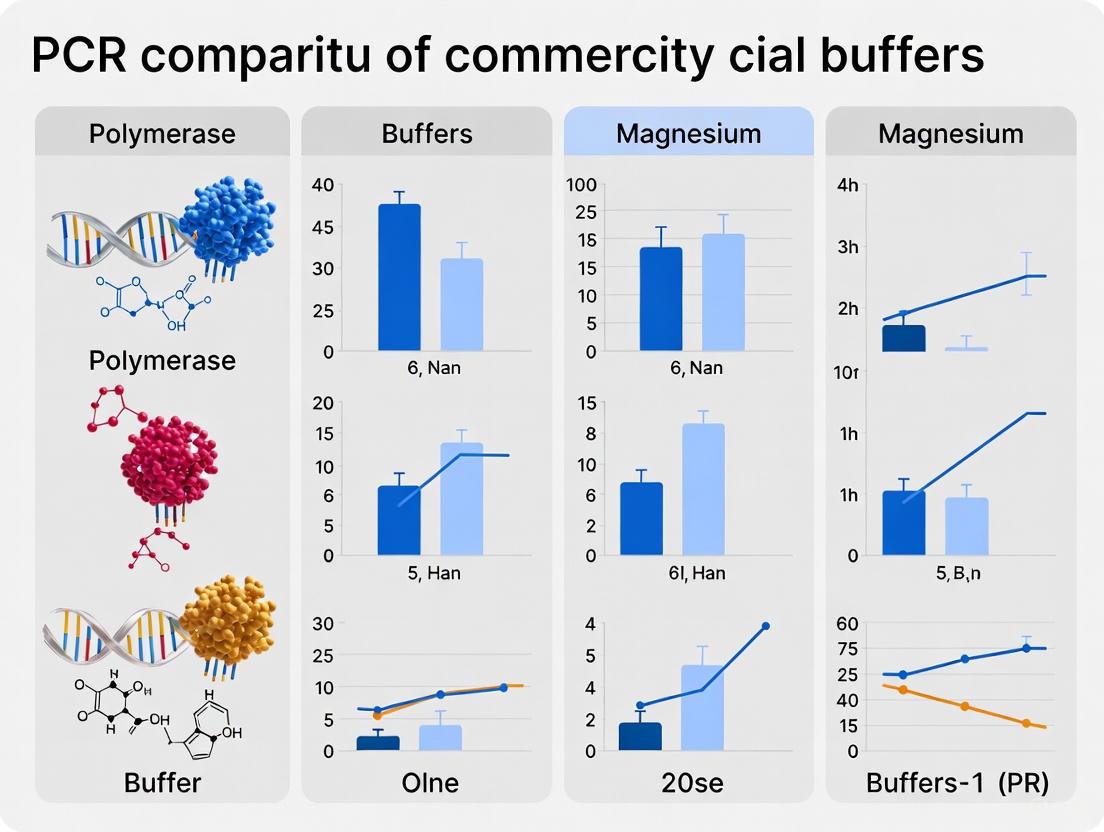
PCR Efficiency Optimization: A Comprehensive Comparison of Commercial Buffers and Magnesium Chloride Concentrations
This article provides a systematic analysis of how commercial PCR buffers and magnesium chloride (MgCl2) concentration jointly influence polymerase chain reaction efficiency, specificity, and yield.
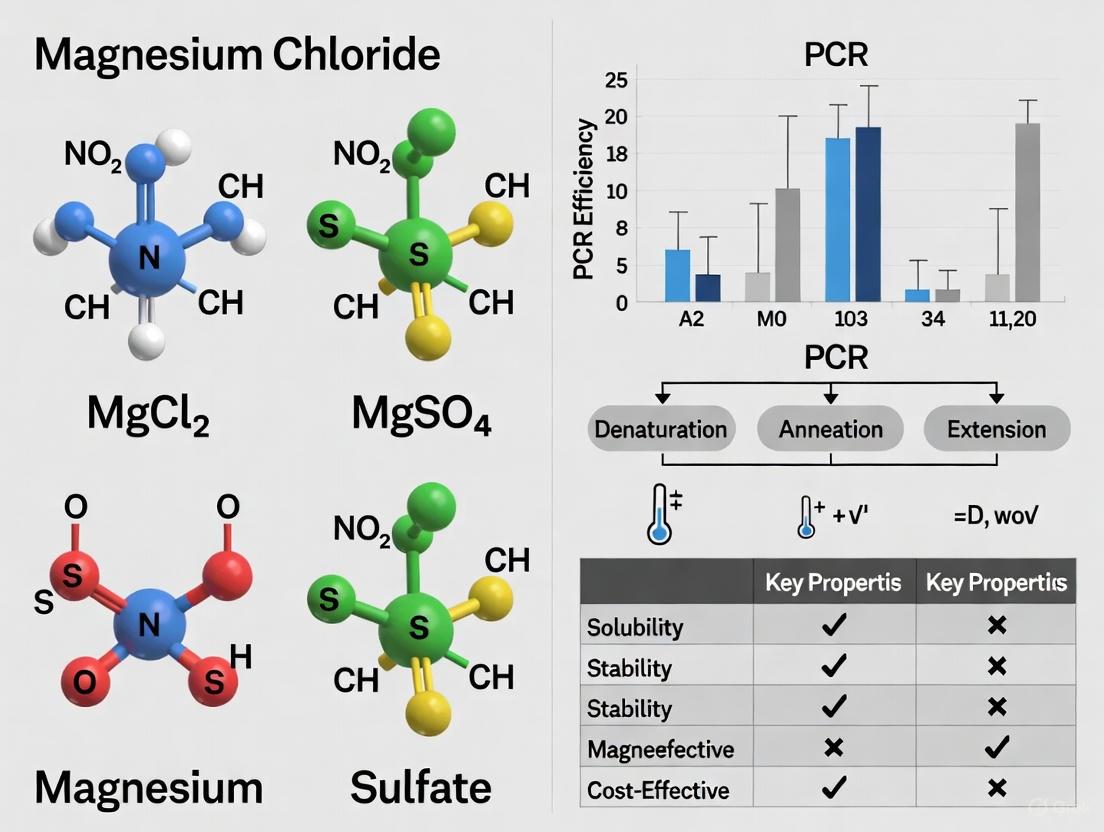
Magnesium Chloride vs. Magnesium Sulfate: A Definitive Guide to Optimizing PCR Efficiency
This article provides a comprehensive comparison of magnesium chloride (MgCl2) and magnesium sulfate (MgSO4) as cofactors for polymerase chain reaction (PCR) efficiency.
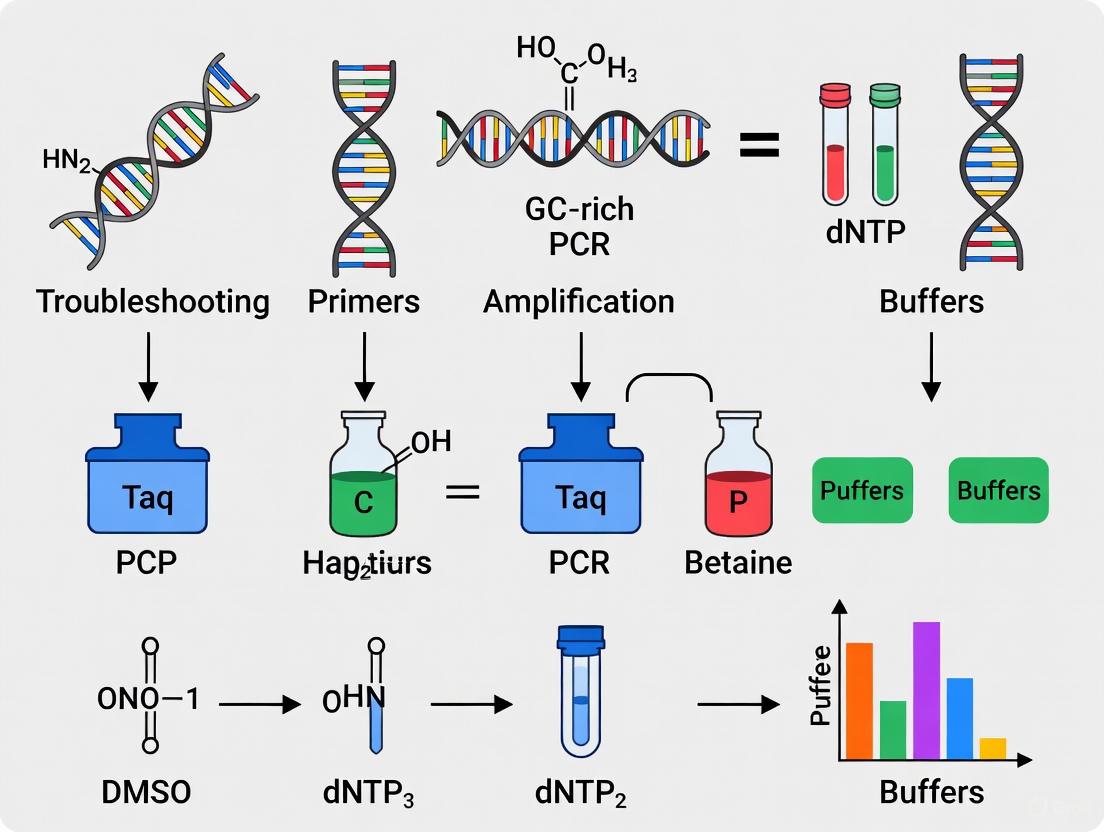
Overcoming GC-Rich PCR Challenges: A Strategic Guide to DMSO and Betaine Optimization
This article provides a comprehensive guide for researchers and drug development professionals struggling with the amplification of GC-rich DNA templates.

Optimizing PCR Specificity: A Strategic Guide to Annealing Temperature and Magnesium Synergy
This article provides researchers, scientists, and drug development professionals with a comprehensive framework for enhancing Polymerase Chain Reaction (PCR) specificity through the synergistic optimization of annealing temperature (Ta) and magnesium...
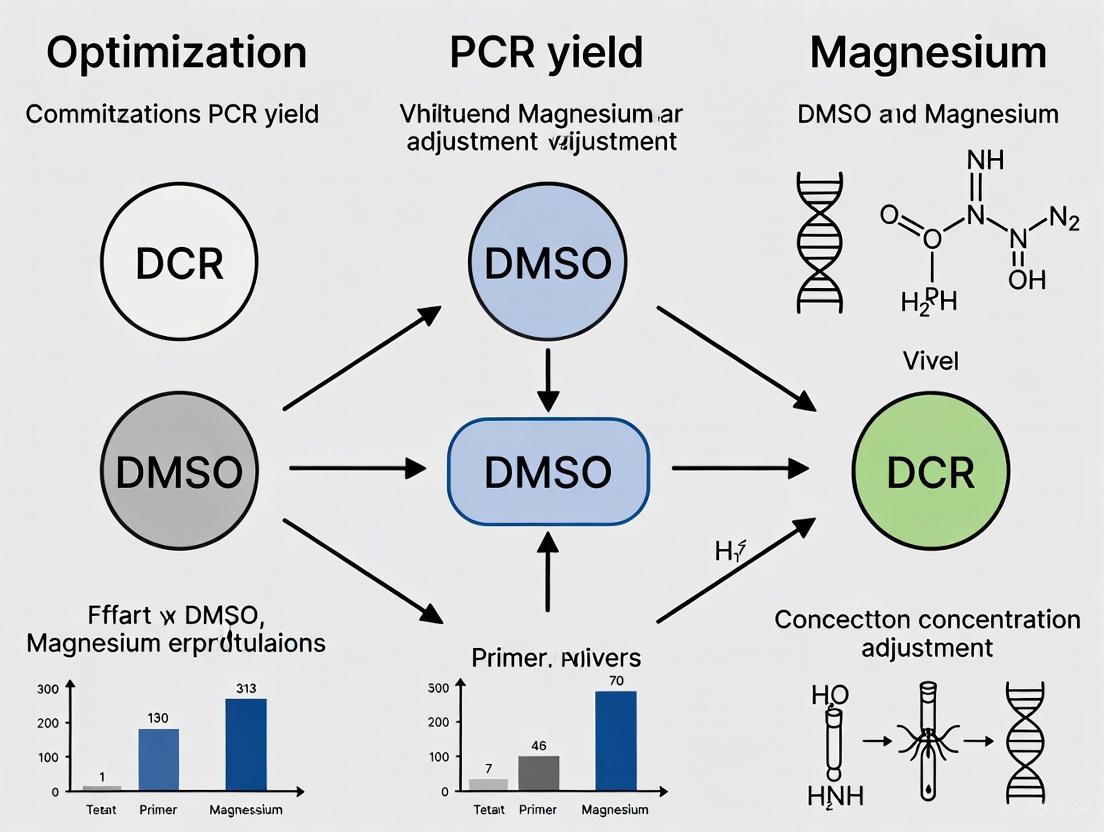
Optimizing PCR Yield: A Strategic Guide to DMSO and Magnesium Concentration
This article provides a comprehensive guide for researchers and drug development professionals on systematically enhancing Polymerase Chain Reaction (PCR) yield and specificity.
Optimizing Magnesium Concentration to Eliminate Primer-Dimer Formation: A Strategic Guide for Researchers
Primer-dimer formation is a pervasive challenge in PCR that consumes reagents, reduces amplification efficiency, and compromises assay sensitivity and specificity.
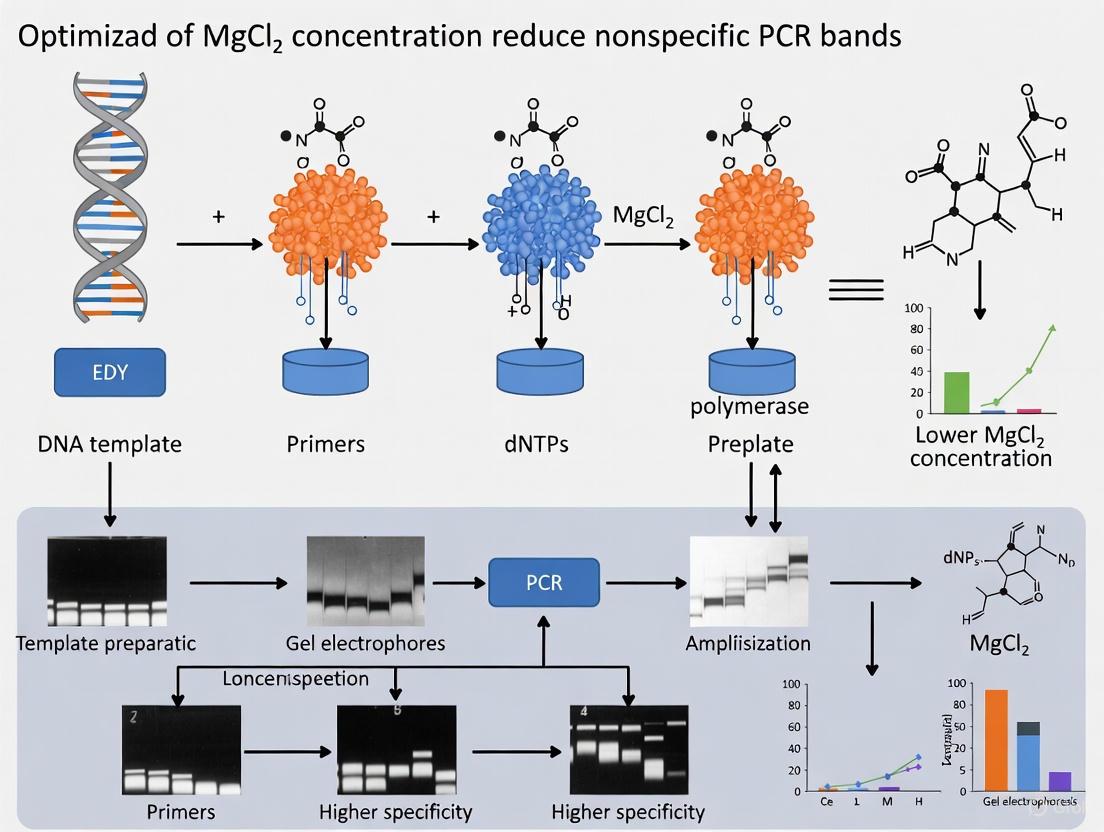
Optimizing MgCl2 Concentration to Eliminate Nonspecific PCR Bands: A Strategic Guide for Researchers
Nonspecific amplification and multiple bands on agarose gels are common, time-consuming challenges in PCR, often stemming from suboptimal magnesium chloride (MgCl2) concentration.
No PCR Product? A Scientist's Guide to Magnesium Concentration Optimization and Troubleshooting
This article provides a comprehensive framework for researchers and drug development professionals to diagnose and resolve PCR failure by systematically addressing magnesium chloride (MgCl₂) concentration.
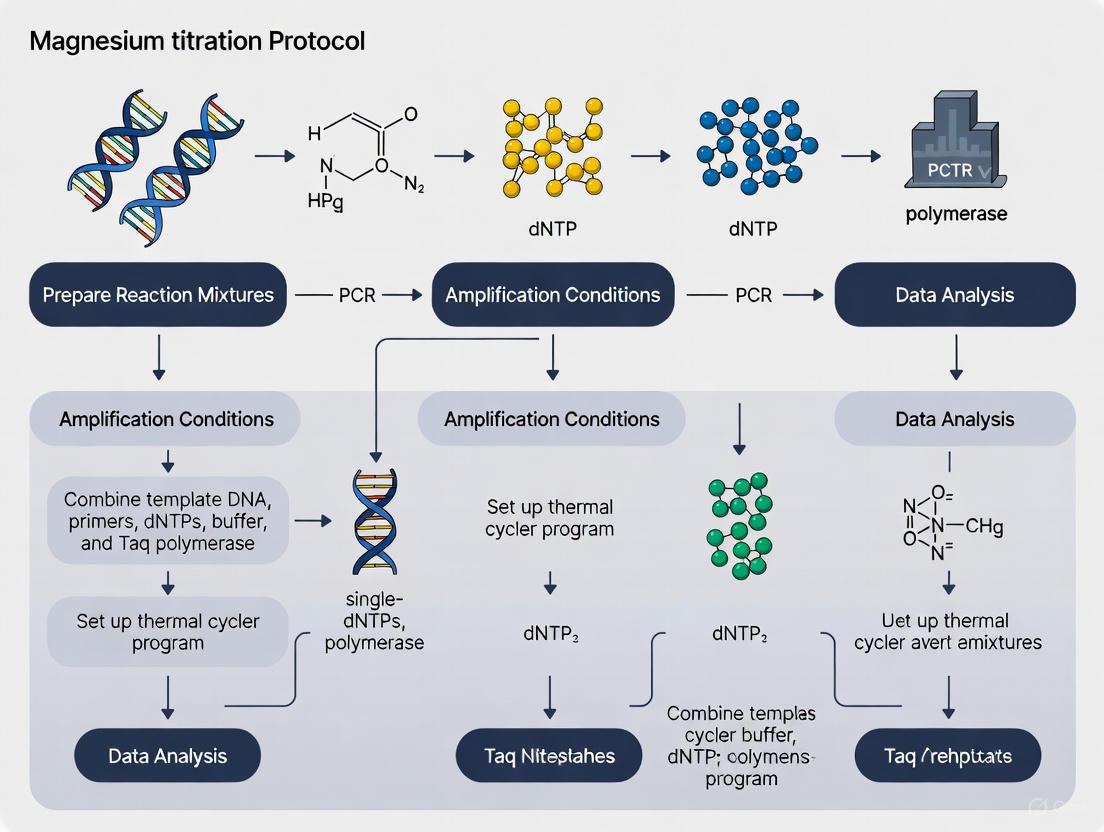
A Step-by-Step Magnesium Titration Protocol for Robust PCR Assay Development
This article provides a comprehensive, evidence-based guide for researchers and drug development professionals to systematically optimize magnesium chloride (MgCl2) concentration in Polymerase Chain Reaction (PCR) assays.
Optimizing PCR Master Mix Formulation: The Critical Role of Magnesium Concentration for Reliable Results
This article provides a comprehensive guide for researchers and drug development professionals on formulating PCR master mixes with optimized magnesium concentrations.