PCR Inhibitor Removal: A Complete Guide to Purifying DNA Templates for Reliable Amplification
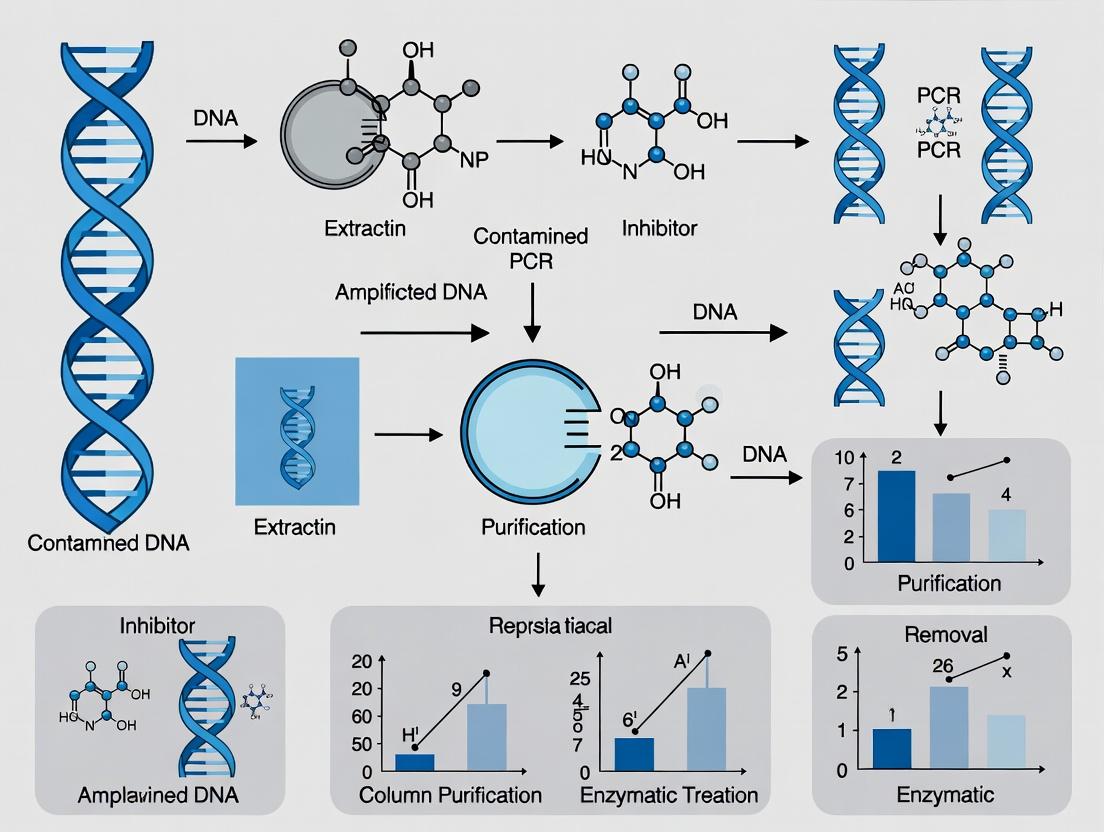
This comprehensive guide provides researchers, scientists, and drug development professionals with a complete framework for identifying, removing, and validating the elimination of PCR inhibitors from DNA templates.
PCR Inhibitor Removal: A Complete Guide to Purifying DNA Templates for Reliable Amplification
Abstract
This comprehensive guide provides researchers, scientists, and drug development professionals with a complete framework for identifying, removing, and validating the elimination of PCR inhibitors from DNA templates. Covering foundational concepts, practical methodologies, advanced troubleshooting, and comparative validation strategies, the article addresses critical pain points in molecular workflows, from sample collection to downstream applications like NGS and diagnostic assay development, ensuring robust and reproducible results.
What Are PCR Inhibitors? Understanding the Enemies of DNA Amplification
Troubleshooting Guides & FAQs
FAQ Section
Q1: What are the most common sources of PCR inhibitors in DNA template preparations? A: Common sources include co-purified substances from the sample matrix. For clinical samples, heme from blood, IgG antibodies, and urea are prevalent. For environmental or plant samples, humic acids, fulvic acids, polyphenols, and polysaccharides are typical. In forensic samples, indigo dyes from denim or hematin are frequent inhibitors. Tissue samples often contain ionic detergents (e.g., SDS) or proteinase K if not properly inactivated.
Q2: How do inhibitors affect polymerase fidelity? A: Inhibitors can alter the fidelity of DNA polymerase by different mechanisms. Some, like heparin, can directly bind to the polymerase, reducing its processivity and potentially increasing misincorporation rates. Others, like high concentrations of salt, can disrupt the ionic environment required for optimal polymerase activity, leading to decreased specificity and fidelity. The impact is often non-uniform, with certain mutations becoming more likely under inhibition stress.
Q3: What are the tell-tale signs that my PCR reaction is inhibited? A: Key signs include: complete amplification failure (no product), reduced yield, inconsistent amplification between replicates, shifted quantification cycle (Cq) values in qPCR, and amplification of non-specific products. A hallmark is the improvement of amplification upon dilution of the template, as this dilutes the inhibitor concentration.
Q4: Can inhibitors cause false positives or sequence errors? A: Yes. While often associated with false negatives, inhibitors can cause false positives in nested or highly sensitive PCRs by forcing the polymerase to amplify non-specific targets. More critically, certain inhibitors can increase the error rate (decrease fidelity) of polymerases, leading to sequence errors that compromise downstream sequencing, cloning, or diagnostic results.
Q5: What is the most effective universal method to remove inhibitors? A: There is no single universal method. The optimal strategy depends on the inhibitor type and sample source. However, silica-membrane based purification columns (which wash away many contaminants while binding DNA) combined with an inhibitor removal wash step (often containing ethanol or isopropanol) are broadly effective. For stubborn inhibitors, a secondary clean-up or use of a polymerase resistant to common inhibitors is recommended.
Troubleshooting Guide Table
| Symptom | Possible Inhibitor | Quick Diagnostic Test | Recommended Solution |
|---|---|---|---|
| No amplification, even with high-copy template | Polysaccharides, Humic Acids, Phenolics | Dilute template 1:5 and 1:10. If amplification returns, inhibition is likely. | Re-purify using a kit with an inhibitor removal step (e.g., CTAB for plants, specialized columns for humics). Switch to an inhibitor-resistant polymerase blend. |
| Delayed Cq in qPCR, reduced yield | Heparin, Heparin salts, SDS | Spike a known quantity of control DNA into the sample prep. Compare Cq to control reactions. | Use heparinase enzyme treatment pre-PCR. Ensure proper ethanol washing during column purification to remove ionic detergents. |
| Non-specific bands, smearing | High salt, EDTA, Alcohol carryover | Check conductivity of eluted DNA. Run a no-template control (NTC) to rule out contamination. | Re-precipitate DNA with ethanol and 70% wash. Ensure elution buffer is the correct pH and concentration. Use a PCR buffer with a higher salt tolerance. |
| Inconsistent replicates, especially from viscous samples | Cellular debris, Proteins, Polysaccharides | Visually assess sample viscosity. Centrifuge template briefly before adding to master mix. | Increase proteinase K digestion time. Include a mechanical homogenization step (e.g., bead beating). Add BSA (0.1-0.5 μg/μL) to the PCR reaction. |
| Drop in polymerase fidelity (sequencing errors) | Hematin, Cofactors (e.g., Ca2+) | Sequence amplified products from inhibited vs. clean reactions. Compare error rates. | Use a high-fidelity, inhibitor-tolerant polymerase. Add PCR enhancers like trehalose or formamide. Re-purify sample with a chelating resin to remove divalent cations. |
Experimental Protocols for Inhibitor Study & Removal
Protocol 1: Assessing Inhibition via Spiked Control and Dilution Series
Objective: To diagnostically confirm the presence of PCR inhibitors in a DNA template. Materials: Test DNA sample, inhibitor-free control DNA, PCR master mix, primers, qPCR instrument. Procedure:
- Prepare a 5-fold serial dilution of the test DNA template (e.g., neat, 1:5, 1:25).
- Prepare duplicate reactions for each dilution with a standard PCR master mix.
- In parallel, create an "internal control spike" series. Use a constant, low amount (e.g., 103 copies) of a unique control DNA (e.g., from a different species) added to each test DNA dilution. Use primers specific to this control.
- Run qPCR for both the target and the spiked control.
- Analysis: For the target, observe if Cq values follow the linear dilution pattern. Deviation indicates inhibition. For the spike, its Cq should be constant across all test DNA dilutions. A delay in the spike's Cq in the neat sample confirms inhibition.
Protocol 2: Removal of Humic Acids Using PVPP Spin Columns
Objective: To purify environmental DNA heavily contaminated with humic substances. Materials: Crude DNA extract, Polyvinylpolypyrrolidone (PVPP), microcentrifuge spin columns (empty), wash buffer (10 mM Tris-HCl, pH 8.0), elution buffer. Procedure:
- Hydrate PVPP powder in sterile water and pack a small volume (100-200 μL) into a spin column. Centrifuge at 500 x g for 2 min to remove storage liquid.
- Load the crude DNA extract (≤ 100 μL) onto the PVPP column.
- Centrifuge at 5000 x g for 5 min. The humic acids will bind to the PVPP, while DNA passes through. Collect the flow-through.
- Wash the column with 100 μL of wash buffer and centrifuge again, collecting the flow-through and pooling with the first collection.
- Concentrate and desalt the pooled flow-through using a standard ethanol precipitation or a small silica column. Elute in 30-50 μL of elution buffer.
Protocol 3: Evaluating Polymerase Fidelity Under Inhibition
Objective: To quantify the error rate of a DNA polymerase in the presence of a known inhibitor. Materials: High-fidelity polymerase, control template (e.g., lacI gene), inhibitor (e.g., hematin stock), NGS library prep kit, sequencer. Procedure:
- Set up multiple PCR reactions with the lacI template and high-fidelity polymerase. Include a clean control and reactions with varying sub-lethal concentrations of hematin (e.g., 0.1 μM, 0.5 μM).
- Amplify for 25 cycles.
- Purify all PCR products identically.
- Prepare next-generation sequencing libraries from each reaction pool, ensuring each sample receives a unique barcode.
- Sequence on a high-accuracy platform (e.g., Illumina MiSeq).
- Analysis: Map reads to the known lacI sequence. Use a variant calling pipeline to identify point mutations and indels. Calculate the error rate (mutations/base/duplication) for each inhibitor concentration and compare to the clean control.
Data Presentation
Table 1: Common PCR Inhibitors, Mechanisms, and Impact on Fidelity
| Inhibitor Class | Example Source | Primary Mechanism of Action | Observed Impact on Polymerase Fidelity (Error Rate Increase) |
|---|---|---|---|
| Heme Compounds | Blood, Tissue | Binds to polymerase; catalyzes oxidative damage to dNTPs. | Moderate to High (2x to 5x baseline) |
| Humic Substances | Soil, Sediment | Intercalates into DNA; chelates Mg2+ ions. | Low to Moderate (1.5x to 3x baseline) |
| Polysaccharides | Plants, Feces | Increases viscosity; disrupts primer annealing. | Low (Minimal direct impact, but causes stochastic failure) |
| Detergents | Lysis carryover (SDS) | Denatures polymerase; disrupts ionic gradients. | High at critical concentrations (Can cause complete denaturation) |
| Urea | Urine | Denaturing agent; disrupts hydrogen bonding. | Moderate (Alters proofreading efficiency) |
| Cation Chelators | EDTA, Citrate | Chelates essential Mg2+ cofactor. | High (Dramatically reduces processivity and specificity) |
Table 2: Efficacy of Common Purification Methods Against Inhibitor Classes
| Purification Method | Humic Acids | Hematin/ Heme | Polysaccharides | Ionic Detergents | Divalent Cations |
|---|---|---|---|---|---|
| Ethanol Precipitation | Low | Very Low | Low | Low (for SDS) | High (removes excess) |
| Silica Column | Medium-High | Medium | High | High | Medium |
| Magnetic Beads | Medium | Medium | High | High | Medium |
| CTAB Protocol | High | Low | High | Medium | Low |
| PVPP Treatment | High | Medium | Low | Very Low | Low |
| Dialysis | Medium | Low | Very Low | High | High |
Diagrams
The Scientist's Toolkit: Research Reagent Solutions
| Item | Function in Inhibitor Management |
|---|---|
| Silica-Membrane Spin Columns | Bind DNA under high-salt conditions; allow washing away of proteins, salts, and many organic inhibitors. The cornerstone of most commercial kits. |
| Polyvinylpolypyrrolidone (PVPP) | Binds polyphenolic compounds (humic acids, tannins) via hydrogen bonding and hydrophobic interactions. Used in pre-treatment or packed columns. |
| Cetyltrimethylammonium bromide (CTAB) | A cationic detergent used in plant DNA extraction to precipitate polysaccharides and acidic polyphenols while keeping DNA in solution. |
| Bovine Serum Albumin (BSA) | Added to the PCR mix. Binds to and neutralizes a variety of inhibitors (e.g., polyphenols, ionic detergents, heparin) by acting as a competitive sink. |
| Inhibitor-Resistant Polymerase Blends | Engineered polymerases or mixes containing stabilizing agents (e.g., trehalose) and competitors that maintain activity in the presence of common inhibitors. |
| Heparinase I Enzyme | Specifically degrades heparin and heparin sulfate, common inhibitors in samples derived from heparinized blood or tissues. |
| Chelating Resins (e.g., Chelex 100) | Remove divalent cations (Ca²âº, Mg²âº) that can interfere with PCR or be cofactors for nucleases. Also binds some metal-chelating inhibitors. |
| PCR Enhancers (Trehalose, Formamide, DMSO) | Stabilize polymerase, lower DNA melting temperature, and help overcome inhibition by reducing non-specific binding and improving enzyme processivity. |
| 3-methyl-3,4-dihydro-1H-1,4-benzodiazepine-2,5-dione | 3-methyl-3,4-dihydro-1H-1,4-benzodiazepine-2,5-dione, CAS:104873-98-5, MF:C10H10N2O2, MW:190.2 g/mol |
| 3-amino-3-(4-nitrophenyl)propanoic Acid | 3-Amino-3-(4-nitrophenyl)propanoic Acid|RUO|Building Block |
Troubleshooting Guides & FAQs
This support center addresses common issues related to PCR inhibitors co-extracted from various sample types, framed within research on removing inhibitors from DNA templates.
FAQ 1: My PCR from blood samples consistently fails or shows weak amplification. What are the likely inhibitors and how can I remove them?
- Answer: Hemoglobin, lactoferrin, and immunoglobulin G (IgG) from blood are common PCR inhibitors. They interfere with DNA polymerase activity.
- Solution: Use a silica-column based purification kit designed for whole blood, which effectively removes heme and proteins. For extra integrity, include a wash step with a proprietary inhibitor removal buffer (often included in kits) or a dilute bleach wash (0.5% NaOCl) on the column, followed by thorough ethanol-based washing.
FAQ 2: DNA extracted from soil or plant tissues yields a brown color and inhibits PCR. How do I clean it?
- Answer: Humic acids, fulvic acids, and polyphenolic compounds are the primary inhibitors. They absorb at 230nm, inhibit polymerases, and chelate magnesium ions.
- Solution: Optimize your extraction lysis buffer. Include polyvinylpyrrolidone (PVP) or CTAB to bind polyphenolics. Post-extraction, purify using size-exclusion chromatography (e.g., Sephadex G-50 columns) or dedicated environmental sample cleanup kits. Diluting the DNA template (1:10 or 1:20) can also reduce inhibitor concentration below the inhibition threshold.
FAQ 3: My DNA from Formalin-Fixed Paraffin-Embedded (FFPE) tissues amplifies poorly. What's the issue?
- Answer: Inhibitors include formalin-induced crosslinks, excess salts, and residual paraffin. The primary issue is DNA fragmentation and crosslinking, but contaminants from processing also inhibit PCR.
- Solution:
- Deparaffinize thoroughly using multiple xylene or specialized buffer washes.
- Use a proteinase K digestion at a higher concentration (e.g., 2 mg/mL) and for an extended period (overnight) with agitation.
- Purify with a FFPE-specific kit that includes a step to reverse formalin crosslinks (e.g., incubation at high temperature with a special buffer).
- Consider adding bovine serum albumin (BSA) or T4 gene 32 protein to the PCR mix to counteract residual inhibitors and stabilize polymerase.
FAQ 4: I suspect an unknown inhibitor in my sample. How can I diagnose and overcome it?
- Answer: Perform an inhibition test by spiking your sample with a known quantity of control DNA and running PCR. Compare the Ct value to a clean control sample. A significant delay in Ct indicates inhibition.
- Solution: Implement a universal inhibitor removal strategy:
- Dilution: The simplest method. Dilute the DNA template to reduce inhibitor concentration.
- Additives: Incorporate PCR enhancers like BSA (0.1-0.5 µg/µL), betaine (1M), or T4 gene 32 protein (0.5-1 µM).
- Switch Polymerases: Use a robust, inhibitor-resistant DNA polymerase blend specifically engineered for difficult samples.
Quantitative Data on Common PCR Inhibitors Table 1: Common Sources, Their Inhibitors, and Impact on PCR.
| Sample Source | Primary Inhibitors | Mechanism of Inhibition | Detection Clue (Spectrophotometry) |
|---|---|---|---|
| Whole Blood | Hemoglobin, Heparin, IgG | Binds to DNA polymerase | High A260/A230 ratio, pinkish pellet/eluent |
| Soil/Plant | Humic Acids, Polyphenols | Magnesium chelation, polymerase binding | Low A260/A230 ratio (<1.8), brown color |
| FFPE Tissue | Formalin crosslinks, Salts, Paraffin | Physical barrier to polymerization, polymerase interference | Variable A260/280, often fragmented DNA |
| Feces/Gut | Bilirubin, Complex Polysaccharides | Unknown, likely polymerase binding | Gelatinous precipitate, brown color |
| Bone/Tissue | Collagen, Calcium Ions | Binds to DNA, interferes with polymerization | Pellet difficult to resuspend |
Detailed Experimental Protocols
Protocol 1: Removal of Humic Acids from Soil DNA Using Sephadex G-50 Spin Columns
- Prepare Column: Hydrate Sephadex G-50 in TE buffer overnight. Load 1 mL slurry into a 2 mL syringe plugged with sterile glass wool.
- Equilibrate: Centrifuge the column at 800 x g for 2 minutes to pack. Add 0.5 mL TE, spin again. Repeat twice.
- Load Sample: Apply up to 0.2 mL of your crude DNA extract (in water or TE) to the center of the column bed.
- Elute DNA: Place the column over a clean collection tube. Centrifuge at 800 x g for 2 minutes. The eluate contains purified DNA.
- Concentrate (Optional): Use ethanol precipitation or a centrifugal concentrator to concentrate the DNA if needed.
Protocol 2: PCR Amplification with Inhibitor-Resistant Additives For a 25 µL reaction:
- Master Mix: 12.5 µL of a standard 2X PCR master mix.
- Additives: Add 2.5 µL of 10 mg/mL BSA (final 1 µg/µL) OR 2.5 µL of 5M Betaine (final 0.5M).
- Template: 2-5 µL of cleaned DNA template (start with 1-10 ng).
- Primers: Forward and Reverse primer (each at final 0.2-0.5 µM).
- Water: Nuclease-free water to 25 µL.
- Cycling: Use a standard cycling protocol, but consider increasing the initial denaturation step to 5 minutes to ensure complete disruption of secondary structures.
Visualizations
Title: Workflow for Removing PCR Inhibitors from DNA
Title: Mechanisms of PCR Inhibition by Common Contaminants
The Scientist's Toolkit: Key Research Reagent Solutions
Table 2: Essential Reagents for Inhibitor Removal & PCR Enhancement
| Reagent/Material | Primary Function in Inhibitor Removal | Typical Use Case |
|---|---|---|
| Silica-membrane Columns | Selective binding of DNA in high-salt, washing away of inhibitors. | Standard purification for blood, tissues. |
| Polyvinylpyrrolidone (PVP) | Binds to polyphenolic compounds during lysis. | Plant and soil DNA extractions. |
| CTAB Buffer | Precipitates polysaccharides and polyphenols during lysis. | Polysaccharide-rich samples (plants, fungi). |
| Sephadex G-50 | Size-exclusion chromatography to separate DNA from smaller inhibitors. | Post-extraction cleanup of humic acids. |
| Inhibitor-Resistant Polymerase | Engineered enzyme tolerant to common inhibitors. | Direct PCR from crude lysates or difficult samples. |
| Bovine Serum Albumin (BSA) | Binds to and neutralizes inhibitors (e.g., phenols, heparin) in the PCR mix. | PCR additive for many inhibitor types. |
| Betaine | Reduces secondary structure, stabilizes polymerase, counteracts GC-rich inhibition. | PCR additive for complex templates. |
| Proteinase K | Digests proteins and reverses some formalin crosslinks. | Essential for FFPE and tough tissue lysis. |
| 2-Methyl-4-undecanone | 2-Methyl-4-undecanone, CAS:19594-40-2, MF:C12H24O, MW:184.32 g/mol | Chemical Reagent |
| 2,4-Dichloro-6-methoxyquinazoline | 2,4-Dichloro-6-methoxyquinazoline|CAS 105763-77-7 | 2,4-Dichloro-6-methoxyquinazoline is a chemical building block for research. This product is For Research Use Only and is not intended for diagnostic or therapeutic use. |
Troubleshooting Guide & FAQ
Q1: My PCR yields no product after extracting DNA from a blood sample. I suspect heparin carryover from the collection tube. How can I confirm and resolve this? A: Heparin is a potent PCR inhibitor that binds to DNA polymerase. To confirm, run a control reaction spiked with a known amplifiable template; inhibition will block amplification of the control. To resolve, use a commercial DNA purification kit designed for heparin removal (e.g., silica-membrane columns with specialized wash buffers). Alternatively, treat the sample with heparinase I (0.5-1 U/µg DNA, 25°C for 1-2 hours) prior to purification. For critical samples, a post-extraction purification using an anion-exchange resin is effective.
Q2: My soil-extracted DNA fails to amplify, likely due to humic acids. What purification methods are most effective? A: Humic acids co-purify with DNA and inhibit PCR by chelating magnesium ions. Effective methods include:
- Gel Filtration: Use Sephadex G-200 or spin columns to separate DNA from low-MW humics.
- Enhanced Silica-Binding: Use kits with added polyvinylpyrrolidone (PVP) or PVPP in the lysis/binding buffer. PVP binds phenolics/humics.
- CTAB Re-extraction: Re-extract the DNA using CTAB (cetyltrimethylammonium bromide) buffer, which helps precipitate humics away from DNA.
- Dilution: A simple 10- to 100-fold dilution of the template can often reduce inhibitor concentration below the inhibitory threshold.
Q3: Hemoglobin from lysed blood cells is inhibiting my PCR. Which protocols work best? A: Hemoglobin inhibits at concentrations >0.1 mM (heme). Effective removal strategies include:
- Thorough Washing: For cell pellets, add multiple PBS wash steps before lysis to remove hemoglobin.
- Proteinase K Digestion: Ensure complete digestion with sufficient Proteinase K (e.g., 200 µg/mL, 56°C for 1-3 hours) to degrade hemoglobin.
- Magnetic Bead Cleanup: Use carboxyl-modified magnetic beads with a high-salt binding solution, as they show good discrimination against hemoglobin.
- Column Purification with Ethanol Washes: Silica columns with 70-80% ethanol washes effectively remove hemoglobin. Ensure wash buffers are not contaminated with inhibitor carryover.
Q4: How do I remove ionic detergents (like SDS) from my DNA prep without compromising yield? A: Ionic detergers like SDS inhibit PCR at concentrations >0.005%. They can be removed by:
- Precipitation with KCl: Add KCl to a final concentration of 0.1-0.2 M, incubate on ice, and pellet the SDS-K+ precipitate by centrifugation before proceeding with DNA precipitation.
- Dialysis: For large-volume samples, dialysis against TE buffer is effective.
- Commercial Clean-up Kits: Most silica-based kits efficiently remove residual SDS if the correct binding conditions (high salt) and wash buffers (ethanol-based) are used.
Q5: Phenolic compounds from plant tissues are contaminating my DNA. What is the best prevention and cleanup approach? A: Oxidized phenolics can irreversibly damage DNA. Prevention is key:
- Use Reducing Agents: Include antioxidants in the extraction buffer: 1-2% PVP, 0.1-0.2% ascorbic acid, or 1% β-mercaptoethanol.
- Extract at Cold Temperatures: Keep samples and reagents cold to slow phenolic oxidation.
- Use CTAB-based Extraction: The standard CTAB protocol (with 1-1.4 M NaCl) effectively separates polysaccharides and polyphenols.
- Post-Extraction Cleanup: If inhibition persists, use caesium chloride gradient centrifugation or commercial kits with inhibitor removal technology.
Table 1: Common PCR Inhibitors and Their Inhibitory Concentrations
| Inhibitor | Source | Typical Inhibitory Concentration in PCR | Primary Mechanism of Inhibition |
|---|---|---|---|
| Heparin | Blood collection tubes, tissues | 0.1 IU per 50 µL reaction | Binds to and inactivates DNA polymerase |
| Hemoglobin | Lysed erythrocytes | >0.1 mM (heme) | Interacts with DNA polymerase; possible heme-catalyzed degradation |
| Humic Acids | Soil, peat, sediment | 0.5-5 ng/µL | Chelates Mg2+ ions, essential for polymerase activity |
| Phenolic Compounds | Plant tissues, lignin | Varies widely; >0.1% (wt/vol) | Bind to/Bdenature proteins, oxidize to form damaging quinones |
| SDS (Ionic Detergent) | Lysis buffers | >0.005% (wt/vol) | Denatures polymerase, disrupts enzyme kinetics |
Table 2: Efficacy of Removal Methods for Different Inhibitors
| Removal Method | Heparin | Hemoglobin | Humics | Phenolics | Ionic Detergents |
|---|---|---|---|---|---|
| Dilution | Moderate | Good | Very Good | Good | Good |
| Silica Column | Good (with heparinase) | Good | Moderate (needs PVP) | Moderate | Good |
| Ethanol Precipitation | Poor | Poor | Poor | Poor | Moderate (with KCl) |
| Dialysis | Good | Good | Good | Good | Very Good |
| Magnetic Beads | Good | Very Good | Good | Moderate | Good |
Detailed Experimental Protocols
Protocol 1: CTAB-PVP Method for Plant DNA Extraction (Phenolics/Humics Removal)
- Grind 100 mg frozen plant tissue in liquid N2.
- Add 1 mL of pre-warmed (65°C) CTAB buffer (2% CTAB, 100 mM Tris-HCl pH 8.0, 20 mM EDTA, 1.4 M NaCl, 1% PVP-40, 0.2% β-mercaptoethanol added fresh).
- Incubate at 65°C for 30-60 min with occasional gentle mixing.
- Cool, add an equal volume of chloroform:isoamyl alcohol (24:1), mix thoroughly.
- Centrifuge at 12,000 x g for 10 min at 4°C.
- Transfer aqueous phase to a new tube. Add 0.7 volumes of isopropanol, mix, and incubate at -20°C for 30 min to precipitate DNA.
- Pellet DNA by centrifugation (12,000 x g, 10 min). Wash pellet with 70% ethanol.
- Air-dry pellet and resuspend in TE buffer + RNase A (20 µg/mL). Further purify with silica column if needed.
Protocol 2: Heparinase Treatment of Purified DNA
- To up to 20 µL of DNA solution in a thin-walled PCR tube, add:
- 2 µL of 10x Heparinase I Buffer (provided with enzyme).
- 1 µL Heparinase I (1 U/µL).
- Nuclease-free water to 25 µL total.
- Incubate at 25°C for 1-2 hours.
- Heat-inactivate the enzyme at 65°C for 5 minutes.
- Use 1-5 µL of the treated sample directly in a 50 µL PCR reaction.
Protocol 3: Post-Extraction Humic Acid Removal via Sephadex G-200 Spin Column
- Hydrate Sephadex G-200 in TE buffer overnight at 4°C.
- Plug a 1 mL syringe with sterile glass wool. Fill with hydrated Sephadex slurry.
- Place the syringe in a 15 mL collection tube. Centrifuge at 500 x g for 2 min to pack the column.
- Apply the DNA sample (in ≤100 µL volume) to the center of the column bed.
- Centrifuge again at 500 x g for 2 min. The eluate contains purified DNA (higher MW), while humics are retained in the column.
Diagrams
Title: Decision Workflow for PCR Inhibitor Removal
Title: Mechanisms of PCR Inhibition by Chemical Culprits
The Scientist's Toolkit
Table 3: Key Reagents for PCR Inhibitor Removal
| Reagent / Material | Primary Function | Application Against Culprits |
|---|---|---|
| Polyvinylpyrrolidone (PVP) | Binds polyphenols and humic acids via hydrogen bonding, preventing co-purification. | Humic Acids, Phenolics |
| CTAB (Cetyltrimethylammonium bromide) | Ionic detergent that forms complexes with polysaccharides and polyphenols in high-salt conditions. | Phenolics, Humics, Polysaccharides |
| Heparinase I | Enzyme that cleaves heparin into small, non-inhibitory fragments. | Heparin |
| Sephadex G-50/G-200 | Gel filtration matrix that separates DNA (high MW) from small molecule inhibitors. | Humics, Phenolics, Dyes, Salts |
| Silica Membrane/Matrix | Binds DNA under high-salt, high-pH conditions; impurities are washed away. | General, Hemoglobin, Ionic Detergents |
| Proteinase K | Broad-spectrum serine protease degrades proteins and nucleases. | Hemoglobin, Cellular Proteins |
| β-Mercaptoethanol | Reducing agent that prevents oxidation of phenolic compounds. | Phenolics |
| Chelex 100 Resin | Chelating resin that binds metal ions; used to remove heme (from hemoglobin). | Hemoglobin |
| 6-Isocyanato-2,3-dihydro-1,4-benzodioxine | 6-Isocyanato-2,3-dihydro-1,4-benzodioxine, CAS:100275-94-3, MF:C9H7NO3, MW:177.16 g/mol | Chemical Reagent |
| Hexadecyltrimethylammonium Hexafluorophosphate | Hexadecyltrimethylammonium Hexafluorophosphate, CAS:101079-29-2, MF:C19H42F6NP, MW:429.5 g/mol | Chemical Reagent |
Technical Support & Troubleshooting Center
FAQs & Troubleshooting Guides
Q1: My PCR from plant tissue yields no product despite a positive gel for genomic DNA. What could be the issue? A: Polysaccharides (e.g., pectins, arabinogalactans) are common co-precipitants in plant DNA prep and are potent PCR inhibitors. They interfere with DNA polymerase activity. Quantify DNA using a fluorometer (e.g., Qubit) instead of a spectrophotometer (Nanodrop), as the latter will overestimate concentration due to carbohydrate contamination. An A260/A230 ratio below 2.0 indicates polysaccharide/phenol contamination.
Q2: My DNA extraction from a collagen-rich tissue (e.g., skin, tendon) has low yield and PCR fails. How can I improve this? A: Collagen forms a viscous, fibrous network that impedes cell lysis and binds DNA. Implement a pre-digestion step with 1-2 mg/mL collagenase (Type IV) in appropriate buffer for 1-2 hours at 37°C prior to standard lysis. Follow with a silica-column or SPRI bead-based purification to remove soluble collagen fragments and salts.
Q3: Protein contamination persists in my DNA prep from whole blood or cultured cells, affecting downstream PCR. What is the solution? A: Residual proteins, especially nucleases and albumin, can inhibit PCR. Increase the rigor of the protein precipitation step. For phenol-chloroform extractions, ensure adequate vortexing and centrifugation time. For column-based kits, add an optional proteinase K digestion step post-lysis and consider an extra wash with the provided wash buffer (ensure ethanol is added correctly).
Q4: How can I quickly screen if my sample contains PCR inhibitors from these biological interferents? A: Perform a spiking experiment. Take your purified DNA sample and a known, clean control DNA (e.g., lambda phage). Run two PCRs: one with the control DNA alone and one with your sample DNA spiked with the same amount of control DNA. Compare the amplification of the control target. A significant reduction in amplification in the spiked sample indicates the presence of inhibitors.
Q5: My soil/fecal DNA extraction yields inhibitors that survive commercial purification kits. What is the most robust removal method? A: Complex samples contain humic acids, polysaccharides, and proteins. Use a tandem cleanup approach:
- Gel Filtration: Pass the eluted DNA through a Sephadex G-50 spin column to remove low molecular weight inhibitors.
- Dilution: Simply diluting the DNA template (1:5, 1:10) can reduce inhibitor concentration below a functional threshold.
- Enhanced Polymerase Systems: Use a polymerase mix specifically formulated for inhibitor-rich samples (e.g., those containing BSA and trehalose).
Table 1: Impact of Common Biological Interferents on PCR Efficiency
| Interferent Class | Example Source | Critical Concentration for 50% Inhibition* | Primary Mechanism of Inhibition |
|---|---|---|---|
| Polysaccharides | Plant tissues, soil | 0.4 µg/µL (dextran) | Binds DNA polymerase, increases viscosity |
| Proteins | Blood serum, cellular debris | 1.0 mg/mL (BSA) | Competes for polymerase binding sites, nuclease activity |
| Collagen Fragments | Animal connective tissue | 0.5 µg/µL (gelatin) | Intercalates into DNA, blocks primer binding |
| Humic Substances | Soil, compost | 0.2 µg/µL (humic acid) | Mimics DNA structure, binds to polymerase |
*Concentration in the final PCR reaction. Data compiled from recent inhibitor tolerance studies.
Table 2: Efficacy of Different Inhibitor Removal Methods
| Cleanup Method | Target Interferent | Estimated DNA Recovery | Time Required | Cost |
|---|---|---|---|---|
| Silica Column (Standard) | Proteins, salts | 60-80% | 15 min | Low |
| SPRI Beads (2X Ratio) | Proteins, polysaccharides | 70-90% | 10 min | Medium |
| Gel Filtration (Sephadex) | Humics, phenols, small organics | 50-70% | 20 min | Low |
| CTAB Re-precipitation | Polysaccharides, polyphenols | 30-60% | 90 min | Very Low |
| Commercial Inhibitor Removal Kit | Broad-spectrum | 40-70% | 25 min | High |
Experimental Protocols
Protocol 1: CTAB-based Removal of Polysaccharides from Plant DNA
- Principle: Cetyltrimethylammonium bromide (CTAB) forms insoluble complexes with polysaccharides in high-salt buffers, allowing their separation from DNA.
- Steps:
- After initial tissue lysis, add 1/10 volume of 5% CTAB solution (in 0.7M NaCl).
- Incubate at 65°C for 20 minutes.
- Add an equal volume of chloroform:isoamyl alcohol (24:1). Mix thoroughly.
- Centrifuge at 12,000 x g for 10 minutes at room temperature.
- Transfer the upper aqueous phase to a new tube. Proceed with standard DNA precipitation or column purification.
Protocol 2: Collagenase Pre-digestion for Tough Tissues
- Principle: Collagenase enzymatically degrades the collagen matrix, releasing cells and DNA.
- Steps:
- Mince 25 mg of tissue finely in 500 µL of PBS.
- Add Collagenase Type IV to a final concentration of 1 mg/mL.
- Incubate at 37°C with gentle agitation for 1-2 hours.
- Centrifuge at 2000 x g for 5 minutes to pellet debris.
- Transfer the supernatant (containing released cells/DNA) to a new tube and proceed with your chosen DNA extraction kit (e.g., DNeasy Blood & Tissue).
Diagrams
Title: Decision Workflow for PCR Inhibitor Removal Strategy
Title: Molecular Mechanisms of PCR Inhibition by Interferents
The Scientist's Toolkit: Research Reagent Solutions
| Item | Category | Function in Inhibitor Removal |
|---|---|---|
| CTAB (Cetyltrimethylammonium bromide) | Chemical Precipitant | Selectively precipitates polysaccharides and acidic polyphenols in high-salt conditions. |
| Collagenase Type IV | Enzymatic Digestant | Degrades native collagen fibers in tissues prior to lysis, reducing viscosity and DNA trapping. |
| Proteinase K | Protease | Broad-spectrum protease used to digest nucleases and structural proteins during lysis. |
| Sephadex G-50 | Gel Filtration Medium | Removes low molecular weight inhibitors (humics, phenols, salts) via size exclusion chromatography. |
| SPRI (Solid Phase Reversible Immobilization) Beads | Magnetic Beads | Bind DNA in high PEG/NaCl, allowing stringent washing to remove proteins/polysaccharides. |
| BSA (Bovine Serum Albumin) | PCR Additive | Not a removal agent, but a "blocker." Added to PCR to bind residual inhibitors, freeing polymerase. |
| Inhibitor-Tolerant DNA Polymerase Mix | Enzyme Mix | Polymerase formulations with enhanced binding affinity or included blockers to resist common inhibitors. |
| Polyvinylpolypyrrolidone (PVPP) | Binding Resin | Insoluble polymer that binds polyphenols during tissue homogenization, preventing oxidation. |
| Ethyl 4-chloro-5-methylthieno[2,3-d]pyrimidine-6-carboxylate | Ethyl 4-chloro-5-methylthieno[2,3-d]pyrimidine-6-carboxylate, CAS:101667-98-5, MF:C10H9ClN2O2S, MW:256.71 g/mol | Chemical Reagent |
| Boc-Ala-Ala-OMe | Boc-Ala-Ala-OMe|High-Purity Peptide Reagent | Boc-Ala-Ala-OMe: A protected dipeptide building block for peptide synthesis. For Research Use Only. Not for human or veterinary use. |
Troubleshooting Guide & FAQs
Q1: What are the primary visual indicators of PCR inhibition in a real-time amplification (qPCR) curve? A: The key symptoms are:
- Delayed Amplification (Increased Cq): The amplification curve shifts significantly to the right (higher quantification cycle, Cq) compared to the non-inhibited control.
- Reduced Amplification Efficiency: The curve has a shallower slope in the exponential phase.
- Lower Plateau Phase (ΔRn max): The final fluorescence intensity is substantially lower.
- Abnormal Curve Shape: Irregular, sigmoidal, or "humped" curves.
Q2: How does PCR inhibition manifest in standard endpoint PCR followed by gel electrophoresis? A: Inhibition is typically observed as:
- Complete PCR Failure: No visible band of the expected size.
- Faint or Smeared Bands: Reduced yield results in weak, non-distinct bands.
- Non-Specific Amplification: Presence of primer-dimers or multiple off-target bands due to altered reaction dynamics.
- Inconsistent Replicates: Variable band intensities across technical replicates from the same sample.
Q3: What are the most common sources of PCR inhibitors co-purified with DNA? A: Common inhibitors vary by sample source:
- Blood/Hematin: Hemoglobin, lactoferrin, IgG.
- Plants/Soil: Polyphenols, humic and fulvic acids, polysaccharides.
- Tissues: Collagen, myoglobin, lipids.
- Bacterial Cultures: Polysaccharides, proteins from cell lysis.
- Environmental Samples: Heavy metals, organic solvents, detergents (e.g., SDS).
Q4: What is a definitive diagnostic test to confirm that a failed PCR is due to inhibition versus poor DNA quality? A: Perform a Spike-In or Dilution Test.
- Set up a standard PCR with your target primers.
- Sample A: Inhibited DNA template.
- Sample B: Inhibited DNA template + a known quantity of a well-characterized, control DNA (e.g., plasmid, previously purified PCR product).
- If the control DNA amplifies in Sample B but the target does not, the issue is likely sequence-specific or primer-related. If neither the control nor the target amplifies in Sample A, but the control works in Sample B, inhibition is confirmed.
Quantitative Data on Inhibition Effects
Table 1: Impact of Common Inhibitors on qPCR Parameters
| Inhibitor | Typical Source | Effect on Cq (ΔCq)* | Effect on Efficiency | Observable Curve Symptom |
|---|---|---|---|---|
| Humic Acid | Soil, Plants | +3 to >10 | Severe Reduction (>50% loss) | Shallow slope, low plateau |
| Hematin | Blood | +2 to +6 | Moderate Reduction (20-40% loss) | Delayed onset, reduced ΔRn |
| Collagen | Animal Tissue | +1 to +4 | Slight to Moderate Reduction | Right-shifted curve |
| Polysaccharides | Feces, Plants | +4 to +8 | Severe Reduction | Irregular, plateau phase often lost |
| SDS (Detergent) | Lysis Protocols | +0.5 to +5 (Concentration-dependent) | Variable Reduction | Can cause complete failure at high conc. |
*ΔCq: Increase in quantification cycle compared to uninhibited control.
Table 2: Results Interpretation for the Dilution Test
| Gel Result (Target Band) | Gel Result (Spike-In Control Band) | Diagnosis |
|---|---|---|
| Absent | Strong | Specific Inhibition or Target Absence: The sample inhibits the control DNA. Problem is general. |
| Absent | Absent | General PCR Inhibition: The sample inhibits the control DNA. Problem is general. |
| Present (Faint) | Strong | Partial Inhibition: Dilution reduced inhibitor concentration, allowing target amplification. |
| Present | Present | No Inhibition. Original failure may be due to low template concentration. |
Experimental Protocols
Protocol 1: Diagnostic Dilution-to-Extinction Test Purpose: To distinguish inhibition from low DNA concentration/copy number. Materials: Purified DNA sample, nuclease-free water, PCR master mix, primers. Steps:
- Prepare a 5-fold serial dilution of the suspect DNA sample (e.g., undiluted, 1:5, 1:25, 1:125) in nuclease-free water.
- Use each dilution as a template in a standard PCR/qPCR assay.
- Interpretation: If the Cq value decreases linearly with dilution (or band intensity increases) over the first few dilutions, inhibition is present. If the Cq increases linearly (copy number decreases), inhibition is less likely; the original sample simply had low target concentration.
Protocol 2: Internal Control Spike-In Assay Purpose: To confirm the presence of general PCR inhibitors. Materials: Suspect DNA sample, purified control DNA (non-homologous to target), PCR reagents for control amplicon. Steps:
- Prepare two reactions:
- Reaction 1: Suspect DNA + target-specific primers.
- Reaction 2: Suspect DNA + control DNA + control-specific primers.
- Run PCR/qPCR.
- Interpretation: See Table 2 for diagnostic outcomes.
Visualization of Diagnostic Workflows
Title: PCR Inhibition Diagnostic Decision Tree
Title: Interpreting the Dilution-to-Extinction Test
The Scientist's Toolkit: Research Reagent Solutions
Table 3: Essential Materials for Inhibition Detection & Mitigation
| Item | Function in Inhibition Context |
|---|---|
| qPCR Master Mix with Inhibitor Resistance | Formulations often contain BSA, specialized polymerases, and enhancers that neutralize common inhibitors like humic acid or hematin. |
| Carrier RNA (e.g., Poly-A RNA) | Added during nucleic acid purification to improve yield and consistency from inhibitor-rich samples. |
| BSA (Bovine Serum Albumin) | A common PCR additive that binds to and neutralizes inhibitors (e.g., polyphenols, ionic detergents). |
| DTT (Dithiothreitol) | A reducing agent that can help break down inhibitors like humic acids or disrupt disulfide bonds in proteins. |
| Polyvinylpyrrolidone (PVP) | Binds polyphenols co-purified from plant tissues, preventing their interference with polymerase. |
| Spin-Column Purification Kits (Silica-based) | Standard for DNA cleanup; effective for removing salts, small proteins, and some organic inhibitors. |
| Magnetic Bead-based Purification Kits | Often more effective than spin-columns for difficult samples (e.g., soil, feces) due to different binding chemistry. |
| Gradient PCR Thermocycler | Allows empirical testing of different annealing temperatures in one run, which can help overcome mild inhibition. |
| Internal Control DNA/Plasmid | A non-target DNA sequence used in spike-in assays to diagnose general PCR inhibition. |
| Alternative DNA Polymerases | Specialized polymerases (e.g., from Thermus thermophilus) may exhibit higher tolerance to specific inhibitors than Taq. |
| tert-Butyl (pyridin-3-ylmethyl)carbamate | tert-Butyl (pyridin-3-ylmethyl)carbamate|102297-41-6 |
| 2-Amino-4-nitrobenzaldehyde | 2-Amino-4-nitrobenzaldehyde, CAS:109466-84-4, MF:C7H6N2O3, MW:166.13 g/mol |
Proven Techniques for PCR Inhibitor Removal: From Classic to Cutting-Edge Protocols
Troubleshooting Guides & FAQs
FAQ 1: Why is my DNA yield low after using a silica-membrane column kit?
- Answer: Low yields are commonly due to incomplete lysis, insufficient washing, or improper elution. Ensure the sample is fully homogenized and lysed. For the wash steps, ensure ethanol is added to the wash buffer as specified and that the membrane is completely dry after the final wash before elution. Elute with pre-warmed (55-60°C) nuclease-free water or elution buffer, let it sit on the membrane for 2-5 minutes before centrifugation, and consider a second elution from the same column.
FAQ 2: My magnetic bead-based purification shows poor bead recovery or aggregation. What went wrong?
- Answer: Bead aggregation often indicates sample overloading or improper bead handling. Ensure you are not exceeding the binding capacity of the beads. Mix the bead stock thoroughly before use. During binding, ensure the solution is adequately mixed and contains the correct concentration of binding enhancer (e.g., PEG/NaCl). Always perform washes with freshly prepared 80% ethanol.
FAQ 3: How do I know if my extracted DNA still contains PCR inhibitors, and which step is likely responsible?
- Answer: Perform a spectrophotometric (A260/A230 and A260/A280 ratios) and/or fluorometric analysis. A low A260/A230 ratio (<1.8) indicates carryover of guanidine salts, carbohydrates, or phenolic compounds. This points to an issue in the wash steps—ensure wash buffers are prepared correctly and applied fully. For magnetic beads, ensure complete supernatant removal after wash steps without disturbing the pellet.
FAQ 4: My eluted DNA has low purity (low A260/A280), affecting downstream PCR. How can I improve this?
- Answer: Low A260/A280 (<1.7) suggests protein contamination. This originates in the lysis/binding step. Increase protease incubation time or temperature, ensure sufficient mixing with binding buffer, and/or add a protein precipitation step prior to SPF. For silica membranes, do not overload the column. An additional wash with a buffer containing a mild detergent can help.
FAQ 5: What is the most critical step for preventing inhibitor carryover in both kit types?
- Answer: The wash step efficiency is paramount. For silica membranes, the second wash (often a high-salt or ethanol-based buffer) is critical for removing co-precipitated salts and organic solvents. For magnetic beads, the first wash after binding is crucial for removing proteins and other contaminants. Always prepare wash buffers fresh with high-purity reagents and ensure they contact the entire silica membrane or bead pellet.
Experimental Protocol: Comparative Evaluation of Inhibitor Removal
Objective: To compare the efficiency of silica-membrane and magnetic bead-based kits in removing common PCR inhibitors (humic acid, hematin, and collagen) from a standardized DNA template.
Materials: Bovine serum DNA (100 ng/µL), Humic acid, Hematin, Collagen Type I, Commercial silica-membrane kit, Commercial magnetic bead-based kit, Real-Time PCR system, SYBR Green master mix, Primer set for a single-copy mammalian gene.
Methodology:
- Inhibitor Spiking: Create four sample sets: a control (DNA only) and three inhibitor-spiked sets. Spike DNA with:
- Humic acid to 5 µg/µL.
- Hematin to 0.5 mM.
- Collagen to 2 mg/mL.
- Parallel Extraction: Purify 200 µL of each sample type in quadruplicate using both kit types, following manufacturers' protocols precisely. Elute in 50 µL.
- Yield & Purity Analysis: Measure DNA concentration and A260/A230/A280 ratios using a microvolume spectrophotometer.
- PCR Inhibition Assay: Perform real-time PCR with 2 µL of each eluate as template. Use the control (pure DNA) extraction products to generate a standard curve. Calculate the ∆Cq value:
Cq (inhibitor-spiked sample) - Cq (corresponding control extraction). - Data Interpretation: A larger ∆Cq indicates greater residual inhibition. Compare ∆Cq values and DNA recoveries between the two kit platforms.
Summary of Quantitative Data
Table 1: DNA Recovery and Purity Post-Extraction from Inhibitor-Spiked Samples
| Inhibitor Type | Silica-Membrane Kit Yield (ng/µL ± SD) | Silica-Membrane Kit A260/A230 | Magnetic Bead Kit Yield (ng/µL ± SD) | Magnetic Bead Kit A260/A230 |
|---|---|---|---|---|
| Control (None) | 18.5 ± 1.2 | 2.2 ± 0.1 | 19.1 ± 1.5 | 2.1 ± 0.1 |
| Humic Acid (5 µg/µL) | 15.3 ± 2.1 | 1.5 ± 0.3 | 17.8 ± 1.8 | 1.9 ± 0.2 |
| Hematin (0.5 mM) | 10.1 ± 1.8 | 1.2 ± 0.4 | 14.5 ± 1.9 | 1.7 ± 0.3 |
| Collagen (2 mg/mL) | 16.8 ± 1.5 | 1.8 ± 0.2 | 18.2 ± 1.4 | 2.0 ± 0.2 |
Table 2: PCR Inhibition (∆Cq) Measured Post-Extraction
| Inhibitor Type | Mean ∆Cq (Silica-Membrane) | Mean ∆Cq (Magnetic Bead) |
|---|---|---|
| Humic Acid | 3.5 | 1.8 |
| Hematin | 6.2 | 2.4 |
| Collagen | 2.1 | 0.9 |
Workflow & Logical Diagrams
Title: SPE Kit Selection Workflow for Inhibitor Removal
Title: PCR Inhibitor Diagnosis & Solution Pathway
The Scientist's Toolkit: Key Research Reagent Solutions
Table 3: Essential Materials for SPE-Based Inhibitor Removal
| Reagent/Material | Function in Inhibitor Removal |
|---|---|
| Guanidine Hydrochloride (GuHCl) | Chaotropic salt. Denatures proteins, disrupts cells, and enables DNA binding to silica surfaces by disrupting water structure. |
| Binding Enhancer (PEG/NaCl) | Used in magnetic bead protocols. Promotes DNA adsorption onto bead surfaces by causing macromolecular crowding, critical for efficiency. |
| Silica-Coated Magnetic Beads | Solid phase for DNA capture. Surface chemistry allows selective binding in high-salt conditions and release in low-salt conditions. |
| Wash Buffer (Ethanol/Salt) | Removes proteins, salts, and organic inhibitors while keeping DNA bound. Critical step for final purity. |
| Proteinase K (Optional Add-on) | Proteolytic enzyme. Degrades nucleases and cellular proteins, reducing protein-based inhibition and improving yield/purity. |
| Spin Column with Silica Membrane | Provides a flow-through platform for sequential binding, washing, and elution of DNA, separating it from lysate contaminants. |
| Nuclease-Free Water (Low TE) | Elution solution. Low ionic strength disrupts DNA-silica interaction. Pre-warming to 55°C increases elution efficiency. |
| 2-(2,4-Dichlorophenyl)succinic acid | 2-(2,4-Dichlorophenyl)succinic Acid |
| 1-Phenylpyrazolidine-3,5-dione | 1-Phenylpyrazolidine-3,5-dione|Research Chemical |
Troubleshooting Guides and FAQs
Q1: Why do I get no DNA pellet or a tiny pellet after ethanol precipitation following phenol-chloroform extraction? A: This is often due to inefficient precipitation. Ensure the ethanol is 100% pure and ice-cold. The sodium acetate (pH 5.2) concentration should be at 0.3M final concentration. Use a carrier like glycogen (20-50 µg) or linear polyacrylamide (10-20 µg) if working with low-concentration DNA (<100 ng). Incubate at -20°C for at least 1 hour; overnight incubation is best for low-yield samples.
Q2: My extracted DNA appears to be degraded on the gel. What went wrong? A: Degradation often stems from nuclease activity. Ensure all phases are properly separated and removed. Do not aspirate the interphase. Use high-quality, buffered phenol-chloroform equilibrated to pH 7.9-8.0 to prevent DNA denaturation. Keep samples on ice during the process and use fresh, autoclaved tubes and solutions.
Q3: I see a white substance at the interphase. What is it, and can I recover the DNA? A: The white interphase is typically denatured protein or genomic DNA. This indicates incomplete initial lysis or excessive mechanical shearing. To recover, add more lysis buffer, re-vortex gently, and re-centrifuge. Avoid pipetting any of the interphase when collecting the aqueous phase. Precipitating with isopropanol instead of ethanol may improve yield when protein contamination is high.
Q4: How can I remove humic acid inhibitors from environmental samples during this extraction? A: Humic acids co-partition with DNA. Modify the protocol by adding a Polyvinylpyrrolidone (PVP) or PVPP step. Add solid PVP to the initial lysis buffer to a final concentration of 1-2% (w/v). After lysis, proceed with phenol-chloroform. The PVP binds to humic acids, helping to separate them into the organic phase or interphase.
Q5: The final DNA pellet won't resuspend. How can I fix this? A: Over-drying the pellet (visible cracking) makes it hydrophobic. Resuspend in an appropriate buffer (TE or nuclease-free water) and incubate at 37-55°C for 20-30 minutes with gentle agitation. Avoid drying in a vacuum centrifuge; air-dry for 5-10 minutes only until no liquid is visible but the pellet still looks glistening.
Q6: My extracted DNA inhibits downstream PCR. What are the likely residual inhibitors, and how do I remove them? A: Common residual inhibitors are phenol, salts, or chloroform. Ensure careful removal of the aqueous phase without organic solvent carryover. Perform an additional chloroform-only (no phenol) purification step after the initial phenol-chloroform step. Use 70% ethanol washes (ice-cold) twice to remove salts effectively. Consider a final purification using a silica-column-based clean-up kit if inhibitors persist.
Data Presentation
Table 1: Efficacy of Modified Precipitation Conditions on Low-Yield DNA Recovery
| Condition | Mean DNA Recovery (ng) | Coefficient of Variation (%) | PCR Success Rate (%) |
|---|---|---|---|
| Standard EtOH, 1 hr -20°C | 15.2 | 45.1 | 25 |
| Standard EtOH, O/N -20°C | 41.7 | 22.3 | 75 |
| + Glycogen Carrier, O/N -20°C | 78.9 | 12.7 | 100 |
| + LPA Carrier, O/N -20°C | 82.4 | 10.5 | 100 |
| Isopropanol, O/N -20°C | 65.5 | 18.9 | 80 |
Table 2: Inhibitor Removal by Protocol Modifications
| Sample Type | Standard Protocol PCR Ct | PVP-Modified Protocol PCR Ct | Additional Chloroform Step PCR Ct |
|---|---|---|---|
| Plant Soil | Undetected | 28.5 | 30.1 |
| Fecal Matter | 35.2 | 27.1 | 26.8 |
| Blood (Old) | 32.7 | 33.1 | 28.5 |
Experimental Protocols
Detailed Protocol: Phenol-Chloroform Extraction with PVP for Inhibitor Removal
- Lysis: Homogenize your sample in appropriate lysis buffer (e.g., CTAB for plants, Proteinase K/SDS for tissues). Add solid PVP to a final concentration of 2% (w/v) for environmental samples. Incubate at required temperature (e.g., 65°C for CTAB, 56°C for Proteinase K).
- First Extraction: Add an equal volume of phenol:chloroform:isoamyl alcohol (25:24:1, pH 8.0). Vortex vigorously for 30 seconds. Centrifuge at 12,000 x g for 5 minutes at room temperature.
- Aqueous Phase Transfer: Carefully transfer the upper aqueous phase to a new tube. Avoid the interphase.
- Second Extraction (Optional but recommended for inhibitor removal): Add an equal volume of chloroform:isoamyl alcohol (24:1). Vortex and centrifuge as before. Transfer aqueous phase.
- Precipitation: Add 1/10 volume of 3M sodium acetate (pH 5.2) and 2-2.5 volumes of ice-cold 100% ethanol (or 0.7-1 volume isopropanol). For low-concentration samples, add 20 µg glycogen carrier. Mix thoroughly by inverting.
- Incubation: Incubate at -20°C for a minimum of 1 hour; overnight is optimal.
- Pellet: Centrifuge at >12,000 x g for 30 minutes at 4°C. Carefully decant supernatant.
- Wash: Wash pellet with 1 mL of ice-cold 70% ethanol. Centrifuge for 10 minutes. Decant and air-dry pellet for 5-10 minutes (do not over-dry).
- Resuspend: Resuspend in appropriate volume of TE buffer or nuclease-free water.
Protocol for Ethanol Precipitation Refinement for PCR-Grade DNA This protocol follows the aqueous phase transfer from Step 4 above.
- Add sodium acetate to a final concentration of 0.3M (typically 1/10th volume of 3M stock).
- Add 2.5 volumes of ice-cold 100% ethanol. Mix by vigorous inversion 10-15 times.
- Incubate at -80°C for 30 minutes OR -20°C overnight.
- Centrifuge at maximum speed (>15,000 x g) for 30 minutes at 4°C.
- Perform two washes: Add 1 mL of ice-cold 70% ethanol. Centrifuge at max speed for 10 minutes at 4°C. Decant completely. Repeat the wash a second time.
- Air-dry pellet for 5-10 minutes until no visible liquid remains. Pellet should appear slightly glistening.
- Resuspend in 20-100 µL of TE buffer (pH 8.0) or nuclease-free water. Incubate at 37°C for 20 minutes with gentle tapping to aid dissolution.
Mandatory Visualization
Title: Refined Phenol-Chloroform & Ethanol Precipitation Workflow
Title: Pathways for Removal of Major PCR Inhibitors
The Scientist's Toolkit
Table: Key Research Reagent Solutions for Refined DNA Purification
| Reagent/Solution | Function & Critical Specification |
|---|---|
| Phenol:Chloroform:Isoamyl Alcohol (25:24:1) | Denatures and solubilizes proteins. Must be pH-balanced to 7.9-8.0 to keep DNA in aqueous phase. Isoamyl alcohol reduces foaming. |
| Chloroform:Isoamyl Alcohol (24:1) | "Back-extraction" agent. Removes trace phenol from the aqueous phase without denaturing proteins, leading to cleaner DNA. |
| 3M Sodium Acetate (pH 5.2) | Provides monovalent cations (Naâº) to neutralize DNA phosphate backbone and lowers solubility of DNA in ethanol. Correct pH is critical. |
| Ice-Cold 100% Ethanol | Precipitates nucleic acids. Must be pure and ice-cold to maximize precipitation efficiency and yield. |
| Ice-Cold 70% Ethanol | Washes pellet to remove co-precipitated salts and trace organic solvents, which are potent PCR inhibitors. |
| Molecular Biology Grade Glycogen | Inert carrier for precipitating low-concentration DNA (<100 ng). Visible pellet after precipitation. Do not use for sequencing. |
| Polyvinylpyrrolidone (PVP) | Added to lysis buffer (1-2% w/v). Binds to polyphenolic compounds (e.g., humic acids) in environmental samples, aiding their removal. |
| Nuclease-Free TE Buffer (pH 8.0) | Resuspension buffer. Tris maintains pH, EDTA chelates Mg²⺠to inhibit nucleases. pH 8.0 ensures DNA is fully soluble. |
| 2-(4-Bromophenyl)piperazine | 2-(4-Bromophenyl)piperazine|CAS 105242-07-7|High Purity |
| (R)-4-Isopropylthiazolidine-2-thione | (R)-4-Isopropylthiazolidine-2-thione, CAS:110199-16-1, MF:C6H11NS2, MW:161.3 g/mol |
Technical Support Center
Troubleshooting Guides & FAQs
Q1: My PCR shows no product (complete inhibition). What should I do first? A: The most immediate and common solution is to dilute your DNA template. This reduces the concentration of co-purified inhibitors. Begin with a 1:10 dilution of your template. If inhibition is severe, test a 1:50 or 1:100 dilution. Always include a positive control with known, clean DNA to confirm the reaction chemistry is sound.
Q2: I diluted my sample and got a product, but the yield is very low. How do I optimize the dilution factor? A: Low yield after initial dilution indicates sub-optimal template-to-inhibitor ratio. Perform a dilution series experiment (see Protocol 1 below) to find the "sweet spot." Quantify the PCR product yield (e.g., via gel electrophoresis band intensity or qPCR Cq values) for each dilution to identify the factor that maximizes amplicon yield.
Q3: How does simple dilution remove PCR inhibitors? A: Dilution does not remove inhibitors; it reduces their concentration to a point below the inhibition threshold for the polymerase, while ideally keeping the target DNA concentration sufficient for detection. The optimal dilution factor balances these two competing effects.
Q4: When is dilution NOT an appropriate strategy? A: Dilution is ineffective when the target DNA concentration is already extremely low (e.g., single-copy targets in forensic or ancient DNA samples). In such cases, pre-purification methods (e.g., column cleaning, magnetic beads) or inhibitor-tolerant polymerase master mixes are required.
Q5: How do I calculate the optimal dilution factor from my experimental data? A: The optimal factor is the one that gives the lowest Cq value in qPCR or the strongest band intensity in conventional PCR without causing non-specific amplification. It is determined empirically. See Table 1 and the workflow diagram.
Experimental Protocols
Protocol 1: Determining the Optimal Template Dilution Factor Objective: To empirically find the dilution factor that overcomes inhibition while maintaining sufficient template for amplification.
- Prepare Dilution Series: Start with your inhibited DNA extract. Prepare a serial dilution in nuclease-free water or TE buffer.
- Example: Undiluted, 1:2, 1:5, 1:10, 1:20, 1:50, 1:100.
- Set Up PCR/qPCR: Use a constant volume (e.g., 2 µL) of each dilution as template in identical reaction mixtures. Include a no-template control (NTC).
- Run Amplification: Use standard cycling conditions for your target.
- Analyze Results:
- For qPCR: Record the Cq value for each reaction. The lowest Cq value indicates the optimal dilution factor.
- For conventional PCR: Run products on an agarose gel. The dilution producing the brightest specific band with minimal primer-dimer is optimal.
- Calculate: If the optimal point is a 1:20 dilution, your optimal dilution factor is 20.
Protocol 2: Validating Inhibitor Removal via Spiking Experiment Objective: To confirm that inhibition is due to the sample matrix and not template degradation.
- Perform two parallel PCR reactions:
- Reaction A: 2 µL of your diluted sample (from optimal factor).
- Reaction B: 2 µL of a known, clean control DNA (similar concentration).
- Perform two more reactions:
- Reaction C: 2 µL of your diluted sample spiked with the same known control DNA.
- Reaction D: (Control for Reaction C) 2 µL of water spiked with the same known control DNA.
- Compare Cq values or band intensities.
- If Cq(C) is significantly higher than Cq(D), residual inhibitors are still present, and further dilution or cleanup may be needed.
- If Cq(A) is valid and Cq(C) ≈ Cq(D), dilution was successful.
Data Presentation
Table 1: Example Data from a Dilution Series Experiment to Overcome Humic Acid Inhibition
| Template Dilution Factor | qPCR Cq Value | Gel Band Intensity (0-5) | Interpretation |
|---|---|---|---|
| Undiluted | No Cq (40+) | 0 | Complete inhibition |
| 1:2 | 38.5 | 1 | Strong inhibition |
| 1:5 | 32.2 | 3 | Moderate inhibition |
| 1:10 | 28.1 | 5 | Optimal dilution |
| 1:20 | 28.3 | 4 | Good yield |
| 1:50 | 29.8 | 3 | Template limiting |
| 1:100 | 31.5 | 2 | Template limiting |
| Positive Control | 27.9 | 5 | Clean template benchmark |
Diagrams
Optimal Dilution Workflow
Inhibitor vs. Target Dynamics
The Scientist's Toolkit: Key Research Reagent Solutions
| Item | Function in Overcoming Inhibition |
|---|---|
| Nuclease-Free Water | Diluent for preparing template serial dilutions without introducing contaminants. |
| TE Buffer (pH 8.0) | Alternative diluent that can help stabilize DNA during dilution. |
| Inhibitor-Resistant DNA Polymerases | Engineered enzymes with higher tolerance to common inhibitors (e.g., humic acid, heparin), used in tandem with dilution. |
| qPCR Master Mix with BSA | Bovine Serum Albumin (BSA) in the mix can bind and neutralize certain inhibitors, complementing the dilution strategy. |
| Poly-d(I:C) Carrier | Can be added to dilution buffers to improve recovery of very dilute DNA and reduce adsorption to tubes. |
| Internal Control DNA | A known, amplifiable template spiked into the reaction to distinguish between inhibition and target absence. |
| Digital PCR (dPCR) System | Provides absolute quantification and is often more tolerant to inhibitors than qPCR, offering an alternative endpoint after dilution. |
| 8-Chloro-2,3,4,5-tetrahydro-1H-benzo[e][1,4]diazepine | 8-Chloro-2,3,4,5-tetrahydro-1H-benzo[e][1,4]diazepine, CAS:107479-55-0, MF:C9H11ClN2, MW:182.65 g/mol |
| 6-Nitroisoindolin-1-one | 6-Nitroisoindolin-1-one, CAS:110568-64-4, MF:C8H6N2O3, MW:178.14 g/mol |
Technical Support Center: Troubleshooting & FAQs
This support center is framed within the context of a broader thesis on "How to remove PCR inhibitors from DNA template research." While physical and chemical cleanup of DNA extracts is primary, specialized additives are crucial for counteracting residual inhibitors and overcoming specific PCR challenges. Below are common issues and solutions.
FAQ & Troubleshooting Guides
Q1: My PCR from complex samples (e.g., plant, soil, forensic) yields weak or no product despite clean-up. What additive should I try first? A: Bovine Serum Albumin (BSA) is often the first-line additive. It acts as a competitive binder, sequestering common inhibitors like humic acids, polyphenols, and melanin that may persist after DNA purification.
- Typical Protocol: Add BSA to a final concentration of 0.1 to 0.8 µg/µL in the PCR mix. Begin with 0.2 µg/µL.
- Troubleshooting Note: Higher concentrations (>1.0 µg/µL) can sometimes inhibit PCR. Use molecular biology-grade, nuclease-free BSA.
Q2: I am attempting to amplify a GC-rich template (>70% GC). The reaction is inefficient and non-specific. What are my options? A: Use DMSO, Betaine, or a commercial PCR Booster.
- DMSO (Dimethyl Sulfoxide): Disrupts secondary structures in GC-rich DNA. Use at 3-10% (v/v). Start with 5%.
- Betaine: Reduces melting temperature disparities, equalizing strand separation. Use at 0.5 to 2.5 M final concentration. Start with 1.0 M.
- PCR Boosters: Proprietary formulations (e.g., GC-RICH Solution, Q-Solution) often combine multiple stabilizing agents. Follow manufacturer's instructions (typically 0.5-1X final concentration).
Q3: When should I choose a commercial PCR Booster over individual additives like DMSO or Betaine? A: Use a PCR Booster when: 1. You encounter unknown or complex inhibition not resolved by BSA. 2. You need a standardized, pre-optimized blend for challenging templates (high GC, long amplicons). 3. Simplicity and reproducibility are prioritized over component-level optimization. Use individual additives when you need to systematically troubleshoot a specific problem (e.g., secondary structure vs. inhibitor binding) or when cost-control is essential.
Q4: I added DMSO to my reaction, but now I get smeared bands on the gel. What happened? A: DMSO can lower the primer annealing temperature (Tm). Excessive DMSO (>10%) can also destabilize the DNA polymerase.
- Solution: Re-optimize the annealing temperature. Reduce the calculated Tm by 0.5-1.0°C for every 1% DMSO added. Ensure DMSO concentration does not exceed the polymerase's tolerance (typically 5-8%).
Q5: Can these additives be combined, and what are the risks? A: Yes, but with caution. Common combinations include BSA with DMSO or Betaine.
- Risk: Additive synergy can lead to unexpected inhibition or reduced polymerase fidelity.
- Protocol for Testing: Perform a matrix optimization experiment:
- Keep all standard components constant.
- Vary BSA (0, 0.2, 0.4 µg/µL) against DMSO (0%, 3%, 5%).
- Run PCRs and analyze product yield and specificity.
Table 1: Specialized PCR Additives - Usage & Concentration
| Additive | Primary Function | Typical Working Concentration | Key Mechanism | Primary Use Case |
|---|---|---|---|---|
| BSA | Inhibitor sequestration | 0.1 - 0.8 µg/µL | Binds to phenolic compounds, ionic inhibitors | Samples with residual humics, polyphenols, hematin |
| DMSO | Secondary structure destabilizer | 3 - 10% (v/v) | Disrupts hydrogen bonding, lowers DNA Tm | GC-rich templates (>70%), complex secondary structure |
| Betaine | Tm equalizer, destabilizer | 0.5 - 2.5 M | Reduces base-stacking energy differences | GC-rich templates, long amplicons, reduces spurious priming |
| PCR Booster | Multi-factor enhancer | Manufacturer specified (e.g., 0.5X) | Proprietary blend of polymers, solutes, stabilizers | Complex, unknown inhibition; standardized protocol needs |
Experimental Protocols
Protocol 1: Systematic Testing of Additives Against PCR Inhibitors
Objective: To determine the most effective additive for restoring PCR amplification from a DNA sample contaminated with a known inhibitor (e.g., humic acid).
- Prepare Inhibited DNA: Spike a clean control DNA sample with humic acid to a final concentration of 10 ng/µL.
- Master Mix Setup: Prepare a standard PCR master mix lacking additives. Aliquot equal volumes into 8 tubes.
- Additive Spiking: Spike tubes with:
- Tube 1-2: No additive (inhibited & clean controls)
- Tube 3-4: BSA (0.4 µg/µL final)
- Tube 5-6: DMSO (5% v/v final)
- Tube 7-8: Betaine (1.0 M final)
- PCR Amplification: Run the thermocycling protocol optimal for your target.
- Analysis: Compare amplicon yield and specificity via gel electrophoresis. Quantify with image analysis software.
Protocol 2: Optimizing Additive Concentration via Gradient PCR
Objective: To find the optimal concentration of DMSO for amplifying a specific GC-rich target.
- Master Mix: Prepare a master mix containing all standard components and the GC-rich template.
- DMSO Gradient: Aliquot the master mix into 5 tubes. Add DMSO to create final concentrations of 0%, 2.5%, 5.0%, 7.5%, and 10%.
- Thermal Cycler Setup: Use a thermal gradient across the block to simultaneously test a range of annealing temperatures (e.g., 55°C to 70°C).
- Analysis: Identify the combination of DMSO concentration and annealing temperature yielding the strongest, most specific band.
Visualizations
Diagram 1: Additive Selection Logic Flow
Diagram 2: Mechanism of Action Against Inhibitors
The Scientist's Toolkit: Research Reagent Solutions
Table 2: Essential Materials for Additive-Based PCR Enhancement
| Reagent/Material | Function in Experiment | Key Consideration |
|---|---|---|
| Molecular Biology Grade BSA | Competitive adsorbent of inhibitors. | Must be nuclease-free and PCR-tested. |
| High-Purity DMSO (≥99.9%) | Destabilizes DNA secondary structures. | Hygroscopic; store anhydrous and aliquot to prevent oxidation. |
| Betaine Monohydrate | Homogenizes DNA melting behavior. | Prepare fresh stock solution (e.g., 5M) in nuclease-free water. |
| Commercial PCR Booster | Multi-component enhancer for complex issues. | Use the booster compatible with your DNA polymerase. |
| Thermostable DNA Polymerase | Enzyme for PCR amplification. | Verify compatibility/tolerance with chosen additives (e.g., DMSO). |
| Gradient Thermal Cycler | Allows simultaneous optimization of annealing temperature. | Essential for fine-tuning additive effects. |
| Gel Electrophoresis System | Analyzes PCR product yield and specificity. | Use high-resolution agarose or precast gels. |
| Combretastatin A1 | Combretastatin A-1|Microtubule Inhibitor|CAS 109971-63-3 | Combretastatin A-1 is a potent tubulin-binding agent with anti-vascular and anti-tumor effects. For Research Use Only. Not for human or veterinary use. |
| 2-(4-Fluorophenyl)-4-methyl-1H-imidazole | 2-(4-Fluorophenyl)-4-methyl-1H-imidazole|High-Purity Research Chemical | High-quality 2-(4-Fluorophenyl)-4-methyl-1H-imidazole for research applications. This product is For Research Use Only (RUO). Not for human or veterinary diagnosis or therapeutic use. |
Technical Support Center
Troubleshooting Guide & FAQs
Q1: During qPCR of forensic bone samples, we observe complete amplification failure or severe delay (high Cq). What is the most likely cause and tailored solution? A: The primary cause is co-purified humic acids and collagen from the bone matrix, which are potent polymerase inhibitors. Tailored Protocol: Implement a post-extraction purification step using silica-based columns specifically designed for difficult samples (e.g., Zymo Research's OneStep PCR Inhibitor Removal Kit). For ancient or highly degraded bone, a combined enzymatic pre-treatment with 0.5 M EDTA (for decalcification) and proteinase K (2 mg/ml, 56°C overnight) followed by CTAB (Cetyltrimethylammonium bromide) extraction is recommended. CTAB effectively complexes humic acids, allowing their removal.
Q2: For environmental DNA (eDNA) from soil, PCR inhibition is variable. How can I quickly assess inhibition and choose the right remediation strategy? A: Utilize an internal control (IC) assay. Tailored Protocol: Spike a known quantity of exogenous, non-competitive DNA (e.g., from a species not present in your sample) into your PCR reaction alongside your target assay. Compare the Cq of the IC in the sample extract vs. in a clean buffer.
- If ΔCq (sample IC - control IC) > 2 cycles, significant inhibition is present.
- Mild Inhibition (ΔCq 2-5): Dilute the DNA template 1:5 or 1:10. Inhibitors dilute out faster than DNA.
- Severe Inhibition (ΔCq >5): Use a commercial inhibitor removal resin (e.g, Sigma's InhibitorEx tablets) or switch to a inhibitor-resistant polymerase master mix (e.g., Thermo Fisher's Platinum II Taq Hot-Start DNA Polymerase).
Q3: In clinical sputum samples for pathogen detection, PCR inhibition from mucopolysaccharides and heme is common. What is an efficient workflow? A: A pre-extraction chemical and mechanical lysis step is critical. Tailored Protocol:
- Pre-treatment: Mix sputum with an equal volume of 1% Dithiothreitol (DTT) in PBS. Vortex vigorously for 30 seconds. Incubate at 37°C for 15-30 minutes. DTT breaks disulfide bonds in mucin.
- Centrifugation: Centrifuge at 10,000 x g for 10 minutes to pellet cells and debris.
- Wash: Resuspend pellet in 1x PBS.
- Extraction: Proceed with a magnetic bead-based extraction system (e.g., Promega's Maxwell RSC) which shows better inhibitor removal from complex clinical matrices compared to simple spin columns.
Q4: When extracting DNA from plant-rich environmental samples, polyphenols and polysaccharides cause brown discoloration and inhibit downstream steps. How can I address this? A: Incorporate polyvinylpyrrolidone (PVP) into your lysis buffer. Tailored Protocol: For every 500 µl of standard CTAB or SDS lysis buffer, add 1% (w/v) PVP-40 (or insoluble Polyclar AT). PVP binds polyphenols, preventing their co-purification with DNA. After lysis and initial centrifugation, perform a chloroform:isoamyl alcohol (24:1) extraction twice to remove polysaccharides. Finally, precipitate DNA with 0.7 volumes of isopropanol in the presence of 0.3 M sodium acetate (pH 5.2).
Table 1: Efficacy of Inhibitor Removal Methods Across Sample Types
| Method | Forensic (Bone) | Environmental (Soil) | Clinical (Sputum) | Efficiency (%)* | Cost | Time Impact |
|---|---|---|---|---|---|---|
| Template Dilution (1:10) | Low | High | Medium | 40-85 | $ | Low |
| Silica Column Purification | High | Medium | Medium | 60-90 | $$ | Medium |
| CTAB/PVP in Lysis | Medium | High | Low | 70-95 | $ | Medium |
| Commercial Inhibitor Removal Beads | High | High | High | 85-99 | $$$ | Low |
| Inhibitor-Resistant Polymerase | Medium | High | High | 60-95 | $$ | None |
*Estimated recovery of amplifiable DNA post-treatment.
Table 2: Quantitative Impact of Common Inhibitors on qPCR (Cq Shift)
| Inhibitor | Source | Concentration Causing 3 Cq Delay |
|---|---|---|
| Humic Acid | Soil, Decomposed Tissue | 0.5 µg/µl |
| Collagen | Bone, Tissue | 1.0 µg/µl |
| Heparin (Blood) | Clinical Blood Samples | 0.1 IU/µl |
| Melanin | Hair, Skin | 0.2 µg/µl |
| Tannic Acid | Plant Material | 0.01 µg/µl |
| Salt (NaCl) | Poor Purification | 60 mM |
| EDTA (Carryover) | Lysis Buffer | 1.0 mM |
Experimental Protocols
Protocol 1: CTAB-PVP Method for Inhibitor-Rich Plant/Soil eDNA Extraction
- Lysis: Add 500 mg of soil or ground plant material to a 2 ml tube containing 800 µl of pre-warmed (65°C) CTAB buffer (2% CTAB, 1.4 M NaCl, 20 mM EDTA, 100 mM Tris-HCl pH 8.0, 1% PVP-40, 0.2% β-mercaptoethanol added fresh). Vortex for 5 min.
- Incubate: Heat at 65°C for 30 minutes with occasional vortexing.
- Separate: Add 800 µl of Chloroform:Isoamyl Alcohol (24:1). Mix by inversion for 10 minutes. Centrifuge at 12,000 x g for 10 minutes at room temperature.
- Transfer: Transfer the upper aqueous phase to a new tube.
- Repeat: Repeat steps 3-4 for a second clean-up.
- Precipitate: Add 0.7 volumes of isopropanol and 0.1 volumes of 3M sodium acetate (pH 5.2). Mix by inversion. Incubate at -20°C for 1 hour. Centrifuge at >15,000 x g for 20 min at 4°C.
- Wash: Carefully decant supernatant. Wash pellet with 500 µl of 70% ethanol. Centrifuge at 15,000 x g for 5 min. Air-dry pellet.
- Resuspend: Resuspend in 50 µl of TE buffer or nuclease-free water.
Protocol 2: Internal Control (IC) Assay for Inhibition Detection
- Prepare IC: Obtain a control DNA sequence (e.g., synthetic plasmid, salmon sperm DNA) that does not cross-react with your target.
- Design Assay: Design a qPCR primer/probe set specific to this IC.
- Spike-in: Add a consistent, low-copy number of the IC DNA (e.g., 10^3 copies) to every PCR master mix aliquot before adding the sample template.
- Run qPCR: Perform qPCR with both the target assay and the IC assay in separate wells for each sample.
- Analyze: Calculate ΔCq = Mean Cq(IC in sample) - Mean Cq(IC in no-template/inhibitor-free control). A ΔCq > 2 indicates inhibition requiring remediation.
Visualizations
Title: Sample-Specific Inhibitor Removal Decision Workflow
Title: Molecular Pathways of PCR Inhibition by Sample Contaminants
The Scientist's Toolkit: Research Reagent Solutions
| Reagent/Material | Primary Function in Inhibitor Removal | Typical Application |
|---|---|---|
| CTAB (Cetyltrimethylammonium bromide) | Complexes with and precipitates polysaccharides, humic acids, and polyphenols. | Plant, soil, and forensic (bone) DNA extraction. |
| PVP (Polyvinylpyrrolidone) | Binds and neutralizes phenolic compounds via hydrogen bonding. | Plant tissue, environmental, and food sample extraction. |
| DTT (Dithiothreitol) | Reducing agent that breaks disulfide bonds in mucoproteins (mucus). | Clinical sputum and bronchial lavage samples. |
| Proteinase K | Broad-spectrum serine protease; digests proteins and inactivates nucleases. | Forensic (tissue, bone), clinical, and microbiological samples. |
| Silica-based Magnetic Beads | Selective DNA binding in high-salt conditions; washes remove inhibitors. | High-throughput clinical, environmental, and forensic workflows. |
| BSA (Bovine Serum Albumin) | Acts as a competitive binder and stabilizer; sequesters inhibitors in PCR mix. | PCR additive for blood, plant, and humic-acid contaminated samples. |
| Inhibitor-Resistant DNA Polymerase | Engineered polymerases with enhanced tolerance to common inhibitors. | Universal "first-line" defense for all sample types in PCR/qPCR. |
| EDTA (Ethylenediaminetetraacetic acid) | Chelates divalent cations (Mg2+, Ca2+); aids decalcification and inhibits nucleases. | Forensic bone decalcification and standard lysis buffer component. |
| Chloroform:Isoamyl Alcohol (24:1) | Organic solvent for denaturing and partitioning proteins/lipids away from DNA. | Phenol/chloroform extraction for complex environmental/clinical samples. |
| Ethyl 4-morpholinobenzoate | Ethyl 4-Morpholinobenzoate|CAS 19614-15-4 | |
| 6-(Bromomethyl)quinoline | 6-(Bromomethyl)quinoline|CAS 101279-39-4|Research Chemical |
Automation and High-Throughput Solutions for Drug Discovery Pipelines
Technical Support Center: Troubleshooting and FAQs
FAQ 1: Our automated high-throughput PCR for genotyping candidate targets is showing inconsistent Cq values and failed amplifications in a plate-dependent pattern. What could be the cause and solution?
- Answer: This pattern strongly suggests carryover contamination of PCR inhibitors from upstream automated sample preparation. In high-throughput nucleic acid purification, inhibitors like ionic detergents (e.g., SDS), chaotropic salts (guanidine), organic compounds (phenol, alcohols), or heparin from blood samples can be unevenly transferred via robotic pipettors if washing steps are inefficient.
- Solution Protocol: Integrated Inhibitor Removal in Automated Workflow
- Automated Magnetic Bead Re-purification: Program your liquid handler to add 1.5X volume of fresh magnetic bead suspension (e.g., SPRI beads) directly to the problematic eluates.
- Enhanced Wash: Execute two wash steps with 80% ethanol, with a defined incubation time of 30 seconds per wash. Ensure the robot fully aspirates the wash supernatant.
- Drying Step: Program a 5-minute drying period for the bead pellet with the heater-lid open to evaporate residual ethanol.
- Elution: Elute into a fresh, low-EDTA TE buffer or molecular-grade water. Use an elution volume 1.5-2X the original to dilute any residual inhibitors.
- Post-Purification Assessment: Use a spectrophotometric plate reader (A260/A280, A260/A230) integrated into the automation line to flag samples with abnormal ratios (A260/230 < 1.8 indicates possible contamination).
FAQ 2: In our automated cell-based assay pipeline, DNA extracted from lysed cells yields PCR results with high Cq values, suggesting inhibition. How do we address this without manual intervention?
- Answer: Cellular lysates are rich in inhibitors like proteins, lipids, and polysaccharides. Automated protocols must include explicit denaturant removal and protein digestion steps.
- Solution Protocol: Automated Proteinase K and Silica-Binding Workflow
- Lysis/Binding: In a 96-well plate, the robot mixes cell pellet with 200µL lysis/binding buffer (e.g., 4M guanidine thiocyanate, 20mM EDTA, 10mM Tris, pH 7.5, with 1% Triton X-100).
- Protein Digestion: Add 20µL of Proteinase K (20 mg/mL) solution. Program a heated mix step: 56°C for 15 minutes with 300 rpm orbital shaking.
- Binding: Transfer lysate to a plate containing 30µL of silica magnetic bead suspension per well. Mix for 10 minutes.
- Stringent Washes: Perform two washes with a buffer containing 4M guanidine HCl (pH 5.0), followed by two washes with 80% ethanol.
- Elution: Elute in 100µL of pre-heated (70°C) low-EDTA TE buffer (10mM Tris, 0.1mM EDTA, pH 8.0) to improve inhibitor dissociation from the DNA and bead surface.
Data Presentation: Common PCR Inhibitors and Removal Efficacy
Table 1: Efficacy of Automated Removal Protocols for Common PCR Inhibitors
| Inhibitor Class | Common Source in HTS | Automated Removal Method | Post-Removal PCR Efficiency (ΔCq Improvement)* |
|---|---|---|---|
| Ionic Detergents (SDS) | Cell lysis, previous purification | Silica bead re-purification with ethanol wash | +4.5 to +6.0 (from 0.01% SDS) |
| Hemoglobin/Heparin | Blood samples, tissue lysates | Proteinase K digestion + silica binding | +3.0 to +4.0 (from 2 mg/mL hemoglobin) |
| Humic Acids | Plant-derived compounds | Use of binding enhancers (e.g., poly-A carrier RNA) | +2.5 to +3.5 |
| Chaotropic Salts (Guanidine) | Previous purification step | Increased ethanol wash volume and time | +5.0+ (from 0.5M residual) |
| Polysaccharides | Bacterial/Fungal cultures | Dilution (1:5 to 1:10) in tandem with bead clean-up | +2.0 to +3.0 |
*ΔCq = Cq before removal - Cq after removal. Positive value indicates improvement.
Experimental Protocol: High-Throughput qPCR Inhibition Diagnostic Assay
Objective: Diagnose and quantify PCR inhibition in 384-well format to guide remediation. Workflow:
- Prepare Dilution Series: Using an automated liquid handler, prepare a 1:5 serial dilution of your purified DNA sample in nuclease-free water across 4 wells (e.g., neat, 1:5, 1:25, 1:125).
- Spike-in Control: To each dilution, add a known constant amount (e.g., 1000 copies) of an exogenous, non-competitive internal control DNA (e.g., from a different species).
- Run qPCR: Perform qPCR targeting both your gene of interest (GOI) and the internal control.
- Data Analysis: Plot Cq values for the internal control against the log of the sample dilution factor. A horizontal line (constant Cq) indicates successful amplification of the control regardless of sample dilution, confirming sample-specific inhibition. A linear increase in Cq for the GOI with dilution confirms the presence of inhibitors.
The Scientist's Toolkit: Key Reagents for Automated Inhibitor Removal
Table 2: Essential Research Reagent Solutions
| Reagent/Material | Function in Inhibitor Removal | Key Consideration for Automation |
|---|---|---|
| Silica-Coated Magnetic Beads | Bind DNA selectively in high salt; allow magnetic separation from inhibitor-containing supernatant. | Bead settling time, viscosity, and consistent bead size for robotic aspiration. |
| Guanidine-based Lysis/Binding Buffer | Denatures proteins, releases nucleic acids, and provides high-ionic-strength environment for silica binding. | Corrosive; requires compatibility with automated deck materials. |
| Proteinase K (Lyophilized, pre-aliquoted) | Digests contaminating proteins that can act as inhibitors or coat DNA. | Pre-aliquoted in plates avoids cross-contamination and improves precision. |
| Carrier RNA (e.g., Poly-A) | Improves recovery of low-concentration DNA and competes with inhibitors for binding sites. | Must be RNase-free and in a compatible buffer for liquid handling. |
| SPRI (Solid Phase Reversible Immobilization) Beads | Polyethylene glycol-based size-selective purification to remove short fragments and contaminants. | Critical ratio of sample:bead:buffer must be precisely controlled by the robot. |
| Low-EDTA or EDTA-Free TE Buffer | Elution buffer minimizes chelation of Mg2+, a critical cofactor for PCR. | Prevents downstream inhibition of Taq polymerase in direct PCR setups. |
Visualization: Automated Workflow for Inhibitor-Free DNA Template Preparation
Title: Automated DNA Prep & Inhibitor Removal Workflow
Visualization: qPCR Inhibition Diagnostic Assay Logic
Title: Logic Flow for Diagnostic Inhibition Assay
Troubleshooting Failed PCR: A Systematic Diagnostic and Recovery Plan
Troubleshooting Guides & FAQs
Q1: My PCR shows weak or no amplification. How can I determine if the cause is inhibition? A: Perform a spiking experiment. Take your purified DNA sample and "spike" it into a control reaction containing a known, well-amplifying template (e.g., a plasmid). Also run the control template alone. Compare amplification.
- Result Interpretation: If the spiked reaction shows significantly reduced amplification compared to the control template alone, inhibition is likely present in your sample.
Q2: My DNA template appears intact on a gel, but PCR fails. Could it still be degradation? A: Yes. Standard agarose gel electrophoresis may not detect small-scale degradation or single-strand nicks that prevent primer binding or polymerase elongation. Target-specific degradation is a concern. To test this, perform a long-range PCR (aim for a 5-10 kb product) alongside your standard PCR. If the long-range PCR fails while a shorter control amplicon from the same template works, it suggests template integrity issues.
Q3: How can I differentiate between primer-dimers and specific product in a failed reaction? A: Analyze your PCR products using a high-resolution method like capillary electrophoresis (e.g., Bioanalyzer, Fragment Analyzer) or run a standard agarose gel with a suitable size ladder. Primer-dimers typically appear as a low molecular weight smear or a discrete band below 100 bp. Also, run a no-template control (NTC). If the same low molecular weight product appears in the NTC, it confirms primer-dimer formation.
Q4: What are the most common PCR inhibitors co-purified with DNA, and how do they act? A: Common inhibitors and their modes of action are summarized below.
| Inhibitor Category | Example Sources | Primary Mechanism of Interference |
|---|---|---|
| Phenolic Compounds | Plant tissues (humic/fulvic acids), blood | Bind to proteins, denature polymerase, interfere with primer annealing. |
| Polysaccharides | Plant tissues, feces, bacteria | Adsorb polymerase and nucleotides, increase viscosity. |
| Hemoglobin/Heme | Blood, tissue samples | Binds to polymerase, can also degrade DNA via oxidative damage. |
| Urea & Guanidine | Chaotropic lysis buffers (if not removed) | Disrupt hydrogen bonding, inhibit enzyme activity. |
| Ionic Detergents | SDS (if concentration >0.01%) | Denature polymerase, disrupt magnesium co-factor binding. |
| Calcium Ions | Soil, bone | Compete with essential Mg2+ ions, forming insoluble precipitates. |
| Ethanol & Isopropanol | Incomplete drying after precipitation | Disrupt primer annealing and enzyme activity. |
Q5: What are the definitive steps to troubleshoot primer design issues? A: Follow this protocol:
- In Silico Analysis: Re-check primer sequences for specificity (BLAST), secondary structure (hairpins, self-dimers, cross-dimers) using tools like OligoAnalyzer or Primer3. Ensure Tm difference between primer pairs is <2°C.
- Optimize Annealing: Perform a gradient PCR (e.g., 45°C to 65°C) to find the optimal annealing temperature.
- Test Primers Individually: Run reactions using only the forward or reverse primer with the template. Nonspecific bands may indicate mispriming.
- Redesign with Key Parameters: Ensure primers are 18-25 bases long, have a GC content of 40-60%, and end (especially the 3' end) with one or two G or C bases.
Experimental Protocols
Protocol 1: Spiking Experiment to Diagnose Inhibition
- Prepare two PCR master mixes for your target, sufficient for two reactions each.
- Tube A1 (Control): Combine master mix with 1 µL of known, clean control DNA (e.g., 10 ng/µL plasmid).
- Tube A2 (Spiked Test): Combine master mix with 1 µL of your purified sample DNA AND 1 µL of the same control DNA.
- Tube B1 (Test Sample Alone): Combine master mix with 1 µL of your purified sample DNA.
- Tube B2 (No-Template Control, NTC): Combine master mix with nuclease-free water.
- Run the PCR. Analyze products by gel electrophoresis.
- Interpretation: Compare band intensities of A1 vs. A2. Inhibition is confirmed if A2 is fainter than A1. Compare B1 to A2; a stronger band in A2 suggests your sample contains amplifiable target but is inhibited.
Protocol 2: Dilution to Overcome Inhibition
- Prepare a dilution series of your DNA template: 1:2, 1:5, 1:10, and 1:20 in nuclease-free water.
- Use each dilution as a template in your standard PCR protocol, keeping the volume constant.
- Run the PCR and analyze the products.
- Interpretation: Amplification that appears or improves with dilution is a classic sign of inhibitor presence. The inhibitor is diluted below its active threshold while the DNA template remains amplifiable.
Protocol 3: Purification Using Inhibitor Removal Resins
- Select a commercial PCR inhibitor removal spin column kit (e.g., OneStep PCR Inhibitor Removal Kit, Zymo Research).
- Add 20-50 µL of your crude or potentially inhibited DNA sample to the provided column.
- Centrifuge at maximum speed (≥12,000 g) for 1 minute. The DNA will bind to the resin while inhibitors pass through.
- Wash the column once with the provided wash buffer (if any).
- Elute the DNA in 20-50 µL of nuclease-free water or a low-EDTA TE buffer.
Visualizations
Diagram Title: PCR Failure Diagnostic Decision Tree
The Scientist's Toolkit: Research Reagent Solutions
| Item | Function in Inhibitor Removal/PCR Troubleshooting |
|---|---|
| Inhibitor Removal Spin Columns | Silica-based or resin columns designed to selectively bind inhibitors (e.g., humics, polyphenols) while allowing DNA to pass through, or vice versa. |
| Polyvinylpyrrolidone (PVP) | Added to extraction buffers to bind and precipitate phenolic compounds common in plant and forensic samples. |
| Bovine Serum Albumin (BSA) | Acts as a competitive binding protein, "soaking up" nonspecific inhibitors like humic acids or polyphenols, freeing the polymerase. |
| Dithiothreitol (DTT) | A reducing agent that helps break down pigments and complex inhibitors, often used in stool or soil DNA extraction. |
| PCR Enhancers (e.g., Betaine, Trehalose) | Stabilize polymerase, lower DNA melting temperature, and can help overcome the effects of some inhibitors by reducing secondary structure. |
| High-Performance Polymerase Blends | Engineered polymerases (often with added antibodies for hot-start) that are more resistant to common inhibitors like blood, heparin, or humic acids. |
| Gradient Thermal Cycler | Essential for empirically determining the optimal annealing temperature for a primer pair, resolving specificity issues. |
| High-Resolution DNA Analysis System (e.g., Bioanalyzer) | Provides precise sizing and quantification of PCR products, critical for distinguishing primer-dimers from specific products. |
| (R)-(+)-1-Phenyl-1,3-propanediol | (R)-(+)-1-Phenyl-1,3-propanediol|High-Purity Chiral Building Block |
| 4,5,5-Trifluoropent-4-en-1-ol | 4,5,5-Trifluoropent-4-en-1-ol|C5H7F3O|95% Purity |
Spike-In Controls and Internal Amplification Controls (IACs) for Direct Detection
Troubleshooting Guides and FAQs
Q1: My spike-in control is consistently under-recovered. What could be the cause? A: This typically indicates co-purification of PCR inhibitors with your target DNA. The exogenous spike-in is added early and undergoes the same extraction process, so its low recovery signals persistent inhibitors. First, verify the integrity and concentration of your spike-in stock. If confirmed, apply additional post-extraction purification, such as silica-column clean-up, bead-based size selection, or dilution of the template to reduce inhibitor concentration below a critical threshold.
Q2: My Internal Amplification Control (IAC) fails to amplify, but my target does. Does this mean my sample is inhibitor-free? A: No. This is a critical false-negative signal. The IAC and target compete for reagents. If the target DNA is at a very high concentration, it can out-compete the IAC, leading to its failure. Redesign your assay with an IAC at a concentration closer to the expected target threshold or re-run the sample with a 1:10 dilution. If the IAC now amplifies, the initial result was due to target competition, not the absence of inhibitors.
Q3: What is the optimal concentration for adding a spike-in control? A: The spike-in should be added at a concentration that is detectable and does not interfere with the target but is representative of the target's expected range. See Table 1 for guidelines.
Table 1: Recommended Spike-in/IAC Concentrations
| Control Type | Recommended Concentration | Rationale |
|---|---|---|
| Spike-in (Extraction Control) | 1 x 10^3 - 1 x 10^4 copies per reaction | High enough for reliable detection across dilutions; low enough to not compete with high-titer targets. |
| IAC (Amplification Control) | 1 x 10^2 - 1 x 10^3 copies per reaction | Below the limit of detection for most targets to minimize competition, yet reliably amplified. |
| Inhibitor Monitor Spike-in | 1 x 10^5 copies per reaction | High copy number ensures detection even under partial inhibition, providing a sensitive inhibition baseline. |
Q4: How do I choose between a non-competitive and competitive IAC? A: Use a non-competitive IAC (with a unique primer set) for simple yes/no detection of amplification failure. Use a competitive IAC (using the same primers as the target) to also monitor amplification efficiency and identify subtle inhibition, as it directly competes with the target for all reagents. The competitive IAC is more informative for quantitative applications.
Q5: My experiment shows high Cq variation in the IAC across samples. What does this indicate? A: Significant Cq variation in the IAC, especially a delay (higher Cq), directly indicates varying levels of PCR inhibition in those samples. This quantitative shift can be used to normalize or flag data. You must apply inhibitor removal protocols (see Protocols section) to these samples before relying on the target quantification data.
Experimental Protocols
Protocol 1: Using a Spike-in Control to Assess Inhibitor Removal Efficiency
Objective: To evaluate the effectiveness of DNA purification methods in removing PCR inhibitors. Materials: Sample with known inhibitors, spike-in DNA (e.g., from a different species), nucleic acid extraction kits, PCR mix, real-time PCR instrument. Procedure:
- Add a precise quantity (e.g., 10^4 copies) of spike-in control to your sample lysate before DNA extraction.
- Split the lysate. Process one half with your standard extraction method. Process the other half with an additional inhibitor-removal step (e.g., silica-column clean-up, dilution, or additive like BSA).
- Elute all DNA in equal volumes.
- Perform qPCR assays specific only for the spike-in sequence on both purified DNA samples.
- Compare the Cq values. A significantly lower (earlier) Cq in the sample with the extra clean-up step indicates successful inhibitor removal, as more spike-in DNA was amplified efficiently.
Protocol 2: Implementing a Competitive IAC for Direct Detection Assays
Objective: To co-amplify a control with the target to monitor inhibition in each reaction. Materials: Target-specific primers, IAC construct (containing target primer binding sites but a different probe sequence or amplicon size), probe for IAC, PCR reagents. Procedure:
- IAC Design: Clone the target primer binding sequences into a plasmid surrounding a unique internal sequence. Determine an optimal concentration (e.g., 500 copies/reaction) that does not suppress weak target signals.
- Assay Setup: Include the IAC DNA and its specific probe (e.g., labeled with a different fluorophore) in every master mix.
- Run & Analyze: Amplify. The target and IAC will amplify in competition. Reliable target detection with a normal IAC Cq indicates an inhibition-free reaction. A delayed or absent IAC signal indicates inhibition, invalidating a negative target result. A delayed target Cq with a delayed IAC Cq suggests inhibition, not low target copy number.
Diagrams
Diagram 1: Spike-in Workflow for Inhibitor Detection
Diagram 2: Competitive IAC Result Decision Tree
The Scientist's Toolkit: Research Reagent Solutions
| Item | Function in Inhibitor Studies |
|---|---|
| Exogenous Spike-in DNA (e.g., Phocine Herpesvirus, Arabidopsis thaliana gene) | Non-target DNA added pre-extraction to monitor extraction efficiency and co-purification of inhibitors. |
| Competitive IAC Plasmid | A synthetic DNA construct containing target primer sites used post-extraction to monitor amplification inhibition in each reaction. |
| PCR Enhancers (BSA, T4 Gene 32 Protein) | Proteins added to the PCR mix that bind to or sequester common inhibitors (e.g., phenolics, humic acid), restoring polymerase activity. |
| Silica-Membrane Clean-up Columns | For post-extraction purification, binding DNA while allowing salts and organic inhibitors to pass through in wash steps. |
| Size-Exclusion Magnetic Beads | Beads that bind DNA by size, often used to remove small molecule inhibitors and salts from purification eluates. |
| Dilution Buffer | A simple, consistent buffer (e.g., 10 mM Tris-HCl, pH 8.0) used to dilute extracted DNA, reducing inhibitor concentration below an inhibitory threshold. |
| Inhibitor-Resistant Polymerase | Engineered DNA polymerases that are more tolerant to common inhibitors found in blood, soil, or plants compared to Taq polymerase. |
| Multiplex Probe (e.g., for IAC) | A fluorogenic probe with a distinct emission wavelength specific for the IAC, enabling multiplex detection alongside the target probe. |
| 2,4,6-trimethoxyaniline Hydrochloride | 2,4,6-trimethoxyaniline Hydrochloride, CAS:102438-99-3, MF:C9H14ClNO3, MW:219.66 g/mol |
| 4-(4-Phenoxy-phenyl)-thiazol-2-ylamine | 4-(4-Phenoxy-phenyl)-thiazol-2-ylamine, CAS:105512-82-1, MF:C15H12N2OS, MW:268.3 g/mol |
Troubleshooting Guide: Common Lysis & Purification Issues Leading to Inhibitor Co-Purification
Q1: My downstream PCR is inhibited. I suspect carryover of humic substances or polyphenols from plant/soil samples. What went wrong in lysis? A: This is often due to overly harsh or prolonged lysis, which fully releases these complex inhibitors. The key is controlled, efficient lysis.
- Protocol Adjustment: For plant tissues, use a cold lysis buffer (e.g., CTAB-based) and grind under liquid nitrogen to denature polyphenol oxidases quickly. Limit lysis time to 10-15 minutes at 65°C.
- Critical Additive: Include polyvinylpyrrolidone (PVP) or PVPP (1-2% w/v) in your lysis buffer. It binds polyphenols, preventing their co-solubilization with DNA.
Q2: After purifying DNA from blood, my PCR fails despite good DNA concentration. Are inhibitors from heme still present? A: Yes. Heme (a potent PCR inhibitor) co-purifies if red blood cells are not thoroughly removed or if proteinase K digestion is incomplete.
- Protocol Adjustment: For whole blood, always start with a selective lysis step: incubate the sample with a pre-lysis buffer (e.g., 155 mM NH₄Cl, 10 mM KHCO₃, 0.1 mM EDTA) for 10-15 minutes on ice to lyse RBCs. Centrifuge and discard the supernatant containing heme before proceeding to white blood cell/nuclei lysis.
- Verification Step: Check the A260/A230 ratio via spectrophotometry. A ratio below 4.0 often indicates residual heme or chaotropic salts.
Q3: My DNA yield from bacterial cultures is low, but the eluate is viscous and inhibits enzymes. What's the cause? A: This indicates co-purification of polysaccharides (e.g., from bacterial capsules or biofilms). They often precipitate with DNA in alcohol-based steps.
- Protocol Adjustment: Incorporate a selective precipitation step. After initial lysis and protein removal, add 1/3 volume of 5 M ammonium acetate (a high salt concentration that precipitates proteins and lipids but not polysaccharides) to the supernatant, incubate on ice for 15 minutes, then centrifuge. Transfer the supernatant containing DNA to a fresh tube before adding isopropanol for DNA precipitation.
Q4: I see a brownish tint in my final DNA eluate from tissue. How can I remove this? A: The discoloration indicates residual phenol or degraded heme/porphyrins. This points to inadequate separation or washing during purification.
- Troubleshooting Step: If using spin-columns, ensure you are not overloading the column's binding capacity. For every wash step (e.g., with 70% ethanol), let the column sit for 1 minute before centrifuging to allow full penetration and contaminant dissolution.
- Enhanced Protocol: Perform a post-purification "clean-up" using a silica column specifically designed for inhibitor removal, or use a reagent like OneStep PCR Inhibitor Removal Kit.
FAQs on Inhibitor Removal
Q: What are the most common PCR inhibitors co-purified during lysis, and how are they detected? A: See the table below.
| Inhibitor Class | Common Source | Primary Detection Method (besides PCR failure) |
|---|---|---|
| Heme & Porphyrins | Blood, Tissue | Low A260/A230 ratio (< 4.0); yellow/brown eluate |
| Humic & Fulvic Acids | Soil, Compost | Brown eluate; low A260/A230 (< 2.0) |
| Polyphenols & Tannins | Plants, Fruits | Brown eluate; low A260/A230; viscous sample |
| Polysaccharides | Bacteria, Mucus, Plants | Viscous eluate; high A260/A230 (> 2.5); gels in well |
| Collagen & Proteins | Tissue, Bone | Low A260/A280 (< 1.7); pellet visible after lysis |
| Chaotropic Salts (carryover) | Guanidinium, Iodide | Conductivity measurement; low A260/A230 |
Q: Are there specific lysis buffer components that can minimize inhibitor binding? A: Yes. The composition of your lysis buffer is your first line of defense.
| Research Reagent Solution | Function in Preventing Co-Purification |
|---|---|
| CTAB (Cetyltrimethylammonium bromide) | Forms insoluble complexes with polysaccharides and polyphenols in plant/soil lysis. |
| PVP (Polyvinylpyrrolidone) | Binds and precipitates polyphenols, preventing oxidation and co-solubilization. |
| Beta-Mercaptoethanol (or DTT) | Reducing agent that denatures polyphenol oxidases, preventing phenol oxidation. |
| Proteinase K | Essential for complete protein digestion, freeing DNA and degrading nucleases. |
| RNase A | Removes RNA, which can compete for binding sites on silica columns, reducing capacity. |
| SDS (Sodium Dodecyl Sulfate) | Anionic detergent that denatures proteins and aids in separating DNA from histones. |
| EDTA | Chelates Mg²âº, inhibiting DNase activity and helping dissociate chromatin. |
| High Salt (e.g., NaCl) | Promotes precipitation of proteins and carbohydrates after lysis (e.g., in CTAB method). |
Q: Can you outline a general optimized workflow? A: The following diagram illustrates the critical decision points.
Workflow for Inhibitor-Free DNA Purification
Q: What is the signaling pathway by which common inhibitors disrupt PCR? A: Inhibitors target core polymerase function and substrate binding.
Mechanisms of PCR Inhibition
Featured Protocol: CTAB-Based Plant DNA Purification with Inhibitor Removal
Objective: Isolate PCR-ready genomic DNA from polyphenol-rich plant tissue.
Materials:
- CTAB Lysis Buffer (100 mL): 2% CTAB, 100 mM Tris-HCl (pH 8.0), 20 mM EDTA, 1.4 M NaCl, 2% PVP-40. Add 0.2% β-mercaptoethanol just before use.
- Chloroform:Isoamyl Alcohol (24:1)
- Isopropanol
- 70% Ethanol
- 5 M Ammonium Acetate
- TE Buffer (pH 8.0)
Procedure:
- Lyse: Grind 100 mg frozen leaf tissue in liquid N₂. Transfer powder to a tube with 900 µL warm (65°C) CTAB buffer. Incubate at 65°C for 15 minutes, inverting gently every 5 minutes.
- Extract: Cool, add 1 volume (900 µL) Chloroform:IAA. Mix gently by inversion for 10 minutes. Centrifuge at 12,000 x g for 10 minutes at 4°C.
- Precipitate Inhibitors: Transfer the upper aqueous phase to a new tube. Add 0.33 volumes of cold 5 M Ammonium Acetate. Mix and incubate on ice for 15 minutes. Centrifuge at 12,000 x g for 10 minutes at 4°C.
- Precipitate DNA: Transfer supernatant to a new tube. Add 0.7 volumes of room-temperature isopropanol. Mix gently by inversion until DNA threads form. Centrifuge at 12,000 x g for 5 minutes.
- Wash: Discard supernatant. Wash pellet with 1 mL of 70% ethanol. Centrifuge at 12,000 x g for 2 minutes. Air-dry pellet for 10 minutes.
- Elute: Resuspend DNA in 50-100 µL of low-EDTA TE buffer (e.g., 0.1 mM EDTA). Quantify via spectrophotometry, checking A260/A230 and A260/A280 ratios.
Troubleshooting Guides & FAQs
FAQ: How do I know if my PCR failure is due to inhibitors carried over from the DNA template purification?
- Answer: If you suspect inhibitors from your DNA template research, run a spike-in control. Take a known, clean DNA template that amplifies reliably and perform two reactions: one with the clean template alone and one with a mixture of the clean template and your purified sample. If the mixed reaction shows reduced or no amplification compared to the clean control, inhibitors are present. This directly connects to the core thesis of removing PCR inhibitors, confirming that chemistry adjustments are needed to overcome residual contamination.
FAQ: My PCR yield is low despite a strong template. Should I adjust Mg²⺠or switch polymerase first?
- Answer: Adjust Mg²⺠concentration first. Magnesium is a critical cofactor for polymerase activity, and its optimal concentration is highly dependent on template purity. Residual EDTA from purification steps or other chelators can sequester Mg²âº. Perform a Mg²⺠titration (e.g., 1.0 mM to 4.0 mM in 0.5 mM increments) as it is a faster and more cost-effective test than evaluating new enzymes. If no improvement is observed, then consider a polymerase choice more tolerant to inhibitors.
FAQ: What is the most direct cycling parameter change to overcome mild polymerase inhibition?
- Answer: Increase the extension time. This gives the polymerase more time to navigate through regions of the template where inhibitors may be partially bound, or to cope with suboptimal enzyme activity. A 50-100% increase in extension time per cycle is a good starting point. For complex inhibitor issues, adding a mild denaturing or "hot-start" step (prolonged initial denaturation at 95°C for 5-10 minutes) can also help inactivate some inhibitory proteins.
FAQ: When must I change the polymerase, and which type is best for inhibited samples?
- Answer: Change the polymerase when Mg²⺠and cycling optimizations fail. For samples with known inhibitors (e.g., from soil, blood, plant tissues), use a specialized "inhibitor-tolerant" polymerase blend. These often contain accessory proteins (like trehalose or single-stranded DNA binding proteins) that stabilize the enzyme and displace inhibitors. For extreme cases, polymerases with high processivity and strong strand displacement activity (e.g., some isothermal enzymes adapted for PCR) may be necessary.
Troubleshooting Guide: No Amplification (Empty Gels)
| Symptom | Possible Cause (Link to Inhibitors) | Immediate Action | Follow-up Protocol |
|---|---|---|---|
| No bands in any sample. | Major inhibitor carryover inactivating polymerase or chelating Mg²âº. | 1. Dilute template (1:10, 1:100) to dilute inhibitors.2. Add Bovine Serum Albumin (BSA, 0.1 μg/μL) to bind phenols/humics. | Inhibitor Removal Re-purification: Re-purify DNA using a silica-column method with an added wash step using 80% ethanol + 0.1M NaCl to remove polar organics. Elute in TE buffer, not water. |
| No bands only in high-concentration template wells. | High concentration of co-purified salts (e.g., guanidinium) affecting early cycles. | Reduce template volume, keeping mass constant by using more concentrated stock. | Perform a micro-dialysis of the template: spot 10-50 μL on a 0.025μm filter floating on nuclease-free water for 1 hour. |
Troubleshooting Guide: Non-Specific Bands/Smearing
| Symptom | Possible Cause (Link to Inhibitors) | Immediate Action | Follow-up Protocol |
|---|---|---|---|
| Smearing and multiple bands. | Partial polymerase inhibition leading to low fidelity and spurious priming. | Increase annealing temperature by 2-5°C incrementally. Reduce Mg²⺠(high Mg²⺠lowers primer stringency). | Implement a Touchdown PCR protocol: Start annealing temp 10°C above calculated Tm, decrease by 1°C per cycle for 10 cycles, then continue at the lower temp for 20 cycles. This favors specific product formation even with suboptimal enzyme activity. |
| High molecular weight smear. | Incomplete denaturation due to contaminants stabilizing dsDNA. | Increase denaturation temperature to 98°C or increase denaturation time to 30 seconds. | Add Dimethyl sulfoxide (DMSO, 3-10%) to the reaction to help destabilize secondary structures. Note: DMSO can inhibit some polymerases; use a compatible enzyme. |
Table 1: Effect of Magnesium Chloride Concentration on PCR Yield in the Presence of Common Inhibitors Data simulated from current literature on inhibitor effects.
| [MgCl₂] (mM) | Yield with Clean Template (ng/μL) | Yield with 0.1% Humic Acid (ng/μL) | Yield with 1mM EDTA (ng/μL) | Notes |
|---|---|---|---|---|
| 1.0 | 15.2 | 0.0 | 0.5 | Insufficient for inhibitor-challenged reactions. |
| 1.5 | 34.8 | 2.1 | 5.7 | Standard concentration, poor with inhibitors. |
| 2.0 | 35.1 | 12.5 | 18.9 | Optimal for clean templates. |
| 2.5 | 33.5 | 25.4 | 22.1 | Often optimal for inhibited samples. |
| 3.0 | 30.1 | 28.7 | 15.0 | Increased yield for humic acid, but fidelity may drop. |
| 4.0 | 22.0 | 15.2 | 3.5 | Significant non-specific amplification. |
Table 2: Comparison of Polymerase Properties for Inhibitor-Rich Templates
| Polymerase Type/Blend | Relative Cost | Tolerance to Inhibitors (Scale 1-5) | Recommended Mg²⺠Range (mM) | Best Used For |
|---|---|---|---|---|
| Standard Taq | $ | 1 (Low) | 1.5-2.0 | Clean, simple amplicons. |
| "Hot-Start" Taq | $$ | 2 | 1.5-2.5 | Routine diagnostics, reduces primer-dimer. |
| Inhibitor-Tolerant Blend | $$$ | 4 | 2.0-3.5 | Environmental, forensic, clinical samples (blood, stool). |
| High-Fidelity (Pfu-based) | $$ | 2 | 1.0-2.5 | Cloning; use after inhibitor removal. |
| Fast, Processive Polymerase | $$$ | 3 | 2.0-2.5 | Long amplicons from complex templates. |
Experimental Protocols
Protocol 1: Magnesium and Additive Optimization Screen Objective: Systematically find the optimal Mg²⺠concentration and additive to counteract specific inhibitors.
- Prepare a 2X master mix containing all components except Mg²âº, template, and the variable additive.
- Aliquot the master mix into separate tubes for each condition.
- To each tube, add MgClâ‚‚ stock to create final concentrations of 1.5, 2.0, 2.5, 3.0, and 3.5 mM.
- Further subdivide each Mg²⺠aliquot to test additives: No additive, BSA (0.1 μg/μL final), DMSO (5% final), Betaine (1M final).
- Add the inhibited DNA template to each sub-reaction.
- Run PCR using a standard cycling program with an extended initial denaturation (5 min).
- Analyze products by gel electrophoresis and qCT (if applicable) to determine the optimal combination.
Protocol 2: Polymerase Stress Test for Inhibitor Tolerance Objective: Evaluate different polymerase performances on a deliberately inhibited sample.
- Select 3-4 candidate polymerases (e.g., Standard Taq, Hot-Start, Inhibitor-Tolerant blend).
- Prepare a dilution series of a known inhibitor (e.g., humic acid, heparin, IgG) in clean water.
- Set up reactions for each polymerase using its recommended buffer and Mg²⺠concentration, spiking in the same amount of clean target DNA.
- Add a different dilution of the inhibitor to each reaction series, creating a gradient of inhibition.
- Run identical cycling parameters for all reactions.
- Compare yield (gel band intensity or qPCR CT shift) across polymerases at each inhibitor level to identify the most robust enzyme.
Visualizations
Decision Pathway for Inhibitor-Related PCR Failure
Role of Magnesium and Inhibitor Interference in PCR
The Scientist's Toolkit: Research Reagent Solutions
| Item | Function in Overcoming PCR Inhibition |
|---|---|
| Inhibitor-Tolerant Polymerase Blends | Specialty enzymes containing stabilizers (e.g., trehalose, SSB proteins) that resist denaturation and displacement by common inhibitors. |
| Bovine Serum Albumin (BSA) | Binds to phenolic compounds and humic/fulvic acids, preventing them from inhibiting the polymerase. Also stabilizes the enzyme. |
| Dimethyl Sulfoxide (DMSO) | Aids in denaturation of complex DNA secondary structures and can help disrupt weak inhibitor-enzyme interactions. Use at 3-10%. |
| Betaine | Reduces DNA secondary structure, homogenizes base stacking, and can enhance polymerase processivity in the presence of inhibitors. |
| MgClâ‚‚ Stock (25-50 mM) | For precise titration experiments. Essential for re-optimizing reactions after inhibitor removal protocols that may introduce chelators. |
| Polyvinylpyrrolidone (PVP) | Particularly effective for plant-derived inhibitors (polyphenols, polysaccharides). Binds tannins and other polyphenolic compounds. |
| Spin Columns with Modified Wash Buffers | For re-purification: columns used with wash buffers containing ethanol + salt (e.g., NaCl) to remove polar inhibitory contaminants. |
| SPRI (Solid Phase Reversible Immobilization) Beads | Magnetic beads used for clean-up post-PCR or for additional template purification, effective at removing many small molecule inhibitors. |
| Boc-D-Leucinol | Boc-D-Leucinol, CAS:106930-51-2, MF:C11H23NO3, MW:217.31 g/mol |
| Pent-1-en-1-ylboronic acid | Pent-1-en-1-ylboronic acid, CAS:104376-24-1, MF:C5H11BO2, MW:113.95 g/mol |
Technical Support Center
Troubleshooting Guides & FAQs
Q1: My PCR from stool samples consistently fails, showing no amplification even with a positive control. What are the most common inhibitors in stool, and how do I verify their presence? A: Common inhibitors in stool include bile salts, complex polysaccharides, and humic/fulvic acid-like substances. To verify inhibition, perform a spiking experiment. Take your purified DNA sample and spike it with a known quantity of a control DNA template (e.g., from a plasmid or a different species). Run PCR on the spiked sample alongside the pure control DNA at the same concentration. If amplification fails only in the spiked sample, inhibition is confirmed.
Q2: I am extracting DNA from ancient bone. My DNA yield is low, and downstream PCR is inefficient. What specific inhibitors should I target, and what purification methods are most effective? A: Ancient bone contains collagen, hydroxyapatite, and soil-derived humic substances that are potent PCR inhibitors. The most effective method is a combination of rigorous demineralization (e.g., with 0.5 M EDTA) followed by purification using silica-column based methods specifically designed for ancient DNA, which often include a pre-treatment with a binding inhibitor-removal buffer. Alternatively, hydroxyapatite binding methods can be effective for separating DNA from bone-specific inhibitors.
Q3: My plant DNA extracts, particularly from polysaccharide-rich tissues, have high A260 absorbance but PCR inhibition. What does this indicate, and how can I resolve it? A: High A260 with PCR failure often indicates co-purification of polysaccharides (like pectins and cellulose) and polyphenols (like tannins). These compounds inhibit polymerase activity. Resolution involves: 1) Using extraction buffers with high concentrations of polyvinylpyrrolidone (PVP) or PVPP to bind polyphenols. 2) Adding a CTAB (cetyltrimethylammonium bromide) precipitation step to remove polysaccharides. 3) Performing a post-extraction cleanup with a kit optimized for plant tissues or using size-exclusion chromatography.
Q4: I've tried commercial cleanup kits, but inhibition persists. Are there any "in-tube" additive strategies to overcome residual inhibitors? A: Yes, several PCR additives can neutralize residual inhibitors:
- BSA (Bovine Serum Albumin): Binds to and neutralizes polyphenols, humic acids, and ionic detergents.
- Betaine: Reduces secondary structure and can improve amplification in the presence of complex inhibitors.
- Enhanced Polymerase Blends: Use polymerases specifically engineered for robustness (e.g., Pfu or Tgo derivatives blended with inhibitor-binding domains). Note: Additives are not a substitute for effective purification but can rescue mildly inhibited samples.
Q5: How can I quantitatively compare the effectiveness of different inhibitor removal protocols? A: The most robust method is to quantify PCR efficiency using a dilution series of a target gene spiked into your sample post-purification. Calculate the slope of the standard curve (Ct vs. log DNA concentration). A slope near -3.32 indicates 100% efficiency. Compare slopes between different purification methods applied to the same inhibited sample.
Table 1: Efficacy of Inhibitor Removal Methods Across Sample Types
| Sample Type | Primary Inhibitors | Common Removal Method | PCR Efficiency Improvement* | Yield Impact |
|---|---|---|---|---|
| Stool | Bile salts, Polysaccharides | Silica column + inhibitor-binding wash | 45-70% | Moderate loss (15-30%) |
| Bone (Ancient) | Humics, Collagen, Hydroxyapatite | EDTA demineralization + dedicated aDNA silica column | 60-90% | Significant loss (up to 50%) |
| Plant (Polyphenol-rich) | Polyphenols, Polysaccharides | CTAB-PVP method + chloroform:IAA | 50-80% | Moderate loss (20-40%) |
| Soil | Humic & Fulvic Acids | Size-exclusion chromatography (e.g., Sephadex G-50) | 40-65% | High loss (30-60%) |
*Improvement measured as increase in successful amplification (ΔCt) compared to untreated extract.
Table 2: Performance of PCR Additives Against Specific Inhibitors
| Additive | Effective Against | Recommended Final Concentration | Mechanism of Action |
|---|---|---|---|
| BSA | Polyphenols, Humics, Ionic detergents | 0.1 - 0.5 μg/μL | Nonspecific binding of inhibitors |
| Betaine | Polysaccharides, High GC content | 0.5 - 1.5 M | Reduces DNA secondary structure, stabilizes polymerase |
| T4 Gene 32 Protein | Phenolic compounds | 0.05 - 0.1 μg/μL | Binds ssDNA, displaces inhibitors |
| Formamide | Complex inhibitors, high viscosity | 1-3% (v/v) | Destabilizes secondary structure, reduces melting temp |
Experimental Protocols
Protocol 1: Spiking Assay for Inhibition Detection
- Purify DNA from your challenging sample using your standard method.
- Prepare Spiking Solution: Dilute a control DNA template (e.g., λ phage DNA) to 1 pg/μL.
- Set Up Reactions:
- Tube A (Test): 2 μL of purified sample DNA + 2 μL of spiking solution (2 pg control DNA).
- Tube B (Control): 2 μL of nuclease-free water + 2 μL of spiking solution (2 pg control DNA).
- Perform PCR using primers specific to the control DNA template.
- Analyze: Run products on an agarose gel. If Tube B amplifies but Tube A does not, the sample contains PCR inhibitors.
Protocol 2: CTAB-PVP Method for Polyphenol-Rich Plant Tissue
- Grind 100 mg fresh tissue in liquid Nâ‚‚.
- Add 700 μL of pre-warmed (65°C) 2X CTAB Buffer (2% CTAB, 100 mM Tris-HCl pH 8.0, 20 mM EDTA, 1.4 M NaCl, 1% PVP-40).
- Incubate at 65°C for 30-60 min, mixing occasionally.
- Add 700 μL of Chloroform:Isoamyl Alcohol (24:1). Mix thoroughly.
- Centrifuge at 12,000 x g for 10 min at room temperature.
- Transfer the upper aqueous phase to a new tube.
- Precipitate DNA by adding 0.7 volumes of isopropanol, mix, and centrifuge at 12,000 x g for 10 min.
- Wash pellet with 70% ethanol, air-dry, and resuspend in TE buffer or nuclease-free water.
- Perform a secondary cleanup using a silica-based column if inhibition persists.
Visualization: Inhibitor Removal Workflow
Title: Workflow for Resolving PCR Inhibition
The Scientist's Toolkit: Key Research Reagent Solutions
| Item | Function in Inhibitor Removal |
|---|---|
| PVP/PVPP (Polyvinylpyrrolidone) | Binds and precipitates polyphenols and tannins in plant and soil extracts. |
| CTAB (Cetyltrimethylammonium bromide) | Precipitates polysaccharides and neutralizes anionic inhibitors; used in plant/fungal DNA prep. |
| Silica-column based Kits | Selective binding of DNA in high-salt conditions, with wash buffers to remove humics, salts, etc. |
| EDTA (Ethylenediaminetetraacetic acid) | Chelates divalent cations (Mg²âº) to aid demineralization of bone and shell samples. |
| Size-exclusion Resins (Sephadex G-50) | Separates small DNA fragments from larger inhibitor molecules (humic acids). |
| BSA (Bovine Serum Albumin) | PCR additive that binds to ionic inhibitors and stabilizes polymerase. |
| Inhibitor-binding Beads (e.g., Zymo Inhibitor Removal) | Magnetic or centrifugal beads with surfaces designed to adsorb common inhibitors. |
| 1-(2-Bromoethyl)-2,4-dichlorobenzene | 1-(2-Bromoethyl)-2,4-dichlorobenzene|CAS 108649-59-8 |
| Ethyl 2-amino-3-phenylpropanoate hydrochloride | Ethyl 2-Amino-3-phenylpropanoate Hydrochloride |
Troubleshooting Guides & FAQs
Q1: My qPCR assay shows a sudden decrease in amplification efficiency. How do I determine if this is due to PCR inhibitors from my DNA sample? A: A significant drop in amplification efficiency (e.g., from 95% to <90%) is a primary indicator. Perform a dilution series experiment.
- Protocol: Prepare a 5- or 10-fold serial dilution of your target DNA sample (e.g., 1:1, 1:10, 1:100). Run qPCR on all dilutions alongside a standard curve of known, inhibitor-free DNA. Calculate the efficiency (E) for each curve using the formula: E = [10^(-1/slope)] - 1.
- Diagnosis: If efficiency recovers with sample dilution, inhibitors are likely present. The ΔCq method (below) provides further quantification.
Q2: What is the ΔCq method, and how do I use it to quantify inhibition? A: The ΔCq (Delta Cq) method, or the "spike-in" assay, quantifies inhibition by comparing the Cq shift of a known, exogenous control DNA spiked into your sample versus a clean background.
- Protocol:
- Divide your purified DNA sample into two aliquots.
- To one aliquot, add a known amount of a non-competitive control DNA (e.g., from a different species, synthetic oligonucleotide). This is the "spiked sample."
- To the second aliquot, add the same volume of elution buffer or water. This is the "unspiked sample."
- Prepare a "reference" reaction containing the same amount of spike-in control in a clean, inhibitor-free background (e.g., water or TE buffer).
- Run qPCR assays specific for the spike-in target on all three reactions.
- Calculation: ΔΔCq = Cq(spiked sample) - Cq(reference). A ΔΔCq > 0.5 (approximately) indicates detectable inhibition. The magnitude of ΔΔCq correlates with inhibitor concentration.
Q3: My ΔCq test confirms inhibition. What are the next steps for removal? A: Inhibition confirmation directs you to choose a removal strategy based on the inhibitor type. Common approaches include:
- Dilution: The simplest method. Diluting the sample reduces inhibitor concentration but also dilutes the target DNA.
- Alternative DNA Polymerases: Use inhibitor-resistant enzymes (e.g., those engineered for forensic or plant applications).
- Clean-up Re-purification: Pass the DNA sample through a secondary purification column, potentially with modified wash buffers.
- Chemical Additives: Include qPCR additives like BSA, betaine, or DMSO in the reaction mix to counteract specific inhibitors.
Q4: How do I calculate the "Inhibition Factor" from my ΔCq data? A: The Inhibition Factor (IF) is a quantitative measure of inhibition strength.
- Formula: IF = 10^(ΔΔCq / Slope of Standard Curve)
- Interpretation: An IF of 2 means the inhibitor is causing a 2-fold reduction in apparent target DNA, or that you need twice as much sample to achieve the same signal as an uninhibited reaction.
Q5: How do I validate that my inhibitor removal method was successful? A: Re-run the ΔCq spiking assay on your treated DNA sample. Successful removal is indicated by a ΔΔCq value approaching zero (< 0.5) and the restoration of standard curve efficiency to >90%.
Data Presentation
Table 1: Interpretation of qPCR Efficiency and ΔCq Values for Inhibitor Detection
| Metric | Typical Uninhibited Value | Value Indicating Inhibition | Interpretation |
|---|---|---|---|
| Amplification Efficiency (E) | 90-105% | < 90% or > 110% | Reaction kinetics are impaired. |
| Standard Curve R² | > 0.990 | < 0.980 | Poor reproducibility across dilutions. |
| ΔΔCq (Spike-in Assay) | -0.5 to +0.5 | > +0.5 | Direct evidence of inhibition in the sample. |
| Inhibition Factor (IF) | ~1.0 | > 1.5 | Quantifies the fold-loss of sensitivity. |
Table 2: Common PCR Inhibitors and Recommended Removal Strategies
| Inhibitor Class | Common Sources | Primary Removal Method | Compatible qPCR Additive |
|---|---|---|---|
| Polyphenols & Humic Acids | Soil, Plants, Feces | Polyvinylpyrrolidone (PVP) during extraction; Column clean-up | BSA (0.1-1 mg/mL) |
| Heme / Hemoglobin | Blood, Tissues | Column clean-up; Dilution | Bovine Serum Albumin (BSA) |
| Urea & Guanidine Salts | Urine; Lysis Buffers | Dialysis; Ethanol precipitation with increased washes | Betaine (0.5-1 M) |
| Polysaccharides | Feces, Plant Tissues | CTAB-based extraction; Dilution | T4 Gene 32 Protein |
| Calcium Ions | Milk, Bone | Chelation (EDTA in lysis buffer); Dilution | Additional Mg²⺠may be required |
Experimental Protocols
Protocol 1: Standard Curve Efficiency Analysis for Inhibitor Screening
- Prepare a 5-log serial dilution (e.g., 1:10 through 1:100,000) of a known, high-quality DNA standard.
- Run qPCR on all dilutions in triplicate using your target assay.
- Generate a standard curve by plotting Cq values against the log of the starting quantity.
- Calculate the slope of the line. Efficiency (E) = [10^(-1/slope)] - 1.
- Repeat this process with your test DNA sample as the dilution series. Compare the resulting efficiency to that of the standard.
Protocol 2: ΔCq Spike-in Assay for Quantifying Inhibition
- Spike-in Control: Select a non-competitive DNA control (e.g., pUC19 plasmid, alien DNA sequence) not found in your samples.
- Sample Prep: For each test DNA sample, create two reactions:
- A (Spiked): X µL DNA sample + Y µL spike-in control (to a final, predefined copy number, e.g., 10^4 copies/µL).
- B (Unspiked): X µL DNA sample + Y µL elution buffer.
- Reference Prep: Create a reference reaction: elution buffer + the same Y µL spike-in control as in Step 2A.
- qPCR Run: Perform qPCR using an assay specific for the spike-in target on all reactions (A, B, Reference) in duplicate or triplicate.
- Analysis: Calculate ΔΔCq = Average Cq(A) - Average Cq(Reference). Calculate the Inhibition Factor (IF).
Visualizations
Diagram 1: qPCR Inhibition Detection & Quantification Workflow
Diagram 2: Mechanism of PCR Inhibitors & Countermeasures
The Scientist's Toolkit: Research Reagent Solutions
| Item | Function in Inhibition Management |
|---|---|
| Inhibitor-Resistant DNA Polymerase | Engineered enzymes (e.g., from thermophilic bacteria variants) that maintain activity in the presence of common inhibitors like humic acids or hematin. |
| Bovine Serum Albumin (BSA) | Acts as a non-specific competitor, binding to inhibitors (e.g., polyphenols) and preventing them from interacting with the polymerase or DNA. |
| Betaine | A chemical chaperone that stabilizes polymerase and DNA, and can help overcome inhibition from complex secondary structures or high GC content often exacerbated by salts. |
| T4 Gene 32 Protein | A single-stranded DNA binding protein that coats template DNA, improving primer access and polymerase processivity, countering inhibitors that bind DNA. |
| Polyvinylpyrrolidone (PVP) | Added during initial cell lysis to bind and precipitate polyphenolic compounds common in plant and soil samples before DNA purification. |
| Magnetic Silica Beads | Used in clean-up protocols to selectively bind DNA, allowing stringent washes (often with ethanol) to remove salts and small molecule inhibitors. |
| Exogenous Spike-in Control DNA | A known, quantifiable non-target DNA sequence used in the ΔCq assay to detect and quantify inhibition independent of the target DNA. |
| qPCR Columns with Modified Wash Buffers | Specialized spin columns containing wash buffers with high-concentration salts or ethanol optimized to remove specific contaminants like heparin or urea. |
| Methyl 6-Acetoxyhexanoate | Methyl 6-Acetoxyhexanoate|104954-58-7|Research Chemical |
| 1-Methylpiperazin-2-one hydrochloride | 1-Methylpiperazin-2-one hydrochloride, CAS:109384-27-2, MF:C5H11ClN2O, MW:150.61 g/mol |
Validating Purity: How to Measure Success and Compare Method Efficacy
Troubleshooting Guide & FAQs
Q1: My DNA sample has an A260/A280 ratio below 1.8 (for pure DNA). What does this indicate and how can I fix it in the context of PCR inhibitor removal? A: A low A260/A280 ratio (typically <1.8) often indicates protein or phenol contamination, which are common PCR inhibitors. A high ratio (>2.0) suggests RNA contamination. To resolve:
- For protein contamination: Repeat a phenol:chloroform:isoamyl alcohol (25:24:1) extraction followed by ethanol precipitation.
- For phenol carryover: Perform an additional chloroform extraction and ensure careful phase separation. Use ethanol precipitation with a 70% ethanol wash.
- For all cases: Consider using a silica-column based purification kit designed for inhibitor removal (e.g., ones with inhibitor wash buffers).
Q2: What does a low A260/A230 ratio signify, and which specific inhibitors does it point to? A: A low A260/A230 ratio (<2.0) indicates contamination by chaotropic salts, EDTA, carbohydrates, or guanidine thiocyanate—common residues from purification kits that are potent PCR inhibitors.
- Fix for salt/EDTA: Desalt the sample using a spin column with a low-salt buffer or perform dialysis.
- Fix for guanidine/carbohydrates: Use an additional 70-80% ethanol wash during column purification, ensuring the wash buffer is fully removed before elution.
Q3: My fluorometry quantitation is much lower than my spectrophotometry (A260) quantitation. Why? A: This discrepancy indicates the presence of significant amounts of single-stranded DNA, RNA, or free nucleotides that A260 measures but the fluorometric dye (e.g., PicoGreen) does not. These can inhibit PCR.
- If RNA is present: Treat sample with RNase A, followed by a cleanup step.
- If nucleotides/primers are present: Use a size-selective cleanup method like column purification or PEG precipitation to remove short fragments.
Q4: No bands or smeared bands appear on my agarose gel post-purification. What steps should I take? A: This suggests degradation or insufficient/inhibitor-laden DNA.
- Smeared bands: Likely nuclease degradation. Re-purify using a method that inactivates nucleases (e.g., kit with chaotropic salts) and include nuclease inhibitors in your elution buffer.
- No bands: Check for inhibitors. Perform a 1:10 and 1:100 dilution of your template in a PCR reaction. If the dilution works, inhibitors are present. Re-clean sample using a dedicated inhibitor removal resin or column.
Q5: My QC metrics are good, but PCR still fails. What are the next steps? A: Good QC metrics rule out common contaminants, but not all inhibitors. Consider:
- Inhibitor-Specific Cleanup: Use a commercial "PCR inhibitor removal" spin column.
- Alternative Polymerase: Use a polymerase mix engineered for tolerance (e.g., those with built-in enhancers).
- Spike Test: Add your purified DNA to a control PCR reaction with a known-good template. If the control fails, your sample contains a non-detectable inhibitor.
Table 1: Interpretation of Spectrophotometric Ratios for Inhibitor Detection
| QC Ratio | Optimal Value | Acceptable Range | Value Indicating Issue | Likely Contaminant (PCR Inhibitor) |
|---|---|---|---|---|
| A260/A280 | ~1.8 | 1.7 - 2.0 | < 1.7 | Proteins, Phenol |
| > 2.0 | RNA, RNA nucleotides | |||
| A260/A230 | ~2.0 - 2.2 | > 1.8 | < 1.8 | Salts, EDTA, Carbohydrates, Guanidine |
Table 2: Comparison of DNA Quantitation Methods
| Method | Measures | Sensitivity | Detects Inhibitors? | Key Advantage for Inhibitor Work |
|---|---|---|---|---|
| UV Spectrophotometry (A260) | All nucleic acids | 2-5 µg/ml | Indirectly via ratios | Fast, identifies common contaminants via A260/A280 & A260/A230. |
| Fluorometry (dsDNA dye) | dsDNA only | 1-500 pg/µl | No, but signals discrepancy | Highly specific for dsDNA; low quant vs. A260 signals contaminants. |
| Agarose Gel Electrophoresis | Size/Integrity | Visual check | No, but shows degradation | Confirms size, integrity, and presence of unwanted RNAs. |
Experimental Protocols
Protocol 1: Post-Purification QC Workflow for Inhibitor Detection
- Spectrophotometry: Dilute 2 µL DNA in 98 µL TE buffer (pH 8.0). Measure A260, A280, A230. Calculate concentrations and ratios.
- Fluorometry: Prepare dsDNA standard curve as per kit (e.g., Quant-iT PicoGreen). Mix 1 µL sample with 199 µL dye working solution. Incubate 5 min, protected from light. Measure fluorescence. Compare concentration to A260-derived value.
- Gel Analysis: Cast a 1% agarose gel with 0.5 µg/mL ethidium bromide. Mix 100 ng DNA with 6X loading dye. Run at 5-8 V/cm in 1X TAE alongside a DNA ladder. Visualize under UV.
Protocol 2: Phenol:Chloroform Re-extraction for Protein Removal
- Add an equal volume of phenol:chloroform:isoamyl alcohol (25:24:1) to your aqueous DNA sample.
- Vortex vigorously for 15 seconds. Centrifuge at 12,000 x g for 5 minutes at room temperature.
- Carefully transfer the upper aqueous phase to a new tube.
- Add an equal volume of chloroform. Vortex and centrifuge as in step 2.
- Transfer aqueous phase. Add 1/10 volume of 3M sodium acetate (pH 5.2) and 2 volumes of ice-cold 100% ethanol. Precipitate at -20°C for 30 min.
- Centrifuge at >12,000 x g for 15 min at 4°C. Wash pellet with 70% ethanol. Air-dry and resuspend in TE buffer.
Protocol 3: Column-Based Inhibitor Removal
- Add 5 volumes of Inhibitor Removal Buffer (e.g., containing guanidine HCl) to 1 volume of sample. Mix.
- Transfer to a silica spin column. Centrifuge at 11,000 x g for 1 min. Discard flow-through.
- Add 700 µL Wash Buffer (often containing ethanol). Centrifuge 1 min. Discard flow-through. Repeat.
- Centrifuge empty column for 2 min to dry membrane.
- Elute DNA with 30-50 µL low-EDTA TE buffer or nuclease-free water heated to 55-65°C. Incubate 2 min, then centrifuge.
Visualizations
Title: Post-Purification QC and Inhibitor Decision Workflow
Title: PCR Inhibitor to Detection to Solution Mapping
The Scientist's Toolkit: Research Reagent Solutions
Table 3: Essential Reagents for Post-Purification QC and Inhibitor Removal
| Item | Function in This Context |
|---|---|
| TE Buffer (pH 8.0) | Standard diluent for UV measurements; EDTA chelates Mg2+ which can protect DNA but also inhibits PCR if in excess. |
| Phenol:Chloroform:IAA (25:24:1) | Organic extraction mixture for removing protein contaminants and residual phenol. |
| Chloroform | Used alone to remove trace phenol carryover after initial extraction. |
| 3M Sodium Acetate (pH 5.2) | Salt for efficient ethanol precipitation of DNA away from soluble contaminants. |
| Ethanol (100% and 70%) | Precipitates and washes DNA to remove salts and organic solvents. |
| Silica-Membrane Spin Columns | Selective binding of DNA for washing away salts, solvents, and other small molecule inhibitors. |
| Inhibitor Removal Buffer (Guanidine HCl) | Chaotropic salt in kits that removes specific inhibitors like humic acids or polyphenols. |
| dsDNA-specific Fluorometric Dye (e.g., PicoGreen) | Provides accurate quantitation of usable double-stranded DNA, highlighting discrepancies from contaminants. |
| RNase A | Degrades RNA contamination that can skew A260 quantitation and potentially inhibit PCR. |
| PCR Enhancers (e.g., BSA, Betaine) | Additives that can be spiked into PCR to overcome residual, stubborn inhibitors post-cleanup. |
| 3-Phenyl-3-pentylamine hydrochloride | 3-Phenyl-3-pentylamine hydrochloride, CAS:104177-96-0, MF:C11H18ClN, MW:199.72 g/mol |
| 1-(2,4-dimethoxyphenyl)-N-methylmethanamine | 1-(2,4-Dimethoxyphenyl)-N-methylmethanamine Supplier |
Troubleshooting Guides & FAQs
Q1: Our standard curve shows poor amplification efficiency (E) outside the acceptable 90-110% range. What are the primary causes related to template quality? A1: Poor efficiency often stems from PCR inhibitors co-purified with the DNA template. Common inhibitors include heparin, humic acids, phenolic compounds, and high concentrations of salts or EDTA. Degraded template can also cause this. Ensure your DNA extraction method from your thesis research (e.g., using inhibitor-removal columns, silica-based purification, or chelating resins) has been rigorously applied. Re-purify the suspect template and re-assay.
Q2: The limit of detection (LoD) in our assay is higher (less sensitive) than expected. How can we improve it? A2: A poor LoD is frequently due to residual inhibitors affecting the early amplification cycles. To improve sensitivity: 1) Increase the amount of DNA template, but be aware this may also increase inhibitor carryover. 2) Use a polymerase master mix specifically formulated for inhibitor tolerance. 3) Dilute the template sample; this can sometimes dilute inhibitors below their effective concentration, though it also dilutes the target. 4) Revisit the inhibition removal protocols central to your thesis, such as incorporating a polysaccharide-binding step or an additional wash.
Q3: Our amplification curves show irregular shapes (e.g., sigmoidal decline, plateauing early). Could this be inhibition? A3: Yes. Irregular curves, particularly a decrease in fluorescence after the plateau (sigmoidal decline), are classic signs of PCR inhibition. This can be caused by carryover of denaturants, proteases, or other enzyme-disrupting agents. Verify the purity of your template by spiking a known, clean template into your sample and running a control reaction. If the spiked control fails, inhibition is confirmed.
Q4: How do we definitively confirm that a loss in efficiency/sensitivity is due to inhibitors and not primer design or instrument error? A4: Perform a spike-in or dilution recovery experiment. Take your suspected inhibited sample and spike it with a known quantity of a control DNA (e.g., from a different species). Amplify both the spike alone and the spiked sample. If the spike's Cq is significantly delayed in the mixture, inhibition is present. Alternatively, perform a serial dilution of your template. If the dilution curve is non-linear (e.g., efficiency changes with dilution), it suggests inhibition.
Q5: After following inhibitor removal protocols, how do we functionally validate that the template is now clean? A5: The most direct validation is to assess PCR amplification parameters. Generate a standard curve using serially diluted, cleaned template. Calculate the amplification efficiency (E = [10^(-1/slope) - 1] * 100%). A clean template should yield E between 90-110% with an R² > 0.99. Additionally, the LoD should align with expected values for your assay. Compare these metrics to those obtained with the pre-cleaned template.
Experimental Protocols
Protocol 1: Standard Curve Generation for Efficiency Calculation
- Prepare a 10-fold serial dilution series (e.g., from 10^6 to 10^1 copies/µL) of a quantified DNA standard in nuclease-free water.
- Run your qPCR assay in triplicate for each dilution point.
- Plot the mean Cq (or Ct) value (y-axis) against the log10 of the starting template quantity (x-axis).
- Perform linear regression. The slope and R² are used for calculations.
- Calculate Efficiency: E (%) = (10^(-1/slope) – 1) * 100.
Protocol 2: Spike-in Experiment for Inhibition Detection
- Prepare two reactions:
- Control: A known, clean DNA template (e.g., 1000 copies of a plasmid).
- Test: The same amount of clean DNA template spiked into a aliquot of your purified sample DNA (use a volume equivalent to that used in your normal assay).
- Run the qPCR assay for both reactions simultaneously using the same primer/probe set targeting the spike-in template.
- Compare the Cq values. A significant Cq shift (typically > 1 cycle) in the test sample indicates the presence of PCR inhibitors in your purified sample.
Protocol 3: Determining Limit of Detection (LoD)
- Prepare a dilution series of the target DNA around the suspected LoD in the desired matrix (e.g., in water or background nucleic acid).
- Run a minimum of 20 replicates per dilution level.
- The LoD is the lowest concentration at which ≥95% of the replicates are detected (i.e., give a Cq value below a pre-defined threshold).
- This should be performed with template processed through your finalized inhibitor-removal protocol.
Data Presentation
Table 1: Impact of Inhibitor Removal Methods on PCR Efficiency
| Inhibitor Removal Method | Typical Recovery Yield | Resulting PCR Efficiency (E%) | Key Inhibitors Removed |
|---|---|---|---|
| Silica-column Purification | 60-80% | 90-105% | Salts, proteins, organic solvents |
| Chelex Resin Treatment | 70-90% | 85-100% | Hematin, divalent cations (Ca²âº, Mg²âº) |
| Phenol-Chloroform Extraction | 50-70% | 95-110% | Proteins, lipids, polysaccharides |
| Inhibitor-Binding Polymers (e.g., PVPP) | 30-50% | 90-108% | Humic acids, polyphenolics |
| Dilution | N/A (Dilution) | Variable | All (if diluted below effective concentration) |
Table 2: Troubleshooting PCR Sensitivity & Efficiency Issues
| Symptom | Possible Cause (Inhibition Focus) | Diagnostic Test | Recommended Solution |
|---|---|---|---|
| Low Efficiency (E < 90%) | Co-purified inhibitors (heparin, phenol) | Spike-in Experiment | Re-purify using a complementary method (e.g., add a chelex step after column). |
| High Efficiency (E > 110%) | Primer-dimer or non-specific amplification | Melt Curve Analysis | Optimize primer concentration, use a hot-start polymerase. |
| High LoD | Inhibitors affecting early cycles | Serial Dilution LoD Assay | Increase polymerase robustness, dilute sample, improve extraction wash steps. |
| Irregular Amplification Curves | Enzyme inhibition (e.g., by SDS) | Spike-in Experiment | Change purification kit, add BSA (0.1 μg/μL) to reaction. |
| Inconsistent Replicates | Inhomogeneous inhibitor distribution | Increase replicates during LoD test | Vortex and centrifuge template thoroughly, use a validated homogenization protocol. |
Visualizations
Title: Workflow for Validating Inhibitor Removal via PCR
Title: How PCR Inhibitors Reduce Amplification Efficiency
The Scientist's Toolkit: Research Reagent Solutions
| Item | Function in Validation/Inhibition Removal |
|---|---|
| Inhibitor-Removal Columns (e.g., silica-membrane) | Bind DNA while allowing salts, proteins, and organic inhibitors to pass through during washes. |
| Chelating Resins (e.g., Chelex 100) | Bind divalent metal cations (Mg²âº, Ca²âº) that can co-purify and inhibit polymerase or act as cofactors for nucleases. |
| Polyvinylpolypyrrolidone (PVPP) | Binds polyphenolic compounds (humic/fulvic acids) common in environmental/plant samples. |
| BSA (Bovine Serum Albumin) | Added to PCR mix to stabilize polymerase and sequester residual inhibitors like phenols. |
| Inhibitor-Tolerant Polymerase Mixes | Formulated with enhancers and engineered enzymes to withstand common inhibitors, improving robustness. |
| DNA Spike/Control | A known, clean DNA template from a non-target organism used in spike-in experiments to detect inhibition. |
| Digital PCR (dPCR) Reagents | Provides absolute quantification without a standard curve, useful for validating LoD when inhibition skews Cq. |
| Internal Amplification Control (IAC) | A non-target sequence co-amplified in the same reaction to distinguish true target failure from general inhibition. |
| 7-Amino-2-methyl-2H-1,4-benzoxazin-3(4H)-one | 7-Amino-2-methyl-2H-1,4-benzoxazin-3(4H)-one|CAS 105807-79-2 |
| Akt/SKG Substrate Peptide | Akt/SKG Substrate Peptide, MF:C36H59N13O9, MW:817.9 g/mol |
Technical Support Center
FAQ & Troubleshooting Guides
Q1: I used Kit A and got high DNA yield but my subsequent PCR failed. My colleague using Kit B got lower yields but successful PCR. Why? A: This is a classic yield vs. purity trade-off. Kit A may use a binding chemistry optimized for maximum recovery, including small fragments and residual contaminants that inhibit PCR. Kit B likely incorporates more stringent wash steps that remove these inhibitors but also sacrifice some target DNA. For PCR-sensitive applications, prioritize purity over yield. Perform a spectrophotometric (A260/280, A260/230) and gel analysis to assess purity.
Q2: How do I choose between a silica-column kit and a magnetic bead-based kit for inhibitor-prone samples (e.g., soil, plant tissue)? A: The choice depends on the primary inhibitor. See the protocol below and summary table.
Protocol: Comparative Evaluation for Inhibitor-Rich Samples
- Sample Split: Aliquot the same inhibitor-rich sample (e.g., soil extract) into three equal parts.
- Parallel Processing:
- Process Part 1 with a silica-column kit known for high purity.
- Process Part 2 with a magnetic bead kit optimized for environmental samples.
- Process Part 3 with a traditional phenol-chloroform method (benchmark for purity).
- Quantification & Purity Check: Measure DNA concentration and calculate A260/280 (~1.8 ideal) and A260/230 (>2.0 ideal) ratios for all eluates.
- Functional Test: Perform an endpoint PCR with a standard housekeeping gene assay and compare Ct values and amplicon intensity on a gel.
Q3: My A260/230 ratio is very low (<1.5) after purification, indicating carryover of salts or organics. Which kit wash step can I modify? A: Low A260/230 suggests residual guanidine thiocyanate, acetate, or phenolic compounds.
- For Column Kits: Add an extra wash step with 80% ethanol after the standard wash buffer. Ensure the column is fully dry before elution (centrifuge 2-3 minutes extra).
- For Magnetic Bead Kits: Increase the number of 70-80% ethanol washes from two to three. Ensure complete removal of all ethanol after the final wash.
- Universal Solution: Elute in a slightly larger volume (e.g., 60 µL instead of 50 µL) to dilute any remaining inhibitors, though this reduces concentration.
Q4: Are there specific kit additives that can improve inhibitor removal without sacrificing yield? A: Yes, consider these additives during lysis or binding. Always check kit compatibility first.
- BSA (Bovine Serum Albumin): Add 0.1-1 µg/µL to the PCR reaction. It binds to polyphenolic inhibitors.
- PTB (Polyvinylpyrrolidone): Can be added to lysis buffer to bind polyphenols in plant extracts.
- Additional Proteinase K digestion: Extend digestion time or add fresh enzyme for complex animal tissues.
- Inhibitor Removal Solution (IRS): Some kits provide a specific pre-treatment solution.
Q5: For critical drug development applications, should I always use a combination of two kits? A: Not always, but it is a proven strategy for the highest purity. A common protocol is to use a high-yield kit first, followed by purification of the eluate with a high-purity silica-column kit. This removes inhibitors introduced from the sample and the first kit's reagents. The trade-off is increased hands-on time and further DNA loss.
Data Presentation: Kit Performance Summary
Table 1: Yield vs. Purity Trade-off in Common Kit Types
| Kit Type / Method | Relative Yield | Relative Purity (A260/280) | Suitability for PCR-Inhibitor Heavy Samples | Typical Inhibitor Removal Mechanism |
|---|---|---|---|---|
| Traditional Phenol-Chloroform | Moderate | Very High | Excellent | Organic phase separation, removes proteins, lipids. |
| Silica-Spin Column (Standard) | High | High | Good | Chaotropic salt binding, ethanol washes. |
| Silica-Spin Column (Inhibitor-Specific) | Moderate | Very High | Best | Specialized wash buffers (e.g., for humic acids, polyphenols). |
| Magnetic Beads (Standard) | Very High | Moderate | Fair | Size-selective binding, magnetic separation. |
| Magnetic Beads (Inhibitor-Specific) | High | High | Best | Beads coated with inhibitor-adsorbing compounds. |
Table 2: Troubleshooting Guide Based on Sample Type
| Sample Type | Common Inhibitors | Recommended Kit Feature | Critical Protocol Adjustment |
|---|---|---|---|
| Blood/Serum | Hemoglobin, Heparin, IgG | Column with proteinase K | Increase incubation time with Proteinase K. |
| Plant Tissue | Polyphenols, Polysaccharides | Kit with PVP or CTS buffer | Grind sample in liquid Nâ‚‚, add PVP to lysis buffer. |
| Soil/Sediment | Humic Acids, Fulvic Acids | Kit with "humic acid wash" buffer | Dilute lysate before binding; use larger wash volumes. |
| Formalin-Fixed Tissue | Cross-linked proteins, salts | Kit for FFPE with extended digestion | Extended (overnight) Proteinase K digestion at 56°C. |
The Scientist's Toolkit: Research Reagent Solutions
| Item | Function in Inhibitor Removal |
|---|---|
| Proteinase K | Digests proteins and nucleases, crucial for tissue lysis and breaking down inhibitor complexes. |
| RNase A | Removes RNA, preventing overestimation of DNA yield and competition during binding. |
| Inhibitor Removal Solution (IRS) | Often contains guanidine isothiocyanate and detergents that selectively precipitate inhibitors. |
| Polyvinylpyrrolidone (PVP) | Binds polyphenols in plant extracts, preventing co-purification with DNA. |
| Beta-Mercaptoethanol | Reducing agent added to lysis buffer to disrupt disulfide bonds in proteins and inhibit polyphenol oxidase. |
| Silica-Membrane Columns | Selective binding of DNA in high-salt conditions; impurities are washed away. |
| Magnetic Beads (Carboxylated) | Bind DNA under high PEG/salt conditions; magnets separate bead-DNA complex from inhibitor-containing supernatant. |
| Wash Buffer (Ethanol-based) | Removes salts, metabolites, and other small molecule inhibitors from bound DNA. |
| Elution Buffer (TE or Water) | Low-salt solution releases pure DNA from silica or beads; pH 8.0 stabilizes DNA. |
Experimental Workflow Diagrams
Title: Kit Selection Workflow for Inhibitor Removal
Title: Enhanced Protocol for Inhibitor Removal
Technical Support Center
Troubleshooting Guides & FAQs
Q1: My NGS library yield is low after PCR amplification. Could PCR inhibitors from the DNA template be the cause, and how can I confirm this? A: Yes, residual PCR inhibitors are a common cause. To confirm, perform a spike-in control experiment. Take a clean, high-quality DNA sample (e.g., Lambda DNA) and split it into two aliquots. Spike your suspected inhibitor-containing sample into one aliquot. Perform identical PCR/qPCR on both. A significant Ct shift (>2 cycles) or reduction in yield in the spiked sample confirms inhibition.
Q2: What are the most common sources of PCR inhibitors in DNA templates for CRISPR assay validation? A: Common sources vary by sample type:
- Blood/Cell Cultures: Hemoglobin, heparin, lactoferrin.
- Tissue/Biopsies: Collagen, myoglobin, melanin, fats.
- Plants/Soil: Humic and fulvic acids, polyphenols, polysaccharides.
- Microbial Cultures: Cell wall components (e.g., polysaccharides), proteins.
- General: Guanidinium salts (from extraction kits), ionic detergents (SDS), excess EDTA, ethanol.
Q3: My CRISPR-Cas12a assay shows inconsistent or low fluorescence signal. How do I know if it's a guide RNA issue or a template DNA purity problem? A: First, rule out guide RNA issues by running the assay with a synthetic, ultra-pure target DNA oligo known to be positive. If signal is robust, the issue is likely your template. Next, test your template DNA in a standard PCR targeting a housekeeping gene. If PCR is inefficient, inhibitors are likely present. A recommended protocol is below.
Q4: I've purified my DNA with a silica-column kit, but inhibition persists in downstream qPCR. What are my next steps? A: Silica columns may not remove all inhibitors, especially humic acids or polysaccharides. Implement a secondary clean-up:
- Dilution: Dilute the template (1:5, 1:10). Simple but reduces target concentration.
- Alternative Purification: Use a bead-based clean-up (e.g., AMPure XP) with a modified binding buffer ratio.
- Inhibitor Removal Additives: Add commercial PCR enhancers like BSA (0.1-0.4 µg/µL), trehalose (0.2-0.6 M), or T4 Gene 32 Protein (0.5-2 µM) to the reaction mix.
- Reprecipitation: Reprecipitate DNA with ethanol/glycogen in the presence of 0.3M sodium acetate (pH 5.2) and wash thoroughly with 70% ethanol.
Detailed Methodologies
Protocol 1: Assessing DNA Template Purity via qPCR Inhibition Assay
- Prepare Samples: Dilute your test DNA to a standard concentration (e.g., 10 ng/µL). Prepare a control DNA (e.g., human genomic DNA standard) at the same concentration.
- Spike-In Setup: Create a 1:1 mixture of test DNA and control DNA.
- qPCR Reaction: Set up triplicate qPCR reactions for:
- Control DNA alone
- Test DNA alone (if it contains the target)
- The 1:1 spike mixture Use a robust, multi-copy target assay (e.g., RNase P).
- Analysis: Compare the Ct values. Inhibition is indicated if the spike mixture's Ct is significantly higher (>2 cycles) than the average of the controls, or if the calculated quantity in the spike is less than 50% of expected.
Protocol 2: Silica-Column DNA Clean-Up with Inhibitor Wash Modification
- Follow standard kit protocol for binding DNA to the column.
- Critical Modification: After the standard wash buffer (usually ethanol-based), perform an additional wash with 500 µL of a pre-chilled 80% Ethanol + 20 mM NaCl solution. This helps desalt and remove some hydrophilic inhibitors.
- Centrifuge as usual. Perform a second empty spin to dry the membrane completely (2 min).
- Elute in a low-ionic-strength buffer (e.g., 10 mM Tris-HCl, pH 8.5) or nuclease-free water pre-warmed to 55-65°C. Let column sit for 2 minutes before centrifuging.
Protocol 3: Polyvinylpolypyrrolidone (PVPP) Spin Column for Polyphenol/Humic Acid Removal
- Materials: PVPP powder, empty spin columns, collection tubes.
- Steps:
- Hydrate PVPP in TE buffer (pH 8.0) to make a 50% slurry.
- Pack 500 µL of slurry into an empty spin column. Centrifuge at 500 x g for 2 min to remove storage buffer.
- Load up to 200 µL of your DNA sample (in water or low-salt buffer) onto the packed column.
- Centrifuge at 500-1000 x g for 5 min. The flow-through is the cleaned DNA. This method is highly effective for environmental and plant DNA.
Data Presentation
Table 1: Efficacy of Common Inhibitor Removal Methods
| Method | Principle | Best For Removing | Typical Yield/Recovery | Impact on Downstream NGS/CRISPR |
|---|---|---|---|---|
| Silica-Column | Selective binding in high salt | Proteins, cellular debris, some organics | High (70-90%) | Good for most apps; may fail on tough inhibitors. |
| Magnetic Beads | Size-selective binding | Salts, ethanol, short fragments | High (80-95%) | Excellent for NGS size selection; consistent. |
| Dilution | Reducing concentration | All inhibitors (non-selectively) | N/A (target diluted) | Risky for low-input NGS/CRISPR; reduces sensitivity. |
| PVPP Treatment | Hydrophobic binding | Polyphenols, humic/fulvic acids | Moderate (60-80%) | Critical for success with soil/plant samples. |
| Gel Extraction | Size separation | All small molecules, salts, dyes | Low-Mod (40-70%) | Purity very high; ideal for CRISPR sgRNA prep. |
Table 2: Performance of PCR Additives Against Specific Inhibitors
| Additive | Working Concentration | Effective Against | Mechanism | Caution for NGS/CRISPR |
|---|---|---|---|---|
| Bovine Serum Albumin (BSA) | 0.1 - 0.4 µg/µL | Phenolics, humics, heparin | Binds inhibitors, stabilizes polymerase | Can increase sequencing background if overused. |
| Trehalose | 0.2 - 0.6 M | Various, improves thermostability | Stabilizes enzyme, alters hydration | Generally safe for both applications. |
| T4 Gene 32 Protein | 0.5 - 2 µM | Improves processivity | Binds ssDNA, prevents secondary structure | Can be costly; optimize carefully. |
| Formamide | 1-3% (v/v) | GC-rich templates, some inhibitors | Lowers Tm, denatures secondary structures | Inhibitory above 5%; not for all polymerases. |
| Non-ionic Detergents | 0.1% (e.g., Tween-20) | Prevents non-specific binding | Reduces surface adhesion | Typically included in master mixes. |
Diagrams
Title: Inhibitor Removal & Downstream Application Workflow
Title: Mechanisms of PCR Inhibitor Interference
The Scientist's Toolkit: Research Reagent Solutions
| Item | Function in Inhibitor Removal/Assay Success |
|---|---|
| AMPure XP / SPRIselect Beads | Magnetic beads for size-selective DNA clean-up and PCR purification; effective for salt/ethanol/detergent removal. |
| Polyvinylpolypyrrolidone (PVPP) | Insoluble polymer that binds polyphenols and humic acids via hydrogen bonding; crucial for environmental/plant DNA. |
| Bovine Serum Albumin (BSA) | Acts as a competitive binding agent for inhibitors like phenolics and heparin in PCR/CRISPR reactions. |
| Trehalose | Chemical chaperone that stabilizes DNA polymerase and improves reaction tolerance to common inhibitors. |
| T4 Gene 32 Protein | Single-stranded DNA binding protein that improves polymerase processivity on difficult templates. |
| Qubit dsDNA HS Assay | Fluorometric quantitation; unaffected by common contaminants (salts, RNA) that affect A260 readings. |
| Digital PCR (dPCR) | Absolute quantitation method highly resistant to PCR inhibitors compared to qPCR; superior for QC. |
| Inhibitor Removal Columns (e.g., OneStep PCR Inhibitor Removal) | Spin columns with specialized resin to remove a broad spectrum of inhibitors from pre-purified DNA. |
| 1,15-Pentadecanediol | 1,15-Pentadecanediol|CAS 14722-40-8|High-Purity |
| Methyl 1-aminocyclopropanecarboxylate hydrochloride | Methyl 1-aminocyclopropanecarboxylate hydrochloride |
Cost-Benefit and Time Analysis for Research and Clinical Diagnostic Settings
Technical Support Center: Troubleshooting PCR Inhibition
Frequently Asked Questions (FAQs)
Q1: My PCR reaction failed after extracting DNA from a blood sample. What is the most likely cause and the fastest remedy? A1: The most likely cause is inhibition from heme or immunoglobulin G. The fastest remedy is to dilute the DNA template (e.g., 1:10 or 1:100). This reduces inhibitor concentration while often retaining sufficient target DNA. Alternatively, add Bovine Serum Albumin (BSA, 0.1-0.5 µg/µL) to the PCR mix, which can bind inhibitors.
Q2: I suspect humic acid inhibition from soil DNA extractions. Which purification method offers the best balance of cost, time, and yield for high-throughput studies? A2: For high-throughput soil studies, silica-based membrane spin columns (e.g., using kits with inhibitory removal technology) provide the best balance. While slightly more expensive per sample than some chemical methods, they offer superior consistency, faster processing (30 samples in 90 minutes), and higher DNA purity, reducing downstream PCR failures and repeat costs.
Q3: After a column-based purification, my DNA yield is very low, but PCR works. Should I switch methods? A3: Not necessarily. For PCR, purity is often more critical than yield. A low yield of inhibitor-free DNA is preferable to a high yield of contaminated DNA. First, consider eluting in a smaller volume (e.g., 30 µL instead of 100 µL) to increase concentration. Switching to a bead-based or CTAB re-purification method may increase yield but adds significant time and may not be cost-effective if your current PCR success rate is >90%.
Q4: What is the most cost-effective way to screen for the presence of PCR inhibitors? A4: Perform a spiking assay. Take your purified DNA sample and a known inhibitor-free control (e.g., a standard plasmid). Run two PCRs: one with your sample DNA and one with a mix of your sample DNA + the control DNA. If the sample-only PCR fails but the spiked PCR works, inhibitors are present. This uses minimal extra reagents and provides a definitive diagnosis.
Troubleshooting Guide: Step-by-Step
Issue: Consistently Failed Amplification Across Multiple Sample Types
| Step | Action | Rationale | Expected Time | Cost Implication |
|---|---|---|---|---|
| 1 | Dilute DNA template (1:10, 1:100). | Dilutes inhibitors below inhibitory threshold. | 5 min | Negligible (just water). |
| 2 | Add a PCR facilitator: BSA (0.2 µg/µL final) or Betaine (1M final). | Binds or competes with inhibitors; betaine stabilizes polymerase. | 10 min | Low (<$0.50 per reaction). |
| 3 | Re-purify using a silica spin column optimized for inhibitors. | Physically removes a broad spectrum of inhibitors. | 30 min | Moderate ($2-$5 per sample for kit). |
| 4 | Use a polymerase system engineered for inhibitor tolerance. | Enzymatic resilience to common inhibitors. | 0 min (swap enzyme) | High (enzyme cost can be 5-10x standard). |
| 5 | Switch extraction method entirely (e.g., from magnetic beads to CTAB/phenol-chloroform). | Addresses fundamental incompatibility between sample and extraction chemistry. | 3-4 hours | Variable; may require hazardous materials. |
Issue: Partial Success (Weak Bands, Unreliable Replicates)
| Step | Action | Rationale | Expected Time | Cost Implication |
|---|---|---|---|---|
| 1 | Increase number of PCR cycles (by 3-5). | Overcomes reduced amplification efficiency. | 30-60 min extra run time | Negligible. |
| 2 | Increase polymerase amount by 1.5x. | Provides more active enzyme to overcome inhibition. | 5 min | Low (<$0.20 per reaction). |
| 3 | Add T4 Gene 32 Protein (0.5-1 µg/µL). | Binds single-stranded DNA, preventing inhibitor binding. | 10 min | Moderate ($1-$2 per reaction). |
| 4 | Perform a secondary, targeted purification (e.g., gel extraction of target band, re-amplify). | Isolates target away from co-purified inhibitors. | 2 hours | Moderate ($1-$3 per sample). |
Detailed Experimental Protocols for Inhibitor Removal
Protocol 1: Silica Column Re-Purification for Inhibitor Removal Objective: Remove residual PCR inhibitors from extracted DNA using a binding-wash-elute workflow.
- Materials: DNA extract, commercial silica-column cleanup kit (e.g., Qiagen DNeasy PowerClean, Zymo Genomic DNA Clean-Up), ethanol (96-100%), microcentrifuge.
- Procedure: Combine DNA sample with 5 volumes of binding buffer (kit provided). Vortex. Add 1 volume of ethanol. Mix. Transfer to silica column. Centrifuge at 10,000 x g for 30 seconds. Discard flow-through. Add 700 µL wash buffer (kit provided). Centrifuge 30s. Discard flow-through. Centrifuge column for 2 minutes to dry membrane. Transfer column to clean tube. Elute with 30-50 µL pre-warmed (55°C) low-EDTA TE buffer or nuclease-free water. Let sit for 2 minutes, then centrifuge at 10,000 x g for 1 minute.
- Time Investment: 15-20 minutes active time.
- Cost-Benefit: Kit cost $3-$7/sample. Highly effective for polysaccharides, humics, phenolic compounds. Best for critical samples where reliability is paramount.
Protocol 2: Chemical Additive Rescue of Inhibited PCRs Objective: Rescue inhibited reactions without re-purifying DNA.
- Materials: PCR reagents, BSA (20 mg/mL stock), Betaine (5M stock), T4 Gene 32 Protein (10 mg/mL stock).
- Procedure: Prepare a standard PCR master mix. Add one of the following: (A) BSA to 0.2 µg/µL final concentration, (B) Betaine to 1M final concentration, or (C) T4 Gene 32 Protein to 0.5 µg/µL final. Add template DNA and run PCR with standard cycling conditions.
- Time Investment: 5-10 minutes of master mix prep.
- Cost-Benefit: Very low cost (<$2/reaction) and time-efficient. Ideal for rapid screening. BSA is effective against heme and polyphenols; Betaine against high GC content and some salts; Gene 32 protein against a broad range.
Data Presentation: Comparative Analysis of Inhibitor Removal Methods
Table 1: Cost, Time, and Efficacy Comparison of Common Methods
| Method | Avg. Cost per Sample (USD) | Hands-on Time (minutes) | Total Process Time | Efficacy Score (1-5)* | Best For |
|---|---|---|---|---|---|
| Template Dilution | ~$0.05 | 2-5 | 5 min | 2 | Mild inhibition; abundant target. |
| BSA/Betaine Addition | $0.20 - $2.00 | 5-10 | 10 min | 3 | Moderate, known inhibitors. |
| Silica Column Cleanup | $3.00 - $7.00 | 15-20 | 30 min | 4 | Broad-spectrum inhibitors; clinical samples. |
| Magnetic Bead Cleanup | $2.50 - $5.00 | 10-15 | 25 min | 4 | High-throughput; automated workflows. |
| Phenol-Chloroform Re-extraction | $1.50 - $3.00 | 45-60 | 3-4 hours | 5 | Severe inhibition (e.g., complex plant tissues). |
| Inhibitor-Tolerant Polymerase | $5.00 - $15.00 | 0 (swap) | 0 min | 3-4 | Urgent diagnostics; multi-sample types. |
*Efficacy Score: 1=Low, 5=High (based on successful PCR recovery rate in literature).
Table 2: Common PCR Inhibitors and Targeted Solutions
| Inhibitor Class | Common Source | Primary Effect | Most Effective Removal Strategy |
|---|---|---|---|
| Heme / Hemoglobin | Blood, tissues | Binds to polymerase, degrades DNA. | Silica column, BSA addition, dilution. |
| Humic / Fulvic Acids | Soil, sediment | Bind to polymerase/DNA, interfere with Mg2+. | Silica columns with inhibitor wash, PVPP addition during extraction. |
| Polysaccharides | Plants, feces | Co-precipitate with DNA, inhibit polymerization. | CTAB-based extraction, high-salt washes. |
| Urea & Uric Acid | Urine, feces | Denature polymerase, interfere with base pairing. | Dilution, dialysis, bead-based purification. |
| Calcium Ions | Bone, dairy | Stabilize DNA, raise melting temperature. | EDTA in lysis buffer, dilution, Chelex resin. |
| IgG Antibodies | Serum, blood | Bind to single-stranded DNA, hinder annealing. | Proteinase K digestion, BSA addition, column purification. |
| Tannins & Polyphenols | Plant tissues | Oxidize to quinones, co-precipitate with DNA. | PVPP, β-mercaptoethanol in lysis, column cleanup. |
Visualization: Workflow for Diagnosing and Solving PCR Inhibition
Title: Decision Workflow for PCR Inhibitor Troubleshooting
Title: Common Inhibitors by Sample Type and Countermeasures
The Scientist's Toolkit: Research Reagent Solutions
Table 3: Essential Reagents for PCR Inhibitor Management
| Reagent / Material | Primary Function in Inhibitor Removal | Typical Working Concentration / Use | Key Consideration |
|---|---|---|---|
| Bovine Serum Albumin (BSA) | Binds to and sequesters inhibitors like heme and polyphenols; stabilizes polymerase. | 0.1 - 0.5 µg/µL in PCR mix. | Use molecular biology grade, nuclease-free. |
| Betaine | Reduces secondary structure in DNA; can counteract some inhibitors by stabilizing polymerase. | 1.0 - 1.5 M in PCR mix. | Can reduce specificity if overused. |
| Polyvinylpyrrolidone (PVP/PVPP) | Binds polyphenols and tannins during extraction, preventing co-purification. | 1-2% (w/v) in lysis buffer. | Essential for plant and environmental samples. |
| Silica-based Spin Columns | Selective binding of DNA in high-salt; inhibitors are washed away. | Follow kit protocol. | Choose kits with specific "inhibitor removal" buffers. |
| Magnetic Beads (SPRI) | DNA binds to beads in PEG/NaCl; impurities are removed in wash steps. | Bead:sample ratio critical (e.g., 0.8x-1.8x). | Amenable to high-throughput automation. |
| Chelex 100 Resin | Chelates divalent cations (Ca2+, Mg2+) and binds other cellular components. | 5-10% slurry, boil sample with resin. | Quick, cheap, but yields single-stranded DNA. |
| T4 Gene 32 Protein | Binds single-stranded DNA, preventing inhibitor binding and improving polymerase processivity. | 0.5 - 1.0 µg/µL in PCR mix. | Expensive but highly effective for difficult samples. |
| Inhibitor-Tolerant Polymerase | Engineered enzymes resistant to common inhibitors (blood, humics, etc.). | As per manufacturer's protocol. | High per-reaction cost, but saves time on cleanup. |
| 1,1,3,3-Tetramethoxypropane | 1,1,3,3-Tetramethoxypropane, CAS:102-52-3, MF:C7H16O4, MW:164.2 g/mol | Chemical Reagent | Bench Chemicals |
| 9,10-Bis(bromomethyl)anthracene | 9,10-Bis(bromomethyl)anthracene|Research Chemical | Bench Chemicals |
Establishing a Lab-Specific Standard Operating Procedure (SOP) for Inhibitor Removal
Technical Support Center: Troubleshooting & FAQs
Q1: My PCR yields no product, but my DNA quantitation shows sufficient template. What are the most common inhibitors I should suspect? A: Common inhibitors co-purified with DNA include:
- Humic acids/Fulvic acids: From soil or plant samples.
- Heme/Bilirubin: From blood or tissue samples.
- Polysaccharides: From fecal, plant, or bacterial samples.
- Ethanol & Phenols: Residual from extraction procedures.
- Metal ions (e.g., Ca²âº): From some lysis buffers or clinical samples.
- Urea & Indigo: From forensic or textile samples.
- High salt concentrations: From inadequate washing.
Q2: How can I quickly diagnose if my sample contains PCR inhibitors? A: Perform an inhibition spiking assay.
- Prepare a standard PCR reaction with a known, clean template (e.g., control plasmid) that reliably amplifies.
- Split the reaction into two tubes.
- To the test tube, add a small volume (e.g., 2 µL) of your purified DNA sample.
- To the control tube, add an equivalent volume of nuclease-free water or elution buffer.
- Run PCR. If the test reaction shows significantly reduced or absent amplification compared to the control, inhibitors are present in your sample.
Q3: My inhibitor removal column (silica/magnetic) isn't working. What could be wrong with my binding or wash steps? A: Refer to the troubleshooting table below.
| Symptom | Possible Cause | Solution |
|---|---|---|
| Low DNA Yield | Binding pH/ionic strength incorrect | Ensure sample and binding buffer are mixed at correct ratio. Adjust ethanol/isopropanol concentration per manufacturer. For high-salt methods, ensure sample is not diluted. |
| Incomplete elution | Preheat elution buffer (e.g., 65°C). Let column sit with buffer for 2-5 min before centrifugation. Ensure elution buffer has correct pH (typically 8-8.5). | |
| Inhibitors Persist | Incomplete washing | Use full volume of wash buffer. Centrifuge for recommended time. Let wash buffer sit for 1 min before spinning. Ensure wash buffers contain correct ethanol concentration. |
| Column overloading | Do not exceed binding capacity. For high inhibitor samples, split load across multiple columns. | |
| PCR Failure | Residual ethanol in eluate | Perform a final "dry spin" with empty column. Air-dry column (5-10 min) with lid open before elution. |
Q4: Are there specialized reagent kits for specific inhibitor types? A: Yes. The selection depends on your sample origin.
Research Reagent Solutions Table
| Reagent / Kit Type | Primary Function | Common Application |
|---|---|---|
| Silica-Membrane Columns | Bind DNA in high-salt, remove proteins/polysaccharides via wash. | General purpose, tissue, blood, bacteria. |
| Magnetic Beads (SPRI) | Bind DNA in PEG/High-Salt; superior removal of small organics. | FFPE, plants, forensic samples, NGS library prep. |
| PVPP (Polyvinylpolypyrrolidone) | Bind polyphenolics (humics, tannins) during lysis. | Soil, plant, compost, environmental samples. |
| Chelex Resin | Chelate divalent cations (Mg²âº, Ca²âº) that inhibit Taq. | Whole blood, crude lysates, forensic samples. |
| Guanidine Thiocyanate | Denature proteins & nucleases, aid in inhibitor separation. | Tough tissues, fecal samples, viral RNA/DNA. |
| Inhibitor Removal Enzymes | Degrade specific contaminants (e.g., humics, indigo). | Specialized environmental & forensic kits. |
Q5: What is a robust, in-lab protocol for removing polysaccharides from plant DNA? A: CTAB-PVPP Chloroform Isoamyl Alcohol Protocol
Materials: CTAB Buffer, PVPP, Chloroform:Isoamyl Alcohol (24:1), Isopropanol, 70% Ethanol, TE Buffer.
- Lysis: Grind tissue in liquid N₂. Incubate 1g powder in 5mL pre-warmed (65°C) CTAB buffer + 1% β-mercaptoethanol and 0.5% PVPP at 65°C for 30-60 min.
- Deproteinization: Cool. Add equal volume Chloroform:Isoamyl Alcohol (24:1). Mix thoroughly. Centrifuge at 12,000 x g for 15 min.
- Precipitation: Transfer aqueous phase. Add 0.7 volumes isopropanol. Mix. Incubate at -20°C for 30 min. Centrifuge at 12,000 x g for 15 min to pellet DNA.
- Wash: Wash pellet twice with 70% ethanol. Air-dry.
- Resuspension: Dissolve DNA in 100 µL TE buffer.
- Secondary Clean-up: Perform a silica-column or magnetic bead clean-up on the resuspended DNA to remove residual salts/organics.
Visualization of Key Concepts
Diagram 1: PCR Inhibitor Removal SOP Workflow
Diagram 2: Mechanisms of PCR Inhibition by Common Contaminants
Conclusion
Effective removal of PCR inhibitors is not a single-step fix but a strategic process integral to experimental design. By first understanding inhibitor origins, then applying and optimizing targeted removal methods, and rigorously validating template purity, researchers can transform unreliable samples into robust nucleic acid sources. This holistic approach directly enhances the reproducibility of research, the sensitivity of diagnostic assays, and the fidelity of data in drug development pipelines. Future directions point towards integrated, automated purification systems and the development of even more resilient engineered polymerases, promising to further democratize access to successful amplification from the most complex and challenging clinical and environmental samples.